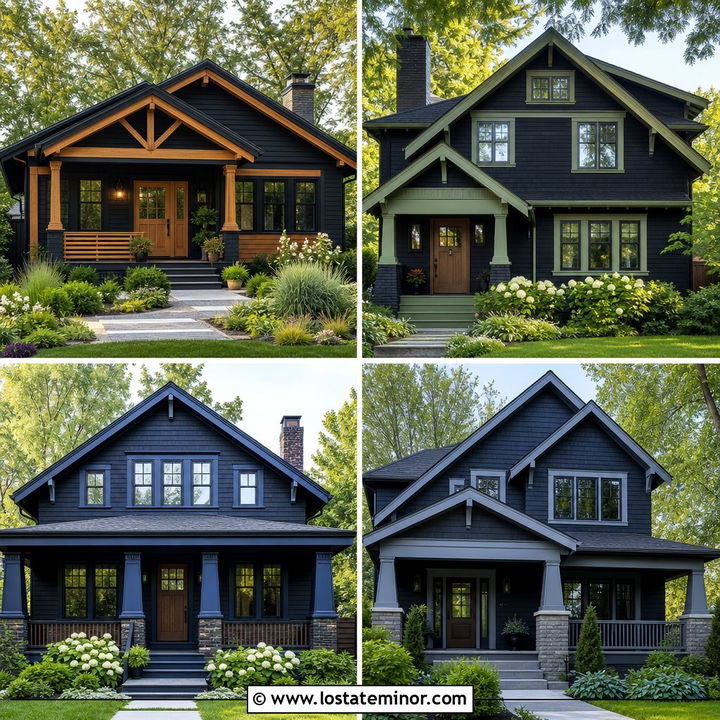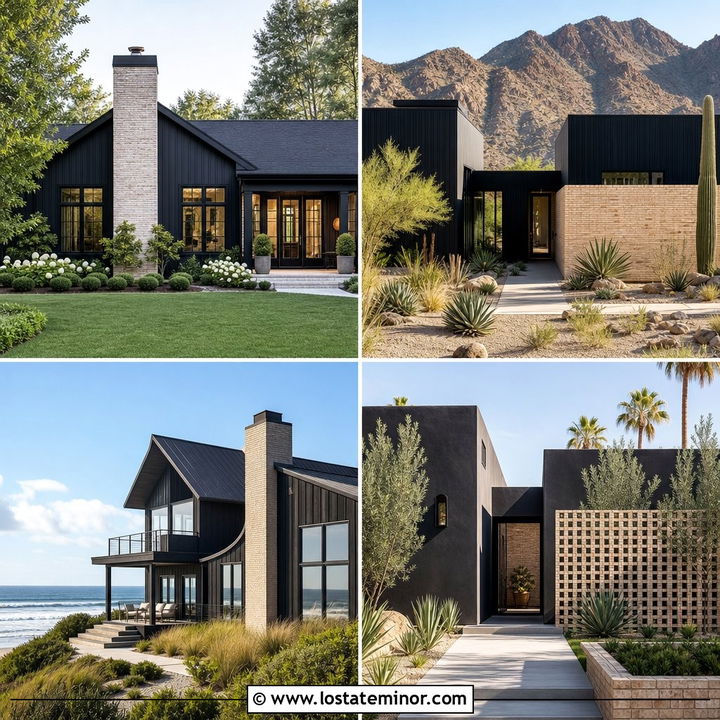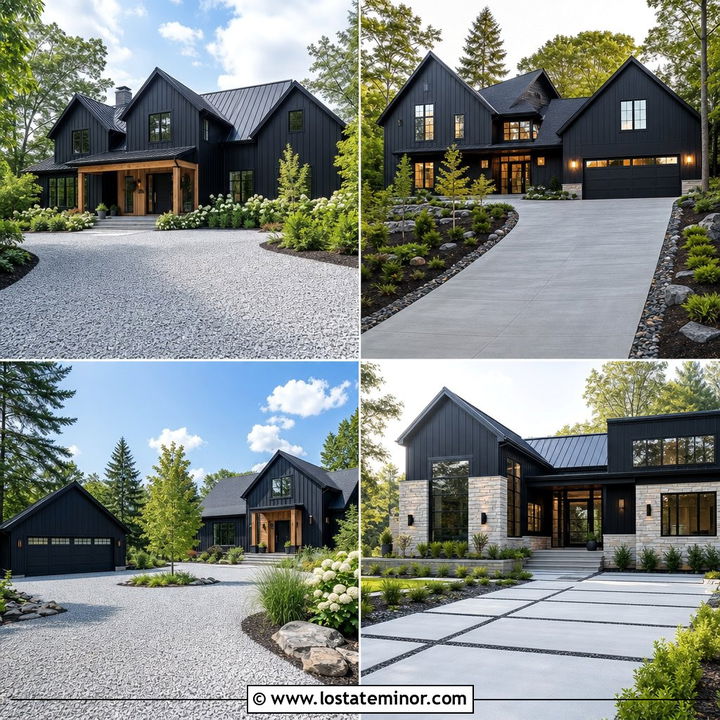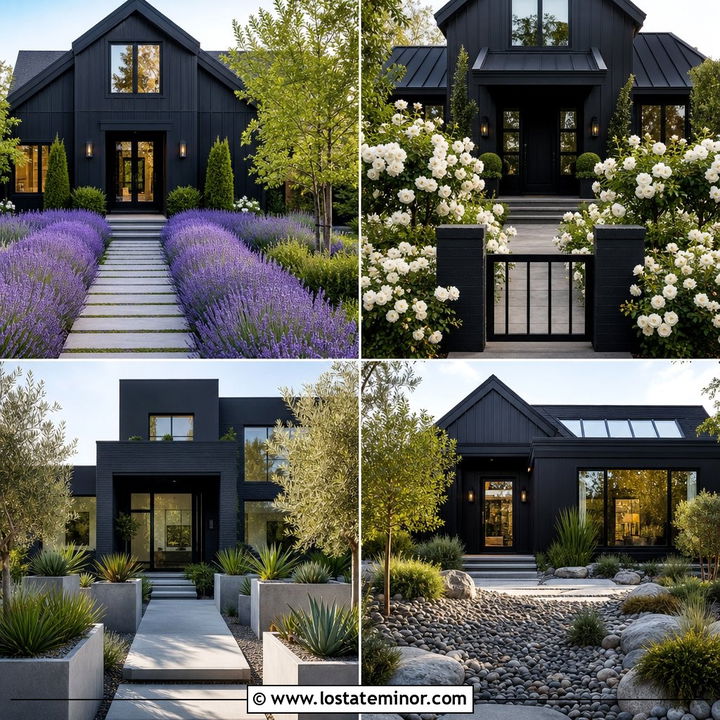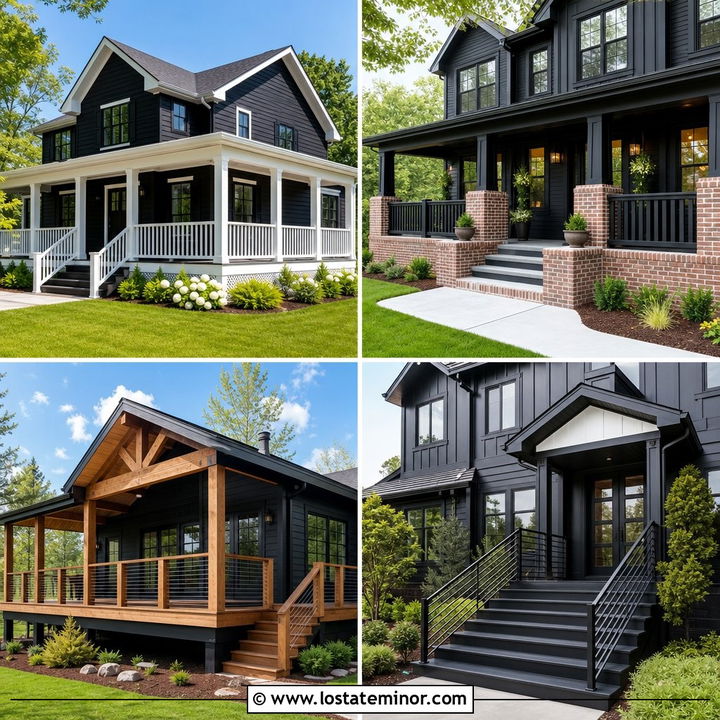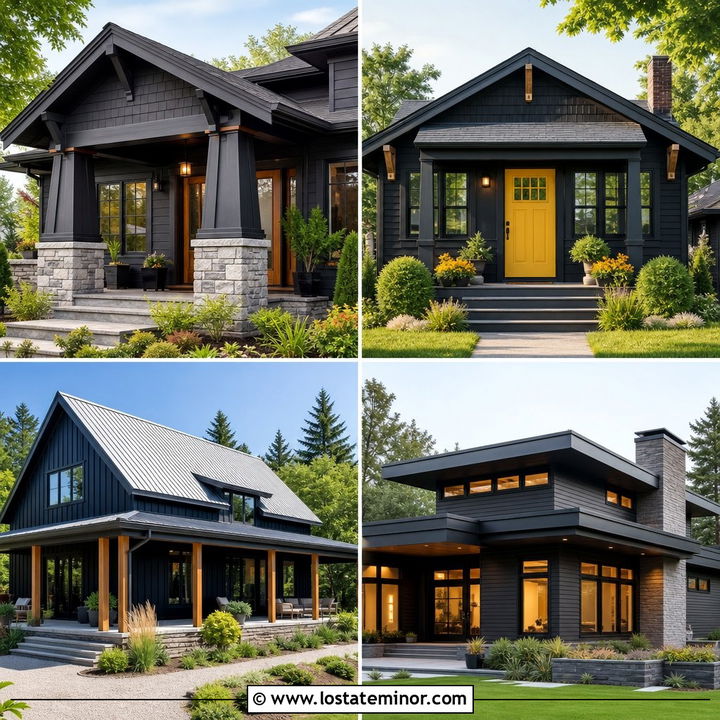
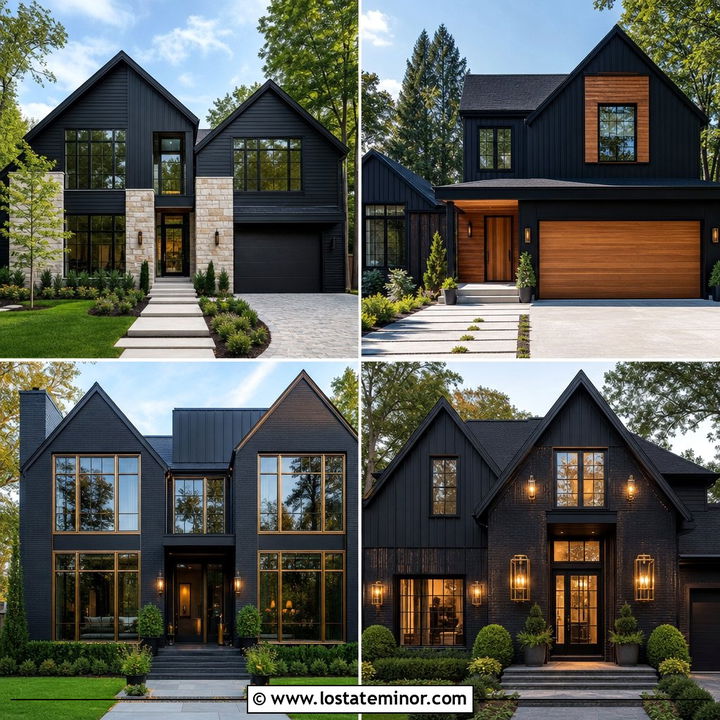
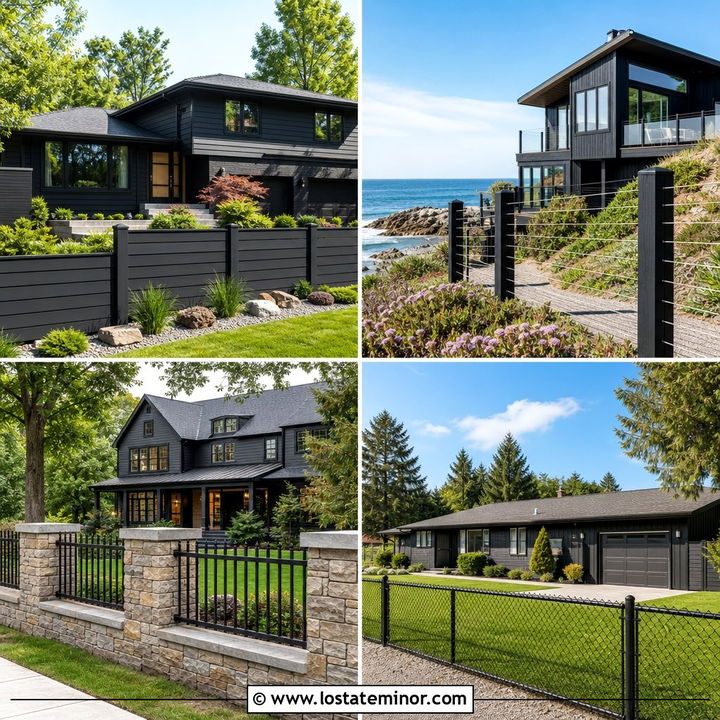
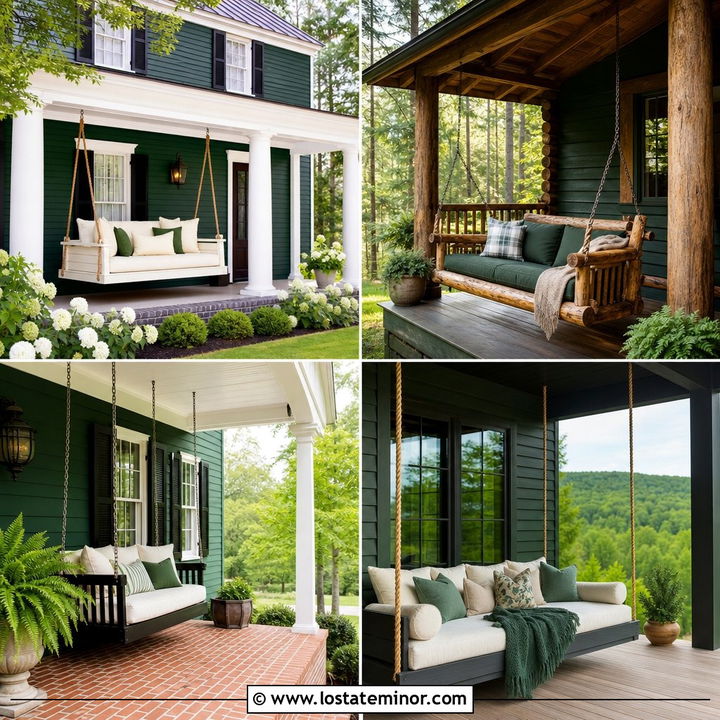
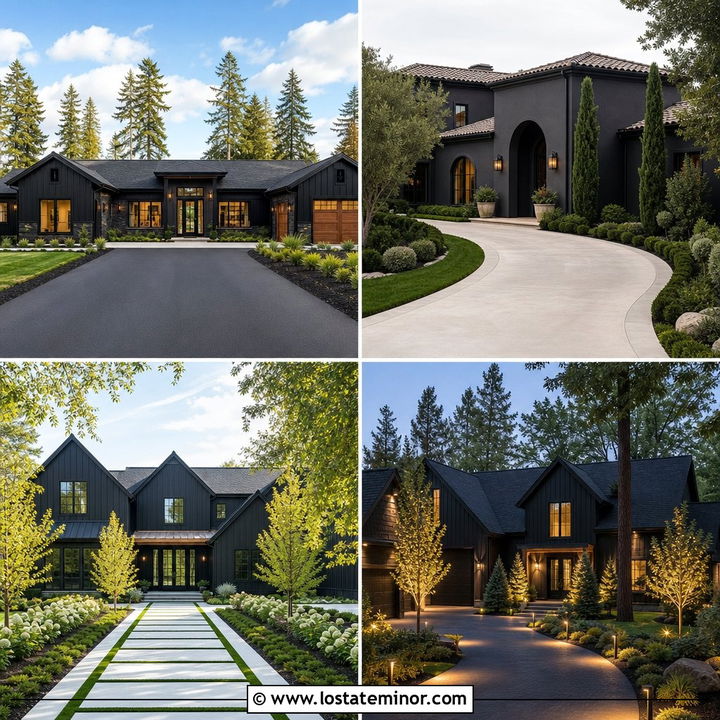
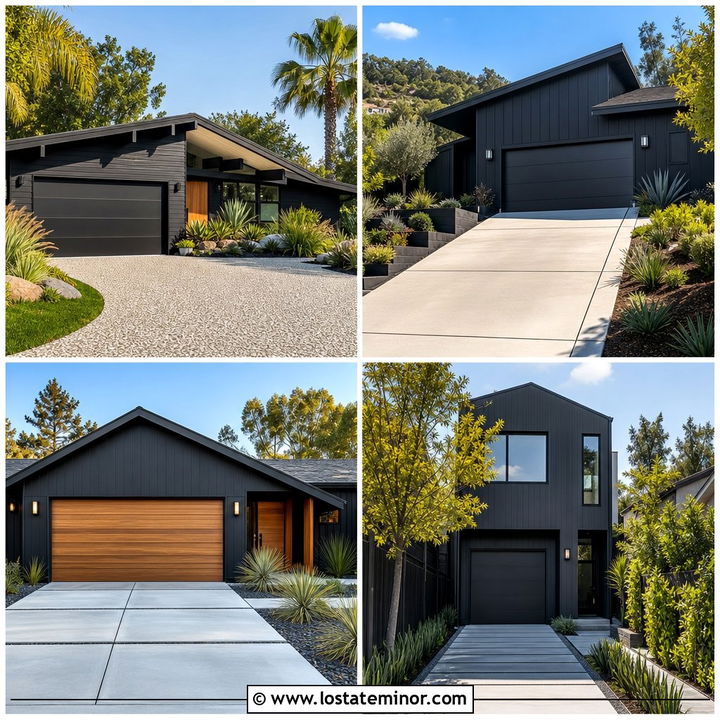
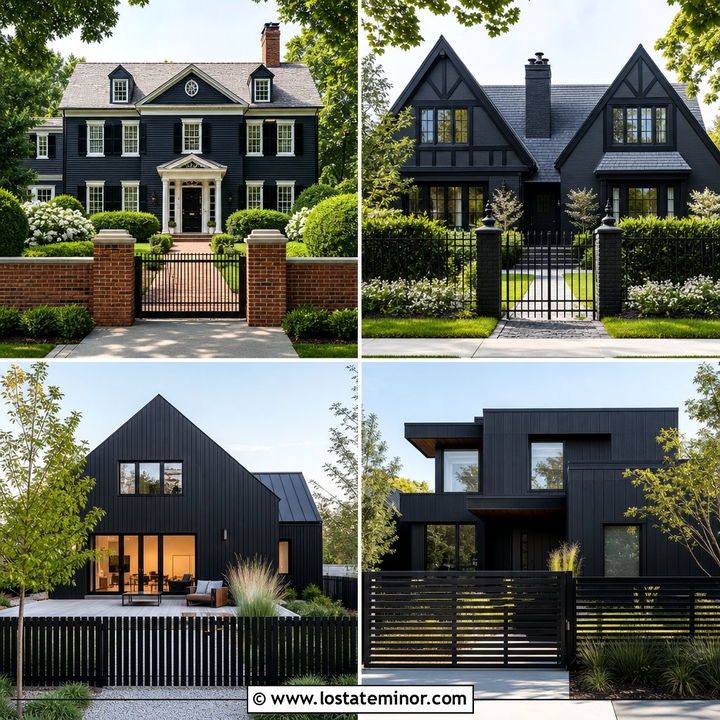
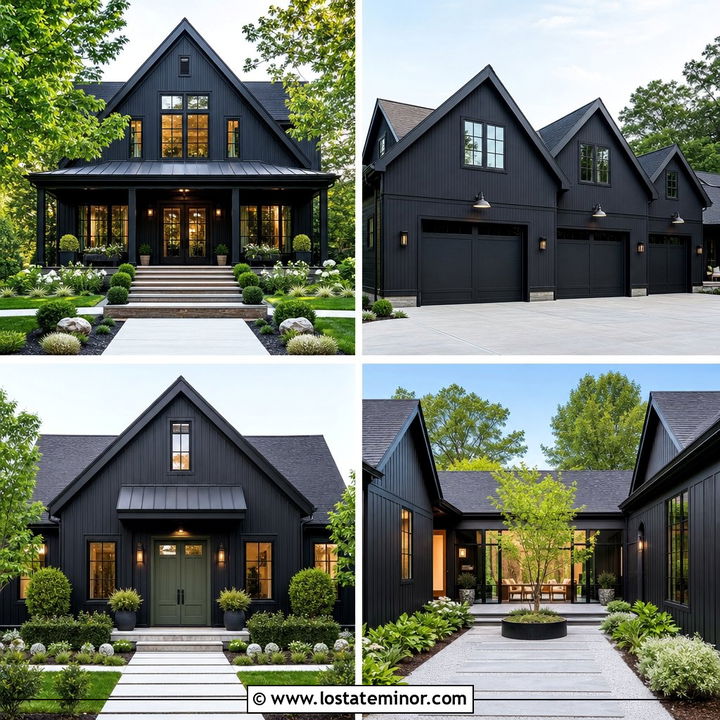
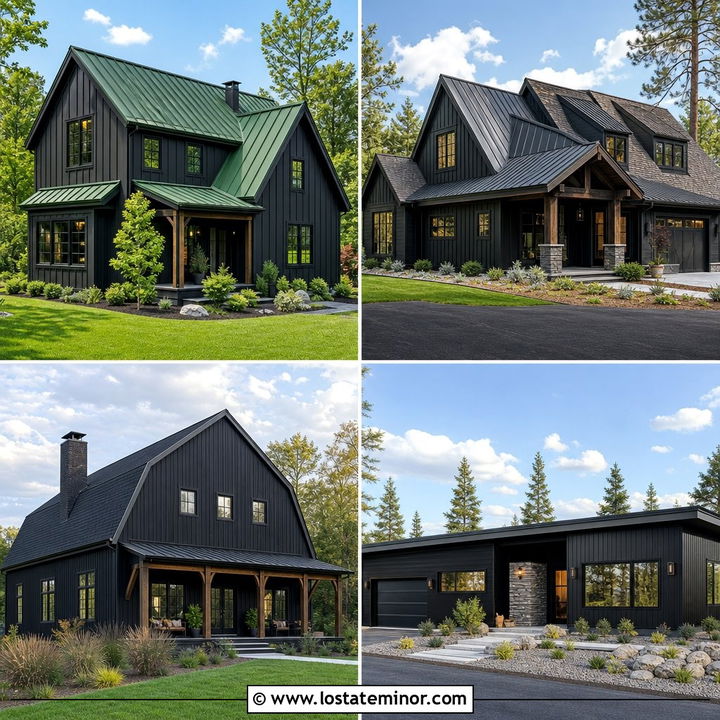
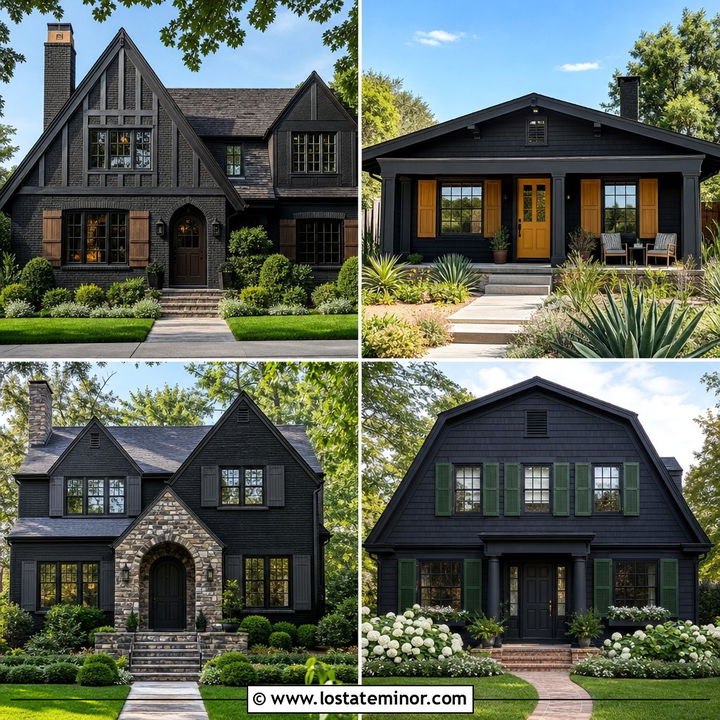
A dark exterior can feel dramatic, welcoming, and surprisingly connected to nature when every finish is carefully balanced. These 30 Jet Black House Design With Swing Ideas explore complete curb-appeal looks rather than isolated porch features. Each scheme combines jet-black siding with a thoughtfully chosen swing, trim color, roof, front door, hardscaping, and landscaping. Natural wood brings warmth, white trim creates crisp definition, and stone adds texture that keeps a black facade from appearing flat. You will also find options for ranch homes, cottages, Craftsman houses, modern farmhouses, cabins, and traditional architecture. Whether you are planning a major renovation or a simple porch refresh, use these 30 Jet Black House Design With Swing Ideas to build a cohesive exterior.
1. Jet Black Modern Farmhouse With Cedar Porch Swing
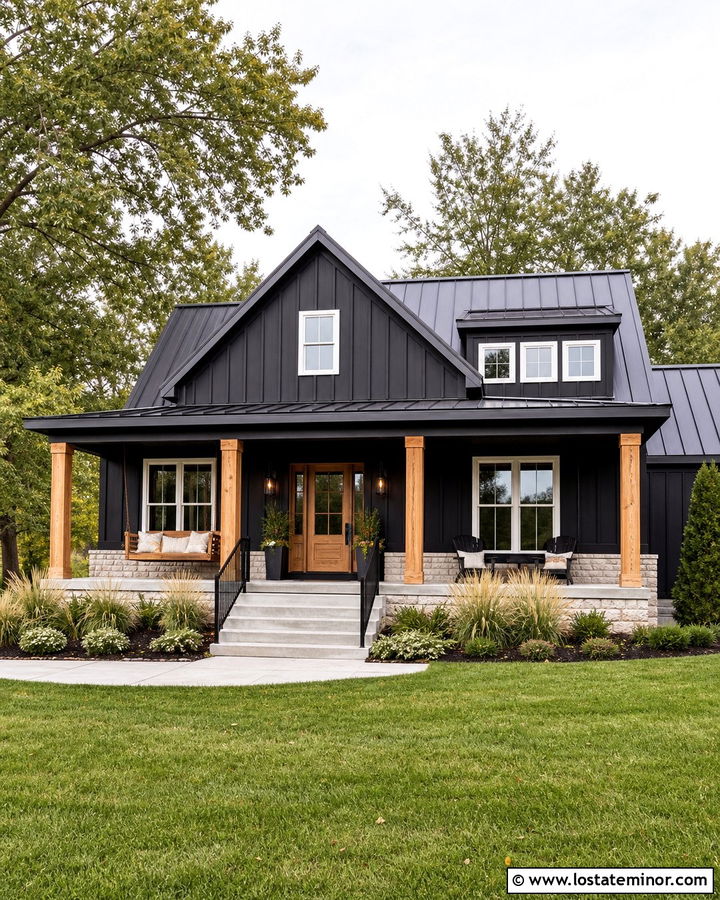
Jet-black board-and-batten siding gives a modern farmhouse bold definition, especially when it is balanced with warm cedar. Place a simple cedar swing beneath a deep front porch where it can echo natural wood columns, the front door, and the porch ceiling. Creamy white window trim can outline the facade without creating an overly sharp black-and-white contrast. A charcoal standing-seam roof keeps the upper portion streamlined, while pale limestone around the foundation introduces softer texture. Finish the setting with wide concrete steps, black metal railings, and loosely planted ornamental grasses. This complete scheme works because the swing is not an afterthought. Its cedar tone repeats across several architectural details, creating warmth and visual rhythm against the jet-black house.
2. Jet Black Craftsman House With White Porch Swing
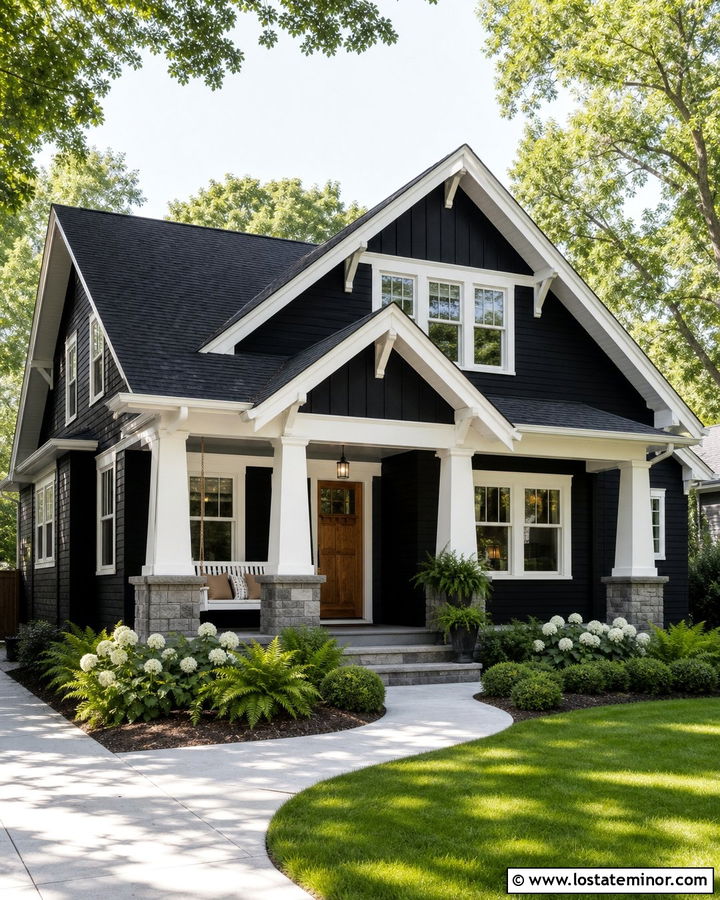
A white porch swing can brighten a jet-black Craftsman house while preserving its traditional character. Use black lap siding across the main facade, then introduce warm white on tapered columns, window casings, exposed rafter tails, and porch railings. The matching white swing will feel connected to the architecture instead of floating alone against the dark wall. Add a medium-stained oak front door to soften the contrast, plus a gray stone base that grounds the porch. Deep green shrubs, ferns, and hydrangeas provide a natural transition between the house and lawn. A dark architectural-shingle roof completes the look. Keep the swing cushions in tan or muted olive so the porch feels relaxed, practical, and visually balanced from the street.
3. Jet Black Ranch House With Hanging Daybed Swing
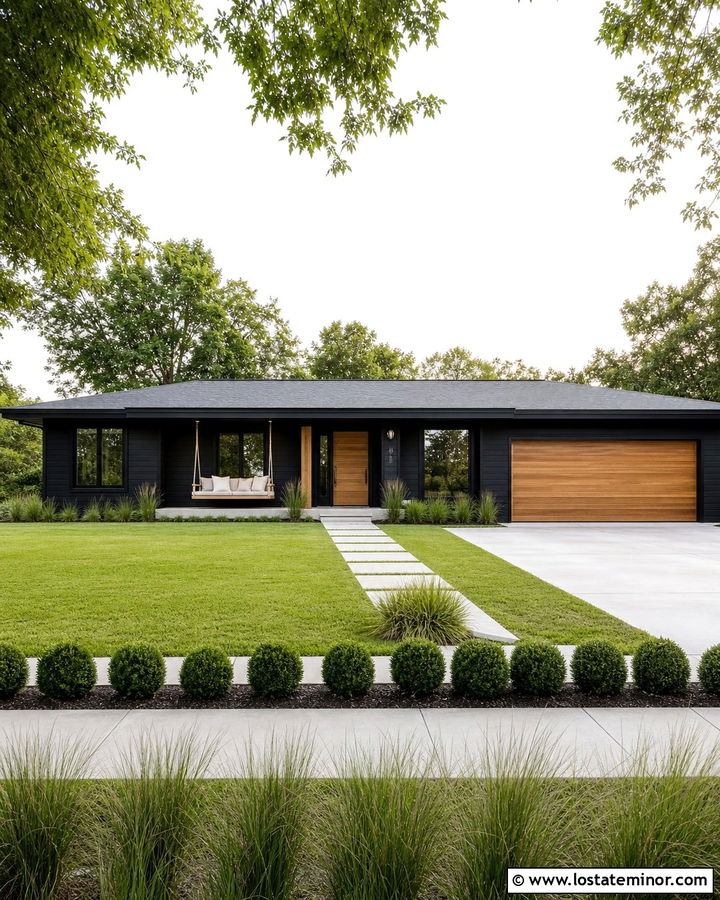
Imagine a long, low ranch house with jet-black horizontal siding and a generous covered porch extending across the front. A hanging daybed swing makes that porch feel larger and more inviting while matching the relaxed proportions of the architecture. Choose a natural teak frame, thick oatmeal cushions, and heavy cream ropes for a warm contrast against the black wall. Repeat the teak on the front door and garage door to connect both sides of the facade. Slim black windows, a charcoal roof, and pale concrete steps keep the palette modern. Use low grasses, rounded boxwoods, and a straight stepping-stone path to reinforce the home’s horizontal shape. The resulting exterior feels sophisticated but comfortable, with the oversized swing serving as a practical centerpiece.
4. Jet Black Colonial House With Black Porch Swing
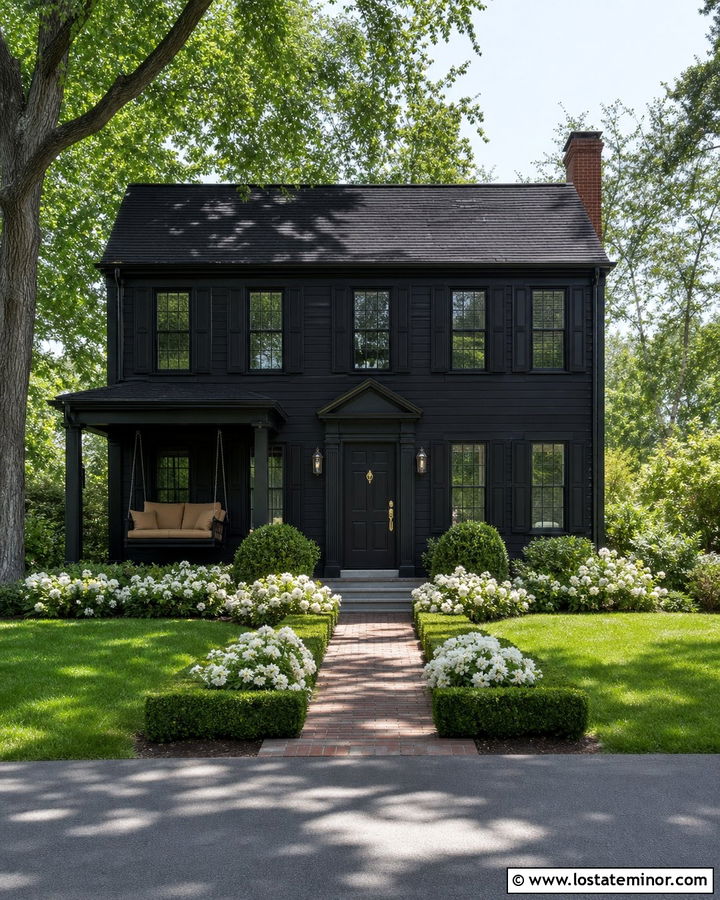
Can an all-black porch still show architectural detail? It can when texture and sheen create enough separation. Paint a symmetrical Colonial house jet black, including its shutters and traditional porch swing, but use a slightly softer satin finish on the siding and semigloss on the trim. The subtle shift will outline windows, columns, and railings without interrupting the monochromatic palette. Choose a black wood swing with a slatted back, then add warm camel cushions for visible comfort. A red brick walkway and weathered brick chimney introduce historic color, while a polished brass door knocker adds one refined accent. White flowers and clipped green hedges will look especially crisp against the facade. This scheme feels formal, layered, and far less severe than flat black everywhere.
5. Jet Black Cottage With Wicker Porch Swing
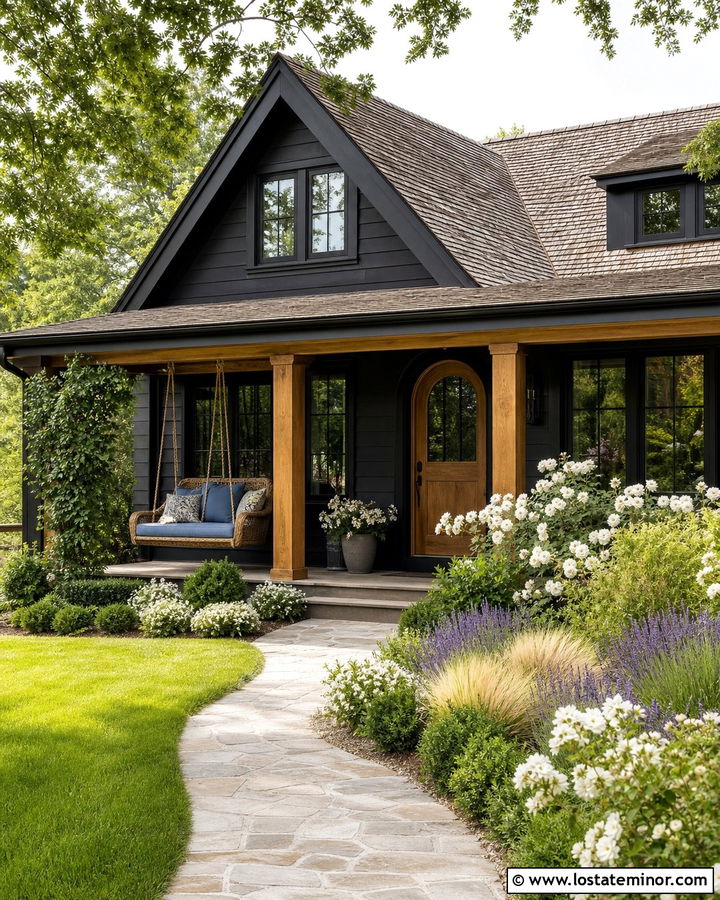
Soft textures can make a jet-black cottage look charming rather than imposing. Cover the facade in narrow black lap siding, then frame a small covered porch with natural cedar posts and a pale wood ceiling. A woven wicker swing in a honey-brown finish will bring an easy, garden-inspired quality to the entry. Use faded blue cushions to add restrained color without weakening the dramatic exterior. A cedar-shingle roof, divided-light windows, and an arched wood front door enhance the cottage character. Surround the walkway with lavender, white roses, and loose native grasses so the landscaping feels informal. Because the wicker, cedar, and flowers all offer softer tones and textures, the black siding becomes a quiet backdrop that gives the entire cottage greater depth and personality.
6. Jet Black Cape Cod House With Rope Porch Swing
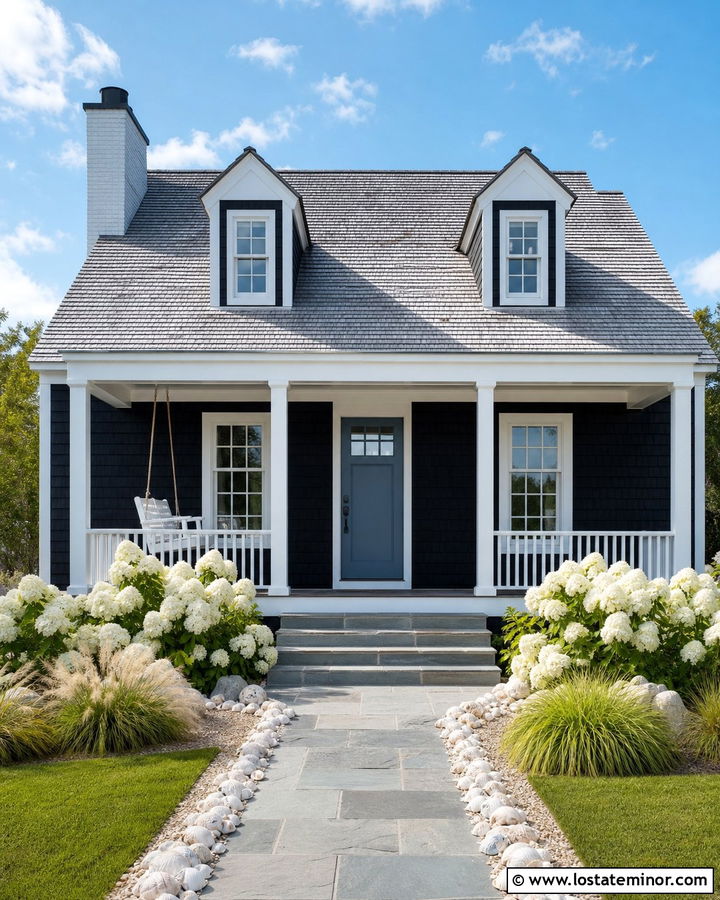
A compact Cape Cod exterior benefits from a simple palette that keeps its classic roofline easy to read. Apply jet black to the shingle siding, then use clean white trim around the dormers, windows, eaves, and porch columns. Hang a white slatted swing with thick natural rope beneath a small front porch roof. The rope introduces warmth while the white seat connects directly to the trim. A muted blue front door can provide a gentle coastal accent without making the house look themed. Complete the scheme with a weathered gray roof, bluestone steps, white hydrangeas, and beach grasses. This balanced arrangement maintains the home’s traditional simplicity. It also gives the dark facade enough contrast to feel fresh, airy, and welcoming throughout different seasons.
7. Jet Black Bungalow With Oak Porch Swing
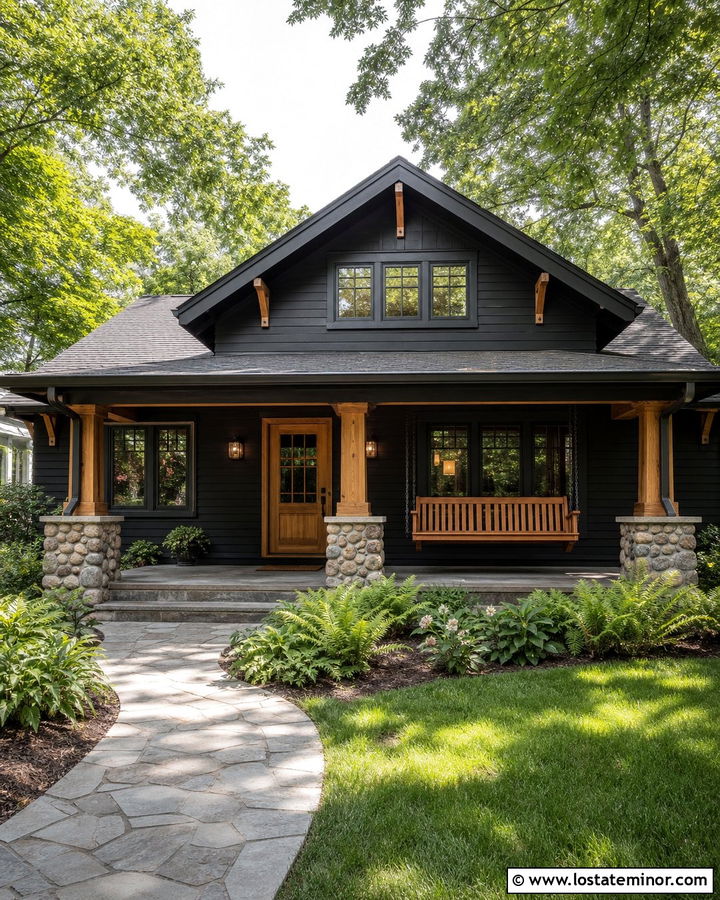
Rich oak is an excellent companion for a jet-black bungalow because it highlights the home’s handcrafted details. Use deep black lap siding with matching window trim, allowing the wide roof overhang and chunky porch structure to create natural shadows. Add an oak swing with broad arms and a slatted back, suspended by black chains beneath a tongue-and-groove oak ceiling. Repeat the same wood tone on the front door and porch brackets. River-rock porch piers can bring earthy gray and brown shades into the lower facade. For landscaping, choose ferns, hostas, and a curving flagstone path. The black exterior gives the modest bungalow stronger street presence, while oak and stone preserve the warm, grounded quality that makes this house type feel approachable.
8. Jet Black Split-Level House With Platform Swing
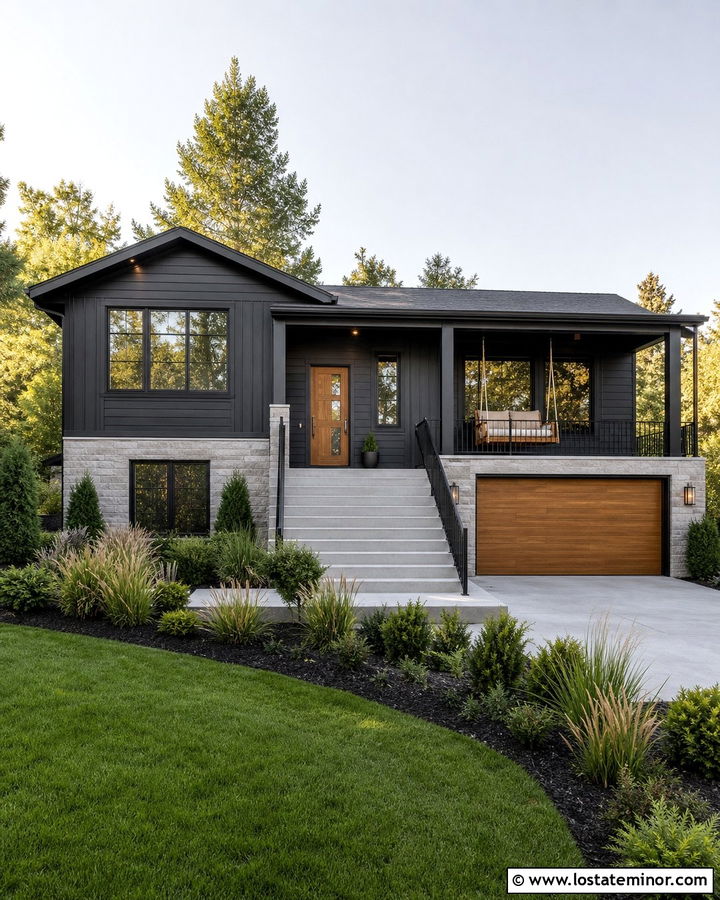
A jet-black finish can unify the uneven lines of a split-level house and make the architecture feel more intentional. Use black vertical siding on the taller section and matching horizontal siding across the garage level for subtle texture. Build a compact covered porch beside the entry and install a rectangular wood platform swing with neutral cushions. A cedar garage door and matching entry door will warm the large dark facade while connecting visually to the swing. Consider pale gray stone around the lower level to emphasize the home’s foundation without creating a hard contrast. Broad concrete steps, black railings, and layered evergreen beds complete the update. The clean platform swing gives the renovated exterior a contemporary focal point while keeping the narrow porch open and uncluttered.
9. Jet Black A-Frame House With Timber Swing
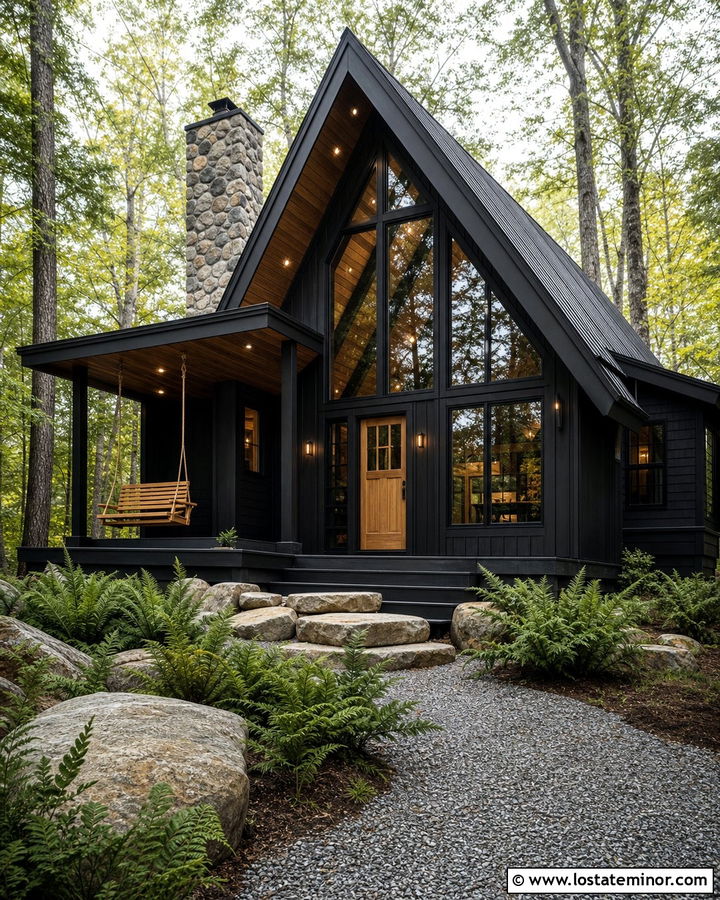
Few settings suit a jet-black exterior as naturally as a wooded A-frame property. Black siding allows the steep triangular form to stand out while still relating to the shadows of surrounding trees. Position a solid timber swing beneath an extended front overhang or on a covered deck running across the facade. Use thick rope and a clear natural finish to emphasize the grain. Large black-framed windows can fill the gable, while a fieldstone chimney and dark metal roof add rugged texture. A gravel walkway, native ferns, and irregular stone steps will keep the landscape relaxed. Warm light wood on the front door and soffits prevents the house from becoming visually heavy. The swing then becomes part of a cohesive, cabin-inspired outdoor living area.
10. Jet Black Cabin With Log Porch Swing
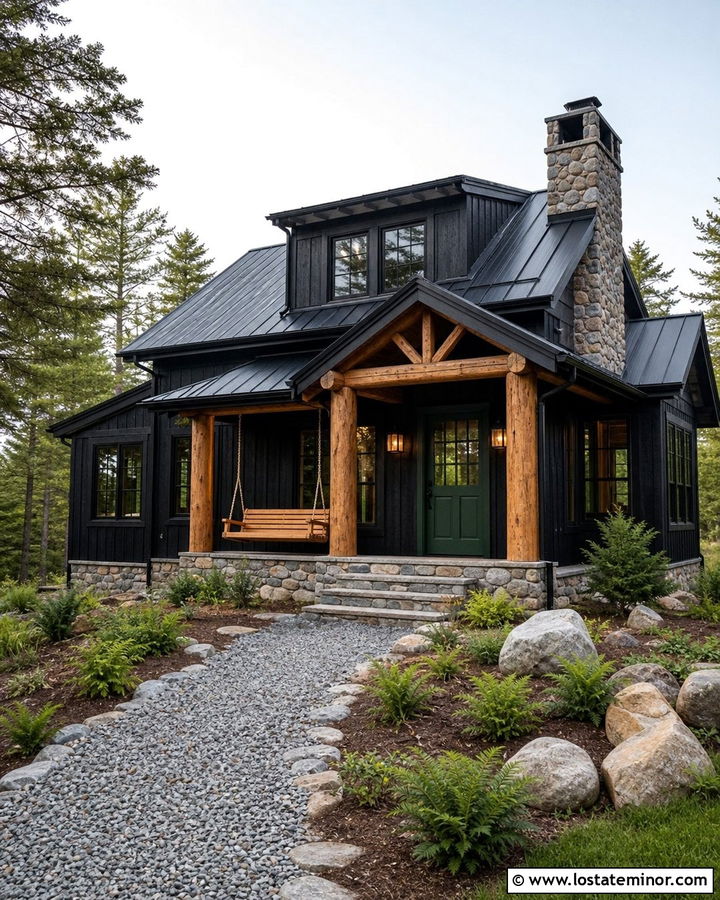
For a more rustic exterior, pair jet-black wood siding with a swing made from peeled logs. The substantial frame will look appropriately scaled beside thick porch posts, exposed roof beams, and a stone chimney. Keep the swing in a medium natural stain so its knots and grain remain visible against the dark background. A forest-green front door can add subtle color while blending with the surrounding landscape. Choose a black metal roof and gray fieldstone foundation to support the rugged palette. Instead of formal garden beds, use native ground cover, ferns, boulders, and a gravel path. The black exterior modernizes the cabin without removing its character. Meanwhile, the handcrafted swing keeps the porch comfortable and connected to the house’s traditional materials.
11. Jet Black Scandinavian House With Minimal Wood Swing
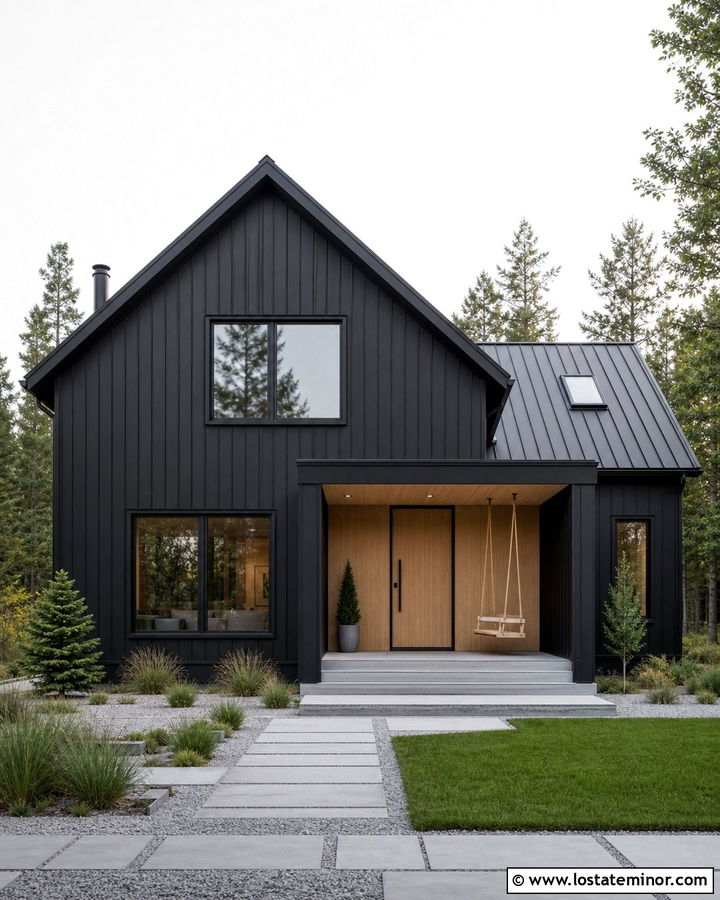
Clean geometry makes a jet-black Scandinavian exterior especially striking. Use smooth vertical siding, narrow roof edges, and large windows with black frames to create an uninterrupted facade. Beneath a recessed porch, hang a minimal pale-oak swing with a straight seat and simple rope supports. Repeat that light wood on the entry door and porch ceiling, but avoid adding unnecessary decorative trim. A matte black metal roof will preserve the streamlined appearance. For the landscape, combine gravel, rectangular concrete pavers, low grasses, and a few sculptural evergreens. This scheme relies on precise contrast rather than many colors. The pale wood swing softens the jet-black house at eye level and turns the sheltered entrance into a functional outdoor space without disturbing the architecture’s restrained character.
12. Jet Black Midcentury House With Bench Swing
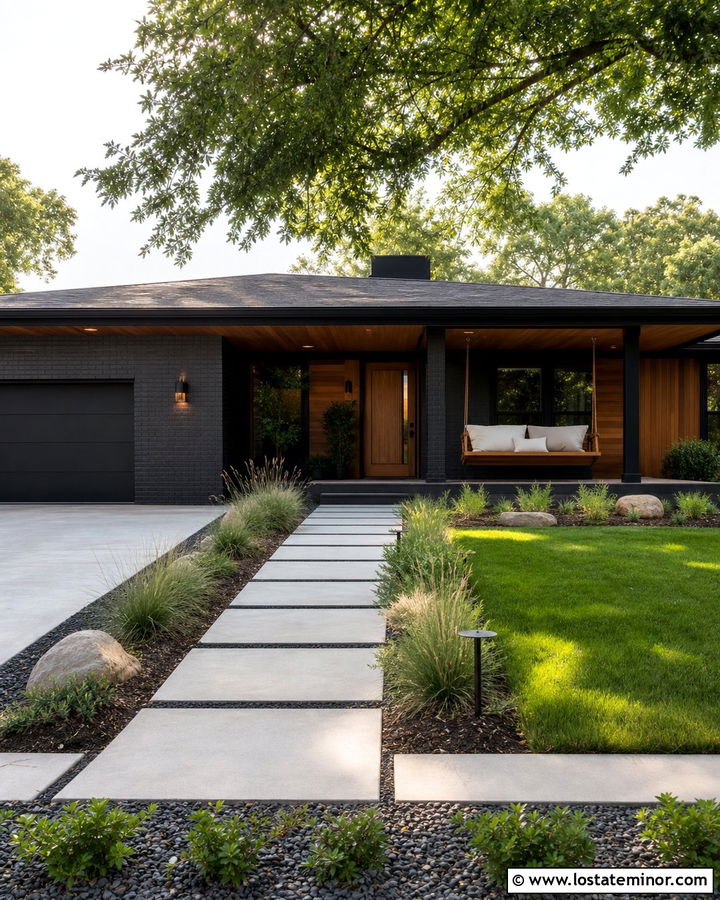
A midcentury house often has broad rooflines, large windows, and open entry areas that can easily accommodate a streamlined swing. Paint the exterior brick and siding jet black to unify the mixed materials. Then introduce a walnut-toned bench swing with a low back and crisp rectangular cushions. Carry that walnut finish onto the front door and a section of horizontal accent siding. Warm gray concrete, bronze exterior lighting, and black-framed windows will support the period-inspired palette. Keep the roof low and charcoal, with broad natural wood soffits adding warmth overhead. Use geometric pavers, ornamental grasses, and carefully spaced shrubs in the yard. The bench swing should feel architectural and tailored, giving the home useful seating while complementing its clean horizontal lines.
13. Jet Black Tudor House With Arched Porch Swing
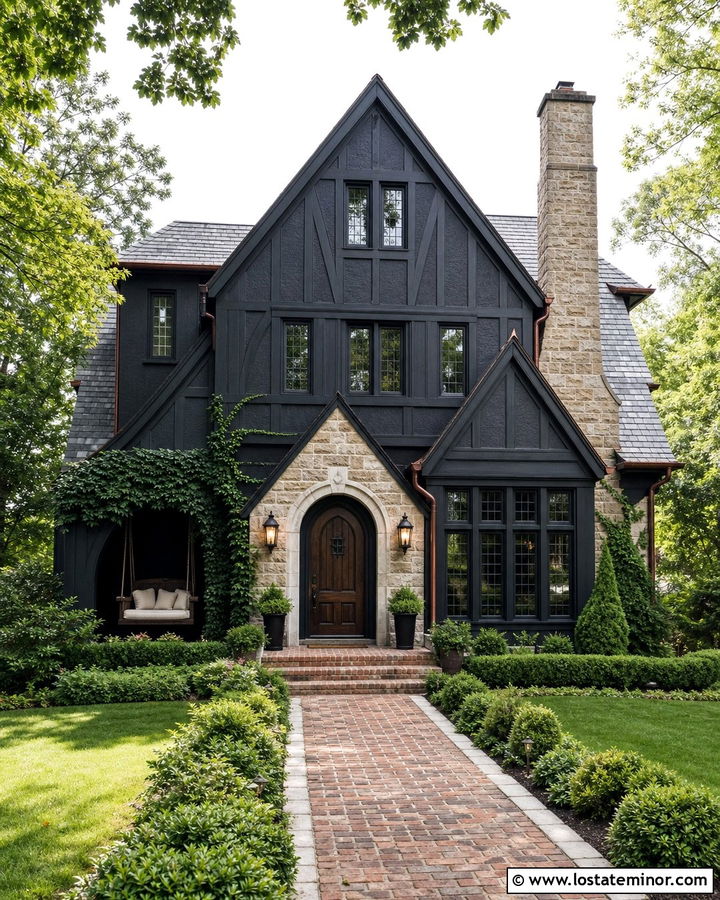
The strong lines of a Tudor house become even more dramatic when the stucco, masonry, and half-timber details share a jet-black finish. To keep the facade readable, use aged limestone around the entrance and chimney. Place an arched wooden porch swing beneath a deep side porch, choosing dark oak that reflects the shape of the front door. Subtle cream cushions will keep the seating visible against the wall without introducing a stark white accent. A slate roof, leaded windows, copper gutters, and a brick walkway will reinforce the historic architecture. Plant ivy carefully along selected stone areas and frame the path with clipped hedges. The curved swing brings softness to the home’s steep gables, while its substantial wood construction feels appropriate for the traditional exterior.
14. Jet Black Victorian House With Ornate Porch Swing
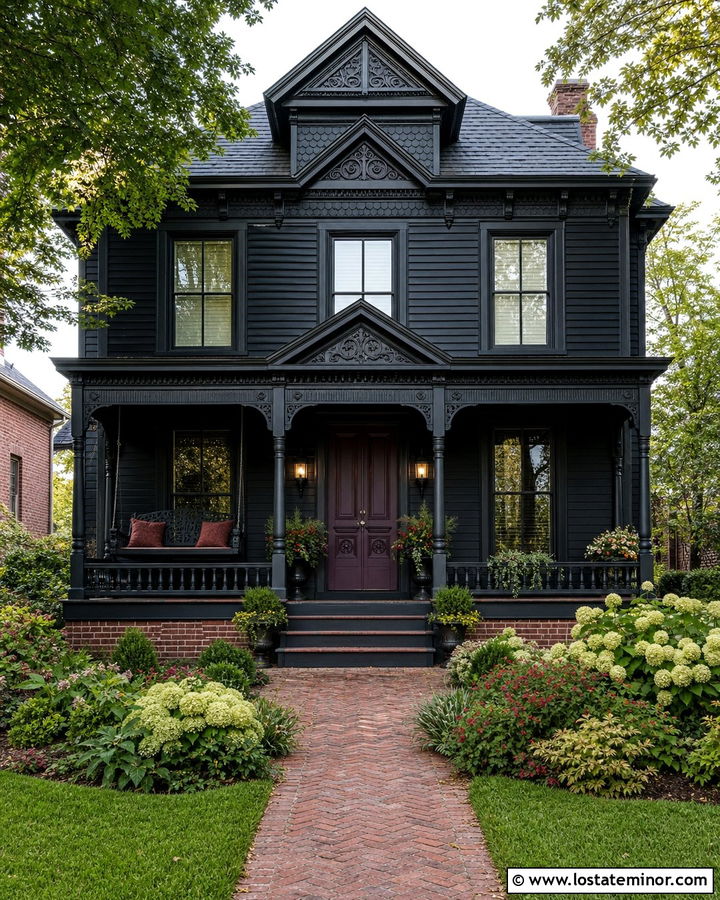
Detailed trim does not have to disappear on a dark Victorian facade. Paint the siding jet black, then use soft charcoal on gingerbread trim, brackets, and turned porch columns. The low-contrast shift keeps the house sophisticated while allowing shadows to reveal its craftsmanship. Choose an ornate black porch swing with a curved back and decorative spindle details. Rust-colored cushions can connect the seat to a traditional brick foundation and walkway. Add a deep plum front door for another restrained historic accent. A dark slate roof, brass porch lanterns, and overflowing green planters complete the composition. Because the swing repeats the decorative language of the porch, it looks original to the architecture. The finished house feels richly layered rather than overly busy or theatrical.
15. Jet Black Greek Revival House With White Swing
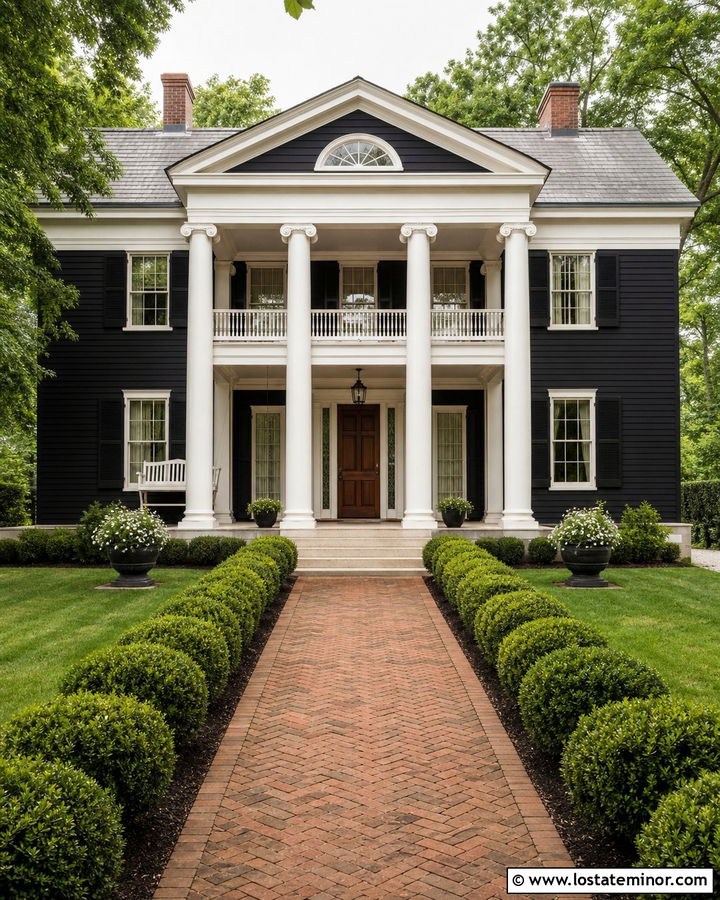
Tall white columns create a striking frame around a jet-black Greek Revival facade. Keep the siding completely black, but use warm white on the columns, broad cornice, window surrounds, and porch balustrade. Center a traditional white porch swing on one side of the entry so it appears integrated with the railing and trim. A mahogany front door adds warmth between the two strong neutral colors. Choose a weathered gray shingle roof and pale limestone porch floor to soften the contrast further. Symmetrical boxwoods, a straight brick walkway, and large planters will suit the home’s formal character. The white swing gives the porch a lighter visual point at seated height, preventing the dark wall from overpowering the classical details or making the entrance feel closed.
16. Jet Black Brick House With Cedar Swing
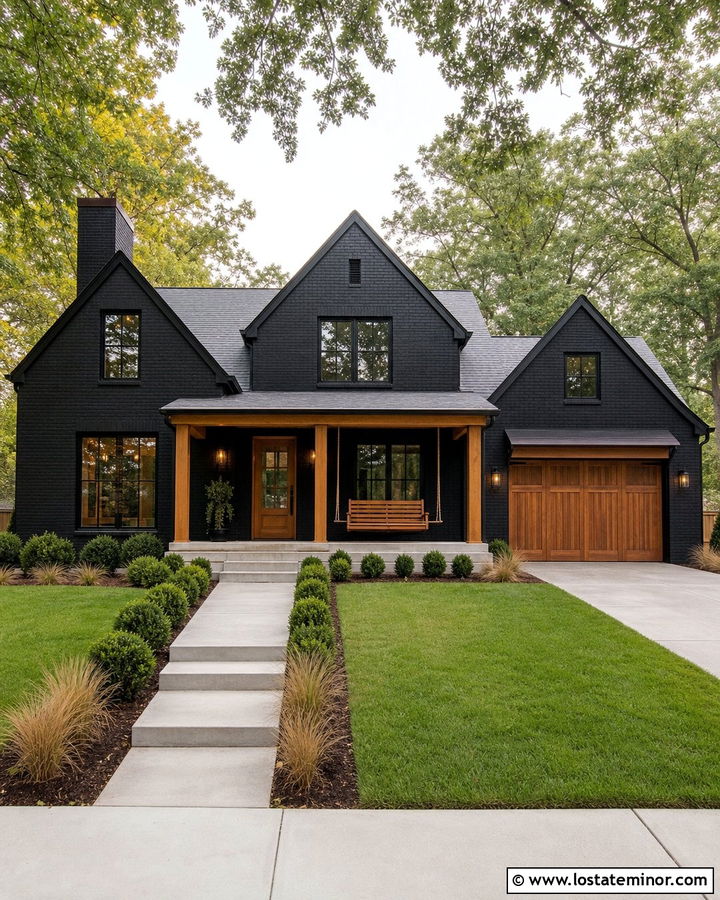
Painting an older brick house jet black can create a unified exterior while leaving the brick texture visible. Use a mineral-style masonry coating or another finish suitable for the existing surface, then keep the trim and windows black for a modern monochromatic result. Add a cedar swing beneath the porch roof to introduce a clear band of warmth. Match it with cedar porch posts, a wood front door, and slatted garage details. A soft gray roof and light concrete porch floor will prevent the design from feeling too dark from top to bottom. Use structured evergreen shrubs and tan ornamental grasses to bridge the color palette. Against textured black brick, the smooth cedar swing becomes a welcoming focal point that gives the updated house a comfortable, lived-in appearance.
17. Jet Black Stucco House With Rattan Swing
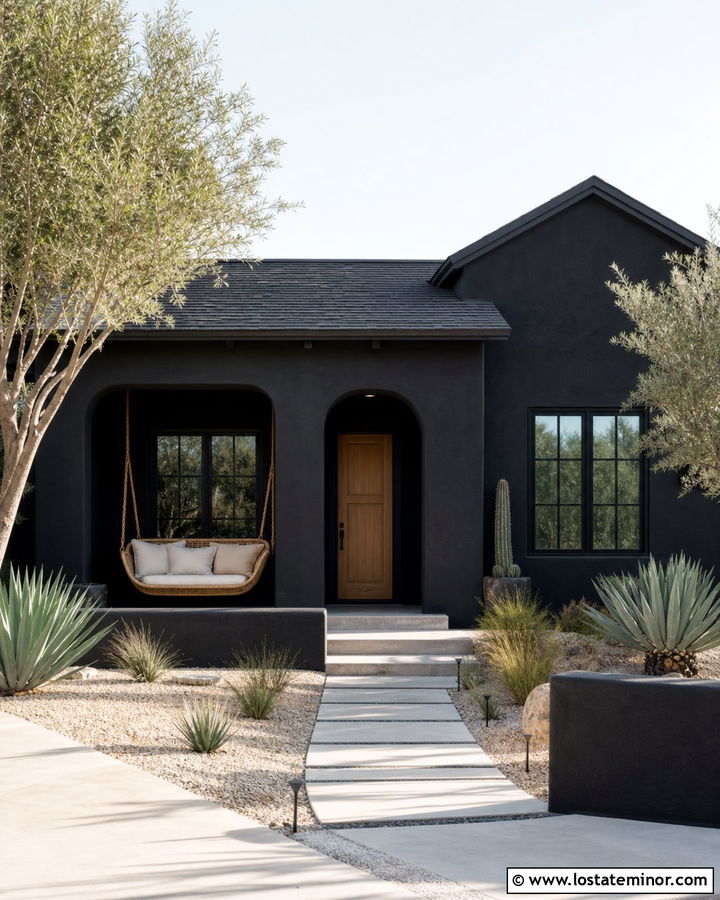
Jet-black stucco creates a smooth, sculptural backdrop that works well with the relaxed texture of rattan. Place a natural rattan swing beneath a recessed porch where it remains sheltered and visually framed by the dark walls. Cream seat cushions, a light oak front door, and sandy limestone paving will give the entry a warm, sun-washed contrast. Keep the roofline simple with charcoal metal or dark clay tiles, depending on the architecture. Black steel windows can maintain continuity across the facade. Finish the yard with drought-tolerant grasses, agave, olive trees, and pale gravel. This complete look feels particularly effective on contemporary Southwestern homes. The woven swing prevents the black stucco from appearing too formal and adds tactile interest without requiring a bright accent color.
18. Jet Black Coastal House With Blue Porch Swing
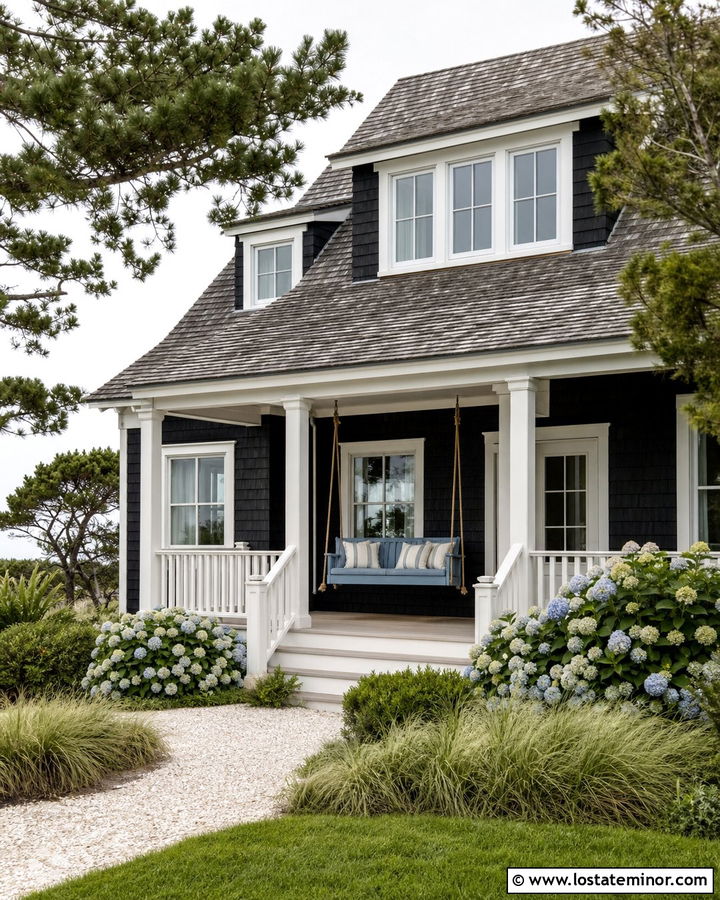
A coastal house can wear jet black beautifully when the palette includes crisp trim and one breezy accent. Cover the facade in black cedar shingles, then use warm white around windows, porch columns, railings, and roof edges. Add a muted ocean-blue porch swing with simple slatted construction. The blue should feel softened rather than bright, allowing it to complement the black siding and gray roof. Natural rope, striped cream cushions, and a pale porch floor can further lighten the entry. Surround the house with dune grass, hydrangeas, crushed-shell paths, and low coastal shrubs. This approach maintains a relaxed seaside character without depending on an all-white facade. The blue swing becomes a distinctive but controlled focal point within the complete black, white, and weathered-gray exterior.
19. Jet Black Lake House With Suspended Bed Swing
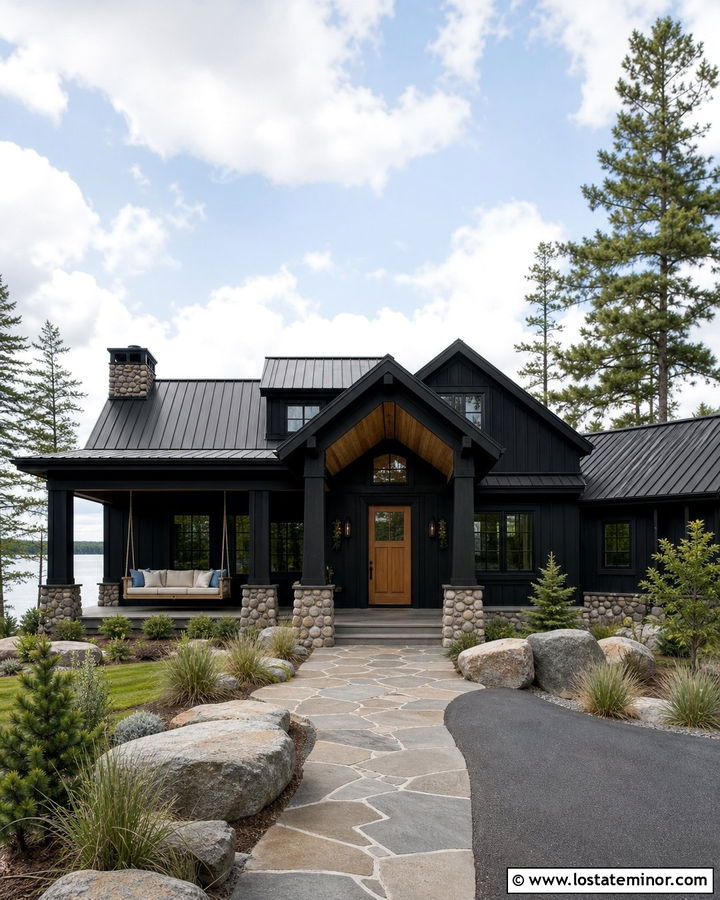
A spacious suspended bed swing fits naturally on the broad covered porch of a lake house. Use jet-black vertical siding across the facade, paired with black-framed windows and a charcoal standing-seam roof. Build the swing from warm teak and add thick cushions in stone, oatmeal, and muted blue. A matching teak front door and porch ceiling will carry the wood tone across the exterior. Support the porch with stone piers that relate to a flagstone walkway and nearby shoreline. Keep railings thin and black so views remain open. Native grasses, evergreens, and boulders can soften the transition to the yard. The generous swing adds a casual retreat to the architecture while the natural materials keep the dramatic black house connected to its waterside surroundings.
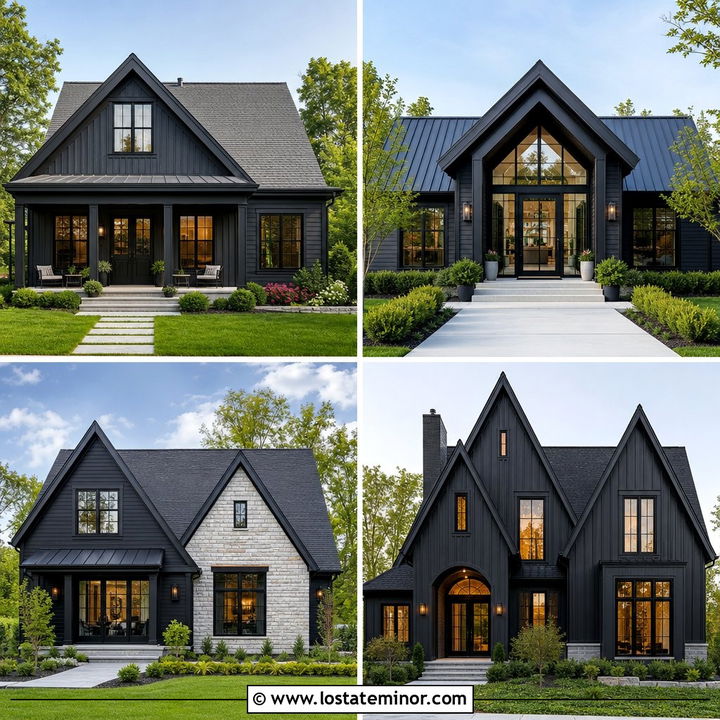
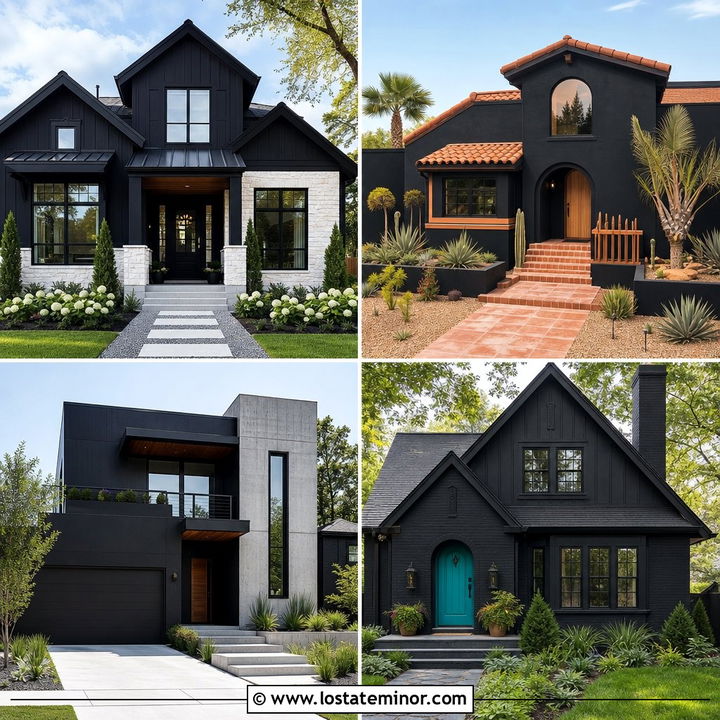
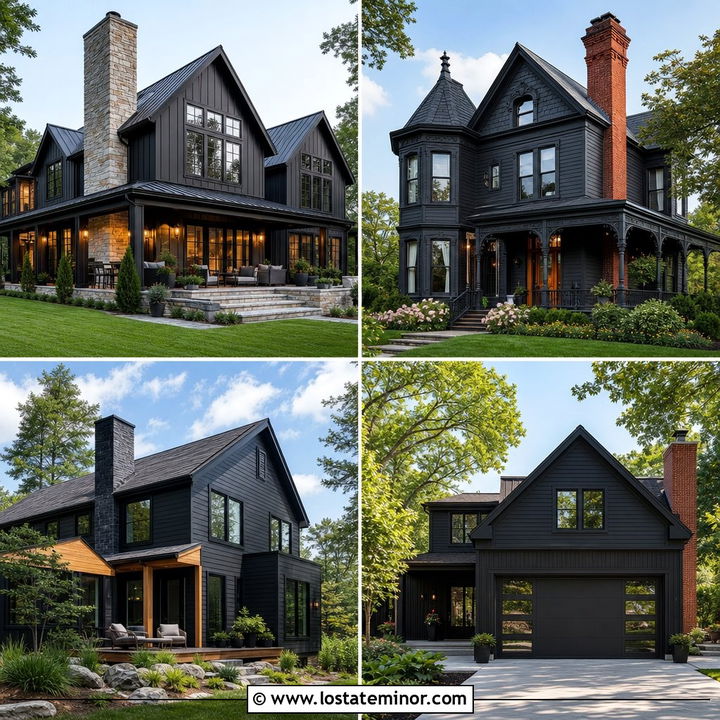
20. Jet Black Mountain House With Cable Swing
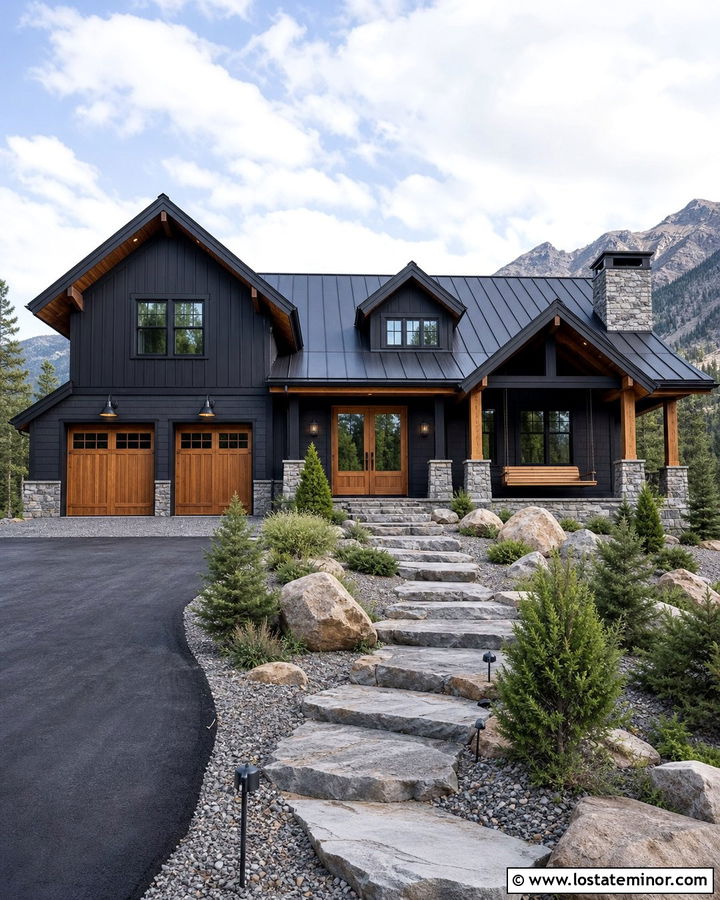
A mountain house needs substantial features that can hold their own against a steep roof and expansive landscape. Finish the siding in jet black, then introduce gray ledgestone around the base, chimney, and porch columns. Hang a thick cedar swing from black steel cables beneath the covered entry. The industrial suspension adds a contemporary edge while the cedar keeps the seating warm and familiar. Repeat that wood on the garage door, soffits, and double front doors. A black metal roof can create a clean silhouette against mountains and tall trees. Use broad stone steps, gravel beds, and native evergreens around the facade. This material mix adds depth to the dark exterior, and the cable-mounted swing reinforces the home’s balance of modern architecture and rugged natural texture.
21. Jet Black Prairie House With Horizontal Swing
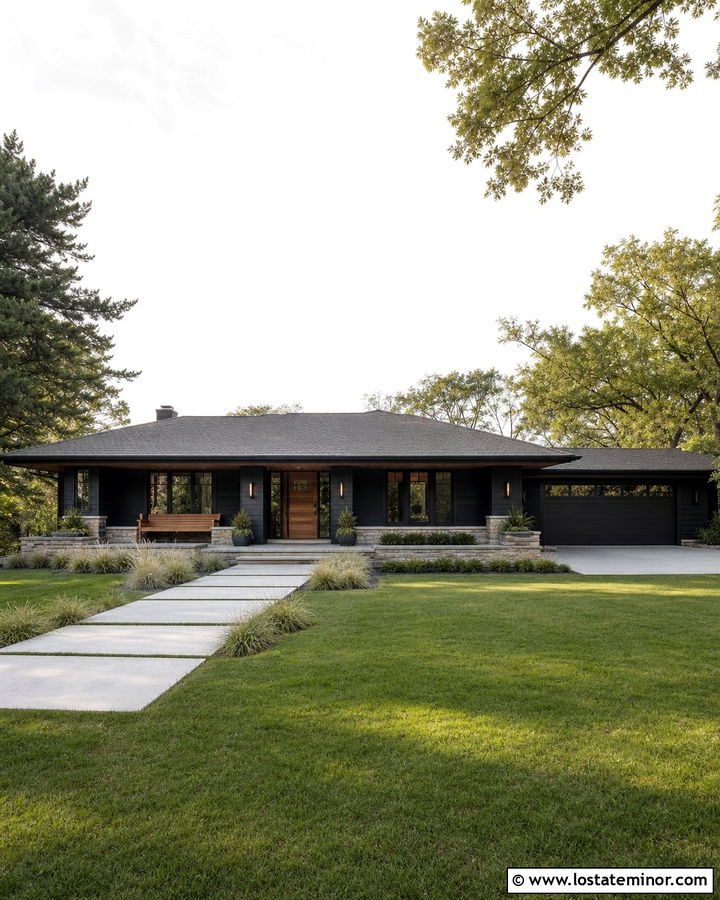
Strong horizontal lines define a Prairie house, so the swing should follow the same direction. Choose a long, low-profile wood swing with a slatted back and wide arms. Place it beneath the extended front roof where it visually continues the lines of the porch and windows. Jet-black stucco and horizontal siding can unify the exterior, while medium oak soffits, doors, and window accents provide warmth. Use dark bronze trim rather than bright white to preserve the grounded palette. A low gray roof, limestone planters, and broad concrete pavers will emphasize the home’s connection to the land. Finish with spreading grasses and low shrubs instead of tall foundation plants. The swing becomes a natural extension of the architecture rather than a separate decorative feature.
22. Jet Black Barndominium With Metal Frame Swing
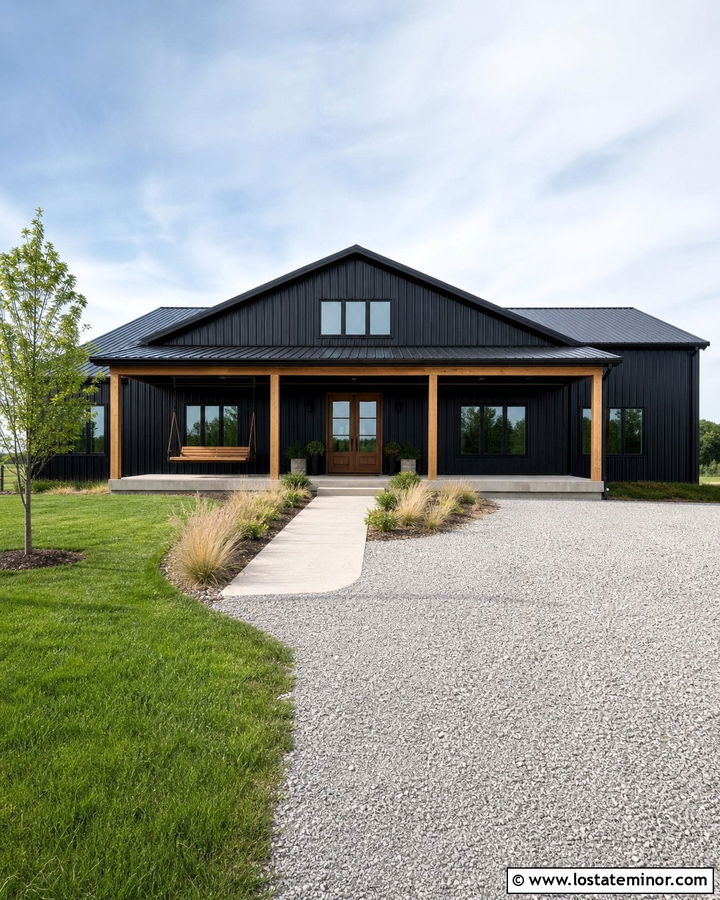
The large scale of a barndominium calls for a swing with a strong, straightforward structure. Coat the vertical metal siding in jet black and use a matching black roof for a clean agricultural silhouette. Beneath a timber-framed front porch, install a swing with a black steel frame and thick cedar seat. The combination reflects both major materials used across the facade. Add large wood double doors, simple black windows, and a warm cedar porch ceiling. A gravel driveway, concrete path, native meadow grass, and young shade trees will keep the setting practical and uncluttered. The steel-and-wood swing introduces useful porch seating without appearing delicate beside the tall building. It also helps the expansive black exterior feel more welcoming at a human scale.
23. Jet Black Duplex With Matching Porch Swings
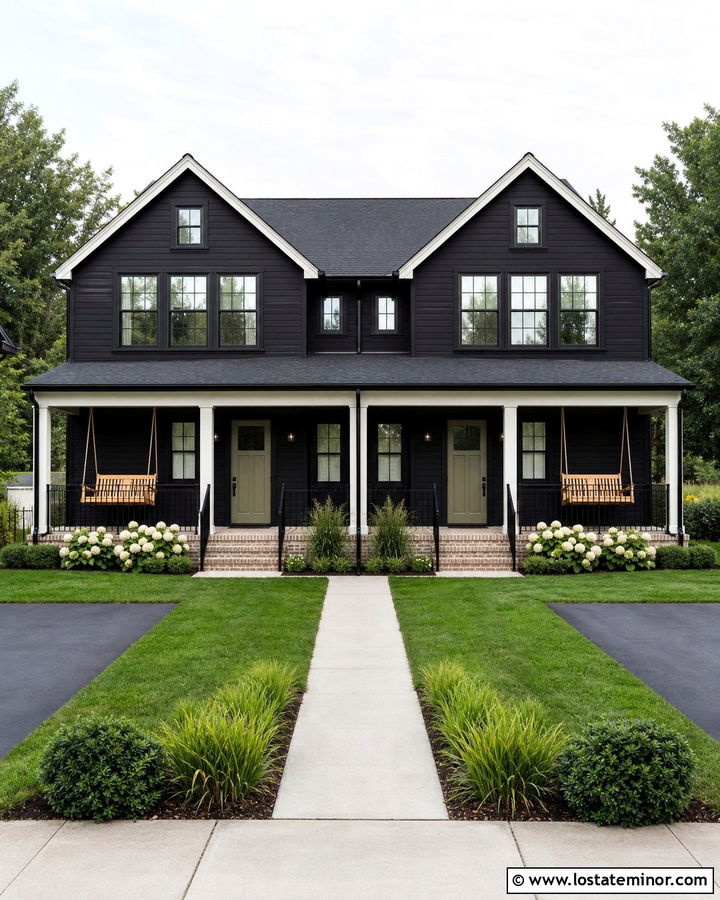
Symmetry can turn a jet-black duplex into a polished, cohesive property. Use the same black lap siding, charcoal roof, and warm white trim across both units. Install one matching natural wood swing beneath each covered entrance, positioning them at equal distances from the central dividing line. Repeating the swings will reinforce balance while giving both households defined outdoor seating. Use identical sage-green front doors to introduce subtle color and connect the dark facade to the landscaping. Pale brick porch floors and black railings will keep the shared palette practical. Add mirrored planting beds with grasses, hydrangeas, and rounded evergreens. The result feels unified without hiding the separate entrances, and the paired swings give the full building a friendly residential rhythm from the curb.
24. Jet Black Townhouse With Compact Porch Swing
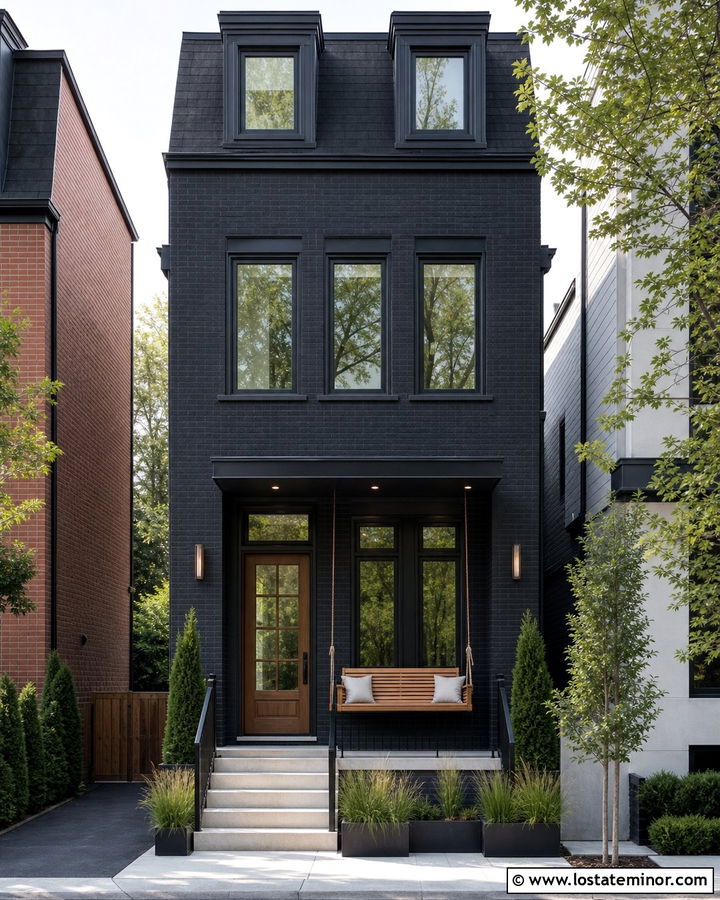
Even a narrow townhouse can include a comfortable swing when the proportions are carefully planned. Apply jet-black painted brick or smooth siding across the facade, using matching trim to make the building appear taller and cleaner. Select a compact two-seat swing with a slim oak frame and suspend it beneath the small covered entry. A vertical glass-paneled front door in medium oak can repeat the swing’s finish while bringing light inside. Choose pale limestone steps, black railings, and understated bronze sconces to complete the entrance. Narrow planters with upright grasses and clipped evergreens will add greenery without crowding the walkway. This full exterior scheme uses the warm swing as a focused accent, giving the limited porch both function and curb appeal without overwhelming the townhouse facade.
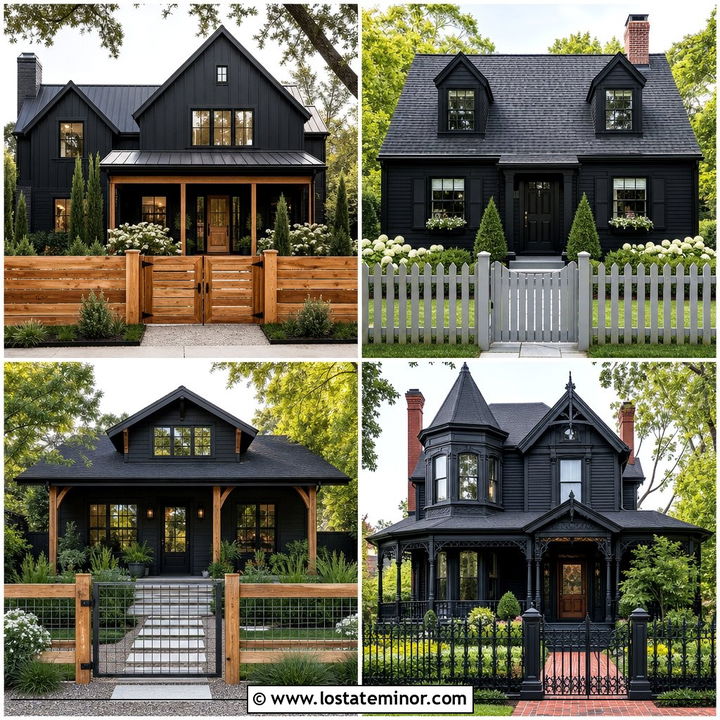
25. Jet Black Desert House With Canvas Swing
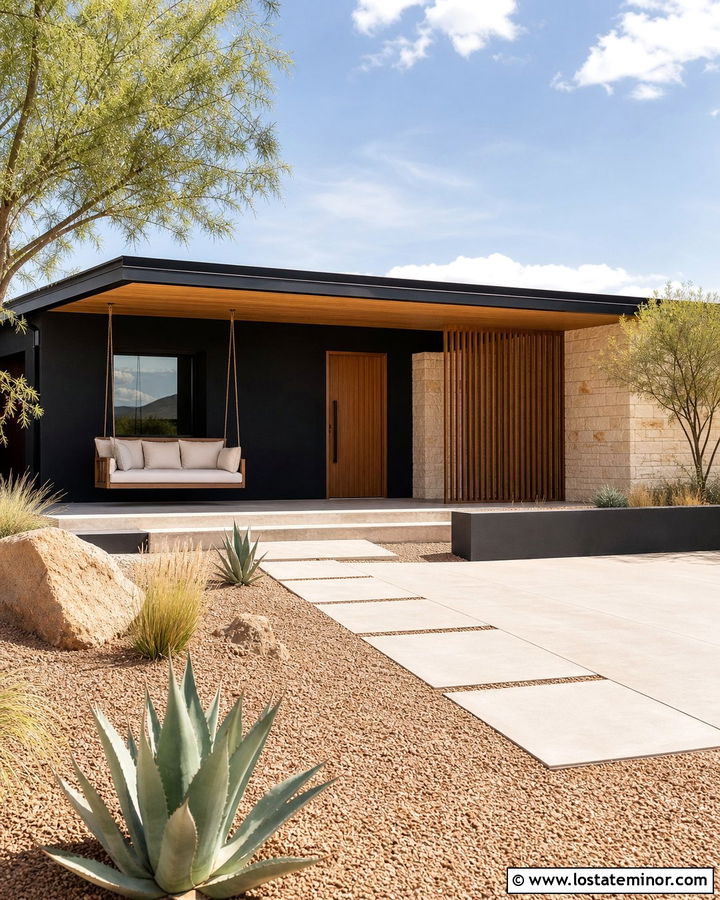
A jet-black desert house makes a dramatic statement against pale stone, sand, and sun-bleached vegetation. Use smooth black stucco with recessed windows and a flat or gently sloping roof. Under a shaded front terrace, hang a teak swing fitted with durable canvas cushions in warm ivory. Repeat teak on the pivot front door and slatted shade screen. Buff limestone walls, concrete pavers, and rust-colored gravel will create a warm transition between the house and landscape. Choose sculptural agave, desert grasses, and a few small trees to frame the facade without blocking it. The canvas swing feels light and comfortable against the solid architecture. Its neutral fabric also keeps the outdoor seating cooler-looking and more inviting within the bold black exterior palette.
26. Jet Black Southern House With Double Porch Swing
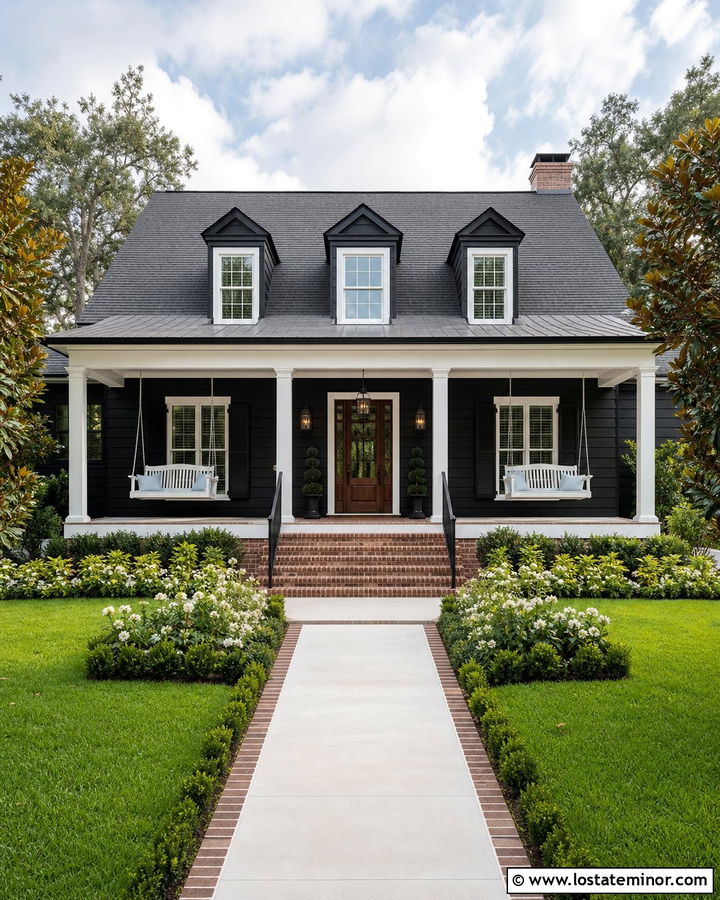
A broad Southern porch offers enough space for two swings without making the facade feel crowded. Paint the main lap siding jet black, then use soft white on columns, railings, window trim, and the porch ceiling. Position matching white wood swings at opposite ends of the porch to reinforce the home’s balanced architecture. Add pale blue seat cushions as a gentle regional accent, and repeat the blue overhead if desired. A stained mahogany front door provides warmth at the center. Complete the house with a dark gray roof, brick steps, traditional lanterns, and symmetrical magnolia plantings. The double-swing arrangement encourages conversation while preserving an open path to the entrance. It also spreads lighter accents evenly across the long, dramatic black facade.
27. Jet Black Urban House With Modern Slat Swing
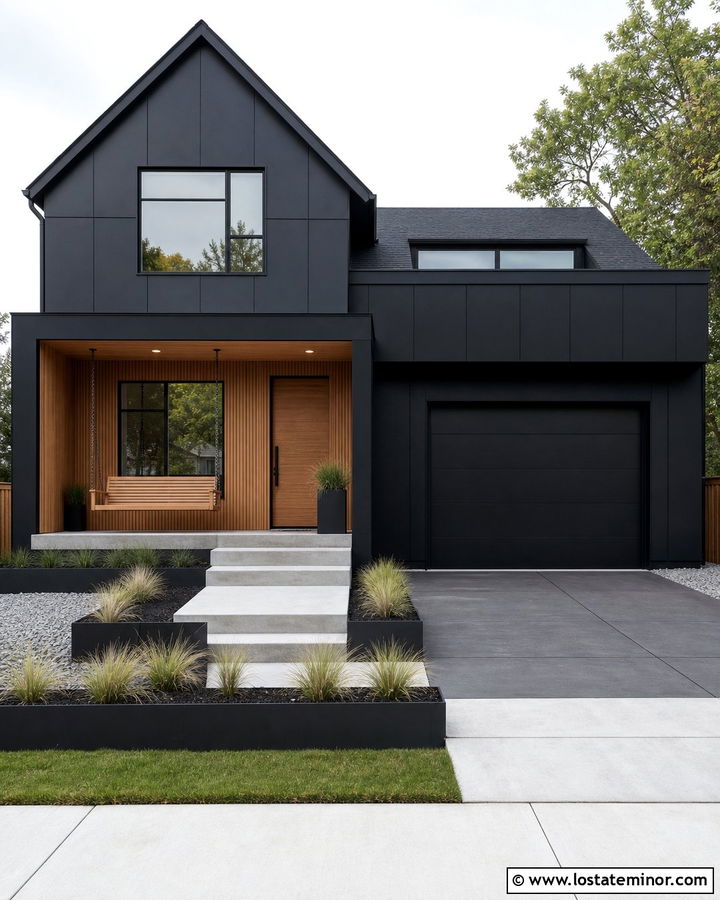
An urban house benefits from sharp details and a controlled material palette. Finish the exterior in jet-black fiber-cement panels or smooth stucco, then add a recessed porch lined with vertical cedar slats. Mount a modern swing with a thin black frame and cedar seat inside the niche. The slatted wall will create warmth, privacy, and a defined background for the seating. Use black-framed windows, a flush cedar front door, and a charcoal roof to maintain the clean appearance. Concrete steps, steel planters, and a narrow garden of grasses can organize the limited front yard. The swing remains visible from the street without projecting into the walkway. Its crisp construction complements the contemporary facade while making the compact entrance feel purposeful and comfortable.
28. Jet Black English Cottage With Green Swing
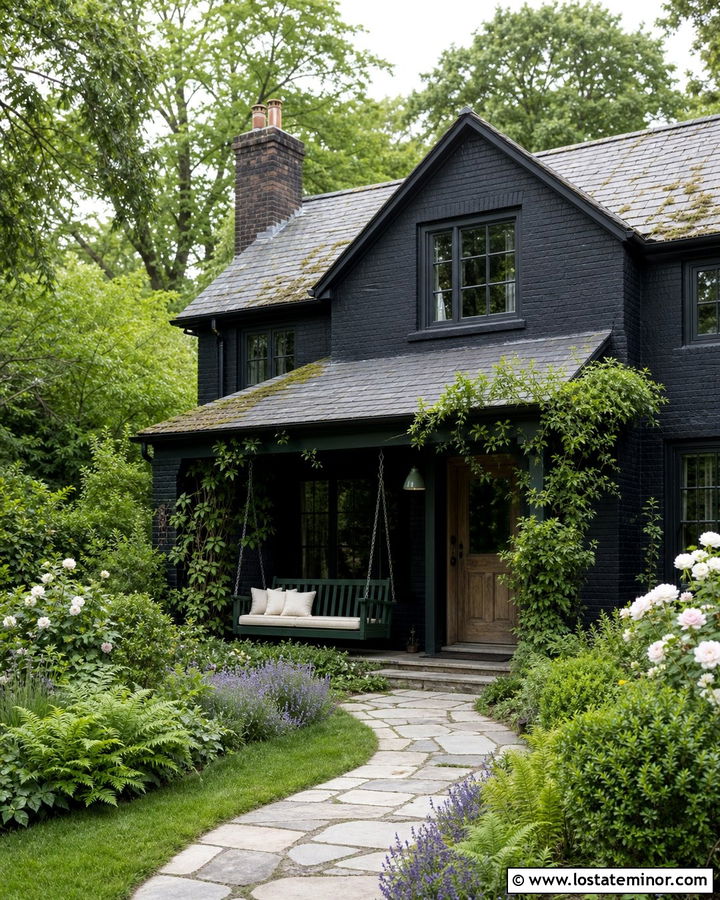
Deep green can bring a gentle garden character to a jet-black English cottage. Use textured black stucco or painted brick on the facade, with charcoal trim around small divided-light windows. Place a forest-green wood swing beneath a vine-covered porch roof, then add cream cushions to keep the seat visible. A weathered oak door, aged brick chimney, and mossy slate roof will give the house a collected appearance. Frame the curved stone path with roses, lavender, ferns, and informal hedges. The green swing connects visually to this layered planting while providing enough contrast to stand apart from the wall. Instead of making the cottage feel harsh, the jet-black exterior allows the greenery, masonry, and weathered materials to become the most noticeable parts of the design.
29. Jet Black Contemporary House With Floating Swing
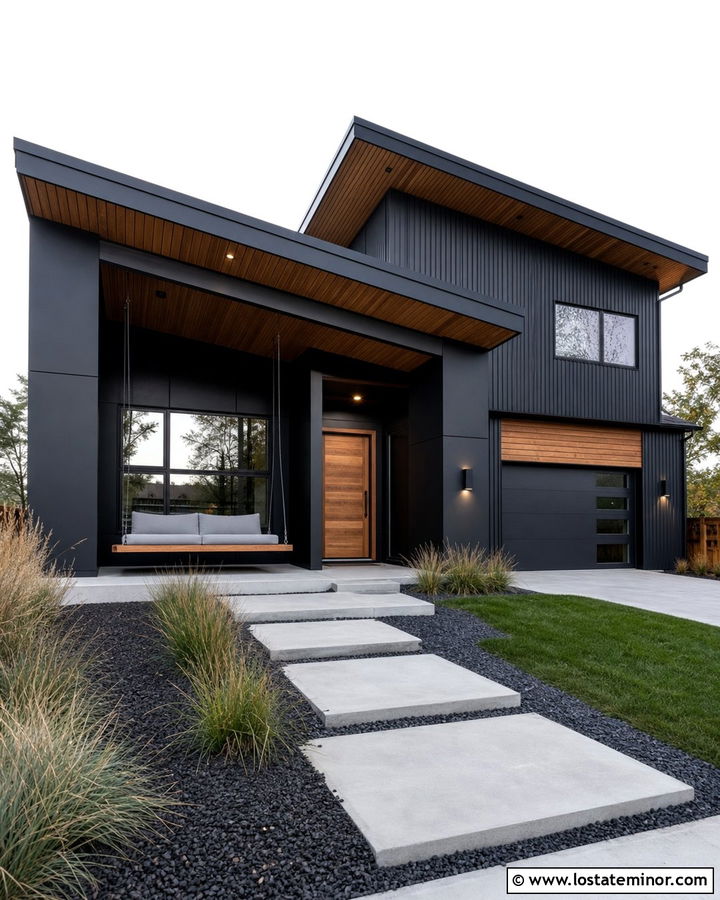
A floating swing can enhance the open, sculptural quality of a contemporary home. Use jet-black vertical siding and smooth panels across a facade with asymmetrical rooflines and large windows. Suspend a wide cedar platform from nearly invisible black cables beneath a cantilevered porch roof. Keep the cushions light gray and neatly tailored so the swing looks intentional rather than casual. Repeat cedar on the front door, soffits, and a section of the garage facade. Large concrete slabs, black gravel, and architectural grasses can create a precise approach to the entrance. The dramatic siding provides a continuous backdrop, while the swing introduces warmth and movement. Together, the materials produce an exterior that is bold, comfortable, and visually connected from roofline to landscape.
30. Jet Black Traditional House With Curved Wood Swing
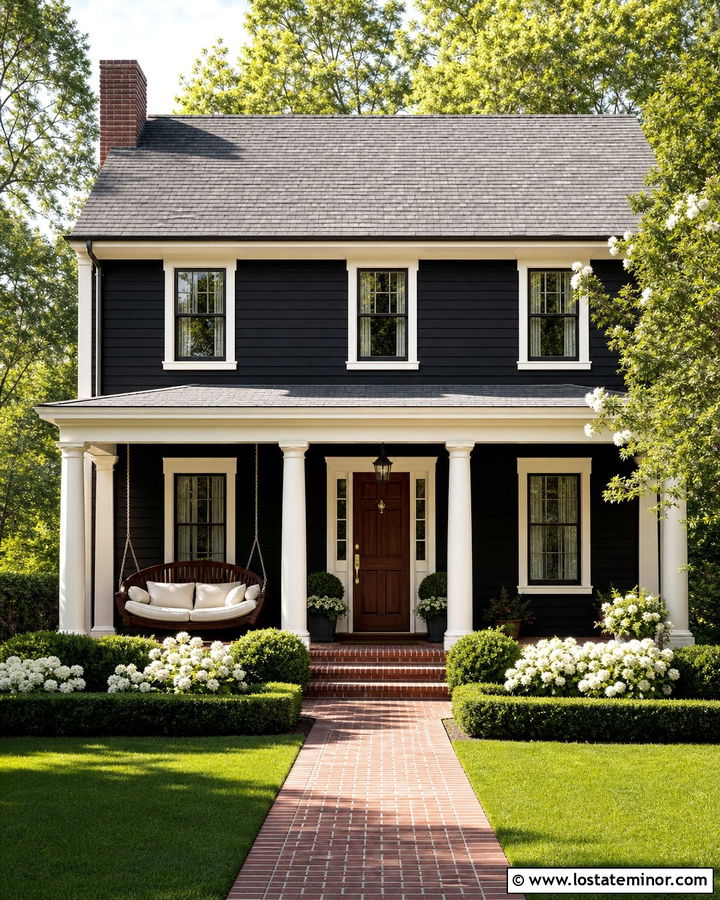
A traditional house can adopt jet black without losing its familiar, welcoming character. Paint the lap siding deep black, then use restrained ivory trim around the windows, eaves, porch columns, and railings. Choose a curved mahogany swing with rolled arms and a slatted back to complement the home’s classic details. Coordinate it with a mahogany front door and warm brass hardware. A medium-gray shingle roof, brick porch floor, and aged brick chimney will add variation without distracting from the palette. Plant white flowering shrubs, deep green hedges, and a pair of small ornamental trees near the walkway. The rich wood swing bridges the dark siding and traditional masonry, creating an entry that feels established, comfortable, and thoughtfully updated rather than overly trendy.
Conclusion:
The most successful 30 Jet Black House Design With Swing Ideas treat the swing as part of a complete architectural palette. Black siding creates the dramatic foundation, but wood, stone, brick, warm white trim, and thoughtful landscaping determine whether the finished home feels welcoming. Match the swing’s material or color to another visible feature, such as the front door, porch ceiling, columns, or garage door. This repetition will make even a simple swing appear intentional. Before selecting exterior finishes, view samples in direct sun and shade beside the roof and masonry. Whether your home is modern, rustic, coastal, or traditional, a coordinated swing can soften jet black and transform the porch into a memorable curb-appeal feature.

Related posts: