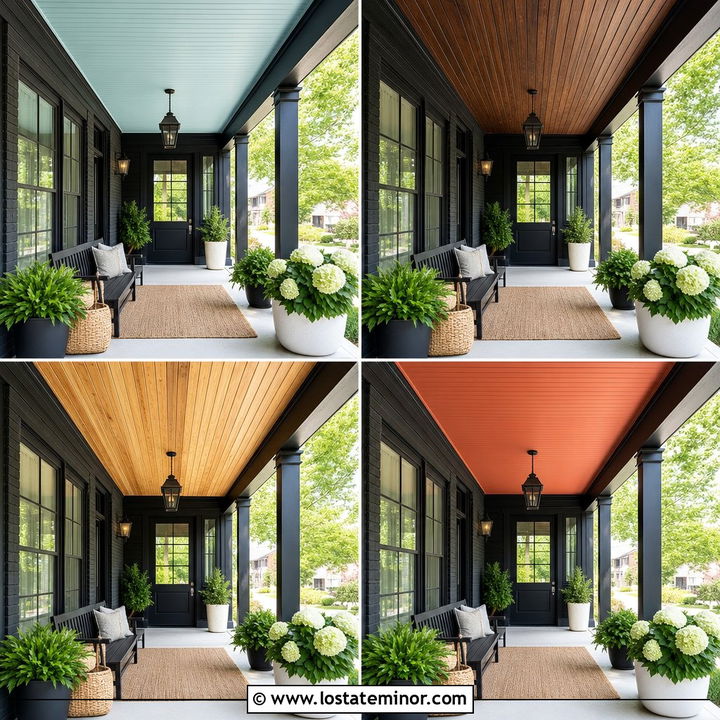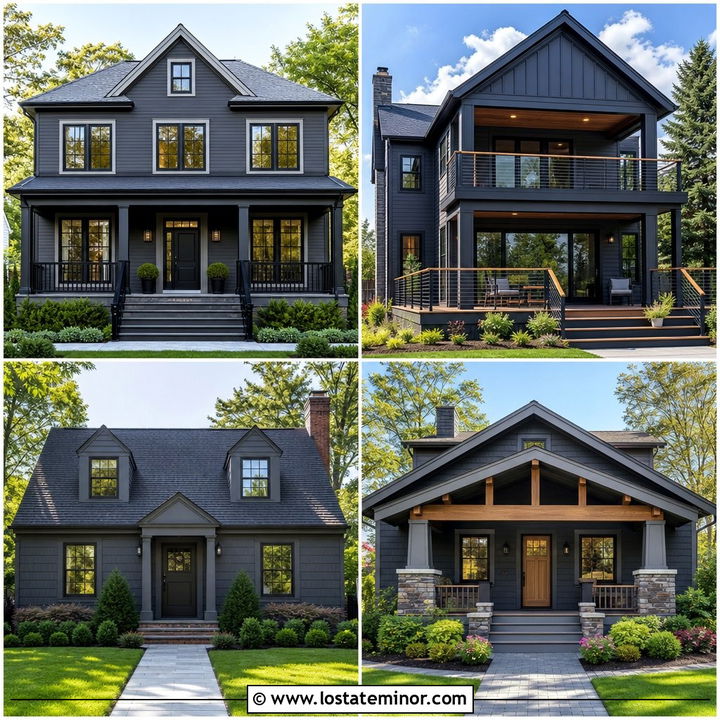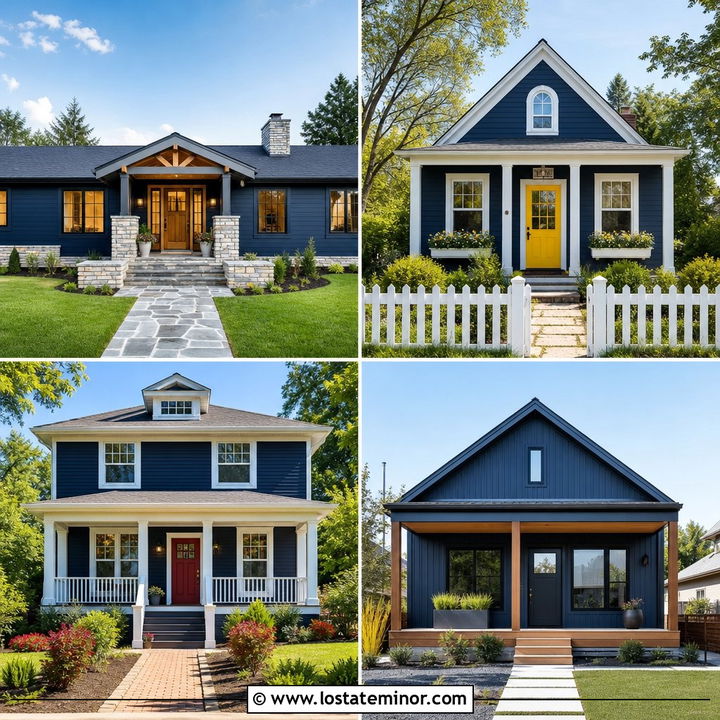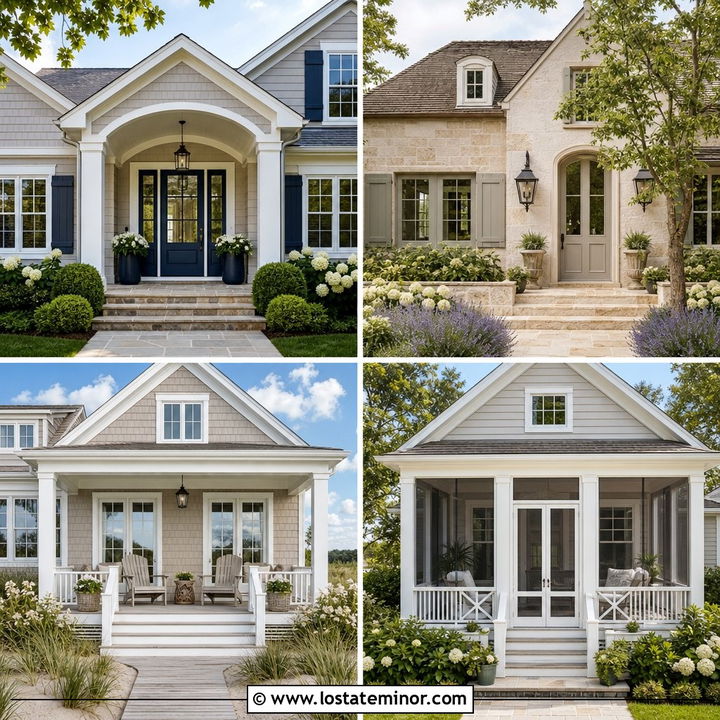
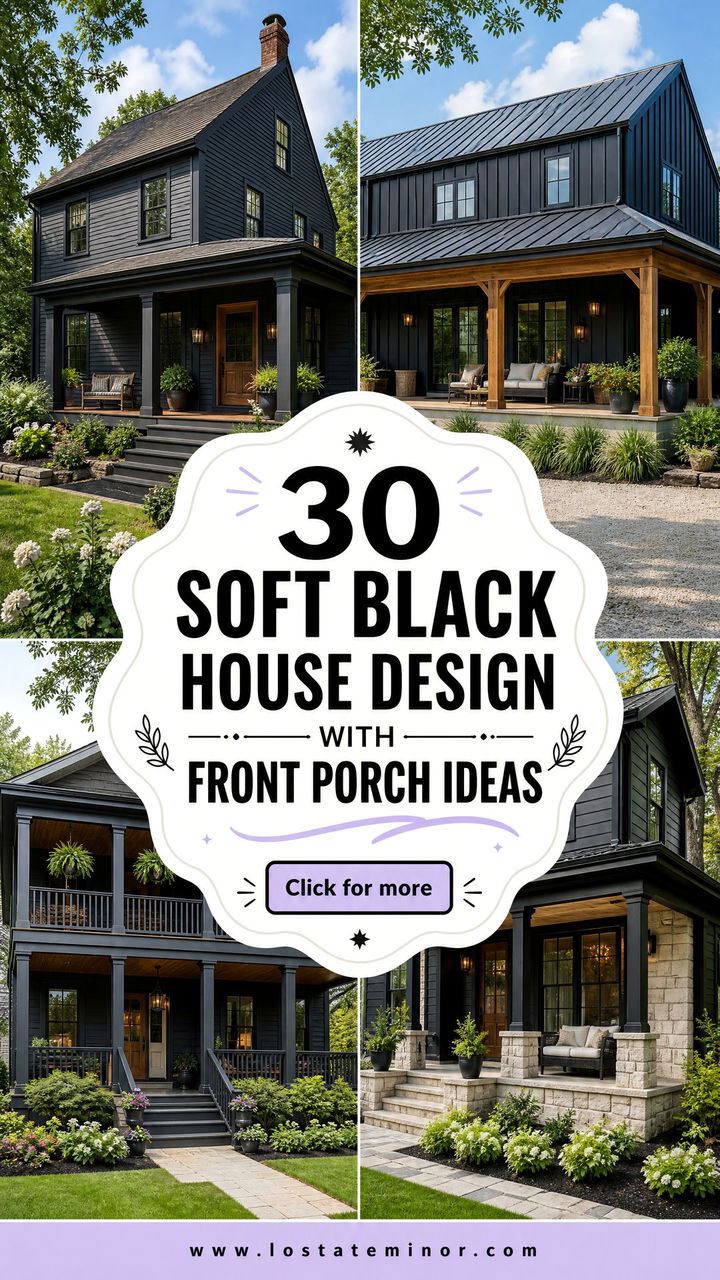
Soft black brings depth to a home exterior without creating the severity of a true jet black finish. It can make traditional architecture feel updated, give modern homes a warmer presence, and create a striking background for wood, brick, stone, and landscaping. The front porch is especially important because it breaks up the dark facade and makes the entrance feel inviting. Current exterior inspiration commonly balances black siding with natural wood, pale masonry, contrasting trim, and welcoming covered entries. () The right combination depends on the home’s architecture, roof color, sunlight, and existing materials. From farmhouse porches to compact bungalow entries, these complete exterior schemes show how to use contrast with purpose. Explore these **30 Soft Black House Design With Front Porch Ideas** for practical curb-appeal inspiration.
1. Soft Black Farmhouse With Cedar Front Porch
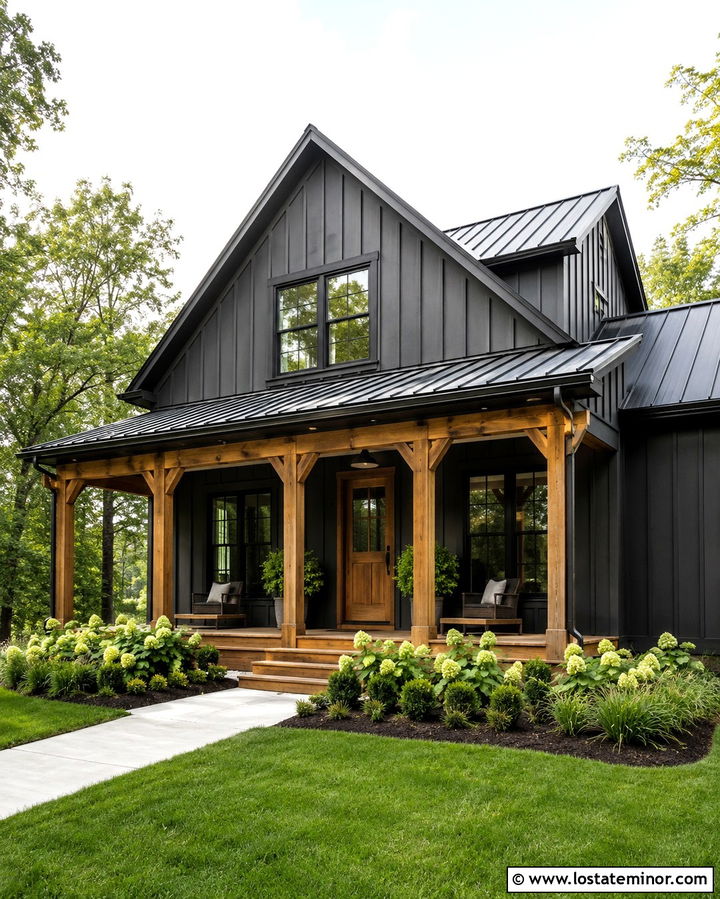
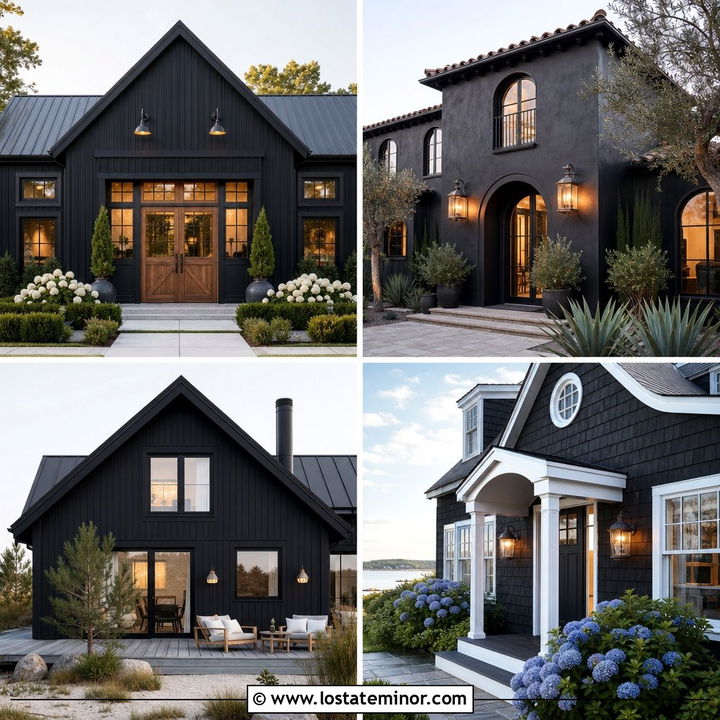
A soft black modern farmhouse feels warmer when the front porch introduces natural cedar. Use vertical board-and-batten siding across the main facade, then frame the covered porch with substantial cedar posts and matching beams. A medium cedar stain creates noticeable contrast without turning orange beside the dark walls. Keep the window frames black for a streamlined appearance, and choose a warm white porch ceiling to reflect light around the entrance. A charcoal metal roof can connect the siding and porch into one cohesive exterior. Finish the look with a simple wood front door, pale concrete steps, and loose green landscaping. This combination works especially well on a symmetrical farmhouse because the porch prevents the broad black facade from looking flat or overly formal.
2. Soft Black Craftsman With Stone Porch
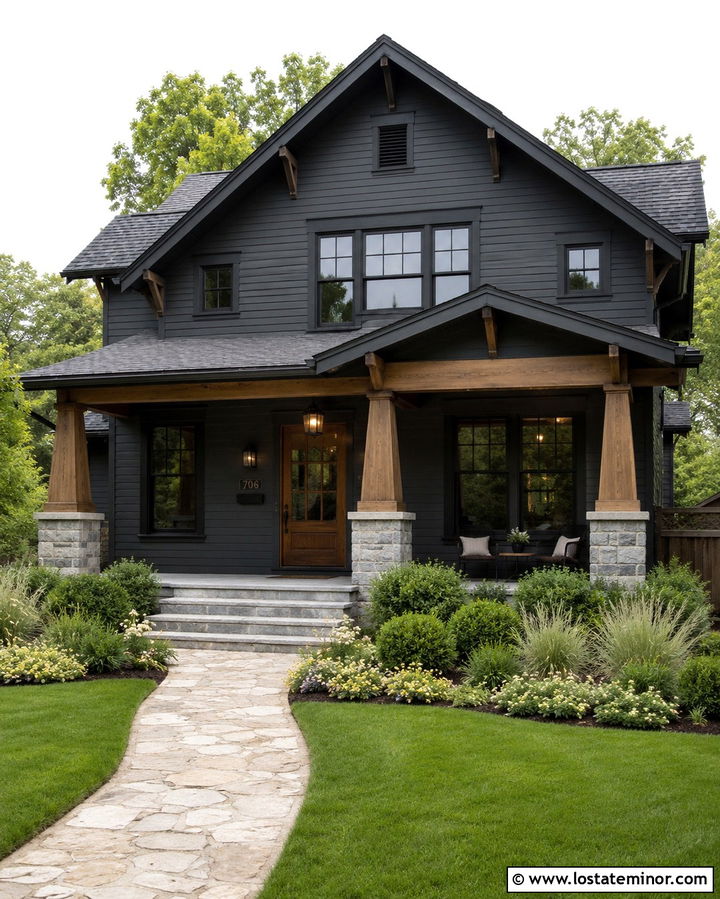
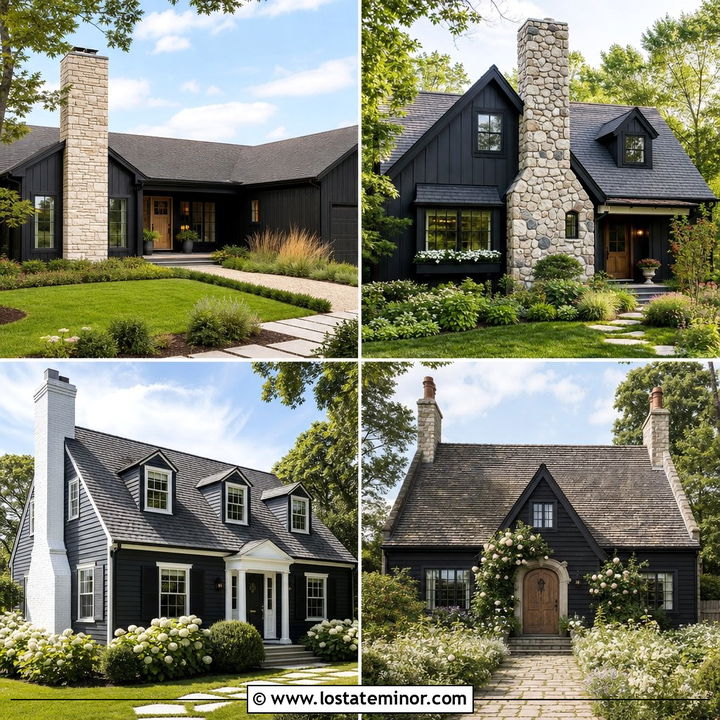
Craftsman architecture already offers layers of texture, making it a natural match for a soft black exterior. Cover the upper walls in dark horizontal lap siding and use light gray fieldstone across the porch foundation, steps, and tapered column bases. Stained wood columns can bridge the color difference between the siding and masonry. A deep overhanging roof with exposed rafters adds character while providing plenty of shade. Select a warm oak door with divided glass, then repeat that wood tone in the porch ceiling or gable detail. Black-framed windows and bronze lanterns keep the facade grounded. Low shrubs and ornamental grasses soften the stone edges, creating a complete Craftsman exterior that feels substantial, welcoming, and thoughtfully balanced from the curb.
3. Soft Black Ranch With White Porch Columns
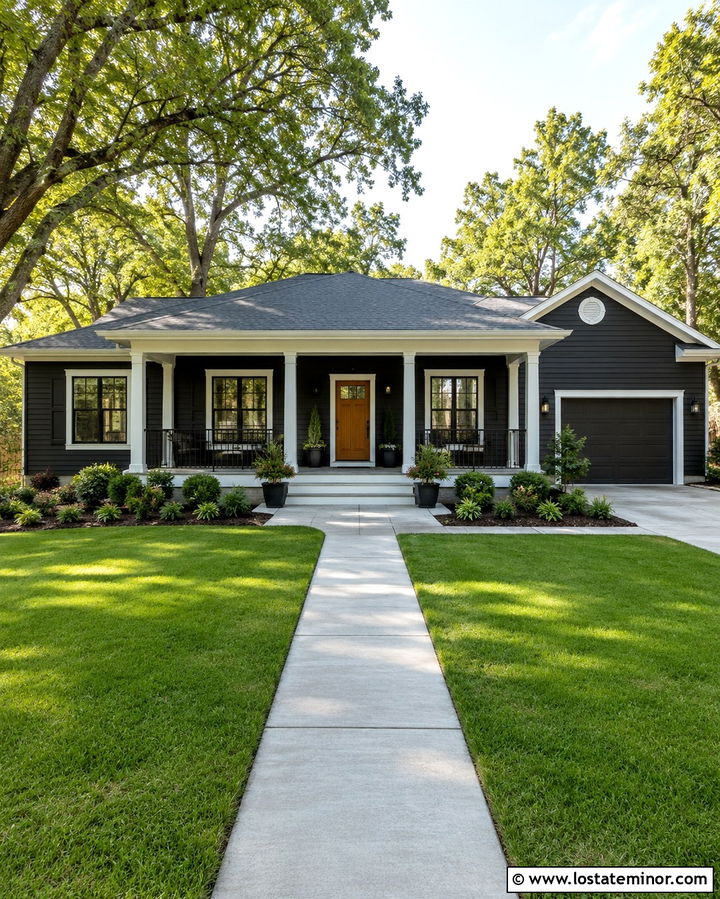
Could a simple ranch house handle a dark exterior? Soft black siding can make its long, low profile appear more intentional, especially when white porch columns add a steady rhythm across the facade. Use horizontal lap siding to emphasize the home’s clean lines, then paint the fascia, porch ceiling, and square columns a gentle creamy white. The lighter details will define the covered entrance without creating an overly sharp black-and-white scheme. A medium-gray shingle roof offers a softer transition above the siding. Bring warmth to the center with a natural wood front door and two large planters. Wide concrete porch steps, black metal railings, and layered foundation shrubs complete this approachable update while preserving the relaxed character of a one-story ranch.
4. Soft Black Colonial With Brick Front Porch
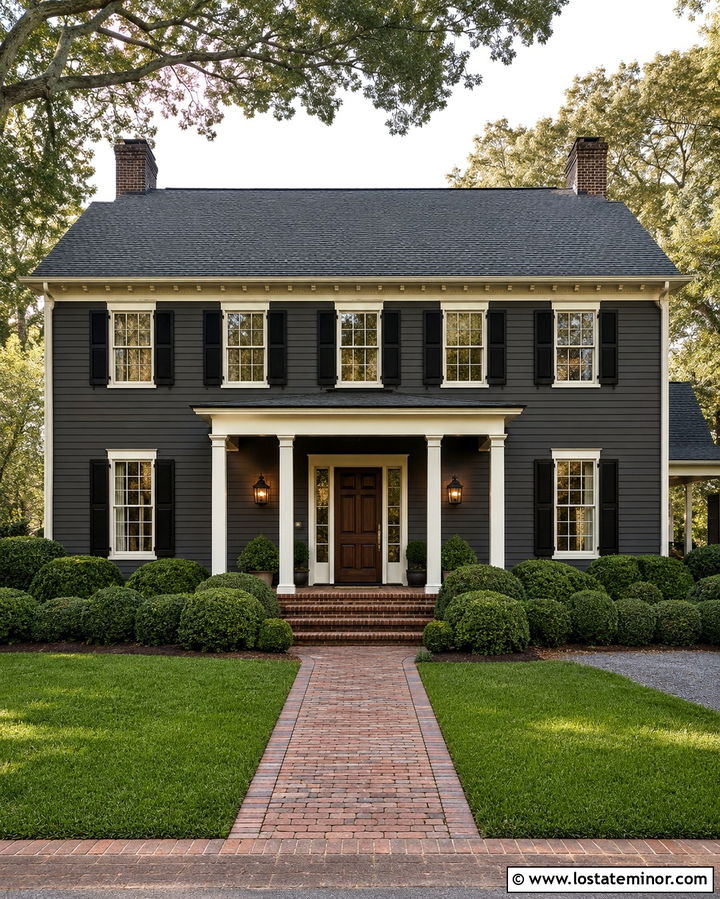
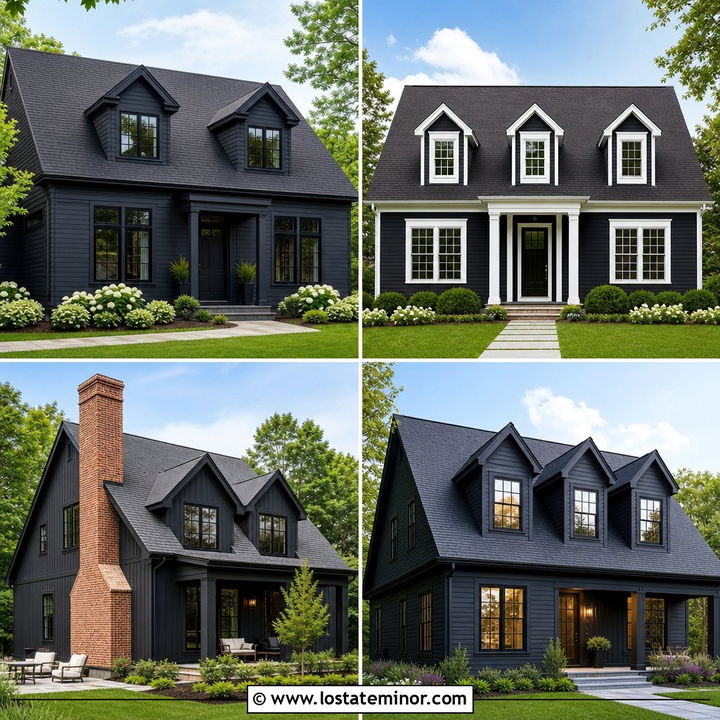
Traditional red brick can keep a soft black Colonial from feeling too new or trendy. Paint the symmetrical siding a muted charcoal black while leaving the porch floor, steps, and low foundation walls in their original brick finish. Cream trim around the windows and roofline respects the home’s classic architecture and lightens the formal facade. Use four simple porch columns rather than ornate supports, allowing the brick and dark siding to remain the main features. A rich burgundy or stained mahogany door works beautifully at the center. Add antique-bronze lanterns, black shutters, and clipped evergreen shrubs for structure. The completed exterior feels established and polished, with enough warm color to prevent the soft black paint from overpowering the home’s balanced Colonial proportions.
5. Soft Black Cottage With Natural Wood Porch
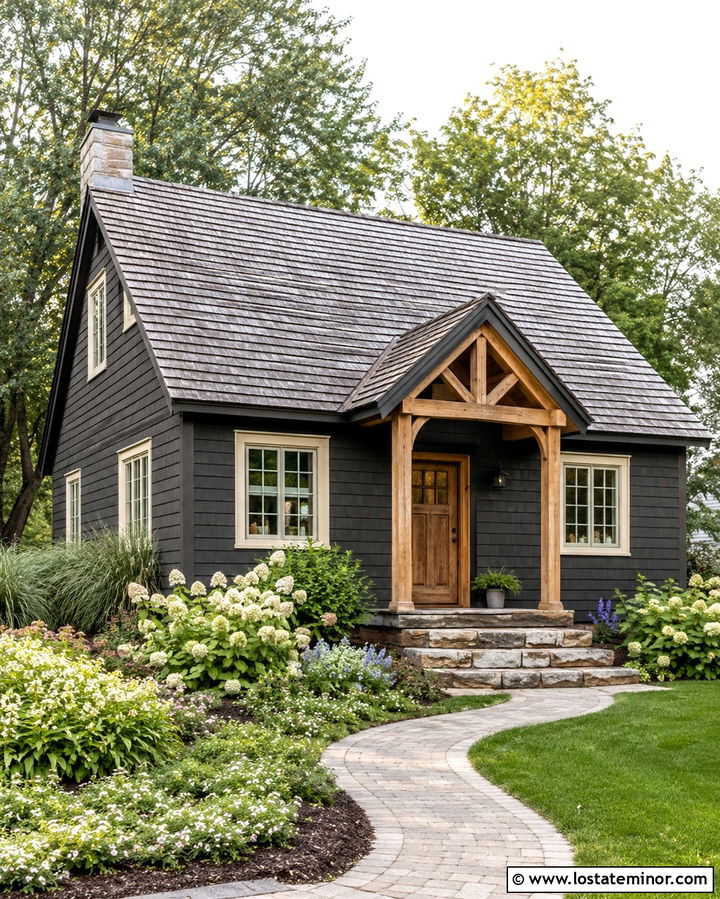
Soft black gives a small cottage a cozy, storybook appearance when it is paired with unfinished or lightly stained wood. Choose narrow lap siding or textured shingles for the walls, then build a compact gabled porch with exposed wood rafters and simple timber posts. A natural wood door can blend visually with the porch structure, creating one warm focal point against the dark facade. Use muted cream around the windows instead of bright white, which may feel too crisp for a casual cottage. Weathered gray roof shingles and irregular stone porch steps add another layer of softness. Surround the entry with flowering shrubs, ground cover, and a curved walkway. These relaxed details make the dark house feel charming, lived-in, and connected to its garden setting.
6. Soft Black Bungalow With Tapered Porch Columns
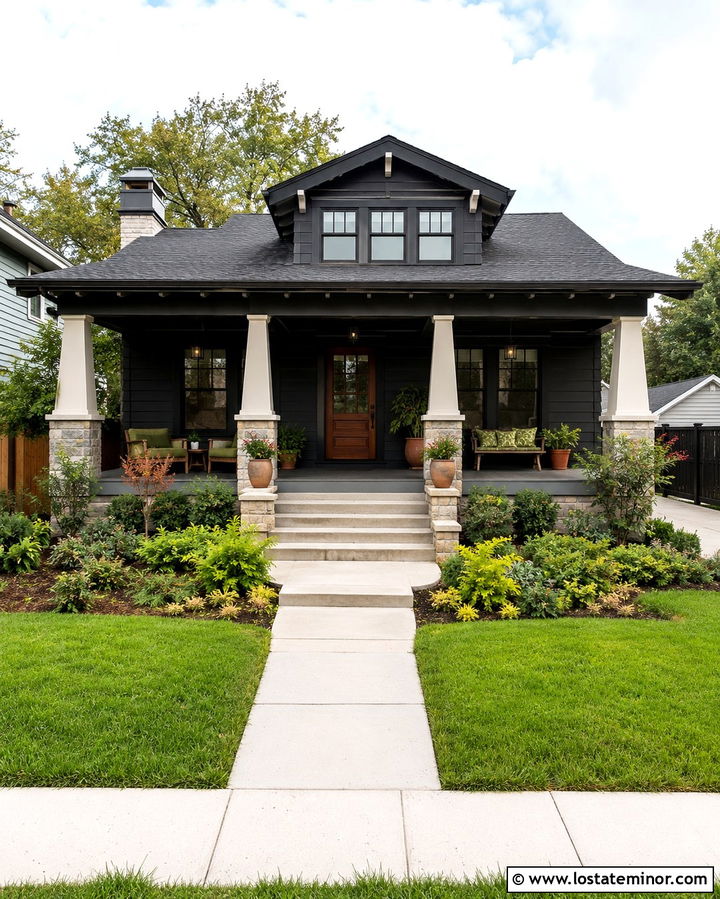
A deep front porch is one of a bungalow’s strongest architectural features, so let it provide texture and dimension against soft black siding. Use wide tapered columns with pale stone bases to support the low porch roof. Warm off-white trim can outline the windows, beams, and exposed rafter tails while keeping the exterior from becoming too dark. For the door, consider a medium walnut finish with small Craftsman-style glass panels. A muted charcoal roof will blend into the upper facade, allowing the porch details to take priority. Add olive green porch furniture, terracotta planters, and broad concrete steps for a comfortable, grounded look. The result honors the bungalow’s handcrafted character while giving its familiar shape a dramatic but highly approachable color update.
7. Soft Black Cape Cod With White Trim Porch
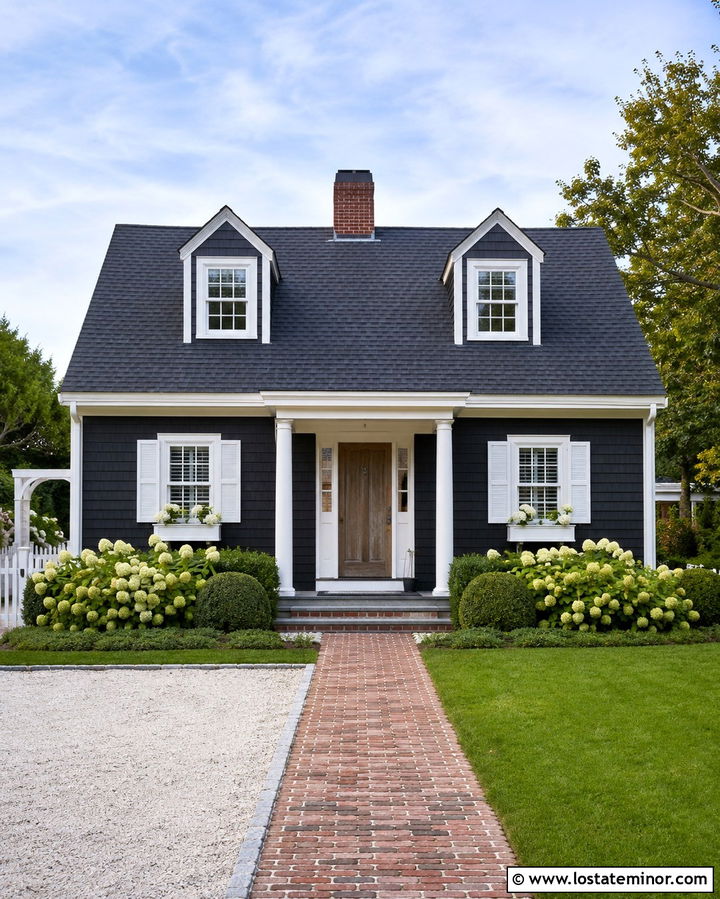
The compact symmetry of a Cape Cod house looks crisp in soft black, especially when a white front porch highlights the center entrance. Cover the facade in dark cedar shingles or smooth lap siding, then use warm white on the porch columns, window casings, fascia, and dormers. Keep the porch modest so it complements the traditional proportions rather than hiding them. A weathered cedar door introduces natural warmth, while a blue-gray roof connects the coastal materials. Black shutters can remain understated against the dark siding, or they can be replaced with simple white window boxes for more contrast. Hydrangeas, clipped hedges, and a brick walkway bring softness to the foreground. This full exterior scheme feels classic, tidy, and well suited to a smaller home.
8. Soft Black Modern House With Concrete Porch
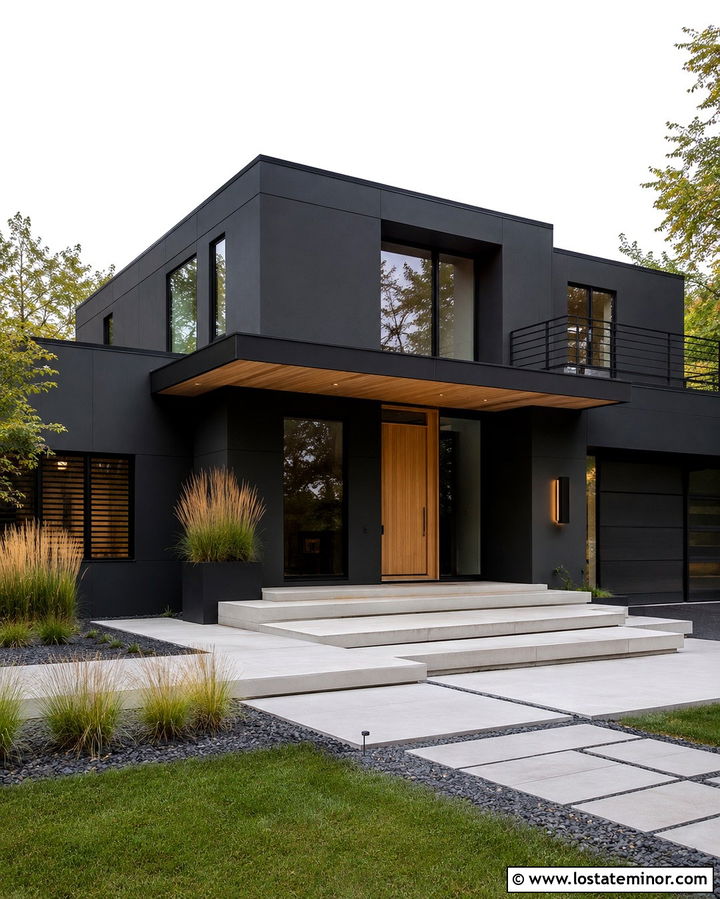
Clean geometry makes a soft black modern house feel sophisticated rather than severe. Use smooth fiber-cement panels or narrow vertical siding across the facade, paired with an oversized concrete porch platform and broad floating steps. A flat porch canopy lined with warm wood creates shelter while introducing a welcome organic texture. Choose a large pivot door in natural white oak and repeat that finish on the soffit. Black window frames can disappear into the siding, producing an uninterrupted appearance. Instead of traditional porch railings, use low concrete walls or slim black metal guards. Structured grasses, gravel beds, and rectangular planters suit the architecture. The pale concrete, warm wood, and restrained landscaping give the dark exterior enough contrast while preserving its sharp, minimalist character.
9. Soft Black Split-Level With Covered Front Porch
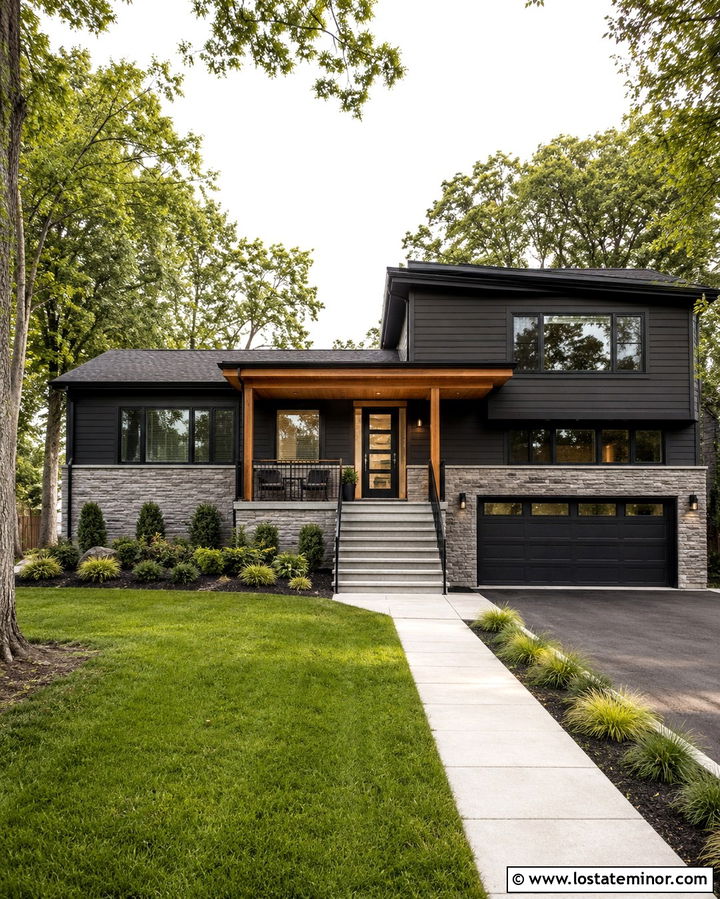
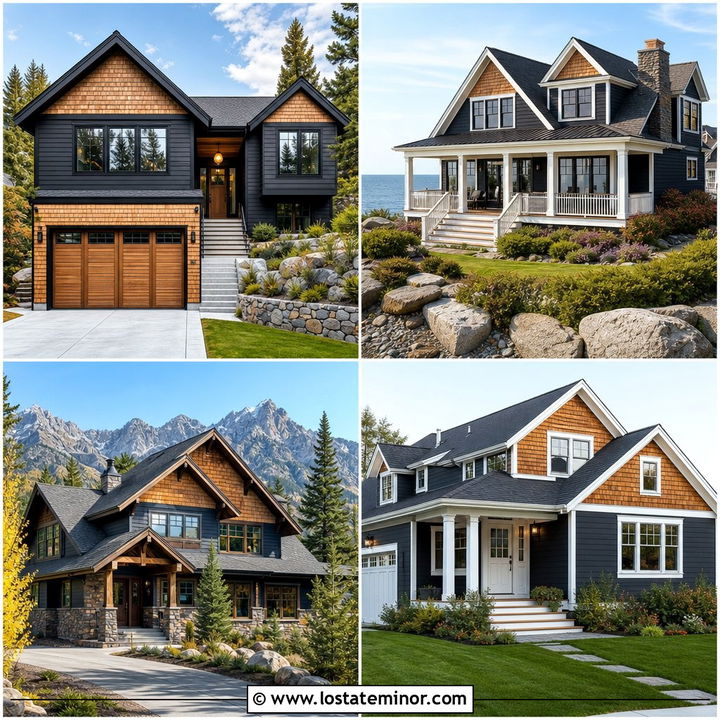
A new covered porch can visually organize the uneven facade of a split-level home. Wrap the main floors in soft black horizontal siding, then place a simple shed-roof porch across the entrance and nearby windows. Cedar posts and a matching wood ceiling create warmth at eye level. Use light gray stone around the lower level or garage foundation to connect the house with the ground. A glass-paneled wood door helps brighten the recessed entry, while narrow black railings keep the porch open. Repeat the soft black finish on the garage door so it blends into the architecture. Wide steps and a direct walkway improve the arrival experience. This coordinated approach turns separate levels and materials into one balanced, updated exterior composition.
10. Soft Black Victorian With Wraparound Porch
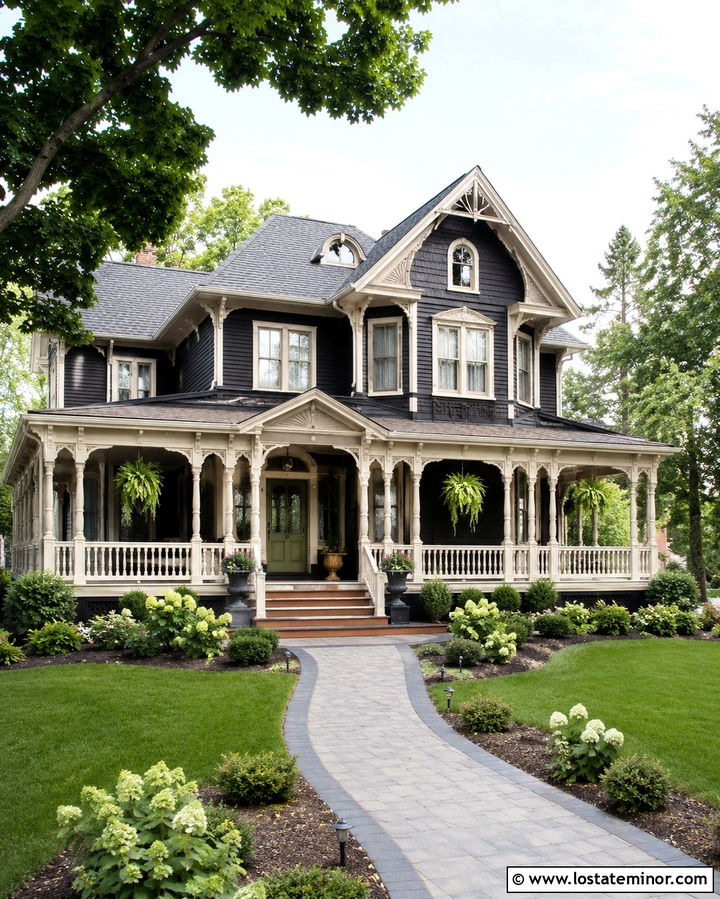
Victorian details do not have to rely on several bright paint colors. A soft black body can create an elegant backdrop for a wraparound porch finished in warm ivory. Use the lighter color on turned columns, railings, brackets, window trim, and decorative gable elements so the craftsmanship remains visible. A muted sage green front door adds personality without competing with the ornamentation. Consider medium-gray roof shingles rather than solid black roofing to keep the upper half from becoming visually heavy. The porch floor can be stained walnut or painted a subdued gray-green. Add hanging ferns, simple benches, and traditional lanterns in an aged brass finish. Together, these choices create a richly detailed Victorian exterior that feels dramatic, graceful, and welcoming instead of overly busy.
11. Soft Black Cabin With Timber Front Porch
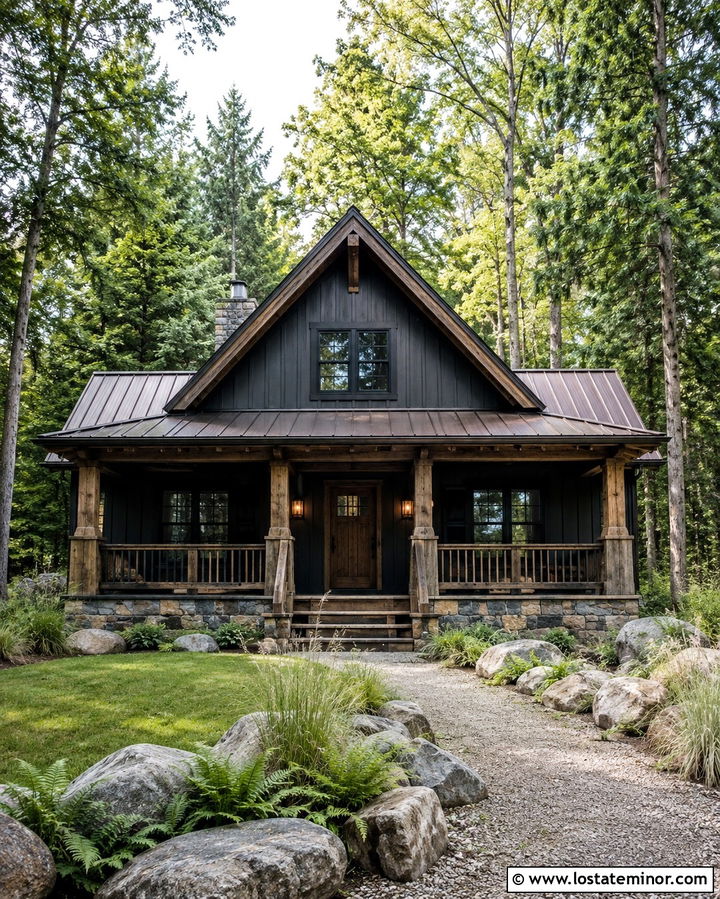
Imagine a dark cabin surrounded by tall trees, with thick timber framing glowing warmly at the entrance. Soft black vertical siding allows the house to settle naturally into a wooded setting, while a full timber porch gives the facade strength and dimension. Use rough-sawn cedar or Douglas fir for the posts, beams, railing, and porch ceiling. A stone foundation in mixed gray and brown tones can connect the structure to the landscape. Choose a simple plank-style front door stained to match the beams. A dark bronze metal roof supports the rustic palette without disappearing completely into the siding. Broad wood steps, native grasses, boulders, and an informal gravel path finish the look. The combination feels rugged, comfortable, and intentionally connected to nature.
12. Soft Black Tudor With Arched Porch
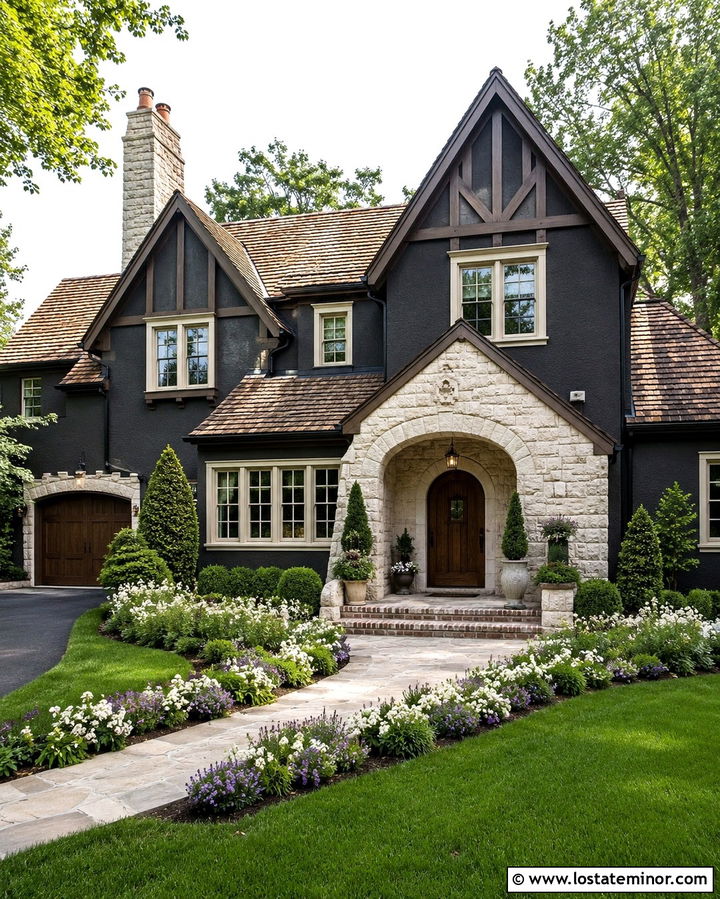
A soft black Tudor exterior can feel especially refined when the front porch emphasizes the style’s arches and masonry. Use dark stucco or painted brick across the main walls, then create a recessed arched porch lined with warm limestone. Stained timber accents in the gables add familiar Tudor character without overwhelming the facade. A rounded wood front door with black iron hardware should sit clearly within the pale stone opening. Cream window trim can provide gentle definition, while a weathered brown roof keeps the color scheme from becoming monochromatic. Lantern-style sconces, brick porch flooring, and structured evergreen landscaping reinforce the traditional appearance. This complete exterior treats black as a sophisticated neutral while allowing the entrance, craftsmanship, and varied materials to remain highly visible.
13. Soft Black Saltbox With Simple Front Porch
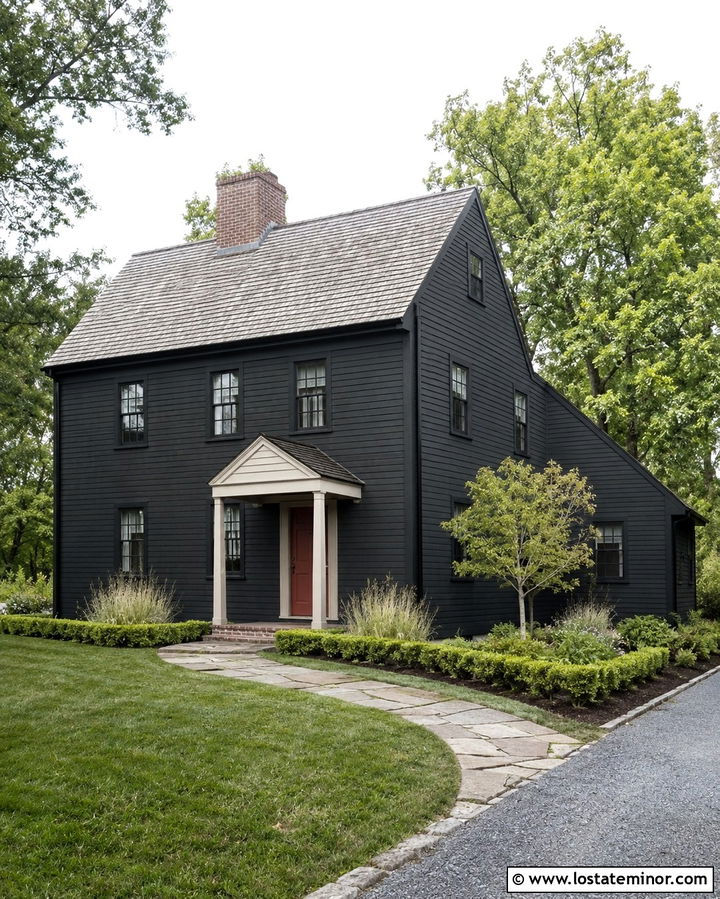
The quiet shape of a Saltbox house benefits from a restrained porch that respects its historic lines. Paint the wood clapboard siding soft black, then add a shallow covered porch with square columns and a simple gabled roof. Warm putty trim offers enough contrast around the windows and door without making the facade appear sharply outlined. A traditional six-panel door in muted brick red creates a period-friendly focal point. Use gray cedar roof shingles or a weathered architectural shingle to complement the dark body. The porch floor can remain natural stone, brick, or lightly stained wood. Keep the landscaping equally simple with grasses, low hedges, and one small ornamental tree. The finished exterior feels authentic and understated while gaining noticeably stronger curb appeal.
14. Soft Black Scandinavian House With Slatted Porch
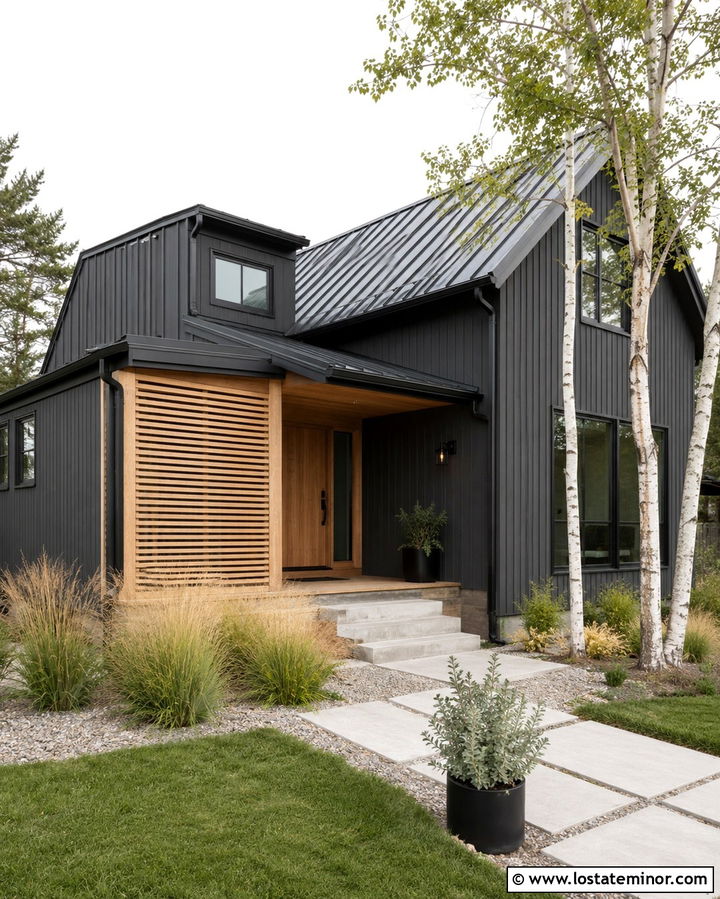
Soft black siding suits Scandinavian-inspired architecture because the color highlights simple shapes and natural materials. Cover the entire facade in narrow vertical cladding, maintaining a consistent dark finish around the windows and roofline. At the entry, add a sheltered porch with pale wood slats wrapping one side for privacy. Carry the same wood across the porch ceiling and minimalist front door. A charcoal standing-seam roof supports the monochromatic structure, while light concrete steps prevent the base from appearing heavy. Skip decorative shutters and complicated trim. Instead, use clean black windows, a single modern wall light, and streamlined planters. Wispy grasses, birch trees, and a gravel walkway reinforce the natural mood. The wood-lined porch becomes a warm, inviting opening within the simple black form.
15. Soft Black Barndominium With Metal Roof Porch
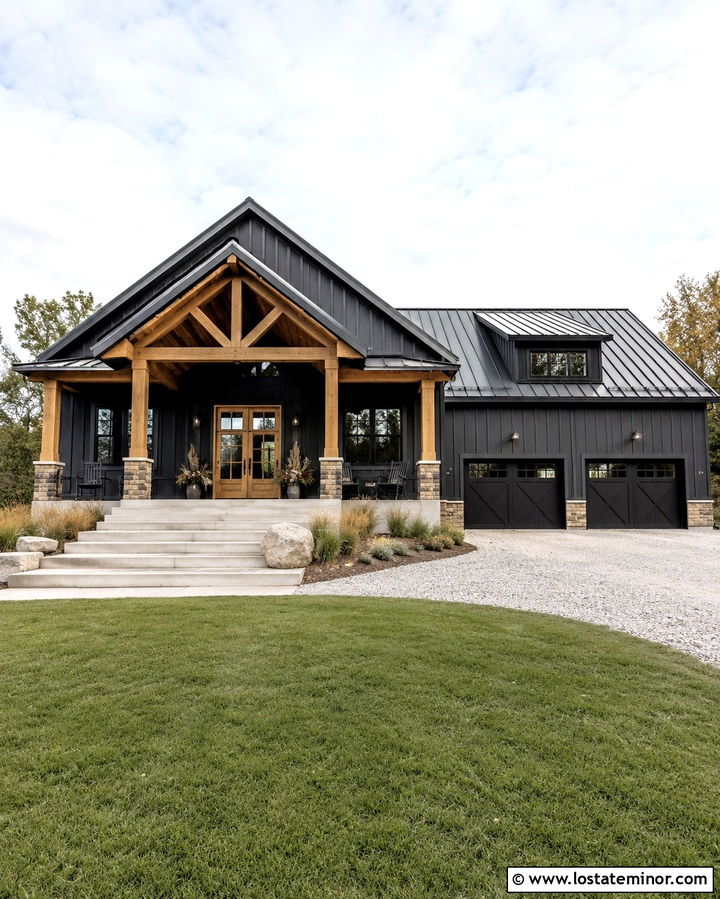
The broad facade of a barndominium needs a substantial porch to keep its scale comfortable. Use soft black vertical metal or board-and-batten siding, then extend a deep porch across the main living area. Heavy cedar posts and exposed trusses add warmth and help distinguish the residential entrance from the garage or workshop doors. Choose a matte charcoal metal roof, but line the porch ceiling with honey-toned wood for contrast. A pair of wood-and-glass front doors can create a strong focal point at the center. Keep the garage doors soft black so they visually recede. A stone skirt, large concrete steps, and relaxed country landscaping complete the exterior. The final scheme feels modern and cohesive while maintaining the practical, open character of barn-inspired architecture.
16. Soft Black Shingle House With Coastal Porch
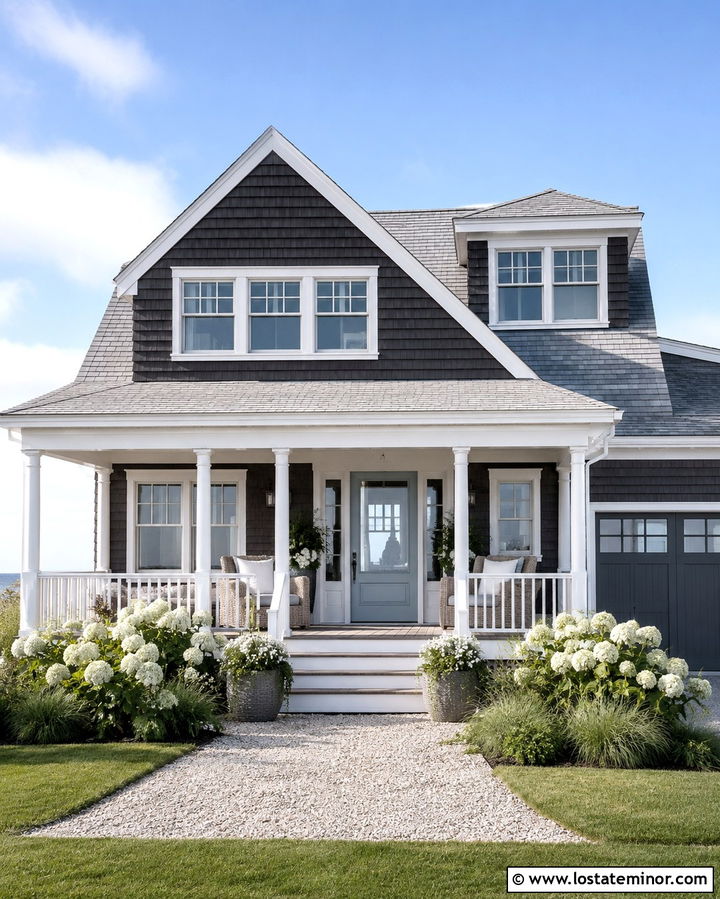
A coastal house can wear soft black beautifully when the surrounding finishes remain light and breezy. Use dark charcoal cedar shingles across the facade, paired with a bright but slightly warm white porch, window trim, and roof fascia. A covered front porch with slender columns and open railings preserves a relaxed appearance. Paint the front door a dusty blue-gray to echo the sky and nearby water. Weathered wood porch flooring and pale gray roof shingles keep the exterior from feeling too formal. Add woven seating, oversized planters, and ornamental grasses that move naturally in the breeze. A crushed-shell or light stone walkway can provide additional contrast. This complete scheme combines coastal texture with dark color while keeping the entrance fresh, casual, and welcoming.
17. Soft Black Prairie House With Low Front Porch
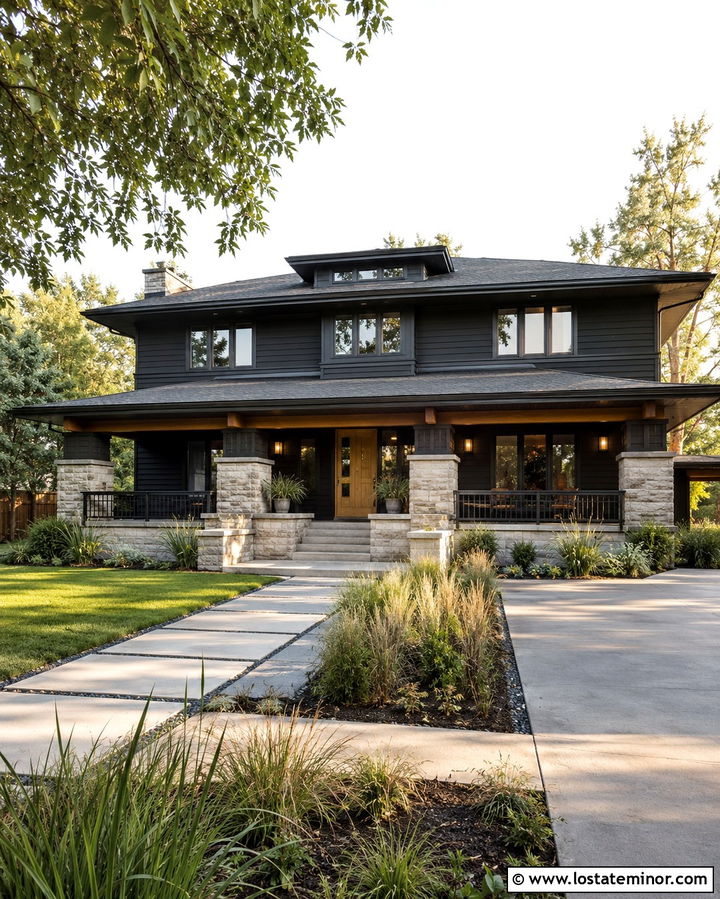
Long horizontal lines define a Prairie-style home, and soft black can make those lines appear even more deliberate. Choose horizontal lap siding or painted brick for the main exterior, then continue the low roof across a broad front porch. Use warm tan stone for the porch piers, foundation, and chimney to break up the dark walls. Stained wood beams beneath the deep eaves add another natural layer. A wide front door in quarter-sawn oak complements the architecture and reinforces the entrance without relying on a bright accent color. Keep railings low and simple, or omit them where possible. Linear planting beds, horizontal porch lights, and rectangular concrete pavers support the overall geometry. The finished house feels grounded, spacious, and closely connected to its landscape.
18. Soft Black Mediterranean House With Stucco Porch
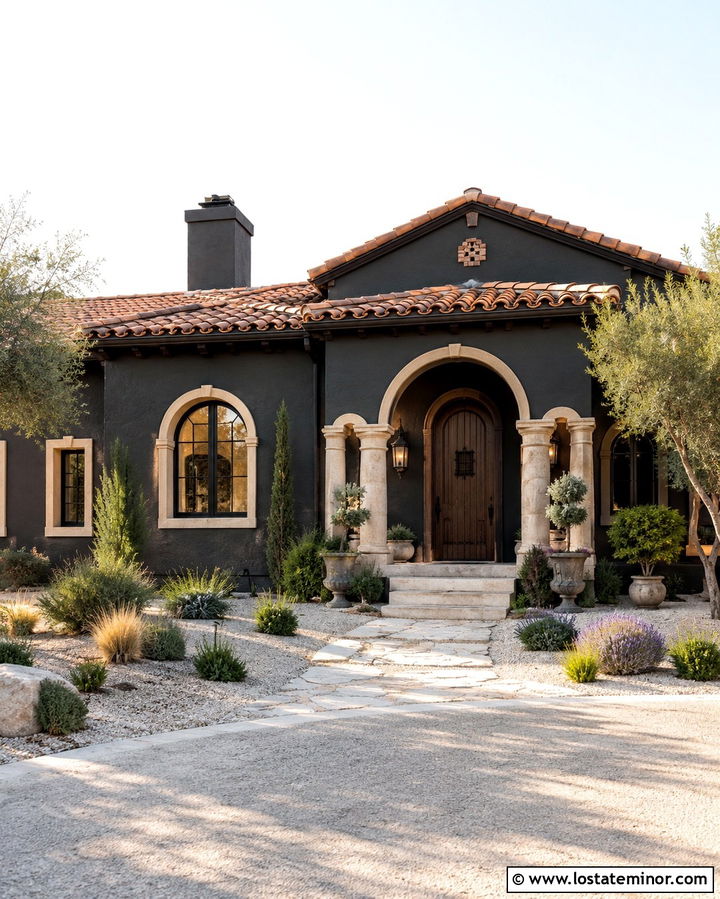
Dark stucco can give a Mediterranean house an unexpected sense of depth while preserving its sculptural form. Select a warm soft black with subtle brown undertones, then pair it with a covered porch featuring rounded arches and creamy limestone columns. A natural oak or walnut door offers warmth at the center, especially when surrounded by hand-forged black hardware. Keep the roof in weathered terracotta so the home retains its regional character. Pale stone porch flooring and steps will brighten the entry and echo the column material. Instead of crisp white trim, use a muted sand color around selected windows. Olive trees, rosemary, ornamental grasses, and gravel beds complete the setting. The resulting exterior feels earthy, refined, and distinctive without losing its Mediterranean identity.
19. Soft Black A-Frame With Raised Front Porch
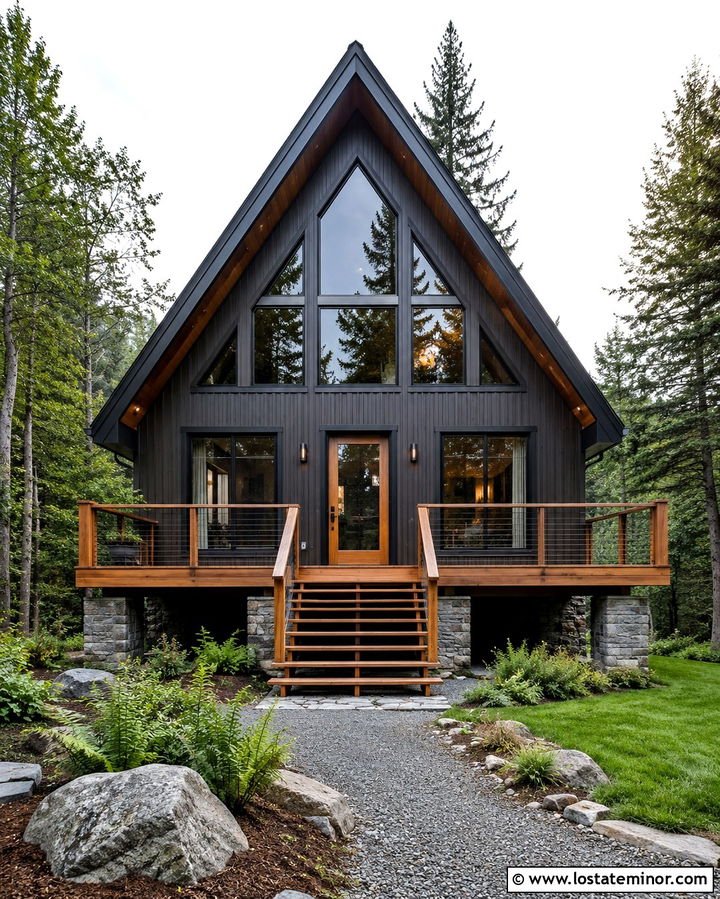
An A-frame’s steep roof can dominate the exterior, so a raised front porch should feel integrated rather than attached. Use soft black siding across the triangular facade and continue the same color onto the roof fascia. Build the porch deck, steps, and exposed supports from medium-toned cedar to create a warm base beneath the dark structure. Large black-framed windows can fill the upper facade, while a glass-and-wood door keeps the lower entrance welcoming. Slim cable railings preserve views and prevent the deck from looking bulky. Stone piers beneath the porch can provide a sturdy transition to the landscape. Surround the home with native shrubs, ferns, and an informal gravel approach. This scheme gives the dramatic roofline a comfortable, human-scaled entrance.
20. Soft Black Duplex With Shared Front Porch
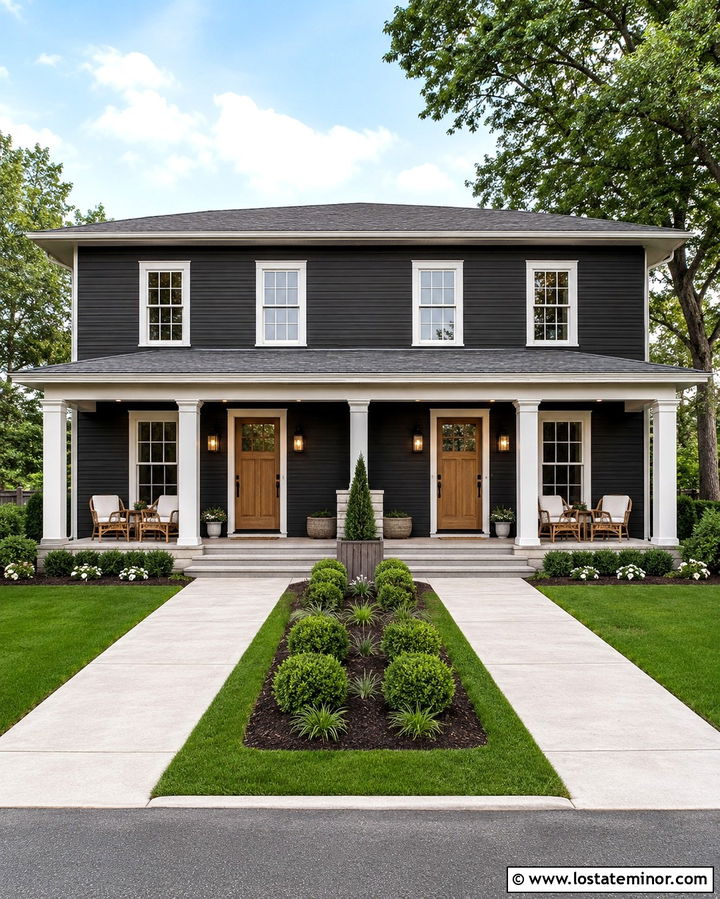
A shared front porch can make a duplex look like one thoughtfully designed home instead of two disconnected units. Paint the full facade soft black and use one continuous porch roof to visually connect both entrances. Warm white columns and fascia create structure, while matching natural wood doors give each unit equal importance. Separate the seating zones with planters, a subtle railing section, or a central pair of columns rather than using a solid divider. A medium-gray roof and pale concrete porch floor will keep the broad exterior balanced. Match the door hardware, lighting, and house numbers for consistency. Symmetrical shrubs and twin walkways can complete the composition. The unified color scheme creates curb appeal while still allowing each entrance to feel private and clearly defined.
21. Soft Black Small House With Screened Front Porch
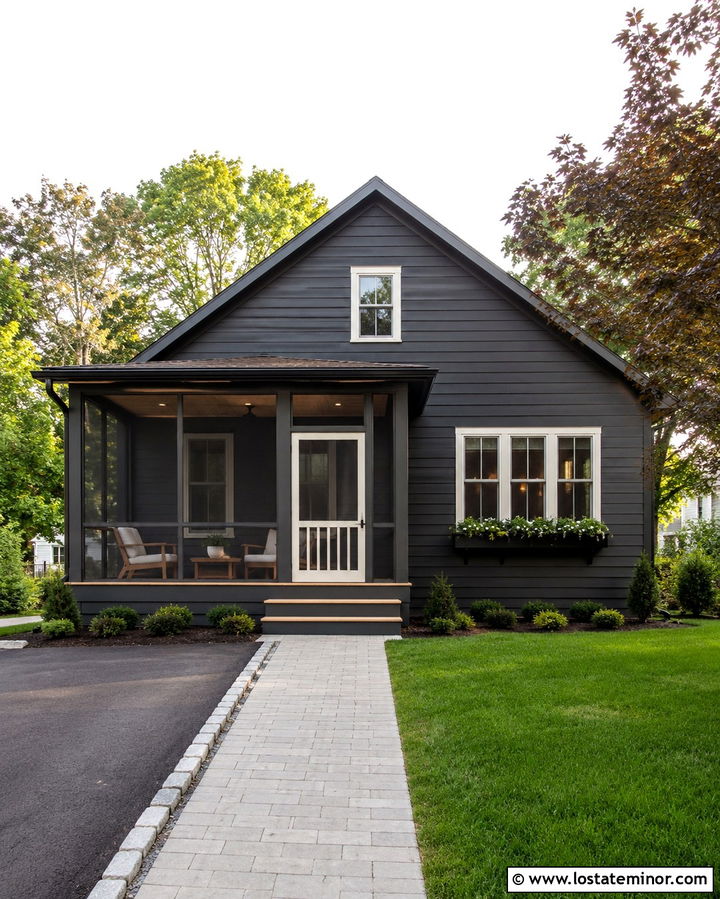
On a small home, a screened front porch can add useful living space and soften the impact of dark siding. Paint the house soft black, then frame the porch screens with matching dark posts so they blend into the facade. Use a light natural wood ceiling to brighten the covered area and introduce warmth. A cream screen door and window trim can provide controlled contrast without visually chopping up the compact structure. Keep the porch floor in pale wood or light gray composite decking. A simple gabled porch roof will make the entrance easy to identify from the street. Complete the setting with a narrow walkway, window boxes, low shrubs, and one small seating arrangement. The finished exterior feels larger, friendlier, and comfortably connected to the yard.
22. Soft Black Two-Story House With Double Porch
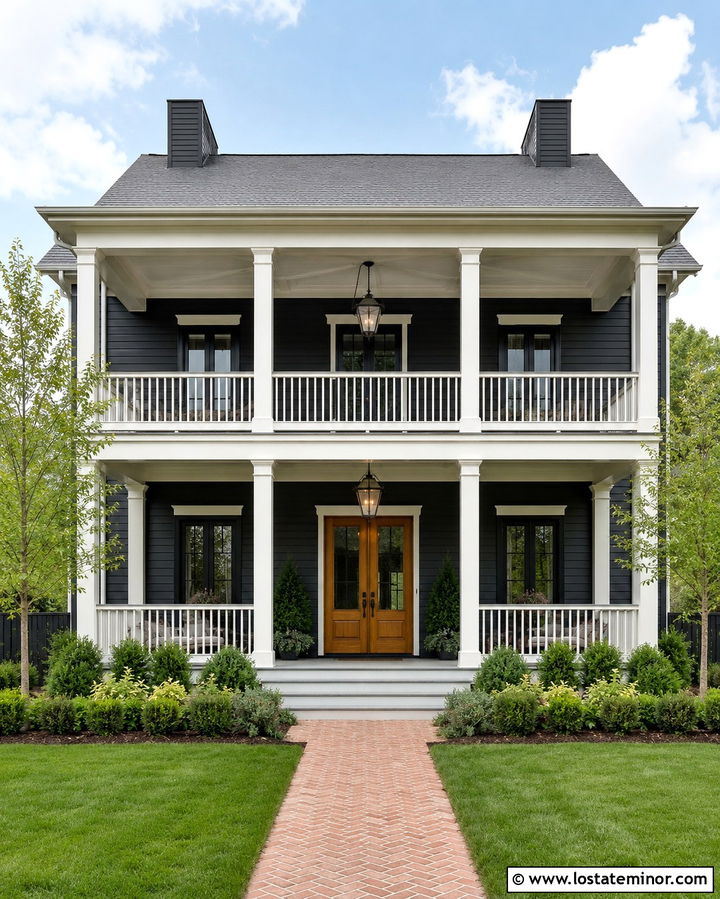
A double front porch gives a two-story soft black house a strong sense of proportion. Use the dark siding across both floors, then define the stacked porches with warm white columns, railings, and ceiling boards. The repeated lighter structure prevents the tall facade from becoming visually heavy. Natural wood front doors can add warmth on the lower level, while black French doors or windows keep the upper porch quieter. Consider light gray porch floors and a charcoal roof to maintain a controlled neutral palette. Traditional lanterns placed between the lower columns will emphasize the vertical rhythm. Balanced shrubs, small trees, and a straight brick walkway reinforce the symmetry. This complete design works particularly well for Southern, Colonial, and Charleston-inspired houses with tall, narrow proportions.
23. Soft Black House With Red Brick Porch
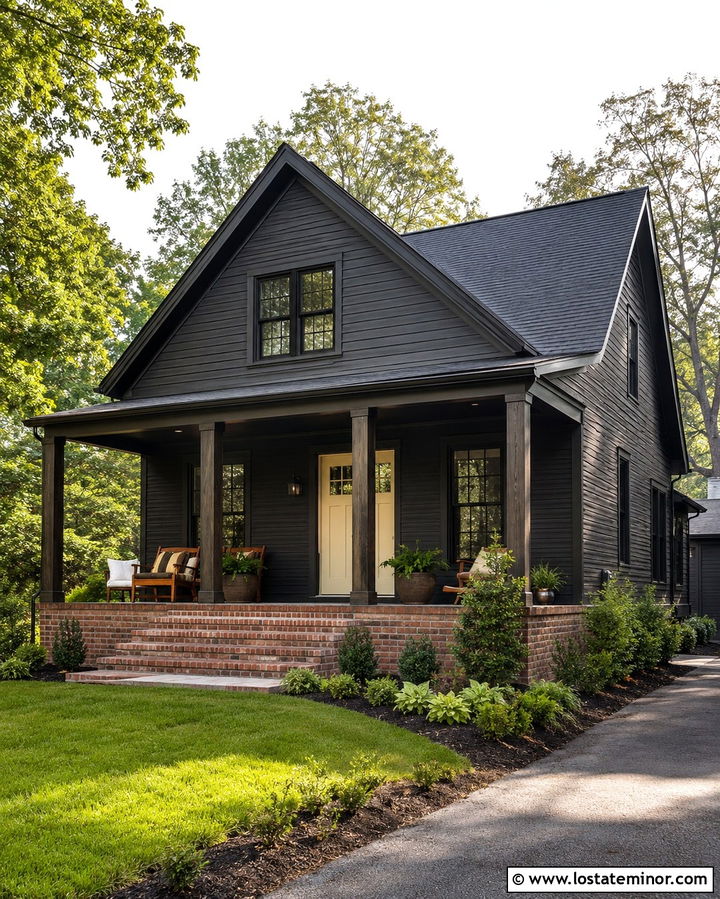
Existing red brick does not need to be painted when the rest of the house becomes soft black. Its warm, varied color can create an attractive base for dark lap or board-and-batten siding. Keep the brick visible across the porch floor, steps, foundation, and column bases. Use simple black or dark-stained posts above the masonry for a connected appearance. A warm cream front door will stand out clearly while complementing the light tones inside the brick. Black window frames and a dark gray roof maintain the depth of the overall palette. Choose porch furniture in wood, tan, or muted green rather than adding more black. Curved planting beds and leafy shrubs soften the strong material contrast, producing a balanced exterior that feels both established and freshly updated.
24. Soft Black House With Limestone Porch
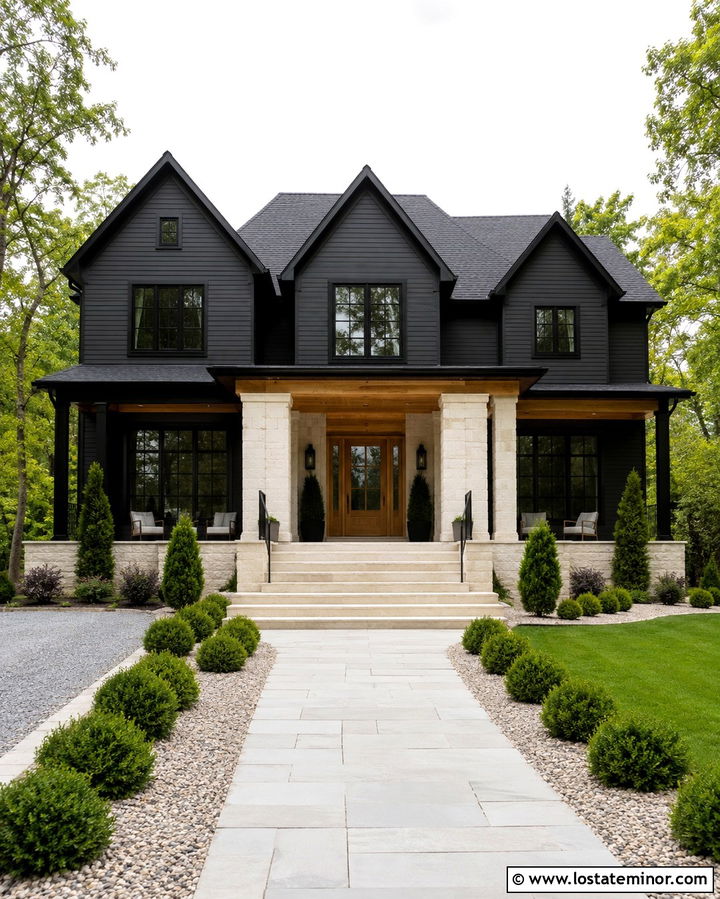
Pale limestone can transform a soft black exterior by introducing brightness, natural texture, and a refined sense of permanence. Apply the stone across the porch columns, low walls, steps, and foundation rather than limiting it to one small accent. Use soft black horizontal siding above the masonry, with matching dark window frames and fascia. A white oak door can warm the transition between the two main materials. Consider a cedar-lined porch ceiling to repeat that welcoming wood tone overhead. A medium charcoal roof will blend quietly into the upper facade. Keep the porch railings slim and black so the limestone remains visible. Formal evergreens, pale gravel, and a wide paved walkway complete this polished design, making the dark house feel lighter and more connected to its surroundings.
25. Soft Black House With Copper Porch Roof
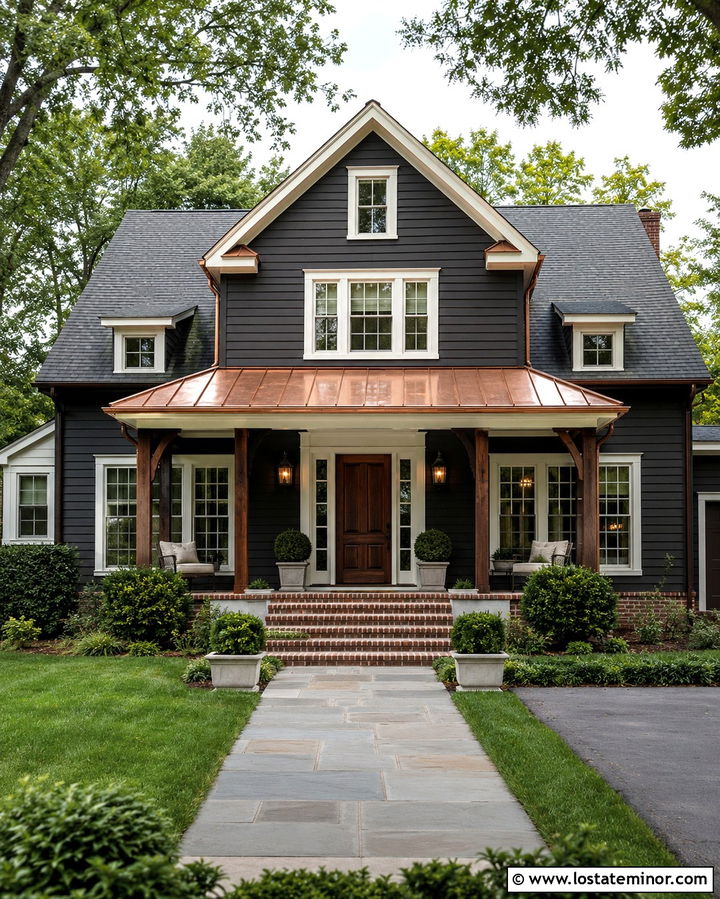
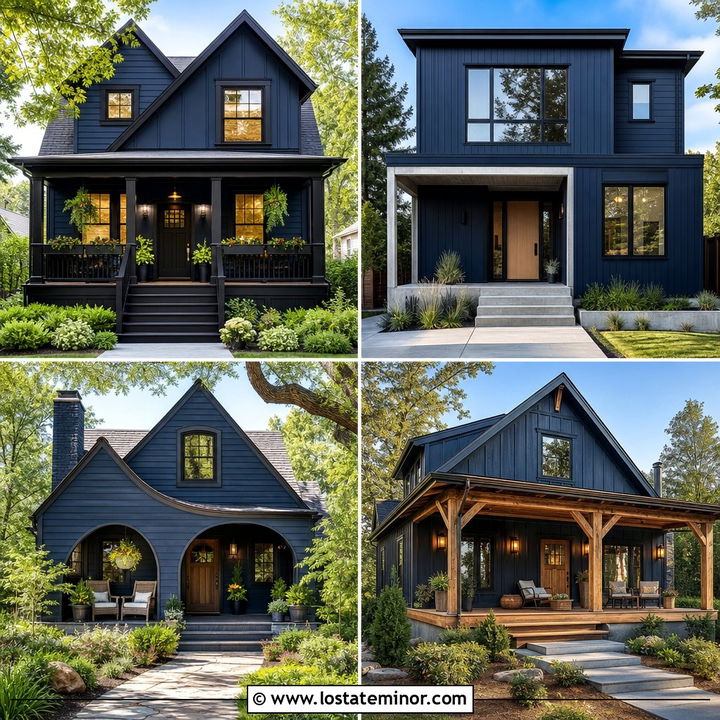
Copper brings warmth and subtle color to a soft black house, especially when it is used on a small porch roof. Choose dark lap siding for the facade and place a standing-seam copper canopy over the main entrance. As the metal changes naturally in appearance, it can remain an eye-catching feature against the muted black background. Support the roof with simple stained wood brackets or square posts. A walnut door, cream trim, and warm brass hardware will reinforce the copper tones without making the palette look busy. Use charcoal shingles on the main roof so the smaller porch canopy retains its importance. Brick steps, clipped shrubs, and a straight stone walkway create a traditional foundation. The resulting exterior feels detailed, distinguished, and warmly balanced.
26. Soft Black House With Blue Front Door Porch
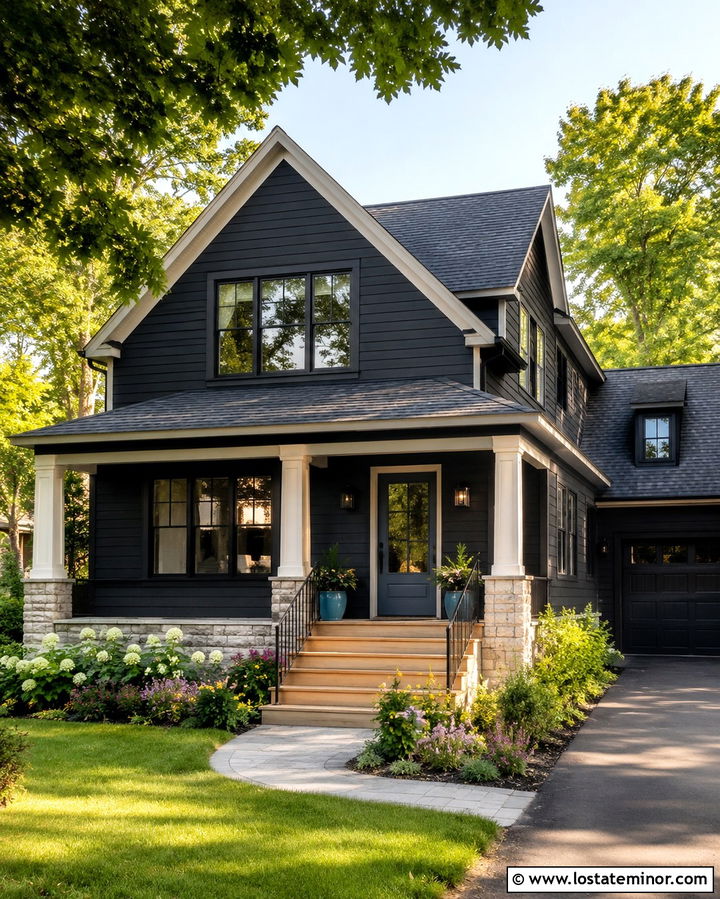
A blue front door can provide calm, noticeable color without disrupting the sophistication of soft black siding. Choose a muted slate blue, dusty navy, or blue-gray rather than a highly saturated shade. Frame the door with a compact covered porch featuring warm white columns and natural wood flooring. The lighter porch structure will help the blue remain distinct from the dark house. Use black-framed windows, charcoal roofing, and simple metal railings to maintain consistency across the facade. A pale stone foundation can add texture near the ground. Repeat the door color subtly through porch planters or flowering plants rather than painting additional architectural features blue. This measured approach creates an inviting focal point while allowing the complete black exterior to remain calm, coordinated, and easy to appreciate.
27. Soft Black House With Green Front Door Porch
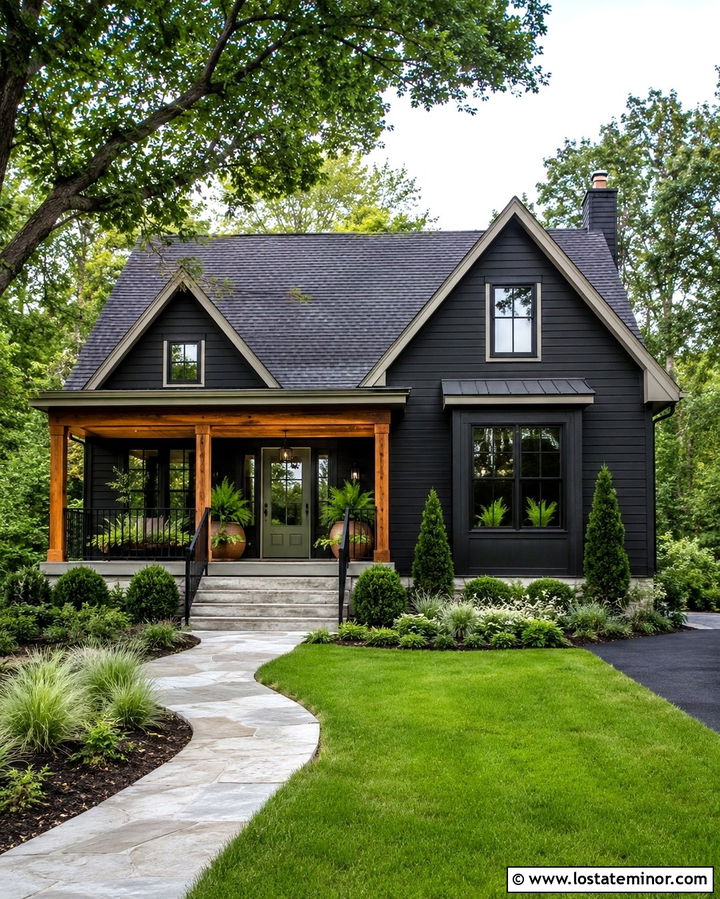
Deep green feels natural beside a soft black exterior, particularly when the porch includes wood and stone. Paint the door a muted olive, forest green, or smoky sage that remains visible without appearing overly bright. Surround it with cedar posts, a matching wood ceiling, and pale gray stone steps. Keep the porch roof and window frames dark so the entry materials feel integrated with the house. A warm greige trim can lightly define the door and selected windows. Use a weathered charcoal roof to maintain the understated color direction. Ferns, boxwoods, grasses, and other layered greenery will reinforce the door choice from the landscape. The completed scheme feels rich and organic, offering color through natural tones rather than relying on a sharp or trendy contrast.
28. Soft Black House With White Oak Porch
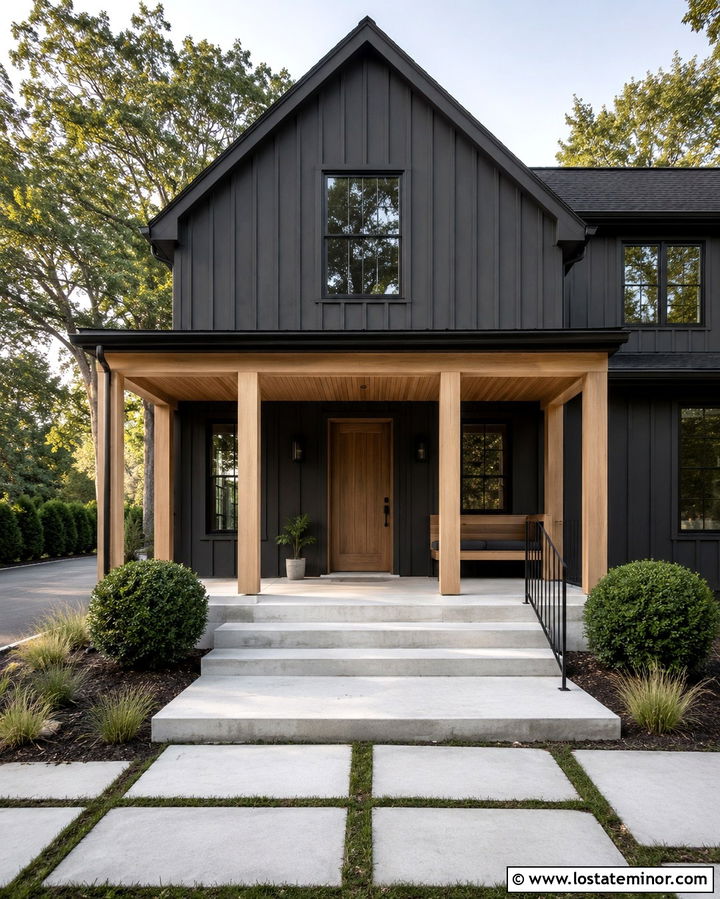
White oak adds a lighter, contemporary warmth to soft black without creating the orange tones sometimes found in cedar. Use it for square porch posts, ceiling boards, the front door, and a built-in bench. Keep the wood finish clear or lightly toned so its quiet grain remains visible. Soft black vertical siding will provide a clean background, while black window frames and a charcoal roof continue the simple palette. Pale concrete steps and porch flooring can keep the entrance bright. If railings are necessary, choose slender black metal designs that do not hide the oak structure. Minimal grasses, rounded shrubs, and large stone pavers suit this exterior. The complete look feels modern, natural, and carefully edited, with every porch material supporting the dark house color.
29. Soft Black House With Black Porch Railings
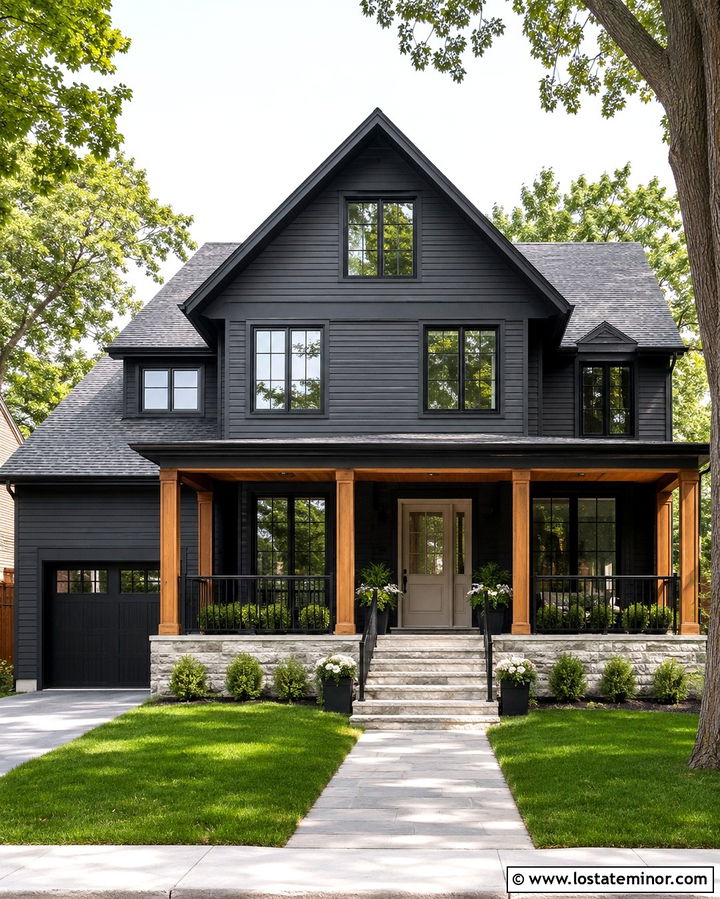
Black porch railings can blend seamlessly into a soft black exterior, allowing the architecture and landscaping to receive more attention. Use narrow metal balusters with a simple top rail rather than thick solid panels. Pair them with a warm wood porch floor and matching wood columns so the entrance still has contrast. A light greige or ivory front door can brighten the center of the facade, while black window frames maintain continuity. Consider pale stone across the steps and foundation to separate the dark railings from the ground. A gray shingle roof will complete the neutral scheme. Position green shrubs behind and around the railings, where their foliage can show through the slender bars. This coordinated exterior feels open, polished, and visually uncluttered.
30. Soft Black House With Wide Porch Steps
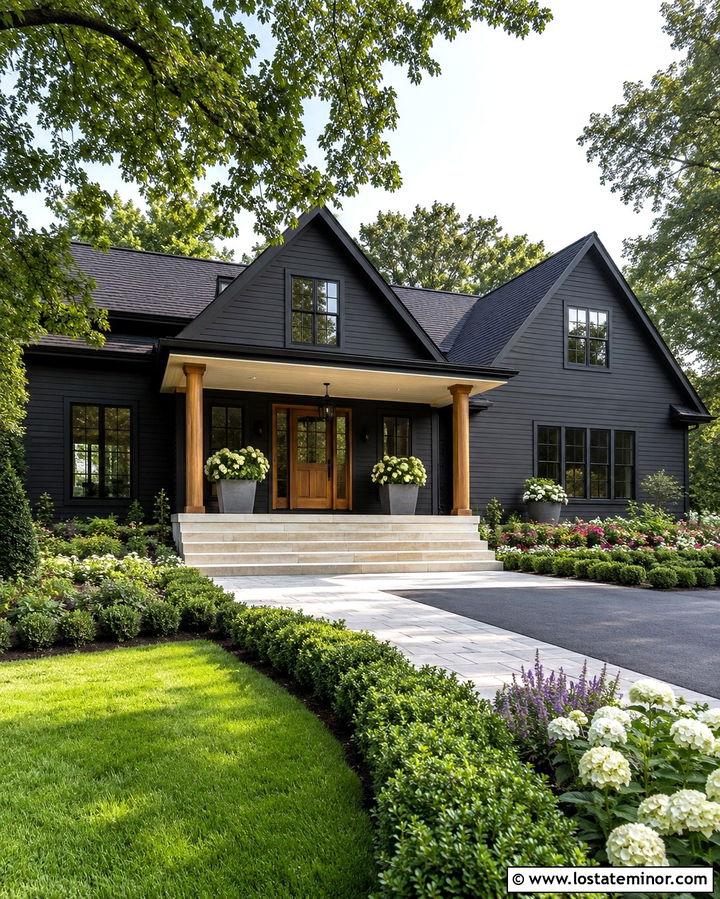
Wide porch steps make a dark house feel more accessible by creating a generous transition from the yard to the entrance. Use pale concrete, limestone, or light gray masonry for the steps so they remain clearly visible against soft black siding. Extend them across most of the porch rather than using a narrow central staircase. Simple cedar columns and a matching wood door will warm the dark facade, while an off-white porch ceiling reflects light around the entry. Keep railings minimal or place them only at the sides to preserve the open effect. Layer large planters, low hedges, and flowering borders beside the stairs instead of crowding the walking area. The completed design gives the soft black exterior a welcoming foundation and strong curb appeal.
Conclusion:
The best soft black exterior is not simply a dark house with a porch added to the front. Every material should work together, from the siding and roof to the columns, steps, railings, and front door. Natural wood creates warmth, pale stone adds texture, and restrained white or cream trim improves definition. Brick, copper, concrete, and colored doors can also personalize the palette without weakening its calm appearance. Before choosing a finish, view large exterior samples beside the roof and permanent masonry in different daylight conditions. Then use the porch to introduce contrast where visitors experience it most. These **30 Soft Black House Design With Front Porch Ideas** offer flexible starting points for homes of many sizes and architectural backgrounds.

Related posts: