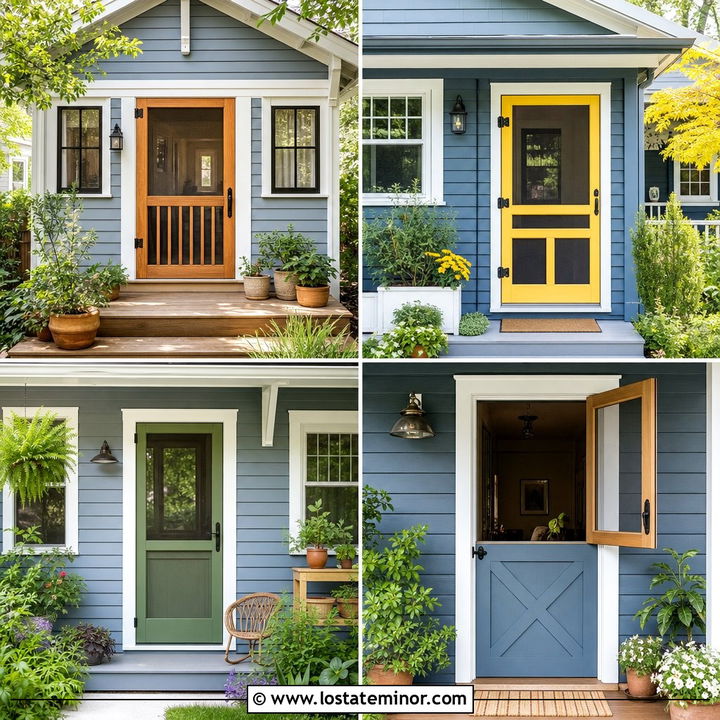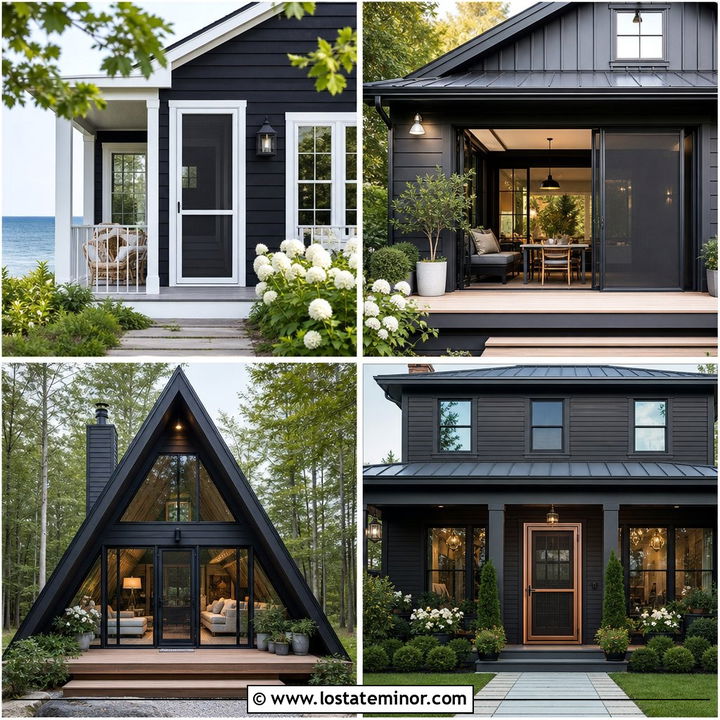
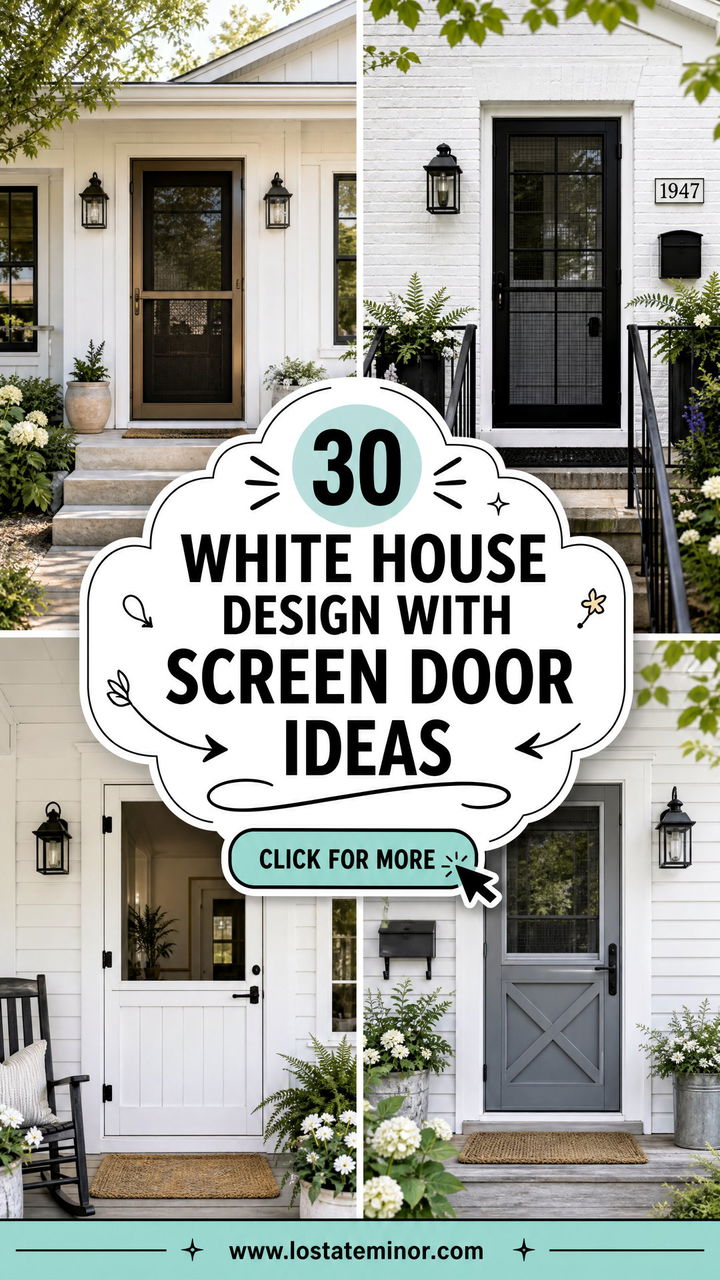
A white exterior creates a clean backdrop for one of the home’s most useful and welcoming features: a screen door. The right design can add contrast, texture, ventilation, and architectural character without making the facade feel busy. These 30 White House Design With Screen Door Ideas explore complete exterior combinations for farmhouses, cottages, ranch homes, Colonials, bungalows, and modern builds. You will find black metal frames, stained wood doors, soft coastal colors, decorative panels, and nearly invisible retractable screens. Each look also considers trim, roofing, porches, hardware, landscaping, and natural materials, helping the entrance feel connected to the whole house. Use these 30 White House Design With Screen Door Ideas to plan a practical and polished curb-appeal update.
1. White Farmhouse With Black Screen Door
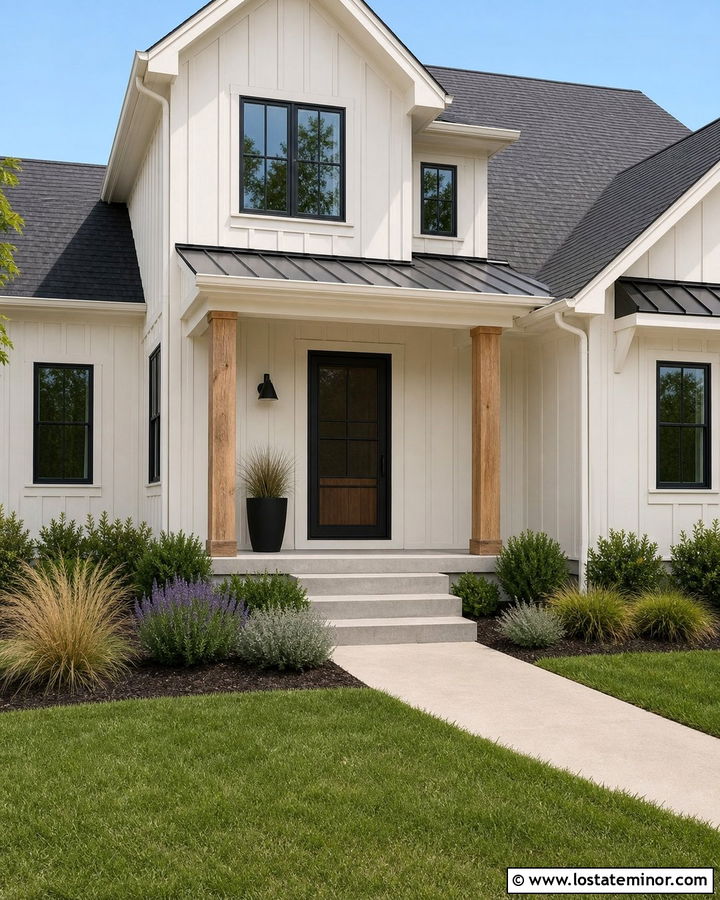
A black screen door gives a white modern farmhouse the crisp definition it needs. Start with warm white board-and-batten siding and matching trim to keep the exterior bright but not overly stark. Then frame a medium-brown wood front door with a simple matte black screen door. Black porch lights, metal roof accents, and slim window frames repeat the contrast across the facade. Natural wood porch columns can soften the strong black-and-white palette. Use pale gray concrete steps or irregular flagstone for an understated base. Low ornamental grasses and clipped evergreen shrubs finish the yard without hiding the entrance. This complete scheme feels modern and relaxed, while the screen door remains practical and visually connected to the home’s other dark details.
2. White Cottage With Wood Screen Door
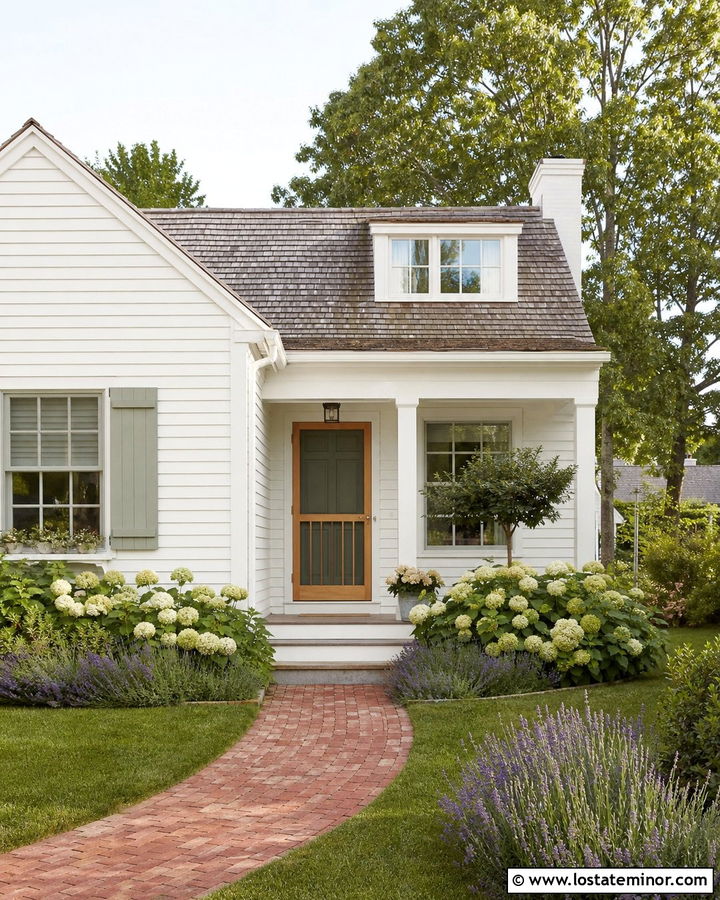
Could a screen door make a small white cottage feel more charming? A natural cedar or fir design adds warmth, especially when paired with creamy white lap siding and soft white window trim. Choose a simple wood screen door with a wide lower rail rather than elaborate scrollwork. It will feel traditional without looking overly decorative. Behind it, a muted sage green front door brings a gentle garden color into the entrance. A weathered gray shingle roof, brick walkway, and small covered porch support the cottage character. Add hydrangeas, lavender, and loose foundation planting around the facade. Clear or dark screen mesh keeps the wood frame visible from the street. The result is a comfortable, layered exterior that looks welcoming in every season.
3. White Colonial With Full View Screen Door
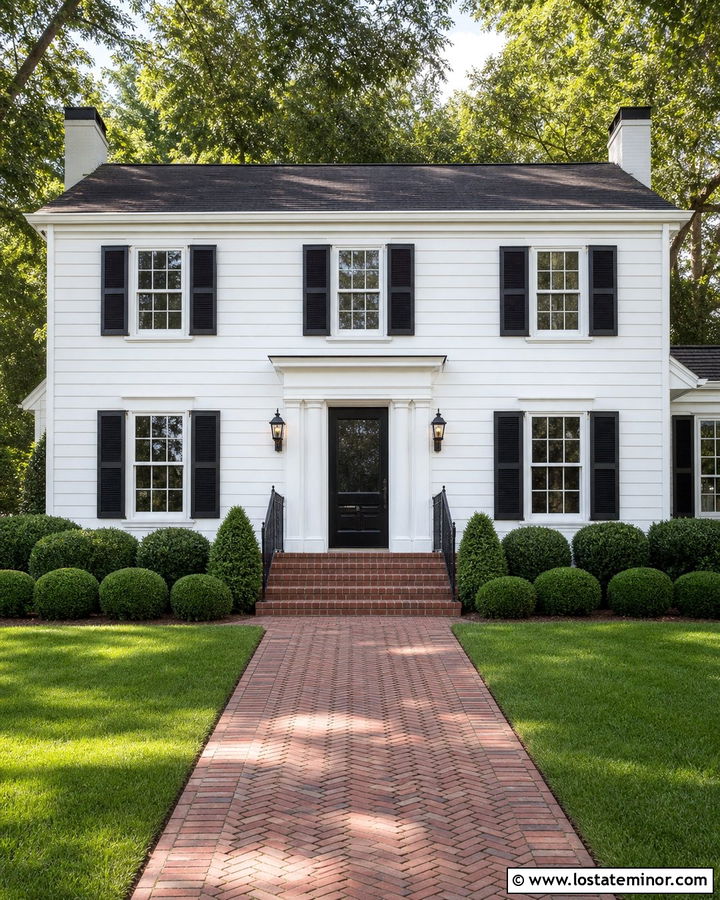
A full-view screen door works well on a symmetrical white Colonial because it does not compete with formal architecture. Paint the clapboard siding a balanced soft white and keep the corner boards, cornice, and window trim in the same color family. A glossy black front door supplies traditional contrast, while a slim black full-view screen door allows that original door to remain visible. Match the screen frame to black shutters, lanterns, and iron porch railings for a unified appearance. Red brick steps and a straight brick walkway introduce warmth beneath the monochrome facade. Use matching planters or rounded boxwoods on both sides of the entrance. The completed exterior looks orderly and timeless, with the screen door functioning as a quiet extension of the black accent scheme.
4. White Ranch House With Bronze Screen Door
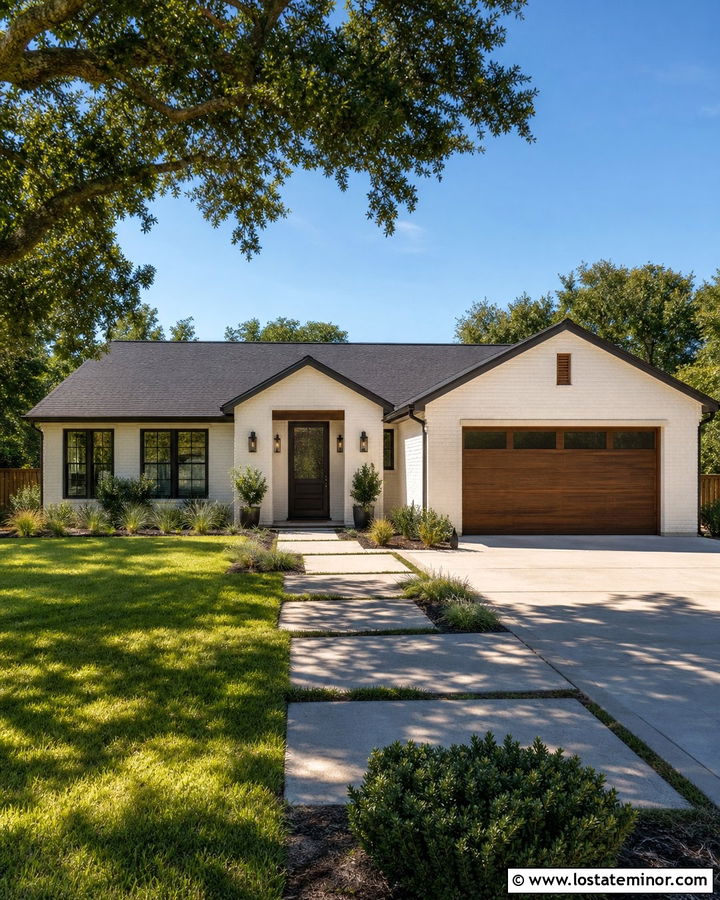
Warm bronze can give a white ranch house more depth than standard black hardware. Use creamy white painted brick or horizontal siding across the long, low facade. Add a dark bronze screen door in front of a rich walnut-colored entry door, creating layers of warm contrast at the center. Bronze exterior lights, gutters, and simple address numbers help the finish look intentional. A charcoal architectural-shingle roof grounds the light walls, while cedar garage details or wood planter boxes repeat the front door tone. Keep the landscaping low so it complements the ranch roofline. Broad concrete pavers, spreading grasses, and compact shrubs work especially well. This complete look feels updated and approachable without erasing the straightforward character of a classic single-story home.
5. White Craftsman With Craftsman Screen Door
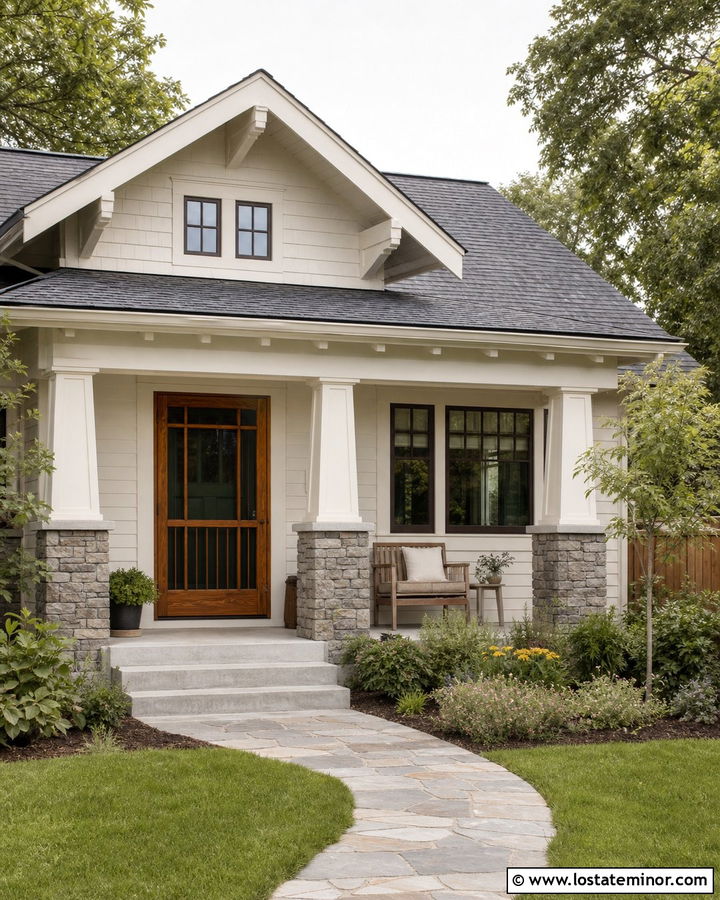
Detailed porch columns and exposed roof brackets call for a screen door with equally thoughtful proportions. On a white Craftsman, choose warm white fiber-cement siding with slightly brighter trim around the windows and porch. A stained oak screen door with divided upper panels and a solid lower section brings handcrafted character to the entrance. Pair it with a deep olive green front door, dark bronze hardware, and amber-toned porch lights. Tapered columns resting on gray stone piers give the color palette a sturdy base. A medium charcoal roof keeps the upper facade balanced. Complete the setting with a curved stone walkway, layered native plants, and simple wood porch furniture. Every feature supports the architecture, making the screen door feel original rather than added later.
6. White Bungalow With Green Screen Door
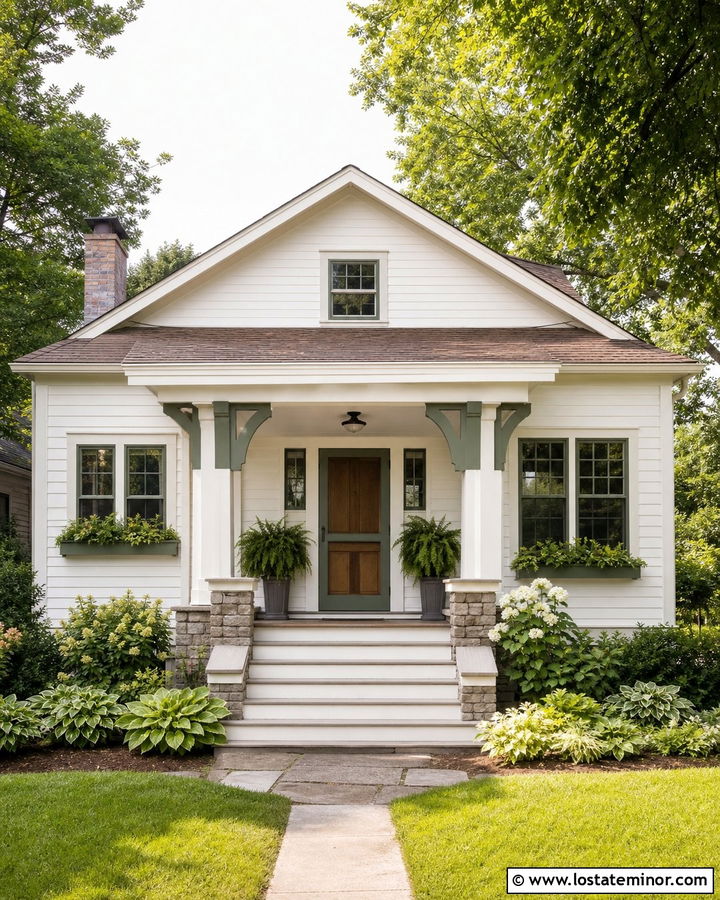
A muted green screen door can add color to a white bungalow without overpowering its compact facade. Choose an earthy shade such as moss, eucalyptus, or gray-green for the screen frame. Pair it with warm white clapboard siding, cream trim, and a natural wood front door visible through the mesh. Repeat the green on porch brackets, window boxes, or a small garden gate for continuity. A weathered brown shingle roof and stone porch foundation keep the palette grounded. Wide porch steps make the entrance feel open, while ferns, hostas, and flowering shrubs reinforce the garden-inspired color. This approach is especially effective when the porch is a major architectural feature. The screen door becomes a soft focal point that ties the house naturally to its landscaping.
7. White Cape Cod With Navy Screen Door
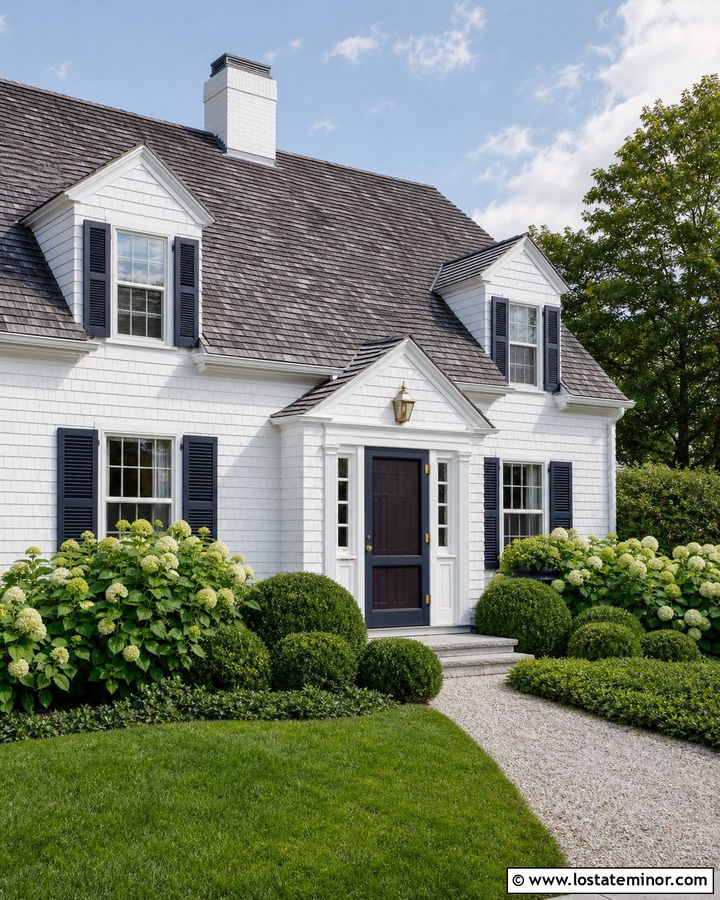
A navy screen door brings classic coastal contrast to a white Cape Cod exterior. Use bright white cedar shingles or horizontal siding, then add medium navy shutters and a coordinating screen frame. Behind the screen, a natural mahogany front door prevents the palette from feeling too cool. White window boxes, simple porch trim, and a weathered gray roof preserve the home’s clean New England character. Brass or aged bronze hardware adds a small amount of warmth around the entry. A crushed-stone path, hydrangeas, and neatly clipped foundation shrubs complete the curb view. Keep the screen door design straightforward, with broad rails and no ornate metalwork. The finished exterior feels crisp and familiar, yet the navy screen door provides more personality than an all-white entrance would offer.
8. White Coastal House With Aqua Screen Door
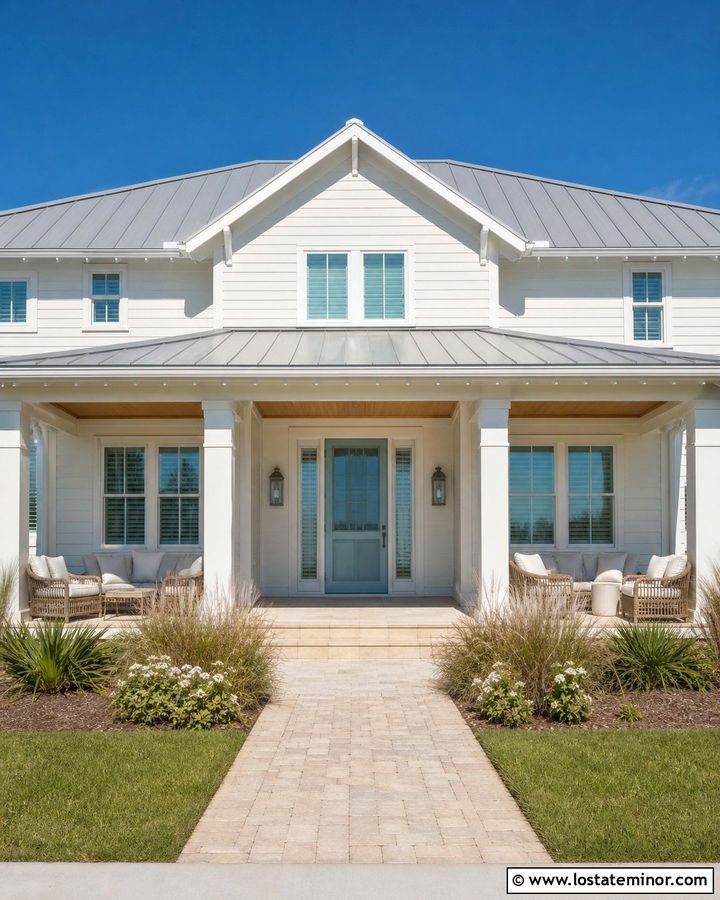
Salt-air character comes alive when a white coastal house is paired with an aqua screen door. Cover the facade in clean white lap siding and use slightly warmer white trim so the architectural details remain visible. Paint a traditional wood screen door a softened aqua blue, then place it over a white or pale blue front door. Natural cedar porch ceilings, woven outdoor seating, and brushed nickel hardware complement the breezy palette. A light gray metal roof reflects the easygoing coastal mood. Frame the home with sandy pavers, sea grasses, low palms, and white flowering plants. Avoid overly bright turquoise, which can dominate the facade. A dusty aqua reads more naturally in daylight and creates a cheerful entrance that still feels connected to the home’s calm, neutral exterior.
9. White Brick House With Black Metal Screen Door
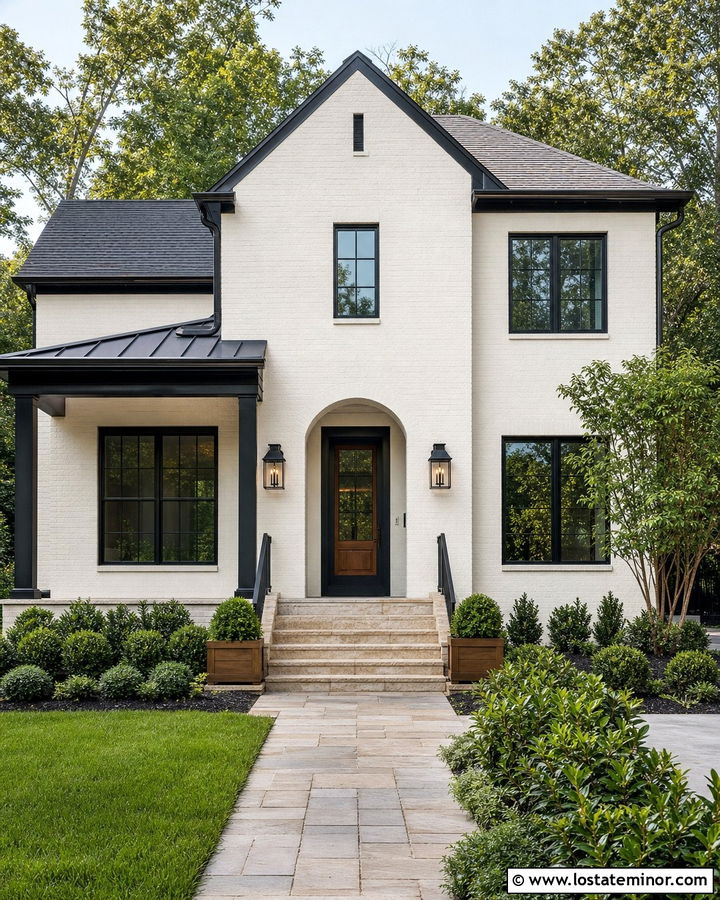
Painted white brick gains a sharper, more tailored look with a black metal screen door. Select a warm off-white masonry paint that allows the brick texture to remain noticeable. Use a black full-view or fine-mesh metal screen door over a medium-stained wood front door. The dark frame should coordinate with black window sashes, gutters, lanterns, and simple iron railings. A charcoal roof and dark garage doors can extend the contrast across a larger facade. To prevent the scheme from becoming severe, add wood planters, tan limestone steps, and soft green landscaping. The mixture of white masonry, black metal, and natural wood feels substantial but current. From the street, the screen door reads as part of a complete architectural palette rather than a separate utilitarian feature.
10. White Stucco House With Arched Screen Door
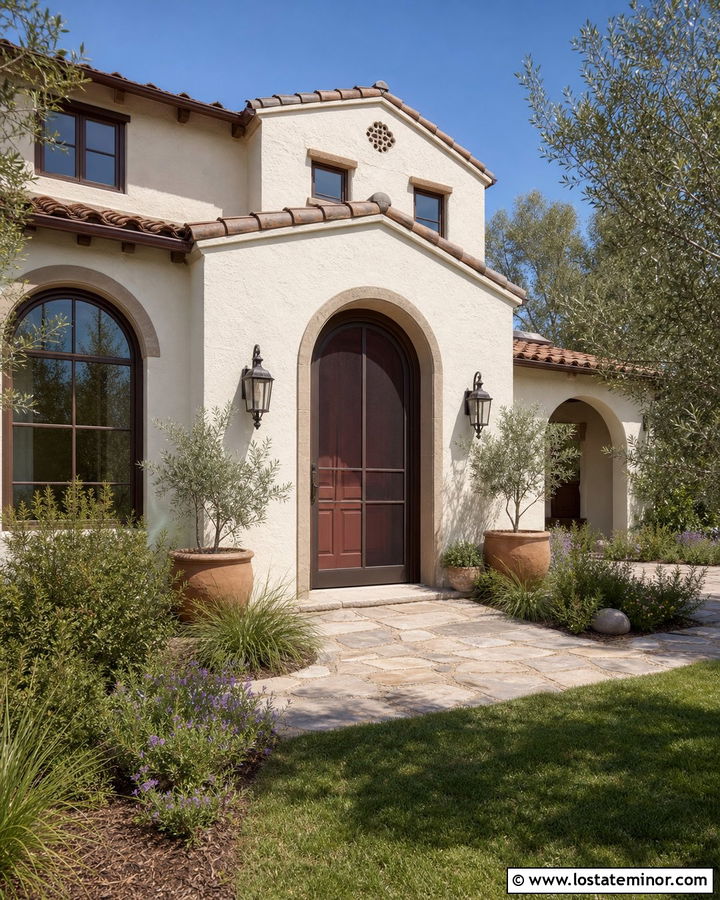
An arched screen door can preserve the graceful entrance of a white stucco home. Use a soft ivory exterior with warm beige trim around the arch, windows, and roofline. A custom dark bronze screen door that follows the curved opening creates definition without hiding the entry door behind it. Choose a deep walnut or muted terracotta front door for rich, Mediterranean-inspired warmth. Clay roof tiles, wrought iron lighting, and textured stone paving complete the material palette. Keep the surrounding garden structured but lush, using olive trees, rosemary, grasses, and low flowering plants. The screen design should feature simple vertical lines or restrained scrollwork. That allows airflow while respecting the architecture. Together, the curved door, earthy accents, and creamy walls create an inviting, cohesive facade.
11. White Victorian House With Decorative Screen Door
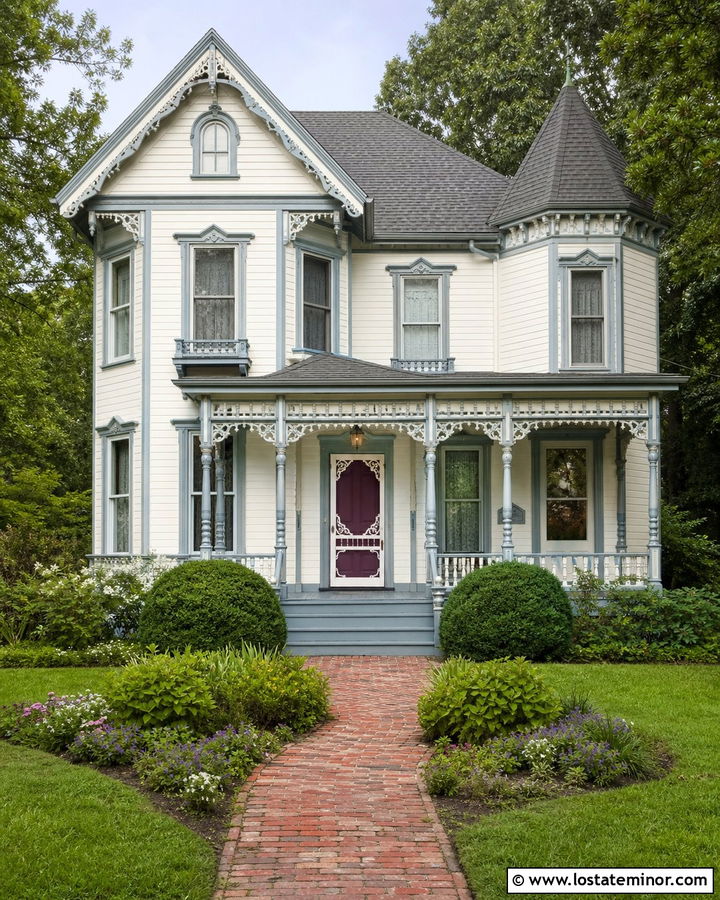
Intricate trim and a deep porch give a white Victorian house room for a more decorative screen door. Keep the main siding warm white, then use pale gray or muted blue on brackets, spindles, and selected gingerbread details. A white wood screen door with delicate corner brackets can blend into the porch while still adding period character. Behind it, a dark plum, forest green, or navy front door creates depth through the mesh. Antique brass hardware and traditional lanterns reinforce the historic mood. A dark gray roof prevents the many light details from appearing washed out. Finish the property with a curved brick path, layered flowering borders, and a painted porch floor. The complete exterior feels detailed and expressive without relying on too many competing colors.
12. White House With Red Screen Door
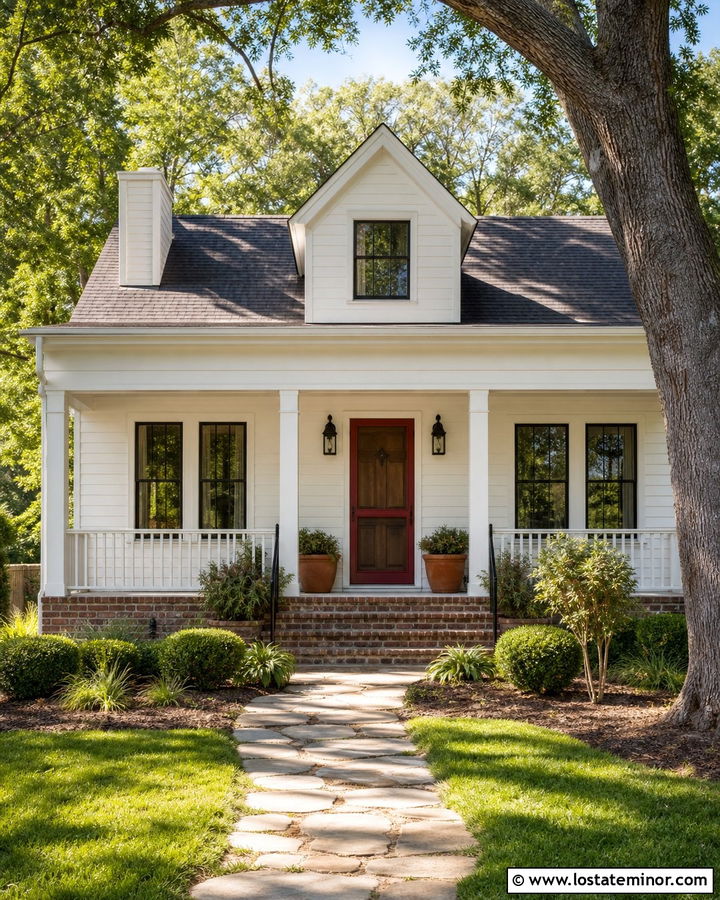
A red screen door creates an energetic focal point against a white exterior. The strongest version uses warm white siding, simple white trim, and a slightly weathered brick or stone foundation. Choose a deep barn red or muted oxblood rather than a bright primary red. That richer shade feels more architectural and works with both traditional and country homes. Pair the screen with a stained wood or matching red front door to avoid clashing layers. Black lanterns, dark roof shingles, and iron porch details give the color a grounded frame. Use terracotta pots, green shrubs, and a natural stone path around the entrance. With the rest of the facade kept restrained, the red screen door becomes memorable while the entire house still feels balanced and welcoming.
13. White House With Blue Screen Door
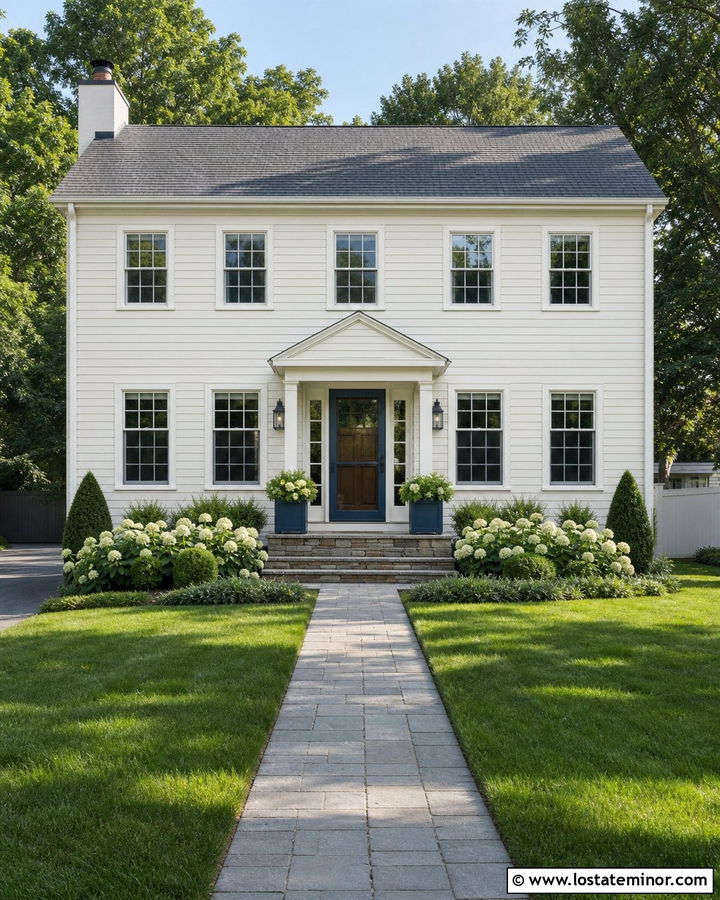
Blue brings a calm, friendly character to a white house, particularly when the screen door sits beneath a covered porch. Use a soft white body color with clean white trim, then select a medium slate blue for the screen frame. A natural oak or matching blue front door can sit behind it, depending on how much contrast you want. Repeat the blue on porch furniture, small shutters, or planter boxes rather than painting every accent. A medium gray roof and stone steps keep the scheme grounded. White hydrangeas, evergreen shrubs, and a straight paver walkway create an orderly landscape around the entrance. This combination works across cottages, ranch homes, and casual Colonials. The blue screen door adds color while maintaining the white exterior’s fresh, uncluttered appearance.
14. White House With Yellow Screen Door
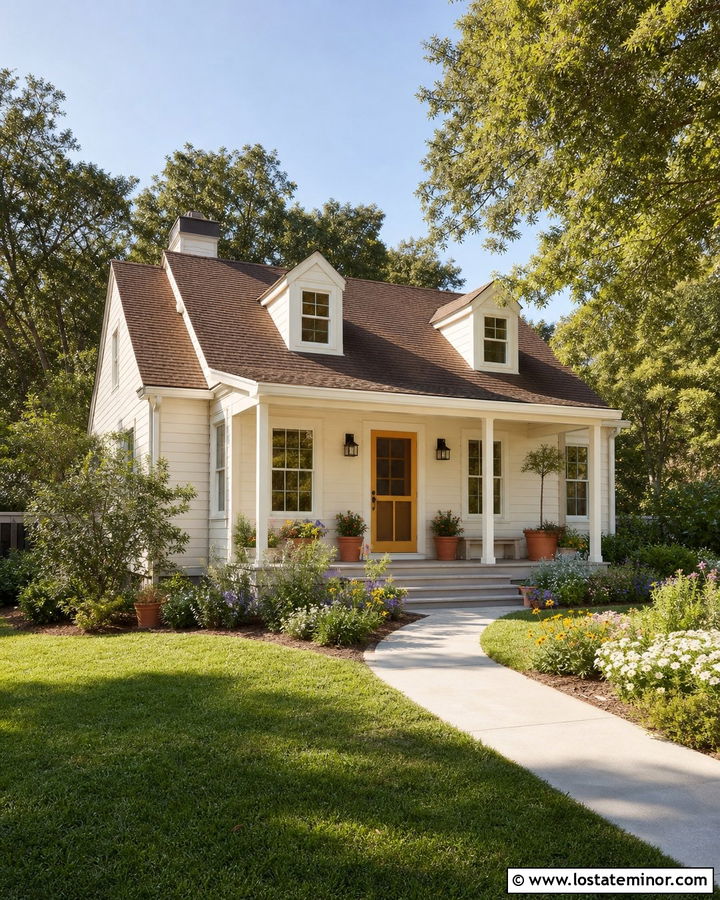
Sunshine yellow can make a simple white home feel instantly more cheerful. To keep the effect polished, choose a warm mustard, golden yellow, or softened marigold instead of a neon shade. Paint the wood screen door in that accent color and pair it with a natural wood or creamy white entry door. Warm white siding, light taupe porch flooring, and a medium brown roof provide a comfortable neutral setting. Matte black door hardware and porch lights add definition around the bright entrance. Repeat small touches of yellow through flowers rather than additional painted surfaces. A cottage garden, curved walkway, and wood bench help the scheme feel relaxed. The complete design is playful but controlled, giving an otherwise understated white facade a clear and inviting focal point.
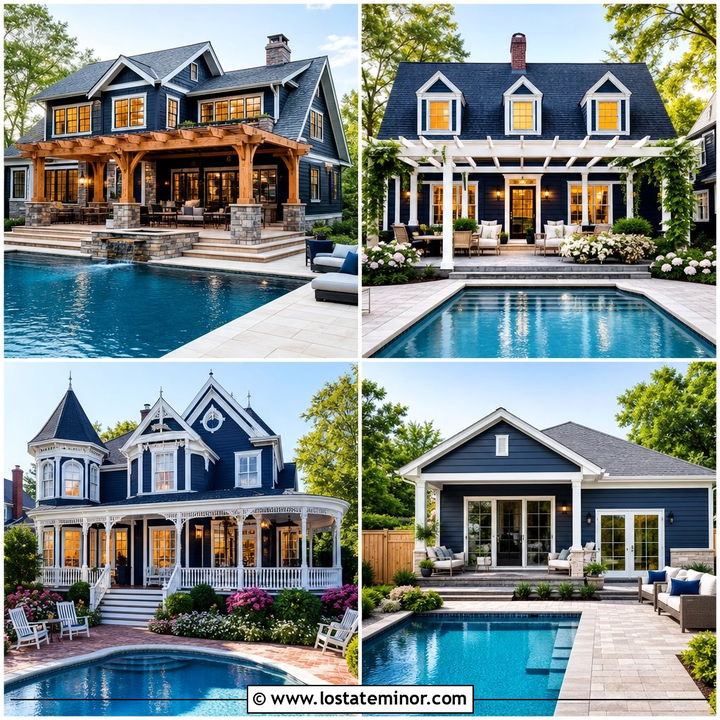
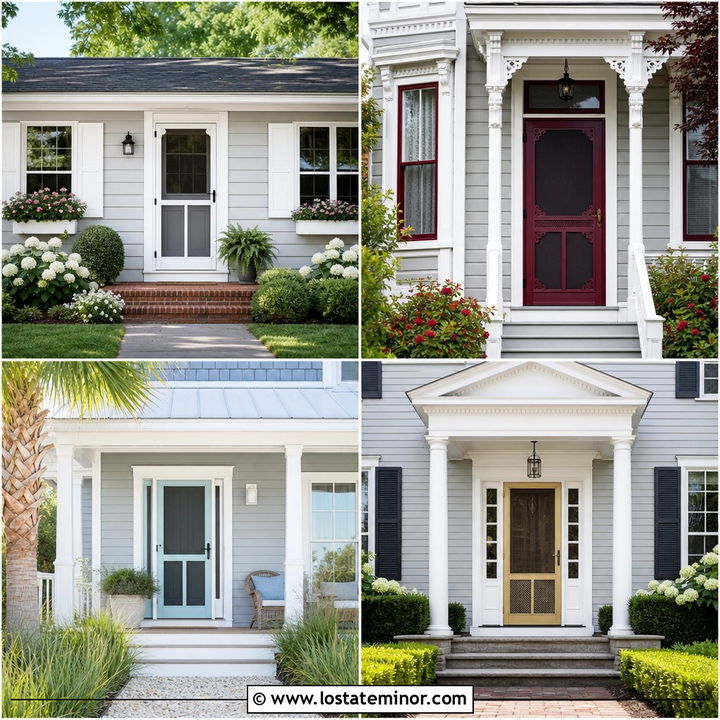
15. White House With Sage Green Screen Door
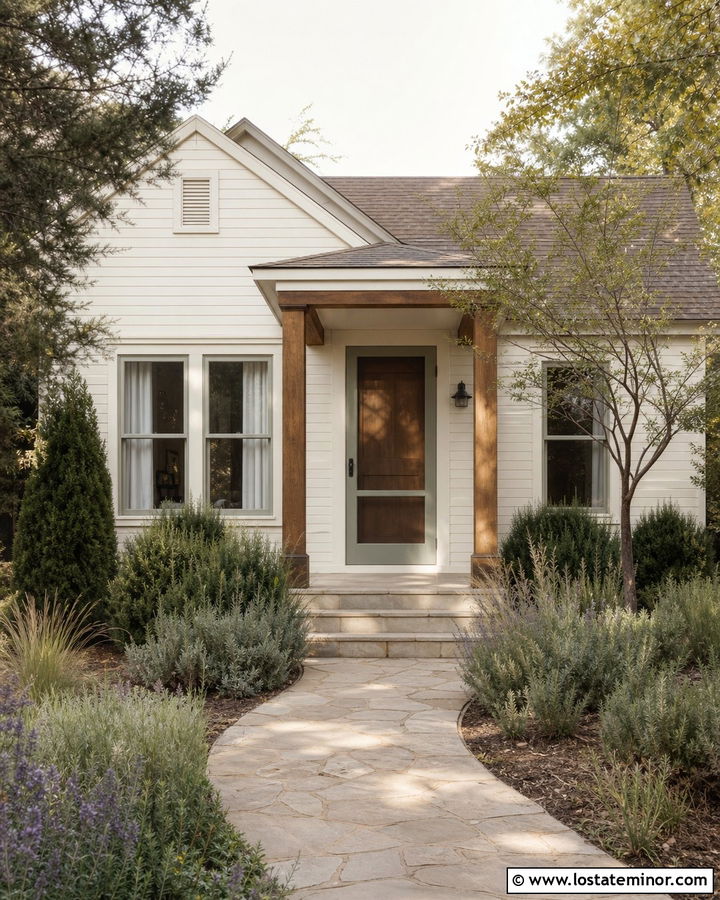
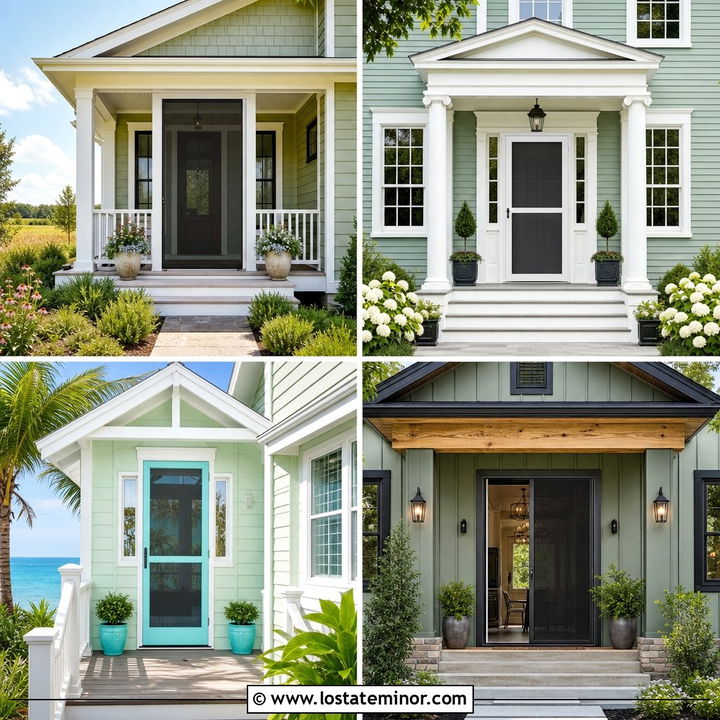
Soft sage creates an easy bridge between a white house and its surrounding garden. Begin with creamy white siding and trim, then paint a traditional screen door in a muted sage green with gray undertones. Place it over a stained fir front door or a slightly deeper green entry door. Natural wood porch posts, pale stone steps, and aged bronze hardware support the organic palette. A charcoal or brown-gray roof adds enough contrast without making the house feel harsh. Use rosemary, ornamental grasses, lavender, and compact evergreen shrubs to repeat the green tones naturally. This complete scheme works especially well on cottages, bungalows, and modest farmhouses. The screen door adds recognizable color, but its subdued finish keeps the exterior peaceful, versatile, and comfortably connected to the landscape.
16. White House With Natural Cedar Screen Door
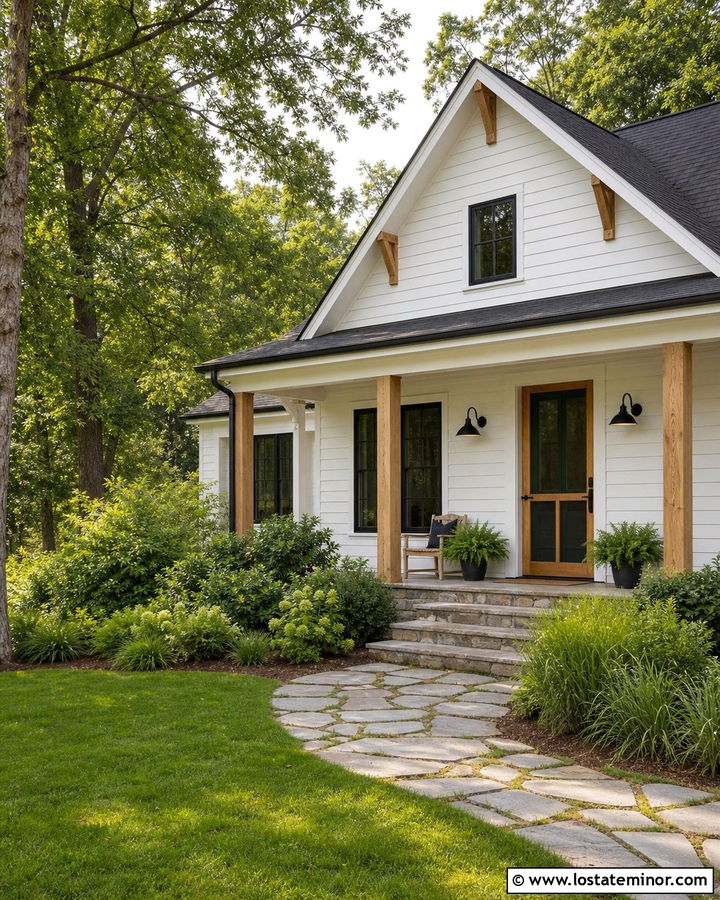
Fresh cedar gives a white exterior warmth, texture, and an unmistakably handcrafted focal point. Use soft white horizontal siding with matching trim, then install an unfinished or clear-sealed cedar screen door over a dark green or black front door. The darker layer behind the mesh helps the cedar frame stand out from the street. Repeat the wood tone on porch columns, window boxes, or a small gable accent. Black hardware, simple sconces, and a charcoal roof keep the overall scheme clean. A stone walkway and deep green landscaping reinforce the natural materials. Cedar will change in appearance as it weathers, so decide whether you prefer a protective finish or a softer aged look. Either treatment gives the complete white house a relaxed, welcoming sense of craftsmanship.
17. White House With Black Security Screen Door
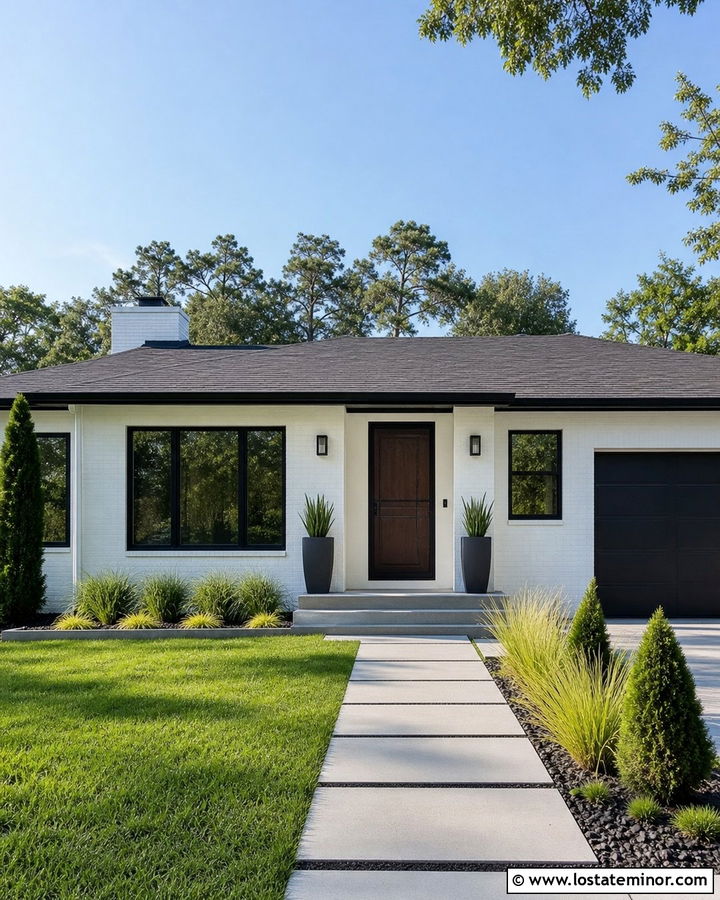
A security screen door can look refined when its lines coordinate with the entire exterior. On a white contemporary ranch or transitional home, use a black powder-coated metal door with fine mesh and a simple geometric frame. Avoid heavy decorative scrollwork if the facade has clean windows and minimal trim. Pair the screen with a warm wood front door so the entrance does not feel overly dark. White painted brick, black window frames, and a charcoal roof establish a strong modern palette. Concrete pavers, architectural grasses, and rectangular planters continue the streamlined look. Select black handles and hinges that disappear into the frame. This treatment makes the functional screen door feel intentional, while the wood, masonry, and landscaping keep the high-contrast exterior comfortable and suitable for a residential setting.
18. White House With Retractable Screen Door
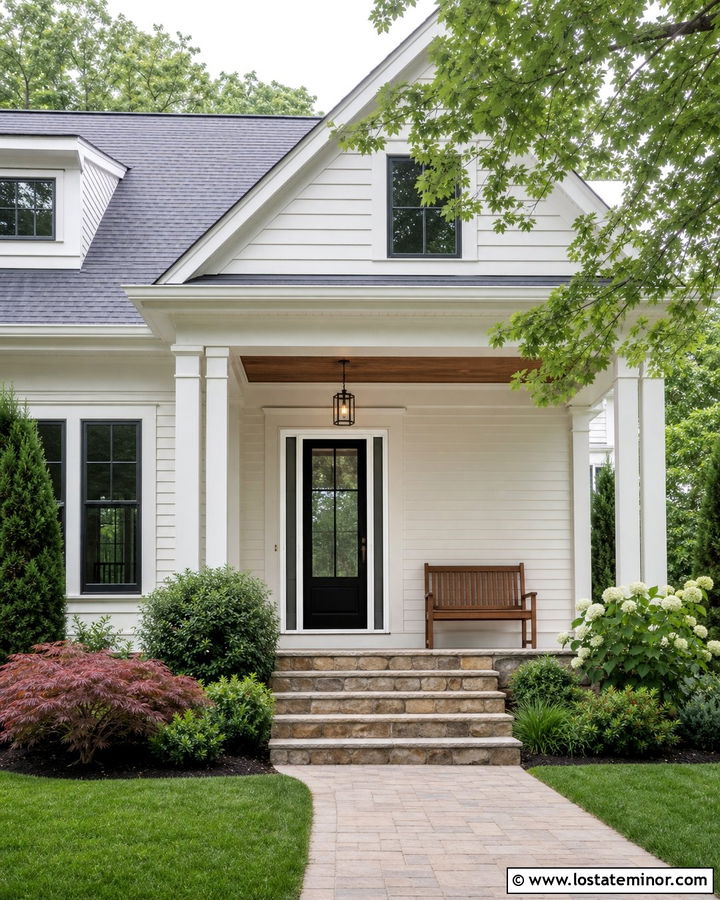
A retractable screen is ideal when you want ventilation without permanently changing the appearance of a white house. Use it with a full-light wood front door, a glass-paneled black door, or a pair of French doors beneath a covered porch. The screen housing should match the white trim or the main door frame so it remains visually quiet when closed. Warm white siding, natural stone steps, and understated bronze hardware create a flexible transitional palette. Add a cedar porch ceiling or stained wood bench to bring warmth near the entry. Because the screen disappears when not needed, the front door remains the architectural focal point. This complete design suits homeowners who prefer a clean facade but still want a practical way to enjoy fresh air during comfortable weather.
19. White House With Double Screen Doors
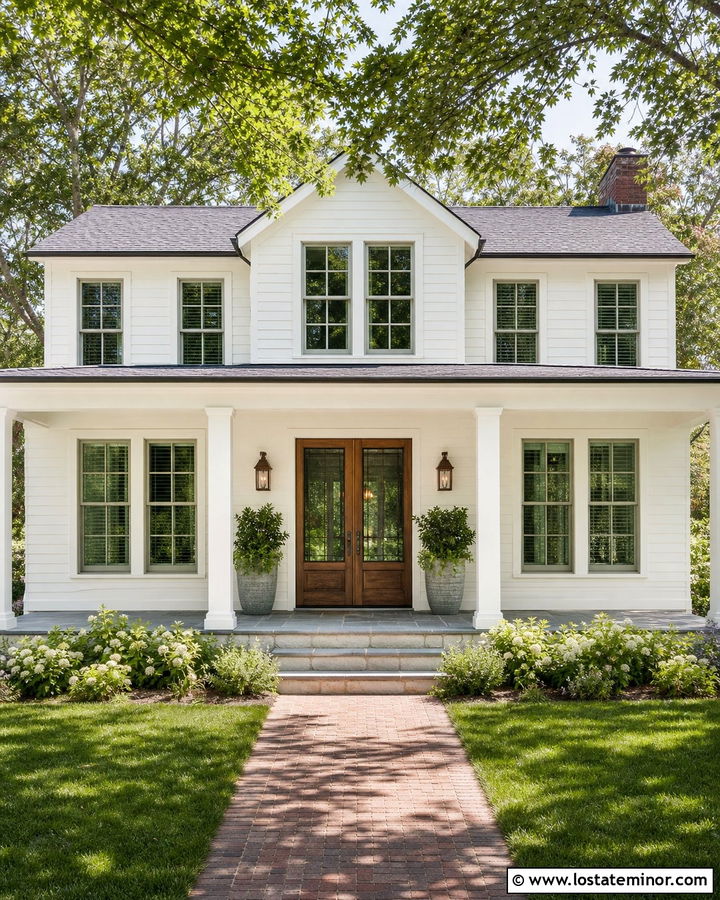
Double screen doors can turn a wide white-house entrance into a striking focal point. Use matching stained wood screens in front of dark green, navy, or natural wood French doors. Warm white siding and broad white trim frame the opening without distracting from its width. A covered porch with square columns gives the doors visual protection and helps them feel connected to the architecture. Match the hinges, handles, and overhead lantern to a dark bronze or matte black finish. Brick or bluestone porch flooring adds durable color at the base of the facade. Place large planters on both sides to reinforce the entrance’s symmetry. This arrangement works beautifully on farmhouses, Southern homes, and wide bungalows, creating a generous transition between indoor rooms and the front porch.
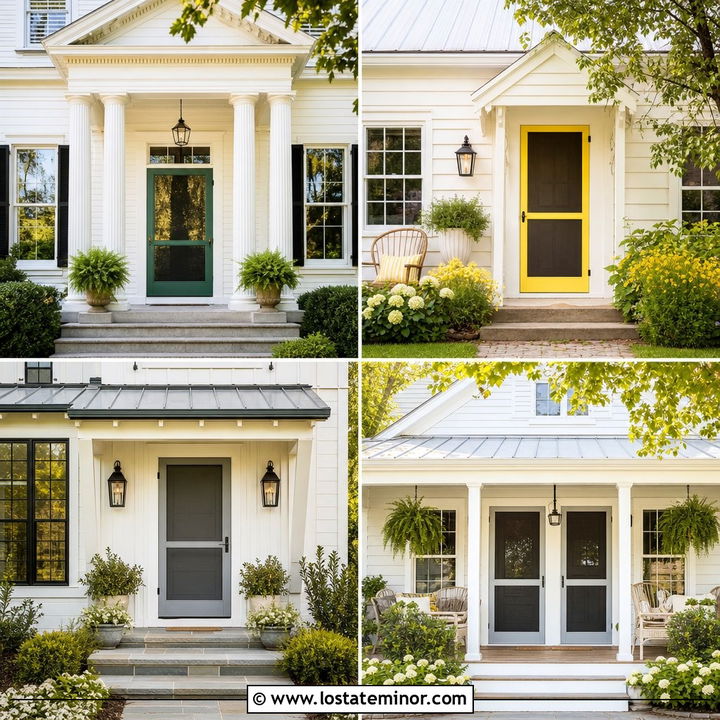
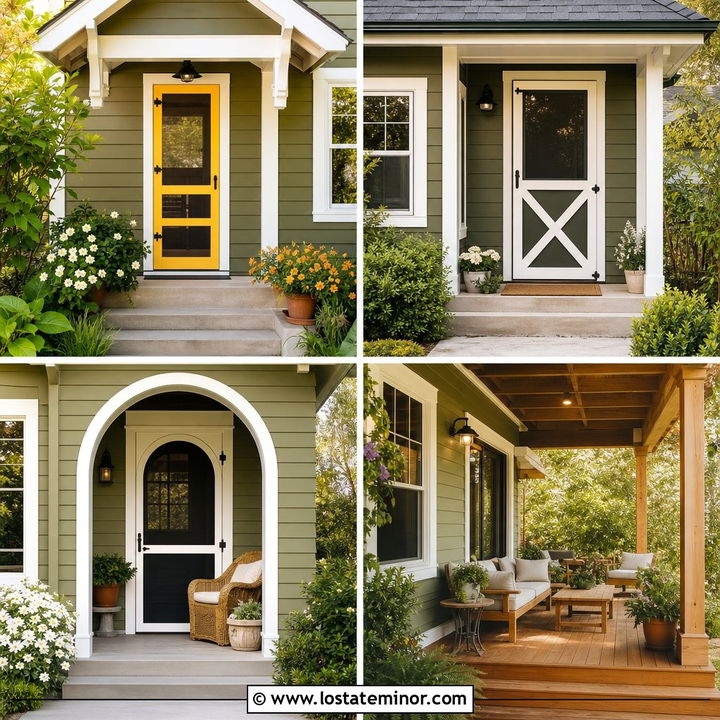
20. White House With Half Screen Door
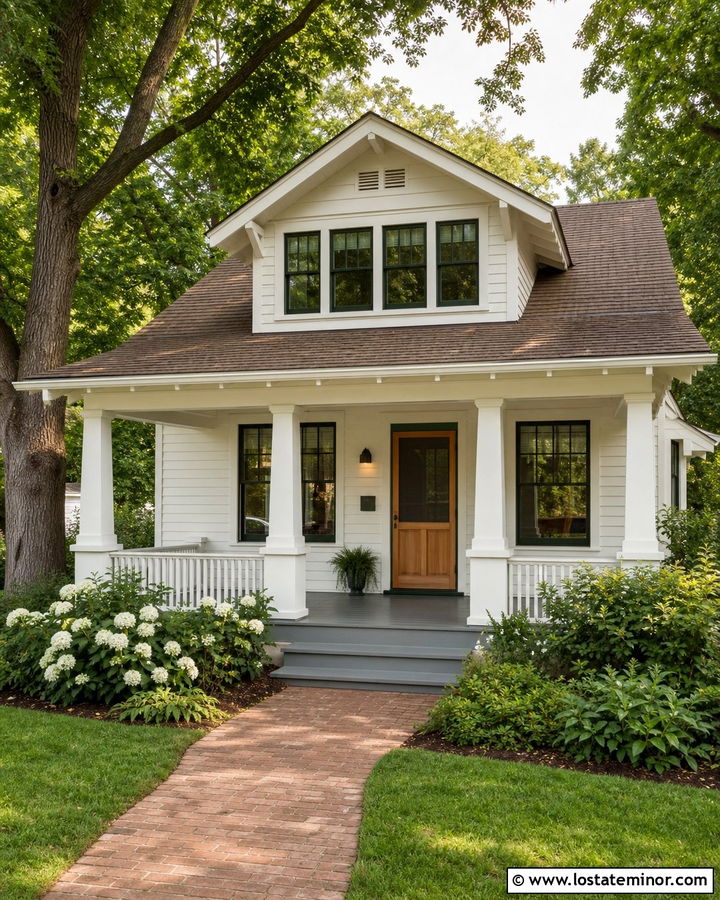
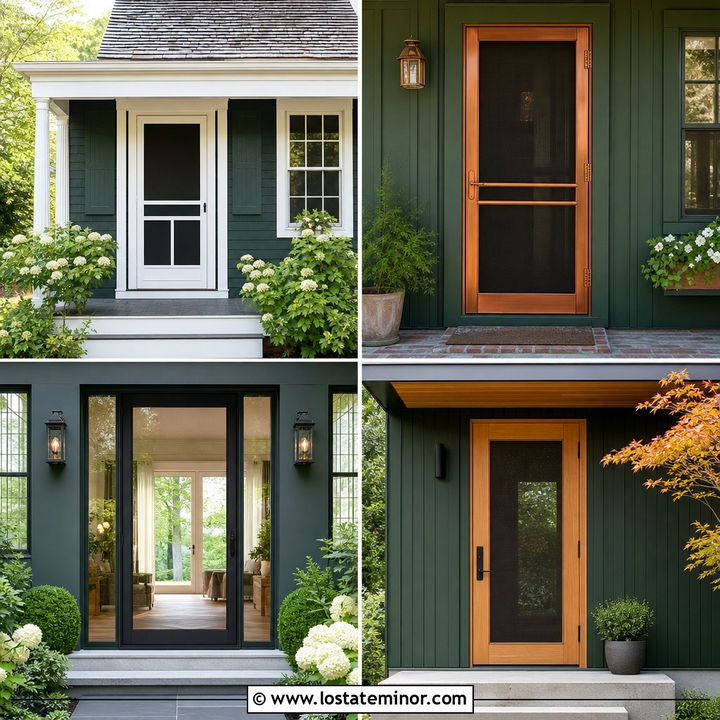
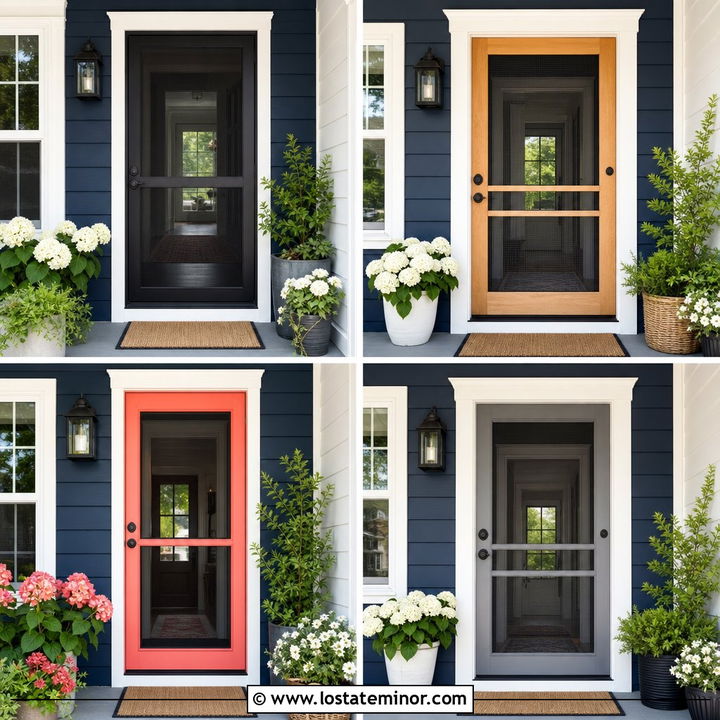
A half-screen configuration offers traditional character while giving the lower section of the door more visual weight. Choose a white or natural wood frame with screen mesh in the upper half and a solid paneled base below. On a white cottage or Craftsman facade, pair it with a deep green front door, warm gray porch floor, and bronze hardware. The solid lower panel can coordinate with the siding or contrast with a muted accent color. Use simple porch columns, divided-light windows, and a medium brown shingle roof to support the familiar design. Flowering shrubs and a narrow brick walkway make the entrance feel especially approachable. This complete look is a practical choice when you want the lightness of screening with the substantial appearance of a classic paneled exterior door.
21. White House With Chippendale Screen Door
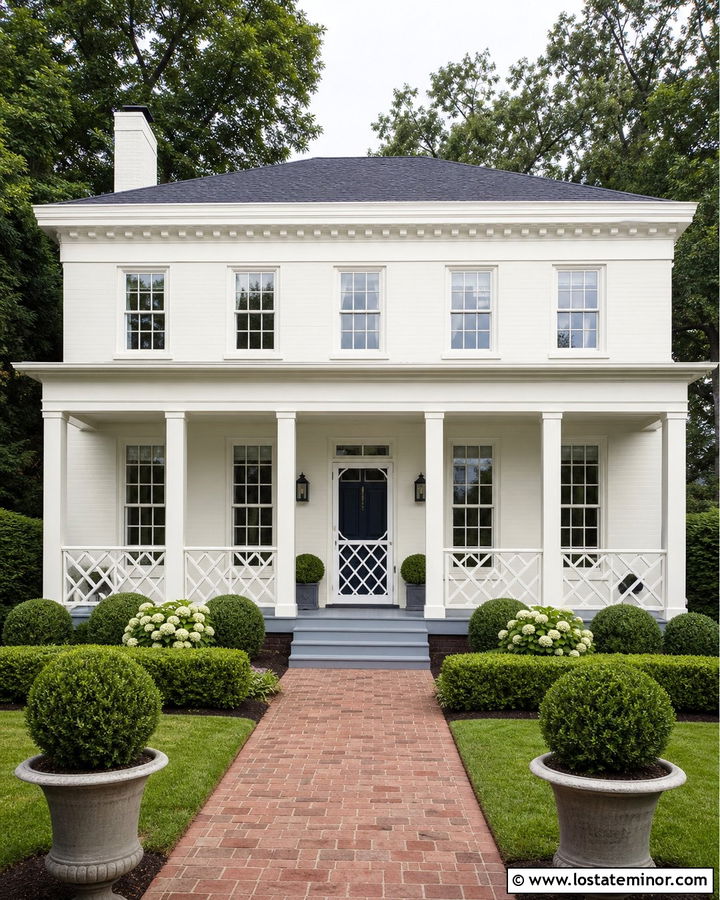
Geometric Chippendale detailing brings elegant pattern to a white porch without requiring a bold paint color. Select a white wood screen door with diagonal latticework in the lower panel and clear mesh above. Pair it with a glossy navy, dark green, or black front door so the pattern is easy to see. Warm white clapboard siding, square porch columns, and matching Chippendale railings can extend the motif across the facade. Keep the roof charcoal and the porch floor light gray to prevent the design from becoming overly ornate. Symmetrical planters, clipped boxwoods, and a straight brick path reinforce the polished appearance. This complete exterior works particularly well for Colonial, Georgian, and Southern-inspired homes where balanced proportions and traditional millwork are already important architectural features.
22. White House With Farmhouse X Screen Door
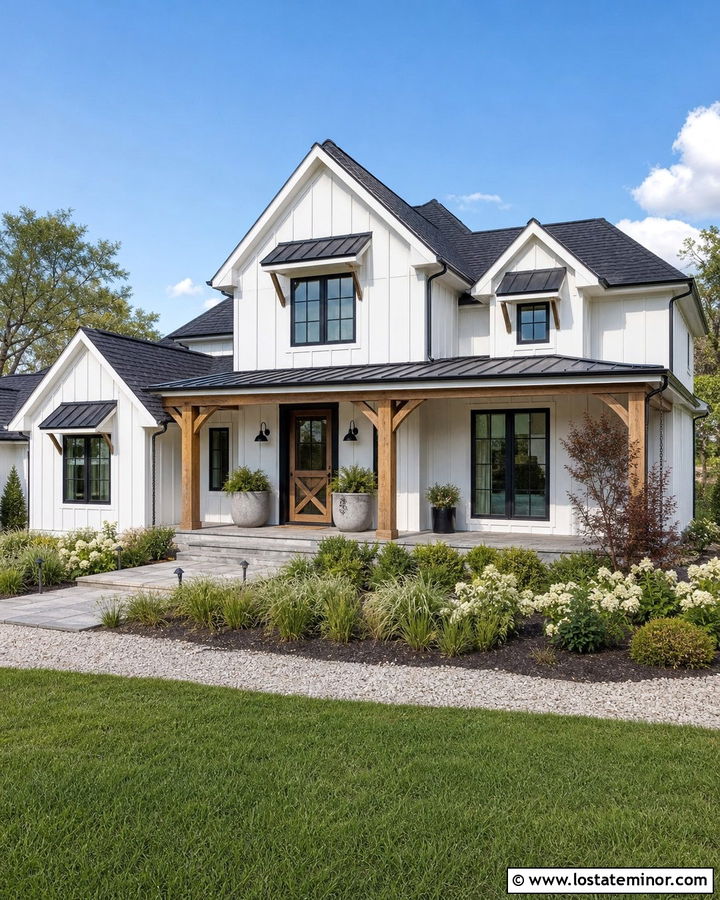
An X-brace screen door adds recognizable farmhouse character to a simple white exterior. Choose a stained wood frame with the cross detail placed below the screened upper panel. Warm white board-and-batten siding provides a clean background, while a charcoal gray or muted green front door adds color behind the screen. Repeat the natural wood on porch beams, columns, or gable brackets. Black barn-style lights, metal roof accents, and straightforward hardware sharpen the rustic palette. Use pale stone porch flooring and a gravel or concrete walkway to keep the entrance casual. Large planters and soft grasses add movement without covering the door. The final scheme feels practical and familiar, with enough modern contrast to prevent the farmhouse details from looking heavy or overly themed.
23. White House With Arched Wood Screen Door
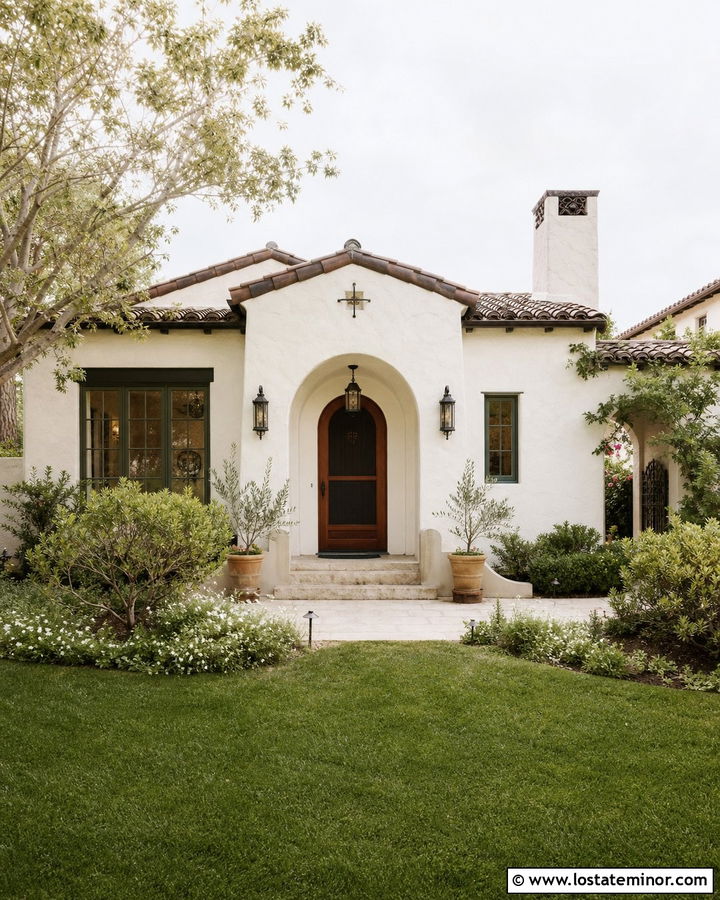
The curved top of an arched wood screen door can transform a plain white entrance into a graceful architectural feature. Use clear-sealed mahogany, oak, or cedar so the shape stands out against creamy white stucco or painted brick. Behind it, choose a dark bronze, forest green, or matching wood front door. A shallow arched porch opening can repeat the curve and make the screen feel custom to the house. Add warm limestone steps, bronze lanterns, and a clay or brown-gray roof for an earthy foundation. Keep nearby landscaping soft and structured with olive-toned shrubs, flowering vines, and low ground cover. This complete exterior blends craftsmanship with restraint. The arched screen door becomes the focal point, while the surrounding materials support its color and shape naturally.
24. White House With French Screen Doors
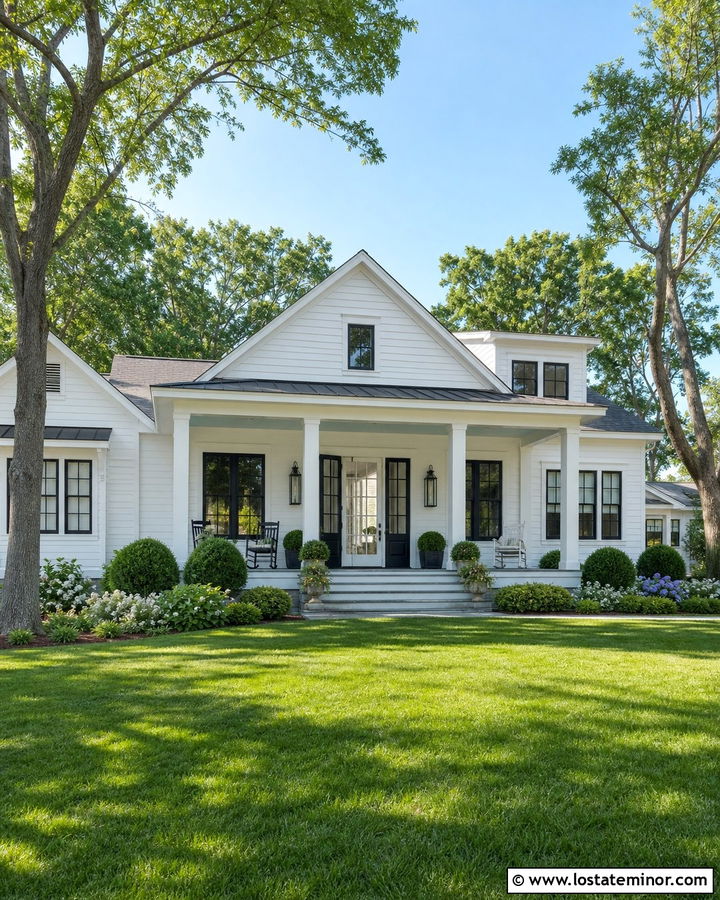
French screen doors create an airy connection between a white house and a broad porch or patio. Use a matched pair of slim black or stained wood screen frames over divided-light French entry doors. White siding, generous white casing, and a light porch ceiling keep the opening bright. If the screens are black, add black window frames and simple metal lanterns elsewhere on the facade. If they are wood, repeat the stain on porch beams or outdoor furniture. Bluestone flooring and wide steps provide a sturdy visual base. Surround the porch with clipped shrubs, flowering borders, and an open lawn so the double-door composition remains visible. The complete look feels spacious and balanced, making it especially suitable for Southern homes, farmhouses, cottages, and relaxed transitional exteriors.
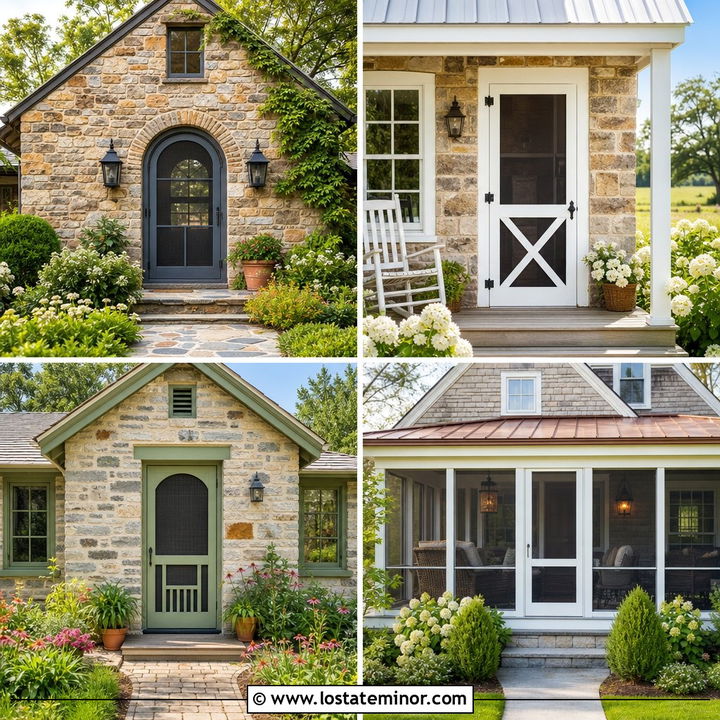
25. White House With Copper Screen Door
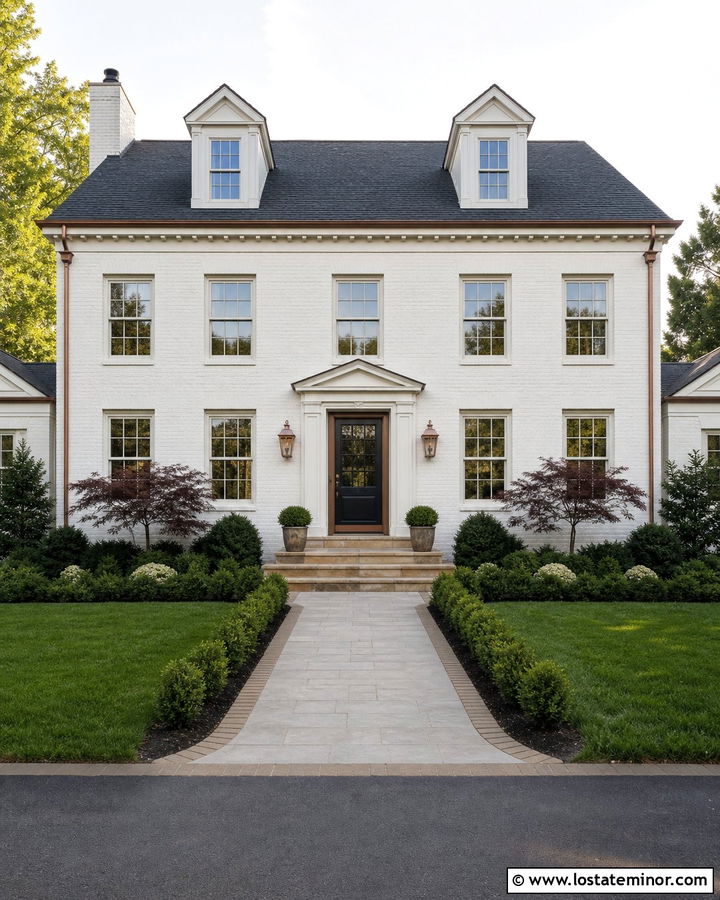
A copper-toned screen door introduces warmth and a distinctive metallic accent to a white house. Choose an aged copper or dark copper-bronze finish rather than a highly reflective orange metal. Pair it with a deep navy or rich walnut front door so the screen frame remains visible but refined. Creamy white painted brick, warm limestone steps, and a charcoal roof create a balanced setting. Repeat the metal sparingly on gutters, lanterns, planter rims, or a small porch roof. Too many copper features can distract from the entrance. Deep green shrubs and burgundy foliage complement the warm finish without copying it. As one complete scheme, the white masonry brightens the facade, the dark door adds depth, and the copper screen supplies a memorable layer of character.
26. White House With White Screen Door
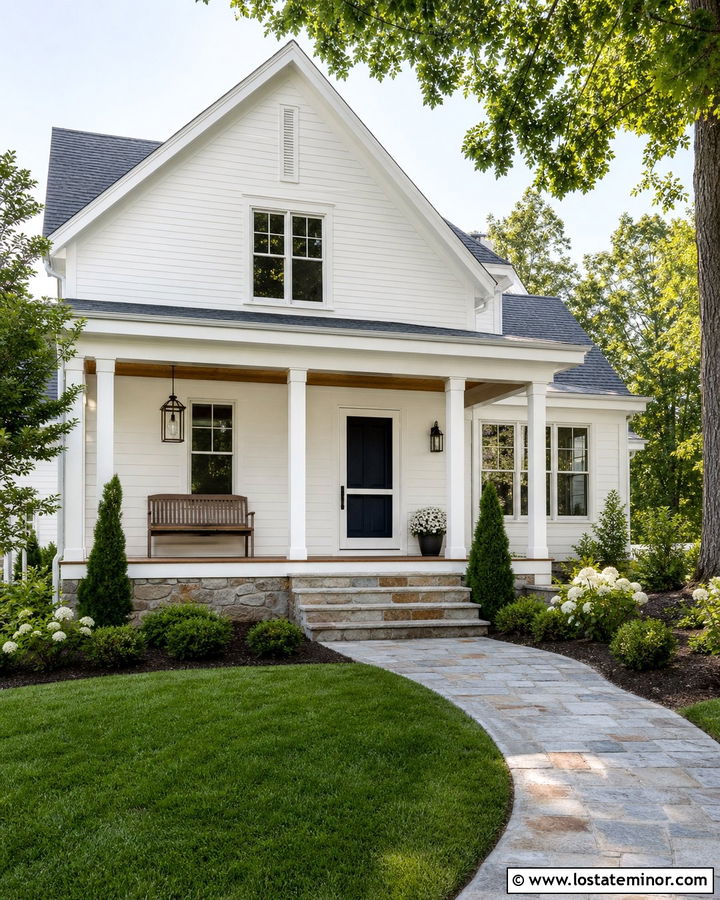
An all-white screen door can disappear gracefully into a white facade when the entrance already has enough contrast. Use a bright white screen frame that matches the window trim and porch columns, then place it over a deep navy, charcoal, green, or red front door. The color behind the mesh becomes the focal point while the outer screen maintains a clean visual border. Soft white siding, a medium gray roof, and natural stone steps keep the overall palette quiet. Add dark hardware so the screen door does not look flat or unfinished. A stained porch ceiling or wood bench introduces warmth near the entry. This coordinated treatment suits traditional homes and small cottages where a dark or decorative screen frame might make the doorway appear visually crowded.
27. White House With Gray Screen Door
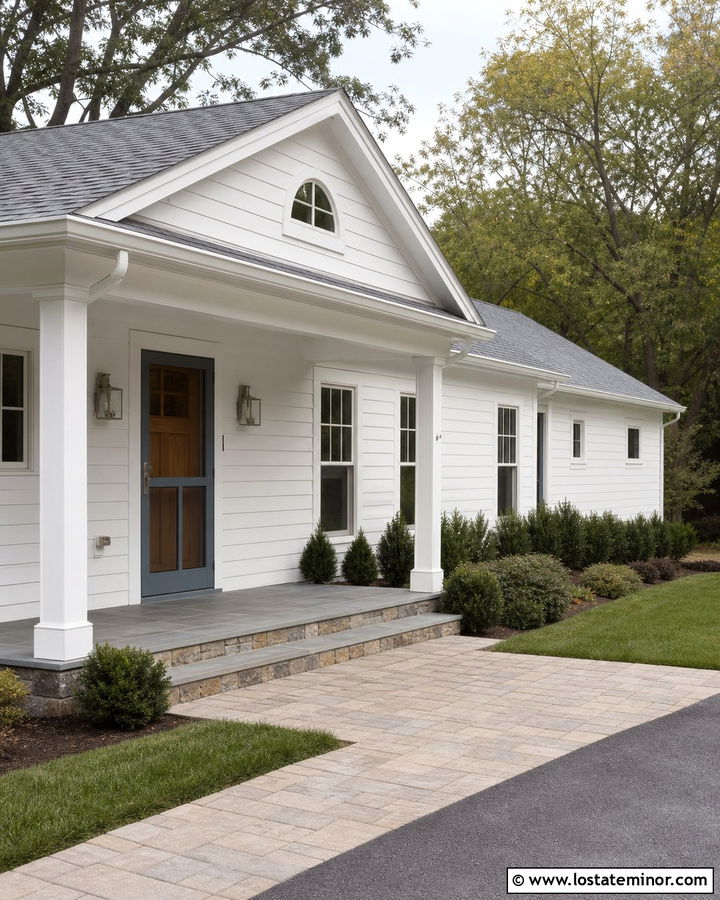
Gray offers softer contrast than black, making it a useful screen-door color for a white house with an understated exterior. Choose a medium charcoal gray for definition or a pale blue-gray for a coastal effect. Pair the screen with a warm wood front door and soft white siding. Repeat the gray on the porch floor, roof shingles, shutters, or garage door to distribute the color across the facade. Brushed nickel hardware keeps the entrance light, while dark bronze creates a warmer transitional look. Use stone steps containing both gray and beige tones to connect the cool screen frame with the wood door. Simple evergreen landscaping and a wide paver walkway complete the composition. The final exterior feels layered and polished without relying on dramatic black-and-white contrast.
28. White Split Level With Modern Screen Door
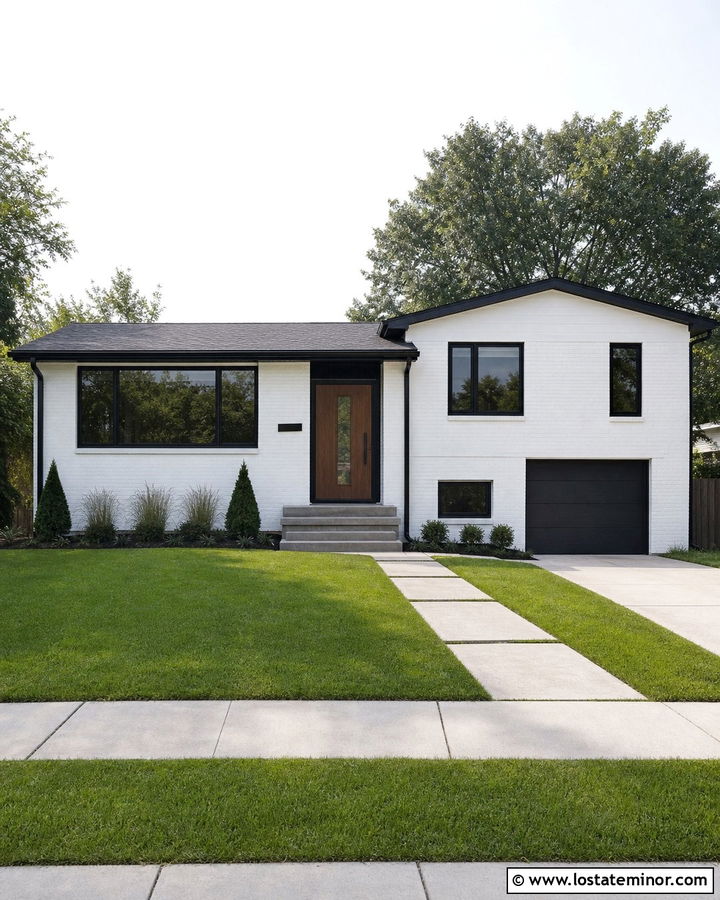
A slim modern screen door can refresh a white split-level house while respecting its straightforward architecture. Use crisp white painted brick or horizontal siding and add a black aluminum screen with a large uninterrupted mesh panel. Behind it, install a warm walnut front door with narrow vertical glass. Black windows, gutters, and garage-door details repeat the frame color across the asymmetrical facade. A charcoal roof and gray concrete steps provide a grounded base. Replace overly formal landscaping with ornamental grasses, compact evergreens, and a broad rectangular walkway. Horizontal address numbers and simple cylinder lights reinforce the updated style. By combining white masonry, dark metal, and warm wood, the complete exterior feels more deliberate, while the screen door remains practical and visually appropriate for the home’s midcentury-influenced shape.
29. White Southern House With Tall Screen Door
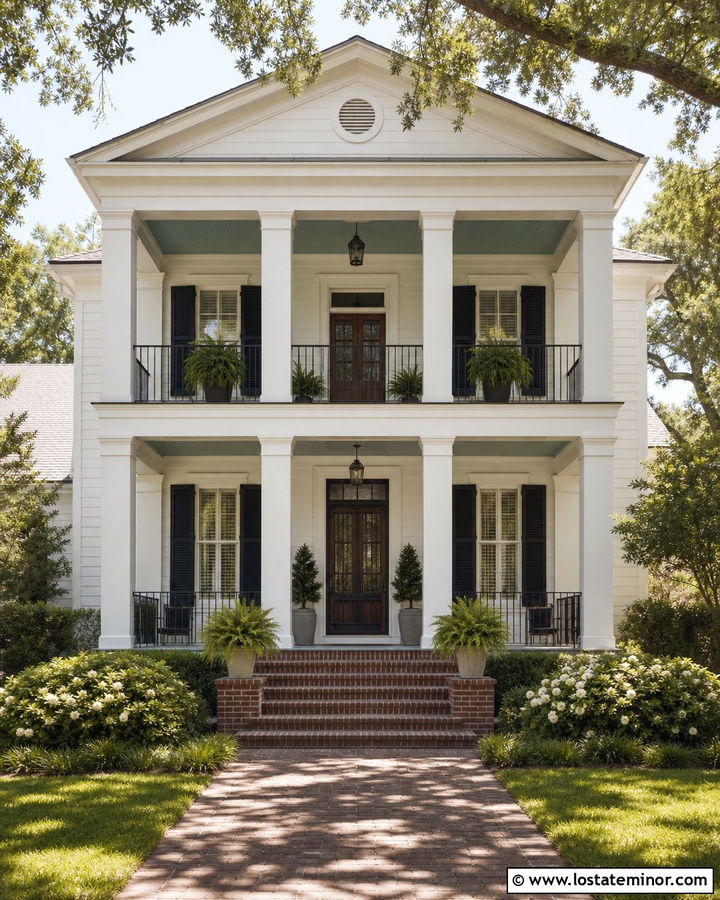
Tall ceilings and generous porches deserve a screen door with equally elegant proportions. On a white Southern house, choose an elongated wood or black metal screen door beneath a transom window. Creamy white siding, substantial square columns, and a pale blue porch ceiling create a bright framework around the entrance. Pair a black screen with a stained mahogany door, or use a white screen over a deep green entry door. Traditional lanterns, dark shutters, and a warm gray roof balance the large facade. Wide brick steps and symmetrical planters make the entrance feel formal without becoming stiff. Shade trees, ferns, and low flowering shrubs soften the porch foundation. The complete arrangement highlights the home’s vertical scale while allowing the screen door to feel graceful rather than purely functional.
30. White Modern House With Minimal Screen Door
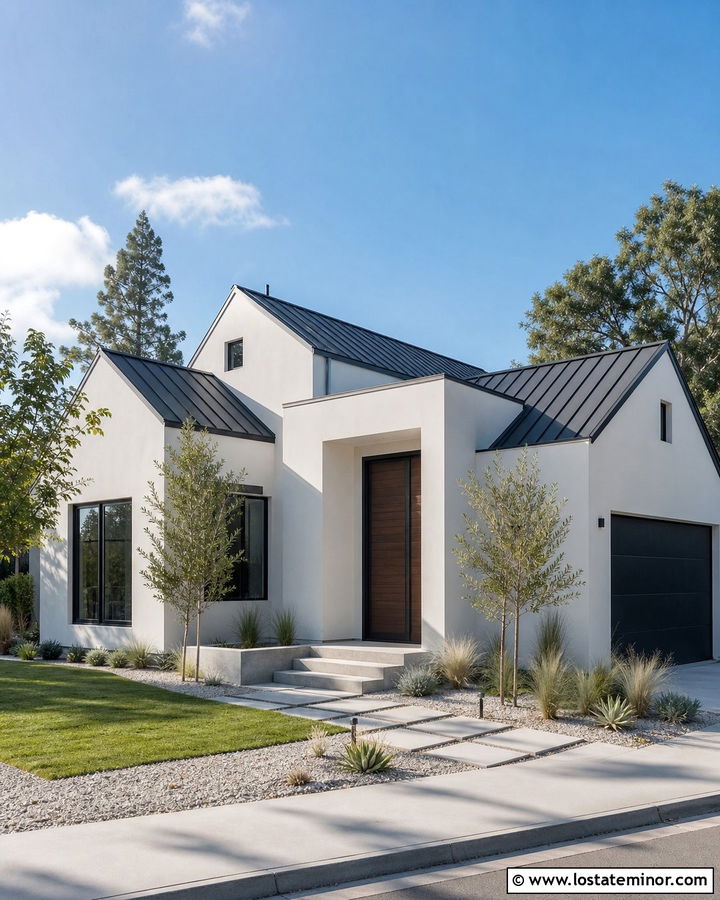
For a modern white house, the best screen door is often the least visually complicated. Select a flush black aluminum frame with fine dark mesh and minimal visible hardware. Place it over a natural oak or walnut pivot-style front door to add warmth to the monochrome facade. Smooth warm white stucco, black-framed windows, and a charcoal standing-seam roof establish a clean architectural palette. Concrete steps, linear pavers, and narrow gravel beds continue the simple geometry into the yard. Use sculptural grasses and compact trees instead of dense foundation planting. The door frame should align closely with surrounding window mullions and exterior trim. This creates one complete composition in which the screen provides airflow and protection without interrupting the home’s strong lines or carefully controlled material palette.
Conclusion:
These 30 White House Design With Screen Door Ideas show how a practical entrance feature can strengthen the appearance of an entire facade. A black metal frame can sharpen a modern farmhouse, while cedar adds warmth to a cottage or Craftsman. Navy, sage, aqua, yellow, and red offer controlled color against white siding. Retractable screens preserve a minimal look, and decorative wood doors bring traditional character. Before choosing one, compare the screen frame with your front door, trim, roof, porch, and hardware. Also view color samples in bright daylight and porch shade. The most successful design will look connected to the whole house while providing the airflow, visibility, durability, and curb appeal your entrance needs.

Related posts: