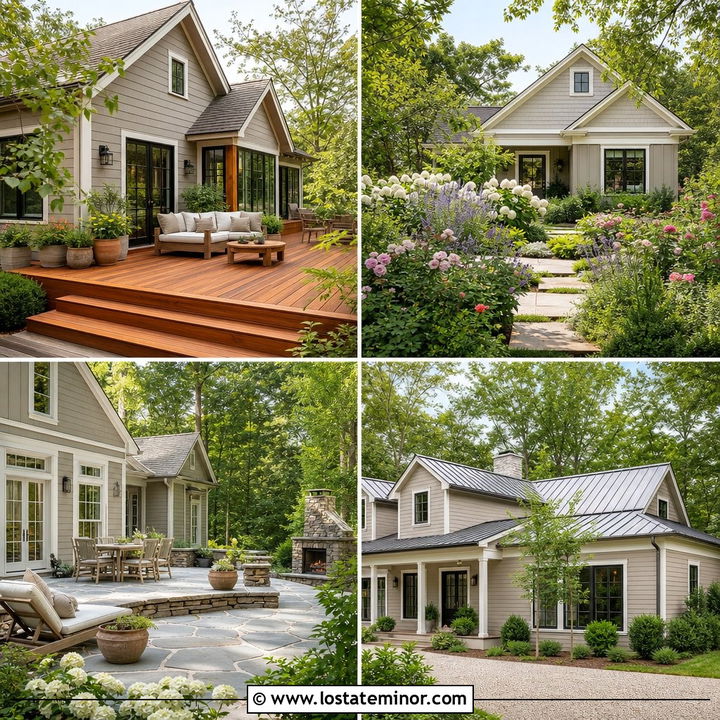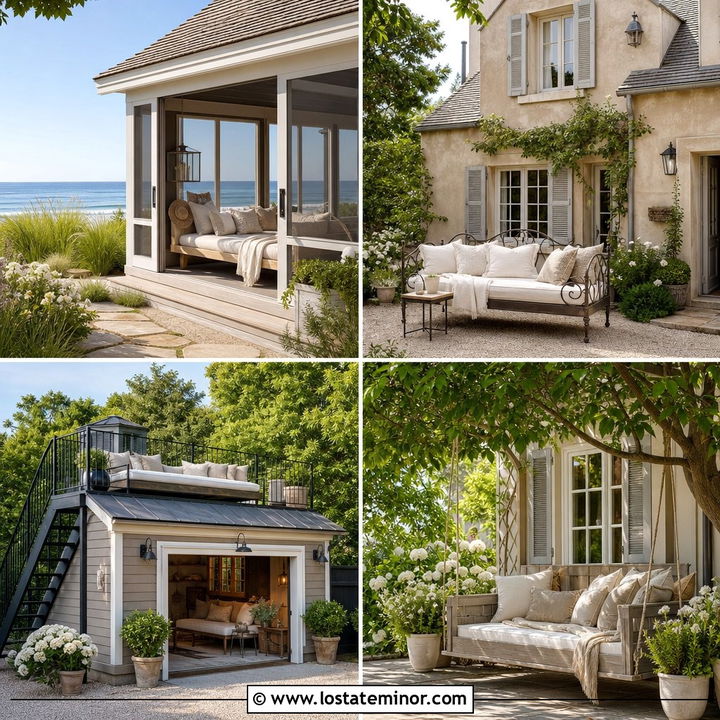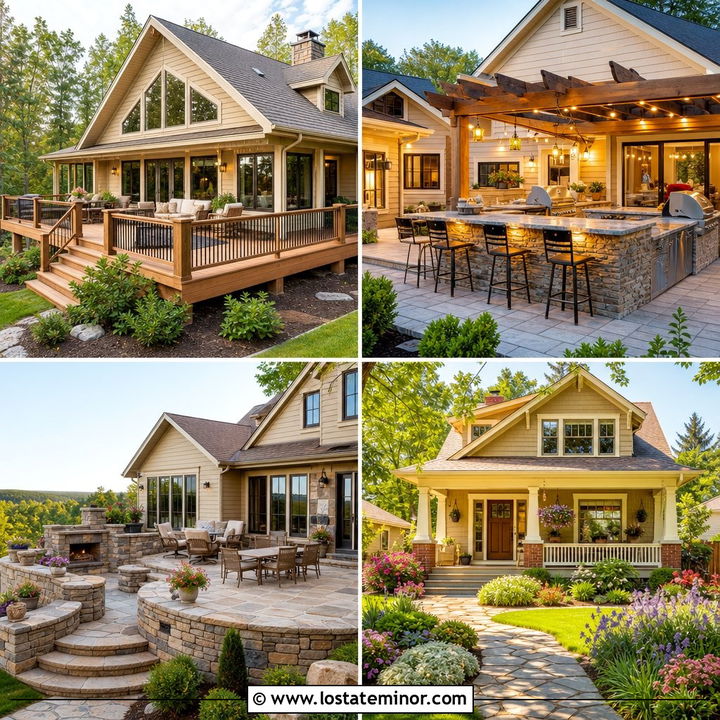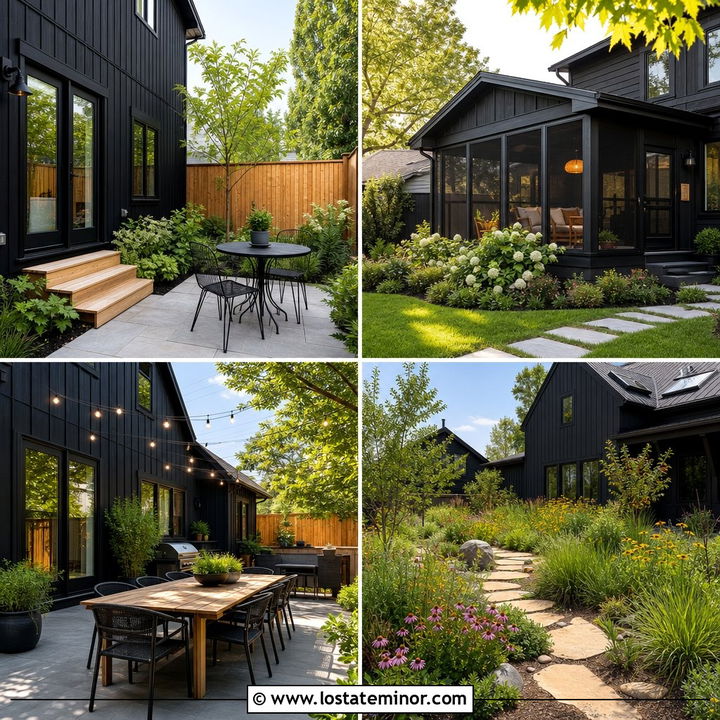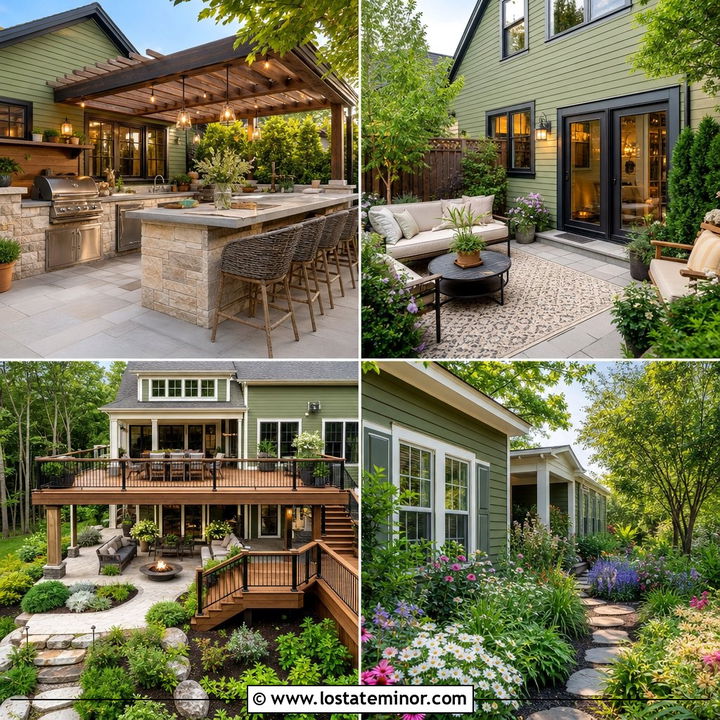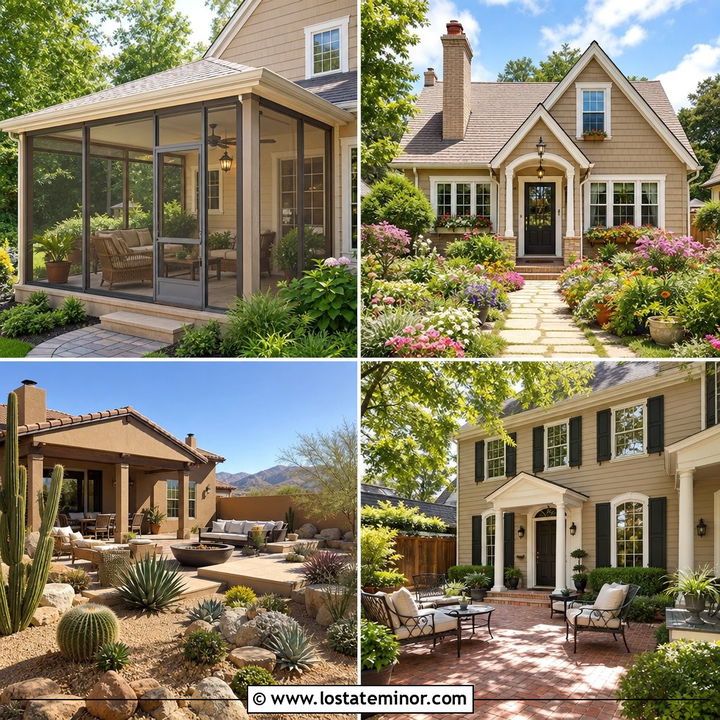
Taupe brings the softness of beige and the grounding depth of gray together, making it a flexible choice for connecting a home exterior with an outdoor living space. Current exterior palettes also pair taupe with natural wood, stone, crisp white, deep brown, and black accents for added dimension. () The key is treating the rear facade and backyard as one complete design. Decking, patios, pergolas, garden beds, doors, windows, and outdoor furniture should feel related without matching perfectly. Whether your property has a compact lawn, swimming pool, wooded lot, or spacious entertaining area, these 30 Taupe House Design With Backyard Ideas offer practical ways to create a polished transition from architecture to landscape. Explore the complete exterior looks below for inspiration from 30 Taupe House Design With Backyard Ideas.
1. Taupe House With Covered Backyard Patio
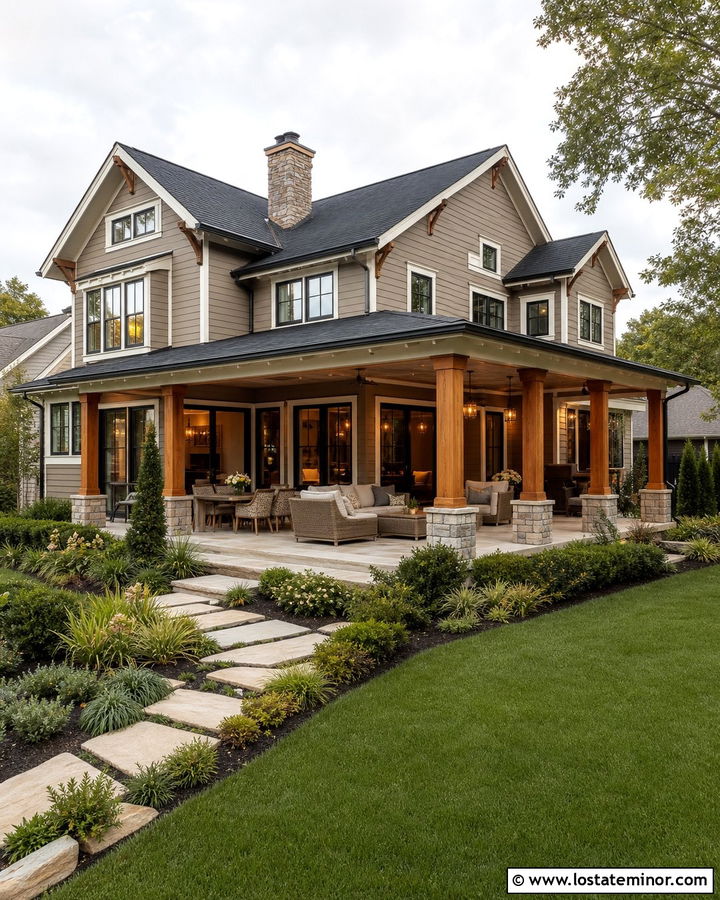
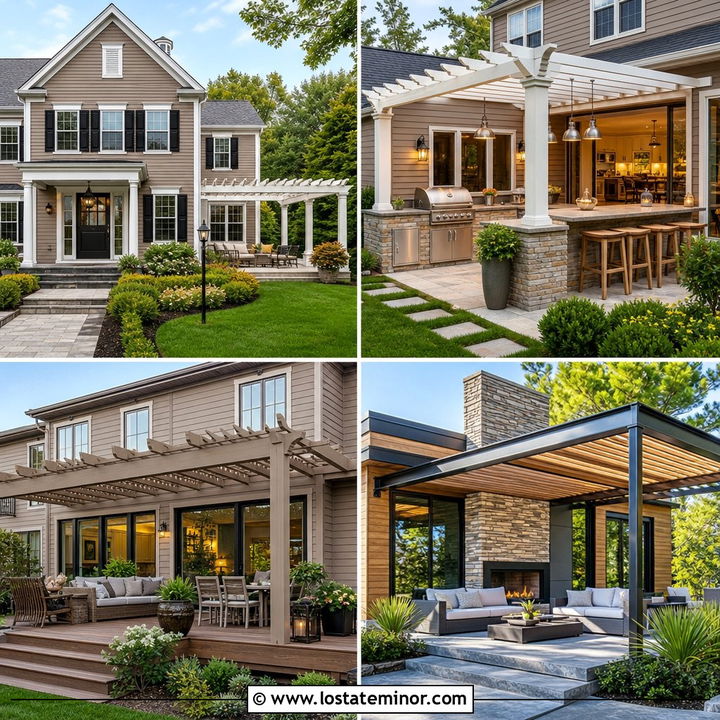
A covered patio gives a taupe house a natural extension that feels useful in almost every season. Choose a warm medium taupe for the siding, then add creamy white window trim and a charcoal roof for balanced contrast. At the back of the house, use stained cedar posts to support a simple roof extension. A pale stone patio underneath keeps the outdoor area bright and complements the brown undertones in the siding. Arrange neutral seating around a low outdoor coffee table, leaving an open path between the back door and lawn. Black sconces, planters, and door hardware provide small modern details. Layer ornamental grasses and evergreen shrubs around the patio so the hard edges blend smoothly into the backyard.
2. Taupe House With Raised Wood Deck
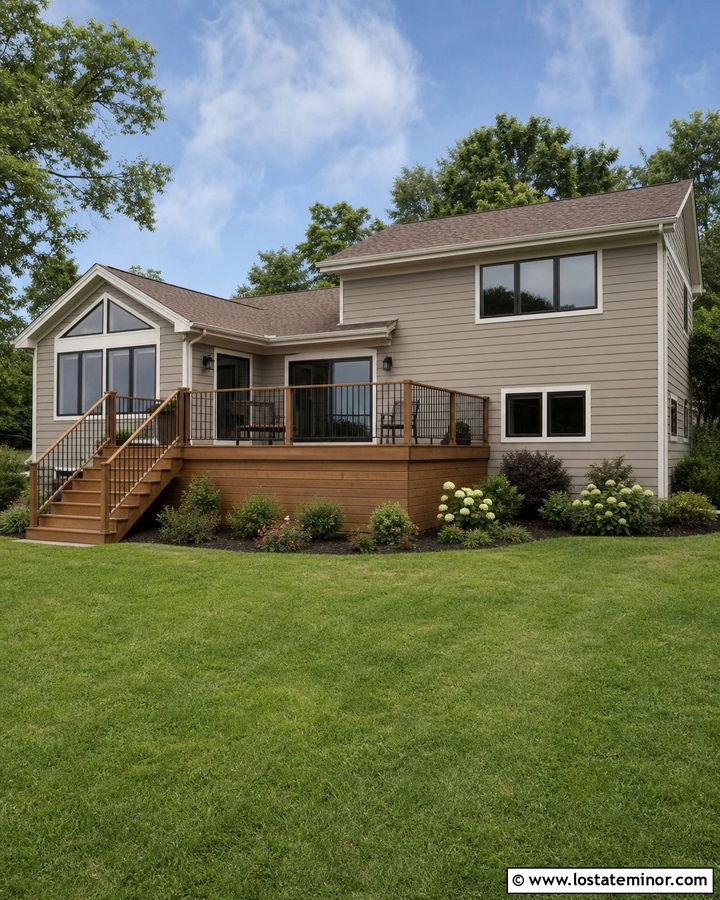
Imagine walking through wide glass doors onto a warm cedar deck overlooking a green lawn. This pairing works especially well on a taupe split-level or raised ranch because the deck visually connects the upper floor with the backyard. Use midtone taupe siding with soft white trim and a brown architectural-shingle roof. The natural deck boards bring warmth to the neutral exterior, while slim black railings keep the structure from appearing heavy. Add broad stairs that face the main lawn rather than a narrow staircase along one side. Large planters can mark the transition between the deck and steps. Below the deck, install horizontal wood screening or taupe lattice to conceal storage and make the entire rear facade look finished.
3. Taupe House With White Pergola
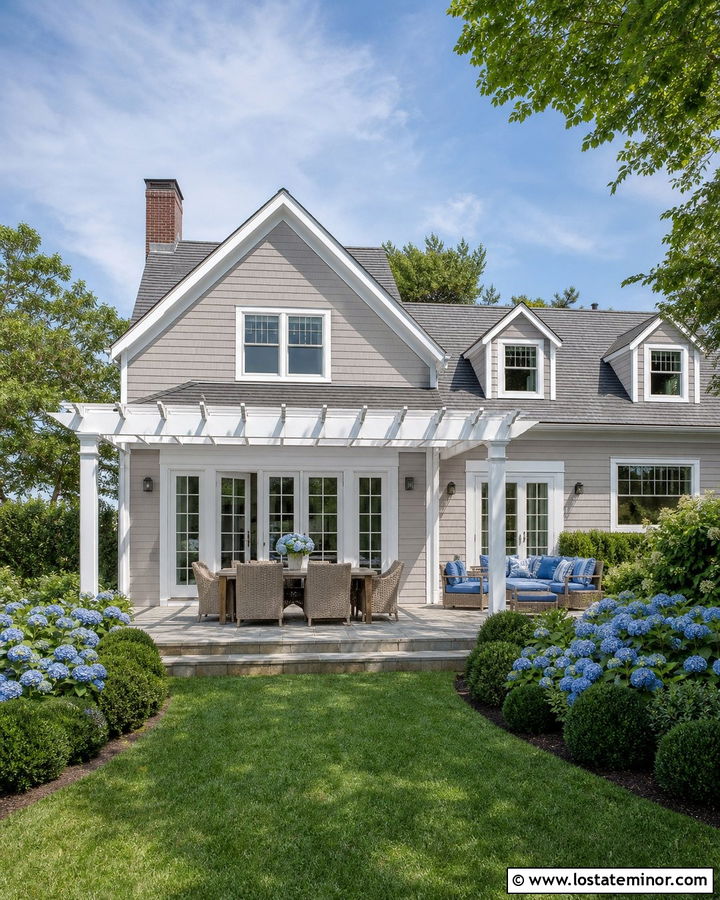
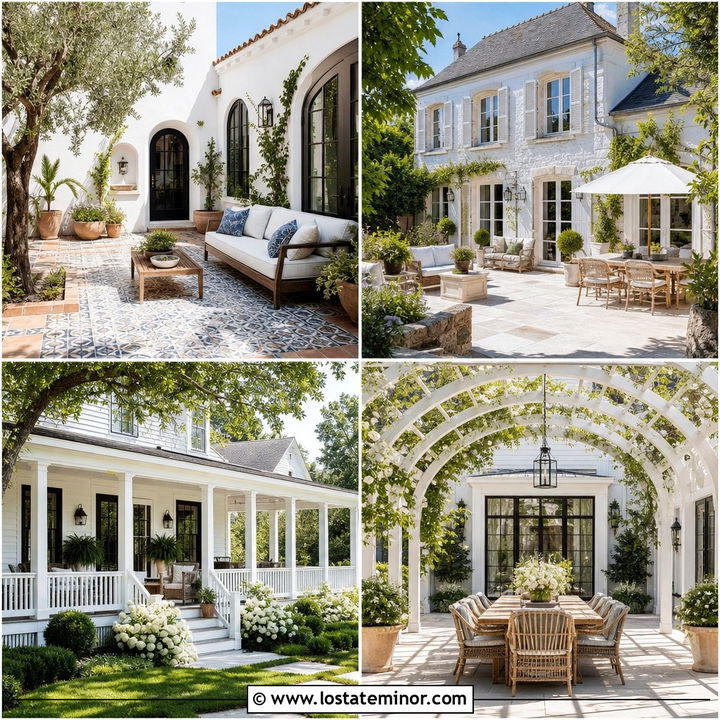
A white pergola creates crisp definition against taupe siding without making the backyard feel dark. This complete scheme suits a Cape Cod, cottage, or traditional suburban home with divided-light windows and a simple rear entry. Paint the house a soft gray-taupe, then repeat clean white on the trim, pergola, fascia, and French doors. Use light concrete pavers beneath the structure so the area feels open and easy to maintain. Climbing greenery can soften the posts, although it should be trained carefully to preserve the architecture. Furnish the patio with woven chairs, a rectangular dining table, and muted blue cushions. Hydrangeas, boxwoods, and a curved lawn border complete the relaxed backyard while supporting the cool undertones of the taupe exterior.
4. Taupe House With Black Pergola
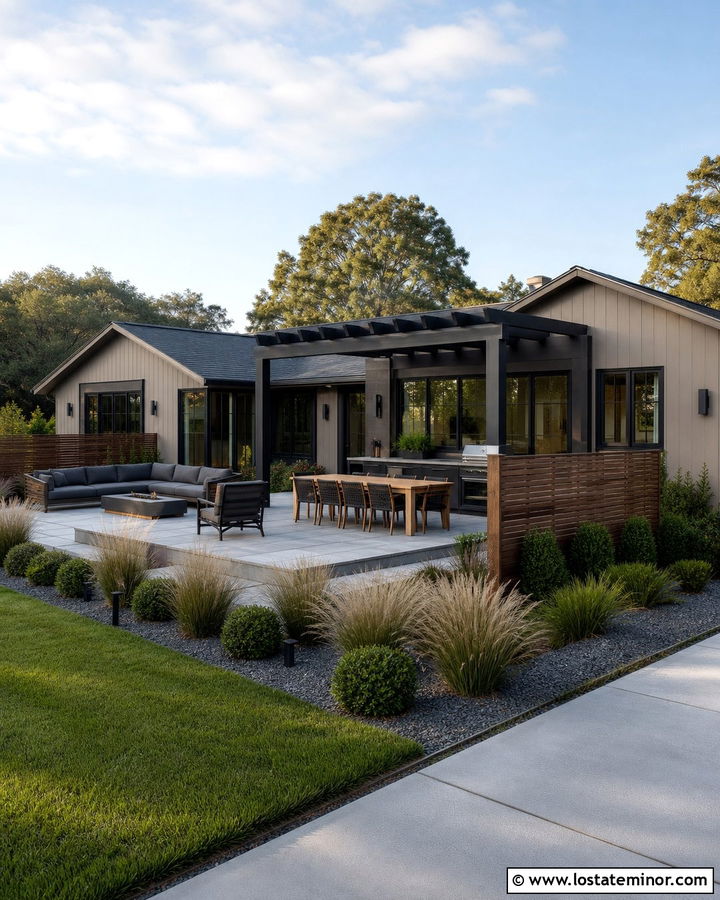
Would you like a neutral backyard to feel sharper and more contemporary? A matte black pergola can give a taupe house the contrast it needs. Start with warm taupe stucco or smooth lap siding, black-framed windows, and understated matching gutters. Position a streamlined pergola outside the main living area, using large-format gray pavers to define the patio. Taupe and charcoal outdoor upholstery will connect the structure to the house without creating a flat monochromatic space. Introduce warmth through a teak dining table, wood planters, or a slatted privacy screen. The surrounding yard should remain simple, with rectangular planting beds, clipped grasses, and a clearly edged lawn. This combination looks especially effective on modern, transitional, and low-profile ranch homes.
5. Taupe House With Stone Backyard Patio
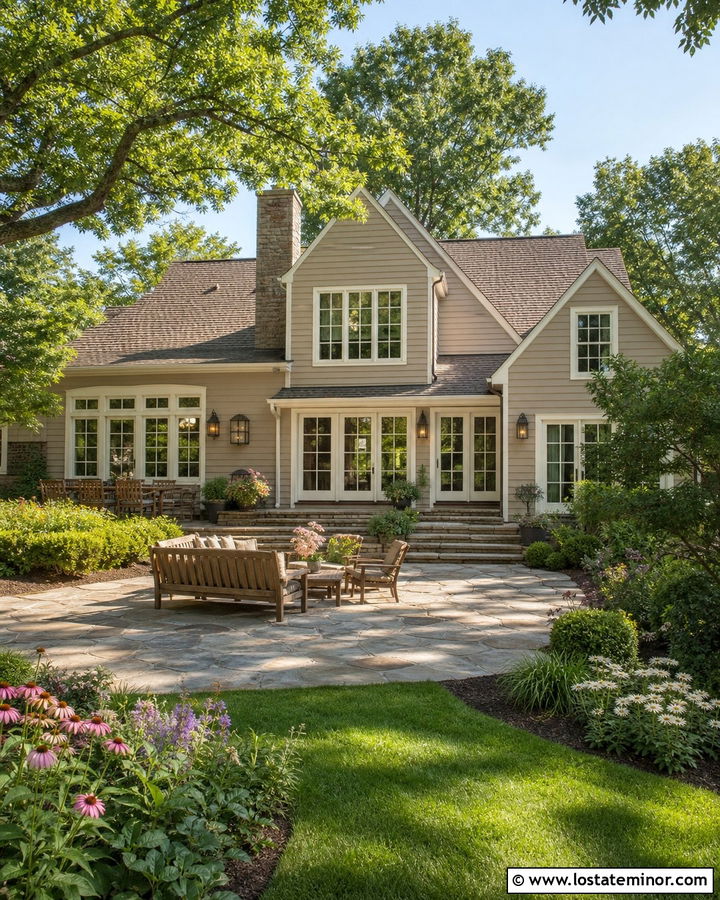
Natural stone makes a taupe exterior feel established and connected to the landscape. Choose a warm taupe body color with ivory trim, bronze lighting, and a weathered brown roof. Build the patio from irregular flagstone or rectangular pavers containing beige, gray, and muted brown tones. These varied colors bridge the siding and surrounding garden more naturally than a single flat concrete color. Place the seating area close to the back doors, but allow enough room for comfortable circulation around chairs and tables. A stone step or low seat wall can handle changes in grade while giving the patio a finished boundary. Complete the backyard with layered shrubs, flowering perennials, and ground cover planted between selected stones for a softer, garden-centered appearance.
6. Taupe House With Modern Concrete Patio
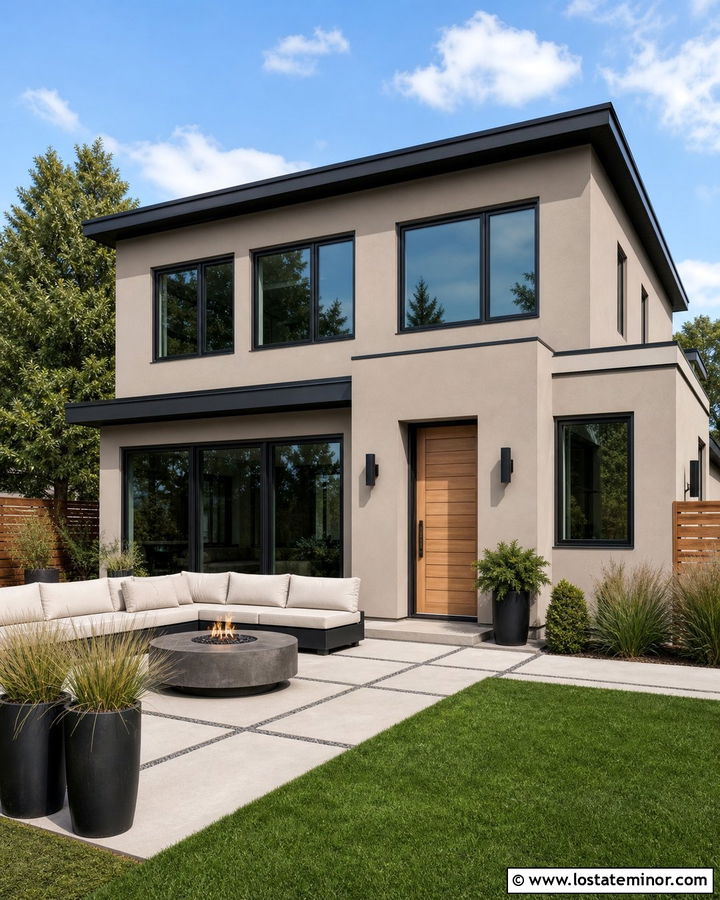
Clean concrete can make a taupe house look fresh rather than overly traditional. On a modern two-story home, combine cool taupe stucco with charcoal window frames, flat black lights, and natural wood around the back entrance. Pour large concrete slabs with narrow gravel joints to create subtle pattern and improve visual scale. Keep the patio layout rectangular and align it with the home’s windows or sliding doors. A low-profile sectional, round fire table, and simple dining set provide function without covering the hardscape. Add several oversized planters in black or dark bronze to repeat the window color. Around the patio, use architectural grasses, compact evergreens, and a small lawn. Their green tones will keep the taupe-and-gray palette from feeling too industrial.
7. Taupe House With Backyard Fire Pit
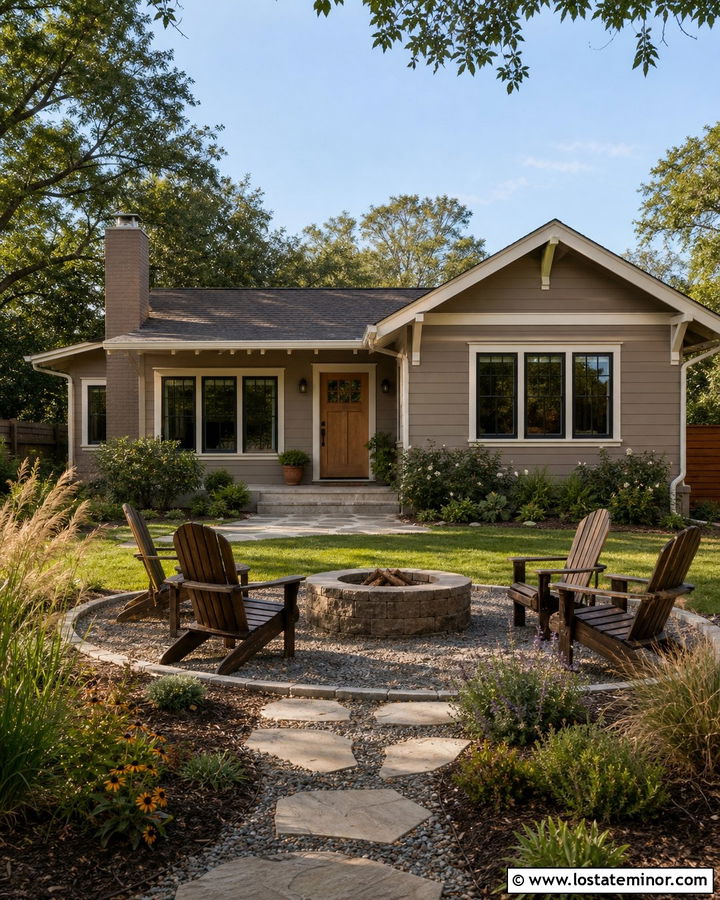
A fire pit can become the visual destination beyond a taupe house and its main patio. Use warm taupe siding, creamy trim, and a natural wood back door to establish an inviting foundation. Build a short path from the house to a circular gravel or paver area positioned safely within the open yard. A low stone fire pit containing brown and gray tones will coordinate with the siding while adding texture. Arrange durable outdoor chairs around it with enough open space for movement. Repeat the same stone around nearby planting beds or patio steps so the fire-pit zone does not look disconnected. Low grasses and native perennials can frame the space without blocking views from the house, creating a backyard that feels organized and welcoming.
8. Taupe House With Outdoor Kitchen
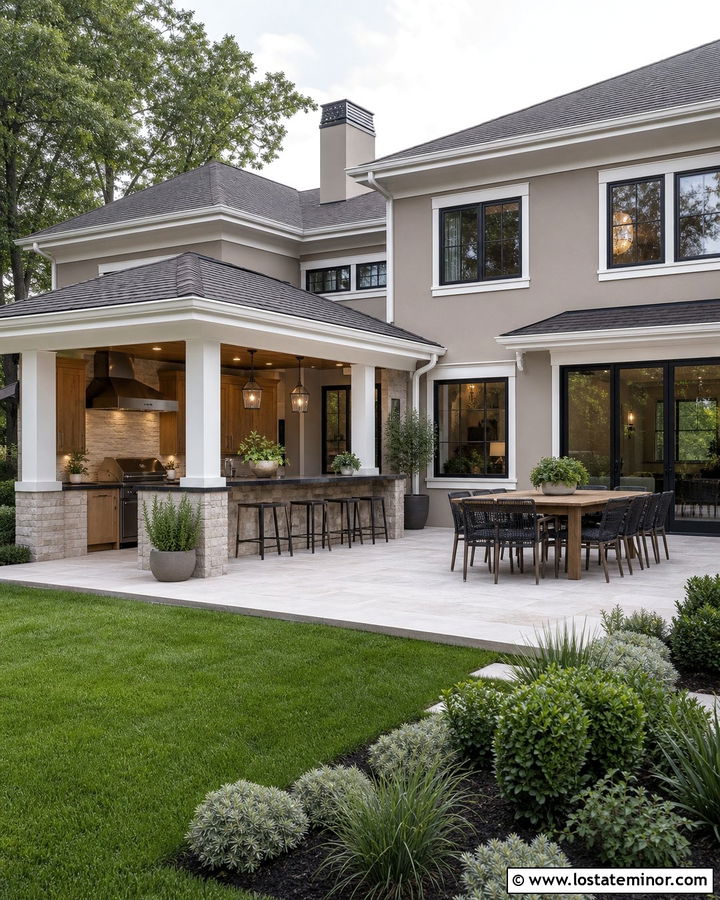
For homeowners who enjoy cooking outside, an outdoor kitchen can visually anchor a spacious taupe backyard. A transitional house with medium taupe siding, white trim, black windows, and a covered rear terrace provides a balanced setting. Finish the kitchen base in ledgestone that includes gray, beige, and brown shades. Add charcoal countertops for contrast and weather-resistant wood cabinets for warmth. Place the cooking zone near the house for convenient access, while keeping the dining table just outside the busiest work path. The patio flooring can be pale limestone-look porcelain or sealed concrete. Add pendant lighting under the roof, plus planters filled with herbs near the preparation counter. The final scheme should feel like part of the architecture rather than a separate backyard appliance station.
9. Taupe House With Backyard Dining Area
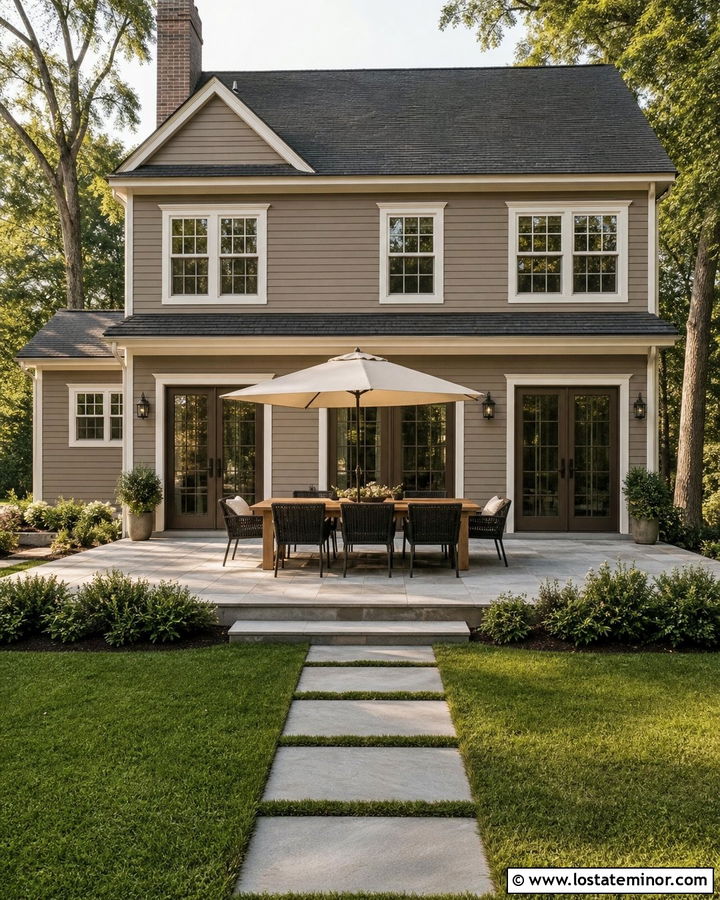
Even a simple dining setup can transform the back of a taupe home when every finish works together. Paint the siding a balanced taupe with warm white trim and dark bronze doors. Directly outside the kitchen, create a rectangular patio using beige-gray pavers laid in a clean running pattern. Center a wood dining table beneath a neutral market umbrella or compact pergola. Black chairs and lighting can echo the darker window details, while linen-colored cushions keep the setting comfortable and light. Frame the patio with low planting beds instead of tall shrubs that might make the dining area feel enclosed. A level route from the back door to the table is important for everyday use. Add subtle path lighting to define the complete layout after sunset.
10. Taupe House With Backyard Pool
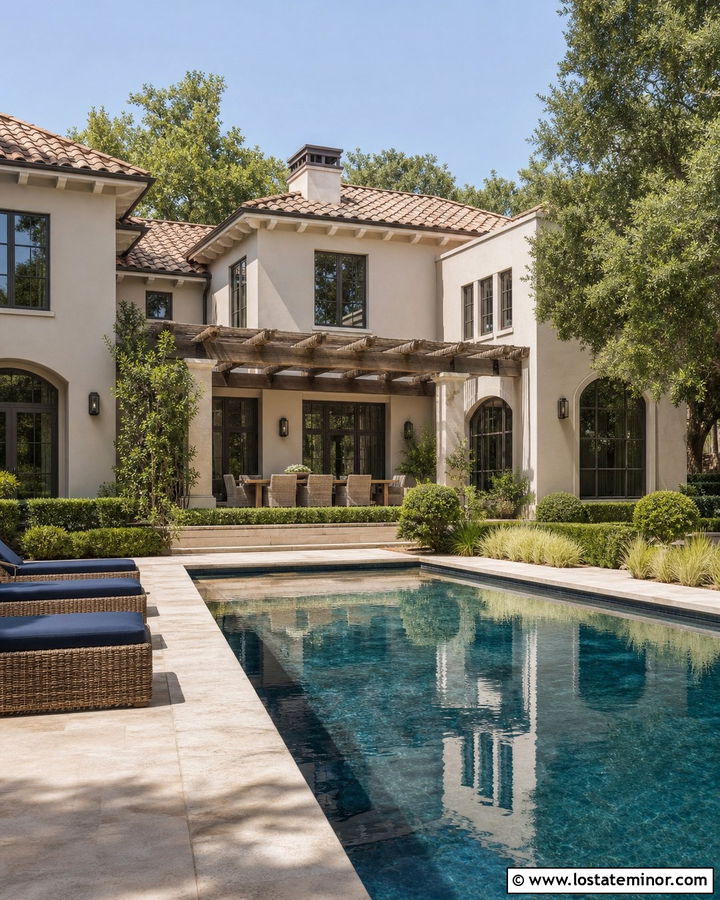
Water and taupe create a calm pairing, especially when the pool materials repeat the exterior’s balanced undertones. Use a light taupe stucco finish with white soffits, bronze windows, and pale stone accents around the rear entrance. Surround the pool with cream limestone, warm gray porcelain, or textured concrete that remains visually quiet. Introduce natural wood through lounge chairs, a pergola, or a compact pool-house door. This prevents the neutral palette from becoming cold. Keep the line between the house and pool open so the full rear facade remains visible. Structured hedges, ornamental grasses, and several shade trees can soften the paving. Select outdoor fabrics in muted green, navy, or dusty blue for gentle color that does not compete with the taupe exterior.
11. Taupe House With Screened Porch
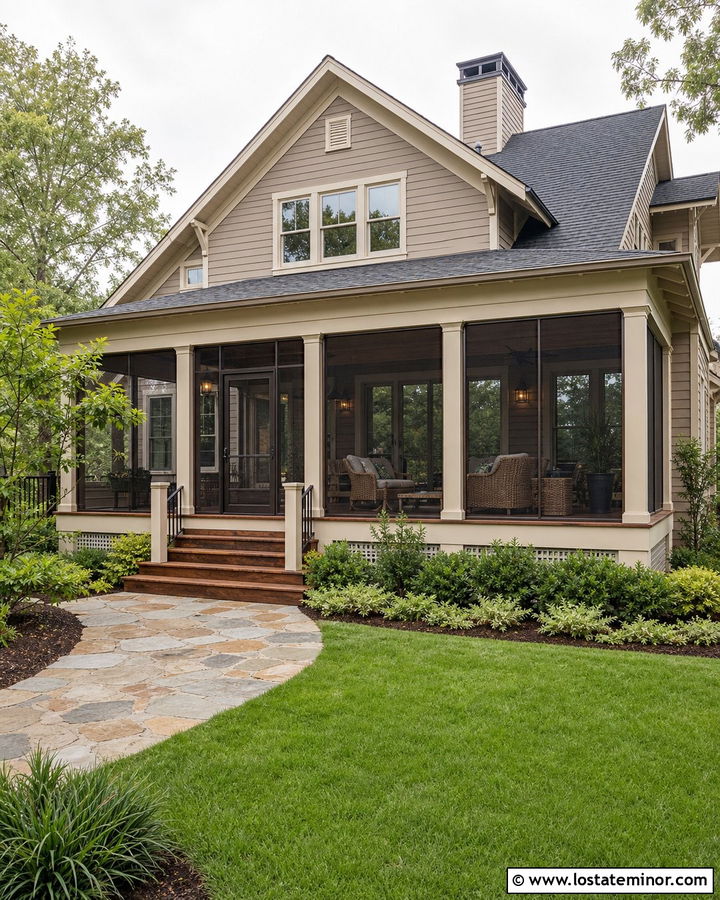
A screened porch adds useful living space while giving a plain rear elevation more architectural depth. On a taupe craftsman home, combine horizontal siding with cream trim, tapered porch columns, and a charcoal shingle roof. Use dark bronze or black screen frames so they visually recede instead of forming a bright grid. A stained wood porch floor will warm the entire composition and relate well to taupe’s brown undertones. Inside, choose woven furniture, light cushions, and a ceiling fan with simple lines. Wide stairs can connect the porch to a stone path and open lawn. Plant medium-height shrubs at the foundation, but keep them below the screen openings. The result is a comfortable backyard room that still feels visually connected to the garden.
12. Taupe House With Cedar Privacy Screen
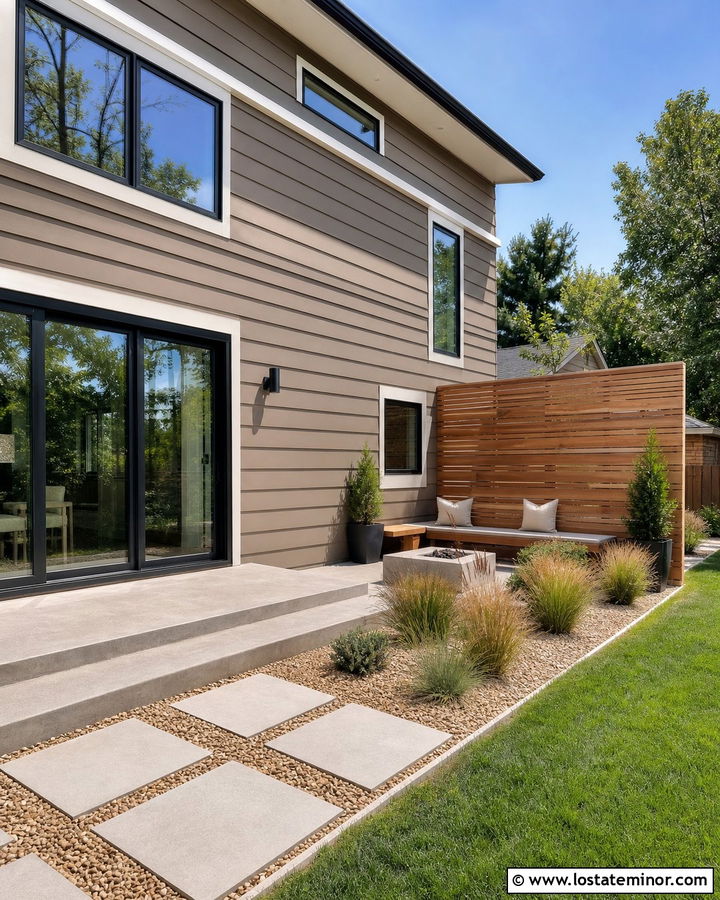
Close neighbors do not have to prevent a taupe backyard from feeling peaceful. Add a cedar privacy screen to one side of the patio rather than enclosing the entire yard. The warm wood grain looks especially attractive beside mushroom taupe siding, off-white trim, and black-framed glass doors. Use horizontal slats for a modern home or vertical boards for a more traditional exterior. Position the screen behind a lounge area, outdoor kitchen, or hot tub where privacy matters most. Repeat cedar on a bench, planter, or pergola beam to make the feature intentional. Gravel and large concrete stepping stones can create an uncluttered base. Finish the space with upright evergreens and soft grasses, which help filter views while adding natural movement around the structured screen.
13. Taupe House With Black Trim And Deck
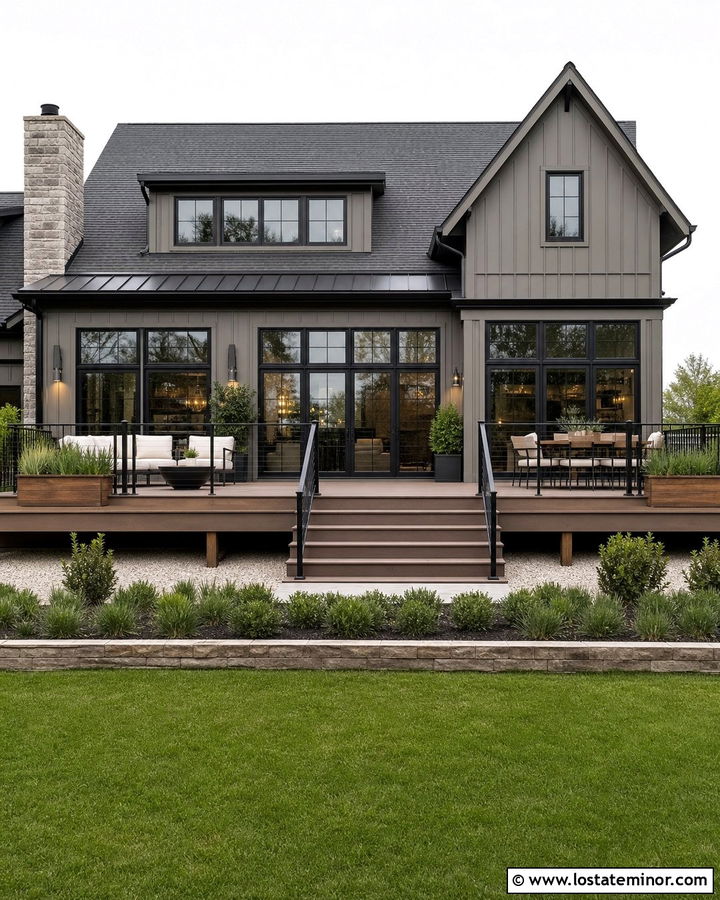
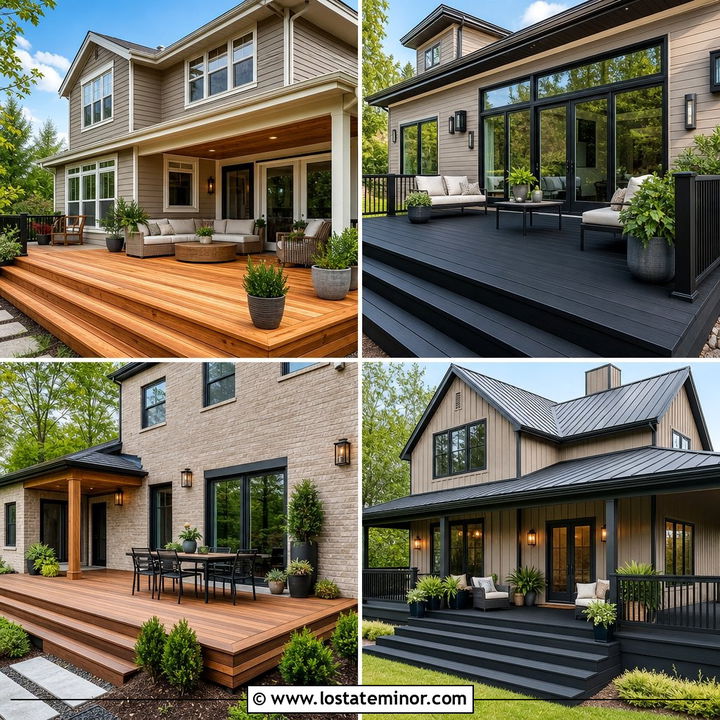
Black trim gives a taupe exterior a stronger outline, but the backyard needs warmth to balance the contrast. Choose medium greige-taupe siding with black windows, fascia, gutters, and sliding-door frames. Add a medium brown composite deck across the rear facade, using black metal railings for continuity. The deck should be broad enough to hold separate dining and lounging zones without crowding the doors. Light tan cushions, wood planters, and a cream outdoor rug will soften the darker features. Beneath the deck, use pale gravel and clean foundation screening rather than leaving unfinished soil visible. A straight staircase leading to a rectangular lawn reinforces the modern arrangement. This complete palette works particularly well on updated ranch, contemporary craftsman, and modern farmhouse exteriors.
14. Taupe House With White Trim And Garden Patio
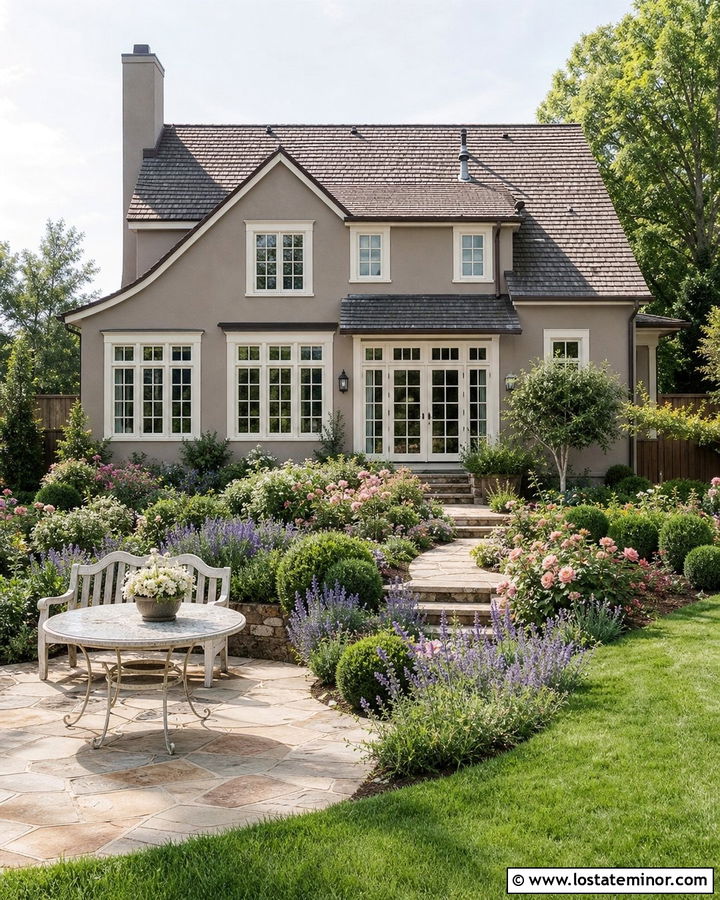
Soft white trim is a dependable partner for taupe when the backyard has a romantic garden character. Select a warm, light taupe for a cottage or bungalow exterior, then use creamy white around windows, doors, roof edges, and porch columns. Create a small brick or weathered stone patio immediately outside the back door. Instead of rigid borders, surround it with curved beds containing roses, salvia, lavender, and compact shrubs suited to the local climate. A painted white bench or pale metal dining set can echo the trim without dominating the garden. Allow a narrow path to wind from the patio toward the lawn or garden gate. The combination feels collected and welcoming because the architecture and planting share a gentle, low-contrast color story.
15. Taupe House With Natural Wood Accents
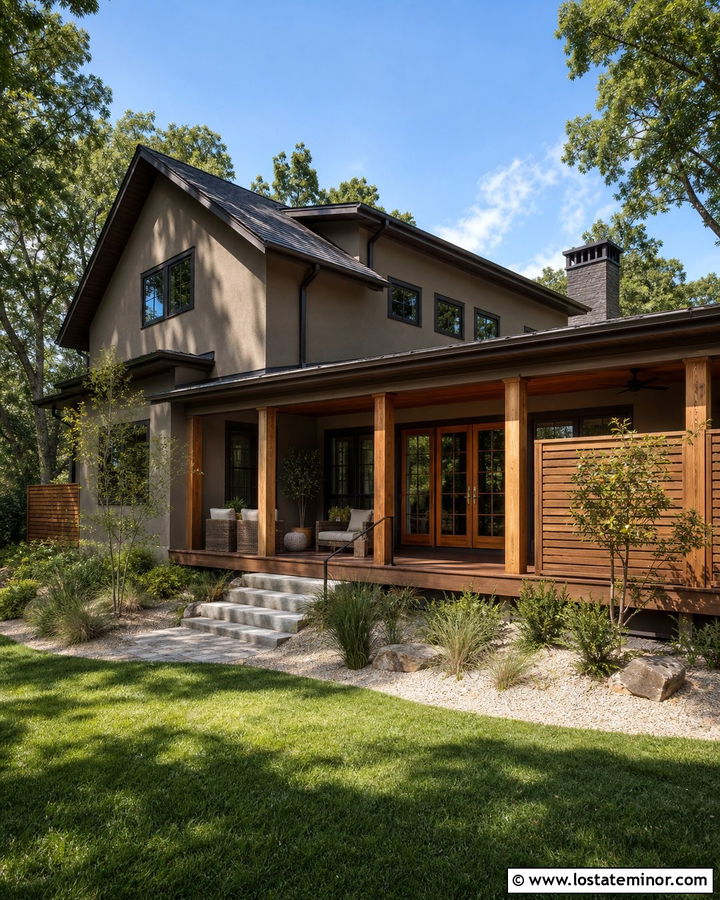
Natural wood helps reveal the warmth hidden inside a taupe exterior. Cover the main house in earthy taupe siding, then use cedar or white oak around the back door, porch ceiling, columns, and privacy panels. Keep the window trim dark bronze or soft black so the wood remains the strongest accent. A simple deck in a related medium-brown stain can extend from the living room into the yard. Avoid using several unrelated wood tones, which may make the rear elevation appear unfinished. Instead, repeat one primary stain in two or three locations. Gray stone steps and pale gravel will balance the warmer materials. Complete the backyard with native shrubs, ornamental grasses, and shade trees for a natural scheme that suits craftsman and contemporary architecture equally well.
16. Taupe House With Brick Backyard Patio
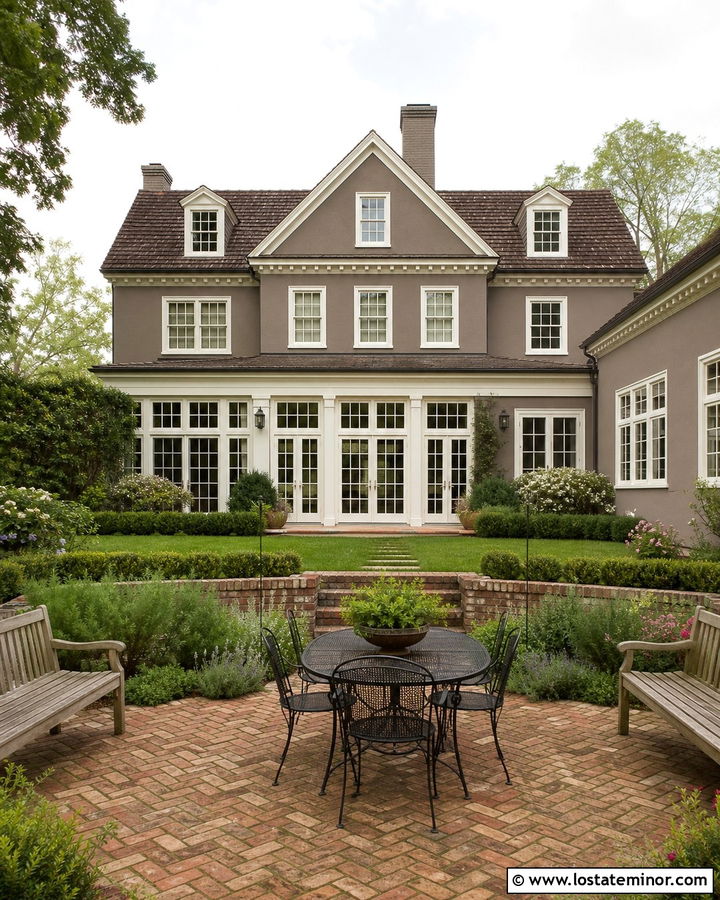
Brick brings lasting color and pattern to a taupe house without overwhelming its neutral exterior. Choose a medium taupe with cream trim and a warm brown roof, then install a patio using softly weathered red, tan, or brown brick. A herringbone pattern can add visual interest to a compact entertaining area, while a running-bond layout feels calmer across a larger space. Repeat the brick in a garden border, step, or low wall to tie the patio to the yard. Black metal dining furniture introduces a crisp accent, and natural wood seating adds warmth. Surround the hardscape with boxwoods, herbs, flowering plants, and a small ornamental tree. Together, the taupe siding and traditional brick create a backyard that feels comfortable, layered, and established.
17. Taupe House With Gravel Courtyard
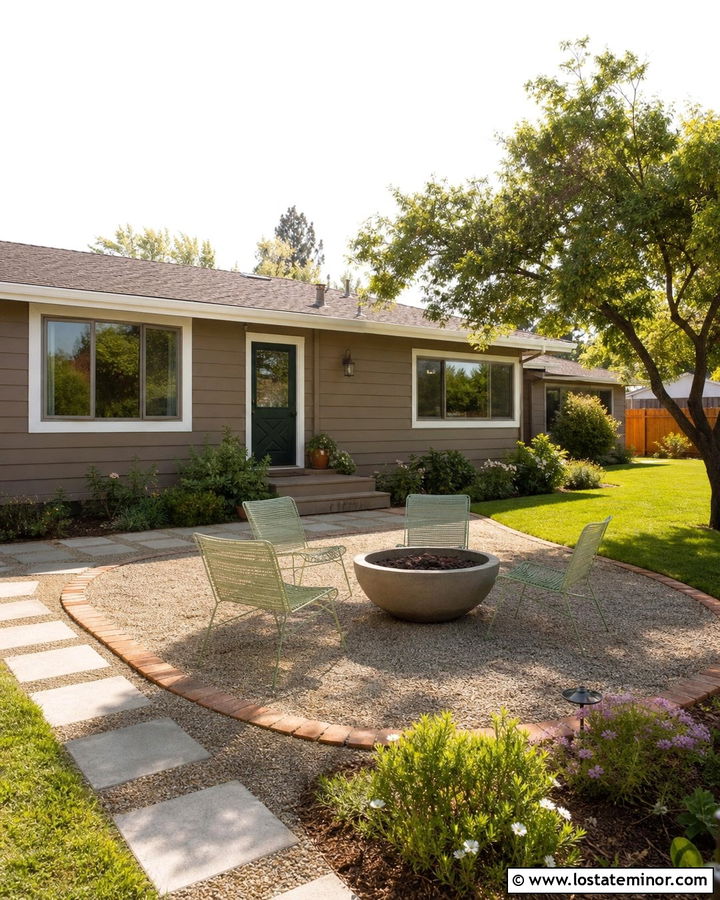
A gravel courtyard offers an affordable, relaxed alternative to a large paved patio. This look works beautifully behind a taupe cottage, ranch, or modest bungalow with white trim and dark green doors. Define the sitting area with steel edging, brick borders, or large stones, then fill it with compacted beige-gray gravel. Place a round table or fire bowl at the center and use lightweight outdoor chairs that can be rearranged easily. Broad stepping stones should create a stable route from the house to the courtyard. Add a small tree for filtered shade, plus planting beds around the edges to soften the open surface. Repeating taupe, cream, green, and weathered metal throughout the setting creates a casual backyard that still looks planned and cohesive.
18. Taupe House With Sloped Backyard
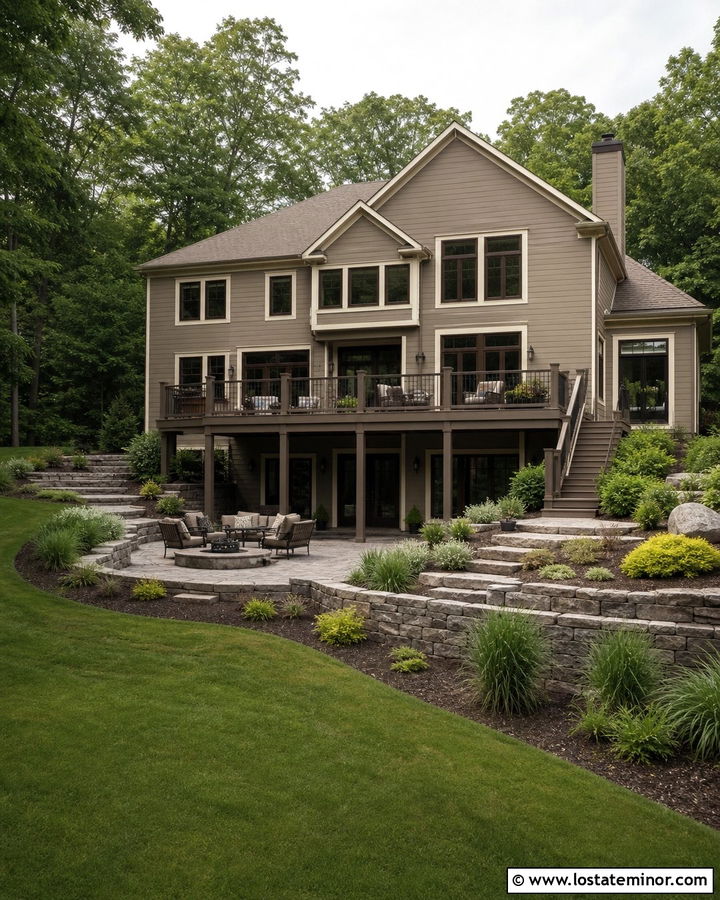
A sloped yard becomes easier to use when the design is divided into purposeful levels. Begin with a taupe two-story or walkout-basement exterior featuring cream trim and dark brown windows. Build an upper deck or patio beside the main back doors, then connect it to a lower lawn with wide stairs. Retaining walls made from warm gray stone can echo the taupe siding while controlling the grade. Use each level for a specific function, such as dining above and casual seating below. Plant the slopes with deep-rooted shrubs, grasses, and ground covers rather than leaving difficult strips of lawn. Integrated step lights and sturdy railings improve visibility. A consistent material palette will make the terraced backyard feel connected to the full house instead of pieced together.
19. Taupe House With Small Backyard
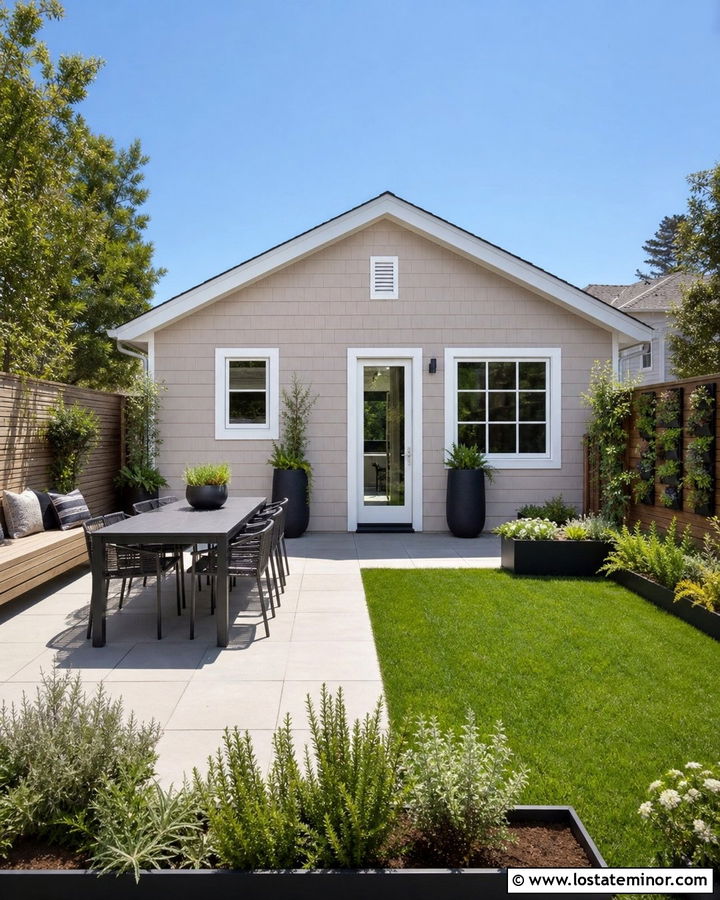
Limited square footage calls for a simple layout and carefully controlled colors. Paint the house a light taupe to keep the rear facade from feeling heavy, then use warm white trim and a glass back door to reflect daylight. Install one compact patio directly outside the house using large pale pavers, which can make the ground plane appear less busy. A built-in bench against a fence saves space while providing generous seating. Add a narrow dining table, wall-mounted lighting, and several vertical planters rather than many small pots. Dark charcoal accents can define the door, furniture, and planters without covering large surfaces. Keep a small rectangle of lawn or gravel open in the center. This approach gives the backyard breathing room and preserves easy circulation.
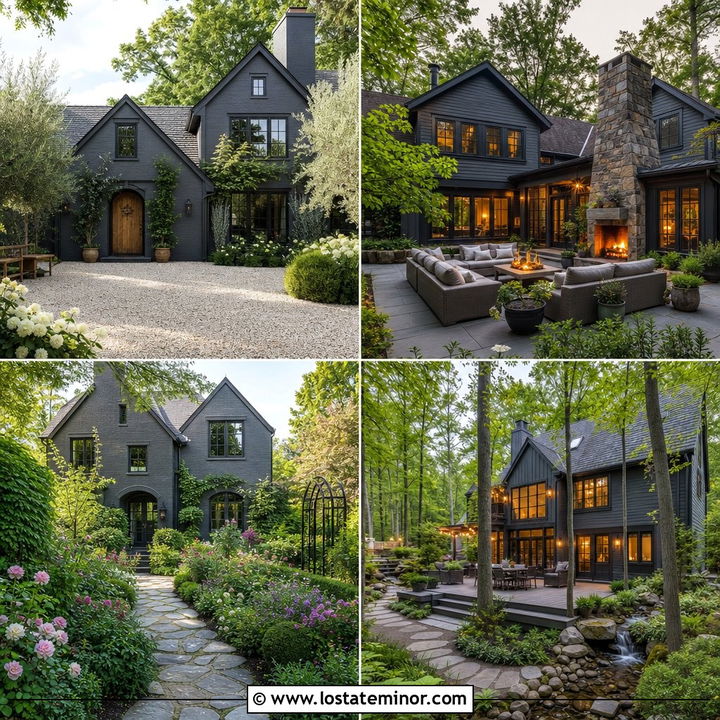
20. Taupe House With Large Entertaining Backyard
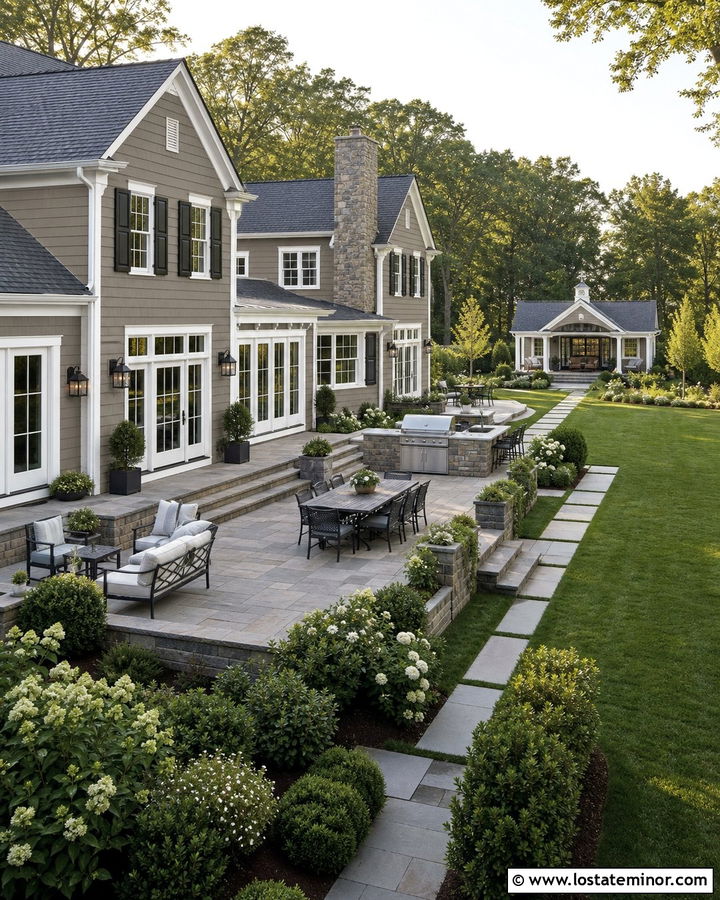
A large backyard can feel empty unless the house, patio, and landscape are connected through clear zones. Use a substantial taupe colonial or transitional exterior with white trim, dark shutters, and several sets of French doors. Directly behind the house, create a broad terrace with separate areas for dining, cooking, and lounging. A second destination, such as a fire-pit circle or garden pavilion, can sit farther into the yard. Connect everything with a straight or gently curved path. Repeat the same stone, wood, and black metal finishes throughout each zone to maintain visual unity. Trees and large planting beds should frame the open lawn rather than scatter across it. This arrangement preserves generous views while making the complete backyard comfortable for both small gatherings and larger occasions.
21. Taupe House With Backyard Garden Beds
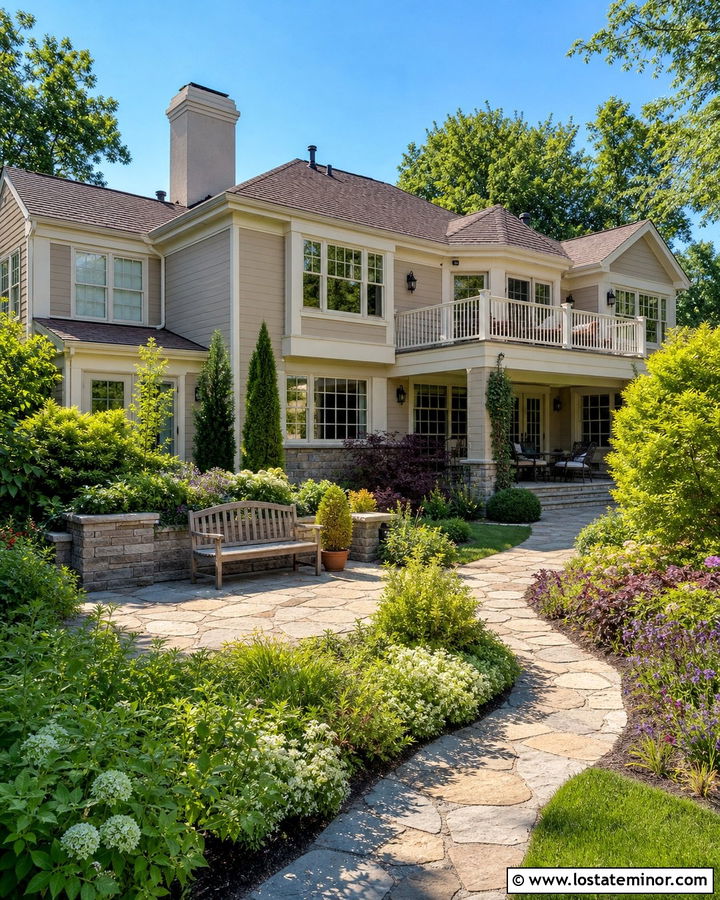
Deep planting beds can bring life to a quiet taupe exterior while reducing the amount of open lawn. Choose a balanced taupe body color with ivory trim, bronze fixtures, and a medium brown roof. Along the foundation, arrange plants in layers: low ground covers near the patio, flowering perennials in the middle, and shrubs toward the house. Leave enough open space around siding, doors, and mechanical equipment for maintenance. Use curved garden lines for a cottage appearance or straight edges for a contemporary property. A stone path can lead from the patio through the beds to a small bench or gate. Green foliage provides the strongest contrast against taupe, while purple, white, and soft yellow flowers add seasonal color without making the backyard palette feel overly busy.
22. Taupe House With Backyard Water Feature
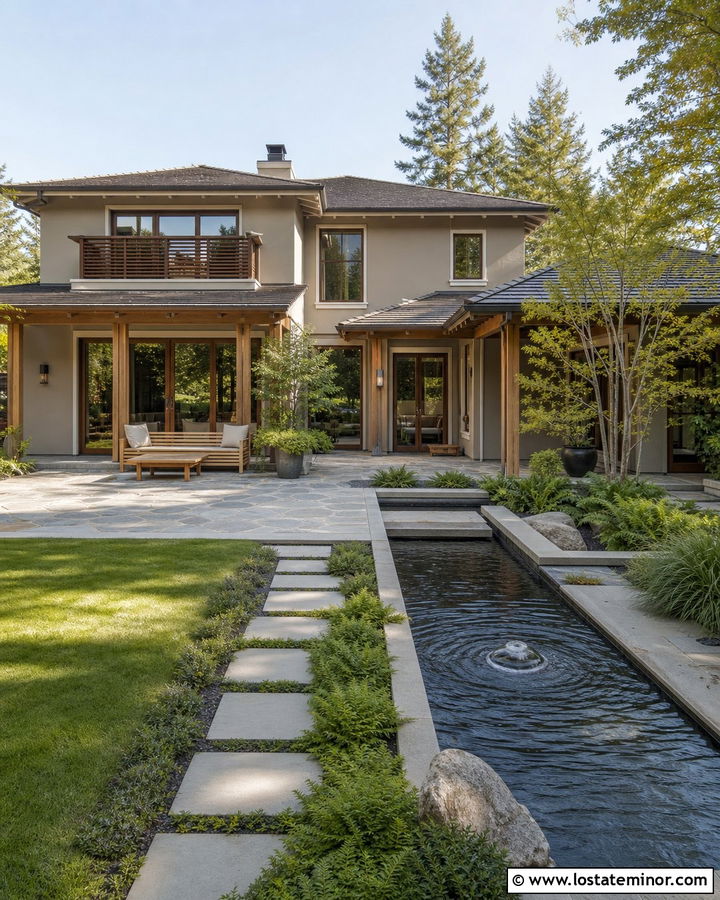
The gentle sound of moving water can make a taupe backyard feel like a private retreat. Use a warm gray-taupe exterior with cream trim, cedar accents, and natural stone near the back entry. Place a small recirculating fountain, narrow reflecting pool, or pondless waterfall where it can be seen from both the patio and interior windows. Match its stone surround to the patio steps or house foundation so it appears integrated. Keep the surrounding planting restrained, using ferns, grasses, evergreens, and moisture-tolerant plants suitable for the location. A nearby bench provides a reason to pause without crowding the feature. Low-voltage landscape lights can define the route from the house. This combination creates a calm focal point while preserving a practical, uncluttered backyard plan.
23. Taupe House With Backyard Pavilion
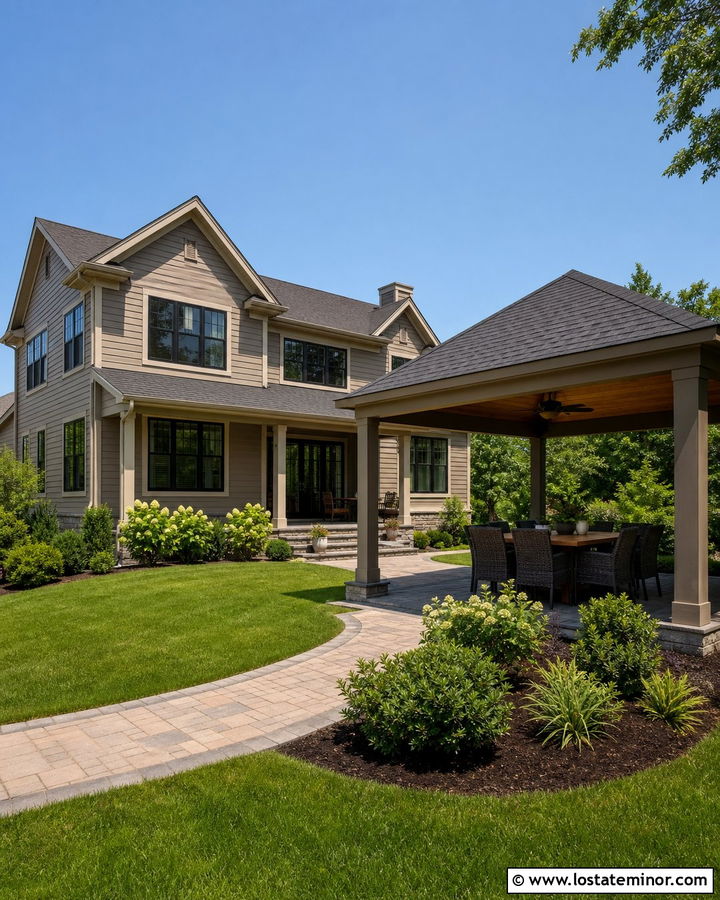
A detached pavilion creates a strong destination in a deep or wide backyard. Pair a medium taupe house with cream trim, black windows, and a brown roof, then repeat those colors on the pavilion. Taupe-painted posts, a dark roof, and a warm wood ceiling will make the structure feel related to the main home. Connect the two areas with a paver path wide enough for comfortable foot traffic. Under the pavilion, arrange a dining table, outdoor sectional, or cooking station according to how the space will be used most often. Keep the lawn open between the buildings to preserve clear sightlines. Layer shrubs and small trees around the pavilion’s outer edges. Repeating materials is the key to making the detached structure look original to the property.
24. Taupe House With Poolside Cabana
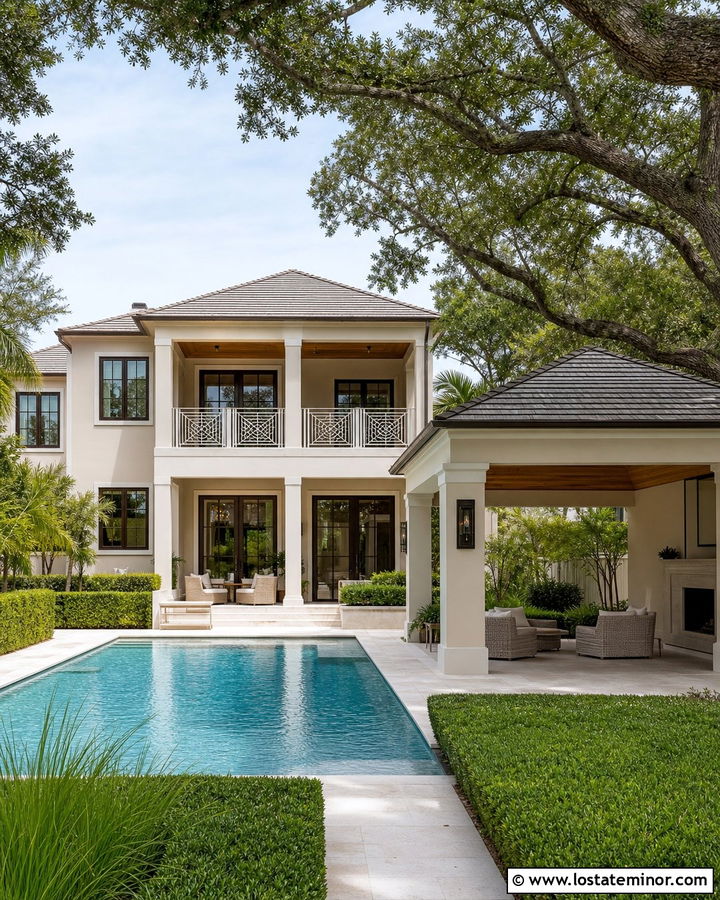
A cabana can turn a taupe house and pool into one polished architectural composition. Use pale taupe stucco on both buildings, then add bright white trim, bronze windows, and sandy limestone paving. The cabana might include an open lounge, changing space, or compact serving counter beneath a simple hip or gable roof. Repeat the main home’s roof material so the structures clearly belong together. Wood ceiling boards and woven furnishings introduce warmth near the cool pool surface. Position the cabana at the far end or side of the pool, preserving an open view from the rear doors. Add clipped hedges, tall grasses, and several broad-canopy trees around the perimeter. This balanced arrangement feels refined without relying on excessive ornament or too many competing materials.
25. Taupe House With Rustic Stone Fireplace
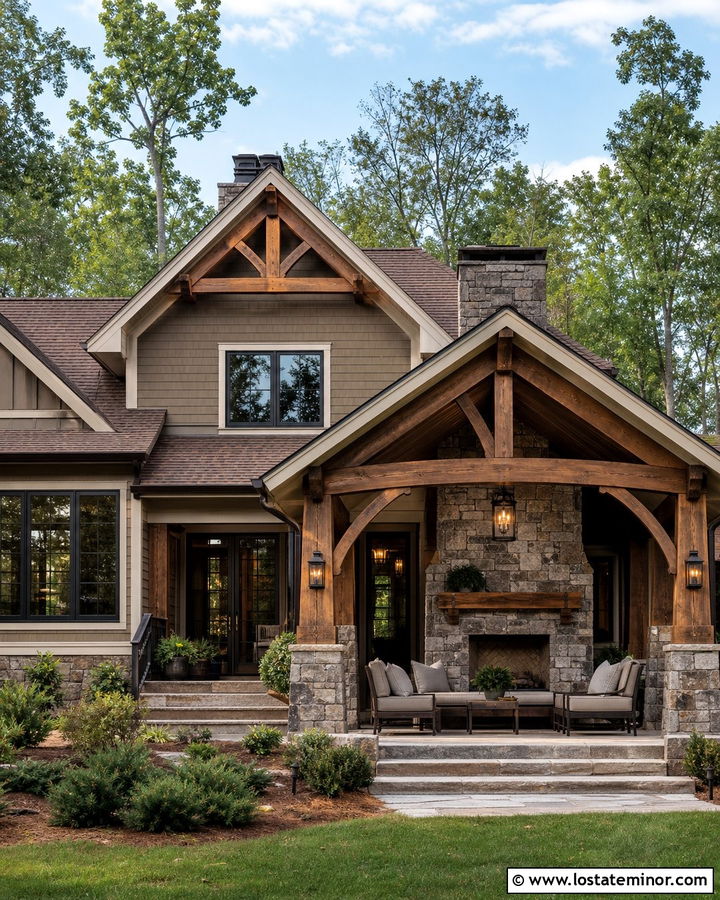
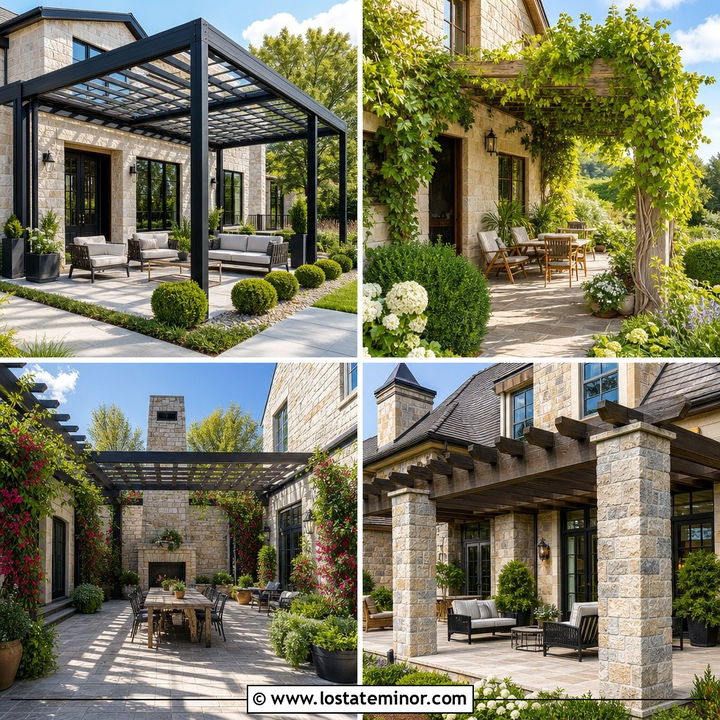
A substantial outdoor fireplace can give a taupe house a warm lodge-inspired character. Choose earthy taupe siding with cream trim, cedar beams, and a deep brown roof. Build the fireplace beneath a covered patio or at the edge of a large stone terrace. Its masonry should combine tan, brown, and gray so it relates to both the siding and landscape. Arrange a comfortable seating group facing the fireplace, while maintaining clear routes to the house and lawn. A stained wood mantel can repeat the porch beams, and black lanterns can provide definition. Use simple evergreen plantings around the patio to balance the weight of the stone. This complete look suits craftsman, mountain, rustic ranch, and updated traditional homes with generous backyard space.
26. Taupe House With Modern Backyard Landscaping
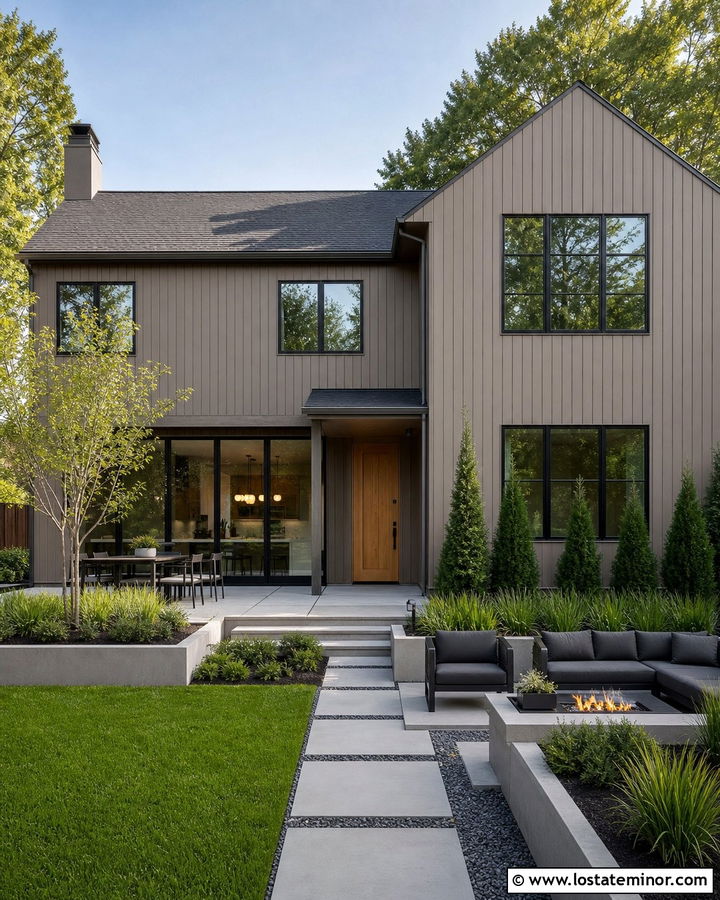
Sharp planting lines can make a taupe exterior feel distinctly modern. Use cool taupe stucco or vertical siding with black-framed windows, a flat or low-pitched roof, and a wood back door. Continue the architecture into the yard with rectangular concrete pads, gravel strips, and raised planters. Choose a limited plant selection and repeat it in organized groups. Feather grass, compact evergreen shrubs, and sculptural small trees can provide texture without hiding the house. A long built-in bench or linear fire feature may define the main lounge area. Keep outdoor furniture low and simple in charcoal, cream, and natural wood. Because the shapes are restrained, careful spacing matters. Open areas around each feature will help the complete backyard look intentional rather than sparse.
27. Taupe House With Farmhouse Backyard Porch
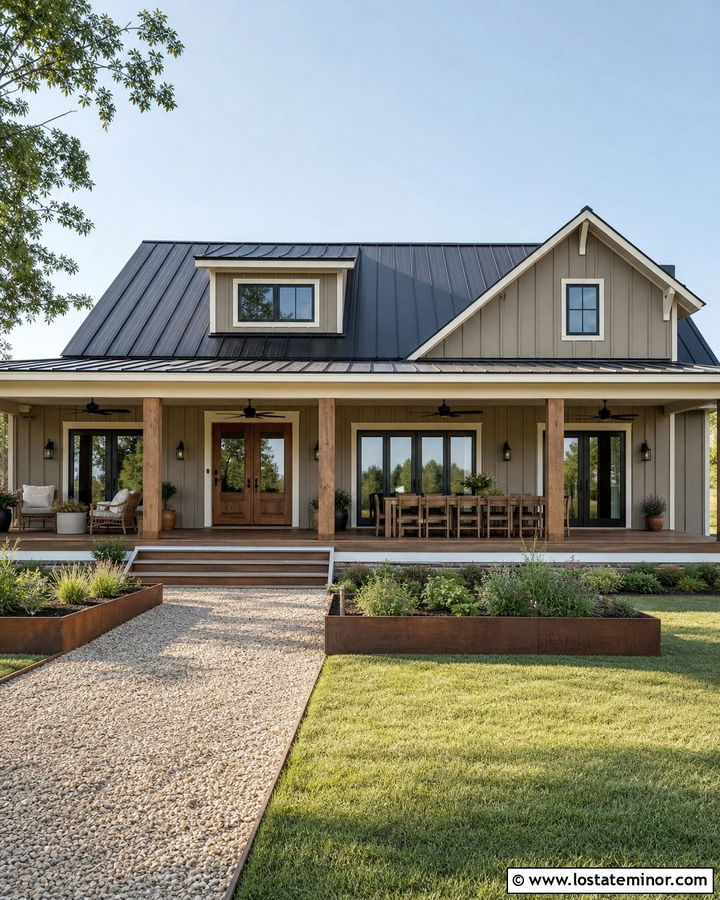
A broad rear porch adds everyday comfort to a taupe modern farmhouse. Use vertical taupe board-and-batten siding, warm white trim, a black metal roof, and natural wood double doors. Support the porch roof with square white or stained timber columns, depending on how much contrast the exterior needs. A medium-brown wood or composite floor will create a warmer transition to the lawn. Arrange a long dining table near the kitchen doors and a separate seating group toward the quieter end. Black ceiling fans and gooseneck lights can repeat the roof color. Wide steps should lead directly into the backyard, framed by simple planters and low shrubs. A gravel path, raised vegetable beds, and open grass complete the practical farmhouse setting.
28. Taupe House With Coastal Backyard Deck
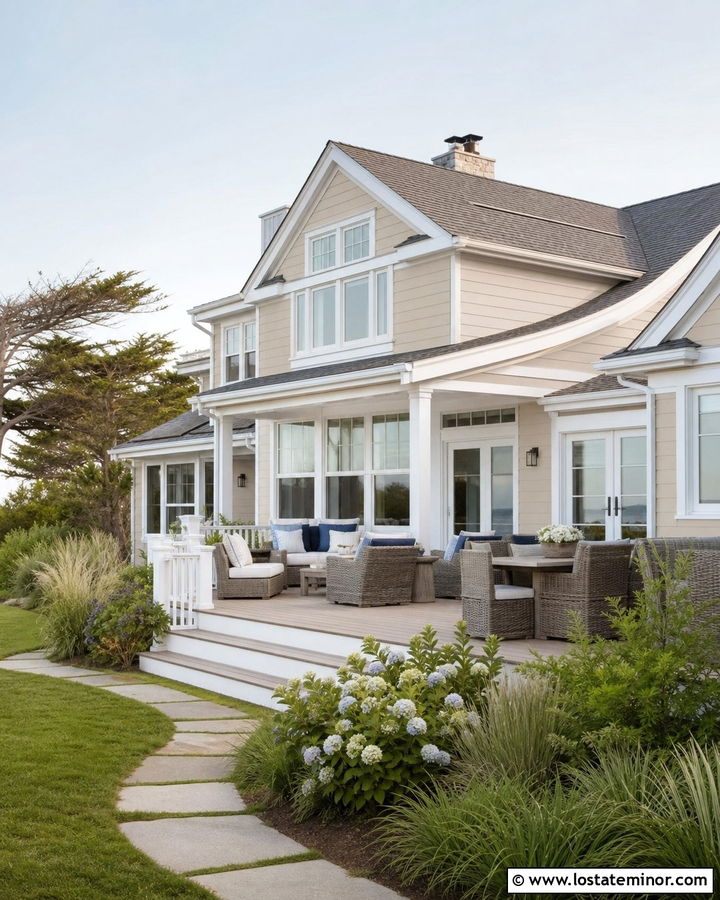
Taupe can support a coastal look without depending on bright blue siding. Choose a pale sandy taupe for a shingle-style or coastal cottage exterior, then add crisp white trim, weathered wood details, and a soft gray roof. Build a spacious deck using light brown or driftwood-toned boards. White railings keep the rear elevation bright, while slender dark balusters can preserve views toward the lawn or water. Furnish the deck with woven seating and cushions in navy, soft blue, or cream. Plant grasses, hydrangeas, and salt-tolerant shrubs where appropriate to reinforce the relaxed setting. Avoid overly rustic nautical decorations. Instead, let the light palette, breezy planting, and practical outdoor layout create a clean coastal backyard that still feels connected to the taupe house.
29. Taupe House With Desert Backyard
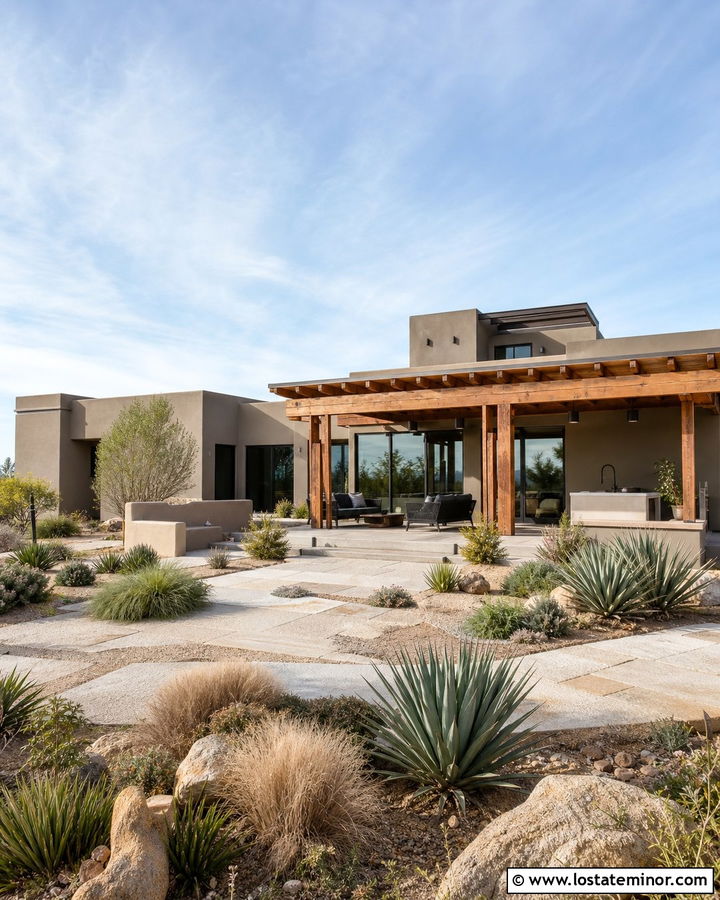
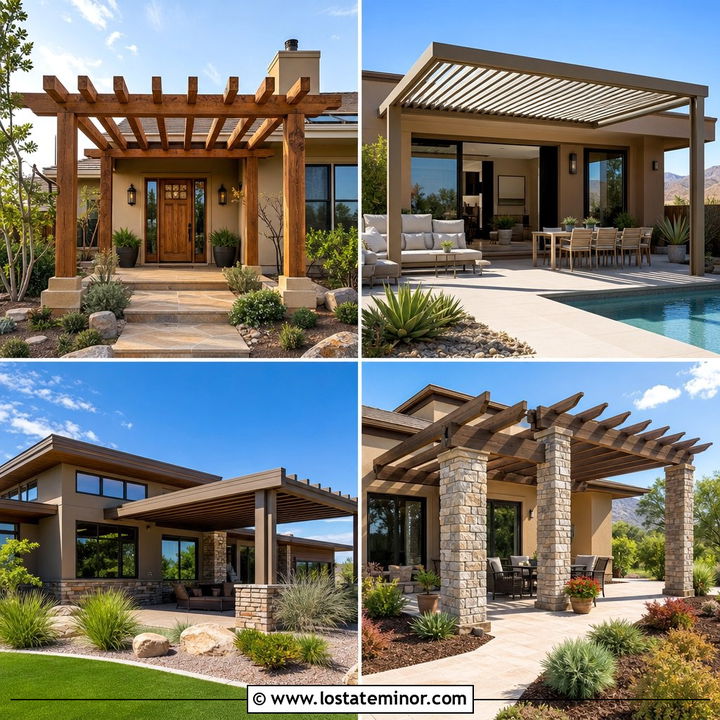
In a dry climate, taupe can connect the house naturally to stone, gravel, and drought-tolerant planting. Use warm taupe stucco with cream fascia, bronze windows, and a weathered wood entry accent. Extend a shaded patio from the rear facade using timber beams or a simple metal canopy. Pale concrete or large sandstone pavers can form the main sitting area, while gravel fills less-used sections of the yard. Group agaves, yuccas, ornamental grasses, and regionally appropriate shrubs in broad planting islands rather than scattering single plants. Add a low stucco wall or built-in bench painted to match the house. Rust, charcoal, and natural wood accents will add depth. The finished backyard feels grounded, water-conscious, and fully integrated with the surrounding landscape.
30. Taupe House With Wooded Backyard
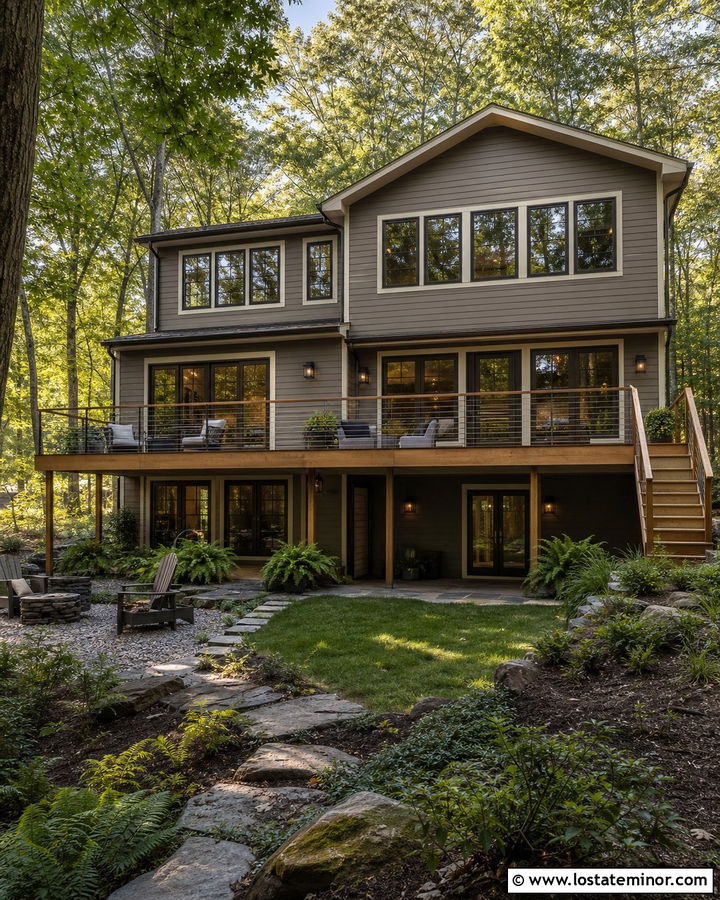
A taupe house can settle beautifully into a wooded lot because its gray and brown undertones echo bark, soil, and stone. Choose a deep earthy taupe for the siding, soft cream for the trim, and dark bronze for windows and gutters. Add a natural wood deck that follows the rear elevation without extending unnecessarily into mature root zones. Cable or slim metal railings can preserve views into the trees. Use a stone path to connect the deck with a small gravel seating area farther into the yard. Shade-tolerant ferns, native shrubs, and ground covers will soften the transition while reducing the need for struggling turf. Keep outdoor cushions light enough to stand out. The complete exterior should feel comfortable and intentional without competing with the forested setting.
Conclusion:
The most successful taupe exteriors connect the architecture, hardscaping, outdoor structures, and planting through a controlled palette. Begin by identifying whether your taupe leans warm, cool, light, or deep. Then repeat its undertones in stone, decking, patio pavers, furniture, and landscape details. White creates freshness, black adds definition, and natural wood introduces reliable warmth. Just as important, organize the backyard around practical movement between doors, cooking areas, seating, and the lawn. Testing exterior samples in direct sun and shade will help prevent unexpected color shifts. Use these 30 Taupe House Design With Backyard Ideas to develop a complete outdoor setting that looks cohesive from the house to the farthest garden border.

Related posts: