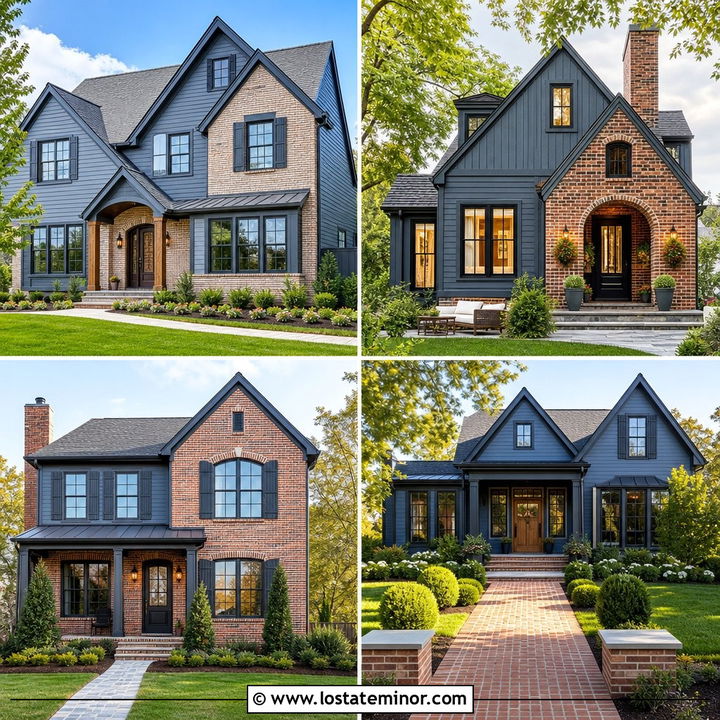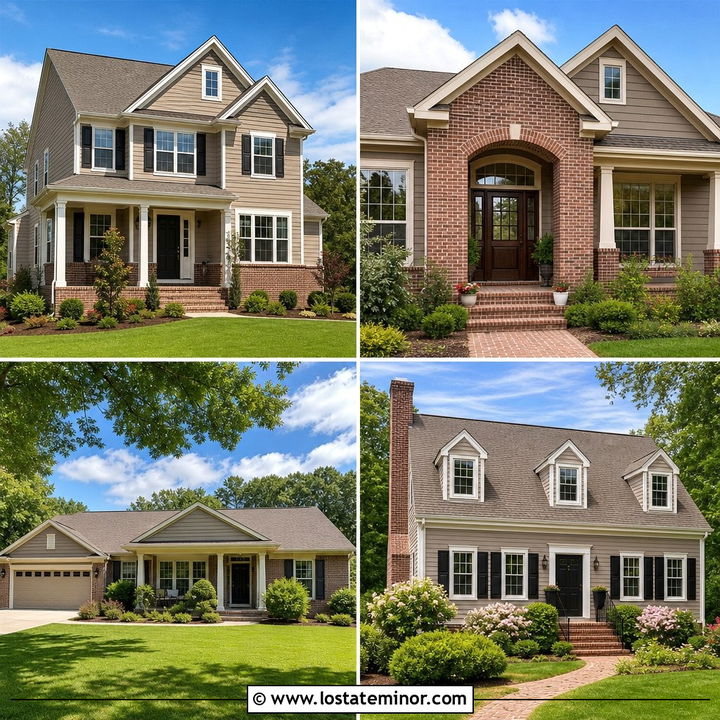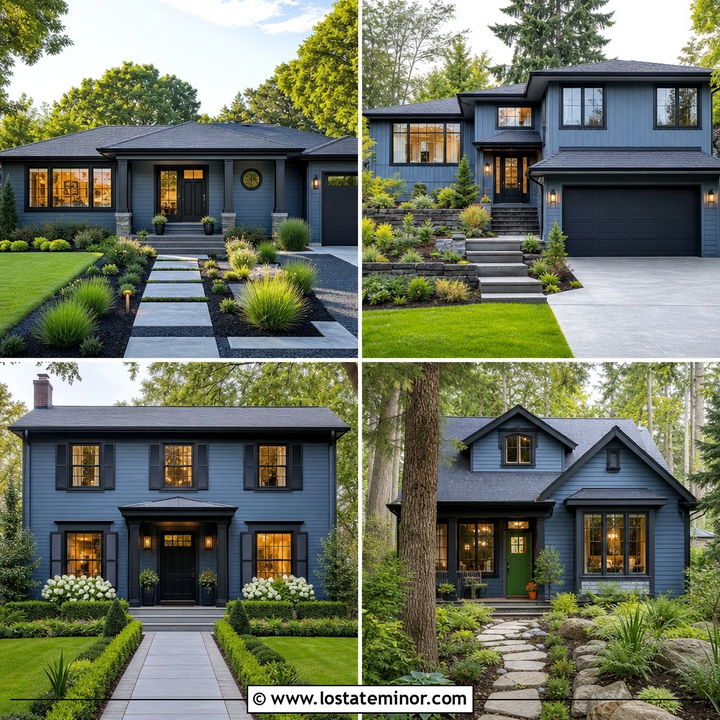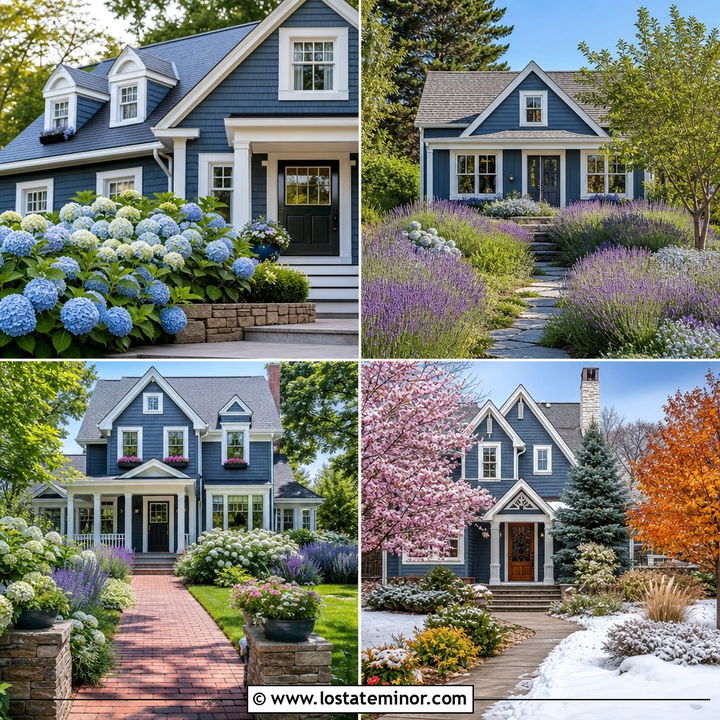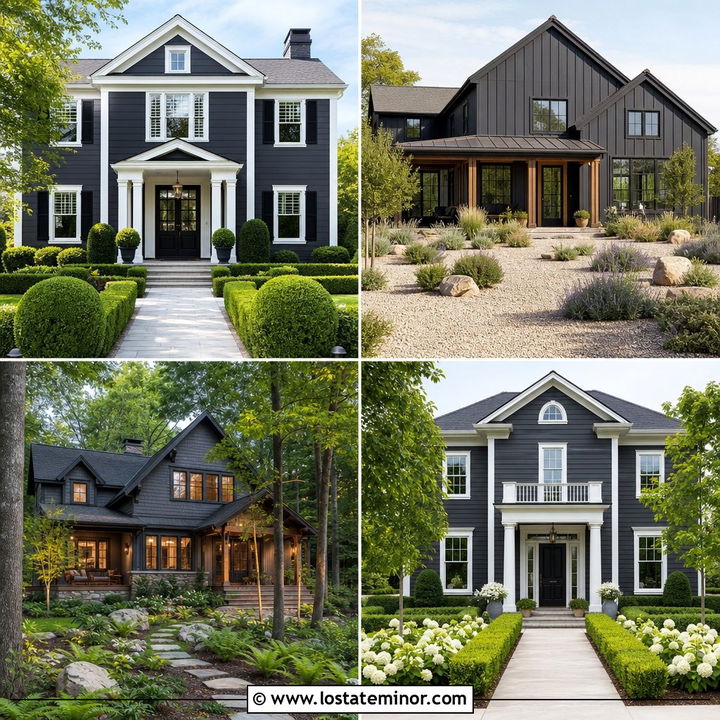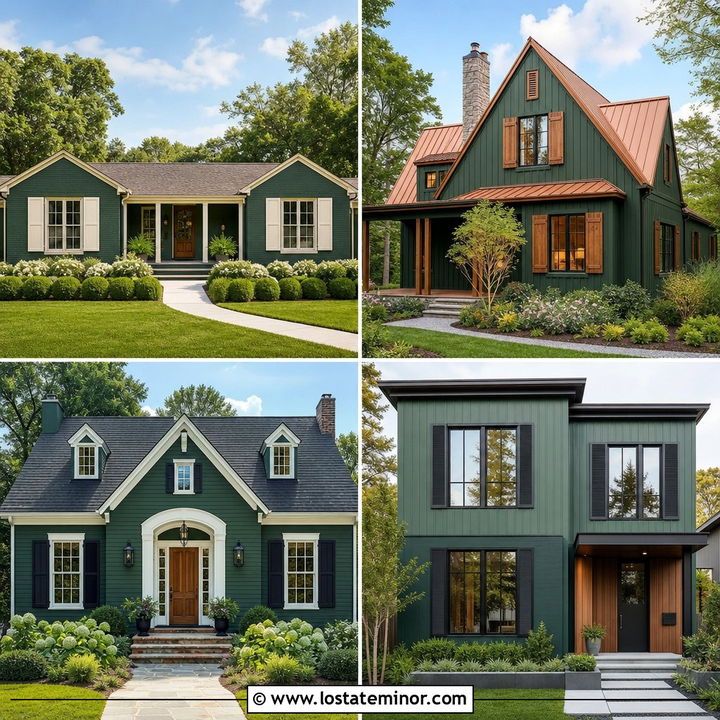
A slate grey exterior creates a strong, polished backdrop for brick, whether the masonry is warm red, muted brown, creamy white, or cool charcoal. The best 30 Slate Grey House Design With Brick Accents Ideas treat the facade as one coordinated palette rather than a collection of unrelated finishes. Roof color, mortar, trim, doors, windows, and landscaping all affect how slate grey reads from the curb. Warm brick can soften its cool undertones, while grey brick produces a quieter, more contemporary result. Natural wood, white trim, black metal, and earthy greens add further balance. The complete exterior schemes below cover ranch homes, Craftsman houses, Colonials, farmhouses, and modern designs, giving you practical inspiration from these 30 Slate Grey House Design With Brick Accents Ideas.

1. Slate Grey Craftsman With Red Brick Porch
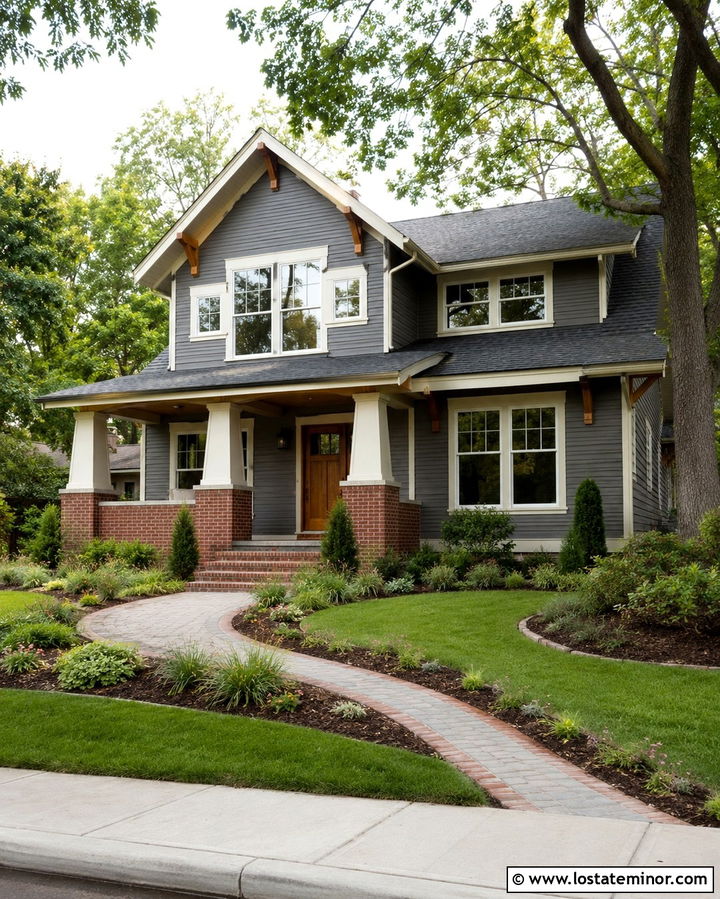
Slate grey lap siding gives a Craftsman home a grounded appearance without hiding its handcrafted character. Use traditional red brick across the porch foundation, steps, and column bases to bring warmth to the cool grey body. Creamy white trim is softer than stark white and works naturally with the brick’s mortar lines. A medium-stained oak front door can connect the warm masonry to exposed porch rafters and cedar brackets. Choose a charcoal architectural-shingle roof to create depth without introducing another strong color. Black lanterns and dark bronze hardware add definition in small amounts. Finish the setting with curved garden beds, evergreen shrubs, and a brick-edged walkway that repeats the material near the street.
2. Slate Grey Colonial With Brick Entry
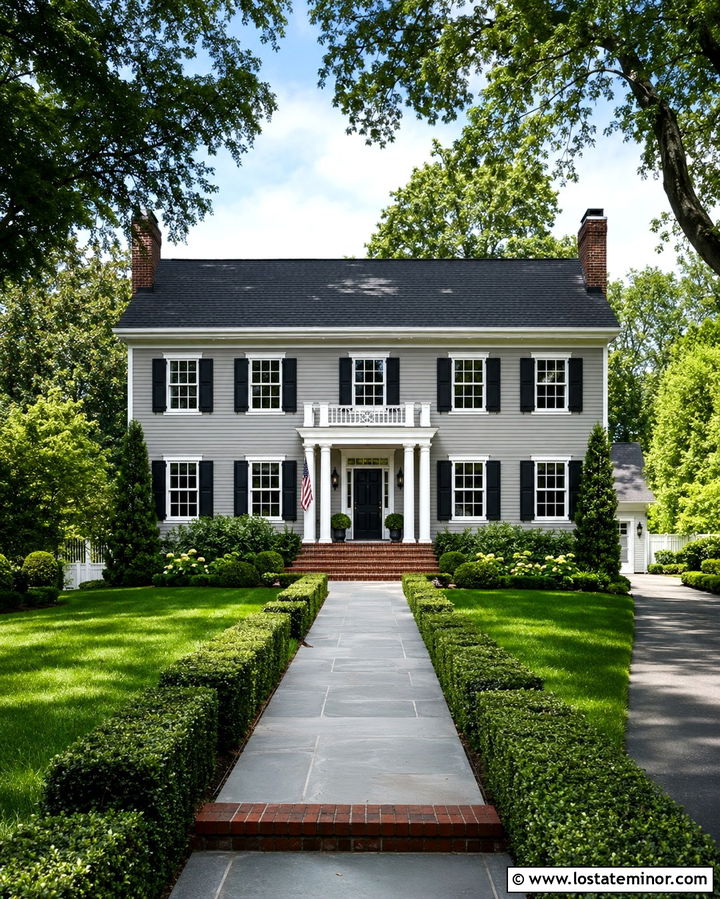
A symmetrical Colonial exterior looks especially balanced when slate grey siding is paired with a centered brick entry. Keep the brick concentrated around the front steps, stoop, and lower doorway surround so it becomes a clear architectural focal point. Traditional red-brown brick provides warmth, while crisp white trim highlights the windows, cornice, and classical columns. Paint the shutters matte black and use the same color on the front door for a formal, connected finish. A dark charcoal roof supports the restrained palette. Matching brass door hardware and wall lanterns add a subtle traditional note. Boxwood hedges, a straight walkway, and evenly spaced foundation plantings reinforce the home’s orderly facade without competing with the brickwork.
3. Slate Grey Ranch With Brick Wainscoting
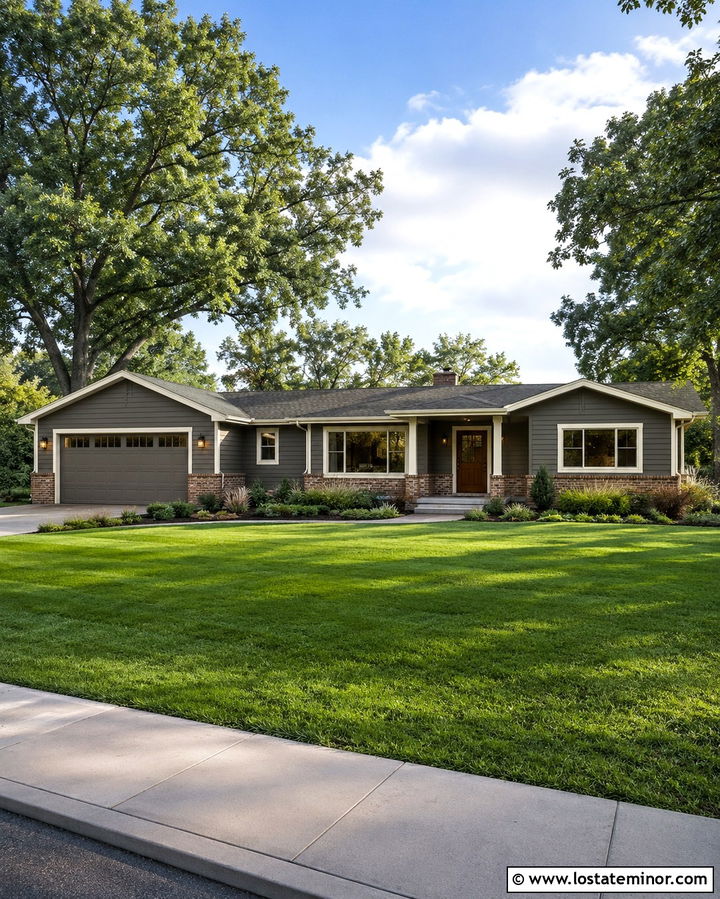
Long ranch homes can feel visually flat, but brick wainscoting gives the elevation texture and proportion. Run warm brown brick across the lower third of the facade, then install slate grey horizontal siding above it. The darker siding visually anchors the low roofline, while the brick introduces natural variation. Soft ivory trim around the windows keeps the transition comfortable rather than overly sharp. A walnut-colored front door and matching garage door details connect with the brown tones in the masonry. Choose weathered charcoal shingles and simple black exterior lights. Layered ornamental grasses, low junipers, and wide concrete pavers complement the home’s horizontal shape. Keep shrubs below the windows so every exterior material remains visible.
4. Slate Grey Modern Farmhouse With Whitewashed Brick
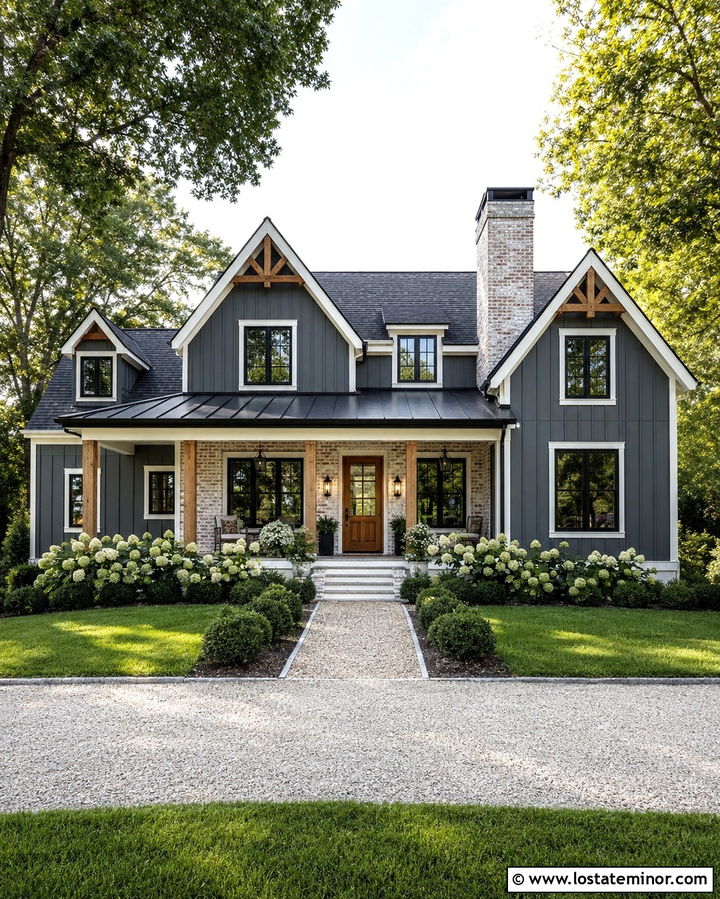
For a lighter interpretation, combine slate grey board-and-batten siding with whitewashed brick around the porch and chimney. The thin brick coating should allow some reddish-brown variation to show through, giving the facade more texture than solid painted masonry. Use warm white trim on window frames, fascia boards, and porch columns. Black windows and a black standing-seam porch roof provide the clean contrast expected from a modern farmhouse. A natural cedar door prevents the grey, white, and black palette from feeling cold. Extend the wood tone to porch swings or decorative gable brackets. Simple hydrangeas, clipped shrubs, and a pale gravel walkway create an approachable country setting while keeping the complete exterior bright and orderly.
5. Slate Grey Bungalow With Dark Brown Brick
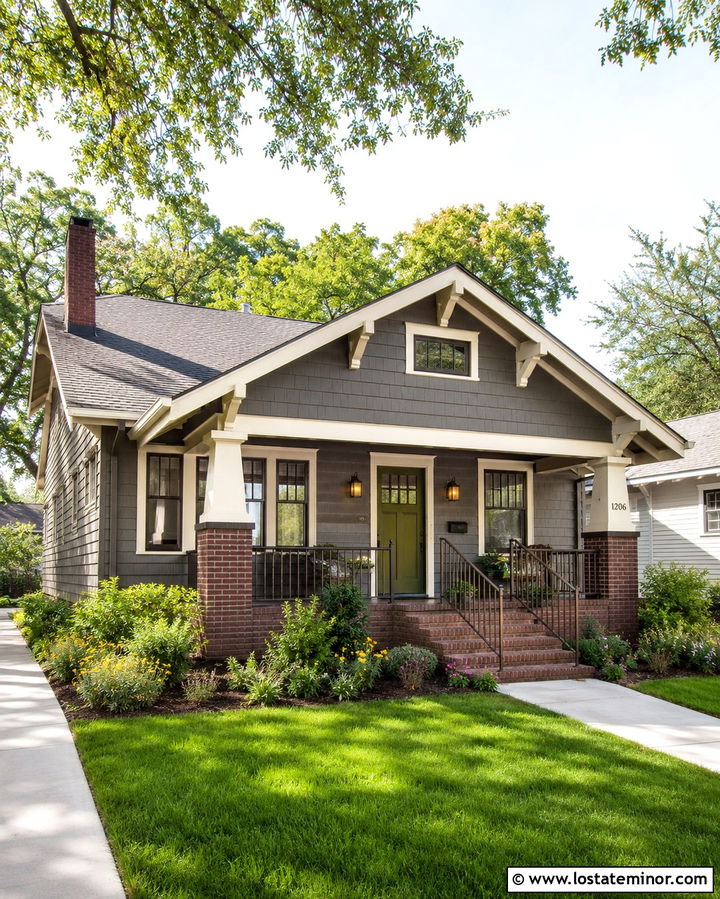
Imagine a compact bungalow framed by deep green landscaping and a welcoming brick porch. Slate grey siding brings definition to the low, broad facade, while dark brown brick makes the porch foundation feel substantial. Select brick with subtle charcoal and rust variation so it blends naturally with both the siding and nearby wood finishes. Cream trim around the windows and roofline adds a gentle contrast suited to an older home. A muted olive front door can introduce color without overpowering the masonry. Use dark bronze gutters, lanterns, and railings for a softer alternative to black. Brick steps, a tapered walkway, and layered native plants help the exterior feel established, comfortable, and connected to its surroundings.
6. Slate Grey Split-Level With Red Brick Garage
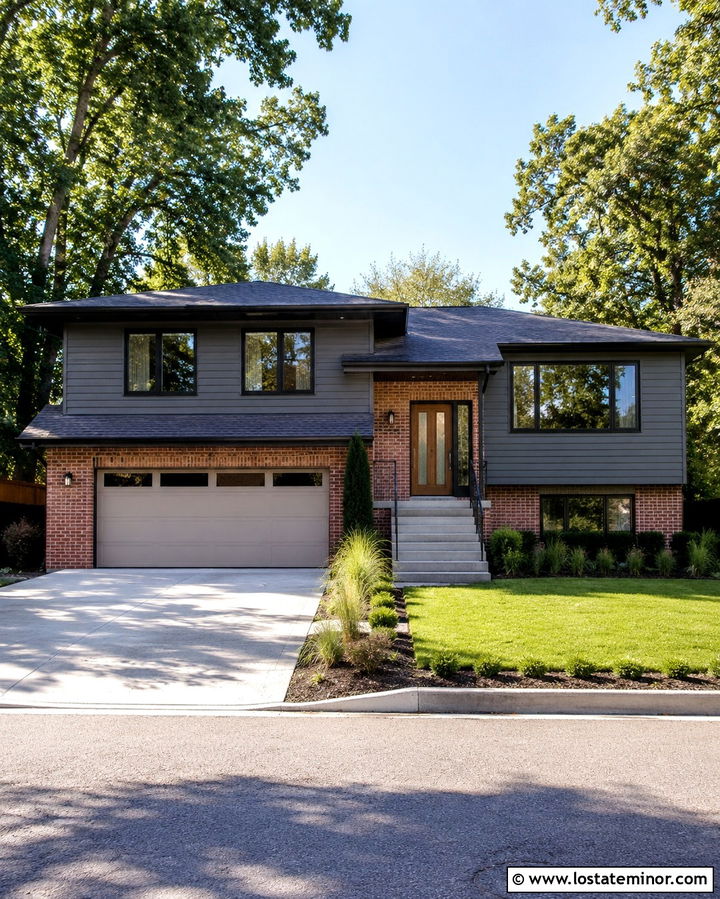
A split-level house often contains competing wall planes, so the materials need a clear visual hierarchy. Cover the upper story in slate grey siding and keep the original red brick around the lower-level garage and entry. This arrangement allows the darker grey to visually settle the taller portion of the facade. Paint the garage door a warm greige drawn from the brick mortar rather than bright white. Black-framed windows, slim black gutters, and a charcoal roof add a modern edge. For the entrance, choose a warm wood door with narrow glass panels. Broad concrete steps, linear shrubs, and ornamental grasses can guide attention toward the doorway while softening the transition between the masonry and upper siding.
7. Slate Grey Cape Cod With Brick Chimney
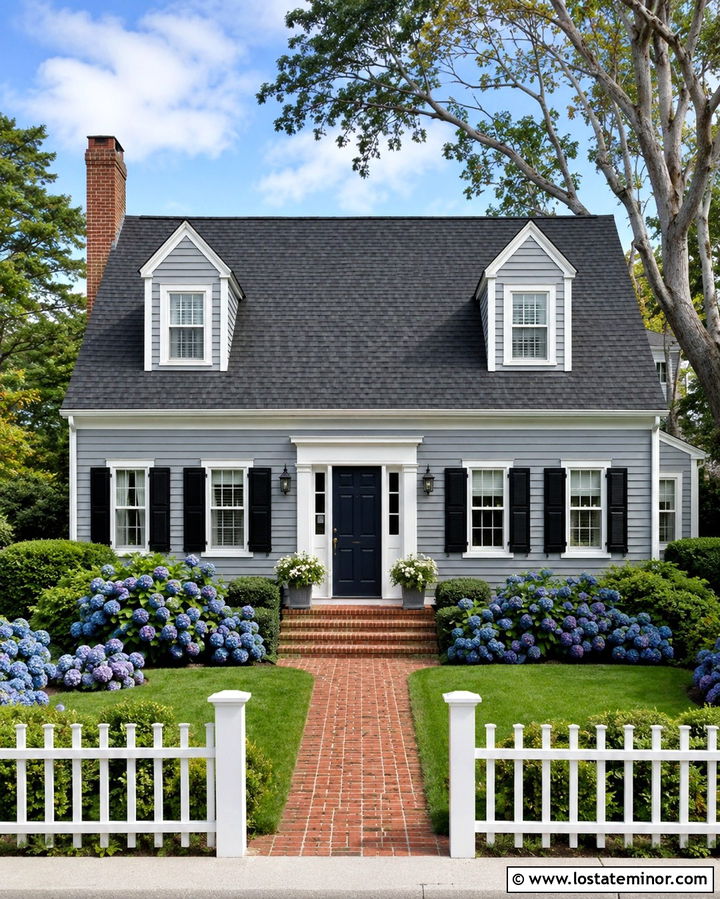
A classic Cape Cod needs only a few carefully placed accents. Use slate grey clapboard siding across the compact facade and allow an original red brick chimney to provide the main warm feature. Repeat the brick on a small front stoop so the chimney feels integrated instead of isolated. White trim around dormers, windows, and corner boards maintains the home’s familiar coastal clarity. Black shutters and a dark navy front door create contrast while remaining understated. A medium charcoal roof keeps the palette consistent without matching the siding exactly. Complete the curb appeal with a brick walkway, low white fencing, hydrangeas, and clipped foundation shrubs. The result feels traditional, tidy, and comfortably updated.
8. Slate Grey Tudor With Mixed Brick Accents
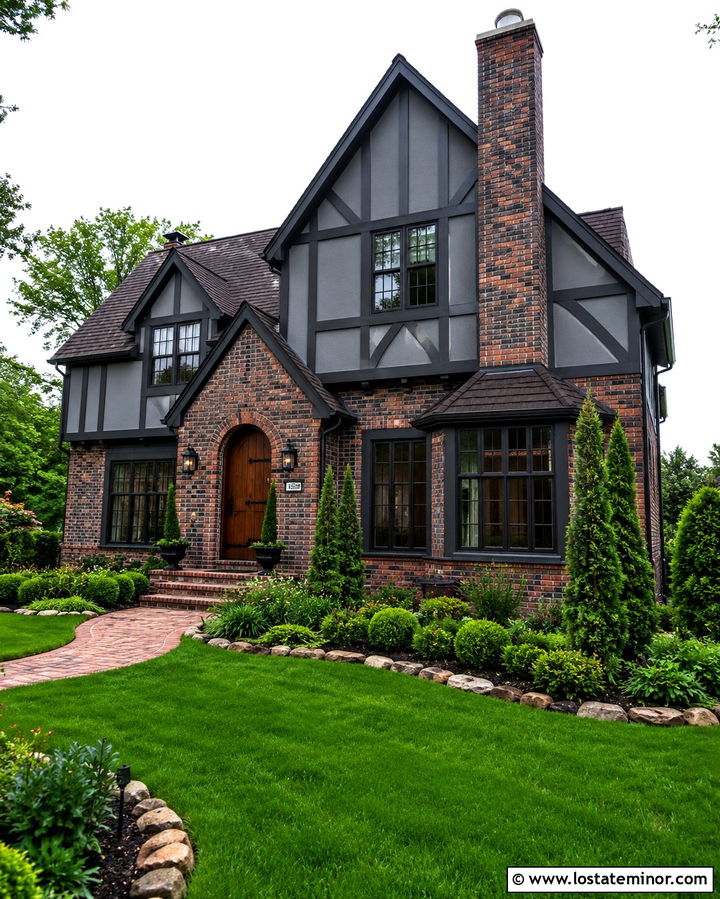
Slate grey stucco or smooth siding can refresh a Tudor exterior while preserving its distinctive rooflines. Use mixed red, brown, and charcoal brick across the lower facade, chimney, and arched entry. The varied masonry suits the home’s historic character and helps connect slate grey walls with dark timber details. Paint half-timbering and window frames deep espresso rather than pure black for a warmer effect. A heavy oak front door with black iron hardware strengthens the traditional entrance. Choose dark brown roof shingles that echo the timber and deeper brick tones. Curving stone-edged beds, upright evergreens, and a gently winding brick path soften the dramatic architecture. Keep trim minimal so the brick and timber remain the dominant details.
9. Slate Grey Contemporary House With Grey Brick
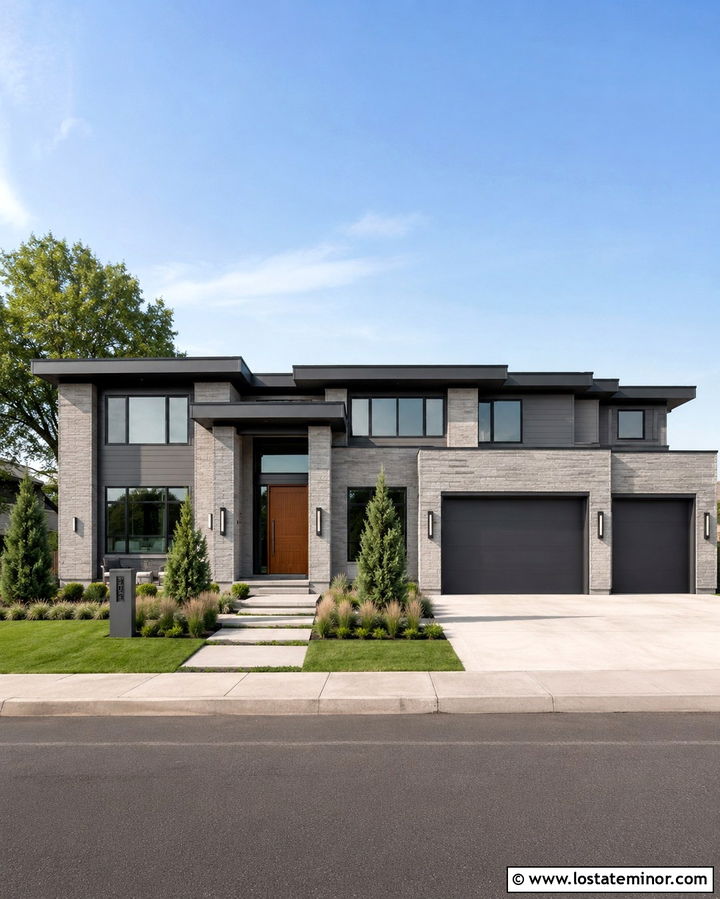
Can a monochromatic exterior still look inviting? Pair slate grey fiber-cement panels with light grey brick to create a layered contemporary facade. The siding should be slightly darker than the masonry so each surface remains distinct in bright and overcast light. Use charcoal window frames, fascia, and garage doors to outline the architecture without introducing a competing hue. A warm walnut pivot door supplies the necessary contrast and makes the entrance easy to locate. Flat or low-sloped rooflines, squared brick columns, and clean concrete steps support the modern composition. Add structured ornamental grasses, small evergreen trees, and wide rectangular pavers. The restrained palette feels cohesive because texture, depth, and natural wood replace decorative color.
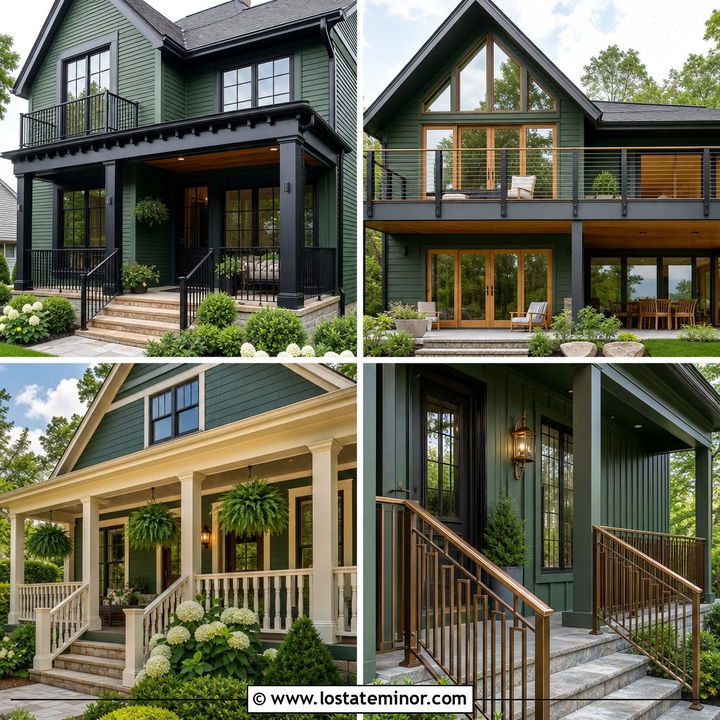
10. Slate Grey Cottage With Cream Brick
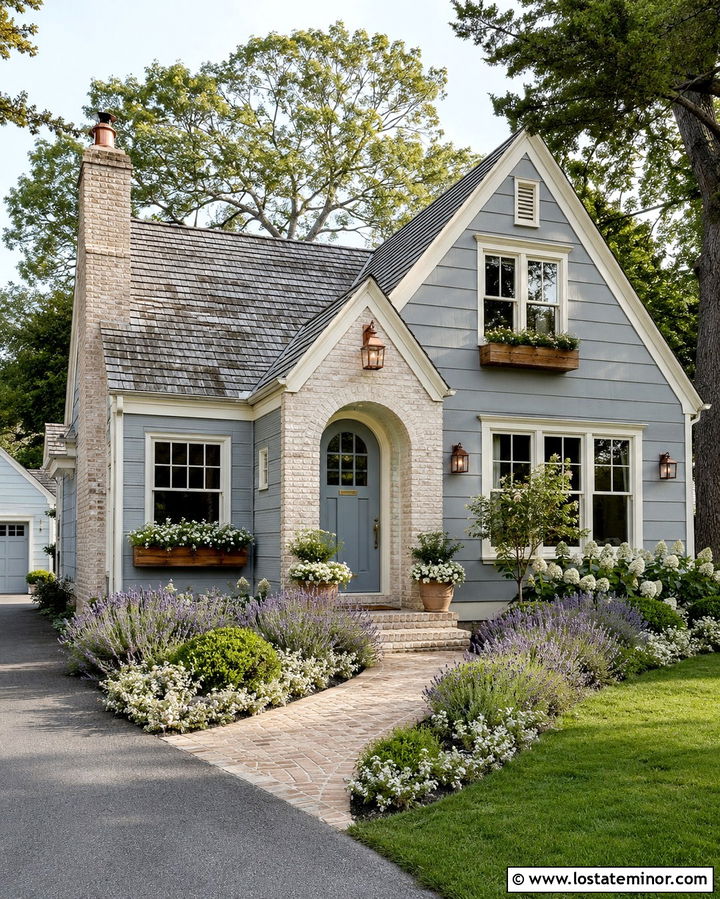
Cream brick can make slate grey siding feel softer and more approachable. Apply the brick to the chimney, porch foundation, and a small arched entry surround. Choose a lightly weathered brick with beige mortar, then use warm ivory on the window trim and fascia. This creates a smooth transition between the pale masonry and darker grey walls. A dusty blue front door adds gentle color while maintaining the cottage atmosphere. Weathered grey roof shingles, copper-toned lanterns, and natural wood window boxes bring in additional warmth. Surround the house with flowering shrubs, lavender, groundcover, and a curved brick walkway. The completed exterior feels bright and welcoming, yet the slate grey body gives it enough depth to avoid appearing overly delicate.
11. Slate Grey House With Black Brick Accents
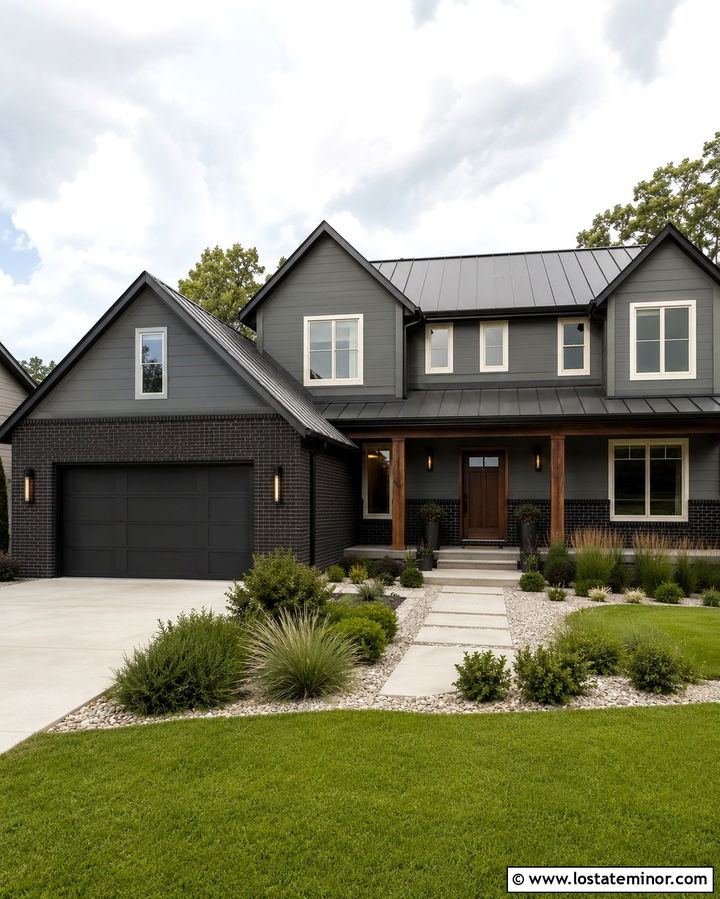
For a bold exterior, place black brick against slate grey siding and keep the remaining palette controlled. Black brick can define the lower facade, garage wing, or tall entry column without covering every wall. Because the siding and masonry are both dark, use warm white around windows, soffits, and the main doorway to preserve clear architectural lines. A natural mahogany door becomes a warm focal point against the deeper surfaces. Select a charcoal metal roof or dark architectural shingles for continuity. Black gutters and simple sconces should blend into the masonry rather than stand out. Pale concrete paths, light gravel beds, and bright green plantings introduce visual relief, preventing the complete house from feeling heavy or one-dimensional.
12. Slate Grey House With Painted White Brick
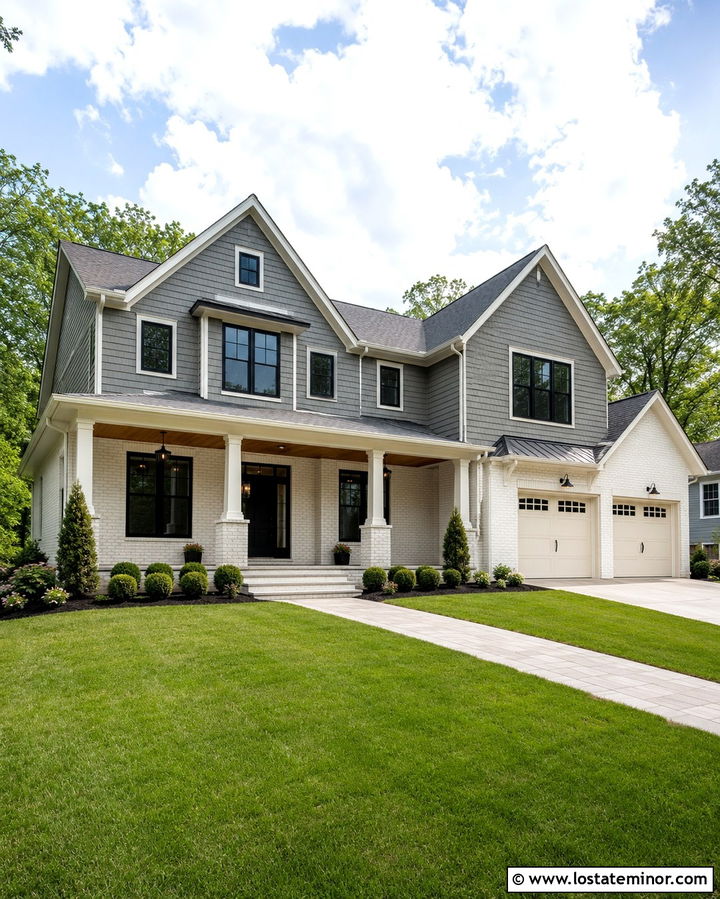
Painted white brick creates a crisp foundation beneath slate grey siding. This scheme works particularly well on two-story transitional homes where brick covers the first floor and siding defines the upper level. Choose a warm, slightly creamy white for the masonry, trim, porch columns, and garage doors. That softer white prevents the contrast from looking harsh. Black windows and a black front door give the facade structure, while a medium-grey roof bridges the two main colors. If more warmth is needed, add cedar porch ceilings or stained wood brackets. Use dark mulch, neatly shaped shrubs, and a straight paved walkway to frame the architecture. The finished exterior feels clean, balanced, and updated without becoming overly trendy.
13. Slate Grey House With German Schmear Brick
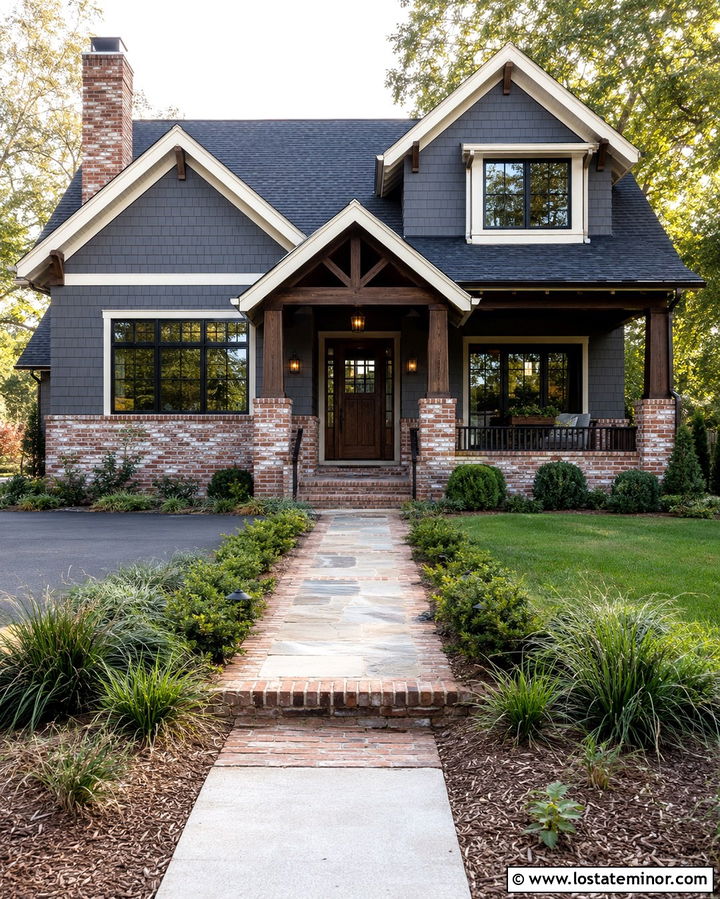
German schmear brick adds an aged, textured finish that contrasts beautifully with smooth slate grey siding. Use it around the lower facade, chimney, or porch columns, allowing portions of warm red brick to remain visible beneath the creamy mortar coating. Choose soft white trim that relates to the mortar instead of a bright optical white. A dark-stained wood front door and matching porch beams reinforce the rustic warmth. Black-framed windows add sharper definition but should be balanced by a charcoal roof rather than another intense black surface. A stone-and-brick walkway, informal shrubs, and native grasses complete the relaxed setting. This combination is especially effective on Craftsman, European-inspired, and modern farmhouse homes with layered rooflines.
14. Slate Grey House With Limewashed Red Brick
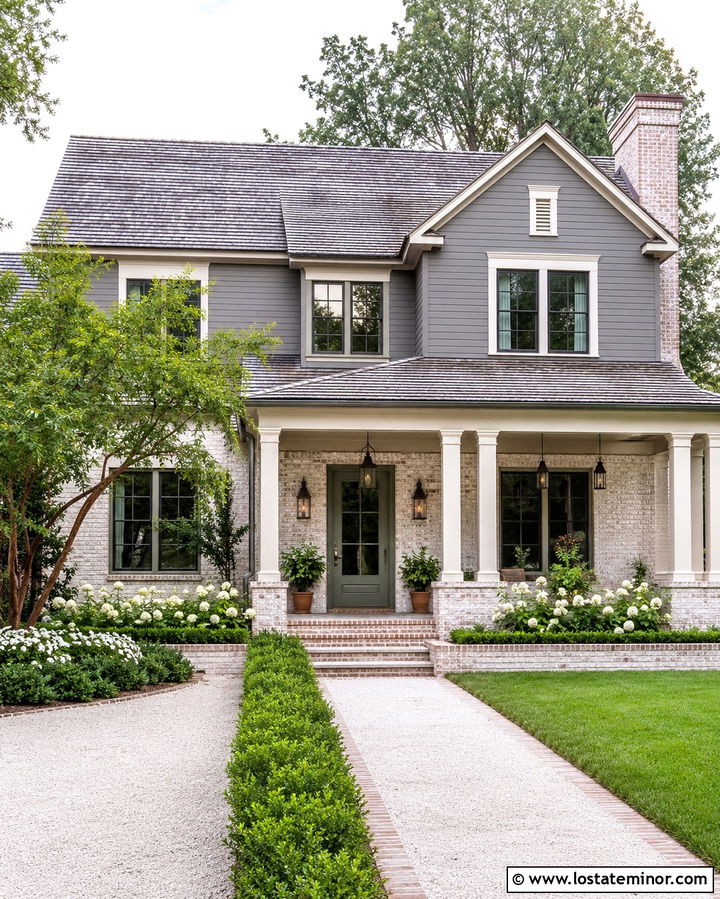
Limewashed brick offers a softer alternative when strong red masonry competes with slate grey siding. A translucent warm-white finish reduces the brick’s intensity while keeping its natural texture and uneven color visible. Apply the brick across the lower story or around a prominent porch, then use slate grey above to give the facade depth. Cream trim and columns create a gentle bridge between the materials. A sage green front door introduces a nature-inspired accent that works with both the grey and faded red tones. Choose weathered charcoal shingles and dark bronze lights for quiet definition. Green hedges, white flowers, and a brick-edged path reinforce the comfortable palette while allowing the masonry to retain its original character.
15. Slate Grey House With Rustic Cedar And Brick
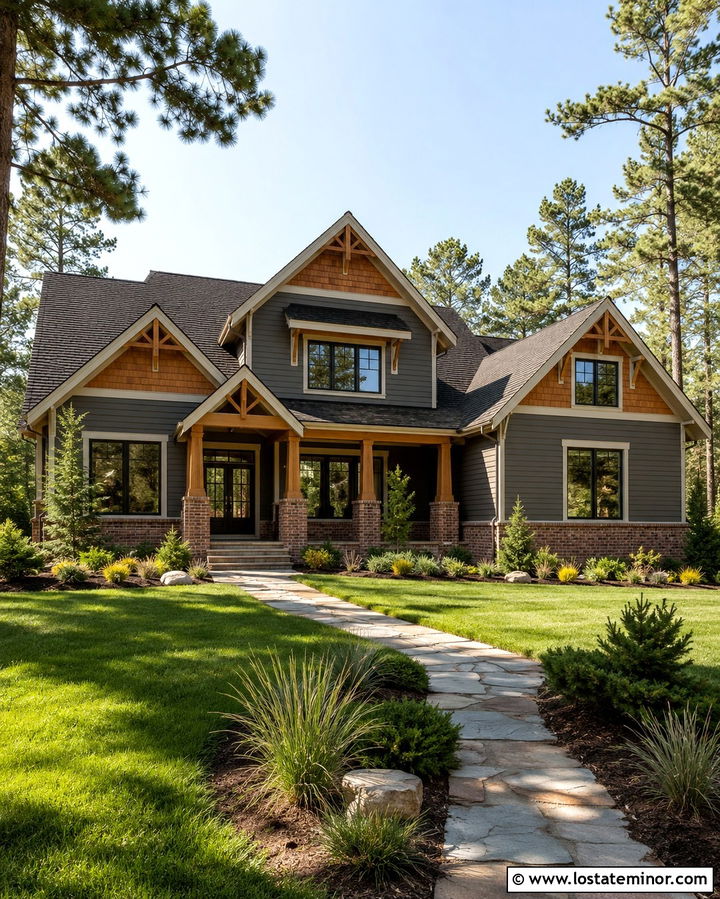
Cool grey, warm cedar, and traditional brick form a well-balanced exterior when each material has a defined role. Use slate grey siding across the main walls, red-brown brick around the foundation and porch columns, and cedar within the front gable. Repeat the cedar on the front door or decorative brackets for continuity. Cream trim keeps the palette relaxed, while black windows add enough contrast to sharpen the facade. Select a roof with charcoal and brown variation so it relates to every surface. This complete combination suits Craftsman homes, mountain houses, and updated ranches. Add natural stone pavers, evergreen shrubs, and ornamental grasses to support the earthy materials. Avoid excessive small accents, since the three major finishes already provide visual interest.
16. Slate Grey House With Brick Arch Entry
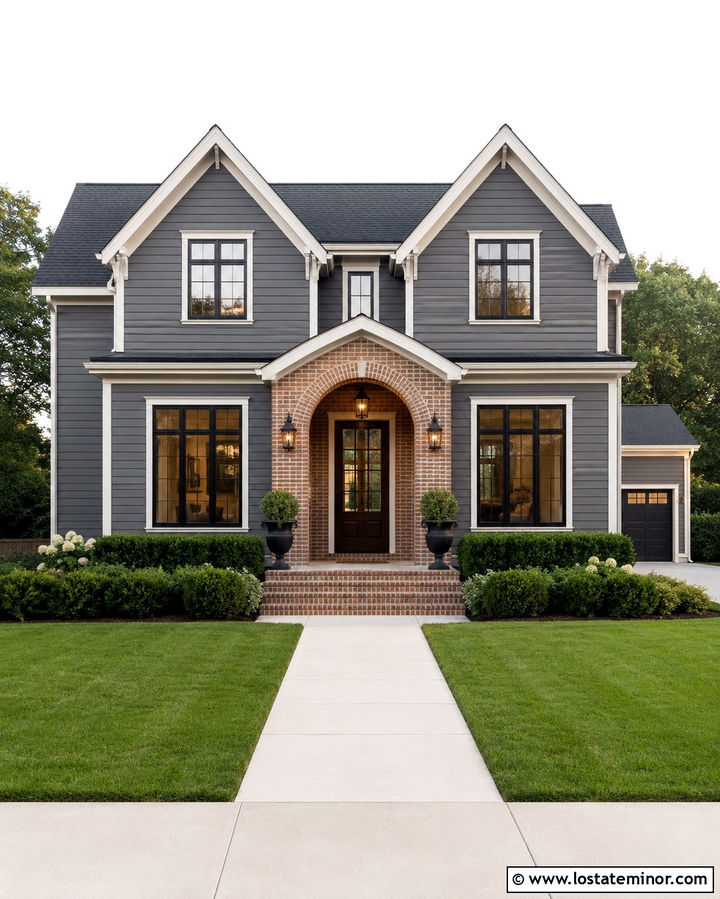
A brick arch can turn an ordinary doorway into the main feature of a slate grey exterior. Use warm red-brown brick around the opening and continue it across the porch floor or steps for a deliberate, connected appearance. Deep slate grey siding surrounding the arch makes the masonry stand out without requiring a bright door color. Choose a dark walnut door with divided glass, then repeat the finish on small ceiling details or porch beams. Warm white trim around the remaining windows keeps the exterior from becoming too dark. A charcoal roof and dark bronze lanterns complete the palette. Frame the entrance with symmetrical planters, low hedges, and a straight walkway so the brick arch remains clearly visible from the curb.
17. Slate Grey House With Brick Porch Columns
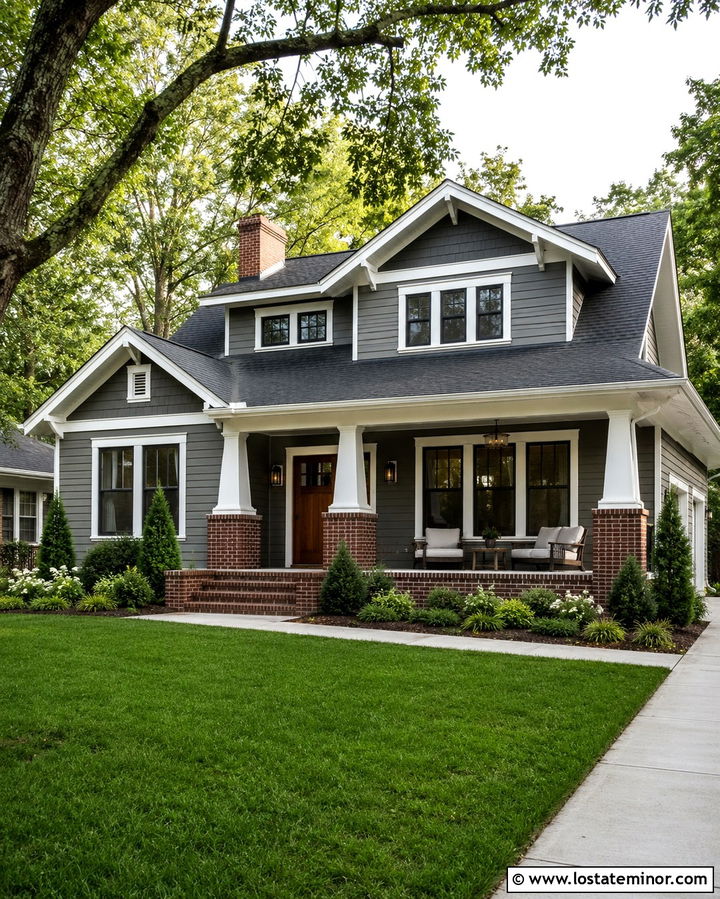
Brick porch columns bring useful warmth and visual weight to a slate grey house. For the strongest proportions, use full masonry bases with tapered white or wood posts above them. Select brick containing muted red, brown, and charcoal tones so the columns connect naturally with the siding and roof. Paint the trim a warm white and choose a medium-stained front door that echoes the masonry’s earthy variation. A dark grey shingle roof will ground the full design without overwhelming the porch. Repeat brick on the steps or walkway border to make the columns feel intentional. Comfortable porch seating, black lanterns, evergreen foundation plants, and a broad green lawn complete a welcoming exterior that works especially well on Craftsman and farmhouse architecture.
18. Slate Grey House With Brick Front Steps
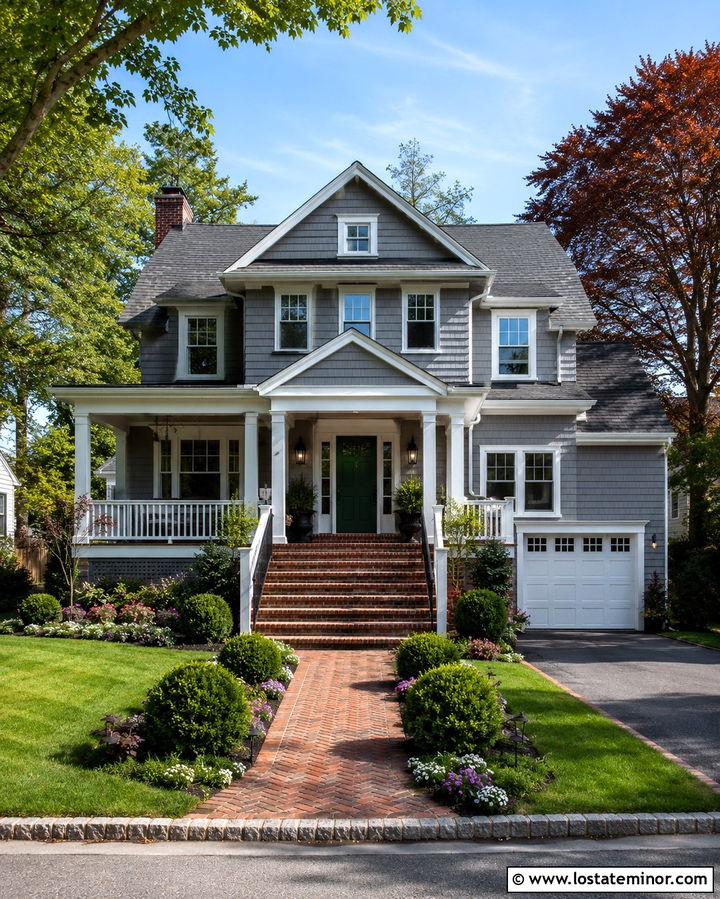
If a house has limited brick, focus it where visitors naturally look first. Broad red-brown brick steps create a warm transition from the yard to a slate grey facade. Use matching brick along the stoop edge or porch foundation so the stairs do not appear disconnected. Creamy white risers, railings, and window trim provide a clean outline without fighting the brick’s warm undertones. A deep forest green front door adds rich color and complements surrounding landscaping. Choose black handrails and exterior lanterns for crisp definition. The roof can remain charcoal grey, allowing the entrance to carry the color variation. Neatly trimmed shrubs, seasonal flowers, and a walkway with brick edging lead the eye directly toward the upgraded front steps.
19. Slate Grey House With Brick Garage Surround
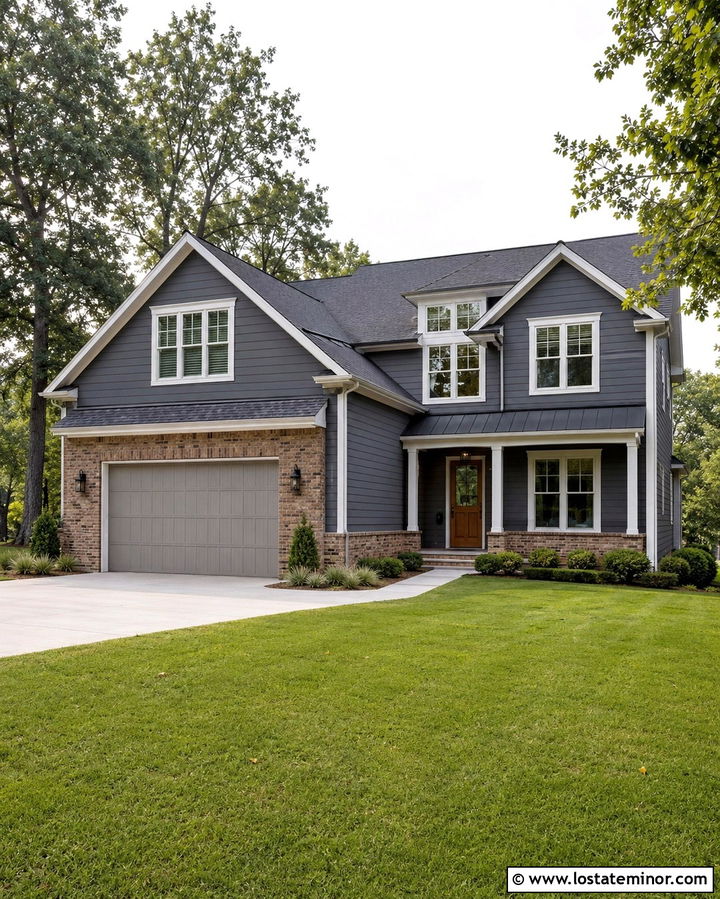
A brick garage surround can reduce the visual dominance of a wide garage door. Frame the opening with warm brown brick and extend the masonry across the lower portion of the garage wing. Use slate grey lap siding on the rest of the house, including the upper garage wall, to unify the elevation. Paint the garage door a medium greige that relates to the mortar instead of matching the siding exactly. White trim around windows and eaves brings brightness, while a stained wood front door creates a separate focal point for the entrance. Charcoal shingles, black lighting, and simple metal house numbers complete the design. Low grasses and a clean driveway edge help the brickwork appear tailored rather than bulky.
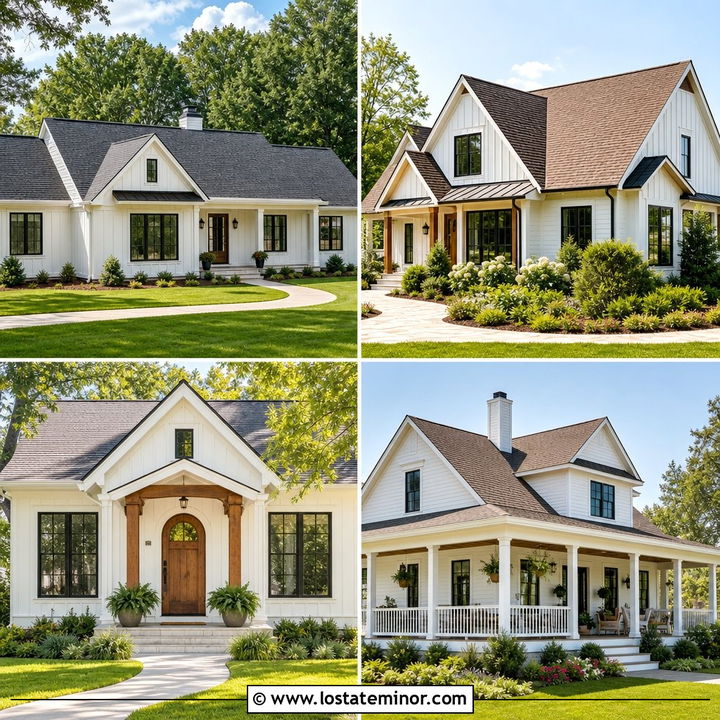
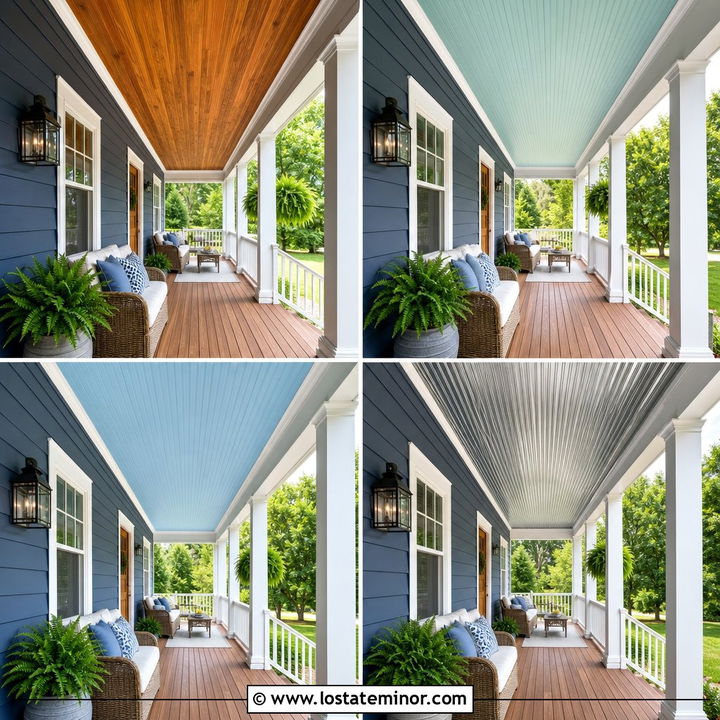
20. Slate Grey House With Brick Chimney And Porch
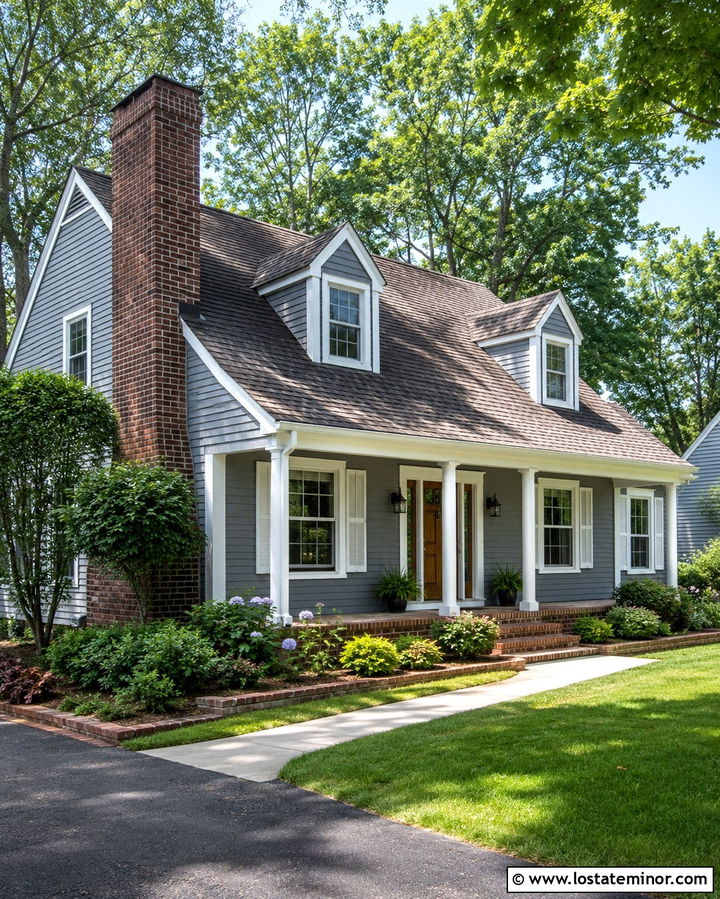
Repeating brick in two visible locations helps the exterior feel planned. Use the same red-brown brick on a tall chimney and across the front porch foundation, then wrap the main house in slate grey siding. The warm masonry breaks up the grey while guiding attention across the full facade. Soft white trim around windows, roof edges, and porch posts keeps everything fresh. Select a black front door if the brick is strongly red, or choose stained oak when the brick leans brown. A roof mixing charcoal and subtle brown granules connects the cool and warm surfaces. Add brick-edged planting beds, layered shrubs, and a simple concrete walkway. The balanced material repetition works well on traditional, ranch, and Cape Cod homes.
21. Slate Grey House With Light Tan Brick
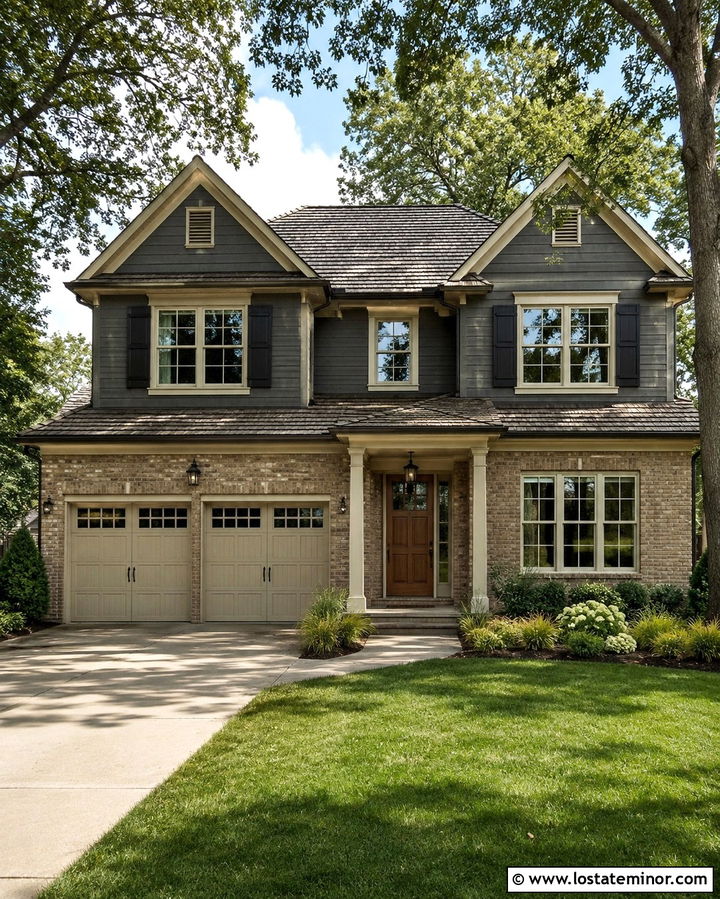
Light tan brick gives a slate grey house a warmer, less dramatic contrast than red or black masonry. Place it across the first floor or around the porch, using warm beige mortar to create a calm, uniform texture. Slate grey siding above the brick adds depth and helps taller homes appear grounded. Choose ivory trim rather than pure white, then bring in a medium brown front door and bronze exterior fixtures. Weathered wood roof shingles can connect the tan masonry with the darker siding. Keep garage doors close to the brick color so they recede into the composition. Soft green shrubs, pale ornamental grasses, and a warm concrete walkway enhance the natural palette, producing understated curb appeal that suits traditional suburban architecture.
22. Slate Grey House With White Brick And Cedar Door
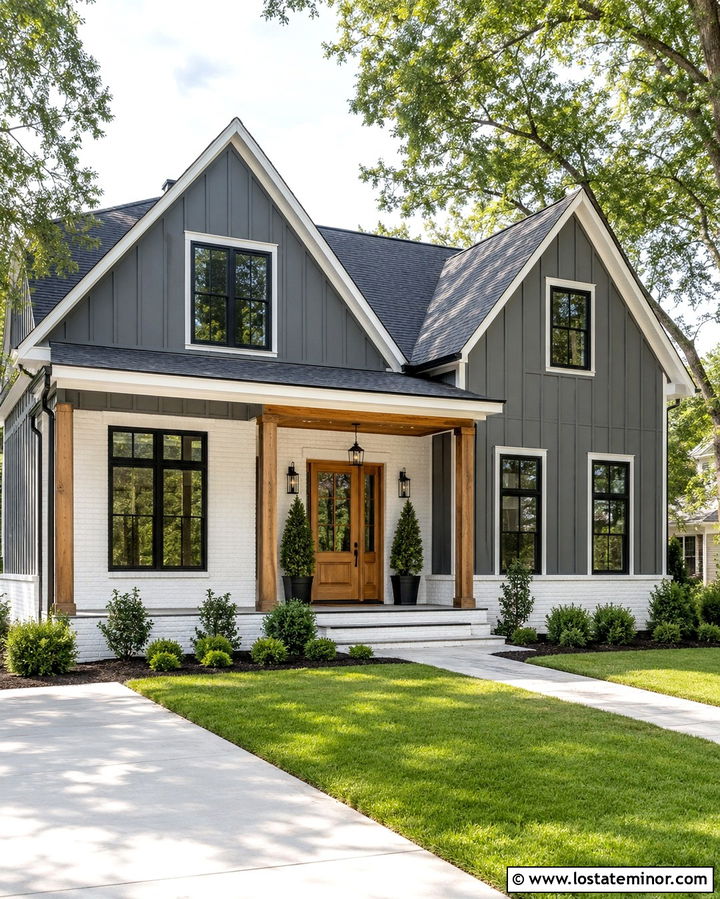
A cedar front door becomes especially noticeable between slate grey siding and white brick. Use white-painted brick across the lower facade, then install slate grey board-and-batten or horizontal siding above it. Warm white trim creates a seamless connection to the masonry, while black windows add crisp, modern lines. Keep the cedar door in a medium honey stain so its grain remains visible and repeat that tone on a small porch ceiling or decorative gable accent. A charcoal roof and black metal lights finish the streamlined palette. This combination works on modern farmhouses, transitional homes, and updated split-levels. Dark green shrubs and a pale concrete path provide a simple landscape frame without distracting from the wood-centered entrance.
23. Slate Grey House With Charcoal Brick Foundation
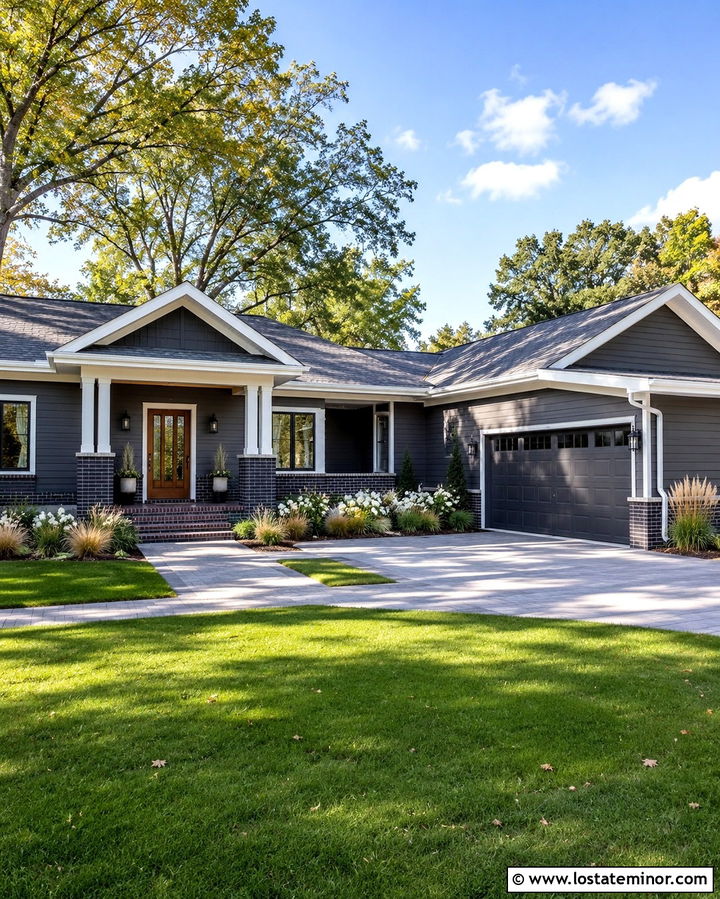
Charcoal brick gives the base of a slate grey house extra depth while preserving a refined monochromatic palette. Keep the brick slightly darker than the siding so the foundation reads as a supporting element rather than a mismatched extension. Use it along the lower facade, porch base, and steps. Warm white window trim and fascia prevent the house from disappearing into a mass of dark grey. A natural teak or walnut front door introduces warmth, while matte black lights and gutters quietly blend with the brick. Choose medium-grey roof shingles to avoid making the top of the home too heavy. Pale grasses, white flowering plants, and light stone pavers provide valuable contrast around the dark exterior and highlight its clean architectural lines.
24. Slate Grey House With Reclaimed Brick Accents
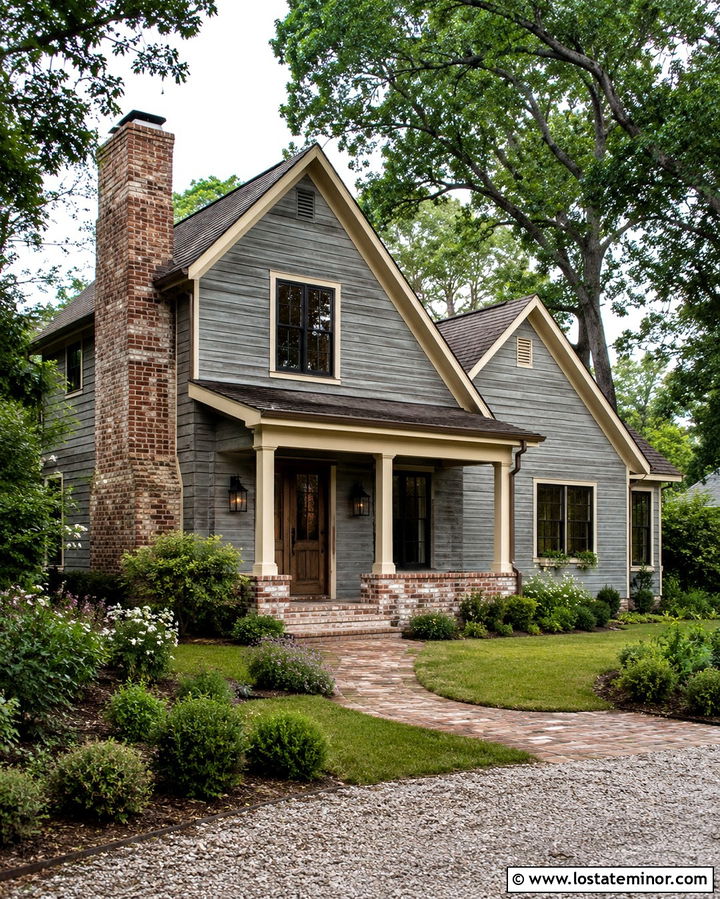
Reclaimed brick introduces irregular color, worn edges, and a sense of history to slate grey siding. Use the masonry selectively on a chimney, porch floor, foundation, or garden wall so its variation remains a feature rather than visual clutter. Brick containing faded red, brown, cream, and charcoal tones offers several options for coordinating finishes. Choose warm cream trim and a weathered wood front door to emphasize the aged character. Dark bronze windows and lanterns feel softer than solid black against rustic masonry. A charcoal-brown roof connects the cooler siding with warmer brick. Complete the setting with informal shrubs, brick paths, and native plantings. This full exterior is particularly fitting for cottages, farmhouses, and renovated older homes.

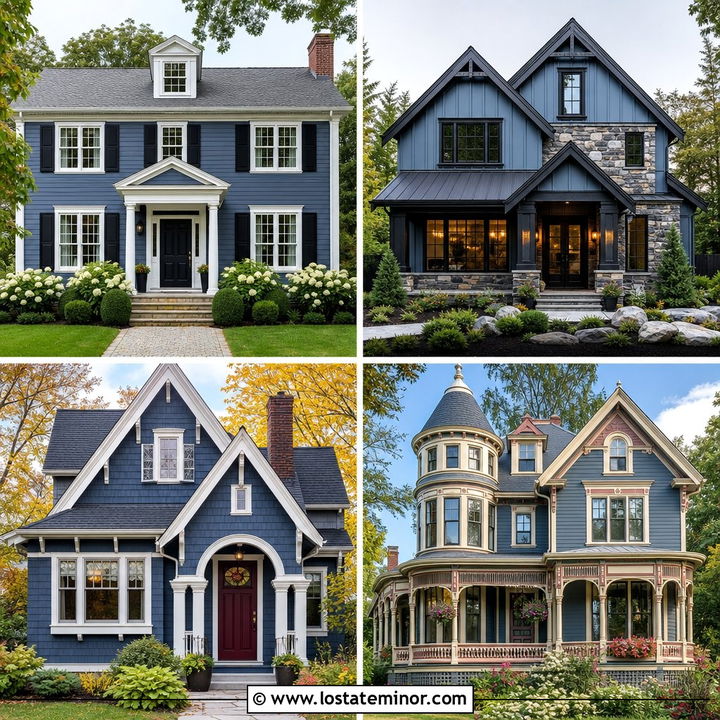
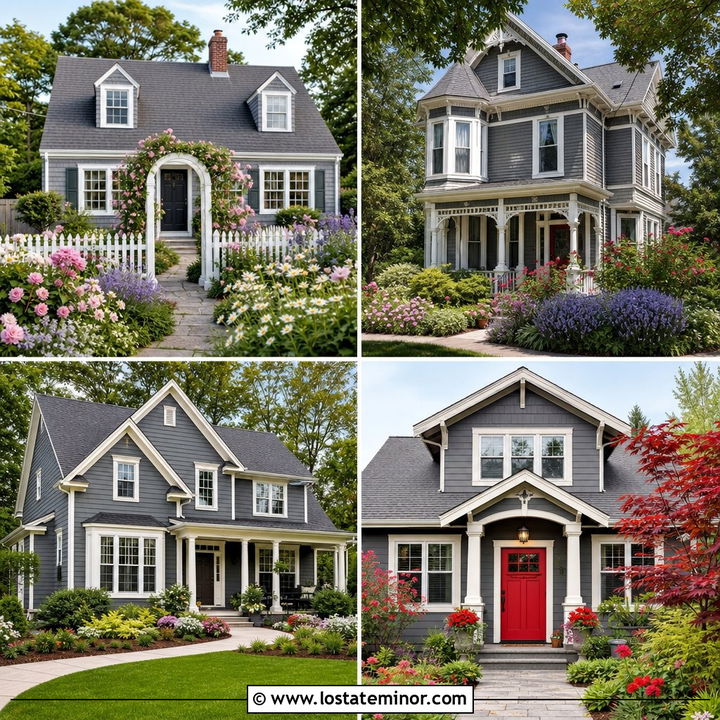
25. Slate Grey House With Brick And Stone Accents
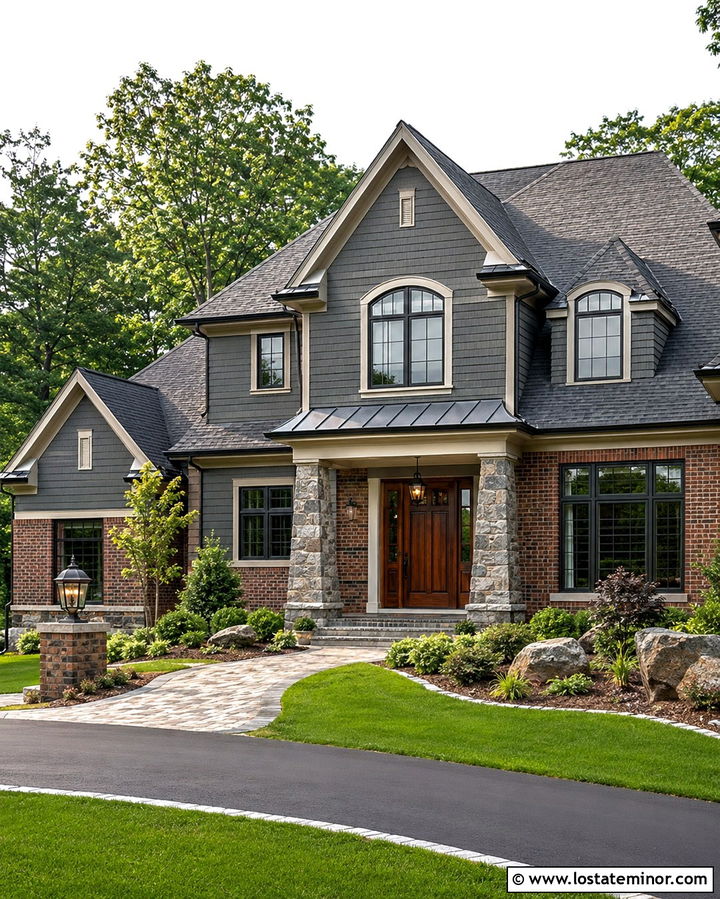
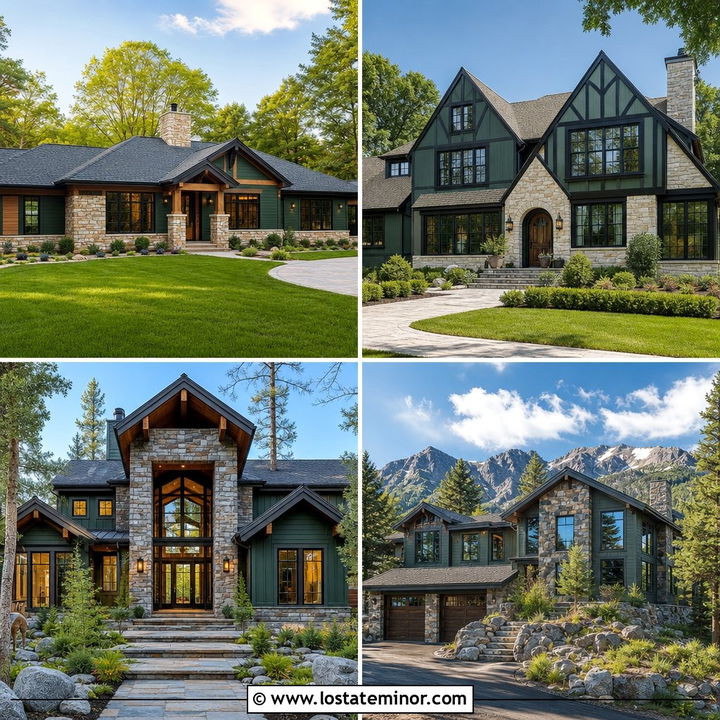
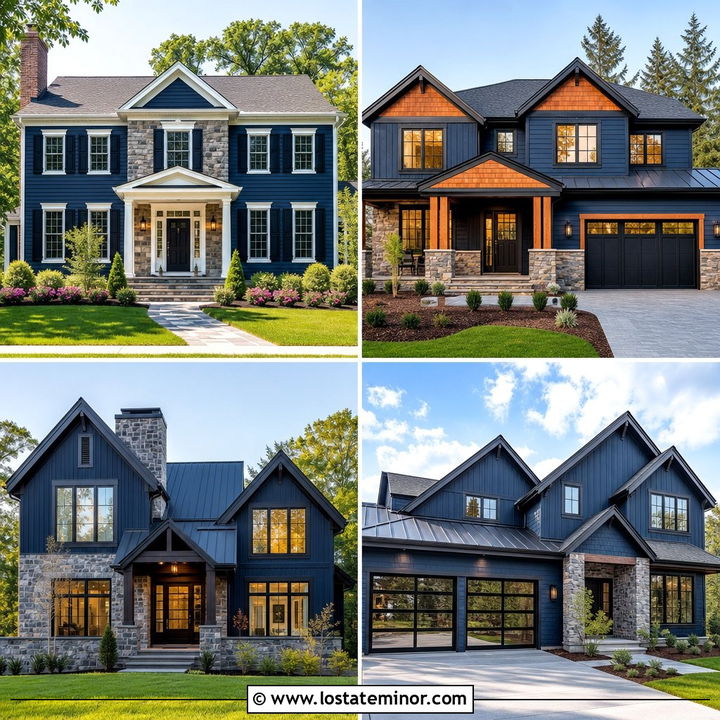
Brick and stone can coexist on a slate grey house when one material remains visually dominant. Use red-brown brick across the main lower facade, then reserve grey fieldstone for the porch columns or entry surround. Slate grey siding above both materials ties the palette together. Cream trim softens the transitions, while a stained mahogany door draws warmth from the brick. Choose stone containing both cool grey and subtle brown so it does not look unrelated. A dimensional charcoal roof supports the varied textures without adding another color family. Keep windows and gutters dark bronze for understated definition. Structured shrubs, natural boulders, and a mixed brick-and-stone walkway complete the layered exterior while maintaining clear, organized material placement.
26. Slate Grey House With Brick And Copper Accents
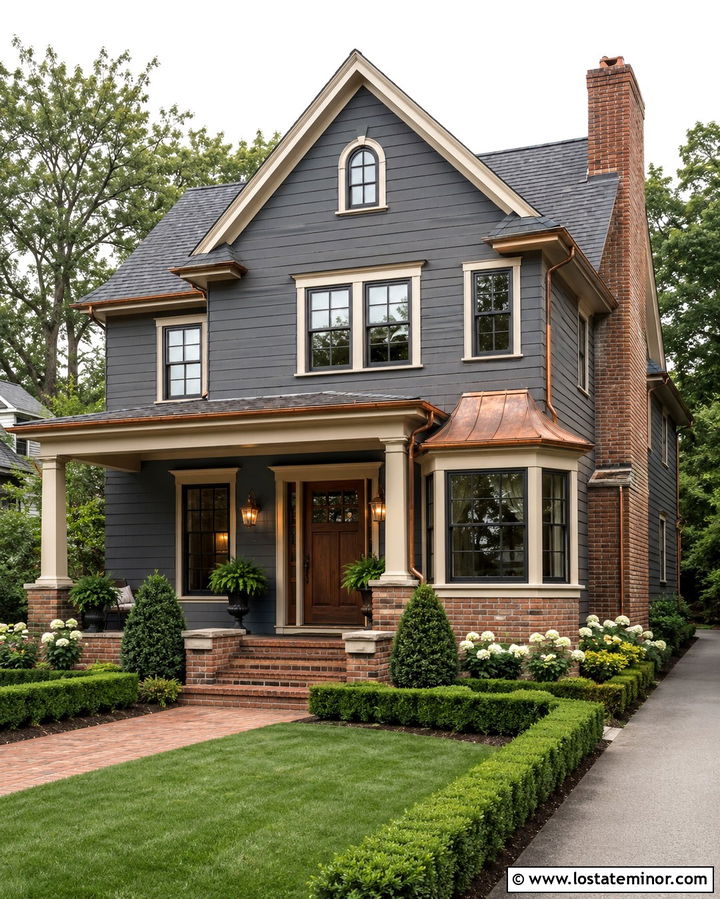
Copper details add a warm metallic note to slate grey siding and traditional brick. Use red-brown brick around the porch, chimney, and lower facade, then introduce copper through gutters, lanterns, bay-window roofing, or a small entry canopy. The metal’s warmer finish connects naturally with the masonry while standing out against cool grey walls. Choose cream trim and dark bronze windows so the palette remains elegant rather than overly busy. A stained walnut front door can repeat the brick and copper undertones. Keep the main roof charcoal to give the metallic elements room to shine. Deep green shrubs, clipped hedges, and a brick walkway create a classic setting. Limit copper to a few coordinated details for a polished result.
27. Slate Grey House With Brick And Black Windows
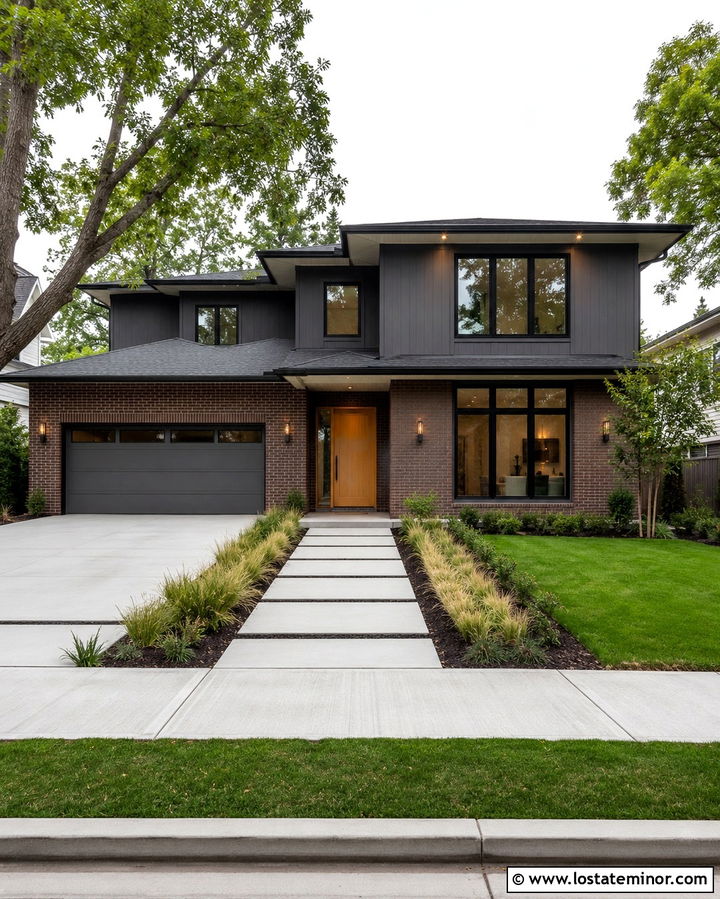
Black windows give a slate grey and brick exterior a stronger architectural outline. Pair slate grey siding with warm red-brown brick across the lower story or around the entry, then use slim black frames to create clean visual rhythm. Keep the fascia and soffits warm white so the windows remain distinct from the roofline. A natural oak front door balances the dark frames and cool siding. Choose a charcoal roof, black gutters, and simple black lanterns for continuity. If the home has a garage, use a slate grey or warm greige door rather than another large black surface. Linear plantings, ornamental grasses, and broad concrete pavers support the tailored look while preserving the warmth of the original masonry.
28. Slate Grey House With Brick And Sage Green Door
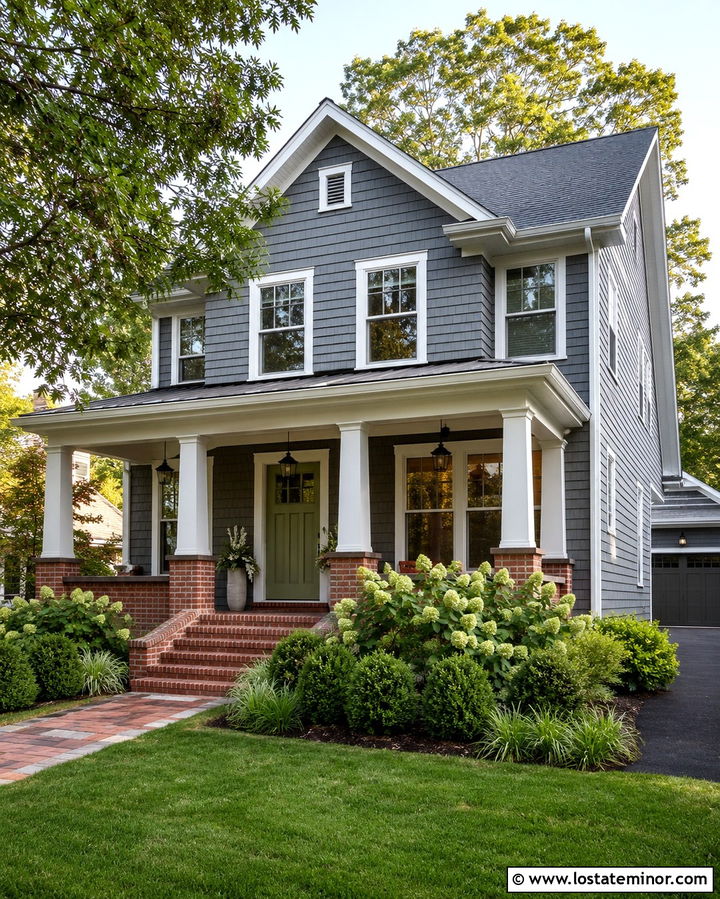
A sage green front door introduces quiet color to slate grey siding and warm brick. Choose a muted, earthy sage rather than a pastel shade so it can hold its own beside the deeper exterior. Red-brown or lightly weathered brick works well around the porch foundation, steps, and column bases. Use creamy white trim to lighten the facade and connect with pale mortar. Charcoal shingles and dark bronze fixtures provide structure without competing with the door. Repeat sage subtly through planters or nearby foliage rather than painting several architectural elements. Hydrangeas, evergreen shrubs, and ornamental grasses make the palette feel connected to the landscape. The finished combination is relaxed, welcoming, and suitable for many traditional American homes.
29. Slate Grey House With Brick And Navy Door
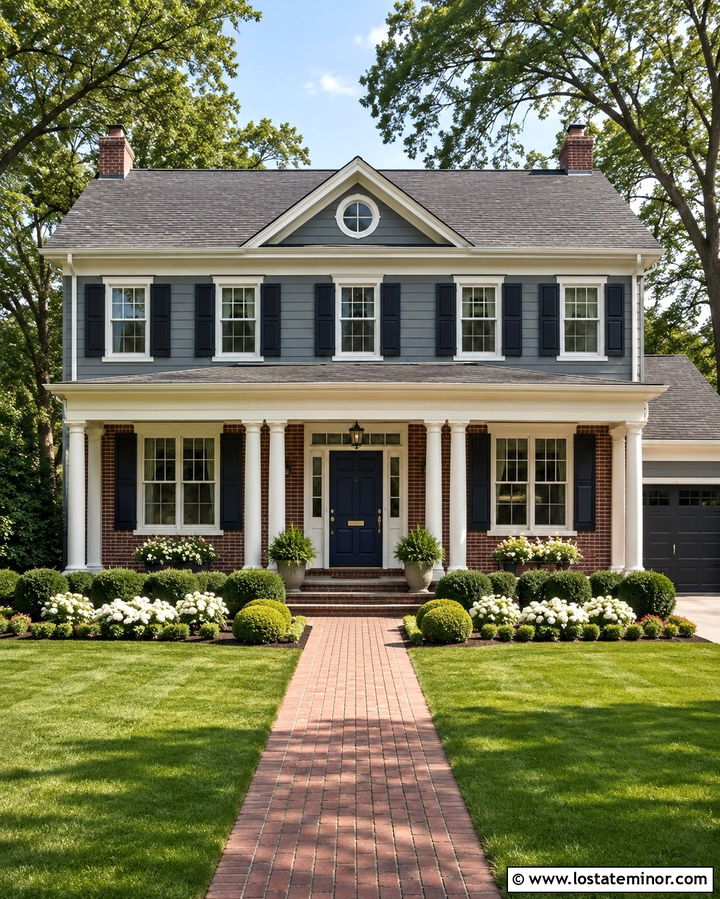
Slate grey siding and a navy front door produce subtle contrast because both colors have cool depth. Warm red brick is essential here, preventing the overall palette from feeling too blue or flat. Use brick across the porch base, entry steps, or lower facade, then select creamy white for window trim and porch posts. The navy door should be dark enough to look intentional but still visibly different from black. Brass or aged bronze hardware adds warmth at the entrance. Choose charcoal roof shingles with minimal blue undertones. A brick walkway, rounded shrubs, and white flowering plants reinforce the classic curb appeal. This complete scheme works especially well on Colonials, Cape Cod homes, and traditional two-story houses.
30. Slate Grey House With Brick And Wood Garage Doors
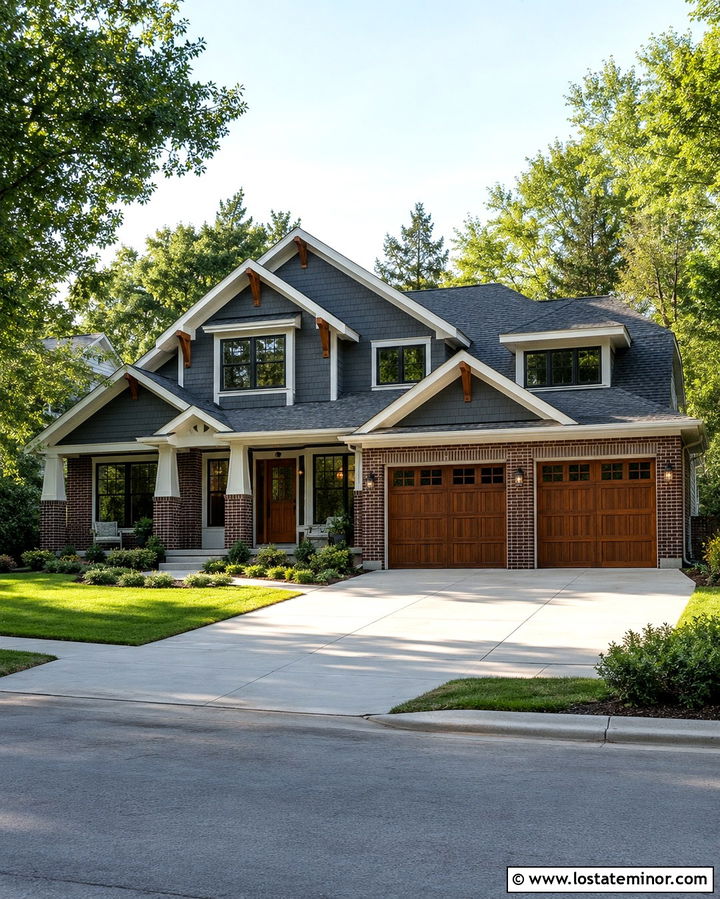
Wood garage doors can warm a large slate grey facade while connecting it to red or brown brick accents. Choose a medium walnut stain with visible grain, then repeat the wood tone on the front door, porch ceiling, or gable brackets. Use brick around the garage openings and along the lower facade to frame the doors naturally. Warm white trim keeps the exterior bright, while black windows and lanterns add controlled definition. A charcoal roof completes the main palette without competing with the wood. This treatment is effective on wide ranches, Craftsman homes, and modern suburban houses with front-facing garages. Use green foundation plantings and a clean concrete driveway to soften the broad horizontal surfaces and showcase the coordinated materials.
Conclusion:
These 30 Slate Grey House Design With Brick Accents Ideas show how one versatile siding color can support traditional, rustic, and contemporary architecture. The most successful combinations coordinate the brick with every visible finish, including trim, roofing, doors, windows, and wood details. Red brick creates warmth, white brick adds brightness, and charcoal brick produces a streamlined modern effect. Before committing, compare physical siding, paint, mortar, and roofing samples together outside. Review them in morning sun, afternoon light, and shade, since surrounding colors can change how grey appears. Whether you update a ranch, Craftsman, Colonial, or farmhouse, a complete material plan will make slate grey and brick feel intentional from every curbside angle.

Related posts: