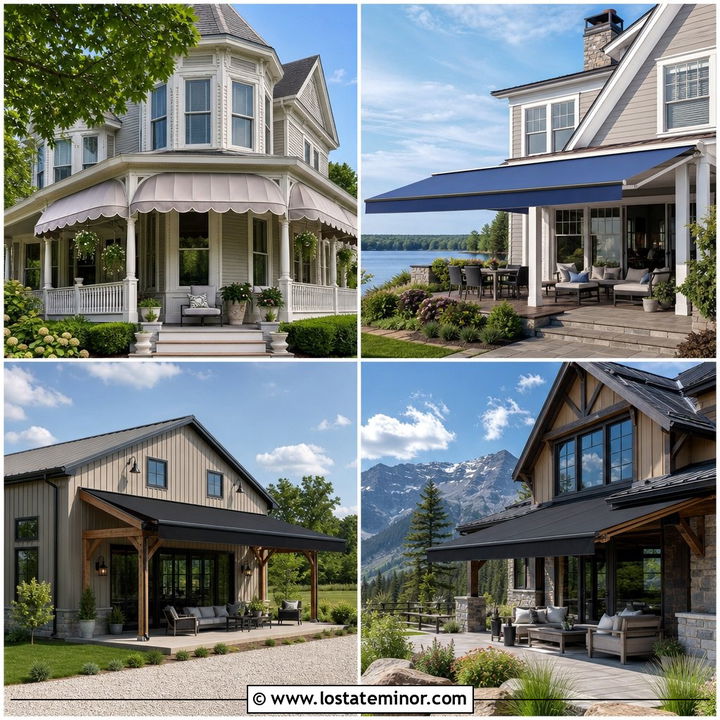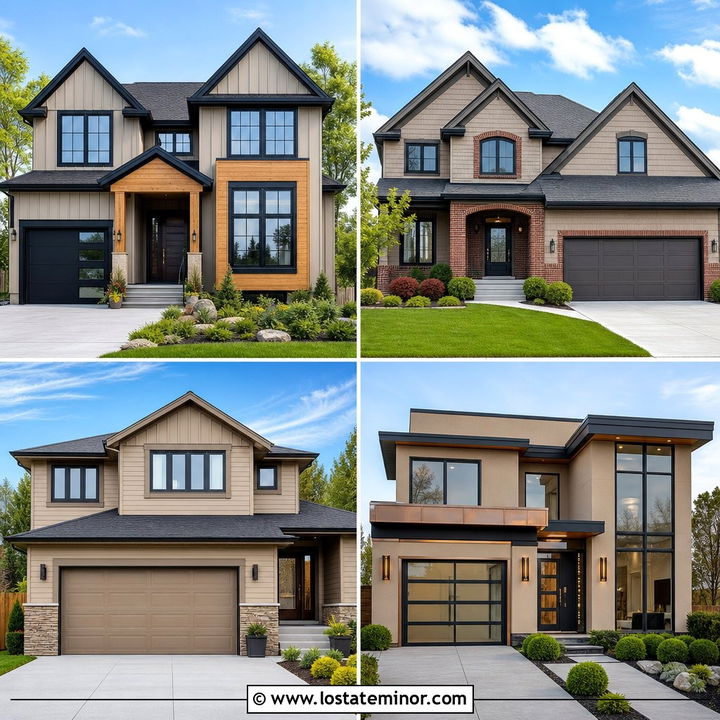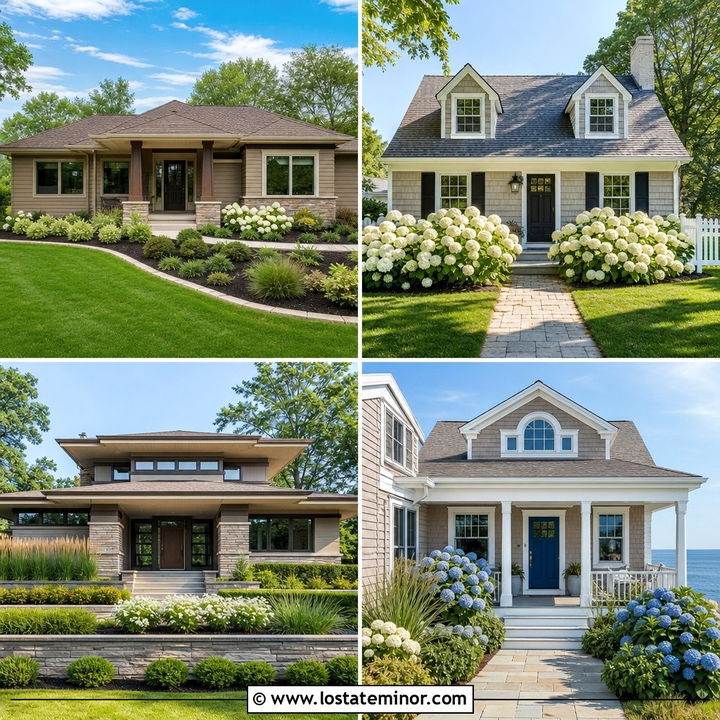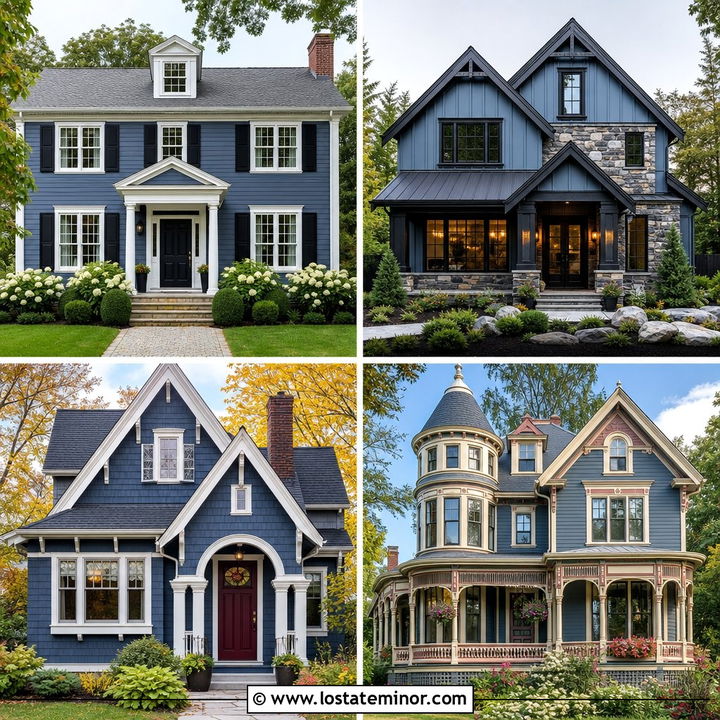
1. Taupe Ranch House With Black Metal Awnings
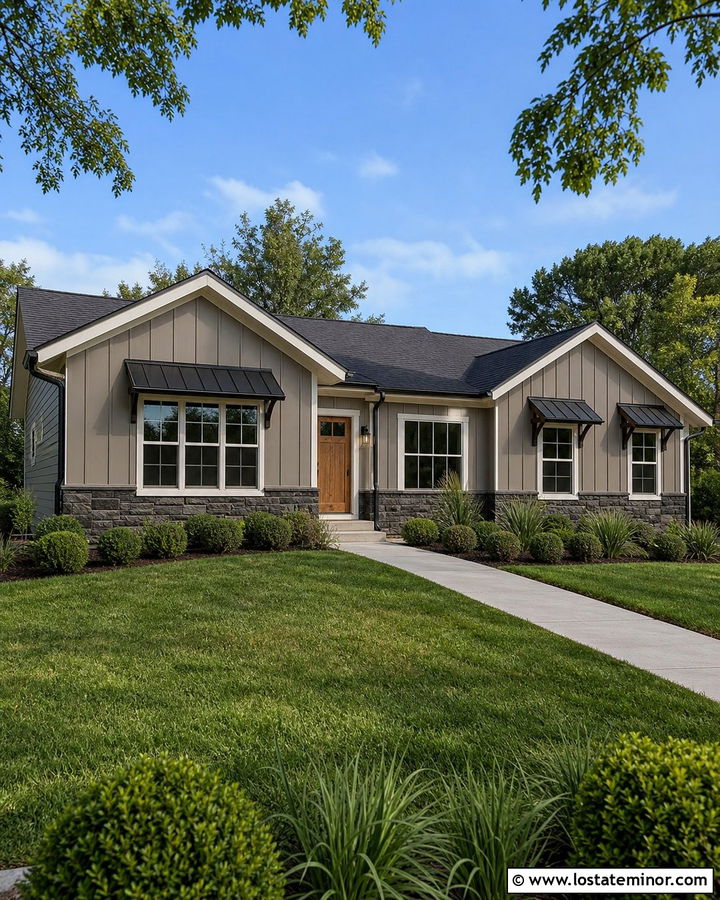
A low ranch facade gains definition when clean black metal awnings are installed above the front windows. Choose a medium taupe siding color with balanced gray-brown undertones, then repeat black on the window frames, gutters, and porch railing. Crisp off-white trim keeps the combination from appearing too heavy. A natural oak front door introduces warmth and creates a welcoming focal point near the center of the house. For more texture, add a charcoal stone skirt along the foundation and use large concrete pavers for the walkway. The slim awnings should extend slightly beyond each window without hiding the ranch home’s horizontal lines. Simple ornamental grasses and rounded shrubs complete this streamlined, low-maintenance exterior.
2. Taupe Craftsman House With Cedar Awnings
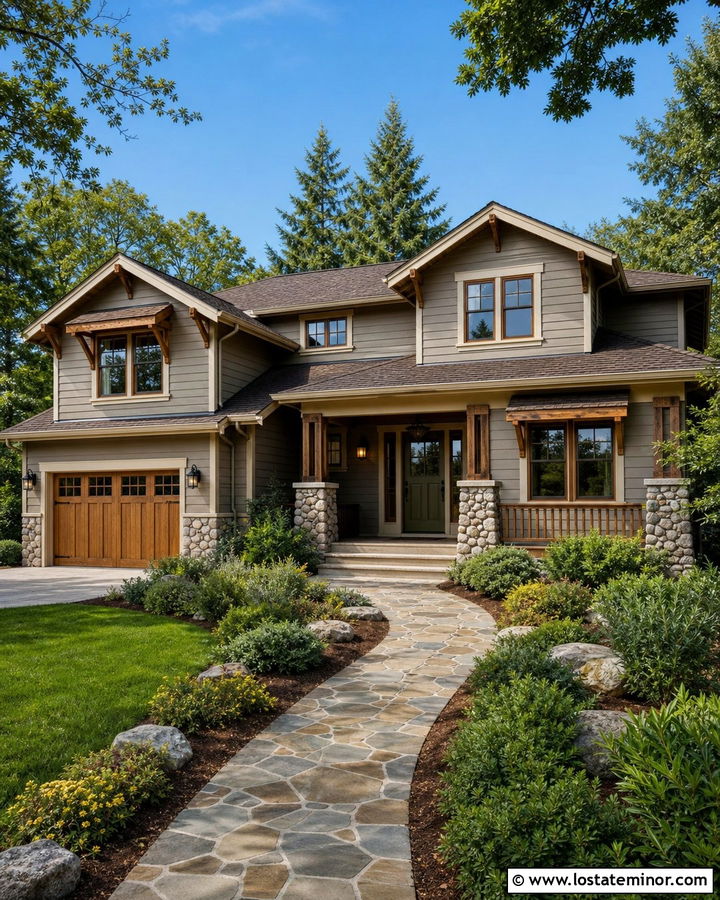
Can a practical shade feature also highlight Craftsman architecture? Cedar awnings supported by substantial wood brackets look intentional above grouped windows and a matching garage door. Use warm taupe lap siding as the main body color, creamy white around the windows, and muted olive on the front door. A river-rock porch base helps connect the taupe siding with the natural wood. Clear-sealed cedar is usually more harmonious than orange-toned stain because it allows the grain to remain visible without overpowering the facade. Repeat the cedar on porch columns and decorative gable details for consistency. Layered foundation plants, a curved stone walkway, and bronze exterior lighting make the completed house feel established, welcoming, and thoughtfully coordinated.
3. Taupe Colonial House With Striped Awnings
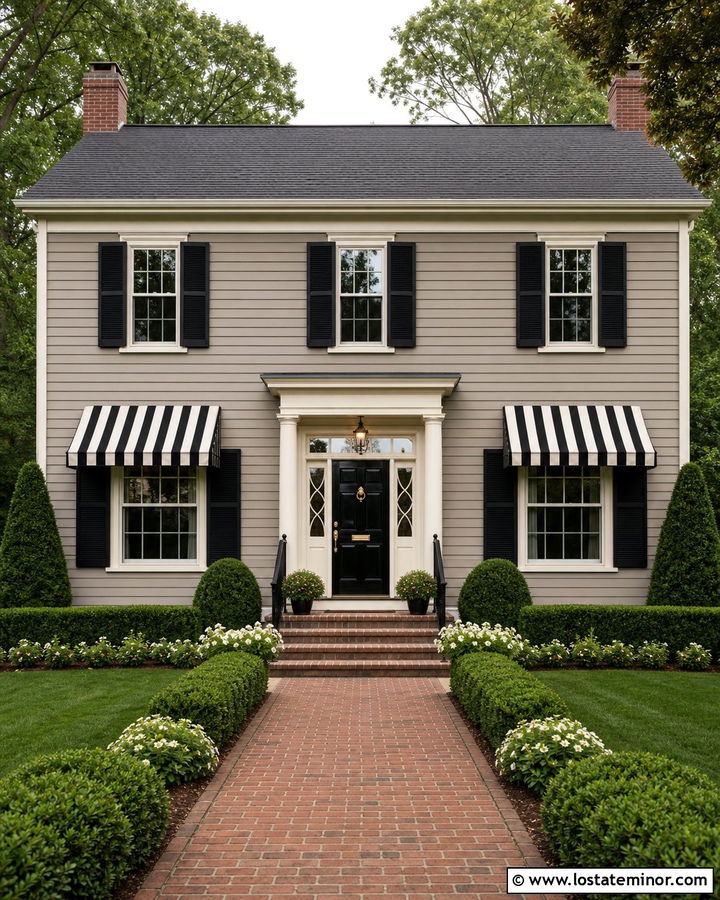
Black-and-cream striped awnings bring controlled pattern to a symmetrical taupe colonial house. Keep the awnings aligned above the first-floor windows so they reinforce the orderly architecture rather than compete with it. A soft taupe painted-brick or clapboard exterior provides a quiet background, while creamy trim outlines the windows, cornice, and classical front entry. Paint the shutters soft black to match the darkest awning stripe. A glossy black front door with polished brass hardware adds another traditional detail. Because the striped fabric already creates visual movement, use restrained landscaping with clipped boxwoods, white flowers, and a straight brick walkway. The completed exterior feels distinctive from the street while remaining appropriate for the home’s formal proportions.
4. Taupe Modern Farmhouse With Standing Seam Awnings
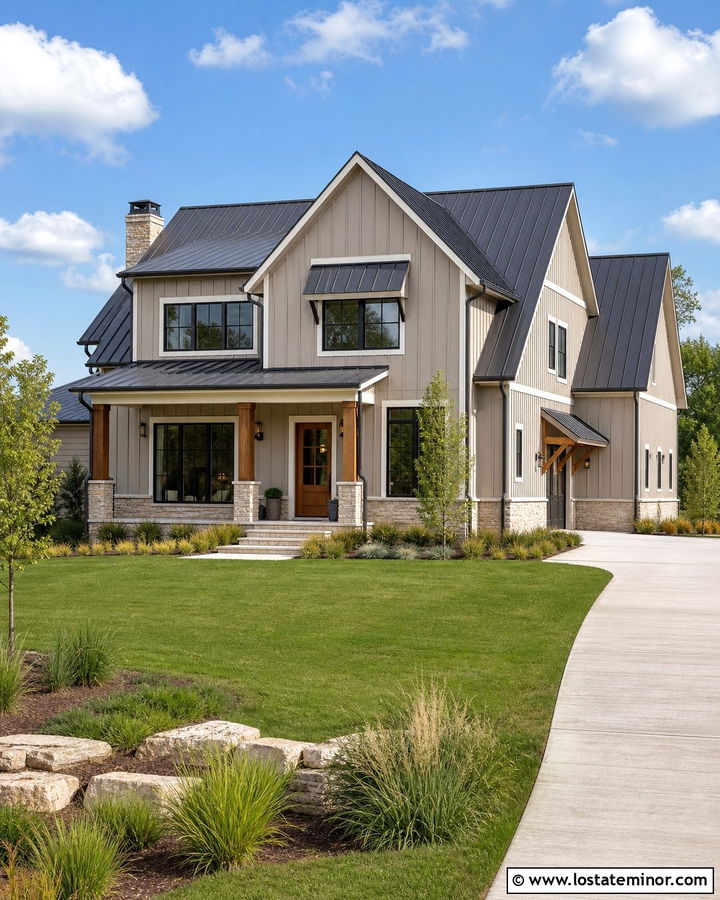
Crisp rooflines and simple materials give this taupe farmhouse a fresh, practical character. Cover the main facade in vertical board-and-batten siding painted a pale mushroom taupe. Add charcoal standing-seam metal awnings above the windows and side entry, matching them to the primary roof. Warm white trim softens the contrast and keeps the exterior brighter than a stark black-and-white farmhouse scheme. A medium-stained wood front door and porch ceiling introduce natural color. Use matching wood around the garage lights or address plaque so the door does not look isolated. Dark bronze gutters, pale limestone foundation accents, and an open gravel-edged walkway finish the design. The narrow awnings add shade without concealing the farmhouse’s strong vertical siding pattern.
5. Taupe Bungalow With Sage Green Awnings
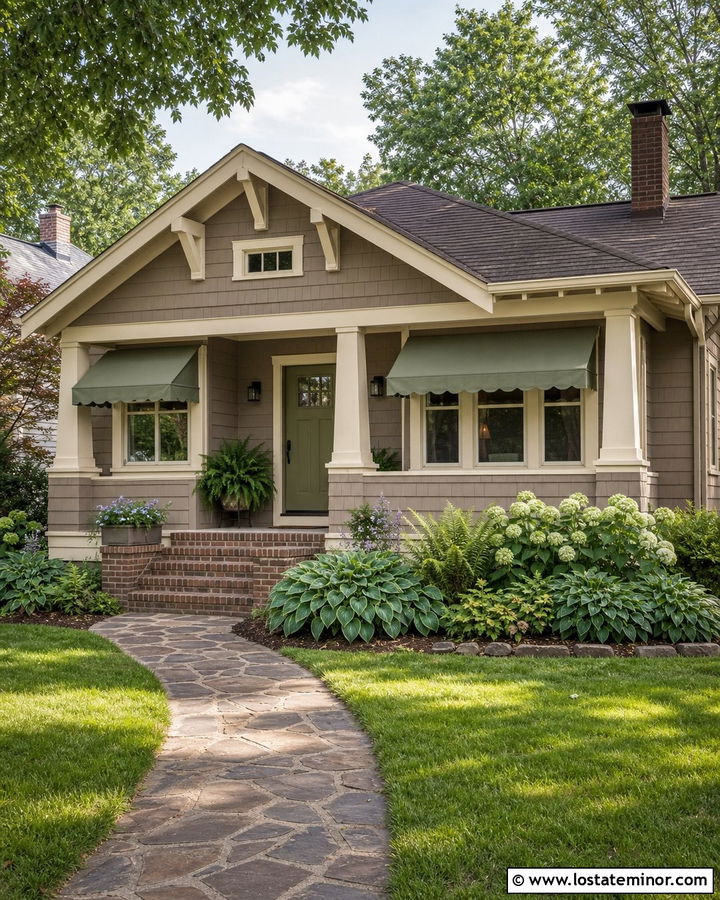
A quiet sage awning can give a taupe bungalow more personality without creating harsh contrast. Start with warm taupe shingle siding and creamy trim around the porch, windows, and exposed rafter tails. Install muted sage canvas awnings over the front windows, then repeat that green on the front door or porch planters. The palette feels especially cohesive when the roof contains soft brown, moss, and charcoal granules. Natural brick porch steps add earthy red-brown variation while staying compatible with the taupe body. Keep the awning valances straight or gently scalloped to suit the bungalow’s handcrafted details. Ferns, hostas, hydrangeas, and a curved flagstone path can carry the green tones through the yard and frame the complete facade.
6. Dark Taupe House With Cream Retractable Awnings
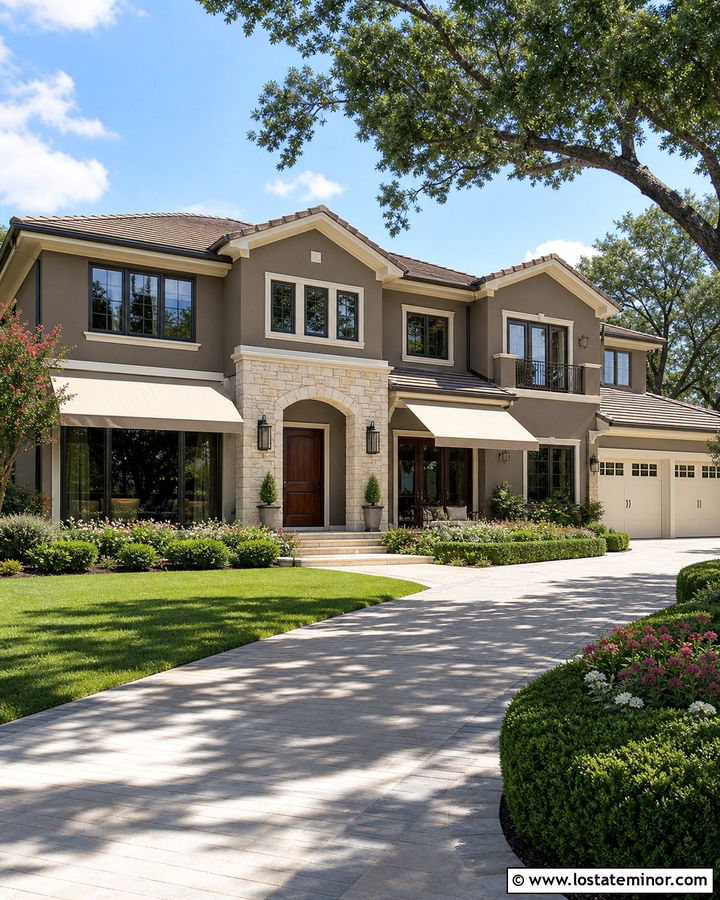
Deep taupe siding creates an elegant backdrop for cream retractable awnings on a large suburban home. The lighter fabric prevents the facade from becoming visually dense and coordinates easily with ivory window trim, soffits, and garage doors. Use dark bronze window frames and hardware instead of pure black for a softer transition between the body color and pale details. A walnut-stained front door adds richness at the entrance, while buff limestone around the porch grounds the scheme. When extended, the awnings should create a clean horizontal line over the sunniest windows and patio doors. When closed, compact fabric housings keep the exterior orderly. Light flowering plants and a broad green lawn brighten the overall curb view and balance the darker taupe walls.
7. Light Taupe House With Navy Canvas Awnings
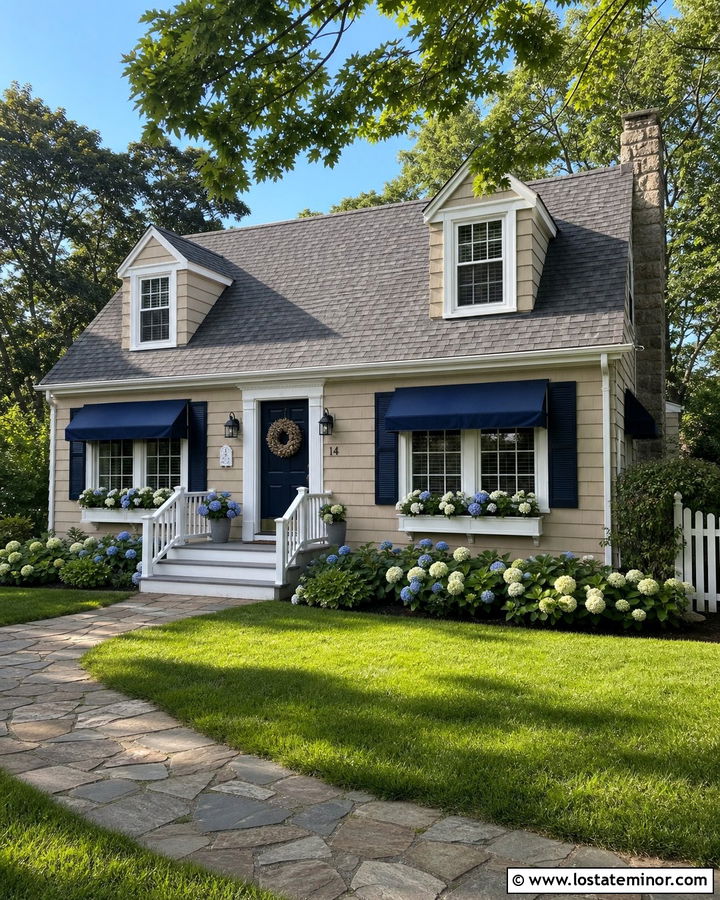
Navy canvas awnings add classic color to a light taupe exterior while keeping the scheme easy to live with. This pairing works particularly well on a Cape Cod house with dormers, white trim, and a dark architectural-shingle roof. Place compact navy awnings above the lower front windows, then paint the shutters and front door in the same deep blue family. The taupe siding should remain light enough to separate clearly from the roof and awnings. White window boxes filled with green foliage can soften the strong navy accents. Add a natural stone walkway and weathered-gray porch decking for coastal texture without relying on decorative themes. The completed facade feels balanced because the blue appears in several measured locations instead of one oversized feature.
8. Taupe Stucco House With Terracotta Awnings
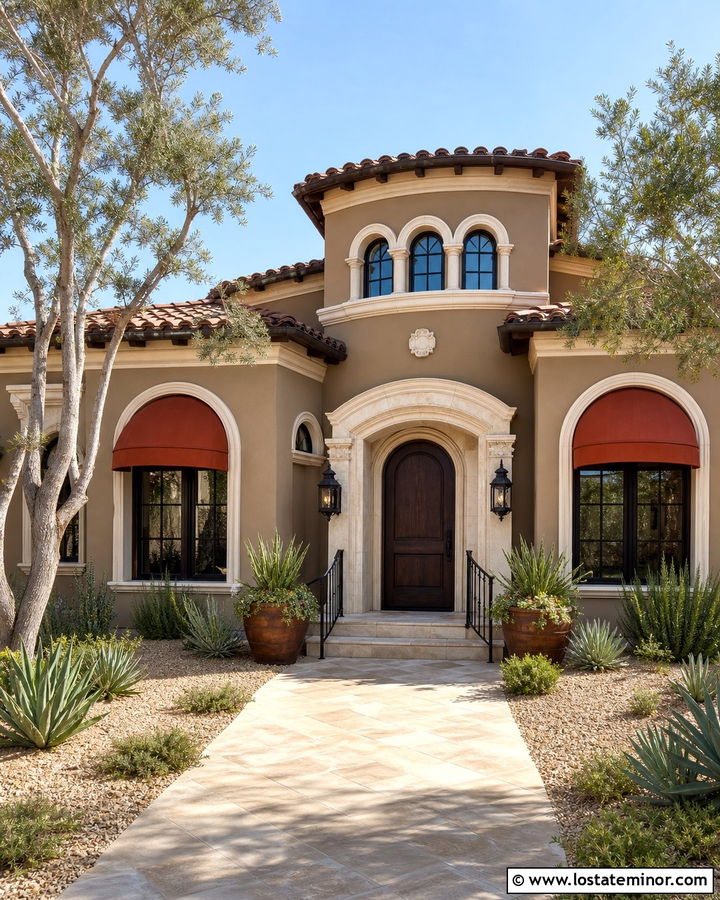
Warm sunlight brings out the brown undertones of taupe stucco, making terracotta awnings a natural companion. On a Mediterranean-inspired house, use rust-red fabric or shallow clay-tile awnings above arched windows. Coordinate them with a terracotta tile roof, but choose a slightly quieter awning color so the roof remains dominant. Cream trim around the doors and windows adds gentle contrast. A dark walnut entry door, wrought-iron railings, and aged bronze lanterns deepen the traditional palette. Use pale stone around the entry to prevent the facade from appearing too orange or brown. Drought-tolerant landscaping, gravel beds, olive-like trees, and a warm paver walkway complete the composition while allowing the taupe walls and shaded openings to remain clearly visible.
9. Taupe Brick House With Copper Awnings
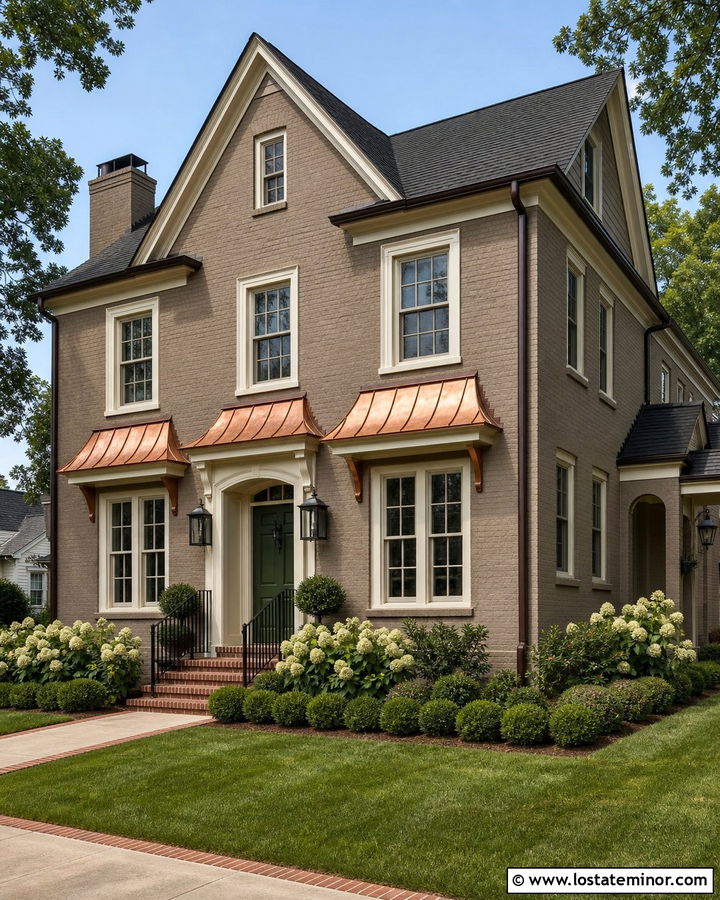
Copper awnings introduce character to a taupe-painted brick house and become more distinctive as the metal naturally develops variation. Use shallow curved or standing-seam copper canopies above prominent windows and the front entrance. Creamy white trim keeps the masonry looking fresh, while deep bronze gutters and window frames connect with the darker parts of the copper. A restrained forest-green door can complement both the warm taupe brick and changing metal tones. Avoid adding several unrelated accent colors because copper already acts as a strong decorative material. Low boxwood hedges, pale hydrangeas, and a brick-edged walkway provide a traditional setting. The result is a layered exterior where painted masonry, warm metal, dark accents, and greenery work as one complete design.
10. Taupe Cottage With Scalloped Canvas Awnings
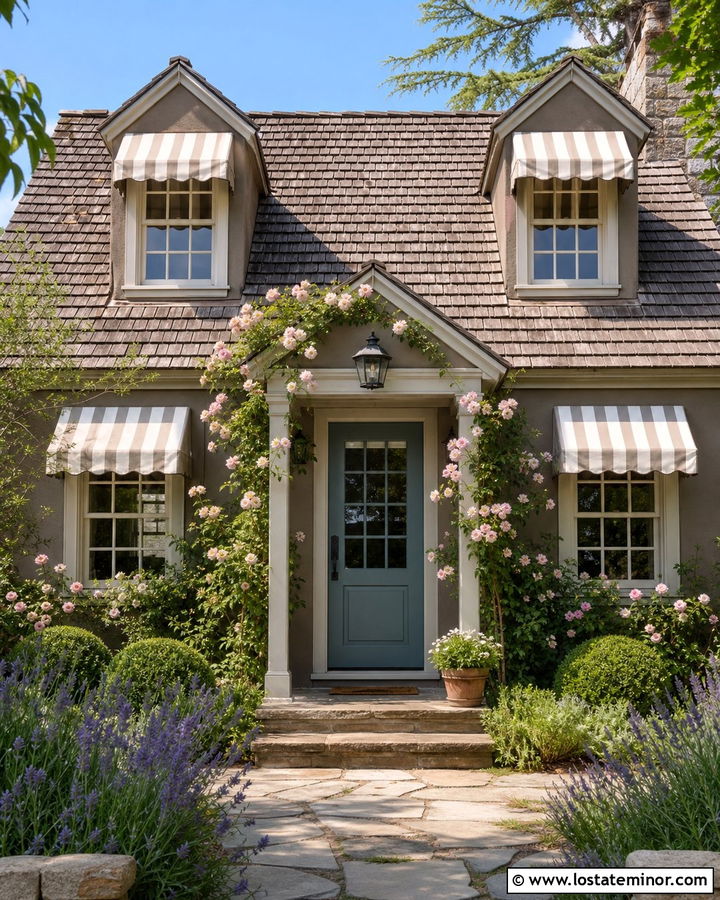
Soft scalloped awnings can reinforce the charm of a compact taupe cottage when their scale stays proportional to the windows. Choose cream-and-taupe striped fabric rather than a highly saturated pattern. This gives the facade detail while preserving a calm, neutral appearance. Warm white trim around divided-light windows and a muted blue-green front door add gentle contrast. A weathered cedar shingle roof or medium-brown architectural roof fits naturally with the relaxed palette. Repeat the awning fabric over two or three visible windows instead of mixing different shapes. Climbing roses, lavender, rounded shrubs, and an informal stone path bring color around the house. The coordinated exterior feels inviting and detailed without making the small facade look crowded or overly decorated.
11. Taupe Split-Level House With Charcoal Awnings
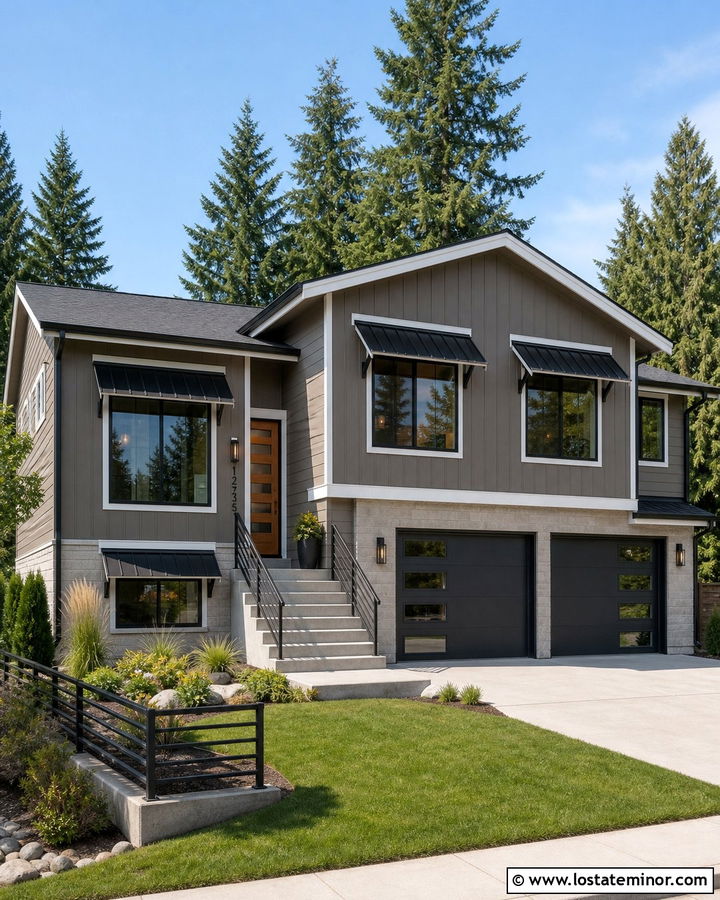
A split-level exterior often needs a strong visual link between its different elevations. Charcoal awnings can provide that connection when they are repeated above windows on both levels. Paint the main siding a balanced gray taupe and use lighter greige on the foundation or lower brick section. White trim brightens the windows, while charcoal fascia, gutters, and garage doors repeat the awning color. Introduce warmth with a modern cedar front door positioned beneath a small matching canopy. Keep each awning shallow and angular to suit the house’s straightforward midcentury lines. Wide concrete steps, horizontal railings, ornamental grasses, and structured evergreen beds help update the curb appeal. The completed scheme makes the offset levels feel deliberate rather than visually disconnected.
12. Taupe Midcentury House With Flat Metal Awnings
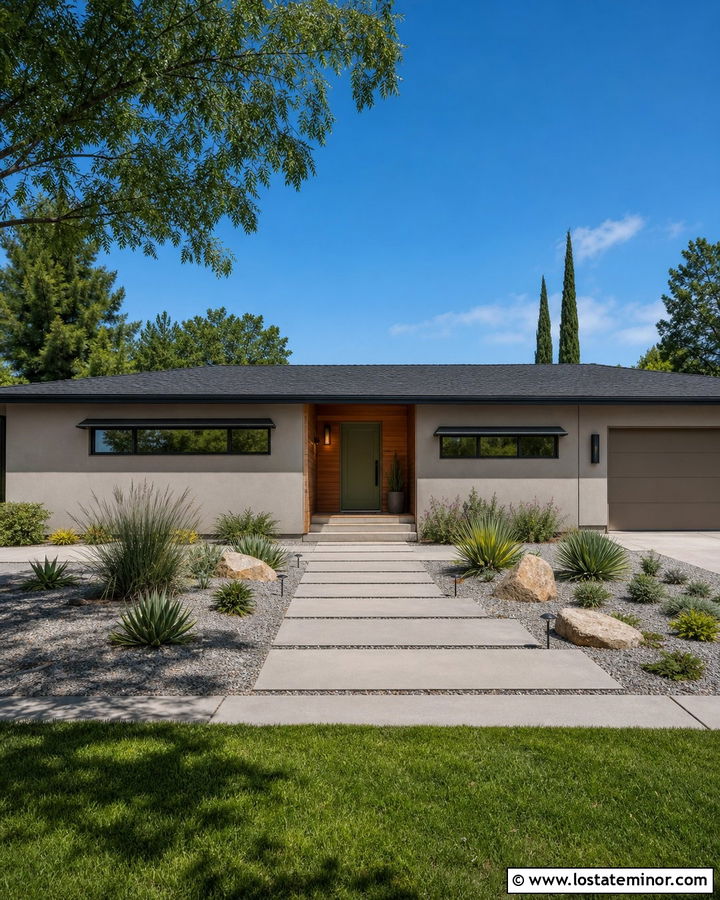
Picture a broad midcentury facade with long windows shaded by thin, flat metal awnings. A cool taupe exterior provides a neutral base that complements the house’s low roof and horizontal geometry. Use matte black for the awnings, fascia, and slender window frames. Warm cedar siding around the recessed entrance prevents the combination from feeling cold. An avocado or deep olive front door can add period-appropriate color in a controlled way. Keep the garage door taupe so it blends into the wall instead of becoming the largest feature. A gravel garden, broad concrete path, sculptural plants, and a few large boulders support the architecture. The awnings should look structural and minimal, creating shade while emphasizing the original lines of the home.
13. Taupe Victorian House With Burgundy Awnings
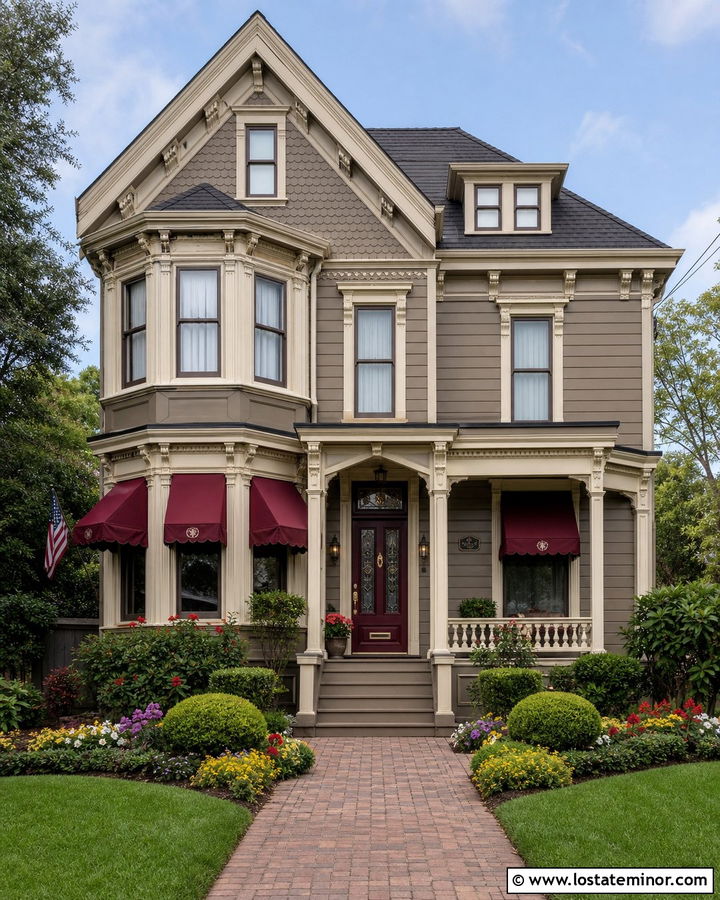
Rich burgundy awnings can bring warmth to a taupe Victorian house without requiring a complicated multicolor paint plan. Use medium taupe on the main clapboard siding and a deeper taupe on decorative shingles in the gables. Cream trim should highlight brackets, window surrounds, porch columns, and other architectural details. Place burgundy canvas awnings above selected lower windows, then repeat the color on the front door. Keep the roof charcoal or weathered gray so it does not compete with the warm accents. Small touches of antique gold hardware can finish the entrance. Formal shrubs, flowering borders, and a curved brick path create an appropriate setting. By limiting burgundy to several focal points, the ornate house remains expressive but still visually organized.
14. Taupe Coastal House With Blue Striped Awnings
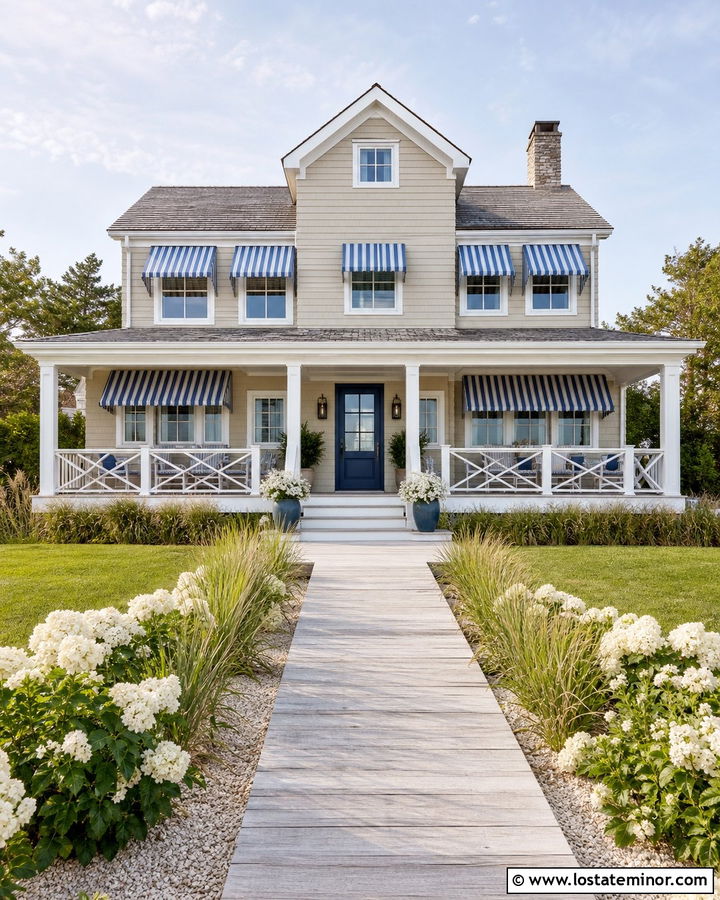
Fresh blue-and-white striped awnings can make a taupe coastal exterior feel brighter and more relaxed. Choose a pale sandy taupe for cedar shingles or horizontal siding, then frame the facade with clean white trim. Install simple striped awnings above wide windows or porch doors, using a medium denim blue rather than a very dark navy. Repeat that blue on the front door and small porch accessories. A weathered-gray roof and light natural decking reinforce the soft coastal palette. Cable rails or simple white balusters keep sightlines open around the porch. Finish the curb view with beach grasses, hydrangeas, pale gravel, and a boardwalk-style path. The restrained stripes add movement while the taupe siding keeps the exterior grounded and suitable for everyday suburban settings.
15. Taupe Tudor House With Bronze Awnings
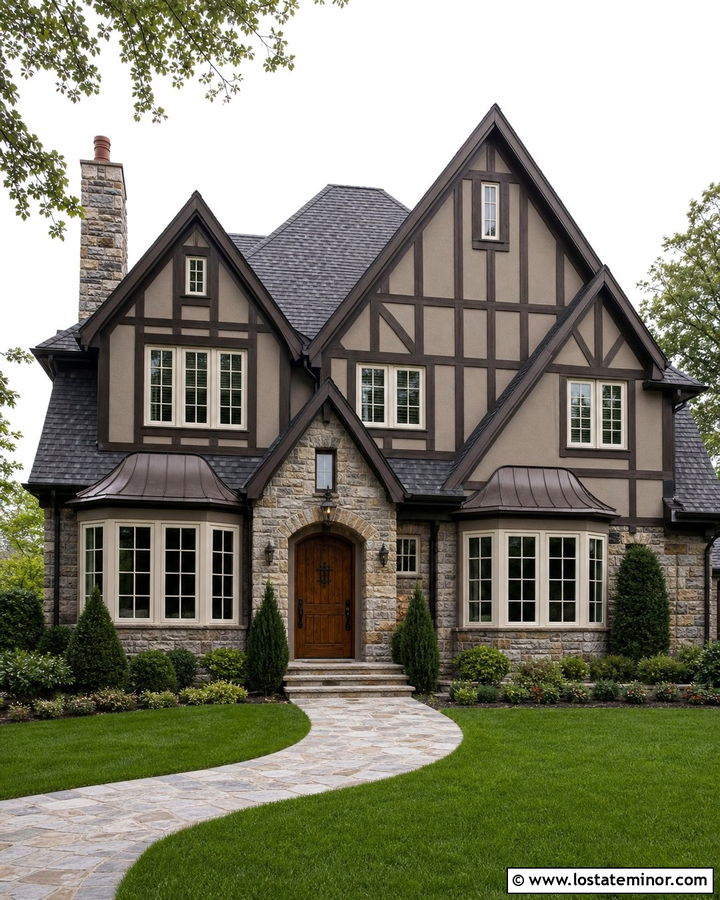
Decorative bronze awnings fit naturally on a taupe Tudor facade with steep gables and substantial masonry. Paint the stucco sections a warm gray taupe and retain dark brown timber details for architectural contrast. Install compact bronze metal awnings over lower casement windows, selecting slightly arched frames that echo the front doorway. Cream window sashes keep the darker elements from overwhelming the facade. Use mixed brown-gray stone along the foundation and chimney to connect the wall color with the roof. A stained oak door with black iron hardware becomes a strong central feature. Traditional evergreen landscaping and a gently curved stone walkway complete the house. The bronze awnings should appear integrated with the windows rather than added as separate decorative accessories.
16. Taupe Prairie House With Wide Window Awnings
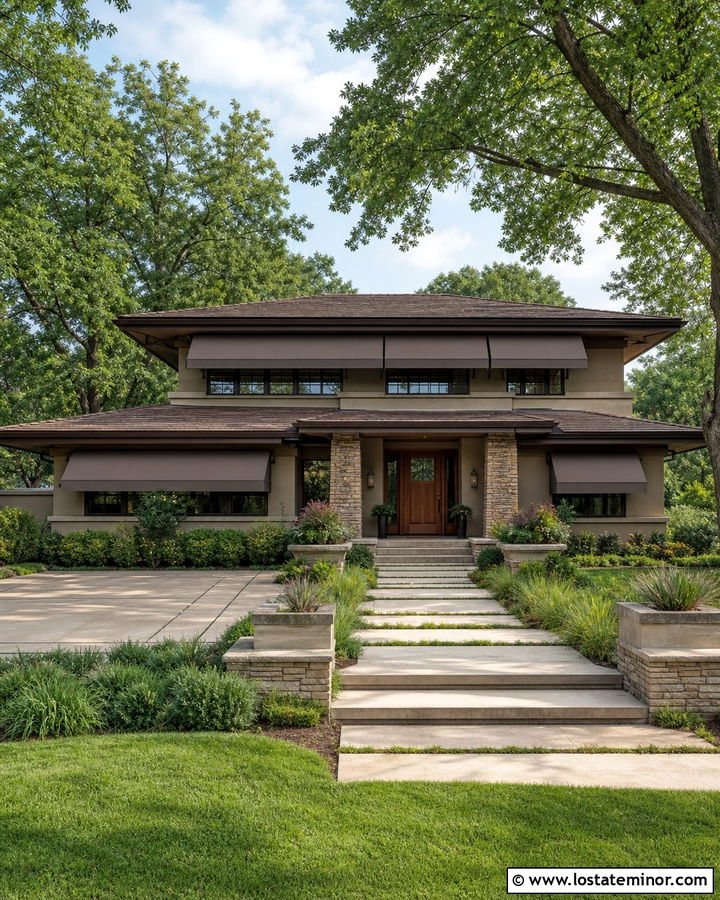
Long, low awnings reinforce the horizontal emphasis of a Prairie-style taupe house. Use a medium mushroom taupe for stucco or brick, paired with dark bronze trim and an overhanging brown roof. Wide canvas awnings in a deeper taupe can shade bands of windows without interrupting the architecture. Choose fabric with minimal pattern and a straight valance for a tailored appearance. Natural stone columns and a stained wood front door introduce texture near the entry. Repeat the dark bronze finish on exterior lights, gutters, and railings for consistency. Low layered shrubs, spreading grasses, and rectangular concrete pavers should follow the house’s horizontal lines. This coordinated approach creates a calm facade where the awnings support both the proportions and the earthy color palette.
17. Taupe French Country House With Black Awnings
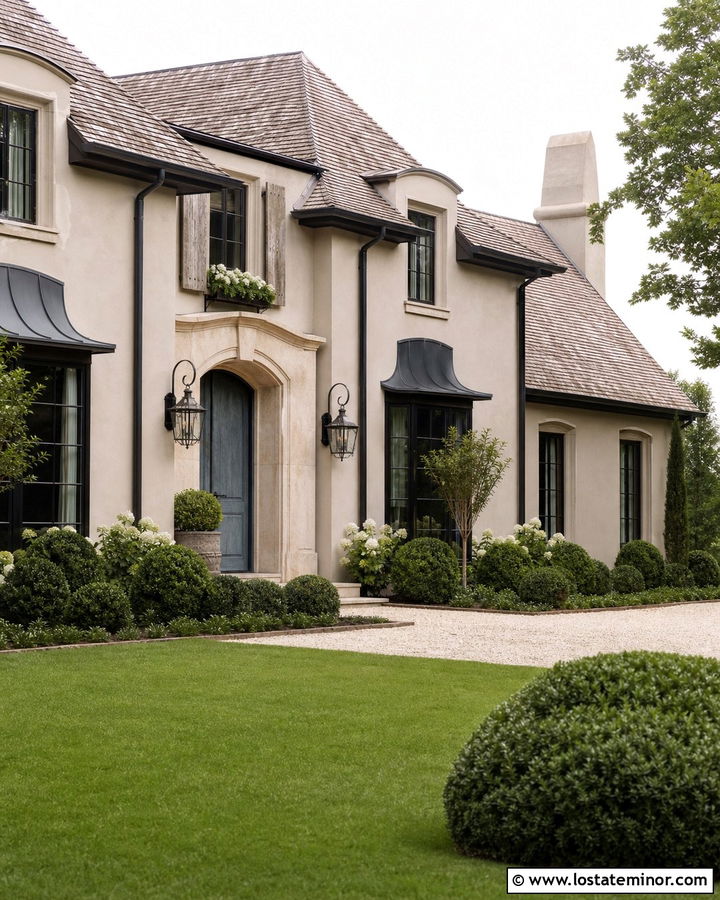
Black awnings provide crisp contrast against the softly textured walls of a taupe French country home. Select a light putty taupe for the stucco and creamy limestone around the entrance. Curved black metal awnings above tall windows can echo the shapes of arched doors and traditional rooflines. Use black window frames and gutters so the canopies feel connected to the building. A faded blue-gray front door introduces a quiet accent without competing with the awnings. Brown-gray roof shingles and a small amount of weathered wood keep the palette warm. Frame the house with clipped shrubs, pale flowers, gravel paths, and neatly shaped trees. The final exterior feels refined because every dark feature is balanced by large areas of soft taupe and cream.
18. Taupe Southwestern House With Rust Awnings
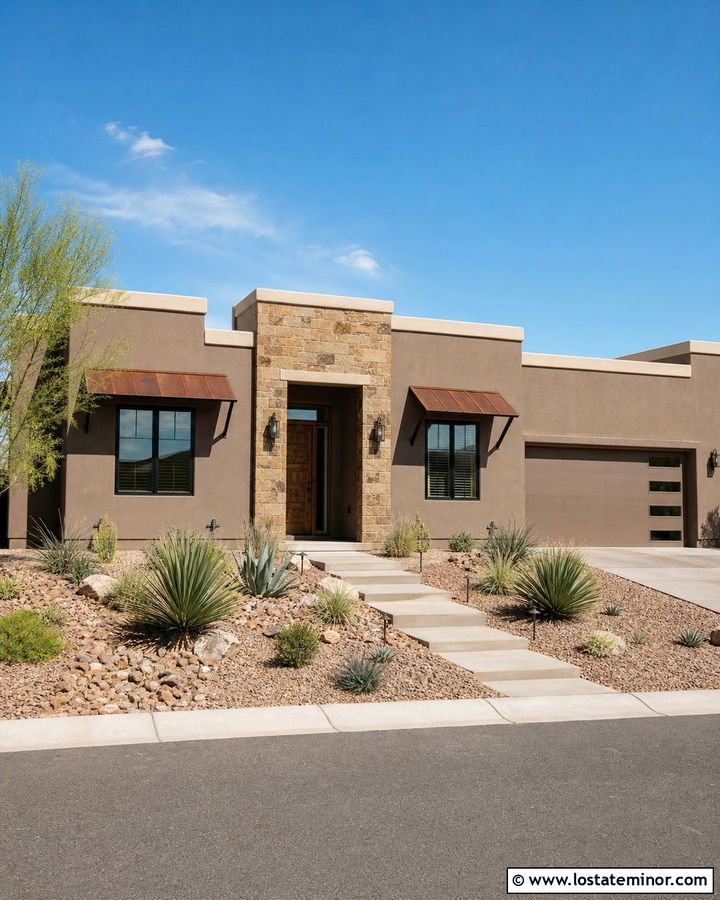
A desert setting gives rust-colored awnings room to stand out against a pale taupe stucco facade. Choose simple shed-style metal canopies with clean lines rather than ornate shapes. Coordinate their weathered rust finish with a warm brown front door and small steel landscape borders. Dark bronze window frames add definition, while creamy trim around the parapet keeps the home from looking flat. Natural sandstone near the entrance can bridge the taupe walls and red-brown awnings. Use gravel, agaves, yuccas, ornamental grasses, and drought-tolerant shrubs to complete the full exterior. The strongest color should remain concentrated on the awnings and entry. This prevents the earthy palette from becoming overly busy and allows the home’s sculptural stucco forms to remain prominent.
19. Taupe Contemporary House With Glass Awnings
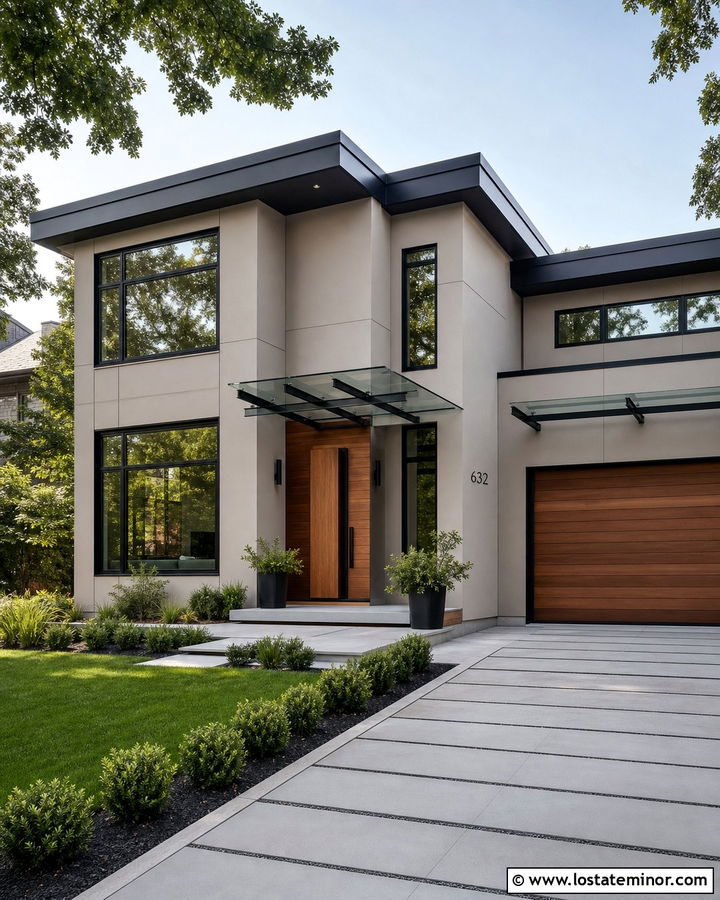
For homeowners who want shade without adding another large color block, clear glass awnings offer a sleek alternative. Pair them with cool taupe fiber-cement panels, black window frames, and flat charcoal rooflines. Slim black supports help the awnings connect visually with the windows and exterior lighting. Use warm wood cladding around the front entrance to balance the cooler facade materials. A matching wood garage door can extend that warmth across the lower elevation. Large concrete pavers, linear planting beds, and simple green shrubs reinforce the contemporary geometry. Keep the glass canopies deep enough to read from the curb but narrow enough to preserve the open appearance. The finished home combines transparent surfaces, grounded taupe walls, and controlled dark details.
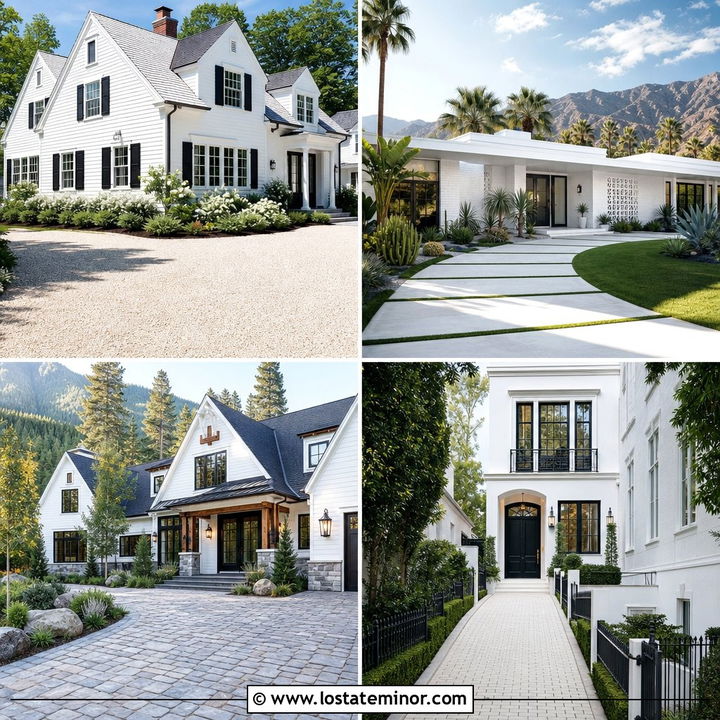
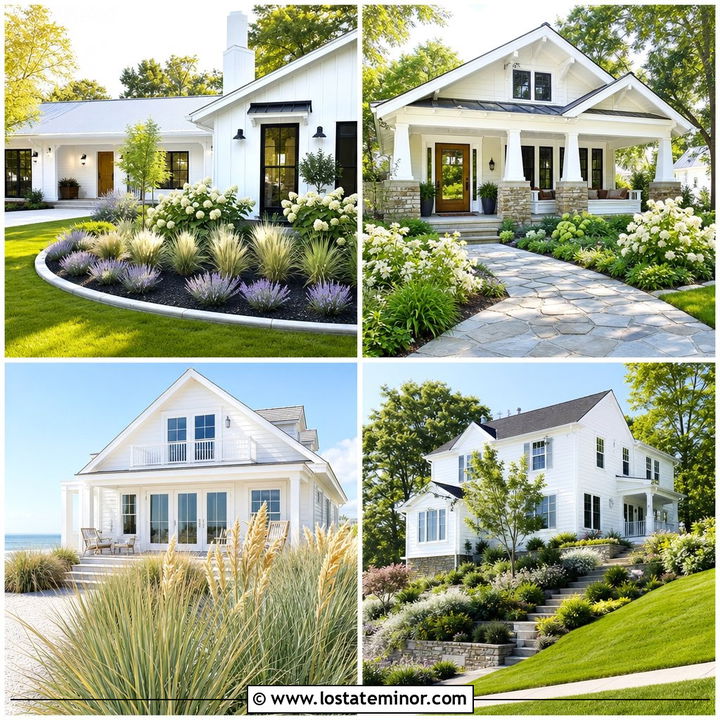
20. Taupe Farmhouse With Green Metal Awnings
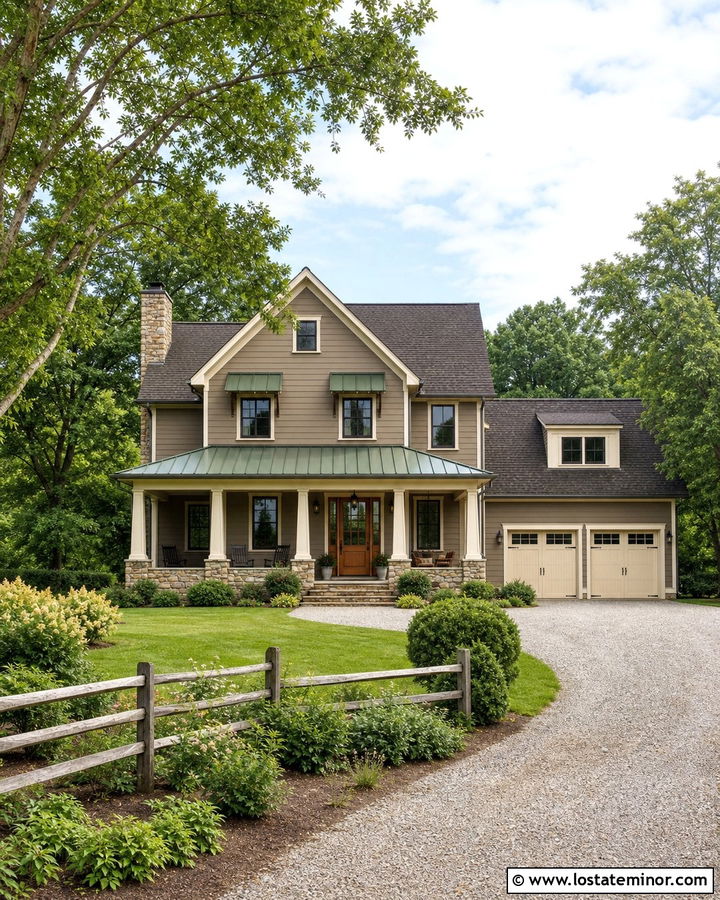
Muted green metal awnings add a rural note to a taupe farmhouse without making the exterior look themed. Paint horizontal lap siding a warm stone taupe and use soft cream on the trim, porch columns, and window frames. Install dark olive standing-seam awnings above the windows and side door. A matching olive roof on the porch can connect these smaller features across the facade. Add a natural wood front door and fieldstone porch base for warmth and texture. The garage doors should remain taupe or cream so they do not compete with the green accents. A gravel driveway, split-rail fence, layered shrubs, and broad lawn create an appropriate setting. The restrained earthy colors make the entire farmhouse feel comfortable and established.
21. Taupe Duplex With Matching Entry Awnings
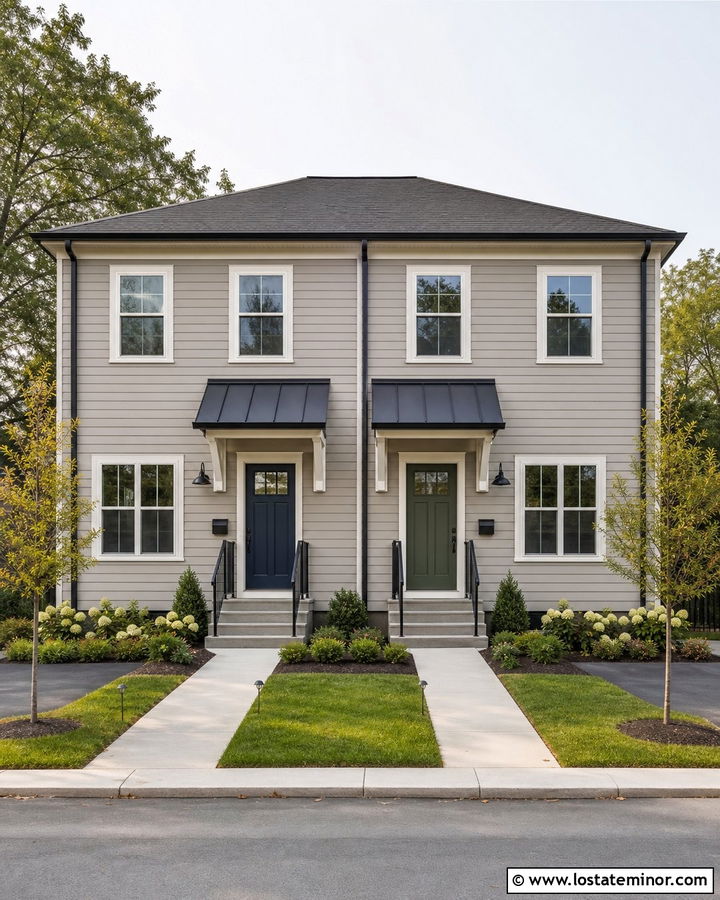
Two matching entry awnings can give a taupe duplex a more organized and equitable facade. Cover the building in medium greige-taupe siding, then use warm white trim around both sets of windows and doors. Place identical charcoal metal awnings above each entrance to create clear arrival points. The front doors can differ slightly, such as muted navy and deep sage, as long as both colors share a similar depth. Repeat charcoal on the gutters, exterior lights, and simple porch railings. Balanced planting beds and matching walkway widths are especially important because uneven landscaping can make one side look secondary. The finished duplex retains individual identity for each entrance while presenting a cohesive, well-planned exterior from the street.
22. Taupe Townhouse With Retractable Patio Awnings
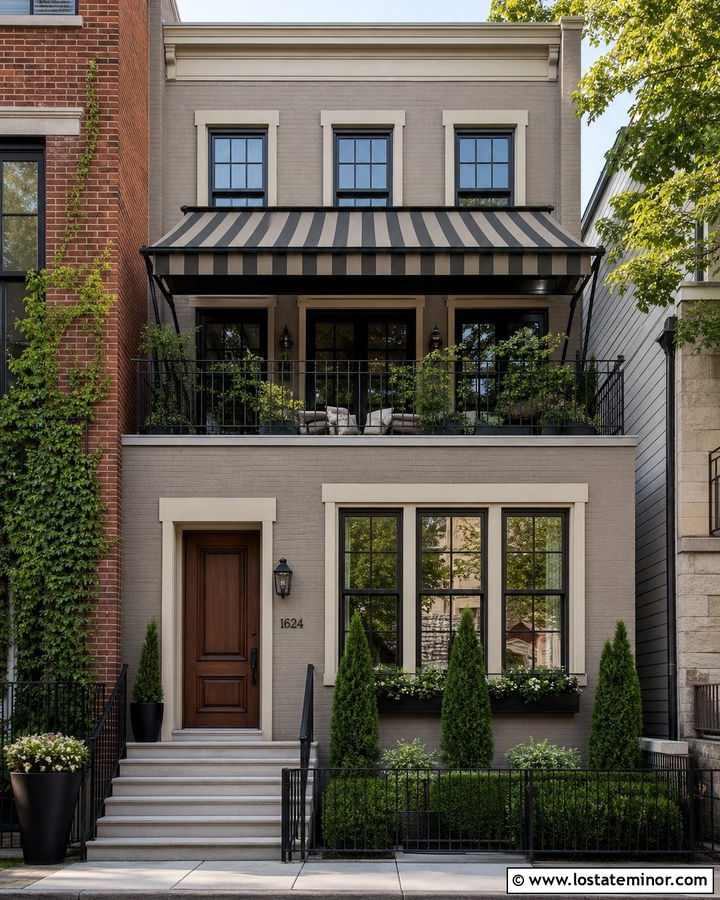
A narrow townhouse can benefit from an awning that adds function without permanently crowding the facade. Use a warm light taupe on the stucco or painted brick and creamy white around tall windows. A retractable charcoal-and-taupe striped awning above the upper terrace creates shade while visually widening the narrow elevation. Match the awning frame to black balcony rails and window frames. A medium walnut front door brings warmth to the street level, while pale stone steps brighten the entrance. Keep plants vertical and compact, using slender evergreens, climbing greenery, and narrow planters. When the awning is open, its horizontal shape balances the townhouse’s height. When retracted, the architecture remains crisp, uncluttered, and suitable for a dense neighborhood.
23. Taupe Cabin House With Wood Bracket Awnings
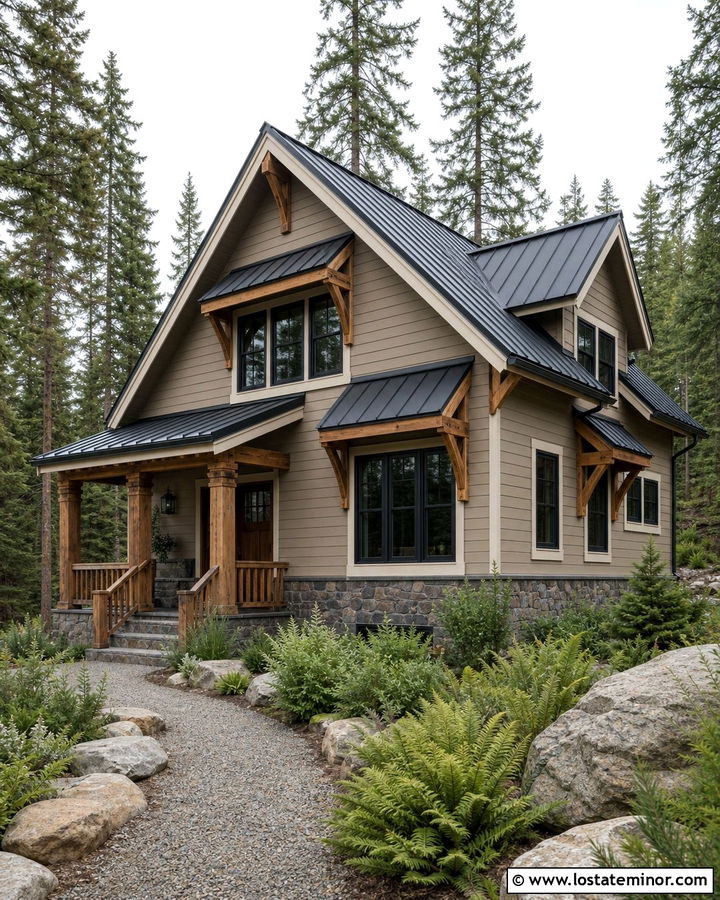
Heavy timber awnings can make a taupe cabin exterior feel sheltered and connected to its surroundings. Choose a deep earthy taupe for board-and-batten siding, then install cedar-framed awnings with dark metal roofs above the windows. Match the cedar brackets to porch posts and the front door for a unified material story. Black window frames and a charcoal standing-seam roof provide durable-looking contrast. Add irregular gray-brown stone around the foundation and chimney to ground the house visually. A gravel path, native shrubs, ferns, and tall evergreens complete the natural curb setting. Avoid bright white trim, which may feel abrupt against the woodland palette. Instead, use muted cream or taupe-painted trim to maintain the cabin’s quiet, cohesive appearance.
24. Taupe Shingle House With White Canvas Awnings
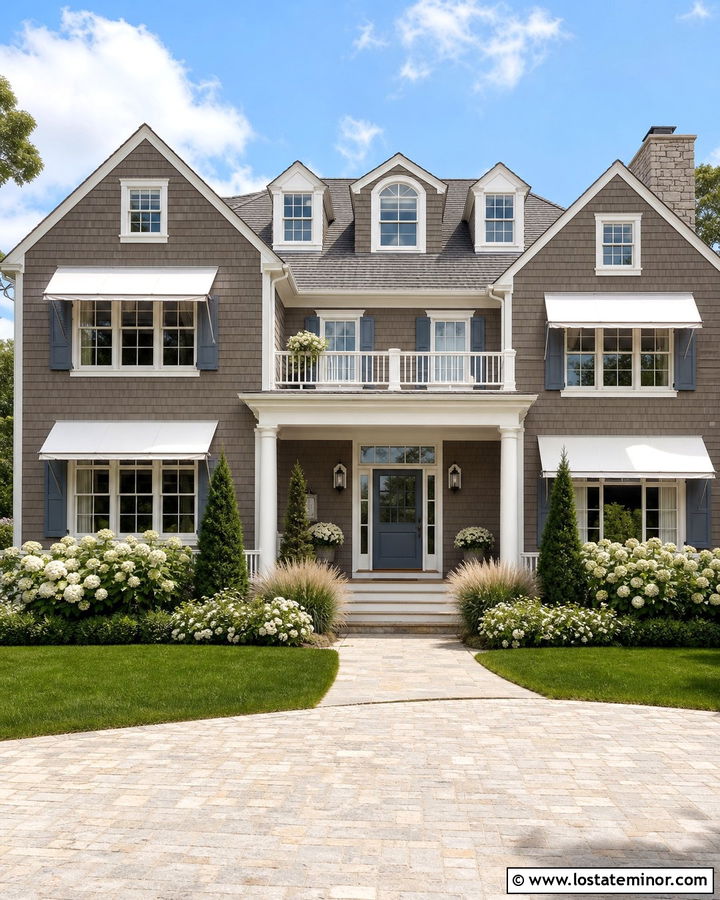
White canvas awnings create a bright, breezy contrast against weathered taupe shingles. This combination suits a spacious coastal cottage or traditional shingle-style home with multiple dormers. Use warm white on the window trim, porch railings, and columns so the awnings appear connected to the permanent architecture. A deep blue-gray front door and matching shutters introduce depth without making the facade overly dark. Choose straight-edged awnings with neat tailored seams rather than decorative fringe. A medium-gray roof will keep the palette soft and balanced. Hydrangeas, ornamental grasses, evergreen shrubs, and a pale stone driveway can frame the complete exterior. The awnings brighten shaded windows while allowing the natural texture of the taupe shingles to remain the dominant feature.
25. Taupe Adobe House With Woven Awnings
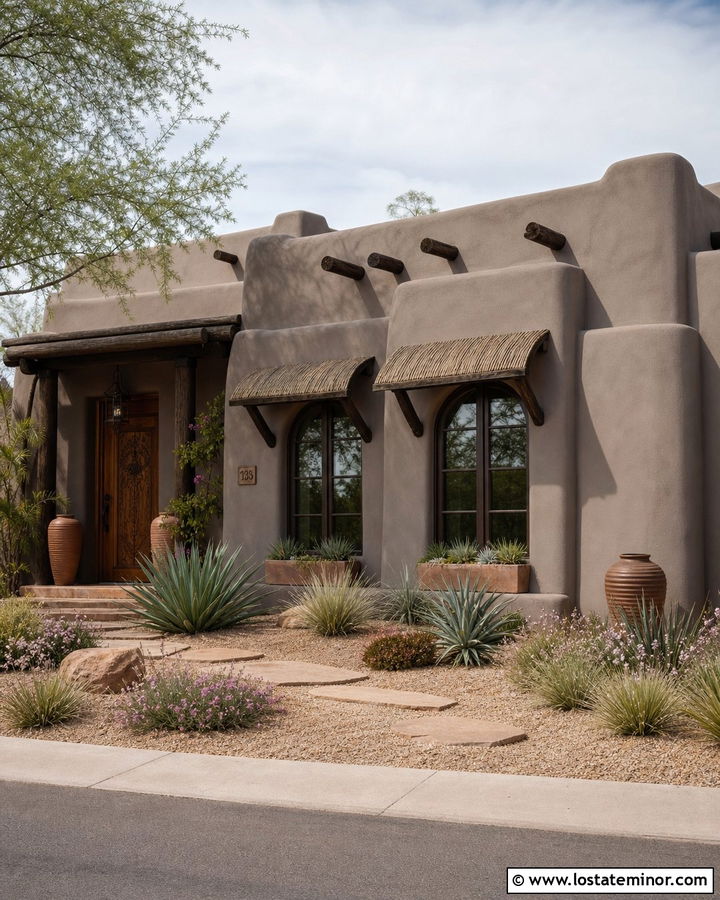
Woven awnings introduce welcome texture to a rounded taupe adobe exterior. Use a sunbaked taupe stucco with warm brown undertones and install simple wood-framed canopies fitted with tightly spaced reeds or durable woven panels. Dark wood vigas, window frames, and a carved front door can repeat the structural color of the awning frames. Terracotta pots provide a controlled accent near the entry, while a gravel courtyard keeps the walls visually open. The awnings should project far enough to cast useful shade but remain simple in profile. Desert grasses, agaves, flowering ground cover, and broad stepping stones complete the landscape. The whole scheme feels connected because every material carries a natural texture and a closely related earth tone.
26. Taupe Georgian House With Green Striped Awnings
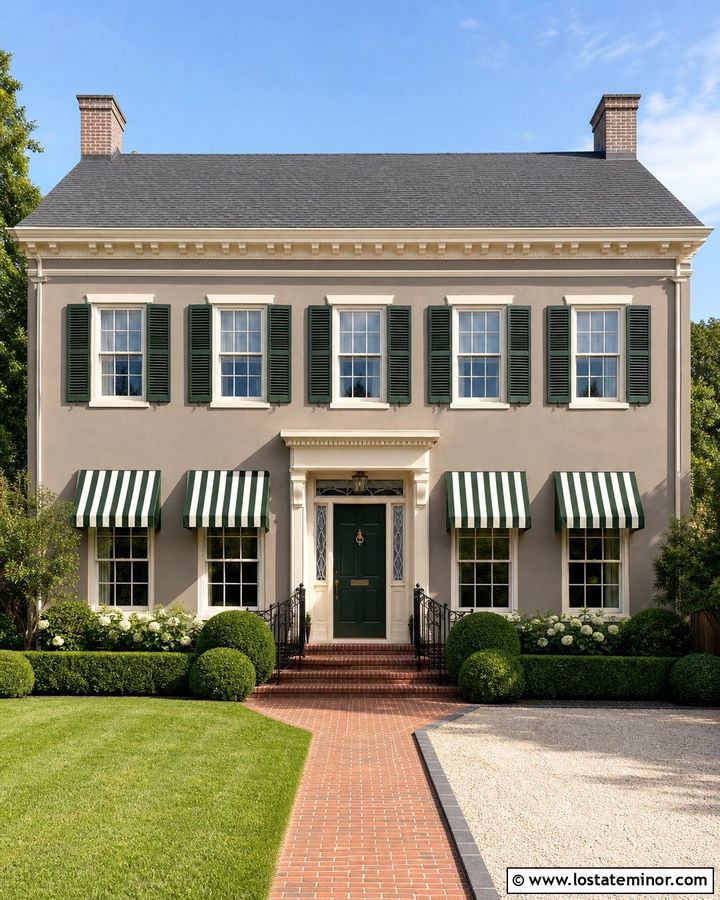
Deep green-and-cream striped awnings bring color to a formal taupe Georgian facade while preserving its traditional symmetry. Use an even medium taupe across the brick or clapboard body, then apply cream to the cornice, window frames, and classical entrance surround. Position matching awnings over the lower windows and keep their widths consistent. Paint the shutters and central front door deep green to repeat the darkest stripe. A dark gray roof and black iron railings provide quiet structure around the softer colors. Symmetrical boxwoods, white flowering plants, and a straight brick walkway reinforce the home’s balanced architecture. Because the awnings introduce visible pattern, avoid adding unrelated accent shades. The result is colorful, tailored, and orderly from every curbside angle.
27. Taupe Industrial House With Corrugated Awnings
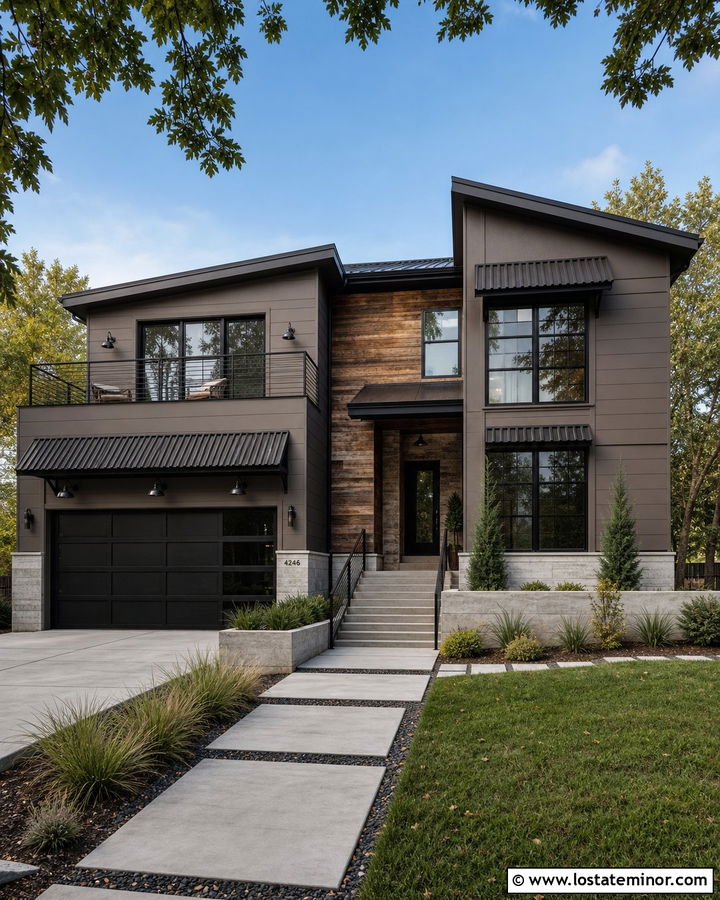
Corrugated metal awnings can bring practical texture to an industrial-inspired taupe house. Use dark taupe stucco or fiber-cement panels as the primary wall finish, then add galvanized or charcoal corrugated canopies above large windows and the garage entrance. Black steel frames, downspouts, and railings sharpen the overall composition. Reclaimed wood around the front door prevents the design from becoming overly cold. A concrete foundation and large-format walkway support the straightforward material palette. Soften the hard surfaces with structured grasses, low evergreens, and a few spreading shade trees. Keep the awning brackets simple and exposed to suit the architecture. The completed house feels intentionally modern because each material is repeated instead of appearing as a single disconnected feature.
28. Taupe Cottage House With Yellow Awnings
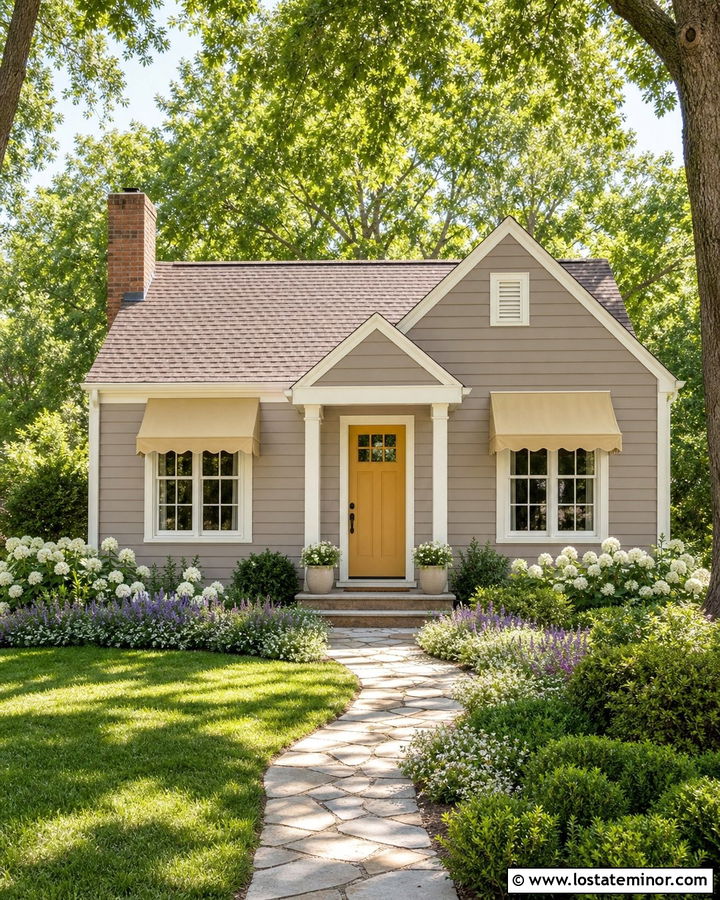
Muted yellow awnings can brighten a taupe cottage without creating an overly playful exterior. Choose a soft wheat or ochre fabric rather than a sharp lemon yellow. Pair it with light warm taupe siding, ivory trim, and a muted yellow front door that closely relates to the awning color. A brown-gray roof and natural brick chimney provide enough depth to ground the cheerful accents. Install the awnings over two balanced front windows, keeping their frames simple and their valances short. White and purple flowers, green shrubs, and a winding stone path add garden color without overwhelming the facade. The warm combination works best when every shade appears slightly softened, giving the full house a sunny but comfortable curb presence.
29. Taupe Lake House With Gray Retractable Awnings
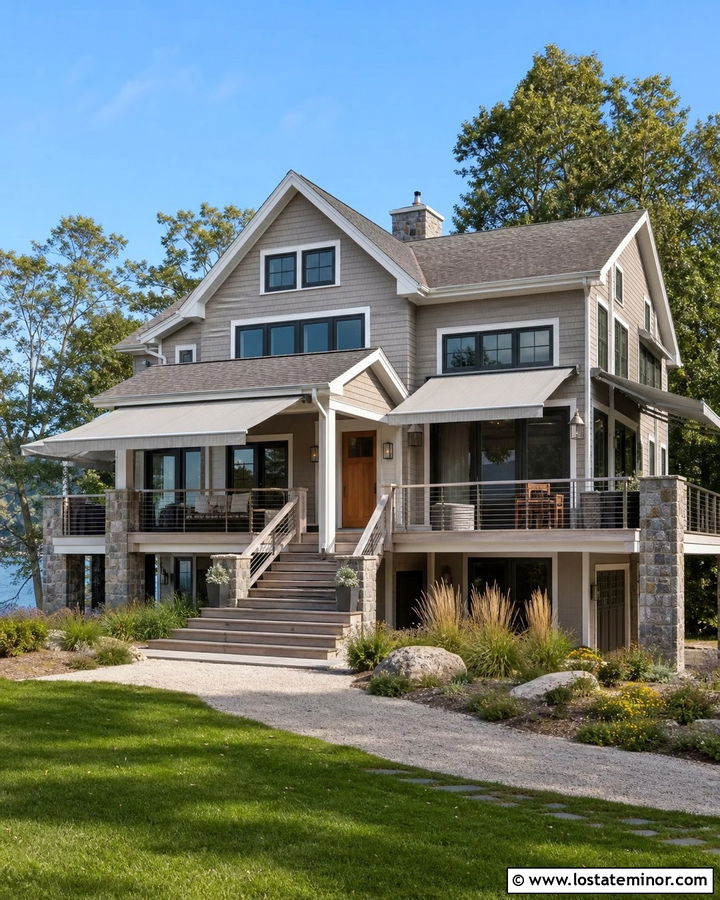
A lake house needs outdoor shade that does not block the view when it is unnecessary. Light gray retractable awnings work well above wide glass doors and a wraparound deck. Paint the main house a medium cool taupe, then use white trim and charcoal window frames for a crisp transition. Choose gray awning fabric with subtle taupe threads so it relates to both the walls and roof. Weathered cedar decking and a natural wood front door add warmth near ground level. Cable railings preserve open sightlines, while stone columns provide visual weight beneath the deck. Native grasses, low shrubs, and broad stepping stones complete the setting. The finished exterior looks coordinated whether the awnings are extended or neatly stored.
30. Taupe Traditional House With Taupe Striped Awnings
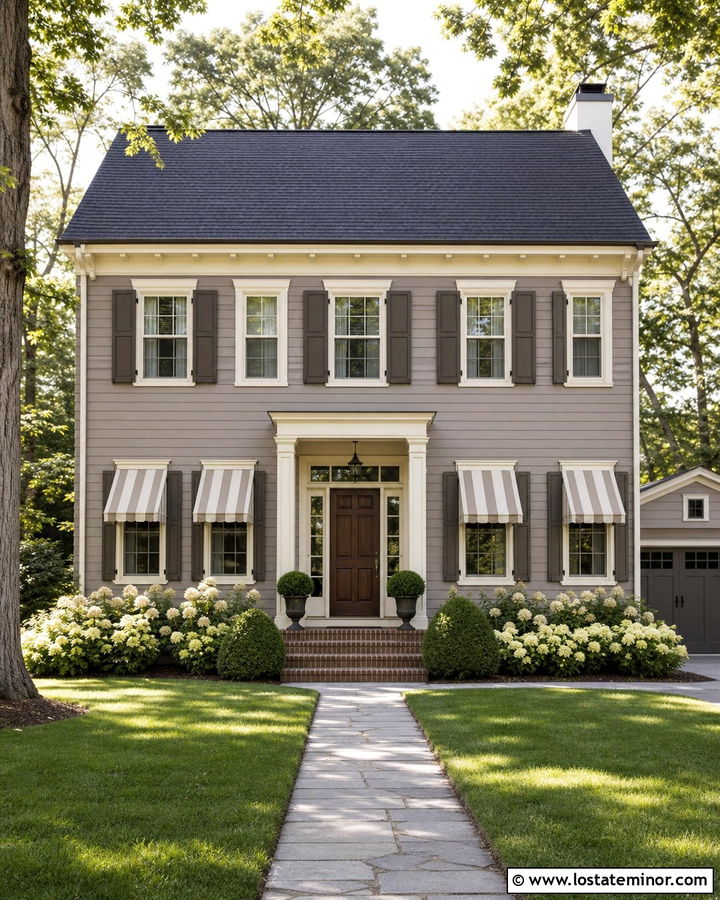
A tonal awning scheme offers a subtle way to add depth without introducing a contrasting color. Cover a traditional two-story house in medium taupe siding, then choose awning fabric with alternating cream, light taupe, and dark taupe stripes. Use creamy trim around the windows and a deeper brown-taupe on the shutters. A stained mahogany front door creates a warm central focal point, while a charcoal roof anchors the lighter facade. Install matching awnings across the lower windows to establish a clear visual rhythm. Brick porch steps, symmetrical shrubs, and pale seasonal flowers support the classic architecture. Because the palette stays within one neutral family, texture and repetition become important. The completed home feels layered, polished, and calm rather than plain.
Conclusion:
These 30 Taupe House Design With Awning Ideas show how one adaptable neutral can support traditional, rustic, coastal, modern, and regional architecture. The most successful design begins with the whole facade rather than selecting an awning in isolation. Match its color, shape, frame, and material to existing features such as the roof, trim, windows, door, porch, or masonry. Dark metal creates definition, pale canvas adds brightness, stripes bring pattern, and wood introduces natural warmth. Before committing, compare exterior samples in direct sun, shade, and overcast conditions. With thoughtful repetition and balanced contrast, taupe siding and well-proportioned awnings can create a comfortable, practical, and polished home exterior.

Related posts: