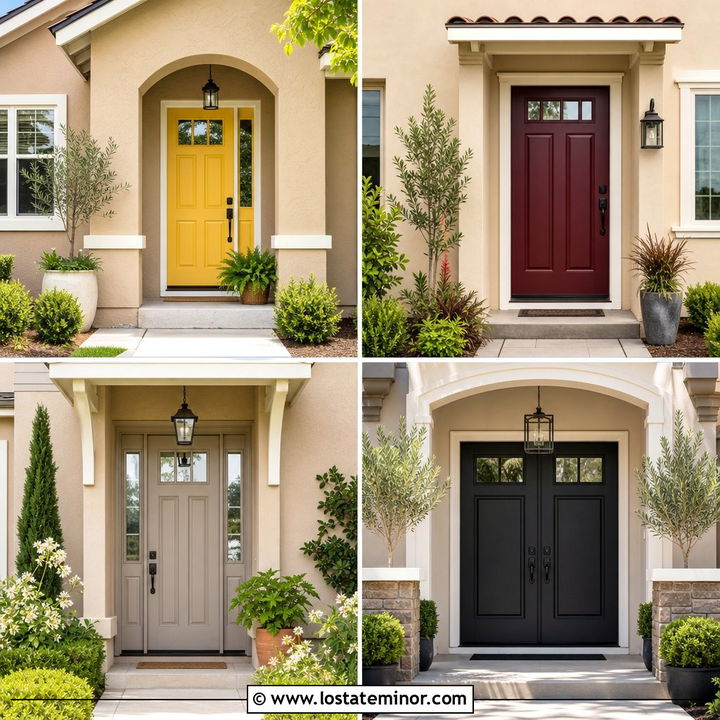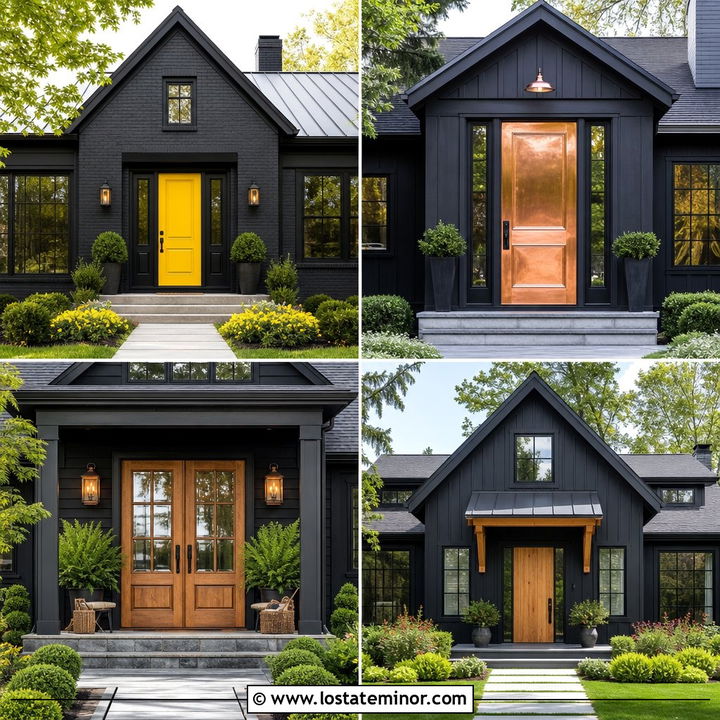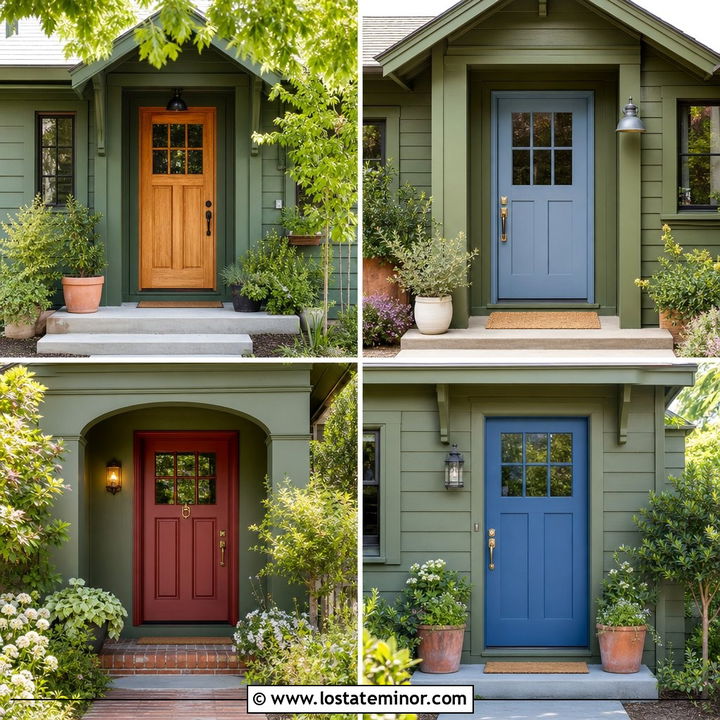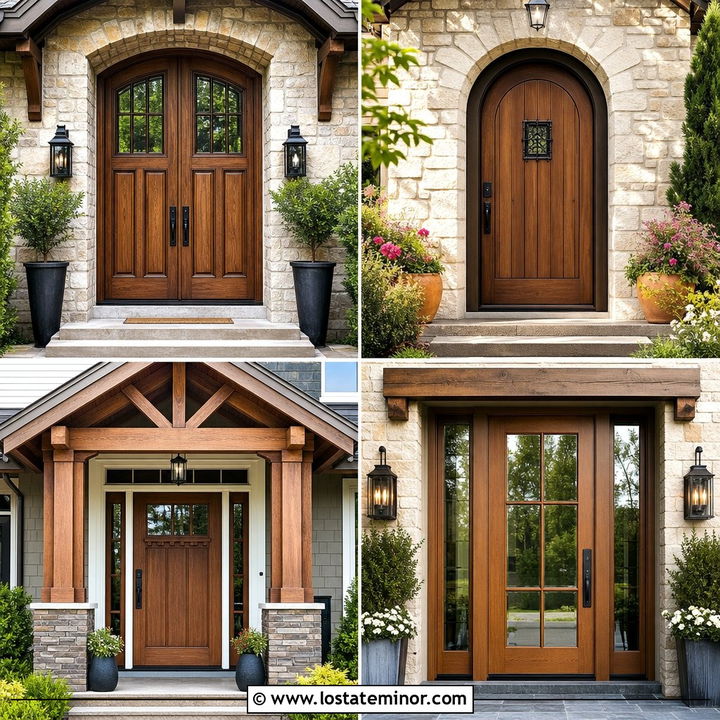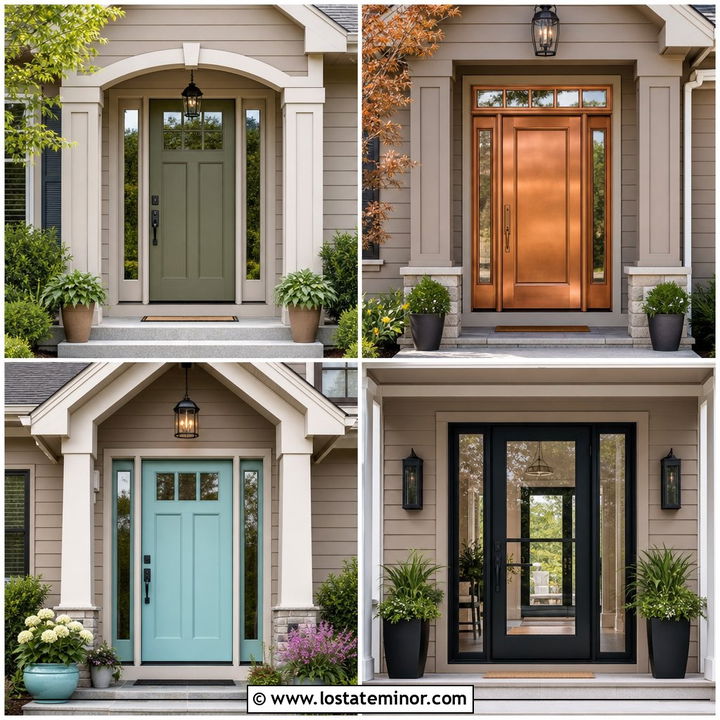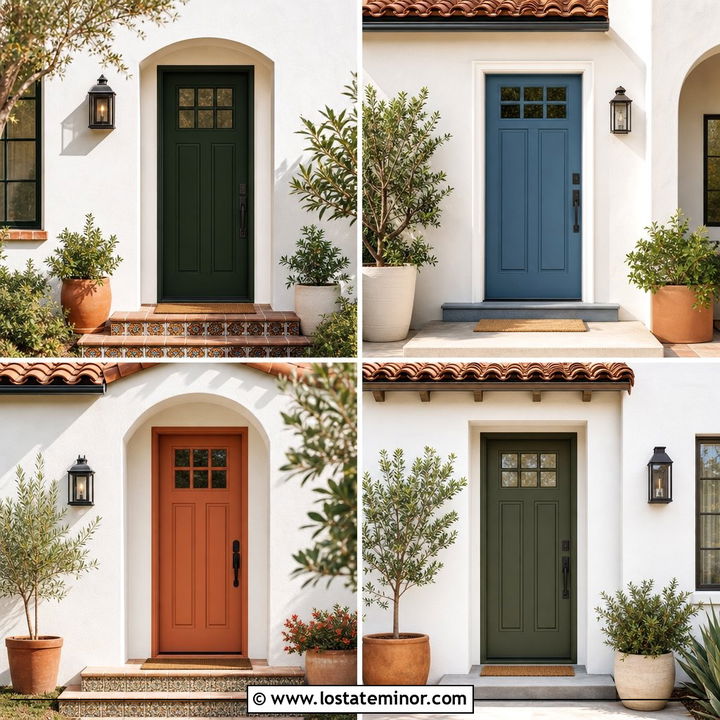
A tan exterior creates a warm, flexible backdrop, but the entry door determines whether the home feels traditional, modern, rustic, or colorful. The strongest 30 Tan House Design With Entry Door Ideas coordinate the door with the trim, roofing, masonry, hardware, and landscaping instead of treating it as an isolated accent. Crisp white can freshen golden tan siding, while charcoal, bronze, and stained wood add depth. Muted greens and blues create softer contrast that fits naturally into suburban surroundings. Before choosing a finish, compare samples outdoors beside your permanent materials and observe them in morning and afternoon light. The complete exterior combinations below cover classic neutrals, lively colors, natural wood finishes, and distinctive door shapes, giving you practical inspiration from these 30 Tan House Design With Entry Door Ideas.
1. Tan House With Black Entry Door
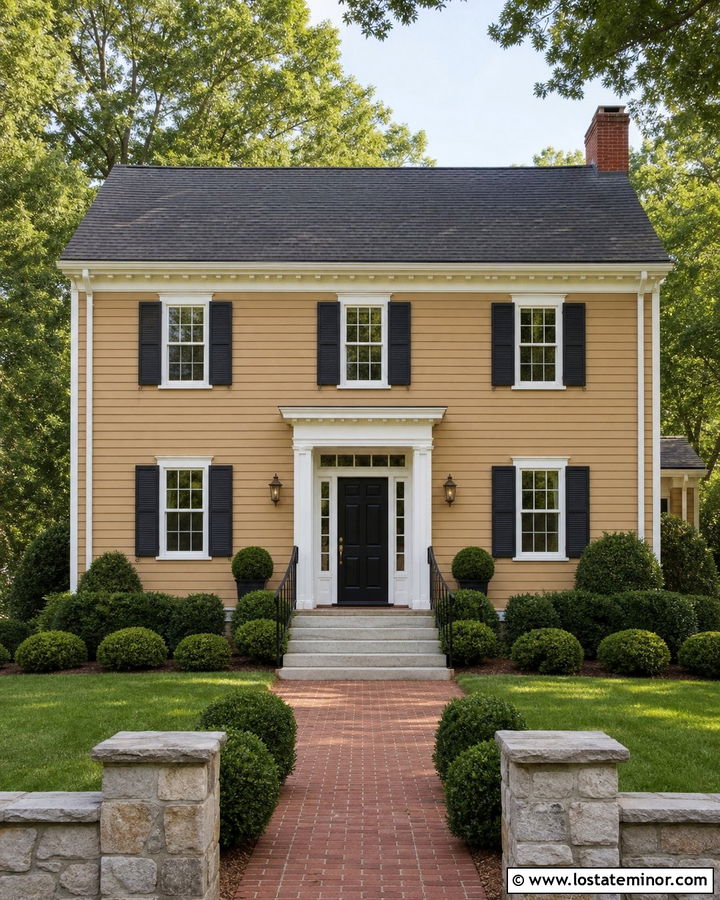
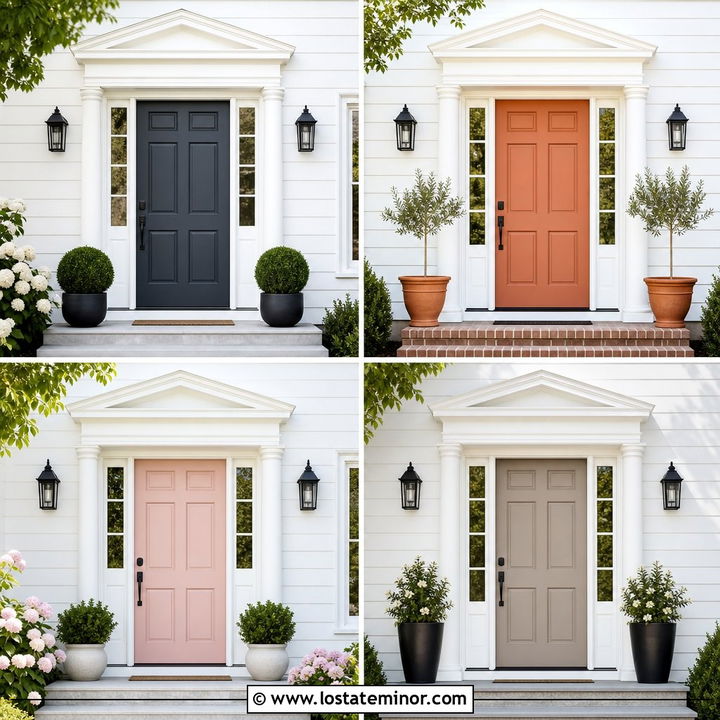
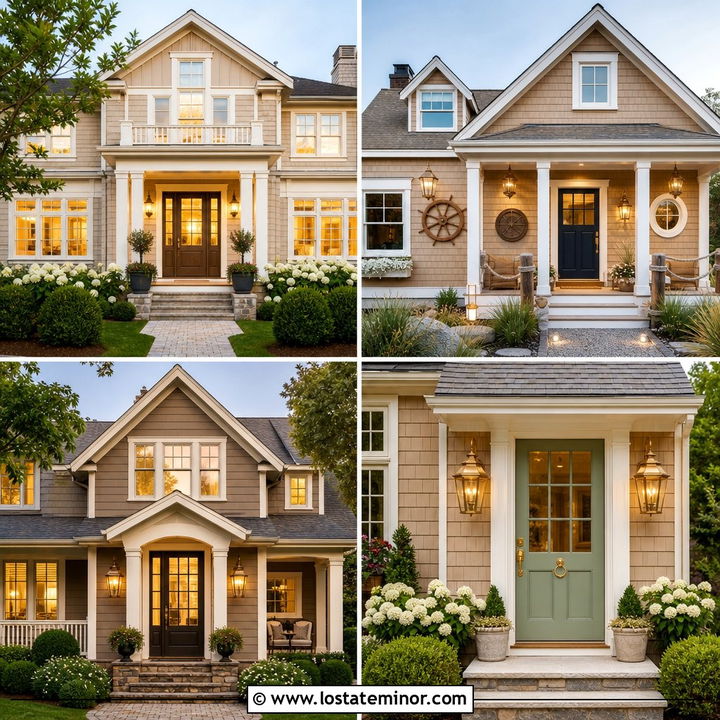
A black entry door gives a tan house an immediate focal point without making the exterior feel overly busy. Use a soft sandy tan on the siding, crisp white around the windows, and matte black on the door, shutters, and porch lights. Repeating black in several controlled places makes the door look intentional rather than disconnected. This scheme works especially well on a colonial home with balanced windows and a centered entrance. A medium-gray roof can bridge the light siding and dark accents. Add brushed brass door hardware for a small touch of warmth. Boxwood hedges, pale stone steps, and a straight brick walkway reinforce the clean geometry while keeping the complete exterior welcoming.
2. Tan House With Natural Wood Entry Door
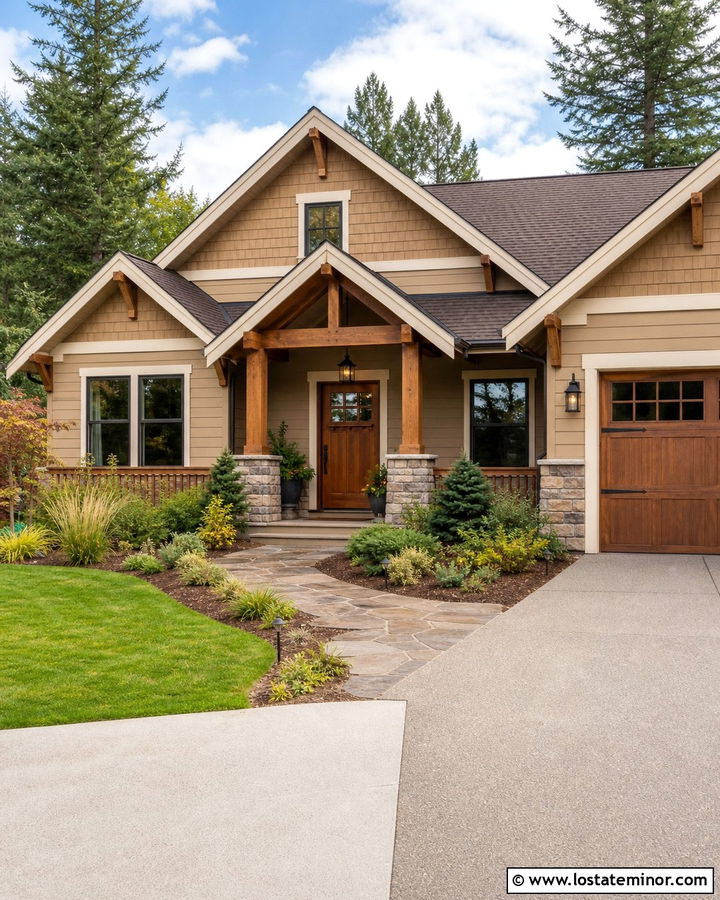
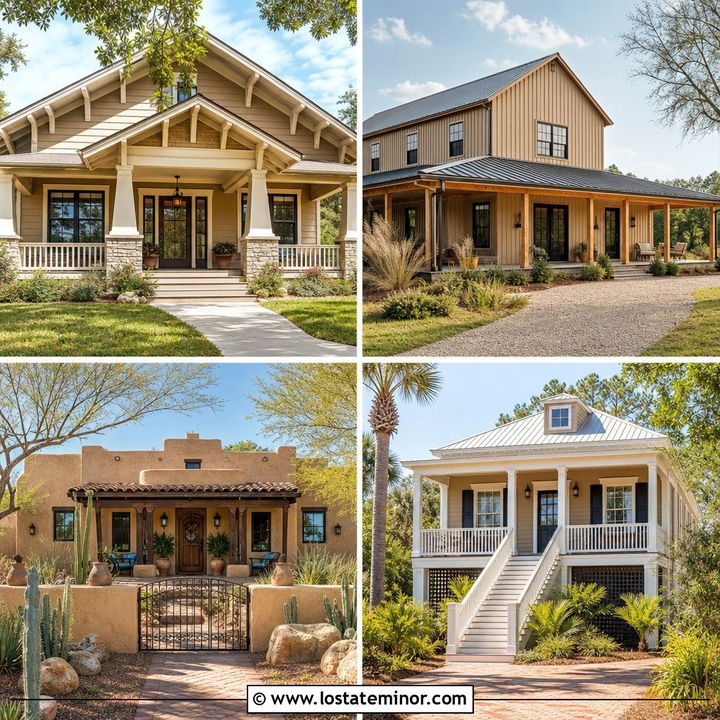
Natural wood brings depth and visible texture to a simple tan exterior. Choose a medium walnut or warm oak door with enough variation in the grain to stand apart from smooth siding. Creamy white trim keeps the combination light, while dark bronze lighting and gutters connect the door to the roof. On a craftsman house, extend the wood finish to porch posts, brackets, or a small gable accent. Use it selectively so the facade does not become too brown. A stone porch base containing gray, buff, and rust tones can tie every material together. Finish the landscaping with ornamental grasses and evergreen shrubs for a layered exterior that feels warm, grounded, and thoughtfully coordinated.
3. Tan House With Navy Blue Entry Door
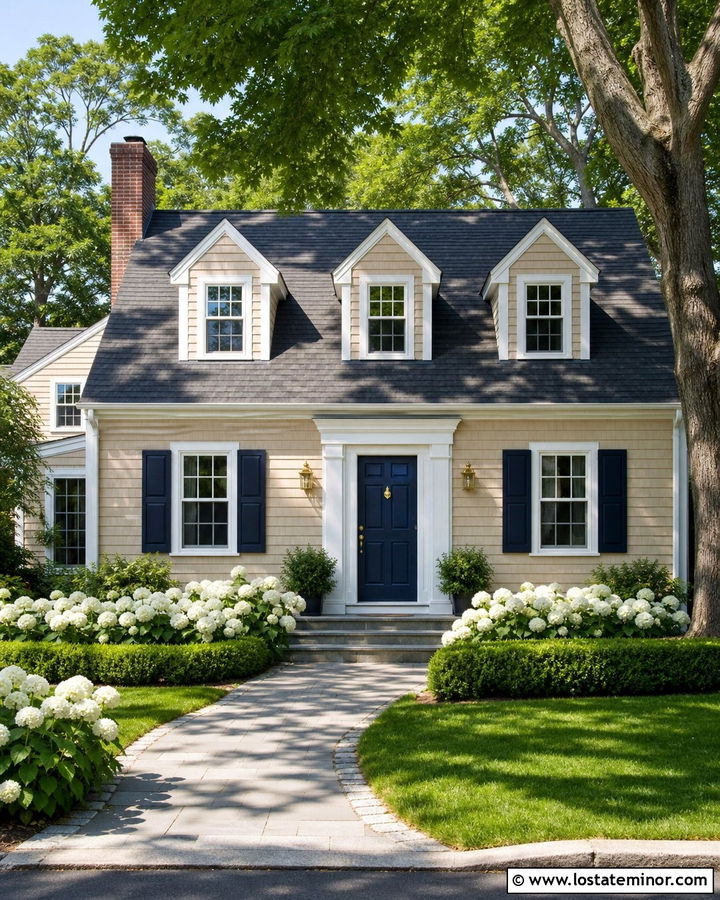
Would your tan exterior benefit from noticeable contrast that is softer than black? A navy blue entry door provides rich color while maintaining a classic appearance. Pair warm tan clapboard siding with bright white trim, navy shutters, and polished nickel or aged brass hardware. A charcoal architectural-shingle roof keeps the upper portion of the house visually grounded. This palette looks particularly balanced on a Cape Cod home with symmetrical dormers and a compact front stoop. Keep porch furniture and planters white or natural wood so they support the entrance instead of competing with it. Hydrangeas, low hedges, and a bluestone walkway can repeat the cool undertones and create a polished, connected curb-appeal scheme.
4. Tan House With Dark Green Entry Door
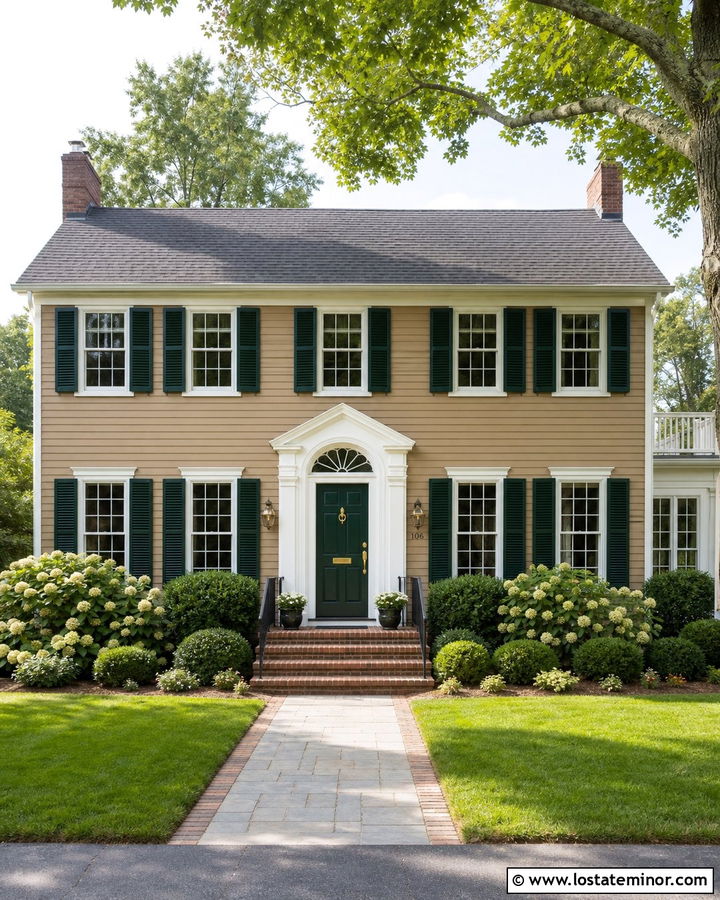
Deep green looks comfortable beside tan because both colors relate easily to natural surroundings. Try a forest green entry door with light tan siding, warm white trim, and dark green shutters on a traditional two-story home. Antique brass hardware adds warmth and remains visible against the saturated door color. If the house has red or brown brick steps, the green entrance can balance those earthy materials without creating a harsh transition. A weathered charcoal roof prevents the overall exterior from appearing too warm. Plant rounded evergreens near the porch, but leave enough open space around the doorway for the color to remain prominent. This complete look feels established, stately, and suitable for a leafy suburban setting.
5. Tan House With Red Entry Door
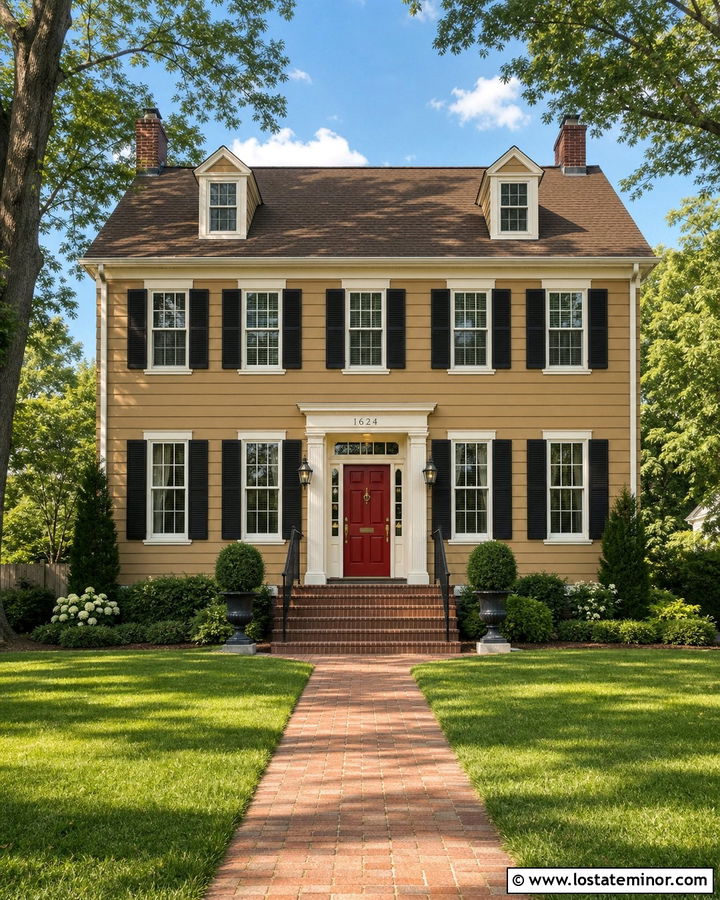
A red door can energize a tan facade when the shade is warm, deep, and slightly muted. Instead of a bright primary red, consider brick red or heritage red beside honey-tan siding and cream trim. Black shutters and iron porch railings help contain the stronger color and give the exterior a structured appearance. This combination suits a brick-accented colonial or Georgian-inspired house with a centered entrance. Repeat the door color sparingly through seasonal planters or small flowers rather than painting multiple large features red. Medium-brown roof shingles and brick steps will support the warmth of the palette. The final exterior feels lively and recognizable while remaining appropriate for traditional residential architecture.
6. Tan House With White Entry Door
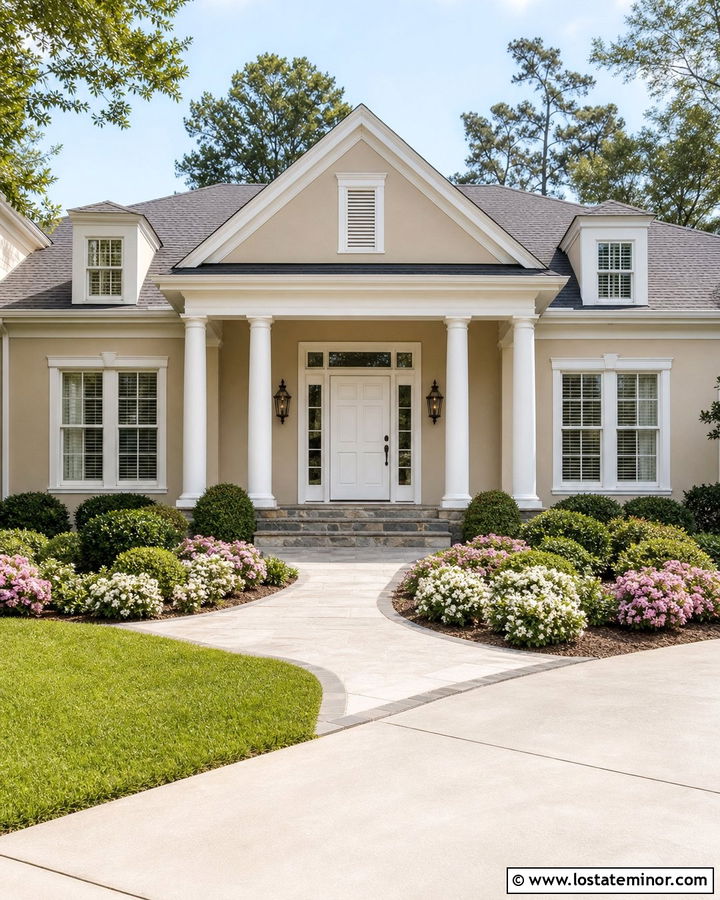
Soft sunlight makes a white entry door look especially clean against warm tan siding. This low-contrast palette works well when architectural detail, rather than bold color, should define the entrance. Use a paneled white door with sidelights, broad white trim, and matching porch columns on a southern-inspired home. Introduce definition through dark bronze lanterns, black house numbers, and a weathered gray roof. Stone or brick flooring on the porch will prevent the light palette from feeling flat. Because the door and trim match, the entire entry reads as one larger feature. Neatly clipped shrubs and flowering borders can frame the porch, while a curved walkway softens the formal architecture and creates a bright, inviting approach.
7. Tan House With Charcoal Gray Entry Door
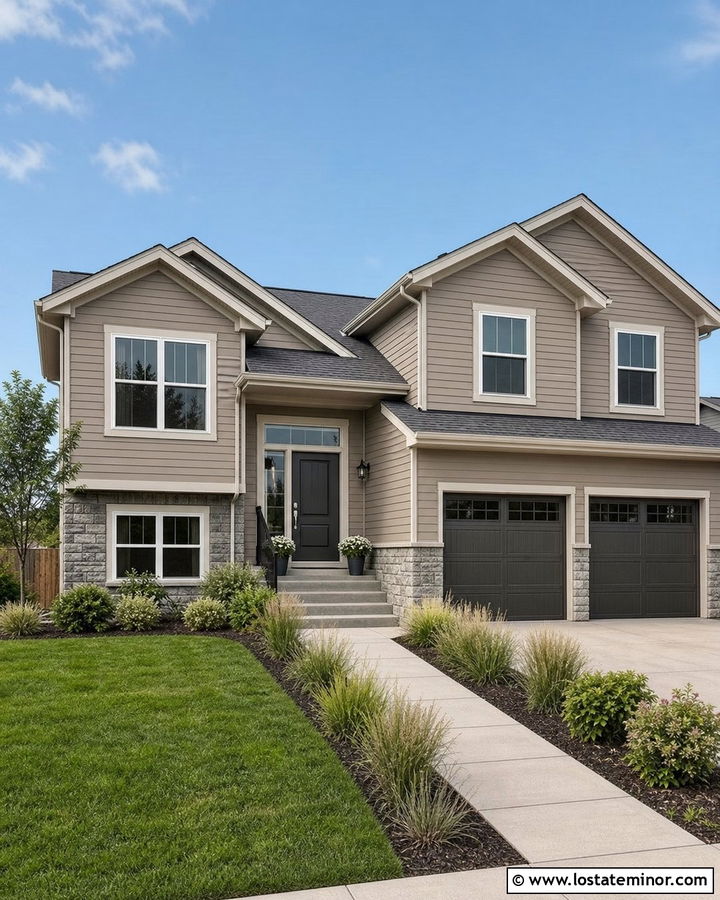
Charcoal gray creates strong definition while feeling slightly gentler than solid black. Pair a charcoal entry door with pale mushroom-tan siding, off-white window trim, and matching charcoal garage doors. This repetition is useful on a split-level house because it connects separate sections of the facade. Add a light gray stone foundation to bridge the warm siding and cooler door color. Satin nickel hardware can reinforce the contemporary direction, while simple black sconces provide a clean outline. Keep the roof a medium charcoal rather than very dark black. A wide concrete walkway, restrained foundation planting, and a few ornamental grasses complete a practical suburban exterior that feels refreshed without relying on a dramatic or difficult color combination.
8. Tan House With Sage Green Entry Door
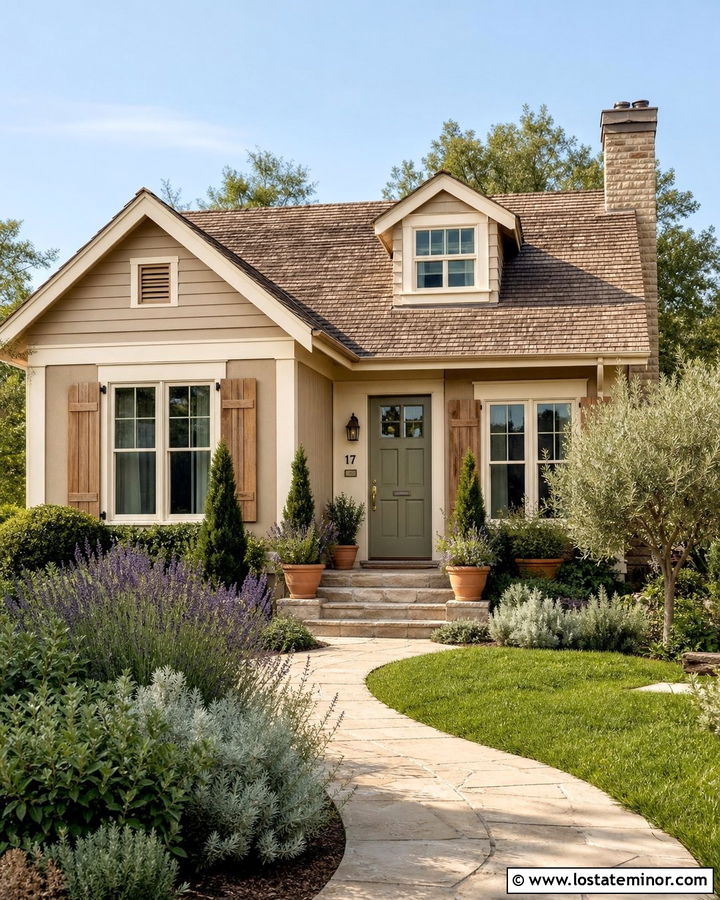
Sage green introduces color in a calm, approachable way. Place a muted sage entry door against sandy tan siding, then use creamy white for the trim and porch railing. The gentle contrast is ideal for a cottage, bungalow, or small ranch surrounded by mature landscaping. Natural cedar shutters can add texture without overpowering the soft door color. For the roof, choose weathered brown or warm gray shingles that relate to both tan and green. Terracotta planters, simple brass hardware, and pale stone steps bring extra warmth to the entry. Layer lavender, silvery foliage, and compact evergreen plants along the walkway. Together, these details produce a relaxed full-house palette that appears colorful but never overly bright.
9. Tan House With Teal Entry Door
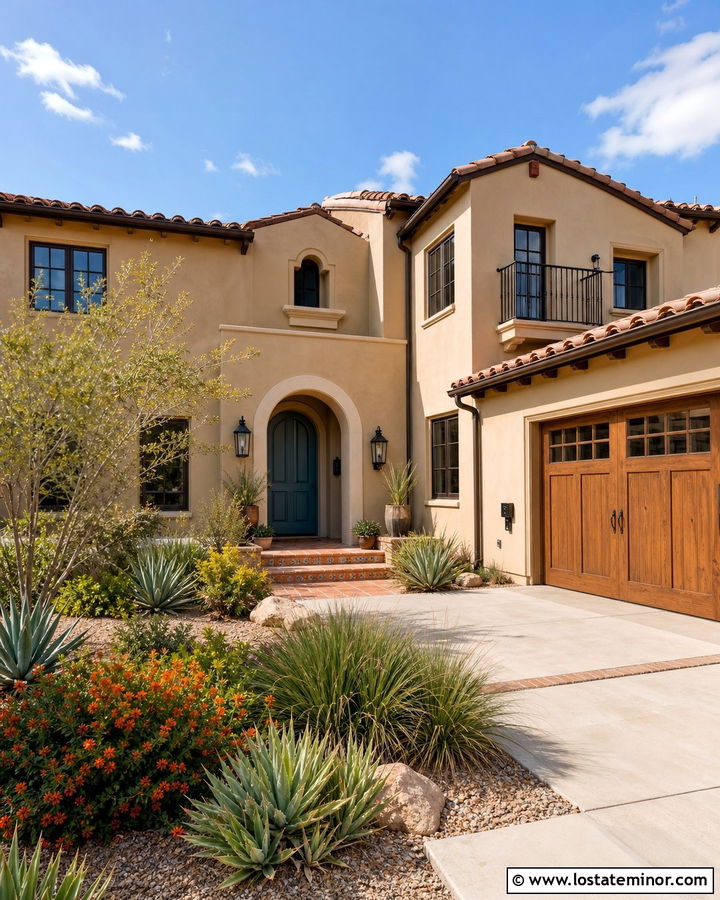
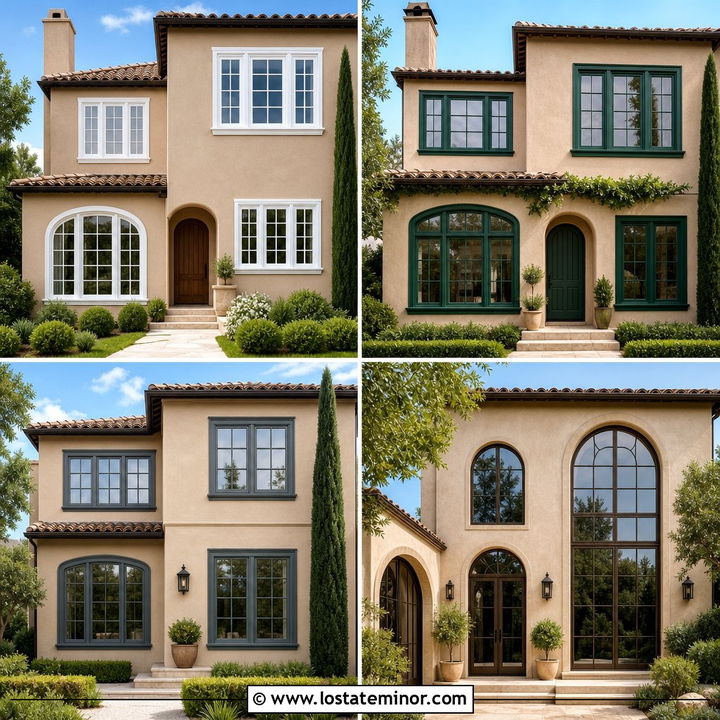
A teal front door can wake up a quiet tan house while preserving a sophisticated curbside appearance. Select a deep, muted teal rather than a tropical blue-green, and pair it with beige-tan stucco, ivory trim, and dark bronze window frames. This scheme is especially effective on a Spanish revival house with an arched doorway and a clay tile roof. Carry the teal into one or two small ceramic planters, but let the door remain the primary focal point. Saltillo tile steps and natural wood garage doors reinforce the warm regional character. Drought-tolerant grasses, agave, and flowering shrubs can frame the facade. The cool entrance provides satisfying contrast against the sun-warmed walls and terracotta roofing.
10. Tan House With Burgundy Entry Door
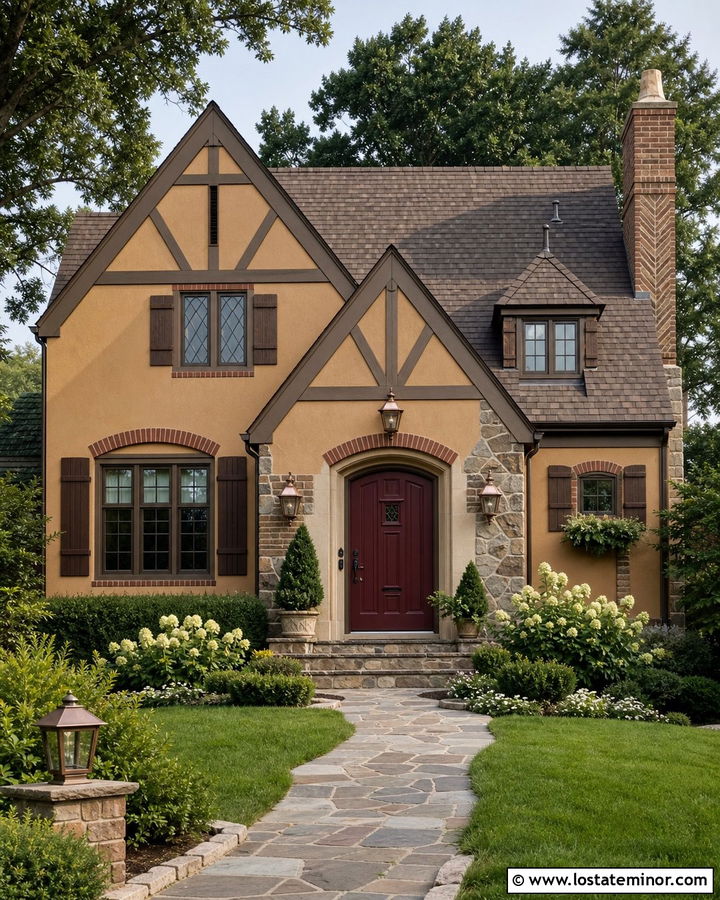
Burgundy provides the richness of red with a more reserved, traditional character. Use it on a substantial paneled entry door surrounded by camel-tan brick or siding and warm cream trim. Dark brown shutters, aged copper lights, and a brown-gray roof will support the door without producing excessive contrast. This combination fits a Tudor-influenced home, particularly when the facade includes stone, brick, or decorative half-timbering. Choose antique brass or dark bronze hardware rather than shiny chrome. Burgundy can become visually heavy, so keep the porch ceiling, columns, and window trim light. Deep green shrubs and pale flowering plants add freshness around the foundation, resulting in a dignified exterior with a clear and welcoming entrance.
11. Tan House With Mustard Yellow Entry Door
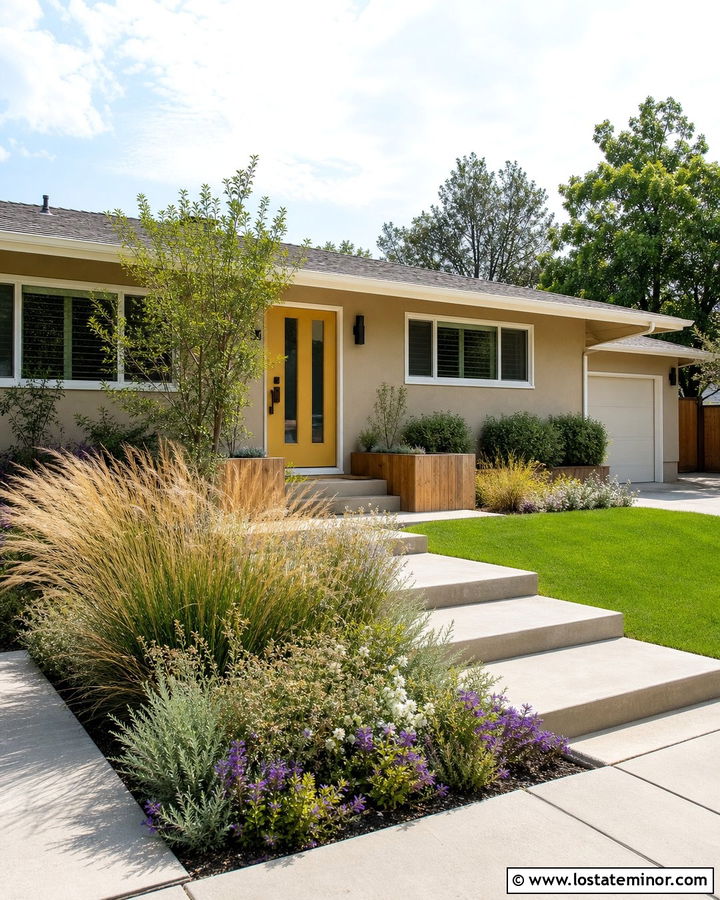
For a cheerful entrance, consider a muted mustard yellow door beside light tan siding. The golden undertones connect the two colors, while the difference in saturation makes the entrance easy to locate. Use creamy white trim, medium-gray roof shingles, and charcoal porch lights to give the scheme a crisp framework. This palette looks at home on a midcentury ranch with wide eaves, horizontal windows, and a simple covered stoop. A door with narrow vertical glass panels can reinforce the architecture. Add natural wood planters and a geometric concrete walkway for extra texture. Keep surrounding flowers mostly white, purple, or green so the mustard door remains the brightest feature in the complete curb-appeal composition.
12. Tan House With Terracotta Entry Door
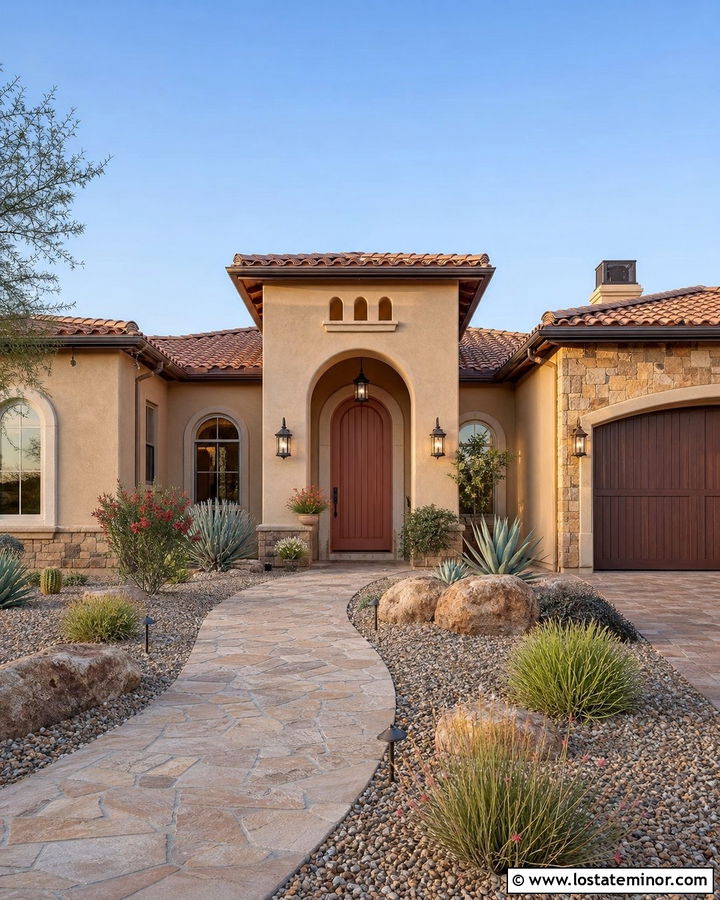
Terracotta creates a warm, sunbaked accent that blends beautifully with tan stucco. Paint the entry door a muted clay orange and surround it with cream trim, dark bronze lighting, and natural stone. On a southwestern house, an arched opening and heavy wood door can make the color feel integral to the architecture. A brown metal roof or traditional clay tiles will strengthen the earthy palette. Use turquoise only as a tiny decorative note, if desired, rather than introducing another major color. Gravel beds, desert grasses, and sculptural plants keep the landscaping regionally appropriate. The completed exterior feels warm and expressive, with the door adding character while remaining connected to the walls, roofing, and hardscape.
13. Tan House With Chocolate Brown Entry Door
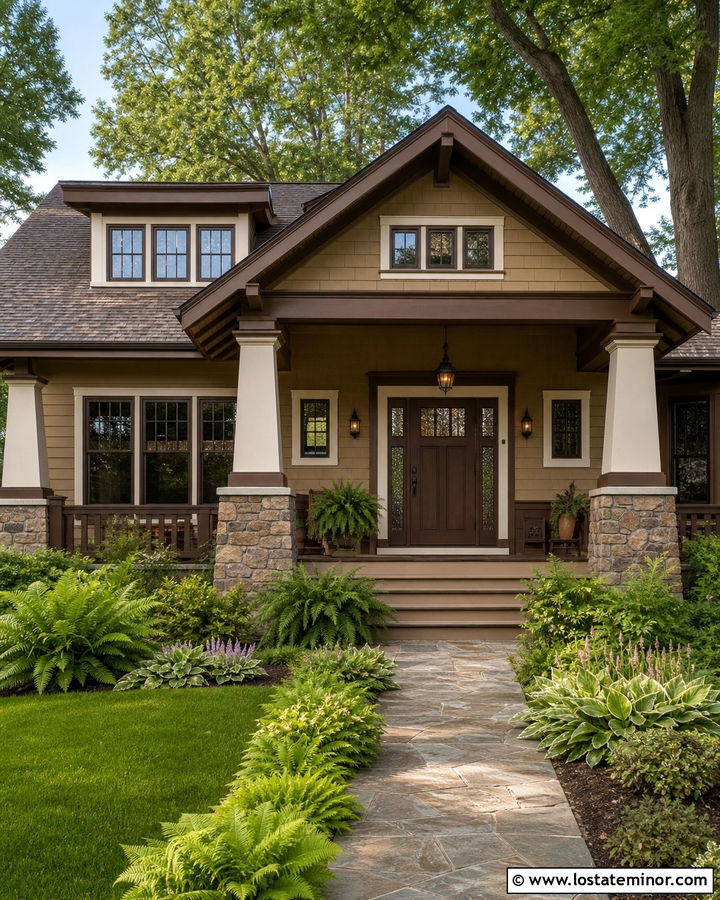
Chocolate brown gives a tan exterior subtle contrast and an elegant tone-on-tone effect. Pair a dark brown entry door with wheat-tan siding, cream trim, and bronze window frames. The result is particularly effective on a craftsman bungalow with tapered columns, a deep porch, and visible wood details. Repeat the door finish on exposed beams or porch railings, but use lighter stone around the foundation to prevent the facade from looking too dark. A variegated brown and gray roof can connect the entire palette. Consider seeded-glass panels and oil-rubbed bronze hardware for added detail. Ferns, hostas, and layered shrubs soften the porch edges, creating a comfortable exterior that feels cohesive rather than overly matched.
14. Tan House With Cobalt Blue Entry Door
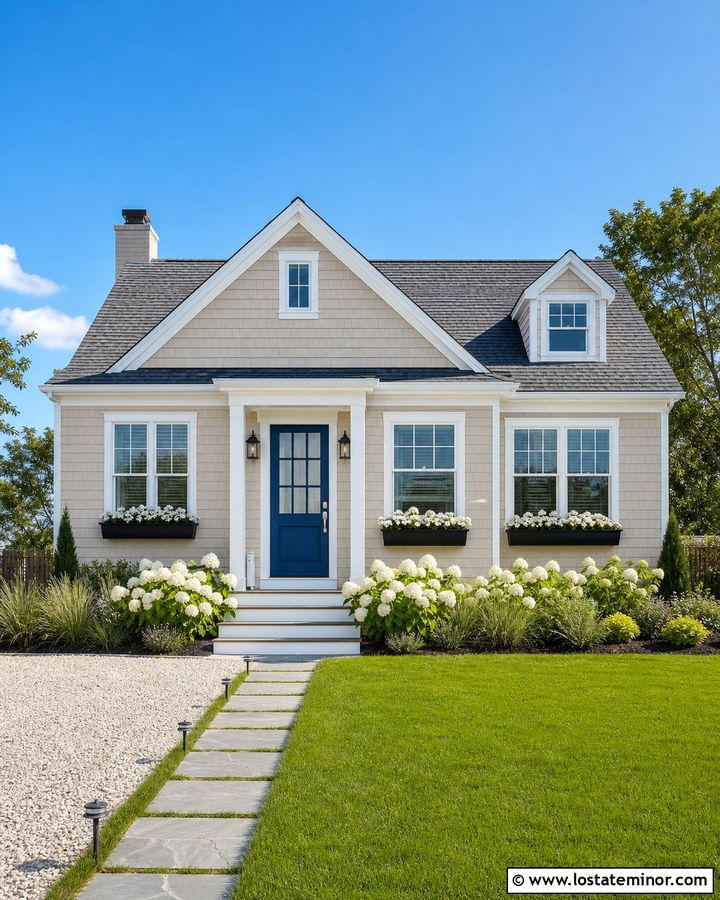
Cobalt blue offers a brighter, clearer alternative to navy. It works best when the rest of the tan house remains controlled and uncomplicated. Pair a cobalt entry door with light oatmeal-tan siding, clean white trim, and a medium-gray roof. Skip colorful shutters and use simple black window boxes or railings instead. On a coastal cottage, the door can include divided glass panes that bring a lighter feeling to the facade. Add silver-toned hardware or polished nickel for a crisp finish. Beach grasses, white hydrangeas, and a pale gravel walkway complement the fresh palette without creating a themed appearance. The finished home looks upbeat and distinctive, yet the neutral siding keeps the strong blue accent easy to live with.
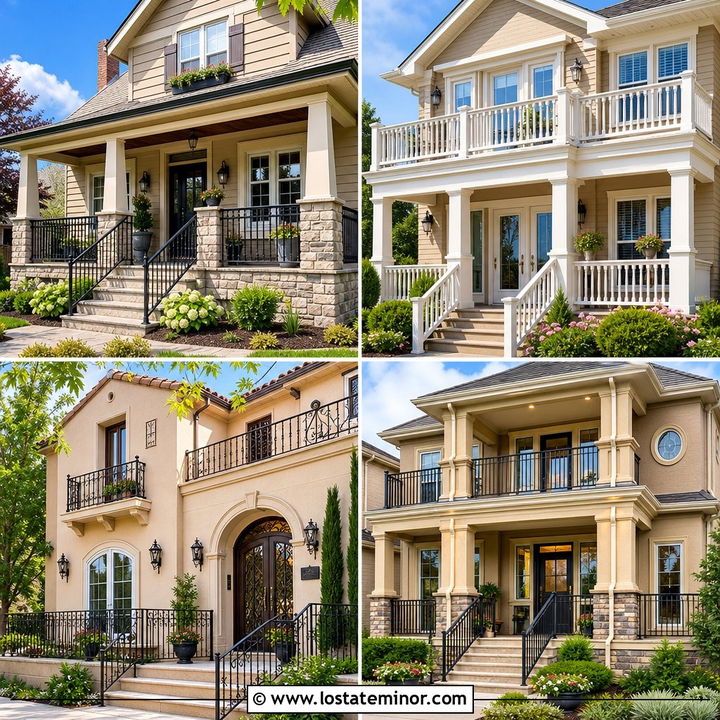
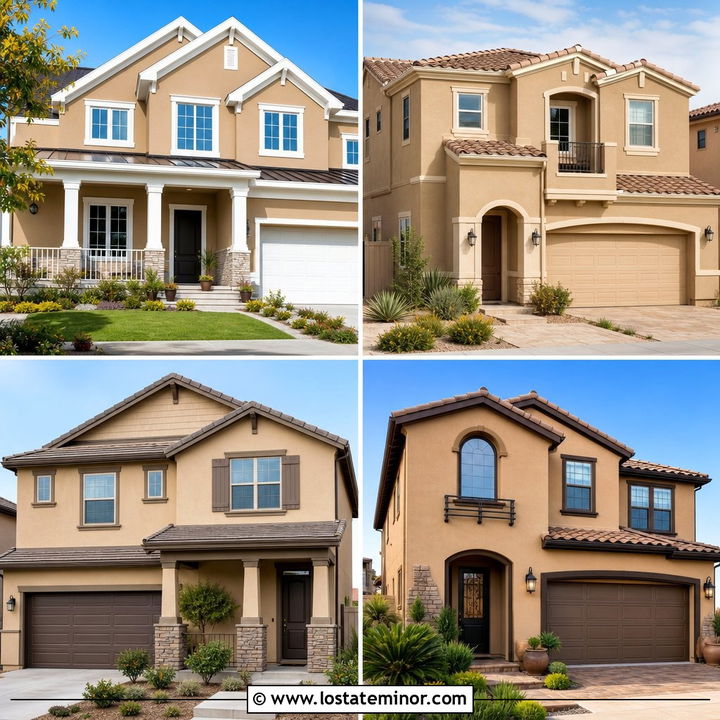
15. Tan House With Dusty Blue Entry Door
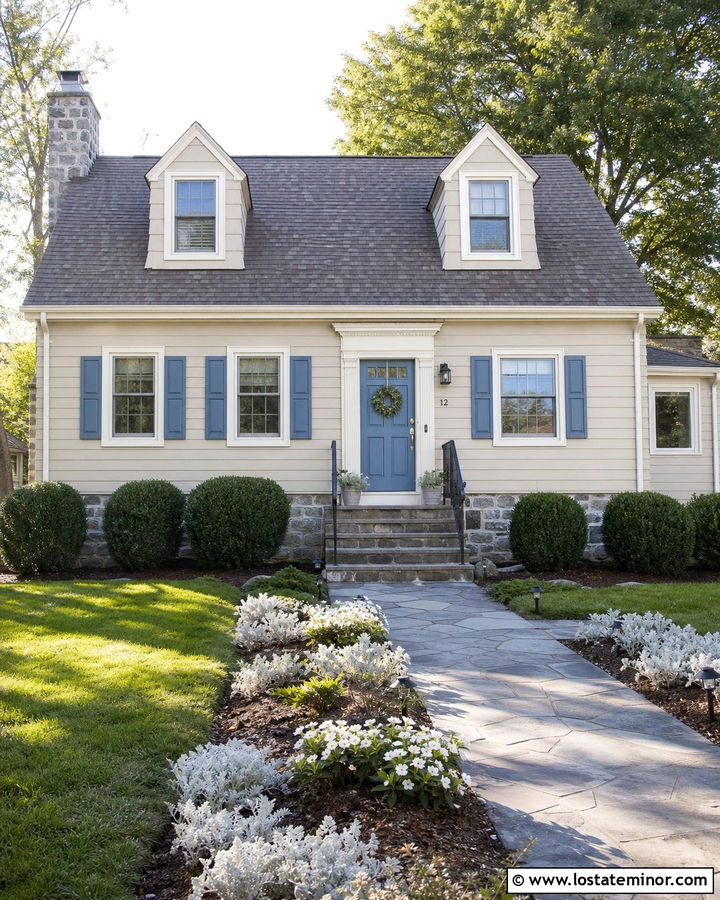
Dusty blue creates a softer transition than navy or cobalt and is well suited to light tan siding. Use a gray-blue door with ivory trim, subtle blue-gray shutters, and a weathered charcoal roof. This palette can make a small cottage or Cape Cod exterior feel airy and carefully layered. Choose brushed nickel hardware and clear-glass sidelights to maintain the lighter direction. If the house includes a stone foundation, select stone with beige and cool gray variation so it connects the warm walls to the blue accents. White flowers, silvery foliage, and natural mulch complete the restrained landscape. The whole facade feels peaceful and polished, while the entry door still has enough color to stand out from the street.
16. Tan House With Olive Green Entry Door
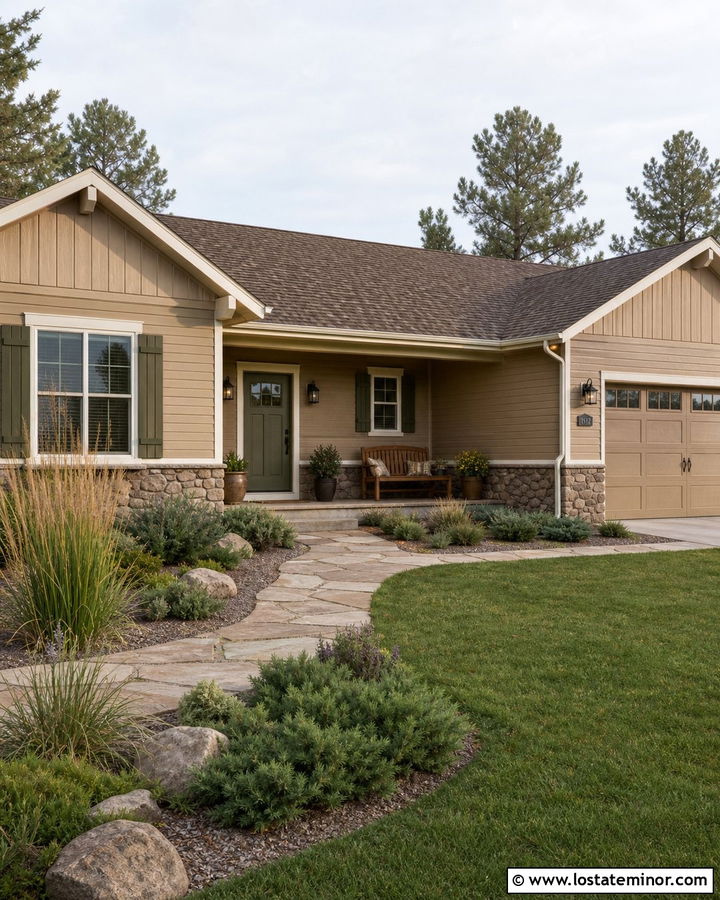
Olive green has a warmer, earthier quality than sage and provides greater depth against tan. Place an olive entry door on a golden-tan ranch house with off-white fascia, brown roof shingles, and irregular fieldstone accents. Repeat the green on narrow shutters or the garage side door for balance. Black iron hardware will create definition, while a wood porch bench can bring out the warm undertones in the siding. Because olive can appear darker in shade, test it beneath the actual porch overhang before choosing the final finish. Native grasses, low junipers, and a flagstone walkway help the house blend naturally into its setting. The finished scheme feels grounded, practical, and quietly distinctive.
17. Tan House With Orange Entry Door
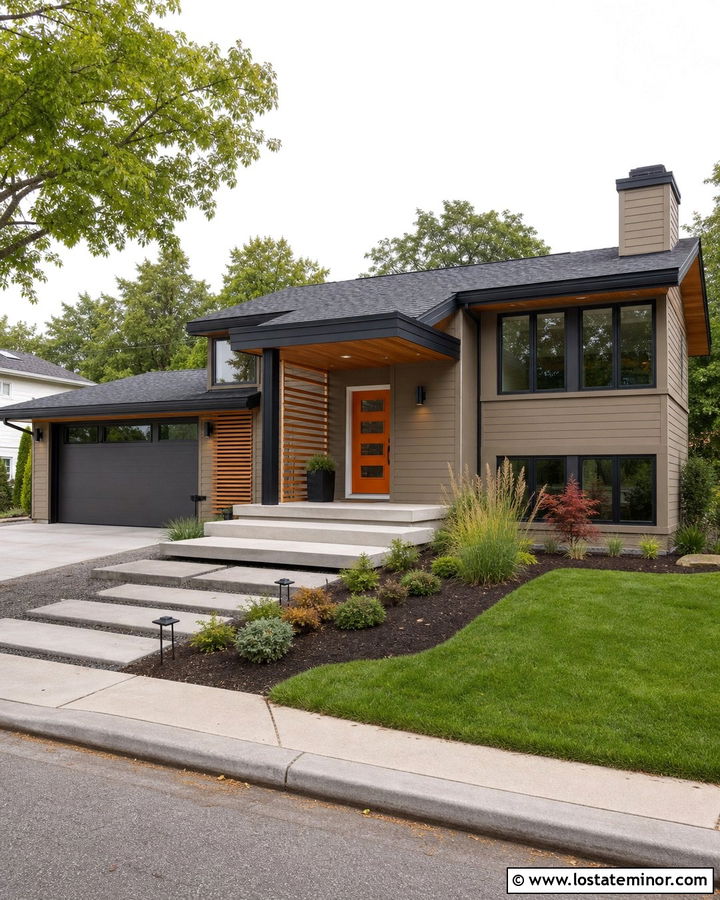
An orange entry door can look surprisingly refined when the color is burnt, softened, and supported by the right materials. Use burnt orange beside taupe-tan siding, warm white trim, and charcoal window frames. This combination suits a contemporary split-level or modern ranch with simple geometry. Repeat the warm accent through cedar soffits or a slatted wood privacy screen rather than adding orange shutters. A dark gray roof and black lighting keep the palette balanced. Large concrete pavers, ornamental grasses, and structured planting beds reinforce the modern approach. The orange entrance adds warmth and visibility, while the neutral siding and dark accents prevent the complete exterior from becoming loud or visually scattered.
18. Tan House With Soft Pink Entry Door
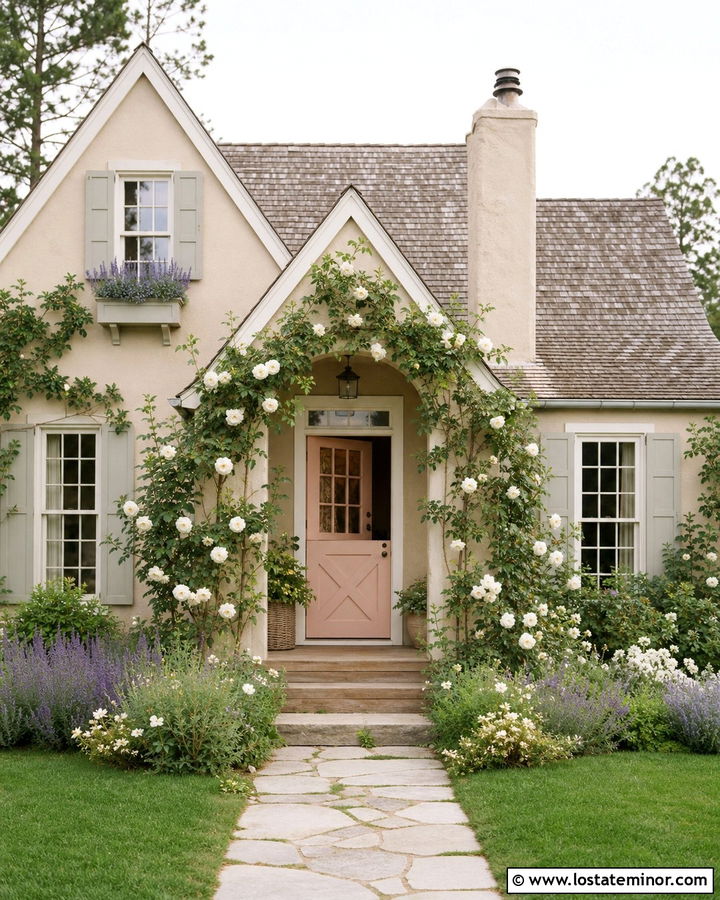
Soft pink creates a gentle, unexpected entrance on a light tan cottage. Choose a dusty blush with muted brown undertones rather than a sugary pastel. Pair it with warm white trim, pale gray shutters, and a weathered gray roof for a balanced exterior. A rounded or Dutch-style door can enhance the cottage character, especially when surrounded by climbing greenery. Use aged brass hardware to connect the pink door with the warmth of the tan walls. Keep the porch floor natural wood or neutral stone. White roses, lavender, and soft green foliage can frame the walkway without copying the door too closely. This full-house design feels personal and welcoming while remaining calm enough for an everyday suburban setting.
19. Tan House With Greige Entry Door
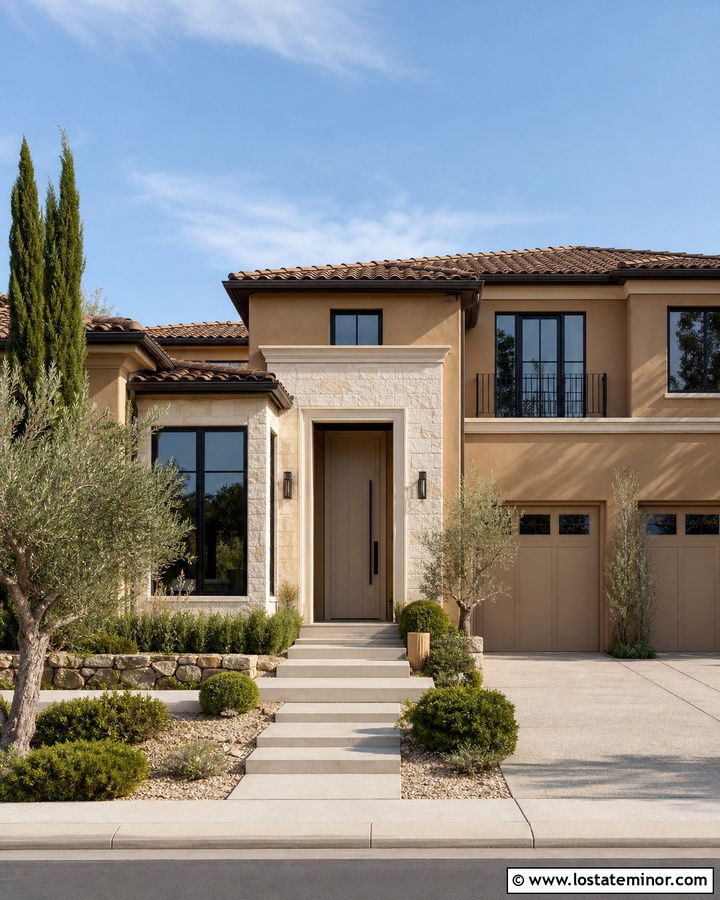
A greige entry door creates an understated, layered-neutral exterior. It is a practical choice when you want the architecture and materials to receive more attention than the door color. Pair deep tan stucco with a medium greige door, creamy trim, and black-framed windows. On a modern Mediterranean house, include pale limestone around the entry and a low-profile brown tile roof. A long vertical door pull can give the neutral entrance a contemporary edge. Keep the garage door close to the stucco color so it recedes from view. Olive trees, clipped shrubs, gravel, and broad concrete steps add structure to the landscape. The completed facade feels refined, warm, and cohesive without depending on a high-contrast accent.
20. Tan House With Copper Entry Door
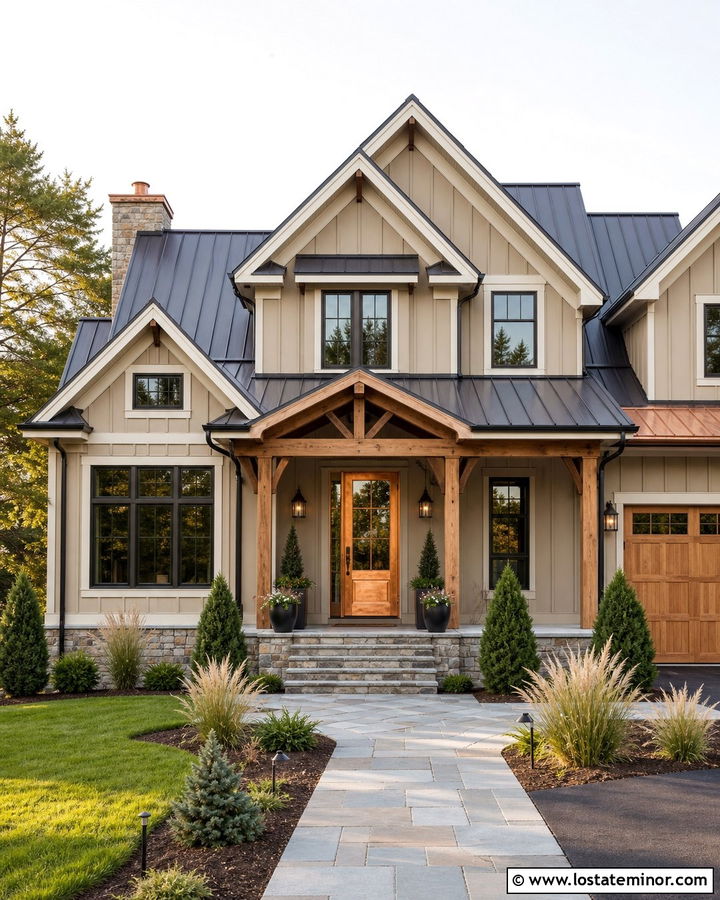
A copper-toned entry door adds warmth and a subtle metallic character to tan siding. The finish can be achieved through copper-colored paint, metal cladding, or wood stain with reddish undertones. Pair it with soft tan board-and-batten siding, cream trim, and deep bronze window frames. On a modern farmhouse, repeat copper sparingly in porch lights or gutter details. A charcoal standing-seam roof will provide the contrast needed to keep the warm colors from blending together. Natural stone steps and cedar porch beams can further connect the palette. Use simple green landscaping and avoid too many flowering colors. The overall exterior feels distinctive and crafted, with the entry acting as a warm centerpiece rather than a flashy decoration.
21. Tan House With Double Wood Entry Doors
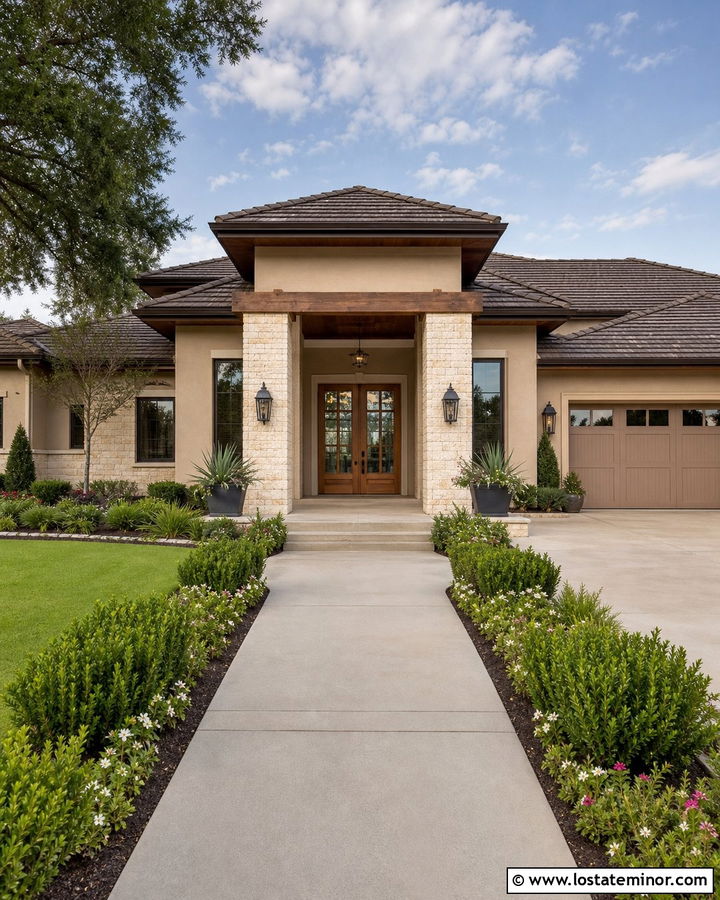
Wide double doors can transform a large tan facade by giving the entry enough visual weight to match the building. Choose medium-stained oak doors with glass panels for a tan stucco house featuring a broad covered porch. Cream trim and chunky limestone columns can frame the entrance, while dark bronze hardware adds definition. Match the garage doors to the tan walls rather than the entry so the main doorway remains prominent. A low brown tile roof and wood soffits will support the natural finish. Use a wide walkway, symmetrical planters, and layered shrubs to strengthen the sense of arrival. This complete arrangement is especially successful on Mediterranean, transitional, and large ranch homes with expansive front elevations.
22. Tan House With Glass Panel Entry Door
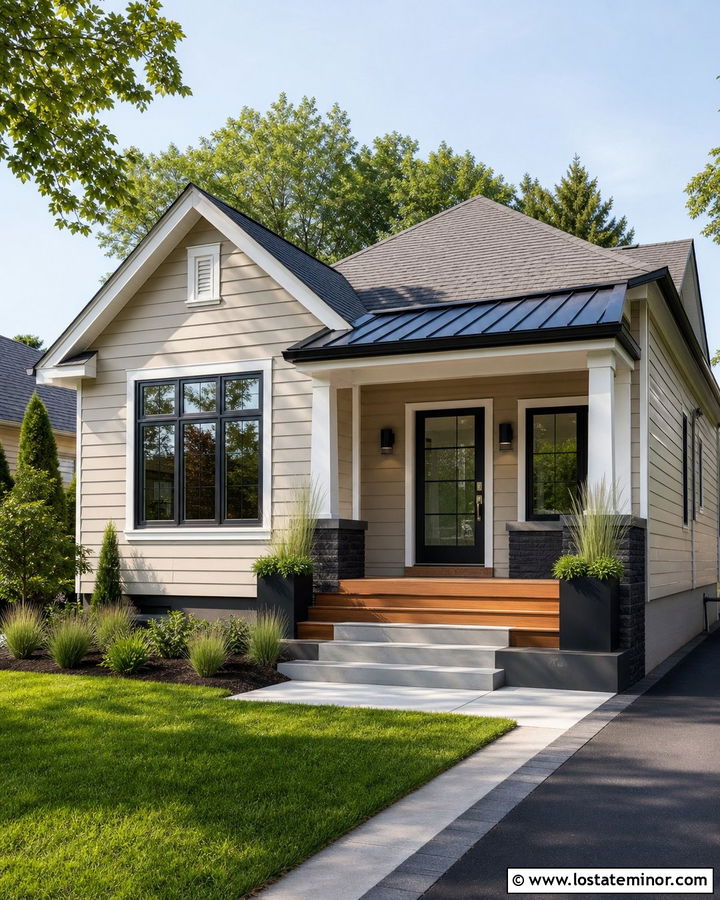
A glass-panel entry door makes a shaded tan exterior feel more open and visually lighter. Choose a black-framed door with several large clear or lightly obscured glass panels, set against pale tan horizontal siding. White trim can outline the windows, while a black metal porch roof repeats the door frame. This look works well on a contemporary bungalow or renovated ranch. Use warm wood decking under the porch to prevent the black and glass combination from appearing cold. Simple concrete steps, black planters, and upright grasses reinforce the clean lines. The door should remain substantial enough to anchor the entrance, while the glass introduces reflection and brightness across the complete facade during natural daylight.
23. Tan House With Arched Entry Door
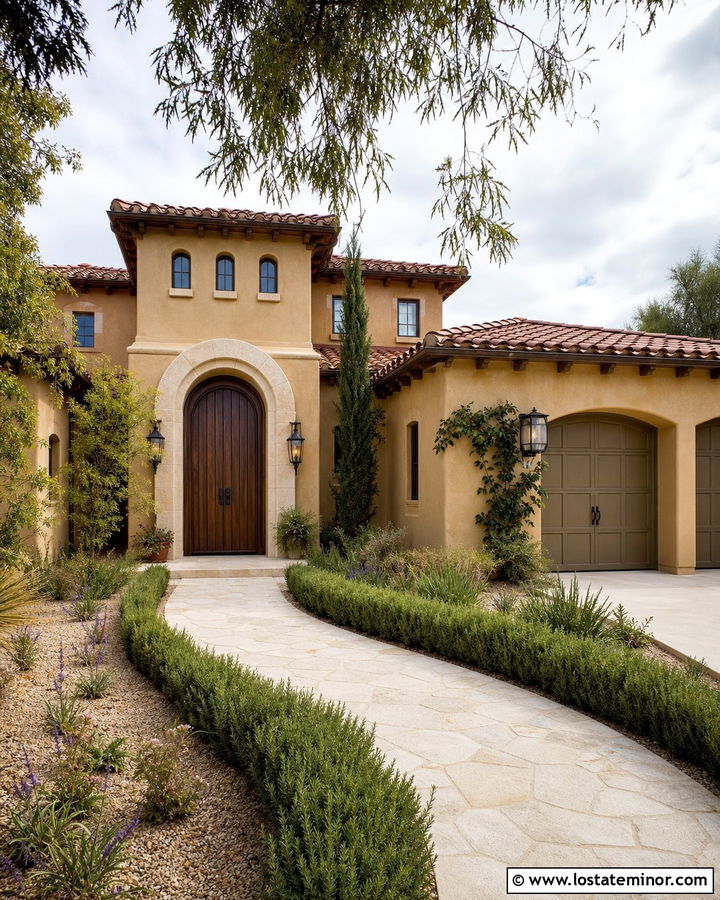
An arched entry door can give a tan home a strong architectural centerpiece. Use a dark-stained wood door within a rounded stucco opening, then surround it with creamy limestone and wrought-iron lighting. Warm sand-tan walls and a terracotta tile roof naturally support this Old World-inspired combination. Choose a door with vertical planks and minimal glass to emphasize its shape. The garage doors should remain close to the stucco color so they do not compete with the arch. A curved stone walkway, clipped rosemary, and drought-tolerant planting can echo the softness of the doorway. The complete exterior looks established and welcoming, with shape, material, and color working together instead of relying on door paint alone.
24. Tan House With Dutch Entry Door
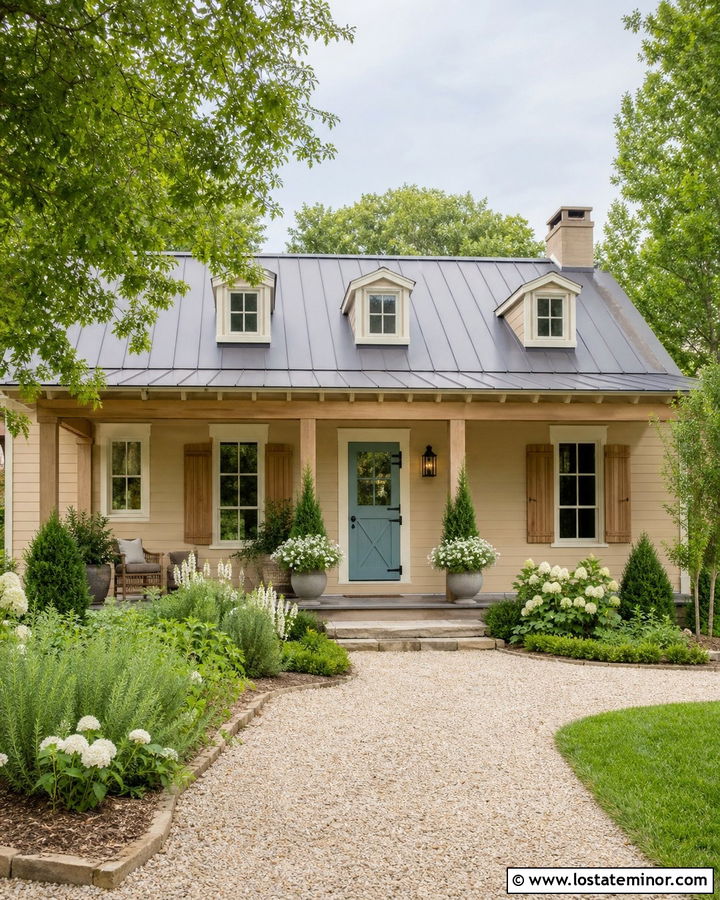
A Dutch entry door brings casual character to a tan cottage or farmhouse. Paint it a muted blue-green and pair it with warm tan lap siding, creamy white trim, and natural cedar shutters. Black strap hinges can highlight the divided construction without making the door look too heavy. Continue the relaxed feeling with a standing-seam gray roof, a simple wood porch, and flower boxes beneath the windows. A gravel path or narrow brick walkway suits the informal architecture better than an oversized paved approach. Keep the landscaping loose but maintained, using herbs, white flowers, and small evergreen shrubs. The overall exterior feels friendly and functional, while the divided door gives the entrance a recognizable focal point.
25. Tan House With Craftsman Entry Door
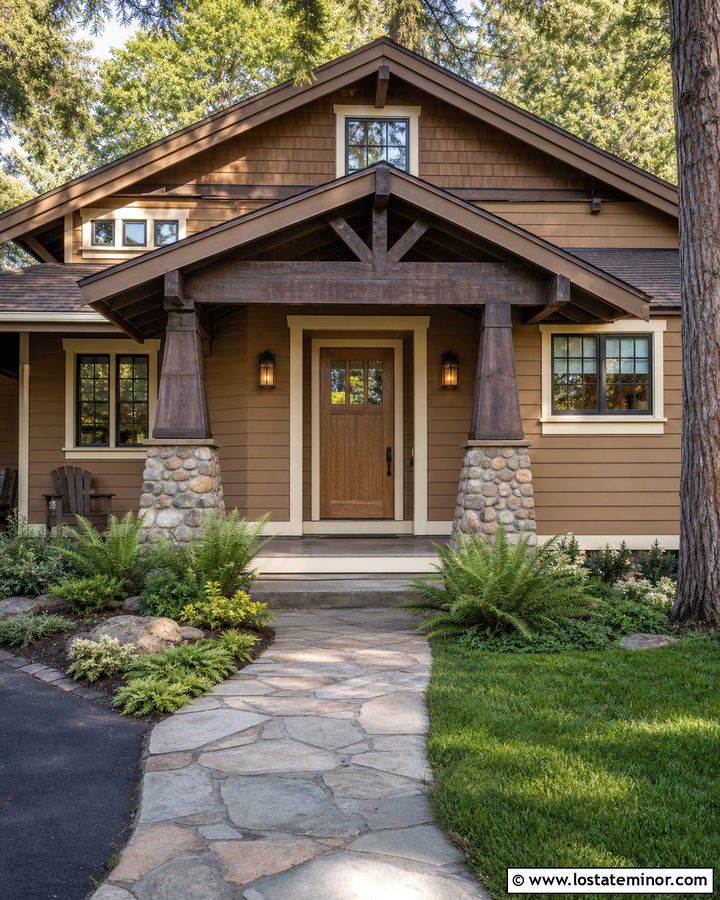
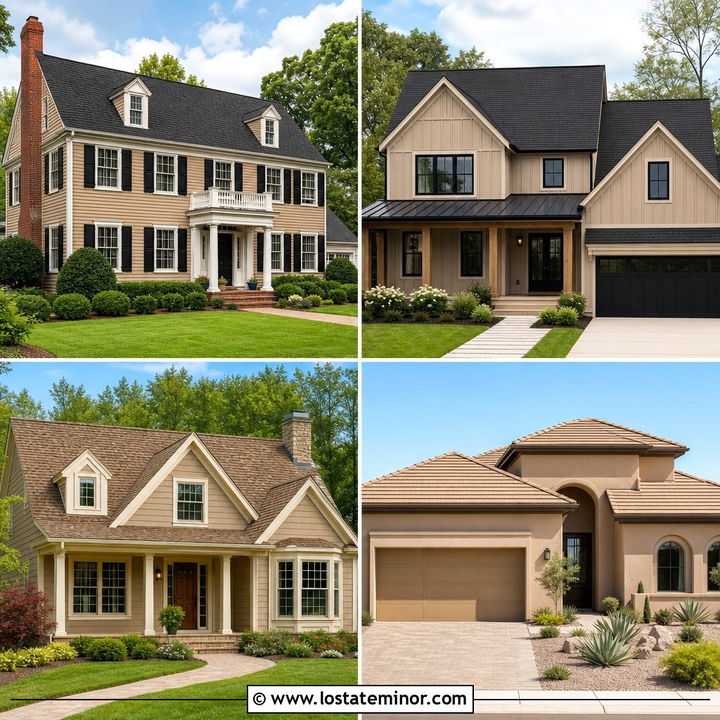
A craftsman entry door should feel substantial, textured, and connected to the porch structure. Choose a quarter-sawn oak door with three upper glass panes for a medium tan shingle-sided bungalow. Use cream trim, tapered stone columns, and dark brown porch beams to create a layered natural palette. Bronze hardware and lanterns will blend more smoothly than bright metal finishes. Repeat the door stain on the porch ceiling or handrails, but allow the stone foundation to introduce gray and rust variation. A low roofline with architectural shingles reinforces the grounded proportions. Native shrubs, ferns, and a broad stone walkway complete the facade. Every feature supports the warm door while preserving the house’s handcrafted architectural character.
26. Tan House With Modern Pivot Entry Door
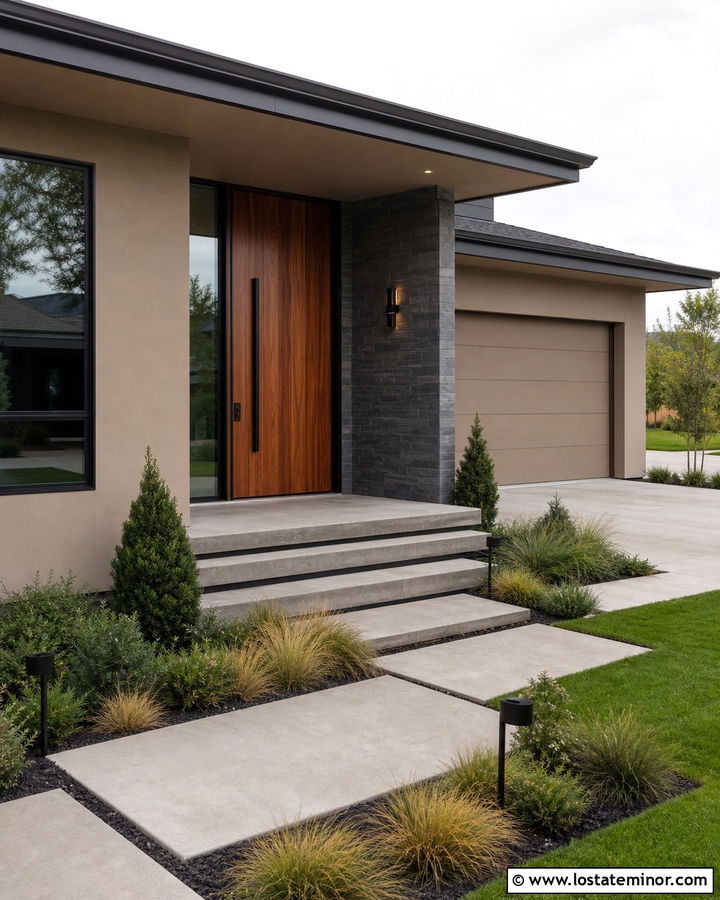
A pivot door gives a tan modern home a bold focal point through scale and shape. Select a tall walnut door with a slim black handle and place it within a recessed entry clad in charcoal stone. Smooth taupe-tan stucco, black window frames, and a low-profile dark roof create a clean surrounding palette. Use one continuous material across the garage doors, preferably matching the stucco, so the entrance receives the attention. Large-format concrete pavers and linear planting beds should lead directly toward the pivot door. Add ornamental grasses and compact evergreens for softness without hiding the architecture. In this complete exterior, the warm wood entry balances the cool stone and black metal, preventing the modern design from feeling severe.
27. Tan House With Farmhouse Entry Door
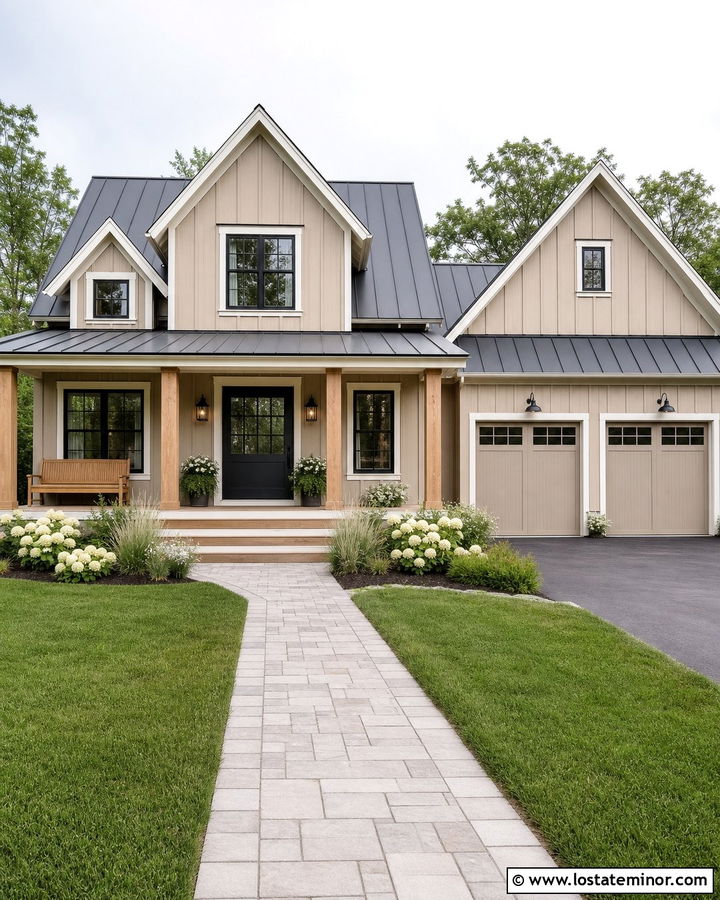
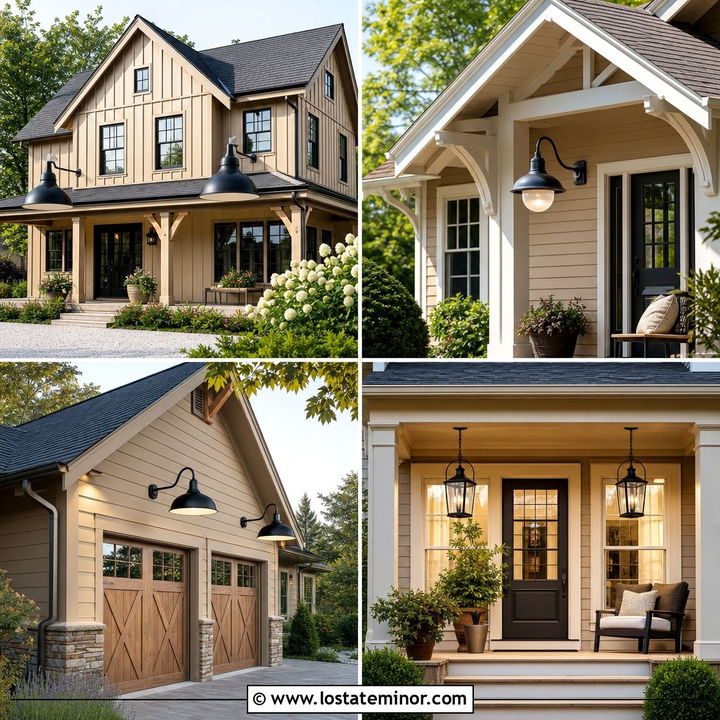
A farmhouse entry door looks best when its details connect to the porch and siding. Try a deep charcoal door with upper glass panes against light tan board-and-batten siding. Use warm white trim, black-framed windows, and natural cedar porch posts to create a balanced mixture of light, dark, and organic materials. A charcoal metal roof can repeat the door color across the upper facade. Keep the garage doors tan so they blend with the walls. Wide porch steps, black lanterns, and a simple wood bench complete the welcoming entrance. Hydrangeas, ornamental grasses, and a straight paver walkway add softness. The result feels current but not stark, thanks to the warmth of the tan siding and timber accents.
28. Tan House With Entry Door And Sidelights
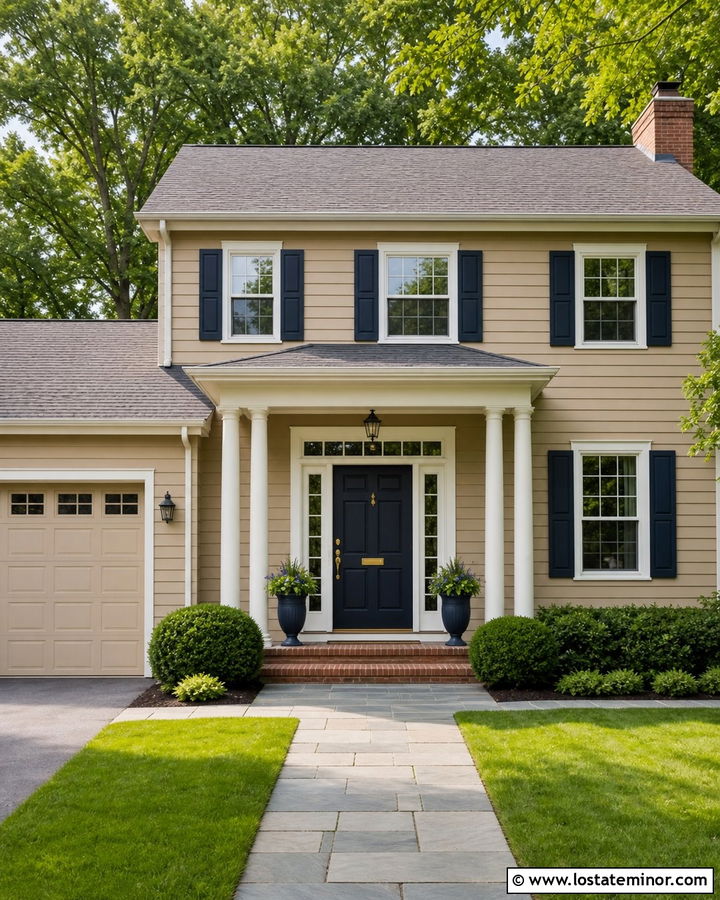
Sidelights can make a standard entry feel larger and bring symmetry to a tan house. Use a dark navy door centered between narrow glass sidelights, all framed in crisp white trim. Warm beige-tan clapboard siding, white porch columns, and a charcoal roof create a familiar traditional palette. Add brass hardware to warm the navy and connect it to the siding. On a suburban colonial, repeat the door color on the shutters while keeping the garage door tan or white. Two matching planters can emphasize the widened entrance without blocking the glass. A brick stoop and straight flagstone walkway finish the composition. The complete facade feels orderly, bright, and welcoming, with the enlarged doorway serving as its natural center.
29. Tan House With Entry Door And Transom Window
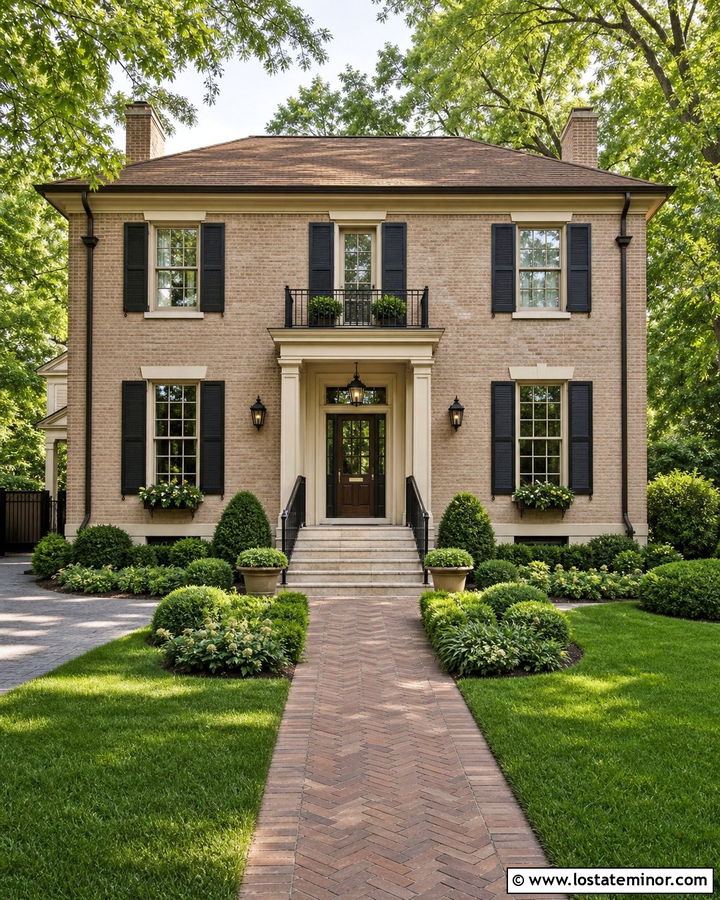
A transom window adds height and daylight to an entrance without requiring an oversized door. Pair a rich walnut entry door with a rectangular glass transom on a two-story tan brick house. Use soft cream trim, black shutters, and bronze lighting to frame the opening. The dark door should be repeated through smaller elements, such as porch railings or window boxes, but not across every feature. A medium-brown roof can soften the transition between tan brick and black accents. Keep the transom clear or lightly textured so it remains visually bright. Symmetrical shrubs, pale stone steps, and a brick walkway support the formal facade. Together, the vertical doorway and transom create an elegant, proportionate entrance.
30. Tan House With Entry Door And Stone Porch
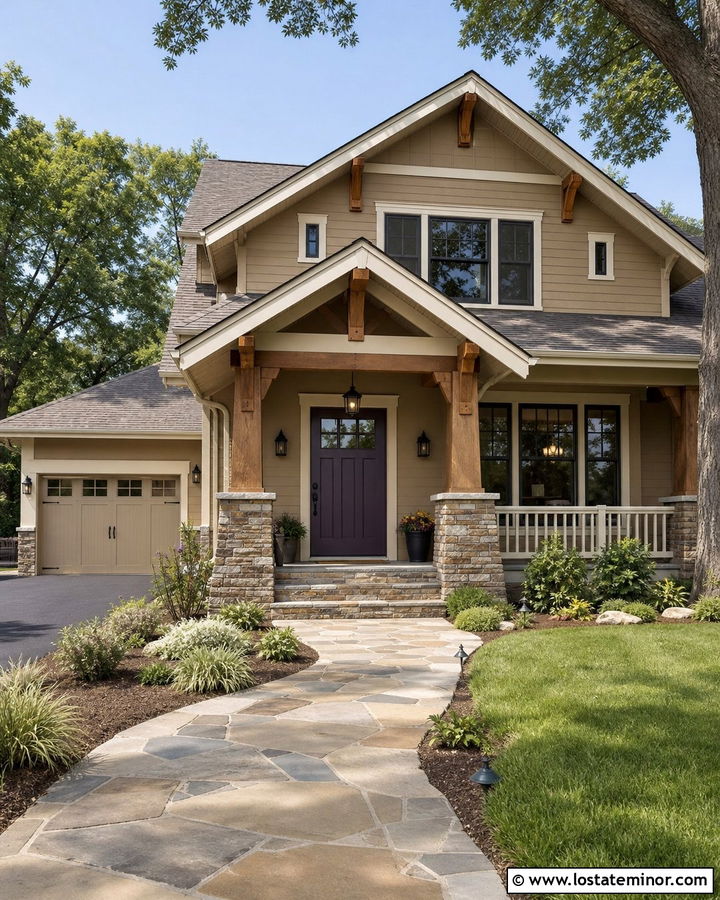
Stone can connect a colorful entry door to tan siding by introducing several related neutral tones. Choose a muted aubergine door for a tan craftsman home with cream trim and a porch faced in ledgestone containing beige, brown, and charcoal. Dark bronze hardware and window frames will reinforce the stone’s deeper notes. Use warm gray roof shingles to prevent the palette from becoming too brown. Cedar beams or porch brackets can add natural texture above the masonry. Keep the foundation planting simple so the stonework remains visible from the curb. A broad flagstone walkway and low ornamental grasses complete the approach. The finished exterior feels rich and balanced, with the unusual door color grounded by familiar, durable materials.
Conclusion:
The most successful 30 Tan House Design With Entry Door Ideas treat the entire facade as one connected palette. Tan siding can support black, navy, green, red, blue, and other expressive door colors, but roofing, trim, masonry, hardware, and landscaping determine whether the final result feels balanced. Natural wood remains an especially versatile option because it adds texture and warmth without introducing an unrelated hue. Before painting or purchasing a new door, view large samples beside the siding in direct sun, shade, and changing daylight. Also consider the home’s architecture and permanent materials. A coordinated entry does more than add color. It clarifies the entrance, strengthens curb appeal, and gives a tan house a more intentional identity.

Related posts: