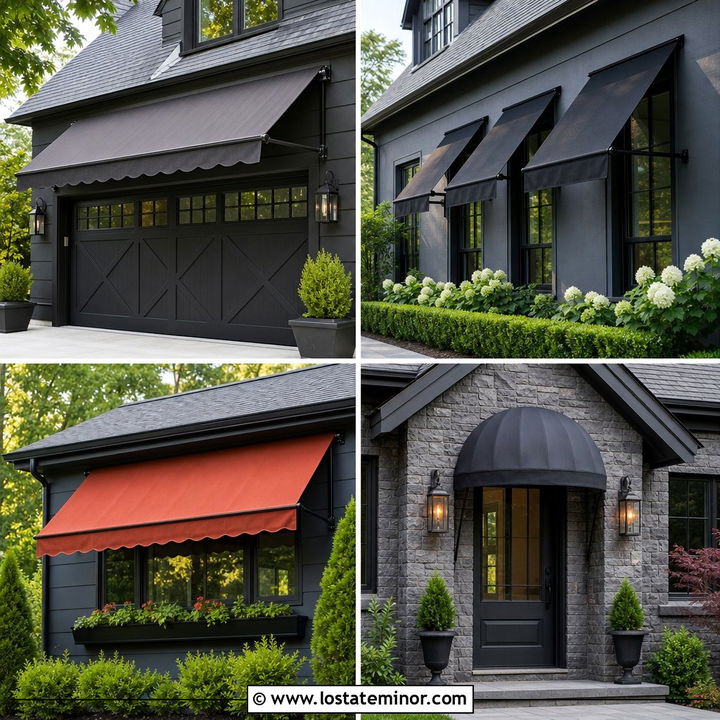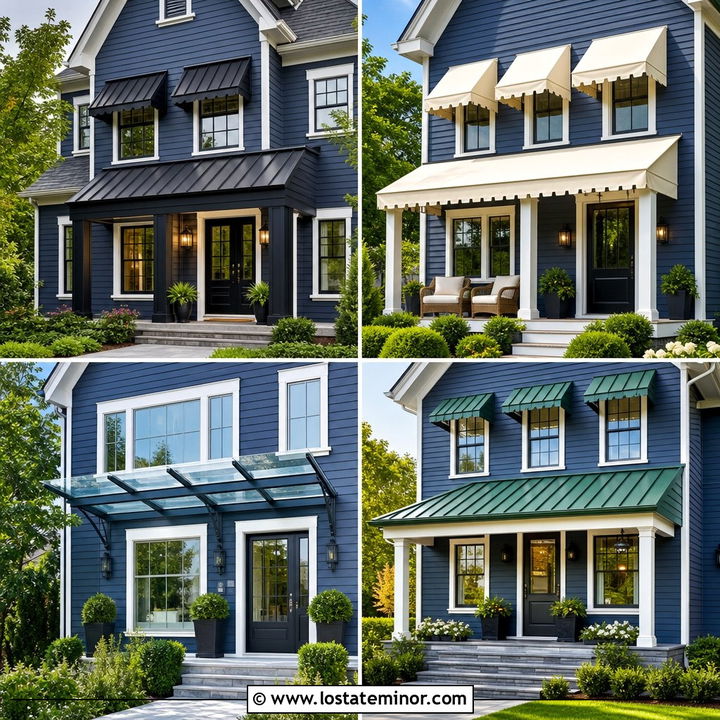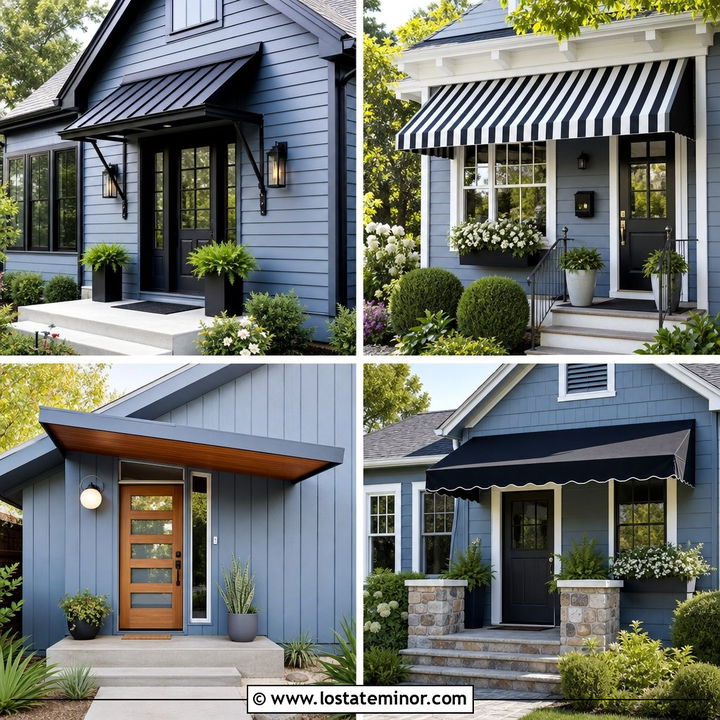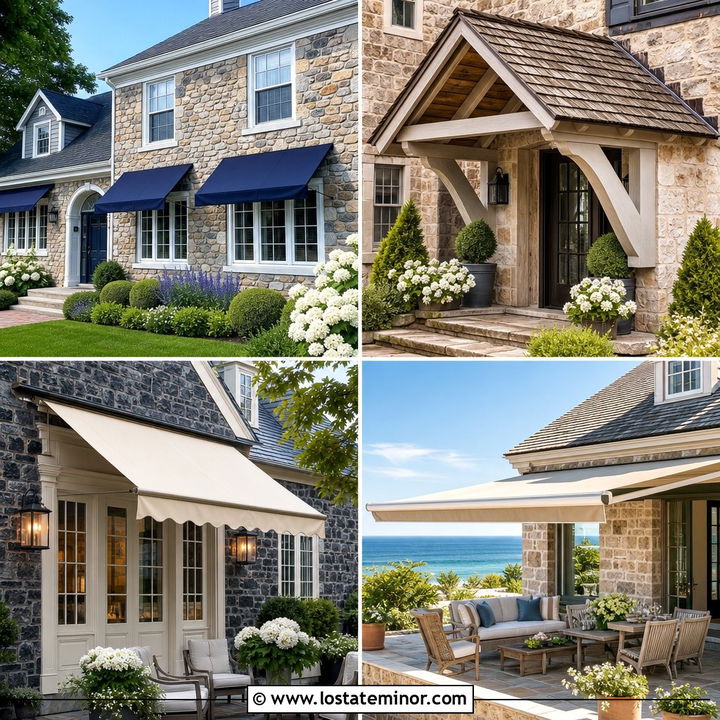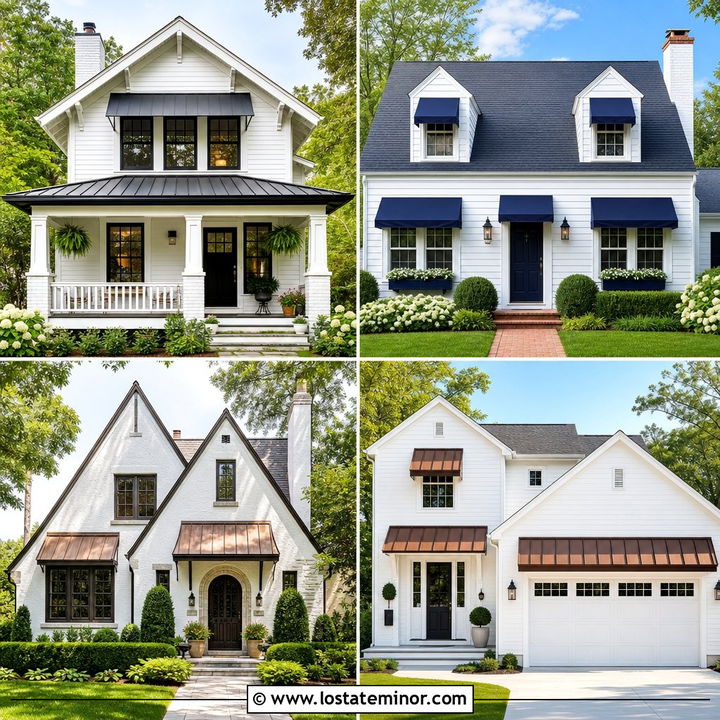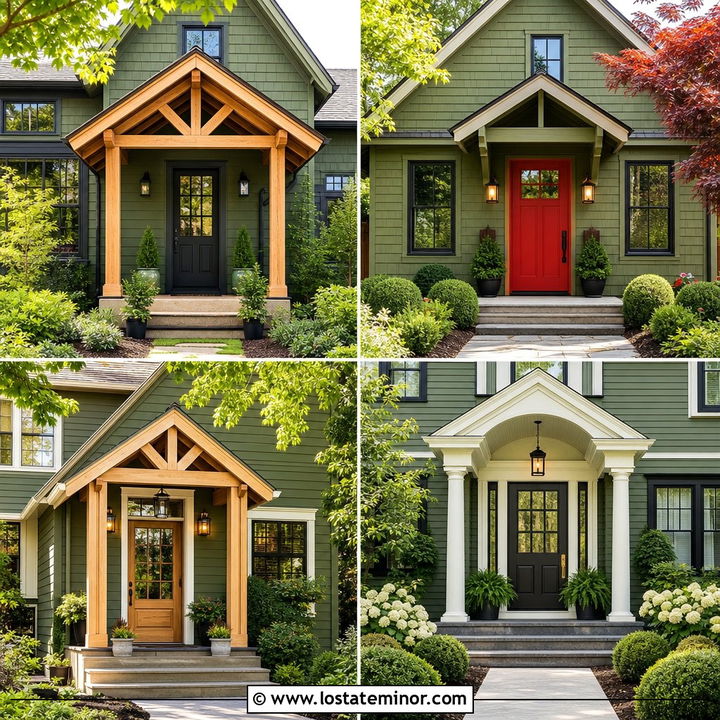
A warm tan exterior creates an adaptable backdrop for awnings, architectural details, and inviting outdoor spaces. These 30 Tan House Design With Awning Ideas explore complete exterior schemes rather than treating the awning as an isolated accessory. You will find fabric, copper, steel, wood, and polycarbonate awnings paired with thoughtful trim, roofing, doors, stonework, and landscaping. The collection also covers ranch homes, Craftsman houses, Colonials, cottages, split-levels, and contemporary facades. Some combinations feel classic and understated, while others introduce stronger colors that make the entrance or patio stand out. Each design can be adjusted to suit your home’s architecture, climate, and maintenance needs. Use the following complete curb-appeal looks as inspiration from 30 Tan House Design With Awning Ideas.
1. Tan Ranch House With Navy Striped Awnings
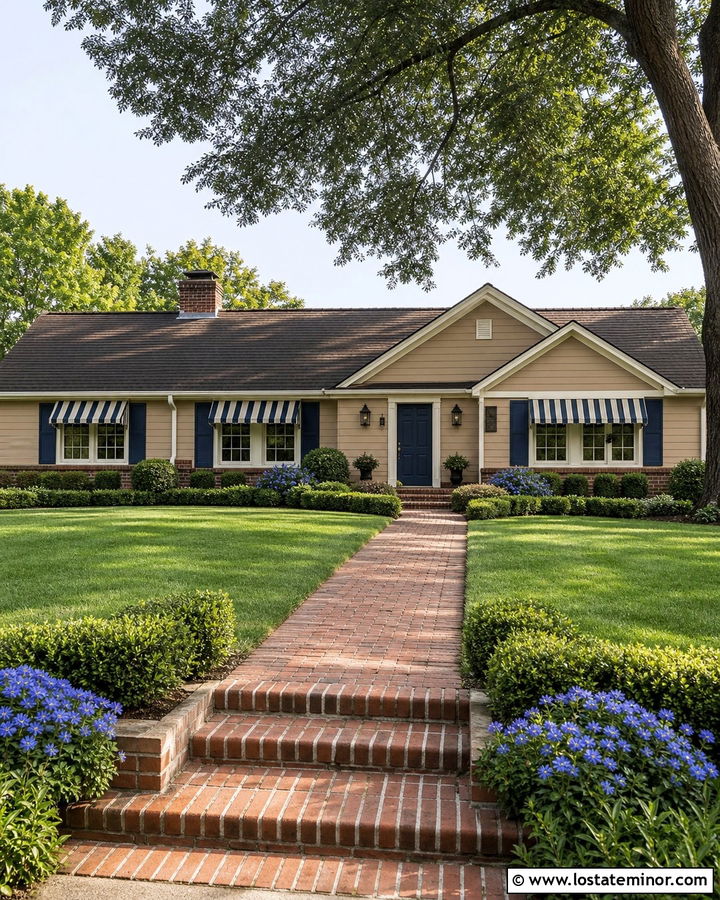
A tan ranch house gains character when navy-and-cream striped awnings are placed above its front windows. Choose a warm tan siding color such as Benjamin Moore Manchester Tan, then outline the low facade with creamy white trim. Navy shutters, a matching front door, and dark bronze lighting connect the striped fabric to the rest of the exterior. A medium-brown architectural shingle roof keeps the palette grounded without making the single-story house feel heavy. Add a simple brick walkway, clipped boxwoods, and blue flowering plants near the foundation. Keep the awnings proportionate to the windows so they look integrated instead of oversized. This approachable combination gives a plain ranch more depth, shade, and classic suburban curb appeal.
2. Tan Craftsman House With Black Metal Awning
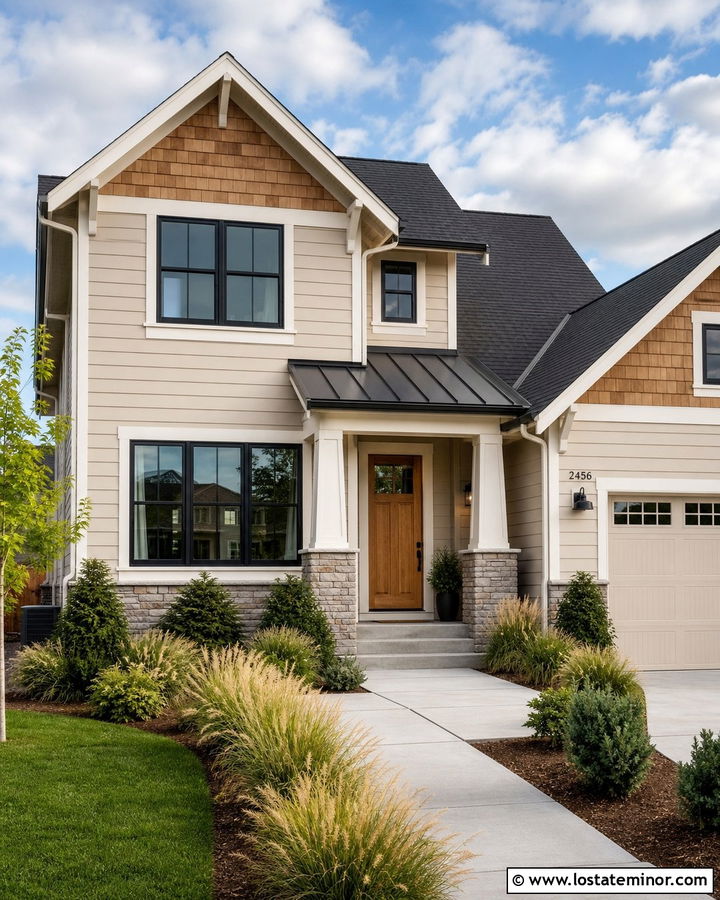
Clean black metal creates a strong focal point against the softer finish of a tan Craftsman house. Paint the lap siding Sherwin-Williams Accessible Beige, a balanced light tan, and use warm white on the window trim, tapered columns, and roof fascia. A slim black shed awning above the front door should echo black window frames, contemporary sconces, and simple porch railings. Natural cedar in the gable and a medium-stained oak door prevent the black accents from feeling too sharp. Complete the lower facade with gray-and-tan stacked stone around the column bases. Layer ornamental grasses and low evergreen shrubs beside a wide concrete walkway. The result feels updated and structured while preserving the handcrafted warmth expected from Craftsman architecture.
3. Tan Colonial House With Copper Door Awning
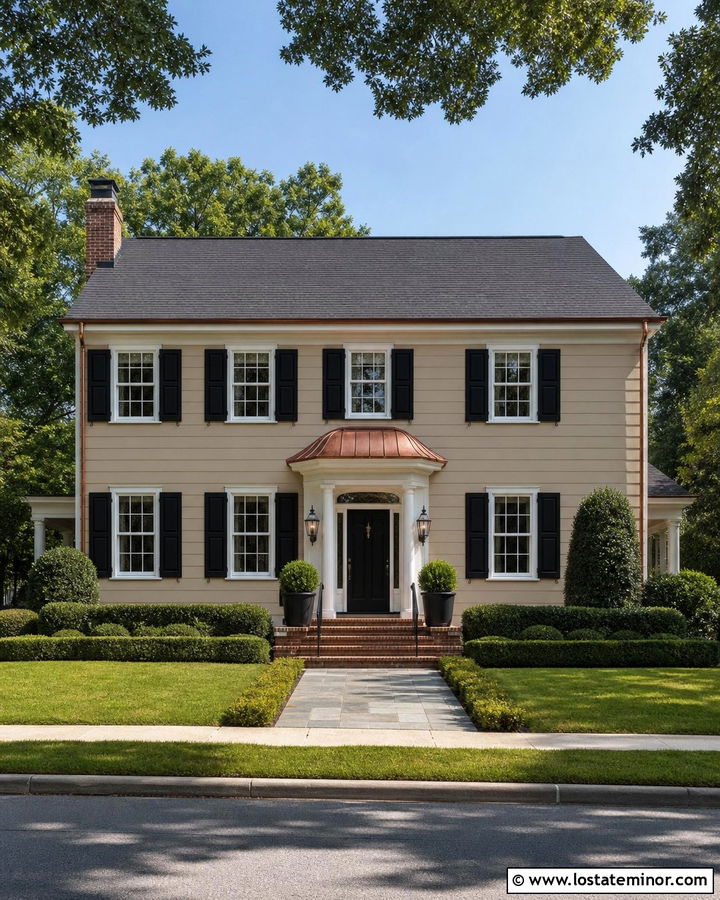
Picture a symmetrical tan Colonial with a gently curved copper awning centered above its front entrance. Soft tan clapboard siding and crisp white corner boards create a traditional foundation, while black shutters bring definition to evenly spaced windows. As the copper develops a natural patina, it can become an even richer architectural accent. Repeat its warm undertones through brass door hardware, copper gutters, and red-brown brick steps. A glossy black front door gives the entry enough contrast to remain visible beneath the awning. Choose a charcoal roof to balance the warm siding and metal. Formal hedges, matching planters, and a straight stone walkway reinforce the home’s symmetry. This polished scheme makes the awning appear original to the Colonial facade.
4. Tan Cottage House With Forest Green Awnings
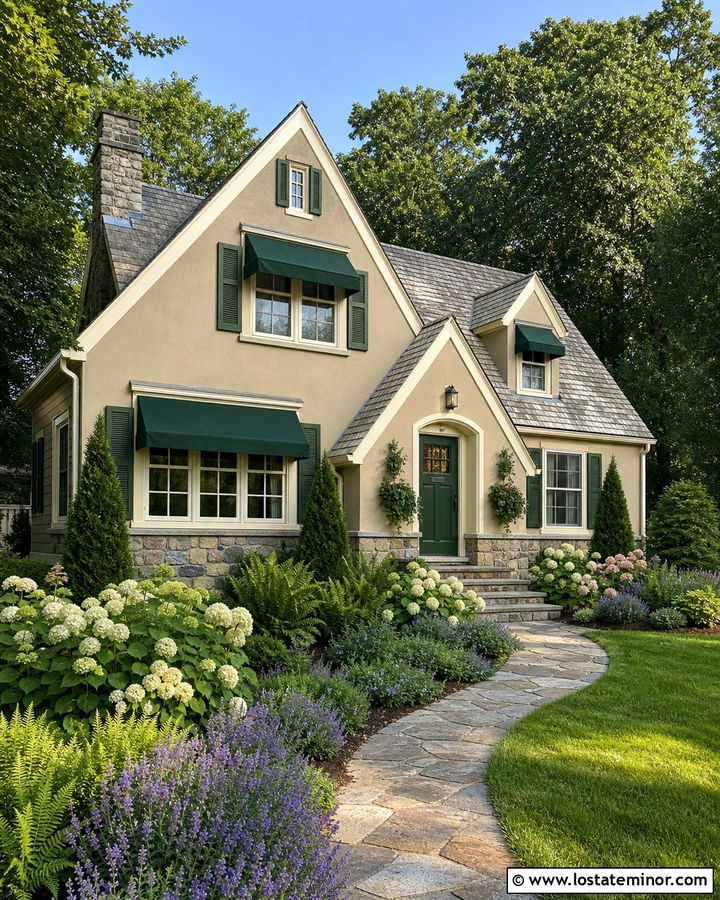
Forest green canvas awnings give a tan cottage a cozy connection to its surrounding garden. Use a muted sandy tan on the siding, soft ivory around the windows, and deep green on the front door and simple board-and-batten shutters. Small fixed awnings with straight valances can shade the front windows without covering decorative trim. A weathered gray roof helps the green and tan palette feel natural rather than overly coordinated. Add a low stone foundation in mixed beige and gray tones for extra texture. Curved garden beds filled with hydrangeas, ferns, lavender, and compact evergreens can frame the cottage without hiding it. A narrow flagstone path finishes the welcoming scene. This combination works especially well when the awning fabric closely matches the established green accents.
5. Tan Cape Cod House With Cream Fabric Awnings
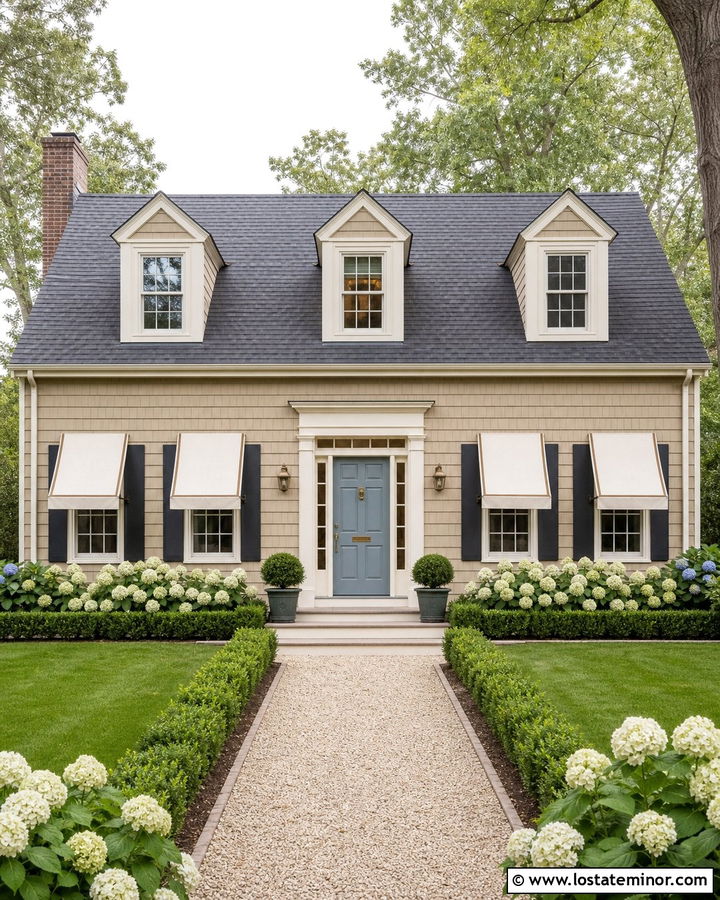
Could a nearly tonal palette still create noticeable curb appeal? On a tan Cape Cod, cream fabric awnings add softness while preserving the home’s calm, traditional character. Paint the shingles a light camel tan and select creamy white for the dormers, window casings, fascia, and front porch columns. Place tailored cream awnings above the first-floor windows, using narrow tan piping to define their edges. A muted blue front door introduces one gentle color break, while aged brass hardware adds warmth. Dark gray roof shingles ground the compact structure and draw attention to its dormered roofline. Finish the exterior with pea-gravel paths, white hydrangeas, and low boxwood borders. The subtle awnings provide depth without disrupting the balanced Cape Cod architecture.
6. Tan Bungalow With Cedar Wood Awning
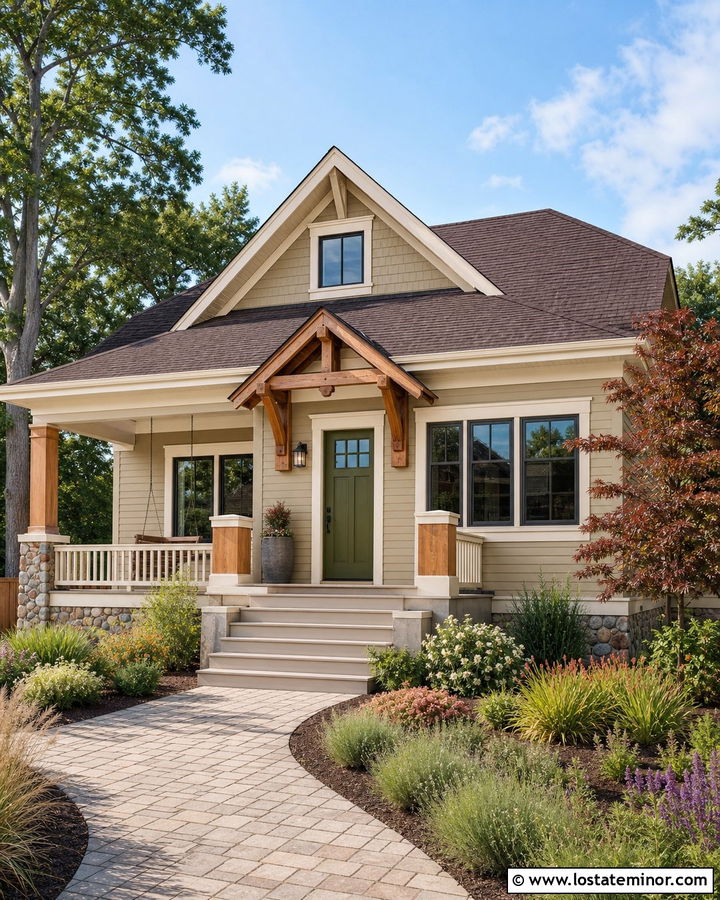
A handcrafted cedar awning can transform the entrance of a modest tan bungalow. Begin with warm khaki-tan siding, creamy trim, and a deep brown roof that complements the exposed wood. Build the awning with substantial cedar brackets and a simple sloped roof, positioning it above a rich olive-green front door. Matching cedar porch posts, window boxes, and stair rail caps help the new feature feel intentional. Use river rock or tan fieldstone around the foundation to reinforce the bungalow’s earthy character. Wide porch steps and a straight paver walkway should make the entrance easy to identify from the street. Native grasses, low flowering shrubs, and one small ornamental tree provide a relaxed setting. The complete design feels warm, sturdy, and naturally layered.
7. Tan Modern Farmhouse With Charcoal Awning
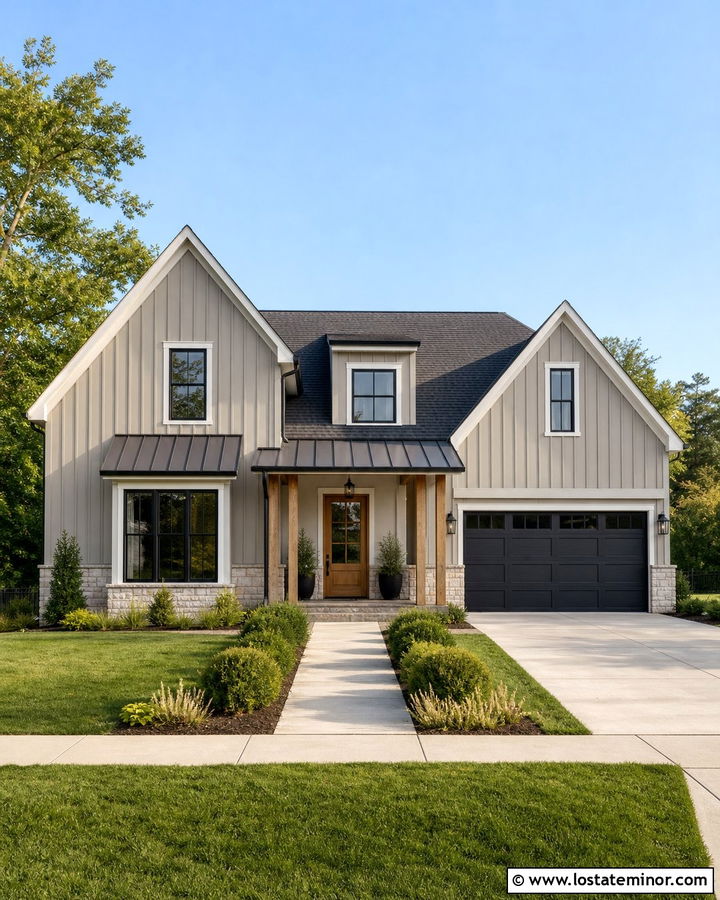
A tan modern farmhouse feels fresh when its simple facade is sharpened with charcoal details. Choose pale greige-tan board-and-batten siding and soft white trim instead of a bright, high-contrast white. Install a wide charcoal standing-seam awning above the front porch entry, supported by slim black brackets. Match it with charcoal window frames, downspouts, and a dark metal roof over the main structure. A natural white oak door and matching porch ceiling introduce warmth near eye level. Light limestone around the foundation adds texture without competing with the vertical siding. Keep the landscaping clean with structured grasses, rounded shrubs, and a broad concrete path. This scheme offers farmhouse familiarity while the restrained metal awning makes the entire exterior feel more current.
8. Tan Brick House With Burgundy Awnings
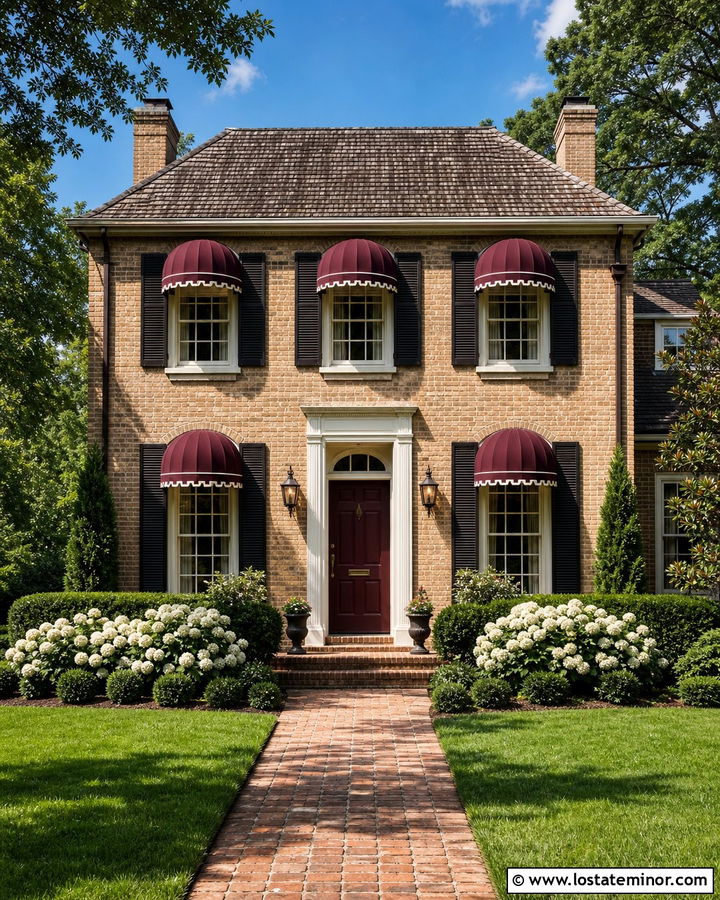
Burgundy awnings can add richness to a tan brick house without overpowering its masonry. Select deep red canvas with narrow cream edging for shallow dome awnings above the front windows. Paint the trim a warm off-white and repeat the burgundy color on the front door. Dark bronze gutters, hardware, and lanterns work better than stark black when the brick contains warm brown or red flecks. A weathered brown roof keeps the upper portion of the house connected to the brick below. If shutters are present, use a subdued espresso finish rather than introducing another strong color. Finish with a brick walkway, evergreen hedges, and white flowering shrubs. The result is a formal, coordinated exterior with enough contrast to make the window awnings noticeable.
9. Tan Stucco House With Blue Gray Awnings
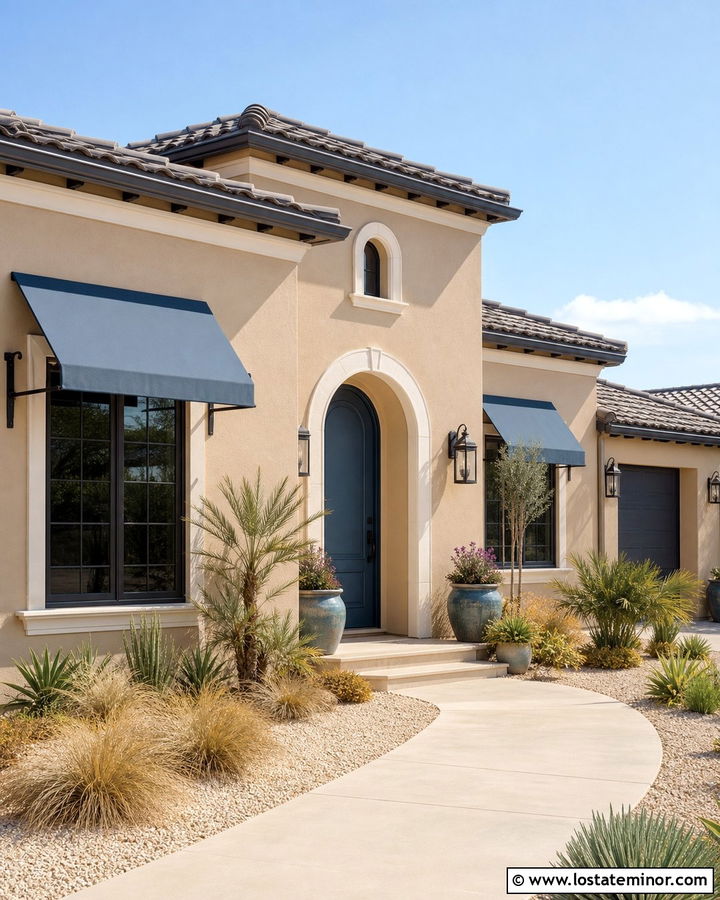
Blue-gray fabric creates a cooling counterpoint to the sun-washed warmth of tan stucco. Apply a light desert tan to the walls and a creamy white finish to the fascia, window surrounds, and porch columns. Tailored blue-gray awnings above the windows can coordinate with a slate-blue front door and understated blue ceramic planters. Use a medium gray tile or shingle roof to bridge the cool awnings and warm walls. Dark bronze window frames and lighting add definition without introducing harsh contrast. Around the house, combine pale gravel, sculptural grasses, compact palms, and drought-tolerant flowering plants. A smooth concrete walkway keeps the composition uncluttered. This complete palette gives a Mediterranean or Southwestern stucco home a relaxed appearance that still feels polished and thoughtfully coordinated.
10. Tan Mediterranean House With Terracotta Awnings
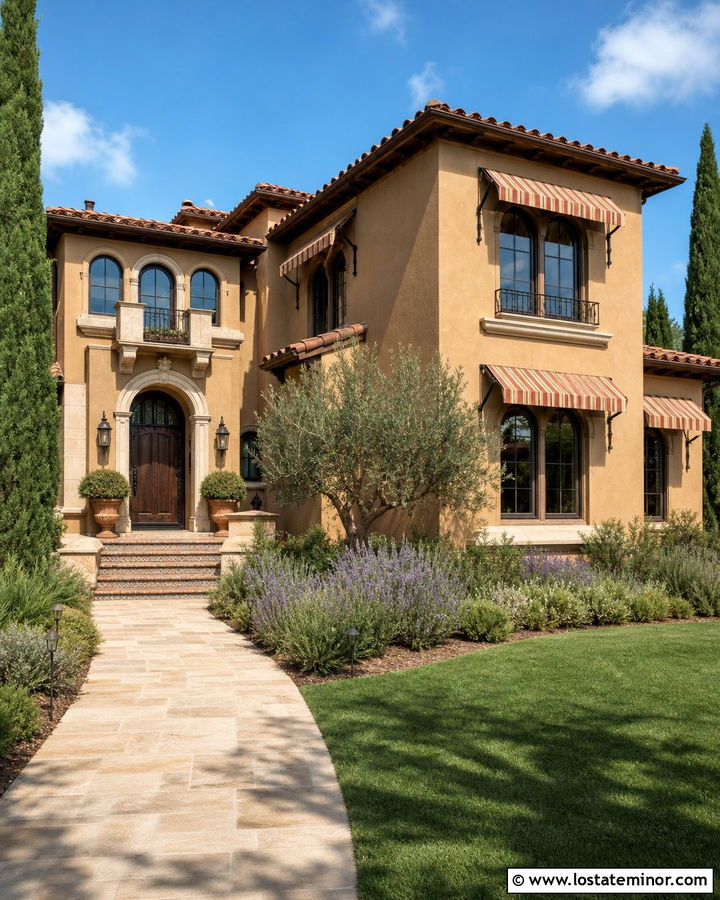
Terracotta-striped awnings naturally complement the warm surfaces of a tan Mediterranean house. Start with golden tan stucco and creamy limestone trim around arched windows and doorways. Use terracotta-and-ivory striped fabric on spear-style window awnings, then repeat the rust-red tone through clay roof tiles and large entry planters. A dark-stained wood door with decorative ironwork becomes a strong central feature. Black or oil-rubbed bronze railings, lanterns, and awning frames provide needed definition. Keep the hardscaping warm with tumbled stone steps and a curved buff-colored walkway. Olive trees, rosemary, lavender, and compact hedges support the architecture without making the facade feel crowded. Together, the tan walls, striped awnings, and clay details create a cohesive, sun-friendly exterior.
11. Tan Coastal House With White Louvered Awnings
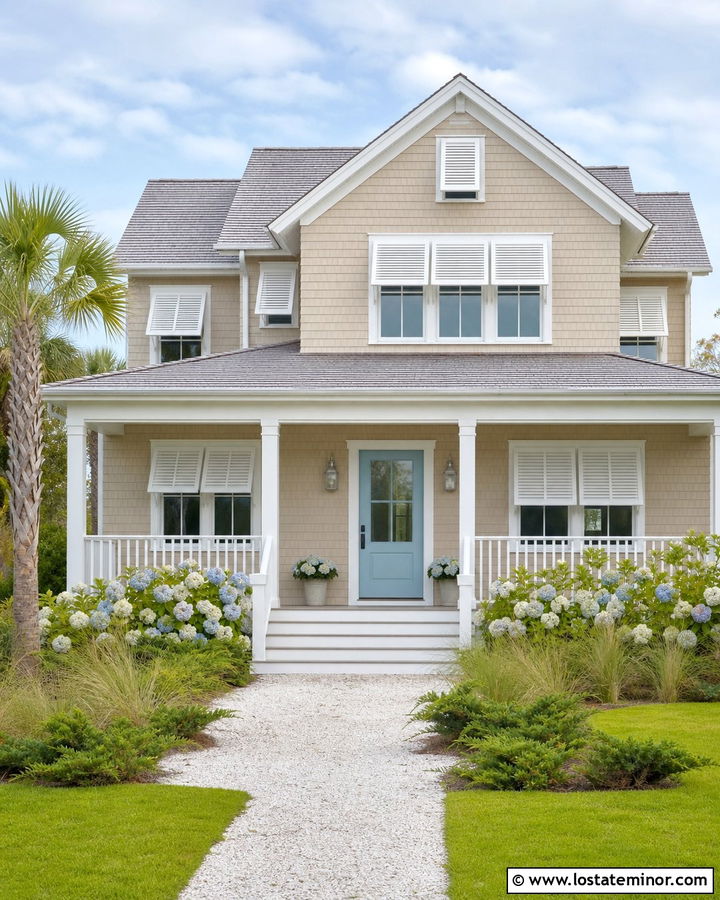
White louvered awnings bring a crisp, breezy quality to a tan coastal house. Paint the shingle siding a soft sand tan and use clean white on the awnings, porch railings, columns, window trim, and roof fascia. A sea-glass blue front door adds a restrained coastal accent without turning the exterior into a themed display. Choose pale gray roof shingles and galvanized metal lighting for a light, weathered finish. Fixed louvered awnings above the windows should have simple brackets and a shallow projection that suits the house’s scale. Add crushed-shell paths, ornamental grasses, hydrangeas, and low junipers around the foundation. The combination keeps the complete facade bright in direct daylight while giving the windows useful architectural depth and a finished appearance.
12. Tan Contemporary House With Bronze Retractable Awning
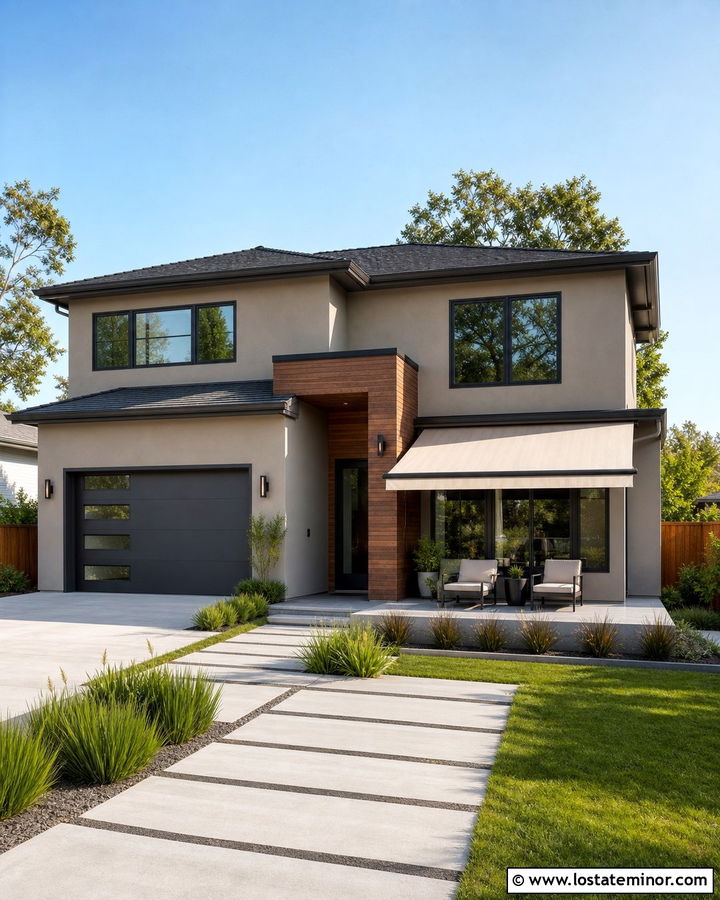
On a contemporary tan house, a bronze retractable patio awning can become part of the architecture instead of looking like an add-on. Use smooth taupe-tan stucco, dark bronze window frames, and warm wood siding around the entrance. Select a solid oatmeal fabric awning housed in a slim bronze cassette above the rear or side patio visible from the curb. The frame should match the windows, garage door details, and exterior lighting. A flat or low-pitched charcoal roof reinforces the clean horizontal lines. Large concrete pavers, linear planting beds, ornamental grasses, and a minimalist walkway maintain the modern setting. When extended, the awning adds a practical shaded zone while its restrained colors preserve the sleek, unified appearance of the house.
13. Tan Split Level House With Sage Green Awnings
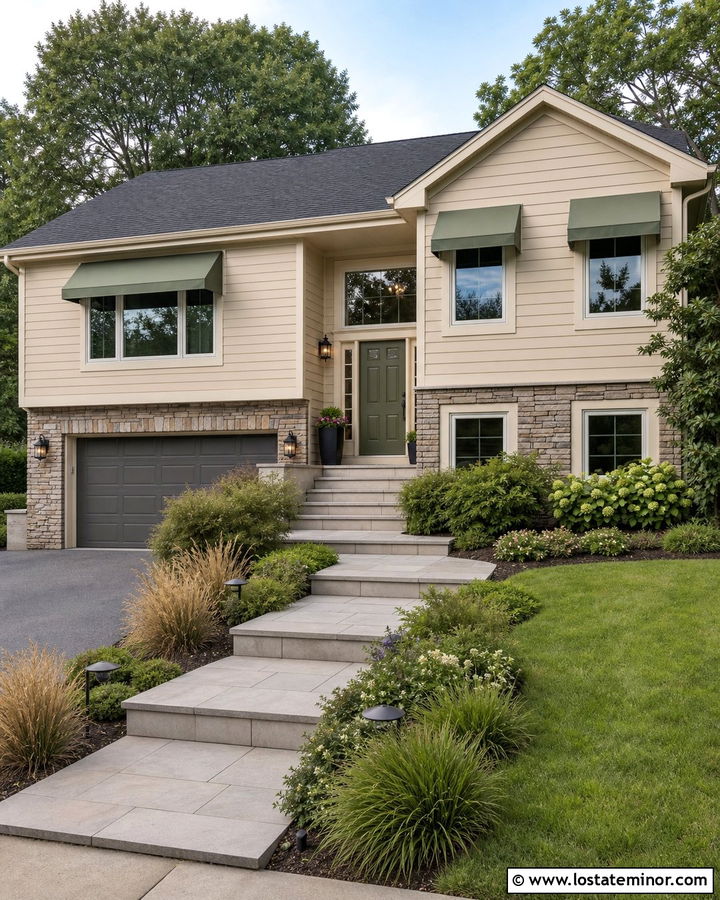
A split-level exterior often benefits from a feature that visually connects its different window heights. Sage green awnings can do exactly that on warm tan horizontal siding. Use matching sage accents on the front door and a small section of garage trim, then paint the remaining trim a gentle cream. Keep the awnings simple and rectangular so the facade does not become too busy. A charcoal-gray roof and dark bronze lighting provide contrast across the upper and lower levels. Incorporate tan-and-gray stone around the lower story to give the home a stronger base. Broad steps, a tiered walkway, and layered shrubs can guide visitors toward the raised entrance. The muted green fabric refreshes the house while remaining compatible with mature suburban landscaping.
14. Tan Midcentury House With Black Slatted Awning
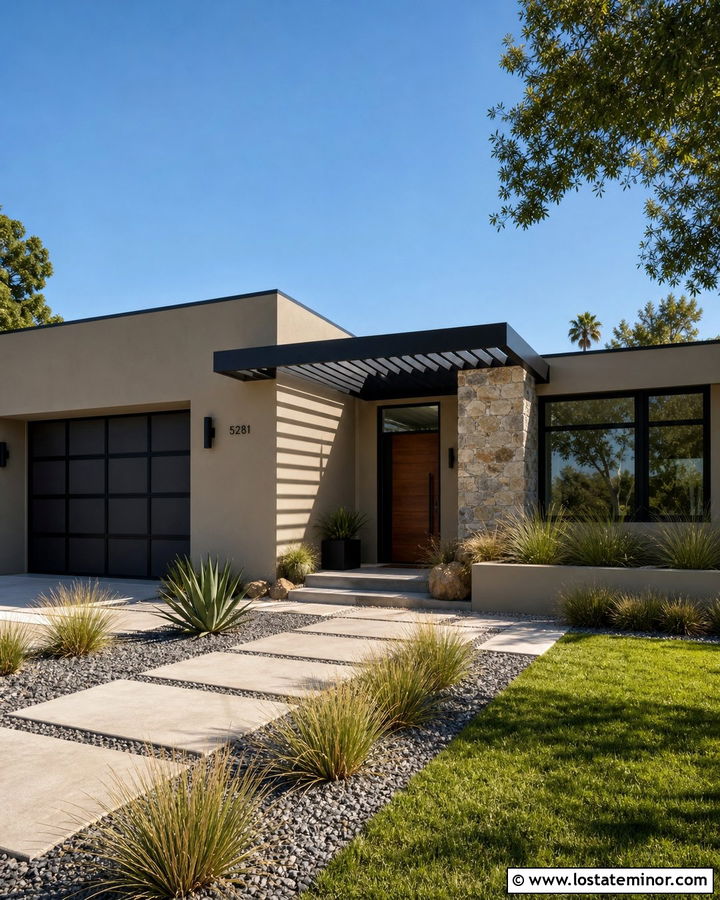
Strong horizontal lines make a black slatted awning particularly suitable for a tan midcentury house. Paint the stucco or vertical siding a muted mushroom tan, then use matte black on the window frames, fascia, and garage door. A flat black awning with evenly spaced wood or metal slats should project above the front entry. Add a walnut-toned door and a narrow wall of natural stone to soften the black-and-tan contrast. The roofline should remain low and clean, with minimal decorative trim. Use large rectangular concrete pavers, gravel beds, sculptural agaves, and ornamental grasses in the landscape. This complete scheme respects the home’s geometry and makes the entrance more prominent. It also avoids decorative fabric that could feel mismatched with midcentury architecture.
15. Tan Victorian House With Teal Window Awnings
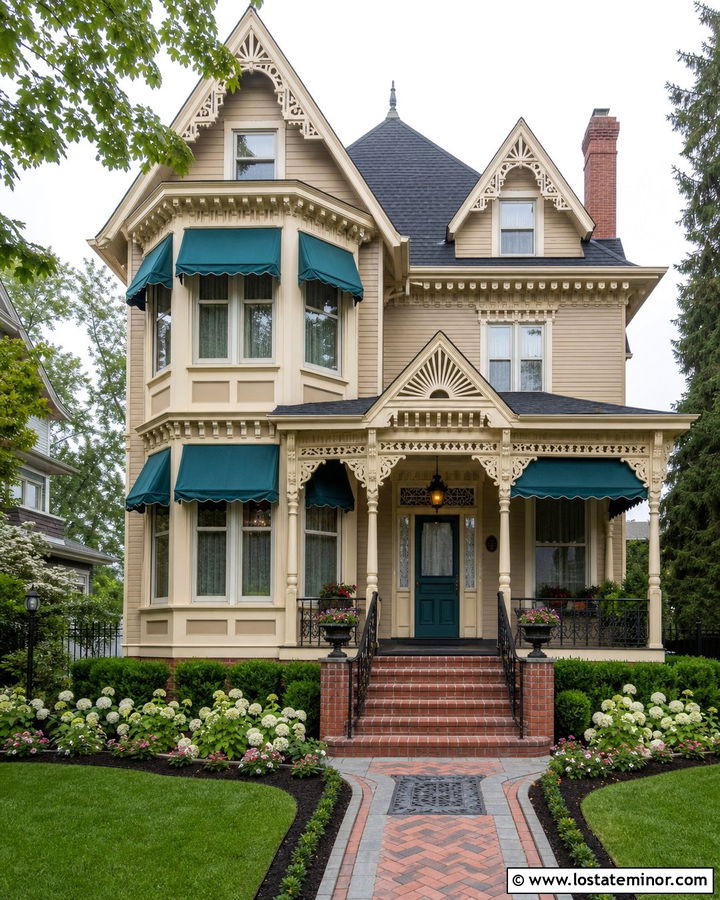
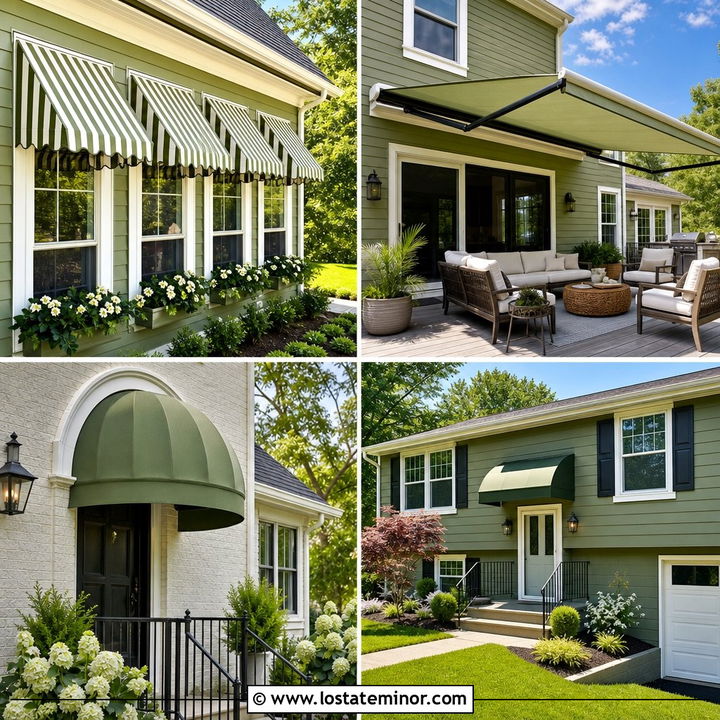
Teal window awnings can highlight the detailed facade of a tan Victorian without relying on an overly complicated paint palette. Choose a medium biscuit tan for the primary siding and cream for the gingerbread trim, porch columns, and window casings. Add deep teal to the front door, small gable details, and tailored fabric awnings over selected first-floor windows. Limit the awnings to the most visible openings so they do not compete with the architecture. A dark charcoal roof and black iron railings anchor the colorful accents. Warm brick steps and a patterned walkway add another traditional texture. Frame the home with flowering shrubs and neatly edged beds. The teal introduces personality, while the tan and cream preserve a cohesive, historically inspired appearance.
16. Tan Tudor House With Red Metal Awning
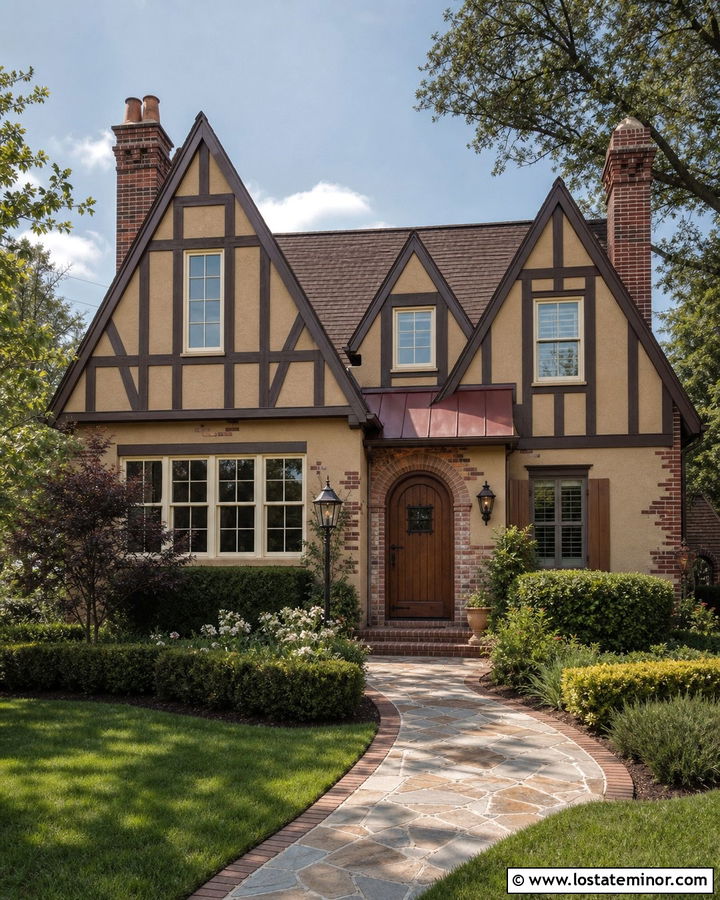
A muted red metal awning adds a distinctive focal point to the entrance of a tan Tudor house. Use sandy tan stucco between dark brown half-timbering, then install a small standing-seam awning above an arched wood door. Choose an earthy brick-red finish rather than a bright primary red. The color can connect with existing red brick around the chimney, lower walls, or front steps. Cream window trim provides a small amount of brightness, while a deep brown roof supports the traditional palette. Iron lanterns and simple black awning brackets contribute period-appropriate contrast. Complete the setting with a curved stone walkway, clipped hedges, and informal cottage planting. The awning feels integrated because its color repeats the masonry instead of becoming an unrelated accent.
17. Tan Prairie House With Cocoa Brown Awnings
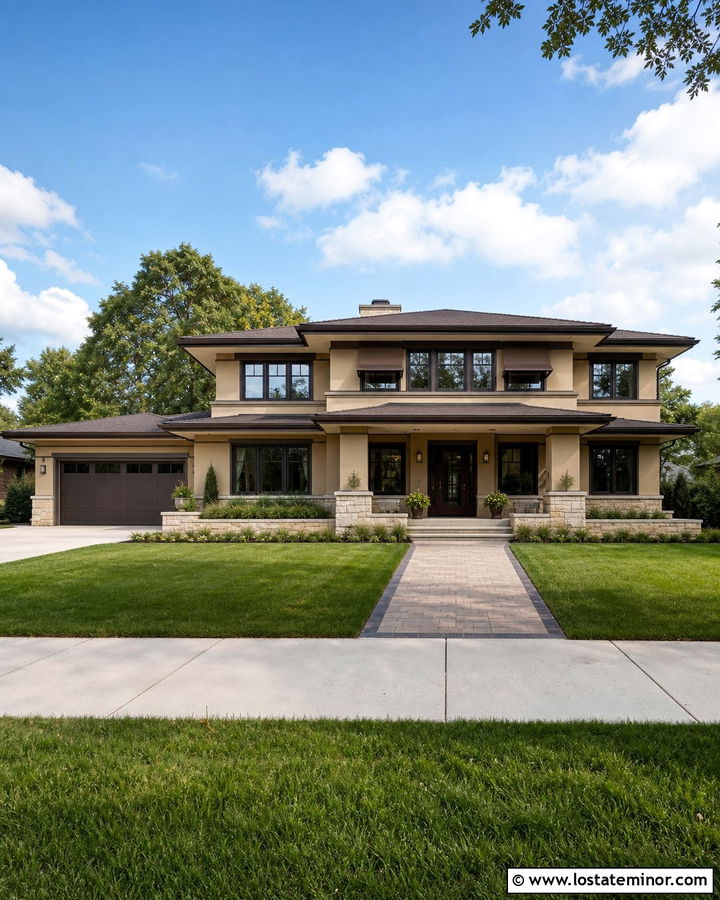
Cocoa brown awnings reinforce the broad horizontal emphasis of a tan Prairie-style house. Cover the exterior in a midtone wheat tan, then use deep brown on the fascia, window frames, garage door, and low-profile fabric awnings. Warm cream under the eaves keeps the darker trim from becoming too heavy. Select awnings with straight valances and minimal hardware so they follow the home’s clean architectural lines. A low hip roof in variegated brown shingles works naturally with the monochromatic palette. Add buff limestone at the foundation and around the entrance for a subtle change in texture. Long planting beds, horizontal grasses, and a wide paver walkway continue the grounded composition. This layered neutral scheme looks cohesive, calm, and intentionally suited to Prairie architecture.
18. Tan Duplex With Dusty Blue Awnings
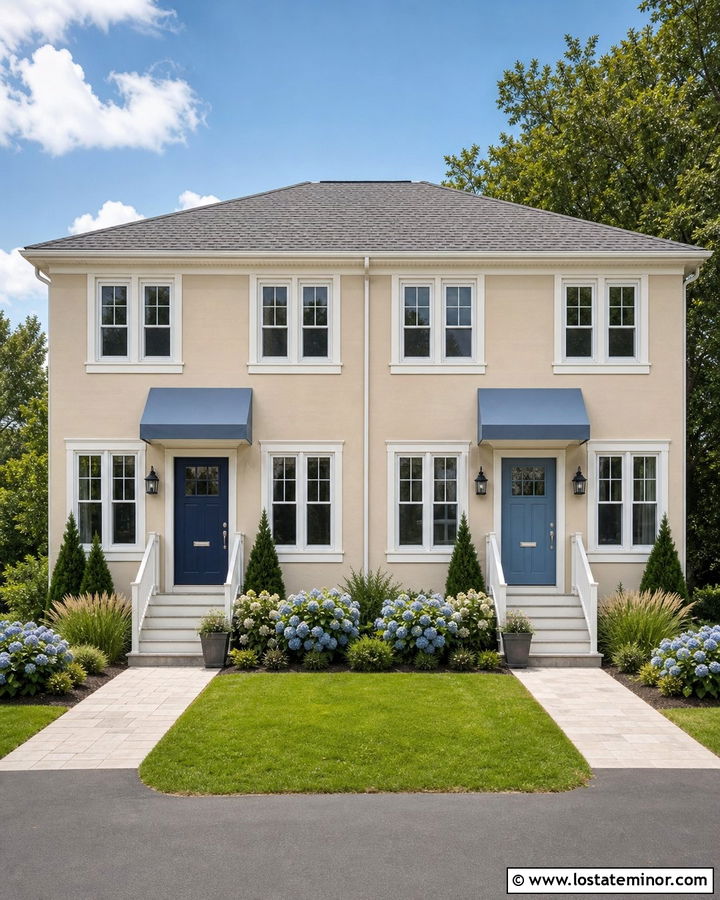
Dusty blue awnings can give a tan duplex a unified exterior while still helping each entrance feel distinct. Paint the main siding a soft almond tan and use warm white trim around both sets of doors and windows. Install matching blue canvas awnings over the entrances, then vary the door shades slightly—one deep navy and one softer slate blue. Identical black lanterns, house numbers, and planters maintain symmetry across the building. A medium-gray roof connects comfortably with the cool blue accents. Keep the shared walkway broad and clearly divided near the entry steps. Balanced beds of hydrangeas, evergreens, and ornamental grasses can frame both sides equally. The coordinated awnings improve the overall composition without making the two homes look completely identical.
19. Tan Farmhouse With Olive Green Awning
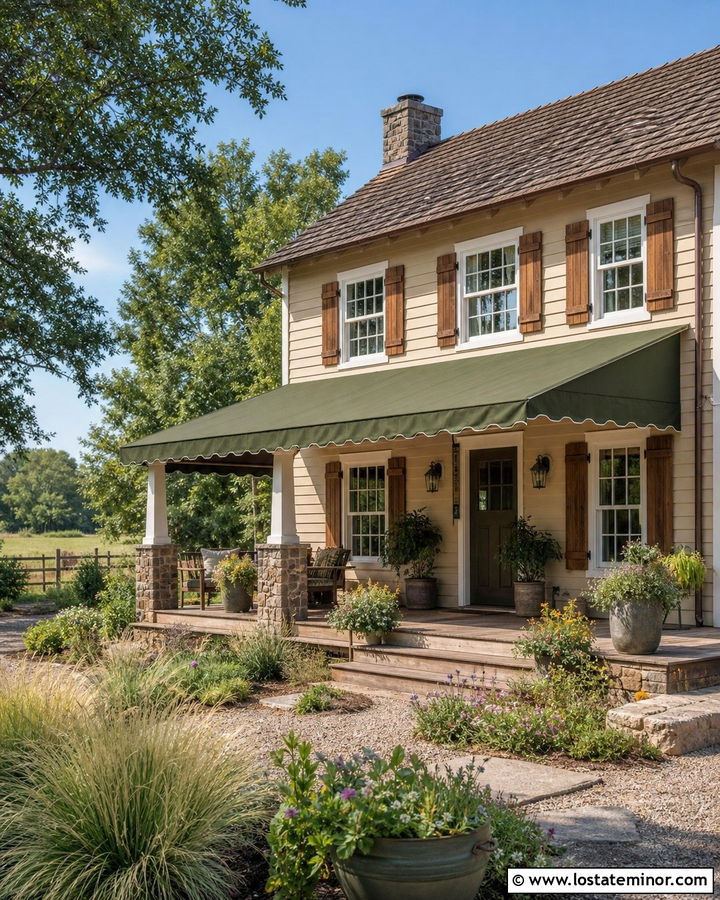
Olive green gives a tan farmhouse an earthy accent that feels softer than black. Choose a warm flax-tan exterior with creamy white trim around the windows, porch columns, and gable edges. Place a solid olive canvas awning above the side patio or a small window grouping near the kitchen. Repeat olive on the front door and add natural cedar shutters for extra warmth. A weathered brown metal roof or brown-gray shingles will keep the palette grounded. Use fieldstone around the porch foundation and a lightly stained wood deck to create a layered rural look. Gravel paths, large planters, native grasses, and simple flowering beds complete the setting. The muted awning color blends with the landscape while still giving the tan facade noticeable depth.
20. Tan Industrial House With Galvanized Steel Awning
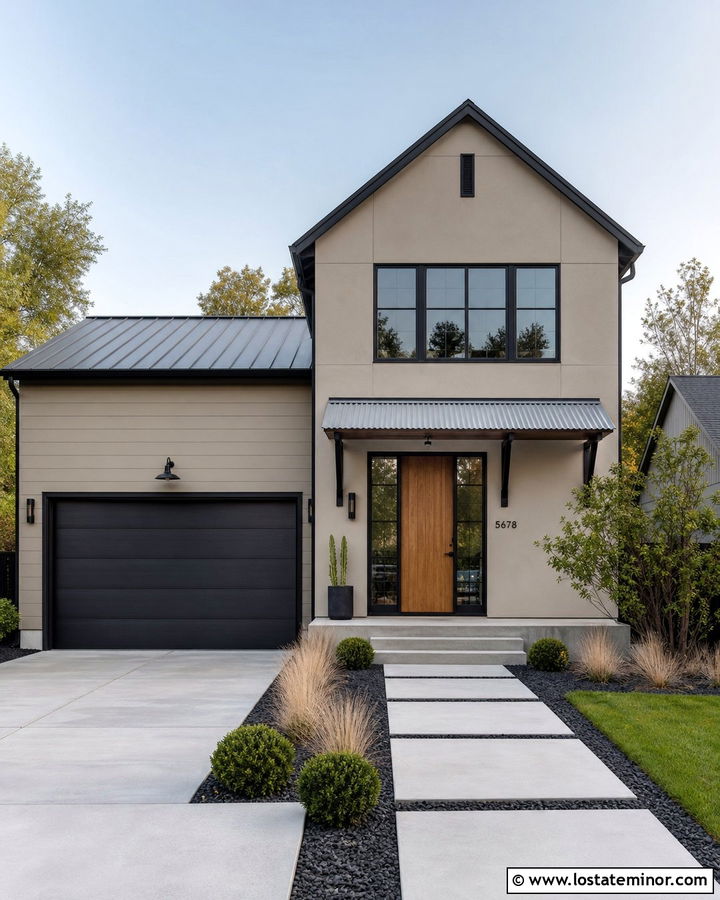
For an industrial-influenced home, a galvanized steel awning provides texture without adding another strong color. Use warm greige-tan fiber cement siding with black-framed windows and a charcoal garage door. Install the corrugated steel awning over a recessed front entrance, supporting it with straightforward black brackets. A natural cedar door and matching soffit soften the metal surfaces and keep the facade from feeling cold. Repeat galvanized steel on small planters or downspouts, but avoid using it on every detail. A low charcoal roof and concrete foundation suit the streamlined material palette. Finish the approach with oversized concrete slabs, black gravel, clipped shrubs, and airy grasses. The complete design balances rugged materials with a comfortable tan base and welcoming wood accents.
21. Tan Cottage House With Mustard Yellow Awning
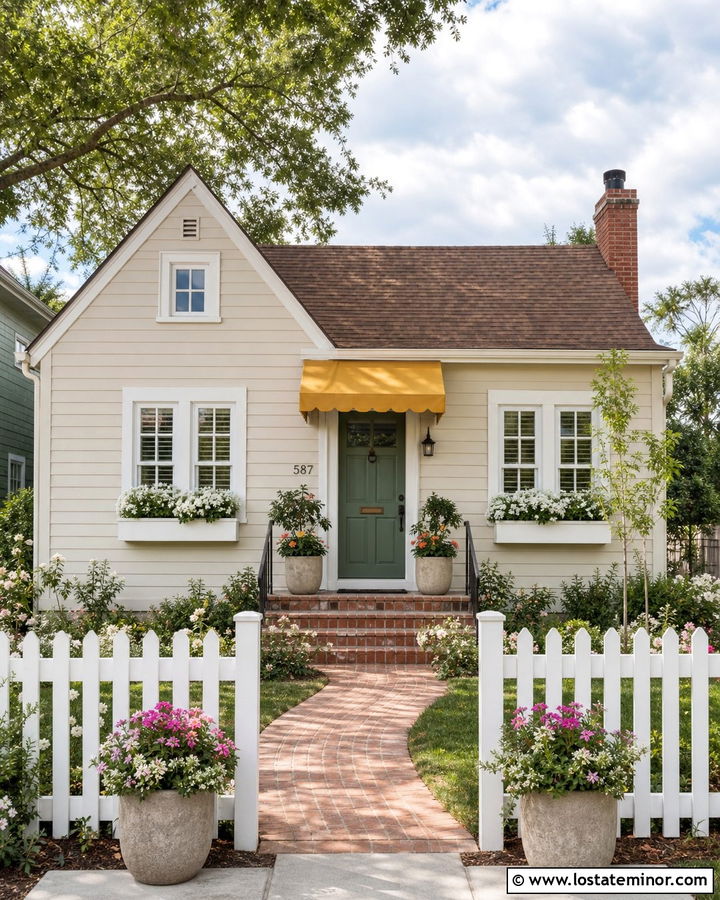
Mustard yellow brings cheerful warmth to a small tan cottage when it is used with restraint. Paint the siding a pale oatmeal tan and select soft white for the trim, porch rails, and window boxes. Add one tailored mustard awning above the front door or a prominent picture window. A muted green door gives the exterior a garden-inspired accent while avoiding an overly matched look. Choose a medium-brown roof and aged bronze hardware to ground the lighter facade. Fill the window boxes with white flowers and trailing greenery rather than repeating more yellow. A curved brick path, picket fence, and loose cottage planting complete the scene. This design makes the awning memorable while keeping the entire house balanced, approachable, and suitable for a residential neighborhood.
22. Tan Adobe House With Taupe Fabric Awning
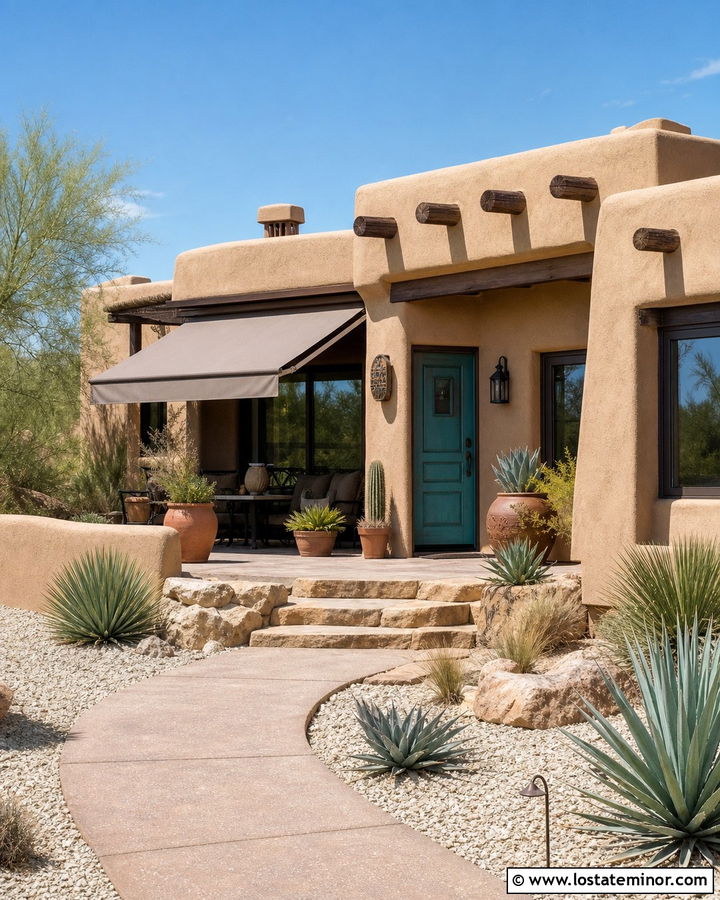
A tonal taupe awning works beautifully on a tan adobe house because the contrast comes from texture and shadow rather than bold color. Use a sun-baked desert tan on the rounded stucco walls, then add a mushroom-taupe retractable awning above a sheltered patio. Dark bronze frames, sconces, and window casings give the neutral palette a clear outline. A turquoise-blue front door can serve as the single colorful accent. Incorporate rough wood vigas, clay planters, and natural stone steps to strengthen the regional character. Pale gravel, agaves, yuccas, and drought-tolerant grasses should frame the house without obscuring its sculptural walls. Under bright daylight, the layered tan and taupe surfaces create a calm, cohesive exterior with plenty of visual depth.
23. Tan Craftsman House With Cedar Bracket Awning
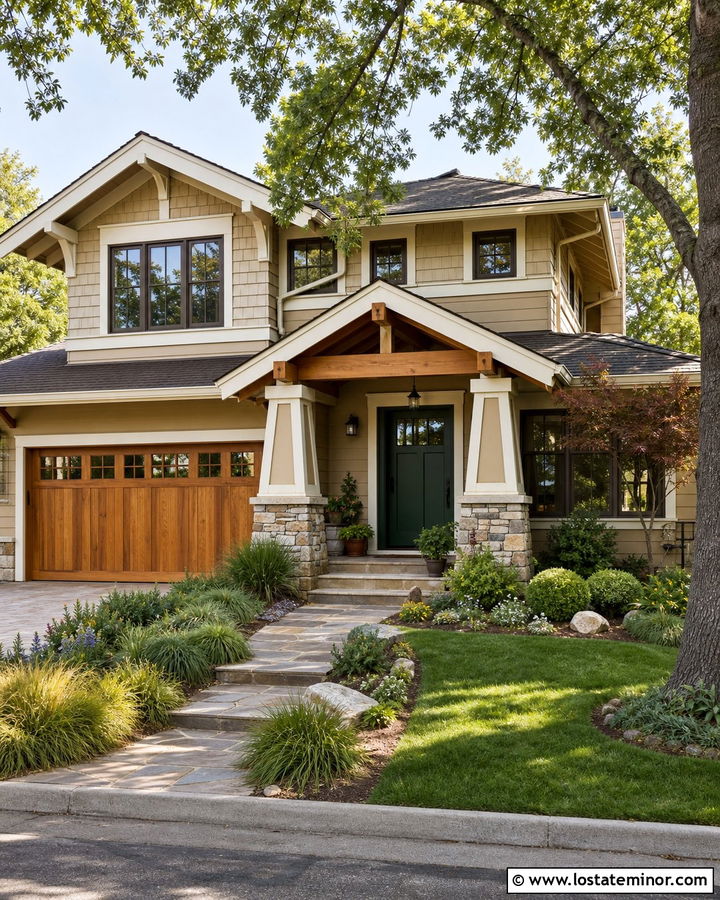
The warm grain of cedar can make a tan Craftsman entrance look more substantial and welcoming. Paint the lap siding a light fawn tan, with creamy white trim and dark bronze windows. Build a compact gabled awning above the front door using exposed cedar rafters, decorative brackets, and brown metal roofing. Repeat the cedar on porch railings, gable vents, and garage door panels. A deep forest green front door provides a rich contrast that still fits the earthy palette. Use mixed tan stone around the porch piers and lower walls to reinforce the handcrafted character. A broad flagstone walkway, rounded shrubs, and layered native plants complete the facade. Every material supports the tan exterior, allowing the architectural awning to feel permanent rather than decorative.
24. Tan Modern House With Clear Polycarbonate Awning
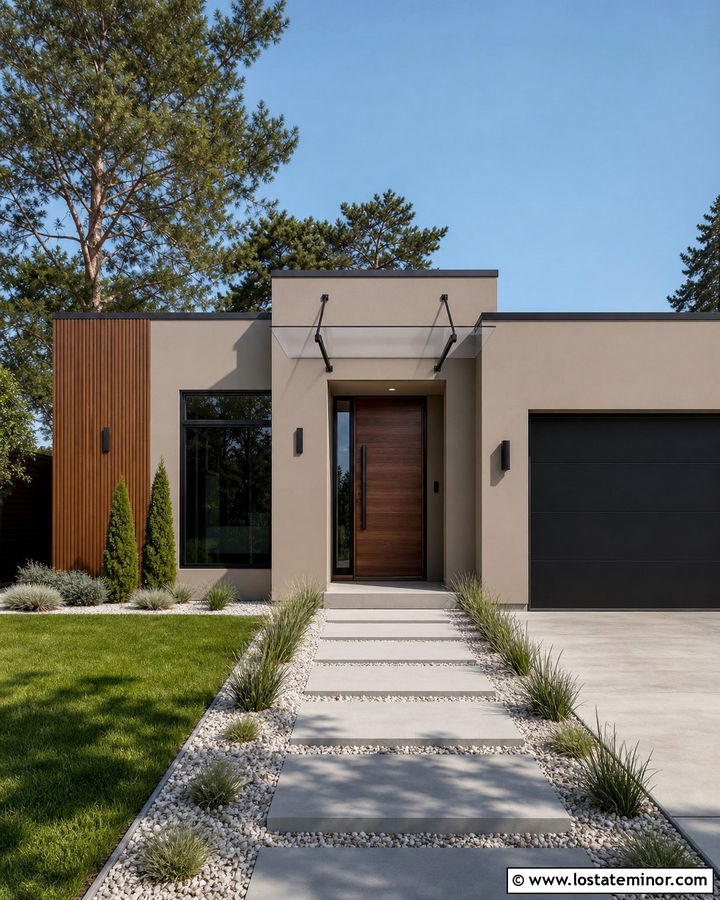
A clear polycarbonate awning protects a modern tan entrance without visually interrupting the facade. Use smooth light taupe-tan stucco with black-framed windows and a flat charcoal roofline. Mount the transparent awning above a pivoting walnut front door using slim matte-black supports. Because the canopy remains visually light, it works well near large windows or narrow entry courts where a solid covering could feel bulky. Repeat walnut on one vertical siding panel and keep the garage door dark charcoal. Linear concrete pavers, white gravel, low grasses, and clipped evergreen forms create an uncluttered landscape. Bright natural light can pass through the awning while its black structure connects with the window frames. The final exterior feels open, crisp, and carefully resolved.
25. Tan Mobile Home With Curved Aluminum Awnings
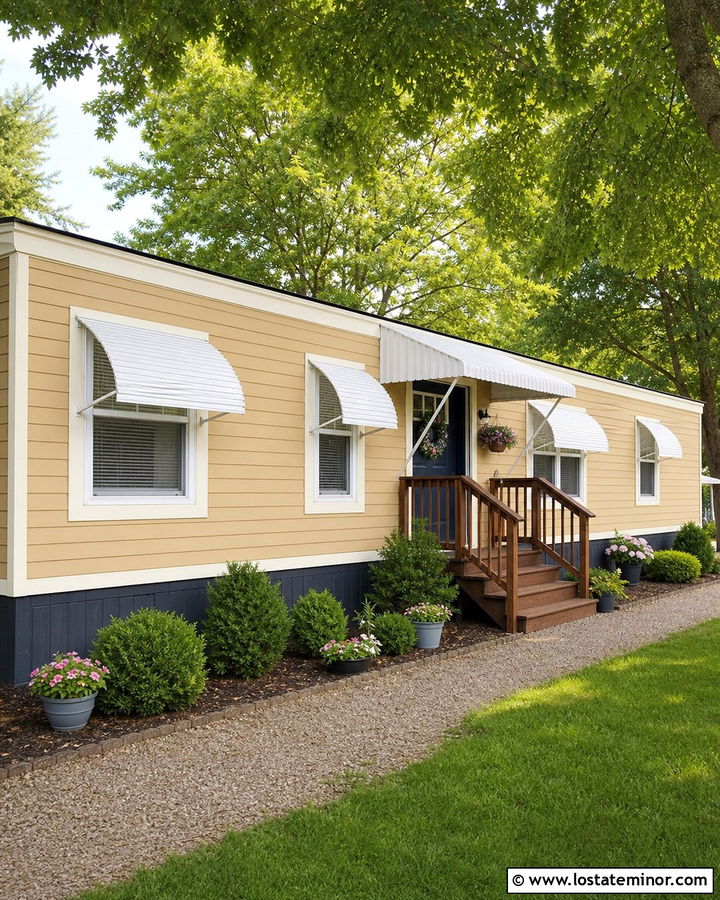
Curved aluminum awnings can give a tan mobile home a cleaner, more finished street-facing appearance. Choose light honey-tan siding and creamy white trim to brighten the long, low structure. Install gently curved awnings in a matte white finish above the main windows, then use a larger matching awning over the front steps. A navy front door provides clear contrast and helps visitors locate the entrance. Add a charcoal skirt or foundation treatment to visually anchor the home. A simple wood porch stained medium brown can introduce natural warmth without requiring elaborate construction. Complete the yard with a straight gravel path, compact shrubs, flowering planters, and a neatly maintained lawn. Matching awnings create consistency across the facade and make the overall exterior feel intentional.
26. Tan Coastal Cottage With Aqua Awnings
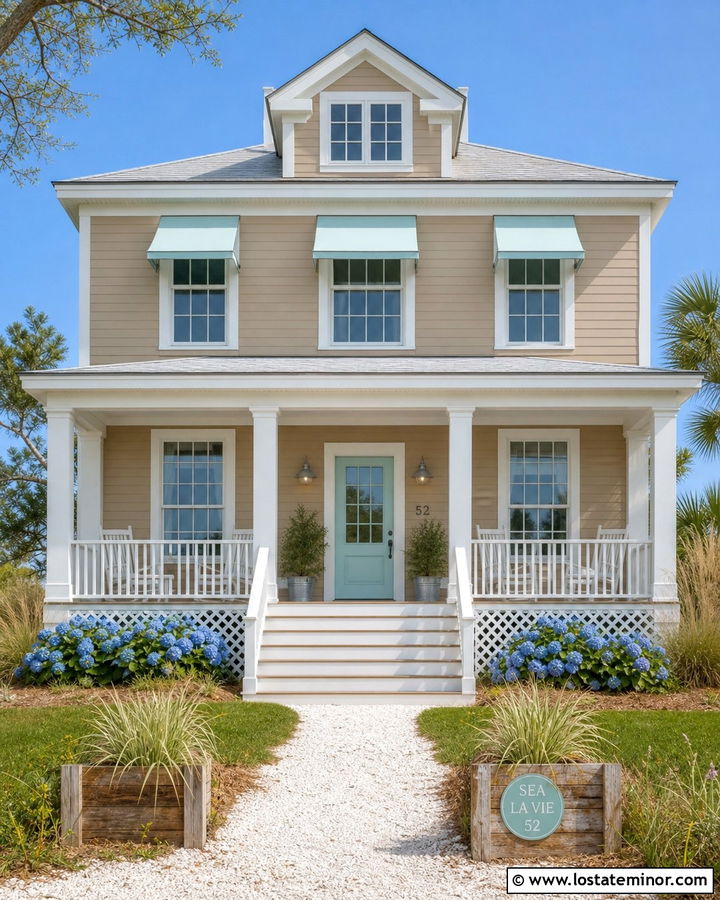
Aqua awnings create a lively but still relaxed accent on a sandy tan coastal cottage. Use warm beige-tan shingles with crisp white trim, railings, and porch columns. Select muted aqua fabric rather than a highly saturated turquoise, and place the awnings over two front windows for a balanced arrangement. Paint the front door the same aqua color, then add brushed nickel hardware and galvanized exterior lights. A pale gray roof keeps the upper facade light and compatible with the cooler details. White lattice below the porch can add texture without introducing another color. Surround the house with beach grasses, hydrangeas, crushed-shell paths, and weathered wood planters. The entire scheme feels bright and welcoming while the tan siding remains the stable, neutral foundation.
27. Tan Spanish House With Clay Tile Awning
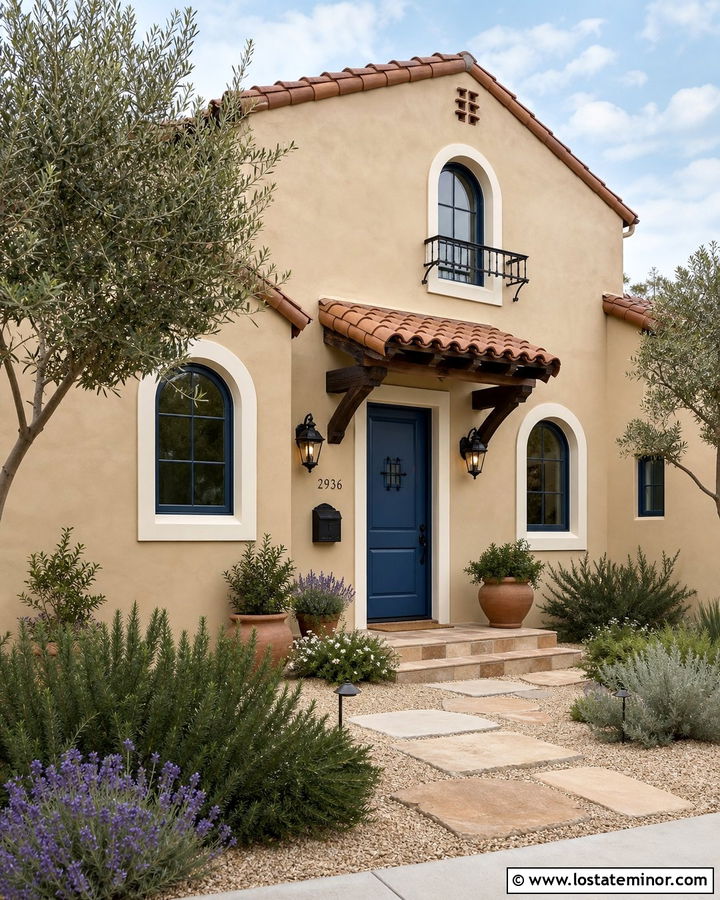
A small clay tile awning can make the entrance of a tan Spanish-style house feel architecturally complete. Apply a creamy desert tan stucco across the main walls and use warm off-white around arched windows. Build the door awning with dark wood brackets and curved terracotta tiles that match the main roof. A rich blue front door introduces a classic contrasting accent, while black iron lanterns and window grilles provide definition. Repeat the clay color in large planters or brick-edged steps rather than adding unrelated red accents. A curved flagstone walkway, gravel beds, rosemary, lavender, and compact olive trees support the warm exterior. Because the awning uses the same material as the roof, it appears naturally integrated into the house.
28. Tan Traditional House With Black Striped Awnings
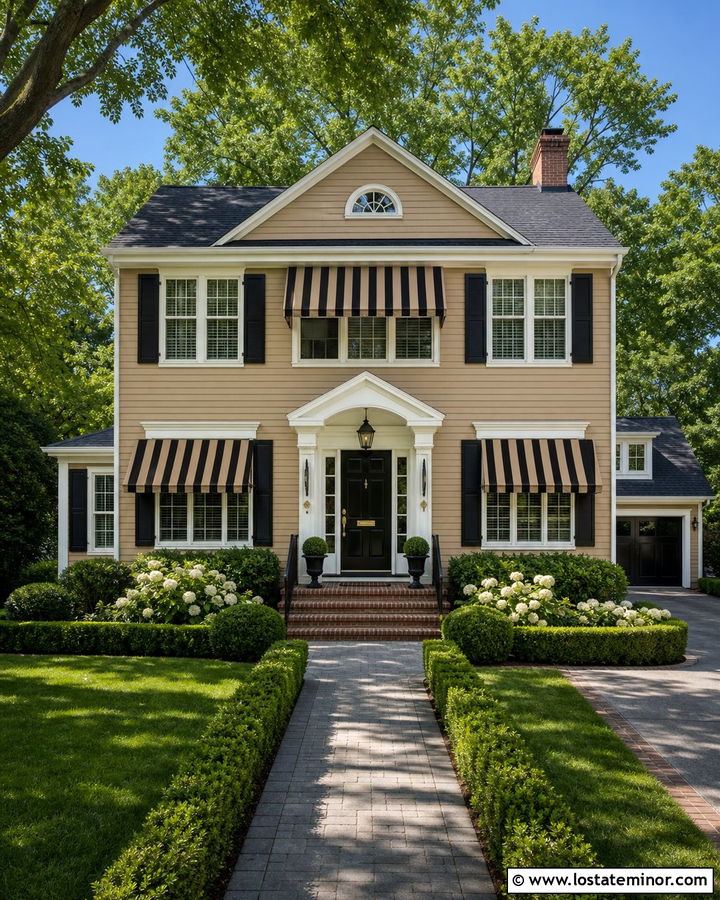
Black-and-tan striped awnings give a traditional two-story house a tailored, graphic appearance. Choose medium camel-tan siding, creamy white trim, and black shutters for a clear three-color palette. Place matching striped awnings over selected first-floor windows and keep their frames black. A glossy black front door, brass hardware, and symmetrical lanterns strengthen the formal entry. Use a dark charcoal roof so the contrast continues across the entire facade. Warm brick steps can prevent the black details from feeling too stark against the tan siding. Formal boxwood borders, white flowering shrubs, and a straight paver walkway reinforce the orderly architecture. The striped fabric adds pattern from the street, yet the limited palette keeps the finished exterior controlled and cohesive.
29. Tan Rustic House With Rust Metal Awning
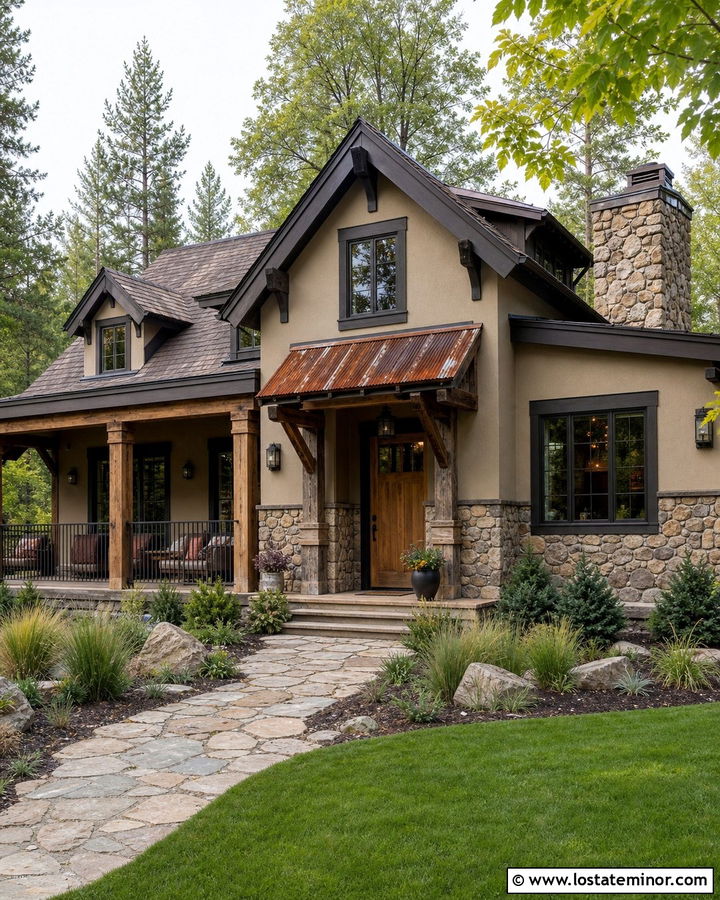
Weathered rust-colored metal brings warmth and rugged texture to a tan rustic house. Cover the facade in deep sand-tan siding, with espresso trim and a dark brown roof. Add a corrugated metal awning above the front entrance, using heavy timber brackets stained to match the natural wood door. The rust finish should coordinate with nearby stone containing red, brown, and copper tones. Repeat the metal sparingly on a garage light or planter edging so the awning remains the primary accent. A fieldstone foundation, wide timber porch, and irregular flagstone path create a durable, layered exterior. Frame the house with native grasses, evergreen shrubs, and mature trees. This complete design feels comfortable in a wooded, mountain, or rural setting.
30. Tan Suburban House With Green Retractable Awning
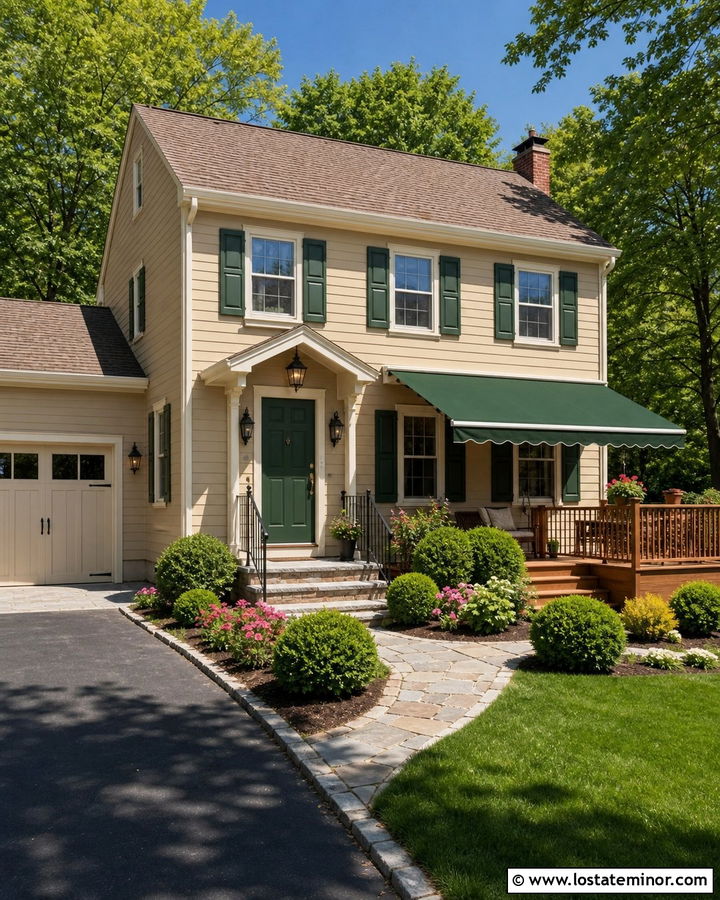
A deep green retractable awning can turn the patio of a tan suburban house into an attractive extension of the facade. Use warm buff-tan siding with creamy trim, dark green shutters, and a matching front door. Position the solid green awning above a rear or side deck that remains visible in a three-quarter curb view. Choose a dark bronze frame that coordinates with the lighting, gutters, and window hardware. A medium-brown shingle roof and natural cedar deck keep the exterior warm and familiar. Add a stone-edged walkway, a well-kept lawn, rounded shrubs, and colorful but controlled planting beds. When the awning is extended, its green fabric relates naturally to the landscaping while creating a complete, coordinated outdoor living area.
Conclusion:
The most successful 30 Tan House Design With Awning Ideas combine the awning with the home’s siding, trim, roof, doors, and surrounding landscape. Tan can support understated cream and taupe awnings, natural cedar structures, or stronger accents such as navy, forest green, burgundy, and aqua. Architecture should guide the final choice. Metal suits modern and industrial homes, while striped canvas works naturally with traditional, coastal, and Mediterranean exteriors. Before committing, compare material samples beside the siding during different daylight conditions. Also check the awning’s scale against the window, entrance, or patio it will cover. A carefully coordinated design can add useful shelter, architectural depth, and stronger curb appeal without making the facade feel unnecessarily busy.

Related posts: