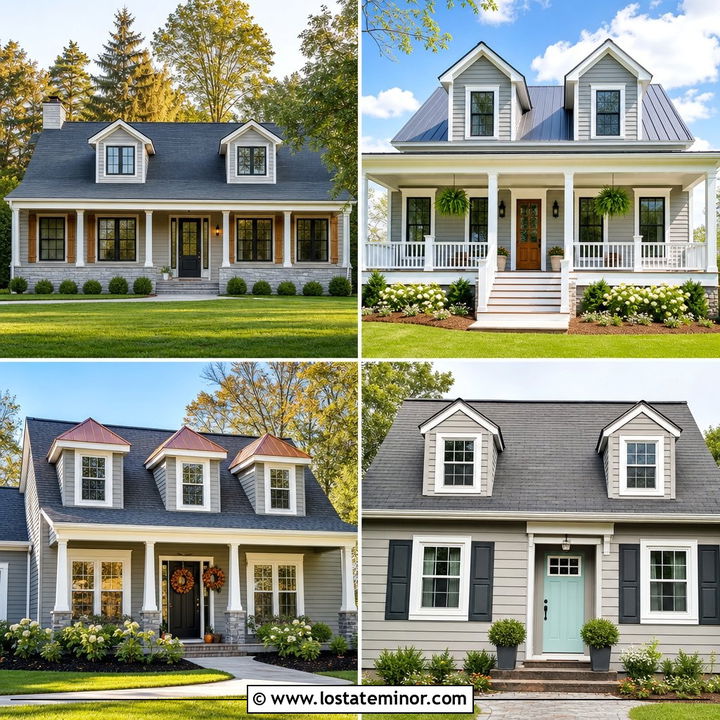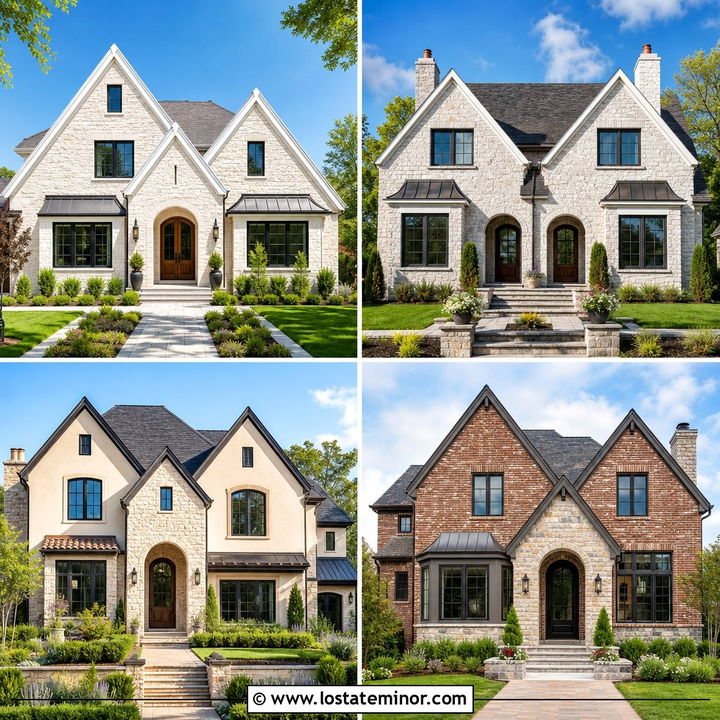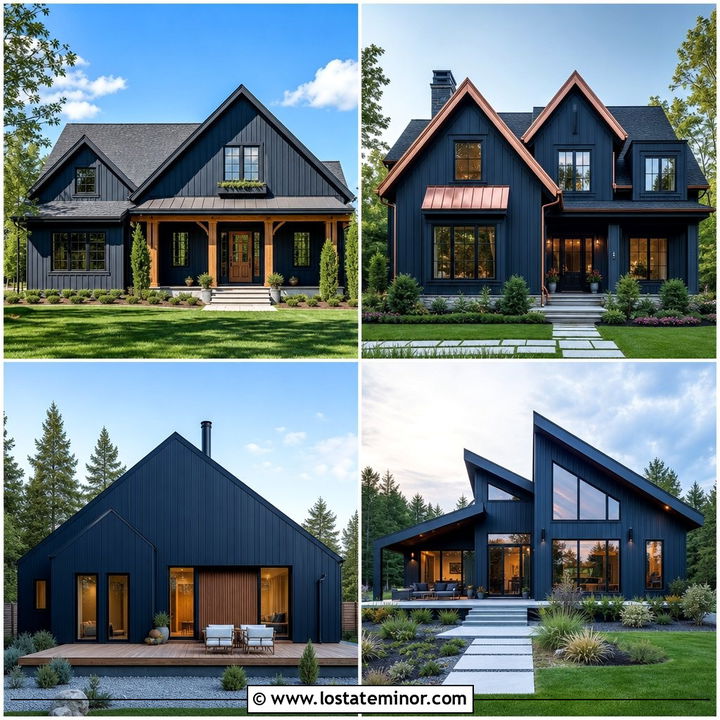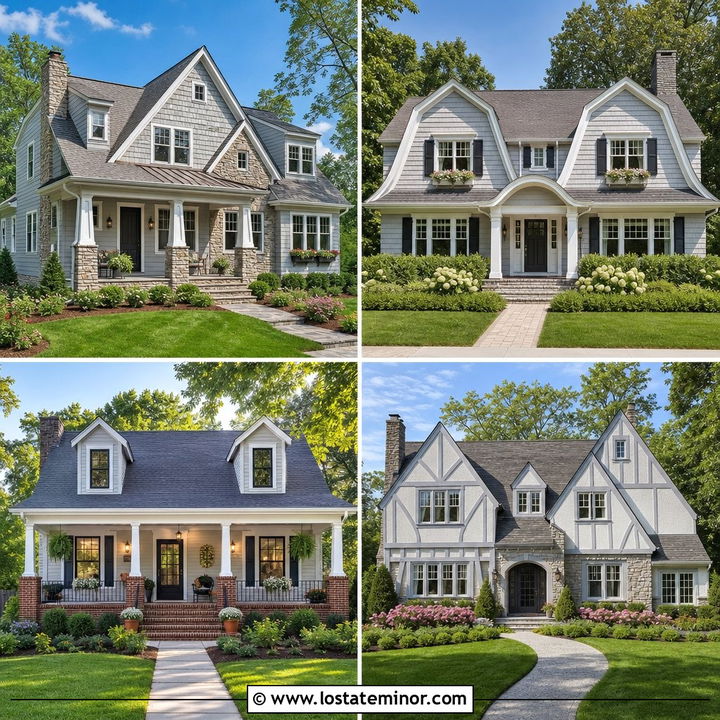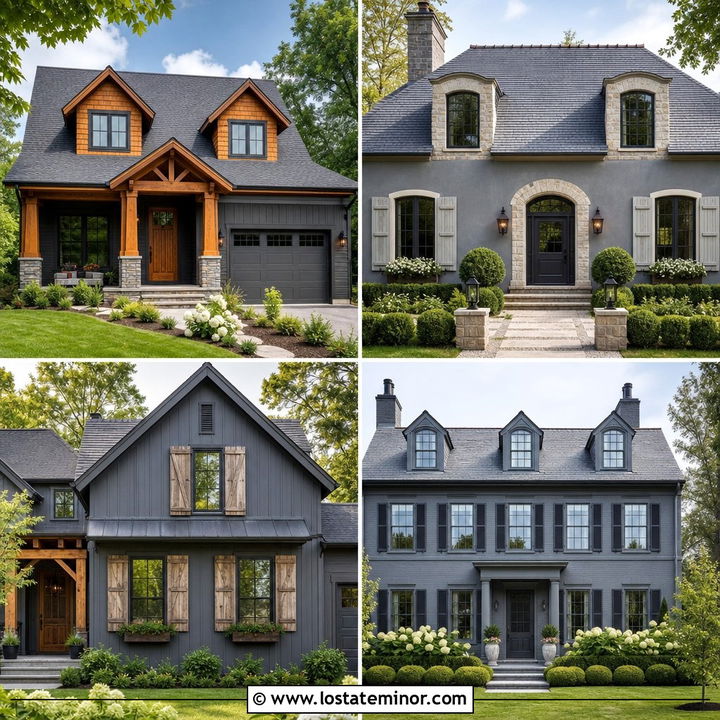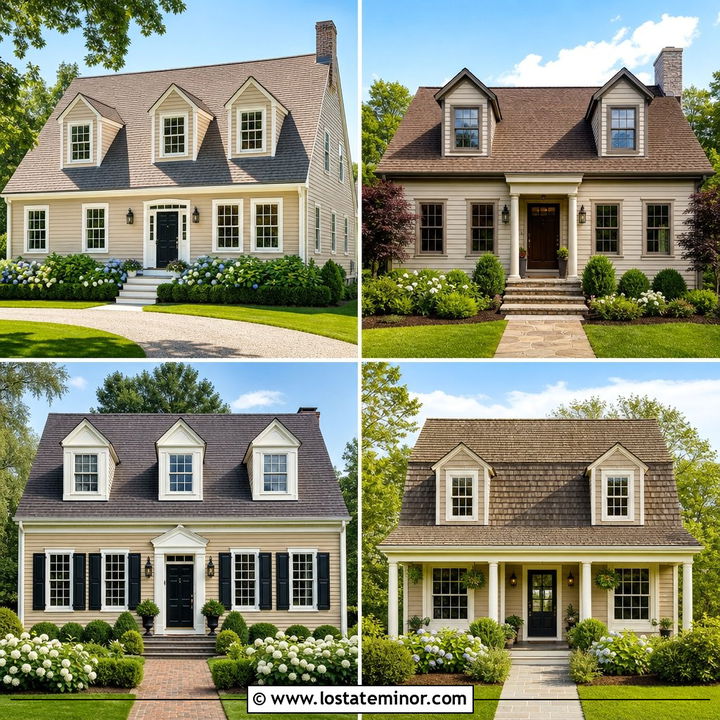
Dove grey offers a calm, flexible foundation that makes gabled architecture feel crisp without looking cold. These 30 Dove Grey House Design With Gables Ideas explore complete exterior schemes rather than isolated paint choices. Each look coordinates the siding with trim, roofing, doors, masonry, woodwork, and landscaping. You will find options for Craftsman homes, modern farmhouses, cottages, ranch houses, Colonials, and more. Some combinations use bold black contrast, while others soften the facade with warm white, natural cedar, brick, or stone. The goal is to help you highlight every peak and roofline while creating balanced curb appeal from the street. Use the following 30 Dove Grey House Design With Gables Ideas.
1. Dove Grey Craftsman With Cedar Gables
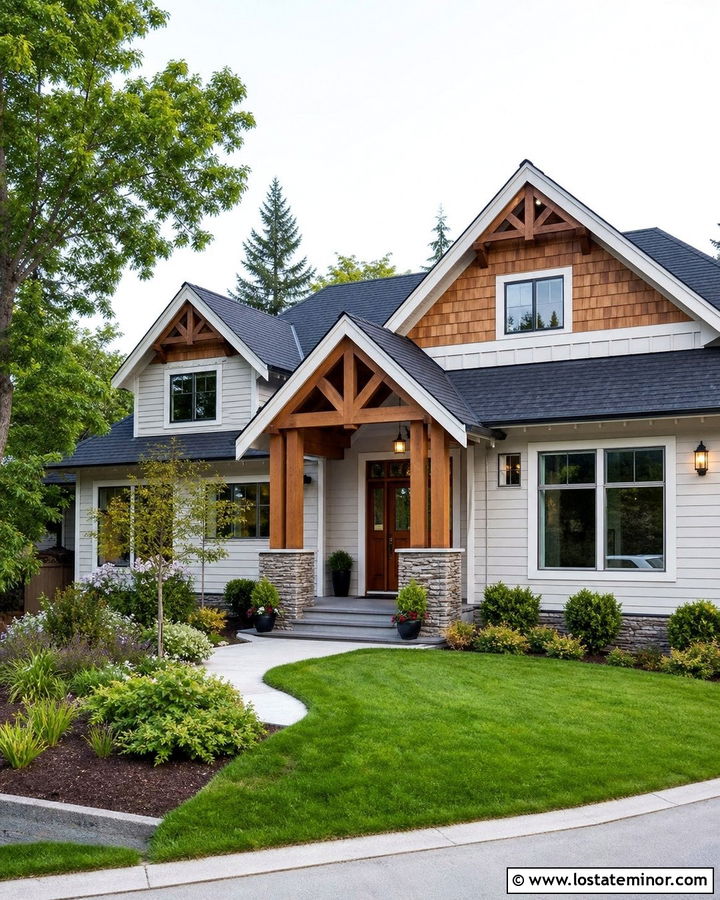
Natural cedar brings warmth to a dove grey Craftsman and keeps the cool siding from feeling flat. Cover the main facade in horizontal lap siding, then place cedar shakes inside the front-facing gables. Crisp white trim can outline the roof peaks, windows, porch columns, and fascia. A medium charcoal shingle roof provides enough contrast without overpowering the lighter body color. Repeat the cedar on the front door, porch ceiling, and decorative brackets to make the entire exterior feel connected. A stacked-stone porch base adds another earthy texture. Finish the design with black lanterns, simple foundation shrubs, and a gently curved walkway. The result feels welcoming, detailed, and appropriate for both wooded neighborhoods and traditional suburban streets.
2. Dove Grey Farmhouse With White Gables
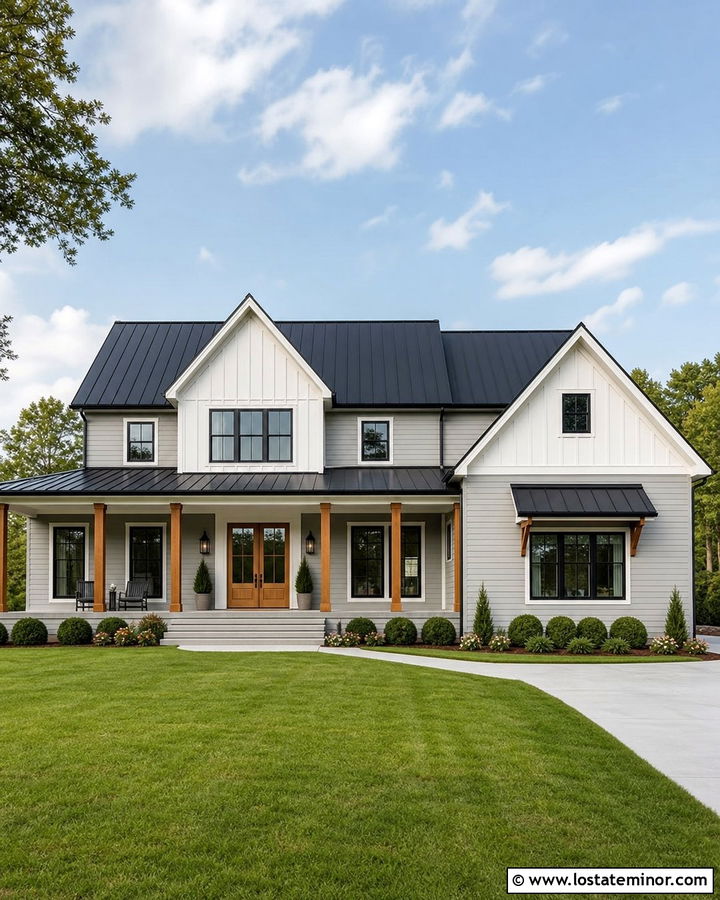
Picture a bright farmhouse where tall roof peaks stand out against an open landscape. Dove grey board-and-batten siding gives the house a soft neutral body, while warm white fills the upper gables and wraps the trim. Using white within selected peaks makes a wide facade appear lighter and breaks up large siding areas. A matte black standing-seam roof adds a clean outline above the pale colors. Continue black on the window frames, porch lights, gutters, and simple front-door hardware. Natural wood porch posts and double doors prevent the black-and-grey palette from becoming too severe. Broad concrete steps, clipped greenery, and pale gravel around the foundation complete this practical farmhouse exterior without distracting from the strong gabled roofline.
3. Dove Grey Cottage With Stone Gables
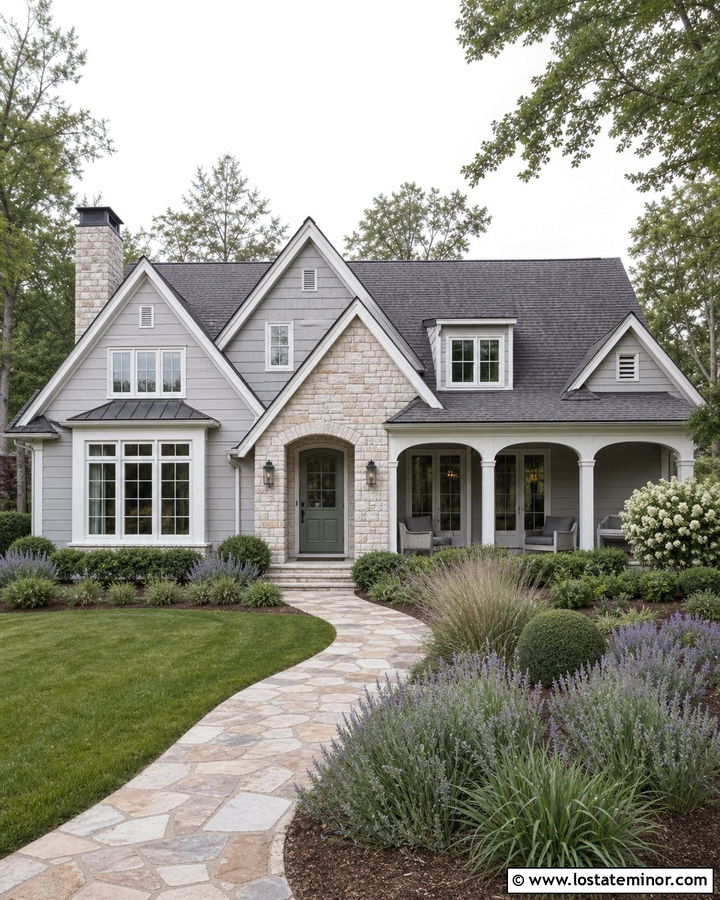
Stone can give a compact dove grey cottage a strong sense of character. Use soft grey lap siding across the main walls and carry irregular limestone or fieldstone over the lower facade and one prominent entrance gable. Creamy white trim will soften the transition between the siding and masonry while defining the windows, eaves, and roof peaks. Choose a weathered charcoal roof with subtle brown variation so it relates to both materials. A muted sage front door adds quiet color without pulling attention away from the stonework. Arched porch openings, divided-light windows, and a gently sloped walkway enhance the cottage shape. Layer lavender, ornamental grasses, and rounded shrubs along the foundation for relaxed curb appeal that suits the natural textures.
4. Dove Grey Colonial With Black Gables
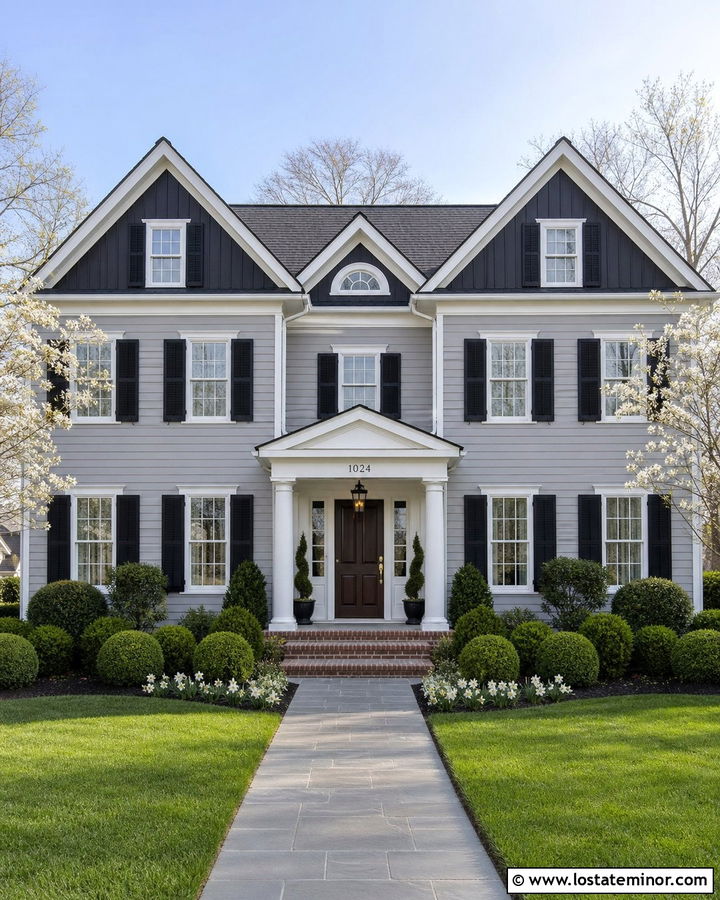
A symmetrical Colonial gains extra definition when black details frame its dove grey exterior. Paint the clapboard siding soft grey, then use near-black board-and-batten panels inside the smaller gables above the entrance and side wings. The darker peaks draw the eye upward and give a traditional facade a sharper, more updated finish. Keep the main window trim, corner boards, and porch columns bright white to preserve classic contrast. Black shutters, gutters, and a charcoal roof connect the gable accents across the elevation. For the entrance, choose a rich mahogany door with polished brass hardware. Brick steps and a straight flagstone path reinforce the home’s formal proportions. Balanced boxwoods and small flowering trees finish the front yard without hiding the architecture.
5. Dove Grey Ranch With Double Gables
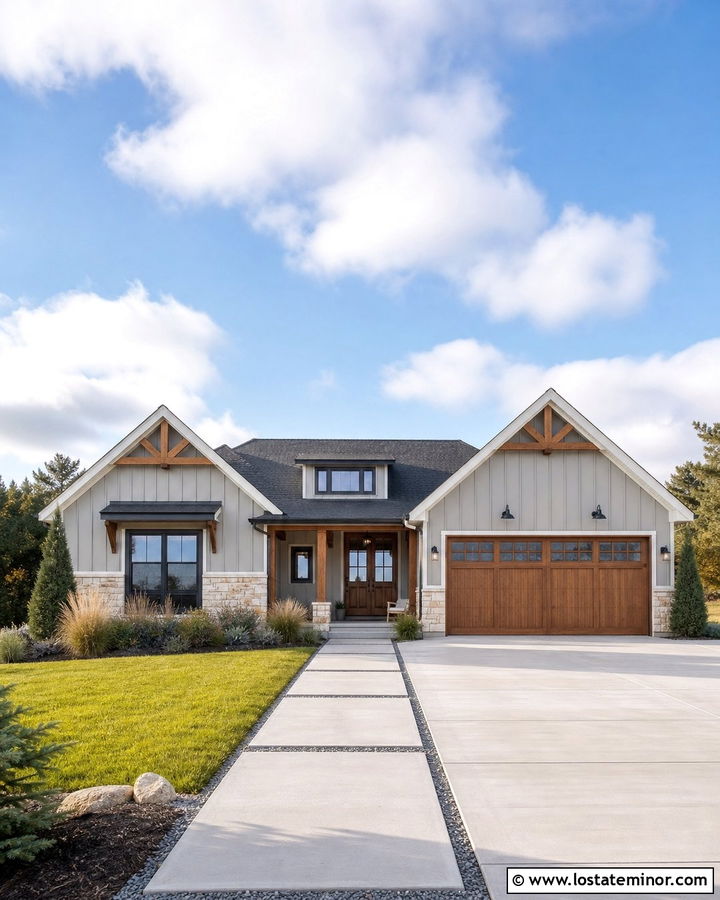
Does your ranch house need more dimension from the street? Two front-facing gables can transform its long, low profile. Cover the main walls in dove grey horizontal siding and use matching board-and-batten panels within both gable ends. Thick white fascia and trim will clearly define each triangular peak. Add simple cedar trusses beneath the rooflines to introduce warmth and architectural depth. A dark grey shingle roof keeps the palette grounded, while a stained wood garage door balances a matching front door at the opposite end. Use pale limestone around the porch base or chimney for additional texture. Low grasses, spreading evergreens, and a wide concrete walkway preserve open sightlines. This coordinated approach makes the ranch feel broader, polished, and intentionally designed.
6. Dove Grey Bungalow With Shingle Gables
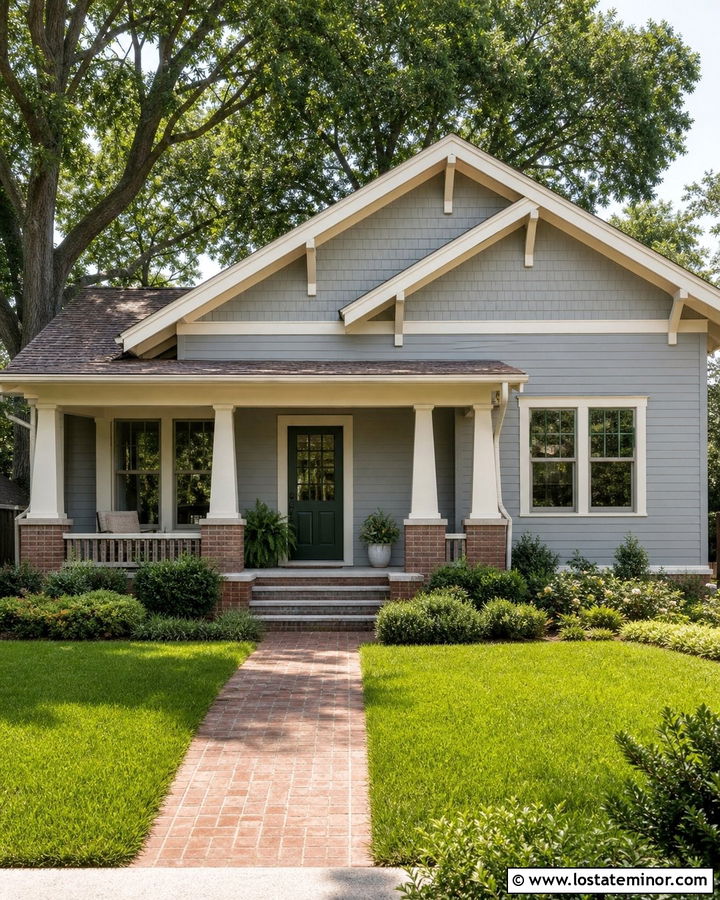
Textured gables are an easy way to give a dove grey bungalow more handcrafted appeal. Apply narrow lap siding to the first floor and scalloped or straight-edge shingles inside the primary roof peak. Paint both surfaces the same dove grey so the texture creates interest without making the compact facade feel busy. Use warm ivory for the window trim, tapered porch columns, railings, and exposed rafter tails. A deep green front door adds a nature-inspired focal point beneath the sheltered porch. Weathered brown roof shingles and a red-brown brick foundation bring warmth to the lighter body color. Complete the scene with a brick walkway, leafy native plants, and two small porch planters. The finished bungalow feels layered, comfortable, and visually balanced.
7. Dove Grey Cape Cod With Dormer Gables
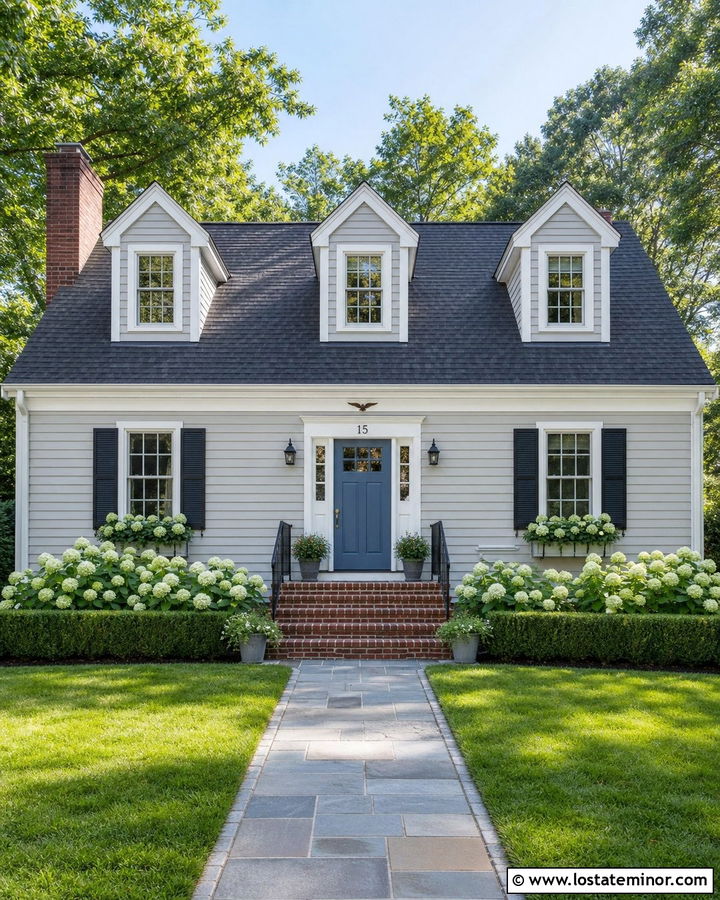
A Cape Cod exterior benefits from a restrained palette that lets its dormers and roof shape remain the focus. Dove grey clapboard siding creates a gentle background across the main facade. Paint the dormer gables, window casings, corner boards, and entry surround in a soft white with a slightly warm undertone. This combination keeps the small house bright while clearly defining each architectural line. Add charcoal shutters and a matching charcoal roof to bring order to the repeated windows. A dusty blue front door introduces subtle coastal color without turning the design into a theme. Red brick steps provide traditional warmth at ground level. Hydrangeas, clipped hedges, and a straight stone path complete a familiar Cape Cod look that feels fresh rather than overly formal.
8. Dove Grey Tudor With Timber Gables
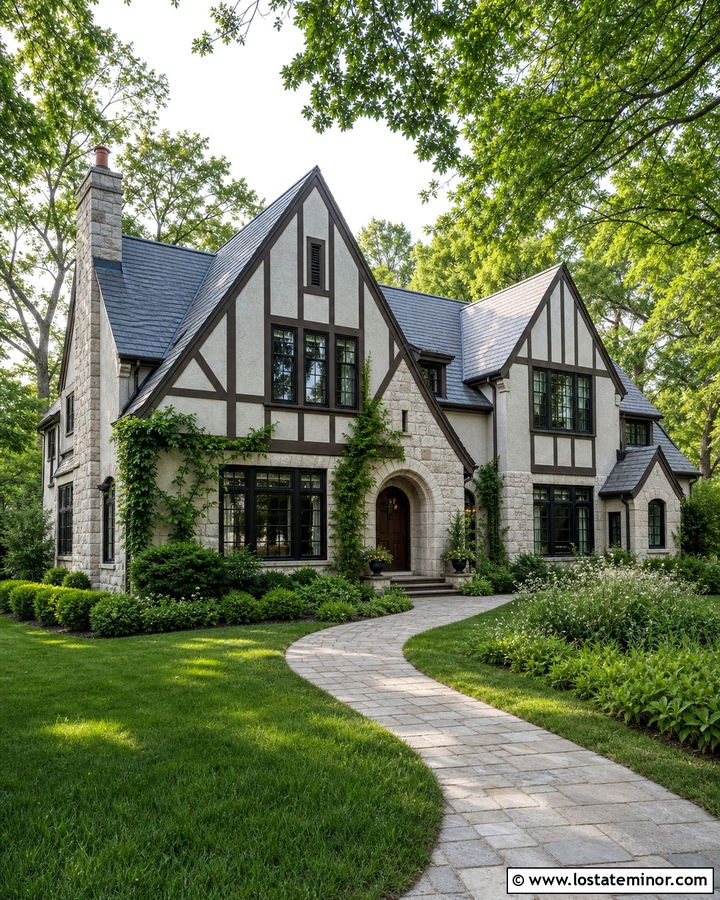
Deep timber accents create striking contrast on a dove grey Tudor home. Use light grey stucco or smooth fiber-cement panels on the main walls, then place dark brown half-timbering across steep front gables. The exposed pattern should follow the structure of each peak rather than appearing decorative or random. Warm cream trim around the windows and arched entry softens the relationship between grey and brown. A dark slate-look roof reinforces the steep roofline and gives the exterior a substantial finish. Choose a medium walnut door with black iron hardware for the recessed entrance. Limestone around the lower walls can add age-inspired texture without making the facade too heavy. Informal hedges, climbing greenery, and a curved paver walkway create a fitting garden setting.
9. Dove Grey Modern House With Metal Gables
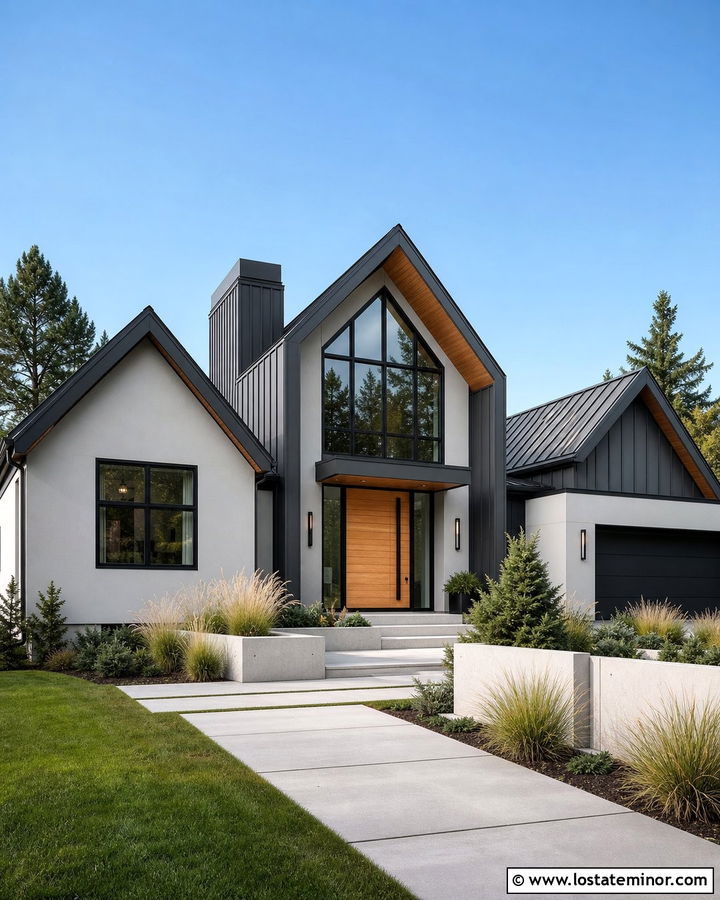
Clean materials help dove grey feel distinctly modern. Cover the central portion of the house in smooth grey panels or wide vertical siding, then emphasize projecting gables with charcoal standing-seam metal. Black-framed windows can stretch toward the peaks, strengthening the tall geometric lines. Keep the fascia narrow and dark so the roof appears crisp against the softer wall color. A warm cedar front door and matching soffits add enough natural contrast to make the entrance inviting. Use pale concrete around the porch, retaining walls, and broad walkway for a simple material transition. Structured grasses and low evergreen plantings complement the architecture without softening it too much. The complete design feels streamlined, but the warm wood and quiet grey prevent it from appearing stark or commercial.
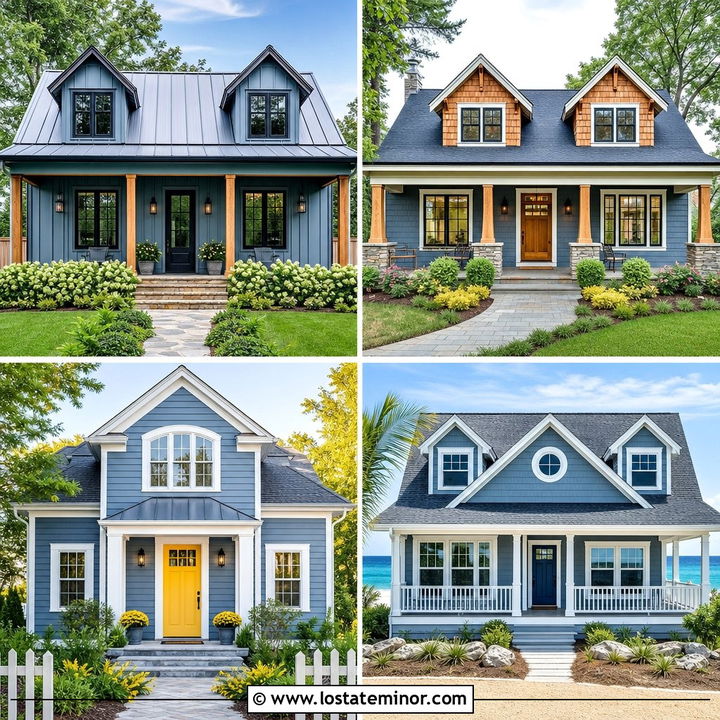
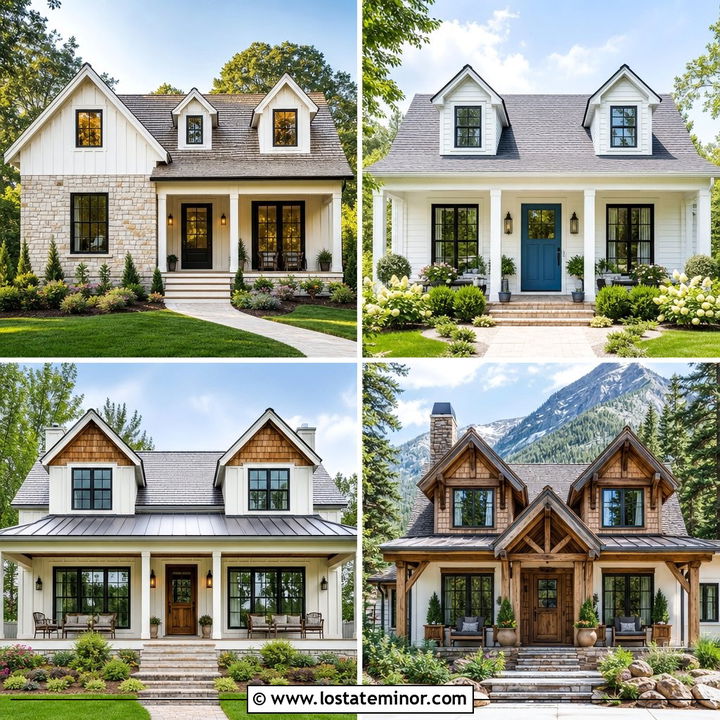
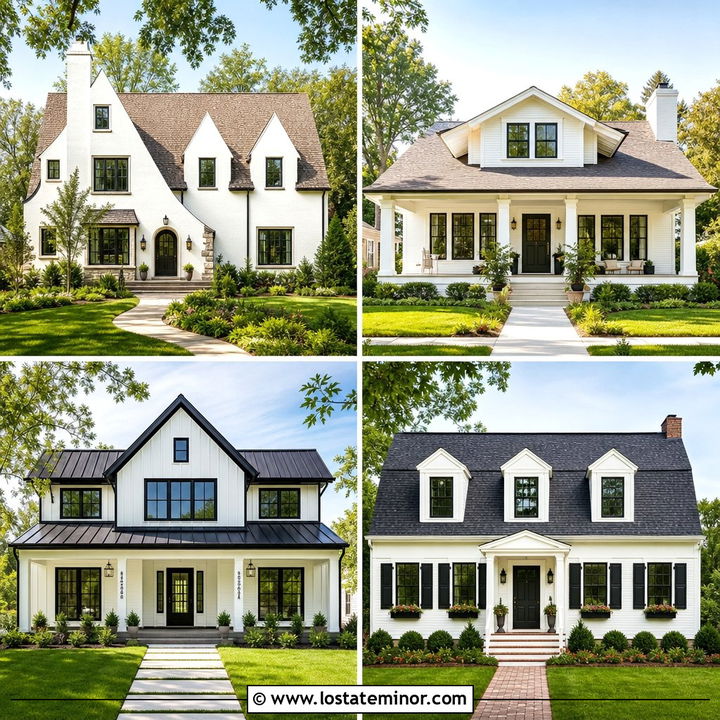
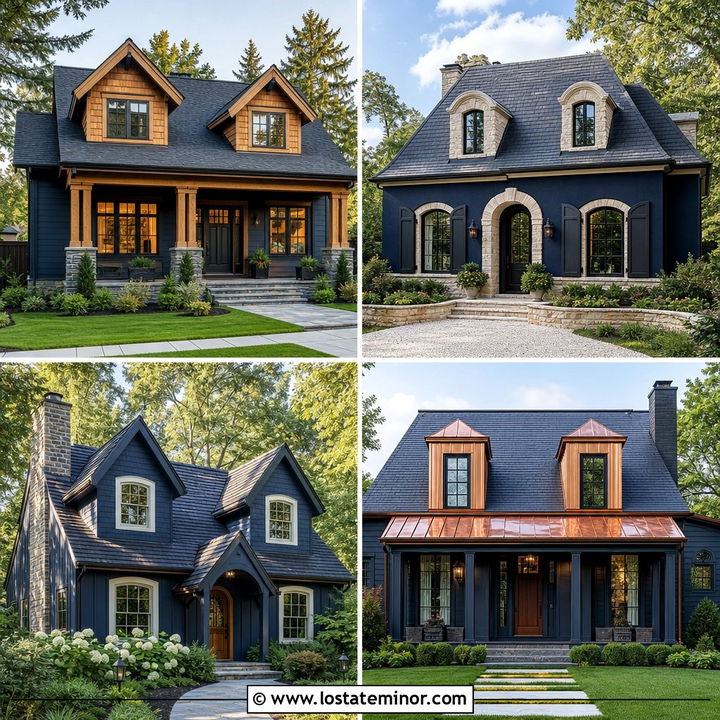
10. Dove Grey House With Brick Gables
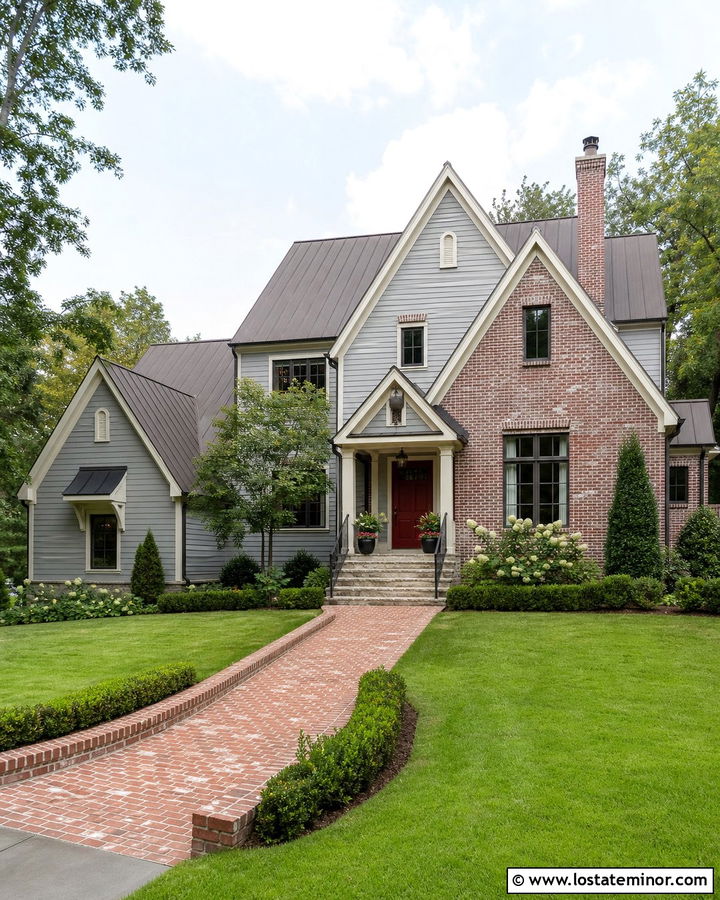
Existing red brick does not need to compete with dove grey siding. It can become the warm anchor of the entire exterior. Keep the brick natural across a front gable, chimney, and lower porch walls. Install dove grey lap siding on the remaining facade, allowing its cool softness to balance the deeper masonry tones. Cream trim works better than stark white when the brick contains orange or brown variation. Choose a dark bronze roof, gutters, and lights to bridge the warm and cool materials. A blackened red front door can echo the brick without matching it exactly. Finish with stone steps, simple hedges, and a wide lawn. Repeating the brick in the walkway border will make the mixed-material facade look deliberate from curb to entrance.
11. Dove Grey House With Charcoal Gables
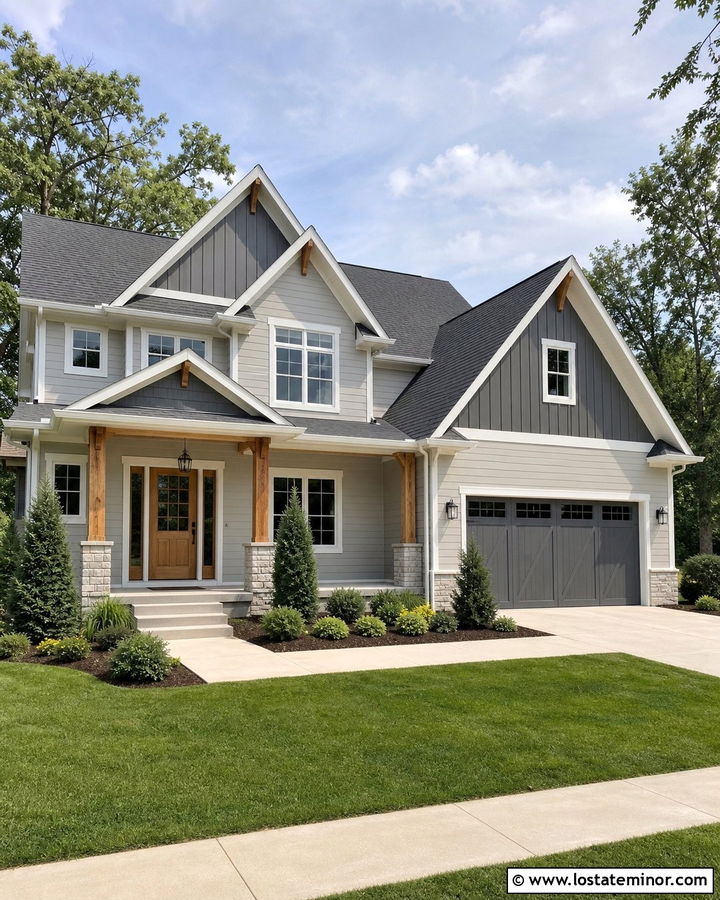
For stronger contrast without using pure black, pair dove grey walls with charcoal gables. Horizontal grey siding can cover the main structure, while charcoal board-and-batten siding marks the entrance peak and upper garage gable. This placement visually separates the functional areas of a wide house. Use clean white trim around the rooflines and windows to keep the two greys from blending together. A medium-toned cedar door and matching porch posts provide necessary warmth. The roof should be charcoal but slightly lighter or more varied than the gable siding, allowing each surface to remain visible. Pale stone around the porch columns can brighten the lower level. Neat lawn edges, upright shrubs, and a direct walkway support the crisp, tailored character of the finished exterior.
12. Dove Grey House With White Trimmed Gables
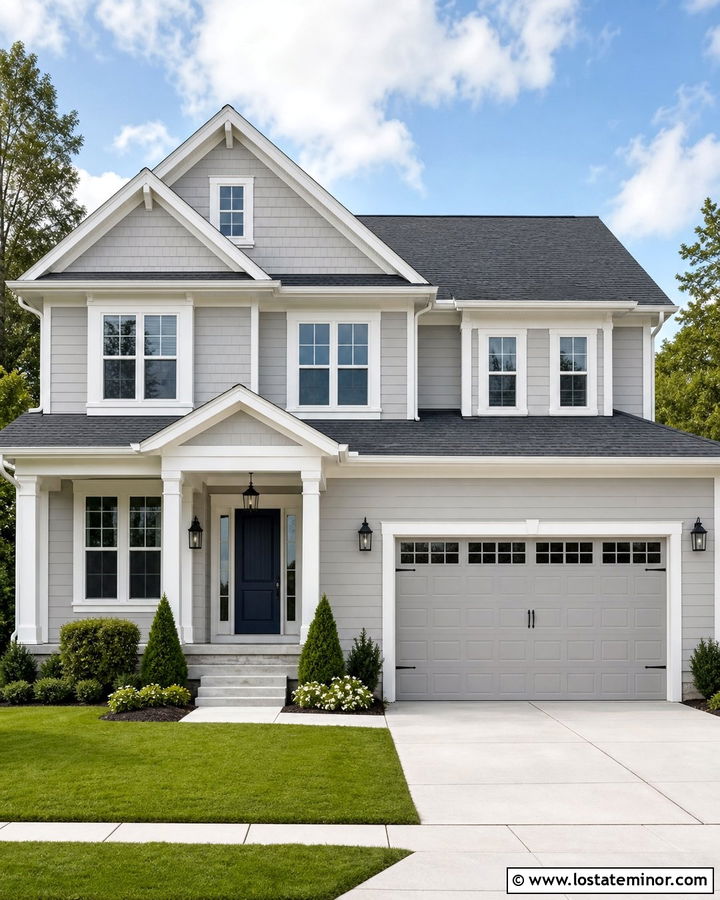
Sometimes the simplest treatment provides the clearest architectural impact. Paint all siding dove grey, including horizontal walls and vertical panels inside the gables. Then outline each peak with substantial warm white fascia, bargeboards, soffits, and trim. The repeated white triangles make intersecting rooflines easier to read while keeping the overall palette calm. Use a medium charcoal roof rather than black to maintain a softer level of contrast. A navy front door can supply a classic focal point, supported by black lanterns and hardware. If the home has a garage, paint its door dove grey so it recedes into the facade. White porch columns, pale concrete steps, and neatly shaped evergreen shrubs complete a versatile exterior that works across traditional, transitional, and newer suburban architecture.
13. Dove Grey House With Black Trimmed Gables
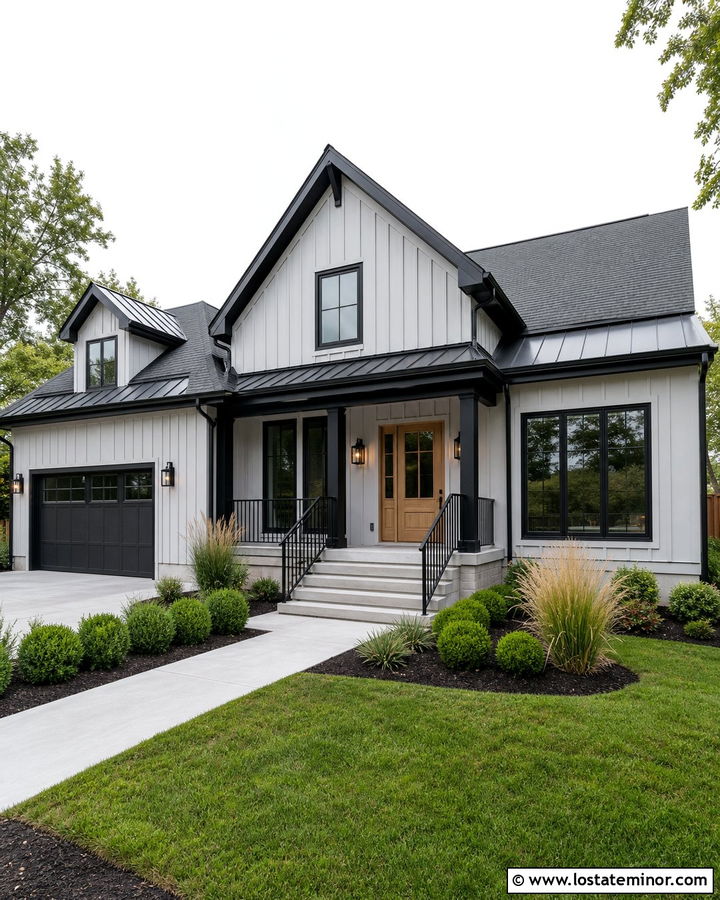
Black trim gives a light dove grey house a sharper outline and a more contemporary mood. Apply the grey to lap siding, board-and-batten gables, and the garage door for a cohesive body. Use satin black on the fascia, window frames, gutters, porch railings, and slim decorative trusses. Because black can visually reduce a surface, keep the trim lines consistent and avoid adding too many small accents. A natural oak front door offers a warm break near the center of the facade. Choose a charcoal metal-and-shingle roof combination to echo the dark outlines without creating one solid mass. Smooth concrete steps and rectangular planting beds reinforce the clean design. Soft grasses and rounded shrubs can then add movement and prevent the curb appeal from feeling overly rigid.
14. Dove Grey House With Natural Wood Gables
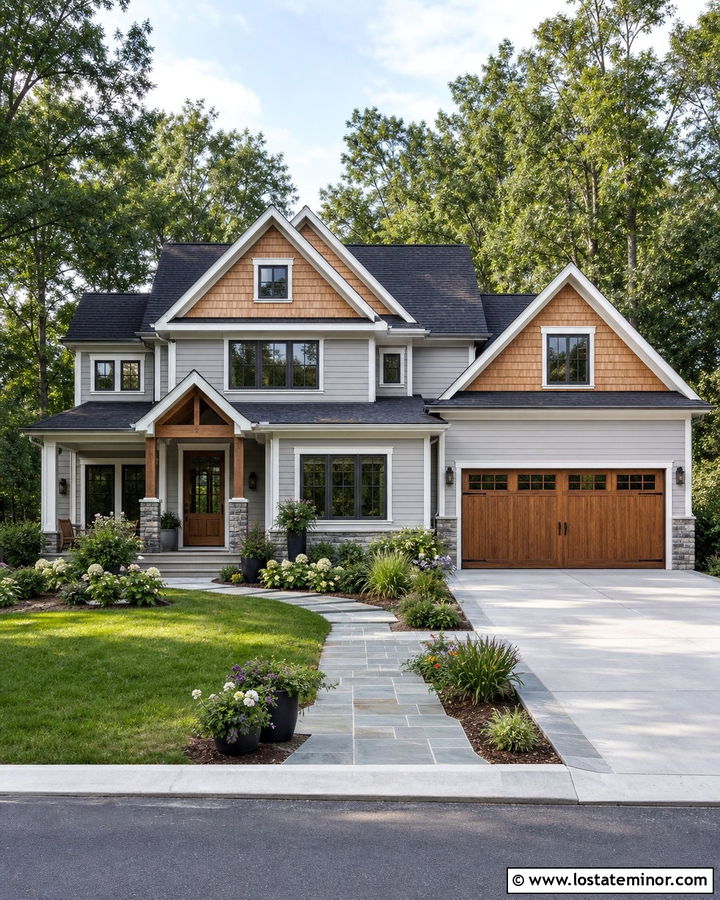
Warm wood can turn an understated grey exterior into a memorable full-house scheme. Use dove grey siding across the primary walls, then clad one or two gable ends with vertical cedar boards in a clear natural finish. The vertical grain emphasizes the height of the peaks and distinguishes them from the horizontal body siding. Repeat the wood on the front door, porch ceiling, and garage detail to distribute its warmth. Soft white trim keeps the transitions bright, while dark bronze windows and gutters add depth. Select a charcoal-brown roof that works with both grey paint and honey-colored cedar. A stone walkway, large planters, and relaxed greenery enhance the natural palette. Properly spaced wood accents keep this combination refined rather than rustic or visually crowded.
15. Dove Grey House With Blue Gables
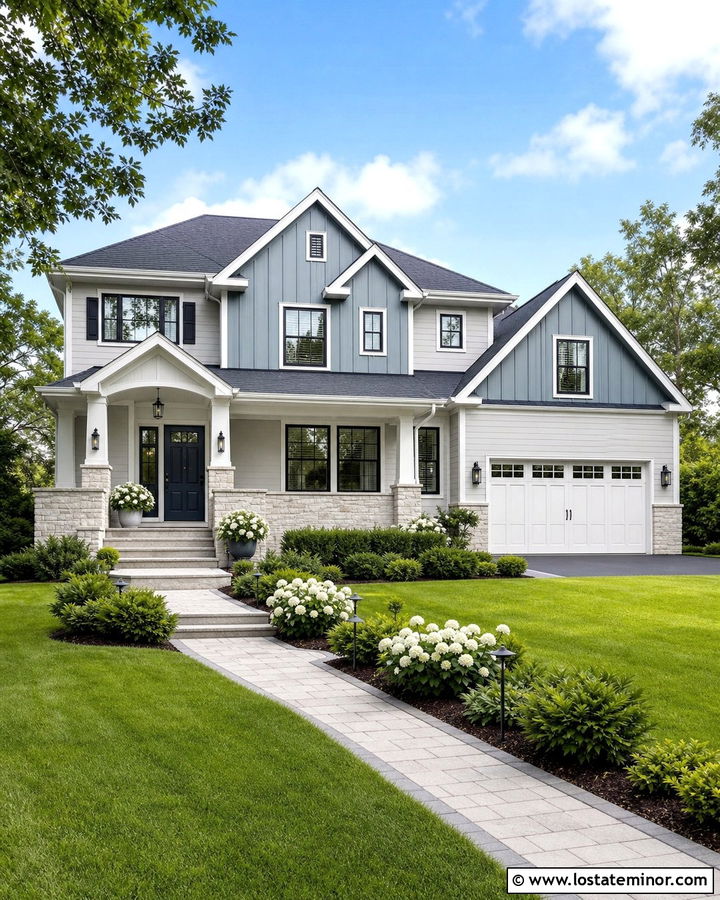
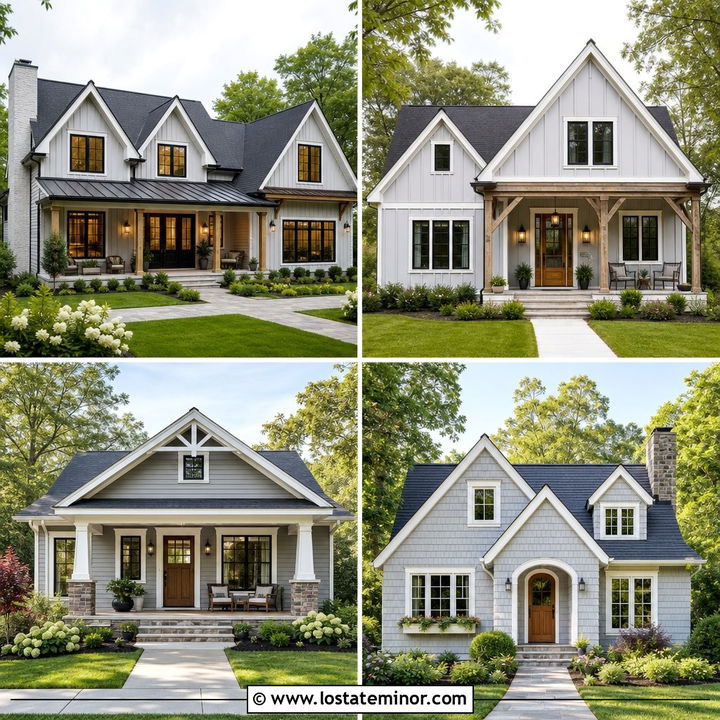
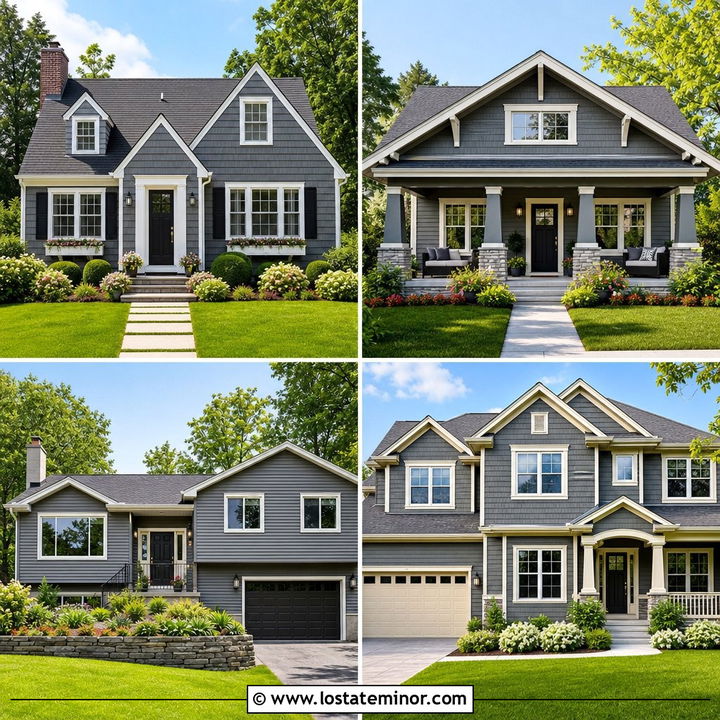
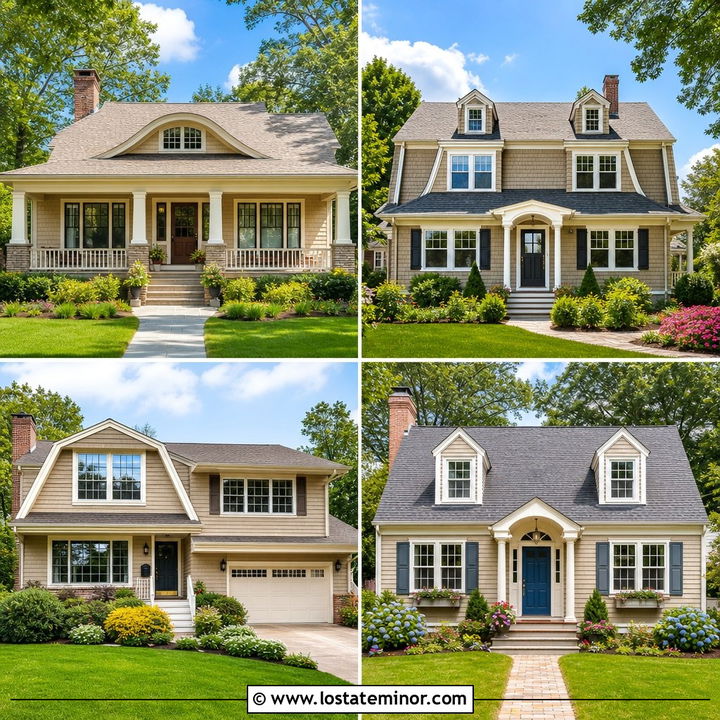
Blue-grey accents create a gentle shift in color that becomes more noticeable as sunlight changes. Paint the main siding dove grey and use a muted slate blue on board-and-batten gables. The blue should be deeper than the body color but similarly softened, ensuring the exterior remains cohesive. Warm white trim around the gable edges, windows, and porch columns provides a clean separator between the two cool shades. A dark navy front door can reinforce the upper accents at eye level. Choose a medium grey roof with subtle blue undertones and use brushed nickel or black hardware sparingly. Pale stone at the porch base adds texture without introducing a competing color. White flowers, evergreen shrubs, and a light paver walkway complete the calm, coordinated curb appeal.
16. Dove Grey House With Sage Gables
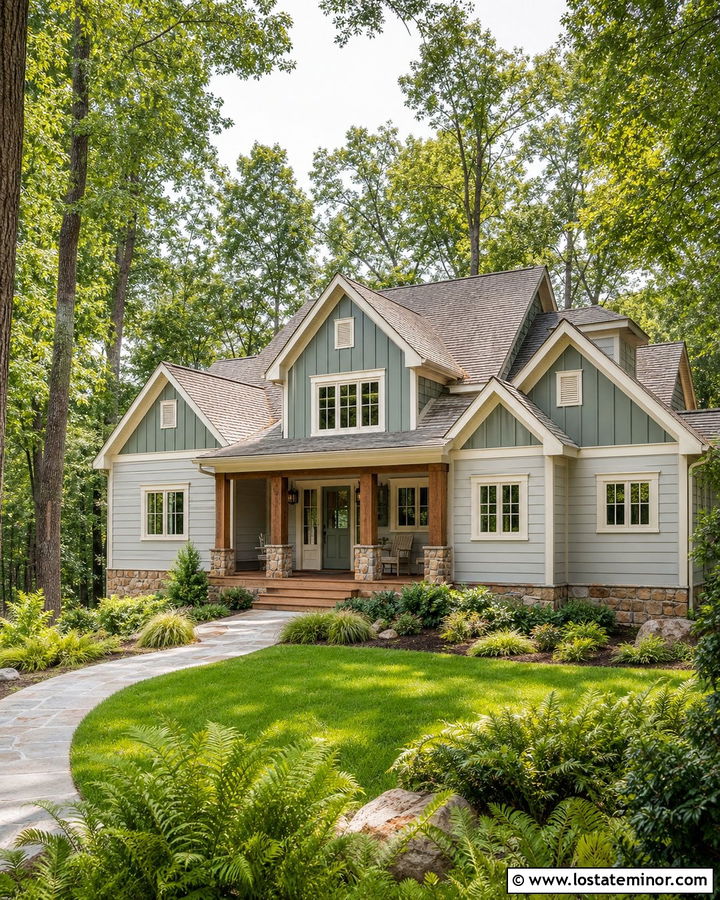
A muted sage accent feels especially comfortable when a house is surrounded by mature trees. Use dove grey horizontal siding for the body and soft sage board-and-batten siding inside the gables. Both colors should have restrained undertones so the transition appears natural rather than dramatic. Cream trim can frame the roof peaks and windows while giving the cool palette a warmer edge. Repeat sage on the front door or shutters, but keep the garage door dove grey to reduce its visual weight. A weathered brown roof and natural stone porch base connect the house to the landscape. Add cedar porch posts for another earthy layer. Ferns, ornamental grasses, and loosely shaped shrubs will reinforce the relaxed setting while leaving the contrasting gable surfaces clearly visible.
17. Dove Grey House With Navy Gables
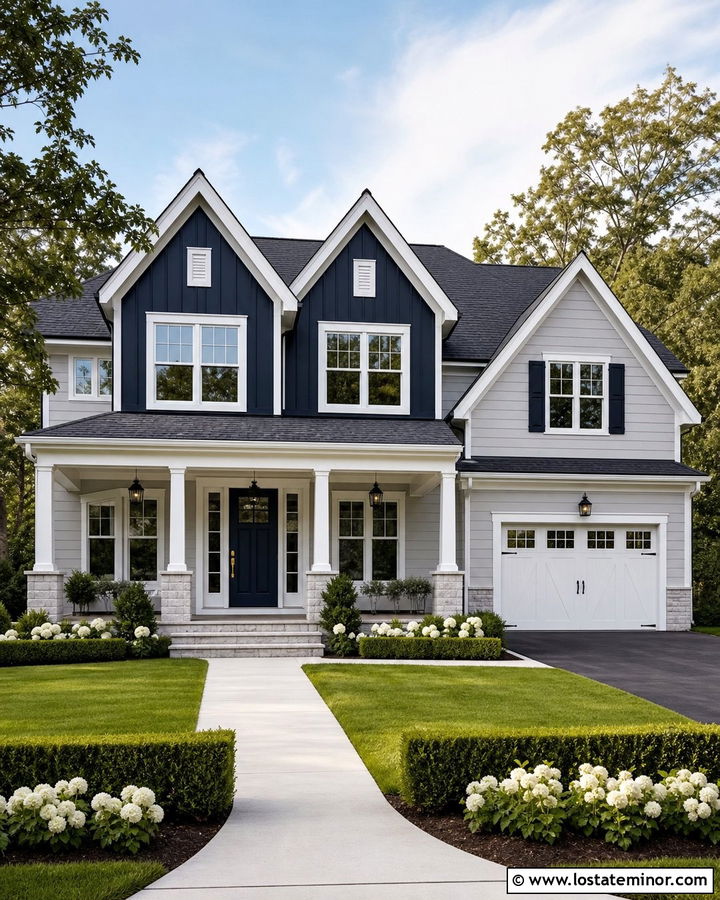
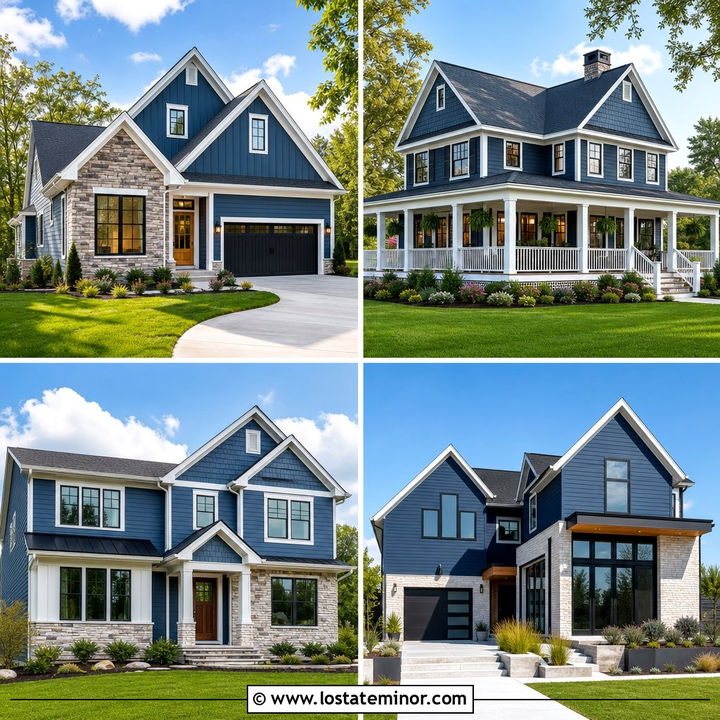
Navy gables offer bold definition while preserving the versatility of a grey exterior. Cover the largest wall surfaces in light dove grey and reserve deep navy board-and-batten siding for the entrance gable and a secondary upper peak. Crisp white trim provides a bright outline, preventing the navy sections from merging with a dark roof. Paint the front door navy to repeat the accent at ground level, then add warm brass hardware for a polished detail. A charcoal shingle roof, white garage door, and simple black lighting keep the supporting palette controlled. If the facade needs texture, add pale grey stone around the porch rather than introducing another strong color. Straight hedges, white flowering plants, and a clean concrete path complement this tailored combination beautifully.
18. Dove Grey House With Greige Gables
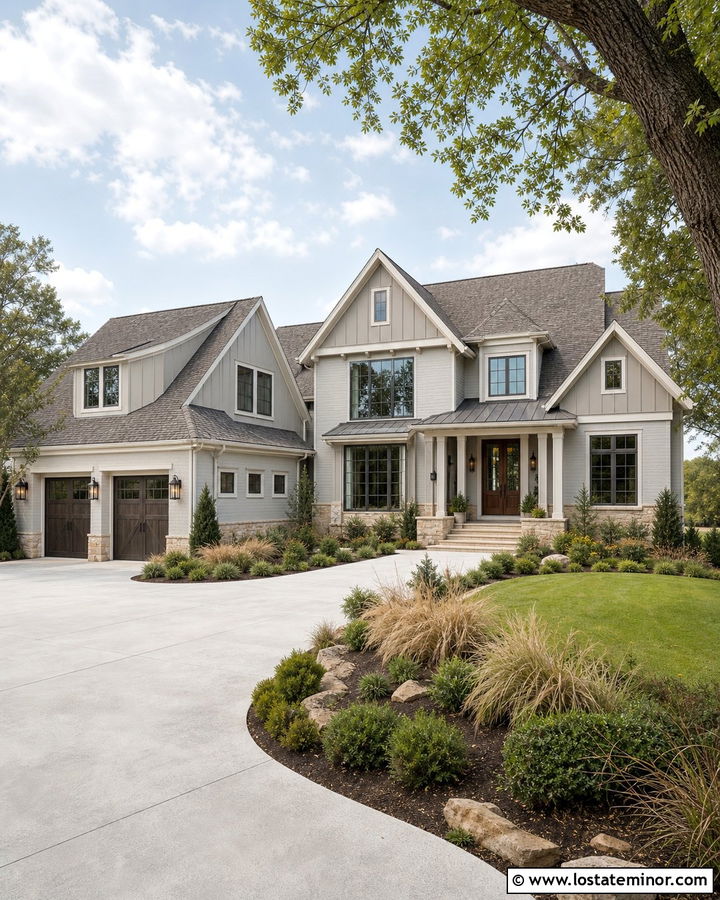
Greige gables can warm a dove grey facade without creating obvious color blocking. Select a light taupe-grey for vertical siding inside the peaks, making sure it is only a few shades warmer than the main body. Use creamy white trim around the gables, porch, and windows to unify the two neutrals. A weathered charcoal roof with brown variation will further smooth the transition. Bring in a medium-stained wood door, bronze lights, and tan limestone around the foundation to support the warmer upper sections. This layered neutral approach works particularly well on large houses where high contrast could make the exterior feel divided. Finish with soft green shrubs, pale ornamental grasses, and natural stone pavers for an approachable design that still shows the gabled architecture clearly.
19. Dove Grey House With Board And Batten Gables
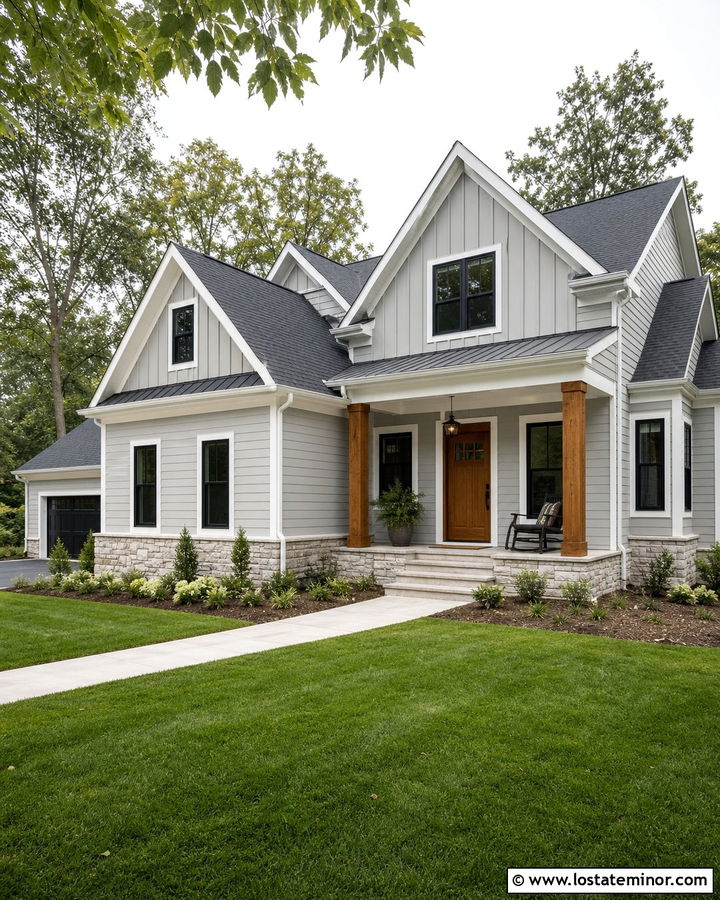
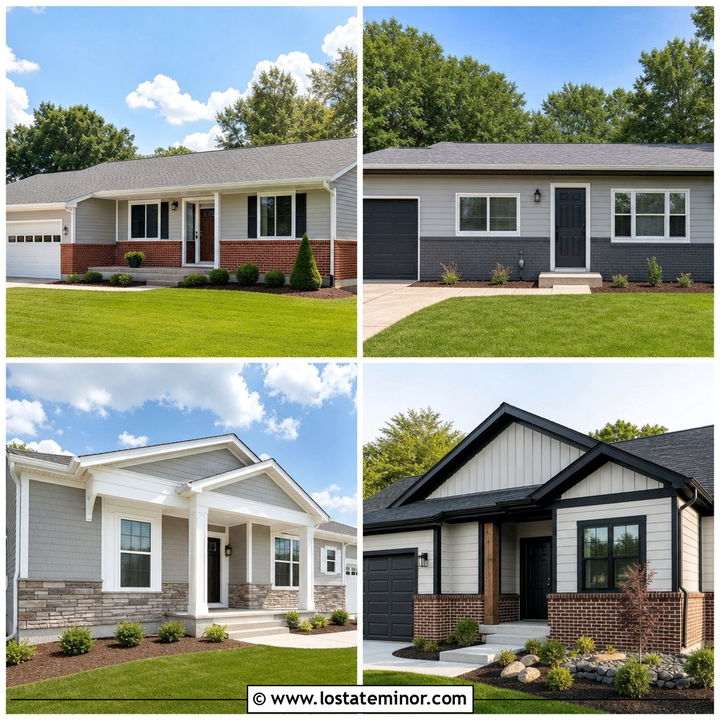
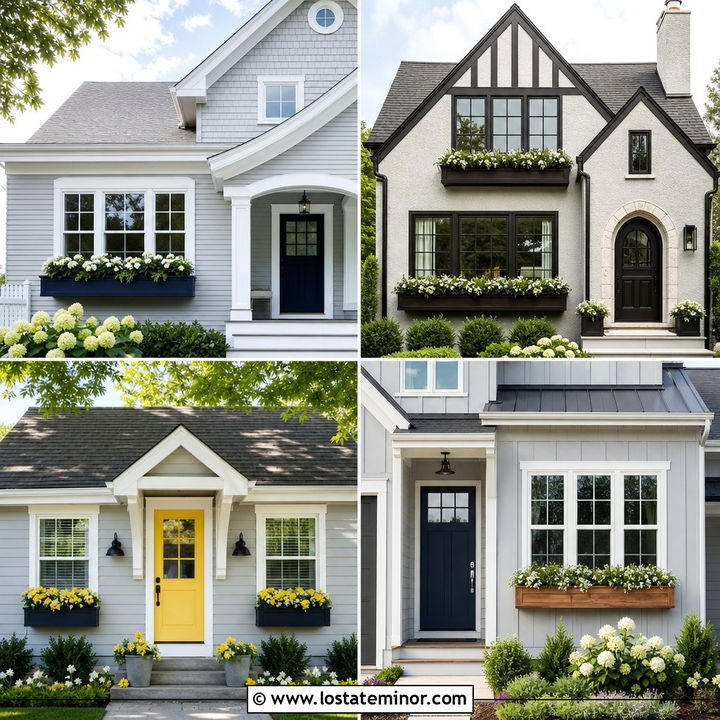
Changing the siding direction is enough to make gables stand out, even when every wall uses the same color. Install dove grey lap siding across the lower facade and matching dove grey board and batten inside each front-facing peak. Sunlight and shadow will reveal the textural difference while preserving a seamless palette. Frame the gables with broad white trim and use charcoal roof shingles for a clear upper boundary. A cedar front door and matching porch columns can add warmth near the entrance. Keep the garage door grey and choose black window frames for a subtle contemporary edge. A pale stone foundation, concrete walkway, and balanced foundation planting complete the exterior. This treatment is practical for homeowners who want architectural detail without managing several paint colors.
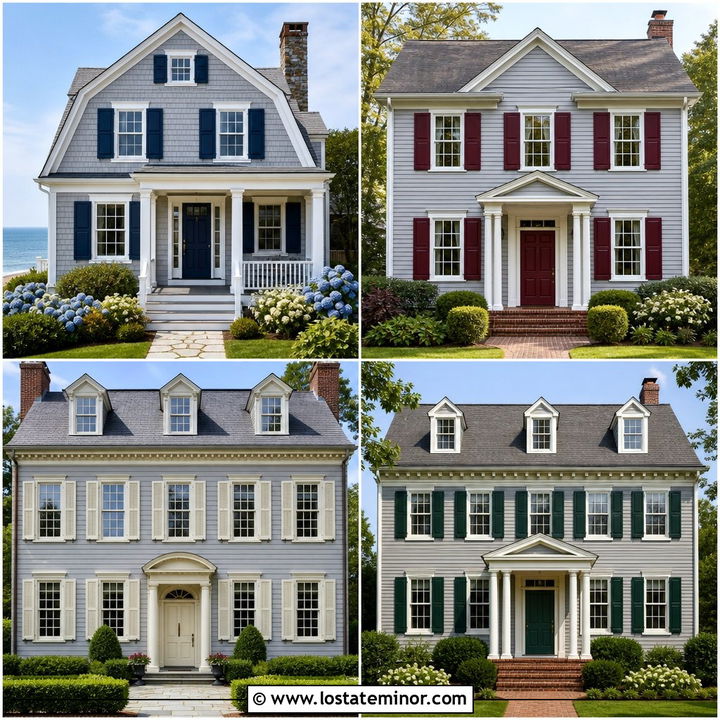
20. Dove Grey House With Shake Gables
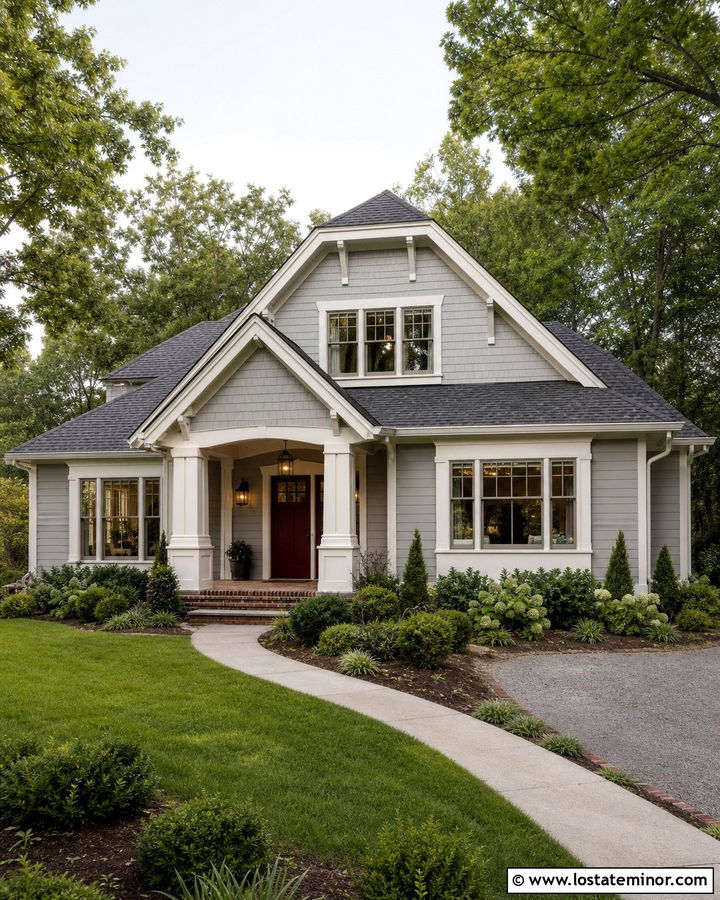
Shake siding gives pale grey a richer surface and helps broad roof peaks feel less empty. Use smooth dove grey clapboards on the main walls and matching straight-edge shakes in the gables. Although the color remains consistent, the smaller shingle pattern creates shadows that make the upper facade more visible. Soft ivory trim will add warmth around the peaks, windows, porch railing, and corner boards. Choose a variegated charcoal roof to complement the textured siding without mimicking it. A deep burgundy front door introduces restrained traditional color, while dark bronze lights and hardware keep the accents grounded. Finish with a brick porch floor, curved walkway, and layered shrubs. The combination suits Craftsman, cottage, and traditional homes with prominent gable ends.
21. Dove Grey House With Stone Porch Gables
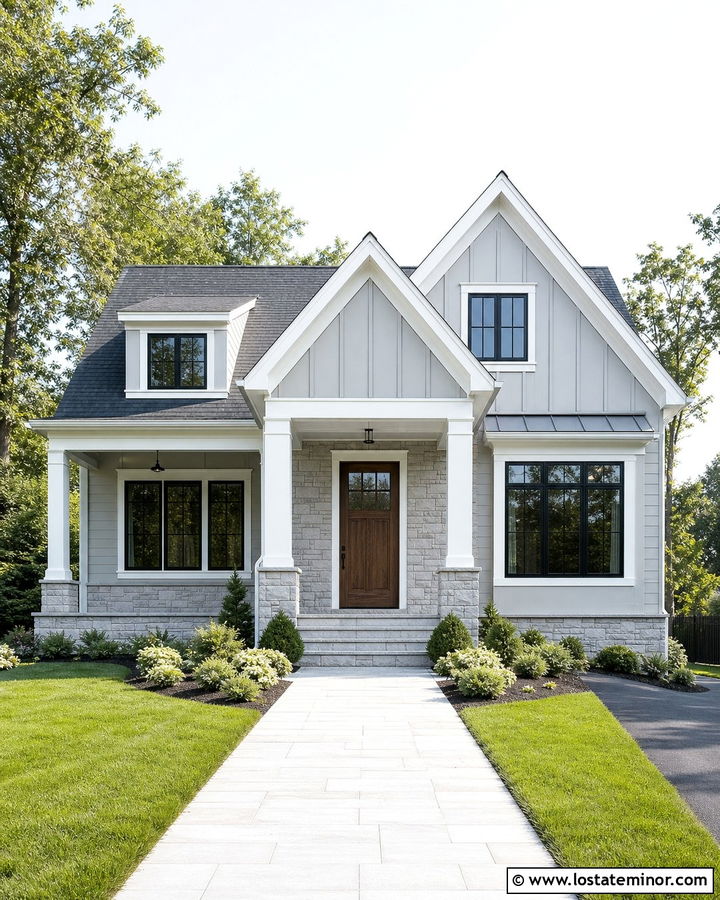
A gabled porch becomes a natural focal point when its supporting materials carry visual weight. Paint the full house in dove grey lap siding and use matching vertical siding within the porch peak. Wrap the column bases and entrance walls in pale grey ledgestone, then support the gable with thick white or natural timber posts. A stained wood front door should sit at the center of the composition. Choose a charcoal roof that clearly caps the porch without making it appear separate from the main house. White window trim and fascia will brighten the remaining facade. Repeat the porch stone along a low foundation section for balance. A broad walkway, neat lawn, and layered evergreen beds will guide attention toward the sheltered, textured entrance.
22. Dove Grey House With Cedar Gable Trusses
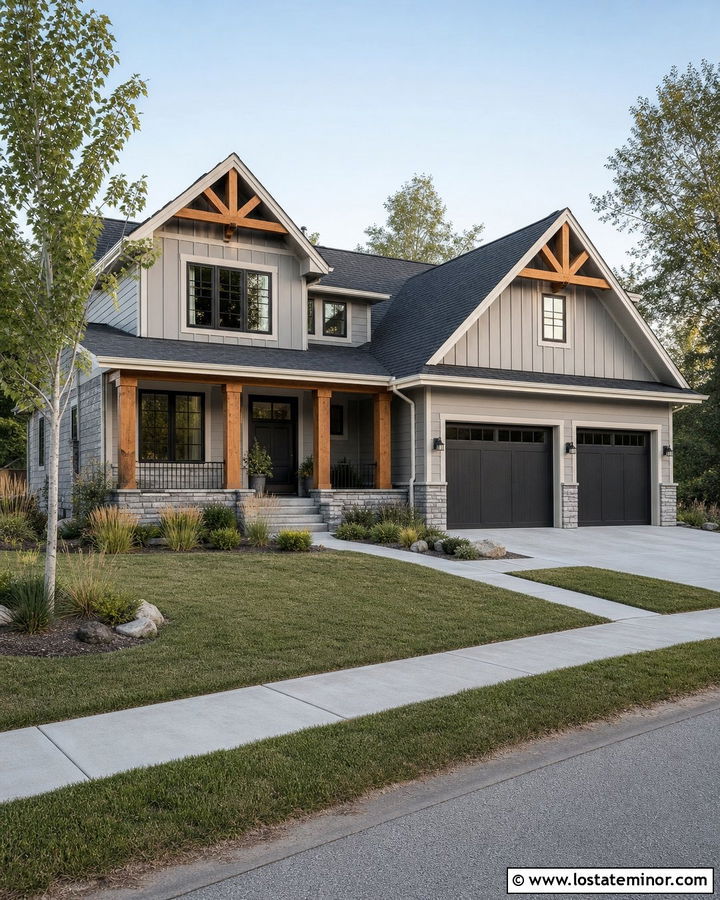
Decorative trusses can emphasize large gables without adding another siding color. Keep the complete facade dove grey, using lap siding below and board and batten in the upper peaks. Install substantial cedar trusses beneath the primary gable and repeat the wood on porch posts, brackets, and the front door. The pieces should be sized to match the roof span so they look structurally believable. Warm white fascia provides a bright border around the cedar, while a charcoal roof adds depth above it. Black window frames and lanterns can introduce small, controlled accents. At ground level, use grey limestone and natural concrete to support the neutral palette. Simple native grasses and young trees frame the architecture while allowing the warm timber details to remain visible.
23. Dove Grey House With Arched Gables
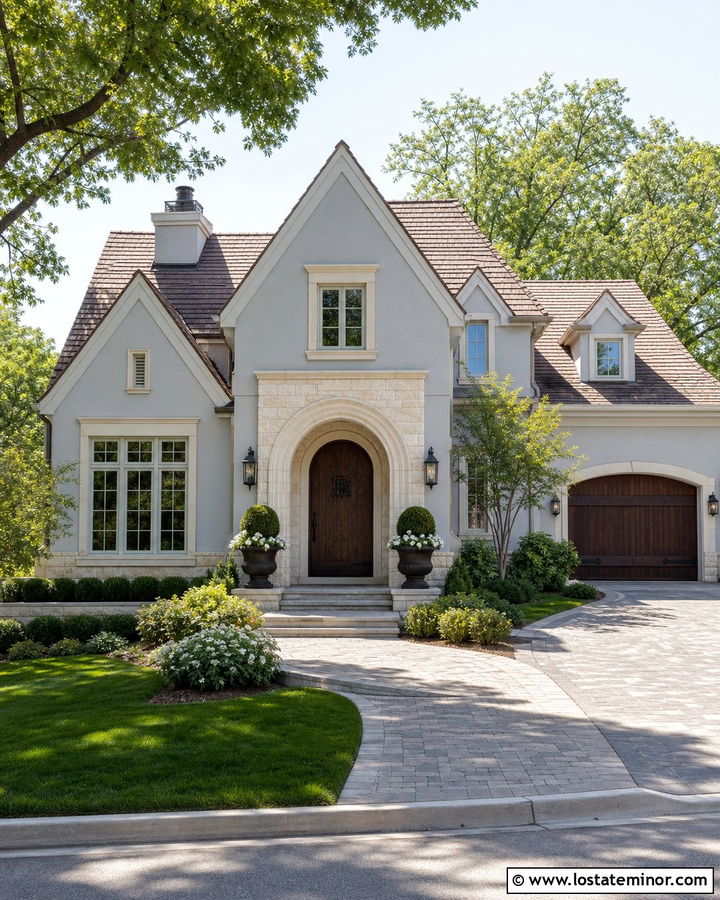
Curved details bring softness to a facade dominated by triangular rooflines. Use dove grey stucco or smooth siding on the house, then create an arched opening beneath the central entrance gable. Cream-colored trim can follow the curve and continue around the windows, eaves, and porch columns. Add pale limestone around the arch or lower walls to strengthen the shape without overwhelming the light body color. A muted terracotta or warm brown roof works well when the architecture has Mediterranean or European influences. Choose a dark wood door with a rounded top and understated iron hardware. Deep green shrubs, a curved paver walkway, and symmetrical planters reinforce the graceful entrance. The completed exterior feels detailed and distinctive while maintaining a quiet, neutral color story.
24. Dove Grey House With Cross Gables
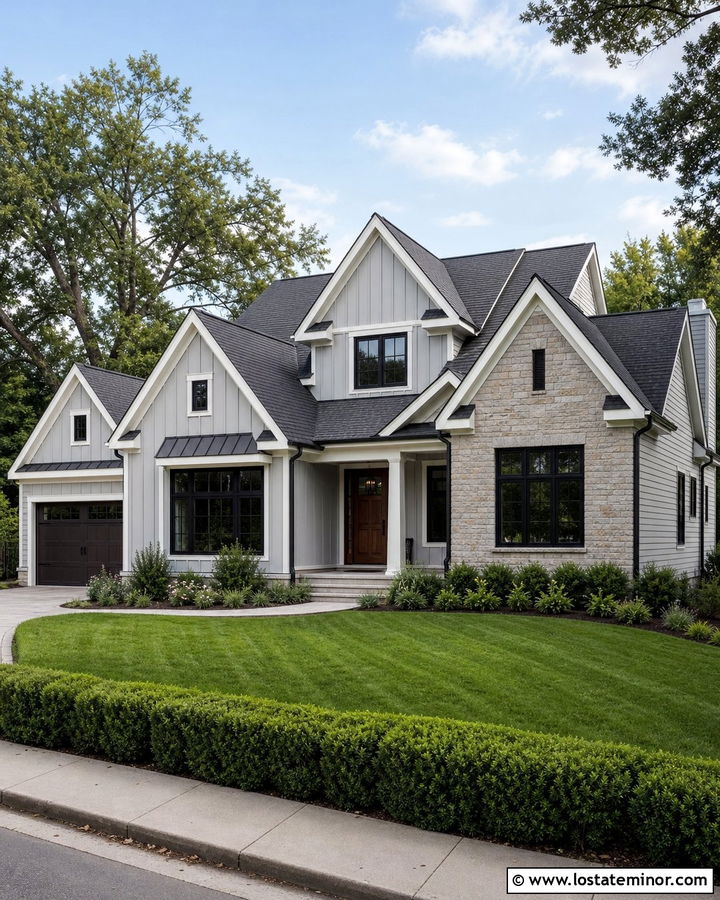
Cross gables create natural opportunities to layer materials and adjust visual balance. Paint the main structure dove grey and use vertical siding inside each intersecting peak. Keep the color consistent across all gables, but add white trim to clearly outline their overlapping edges. A dark charcoal roof will make the complex shape easier to understand from the curb. Place pale stone on the most prominent projecting wall and repeat it around the porch base. A rich walnut front door adds warmth near the center, while black windows and gutters sharpen the surrounding lines. Avoid excessive shutters or decorative trim because the roof already supplies plenty of movement. Low hedges, open lawn, and a gently curved walkway create a simple foreground for this architecturally active exterior.
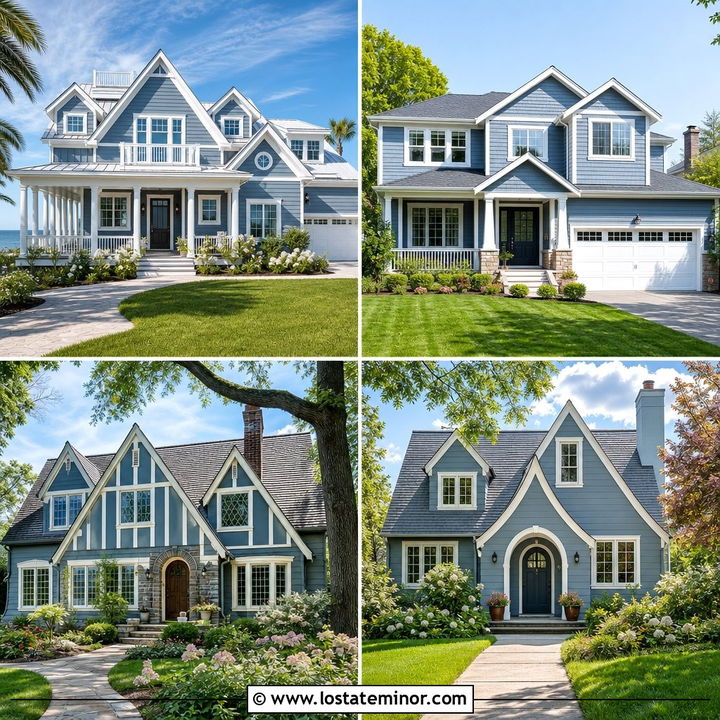
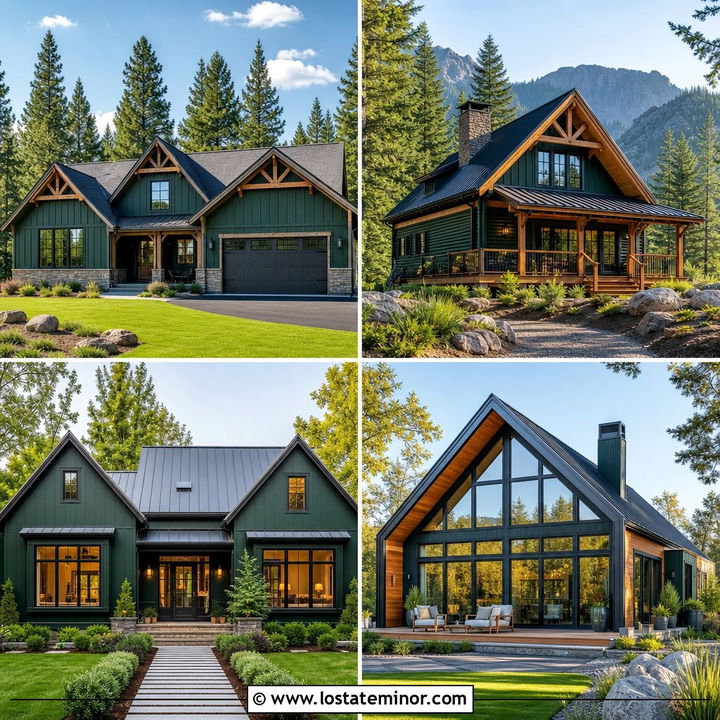
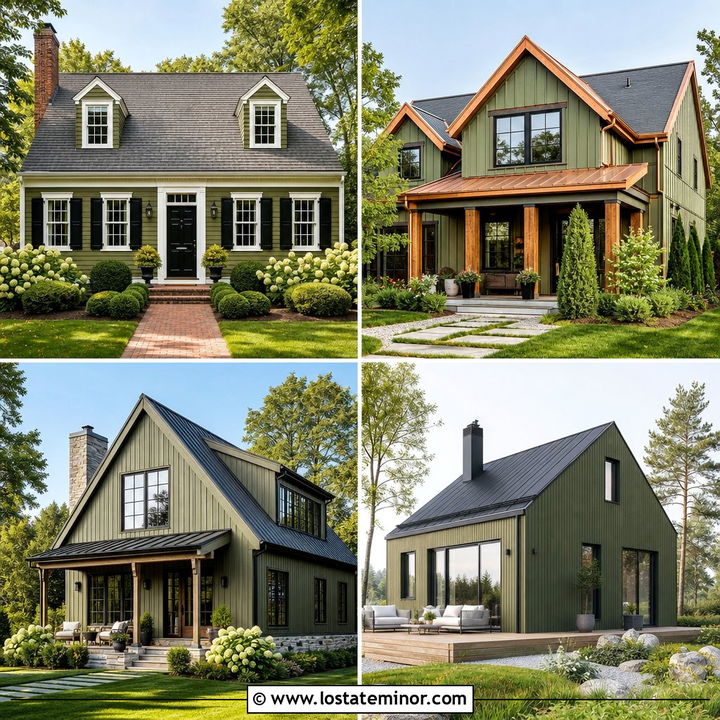
25. Dove Grey House With Clipped Gables
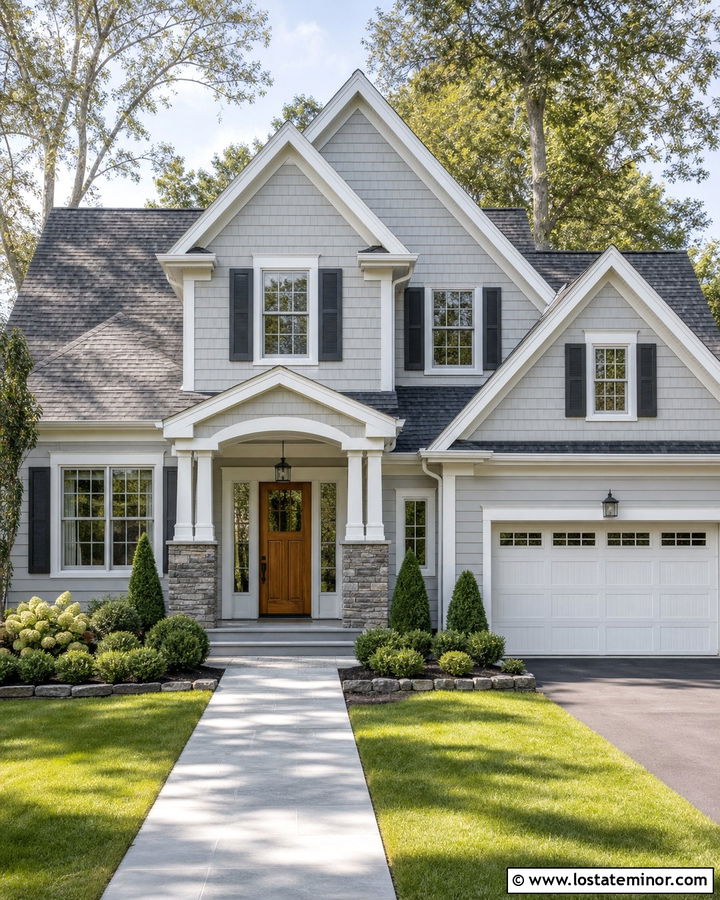
Clipped gables have a distinctive shape that deserves a clean, controlled palette. Cover the exterior in dove grey horizontal siding and use matching shakes or board and batten within the clipped peaks. Wide white fascia will trace the angled upper corners and make the unusual roofline visible from a distance. Select dark grey shingles with subtle variation rather than a solid black roof, which may hide the clipped form. Add charcoal shutters and a warm wood front door to distribute contrast across the facade. Stone porch columns can provide weight below the tall roof. Keep other ornament restrained so the roof shape remains the defining feature. Structured evergreens, stone-edged planting beds, and a straight walkway will give this traditional exterior a tidy, balanced setting.
26. Dove Grey House With Garage Gables
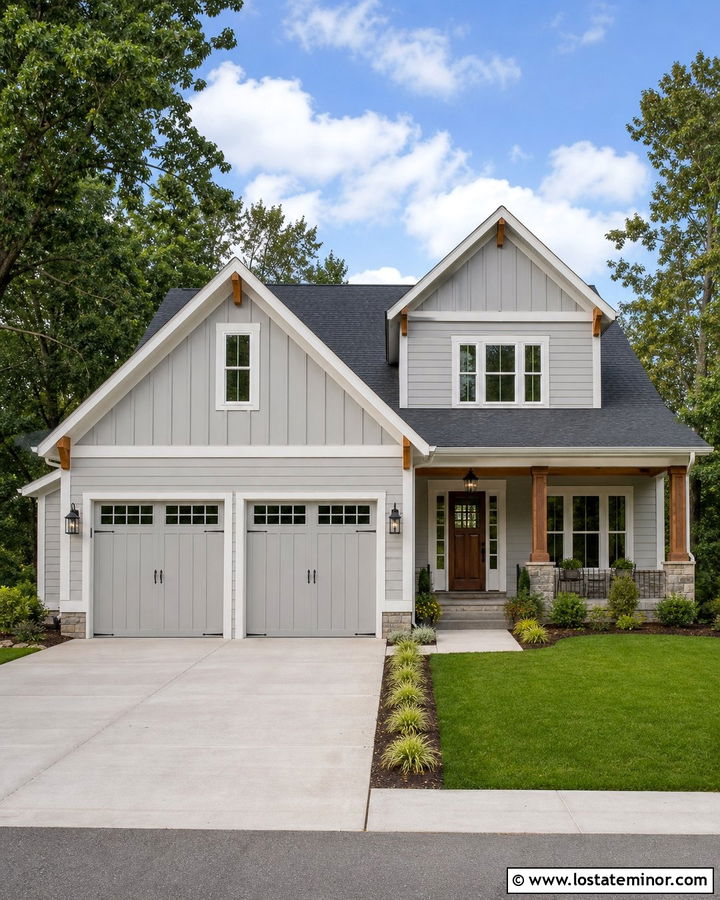
A garage-facing facade can still feel welcoming when its gables and doors are carefully coordinated. Use dove grey siding across the complete house and place matching board and batten inside the gables above each garage bay. Outline the peaks with warm white trim and add small cedar brackets for dimension. Paint the garage doors dove grey so they blend into the walls instead of dominating the front elevation. A stained cedar front door and porch ceiling can then direct attention toward the entrance. Choose a charcoal shingle roof, black lanterns, and simple dark gutters for contrast. Narrow planting beds between the driveway and house will soften the garage area. A clear walkway from the driveway to the porch improves both visual balance and practical curb appeal.
27. Dove Grey House With Porch Gables
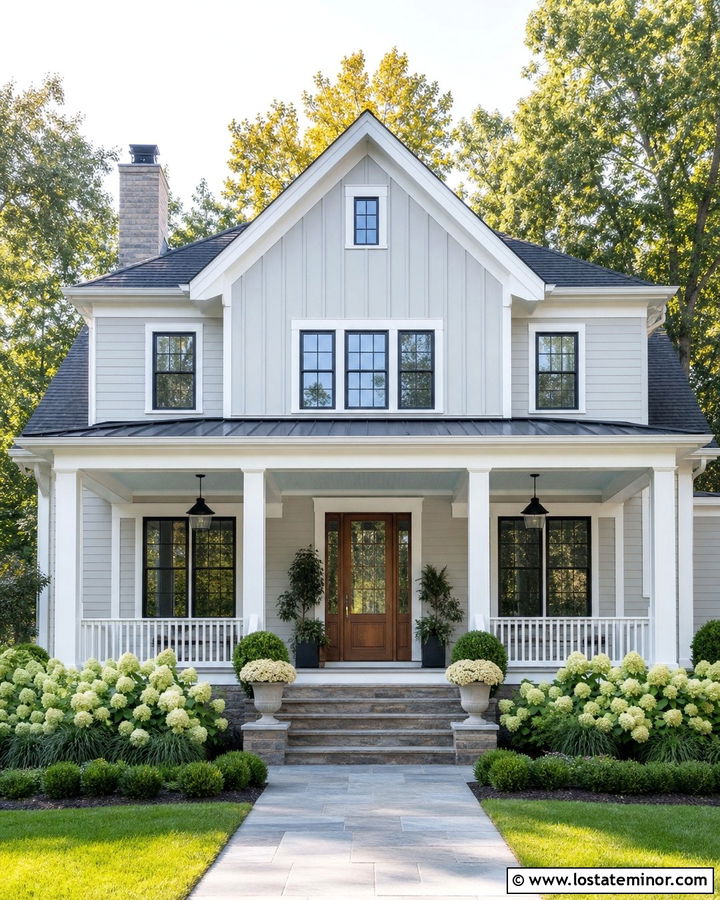
A deep front porch can make dove grey feel especially comfortable and inviting. Cover the main house and porch gable in soft grey siding, changing to board and batten within the peak for texture. Use white columns, railings, fascia, and window trim to brighten the shaded portion of the facade. A medium-stained wood door creates a warm focal point at the back of the porch. Paint the porch ceiling a pale blue-grey for a subtle color shift that remains compatible with the body. A dark charcoal roof and black hanging lights add definition overhead. Wide stone steps, simple rocking chairs, and symmetrical planters complete the entrance. Hydrangeas and low hedges should frame the porch without concealing its columns or detailed gabled roofline.
28. Dove Grey House With Multi Gables
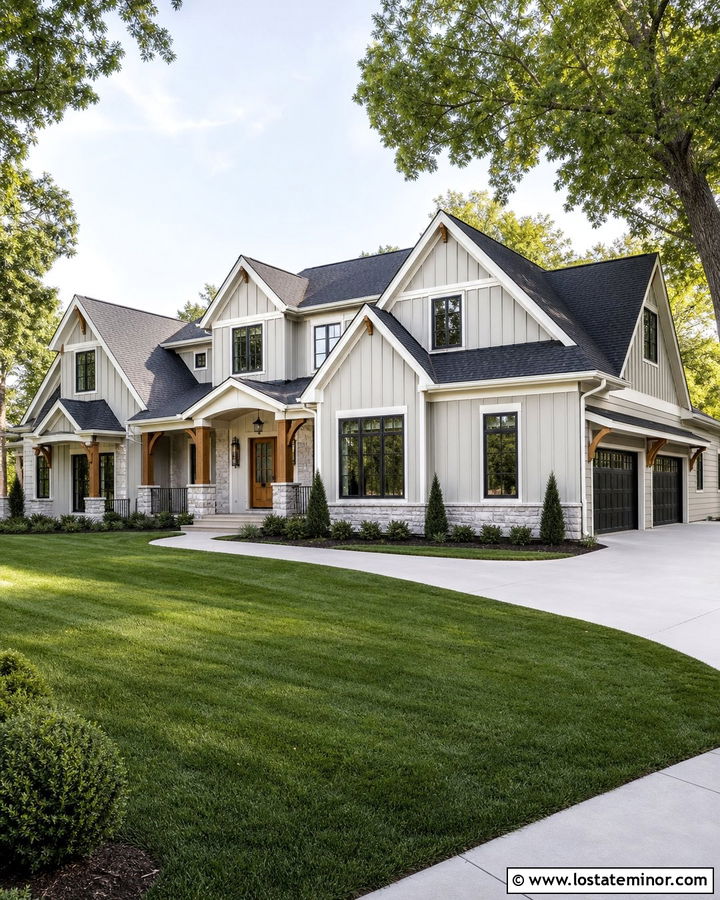
A house with several gables needs repetition more than additional color. Apply dove grey to all main walls and upper siding, using board and batten consistently inside every visible peak. Paint the fascia, soffits, window trim, and porch columns warm white so the repeated roof shapes form one clear pattern. A charcoal roof unifies the intersecting planes, while black windows add smaller points of contrast. Introduce cedar selectively on the front door and one set of entrance brackets rather than filling every gable with wood. Pale stone can wrap the lower porch and chimney to anchor the busy upper half. Broad lawn areas and simple evergreen groupings will calm the foreground. This disciplined scheme allows complex architecture to look connected instead of crowded or mismatched.
29. Dove Grey House With Coastal Gables
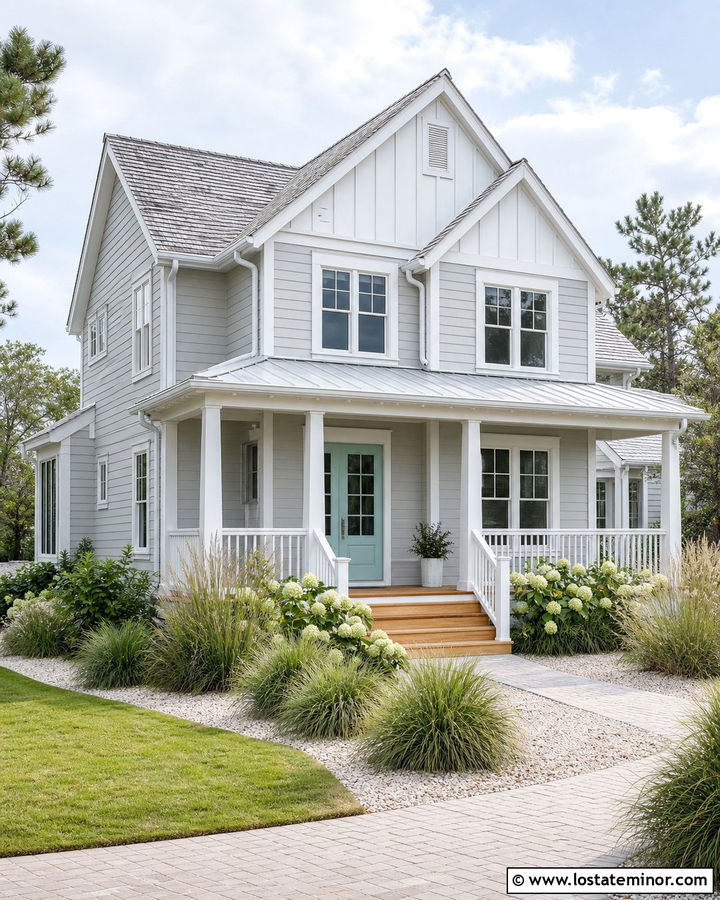
Dove grey works naturally with a breezy coastal palette when the supporting colors remain soft. Use weather-resistant grey shingles or lap siding across the facade, then add white board and batten inside steep gables. Bright white trim can wrap the peaks, windows, porch railing, and square columns. Choose a weathered medium-grey roof that resembles aged cedar without competing with the siding. A muted aqua or dusty blue front door supplies relaxed color near the entrance. Natural wood porch flooring and woven-look exterior lights add warmth without turning the design rustic. Surround the house with ornamental grasses, hydrangeas, pale gravel, and a shell-toned paver path. The complete scheme feels light and fresh while the structured gables keep the house substantial and clearly defined.
30. Dove Grey House With Modern Farmhouse Gables
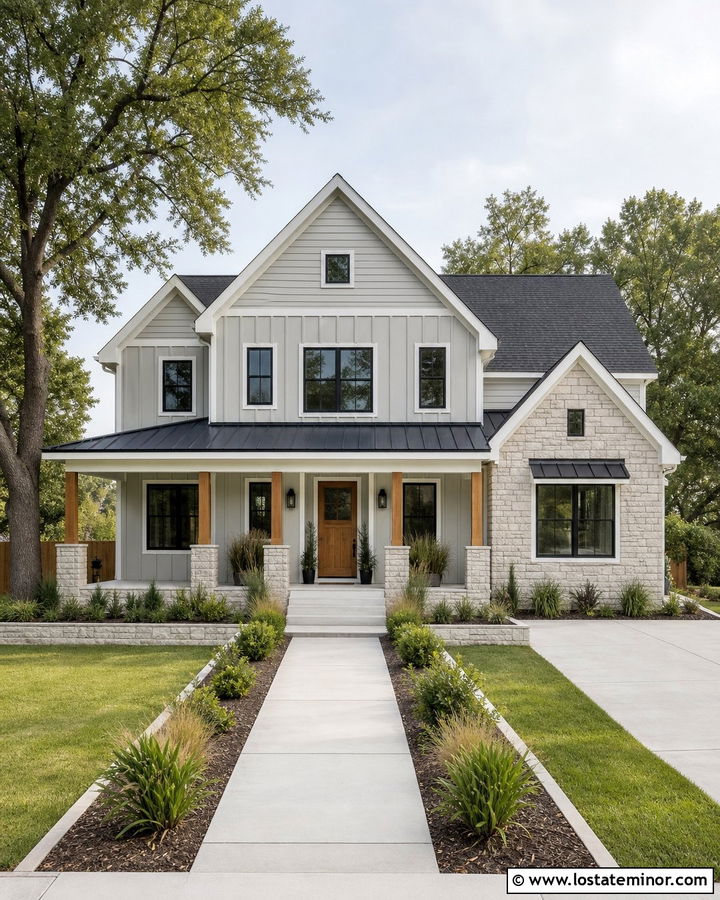
For a balanced modern farmhouse, let dove grey soften the familiar black-and-white contrast. Cover the entire facade in grey board-and-batten siding and use horizontal lap siding within selected gables for a subtle change in scale. Crisp white trim should outline the windows, porch columns, and tall roof peaks. Add a black standing-seam metal roof over the porch and charcoal shingles over the main structure. Black windows, gutters, and lights create a clean framework, while a natural oak door prevents the scheme from feeling too cool. Use light limestone around the chimney or garage base for grounded texture. A broad concrete walkway, rectangular garden beds, and restrained grasses support the modern lines. The finished house feels current, approachable, and suitable for many suburban settings.
Conclusion:
The best dove grey exterior is more than a single siding selection. It is a complete palette that helps gables, entrances, windows, and material changes work together. White trim creates brightness, while charcoal and black produce stronger definition. Cedar, brick, and stone add warmth that keeps light grey from feeling plain. You can also distinguish gables through siding texture instead of introducing another color. Before making a final choice, compare samples beside the existing roof, masonry, and landscaping in changing daylight. Whether your home is traditional, coastal, Craftsman, or modern, these 30 Dove Grey House Design With Gables Ideas provide practical ways to create balanced, lasting curb appeal.

Related posts: