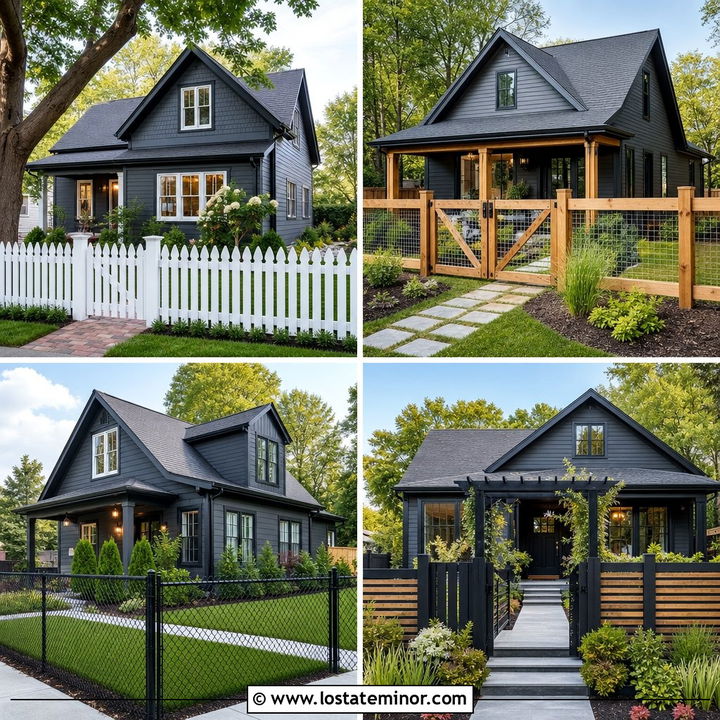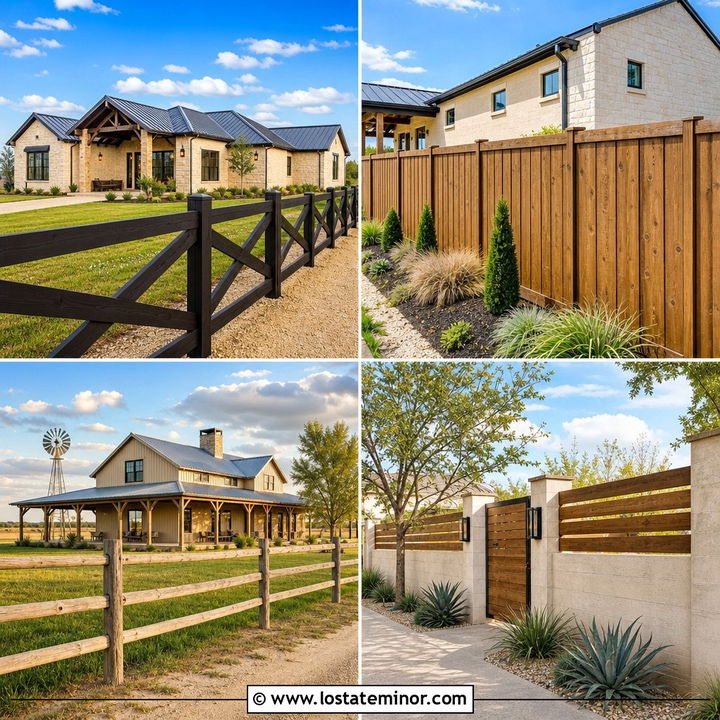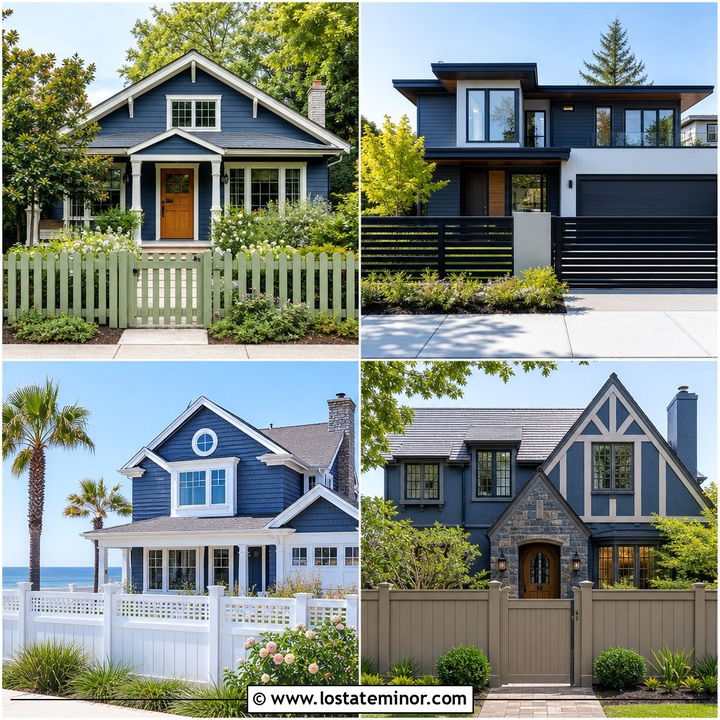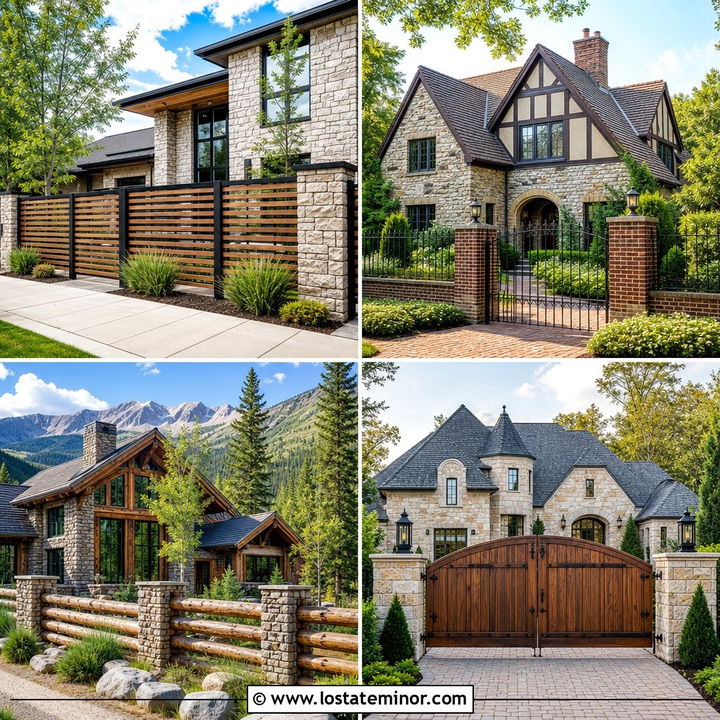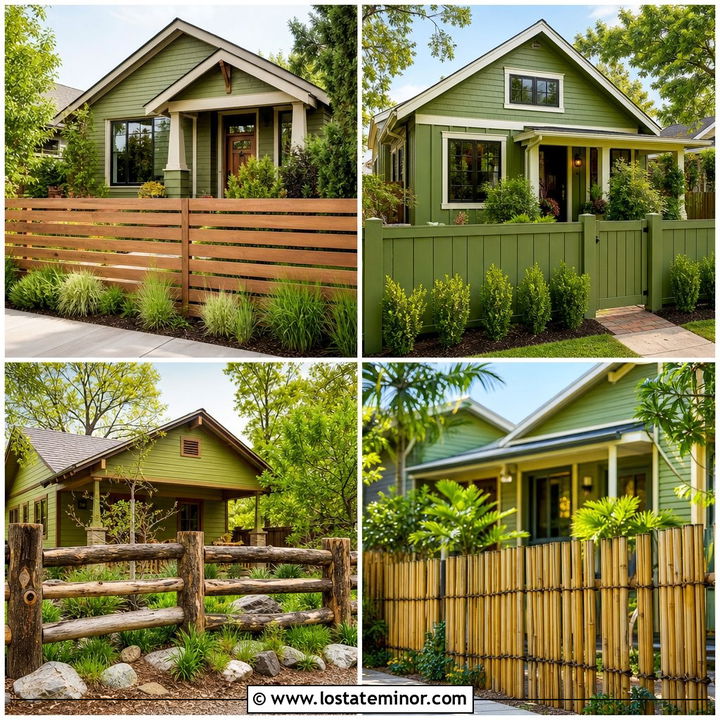
Tan siding becomes much more distinctive when the fence supports the home’s architecture, undertones, and surrounding landscape. The best **30 Tan House Design With Fence Ideas** combine the entire facade rather than treating the fence as an afterthought. Warm wood can deepen a sandy exterior, black metal can sharpen a modern tan home, and creamy white fencing can brighten a traditional facade. Current exterior inspiration also favors nature-connected neutrals paired with wood, stone, charcoal, muted green, and warm metallic details. () Before choosing a finish, compare samples beside the siding, roofing, masonry, and landscaping in changing daylight. The combinations below cover ranch, farmhouse, colonial, cottage, Craftsman, and contemporary homes, giving you practical inspiration through these **30 Tan House Design With Fence Ideas**.

1. Tan House With White Picket Fence
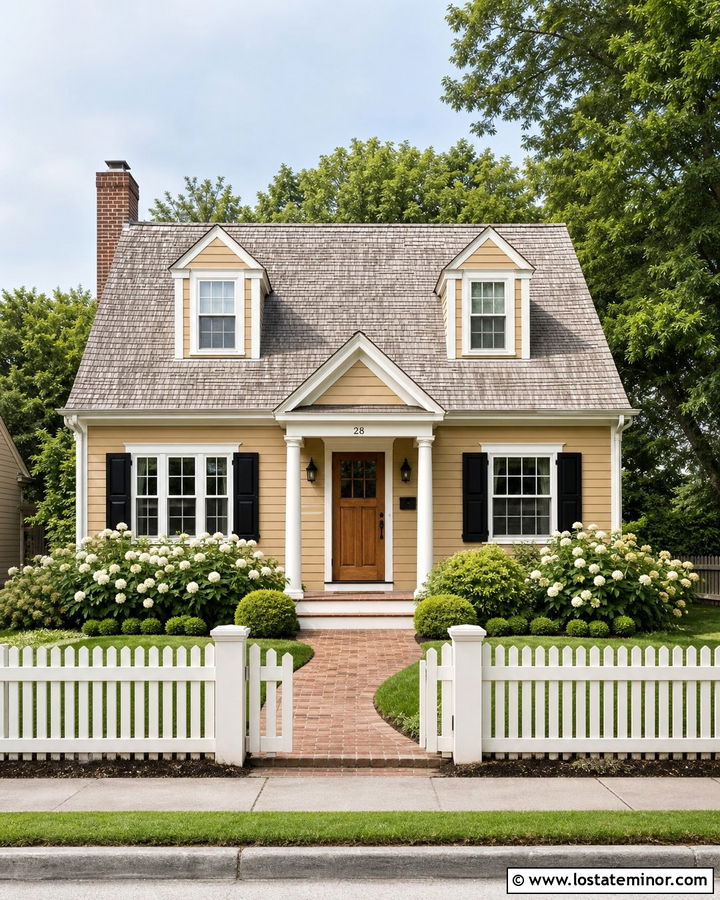
A white picket fence gives a warm tan house a clean, familiar look without making the exterior feel overly formal. Choose creamy white rather than a cold blue-white when the siding has golden undertones. Carry the fence color onto the window trim, porch columns, and fascia to create a connected palette. A medium-brown roof and stained wood front door will add enough warmth to prevent the scheme from looking flat. This combination works especially well on cottages, Cape Cod homes, and compact traditional houses. Keep the fence low so the facade and front garden remain visible from the street. Hydrangeas, ornamental grasses, and evergreen shrubs can soften the straight fence line while adding color and texture throughout the growing season.
2. Tan House With Black Metal Fence
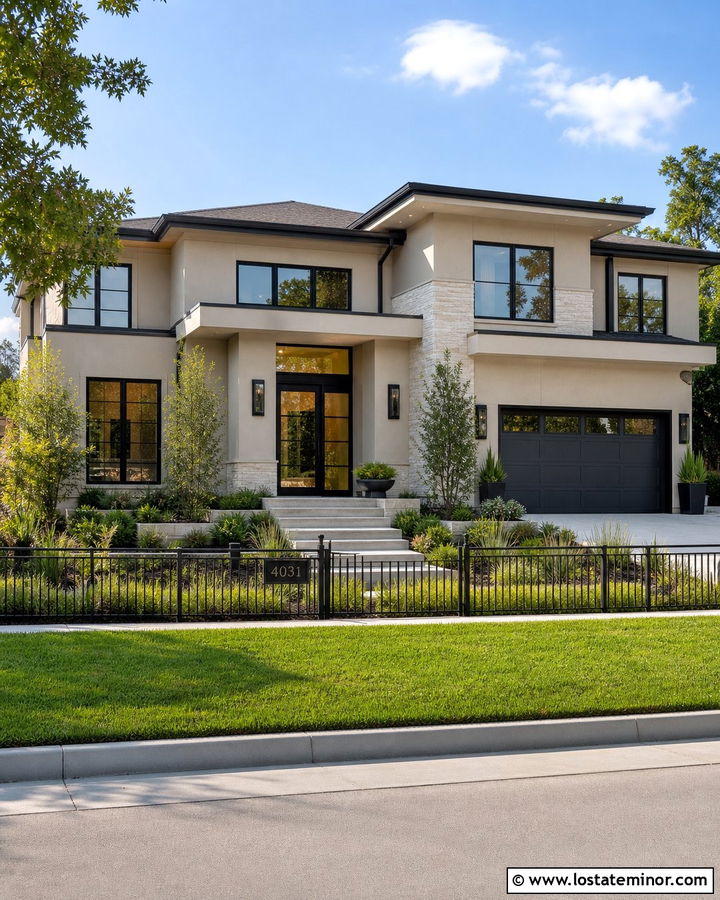
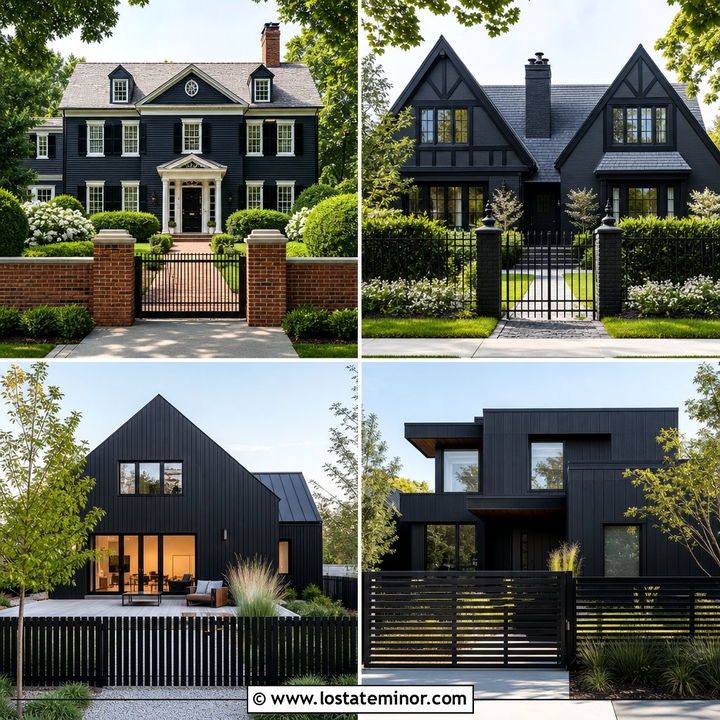
For stronger definition, pair a light tan exterior with a slim black metal fence. The dark framework creates contrast while leaving the house and landscaping visible. Repeat black on the window frames, porch lights, gutters, or front door so the fence feels intentionally connected to the facade. This treatment suits contemporary homes, modern farmhouses, and updated brick houses with simple architectural lines. Warm white trim can keep the transition between tan and black from becoming too harsh. If the property has stone accents, select masonry containing touches of charcoal, beige, and brown. Use a straight walkway and restrained planting beds to support the crisp exterior. A simple fence design with narrow vertical bars generally looks cleaner than heavy scrollwork on a modern tan house.
3. Tan House With Cedar Privacy Fence
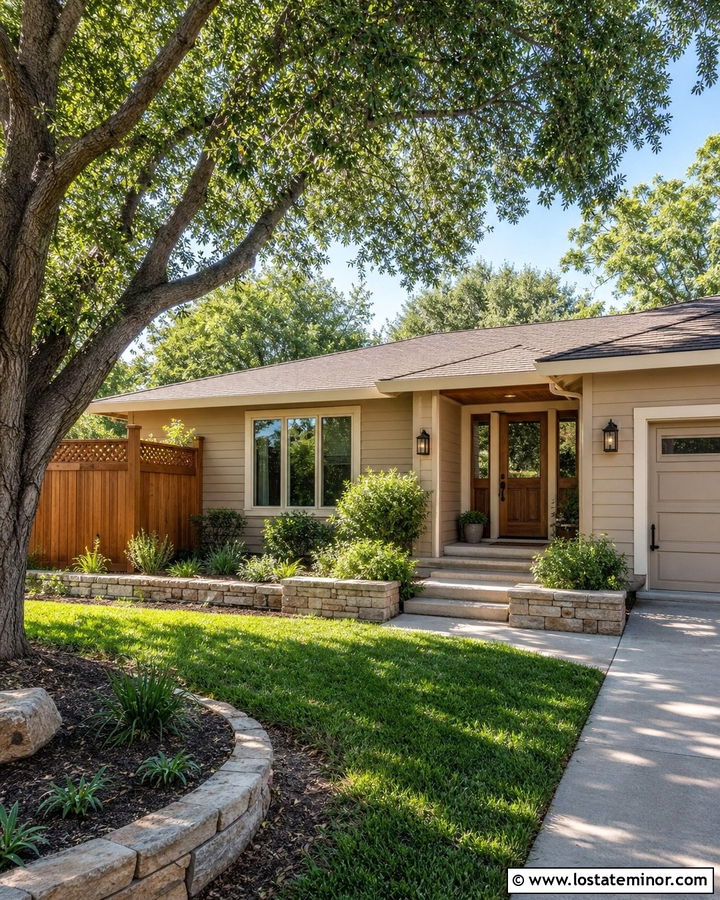
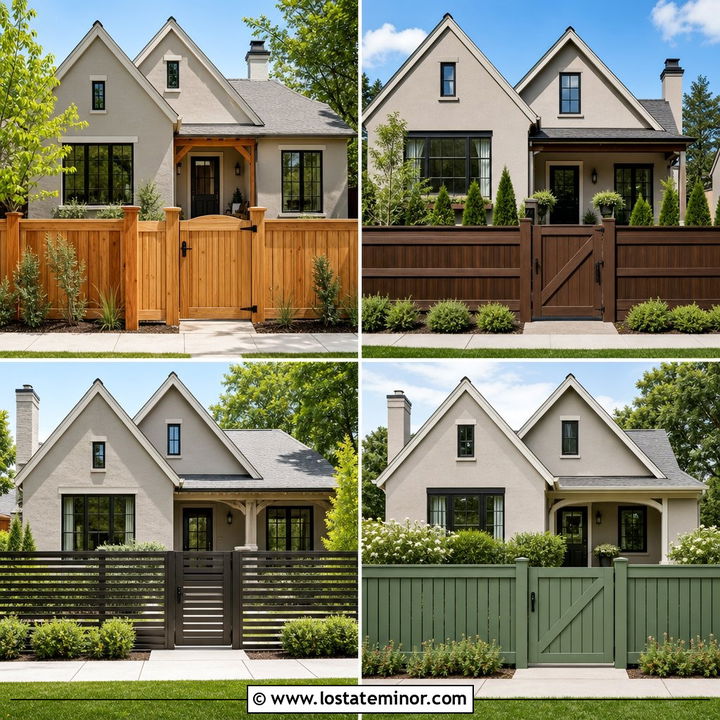
The rich color of cedar brings natural warmth to a tan house and adds privacy without introducing an unrelated hue. A clear or lightly tinted stain will highlight the grain, knots, and tonal movement in the boards. Use horizontal fencing around a contemporary ranch, or choose vertical boards for a more traditional suburban exterior. Cedar can also appear on the front door, porch ceiling, garage door, or decorative beams, creating a balanced material story across the property. Cream trim and bronze fixtures complement this warm combination particularly well. To prevent the siding and fence from blending together, choose cedar that is several shades deeper than the house. Dark mulch, layered green shrubs, and pale stone edging will help separate each warm surface and keep the curb appeal polished.
4. Tan House With Dark Brown Fence
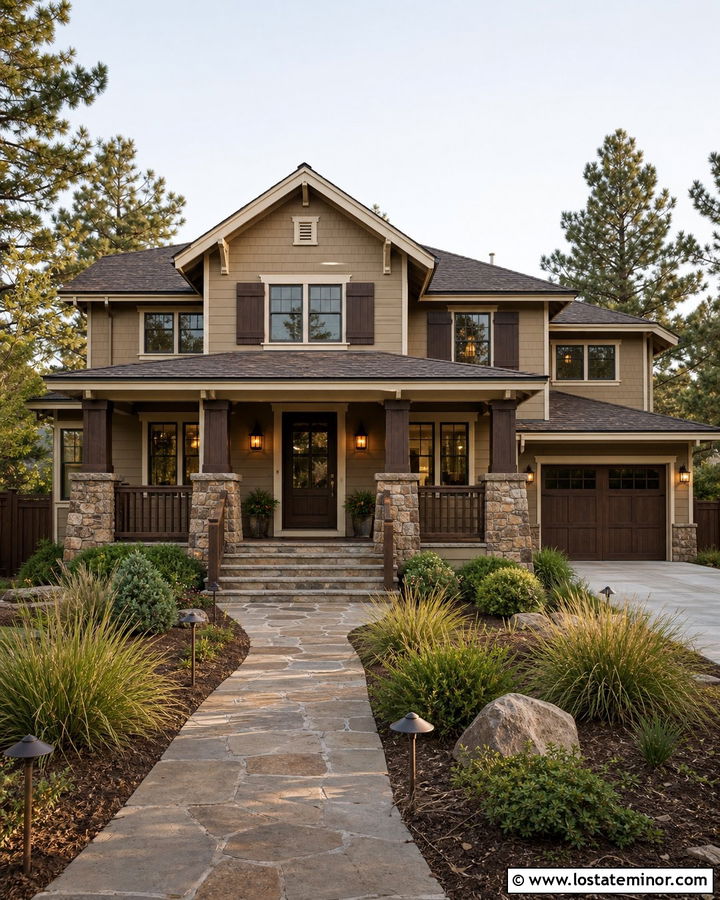
A dark brown fence offers a softer alternative to black while still giving a tan home noticeable structure. Espresso-stained wood works beautifully with beige-tan siding, chocolate roof shingles, and bronze exterior lighting. Repeat the fence finish on the porch railing, shutters, or garage door accents to distribute the darker color across the facade. This approach is especially effective on Craftsman, Tudor-inspired, and mountain homes where warm natural materials already play a major role. Creamy trim will provide gentle contrast around windows and rooflines. Select stone with brown, taupe, and charcoal variation for the foundation or porch columns. The finished scheme feels grounded and cohesive, particularly when mature trees, evergreen plantings, and a curved flagstone walkway surround the house.
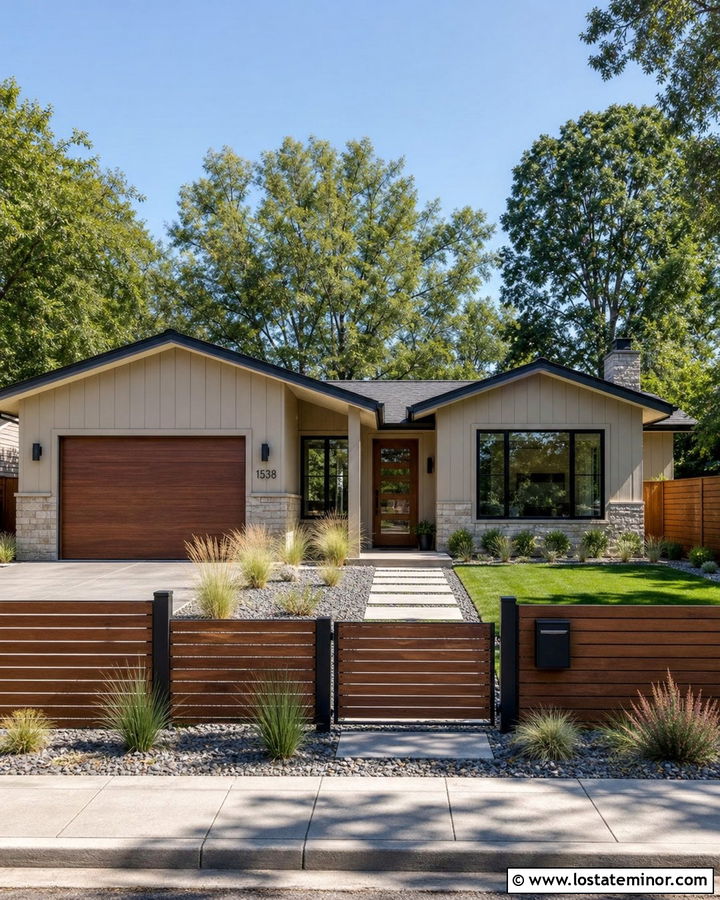
5. Tan House With Horizontal Wood Fence
A horizontal wood fence can make an ordinary tan exterior feel more architectural. Its long lines visually widen the property, making it a useful addition to low ranch houses and contemporary split-level homes. Select medium-toned wood with a warm honey or walnut stain that remains distinct from the siding. Black posts and matching window frames can add clean separation between the natural materials. Continue the horizontal theme with wide lap siding, a streamlined garage door, and rectangular concrete walkway slabs. Keep the front gate simple and align it with the main entry whenever the site allows. Structured ornamental grasses, clipped shrubs, and gravel beds will reinforce the modern appearance. The result is warm and approachable, but still organized enough for a newly updated suburban exterior.
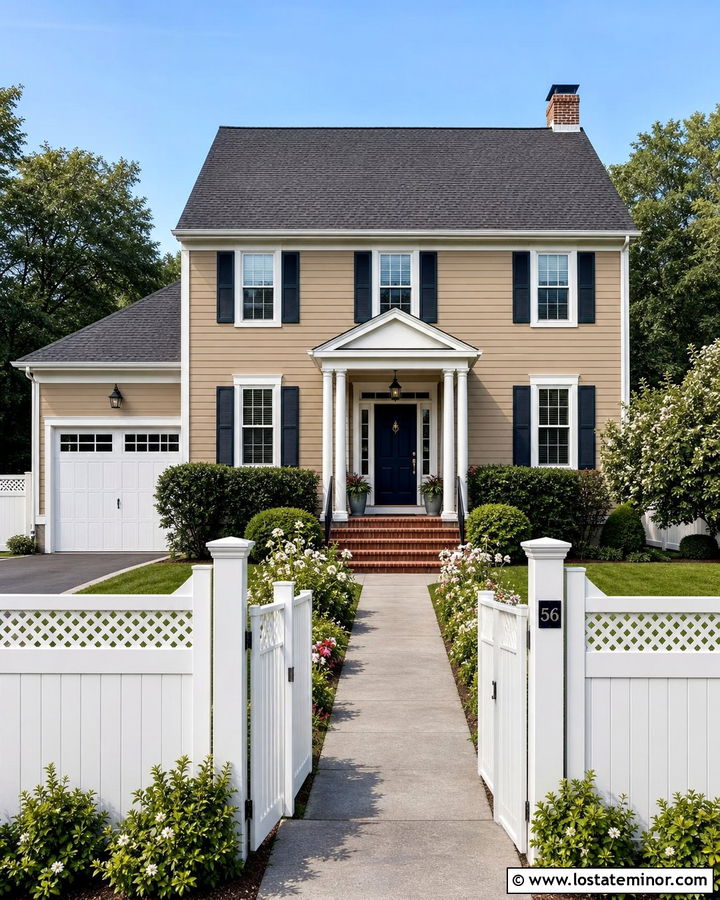
6. Tan House With White Vinyl Fence
A white vinyl fence is a practical visual match for a traditional tan home with crisp trim and a symmetrical facade. Coordinate the white carefully across the fence, windows, garage door, gutters, and porch details. Warm white usually complements golden tan better than brilliant white, which may appear overly cool in strong sunlight. A navy or deep green front door can introduce color without interrupting the classic foundation. This pairing works well for colonials, two-story suburban homes, and houses with large side yards that require a longer fence. Use a semi-private design near outdoor living spaces and a more open picket pattern near the front. Neatly shaped hedges and flowering borders will reduce the visual weight of long vinyl panels and make the entire property feel more established.
7. Tan House With Natural Split Rail Fence
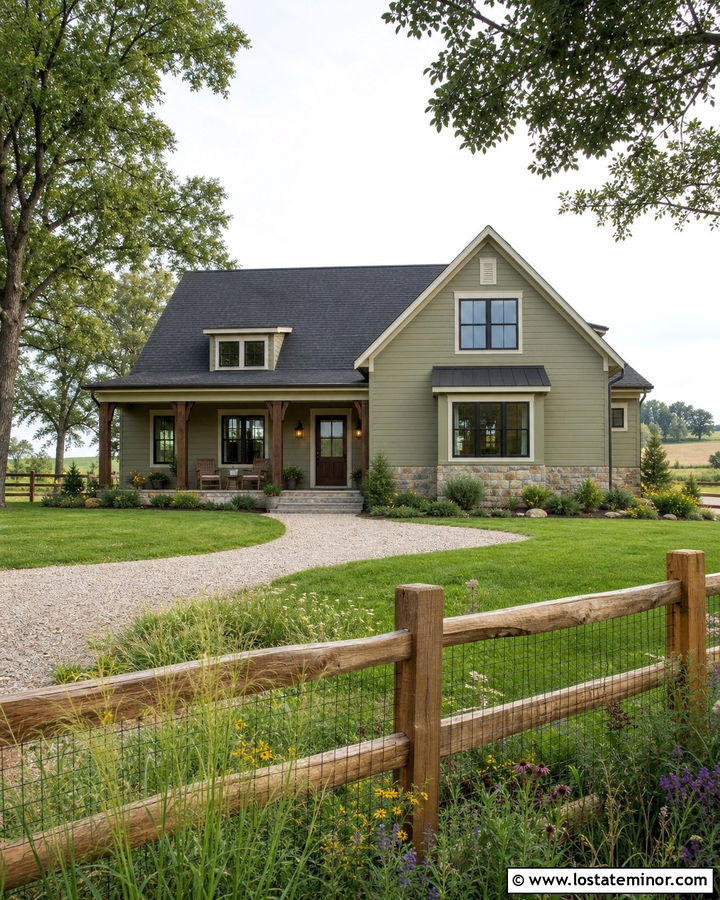
A split rail fence creates a relaxed transition between a tan house and a spacious landscape. Weathered cedar or pressure-treated pine looks natural beside warm siding, stone foundations, and dark brown roofing. Because this fence is visually open, it suits country homes, ranch properties, and large suburban lots where privacy is not the main concern. Add black wire mesh behind the rails if pets need a secure boundary while preserving the rustic appearance. A stained wood front door and matching porch posts will connect the fence to the house. Avoid overly formal landscaping with this scheme. Native grasses, low flowering plants, gravel paths, and irregular stone borders better support its casual character. The finished exterior should feel inviting, practical, and closely tied to the surrounding land.
8. Tan House With Charcoal Privacy Fence
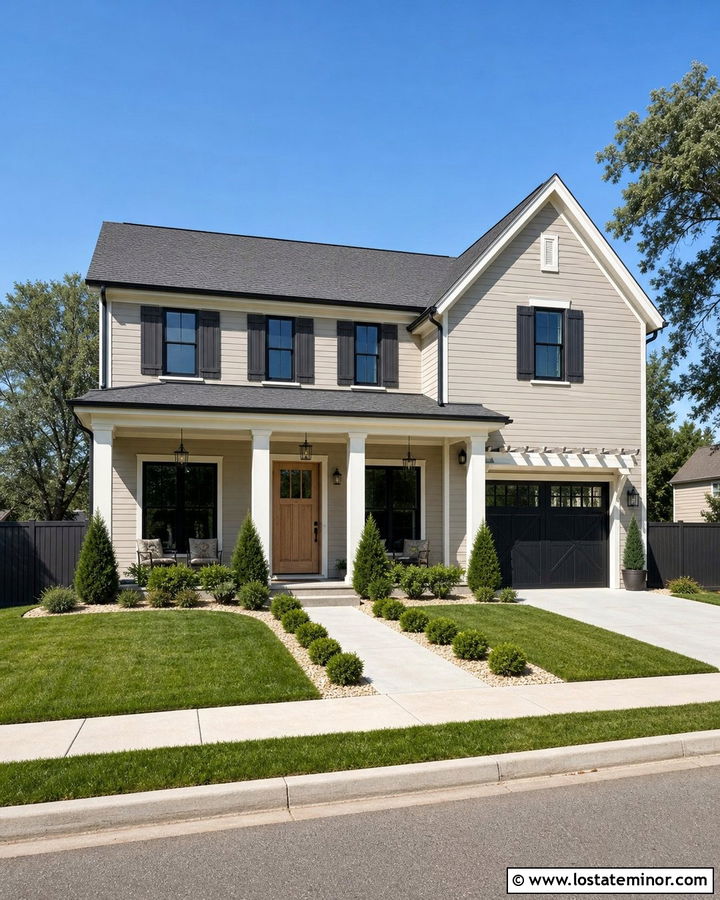
A charcoal privacy fence can modernize a tan house while remaining slightly softer than pure black. Choose a deep gray with warm undertones so it coordinates with the siding rather than creating a cold divide. Carry charcoal onto the shutters, garage door, gutters, or roof for a complete exterior palette. Light cream trim will preserve brightness around windows and porch openings. This combination works well on modern farmhouses, transitional homes, and updated bungalows with simple rooflines. Vertical fence boards can emphasize height, while narrow horizontal boards create a wider contemporary appearance. Add natural wood at the front door or porch ceiling to bridge the warm house color and dark fence. Pale gravel, structured greenery, and concrete planters complete the clean, balanced curb appeal.
9. Tan House With Brick And Iron Fence
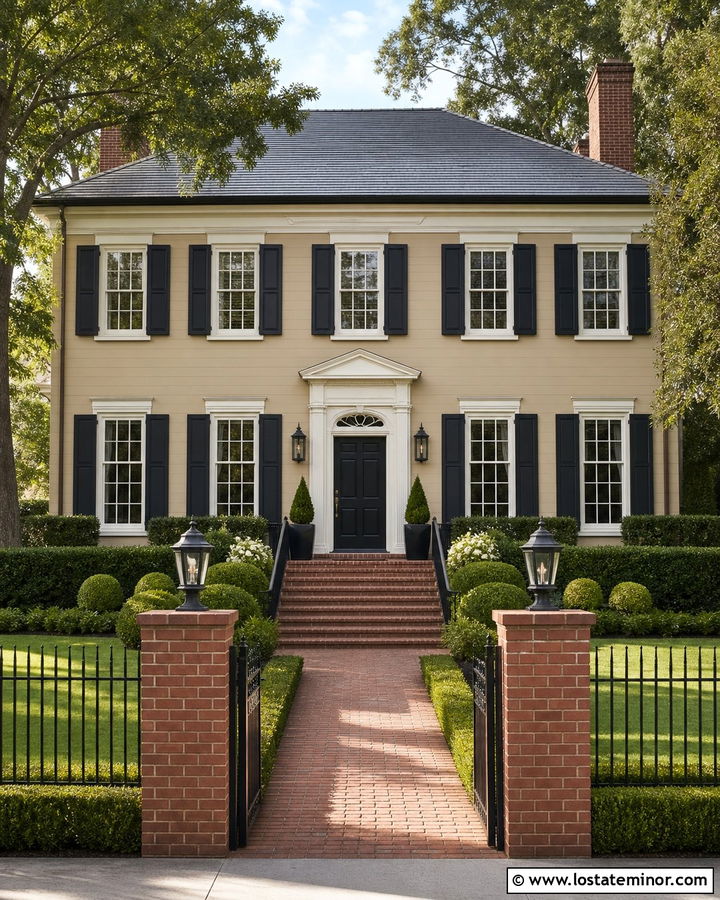
Brick pillars and black iron panels give a tan house a substantial, finished boundary. Select brick that repeats the tan, red-brown, cream, or charcoal tones already present in the facade and roofing. Matching masonry on the porch base or chimney will make the fence feel original to the property. The iron sections should remain visually open so the house can still be seen from the street. This design complements Georgian, colonial, traditional, and European-inspired homes particularly well. A black front door and lantern-style lighting can repeat the iron finish, while warm white trim keeps the facade bright. Formal hedges may be placed behind the fence, but leave enough space around brick pillars for maintenance. The full scheme feels elegant without depending on elaborate ornamentation.
10. Tan House With Stone Pillar Fence
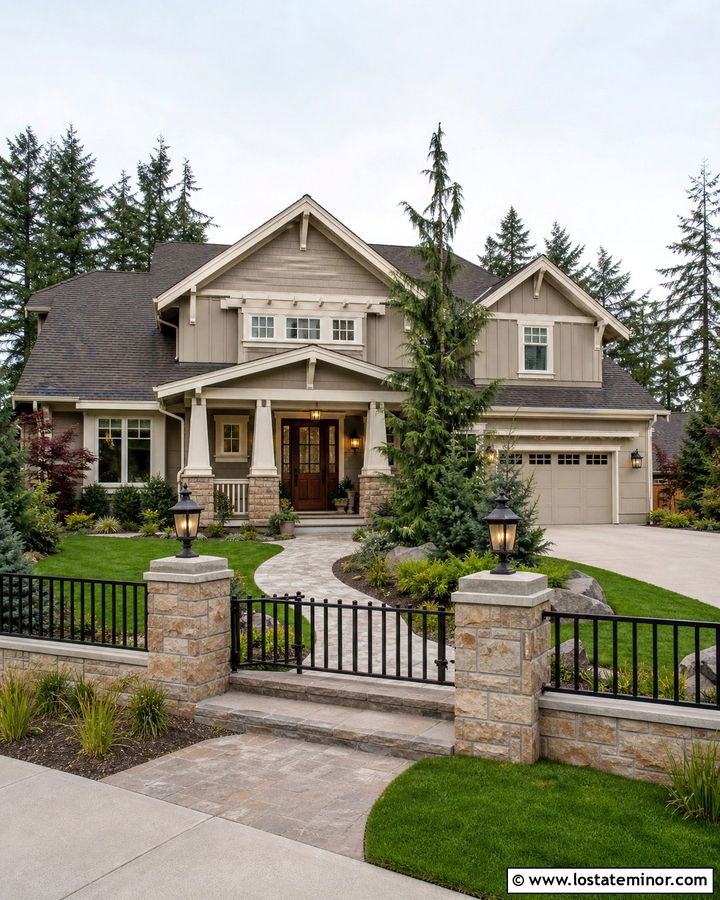
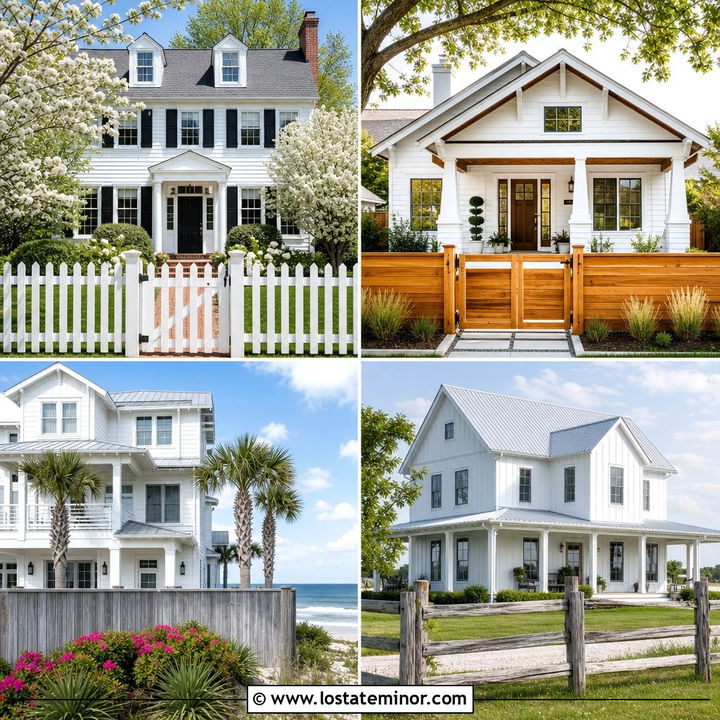
A fence supported by stone pillars can connect a tan home to its landscape and architectural details. Choose stone containing several related colors, such as sandy beige, warm gray, brown, and muted cream. Use the same material around the foundation, porch columns, or entry steps so the fence becomes part of one complete design. Wood or black metal panels can span the spaces between the pillars, depending on whether you prefer warmth or contrast. This pairing suits Craftsman, lodge, ranch, and upscale transitional homes. Keep the pillars proportional to the house; oversized masonry can overwhelm a single-story facade. Bronze lights, a stained entry door, and warm white trim will complete the palette. Low evergreens and ornamental grasses can soften the stone without hiding its texture.
11. Tan House With Sage Green Fence
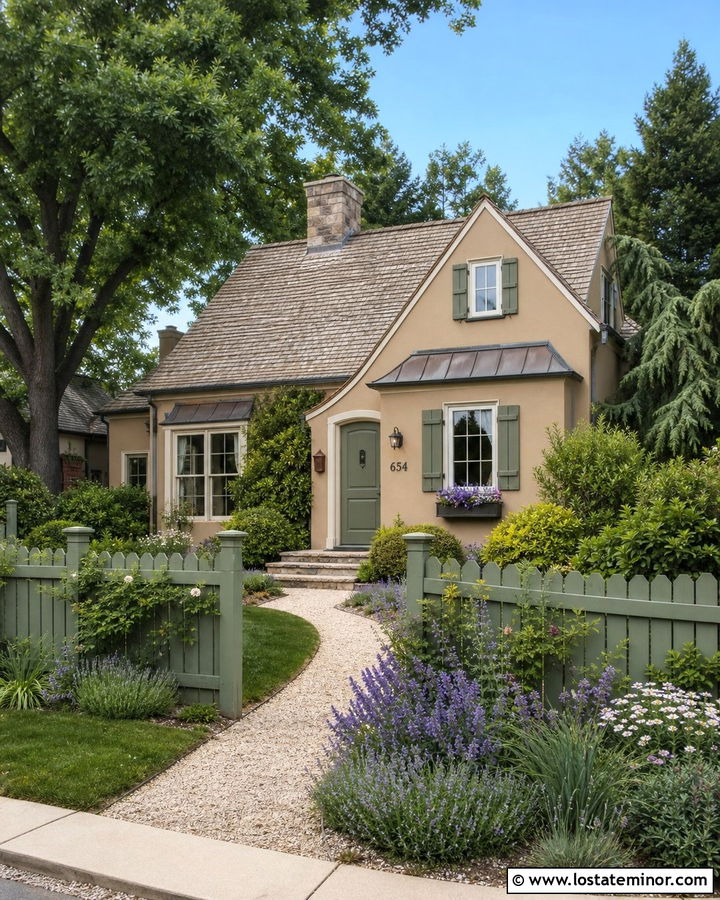
A muted sage green fence introduces subtle color while keeping a tan exterior grounded in nature. Look for a dusty green with gray or brown undertones rather than a bright botanical shade. Repeat sage on the shutters or front door, then use cream trim to frame the combination. This palette feels especially comfortable on cottages, ranch houses, and Craftsman homes surrounded by mature trees. Vertical fence boards create a traditional look, while a horizontal layout can make the color feel more contemporary. Natural stone steps and aged bronze fixtures will support the earthy character. Planting beds can include deeper green shrubs, lavender, soft ornamental grasses, and pale flowering perennials. The different greens create depth, allowing the painted fence to blend naturally into the garden instead of competing with it.
12. Tan House With Black Wood Fence
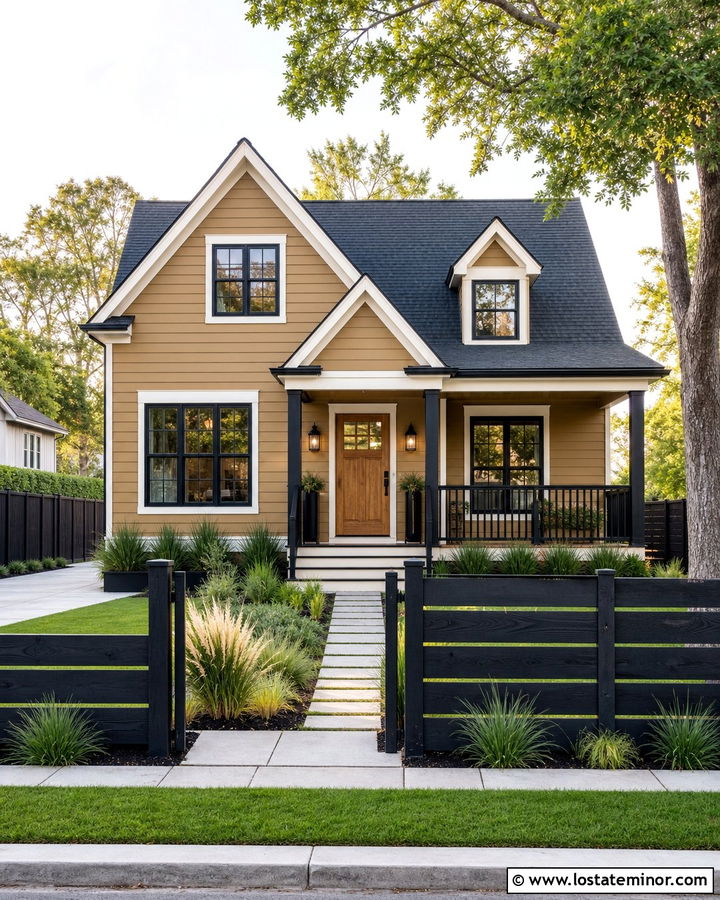
A solid black wood fence gives a tan home dramatic contrast with more texture than metal fencing. The visible wood grain keeps the dark finish from feeling overly industrial. Use black on selected details, such as window frames, porch railings, or the garage door, while keeping the fascia and primary trim warm white. A natural oak or cedar front door can soften the palette and connect it to the landscape. This scheme works especially well on modern cottages, contemporary farmhouses, and renovated ranch houses. Set the fence behind a border of grasses or evergreen shrubs to break up large dark surfaces. In sunny locations, a deep charcoal-black may be more forgiving than the darkest possible finish. The completed exterior feels bold, warm, and deliberately coordinated.
13. Tan House With Two Tone Fence
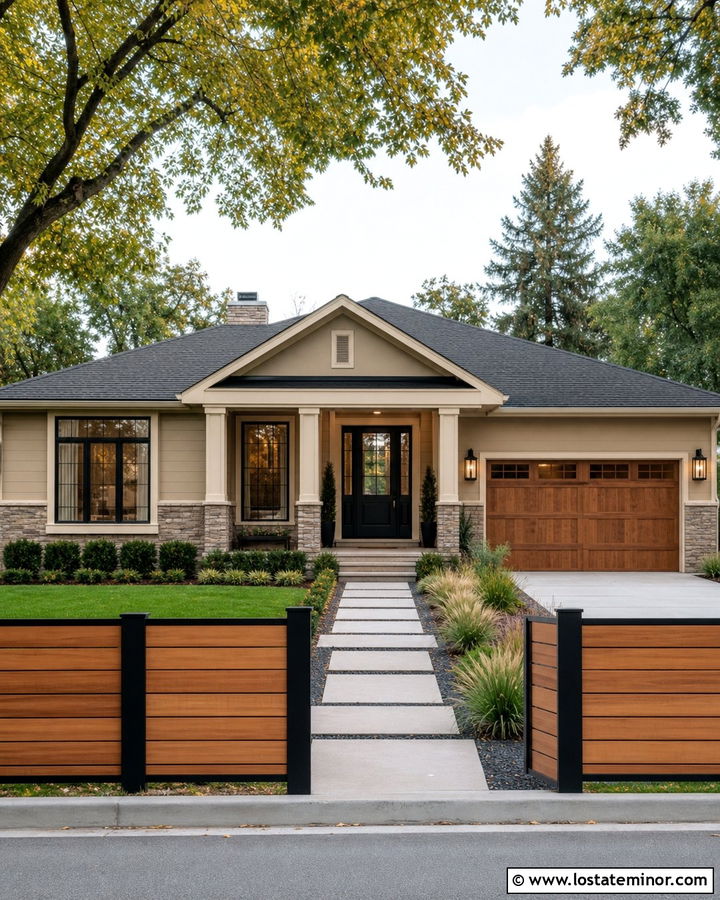
A two-tone fence can bring dimension to a tan house without requiring a colorful exterior. One effective combination uses natural cedar boards between matte black posts and rails. The wood relates to the warm siding, while the black framework adds definition and connects with exterior lights, windows, or gutters. Another option pairs taupe fence panels with creamy white posts for a softer traditional result. Keep the number of exterior colors controlled by repeating both fence finishes elsewhere on the home. This approach suits transitional houses, modern ranches, and contemporary Craftsman designs. Use simple gates and minimal hardware so the color contrast remains the main feature. Neutral paving, layered shrubs, and a tidy lawn will frame the fence without adding unnecessary visual competition to the full exterior composition.
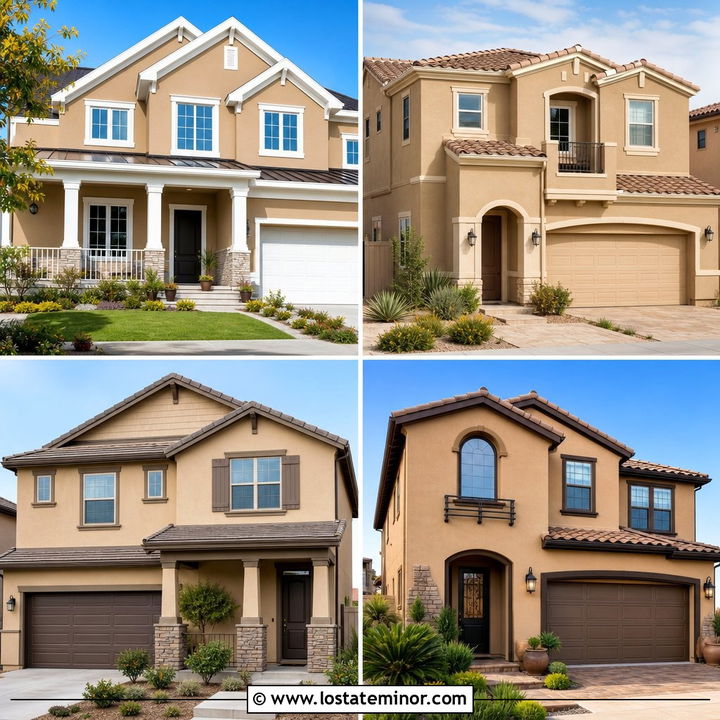
14. Tan Stucco House With Courtyard Fence
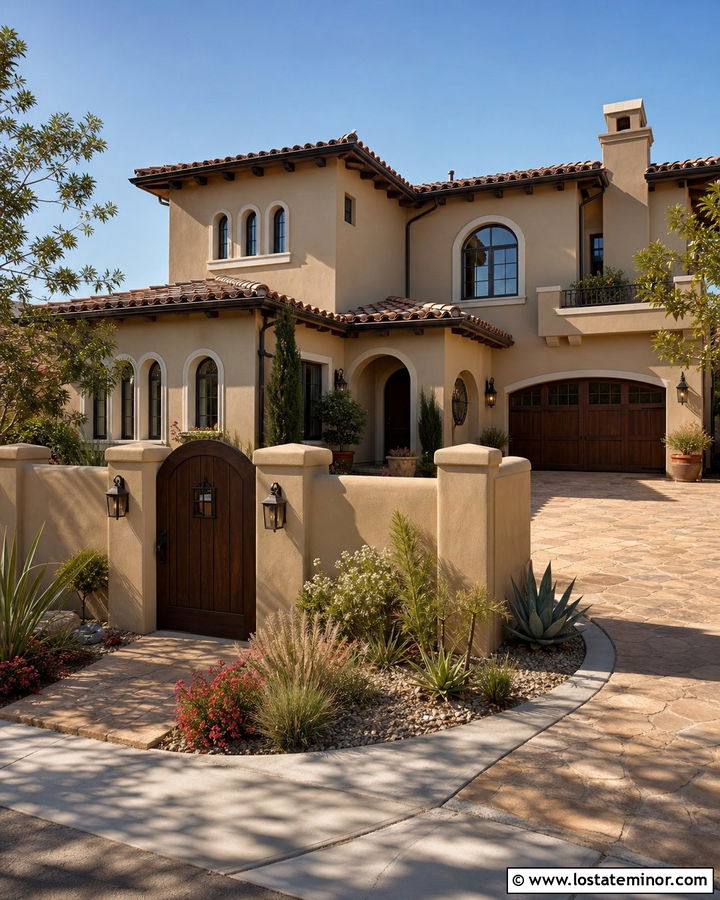
A low courtyard fence works naturally with a tan stucco house, especially when the architecture includes Spanish, Mediterranean, or Southwestern influences. Use smooth stucco walls in a related but slightly deeper tan, then add a dark wood or wrought iron gate for contrast. Terracotta roof tiles, cream trim, and bronze lanterns will strengthen the warm palette. The fence should feel like an extension of the house rather than a separate perimeter feature. Rounded wall caps, simple columns, and handcrafted-looking finishes can complement the softer forms of stucco architecture. Include drought-tolerant landscaping such as agave, ornamental grasses, flowering shrubs, and gravel beds. A warm stone walkway leading through the gate will create a welcoming entrance and make the courtyard visible as part of the complete curb-appeal design.
15. Tan Ranch House With Farm Fence
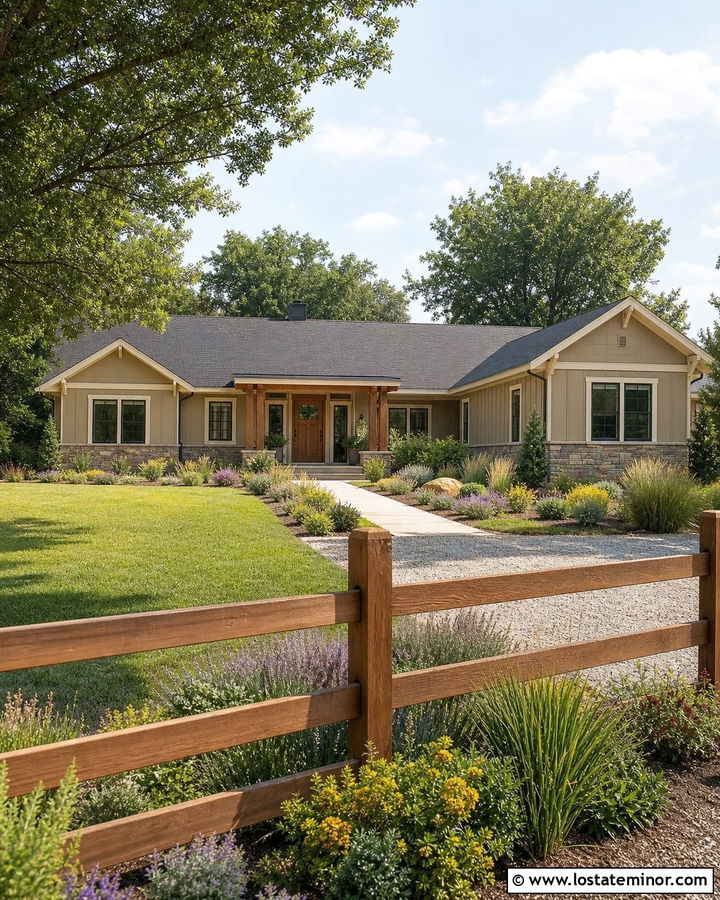
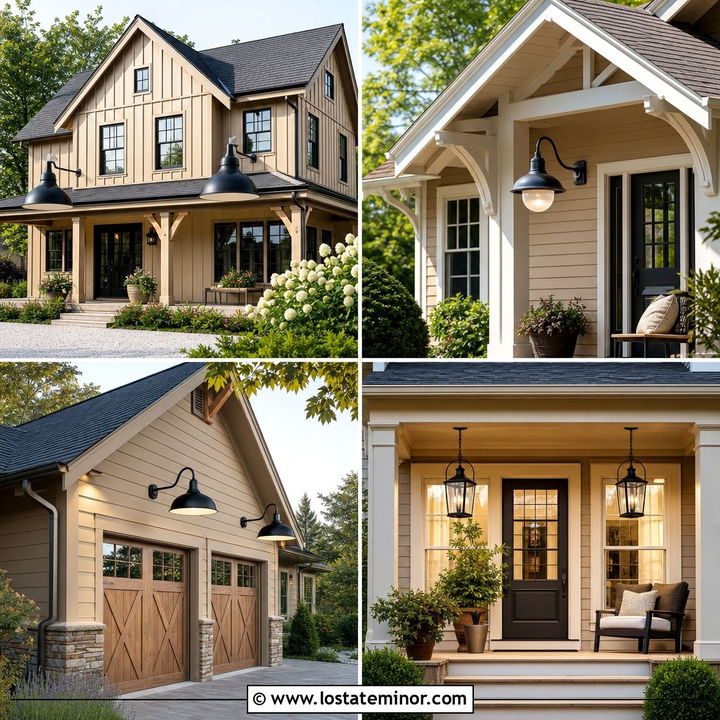
A simple farm fence can give a tan ranch house a wider, more welcoming presence. Use three or four horizontal wood rails in a medium brown stain, supported by straightforward posts. This open design preserves long views across the front yard and reinforces the home’s low roofline. Add black wire mesh only where added security is needed. A charcoal roof, cream trim, and wood front door will create a balanced palette that feels updated without losing the ranch character. Consider wrapping the porch posts in the same wood used for the fence. Broad planting beds filled with grasses, flowering shrubs, and low evergreens can soften the long facade. A wide gravel or concrete driveway should remain visually uncluttered so the warm house and fence become the main features.
16. Tan Craftsman House With Wood Gate
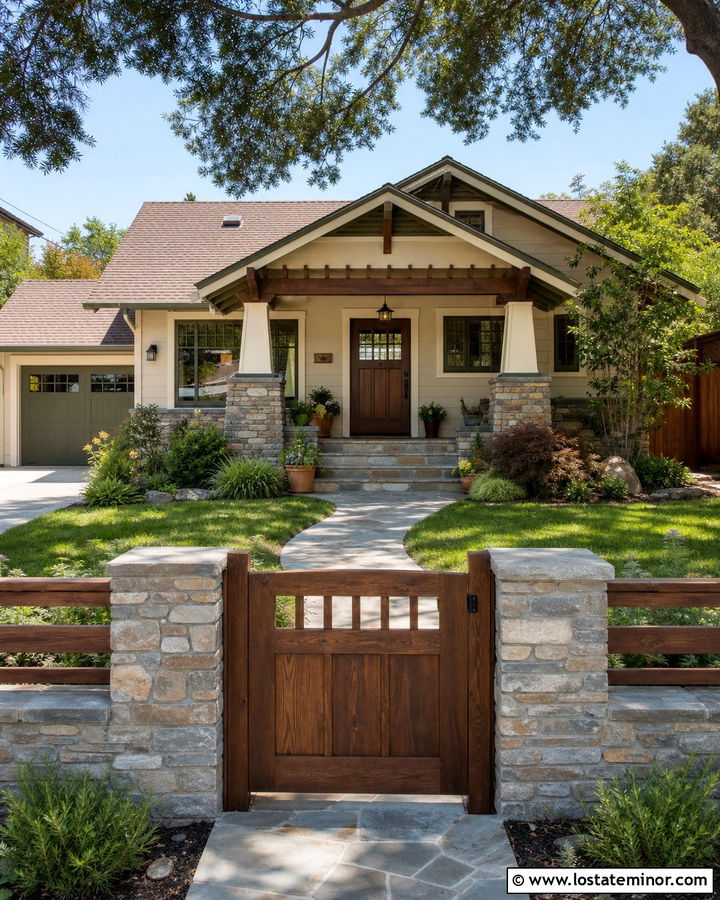
A prominent wood gate can become the visual link between a tan Craftsman house and its front boundary. Choose quarter-sawn oak, cedar, or another richly grained wood in a medium walnut stain. Use the same finish on the front door, porch beams, and brackets to emphasize the home’s handcrafted details. The surrounding fence may combine short stone columns with wood panels for additional texture. Cream trim, deep olive accents, and a brown architectural-shingle roof will support the warm exterior. Keep the gate design geometric and sturdy rather than ornate. Tapered porch columns and exposed rafters should remain visible from the street. Complete the scene with irregular flagstone, broad steps, layered native plants, and soft garden lighting that highlights the entry without dominating the facade.
17. Tan Colonial House With Black Fence
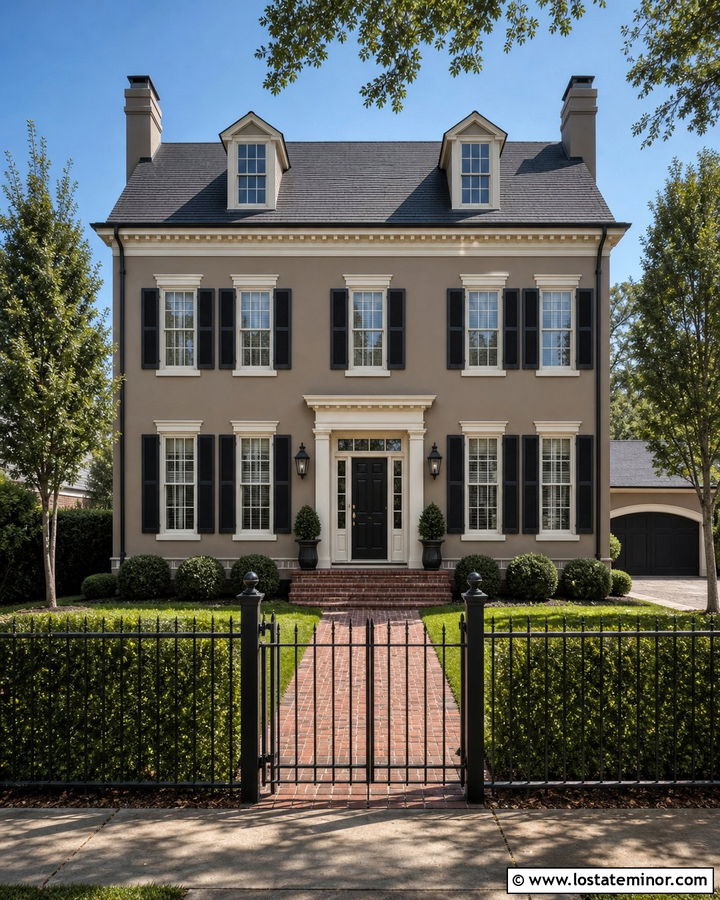
A black fence can frame a tan colonial house while emphasizing its orderly proportions. Choose slim metal pickets with uncomplicated posts and align the gate with the centered front door. Repeat black on the shutters, door, lanterns, and selected hardware. Crisp cream trim around symmetrical windows will keep the facade bright, while a dark gray roof connects naturally to the fence. Brick steps or a brick walkway can introduce traditional warmth and prevent the palette from feeling too limited. Keep the fence at a modest height so it defines the property without concealing the architecture. Boxwood hedges, paired planters, and evenly spaced trees reinforce the formal layout. The finished design feels established and polished because every feature follows the strong symmetry of the house.
18. Tan Farmhouse With White Rail Fence
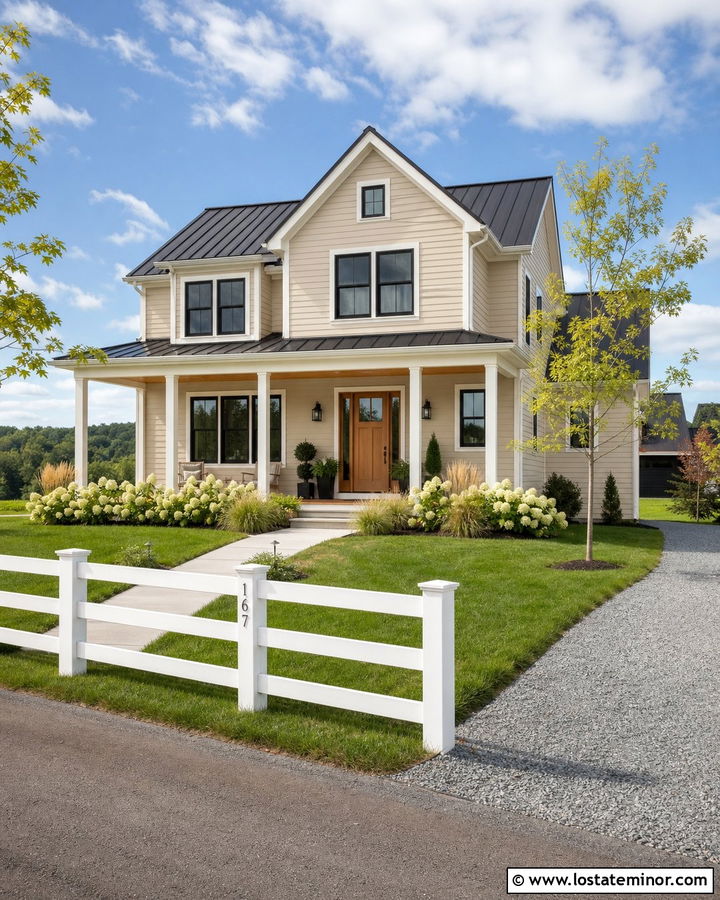
A white rail fence gives a tan farmhouse a bright boundary while preserving its open, rural character. Use a soft white that matches the porch columns, window trim, and fascia. Warm tan lap siding provides a gentler alternative to the all-white farmhouse exterior, while a black roof and dark window accents create modern definition. A natural wood front door or porch ceiling can introduce needed warmth between the pale surfaces. The fence may follow a long driveway, border the front lawn, or define a small pasture area. Keep its design straightforward, with evenly spaced rails and substantial posts. Hydrangeas, grasses, and young shade trees can soften the open property. A gravel driveway and simple concrete walkway will maintain the relaxed farmhouse mood without making the exterior feel unfinished.
19. Tan Cottage With Garden Fence
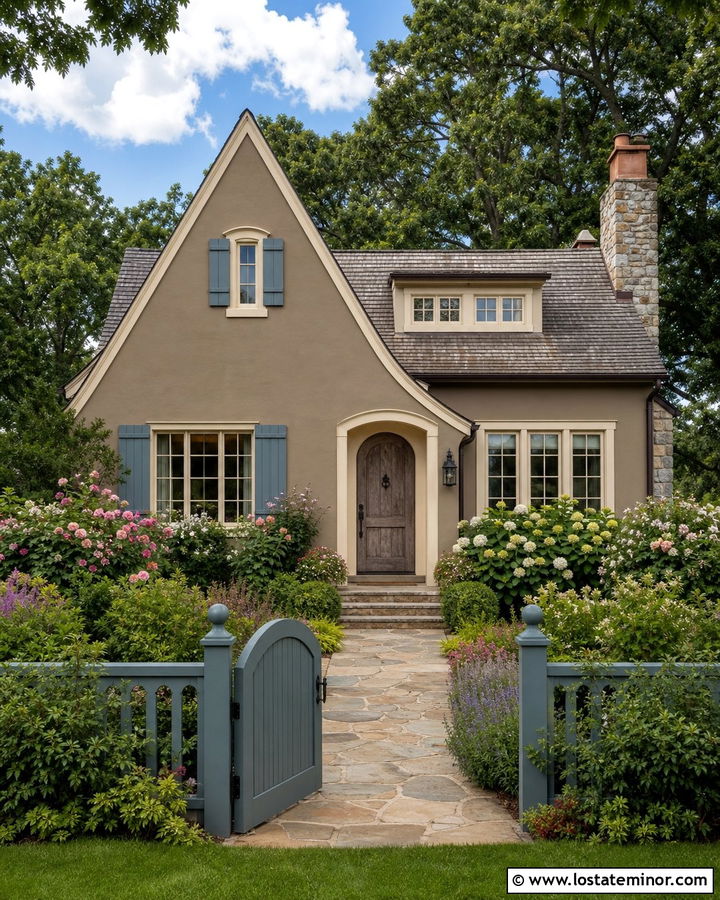
A garden fence should make a tan cottage feel charming and layered rather than closed off. Choose a short painted fence in creamy white, dusty green, or soft blue-gray, depending on the door and shutter colors. An arched gate can gently mark the walkway without becoming overly decorative. Warm tan shingles or lap siding will create a quiet backdrop for flowers and foliage. Repeat the fence color on one secondary house feature to maintain visual continuity. A weathered wood door, stone chimney, and warm gray roof can add natural character. Allow climbing plants or loose flowering borders to overlap portions of the fence, but keep the gate and pathway clear. The result should look established and welcoming, with the house, garden, and boundary working as one connected scene.
20. Tan Modern House With Concrete Fence
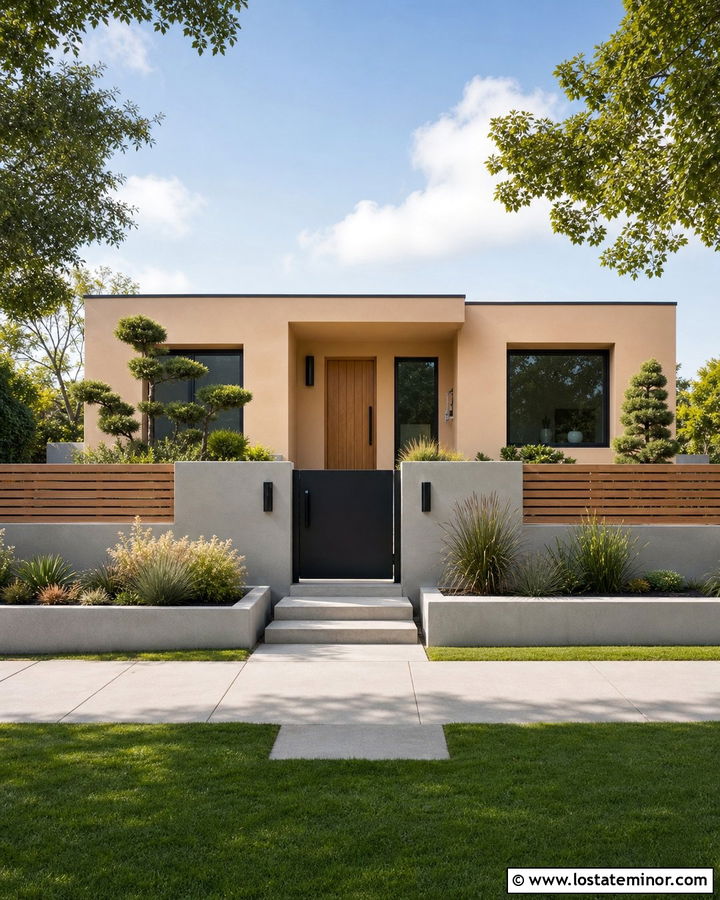
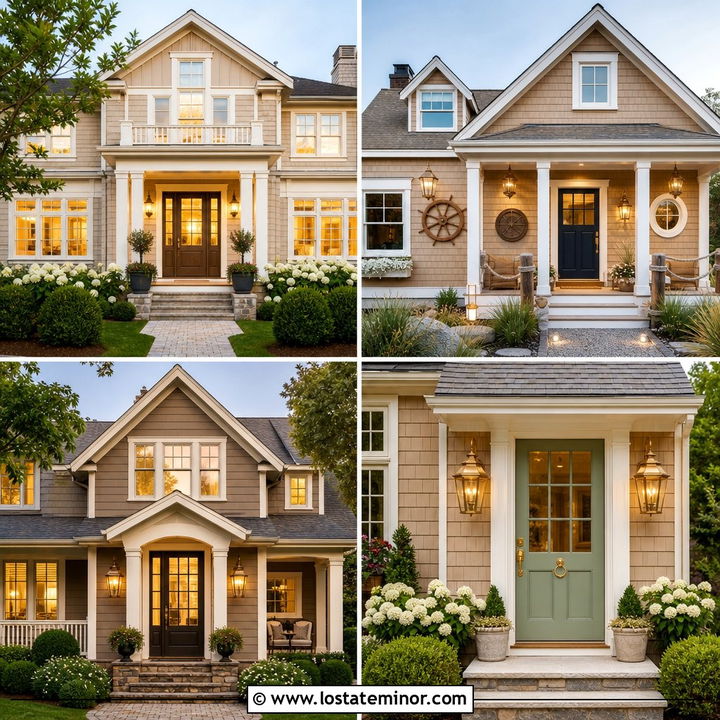
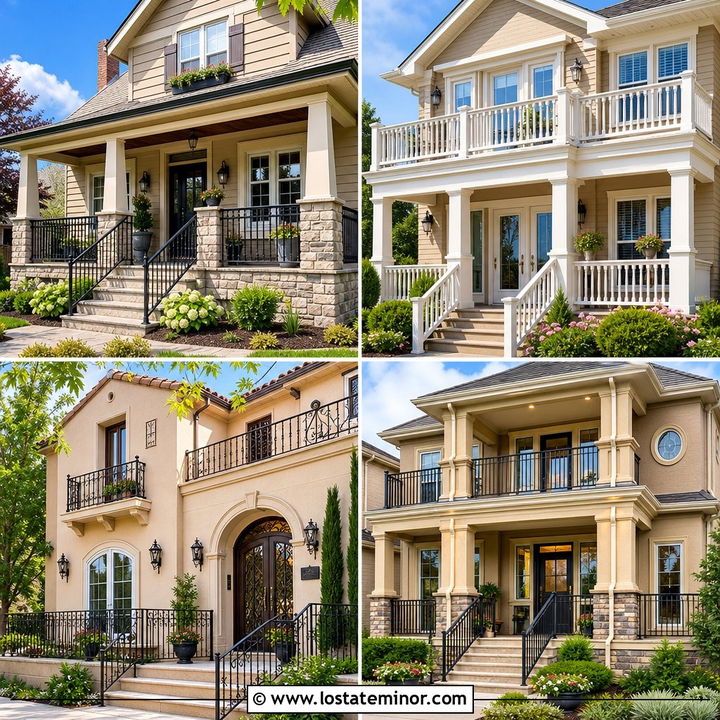
A concrete fence can support the clean geometry of a modern tan house without distracting from the architecture. Use smooth panels in warm gray, taupe, or a tan that is slightly darker than the exterior walls. Add narrow wood slats or black metal gates to prevent the boundary from feeling too heavy. Large windows, flat or low-pitched rooflines, and simple stucco surfaces will reinforce the contemporary direction. Repeat the fence material in walkway pavers, retaining walls, or raised planters. Keep the landscaping structured but not sparse, using ornamental grasses, sculptural evergreens, and gravel mulch. Integrated lighting may be placed along the walkway or beneath wall caps. With careful proportions, the concrete boundary feels private and refined while allowing the warm house color to remain approachable.
21. Tan Split Level House With Slatted Fence
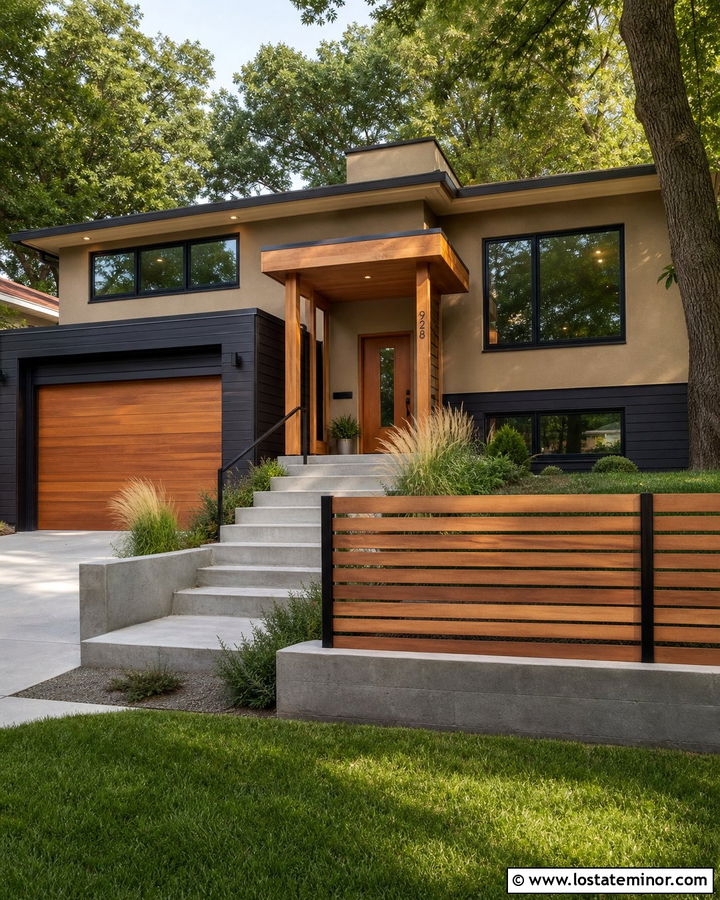
A slatted fence can update a tan split-level house by introducing strong horizontal lines and natural texture. Choose cedar or thermally modified wood in a medium stain, then use slim black posts to relate the fence to dark windows and exterior lighting. Place the fence where it can define a patio, side yard, or elevated front garden without hiding the main entrance. The tan siding may be paired with charcoal lower-level cladding to make the stepped architecture feel more intentional. Use matching wood on the garage door or entry canopy for balance. Broad concrete steps and layered retaining walls can manage changes in elevation. Ornamental grasses and low shrubs will soften those hard edges, creating a cohesive exterior that feels current while respecting the home’s original structure.
22. Tan Brick House With Iron Fence
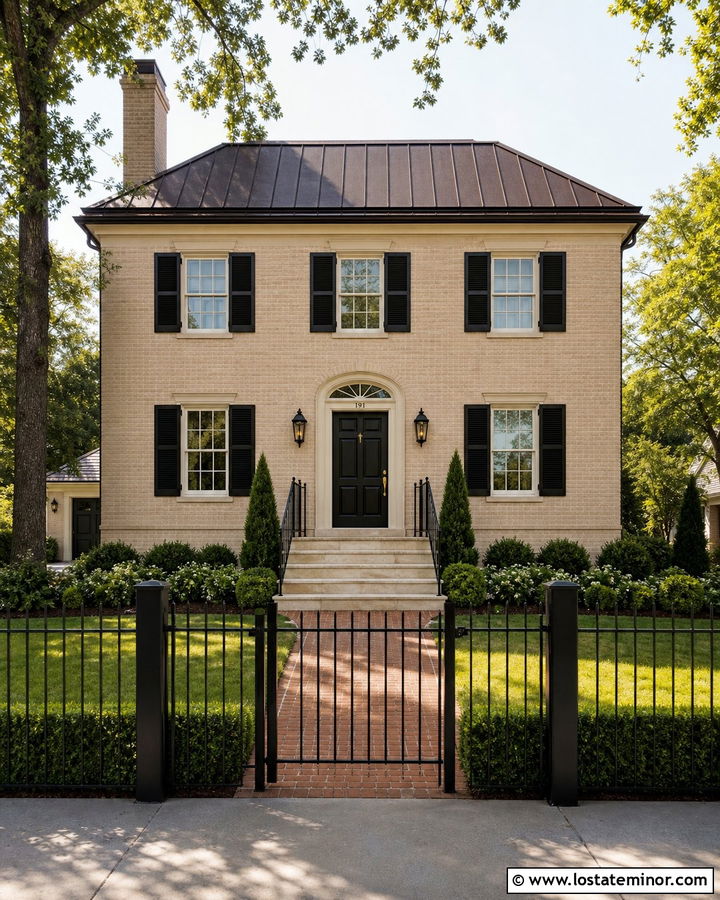
An iron fence allows the texture of a tan brick house to remain fully visible. Select matte black or dark bronze metal with straight vertical bars and minimal ornament. Repeat the finish on the front door, shutters, lighting, and railings to create a clear relationship between the house and boundary. Warm mortar, limestone steps, and creamy trim can brighten the masonry while preserving its natural variation. This design works for traditional, Tudor, colonial, and urban homes where the front yard is relatively shallow. A brick or stone base beneath the iron can provide additional substance when needed. Keep landscaping lower near the fence and taller closer to the house. The layered view of metal, plants, and brick will add depth without making the property feel crowded or visually enclosed.
23. Tan Bungalow With Low Wood Fence
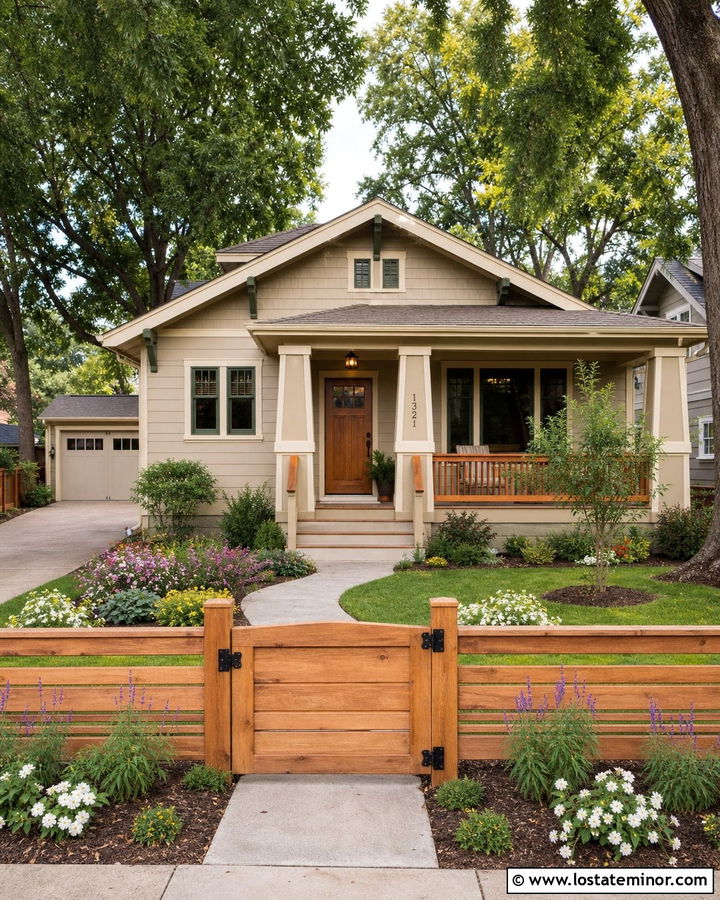
A low wood fence complements the approachable scale of a tan bungalow. Use square pickets or horizontal boards in a warm cedar stain, keeping the height low enough to showcase the porch. Repeat the wood on the front door, porch swing, railing cap, or exposed roof brackets. Cream trim can define the windows and columns, while muted green or deep brown accents add gentle contrast. A simple gate should open directly toward the front steps, creating an obvious and welcoming route through the yard. Layered foundation plantings, a curved walkway, and colorful but controlled flower beds will support the relaxed architecture. Avoid a tall privacy fence across the front because it may overwhelm the low roofline. The complete design should feel open, friendly, and thoughtfully maintained.
24. Tan Cape Cod House With Picket Fence
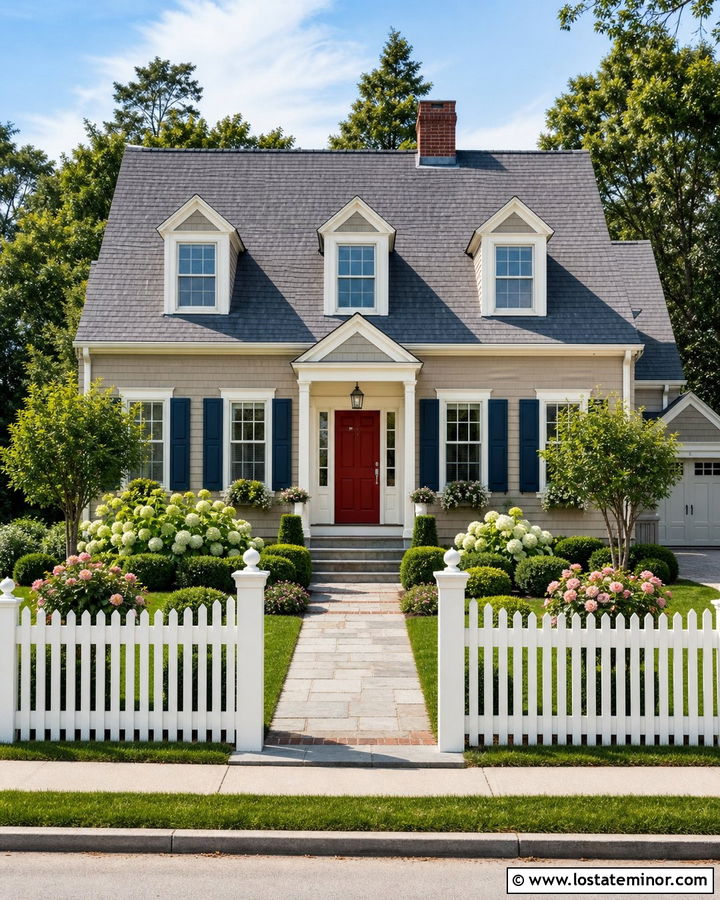
A tan Cape Cod house gains classic curb appeal from a neatly proportioned picket fence. Paint the fence in the same creamy white used on the trim, dormers, and window surrounds. Black or deep blue shutters will add definition, while a red, navy, or natural wood front door can become the central accent. Keep the fence low and use a straight or gently curved gate aligned with the walkway. Gray roof shingles balance the warm siding and connect with coastal stone or gravel details. Boxwood, hydrangeas, roses, and compact ornamental trees suit the symmetrical facade without obscuring it. The palette can remain simple because the architectural details provide interest. Consistent white finishes across the fence and house create the most cohesive and well-planned appearance.
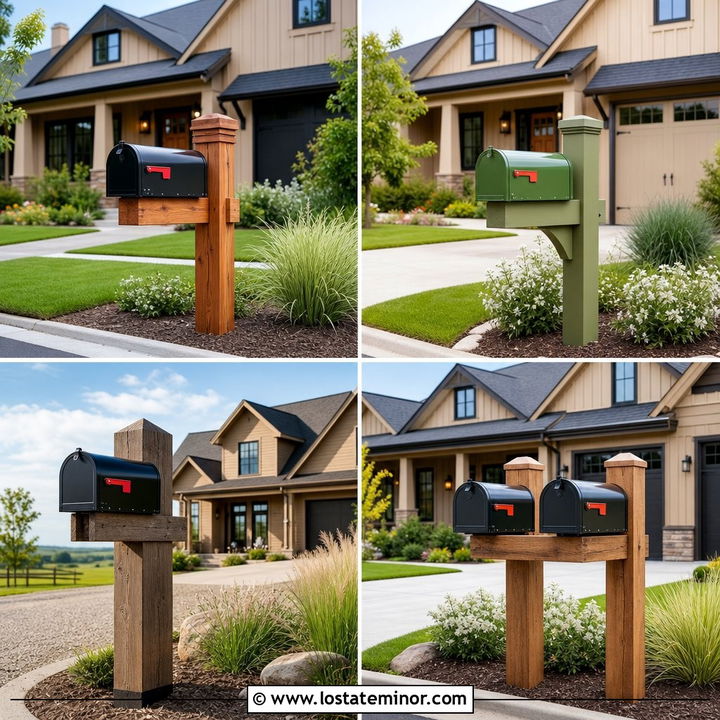
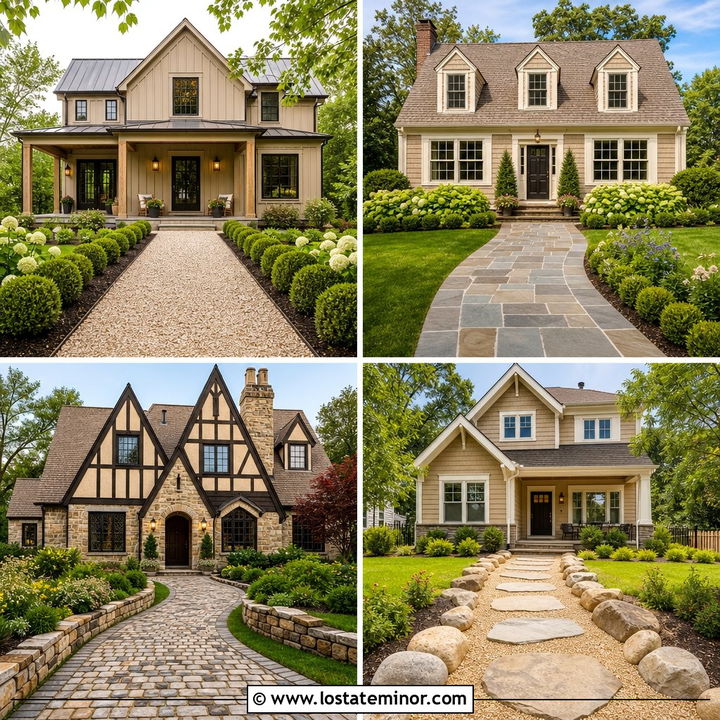
25. Tan Tudor House With Dark Wood Fence
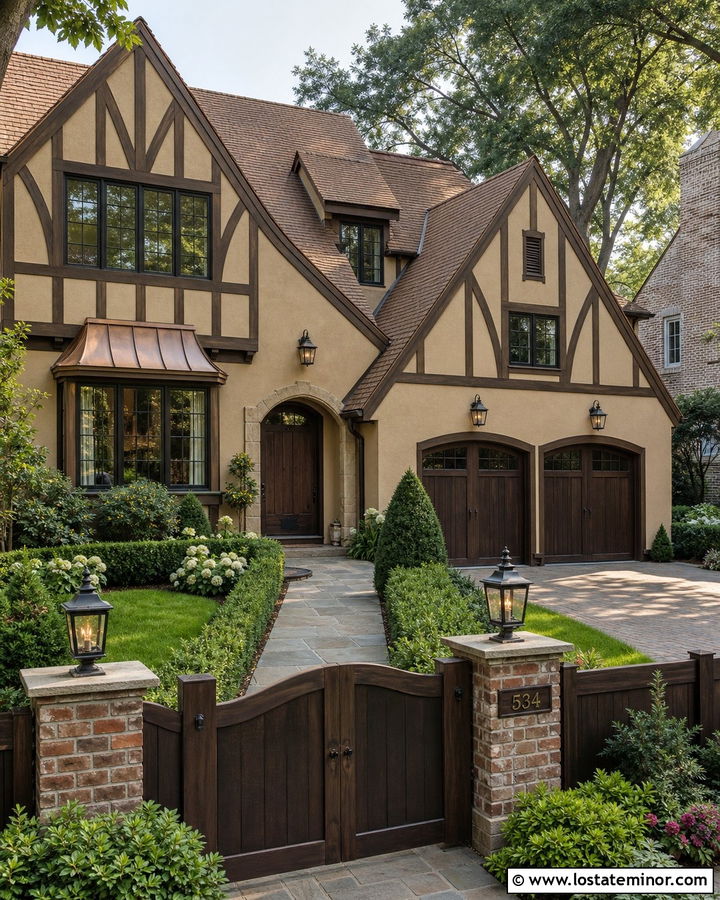
A dark wood fence reinforces the rich, substantial character of a tan Tudor house. Choose walnut, espresso, or deep brown stain and repeat it on the front door, decorative timbering, and garage doors. Cream stucco, tan brick, or warm beige stone can form the lighter body of the facade. Use blackened bronze hardware and lanterns rather than bright metallic finishes. A fence with vertical boards and gently arched gates will complement steep rooflines without appearing overly modern. Stone or brick pillars can mark the entrance and connect to the chimney or foundation. Plant deep green hedges behind portions of the fence, then soften the front with smaller flowering plants. The full design should feel layered and established, with warm materials linking every part of the property.
26. Tan Coastal House With Blue Gray Fence
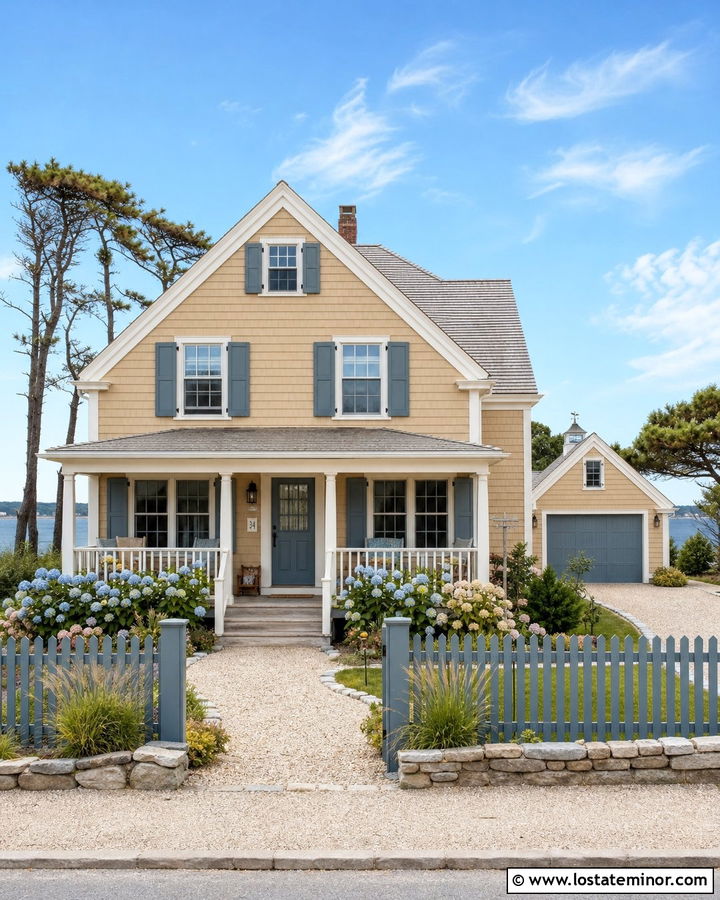
A blue-gray fence can give a tan coastal house a light, relaxed identity without relying on bright nautical color. Select a muted shade with plenty of gray so it sits comfortably beside sandy tan siding. Repeat the blue-gray on the shutters or front door, and use warm white for the trim, porch rails, and columns. Weathered wood decking and pale gray roof shingles will complete the soft palette. Choose an open picket or slatted fence that allows breezes and garden views to pass through. Beach grasses, hydrangeas, and gravel paths reinforce the natural setting even on an inland suburban property. Avoid overly saturated blue, which may compete with the warm house color. A dusty finish creates a calmer, more cohesive relationship between the fence and facade.
27. Tan Desert House With Stucco Fence
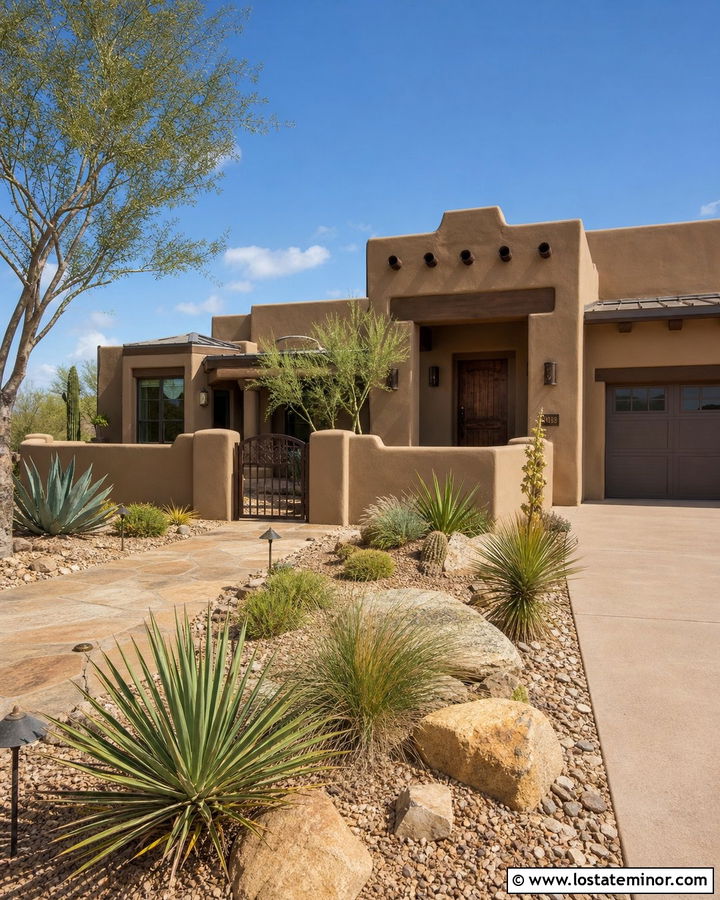
A tan stucco fence can blend beautifully with a desert home when each surface has slight tonal variation. Paint the house a warm sandy tan and make the courtyard wall one or two shades deeper. Add a dark bronze metal gate, natural wood door, and terracotta or warm gray roof details for contrast. Rounded wall caps and simple rectangular openings can reflect Southwestern architecture without becoming overly decorative. Use gravel, local stone, agave, yucca, and sculptural desert plants instead of a traditional lawn. The fence should offer privacy while allowing the main entry and distinctive roofline to remain visible. Bright sunlight strengthens warm undertones, so test colors directly on both vertical and horizontal surfaces. The completed palette should feel grounded in the dry landscape rather than artificially matched.
28. Tan Suburban House With Composite Fence
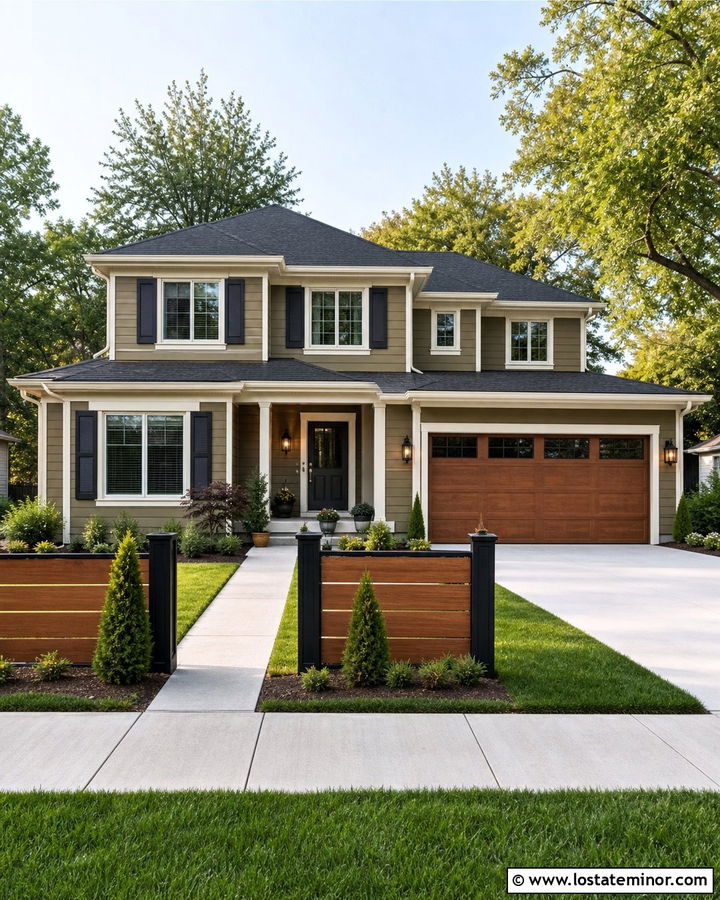
Composite fencing can give a tan suburban home a tidy, coordinated boundary with a modern material finish. Choose a realistic wood tone, deep taupe, or charcoal that relates to the roof and siding undertones. A two-tone version with wood-look boards and black posts adds useful contrast around a simple facade. Repeat one fence color on the garage door, shutters, or front entry to make the design feel intentional. This solution suits transitional houses, newer two-story homes, and properties requiring privacy along a side yard. Use shorter sections near the street so the fence does not dominate the front elevation. Clean concrete edging, evergreen shrubs, and a broad lawn will balance the structured panels. The result feels polished, practical, and easy to integrate into an established neighborhood.
29. Tan House With Olive Green Fence
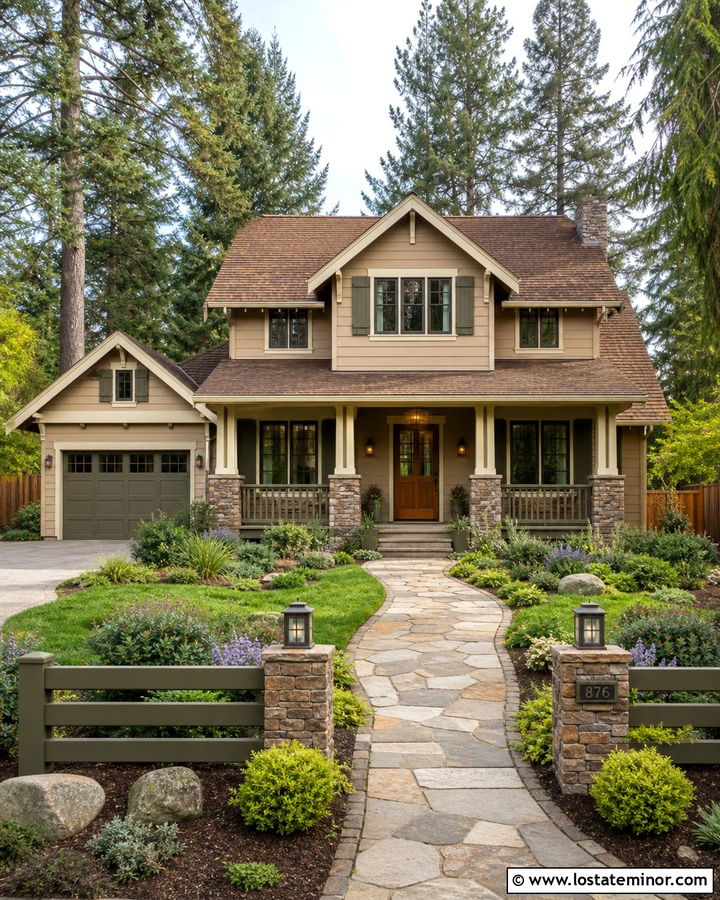
An olive green fence brings depth to a tan house while maintaining a warm, earthy palette. Select a subdued olive containing brown or gray undertones, then repeat it on the shutters, front door, or porch railing. Cream trim will keep the facade from becoming too dark, while a weathered brown roof can connect all three colors. This combination is particularly attractive on cottages, Craftsman houses, and wooded ranch homes. Use vertical boards for a traditional appearance or narrow horizontal slats for a more modern interpretation. Layer the fence with evergreen shrubs in lighter and darker greens so the painted surface blends naturally into the yard. Warm stone, aged bronze fixtures, and a wood porch floor will complete the nature-inspired exterior without introducing unnecessary accent colors.
30. Tan House With Mixed Material Fence
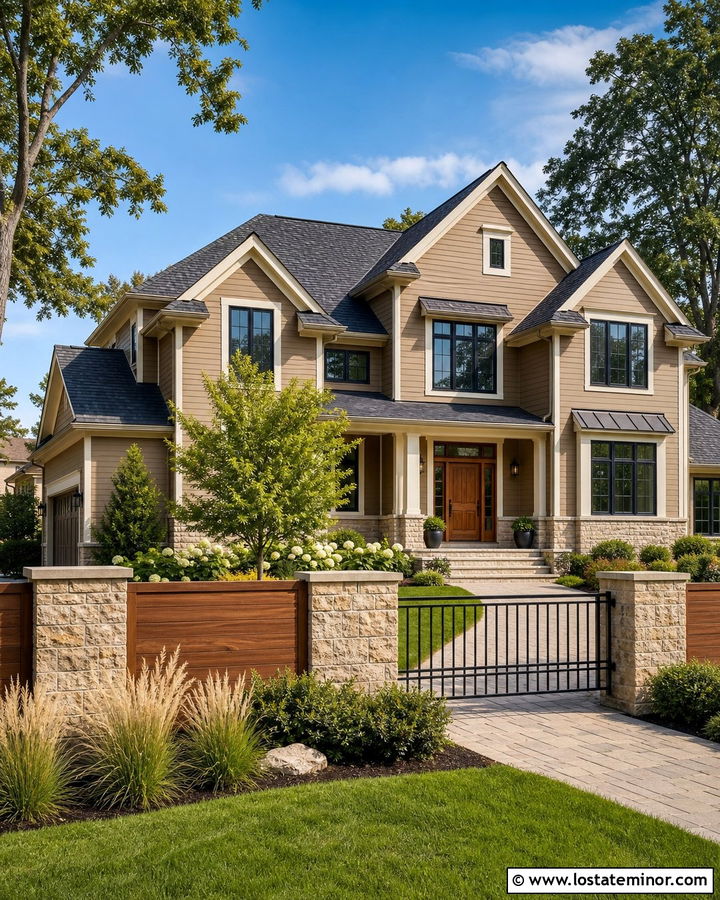
A mixed-material fence provides the flexibility to combine several features already found on a tan house. Stone pillars may repeat the foundation, cedar panels can relate to the front door, and black metal sections can coordinate with windows or lighting. Keep the material palette limited and distribute each finish across the facade so the fence does not look assembled from unrelated parts. This approach suits large transitional, contemporary Craftsman, and modern farmhouse properties. Use solid panels where privacy is important and open metal sections near the front walkway to preserve visibility. Warm white trim can brighten the tan siding, while a charcoal roof anchors the composition. Consistent pillar sizes, aligned fence heights, and restrained landscaping will help the complex material combination appear organized, upscale, and architecturally connected.
Conclusion:
The strongest **30 Tan House Design With Fence Ideas** treat the house, fence, roofing, trim, masonry, landscaping, and entry as one coordinated exterior. Start by identifying whether your tan siding leans golden, sandy, peachy, brown, or gray. Then select a fence finish that either repeats that warmth or supplies controlled contrast. White pickets create a classic effect, natural wood adds texture, and black metal gives the facade sharper definition. Sage, olive, and blue-gray fencing can introduce color while preserving a calm palette. Always test paint and stain outdoors because sunlight, shade, and surrounding greenery affect how colors appear. With thoughtful repetition and suitable proportions, a well-chosen fence can make a tan house feel distinctive, balanced, and complete.

Related posts: