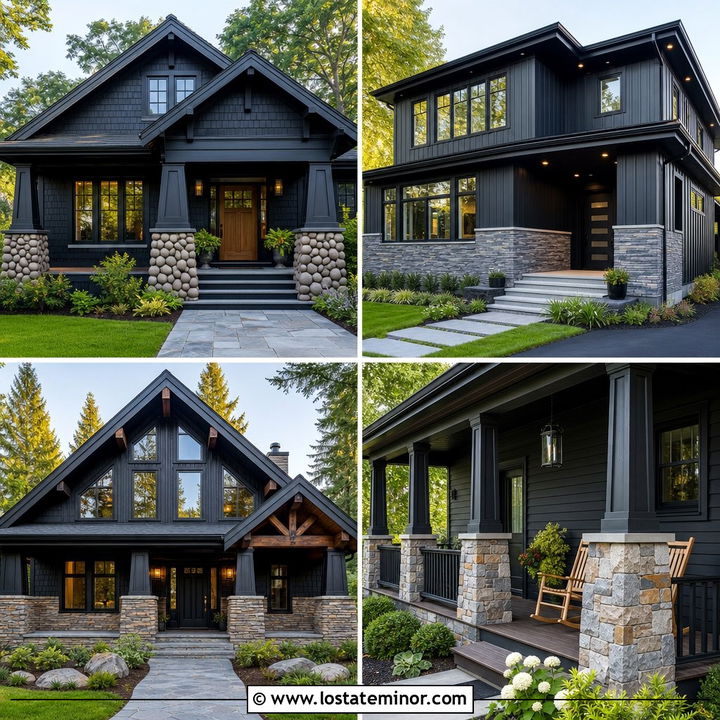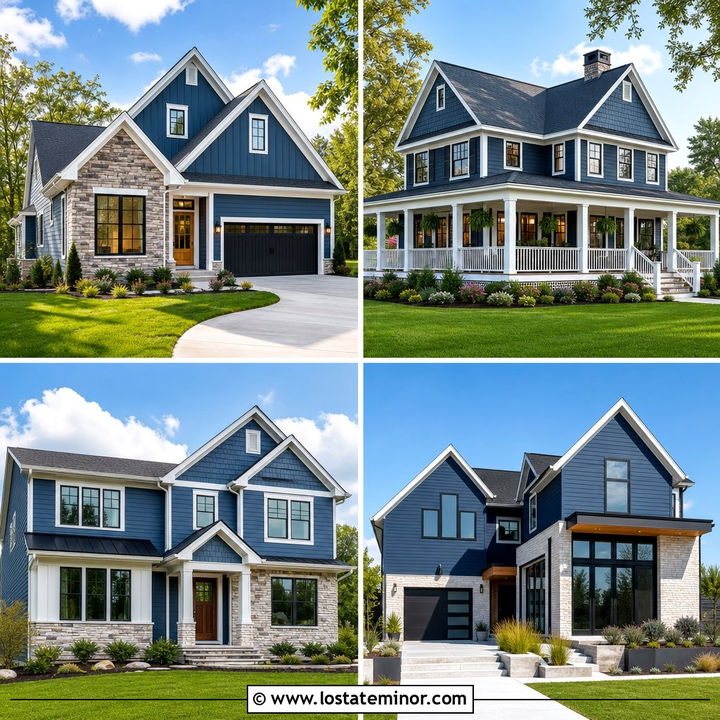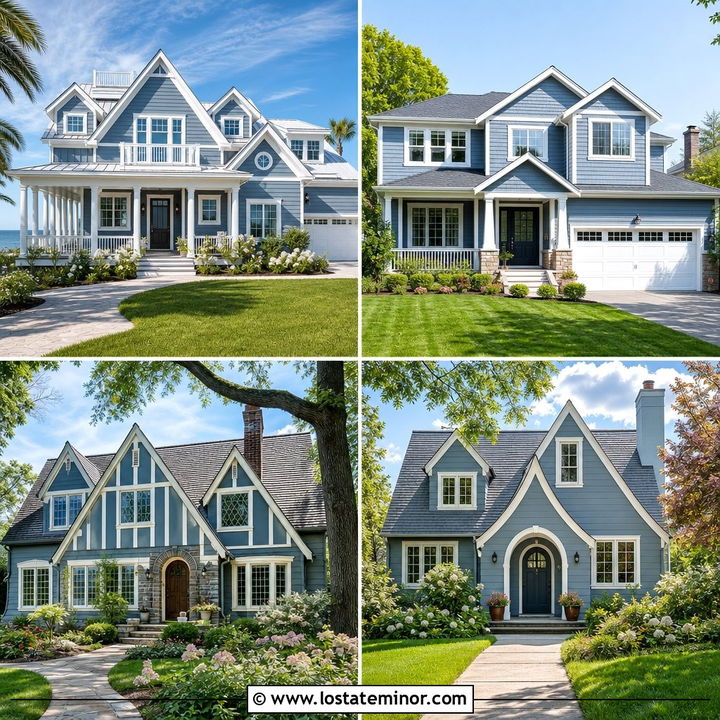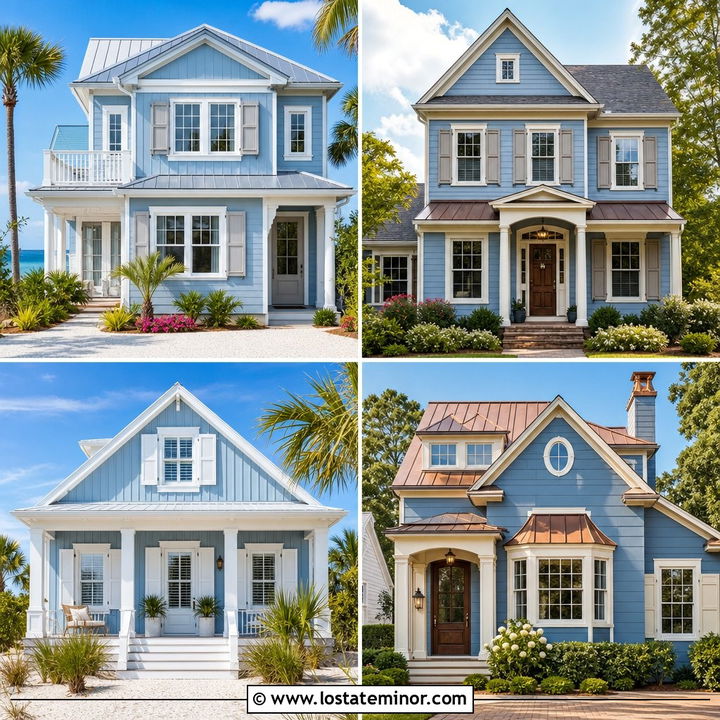

1. Navy Blue Craftsman With Gray Stone Wainscoting
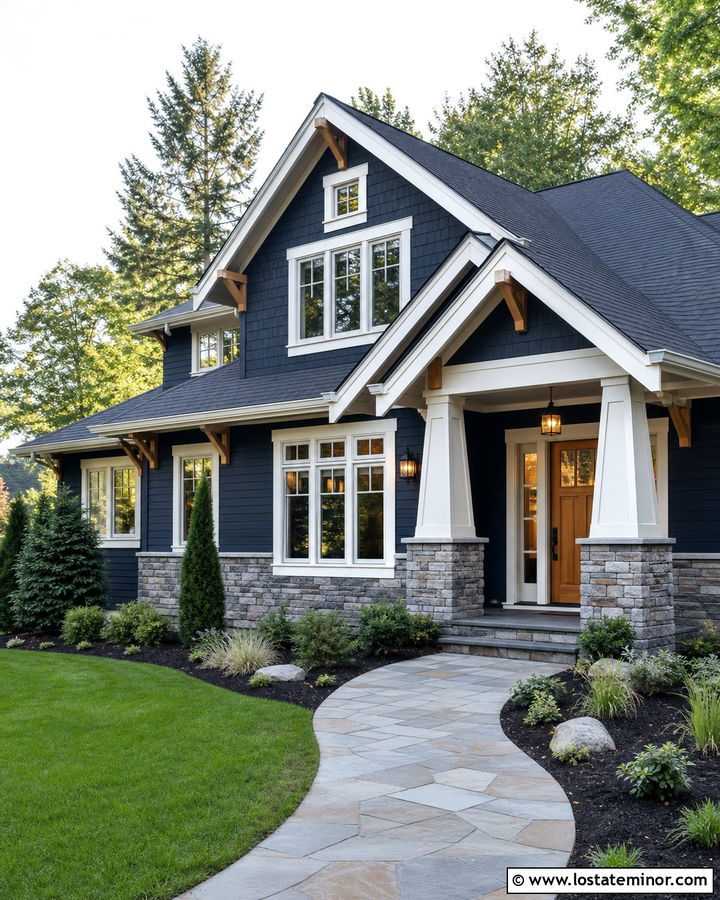
A navy blue Craftsman feels grounded and welcoming when the lower facade is wrapped in soft gray stone. Choose stone containing a balanced mix of silver, charcoal, and muted beige so it connects the blue siding to the landscape. Crisp white trim can outline the windows, wide eaves, and tapered porch columns. A natural oak front door brings warmth without competing with the stone variation. Continue the masonry across the porch piers and foundation for a unified appearance. Medium-gray roof shingles keep the palette calm, while black lanterns add a sharper finishing note. Low evergreen shrubs, ornamental grasses, and a curved flagstone walkway complete this practical navy blue house design with wainscoting.
2. Navy Blue Colonial With Red Brick Wainscoting
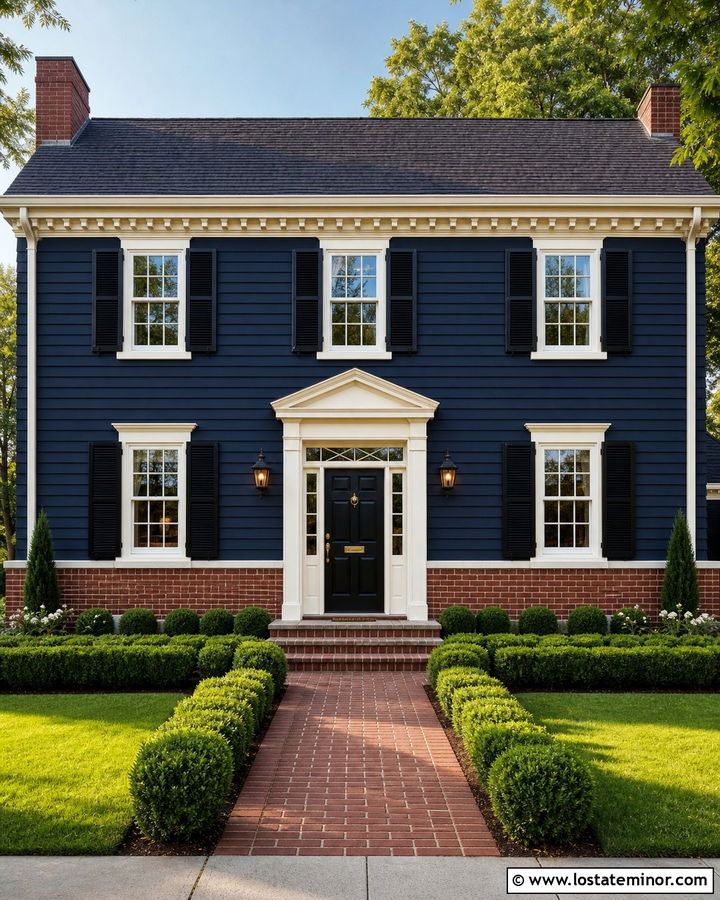
Traditional red brick gives a navy blue Colonial a warm, established character. Keep the brick wainscoting at a consistent height across the front elevation, using a simple stone cap to create a clean transition into the clapboard siding. Creamy white trim is softer than a bright white and works naturally with the rust, brown, and clay tones in the masonry. Add black shutters, a glossy black front door, and aged brass hardware for a formal finish. A charcoal architectural-shingle roof balances the darker body color. Symmetrical boxwoods and a straight brick walkway reinforce the Colonial structure. This combination is especially effective when the chimney repeats the same brick used along the lower facade.
3. Navy Blue Ranch With White Brick Wainscoting
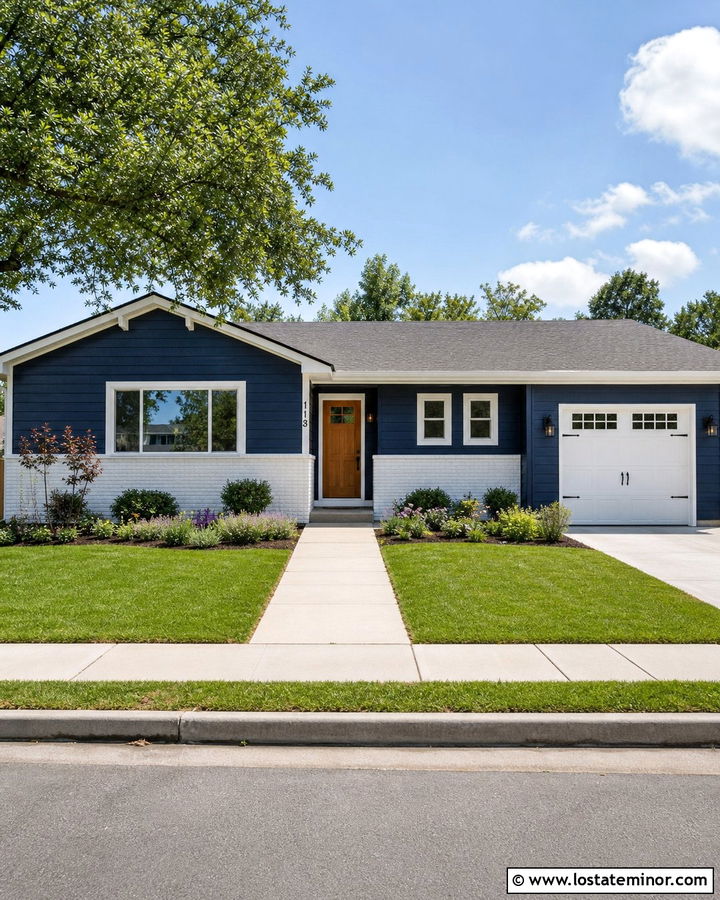
Does a low ranch house need more dimension? White brick wainscoting can break up a long navy blue facade while making the home appear brighter and more structured. Select a warm white or lightly limewashed brick instead of a stark blue-white finish. Use matching warm white on the fascia, soffits, windows, and garage door to connect every section. A medium-stained wood front door becomes a welcoming focal point against the cool navy siding. Dark bronze lights and house numbers add subtle contrast. Carry the brick around prominent corners so the material does not look applied only to the front. Broad planting beds and a simple concrete walkway complement the ranch home’s horizontal shape.
4. Navy Blue Farmhouse With Limestone Wainscoting
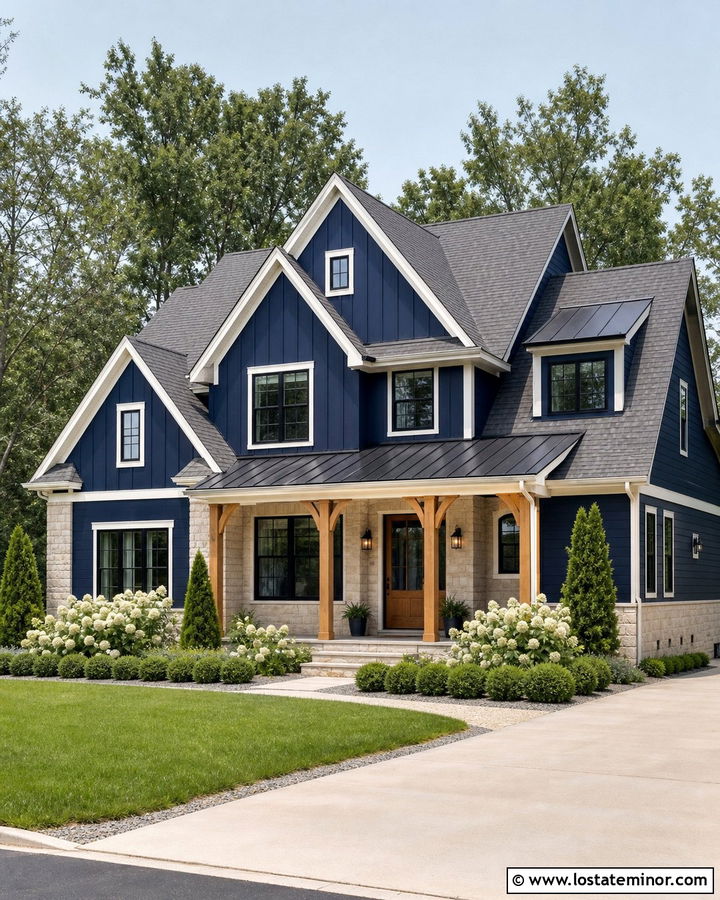
Pale limestone creates an elegant foundation for a navy blue modern farmhouse. Run the limestone wainscoting beneath horizontal siding on the main walls and beneath vertical board-and-batten siding in the gables. The material’s creamy beige coloring softens the deep blue and coordinates beautifully with warm white trim. A medium oak front door, timber porch brackets, and natural wood porch furniture strengthen the welcoming farmhouse character. Choose a charcoal standing-seam metal roof for the porch and dark gray shingles for the main roof. Black-framed windows provide definition without overwhelming the scheme. Simple hydrangeas, clipped shrubs, and a wide gravel-edged walkway keep the curb appeal polished but approachable.
5. Navy Blue Cape Cod With Fieldstone Wainscoting
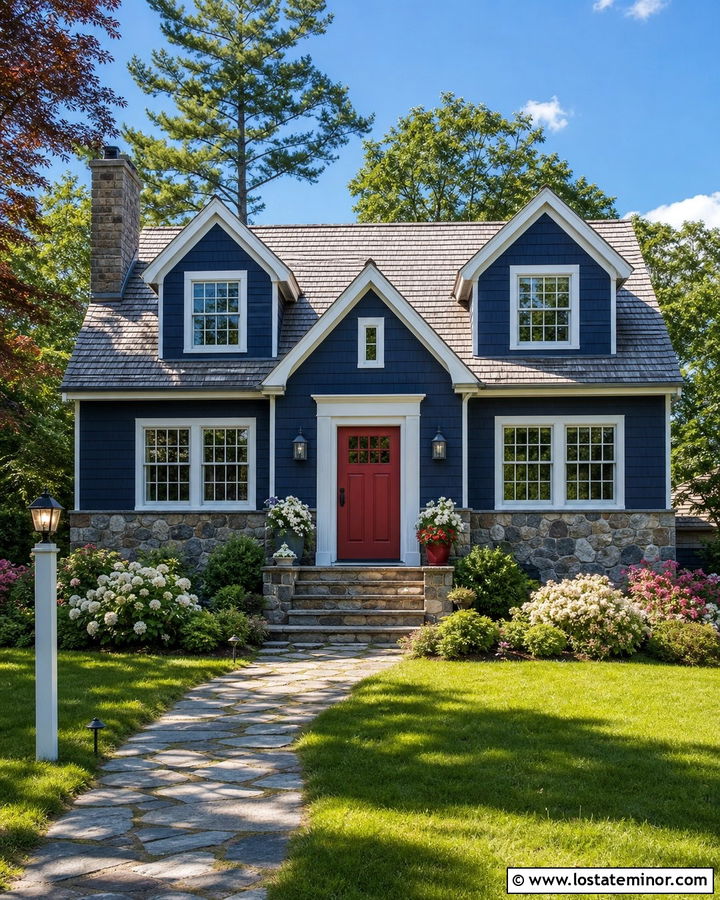
A navy blue Cape Cod gains storybook texture from irregular fieldstone wainscoting. Look for stones with gray, brown, and weathered blue undertones so the lower facade blends smoothly with the siding. White trim around divided-light windows gives the compact house a crisp outline, while a muted red front door introduces a classic accent. Cover the dormers in navy shake siding to add another layer of coastal texture. Weathered-gray roof shingles support the traditional palette and prevent the exterior from becoming too dark. Fieldstone porch steps can extend the wainscoting material into the entrance. Finish the look with flowering shrubs, a narrow stone path, and informal foundation plantings that suit the home’s cozy proportions.
6. Navy Blue Bungalow With River Rock Wainscoting
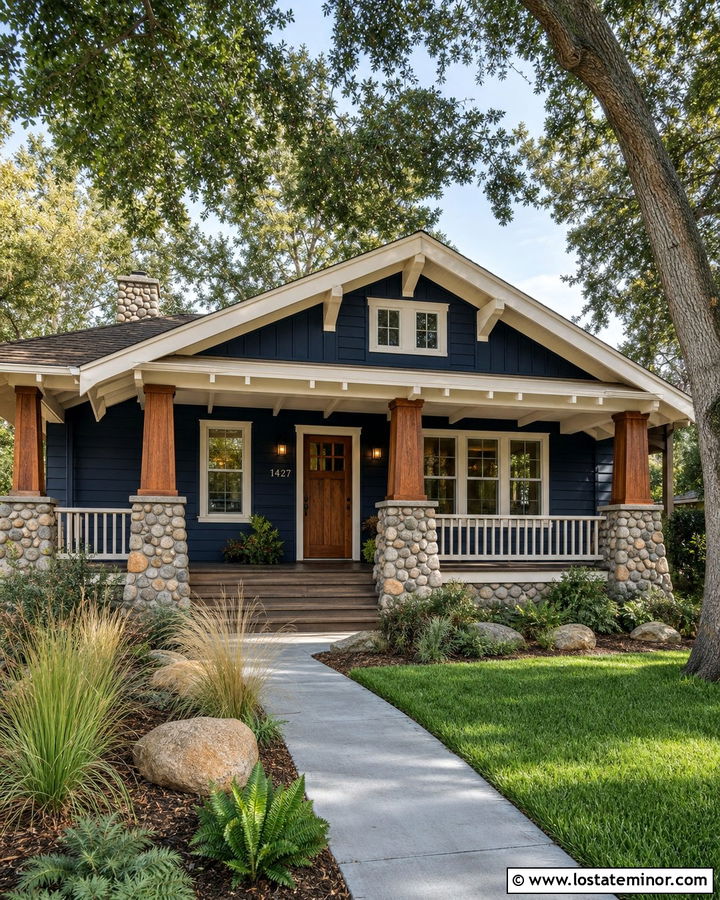
Rounded river rock brings natural movement to a navy blue bungalow with a deep front porch. Use a blend of gray, taupe, brown, and charcoal stones across the foundation and porch column bases. Warm white trim helps the rafters, railings, and window casings stand out against the navy lap siding. Stained cedar columns and a matching craftsman-style front door add warmth near eye level. A brown-gray roof can connect the wood accents with the varied stone colors. Since river rock already has plenty of visual detail, keep the landscaping relaxed and uncomplicated. Ferns, native grasses, and a straight concrete walkway allow the architecture to remain the focus while reinforcing the bungalow’s comfortable, handcrafted character.
7. Navy Blue Split-Level With Charcoal Stone Wainscoting
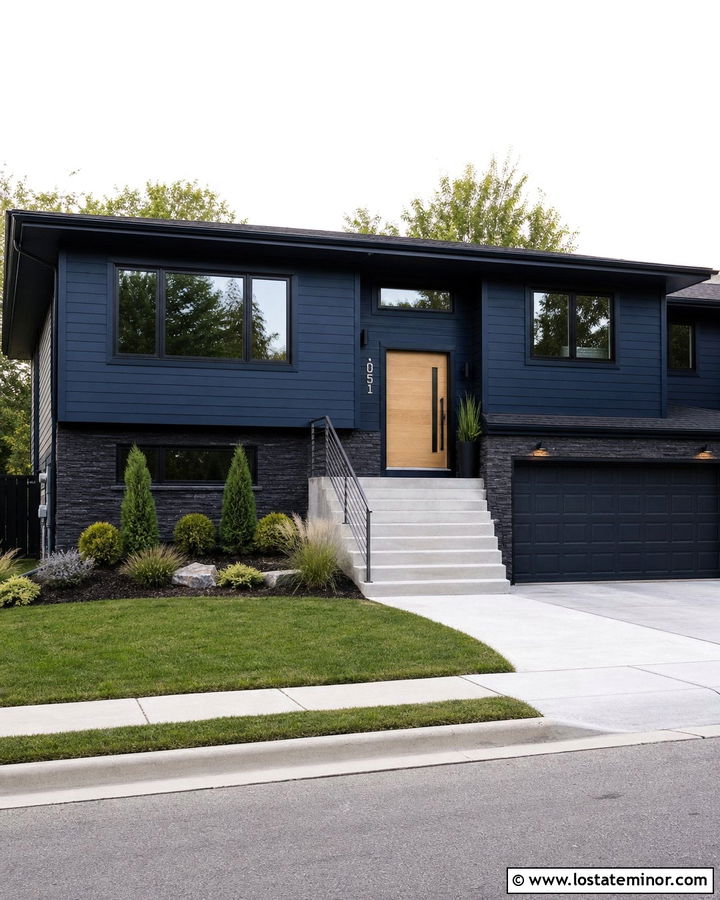
Dark charcoal stone can make a navy blue split-level look more cohesive and contemporary. Apply the wainscoting across the lower story, including the wall around the garage, to visually anchor the uneven floor levels. Choose a slightly lighter navy for the horizontal siding so the stone remains distinct in daylight. Black window frames, a charcoal garage door, and slim metal railings continue the streamlined palette. Prevent the scheme from appearing too heavy by using pale wood at the front door and beneath the entry canopy. Light concrete steps and driveway paving also create useful contrast. Sculptural evergreens and neat ornamental grasses complement the strong horizontal lines without hiding the material transition.
8. Navy Blue Tudor With Natural Stone Wainscoting
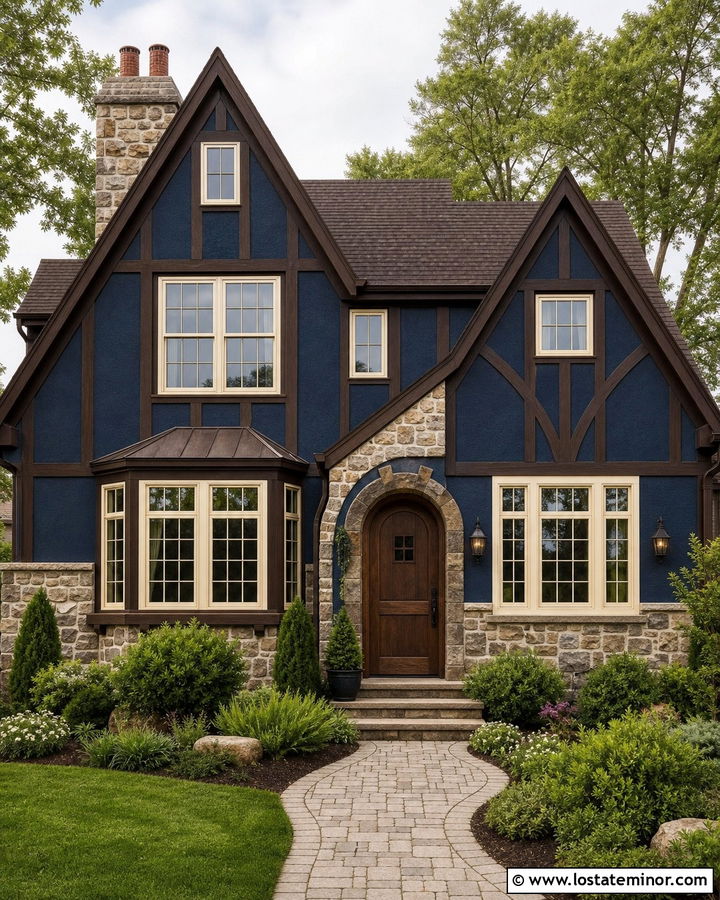
Rich navy blue gives a Tudor exterior an unexpected update while natural stone preserves its old-world character. Cover the lower walls in irregular tan and gray stone, then use navy stucco or siding between the upper timber details. Deep brown beams, a walnut arched front door, and bronze lanterns introduce warmth throughout the facade. Choose warm cream for narrow window trim rather than bright white, which may look too sharp beside the rustic masonry. A dark brown roof works well with the wood and stone tones. Extend the stone around the entry arch or chimney base for continuity. Layered shrubs and a gently curved paver walkway complete the substantial, established appearance.
9. Navy Blue Cottage With Cream Brick Wainscoting
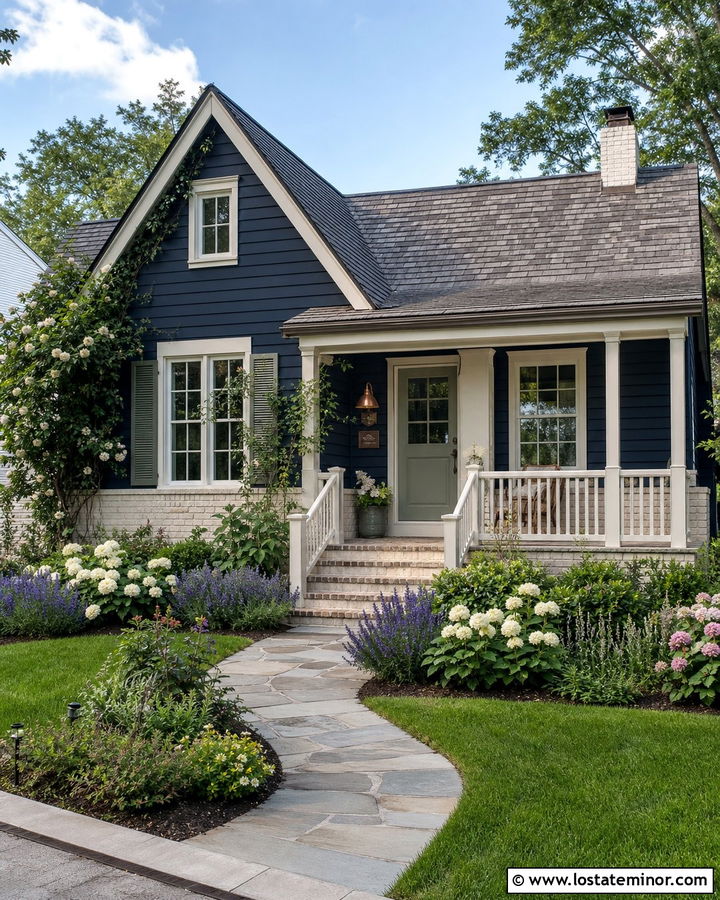
Soft cream brick prevents a small navy blue cottage from feeling visually heavy. Keep the brick wainscoting low enough to preserve plenty of visible siding, but carry it around the foundation and porch for a deliberate finish. Use creamy white on the window trim, fascia, and simple porch railing. A dusty sage front door adds a gentle garden color that remains compatible with the blue body. Weathered-gray shingles and a modest copper porch light bring quiet variation to the palette. Encourage cottage character with climbing greenery, flowering perennials, and an informal flagstone path. The result feels colorful and charming without relying on overly bright accents or complicated architectural additions.
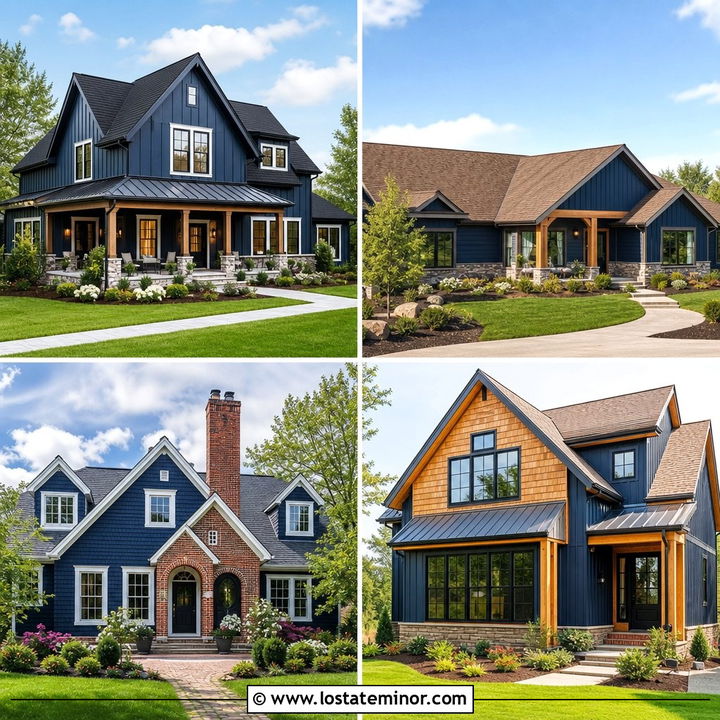
10. Navy Blue Contemporary House With Slate Wainscoting
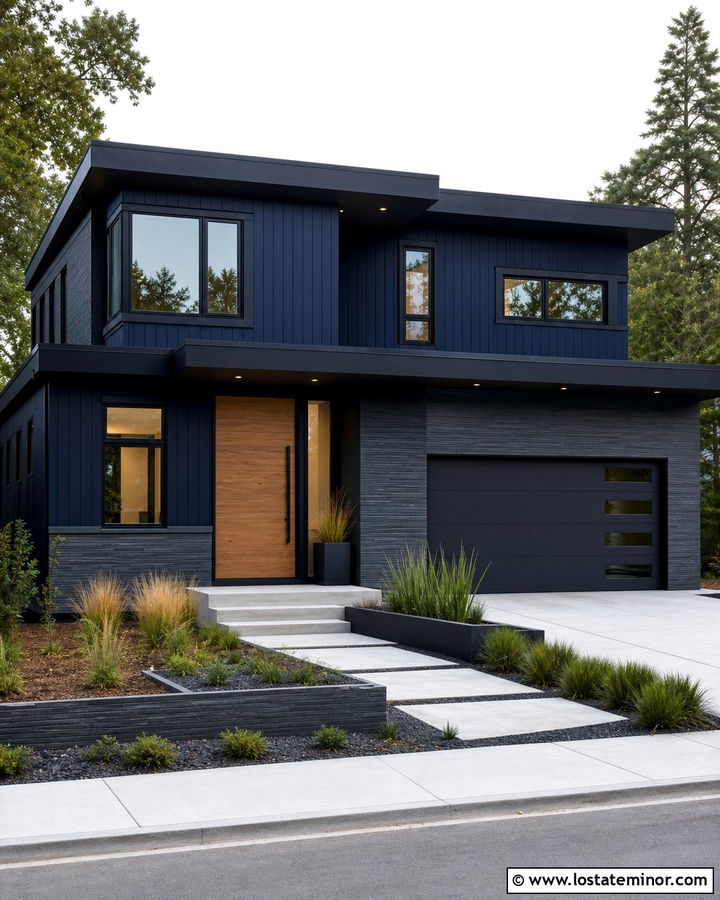
Thin-cut slate wainscoting gives a navy blue contemporary home a sleek, layered facade. Select linear pieces in graphite, steel gray, and subtle blue-gray tones, then install them with narrow joints for a clean appearance. Vertical navy siding above the slate emphasizes height and creates contrast with the horizontal masonry pattern. Matte black windows, gutters, and exterior lights strengthen the modern geometry. Add a wide natural-wood pivot door to warm the entrance and keep the palette from feeling cold. A flat charcoal roof edge and pale concrete walkway support the restrained design. Minimal grasses, dark planters, and low ground cover frame the architecture while allowing the material details to remain clearly visible.
11. Navy Blue Modern Farmhouse With White Stone Wainscoting
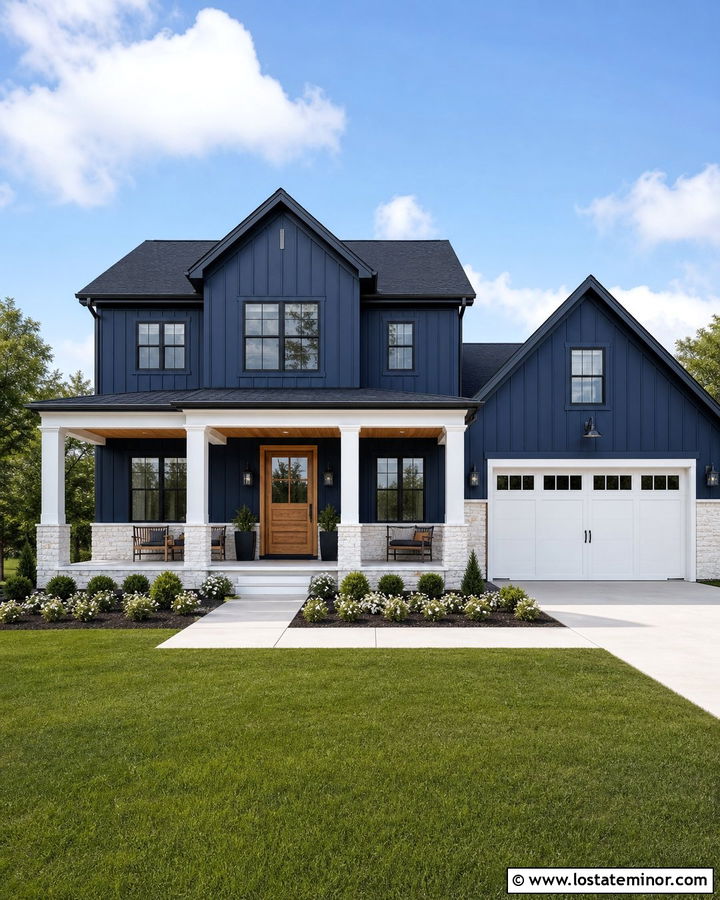
Bright white stone wainscoting creates a high-contrast base for a navy blue modern farmhouse. Choose lightly textured stone rather than perfectly uniform blocks so the exterior retains depth and character. Use navy board-and-batten siding across the main facade, then repeat white on the window trim, porch columns, and garage door. Black roofing and black-framed windows add a graphic edge. A honey-toned wood front door and matching porch ceiling prevent the three-color palette from becoming too rigid. Wrap the stone around the porch bases and front corners for a finished architectural effect. Neatly clipped shrubs, white flowers, and a broad concrete path maintain the clean farmhouse presentation without making the yard look overly formal.
12. Navy Blue Coastal House With Sandstone Wainscoting
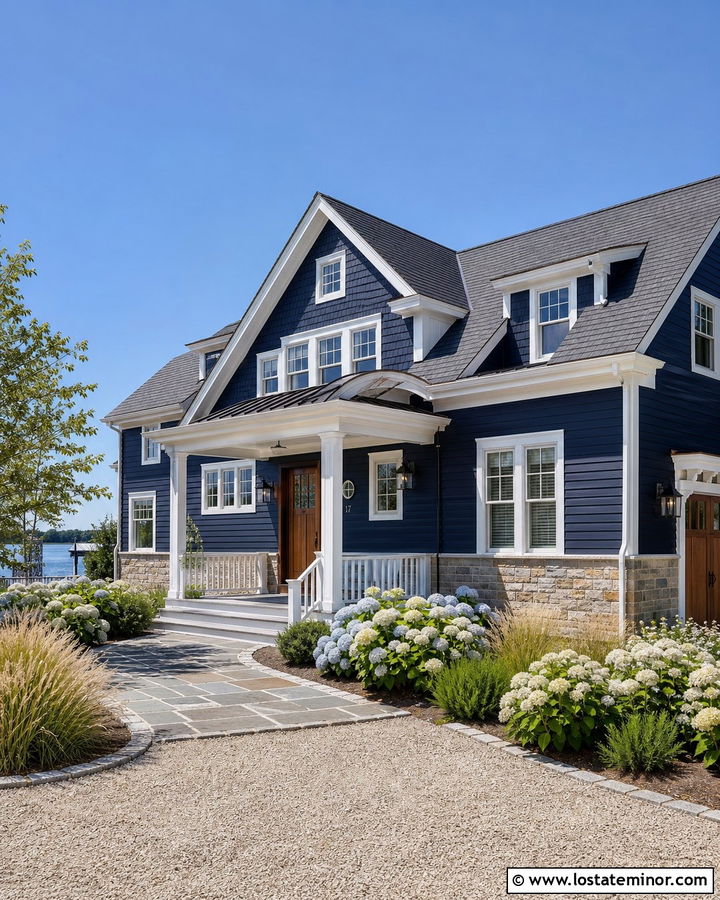
Sun-washed sandstone pairs naturally with navy blue siding on a coastal-inspired home. Its sandy beige, muted gold, and pale gray tones bring warmth to the deeper body color. Use white trim around wide windows, porch railings, and roof edges to create a bright, breezy outline. Navy shake siding in the gables can add coastal texture without changing the primary color. Choose a light natural-wood front door and brushed nickel or weathered-brass fixtures. A medium-gray roof keeps the palette balanced in strong daylight. Beach grasses, hydrangeas, pale gravel, and a bluestone walkway provide relaxed landscaping. Keep the wainscoting profile simple so it complements rather than overdecorates the facade.
13. Navy Blue Shingle House With Granite Wainscoting
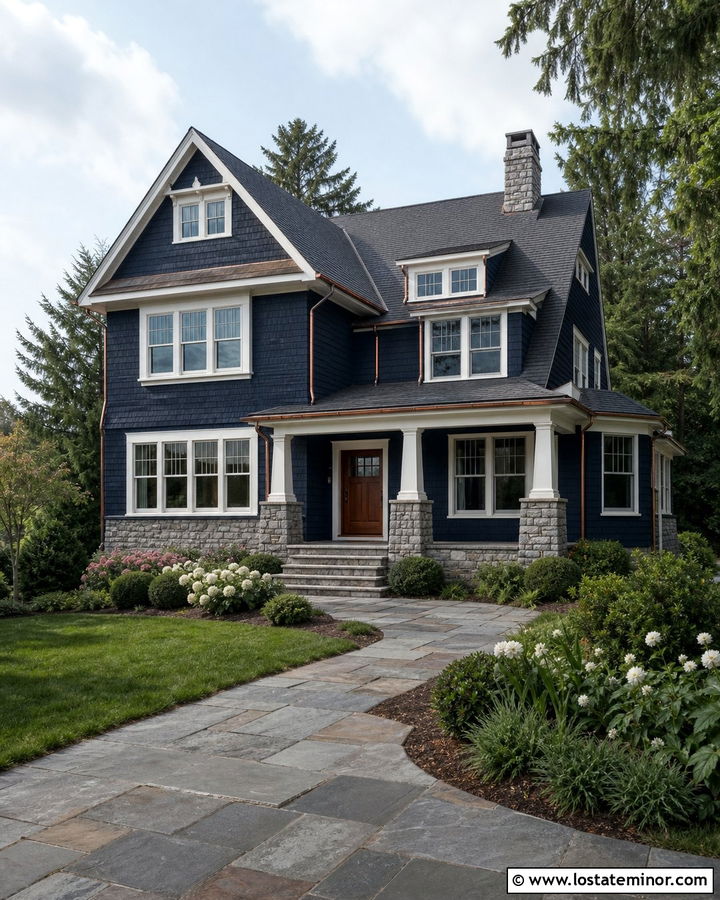
A navy blue shingle-style house looks substantial when paired with rugged granite wainscoting. Mix medium-gray, charcoal, and soft brown granite to create a foundation that feels connected to the site. Apply navy shakes across the upper walls and use warm white trim around the windows, porch, and roofline. A deep mahogany front door adds richness beside the cool stone. Copper gutters or small copper roof accents can introduce warmth that develops character over time. Repeat granite on the porch piers, front steps, and chimney base for a complete composition. Mature evergreens, low flowering shrubs, and a wide natural-stone walkway reinforce the home’s traditional Northeastern character without blocking the textured facade.
14. Navy Blue Victorian With Painted Brick Wainscoting
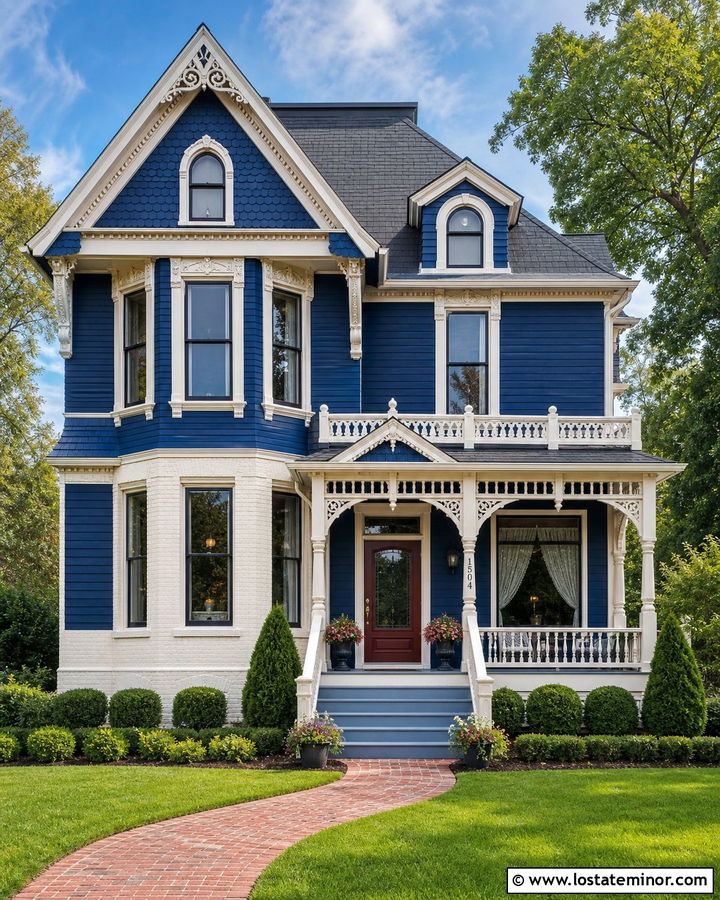
Painted brick wainscoting can simplify a detailed navy blue Victorian while preserving its layered architecture. Coat the lower brick in a warm off-white, then repeat that shade on the porch posts, window trim, gingerbread details, and decorative brackets. Navy lap siding should remain the dominant color, with a slightly lighter blue reserved for selected gable shingles. A burgundy front door provides a period-appropriate accent without looking overly bright. Charcoal roof shingles ground the ornate roofline. Keep railings and steps visually consistent by limiting the palette to navy, off-white, burgundy, and charcoal. Formal foundation shrubs and a curved brick walkway add structure while allowing the decorative facade to take center stage.

15. Navy Blue Prairie House With Tan Brick Wainscoting
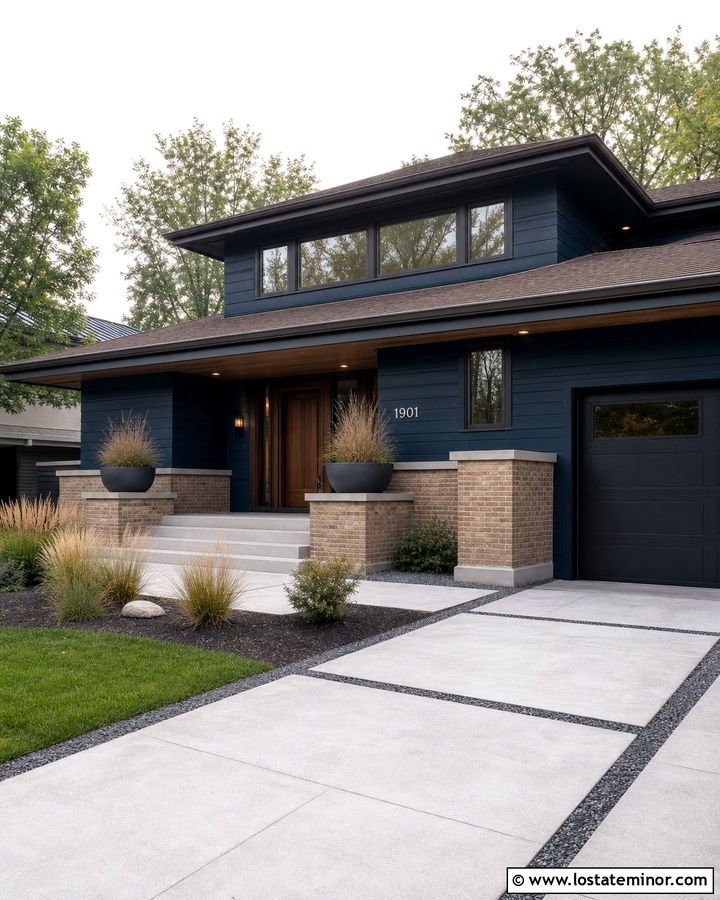
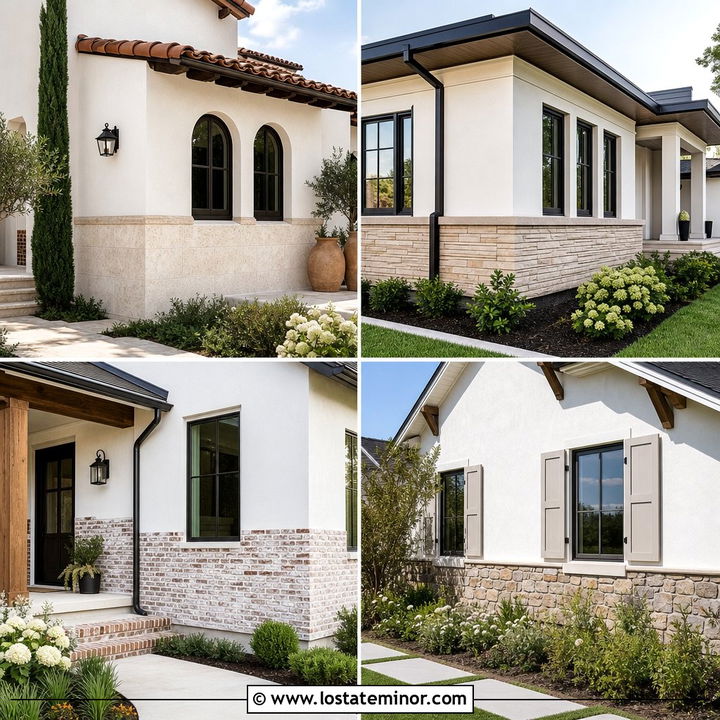
Long horizontal lines define a Prairie-style home, and tan brick wainscoting can make those lines even stronger. Select low-profile brick in warm beige, muted brown, and soft gray tones. Extend it across the entire ground level beneath navy horizontal siding, using a narrow limestone cap for a precise transition. Deep bronze window frames and gutters complement the earthy brick better than bright white. Add a medium walnut front door beneath a broad, low roof overhang. Dark brown-gray roofing connects the upper and lower sections of the exterior. Wide concrete steps, rectangular planters, and layered ornamental grasses support the architecture’s geometric character while keeping the navy blue facade inviting.
16. Navy Blue Two-Story House With Ledgestone Wainscoting
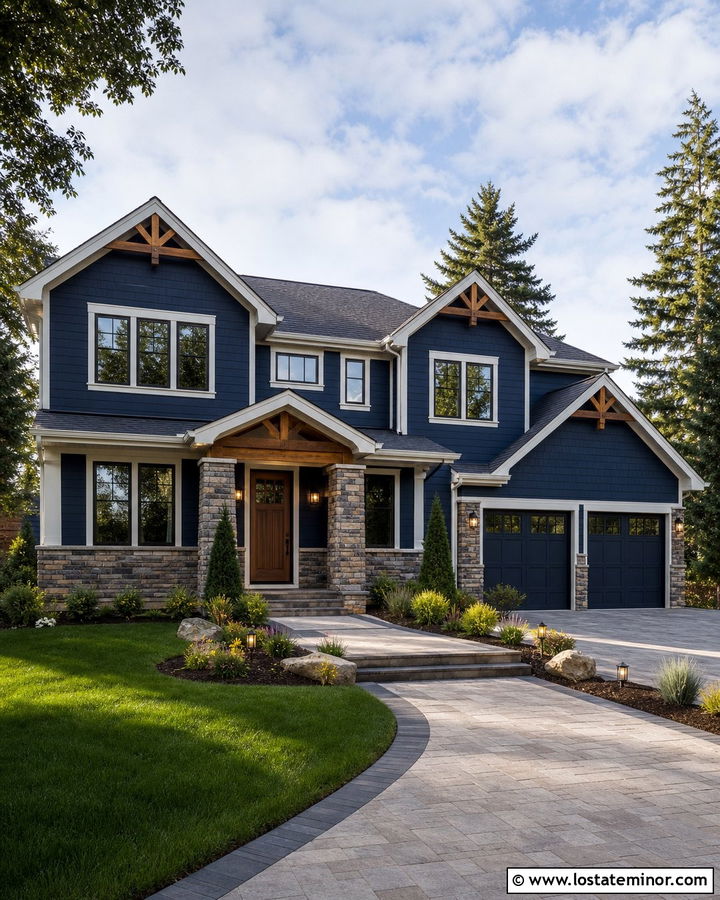
A tall two-story facade can benefit from the visual weight of ledgestone wainscoting. Choose a mixed gray and taupe veneer, and bring it high enough to balance the amount of navy siding above. Apply the stone to the porch columns and garage corners so the lower level reads as one connected base. Soft white trim around the windows keeps the upper story from appearing flat. A warm cedar front door, matching gable brackets, and bronze lighting provide natural contrast. Use charcoal shingles with simple rooflines to avoid adding more visual complexity. Upright evergreen shrubs and a wide paver walkway can emphasize the entrance while leaving the layered stone texture open and visible.
17. Navy Blue House With Black Brick Wainscoting
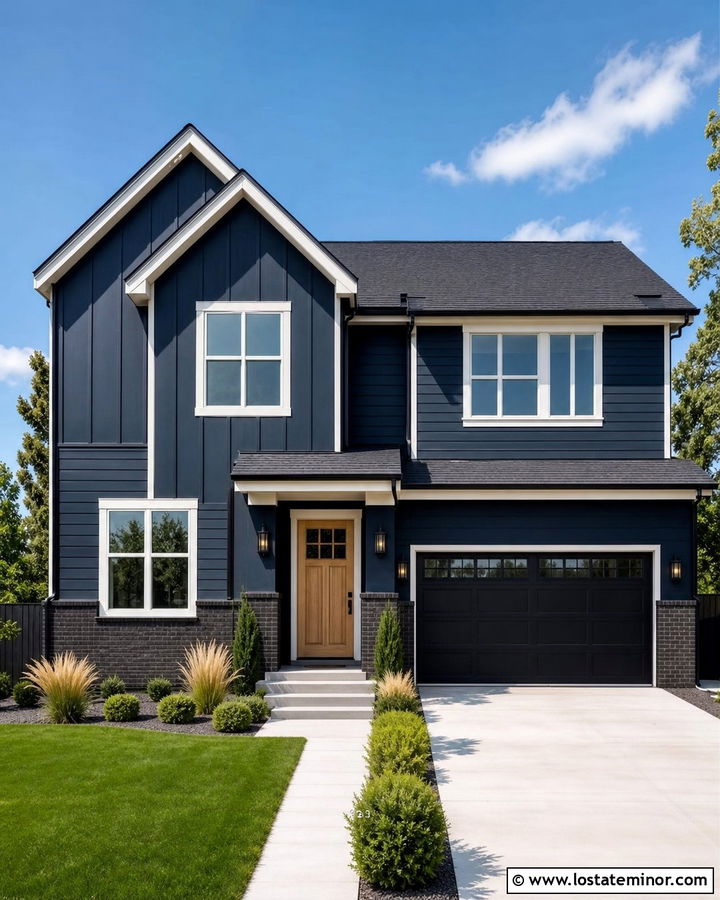
Black brick creates a bold, tonal foundation beneath navy blue siding. This darker pairing works best on a house with generous windows, clear architectural lines, and plenty of bright natural light. Choose a soft black brick with slight charcoal variation rather than a perfectly flat finish. Use warm white window trim and fascia to outline the facade and prevent the scheme from becoming visually dense. A light oak front door provides the strongest point of warmth. Repeat black on the roof, gutters, porch lights, and garage door for consistency. Pale concrete paving, airy grasses, and light green shrubs brighten the foreground while preserving the home’s dramatic, modern curb appeal.
18. Navy Blue House With German Smear Brick Wainscoting
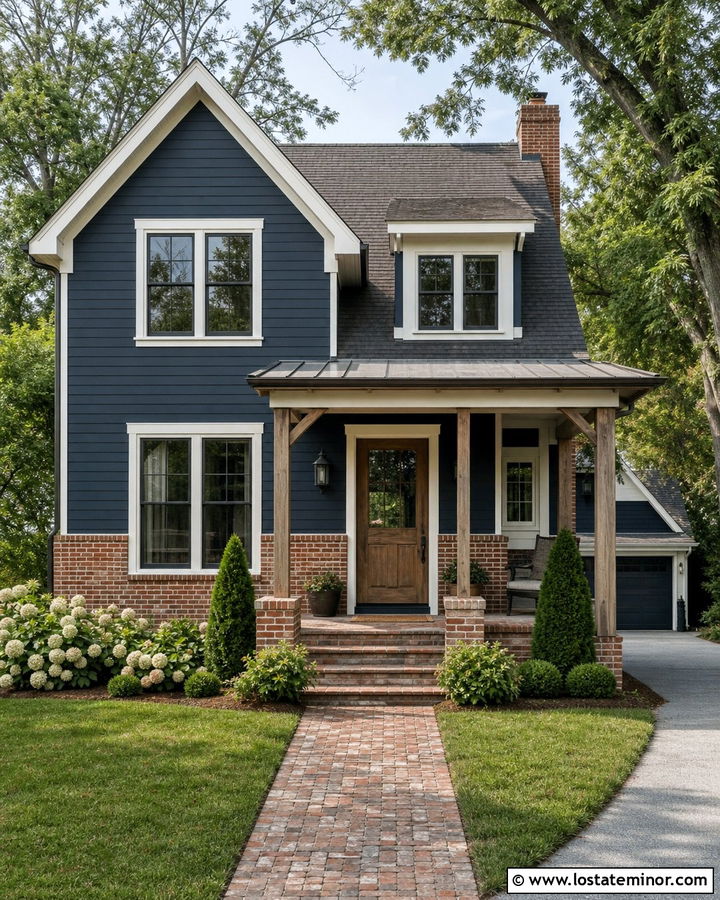
German smear brick wainscoting brings aged texture to a navy blue home without introducing a strong red masonry color. The creamy mortar coating should allow small sections of warm brick to remain visible, creating gentle variation across the lower facade. Pair it with deep navy lap siding and soft white trim for a comfortable, collected appearance. A weathered oak front door and matching porch posts reinforce the rustic warmth. Choose a gray-brown roof that relates to both the navy body and exposed brick. Use the same masonry treatment on the chimney and porch foundations for continuity. Casual hydrangeas, evergreen shrubs, and a reclaimed-brick walkway complete this relaxed traditional exterior.
19. Navy Blue House With Limewashed Brick Wainscoting
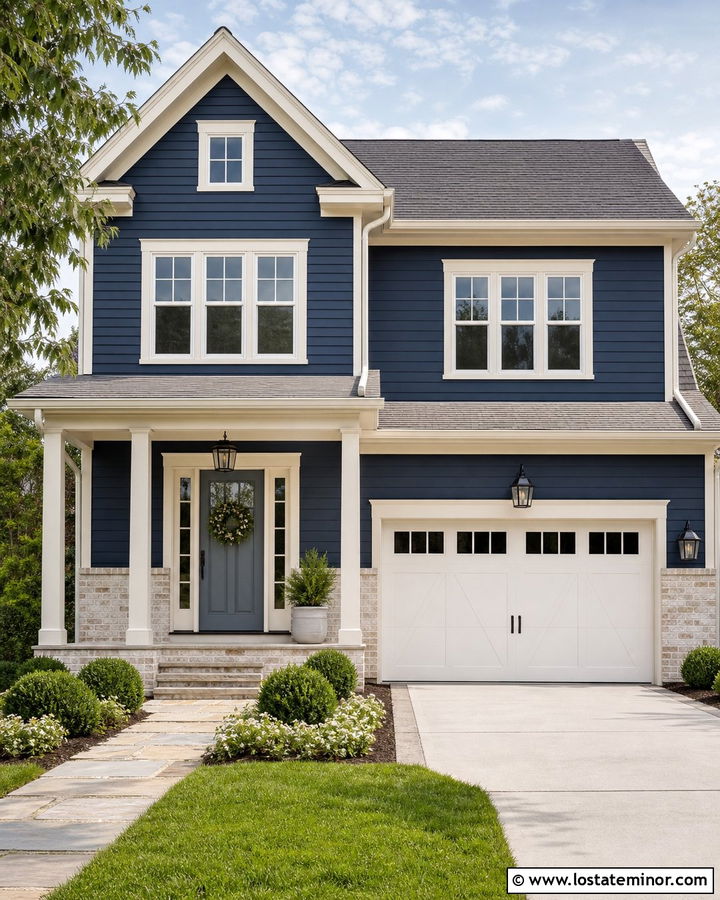
A pale limewashed finish transforms brick wainscoting into a soft, textured companion for navy blue siding. Unlike solid paint, the varied white and warm gray surface gives the lower facade a more relaxed appearance. Carry a warm white onto the window trim, garage door, and porch columns. Use a muted blue-gray front door for a layered monochromatic palette, or select natural cedar when more warmth is needed. Medium-gray shingles keep the roof from overpowering the lighter masonry. Thin black lanterns and house numbers provide definition. Finish the setting with clipped boxwoods, white flowering plants, and a simple stone walkway that echoes the subtle variations in the brick finish.
20. Navy Blue House With Cedar Wainscoting
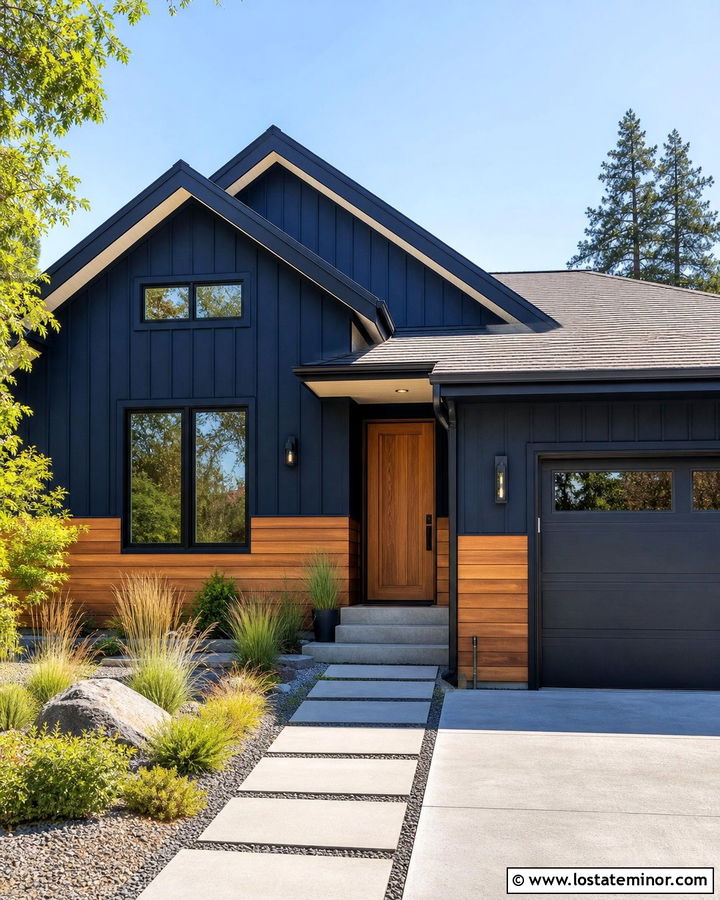
Horizontal cedar wainscoting can bring welcome warmth to a crisp navy blue exterior. Install the cedar across the lower facade in wide boards, using a clear or lightly tinted protective finish that preserves the natural grain. Navy vertical siding above creates a noticeable change in direction and texture. Matte black windows, gutters, and porch lights add definition, while a matching cedar front door connects the entrance to the lower cladding. Keep the roof charcoal and the soffits warm white to balance the dark body. Gravel beds, native grasses, and concrete pavers suit the modern organic character. This scheme works especially well when the cedar wraps around corners instead of ending abruptly.
21. Navy Blue House With Board And Batten Wainscoting
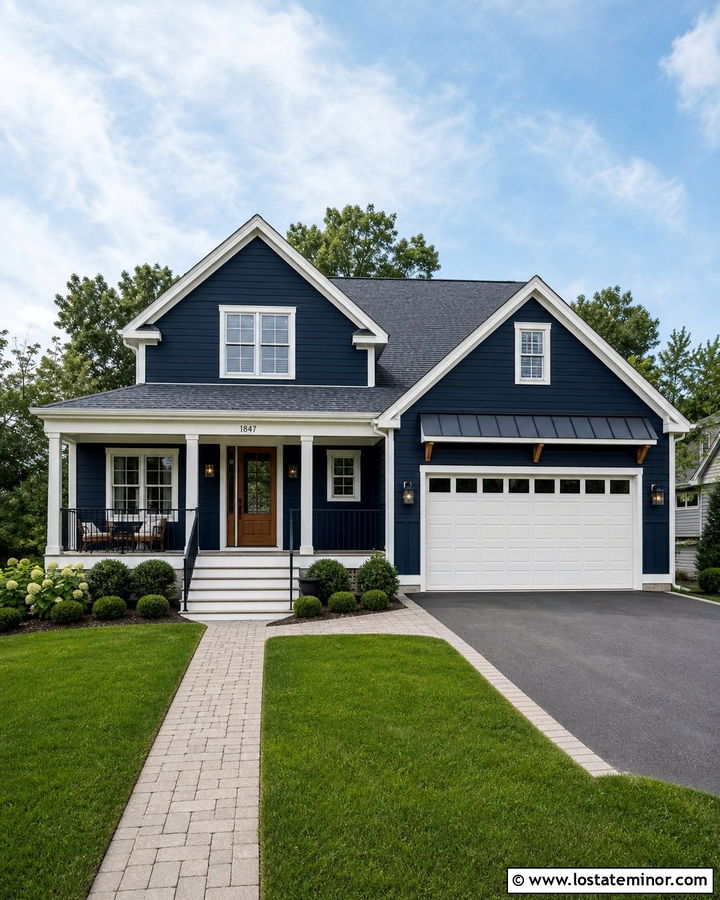
Board-and-batten wainscoting adds architectural rhythm to a navy blue house without requiring masonry. Paint the lower vertical panels in a medium navy and use a slightly deeper navy on the horizontal siding above. The subtle tonal difference highlights the material transition while keeping the facade cohesive. Add warm white trim, window casings, fascia, and porch columns for contrast. A rich wood front door and black metal lights provide balanced accents. Use a simple stone cap or horizontal trim board between the siding profiles to create a clean stopping point. Gray roof shingles, structured shrubs, and a straight paver walkway complete this tailored exterior without making the color scheme feel busy.
22. Navy Blue House With Stucco Wainscoting
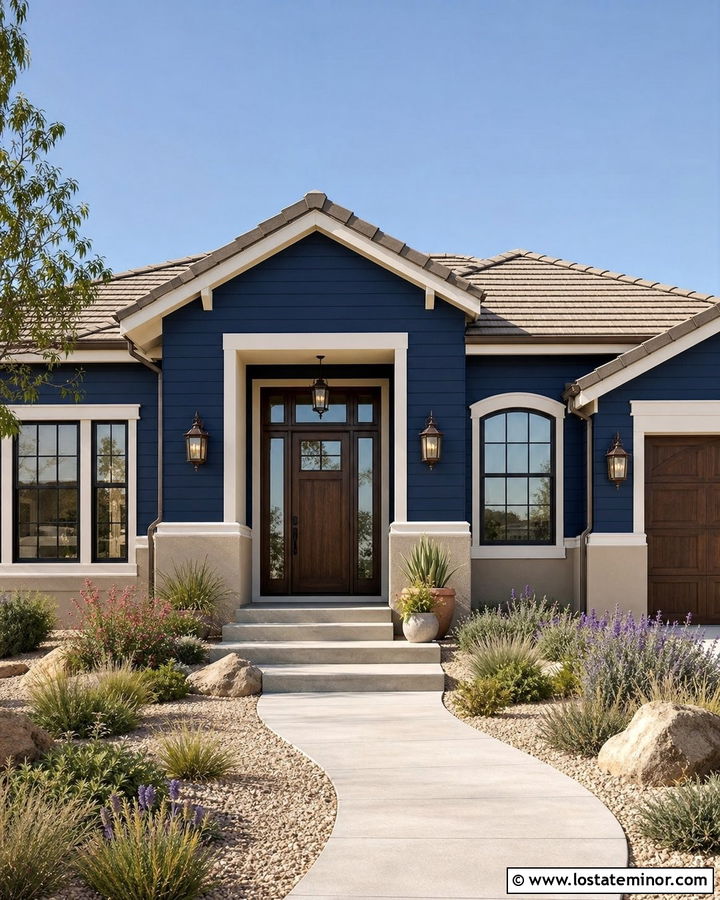
Smooth stucco wainscoting offers a simple alternative when stone or brick would feel too textured. Choose warm greige stucco for the foundation and lower walls, then pair it with navy blue lap siding above. The greige base connects easily with concrete steps, beige-gray roof shingles, and natural landscaping. Use creamy white trim around the windows and roof edges, plus a medium walnut door for warmth. A thin masonry ledge between the stucco and siding gives the transition a finished appearance. Bronze lights and gutters are softer than black and work well with the neutral lower section. Drought-tolerant grasses, flowering shrubs, and pale gravel create an easy, regionally adaptable setting.
23. Navy Blue House With Cobblestone Wainscoting
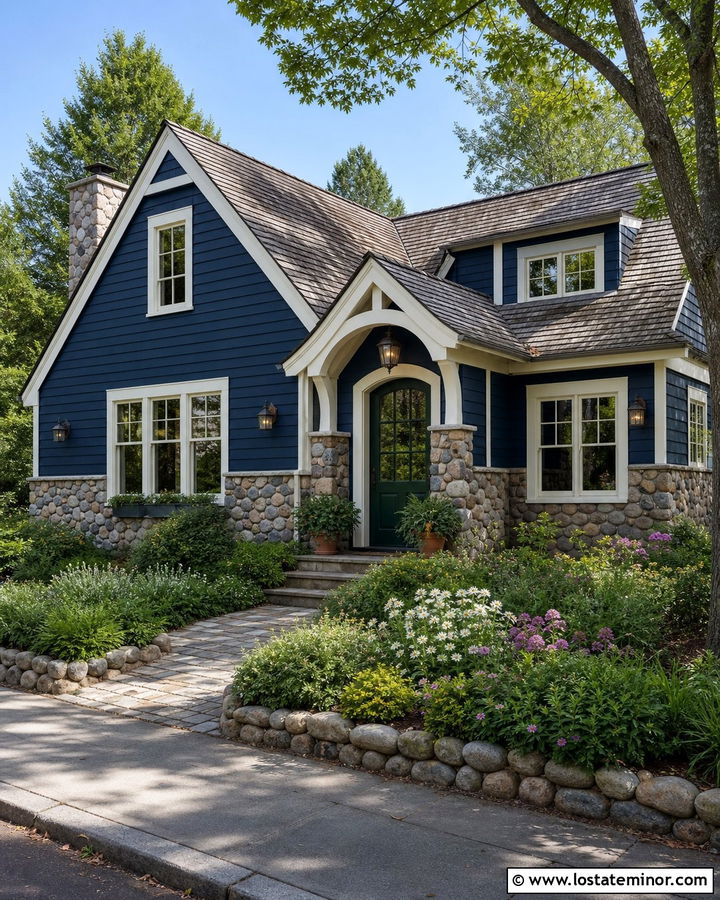
Cobblestone wainscoting can give a navy blue exterior a charming, handcrafted foundation. Use small stones in gray, taupe, faded brown, and muted blue, keeping the mortar color light enough to reveal each rounded shape. Navy clapboard siding and creamy white trim create a traditional background for the more decorative masonry. A deep forest-green front door introduces a subtle color shift that still feels grounded. Repeat cobblestone on the porch piers and walkway edging so it belongs to the complete landscape. A weathered-gray roof and aged bronze lanterns finish the palette. Informal shrubs and flowering perennials reinforce the comfortable cottage character without covering the stonework.
24. Navy Blue House With Brown Stone Wainscoting
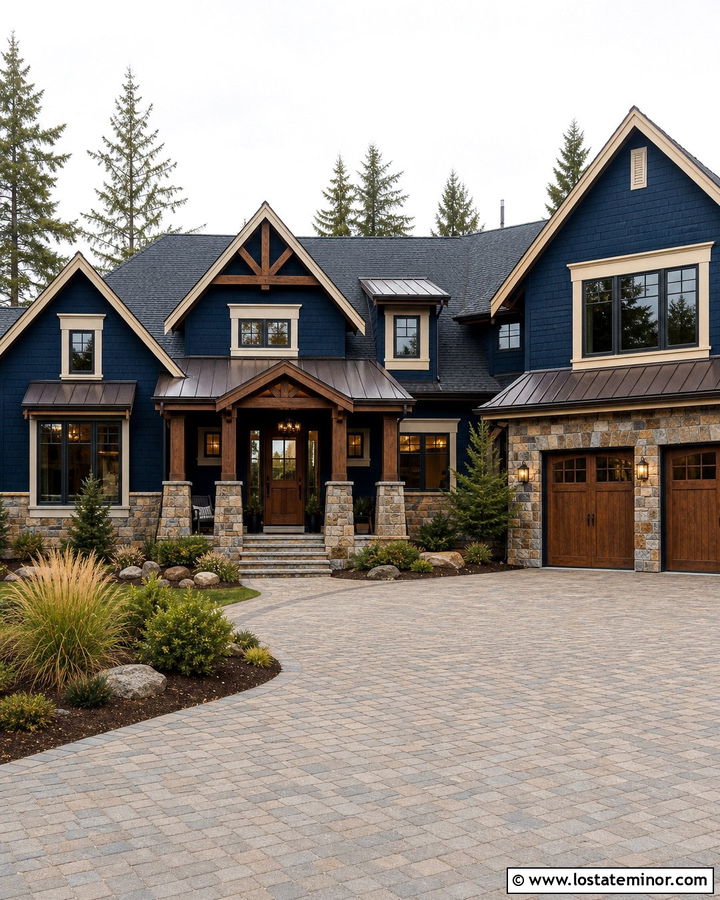
Warm brown stone can soften the cool appearance of a large navy blue house. Look for masonry with chocolate, tan, gray, and rusty undertones rather than a uniformly dark brown product. Use the stone across the foundation, porch columns, and lower garage walls. Cream trim feels more harmonious with these earthy shades than brilliant white. A medium cedar door, brown metal roof accents, and bronze fixtures continue the warm details throughout the facade. Keep the primary roof charcoal to connect with the navy siding. Layered evergreens, golden ornamental grasses, and a warm-gray paver driveway help the exterior settle naturally into its surroundings while maintaining clear, attractive contrast.

25. Navy Blue House With Bluestone Wainscoting
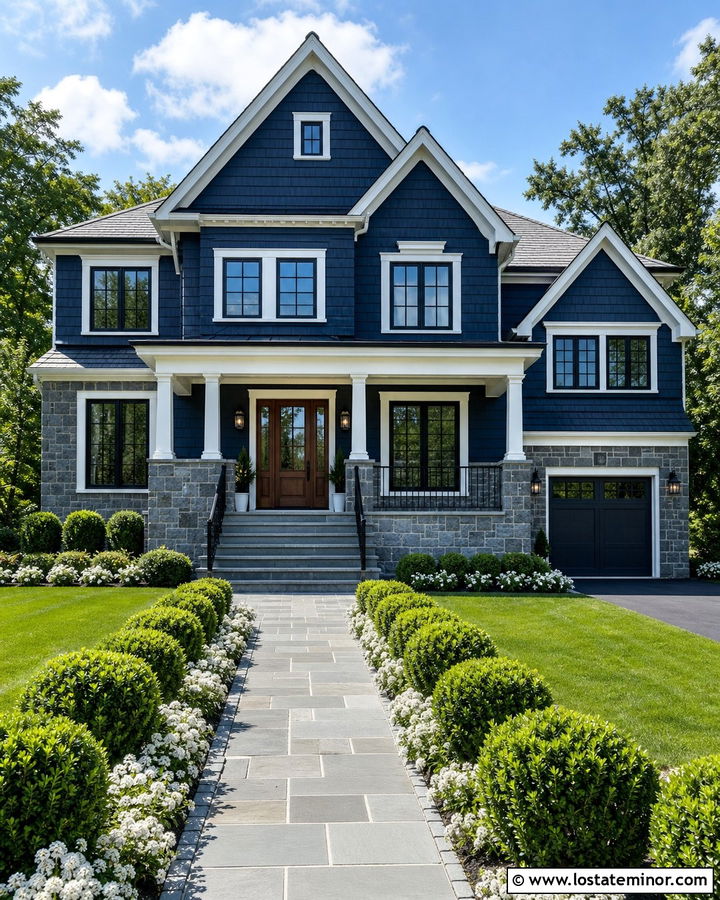
Bluestone wainscoting creates a refined tonal scheme that works especially well with navy blue siding. The stone may contain steel blue, gray, charcoal, and occasional warm brown notes, giving the lower facade depth without introducing an unrelated color. Pair it with crisp white trim and a warm mahogany door for controlled contrast. Use bluestone on the porch floor and front steps to continue the material beyond the walls. A charcoal roof and black metal railings preserve the tailored appearance. Green boxwoods and white flowers can brighten the dark palette, while a straight walkway reinforces symmetry. This combination suits traditional homes as well as cleaner transitional architecture.
26. Navy Blue House With Beige Stone Wainscoting
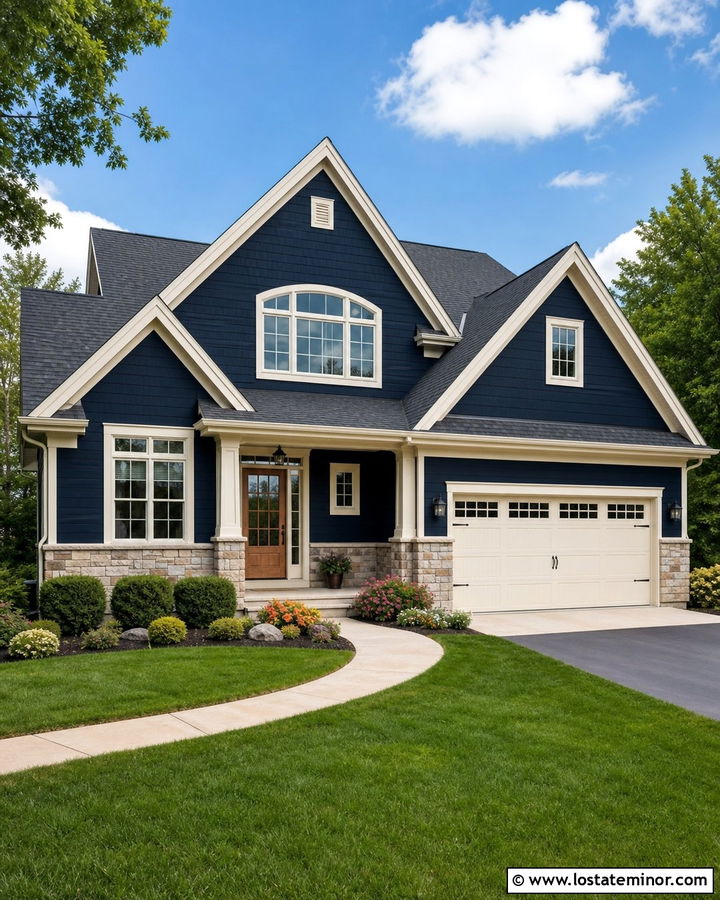
Beige stone makes a dark navy blue house feel brighter and more approachable. Choose a blend with cream, sand, taupe, and small gray accents so it relates to both warm trim and cool siding. Cover the lower facade and porch bases, keeping the stone height consistent around visible corners. Use soft ivory on the windows, garage door, fascia, and columns. A natural white-oak front door adds another warm surface without competing with the masonry. Medium-gray roof shingles provide a neutral bridge between the light base and dark walls. Rounded shrubs, seasonal flowers, and a gently curved walkway can soften the contrast and create an inviting suburban curb-appeal design.
27. Navy Blue House With Mixed Stone Wainscoting
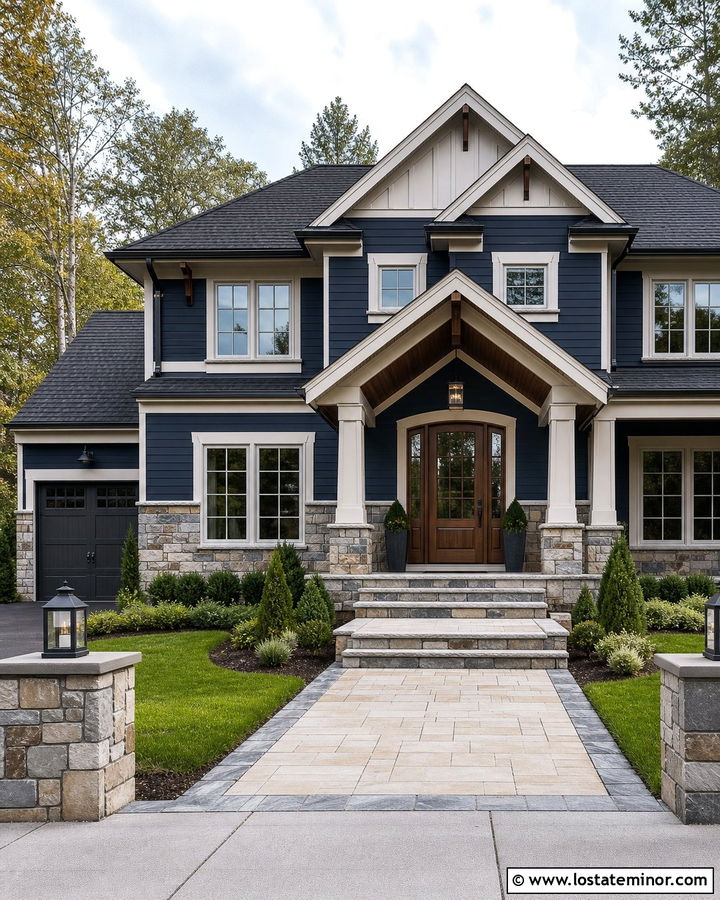
Mixed stone wainscoting offers enough color variation to connect several exterior materials. Select a controlled blend of limestone, gray fieldstone, and muted brown pieces rather than an overly busy mixture. Deep navy siding should remain the largest visual surface, while warm white trim outlines the architecture. Pull one brown shade from the stone for the stained front door and porch ceiling. Repeat a charcoal tone on the roof, gutters, and lights. Keeping these connections deliberate prevents the masonry from looking randomly selected. Use broad stone porch steps and a coordinating walkway border to carry the texture into the yard. Simple evergreen landscaping provides a calm background for the varied facade.
28. Navy Blue House With Vertical Stone Wainscoting
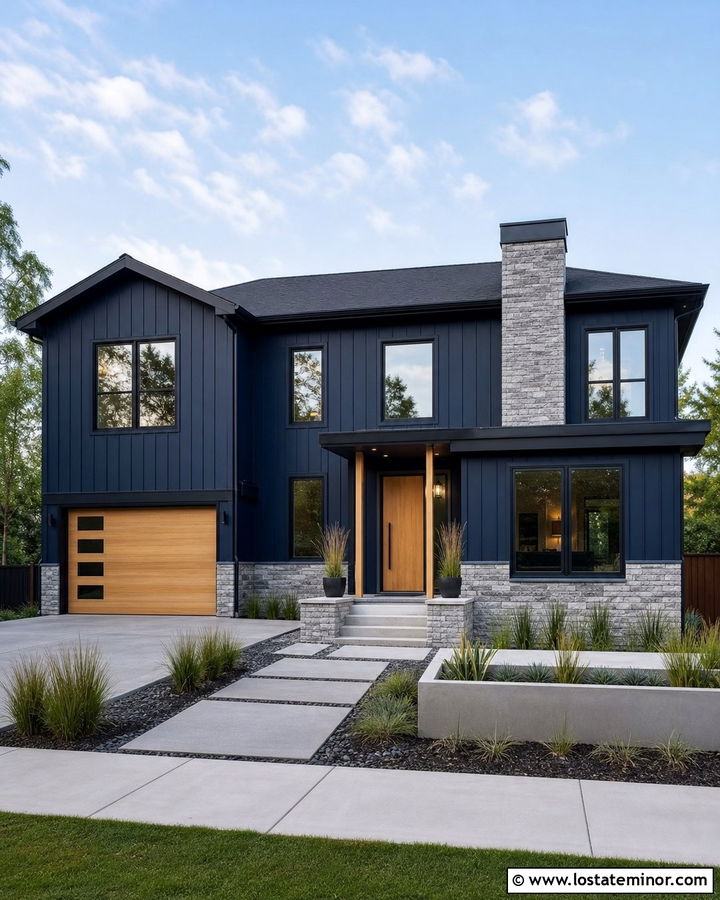
Vertically arranged stone panels create an unexpected foundation for a streamlined navy blue exterior. Use narrow-cut gray stone pieces with subtle blue and taupe movement, positioning them upright beneath vertical or horizontal siding. A smooth concrete cap clearly separates the two materials. Choose black window frames and fascia for a modern outline, then add a pale wood front door and garage panels to warm the composition. The roof should remain charcoal and uncomplicated. Repeat the upright stone near the entry or on one chimney section to establish continuity. Linear grasses, rectangular planters, and oversized concrete pavers echo the vertical geometry while maintaining a clean, bright curb-appeal view.
29. Navy Blue House With Fluted Concrete Wainscoting
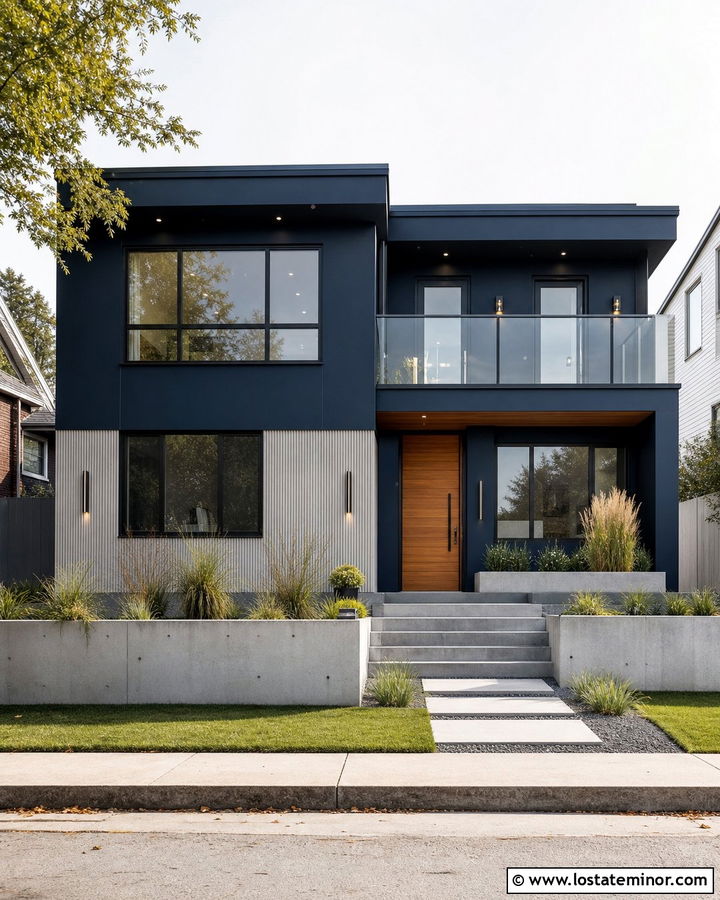
Fluted concrete wainscoting brings subtle texture to a navy blue modern house without introducing another strong color. Choose pale warm-gray concrete panels with narrow vertical grooves. Their shadow lines create dimension while the light finish balances the deep navy siding. Use black-framed windows, slim gutters, and minimalist exterior lights for definition. A wide teak or white-oak front door becomes the main warm accent. Flat roof edges and a simple glass porch railing suit the contemporary material palette. Extend the concrete into low retaining walls or entry planters so it feels integrated with the site. Sparse ornamental grasses and large pavers keep the complete exterior uncluttered and architectural.
30. Navy Blue House With Matching Navy Brick Wainscoting
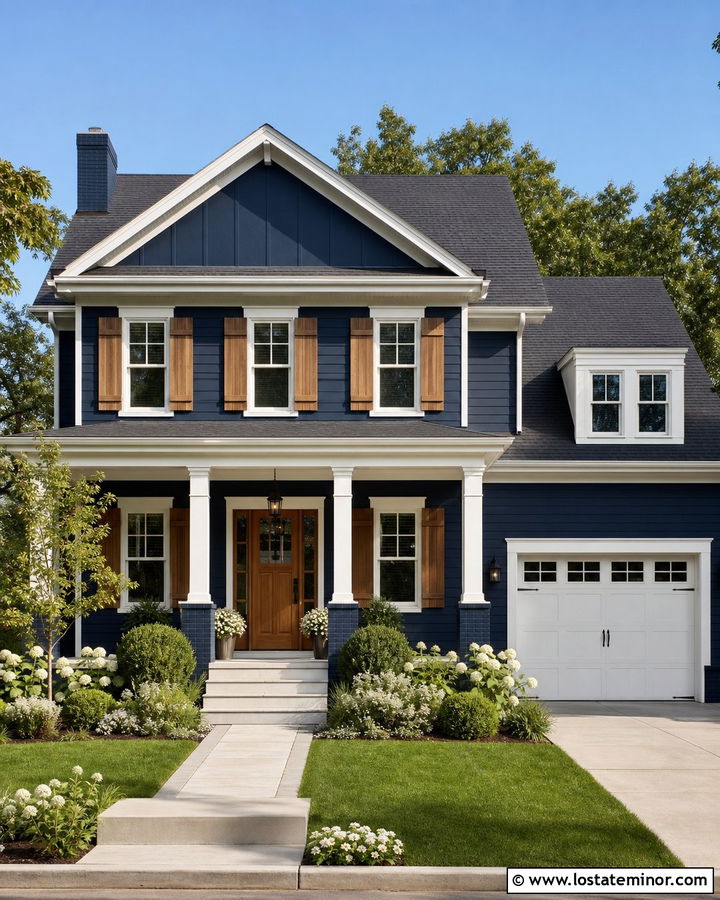
Painting brick wainscoting the same navy blue as the siding creates a sophisticated color-drenched exterior. The contrast comes from texture rather than a major color change, allowing brick, lap siding, and trim details to remain visible within one rich body color. Choose bright warm white for the windows, fascia, porch columns, and garage door to provide a clear outline. A natural cedar front door and matching shutters introduce warmth, while a charcoal roof keeps the upper facade grounded. Use satin paint on the siding and a masonry-appropriate finish on the brick for a consistent appearance. Pale landscaping, light concrete steps, and green shrubs prevent the dark monochromatic scheme from feeling closed in.
Conclusion:
These 30 Navy Blue House Design With Wainscoting Ideas show how one strong exterior color can support many architectural directions. Pale limestone and white brick create brightness, while fieldstone, cedar, and warm brown masonry make navy siding feel more natural. Charcoal brick, slate, and matching navy finishes produce a sharper modern result. Whatever material you choose, connect it to other parts of the facade. Repeat stone on porch piers, coordinate wood with the front door, and pull roof or trim colors from the wainscoting. Always sample navy and masonry together in daylight before committing. A coordinated whole-house palette will look more intentional, balanced, and enduring than an isolated material upgrade.

Related posts: