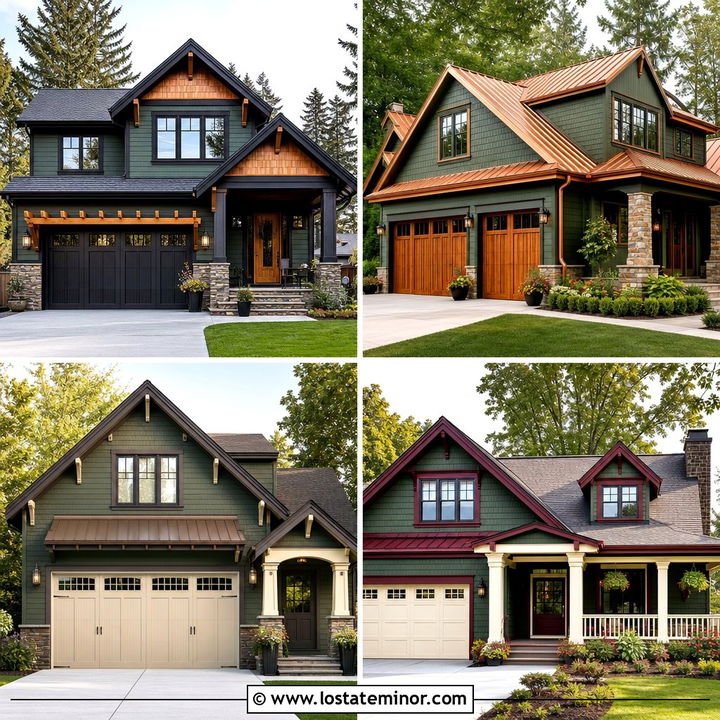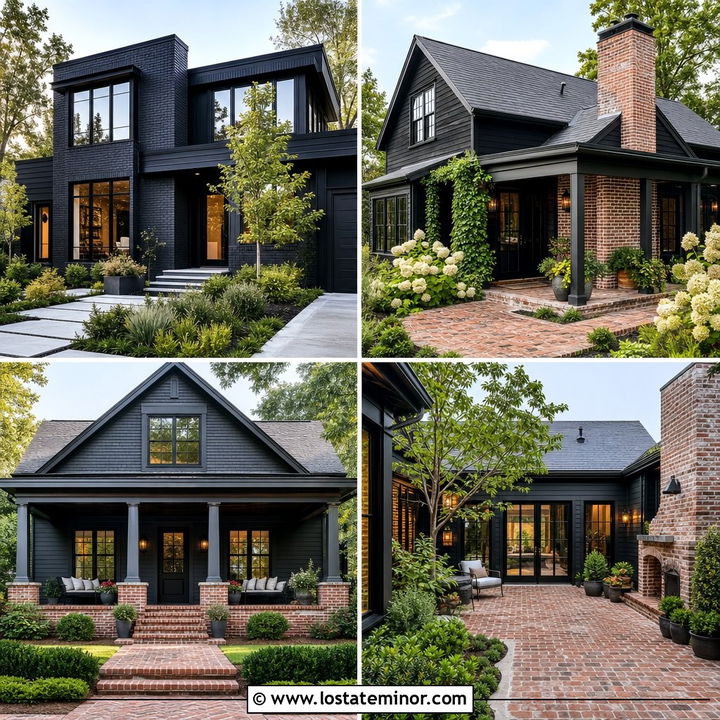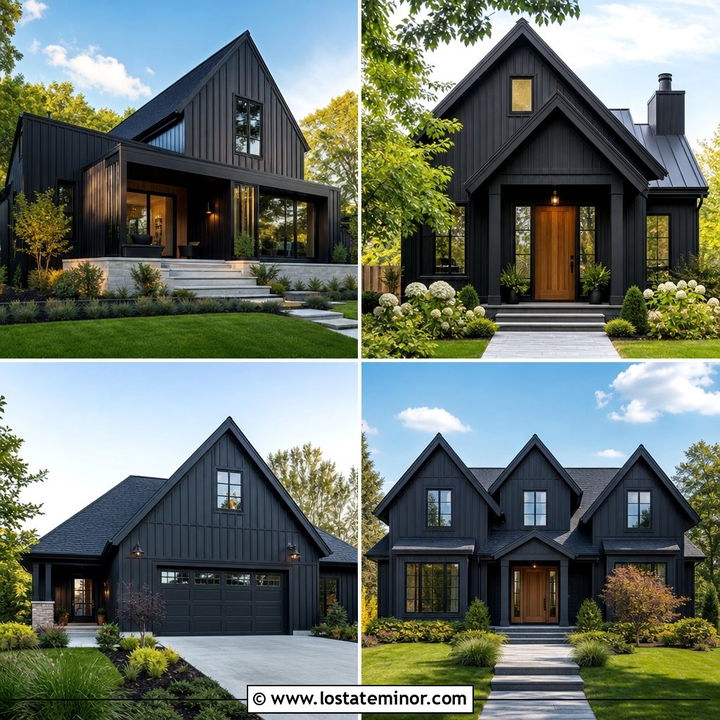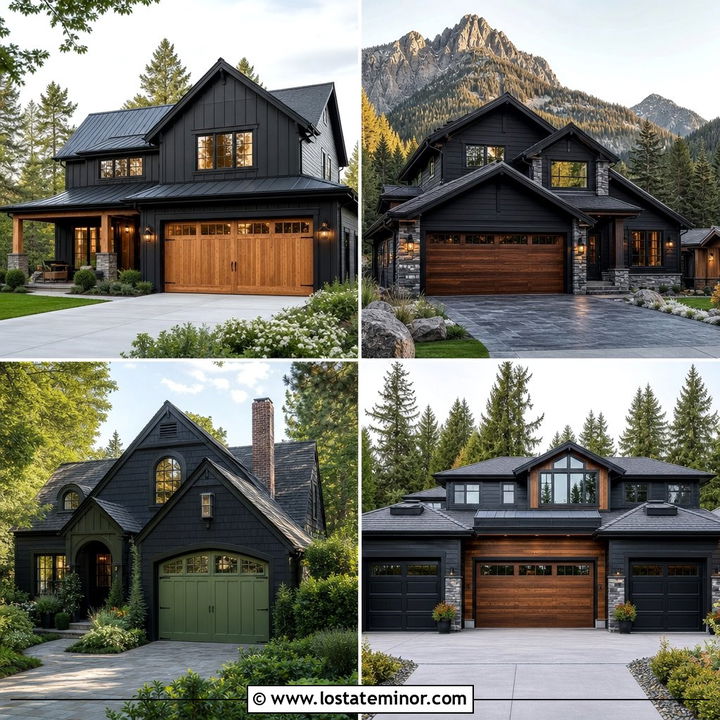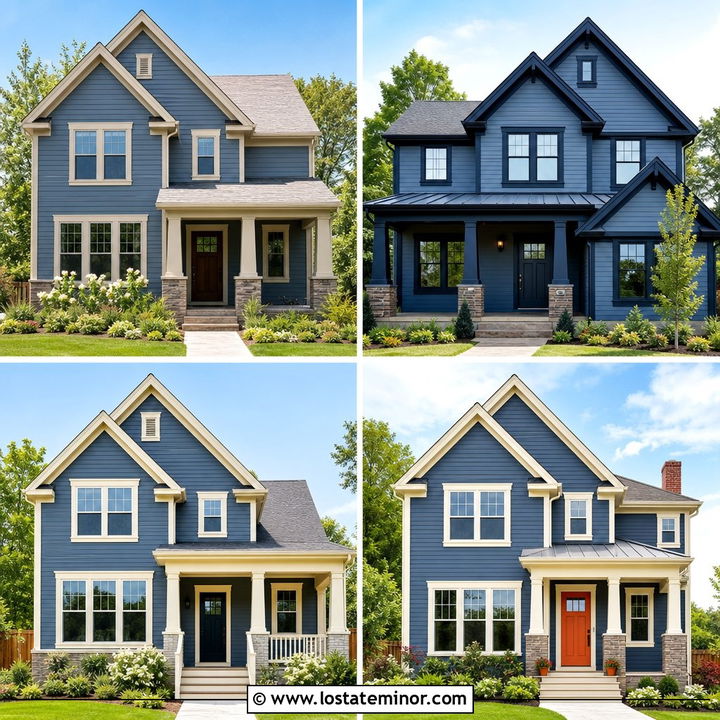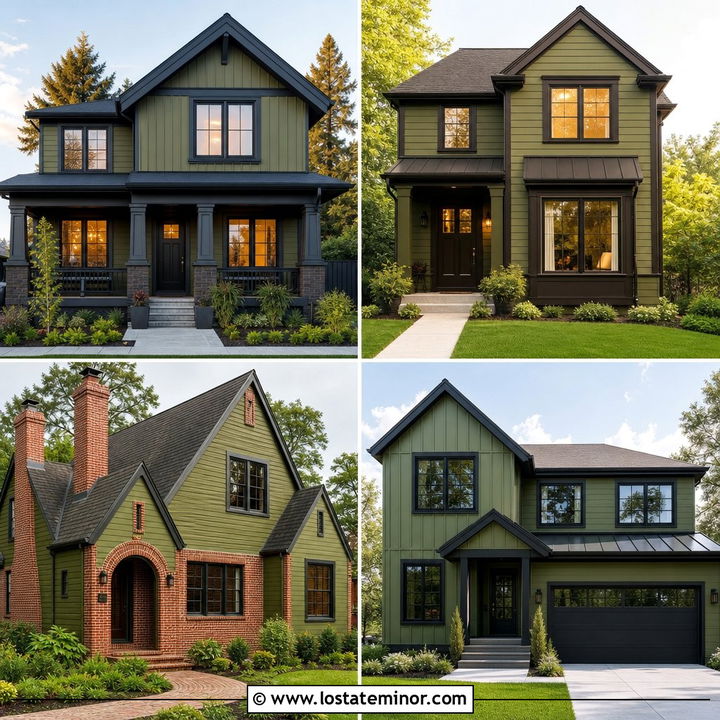
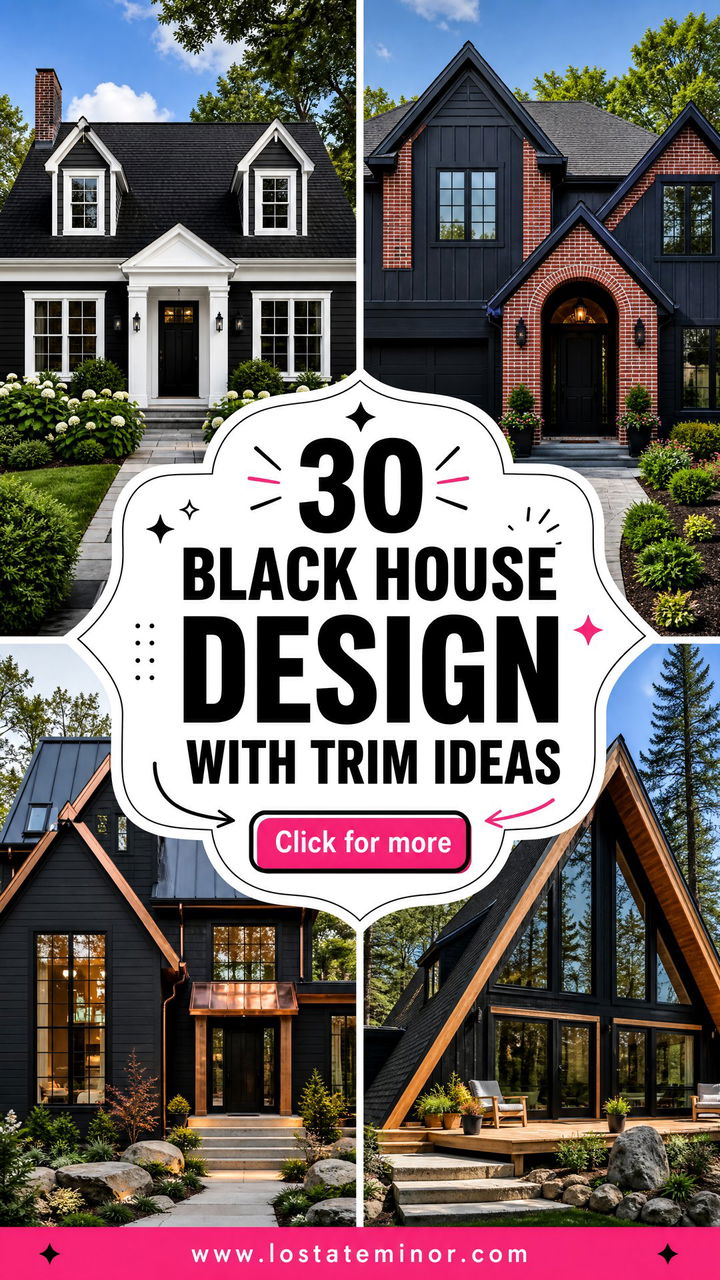
Black exteriors can look modern, rustic, traditional, or quietly sophisticated depending on how the trim is handled. Crisp white creates strong architectural definition, while charcoal, bronze, cream, and natural wood produce softer transitions. Current exterior inspiration also favors layered materials, especially dark siding warmed by cedar, stone, brick, and nature-inspired accents. () Before choosing a palette, consider your roof color, window frames, sunlight, landscaping, and permanent masonry. These features determine whether black appears sharp, warm, blue-toned, or slightly gray. The following **30 Black House Design With Trim Ideas** cover complete exterior schemes for farmhouses, ranch homes, cottages, contemporary builds, and other popular American homes.
1. Black House With White Trim
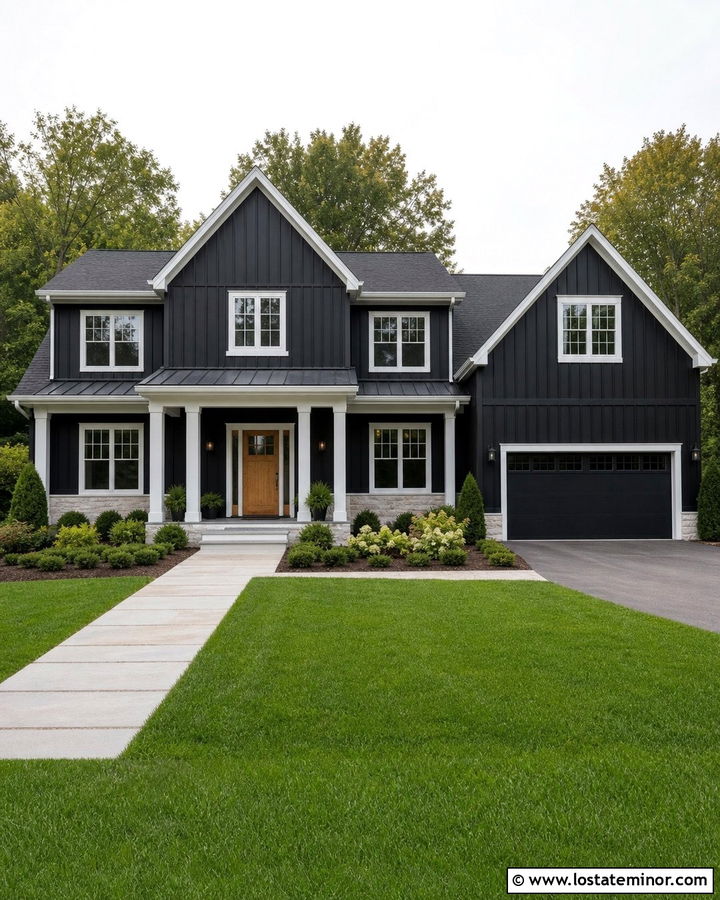
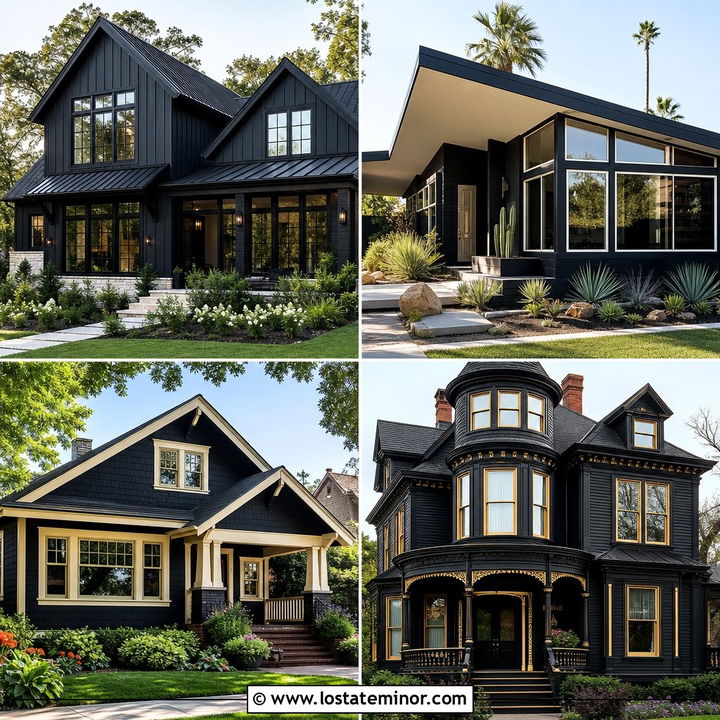
A black house with white trim delivers the clearest contrast and works across many architectural styles. Use a balanced neutral black on the siding, then reserve clean white for window casings, fascia, corner boards, and porch columns. The trim should outline meaningful architectural features rather than dividing every surface into small sections. A medium-brown wood door adds warmth, while black lighting and railings reconnect the details to the siding. This scheme looks especially polished with a charcoal roof and pale stone foundation. For a less severe result, choose a soft white instead of a brilliant blue-white. Repeat the white on the garage surround or porch ceiling so the entire facade feels intentional and evenly balanced.
2. Black House With Natural Wood Trim
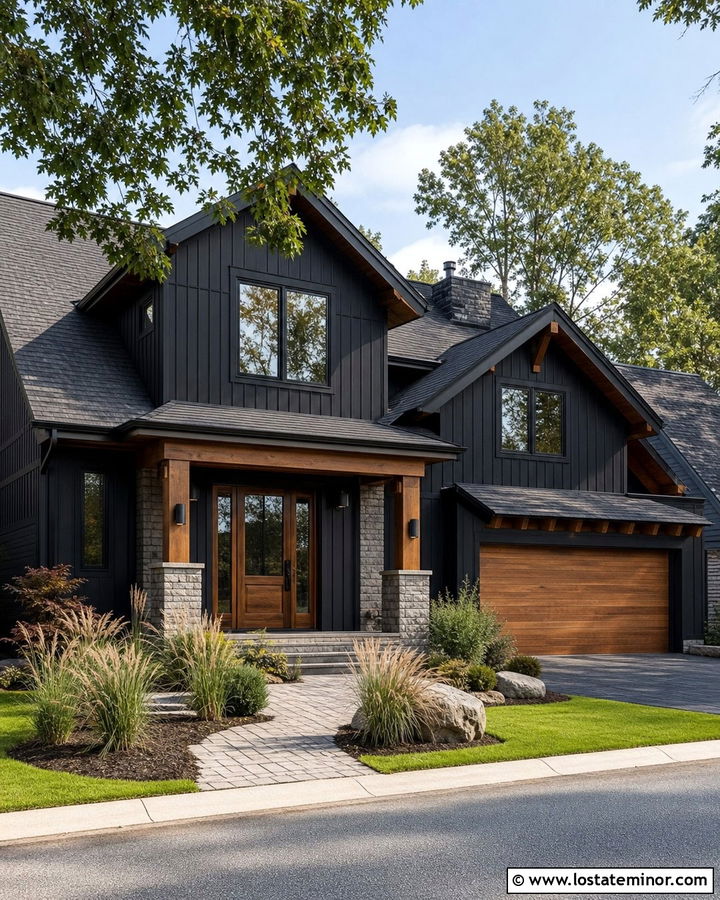
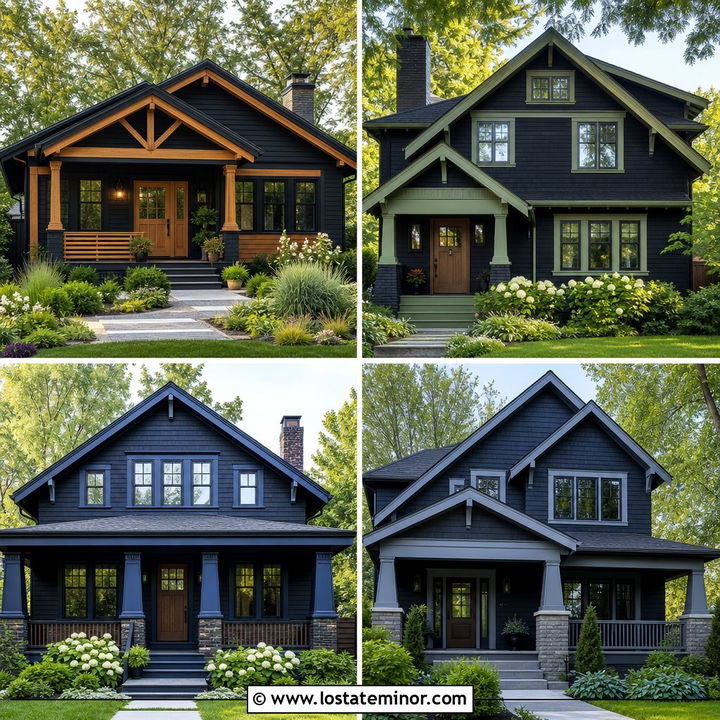
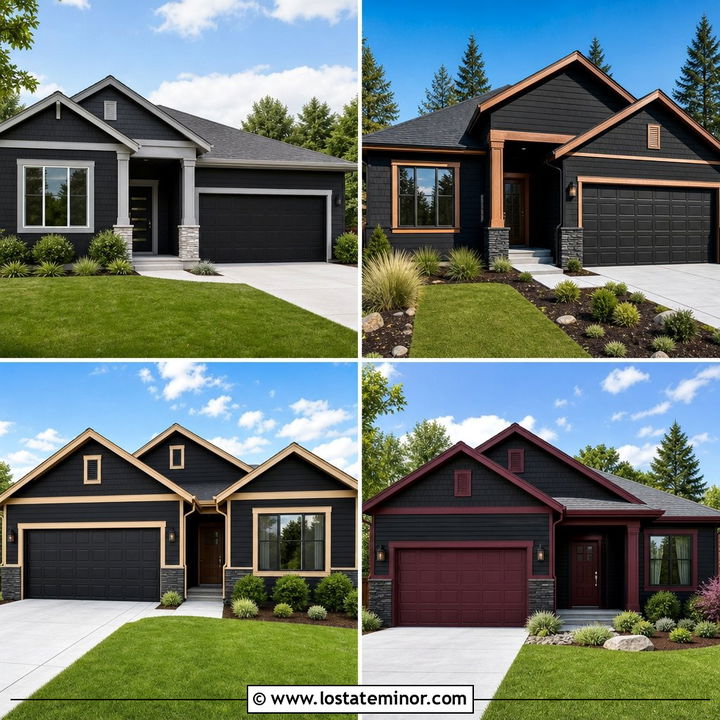
Natural wood trim softens a black exterior without reducing its dramatic character. Cedar, white oak, and Douglas fir bring visible grain and warm color to the facade. Use the wood selectively around the entrance, beneath the soffits, or on substantial porch posts. Too many thin wood outlines can make the design feel busy, so prioritize larger architectural areas. A contemporary house may feature black vertical siding with a cedar entry wall, while a craftsman can use stained beams and tapered columns. Keep the roof, gutters, and window frames dark for continuity. Neutral concrete steps and restrained landscaping allow the wood to remain prominent. Apply an exterior-rated stain that complements rather than competes with the black siding.
3. Black Farmhouse With Cream Trim
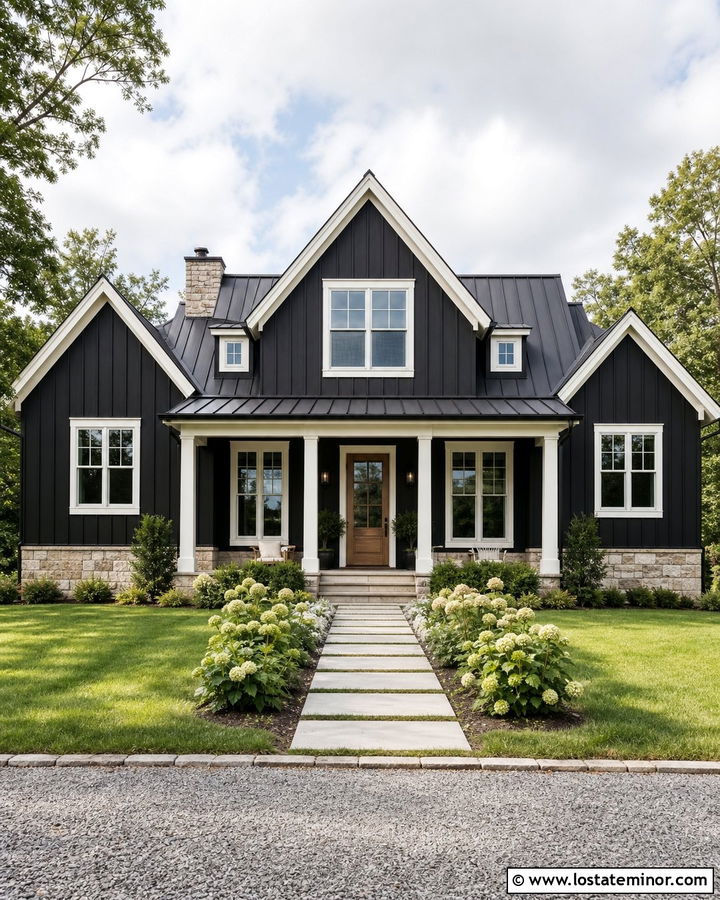
Cream trim gives a black farmhouse a warmer and more relaxed appearance than bright white. Pair deep black board-and-batten siding with creamy window casings, wide fascia, and simple square porch columns. The warmer trim looks particularly cohesive beside limestone, tan gravel, and a honey-colored wood door. Use black metal roofing to connect the upper portion of the house to the siding. Cream can also be repeated on the porch ceiling to reflect more daylight around the entrance. Avoid yellow-based creams that appear dated beside a neutral black. A gentle off-white with subtle warmth is usually enough. Complete the exterior with simple lanterns, dark planters, and layered shrubs that soften the strong black-and-cream contrast.
4. Black Ranch House With Cedar Trim
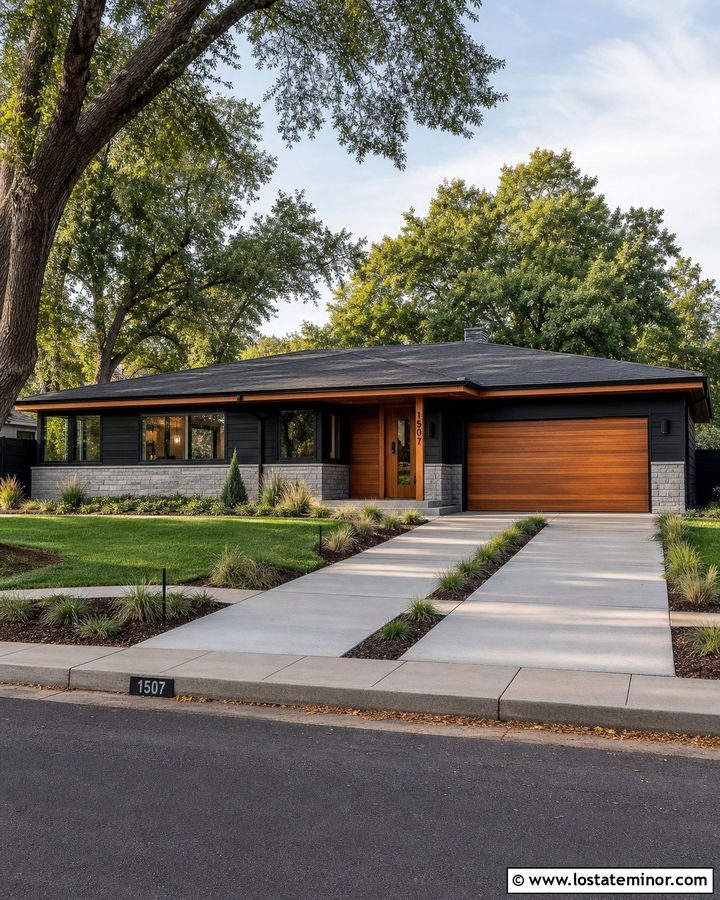
Long ranch homes benefit from trim that creates rhythm without exaggerating the horizontal profile. Cover the main facade in deep black lap siding, then introduce cedar around the front door, garage, and one section of the soffit. A cedar garage door can become the visual anchor, especially when balanced by a matching entry door at the opposite end. Keep window trim black for a streamlined look, and use warm gray stone along the foundation to add texture. A low charcoal roof maintains the ranch home’s grounded shape. Wide planting beds, ornamental grasses, and a straight concrete walkway reinforce the clean lines. This complete scheme feels updated but still respects the simple proportions of classic midcentury ranch architecture.
5. Black House With Charcoal Trim
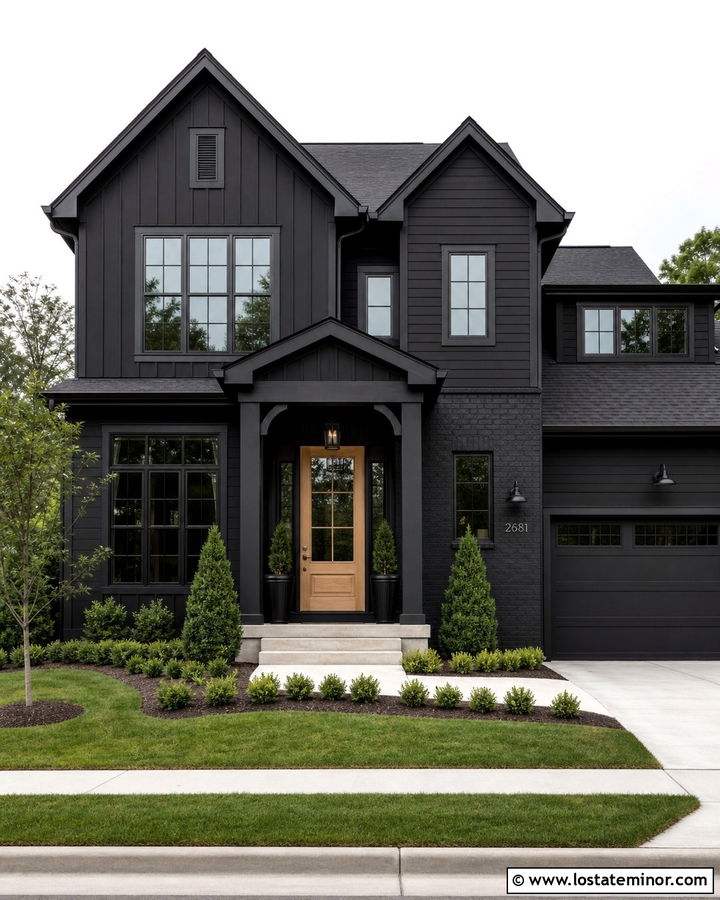
Charcoal trim creates subtle definition on a black house without producing a high-contrast outline. This approach works well for contemporary and transitional homes where the architecture should feel cohesive rather than decorative. Choose a soft black body color and apply a slightly lighter charcoal to the fascia, window surrounds, garage door, and porch beams. The small value change becomes more visible in bright daylight but remains understated in shade. Add a pale oak front door and light concrete walkway to prevent the facade from looking flat. Textural differences also matter. Combining lap siding, vertical panels, and charcoal-painted brick can provide depth even within a limited palette. Keep landscaping green and structured to bring natural color around the dark exterior.
6. Black Craftsman With Warm White Trim
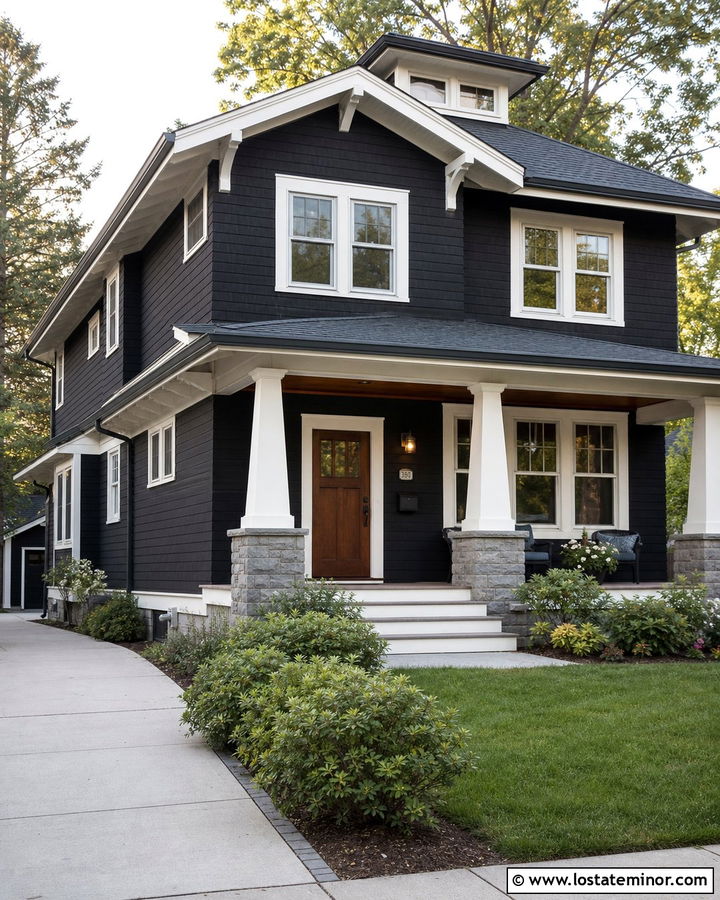
A craftsman house needs enough contrast to show its brackets, beams, columns, and layered roofline. Deep black lap siding paired with warm white trim highlights those details while maintaining a welcoming mood. Apply white to the window casings, rafter tails, porch columns, and stair risers. Keep the porch railing black so the entrance does not become overly outlined. A stained mahogany door and matching ceiling add warmth beneath the covered porch. Stone column bases in gray, taupe, and muted brown connect the black siding with the surrounding landscape. Use a charcoal architectural-shingle roof rather than introducing another strong color. This palette updates traditional craftsman details without removing the depth and handcrafted character that define the style.
7. Black Colonial With White Trim
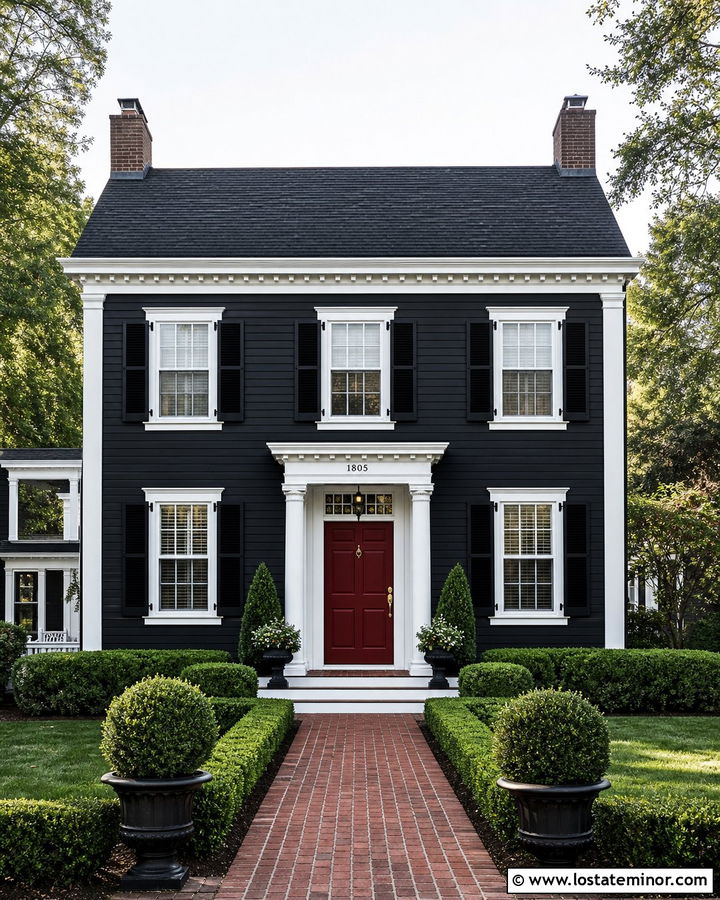
The symmetry of a colonial house becomes especially striking with black siding and disciplined white trim. Use a rich black on the clapboard body, then frame the evenly spaced windows, cornice, corner boards, and central doorway in clean white. Black shutters can remain slightly different in sheen from the siding, adding depth without introducing another color. A deep red or stained wood front door creates a traditional focal point at the center. White columns and a simple pediment further emphasize the balanced architecture. Keep the roof dark gray and the foundation neutral. Formal boxwood hedges, symmetrical planters, and a straight brick walkway support the orderly composition. The finished scheme feels stately, graphic, and appropriate for the home’s historic proportions.
8. Black Modern House With Bronze Trim
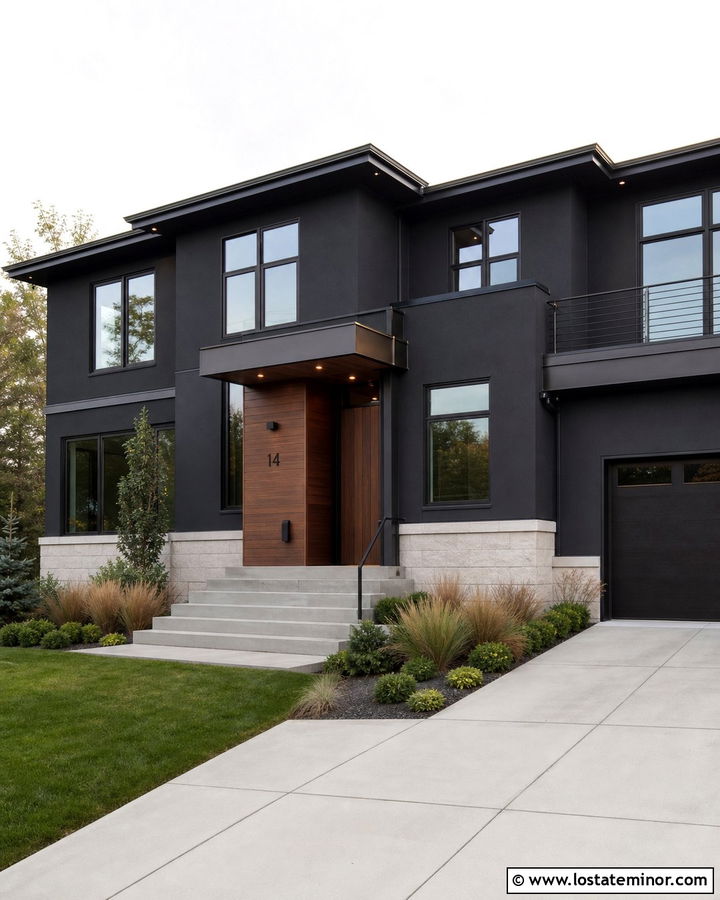
Bronze trim gives a black modern exterior a softer, more luxurious edge than standard black metal. Use matte black stucco or fiber-cement panels as the primary surface, then select dark bronze window frames, fascia, gutters, and slim metal railings. The bronze should read as a warm metallic neutral rather than bright gold. Add walnut-toned wood near the entrance and pale limestone around the lower level to balance the dark upper facade. Large windows bring reflection and visual lightness to the composition. Flat or low-pitched rooflines keep the materials looking clean and deliberate. Finish the approach with broad concrete steps, sculptural grasses, and low evergreen planting. This restrained palette allows subtle material changes to define the architecture.
9. Black Cottage With Soft Gray Trim
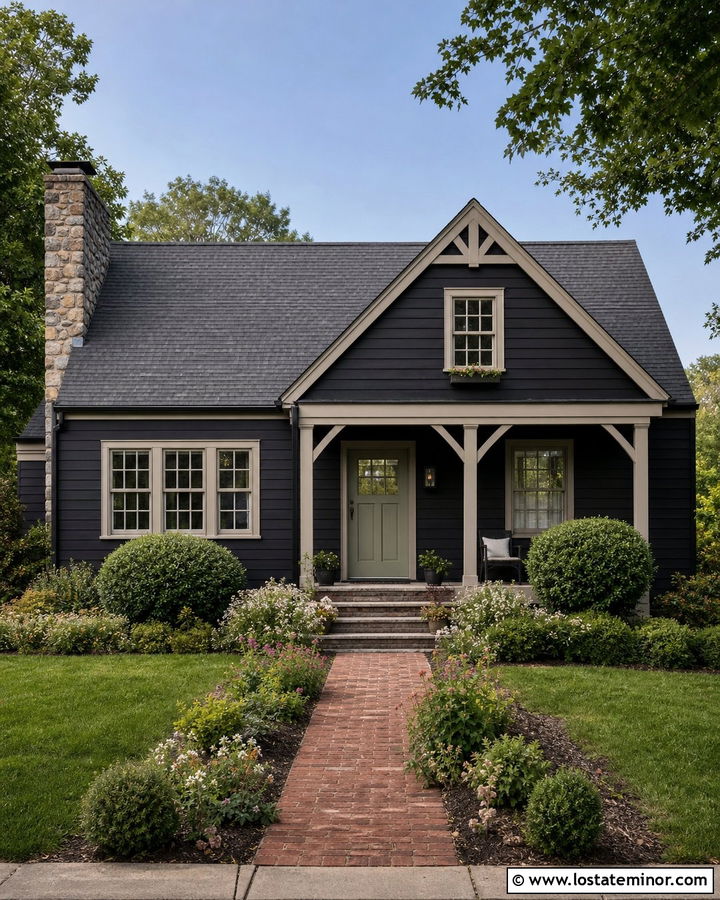
Soft gray trim can make a compact black cottage feel charming rather than severe. Choose a slightly weathered black for clapboard or shingle siding, then apply a pale warm gray to the windows, fascia, porch posts, and decorative gable trim. A muted blue or sage front door adds gentle color without overpowering the small facade. Keep the roof medium gray so it transitions smoothly between the black body and lighter trim. A stone chimney, brick walkway, and informal flower beds support the cottage character. Rounded shrubs and climbing greenery also soften the dark walls. Avoid outlining every corner in gray. Concentrate the lighter color around the entrance and windows, where it can brighten the facade and reveal its architectural details.
10. Black Cape Cod With Crisp White Trim
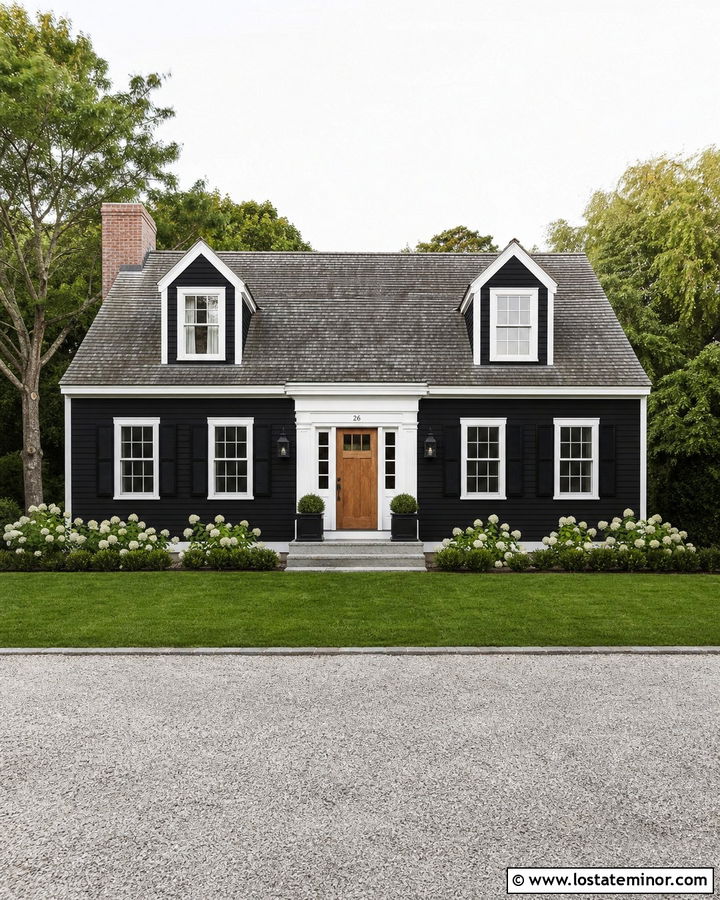
A black Cape Cod exterior becomes polished and recognizable when paired with crisp white trim. Apply black to the shingled or clapboard walls, while keeping the window casings, dormers, fascia, and front entry surround white. The bright trim defines the home’s compact geometry and prevents the steep roof from overpowering the facade. Black shutters preserve the classic appearance but should have enough sheen to remain visible against the siding. Introduce a natural oak door or muted coastal-blue door for a welcoming focal point. Weathered gray roof shingles, pale gravel, and low hydrangea plantings complement the restrained palette. Matching white trim across the dormers and lower level is essential, since inconsistent whites can make this symmetrical house look disconnected.
11. Black Bungalow With Tan Trim
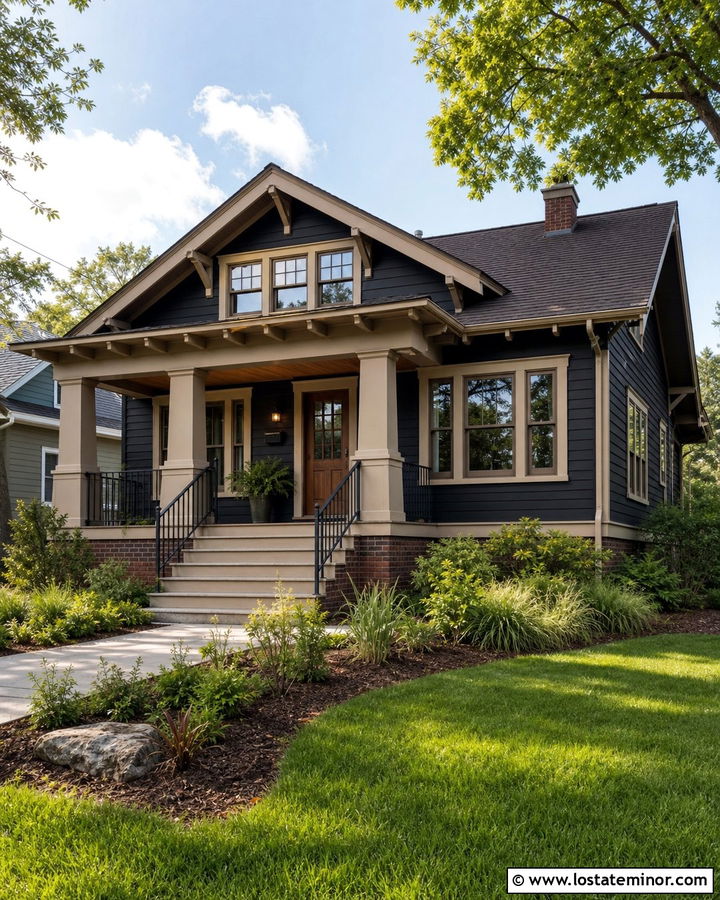
Tan trim brings an earthy, comfortable quality to a black bungalow. Choose a warm black for the siding, then use mushroom tan on broad window surrounds, exposed rafter tails, fascia, and porch columns. The lower contrast preserves the bungalow’s handcrafted character and works naturally with stone or clinker-brick foundations. A medium walnut door and matching porch ceiling deepen the warmth. Keep railings black to connect the porch visually with the body of the house. An aged bronze roof or dark brown shingles can work better than cool gray in this palette. Layer the yard with ferns, ornamental grasses, and native shrubs. The final exterior feels grounded and inviting, with enough trim contrast to show the architecture without making it overly graphic.
12. Black House With Red Brick Trim
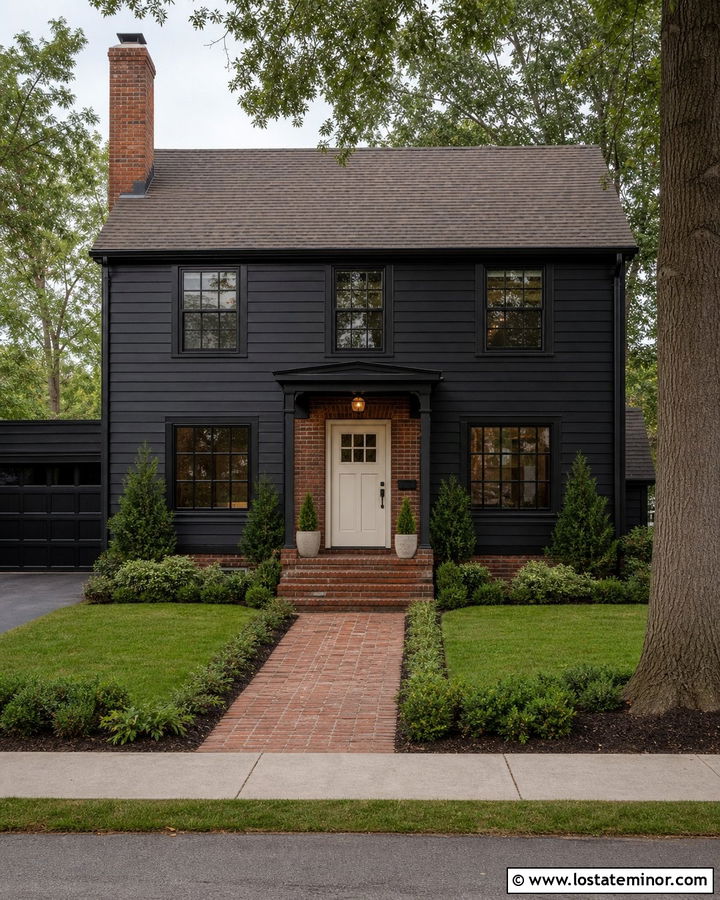
Red brick introduces warmth, age, and texture beside a black exterior. Rather than treating the brick as a separate feature, repeat it across the foundation, porch steps, chimney, or entry surround. Choose a softened black siding color that complements the brick’s brown and charcoal variations. Black window trim keeps the facade cohesive, while a warm white front door can brighten the entrance. If the existing brick has strong orange tones, use dark mortar or charcoal-painted details to create a smoother transition. A gray-brown roof will usually connect the two materials better than a blue-gray one. Simple greenery is enough to finish this palette. The contrast between dark siding and traditional masonry gives remodeled homes a collected, established appearance.
13. Black House With Light Stone Trim
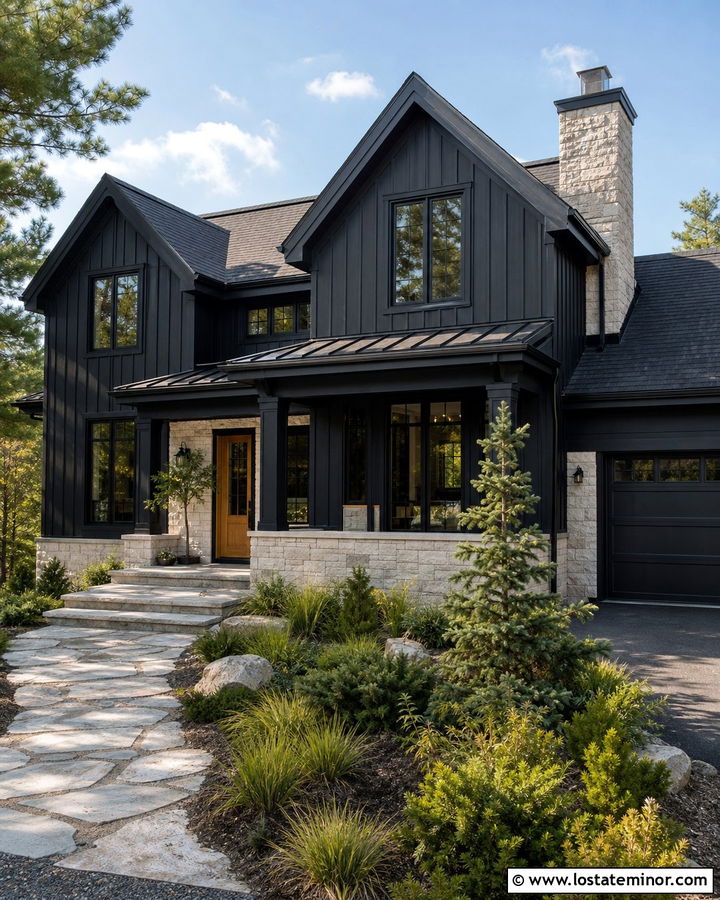
Light stone can visually lift a black exterior and provide a durable transition at ground level. Use creamy limestone, pale ledgestone, or warm gray fieldstone along the foundation, porch walls, and chimney. Continue the black siding above it, using matching black trim around windows and roof edges for a calm silhouette. A light oak door connects the warmth of the masonry to the entrance. Avoid stone with too many unrelated colors, since black already creates strong visual weight. Select material containing two or three restrained neutral tones. A charcoal roof, concrete walkway, and softly structured shrubs complete the scheme. This combination works particularly well on mountain-inspired, transitional, and modern homes that need natural texture without a rustic overload.
14. Black House With Copper Trim
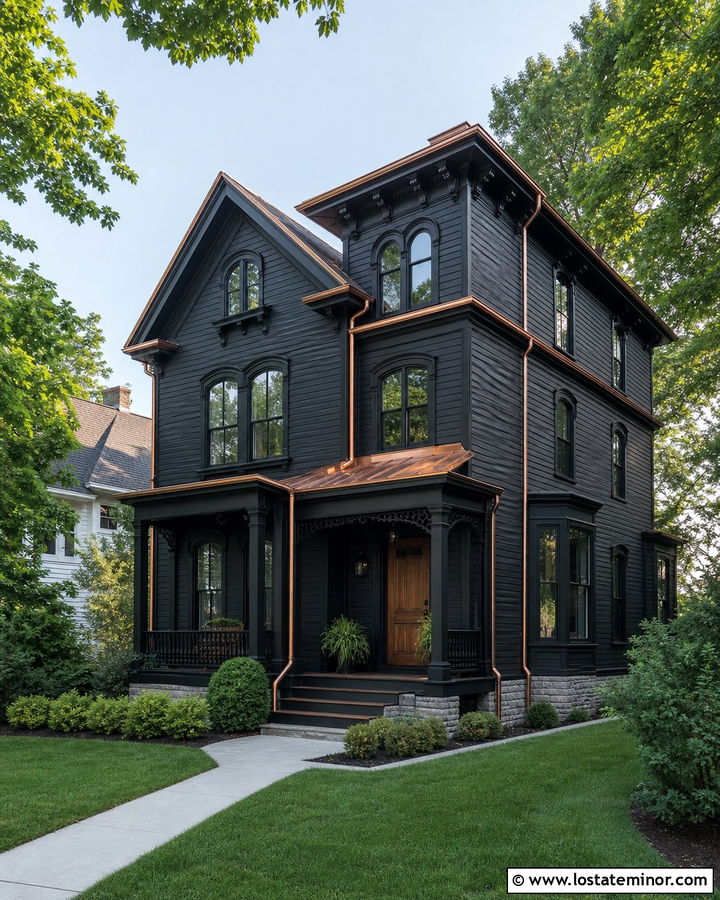
Copper trim develops character over time and gives a black house a distinctive but refined finish. Use it on gutters, downspouts, porch roofing, flashing, or a small entry canopy rather than covering large wall areas. The metal’s warm brown color stands out beautifully against neutral black siding, while its changing patina adds natural variation. Pair the copper with dark window trim and a medium-stained wood door to keep the palette connected. Gray stone or smooth concrete can provide a quiet foundation beneath the richer materials. Copper is most effective when repeated in several visible locations, such as the gutter system and porch light fixtures. Keep other metals matte black or dark bronze so the complete exterior does not appear mismatched.
15. Black House With Sage Green Trim
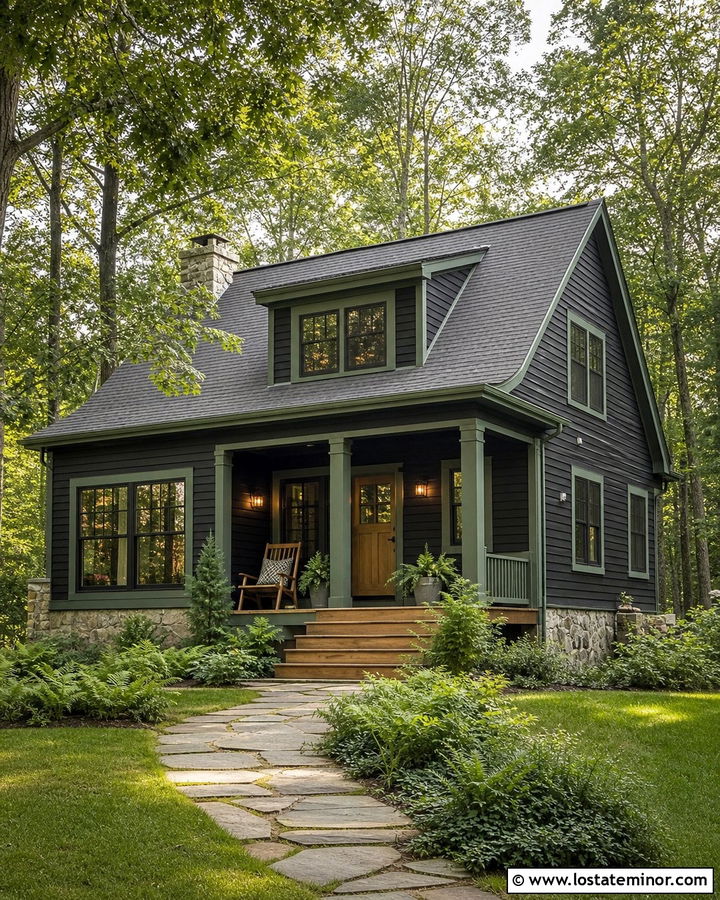
Sage green trim gives a black exterior a subtle connection to surrounding trees and gardens. Use a muted gray-green rather than a bright botanical shade. Apply it to window casings, porch columns, fascia, and the front door, allowing the black siding to remain dominant. This pairing works especially well on cottages, cabins, and craftsman homes with natural landscaping. Add a weathered stone foundation and a medium-gray roof to bridge the two paint colors. Natural wood steps or porch decking introduce another warm, organic layer. Repeat sage in planters or garden structures, but avoid matching every landscape feature exactly. The completed house feels dark and dramatic from the street while the green trim adds softness, personality, and a more nature-centered appearance.
16. Black House With Black Trim
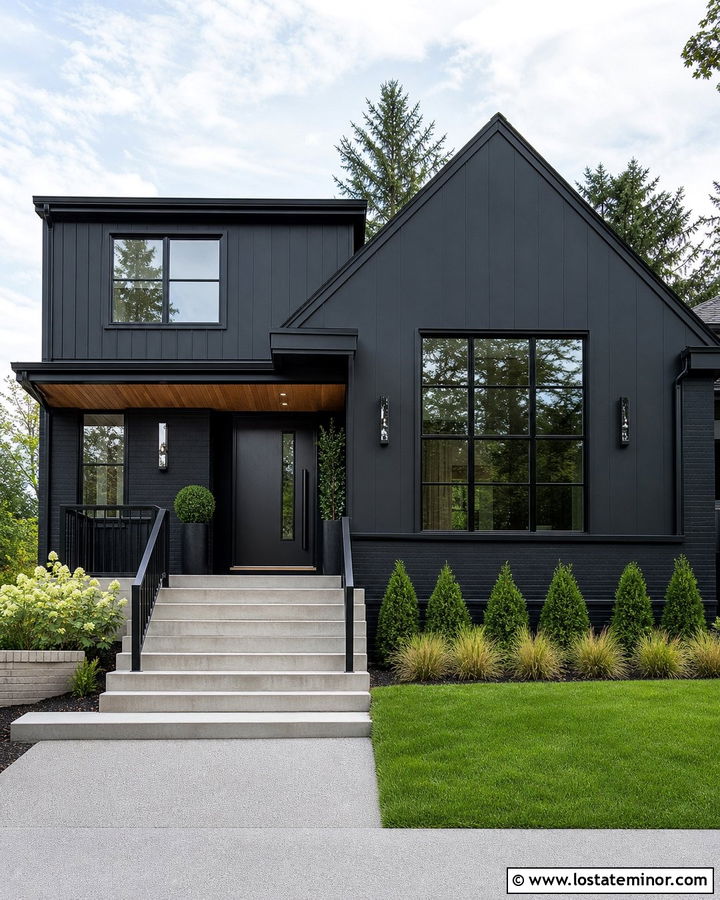
An all-black exterior depends on texture, sheen, and shadow instead of color contrast. Use a velvety black on the siding and a satin or semi-gloss black on windows, doors, fascia, and railings. The small finish change helps the trim remain visible when daylight moves across the facade. Mix vertical siding with smooth panels, black brick, or narrow horizontal boards to create additional depth. Warm wood beneath the porch ceiling can prevent the entrance from disappearing, even if the structural trim remains black. Large windows, pale concrete, and layered green landscaping offer necessary visual relief. This approach is best on homes with strong shapes and uncomplicated details. Careful material changes keep the monochromatic exterior dimensional rather than heavy or unfinished.
17. Black House With Greige Trim
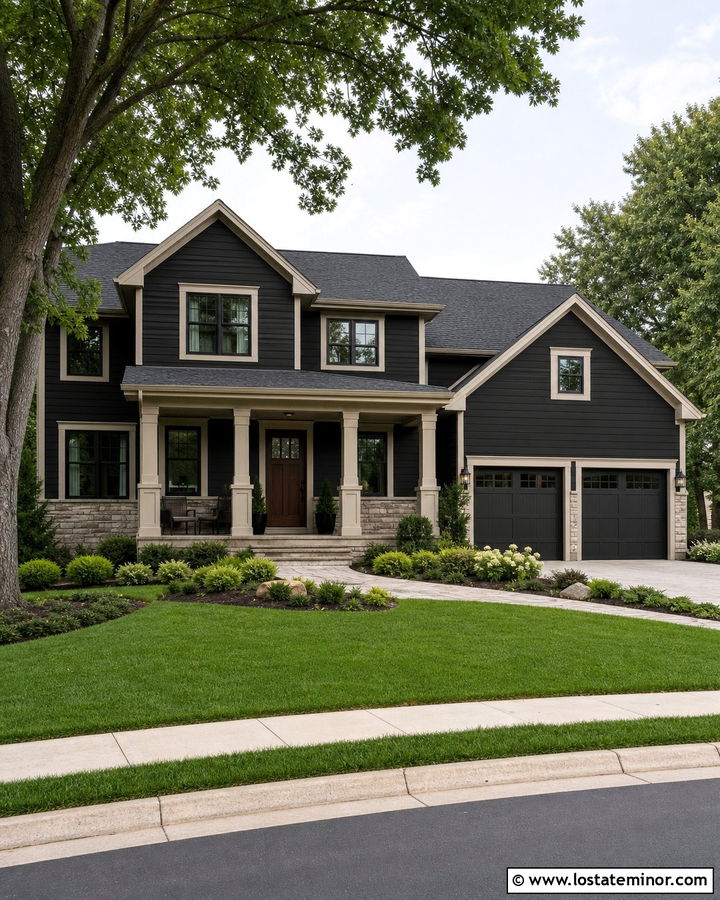
Greige trim creates gentle contrast and works well when the property includes warm stone, concrete, or beige roofing. Pair a neutral black body with light greige around the windows, garage, fascia, and porch columns. Choose a greige that remains visibly different from the masonry but does not appear pink or yellow. A dark walnut front door adds warmth, while black railings and gutters keep the outer edges clean. This scheme is particularly useful for transitional houses that combine traditional rooflines with simplified details. Repeat greige on the porch floor or foundation for a balanced distribution of color. With layered shrubs and a pale paver walkway, the finished home feels approachable and sophisticated, avoiding both stark white contrast and an overly dark monochromatic appearance.
18. Black Tudor With Cream Trim
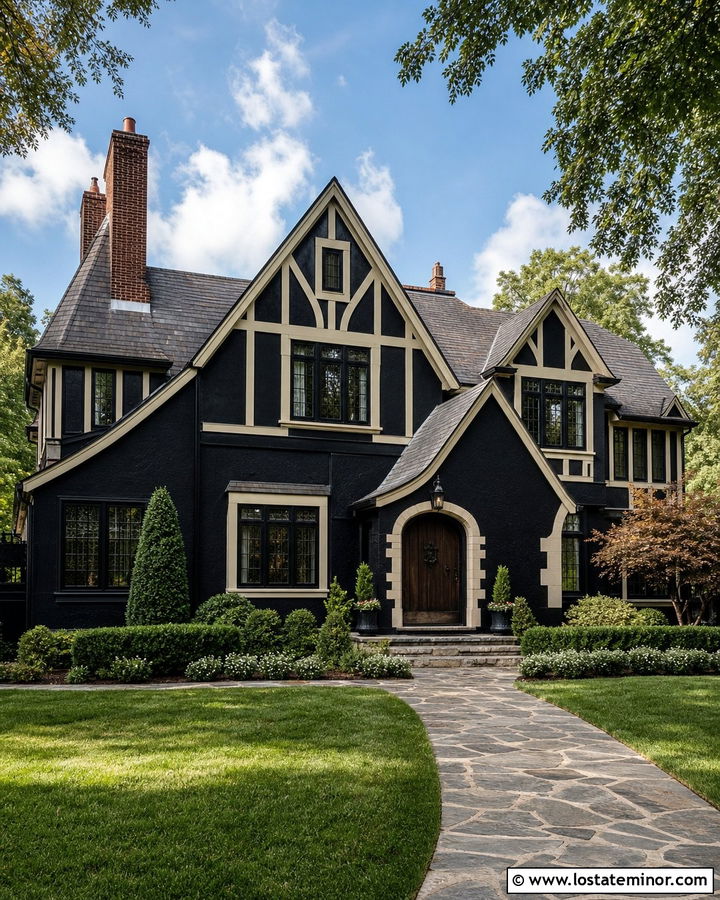
A black Tudor exterior can feel richly historic when cream trim is placed along its recognizable framework. Use black on stucco panels or masonry walls, then highlight half-timbering, window surrounds, gable edges, and the arched entrance with a subdued cream. Alternatively, reverse small gable sections by using cream stucco inside black timber patterns. A dark oak door with iron hardware strengthens the old-world character. Retain brown, charcoal, or weathered slate roofing rather than forcing a perfectly black roof. Brick chimneys and irregular stone paths add texture to the formal palette. Keep the cream slightly muted so it does not look newly applied beside aged materials. Thoughtful trim placement allows the steep gables and asymmetrical facade to remain the main visual attraction.
19. Black Split-Level With Wood Trim
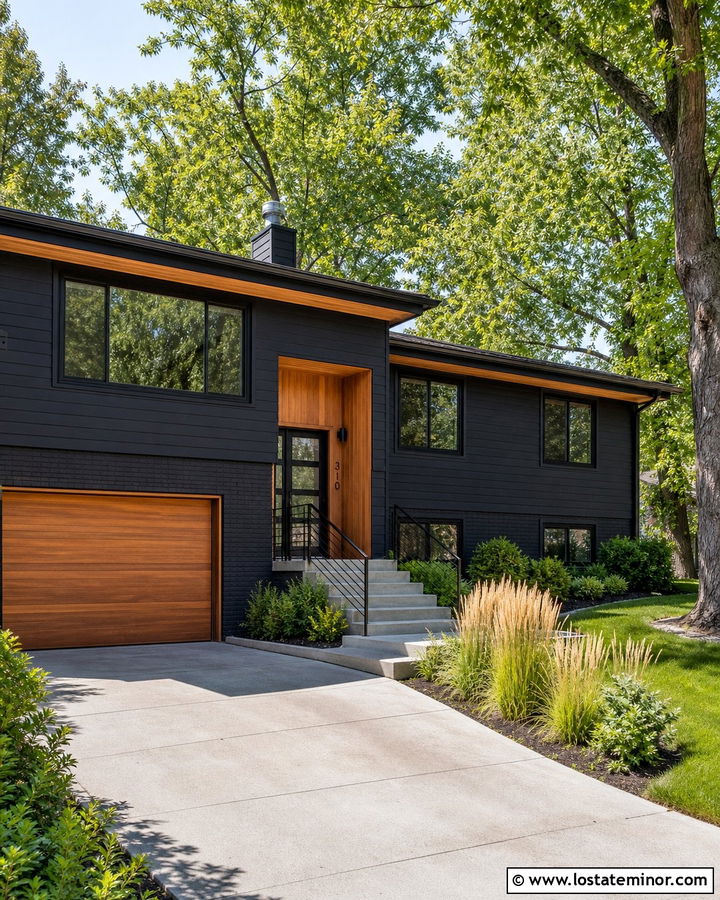
Black paint can unify the disconnected materials often found on a split-level house. Use one black siding color across the upper and lower stories, then add natural wood around the recessed entry, garage door, and horizontal soffits. The wood creates a clear focal zone and helps distinguish the entrance from the garage. Black window trim and charcoal gutters maintain continuity across the staggered levels. If brick covers part of the lower facade, paint it black or retain it only when its color complements the stain. Broad concrete steps and a modern railing can simplify the approach. Low grasses and layered foundation shrubs soften the long walls. This full exterior treatment makes an older split-level appear more deliberate, cohesive, and architecturally current.

20. Black House With Blue Gray Trim
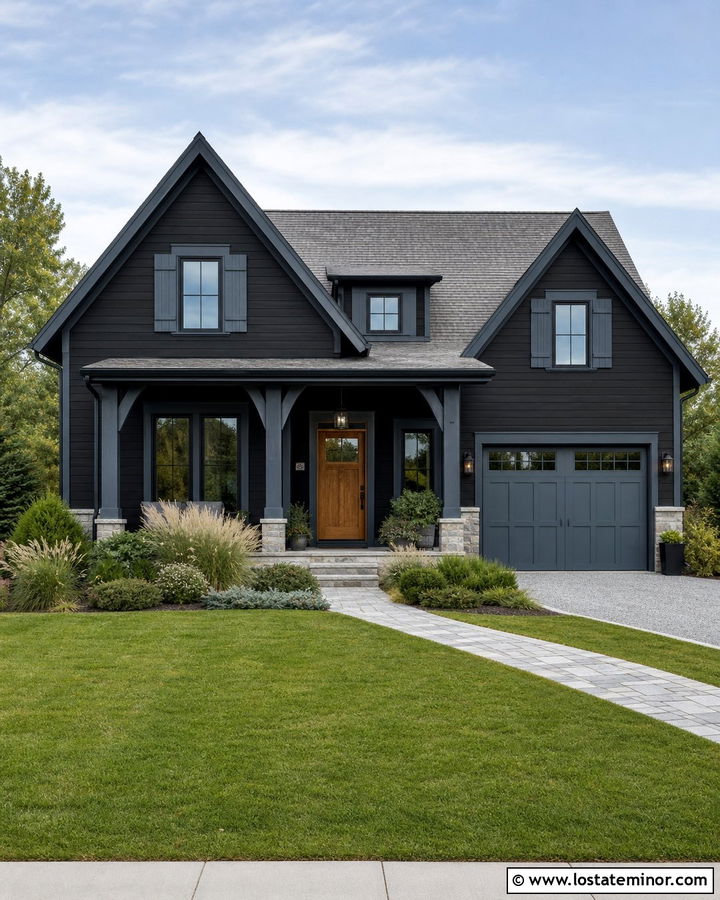
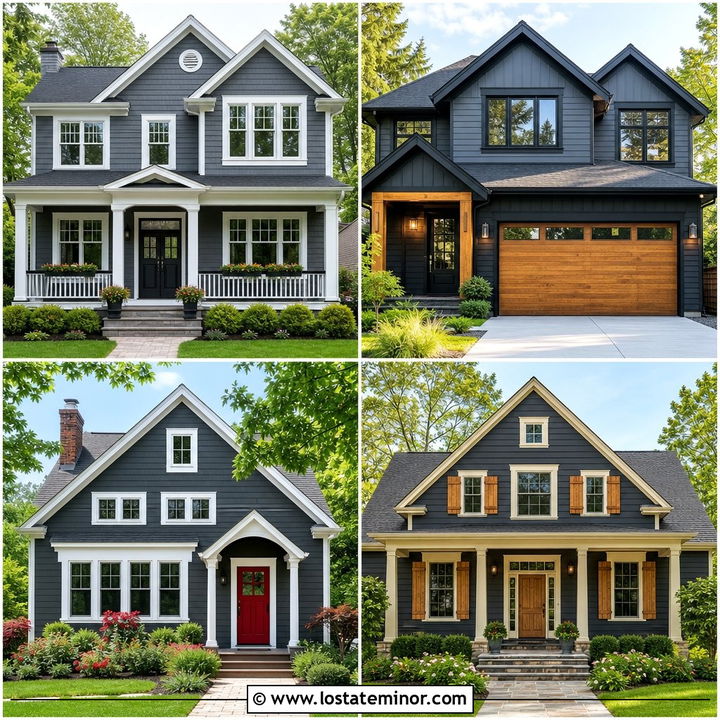
Blue-gray trim can reveal the cooler side of a black exterior. Select a black with slight blue undertones, then use a medium slate blue-gray on the shutters, window casings, garage door, and porch details. A warm wood front door prevents the palette from becoming cold. This combination suits coastal homes, contemporary cottages, and traditional houses with gray roofing. Keep the blue-gray muted so it reads as an architectural neutral from the street. Pale stone at the foundation can add brightness without introducing sharp white. In the landscape, silvery grasses, evergreen shrubs, and cool-toned pavers reinforce the palette naturally. The result is more colorful than black and charcoal, yet restrained enough to remain cohesive through changing seasons and different daylight conditions.
21. Black Victorian With Cream Trim
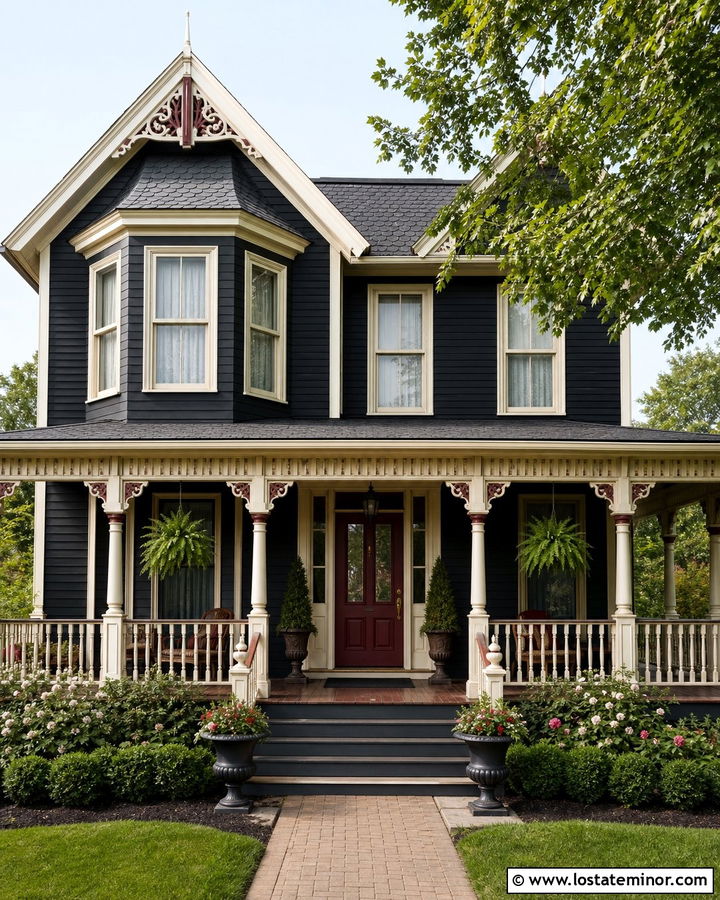
Victorian architecture provides many opportunities for trim, but restraint keeps a black exterior elegant. Paint the main clapboard body deep black and use warm cream on window surrounds, porch columns, brackets, and selected bands of gingerbread. Add a muted burgundy or olive accent to the front door and a few small decorative details. Limiting the palette to three colors prevents the intricate facade from becoming visually chaotic. A patterned slate or charcoal roof complements the historic silhouette. Keep porch flooring in stained wood or dark gray so it does not compete with the cream ornament. Symmetrical planters and layered flowering shrubs soften the contrast. This combination celebrates the house’s craftsmanship while giving its elaborate exterior a more composed and updated identity.
22. Black Barndominium With White Trim
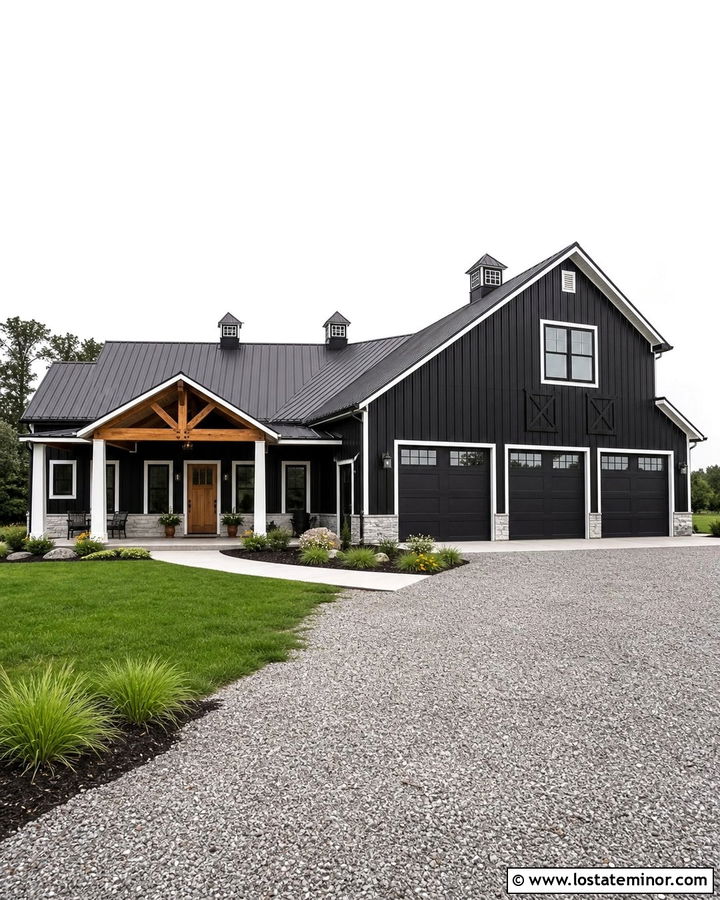
The large surfaces of a barndominium can support a bold black-and-white palette. Use matte black metal siding across the main structure and crisp white on the roof edge, window casings, overhead door surrounds, and porch posts. A natural cedar front door and matching beams warm the high-contrast scheme. Keep the roof black or charcoal so the building retains a strong, simple silhouette. White should frame the architecture strategically rather than outlining every metal seam. Stone wainscoting near the entrance can make the residential area feel more grounded and welcoming. Finish the property with a wide gravel drive, native grasses, and clean concrete walkways. The complete design balances agricultural simplicity with the polished details expected from a comfortable modern home.
23. Black A-Frame With Cedar Trim
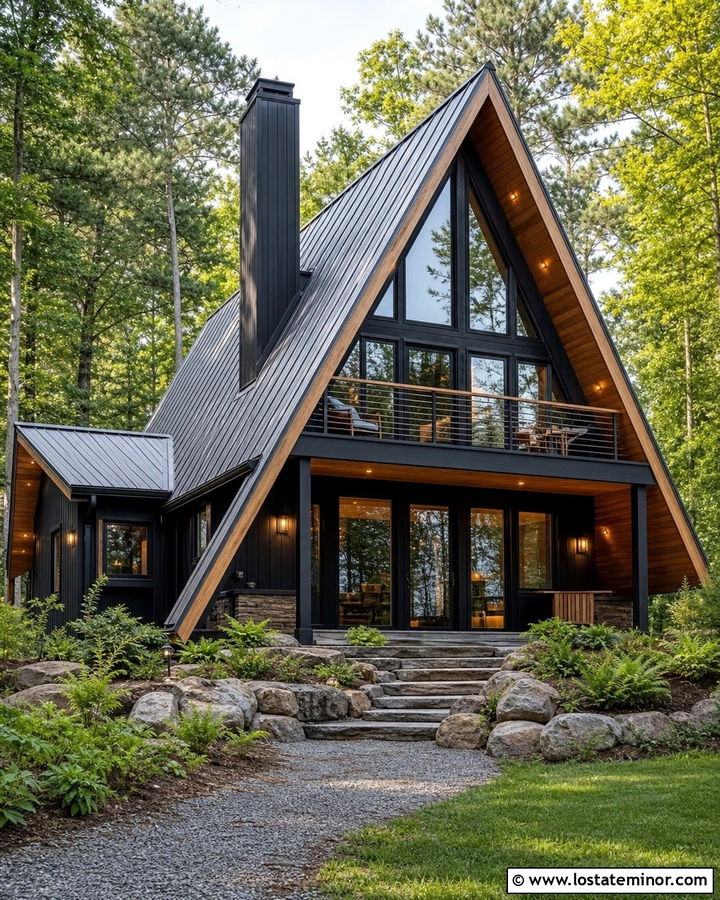
A black A-frame house looks especially striking when cedar follows its strong roof geometry. Cover the exterior in black vertical siding, then use warm cedar along the fascia, entrance recess, balcony rails, and underside of the roof overhang. Large black-framed windows preserve the dramatic triangular facade. A gray standing-seam roof allows the wood outline to remain visible from a distance. At ground level, rough stone steps and native woodland planting help the house settle into its surroundings. Avoid adding white trim, which may interrupt the continuous roofline. The combination of dark siding and natural wood feels appropriate for mountain, lake, and forest settings. It also gives the small structure depth while preserving its clean, recognizable architectural shape.
24. Black Mediterranean House With Sand Trim
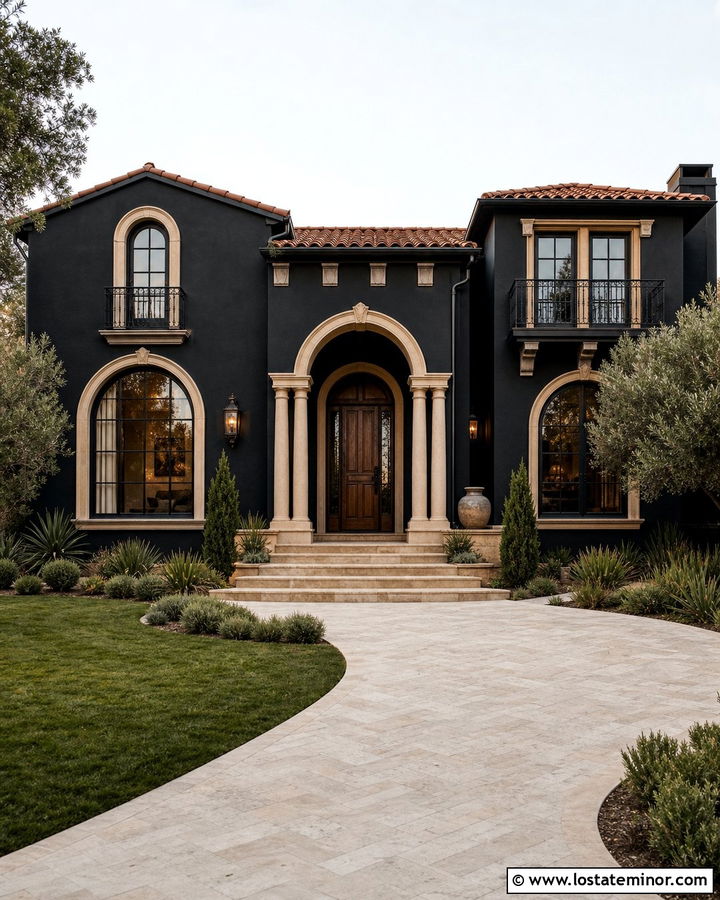
Sand-colored trim warms a black Mediterranean exterior while complementing stucco, clay, and stone. Use a softened charcoal-black on the main stucco walls and sandy beige around arched windows, columns, cornices, and the recessed entry. Retain a terracotta tile roof when possible, since its earthy red-brown tones provide a natural bridge between the two paint colors. Dark bronze windows and railings feel more harmonious than bright white or silver metal. Choose a heavy wood door with a medium brown stain to reinforce the entrance. Pale stone paving, olive trees, and low drought-tolerant planting complete the palette. The black body gives traditional arches and rooflines a fresh presence, while warm trim prevents the exterior from feeling too stark or contemporary.
25. Black Brick House With White Trim
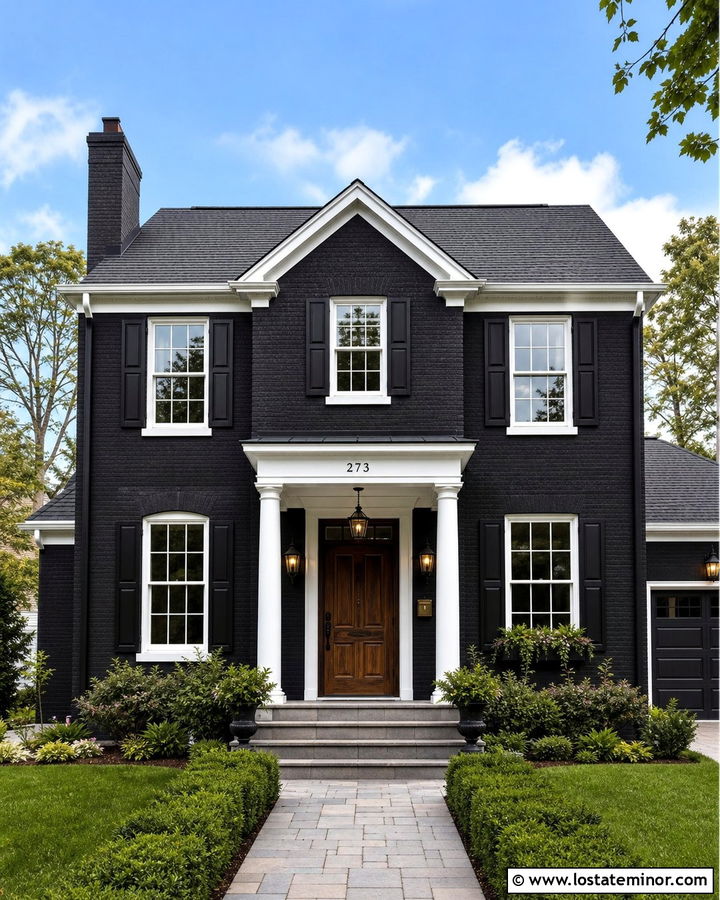
Painting brick black creates a strong textured backdrop for bright white architectural trim. Use a masonry-appropriate black coating on the brick, then apply white to the fascia, windows, porch columns, and entry surround. The mortar lines will continue to catch light, giving the dark walls more dimension than smooth siding. Keep shutters black or remove unnecessary decorative shutters to avoid clutter. A stained wood door and warm brass lighting can soften the sharp contrast. If the house has a garage, consider a black door with white perimeter trim so it blends into the wall. A gray roof and simple green landscaping complete the balanced scheme. Always test the black directly on the brick because masonry texture and exposure can noticeably affect its appearance.
26. Black Midcentury House With Walnut Trim
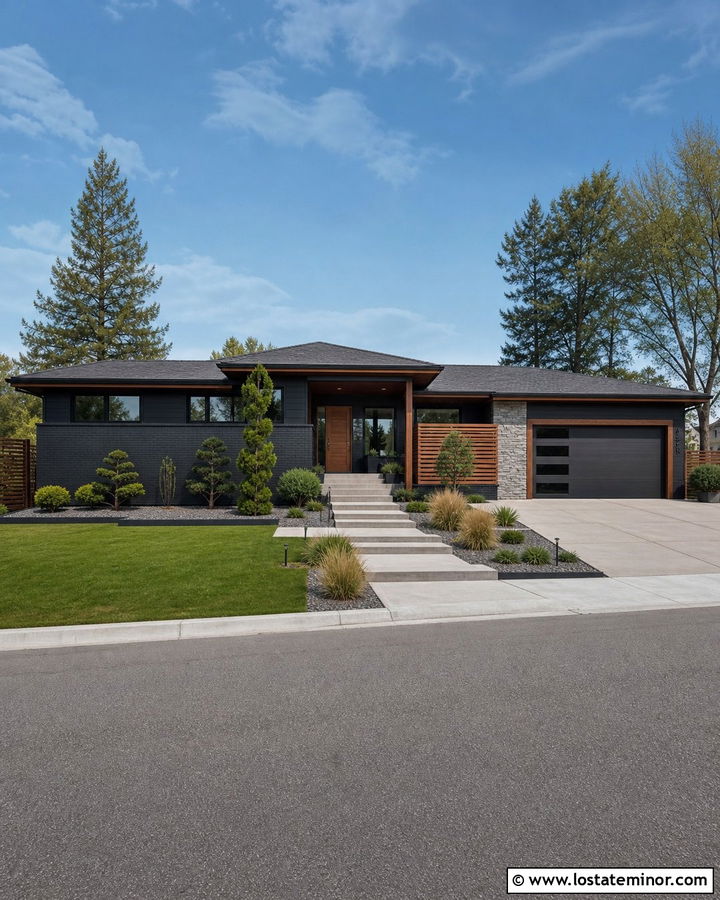
Walnut-colored trim enhances the horizontal lines and natural materials associated with midcentury architecture. Use a soft black on the siding or painted brick, then add walnut around the front door, garage, soffits, and privacy screen. Keep window frames black to preserve a clean connection between the glass and exterior walls. A low charcoal roof, broad concrete steps, and minimal metal railings support the streamlined design. One section of warm gray stone can provide texture without distracting from the wood. Landscape with ornamental grasses, sculptural evergreens, and gravel beds rather than highly formal planting. The black background makes the walnut grain more noticeable, while the wood prevents the low, angular home from appearing cold. The result feels updated without ignoring its midcentury roots.
27. Black Coastal House With Pale Blue Trim
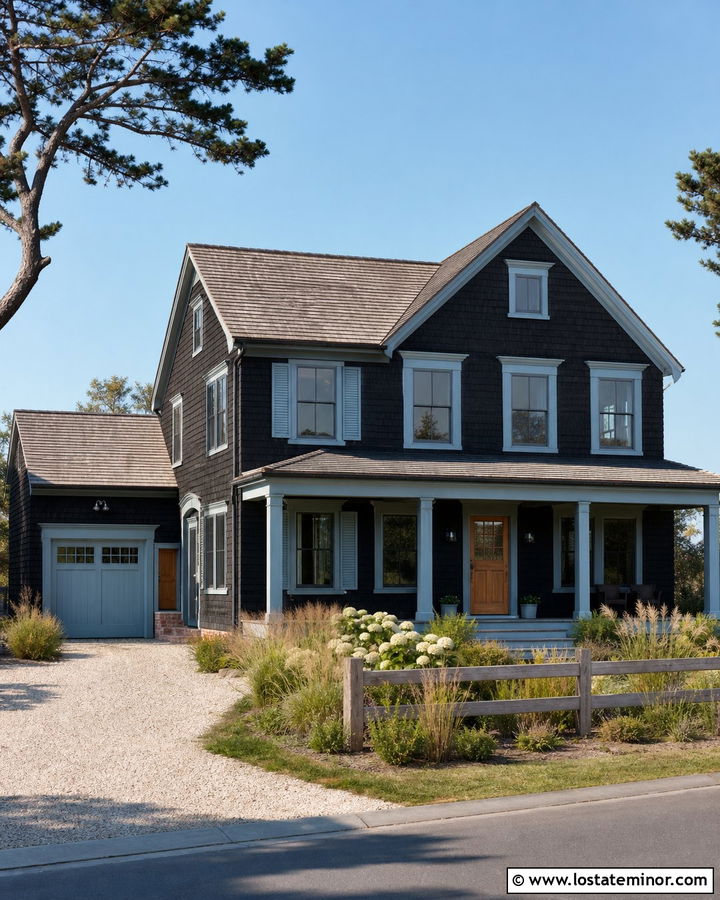
Pale blue trim gives a black coastal house a lighter, more relaxed personality. Select a weathered black for the siding and a soft gray-blue for window casings, porch columns, fascia, and shutters. Keep the blue muted enough to function like a neutral under strong sunlight. A natural teak or white oak door introduces warmth, while a silver-gray roof supports the coastal palette. Use white only in small amounts, such as porch furniture or stair risers, if additional brightness is needed. Gravel paths, beach grasses, hydrangeas, and simple wood fencing reinforce the setting without creating a theme. This scheme offers more individuality than traditional black-and-white while maintaining enough contrast to show the windows and layered roofline clearly.
28. Black House With Burgundy Trim
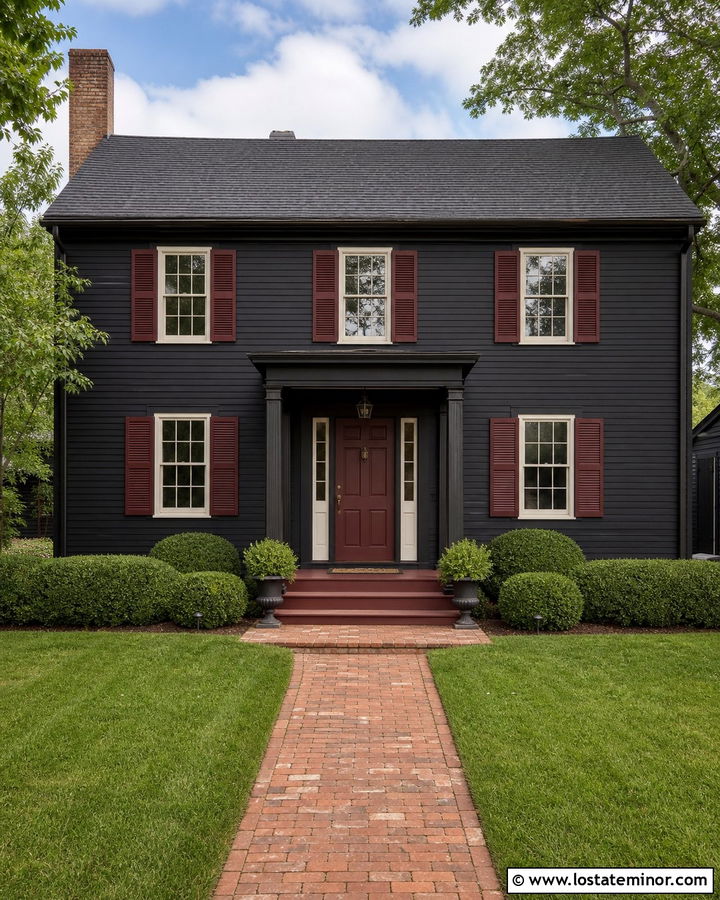
Burgundy trim creates a deep, traditional accent on a black exterior. It works best when used on shutters, the front door, porch flooring, or selected window details rather than every edge of the house. Choose a brown-based burgundy that remains distinct from black in both sun and shade. Warm white window casings can act as a narrow separator between the black siding and darker red shutters. A weathered brick chimney, charcoal roof, and aged bronze hardware strengthen the classic character. This palette suits colonial, federal, and traditional farmhouse architecture. Keep the landscaping formal but green, using boxwoods and symmetrical planters. The finished exterior feels rich and established, with burgundy providing color that is noticeable without becoming overly bright or distracting.
29. Black Scandinavian House With Wood Trim
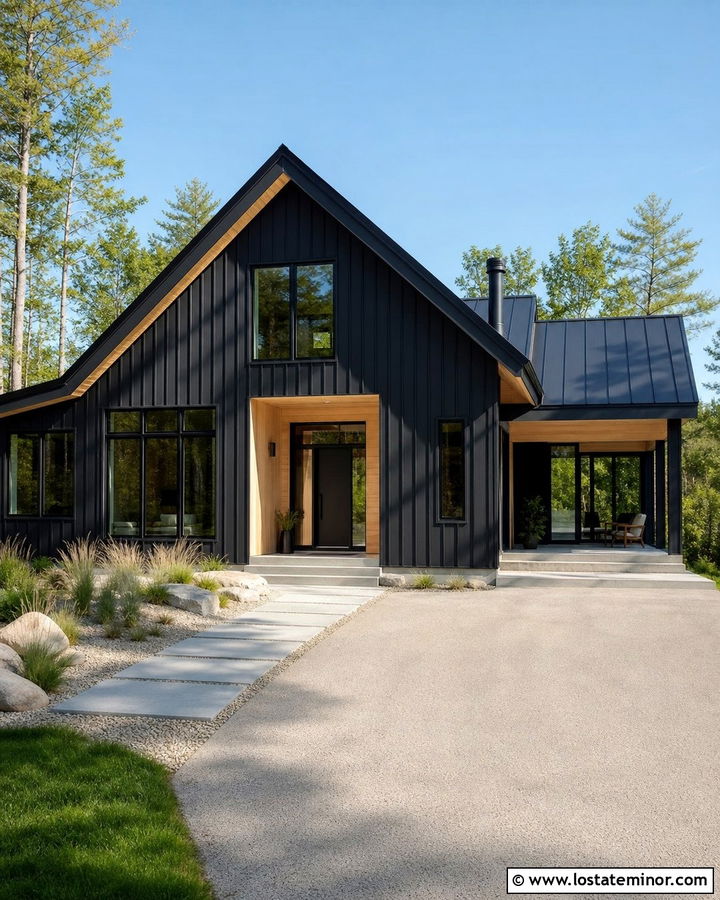
A Scandinavian-inspired black house relies on simple shapes, functional details, and natural materials. Use matte black vertical siding across the complete facade, with pale pine or lightly stained cedar around the doorway, soffits, and sheltered terrace. Keep the window frames, gutters, and standing-seam roof black to create one continuous silhouette. Large windows and a glass entry panel bring brightness to the dark exterior. Avoid decorative trim that does not serve an architectural purpose. Instead, let precise board spacing and clean material transitions provide visual interest. Pale gravel, broad stone pavers, native grasses, and slender trees complement the restrained design. The light wood creates a warm welcome while the black exterior helps the house appear grounded within a green or wooded landscape.
30. Black Two-Story House With Taupe Trim
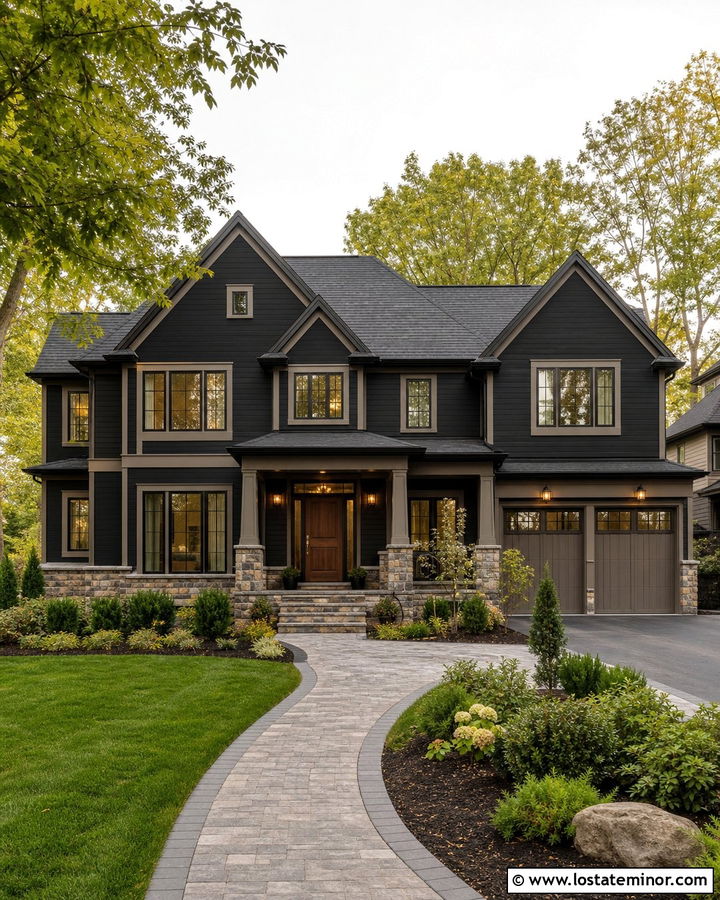
Taupe trim can reduce the visual height of a black two-story house by creating soft, balanced definition. Apply black to the main siding, then use medium taupe on window casings, horizontal belt lines, porch columns, and the garage door. Keep the fascia and gutters black so the roofline does not appear unnecessarily broad. A stained oak front door and warm stone foundation connect naturally with the taupe accents. On a tall facade, repeat the trim color at both levels instead of concentrating it only near the entrance. This helps the composition feel complete from top to bottom. A charcoal roof, curved walkway, and layered trees soften the house further. The resulting palette is dramatic but more approachable than a sharp black-and-white combination.
Conclusion:
The best black exterior schemes balance drama with enough warmth, texture, and definition to feel welcoming. White and cream make architectural details easy to see, while gray, greige, taupe, and blue-gray produce gentler transitions. Cedar, walnut, copper, brick, and stone can add character without weakening the impact of the dark facade. Before committing, test each color on multiple sides of the house and review it during different daylight conditions. Coordinate the trim with fixed features such as roofing, masonry, windows, and paving. With thoughtful placement, these **30 Black House Design With Trim Ideas** can help you create a cohesive exterior that suits the home’s architecture, surroundings, and desired curb appeal.

Related posts: