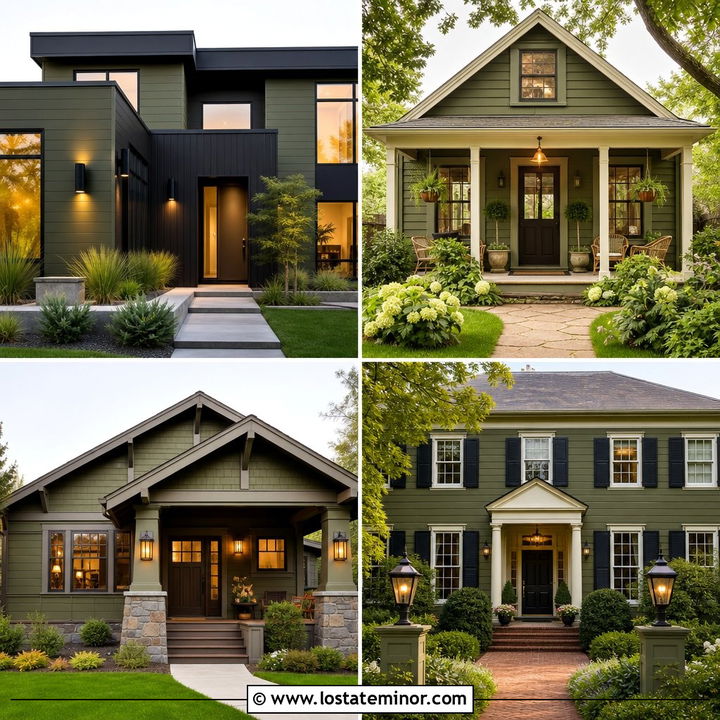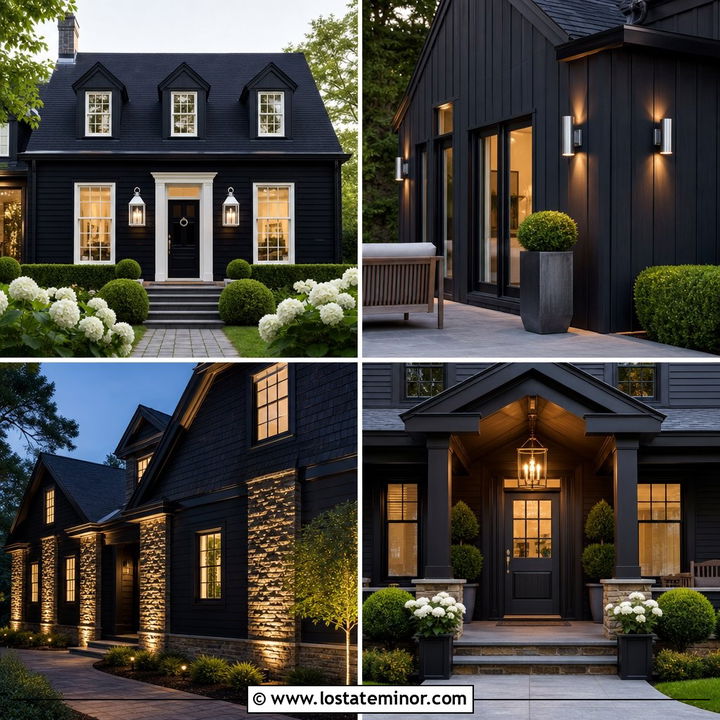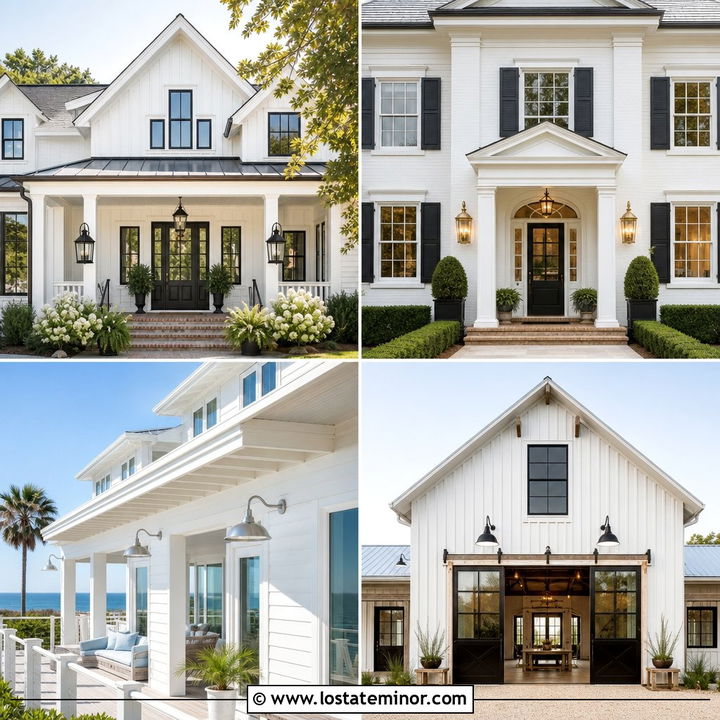
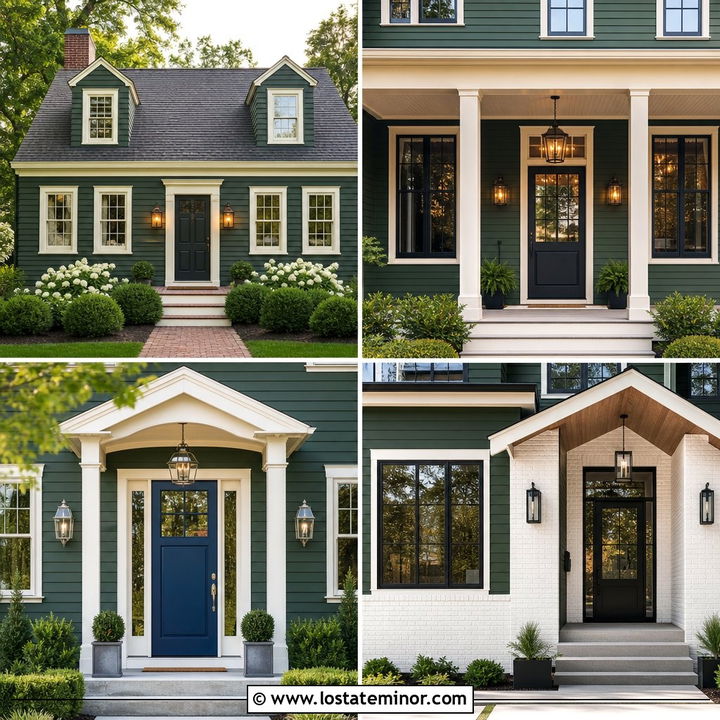
Forest green creates a grounded, polished exterior that works beautifully with traditional and modern architecture. The key is treating lighting as part of the complete color scheme rather than as a last-minute accessory. Matte black lanterns add crisp definition, while brass, copper, bronze, and galvanized fixtures introduce warmth and character. Roof color, trim, masonry, woodwork, and landscaping also affect how rich or muted the green appears. These 30 Forest Green House Design With Light Fixtures Ideas cover complete exterior looks for ranch homes, cottages, Colonials, farmhouses, Craftsman houses, and contemporary builds. Each scheme combines practical lighting placement with coordinated doors, trim, roofing, and natural materials. Explore the sections below for approachable, full-house inspiration from 30 Forest Green House Design With Light Fixtures Ideas.
1. Forest Green House With Black Lantern Lights
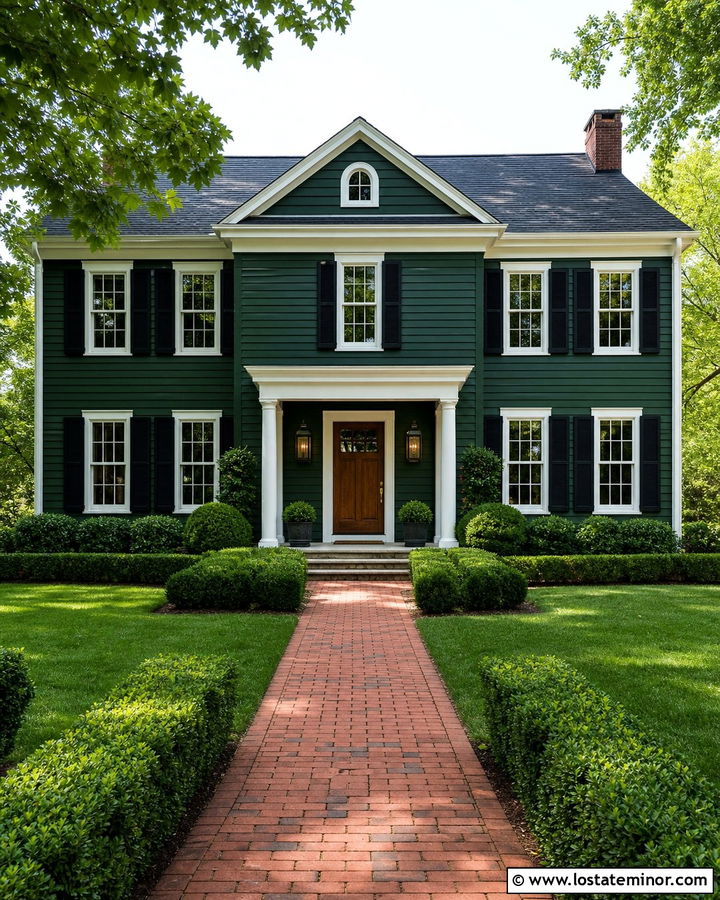
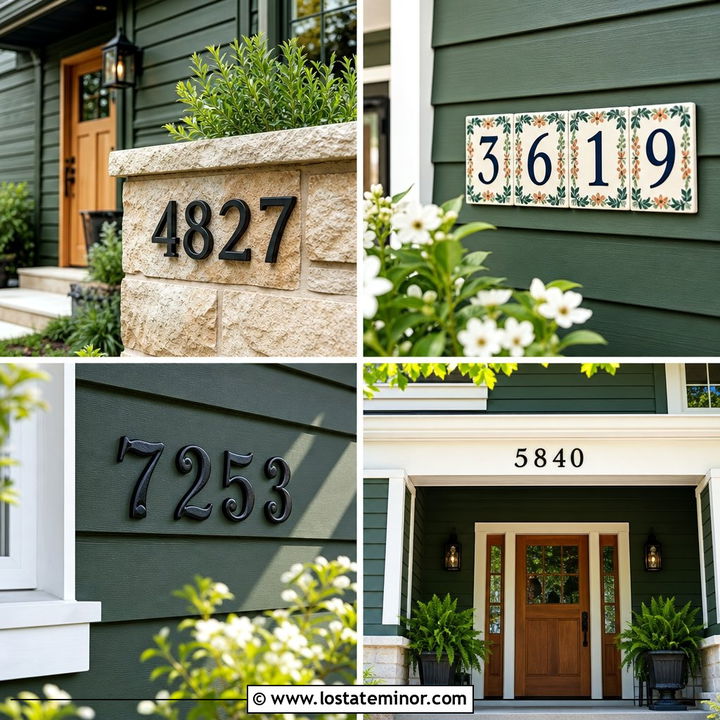
A forest green house gains sharp definition when classic black lantern lights frame the entrance. Use deep green lap siding with creamy white trim to keep the facade fresh rather than overly dark. A stained oak front door introduces natural warmth, while a charcoal shingle roof supports the strong color palette. Choose tall, clear-glass lanterns that are appropriately scaled to the doorway. Place one on each side for balance and repeat the black finish on the door hardware, gutters, and house numbers. A brick walkway and restrained foundation planting complete this traditional scheme. This combination works especially well on Colonial homes because the symmetrical fixtures reinforce the architecture. It also gives the property a coordinated, finished appearance without requiring elaborate decorative details.
2. Forest Green House With Brass Wall Sconces
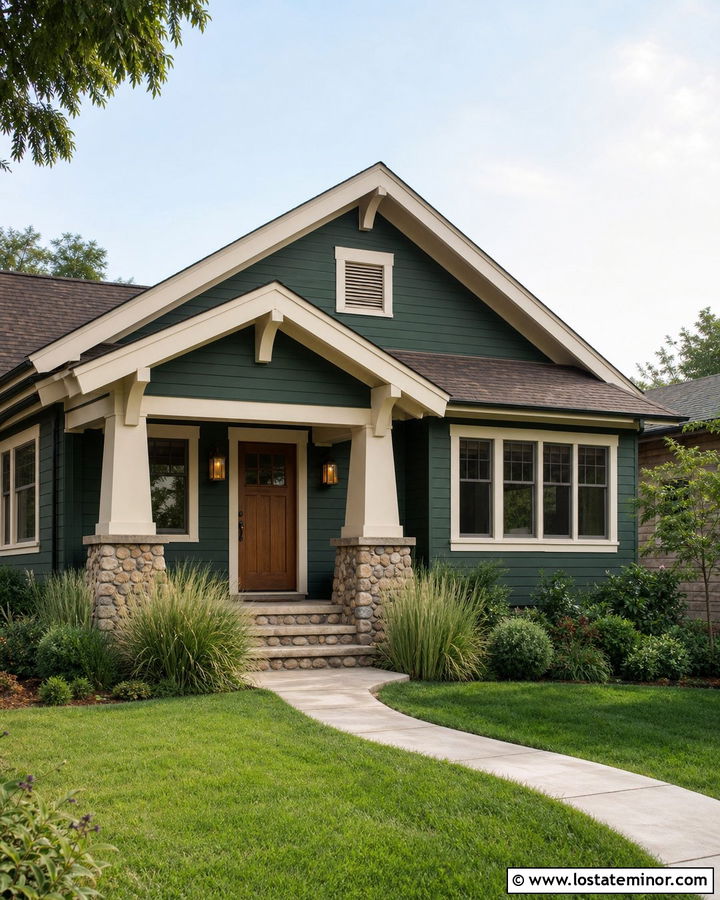
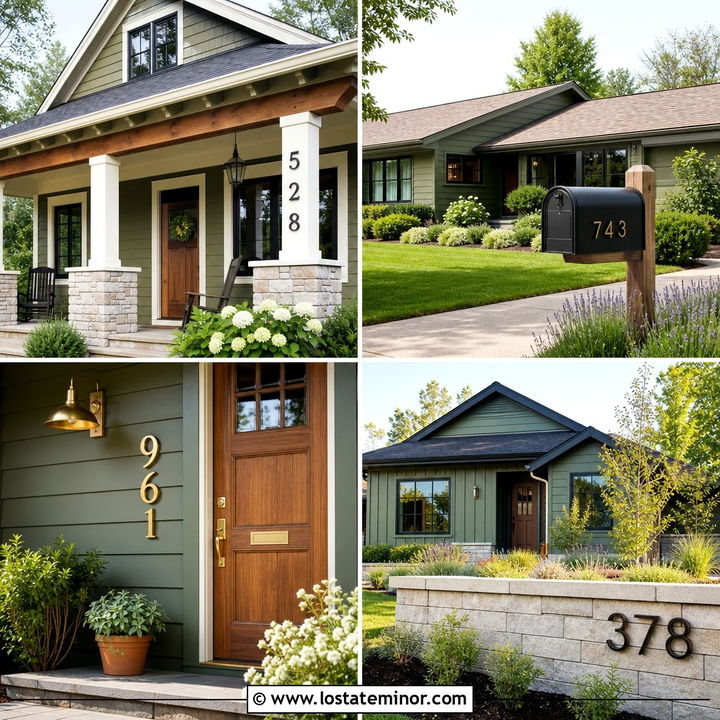
Warm brass sconces stand out beautifully against forest green siding and make the entrance feel more welcoming. This pairing suits a bungalow with horizontal siding, cream window trim, and a medium-brown architectural shingle roof. Carry the brass finish onto the door handle, mailbox, and house numbers, but keep these accents limited so the exterior does not become busy. A walnut front door and natural stone porch foundation add more earthy color. Select simple wall sconces with clear or softly textured glass instead of heavily decorated fixtures. Their clean shape allows the brass finish to become the focal point. Layered shrubs, ornamental grasses, and a curved concrete path soften the bungalow’s low roofline. The resulting design feels warm, established, and thoughtfully updated.
3. Forest Green Farmhouse With Gooseneck Lights
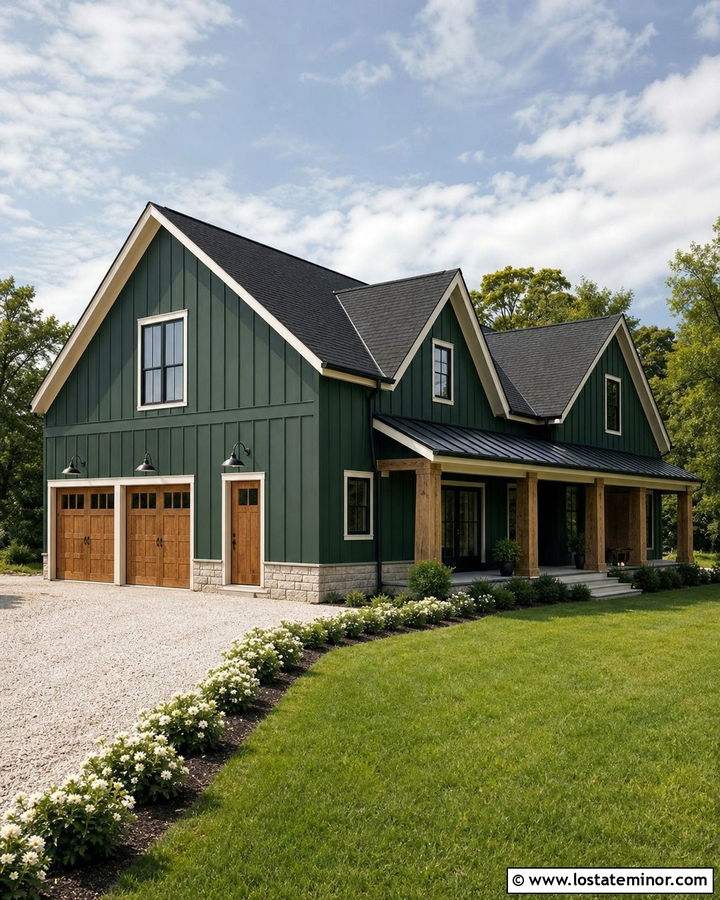
Crisp board-and-batten siding gives a forest green farmhouse a bold vertical rhythm. Black gooseneck lights mounted above the garage and side entry echo the clean lines of a black standing-seam porch roof. Keep the window trim warm white so the facade remains bright, and use natural cedar for the front door and porch columns. Wide metal shades direct attention downward and visually break up large areas of green siding. Matching black gutters, garage hardware, and window frames create continuity across the exterior. A gravel-edged driveway, clipped boxwoods, and white flowering plants support the simple rural character. Choose streamlined fixtures instead of heavily industrial models. This complete scheme balances farmhouse familiarity with stronger color, making it attractive for both country properties and suburban neighborhoods.
4. Forest Green Craftsman With Bronze Lanterns
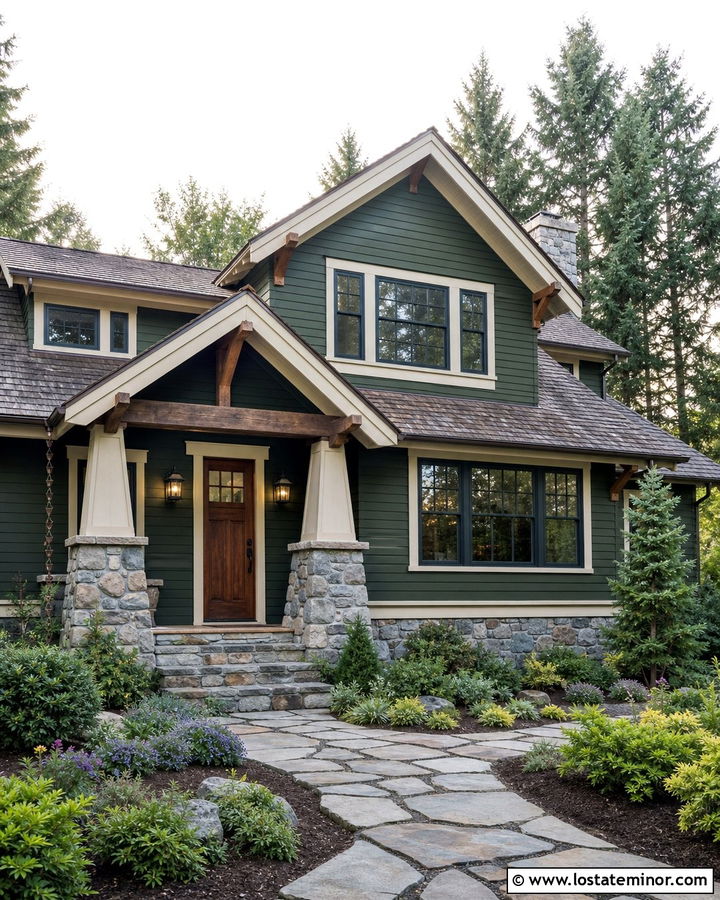
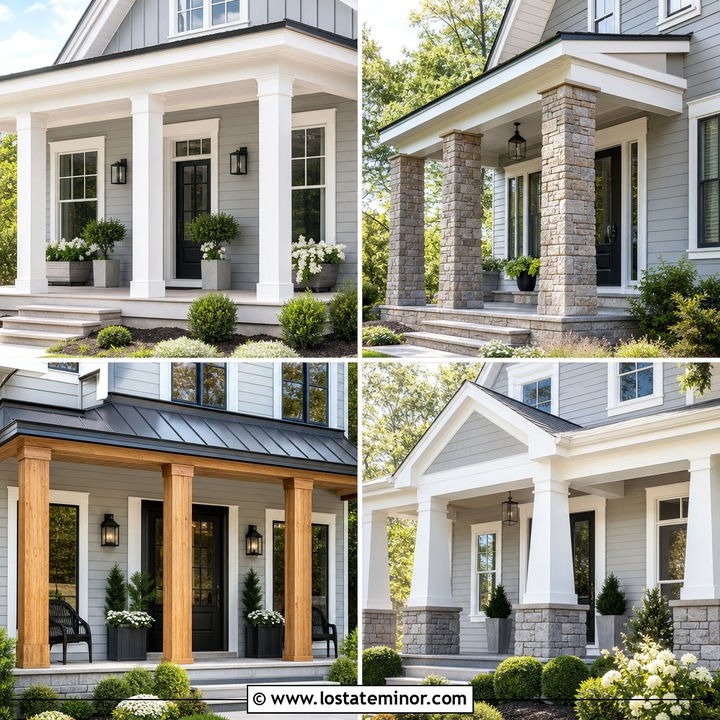
What makes a Craftsman exterior feel especially inviting? Layered natural materials and substantial details usually make the difference. Cover the upper facade in forest green shingles or lap siding, then anchor the lower walls with warm gray fieldstone. Oil-rubbed bronze lanterns look at home beside a stained fir door and under broad roof overhangs. Use tapered stone porch columns, cream trim, and exposed wood brackets to strengthen the handcrafted appearance. A weathered brown roof blends naturally with the bronze fixtures and timber accents. Mount the lanterns slightly above eye level so they illuminate the entrance without competing with the heavy porch construction. Deep planting beds, a flagstone walkway, and low evergreen shrubs connect the house to its landscape and complete the earthy color scheme.
5. Forest Green Colonial With Copper Lights
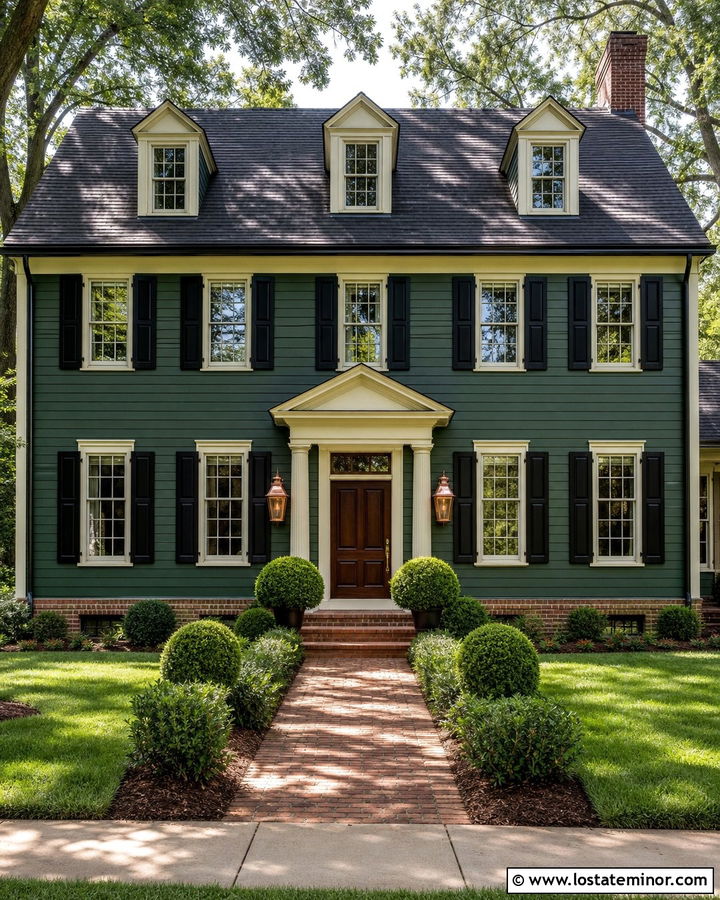
Copper lighting brings gentle warmth to the formal lines of a forest green Colonial house. Pair deep green clapboard siding with ivory trim, black shutters, and a centered mahogany front door. Two substantial copper lanterns can flank the entrance, while smaller matching fixtures illuminate side doors or the garage. Fresh copper creates noticeable contrast, but its color will become softer and more varied as the surface weathers. A red-brown brick foundation and walkway help connect the warm metal to the rest of the exterior. Keep the roofing understated with charcoal or weathered gray shingles. Symmetrical boxwoods and evenly spaced trees reinforce the Colonial layout. The completed facade feels traditional but not predictable, with copper providing a distinctive alternative to standard black exterior lighting.
6. Forest Green Cottage With White Porch Lights
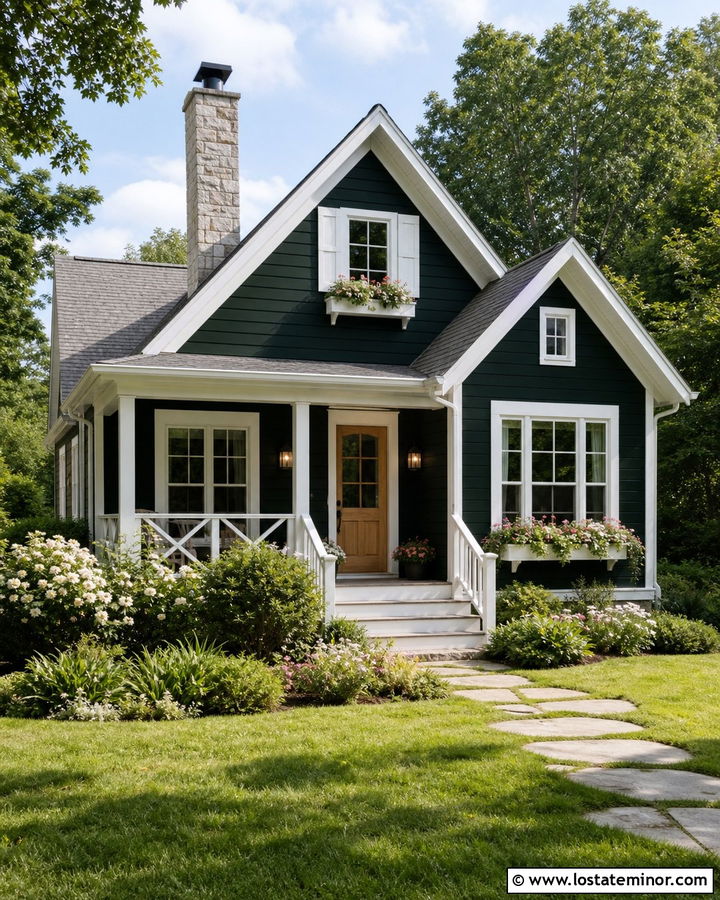
A small cottage can carry forest green without feeling heavy when bright white accents frame the facade. Use soft white trim, a white porch railing, and compact white wall lanterns around a cheerful natural-wood door. The matching fixtures blend into the trim during the day, leaving the rich green siding as the main feature. Add a light gray roof and a pale stone chimney to balance the depth of the exterior paint. Window boxes filled with white flowers repeat the trim color and give the cottage a garden-focused character. A curved stepping-stone path, informal shrubs, and a simple lawn keep the setting relaxed. Choose fixtures with traditional shapes and lightly seeded glass so they complement the architecture without looking too formal or oversized for the smaller house.
7. Forest Green Ranch With Modern Cylinder Lights
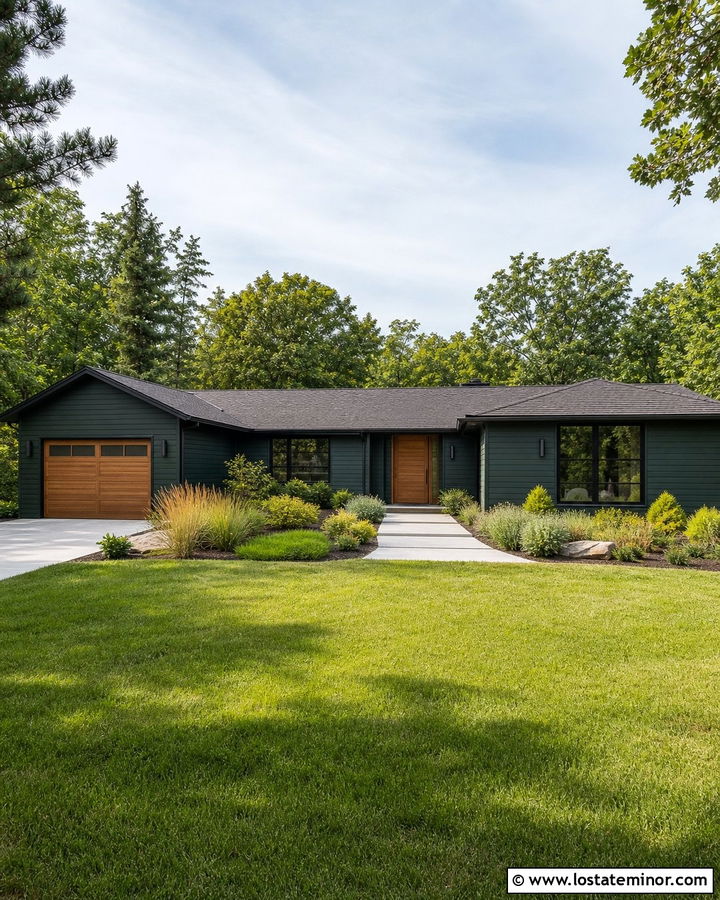
Long ranch facades benefit from lighting that creates a steady visual rhythm. Coat the horizontal siding in rich forest green, use black-framed windows, and install slim black cylinder sconces between key architectural features. Their vertical form contrasts with the home’s low profile while keeping the overall design clean. A warm cedar garage door and matching front door prevent the dark green and black combination from appearing cold. Choose a charcoal roof and pale concrete walkway for a simple, limited palette. Low ornamental grasses and broad planting beds should follow the horizontal shape of the home. Additional downlights near the garage can illuminate the driveway without introducing another fixture style. This updated ranch scheme looks streamlined, practical, and noticeably different from a conventional neutral exterior.
8. Forest Green Cape Cod With Carriage Lights
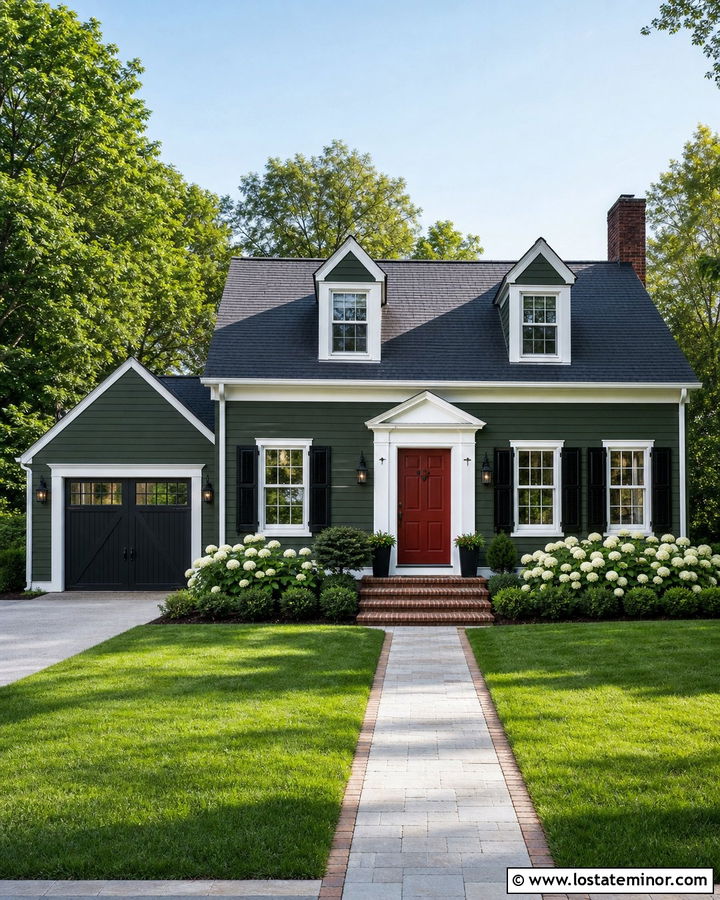
Traditional carriage lights complement the compact symmetry of a Cape Cod house. Paint the cedar shingles or clapboard siding forest green, then add clean white trim, dormers, and corner boards. Black carriage lanterns beside the front door can coordinate with black shutters and dark roof shingles. A muted red or stained wood door adds a warm focal point without fighting the green. If the house has an attached garage, repeat smaller versions of the lanterns beside each garage bay. Keep all fixtures from the same visual family for a unified result. Brick steps, white hydrangeas, and a straight walkway reinforce the classic character. The complete exterior feels familiar and welcoming, while the deeper siding color gives the modest architecture greater presence from the street.
9. Forest Green Split-Level With LED Sconces
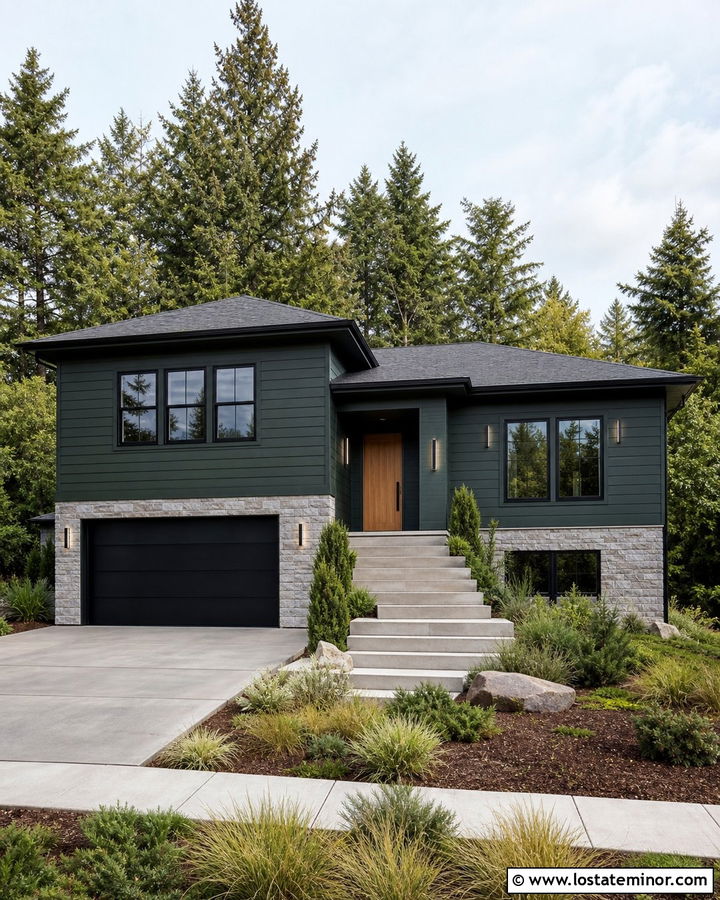
A split-level exterior often contains several materials and uneven wall sections, so streamlined lighting helps create order. Use forest green siding on the upper level, light gray stone below, and narrow black LED sconces around the entrance and garage. Their simple rectangular shape suits the home’s mid-century lines. A natural cedar front door can warm the transition between dark siding and pale masonry. Continue black on the window frames, railings, gutters, and garage door trim. Avoid adding too many finishes, since visual restraint makes the staggered architecture look more intentional. Broad concrete steps, low junipers, and layered ornamental grasses complement the angular facade. The light fixtures become connecting details that carry the same modern finish across each distinct part of the house.
10. Forest Green Modern House With Linear Lights
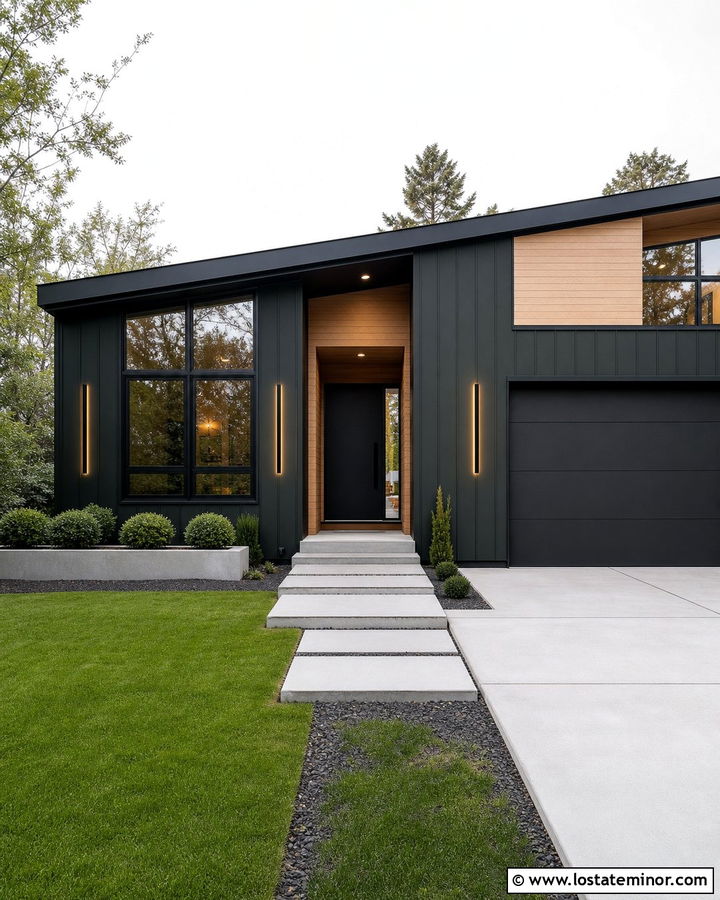
Imagine a smooth forest green facade defined by thin lines of architectural illumination. On a modern house, use vertical wood siding or painted fiber-cement panels with black-framed windows and long linear wall lights. Position the fixtures beside the front door and along a recessed garage wall to emphasize height. A flat or low-slope charcoal metal roof supports the contemporary palette, while pale cedar panels prevent the exterior from becoming too dark. Choose frosted or concealed light sources for a clean appearance without visible glare. Concrete planters, geometric shrubs, and large walkway slabs should mirror the home’s simple shapes. This scheme treats the fixtures as part of the architecture. The forest green remains prominent, but the lighting, wood, glass, and concrete create a balanced modern composition.
11. Forest Green Victorian With Antique Brass Lanterns
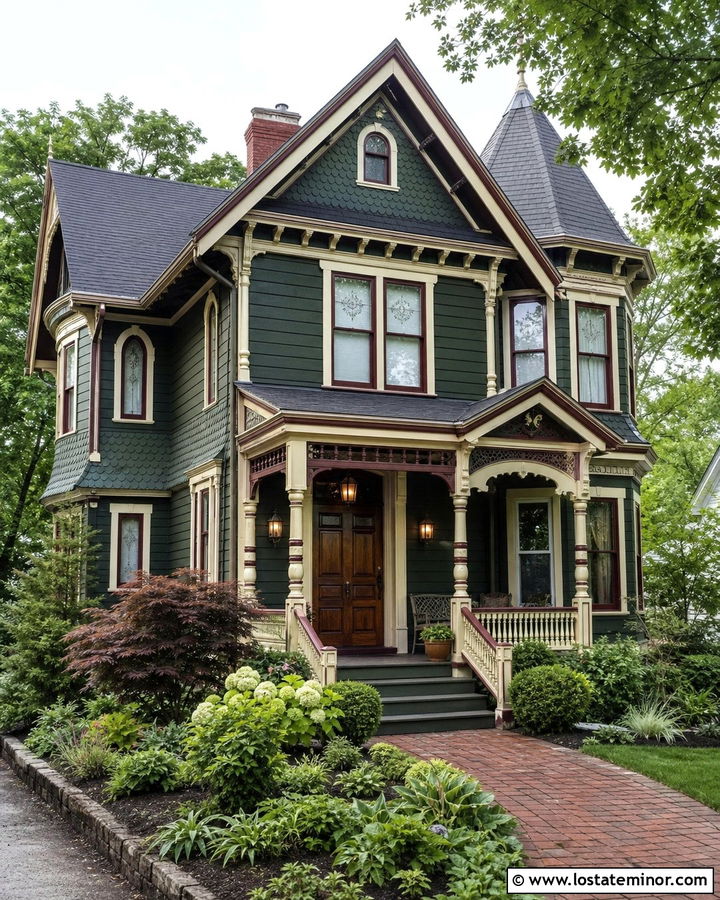
Ornate Victorian details become richer and more readable against a forest green background. Use antique brass lanterns to complement decorative brackets, patterned shingles, and a paneled wood front door. Cream trim can outline the windows and porch, while muted burgundy accents highlight small architectural details without overwhelming the facade. Choose lanterns with curved tops, decorative metalwork, and textured glass that reflect the period character. A gray slate-style roof keeps the upper portion of the house visually calm. Repeat antique brass sparingly on door hardware and house numbers. Turned porch columns, a brick path, and layered cottage landscaping complete the historic look. Instead of making every detail a separate color, the restrained palette allows the intricate woodwork and warm lighting fixtures to appear intentional and connected.
12. Forest Green Tudor With Leaded Glass Lights
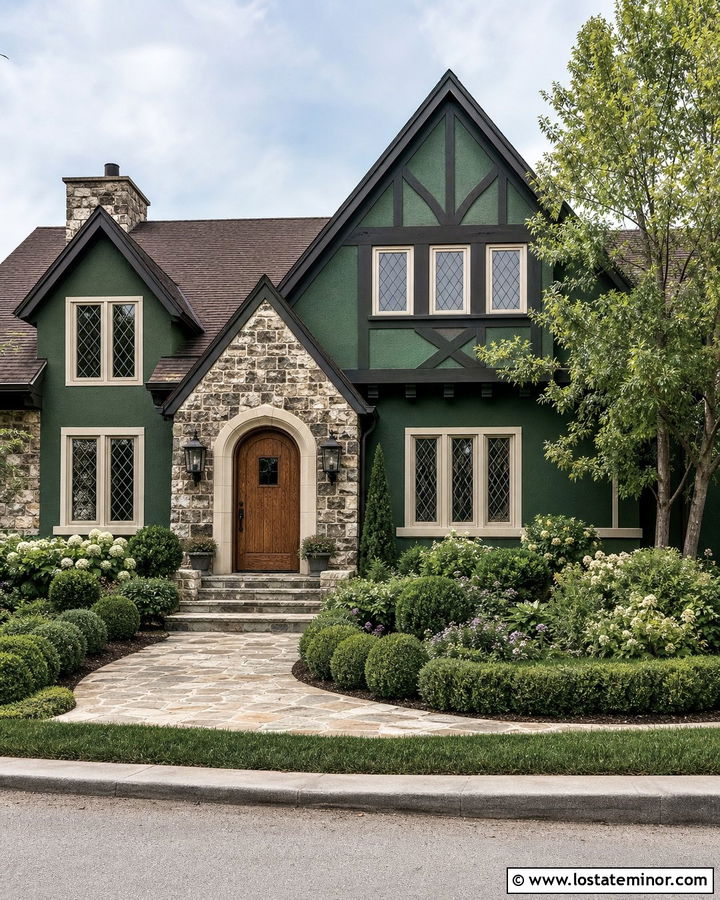
A Tudor house already has strong contrast, and forest green adds a subtle alternative to the usual brown or cream wall color. Apply green to the stucco or siding sections, then retain dark timber detailing and warm cream trim. Leaded glass lanterns with black or dark bronze frames fit naturally beside an arched oak door. Stone around the entrance provides a textured transition between the green walls and heavy wood accents. Use a dark brown roof with prominent slopes to support the traditional character. The fixtures should have enough height and visual weight to match the substantial doorway. Curved planting beds, clipped hedges, and an irregular stone walkway soften the angular timber pattern. This cohesive exterior feels historic, comfortable, and distinctive without departing from recognizable Tudor features.
13. Forest Green Cabin With Rustic Cage Lights
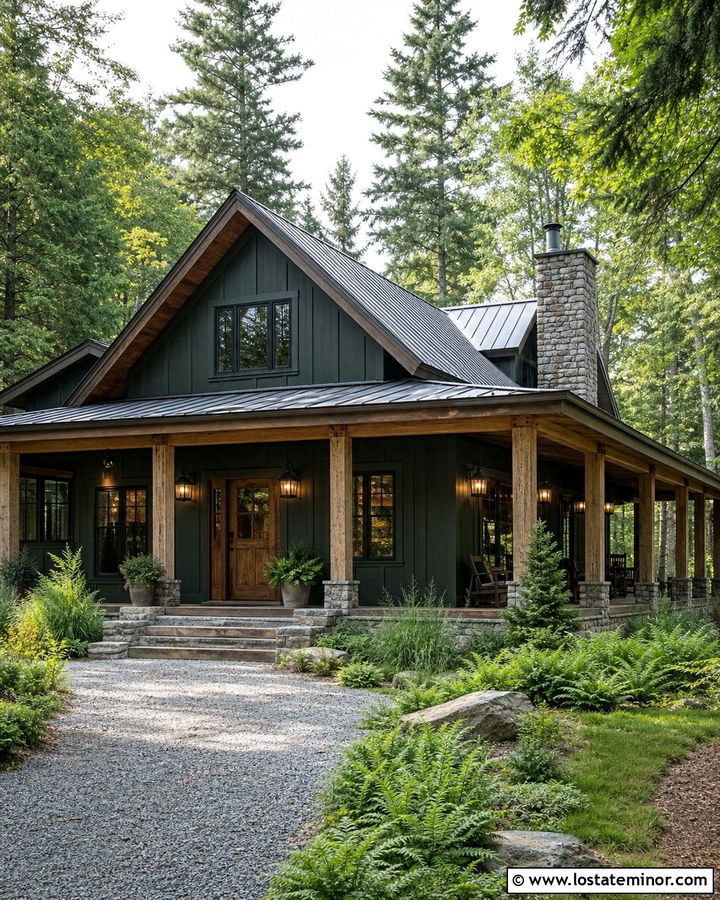
In a wooded setting, forest green helps a cabin settle naturally into its surroundings. Combine vertical green siding with rough cedar beams, a stone chimney, and rustic black cage lights. Mount the fixtures beside the front door and near the ends of a wide covered porch. Their rugged construction should coordinate with black railing brackets and simple door hardware. A dark metal roof sheds visual weight toward the treeline, while natural wood soffits keep the porch warm. Use stone steps and a gravel path rather than highly polished paving. Ferns, native grasses, and evergreen ground cover can frame the structure without hiding it. The completed scheme feels durable and relaxed, with every material reinforcing the cabin’s connection to the landscape rather than introducing decorative elements that feel out of place.
14. Forest Green House With Galvanized Barn Lights
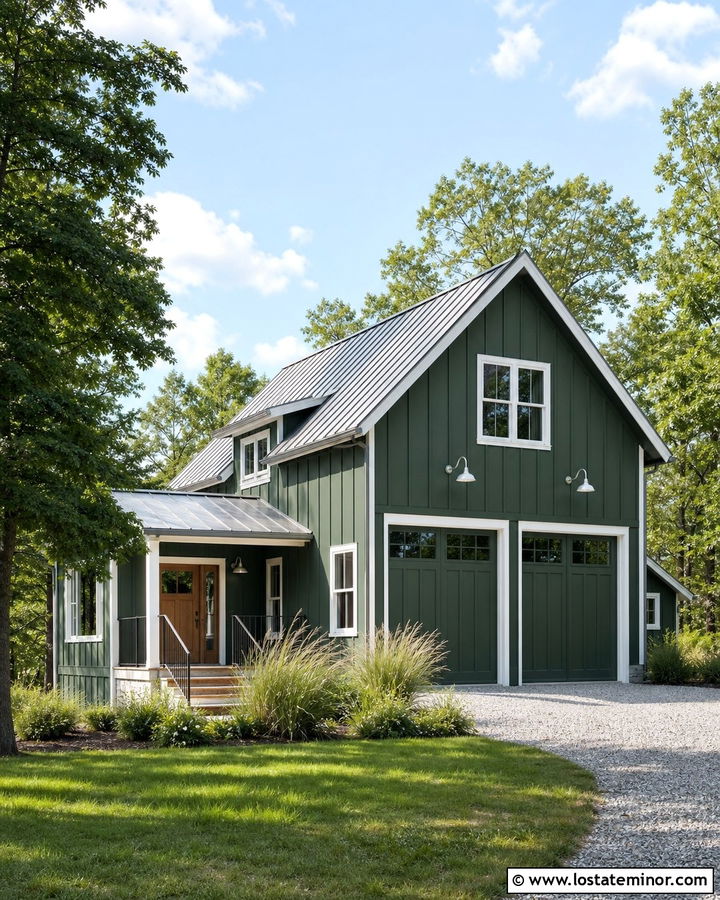
Galvanized barn lights bring a lighter metallic note to a deep forest green exterior. They work particularly well on a simple country house with board-and-batten siding, white trim, and a silver-gray metal roof. Place wide gooseneck fixtures above garage doors, a side entry, or a practical mudroom entrance. A medium-tone wood front door and porch ceiling add warmth between the cool galvanized metal and saturated siding. Use matching metal planters or simple steel railings only if the facade needs another connecting detail. Avoid mixing shiny chrome into the scheme, since the galvanized finish looks best with weathered, understated materials. A crushed-stone driveway, native grasses, and open lawn complete the rural setting. The finished exterior feels functional, bright, and casually coordinated.
15. Forest Green House With Glass Globe Lights
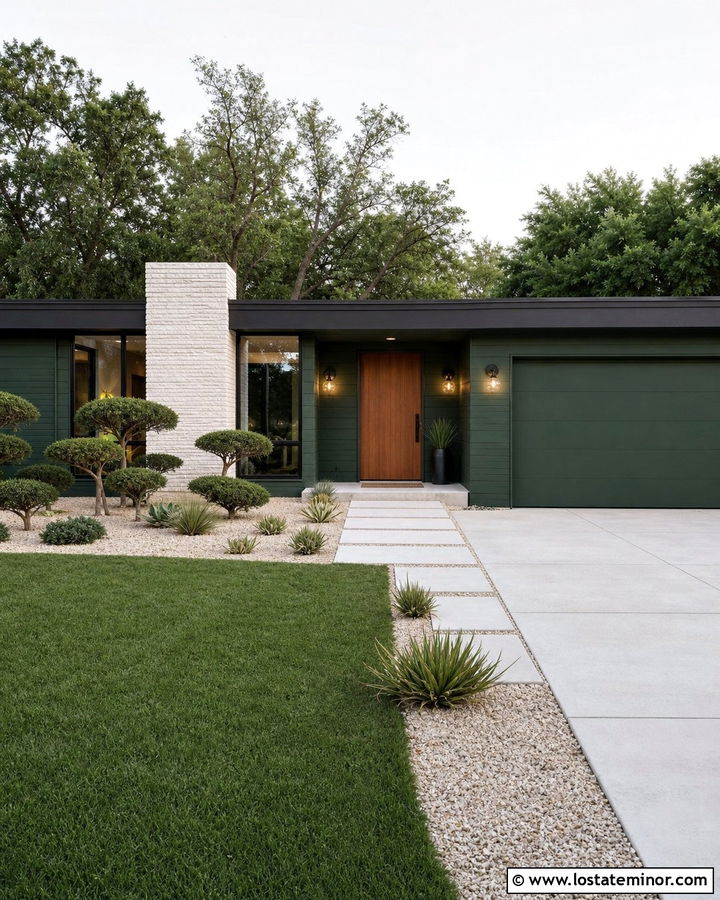
Round glass globe fixtures soften the hard lines of a forest green house. On a mid-century home, combine smooth green siding with warm white masonry, black window frames, and a pair of clear globe sconces beside a flat-panel wood door. Their rounded shape creates a useful contrast with the low roof, rectangular windows, and broad garage door. Keep the metal fixture bases black or aged brass depending on the other exterior hardware. A light gravel bed, sculptural shrubs, and large concrete pavers support the period-inspired design. If the porch has a deep overhang, add a matching globe ceiling light for consistency. The overall look should remain uncluttered. Simple lighting, natural wood, and restrained landscaping allow the forest green exterior to feel both retro and current.
16. Forest Green Bungalow With Schoolhouse Lights
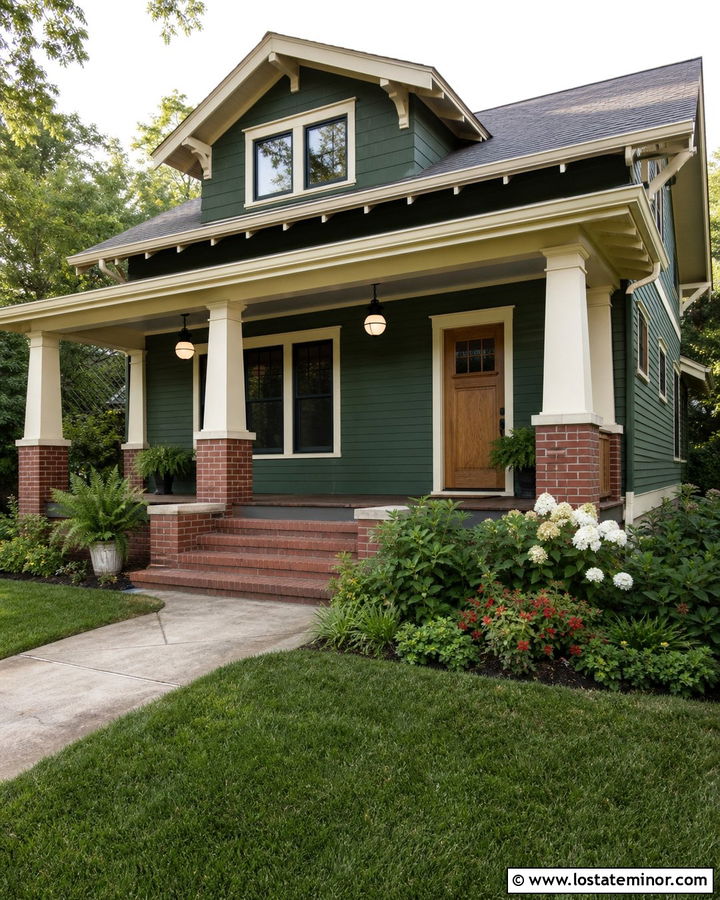
A covered bungalow porch provides the perfect setting for classic schoolhouse fixtures. Paint the siding forest green, highlight the tapered columns with warm cream, and use opal-glass ceiling lights under the porch roof. Their soft white shades connect visually with the trim while providing a distinct vintage shape. Dark bronze fixture hardware can coordinate with the gutters, door hardware, and window screens. Finish the porch floor in stained wood and use muted red brick for the steps and foundation. A craftsman-style oak door with small upper panes adds another handcrafted feature. Layer ferns, flowering shrubs, and low hedges around the porch without blocking the lights or entrance. This complete scheme gives the bungalow a comfortable neighborhood presence and makes the sheltered front porch feel like a true outdoor room.
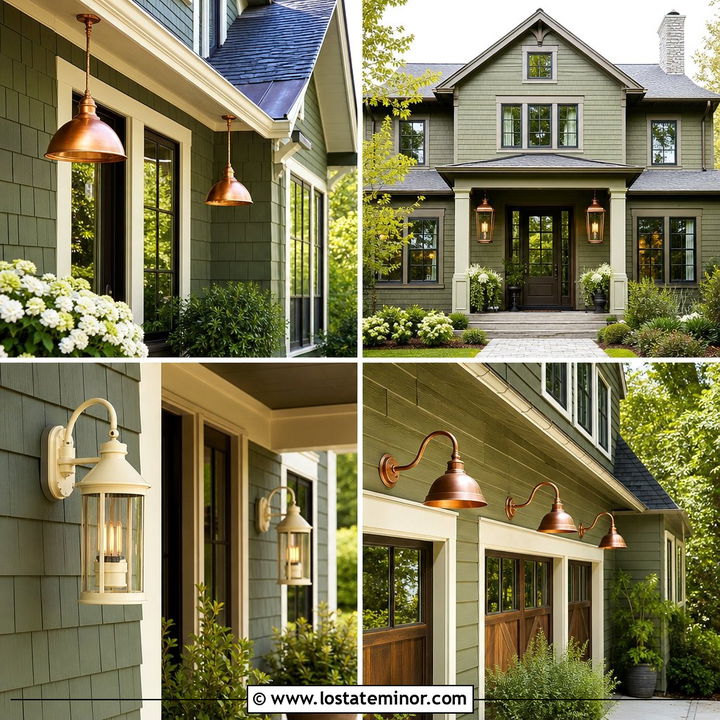
17. Forest Green House With Copper Gooseneck Lights
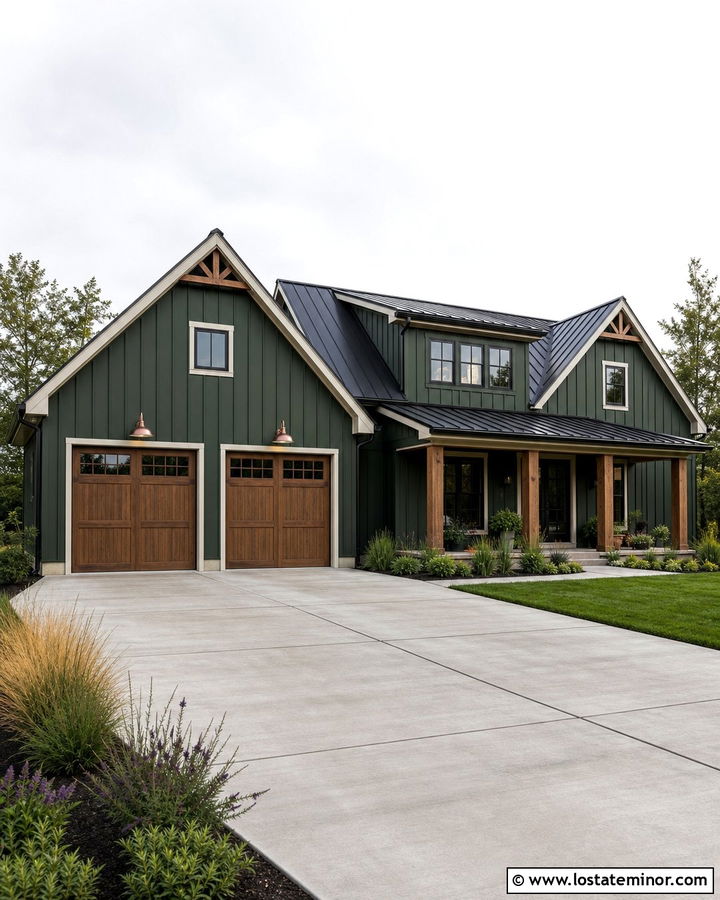
Copper gooseneck fixtures offer a warm, noticeable accent on forest green siding. Use them above natural wood garage doors or along the broad facade of a modern barn-style house. A black metal roof and black-framed windows create a strong outline, while cream trim adds small areas of brightness. The curved fixture arms introduce a softer shape against vertical board-and-batten siding. Connect the copper visually to warm cedar porch posts, doors, or soffits rather than adding unrelated metals. Simple concrete paving and neat grass borders prevent the exterior from becoming overly rustic. As the copper surface changes, its softer coloration can look especially natural against the deep green paint. The full scheme combines industrial practicality with warm materials, producing a house that feels distinctive but still approachable.
18. Forest Green House With Bronze Up And Down Lights
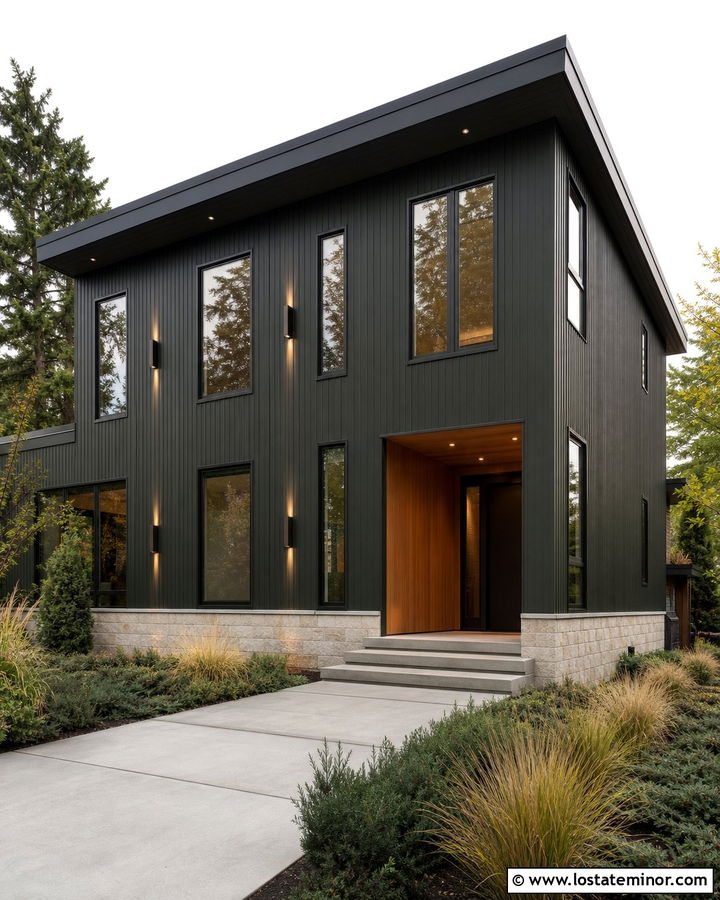
Up-and-down lights can transform a forest green exterior by emphasizing its height and surface texture. Choose narrow bronze fixtures for a contemporary two-story house with vertical siding and tall black-framed windows. Light traveling in both directions creates defined columns along the facade, so place each fixture where it supports an architectural line. A warm wood entry recess and pale stone base add contrast to the dark green walls. Repeat bronze on the door pull and address numbers, but allow black windows and roofing to remain separate neutral elements. Straight concrete paths, architectural grasses, and low ground cover maintain the clean look. During the day, the fixtures appear restrained and sculptural. After dark, their controlled illumination reveals the building’s shape without relying on oversized decorative lanterns.
19. Forest Green Colonial Revival With Post Lights
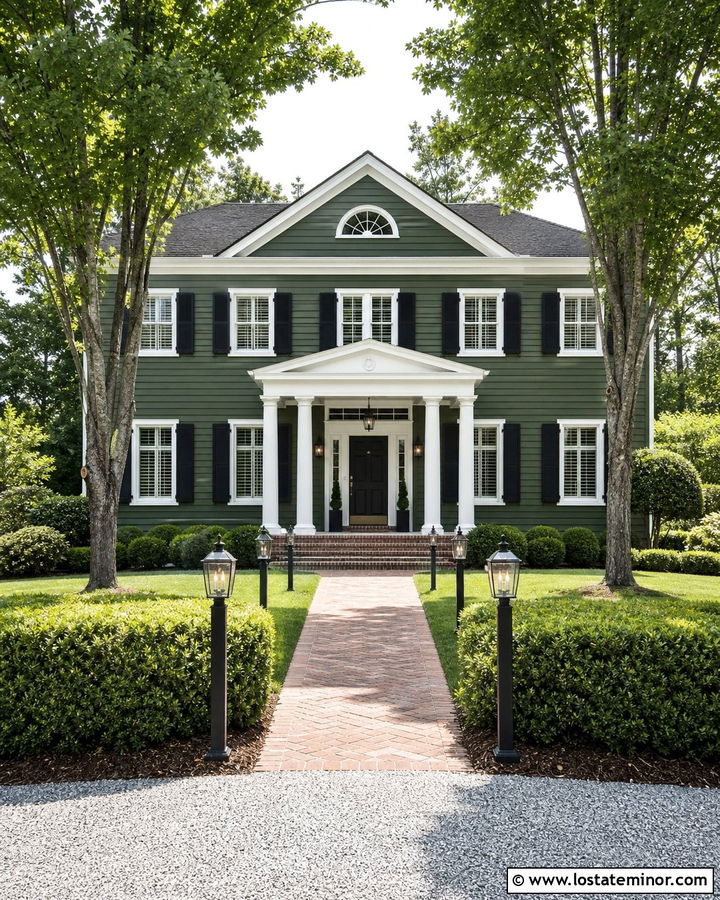
A long walkway leading to a Colonial Revival home offers space for coordinated post lighting. Use forest green clapboard siding with white columns, white trim, black shutters, and a glossy black front door. Traditional black post lanterns can mark the entrance to the path, while matching wall lanterns frame the doorway. Select fixtures with similar roof shapes and glass patterns so the lighting feels like one planned collection. Red brick steps and paving add warmth at ground level, balancing the cool green and white palette. Symmetrical hedges, paired trees, and a centered lawn reinforce the formal architecture. Keep the posts low enough that they guide the eye rather than obstructing the house. This layered arrangement improves the complete curb view and gives the property a stately, organized appearance.
20. Forest Green Cottage With Copper Pendant Lights
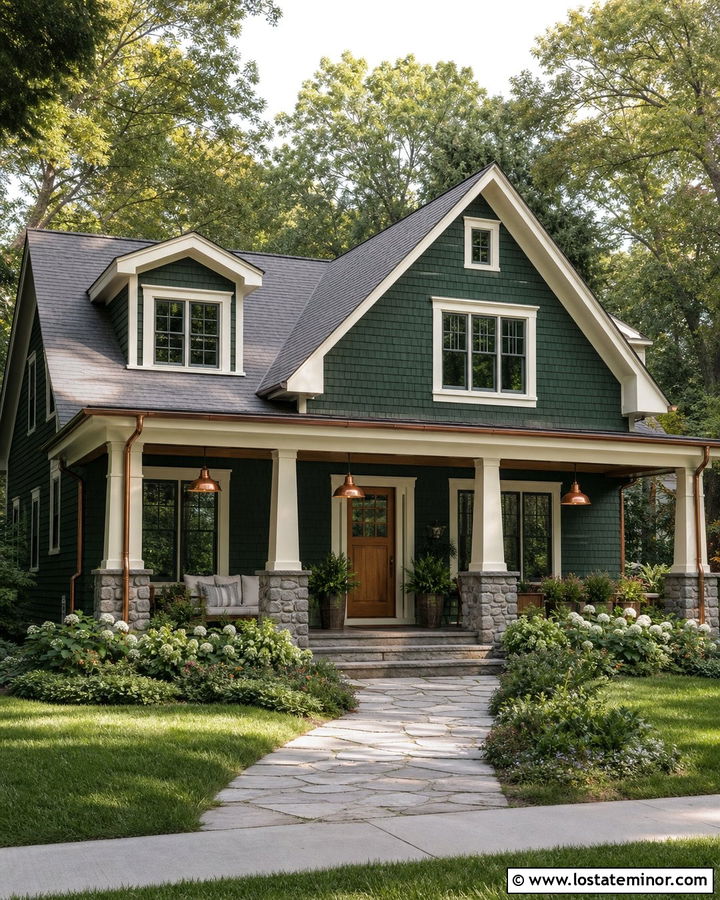
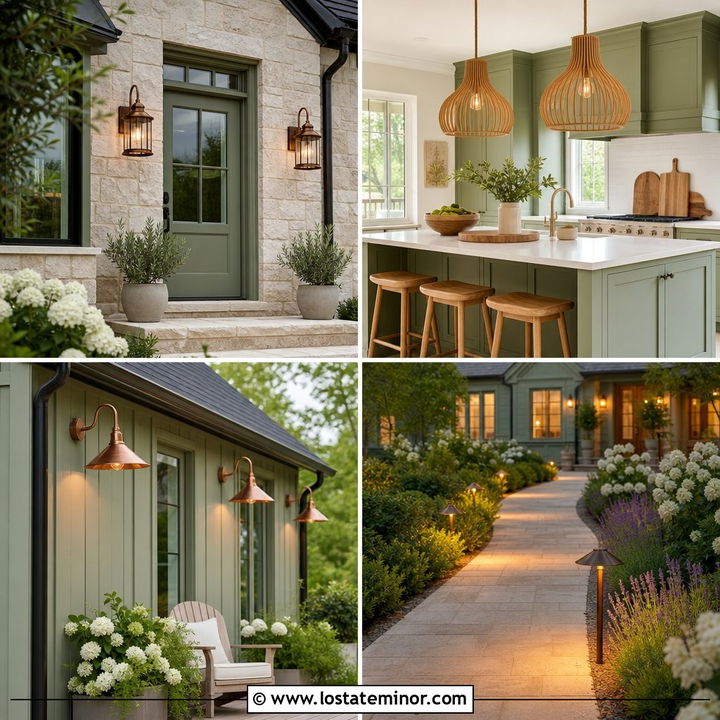
A deep front porch creates an opportunity to feature copper pendant lights against a forest green cottage. Hang one centered above the entrance or use two smaller pendants along a wider porch. Pair the green siding with cream trim, cedar shingles, and a natural oak door. Copper gutters or downspouts can repeat the metal without making the design feel overly matched. Stone porch piers and a gray roof provide neutral texture, allowing the lighting and wood tones to remain warm focal points. Choose pendants with clear or lightly seeded glass and enough clearance above the walkway. Informal flower beds and a flagstone path support the cottage atmosphere. The completed exterior feels collected and welcoming, with the hanging fixtures clearly visible from the curb beneath the sheltered porch.
21. Forest Green Farmhouse With White Barn Lights
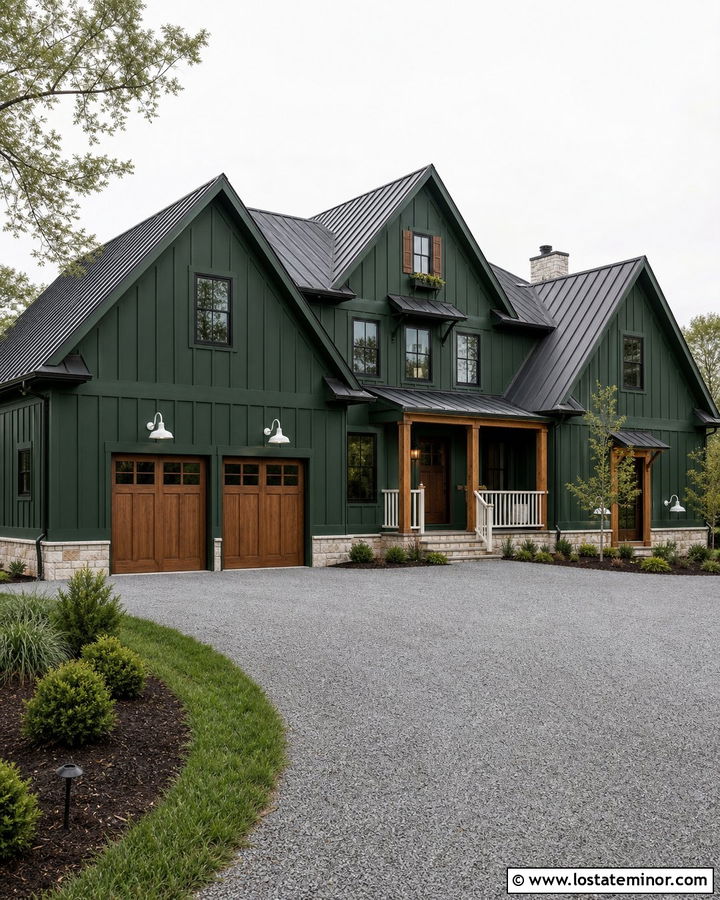
White barn lights create fresh contrast against a forest green farmhouse while connecting directly to white trim and porch railings. Use green board-and-batten siding, a charcoal metal roof, and black-framed windows for a balanced mix of light and dark elements. Place white gooseneck fixtures above the garage doors and side entrance. Their broad shades become clear graphic accents without adding another dark finish. A stained cedar front door and porch posts introduce warmth, while pale stone at the foundation keeps the lower facade bright. Repeat black only on practical features such as gutters, hinges, and window frames. A straight gravel driveway, young shade trees, and simple foundation planting complete the setting. This scheme feels cheerful, clean, and noticeably less expected than standard black farmhouse lighting.
22. Forest Green House With Stainless Steel Sconces
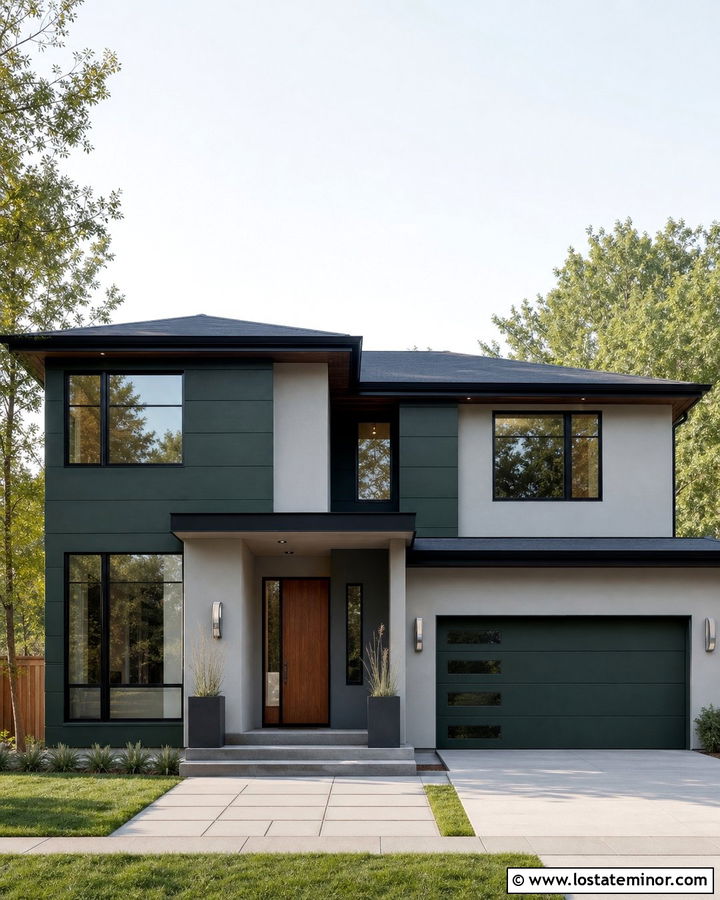
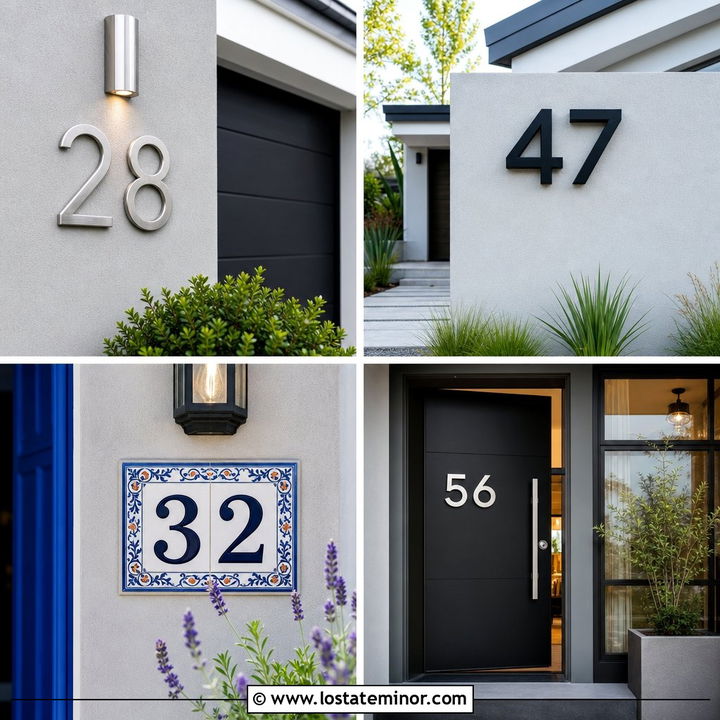
Stainless steel sconces bring a cooler, polished character to a forest green contemporary house. Combine smooth green panels with light gray stucco, concrete steps, and large black-framed windows. Use compact steel fixtures beside the front door and across the garage wall, keeping their spacing aligned with windows and panel seams. A medium walnut door softens the metal-heavy palette and creates a welcoming focal point. Select brushed rather than mirror-polished steel so reflections remain subtle. The fixtures can coordinate with stainless address numbers or a simple mailbox, but avoid repeating the finish on every exterior detail. Sparse grasses, rectangular planters, and broad concrete pavers maintain the modern composition. Together, the rich green, cool steel, natural wood, and pale masonry form a crisp but balanced exterior.
23. Forest Green Shingle House With Nautical Lights
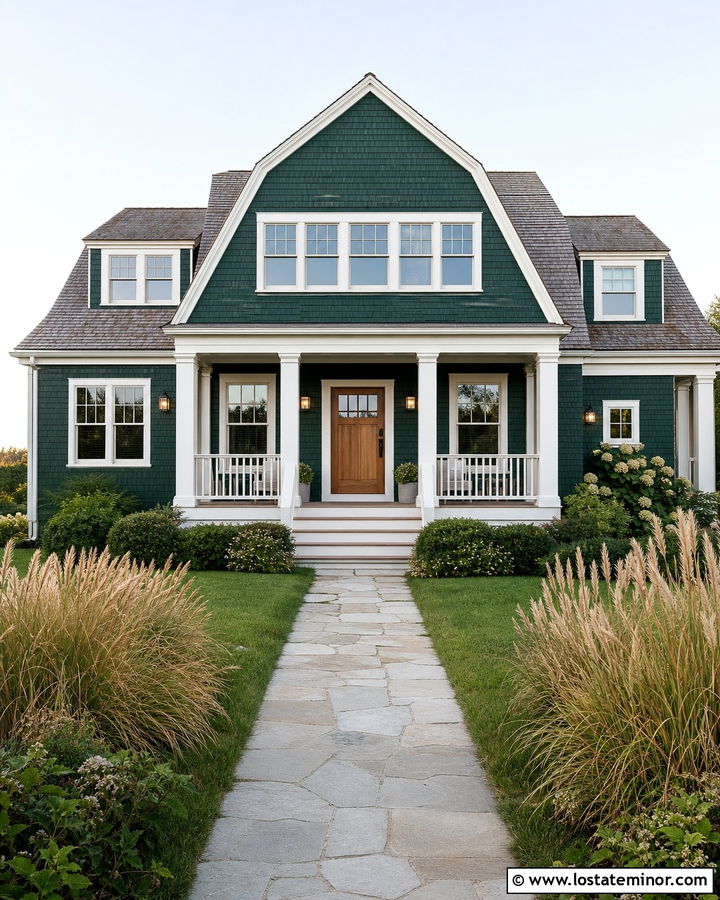
A forest green shingle house near the coast can use nautical lighting without becoming overly themed. Pair deep green cedar shingles with crisp white trim, a weathered gray roof, and compact brass bulkhead lights. Their ribbed glass and protective metal frames suit exposed entries and practical side doors. A blue-gray or natural teak front door adds a softer coastal note. Use simple white porch columns and cable or painted wood railings to keep the facade open. Pale stone paths, beach grasses, and low wind-tolerant shrubs complete the landscape. Avoid decorative anchors or excessive maritime accessories. The architecture, materials, and fixture shape provide enough coastal character on their own. This complete scheme feels sturdy and relaxed, allowing the forest green siding to connect naturally with the surrounding vegetation.
24. Forest Green Prairie House With Horizontal Lights
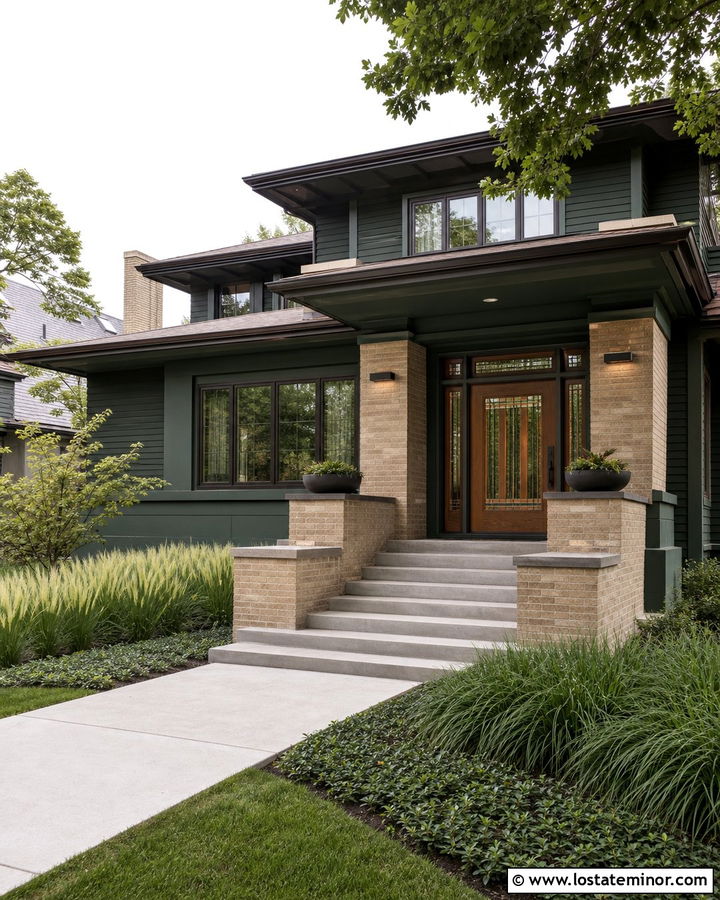
Strong horizontal lines define a Prairie-style house, so the lighting should support that architecture. Use broad forest green siding or stucco sections with warm tan brick, deep roof overhangs, and dark bronze window frames. Choose low-profile horizontal sconces that cast controlled light across the entry walls. A wide stained oak door with geometric glass can serve as the central focal point. Repeat dark bronze on the gutters and door hardware while keeping the soffits a warm wood tone. Long concrete steps and layered bands of ornamental grasses echo the low, extended form of the house. Avoid tall carriage lanterns, which may compete with the architecture. The resulting scheme feels cohesive because the fixtures, masonry, roofline, and landscaping all reinforce the same calm horizontal movement.
25. Forest Green A-Frame With Black Pendant Lights
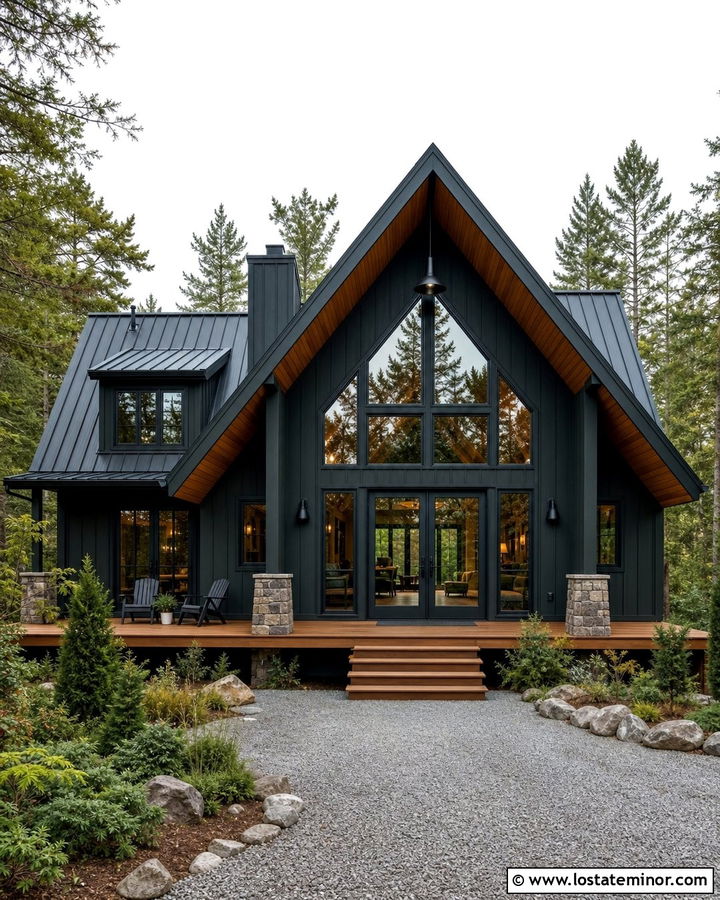
The dramatic roofline of an A-frame house deserves lighting that remains visible without distracting from the architecture. Cover the exterior in forest green vertical siding and use natural cedar beneath the roof overhang. A large black pendant can hang above the central glass entry, while smaller black sconces illuminate the deck stairs. Continue the black finish on window frames, railings, and the metal roof. Warm wood decking and stone piers prevent the dark palette from looking flat. Keep the pendant simple and geometric so it can be seen through the tall glazed facade. Gravel paths, evergreen shrubs, and native woodland planting provide a natural frame. This complete look makes the steep silhouette the star while ensuring the entrance appears clearly organized and connected to the surrounding deck.
26. Forest Green Brick House With Traditional Lanterns
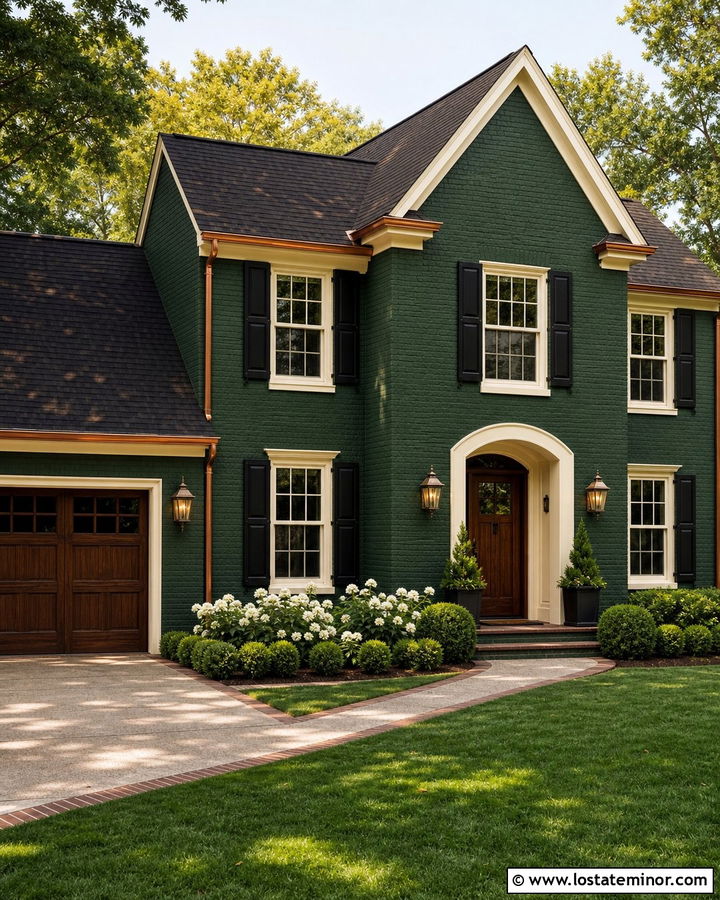
Painted brick gives forest green a textured, substantial appearance that differs from smooth siding. Pair the brick with creamy trim, black shutters, and traditional aged-brass lanterns around a stained wood entrance. The brick’s uneven surface creates subtle color variation, while the warm metal fixtures keep the deep green from feeling severe. Use a brown-black shingle roof and copper-toned gutters to continue the earthy palette. If the home has an attached garage, paint the door forest green and place matching lanterns on both sides. Boxwoods, white flowering shrubs, and a brick-edged path create a polished but approachable landscape. This scheme works especially well on traditional ranch and Georgian-inspired houses, where familiar fixture shapes balance the less conventional green-painted masonry.
27. Forest Green House With Wood And Black Lights
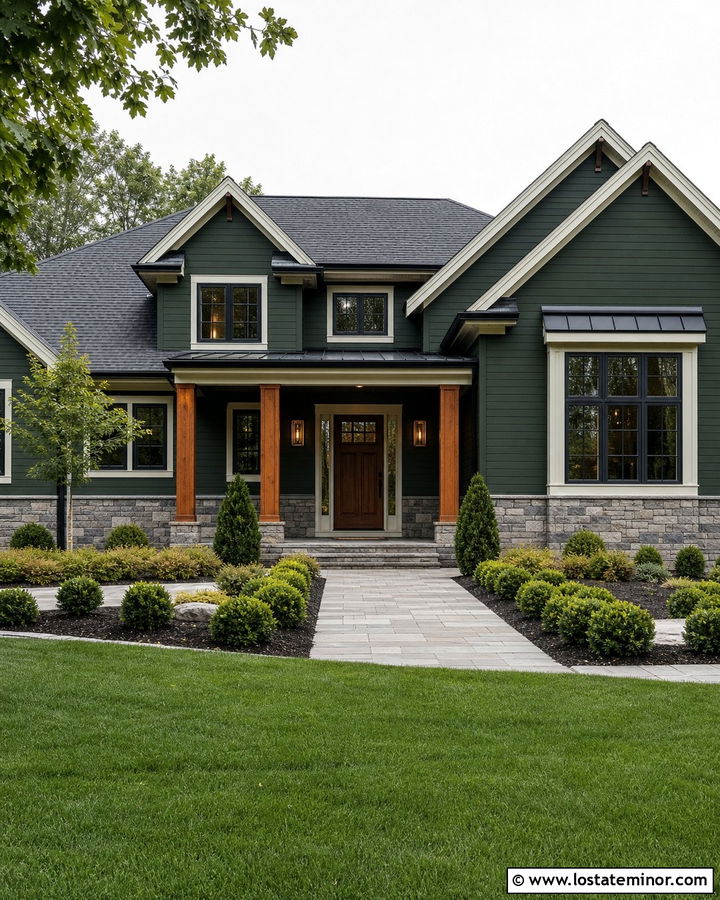
Mixed-material lighting can tie together the most important colors on a forest green facade. Select black sconces with small wood details for a transitional house featuring green lap siding, black windows, and cedar porch columns. The fixtures bridge the dark metal and warm timber without introducing a separate accent finish. Use warm white trim around the roof and windows to provide enough contrast. A charcoal shingle roof, natural stone foundation, and stained wood door complete the palette. Keep the fixture shape simple, with rectangular frames and clear glass that suit both traditional and modern features. A paved walkway, clipped shrubs, and young ornamental trees create a clean suburban setting. The result is a balanced exterior where the lighting visibly connects the architectural materials instead of sitting apart from them.
28. Forest Green House With Recessed Porch Lights
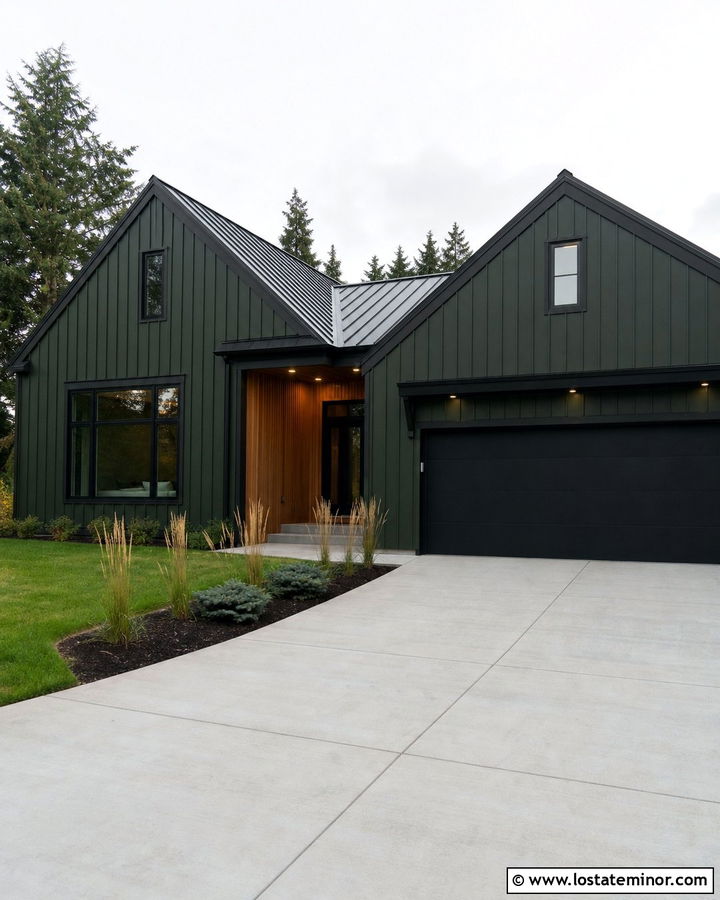
Not every forest green exterior needs decorative lanterns. Recessed porch lights suit a minimalist house where the siding, doorway, and roofline should remain visually uninterrupted. Use deep forest green vertical panels, a black standing-seam roof, and a recessed cedar entry. Small white or black downlights can disappear into the wood porch ceiling while illuminating the door and steps. Add low-profile wall lights near the garage for safe, consistent coverage. Black-framed windows and a pale concrete driveway keep the color palette simple. Linear planting beds filled with grasses and evergreen ground cover reinforce the clean architecture. Because the fixtures remain understated, careful spacing is important. The final design feels calm and uncluttered, with light revealing the natural wood and saturated green rather than becoming a separate decorative feature.
29. Forest Green House With Double Entry Lanterns
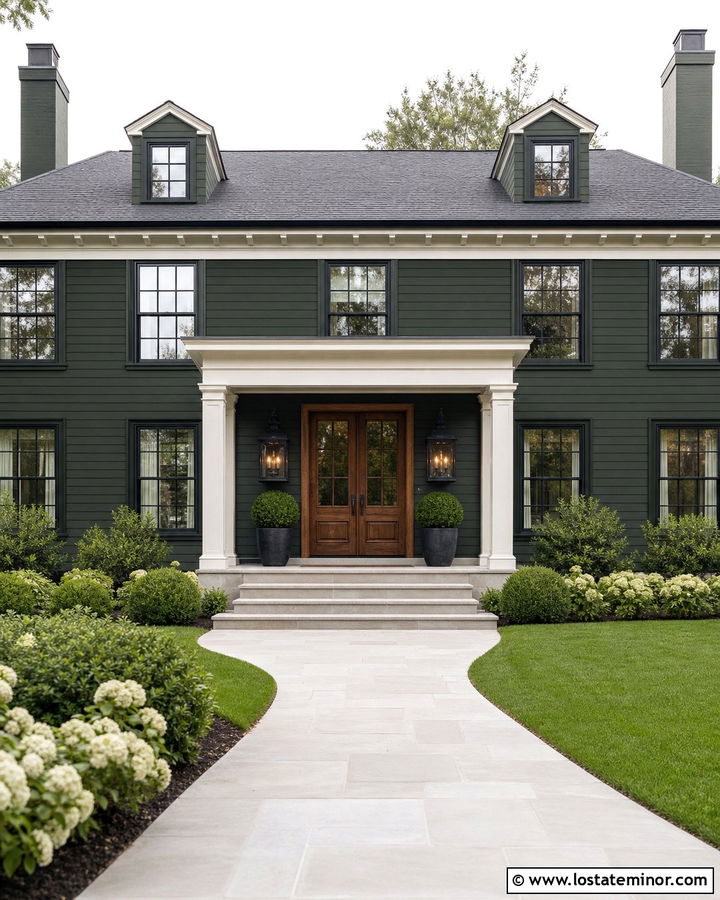
A wide or double-door entrance needs fixtures with enough presence to match its scale. Paint the house forest green and use oversized black lanterns on both sides of stained oak double doors. Warm white trim, limestone porch flooring, and pale stone columns brighten the entry and prevent the facade from appearing overly dark. The lanterns should be tall enough to balance the doors but narrow enough to leave comfortable visual space beside the trim. Repeat black on the window frames, gutters, and door hardware. A charcoal roof keeps the scheme grounded, while symmetrical planters emphasize the formal entrance. Wide front steps and a gently curved walkway guide attention toward the doors. This complete design creates a clear focal point and suits large transitional, Colonial, or Southern-inspired homes.
30. Forest Green Garage With Matching Exterior Lights
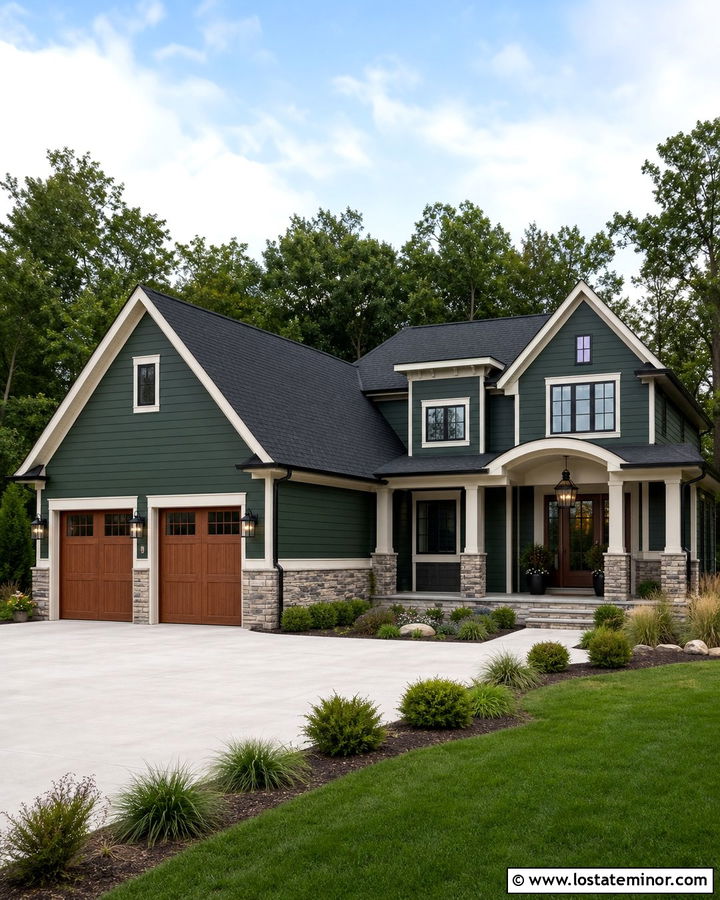
The garage occupies a major part of many front facades, so its lighting should support the whole forest green exterior. Use rich green siding with warm white trim, cedar garage doors, and black lanterns mounted beside each bay. Repeat the same fixture family at the front entrance, choosing a larger size there to establish hierarchy. A charcoal roof and black gutters connect the lights across the roofline. Stone around the garage base protects the lower facade visually and introduces useful texture. Keep the driveway open and frame it with low shrubs rather than tall plants that conceal the fixtures. The natural wood doors lighten the broad green surface, while the black lights provide consistent definition. This coordinated approach makes the garage feel integrated instead of visually separate.
Conclusion:
The strongest forest green exterior schemes connect every fixture to another part of the facade. Black lights can echo windows and roofing, while brass, copper, and bronze relate naturally to wood, brick, and stone. White fixtures provide crisp contrast, and recessed lighting supports a quieter modern appearance. Before choosing a design, consider the home’s architecture, the scale of the entrance, existing materials, and fixture placement across the entire elevation. Test the green outdoors and compare metal finishes beside it in natural daylight. With thoughtful repetition and balanced contrast, these 30 Forest Green House Design With Light Fixtures Ideas can help create a welcoming exterior that looks cohesive from the curb and remains practical after sunset.

Related posts: