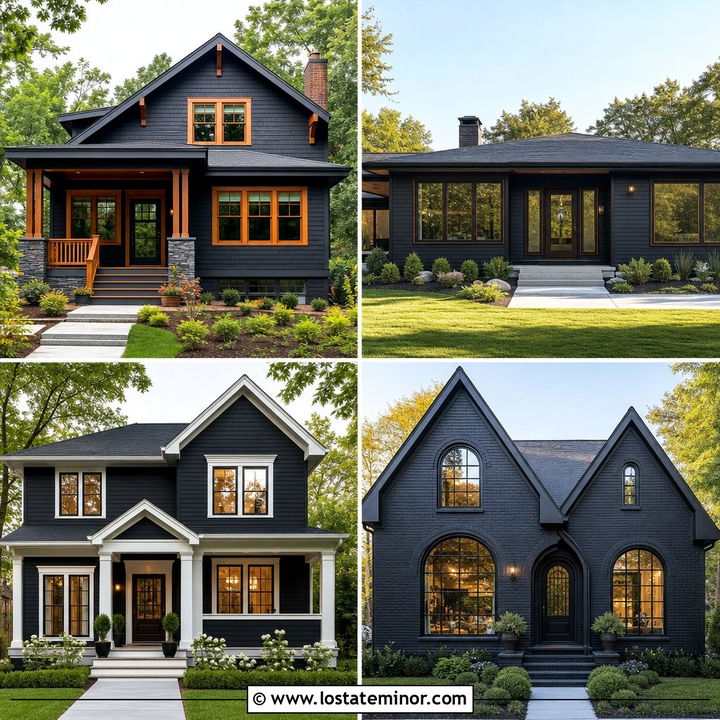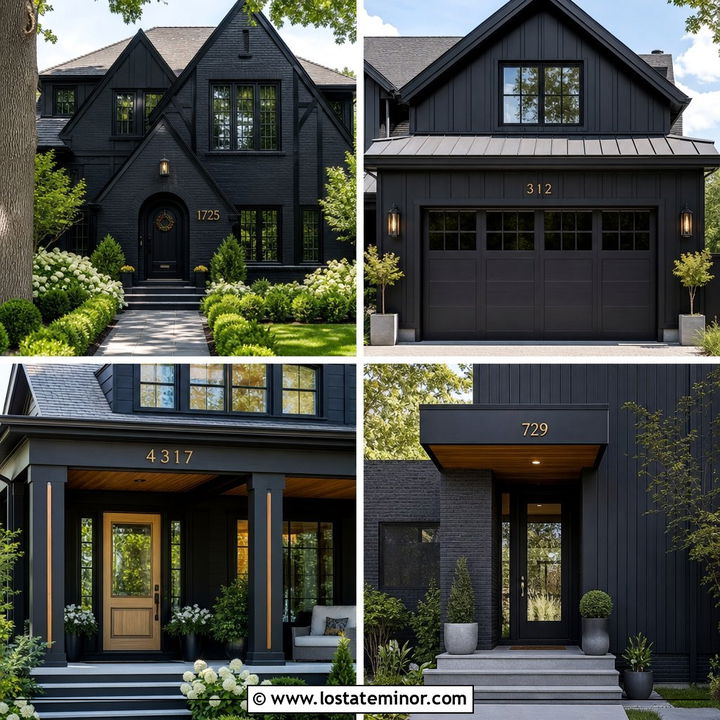
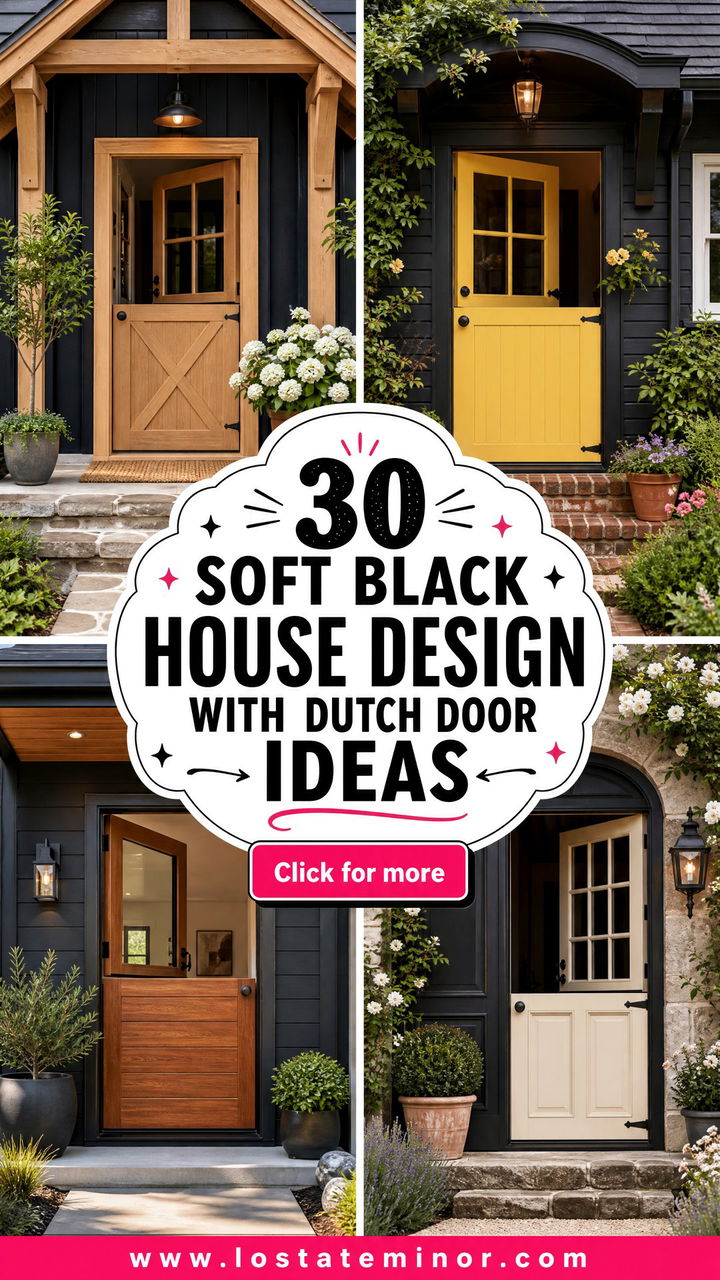
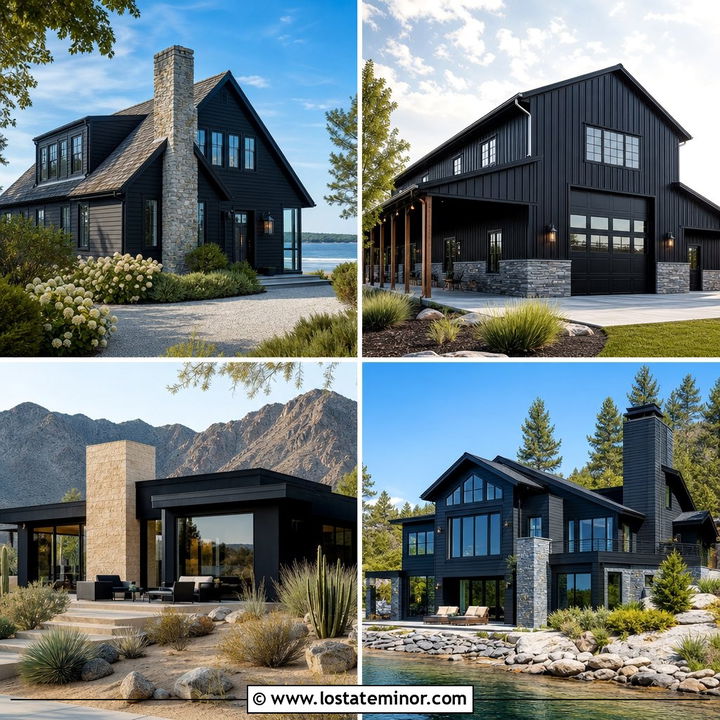
Soft black siding creates dramatic curb appeal without the sharp intensity of a true jet-black finish. It also gives a Dutch door enough contrast to become the welcoming centerpiece of the facade. Current exterior design guidance often balances dark siding with natural wood, defined trim, stone, brick, and metal details. Vertical siding and glazed wood doors are especially effective for combining farmhouse character with cleaner modern lines. () The key is treating every finish as part of one coordinated exterior palette. Roof color, window frames, porch materials, hardware, and landscaping should all support the main combination. Whether your home is a ranch, cottage, colonial, or contemporary build, these **30 Soft Black House Design With Dutch Door Ideas** offer complete, practical looks for creating a distinctive entrance.
1. Soft Black Farmhouse With Natural Oak Dutch Door
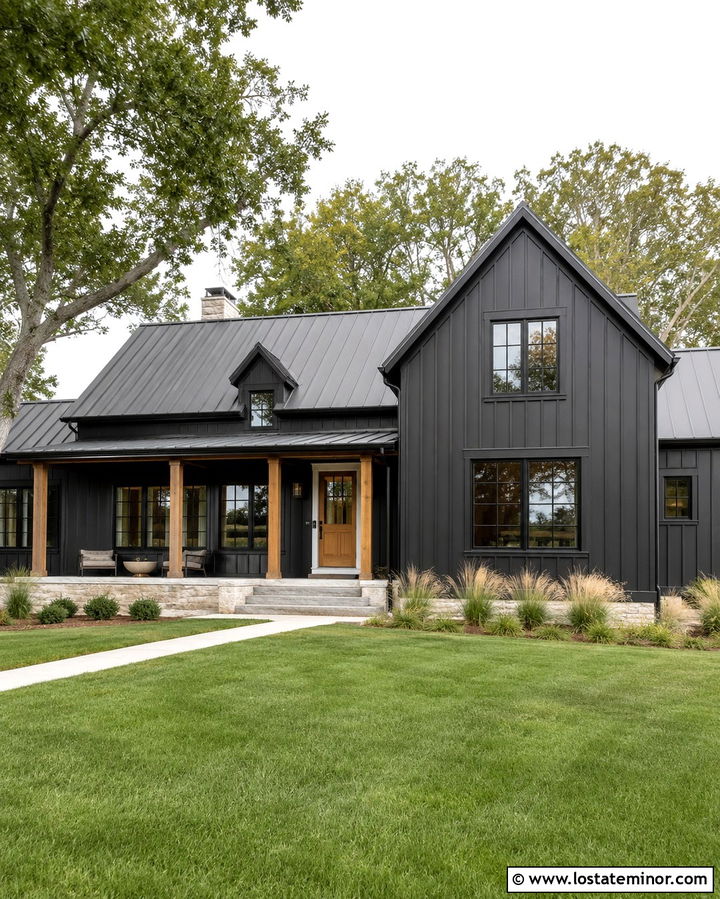
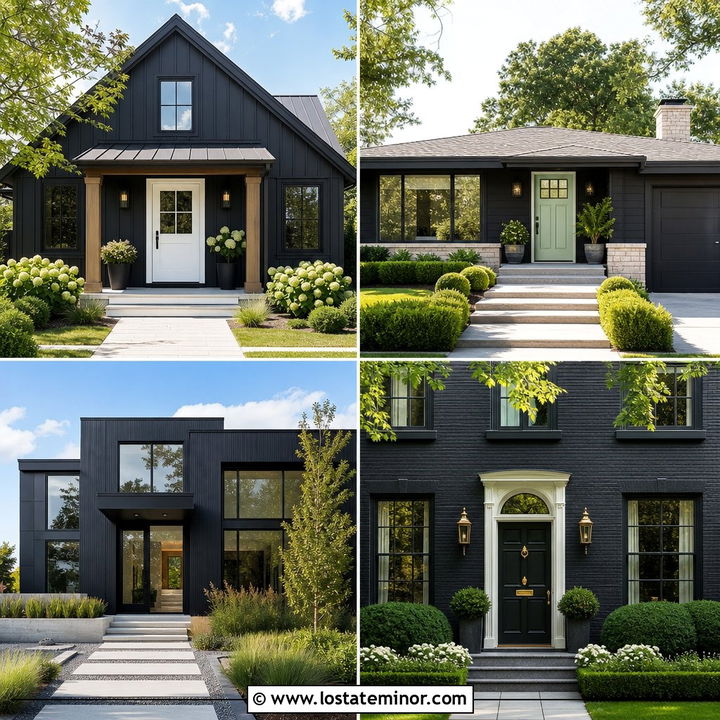
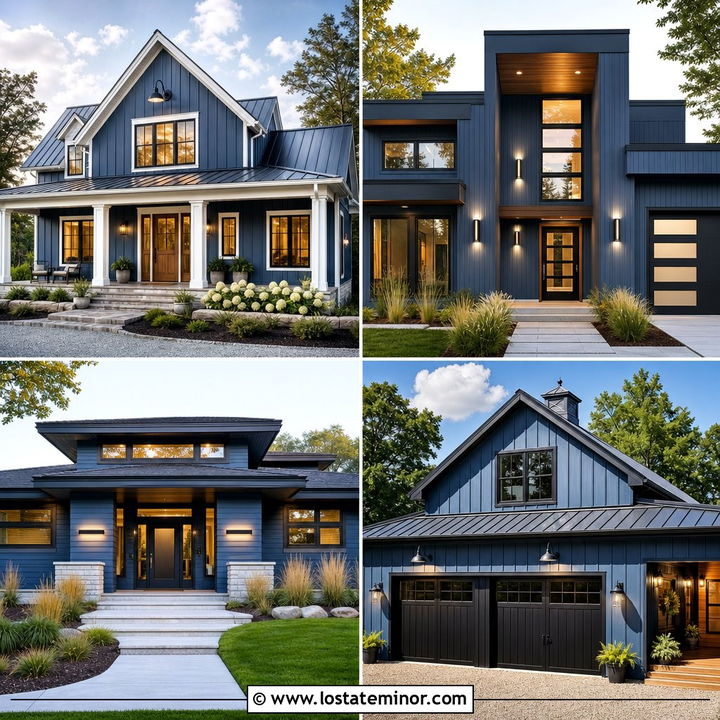
A natural oak Dutch door adds immediate warmth to a soft black modern farmhouse. Use Iron Ore siding in a low-luster finish to soften the facade, then repeat the oak tone on porch columns, ceiling boards, and simple garage doors. Black window frames can blend into the siding, while warm white trim around the door creates a clear entry point. A medium-gray standing-seam roof keeps the upper half from feeling too heavy. Complete the exterior with pale limestone steps, black barn-style sconces, and loose ornamental grasses. The final look feels modern but not stark. Choosing clear or lightly frosted glass for the upper door panel also allows natural light inside while preserving the practical charm of a traditional Dutch door.
2. Soft Black Craftsman With Sage Green Dutch Door
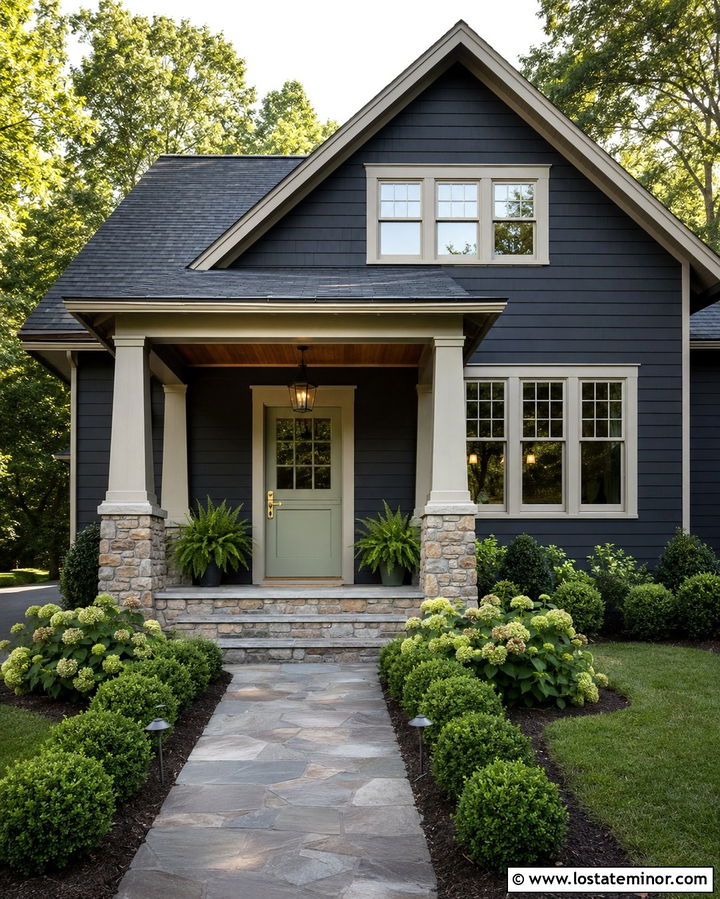
Could a dark Craftsman house still feel relaxed and garden-friendly? Pair Wrought Iron clapboard siding with a muted sage green Dutch door for an earthy, approachable result. Cream trim around the windows and entry keeps the architecture readable, while tapered stone porch columns provide texture and visual weight. Use stained cedar beneath the porch roof and on the stair railing to connect the green door with the surrounding landscape. A charcoal architectural-shingle roof will blend smoothly with the siding without creating a flat, all-black block. Finish the yard with ferns, hydrangeas, low boxwoods, and an irregular flagstone walkway. Aged brass door hardware and warm bronze lanterns suit the Craftsman details better than highly polished finishes and make the complete exterior feel comfortably established.
3. Soft Black Ranch With White Dutch Door
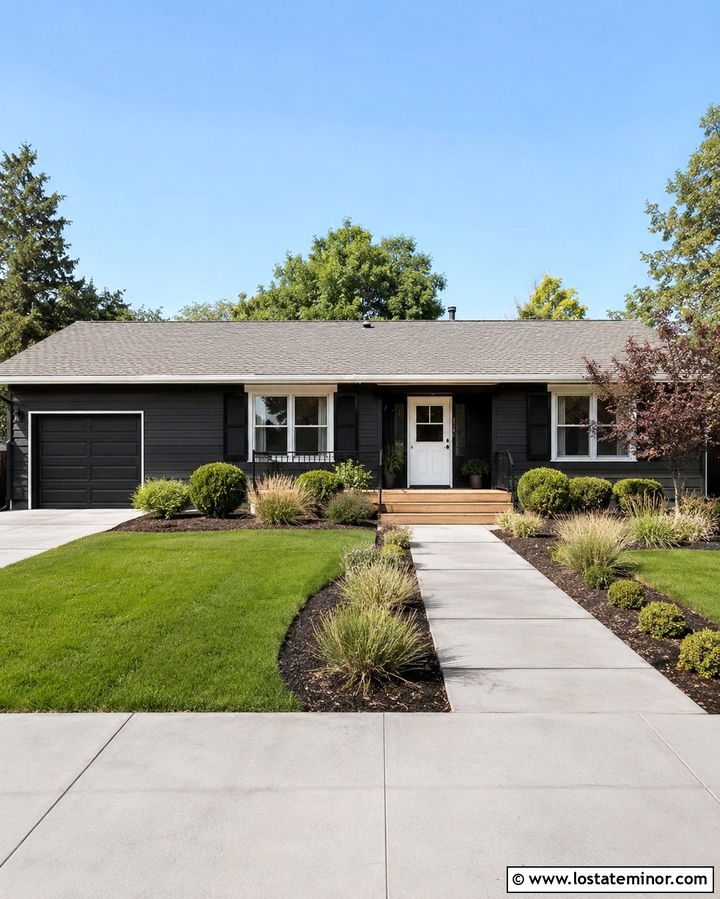
A white Dutch door gives a low, soft black ranch house a crisp focal point that can be seen clearly from the street. Cover the facade in Cracked Pepper horizontal siding and use clean white paint on the door, fascia, and narrow window surrounds. Keep the shutters black so the long elevation remains streamlined rather than overly busy. A light gray roof adds welcome contrast above the dark walls, while a pale concrete walkway brightens the foreground. Add a modest wood porch with square posts and black metal railings to give the entrance more dimension. Rounded shrubs, native grasses, and one small ornamental tree can balance the ranch’s strong horizontal lines. This simple palette works especially well when homeowners want an updated exterior without changing the original roofline.
4. Soft Black Cape Cod With Red Dutch Door
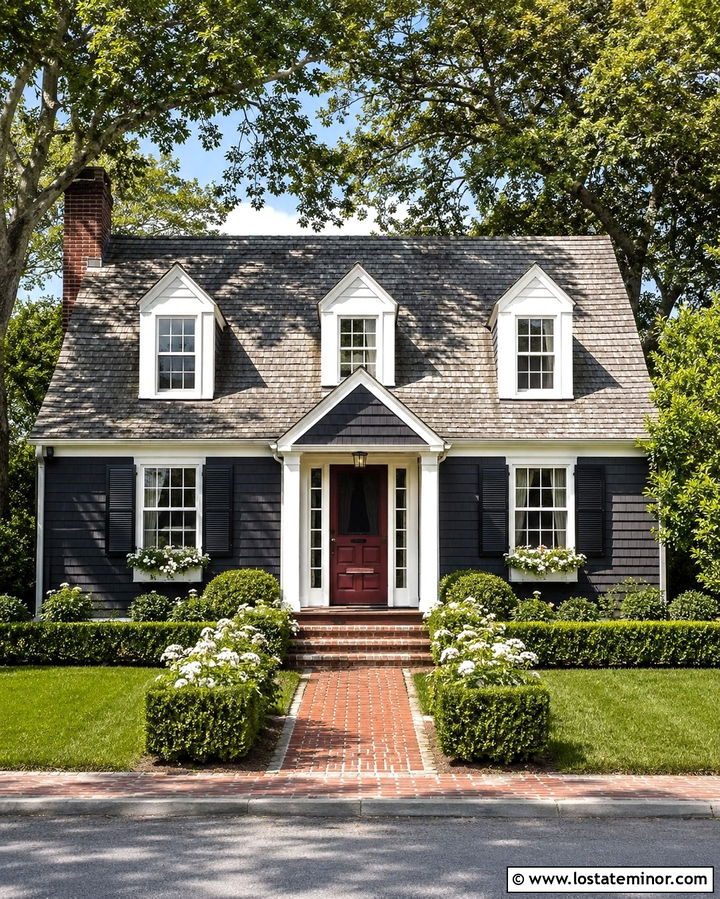
Rich red brings traditional Cape Cod character to a soft black exterior without making the house look overly patriotic or themed. Choose Soot for the cedar-shingle siding, warm white for the trim, and a muted oxblood red for the Dutch door. The deeper red holds its own against the dark facade while still feeling classic. White dormers and window casings provide enough contrast to define the home’s familiar shape. Add a weathered gray shingle roof, brick steps, and understated black lanterns beside the entry. Low hedges and white flowering plants can reinforce the balanced Cape Cod arrangement. For a polished finish, use aged brass hardware on the door and repeat that warm metal in a small mail slot or house-number plaque rather than adding several competing accents.
5. Soft Black Colonial With Blue Dutch Door
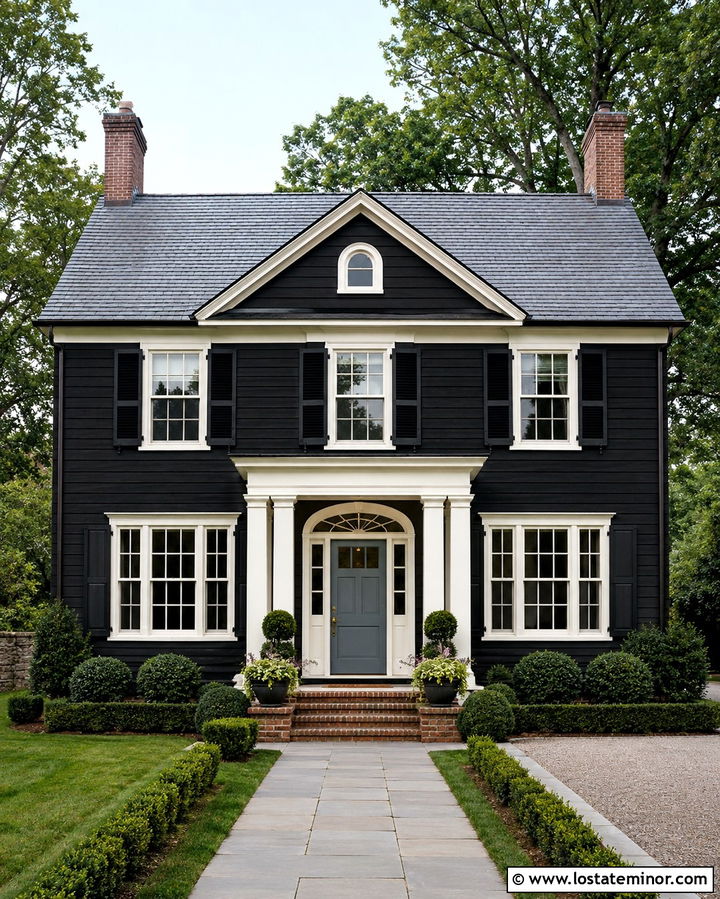
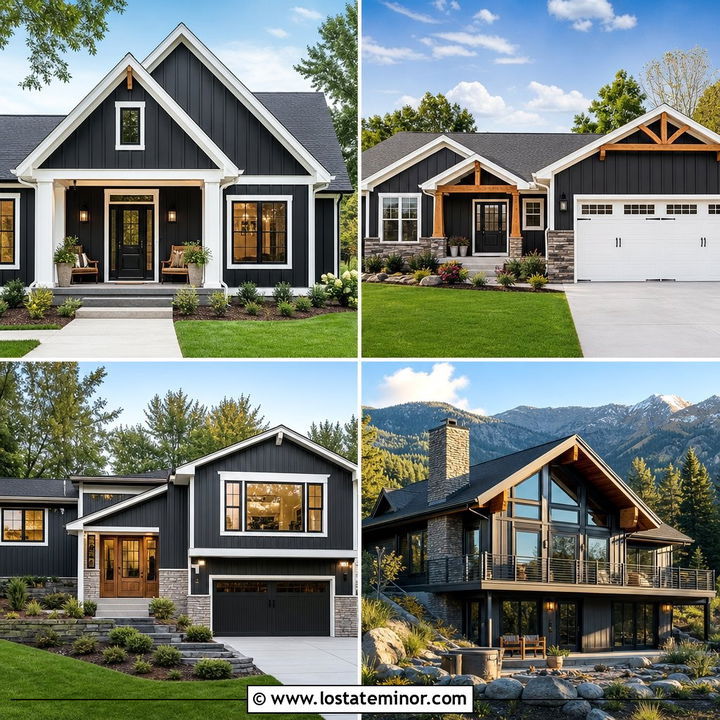
Symmetry makes a soft black colonial feel composed, while a dusty blue Dutch door prevents the formal facade from becoming severe. Use Off-Black clapboard siding with soft white window trim and matching white corner boards. Paint the divided Dutch door a restrained blue-gray that complements a slate-colored roof. Traditional black shutters can remain close to the body color, allowing the doorway to command attention. Frame the entrance with white pilasters, a modest pediment, and brick steps for a historically familiar appearance. Two clipped evergreen shrubs and a straight bluestone path emphasize the centered layout. Select polished nickel or aged pewter door hardware for a cooler accent that works naturally with the blue. The resulting exterior feels traditional, fresh, and welcoming rather than excessively dark or formal.
6. Soft Black Cottage With Yellow Dutch Door
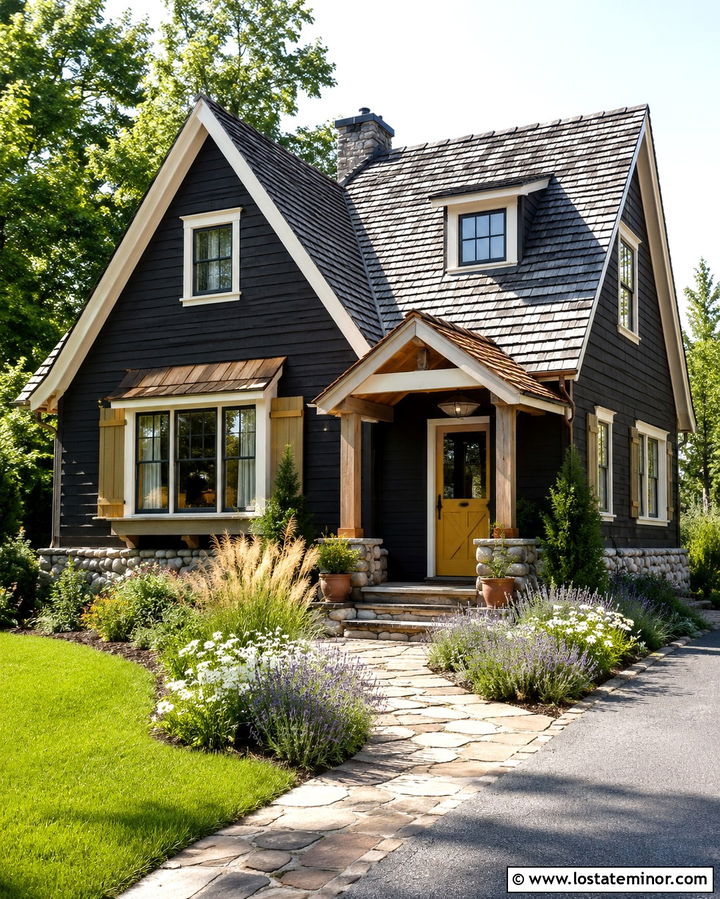
Sunshine yellow can transform a soft black cottage into a cheerful landmark when the color is used with restraint. Paint the siding Black Fox, a warm brown-black, and choose a muted golden yellow for the Dutch door rather than a highly saturated lemon shade. Cream window trim, a cedar porch roof, and a fieldstone foundation will further soften the palette. Keep the roof medium brown or weathered charcoal to complement the warm undertones in the siding. Cottage landscaping should feel loose and layered, with lavender, daisies, ornamental grasses, and a curving stone path. Use simple black hardware so the door color remains the main feature. Repeating the yellow in one or two small flower groupings creates visual continuity without turning the exterior into an overly coordinated or decorative composition.
7. Soft Black Tudor With Walnut Dutch Door
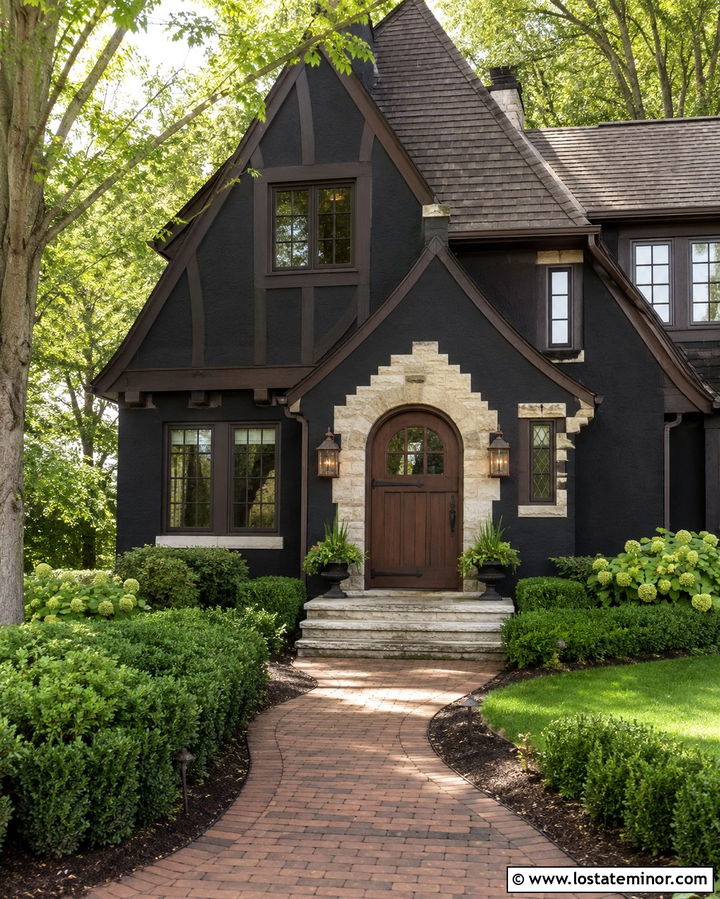
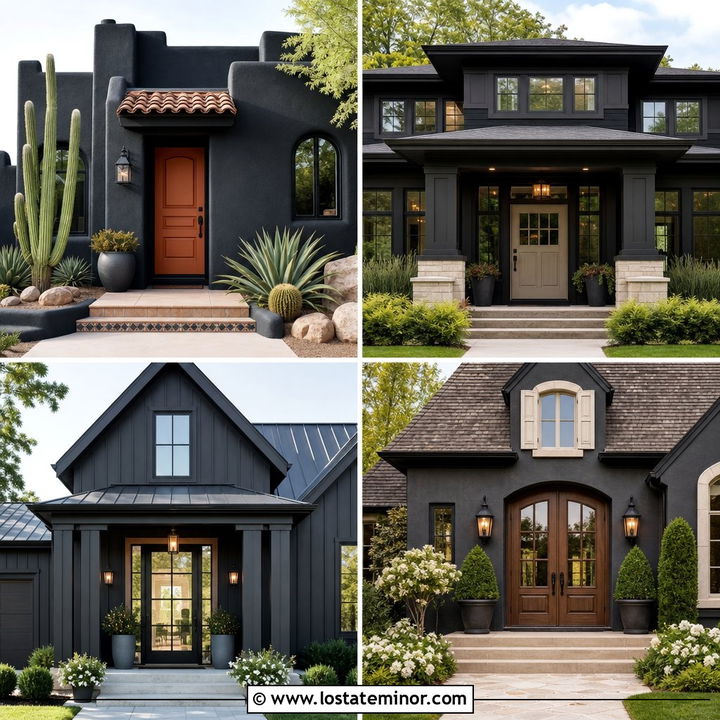
Deep walnut looks especially natural against the masonry, steep rooflines, and substantial proportions of a Tudor exterior. Apply Black Beauty to the stucco or vertical upper-level siding, then preserve dark brown timber details for subtle tonal variation. A walnut Dutch door with a small arched top window introduces handcrafted warmth at the entrance. Use mixed brown and charcoal roof shingles instead of a completely black roof, which helps the layered architecture remain visible. Limestone around the door and foundation can lighten the lower facade. Complete the setting with a curved brick walkway, clipped yews, and softly planted garden beds. Dark bronze strap hinges and a matching thumb latch emphasize the traditional door construction. This combination feels dramatic and historic while remaining warmer than a high-contrast black-and-white Tudor scheme.
8. Soft Black Bungalow With Terracotta Dutch Door
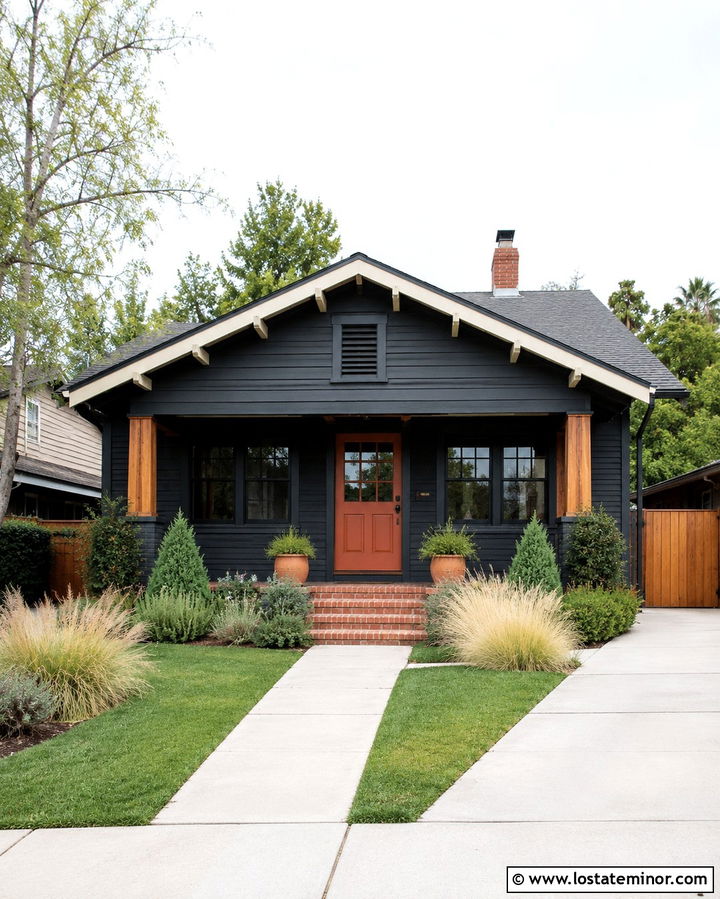
Warm terracotta creates a friendly, grounded entrance on a soft black bungalow. Use Wrought Iron siding as the main color, creamy beige on the exposed rafter tails, and natural cedar for the porch columns. Paint the Dutch door a muted clay tone that connects visually with brick steps and terracotta planters. A charcoal roof will recede into the facade, allowing the broad porch and door to remain prominent. Craftsman-inspired windows with dark frames maintain a cohesive, low-contrast appearance. Surround the house with drought-tolerant grasses, rosemary, and compact evergreen shrubs for easy curb appeal. Antique bronze hardware works particularly well with the clay-colored door and cedar wood. The finished scheme respects the bungalow’s handmade character while giving its usually modest facade greater depth and personality.
9. Soft Black Contemporary House With Cedar Dutch Door
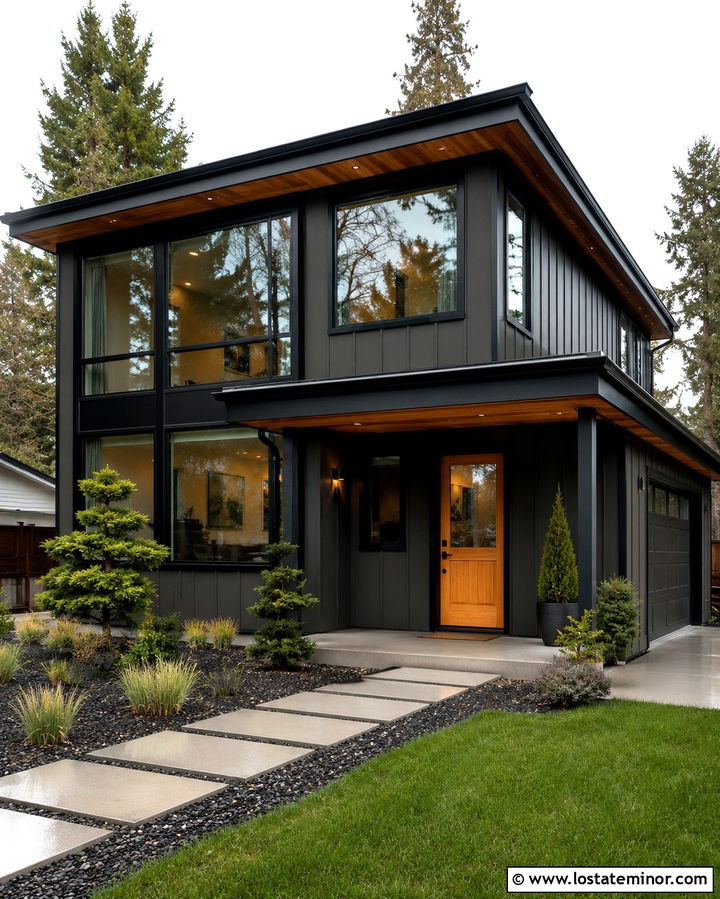
Clean geometry allows a cedar Dutch door to become an organic focal point on a soft black contemporary house. Cover the exterior in Greenblack vertical panels and use matching dark trim around large, simple windows. Select clear cedar for the door, recessed entry walls, and one narrow section of soffit. Limiting the wood to these connected areas keeps the design intentional. A low-slope charcoal metal roof and dark gutters maintain the home’s streamlined silhouette. Use large concrete pavers, black gravel, ornamental grasses, and sculptural evergreen plants instead of traditional foundation beds. Minimal black hardware and a long vertical pull suit the contemporary architecture, while the split door provides an unexpected touch of casual charm. This look demonstrates that a Dutch door can feel modern when its panels and glazing remain simple.
10. Soft Black Scandinavian House With Pale Wood Dutch Door
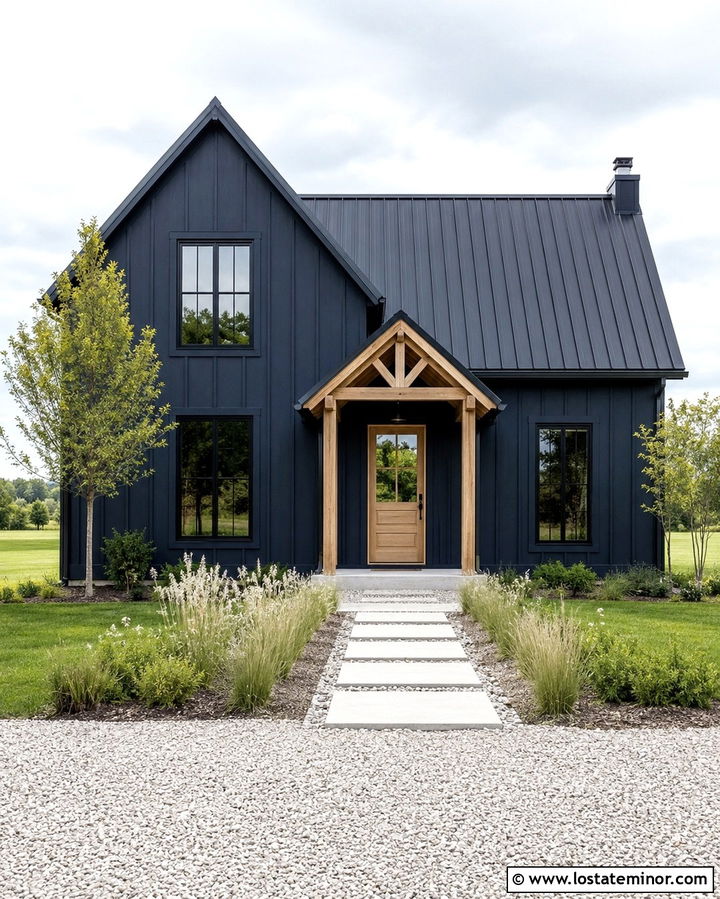
Pale wood brings light and natural contrast to a soft black Scandinavian-inspired exterior. Choose Railings for vertical siding, matching trim, and narrow fascia boards to create one calm, unified envelope. Install a white oak Dutch door with simple horizontal panels and a large clear upper window. Repeat the pale oak beneath the entry canopy and around one feature window, but avoid scattering wood across every surface. A matte charcoal metal roof supports the minimal design. Frame the house with light gravel, concrete stepping stones, feather grasses, and a few compact trees. Black lever hardware keeps the door modern and visually connected to the siding. The restrained materials allow the house’s steep roof and clean proportions to stand out, while the Dutch door introduces warmth and everyday functionality.
11. Soft Black Split-Level With Teal Dutch Door
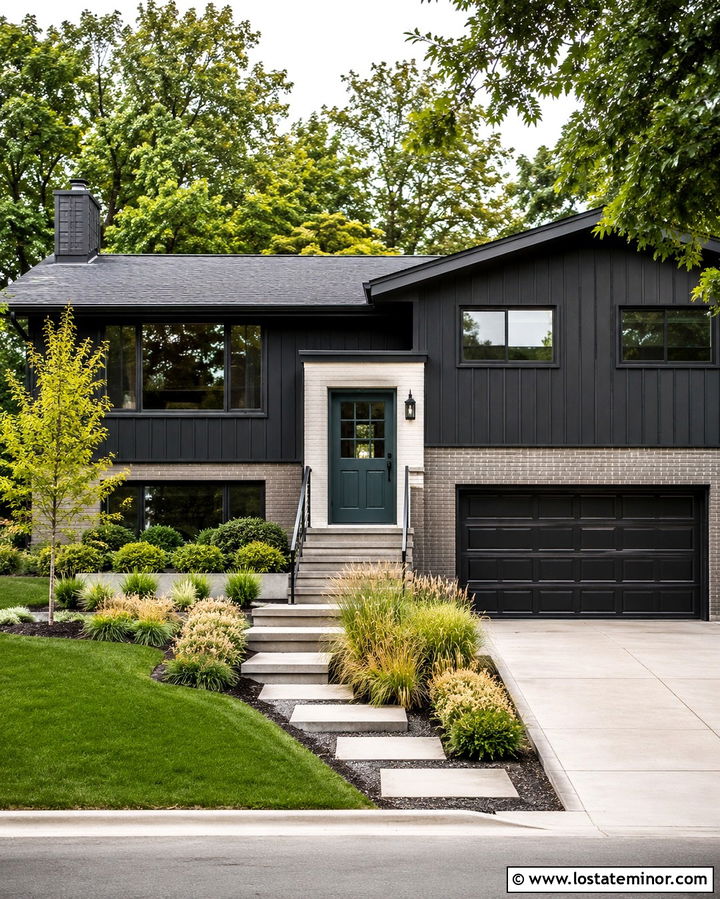
A saturated teal Dutch door can give a dated split-level exterior a strong new identity. Paint the upper siding Iron Ore and use warm gray brick or stone across the lower level to break up the dark mass. The teal should lean slightly muted, with blue-green depth that remains sophisticated beside black. Use soft white around the door and front windows to clarify the entrance. A charcoal roof, black garage door, and slim metal railing help modernize the original architecture. Widen the walkway with rectangular concrete pavers and add layered shrubs that step down with the changing grade. Brushed brass door hardware offers a small warm highlight. This complete scheme turns the split entry into a deliberate focal point instead of attempting to hide the home’s distinctive multilevel shape.
12. Soft Black Lake House With Sky Blue Dutch Door
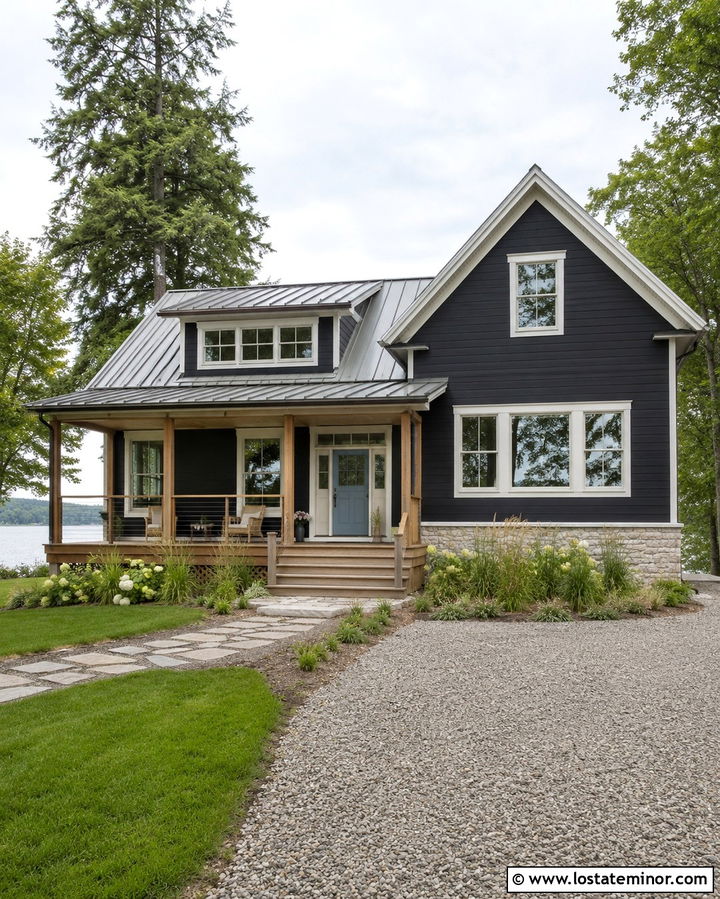
A soft sky blue Dutch door brings an easy waterside feeling to a dark lake house. Use Soot board-and-batten siding with creamy white trim and a medium-gray metal roof. The blue should be slightly grayed so it complements the natural setting rather than appearing overly sweet. Add a broad stained-cedar porch, simple square columns, and cable railing to preserve open views. Pale local stone around the foundation can connect the home to the shoreline and brighten the lower facade. Complete the approach with a gravel drive, native grasses, hydrangeas, and an informal flagstone walkway. Black hinges help define the Dutch door, while a brushed nickel latch adds a subtle reflective detail. Together, the blue, black, cedar, and stone create a casual exterior that feels appropriate throughout the year.
13. Soft Black Mountain House With Rustic Dutch Door
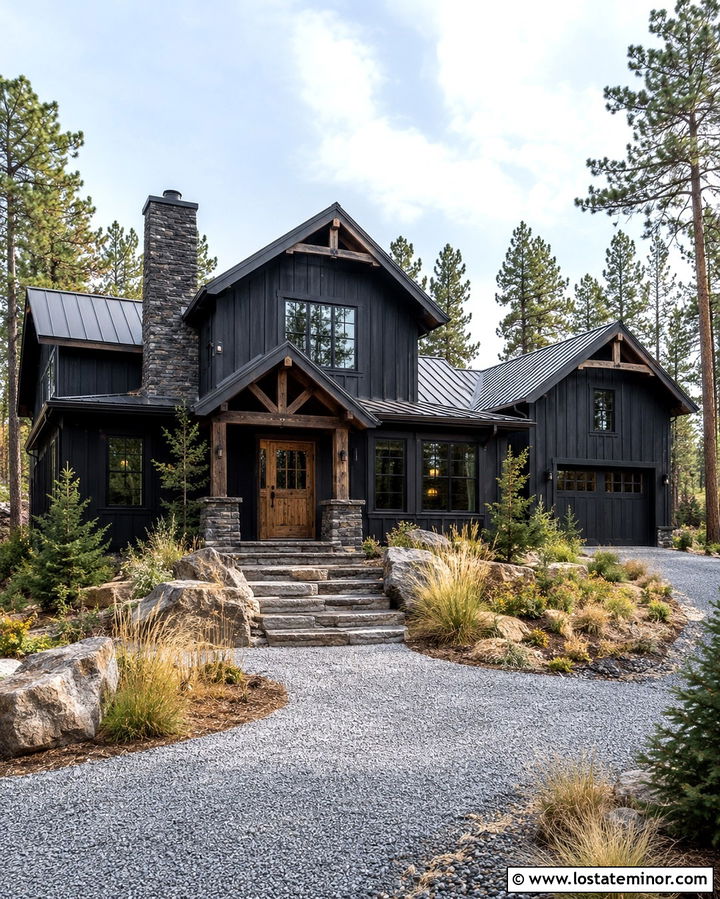
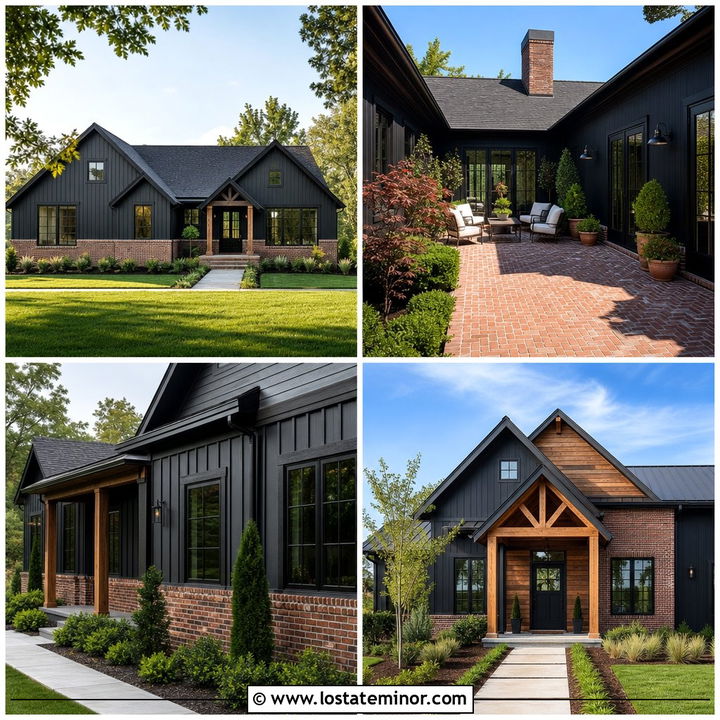
Rugged materials can make a soft black mountain house feel anchored to its landscape. Finish the siding in Black Fox and pair it with a heavily grained reclaimed-wood Dutch door. Use charcoal stone across the chimney and lower foundation, then introduce thick cedar beams beneath the porch and gables. A weathered metal roof in dark gray will coordinate with the siding while reflecting enough light to show the roofline. Oversized black lanterns, simple iron railings, and substantial stone steps suit the home’s scale. Keep the landscaping natural with boulders, native grasses, low conifers, and a gravel-edged path. The door can include a small divided-light window in its upper half. Dark iron strap hinges complete the rustic entrance and prevent the wood from feeling too polished for the setting.
14. Soft Black Prairie House With Copper Dutch Door
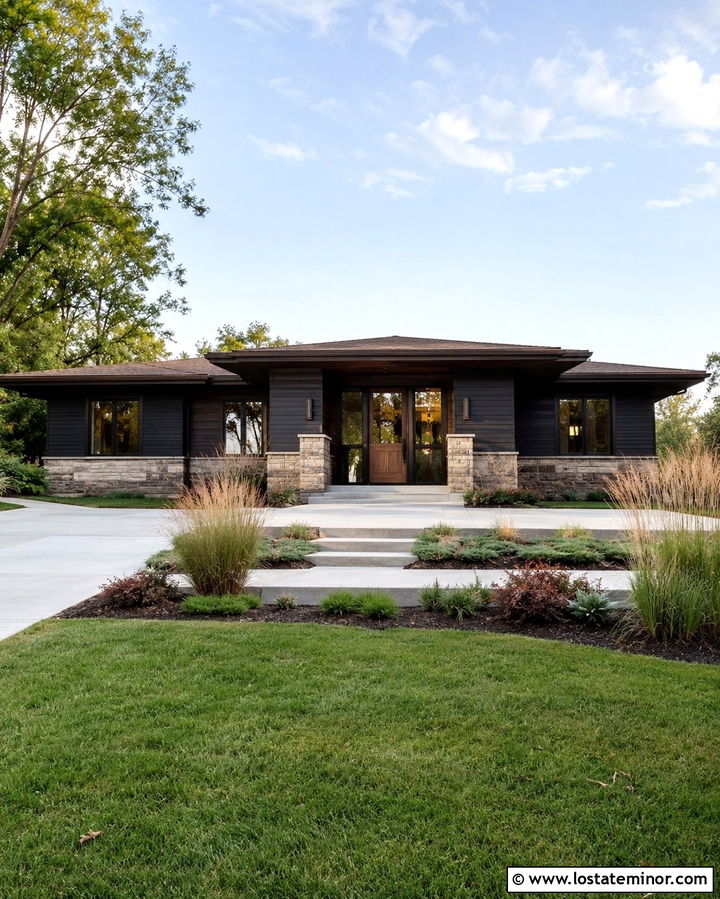
Long rooflines and strong horizontal bands make a prairie house an excellent setting for a warm copper-colored Dutch door. Paint the stucco or horizontal siding Cracked Pepper, then use dark bronze window frames and taupe limestone at the base. The door can be painted a burnished copper hue or built from copper-toned wood, depending on the budget. Wide roof overhangs in deep brown create subtle separation from the softer black walls. Extend the horizontal feeling through broad concrete steps and low, linear planting beds. Switchgrass, sedges, and compact evergreens work better than tall formal shrubs. Choose dark bronze hardware so it blends with the windows. This combination feels earthy and architectural, with the warm entrance interrupting the dark facade at exactly the right point.
15. Soft Black Coastal House With Aqua Dutch Door
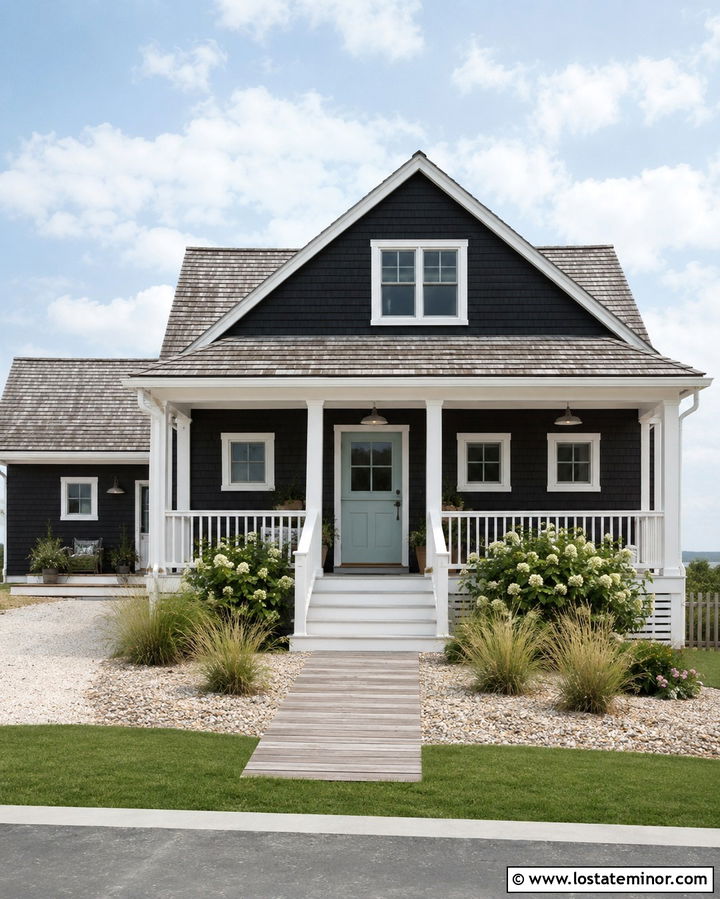
Aqua adds coastal personality to a soft black exterior while avoiding the predictable all-white beach-house palette. Use Off-Black cedar shingles or fiber-cement siding, bright white window trim, and a weathered silver-gray roof. Paint the Dutch door a softened aqua with gray undertones so it feels breezy instead of tropical. White porch railings and square columns will frame the entrance and keep the darker facade visually light. Add pale decking, galvanized metal lighting, and brushed nickel door hardware for a clean coastal finish. Surround the house with beach grasses, hydrangeas, shell-colored gravel, and a straight boardwalk-style path. A small clear window in the upper half of the door allows light into the entry. The finished home feels relaxed, graphic, and distinctive without depending on nautical decorations.
16. Soft Black French Country House With Cream Dutch Door
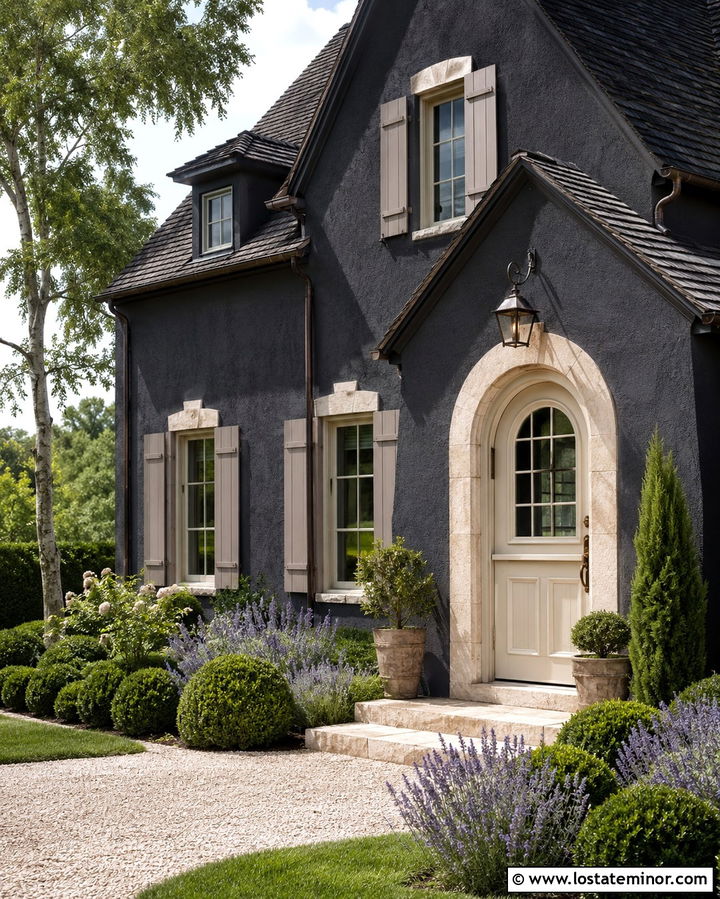
Soft cream creates an elegant entrance against the deep exterior of a French country home. Paint the stucco Wrought Iron and use natural limestone around the foundation, windows, and arched doorway. The Dutch door should have traditional raised panels, a gently arched top, and warm cream paint that echoes the lightest tones in the stone. Choose a weathered charcoal roof and dark bronze gutters to maintain a quiet, old-world palette. Aged brass hardware and modest lantern sconces add warmth without appearing overly ornate. Frame the approach with lavender, clipped boxwood, and a pale gravel path. Wood shutters in a faded taupe can provide another soft layer of contrast. This arrangement makes the door noticeable while allowing the masonry, roof shape, and balanced landscaping to support the complete exterior composition.
17. Soft Black Saltbox With Barn Red Dutch Door
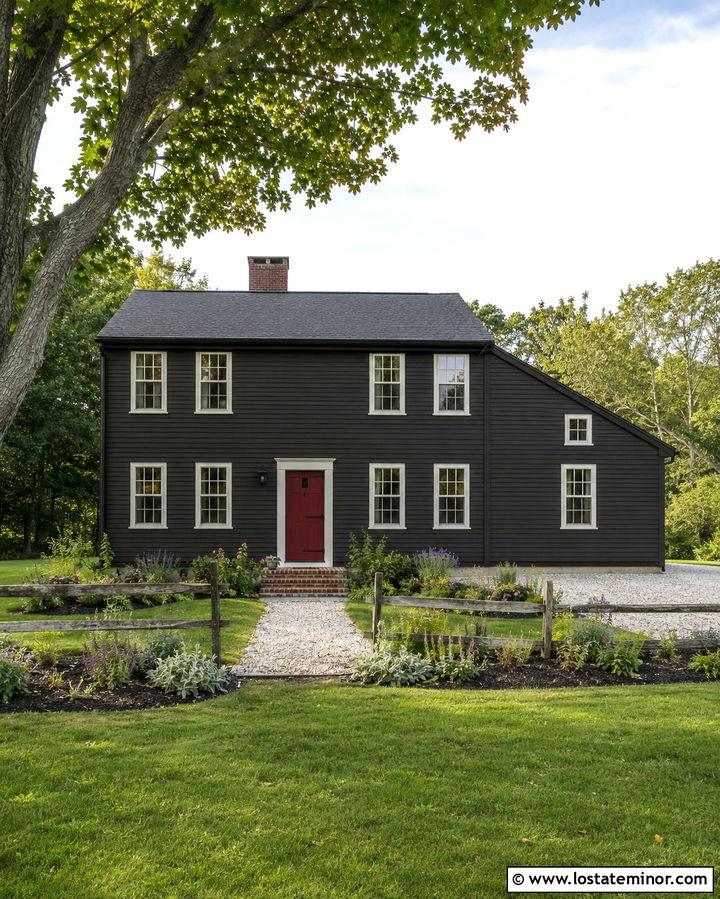
A barn red Dutch door reinforces the simple rural character of a saltbox home. Use Iron Ore on the clapboard siding and a slightly lighter charcoal on the long rear roof to preserve the structure’s distinctive silhouette. Warm white trim around the windows, corners, and door gives the compact facade clean definition. Select a muted barn red with earthy brown undertones for the Dutch door. Brick steps, black iron hardware, and a single gooseneck light continue the unfussy farmhouse approach. A split-rail fence, crushed-stone path, native perennials, and one mature shade tree can frame the house naturally. Keep shutters and decorative trim to a minimum. The combination works because each color has a clear purpose: soft black shapes the house, white defines it, and red creates the welcoming center.
18. Soft Black Cottage Ranch With Pink Dutch Door
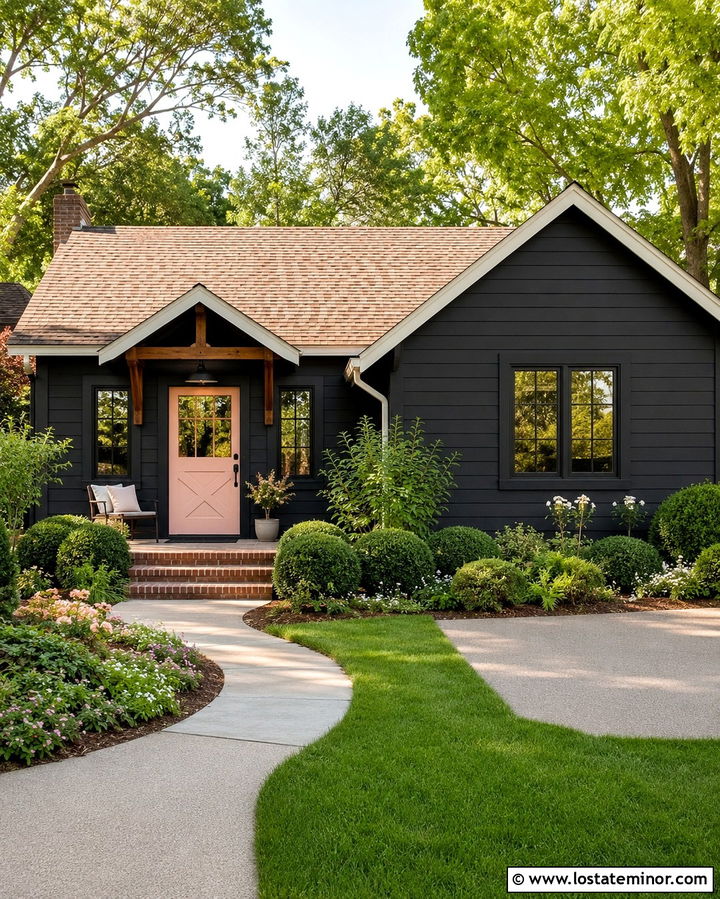
A dusty pink Dutch door can soften a dark cottage ranch without making the exterior feel childish. Choose Soot horizontal siding, warm white fascia, and charcoal window frames. The pink should contain beige or clay undertones, helping it coordinate with natural brick steps and a light brown roof. Add a shallow cedar awning above the entrance and repeat the wood on a simple mailbox or porch bench. Rounded shrubs, flowering ground cover, and a gently curved concrete path will reinforce the approachable cottage mood. Use matte black hardware on the Dutch door to sharpen the softer color. Small divided panes in the upper section add traditional detail without blocking too much light. This exterior feels personal and cheerful, yet the restrained palette keeps the overall curb appeal polished enough for a suburban neighborhood.
19. Soft Black A-Frame With Orange Dutch Door
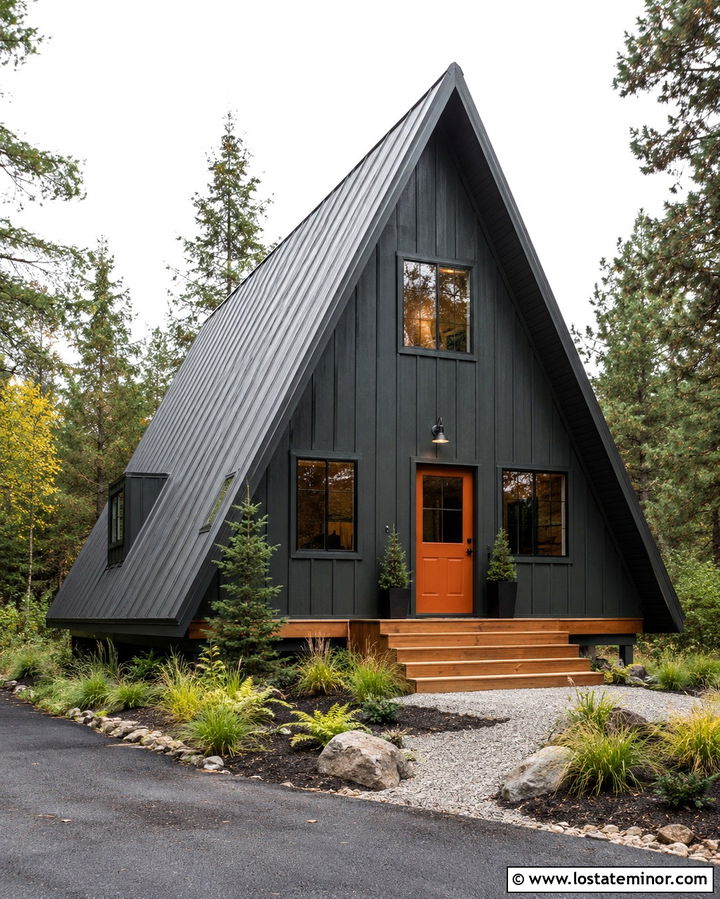
An earthy orange Dutch door creates an energetic focal point beneath the steep roof of a soft black A-frame. Paint the vertical siding Greenblack and carry the same shade onto the trim so the triangular shape remains clean and uninterrupted. Choose burnt orange rather than bright citrus, allowing the door to relate naturally to cedar decking and surrounding autumn colors. Large windows with black frames can fill the upper facade, while a charcoal metal roof completes the monochromatic outline. Add a simple gravel path, broad timber steps, native grasses, and low evergreen plants. Black hinges and a cedar handle keep the entrance informal. The Dutch door offers ventilation and flexibility for a cabin-like home, while its warm color prevents the tall, dark facade from feeling distant or imposing.
20. Soft Black Foursquare With Mustard Dutch Door
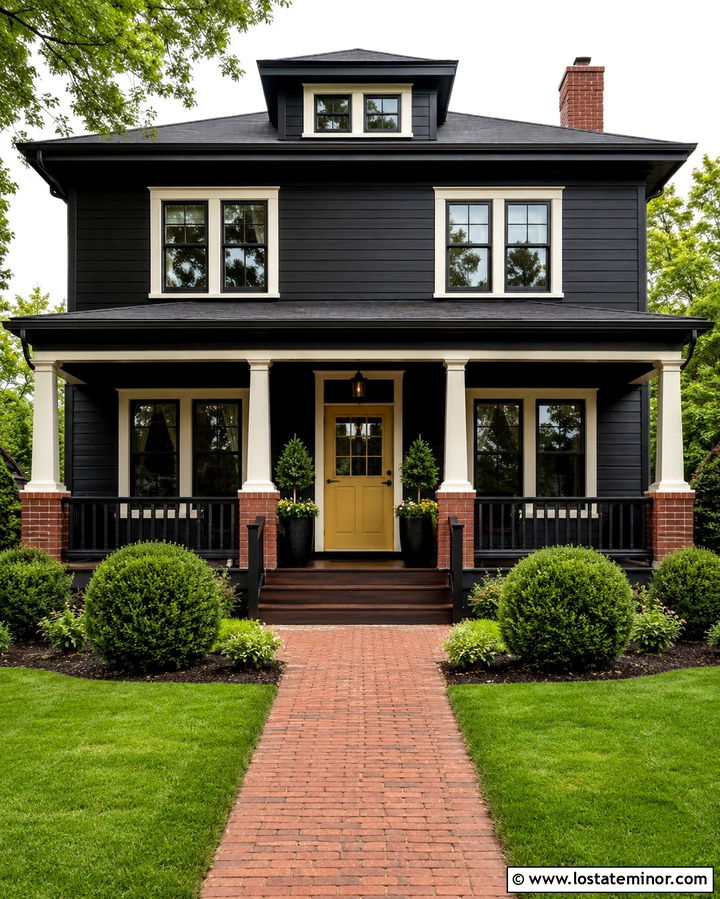
The orderly proportions of an American foursquare provide a handsome backdrop for a mustard Dutch door. Use Black Beauty clapboard siding, cream window trim, and a medium charcoal roof with broad eaves. Paint the door a muted mustard gold that reflects the warmth of brick porch piers and stained-wood flooring. Cream columns can lighten the deep front porch, while black railings connect it to the body color. Choose aged brass hardware and traditional lanterns to reinforce the home’s early twentieth-century character. A straight brick path, clipped shrubs, and symmetrical planters will complement the balanced facade. Because mustard is a strong color, avoid repeating it across shutters or decorative accessories. One confident door is enough to enliven the soft black exterior and establish a memorable, welcoming center.
21. Soft Black Transitional House With Greige Dutch Door
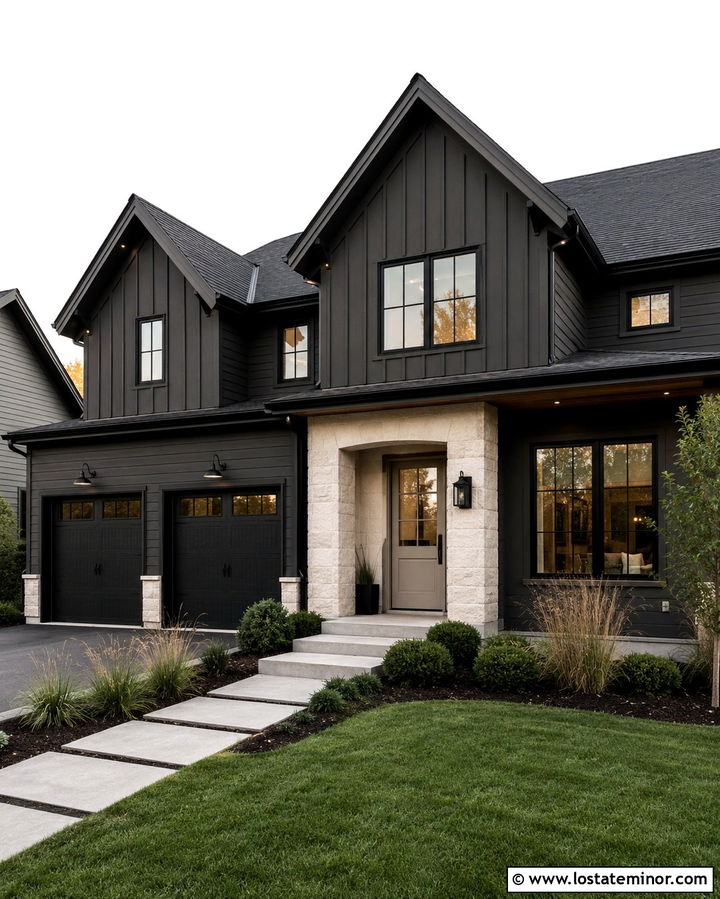
Greige creates a gentle, understated entrance for homeowners who prefer tonal contrast over a bright accent color. Finish the transitional facade in Cracked Pepper, combining vertical siding on the gables with horizontal lap siding across the main level. Paint the Dutch door a warm stone greige and frame it with light limestone. Black window frames, a dark gray roof, and matching garage doors create continuity across the wider elevation. Add white oak beneath the porch ceiling to keep the neutral palette from feeling cold. Rectangular concrete pavers, trimmed ornamental grasses, and soft evergreen mounds provide clean but welcoming landscaping. Use dark bronze hardware on the door for subtle definition. The resulting exterior feels current and layered, yet neutral enough to remain compatible with changing furnishings, plant colors, and seasonal conditions.
22. Soft Black Desert House With Turquoise Dutch Door
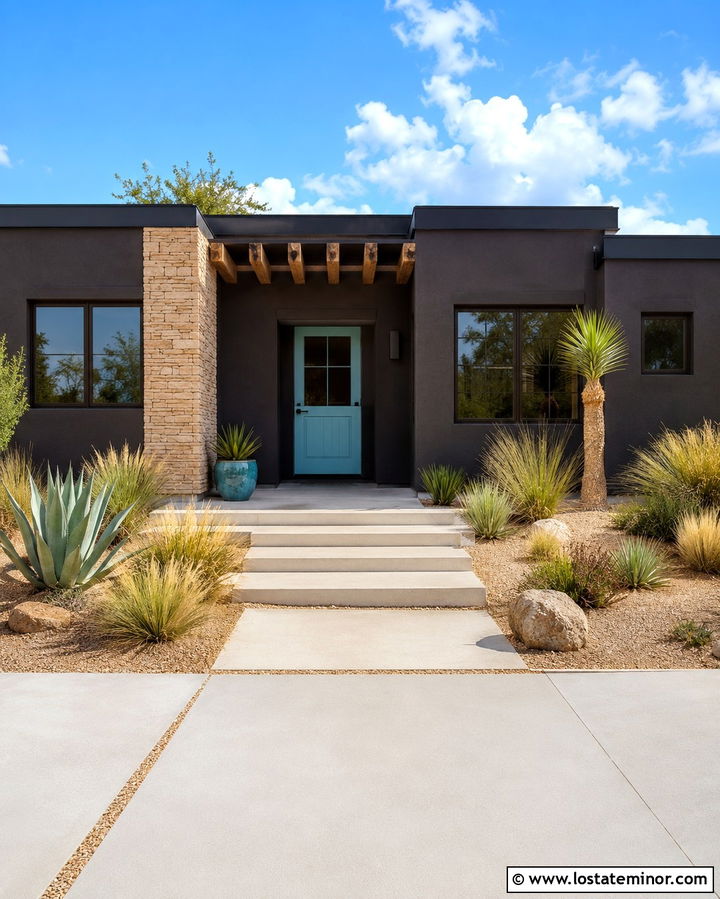
In a dry landscape, a turquoise Dutch door can bring cool contrast to a soft black desert house. Use Black Fox stucco, which has enough brown warmth to coordinate with sand-colored stone and gravel. Choose a muted turquoise rather than a vivid blue, then repeat it sparingly in one ceramic planter near the entrance. Natural cedar beams, a flat charcoal roof, and bronze-framed windows support the desert-modern architecture. Create a shaded porch with a simple wood canopy and broad concrete steps. Agave, yucca, ornamental grasses, and warm gravel can replace a traditional lawn while keeping the full facade visible. Black door hardware prevents the turquoise from appearing decorative or themed. The balanced mix of dark paint, cool color, wood, and stone produces bold curb appeal suited to bright sunlight.
23. Soft Black Lowcountry House With Seafoam Dutch Door
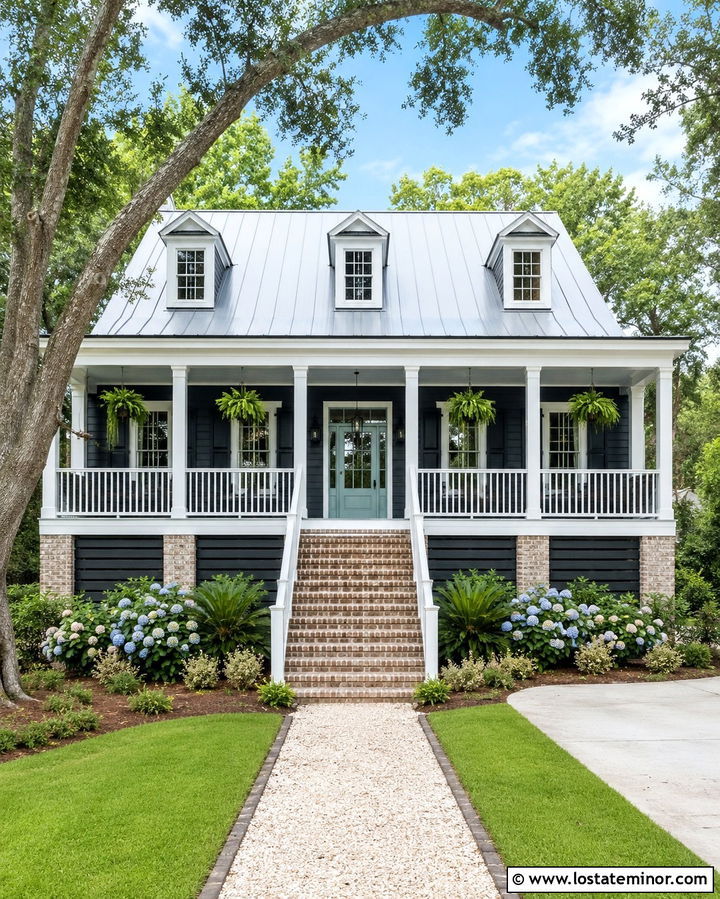
A seafoam Dutch door feels fresh and welcoming on a raised Lowcountry home. Paint the lap siding Wrought Iron, use crisp white for the porch columns and railings, and select a pale blue-gray for the porch ceiling. The seafoam door should be muted enough to connect with both the ceiling and surrounding greenery. A silver-gray metal roof will reflect light and define the home’s broad roofline. Keep the foundation piers in light brick or stucco so the elevated base does not appear too heavy. Add brick steps, hanging ferns, hydrangeas, and a wide shell or gravel path. Brushed nickel hardware works naturally with the cool palette. This complete exterior preserves traditional Southern porch details while allowing the soft black body color to give the house a more unexpected and contemporary identity.
24. Soft Black Cabin With Forest Green Dutch Door
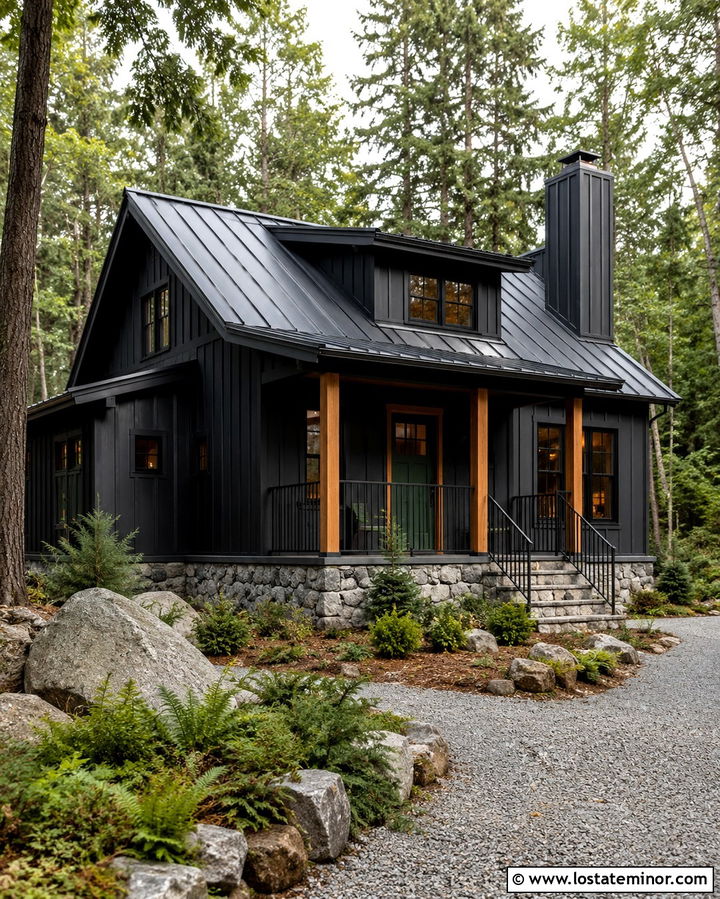
Forest green creates subtle contrast on a soft black cabin because both colors share a deep, nature-based character. Use Railings vertical wood siding, black window frames, and a weathered charcoal metal roof. Paint the Dutch door a rich evergreen shade and surround it with cedar casing so the entry does not disappear into the facade. Repeat cedar on the porch posts and stair treads, then ground the house with rough gray stone. A small covered porch, iron railings, and dark bronze lanterns will keep the design practical and rugged. Native ferns, low conifers, gravel, and natural boulders should frame the house without looking overly landscaped. The green door becomes more visible as visitors approach, creating an understated welcome that suits a wooded or mountainous property.
25. Soft Black English Cottage With Lavender Dutch Door
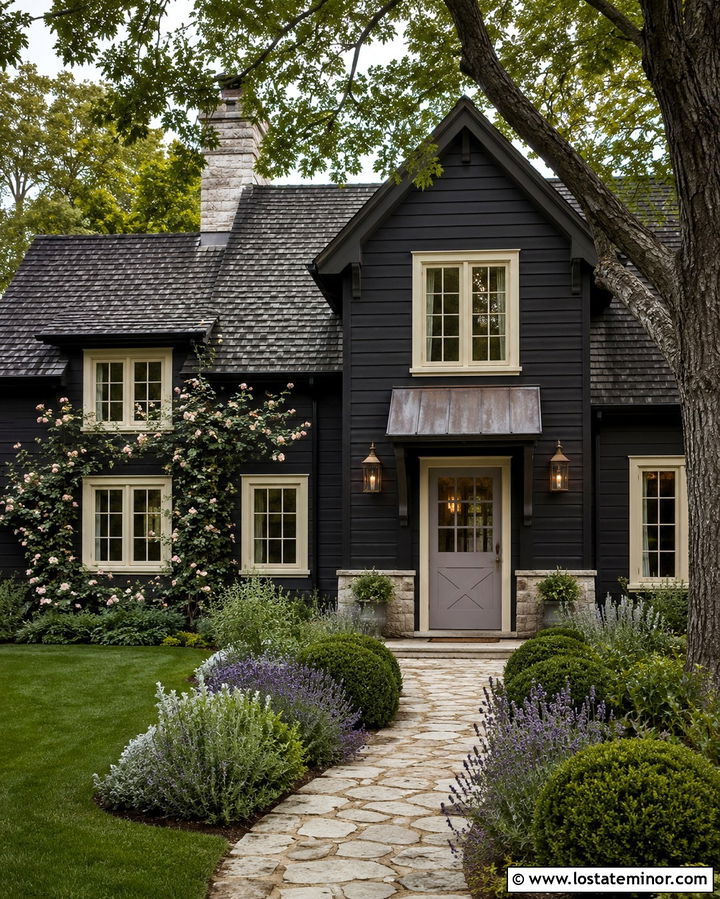
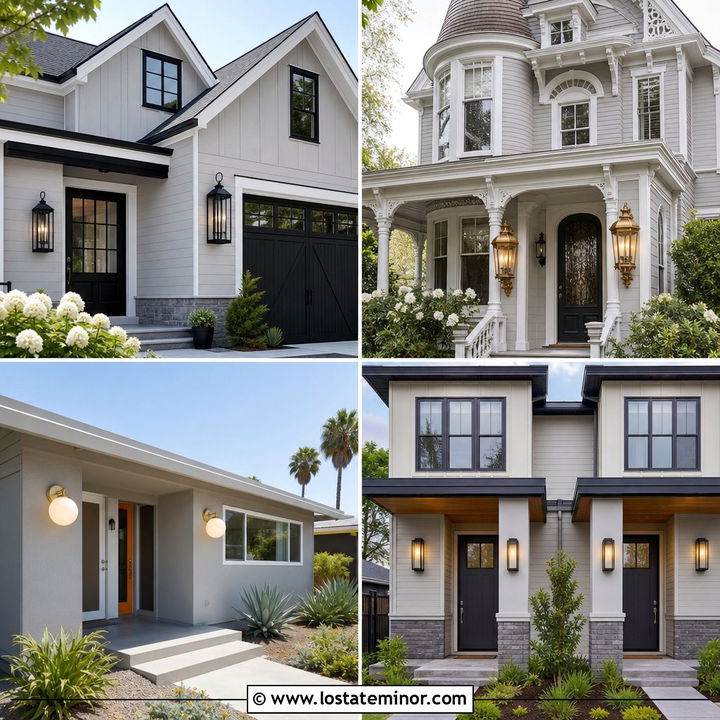
A smoky lavender Dutch door introduces gentle color to a soft black English cottage. Apply Soot to textured stucco or narrow lap siding, then use warm cream around the casement windows and curved entry. The lavender should lean gray rather than purple, allowing it to complement weathered roof shingles and pale stone. Add a small cedar or copper awning above the door for depth and protection. Antique brass hardware and traditional wall lanterns bring warmth to the cool palette. A winding flagstone path, climbing roses, lavender plants, boxwood, and layered perennial beds can enhance the cottage character. Keep the upper half of the Dutch door lightly glazed or fitted with small divided panes. This creates a whimsical but mature facade in which every color remains softened, natural, and easy to combine.
26. Soft Black Midcentury Ranch With Chartreuse Dutch Door
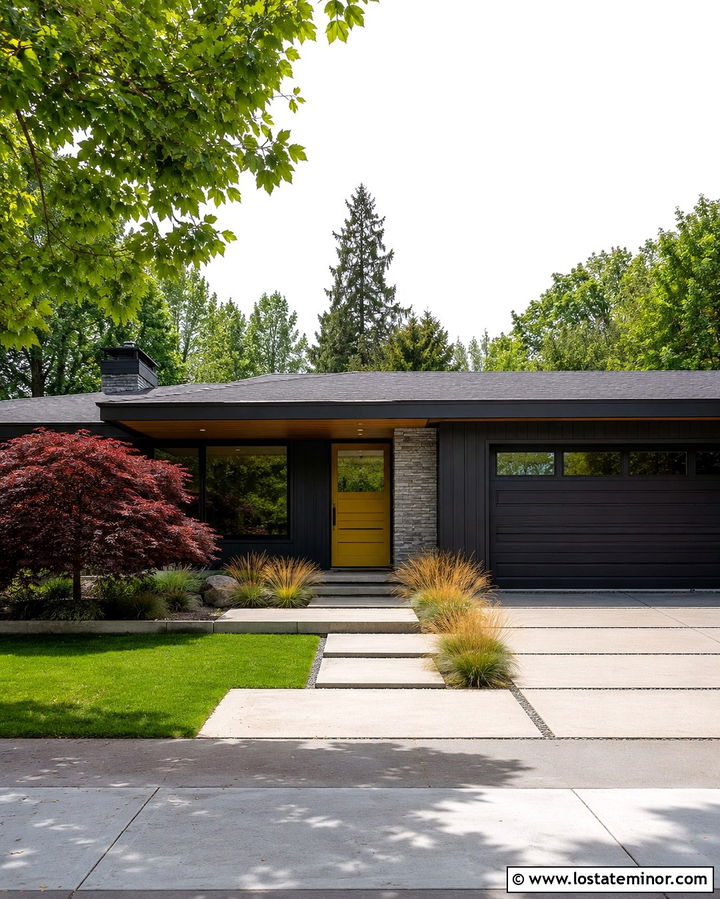
For a bolder update, pair a soft black midcentury ranch with a restrained chartreuse Dutch door. Cover the exterior in Iron Ore vertical panels and use warm stained cedar around the entry, garage, and deep roof soffits. The door color should resemble green-gold foliage rather than fluorescent lime. Black-framed picture windows and a low charcoal roof preserve the house’s horizontal, modern profile. Use stacked gray stone on one feature wall to add period-appropriate texture. Broad concrete slabs, gravel joints, sculptural grasses, and a small Japanese maple can define the front yard. Select simple black door hardware and avoid traditional crossbuck details on the Dutch door. Clean horizontal panels will feel more authentic to the architecture while the split construction provides useful ventilation and a distinctive conversation feature.
27. Soft Black Urban House With Cobalt Dutch Door
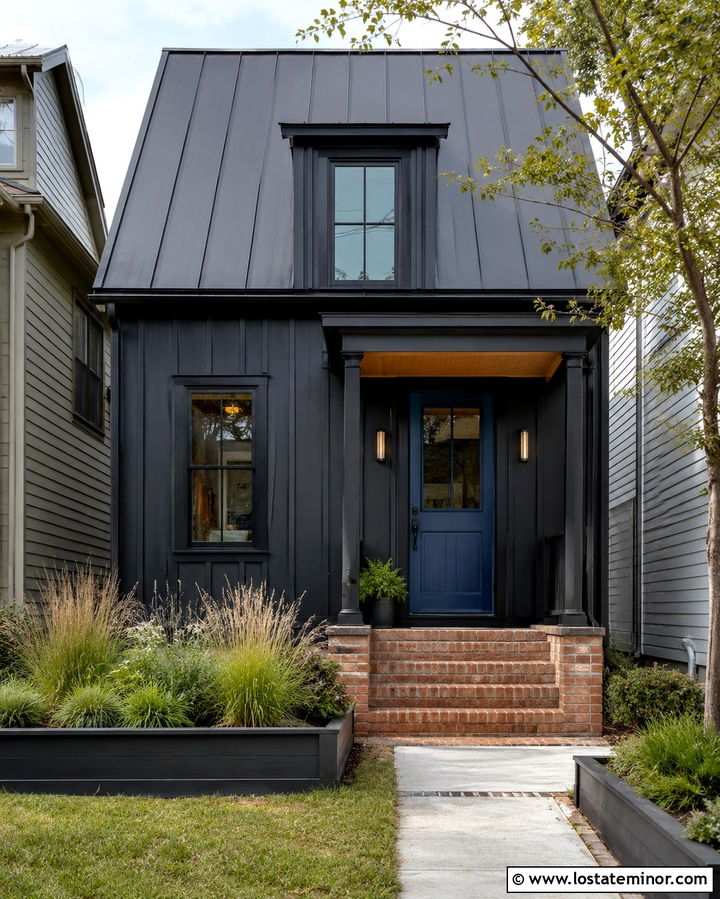
A cobalt Dutch door delivers clear street presence on a narrow urban house. Use Inkwell vertical siding to emphasize height, along with matching black trim and a dark standing-seam roof. Paint the door a rich but slightly softened cobalt blue so it remains visible from the sidewalk. Warm brick at the foundation and steps can balance the cool colors, while a white oak porch ceiling introduces a natural accent overhead. Choose black hardware, slim wall sconces, and modern house numbers to suit the compact facade. Landscaping should be simple, with a narrow concrete path, raised planters, ornamental grasses, and one small tree. By limiting the bold blue to the entrance, the exterior retains a clean architectural appearance while gaining the individual personality that closely spaced urban homes often need.
28. Soft Black Farmhouse With Black Dutch Door
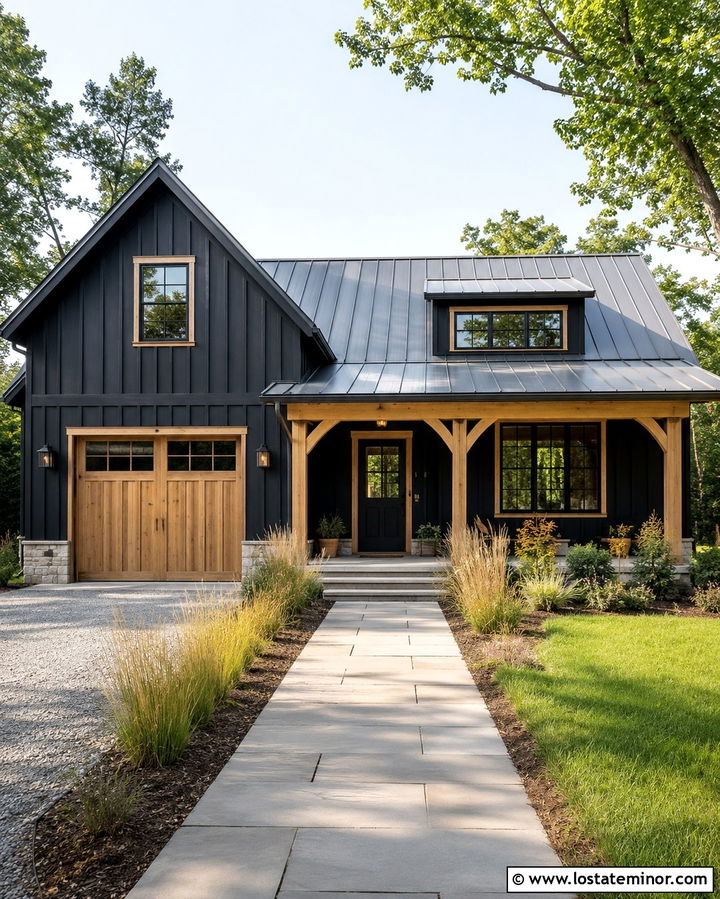
A monochromatic Dutch door can look remarkably welcoming when texture provides the contrast. Paint board-and-batten siding Black Beauty and finish the Dutch door in the same soft black color, but choose a slightly glossier sheen for the door. Frame the opening with natural white oak and repeat the wood on the porch posts, garage doors, and soffit. A medium-gray metal roof will separate the roofline from the dark siding. Pale limestone at the foundation and entry steps can further brighten the composition. Use aged brass hardware to make the door functional details easy to see. Large windows, loose grasses, and a broad gravel-edged walkway complete the modern farmhouse setting. This approach suits homeowners who want a restrained palette without losing the recognizable charm of a divided Dutch door.
29. Soft Black Shingle House With Coral Dutch Door
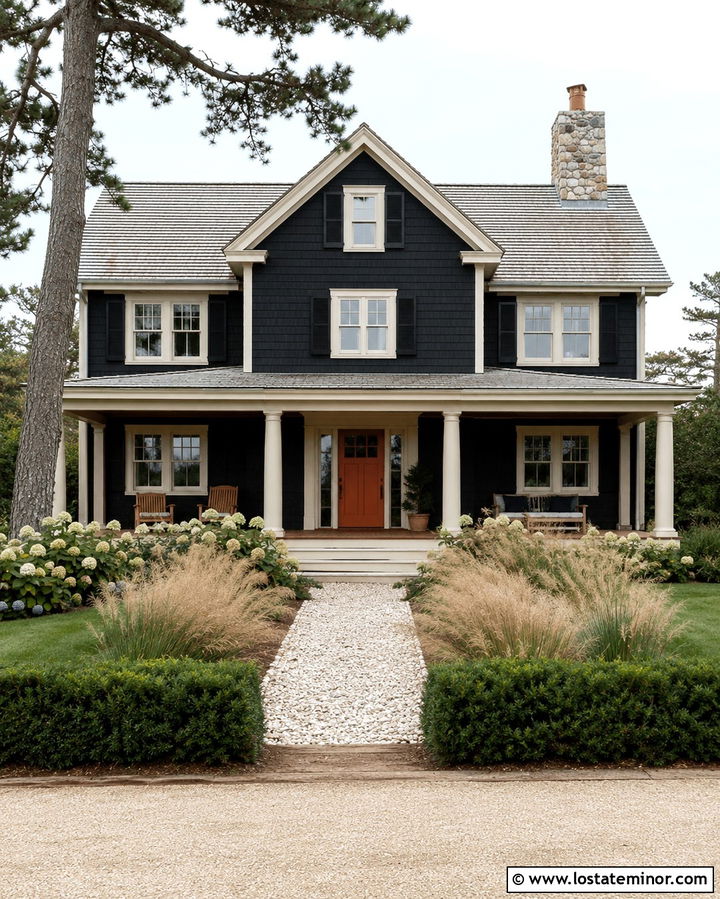
Muted coral adds warmth and seaside character to a soft black shingle house. Paint the shingles Off-Black and use cream on window casings, porch columns, and the upper door frame. Choose a clay-based coral that feels sun-faded rather than bright pink-orange. A weathered gray roof, pale stone chimney, and natural cedar porch floor will support the relaxed palette. Add black shutters only where the window proportions make them believable, keeping the facade from becoming crowded. A curved shell path, hydrangeas, beach grasses, and low evergreen hedges create a polished coastal garden. Brushed brass or aged bronze hardware will connect the door with the warm porch materials. The finished exterior feels playful enough for a vacation property yet sophisticated enough for a full-time suburban or coastal residence.
30. Soft Black Mediterranean House With Wood Dutch Door
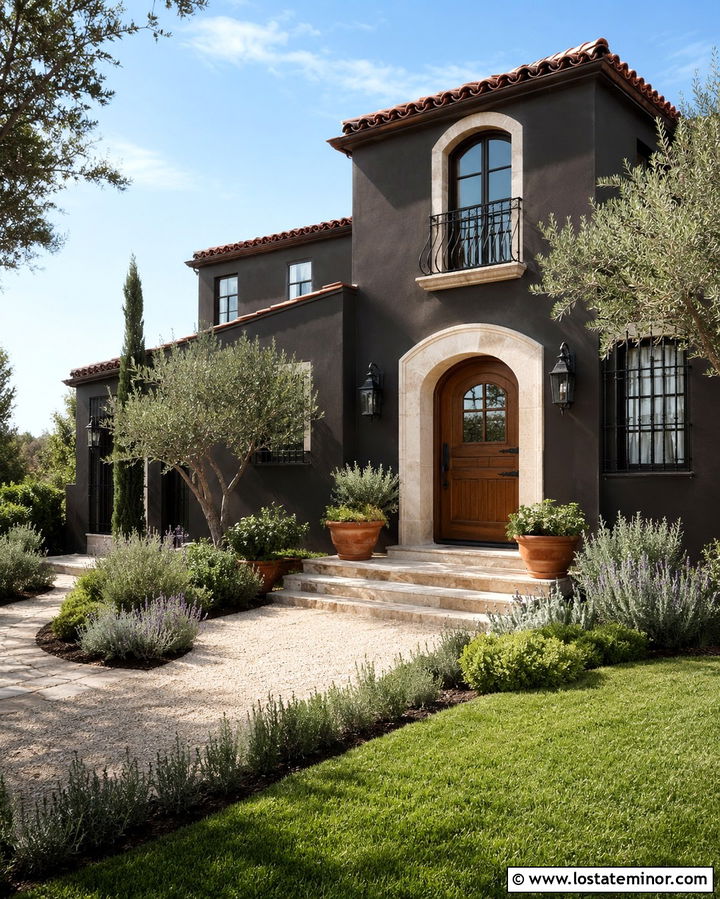
A Mediterranean home can wear soft black beautifully when warm masonry and natural wood balance the darker walls. Use Black Fox on smooth stucco, creamy limestone around the arched windows, and a low terracotta tile roof. Install a medium-walnut Dutch door with an arched upper section and small glass panes. Black iron hinges and a traditional latch will connect the door to window grilles and porch lighting. Add natural stone steps, a gravel courtyard-style walkway, and large clay planters near the entry. Olive trees, rosemary, lavender, and clipped shrubs reinforce the warm regional palette. Because the roof and landscaping already contribute strong color, keep the remaining trim close to the soft black body. The result feels established, richly textured, and more approachable than an entirely dark monochromatic exterior.
Conclusion:
The strongest soft black exteriors combine drama with enough warmth, texture, and contrast to remain inviting. A Dutch door can provide that balance through natural wood, a gentle neutral, or a thoughtfully selected accent color. Before finalizing the palette, compare exterior samples beside the roof, stone, brick, windows, and porch materials at different times of day. Keep large surfaces restrained, then let the door create a clear focal point. Coordinated hardware, landscaping, and lighting will make the scheme feel complete rather than pieced together. These **30 Soft Black House Design With Dutch Door Ideas** can be adapted to many architectural types, budgets, and neighborhoods while preserving the practical charm that makes a Dutch door so memorable.

Related posts: