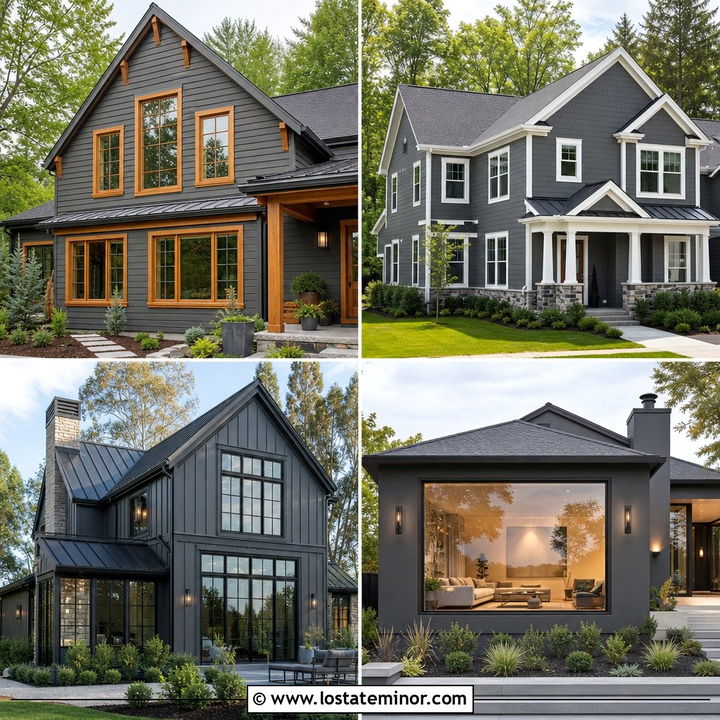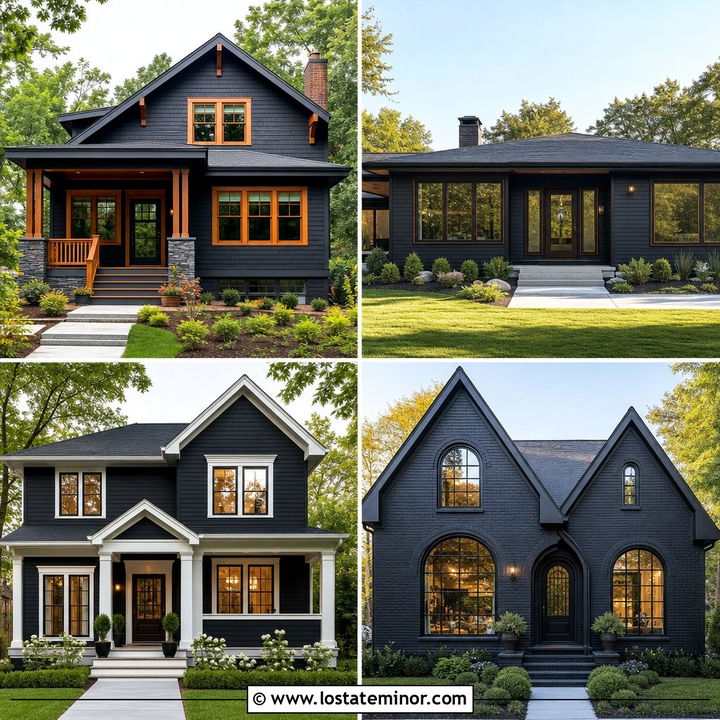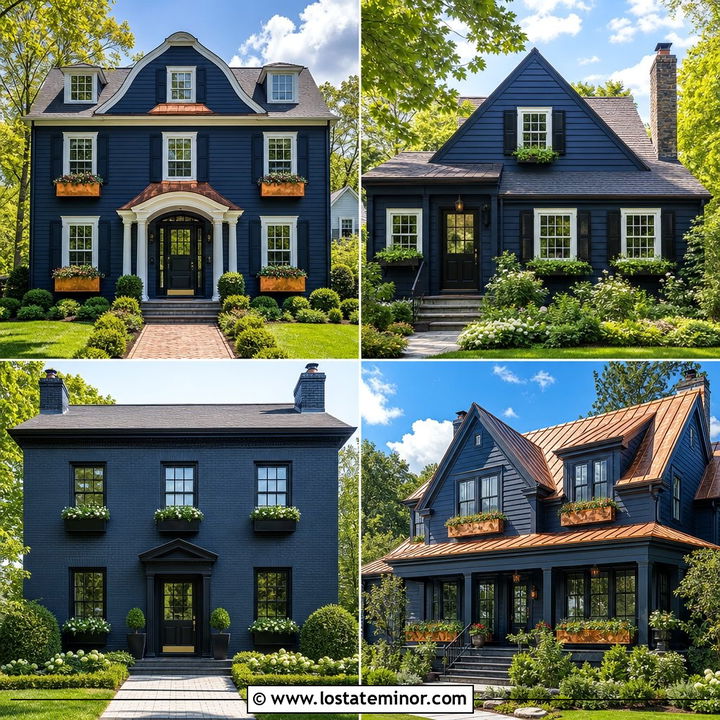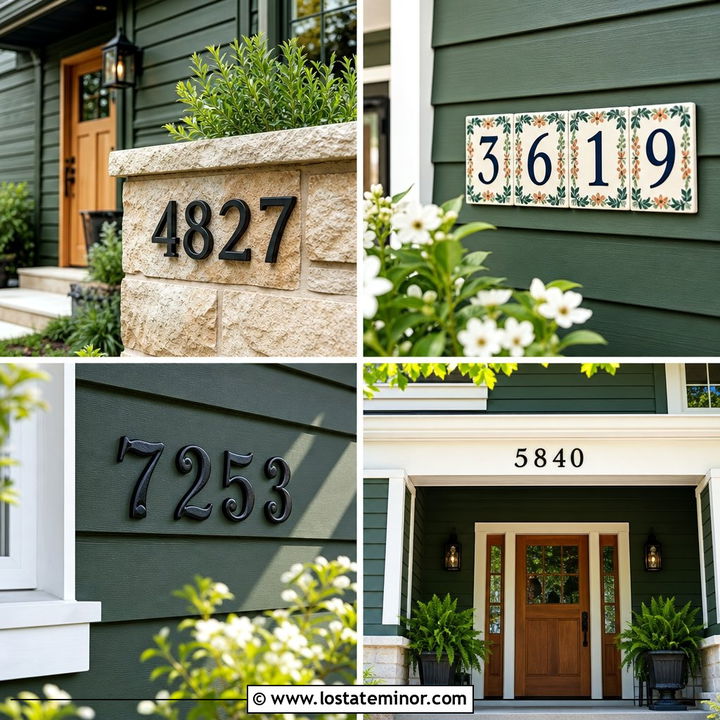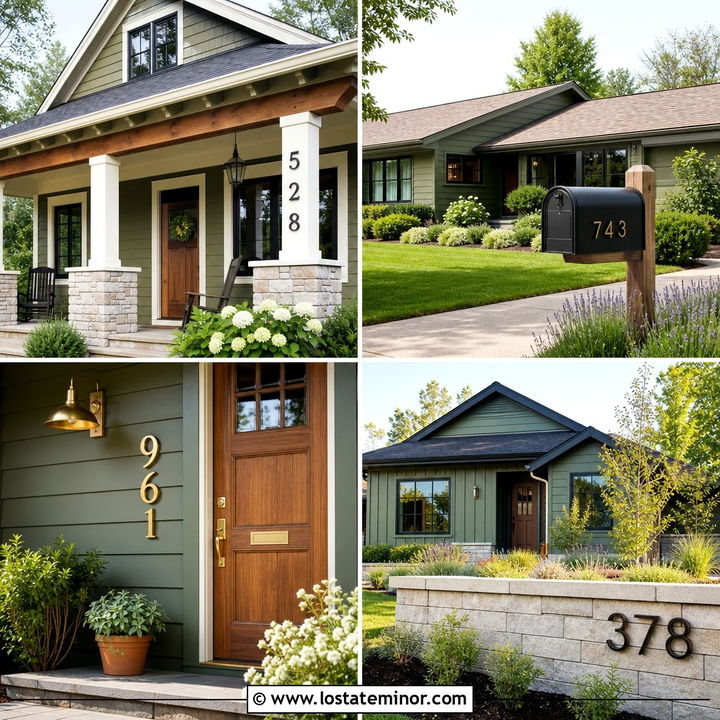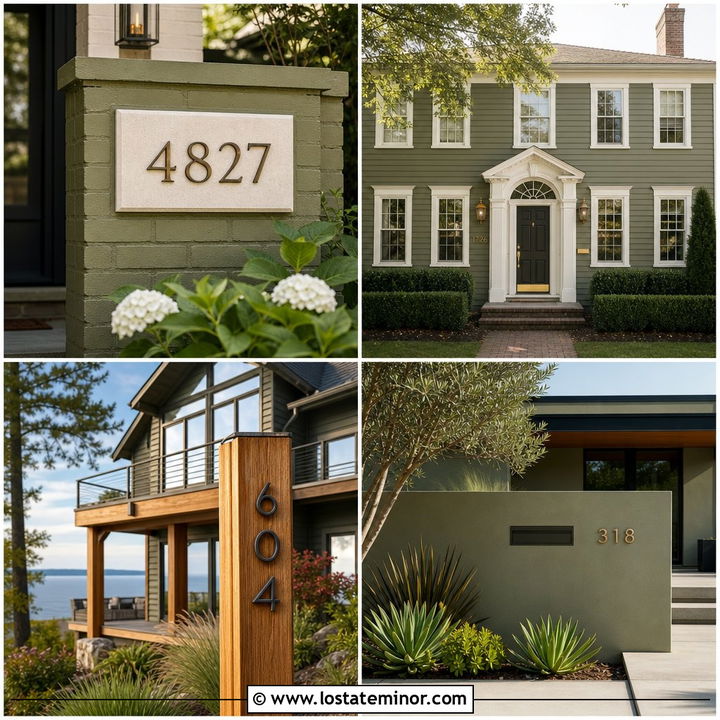
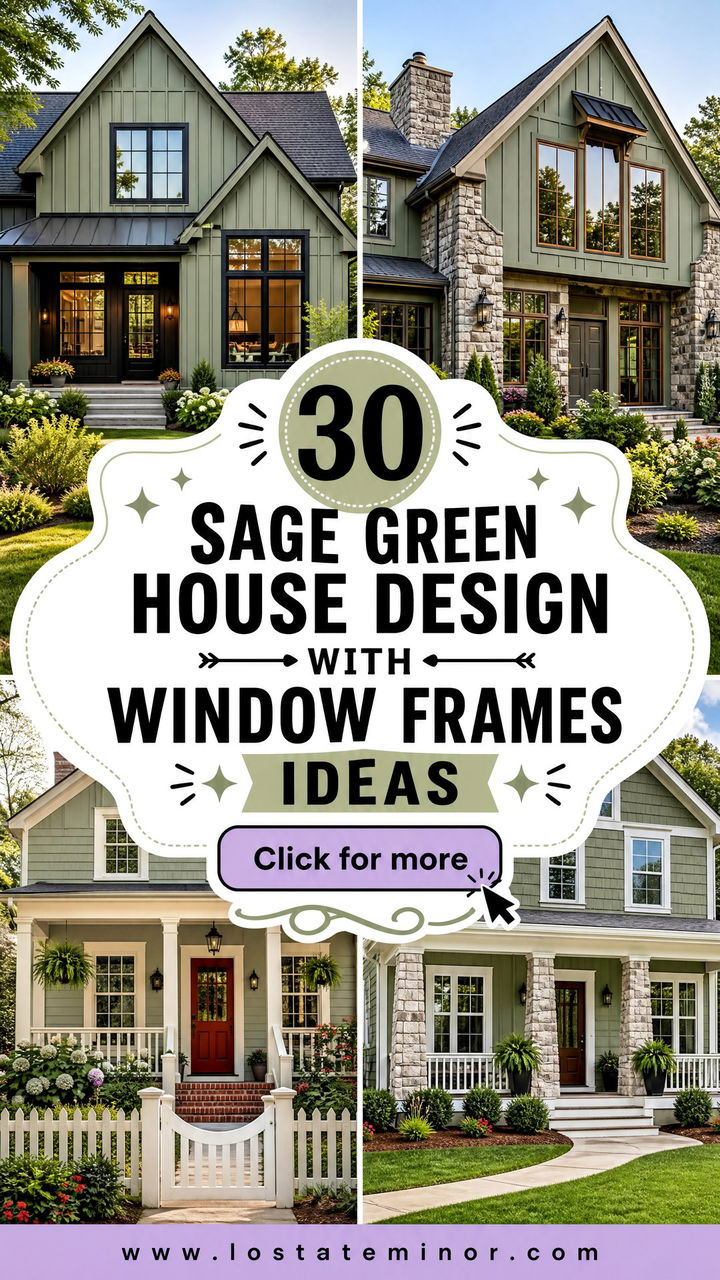
Sage green creates a calm, grounded exterior that blends naturally with lawns, trees, stone, and wood. The right window frames can make that soft color feel traditional, modern, rustic, or unexpectedly bold. These 30 Sage Green House Design With Window Frames Ideas explore complete exterior palettes rather than isolated color samples. You will find practical combinations for ranch homes, Craftsman houses, cottages, Colonials, farmhouses, and contemporary builds. Each look coordinates the sage siding with window frames, trim, roofing, doors, masonry, and landscaping. Consider your home’s fixed materials and natural light before making a final choice. Use large outdoor samples to compare undertones beside the roof and foundation. The complete schemes below make it easier to explore 30 Sage Green House Design With Window Frames Ideas.
1. Sage Green House With White Window Frames
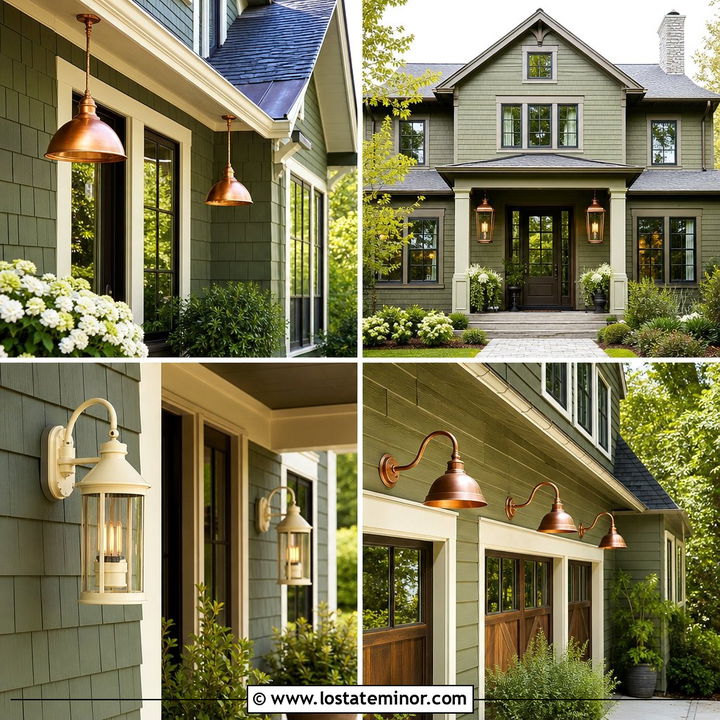
Crisp white window frames give a sage green exterior a clean, familiar appearance. This high-contrast pairing works especially well on a symmetrical Colonial with horizontal lap siding. Continue the white across the corner boards, porch columns, fascia, and front steps to create a connected design. A dark charcoal roof grounds the lighter palette, while a black front door adds a controlled focal point. Red brick steps can provide warmth without competing with the siding. Choose a muted, medium sage rather than a pale green so the window frames remain visible from the street. Neatly clipped shrubs, a straight stone walkway, and balanced porch lights reinforce the home’s traditional structure. The finished exterior feels fresh, polished, and easy to maintain over time.
2. Sage Green House With Black Window Frames
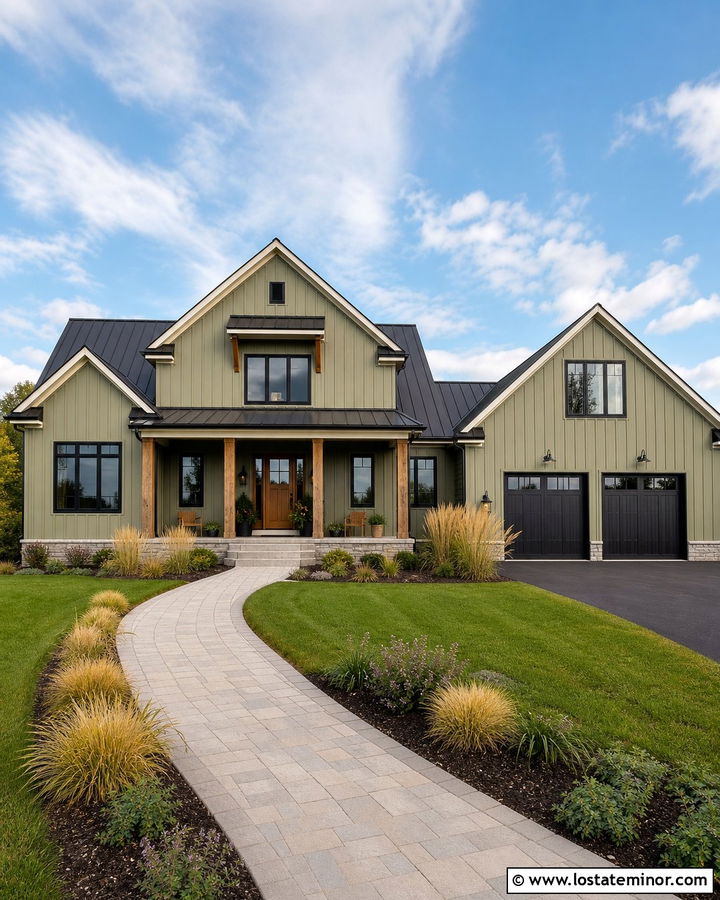
Black window frames sharpen sage green siding and bring modern definition to the facade. They look particularly effective on a farmhouse with board-and-batten siding, steep front gables, and large windows. Carry the black onto the metal roof, gutters, porch lights, and simple front door hardware. Warm white fascia keeps the roofline from becoming too heavy. Natural cedar porch posts and a stained wood front door soften the bold contrast and connect the home to its surroundings. Avoid adding black to every possible feature because the exterior can begin to feel outlined. Instead, let the dark frames emphasize the windows while wood and stone create balance. A gravel-edged walkway and ornamental grasses complete this relaxed but structured curb-appeal scheme.
3. Sage Green House With Cream Window Frames
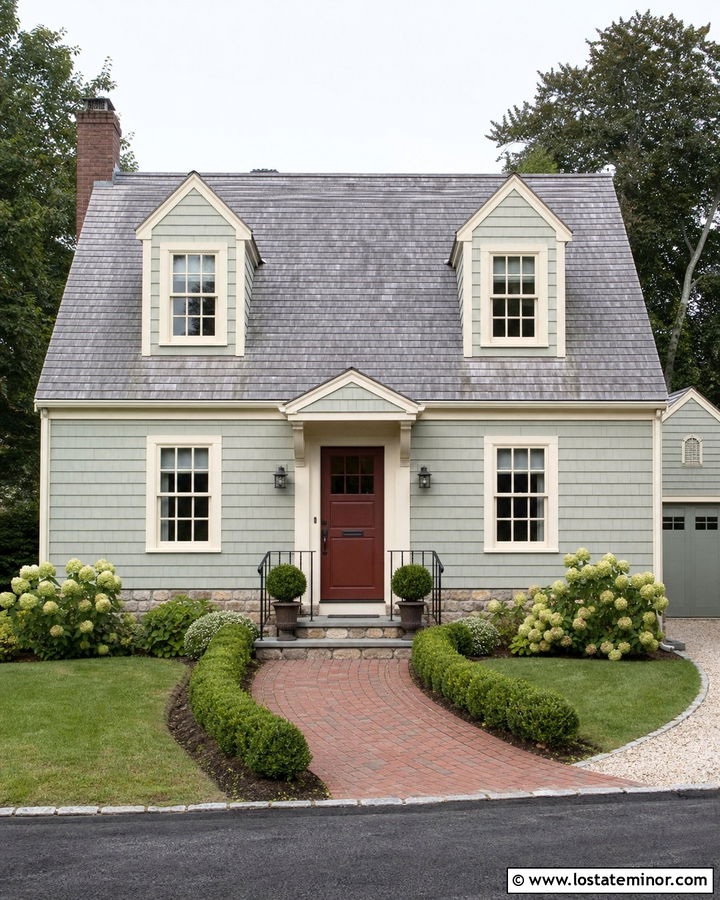
Cream window frames create a softer transition than bright white and complement the warm side of sage green. This combination suits a Cape Cod home with cedar shingles, dormer windows, and a compact covered entry. Repeat the cream on the dormer trim, eaves, porch railing, and garage surround. A weathered gray roof supports the quiet color palette without introducing another strong accent. For the front door, consider muted brick red or deep brown to give the entrance enough visual weight. Cream frames can appear yellow beside cool green paint, so compare samples outdoors before committing. Natural fieldstone along the foundation adds texture and helps unite the earthy colors. Hydrangeas, low boxwoods, and a curved brick path complete the welcoming cottage-inspired exterior.
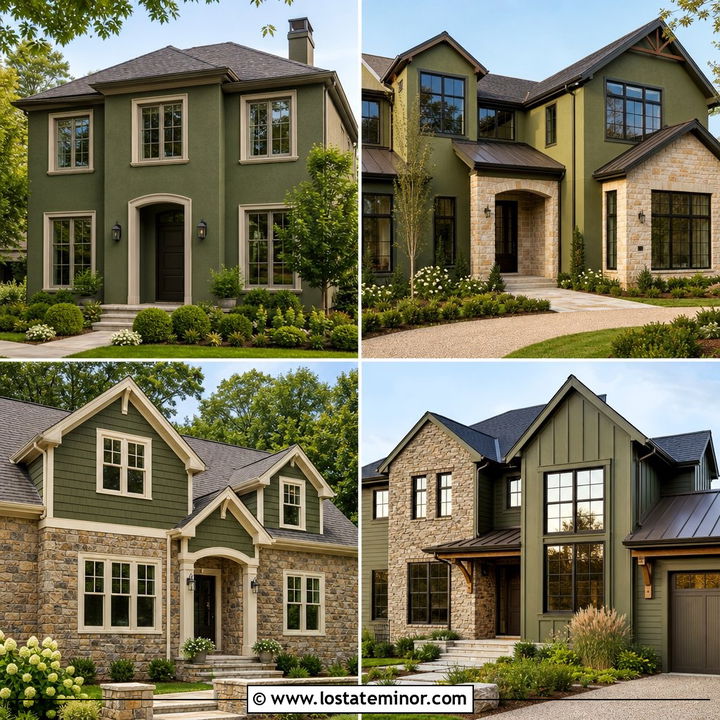
4. Sage Green House With Dark Bronze Window Frames
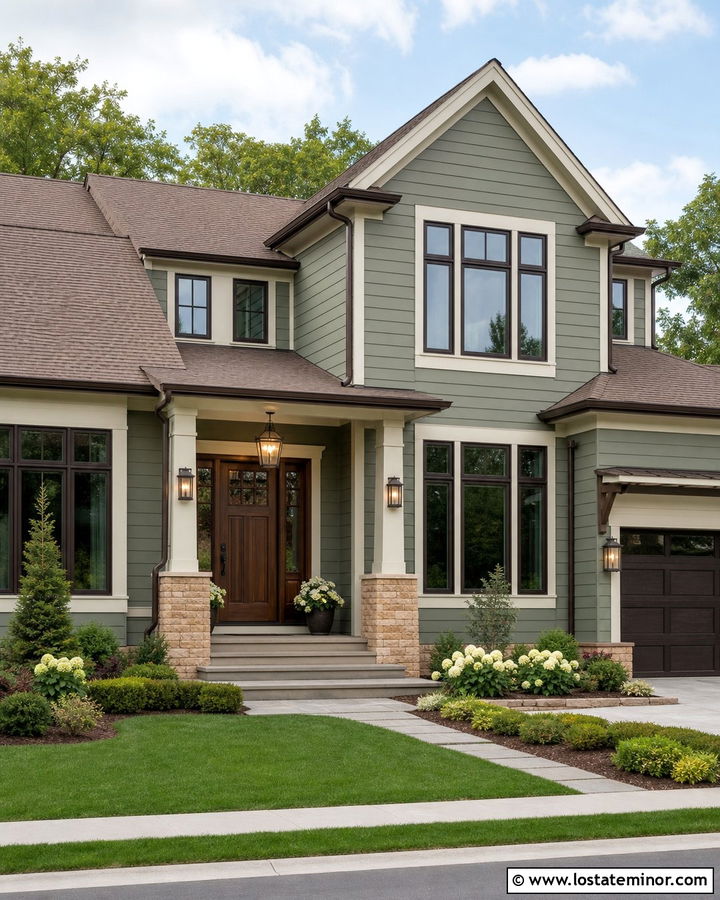
Dark bronze window frames bring warmth and depth to a sage green home without creating the stark contrast of solid black. Use this combination on an upscale transitional house with wide horizontal siding, stone piers, and tall grouped windows. Coordinate the bronze frames with the gutters, porch lanterns, door hardware, and garage door details. A medium brown architectural roof continues the warm undertone, while creamy trim gently separates the siding from the roofline. A walnut-stained front door can become the central accent. Because bronze may read brown from a distance, it works naturally with tan stone and timber features. Layered foundation plantings, broad entry steps, and a clean concrete driveway make the finished property feel established, comfortable, and thoughtfully coordinated.
5. Sage Green House With Charcoal Window Frames
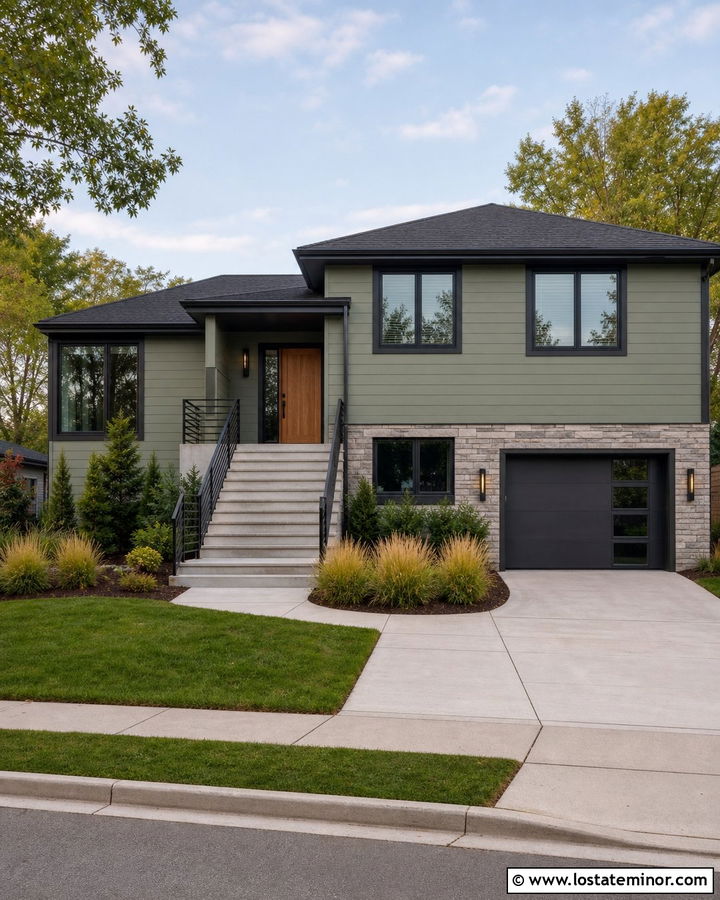
Charcoal window frames offer a quieter alternative to black while still giving sage siding a defined edge. This pairing is ideal for a split-level home that needs a more current, unified facade. Paint the upper siding a balanced sage green and use charcoal around the windows, garage door, fascia, and gutters. Keep the lower level in light gray stone or painted brick to bridge the green and dark accents. A warm wood front door prevents the exterior from feeling too cool. Simple horizontal railings and broad concrete steps can update the entrance without removing the home’s original character. Finish with low grasses, evergreen shrubs, and a widened walkway. The result feels streamlined and contemporary while respecting the proportions of the existing architecture.
6. Sage Green House With Natural Wood Window Frames
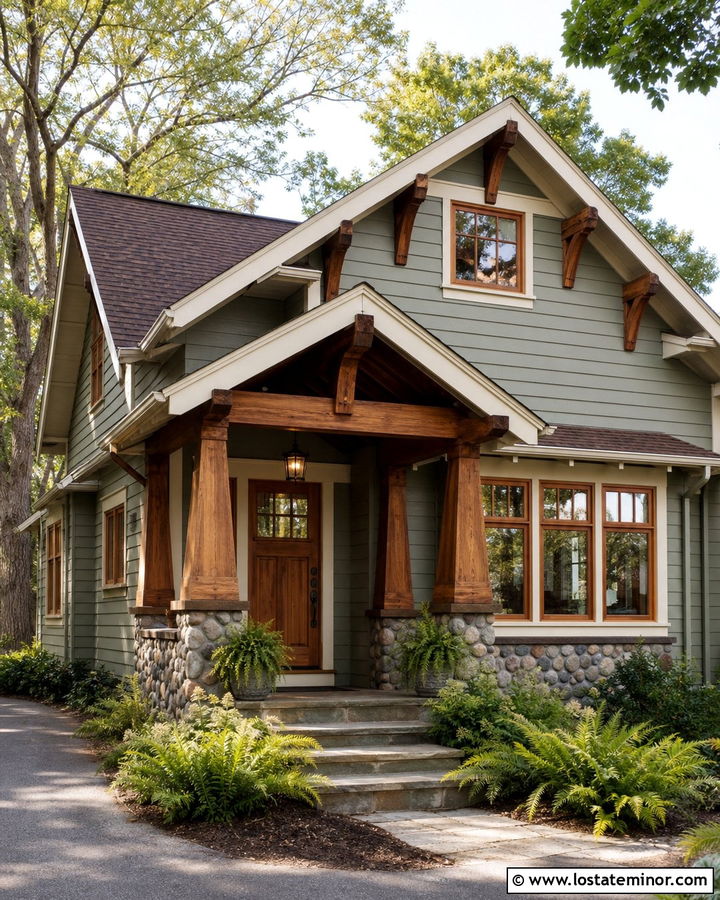
Natural wood window frames make sage green feel especially connected to the landscape. This combination suits a Craftsman house with deep eaves, exposed rafter tails, tapered columns, and a generous front porch. Use stained cedar or Douglas fir around the windows, then repeat that finish on the front door, porch ceiling, brackets, and railing cap. Soft cream trim can highlight the roofline without distracting from the wood grain. A deep brown roof and river-rock foundation complete the organic palette. Protect exterior wood with an appropriate weather-resistant finish and expect periodic upkeep. Ferns, native grasses, and layered shrubs help the house settle naturally into a wooded lot. Every material contributes to a warm, handcrafted exterior rather than appearing like a separate decorative feature.
7. Sage Green House With Taupe Window Frames
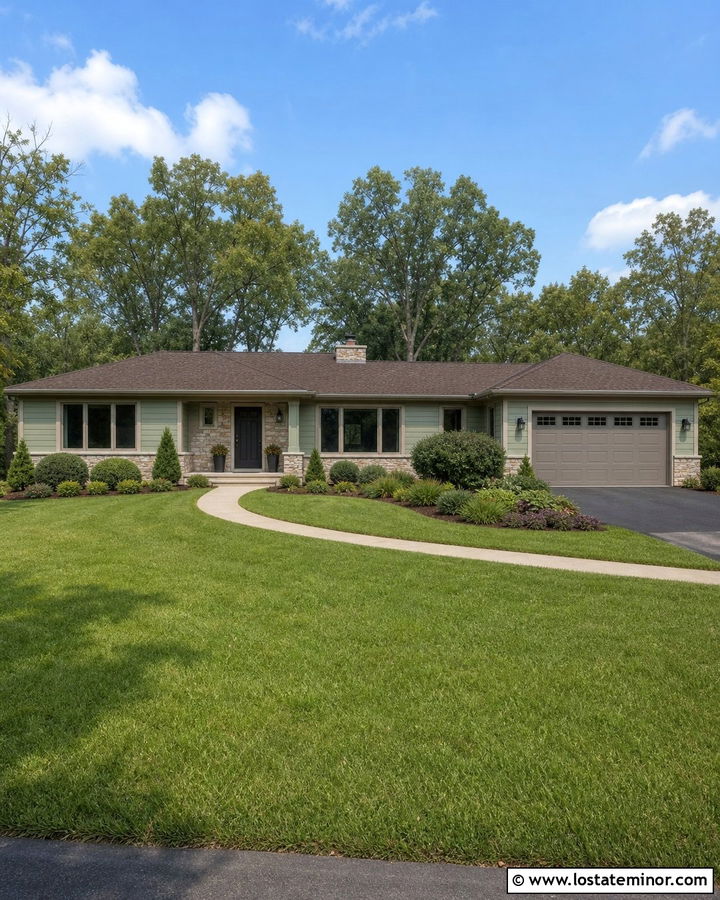
Taupe window frames create a low-contrast exterior that feels refined and calm. They pair beautifully with sage green siding on a suburban ranch house with a long roofline and wide picture windows. Extend the taupe onto the fascia, soffits, garage door, and front porch posts for a unified appearance. Choose a taupe with green or gray undertones instead of a pink beige, which may clash with the siding. A dark brown roof provides enough contrast overhead, while a muted black front door adds a small visual anchor. Light limestone around the entry introduces subtle texture. Broad planting beds, curved paths, and rounded evergreen shrubs soften the horizontal architecture. This scheme is especially useful when you want the windows to blend into the facade rather than dominate it.
8. Sage Green House With Greige Window Frames
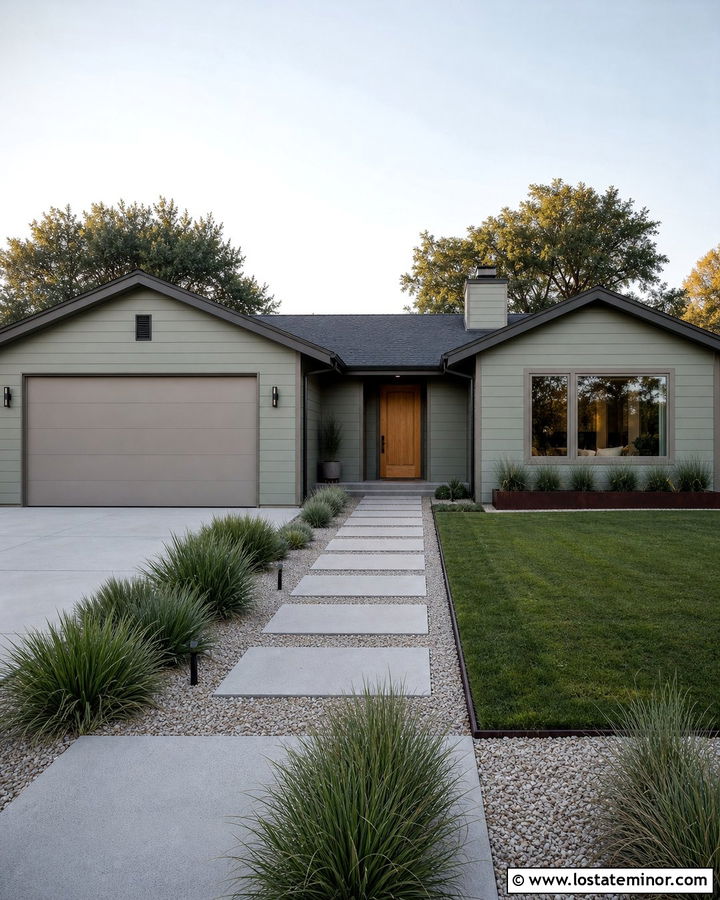
Greige window frames balance the cool gray notes and natural warmth often found in sage green paint. Try this combination on a contemporary ranch with smooth fiber-cement siding, shallow rooflines, and asymmetrical windows. Use the same greige on the garage door, entry surround, and concrete-look porch columns. A matte charcoal roof adds contrast, while a medium oak front door keeps the palette from becoming flat. Thin black light fixtures provide a precise finishing touch without overpowering the softer frame color. Greige varies greatly in different daylight, so test it directly beside the chosen sage. Simple foundation grasses, pale gravel, and rectangular stepping stones complement the architecture. The complete exterior feels updated and subtle, with enough tonal variation to highlight each material.
9. Sage Green House With Matching Green Window Frames
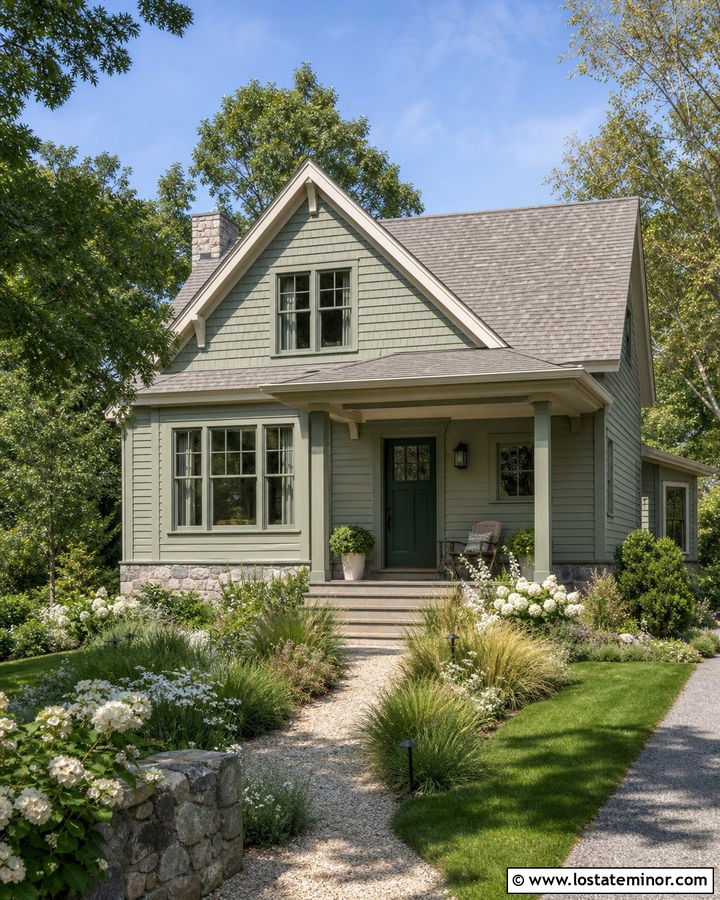
Matching sage window frames and siding creates a monochromatic exterior with smooth visual flow. This approach works well on a modern cottage where interesting rooflines and siding textures provide the definition. Use one sage green across the lap siding, frame surrounds, and corner boards, then choose a slightly deeper green for the front door and shutters. Cream fascia and a warm gray roof prevent the house from disappearing into a single block of color. Natural stone at the foundation introduces texture rather than strong contrast. Matching window surrounds can also make a smaller facade appear wider because there are fewer visual interruptions. Surround the home with white flowering plants, airy grasses, and a light gravel path. The finished look is quiet, cohesive, and closely tied to the garden.
10. Sage Green House With Deep Green Window Frames
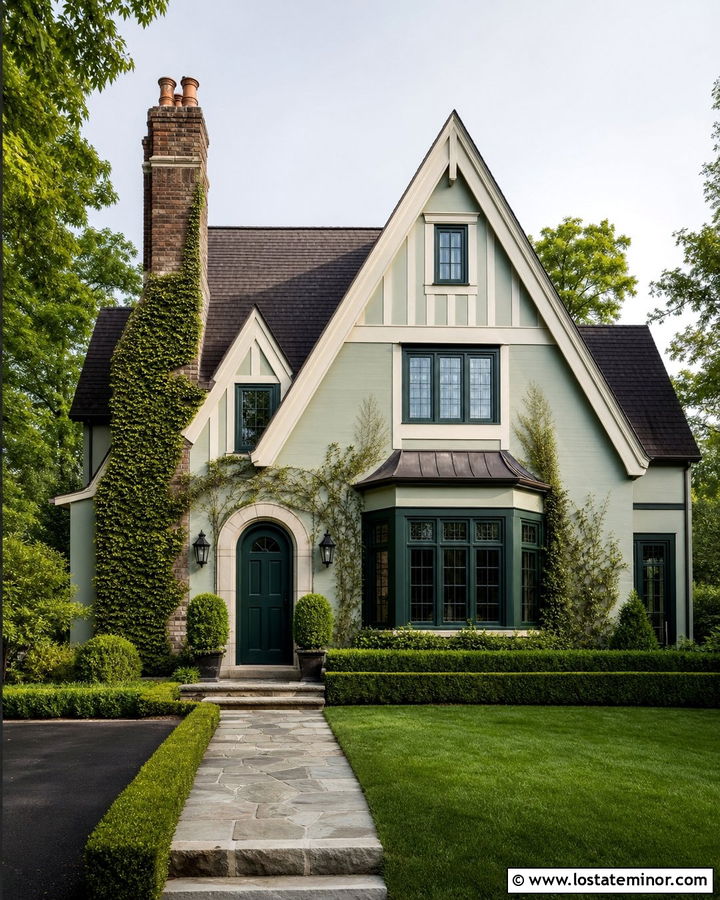
Deep green window frames create layered color while keeping the exterior rooted in a natural palette. This combination looks handsome on a Tudor-inspired home with steep gables, stucco panels, and decorative half-timbering. Apply sage green to the main siding or stucco, then use forest green around the casement windows, front door, and selected timber details. Warm cream can outline the gables and prevent the darker green from feeling too dense. A brown-black roof and aged brick chimney add traditional depth. The two greens should have compatible undertones, so compare them in morning and afternoon light. Ivy should remain controlled around the masonry, while structured hedges and a stone walkway reinforce the formal architecture. The result feels distinctive without relying on an unrelated accent color.
11. Sage Green House With Blue Gray Window Frames
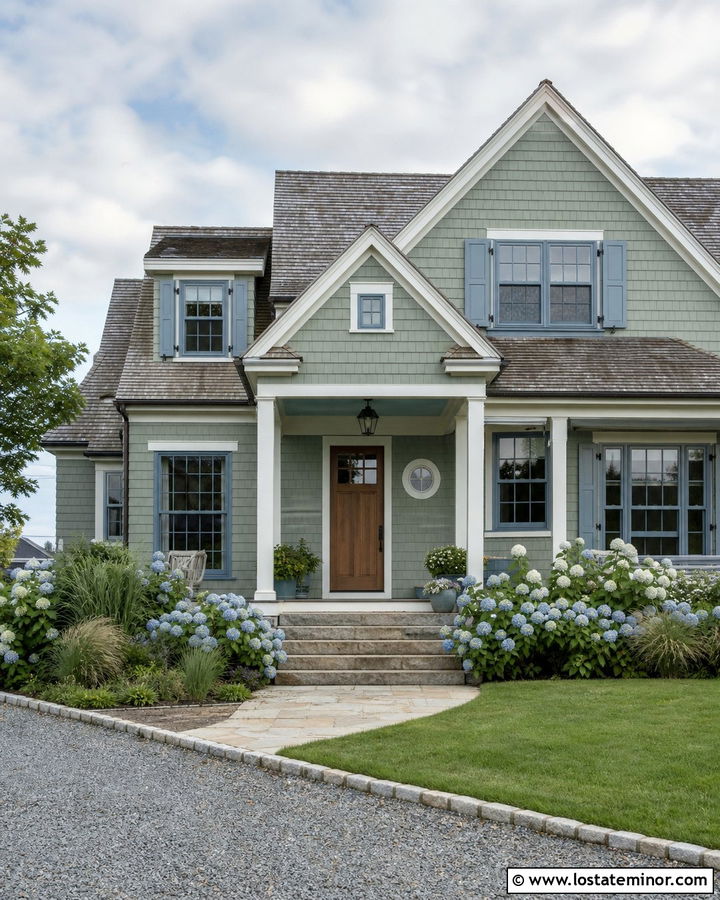
Blue-gray window frames bring a cool, coastal influence to sage green siding. Use this pairing on a shingle-style home with multiple gables, divided-light windows, and a wide front porch. Select a dusty blue-gray rather than a bright blue so it stays harmonious with the muted body color. Repeat it on the porch ceiling, shutters, and side entry door. Soft white trim can outline the main roofline and columns, while a weathered gray roof supports the coastal palette. A natural teak front door introduces restrained warmth. Add pale stone steps, loose hydrangeas, and ornamental grasses around the facade. This complete scheme feels breezy and relaxed, yet it avoids obvious nautical colors. The subtle frames give the windows personality without making them look detached from the house.
12. Sage Green House With Navy Window Frames
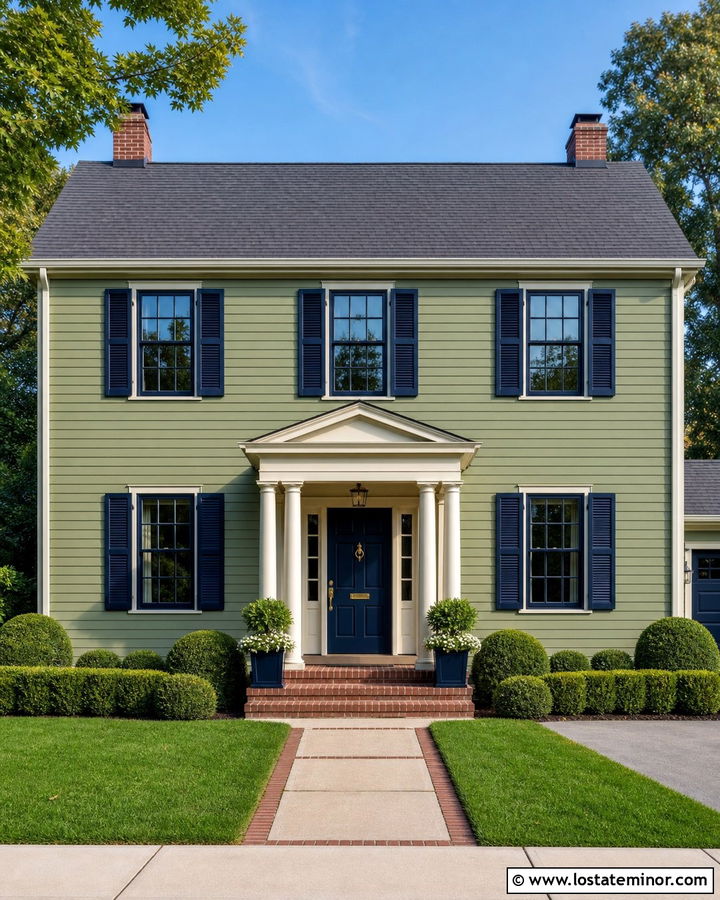
Navy window frames provide strong color contrast while appearing softer and more colorful than black. They work well on a two-story traditional house with symmetrical windows and a centered portico. Pair medium sage lap siding with navy frames, shutters, and a matching front door. Use warm white on the columns, cornice, railings, and window trim bands so the dark frames remain crisp. A charcoal roof connects naturally to the navy, while red brick porch flooring contributes warmth at ground level. Limit additional colors to keep the palette orderly. Brass door hardware and classic lanterns can add a refined finishing touch. Formal foundation shrubs, a straight walkway, and matching planters support the balanced facade. This palette feels established, confident, and slightly less predictable than standard black accents.
13. Sage Green House With Brown Window Frames
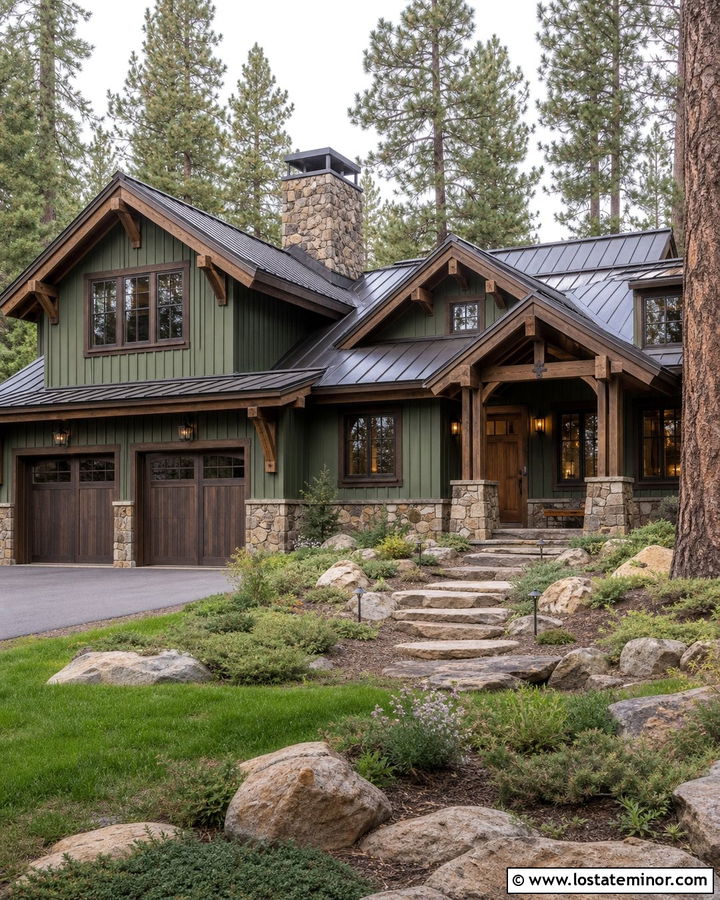
Rich brown window frames enhance the earthy character of sage green and pair naturally with rustic materials. This scheme fits a mountain lodge or wooded suburban home with heavy timber details, broad roof overhangs, and stone walls. Use a medium muted sage on the siding and chocolate brown around the windows, fascia, garage doors, and exposed beams. A dark bronze metal roof or deep brown shingle roof will keep the upper portion cohesive. Select a wood front door with visible grain instead of adding another painted color. Mixed fieldstone along the foundation creates a strong base and introduces subtle gray and tan notes. Pine trees, native groundcover, and irregular stone steps complete the setting. The home feels warm and substantial without losing sage green’s quiet softness.
14. Sage Green House With Red Window Frames
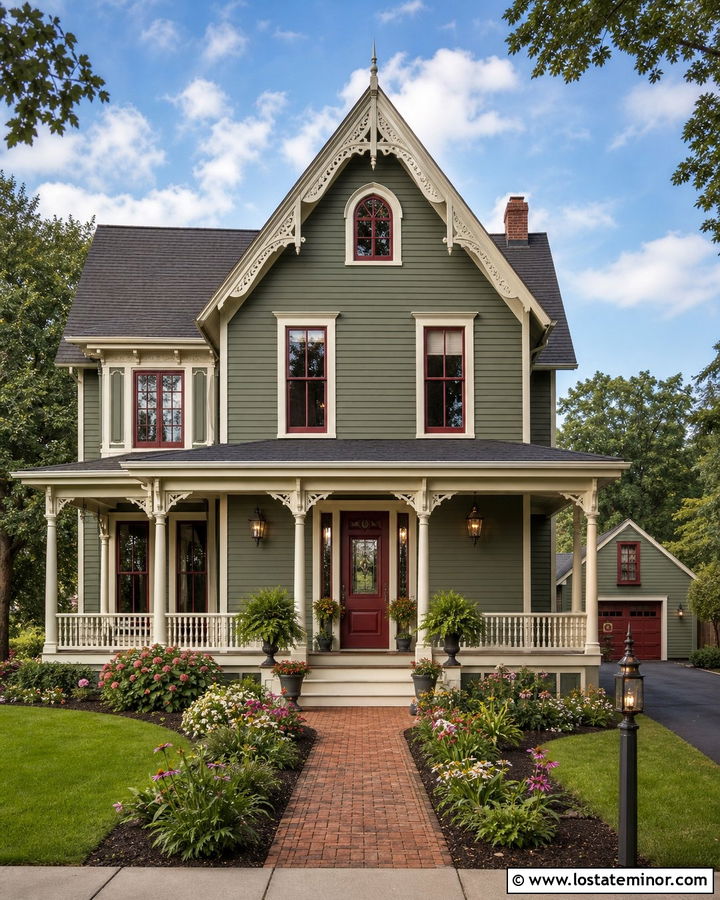
Muted red window frames can give a sage green exterior historic character when the color is carefully controlled. This works best on a Victorian farmhouse or heritage cottage with decorative trim, tall windows, and a covered porch. Choose a deep brick red or oxblood rather than a bright primary red. Repeat it on the front door and small gable details, but use creamy white for the porch columns, railings, fascia, and window trim surrounds. A dark gray roof keeps the palette grounded. Sage and muted red form a noticeable contrast, so let one color remain dominant. A brick walkway, antique-style lanterns, and cottage planting beds strengthen the period appearance. The result feels charming and intentional instead of overly colorful or themed.
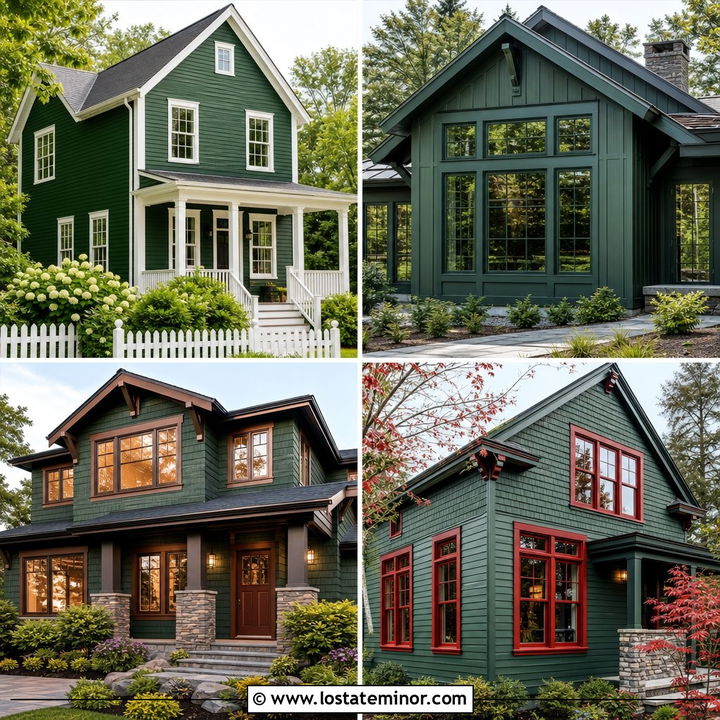
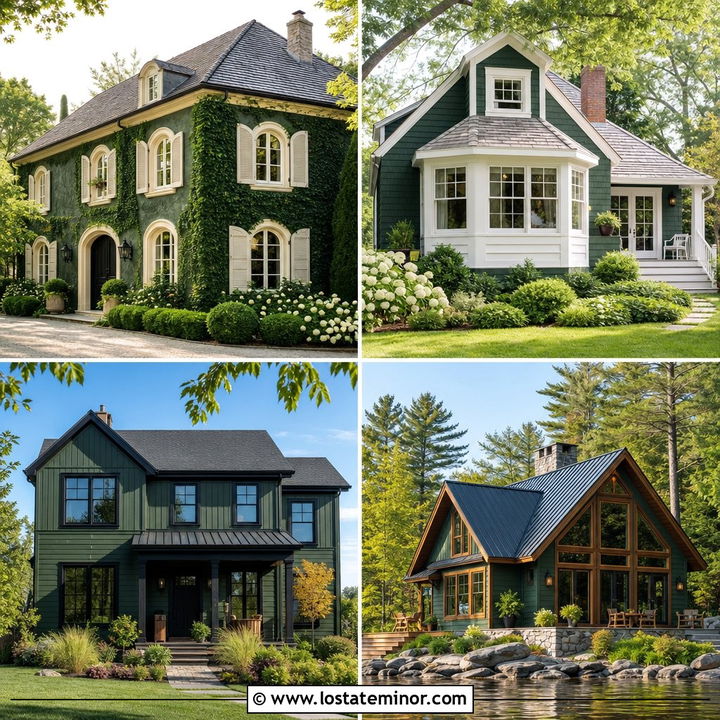
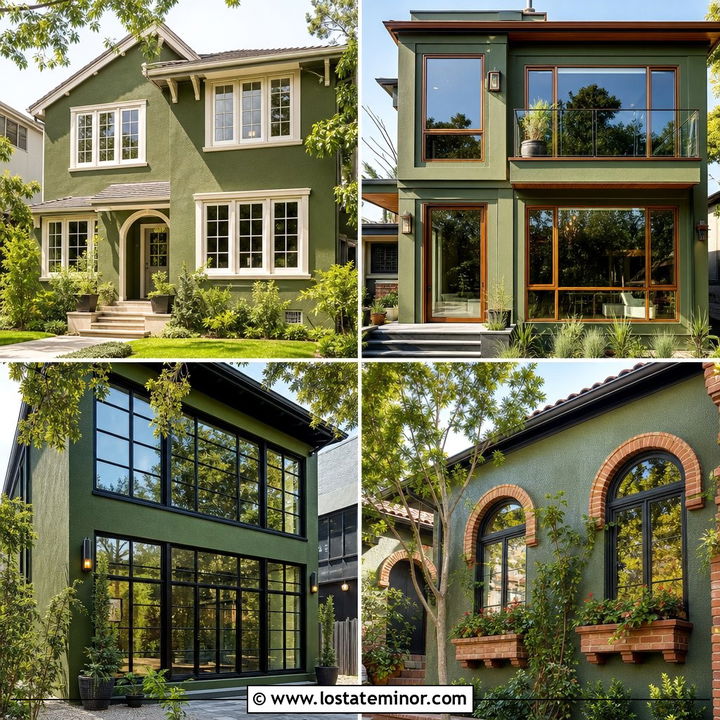
15. Sage Green House With Burgundy Window Frames
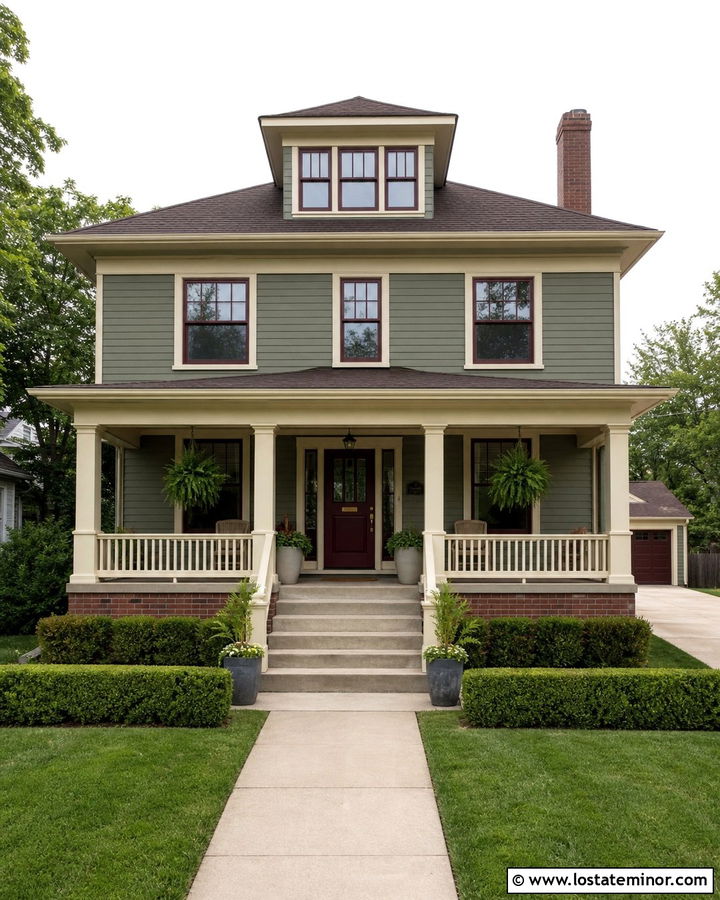
Burgundy window frames add a sophisticated, traditional accent to sage green siding. Consider this palette for an American Foursquare with a broad front porch, sturdy columns, and evenly spaced double-hung windows. Use burgundy on the inner frames, front door, and restrained porch details. Warm ivory should cover the wider window casings, eaves, columns, and railing to create breathing room between the green and red tones. A deep brown roof and red-brown brick foundation complete the historic palette. Burgundy looks best when it has brown undertones rather than a purple cast. Tall planters, clipped hedges, and a wide concrete path can keep the exterior looking orderly. This complete scheme gives the home personality while preserving the strong, dignified character of its architecture.
16. Sage Green House With Black Window Frames And White Trim
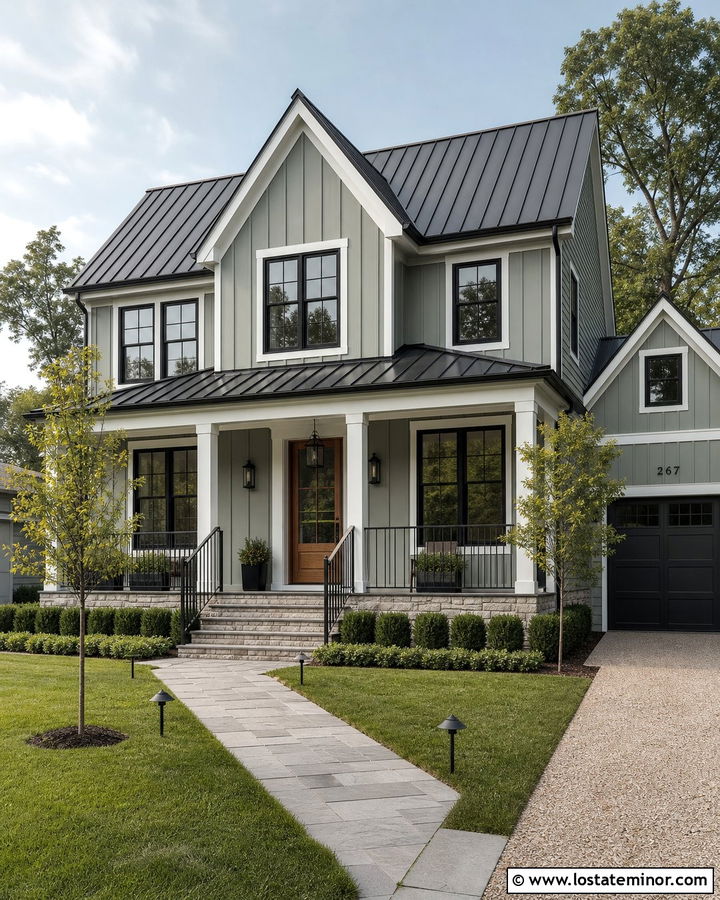
Combining black window frames with white trim creates strong architectural layering against sage green siding. This three-color scheme is especially effective on a modern farmhouse with tall gables and large windows. The black frames define the glass, while wider white casings create separation from the green board-and-batten exterior. Continue white onto the fascia and porch columns, then repeat black on the roof, gutters, lights, and metal railing. A natural oak front door adds warmth at the center. Use stone only in a narrow foundation band or around the porch to avoid making the facade too busy. Clean hedges, young trees, and a straight paver walkway reinforce the home’s simple geometry. The complete look feels bright and modern without sacrificing the welcoming quality of sage.
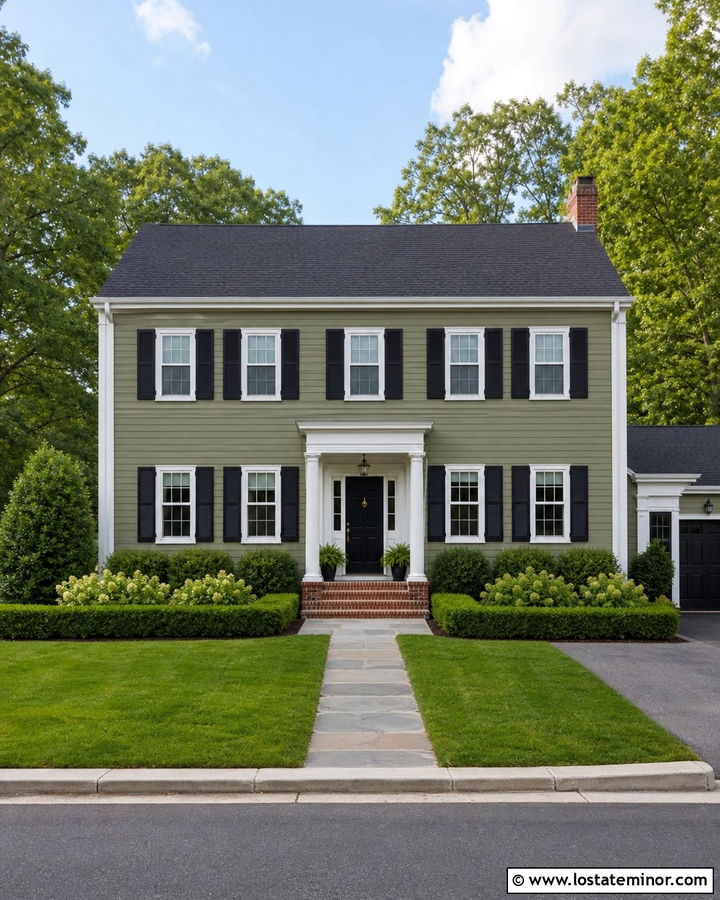
17. Sage Green House With White Window Frames And Black Shutters
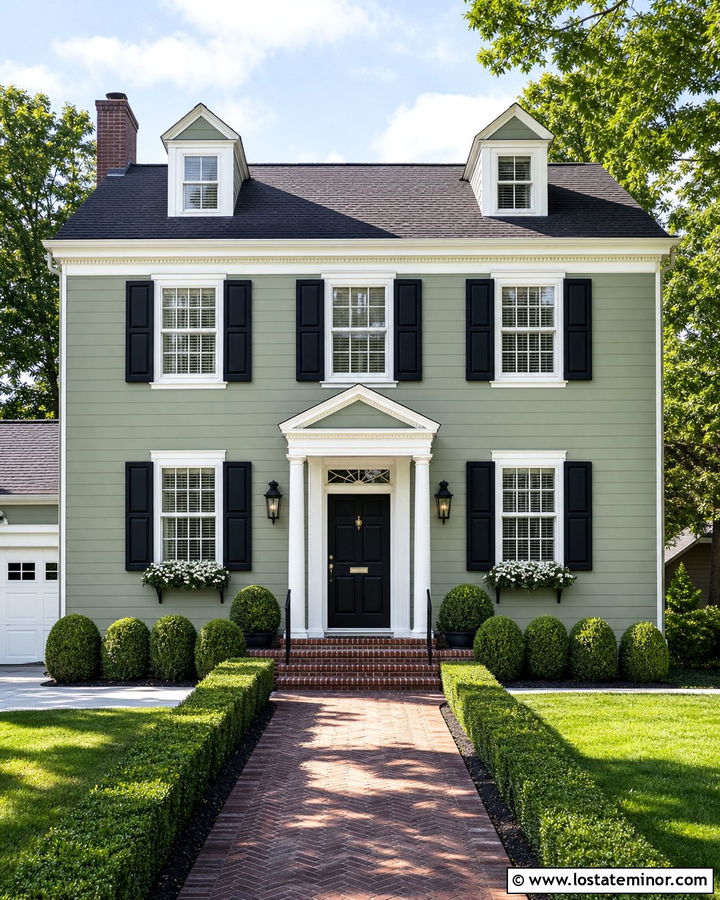
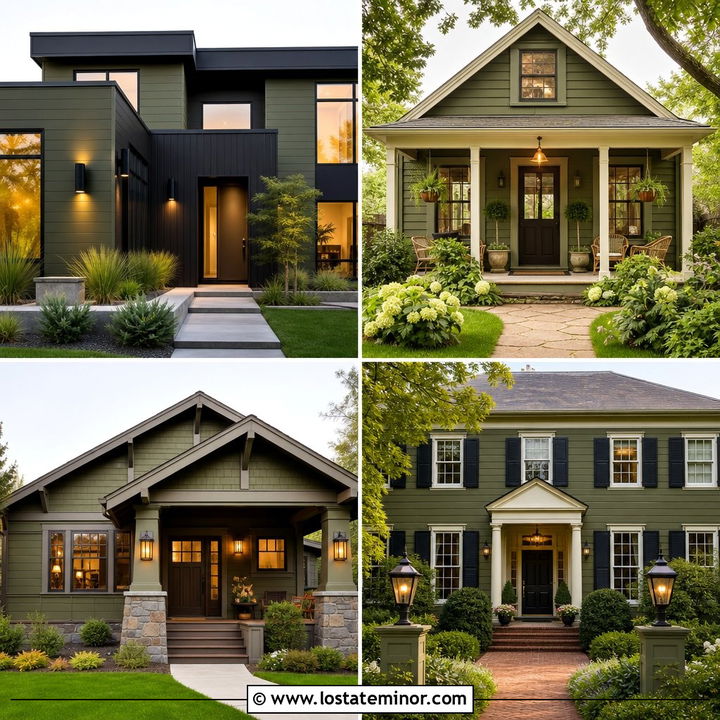
White window frames and black shutters give sage green siding a classic, well-defined appearance. This arrangement suits a Georgian or Colonial Revival house with evenly spaced windows and a centered entrance. Keep the frames and broad casings white, then use properly scaled black shutters that visually match the window openings. Repeat black on the front door, lanterns, and roof, but avoid painting every trim detail dark. White columns, corner boards, and cornices maintain a fresh structure around the sage body. Red brick steps and a brick chimney warm the palette and reinforce the traditional design. Symmetrical boxwoods and a straight path support the architecture. This dependable exterior combination has clear contrast at every level while allowing the green siding to remain the dominant feature.
18. Sage Green House With Cream Window Frames And Wood Shutters
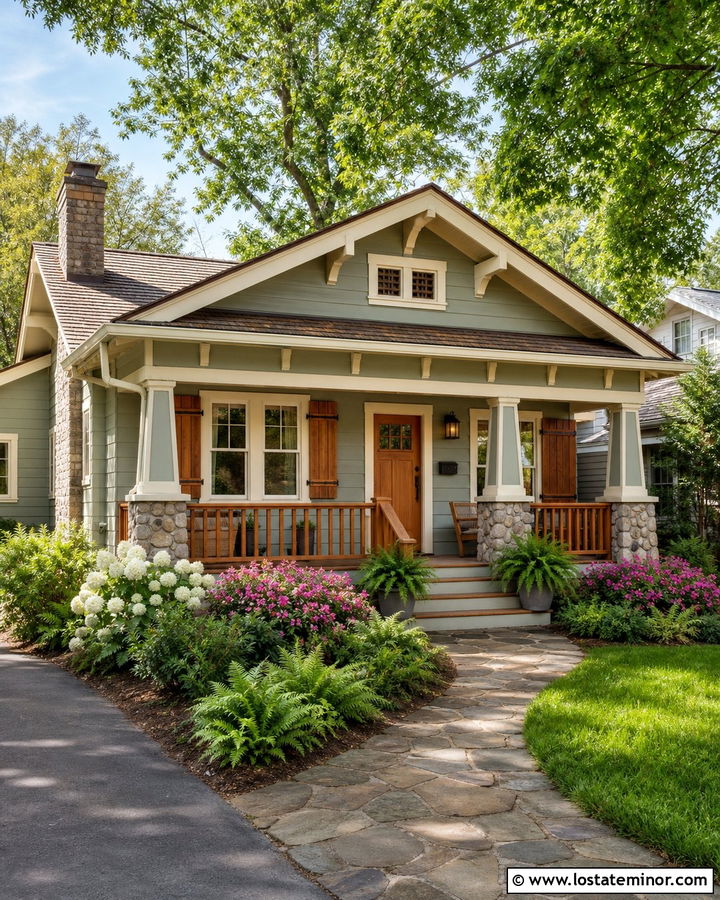
Cream window frames and wood shutters produce a warm, relaxed exterior with plenty of natural texture. Use this scheme on a bungalow with low gables, wide eaves, exposed brackets, and a deep front porch. Paint the siding a soft earthy sage and carry cream onto the window casings, porch columns, and fascia. Add cedar shutters stained in a medium honey-brown tone, then repeat that finish on the door and porch railing. A weathered brown roof and stone porch base help anchor the lighter colors. The shutters should be sized to suit each window rather than appearing like narrow decorative strips. Ferns, flowering shrubs, and a gently curved flagstone path complete the casual setting. The full house feels welcoming, handcrafted, and comfortably connected to nature.
19. Sage Green House With Bronze Window Frames And Stone
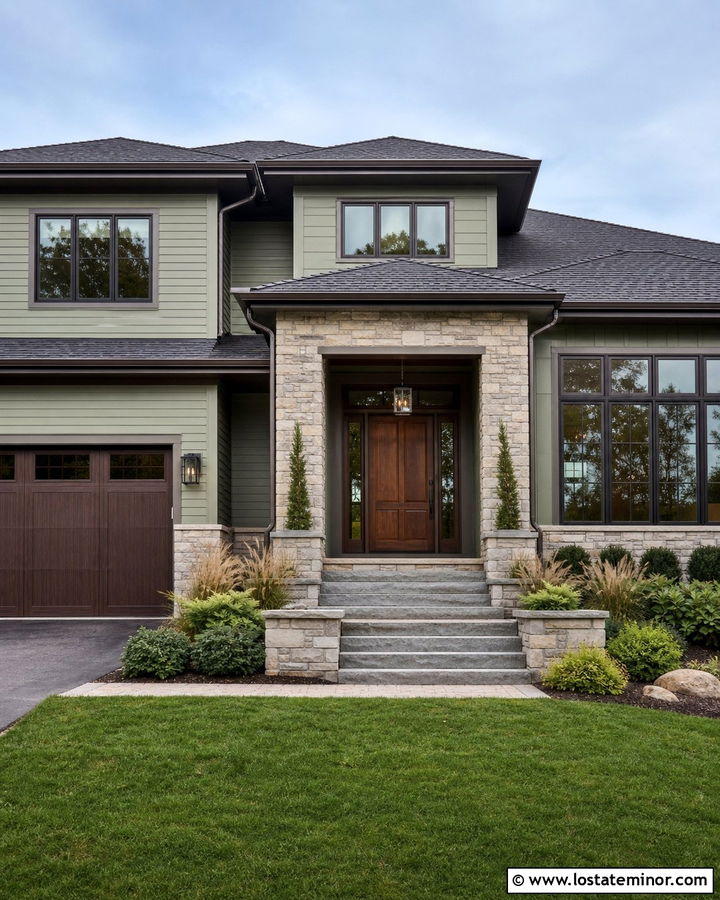
Bronze window frames look particularly rich when sage green siding is paired with natural stone. Choose this combination for a transitional home with a stone-clad entry, mixed siding, and large grouped windows. Use dark bronze frames throughout the facade and coordinate them with the garage hardware, gutters, and contemporary porch lights. A warm off-white trim prevents the siding and stone from merging visually. Select limestone or ledgestone containing gray, taupe, and muted brown rather than orange-heavy masonry. A stained walnut door will echo the frame color without matching it exactly. Keep the roof dark brown or charcoal for a stable upper edge. Layered grasses, evergreen shrubs, and broad stone steps complete a polished exterior that feels natural, expensive, and carefully balanced.
20. Sage Green House With Black Window Frames And Brick
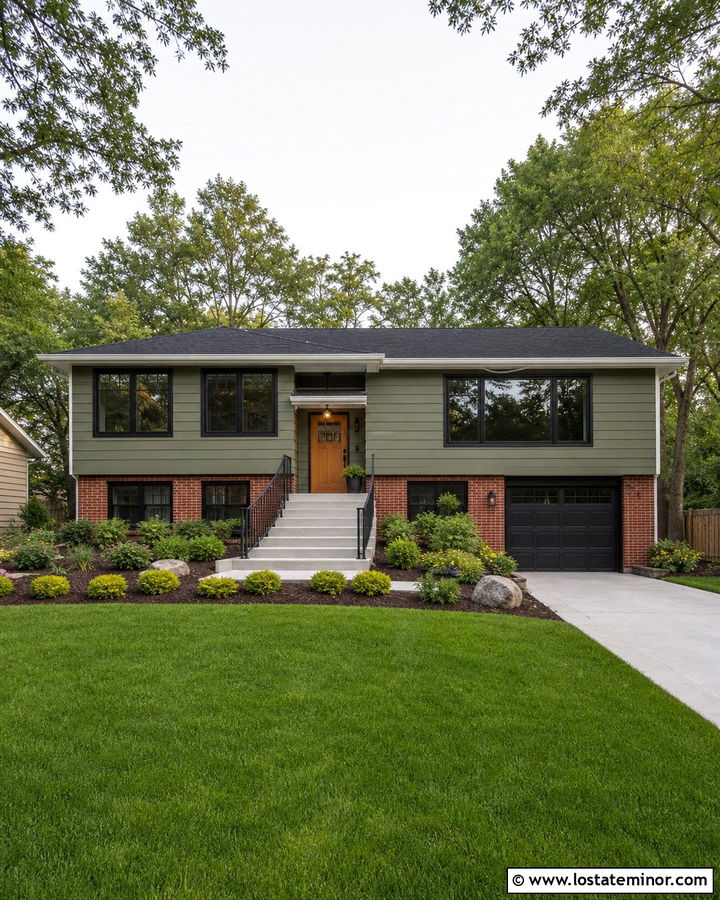
Existing brick can look renewed when it is paired with sage green siding and black window frames. On a split-entry or raised ranch, keep warm red brick across the lower level and apply muted sage to the upper siding. Black frames, gutters, porch rails, and garage details provide a clean line that connects the two materials. Use a warm white around the roof edge to prevent the facade from appearing too dark. A natural wood front door can bridge the red-brown masonry and green siding. If the brick has strong orange tones, choose a sage with slightly warmer undertones. Update the landscaping with broad planting beds and low shrubs rather than hiding the masonry. This scheme respects the original brick while giving the overall property a sharper, more cohesive identity.
21. Sage Green House With White Window Frames And A Cedar Porch
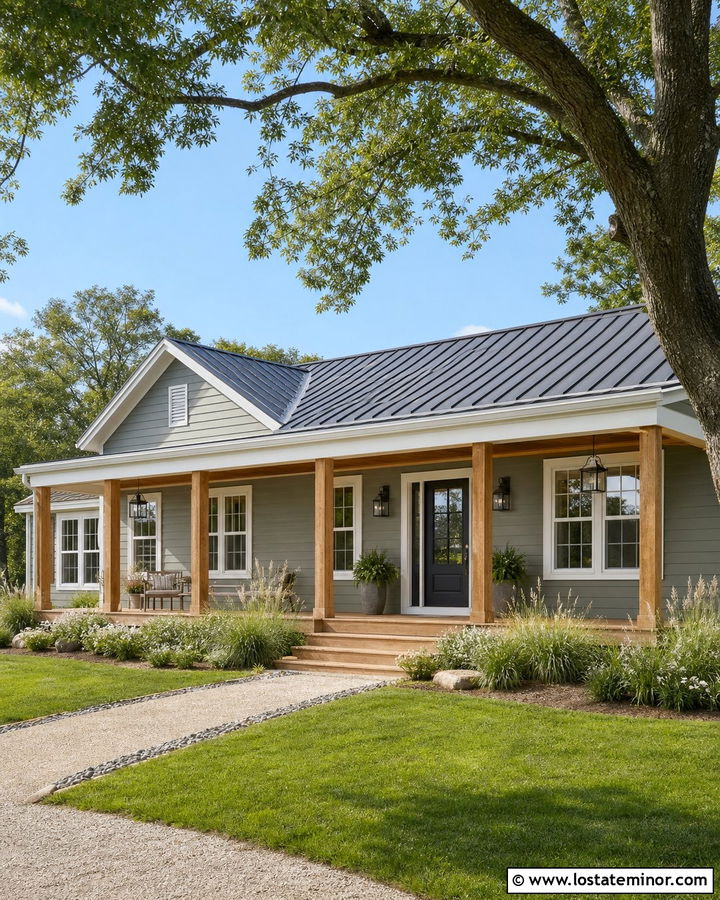
A cedar porch introduces warmth to a sage green facade with white window frames. This complete look works beautifully on a one-story farmhouse or updated ranch with simple siding and a long covered entrance. Use white around the windows, fascia, and roof supports, then add cedar beams, a wood porch ceiling, and matching front steps. A charcoal standing-seam roof gives the lighter exterior a strong cap. Consider a charcoal front door to connect the entrance with the roof while allowing the cedar to remain visible. Seal the wood in a natural tone that resists turning overly orange. Wide steps, black lanterns, native grasses, and a gravel-edged walkway support the relaxed architecture. The combination feels bright and approachable, with wood adding depth where the white frames alone might feel too crisp.
22. Sage Green House With Black Window Frames And A Metal Roof
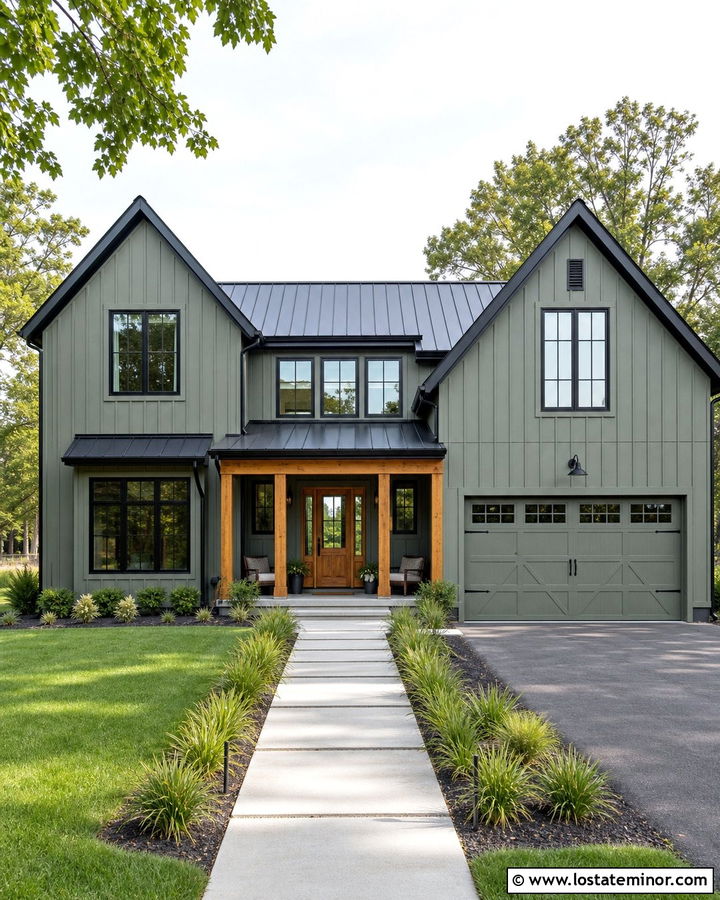
A black metal roof makes black window frames feel like part of a complete exterior plan. Apply this pairing to a modern barn-style home with sage green vertical siding, tall windows, and simple roof forms. Keep the trim near the siding color or use a restrained warm white around selected openings. A cedar front door and timber porch supports add enough warmth to balance the metal surfaces. Black gutters, downspouts, and exterior lights should visually connect the roof to the frames. Because a dark roof already has a commanding presence, avoid oversized black garage doors across the front. Use sage or stained wood for those larger surfaces. Clean concrete paths, clipped grasses, and a few shade trees finish the bold but livable rural-suburban scheme.
23. Sage Green House With Cream Window Frames And A Red Door
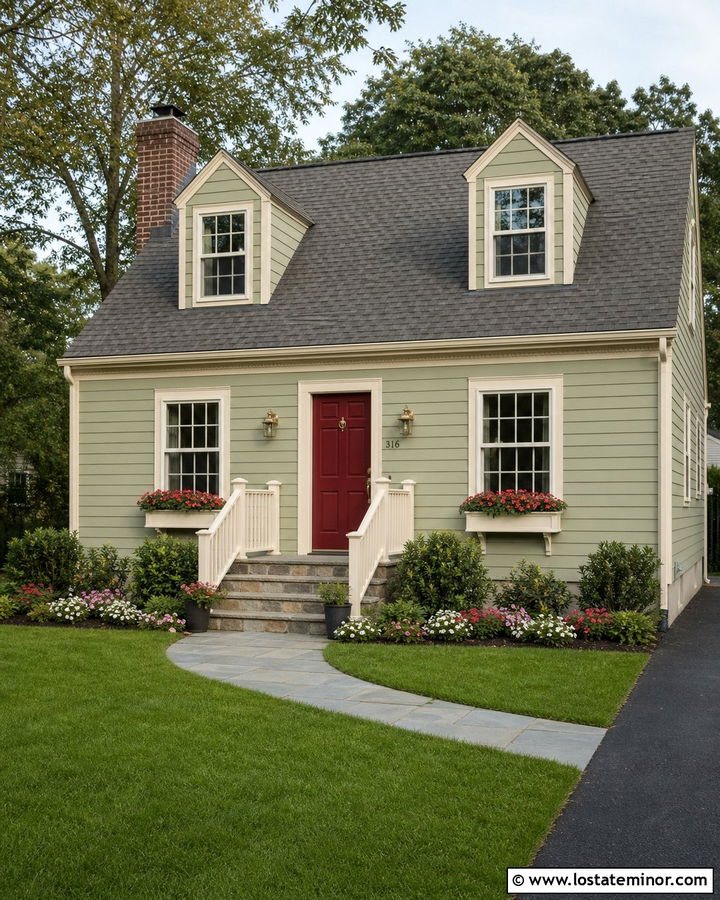
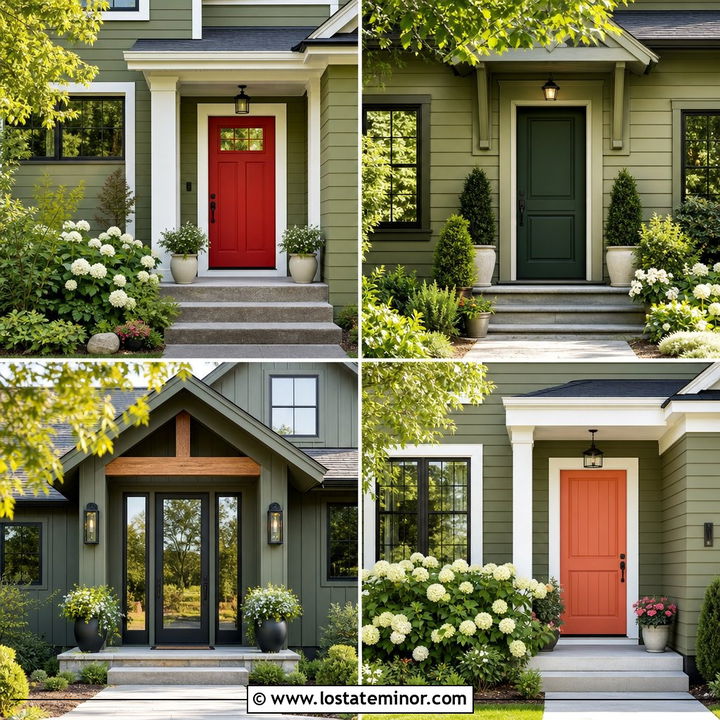
A deep red front door can enliven sage green siding without overpowering cream window frames. This palette suits a cottage or small Cape Cod where the entrance naturally serves as the main focal point. Use warm cream around the windows, dormers, eaves, and porch railing. Choose a muted cranberry, brick red, or oxblood door rather than a bright cherry red. A medium gray roof keeps attention on the facade, while natural stone steps connect the colors to the ground. Small brass lights and traditional door hardware add warmth. Repeat the red sparingly in planters rather than across shutters or garage doors. Flowering borders, window boxes, and a curved path complete the friendly curb appeal. Every detail supports the entrance while preserving the calm sage-and-cream foundation.
24. Sage Green House With Gray Window Frames And A Wood Door
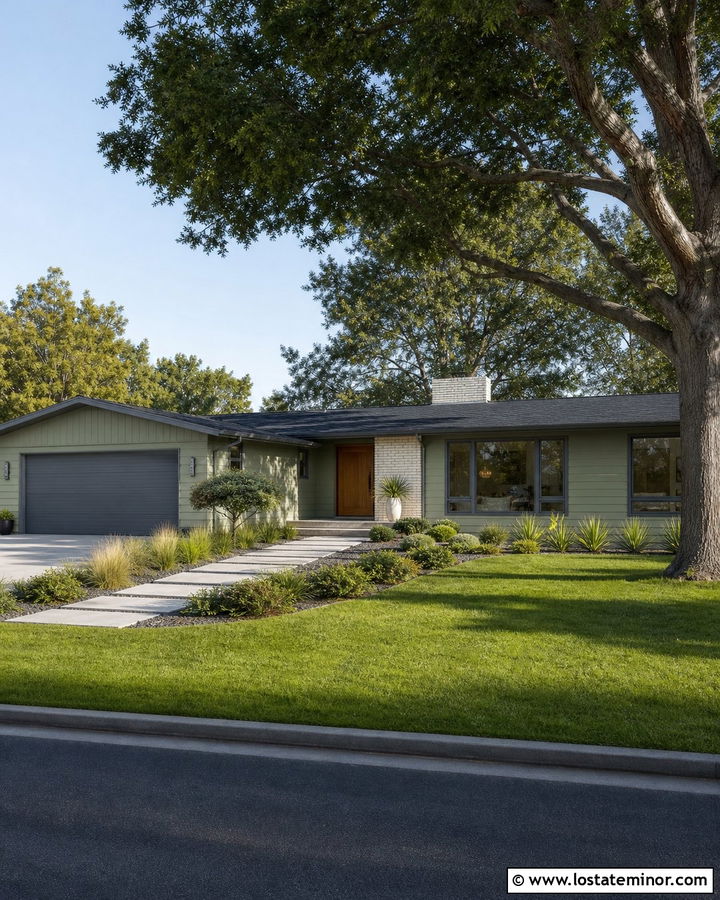
Medium gray window frames create gentle definition on a sage green exterior, while a wood front door supplies the needed warmth. This combination suits a midcentury ranch with wide windows, low rooflines, and minimal ornament. Use a gray with a slight green undertone around the frames, fascia, and garage door. Paint the horizontal siding a clear, muted sage and keep the roof charcoal to reinforce the streamlined architecture. A flat-panel walnut or teak door becomes the central natural accent. Add light stone or pale brick near the entrance for subtle texture. Avoid decorative shutters, which may conflict with the simple window shapes. Broad concrete pavers, sculptural shrubs, and ornamental grasses complete the property. The finished facade feels understated, updated, and true to the home’s original proportions.
25. Sage Green House With Black Window Frames And Cedar Siding
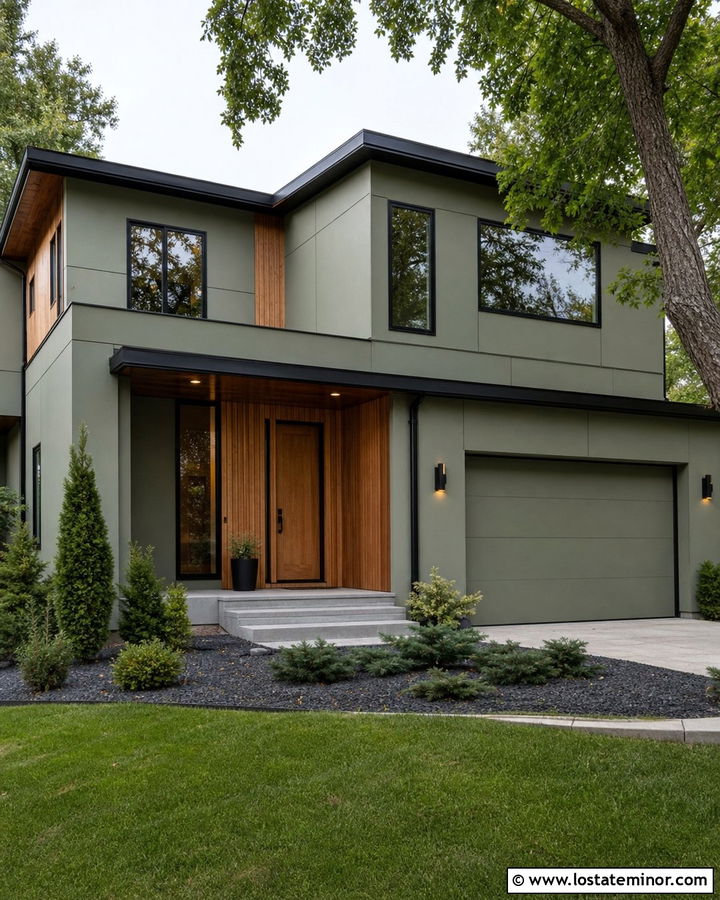
Cedar siding can be used as a focused accent against sage green rather than covering the entire house. On a contemporary two-story home, apply sage green to the main fiber-cement siding and place vertical cedar around the entry or upper window bay. Black window frames create clean boundaries between the two materials. Continue black onto the roof edge, lights, and narrow garage details, while keeping the garage door sage to reduce its visual weight. A matching cedar front door makes the entry feel intentional. Choose a stain that shows the grain without turning bright orange. Simple concrete steps, dark gravel, low evergreen shrubs, and a mature shade tree reinforce the modern natural palette. The final exterior has contrast, warmth, and texture without becoming visually fragmented.
26. Sage Green House With White Window Frames And Stone Columns
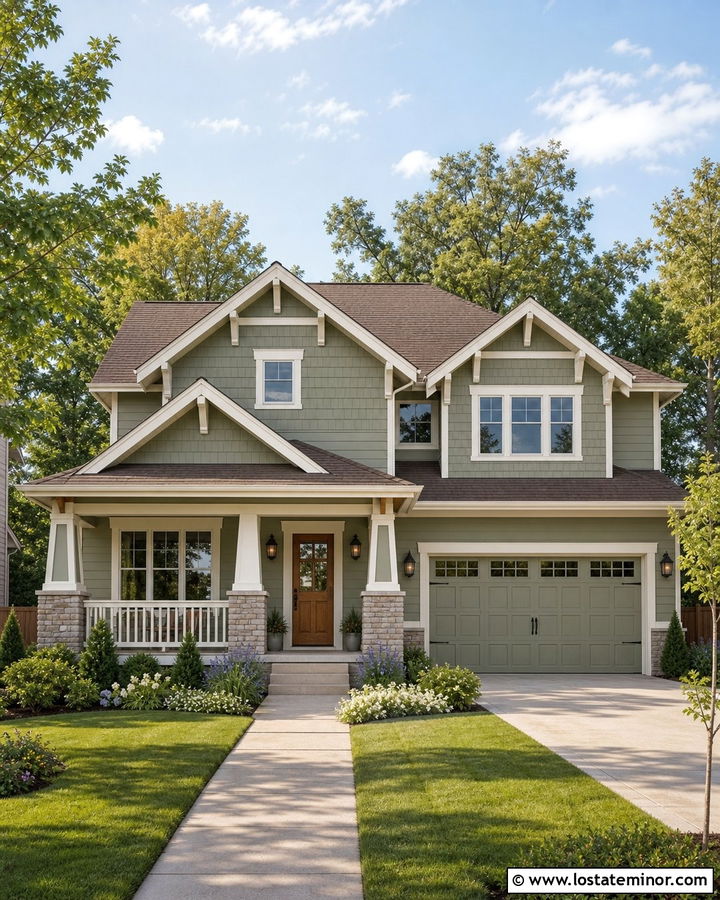
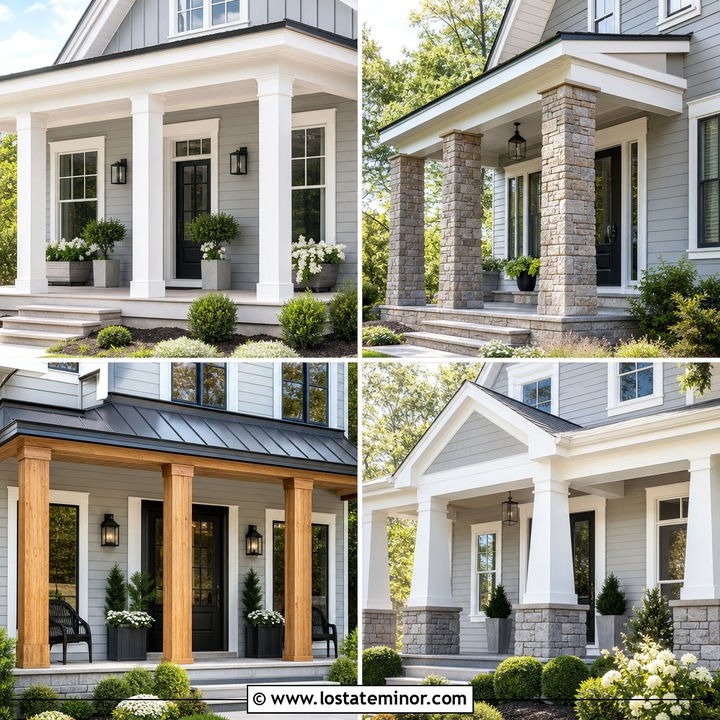
White window frames keep a sage green home bright when substantial stone columns are part of the facade. This combination works well on a Craftsman-inspired suburban house with gabled roofs, mixed siding, and a covered porch. Use white on the window casings, fascia, railings, and upper portions of the tapered columns. Finish the column bases and foundation in gray-beige ledgestone that complements the sage without matching it. A medium brown roof and stained oak front door warm the neutral palette. Dark bronze lights can connect the roof and stone details. Keep the garage door sage or warm white so it does not compete with the porch. Layered shrubs, a broad walkway, and low flowering plants complete an inviting exterior with clear architectural hierarchy.
27. Sage Green House With Dark Window Frames And Large Windows
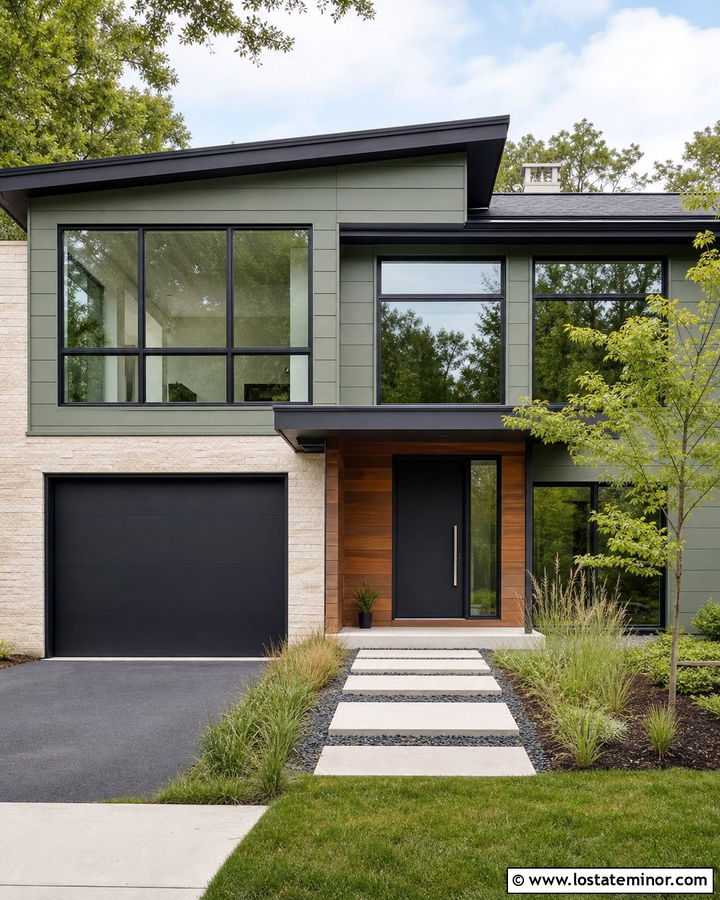
Large windows can dominate a facade, so dark frames help turn them into a purposeful architectural feature. This approach suits a modern home with simple rooflines, sage green panel siding, and expansive floor-to-ceiling glass. Choose soft black or deep charcoal frames rather than a highly reflective finish. Repeat the dark color on narrow fascia, downspouts, and the front door, but introduce warm cedar beneath an overhang or around the entry. A low-slope charcoal roof keeps the silhouette clean. Concrete, light stone, and wood provide enough texture without interrupting the glass. Use restrained landscaping with grasses, small trees, and broad stepping pads. The sage siding softens the dramatic windows, while the frames give the exterior a crisp structure that remains visible from the curb.
28. Sage Green House With White Divided Light Window Frames
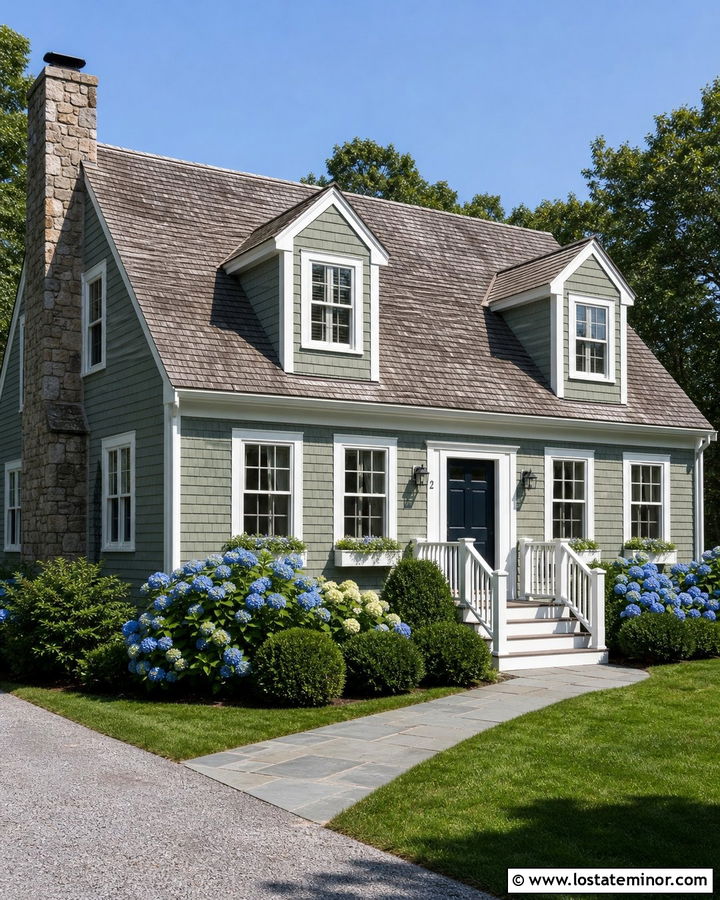
White divided-light window frames add traditional detail and visual rhythm to sage green siding. They are particularly suitable for a New England cottage with cedar shingles, dormers, and a compact porch. Continue the white onto the corner boards, eaves, porch railing, and decorative brackets. A weathered gray roof and natural stone chimney support the soft regional palette. Use a navy or deep green front door for contrast without moving too far from the cool color family. The grille pattern should match the home’s architecture and remain consistent across the street-facing windows. Hydrangeas, evergreen foundation shrubs, and a brick or bluestone walkway complete the setting. This coordinated exterior feels detailed and charming, yet the restrained colors prevent the smaller facade from appearing cluttered.
29. Sage Green House With Slim Black Window Frames
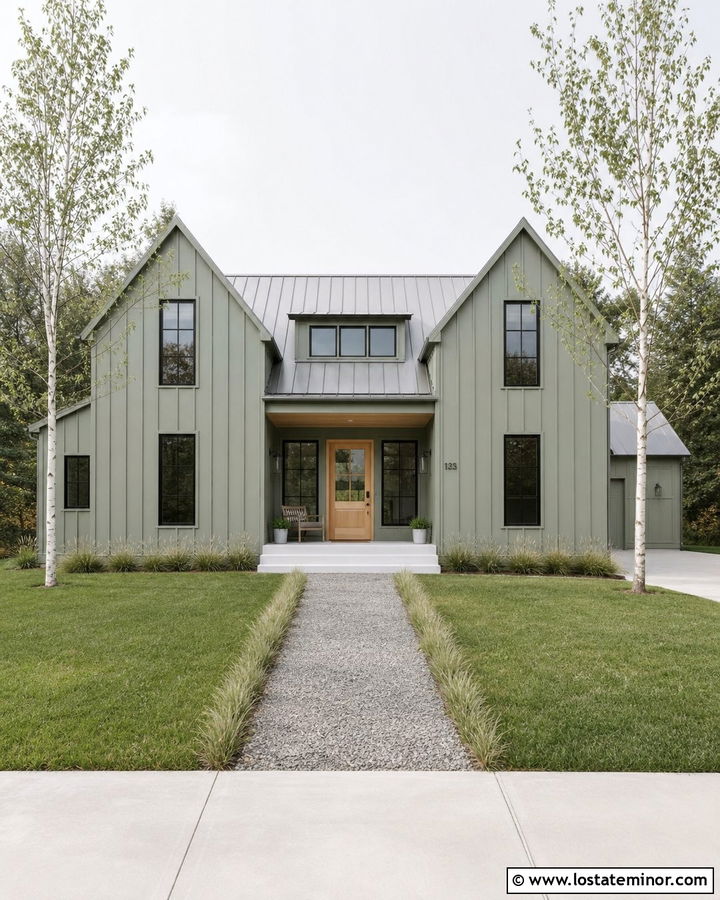
Slim black frames give sage green siding a lighter, more refined modern edge than thick dark casings. Use them on a Scandinavian-inspired house with simple gables, vertical siding, and large but carefully spaced windows. Keep the surrounding trim close to the sage body color so the narrow frames provide the main graphic contrast. A light gray metal roof makes the exterior feel brighter than a fully black roof. Add pale oak at the front door, porch ceiling, and bench for natural warmth. White concrete or light stone steps support the restrained palette. Minimal grasses, young birch trees, and a straight gravel path suit the clean architecture. The finished home feels open and contemporary, with enough black definition to frame the glass without creating a heavy outlined appearance.
30. Sage Green House With Arched Bronze Window Frames
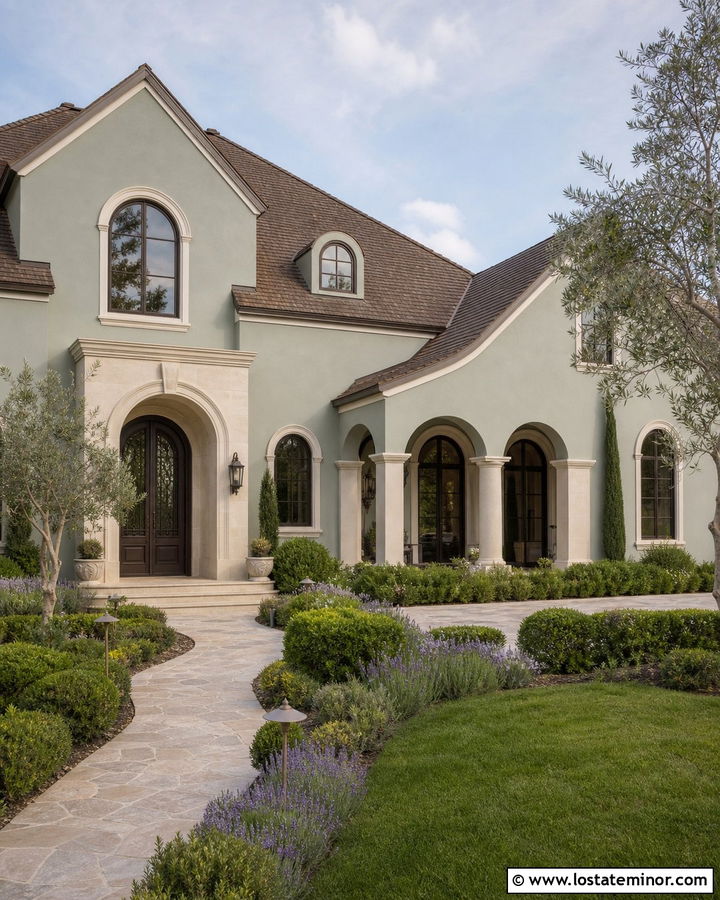
Arched bronze window frames create an elegant focal point on a sage green Mediterranean or European-inspired home. Apply soft sage to smooth stucco or refined lap siding, then use warm bronze around the arched windows, entry doors, and select exterior lights. Cream trim can highlight the roofline and recessed openings without producing a harsh white contrast. Choose a warm brown tile roof or dimensional shingle roof to support the bronze undertones. Pale limestone around the entrance adds depth while keeping the palette light. Repeat the window arches in the doorway or porch openings for architectural consistency. Olive trees, clipped shrubs, lavender, and a curved stone path complete the landscape. The overall exterior feels graceful and distinctive, with every finish reinforcing the warm, nature-based color scheme.
Conclusion:
The best window frame color should support the home’s architecture, fixed materials, and overall mood. White and cream frames keep sage siding classic, while black, charcoal, and bronze create stronger definition. Wood and brown frames bring natural warmth. Blue-gray, navy, burgundy, and deep green offer more individual character. Before choosing from these 30 Sage Green House Design With Window Frames Ideas, compare large samples beside the roof, masonry, doors, and existing windows. View them throughout the day because sage can shift from warm green to gray-green as the light changes. A successful exterior uses repetition and restraint. Coordinate each frame color with a few supporting details so the entire house feels balanced, connected, and intentionally designed.

Related posts: