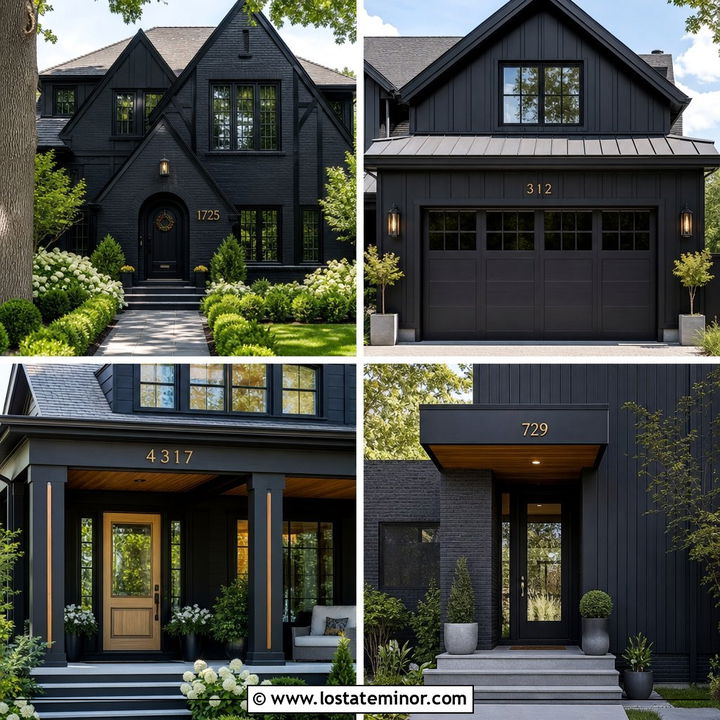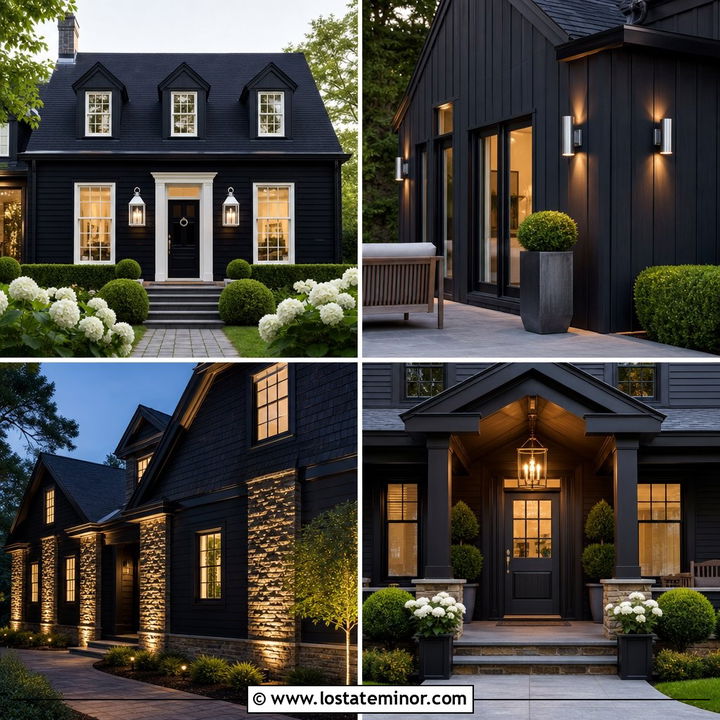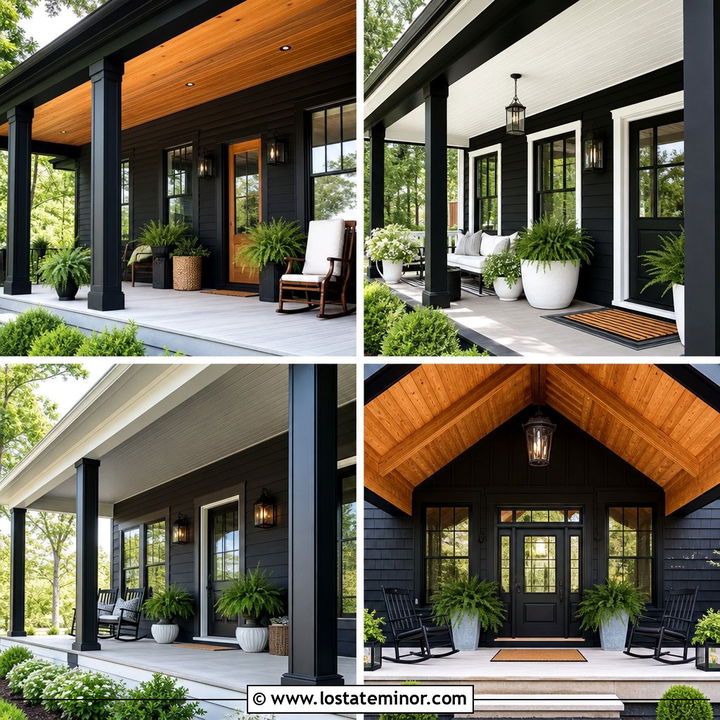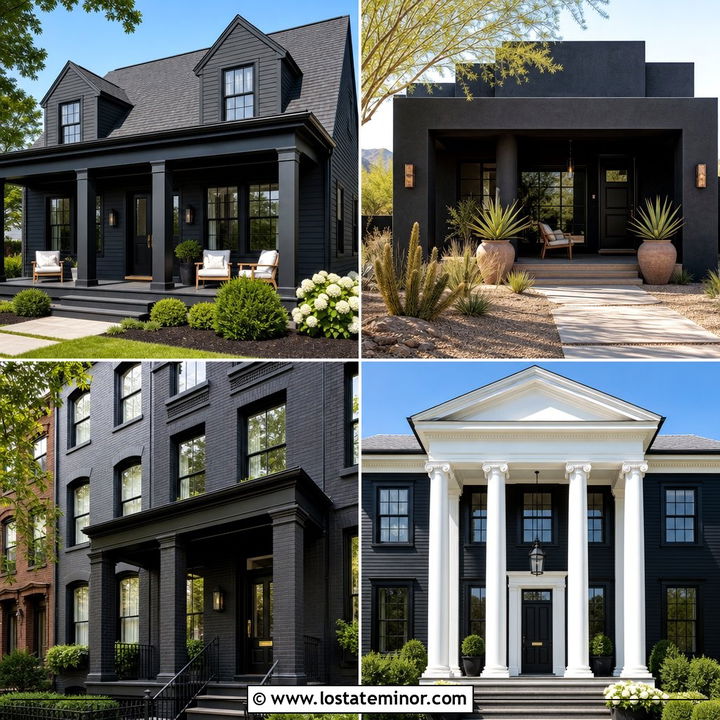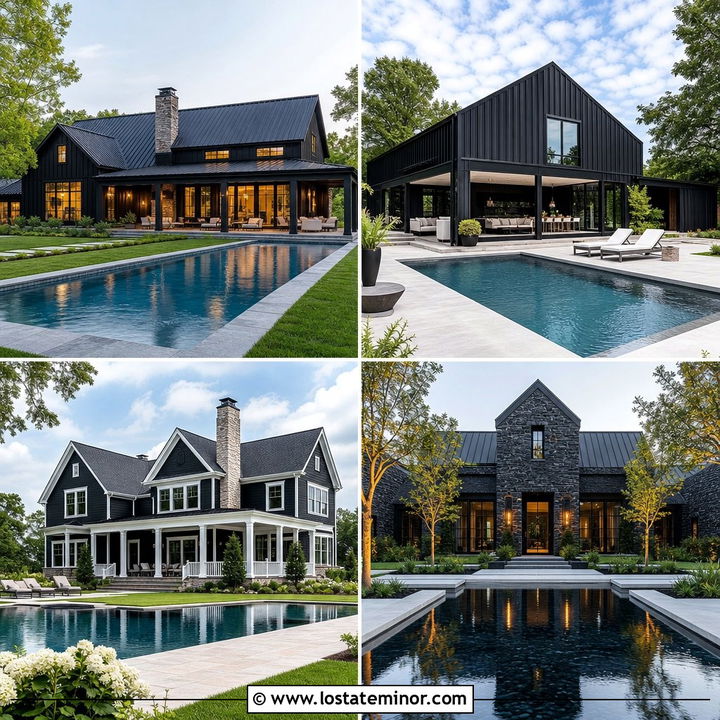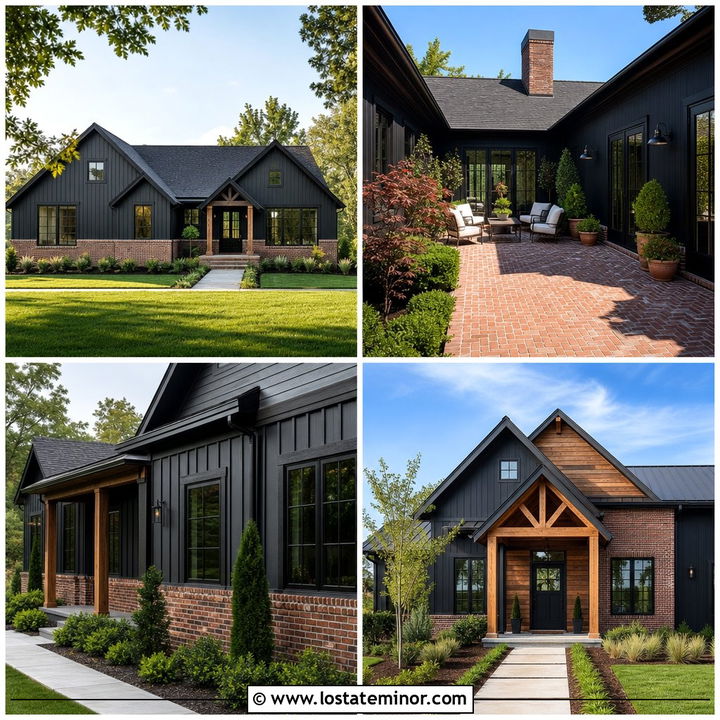
A jet black exterior creates instant drama, but stone keeps the look grounded, natural, and welcoming. The strongest schemes treat both materials as part of one complete facade rather than adding a small patch of stone as an afterthought. Consider the stone’s undertone, placement, scale, and texture alongside the siding, roof, trim, windows, garage doors, and landscaping. Warm limestone can soften black siding, while slate and granite create a sharper monochromatic effect. Wood doors, copper details, and pale concrete offer additional balance. This collection of 30 Jet Black House Design With Stone Accents Ideas covers modern, traditional, rustic, and regional architecture. Use these 30 Jet Black House Design With Stone Accents Ideas to build a coordinated exterior with lasting curb appeal.
1. Jet Black Modern Farmhouse With Limestone
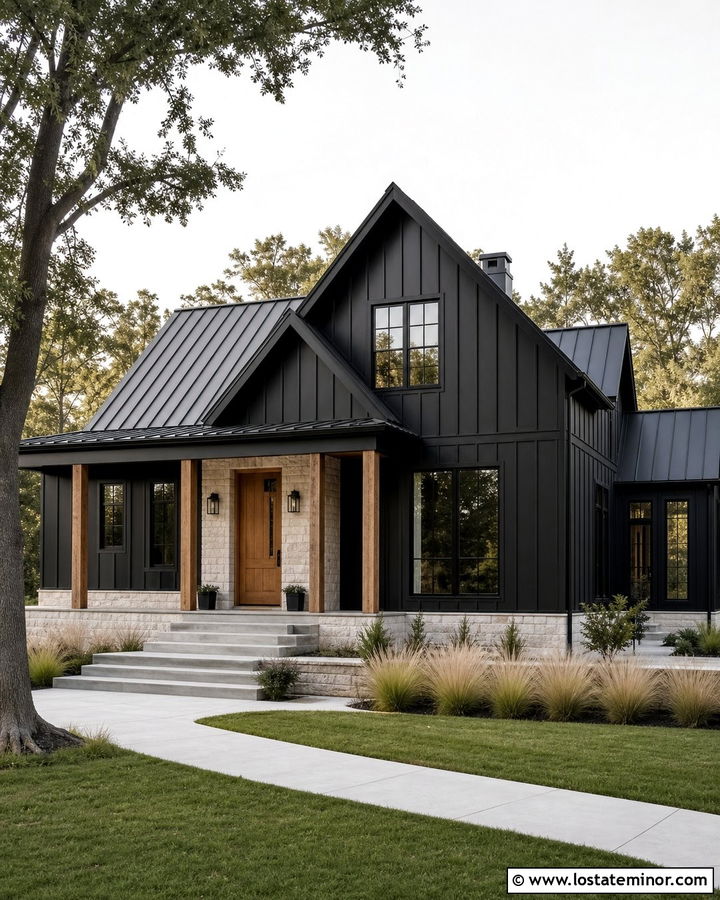
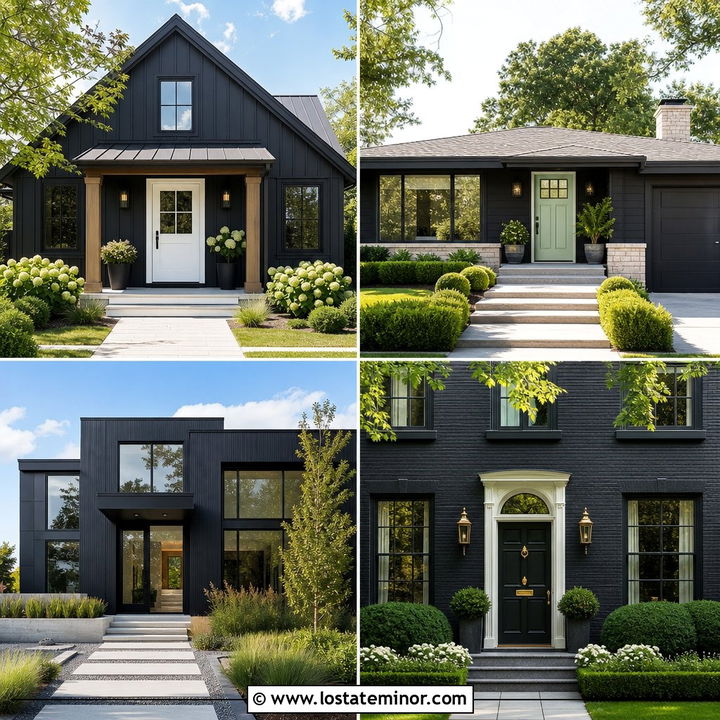
Jet black board-and-batten siding gives a modern farmhouse a cleaner and more dramatic identity than the familiar white exterior. Add creamy limestone across the foundation and around the covered entry to introduce warmth without weakening the contrast. A medium-tone oak front door, matching porch posts, and simple timber brackets connect the house to the natural stone. Keep the window frames, gutters, and standing-seam roof black for a polished appearance. The stone should contain soft beige and muted gray variations rather than strong orange tones. Wide concrete steps and neatly clipped grasses complete the streamlined setting. This scheme works especially well when the limestone is repeated on the chimney or lower garage wall, creating visual balance across the full facade.
2. Jet Black Craftsman House With Fieldstone Columns
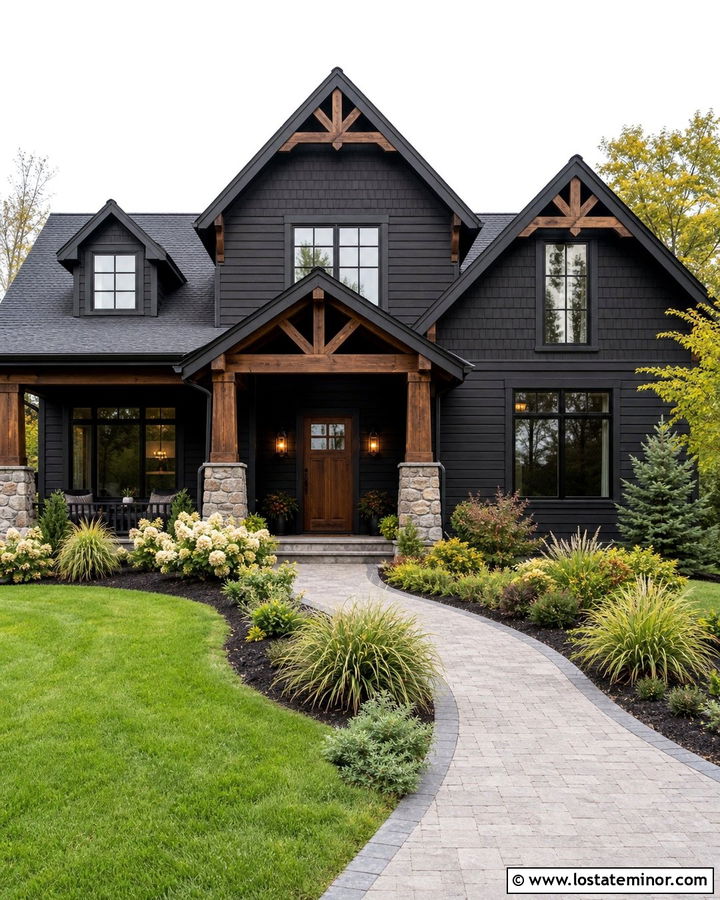
A Craftsman house can carry a jet black exterior beautifully when its handcrafted details remain visible. Use smooth black lap siding on the main walls and black shingles inside the front gables. Wrap the substantial porch columns and stair walls in irregular fieldstone featuring gray, brown, and taupe pieces. The varied stone texture prevents the dark facade from appearing flat. Natural cedar beams, a stained fir front door, and warm porch ceilings reinforce the home’s welcoming character. Matte black window trim and simple bronze lights keep the finishes cohesive. Instead of bright white accents, select a deep charcoal for small trim details. Layered shrubs, ornamental grasses, and a gently curved walkway soften the bold exterior while preserving the Craftsman architecture.
3. Jet Black Ranch House With Stacked Stone Foundation
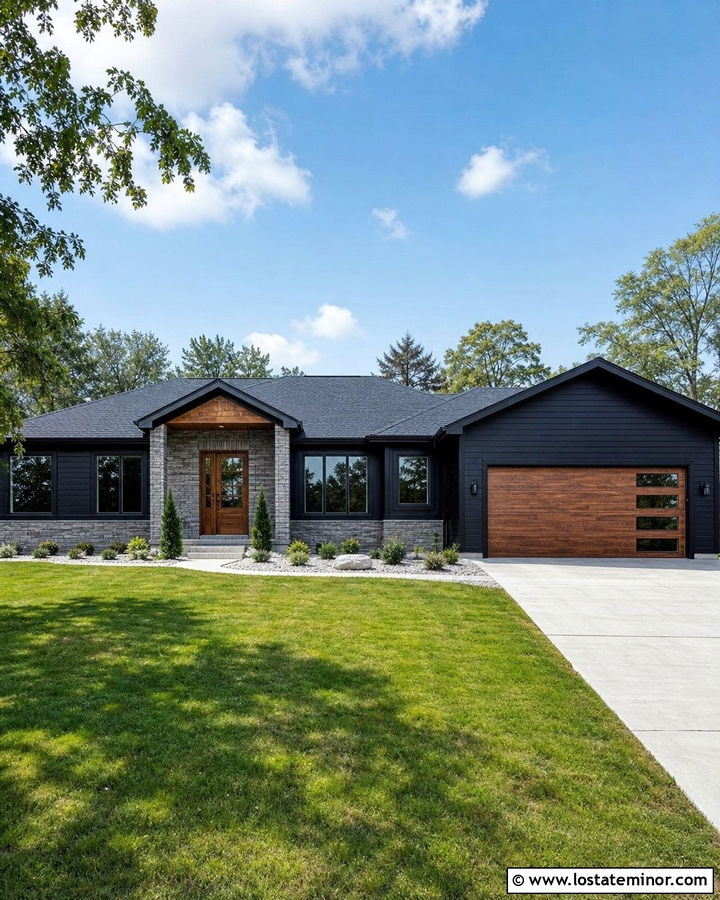
Long, low ranch homes benefit from material changes that divide the horizontal facade. Paint the lap siding jet black, then install medium-gray stacked stone across the exposed foundation and beneath the main picture windows. Extending the stone around one porch wall gives the entrance more importance without covering the entire house. Choose a warm walnut front door and repeat the wood tone on the garage door or porch soffit. A charcoal architectural-shingle roof continues the dark palette while providing a subtle texture shift. Slim black gutters help the roofline look uninterrupted. Finish the yard with broad planting beds, pale gravel, and low evergreen shrubs. These lighter ground-level features create breathing room around the black exterior and visually connect it to the stone.
4. Jet Black Contemporary House With Slate Stone
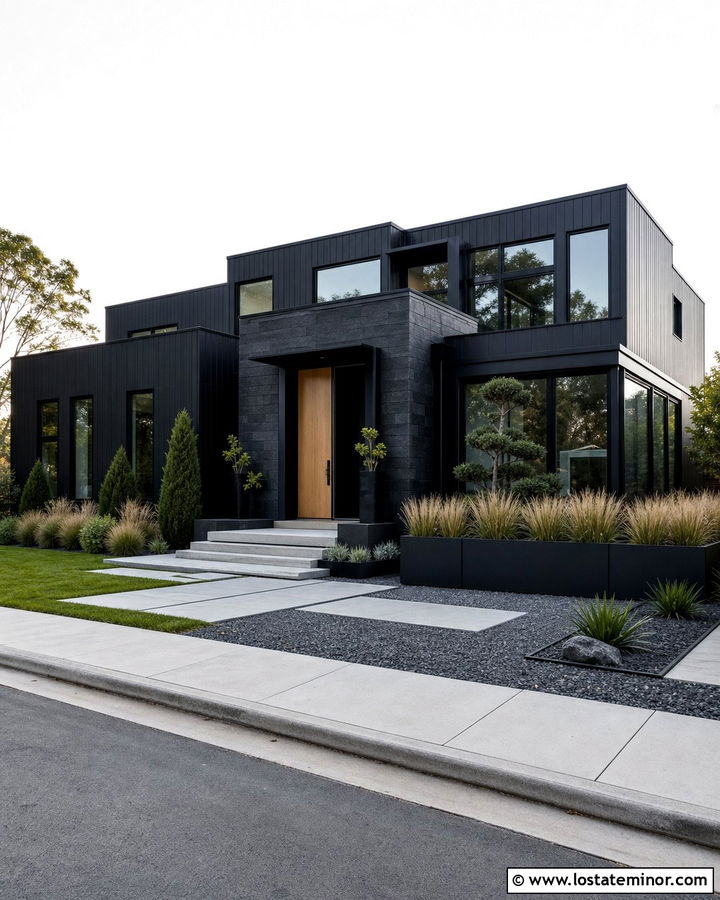
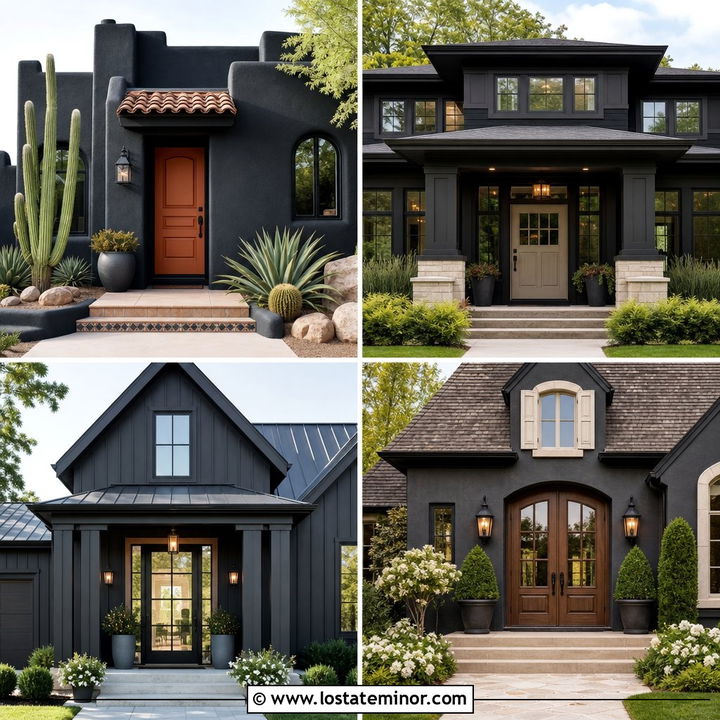
Sharp rooflines and large windows make an ideal foundation for a high-contrast black-and-slate exterior. Cover the primary volumes in jet black vertical siding, then use charcoal slate on a projecting entry wall or lower architectural block. Select slate containing layered blue-gray variations so it remains noticeable beside the black walls. Floor-to-ceiling windows with narrow black frames reinforce the contemporary geometry. A flush natural-oak door adds one controlled area of warmth, while a flat black metal roof maintains the streamlined silhouette. Keep the hardscaping simple with oversized concrete pavers, dark gravel, and rectangular planters. Sparse ornamental grasses and sculptural evergreens provide movement. The finished house should feel bold and minimal, yet the layered stone prevents it from looking cold or one-dimensional.
5. Jet Black Colonial House With Granite Entry
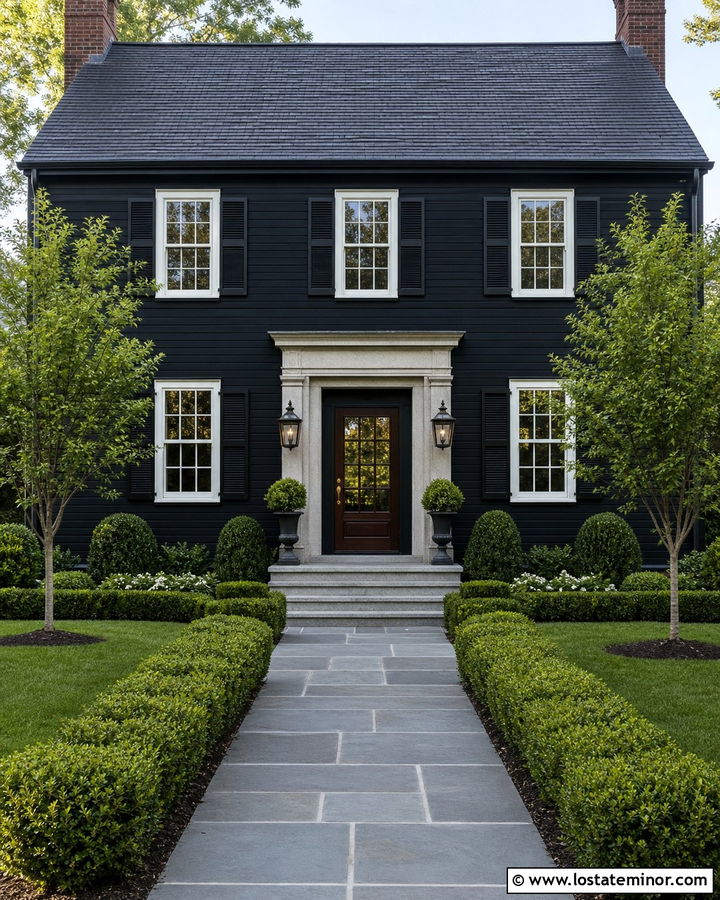
Painting a symmetrical Colonial house jet black creates a striking update without changing its familiar proportions. Use black clapboard siding, matching corner boards, and black window trim to form a unified background. Frame the centered entrance with light-gray cut granite, extending the stone across the steps and low porch walls. A glossy black door can disappear into the facade, so choose a rich mahogany door with traditional divided glass instead. Brass hardware and restrained lanterns offer a warm, classic finish. Keep the roof charcoal rather than pure black to reveal the roofline against the siding. Formal boxwood borders, a straight bluestone path, and evenly placed trees support the architecture. The granite entry becomes a strong focal point while preserving the home’s balanced character.
6. Jet Black Mountain House With Ledgestone
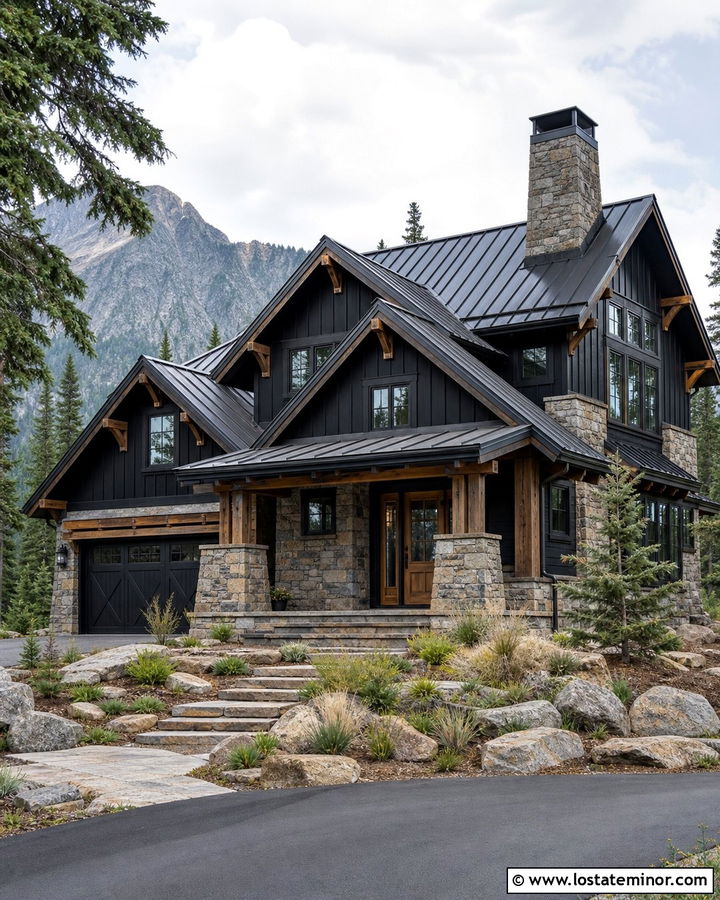
A mountain home naturally supports a darker palette because timber, stone, and surrounding trees provide plenty of texture. Cover the upper walls and tall gables in jet black board-and-batten siding. Use rugged gray-brown ledgestone across the lower level, chimney, and oversized porch piers. Thick cedar beams and exposed rafters bring warmth between these dark materials. A wide wood-and-glass front door makes the entry feel inviting, while black-framed windows capture views without disrupting the exterior. Choose a black metal roof that can visually handle the home’s steep pitches. Stone steps, native grasses, and evergreen landscaping help the structure settle into its setting. Limit extra colors so the contrast among black siding, natural stone, glass, and timber remains the main attraction.
7. Jet Black Cape Cod House With Stone Chimney
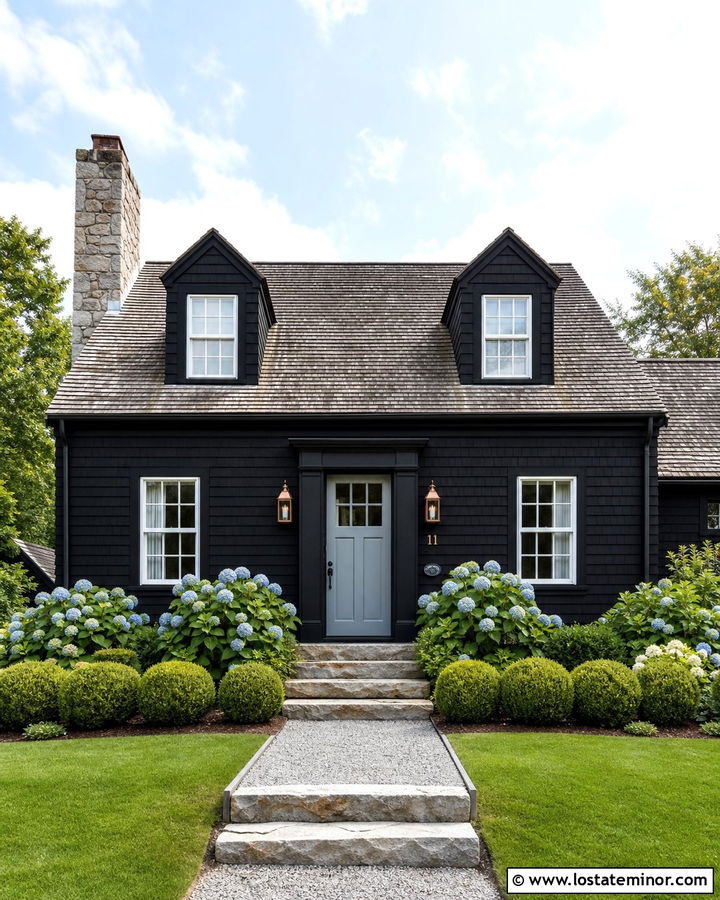
A compact Cape Cod house becomes surprisingly sophisticated with jet black shingles and a substantial stone chimney. Use black cedar-style shingles across the exterior, matching black trim around the dormers and windows. Build or reface the chimney in pale gray stone with softly irregular edges, then repeat that material along the front steps. A muted blue-gray front door offers gentle color while remaining compatible with the cool stone. Choose weathered-gray roof shingles instead of a solid black roof so the dormers remain easy to distinguish. Small copper porch lights can add warmth as they age naturally. White hydrangeas, low boxwoods, and a crushed-stone walkway lighten the landscape. The result feels traditional and coastal without depending on the usual white-and-navy color combination.
8. Jet Black Tudor House With Limestone Trim
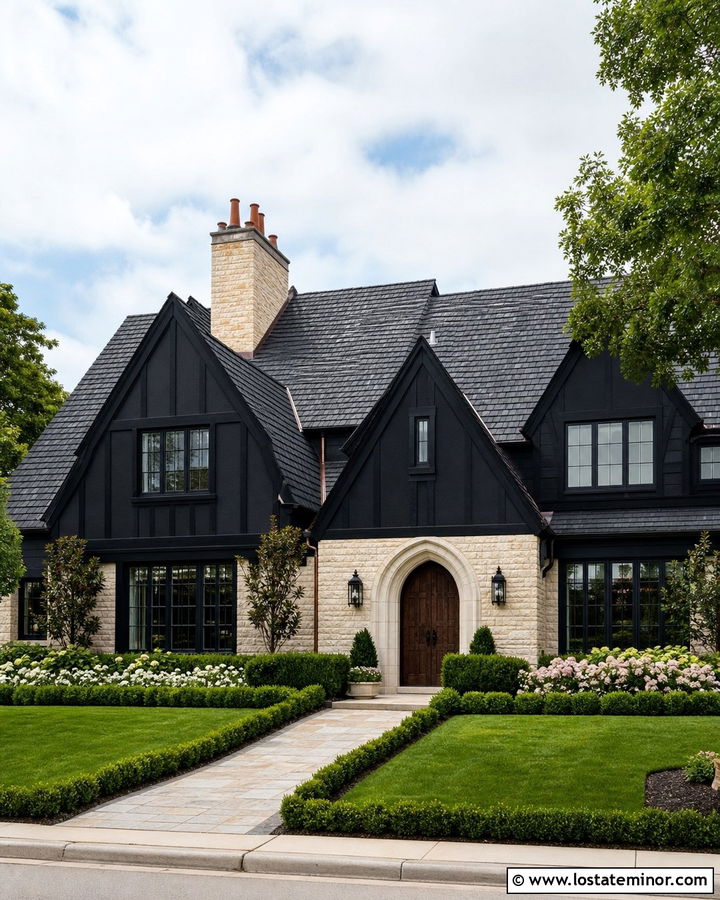
Tudor architecture already contains strong contrast, making it well suited to a jet black and limestone palette. Paint the stucco and decorative half-timbering the same deep black to simplify a busy facade. Use creamy limestone around the arched doorway, across the lower walls, and on the chimney to highlight the home’s distinctive forms. A heavy oak door with black iron hardware strengthens the historic character. Select a dark charcoal roof with visible texture rather than a sleek metal surface. Black leaded windows maintain the period-inspired appearance while blending into the walls. A limestone walkway, clipped hedges, and loosely planted flowering borders create an appealing transition to the landscape. Warm stone prevents the black exterior from overpowering the Tudor rooflines and ornamental details.
9. Jet Black Midcentury House With Stone Wall
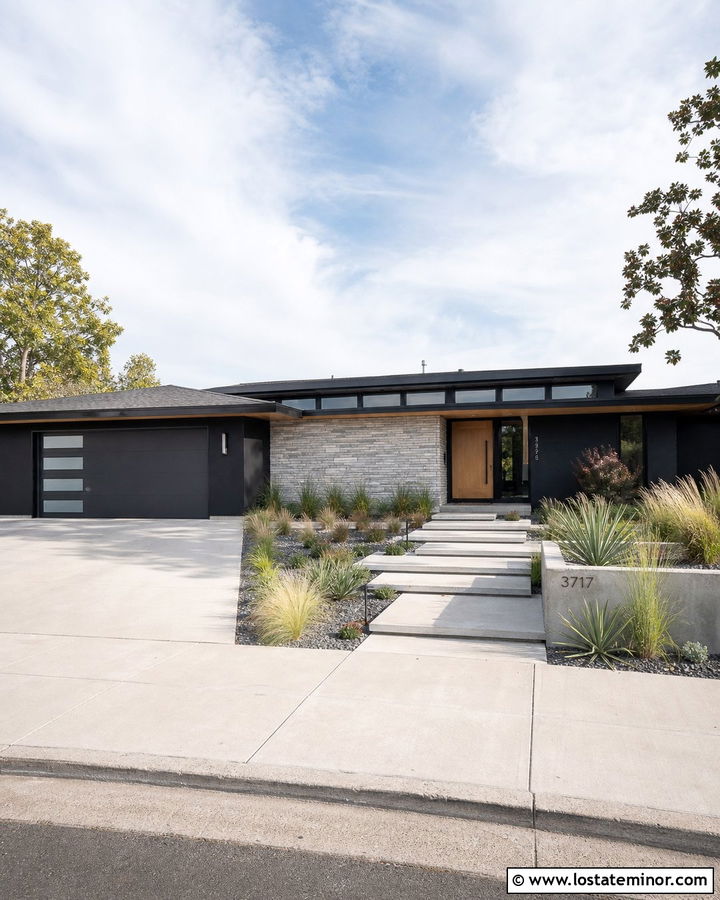
A midcentury house looks especially sharp when jet black siding is combined with a low horizontal stone wall. Use smooth black panels or narrow vertical siding across the main structure, allowing the roofline to remain simple and clean. Add a long wall of light-gray stacked stone around the entrance or beneath a bank of windows. A honey-toned wood door provides a period-appropriate focal point and keeps the black facade from feeling severe. Preserve wide roof overhangs and finish the soffits in natural wood. Black-framed clerestory windows, slim lighting, and a charcoal roof complete the restrained palette. Choose linear concrete pavers, decorative gravel, and sculptural plants for the yard. Every detail should emphasize horizontal movement and the house’s connection to the surrounding landscape.
10. Jet Black Scandinavian House With Gray Stone
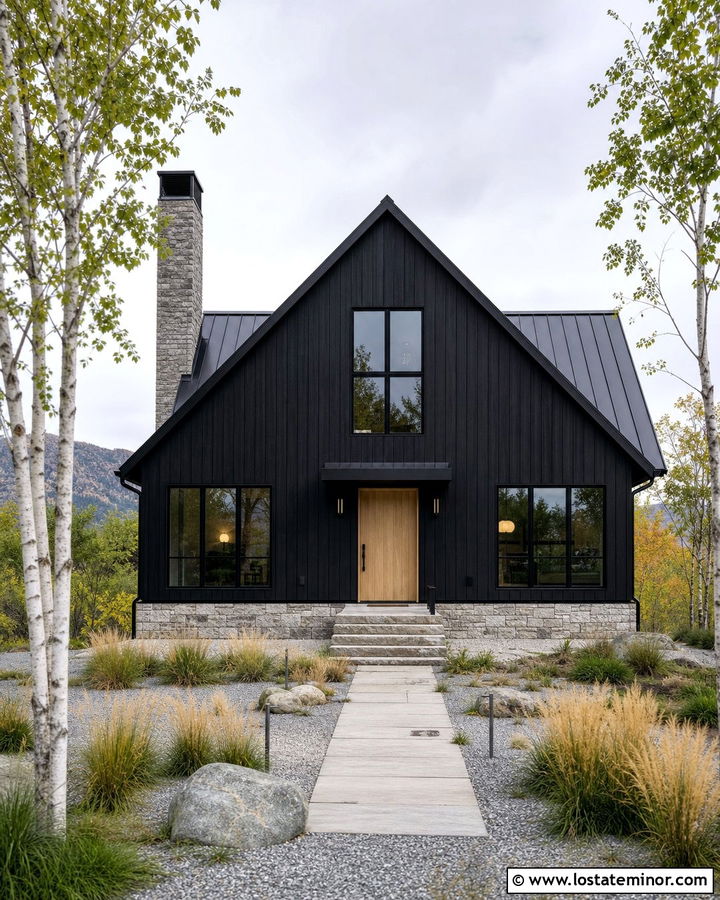
Simple forms and restrained materials allow a jet black Scandinavian exterior to feel quiet rather than imposing. Apply black vertical wood siding across a clean gabled facade, including the trim and window surrounds. Use pale gray stone on the foundation, entrance steps, and one narrow chimney to create a soft transition to the ground. A light natural-wood door stands out against the dark siding without introducing an unrelated color. Choose a crisp black metal roof with minimal overhangs and matching gutters. Large windows should remain uncluttered, with slender black frames that disappear into the facade. Surround the house with fine gravel, native grasses, birch trees, and a simple paved path. The finished scheme feels efficient, contemporary, and connected to nature through texture rather than decoration.
11. Jet Black Transitional House With Stone Garage
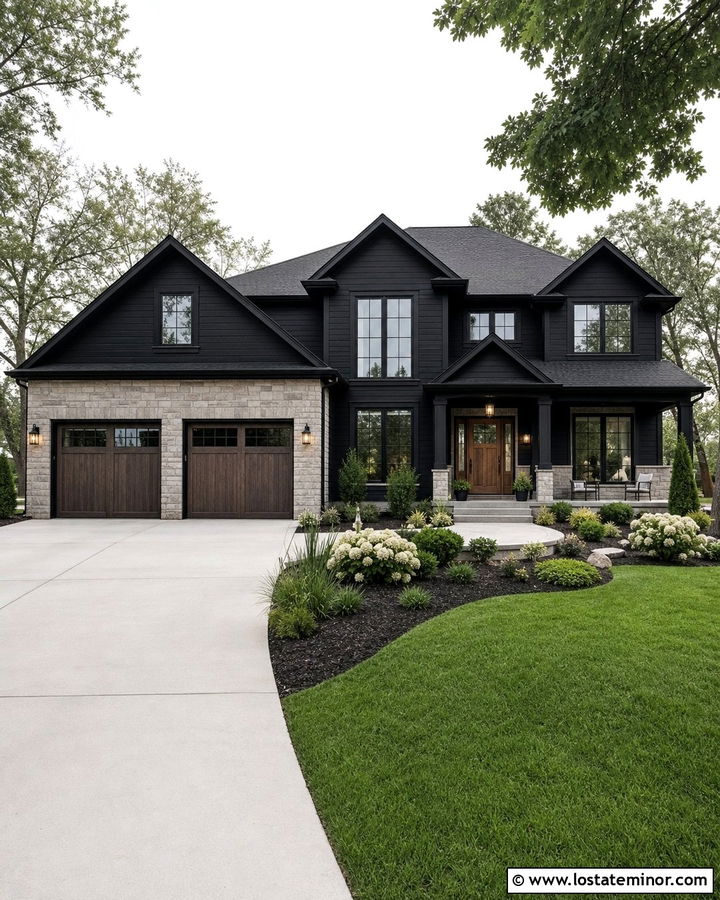
On a large transitional house, the garage often occupies too much visual space. Jet black siding can unify the elevation, while stone helps the garage feel integrated rather than dominant. Use soft gray-beige stone around the garage doors and continue it along the lower section of the main house. Paint the siding, trim, and gutters jet black for a seamless backdrop. Wood-look garage doors and a matching front door add enough warmth to balance the dark color. Choose a charcoal shingle roof with moderate variation so the home does not become a single black mass. Tall windows, simple gables, and restrained porch columns maintain the transitional character. Layered landscaping should draw attention toward the entrance, using pale flowers and curved beds to soften the broad facade.
12. Jet Black Bungalow With River Rock Porch
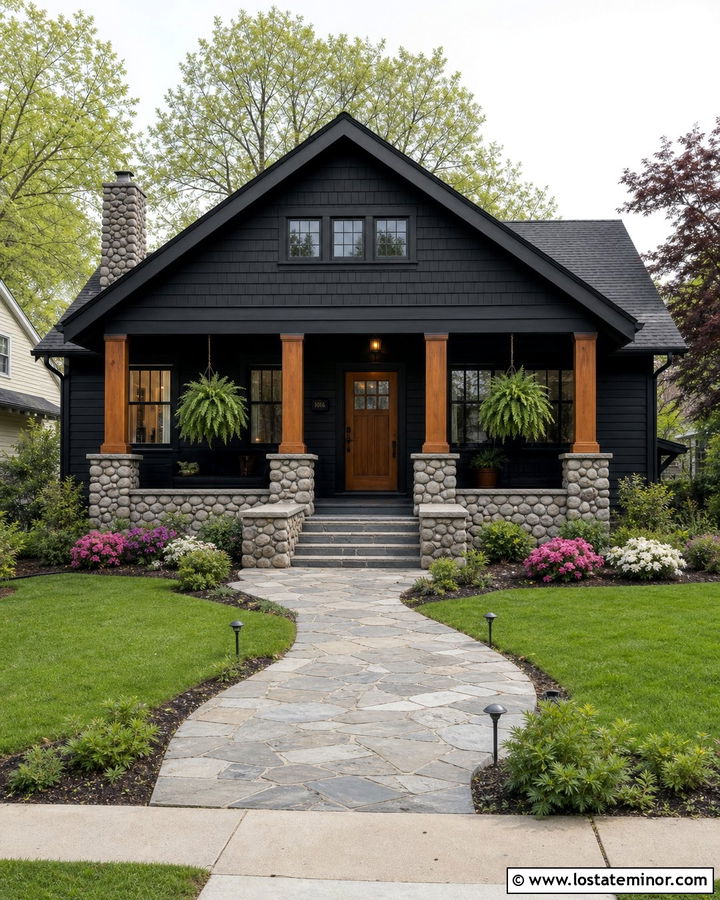
A jet black bungalow can feel cozy and handcrafted when rounded river rock surrounds the porch. Use black lap siding on the walls and textured black shingles within the front gable. Cover the porch piers, stair sides, and low foundation in river rock containing gray, tan, and muted brown tones. Stained cedar columns and a warm wood front door bridge the color difference between the siding and stone. Keep the trim black, but use a slightly lighter charcoal on the porch floor for practical contrast. A dark roof maintains the compact silhouette. Add ferns, flowering shrubs, and a gently curved stone path to reinforce the relaxed character. The rounded rocks soften the powerful black facade while highlighting the bungalow’s deep porch and low roofline.
13. Jet Black French Country House With Limestone
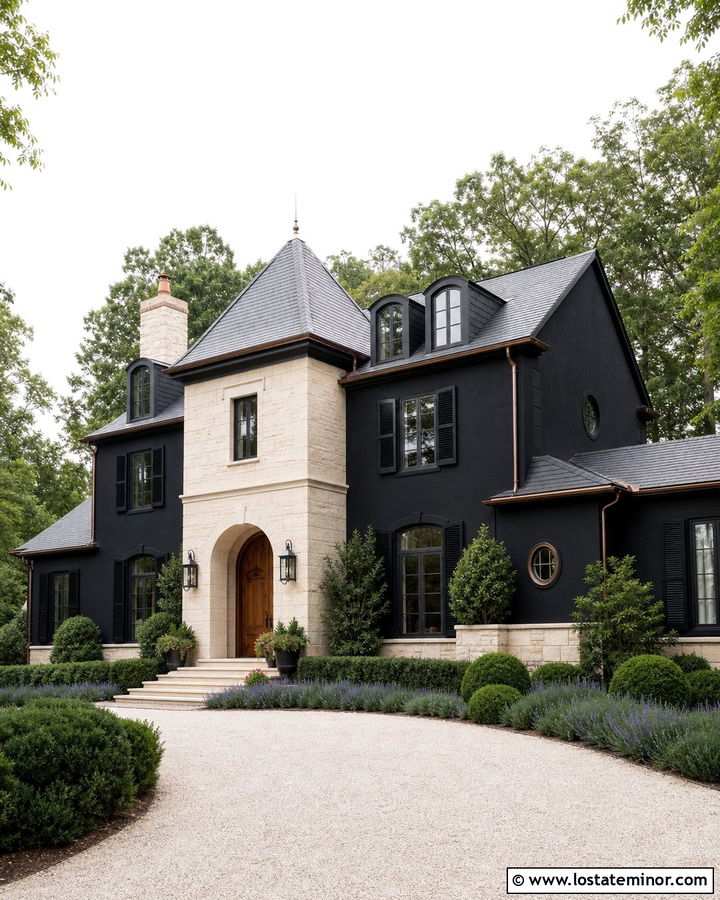
Curved rooflines and elegant masonry give a French country house enough detail to support a dramatic jet black exterior. Apply black paint to the stucco or siding, then use warm cream limestone on the central entry, tower, and lower wall sections. A softly arched oak door creates an inviting focal point beneath the pale stone surround. Black shutters can remain, but they should be appropriately sized and placed only on windows that could realistically accommodate them. Choose a textured charcoal roof with subtle brown undertones to connect with the limestone. Copper gutters or lanterns can add controlled warmth. Formal shrubs, lavender borders, and a pale gravel drive finish the composition. The scheme feels refined because the stone follows the architecture instead of appearing as random decoration.
14. Jet Black Split-Level House With Stone Lower Level
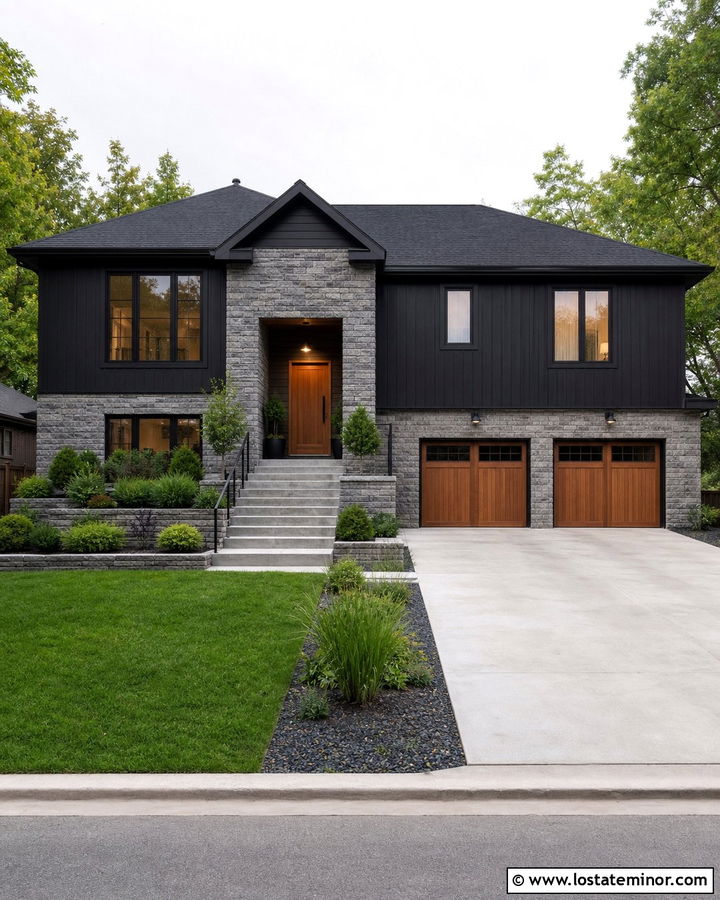
A split-level exterior often looks disjointed because each floor uses a different material. Bring the facade together with jet black siding on the upper level and consistent gray stacked stone across the exposed lower level. Continue the stone around the recessed entrance to clearly define the way inside. Black-framed windows and a charcoal roof keep the upper portion visually quiet. Add a medium-tone cedar door, garage door, and narrow porch ceiling to warm the composition. If the garage occupies the lower story, select doors with simple horizontal panels rather than decorative hardware. Broad concrete steps and terraced planting beds can manage the change in elevation. Repeating the same plants on both sides of the walkway helps the newly unified exterior feel balanced and intentional.
15. Jet Black Prairie House With Horizontal Stone
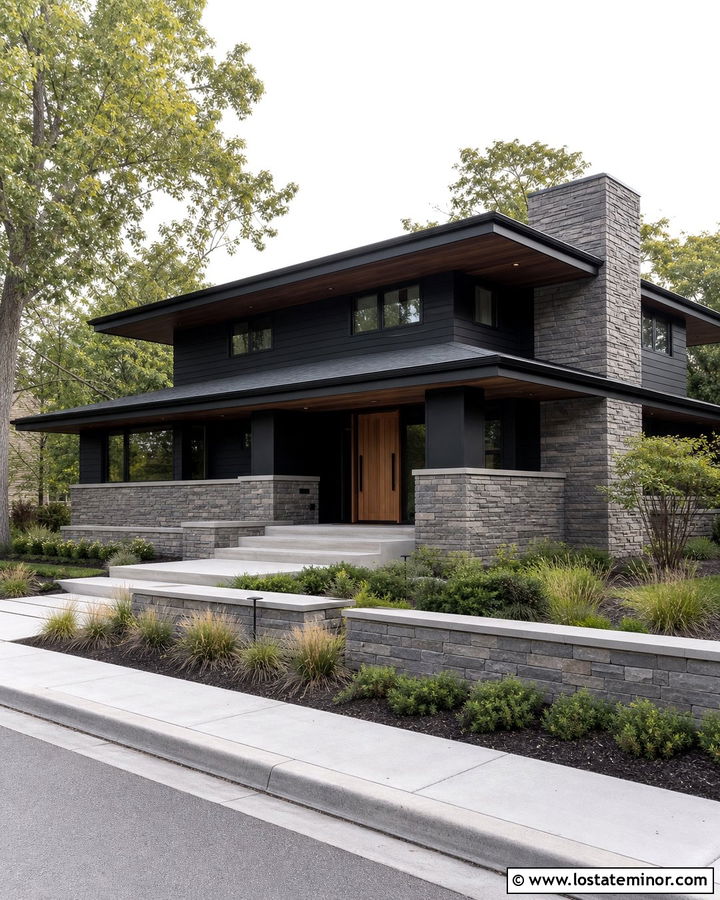
Prairie architecture relies on long lines, deep overhangs, and strong connections to the land. Emphasize those qualities with jet black horizontal siding and continuous bands of low-profile stone. Use warm gray ledgestone across the foundation, porch walls, and chimney, keeping the courses long and linear. A broad walnut front door and matching soffits provide natural warmth beneath the dark roof. Window frames, fascia, and gutters should remain black so they do not interrupt the horizontal flow. Choose a low-pitched charcoal roof with generous overhangs that cast controlled shadows across the facade. Wide concrete slabs, low grasses, and layered horizontal planting beds continue the composition into the yard. The stone should look structural and integrated, not like a thin decorative strip attached to the lower wall.
16. Jet Black A-Frame House With Stone Chimney
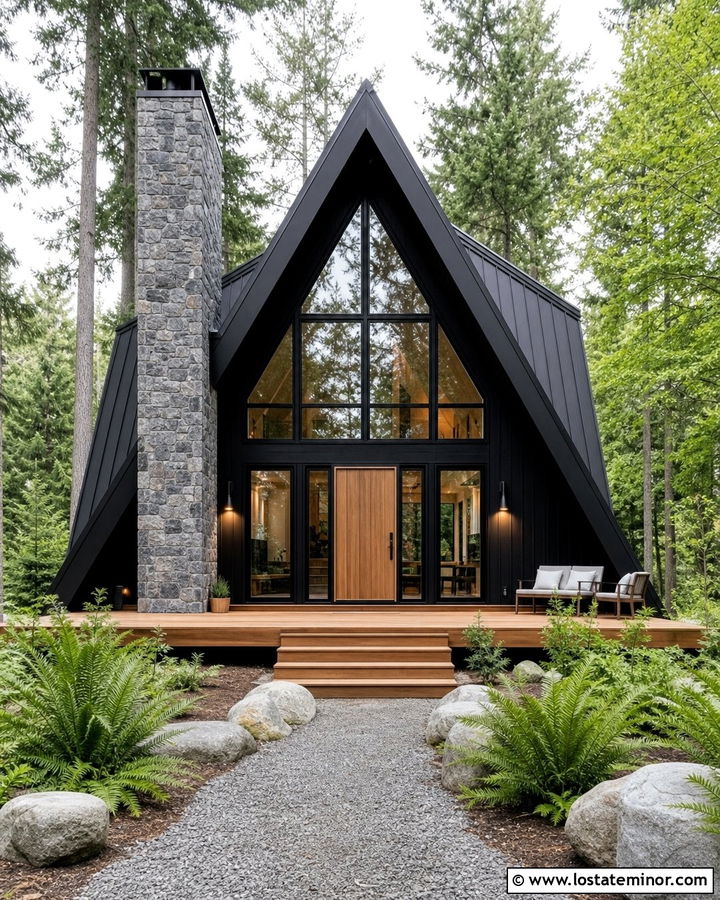
An A-frame house already makes a strong visual statement, so the material palette should stay focused. Cover the tall triangular facade in jet black vertical siding and frame the central glass wall with narrow black trim. Build a full-height fieldstone chimney along one side, using cool gray and muted brown stones that complement the surrounding landscape. A natural cedar deck and matching front door introduce warmth without competing with the dramatic roof. Keep the steep metal roof black for a continuous silhouette from the ridge to the ground. Stone steps and a gravel path can connect the chimney material to the yard. Evergreen trees, native ferns, and boulders complete the setting. This balanced combination makes the house feel modern while retaining the character of a woodland retreat.
17. Jet Black Victorian House With Stone Base
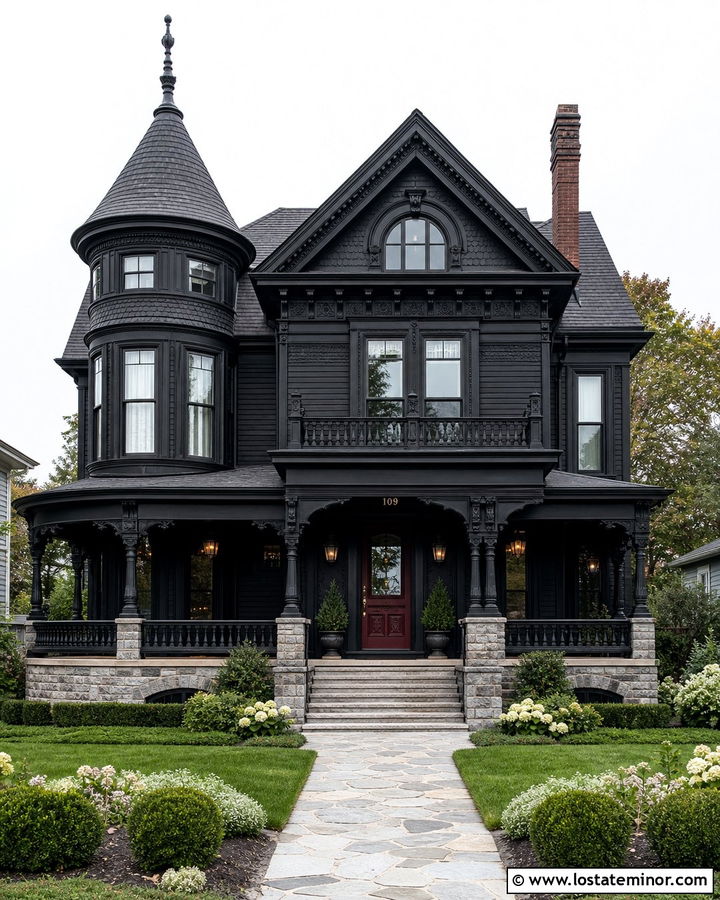
Could an ornate Victorian house handle a nearly monochromatic exterior? Jet black paint can actually clarify its elaborate shapes when applied consistently across the siding, trim, brackets, and decorative shingles. Use pale gray cut stone along the foundation and porch base to give the dark structure a lighter visual footing. A deep burgundy front door adds traditional color without disturbing the sophisticated scheme. Select charcoal roof shingles and black gutters, allowing the varied siding patterns to create texture. Brass door hardware and period-style lanterns provide small areas of warmth. Avoid outlining every decorative detail in a contrasting color, which can make the facade appear crowded. Formal planting beds, a stone path, and a few light flowering shrubs keep the black Victorian exterior dramatic but approachable.
18. Jet Black Cottage House With Rubble Stone
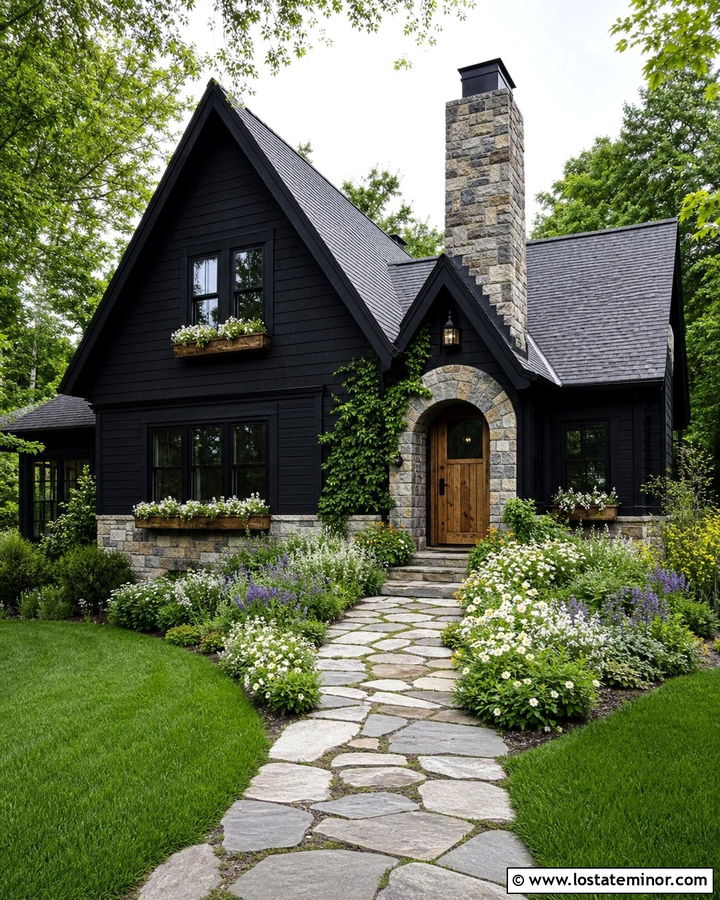
A small cottage can wear jet black without appearing cramped when the stone and landscaping introduce lighter, organic texture. Paint the cottage siding and trim black, then use loosely laid rubble stone around the foundation, chimney, and covered entrance. Select stone containing pale gray, weathered beige, and soft brown shades. A simple oak plank door and wood window boxes warm the walls while maintaining the natural character. Use a charcoal roof with visible shingle texture rather than a flat, featureless surface. An irregular flagstone path, climbing greenery, and cottage-style planting beds soften the building’s edges. Keep vines controlled so they do not hide the siding or trap moisture. The finished exterior feels storybook-inspired, yet the reduced color palette gives it a fresh and updated appearance.
19. Jet Black Barndominium With Stone Wainscot
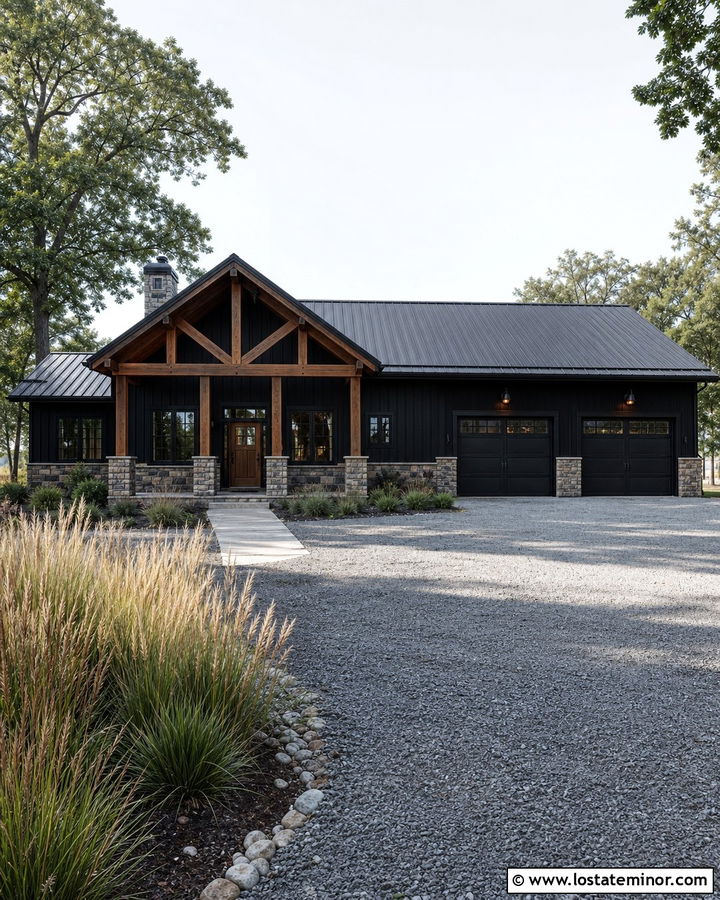
The broad walls of a barndominium need texture and scale to avoid looking industrial. Use jet black vertical metal siding across the main structure, then install a substantial gray-and-tan stone wainscot around the foundation and entrance. Extend the stone onto large porch piers so it appears structurally connected to the building. Natural timber trusses, porch posts, and a warm wood front door soften the dark metal. Keep the roof black, but consider a low-sheen finish to reduce excessive glare. Black-framed garage doors with upper glass panels maintain the streamlined appearance. A wide gravel drive, concrete walkway, native grasses, and a few shade trees complete the rural setting. The contrast among metal, rough stone, and heavy wood creates a balanced exterior with strong curb appeal.
20. Jet Black Desert Modern House With Sandstone
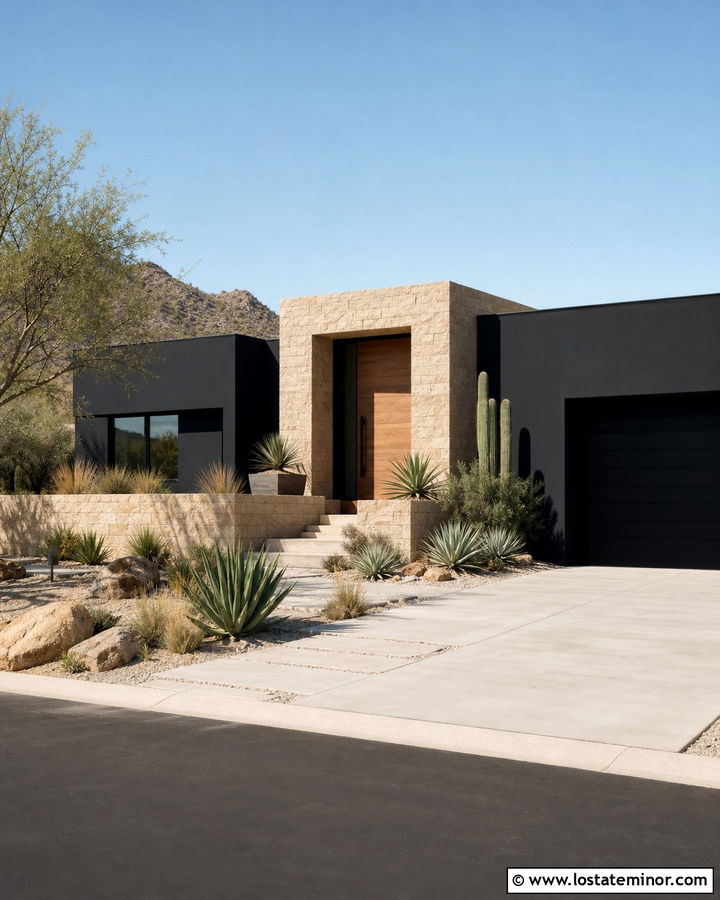
Jet black stucco creates a bold silhouette against a bright desert landscape. Pair it with warm sandstone on a courtyard wall, entrance volume, and low planter beds to connect the house to its surroundings. The stone should carry sandy beige, pale gold, and subtle rust variations rather than cool blue undertones. A wide pivot door in natural wood brings additional warmth to the protected entry. Keep the roof flat and visually concealed, using black window frames and minimal dark trim. Pale concrete paving prevents the hardscape from absorbing the entire color scheme. Agave, desert grasses, yucca, and gravel provide drought-conscious texture around the facade. The sandstone and landscaping should visually wrap the base of the house, making the black upper walls appear deliberate instead of overly heavy.
21. Jet Black Lake House With Bluestone Accents
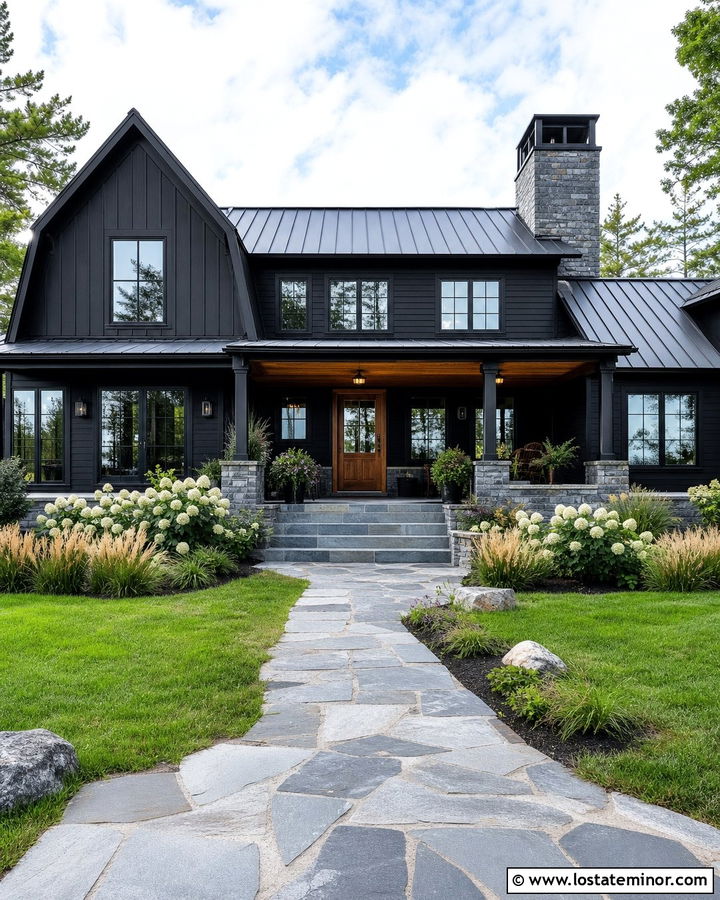
A lake house can feel contemporary and relaxed with jet black siding, cool bluestone, and warm timber. Use black board-and-batten siding on the tall gables and horizontal siding on smaller connecting volumes. Add bluestone around the foundation, chimney, and broad entrance steps. The stone’s blue-gray color creates a subtle transition between the black facade and the water-inspired setting. Choose a natural cedar door, porch ceiling, and deck railing for warmth. A black metal roof provides durability and highlights the roofline without adding another color. Large black-framed windows should remain the visual focus, especially on the water-facing elevation. Native grasses, hydrangeas, and an irregular bluestone path complete the curb view. This material combination feels polished without losing the easy character expected from a lakeside home.
22. Jet Black Townhouse With Black Granite
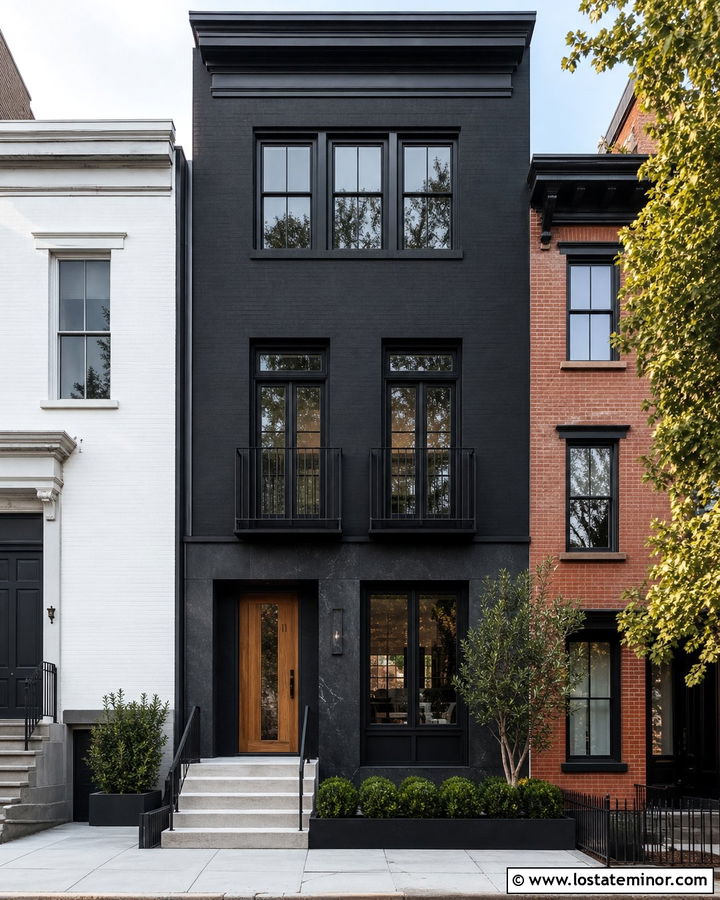
A narrow urban townhouse can use jet black and black granite without becoming visually flat if each material has a different finish. Apply matte black paint to the upper masonry or siding, then use honed black granite around the ground-floor entrance and lower facade. The granite’s subtle pattern and slight reflection create depth beside the softer painted surface. Add a medium-tone wood door with vertical glass panels to brighten the entry. Black window frames, simple metal railings, and discreet downspouts preserve the clean architecture. Pale concrete steps and light-gray paving provide essential contrast at street level. Use compact planters with structured greenery instead of oversized landscaping. The completed exterior appears sophisticated and space-conscious, with the stone protecting the busiest part of the facade while anchoring the tall, dark elevation.
23. Jet Black Cabin With Fieldstone Foundation
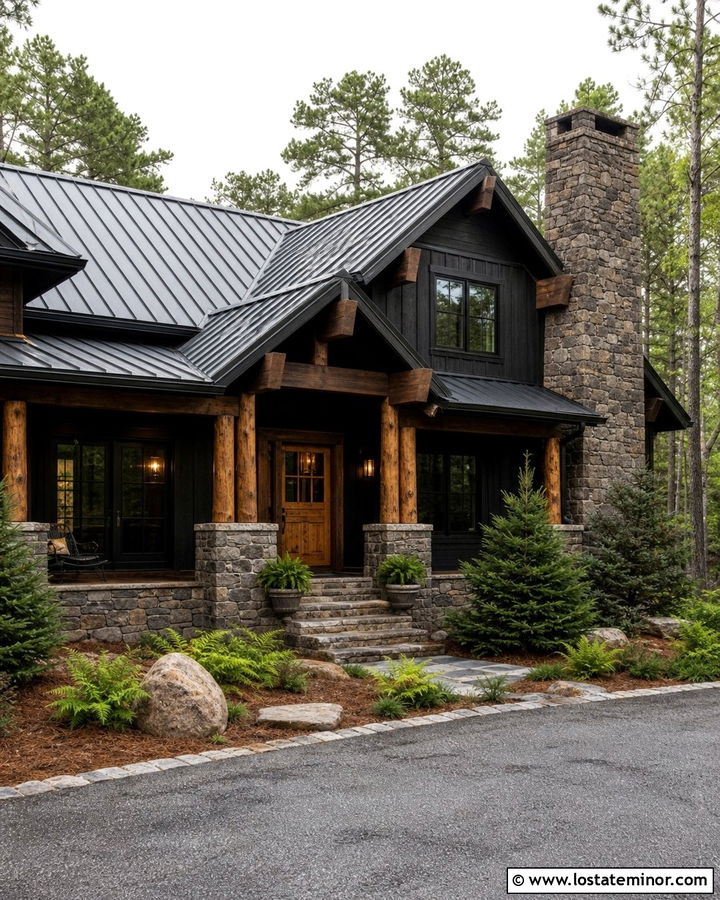
A rustic cabin becomes more contemporary when traditional brown siding is replaced with jet black wood cladding. Keep the fieldstone foundation, chimney, and porch piers natural so the building retains its connection to the landscape. Choose stone containing charcoal, brown, mossy gray, and muted tan tones. Thick cedar beams, log-style porch posts, and a warm wood door provide contrast against the black siding. A dark metal roof works well with a simple gable or cross-gable shape. Use black window frames rather than bright trim to keep the view from becoming fragmented. Rough stone steps, native ground cover, ferns, and evergreen trees complete the woodland setting. The design feels authentic because the natural stone and substantial timber details balance the crispness of the newly darkened exterior.
24. Jet Black Mediterranean House With Travertine
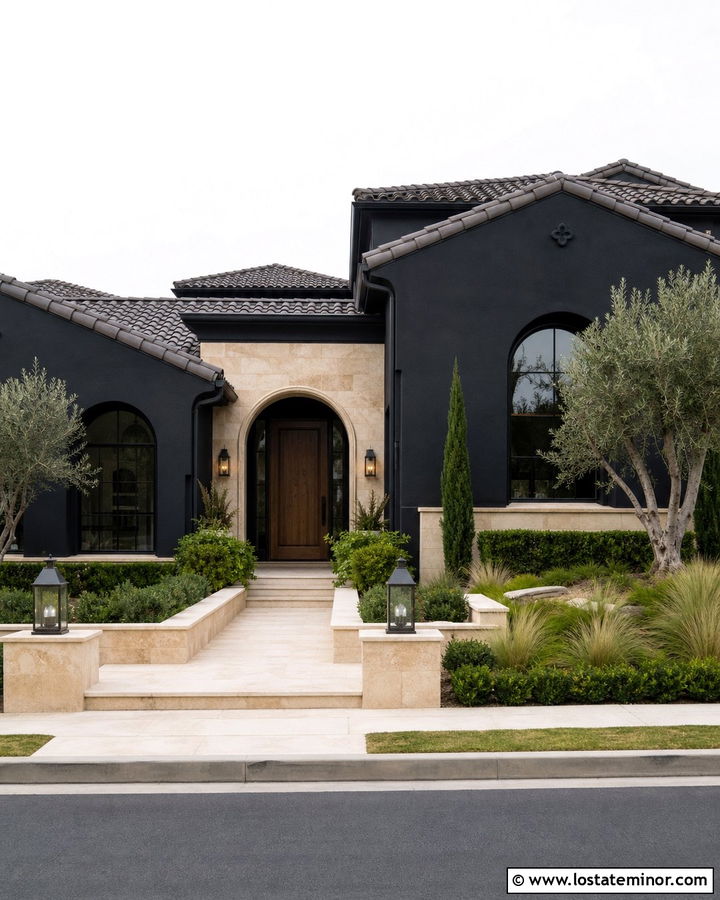
A Mediterranean house does not need to remain cream or terracotta. Smooth jet black stucco can create a sophisticated update when paired with pale travertine around the arched entrance, lower walls, and courtyard. Select lightly textured travertine in warm ivory or sand so the stone remains visible beside the dark facade. A broad walnut door, bronze hardware, and warm metal lanterns reinforce the architecture. Keep barrel roof tiles charcoal or weathered brown rather than introducing bright red overhead. Black-framed arched windows maintain continuity with the stucco. Use travertine pavers for the walkway and repeat the stone in low garden walls. Olive trees, clipped greenery, ornamental grasses, and restrained flowering plants complete the landscape. The finished exterior feels warm and regional despite its dramatic main color.
25. Jet Black Georgian House With Cut Stone
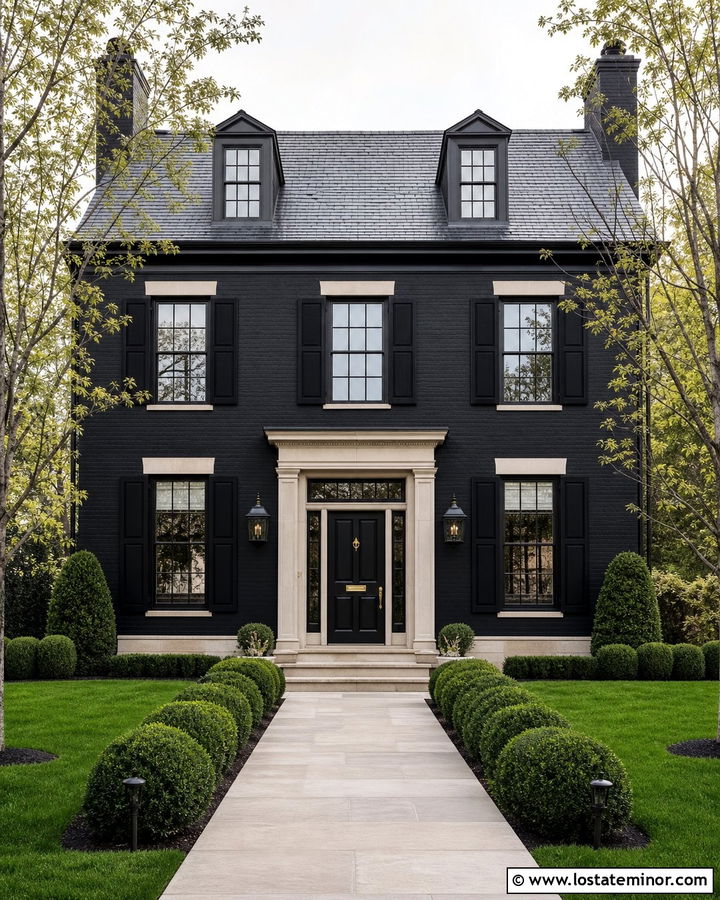
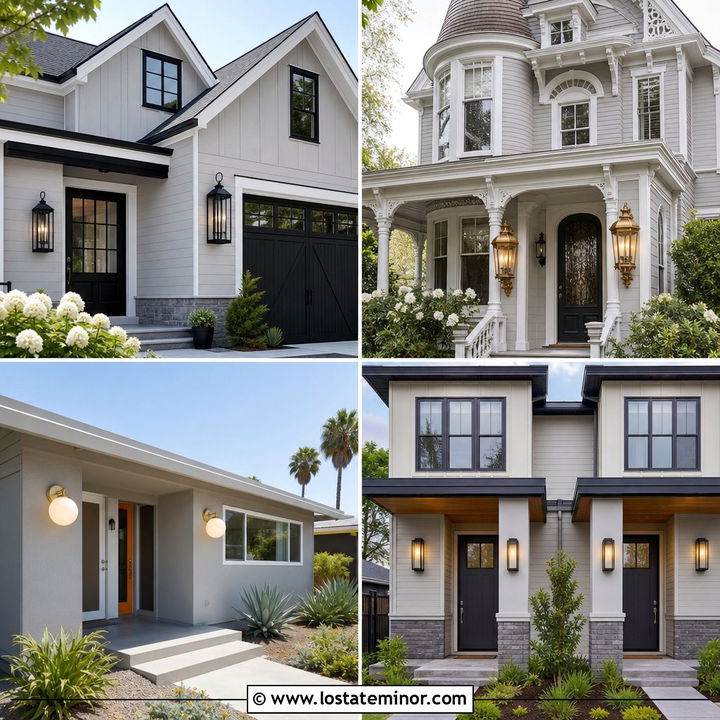
Strong symmetry allows a Georgian house to carry a formal jet black color scheme with confidence. Paint the brick or clapboard body black and match the trim closely instead of using stark white outlines. Add pale cut limestone around the centered doorway, window lintels, front steps, and foundation. These carefully placed accents emphasize the architecture without covering too much of the facade. A black paneled door can create an elegant monochromatic entrance, while polished brass hardware and traditional lanterns prevent it from disappearing. Choose a charcoal slate-style roof and keep the gutters dark. A straight stone walkway, clipped boxwoods, balanced trees, and evenly arranged planting beds preserve the formal setting. The pale stone provides enough contrast to reveal the house’s proportion, craftsmanship, and classic window arrangement.
26. Jet Black Chalet House With Stone Piers
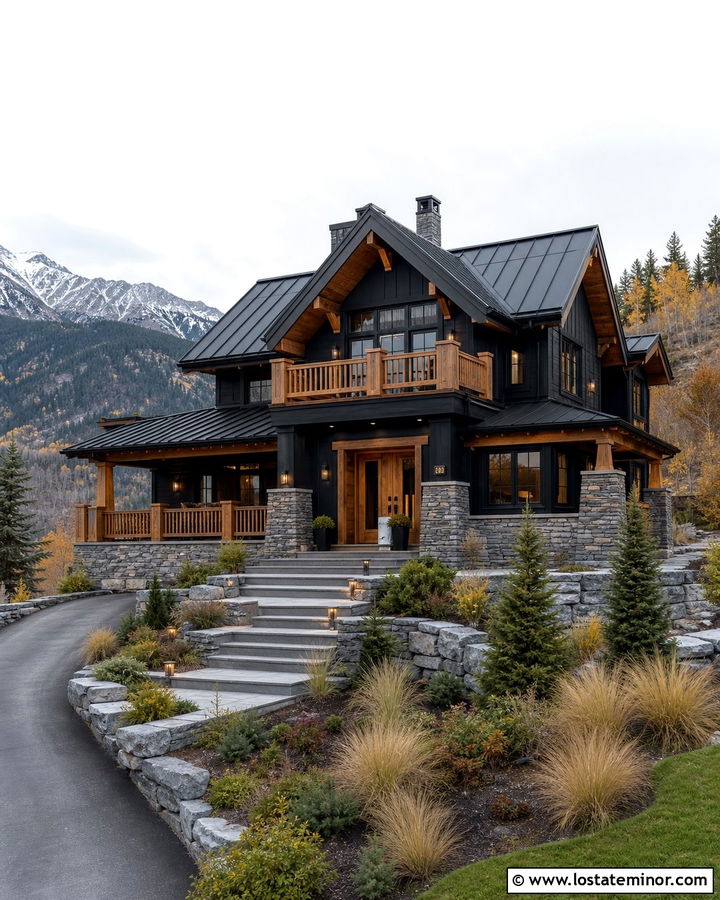
A chalet’s wide roof, balconies, and exposed structure create many opportunities to balance jet black siding with natural materials. Apply black wood siding to the main walls and gable ends, then build the foundation and balcony piers from rugged gray ledgestone. Use honey-toned timber on the balcony railings, roof brackets, front door, and soffits. These warm elements should be substantial enough to remain visible beneath the deep roof overhangs. Choose a black metal roof that follows the chalet’s broad silhouette. Black-framed windows maintain a clean connection to the siding. Stone retaining walls, broad steps, conifers, and mountain grasses extend the materials into the landscape. The complete scheme combines traditional alpine structure with a simplified modern palette, allowing the craftsmanship and natural textures to stand out clearly.
27. Jet Black Coastal House With Pale Stone
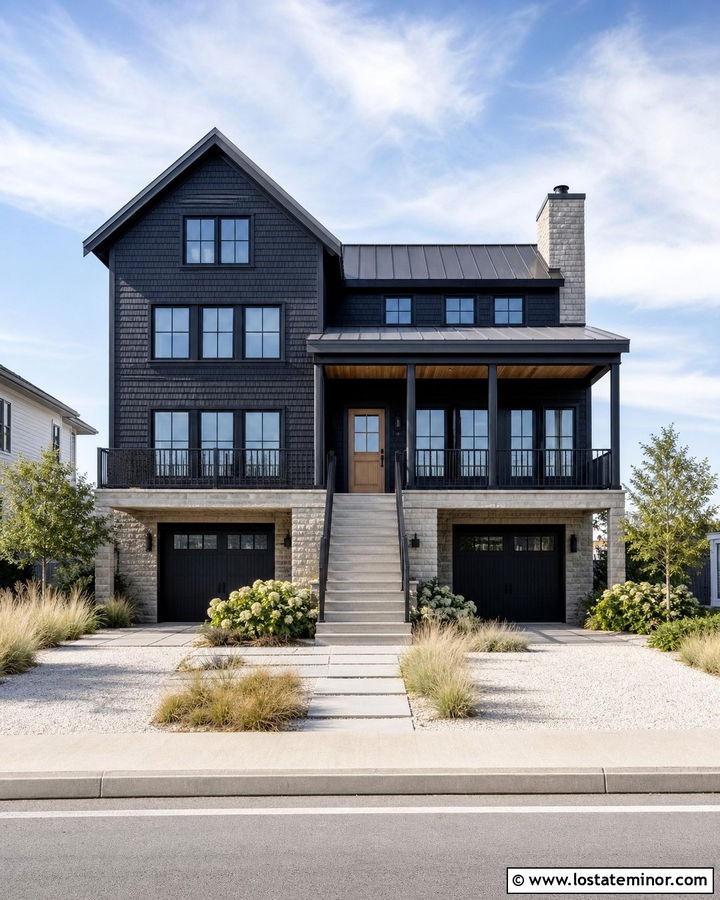
Jet black may seem unexpected near the coast, yet pale stone and weathered wood can keep the exterior fresh. Use black shingle siding on a raised coastal house and add light-gray stone around the foundation, entrance stairs, and chimney. Choose stone with minimal brown or yellow coloring for a crisp connection to the surrounding sky and water. A weathered-oak door and porch ceiling soften the contrast without looking overly rustic. Select a charcoal metal roof and black window frames for a wind-resistant, unified appearance. Pale gravel, concrete pavers, sea grasses, hydrangeas, and low salt-tolerant shrubs brighten the base of the house. Keep railings simple and open so the facade does not become visually crowded. The finished palette feels coastal through materials and landscaping rather than predictable nautical colors.
28. Jet Black Minimalist House With Stone Courtyard
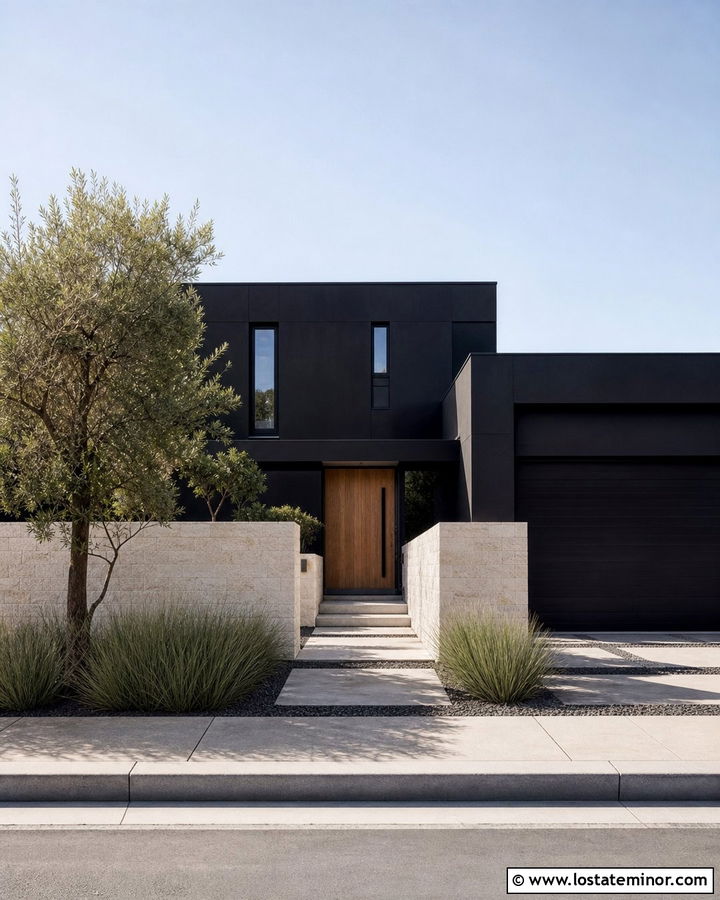
Minimalist architecture depends on careful material placement because there are few decorative details to conceal mistakes. Cover the primary house volume in smooth jet black panels, then use pale limestone or gray travertine on a courtyard wall that extends toward the street. This wall can guide visitors to a recessed oak pivot door while partially screening the entrance. Keep window frames, roof edges, and garage doors black for a clean, continuous surface. Use large-format stone pavers that match the courtyard wall, reducing the number of competing finishes. A few sculptural trees, clipped grasses, and dark gravel provide restrained landscaping. The stone should continue from the exterior into the sheltered entry area, making it feel architectural and permanent. This approach creates drama through proportion, texture, and shadow rather than ornament.
29. Jet Black Traditional House With Stone Arch Entry
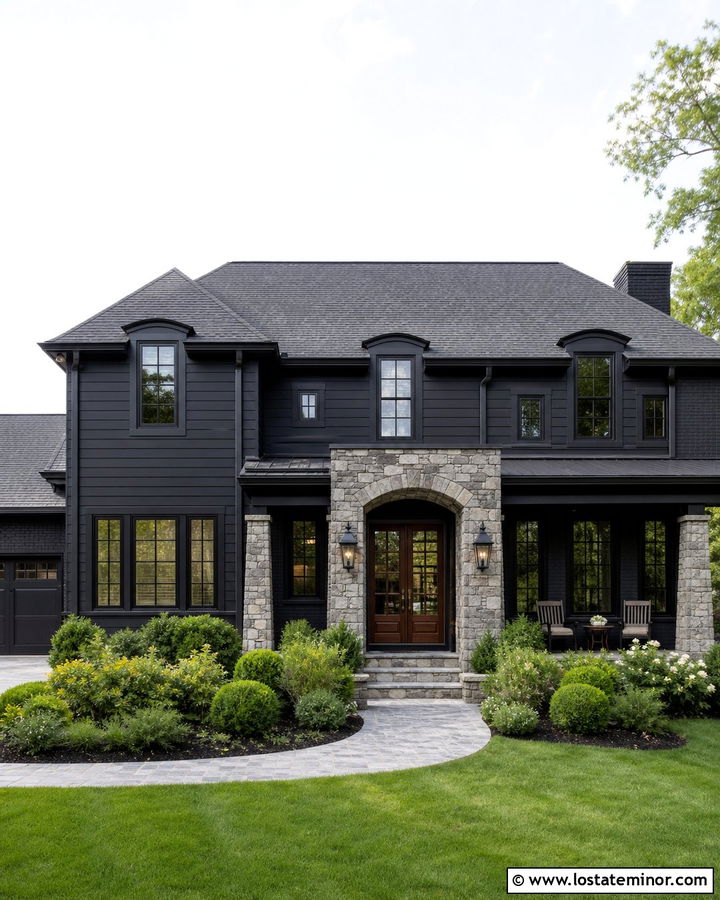
A traditional two-story house gains a memorable focal point when pale stone forms a substantial arch around the front entrance. Paint the main siding, shutters, trim, and garage doors jet black to simplify the larger elevation. Use warm gray limestone around the doorway and continue it across the porch columns and lower foundation. A natural mahogany door with divided glass creates warmth within the stone surround. Choose a charcoal shingle roof and avoid bright white gutters that would interrupt the dark exterior. Balanced window placement, traditional lanterns, and a gently curved stone walkway preserve the approachable character. Repeat the stone near the garage or on a small landscape wall so the entrance does not feel isolated. This coordinated repetition gives the entire facade a deliberate, finished appearance.
30. Jet Black Estate House With Mixed Stone
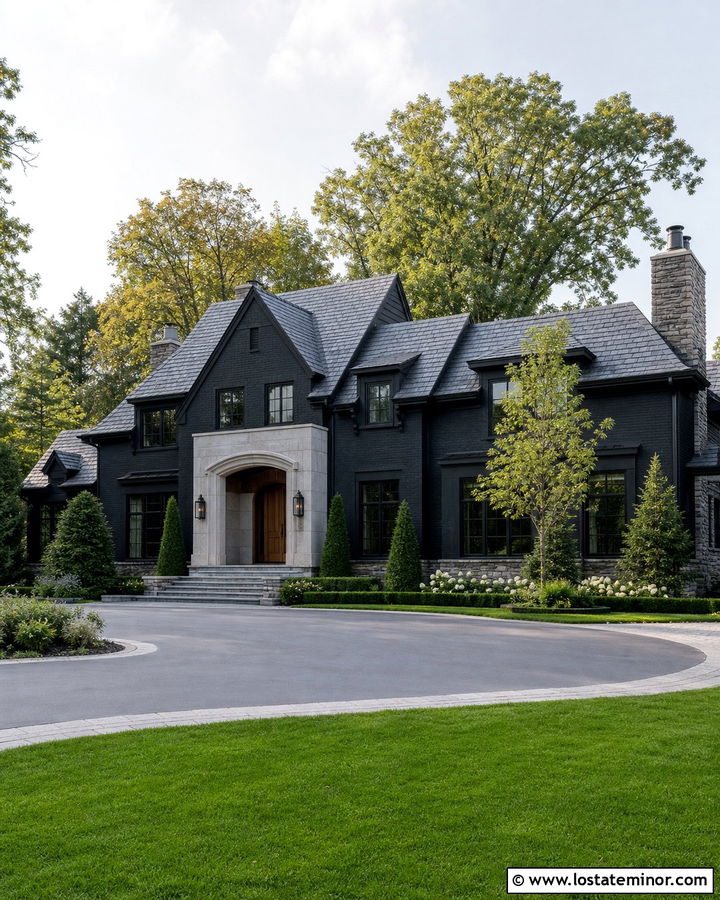
A large estate needs more than one texture, but the materials should still belong to a controlled palette. Use jet black siding or painted masonry across the primary walls, then combine two related stones: smooth gray limestone for formal entrance surrounds and darker ledgestone for foundations, chimneys, and service wings. Limit the warm accents to substantial oak doors, porch ceilings, and selected beams. Black window frames, gutters, and a charcoal slate roof unify the different sections of the house. Avoid adding contrasting shutters unless they support the architecture. Broad stone steps, a circular drive, layered trees, and formal evergreen beds give the facade an appropriate sense of scale. Repeating each stone in multiple locations creates continuity, allowing the expansive exterior to look sophisticated rather than unnecessarily complicated.
Conclusion:
The best 30 Jet Black House Design With Stone Accents Ideas balance bold color with natural texture, thoughtful placement, and architecture-appropriate details. Jet black can unify siding, trim, windows, gutters, and garage doors, while stone gives the facade depth and a strong visual foundation. Pale limestone creates crisp contrast. Fieldstone adds rustic warmth, and dark slate supports a modern monochromatic scheme. Wood doors and porch ceilings are especially useful for softening the transition between black walls and masonry. Before selecting materials, compare stone samples with the paint, roof, and existing hardscape in natural daylight. A coordinated plan will ensure every element supports one complete exterior rather than competing for attention.

Related posts: