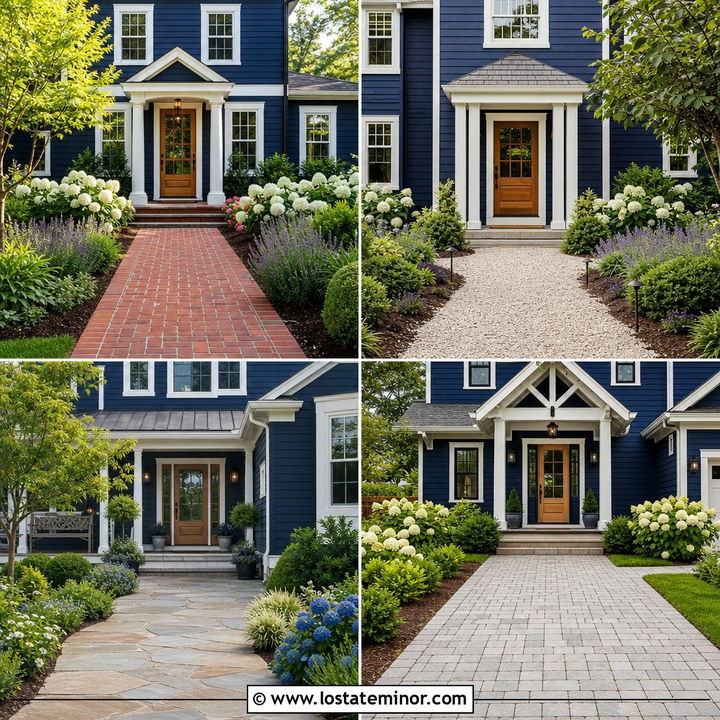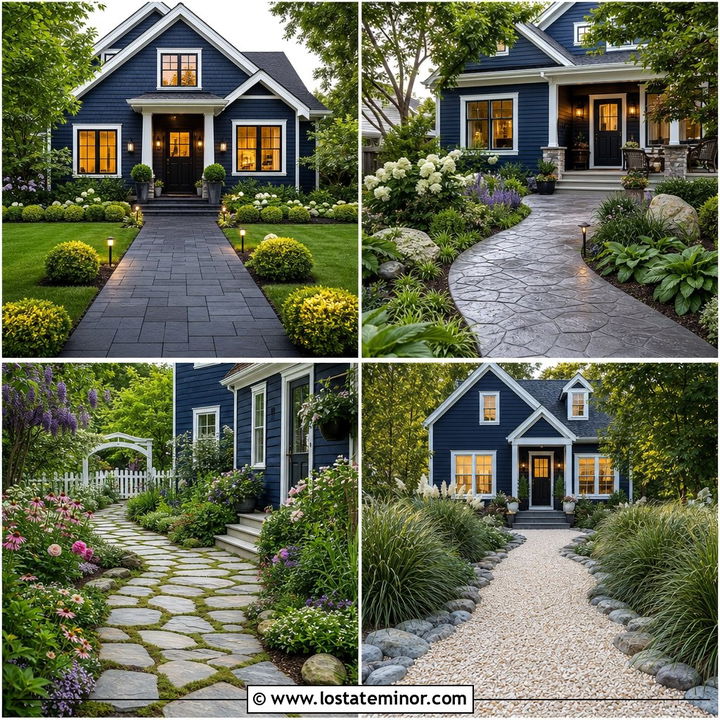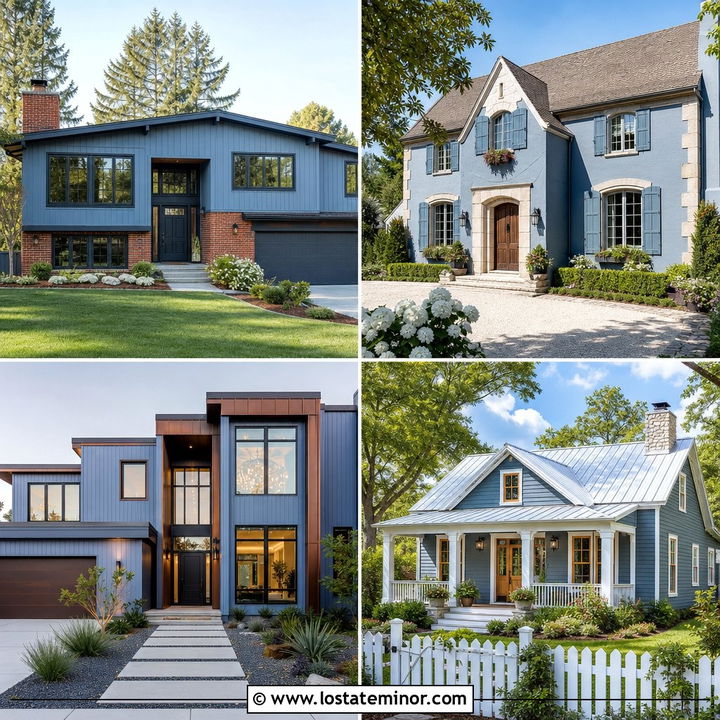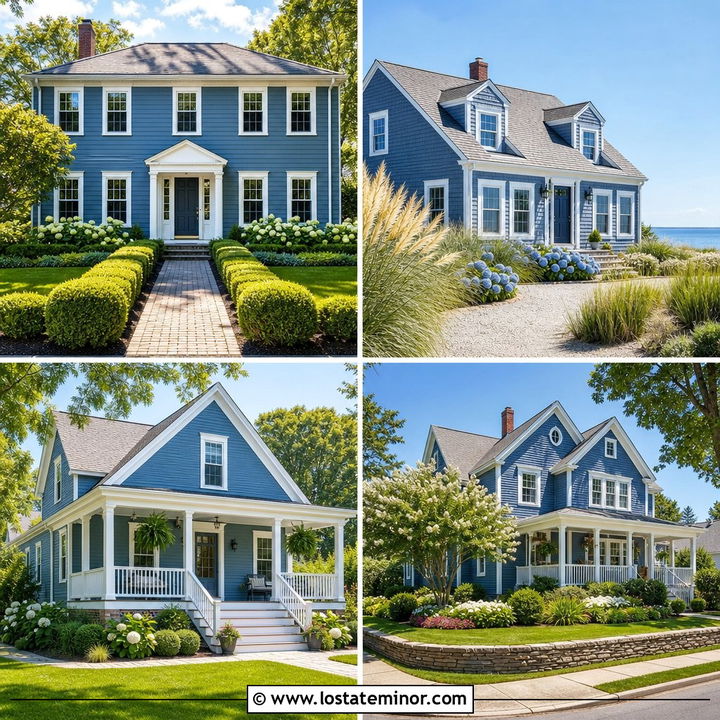
Dusty blue brings softness, character, and a relaxed sense of color to almost any home exterior. The muted gray-blue tone works beautifully with crisp white trim, warm wood, aged brick, natural stone, and darker architectural accents. A well-planned walkway makes the color scheme feel even more intentional by connecting the street, landscaping, porch, and front door. Materials such as bluestone, brick, gravel, concrete, and flagstone can each give the same blue facade a completely different personality. The best combination depends on the home’s architecture, roof color, setting, and maintenance needs. From traditional cottages to contemporary ranch homes, the following complete exterior schemes offer practical inspiration for creating **30 Dusty Blue House Design With Walkway Ideas**.

1. Dusty Blue Craftsman With Bluestone Walkway
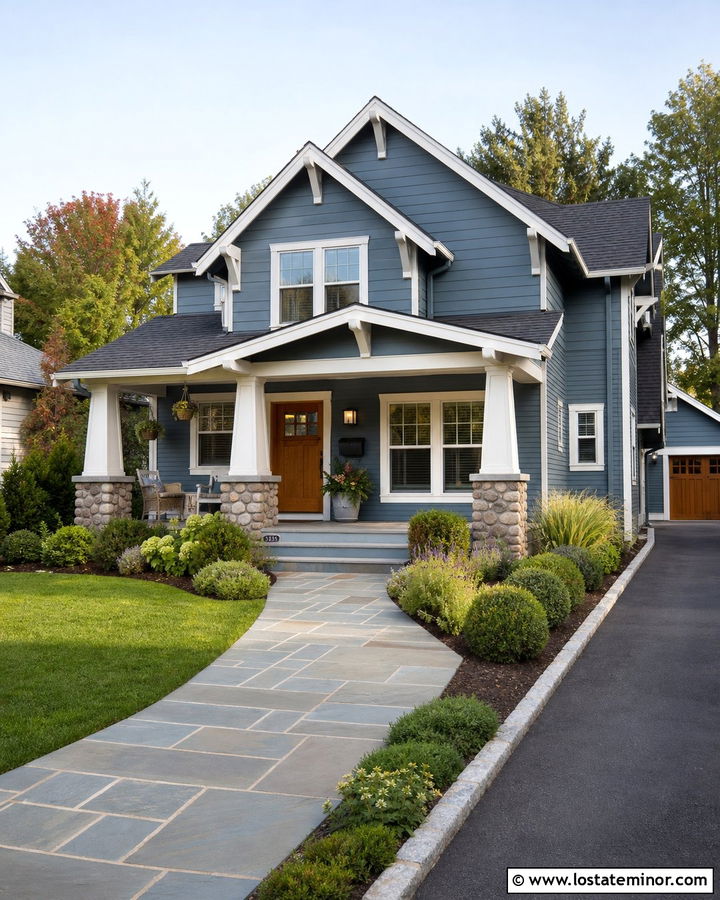
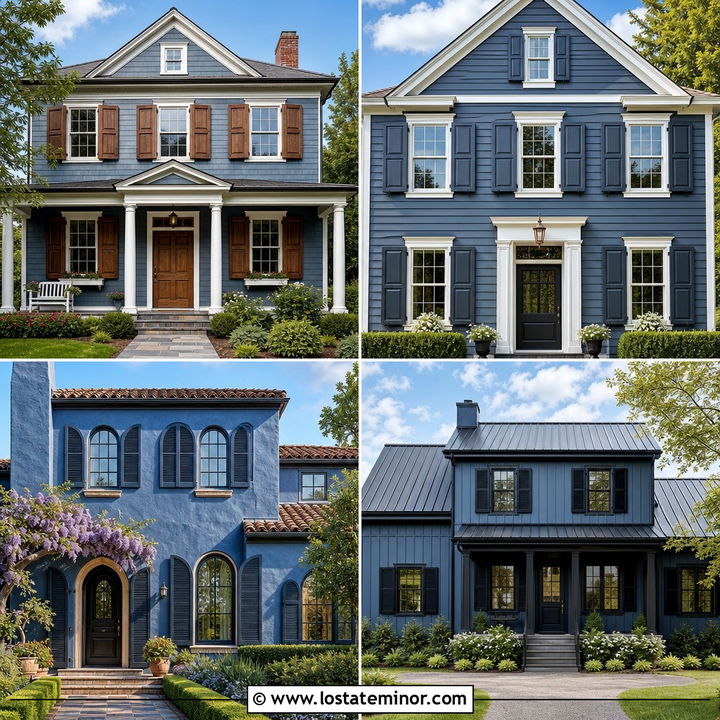
A dusty blue Craftsman feels grounded and welcoming when paired with a wide bluestone walkway. Use muted blue lap siding across the main facade, then add warm white trim around the windows, fascia, and tapered porch columns. A medium-stained oak front door introduces natural warmth without competing with the siding. Choose rectangular bluestone slabs with varied blue-gray tones to connect the driveway to the porch steps. Low ornamental grasses and rounded evergreen shrubs can soften the walkway edges while keeping the route open. Complete the exterior with a charcoal architectural-shingle roof, dark bronze lighting, and a stone porch foundation. The walkway repeats the cool undertones of the siding, while wood and cream accents keep the complete scheme comfortable rather than overly gray.
2. Dusty Blue Farmhouse With Gravel Walkway
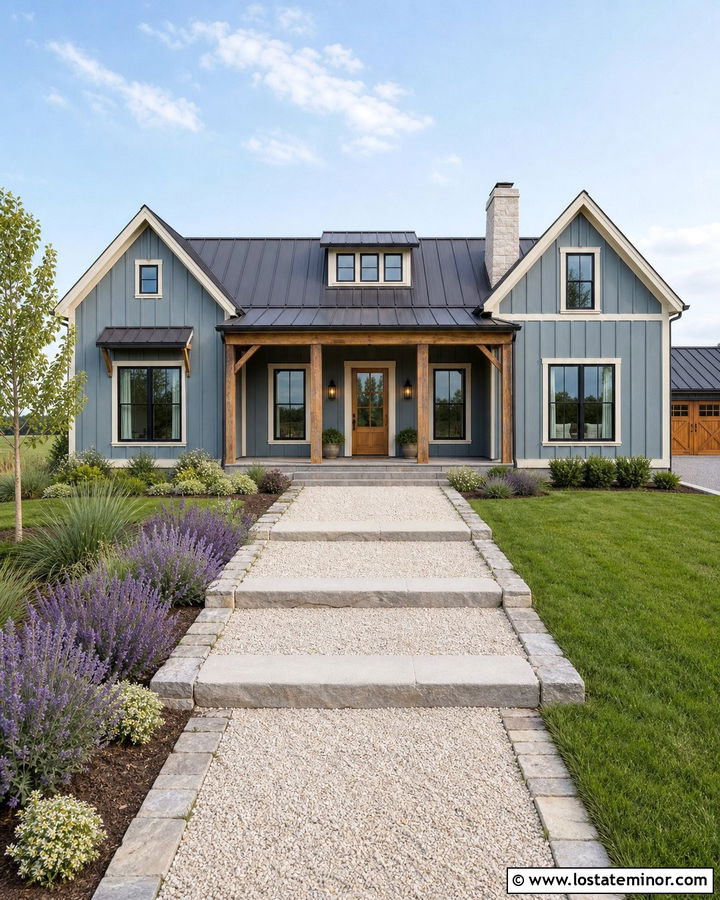
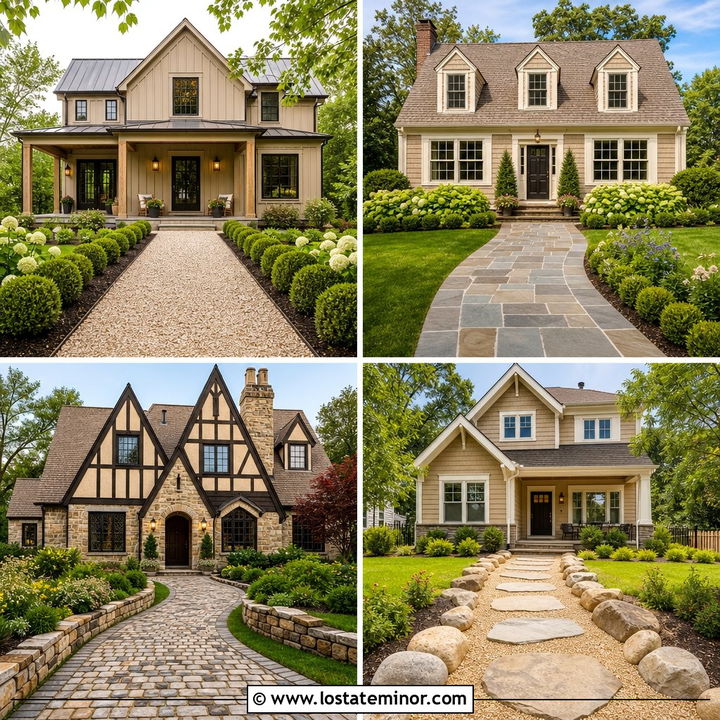
Imagine a long, relaxed approach leading toward a simple dusty blue farmhouse. Vertical board-and-batten siding gives the muted blue exterior clean definition, while creamy white trim highlights the gables, windows, and covered porch. A pale gravel walkway works especially well in a country setting because its loose texture balances the straight siding lines. Add steel edging to keep the gravel contained and use broad stepping stones near the porch for a more stable entrance. Natural cedar porch posts, a matching wood front door, and galvanized metal lights provide subtle rustic warmth. A matte charcoal standing-seam roof finishes the house without making it feel severe. Plant lavender, catmint, and soft ornamental grasses beside the path to create an informal transition between the lawn and the blue facade.
3. Dusty Blue Colonial With Red Brick Walkway
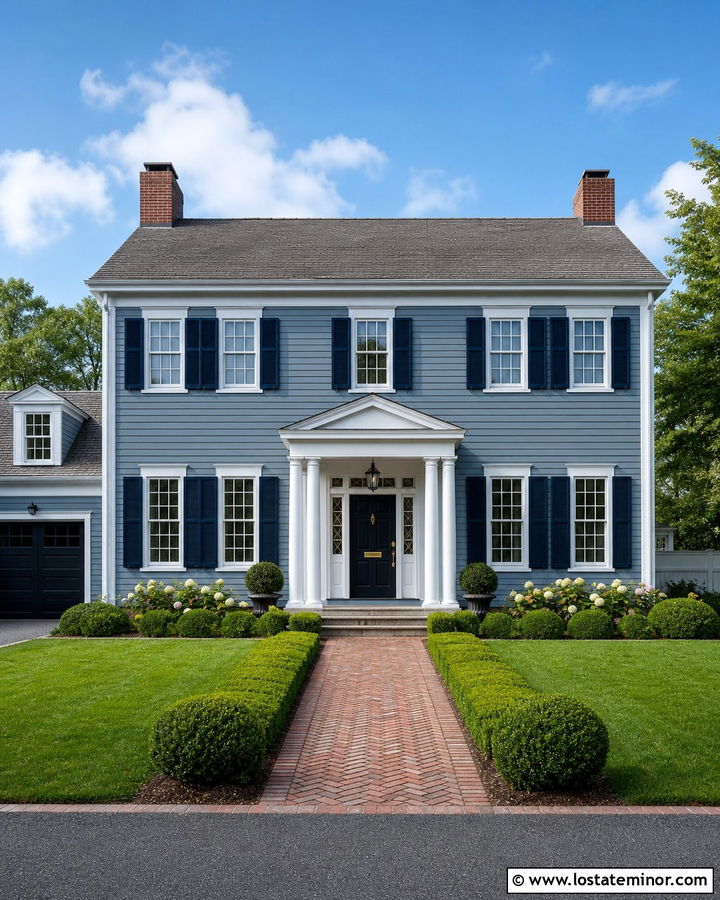
A straight red brick walkway reinforces the balanced architecture of a dusty blue Colonial home. Cover the symmetrical facade in muted blue clapboard siding and frame it with clean white corner boards, window trim, and classical entry columns. Deep navy shutters create gentle contrast while staying within the blue color family. Lay traditional red and brown bricks in a herringbone pattern, then finish the edges with a simple soldier-course border. The brick introduces enough warmth to prevent the dusty blue exterior from appearing cool or flat. A polished black front door, brass hardware, and black lanterns add formal definition. Keep the landscaping equally structured with clipped boxwoods and matched planting beds. A dark gray roof ties the shutters, walkway shadows, and architectural details into one cohesive exterior.
4. Dusty Blue Cottage With Curved Flagstone Walkway
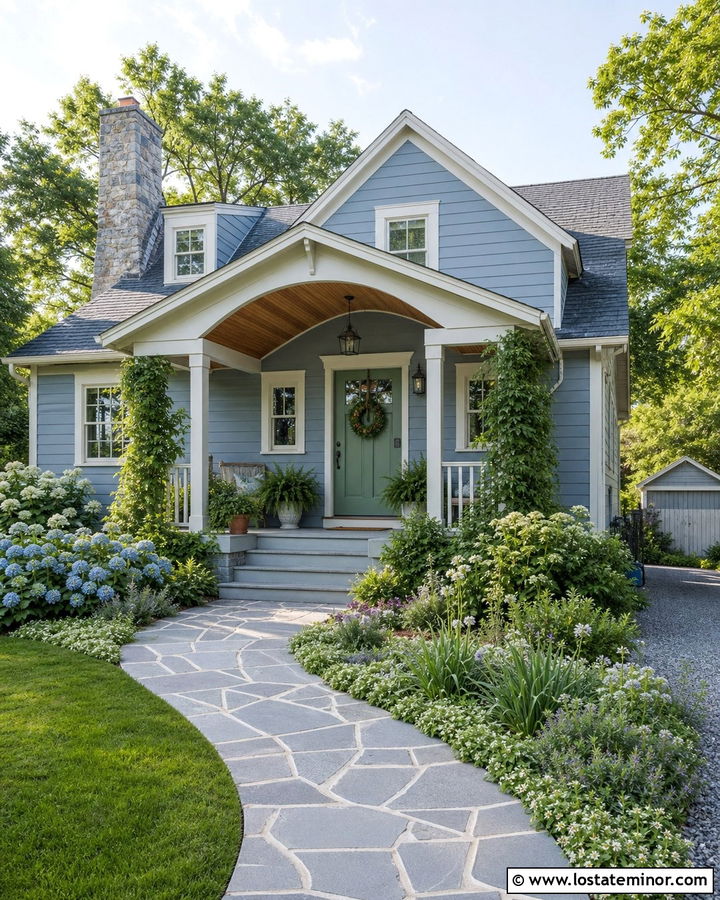
A curved flagstone path can make a compact dusty blue cottage feel tucked naturally into its garden. Choose soft gray-blue siding with ivory window trim and a warm sage front door for a gentle, layered palette. Irregular flagstones in gray, tan, and muted brown should follow a relaxed curve from the sidewalk to the small covered entry. Allow low-growing thyme or another suitable ground cover to fill wider joints where local conditions permit. Window boxes, climbing greenery, hydrangeas, and loosely arranged perennials can frame the path without hiding the house. Add a weathered cedar porch ceiling and small copper-toned lights for warmth. The organic walkway shape complements the cottage scale, while its earthy stone colors bridge the dusty blue siding, garden foliage, and surrounding lawn.
5. Dusty Blue Ranch With Large Concrete Pavers
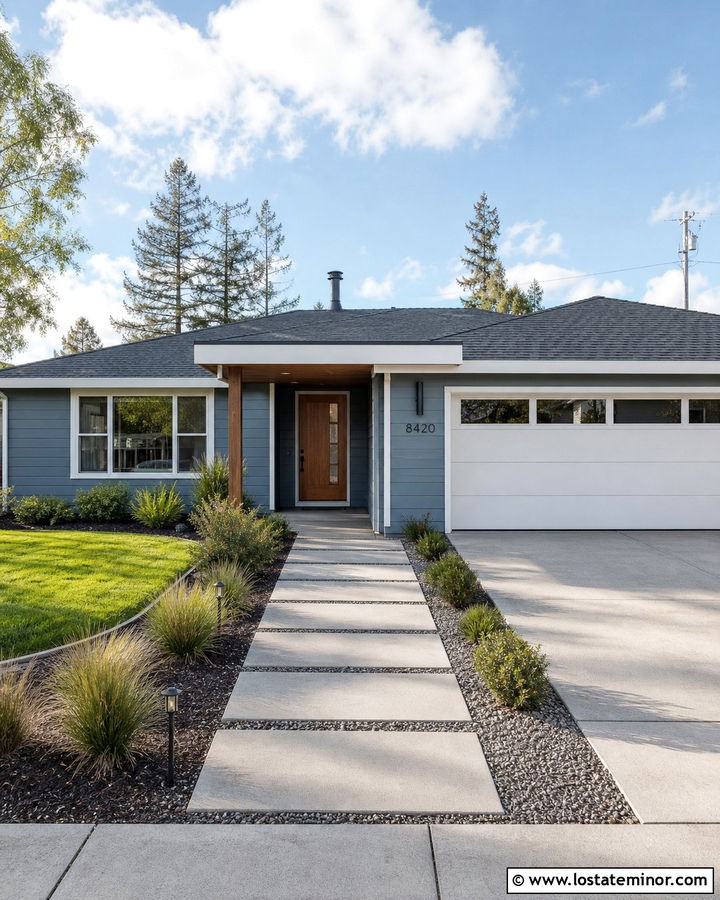
Clean rectangular pavers give a dusty blue ranch house a more updated and organized entrance. Paint the horizontal siding a medium dusty blue and use soft white on the fascia, window frames, and garage trim. A natural walnut front door creates a warm focal point beneath a simple covered entry. Install oversized concrete pavers in a straight line, leaving narrow gravel joints between them for visual rhythm. Extend the same material toward the driveway so visitors have an obvious route that does not cut through the lawn. Black house numbers, slim wall sconces, and a charcoal roof sharpen the otherwise quiet palette. Keep the planting low with compact shrubs and grasses. The walkway’s strong geometry complements the ranch home’s long roofline and gives the muted blue exterior a fresh, contemporary edge.
6. Dusty Blue Cape Cod With Herringbone Brick Walkway
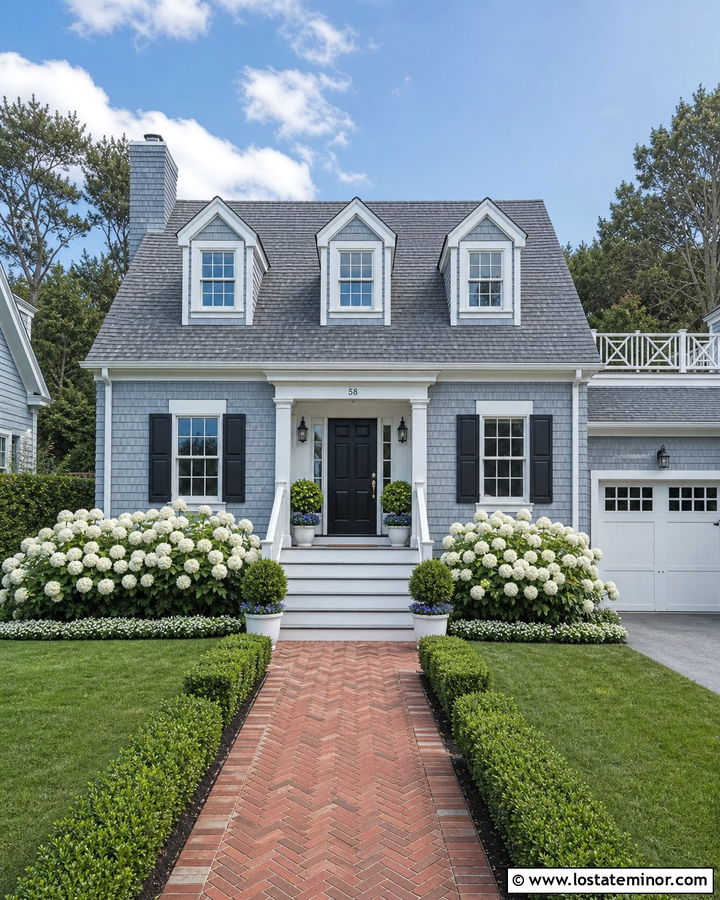
For traditional coastal charm, pair a dusty blue Cape Cod exterior with a herringbone brick walkway. The house can feature blue-gray cedar shingles, crisp white trim, dormer windows, and a centered black front door. Weathered red brick adds warmth beneath the cool siding and creates a pleasing connection to classic East Coast architecture. Use a gently widening path near the entry so the small stoop feels more generous. White hydrangeas, clipped hedges, and low ground cover can line the walkway while leaving the symmetrical facade visible. Add a gray shingle roof and black lantern sconces for definition. Because the siding already has natural texture, keep the walkway pattern orderly. This balance of weathered shingles, structured brick, and simple landscaping produces an inviting exterior that looks established rather than overly decorated.
7. Dusty Blue Bungalow With Stepping-Stone Walkway
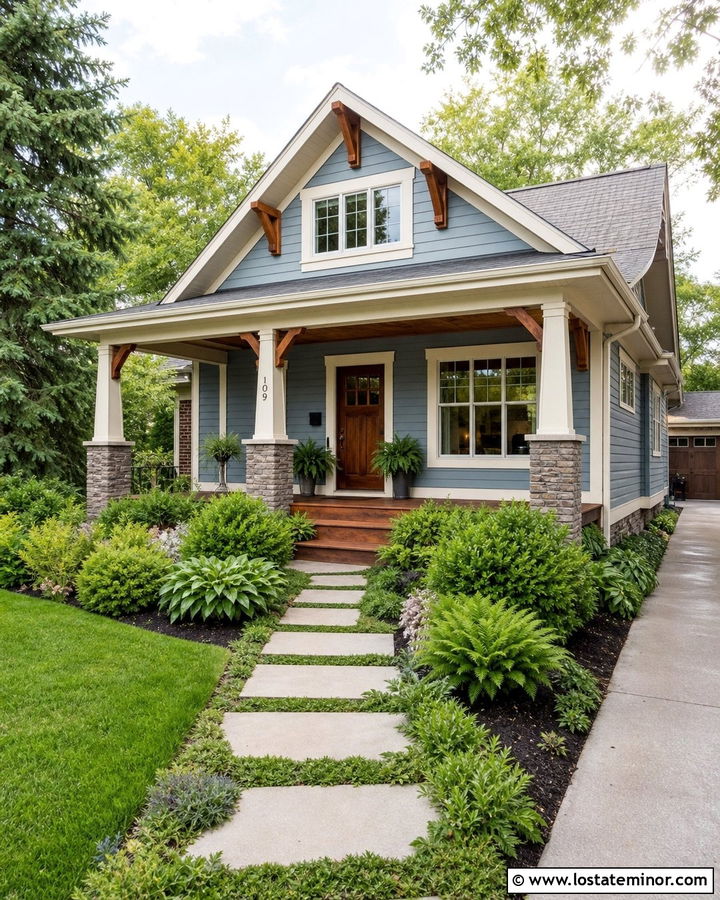
A modest bungalow gains personality from a casual stepping-stone walkway surrounded by greenery. Use dusty blue lap siding on the full facade, warm white trim around the windows, and cream paint on the thick porch columns. Stained cedar brackets and a matching craftsman-style front door bring out the warmer side of the blue. Choose large rectangular stones with consistent spacing, setting them into a lawn or low ground cover for a relaxed approach. The stones should be broad enough for comfortable movement and placed along a direct route to the porch steps. Finish the house with a medium-gray roof, dark bronze gutters, and simple amber-glass sconces. Ferns, hostas, and rounded shrubs can frame the entrance. Together, the natural materials create an approachable exterior that suits the bungalow’s low, welcoming proportions.
8. Dusty Blue Victorian With Reclaimed Brick Walkway
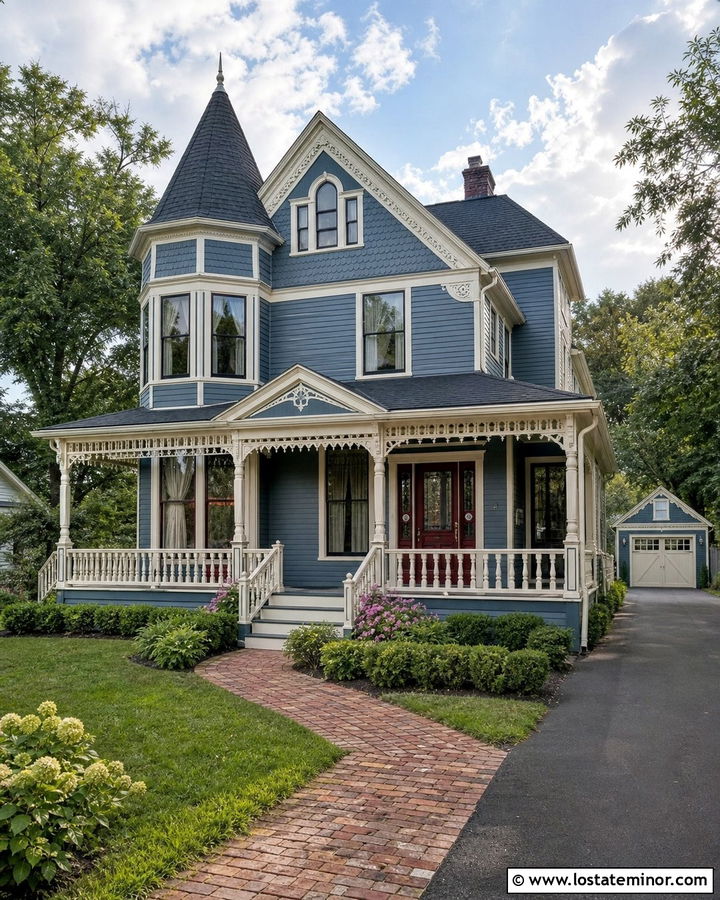
Dusty blue helps the decorative features of a Victorian house stand out without creating an overly busy facade. Cover the main body in a muted gray-blue, then use creamy white on the ornate trim, porch railing, brackets, and window surrounds. A deep burgundy front door adds a historically inspired contrast. Lead visitors toward it with a reclaimed brick walkway containing softly varied red, brown, and charcoal tones. A basket-weave or running-bond pattern can provide detail without competing with the architecture. Add dark gray roof shingles, antique-brass lighting, and restrained foundation planting. Small flowering shrubs work better than tall greenery that could conceal decorative woodwork. The aged walkway texture supports the home’s established character, while the dusty blue body color visually unifies its intricate trim, asymmetrical roofline, and covered porch.
9. Dusty Blue Split-Level With Tiered Stone Walkway
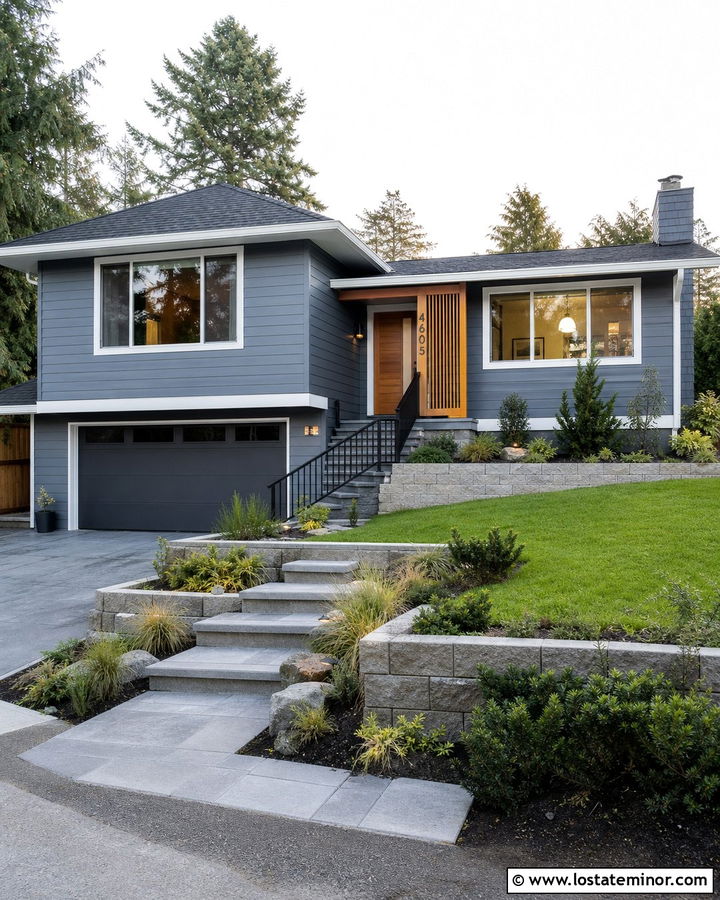
A split-level home often needs a walkway that makes its raised entrance easier to understand. Dusty blue horizontal siding can unify the different building levels, especially when paired with off-white trim and a charcoal garage door. Create a broad walkway with gray stone slabs and shallow, evenly spaced steps that follow the slope toward the front door. Low stone retaining walls can hold planting beds and visually connect the path to the foundation. Introduce warmth through a cedar front door and matching vertical slats near the entry. Black railings, modern sconces, and a dark gray roof provide crisp definition. Use low grasses and spreading evergreens along the stepped path. The finished scheme turns an awkward elevation change into a strong architectural feature while making the complete dusty blue exterior feel balanced and intentionally designed.

10. Dusty Blue Modern House With Floating Concrete Walkway
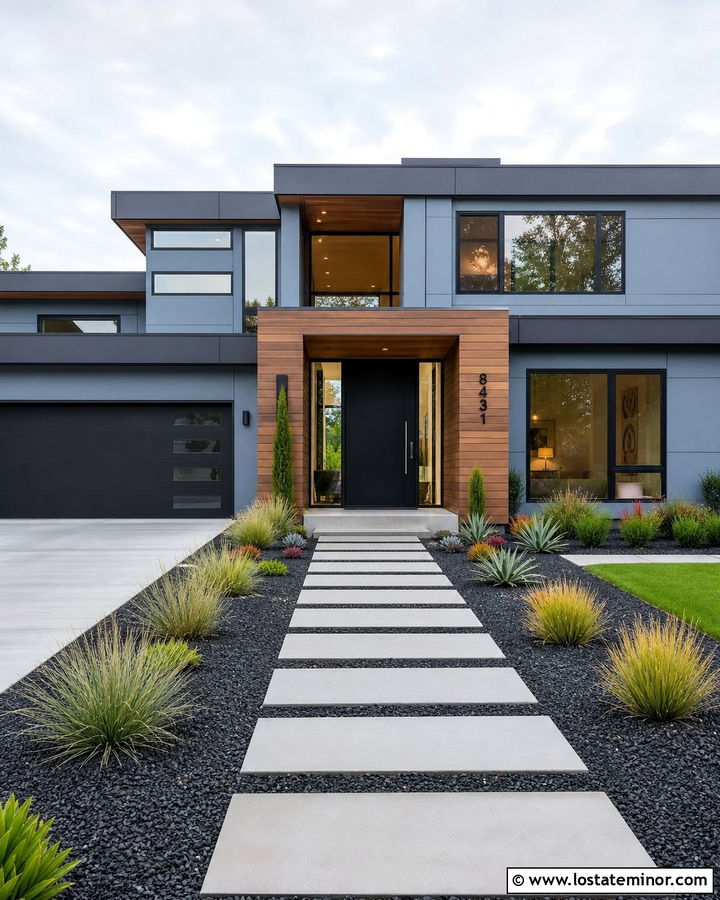
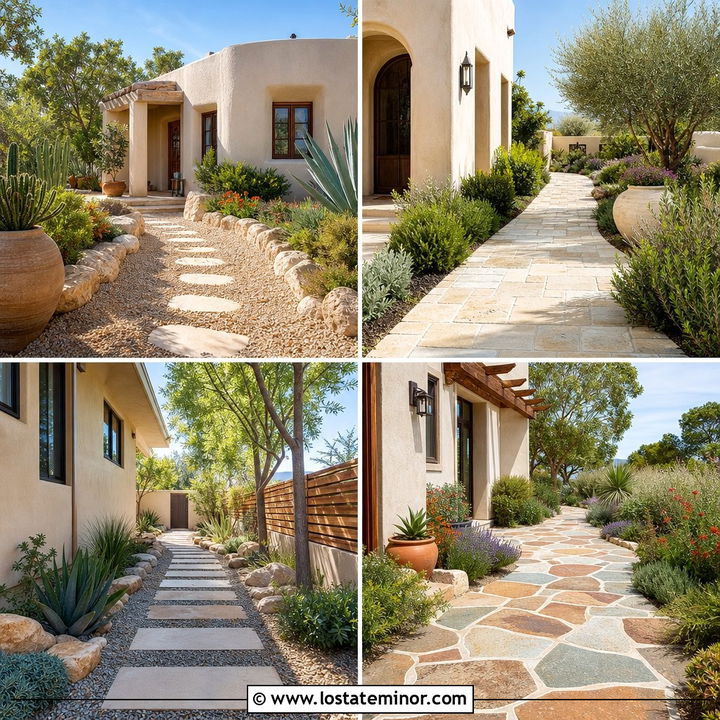
Could a muted blue exterior work on a sharply modern home? The answer is yes when the surrounding details stay streamlined. Use dusty blue fiber-cement panels across the main volumes, charcoal trim around large windows, and natural cedar cladding beside the recessed entrance. Install broad floating-look concrete slabs over dark gravel to create a clean walkway from the sidewalk to the front door. Space the slabs consistently and align them with the home’s window divisions or roof edges. A black pivot door and minimalist wall lighting can strengthen the contemporary appearance. Choose sculptural grasses, low succulents, and simple rectangular planting beds rather than layered cottage planting. The dusty blue softens the architecture’s hard lines, while the geometric walkway repeats its proportions and establishes an uncluttered, confident approach.
11. Dusty Blue Tudor With Cobblestone Walkway
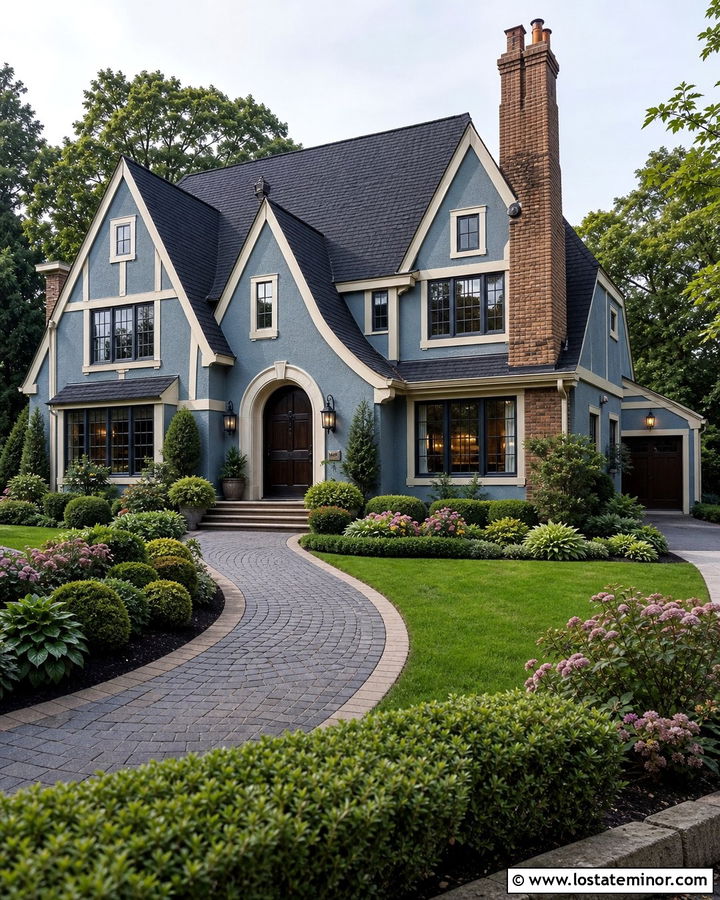
A dusty blue Tudor exterior offers a lighter alternative to the brown-heavy palettes often associated with this architecture. Apply muted blue stucco or siding between creamy white trim boards, then retain warm brown brick or stone around the chimney and lower walls. A dark walnut arched front door should become the central accent. Create a gently curved cobblestone walkway using a mix of charcoal, taupe, and weathered brown stones. The irregular surface texture complements steep rooflines, prominent chimneys, and traditional divided-light windows. Dark bronze gutters and lanterns provide depth without feeling stark. Frame the path with clipped shrubs, ferns, and a few flowering perennials. This complete palette connects cool dusty blue with earthy masonry, allowing the walkway and existing architectural materials to feel naturally integrated rather than added as separate features.
12. Dusty Blue Mediterranean House With Travertine Walkway
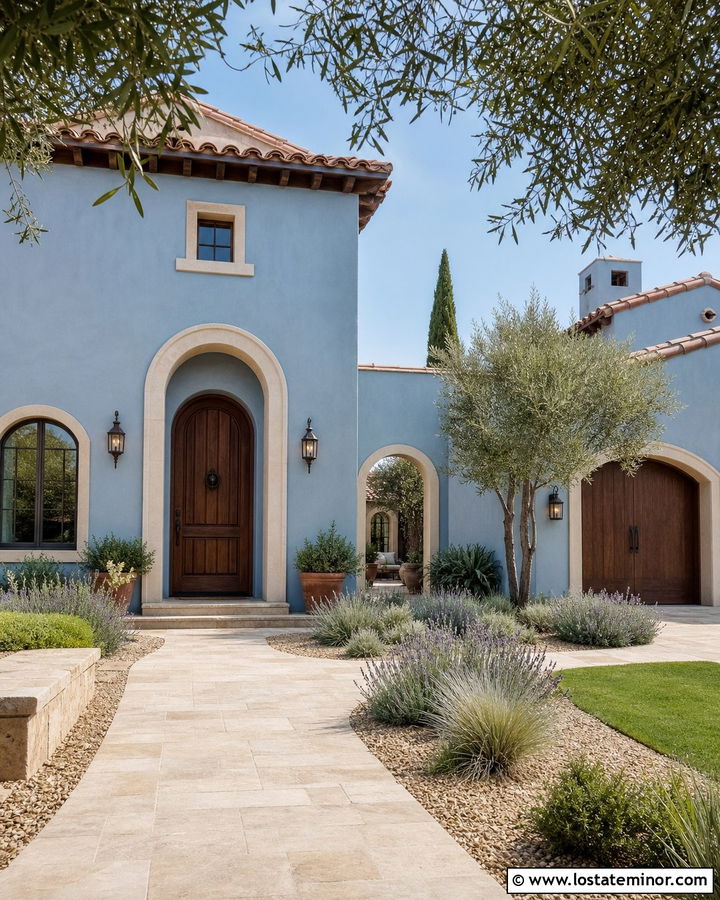
Warm travertine can bring unexpected balance to a dusty blue Mediterranean exterior. Choose a soft, sun-washed dusty blue for the stucco walls and creamy ivory for arches, columns, and window trim. A medium-brown wood door with iron hardware creates a substantial focal point beneath the covered entry. Use rectangular tumbled travertine pavers in beige and pale taupe for the walkway, arranging them in a varied modular pattern. Terracotta roof tiles introduce another warm layer that prevents the blue from feeling overly coastal. Add dark bronze lanterns and simple wrought-iron railings for definition. Drought-tolerant grasses, olive-toned shrubs, lavender, and gravel planting beds can frame the path. The warm walkway and roof visually anchor the cool walls, producing a relaxed exterior that feels colorful, balanced, and appropriate for a sunny landscape.
13. Dusty Blue Coastal House With Shell Walkway
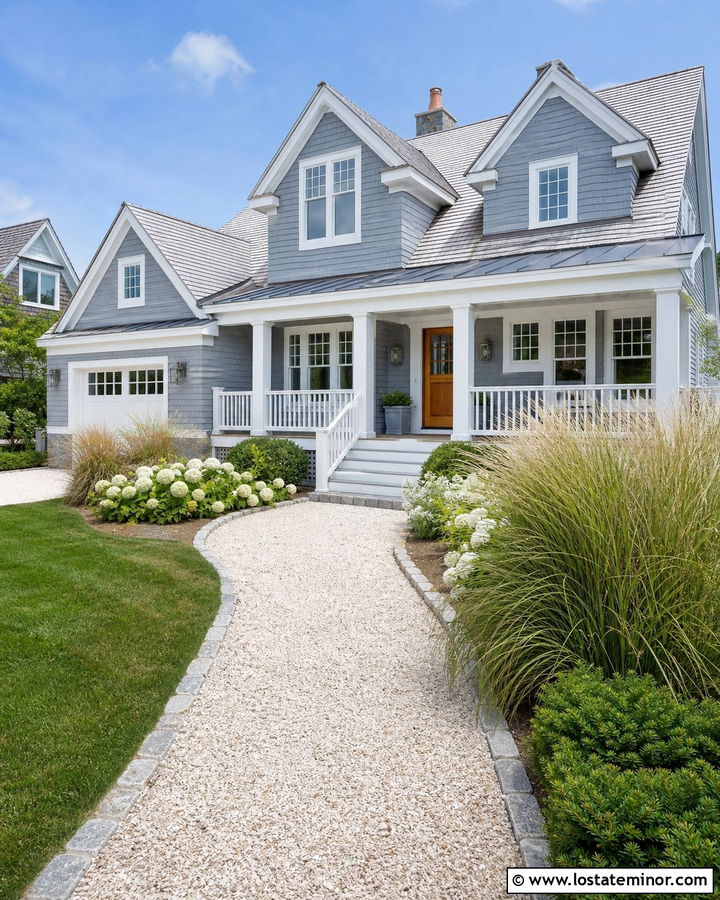
A shell walkway enhances the breezy character of a dusty blue coastal house without requiring a bright nautical palette. Use weather-resistant dusty blue shingles or lap siding, fresh white trim, and a light natural-wood front door. A crushed-shell path in pale cream and soft gray can curve through low coastal planting before reaching a raised porch. Define the path with subtle metal edging or narrow stone borders so the material stays contained. A silver-gray roof, simple white railings, and brushed-nickel or dark bronze lights keep the exterior quiet and airy. Plant beach grass, hydrangeas, and salt-tolerant shrubs where suitable for the local climate. The pale walkway reflects light toward the facade, while the siding provides enough muted color to distinguish the house from its neutral landscaping and coastal surroundings.
14. Dusty Blue Cottage With Pea Gravel Walkway
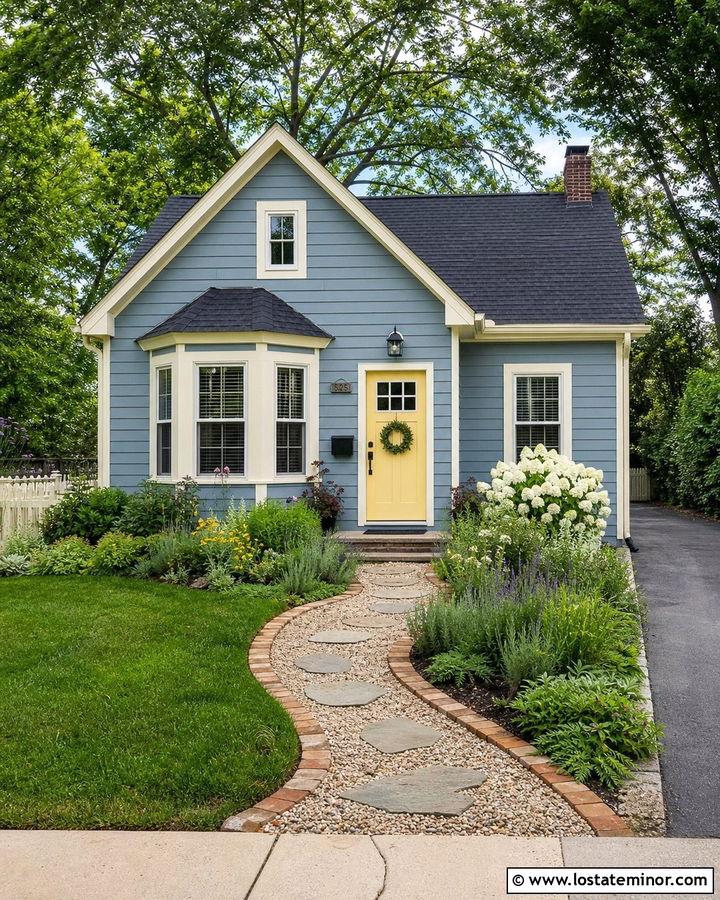
The soft crunch and natural texture of pea gravel suit a small dusty blue cottage beautifully. Paint the siding a restrained gray-blue, then use warm cream on the trim, eaves, and porch posts. A muted yellow front door can add a cheerful accent without overpowering the facade. Shape the gravel walkway with gentle curves and install a firm, properly prepared base beneath the loose material. Brick or steel edging keeps the route neat and separates it from surrounding garden beds. Add several flat landing stones near the steps for secure footing. White flowering shrubs, herbs, and informal perennials can soften the path edges. A medium charcoal roof grounds the color scheme. This affordable-looking combination creates a layered cottage entrance in which the walkway, planting, and dusty blue exterior feel equally important.



15. Dusty Blue Farmhouse With Red Paver Walkway
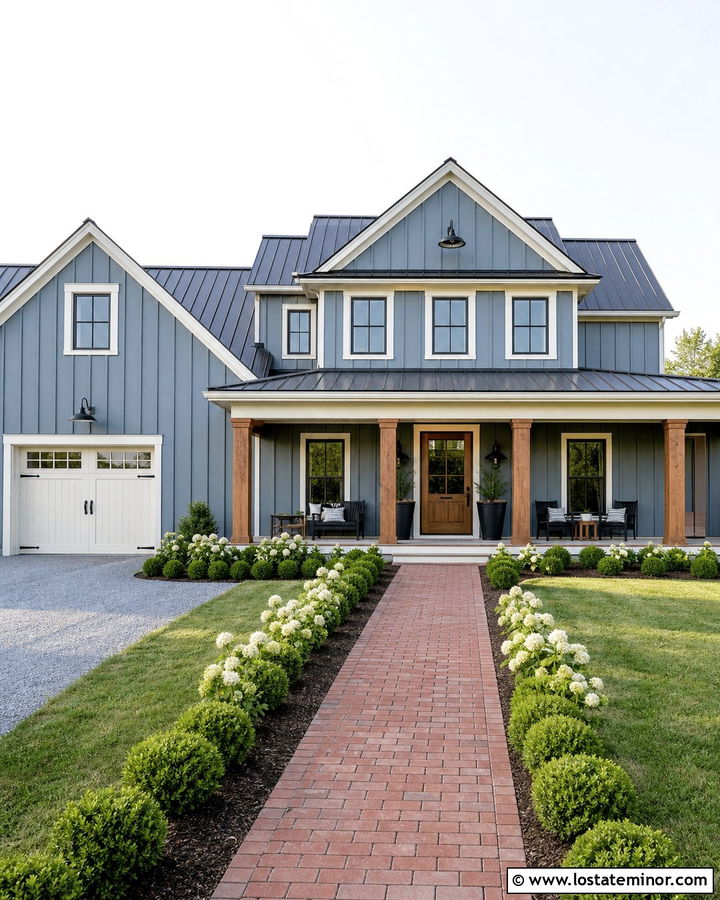
Red concrete pavers bring warmth and structure to a dusty blue farmhouse while offering a cleaner appearance than heavily weathered brick. Cover the facade in blue-gray board-and-batten siding and highlight the roofline with creamy white trim. Natural cedar porch posts, ceiling boards, and a matching front door add warmth at eye level. Lay the walkway in a straightforward running-bond pattern, using muted red and brown pavers rather than bright orange-red units. A charcoal metal roof and black gooseneck lights provide crisp contrast. Surround the path with low boxwoods, white flowering plants, and broad areas of lawn to maintain the farmhouse’s simple character. The red walkway visually links the landscape to the wood accents, while the dusty blue siding keeps the complete house exterior calm, distinctive, and welcoming.
16. Dusty Blue Colonial With Bluestone Steps
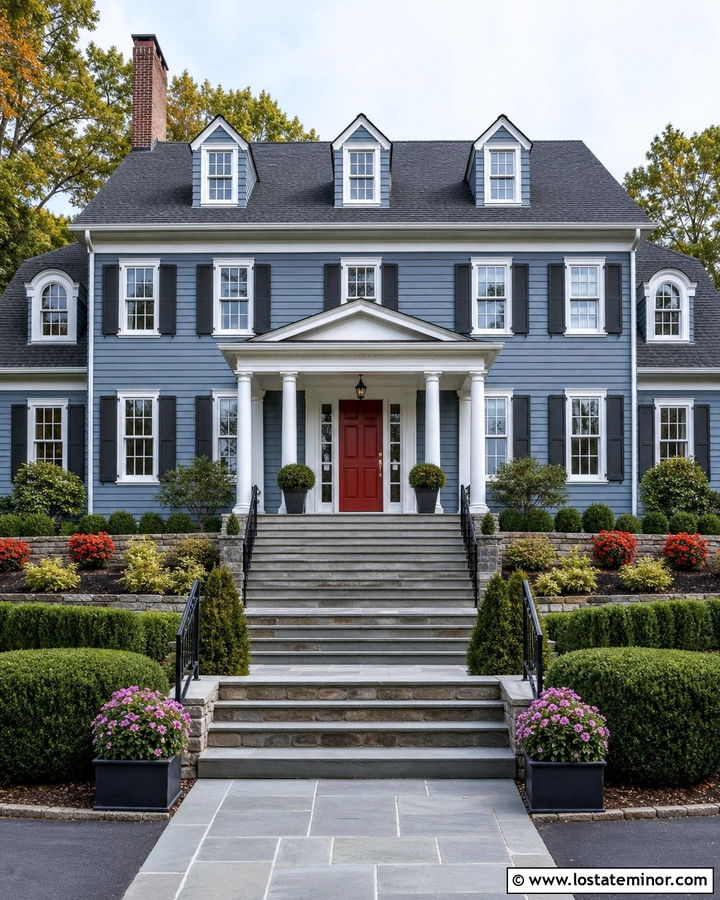
On a sloped front yard, broad bluestone steps can create a graceful approach to a dusty blue Colonial. Use evenly colored blue-gray clapboards with bright white trim, white columns, and dark charcoal shutters. A rich red front door provides a classic focal point at the top of the stairs. Build the walkway from large bluestone treads with stone risers, adding generous landings wherever the direction changes. Matching low retaining walls can hold neatly layered planting beds and make the elevation feel intentional. Black handrails and traditional lanterns reinforce the formal architecture. Keep the route symmetrical when the lot allows, framing it with clipped evergreens and seasonal flowers. Repeating blue-gray tones in both the siding and stone creates cohesion, while the red door and green landscaping prevent the exterior from becoming too cool.
17. Dusty Blue Ranch With Brick-Edged Concrete Walkway
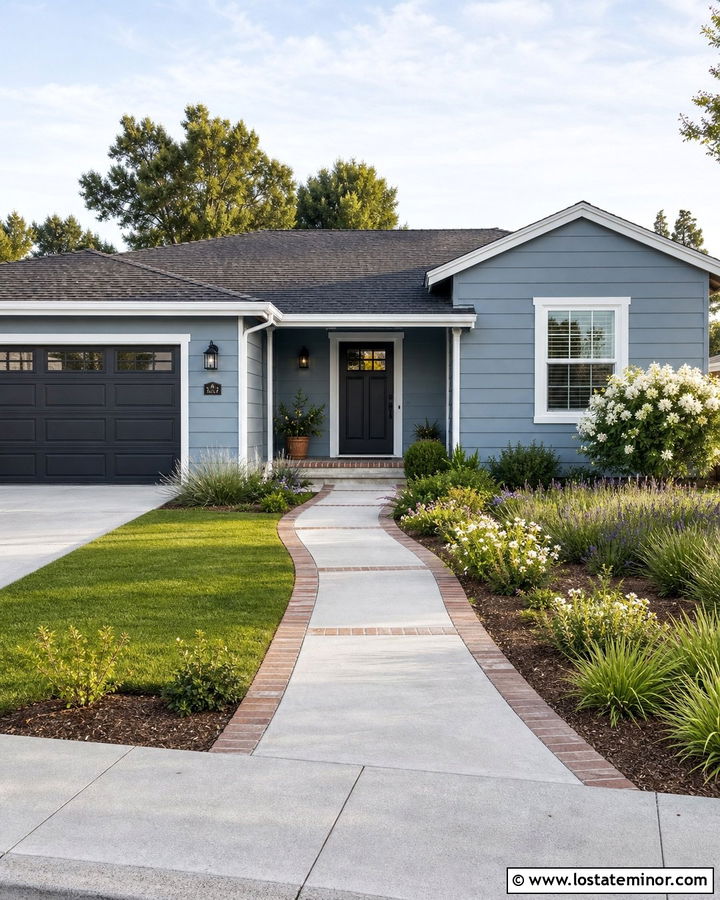
A basic concrete walkway becomes more decorative when framed with warm brick borders. This approach is especially effective on a dusty blue ranch house with a long, low facade. Use muted blue horizontal siding, soft white window trim, and a deep charcoal front door. Pour a smooth, light-gray concrete path that connects clearly to the driveway, then line both sides with narrow rows of red-brown brick. Repeat the brick around nearby planting beds for a unified landscape. A dark gray roof, black garage door hardware, and simple modern sconces sharpen the overall look. Add low grasses and flowering shrubs without blocking the windows. The concrete keeps the path practical and visually quiet, while the brick edging introduces enough warmth to complement the dusty blue siding and make the entrance feel thoughtfully finished.
18. Dusty Blue Craftsman With Mixed Stone Walkway
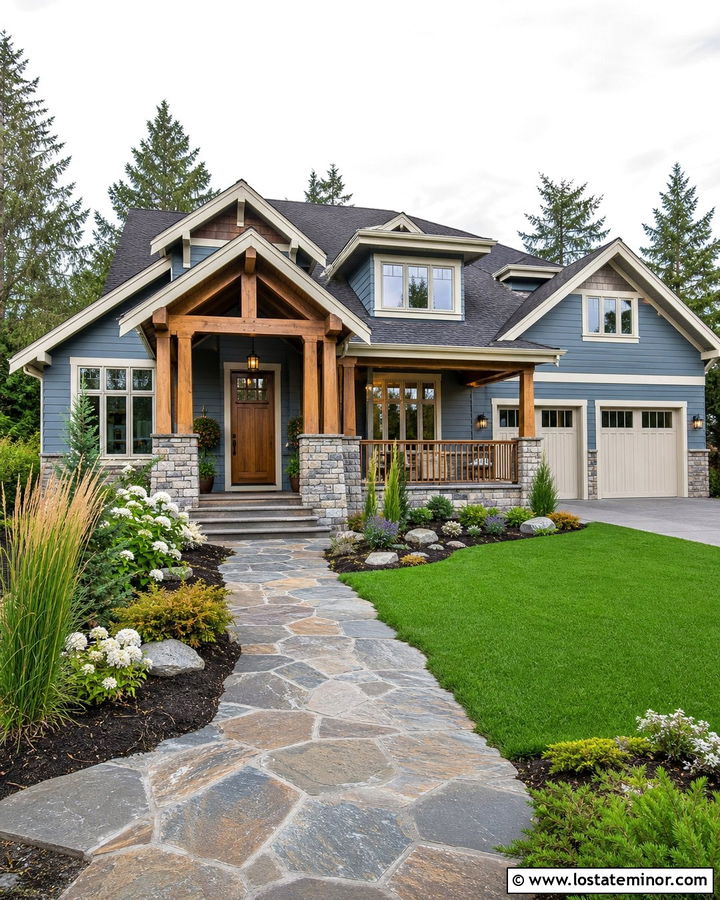
Mixed stone is a strong choice for a Craftsman home because it supports the architecture’s emphasis on visible materials and substantial details. Paint the upper siding dusty blue and use warm ivory trim around the windows and broad eaves. Cover porch bases and lower walls with a blend of gray, taupe, and brown stone veneer. Construct the walkway from rectangular pavers in similar colors so the path appears connected to the foundation. A medium-stained fir door and matching porch beams add a natural focal point. Use dark bronze lighting and a charcoal-brown roof to complete the palette. Plant compact evergreens, grasses, and white flowers beside the route. The varied walkway colors bridge cool siding and warm wood, producing a complete exterior that feels substantial, welcoming, and appropriate for Craftsman architecture.
19. Dusty Blue Midcentury House With Grid Walkway
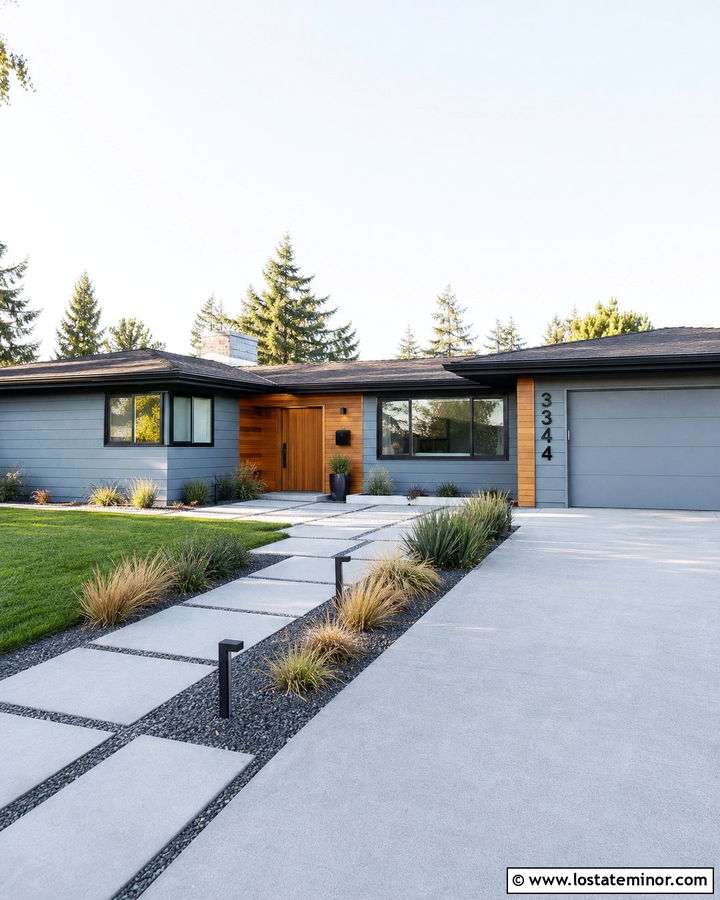
A grid walkway can reinforce the horizontal lines of a dusty blue midcentury house. Choose smooth blue-gray siding or stucco for the main exterior and pair it with dark charcoal window frames. Add warm cedar around the entrance, garage, or soffits to prevent the palette from feeling cold. Build the walkway from square concrete pads positioned in a clean grid with narrow gravel or ground-cover joints. Keep the path wide and direct, reflecting the home’s practical architecture. A flat or low-pitched dark roof, oversized address numbers, and globe-inspired exterior lights can complete the design. Use sculptural grasses and compact evergreen forms instead of formal hedges. The repeated walkway geometry creates movement across the yard, while the dusty blue, charcoal, and cedar combination gives the older home a refreshed but architecturally respectful appearance.
20. Dusty Blue Cottage With Garden Brick Walkway
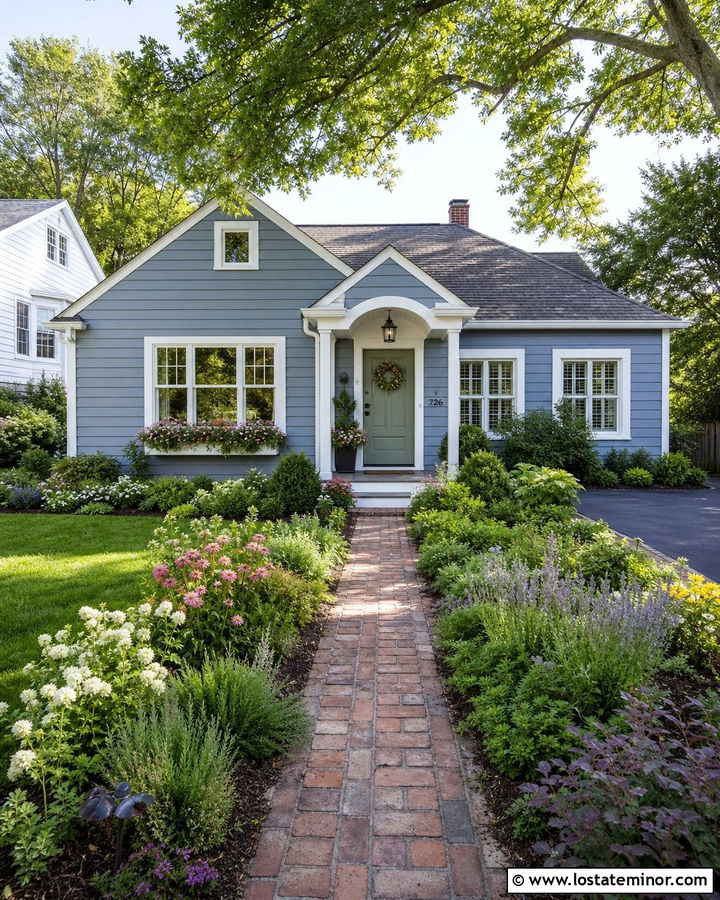
A narrow brick path winding through layered planting can make a dusty blue cottage feel especially inviting. Use a soft, chalky blue on lap siding, creamy white around windows, and muted sage green on the front door. Select weathered brick with subtle red, brown, and charcoal variation for the walkway. A gentle running-bond layout feels less formal than herringbone and allows curves to flow naturally through the garden. Place low herbs, flowering perennials, and compact shrubs near the edges while keeping thorny or sprawling plants away from the walking surface. Add a simple gray roof and dark bronze porch light. The brick path introduces an established, handcrafted character that suits the cottage facade. Its warm color also creates a clear visual route through abundant greenery toward the understated green door.
21. Dusty Blue Farmhouse With Straight Flagstone Walkway
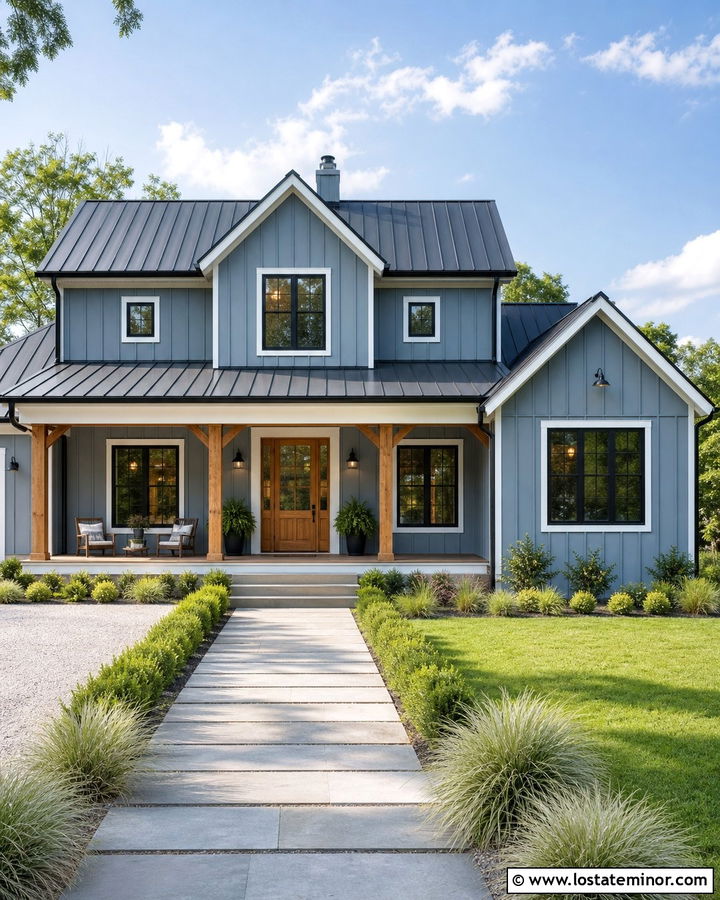
A straight flagstone walkway gives a dusty blue farmhouse a strong central axis without making the landscape feel overly formal. Paint the board-and-batten siding a muted gray-blue and use warm white on the porch, trim, and window frames. A medium cedar front door and matching porch beams can soften the cool palette. Choose large rectangular flagstones in gray and taupe, placing them tightly enough to create a comfortable walking surface. Low clipped shrubs can define the path, while loose ornamental grasses add movement farther from the entrance. Complete the facade with a charcoal metal roof, black gutters, and simple farmhouse sconces. The stone walkway echoes the home’s honest, natural materials. Its straight layout also emphasizes the centered door and creates a clear, welcoming connection between the sidewalk and covered porch.
22. Dusty Blue Two-Story House With Circular Paver Walkway
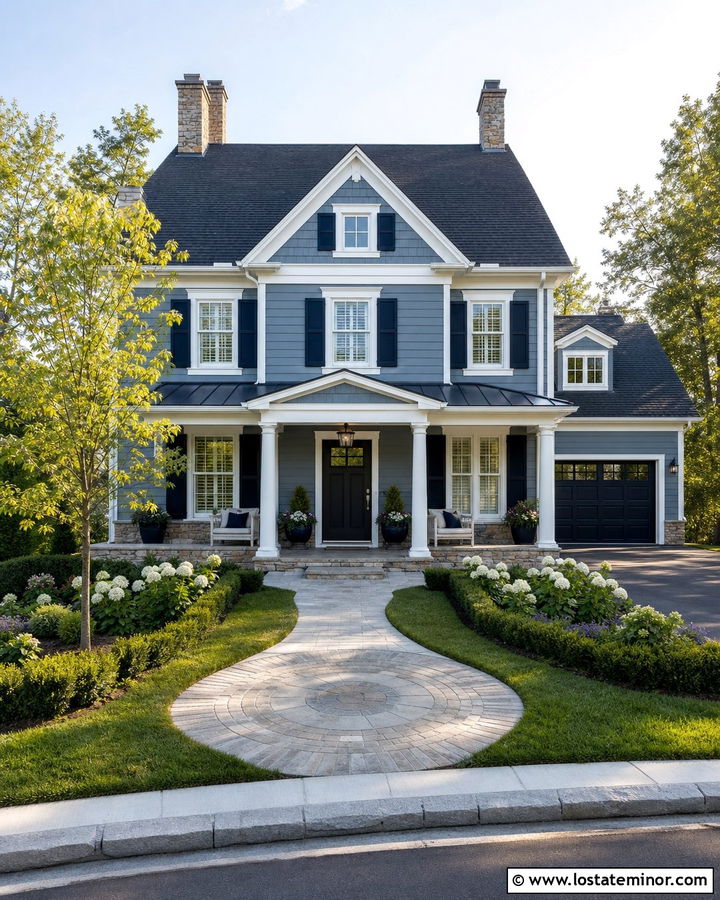
A circular walkway feature can add distinction to a tall two-story dusty blue home with a large front yard. Use blue-gray siding on both floors, bright white trim, and deep navy shutters to break up the facade. At the center of the approach, create a round paver landing before continuing the path toward a black front door. Select gray and taupe pavers that coordinate with a charcoal roof and stone foundation accents. A specimen tree, oversized planter, or simple planting circle can anchor the rounded area without obstructing movement. Keep the remaining landscaping balanced with low hedges and layered flowering shrubs. The circle slows the visual journey to the entrance and gives the yard a purposeful focal point. It also counteracts the house’s strong vertical proportions with a broad, grounded landscape shape.
23. Dusty Blue Bungalow With Wood and Gravel Walkway
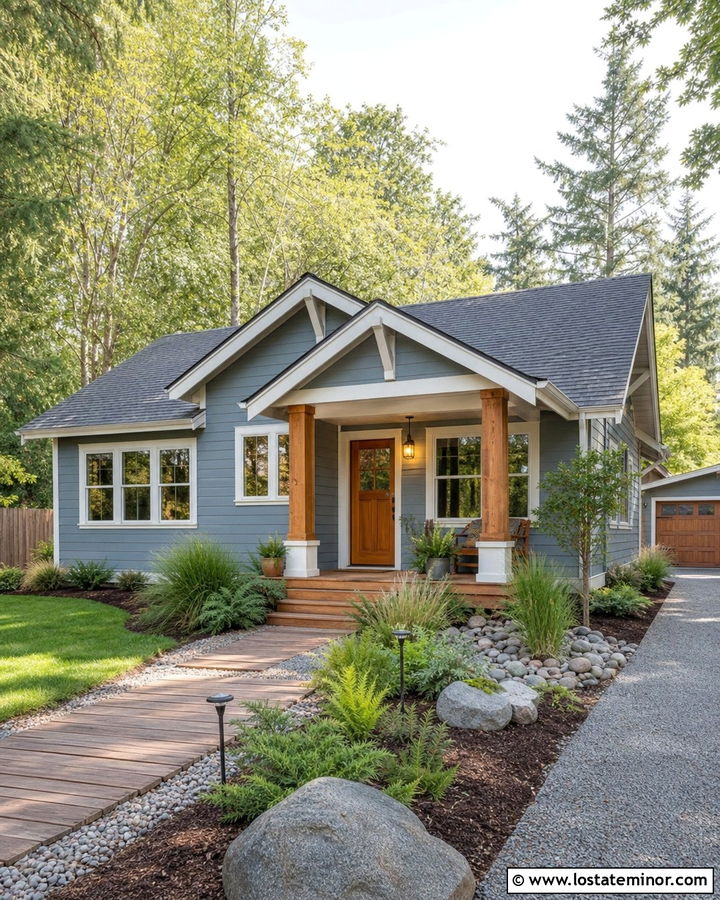
Wooden walkway sections can add warmth to a dusty blue bungalow when they are carefully integrated with gravel and suitable for the site’s climate. Use muted blue lap siding, ivory trim, and cedar porch columns beneath a low gabled roof. Create a path from compacted gray gravel, then insert broad wood platforms or short boardwalk sections where drainage or uneven ground requires extra support. Match the walkway wood to the front door and porch details for continuity. Black lights and a dark gray roof provide understated contrast. Surround the route with ferns, ornamental grasses, and low shrubs that complement the informal materials. The combination feels particularly natural on a wooded lot. Warm wood balances the cool siding, while gravel keeps the entrance relaxed and compatible with the bungalow’s modest scale.
24. Dusty Blue Contemporary House With Black Paver Walkway
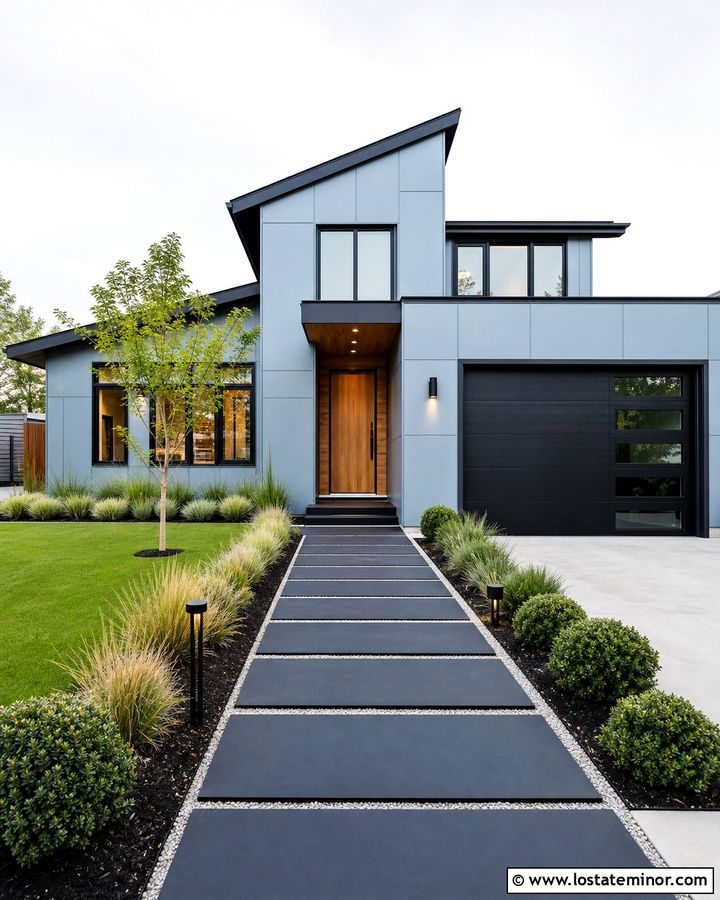
Dark pavers can create dramatic contrast against a light dusty blue contemporary exterior. Apply the muted blue to smooth siding or large fiber-cement panels, using black around the windows, garage door, roof edge, and recessed entry. A warm wood front door prevents the two-color scheme from appearing severe. Install large charcoal pavers in a straight, extra-wide walkway, separated by narrow bands of pale gravel. Continue one walkway line into the driveway or front patio to visually expand the design. Keep landscaping minimal with structured grasses, evergreen mounds, and one small ornamental tree. Flat black sconces and modern address numbers reinforce the architecture. The dark walkway grounds the pale blue facade and guides attention toward the wood entrance, creating a complete exterior with clear contrast and strong visual organization.

25. Dusty Blue Shingle House With Natural Stone Walkway
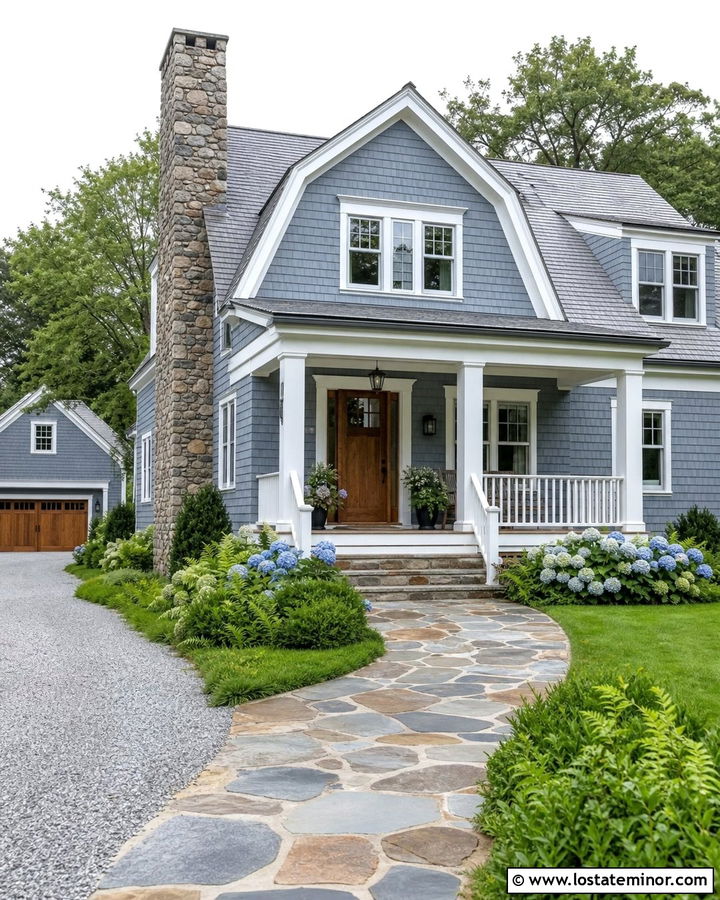
Dusty blue shingle siding has a softly textured appearance that pairs naturally with an irregular stone walkway. Cover the facade in muted blue-gray shingles, then add warm white trim and simple white porch railings. A weathered medium-brown door can create an understated connection to the landscape. Use local-looking stone in gray, tan, and brown tones, arranging the pieces in an informal but stable path. Allow the walkway to widen near the porch and connect smoothly to the driveway. A silver-gray roof, copper-toned lights, and a fieldstone chimney can enrich the material palette. Hydrangeas, ferns, and evergreen shrubs will frame the house without overwhelming its textured siding. The stone’s natural variation complements the shingles, making the exterior feel settled into the property rather than visually separated from the yard.
26. Dusty Blue Traditional House With Wide Paver Walkway
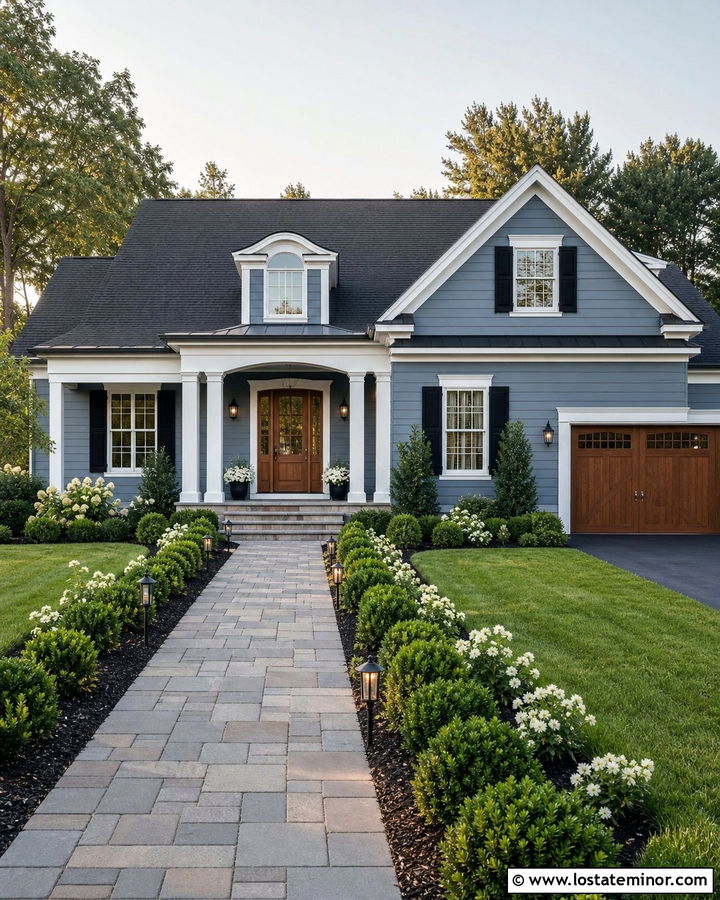
A wide paver walkway can make the entrance of a traditional dusty blue home feel more generous and accessible. Use classic blue-gray lap siding, creamy white trim, and black shutters across a balanced facade. A medium-stained wood door brings warmth to the center. Choose large rectangular pavers in blended gray and taupe shades, laying them in an offset pattern that adds subtle movement. The path should connect directly to both the driveway and front steps, avoiding narrow turns near the porch. Install low path lights and keep planting beds slightly recessed so the walking area remains visually open. A charcoal roof and dark metal lanterns complete the exterior. The broad walkway gives the house a stronger presence from the street while its neutral colors allow the dusty blue siding and wood door to remain dominant.
27. Dusty Blue Porch House With Sandstone Walkway
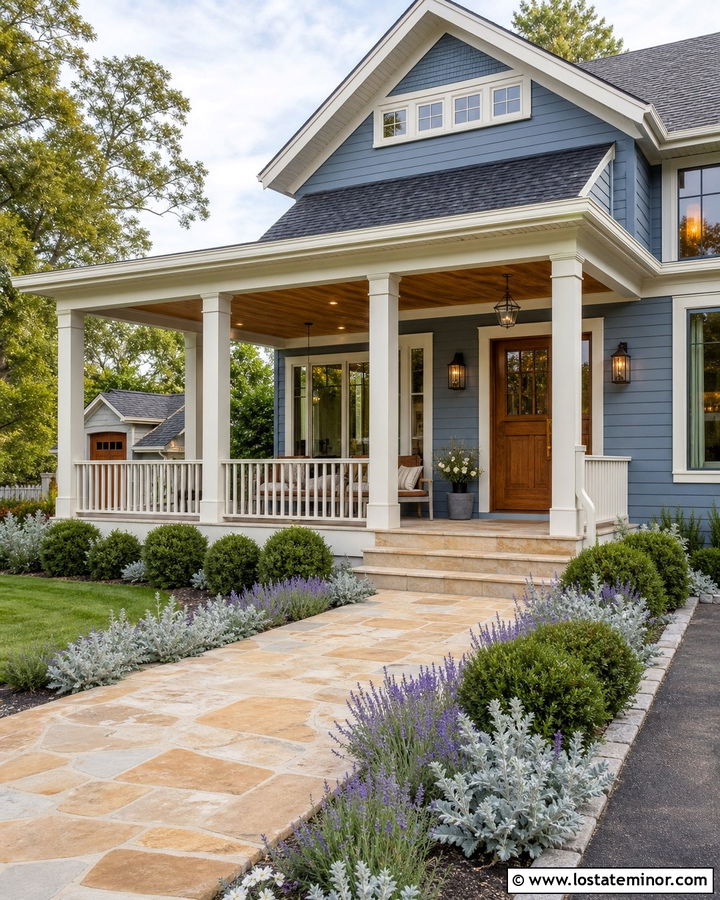
Golden-beige sandstone creates a warm, sunlit approach to a dusty blue house with a deep front porch. Use muted blue siding on the entire facade, ivory on the porch railings and columns, and natural cedar on the front door and ceiling. Lay rectangular sandstone slabs in a lightly varied pattern, selecting pieces with tan, cream, and soft brown tones. Continue the stone onto the porch steps or foundation border to connect the walkway to the architecture. A medium-gray roof and bronze lighting will support the gentle color palette. Add lavender-toned flowers, silvery foliage, and rounded evergreen shrubs along the path. The warm sandstone keeps dusty blue from reading as chilly, while the large porch reinforces the welcoming effect. Together, these elements create a relaxed exterior with balanced cool and warm tones.
28. Dusty Blue Brick House With Concrete Walkway
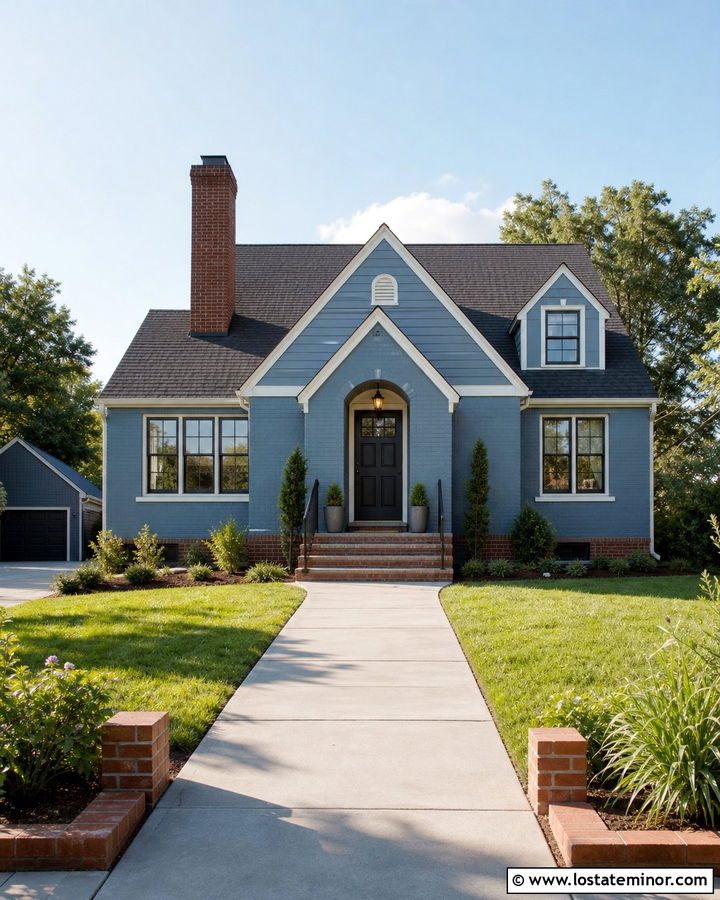
Dusty blue paint can refresh a brick house while allowing selected masonry areas to remain visible. Paint the primary brick or upper siding a muted gray-blue, then preserve warm red-brown brick around the foundation, chimney, or entry surround. Use creamy white trim and a charcoal front door to simplify the mixed materials. A smooth light-gray concrete walkway provides a neutral connection from the driveway to the porch. Consider a gentle curve or a small widened landing where the path meets the steps. Repeat the exposed brick as a narrow garden border for greater continuity. Dark bronze lights and a charcoal roof finish the scheme. Because both painted and unpainted masonry have visual texture, simple landscaping works best. The quiet walkway allows the dusty blue and warm brick relationship to remain the main attraction.
29. Dusty Blue Mountain House With Slate Walkway
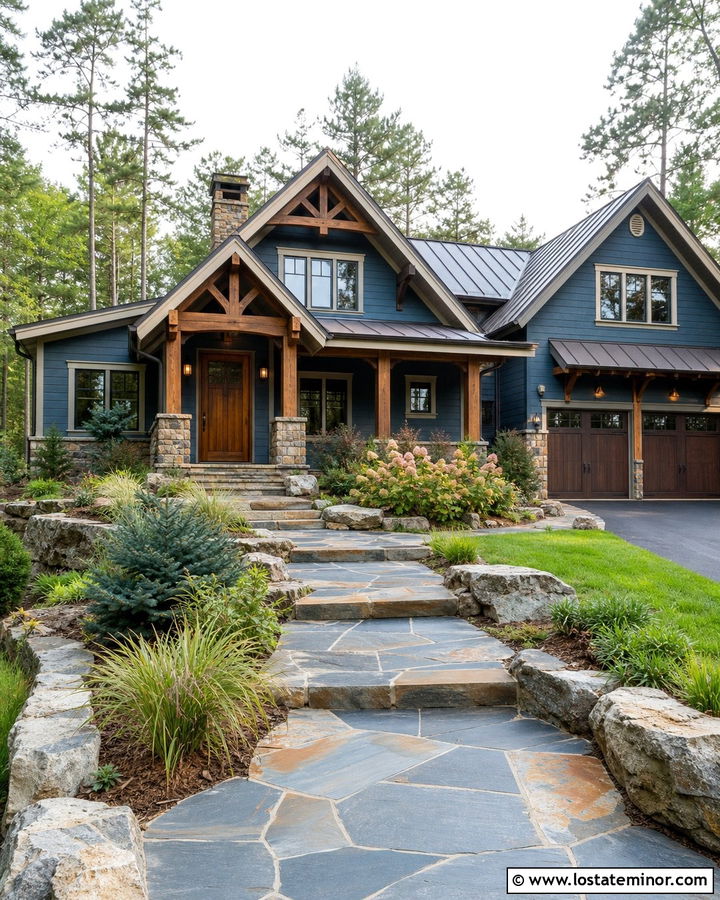
A slate walkway gives a dusty blue mountain house a sturdy, natural connection to its rugged setting. Use deep dusty blue lap siding or shingles, warm cream trim, and stained timber around the porch and gables. Select slate slabs containing charcoal, blue-gray, muted green, and earthy brown variation. Build a broad path with shallow steps if the property slopes, and use rough stone retaining walls to support nearby planting beds. A dark metal roof can echo the deepest walkway tones, while a wood front door repeats the porch beams. Plant native-looking grasses, compact evergreens, and low flowering shrubs around the approach. The layered natural materials help the blue siding blend with its surroundings. At the same time, the clear stone route gives the full facade an organized and welcoming curb-appeal focal point.
30. Dusty Blue Suburban House With Walkway Lighting
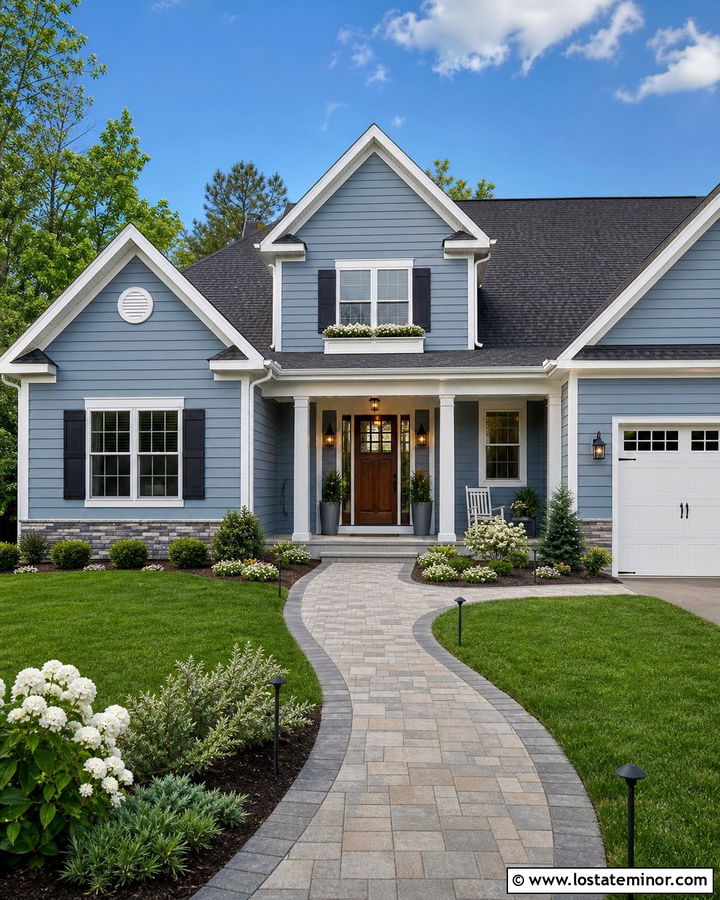
Thoughtful path lighting can complete a dusty blue suburban exterior without turning the walkway into a separate design feature. Cover the house in muted blue-gray siding and use warm white trim around the windows, garage, and porch. Add a rich walnut front door, black shutters, and a charcoal roof for contrast. Build a gently curved walkway from gray pavers with subtle taupe variation, then place low black lights at wide, consistent intervals along one or both sides. Keep fixtures away from walkway edges where they could create obstacles. Layer the surrounding beds with compact shrubs, white flowers, and ornamental grasses. Matching black porch lanterns visually connect the path lights to the house. During the day, the walkway frames the blue facade; after sunset, it provides a clear and welcoming route to the entrance.
Conclusion:
A successful dusty blue exterior depends on more than choosing the right siding color. Trim, roofing, doors, masonry, planting, and walkway materials should work together as one coordinated curb-appeal plan. Warm brick and sandstone can soften blue-gray walls, while bluestone, slate, and concrete create a quieter tonal effect. Wood doors and porch details add natural warmth to nearly every combination. Before selecting materials, consider the home’s architecture, existing roof, drainage, pathway width, and surrounding landscape. Test exterior colors in changing daylight and view walkway samples beside the siding whenever possible. With thoughtful planning, these **30 Dusty Blue House Design With Walkway Ideas** can inspire an entrance that feels cohesive, practical, and welcoming.

Related posts: