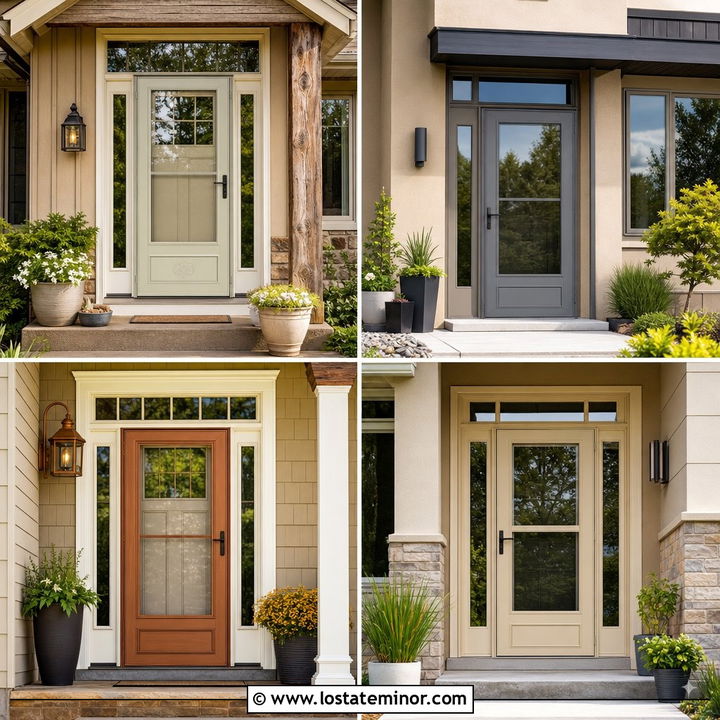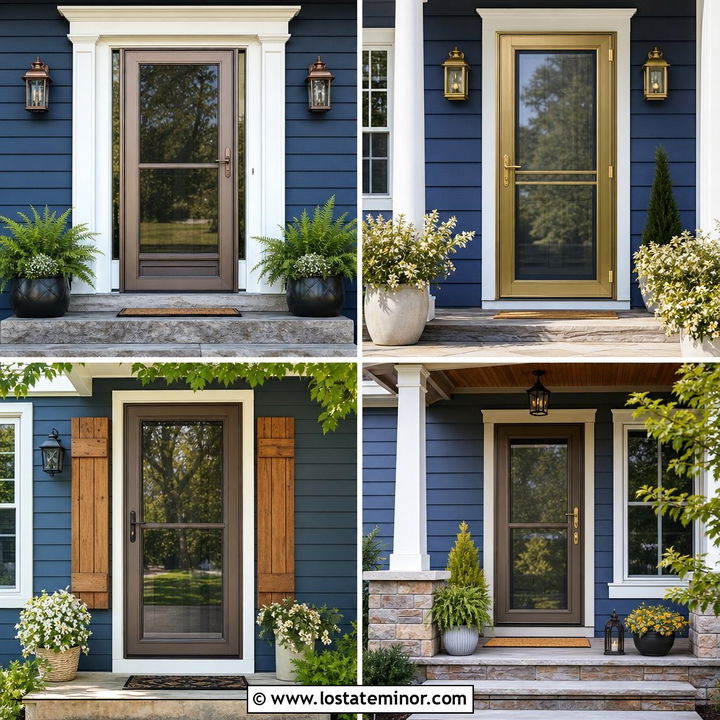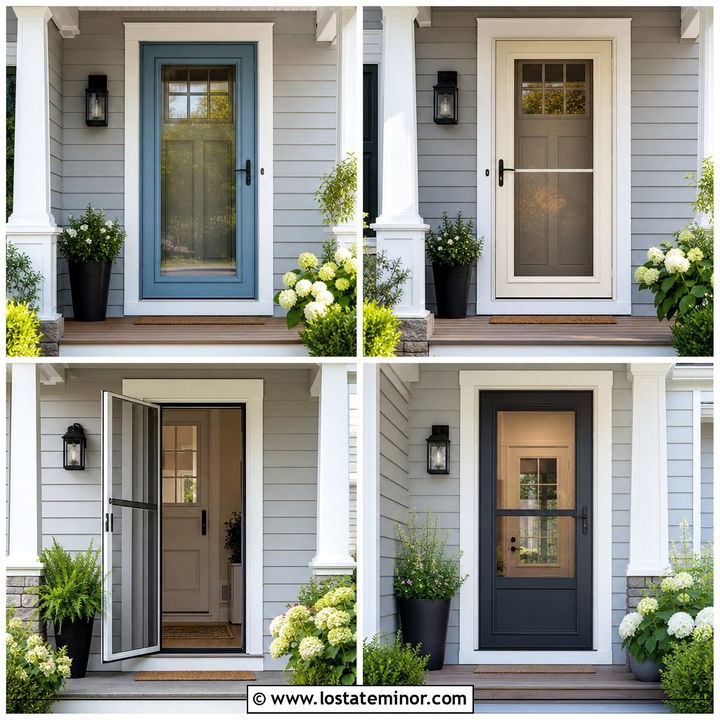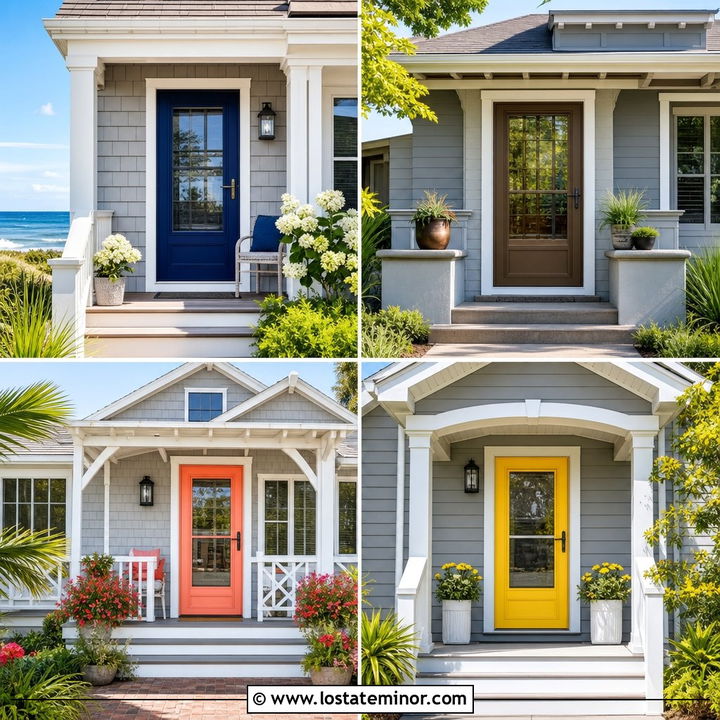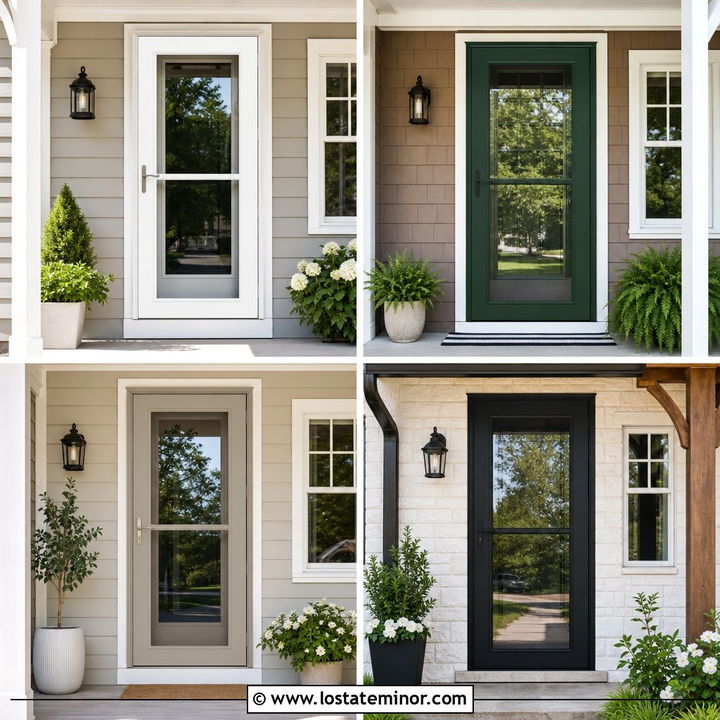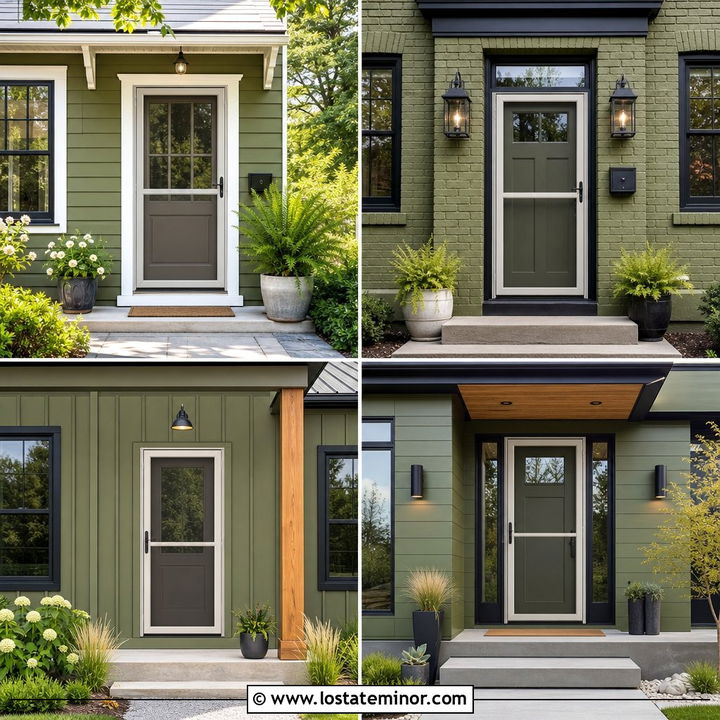
A thoughtful storm door can make a white exterior look more polished while adding practical protection and ventilation. These 30 White House Design With Storm Door Ideas explore complete curb-appeal schemes rather than treating the storm door as an isolated feature. Each look coordinates the white siding, architectural style, trim, roofing, front door, hardware, and landscaping. A storm door generally feels most intentional when its frame connects with the home’s siding, trim, or primary entry door. () From crisp black frames to warm bronze, muted green, classic white, and natural wood tones, there is an option for nearly every home. Use the following complete exterior combinations as inspiration for 30 White House Design With Storm Door Ideas.
1. White Farmhouse With Black Full-View Storm Door
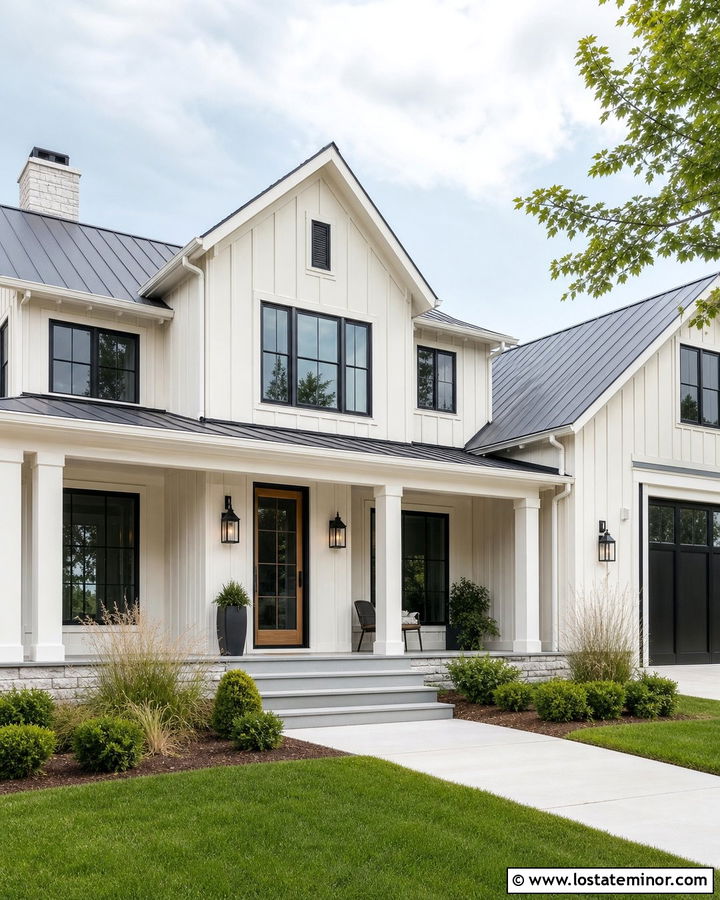
A black full-view storm door gives a white modern farmhouse crisp definition without covering its primary entry. Start with warm white board-and-batten siding, bright white window trim, and a charcoal standing-seam roof. Place a black-framed storm door over a natural oak front door so the wood grain remains visible through the large glass panel. Black lantern lights, gutters, and simple porch furniture repeat the dark frame across the facade. Add pale gray porch flooring and square white columns for a clean transition between old-fashioned farmhouse character and modern details. Low boxwoods, ornamental grasses, and a straight concrete walkway keep the landscaping structured. The result is balanced, practical, and welcoming rather than overly stark.
2. White Colonial With White Storm Door
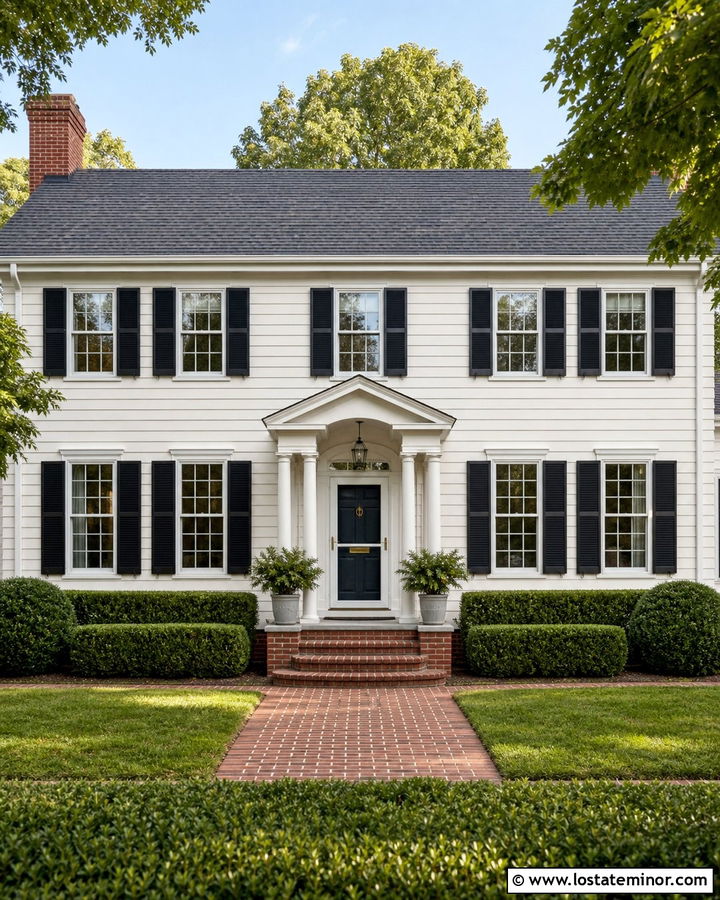
For a traditional Colonial, a white storm door can blend quietly into the symmetrical facade. Use a soft white exterior with matching corner boards, window trim, and classical columns. A six-panel navy front door supplies color behind a white full-view storm door, allowing the entry door to remain the visual focus. Polished brass hardware adds warmth and relates beautifully to lantern-style sconces. Complete the exterior with black shutters, red brick steps, and a dark gray architectural-shingle roof. Formal boxwood borders and a straight brick walkway reinforce the home’s orderly shape. Because the storm door matches the casing, it looks like part of the millwork instead of an added layer, creating a refined entrance with useful weather protection.
3. White Craftsman With Bronze Storm Door
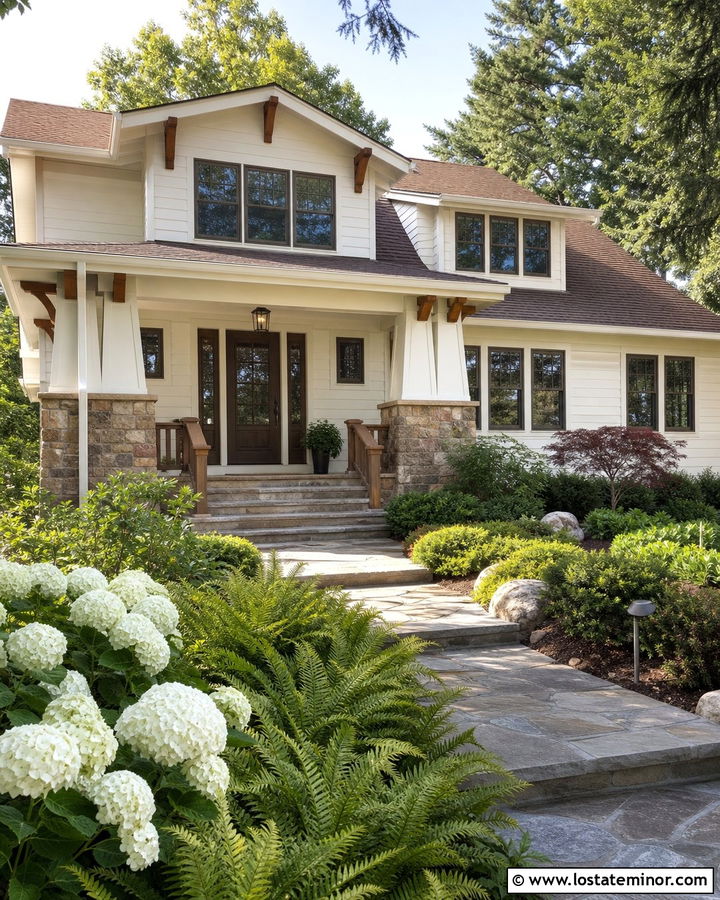
Warm bronze brings depth to a white Craftsman exterior without producing the sharp contrast of black. Choose creamy white lap siding, tapered porch columns, and a broad medium-brown shingle roof. A bronze full-view storm door works especially well over a stained walnut entry door because both finishes share earthy undertones. Continue the palette with bronze porch lights, dark brown gutters, and stone column bases containing tan and gray variation. Exposed cedar brackets add another natural texture beneath the roofline. Finish the yard with curved planting beds, ferns, hydrangeas, and a flagstone walkway. This complete scheme feels grounded and comfortable, while the broad glass storm door preserves a clear view of the handcrafted wood door behind it.
4. White Ranch House With Charcoal Storm Door
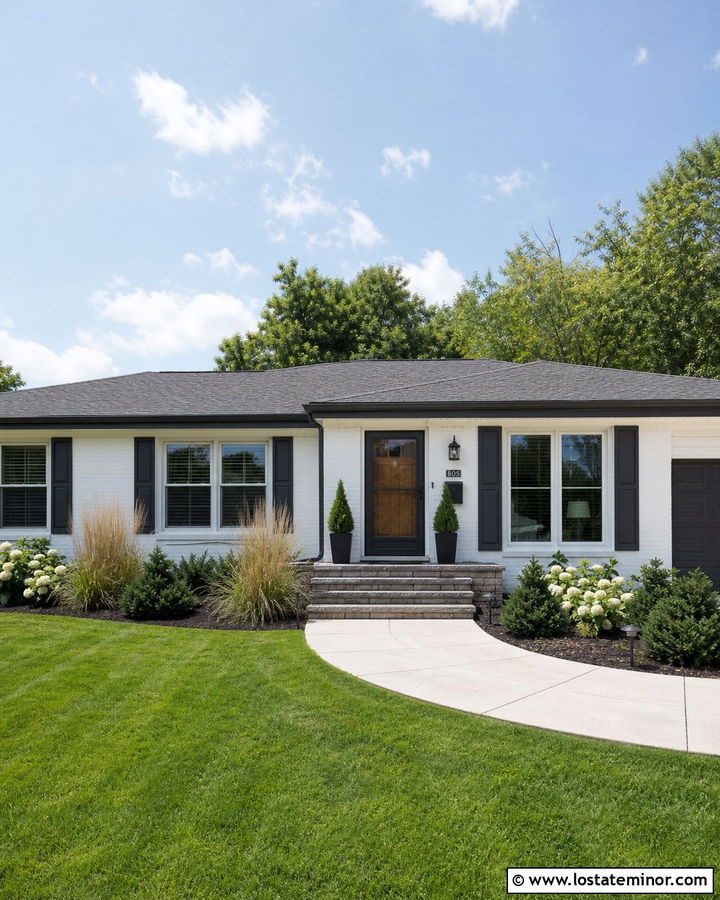
A charcoal storm door can give a simple white ranch house stronger curb appeal. Paint the horizontal siding a clean neutral white and use medium charcoal on the full-view storm door, shutters, garage door accents, and gutters. Behind the storm door, select a warm cognac front door to prevent the monochrome palette from feeling cold. A low-pitched charcoal roof visually stretches across the one-story facade, while light gray stone around the porch introduces subtle texture. Replace narrow foundation beds with layered evergreens, ornamental grasses, and flowering shrubs. A wide concrete path leading directly to the entrance improves visual balance. The dark frame outlines the doorway clearly, but its softer gray coloring feels less severe than pure black.
5. White Cape Cod With Navy Storm Door
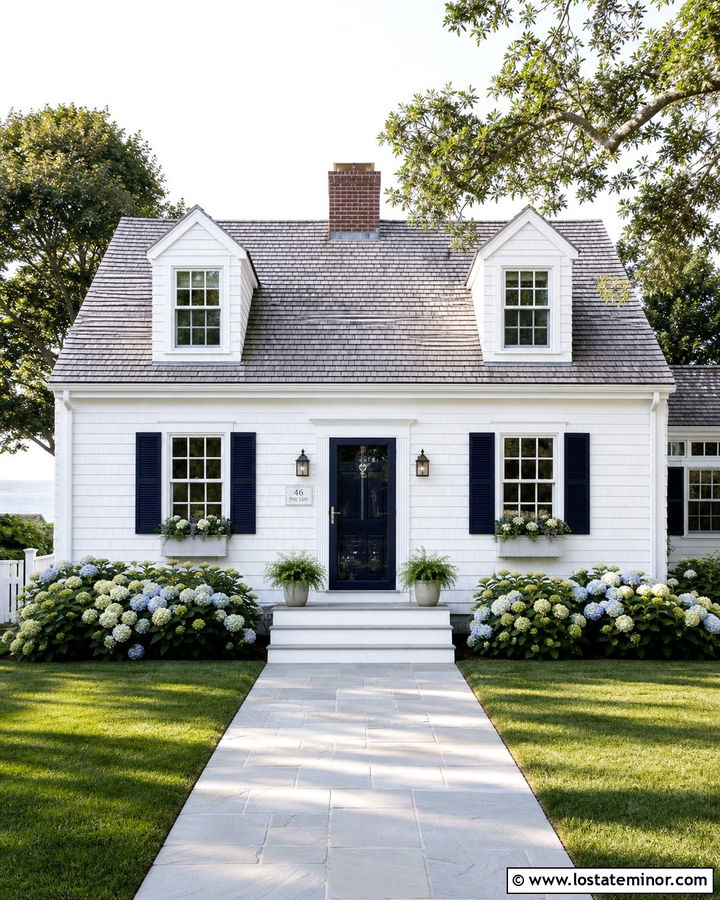
Picture a compact Cape Cod with white shingles, dormer windows, and a navy entrance that echoes a coastal setting. A navy full-view storm door layered over a matching navy front door creates one strong block of color instead of competing outlines. Repeat the blue on the shutters, then add crisp white trim and polished nickel hardware. Weathered gray roof shingles and a light gray stone walkway maintain the cool palette. Window boxes filled with green foliage and soft blue flowers add charm without making the exterior busy. Flanking lanterns should be simple and appropriately scaled for the small facade. This coordinated design turns the storm door into a natural extension of the entry while preserving the Cape Cod’s classic proportions.
6. White Cottage With Sage Green Storm Door
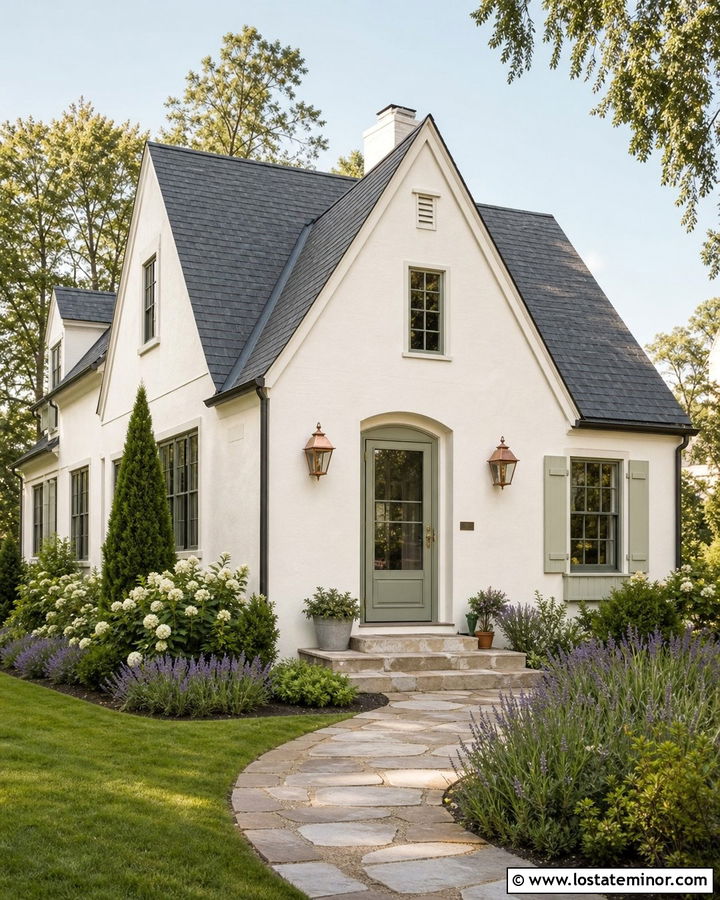
Soft sage green brings a garden-inspired quality to a small white cottage. Use creamy white clapboard siding, warm white trim, and a steep gray roof with a modest front gable. Paint both the full-view storm door frame and the paneled entry door a muted sage green, creating a seamless layered entrance. Aged brass hardware and copper porch lights add gentle warmth. Natural stone steps, a curved flagstone path, and overflowing beds of lavender, hydrangeas, and evergreen shrubs strengthen the cottage character. Keep the storm door design simple so it does not compete with decorative window trim or a small covered porch. The restrained green-and-white combination feels cheerful, organic, and easy to coordinate with seasonal landscaping.
7. White Brick House With Black Mid-View Storm Door
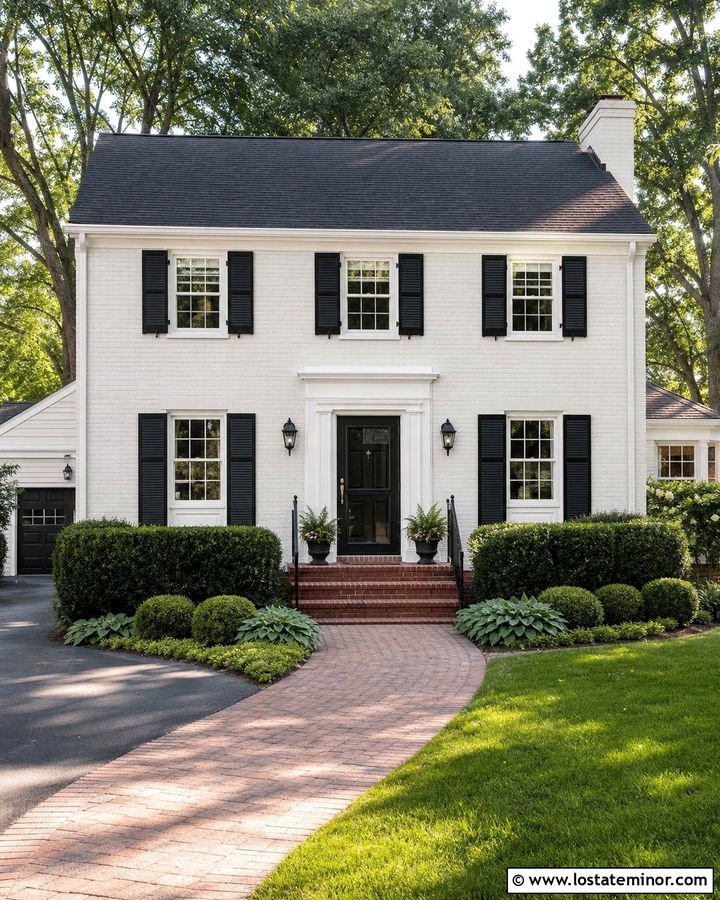
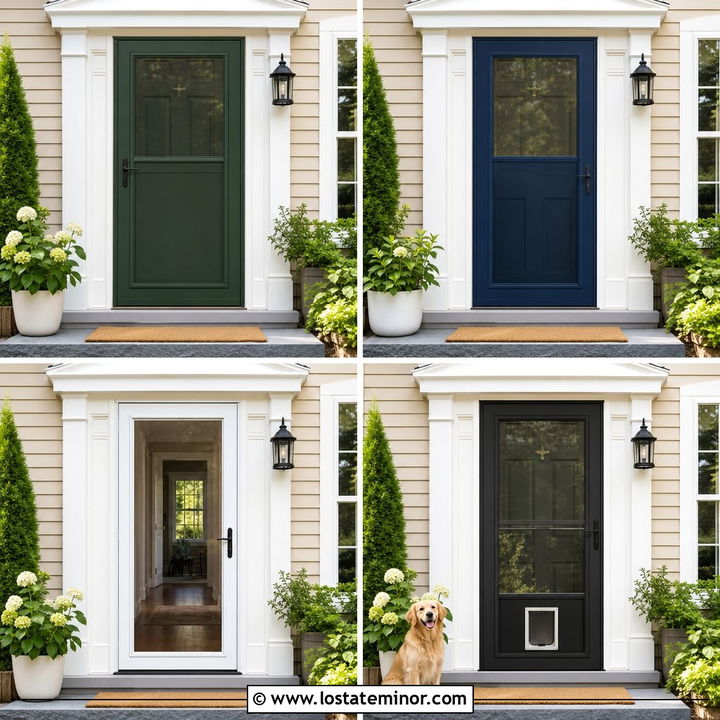
A painted white brick exterior gains definition from a sturdy black mid-view storm door. Select a model with a broad glass section above and a solid lower panel that visually anchors the entrance. Place it over a black six-panel front door for a unified appearance. Match the frame with black shutters, metal gutters, and traditional wall lanterns. Warm gray mortar lines, a weathered charcoal roof, and red brick porch flooring keep the scheme from looking flat. Add neatly clipped hedges and a gently curved walkway to soften the strong geometry. This combination suits a traditional suburban house where durability and ventilation matter, yet the entrance still needs to look connected to the full black-and-white exterior palette.
8. White Bungalow With Wood-Look Storm Door
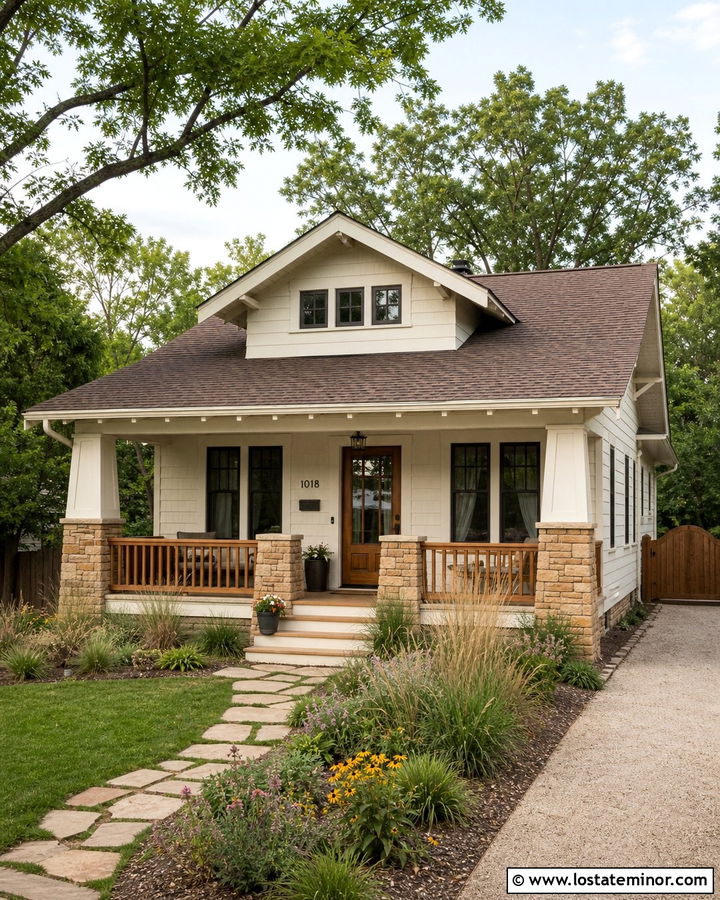
A wood-look storm door can bring warmth to a white bungalow while preserving the practical benefits of a protective outer door. Choose warm white lap siding, creamy trim, and a deep front porch supported by square columns. Use a full-view storm door with a realistic medium-oak frame over a similarly stained Craftsman entry door. The aligned wood tones make both doors read as one feature. Add cedar porch railings, amber-toned stone piers, and a brown dimensional-shingle roof. Black hardware and porch lights provide a small amount of contrast. Native grasses, flowering perennials, and a broad stepping-stone path complete the casual setting. The resulting facade feels handcrafted, balanced, and naturally connected to its landscaping.
9. White Split-Level With Graphite Storm Door
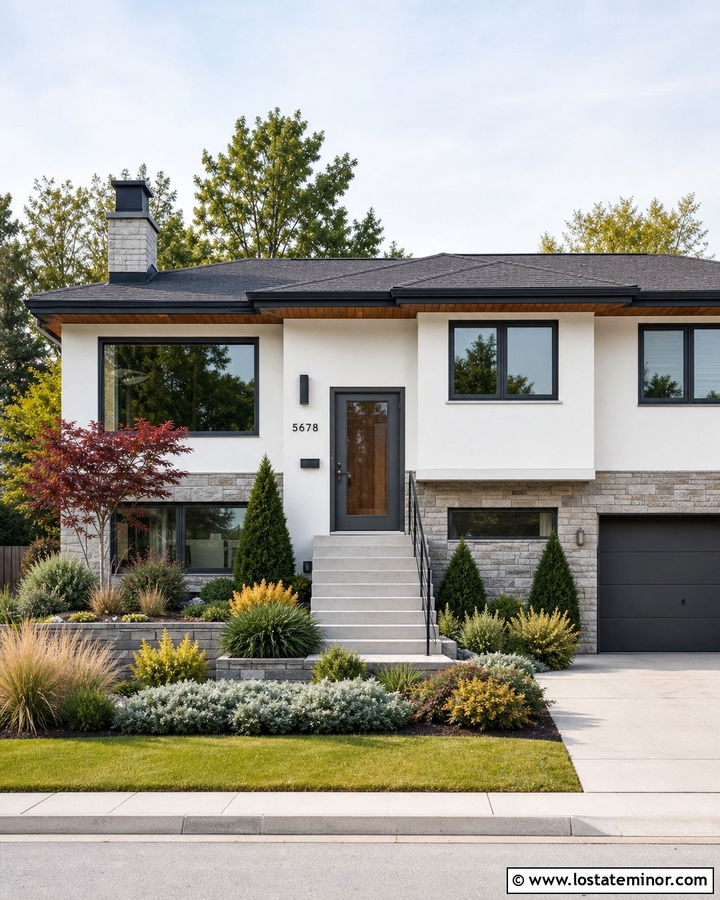
Updating a white split-level requires details that add contrast without exaggerating its horizontal shape. Use soft white siding with graphite window frames, a dark gray roof, and a graphite full-view storm door. A medium walnut front door visible through the glass supplies warmth at the center of the exterior. Carry the same wood tone onto narrow garage accents or porch soffits for consistency. Light gray stacked stone around the lower level grounds the taller facade. Replace dated foundation shrubs with layered evergreens, compact ornamental trees, and grasses. Wide concrete steps and a slim metal railing keep the entrance clean. The graphite storm door helps modernize the house while remaining softer and more adaptable than a heavy black frame.
10. White Coastal House With Light Blue Storm Door
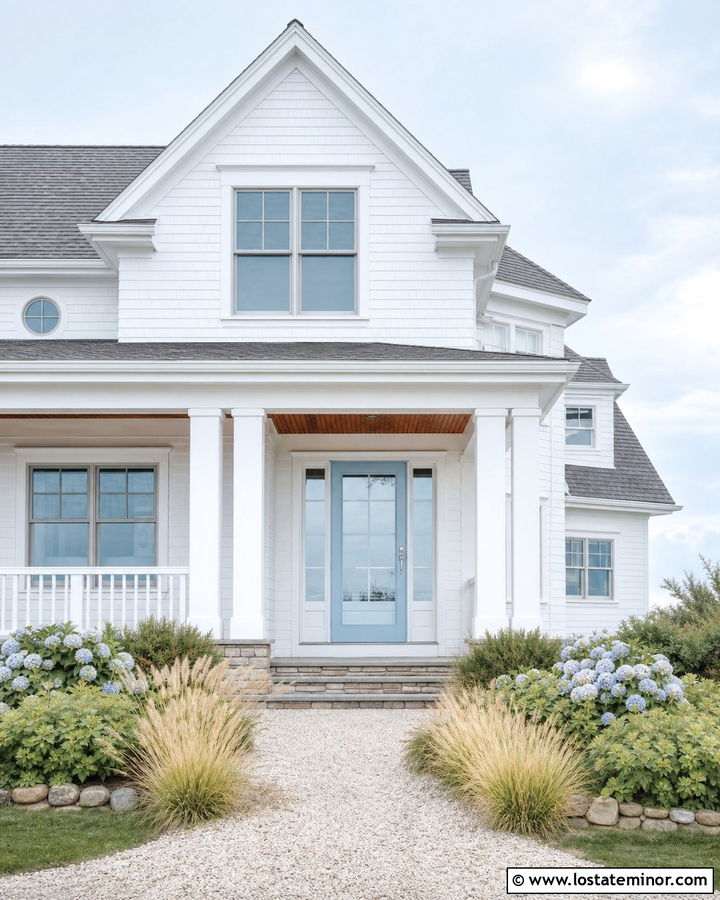
A pale blue storm door can make a white coastal house feel relaxed and bright. Cover the facade in clean white shingle siding, then add a light blue full-view storm door over a matching paneled entry door. White trim keeps the frame around the entrance airy, while brushed nickel hardware reinforces the cool color scheme. Choose a soft gray roof, natural cedar porch ceiling, and pale stone steps. Simple cable railings or white square balusters can support the coastal character without relying on decorative themes. Surround the home with dune grasses, hydrangeas, and a light gravel walkway. In strong daylight, the blue creates enough contrast to define the entrance while maintaining the open, breezy appearance associated with a coastal exterior.
11. White Traditional House With Red Storm Door
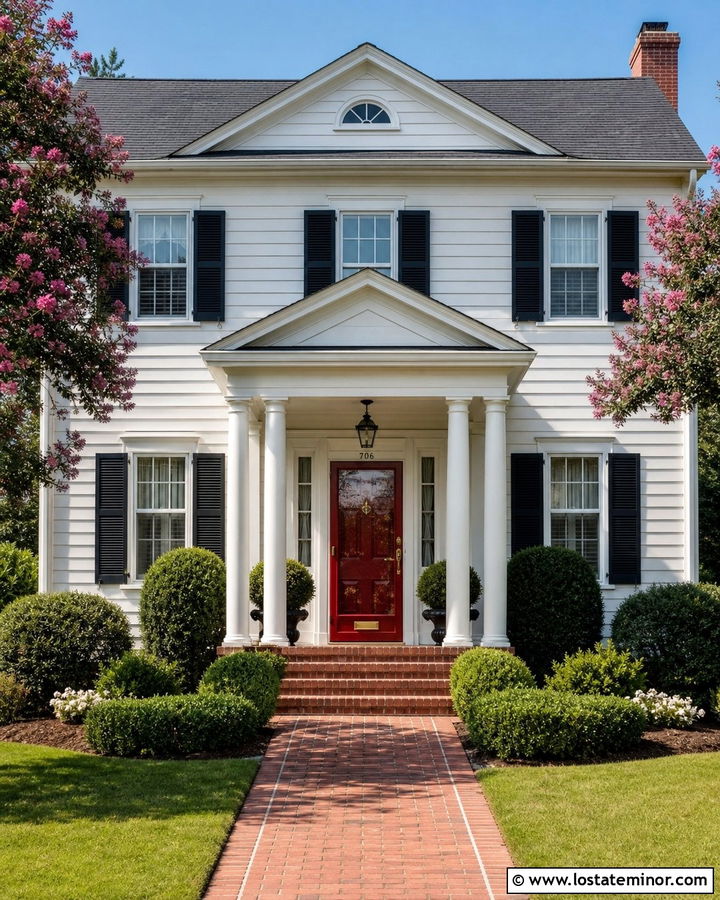
A red storm door creates an energetic focal point on a traditional white home. Select a deep heritage red rather than a bright primary shade, then use it on both the full-view storm door frame and the front door behind it. Warm white siding, black shutters, and a charcoal roof provide a classic background. Brass hardware and traditional lanterns complement the red’s warm undertones. Red brick porch steps connect the entrance color to the ground and make the scheme feel established rather than decorative. Keep the remaining accents restrained, using white columns and simple black railings. Rounded boxwoods, small flowering trees, and a straight brick path complete the facade. The coordinated doors produce a strong, polished entrance from the curb.
12. White Modern House With Black Retractable-Screen Storm Door
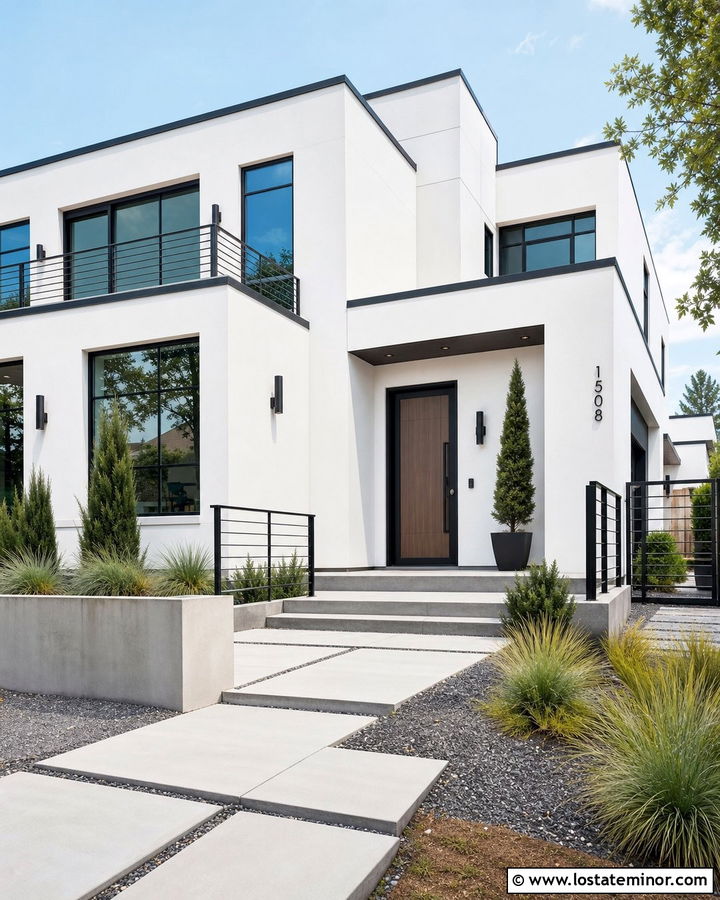
Can a storm door work with modern architecture? A slim black full-view model with a retractable screen can look clean and intentional when coordinated with the complete facade. Use crisp white stucco, flat or low-sloped rooflines, and large black-framed windows. Place the storm door over a smooth natural-wood pivot-style entry door, allowing the warm surface to remain visible. Repeat black on minimalist sconces, gutters, and narrow metal railings. Large concrete pavers, gravel beds, sculptural grasses, and a restrained evergreen tree reinforce the modern setting. Avoid decorative grilles or bulky handles that would interrupt the simple lines. The storm door becomes a quiet black outline that connects the doorway to the windows while adding everyday versatility.
13. White Tudor House With Dark Bronze Storm Door
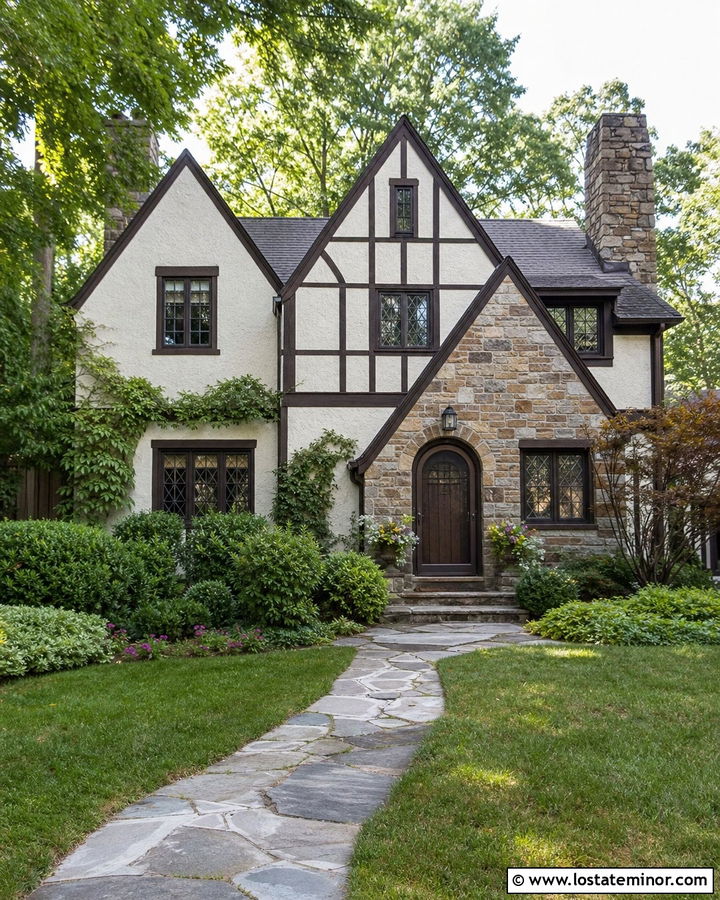
A white Tudor exterior benefits from a storm door that respects its darker architectural framework. Paint the stucco a soft chalky white and preserve dark brown half-timbering, steep rooflines, and leaded-look windows. Choose a dark bronze full-view storm door over an arched stained-wood front door. The bronze frame relates to the timber and appears warmer than black. Add aged bronze hardware, textured wall lanterns, and brown copper gutters. Stonework around the lower facade should include warm gray, taupe, and muted rust tones. An irregular flagstone walkway and loose cottage plantings keep the landscape appropriate to the architecture. With the surrounding materials coordinated, the storm door looks integrated instead of like a modern attachment on an older-style home.
14. White Greek Revival With Black Storm Door
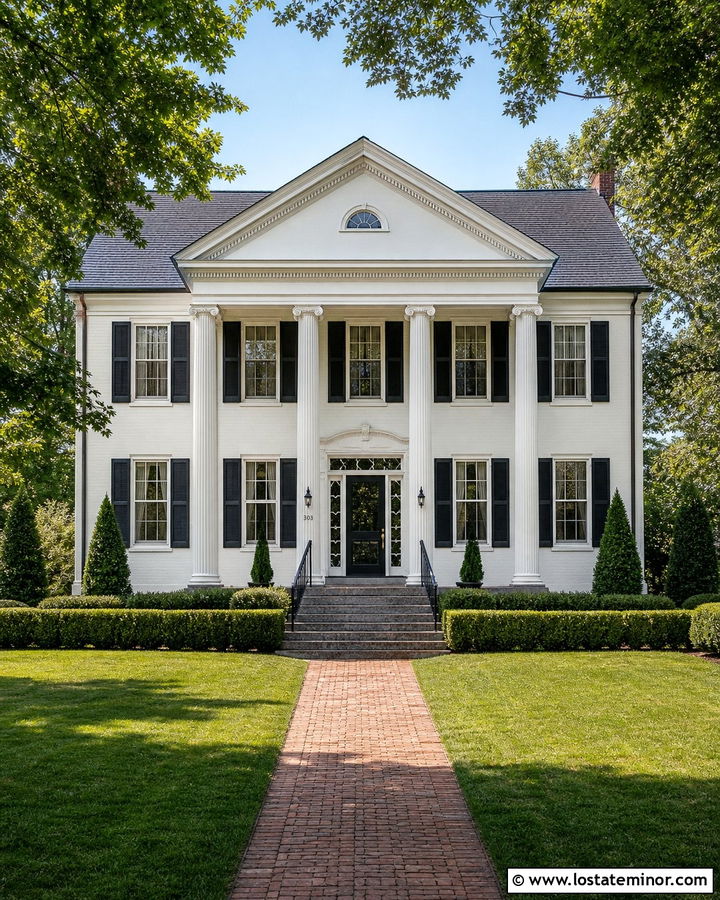
Strong symmetry makes a black storm door a natural fit for a white Greek Revival house. Use a soft architectural white across the clapboard siding, broad corner trim, pediment, and tall classical columns. Install a black full-view storm door over a black paneled entry door with sidelights. The matching layers create a single formal entrance and prevent extra outlines from distracting from the portico. Repeat black on the shutters, iron handrails, and hanging lantern. A dark slate roof and gray stone steps maintain the stately palette. Keep landscaping symmetrical with clipped boxwoods, upright evergreens, and a straight gravel or brick walk. This restrained approach lets the home’s columns and proportions remain dominant while the storm door adds function discreetly.
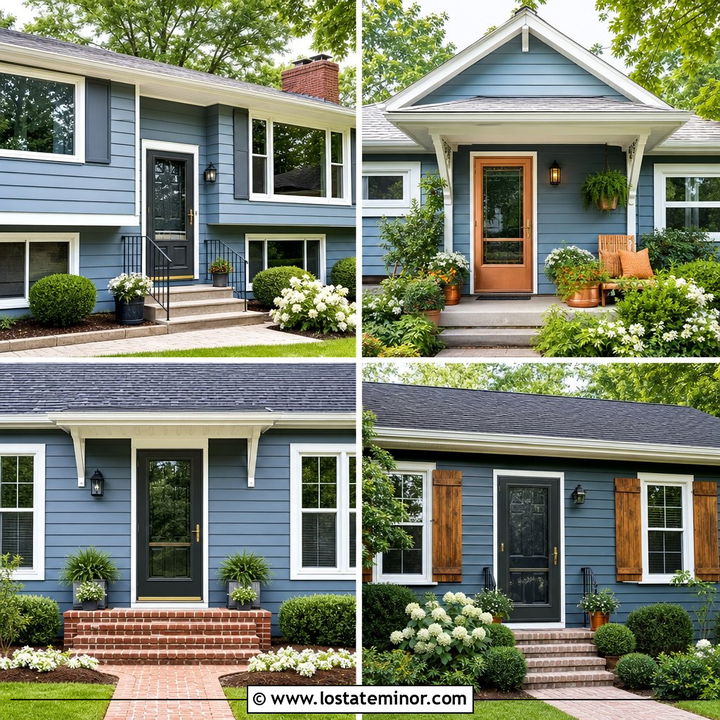
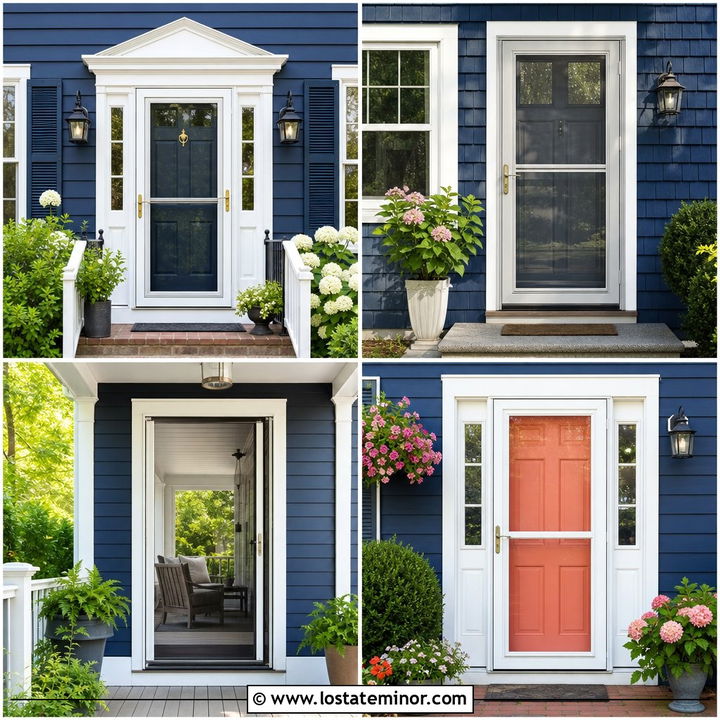
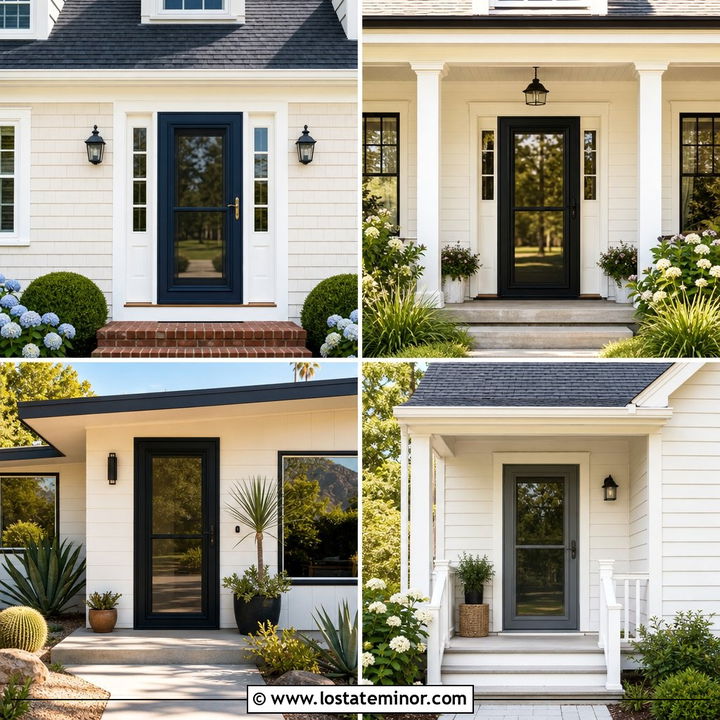
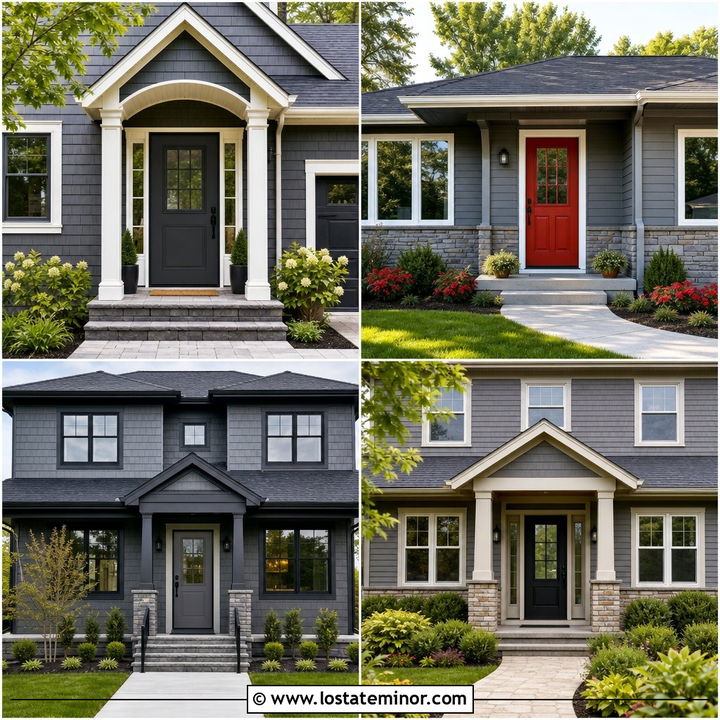
15. White Victorian House With Deep Green Storm Door
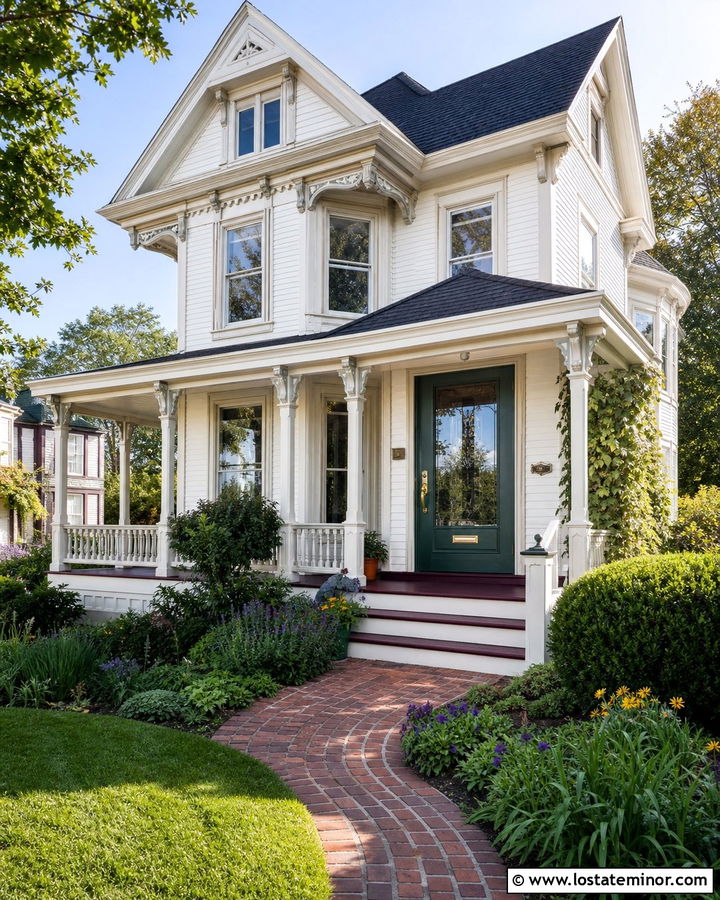
A deep green storm door adds historic richness to an ornate white Victorian exterior. Choose a warm white body color, cream trim, and subtle pale gray accents on brackets or decorative shingles. Paint the full-view storm door frame and the detailed wooden entry door a dark forest green. This creates a strong entrance without competing with the home’s gingerbread trim. Aged brass hardware, a muted burgundy porch floor, and a charcoal roof provide supporting color. Keep porch railings white so the facade does not become overly complex. Curved garden beds, climbing greenery, and an old-fashioned brick path enhance the architecture. The green entrance feels grounded and traditional, while the large glass panel keeps the decorative primary door visible.
16. White Scandinavian House With Gray Storm Door
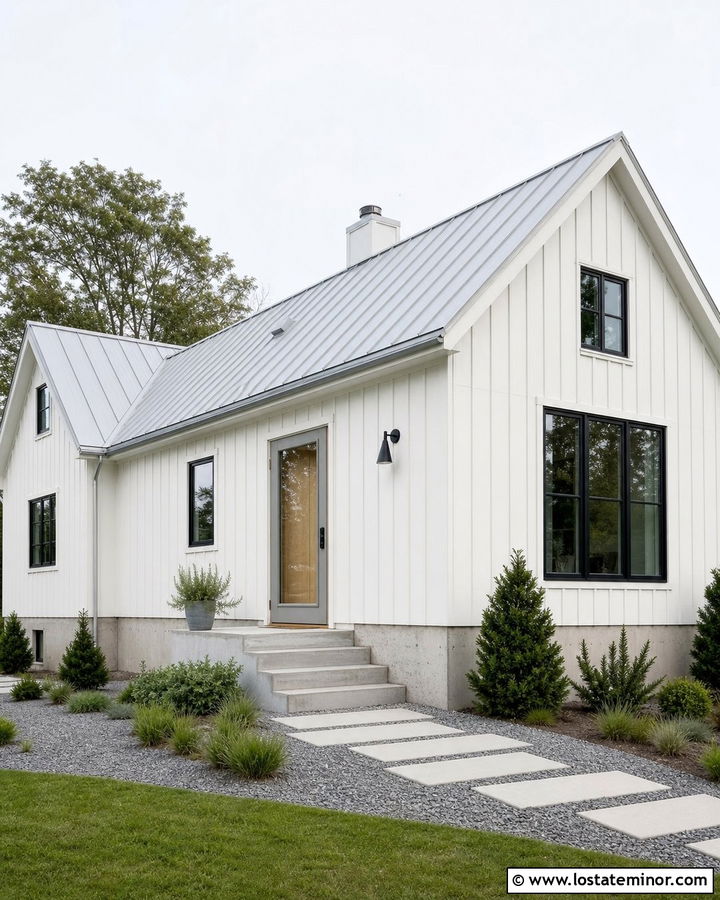
A pale gray storm door works beautifully on a Scandinavian-inspired white house where contrast should remain quiet. Use a cool white vertical-siding exterior, simple gabled roof, and light gray standing-seam metal roofing. Place a slim gray full-view storm door over a natural blond-wood entry door. The transparent center preserves the warmth of the wood, while the frame connects to the roof and concrete foundation. Black window frames and one understated wall light add definition without overwhelming the restrained palette. Create a simple yard with gravel, large stepping stones, low grasses, and a few compact evergreens. The combination feels bright and uncluttered. Every material has a clear purpose, allowing the storm door to contribute function without disturbing the minimal design.
17. White Southern House With White Full-View Storm Door
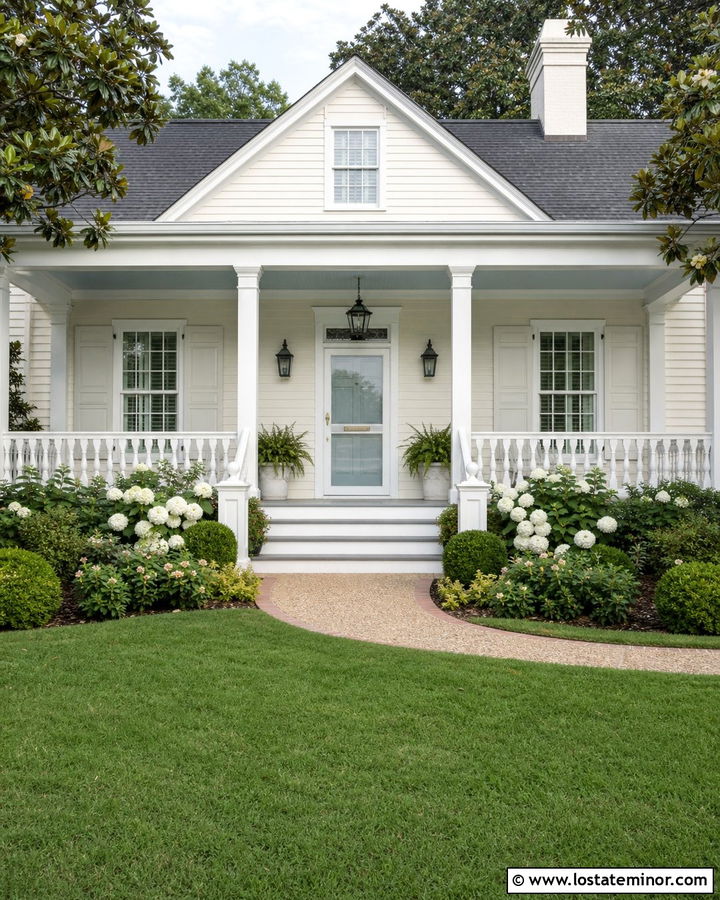
A white full-view storm door practically disappears against a gracious Southern exterior. Cover the house in warm white lap siding and continue the same white across the columns, trim, railings, and storm door frame. Behind the glass, use a soft blue front door to introduce gentle color. Paint the porch ceiling a related pale blue and finish the floor in medium gray. Black lanterns and rocking chairs provide contrast, while polished brass door hardware adds a refined touch. A dark gray roof balances the broad white facade. Surround the porch with magnolias, hydrangeas, and layered green shrubs. Because the storm door blends into the trim, the blue entry remains visible and the wide porch retains its open, welcoming character.
18. White Midcentury Ranch With Aluminum Storm Door
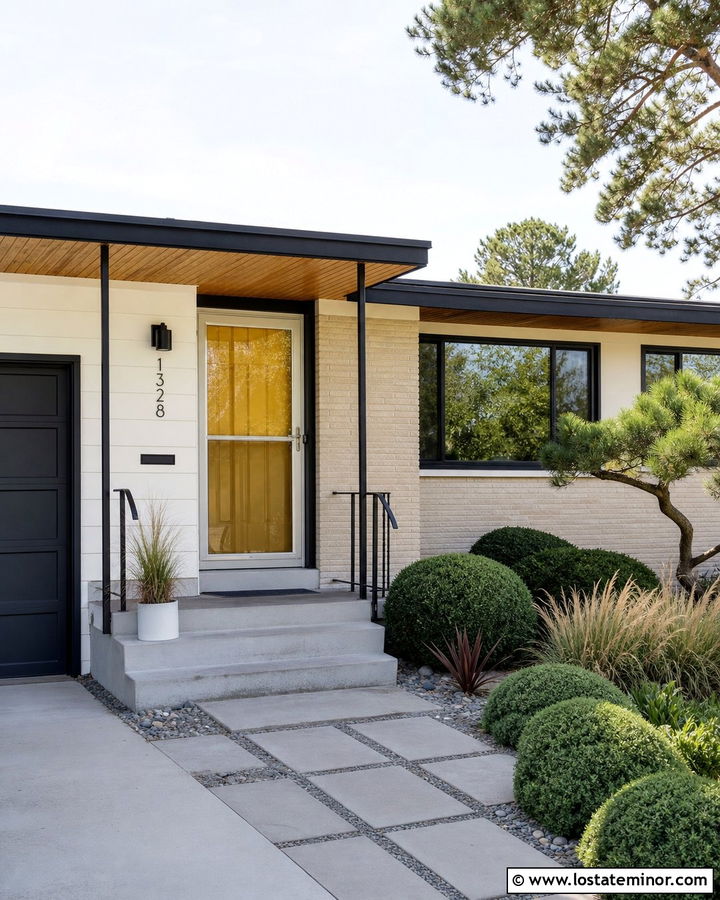
A silver aluminum storm door can look intentional on a midcentury ranch when it relates to other streamlined materials. Use warm white horizontal siding with sections of light tan brick and a low charcoal roof. Install a simple full-view aluminum storm door over a mustard yellow slab front door. The silver frame adds a subtle period-appropriate edge without hiding the cheerful color. Repeat the metal finish on house numbers, a linear porch light, and slim railing details. Natural wood soffits bring warmth beneath the broad roofline. Complete the setting with rectangular concrete pavers, rounded shrubs, ornamental grasses, and one sculptural tree. The result feels retro but fresh, with every entrance detail supporting the home’s low, clean architecture.
19. White Shingle House With Sandtone Storm Door
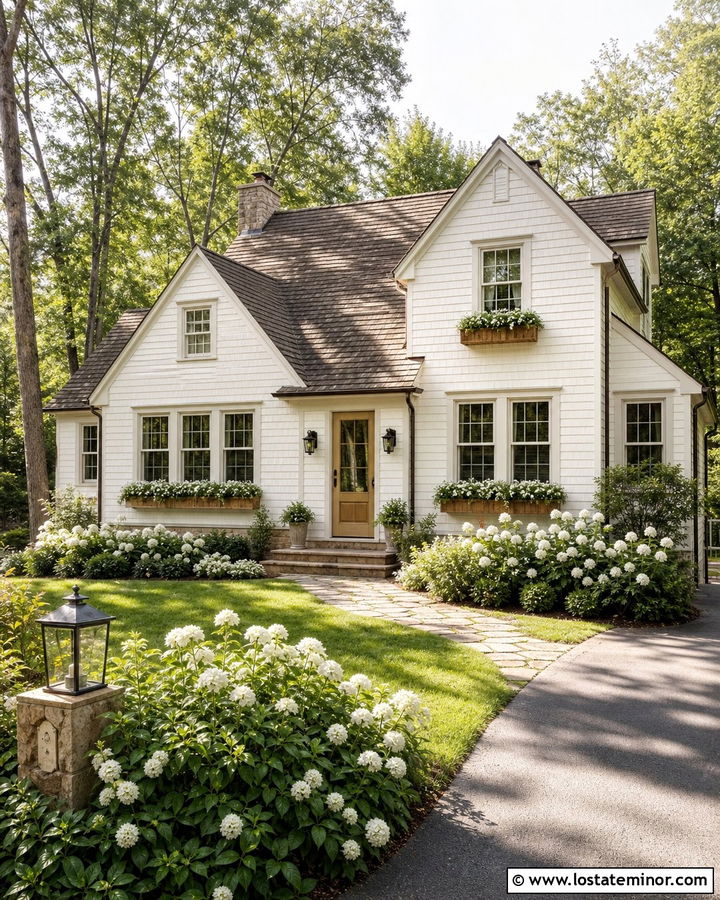
Sandtone is a practical choice when a pure white or black storm door would create too much contrast. Pair a warm sandtone full-view frame with creamy white shingle siding, beige stone, and a weathered brown-gray roof. Behind the glass, use a medium-stained oak door with simple rectangular panels. Bronze hardware, tan porch flooring, and cedar window boxes maintain the warm neutral direction. Keep the window trim soft white so the house still reads as a white exterior from the street. Layer the landscaping with green shrubs, white flowering plants, and a natural stone path. The storm door quietly bridges the white facade and brown entry, giving the entire scheme a cohesive, comfortable look suited to wooded or suburban surroundings.
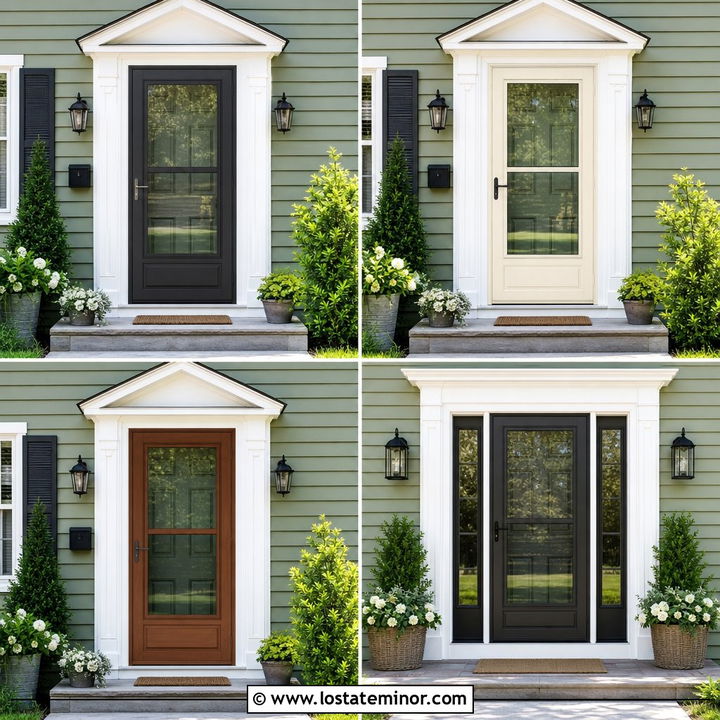
20. White Duplex With Matching Black Storm Doors
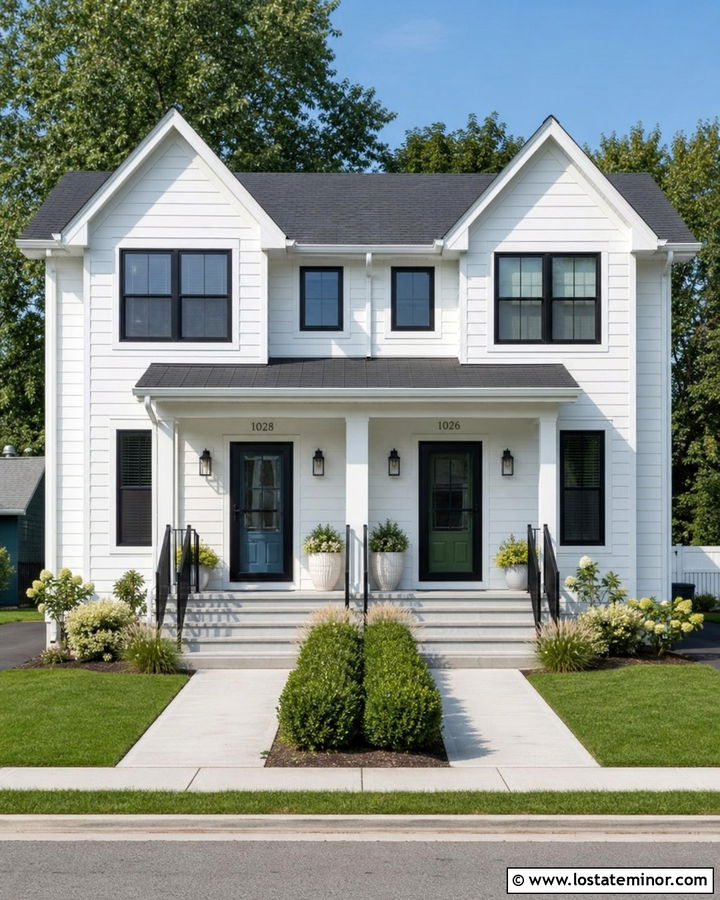
Matching black storm doors can bring order and balance to a white duplex. Use clean white siding, white trim, and a charcoal roof across the shared structure. Install identical black full-view storm doors over two differently colored primary doors, such as muted blue and deep green. The repeated black frames unify the entrances while allowing each residence to retain a small amount of personality. Match the exterior lights, house-number plaques, planters, and porch railings for consistency. A central walkway can divide into two symmetrical paths bordered by low hedges and ornamental grasses. Keep both porches equally furnished and uncluttered. This complete arrangement makes the property look thoughtfully planned rather than visually divided, improving curb appeal across the full facade.
21. White Farmhouse With Green Crossbuck Storm Door
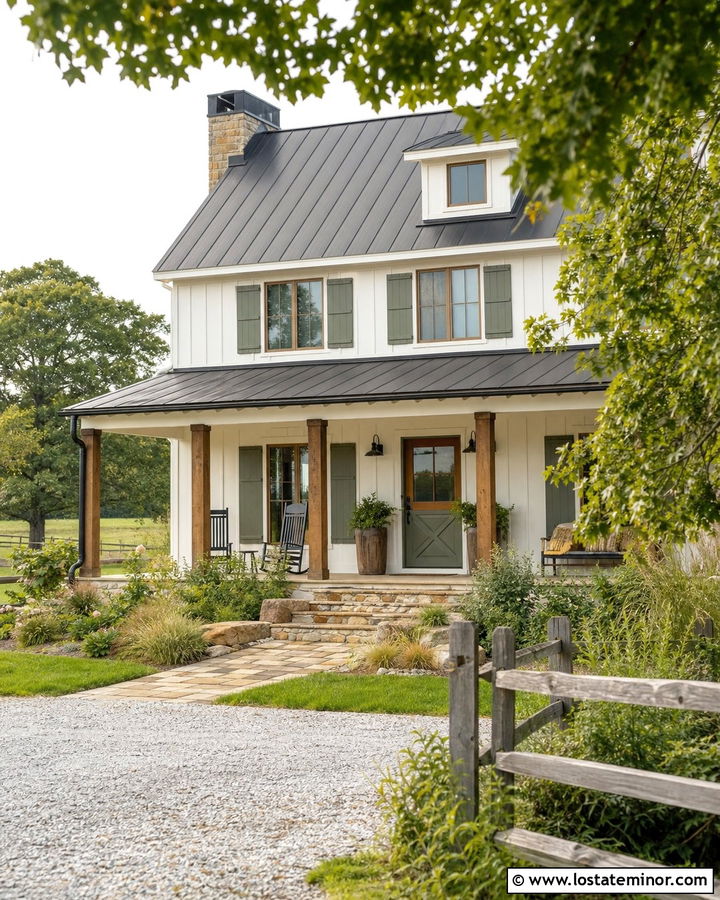
A green crossbuck storm door adds rural character to a white farmhouse without making the entrance feel overly decorative. Choose creamy white board-and-batten siding, a dark gray metal roof, and muted olive green for the storm door and shutters. A stained wood front door behind the upper glass panel introduces warmth. Use black hinges, a simple black handleset, and barn-style porch lights to sharpen the softer green. Natural stone porch steps and cedar posts help connect the entrance to the surrounding landscape. Finish with a gravel drive, split-rail fence, native grasses, and loosely arranged shrubs. The lower crossbuck detail echoes traditional agricultural doors, while the upper glazing keeps the entry open and allows the wood door to remain visible.
22. White Cottage With Arched Black Storm Door
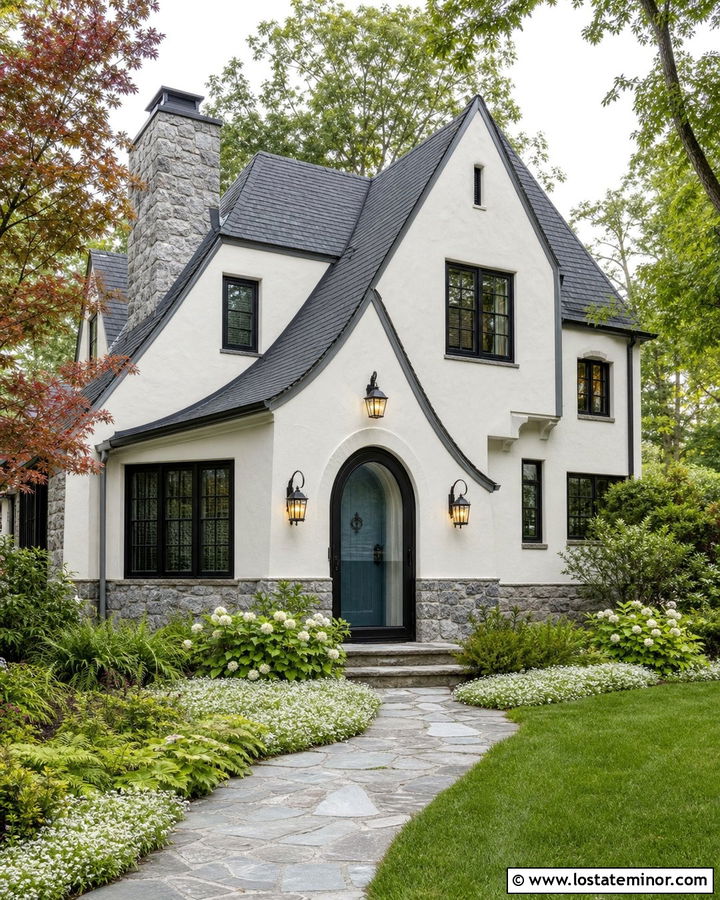
An arched black storm door can emphasize the storybook entrance of a white cottage. Start with warm white stucco, a steep charcoal roof, and a rounded wooden front door painted muted blue. Select a custom black storm door that follows the same arch instead of placing a rectangular frame inside the opening. Simple full-view glass preserves the primary door’s shape and color. Repeat black on small casement windows, curved lanterns, and restrained metal railings. Add gray fieldstone around the foundation and chimney for texture. A winding flagstone path, flowering ground cover, and layered shrubs soften the facade. This coordinated treatment turns a difficult doorway shape into an intentional architectural feature while retaining practical protection at the entrance.
23. White House With Bronze Security Storm Door
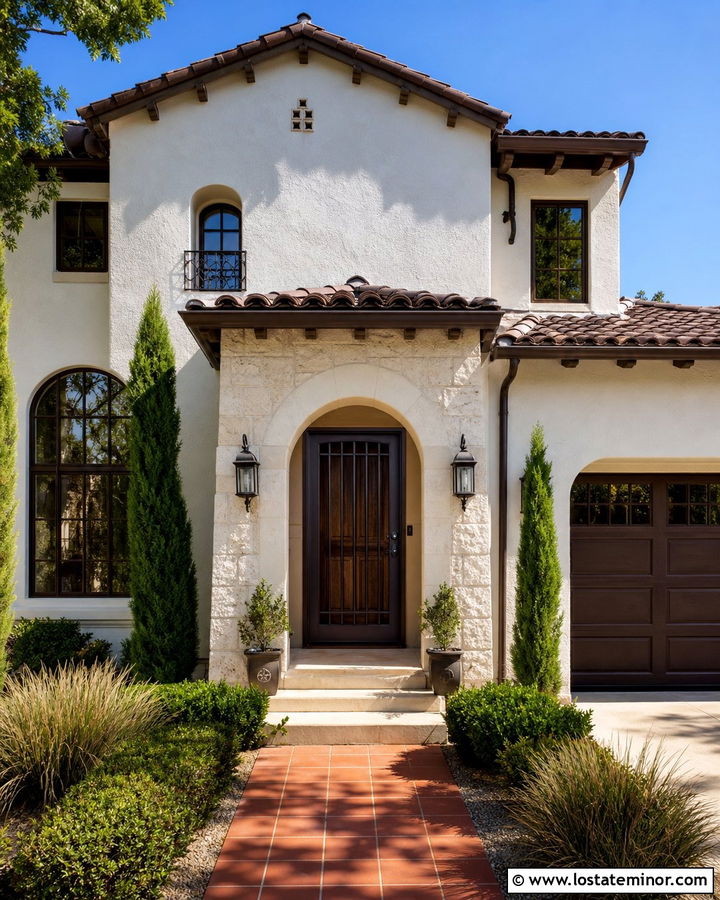
A security storm door can look attractive when its grille pattern and finish coordinate with the entire exterior. Choose a dark bronze model with simple vertical bars rather than an overly elaborate design. Place it over a walnut front door on a warm white stucco house with brown roof tiles. Bronze window frames, gutters, porch lights, and hardware visually connect the protective door to the architecture. Add cream limestone around the entry and low porch walls to soften the darker metal. A terracotta walkway, clipped evergreens, and drought-tolerant grasses complete the warm palette. By limiting the grille to clean lines and repeating its bronze finish elsewhere, the storm door becomes part of the design instead of appearing purely utilitarian.
24. White House With Blue Mid-View Storm Door
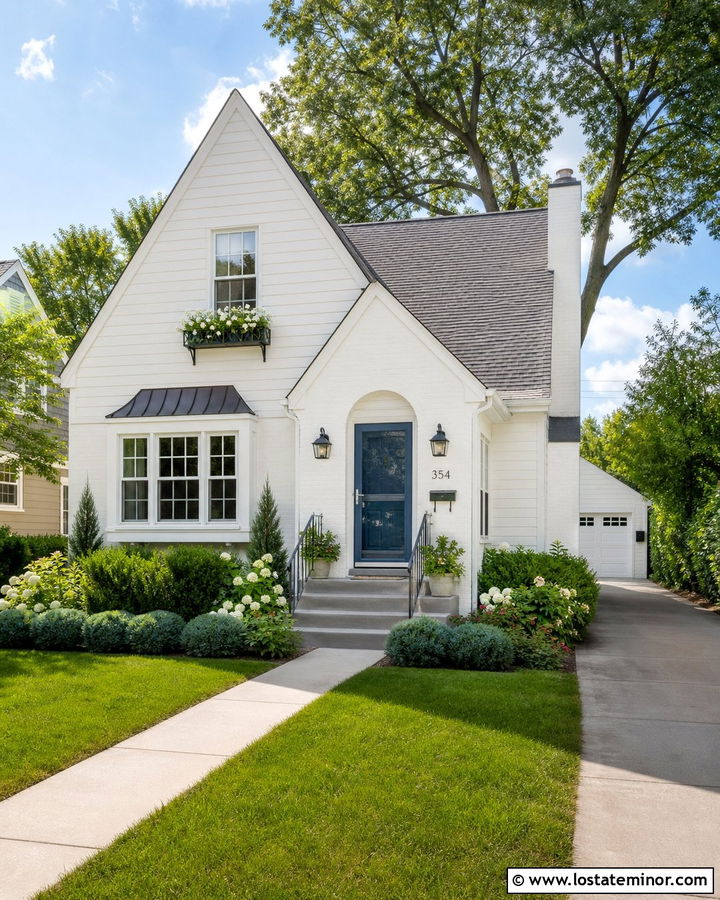
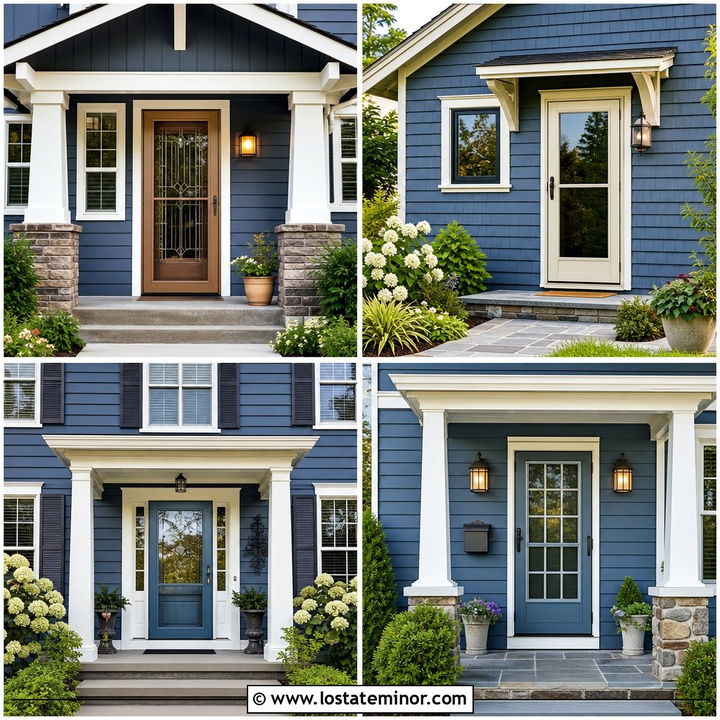
A medium blue mid-view storm door can give an everyday white house a friendly, approachable entrance. Use soft white lap siding, white window trim, and a medium gray roof. Paint the storm door a smoky denim blue, then repeat that color on the primary front door and small porch bench. The solid lower storm-door panel adds visual weight, while the glazed upper section admits light and keeps the entry connected to the porch. Choose brushed nickel hardware and simple black lanterns for a balanced mix of finishes. Gray concrete steps, blue-green shrubs, and white flowers support the cool palette. This scheme works particularly well on modest suburban homes that need color without dramatic architectural changes or expensive new materials.
25. White Craftsman With Black Storm Door And Stone Porch
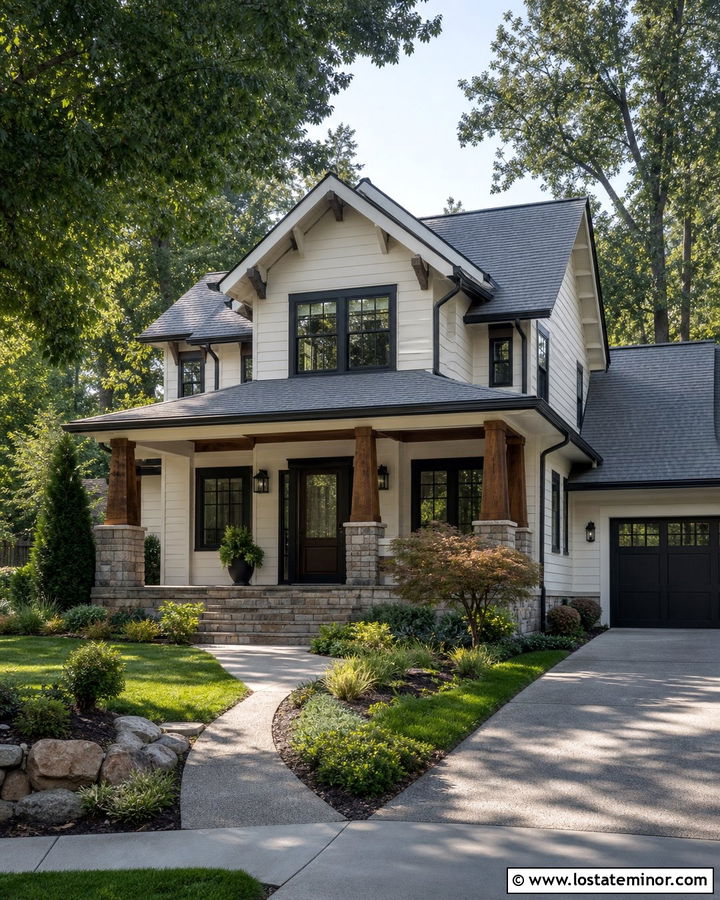
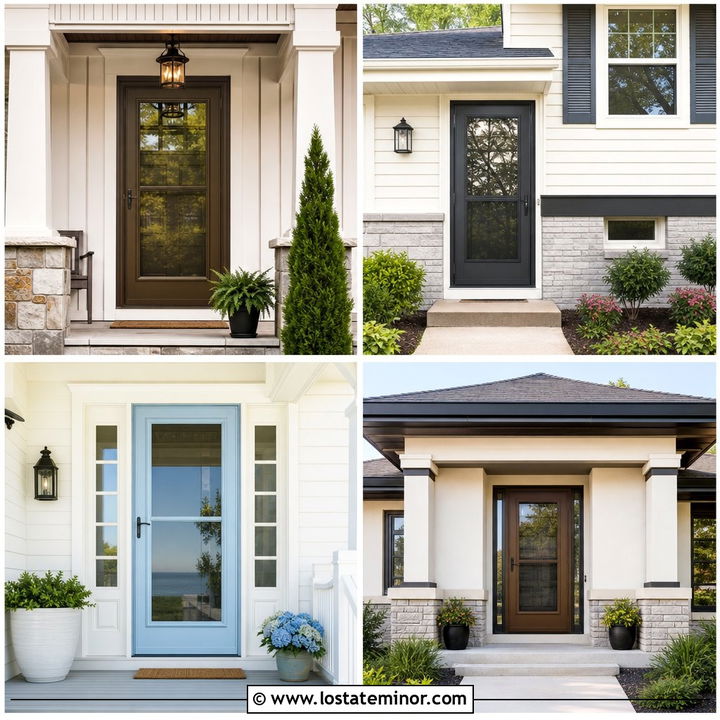
Stone can help a black storm door feel grounded on a white Craftsman house. Use warm white lap siding, broad white trim, and a black full-view storm door over a rich mahogany entry door. Continue the black finish on the window frames, porch lights, and roof gutters. Wrap the column bases and porch foundation in ledgestone containing gray, tan, and charcoal tones. Stained cedar columns and brackets connect visually with the mahogany door. A medium-gray roof and textured concrete walkway complete the architectural palette. Use layered shrubs and ornamental grasses rather than formal hedges. The combination balances crisp contrast with natural texture, allowing the storm door, wood entry, stonework, and roof to read as one complete exterior composition.
26. White Colonial With Brass-Finish Storm Door
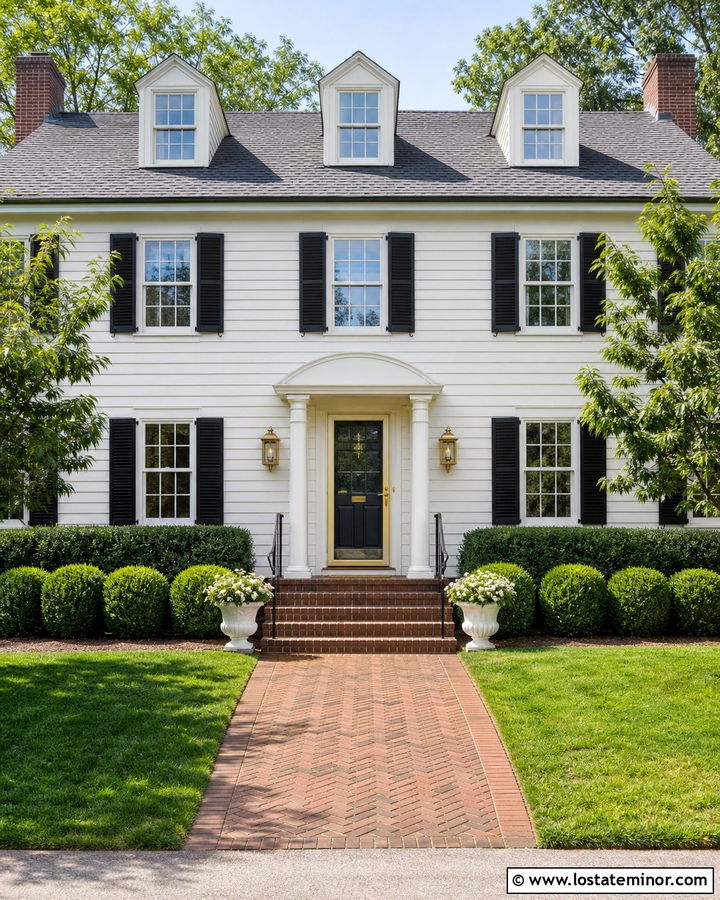
A brass-finish storm door can add warmth to a formal white Colonial when used with restraint. Select a slim champagne-brass full-view frame over a deep navy front door. Pair it with warm white clapboard siding, matching trim, black shutters, and a slate-gray roof. Repeat the metal finish on the handleset and two traditional wall lanterns, but keep railings and gutters black so the facade does not become overly reflective. Red brick steps introduce an established material that complements the warm metal. Symmetrical boxwoods, matching planters, and a straight brick walkway reinforce the architecture. The glass-dominant storm door leaves the navy entry visible, while its refined metallic outline gives the entrance a distinctive alternative to standard white, bronze, or black.
27. White Rustic House With Brown Storm Door
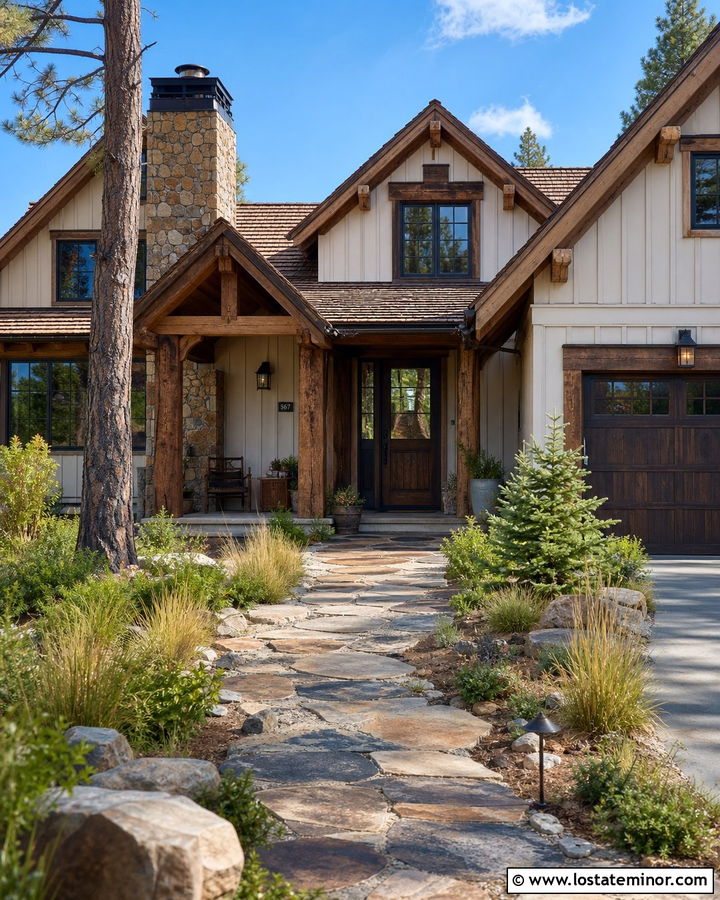
A dark brown storm door fits naturally on a rustic white exterior surrounded by stone and timber. Use creamy white vertical siding, chunky cedar beams, and a weathered dark brown roof. Layer a brown full-view storm door over a stained knotty-alder entry door, keeping the frame close to the door’s deepest wood tone. Add oil-rubbed bronze hardware and rugged lanterns for consistency. Fieldstone across the chimney, porch foundation, and lower walls provides gray and tan variation. A wide timber porch, irregular flagstone walkway, and native evergreen landscaping complete the setting. Instead of creating a hard outline, the brown storm door blends with the natural materials and allows the white siding to remain the brightest feature of the complete facade.
28. White Suburban House With Gray Retractable Storm Door
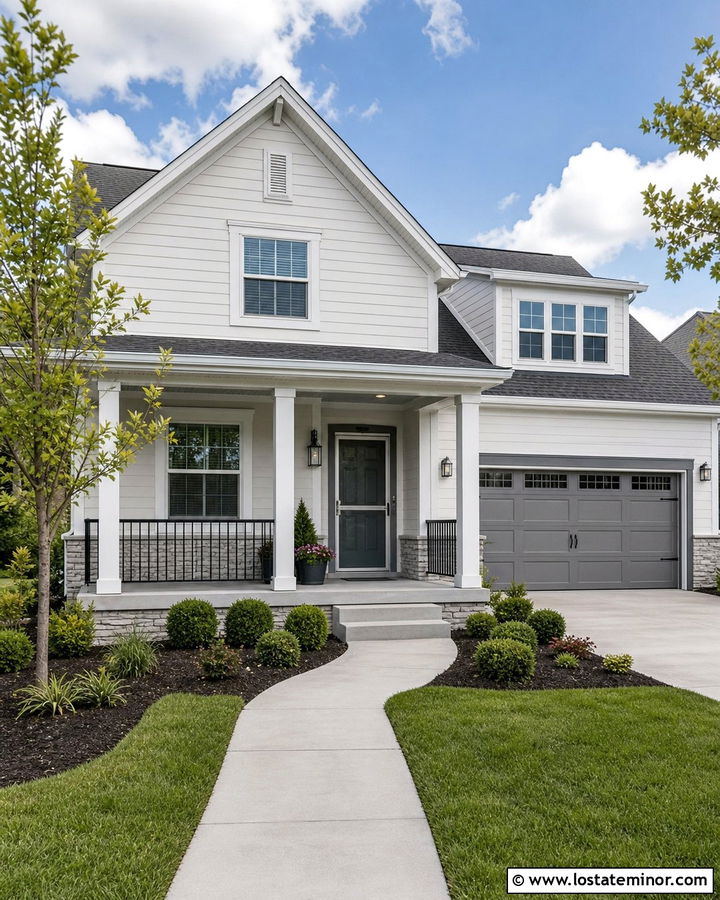
A gray retractable-screen storm door offers a clean update for a practical suburban exterior. Paint the house a balanced soft white and use medium gray on the roof, garage door, storm-door frame, and porch floor. Place a muted teal front door behind the full-view glass to introduce controlled color. Brushed nickel hardware and simple black sconces keep the finishes versatile. Add white porch columns, a narrow black railing, and light gray stone around the garage or foundation. Improve the approach with a broad concrete walkway, fresh mulch, rounded shrubs, and compact ornamental trees. The coordinated gray elements help the house feel planned, while the retractable screen provides flexibility without permanently dividing the glass area or hiding the colorful primary door.
29. White Georgian House With Dark Green Storm Door
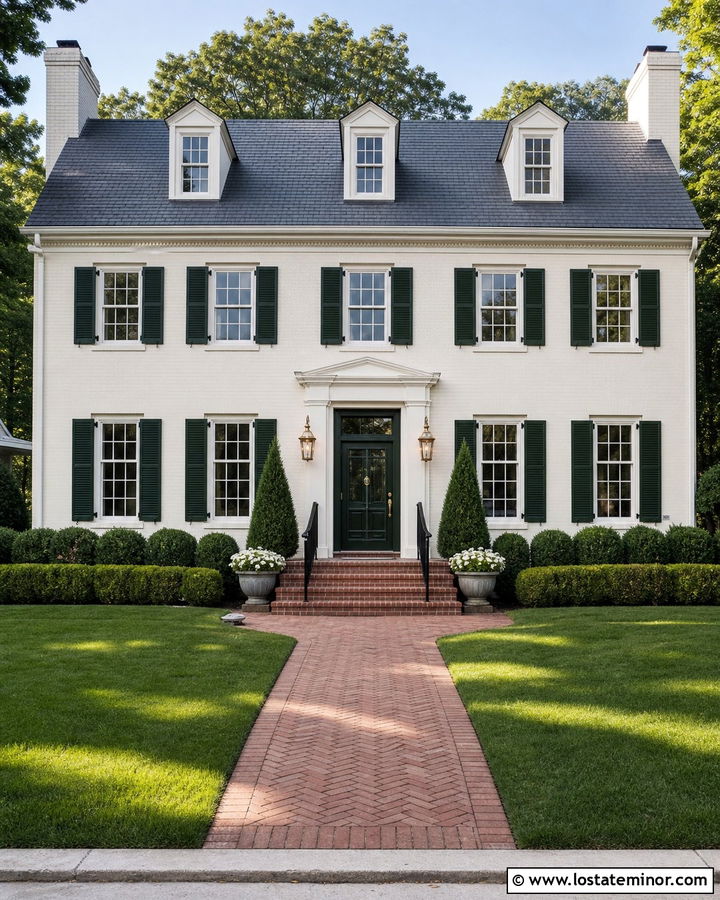
Deep green gives a white Georgian exterior a dignified alternative to the usual black entrance. Use warm white brick or clapboard, symmetrical windows, and a dark slate roof. Paint the full-view storm door frame and paneled entry door a nearly black evergreen shade. Repeat the green on the shutters so the entrance belongs to the broader facade. A polished brass handleset, matching knocker, and traditional lanterns bring warmth to the formal palette. Red brick steps and a herringbone walkway provide classic texture. Maintain symmetry with clipped hedges, upright evergreens, and identical planters beside the doorway. The dark green reads as neutral from a distance, yet reveals richer color up close, creating a layered and memorable white-house exterior.
30. White Contemporary House With Frameless-Look Storm Door
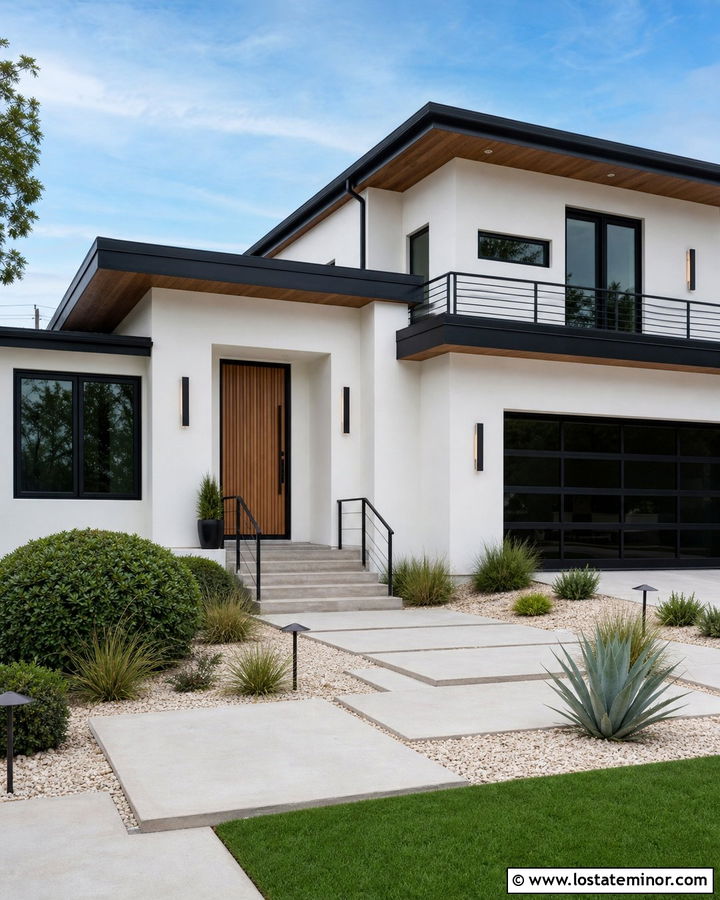
For a contemporary white house, choose a storm door with the narrowest practical frame and the largest possible glass area. A slim matte-black full-view model can create a nearly frameless appearance over a warm vertical-slat wood entry door. Use crisp white stucco, black windows, a charcoal low-slope roof, and natural wood soffits across the facade. Continue the black finish on linear sconces, gutters, and simple metal railings. Large-format concrete pavers, pale gravel, sculptural shrubs, and ornamental grasses complement the clean architecture. Avoid decorative grilles and contrasting lower panels. The broad clear glass protects the primary door while allowing its texture to remain prominent, resulting in an entrance that feels open, modern, and fully integrated with the house.
Conclusion:
The best 30 White House Design With Storm Door Ideas coordinate every visible detail, including siding undertones, trim, roofing, hardware, porch materials, and landscaping. Black and charcoal frames create crisp contrast, while white storm doors blend into the casing. Bronze, sandtone, gray, and wood-look finishes provide softer transitions. Blue, green, and red can turn the entrance into a stronger focal point. Before choosing, view finish samples beside the front door and exterior paint in bright daylight. Also consider how much glass, screen access, privacy, and lower-panel protection your household needs. A well-planned storm door should improve everyday function while looking like a natural part of the home’s complete exterior design.

Related posts: