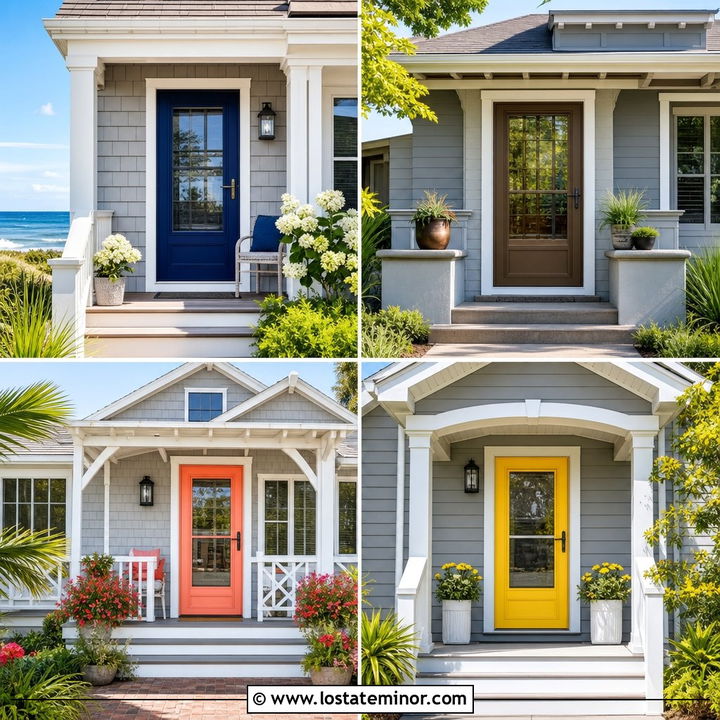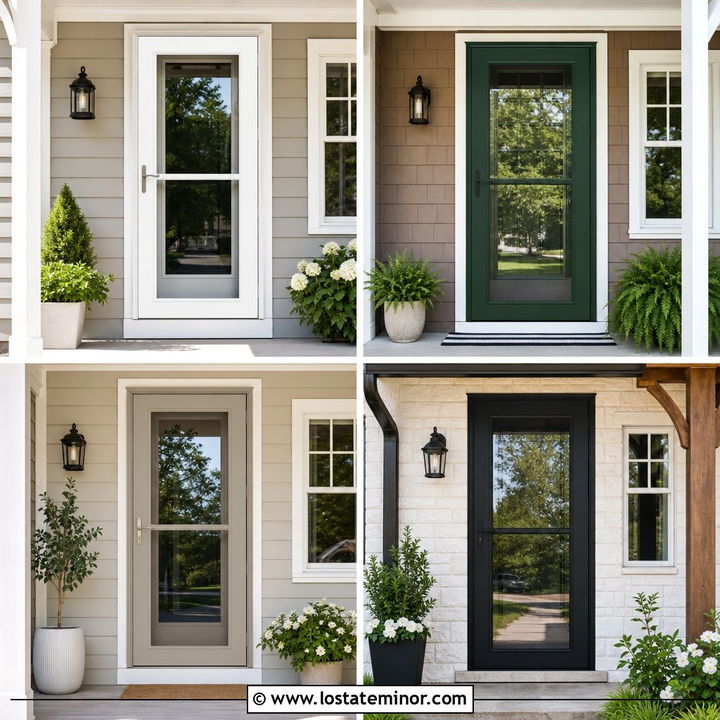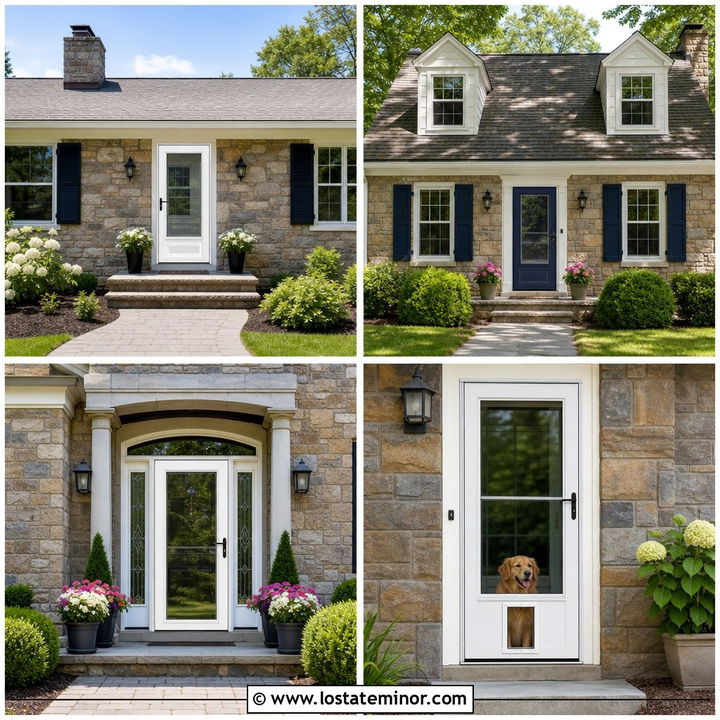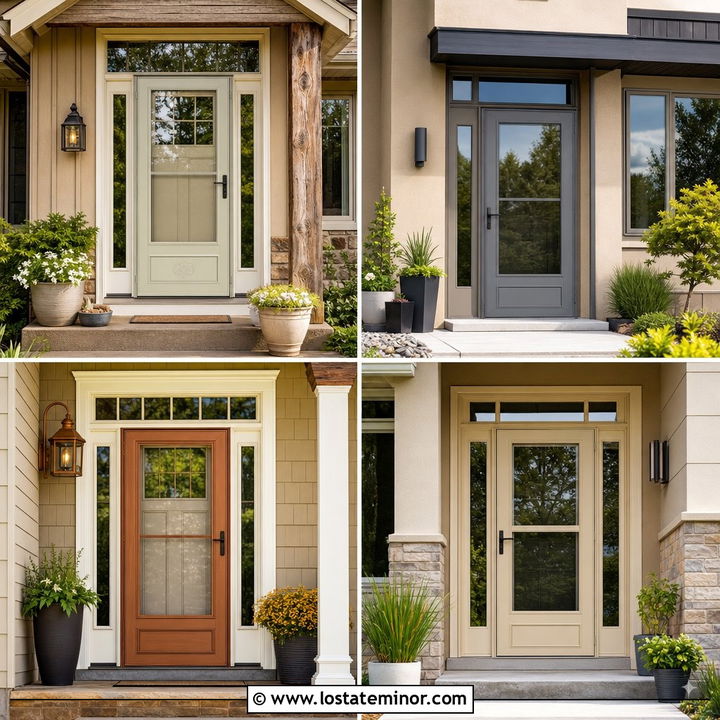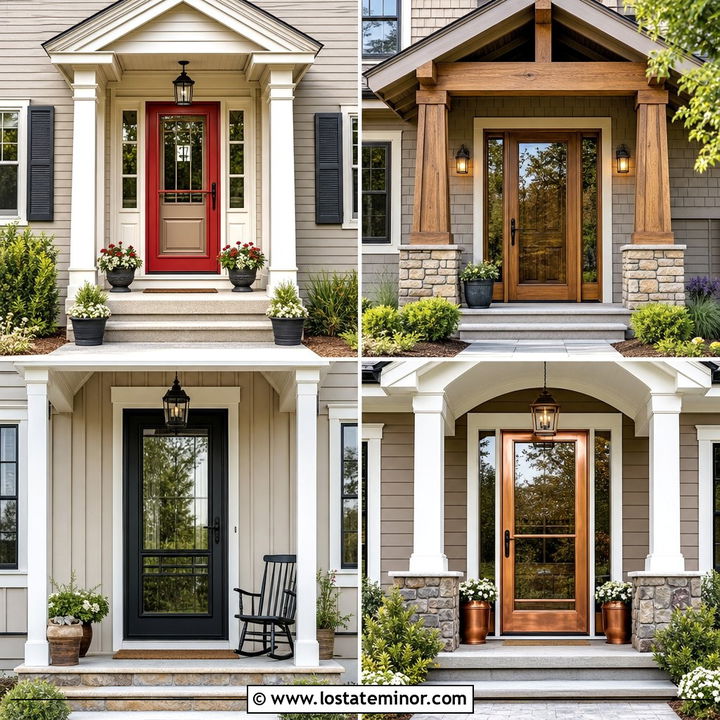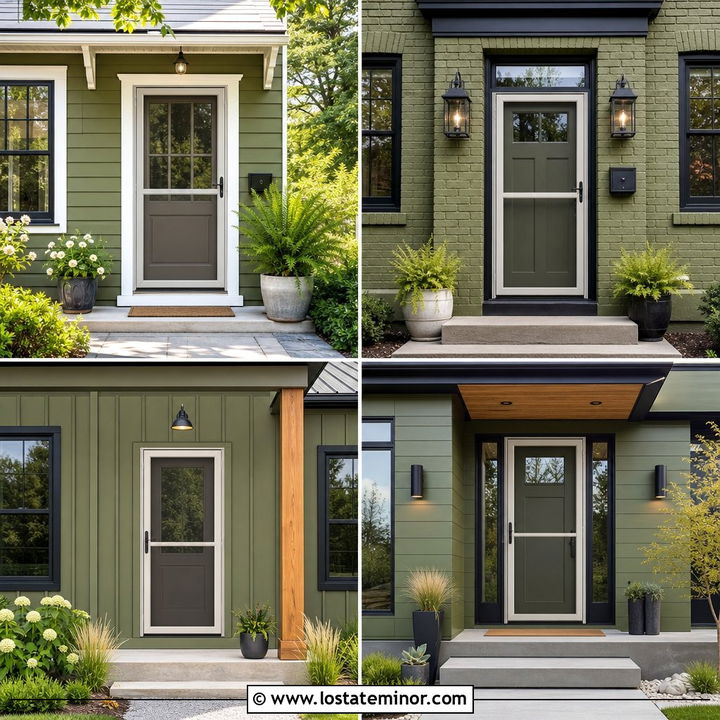
1. Sand House With Black Full-View Storm Door
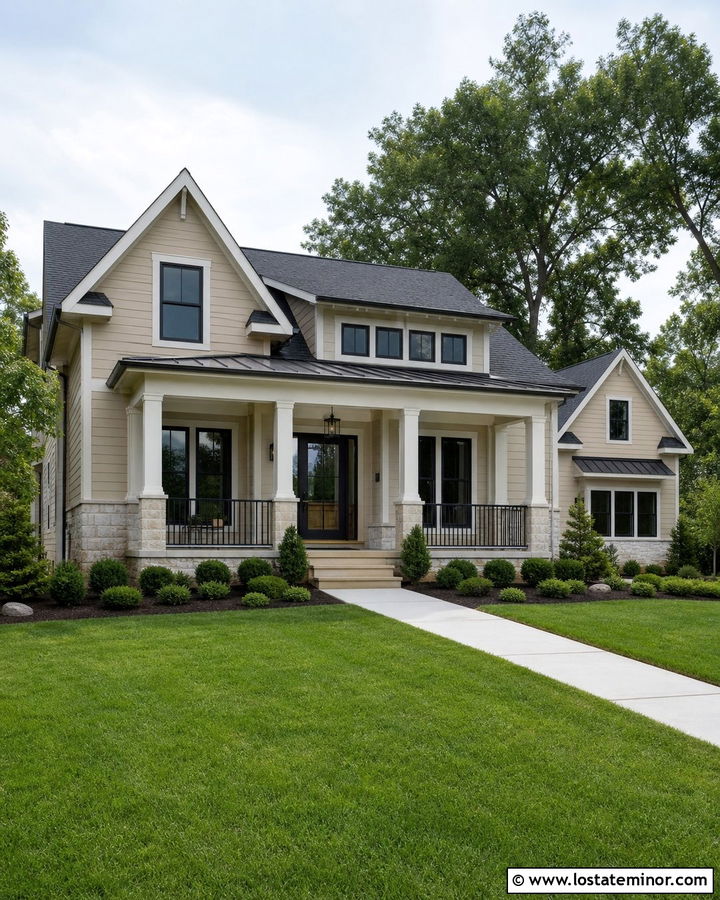
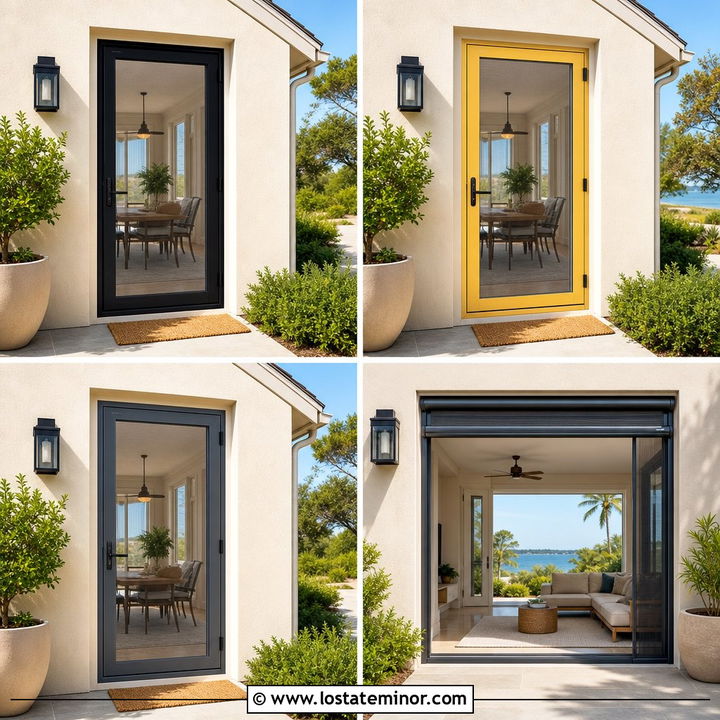
A black full-view storm door gives a sand-colored house a crisp focal point without overwhelming the warm siding. This pairing works especially well on a modern farmhouse with white trim, black window frames, and simple porch columns. Place a stained medium-oak front door behind the glass so its natural grain remains visible. Repeat black on the sconces, house numbers, and porch railing to make the storm door feel intentional. A charcoal architectural-shingle roof adds another dark layer, while a pale stone foundation keeps the lower facade connected to the sand body color. Finish the entrance with a broad concrete path, clipped shrubs, and understated planters. The result feels clean, balanced, and welcoming from the curb.
2. Sand House With White Retractable Screen Storm Door
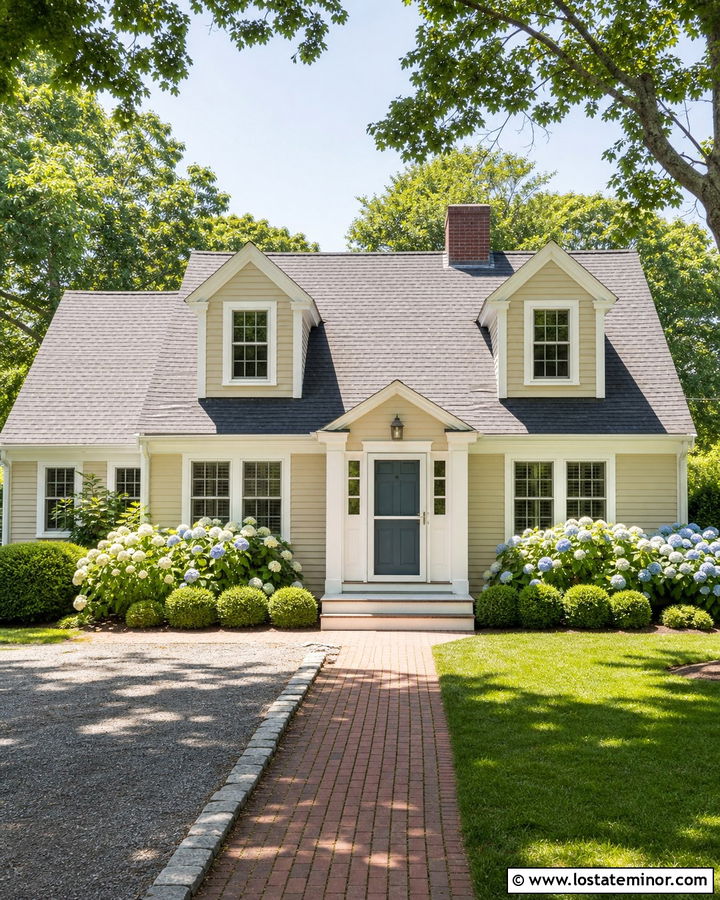
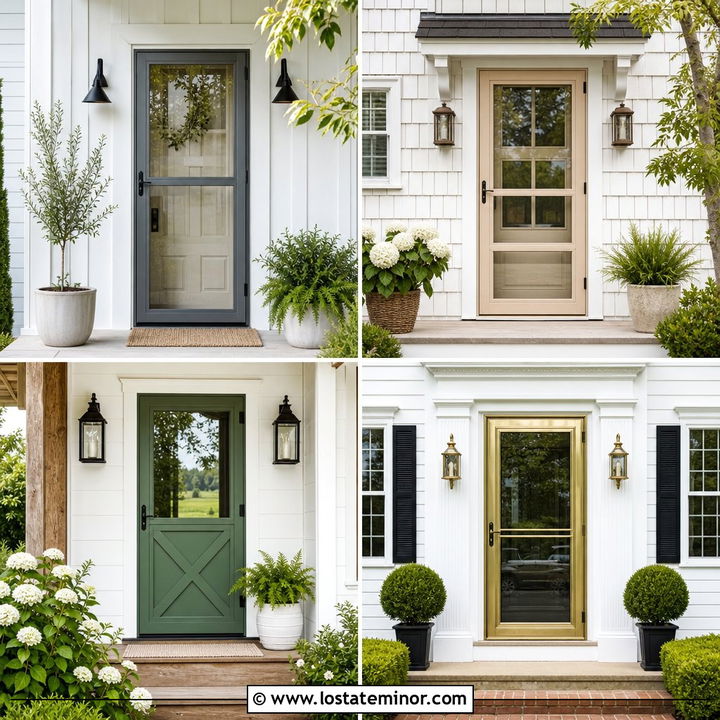
Bright white creates a light, classic frame around a sand house entrance. Choose a white retractable screen storm door for a Cape Cod exterior with white window trim, corner boards, porch posts, and gutters. A muted blue front door adds a coastal accent that remains visible through the storm door glass. Keep the roof medium gray instead of black so the overall palette stays soft. Horizontal lap siding, a small covered porch, and divided-light windows reinforce the traditional character. Hydrangeas, boxwoods, and a curved brick walkway add color without making the front yard feel busy. Because the storm door matches the trim, it blends naturally into the architecture and lets the blue entry door become the main decorative feature.
3. Sand House With Bronze Storm Door
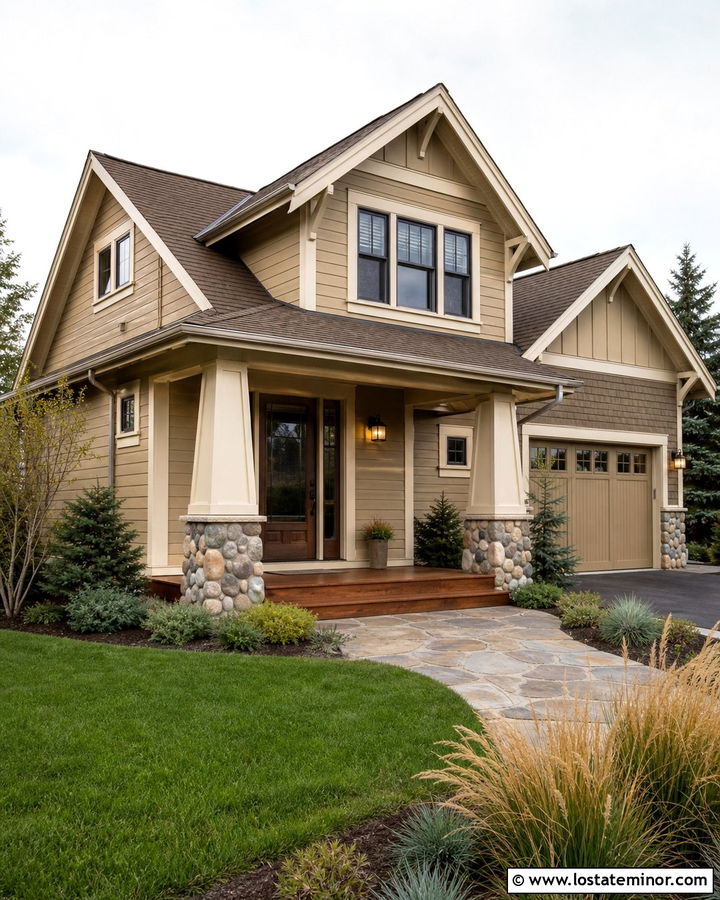
Warm bronze is an excellent bridge between sand siding and earthy exterior materials. On a Craftsman house, pair a bronze full-view storm door with an espresso-stained front door, cream trim, and tapered porch columns set on river-rock bases. Select aged-bronze sconces and house numbers to repeat the metal finish around the entrance. A weathered brown roof will reinforce the warm undertones without making the facade appear too dark. Add cedar porch flooring or stained wood steps for another natural layer. Deep green shrubs, ornamental grasses, and a flagstone path provide relaxed contrast. This complete scheme looks especially cohesive when the storm door frame closely relates to the front door, roofing, and darker shades found within the stonework.
4. Sand House With Sandstone Storm Door
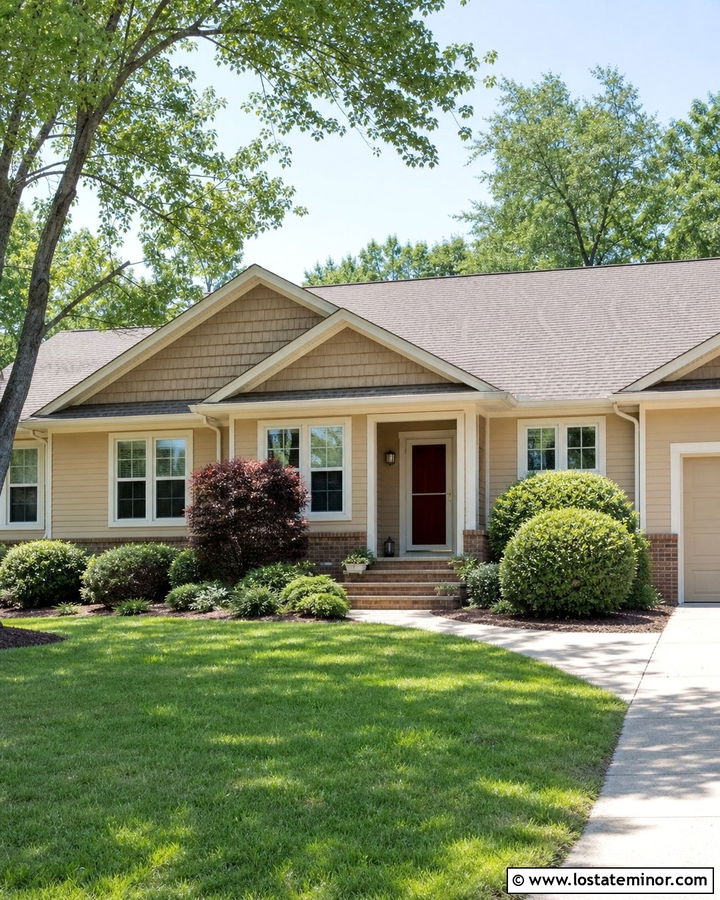
A sandstone storm door creates a quiet, tone-on-tone entrance that is ideal when you want the front door to receive more attention. Use it on a traditional ranch with Sand Dune siding, ivory trim, and a rich oxblood front door. The storm door frame should sit close to the siding color but remain slightly deeper, giving the doorway subtle definition. Carry the oxblood accent onto small shutters or porch planters for balance. A brown-gray roof and tan brick foundation will keep the palette grounded. Since this scheme relies on related neutrals, introduce texture through shake siding in the gables, brick steps, and layered landscaping. The finished house feels warm and coordinated rather than flat or overly beige.
5. Sand House With Dark Brown Storm Door
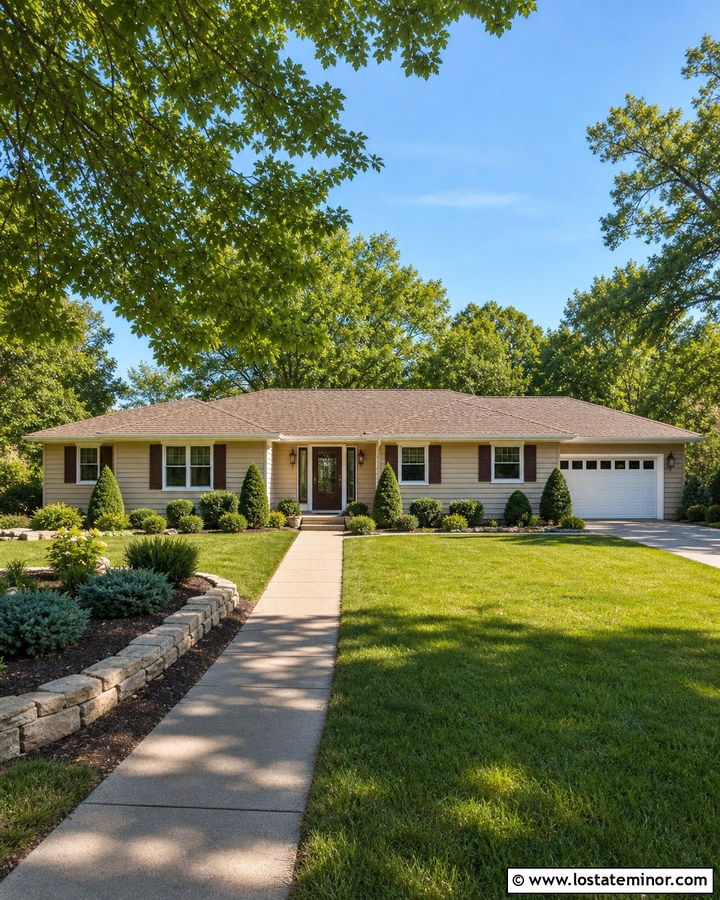
Dark brown brings depth to a sand exterior while preserving its warm, natural character. This combination suits a low, wide ranch house with cream trim, brown shutters, and a walnut-colored front door. Choose a storm door with a narrow dark brown frame and a large clear-glass panel, allowing the wood-toned entry behind it to remain visible. Repeat the brown on the garage door hardware, porch bench, and fascia for a connected exterior. A roof with brown, gray, and muted tan shingles will pull the entire palette together. Use limestone edging, evergreen foundation plants, and a straight concrete walkway to create structure. The darker entrance anchors the facade, helping a long ranch elevation feel more balanced from the street.
6. Sand House With Hunter Green Storm Door
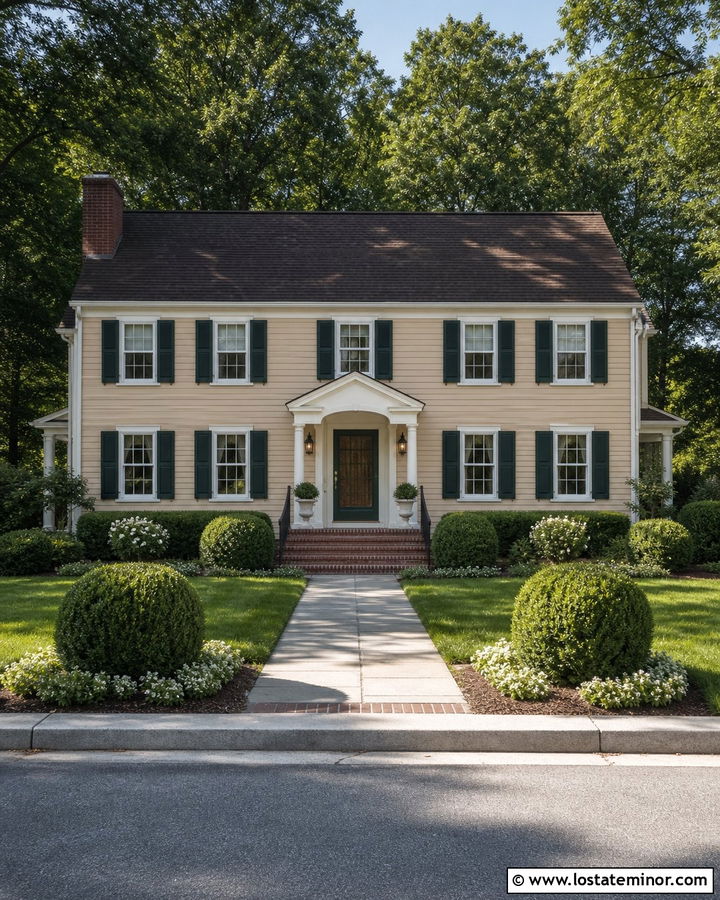
Hunter green gives sand siding a traditional, nature-inspired contrast that feels rich without becoming flashy. Try this scheme on a colonial house with symmetrical windows, creamy white trim, and matching green shutters. Place a warm wood front door behind a hunter green full-view storm door so both colors contribute to the entrance. A dark brown or charcoal roof keeps the upper facade grounded, while red-brown brick steps add familiar warmth. Use polished brass hardware sparingly on the lockset, door knocker, and lanterns. Rounded boxwoods and tall planters emphasize the formal architecture. This palette is particularly effective in leafy neighborhoods because the green entrance connects visually with mature trees while the sand body color keeps the house bright and approachable.
7. Sand House With Navy Blue Storm Door
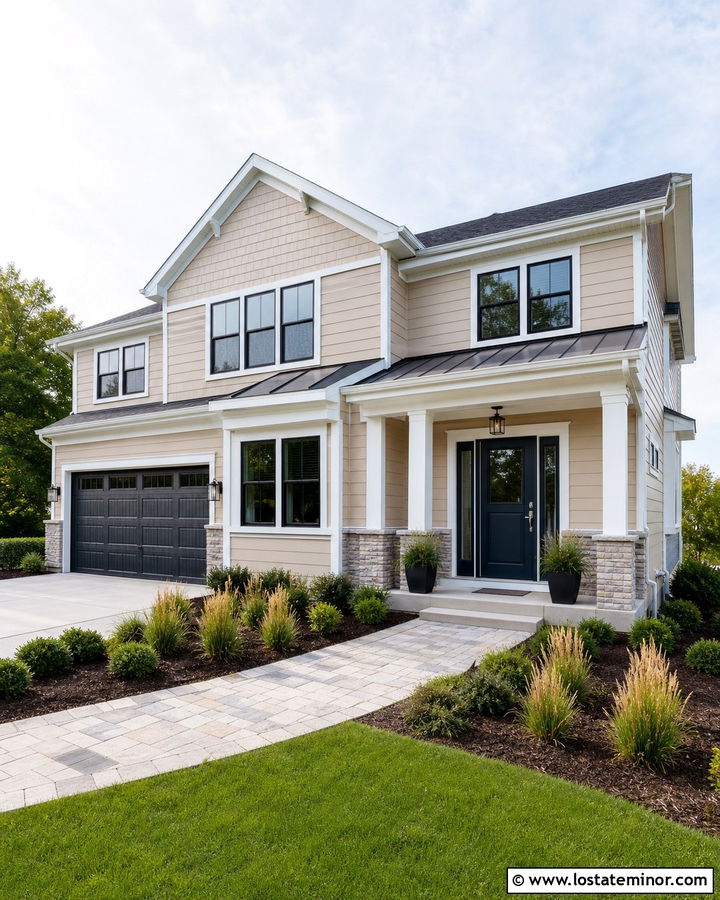
Navy blue adds polished contrast to a sand house and works beautifully with cool white trim. For a two-story transitional exterior, combine Sand Dune lap siding with a navy full-view storm door, a matching navy front door, and black-framed windows. Use navy selectively so it defines the entry without competing with the architecture. A medium charcoal roof and pale gray stone wainscoting will connect the warm siding to the cooler blue accent. Brushed nickel hardware keeps the entrance fresh, while dark planters can repeat the window color. Add structured ornamental grasses and low evergreen shrubs along a wide paver walkway. This balanced scheme offers noticeable color while remaining versatile enough for both traditional and updated suburban homes.
8. Sand House With Red Storm Door
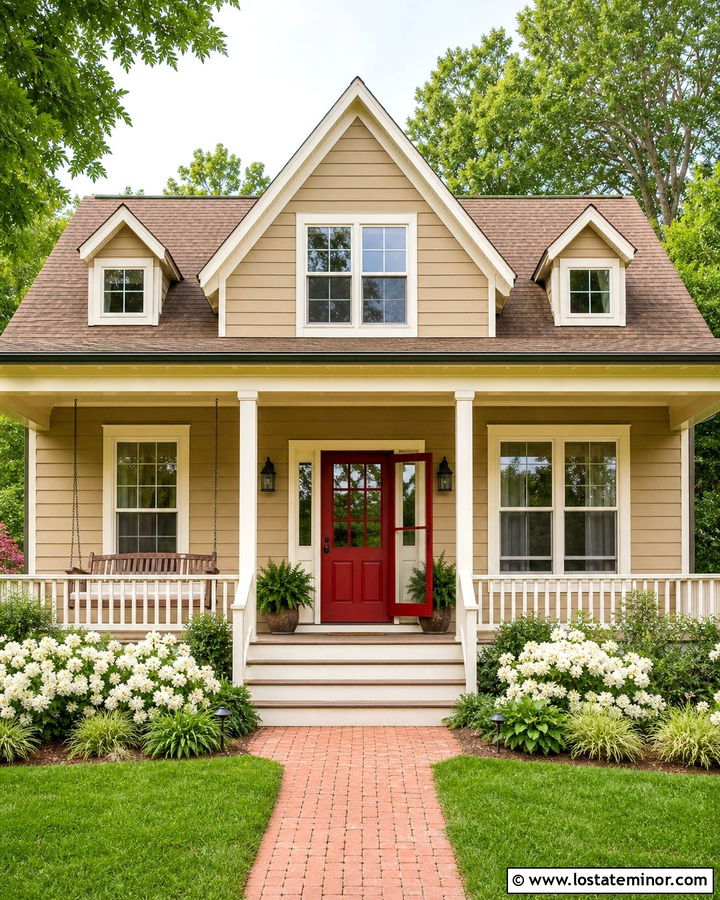
A deep red storm door can make a sand house feel cheerful, established, and easy to recognize. Choose a brick-red or muted cranberry shade rather than a highly saturated primary red. On a farmhouse-inspired exterior, pair it with cream trim, a matching red front door, and a medium-brown roof. Black lanterns and simple black house numbers provide small areas of contrast. Add natural wood rocking chairs or a cedar porch swing to strengthen the warm palette. A brick walkway is especially useful because it repeats the door color in a softer, more weathered form. Surround the porch with white flowering shrubs and deep green foliage. The finished look feels inviting and colorful while still allowing the neutral sand siding to dominate the house.
9. Sand House With Slate Blue Storm Door
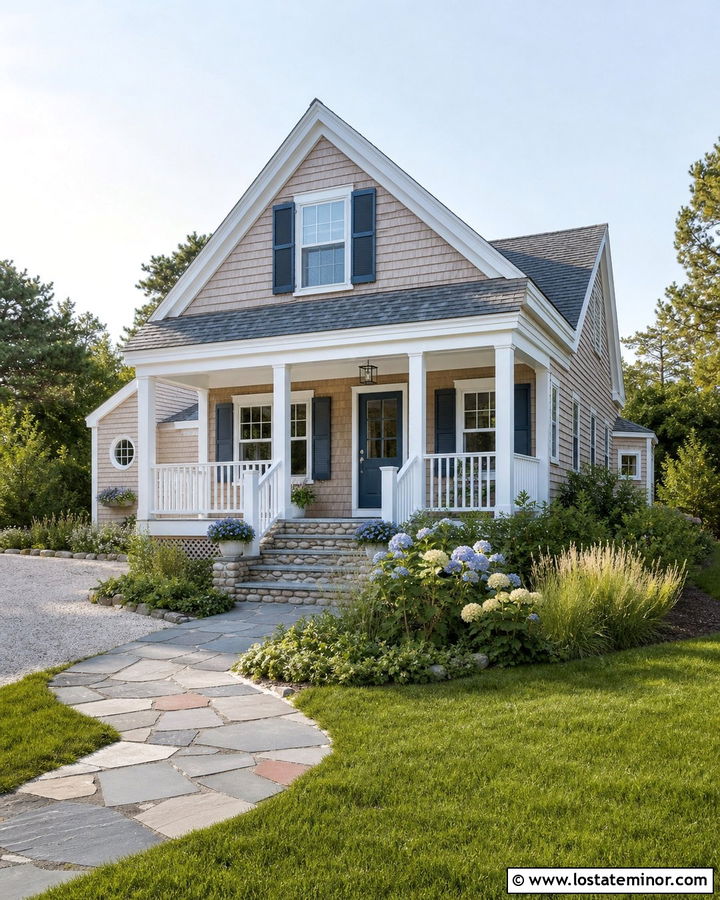
Slate blue brings a calm, slightly weathered quality to sand siding. It is a smart choice for a shingle-style cottage with crisp white trim, a gray roof, and a covered front porch. Paint the main door the same slate blue as the storm door frame for a layered, unified entry. Add matching blue shutters only if the windows have enough wall space to support them. Otherwise, repeat the color on porch planters or a small gable vent. White railings and columns brighten the warm facade, while fieldstone steps introduce natural gray and tan variation. Soft grasses, hydrangeas, and an irregular flagstone path complete the relaxed setting. Together, the colors create a coastal influence without making the house look overly themed.
10. Sand House With Charcoal Storm Door
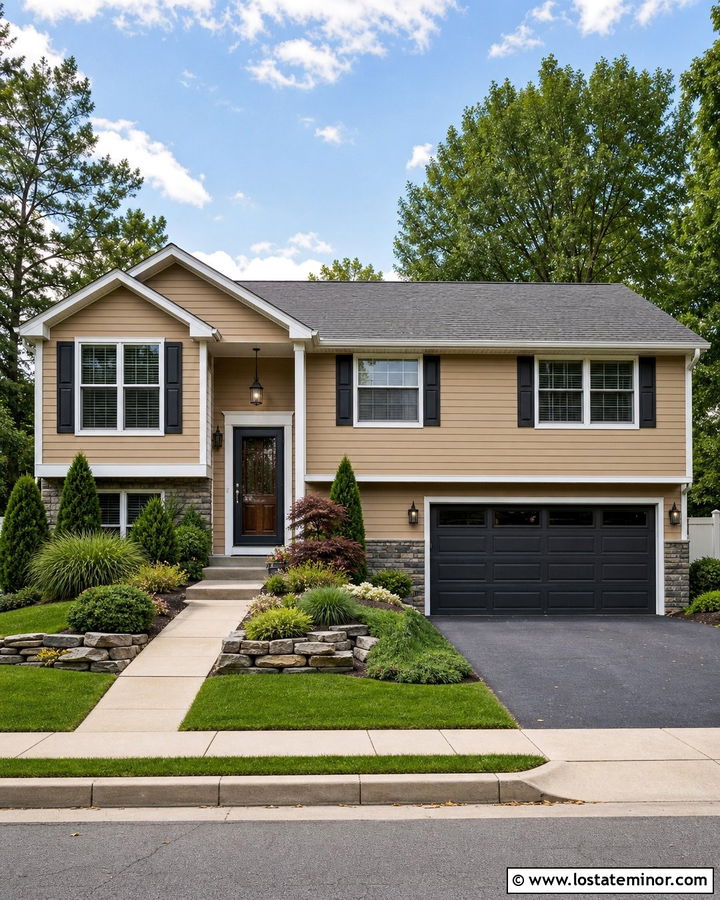
Charcoal is softer than pure black but still supplies enough contrast to sharpen a sand exterior. Use it on a split-level house with warm white trim, charcoal shutters, and a medium-gray roof. A charcoal full-glass storm door can frame a stained mahogany front door, letting the wood become a warm focal point. Carry the darker color onto the garage door, fascia, or porch railing to distribute visual weight across the facade. A foundation faced with gray ledgestone will further connect the storm door to the house. Keep landscaping simple with mounded evergreens, ornamental grasses, and a clean concrete walkway. This approach modernizes an older split-level while respecting its straightforward lines and practical suburban character.
11. Sand House With Wood-Look Storm Door
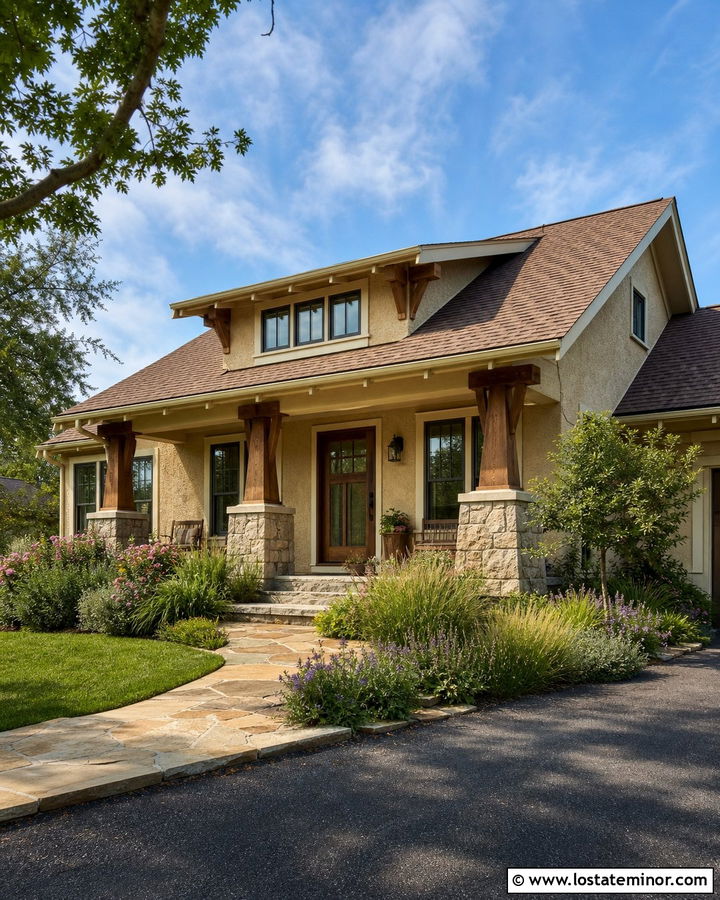
A wood-look storm door adds organic warmth while offering a more finished appearance than plain aluminum. It works especially well on a rustic bungalow with sand lap siding, cream trim, cedar porch brackets, and a brown shingle roof. Select a storm door finish that resembles medium oak or walnut, then coordinate the main front door in the same wood family. Avoid mixing several unrelated stains. Black hinges, handles, sconces, and house numbers provide a clean outline around the entry. Stone porch piers and a flagstone walkway reinforce the natural material palette. Add native grasses, flowering perennials, and a small shade tree for an informal yard. The completed facade feels handcrafted, comfortable, and closely connected to its landscape.
12. Sand House With Silver Storm Door
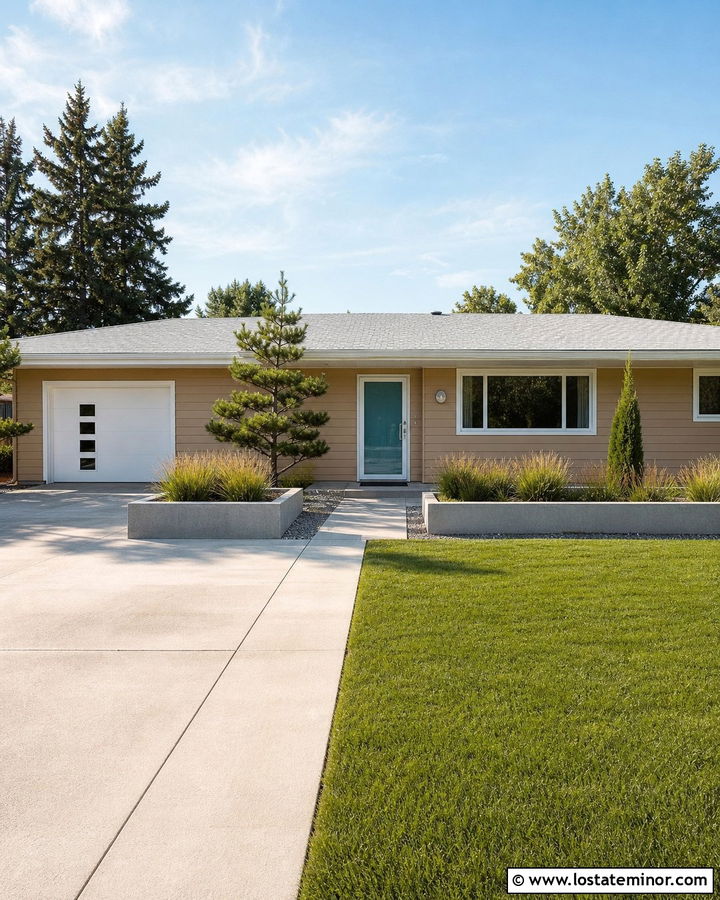
A silver storm door can give a sand house a light, practical update when it is supported by other cool metallic details. Try it on a mid-century ranch with smooth sand-colored siding, white trim, and a teal front door. Choose a slim silver frame with expansive clear glass to preserve the simple architecture. Repeat silver or brushed nickel on the porch light, mailbox, and door hardware. A pale gray roof and concrete planter boxes will help the metal finish look integrated rather than accidental. Keep shutters off the house so the horizontal lines remain clean. Use a broad walkway, low ornamental grasses, and sculptural evergreen plants to frame the facade. This combination feels bright and retro-inspired without becoming dated or overly decorative.
13. Sand House With Almond Storm Door
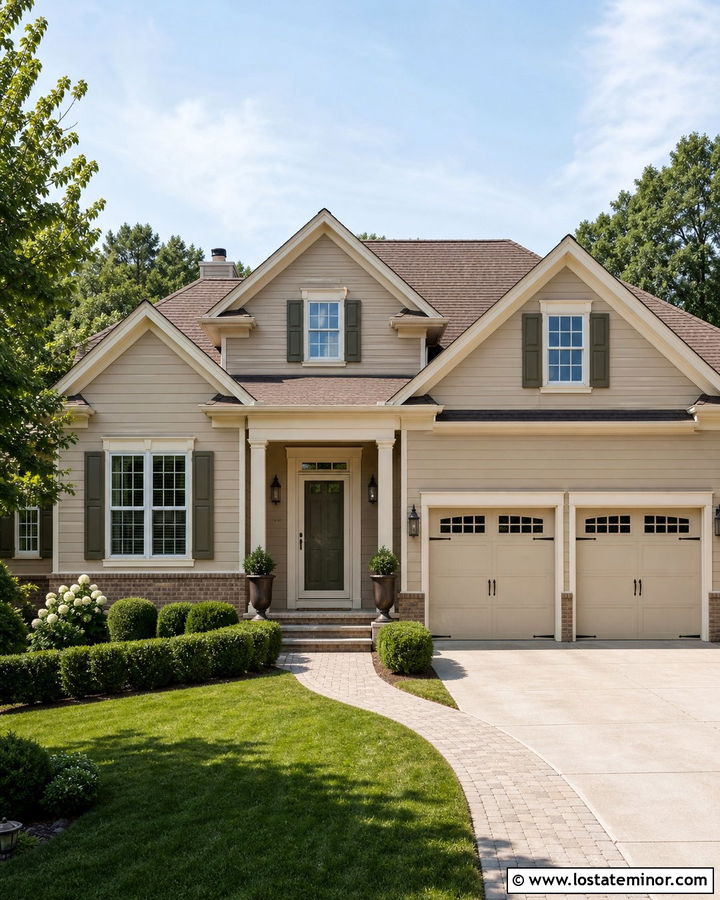
An almond storm door delivers a softer transition than bright white, making it useful for sand siding with warm undertones. On a suburban traditional house, coordinate the almond frame with creamy trim, beige garage doors, and light mortar around the brick foundation. Place a dark olive front door behind the glass to give the entrance enough definition. A weathered brown roof and bronze exterior lights will maintain the warm direction of the palette. Introduce muted green shutters only if the facade needs additional balance. A curved paver walkway, clipped foundation shrubs, and tall urn planters can make the entry feel more substantial. The result is gentle and coordinated, with enough contrast at the main door to keep the neutral exterior from looking washed out.
14. Sand House With Burgundy Storm Door
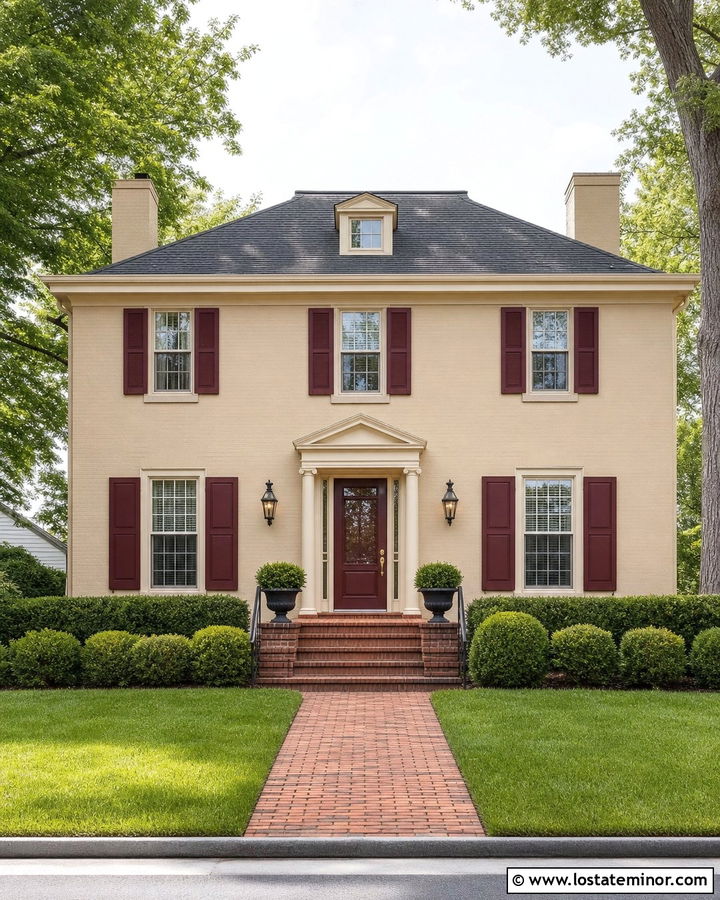
Burgundy offers a sophisticated alternative to brighter red and pairs naturally with warm sand siding. Use this combination on a Federal-style house with ivory trim, symmetrical windows, and dark burgundy shutters. Match the storm door to the painted front door so the entry reads as one strong architectural feature. Polished brass hardware and traditional lanterns will reinforce the formal character. Select a dark gray roof to prevent the warm palette from becoming overly brown. Red brick steps can repeat the burgundy family in a durable, muted material. Keep the landscaping orderly with clipped hedges, matching planters, and a centered walkway. This complete scheme has noticeable color, yet the deep red tone remains reserved enough for a classic neighborhood exterior.
15. Sand House With Sage Green Storm Door
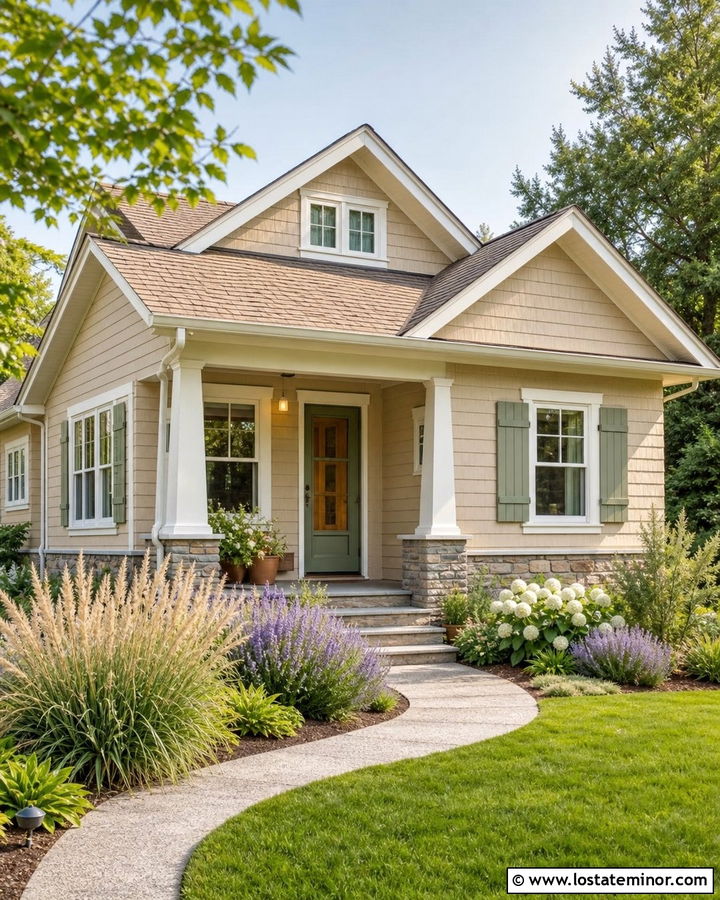
Sage green softens a sand exterior and creates a gentle connection to the surrounding yard. It works beautifully on a cottage bungalow with warm white trim, sage shutters, and a natural cedar front door. Choose a full-view sage storm door so the wood grain remains visible behind the glass. A light brown roof and cream-painted porch columns will preserve the relaxed color story. Add gray-green stone around the foundation or steps to repeat the cool undertones of the sage. Loose plantings of lavender, ornamental grasses, and white flowers reinforce the garden setting. Keep hardware in aged bronze for quiet warmth. This palette feels comfortable and collected, making it especially effective for smaller homes where harsh contrasts could overpower the architecture.
16. Sand House With Teal Storm Door
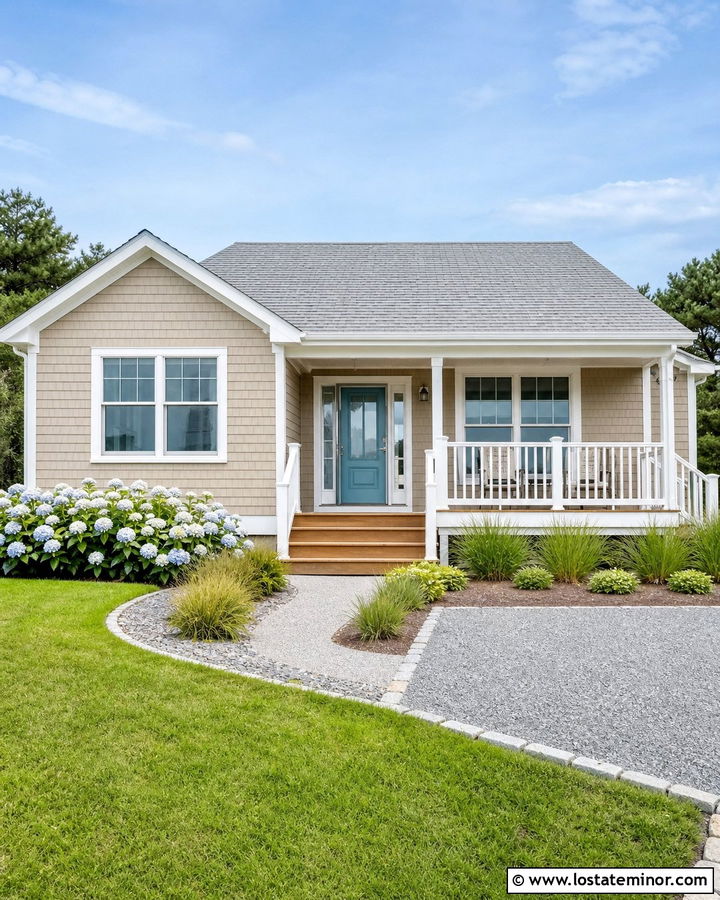
Teal can energize a sand house while still looking grounded when the shade has muted blue-green undertones. On a compact coastal ranch, pair a teal storm door with a matching teal front door, white trim, and a light gray roof. Keep the remaining facade simple so the entrance receives the attention. White porch railings and square columns will add clarity, while natural wood decking introduces warmth beneath the cooler accent. Use silver or brushed nickel hardware instead of gold to support the blue side of teal. Dune grasses, hydrangeas, and a gravel-edged walkway create an easy coastal landscape. The sand siding prevents the teal from feeling too bold, producing a bright yet livable exterior that looks appealing beyond beach communities.
17. Sand House With Copper Storm Door
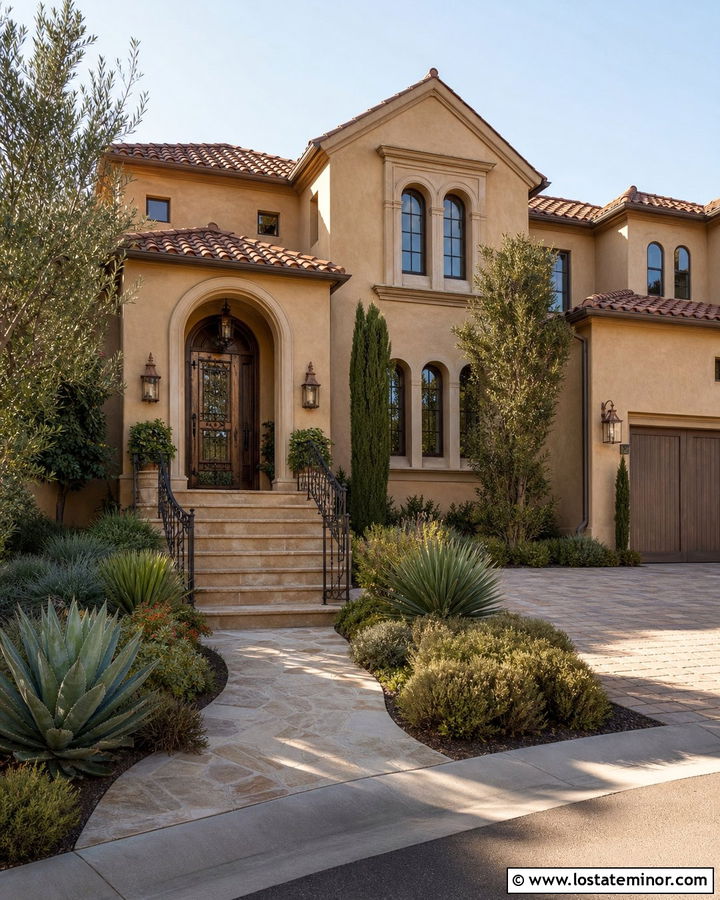
A copper-finished storm door can become an elegant focal point on a sand stucco house. Choose an aged or oil-rubbed copper finish rather than a highly reflective orange metal. Pair it with a dark walnut front door, creamy trim, and a terra-cotta roof on a Mediterranean-inspired exterior. Wrought-iron railings and warm stone steps provide darker accents that keep the entrance grounded. Repeat copper selectively on wall lanterns, gutters, or small roof details, but avoid covering the facade with too much metal. Drought-tolerant landscaping, olive-toned shrubs, and a curved stone walkway complement the sun-warmed materials. The copper frame adds character to the neutral walls while connecting naturally with the roof, wood door, and earthy hardscaping.
18. Sand House With Black Retractable Screen Storm Door
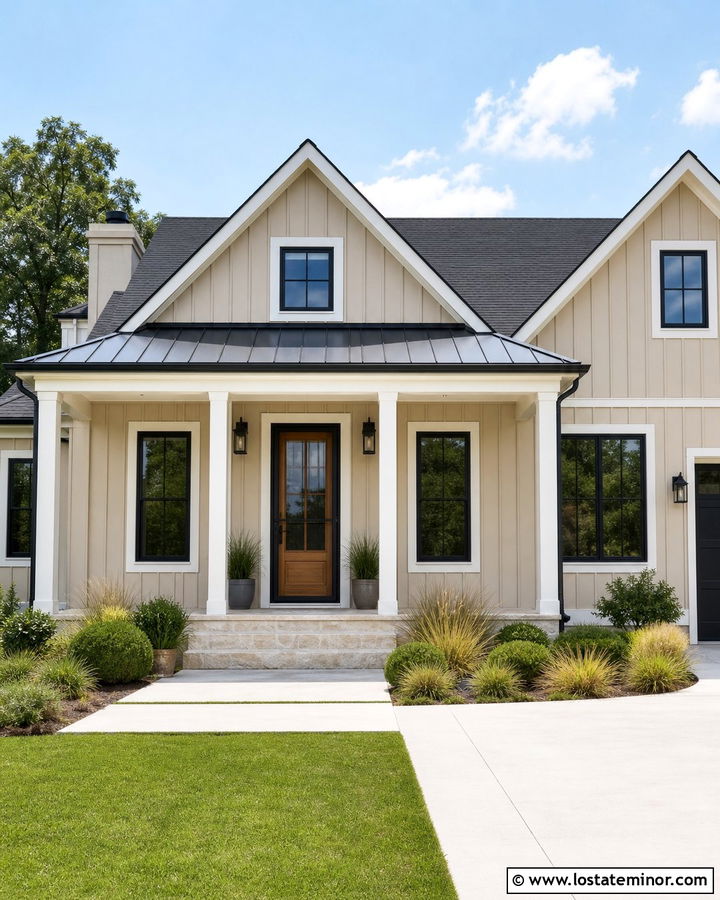
For a practical entrance with contemporary contrast, install a black retractable screen storm door on a sand modern farmhouse. Combine vertical Sand Dune board-and-batten siding with black windows, white trim, and a natural oak front door. The retractable screen keeps the full-glass appearance clean when ventilation is not needed. Repeat black on the standing-seam porch roof, lanterns, and simple metal railing. A charcoal shingle roof on the main house will distribute the dark color evenly across the elevation. Add pale limestone porch flooring and broad concrete steps to lighten the entrance. Neatly spaced grasses and rounded shrubs complete the modern landscape. Every feature contributes to a crisp exterior while the warm sand siding prevents the black details from feeling severe.
19. Sand House With Decorative Arch Storm Door
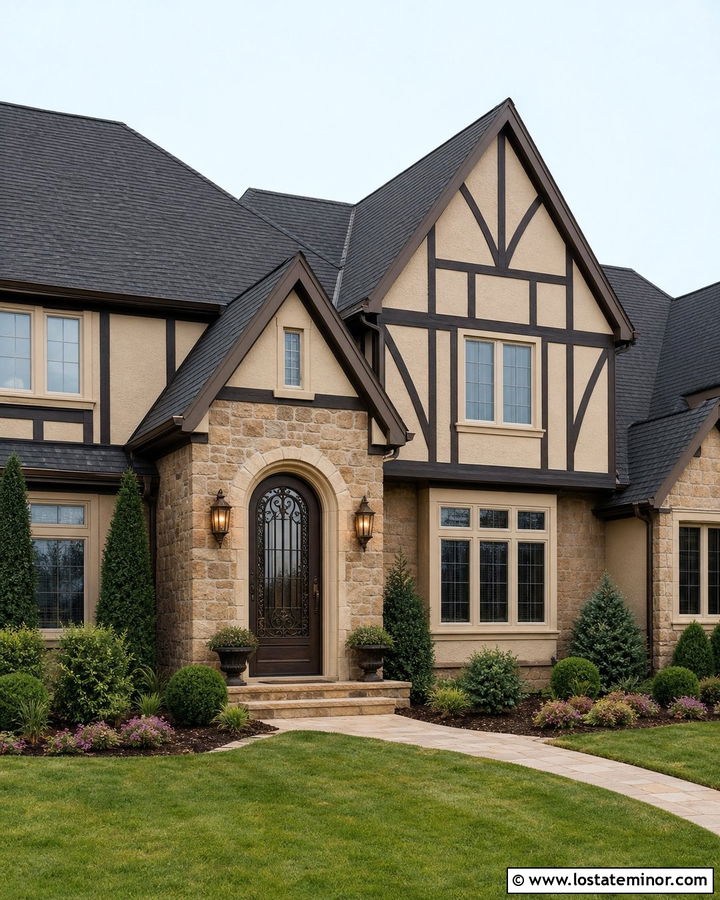
A decorative arch storm door complements a sand house with traditional architecture and curved entry details. Use it on a Tudor-inspired home with sand stucco, cream trim, dark brown half-timber accents, and a steep charcoal roof. Choose a bronze storm door with an arched grille that echoes the shape of the front doorway. A dark wood front door behind the glass will add depth and preserve the historic character. Continue bronze on the lanterns and handle, then use warm stone around the entry and chimney. Layered evergreen landscaping and a gently curved walkway soften the strong rooflines. The decorative grille should remain simple enough to support the architecture rather than covering the front door with an overly elaborate pattern.
20. Sand House With Craftsman Storm Door
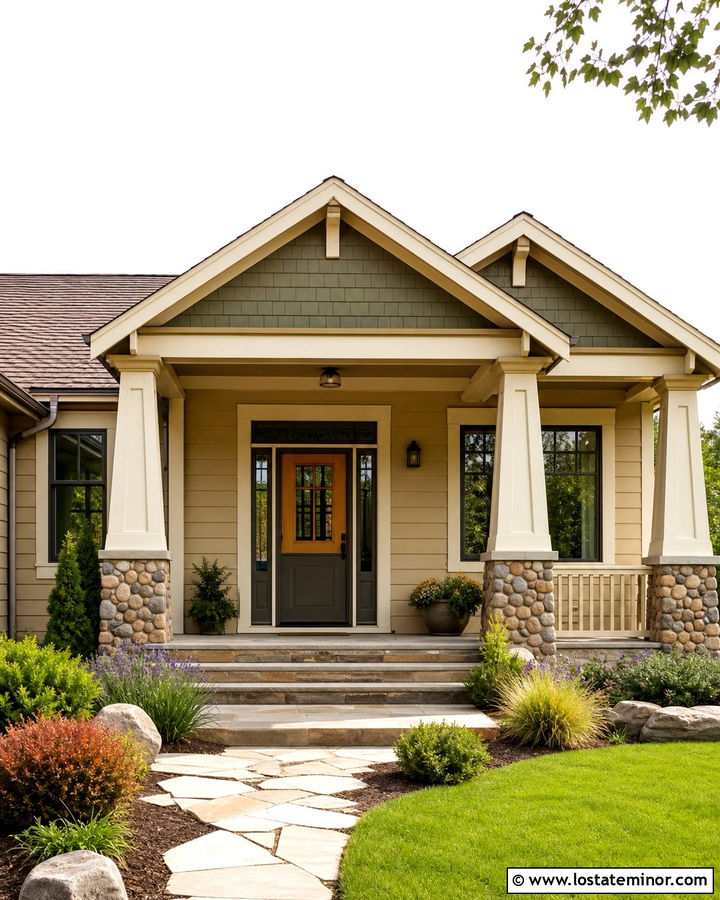
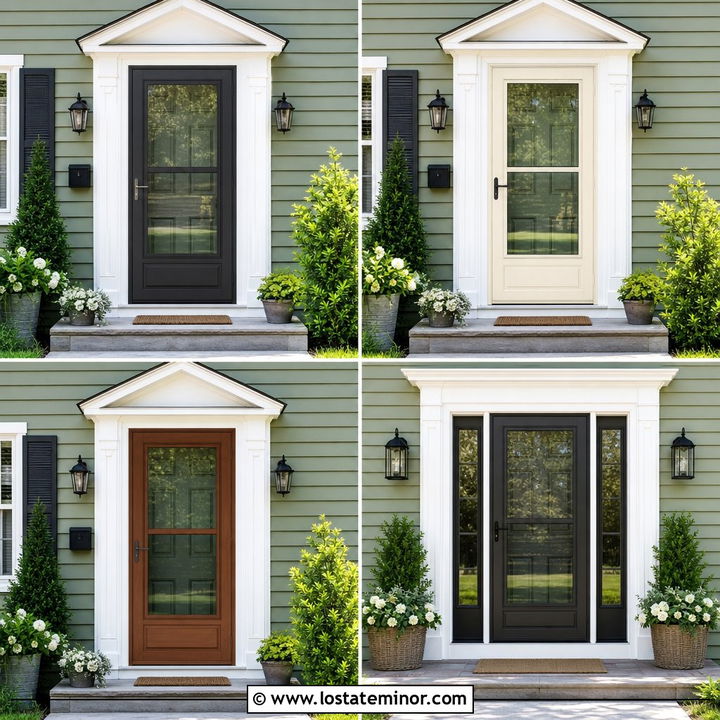
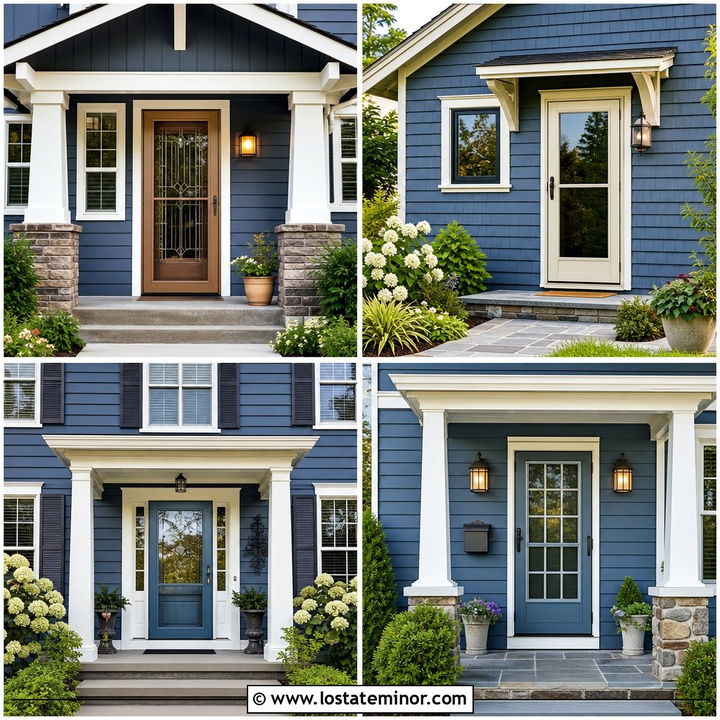
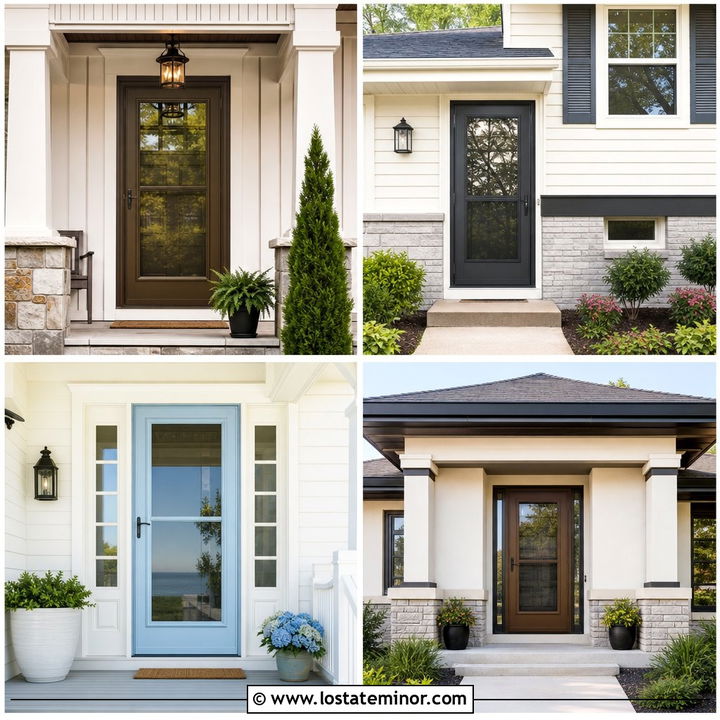
A Craftsman storm door should reflect the sturdy lines and handcrafted details of the house. Pair sand-colored lap siding with cream trim, olive green gable shakes, and a medium-oak front door. Choose a dark bronze storm door with a wide lower panel and a clear upper window. This design relates well to substantial porch columns and traditional paneled doors. Repeat bronze on the sconces, railing, and house numbers. River-rock column bases and broad stone steps will introduce useful texture near the entrance. A brown architectural roof keeps the palette warm and cohesive. Complete the yard with native shrubs, ornamental grasses, and a straight flagstone walkway. The entry feels practical, durable, and fully connected to the Craftsman exterior.
21. Sand House With Colonial Grille Storm Door
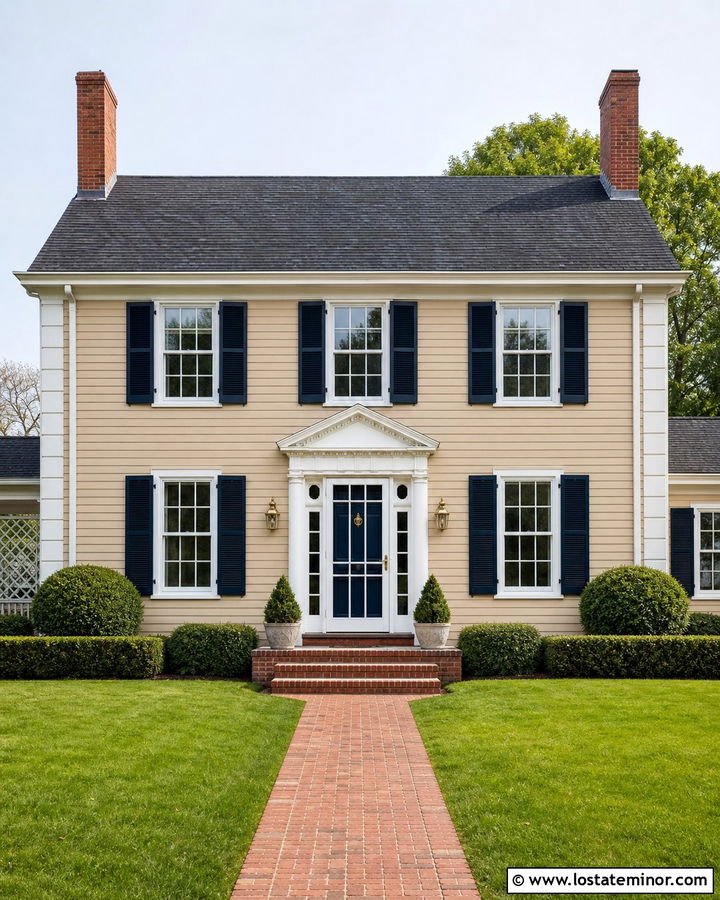
A colonial grille storm door reinforces symmetry and traditional window patterns on a sand-colored colonial. Select a white door frame with a six- or nine-pane grille, then place a deep navy front door behind it. Match the white frame to the window trim, cornice, porch columns, and corner boards. Navy shutters will carry the entry color across the otherwise neutral elevation. A charcoal roof provides a formal cap, while red brick steps add familiar warmth at ground level. Use brass hardware for a classic finishing touch. Keep the front yard equally balanced with matching planters, clipped shrubs, and a straight brick path. Because the grille echoes the divided-light windows, the storm door becomes part of the architectural rhythm rather than a separate accessory.
22. Sand House With Mid-View Storm Door
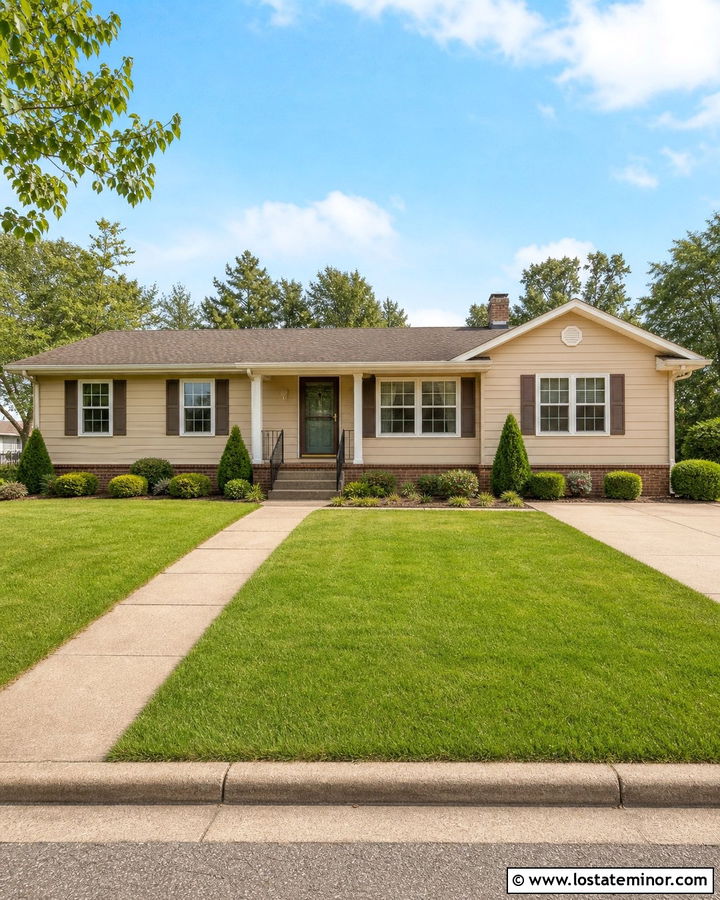
A mid-view storm door is a practical fit for a busy ranch entrance because its solid lower panel can give the doorway more visual weight. Choose a dark brown frame for a sand-sided ranch with cream trim, brown shutters, and a muted green front door. The upper glass section keeps the entrance bright, while the lower panel coordinates with the roof and brick foundation. Repeat dark brown on the porch railing and exterior lights. Use warm gray concrete steps to create a neutral bridge between the siding and foundation. Low shrubs, a broad lawn, and a direct walkway support the home’s simple shape. This complete exterior feels approachable and durable, with every color chosen to strengthen the ranch’s long horizontal proportions.
23. Sand House With Full-Glass Storm Door
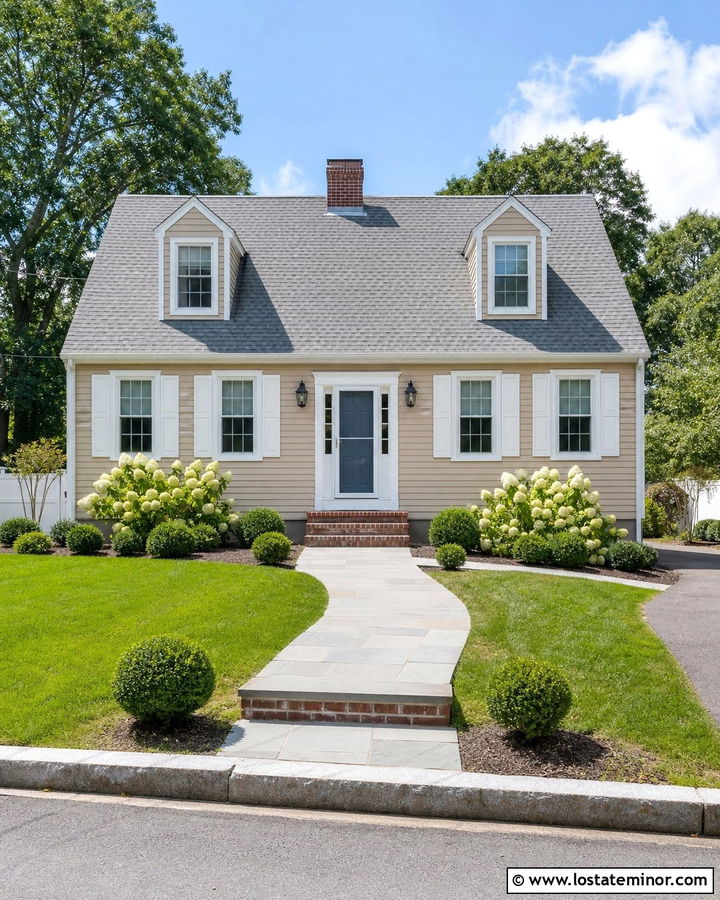
A nearly frameless full-glass storm door is ideal when the primary front door deserves to remain visible. On a sand Cape Cod house, place a slim white storm door over a blue-gray paneled front door. Coordinate it with white shutters, dormer trim, porch posts, and gutters. A medium-gray shingle roof will support the blue undertones without cooling the sand siding too much. Add weathered brick steps and a small bluestone landing for subtle material variation. Black lanterns introduce limited contrast and help define the entrance after dark. Hydrangeas, low boxwoods, and a curved walkway enhance the cottage character. The large glass area keeps the blue-gray door prominent while the narrow white frame quietly blends into the surrounding trim.
24. Sand House With Pet Door Storm Door
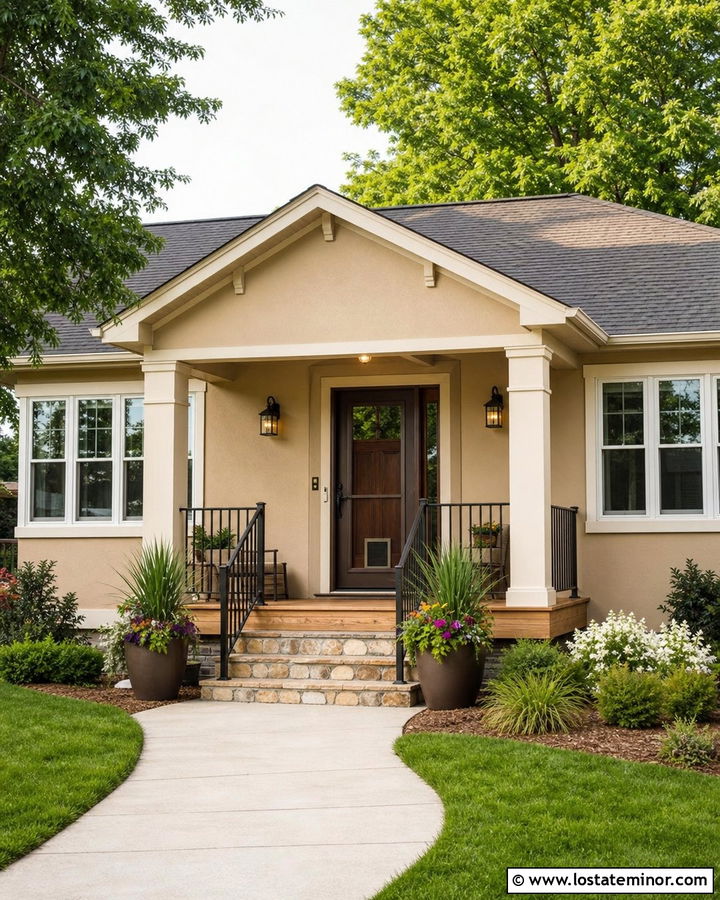
A storm door with an integrated pet opening can still look polished when its frame and lower panel coordinate with the full exterior. Use a bronze mid-view model on a sand-colored suburban bungalow with cream trim and a walnut front door. The solid lower section should match the storm door frame so the pet opening appears discreet. Repeat bronze on porch lights, railings, and mailbox details. Natural stone steps and cedar porch flooring will support the warm material palette. Select a brown-gray roof that relates to both the metal frame and sand siding. Keep the entrance tidy with symmetrical planters and a wide, unobstructed walkway. This design combines everyday function with a cohesive curb-appeal scheme rather than treating the pet feature as an afterthought.
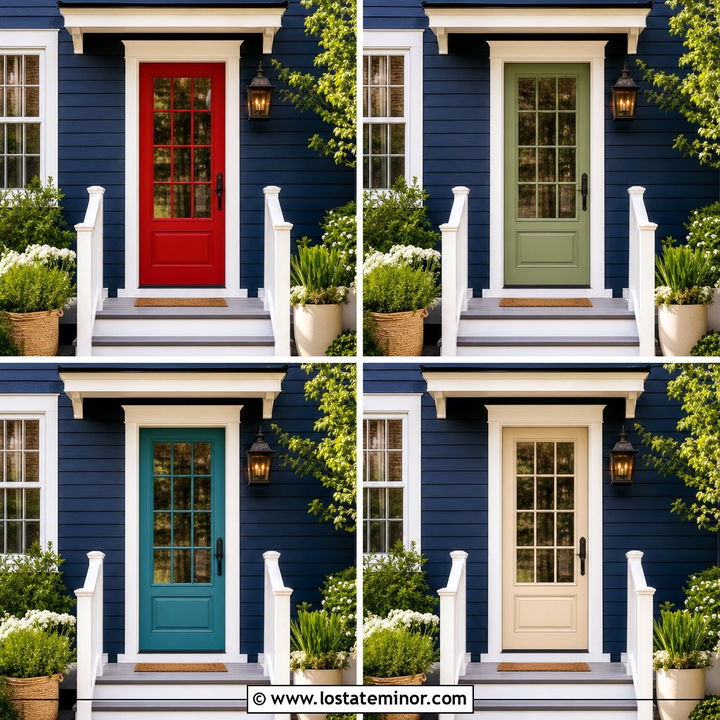
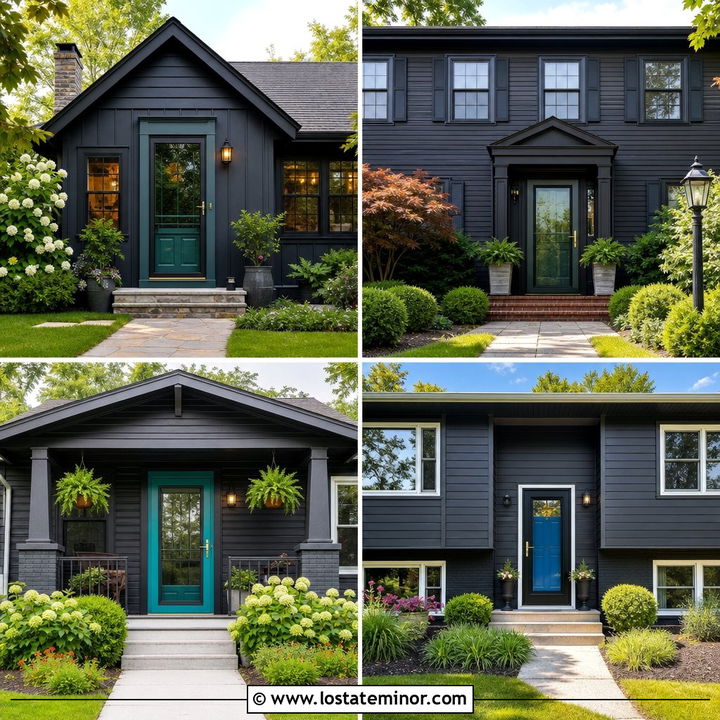
25. Sand House With Double Storm Doors
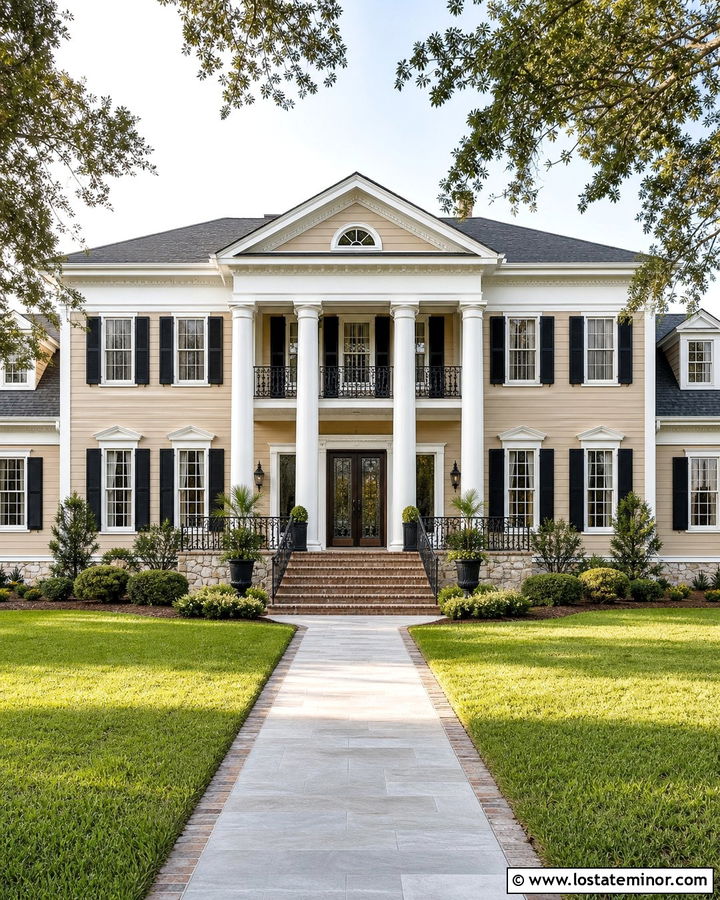
Double storm doors create an impressive entrance on a wide sand house with paired front doors. Choose matching black full-view storm doors over stained oak entry doors on a Southern colonial or large transitional home. Black shutters, iron porch railings, and dark lanterns will distribute the strong accent across the facade. Keep columns, window trim, and the wide porch ceiling bright white for contrast. A charcoal roof and pale stone foundation can connect the dark details to the warm siding. Center the entrance on broad brick steps with large planters placed on each side. A straight walkway and balanced landscaping reinforce the symmetry. The clear storm door panels protect the wood doors while allowing their warm color and decorative glass to remain visible.
26. Sand House With Storm Door And Sidelights
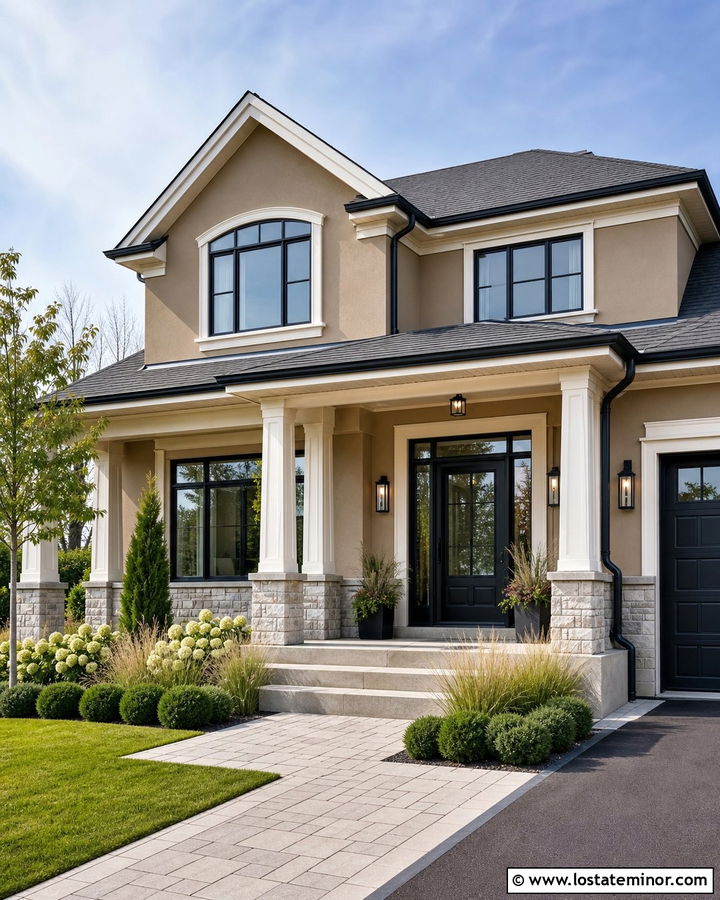
Sidelights can make a storm door entrance feel larger and more architectural. On a sand transitional house, combine a black full-view storm door with a matching black front door and clear sidelights framed in warm white trim. Use black window frames, garage hardware, and porch lights to connect the entry to the rest of the facade. Pale gray stone wainscoting adds texture while softening the transition between black and sand. Choose a medium-charcoal roof for continuity. Broad concrete steps and a deep covered porch will give the expanded doorway enough space to breathe. Finish with structured shrubs, tall grasses, and a wide paver walkway. The coordinated glazing creates a bright entrance while the dark frames give the neutral house a clean, contemporary outline.
27. Sand House With Black Hardware Storm Door
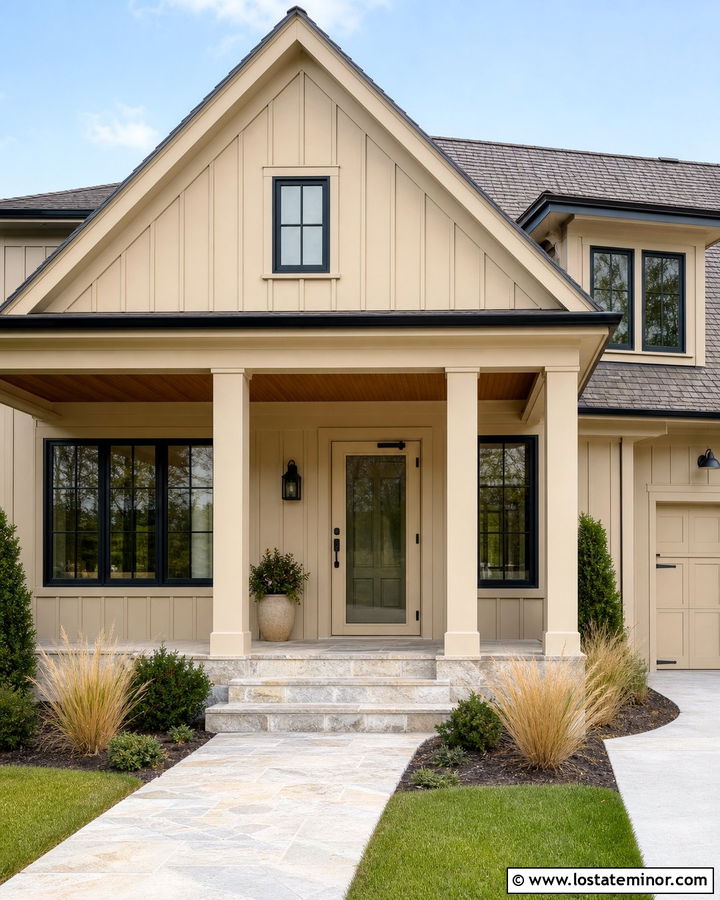
Black hardware can sharpen a light storm door and connect it to darker exterior accents. Use a sandstone-colored full-view storm door on a sand farmhouse, then add a black handle, hinges, closer, and lockset. Place a muted olive front door behind the glass for natural color. Black porch lanterns, window sashes, and metal railings will repeat the hardware finish without requiring a fully black door frame. Cream trim and a warm gray roof keep the palette relaxed. Add a cedar porch ceiling and pale fieldstone steps to bring more texture to the neutral exterior. Simple grasses and evergreen shrubs complete the curb appeal. The small black details provide definition, while the matching sand storm door maintains a quiet, integrated appearance.
28. Sand House With Brass Hardware Storm Door
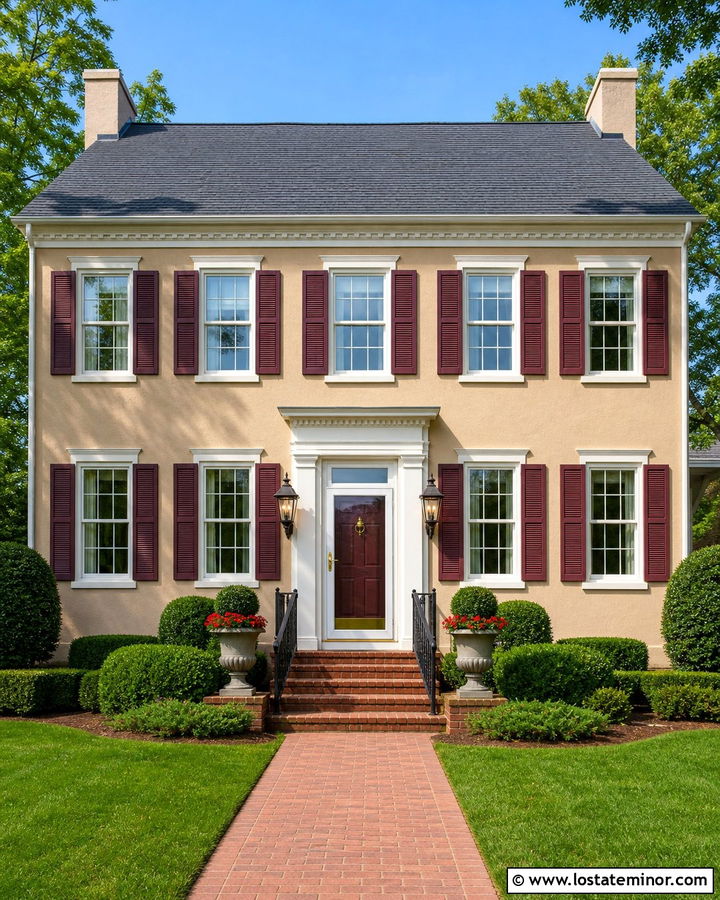
Brass hardware brings traditional warmth to a sand house, particularly when the front door has a deep, formal color. Choose a white full-view storm door over a burgundy entry door on a Georgian-inspired exterior. Add polished or softly aged brass handles, a door knocker, kick plate, and coordinating lanterns. Keep the siding Sand Dune, the trim creamy white, and the shutters burgundy to establish a clear three-color palette. A dark gray roof prevents the composition from becoming too warm. Red brick steps and a centered walkway reinforce the classic character. Finish with clipped hedges and symmetrical urn planters. The brass details stand out against the white frame while connecting beautifully to the rich door color and traditional architecture.
29. Sand House With Storm Door And Stone Porch
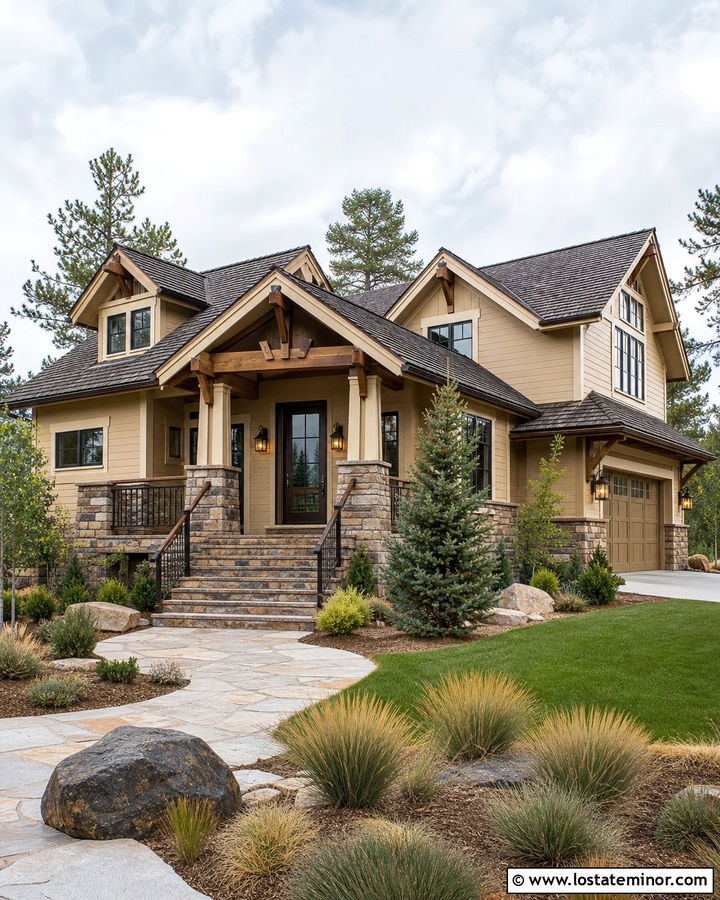
Stone can anchor a storm door entrance and give a sand exterior greater depth. On a mountain-inspired Craftsman, pair Sand Dune siding with a dark bronze full-view storm door, a cedar front door, and cream trim. Use stacked stone on the porch columns, foundation, and broad entry steps. Choose stone containing beige, gray, and muted brown so it connects the siding, metal frame, and roof. Dark bronze lanterns and railings will repeat the storm door finish. A weathered charcoal-brown roof completes the earthy palette. Surround the house with native evergreens, ornamental grasses, and a flagstone path. The stone porch creates a strong base, while the glass storm door allows the cedar entry to provide a welcoming natural focal point.
30. Sand House With Powder Blue Storm Door
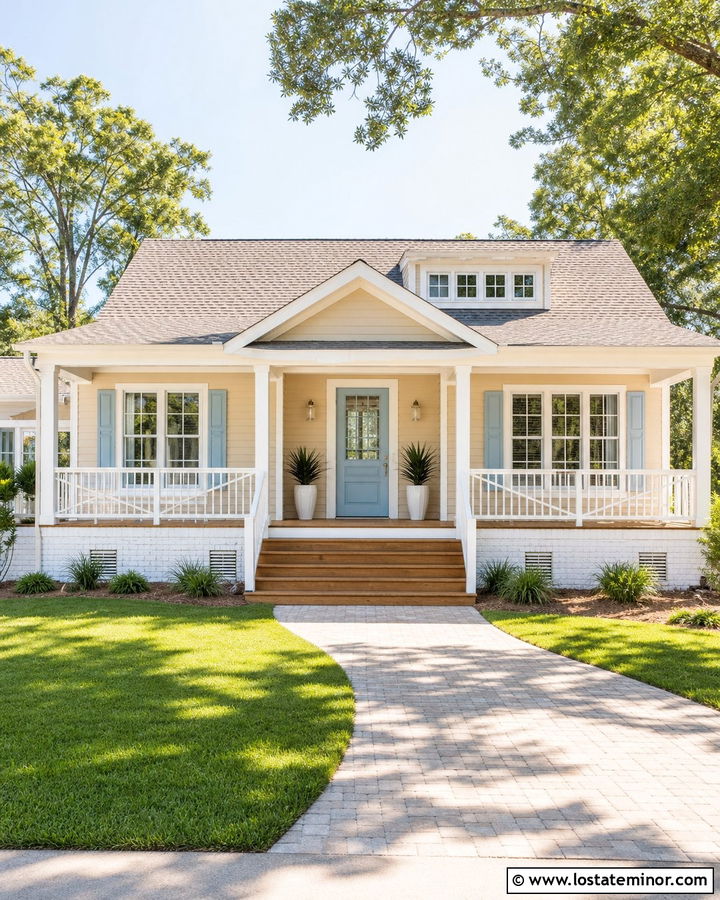
Powder blue gives a sand house a light, friendly accent that works particularly well on a cottage or coastal bungalow. Paint both the storm door frame and primary front door a soft powder blue so the layered entrance remains visually clear. Add crisp white trim, porch railings, and simple window surrounds. A pale gray roof and whitewashed brick foundation will keep the exterior bright. Natural cedar decking introduces enough warmth to prevent the scheme from feeling overly cool. Use brushed nickel hardware, white planters, and soft blue-green foliage around the porch. A shell-toned paver walkway can subtly echo the sand siding. The complete palette feels fresh and relaxed, with gentle color that enhances the entrance without overpowering the small house.
Conclusion:
The best 30 Sand House Design With Storm Door Ideas treat the entry as part of a complete exterior rather than an isolated feature. Sand siding can support understated sandstone and almond frames, classic white, earthy bronze, natural green, coastal blue, or dramatic black. The strongest combination will repeat the storm door color or hardware somewhere else, such as the shutters, roof, lights, railings, or masonry. Also consider how much of the primary door should remain visible through the glass. Full-view designs showcase attractive doors, while mid-view models provide a sturdier appearance. By coordinating color, architecture, materials, and landscaping, you can create a sand house entrance that looks intentional, balanced, and welcoming.

Related posts: