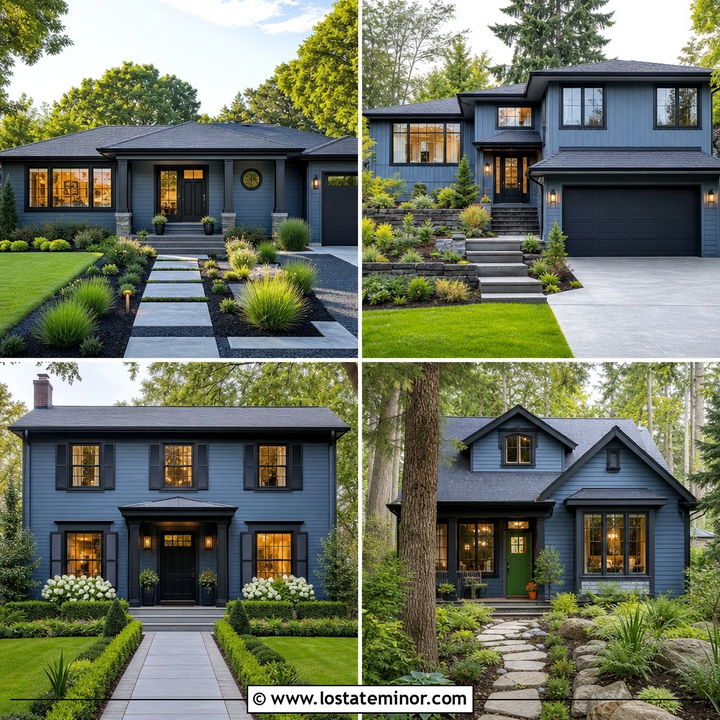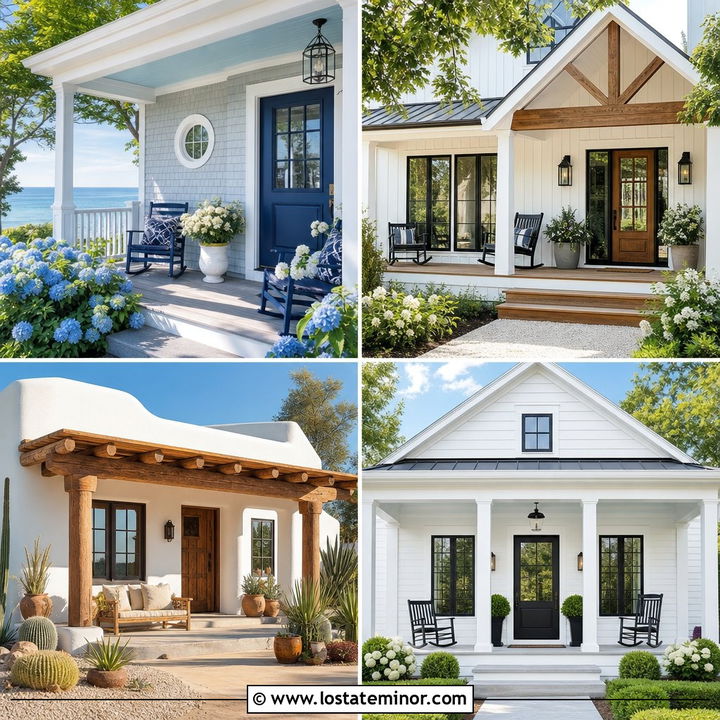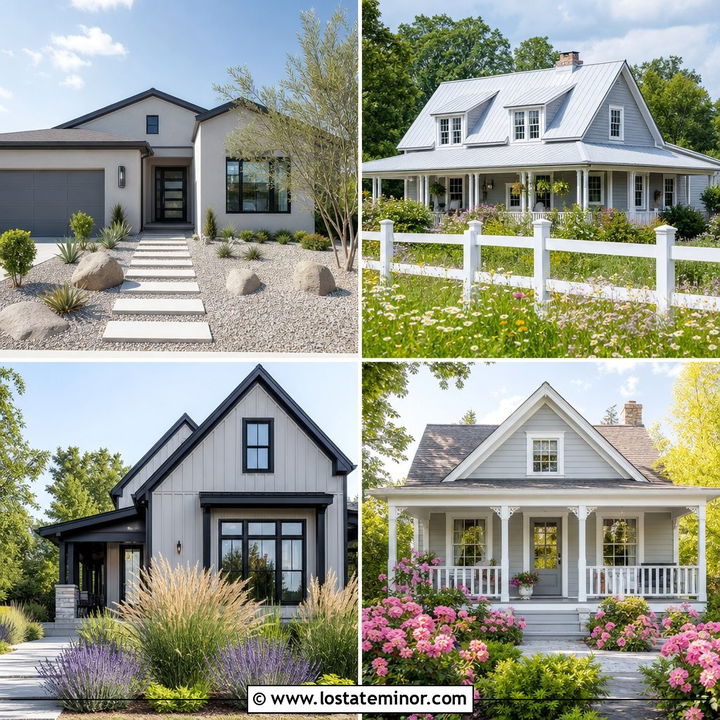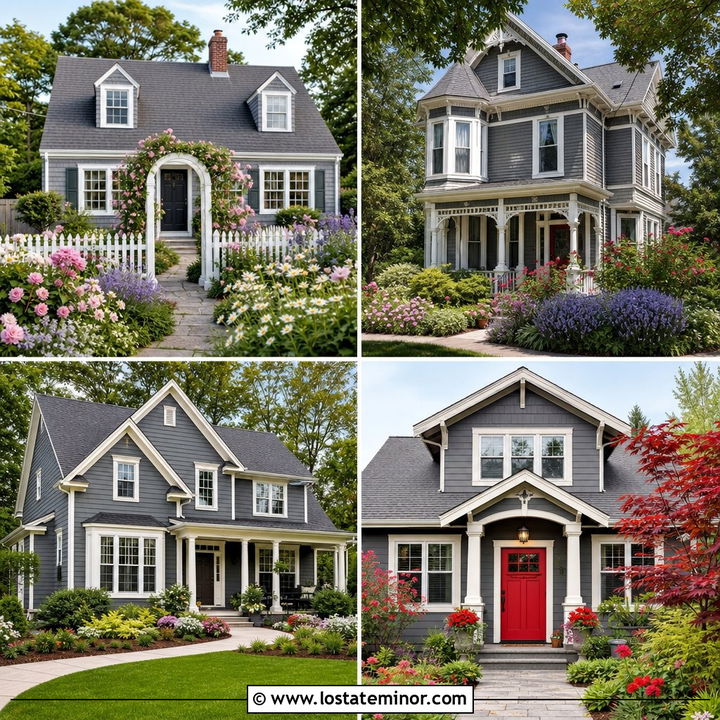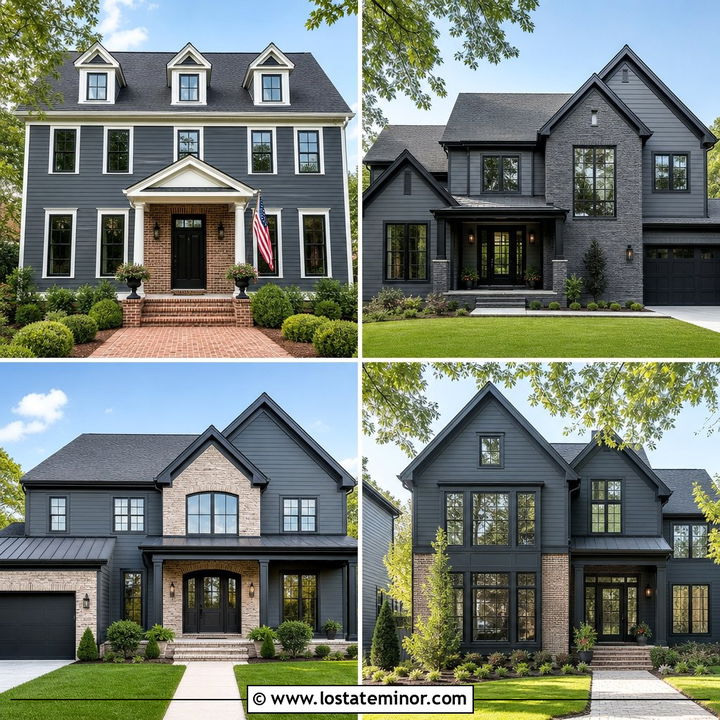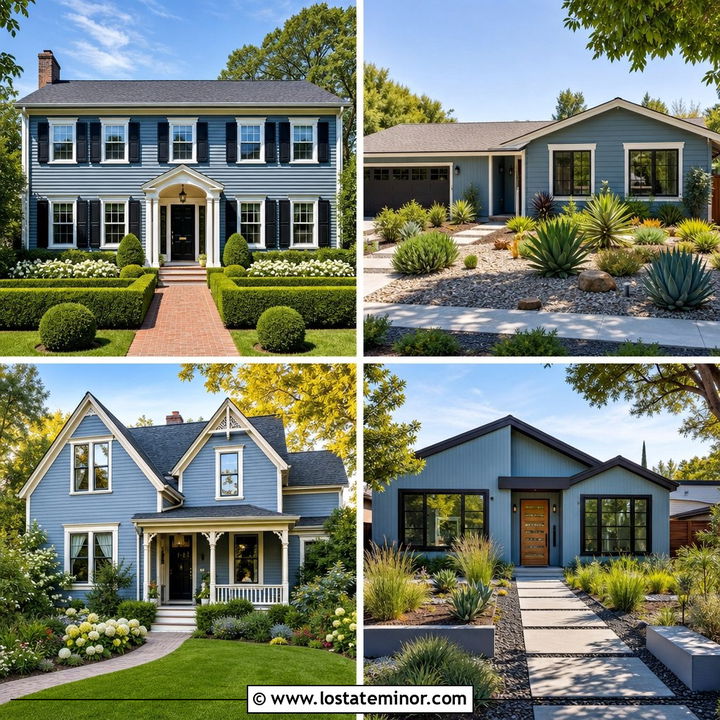
Charcoal grey gives a home depth, polish, and a strong backdrop for landscaping. The best 30 Charcoal Grey House Design With Front Yard Ideas go beyond paint alone. They connect siding, trim, roofing, doors, hardscaping, and plants into one balanced curb-appeal plan. Crisp white can sharpen the facade, while cedar, brick, and natural stone bring needed warmth. In the yard, fresh green foliage and layered flowers prevent the dark exterior from feeling heavy. Current exterior design coverage also favors deeper, nature-connected colors surrounded by abundant planting and organic materials. () Whether you have a compact bungalow or a large modern home, these complete schemes offer practical inspiration. Explore the following 30 Charcoal Grey House Design With Front Yard Ideas.
1. Charcoal Grey House With White Trim And Boxwood
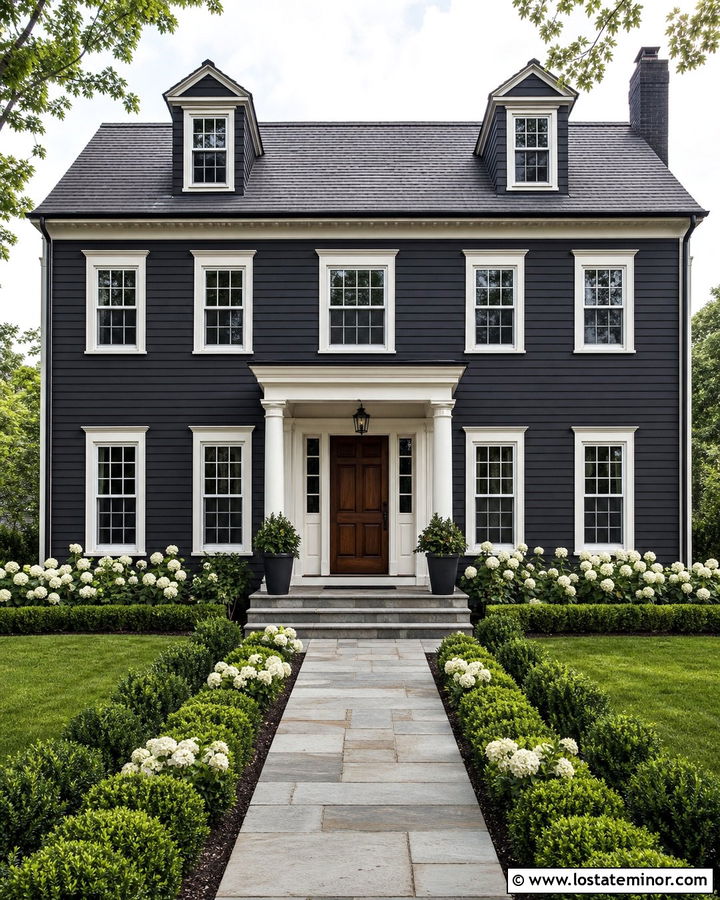
A charcoal grey exterior looks especially crisp when every architectural edge is outlined in warm white. Use the white on window frames, porch columns, fascia, and railings rather than scattering it across random surfaces. A medium-grey roof keeps the contrast softer than solid black. In the front yard, low boxwood hedges can repeat the home’s clean lines without hiding the facade. Add a straight bluestone walkway, symmetrical planters, and a medium-tone wood front door for warmth. White hydrangeas planted behind the boxwood connect visually with the trim. This complete scheme works well on Colonial, Georgian, and traditional two-story homes. Keep the lawn simple and open so the sharp charcoal-and-white palette remains the main curb-appeal feature.
2. Charcoal Grey House With Cedar Door And Native Grasses
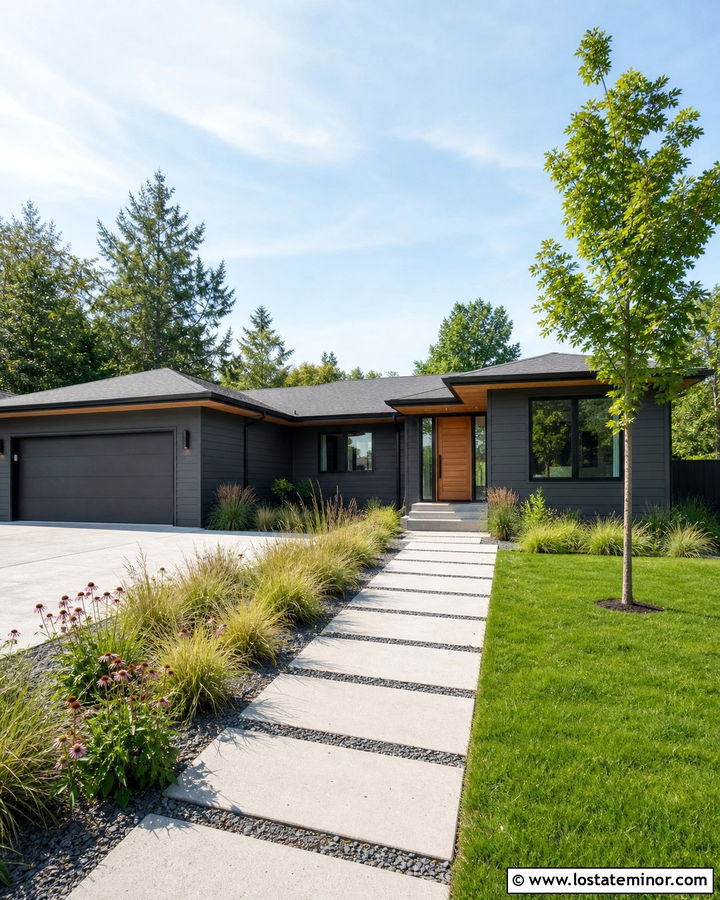
Warm cedar can transform a dark charcoal grey house from severe to welcoming. Choose a simple cedar front door and repeat that wood tone on porch posts, soffits, or a small horizontal accent panel. Black window frames create a quiet transition between the wood and deep grey siding. For the front yard, use loose groups of native ornamental grasses, coneflowers, and low flowering perennials. Their movement softens the home’s strong color and straight architectural lines. A wide concrete walkway with gravel joints suits this relaxed, contemporary scheme. Avoid filling every open space with plants. Instead, leave breathing room between clusters. The result feels natural but still organized, especially on modern ranch homes, contemporary cottages, and updated split-level houses.
3. Charcoal Grey Modern Farmhouse With Gravel Garden
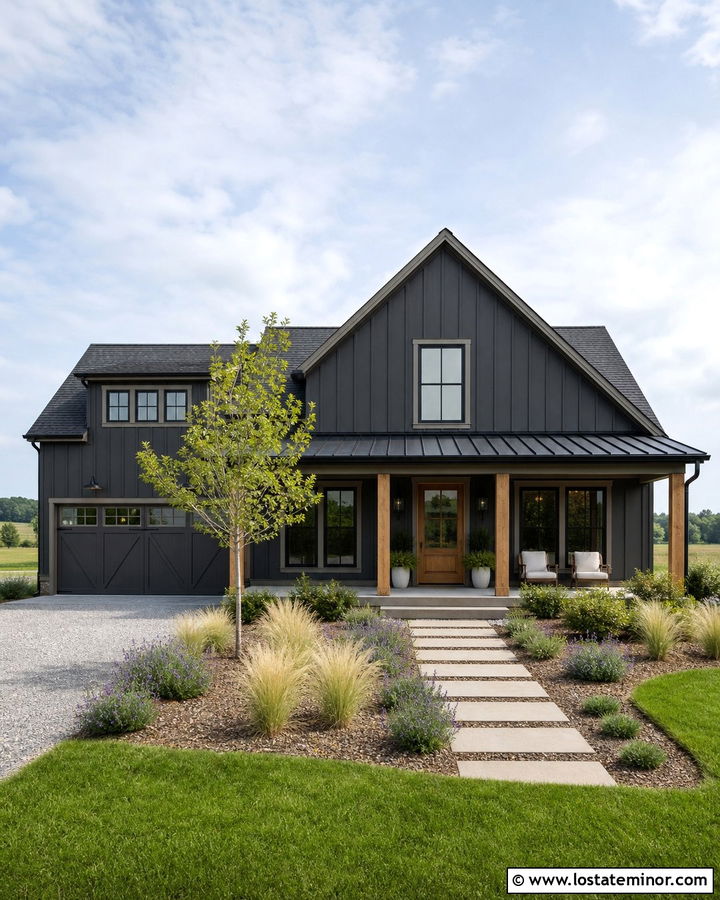
For a modern farmhouse, charcoal grey board-and-batten siding offers a bolder alternative to the familiar white exterior. Keep the trim slightly lighter than the siding instead of introducing harsh contrast. A natural oak door, galvanized metal lights, and a black standing-seam porch roof complete the palette. In the front yard, replace narrow foundation beds with generous gravel areas planted with feather reed grass, catmint, and compact evergreens. Large rectangular stepping stones can form a relaxed route toward the porch. Add one small ornamental tree away from the center of the facade to balance the roofline. The gravel improves visual texture and makes the greenery stand out against the dark house. This scheme feels rural, clean, and comfortably modern.
4. Charcoal Grey Ranch House With Curved Walkway
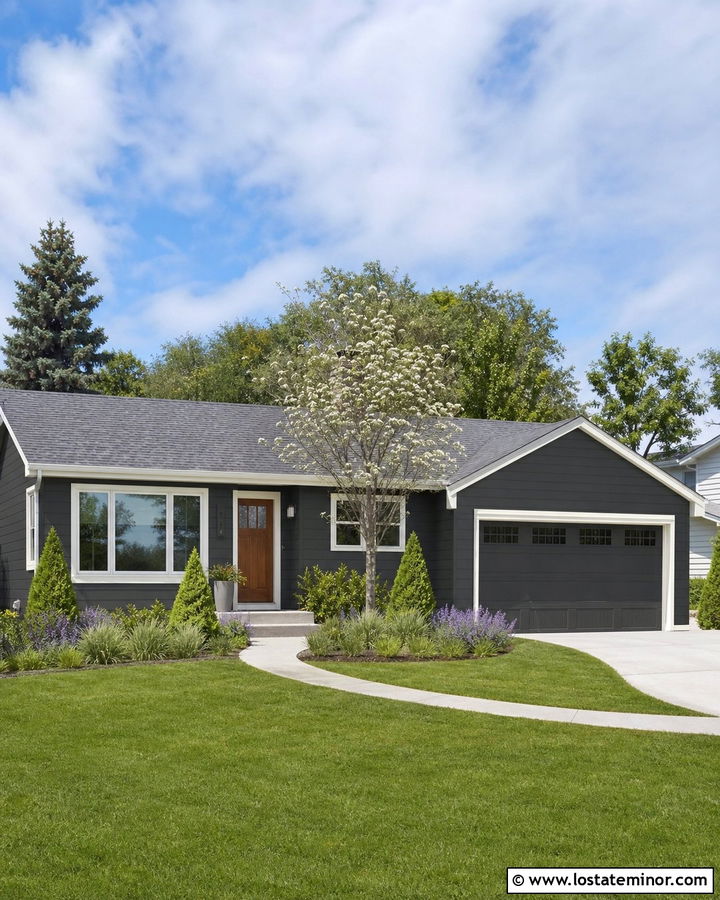
A long ranch facade can appear flat when the siding, driveway, and planting beds all follow straight horizontal lines. Charcoal grey lap siding creates a strong foundation, while creamy white trim and a walnut front door add definition. Introduce movement with a gently curved walkway that begins near the driveway and widens as it approaches the entry. Follow the curve with layered beds of dwarf evergreens, salvia, ornamental grasses, and seasonal flowers. A small flowering tree placed near one end of the house helps balance an attached garage. Paint the garage door charcoal grey so it blends into the body rather than becoming the focal point. The curving landscape makes the single-story exterior feel softer, deeper, and more inviting.
5. Charcoal Grey Craftsman With Stone Porch And Hydrangeas
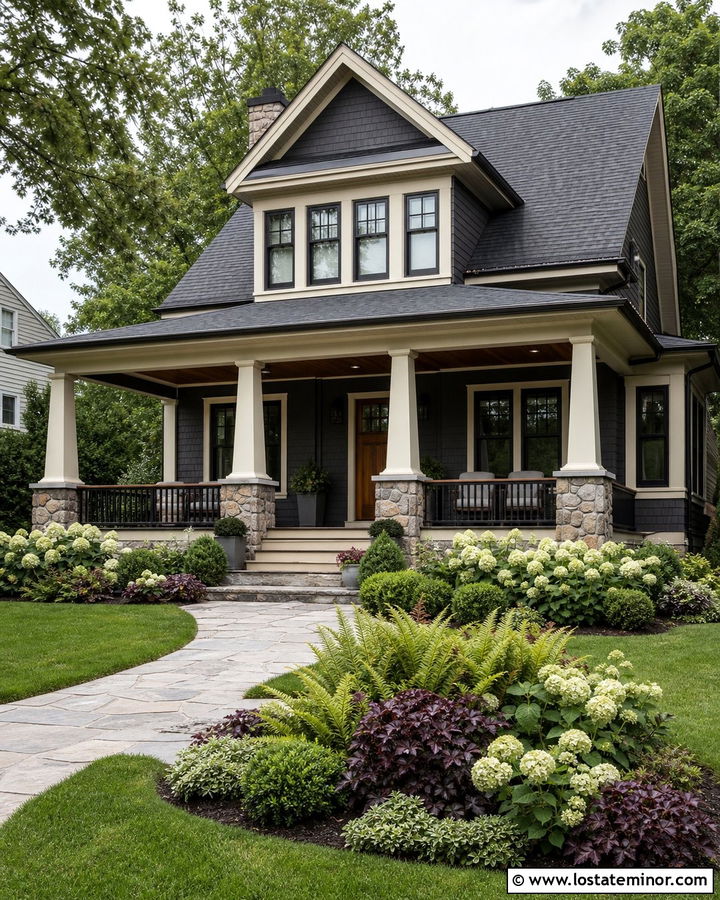
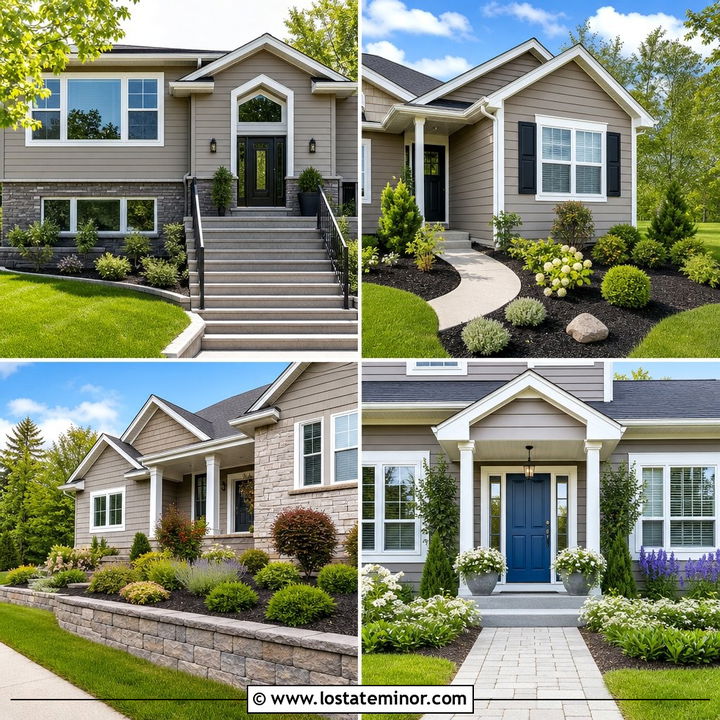
Craftsman architecture benefits from materials that highlight its sturdy columns, deep porch, and layered roofline. Pair charcoal grey shingle or lap siding with creamy trim and warm fieldstone around the porch foundation. Use a medium-stained wood door to connect the grey exterior with the brown and taupe tones in the masonry. In the front yard, arrange hydrangeas behind a lower border of ferns, heuchera, or compact boxwood. This creates visible layers without covering the porch. A broad stone walkway should echo the porch masonry and lead directly to the entry. Keep taller plants near the outer corners rather than beneath windows. The mix of charcoal, white, wood, and stone gives the Craftsman home depth while the full planting beds make it feel established.
6. Charcoal Grey Colonial With Red Door And Clipped Hedges
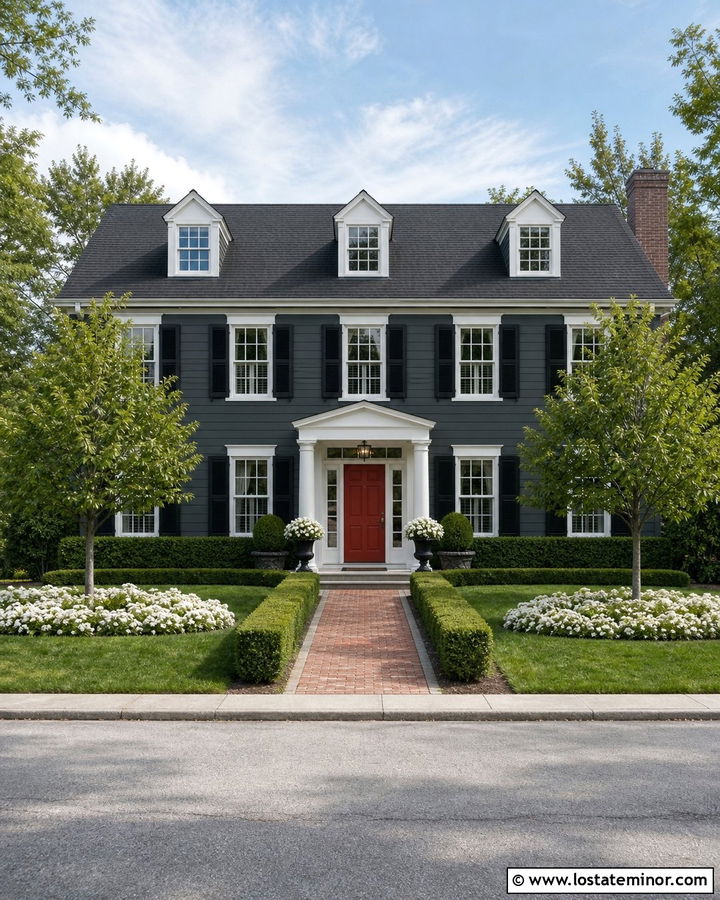
A red front door gives a charcoal grey Colonial a confident focal point without overwhelming its formal architecture. Choose a deep brick red rather than a highly saturated primary shade. Pair it with white window trim, black shutters, and a charcoal roof for a traditional palette. The front yard should reinforce the home’s symmetry. Place matching clipped hedges on either side of a straight brick walkway and use identical urn planters near the steps. Low white flowers can brighten the beds and connect with the trim. If space allows, add two small ornamental trees at equal distances from the entrance. Keep the garage door charcoal so it recedes. This organized exterior scheme feels classic, polished, and easy to maintain throughout the seasons.
7. Charcoal Grey Midcentury House With Concrete Pavers
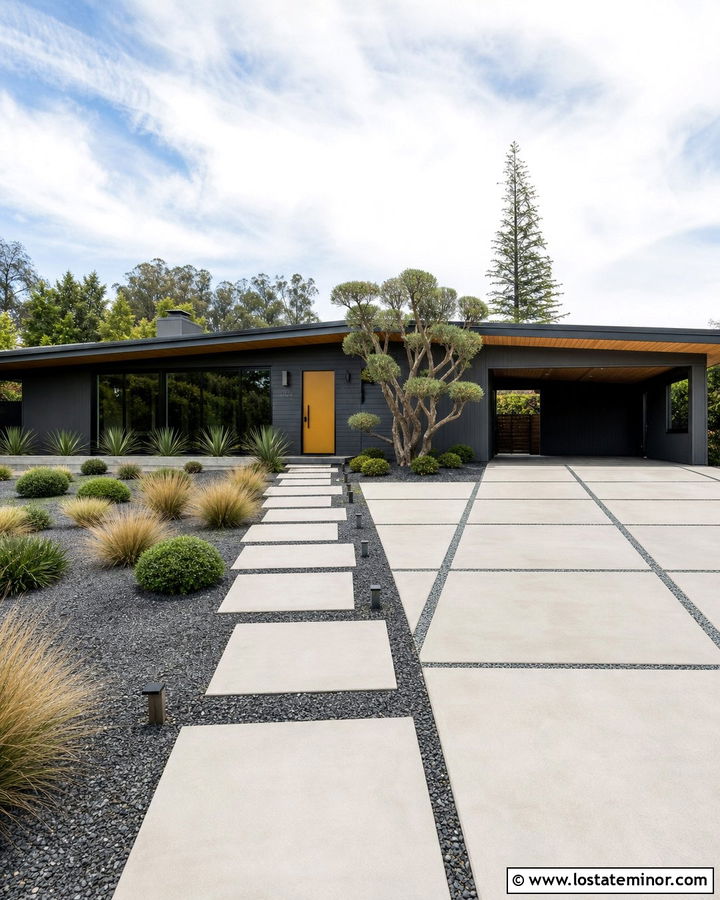
Midcentury homes look striking in charcoal grey when their horizontal architecture remains easy to see. Use the color on smooth siding or vertical panels, then add black window frames and warm cedar beneath the roof overhang. A mustard, orange, or stained-wood door can become the entry focal point. Continue the clean geometry into the front yard with oversized concrete pavers separated by gravel or low ground cover. Plant ornamental grasses, rounded shrubs, and one sculptural tree instead of using a crowded flower border. Basalt gravel and dark metal edging coordinate naturally with the exterior. Keep plants below window height to preserve the home’s long sightlines. This combination updates the property while respecting the simplicity and strong indoor-outdoor connection of midcentury design.
8. Charcoal Grey Bungalow With Cottage Garden
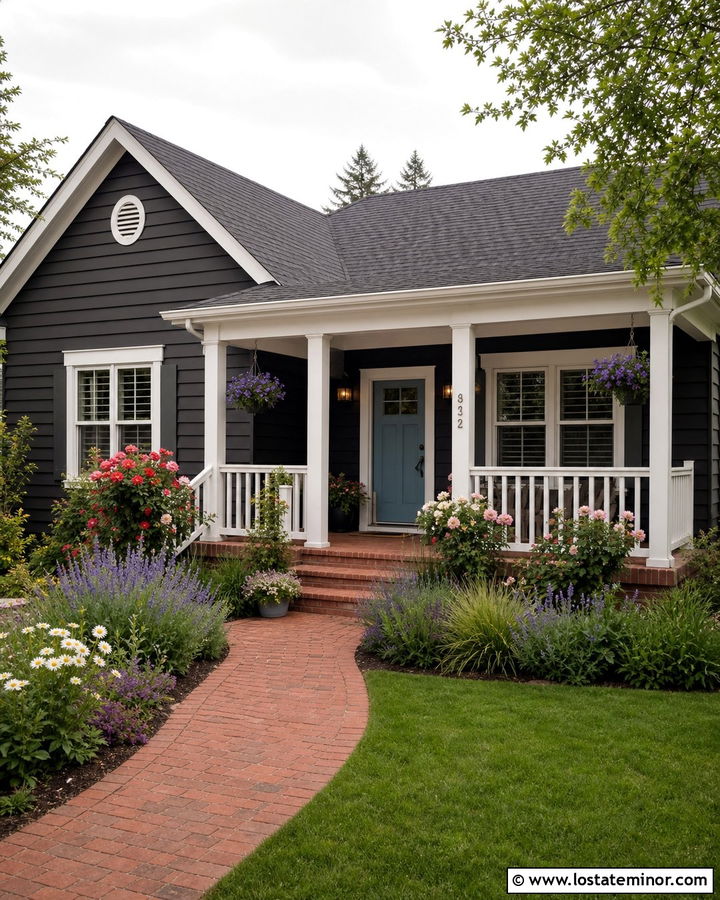
Can a dark exterior work with a colorful cottage garden? A charcoal grey bungalow proves that it can. Use soft white on the porch railing, tapered columns, and window trim to frame the facade. A muted sage or dusty blue door adds gentle color without competing with the flowers. Fill the front beds with loose layers of roses, salvia, daisies, lavender, and ornamental grasses. Repeat each plant in several places so the yard looks abundant rather than chaotic. A curved brick or flagstone path reinforces the informal mood. Keep flowers lower near the porch steps and place taller plants toward the property edges. The charcoal siding makes pink, white, purple, and green planting colors appear richer while the light trim maintains a cheerful bungalow character.
9. Charcoal Grey Split-Level With Terraced Beds
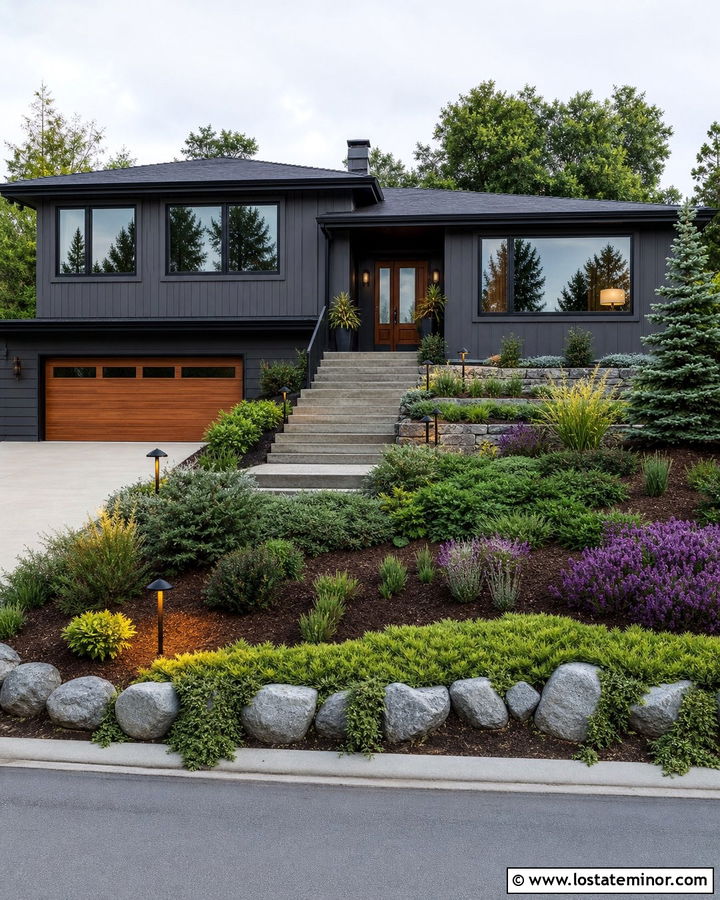
A split-level home often needs landscaping that visually connects its different elevations. Charcoal grey siding can unify the upper and lower sections, especially when paired with black trim and a warm wood garage door. In a sloped front yard, build two or three shallow terraced beds using grey stone or concrete retaining blocks. Plant each level with compact evergreens, spreading ground cover, ornamental grasses, and long-blooming perennials. Wide steps should follow the terraces toward the front entrance rather than feeling separate from them. Use low-voltage lights along the retaining walls to define the route. Painting secondary doors and utility features charcoal helps them disappear. The coordinated exterior and structured planting turn an awkward grade into an intentional part of the home’s architecture.

10. Charcoal Grey Cape Cod With White Fence And Roses
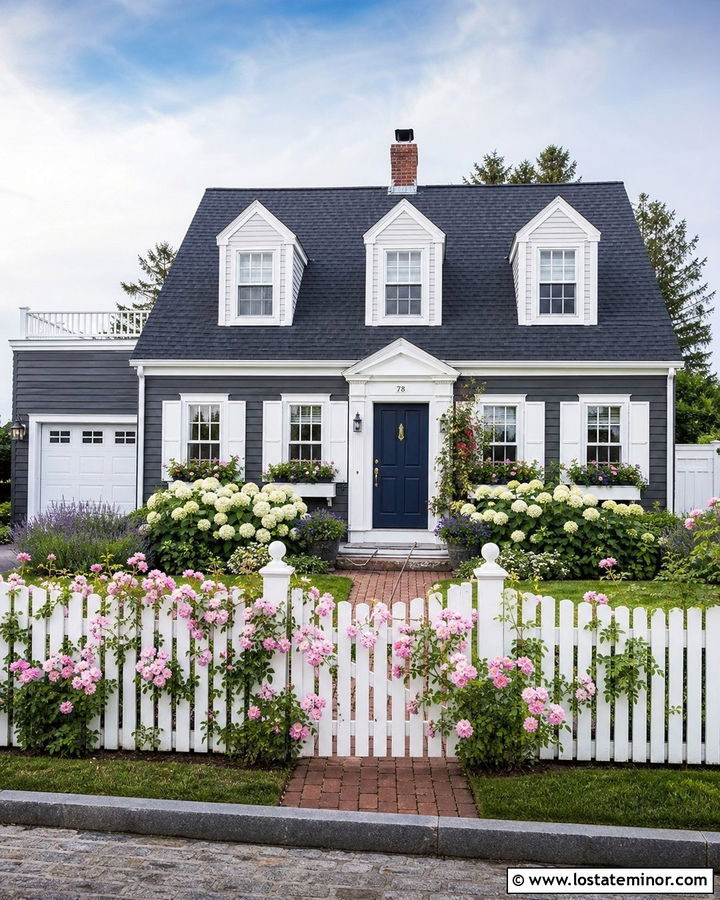
Charcoal grey shingles give a Cape Cod home a coastal character that feels more grounded than pale blue or white. Keep the dormers, corner boards, window casings, and porch details crisp white. A navy or natural wood front door adds another classic layer. Frame the front yard with a low white picket fence, leaving a clear opening aligned with the entrance. Climbing roses near the gate and rounded hydrangeas beneath the windows soften the dark facade. Use a narrow brick pathway and small patches of lawn to maintain the cottage scale. Avoid oversized foundation shrubs that could conceal the home’s charming proportions. The white fence pulls the trim color into the landscape, creating a connected exterior that feels welcoming, traditional, and suitable for coastal or suburban neighborhoods.
11. Charcoal Grey Contemporary House With Black Trim
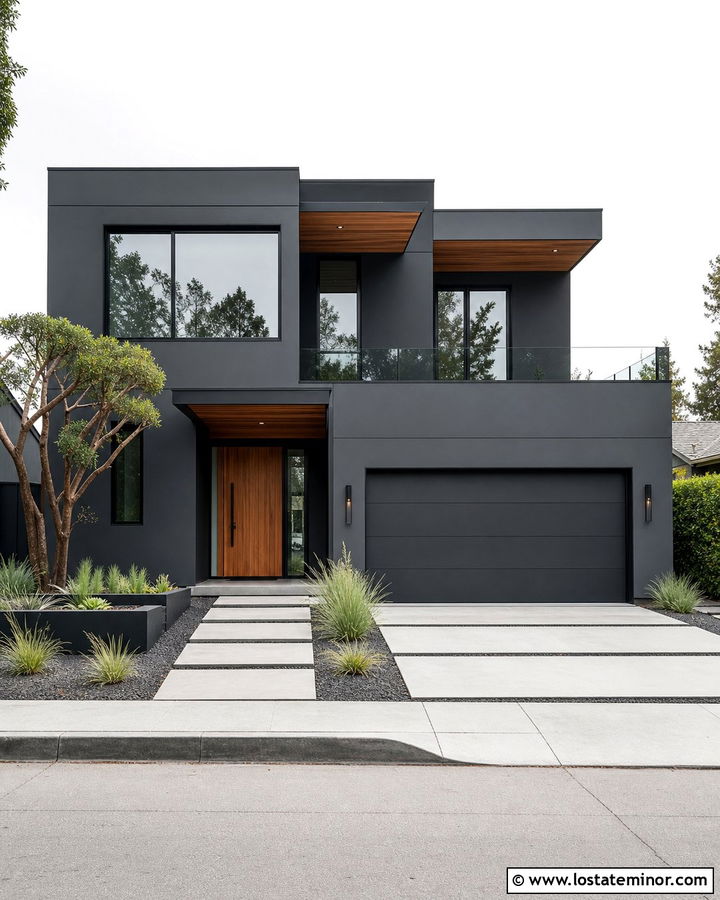
A contemporary charcoal grey house can handle a restrained front yard with bold shapes and limited plant varieties. Apply charcoal to smooth stucco, fiber-cement panels, or vertical siding. Use matte black for windows, gutters, railings, and the garage door to create a nearly monochromatic shell. Warm the composition with a pivot-style wood door or cedar soffit. In the yard, combine rectangular concrete slabs with dark gravel and low masses of grasses, sedges, or evergreen ground cover. One sculptural tree can provide height without cluttering the architecture. Choose long, linear planters that follow the home’s geometry. This approach works best when materials are repeated deliberately. The wood, concrete, dark metal, and charcoal finish should appear in both the facade and surrounding landscape.
12. Charcoal Grey House With Brick Accents And Maple Tree
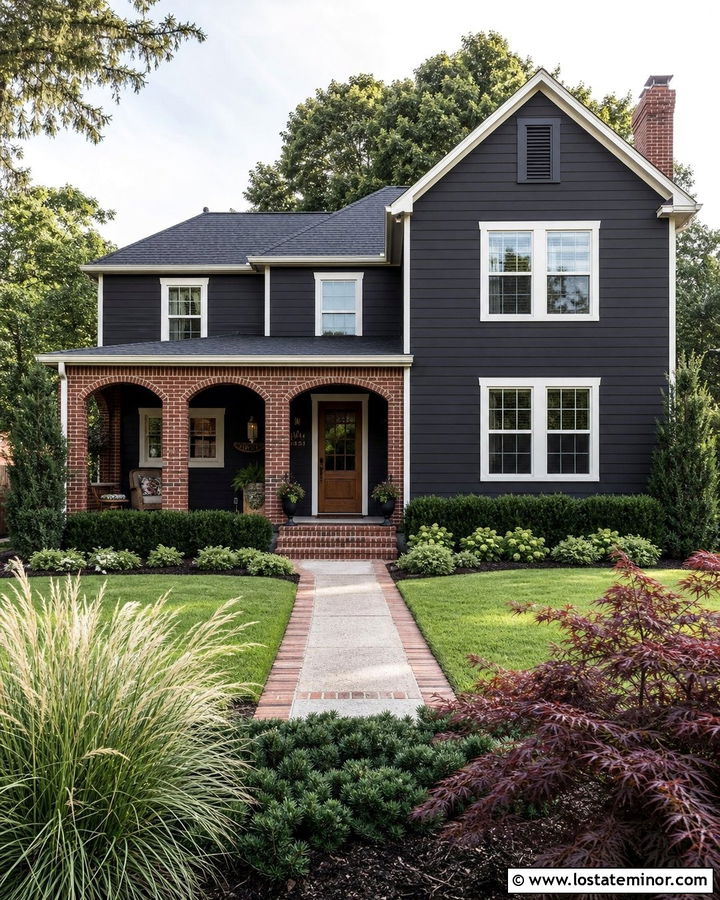
Existing brick does not need to be painted for a charcoal grey update to feel coordinated. Warm red or brown brick can bring useful contrast to dark grey siding, particularly around the foundation, chimney, or porch columns. Select an off-white trim with a warm undertone and use a stained wood door that relates to the brick. A small Japanese maple or red maple in the front yard can repeat those reddish tones naturally. Surround it with low evergreen shrubs and pale ornamental grasses so its foliage remains visible. A brick-edged walkway strengthens the connection between the house and landscape. Keep charcoal siding as the dominant surface. The brick and maple should function as controlled warm accents that prevent the full exterior from becoming too cool or visually flat.
13. Charcoal Grey House With Cedar Shutters And Lavender
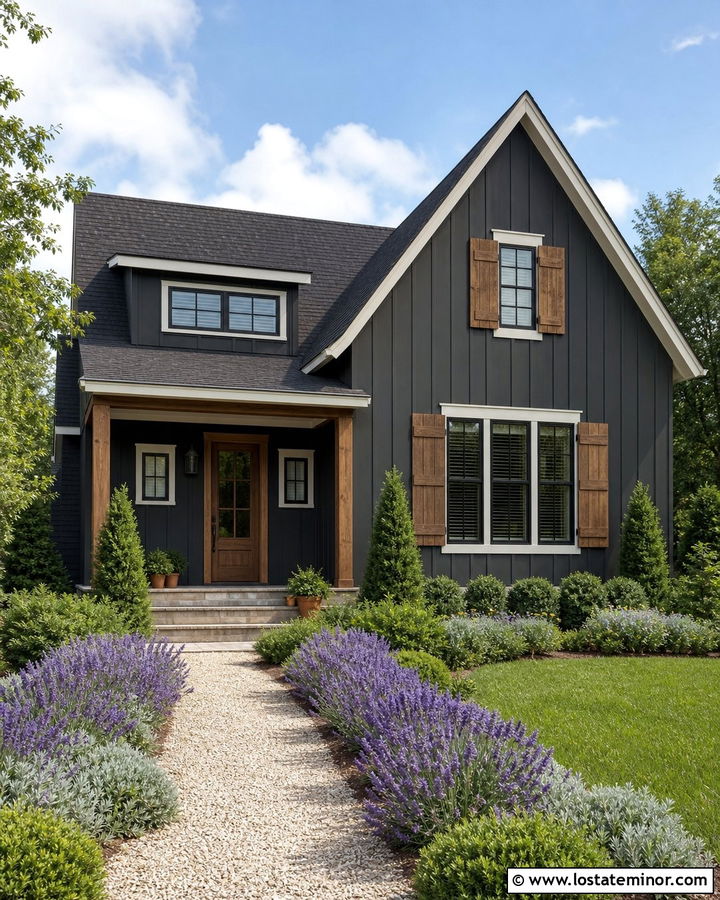
Cedar shutters introduce warmth and texture without requiring a major architectural renovation. Against charcoal grey siding, their grain becomes a noticeable feature, especially when paired with a matching cedar door or porch posts. Choose simple board-and-batten shutters sized correctly for the windows. Use warm white sparingly on fascia and porch ceilings, then finish the roof and gutters in dark grey. In the front yard, plant broad drifts of lavender along a gravel or stone walkway. Add compact evergreen shrubs behind the lavender to provide structure during colder months. Silvery foliage also works well because it forms a soft transition between grey siding and purple flowers. This complete palette suits cottages, ranch homes, and European-inspired exteriors while maintaining a relaxed, natural appearance.
14. Charcoal Grey House With Wraparound Porch And Layered Shrubs
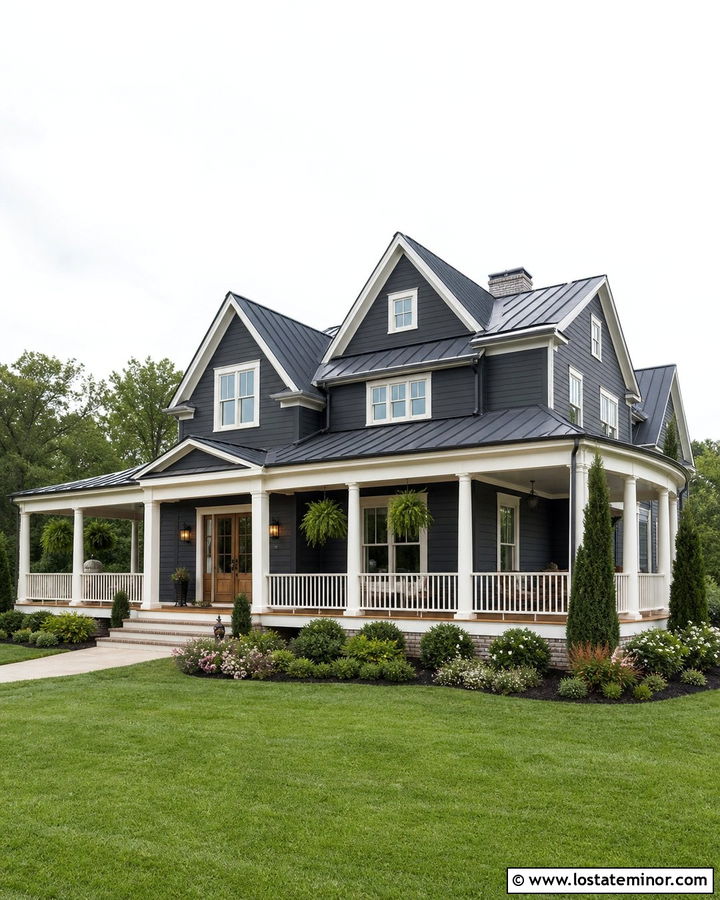
A wraparound porch creates strong horizontal lines, so the paint and landscaping should help separate each layer. Use charcoal grey for the siding, soft white for columns and railings, and natural wood on the porch floor and front door. A dark metal roof over the porch keeps the scheme grounded. Build front yard beds with three clear heights: low ground cover near the walkway, medium flowering shrubs in the center, and taller evergreens near porch corners. Leave openings in front of steps and important architectural details. A broad lawn can provide visual relief from the full beds. Repeating plants around both visible sides of the porch makes the landscaping feel connected. This balanced treatment works beautifully on farmhouse, Victorian, and Southern-inspired homes with generous front elevations.
15. Charcoal Grey House With Yellow Door And Pollinator Garden
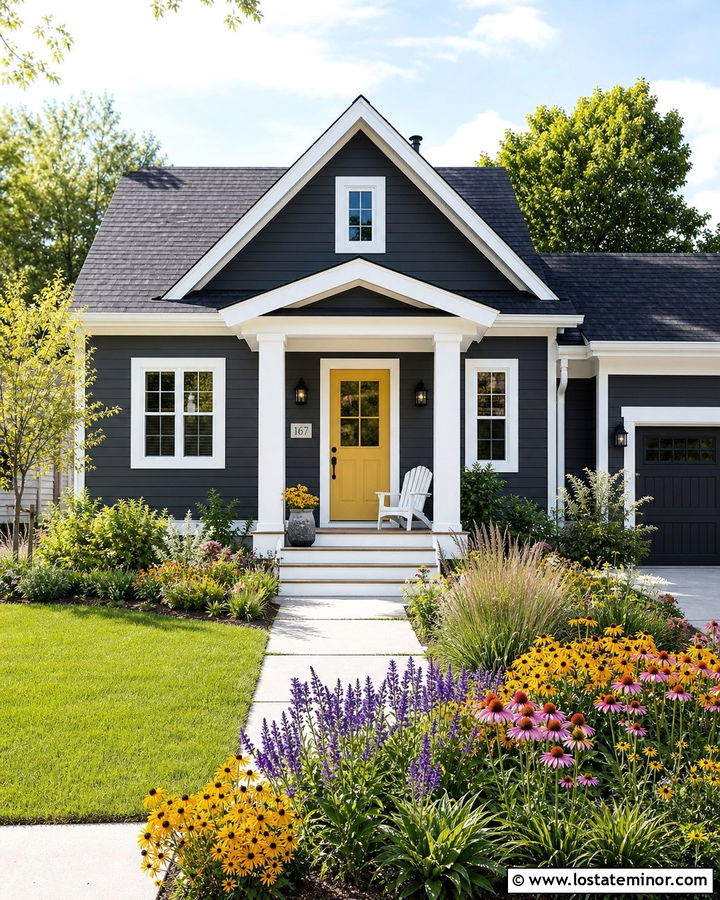
A yellow door adds energy to a charcoal grey house, but the surrounding colors should remain controlled. Choose a warm ochre or muted golden yellow rather than a neon shade. Pair it with simple white trim, black lights, and a dark grey roof. In the front yard, create a pollinator-friendly border featuring black-eyed Susans, coneflowers, coreopsis, salvia, and native grasses suited to the local climate. Yellow flowers can repeat the door color, while purple blooms create contrast. Arrange plants in generous groups instead of placing single specimens throughout the bed. A straightforward gravel or concrete path prevents the composition from becoming too busy. The bright entrance and natural planting bring personality to the dark exterior while maintaining a unified, intentional curb-appeal scheme.
16. Charcoal Grey House With Teal Door And River Rock
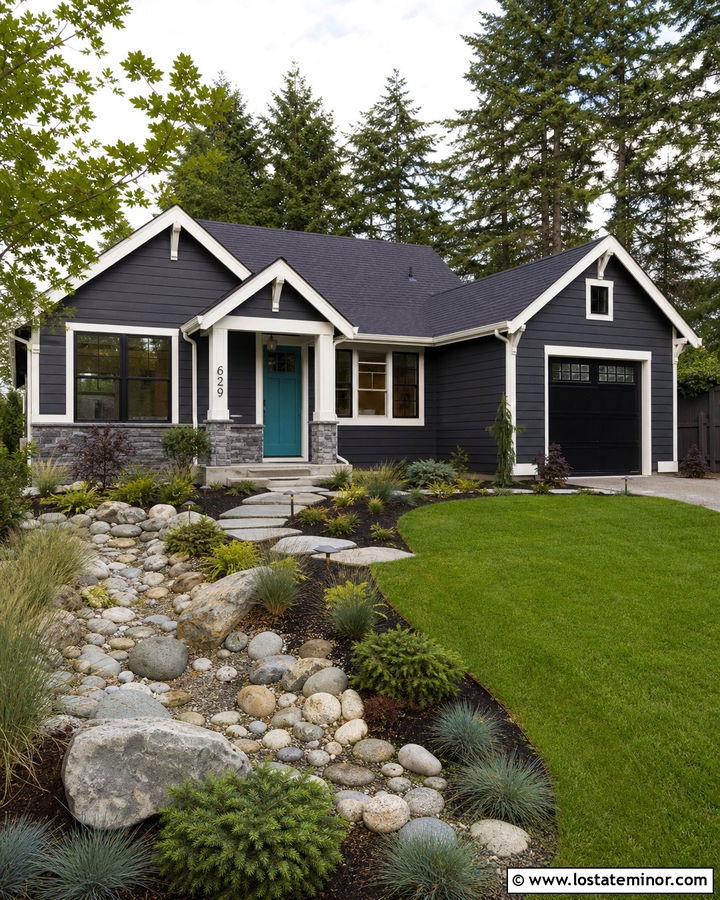
Cool teal can stand out beautifully against charcoal grey without looking overly bright. Use it on the front door only, then support it with white trim, black window frames, and subtle grey stone. In the yard, a dry creek bed made from mixed river rock can guide rainwater while introducing a natural textural feature. Surround the stones with blue-green grasses, sedges, dwarf evergreens, and moisture-tolerant plants where appropriate. A simple bridge-style walkway or large stepping stones can cross the rock bed on the way to the entrance. Keep the garage door charcoal grey so the teal entry receives attention. This complete arrangement works particularly well on contemporary cottages and Pacific Northwest-inspired homes, where grey materials, lush foliage, and natural stone feel comfortably connected.
17. Charcoal Grey House With Black Garage And Minimal Lawn
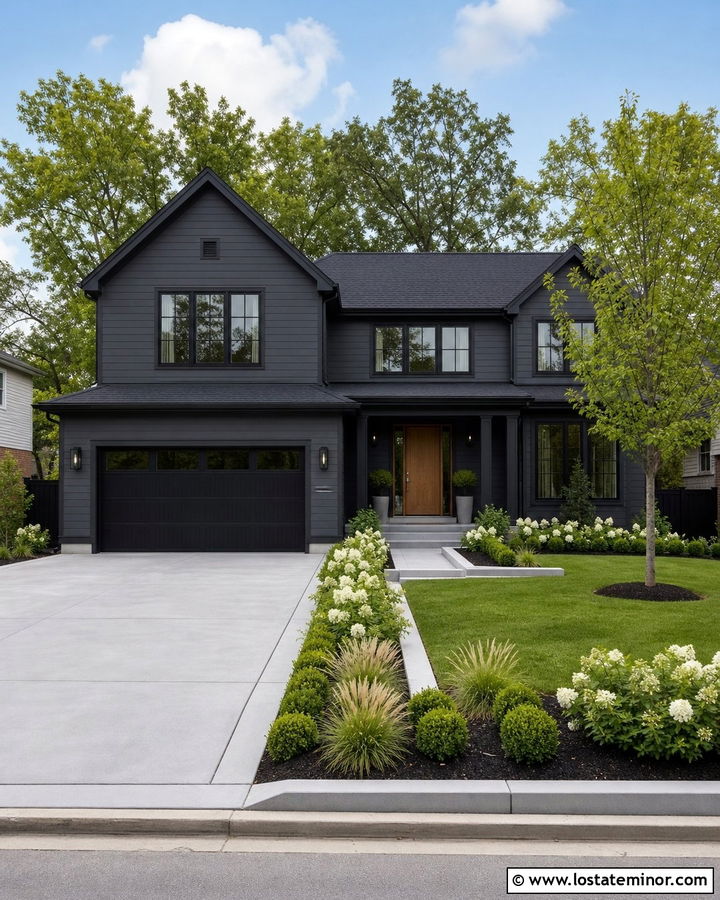
An attached garage can dominate the facade when its door contrasts too strongly with the siding. On a charcoal grey house, use a matte black or very deep charcoal garage door to reduce its visual weight. Repeat black on window frames, gutters, and simple exterior lights. A natural wood front door provides the primary warm accent. Keep the front yard equally streamlined with a rectangular lawn, one shade tree, and wide planting beds containing only a few repeated species. Ornamental grasses, low boxwood, and white flowering perennials provide texture without creating clutter. Use concrete edging and a direct walkway to strengthen the modern appearance. This controlled palette is ideal for suburban homes where the driveway occupies a large portion of the front elevation.
18. Charcoal Grey House With Copper Accents And Evergreens
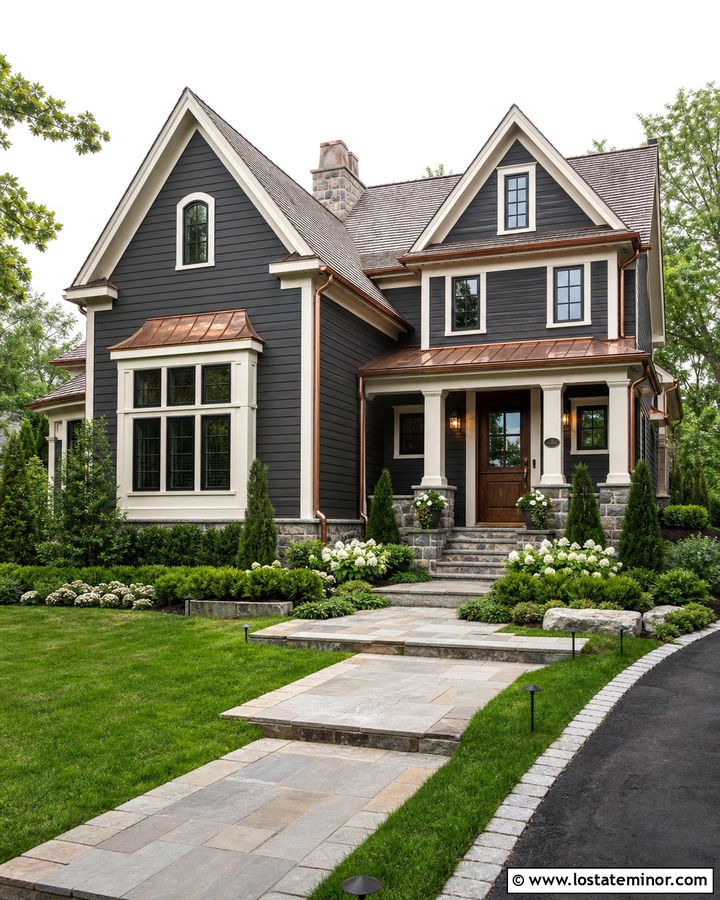
Copper details add richness to charcoal grey because their warm finish stands apart from the cool, dark background. Consider copper porch lights, gutters, downspouts, awnings, or a small metal roof above the entrance. Use cream trim instead of bright white to support the warmer palette. A walnut door and mixed natural stone can complete the facade. In the front yard, plant several types of evergreen foliage, including upright forms, rounded shrubs, and low spreading varieties. Their different green tones keep the landscape interesting in every season. Add a simple stone walkway and restrained beds of white flowers. As copper naturally changes in appearance, its developing finish can relate even more closely to the greenery, making the house and landscape feel comfortably established.
19. Charcoal Grey House With Wood Pergola And Climbing Vines
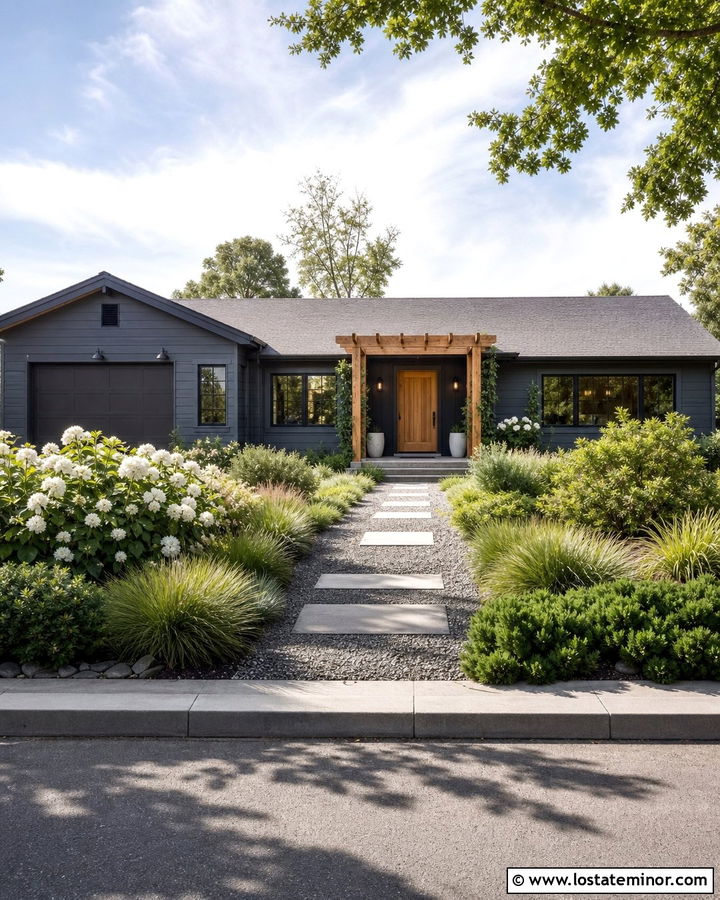
A wood pergola can make a plain front entry feel deeper and more architectural. Set the warm timber against charcoal grey siding, then repeat the wood on the front door, porch ceiling, or horizontal privacy screen. Keep windows and roof details black for a clean transition. Train a controlled climbing vine along the pergola while keeping growth away from gutters and siding. In the front yard, use loose beds of ornamental grasses, flowering shrubs, and evergreen ground cover. A gravel path with large stone pavers reinforces the relaxed structure. The pergola should frame the entrance rather than span the entire facade. This balanced combination suits contemporary homes, updated ranches, and modern cottages that need a warmer focal point without adding a full covered porch.

20. Charcoal Grey House With Low-Maintenance Rock Garden
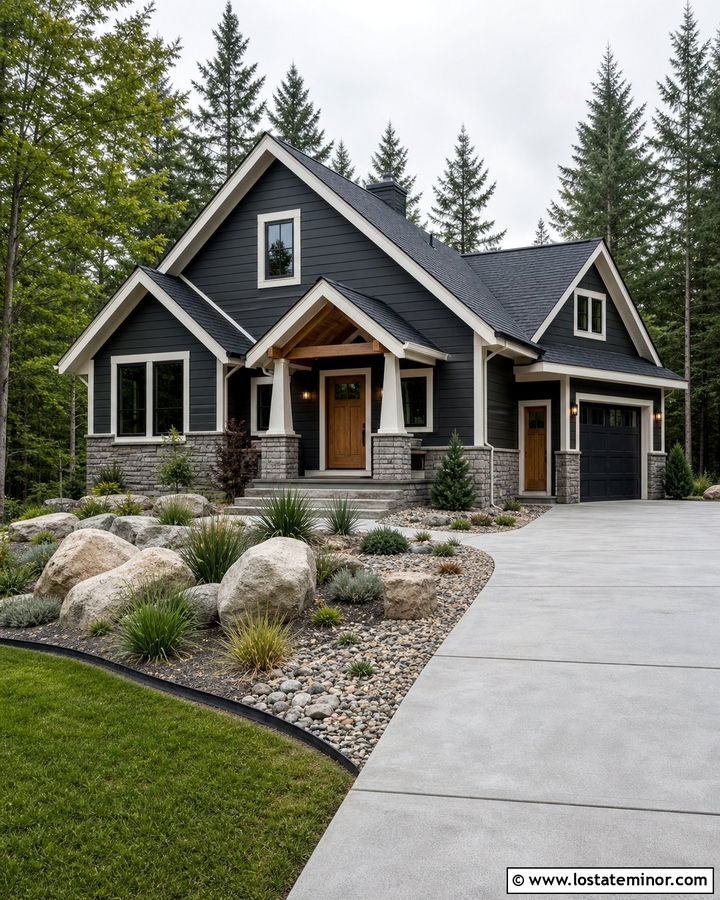
A low-maintenance front yard does not have to look empty. Pair charcoal grey siding with warm white trim, a cedar door, and light grey stone around the foundation. Then create broad planting areas using gravel, decorative rock, and drought-tolerant plants suited to the region. Choose a restrained mixture of ornamental grasses, compact shrubs, creeping ground cover, and a few sculptural plants. Larger boulders can anchor corners or mark changes in grade. Use metal edging to separate the beds from a small lawn or concrete walkway. Avoid covering the entire property in one type of gravel, which can make the yard feel unfinished. The combination of varied stone sizes, green foliage, and warm wood gives the dark exterior a polished but practical setting.
21. Charcoal Grey House With Small Front Yard Planters
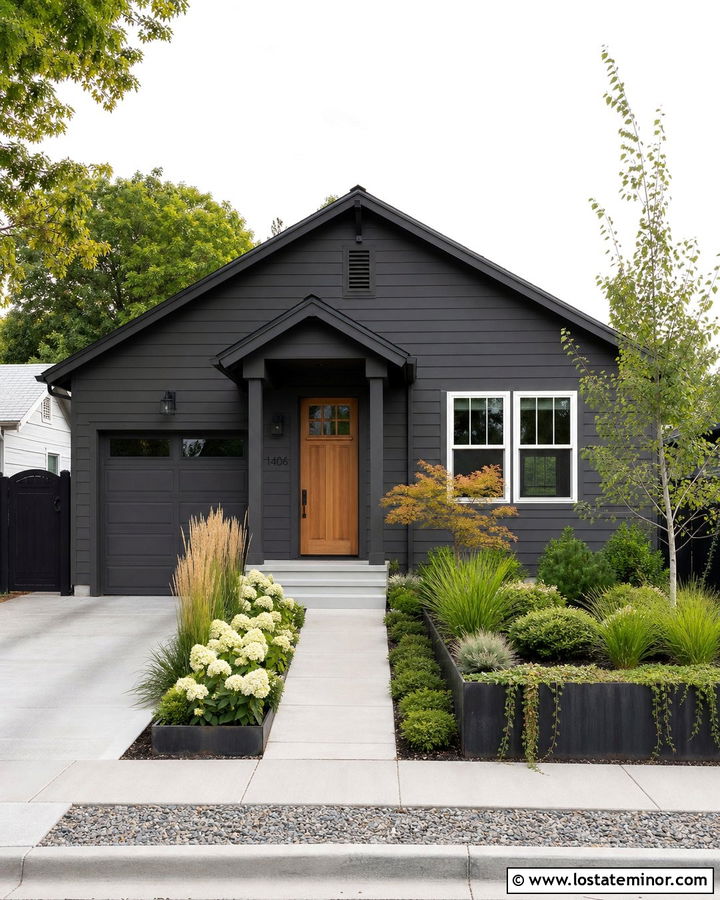
A compact front yard requires careful placement rather than fewer design details. Use charcoal grey on the house body, creamy white around the windows, and warm wood on the entry door. Keep large features, including the garage, close to the siding color so the facade does not feel crowded. Replace deep foundation beds with slim raised planters made from wood, stone, or dark metal. Fill them with upright grasses, compact hydrangeas, dwarf evergreens, and trailing ground cover. A wide walkway can double as a visual foreground, making the property appear more generous. Use matching planters beside the entrance to create symmetry. Limiting the plant palette and repeating materials helps the small yard feel organized while still providing enough texture to soften the charcoal exterior.
22. Charcoal Grey House With Sloped Front Yard Retaining Walls
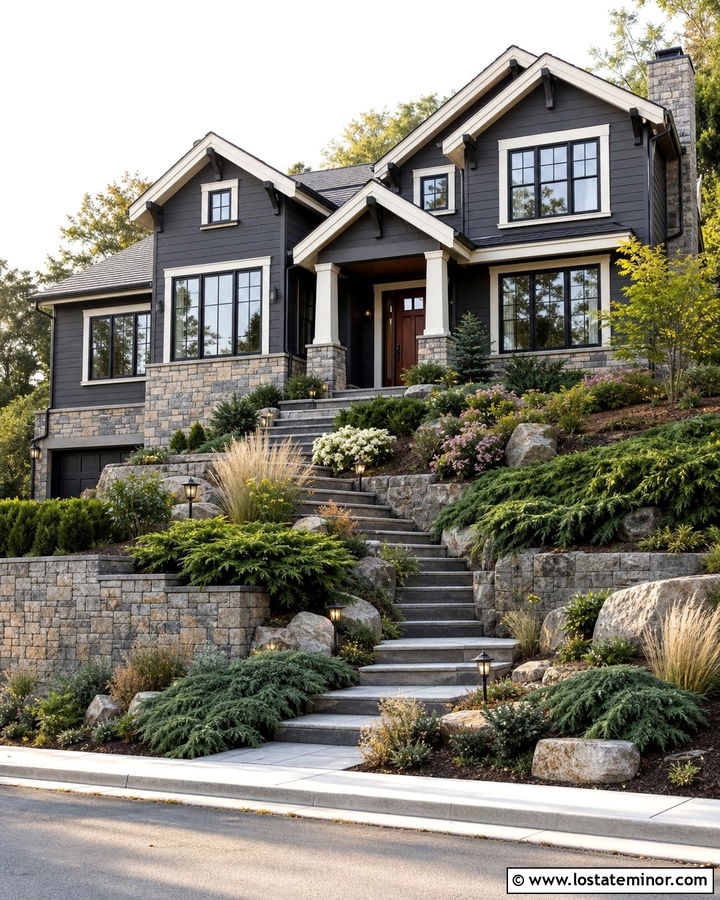
A sloping front yard can become one of the property’s strongest features when its retaining walls relate to the house. Pair charcoal grey siding with cream trim, black windows, and a warm mahogany door. Construct low retaining walls from natural stone containing grey, brown, and taupe tones. These colors create a transition between the dark facade and surrounding soil. Use broad steps rather than one narrow staircase, and flank them with grasses, spreading junipers, flowering shrubs, and erosion-controlling ground cover. Keep taller plants away from the lower side of the house so they do not block windows. Small path lights can define each level after sunset. The terraced design makes the slope usable, strengthens the entrance, and gives the exterior a substantial, finished appearance.
23. Charcoal Grey House With Shade Garden And Flagstone Path
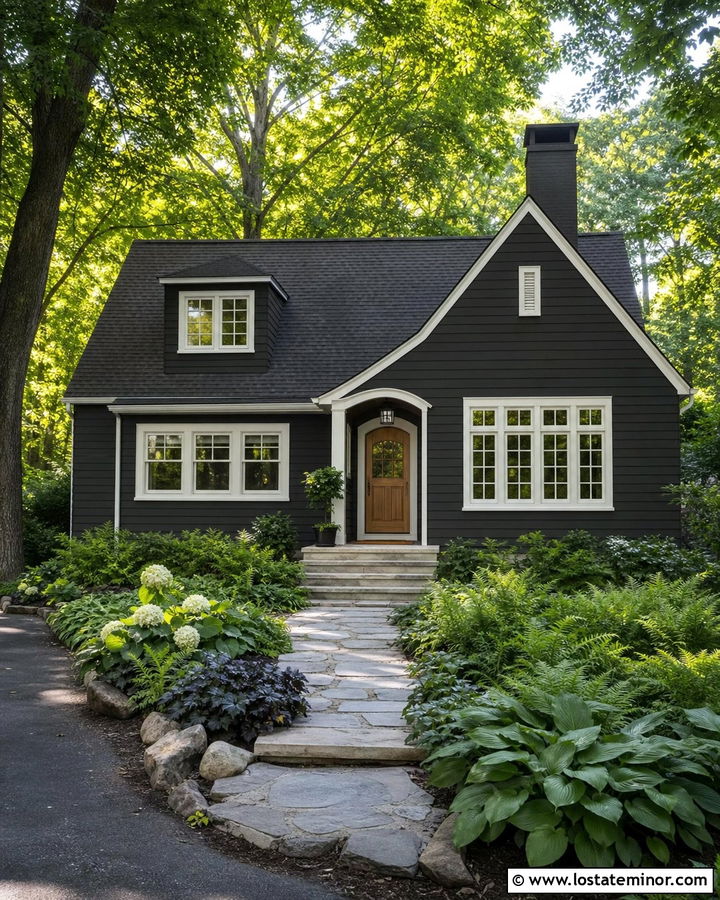
Charcoal grey can look especially natural beneath mature shade trees. Prevent the facade from disappearing by adding soft white trim, a honey-toned wood door, and lighter stone around the steps. Build the front yard around shade-tolerant foliage with different leaf shapes and green tones. Ferns, hostas, heuchera, sedges, and compact hydrangeas can create depth without relying on constant flowers. A gently curved flagstone path reinforces the woodland atmosphere and introduces lighter color near the ground. Place low plants along the path and larger shrubs closer to the outer corners of the house. Thin tree canopies when professionally recommended to preserve filtered light and clear views. The finished exterior feels cool, established, and peaceful rather than dark or overgrown.
24. Charcoal Grey House With Drought-Tolerant Front Yard
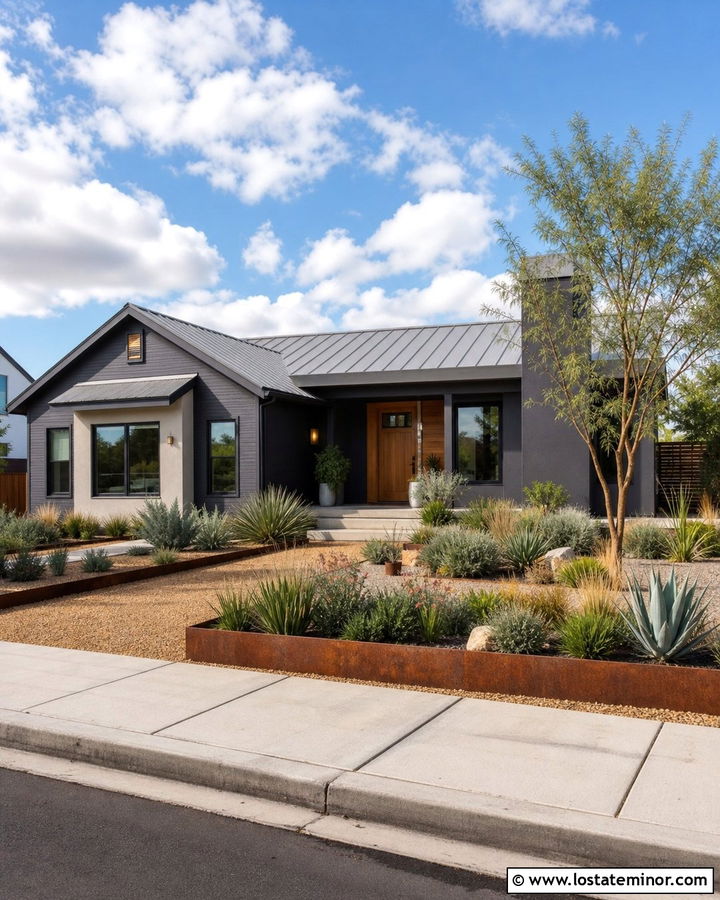
In a dry climate, charcoal grey siding can provide a dramatic background for drought-tolerant landscaping. Pair the exterior with warm wood, cream stucco accents, and a light metal or reflective grey roof where locally appropriate. Define the planting beds with rust-colored steel edging, then add gravel in warm grey or sandy tones. Use regionally suitable plants such as agave, yucca, sage, penstemon, and ornamental grasses. Space them widely enough to show each plant’s mature form. A decomposed-granite walkway can soften the transition between the driveway and entrance. Include one small desert tree for height and shade. The warm gravel and rusted metal prevent the charcoal facade from feeling cold, while the limited planting palette creates a modern, water-conscious front yard.
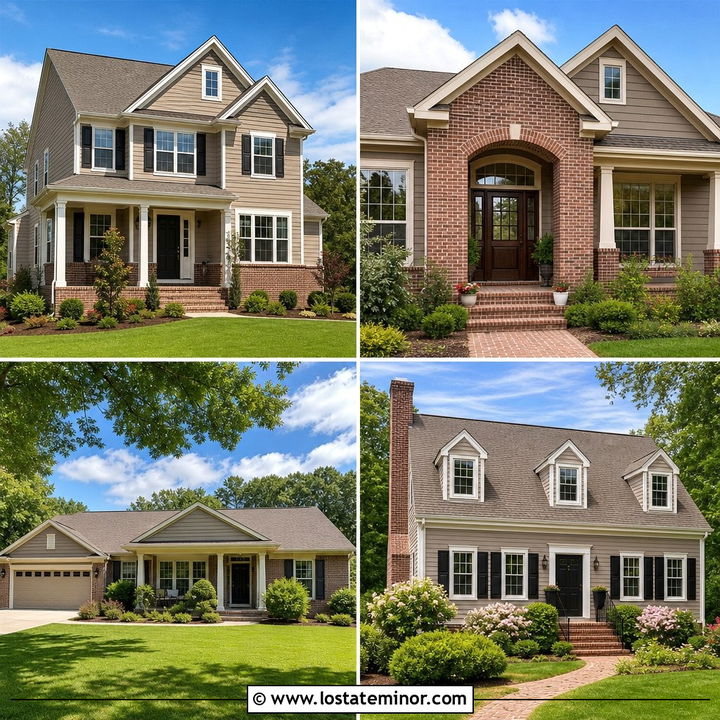
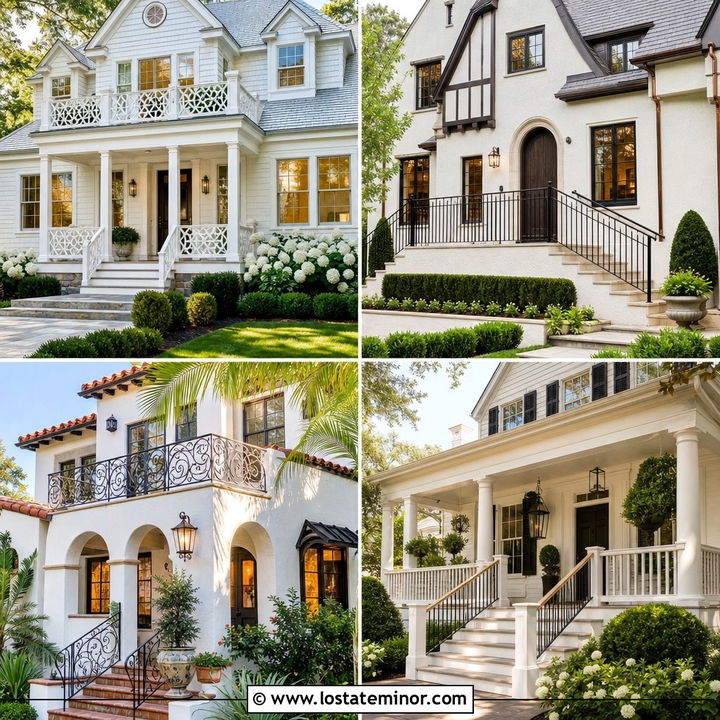
25. Charcoal Grey House With Tropical Front Yard
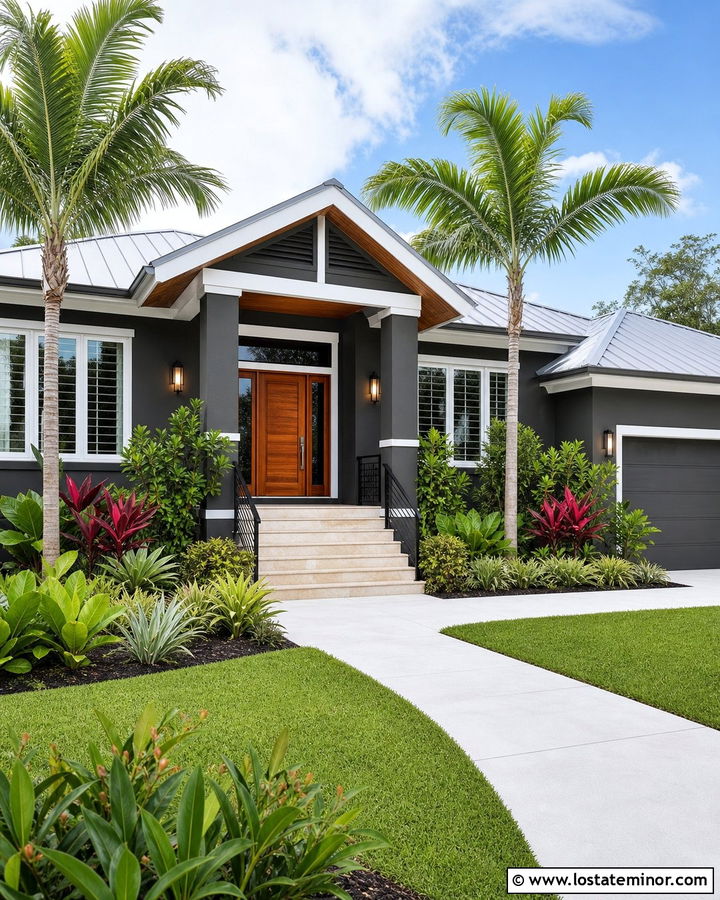
Deep charcoal siding creates a lush backdrop for tropical greenery, especially when the house has simple architectural lines. Use bright white trim around windows and roof edges to maintain a fresh appearance. Add a teak or mahogany door, black metal railings, and pale stone at the entrance. In the front yard, layer palms, broad-leaved shrubs, ornamental grasses, and colorful tropical plants that suit the local climate. Keep the tallest foliage near corners so the doorway remains visible. A light concrete or limestone walkway will brighten the foreground and contrast with the deep exterior. Use dark mulch beneath the plants for a finished look. This palette feels resort-inspired but still residential when the plant varieties are repeated and the overall layout remains uncluttered.
26. Charcoal Grey House With Woodland Front Yard
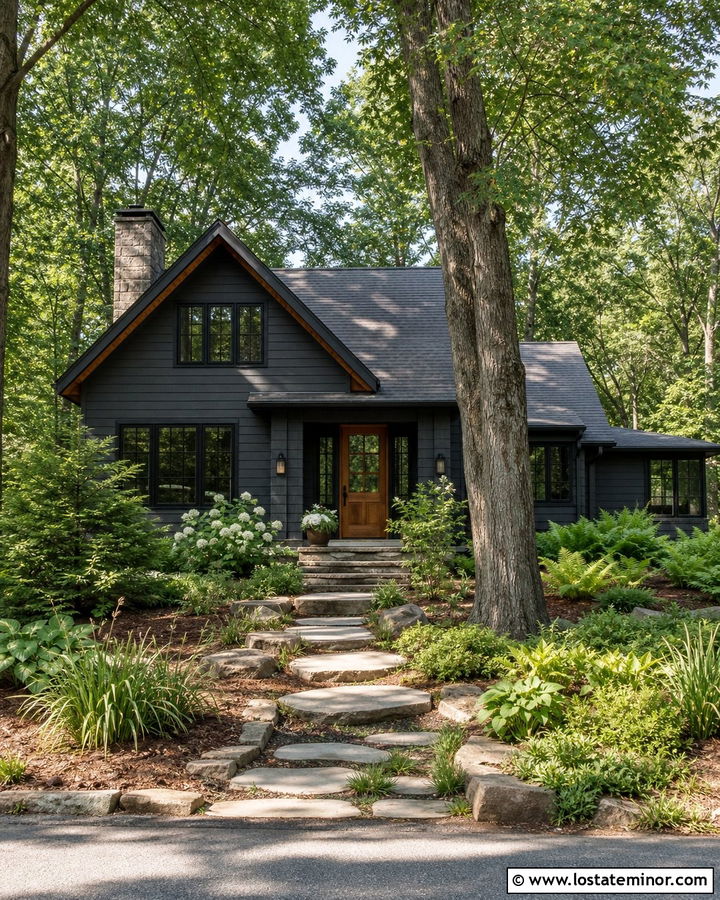
A woodland-inspired landscape makes a charcoal grey house feel integrated with its setting. Choose charcoal lap siding or shingles, black windows, and warm cedar accents under the eaves. Natural stone steps and a stained wood door can reinforce the earthy palette. Preserve healthy existing trees, then build irregular beds containing native ferns, woodland grasses, flowering shrubs, and low ground cover. Use a stepping-stone path instead of a perfectly straight concrete walkway. Fallen leaves and organic mulch may form part of the natural look, but defined bed edges will keep the yard from appearing neglected. Add subtle lighting near steps and the entrance. The completed scheme works especially well for cabins, contemporary cottages, and suburban homes located beside mature trees or natural open space.
27. Charcoal Grey Coastal House With White Hydrangeas
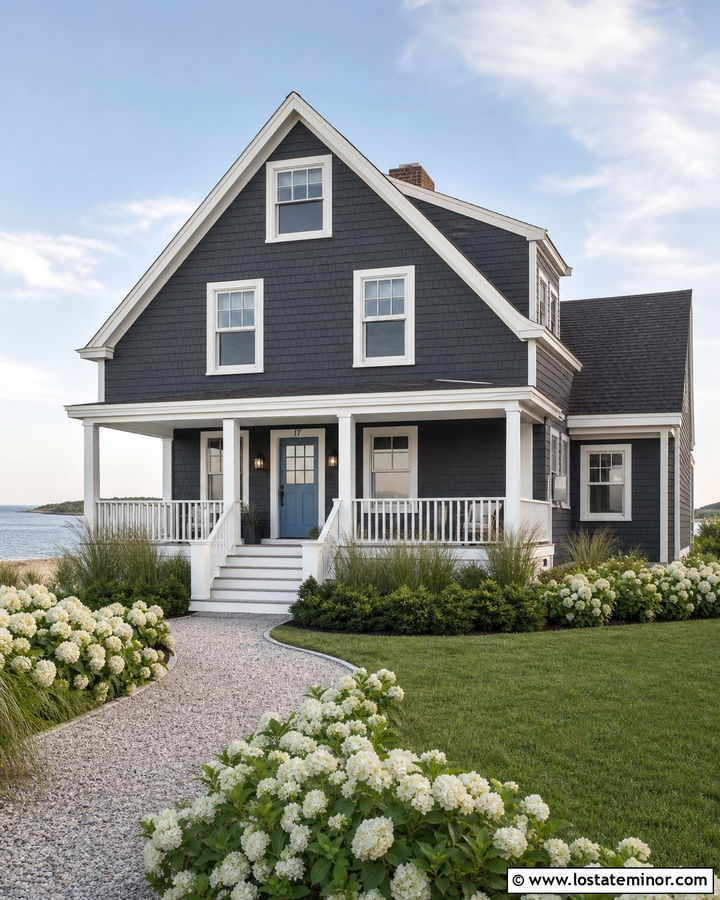
For a coastal exterior, combine charcoal grey shingles with generous white trim and a muted blue front door. The darker body color provides a grounded look, while the white porch railings, window frames, and columns maintain a breezy contrast. Use weathered wood or pale grey decking to connect the home with the surrounding landscape. In the front yard, plant large groups of white hydrangeas, beach grass, and low evergreen shrubs. A shell, gravel, or pale stone walkway can create a casual approach to the porch. Keep the planting resilient and appropriate for local wind, soil, and salt conditions. The white flowers echo the trim and brighten the facade, while moving grasses soften the house’s strong charcoal color and structured roofline.
28. Charcoal Grey Desert Modern House With Agave
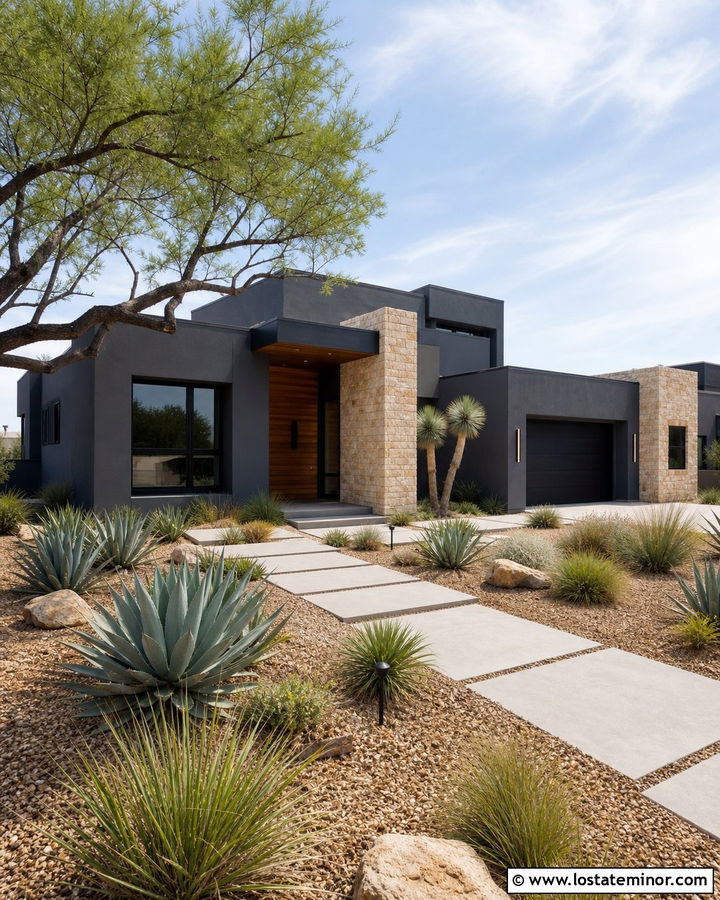
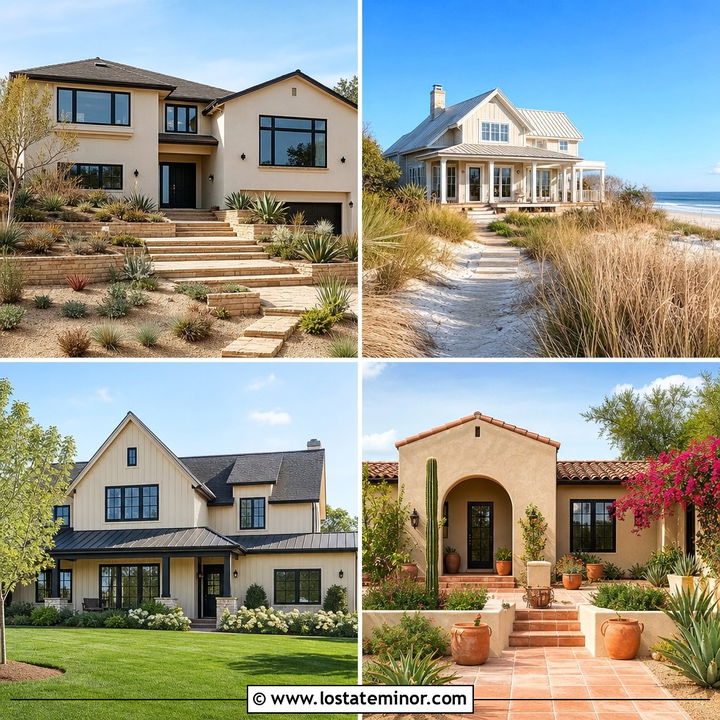
Strong geometry makes a desert modern home a natural match for charcoal grey. Apply the color to smooth stucco or flat architectural panels, then introduce warm tan stone and cedar around the recessed entry. Black-framed windows and a dark garage door maintain the clean, unified facade. In the front yard, place large agaves, yuccas, desert grasses, and low flowering plants within broad areas of warm gravel. Use only a few plant types and allow open space around each specimen. Rectangular concrete pavers can cross the gravel toward the entrance. A sculptural desert tree adds height without covering the house. The contrast between charcoal walls, pale ground material, blue-green foliage, and warm wood creates a bold but balanced exterior suited to sunny landscapes.
29. Charcoal Grey House With Formal Front Yard
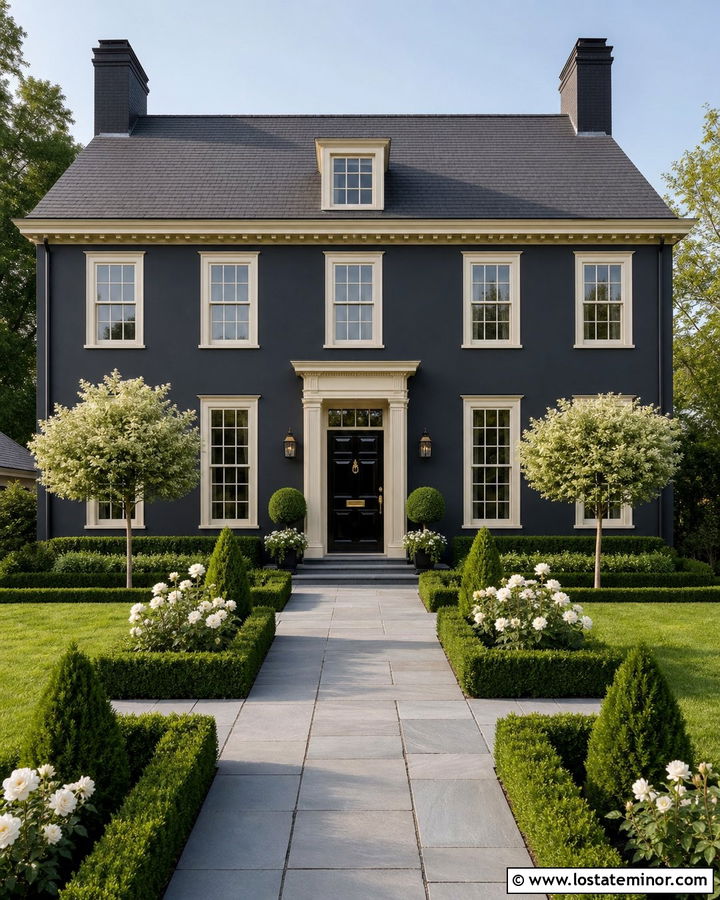
A formal front yard can give a charcoal grey home a stately, composed appearance. Use white or cream trim to define windows, columns, and roof edges. Add a glossy black door with brass hardware and keep the roof a subdued dark grey. Center a straight stone walkway on the entrance, then create matching beds on both sides. Clipped boxwood, conical evergreens, and rounded topiary provide dependable structure. White roses or hydrangeas can soften the symmetry without changing the controlled palette. If the property is large enough, place matching ornamental trees near the outer edges of the facade. Avoid excessive plant varieties or uneven decorative pieces. Repetition is essential because it connects the home’s balanced architecture with the landscape and directs attention toward the entry.
30. Charcoal Grey House With Budget Front Yard
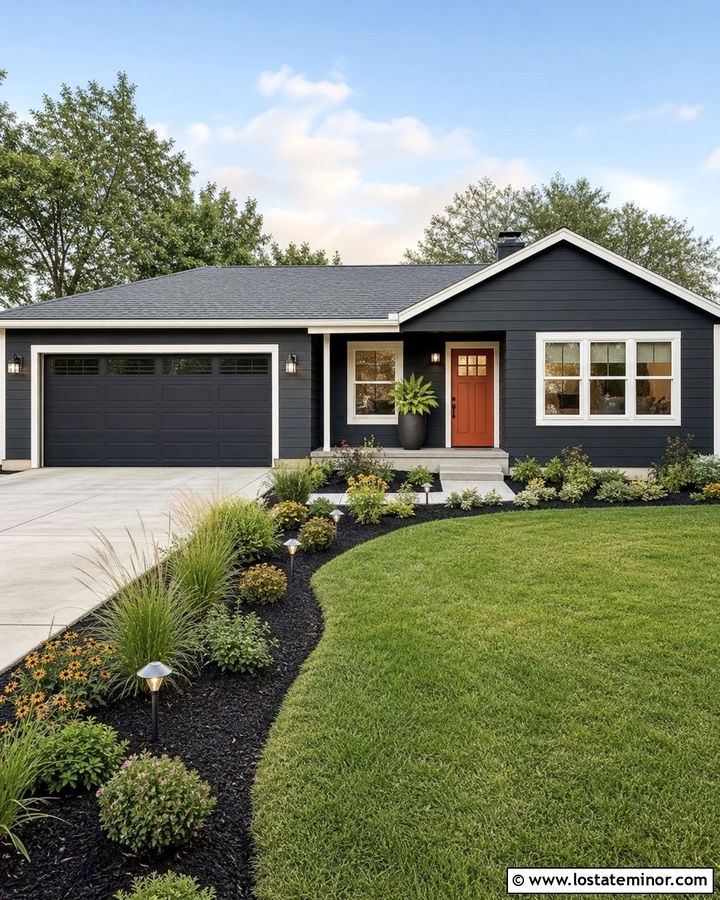
A limited budget can still produce a complete charcoal grey exterior transformation. Keep existing siding charcoal and refresh only the trim, front door, and most visible hardware. Warm white trim and a stained or terracotta-colored door offer affordable contrast. Paint the garage door charcoal so it blends with the facade. In the front yard, define existing beds with a clean spade edge and apply fresh dark mulch. Divide mature perennials, move overcrowded plants, and repeat them across the landscape. Add inexpensive ornamental grasses near blank walls and use solar path lights along the walkway. One large planter near the entrance often looks more intentional than several small decorations. Careful cleaning, pruning, edging, and color coordination can provide strong curb appeal without major construction.
Conclusion:
The most effective 30 Charcoal Grey House Design With Front Yard Ideas treat the facade and landscape as one connected composition. White trim can sharpen traditional architecture, while cedar, copper, brick, and stone warm the dark siding. Front yards benefit from repeated plants, clear walkways, defined beds, and foliage that remains visible against charcoal. Choose the scheme that fits your home’s architecture, climate, maintenance needs, and existing materials. Before painting, test the color on several large exterior areas and observe it under changing daylight, since real-world light affects how dark colors appear. Then repeat selected accent tones in the walkway, planters, plants, or porch. That simple connection produces a balanced and welcoming finished exterior.

Related posts: