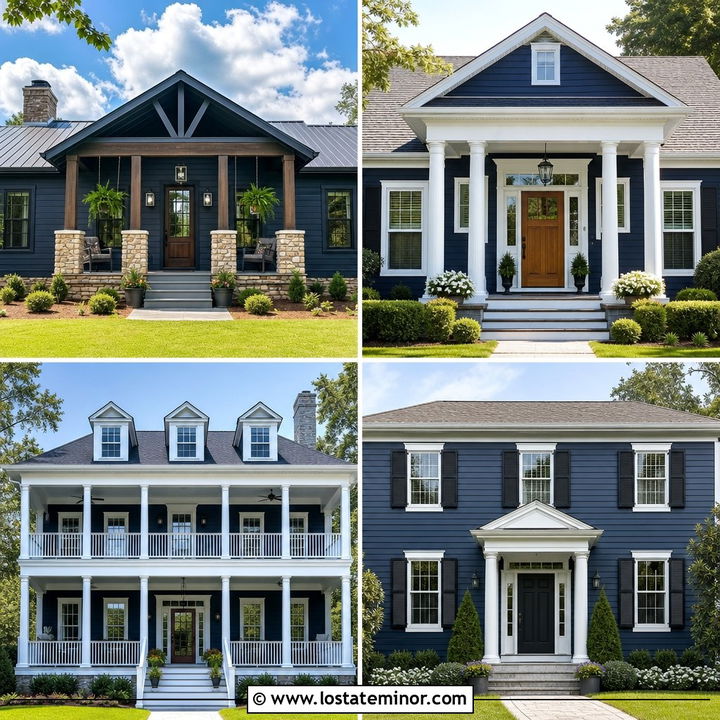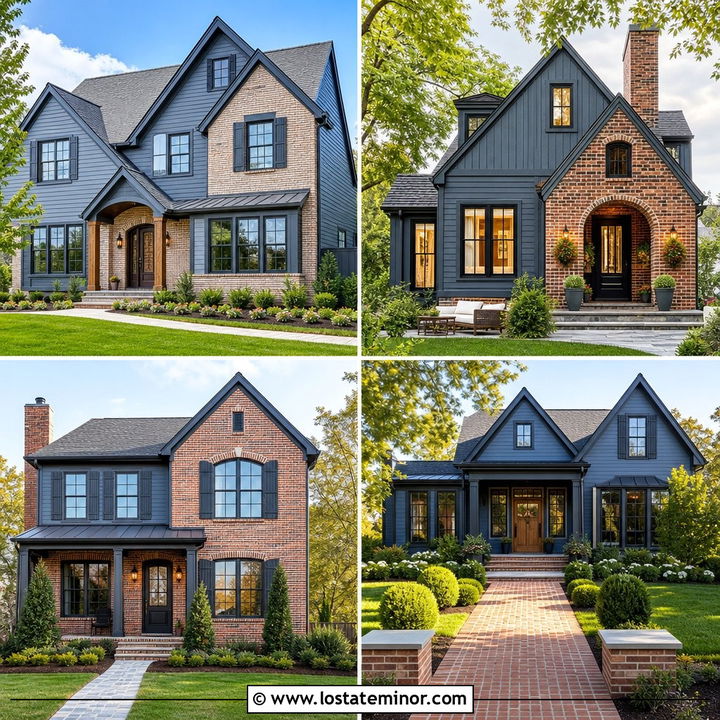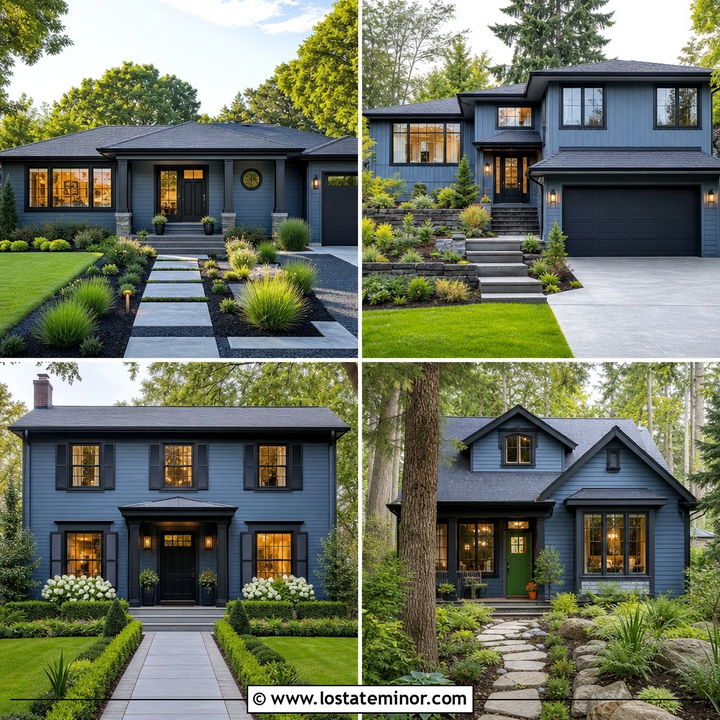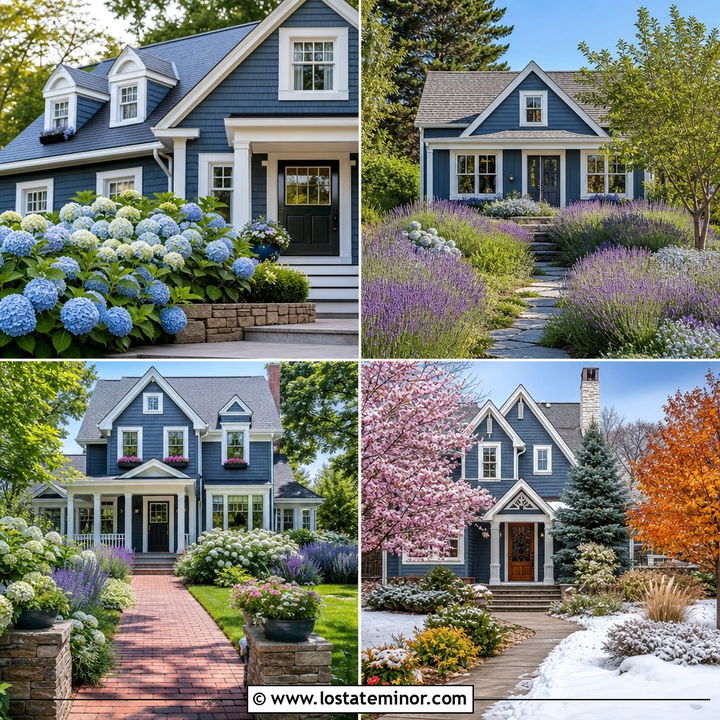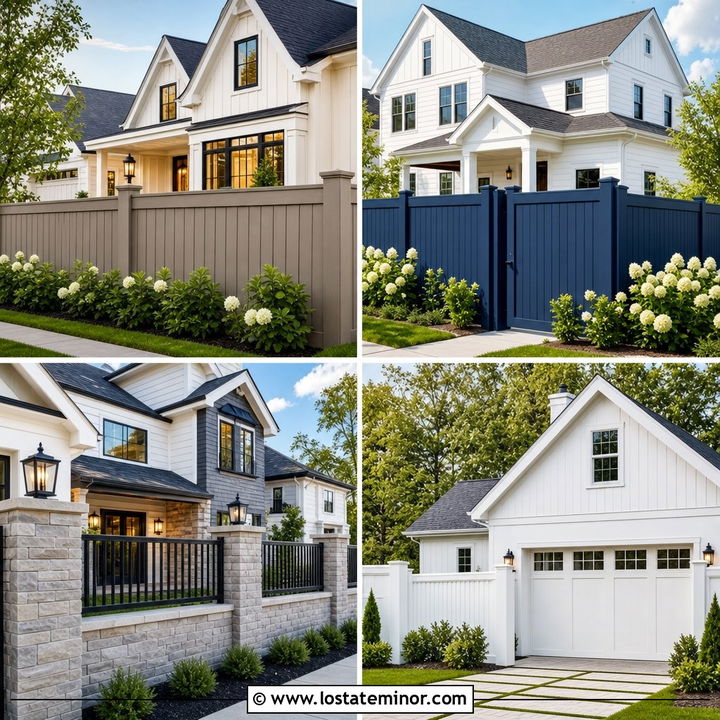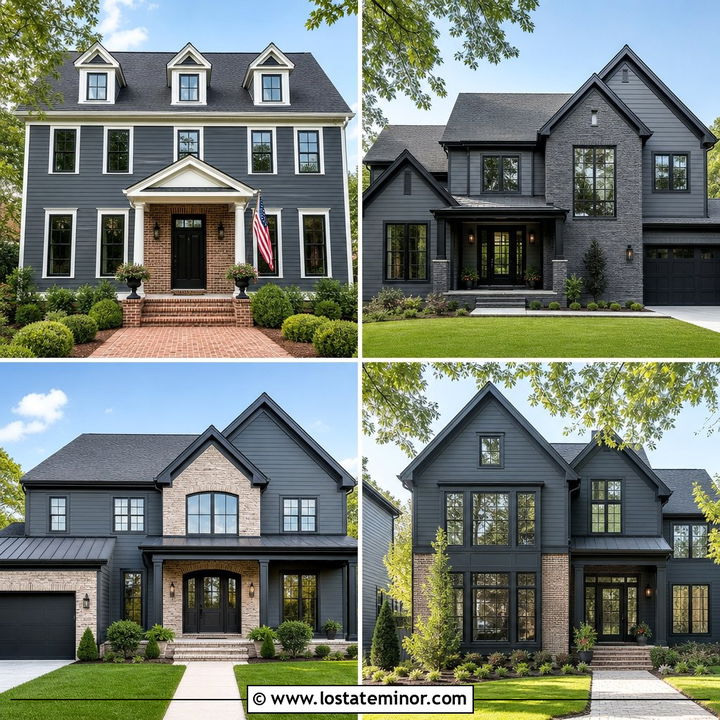
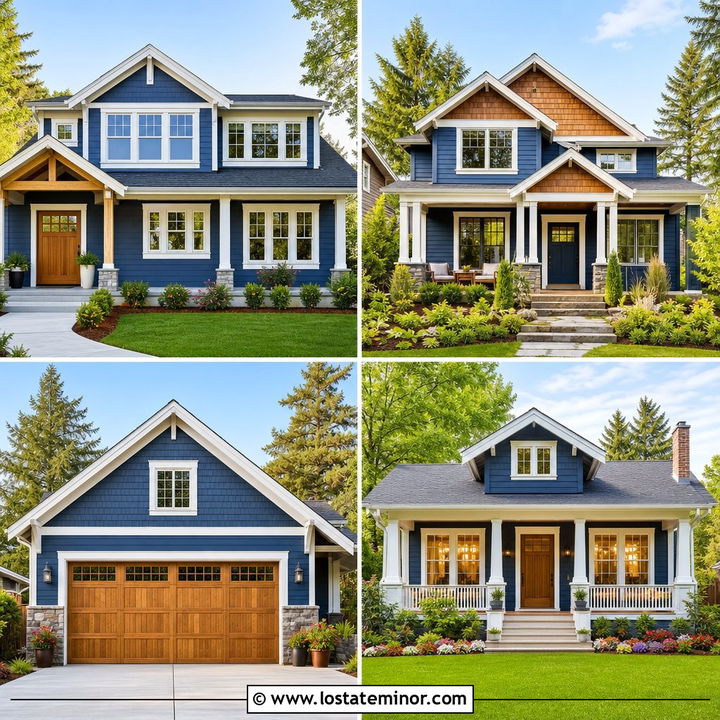
Denim blue siding gives a home noticeable color without feeling too bright or overly coastal. Its muted blue tone can appear relaxed, traditional, rustic, or modern depending on the siding profile and supporting materials. Crisp white trim creates familiar contrast, while charcoal accents bring a sharper edge. Natural wood, red brick, and warm stone can soften the cooler blue and make the exterior feel more welcoming. Blue exteriors also work across many architectural types and coordinate especially well with white trim, wood, stone, and surrounding greenery. () Before choosing a final shade, view samples beside the roof and masonry throughout the day. The complete exterior schemes below make 30 Denim Blue House Design With Siding Ideas easier to adapt to different homes, settings, and budgets.
1. Denim Blue Siding With White Trim And Cedar Door
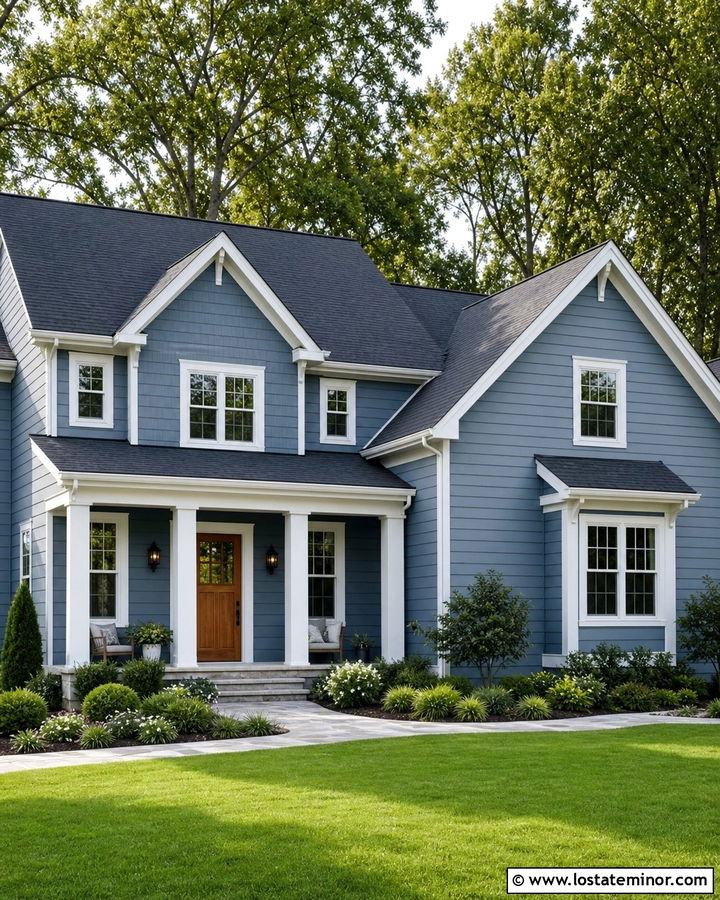
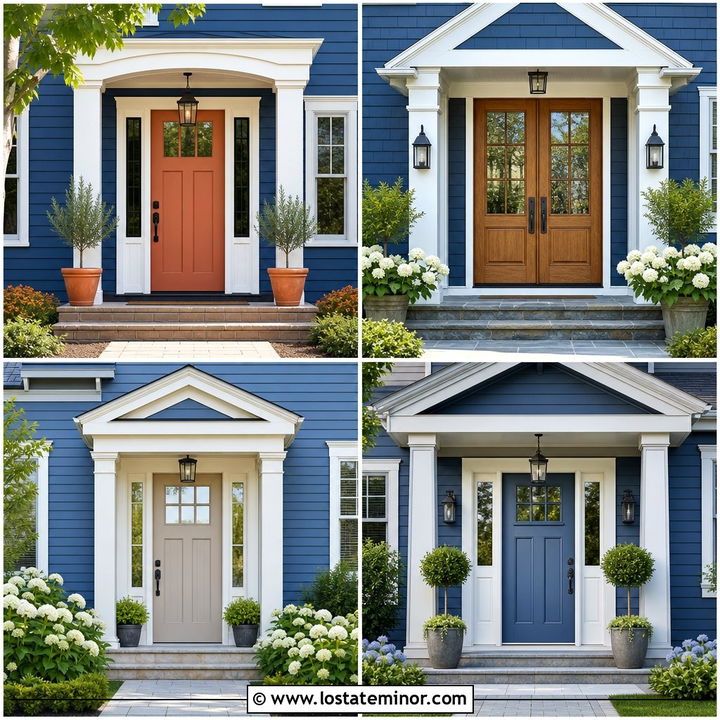
Crisp white trim gives denim blue horizontal siding a clean outline without making the exterior look overly formal. This combination works especially well on a traditional two-story home with balanced windows and a simple front porch. Add a natural cedar front door to warm the cool siding and create an inviting focal point. Cedar porch posts or small wood brackets can repeat that warmth without overwhelming the facade. A medium charcoal roof provides enough depth while remaining softer than solid black. Finish the scheme with black lanterns, dark gutters, and a light gray walkway. Keep the foundation neutral so the blue remains dominant. This complete palette feels familiar and polished, making it a practical choice for suburban homes that need more color and personality.
2. Denim Blue Siding With Black Trim
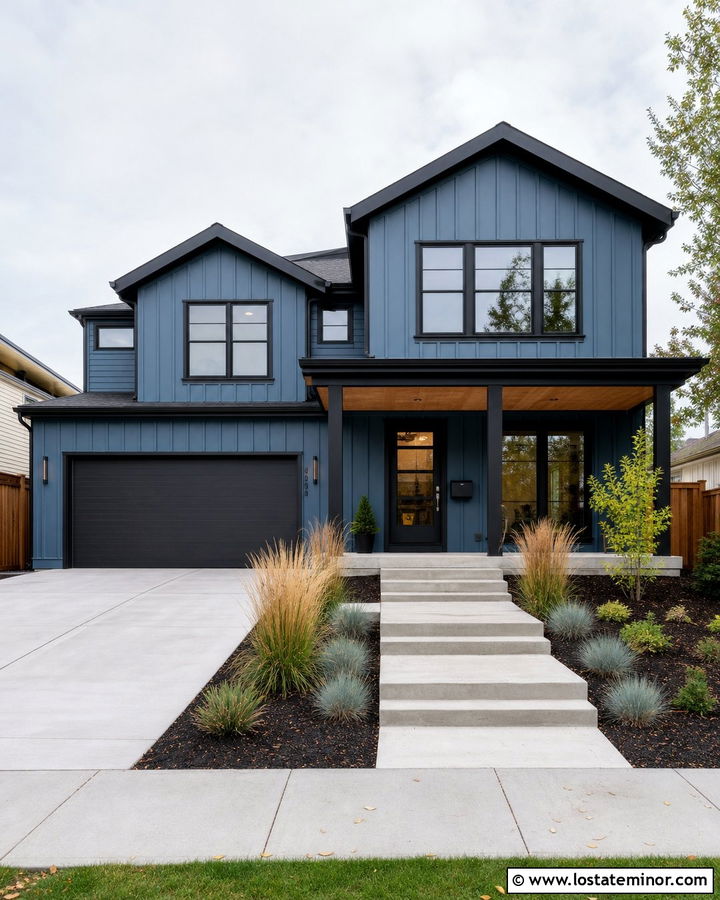
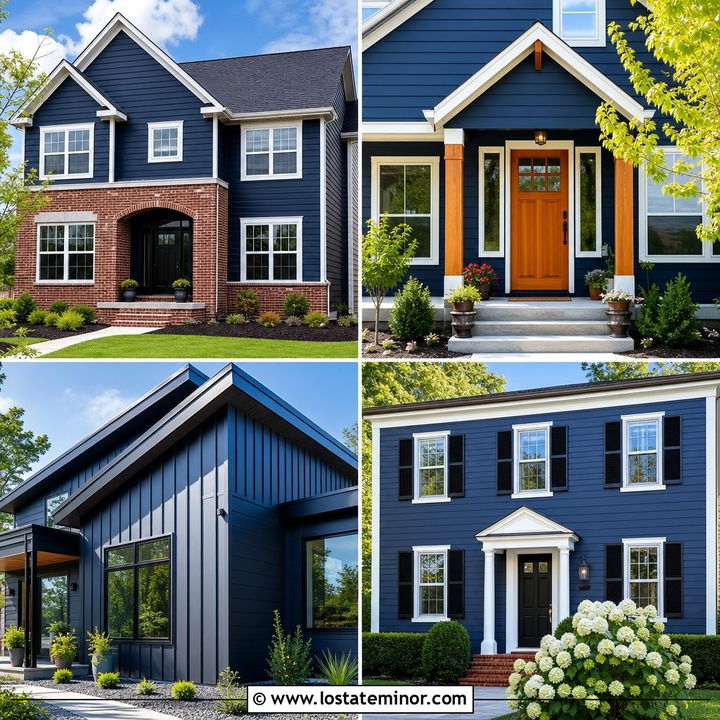
Black trim can turn soft denim blue siding into a sharper, more contemporary exterior. Use the black selectively around windows, fascia boards, gutters, and porch railings rather than outlining every small detail. That restraint keeps the house from appearing busy. Vertical denim blue siding emphasizes height, so it is particularly effective on a modern two-story house with simple gables. A black front door and charcoal garage door can continue the streamlined palette. Introduce warm wood beneath the porch ceiling or around the entry to prevent the combination from feeling cold. Pale concrete steps and low ornamental grasses provide a clean finishing layer. Because black creates strong contrast, test the trim beside the siding in direct sun and shade before committing to the final exterior scheme.
3. Denim Blue Siding With Gray Stone
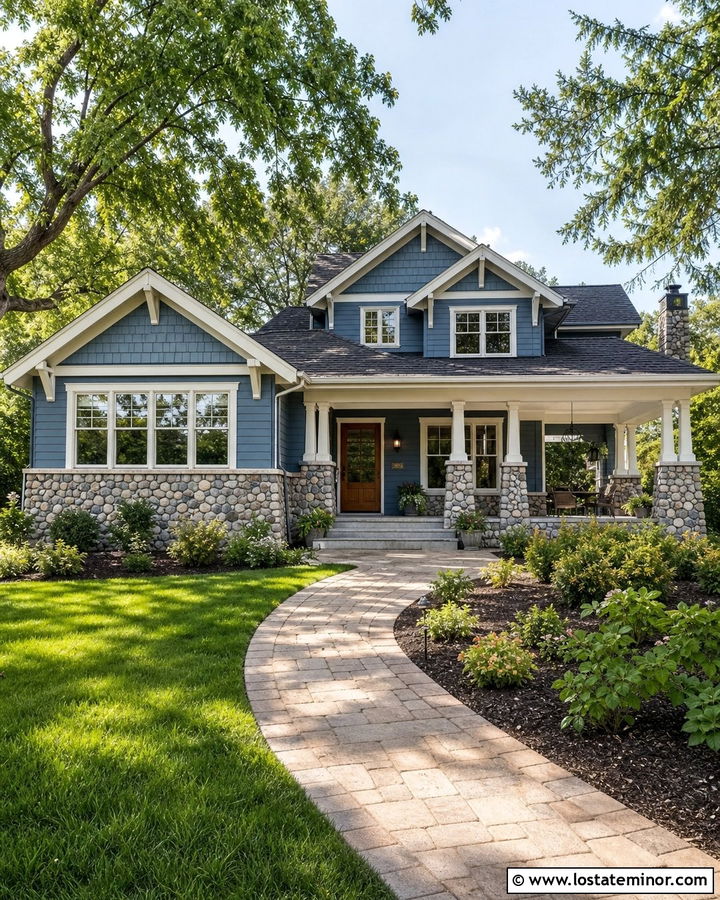
Imagine muted denim blue siding rising above a textured gray stone foundation. The materials share cool undertones, allowing them to blend naturally while still providing visible contrast. This combination suits a Craftsman home with broad columns, deep roof overhangs, and several front-facing gables. Choose stone containing more than one shade of gray, plus a small amount of warm beige or brown. Those subtle variations keep the exterior from looking flat. Creamy white trim can soften the transition between the blue siding and masonry. Complete the entrance with a medium-stained wood door and black metal lighting. Use the same stone on the porch columns or chimney for continuity. A charcoal architectural-shingle roof grounds the house and gives the entire denim blue exterior a substantial, coordinated appearance.
4. Denim Blue Siding With Red Brick
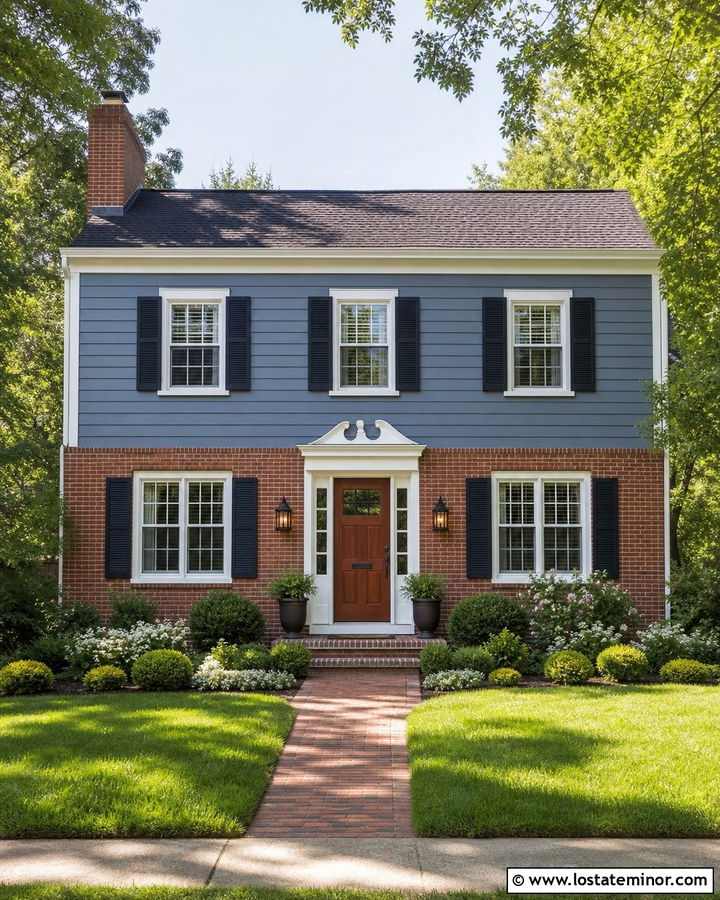
Existing red brick does not prevent you from using denim blue siding. In fact, the contrast can create a rich, established look when both colors are slightly muted. Use the denim siding on upper stories, dormers, or additions while keeping the brick visible across the lower facade. An off-white trim bridges the cool blue and warm masonry more gently than brilliant white. Select a wood front door with reddish-brown undertones to relate to the brick, then add dark bronze lights and gutters. If the brick contains orange tones, avoid denim shades that lean too purple. A brown-black or weathered charcoal roof usually supports both materials. Repeat the blue on a detached garage or small gable so it feels integrated rather than added as an unrelated block of color.
5. Denim Blue Board And Batten Siding With Wood Accents
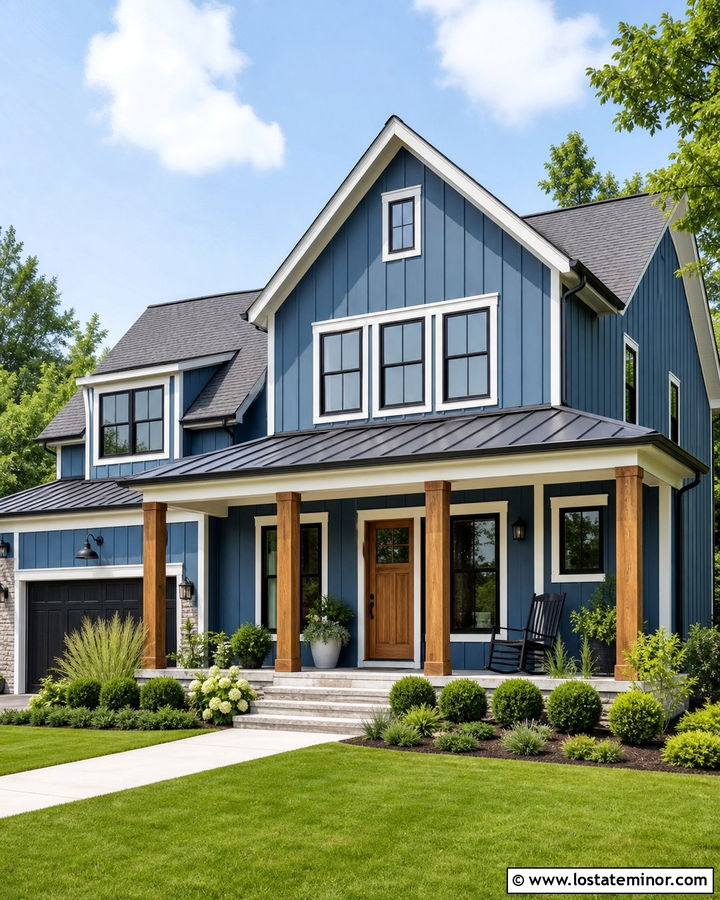
Vertical board-and-batten siding brings a tailored farmhouse influence to denim blue without relying on the usual white exterior. Use it across the main facade or reserve it for prominent gables paired with horizontal siding below. A natural wood front door, timber porch posts, and matching garage details introduce warmth and texture. Choose wood with a medium honey or cedar stain rather than a dark espresso finish, which can disappear against the blue. Soft white trim keeps windows and rooflines visible, while a charcoal standing-seam porch roof adds definition. Simple black sconces and house numbers provide modern accents. This combination works best when the number of exterior materials remains controlled. Let denim blue lead, use wood as the supporting accent, and repeat black only on practical architectural details.
6. Denim Blue Shake Siding With White Columns
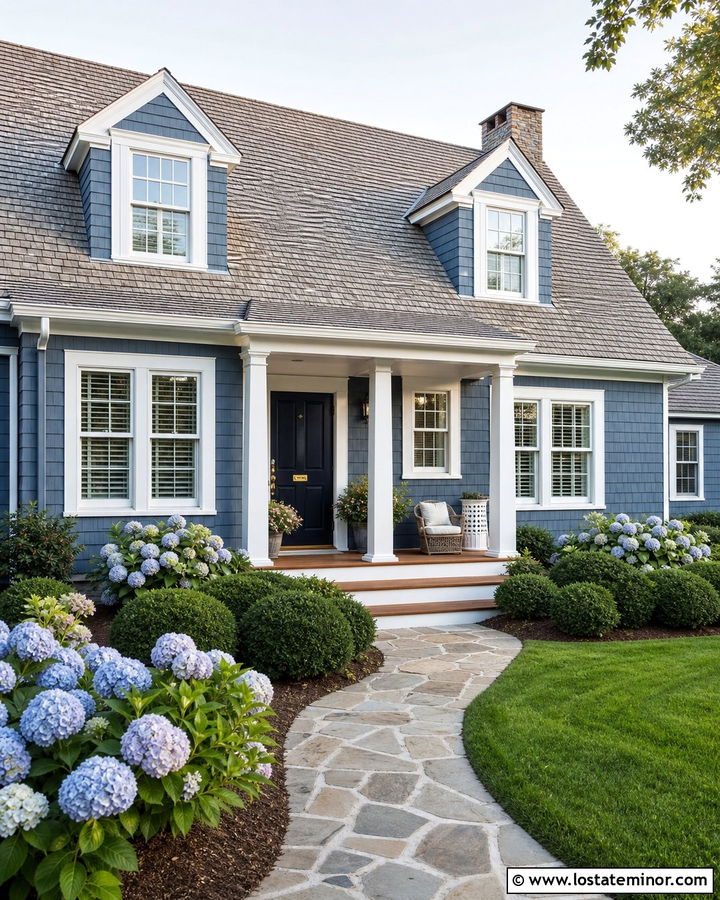
Denim blue shake siding gives a Cape Cod or shingle-style home extra depth because sunlight creates small shadows across the textured surface. Pair the shakes with broad white corner boards, window casings, and porch columns for a bright, classic outline. A warm gray roof is softer than black and complements the weathered quality of the blue. For the entrance, consider a glossy navy door that is several shades darker than the siding. Polished nickel hardware or aged brass can add a refined finishing touch. Keep the porch flooring natural wood or light gray so it does not compete with the siding texture. Hydrangeas, boxwoods, and a curved stone path reinforce the welcoming character. The result feels coastal but remains appropriate for an inland suburban neighborhood.
7. Denim Blue Lap Siding With Cream Trim
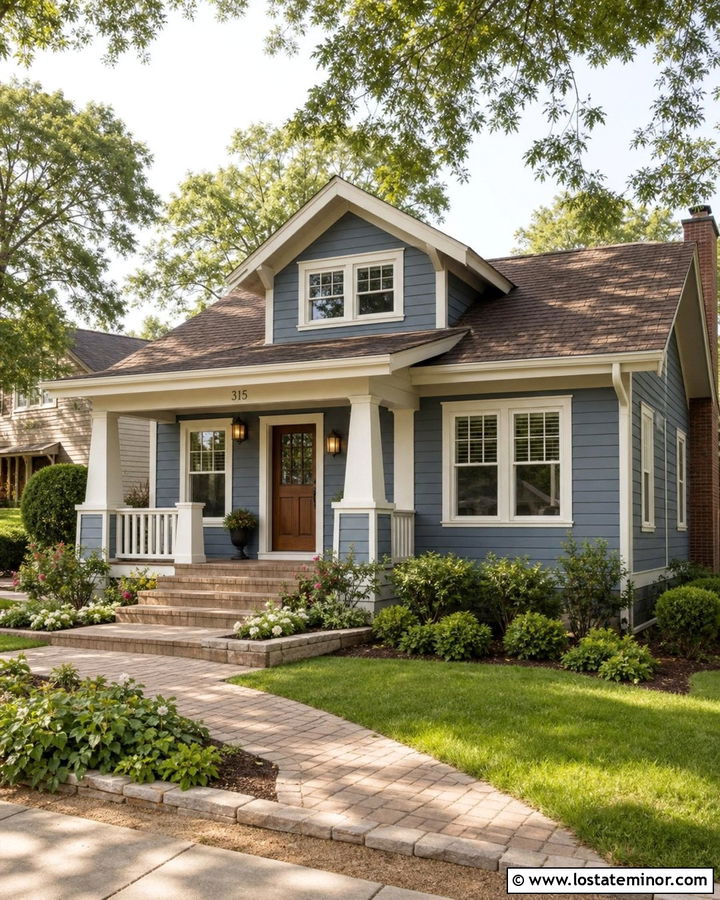
Would bright white trim feel too stark against your roof or surrounding landscape? Cream trim offers a warmer alternative that gently frames denim blue lap siding. This pairing works beautifully on an older bungalow, traditional cottage, or modest ranch with wood windows and a visible front porch. Choose a cream that is light but not noticeably yellow. Then repeat it on the fascia, soffits, porch railing, and garage trim. A medium brown front door connects the cream to a brown or weathered roof. Bronze lights, copper planters, and warm-toned pavers can reinforce the balanced palette. Avoid mixing several different off-whites because small variations become obvious outdoors. One consistent cream allows the denim blue siding to look softer and slightly more lived-in while preserving clear architectural definition.
8. Denim Blue Vertical And Horizontal Siding
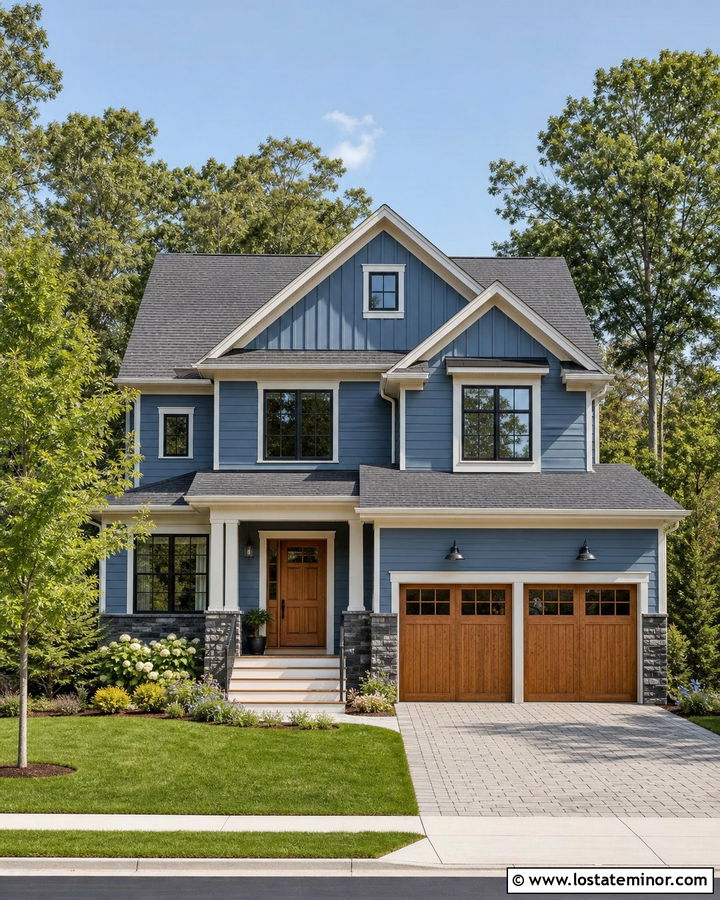
Mixing vertical and horizontal siding can add dimension to a plain facade without introducing another dominant color. Cover the main walls with denim blue horizontal lap siding, then use matching vertical board-and-batten in the front gables or around the entry. The consistent color prevents the combination from looking fragmented, while the directional change emphasizes architectural features. Add warm white trim to separate rooflines and windows. A medium oak door and garage door bring natural contrast, and dark gray stone along the foundation adds visual weight. Black gutters and lighting can provide a crisp final accent. This approach is useful for wide houses that need more vertical movement. Keep siding transitions aligned with corners, roof breaks, or changes in wall depth so every material shift appears deliberate.
9. Denim Blue Siding With Natural Wood Shutters
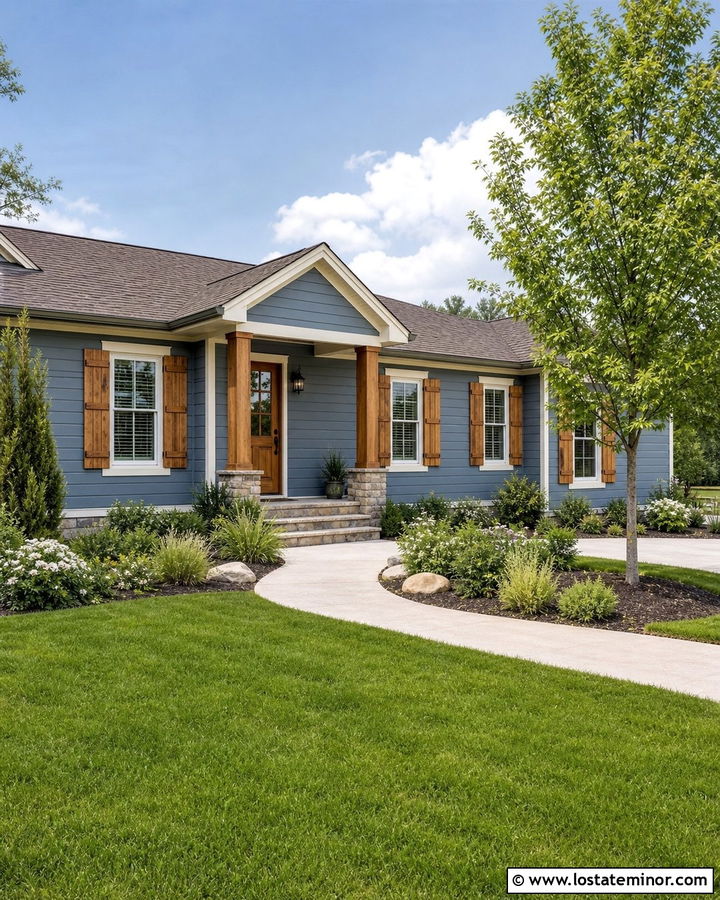
Natural wood shutters can make denim blue siding feel warmer and more handcrafted. The combination works especially well on a ranch, cottage, or Craftsman home with straightforward window placement. Choose shutters that fit the proportions of each window instead of undersized decorative panels. Cedar or white oak with a medium stain provides enough contrast to remain visible against the blue. Repeat the wood on the front door, porch swing, or garage header, but avoid using too many different stains. Creamy white window trim can create a narrow transition between the siding and shutters. A gray-brown roof ties the warm and cool elements together. Complete the setting with stone steps and layered green planting. The scheme feels relaxed, natural, and distinctive without depending on a bright accent color.
10. Denim Blue Siding With Yellow Front Door
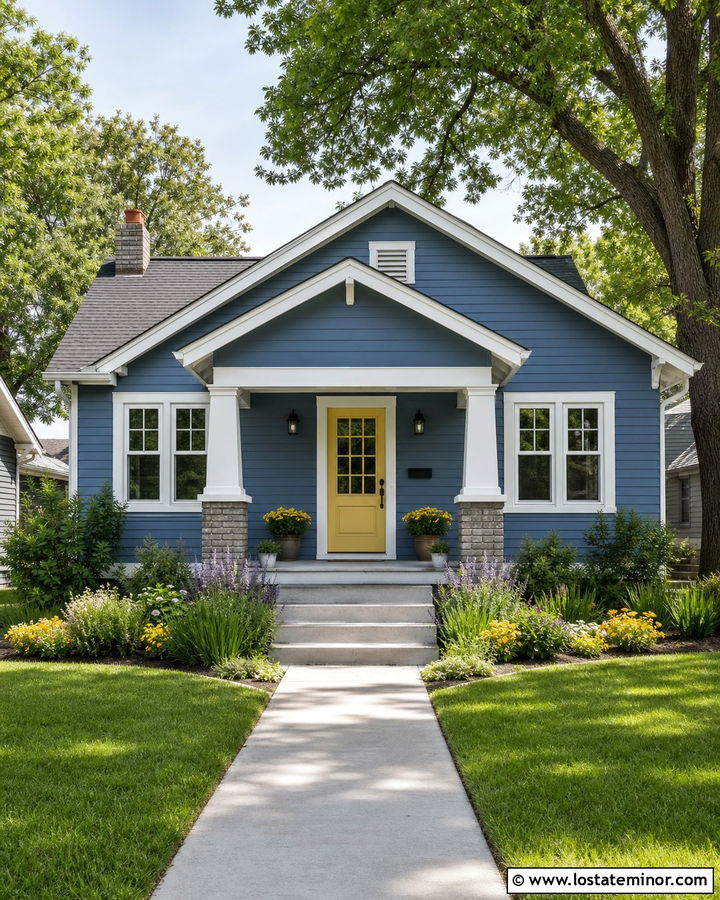
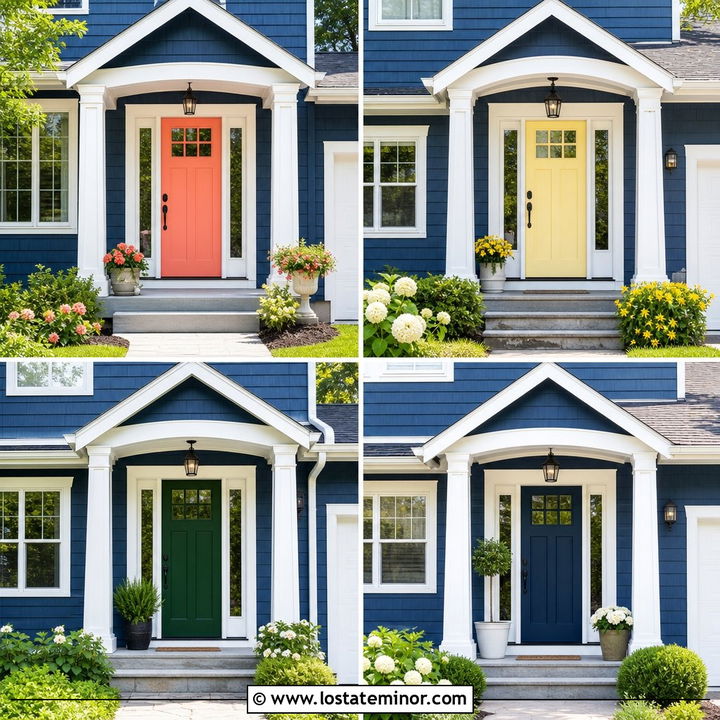
A yellow front door brings cheerful contrast to denim blue siding, particularly on a small cottage or bungalow where the entry deserves more attention. Choose a warm mustard, golden yellow, or muted ochre rather than a highlighter-bright shade. The softened yellow looks more grounded and relates easily to brass hardware, cedar furniture, and warm landscaping. Keep the window trim white and use dark charcoal for the roof, gutters, and porch lights. If the house has shutters, paint them denim blue or charcoal instead of introducing another color. A light concrete walkway and colorful perennial border can guide the eye toward the entrance. Because yellow becomes more intense in direct sunlight, test several large door samples outdoors. The right tone should feel welcoming while allowing the denim siding to remain the primary color.
11. Denim Blue Siding With Red Front Door
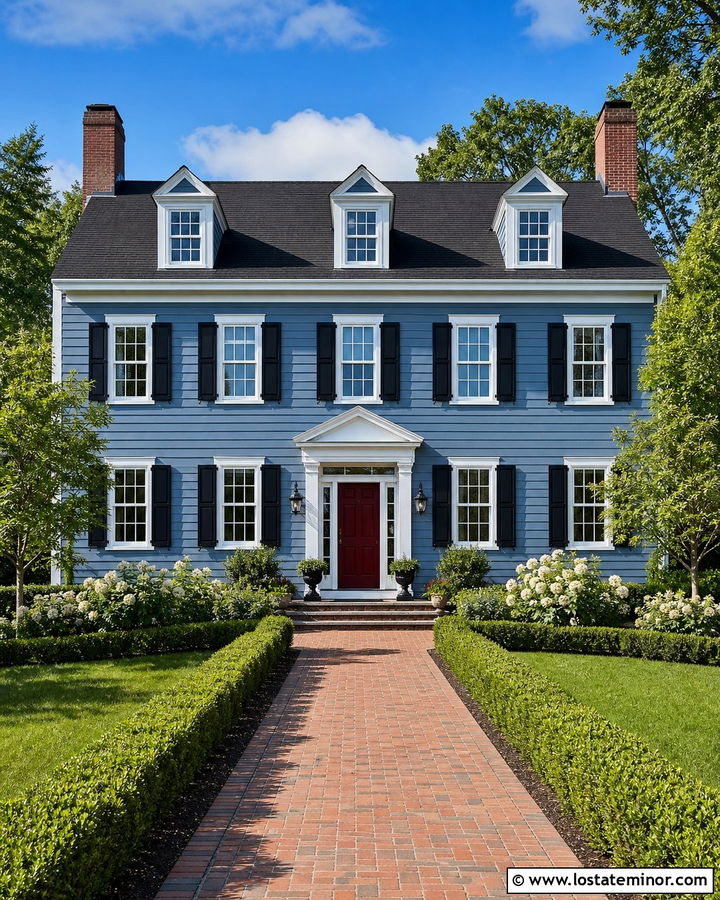
A deep red front door gives denim blue siding a traditional American character without making the entire facade feel themed. Look for brick red, oxblood, or muted cranberry rather than a clear primary red. These deeper tones have enough weight to balance the siding and a charcoal roof. Use crisp white trim around windows and columns to separate the two strong colors. Black shutters can work on a Colonial home, but they should be large enough to suit the windows. Brass door hardware and traditional lanterns add warmth near the entrance. For a quieter result, repeat the red only in small seasonal flowers rather than permanent architectural details. This palette looks especially fitting on symmetrical homes, where the centered door naturally becomes the controlled focal point of the exterior.
12. Denim Blue Siding With Black Front Door
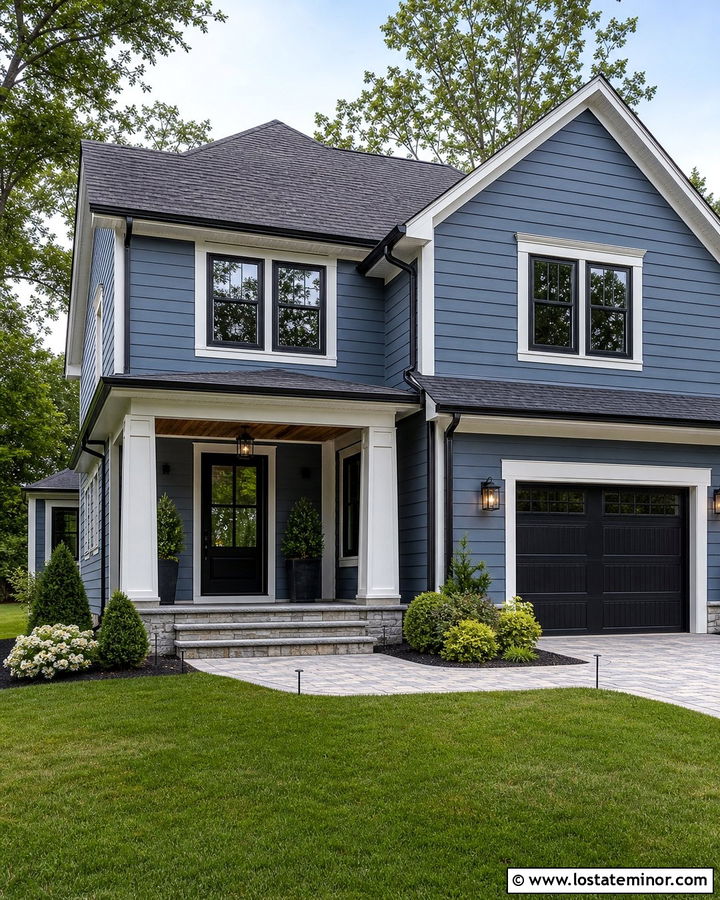
A glossy black front door provides an easy anchor for denim blue siding. The difference between the muted blue and deep black is noticeable but not harsh, making this combination suitable for both traditional and transitional homes. Connect the door to other features by using black window sashes, gutters, lanterns, or a thin porch railing. Keep larger surfaces, such as trim and garage doors, warm white to prevent the facade from becoming too dark. Light gray stone steps or a small stone skirt can add texture near ground level. If the entry sits in deep shade, consider a satin finish instead of flat black so the door reflects more light. A natural wood porch ceiling introduces warmth overhead and keeps this simple three-color scheme from appearing overly cool or severe.
13. Denim Blue Siding With Sage Green Door
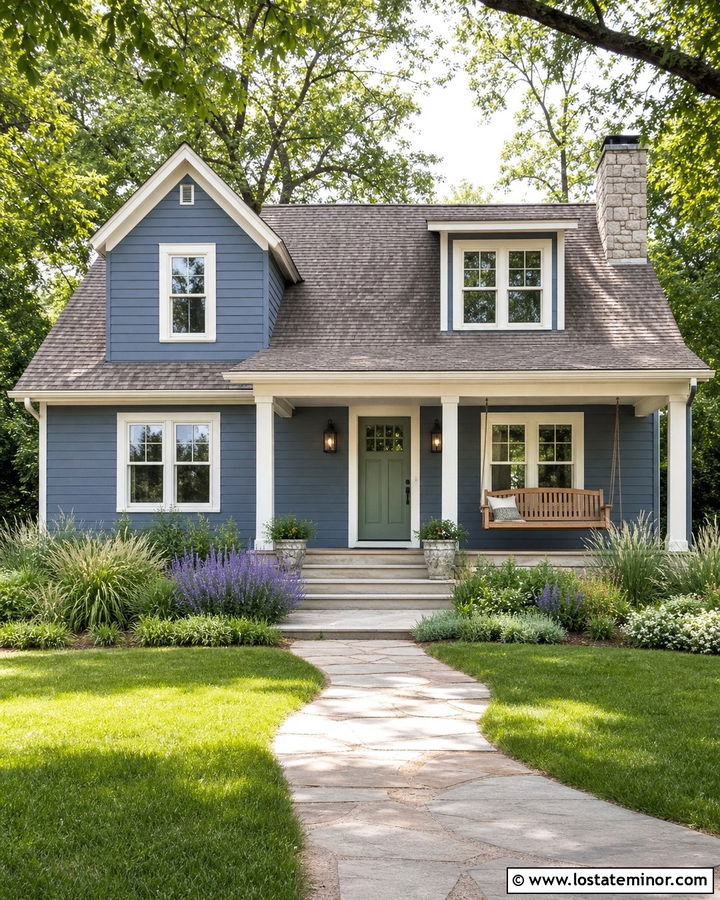
Denim blue and muted sage green create a gentle, nature-inspired palette for a cottage, bungalow, or casual farmhouse. The key is choosing a sage that contains enough gray to avoid clashing with the softened blue siding. Frame the front door with warm white trim and repeat that white across windows, fascia boards, and porch posts. A weathered gray roof supports the subdued colors, while aged bronze hardware offers a quieter alternative to black. Add stone planters, native grasses, lavender, and low evergreen shrubs around the walkway. Natural wood seating or a simple oak porch swing can provide one controlled warm note. This combination is especially appealing when the house sits among mature trees, although both colors should be tested to ensure they remain distinct in heavy shade.
14. Denim Blue Siding With White Garage Doors
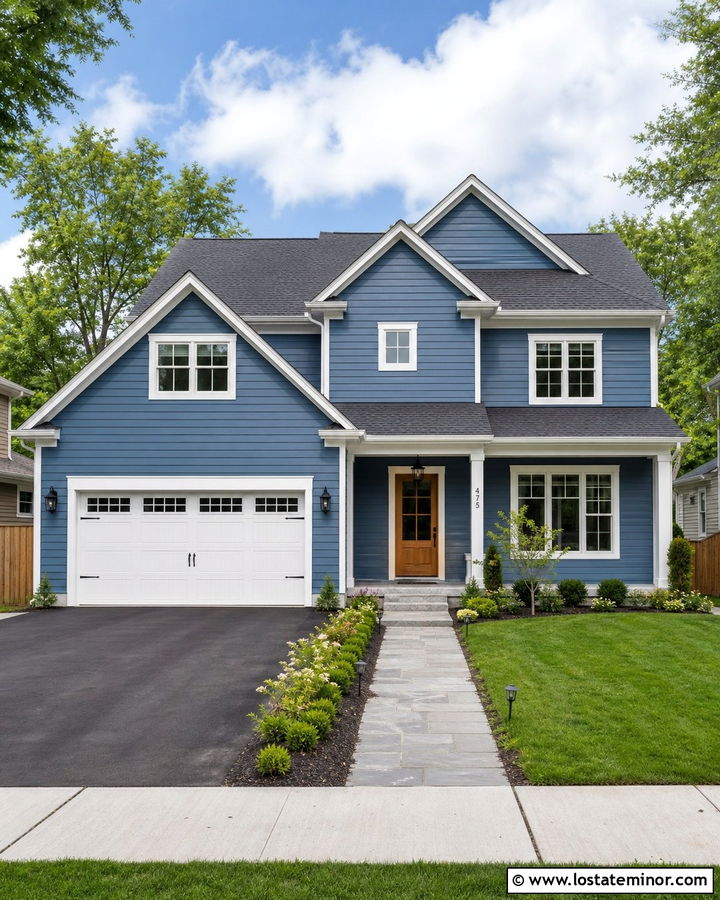
Large garage doors can dominate a facade, so white doors are helpful when you want denim blue siding to remain the main feature. Match the garage color to the window trim and fascia for a connected, uncluttered appearance. This works particularly well on a suburban two-story house with an attached two-car garage. Choose doors with simple rectangular panels and modest windows instead of overly decorative hardware. A medium wood front door provides a warmer focal point and ensures the entrance does not disappear beside the garage. Use charcoal for the roof and black for lighting, gutters, and house numbers. If the driveway is broad, soften it with narrow planting beds or ornamental trees. The finished exterior feels bright, balanced, and practical while giving the denim siding plenty of visual space.
15. Denim Blue Siding With Wood Garage Doors
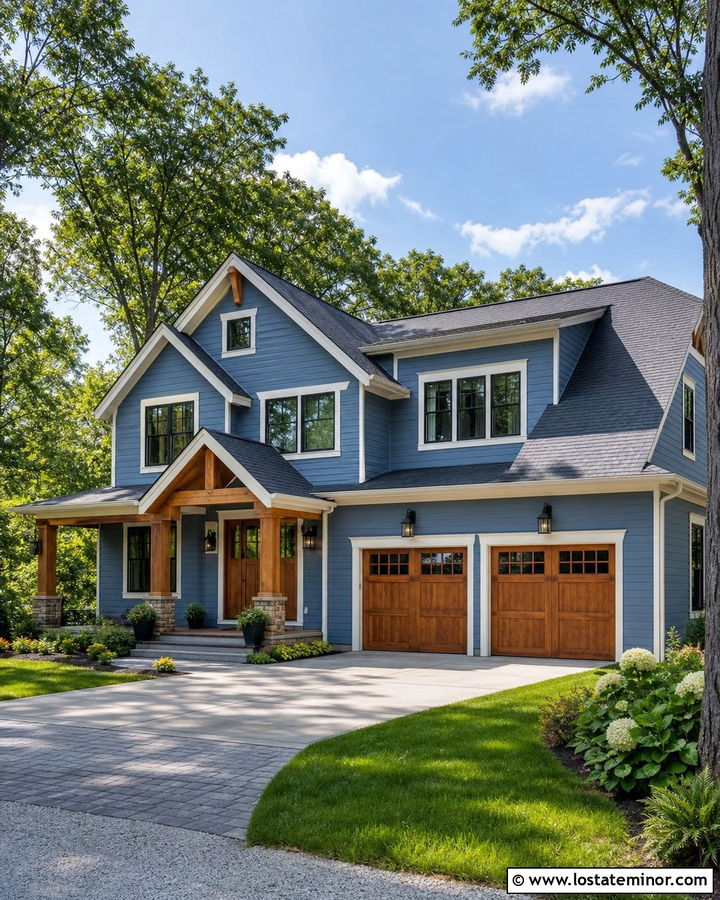
Wood garage doors can transform denim blue siding by adding warmth across one of the largest surfaces on the facade. Select a medium cedar or oak finish that remains clearly visible but does not turn orange in strong sunlight. Repeat the same stain on the front door, porch posts, or a small gable accent to make the garage feel integrated. Use warm white trim to brighten windows and separate the wood from the blue. Charcoal roof shingles, black lanterns, and dark gutters provide grounding accents. This scheme suits Craftsman, mountain modern, and transitional homes with prominent attached garages. Keep the driveway and landscaping simple so the materials remain the focus. When using manufactured wood-look doors, compare samples beside real wood accents to ensure their undertones coordinate convincingly.
16. Denim Blue Siding With Charcoal Roof
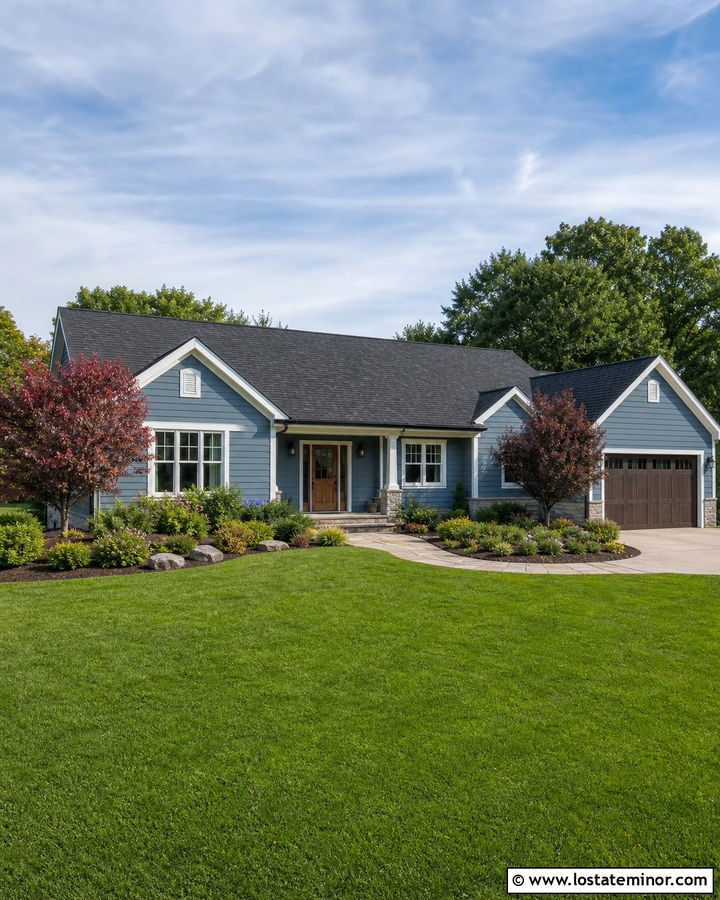
A charcoal roof is one of the most flexible partners for denim blue siding because it adds depth without introducing a competing warm color. The combination can support a ranch, Colonial, split-level, or modern farmhouse exterior. Choose a roof with subtle gray variation rather than a completely flat black surface. That texture will prevent the roof from appearing too heavy, especially on a one-story house where it occupies much of the view. Use soft white trim to sharpen roof edges and window openings. A natural wood door adds warmth, while black lights and gutters connect visually to the shingles. Light gray stone around the foundation can complete the cool palette. Before finalizing the siding, compare it beside an actual roof sample because blue undertones may change under different daylight conditions.
17. Denim Blue Siding With Brown Roof
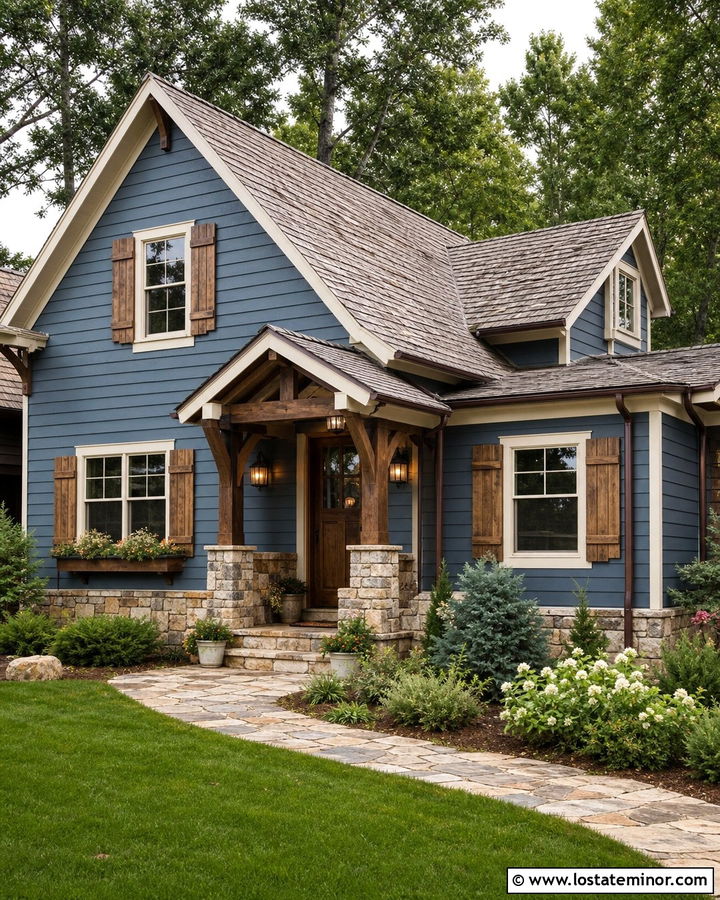
A brown roof creates a warmer and more rustic interpretation of denim blue siding. Look for weathered brown shingles containing gray, taupe, and charcoal flecks rather than strong orange or red undertones. Those blended colors create a natural bridge between the blue exterior and wood accents. Cream trim works better than stark white in this palette because it relates to the roof’s warmth. Add a walnut-stained front door, bronze gutters, and stone with beige-gray variation. On a ranch or cottage, cedar shutters can repeat the roof color and create balance across the facade. Keep modern black accents limited, since too much black may interrupt the softer palette. This complete scheme feels comfortable and established, particularly in wooded settings where earthy roof colors connect the house to its surroundings.
18. Denim Blue Siding With Metal Roof
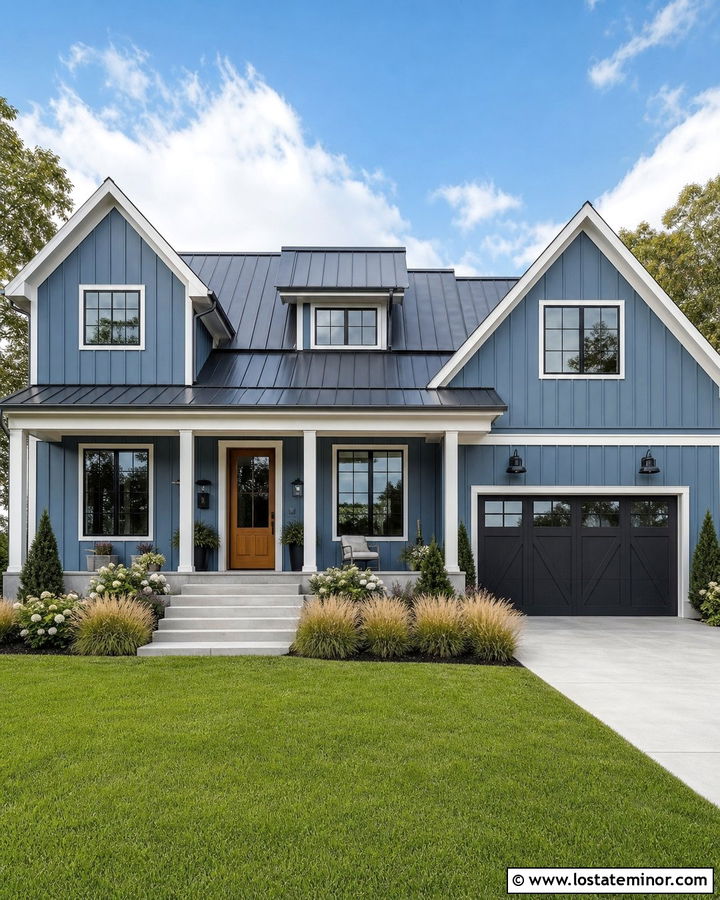
The clean lines of a standing-seam metal roof can give denim blue siding a durable modern farmhouse or contemporary profile. Charcoal is the easiest roof color to coordinate, although a muted silver-gray roof can work on a lighter, less saturated denim exterior. Use vertical board-and-batten siding beneath the metal roof to emphasize the strong linear design. Warm white trim keeps the combination fresh, and a natural oak door prevents the metal and blue surfaces from feeling too cool. Black-framed windows, simple sconces, and square porch posts can complete the modern look. Avoid adding ornate shutters or decorative trim that conflicts with the streamlined materials. If a full metal roof feels visually overwhelming, use it only above the porch or entry while keeping architectural shingles across the main roof.
19. Denim Blue Siding With Wraparound Porch
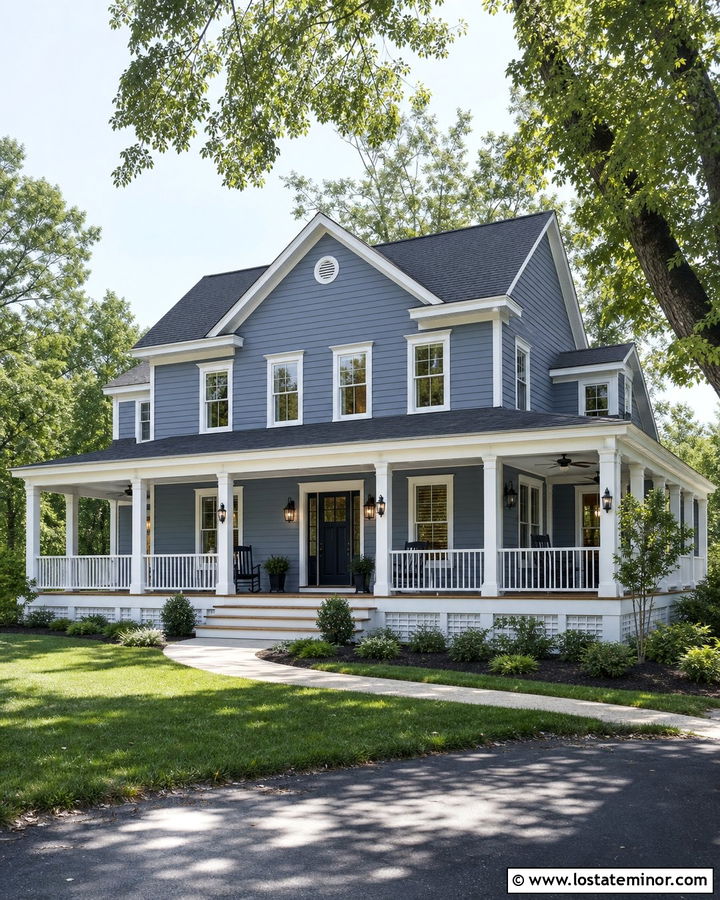
A wraparound porch creates a broad opportunity to balance denim blue siding with lighter architectural details. Paint the columns, railings, fascia, and porch skirt a warm white, allowing the blue body color to remain visible behind them. A natural wood porch floor provides practical warmth across the large covered space. Consider a dark navy front door for a layered blue palette, then add black lanterns and simple rocking chairs. A charcoal roof keeps the upper portion grounded without distracting from the porch. This scheme works especially well on a farmhouse, Southern cottage, or traditional country home. Keep the ceiling light blue-gray or soft white rather than matching the darker siding. Repeating denim blue on porch planters or a side door helps the entire structure look considered from every angle.
20. Denim Blue Siding On A Small Bungalow
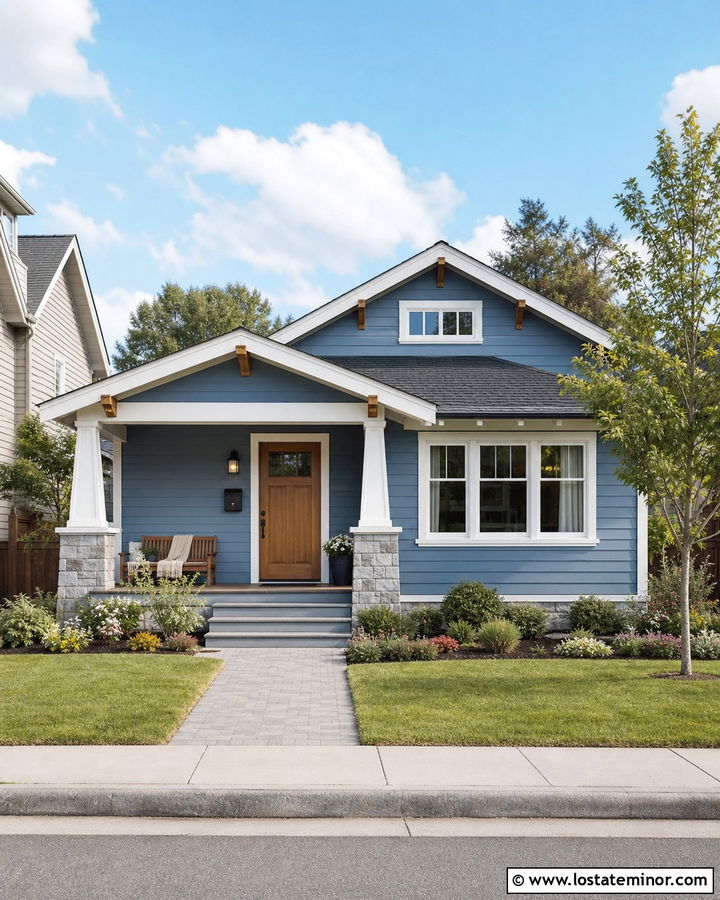
On a compact bungalow, denim blue siding can add personality while preserving the home’s cozy proportions. Horizontal lap siding visually widens the facade, and white trim defines the low roofline, windows, and tapered porch columns. Use a warm wood door as the focal point and repeat the stain on porch furniture or exposed rafter tails. A charcoal roof creates clear separation above the blue without making the small house feel top-heavy. If there is a stone foundation, select low-contrast gray or taupe masonry. Oversized shutters and too many accent colors can crowd a short facade, so keep the exterior palette to three or four finishes. A straight paver walkway, low shrubs, and one small ornamental tree will frame the house without hiding its strongest architectural features.
21. Denim Blue Siding On A Ranch House
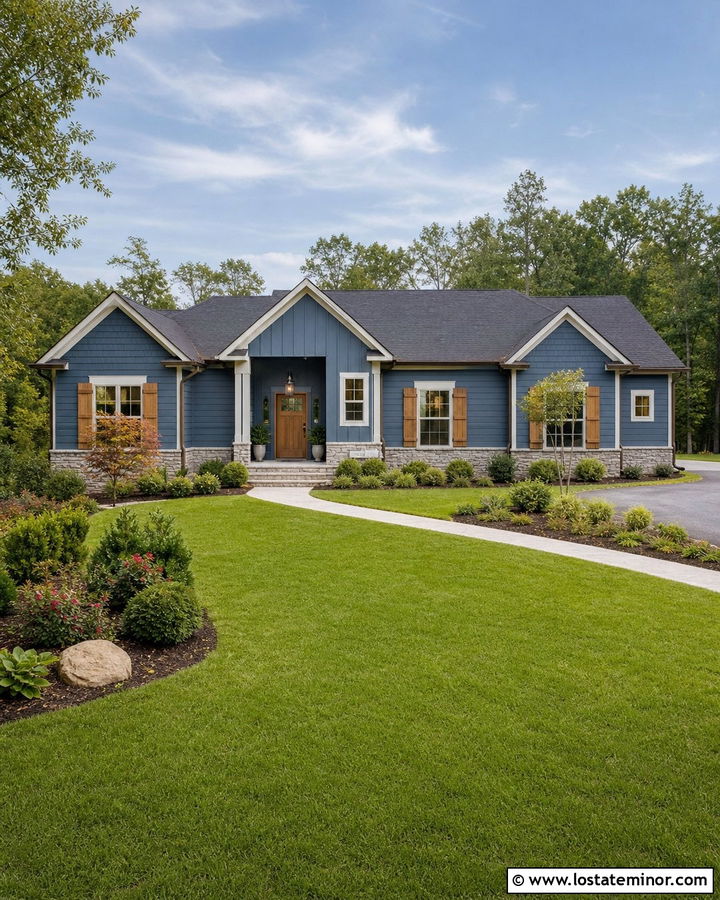
A long ranch house benefits from exterior details that break up its horizontal shape. Denim blue lap siding can cover the main walls, while matching board-and-batten siding highlights the entry or a projecting garage. Use warm white trim around windows and fascia to create a clean continuous line. A medium wood front door and matching shutters introduce warmth at several points across the facade. Add gray stone beneath the porch or along one foundation section rather than wrapping every wall. This creates texture without making the house look shorter. A charcoal roof and dark bronze gutters complete the upper portion. Layered planting beds, a curved path, and two small trees can soften the long elevation. The restrained palette makes an ordinary ranch feel more intentional, balanced, and architecturally detailed.
22. Denim Blue Siding On A Colonial House
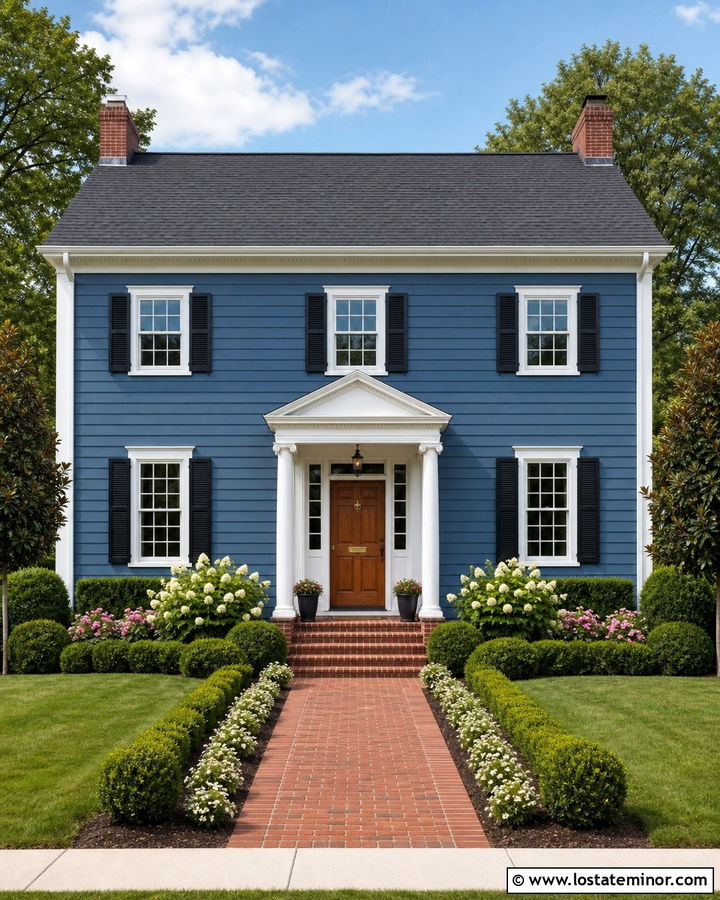
Symmetry gives a Colonial house the structure needed to carry a confident denim blue exterior. Cover the facade with consistent horizontal siding and use bright or softly warm white on corner boards, cornices, window trim, and classical columns. Black shutters create traditional contrast, but their dimensions should correspond to the windows for a more convincing appearance. A centered red, black, or natural wood door can establish the main focal point. Choose one entrance color and avoid repeating it across unrelated features. Dark charcoal roof shingles support the formal palette, while aged brass hardware adds subtle warmth. Keep landscaping balanced on both sides of the walkway with boxwoods, flowering shrubs, and small ornamental trees. The blue updates the familiar architecture while the controlled trim placement preserves its orderly character.
23. Denim Blue Siding On A Craftsman House
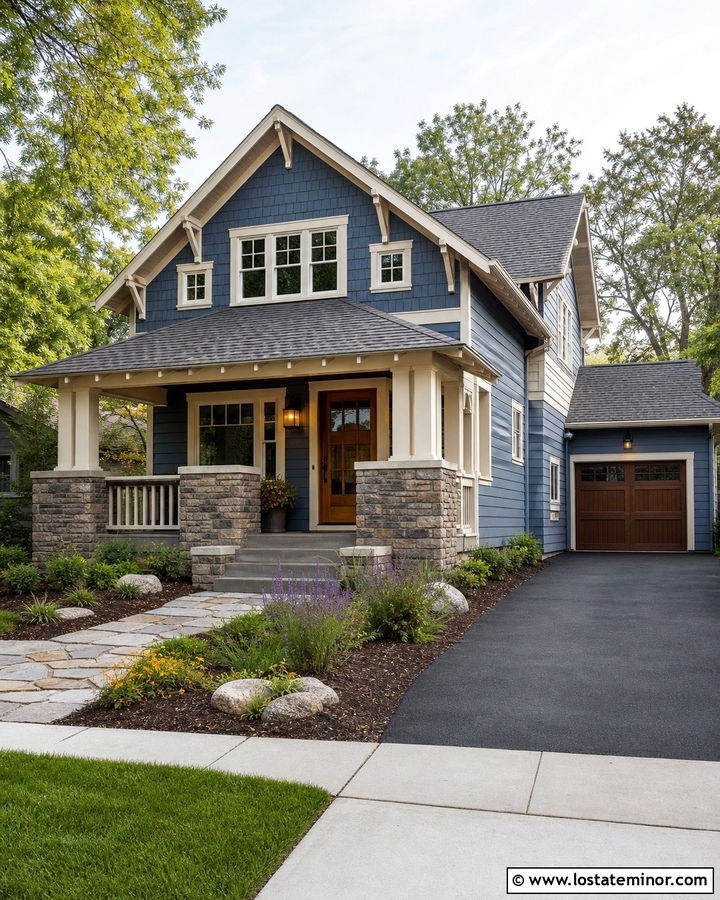
A Craftsman exterior naturally supports denim blue siding because the style already features layered materials and strong handcrafted details. Use horizontal lap siding across the main walls and denim blue shakes within the front gables. Cream trim highlights exposed rafters, window groupings, and tapered porch columns without creating severe contrast. Wrap the lower columns in warm gray fieldstone and choose a medium-stained oak door with visible grain. Bronze lanterns and gutters feel more harmonious than shiny black accents. A roof mixing charcoal, brown, and gray can connect every part of the palette. Keep the porch railing simple and substantial. Repeating the stone along the foundation and the wood stain on small brackets creates continuity, allowing the blue siding to unify the house rather than compete with its architectural details.
24. Denim Blue Siding On A Cape Cod House
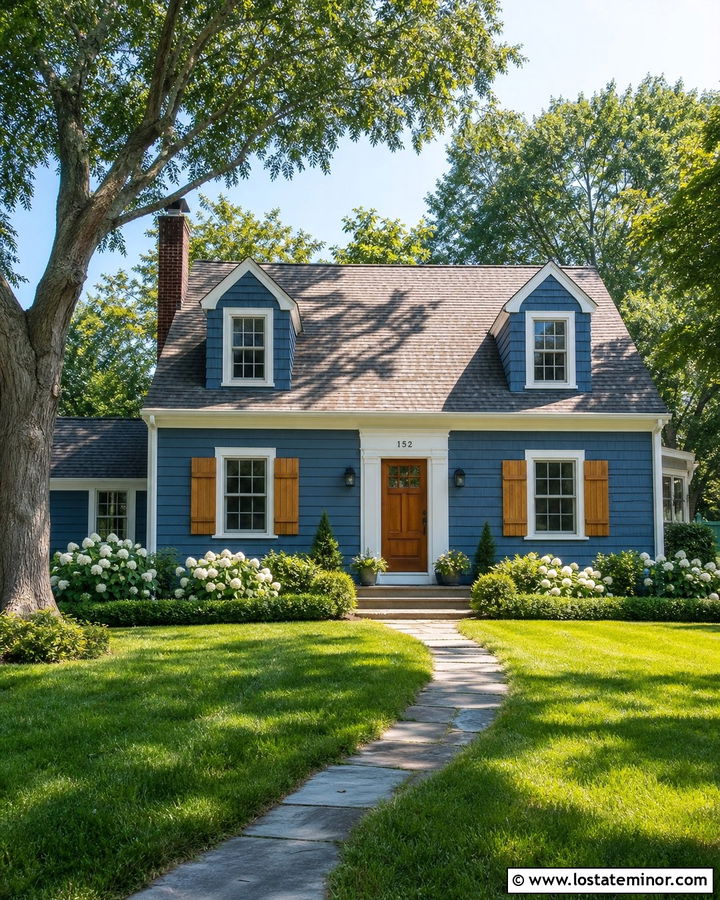
A Cape Cod house can wear denim blue siding in a way that feels crisp, calm, and connected to its simple architecture. Use lap siding on the main level and matching shakes on dormers or upper gables. White trim should clearly outline the dormer windows, roof edges, corner boards, and central entrance. Add black shutters for familiar contrast or choose natural cedar shutters for a softer look. A warm yellow or red door can bring personality, although a stained wood door creates the most relaxed palette. Weathered gray roof shingles complement the denim tone and reinforce the home’s understated character. Keep foundation materials quiet and landscaping low. Hydrangeas, clipped shrubs, and a brick or bluestone path can frame the facade without covering its balanced proportions.
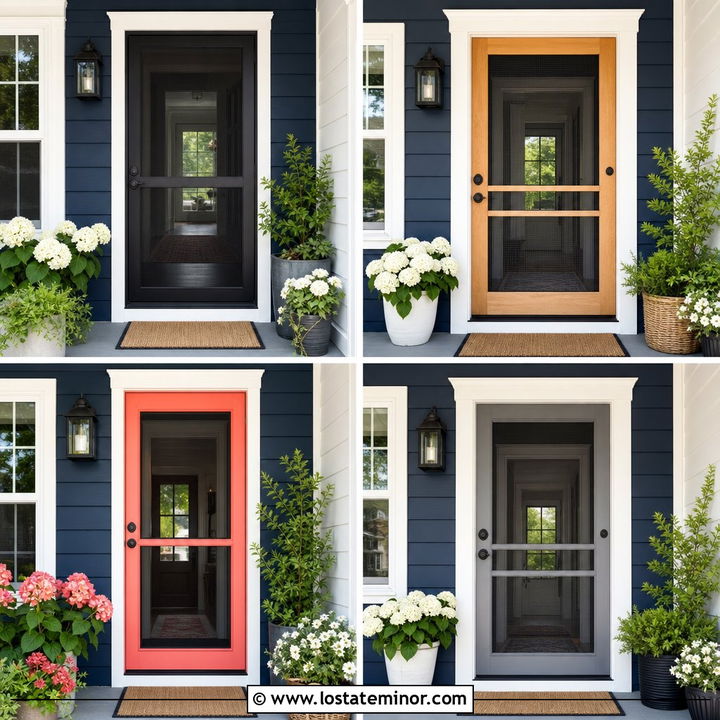
25. Denim Blue Siding On A Split-Level House
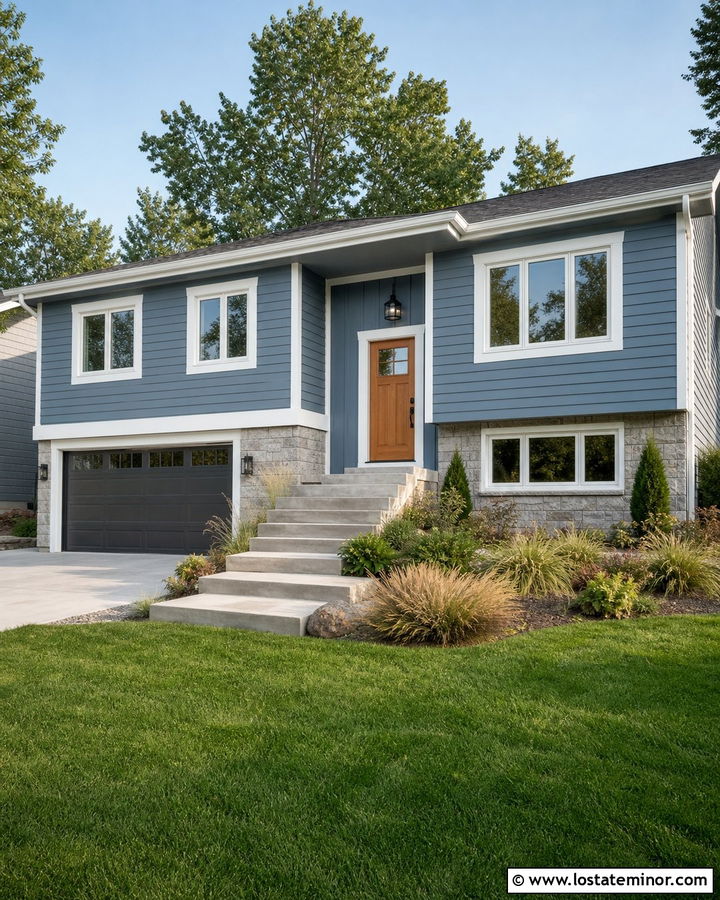
Split-level homes often have several wall planes, so a consistent denim blue color can bring the architecture together. Apply horizontal siding across the main levels and use matching vertical siding around the entry or garage projection. This subtle texture change defines each volume without dividing the house into unrelated color blocks. Paint trim warm white and consider a charcoal garage door that visually recedes. A natural wood front door can then become the warmer focal point. Add light gray stone to the lowest level or entry wall to ground the elevated portions. Black-framed lights and simple metal railings provide contemporary details. Use landscaping to connect different foundation heights, with layered grasses, shrubs, and broad steps. The completed exterior feels cohesive while preserving the distinctive stepped shape of the house.
26. Denim Blue Siding On A Modern Farmhouse
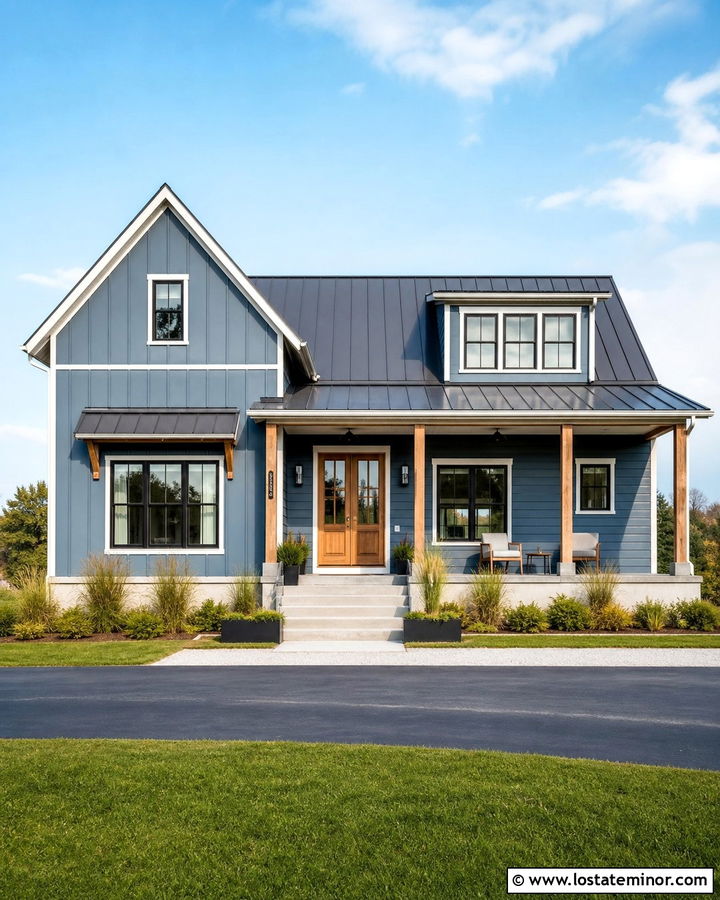
Denim blue offers a refreshing alternative to white for a modern farmhouse exterior. Cover the main walls with vertical board-and-batten siding, then use horizontal lap siding on a porch section or secondary wing. Crisp white trim keeps the gables and windows bright, while black-framed windows add the familiar modern contrast. Introduce natural wood through the front door, porch posts, and garage doors to soften the cooler palette. A charcoal metal porch roof can coordinate with architectural shingles on the main structure. Avoid excessive decorative signs or rustic accents; the siding profiles and material contrast provide enough interest. Broad concrete steps, simple planters, and ornamental grasses finish the look. This approach retains the clean farmhouse silhouette while giving the home greater color, depth, and neighborhood presence.
27. Denim Blue Siding On A Contemporary House
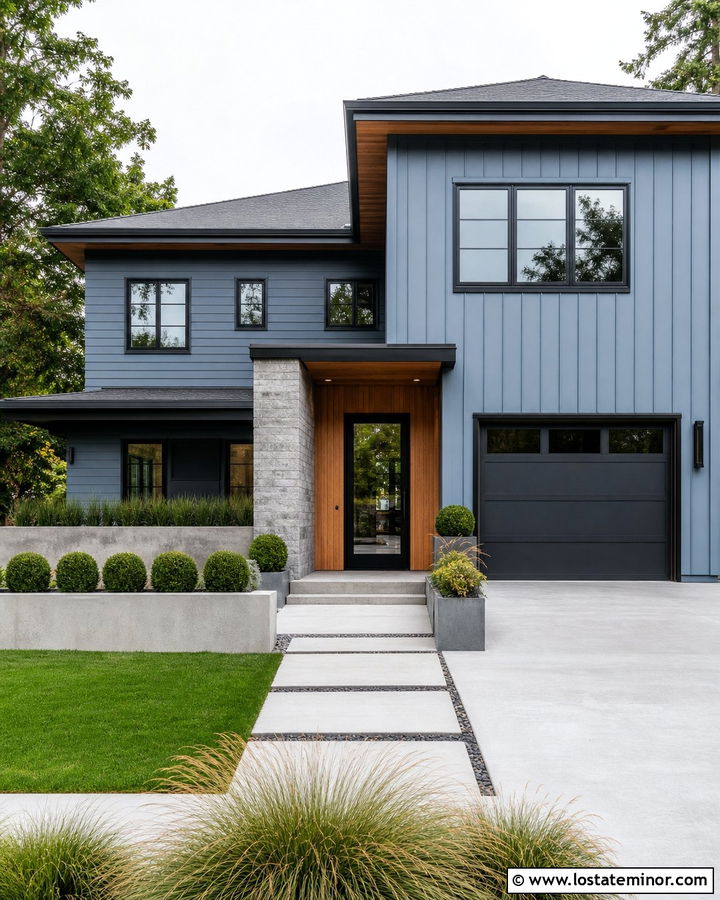
Clean geometry allows denim blue siding to become a strong architectural surface on a contemporary house. Use wide vertical panels on the tallest volume and narrow horizontal siding on lower sections to create controlled contrast. Matte black window frames, fascia, and garage doors sharpen the design, while light natural wood around the entrance adds necessary warmth. A flat or low-pitched charcoal roof keeps attention on the wall shapes. Introduce smooth gray stone or concrete near the foundation, but limit it to one clearly defined area. Minimal landscaping with grasses, structured shrubs, and rectangular planters suits the straightforward exterior. The denim blue should appear muted rather than highly saturated. Its softness balances the hard lines and dark accents, resulting in a modern facade that feels distinctive without becoming visually aggressive.
28. Denim Blue Siding On A Cottage House
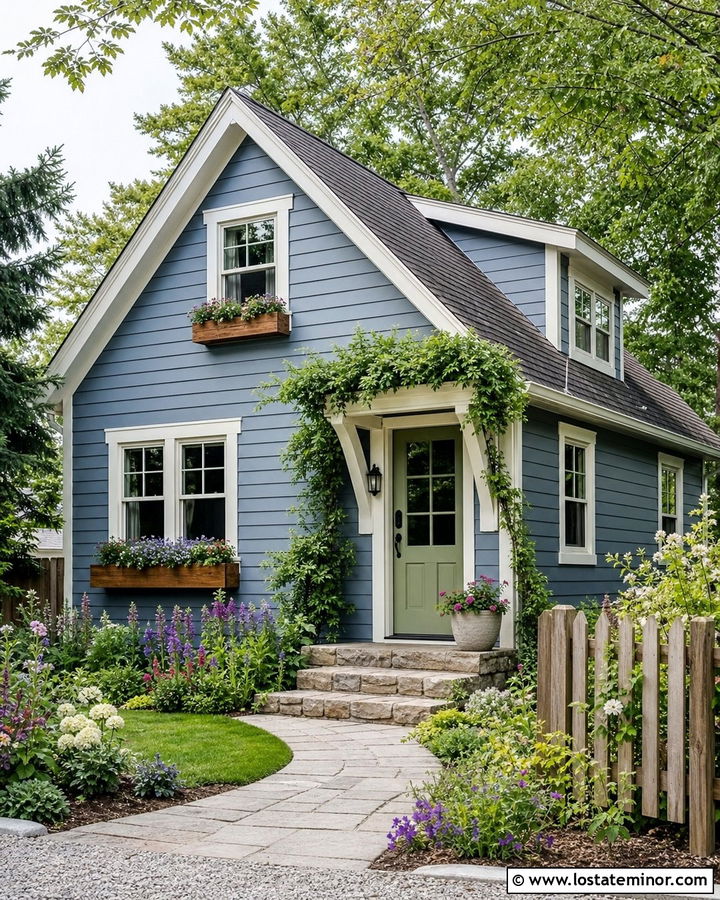
Denim blue siding can make a cottage feel colorful, welcoming, and comfortably settled into its landscape. Choose narrow lap siding or small-scale shakes that complement the home’s modest proportions. Cream trim creates a gentle outline around windows, eaves, and a covered entry. A sage green, muted yellow, or natural wood front door can provide a relaxed focal point. Select only one of these accents to keep the small facade organized. Weathered gray roofing and stone steps reinforce the informal character. Add window boxes, climbing greenery, and layered perennial beds, but leave enough siding visible for the blue color to read clearly. Curved paths and simple wood fencing can complete the setting. The goal is a coordinated cottage exterior rather than a collection of unrelated decorative details.
29. Denim Blue Siding On A Coastal House
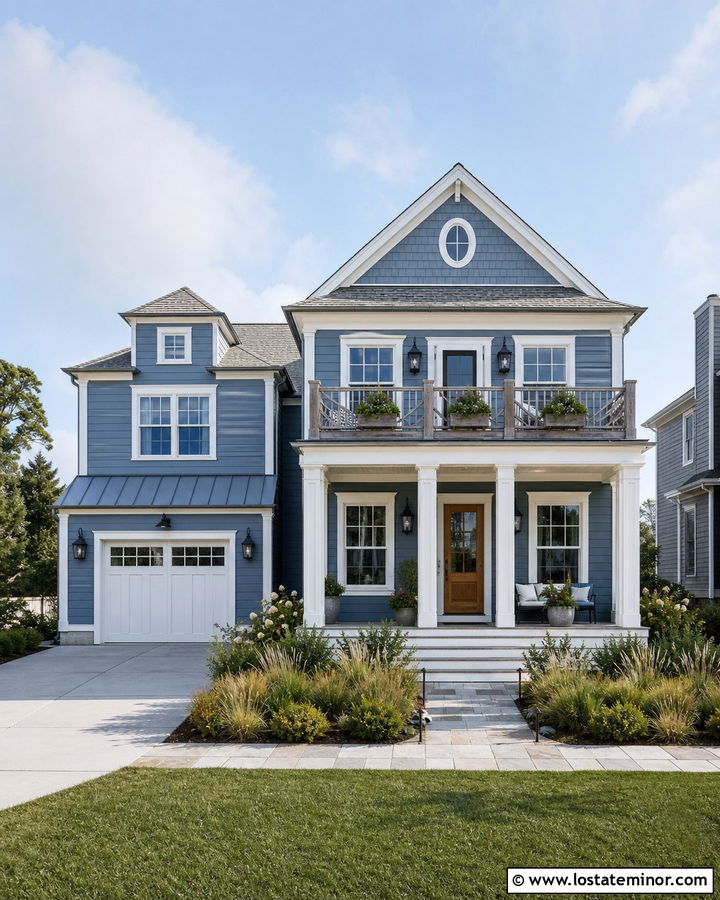
For a coastal-influenced exterior, combine denim blue siding with bright white trim, weathered wood, and a light gray roof. The denim tone should remain muted and medium in depth rather than becoming a vivid nautical blue. Horizontal siding works on the main facade, while shake siding can emphasize upper gables or dormers. Use a natural teak or oak front door and repeat the material on porch railings or an upper balcony. Matte black lanterns add definition without introducing another strong color. Pale stone pavers, ornamental grasses, and low shrubs support the breezy palette. This scheme also works far from the shoreline because it relies on balanced materials instead of obvious themed decorations. Keep the facade open, bright, and uncluttered so the blue and white combination feels architectural.
30. Denim Blue Siding On A Mountain House
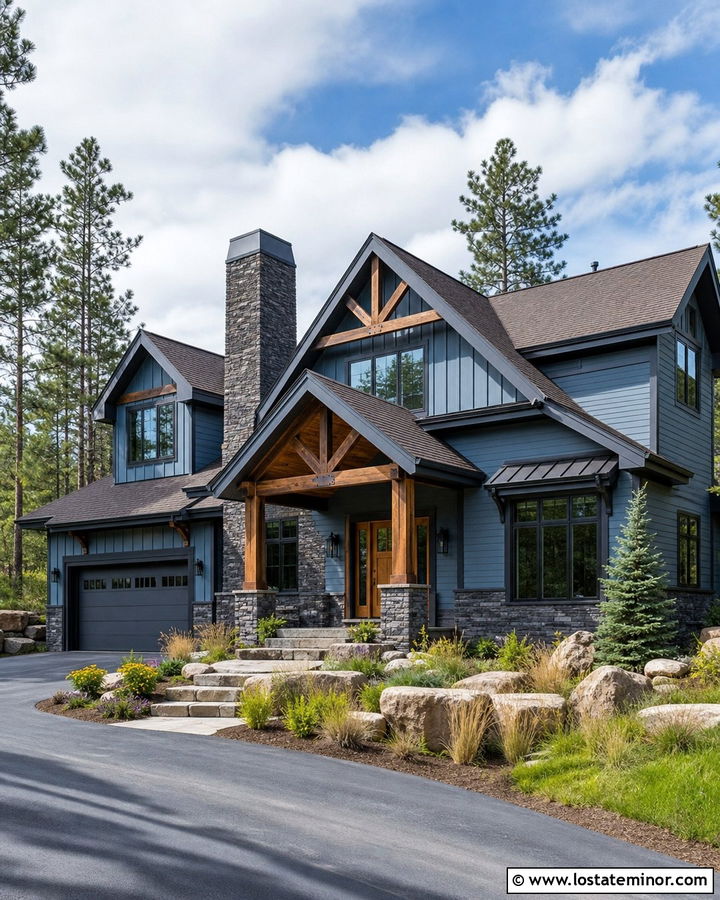
Surrounded by trees or rugged terrain, denim blue siding can offer color while remaining connected to the natural setting. Pair it with dark gray stone across the foundation and chimney, then introduce cedar on the front door, gable trusses, and porch ceiling. Use charcoal trim around windows for a grounded look, but include a small amount of warm off-white beneath soffits if the facade needs brightness. Horizontal fiber cement siding provides a practical base, while denim blue shakes or board-and-batten can distinguish tall gables. A brown-charcoal roof ties the wood and stone together. Complete the exterior with broad steps, native grasses, boulders, and evergreen planting. Keeping every material slightly muted allows the siding, masonry, wood, and landscape to feel like one cohesive mountain-inspired scheme.
Conclusion:
These complete schemes show how denim blue siding can adapt to cottages, ranch houses, Craftsman homes, farmhouses, and contemporary facades. The most successful combinations consider every visible surface, including trim, roofing, masonry, doors, garages, and landscaping. White creates clean contrast, black adds definition, and natural wood introduces warmth. Stone and brick can also help the blue feel grounded and connected to the property. Always compare large siding samples beside permanent materials in both sun and shade before making a final decision. With thoughtful proportions and a controlled palette, 30 Denim Blue House Design With Siding Ideas can inspire an exterior that feels distinctive, balanced, welcoming, and appropriate for its architecture.

Related posts: