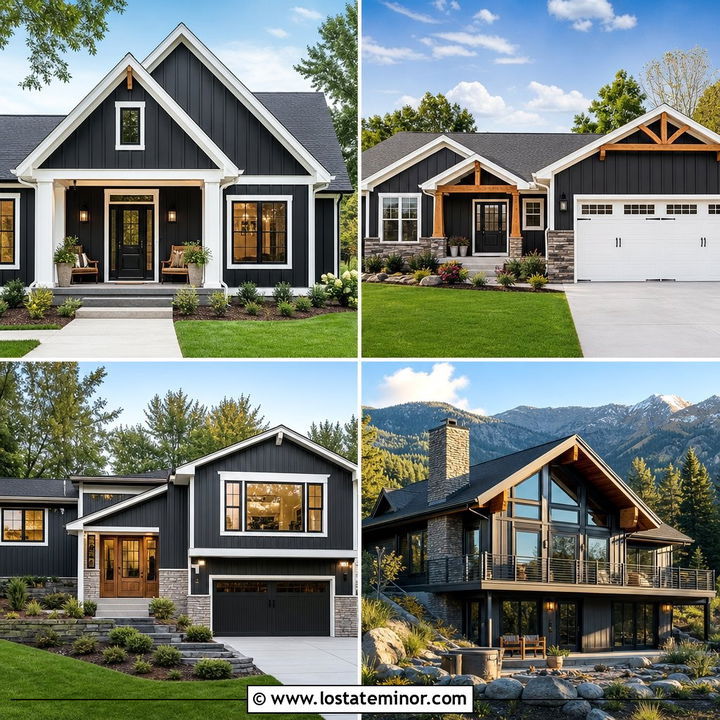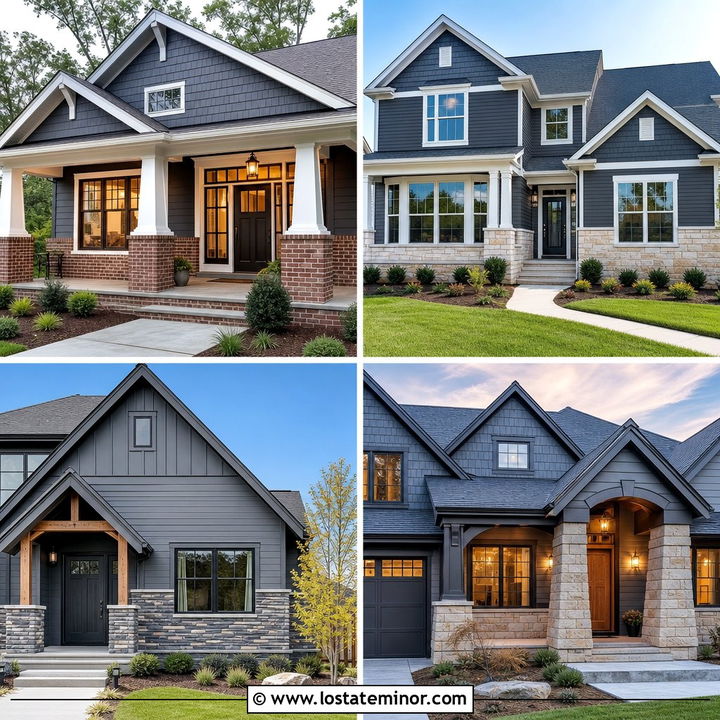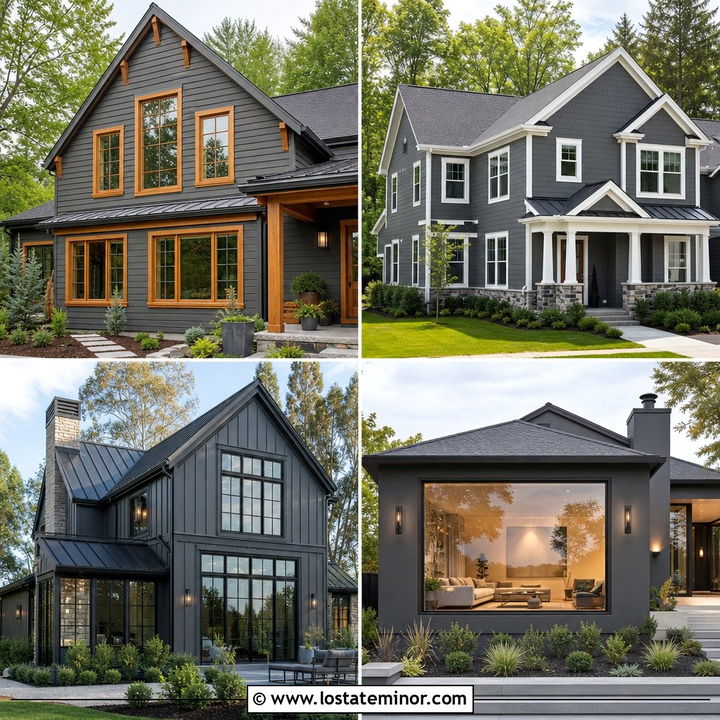
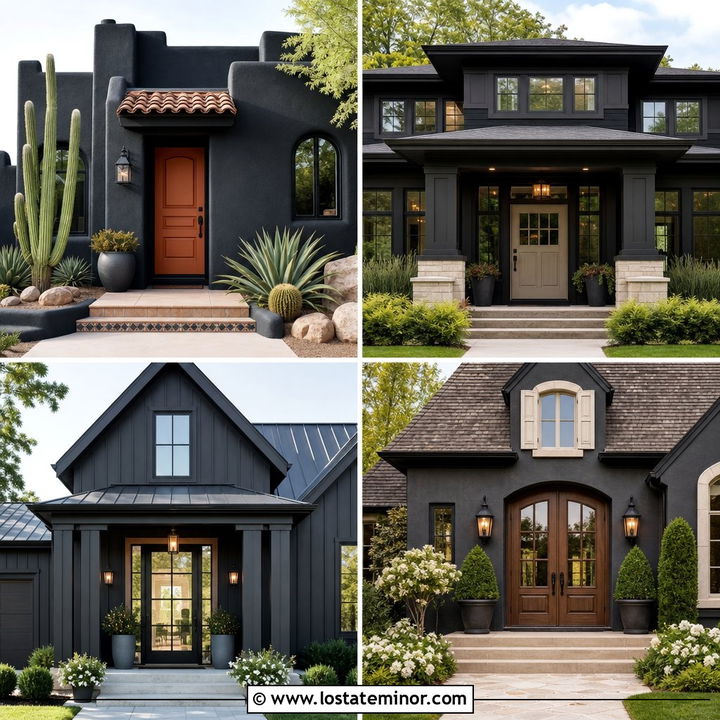
Charcoal gray brings depth, structure, and a polished edge to vertical siding. It can make a small cottage feel more architectural or give a large farmhouse a stronger connection to the landscape. Recent exterior trends also favor nature-inspired charcoal tones combined with textural materials such as board and batten, brick, stone, and wood. () The key is building a complete palette around the dark siding. Warm wood prevents the facade from feeling cold, while crisp white trim creates definition. Black accents offer a streamlined finish, and masonry adds natural variation. The following **30 Charcoal Grey House Design With Board and Batten Ideas** cover different home types, materials, roof colors, and budgets. Explore these complete **30 Charcoal Grey House Design With Board and Batten Ideas** to find a balanced look for your property.
1. Charcoal Grey Board And Batten With White Trim
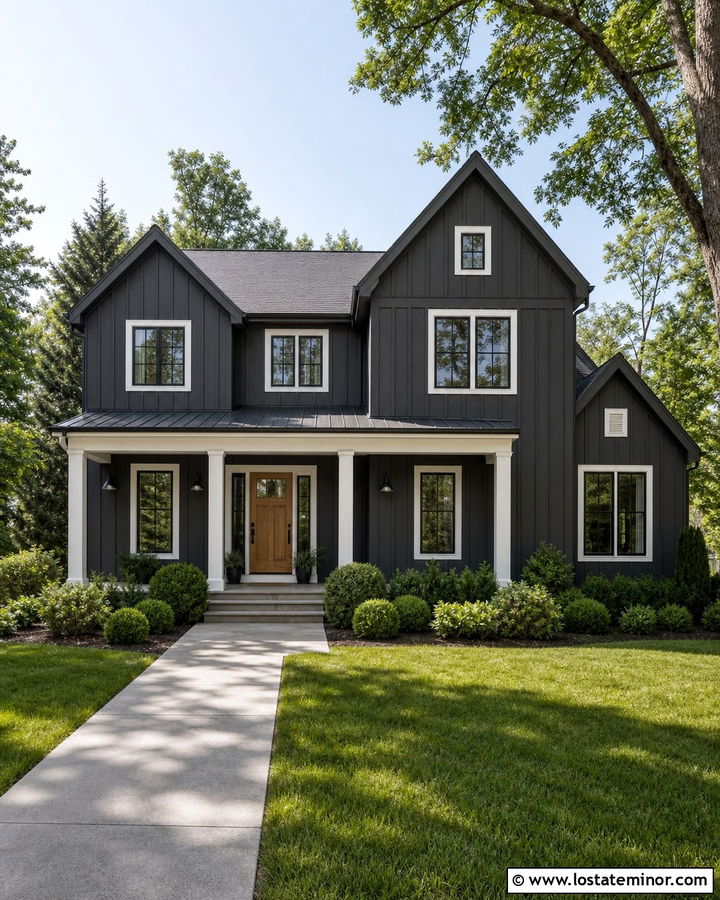
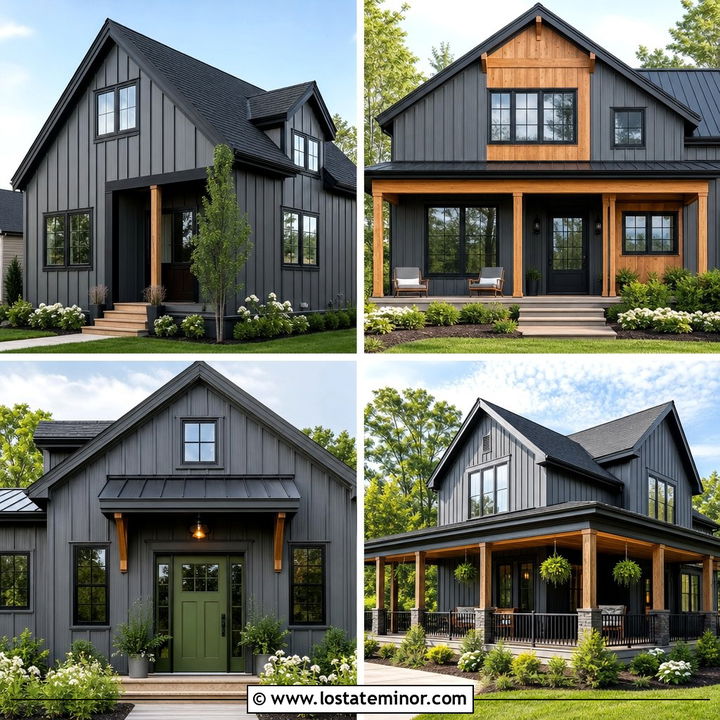
Crisp white trim gives charcoal grey board and batten siding a clean, familiar finish. Use the lighter color around windows, doors, roof edges, and porch columns to outline the home’s best architectural features. A black asphalt roof anchors the palette without introducing another competing shade. For a welcoming accent, add a medium-stained wood front door and repeat that tone through porch furniture or ceiling details. Simple black sconces, gutters, and house numbers provide a polished final layer. This combination works especially well on a two-story farmhouse because the white trim breaks up the tall charcoal walls. Green foundation shrubs and a pale concrete walkway keep the curb view fresh, balanced, and bright throughout the year.
2. Charcoal Grey Board And Batten With Black Trim
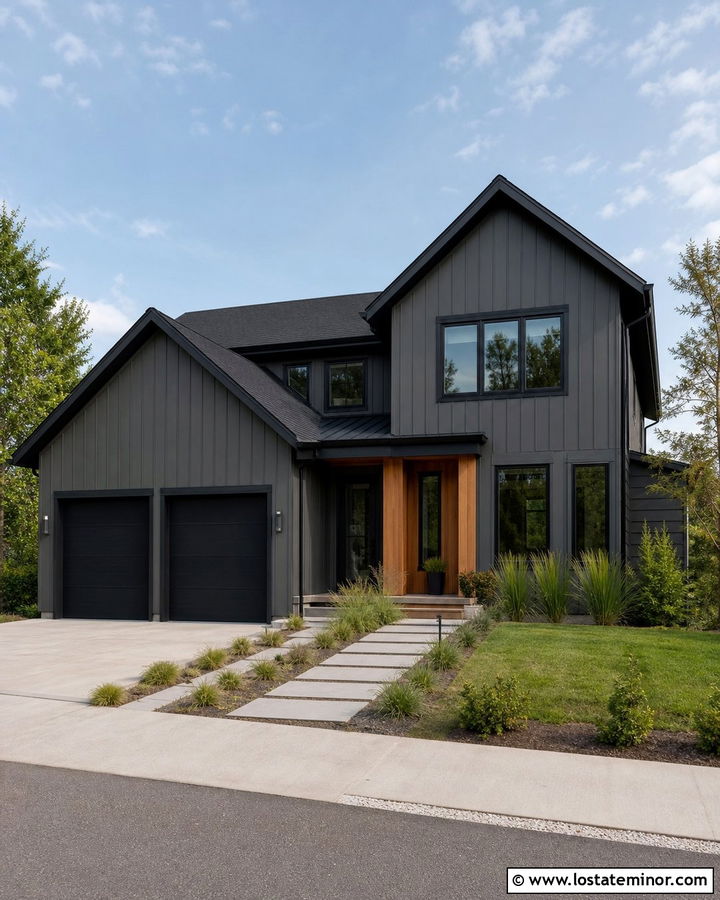
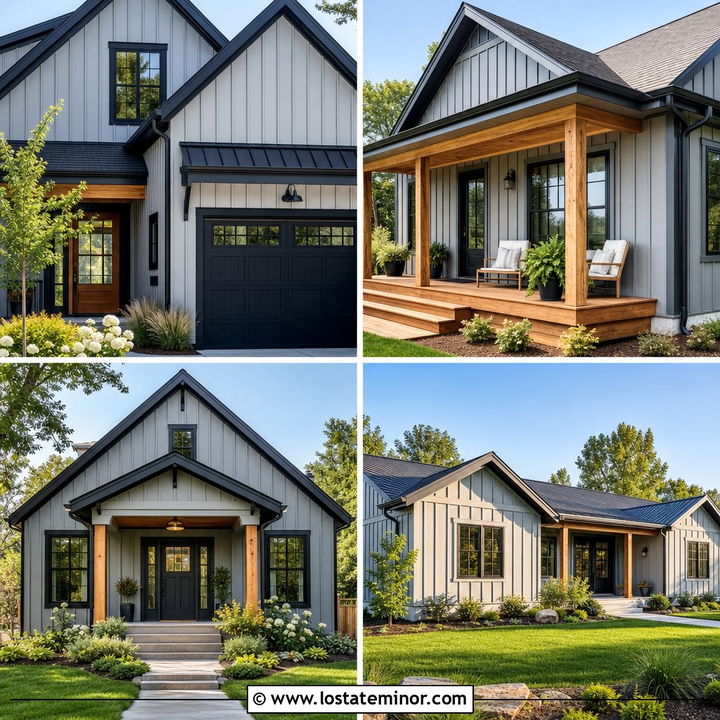
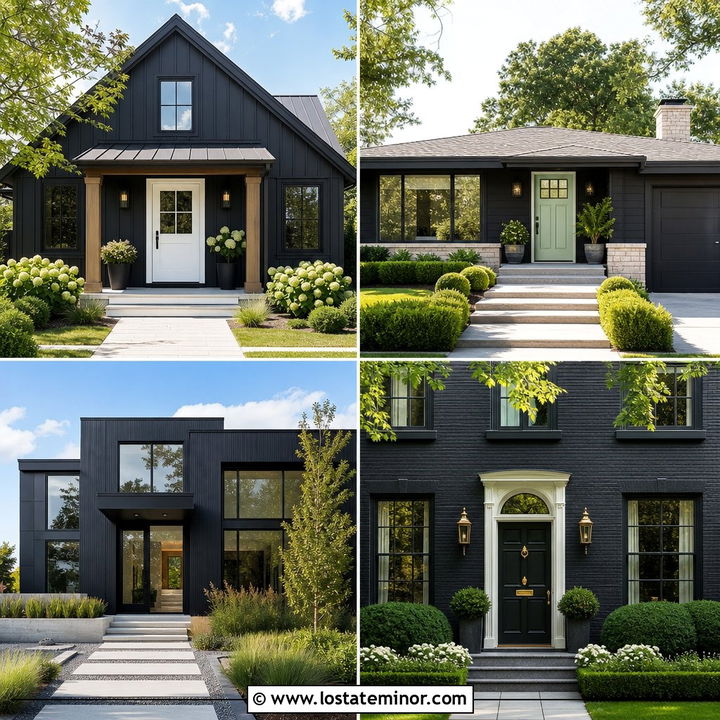
For a more streamlined appearance, pair charcoal grey board and batten siding with deep black trim. The low-contrast combination looks especially effective on modern houses with simple rooflines and large windows. Choose matte black for window frames, fascia, gutters, garage doors, and exterior lighting. Natural cedar around the entry can soften the darker palette and make the front door easier to find. A light gray concrete driveway and wide stepping-stone path will also prevent the exterior from appearing too heavy. Keep landscaping structured but not overly formal. Ornamental grasses, clipped shrubs, and a few small trees provide movement against the vertical siding. This complete scheme feels bold and cohesive without requiring bright accent colors.
3. Charcoal Grey Board And Batten With Cedar Accents
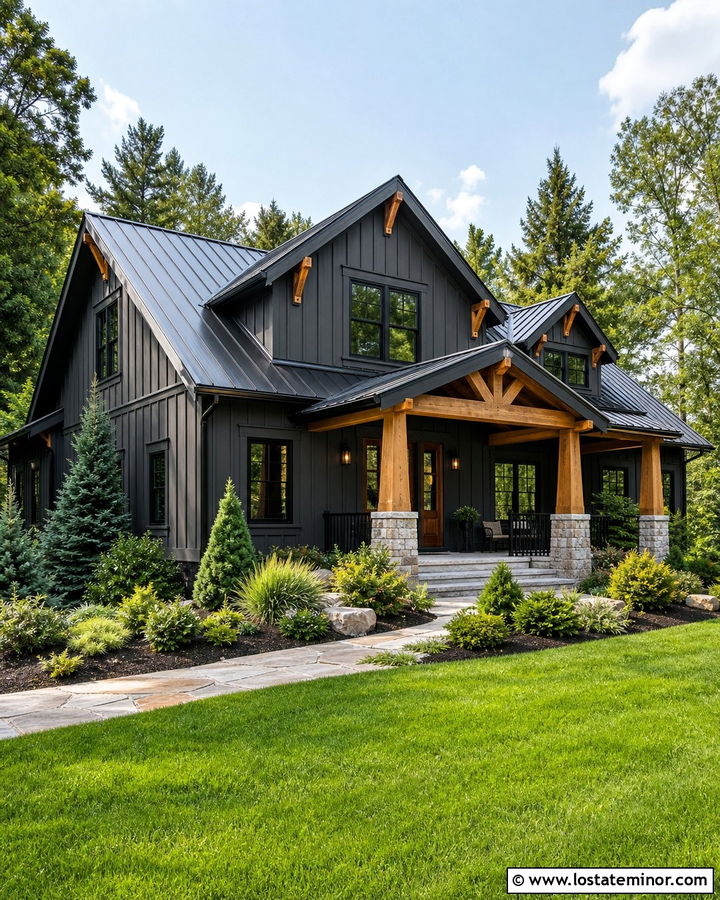
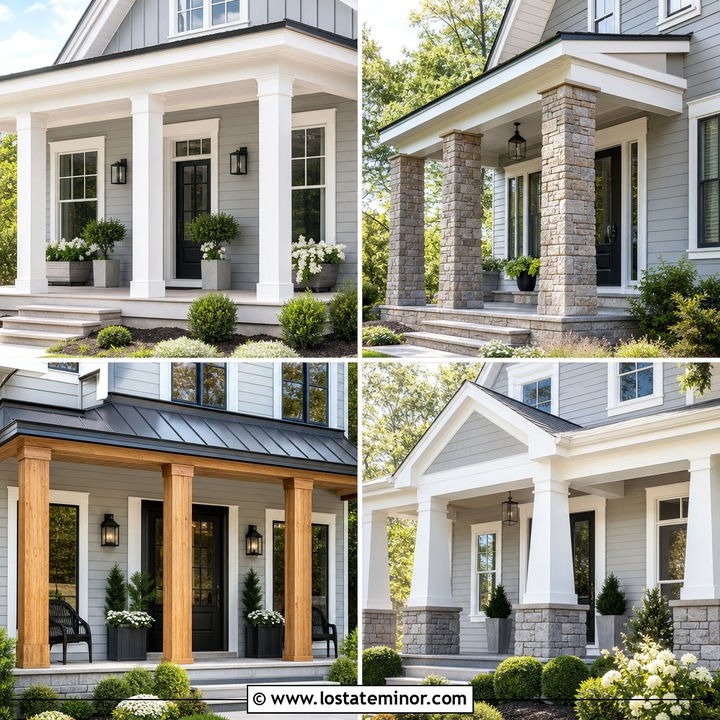
Warm cedar creates an inviting contrast against cool charcoal grey board and batten. Use it selectively on the front door, porch ceiling, gable brackets, and garage door rather than covering large sections of the facade. This allows the charcoal siding to remain dominant while the wood becomes a natural focal point. Black window frames and a dark metal roof can connect the two materials with a contemporary finish. On a Craftsman home, substantial cedar posts placed over stone bases will make the entrance feel grounded and well proportioned. Finish the curb appeal with warm pathway lighting, native grasses, and layered evergreen shrubs. A clear or medium-brown wood stain preserves visible grain and keeps the palette rich but uncomplicated.
4. Charcoal Grey Board And Batten With Stone Veneer
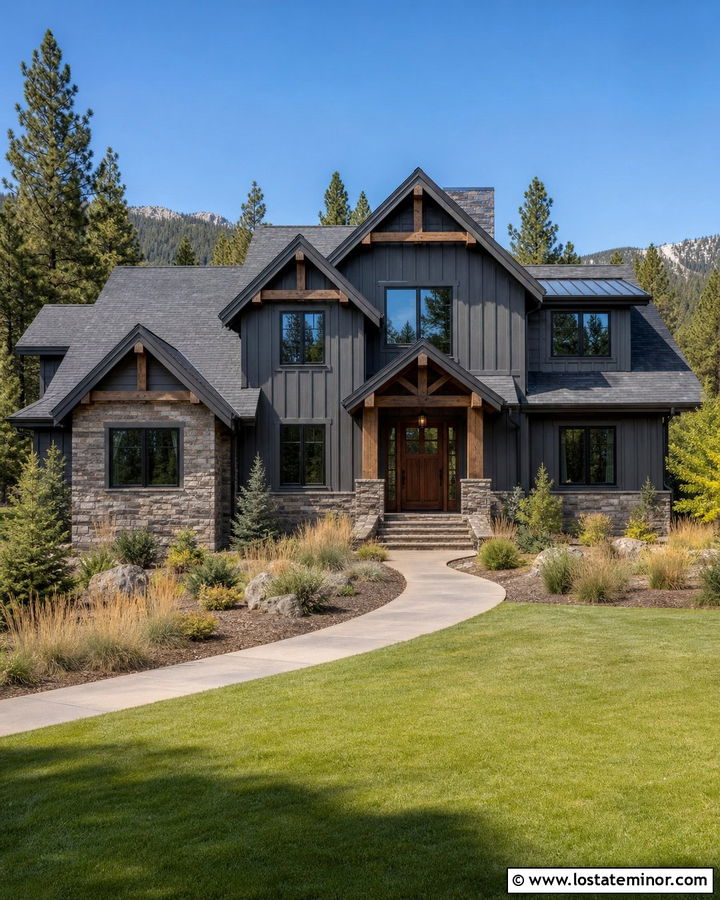
Can a dark exterior still feel rooted in its surroundings? Charcoal grey board and batten paired with mixed gray and brown stone offers an easy solution. Place stone along the foundation, around the porch, or on a prominent chimney to create a sturdy visual base. Select masonry containing a small amount of charcoal so the siding and stone connect naturally. Warm taupe mortar will keep the overall effect softer than bright white mortar. A medium-brown wood door and timber porch columns bring out the stone’s earthier tones. Finish the home with black-framed windows and a weathered charcoal roof. This layered combination suits mountain homes, Craftsman houses, and suburban properties that need more texture without an overly rustic appearance.
5. Charcoal Grey Board And Batten Modern Farmhouse
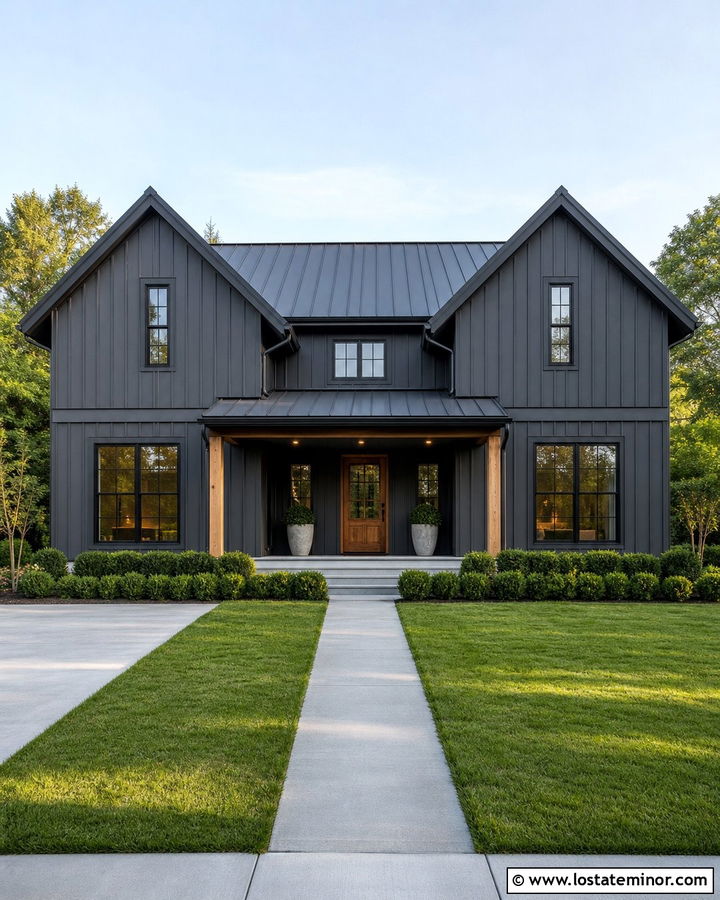
A charcoal grey modern farmhouse feels dramatic while retaining the style’s practical simplicity. Cover the main facade and front-facing gables in vertical board and batten, then use black-framed windows to reinforce the strong lines. A standing-seam black metal roof adds another sleek surface without distracting from the siding. To warm the entry, choose a natural oak door and matching porch posts. White can be limited to the porch ceiling or a thin line of window trim if the home needs extra brightness. Large planters, low boxwood hedges, and a straight concrete walkway maintain the orderly look. This darker alternative to the typical white farmhouse works best when the facade includes generous windows and an open, clearly defined front porch.
6. Charcoal Grey Board And Batten Ranch House
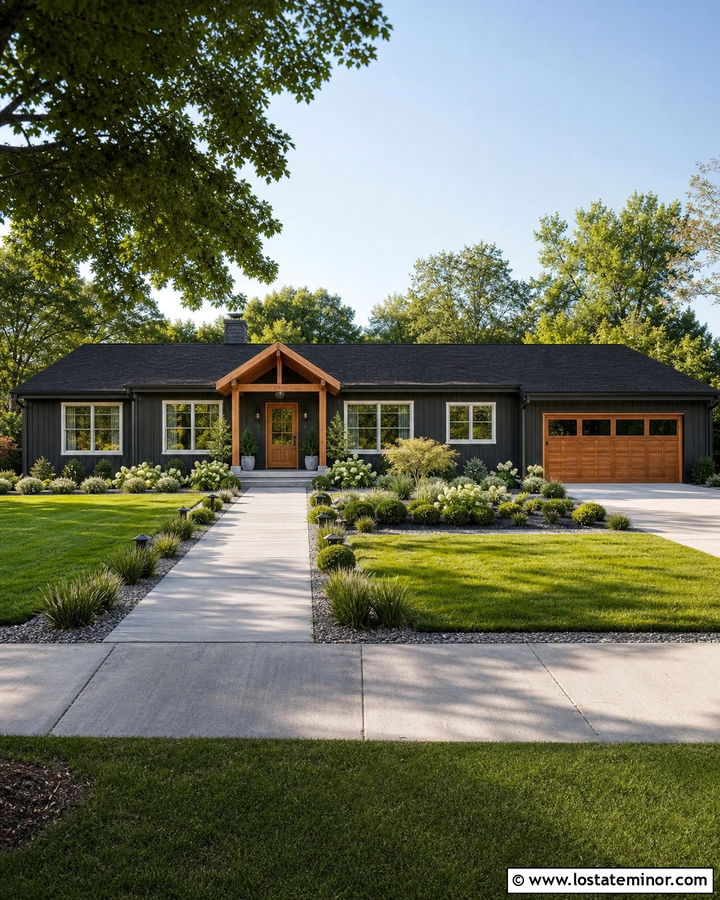
A long ranch facade can gain height and rhythm from vertical charcoal grey board and batten siding. Use the treatment across the entire front or concentrate it around the entry and garage to divide a wide exterior into purposeful zones. A low-pitched black shingle roof creates a simple horizontal counterpoint to the vertical battens. White or light greige trim around the windows adds enough contrast without making the house appear busy. Consider a natural wood front door, cedar garage door, and small matching porch canopy for warmth. Broad foundation beds filled with grasses and rounded shrubs soften the home’s straight lines. A widened walkway leading directly to the entry will make the renovated ranch feel more welcoming and visually organized.
7. Charcoal Grey Board And Batten Craftsman House
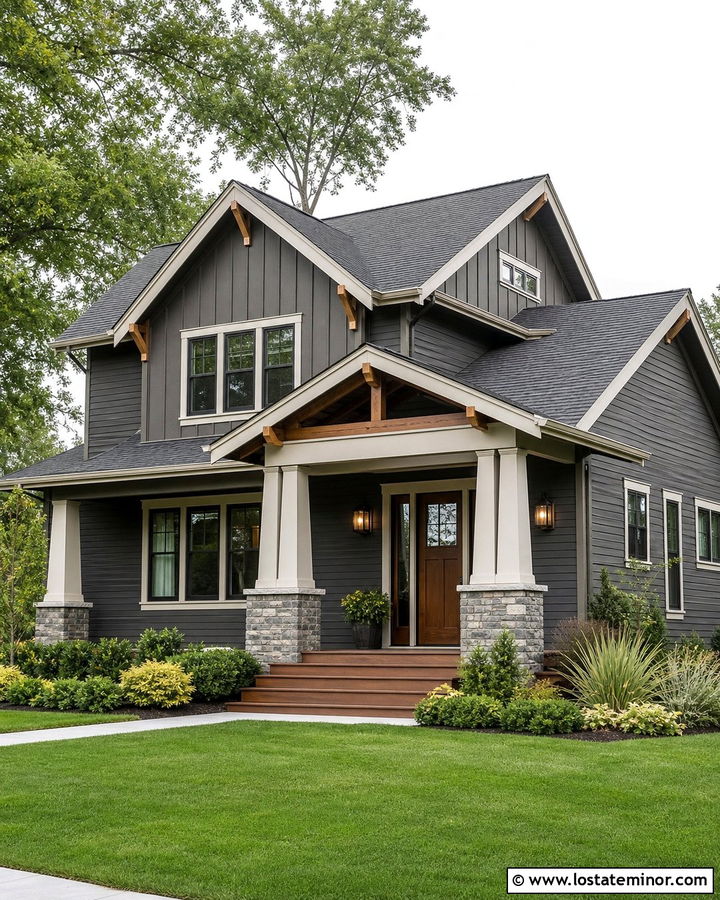
Craftsman architecture benefits from materials that emphasize structure, and charcoal grey board and batten does exactly that. Use the siding on upper gables and larger wall sections, then introduce horizontal lap siding beneath the porch for controlled variation. Cream trim is softer than stark white and complements traditional tapered columns. Stone porch bases, exposed cedar rafters, and a medium-stained front door add the handcrafted character associated with the house type. A dark architectural-shingle roof supports the deep exterior palette. Decorative details should remain substantial and simple rather than delicate. Finish with bronze lighting, wide porch steps, and layered landscaping. The resulting Craftsman exterior feels updated, textural, and warm while preserving the home’s recognizable proportions.
8. Charcoal Grey Board And Batten With Red Brick
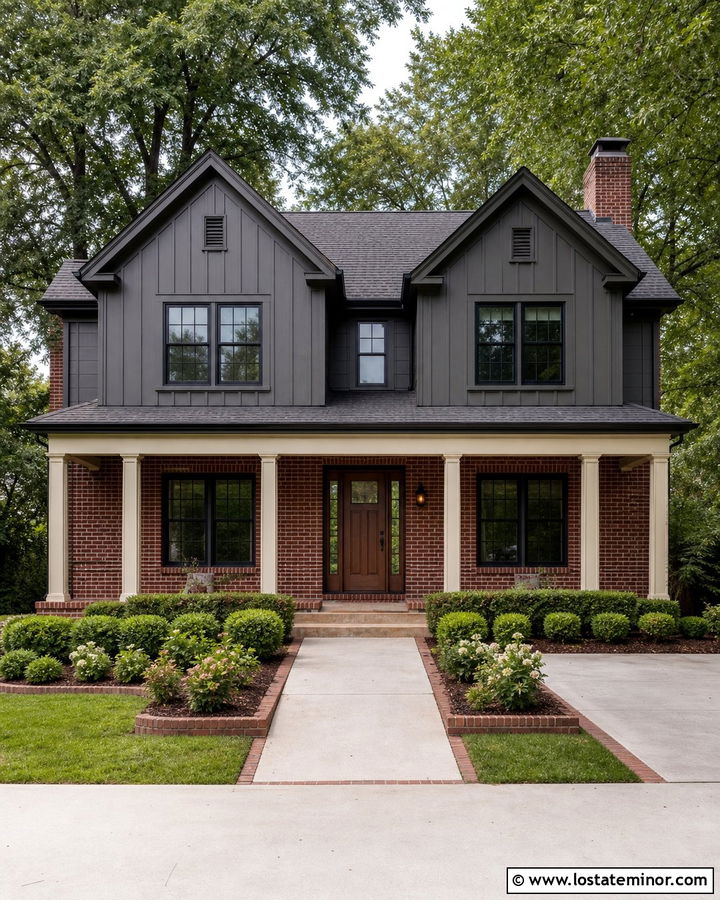
Existing red brick does not need to be painted to work with charcoal siding. Its warm, irregular color can provide a striking counterbalance to charcoal grey board and batten. Keep the brick on the lower story, chimney, or entry surround, and use vertical siding on gables and additions. Black window frames and gutters help connect the two darker materials. Choose a stained walnut door that relates to the brick without adding a strong new color. If the mortar is very bright, a softer limewash can reduce contrast while leaving some brick variation visible. Cream porch columns also bridge the warm and cool parts of the palette. This approach modernizes a traditional brick home while preserving its original masonry and established character.
9. Charcoal Grey Board And Batten With Light Brick
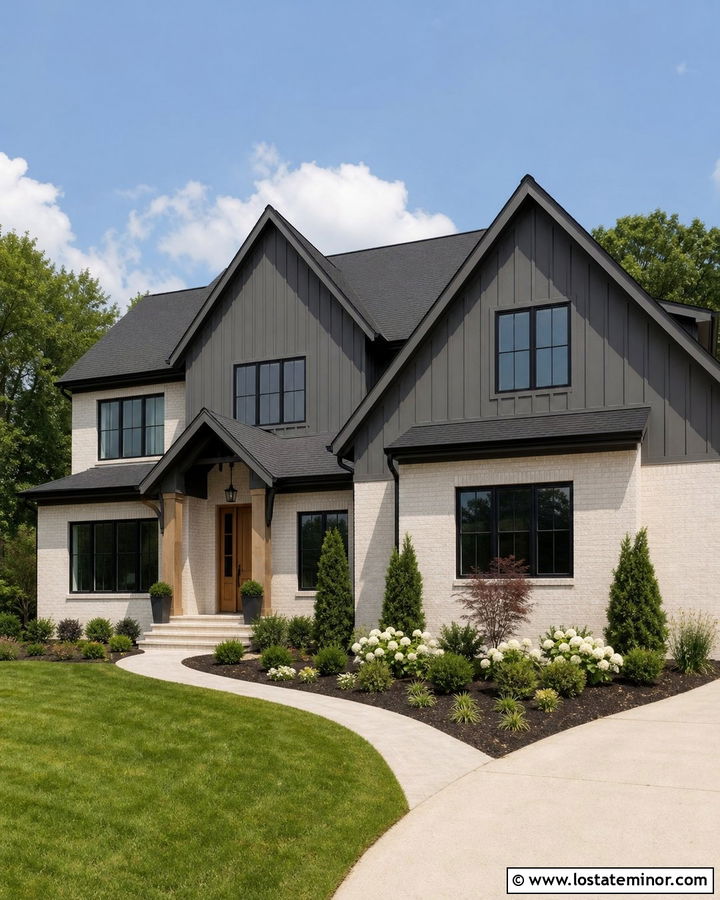
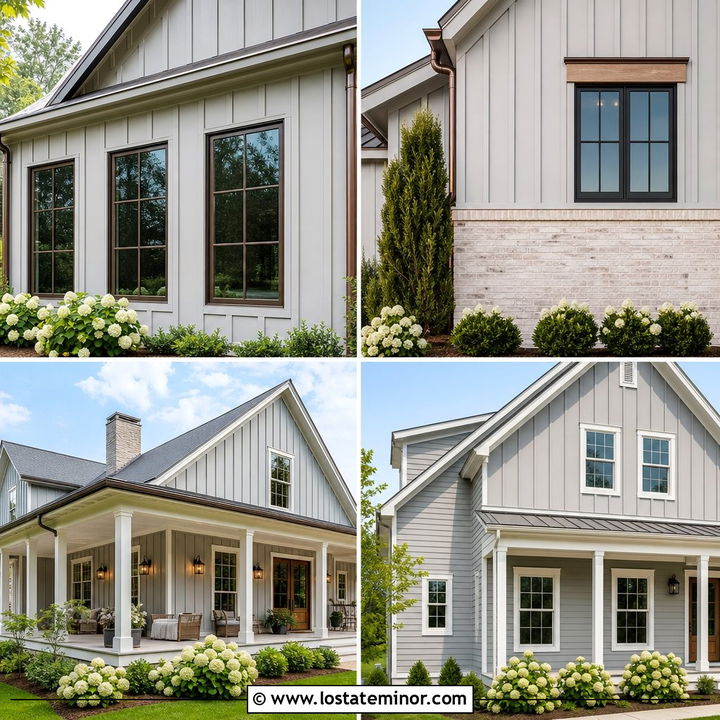
Pale brick makes charcoal grey board and batten look even richer. Use whitewashed, cream, or light greige brick across the lower floor and reserve charcoal vertical siding for upper gables and projecting sections. The contrast highlights changes in the architecture while preventing a large home from becoming one dark block. Black windows, gutters, and roof details create continuity across both materials. A natural white oak front door adds warmth without competing with the light masonry. Choose mortar close to the brick color for a calm, unified base. On the ground, dark mulch and green shrubs help frame the pale brick. This complete palette works particularly well for transitional homes that combine traditional proportions with cleaner, more contemporary exterior finishes.
10. Charcoal Grey Board And Batten With A Metal Roof
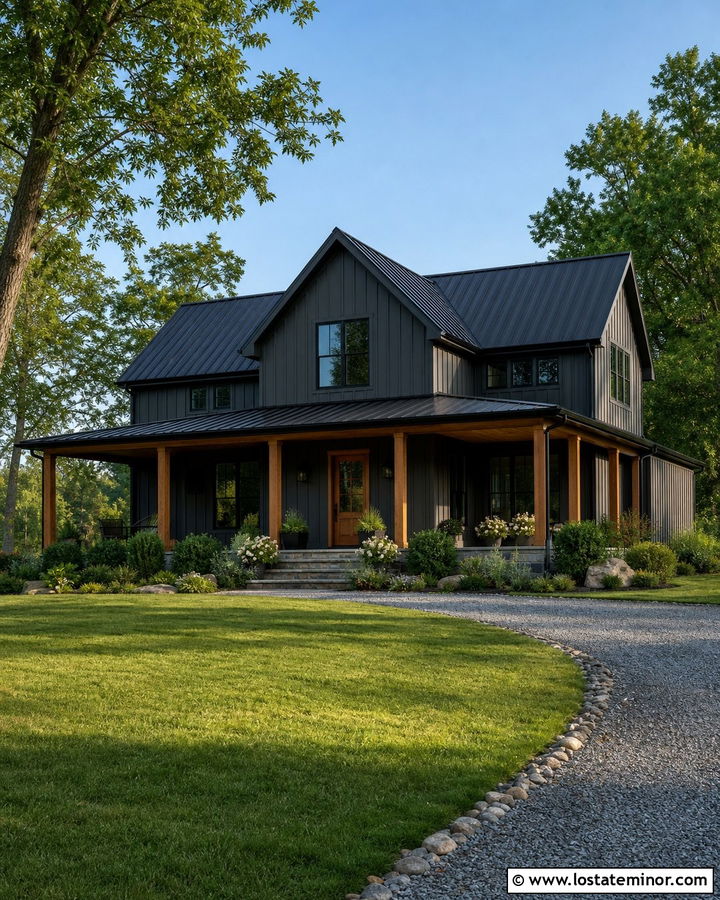
The crisp seams of a metal roof complement the vertical rhythm of charcoal grey board and batten siding. A matte black roof creates a bold monochromatic scheme, while a medium galvanized gray roof offers slightly more separation. Keep fascia and gutters close to the roof color so the upper edge appears intentional. Warm cedar columns, a matching front door, and a wood porch ceiling can offset the cool metal surfaces. On a country house, wrap the porch across the front to add a lighter horizontal line beneath the dark roof. Stone steps and simple native landscaping complete the grounded appearance. This pairing is especially effective on straightforward gable forms where both the roof seams and battens can remain visually clean and uninterrupted.
11. Charcoal Grey Board And Batten With A Brown Roof
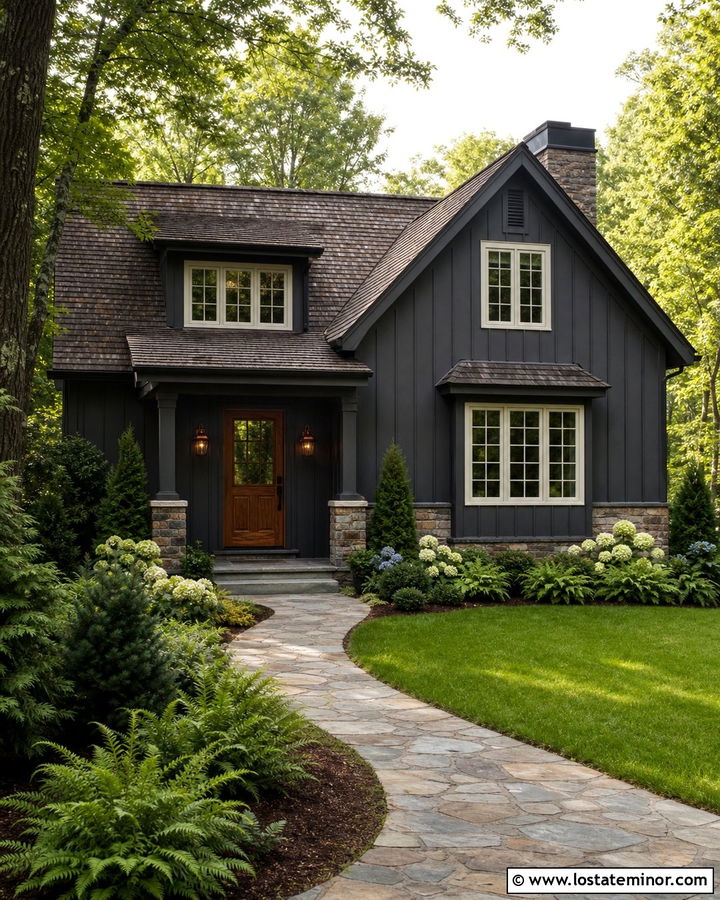
A weathered brown roof brings unexpected warmth to charcoal grey board and batten. Look for shingles containing charcoal, taupe, and deep brown rather than a strongly red or orange undertone. Those blended tones create a smoother connection between the roof and siding. Cream trim around windows and eaves softens the contrast, while a walnut front door repeats the roof’s warm character at eye level. Copper-toned exterior lights can add another subtle brown detail without making the facade feel overly traditional. This palette suits cottages, cabins, and wooded suburban homes. Finish it with natural stone along the foundation and relaxed landscaping. Ferns, hydrangeas, and evergreen shrubs help the dark exterior settle comfortably into a green setting.
12. Charcoal Grey Board And Batten With A Gray Roof
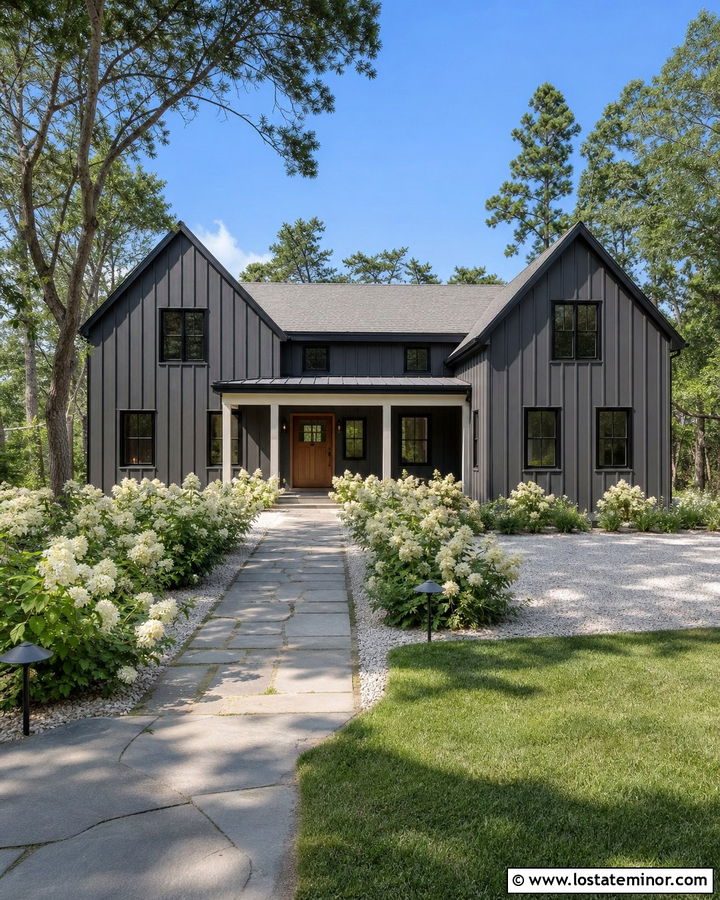
A gray roof creates a layered neutral exterior that feels coordinated rather than perfectly matched. Choose roofing several shades lighter than the charcoal grey board and batten so the roofline remains visible. Medium-gray shingles with gentle warm variation are easier to pair than blue-toned silver roofing. Use black for gutters and window frames, then introduce cedar at the front door and porch columns. A soft off-white porch ceiling can reflect daylight into the entry. This arrangement works well on Cape Cod homes and compact cottages because the lighter roof keeps the upper portion from feeling too imposing. Add white flowering shrubs, pale gravel, and a simple stone path to brighten the landscaping without changing the restrained exterior color scheme.
13. Charcoal Grey Board And Batten With A Wood Garage Door
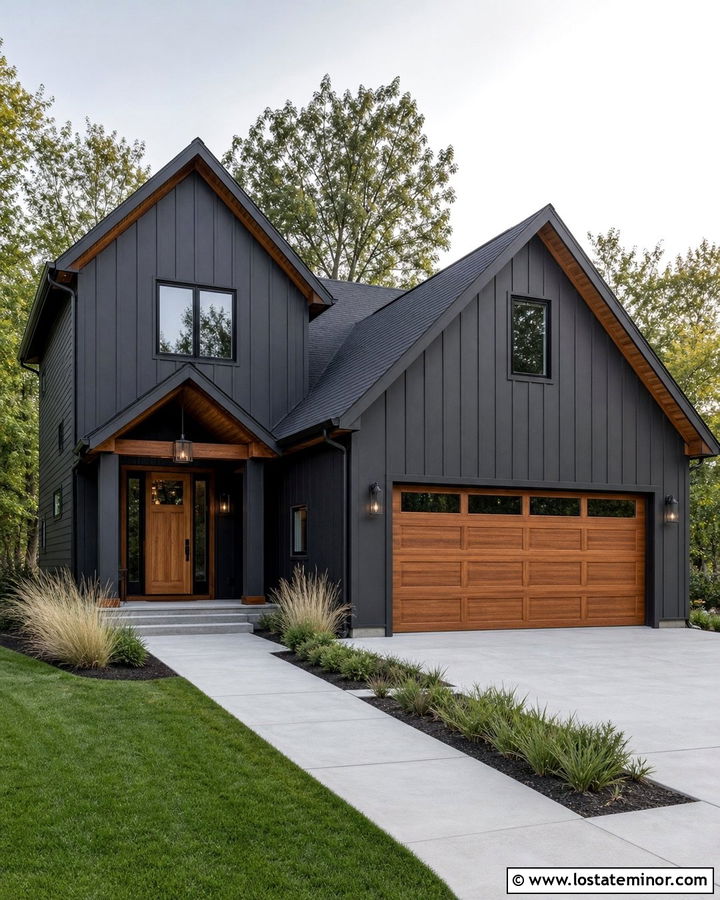
A large garage door can become an asset when its finish warms a charcoal facade. Pair charcoal grey board and batten with a natural cedar, fir, or walnut-look garage door featuring simple rectangular panels. Avoid overly decorative hardware if the home has contemporary lines. Repeat the wood tone on the front door, entry ceiling, or a small gable detail to make the garage feel integrated rather than isolated. Black trim and a black shingle roof provide a consistent frame around the warmer elements. For a front-facing garage, divide a wide driveway with planted borders or a central strip of greenery. The full exterior will feel balanced, and the garage will read as part of a coordinated material palette.
14. Charcoal Grey Board And Batten With A Black Garage Door
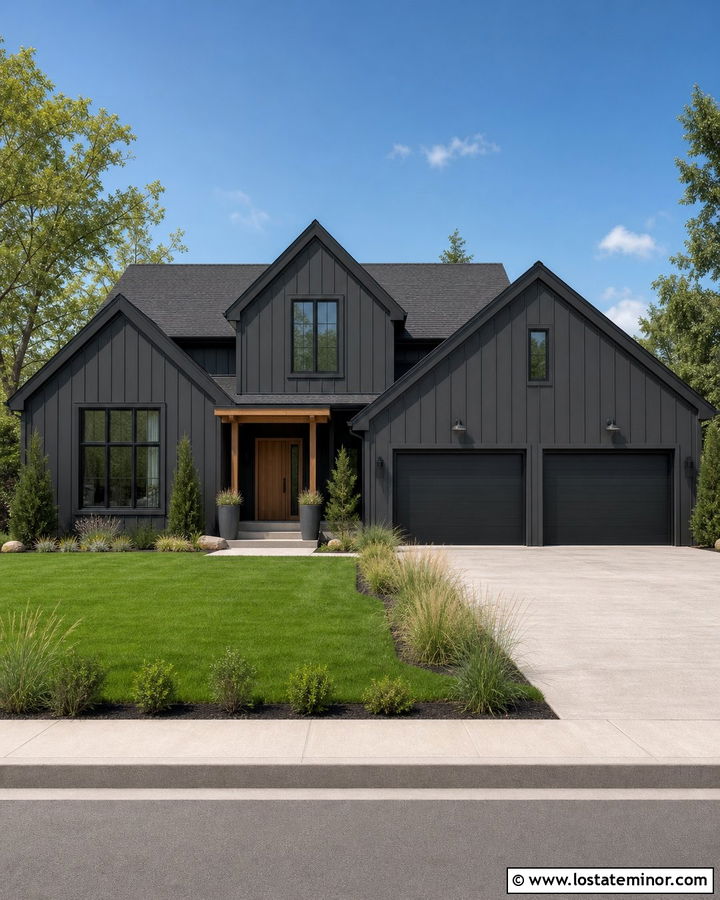
Matte black garage doors give charcoal grey board and batten a sleek, understated partner. Because the colors are close, the garage recedes instead of dominating the front elevation. This strategy is helpful on narrow lots or houses where the garage occupies a large percentage of the facade. Use clean flush-panel doors and minimal windows for a modern effect. A warm wood front door should remain the main focal point, supported by cedar soffits or a small entry canopy. Black window frames, gutters, and sconces unify the darker surfaces. Light concrete, pale stone planters, and bright green landscaping provide necessary relief at ground level. The result feels intentional, uncluttered, and suitable for both modern and transitional architecture.
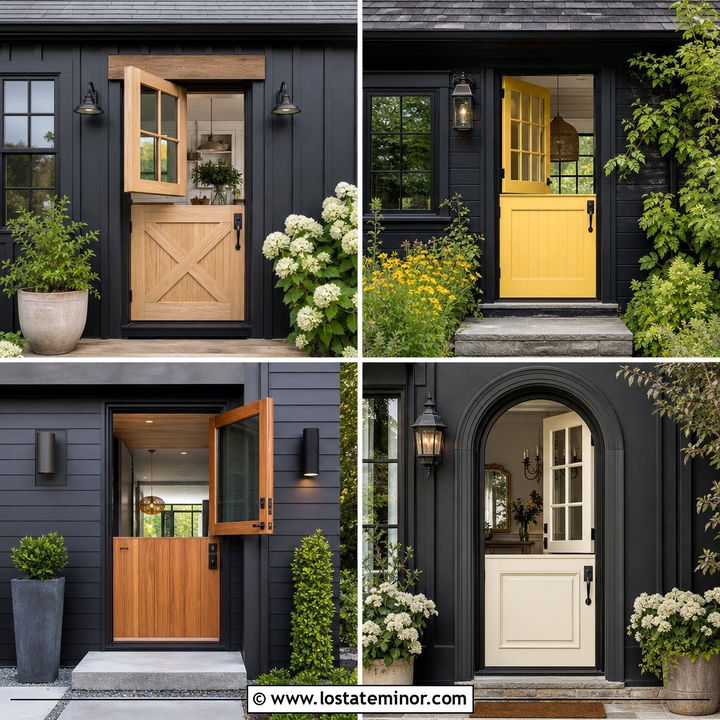
15. Charcoal Grey Board And Batten With A White Garage Door
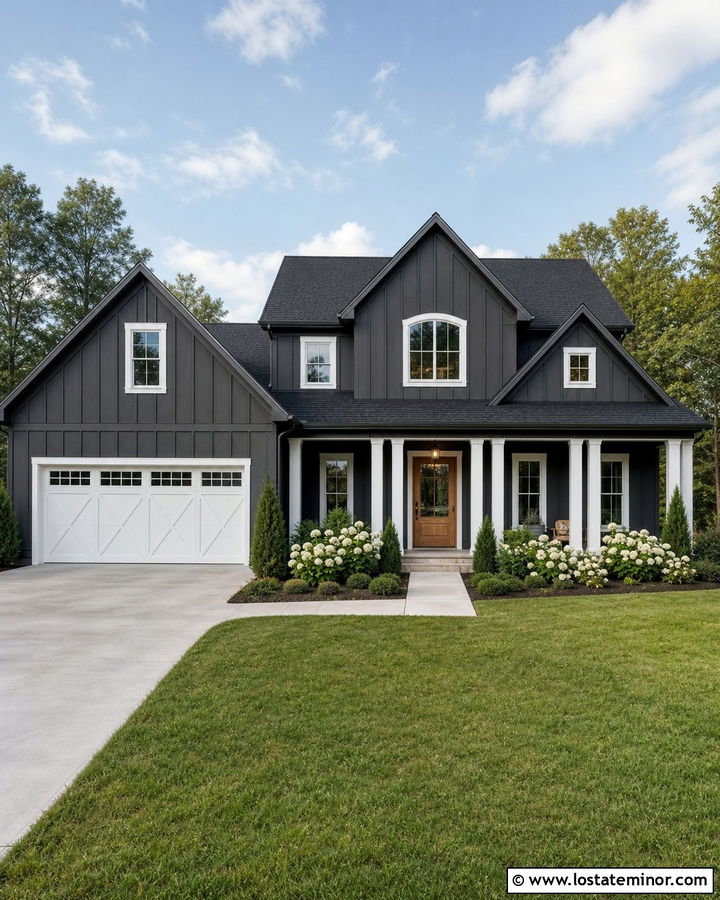
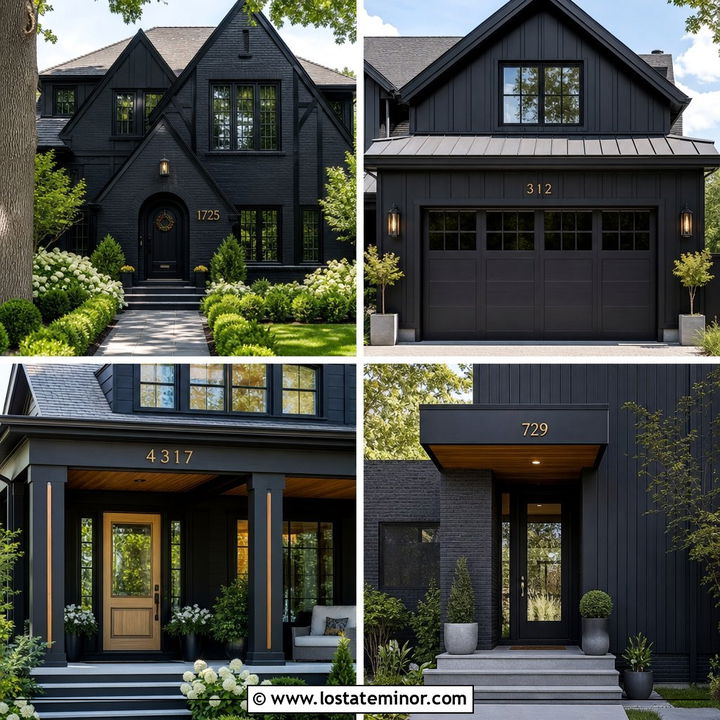
White garage doors can brighten charcoal grey board and batten when they are tied to other light details. Repeat the same white around the windows, porch columns, fascia, and front door surround so the garage does not look disconnected. Carriage-style doors work well on a farmhouse or cottage, while simple recessed panels suit a traditional suburban home. Use a charcoal roof to ground the high-contrast palette. A stained wood front door can prevent the exterior from feeling strictly black and white. Keep hardware black and modest. Around the driveway, use evergreen shrubs and pale flowering plants to soften the hard surfaces. This classic treatment offers strong curb appeal and can make a shaded facade feel noticeably more open.
16. Charcoal Grey Board And Batten With A Natural Wood Door
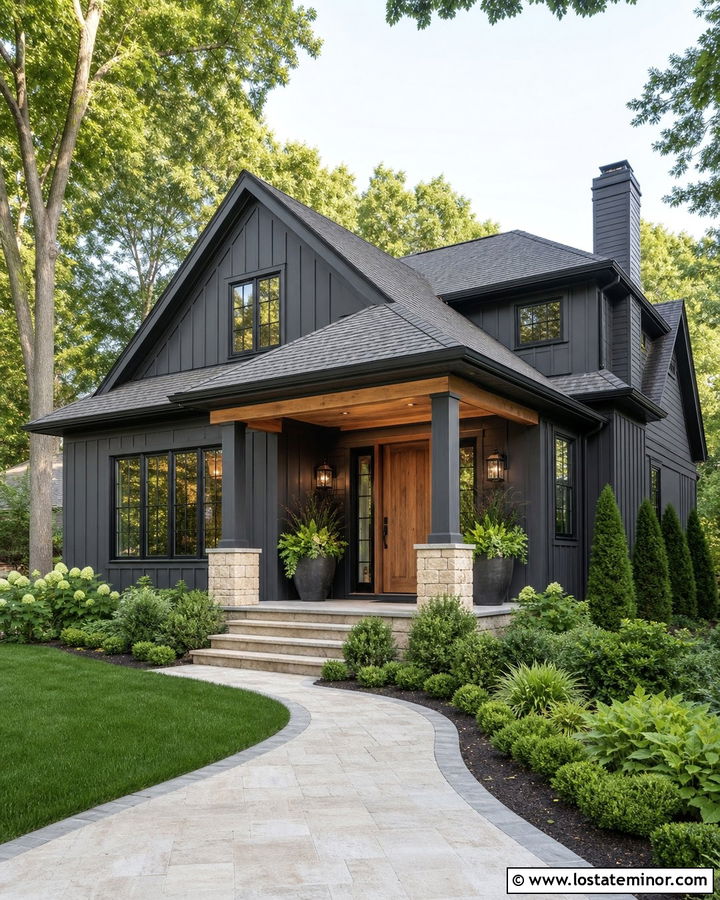
A natural wood front door becomes an immediate focal point against charcoal grey board and batten. Choose a simple door with visible grain in white oak, cedar, mahogany, or walnut. The stain should relate to any porch posts, soffits, or garage details used elsewhere on the facade. Black-framed sidelights can make the entry feel wider while maintaining the darker exterior theme. For trim, select charcoal or black if you prefer a seamless look, or soft white for a brighter traditional finish. Large planters placed on both sides of the door reinforce its importance. A warm stone walkway and layered green landscaping complete the approach. This is an effective update because one concentrated wood accent can transform the entire exterior palette.
17. Charcoal Grey Board And Batten With A Red Front Door
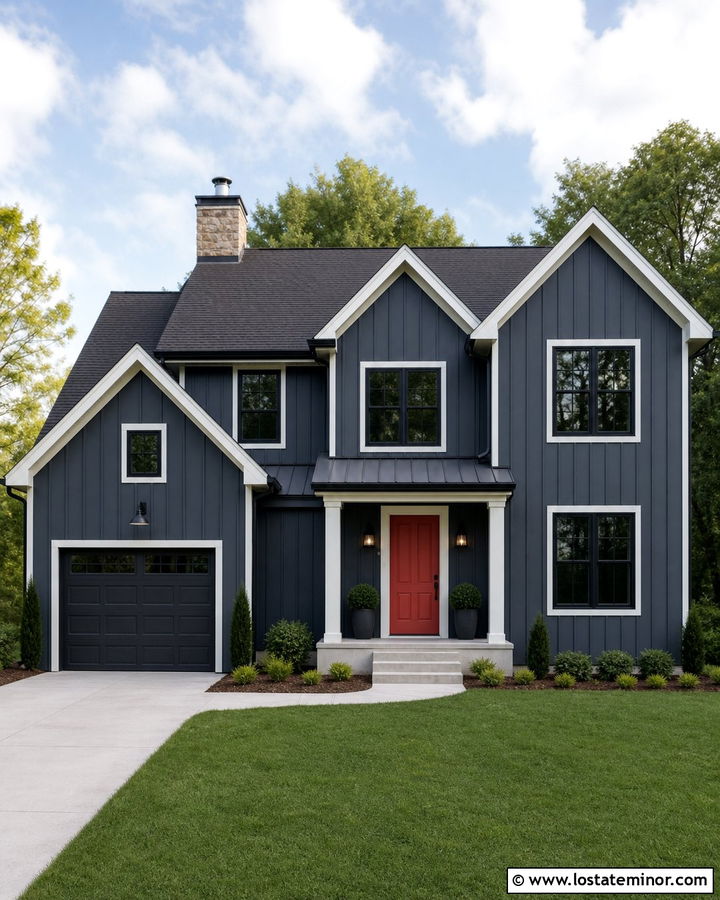
A red front door adds energy to charcoal grey board and batten without covering much surface area. Select a muted brick red, oxblood, or deep barn red rather than a very bright primary shade. These richer versions sit comfortably beside the dark gray siding and feel more connected to natural materials. Use white trim to clearly outline the entrance, then repeat black on the roof, windows, and exterior lights. If the house includes brick, choose a door red that relates to its warm undertones. Keep shutters and garage doors neutral so the entry remains the single colorful feature. Neatly clipped greenery and a light walkway will balance the bold door. This scheme works especially well on Colonial, cottage, and farmhouse facades.
18. Charcoal Grey Board And Batten With A Blue Front Door
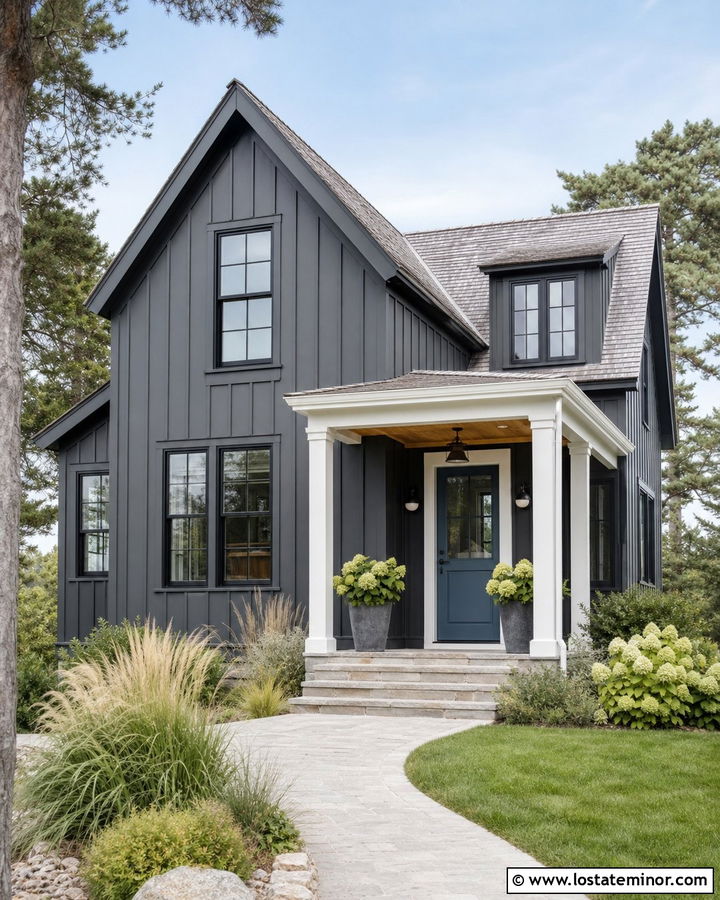
Deep blue offers a subtle color shift against charcoal grey board and batten. A navy, slate blue, or muted coastal blue door creates distinction without breaking the exterior’s calm character. Surround it with clean white trim to keep the entry visible from the curb. Black windows and a dark roof maintain a sophisticated foundation, while brushed nickel or black hardware prevents unnecessary contrast. On a coastal cottage, incorporate pale stone steps, simple porch railings, and airy grasses around the walkway. A small wood bench or cedar porch ceiling can introduce gentle warmth. Since charcoal and navy may appear similar in shade, test the door color outdoors and select a blue that remains recognizable in both direct sun and afternoon shadow.
19. Charcoal Grey Board And Batten With A Green Front Door
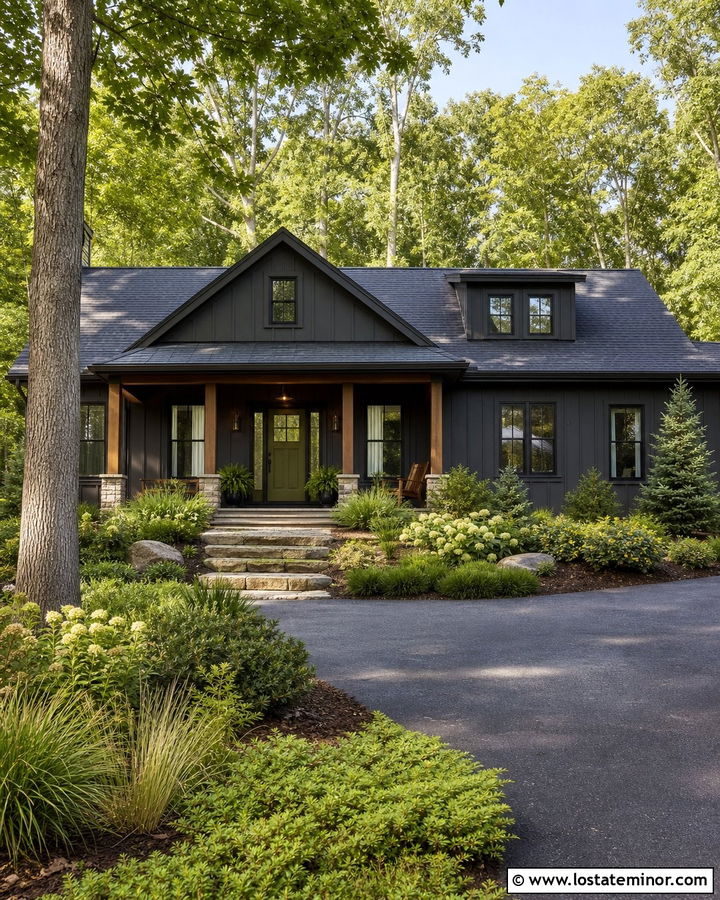
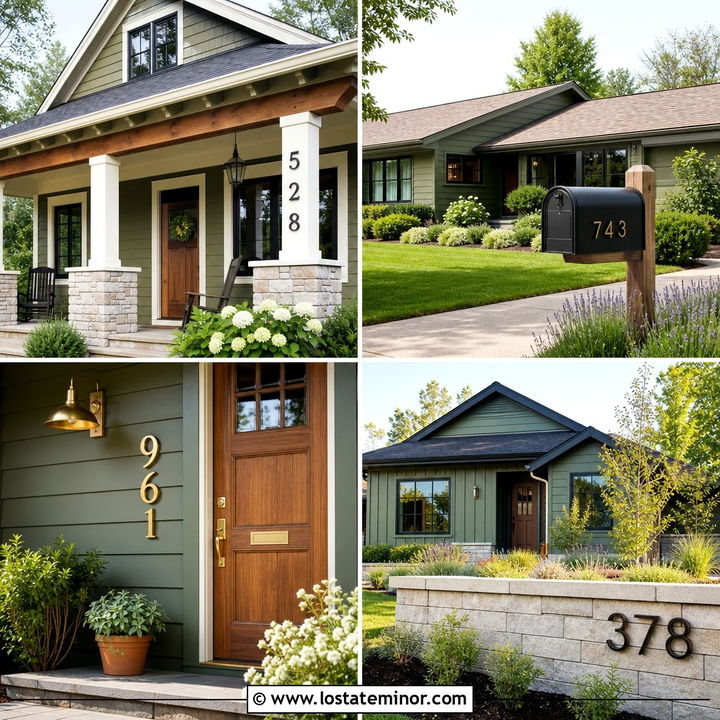
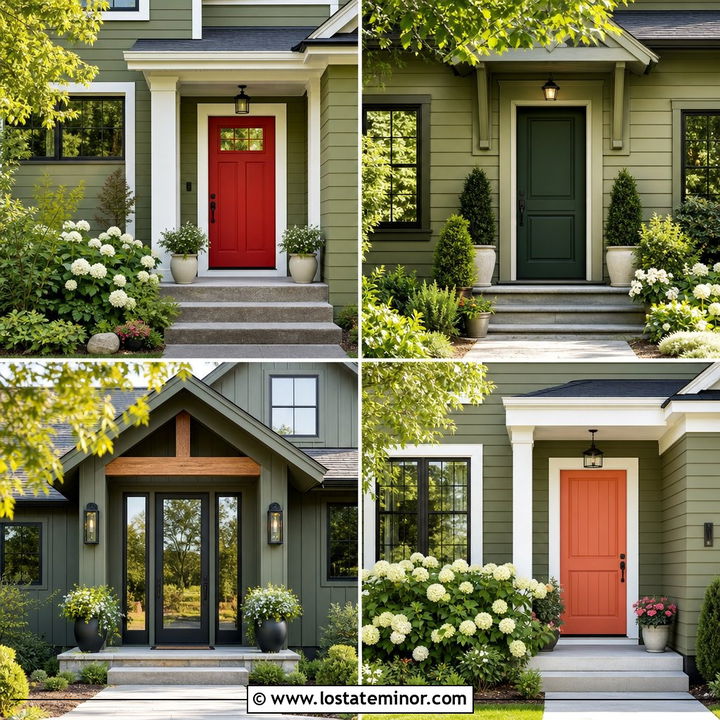
Nature provides an easy accent palette for charcoal grey board and batten. A sage, olive, or deep forest green front door connects the dark siding to surrounding lawns and plantings. Sage feels relaxed and works well with cream trim, while forest green creates a richer low-contrast result with black trim. Add warm brass or aged-bronze hardware to keep the entrance from feeling cool. Natural stone steps and cedar porch details can reinforce the earthy direction. Around the home, use layered evergreen shrubs, ornamental grasses, and pale flowering plants. This exterior scheme suits cabins, bungalows, and suburban homes near mature trees. The green door feels distinctive, but it remains quiet enough to complement the strong charcoal siding.
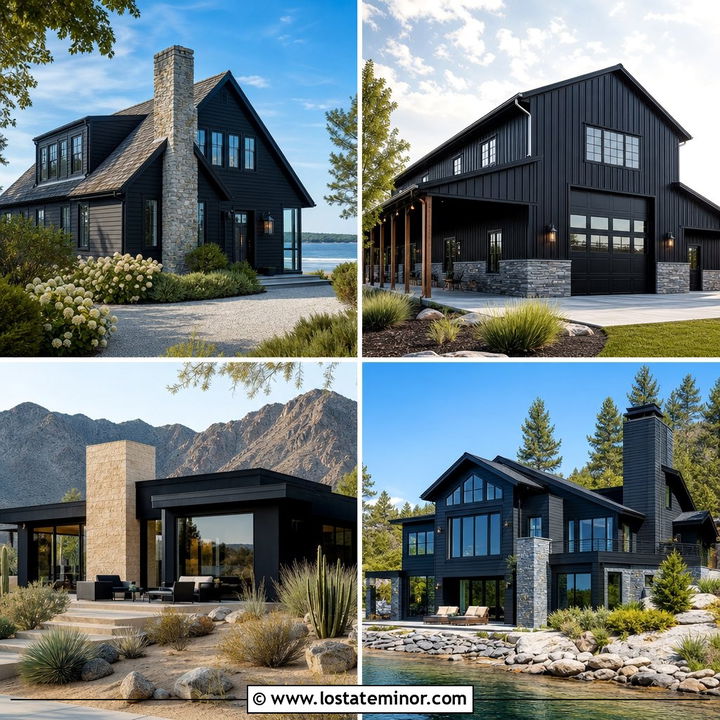
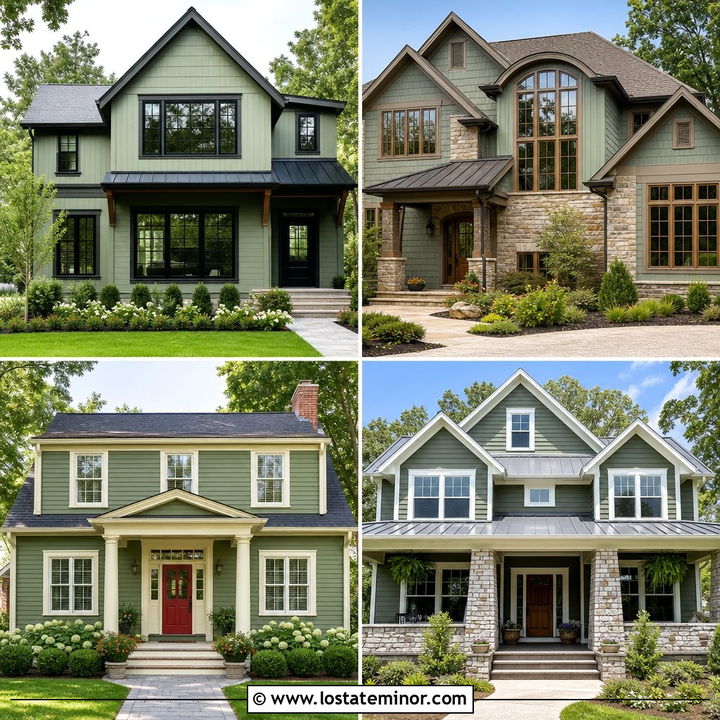
20. Charcoal Grey Board And Batten With Black Shutters
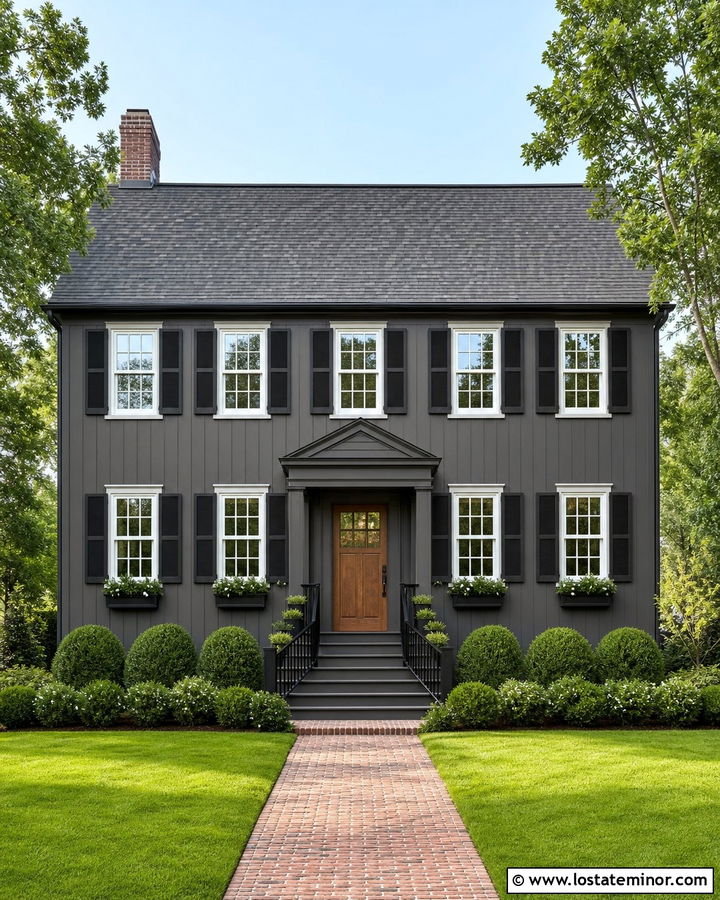
Black shutters add traditional structure to charcoal grey board and batten without creating sharp color contrast. They work best when the windows are properly sized for shutters and the facade already has Colonial, farmhouse, or cottage proportions. Use slightly softer charcoal siding so the black shutters remain visible. White window trim can outline both elements and prevent them from blending together. Complete the house with a medium wood front door and a dark shingle roof. Keep porch railings and lighting black for continuity. Symmetrical shrubs, window boxes, and a straight walkway support the orderly architecture. This restrained palette lets the siding texture provide most of the visual interest while the shutters strengthen the home’s traditional curb appeal.
21. Charcoal Grey Board And Batten With Cedar Shutters
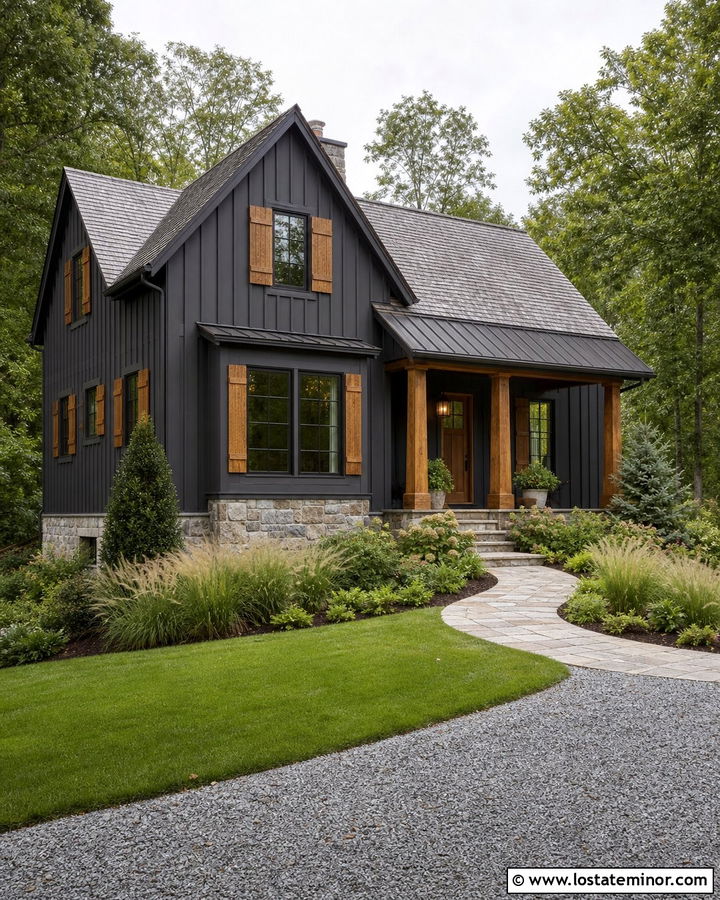
Cedar shutters provide warmth and texture without requiring a large amount of wood. Against charcoal grey board and batten, their grain and honey-brown color become clearly visible from the street. Choose simple plank shutters or understated Craftsman panels rather than ornate shapes. Repeat the cedar on porch columns, a small gable vent, or the front door to distribute the color evenly. Dark bronze windows and a weathered gray roof support the natural palette. Stone along the lower facade can add another durable, earth-toned material. Finish with informal landscaping, such as grasses, hydrangeas, and evergreen foundation plants. This complete scheme is particularly suited to rustic cottages, mountain homes, lake houses, and Craftsman-inspired suburban properties.
22. Charcoal Grey Board And Batten With A Wraparound Porch
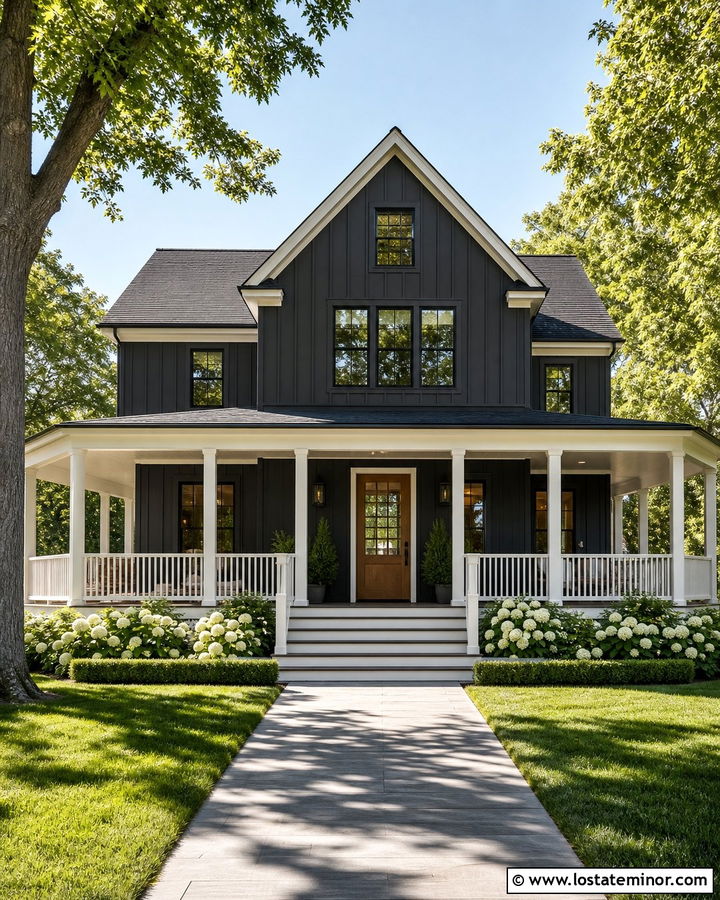
A wraparound porch can soften the visual weight of a fully charcoal exterior. Paint the board and batten siding deep charcoal grey, then use warm white on the porch columns, railings, ceiling, and fascia. This creates a broad light band across the facade and makes the outdoor living area feel open. A natural wood front door introduces warmth at the center, while black roofing and window frames add definition. Wide porch steps should align clearly with the entry and main walkway. Use simple furniture in wood, cream, and muted green rather than adding many bright colors. Hydrangeas, low hedges, and mature shade trees complete the welcoming setting. The finished farmhouse feels dramatic above and relaxed at ground level.
23. Charcoal Grey Board And Batten With A Cedar Porch
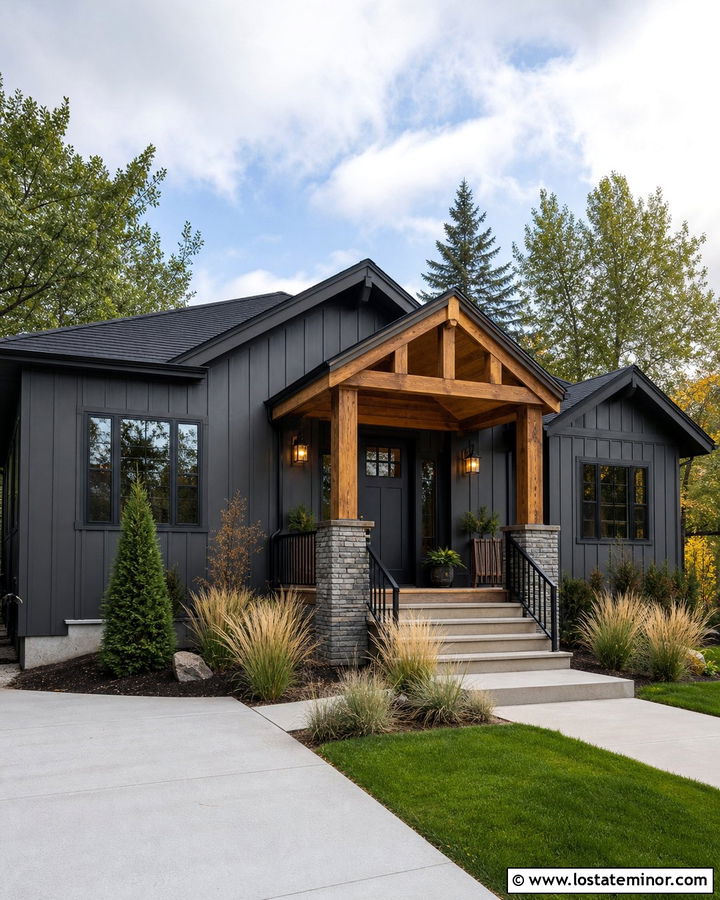
Imagine approaching a dark charcoal home framed by warm timber. A cedar porch creates that welcoming transition while giving charcoal grey board and batten a natural counterpoint. Use thick cedar posts, exposed beams, a wood ceiling, and a matching front door. Keep the porch roof black so it connects to the home’s main roof and window frames. Stone bases under the posts can provide extra visual weight on a large facade. For a smaller bungalow, simplify the structure to two posts and a shallow gable. Concrete steps and a broad walkway keep the entrance practical. Native grasses and evergreen shrubs reinforce the warm, landscape-friendly palette. The porch becomes a true architectural feature rather than a decorative attachment.
24. Charcoal Grey Board And Batten With Mixed Siding
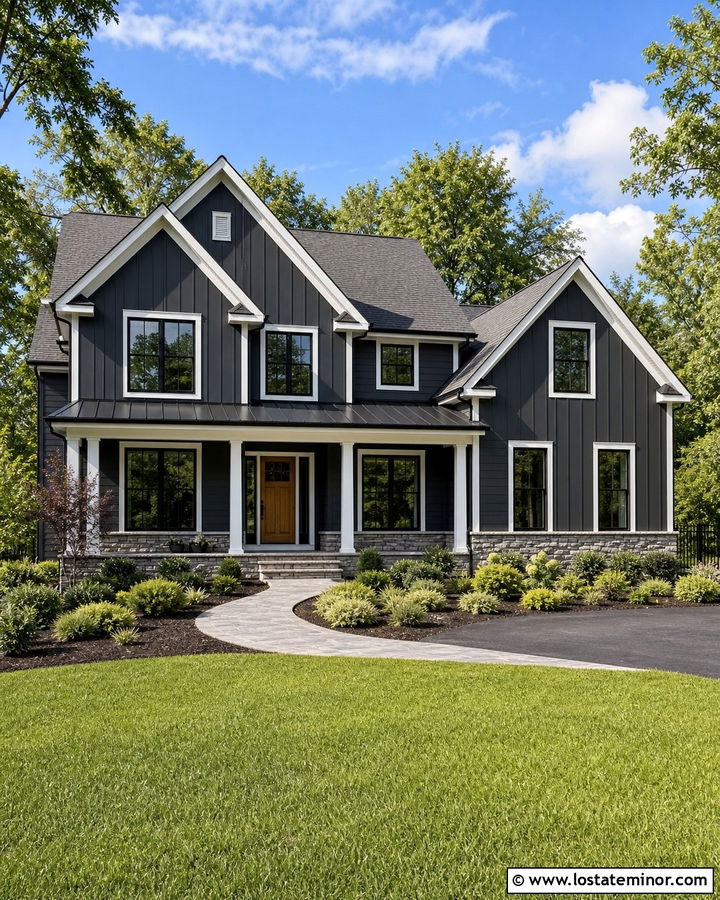
Mixing siding profiles can make a large charcoal exterior more dimensional. Use charcoal grey board and batten on gables, towers, or projecting entry sections, then apply matching charcoal horizontal lap siding across the main walls. Because the color remains consistent, the change in texture looks controlled rather than busy. White trim will make each section easier to read, while black trim creates a more seamless contemporary effect. Add a natural wood door and stone foundation to break up the dark surfaces. This approach also works for remodels where replacing every section of existing lap siding is unnecessary. Carefully align transition boards with windows, porch roofs, or floor levels. Clear architectural stopping points make the mixed materials look planned and balanced.
25. Charcoal Grey Board And Batten Split-Level House
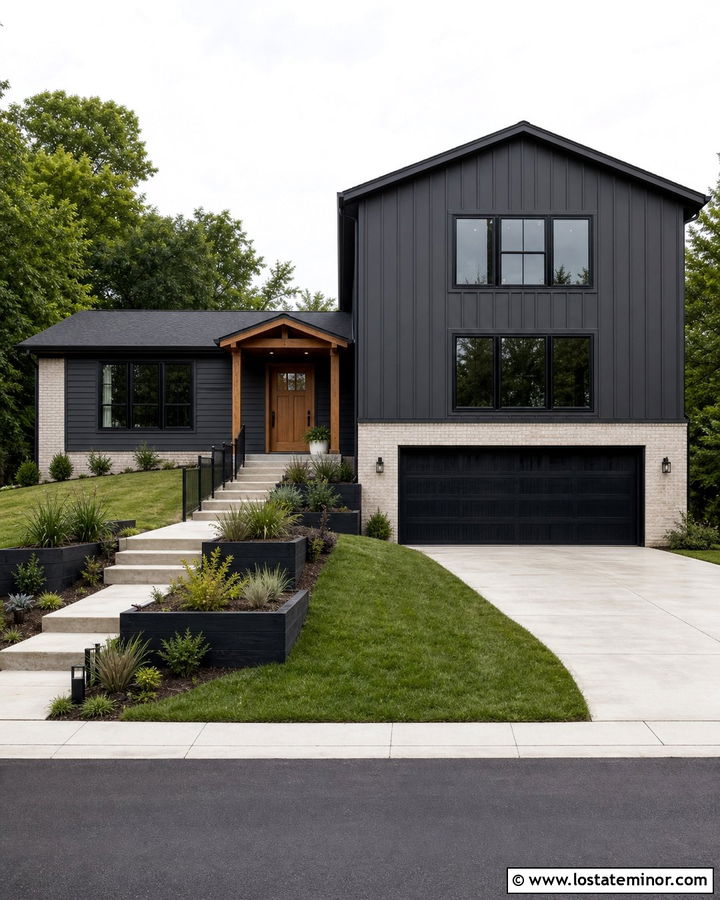
Vertical siding can help organize the offset forms of a split-level home. Apply charcoal grey board and batten to the taller entry section or upper floor, then use charcoal lap siding or pale brick on the lower level. A black garage door allows the garage to recede, while a warm wood front door directs attention toward the entrance. Extend a small cedar canopy over the door to improve both function and visibility. Black-framed windows and a medium-gray roof complete the updated palette. Wide concrete steps, metal railings, and tiered planting beds respond naturally to a sloped lot. This full exterior treatment modernizes the house without hiding its characteristic levels, making each part of the facade feel deliberately connected.
26. Charcoal Grey Board And Batten Cape Cod House
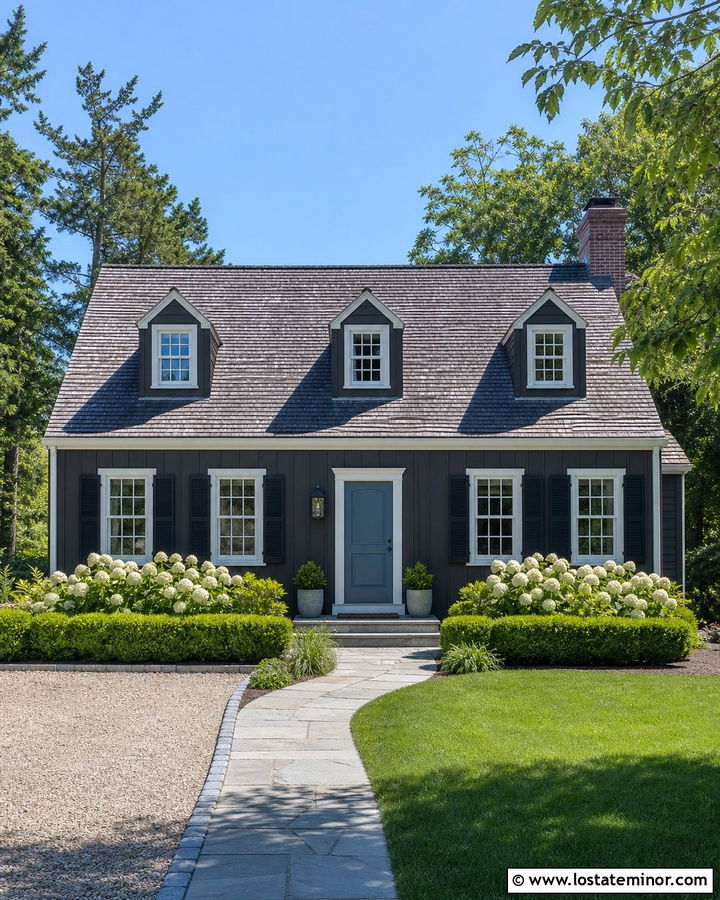
Charcoal grey board and batten gives a Cape Cod exterior greater depth while preserving its compact charm. Use the vertical siding on the main facade and dormers, then frame the windows, eaves, and front door in warm white. Black shutters can reinforce the home’s traditional symmetry, although leaving the dormers unshuttered may keep a small roof from feeling crowded. Choose weathered gray shingles or dark architectural roofing to complement the coastal form. A blue-gray or natural wood front door adds a quiet focal point. White hydrangeas, clipped hedges, and a curved stone walkway soften the dark siding. The finished house feels classic and familiar, but the charcoal color gives the modest architecture a more substantial presence.
27. Charcoal Grey Board And Batten Bungalow
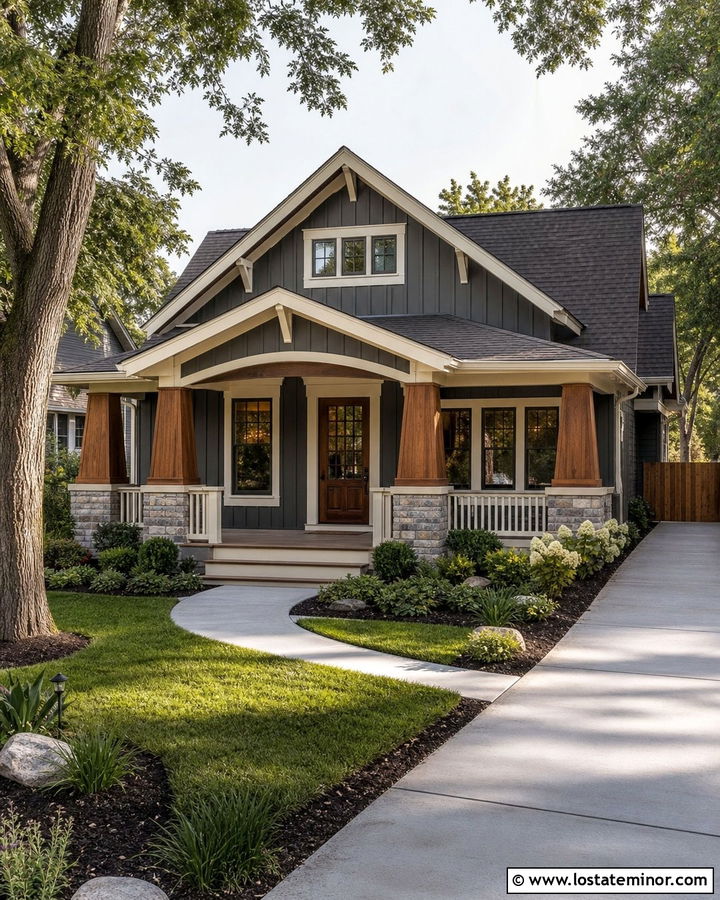
A bungalow’s broad porch and low roofline provide a comfortable framework for charcoal grey board and batten. Use the siding across the main walls, then introduce cream trim around windows and beneath the eaves. Tapered cedar porch columns set on stone bases will add warmth and Craftsman character. A medium-brown door with divided glass keeps the entrance open and inviting. Choose an architectural-shingle roof containing charcoal and warm brown tones to connect all parts of the palette. Porch railings can be cream for definition or charcoal for a quieter finish. Layered foundation plants, a compact lawn, and a gently curved walkway suit the home’s approachable scale. The combination feels cozy and grounded rather than overly dark or formal.
28. Charcoal Grey Board And Batten Cabin
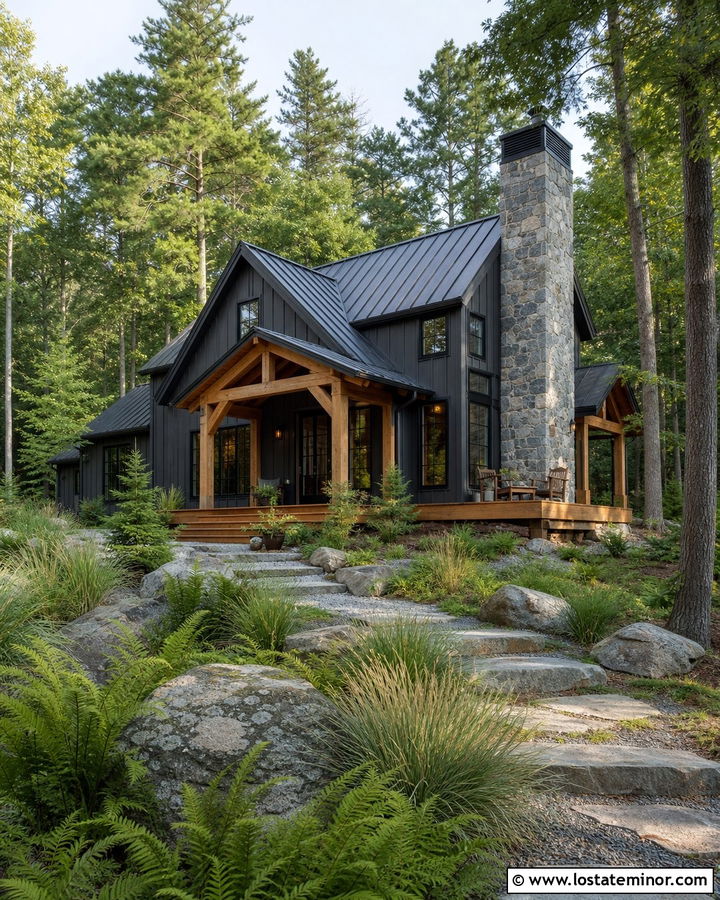
In a wooded location, charcoal grey board and batten can help a cabin settle naturally into the landscape. Pair the deep siding with a black metal roof, substantial cedar beams, and locally inspired stone around the foundation or chimney. Keep trim charcoal so the structure feels simple and connected to its setting. Large black-framed windows will introduce a modern element and reflect the surrounding trees. A covered entry with warm wood decking makes the dark facade more inviting. Use gravel paths, native grasses, ferns, and irregular stone steps instead of formal suburban landscaping. This complete exterior palette works for both traditional cabins and contemporary retreats. The mix of dark color, wood grain, and rugged masonry feels durable and visually balanced.
29. Charcoal Grey Board And Batten Small House
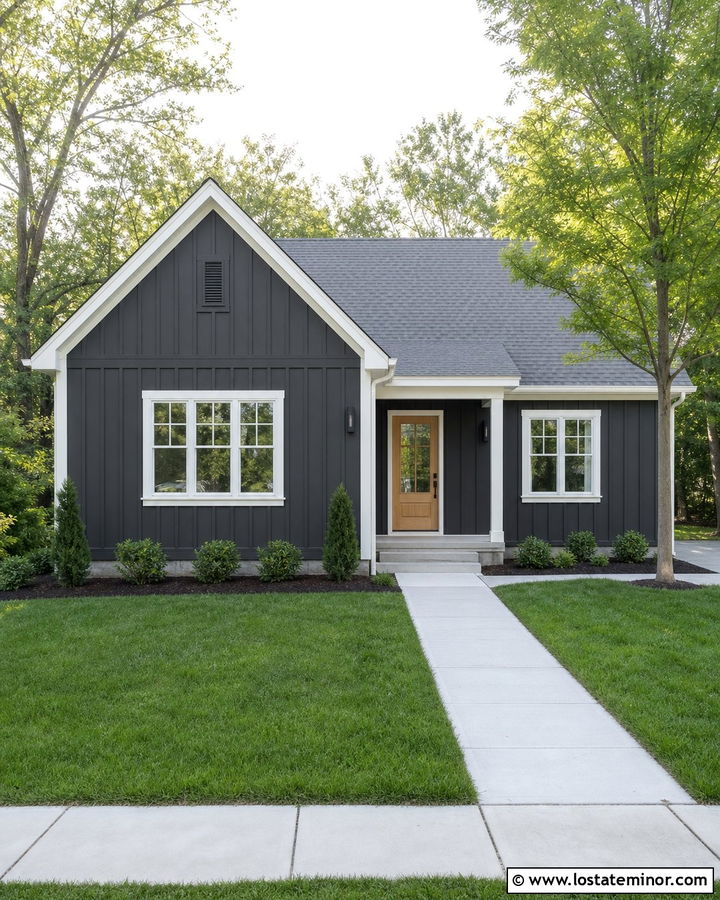
Dark siding can look excellent on a small house when the details remain simple. Cover the compact facade in charcoal grey board and batten, then use soft white trim to define windows, corners, and roof edges. A light wood front door offers one clear focal point without overwhelming the limited exterior. Choose a medium-gray roof rather than solid black if the home receives little direct sunlight. Slim black lights and uncomplicated house numbers keep the entrance neat. Avoid dividing the facade with too many siding types or accent colors. Instead, use a pale walkway, tidy foundation shrubs, and one ornamental tree to frame the house. The vertical lines can make the walls appear taller and give modest architecture a more confident presence.
30. Charcoal Grey Board And Batten Luxury House
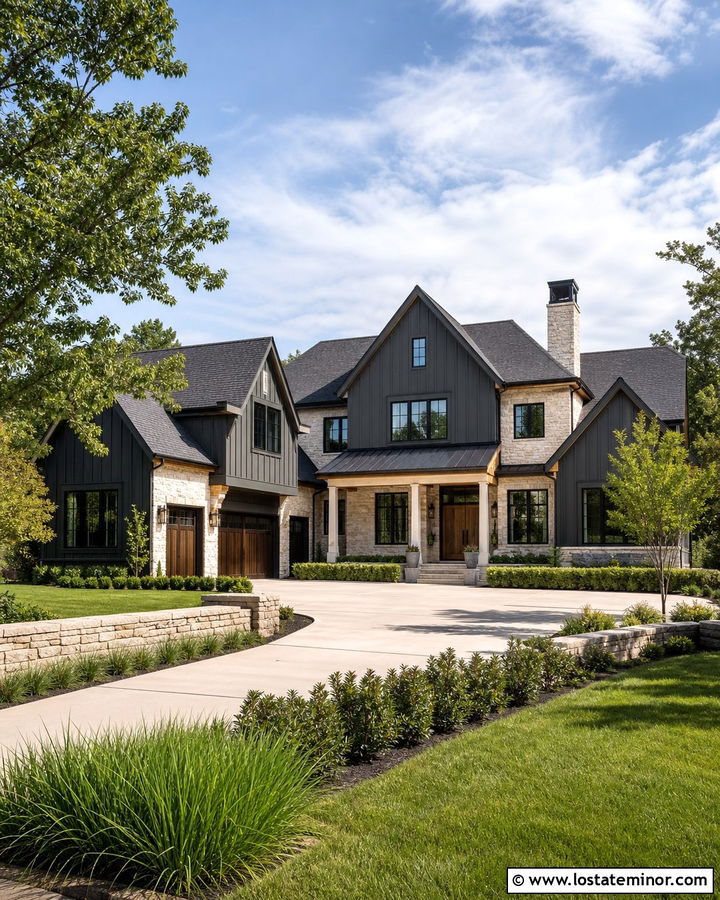
A large home needs material changes that prevent charcoal grey board and batten from becoming repetitive. Apply the siding across major gables and wings, then introduce limestone, warm gray brick, or natural stone around the entry and lower facade. Black metal roofing can define selected sections, while dark shingles keep the remaining roof visually quiet. Use expansive black-framed windows and substantial stained-wood doors to suit the building’s scale. Cedar soffits and covered terraces add warmth without disrupting the refined palette. Make the driveway and walkway broad enough to match the architecture, then soften them with layered trees, hedges, and ornamental grasses. The finished exterior feels luxurious because every material is repeated deliberately and the charcoal siding unifies the entire composition.
Conclusion:
The best charcoal exterior is more than one dark paint color. It combines vertical siding with carefully selected trim, roofing, masonry, wood, and landscaping. White details produce crisp contrast, while black creates a modern, seamless finish. Cedar and natural stone add warmth that helps a charcoal facade feel comfortable in every season. Before committing, view siding and trim samples together outdoors on different sides of the house. Roof undertones, sunlight, and surrounding greenery can noticeably affect the final result. Whether you are updating a ranch, cottage, Craftsman, or modern farmhouse, these **30 Charcoal Grey House Design With Board and Batten Ideas** offer complete, practical schemes for creating stronger curb appeal.

Related posts: