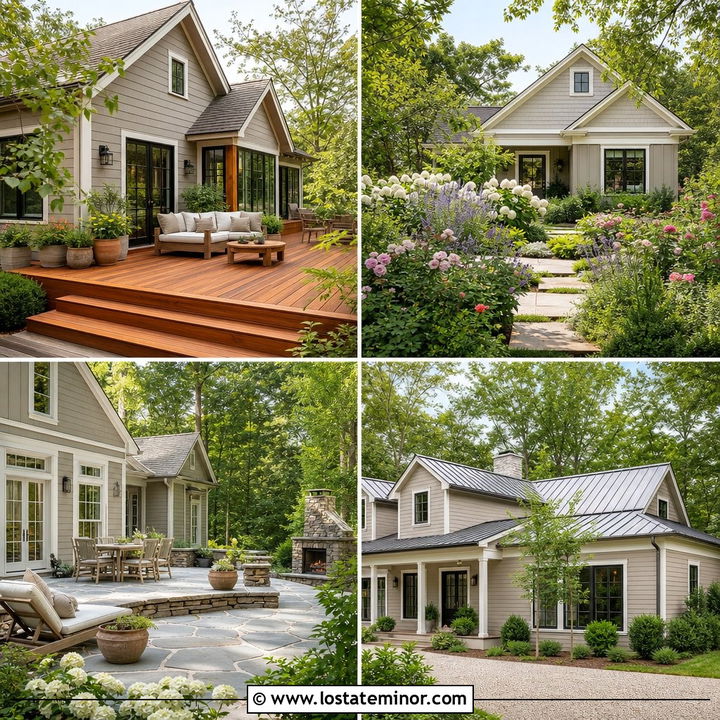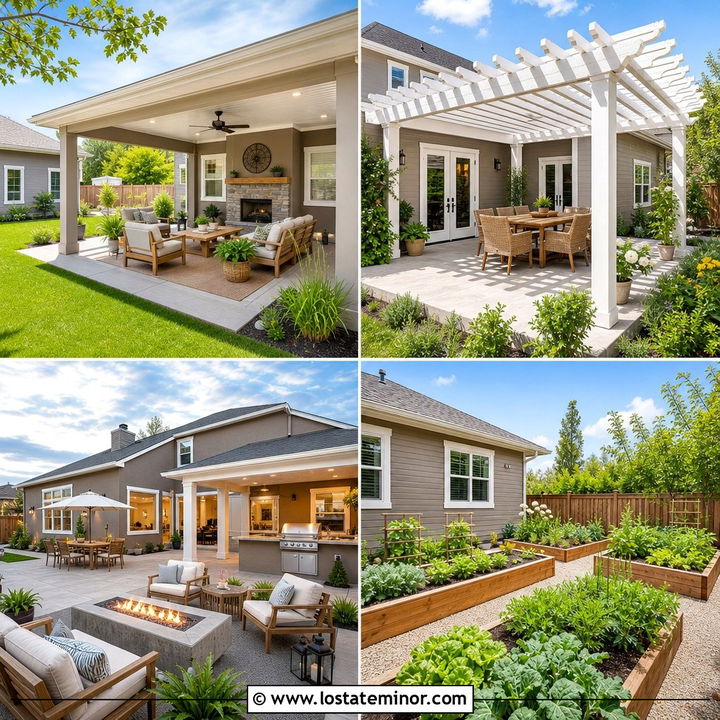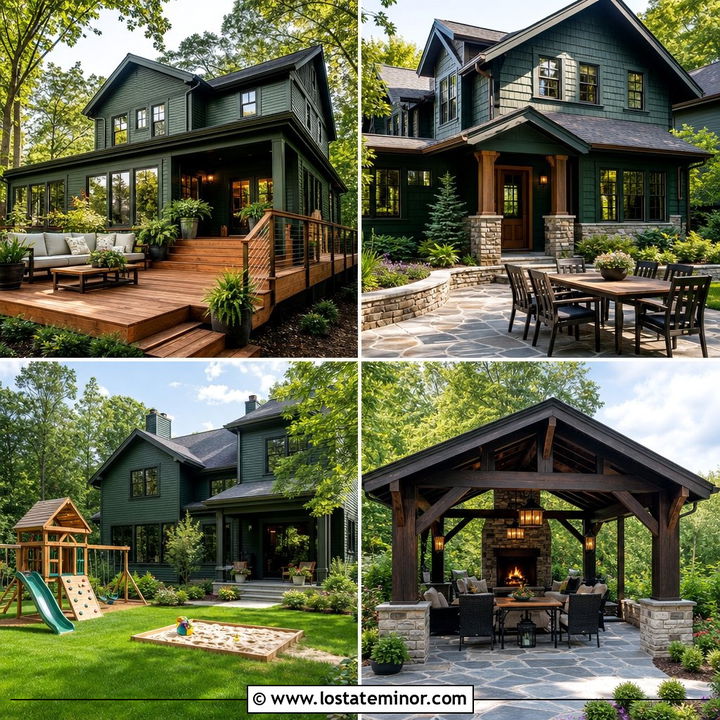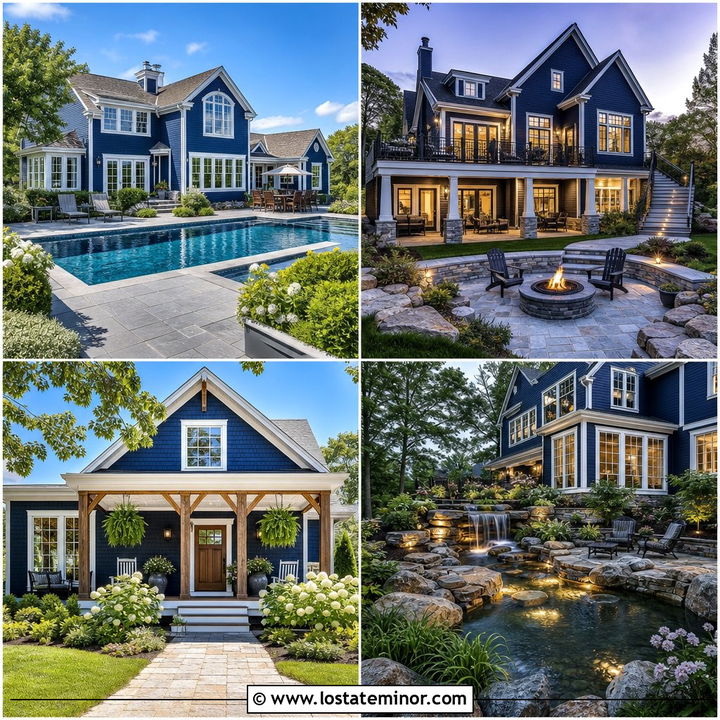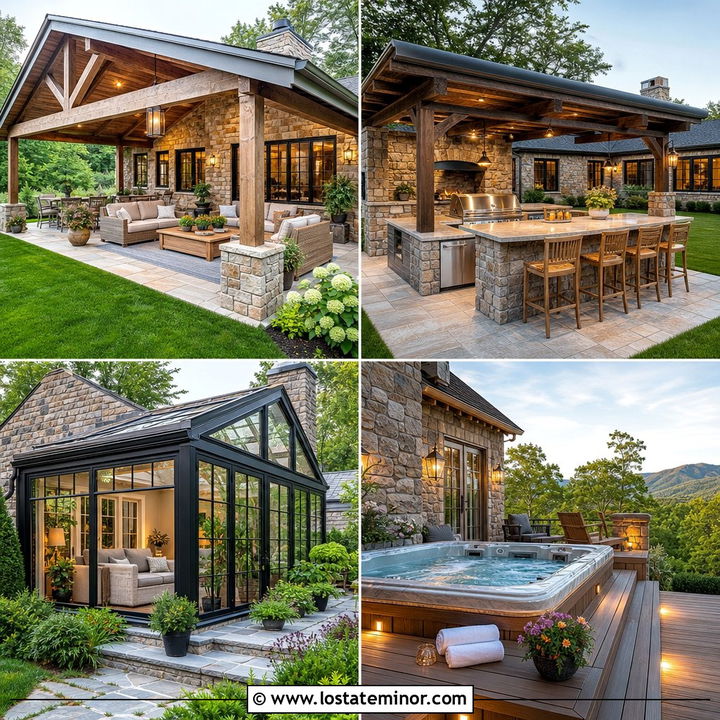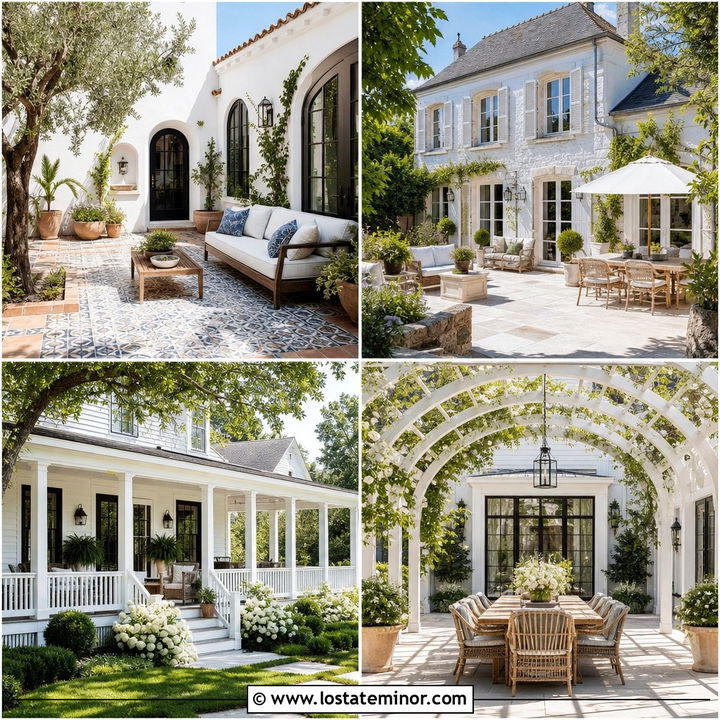
Beige exteriors create a warm, flexible backdrop for outdoor living, whether your backyard is compact, spacious, traditional, or modern. The best **30 Beige House Design With Backyard Ideas** connect the home’s rear facade with patios, decks, pools, gardens, and gathering spaces instead of treating each feature separately. Current outdoor inspiration favors layered landscaping, natural stone, defined seating zones, pergolas, outdoor kitchens, and practical shade structures that make the yard feel like an extension of the house. () Beige also pairs easily with white, black, green, blue, wood, brick, and textured stone. The complete exterior looks below cover different house types, budgets, and yard sizes, giving you a useful starting point for exploring **30 Beige House Design With Backyard Ideas**.

1. Beige House With Covered Patio
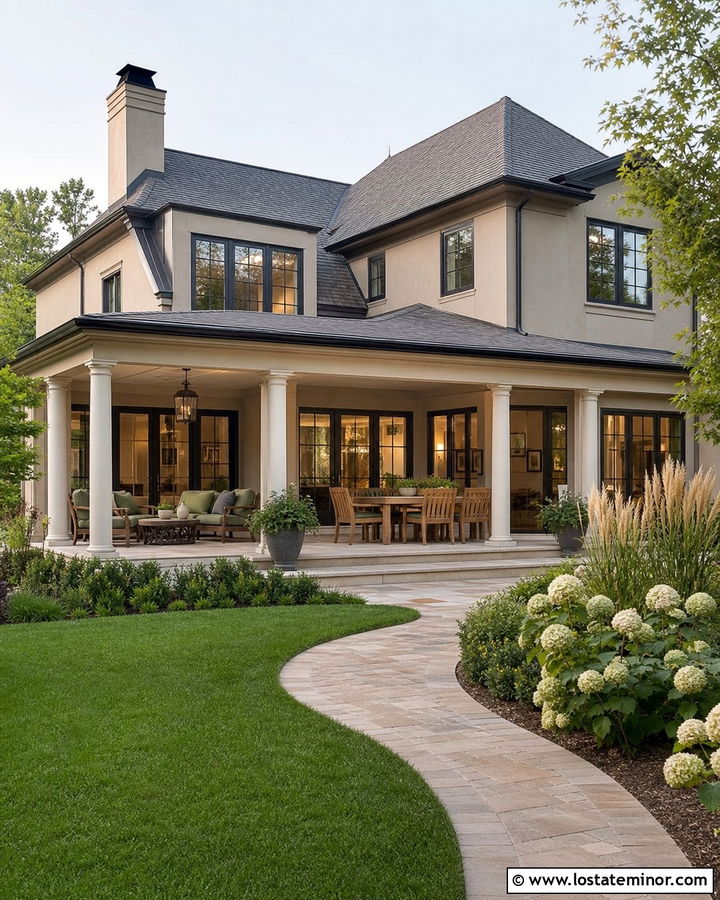
A covered patio gives a beige house a natural transition between indoor comfort and the backyard. Choose warm beige siding with creamy white trim, then repeat those colors across the patio ceiling and columns. A medium brown shingle roof keeps the scheme soft, while charcoal-framed windows add definition. Under the roof, use limestone or light taupe pavers that echo the exterior without matching it exactly. A natural teak dining set and olive green cushions introduce warmth and color. Finish the surrounding yard with curved planting beds, ornamental grasses, hydrangeas, and a simple lawn. This complete arrangement works especially well for transitional homes because the covered structure feels integrated rather than added as an afterthought.
2. Beige House With Wood Pergola
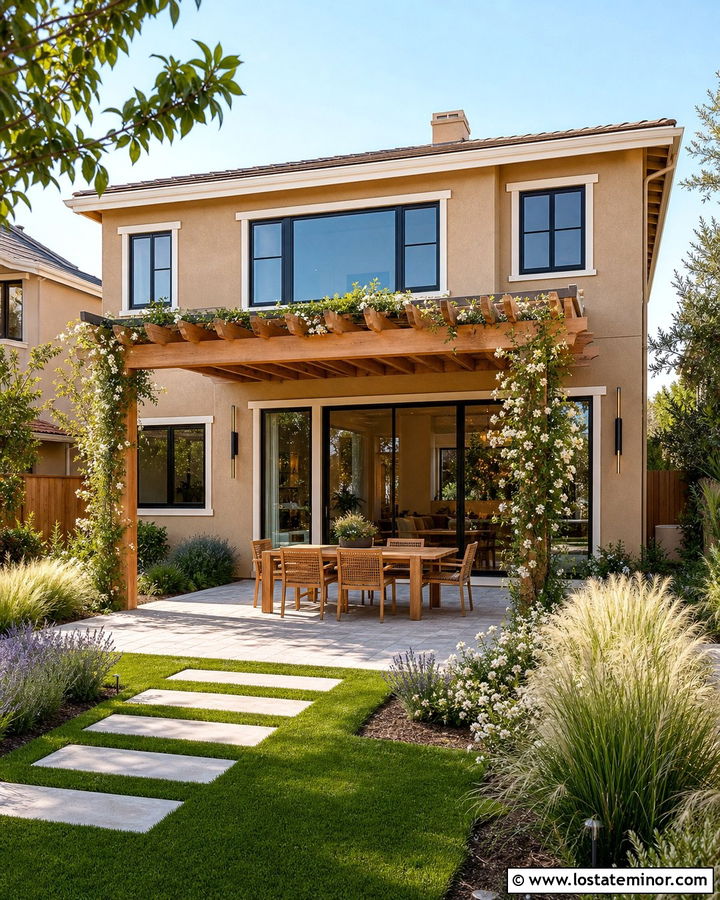
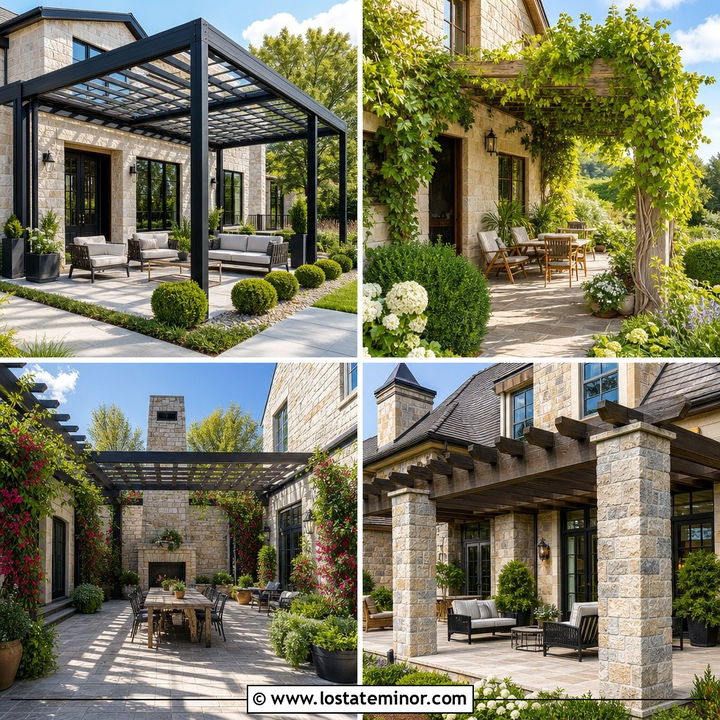
Can a basic beige backyard feel more architectural without a major addition? A wood pergola provides structure, shade, and a strong focal point while allowing plenty of natural light into the house. Pair sandy beige stucco or siding with off-white trim and a honey-toned cedar pergola. Black window frames and slim black outdoor lights keep the warm palette from looking overly traditional. Place the pergola over a rectangular paver patio furnished with an outdoor sofa and dining table. Climbing jasmine or clematis can soften the beams over time. Surround the patio with layered shrubs and grasses rather than a narrow border. The wood, beige exterior, greenery, and black details create a balanced backyard that feels polished but relaxed.
3. Beige House With Raised Deck
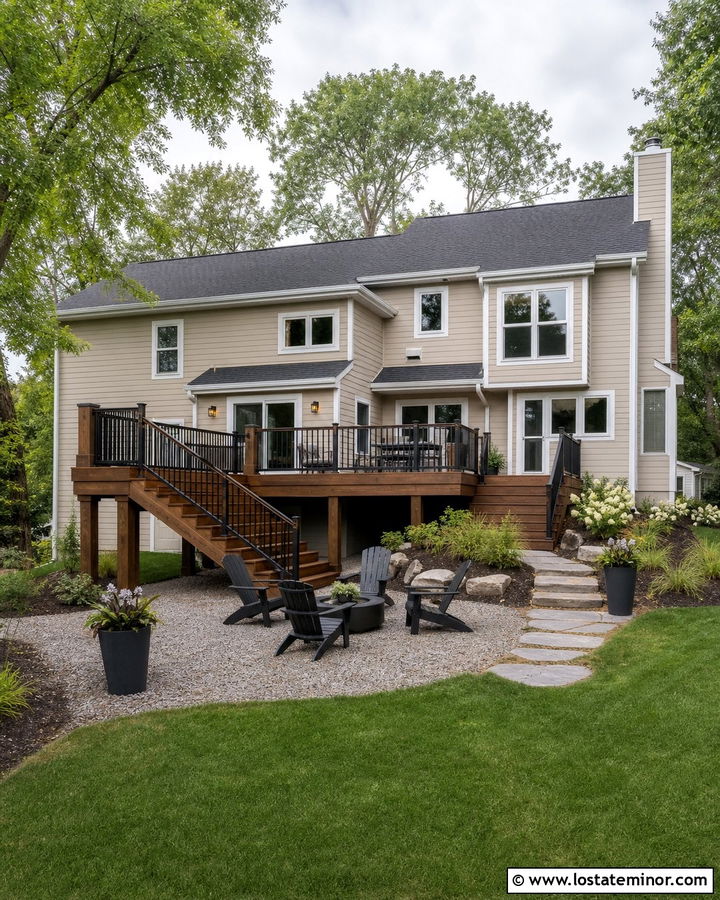
A raised deck is a practical match for a beige split-level or two-story house with elevated back doors. Use light greige-beige siding, crisp white corner boards, and a charcoal roof to create a clean foundation. A cedar or medium walnut deck adds enough contrast to stand out against the neutral walls. Black metal railings visually connect the deck to dark window frames and exterior lights while preserving open views of the yard. Wide stairs should lead toward a lower gravel seating area or lawn, making circulation feel intentional. Add tall planters beside the doors and low planting beds beneath the deck. This arrangement turns the height difference into an attractive design feature and gives the backyard separate spaces for dining, lounging, and everyday outdoor activities.
4. Beige House With Paver Patio
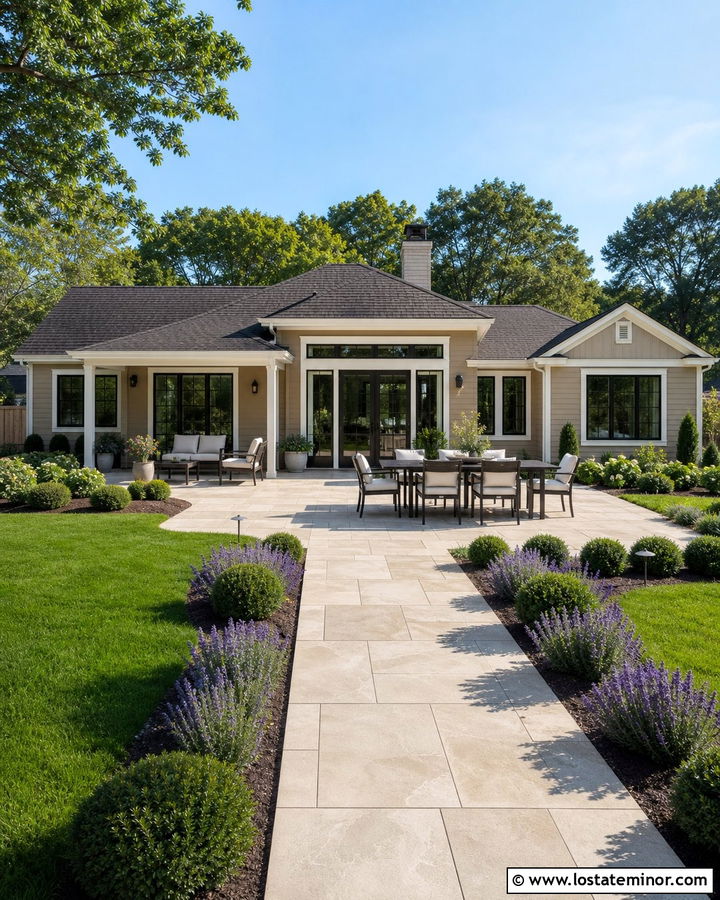
Large-format pavers can make a beige house look cleaner and more contemporary, especially when the patio follows the width of the rear elevation. Select warm mushroom beige siding with soft white trim and a dark bronze roof. Install pale limestone-look concrete pavers in a simple running pattern, leaving narrow planting strips near the house for softness. A charcoal dining table, tan lounge chairs, and cream outdoor cushions keep the furniture connected to the architecture. For a more finished appearance, extend the pavers into a direct walkway toward the gate or driveway. Low boxwoods, lavender, and ornamental grasses can frame the hardscape without hiding it. The result is an organized backyard with neutral colors, practical circulation, and plenty of usable entertaining space.
5. Beige House With Swimming Pool
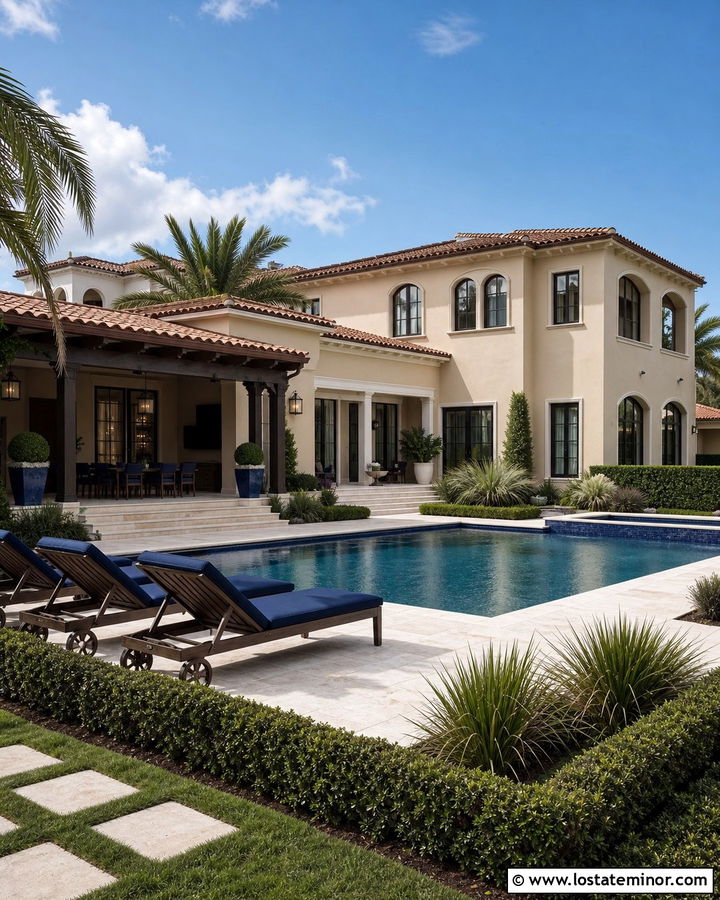
Blue pool water creates refreshing contrast against a warm beige exterior. For a cohesive resort-style backyard, combine biscuit beige stucco with ivory trim, bronze windows, and a clay or brown tile roof. Place the rectangular pool parallel to the rear facade so the architecture and water feel visually connected. Cream travertine or light sandstone around the pool keeps the surface bright and complements the house color. Add a covered lounge area with dark wood beams, neutral seating, and navy blue accents. Narrow planting beds filled with palms, grasses, or clipped evergreen shrubs can soften the pool enclosure. Keeping the major materials within a warm neutral palette allows the water, landscaping, and sky to provide the strongest natural color.
6. Beige House With Outdoor Kitchen
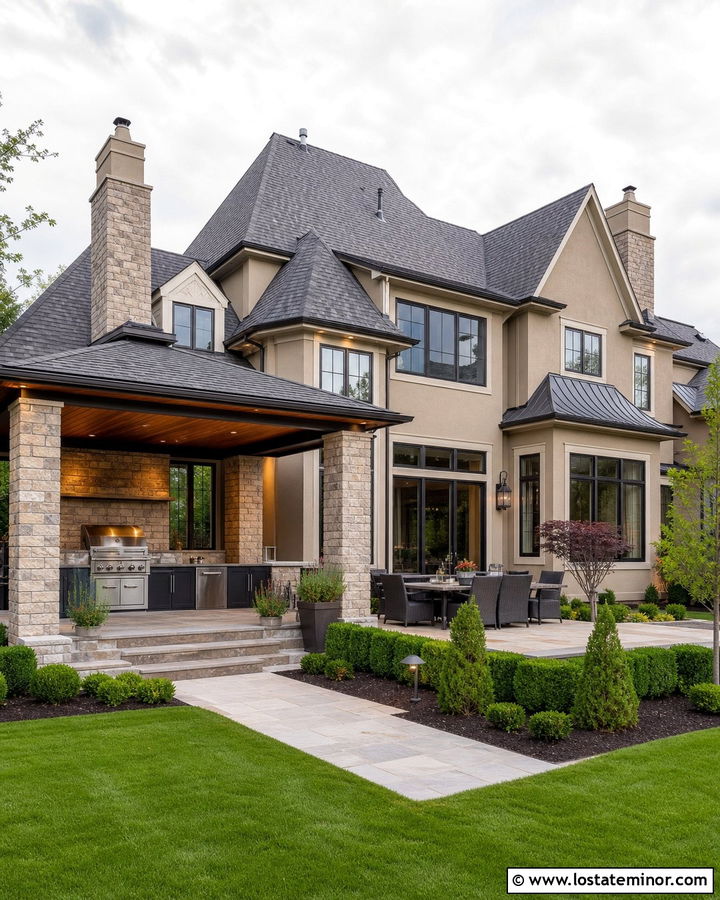
An outdoor kitchen works best when it looks like part of the house rather than a separate appliance station. Start with a tan-beige exterior, creamy white trim, and a medium gray roof. Build the kitchen along the edge of a covered patio using stacked stone that includes beige, taupe, and charcoal tones. Dark cabinets and stainless steel appliances provide a durable visual contrast. A cedar ceiling or pergola overhead can warm the cooking zone and relate it to wood doors or window details. Place a dining table nearby but leave a clear walkway between the house, grill, and lawn. Herb planters, low hedges, and a few small trees will soften the hard surfaces while keeping the kitchen open and functional.
7. Beige House With Fire Pit Patio
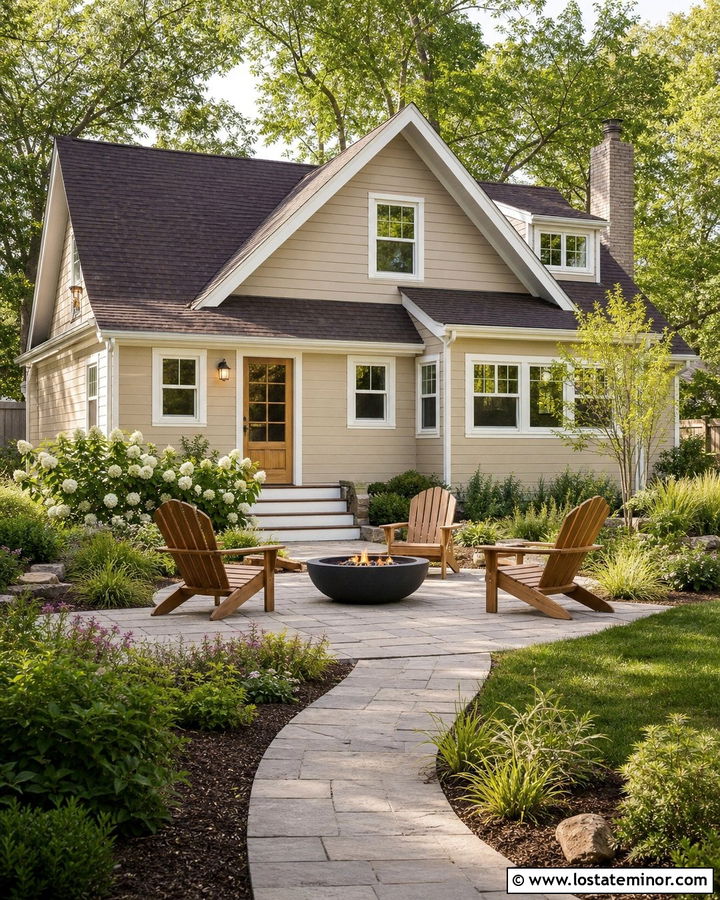
Cool evenings feel more inviting when a beige house frames a dedicated fire pit area. Pair light camel beige siding with white trim, a dark brown roof, and natural wood doors. Build a circular or square fire pit patio several feet beyond the main dining terrace, connecting the two zones with a wide stone path. Buff-colored pavers blend with the house, while a charcoal fire bowl or dark stone surround creates a clear focal point. Adirondack chairs in natural wood or muted green keep the setting casual. Add low ornamental grasses around the perimeter without crowding the seating area. This layered plan gives the yard better depth, allowing the beige house, main patio, pathway, and fire pit to read as one complete composition.
8. Beige House With Screened Porch
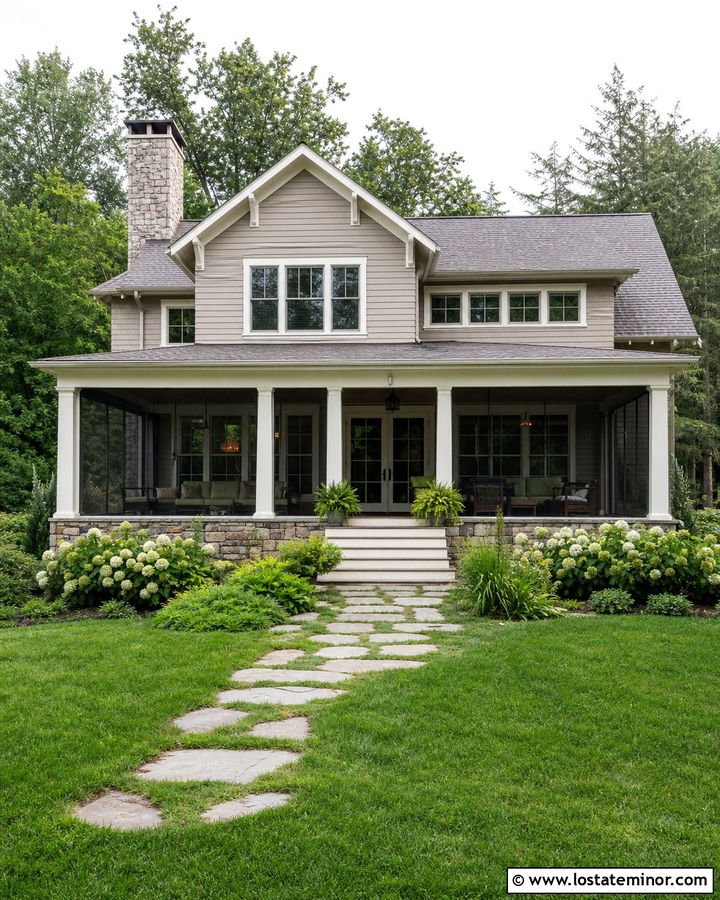
A screened porch can add comfortable outdoor living while strengthening the rear architecture of a beige home. Use warm putty beige siding with bright white trim and substantial white porch columns. Dark bronze screens reduce visual glare and coordinate with the roof, lights, and door hardware. A stone foundation beneath the porch helps ground the structure, especially on a craftsman or cottage exterior. Inside, choose pale wood flooring, woven furniture, and soft green upholstery that connects the room to the garden. Broad steps can lead directly to a lawn or flagstone walkway. Plant hydrangeas, ferns, and shade-tolerant shrubs around the porch base. The finished backyard feels enclosed enough for comfort but remains visually connected to the landscaping.
9. Beige House With Backyard Sunroom
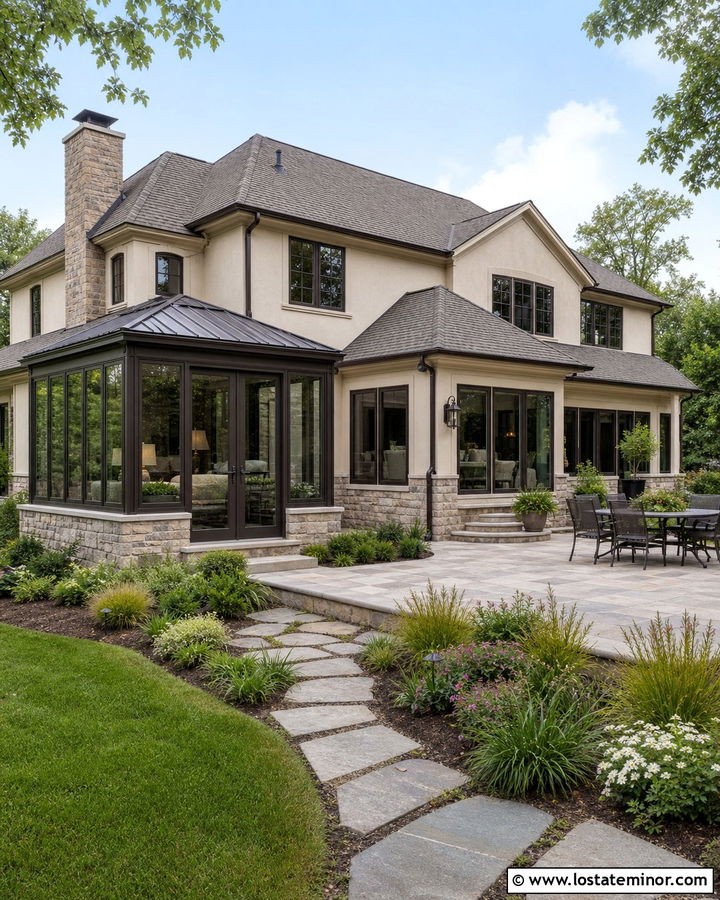
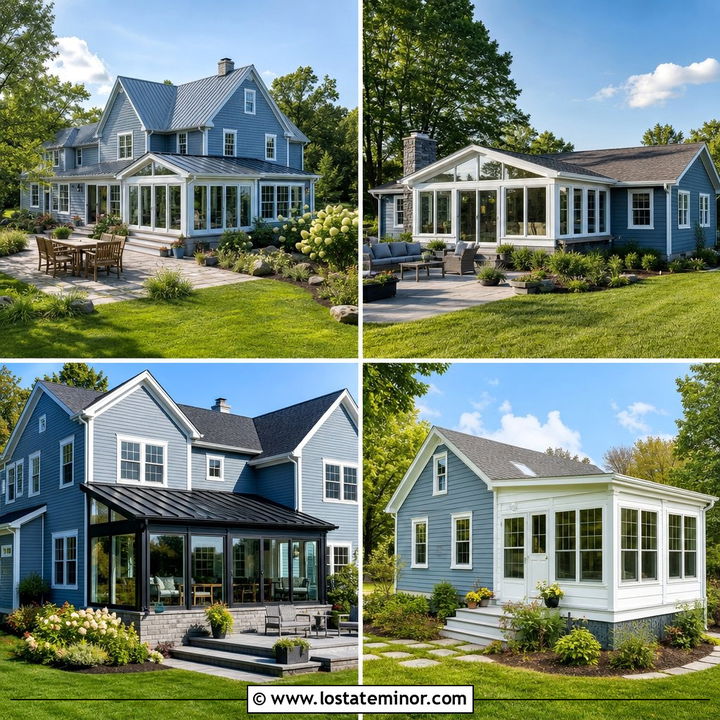
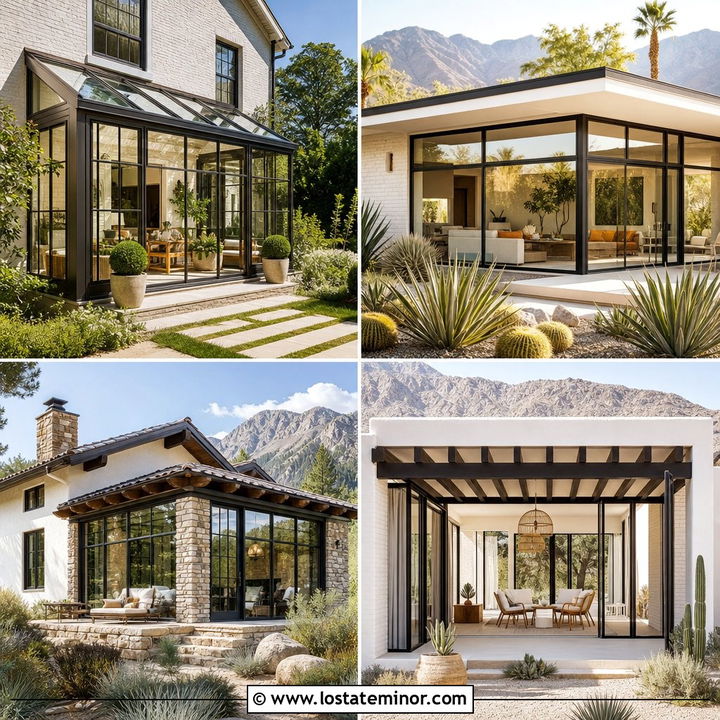
Glass walls make a sunroom feel lighter, but the frame colors determine whether it blends with a beige exterior. Combine almond beige siding with creamy trim and dark bronze window frames for a defined yet welcoming look. Extend the sunroom across one portion of the rear facade rather than centering it automatically. This leaves room for an adjacent open patio or deck. Use a low stone base in mixed tan and gray tones to connect the glass addition to the ground. A matching stone walkway can curve through lawn and garden beds. Keep nearby plantings low so they do not block the windows. With coordinated frames, masonry, roof materials, and landscaping, the sunroom becomes a seamless part of the whole house.
10. Beige House With Stone Terrace
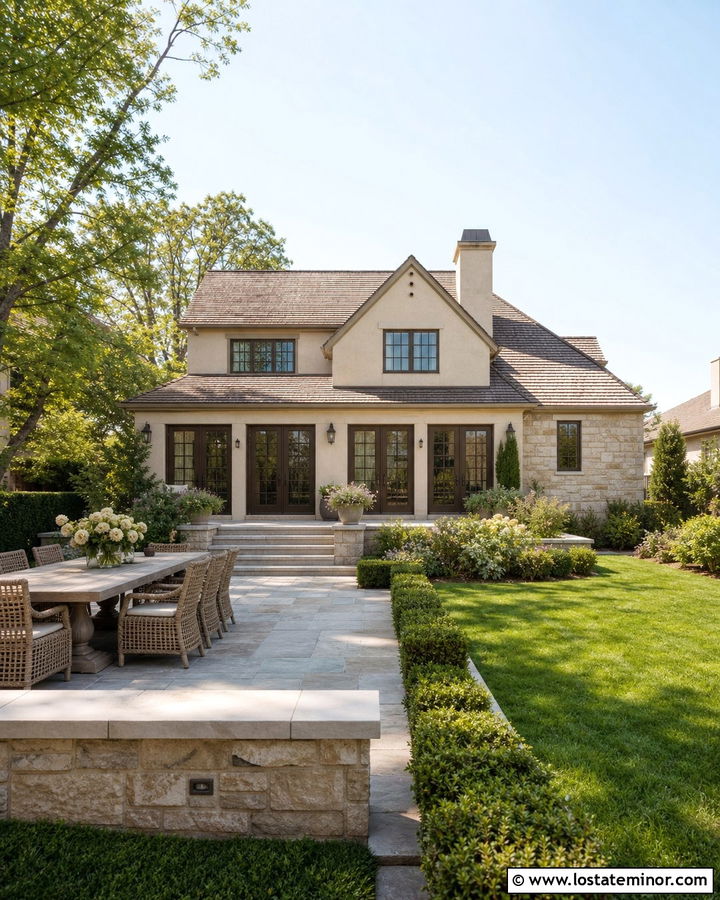
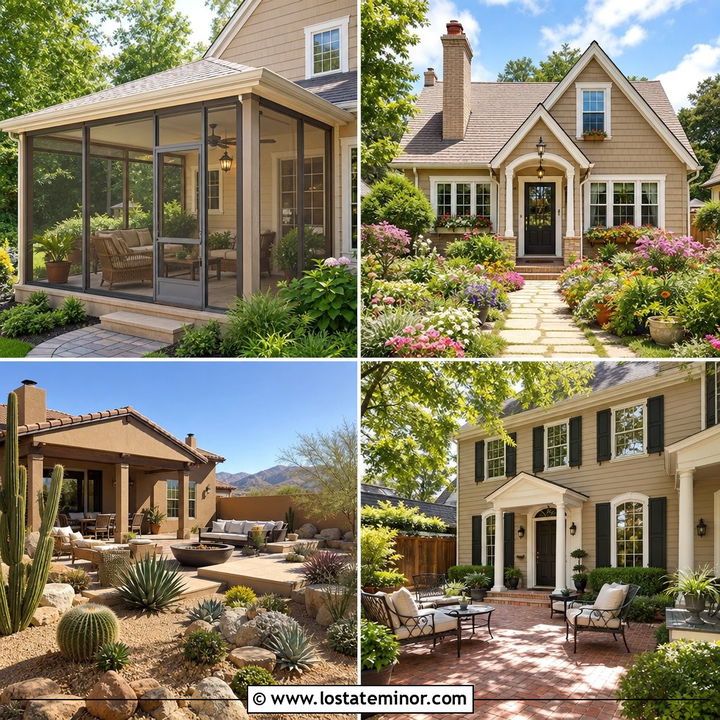
Natural stone gives a beige exterior more depth without introducing a competing color. A pale oatmeal beige house looks especially refined with creamy limestone, warm gray flagstone, and muted brown roof shingles. Create a broad terrace directly outside the main back doors, using a low stone retaining wall as built-in seating or a boundary for planting beds. French doors with dark bronze frames can add architectural contrast. Furnish the terrace with a large wood table, woven chairs, and neutral umbrellas. Beyond the stonework, use a rectangular lawn framed by flowering shrubs and evergreen hedges. Repeating similar stone around the foundation, steps, and terrace edges creates continuity, helping the backyard appear established and thoughtfully connected to the house.
11. Beige House With Small Backyard
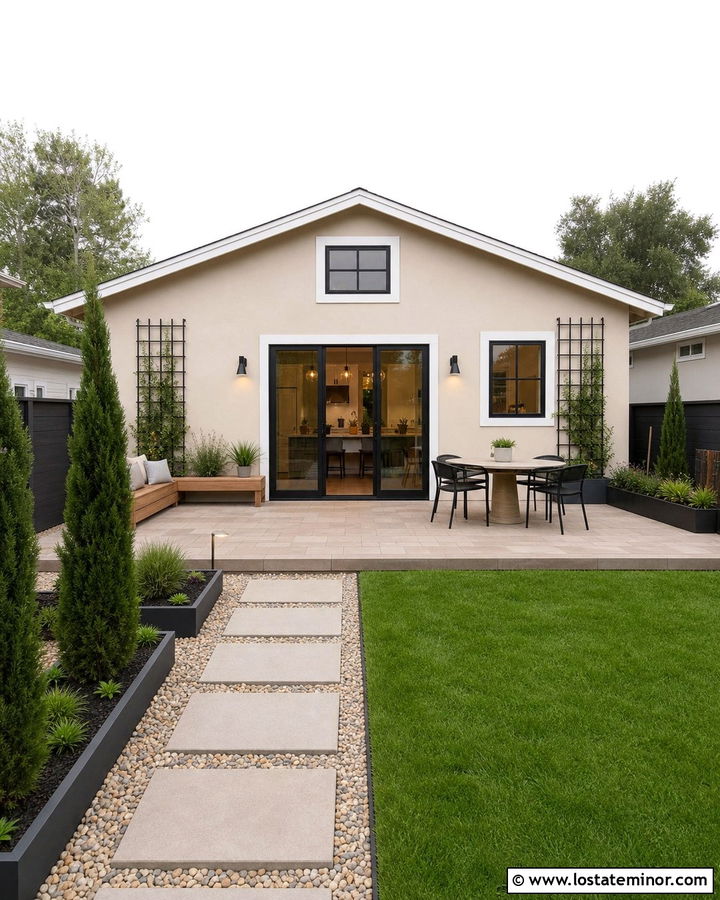
A small backyard benefits from fewer materials and clearly defined functions. Pair soft sand beige siding with white trim and black-framed doors, then create one full-width patio using light taupe pavers. A built-in bench along the fence saves floor space and provides more seating than scattered chairs. Choose a compact round dining table that allows easy movement between the house and garden. Vertical trellises, narrow planters, and columnar evergreens add greenery without consuming the center of the yard. Keep the lawn small or replace it with gravel and stepping stones if maintenance is a concern. By repeating black, white, beige, and natural wood in measured amounts, the entire outdoor area will feel organized, brighter, and visually larger.
12. Beige House With Large Lawn
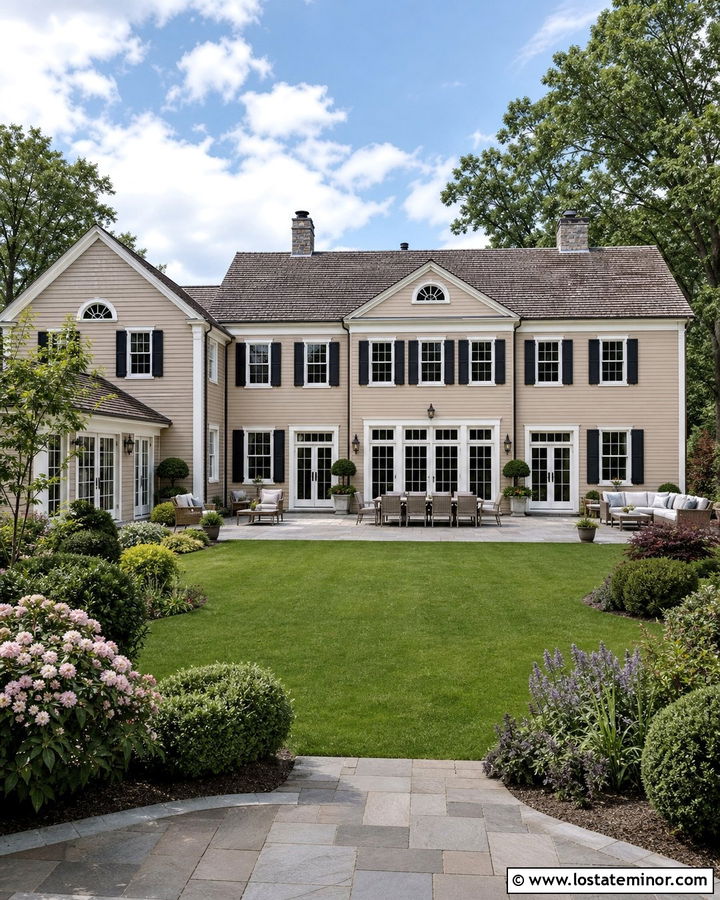
An open lawn can make a beige house feel stately, but it needs surrounding layers to avoid looking unfinished. Use classic tan-beige siding, clean white trim, dark shutters, and a weathered brown roof on a colonial or traditional home. Place a generous stone patio near the house, then preserve a broad central lawn for flexible use. Frame the lawn with deep planting beds containing flowering shrubs, ornamental trees, and evergreens in varied heights. A straight or gently curved walkway can lead to a rear gate, garden bench, or small pavilion. Repeating the house’s white and dark accents through planters and outdoor furniture keeps the landscape connected to the architecture. The open center also gives the full rear facade room to remain visible.
13. Beige House With Garden Beds
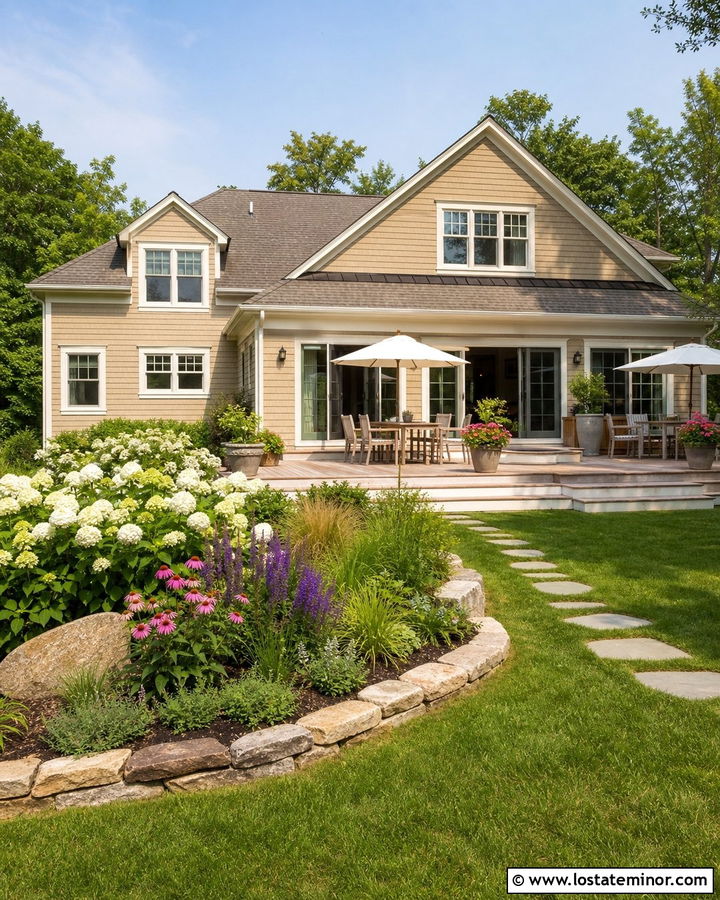
Lush garden beds can turn a quiet beige exterior into a colorful backdrop without requiring bold paint. Choose wheat beige siding with cream trim, muted green doors, and a medium brown roof. Place layered beds around the patio and rear foundation, using taller shrubs near blank walls and shorter flowers beside windows and paths. Purple salvia, white hydrangeas, pink coneflowers, and soft grasses provide varied color and texture. Curved bed lines work well with cottages and traditional homes, while straighter borders complement modern architecture. Use natural stone edging or dark mulch to keep the composition tidy. A small wood dining set and stepping-stone path complete the scheme, allowing the house, patio, plants, and lawn to feel balanced.
14. Beige House With Privacy Landscaping
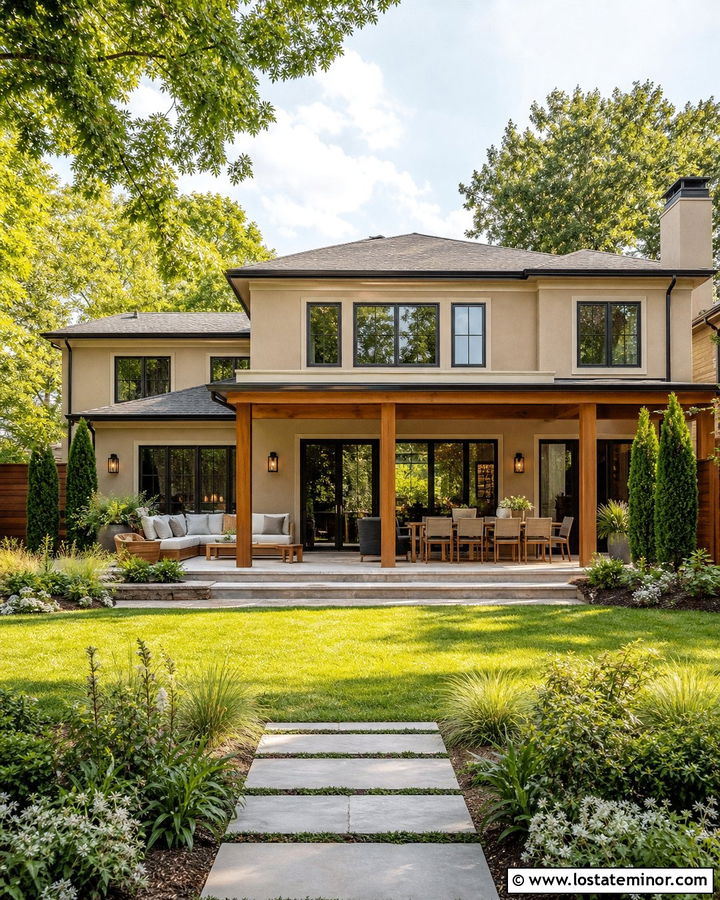
A backyard can feel secluded without being surrounded by a solid wall of identical plants. Pair warm khaki beige siding with ivory trim, dark bronze windows, and a cedar patio structure. Along the property line, layer columnar evergreens with flowering shrubs, ornamental grasses, and one or two small canopy trees. This creates privacy at different heights while adding seasonal interest. Keep taller plants away from important windows and doors so the home still receives natural light. A light stone patio and wood lounge furniture can occupy the protected center of the yard. Repeating cedar in the fence, pergola, or planter boxes brings the privacy features into the exterior palette. The complete space feels sheltered, green, and connected rather than boxed in.
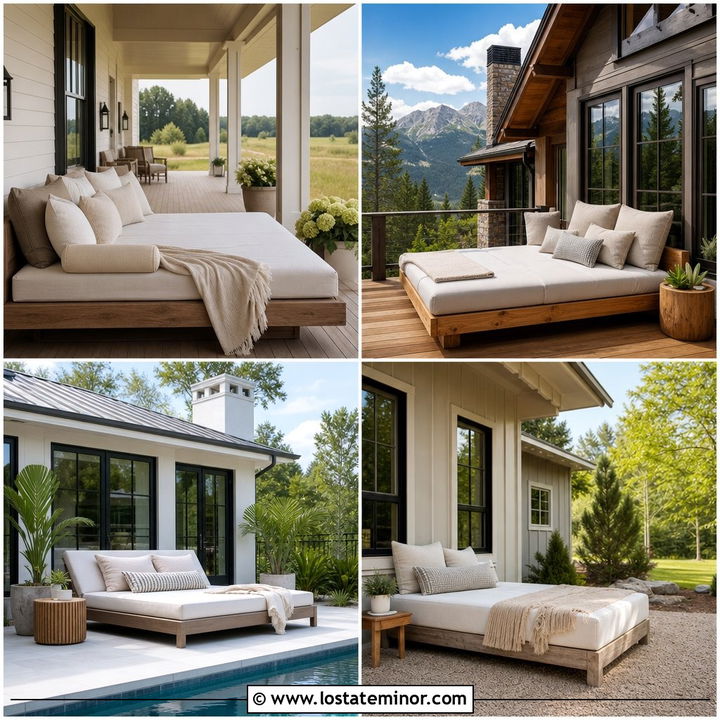
15. Beige House With Modern Courtyard
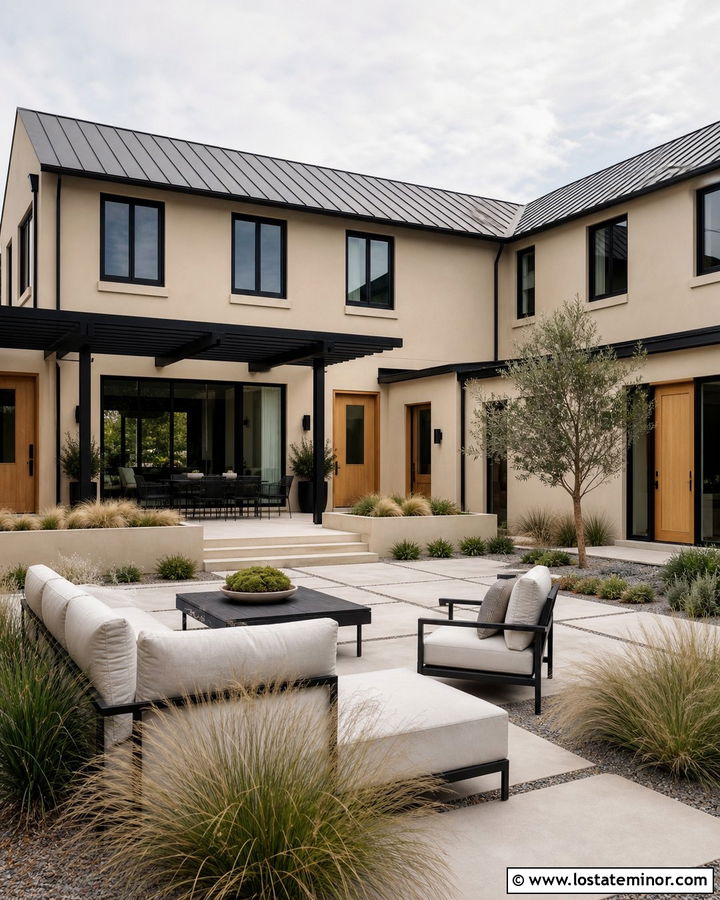
Sharp lines and restrained materials give beige a distinctly modern character. Cover the rear facade in smooth clay beige stucco, then add matte black windows, charcoal metal roofing, and natural oak doors. Create a courtyard using large pale concrete slabs separated by narrow gravel joints. A low rectangular planter can define the dining area without blocking the view from inside. Use sculptural grasses, compact evergreens, and a single ornamental tree instead of many small decorative plants. Black lounge furniture with cream cushions reinforces the exterior contrast. If additional shade is needed, install a slim black pergola aligned with the window frames. The limited palette allows the architecture, courtyard proportions, and carefully placed landscaping to become the main visual features.
16. Beige House With Black Trim
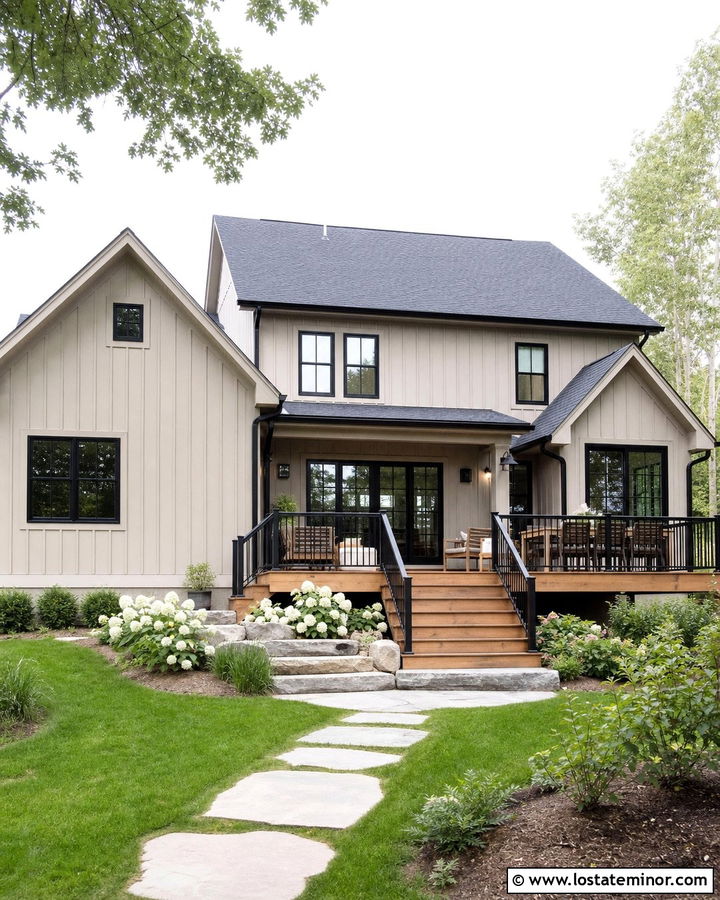
Black trim gives a beige house stronger definition and can make a simple rear elevation look more architectural. Select soft greige-beige siding, then use matte black around windows, sliding doors, gutters, and exterior lights. A charcoal roof and black metal deck railing continue the contrast across the whole structure. Warm the scheme with a cedar deck, wood dining furniture, and tan stone steps. In the yard, choose loose green planting rather than overly formal hedges so the dark lines do not feel severe. White or pale flowering plants can introduce small points of brightness. The combination works on modern farmhouses, split-level homes, and updated ranch houses because it balances a familiar neutral body color with crisp contemporary details.
17. Beige House With White Trim
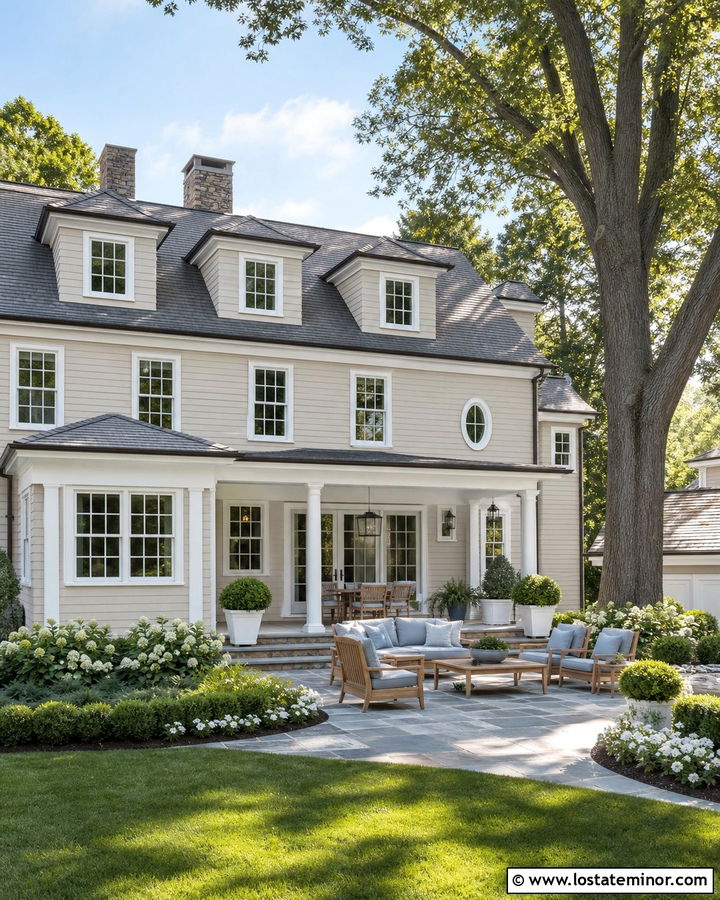
White trim brings brightness and a classic finish to warm beige siding. For a traditional backyard exterior, combine light fawn beige clapboard with crisp white windows, porch posts, fascia, and French doors. A dark gray roof prevents the light palette from appearing washed out. Add a natural bluestone patio for cool contrast, then furnish it with teak seating and blue-gray cushions. White planters near the doors can repeat the trim color and hold simple green shrubs. Beyond the patio, use an open lawn with curved flower beds and a mature shade tree. The look feels fresh because each color has a clear role: beige provides warmth, white highlights the architecture, and darker roof and patio tones visually anchor the house.
18. Beige House With Green Accents
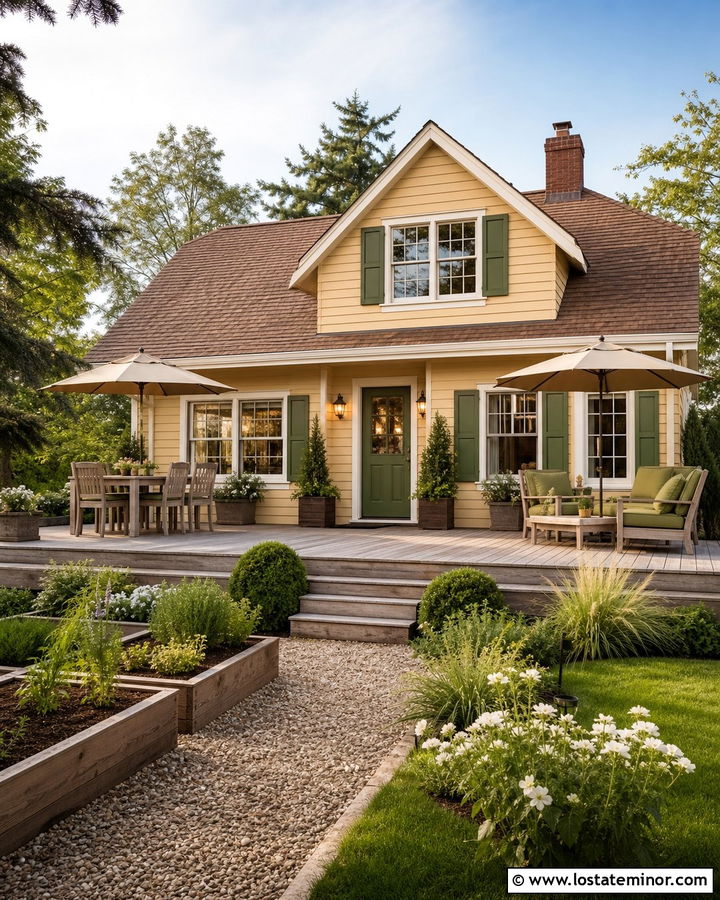
Green accents help a beige exterior merge naturally with its backyard setting. Start with light honey beige siding and creamy white trim, then paint the rear doors and selected window shutters a muted olive green. A weathered cedar deck and medium brown roof strengthen the earthy palette. On the patio, use olive cushions, beige umbrellas, and natural wood furniture rather than introducing unrelated bright colors. Layer the garden with evergreen shrubs, herbs, ornamental grasses, and white flowering plants. A pea-gravel path can lead from the deck to a raised vegetable garden or quiet seating corner. Because green appears on both the house and in the landscaping, the transition from architecture to yard feels soft, continuous, and intentionally coordinated.
19. Beige House With Blue Accents
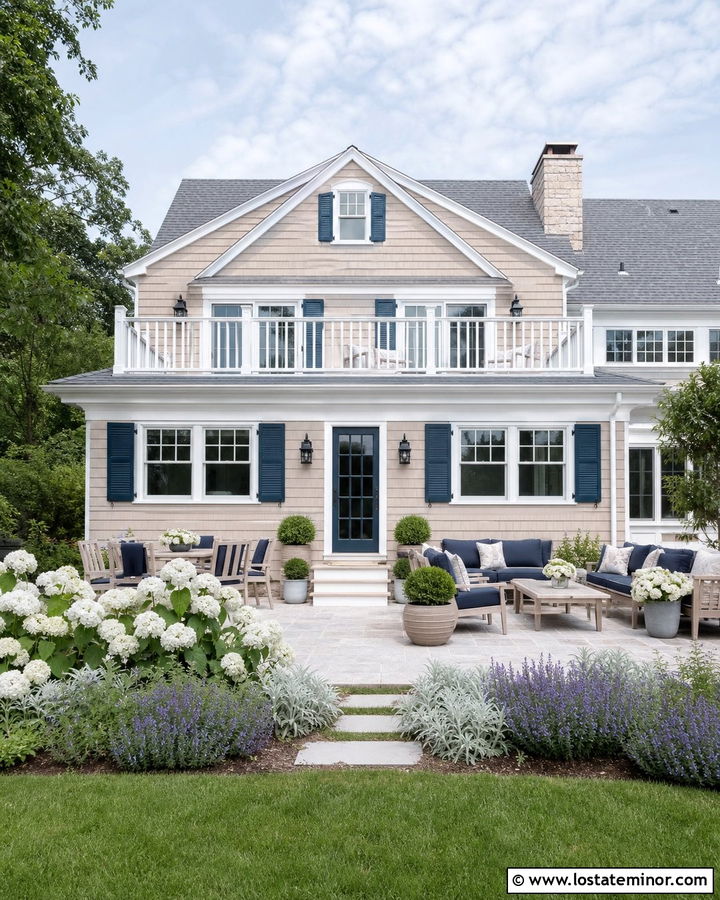
Blue can make a beige house feel cheerful without overwhelming its neutral character. Pair creamy beige siding with white trim, slate blue shutters, and a matching blue back door. Gray roof shingles and pale stone pavers keep the palette balanced. This combination is particularly suitable for Cape Cod, coastal, and cottage-inspired exteriors, but it can also refresh a basic suburban home. Place white or natural wood furniture on the patio and use navy cushions sparingly to repeat the accent color. Hydrangeas, catmint, and silvery foliage can continue the cool notes through the planting beds. Leave enough warm beige and green visible so the blue remains an accent. The backyard will feel colorful, comfortable, and connected to the house.
20. Beige House With Cedar Accents
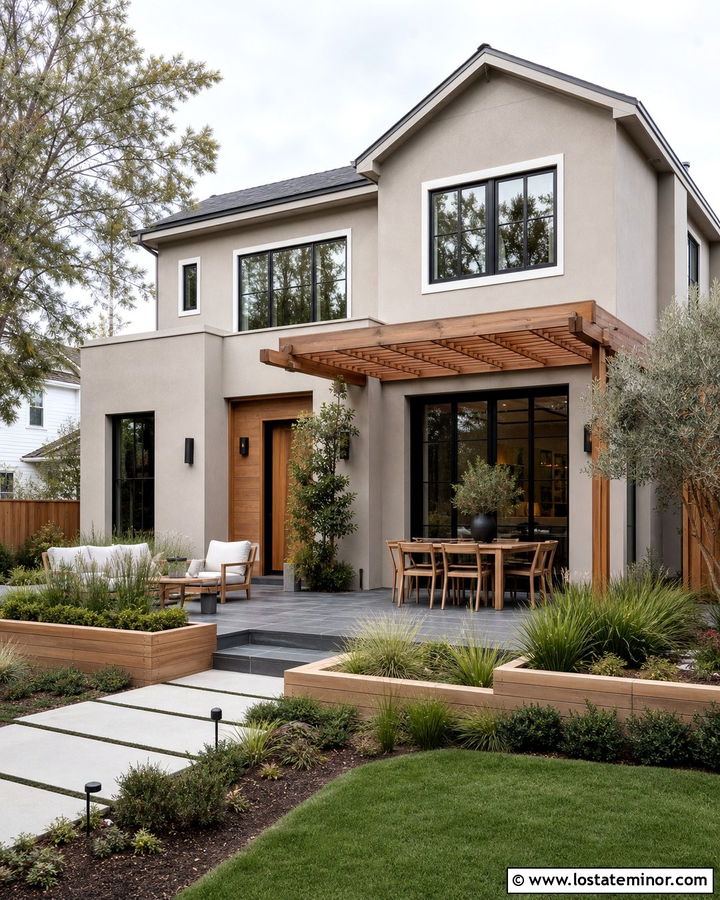
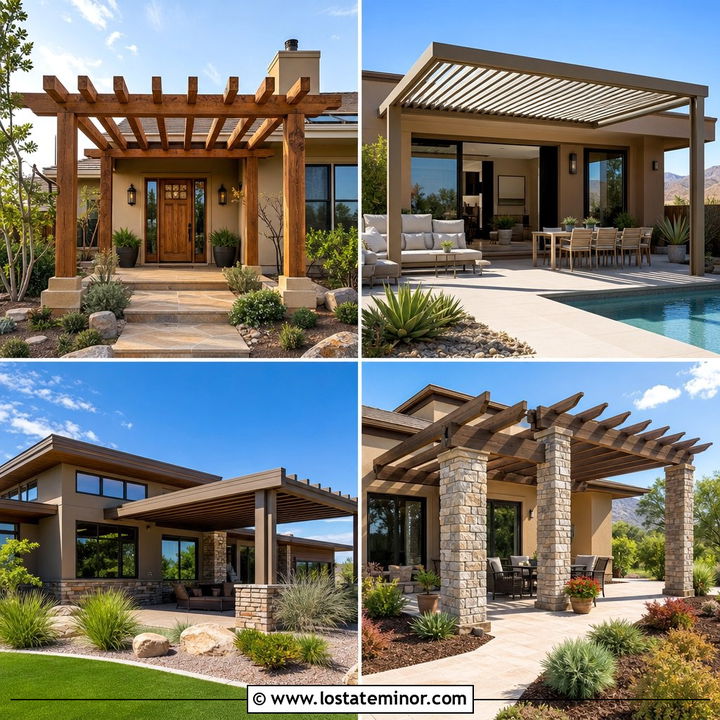
Fresh cedar introduces natural warmth and visible texture to a simple beige exterior. Use pale taupe-beige siding with off-white trim, then add cedar around the back door, beneath a covered porch ceiling, and across a modern pergola. Black window frames and railings provide contrast while keeping the wood from looking too rustic. A charcoal paver patio creates a durable base for a wood dining table and cream-cushioned lounge chairs. Repeat cedar in raised planters or a privacy screen, but limit it to a few meaningful areas. Surround the patio with feathery grasses, clipped shrubs, and a small lawn. The coordinated materials create a contemporary backyard exterior that still feels warm, approachable, and suited to a natural setting.
21. Beige Brick House With Patio
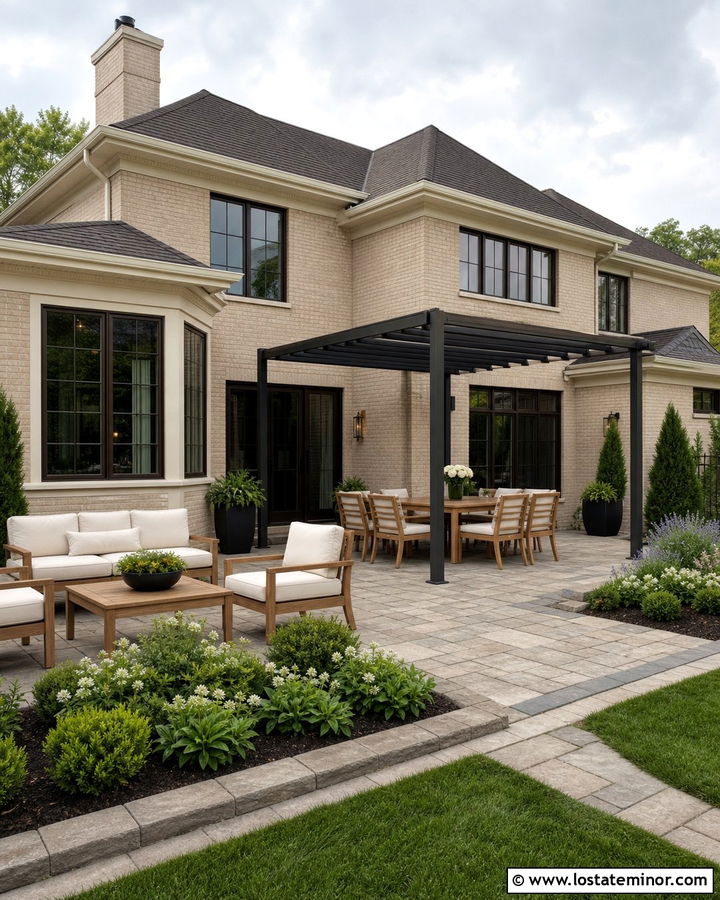
Beige brick already provides plenty of texture, so the backyard design should use simple supporting materials. Pair buff beige brick with warm white trim, dark bronze windows, and a chocolate brown roof. A patio made from large gray-tan pavers introduces gentle contrast without competing with the masonry pattern. Add a dark metal pergola or fabric awning over part of the seating area for shade. Natural teak furniture, cream cushions, and black planters complete the restrained palette. Use broad planting beds filled with evergreen shrubs and loose flowering perennials to soften the brick walls. If the house has multiple back doors, keep the patio continuous between them. This creates an orderly entertainment area and makes the rear elevation appear wider.
22. Beige Stucco House With Pool
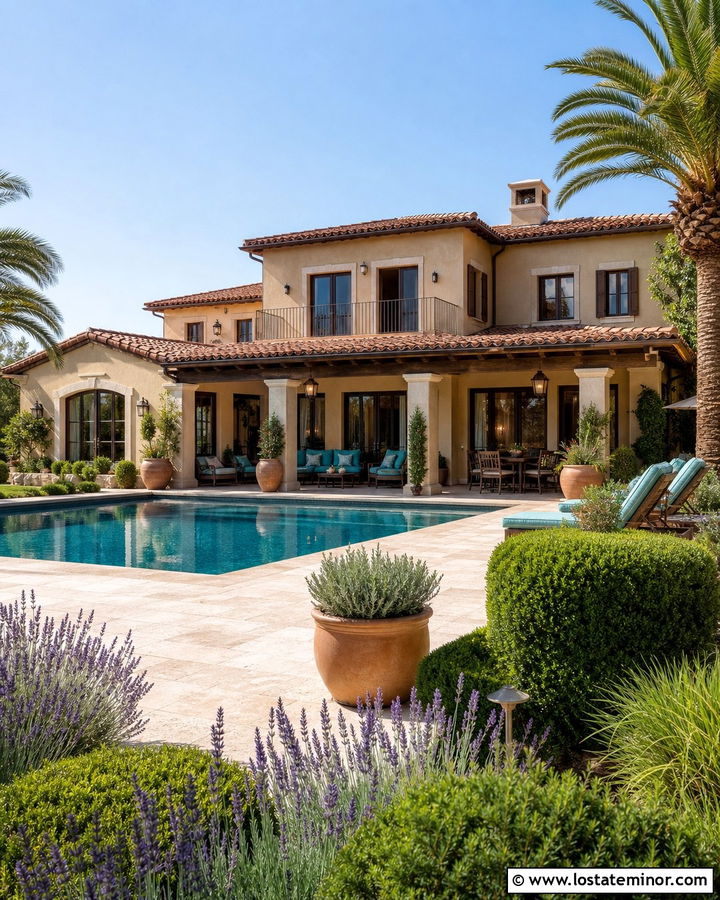
Smooth stucco and clean pool lines create a relaxed setting with Mediterranean or Southwestern influence. Choose warm desert beige stucco, ivory trim, deep brown windows, and a terracotta tile roof. Around the pool, use cream travertine that stays visually connected to the house while reflecting plenty of light. Add a covered loggia with thick stucco columns and dark wood ceiling beams. Turquoise or muted blue cushions can echo the water without dominating the exterior. For landscaping, combine low palms, rosemary, lavender, ornamental grasses, and neatly shaped shrubs. Large ceramic pots in clay and blue tones provide controlled color near the patio. The resulting backyard feels warm and established, with the architecture, water, hardscape, and plantings working together.
23. Beige Siding House With Deck
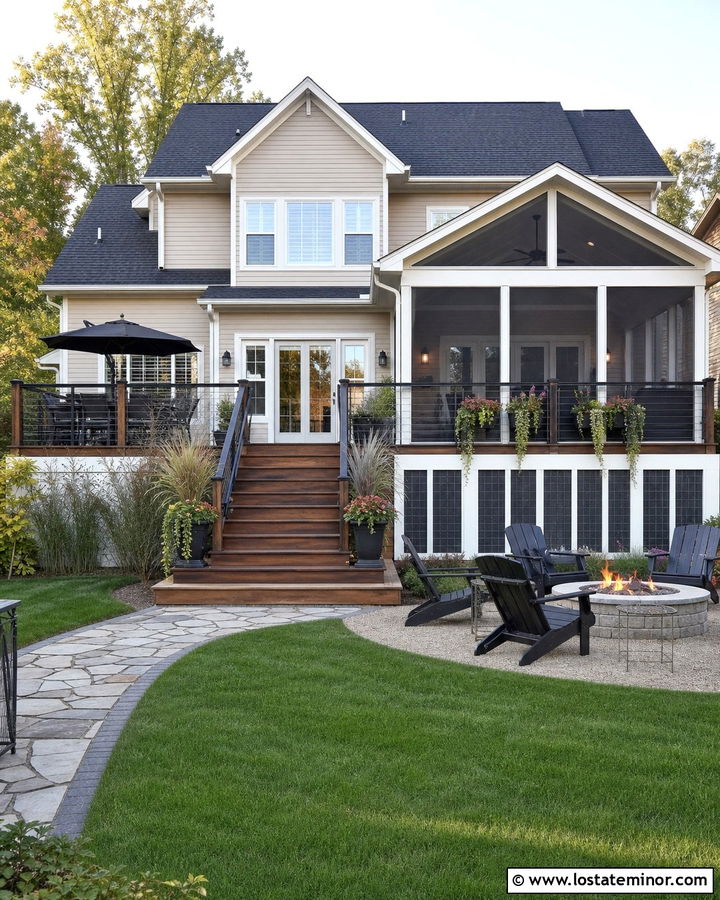
A simple siding exterior can gain character through a well-proportioned backyard deck. Cover the house in balanced neutral beige siding with white window trim and a charcoal asphalt roof. Build a medium-toned wood deck across the main living area, keeping it large enough for dining and lounging without covering the entire yard. Black cable or metal railings add a modern edge and maintain clear views. Wide stairs should connect the deck to a stone path, fire pit, or central lawn. Use planters with grasses and trailing flowers at deck level to soften the edges. Underneath, add lattice, horizontal wood screening, or stone cladding. These finishing details make the deck feel architecturally integrated rather than attached to an otherwise plain wall.
24. Beige Farmhouse With Backyard Porch
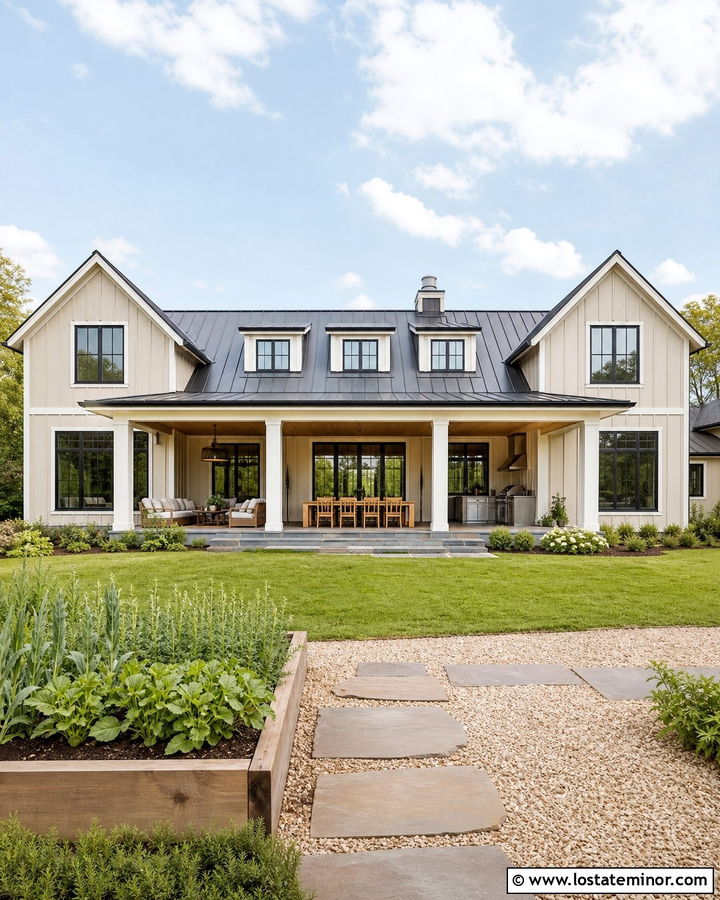
A farmhouse porch should look generous, useful, and connected to the surrounding land. Pair warm linen beige board-and-batten siding with bright white trim, black windows, and a dark metal roof. Extend a deep covered porch across most of the rear elevation, using white square columns and a natural wood ceiling. A brick or flagstone floor provides texture and handles frequent foot traffic. Place a long farmhouse table near the outdoor kitchen and a separate cushioned seating group beside the garden. Broad steps can lead down to a large lawn, raised beds, and a gravel path. Black lights and door hardware repeat the roof color, while wood furniture warms the neutral scheme. The finished porch feels casual but thoughtfully composed.
25. Beige Ranch House With Backyard Patio
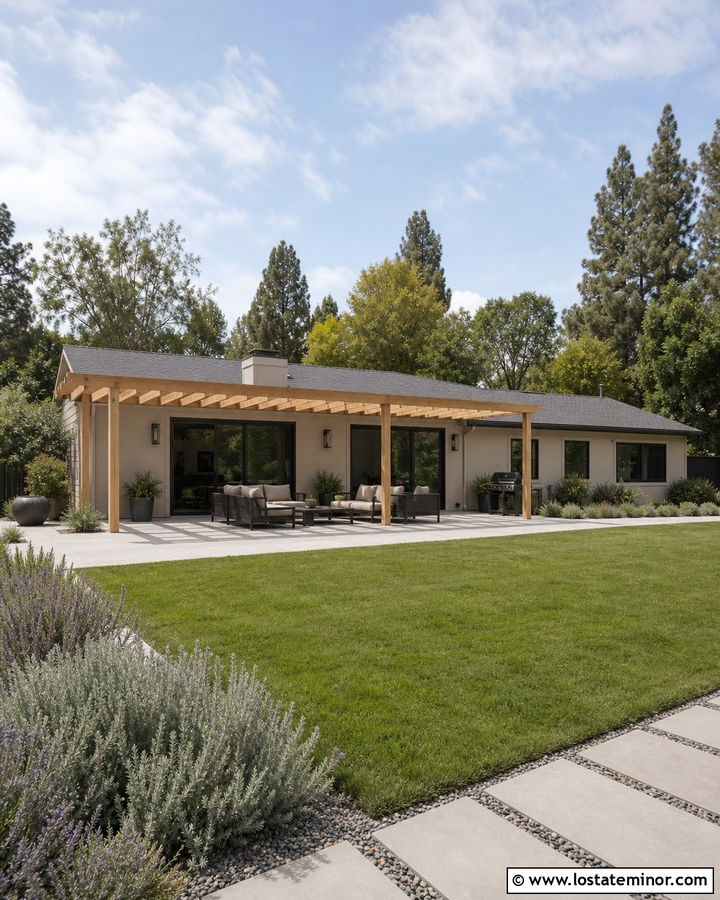
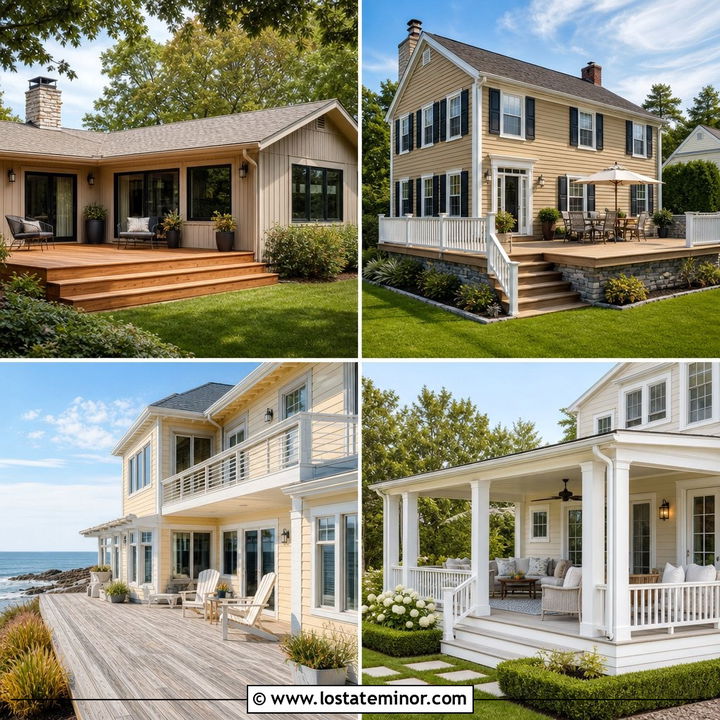
A low ranch house benefits from backyard features that emphasize its horizontal shape. Use warm mushroom beige siding with cream trim and a dark gray low-slope roof. Install a long rectangular patio that follows the rear facade, using pale concrete pavers or brushed concrete with a defined border. A slim cedar pergola can cover the dining zone without making the one-story house feel visually heavy. Add black-framed sliding doors, charcoal furniture, and sand-colored cushions for subtle contrast. Keep foundation plantings low beneath the windows, then place taller trees and shrubs near the yard’s outer edges. A broad lawn or gravel garden beyond the patio gives the house breathing room and preserves a clear view of its full width.
26. Beige Craftsman House With Garden
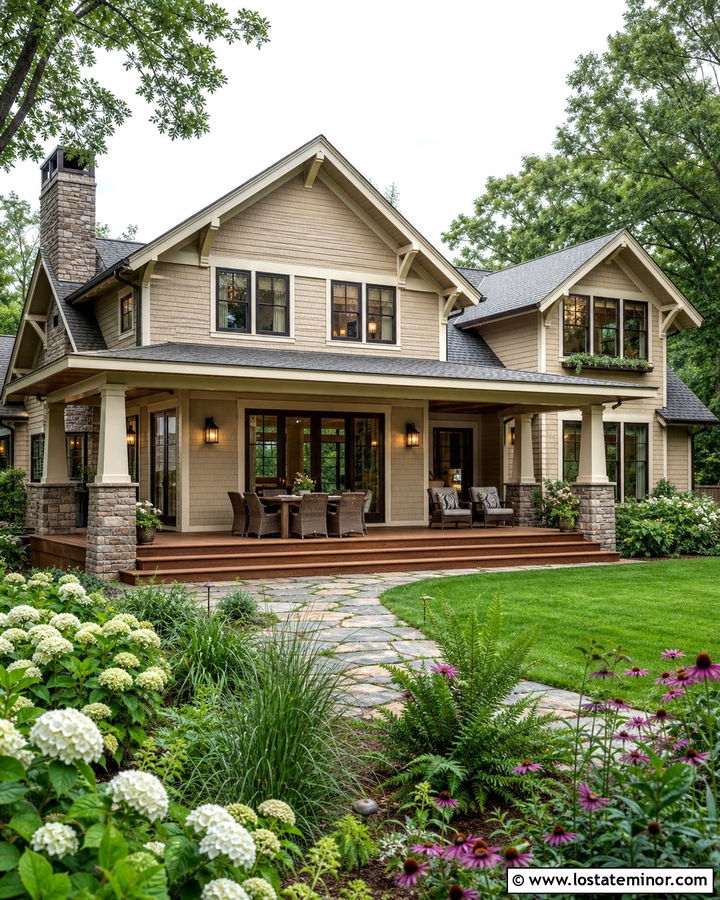
Craftsman details look especially rich when beige siding is paired with stone, wood, and layered planting. Choose toasted almond beige shingles or lap siding with creamy trim and deep brown window frames. Support the back porch with tapered columns resting on mixed beige-gray stone bases. A medium-stained wood deck and broad steps can lead into a cottage-style garden filled with hydrangeas, coneflowers, ferns, and ornamental grasses. Use irregular flagstone for the main path to reinforce the handcrafted character. Dark bronze lights and simple wood furniture complete the palette. Rather than hiding the porch behind tall shrubs, keep central plantings low and build height toward the sides. This frames the architecture while creating a lush, welcoming backyard.
27. Beige Colonial House With Terrace
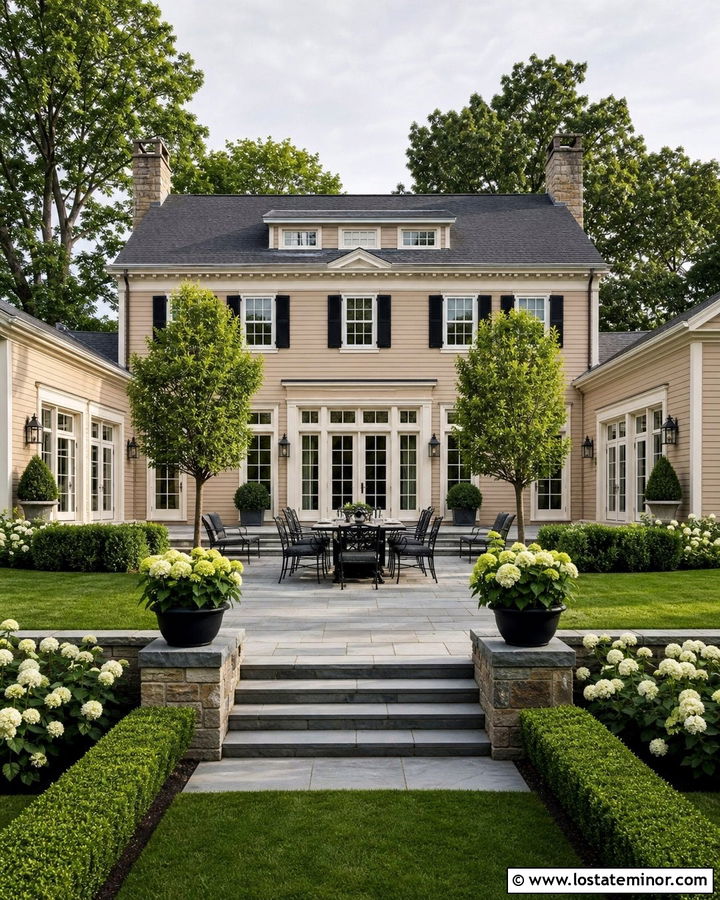
Symmetry can give a beige colonial backyard a calm, formal appearance. Paint the clapboard siding classic tan beige and highlight the windows, French doors, and cornice with bright white trim. Use black shutters and a dark charcoal roof to add definition. Center a rectangular brick or bluestone terrace on the main doors, then place matching planters or small trees at both ends. A dining table can occupy the middle, with paired lounge chairs arranged closer to the garden. Continue the symmetry through clipped hedges, straight paths, and balanced flower beds, but include a few loose perennials to prevent stiffness. The terrace should be wide enough to ground the two-story facade while leaving a generous lawn visible beyond it.
28. Beige Mediterranean House With Courtyard
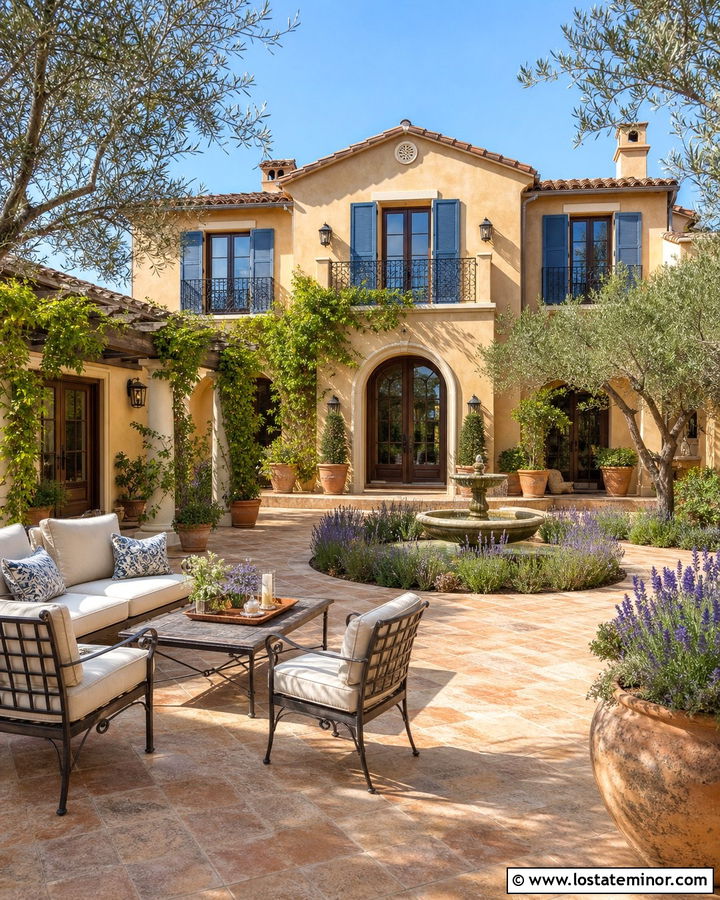
Warm materials and shaded outdoor rooms suit a beige Mediterranean exterior beautifully. Cover the house in sun-washed sandstone beige stucco, then add cream trim, dark wood doors, blue shutters, and a terracotta tile roof. Build a courtyard directly outside the rear arches using warm stone or clay-toned pavers. A vine-covered wood pergola can shade an outdoor dining area, while a small fountain creates a central garden feature. Use olive trees, lavender, rosemary, clipped shrubs, and large ceramic pots to reinforce the setting. Keep furniture simple with dark metal frames and cream cushions. The combination of stucco, tile, greenery, blue accents, and natural stone creates an expressive backyard while preserving beige as the dominant exterior color.
29. Beige Modern House With Pool Deck
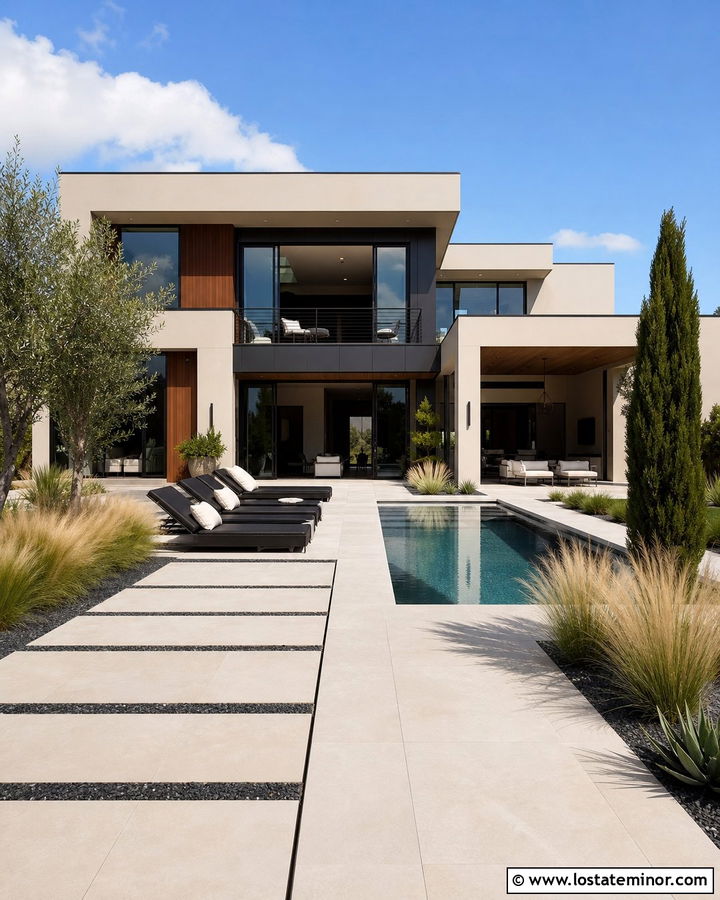
A modern beige house can look crisp and sophisticated when its pool deck follows the architecture’s geometry. Use smooth pale greige-beige stucco with black-framed glass doors, charcoal metal accents, and sections of warm wood cladding. Position a narrow rectangular pool parallel to the house and surround it with large cream porcelain pavers. Continue the same paving beneath a covered outdoor lounge to create one uninterrupted surface. Black chaise lounges, cream cushions, and a low wood dining table repeat the exterior colors. Keep landscaping minimal but substantial, using large ornamental grasses, sculptural evergreens, and one feature tree. Concealed drainage and clean paver edges support the streamlined appearance, allowing the beige walls and blue water to provide the primary contrast.
30. Beige Cottage House With Backyard Garden
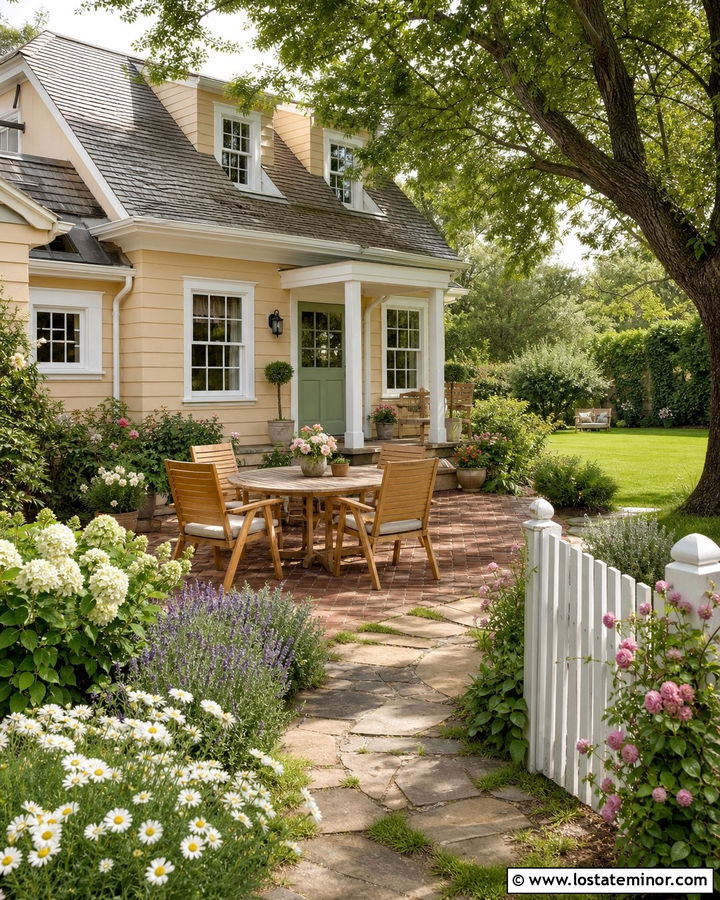
Soft colors and informal planting make a beige cottage feel at home in a garden setting. Choose buttery beige siding with warm white trim, a sage green back door, and weathered gray roof shingles. Add a small covered porch or brick patio with white posts and natural wood furniture. A winding flagstone path can connect the house to a garden shed, bench, or compact dining space beneath a tree. Fill deep borders with roses, hydrangeas, lavender, daisies, and loose ornamental grasses. A short white fence or natural wood gate adds definition without making the yard feel closed. The slightly relaxed arrangement suits the cottage architecture, while repeated beige, green, white, and gray tones keep the complete exterior cohesive.
Conclusion:
These **30 Beige House Design With Backyard Ideas** show how a neutral exterior can support many different outdoor settings, from compact patios and cottage gardens to modern pools and large entertaining spaces. The strongest designs repeat exterior colors and materials throughout the yard. Beige siding might connect with light pavers, while black windows relate to railings, furniture, or pergola frames. Wood, stone, brick, and greenery then supply texture and warmth. Before making changes, consider how people will move between the doors, patio, lawn, and garden. Choose one main outdoor feature and build the surrounding scheme around it. This practical approach creates a beige house and backyard that look complete, coordinated, and comfortable.

Related posts: