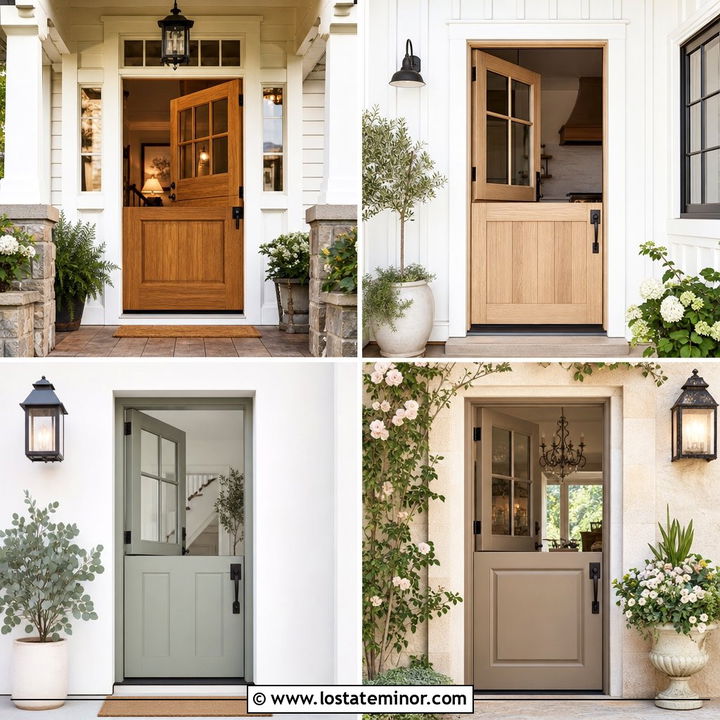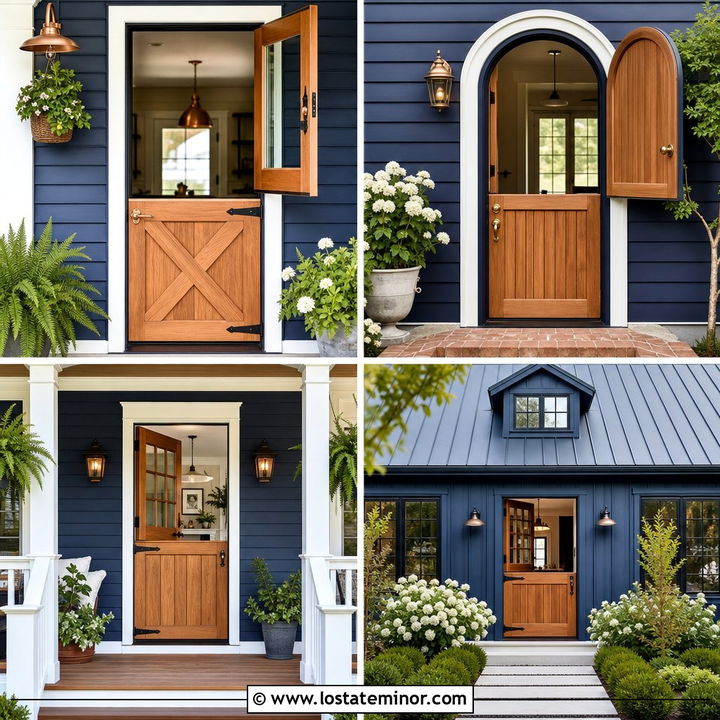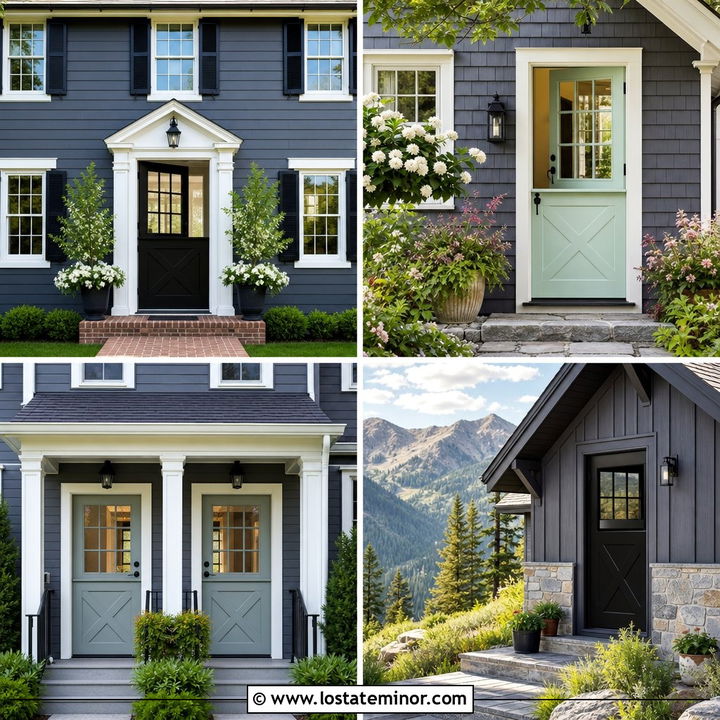
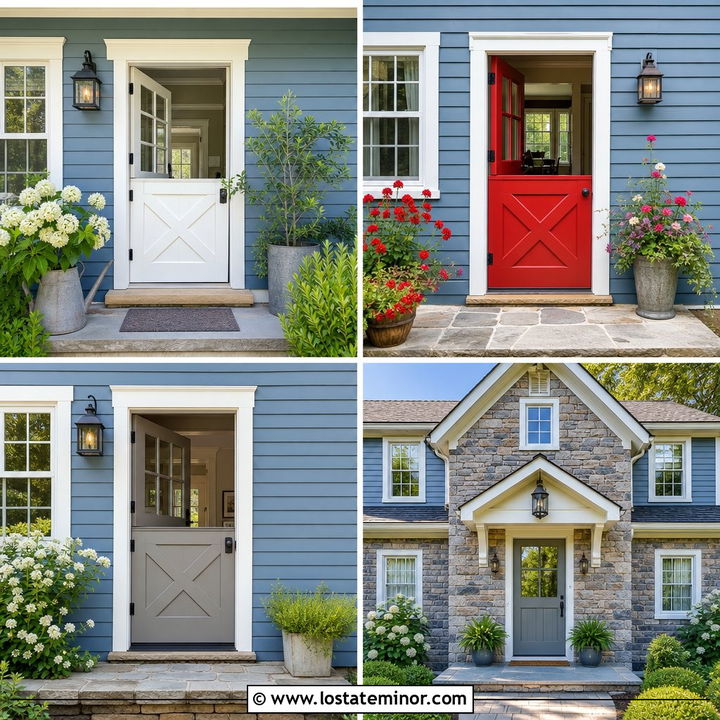
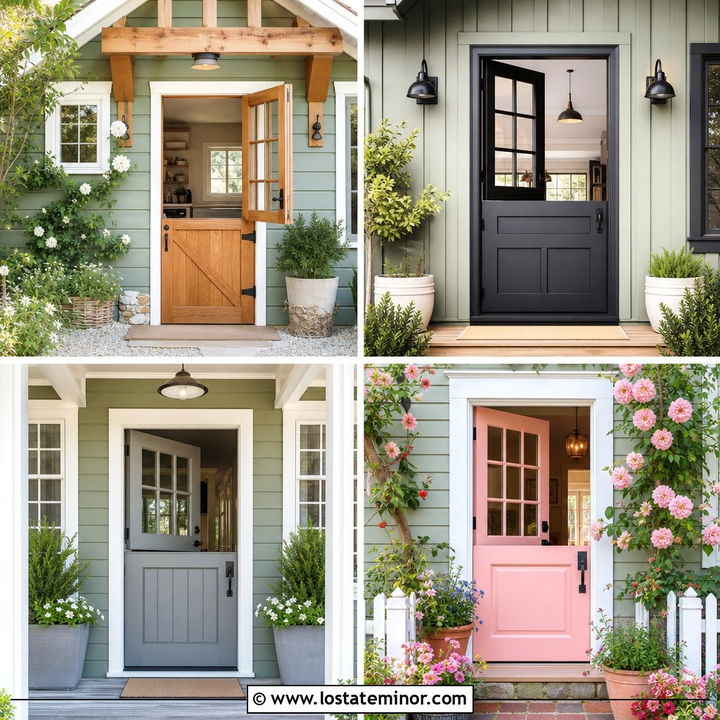
A white exterior creates a clean backdrop for one of the most charming entry features: a Dutch door. Because the upper and lower halves can operate independently, this split-door design combines an inviting appearance with everyday flexibility. () The best results come from treating the door as part of a complete exterior scheme. Siding, trim, roofing, hardware, porch materials, and landscaping should all support the entry rather than compete with it. From black-and-white farmhouses to coastal cottages with blue doors, there is an option for nearly every architectural style. The combinations below explore practical color pairings, materials, and curb-appeal details through 30 White House Design With Dutch Door Ideas.
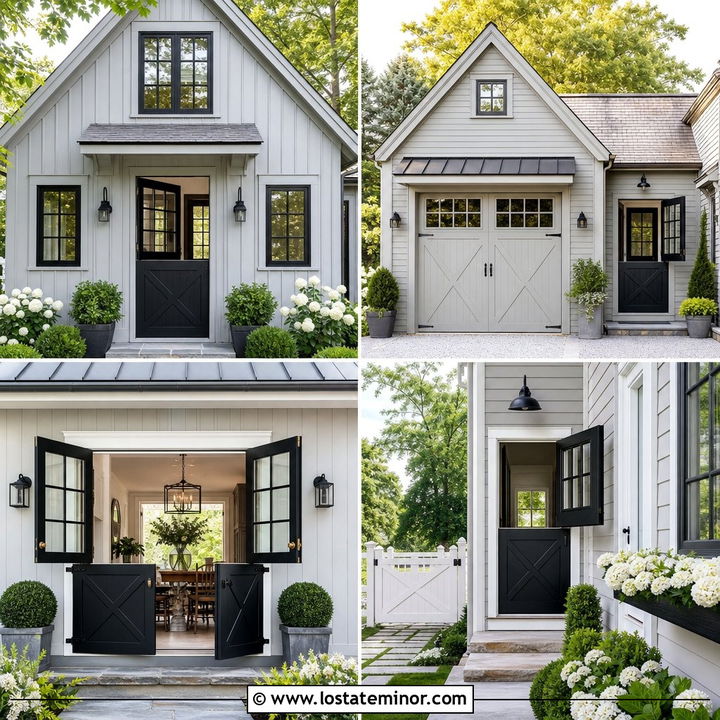
1. White Farmhouse With Black Dutch Door
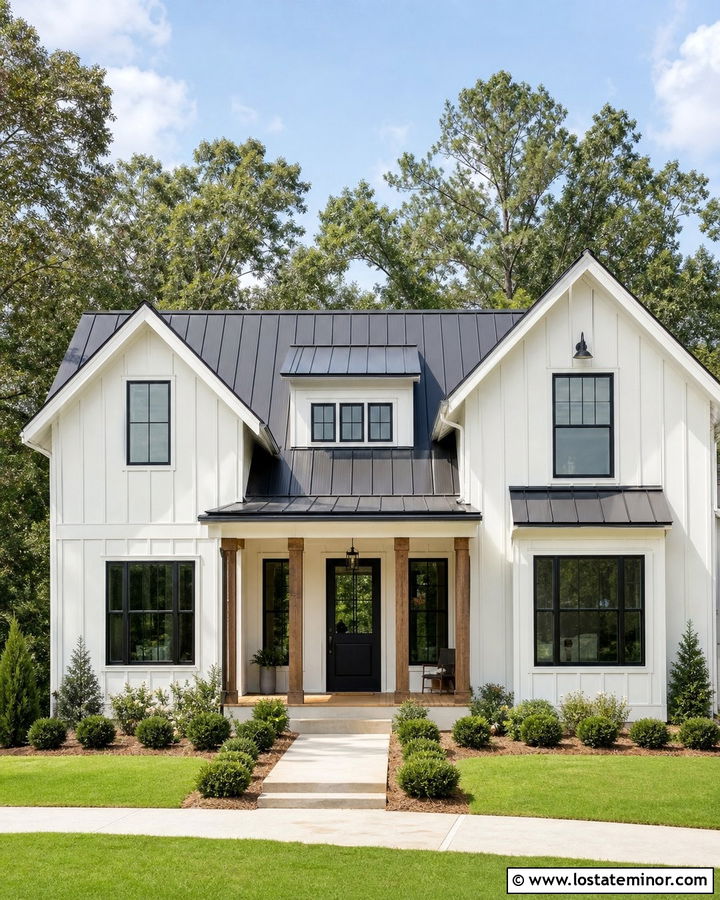
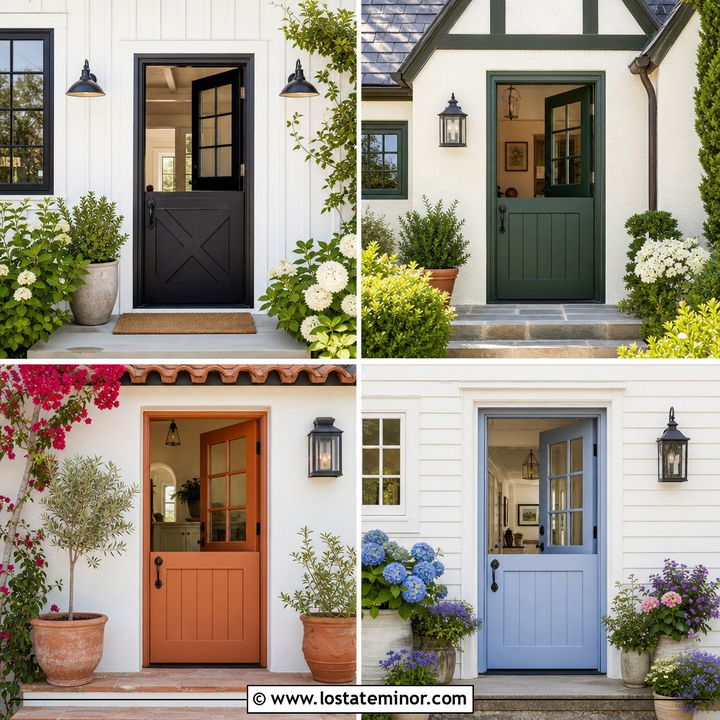
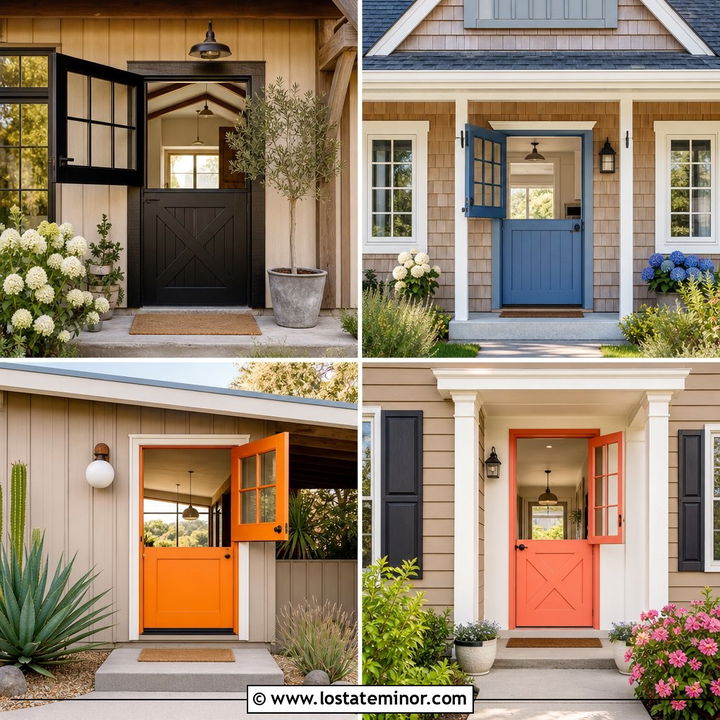
A black Dutch door gives a white farmhouse the strong focal point its simple facade needs. Choose a warm white for board-and-batten siding so the house feels welcoming instead of stark. Repeat the door color on the window frames, porch lights, and metal roof accents to create a balanced exterior. A charcoal shingle roof can soften the contrast while maintaining the classic black-and-white palette. Warm the entry with natural cedar porch posts, a stained wood ceiling, or woven planters. Large panes of clear glass in the upper door allow more daylight inside and make the entrance feel open. Finish the look with a straight concrete walkway, clipped shrubs, and soft ornamental grasses that complement the farmhouse’s clean architectural lines.
2. White Cottage With Sage Green Dutch Door
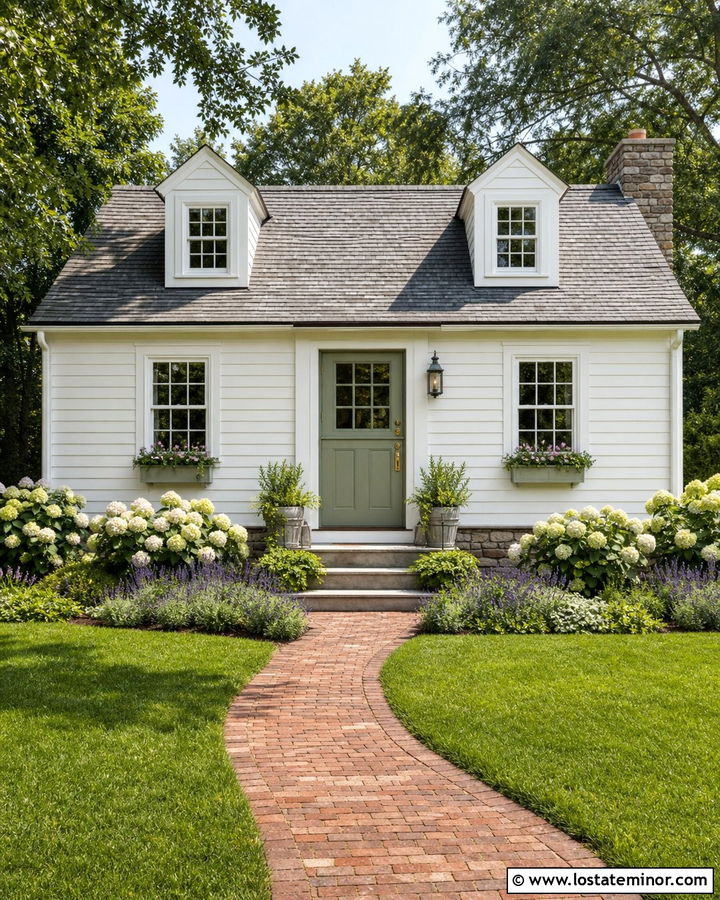
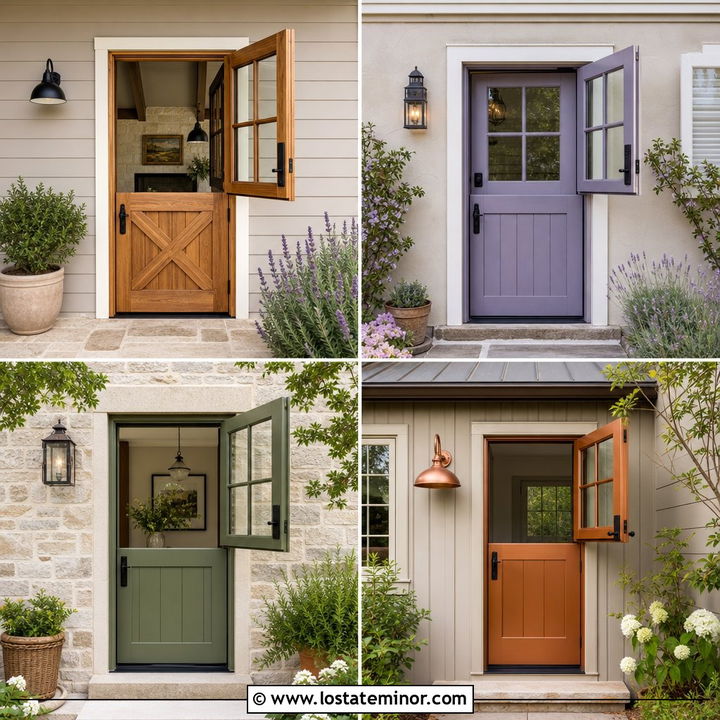
Soft sage green brings garden-inspired color to a white cottage without overpowering its smaller scale. Pair creamy white lap siding with a muted green Dutch door, matching window boxes, and antique brass hardware. A weathered gray roof supports the gentle palette and gives the exterior a settled, timeless appearance. Cottage details such as divided-light windows, tapered porch columns, and a curved brick walkway make the entrance feel especially inviting. Use natural stone around the porch foundation to connect the house with the landscape. Hydrangeas, lavender, and loose flowering borders can frame the facade without hiding it. This complete scheme works best when the green has gray undertones, which prevent the door from appearing too bright beside the warm white siding.
3. White Coastal House With Blue Dutch Door
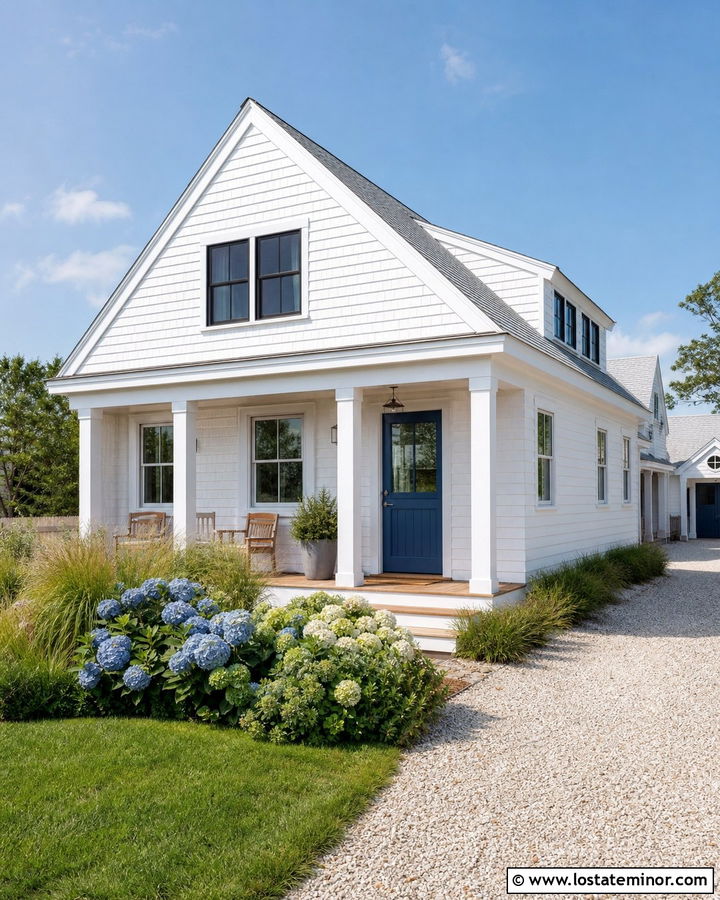
Imagine a breezy coastal home with bright white shingles and a clear blue Dutch door welcoming visitors from the street. A medium ocean blue adds personality while preserving the light, relaxed character associated with coastal exteriors. Use crisp white trim, brushed nickel hardware, and pale gray roof shingles to keep the combination fresh. A small covered porch with natural teak seating can introduce warmth without making the facade feel heavy. Blue hydrangeas, dune grasses, and a shell-toned gravel walkway reinforce the seaside palette. Select an upper door panel with divided glass for traditional detail and better visibility. Matching blue shutters are optional; leaving the windows unadorned often creates a cleaner look that lets the Dutch door remain the main attraction.
4. White Ranch House With Wood Dutch Door
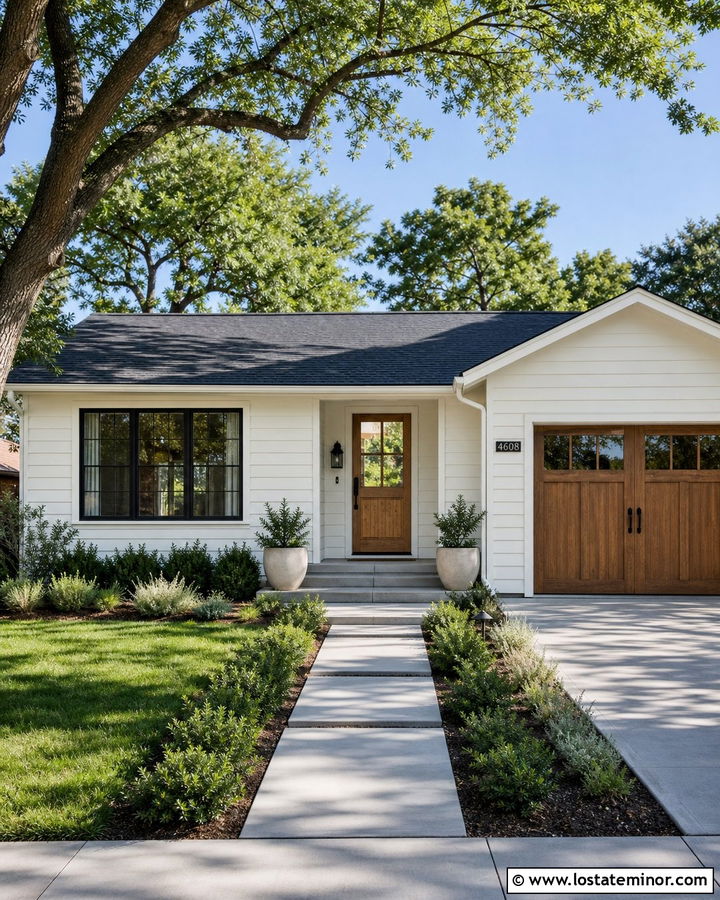
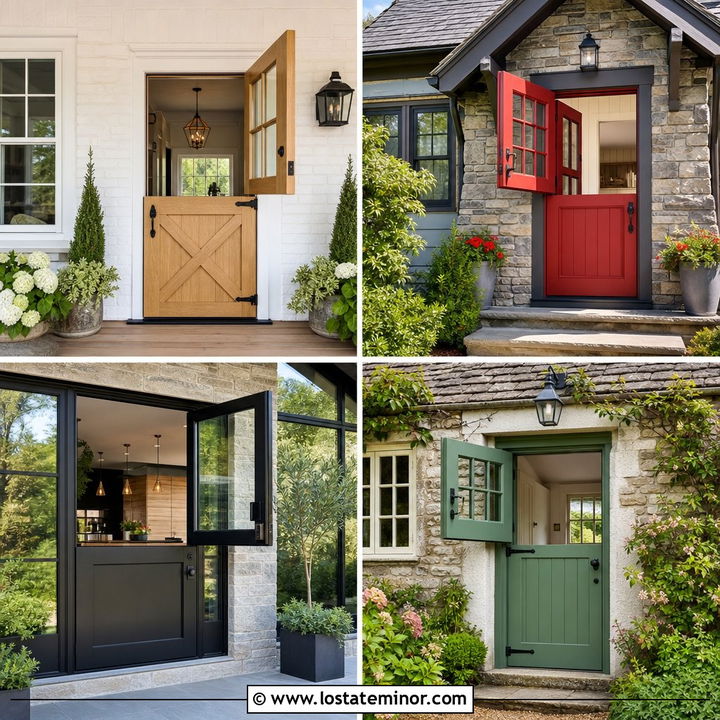
A natural wood Dutch door can transform a plain white ranch into a warmer, more dimensional home. Choose white horizontal siding with slightly creamy undertones, then add a medium-toned oak or mahogany door with visible grain. Echo that finish on porch beams, planter boxes, or the garage door to spread the warmth across the long facade. Dark bronze hardware and window frames provide definition without the sharpness of pure black. Low stone planters can visually anchor the house and break up large areas of siding. Because ranch homes have strong horizontal lines, use a broad walkway and layered, low-growing landscaping. A glass upper panel keeps the entrance bright, while the solid lower half preserves the substantial appearance of a traditional wood front door.
5. White Colonial With Navy Dutch Door
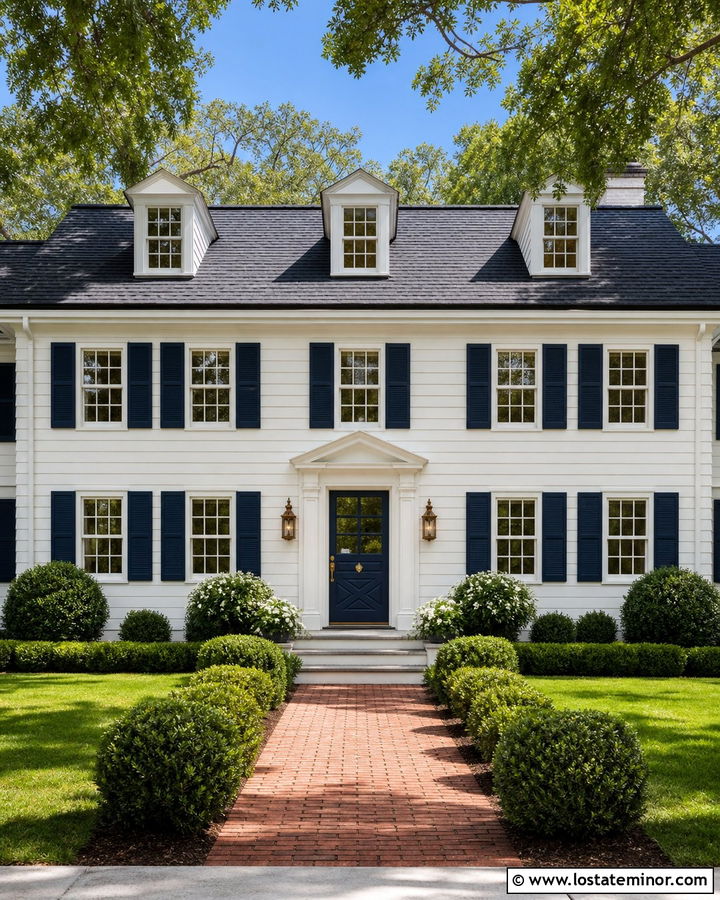
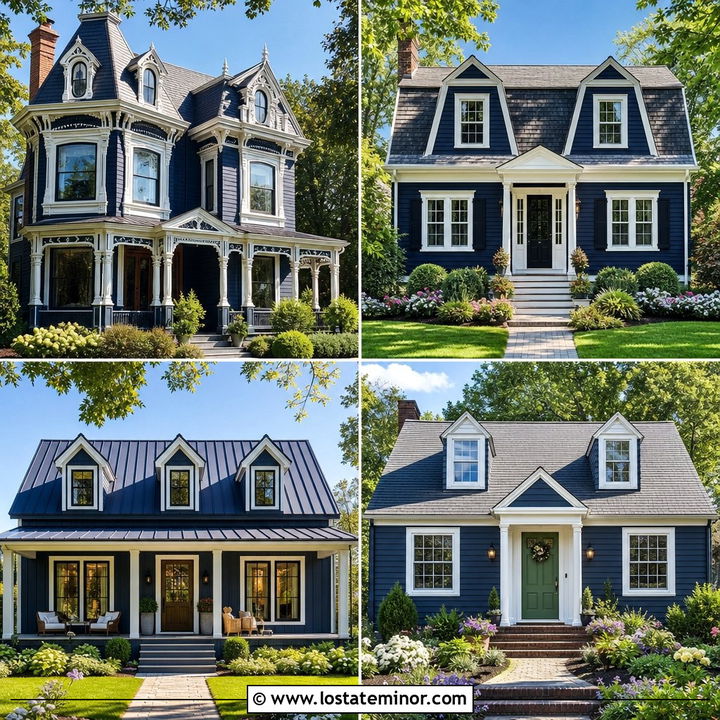
Does a formal white Colonial need a conventional front door? A navy Dutch door adds character while respecting the home’s balanced architecture. Pair warm white clapboard siding with a deep navy entrance, white door casing, and polished brass hardware. Matching navy shutters can connect the central doorway with the windows on either side. Keep the roof charcoal or dark slate so the facade retains its traditional structure. Symmetrical lanterns, boxwood shrubs, and a straight brick walkway reinforce the Colonial layout. Choose a six-panel lower door and divided-light glass above for an appropriate level of detail. The navy should be dark enough to appear sophisticated in bright daylight but visibly blue, preventing the entrance from disappearing into the surrounding roof and shutter accents.
6. White Craftsman With Teal Dutch Door
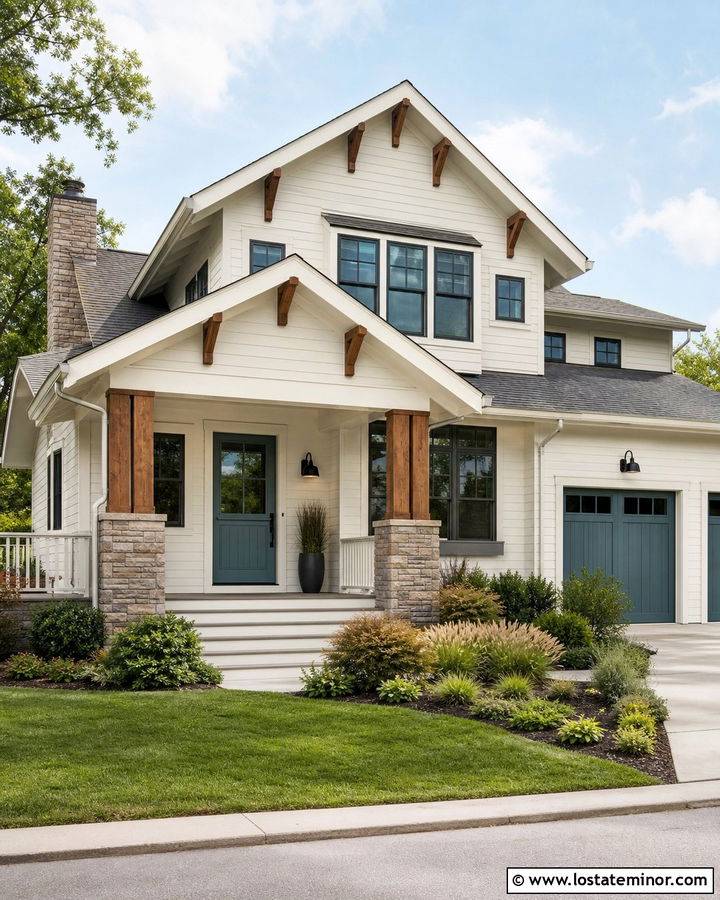
A teal Dutch door adds lively color to a white Craftsman while highlighting the entrance beneath its deep porch. Use warm white lap siding with white or pale greige trim, then introduce muted blue-green on the split door. Natural wood brackets, exposed rafters, and a stained porch ceiling help the brighter door feel connected to the Craftsman’s handcrafted character. Add stone column bases with gray, tan, and subtle rust tones to ground the palette. Matte black hardware and simple lanterns create definition without competing with the teal. Wide porch steps and layered foundation plants make the entry look substantial. For a cohesive finish, repeat the door color sparingly in outdoor cushions or ceramic planters rather than painting every accent teal.
7. White Cape Cod With Red Dutch Door
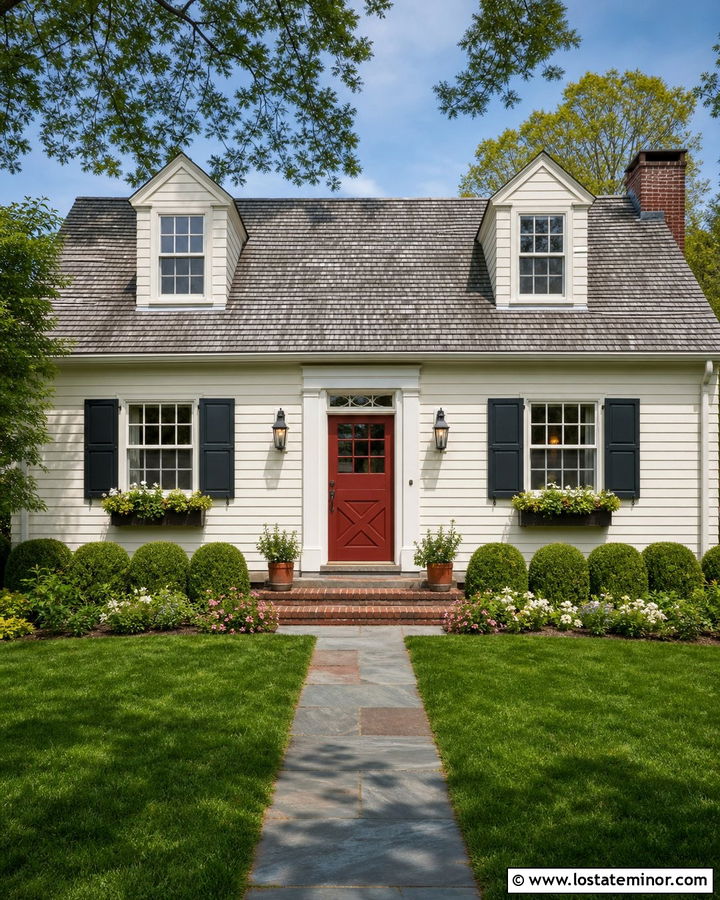
A red Dutch door brings cheerful contrast to a compact white Cape Cod exterior. Select a slightly muted heritage red rather than a bright primary shade, allowing the color to complement gray cedar shingles and traditional black shutters. White clapboard siding, dormer windows, and simple trim keep the facade crisp. A brick landing and walkway can repeat the door’s warm undertones while giving the entrance a permanent, established feel. Use aged brass or black iron hardware depending on the surrounding accents. Low boxwoods and seasonal window boxes provide color without covering the home’s charming proportions. To prevent visual clutter, keep the porch decoration restrained. The red entrance should serve as the unmistakable focal point within an otherwise quiet white, charcoal, and brick exterior palette.
8. White Brick House With Olive Dutch Door
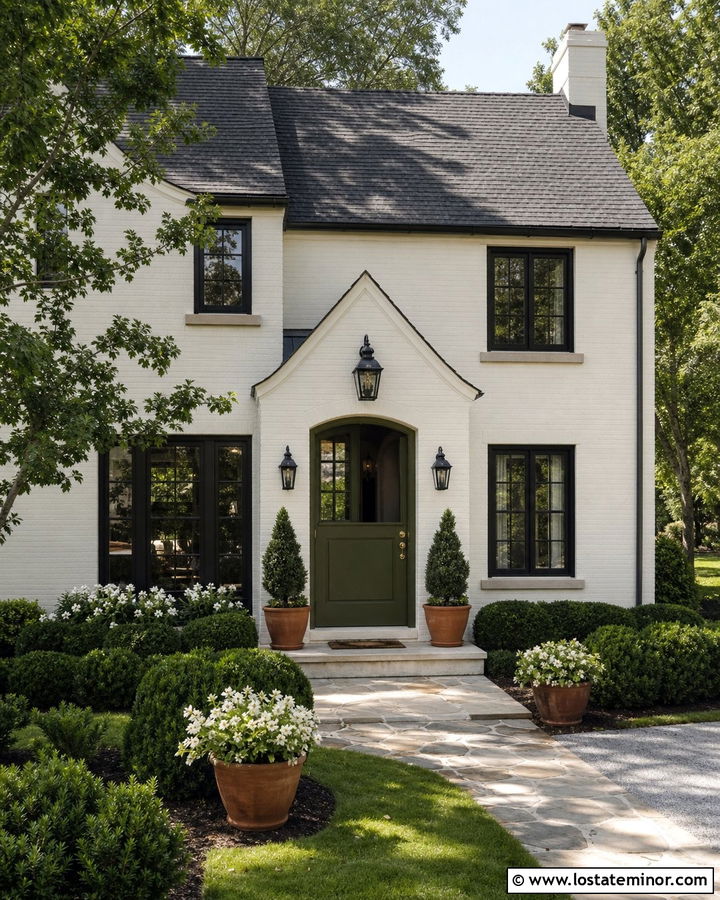
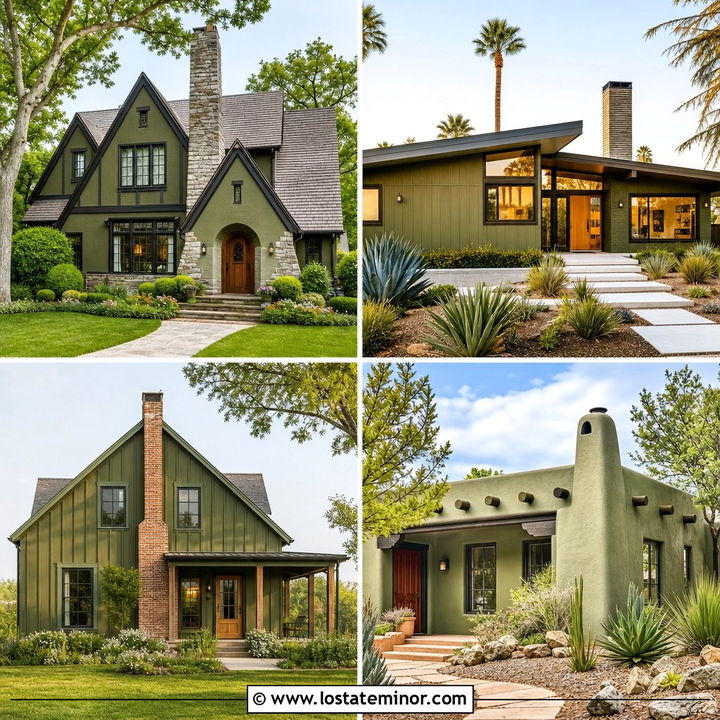
Painted white brick provides rich texture, while an olive green Dutch door introduces an earthy focal point. This pairing is especially effective on a traditional or transitional house with dark windows and a simple covered entry. Select a warm, chalky white that allows the brick pattern to remain visible. Use deep olive on the door, then add aged brass hardware and black lanterns for layered contrast. A dark gray roof and limestone porch floor can bridge the cool and warm elements. Keep shutters in black or omit them for a more updated facade. Rounded evergreen shrubs, white flowering plants, and terracotta pots complement the olive entrance naturally. The final result feels collected and approachable rather than overly polished or dependent on bold decorative accessories.
9. White Bungalow With Yellow Dutch Door
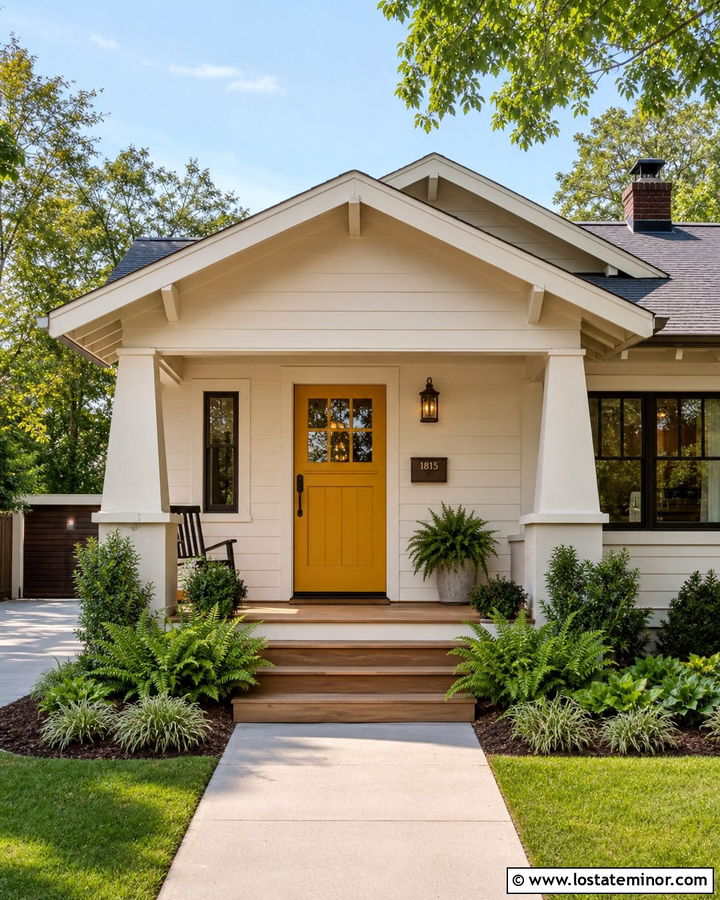
Sunshine yellow gives a small white bungalow an upbeat personality that can be seen clearly from the curb. To keep the combination polished, select a warm ochre or marigold yellow rather than a neon shade. Pair it with creamy white siding, medium gray roof shingles, and natural wood porch flooring. Dark bronze hardware and porch lights add enough contrast to define the door’s split construction. Craftsman-inspired columns, exposed rafter tails, and simple window trim can remain white so the yellow stays prominent. Frame the porch with green ferns, ornamental grasses, and compact flowering shrubs. Repeating a small amount of yellow in planters or porch textiles is enough. Too many matching accents could weaken the impact of the Dutch door as the central feature.
10. White Modern Farmhouse With Wood Dutch Door
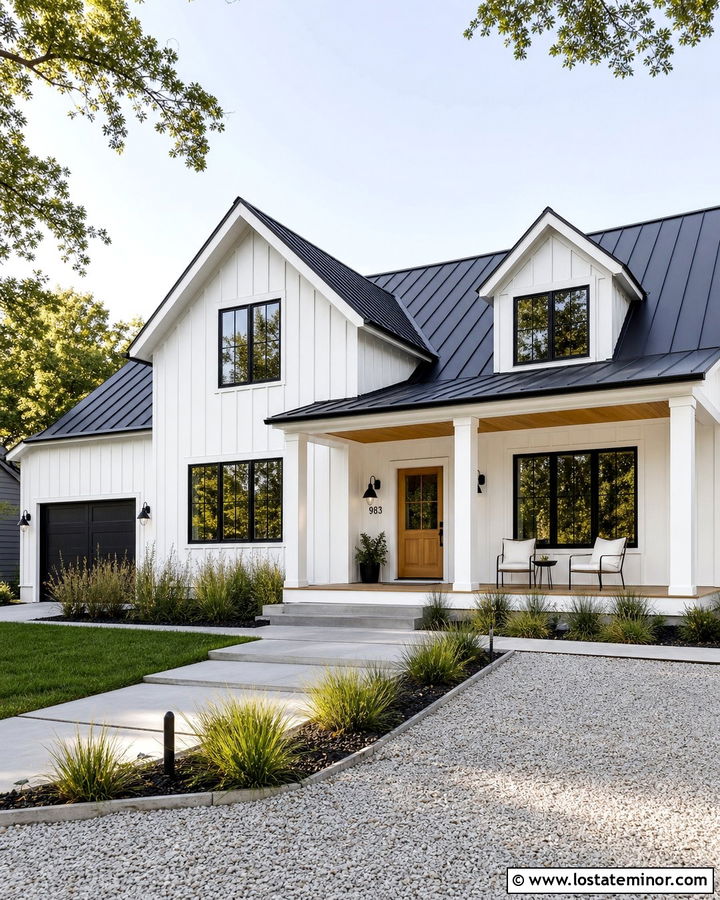
Clean lines and natural materials make a wood Dutch door a strong fit for a white modern farmhouse. Use warm white vertical board-and-batten siding with black-framed windows and a charcoal standing-seam roof. A lightly stained white oak door introduces organic color and prevents the high-contrast facade from feeling cold. Repeat the wood on porch columns, soffits, or a modern garage door, but keep the finishes closely matched. Minimal black hardware allows the wood grain to remain visible. A broad concrete walkway, simple gravel beds, and structured grasses support the streamlined architecture. Choose a wide glass panel for the upper half of the door. It will visually relate to the black windows while giving the traditional Dutch-door form a cleaner, more contemporary appearance.
11. White House With Gray Dutch Door
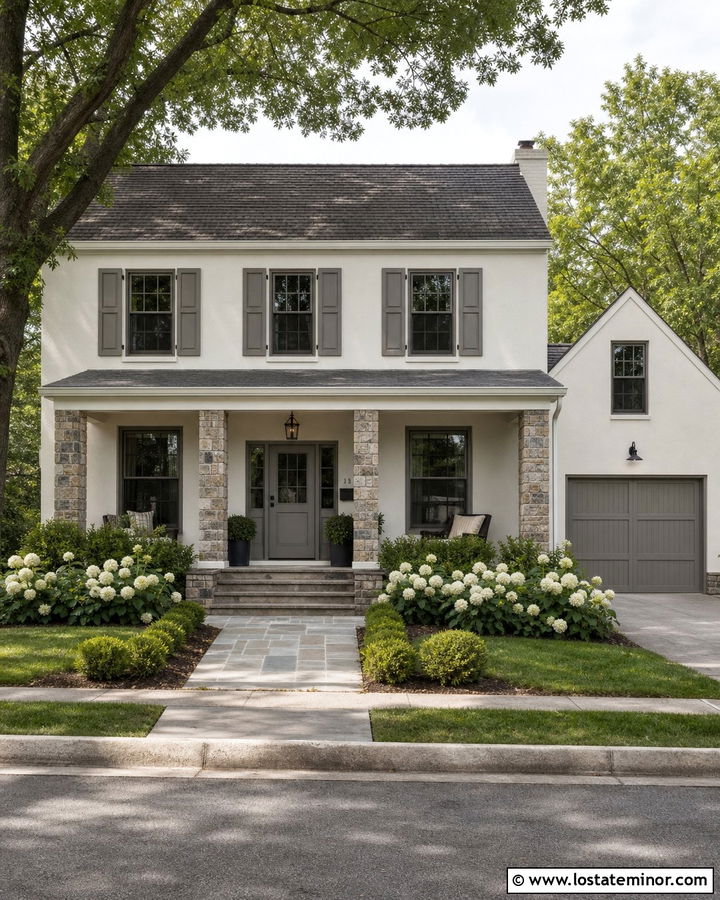
A gray Dutch door creates subtle contrast for homeowners who prefer a quiet, neutral exterior. Start with soft white siding and choose a medium warm gray for the door so it remains visible without looking severe. The same gray can appear on shutters, porch flooring, or the garage door to distribute color evenly. Pair the scheme with a weathered charcoal roof and brushed nickel or matte black hardware. Natural stone in mixed gray and beige tones adds texture around the foundation or porch columns. Use green shrubs and white flowers to prevent the neutral palette from appearing flat. A glass upper section with simple muntins gives the entry architectural interest. This flexible combination works across ranch, cottage, Colonial, and transitional homes without requiring major structural changes.
12. White House With Light Blue Dutch Door
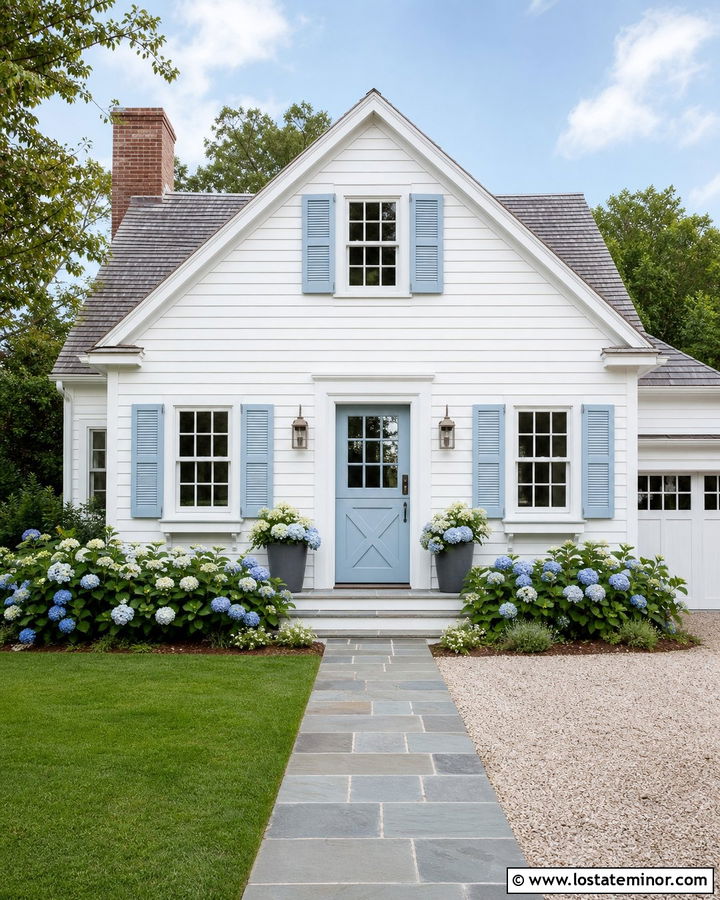
A light blue Dutch door can make a white exterior feel airy, friendly, and easygoing. Choose a dusty blue with a touch of gray so the color holds its shape under strong daylight. Crisp white siding and trim create a clean frame, while a soft gray roof supports the cool palette. Add polished nickel hardware for a coastal effect or aged brass for a more traditional interpretation. The entry can be grounded with a natural bluestone porch and simple white columns. Pink flowering shrubs, blue hydrangeas, and dark green foliage add enough variation to keep the facade interesting. If the house includes shutters, use the same blue or a slightly deeper version. This creates depth while maintaining a calm, coordinated look across the entire home.
13. White House With Dark Green Dutch Door
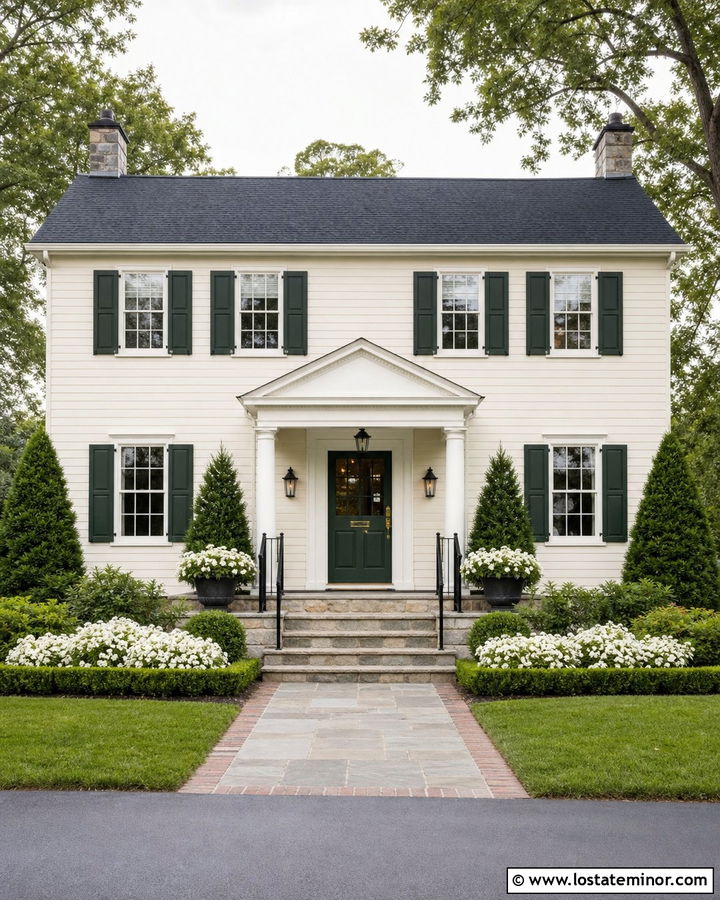
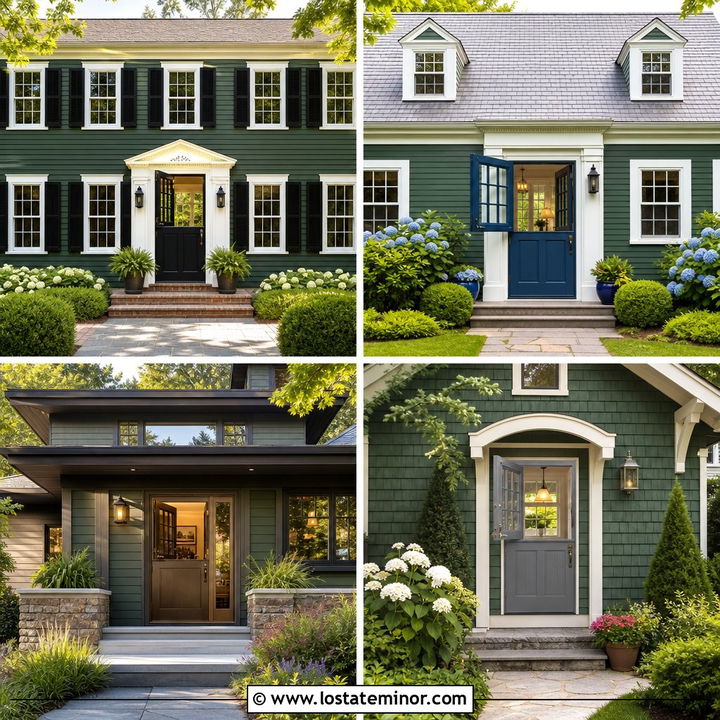
Deep green gives a white house the definition of black but with a softer connection to the landscape. Paint horizontal or vertical siding in a creamy white, then use forest green on the Dutch door and selected shutters. Brass hardware adds warmth and remains visible against the dark finish. A charcoal roof, black lanterns, and natural stone steps give the scheme a grounded appearance. This palette looks particularly polished on a traditional two-story home with a centered entrance. Use symmetrical evergreens near the doorway, but leave enough space for the green door to stand out. A clear or lightly patterned glass upper panel adds refinement. The combination feels classic throughout the year because it depends on architectural contrast and natural colors rather than temporary decorative pieces.
14. White House With Coral Dutch Door
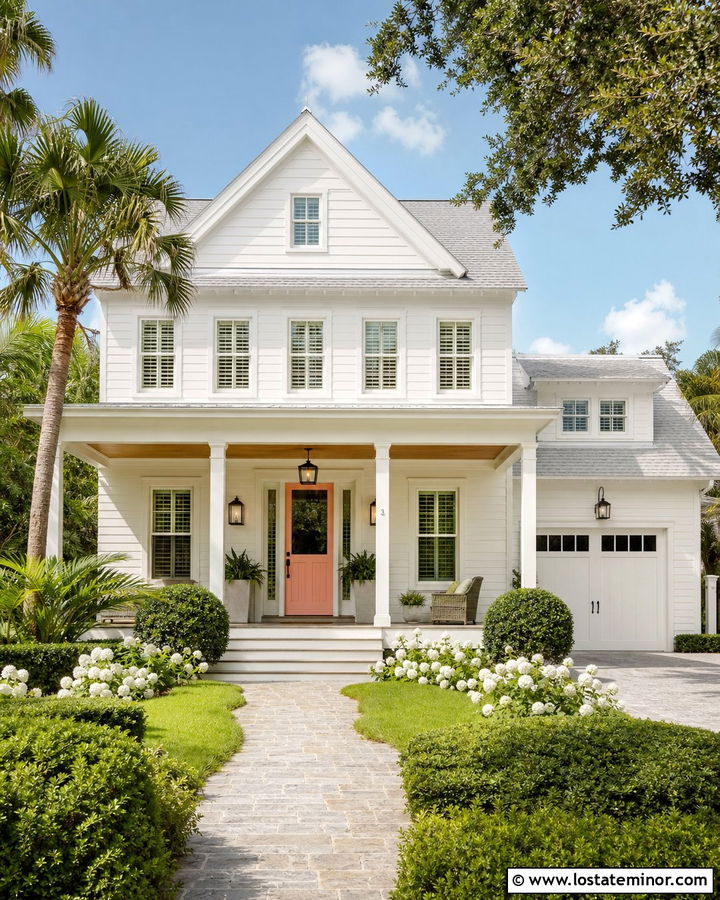
A coral Dutch door brings warmth and playful energy to a white house, especially in sunny coastal or Southern settings. Choose a softened coral with peach undertones instead of an intense orange-pink. Pair it with bright white siding, pale gray roof shingles, and understated bronze hardware. Light natural wood on the porch ceiling or seating can support the warmth of the entrance. Keep shutters white, light gray, or absent so the facade does not become overly colorful. Tropical-looking foliage, clipped hedges, and white flowering plants provide a fresh green frame. A simple glass upper door lets the coral-painted rails and lower panels remain the main detail. This complete look feels distinctive but controlled when the surrounding exterior materials stay light, neutral, and uncomplicated.
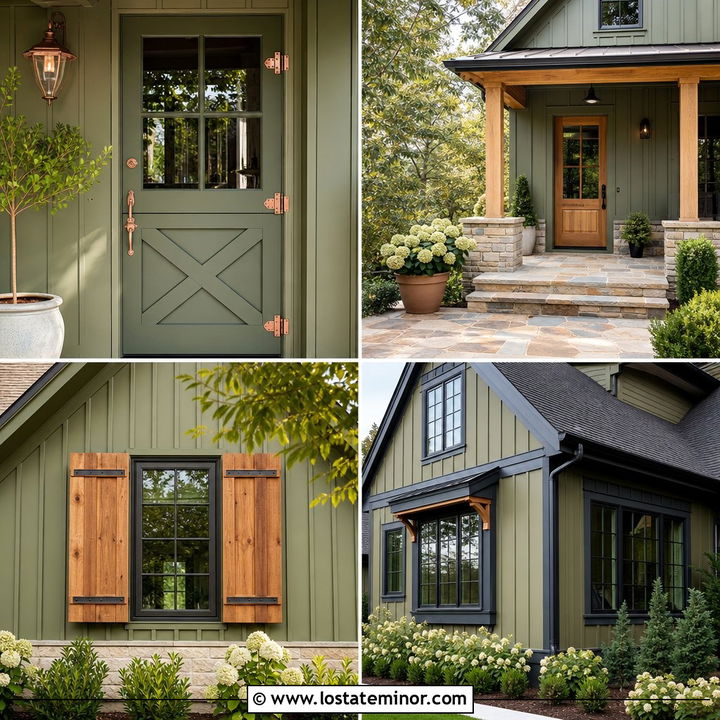
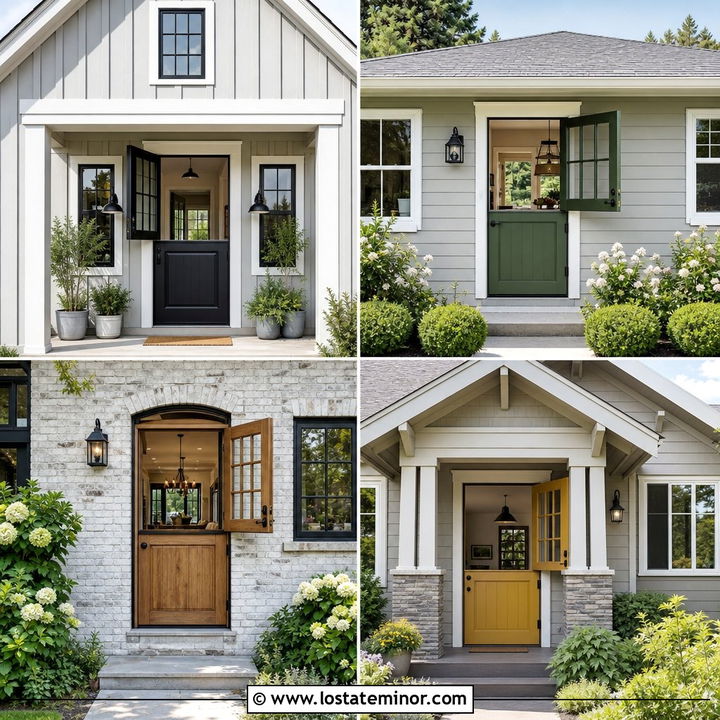
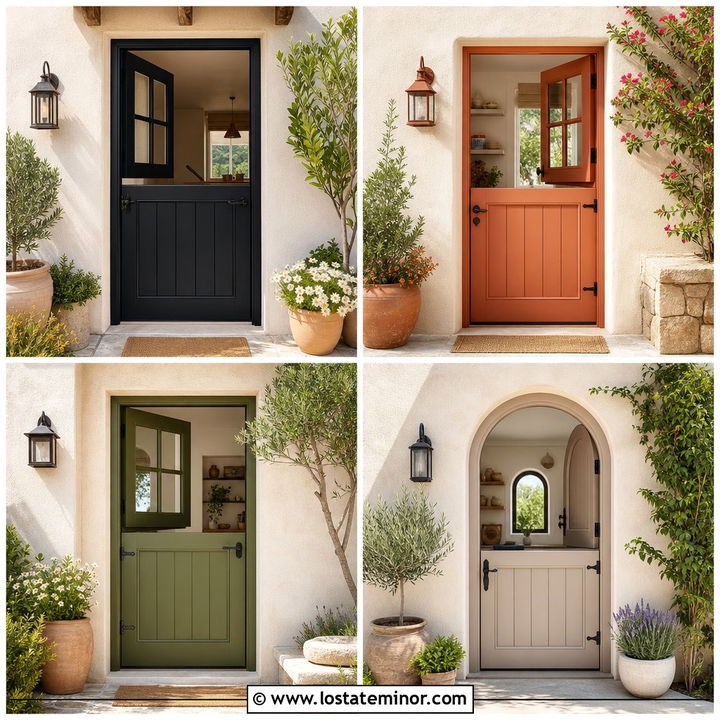
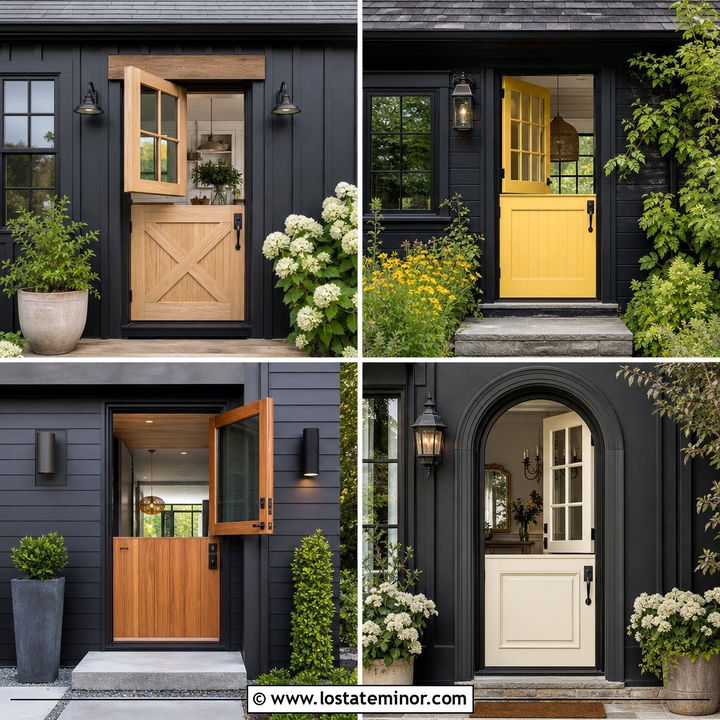
15. White House With Double Dutch Doors
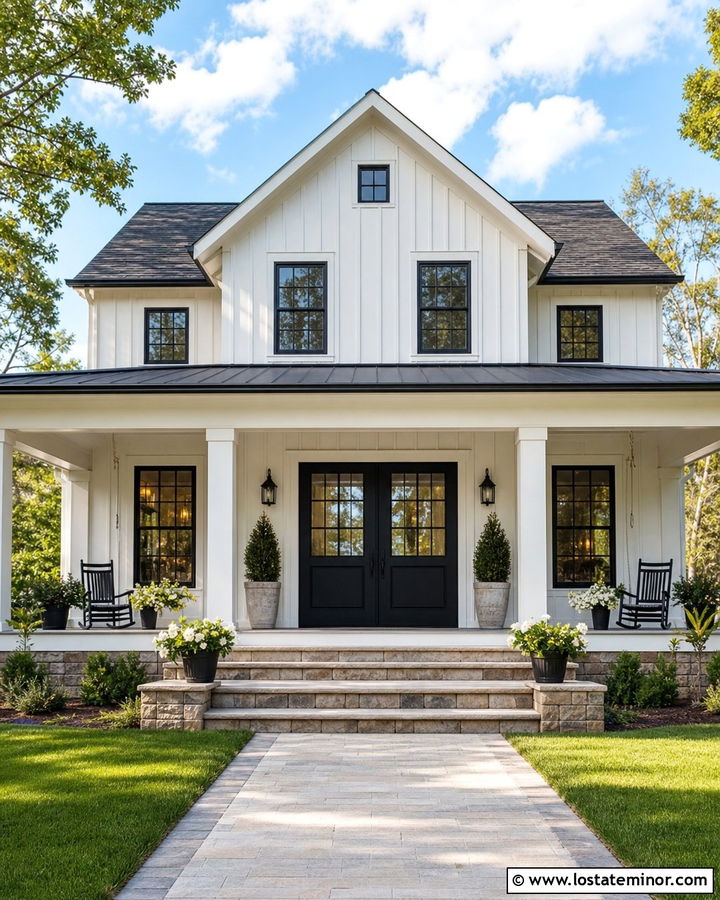
Double Dutch doors create a wider and more dramatic entrance for a large white farmhouse or country home. Each door can include a solid paneled lower half and a divided-glass upper half, creating useful symmetry. Paint the doors black, navy, or muted green depending on the roof and window colors. Warm white siding, substantial trim, and broad porch columns help the larger doorway feel properly scaled. Extend the entrance with wide stone steps and a generous landing rather than a narrow path. Matching lanterns placed outside the doors add balance and visibility. Because double doors already provide strong detail, keep nearby shutters and decorations simple. The finished facade should emphasize proportion, craftsmanship, and an easy connection between the covered porch and the home’s main interior living spaces.
16. White House With Arched Dutch Door
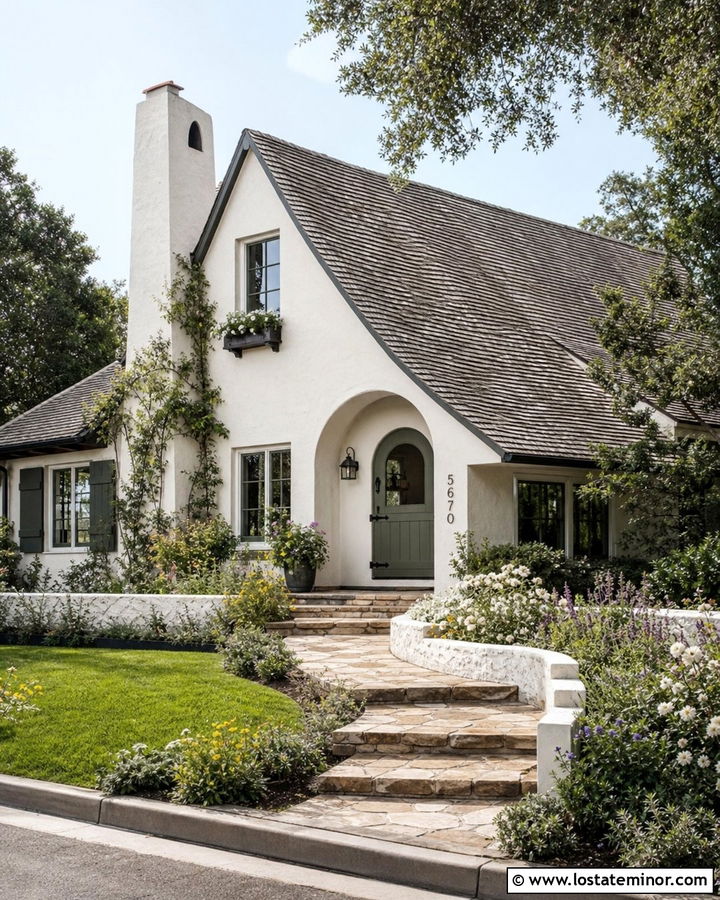
An arched Dutch door introduces old-world character to a white cottage, Tudor, or Spanish-influenced exterior. The curved top should be echoed through a porch opening, window shape, or garden gate so it feels intentional. Pair warm white stucco or painted brick with an olive, black, or natural wood door. Hand-forged iron hardware reinforces the custom shape and adds texture. Use a clay tile, weathered shingle, or dark slate roof according to the home’s architecture. Irregular stone steps and loosely arranged flowering plants can soften the entry further. Keep the door’s upper section simple, using one arched glass panel rather than several busy divisions. This allows the silhouette to remain clear and gives the complete white facade a distinctive architectural centerpiece.
17. White House With Glass Dutch Door
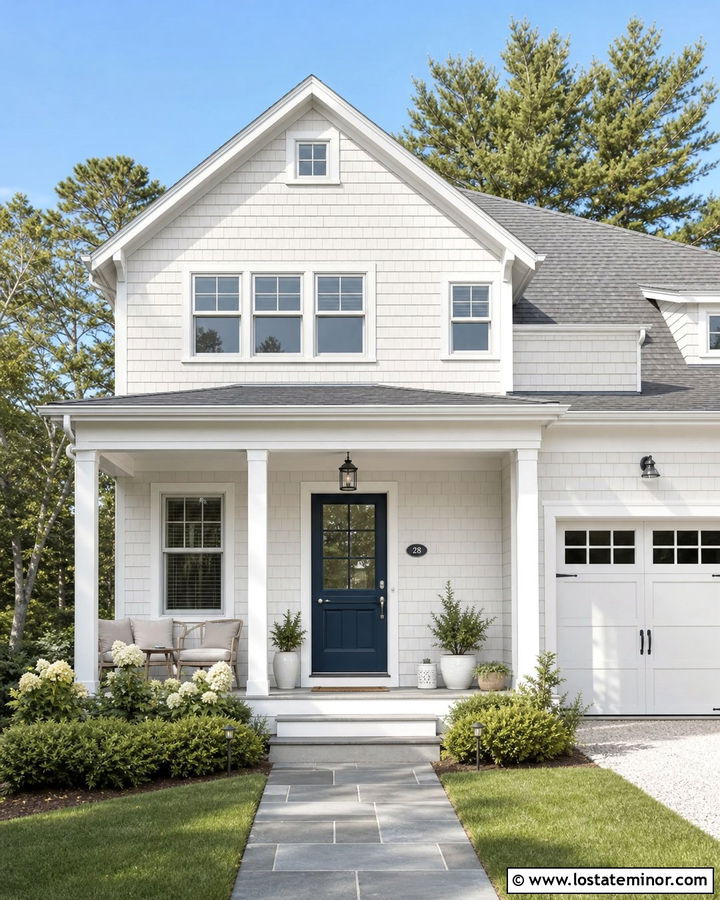
A glass-top Dutch door creates an open, welcoming entrance while retaining a solid lower section. It works especially well when the front porch faces a private yard or quiet residential street. Pair a white shingle or clapboard exterior with a navy, green, gray, or natural wood door frame. Clear glass provides maximum visibility, while lightly textured glass offers additional privacy. Coordinate the door hardware with porch lighting and nearby window frames for a finished appearance. A covered entry will help protect the door and make the glass section feel integrated with the architecture. Use simple planters and low landscaping rather than tall shrubs around the doorway. The goal is to preserve an unobstructed view of the complete door and the attractive contrast it creates against the white facade.
18. White House With Pink Dutch Door
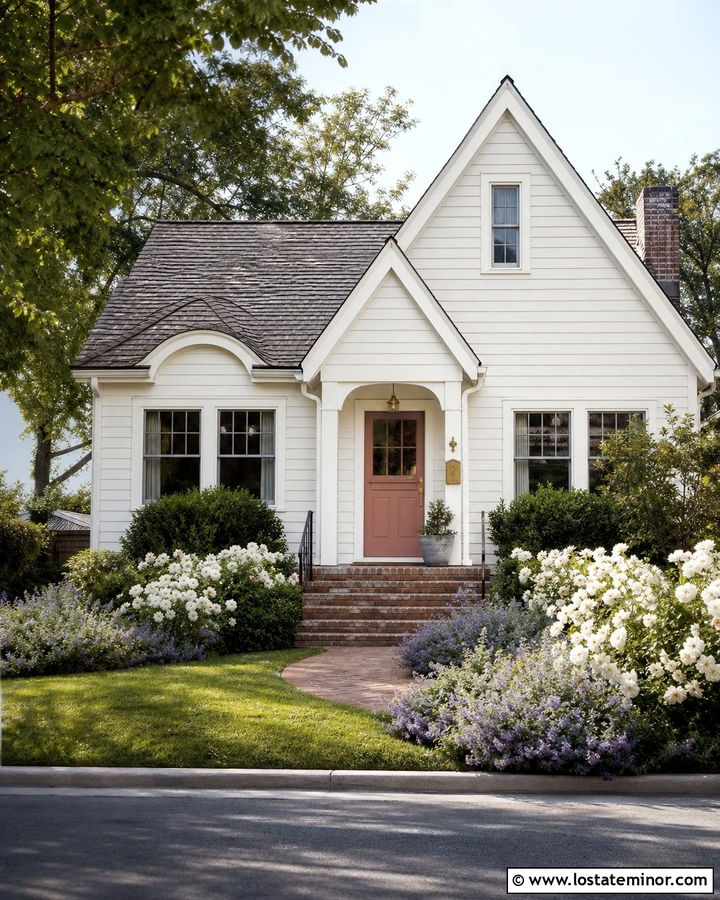
A dusty pink Dutch door creates a softer alternative to red on a white cottage or bungalow. Choose a muted blush, clay pink, or rose beige that contains enough gray to look grounded outdoors. Warm white siding and a light taupe or weathered gray roof support the gentle color. Aged brass hardware adds richness, while white trim keeps the entrance neat. Brick steps can introduce deeper red-brown tones that connect naturally with the pink. Surround the porch with lavender, white roses, and dark green foliage for balanced curb appeal. Avoid matching pink shutters across the entire house, which could make the scheme feel overly themed. Instead, let the Dutch door provide a single confident color moment within an otherwise neutral, texture-rich exterior.
19. White House With Orange Dutch Door
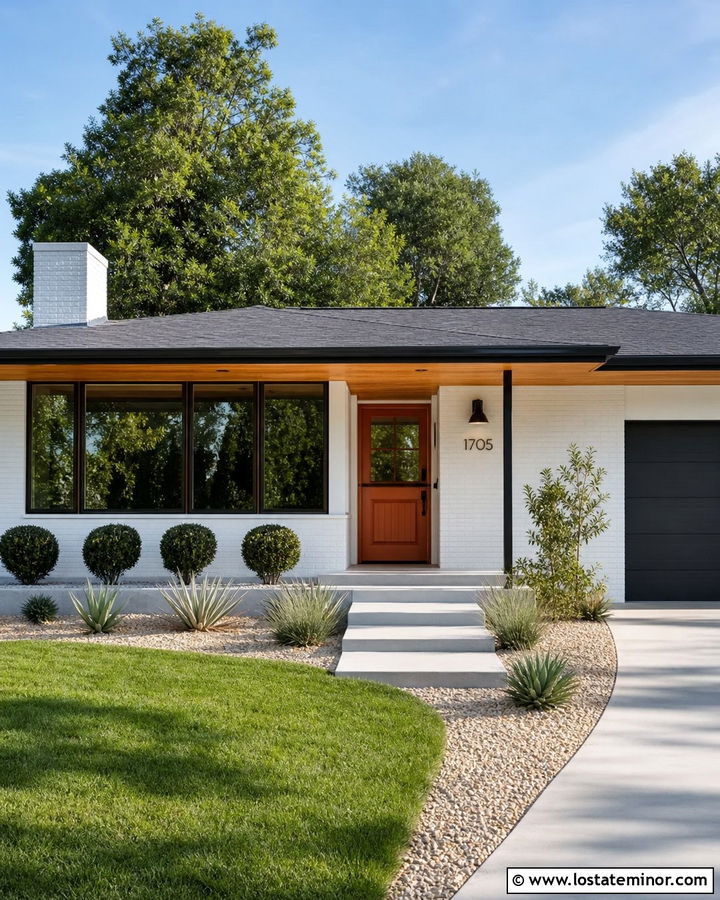
Burnt orange gives a white house an energetic entrance while remaining more sophisticated than a bright citrus shade. This combination works well on a midcentury ranch, modern bungalow, or updated split-level. Pair clean white siding or painted brick with a terracotta-orange Dutch door and warm wood soffits. Use dark bronze window frames, charcoal roofing, and simple black hardware to sharpen the composition. Concrete steps and gravel landscaping reinforce a modern, low-maintenance approach. Green ornamental grasses and sculptural shrubs balance the door’s warmth. Keep the glass upper panel broad and minimally divided for a streamlined effect. Repeating the orange in one small planter is sufficient. The door should feel like a deliberate architectural accent, not one part of a multicolored decorative theme.
20. White House With Turquoise Dutch Door
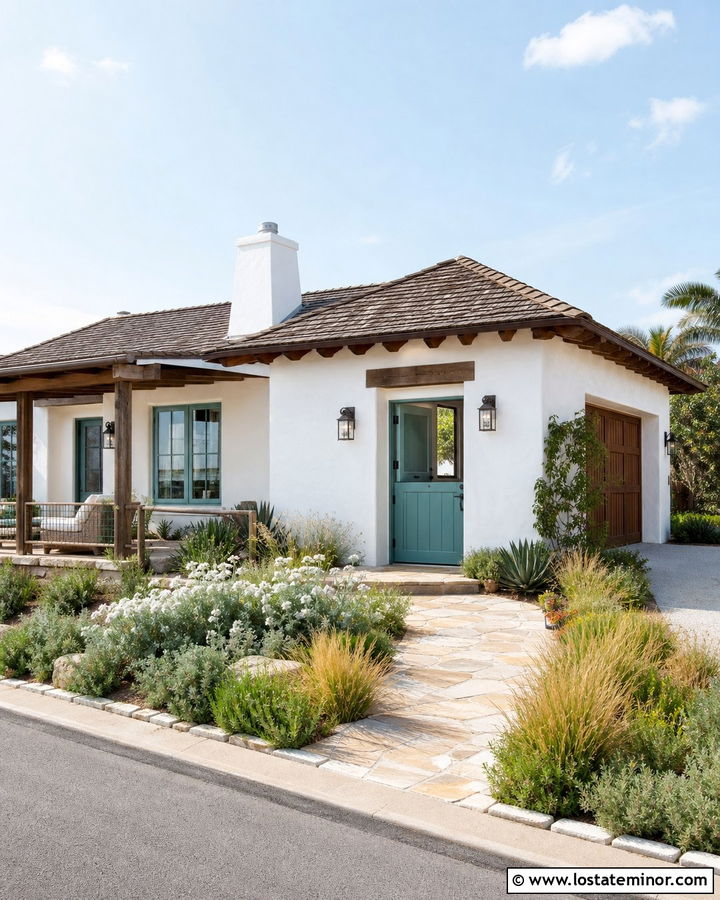
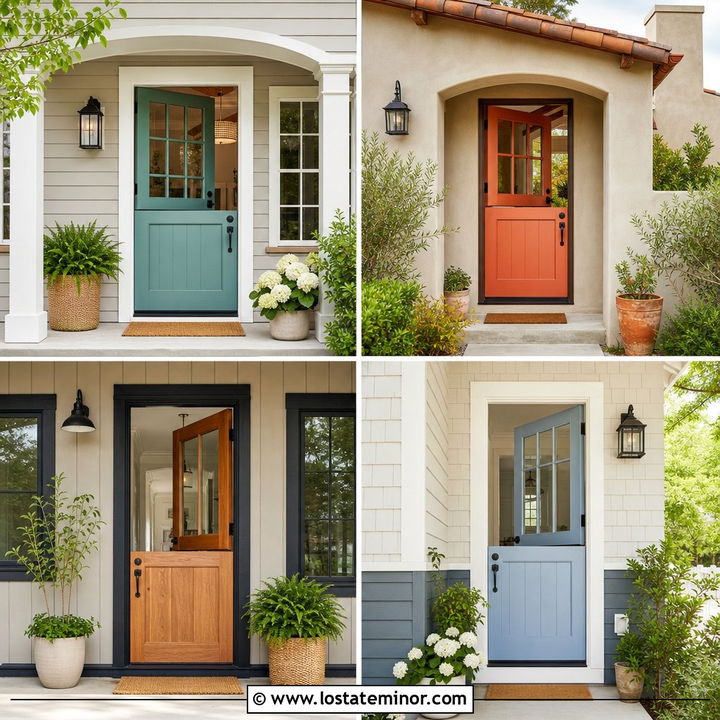
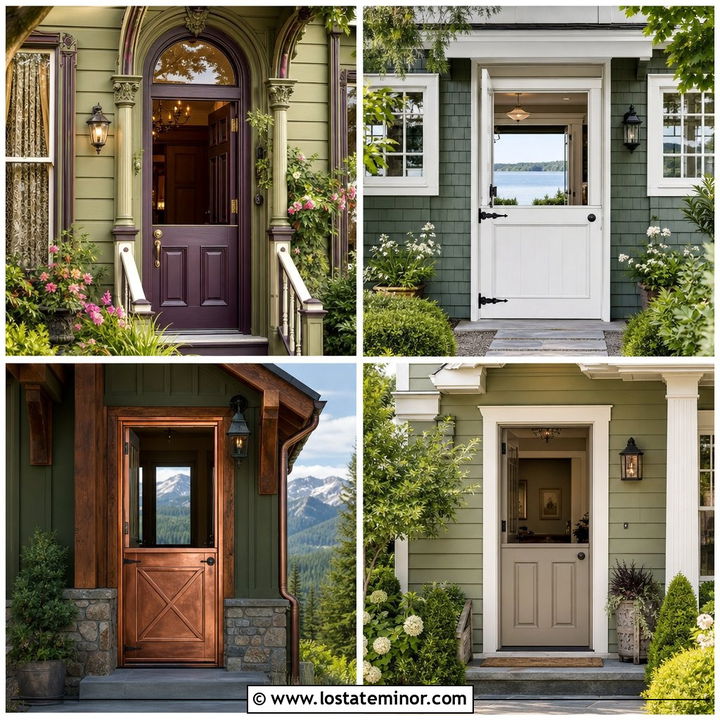
Turquoise adds a lively coastal or Southwestern character to a white exterior. For a refined result, use a medium turquoise with muted blue-green undertones rather than a highly saturated aqua. Pair it with warm white stucco, painted brick, or shingle siding. Natural wood beams and tan stone paving can introduce earthy balance, while black or dark bronze hardware gives the door stronger definition. A pale gray or weathered brown roof keeps the color scheme grounded. Use drought-tolerant plants, white flowers, or beach grasses according to the home’s regional setting. The upper door can contain clear glass with a simple rectangular grid. By keeping the remaining facade neutral, the turquoise entrance becomes memorable without making the entire property feel overly bright or themed.
21. White House With Black Shutters And Dutch Door
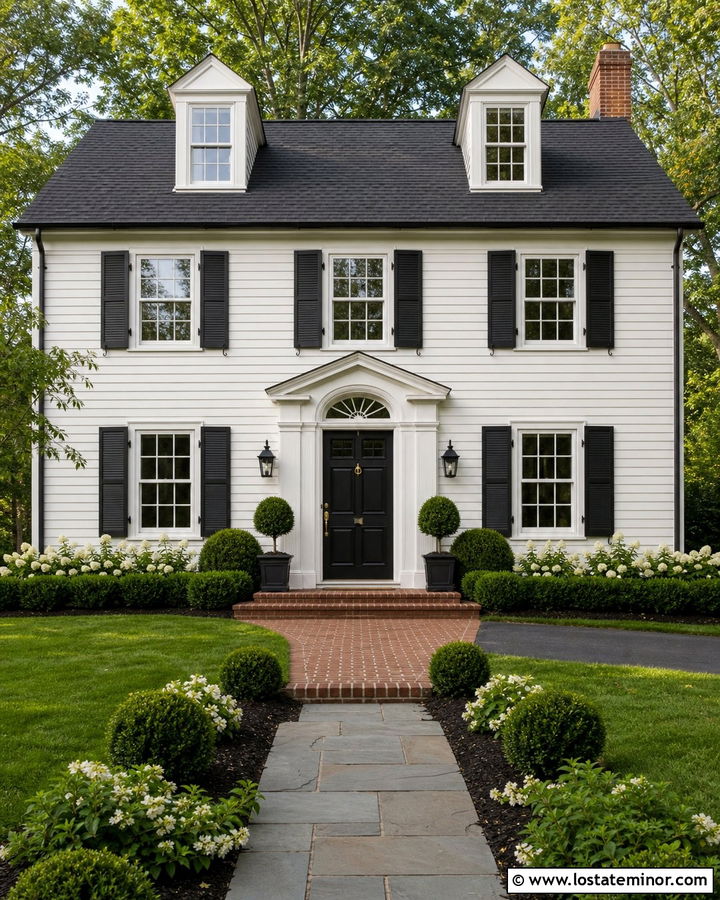
Black shutters and a matching Dutch door bring strong structure to a white traditional home. This scheme works best when every dark accent follows the architecture rather than appearing randomly placed. Use warm white siding and trim, then repeat soft black on correctly sized shutters, the entrance, and selected metal details. A charcoal roof helps connect the black features across the facade. Add natural brick or bluestone to the walkway so the palette includes texture and midtone color. Brass door hardware can warm the high-contrast combination, while black lanterns maintain consistency. Keep porch furniture and landscaping understated. Symmetrical shrubs, white blooms, and a green lawn will frame the house without distracting from the orderly pattern created by the windows, shutters, and split front door.
22. White House With Cedar Porch And Dutch Door
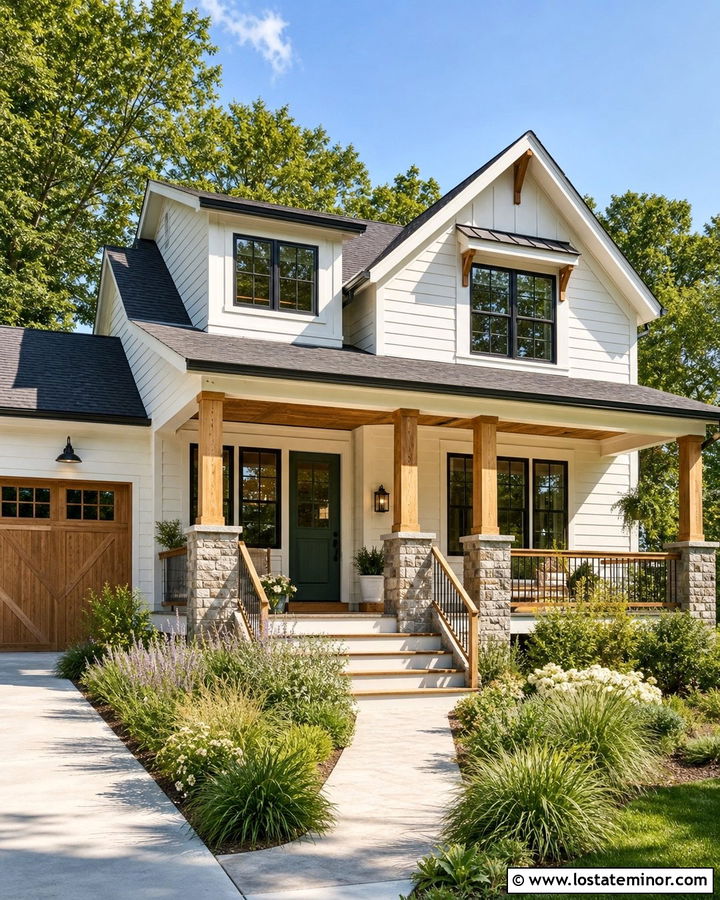
A cedar porch can soften a white exterior and make a colorful Dutch door feel more connected to its surroundings. Use creamy white board-and-batten or lap siding with natural cedar posts, beams, and ceiling boards. A deep green, navy, or black Dutch door will provide contrast while allowing the wood to supply warmth. Match the hardware to dark porch lights and window frames. Stone column bases can add weight where the cedar posts meet the porch floor. For a coordinated appearance, stain all visible wood in the same medium tone rather than mixing orange, gray, and brown finishes. Frame the approach with a wide walkway and informal grasses. This layered combination suits farmhouses, Craftsman homes, and mountain cottages without relying on excessive ornament.
23. White House With Brick Porch And Dutch Door
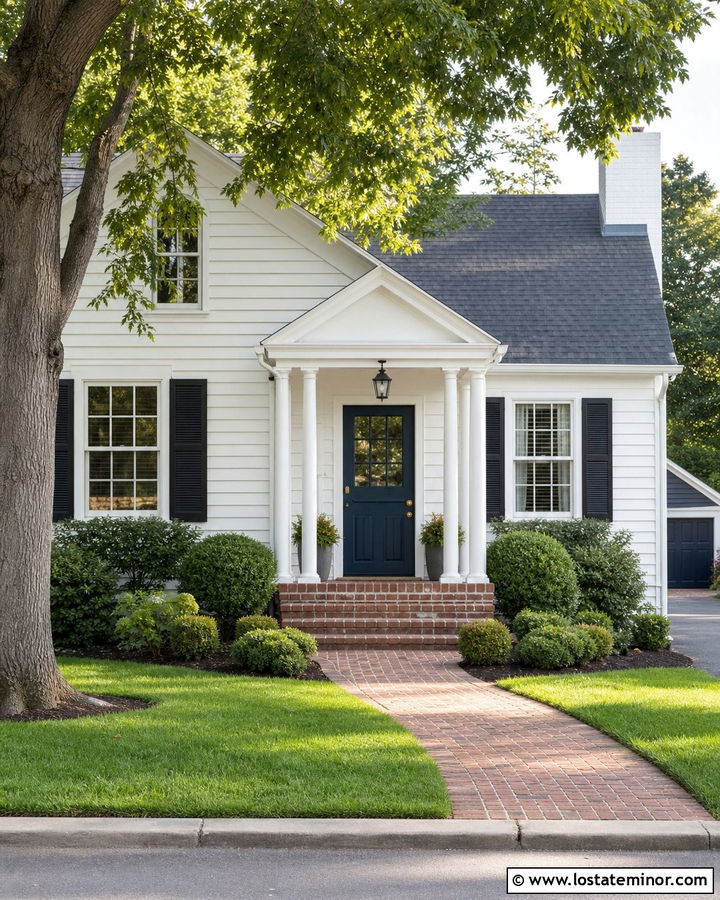
A brick porch gives a white home an established, traditional foundation for a painted Dutch door. Select red, brown, or lightly whitewashed brick based on the undertones in the siding. Warm white clapboard looks especially attractive with aged red brick and a dark navy or forest green entrance. Repeat the brick in the front walkway to lead the eye naturally toward the door. Brass hardware and traditional lanterns strengthen the classic character. White columns can keep the porch bright, while a dark gray roof adds definition above. Avoid introducing several unrelated masonry materials around the same entry. One brick finish, one siding color, and one confident door color will create a clearer exterior scheme. Neatly trimmed shrubs and simple planters complete the polished curb appeal.
24. White House With Stone Entry And Dutch Door
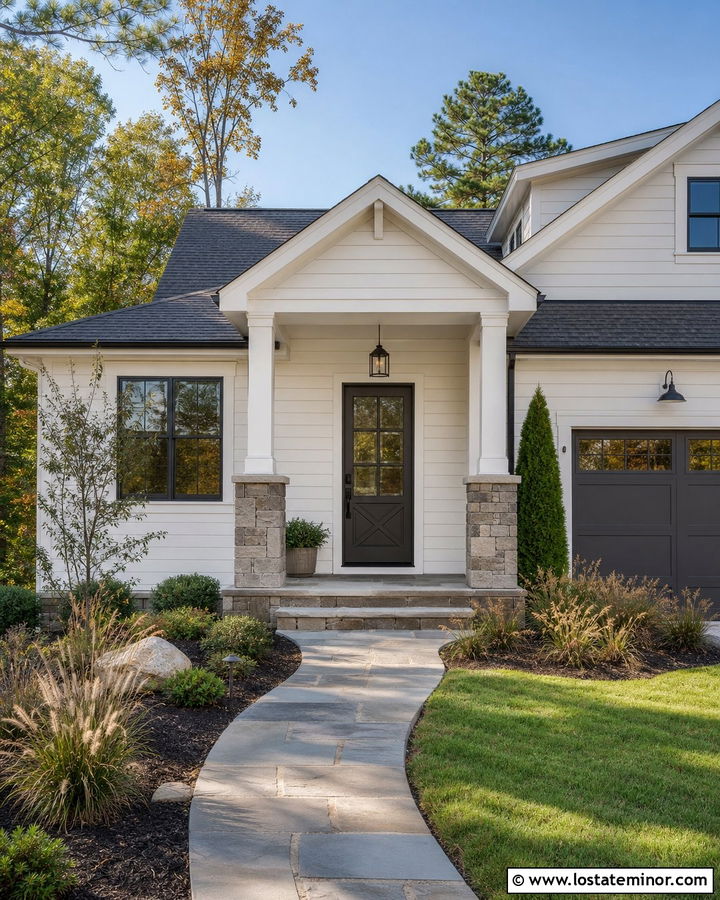
Natural stone around the entry adds depth to a white house and gives the Dutch door a substantial architectural frame. Choose stone containing warm gray, beige, and muted brown, then coordinate the door color with one of its deeper tones. A charcoal, olive, or stained wood Dutch door can work especially well. Keep the primary siding warm white and use understated trim so the stone texture remains visible. Dark bronze lighting and hardware will tie the entrance to the natural material. Extend the stone onto porch columns or the foundation, but avoid covering unrelated sections of the facade without a visual purpose. Layer evergreen shrubs, ornamental grasses, and a curved walkway around the entry. The result should feel grounded, cohesive, and balanced from the curb.
25. White House With Wraparound Porch And Dutch Door
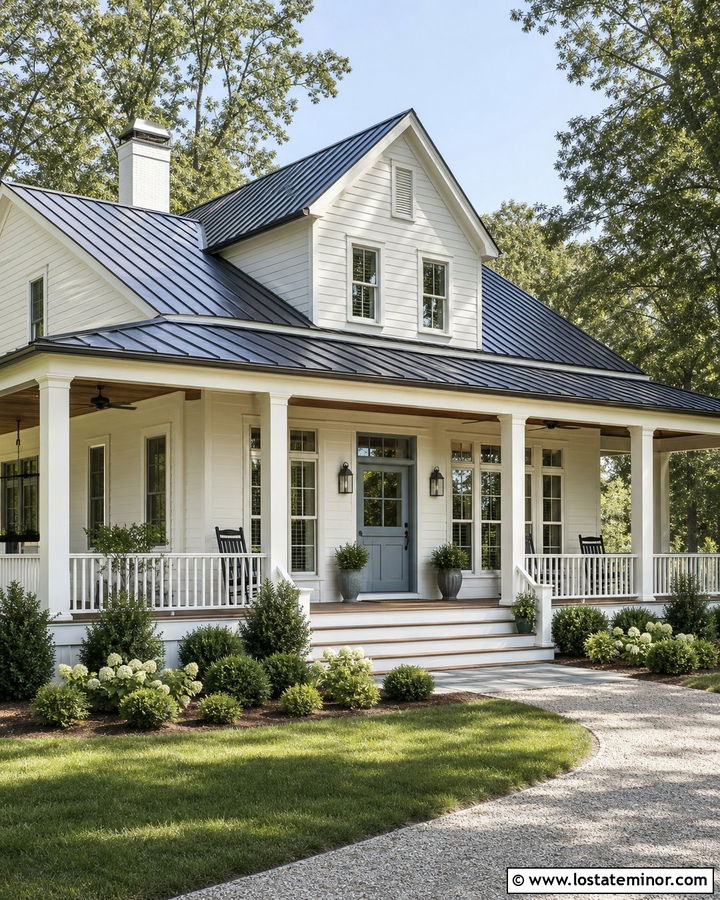
A wraparound porch creates an ideal setting for a Dutch door because both elements encourage an easy indoor-outdoor connection. Pair warm white siding and trim with a muted blue, green, or stained wood entrance. Paint the porch railing white for continuity, then use natural wood on the floor or ceiling to introduce warmth. A dark metal roof can define the broad porch line and give the facade needed contrast. Place matching lanterns near the door and repeat their finish on railing hardware or house numbers. Use rocking chairs and large planters sparingly so the entry remains visible. A curved drive, broad lawn, and layered foundation planting can frame the entire house. The Dutch door should look like a functional centerpiece within the generous porch design.
26. White House With Metal Roof And Dutch Door
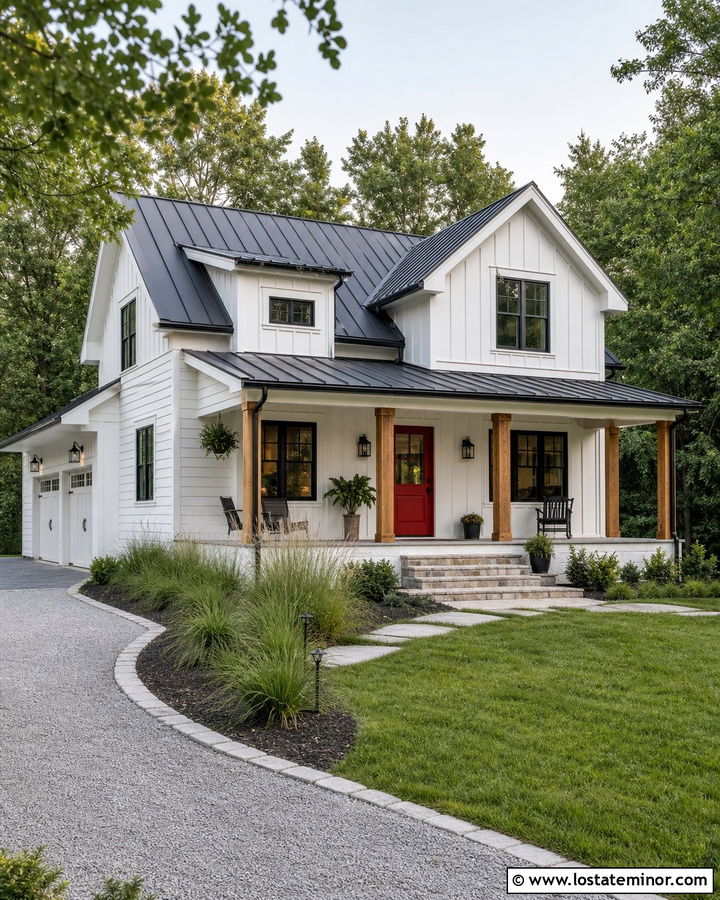
A metal roof gives a white house crisp definition and can support either a modern or rural exterior. Pair white board-and-batten siding with a charcoal standing-seam roof and a richly colored Dutch door. Deep red, navy, black, and forest green all provide enough contrast beneath the dark roofline. Repeat the roofing color on window frames, lights, and gutters for a coordinated finish. Natural wood porch columns can prevent the combination from feeling too industrial. Use concrete, brick, or stone steps based on the home’s architectural style. Because metal reflects more light than shingles, evaluate the white siding and door color together in outdoor conditions. The completed palette should remain balanced in bright sun, shade, and changing weather without losing the entrance as its focal point.
27. White House With Copper Roof And Dutch Door
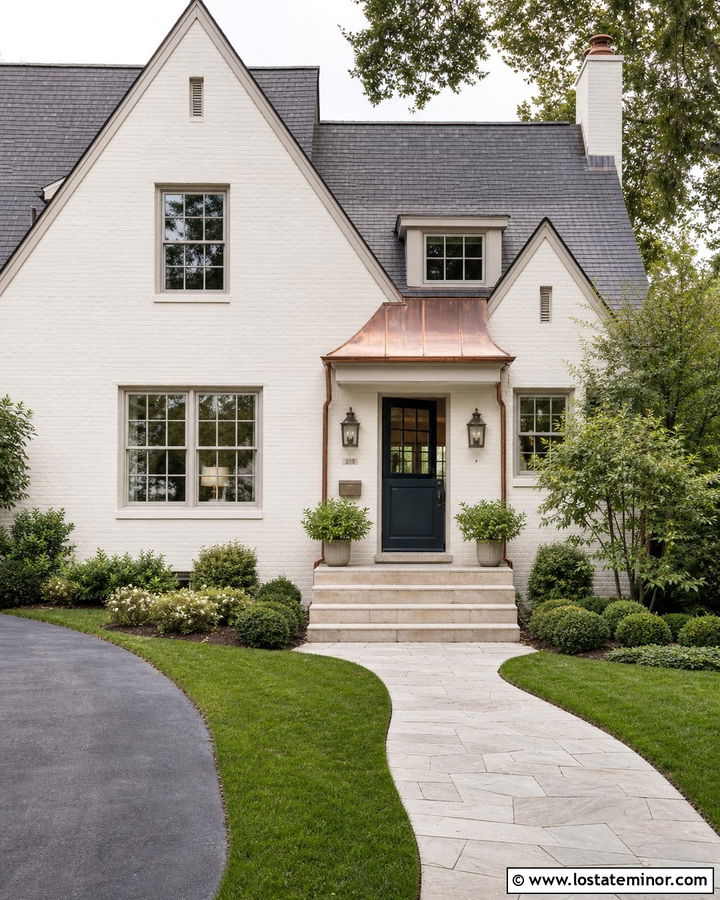
Copper details bring warmth and distinction to a white exterior, especially when paired with a dark Dutch door. Use soft white painted brick or clapboard siding, then add copper over a small entry roof, bay window, or porch canopy. A deep blue, green, or stained walnut door will complement both new copper and its naturally changing surface. Choose aged brass or dark bronze hardware rather than shiny chrome. Charcoal shingles can cover the main roof so the copper remains a selective accent instead of overwhelming the facade. Limestone steps and restrained landscaping support the refined palette. Repeat only small amounts of copper in gutters or lanterns. This creates continuity while allowing the doorway, masonry, and warm metal to work together as one elegant exterior composition.
28. White Split-Level With Modern Dutch Door
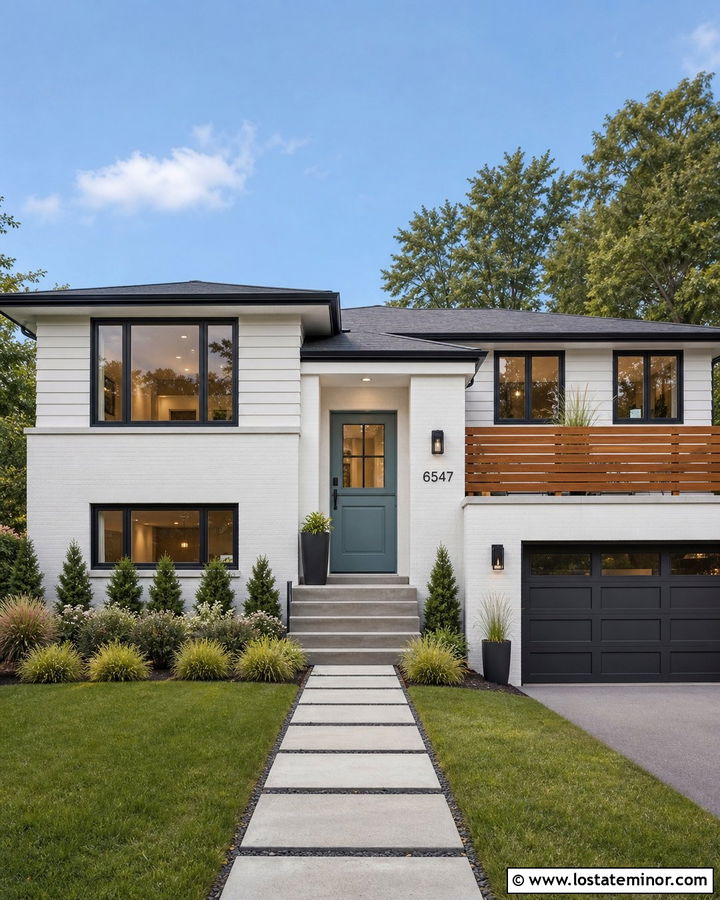
A modern Dutch door can give a white split-level a clearer and more inviting entrance. Paint brick and siding in a unified soft white to reduce visual fragmentation. Then use a charcoal, muted teal, or natural wood door as the central accent. Replace overly ornate trim with simple casing and choose a broad, mostly glass upper panel. Black-framed windows, a dark garage door, and minimal wall lights can support the updated style. Add a straight concrete walkway and horizontal wood screen near the landing to strengthen the home’s clean lines. Low grasses and structured shrubs work better than crowded foundation beds. The goal is to make the entrance visible from the street while using color, materials, and landscaping to unify the split levels.
29. White Tudor House With Wood Dutch Door
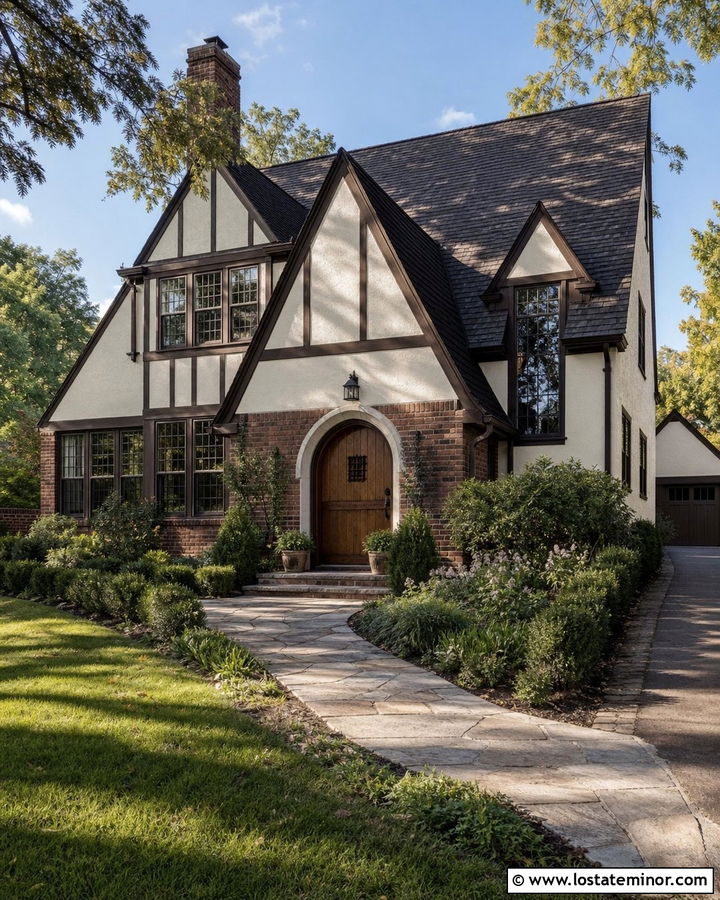
A wood Dutch door can complement the historic character of a white Tudor without competing with its rooflines and masonry. Use warm white stucco between dark timber details, then select a medium or dark stained oak door with traditional panels. An arched top is especially appropriate when it repeats nearby windows or porch openings. Add black iron hinges, a substantial latch, and simple leaded glass in the upper half. Brick or irregular stone around the entrance can introduce texture and connect the door to the landscape. Keep the roof dark brown or charcoal and avoid bright accent colors elsewhere. Informal hedges and a gently curved walkway will soften the facade. This complete scheme feels detailed, established, and appropriate to the home’s distinctive architecture.
30. White Mediterranean House With Blue Dutch Door
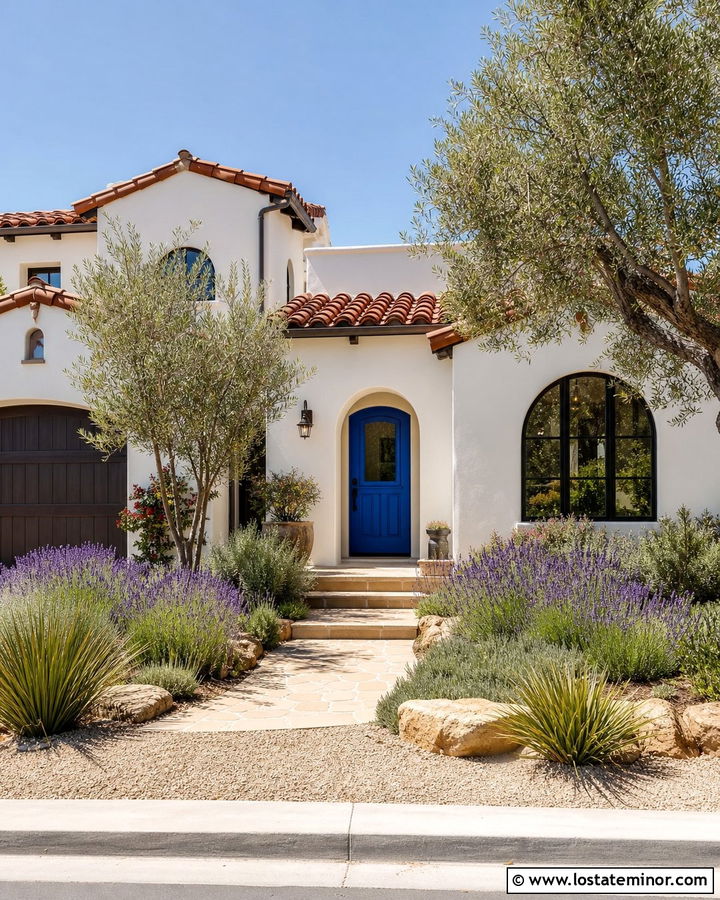
A blue Dutch door creates a cool, colorful centerpiece on a white Mediterranean exterior. Pair warm white stucco with a rich cobalt or muted Mediterranean blue that remains clear in strong sunlight. Use dark bronze hardware, clay roof tiles, and natural stone paving to balance the saturated door color. Arched windows and a small tiled porch canopy can repeat the entrance’s curved or geometric details. Keep trim close to the stucco color so the facade remains simple. Olive trees, lavender, rosemary, and drought-tolerant grasses provide an appropriate green framework without hiding the doorway. A lightly divided glass upper panel adds openness. The complete palette combines bright white, earthy terracotta, natural greenery, and confident blue for distinctive curb appeal.
Conclusion:
A Dutch door can give a white exterior more character without requiring a complicated renovation or an overly busy color palette. The strongest combinations coordinate the entrance with the home’s siding, trim, roof, porch, masonry, hardware, and landscape. Dark doors create crisp definition, while sage, blue, coral, and yellow bring softer personality. Natural wood offers warmth that works across farmhouse, ranch, Tudor, and Craftsman architecture. Before committing, view paint and material samples beside the white exterior in direct sun and shade. This will reveal undertones and contrast more accurately. Use these 30 White House Design With Dutch Door Ideas to create a complete, balanced exterior that feels welcoming from every curbside angle.

Related posts: