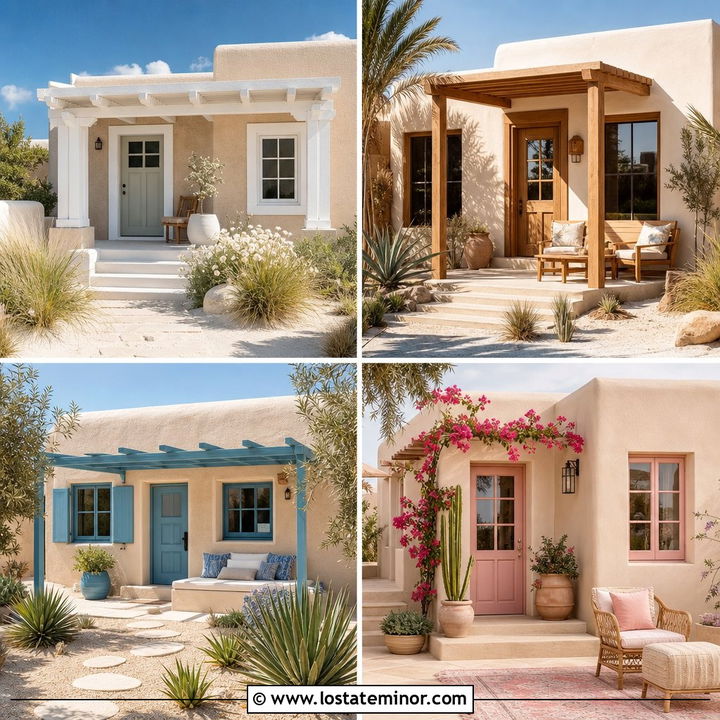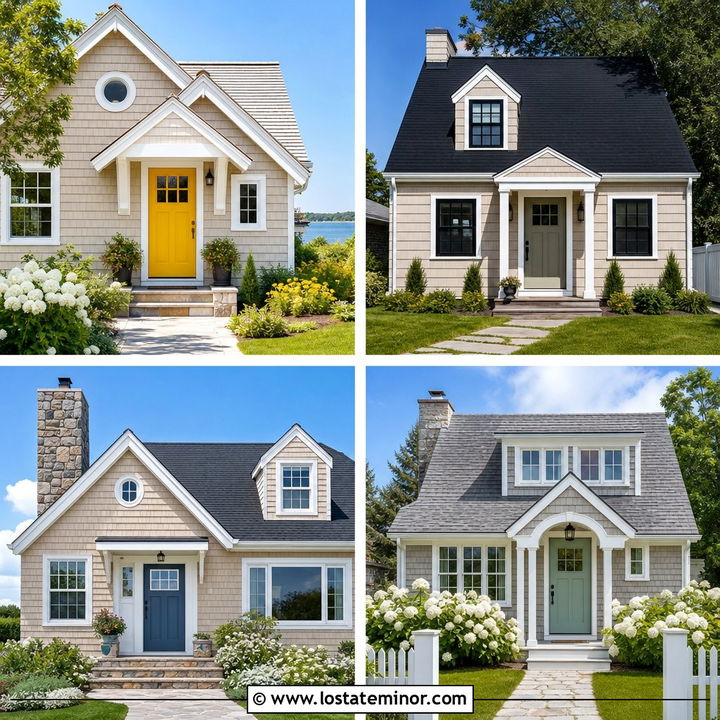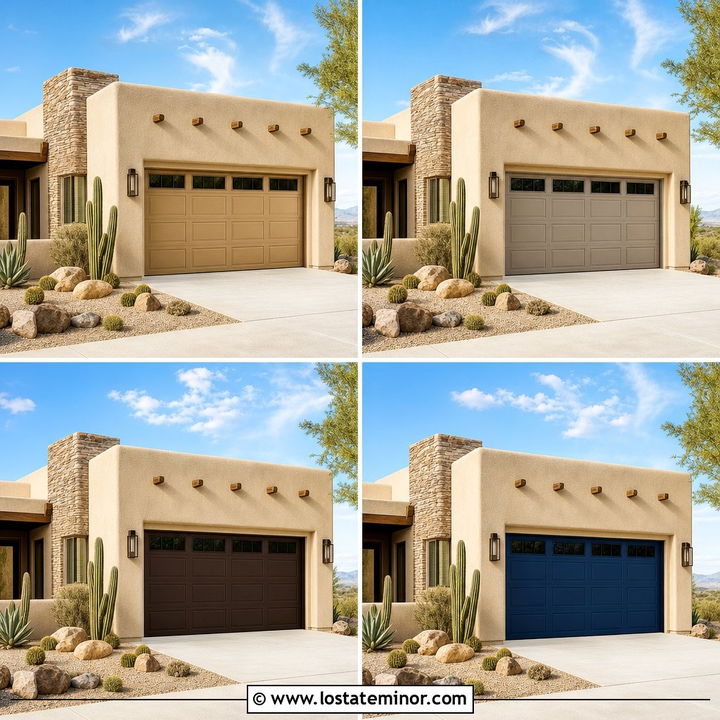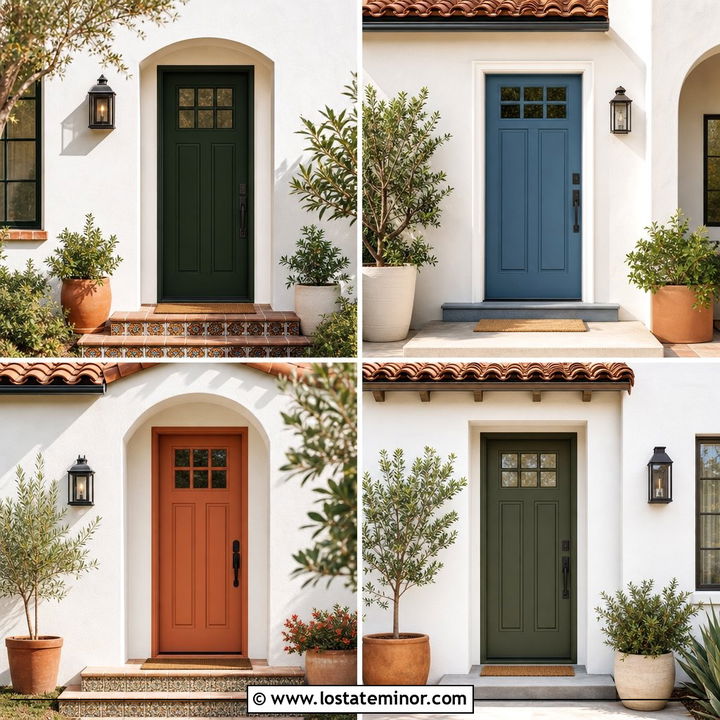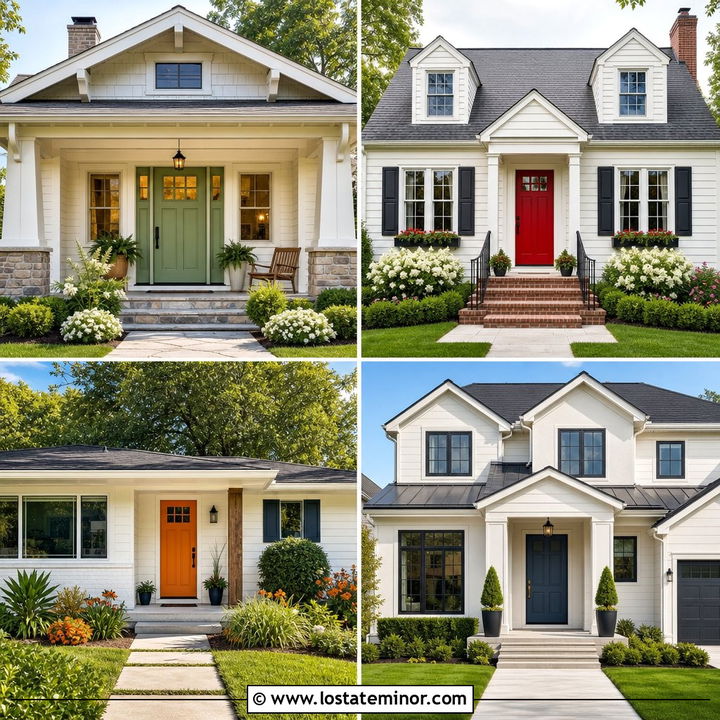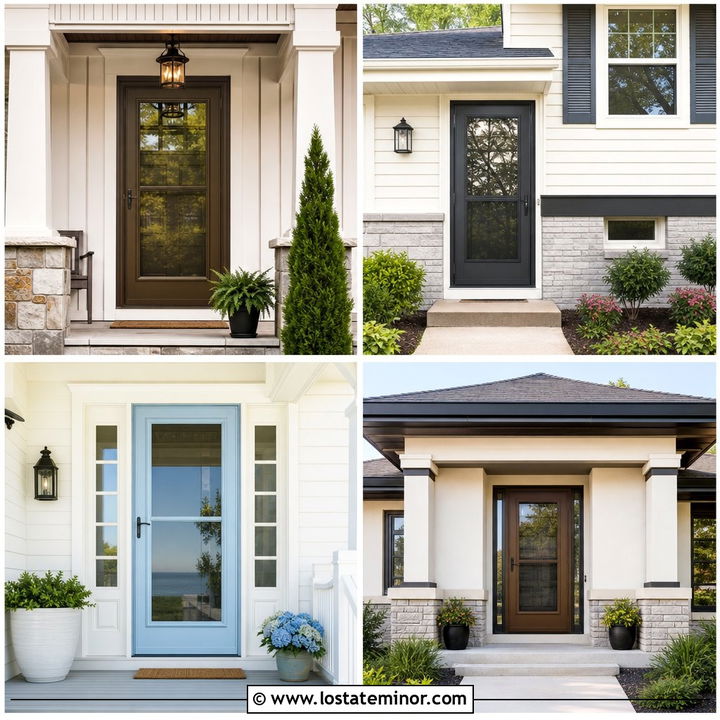
A warm neutral exterior can feel relaxed, polished, and full of character when every finish works together. These 30 Sand House Design With Dutch Door Ideas explore complete exterior schemes rather than treating the entry as an isolated feature. Sand-colored siding creates a flexible backdrop for painted doors, natural wood, stone, brick, shutters, roofing, and porch details. It also suits many American home types, from coastal cottages and Craftsman bungalows to ranch homes and modern farmhouses. As you compare the looks below, consider your roof undertone, fixed masonry, sunlight, landscaping, and preferred level of contrast. Each combination offers a practical way to build welcoming curb appeal around a functional split entry. Start planning your makeover with these 30 Sand House Design With Dutch Door Ideas.
1. Sand House With Sage Green Dutch Door
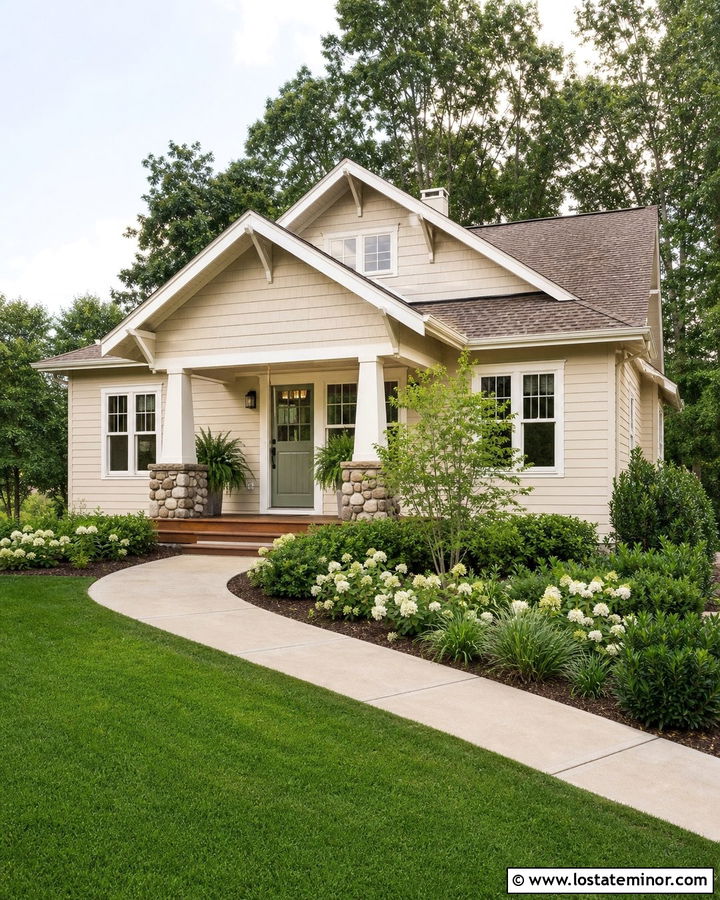
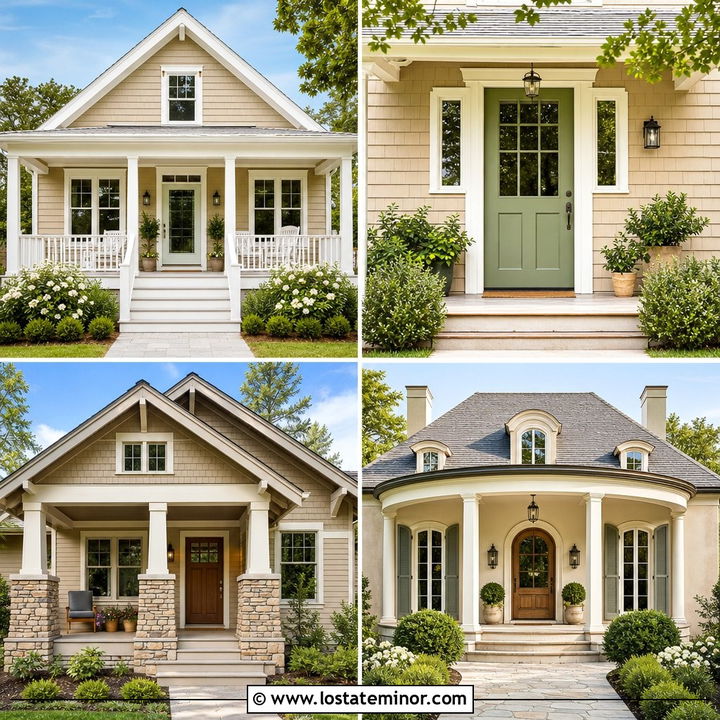
Sage green brings a gentle, garden-inspired contrast to a sand-colored exterior. Use warm sand siding with creamy white window trim, then paint the Dutch door a muted sage that has gray undertones. This prevents the entrance from looking too bright or minty. A Craftsman bungalow is especially suited to the combination because tapered columns, exposed rafters, and a deep porch add natural character. Complete the scheme with a medium-brown architectural shingle roof, fieldstone porch piers, and aged bronze hardware. Ferns, ornamental grasses, and soft white flowers reinforce the earthy palette. Keep the porch floor in weathered cedar or warm gray stone so the green door remains noticeable without feeling disconnected from the rest of the facade.
2. Sand House With Navy Blue Dutch Door
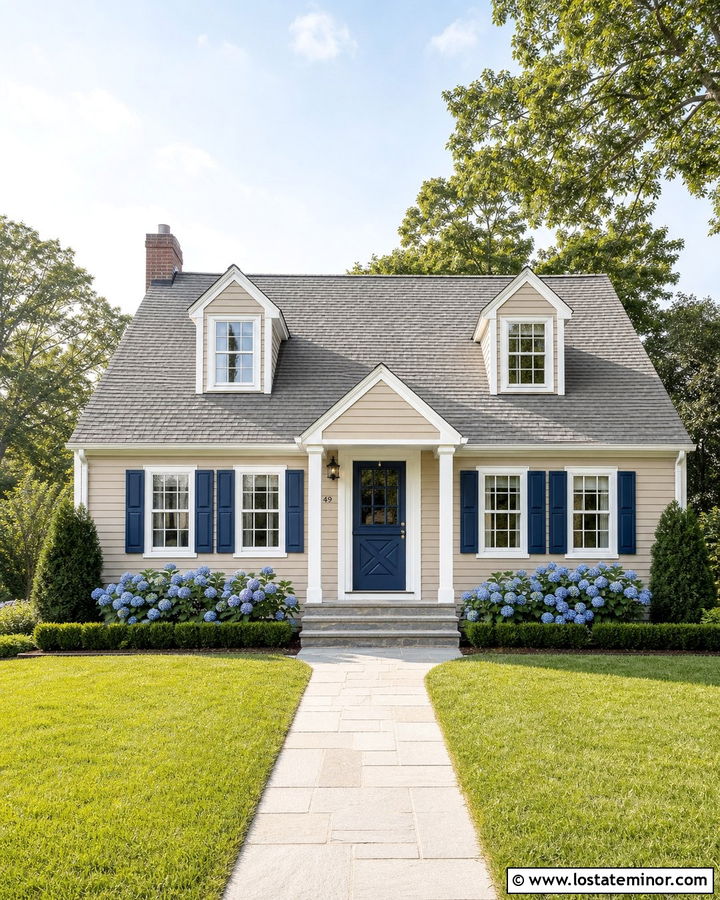
Do you want strong contrast without choosing a completely black entrance? A navy blue Dutch door gives a sand house a crisp focal point while maintaining a traditional, approachable appearance. Pair horizontal sand siding with soft white trim and navy shutters to repeat the entry color across the facade. This scheme works well on a Cape Cod house with dormer windows, a simple gabled porch, and symmetrical landscaping. Choose brushed nickel or polished chrome door hardware for a clean coastal touch. A weathered gray roof and pale stone walkway help cool the warm siding. Blue hydrangeas, boxwood borders, and white planters complete the curb appeal. Use a navy with enough depth to remain clearly blue in direct afternoon sunlight.
3. Sand House With Black Dutch Door
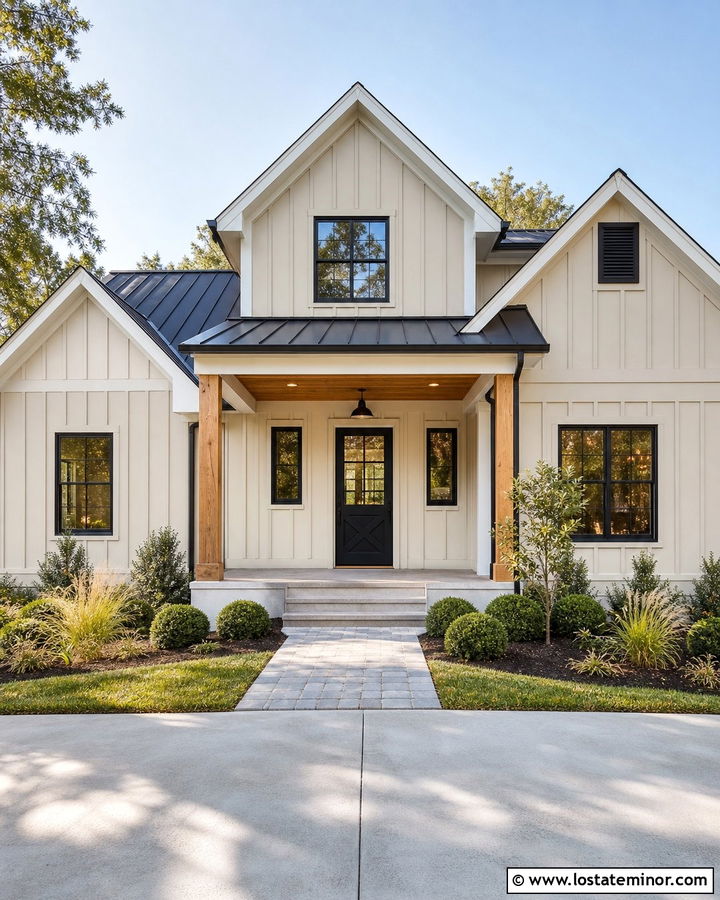
A black Dutch door can give a sand exterior a more structured, modern look. The contrast is bold, but the warm siding keeps the full scheme from feeling severe. Try this combination on a modern farmhouse with sand-colored board-and-batten siding, bright white fascia, and black-framed windows. Repeat the black on simple barn-style sconces, porch railings, and metal roof accents. A natural cedar porch ceiling introduces warmth near the entrance and softens the graphic palette. Choose matte black hardware so hinges and latches blend neatly with the door. Large concrete pavers, clipped shrubs, and airy grasses create an uncluttered approach. For visual balance, use black selectively rather than covering every architectural detail with the same dark finish.
4. Sand House With Natural Wood Dutch Door
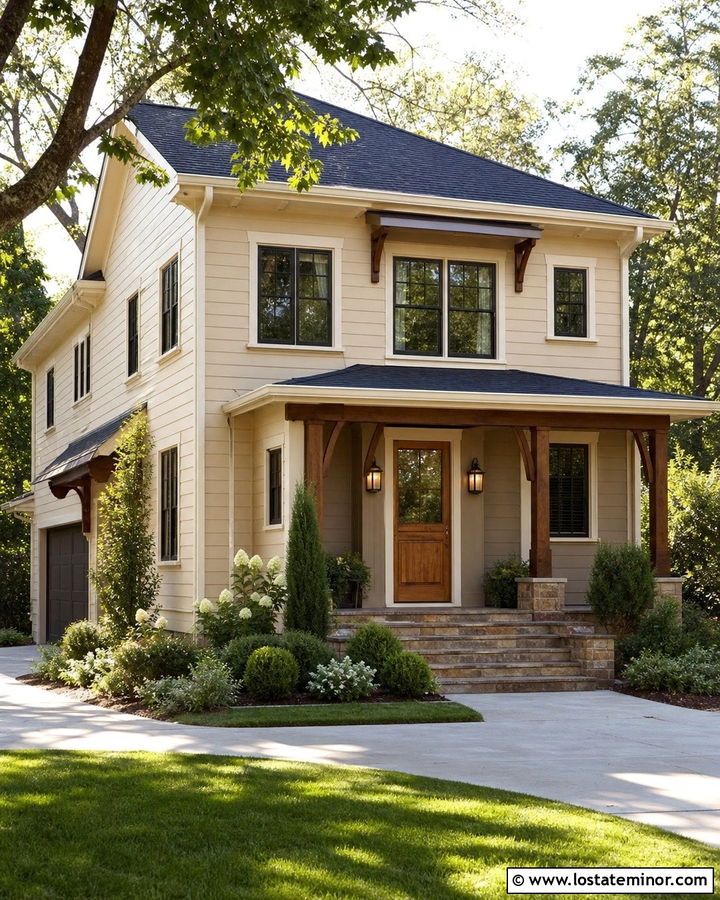
Rich wood grain brings instant depth to a pale sand house. Instead of painting the Dutch door, select a stain that coordinates with the warm undertones in the siding. Medium-toned white oak, Douglas fir, or cedar can provide enough contrast without becoming overly rustic. On a transitional two-story home, combine sand lap siding with ivory trim, dark bronze windows, and a charcoal roof. Repeat the door stain on porch brackets or garage accents for a connected design. Clear glass in the upper half keeps the entrance bright, while raised panels below add traditional detail. Finish the look with warm stone steps, bronze lighting, and layered evergreen landscaping. An exterior-grade finish will help preserve the wood’s color and visible texture.
5. Sand House With White Dutch Door
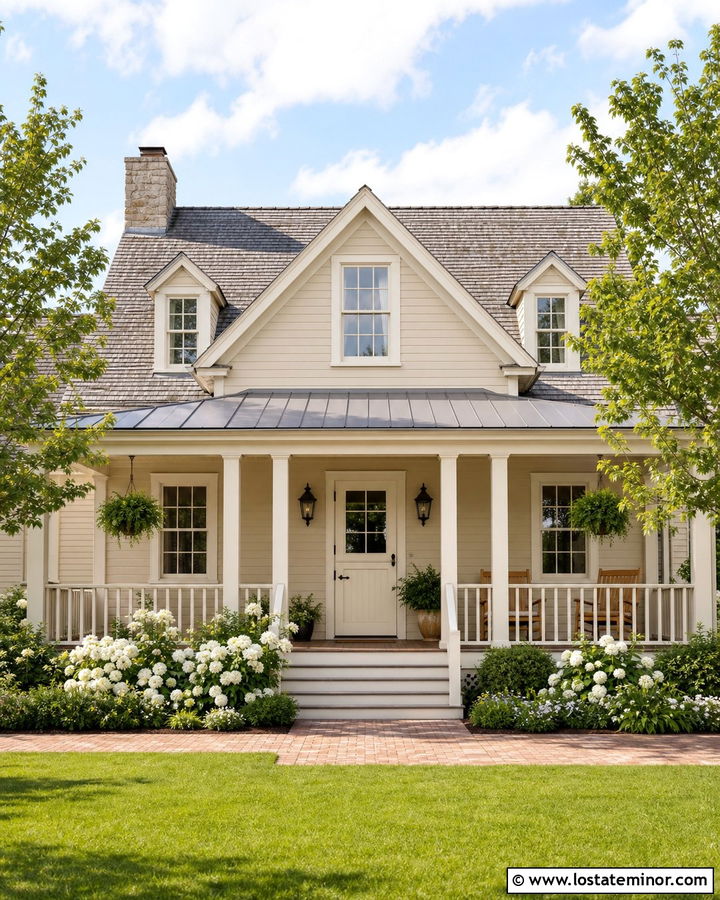
Soft white creates an airy, understated entrance on a sand-colored house. This low-contrast palette is especially effective when the architecture already has strong details, such as a wraparound porch, decorative brackets, or divided-light windows. On a traditional farmhouse, use creamy white for the Dutch door, window casings, columns, and railings. Choose a slightly deeper sand shade for the siding so the trim does not disappear. A galvanized metal porch roof and weathered gray shingles add quiet texture overhead. Black lanterns and dark door hardware provide small points of definition. Complete the approach with a brick walkway, white flowering shrubs, and natural wood rocking chairs. The finished exterior feels bright and cohesive rather than plain or overly matched.
6. Sand House With Dusty Blue Dutch Door
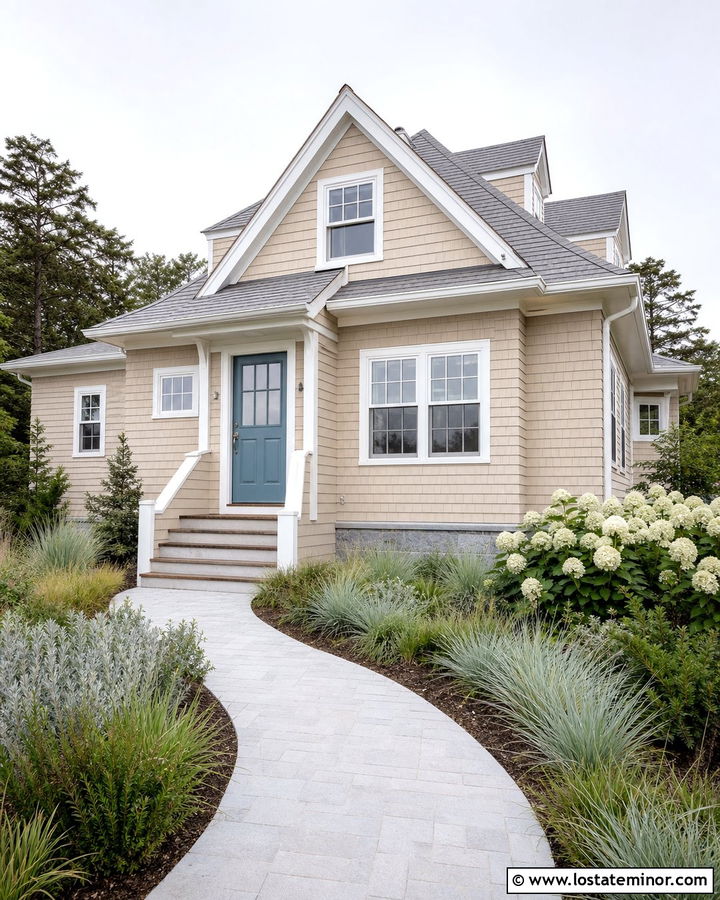
Dusty blue offers a softer alternative to navy and works beautifully with a warm sand facade. Its muted gray undertone bridges the difference between beige siding and cooler roof materials. Use this scheme on a coastal cottage with shingle siding, white trim, and a pale gray roof. Paint the Dutch door a medium dusty blue, then repeat that color subtly on window boxes or porch furniture. Brushed nickel hardware and clear divided-light glass keep the entrance fresh. Weathered wood steps and light gray foundation stone add texture without introducing another strong color. Surround the facade with silvery grasses, white hydrangeas, and low evergreen shrubs. The result feels coastal and relaxed without depending on overly bright nautical colors or themed decorations.
7. Sand House With Terracotta Dutch Door
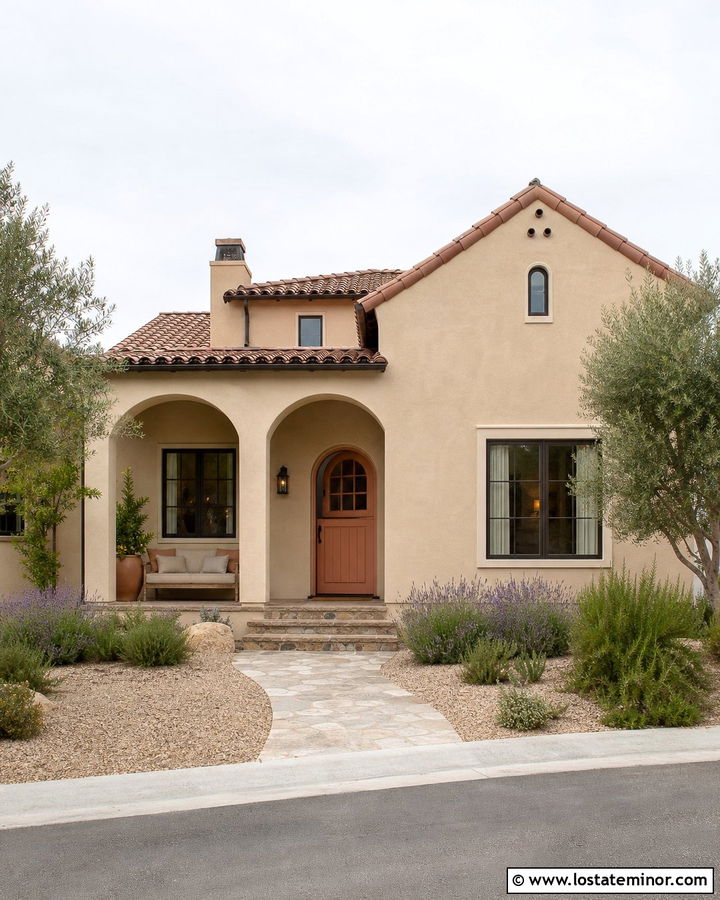
Terracotta gives a sand house a sun-warmed focal point that feels inviting throughout the year. Look for a muted clay color rather than a highly saturated orange. On a Spanish-inspired stucco home, combine sand walls with a terracotta Dutch door, creamy trim, and a red-brown tile roof. Black iron hardware, arched openings, and simple wall lanterns reinforce the architectural character. Natural stone steps and gravel landscaping extend the earthy palette into the yard. Add olive trees, rosemary, lavender, or drought-tolerant grasses for a practical finishing layer. The Dutch door can include a small upper window with dark metal grilles for extra detail. Because the body and door share warm undertones, the contrast feels colorful but still balanced and grounded.
8. Sand House With Charcoal Gray Dutch Door
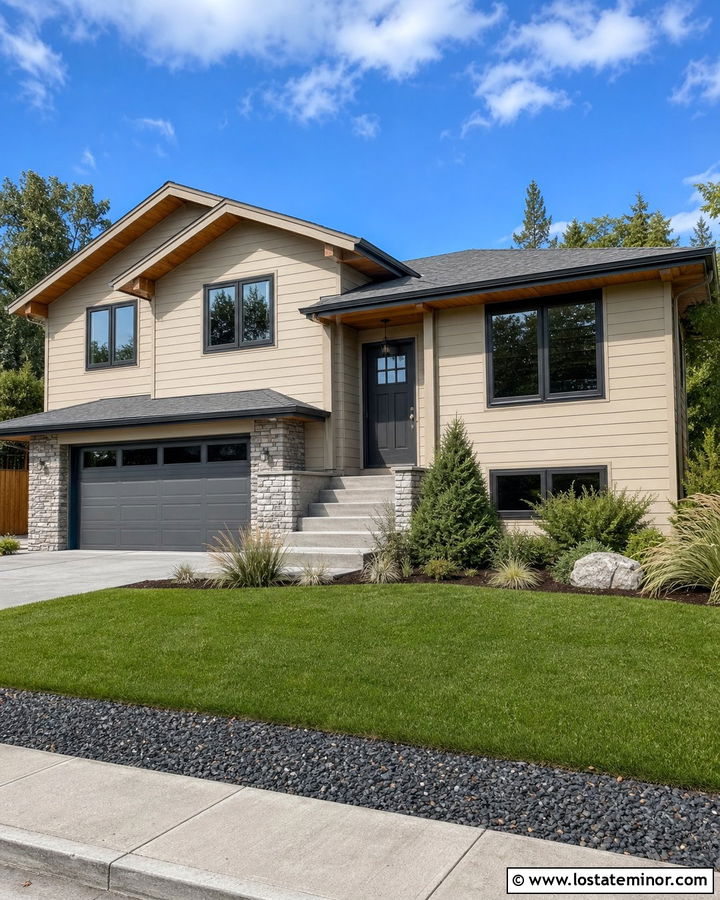
Charcoal gray creates sophisticated contrast while appearing softer than solid black. It is a useful choice when a sand house already has a gray roof, dark stone, or metal-framed windows. On a split-level exterior, use warm sand lap siding with charcoal trim around the lower windows and a matching charcoal Dutch door. Bring in ledgestone around the garage or foundation to connect the neutral shades. A medium-gray roof keeps the upper portion balanced, while natural wood soffits prevent the scheme from feeling cold. Choose streamlined black or dark bronze door hardware. Wide concrete steps, low junipers, and ornamental grasses suit the clean architecture. This complete palette can modernize an older facade without hiding its original shape or adding unnecessary decoration.
9. Sand House With Forest Green Dutch Door
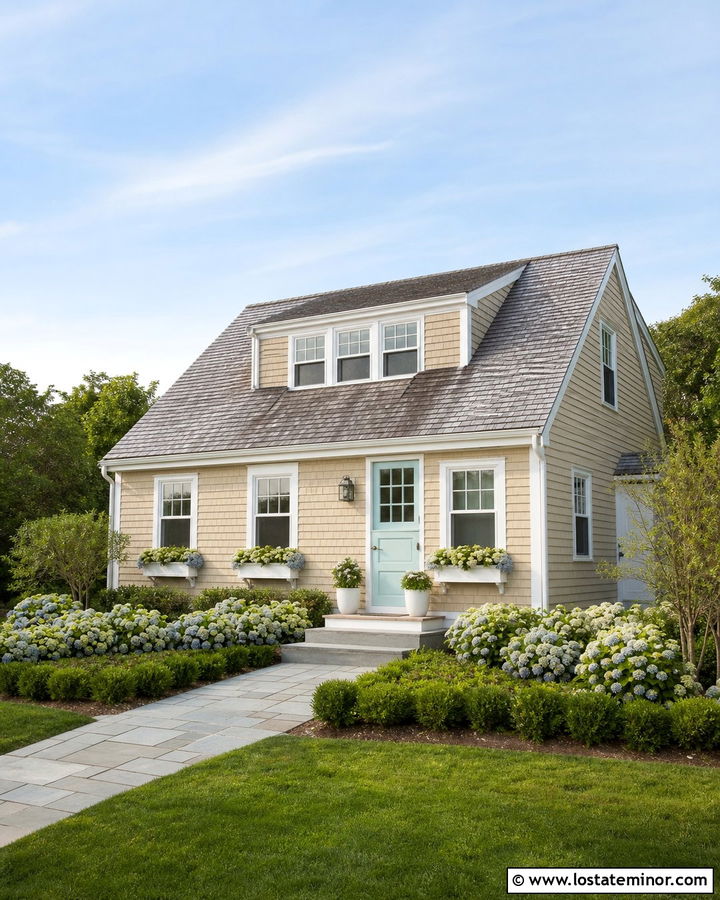
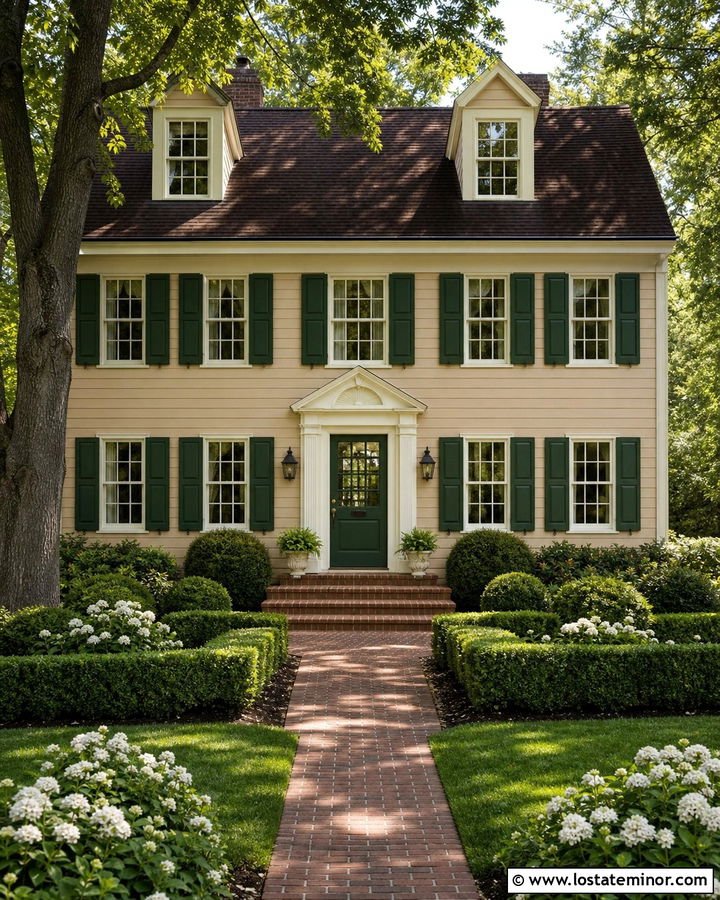
A forest green Dutch door adds depth to sand siding and looks especially attractive in a leafy setting. The dark green feels substantial from the street but is less stark than black. Try it on a Colonial home with balanced windows, creamy white trim, and traditional paneled shutters. Match the shutters to the door for a unified facade. A dark brown roof and antique brass hardware strengthen the warm, classic character. Brick steps or a red-brown walkway introduce another natural tone without competing with the entrance. Frame the house with boxwoods, mature trees, and seasonal white flowers. Select a green with muted undertones so it complements the landscape while remaining distinct. The resulting exterior feels established, welcoming, and carefully coordinated.
10. Sand House With Red Dutch Door
A red Dutch door gives a neutral sand house a confident, familiar focal point. For a polished result, choose an earthy barn red or deep brick red instead of a sharp primary shade. This palette suits an American farmhouse with horizontal lap siding, white porch columns, and a dark gray roof. Repeat the red only in small details, such as a bench cushion or restrained window box planting. Black strap hinges and a traditional latch can emphasize the split-door construction. Use brick porch steps to connect the door color with the ground plane. White railings and trim keep the full facade bright, while shade trees and foundation shrubs soften the contrast. The entrance stands out clearly without overwhelming the house’s warm neutral body.
11. Sand House With Pale Yellow Dutch Door
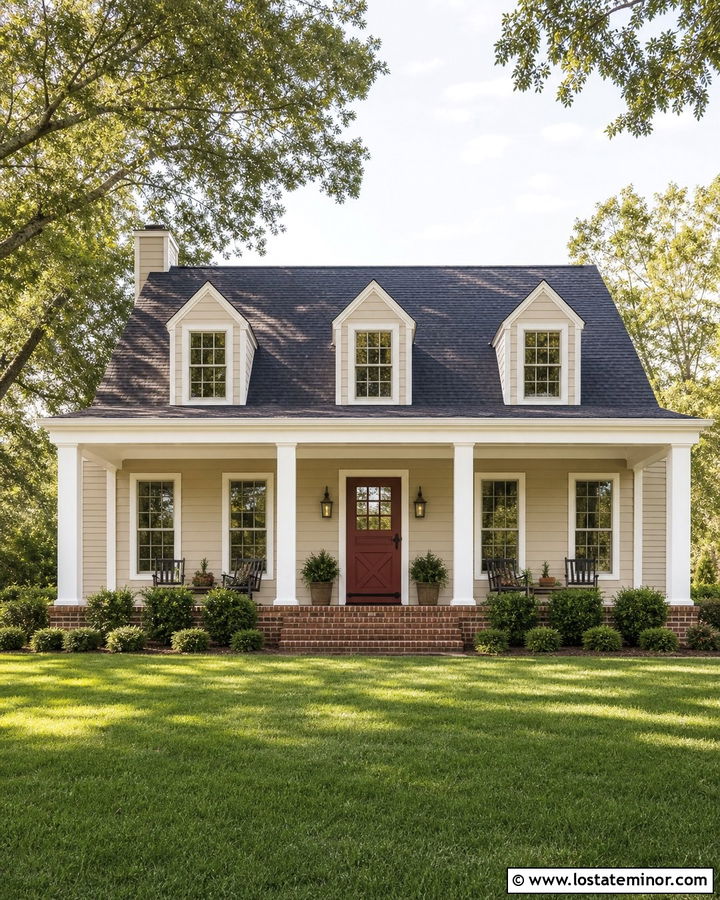
Pale yellow can make a sand exterior feel cheerful while preserving a soft, tonal palette. The key is selecting a buttery yellow that is visibly different from the siding but not intensely saturated. Use it on a small cottage with sand-colored clapboard, white trim, and a simple front porch. A light gray roof prevents the exterior from becoming too warm, while natural wood porch boards add comfortable texture. Choose antique brass hardware and a divided-light upper door panel for traditional charm. White daisies, lavender, and green shrubs support the sunny color story. Light stone around the walkway keeps the front yard open and bright. This combination is particularly useful when you want the Dutch door to feel friendly rather than dramatic or formal.
12. Sand House With Teal Dutch Door
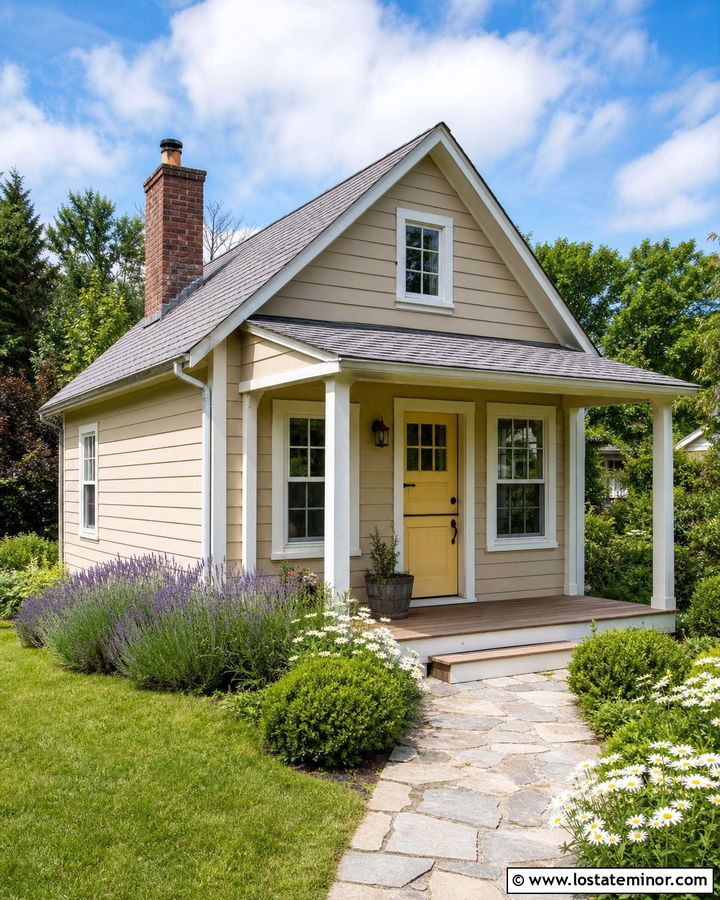
Teal introduces noticeable color while pairing naturally with a sandy neutral background. A slightly muted blue-green works better than a neon or highly tropical shade for most residential exteriors. On a midcentury ranch, combine sand stucco or horizontal siding with a teal Dutch door, dark bronze window frames, and broad wood fascia. A low charcoal roof strengthens the home’s horizontal lines. Use rectangular concrete pavers and simple gravel beds to create a clean approach. Natural wood planters and rust-colored grasses add warmth around the bold entry. Choose minimal black hardware so the door color remains the main feature. The finished design feels playful and updated, yet the sand exterior ensures the overall curb appeal stays calm and easy to live with.
13. Sand House With Olive Green Dutch Door
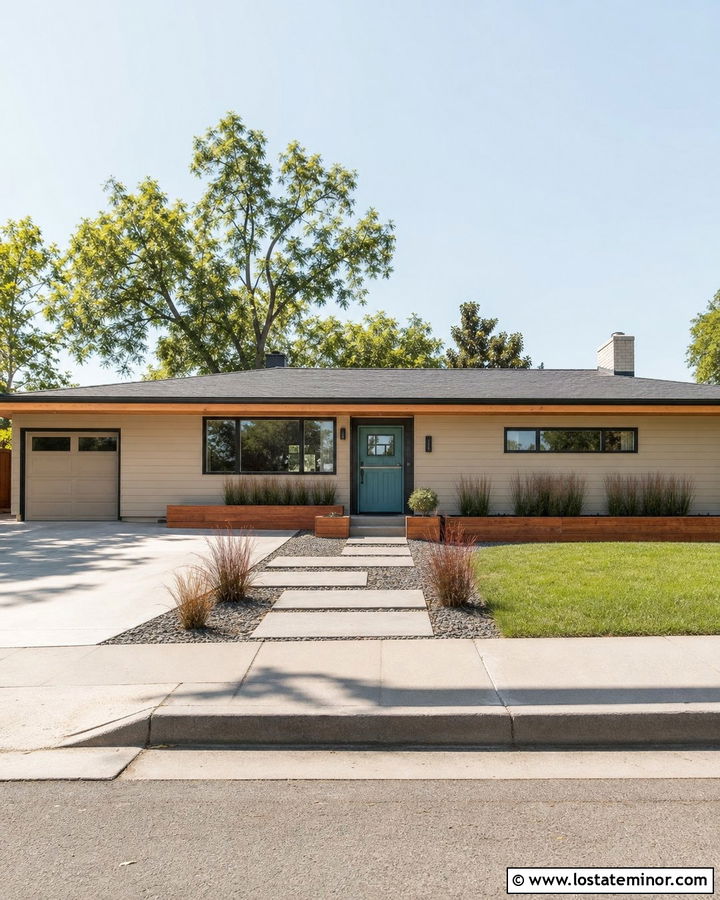
Olive green has warm undertones that blend smoothly with sand-colored siding, stone, and natural wood. It creates a low-key entrance with more personality than beige or brown. Apply this scheme to a rustic ranch house with sand board-and-batten siding, limestone accents, and a medium brown roof. Paint the Dutch door deep olive and repeat the shade on narrow shutters or a garden gate. A stained timber porch beam connects the green and sand tones through natural texture. Choose aged brass or oil-rubbed bronze hardware for a softened finish. Native grasses, sage plants, and gravel borders suit the earthy design. This look works best when the door is surrounded by lighter trim, allowing its muted green color to remain clearly visible from the curb.
14. Sand House With Coral Dutch Door
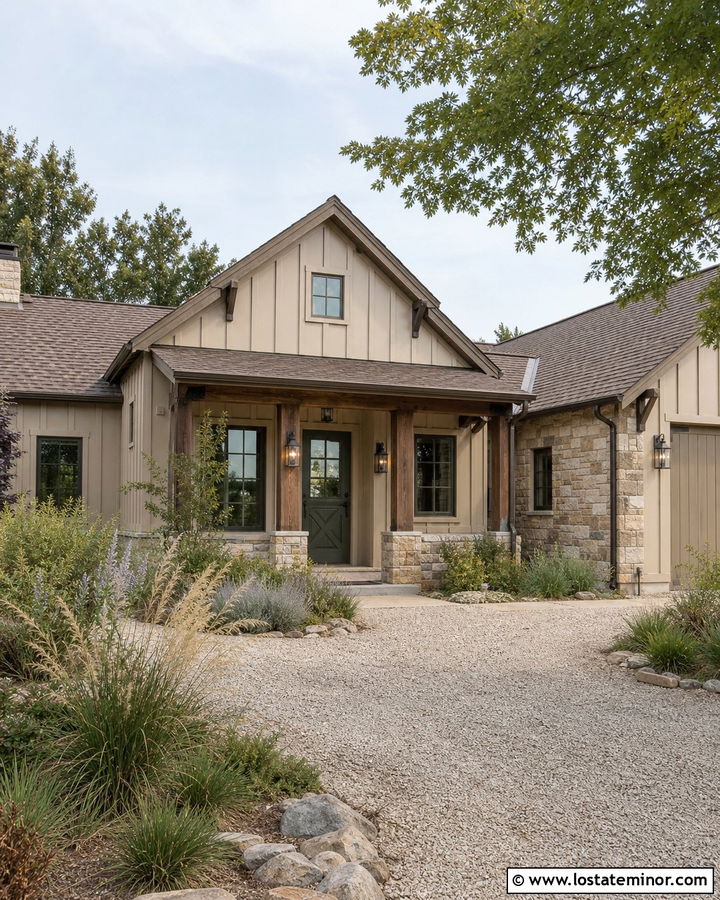
A coral Dutch door can energize a sand house without making the entire exterior feel loud. Choose a softened coral with earthy pink and orange undertones, then surround it with clean white trim. On a Florida-inspired bungalow, pair sand stucco with a coral entry, a pale gray metal roof, and breezy porch columns. Light wood shutters or Bahama-style shades can introduce warmth while providing architectural interest. Keep hardware simple in brushed nickel or matte black. Pale pavers, palms, flowering shrubs, and clipped grasses reinforce the sunny setting. To avoid a themed appearance, limit coral to the door and one or two small accessories. The warm neutral body color allows this lively entrance to feel intentional, balanced, and welcoming from the street.
15. Sand House With Greige Dutch Door
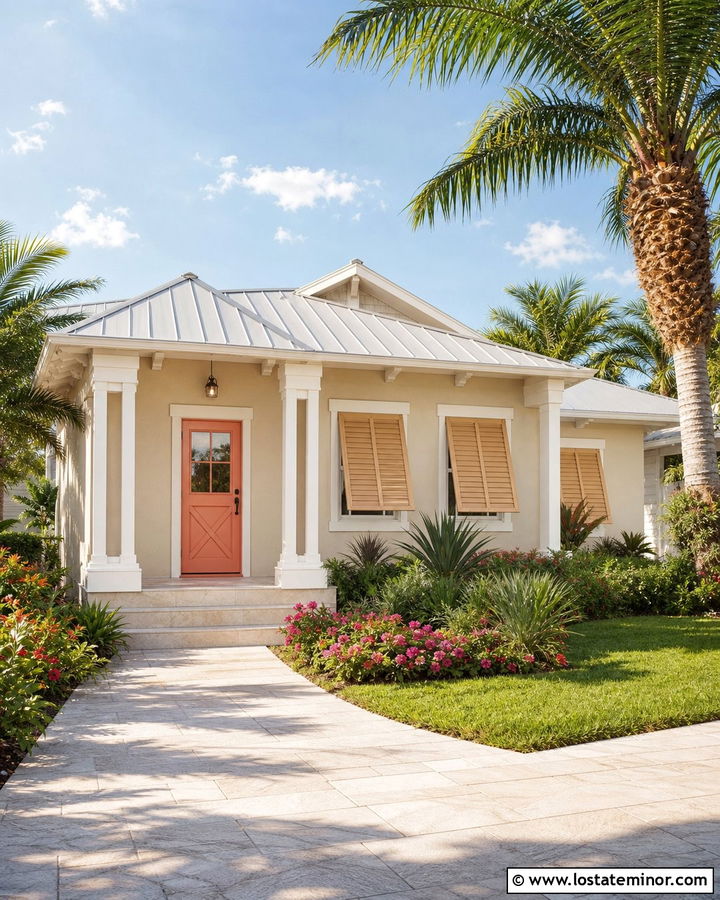
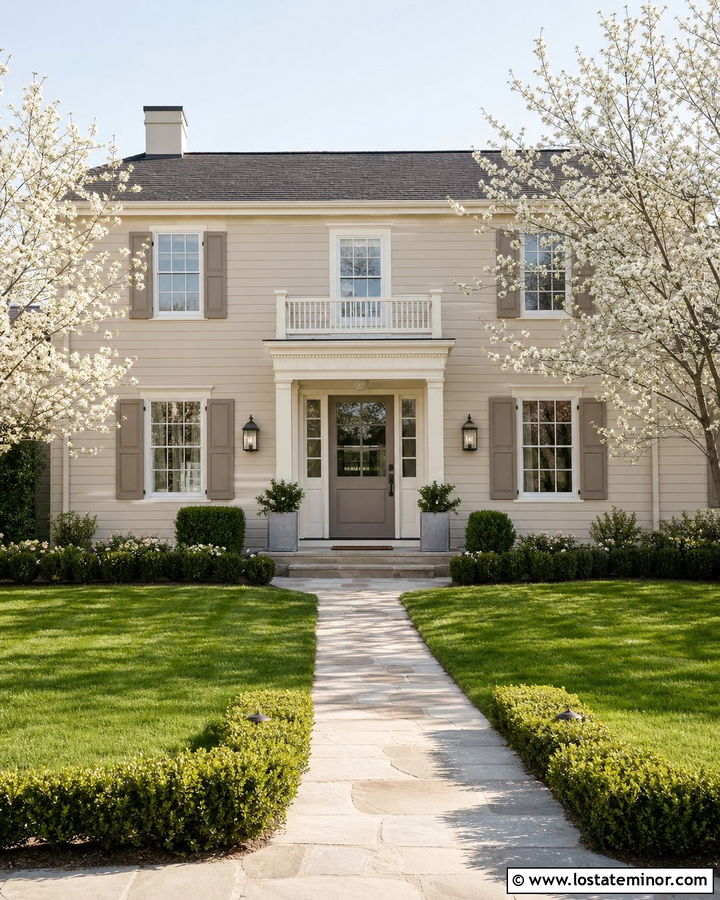
For homeowners who prefer subtle contrast, a greige Dutch door creates a layered neutral exterior. Select a door color with enough gray depth to stand apart from the warmer sand siding. This combination looks refined on a contemporary Colonial house with symmetrical windows, crisp ivory trim, and a dark gray roof. Use limestone porch flooring and taupe shutters to connect the body and entry colors. Black lanterns and dark bronze hardware add necessary definition around the doorway. Keep landscaping formal but uncomplicated with clipped boxwoods, small flowering trees, and a straight stone path. The restrained palette highlights the Dutch door’s split form rather than relying on bright paint. It is a flexible approach for a facade that needs quiet character and lasting curb appeal.
16. Sand House With Burgundy Dutch Door
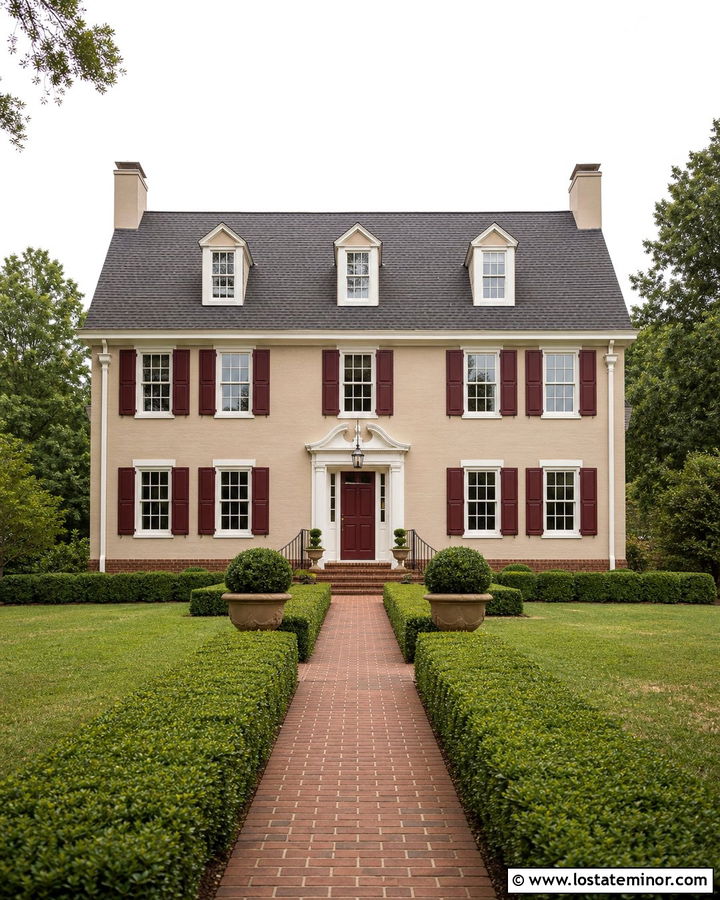
Burgundy provides the richness of red with a deeper, more traditional finish. Against sand siding, it creates an elegant entrance that coordinates well with brick and dark roofing. Use this scheme on a Georgian-inspired house with creamy white trim, burgundy shutters, and a symmetrical central porch. A red-brown brick foundation visually connects the Dutch door to the lower facade. Choose aged brass hardware and classic divided-light windows to reinforce the established character. A charcoal roof prevents the warm palette from becoming overly brown. Formal hedges, a straight brick walkway, and matching planters frame the entrance neatly. Because burgundy can appear very dark in shade, test a large sample beside the trim and masonry before selecting the final door finish.
17. Sand House With Robin’s Egg Blue Dutch Door
Robin’s egg blue brings a fresh, lighthearted accent to a warm sand exterior. It works especially well on smaller homes where a dark door might feel visually heavy. For a coastal Cape Cod design, use sand shingles, bright white corner boards, and a clear robin’s egg blue Dutch door. Add a weathered gray roof, white window boxes, and brushed nickel hardware for a breezy finish. The upper section of the door can feature six divided panes that reflect daylight and highlight the split construction. A pale bluestone walkway and low hydrangea borders create a graceful approach. Keep shutters white or omit them entirely so the entrance remains the single colorful feature. The completed scheme feels crisp, friendly, and comfortably connected to its surroundings.
18. Sand House With Dark Brown Dutch Door
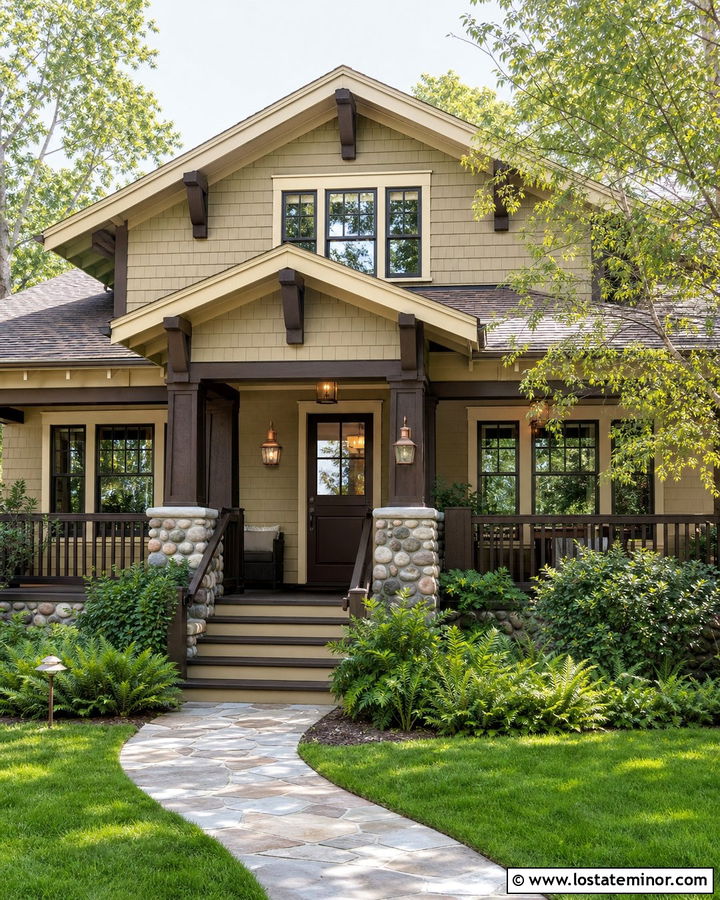
Dark brown creates a warm, grounded entrance without the maintenance considerations of a visibly stained wood door. It coordinates naturally with sand siding, brown roofing, and earth-toned stone. On a Craftsman home, paint the Dutch door espresso brown and use the same color on exposed beams, window trim, and porch railings. Cream fascia provides lighter contrast around the roofline. Add river rock or fieldstone to the porch piers so the neutral palette contains varied texture. A copper-toned light fixture and bronze hardware complement the dark entry. Complete the yard with a curved flagstone path, ferns, and layered shrubs. The finished facade feels substantial and harmonious, with enough tonal variation to prevent the sand and brown combination from appearing flat.
19. Sand House With Soft Pink Dutch Door
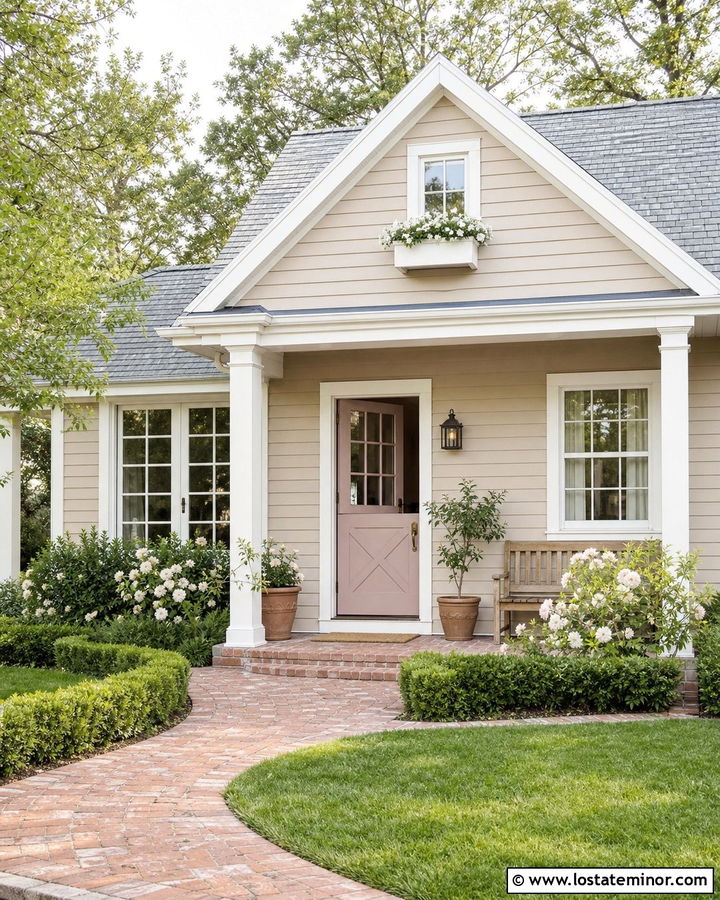
Soft pink creates an unexpected but graceful entrance on a sand-colored cottage. Choose a dusty blush with beige undertones so it relates to the warm exterior instead of reading as overly sweet. Pair sand clapboard siding with a blush Dutch door, warm white trim, and a light gray shingle roof. A small covered porch with simple square columns keeps the design grounded. Use antique brass hardware, terracotta planters, and natural wood seating to reinforce the warm palette. White roses, green hedges, and a curved brick path add traditional curb appeal. Keep shutters and garage doors neutral to avoid competing colors. This full exterior scheme feels distinctive and personal while remaining calm enough for a natural US suburban setting.
20. Sand House With Copper Green Dutch Door
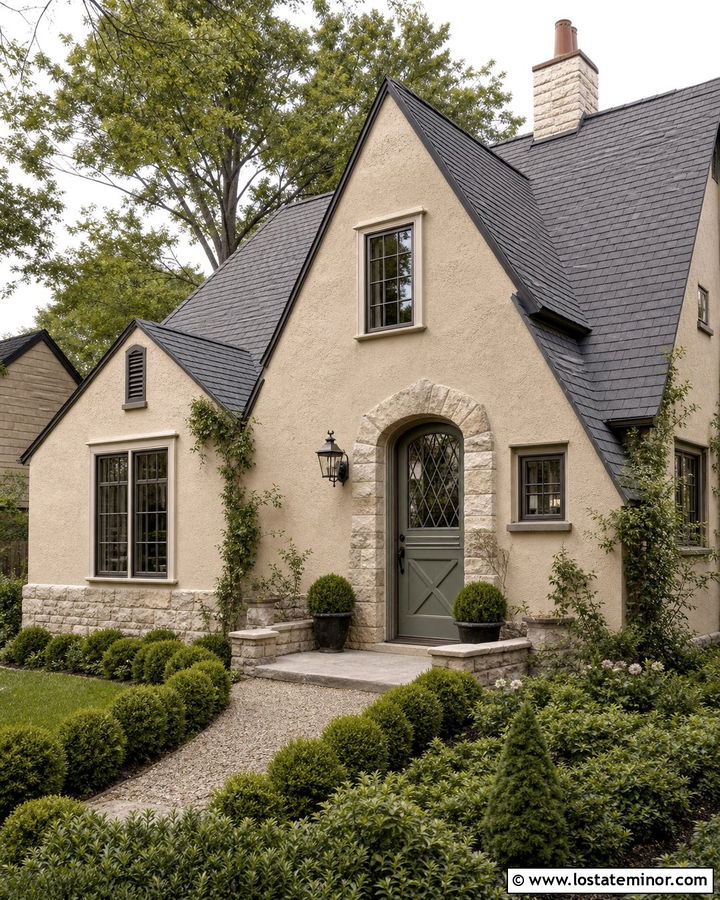
A copper green Dutch door offers an aged, architectural quality that pairs beautifully with warm sand walls. Think of a muted blue-green finish inspired by weathered metal rather than a bright turquoise. On a European-style cottage, combine sand stucco with a copper green entry, ivory trim, and a steep charcoal roof. Add limestone around the foundation or arched doorway to create a substantial transition between colors. Dark bronze lanterns and hardware reinforce the old-world influence. The upper door can include small leaded-glass panes for detail, while the lower half remains solid and practical. A pea-gravel path, clipped shrubs, and climbing greenery soften the facade. The result feels collected and distinctive without relying on ornate decoration throughout the entire exterior.
21. Sand House With Orange Dutch Door
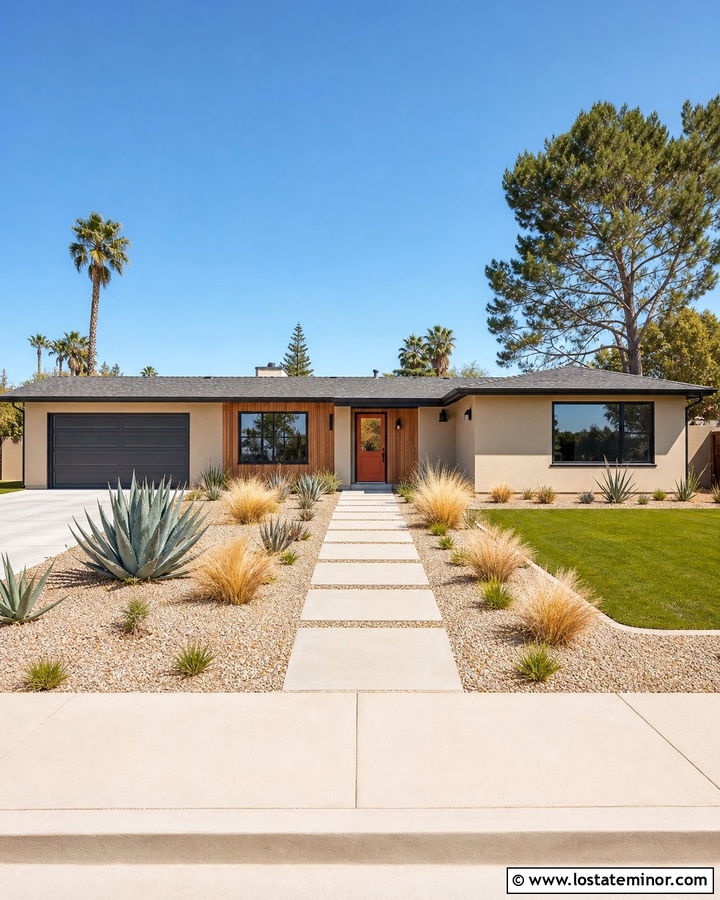
A burnt orange Dutch door gives a sand house energetic curb appeal with an earthy foundation. This pairing is particularly effective on a retro ranch or midcentury home. Use warm sand stucco, dark brown fascia, and a low charcoal roof, then make the Dutch door the primary color feature. Add natural cedar siding around the entry to connect the orange accent with the home’s warmer materials. Black-framed windows and slim black sconces provide clean contrast. Keep the walkway geometric with rectangular concrete slabs surrounded by gravel. Drought-tolerant grasses, agave, and low shrubs suit the streamlined facade. Choose a muted orange with rust or clay undertones so it feels integrated with the architecture rather than appearing like a temporary decorative accent.
22. Sand House With Double Dutch Doors
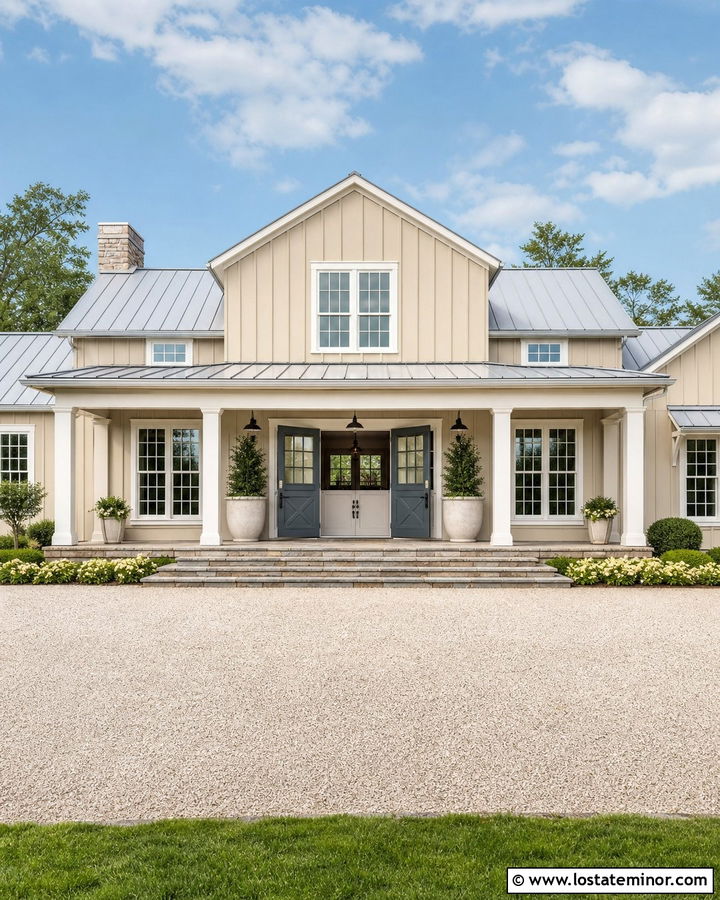
Double Dutch doors can turn a wide entrance into the central architectural feature of a sand house. This arrangement works especially well on a broad farmhouse, coastal home, or courtyard-facing residence. Paint both doors deep blue-gray and surround them with substantial creamy white trim. Use sand board-and-batten siding, a light gray metal roof, and natural stone porch flooring to build a balanced neutral background. Matching black latches and hinges emphasize the split-door design without cluttering it. Wide porch steps and symmetrical planters should reinforce the generous proportions. If the doors contain glass, keep the muntin pattern consistent with nearby windows. The completed facade feels open and welcoming while retaining a sense of order, privacy, and architectural weight.
23. Sand House With Arched Dutch Door
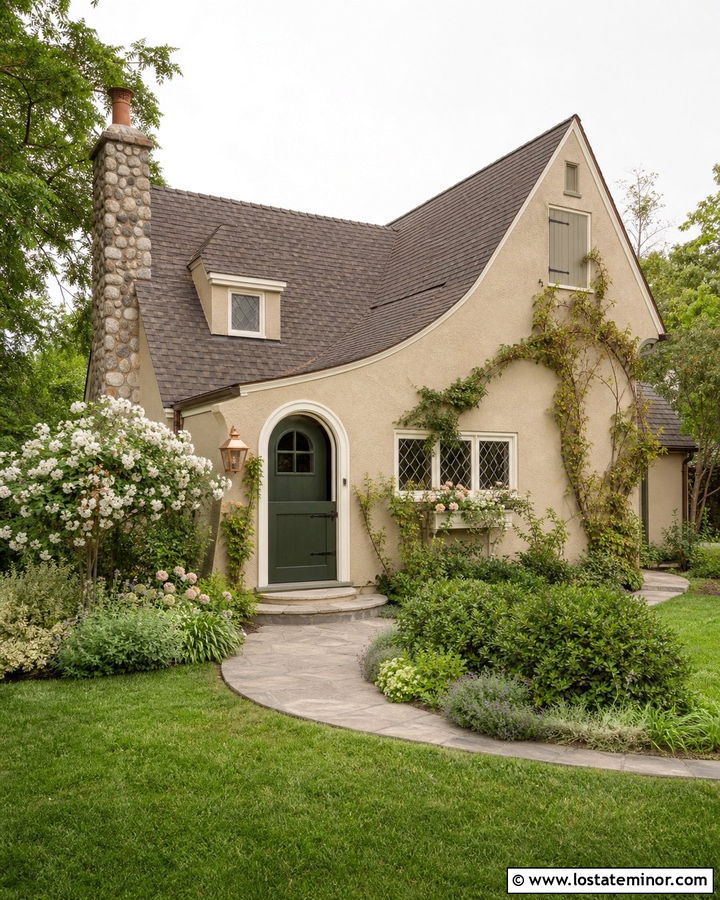
An arched Dutch door softens the straight rooflines and rectangular windows of a sand-colored facade. It can also bring cottage character to a newer home that lacks decorative architectural details. On an English-inspired cottage, use textured sand stucco, creamy trim, and a deep green arched Dutch door. Add a steep brown-gray roof, stone chimney, and gently curved walkway to repeat the entrance shape. Black iron hinges and a traditional latch help define the two door sections. Keep nearby landscaping loose and natural with flowering shrubs, climbing vines, and layered ground covers. A small copper lantern above the arch provides a warm finishing touch. The complete scheme makes the door feel built into the architecture rather than added as an isolated feature.
24. Sand House With Glass Dutch Door
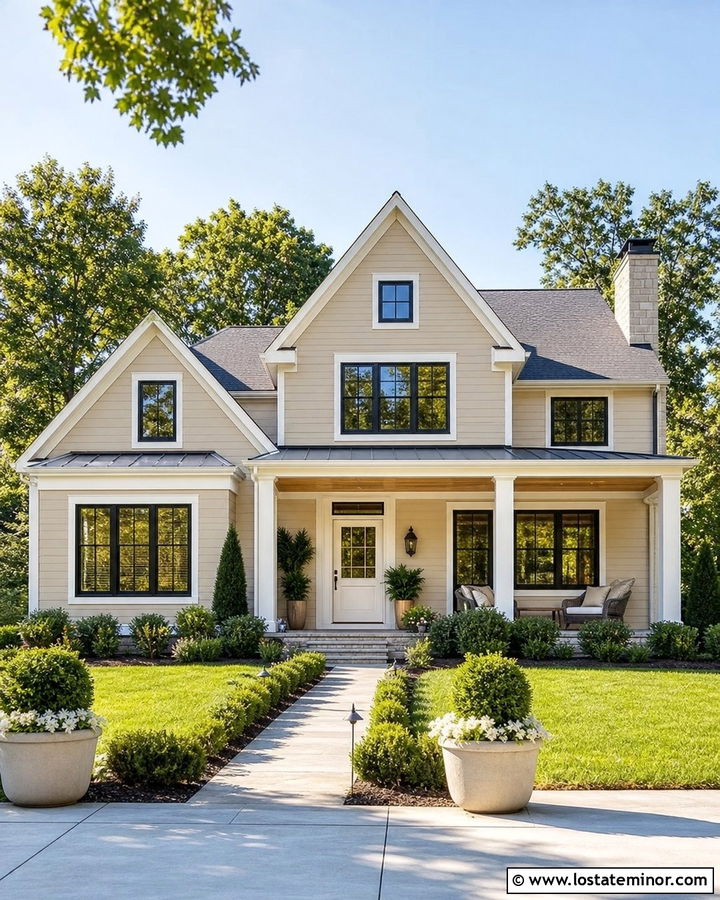
A glass-paneled Dutch door can make a shaded porch feel brighter while maintaining the practical lower half of a split entrance. For a transitional sand house, choose a black-framed upper window and a warm white painted door. Pair it with sand lap siding, white trim, black windows, and a medium gray roof. The contrasting glass frame draws attention to the door’s construction without requiring a bold paint color. Add a natural wood porch ceiling and limestone flooring to warm the modern black-and-white details. Simple bronze hardware, large planters, and structured greenery complete the entry. Use a glass pattern that aligns with the home’s window design. This creates a consistent full-facade look and prevents the door from appearing visually unrelated to the architecture.
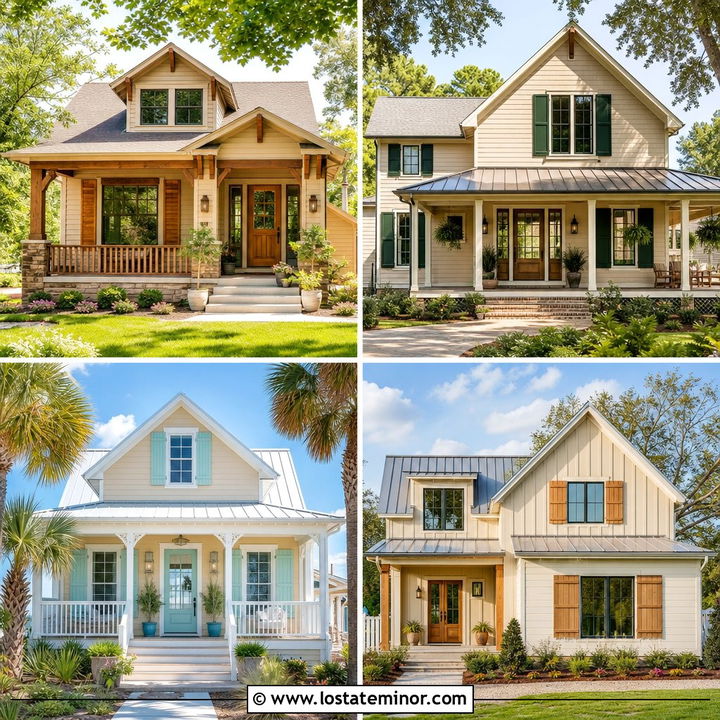
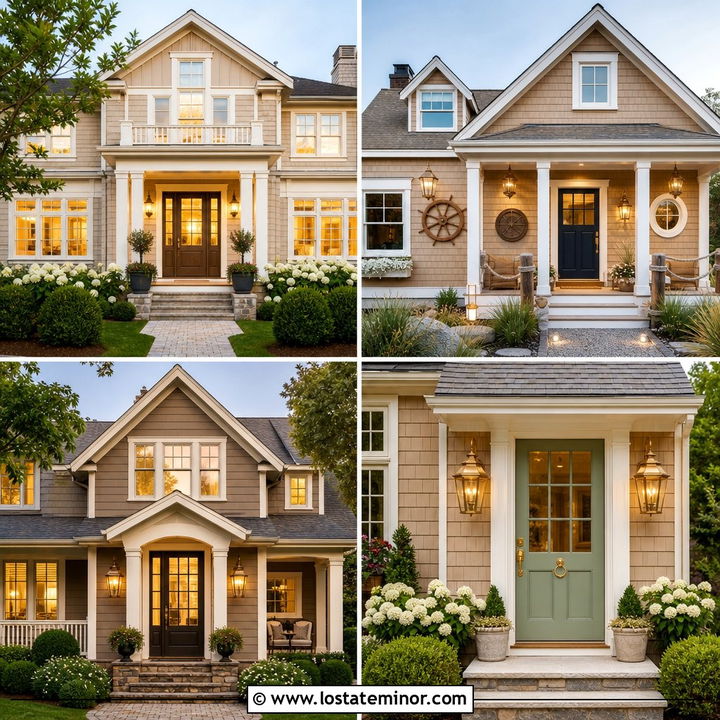
25. Sand House With Cedar Dutch Door And Porch
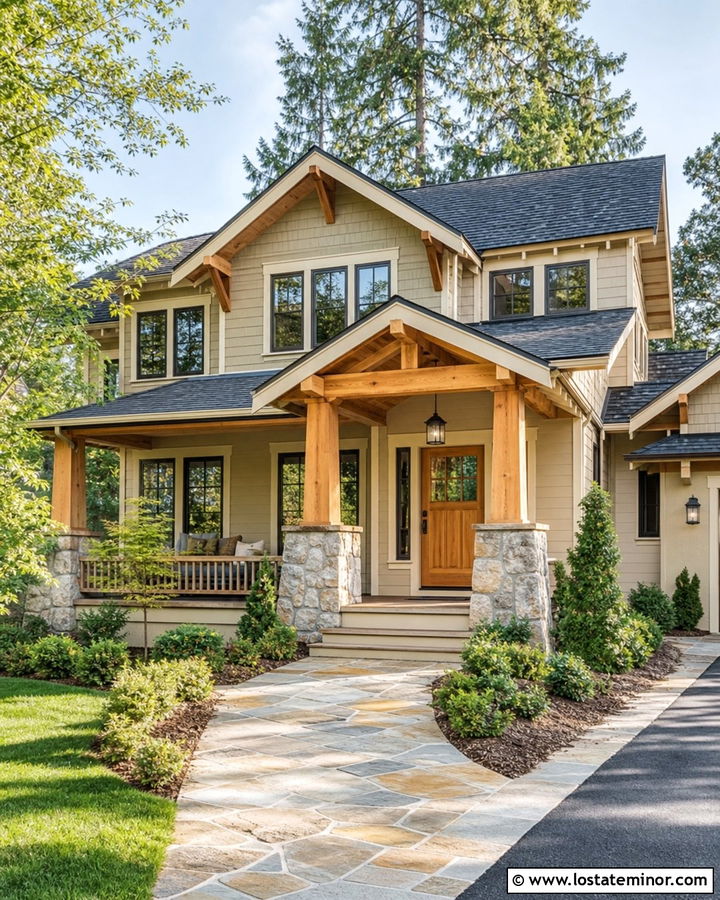
The aroma and visible grain of cedar can make a sheltered entrance feel especially warm and inviting. Use a clear or lightly tinted cedar Dutch door on a sand-colored Craftsman house, then repeat the wood on porch beams and the ceiling. Cream trim will separate the sand siding from the cedar without creating harsh contrast. Add a dark charcoal roof, stone column bases, and bronze-framed windows for a grounded finish. A wide flagstone path and layered evergreen shrubs should guide attention toward the entry. Choose simple dark hardware that does not cover too much of the natural grain. By repeating cedar in several controlled locations, the Dutch door becomes part of a complete material palette rather than a single rustic feature.
26. Sand House With Blue Dutch Door And Stone
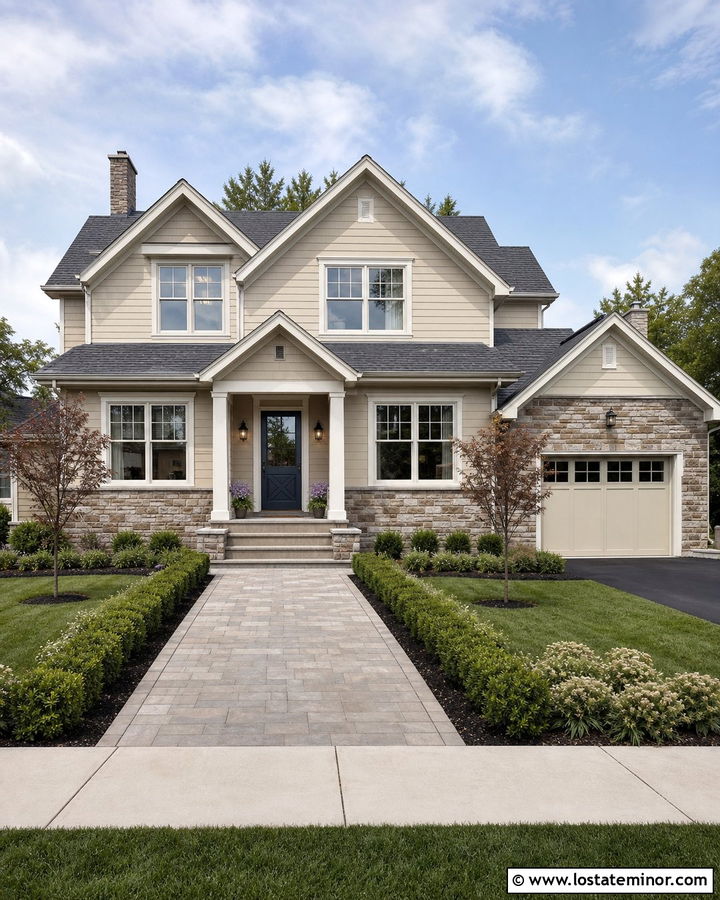
Natural stone can bridge the visual gap between a blue Dutch door and warm sand siding. Choose stone that contains beige, gray, and muted brown tones rather than a strongly red or orange mix. On a two-story transitional house, use sand lap siding, a slate blue Dutch door, and creamy white trim. Apply the stone around the porch base, lower facade, or garage wing for balanced texture. A medium charcoal roof picks up the gray notes in both the stone and door. Use black lanterns and aged nickel hardware for restrained contrast. A wide paver walkway, boxwood borders, and small ornamental trees create a polished approach. The complete palette feels colorful, natural, and carefully connected from the roofline to the landscape.
27. Sand House With Green Dutch Door And Brick
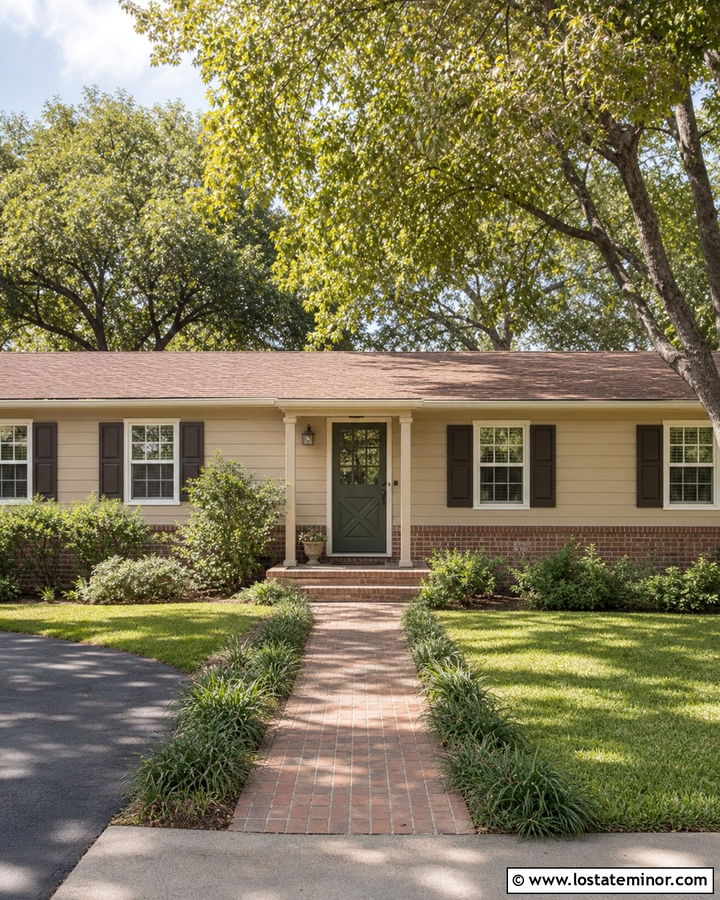
Brick adds familiar warmth to a sand house, while a green Dutch door keeps the facade from becoming too beige or brown. Use muted red brick on the foundation, porch steps, or chimney rather than covering every exterior wall. Pair it with sand siding, cream trim, and a deep moss green Dutch door. This scheme suits a traditional ranch with a broad porch and low roofline. Dark brown shutters and bronze hardware can connect the entry to the roof and masonry. Repeat the green through foundation plants instead of using more painted accents. A straight brick walkway provides a strong visual path to the door. The combined materials create an established, welcoming exterior with enough contrast to highlight the house’s horizontal architecture.
28. Sand House With Dutch Door And Black Shutters
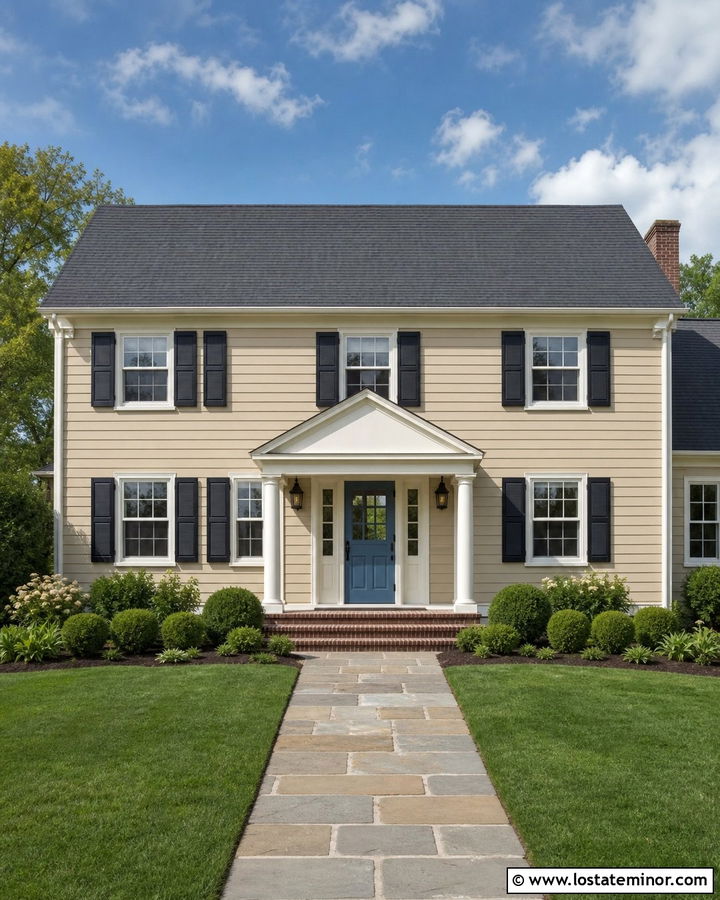
Black shutters give a sand house clear structure and help a colorful Dutch door feel intentionally placed. On a classic Colonial exterior, use warm sand clapboard with white trim, correctly proportioned black shutters, and a muted blue Dutch door. A charcoal roof connects the dark shutters across the top of the facade. Repeat black on porch lanterns and door hardware, but keep columns and railings white for brightness. Brick steps and a straight stone walkway preserve the traditional symmetry. Balanced foundation shrubs should frame the entrance without hiding lower windows. The blue door provides a welcoming center between the strong black accents. This full scheme is useful when the house needs sharper definition but an entirely black entry would feel too formal.
29. Sand House With Dutch Door And White Porch
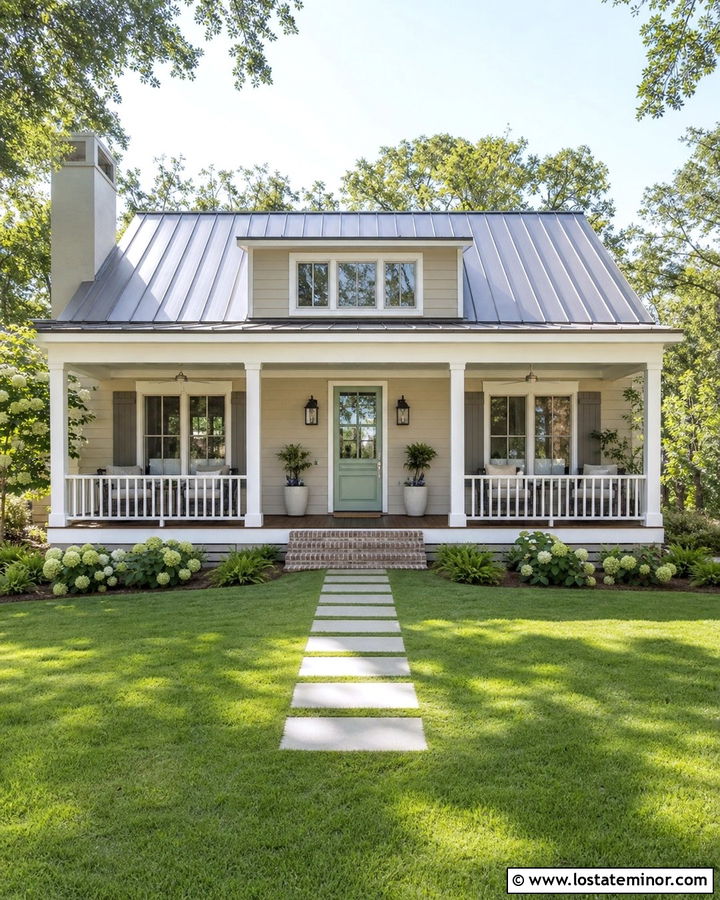
A bright white porch can frame a sand exterior and make the Dutch door feel like a natural centerpiece. Use this approach on a Southern cottage with warm sand siding, white columns, white railings, and a full-width covered porch. Paint the Dutch door a soft sea-glass green to introduce gentle color. A medium gray metal roof adds clean contrast and reflects the porch’s relaxed character. Stain the porch floor a weathered medium brown so the white elements do not dominate the facade. Add black lanterns, brushed nickel door hardware, and large ceramic planters. Hydrangeas, ferns, and a broad front lawn create a welcoming setting. The completed house feels open and layered, with each finish supporting the entrance rather than competing with it.
30. Sand House With Dutch Door And Modern Garage
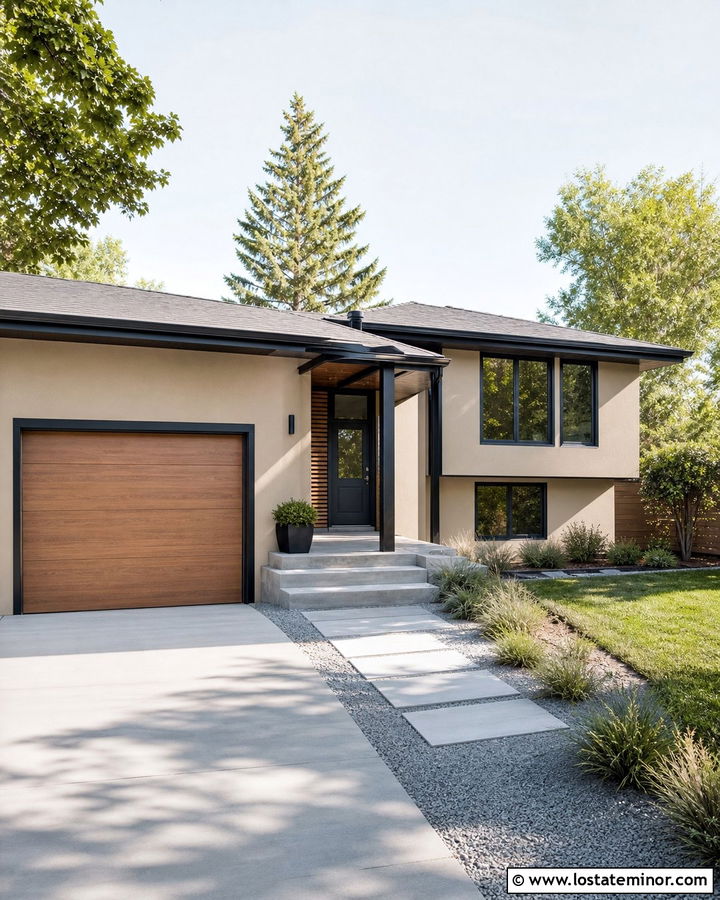
A sand-colored house can include a Dutch door without looking overly traditional. On a modern split-level or contemporary suburban home, combine smooth sand stucco with a charcoal Dutch door and a flush natural wood garage door. Repeat the charcoal on window frames, fascia, and slim exterior lighting. A low-profile gray roof and simple concrete porch keep the architecture streamlined. Use horizontal wood slats near the entry to connect the Dutch door with the garage finish. Large pavers, gravel beds, and sculptural grasses create a clean landscape without blocking the facade. Choose minimal hardware and a large glass pane for the upper door section. This scheme balances nostalgic function with modern materials, strong lines, and uncluttered curb appeal.
Conclusion:
The best sand exterior feels thoughtfully layered rather than simply beige. Roofing, trim, masonry, landscaping, and hardware should support the Dutch door as part of one complete facade. Test exterior colors beside permanent materials and view them during morning, midday, and afternoon light before making a final choice. Also consider the door’s weather resistance, glass configuration, locking system, hinges, and exterior-grade finish. Whether you prefer natural cedar, quiet sage, deep navy, dramatic black, or cheerful coral, the warm sand background provides plenty of flexibility. Use these 30 Sand House Design With Dutch Door Ideas to create an entrance that looks welcoming, functions well, and gives your entire home stronger curb appeal.

Related posts: