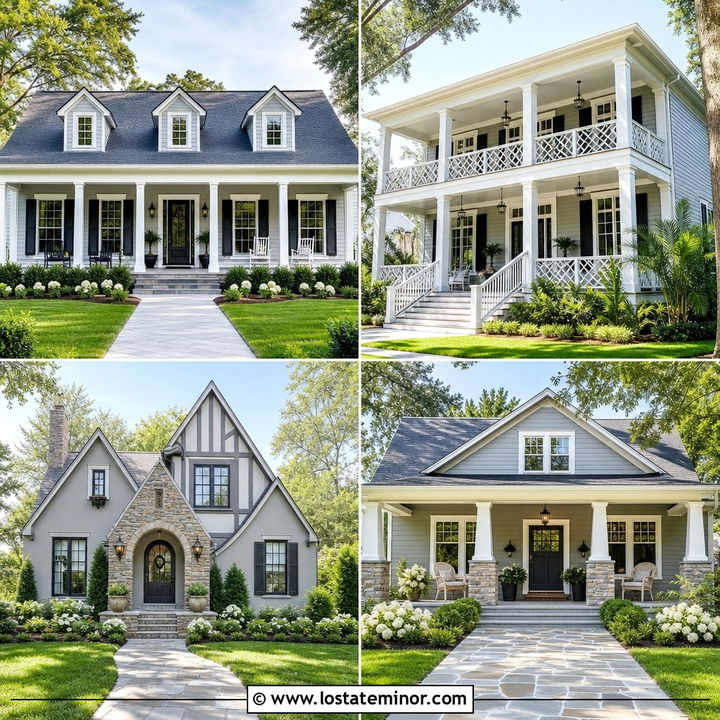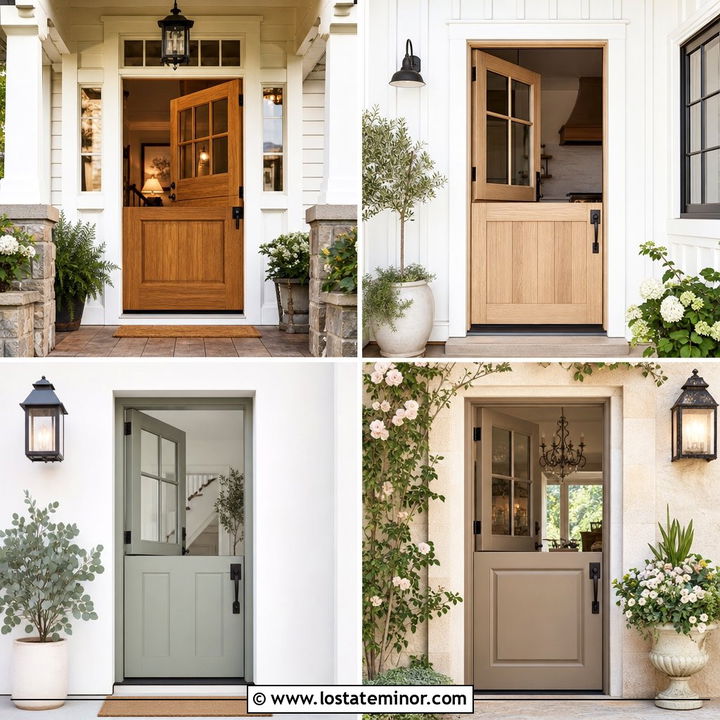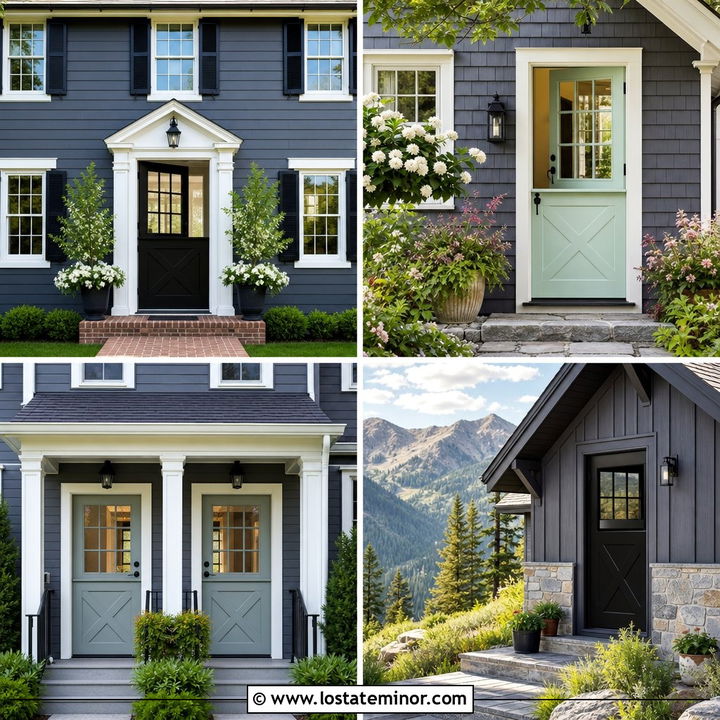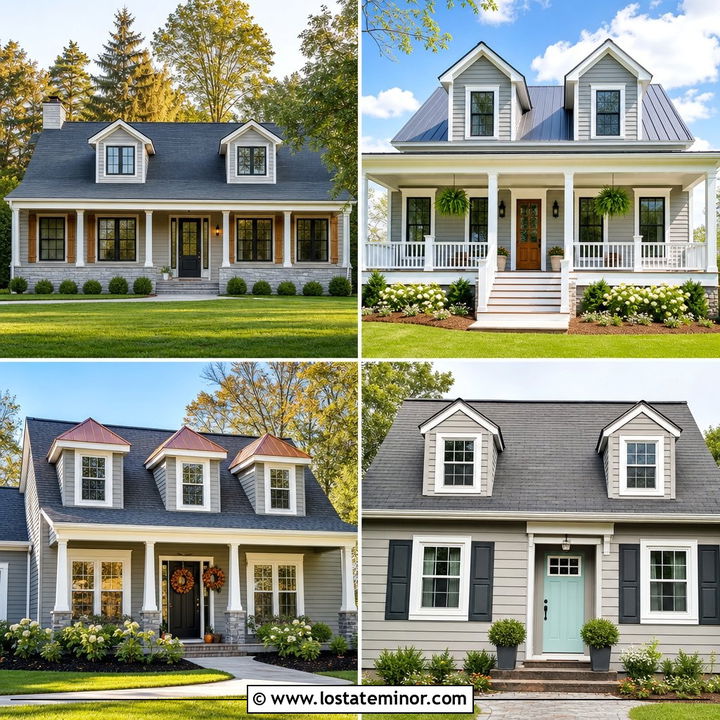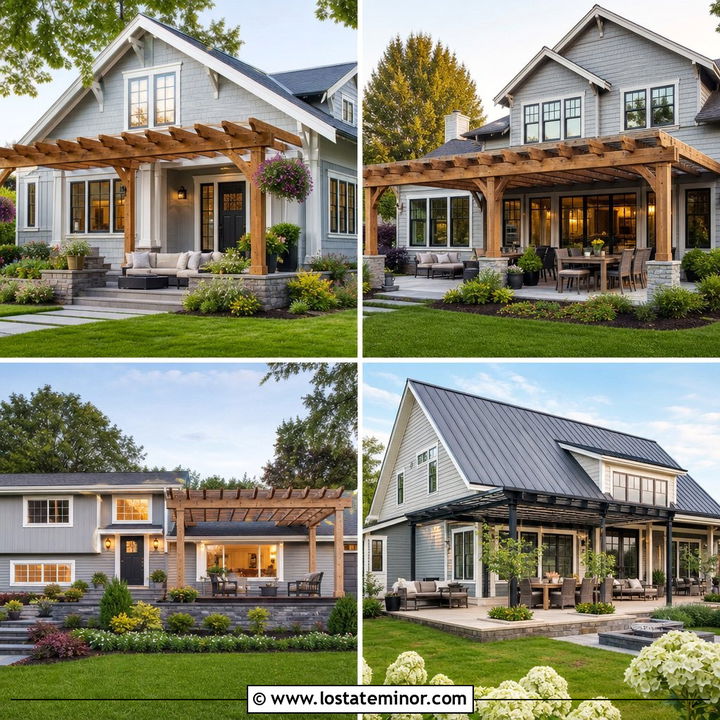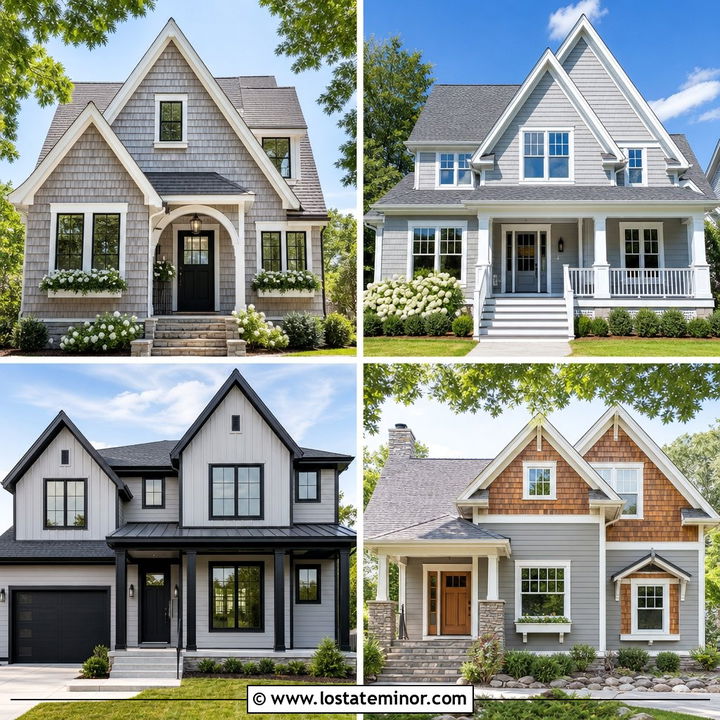
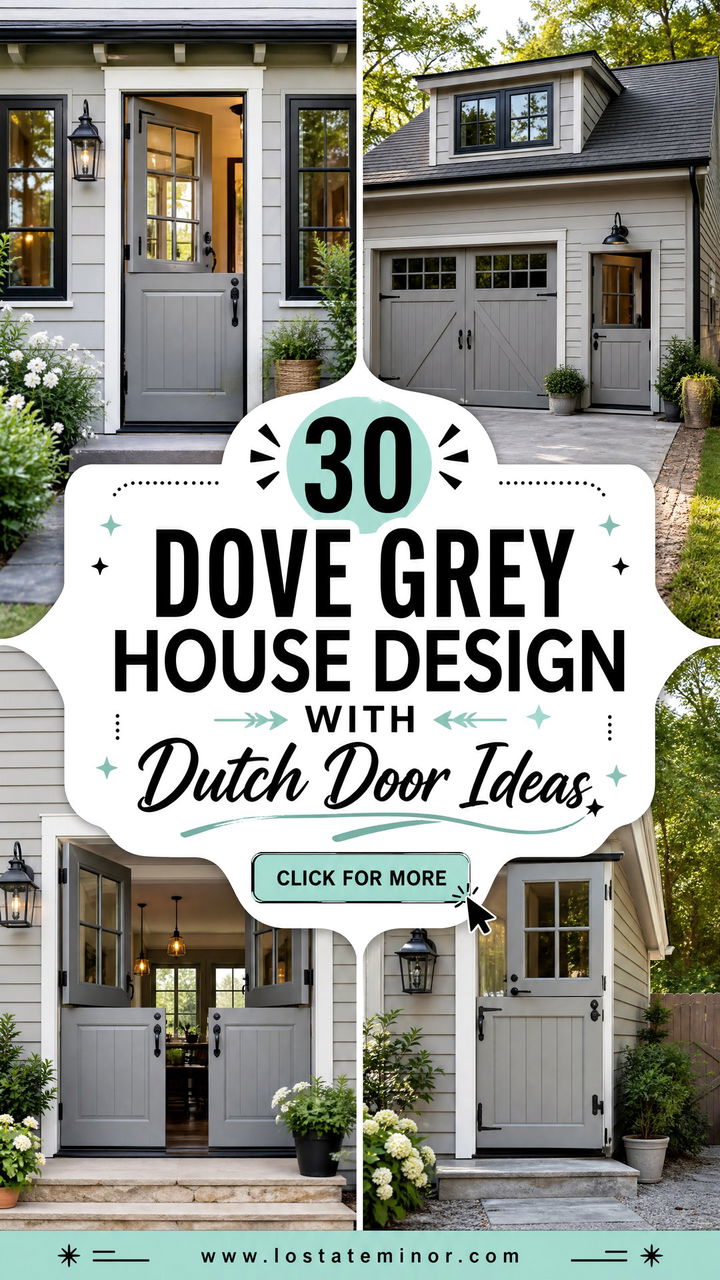
Dove grey creates a soft, welcoming backdrop that works beautifully across many American home styles. It feels lighter than charcoal, more refined than basic gray, and flexible enough to pair with colorful or natural accents. Adding a Dutch door gives the exterior even more character while offering a practical way to welcome sunlight and fresh air. The strongest schemes coordinate the siding, split door, trim, roof, porch, masonry, and landscaping as one complete composition. Warm wood can soften the gray, while navy, green, black, and muted red add definition. These complete exterior combinations show how thoughtful color placement can make this versatile neutral feel traditional, coastal, rustic, or modern. Explore these 30 Dove Grey House Design With Dutch Door Ideas.
1. Dove Grey House With White Dutch Door
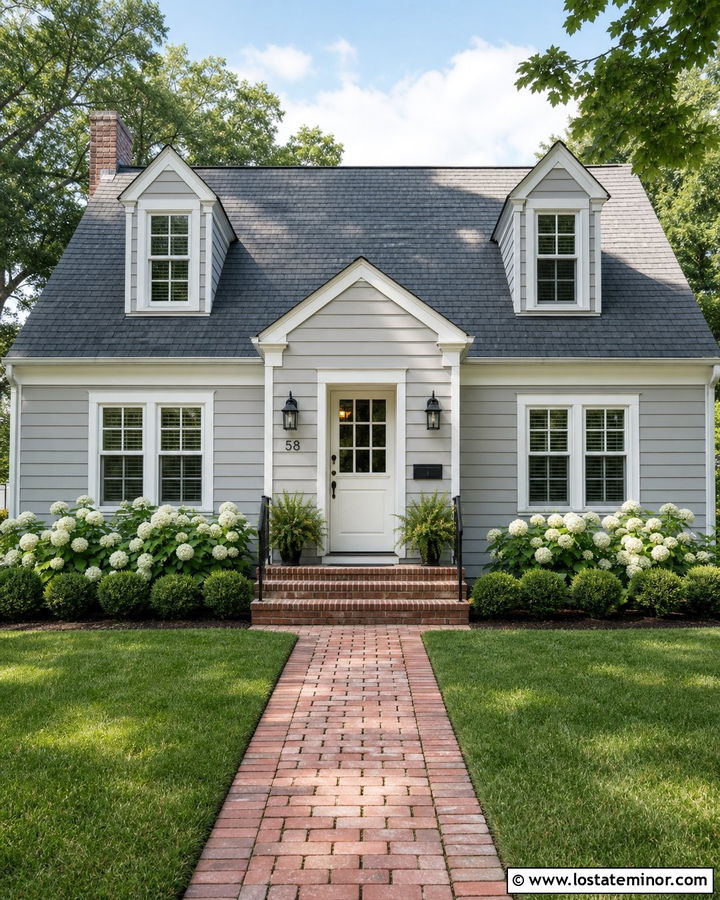
A crisp white Dutch door gives a dove grey house a clean and timeless appearance. This pairing works especially well on a traditional Cape Cod with horizontal lap siding, white window trim, and a medium-gray shingle roof. Choose a warm white instead of a blue-white so the entry feels inviting rather than stark. Black lanterns and dark bronze door hardware can add definition without overwhelming the pale palette. Frame the entrance with simple boxwood shrubs, white hydrangeas, and a straight brick walkway. A small covered stoop with white columns completes the balanced facade. The result is bright and familiar, making this combination a practical choice for improving curb appeal without relying on bold exterior colors.
2. Dove Grey House With Black Dutch Door
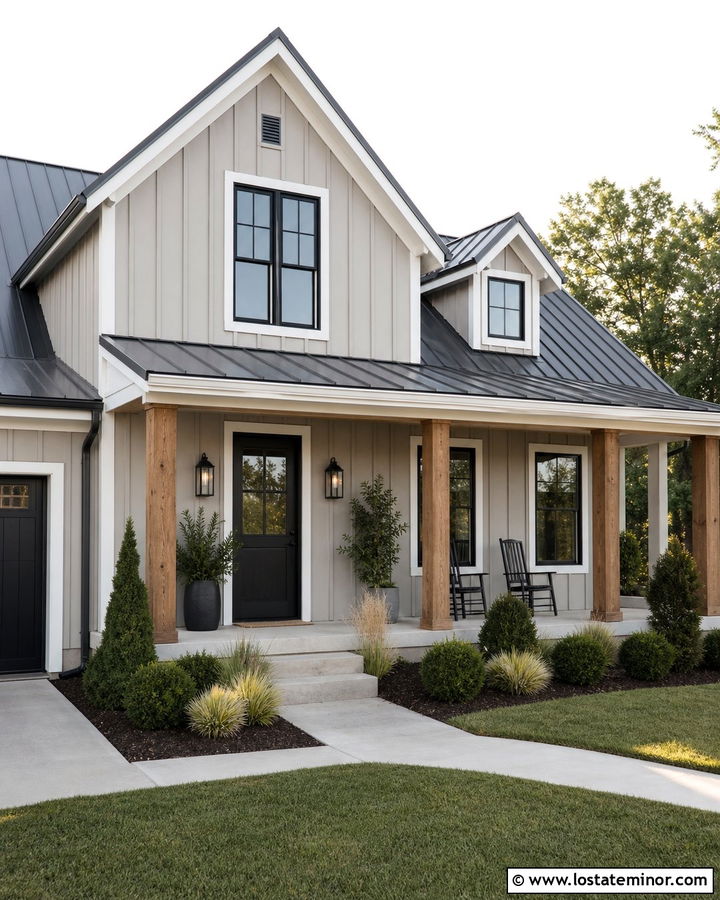
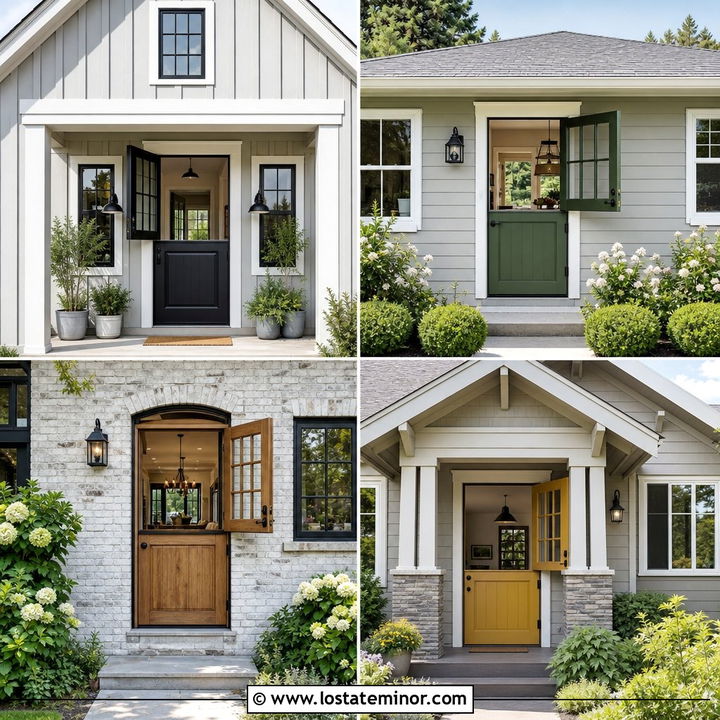
Black brings structure and contrast to a light dove grey exterior. On a modern farmhouse, use dove grey board-and-batten siding with a matte black Dutch door, black-framed windows, and simple black porch lights. Bright white fascia keeps the roofline from feeling heavy, while natural wood porch columns introduce needed warmth. A charcoal metal roof can reinforce the dark accents and create a streamlined silhouette. Keep the landscaping relaxed with ornamental grasses, clipped shrubs, and a pale concrete path. The Dutch door should feature a glazed upper section so the entrance still looks open and welcoming. Repeating black on small exterior details creates a cohesive finish, but leaving the porch ceiling and trim light preserves the home’s airy character.
3. Dove Grey House With Navy Dutch Door
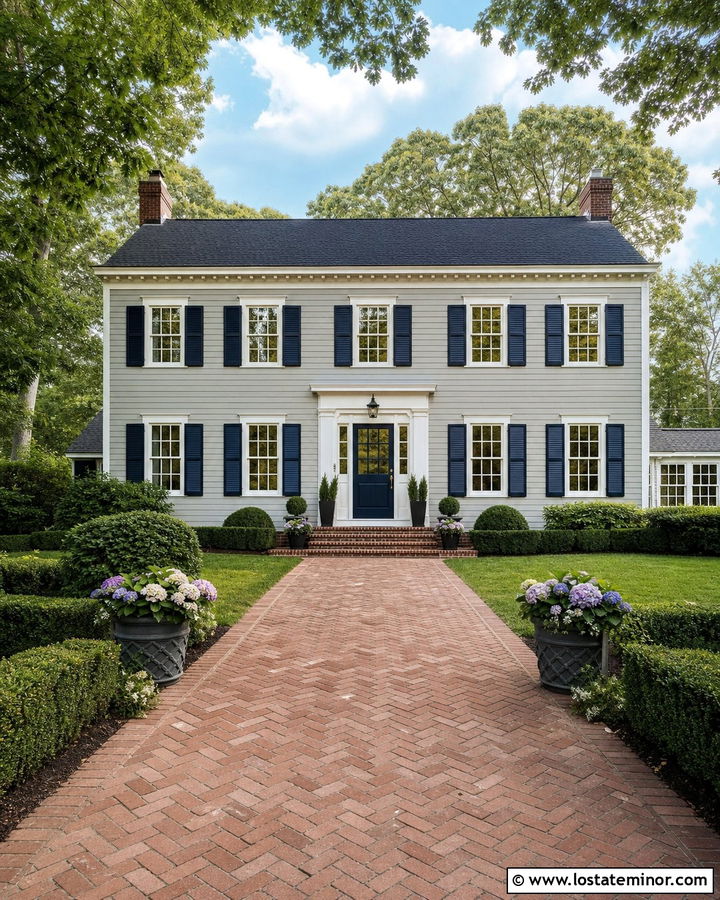
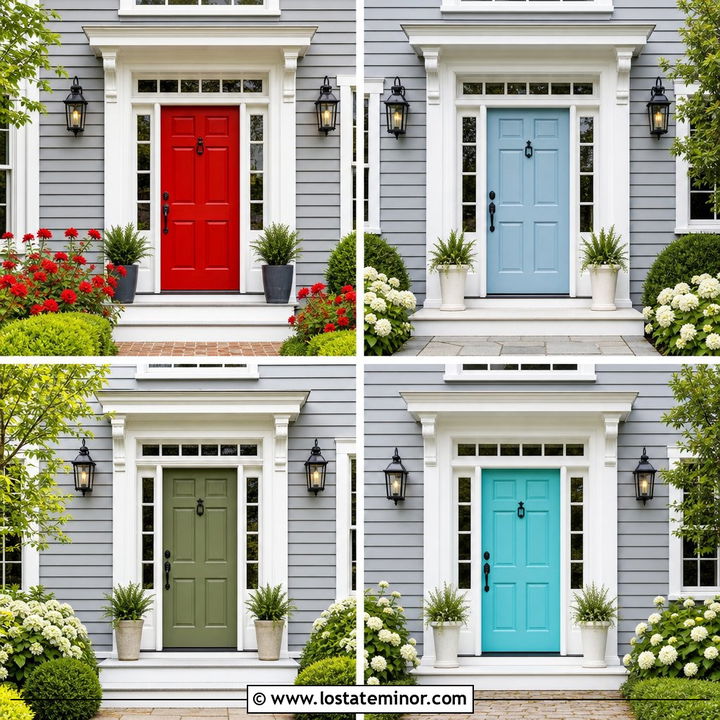
A navy Dutch door adds noticeable color while maintaining the calm quality of a dove grey house. This combination suits a symmetrical Colonial exterior with clapboard siding, white corner boards, dark shutters, and a charcoal roof. Select a deep navy with subtle gray undertones so it relates naturally to the siding. Polished brass or unlacquered brass hardware provides a warm highlight against the cool door color. Add matching navy planters or a porch bench cushion to repeat the accent in a restrained way. Red brick steps and a herringbone walkway can prevent the gray-and-blue palette from appearing too cool. White pediment trim above the entrance gives the Dutch door extra architectural importance and strengthens the home’s traditional proportions.
4. Dove Grey House With Sage Green Dutch Door
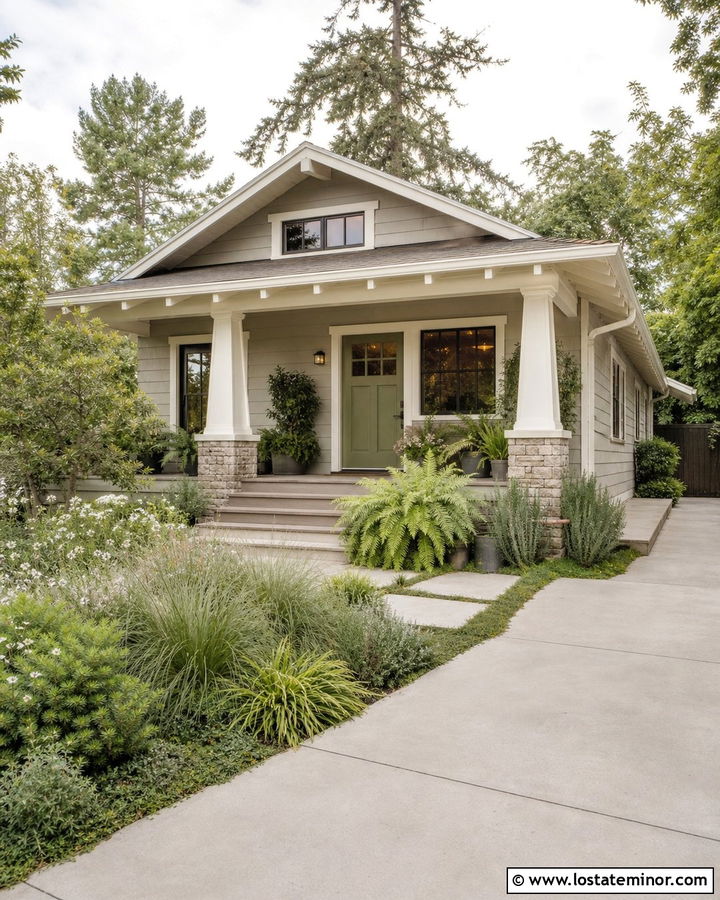
Soft sage green creates a gentle, garden-inspired focal point against dove grey siding. The combination feels particularly natural on a Craftsman bungalow with broad roof eaves, tapered porch columns, and low stone piers. Use creamy white trim around the windows to warm the palette, then connect the green door to the landscape through ferns, rosemary, ornamental grasses, and layered foundation plants. A weathered wood porch floor adds another organic texture without introducing a competing color. Choose aged brass or oil-rubbed bronze hardware for a comfortable, established look. The upper half of the Dutch door can include divided glass panes that echo the home’s window pattern. This quiet scheme offers color while remaining flexible, approachable, and easy to coordinate.
5. Dove Grey House With Natural Wood Dutch Door
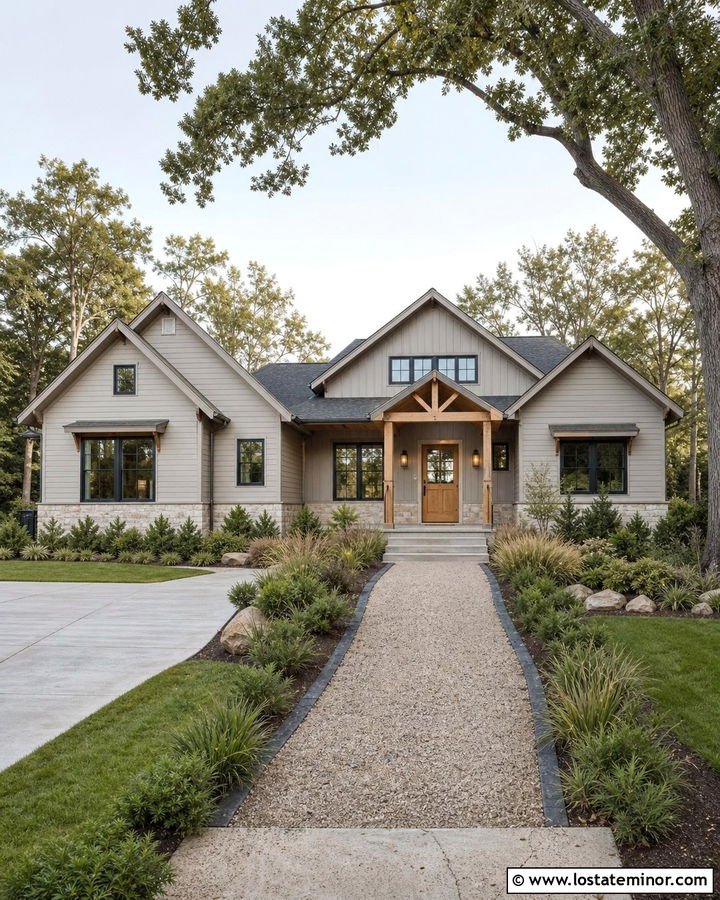
Natural wood immediately warms a dove grey exterior and highlights the handcrafted construction of a Dutch door. On a rustic contemporary house, pair smooth dove grey siding with a medium-toned white oak or cedar door finished in a clear protective stain. Repeat the same wood tone on porch beams, soffits, or garage door details to make the entry feel intentional. Black window frames and charcoal roofing provide clean contrast, while pale limestone around the foundation adds texture. Keep the trim close to the siding color for a simple, modern finish. A wide gravel path, native grasses, and low evergreen shrubs reinforce the natural mood. Visible wood grain turns the split door into an architectural centerpiece without requiring a bright or trendy accent color.
6. Dove Grey House With Red Dutch Door
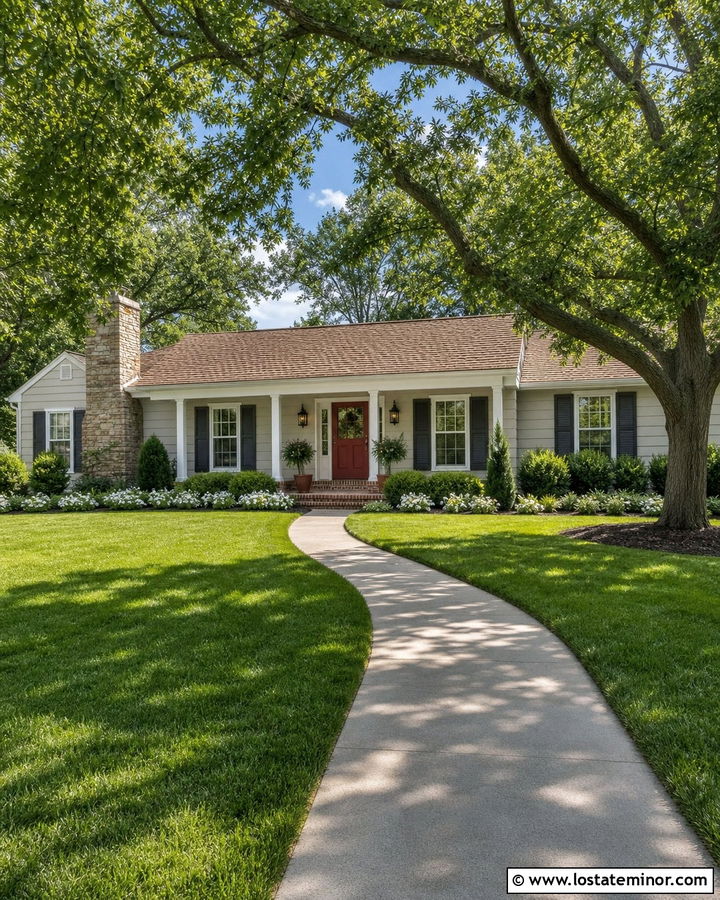
A muted red Dutch door gives a dove grey house a cheerful focal point with classic appeal. Rather than using a bright primary red, select brick red, oxblood, or softened cranberry to create a more polished exterior. This palette works well on a traditional ranch with white trim, dark gray shutters, and a warm brown architectural-shingle roof. Red brick porch flooring can subtly repeat the door color and connect the entrance to the broader facade. Add black hardware and simple lantern sconces for contrast. Foundation beds filled with evergreen shrubs, white flowers, and seasonal greenery keep the scheme balanced. Because the door carries strong visual weight, maintain quieter colors on the garage, gutters, and trim so the front entrance remains the clear focal point.
7. Dove Grey House With Yellow Dutch Door
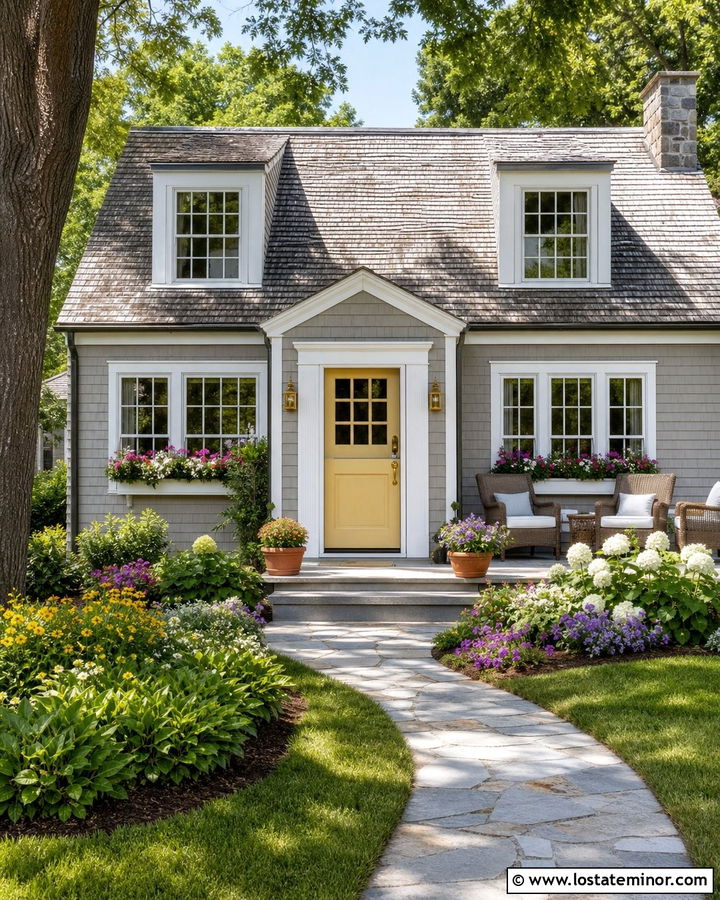
What could make a pale grey cottage feel more welcoming than a sunny yellow Dutch door? Choose a softened mustard or golden yellow instead of a neon shade to keep the exterior sophisticated. White trim and a weathered gray roof establish a neutral frame, while warm brass hardware complements the door’s cheerful undertone. This palette suits a compact cottage with cedar-shingle siding, flower boxes, and a curved stone walkway. Repeat yellow sparingly through a few flowering plants rather than matching every accessory. Natural wicker seating and terracotta pots can further warm the porch. The Dutch door’s glazed upper half allows its bold color to remain visually light. Against dove grey, yellow creates a memorable entrance without changing the home’s relaxed character.
8. Dove Grey House With Dusty Blue Dutch Door
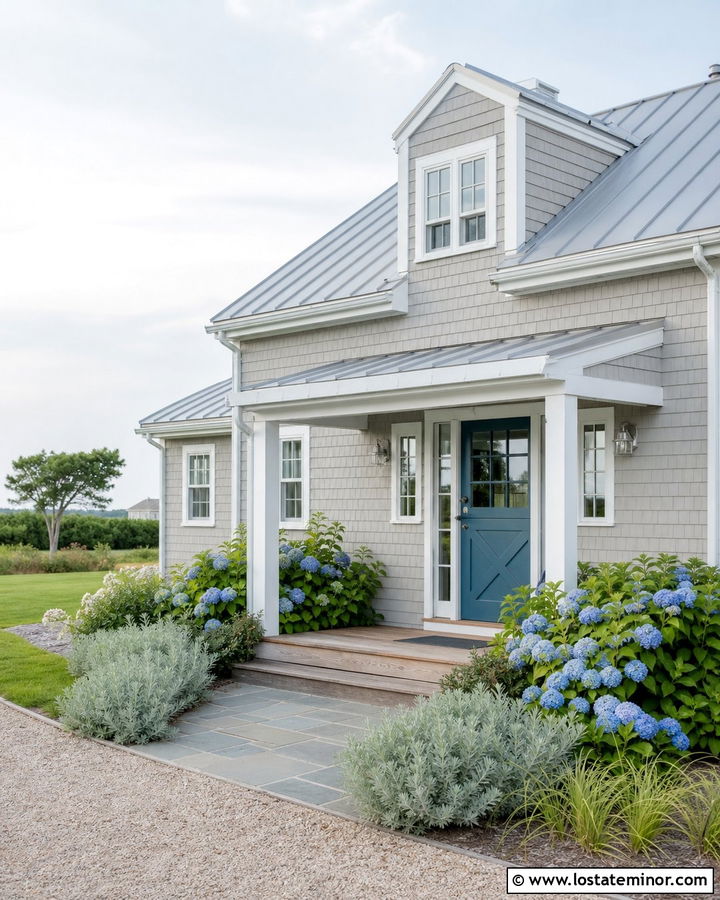
Dusty blue offers a softer alternative to navy and creates a peaceful transition from dove grey siding. Use this scheme on a coastal cottage with wood shingles, bright white trim, and a pale gray standing-seam metal roof. A blue Dutch door with divided upper glass introduces gentle color without making the entry look overly nautical. Weathered cedar steps, brushed nickel hardware, and white porch railings support the light palette. Plant blue hydrangeas, silvery lamb’s ear, and ornamental grasses around a gravel or bluestone walkway. The siding and door should differ enough in value to remain distinct from the street. When the blue has a gray undertone, the complete exterior feels layered and coordinated rather than divided into unrelated blocks of color.
9. Dove Grey House With Forest Green Dutch Door
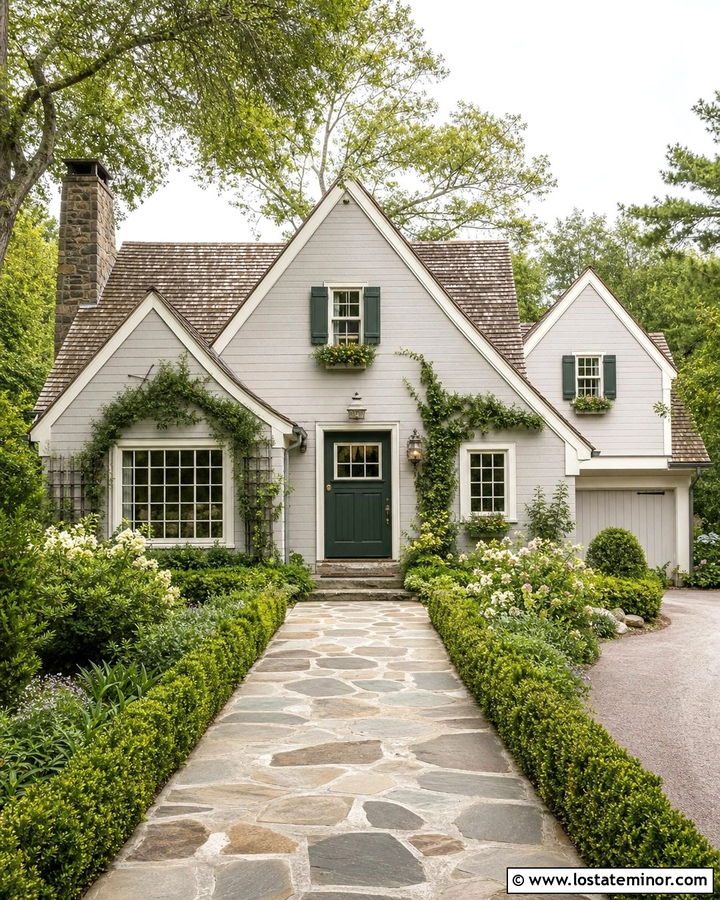
Deep forest green brings richness and traditional character to a dove grey home. It looks especially handsome on an English cottage-inspired exterior with steep gables, painted lap siding, and a stone chimney. Use warm white on the window trim and fascia, then repeat forest green on restrained details such as small shutters or a garden gate. A cedar-shake roof or brown architectural shingles will bring earthy warmth to the cool siding. Antique brass door hardware reinforces the established, collected appearance. Surround the entrance with clipped hedges, climbing vines, and a slightly curved flagstone walkway. The Dutch door can feature a simple four-pane upper half and solid lower panels. This combination feels colorful but grounded, making it suitable for leafy neighborhoods and wooded settings.
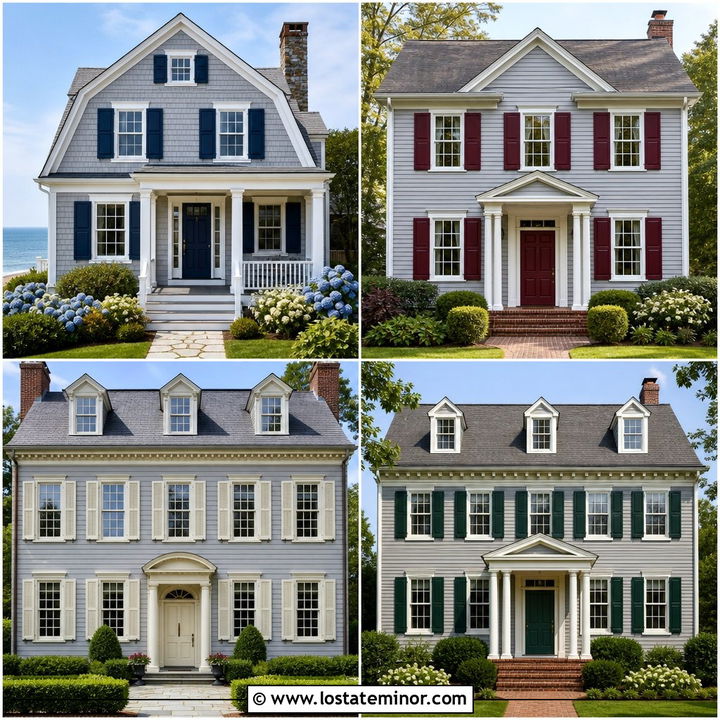
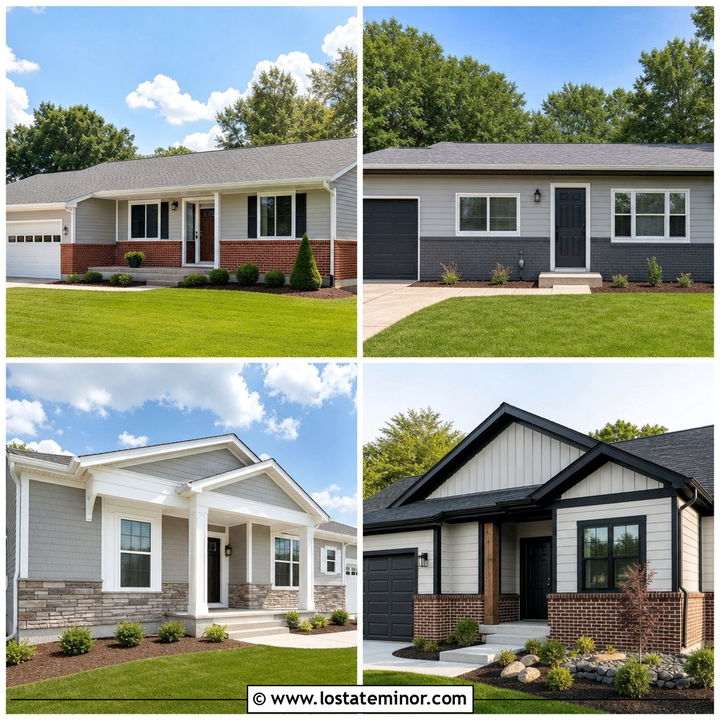
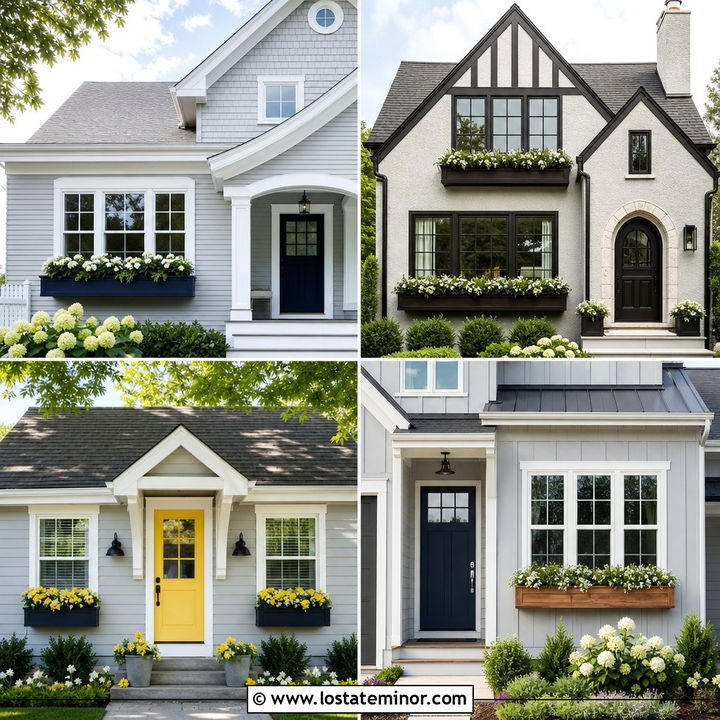
10. Dove Grey House With Teal Dutch Door
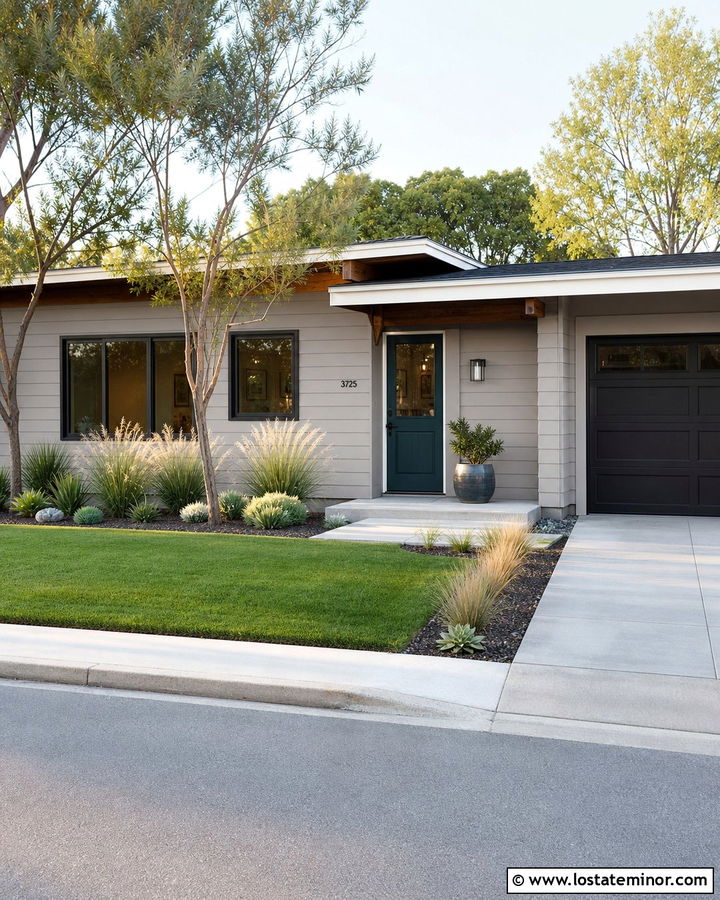
Teal gives a dove grey facade a fresh accent that feels lively without becoming overly bright. On a midcentury ranch, pair dove grey horizontal siding with a medium-deep teal Dutch door, white fascia, and charcoal window frames. A low-sloped roof and broad natural wood eaves can emphasize the home’s horizontal lines. Use rectangular concrete pavers, gravel planting beds, and sculptural grasses to support the architecture. Satin black hardware keeps the colorful entry looking modern, while a small glass panel across the upper door brings light indoors. Avoid adding teal shutters or excessive matching accessories. Instead, repeat the color through a single ceramic planter near the entrance. This restrained placement allows the Dutch door to provide personality while the overall exterior remains clean and balanced.
11. Dove Grey House With Greige Dutch Door
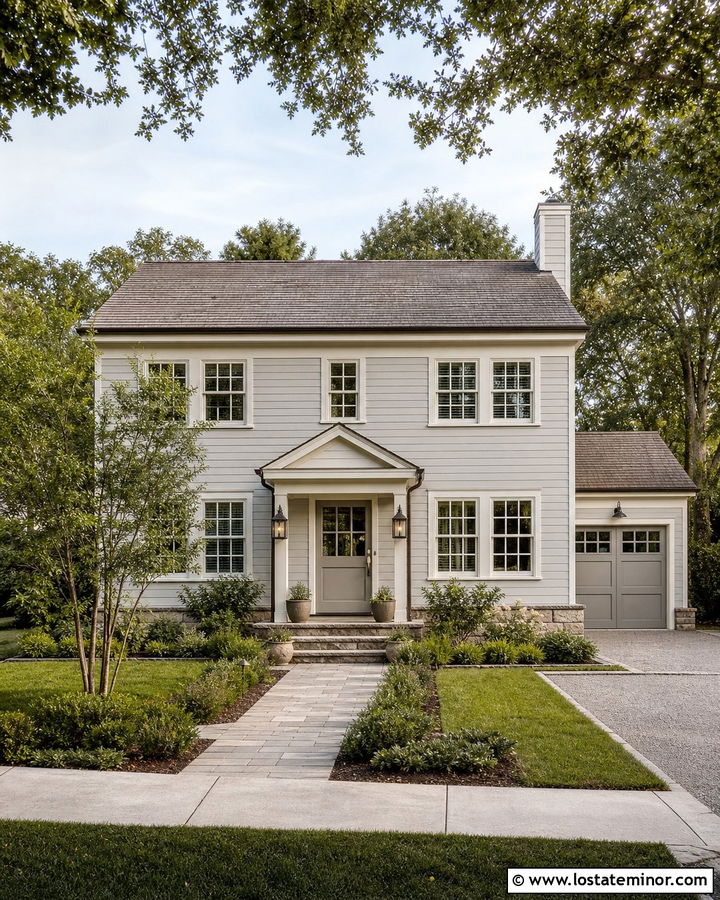
A greige Dutch door creates a subtle tonal exterior with warm, sophisticated depth. This combination is ideal when you want the entry to feel integrated rather than sharply contrasted. On a transitional two-story house, use dove grey siding with a medium greige door, creamy trim, and taupe stone around the porch foundation. A weathered brown-gray roof ties the warm and cool neutrals together. Choose aged bronze hardware and lanterns to add definition without introducing harsh black. The Dutch door’s upper glazing will provide another layer of contrast through reflected light. Natural linen porch cushions, clay planters, and muted green landscaping can complete the quiet palette. Varying the textures of siding, stone, wood, and metal keeps this restrained color scheme visually interesting.
12. Dove Grey House With Charcoal Dutch Door
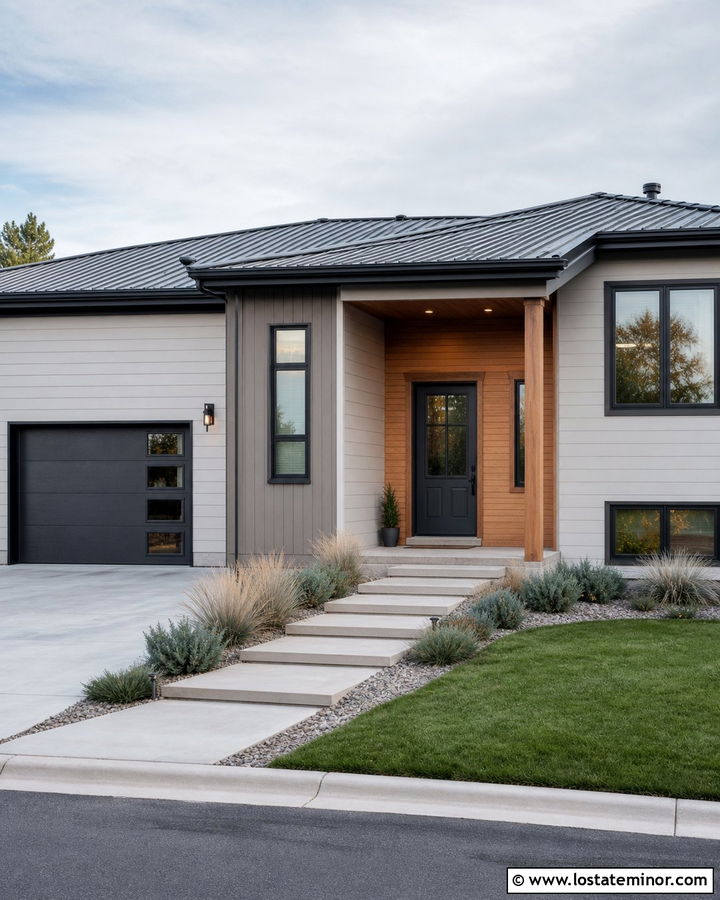
Charcoal creates a strong tonal contrast while staying within the grey color family. On a contemporary split-level, paint the main siding dove grey and use deep charcoal on the Dutch door, window frames, garage door, and selected vertical siding panels. A flat or low-pitched dark metal roof strengthens the modern geometry. Warm cedar cladding around the recessed entrance prevents the darker accents from looking cold. Use large concrete slabs for the walkway and soften their clean lines with ornamental grasses and low junipers. The Dutch door should have minimal paneling and a broad glass top for a streamlined look. This complete palette works best when charcoal is repeated strategically but does not cover every trim surface, allowing dove grey to remain the dominant exterior color.
13. Dove Grey House With Coral Dutch Door
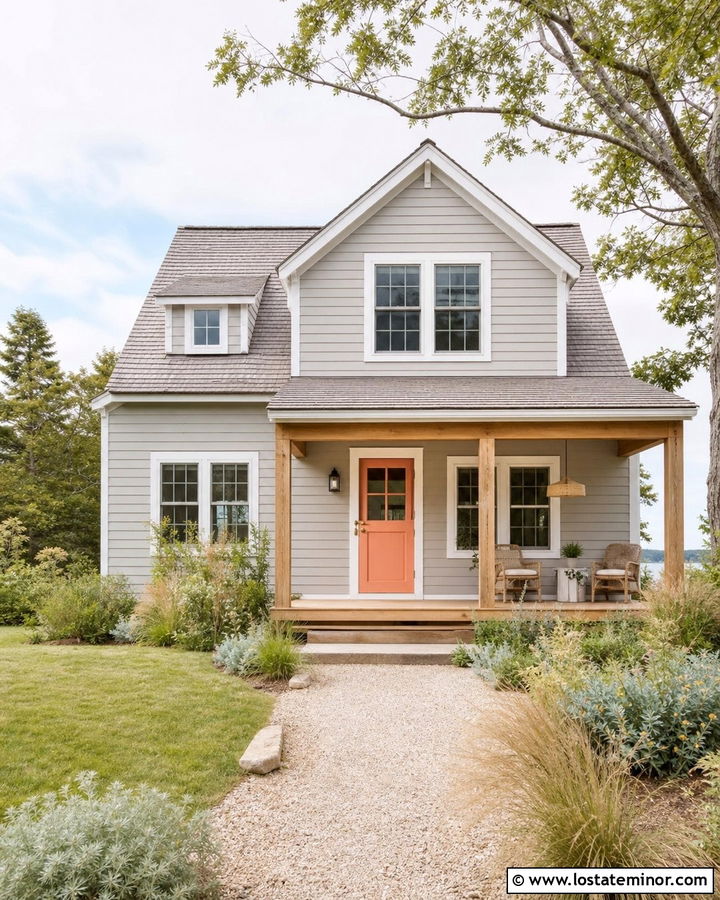
A coral Dutch door brings warm, playful energy to a dove grey beach house. Select a dusty coral or muted salmon rather than a vivid orange-pink, especially when the home has a large front-facing facade. White window trim, pale gray roof shingles, and natural cedar porch details create a relaxed frame for the colorful entrance. Use brushed brass hardware to enhance the door’s warmth. A wide shell or light gravel walkway, coastal grasses, and blue-green shrubs support the breezy palette. The split door can have a four-light glass upper panel and simple plank construction below. Coral should remain concentrated at the entry, with neutral garage doors and restrained accessories elsewhere. This approach makes the house distinctive while preserving an easygoing coastal appearance.
14. Dove Grey House With Walnut Dutch Door
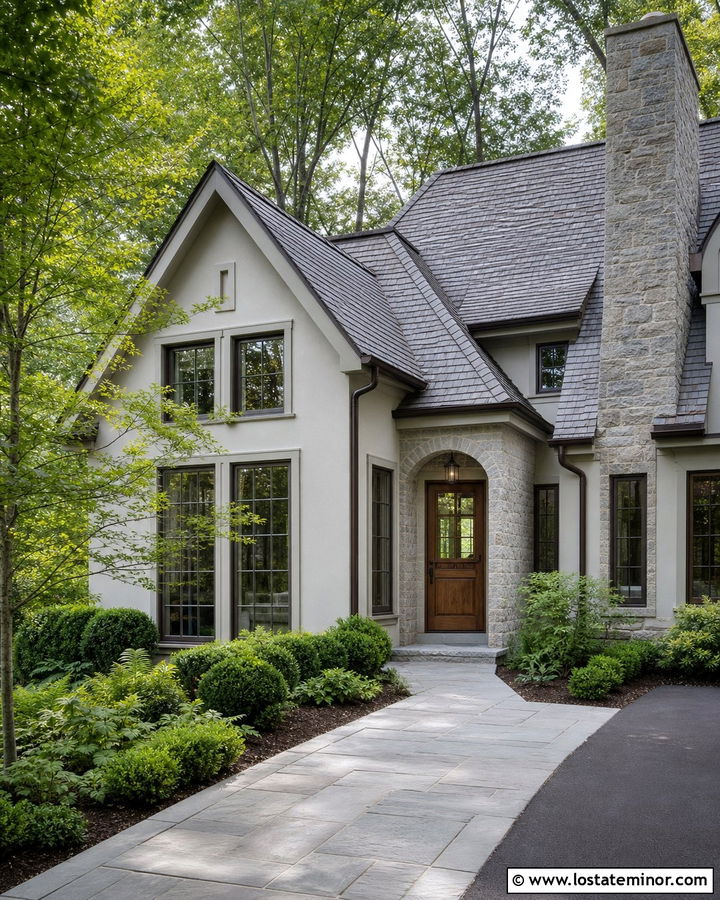
Rich walnut gives a dove grey exterior an elegant, tailored look. This pairing complements a Tudor-inspired house with steep rooflines, tall windows, stone accents, and substantial timber details. Choose a Dutch door made from real or convincingly finished walnut, allowing the grain and medium-dark brown tone to remain visible. Cream trim creates a softer transition than bright white, while bronze gutters and hardware coordinate with the door. Add gray-brown stone around the entry and chimney to connect the neutral siding to the wood. A slate walkway, trimmed yew shrubs, and layered shade plants reinforce the stately character. Keeping the door shape simple prevents the combination of timber, masonry, and divided glazing from becoming too busy. The finished exterior feels warm, grounded, and distinctive.
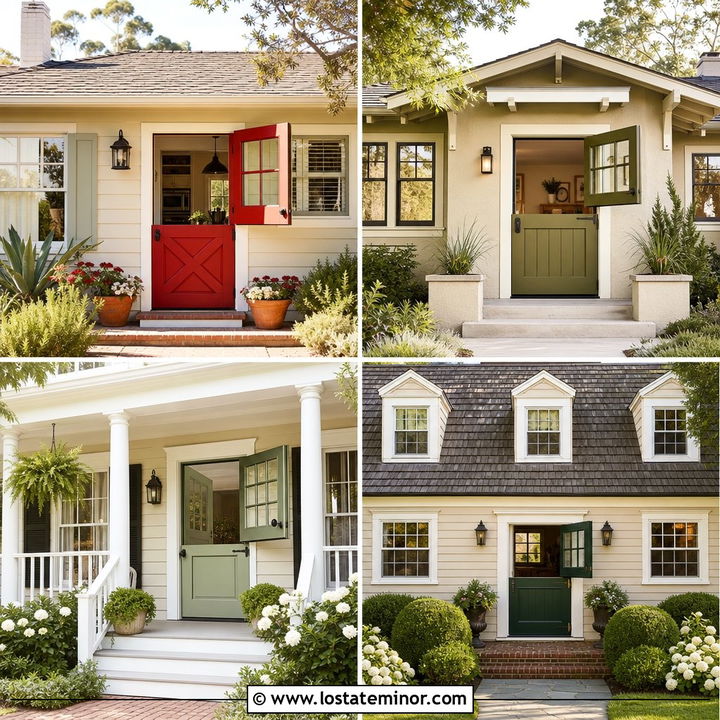
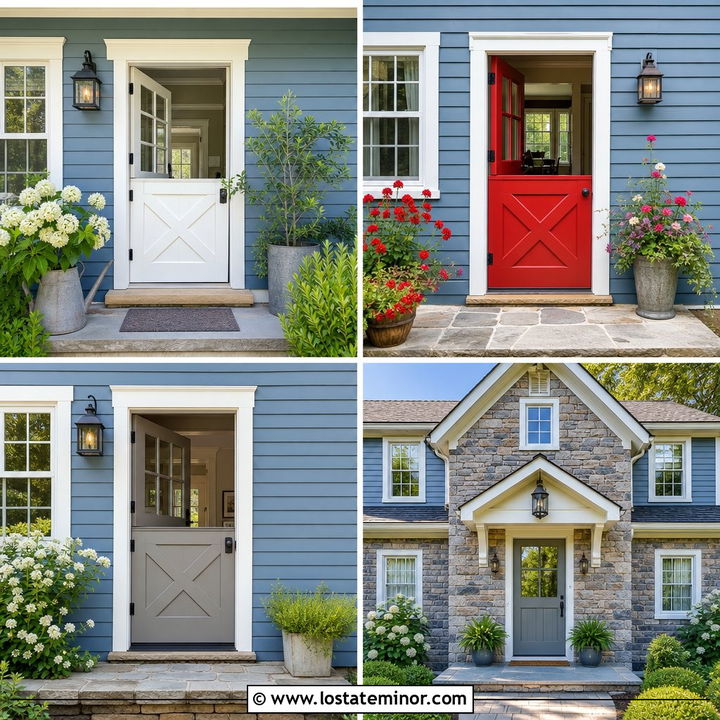
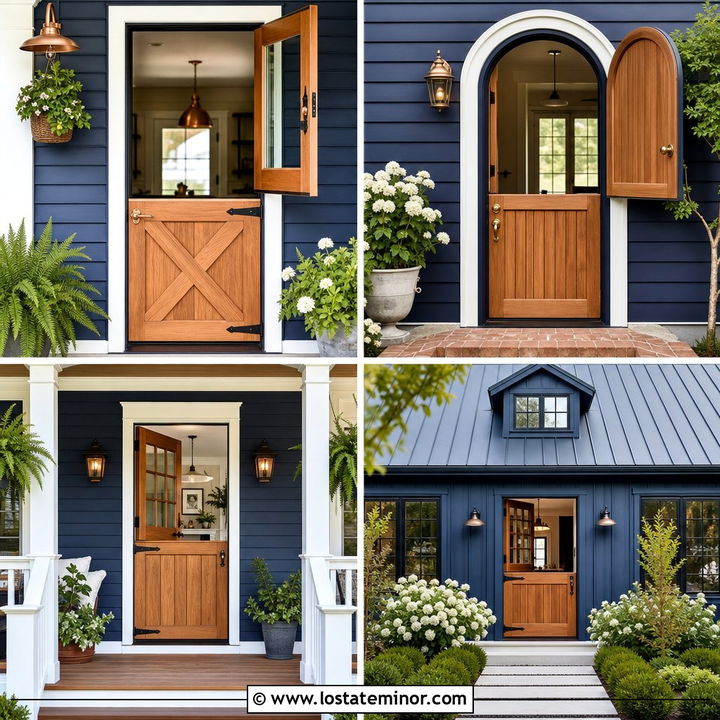
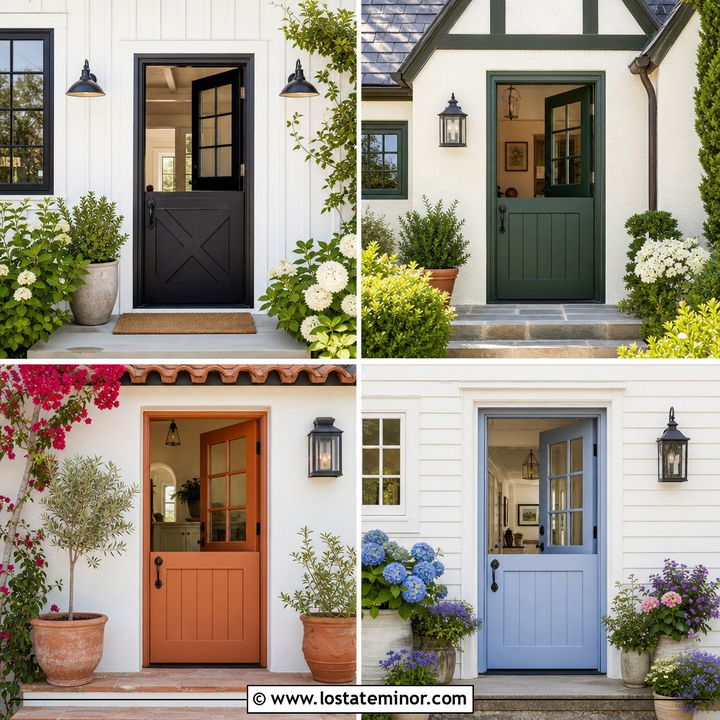
15. Dove Grey House With Black Shutters And Dutch Door
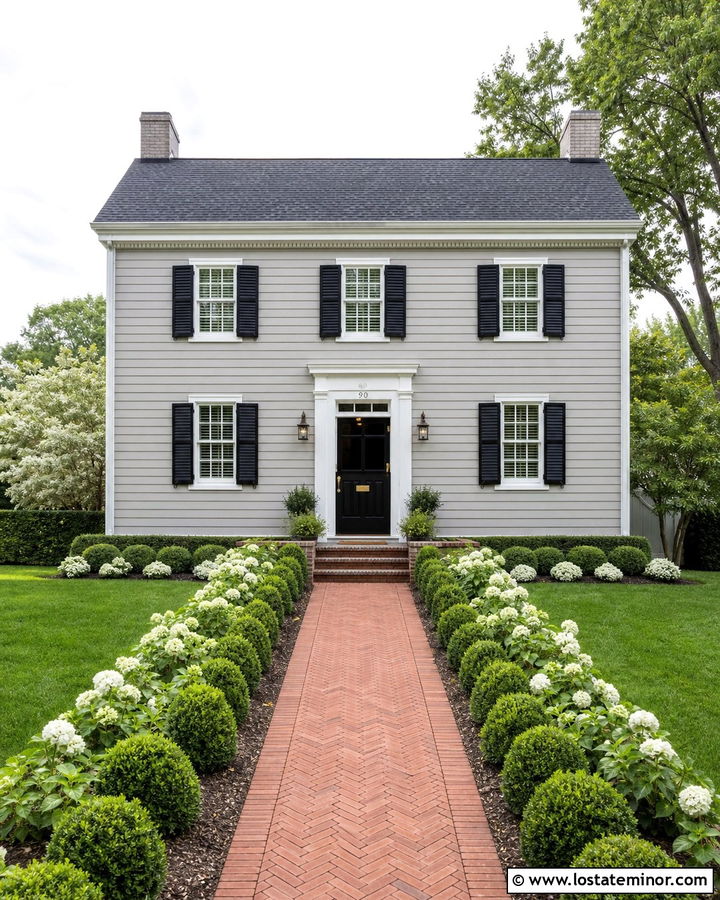
Black shutters and a matching black Dutch door can give a dove grey Colonial a crisp, symmetrical appearance. Use classic raised-panel shutters sized to match the windows rather than narrow decorative versions. Bright white trim around the windows, cornice, and entrance helps separate the dark accents from the siding. A red brick foundation and front steps add warmth, while a charcoal roof keeps the upper portion visually grounded. Choose brass door hardware for a traditional highlight or matte black hardware for a quieter finish. Formal boxwoods, white flowering shrubs, and a straight brick walkway reinforce the home’s balanced architecture. Because the shutter-and-door combination is already bold, avoid adding black to every surface. Keeping porch columns and railings white will preserve a welcoming sense of lightness.
16. Dove Grey House With Cedar Shutters And Dutch Door
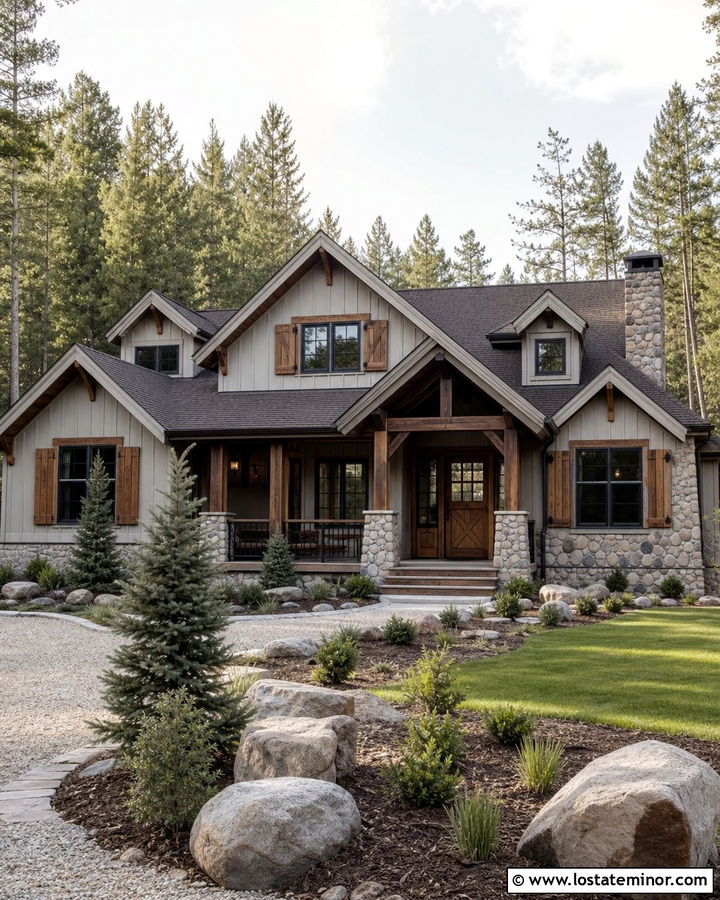
Cedar shutters and a coordinating cedar Dutch door transform dove grey siding into a warm, nature-focused exterior. This combination fits a mountain ranch or lakeside home with broad gables, stone porch columns, and a dark brown roof. Use a clear or honey-toned stain that preserves the wood grain without turning orange. Repeat cedar beneath the porch roof or along selected gable peaks to distribute the warmth across the facade. Cream-colored trim offers a gentle outline around the windows. Mixed fieldstone at the foundation connects the gray siding to the brown wood accents. Native evergreens, large boulders, and a curved gravel walkway can complete the setting. Regular exterior-grade sealing will help the shutters and split door maintain a coordinated appearance as they weather.
17. Dove Grey House With White Trim And Dutch Door
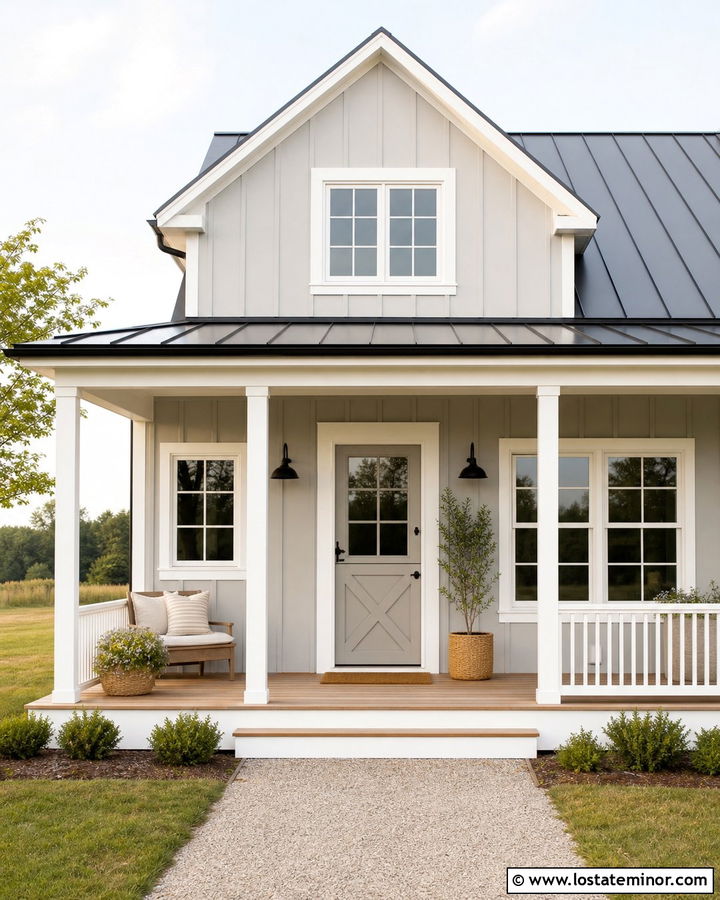
A dove grey Dutch door paired with white trim creates a smooth monochromatic facade with clear architectural definition. This look works well on a simple farmhouse where the door can match the siding while its panel pattern provides subtle visual interest. Use white on the door casing, porch posts, window surrounds, fascia, and railings. A black metal roof and matching gooseneck lights supply crisp contrast. Warm the scheme with stained wood porch flooring, a natural bench, and woven planters. The upper door can contain six small glass panes to complement divided-light windows. Since the entrance color is restrained, shape and texture become especially important. Wide steps, substantial trim, and layered foundation planting will help the entry feel welcoming instead of disappearing into the dove grey facade.
18. Dove Grey House With Cream Trim And Dutch Door
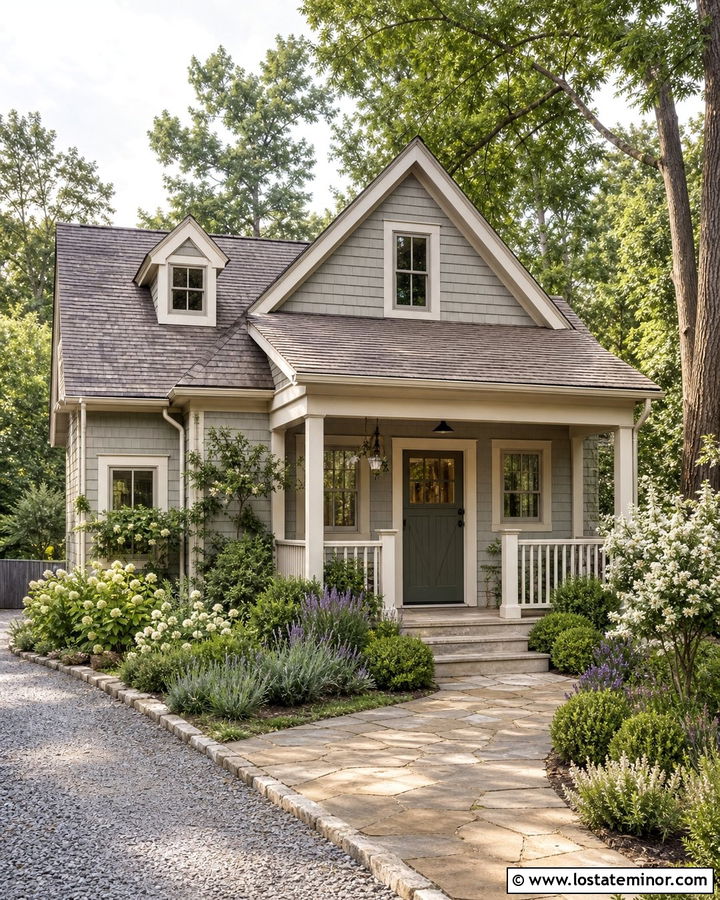
Cream trim softens a dove grey house and creates a warmer effect than sharp white. Pair the siding with a deep olive Dutch door on a cottage-style home featuring a front porch, wood windows, and a gently pitched roof. Use cream on the window casings, porch railings, columns, and fascia to establish a consistent frame. The olive door will connect naturally with garden foliage, while aged brass hardware adds another warm note. Choose brown-gray roof shingles and buff-colored stone for the walkway to balance the cool gray body. Flowering shrubs, herbs, and climbing greenery can make the entry feel established. This palette is particularly effective on homes surrounded by mature landscaping because the muted exterior colors complement the setting instead of competing with it.
19. Dove Grey House With Brick Porch And Dutch Door
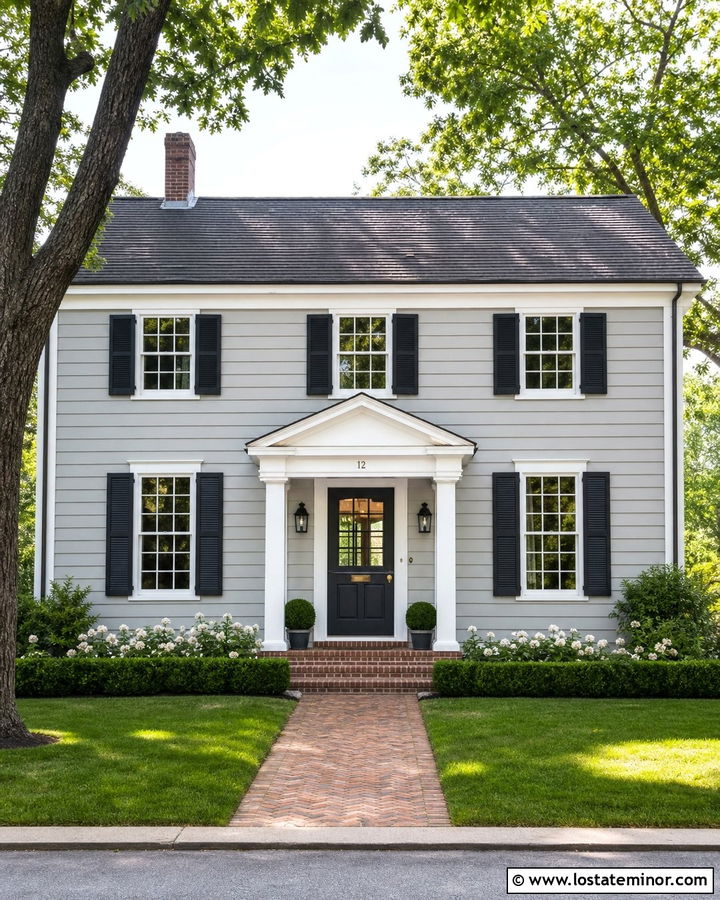
Red brick porch flooring gives a dove grey exterior the warmth and texture it needs to feel grounded. On a Georgian-inspired house, combine smooth grey clapboard with white trim, black shutters, and a muted navy Dutch door. Continue the brick from the steps into a broad porch landing or herringbone walkway for a cohesive entrance. Dark metal lanterns and brass door hardware can bridge the traditional black, blue, and red tones. Choose a charcoal roof to echo the shutters without adding another color. Low boxwoods and white flowering plants will soften the brick edges while preserving the home’s formal symmetry. The Dutch door’s divided glass should align with nearby window grids. This careful repetition makes the door appear original to the architecture rather than a decorative afterthought.
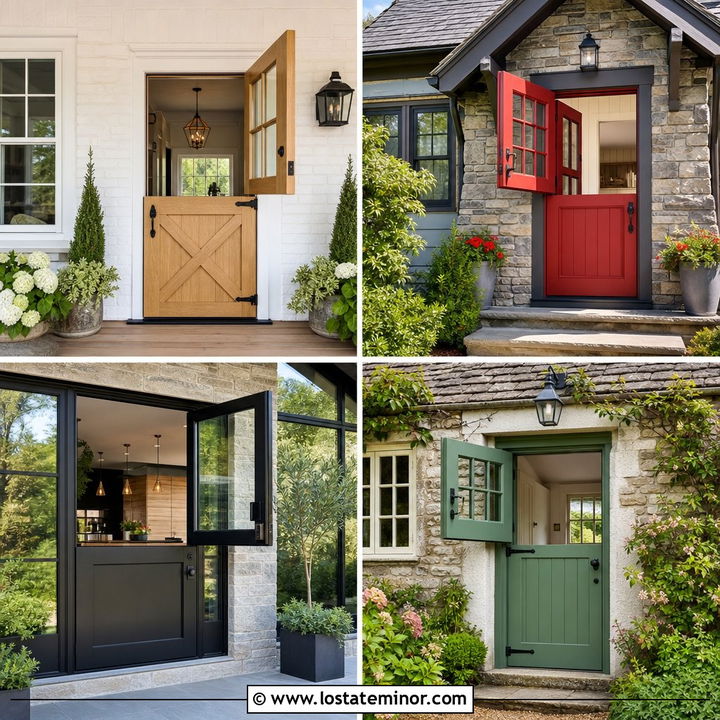
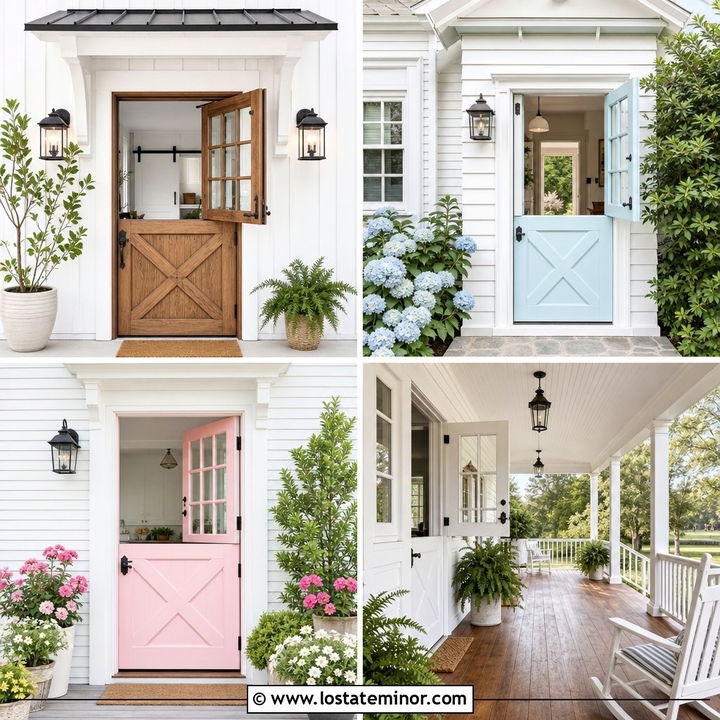
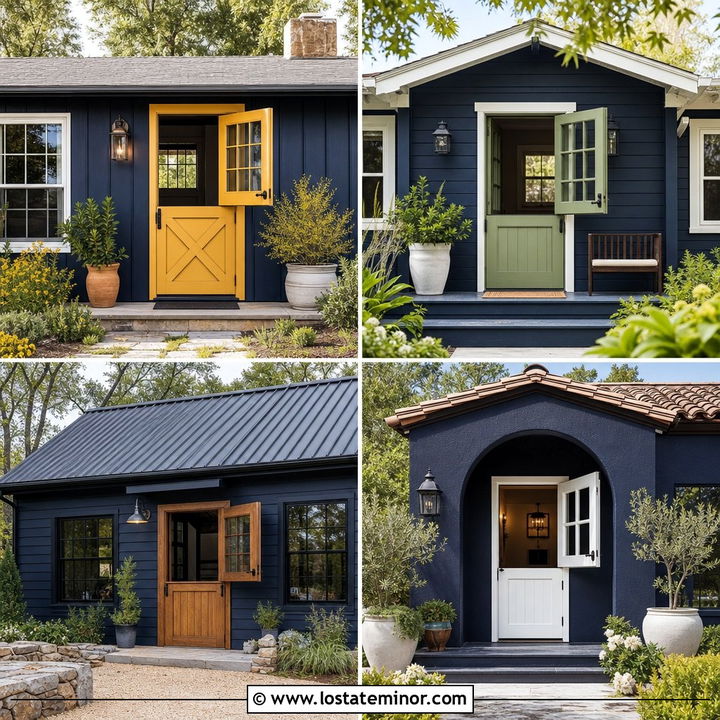
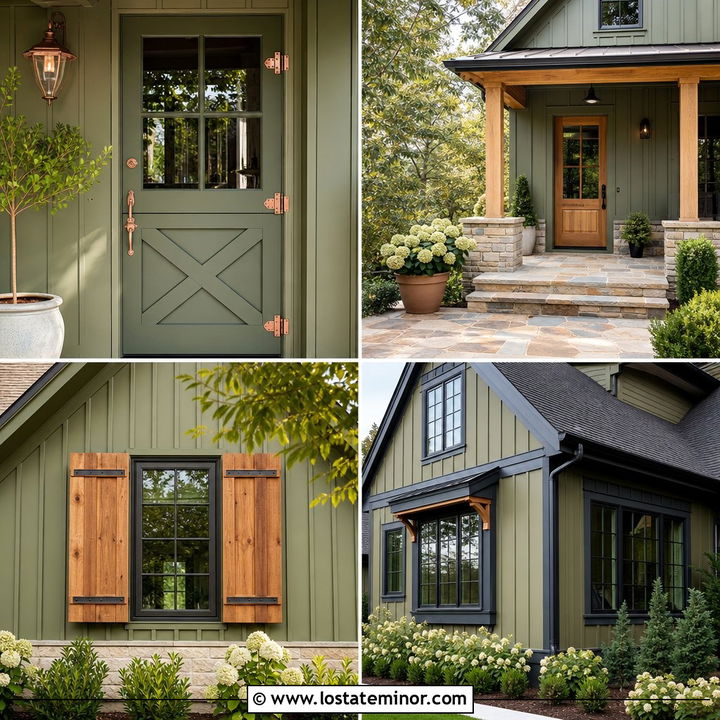
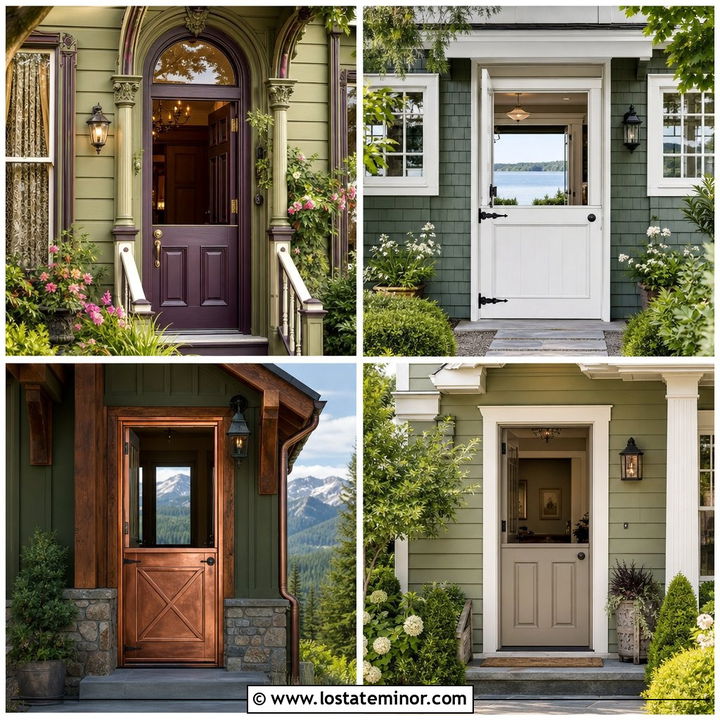
20. Dove Grey House With Stone Porch And Dutch Door
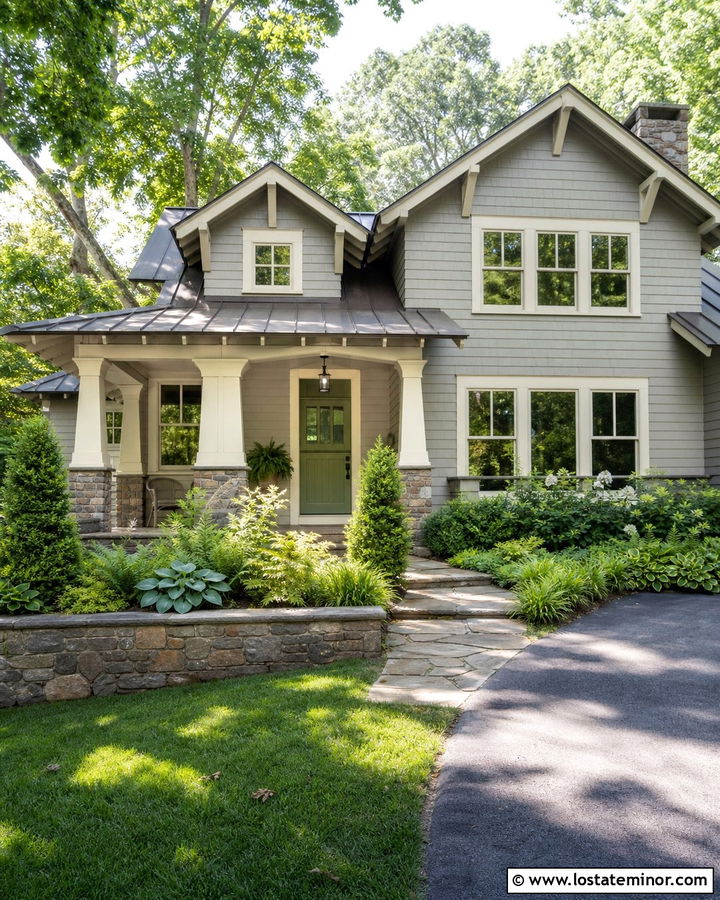
Natural stone adds lasting texture to a dove grey house while helping the pale siding feel connected to the landscape. Use this scheme on a Craftsman home with a moss-green Dutch door, cream trim, and tapered porch columns resting on substantial stone piers. Select stone that blends gray, beige, and muted brown so it coordinates with both the siding and door. A dark bronze roof and matching hardware provide a comfortable, earthy finish. Carry the stone into the walkway or low retaining walls to make the porch feel integrated. Layer ferns, hostas, grasses, and compact evergreens around the foundation. The upper half of the Dutch door can have three vertical glass panes, giving the traditional material palette a slightly cleaner and more updated appearance.
21. Dove Grey House With Wraparound Porch And Dutch Door
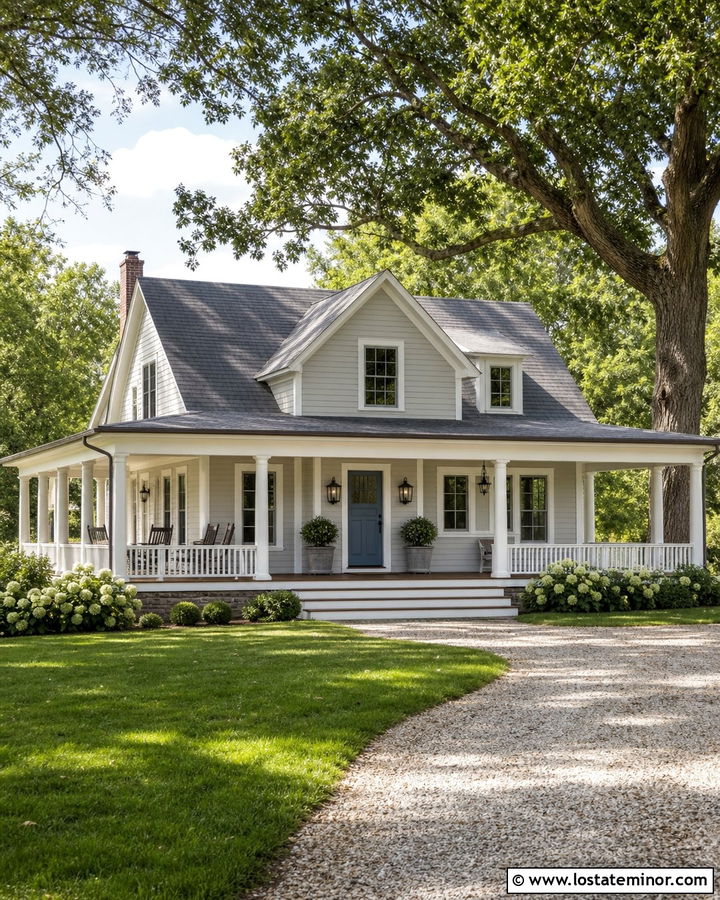
A wraparound porch gives a dove grey farmhouse a broad, welcoming presence, especially when the entrance features a muted blue Dutch door. Keep the porch columns, railings, fascia, and window trim warm white for a bright frame around the soft gray siding. Stained wood flooring and a matching porch ceiling beam can introduce natural warmth. Use a dark charcoal roof to define the long roofline and black lanterns to punctuate the facade. The Dutch door should sit clearly within the main entrance bay rather than competing with too many decorative objects. Simple rocking chairs, large planters, and low hydrangea beds can furnish the porch without clutter. A curved gravel driveway and open lawn complete this relaxed rural exterior while maintaining polished curb appeal.
22. Dove Grey House With Small Covered Porch And Dutch Door
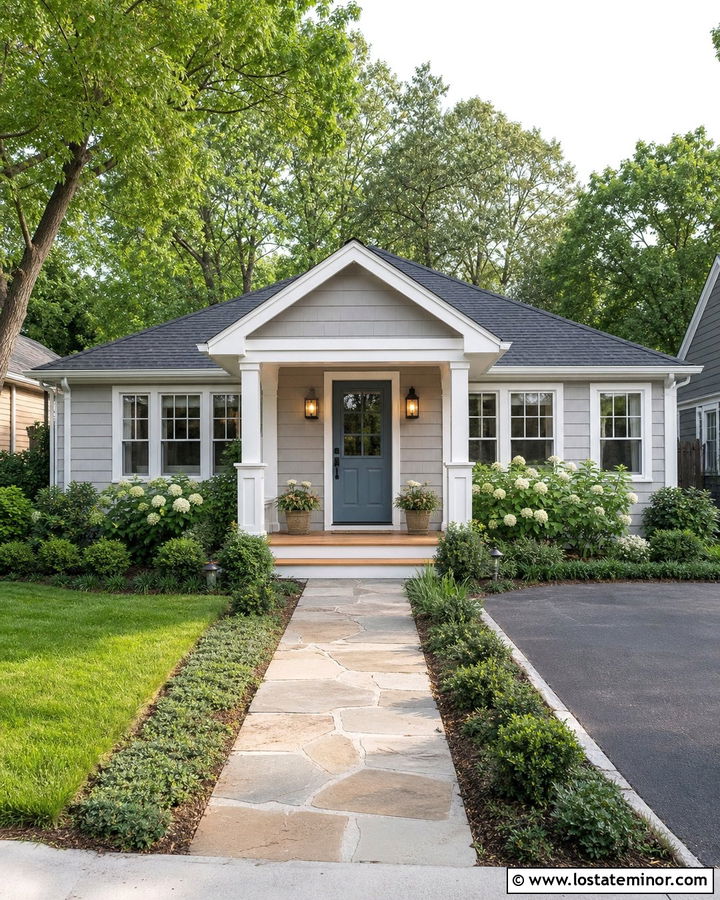
Even a compact porch can make a dove grey bungalow feel more substantial. Center a dusty blue Dutch door beneath a small gabled canopy supported by white square columns. Repeat the gable pitch from the main roof so the addition looks original to the house. White trim, a dark gray shingle roof, and black porch lights create a clear but uncomplicated palette. Use natural wood decking or warm brick for the landing to prevent the entrance from feeling too cool. A short flagstone path, layered shrubs, and two symmetrical planters can visually expand the small entry area. Keep the upper half of the Dutch door mostly glazed to bring lightness to the covered space. Thoughtful proportions matter more than elaborate ornament on this approachable, budget-conscious exterior.
23. Dove Grey House With Metal Roof And Dutch Door
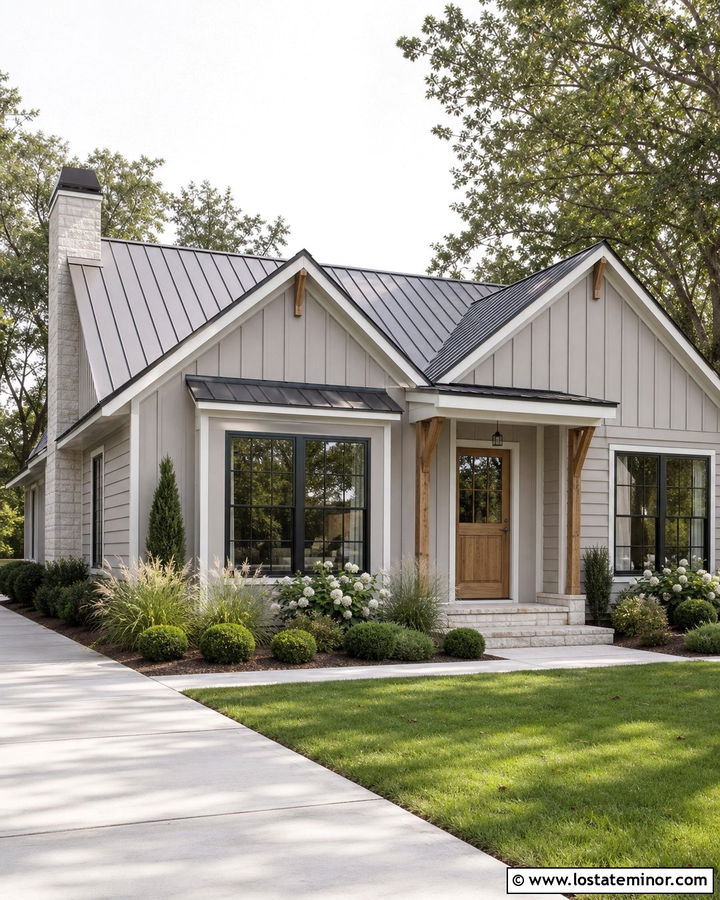
A dark standing-seam metal roof provides a crisp architectural cap for dove grey siding. On a modern cottage, pair the roof with a natural cedar Dutch door, black-framed windows, and restrained white trim. The wood door becomes the warm focal point between the cool gray surfaces. Add a small metal porch canopy with cedar brackets to repeat the main materials on a smaller scale. Pale limestone steps and a simple concrete walkway keep the entrance bright. Use drought-tolerant grasses, rounded shrubs, and a few flowering perennials to soften the home’s clean lines. Carefully coordinate the gutters with the roof rather than the siding. The complete scheme balances modern contrast with rustic warmth, allowing the Dutch door to feel charming without making the facade look overly traditional.
24. Dove Grey House With Cedar Roof And Dutch Door
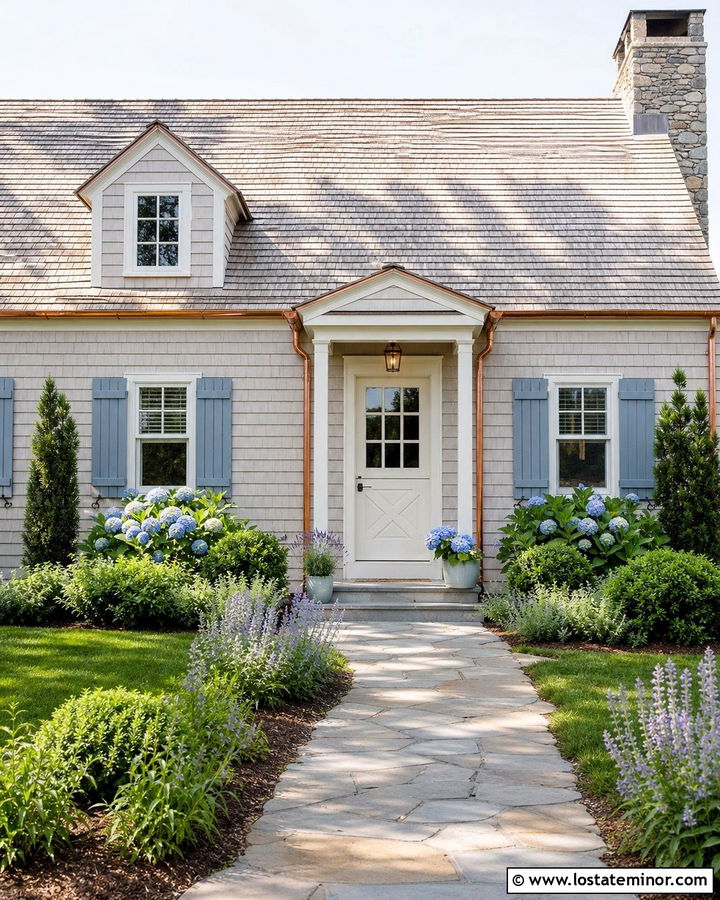
A cedar-shake roof brings warmth, texture, and cottage character to a dove grey exterior. Combine it with a creamy white Dutch door, matching trim, and soft blue shutters on a storybook Cape Cod. As the cedar ages, its silvery brown color will blend naturally with the grey siding. Copper gutters and a small copper porch light can develop a complementary patina over time. Use irregular flagstone for the walkway and plant lavender, hydrangeas, and low boxwoods around the facade. The Dutch door’s upper half should feature divided panes that reflect the traditional window design. Avoid overly bright colors that might distract from the roof’s natural variation. This layered palette feels gentle and established, making it well suited to compact homes with detailed rooflines and garden-focused landscaping.
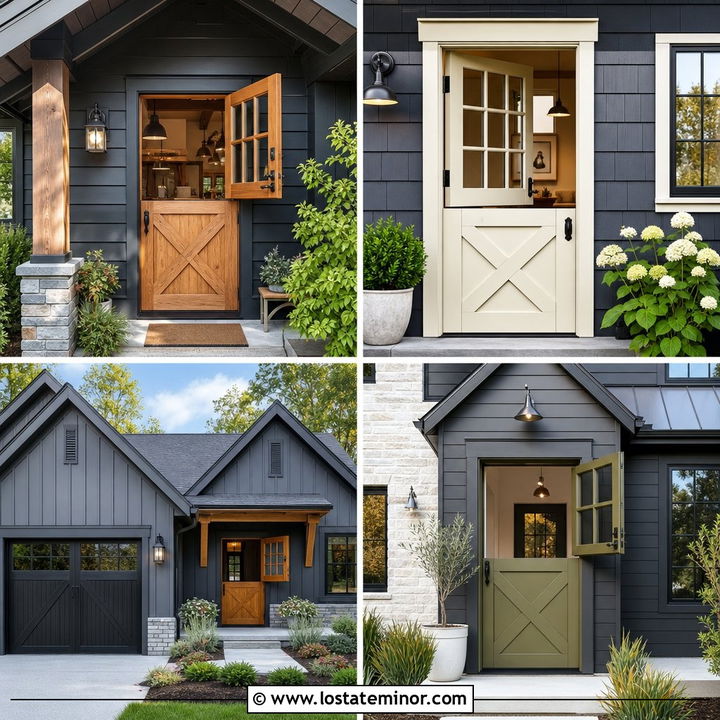
25. Dove Grey House With Black Windows And Dutch Door
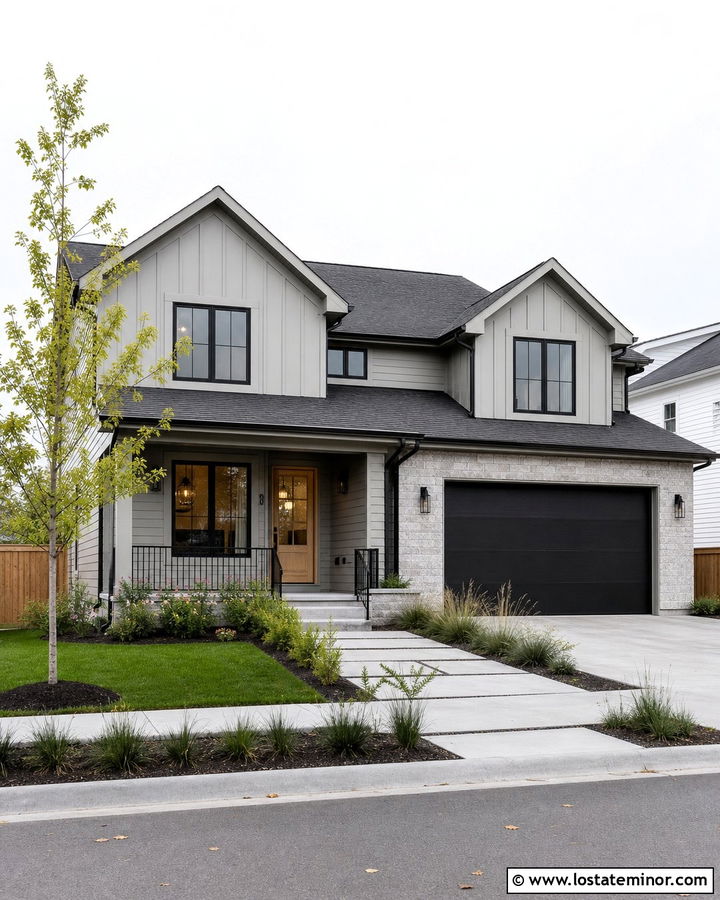
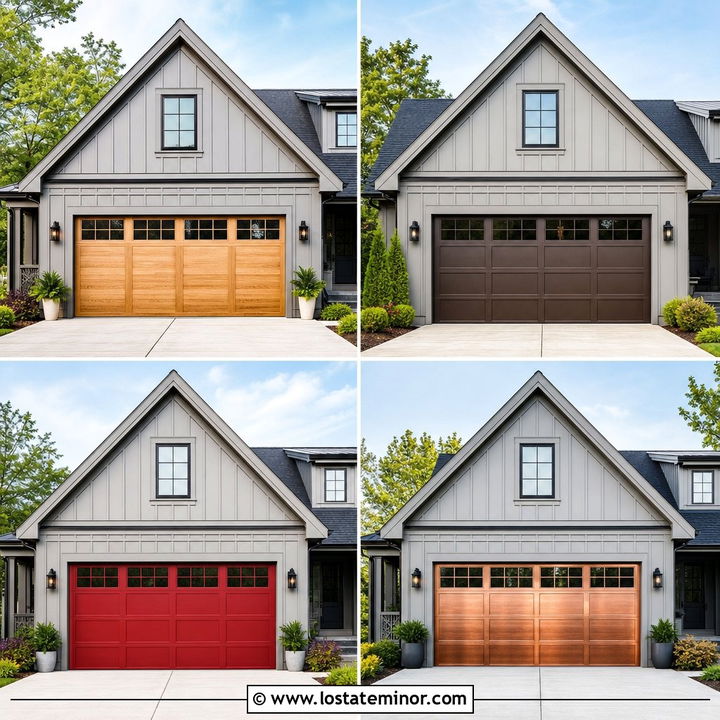
Black windows give dove grey siding a sharp, contemporary edge, while a warm wood Dutch door keeps the entrance approachable. Use this combination on a modern two-story home with mixed horizontal and vertical siding, clean gables, and minimal trim. Repeat black on the gutters, roof, sconces, and slim porch railing. A white oak or cedar Dutch door introduces natural texture at the center of the facade. Consider pale gray stone around the garage or lower level to create depth without adding another strong color. Large concrete pavers, clipped grasses, and a simple lawn complement the architectural lines. The Dutch door should use a broad, minimally divided glass panel. This creates a functional split-door design that still looks appropriate within a streamlined modern exterior.
26. Dove Grey House With White Windows And Dutch Door
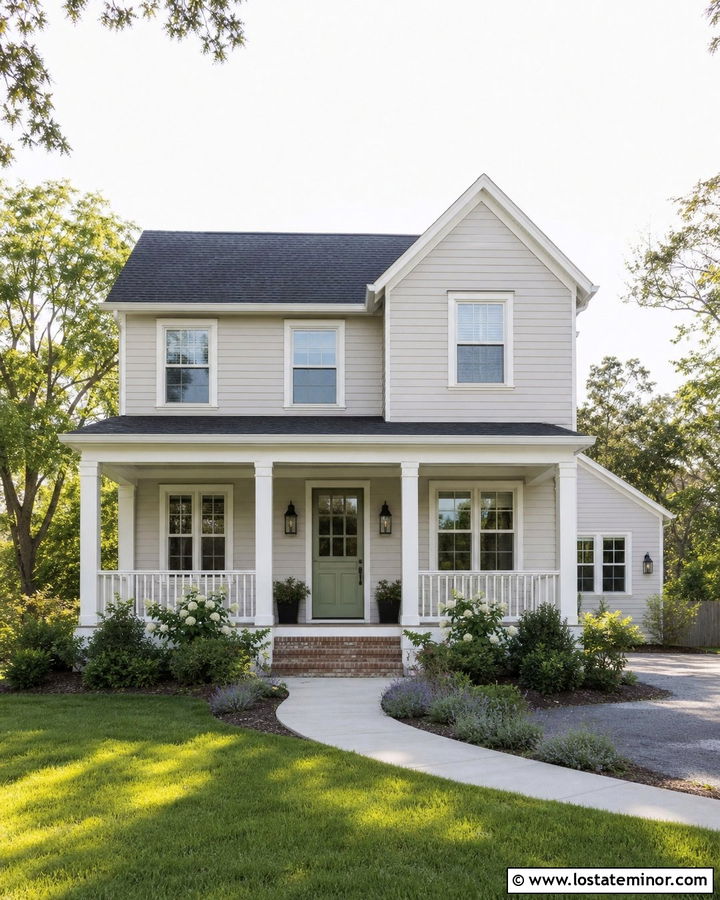
White windows keep a dove grey house bright and traditional, especially when paired with a soft green Dutch door. This combination suits a two-story farmhouse with lap siding, a simple front gable, and a covered porch. Use the same warm white on window frames, corner boards, fascia, columns, and railings for consistent visual rhythm. A medium charcoal roof provides enough contrast to outline the house without dominating it. The muted green door introduces color at eye level and connects with surrounding garden beds. Add black lanterns and aged brass hardware for small, purposeful accents. Brick steps or a warm concrete walkway can keep the pale palette grounded. The complete exterior feels fresh and familiar, making it attractive across both rural and suburban settings.
27. Dove Grey House With Matching Garage And Dutch Door
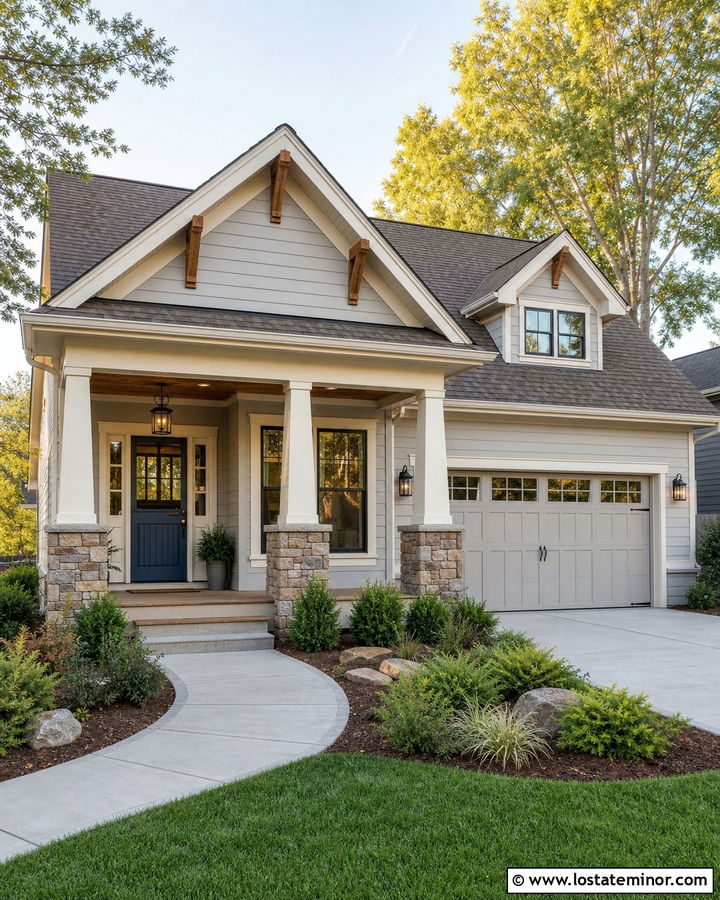
Coordinating the garage with the front entry is essential when both features face the street. On a suburban Craftsman, use dove grey siding and a matching dove grey garage door so the larger opening visually recedes. Then paint the Dutch door deep navy to establish a stronger, human-scale focal point. Cream trim, natural stone porch piers, and cedar gable brackets add warmth and dimension. Repeat navy only through small planters or a subtle porch detail rather than painting the garage the same dark shade. A gray-brown roof will connect the siding and masonry. Use a clean concrete driveway, curved front walk, and layered evergreen beds to soften the garage-facing layout. This hierarchy keeps attention on the welcoming entrance instead of the vehicle area.
28. Dove Grey House With Carriage Garage And Dutch Door
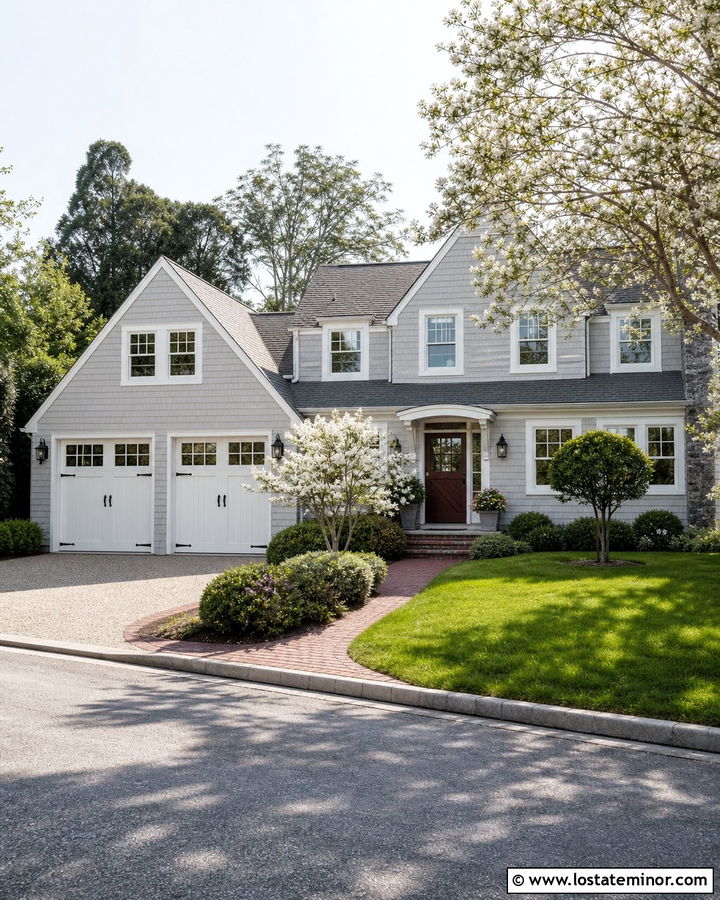
Carriage-style garage doors can complement a Dutch front door when their details are carefully coordinated. On a traditional shingle house, use dove grey siding with warm white garage doors, a burgundy Dutch door, and matching white trim. Choose simple garage door windows that reflect the divided panes in the upper half of the entry door. Black decorative hinges, lanterns, and roof accents can unify the two areas. A medium-gray roof and red brick driveway edging balance the warm burgundy focal point. Keep the main driveway open and clutter-free, then direct a narrower brick path toward the porch. Rounded shrubs and flowering trees can soften the garage mass. Repeating shapes rather than identical colors creates a coordinated facade without allowing the garage to overpower the entrance.
29. Dove Grey House With Double Dutch Doors
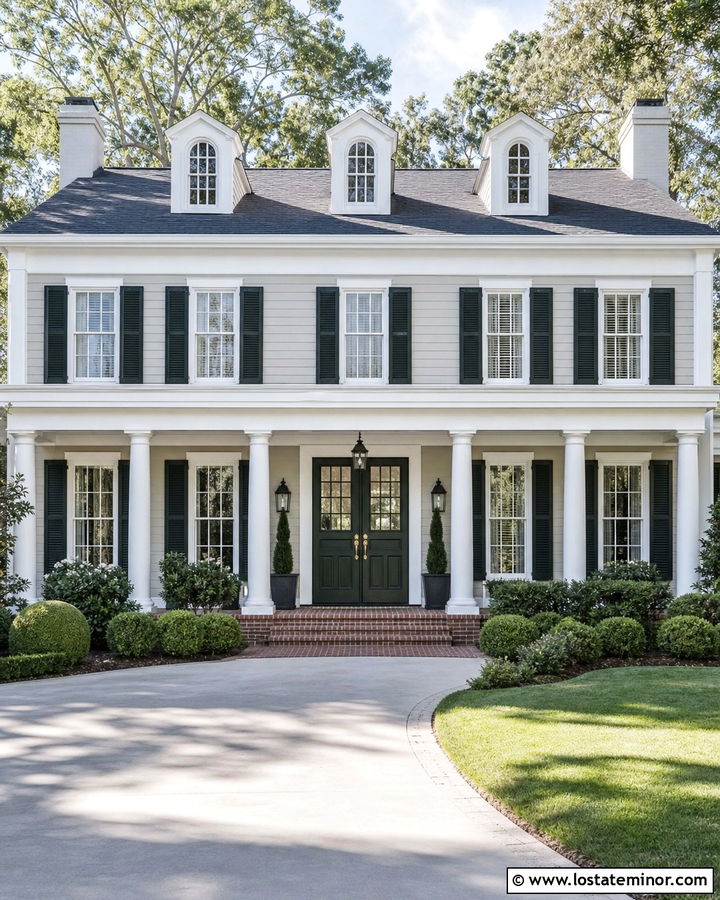
Double Dutch doors create a broad, memorable entrance for a larger dove grey house. Use a pair of deep green split doors on a Southern Colonial exterior with symmetrical windows, white columns, and a generous covered porch. Divided glass across both upper sections adds openness, while solid lower panels maintain a traditional appearance. Match the doors carefully so their horizontal divisions align. Brass hardware and substantial white casing will give the entrance a finished, architectural presence. A dark gray roof, brick porch floor, and black lanterns provide additional structure. Frame the broad doorway with tall planters and low evergreen hedges rather than excessive seasonal decor. The double doors should appear proportionate to the facade, turning the entry into an elegant centerpiece without weakening the home’s symmetry.
30. Dove Grey House With Side Entry Dutch Door
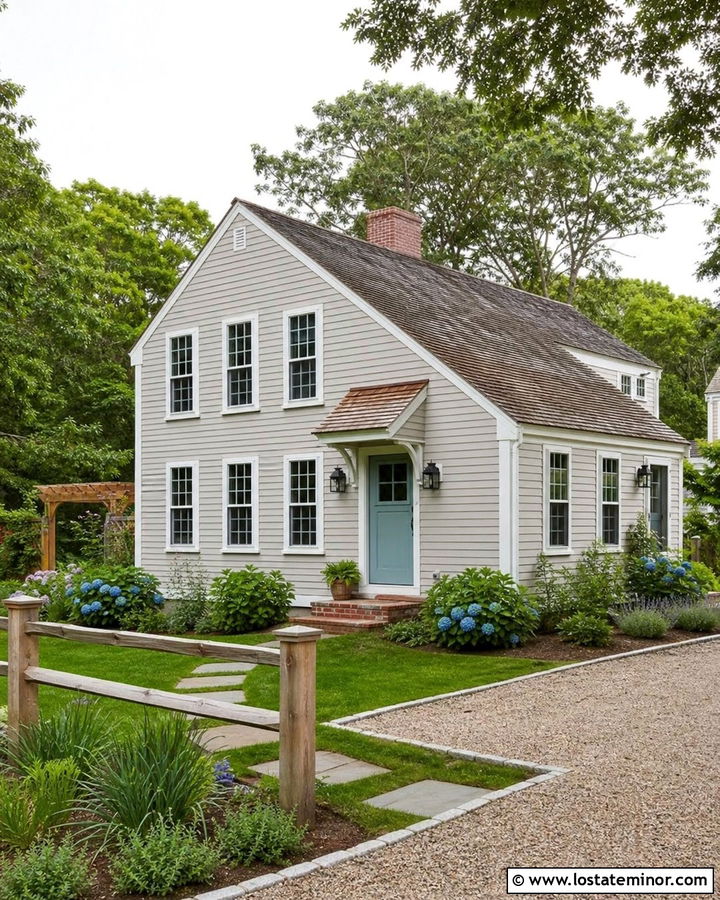
A side entry Dutch door can add useful character without competing with the formal front entrance. On a New England saltbox house, paint the siding dove grey and choose a muted robin’s-egg blue for the side Dutch door. Use warm white trim, a weathered gray roof, and black lanterns across the entire exterior so the secondary entrance remains connected to the main facade. A small cedar canopy and brick landing can give the side door proper architectural weight. Lead to it with a stepping-stone path bordered by herbs, hydrangeas, and low fencing. If the entry connects to a mudroom or kitchen, include a glazed upper section for natural light. The resulting exterior feels practical and charming from every visible angle, not only from the street.
Conclusion:
The best dove grey exterior uses more than one attractive door color. It coordinates the Dutch door with the home’s trim, roofing, windows, porch materials, masonry, hardware, and landscaping. White and black create dependable contrast, while navy, sage, teal, yellow, and muted red add controlled personality. Natural cedar, walnut, stone, and brick can bring essential warmth to the soft gray backdrop. Before choosing paint, test large samples beside permanent surfaces in morning and afternoon light. Also consider the house’s scale and architectural character. Whether the goal is coastal charm, farmhouse warmth, or modern contrast, these 30 Dove Grey House Design With Dutch Door Ideas offer practical inspiration for a complete curb-appeal update.

Related posts: