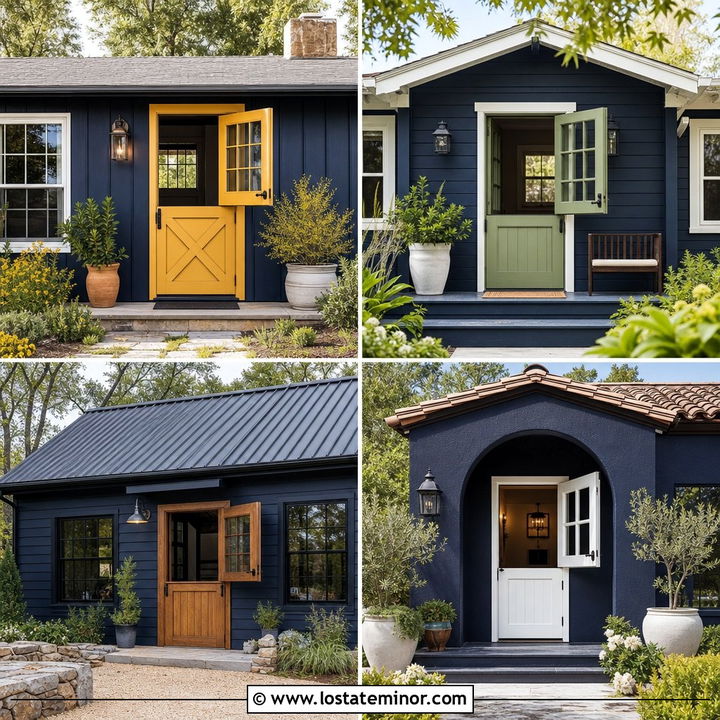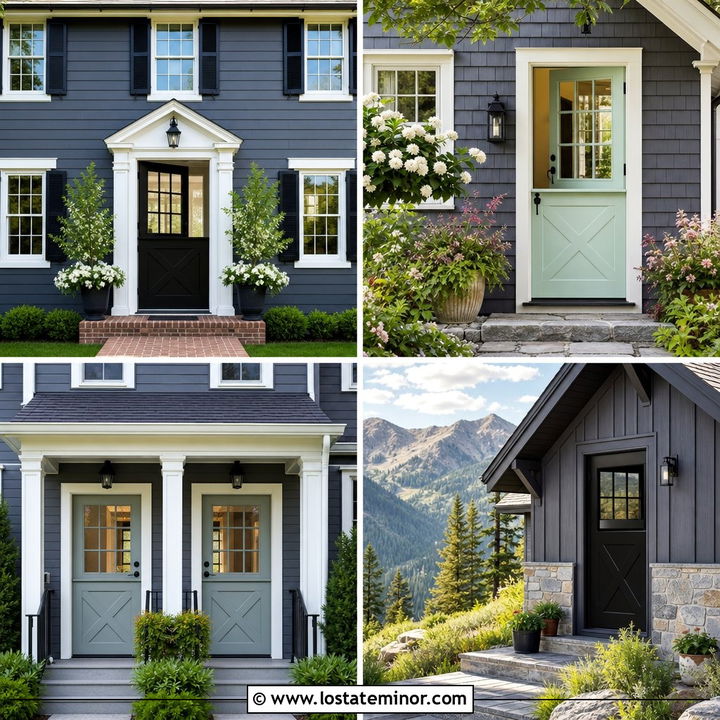
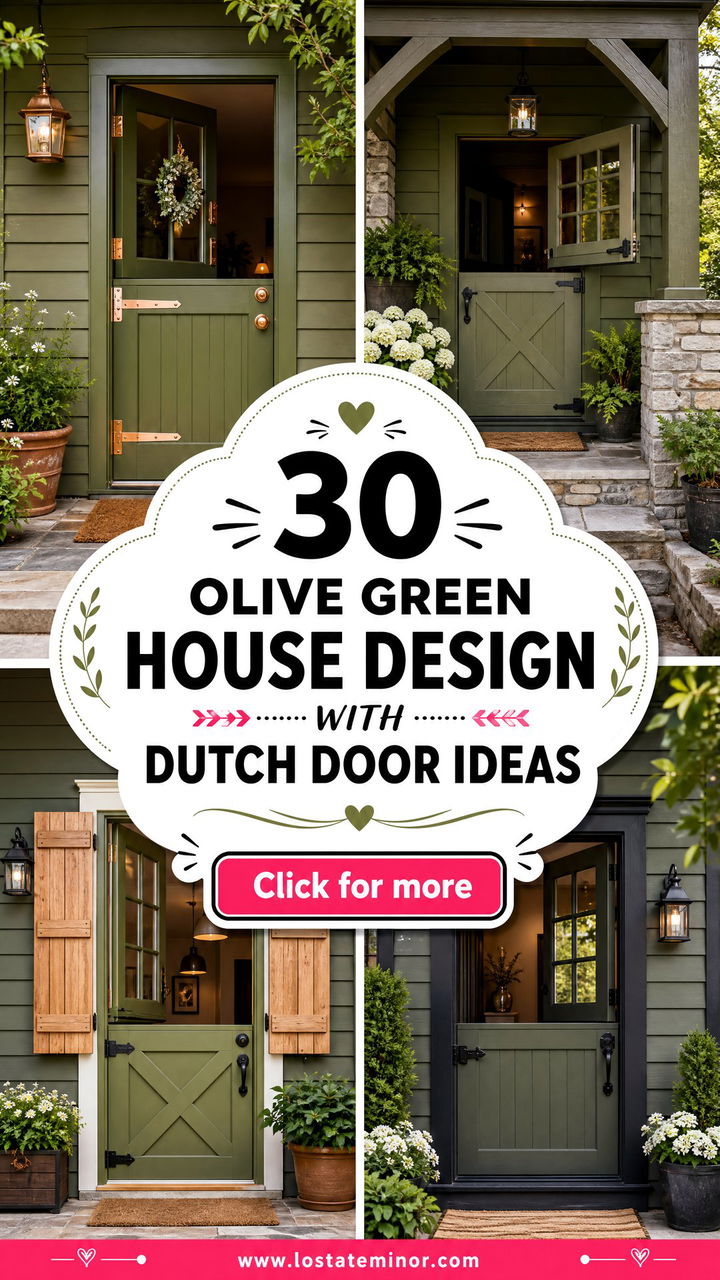
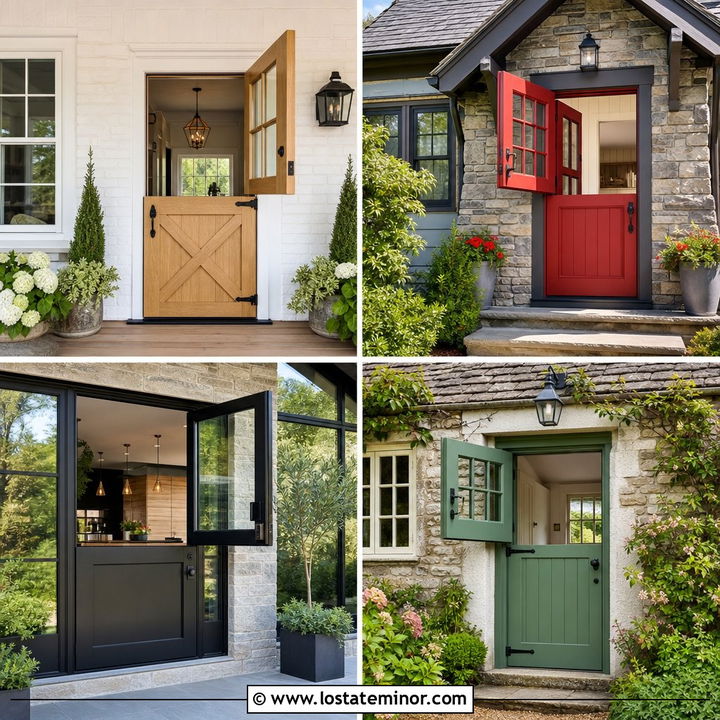
Olive green brings a grounded, nature-inspired character to a home, while a Dutch door makes the entrance feel welcoming and practical. Together, they can suit everything from a small cottage to a modern farmhouse or traditional colonial. The key is building a complete exterior palette around both features. Warm whites create gentle contrast, dark trim adds definition, and natural wood or stone keeps the green connected to the landscape. Roofing, hardware, porch materials, and landscaping also affect whether the finished home feels rustic, refined, coastal, or contemporary. The combinations below explore different architectural styles, olive shades, door finishes, and accent materials. Use these 30 Olive Green House Design With Dutch Door Ideas to plan a balanced exterior with memorable curb appeal.
1. Olive Green Farmhouse With White Dutch Door
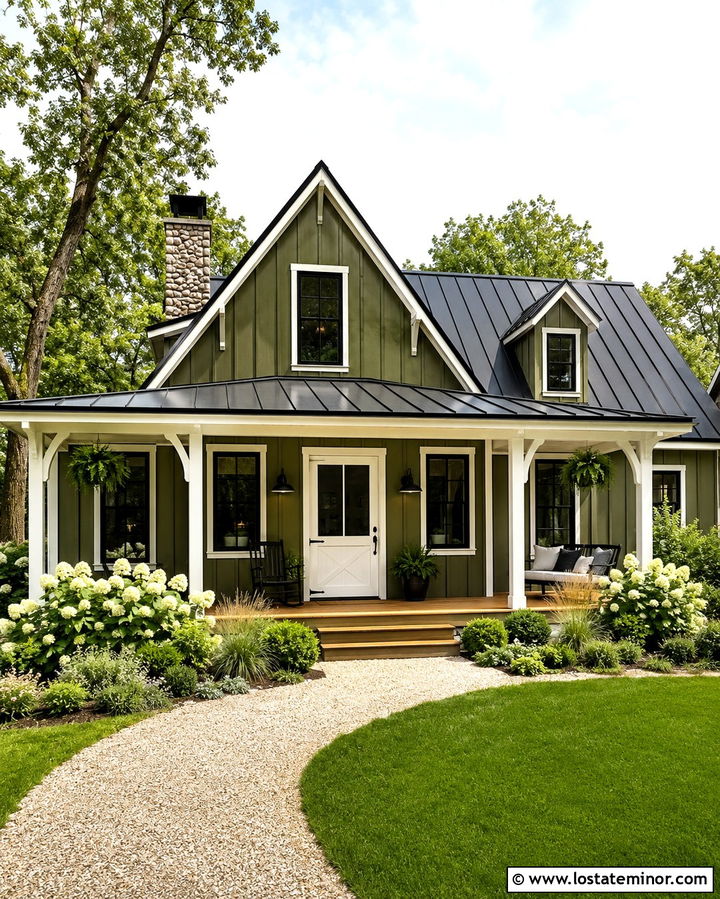
A classic white Dutch door gives an olive green farmhouse a clean, friendly focal point. Choose a medium olive siding color with warm undertones rather than a cool gray-green. Creamy white trim can outline the windows, porch posts, fascia, and door without creating a harsh contrast. A black metal roof adds definition, while natural cedar porch flooring warms the entire palette. Use matte black hardware and simple barn-style sconces to connect the door with the roof. A divided-glass upper panel will help the entrance feel open when the door is closed. Finish the setting with hydrangeas, ornamental grasses, and a straight gravel walkway for relaxed country curb appeal that still appears polished.
2. Dark Olive Green House With Wood Dutch Door
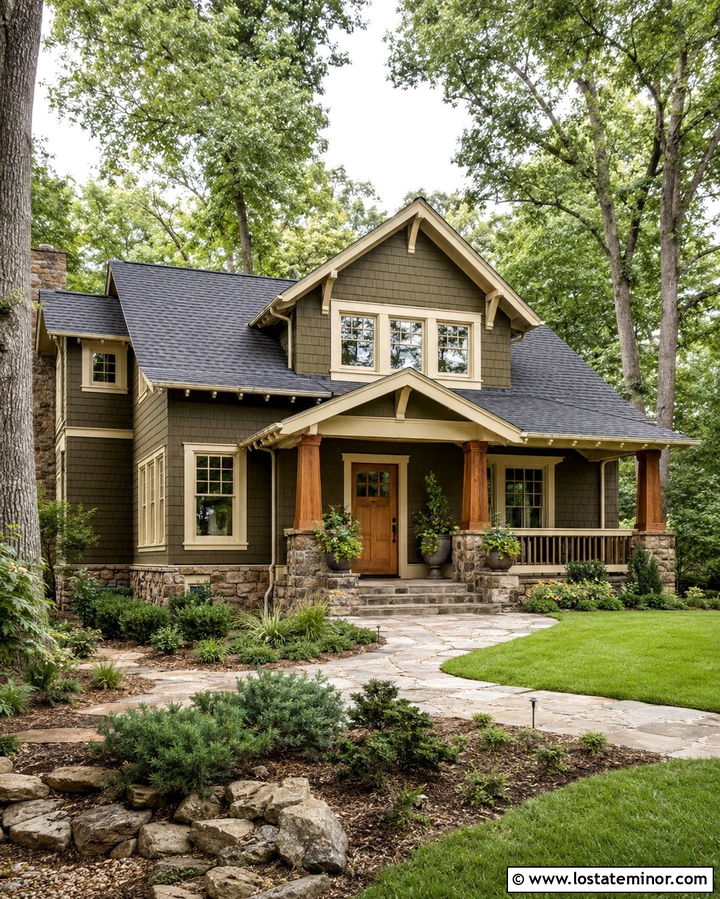
Natural wood creates a rich, earthy contrast against dark olive green siding. This combination looks especially striking on a Craftsman house with deep eaves and a broad front porch. Select a Dutch door made from stained white oak, mahogany, or cedar, and protect it with an exterior-grade finish. Warm cream trim can soften the dark siding around the windows and roofline. Repeat the wood tone on porch columns, brackets, or garage doors so the entrance does not look isolated. A charcoal roof and aged-bronze hardware complete the subdued palette. Add irregular flagstone steps and layered evergreen landscaping to make the exterior feel established, welcoming, and closely connected to its natural surroundings.
3. Olive Green Cottage With Arched Dutch Door
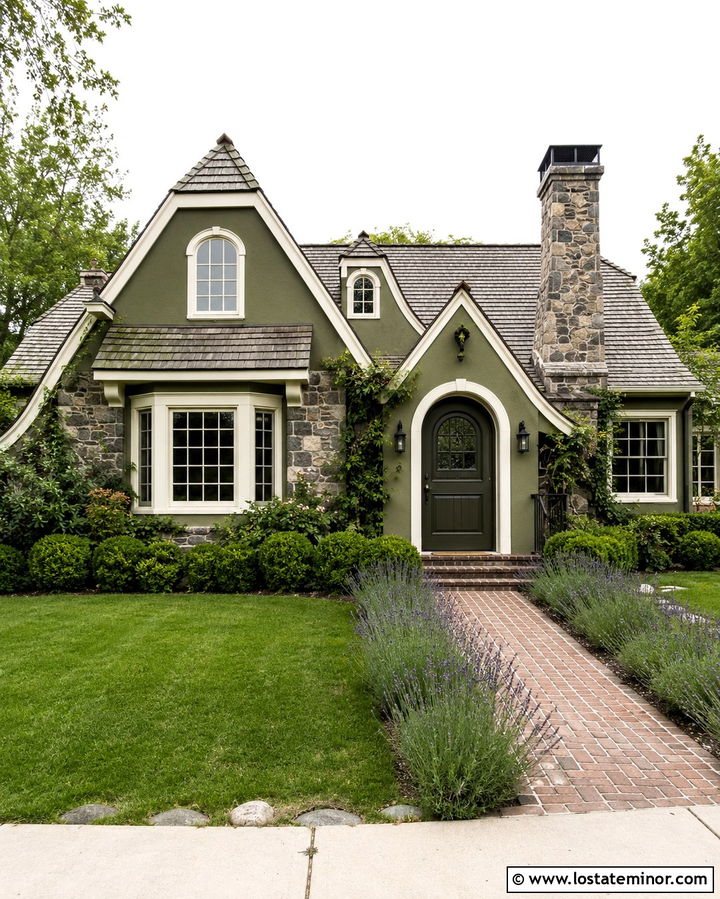
Could an entrance feel more charming than an arched Dutch door framed by olive green siding? This pairing works beautifully on a storybook cottage with a steep roof, small dormers, and irregular stone accents. Paint the siding a muted olive green and use a deeper olive on the arched door for subtle tone-on-tone depth. Soft ivory trim prevents the palette from becoming too heavy. Antique brass hardware, curved black lanterns, and a weathered brick walkway reinforce the cottage character. Keep the landscaping informal with lavender, flowering shrubs, climbing vines, and low boxwood borders. The rounded door provides a graceful counterpoint to the roof’s strong angles while keeping the complete exterior warm and approachable.
4. Olive Green Ranch House With Black Dutch Door
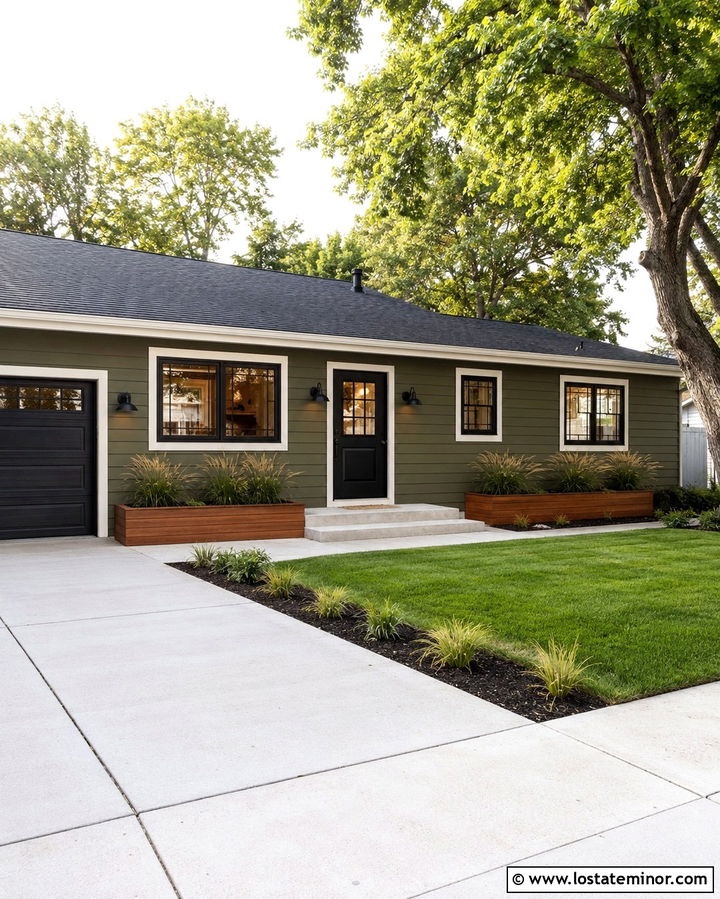
A black Dutch door can give an olive green ranch house a sharper, more updated appearance. Start with horizontal olive siding that has a slightly gray undertone. Use crisp off-white around the windows and roofline, then repeat black on the gutters, sconces, and narrow window frames. The consistent dark details will make the low profile feel intentional rather than visually flat. A simple glass panel in the upper door allows light into the entry without disrupting the clean design. Add pale concrete steps, a charcoal shingle roof, and cedar planter boxes for controlled warmth. Low ornamental grasses and a wide walkway support the ranch architecture while keeping the entire facade open and uncluttered.
5. Olive Green Craftsman With Mustard Dutch Door
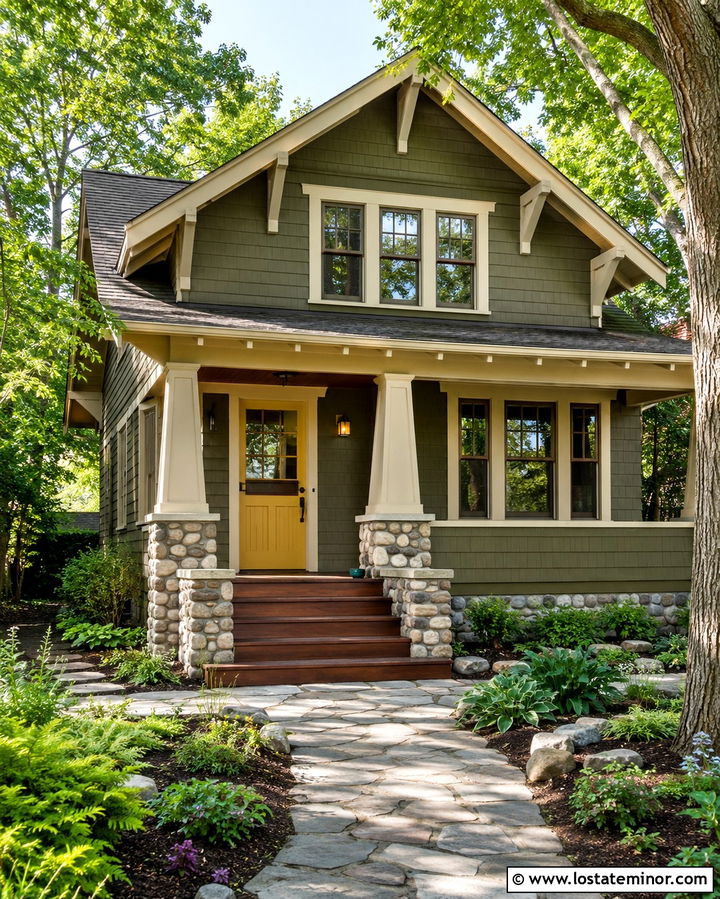
For a more colorful entrance, place a muted mustard Dutch door against deep olive green Craftsman siding. The two earthy colors share warm undertones, so the contrast feels lively without becoming overly bright. Use creamy beige trim on the windows, porch railing, and tapered columns. A river-rock foundation can introduce soft browns and grays that connect both painted colors. Choose dark bronze hardware rather than shiny metal, and repeat the mustard shade sparingly in porch pillows or seasonal planters. Wide steps, exposed rafters, and a substantial front porch will strengthen the Craftsman character. This palette is especially effective when surrounded by mature trees and warm-toned landscaping materials.
6. Olive Green Colonial With Cream Dutch Door
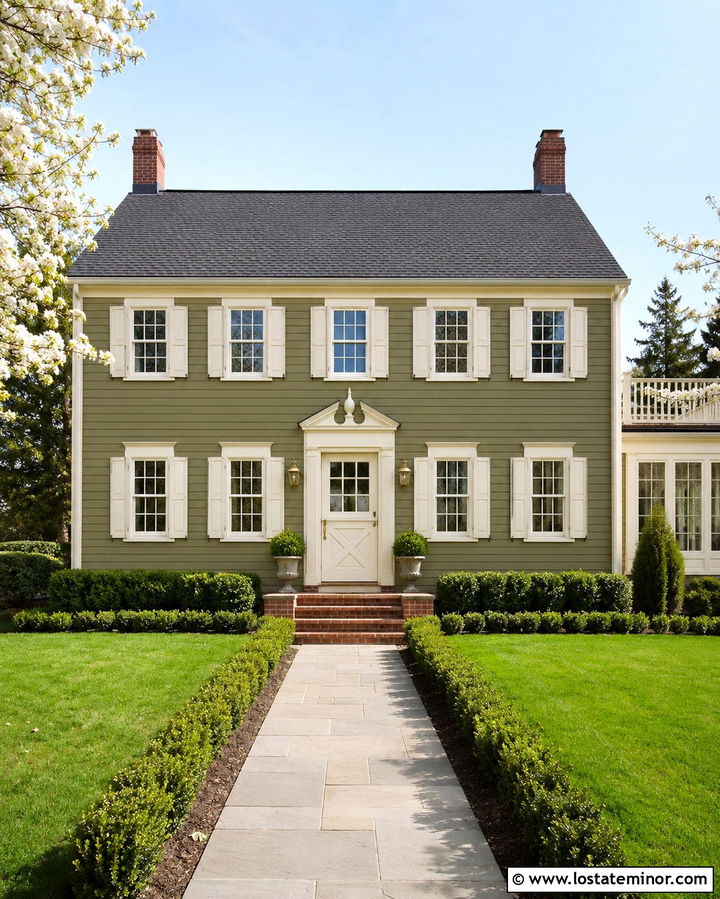
Symmetry helps an olive green colonial exterior feel timeless and orderly. Cover the facade in traditional lap siding painted a restrained olive green, then use warm cream for the trim, cornice, shutters, and paneled Dutch door. The soft difference between cream and pure white is important because it complements the warmth of olive. Add polished brass door hardware and balanced lanterns on both sides of the entrance. A dark charcoal roof anchors the lighter trim and keeps the palette from looking too delicate. Brick steps and a straight walkway emphasize the centered doorway. Matching boxwood shrubs, small flowering trees, and neatly edged beds complete the formal yet welcoming curb-appeal design.
7. Olive Green Bungalow With Coral Dutch Door
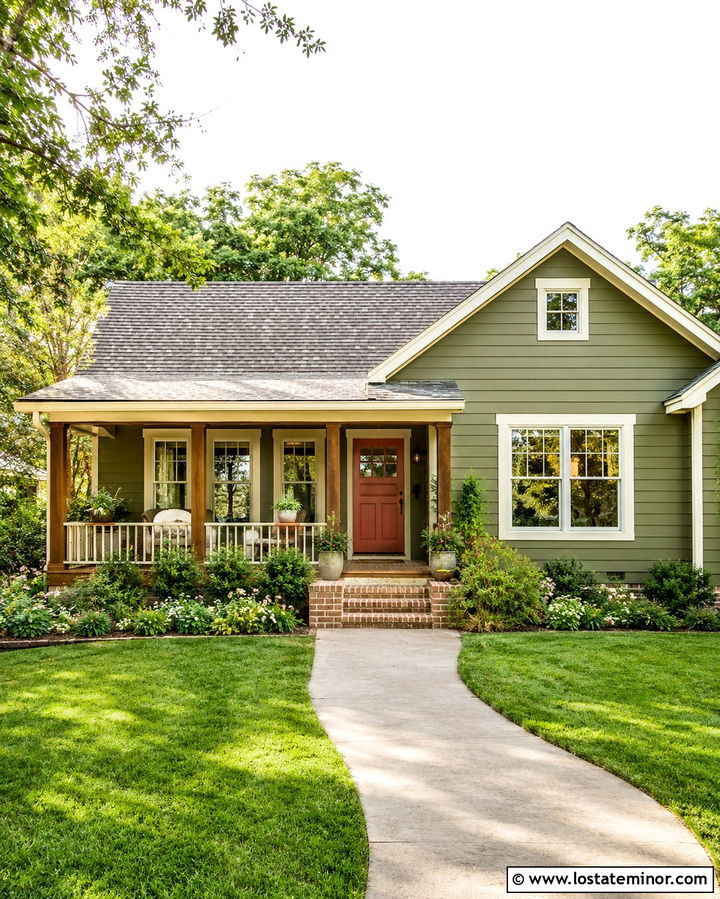
A dusty coral Dutch door introduces cheerful color to an olive green bungalow without overwhelming its compact facade. Choose a softened coral with brown or clay undertones instead of a vivid tropical orange. Pair it with medium olive siding, warm white window trim, and stained wood porch beams. A weathered gray roof will provide a quiet backdrop for the two warmer colors. Use aged brass or dark bronze hardware to maintain the bungalow’s handcrafted appearance. Clay planters and brick porch steps can repeat the door’s earthy warmth in smaller doses. Surround the entrance with leafy shrubs and simple flowering borders, allowing the colorful door to remain the clear but well-integrated focal point.
8. Olive Green Cape Cod With Red Dutch Door
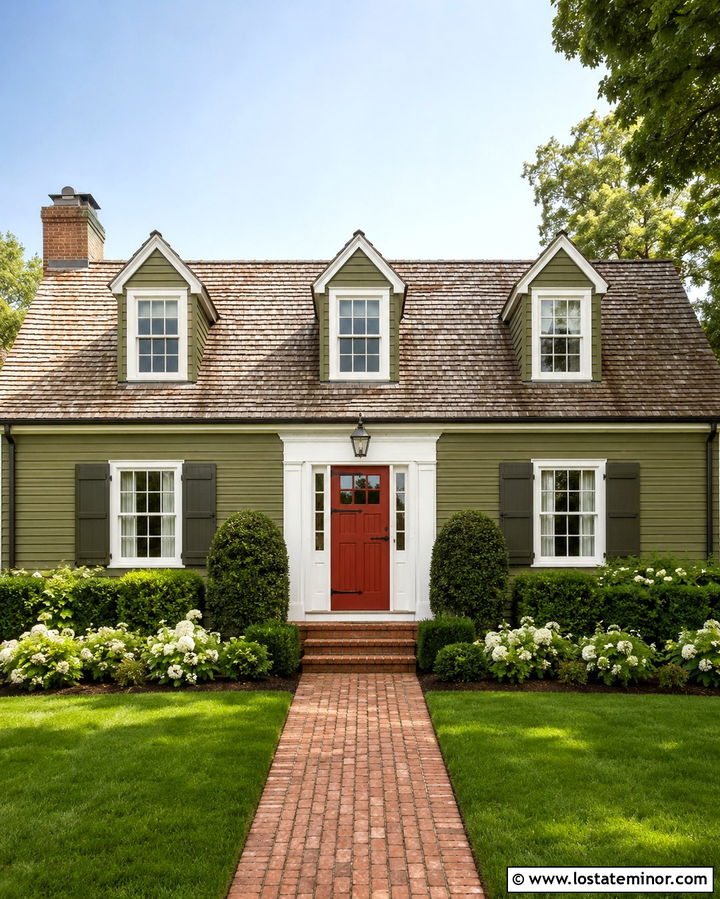
A brick-red Dutch door makes a strong traditional accent on an olive green Cape Cod house. Keep the green slightly muted so it works comfortably beside the warm, historic red. White trim around the windows, dormers, and roofline adds the familiar crisp contrast associated with this architectural style. If shutters are included, paint them a deep olive or black rather than introducing another color. A cedar-shake roof can bring natural texture, while a simple brick path visually connects to the entrance. Select black iron strap hinges and a straightforward lantern for an understated finish. Clipped hedges and loose white flowers provide a balance of structure and softness across the front yard.
9. Olive Green Modern Farmhouse With Glass Dutch Door
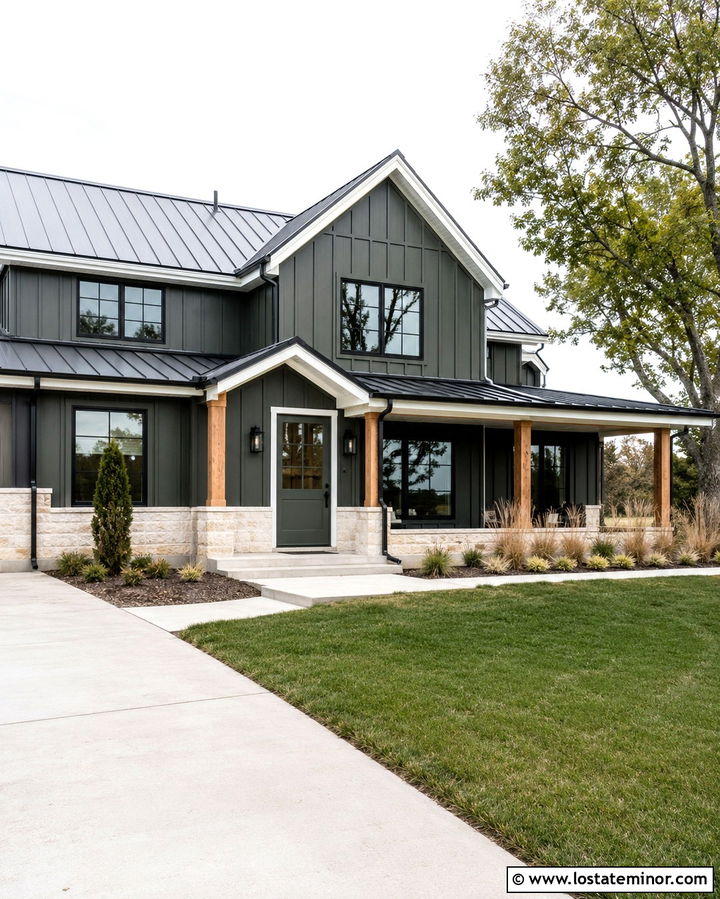
A glass-paneled Dutch door can make an olive green modern farmhouse feel lighter and more contemporary. Use dark olive board-and-batten siding across the main facade, balanced by warm white trim and a pale stone foundation. Paint the door olive green to match the siding, but outline its divided panes in black for architectural definition. Black-framed windows, minimal sconces, and a standing-seam roof will reinforce the streamlined farmhouse look. Natural wood porch columns keep the dark palette from feeling cold. A broad concrete walkway and tidy ornamental grasses create a simple foreground. This complete scheme blends familiar rural forms with clean finishes, controlled contrast, and an inviting entrance.
10. Olive Green Split-Level With Teal Dutch Door
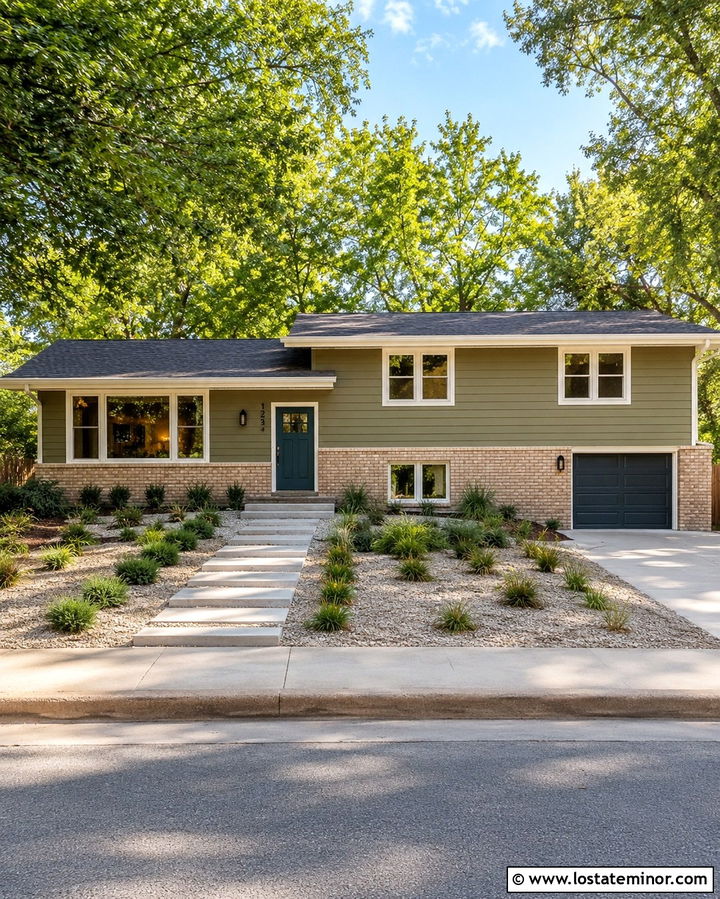
A muted teal Dutch door can refresh an olive green split-level while respecting the home’s midcentury roots. Paint the upper siding a warm olive and leave the lower level in natural tan brick or textured stone. The teal should be deep and slightly subdued, allowing it to contrast with olive without looking overly playful. Use warm white trim to frame the windows, and add charcoal accents on the roof, gutters, and modern house numbers. Slim black sconces will help define the recessed entrance. Replace a narrow path with broad concrete slabs surrounded by gravel and low greenery. The resulting facade feels layered, updated, and colorful without hiding the home’s original architectural character.
11. Olive Green Tudor With Stained Dutch Door
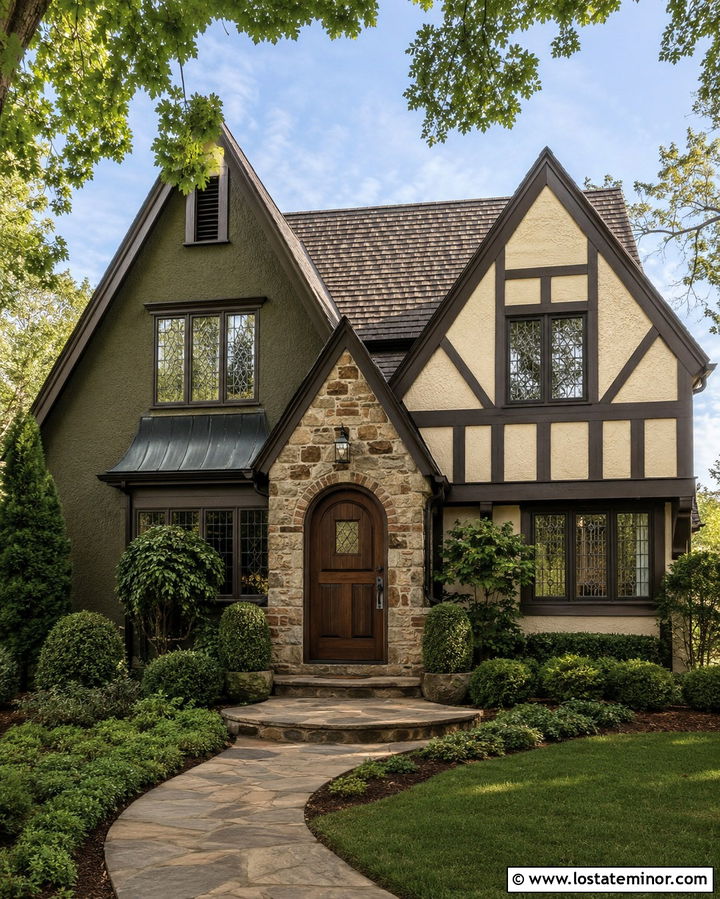
Olive green can soften the dramatic lines of a Tudor house when it is paired with a dark stained Dutch door. Apply the green to stucco or select siding sections between warm cream trim and dark brown half-timbering. A walnut-stained door with an arched top will echo the architecture and add substantial natural texture. Choose hand-forged black hardware, leaded upper glass, and simple iron lanterns to strengthen the old-world appearance. Stone around the entry should include brown, gray, and mossy tones that relate naturally to the olive exterior. Curving paths, clipped shrubs, and loosely planted ground cover prevent the heavy architectural details from making the facade feel rigid or unwelcoming.
12. Olive Green Coastal House With Blue Dutch Door
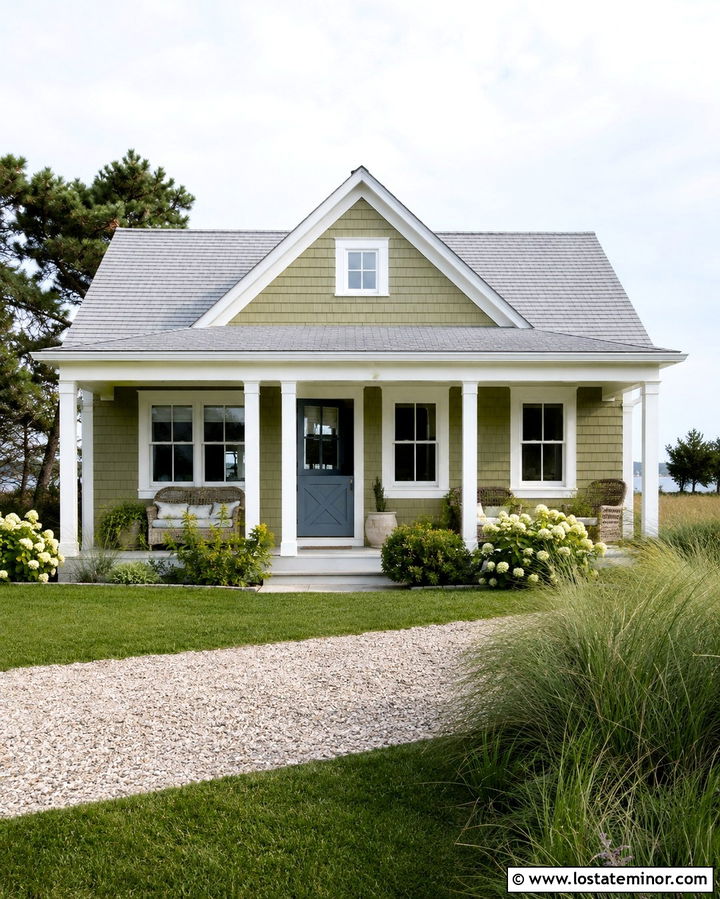
For a coastal interpretation, pair pale olive green siding with a weathered blue Dutch door. The olive should be light and slightly sun-washed, while the blue can lean toward muted denim or soft slate. Bright white trim gives the facade a fresh outline and suits a breezy house with shake siding, upper balconies, or a covered porch. Use brushed nickel or aged pewter hardware for a relaxed finish. A light gray roof, pale decking, and woven porch furniture keep the overall palette airy. Add dune grasses, hydrangeas, and a crushed-shell-style walkway to frame the home naturally. The result feels coastal and casual without relying on predictable all-blue exterior colors.
13. Olive Green Brick House With Olive Dutch Door
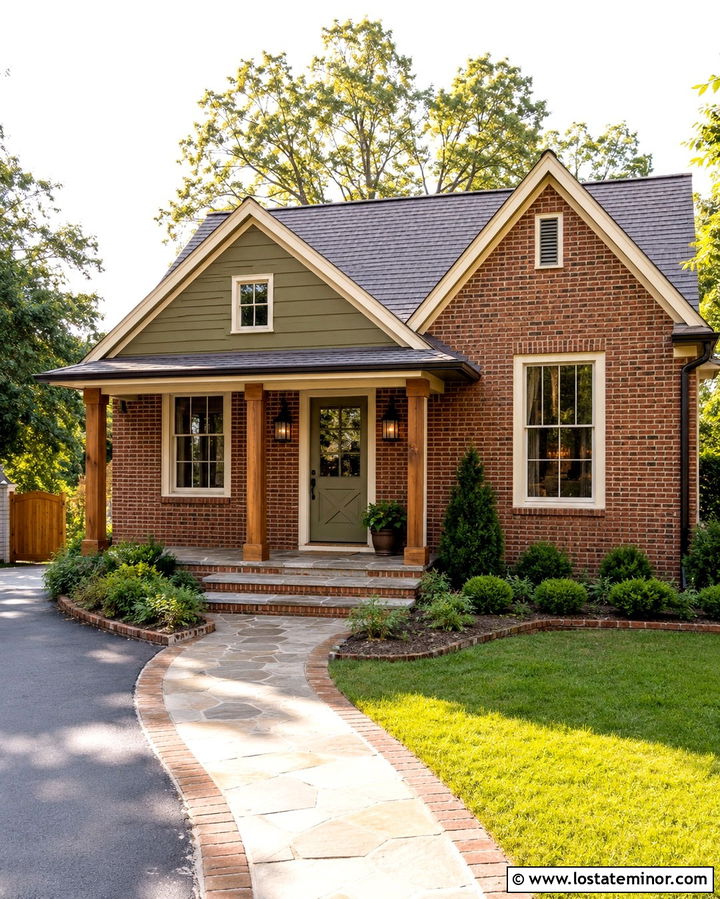
Painting a Dutch door the same olive green as nearby siding can help unify a house with prominent brickwork. Choose an olive shade that reflects one of the brick’s quieter brown or tan undertones. Use it on the door, gable siding, and selected trim areas while leaving the main brick unpainted. Warm cream around the windows creates a gentle transition between the materials. Dark bronze gutters, sconces, and door hardware add definition without the severity of solid black. A covered porch with wood columns can further connect the brick and painted surfaces. Finish the look with brick-edged beds, evergreen shrubs, and a natural stone walkway that supports the exterior’s earthy color story.
14. Olive Green House With Yellow Dutch Door
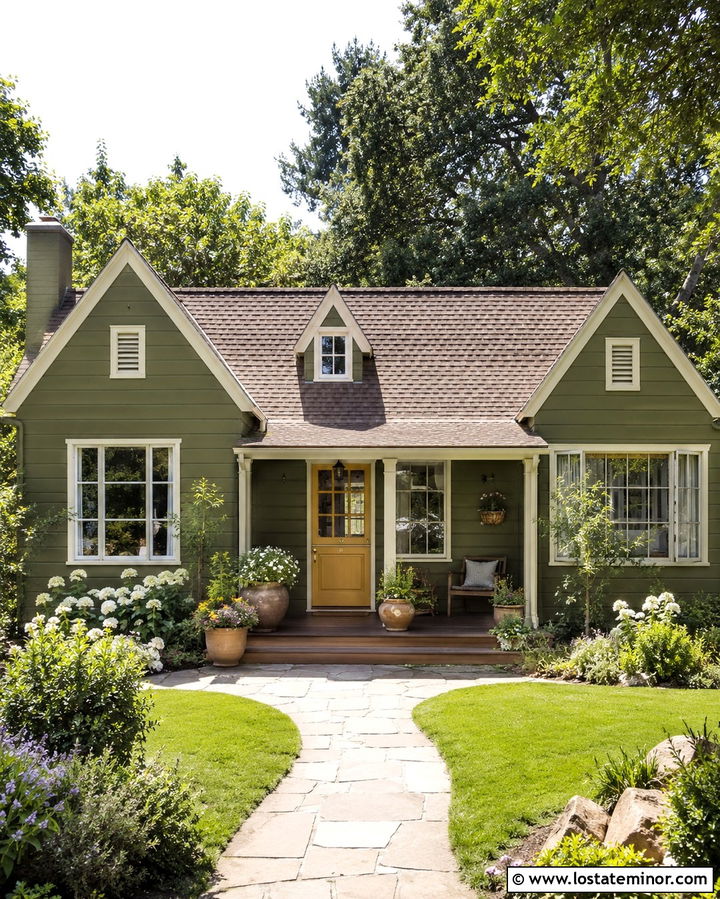
A soft golden-yellow Dutch door can brighten an olive green exterior while preserving its natural warmth. This treatment works well on a small cottage or traditional bungalow where the front entrance is visible from the street. Use medium olive siding with cream trim, then select a muted ochre or wheat yellow rather than a sharp lemon tone. Add aged-brass hardware and warm wood porch flooring to reinforce the sunny accent. A brown shingle roof will feel more harmonious than a blue-toned gray roof. Keep surrounding flowers mostly white, purple, and soft yellow so the landscaping supports the palette. The complete exterior appears joyful, earthy, and carefully coordinated rather than overly colorful.
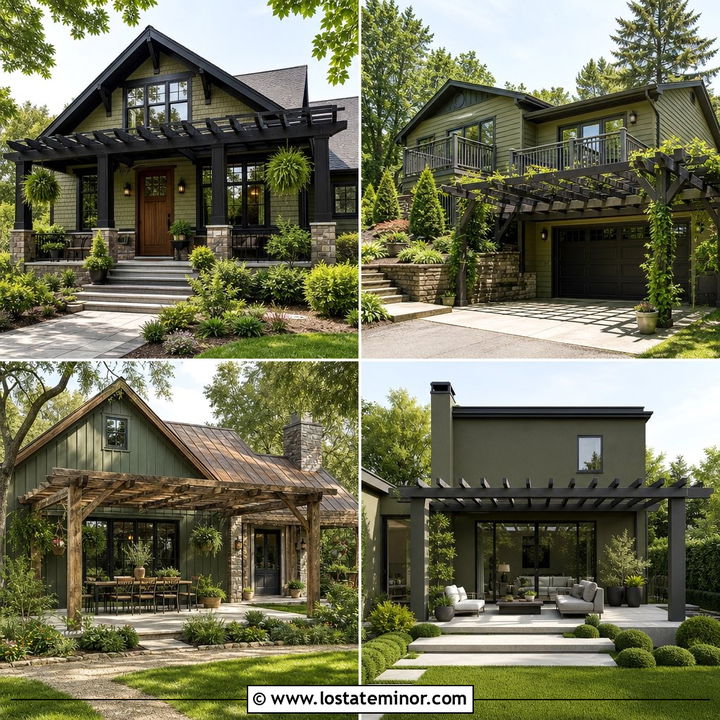
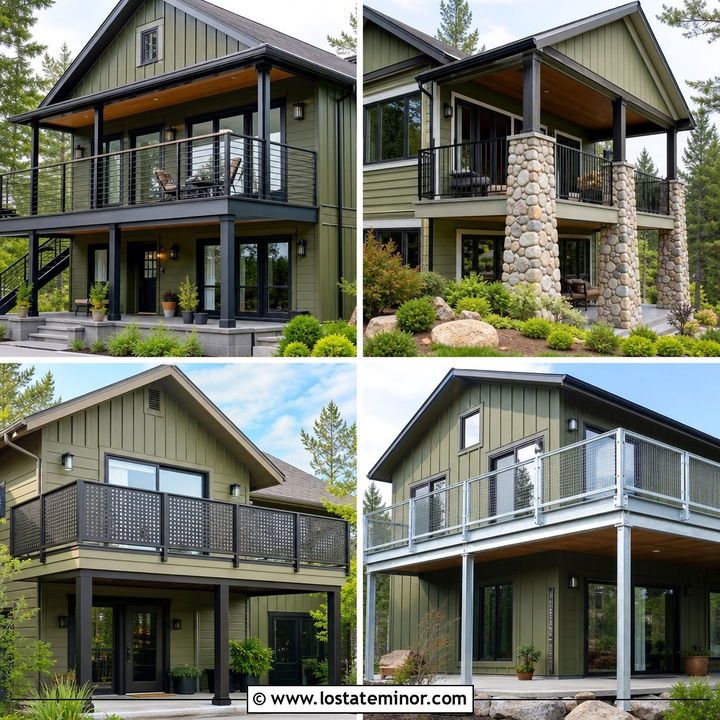
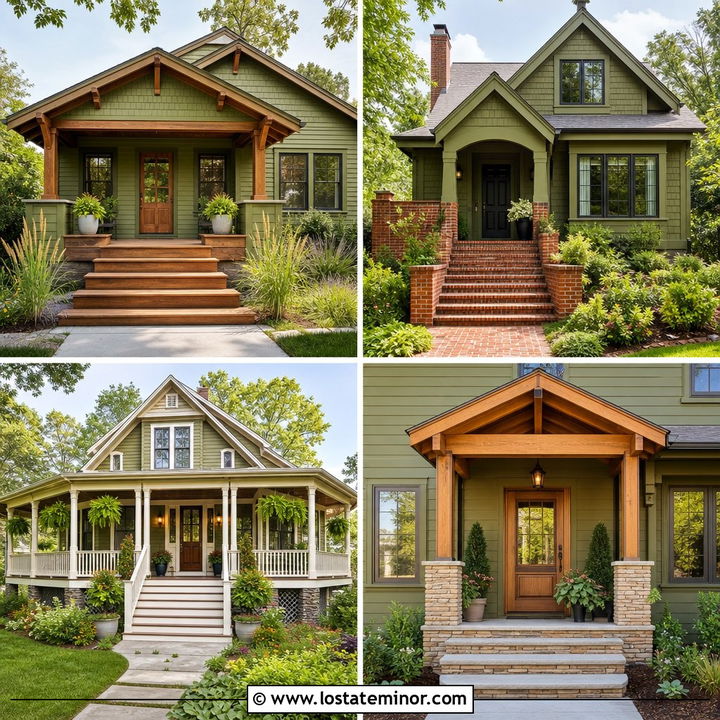
15. Olive Green House With Copper Dutch Door Hardware
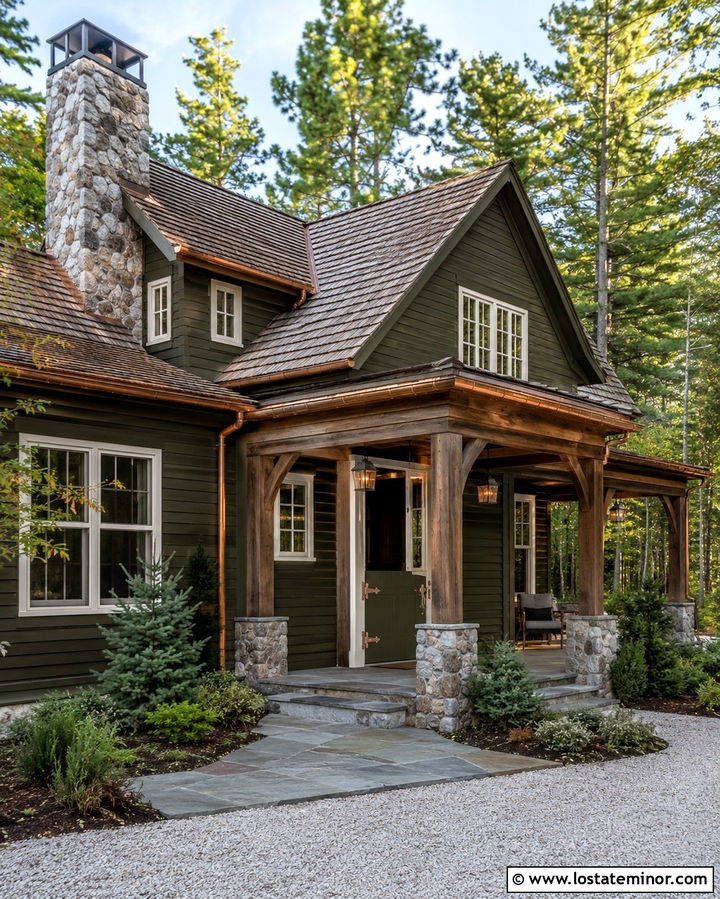
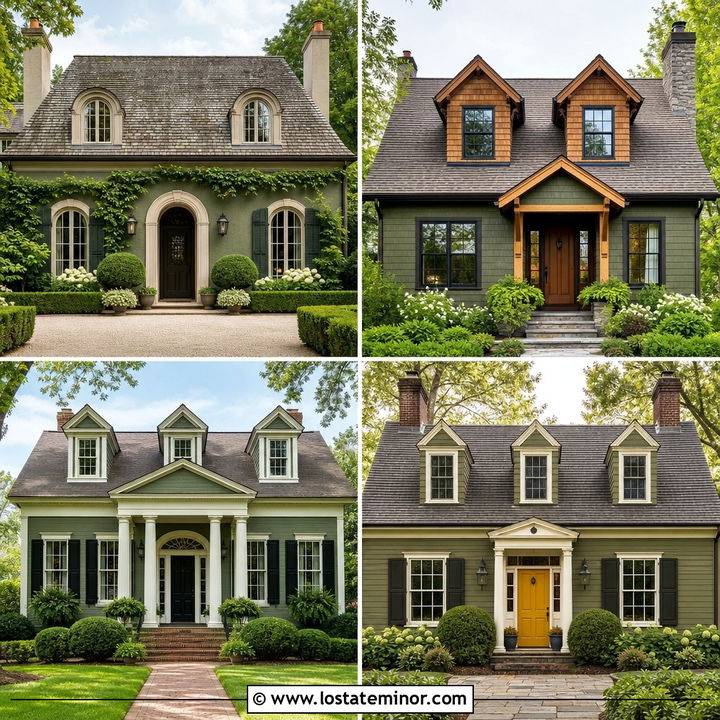
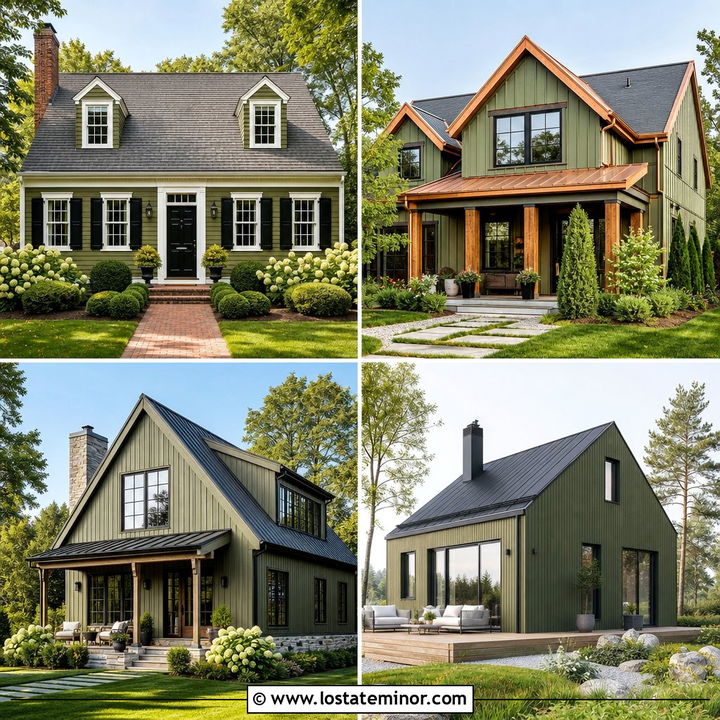
Sometimes the most effective contrast comes from material rather than another paint color. Pair dark olive siding with a matching olive Dutch door, then make aged copper hardware the focal accent. Copper strap hinges, a substantial latch, gutters, and porch lights will develop a warm finish that stands out against the deep green. Use creamy white trim to outline the entrance and windows. A natural fieldstone chimney or foundation can add more earthy variation without competing with the metalwork. This approach suits rustic farmhouses, mountain cottages, and Craftsman homes. Keep the porch simple with heavy timber posts, flagstone flooring, and restrained evergreen plantings that allow the green-and-copper combination to remain prominent.
16. Olive Green House With Pink Dutch Door
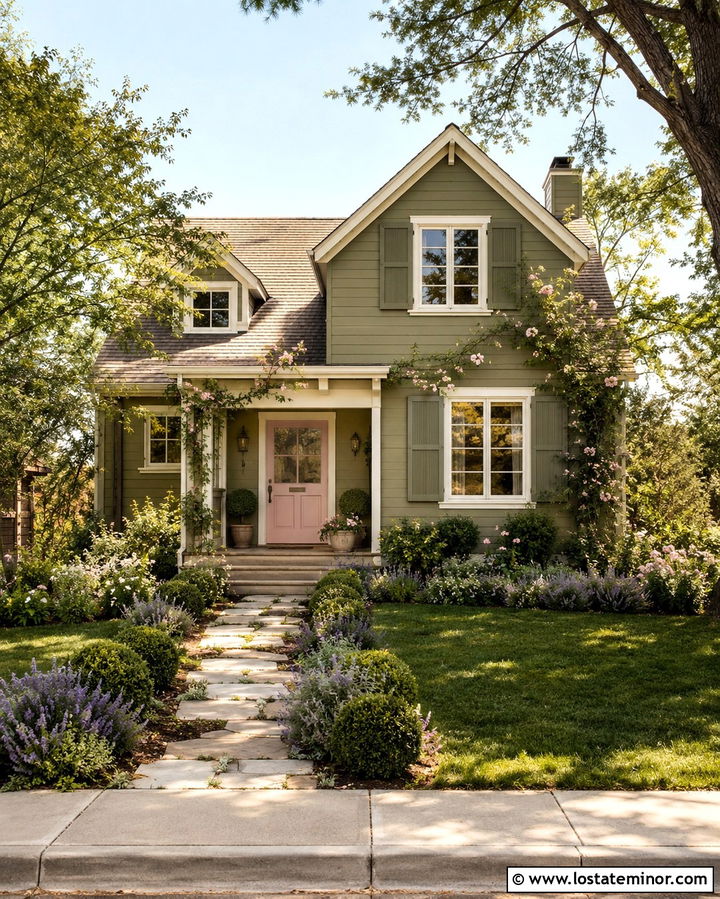
A dusty pink Dutch door offers a softer alternative to the usual red or brown entrance. Against olive green siding, the color creates noticeable contrast while retaining an earthy, garden-inspired quality. Choose a muted plaster pink or faded rose with warm undertones. Surround it with off-white trim and repeat the olive on shutters or porch railings for balance. Unlacquered brass hardware adds warmth, while a weathered wood porch prevents the scheme from appearing too polished. This combination suits a romantic cottage, compact bungalow, or updated Victorian. Climbing roses, boxwood, lavender, and irregular stone pavers can extend the gentle palette into the landscape and make the entrance feel naturally established.
17. Olive Green Victorian With Burgundy Dutch Door
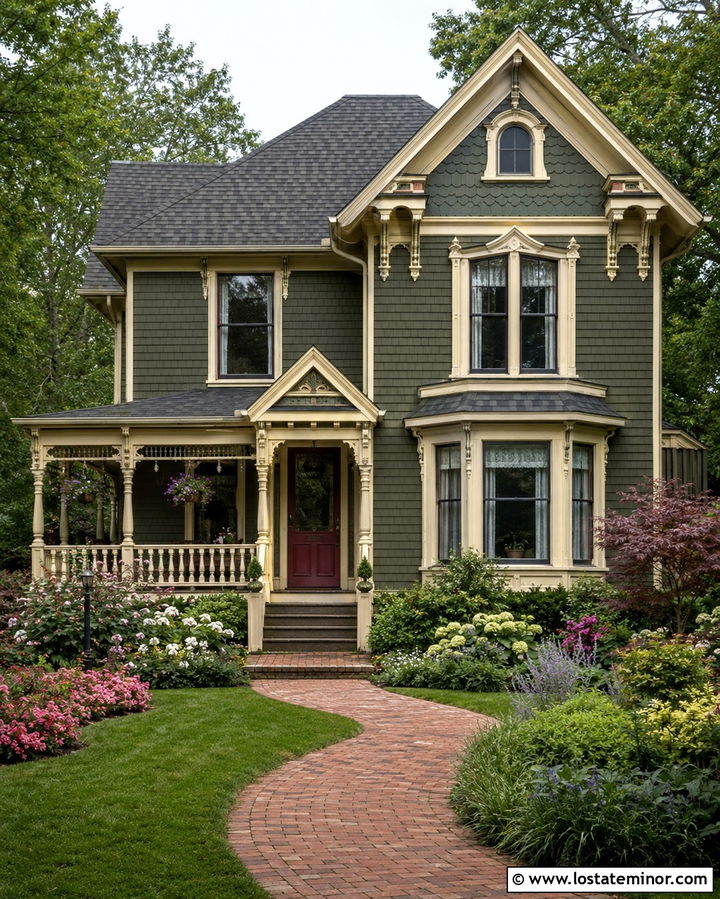
Rich colors can highlight a Victorian exterior without making every architectural detail compete for attention. Use olive green as the main siding color, warm cream on the ornate trim, and deep burgundy on the Dutch door. Repeat burgundy only on a few small brackets or window accents to create balance. A dark brown or charcoal roof will ground the decorative palette. Choose an upper door panel with divided glass, along with antique brass hardware and traditional lanterns. Turned porch posts and patterned shingles can remain cream or olive for a controlled effect. A curved brick walkway and layered flowering beds complement the historical character while keeping the entrance easy to see from the street.
18. Olive Green Scandinavian House With Wood Dutch Door
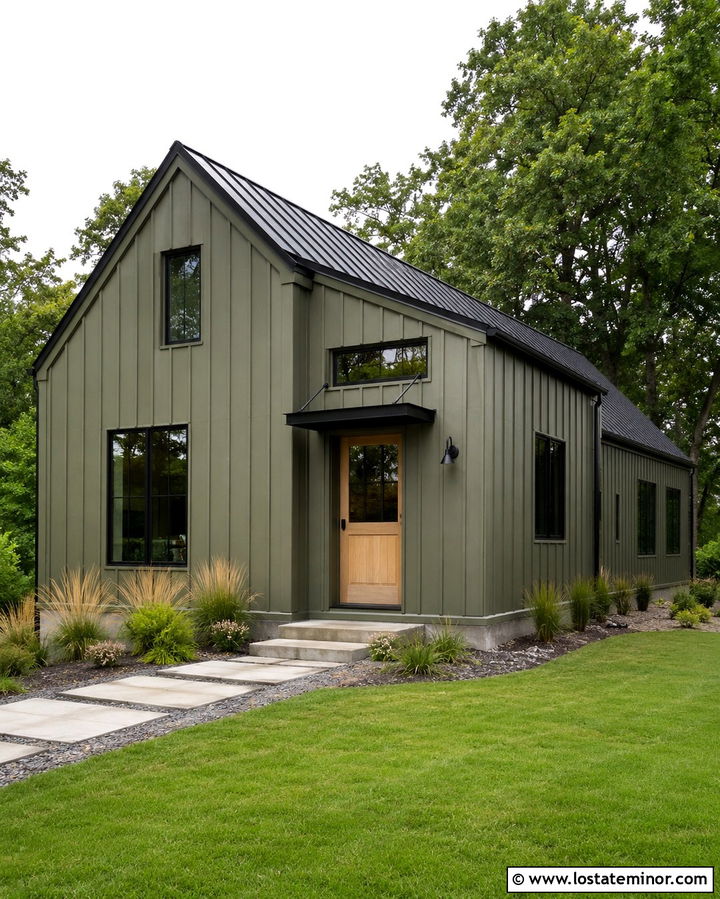
Clean lines allow olive green to feel modern and understated on a Scandinavian-inspired house. Cover the simple facade in vertical olive green wood siding and install a pale oak Dutch door beneath a narrow protective canopy. Use minimal cream trim or omit wide trim entirely around dark-framed windows. A black metal roof adds a crisp top edge, while the pale door provides warmth at eye level. Choose simple black hardware and one streamlined wall light instead of decorative fixtures. Gravel beds, concrete stepping stones, and clusters of ornamental grass keep the landscaping relaxed. The restrained materials make the split door’s craftsmanship visible while preserving the calm, functional character of the complete exterior.
19. Olive Green Mediterranean House With Terracotta Dutch Door
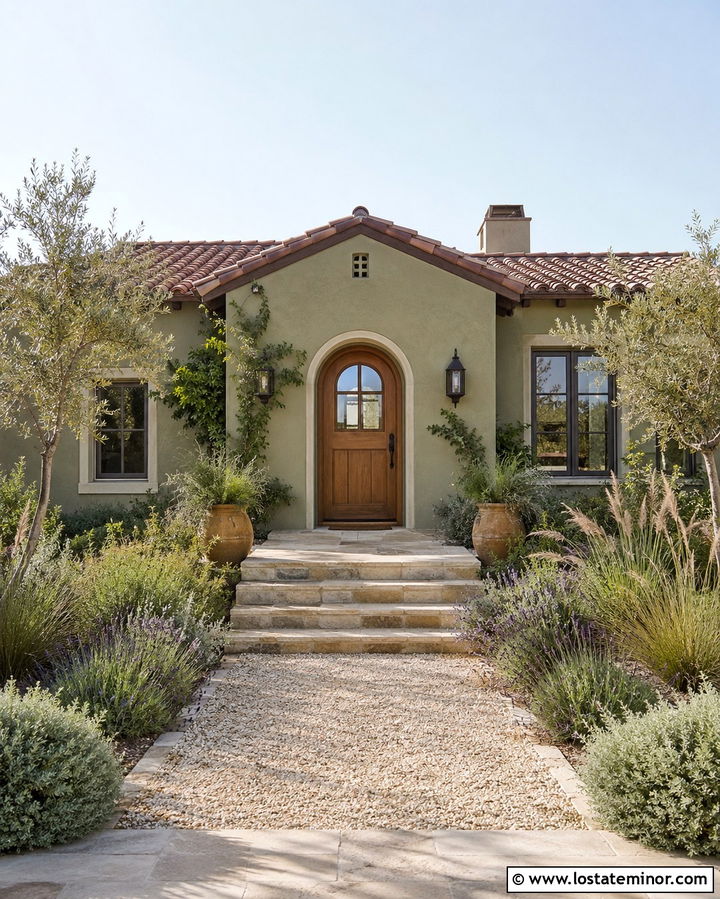
Olive green and terracotta create a natural Mediterranean palette that feels warm in bright sunlight. Use pale olive stucco across the facade and select a clay-colored Dutch door with a softly arched top. Cream trim around the doorway and windows keeps the two earthy colors from blending together. A red clay tile roof provides a stronger version of the door color, creating repetition from top to bottom. Add dark bronze hardware, textured stone steps, and simple iron lanterns. Drought-tolerant landscaping with rosemary, lavender, grasses, and small olive trees will frame the exterior without covering it. The finished scheme feels relaxed, cohesive, and connected to its masonry and tile materials.
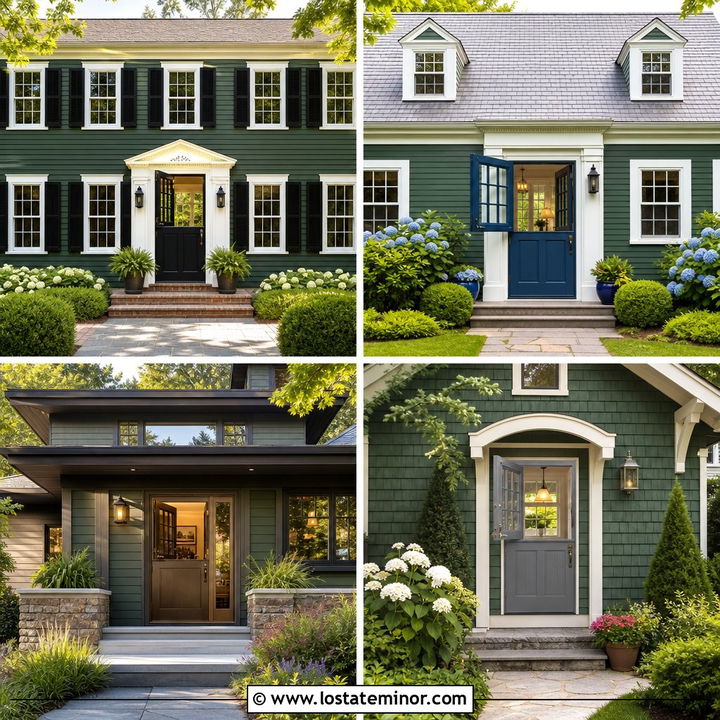
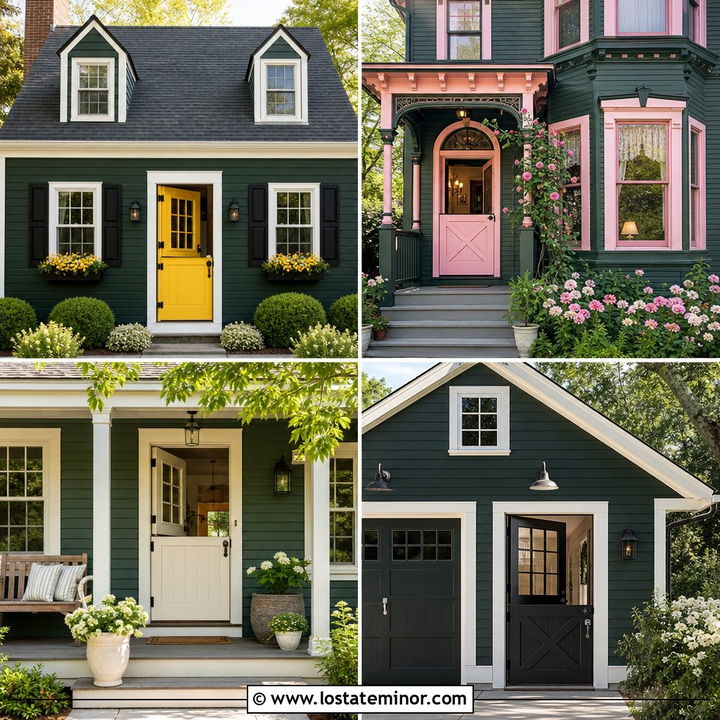
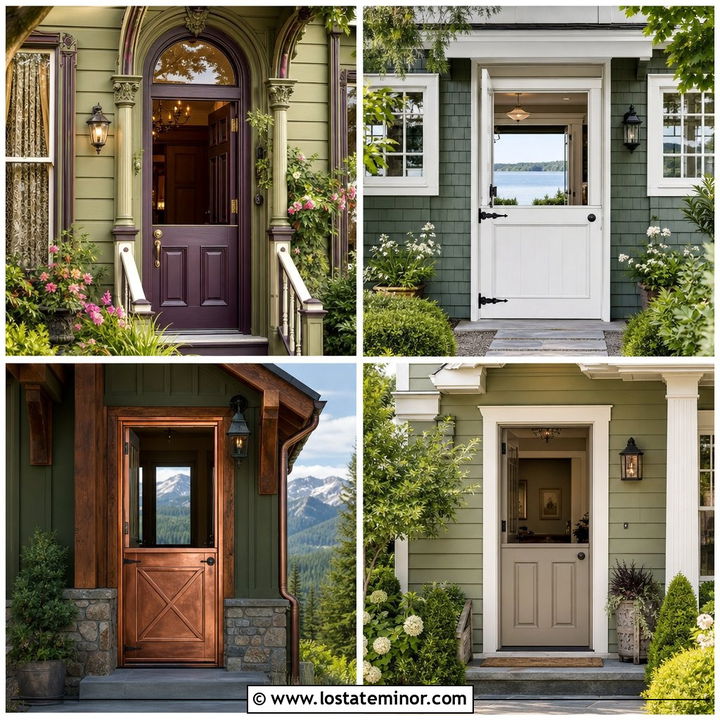
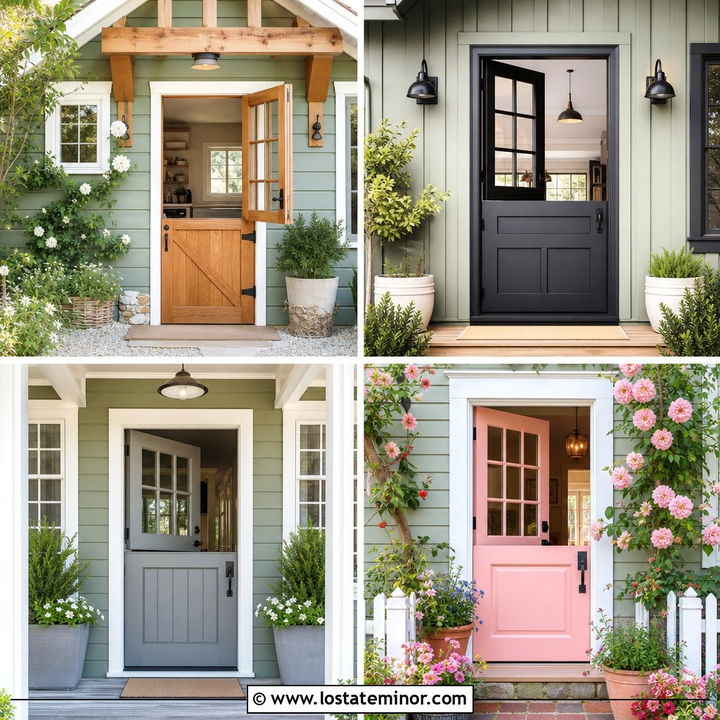
20. Olive Green Mountain House With Black Dutch Door
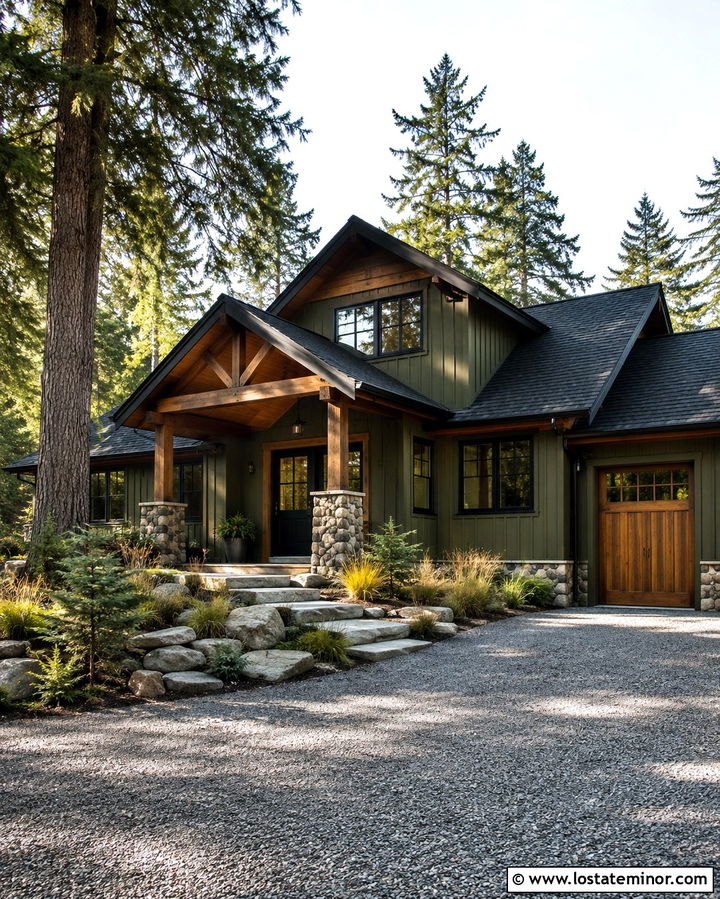
In a wooded or mountain setting, deep olive siding helps a home settle comfortably into the landscape. Add a black Dutch door to give the entrance clear definition from the driveway. Use charcoal window frames and roofing, then introduce warmth through cedar porch columns, soffits, and garage doors. A rugged stone base containing gray, brown, and rust tones can bridge the natural wood and dark painted surfaces. The upper half of the door should include a generous glass panel to bring daylight inside. Wide stone steps, native grasses, and evergreen plantings support the rustic location. This balanced palette gives a mountain house strong contrast without making it appear disconnected from its surroundings.
21. Olive Green Prairie House With Bronze Dutch Door
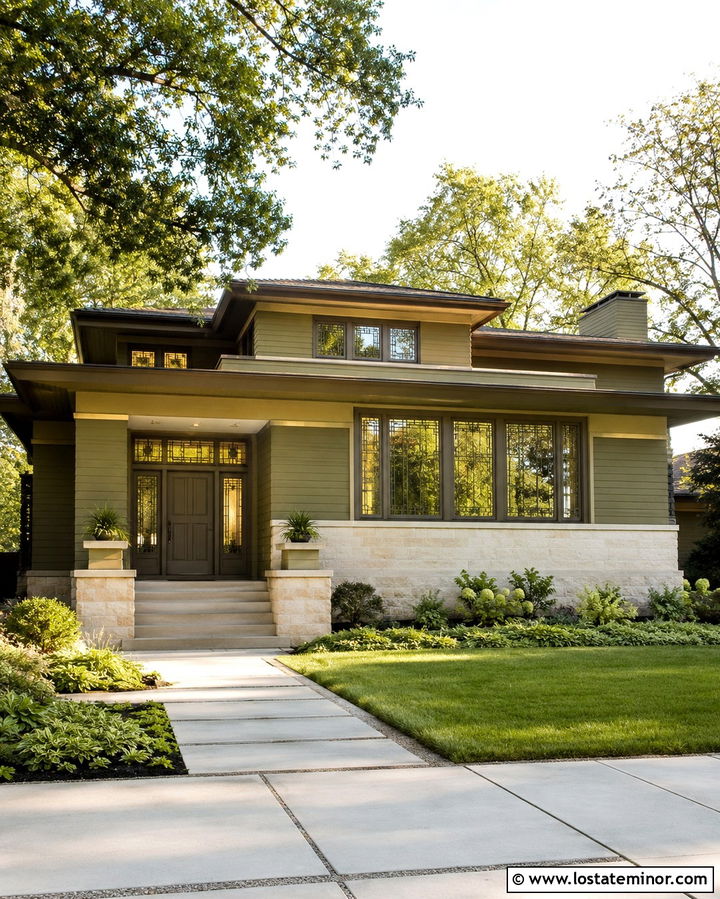
Long horizontal lines look especially grounded when finished in a warm olive green. On a Prairie-style house, pair olive stucco or lap siding with a bronze-painted Dutch door and broad cream trim. The metallic brown color should be subdued rather than shiny, coordinating with low rooflines, deep eaves, and natural masonry. Repeat bronze on window frames, gutters, and geometric porch lights. A band of tan limestone around the foundation adds texture without interrupting the architecture’s horizontal emphasis. Use rectangular concrete pavers and low, spreading plants instead of tall foundation shrubs. The entrance becomes a distinct focal point while remaining consistent with the home’s low-profile proportions and carefully repeated materials.
22. Olive Green Lake House With Aqua Dutch Door
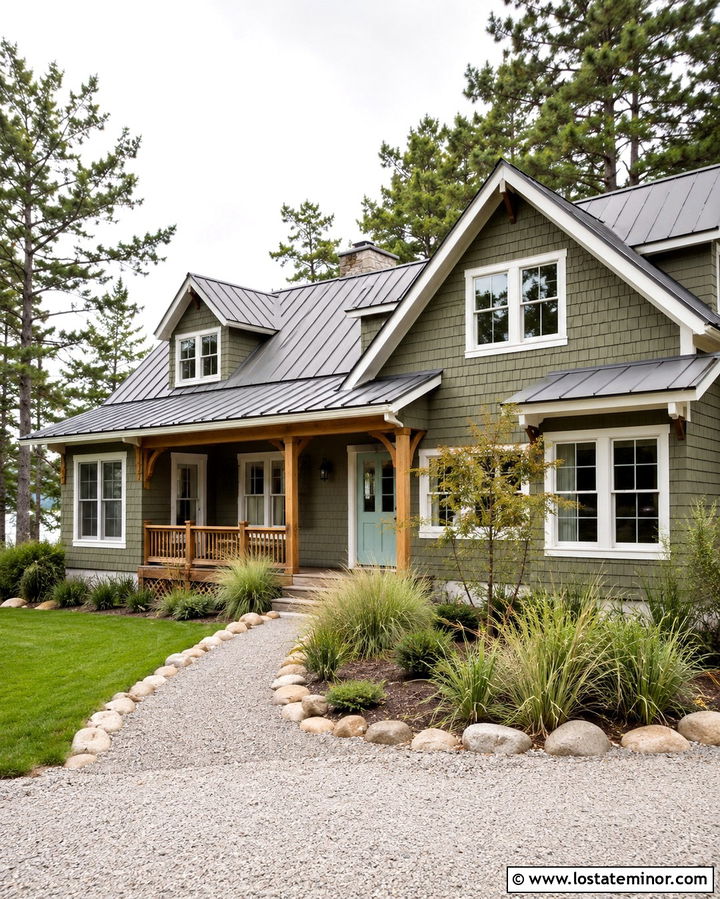
A soft aqua Dutch door can give an olive green lake house a light, relaxed personality. Select muted olive shake siding and a dusty blue-green door instead of a bright turquoise. White trim around the windows and porch keeps both colors clear and fresh. Natural cedar railings, steps, or roof brackets add warmth and reflect the wooded setting often found near water. Use simple black hardware to prevent the pastel accent from feeling overly delicate. A gray metal roof offers practical-looking contrast and a clean silhouette. Native grasses, smooth stone borders, and a casual gravel path complete the scene. The exterior feels playful enough for a retreat but still balanced and sophisticated.
23. Olive Green Desert House With Rust Dutch Door
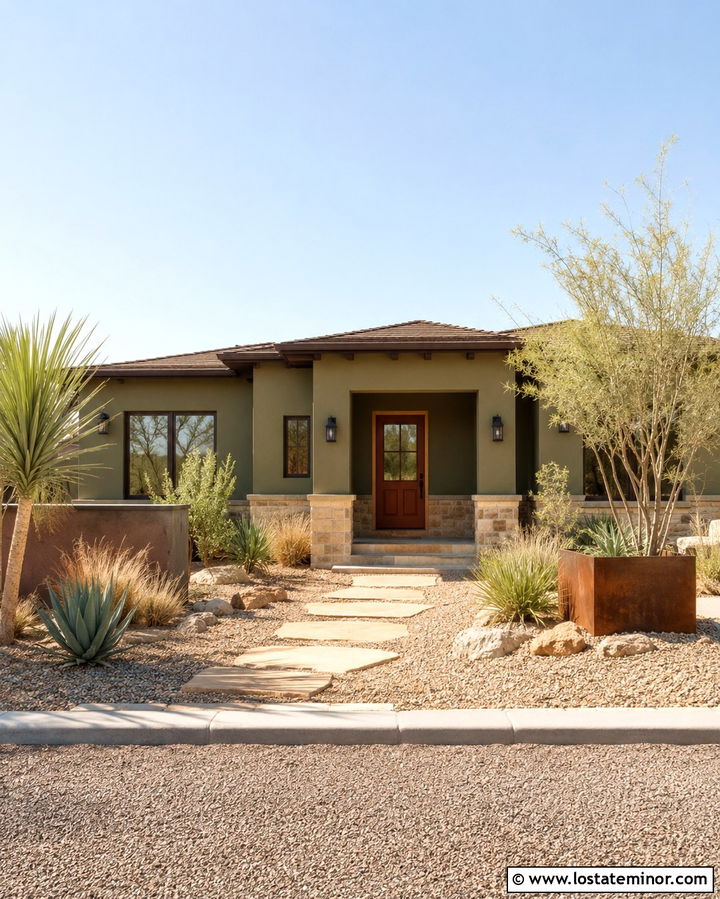
Olive green also works in dry landscapes when it is paired with desert-inspired materials. Apply a dusty olive finish to stucco or fiber-cement panels, then use a rust-colored Dutch door to create an earthy entrance. Sandy beige trim and a flat or low-slope brown roof support the warm palette. Add dark bronze hardware, weathered steel planters, and pale stone around the foundation. Keep the facade simple so each material has room to stand out. Gravel beds, agave, yucca, ornamental grasses, and large stepping stones will frame the house without introducing thirsty-looking greenery. The rust door relates to desert soil, while olive provides a subdued botanical contrast that feels appropriate to the setting.
24. Olive Green Cottage With Lavender Dutch Door
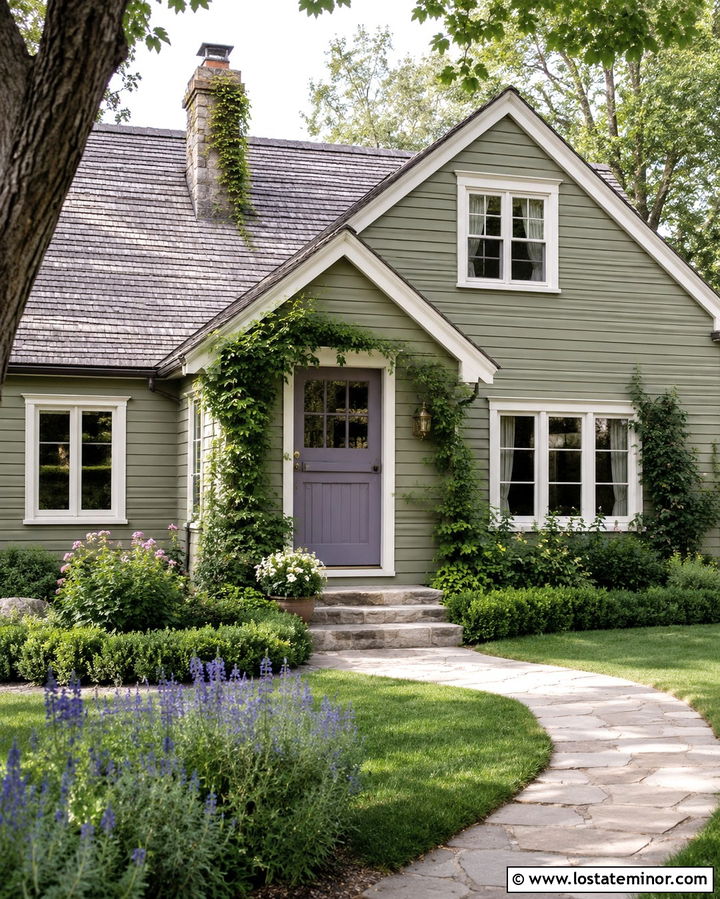
A muted lavender Dutch door can add gentle color to an olive green cottage and connect beautifully with a flower-filled garden. Choose a smoky purple with gray undertones rather than a bright candy shade. Use a softened olive on horizontal siding and creamy white on window trim, eaves, and porch details. Brushed brass hardware provides a warm finishing touch. A weathered gray roof keeps the palette quiet, while natural stone steps introduce subtle variation. Repeat lavender through planted flowers instead of additional painted accents. Loose hedges, climbing greenery, and a winding walkway will enhance the cottage character. The entrance feels distinctive, but every color remains soft enough to work as one cohesive exterior.
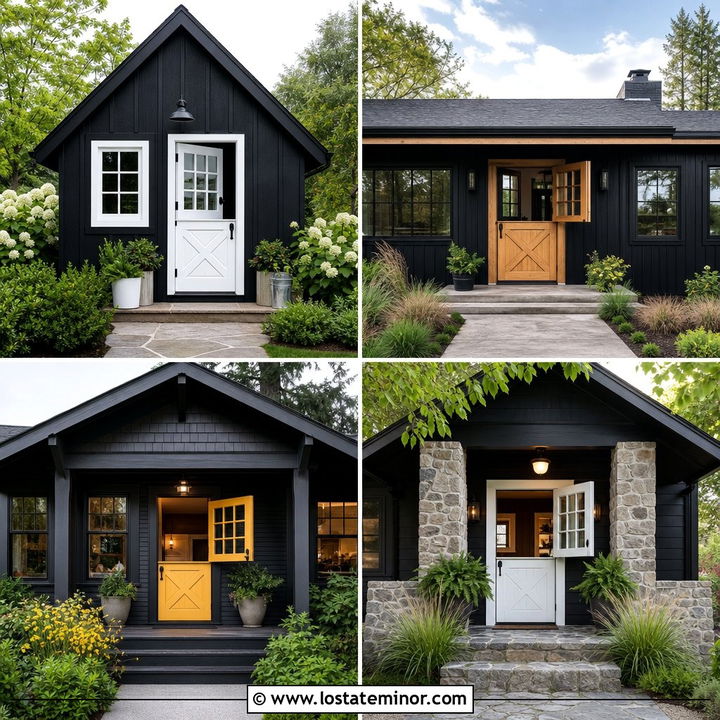
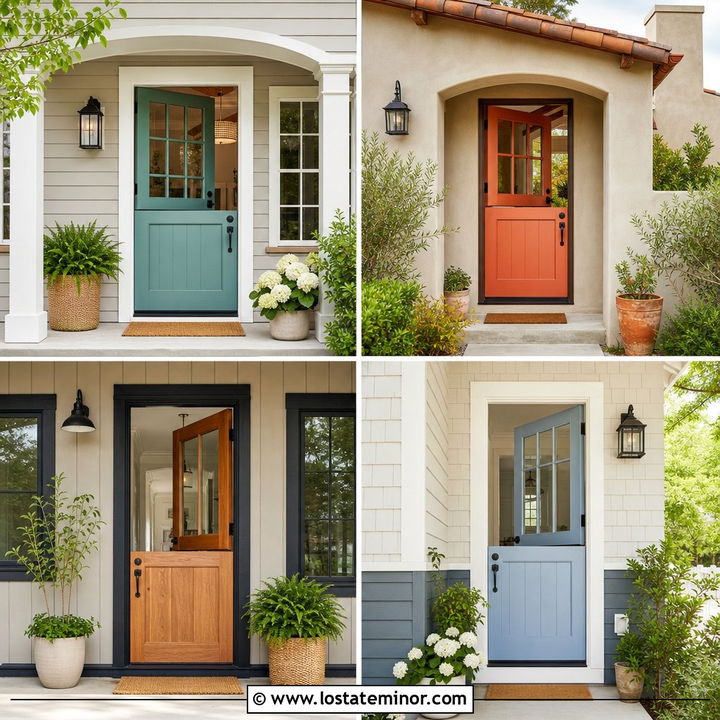
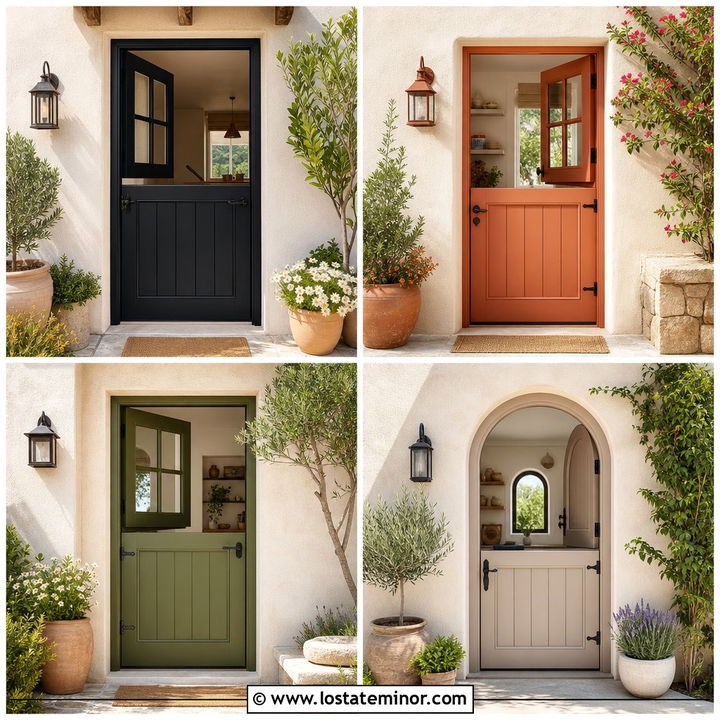
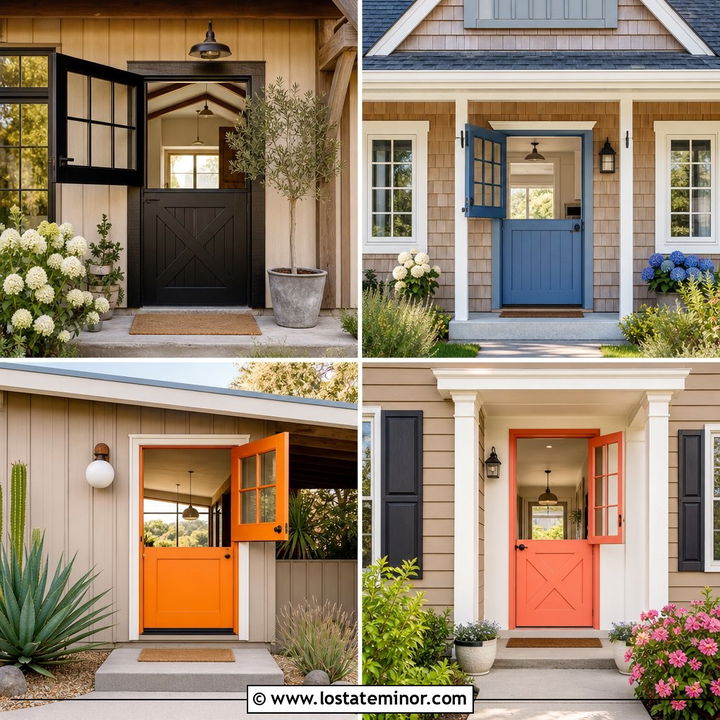
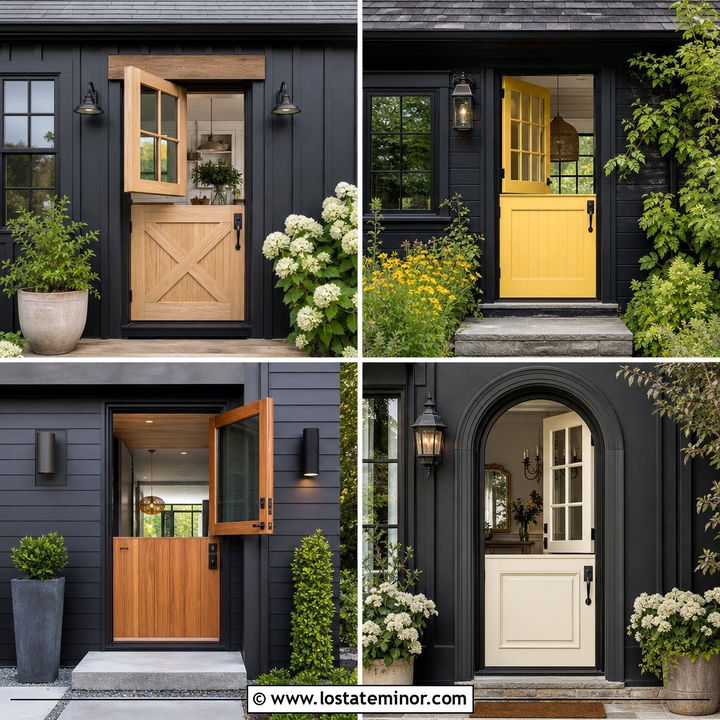
25. Olive Green House With Natural Stone Porch
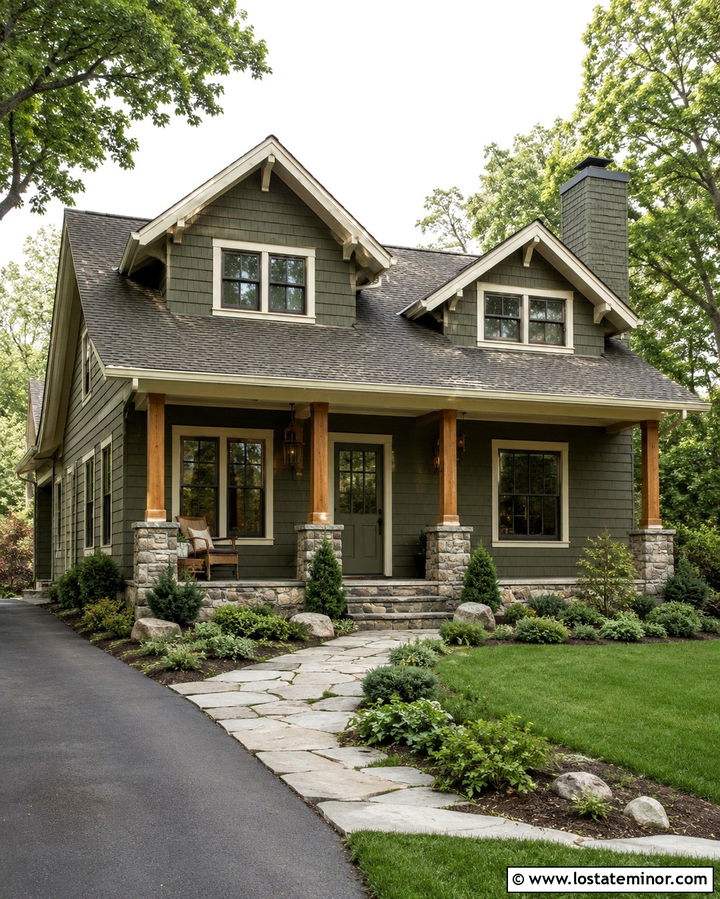
A substantial stone porch gives an olive green house a grounded, permanent appearance. Choose medium olive siding and a Dutch door painted in the same color for an uninterrupted facade. Frame the door and windows with warm white trim, then construct the porch base and steps from mixed gray-brown fieldstone. Timber columns can introduce a honey-colored wood tone between the painted siding and rugged masonry. Use dark bronze door hardware and lanterns to complement the stone’s deeper shades. The upper half of the Dutch door can feature clear divided glass for a traditional finish. Low evergreen shrubs and a flagstone walkway continue the natural textures into the yard without distracting from the entrance.
26. Olive Green House With Brick Porch
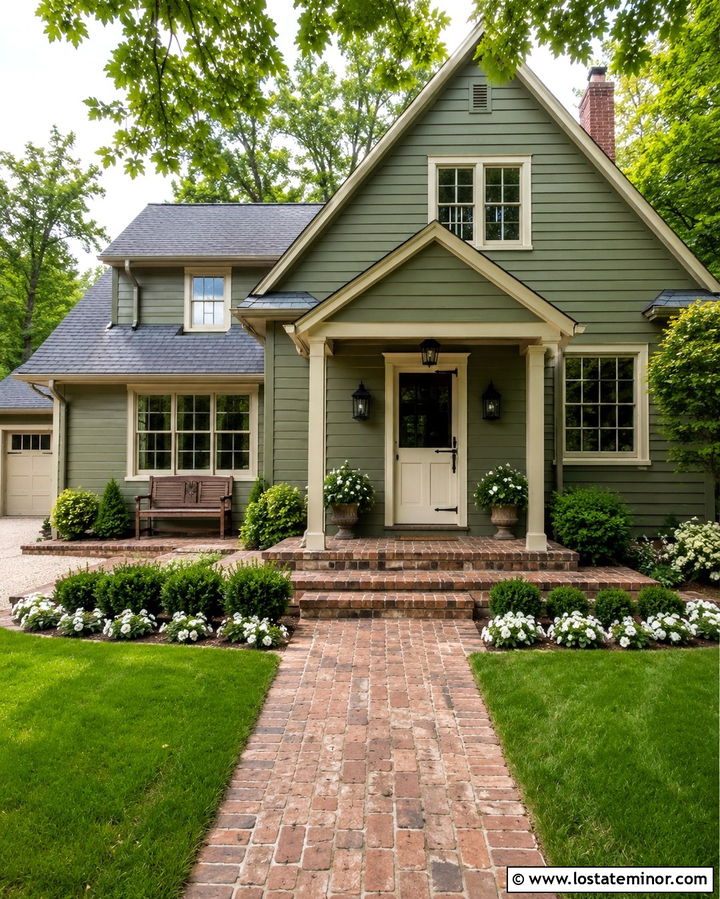
Red-brown brick brings comfortable warmth to an olive green facade. On a traditional cottage or modest colonial, combine olive lap siding with a cream Dutch door and matching cream trim. Use reclaimed-look brick on the porch floor, steps, walkway, or lower foundation to establish a strong material connection. Black iron hardware and lanterns add structure, while a dark charcoal roof keeps the exterior from becoming too warm. Avoid bright orange brick, which may compete with the green. Instead, select weathered brick containing brown, burgundy, and muted tan variation. Add boxwood, white flowers, and simple wood seating to create an entrance that feels established, practical, and welcoming throughout the year.
27. Olive Green House With Cedar Shutters
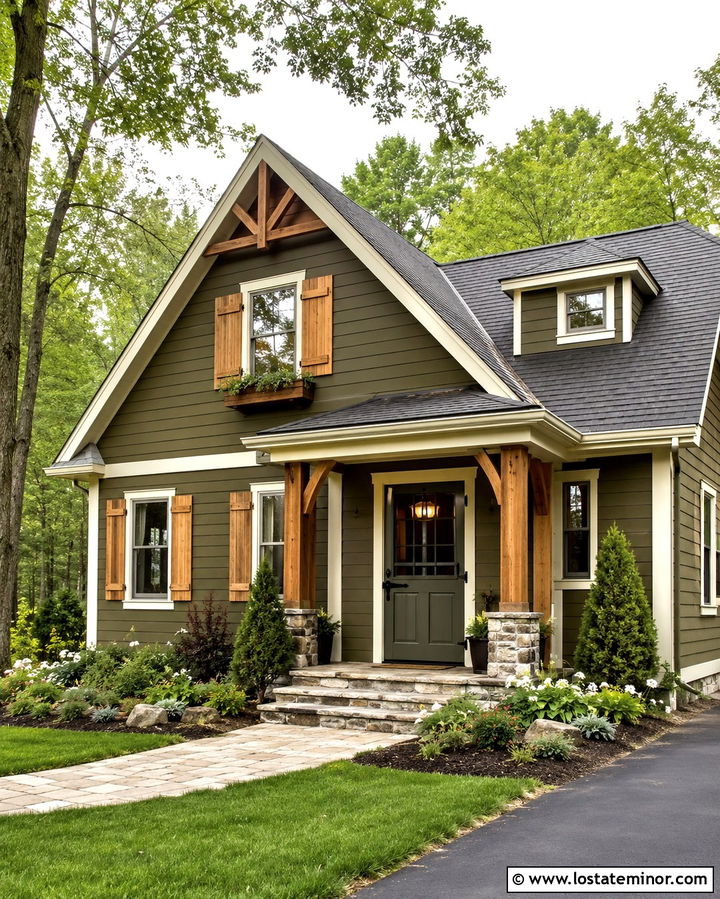
Cedar shutters can warm an olive green house while giving the Dutch door a supporting architectural frame. Use a dark olive body color, a matching olive door, and creamy off-white trim around the windows. Install properly scaled cedar shutters and repeat the wood on porch posts or gable brackets. This repetition makes the material feel intentional across the facade. Black strap hinges on the shutters can coordinate with the door latch, sconces, and gutters. A medium-gray shingle roof provides neutral contrast above the warm green-and-wood combination. Complete the exterior with stone steps, broad planting beds, and layered evergreen shrubs. The overall look is rustic but tailored, with a clear hierarchy of colors and materials.
28. Olive Green House With Charcoal Trim
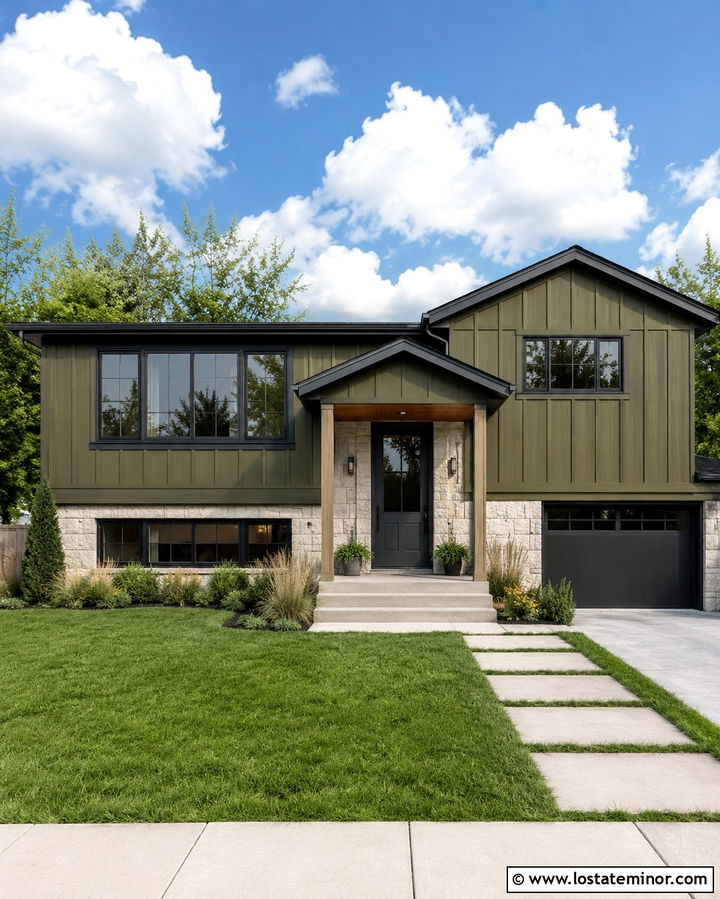
Charcoal trim creates a bold, contemporary outline around an olive green exterior. Apply olive green to smooth lap or vertical siding, then use deep charcoal on the windows, fascia, gutters, and Dutch door. Because both colors are dark, introduce lighter materials through pale concrete steps, cream stone, or a light wood porch ceiling. Select a door with a large upper glass panel so the entrance does not appear visually heavy. Minimal blackened-bronze hardware will blend into the charcoal finish. This palette works well on contemporary homes, updated split-levels, and compact urban houses. Structured grasses, clipped shrubs, and a clean concrete walkway reinforce the facade’s crisp lines and controlled contrast.
29. Olive Green House With White Trim And Black Roof
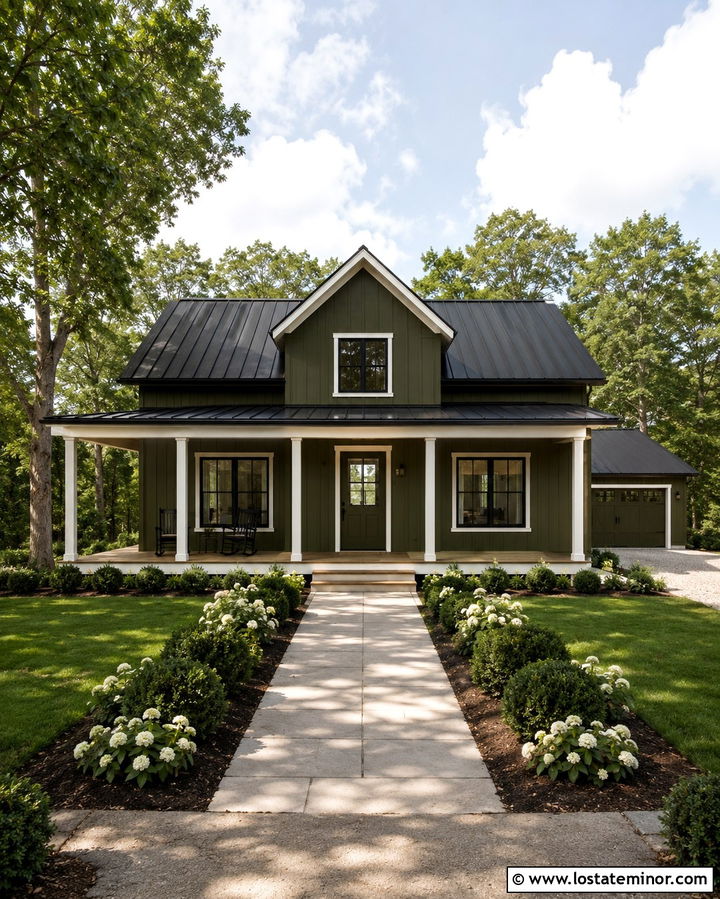
Few combinations frame olive siding as clearly as white trim and a black roof. Use a rich olive green on the full facade, bright warm white on windows and porch columns, and matte black overhead. Paint the Dutch door olive to maintain continuity, then add black hinges, a black latch, and divided upper glass. The three-color palette is straightforward, making it useful for farmhouses, colonials, and Craftsman homes with several architectural details. Natural wood porch flooring prevents the contrast from feeling stark. Keep landscaping mostly green and white, with a straight walkway and evenly spaced shrubs. The completed house looks defined and polished while allowing the olive color to remain the dominant feature.
30. Olive Green House With Matching Dutch Garage Doors
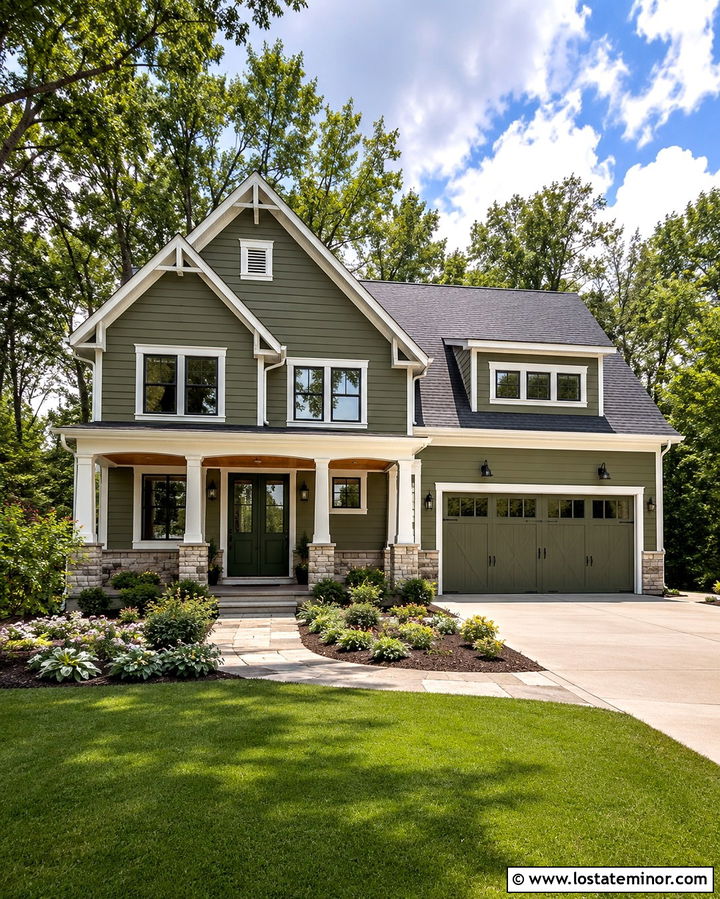
Matching the front Dutch door with garage doors can unify a wide facade. Paint the house a medium olive green, then use a deeper olive on the split entry door and carriage-style garage doors. Warm white trim should outline each opening, creating enough separation between the related green tones. Add black hardware, windows, and exterior lights for consistent definition. A light stone foundation and cedar porch ceiling will prevent the large painted surfaces from feeling flat. This approach is especially effective on a farmhouse, ranch, or Craftsman home with an attached garage. Broad planting beds and a clearly defined walkway help guide attention toward the Dutch entrance instead of allowing the garage to dominate the curb view.
Conclusion:
The most successful 30 Olive Green House Design With Dutch Door Ideas treat the facade as one connected composition. Olive siding can feel traditional, rustic, coastal, or modern depending on the door color, trim, roofing, masonry, and landscaping around it. Warm white offers gentle contrast, while charcoal and black create sharper definition. Wood, stone, brick, copper, and bronze bring out olive green’s earthy qualities. Before committing, view large paint samples beside permanent materials at different times of day. Confirm that the Dutch door is rated and installed for exterior use, with suitable weather protection and secure hardware. A coordinated palette will give the home lasting character while making its split entrance feel intentional and inviting.

Related posts: