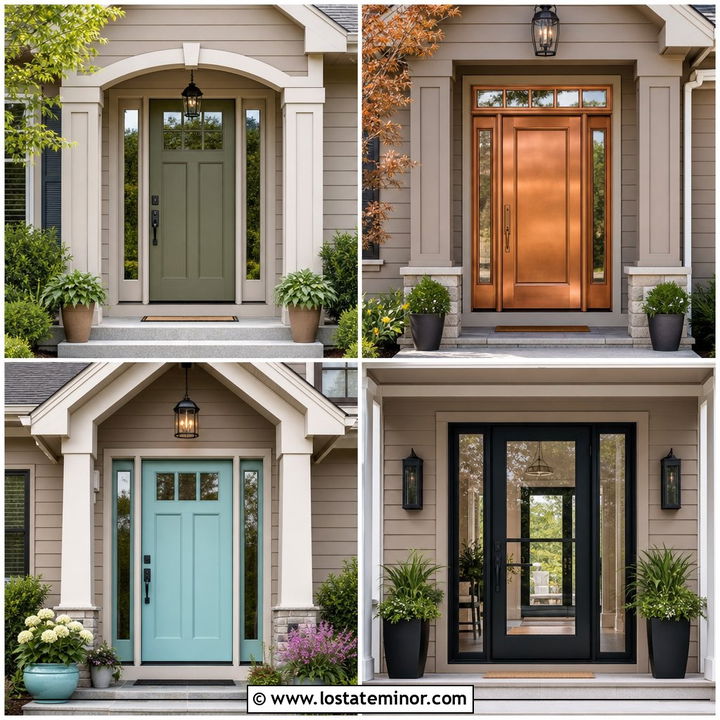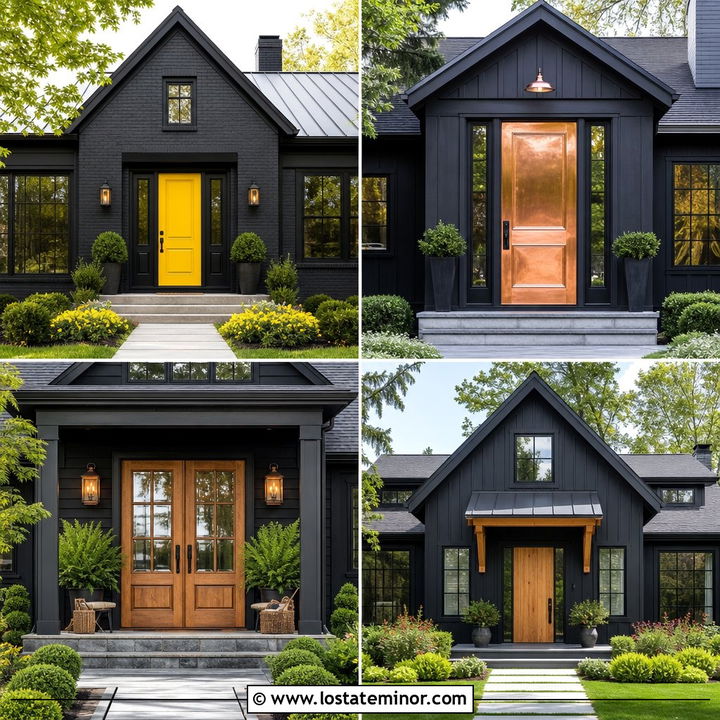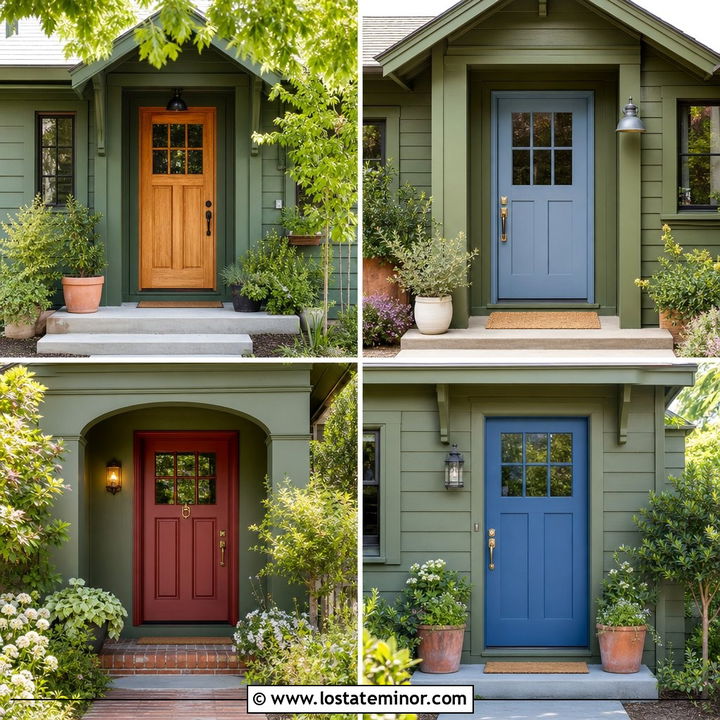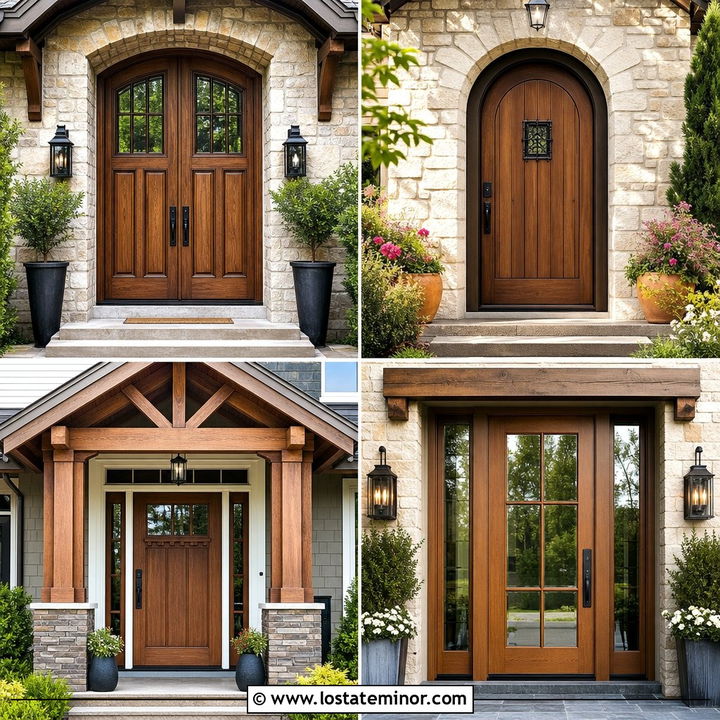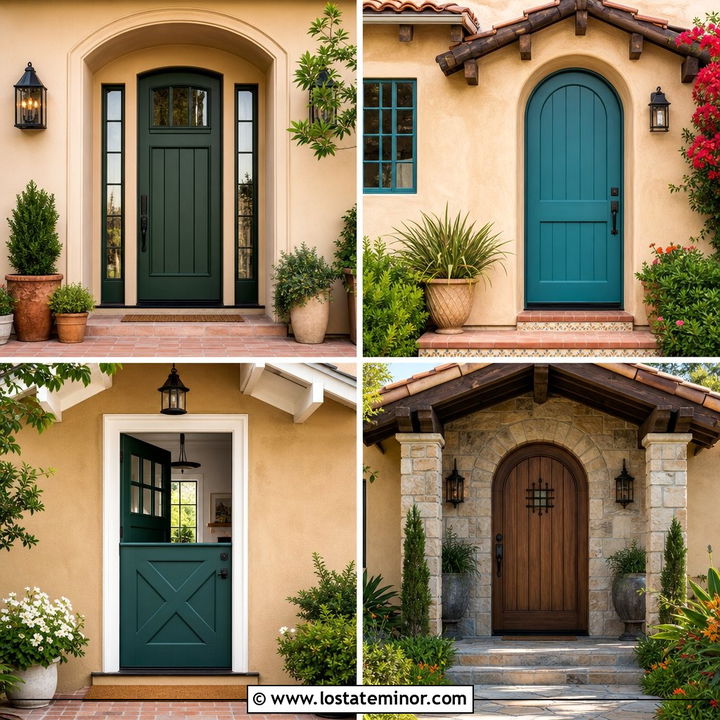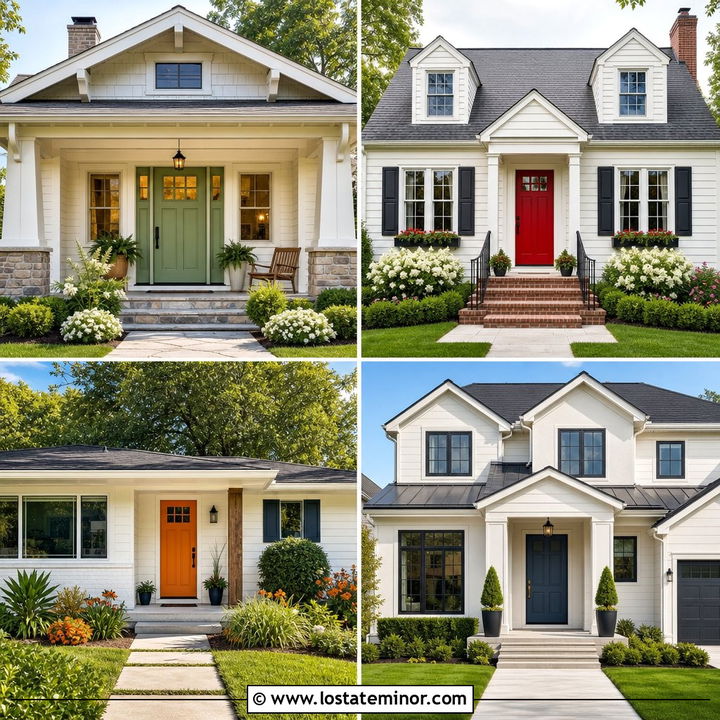
A warm white exterior creates a soft, welcoming backdrop that works with traditional, rustic, coastal, and modern architecture. The right entry door then gives the facade personality, contrast, and a clear focal point. This guide to **30 Warm White House Design With Entry Door Ideas** explores complete exterior schemes rather than isolated door colors. Each look coordinates the siding, trim, roofing, masonry, hardware, porch, and landscaping. When choosing your combination, consider the home’s architecture, permanent materials, porch finishes, and natural light so the entrance feels connected to the entire facade. () From classic black and natural oak to sage green, navy, terracotta, and muted blue, you will find practical inspiration throughout these 30 Warm White House Design With Entry Door Ideas.
1. Warm White House With Black Entry Door
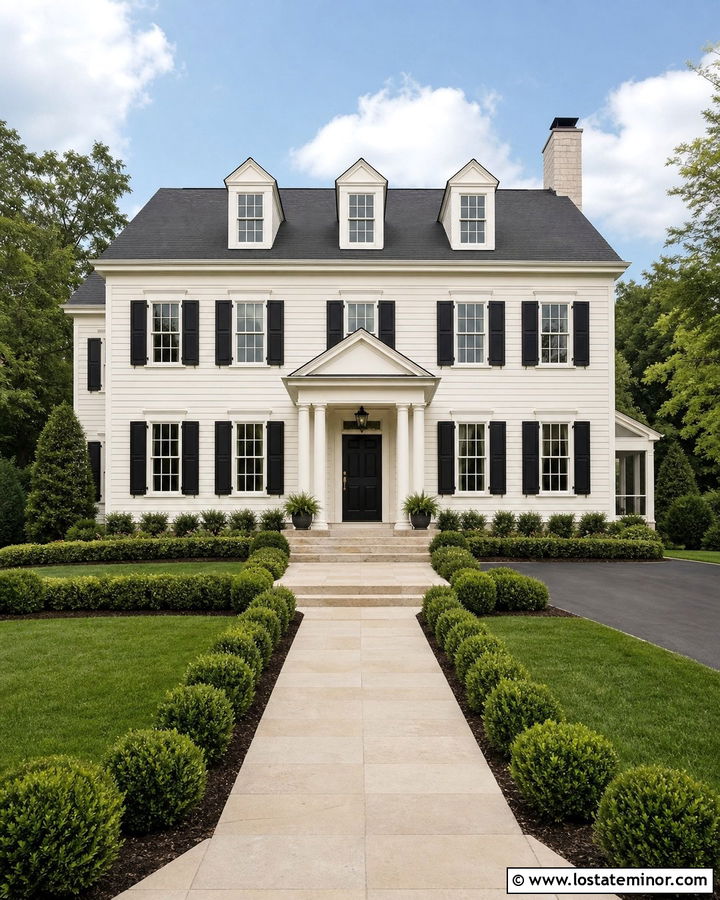
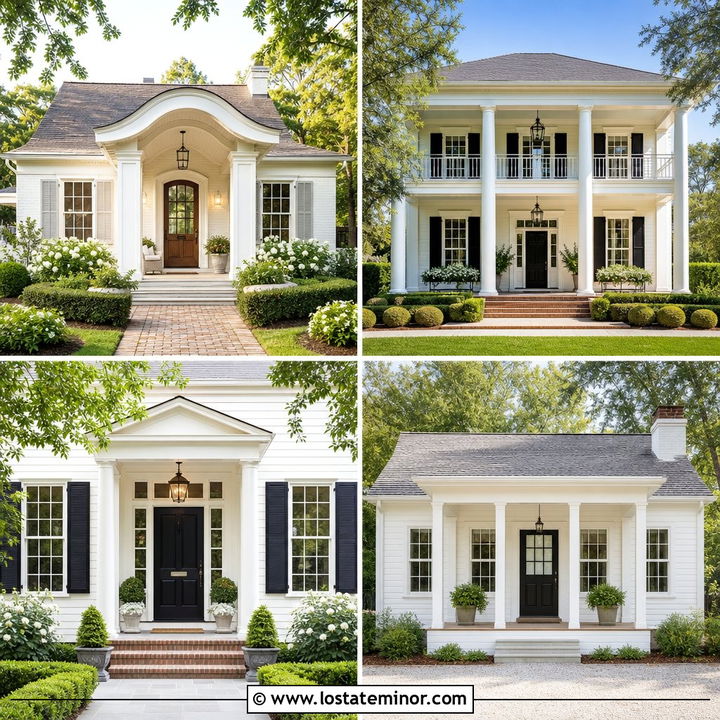
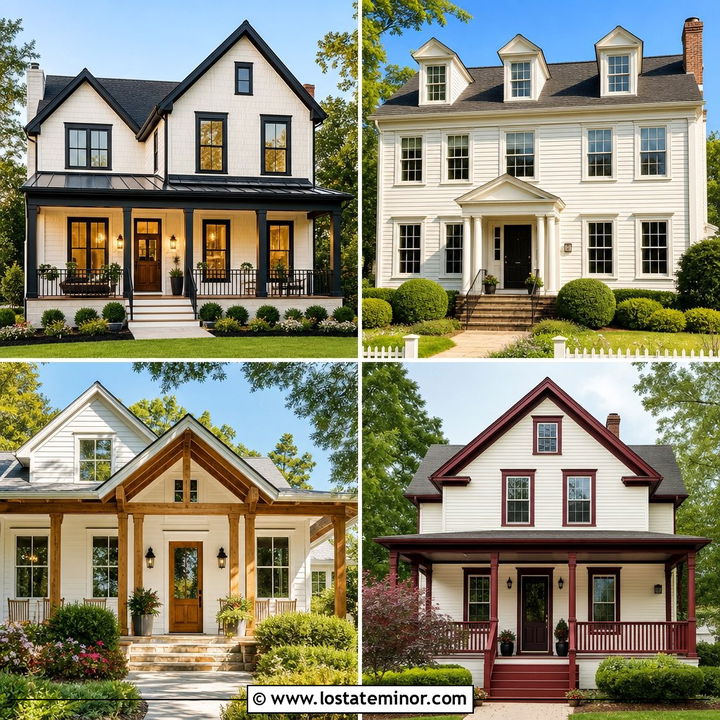
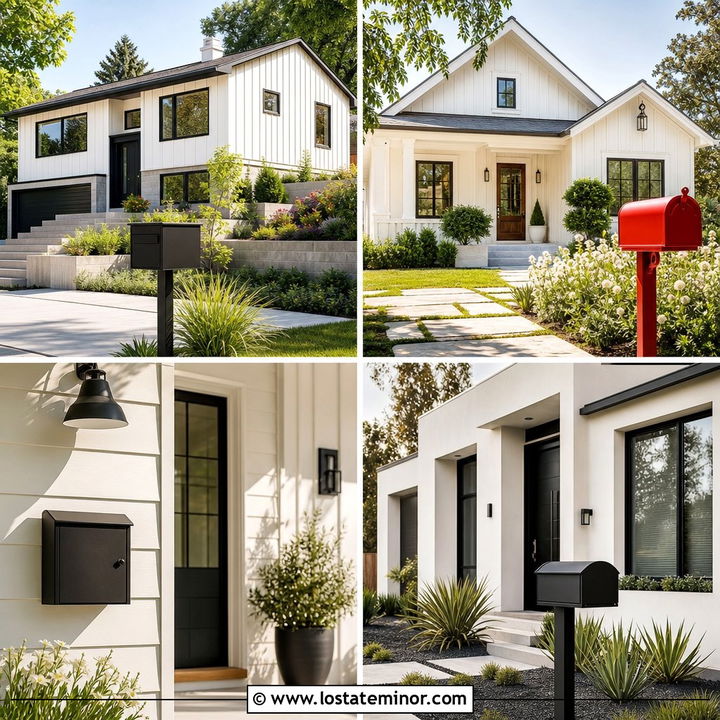
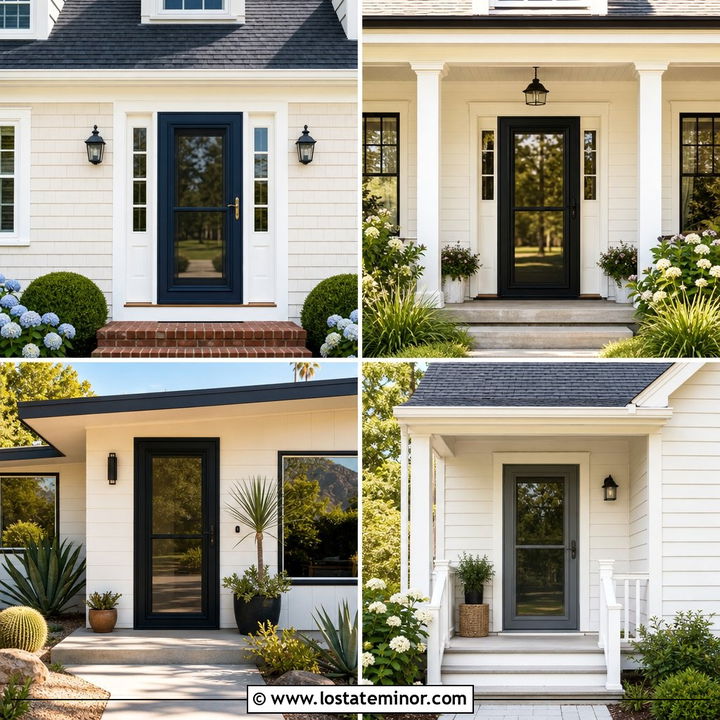
A black entry door gives a warm white house a clean focal point without making the exterior feel cold. Use creamy white lap siding with slightly brighter trim around the windows, eaves, and porch columns. A satin black door works especially well when repeated on the window frames, lanterns, railings, and house numbers. Keep the garage door warm white so it blends into the facade rather than competing with the entrance. A medium gray shingle roof provides softer contrast than solid black roofing. For added texture, introduce pale limestone around the porch base or foundation. Simple boxwood plantings and a straight stone walkway complete this balanced scheme, which suits colonial, farmhouse, craftsman, and transitional homes.
2. Warm White House With Natural Oak Entry Door
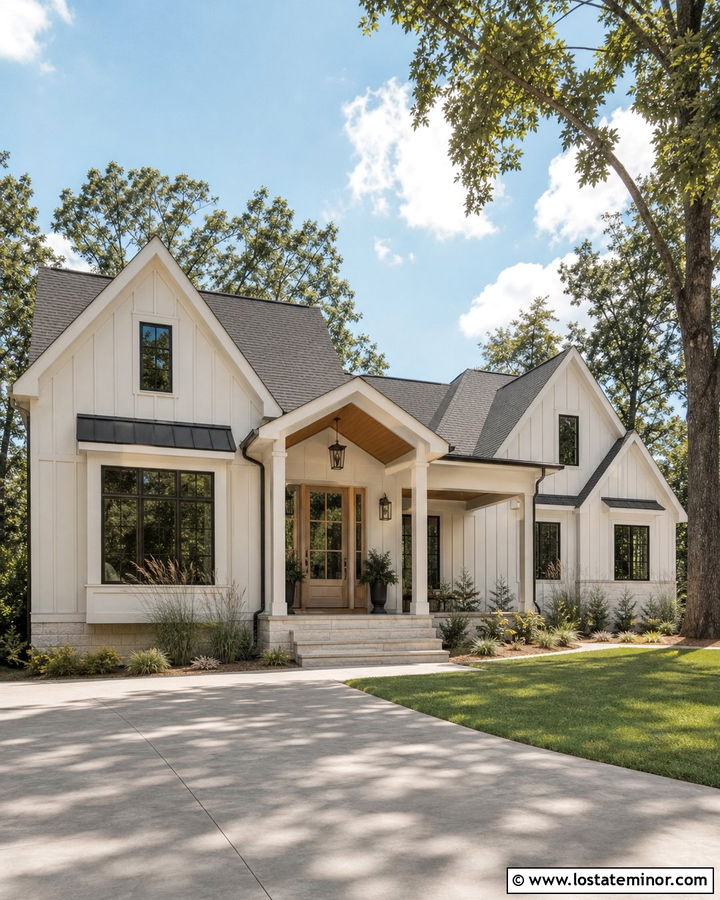
Natural oak brings visible grain, golden warmth, and relaxed character to a warm white exterior. Pair creamy board-and-batten siding with a clear-finished oak entry door featuring three or four simple glass panels. The wood should look substantial enough to balance tall gables and large windows. Repeat the oak tone on porch ceiling boards, decorative brackets, or a small bench, but avoid covering every accent in wood. Bronze exterior lights and soft brown roof shingles connect naturally to the door. Choose warm white trim with minimal contrast for an easy, cohesive facade. Pale stone porch flooring, ornamental grasses, and an informal walkway reinforce the organic look. This combination feels especially comfortable on modern farmhouse and contemporary craftsman homes.
3. Warm White House With Walnut Entry Door
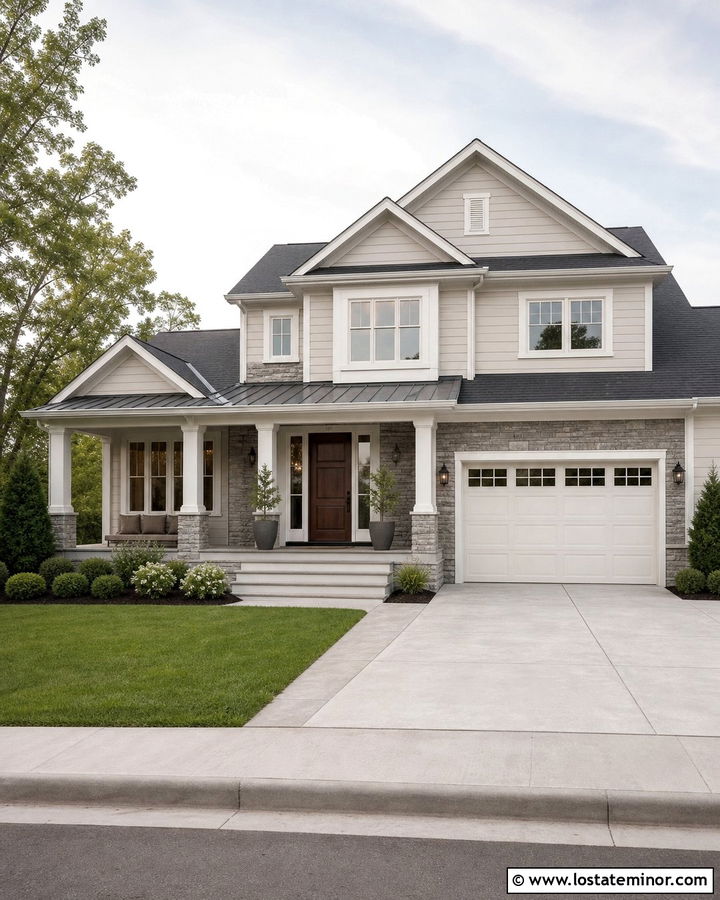
Deep walnut creates a richer and more formal entrance against soft warm white siding. This pairing looks impressive on a two-story transitional house with symmetrical windows, a centered doorway, and a gently pitched roof. Choose a walnut door with raised panels or narrow vertical planks to highlight the natural wood variation. Dark bronze hardware, gutters, and lanterns provide definition without the sharpness of solid black. Use warm white for the window trim and garage door to keep the architecture calm. A charcoal roof and subtle gray-brown stone along the lower facade give the scheme visual weight. Finish the entrance with wide porch steps, clipped shrubs, and large neutral planters that frame the door without hiding its beautiful grain.
4. Warm White House With Dark Green Entry Door
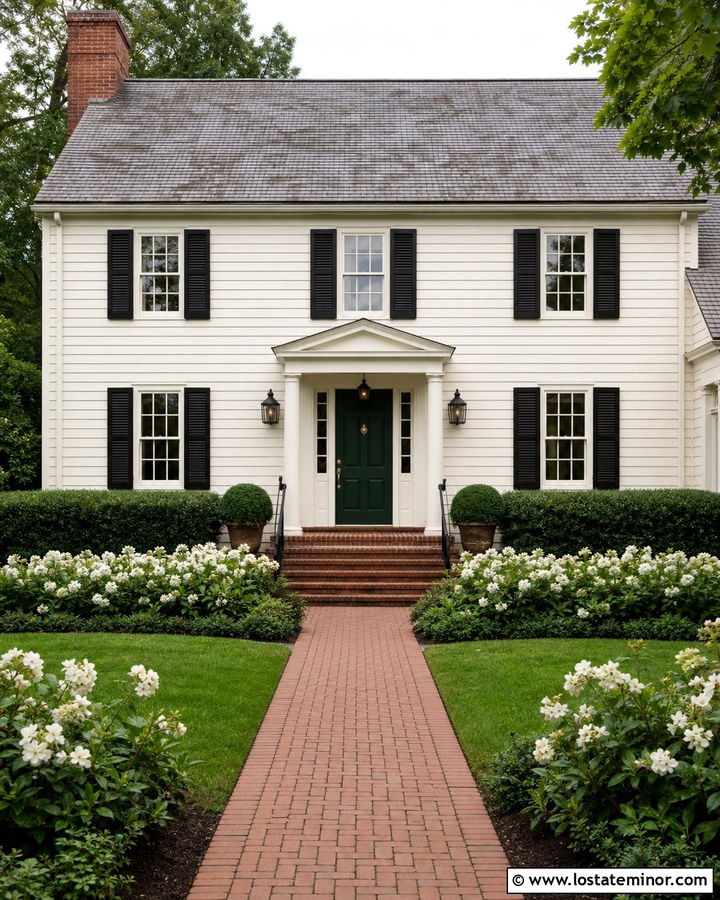
A dark green entry door feels classic, grounded, and closely connected to surrounding landscaping. Place it against warm white clapboard siding with matching trim for a simple backdrop. Deep forest green works particularly well on a colonial facade with black shutters, red-brown brick steps, and traditional lanterns. The shutters can match the door, but using black creates more depth and prevents the green from overwhelming the exterior. Choose an aged brass handle set to bring warmth to the entrance. A weathered gray roof keeps the palette understated. Layer evergreen shrubs, white flowering plants, and a brick walkway around the porch. The finished house feels established and elegant while maintaining a welcoming, residential character.
5. Warm White House With Sage Green Entry Door
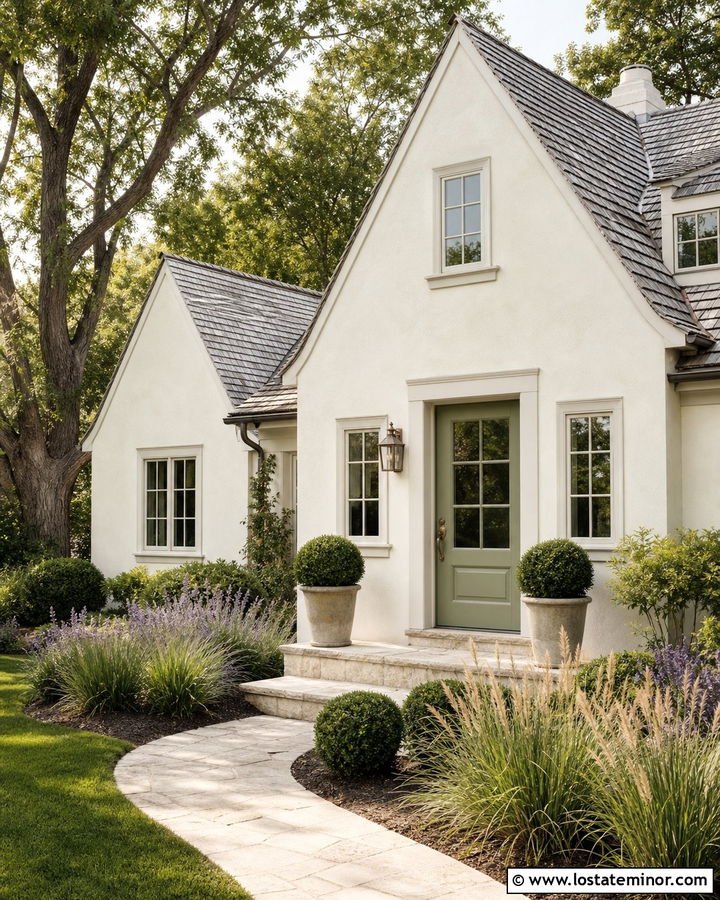
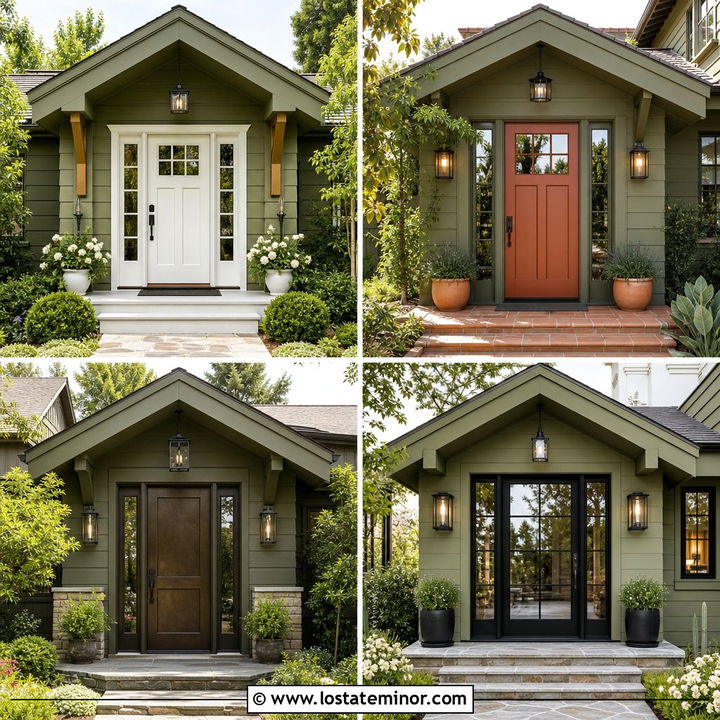
Could your warm white house use color without a dramatic contrast? A muted sage green door offers a calm and approachable solution. Combine it with creamy stucco, soft white trim, and a light gray or weathered cedar roof. Sage looks particularly natural beside limestone, pale brick, and unfinished wood details. On a cottage or bungalow, paint the door and nearby window boxes the same gentle green while leaving porch columns warm white. Antique brass hardware adds warmth, and a small divided-light window keeps the door charming rather than heavy. Use lavender, ornamental grasses, and rounded shrubs near the walkway to strengthen the garden-inspired palette. The overall scheme feels fresh and colorful, yet still restrained enough for traditional neighborhoods.
6. Warm White House With Navy Blue Entry Door
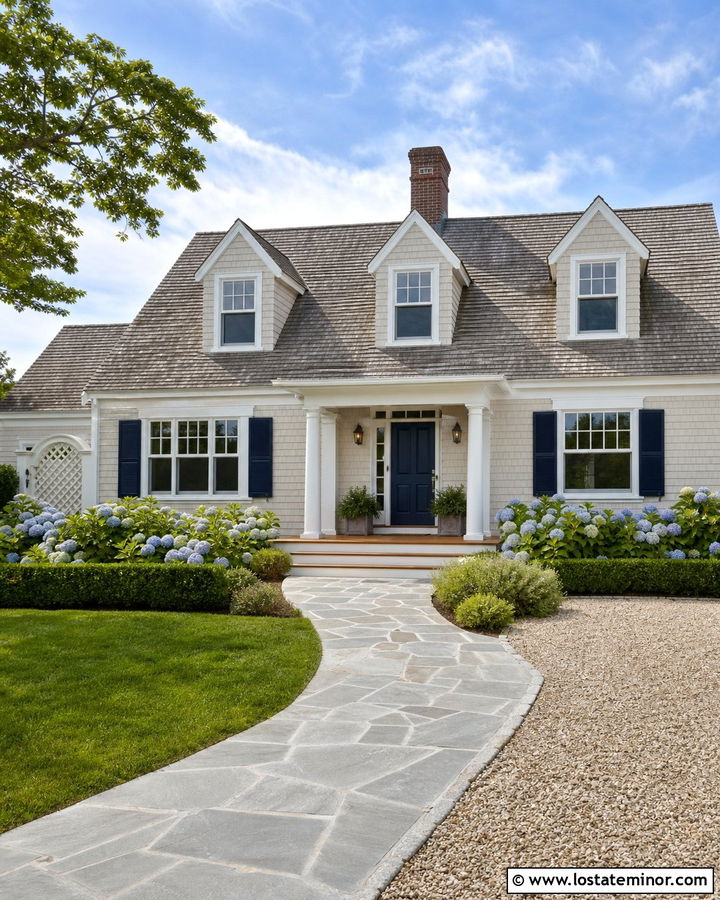
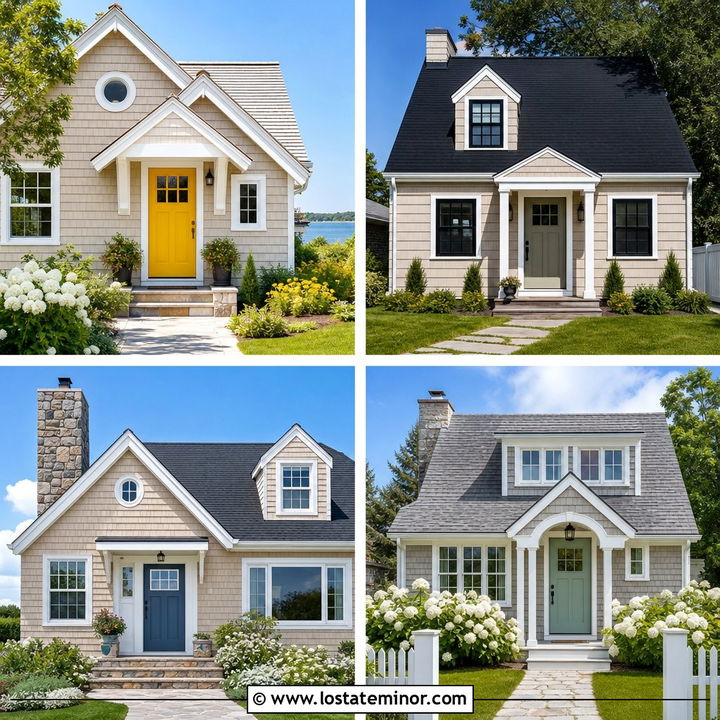
Navy blue makes a confident entry door color while preserving the timeless quality of a warm white exterior. Choose a deep, slightly muted navy rather than a bright primary blue. It coordinates easily with warm white shingles, crisp cream trim, and a medium gray roof. On a Cape Cod house, repeat navy on the shutters for a balanced, coastal appearance. Natural cedar porch flooring and aged brass hardware prevent the palette from looking overly cool. If the house has an attached garage, keep its door warm white and reserve navy for the main entrance. Hydrangeas, low hedges, and a curved stone path soften the structured color scheme. This combination feels polished near the coast but works equally well in suburban and inland settings.
7. Warm White House With Dusty Blue Entry Door
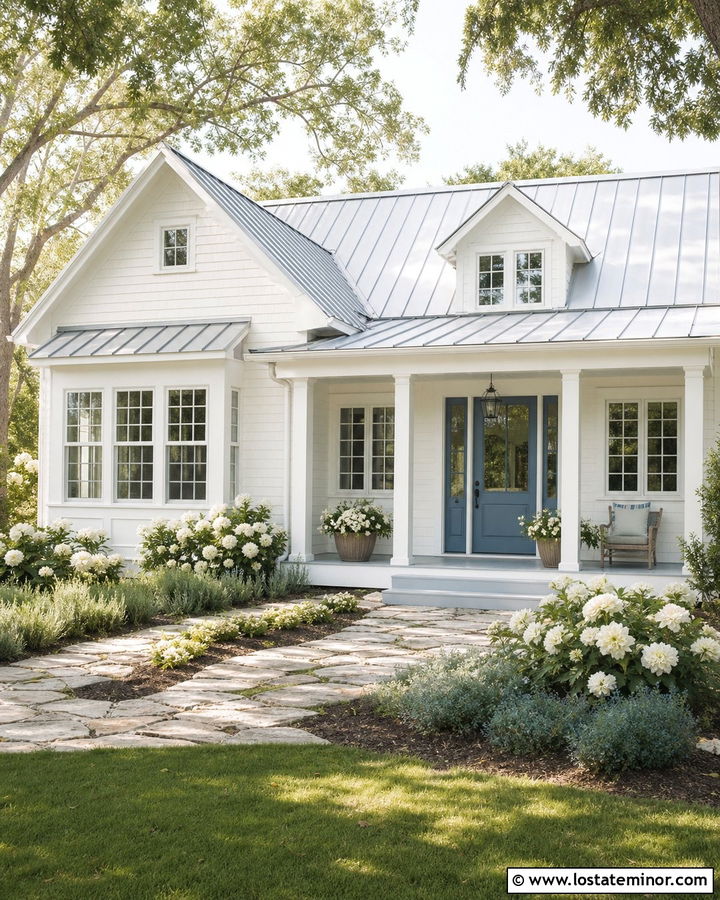
Dusty blue gives a warm white facade a soft hint of color that changes gently with natural light. It works best when the blue contains a touch of gray, which keeps it sophisticated beside creamy siding. Try the combination on a cottage with warm white shakes, a small covered porch, and a silver-gray metal roof. Bright white trim can outline the windows, while pale blue-gray porch flooring subtly echoes the door. Choose brushed nickel or aged pewter hardware for a quiet finish. White flowers, blue-green foliage, and irregular flagstone create a relaxed garden setting. Because the door contrast is moderate, add narrow sidelights or a decorative transom to make the entrance more noticeable within the full exterior composition.
8. Warm White House With Teal Entry Door
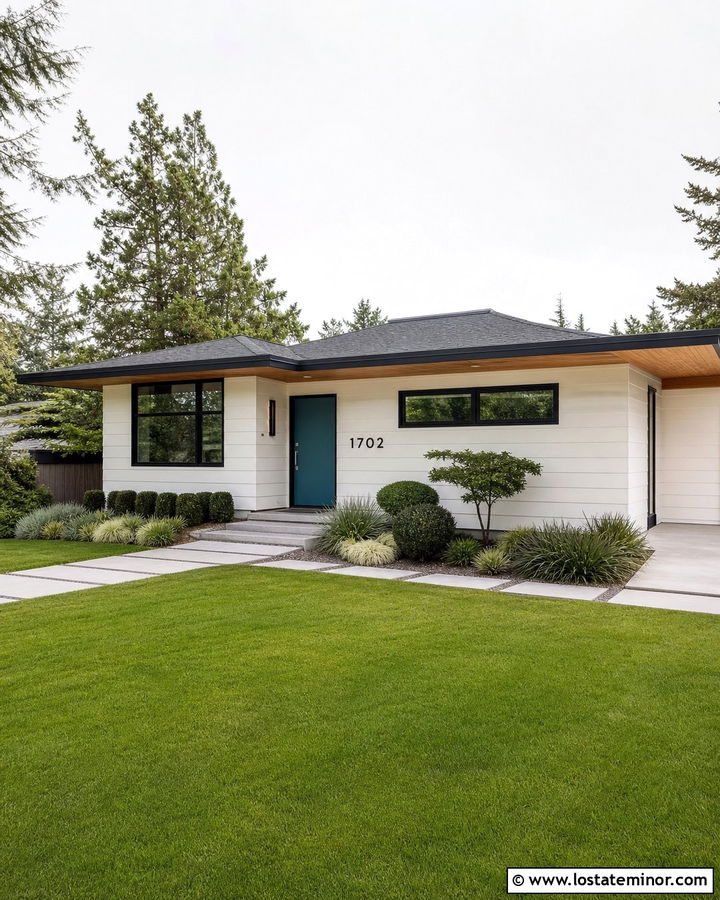
A teal entry door can energize a warm white house while remaining more refined than a bright turquoise accent. Select a deep blue-green shade and surround it with simple warm white trim. This palette suits a mid-century ranch with low rooflines, broad windows, and clean horizontal siding. Walnut soffits or cedar privacy screens can connect the colorful door to the home’s natural materials. Use matte black address numbers, window frames, and planters for controlled contrast. A charcoal roof anchors the lighter facade, while concrete pavers keep the landscape modern. Limit teal to the entrance so it remains the clear focal point. Drought-tolerant grasses and sculptural shrubs complete a colorful but uncluttered curb-appeal scheme.
9. Warm White House With Red Entry Door
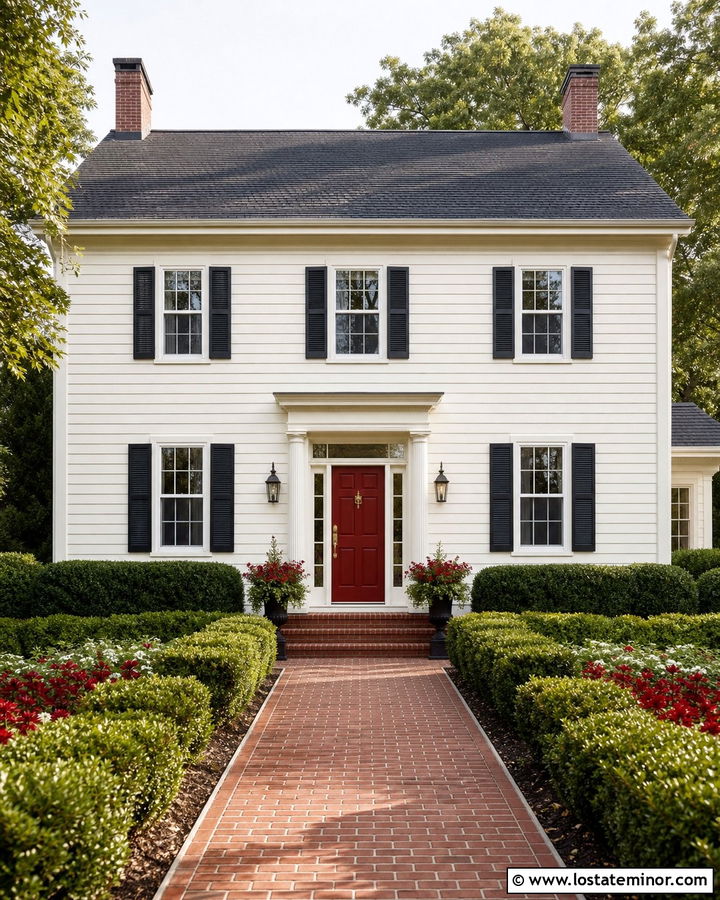
A red door creates a cheerful welcome and gives a warm white exterior traditional curb appeal. Instead of a bright fire-engine shade, consider a warm heritage red with subtle brown undertones. It looks especially appropriate on a colonial or Georgian house with symmetrical windows, creamy white clapboard, and black shutters. Brick porch steps naturally connect to the red door while giving the exterior an established appearance. Add polished brass hardware and traditional black lanterns for a familiar, elegant finish. Keep the roof charcoal gray and the trim close to the siding color. Neatly shaped hedges, red flowering plants, and a straight brick walkway reinforce the symmetry without making the palette look overly coordinated or decorative.
10. Warm White House With Burgundy Entry Door
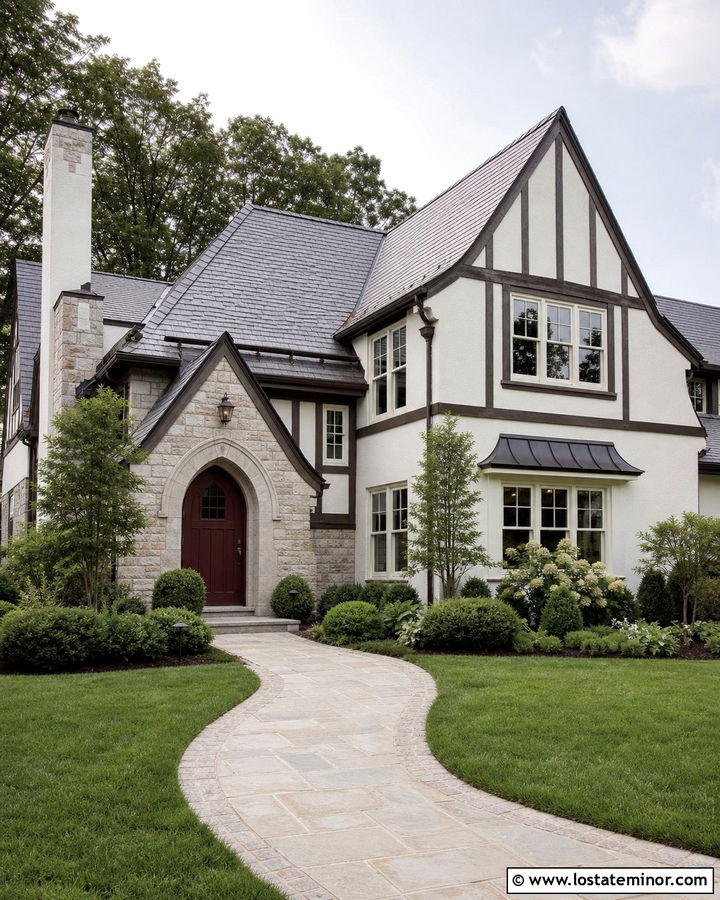
Burgundy provides the richness of red with a deeper and more reserved character. Against warm white stucco or siding, it creates noticeable contrast that still feels traditional. Use this scheme on a Tudor-inspired house with steep rooflines, warm gray stone, and dark brown timber accents. A burgundy arched door can soften the strong architecture and draw attention toward the center of the facade. Choose dark bronze hinges, a substantial handle set, and amber-toned porch lights. Cream trim around the windows connects back to the primary body color. Slate porch flooring and deep green landscaping support the mature palette. The result is distinctive without being flashy, making burgundy a useful alternative to standard black or brown doors.
11. Warm White House With Terracotta Entry Door
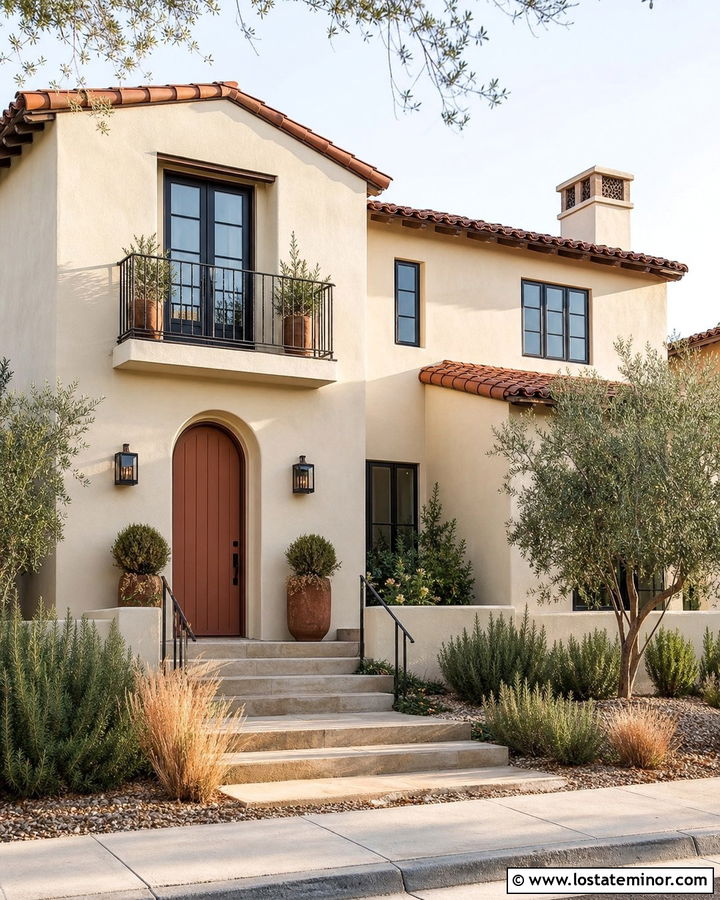
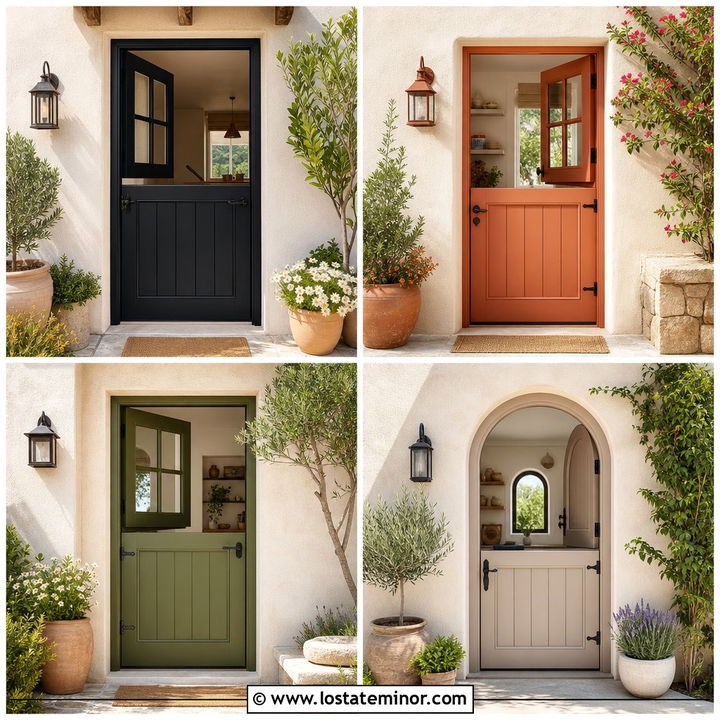
Terracotta introduces sunbaked warmth to a creamy white exterior and works beautifully with earthy masonry. On a Spanish-style house, combine warm white stucco with a muted clay-colored entry door, red tile roof, and natural stone steps. An arched door with vertical wood planks strengthens the architecture while adding texture. Use dark bronze lights, wrought-iron railings, and simple black window frames as grounding accents. The trim should stay close to the body color because strong white outlines can interrupt the flowing stucco facade. Olive trees, rosemary, ornamental grasses, and gravel beds complete the low-water landscape. This full exterior scheme feels warm and regionally appropriate without relying on highly saturated orange or complicated decorative details.
12. Warm White House With Mustard Yellow Entry Door
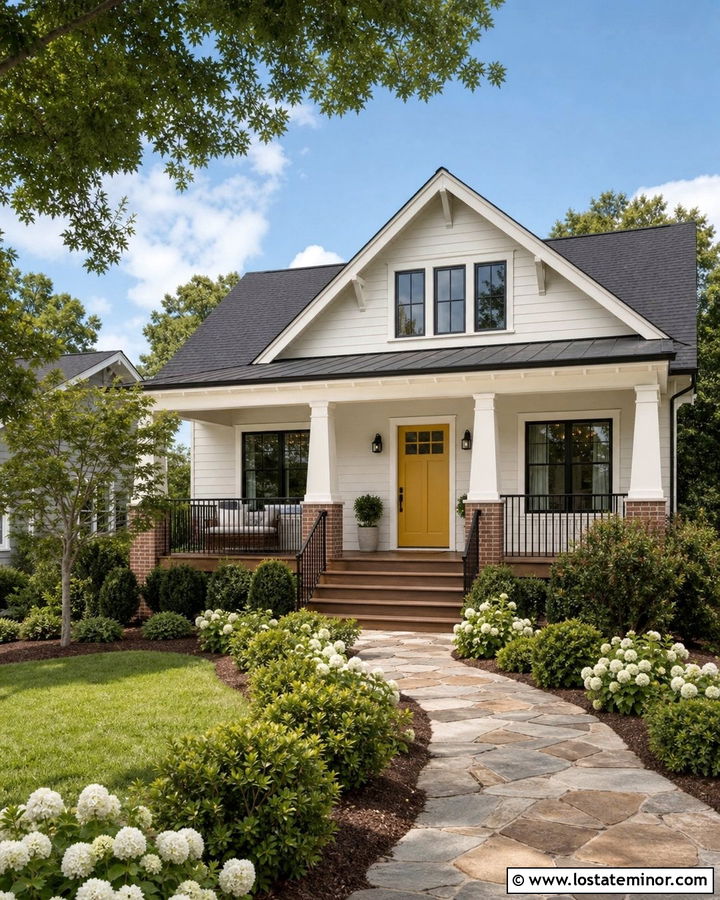
Mustard yellow can brighten a warm white house while maintaining an earthy, grown-up appearance. The color is especially effective on a compact bungalow where the door is visible from the street but does not dominate a large facade. Pair creamy lap siding with warm white trim, a dark charcoal roof, and stained wood porch flooring. Matte black sconces and railings sharpen the palette, while the yellow door introduces a friendly focal point. Choose a muted ochre or golden mustard instead of a lemon tone. Add brick porch piers, deep green shrubs, and seasonal white flowers for natural balance. This combination gives a smaller home memorable personality without requiring expensive architectural changes or numerous competing accents.
13. Warm White House With Olive Green Entry Door
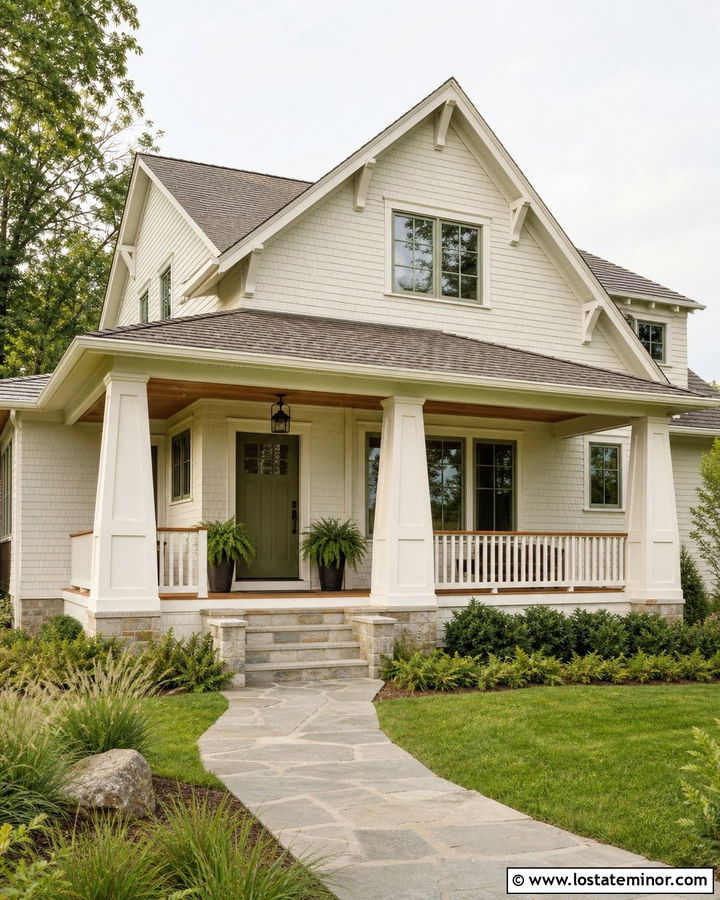
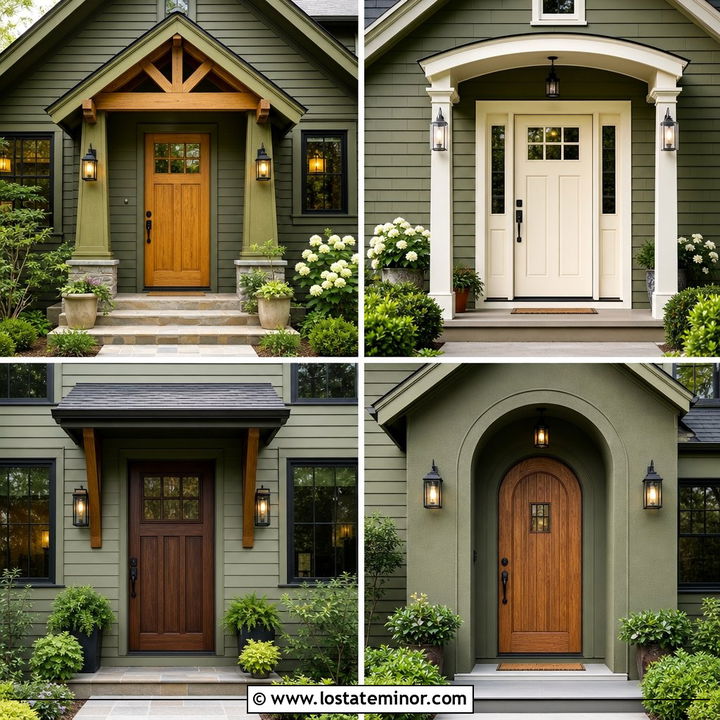
Olive green complements the yellow and beige undertones often found in warm white exterior paint. It creates an organic entrance that looks particularly cohesive beside wood, brick, and natural stone. Try an olive door on a craftsman house with warm white shingle siding, tapered columns, and a wide covered porch. Use medium-stained oak for the porch ceiling and railing cap, then repeat dark bronze on the lights and hardware. A brown-gray roof supports the earth-toned palette. Keep the trim creamy rather than stark white. Layer ferns, evergreen shrubs, and textural grasses along a stone walkway. The completed exterior feels comfortable, grounded, and carefully coordinated with its surrounding landscape rather than decorated around one isolated color.
14. Warm White House With Charcoal Entry Door
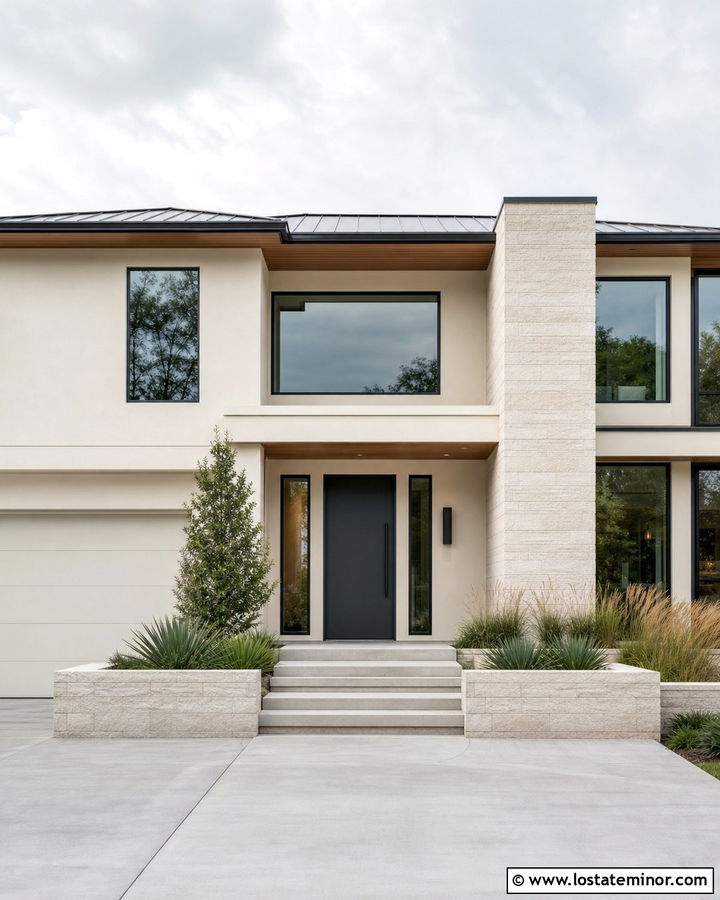
Charcoal offers strong contrast while appearing slightly softer than a true black entry door. This makes it a practical choice for contemporary homes that need definition without an extremely graphic palette. Combine smooth warm white stucco with a charcoal pivot door, dark window frames, and a low-profile metal roof. Use pale concrete or light limestone around the entrance to preserve a bright overall appearance. A narrow wood soffit can introduce warmth and prevent the neutral scheme from feeling stark. Keep garage doors warm white or light gray so attention stays on the main entry. Structured grasses, rectangular planters, and broad concrete steps complement the modern lines. The result feels clean, current, and inviting rather than cold or industrial.
15. Warm White House With Greige Entry Door
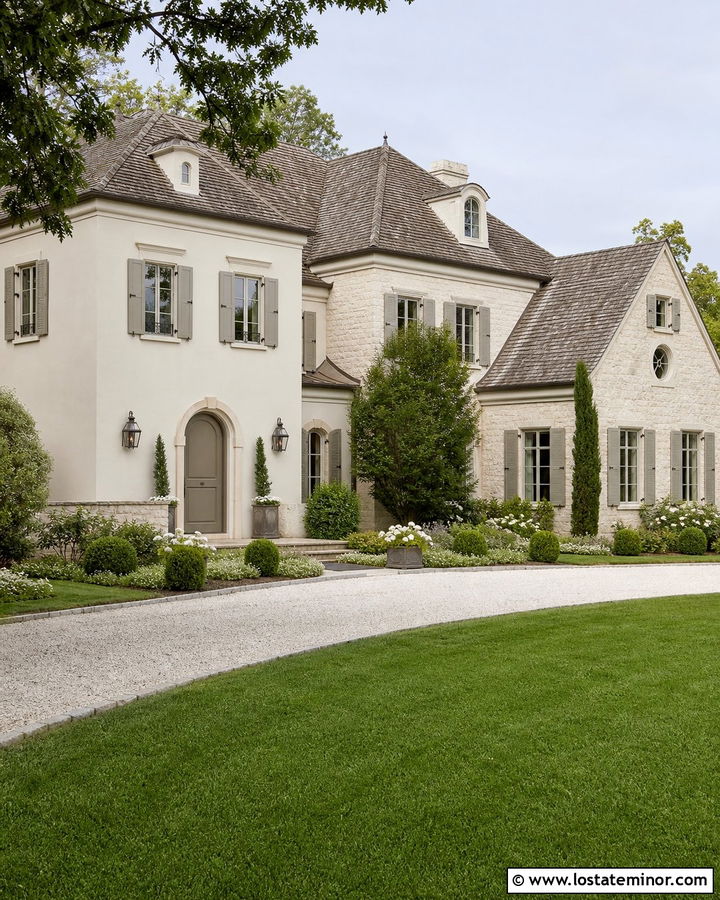
A greige door creates a low-contrast look for homeowners who prefer subtle, layered neutrals. Choose a medium greige that is visibly deeper than the warm white siding, or the entrance may disappear from the street. This scheme suits a French country house with creamy stucco, pale limestone, soft gray shutters, and an arched paneled door. Warm pewter hardware and lanterns enhance the gentle coloration. Use a weathered brown-gray roof instead of solid black to maintain the quiet palette. Stone planters and loosely arranged greenery can frame the entrance without introducing another strong color. Although restrained, the combination gains dimension from varied surfaces, including smooth stucco, rough stone, painted wood, and aged metal details.
16. Warm White House With Taupe Entry Door
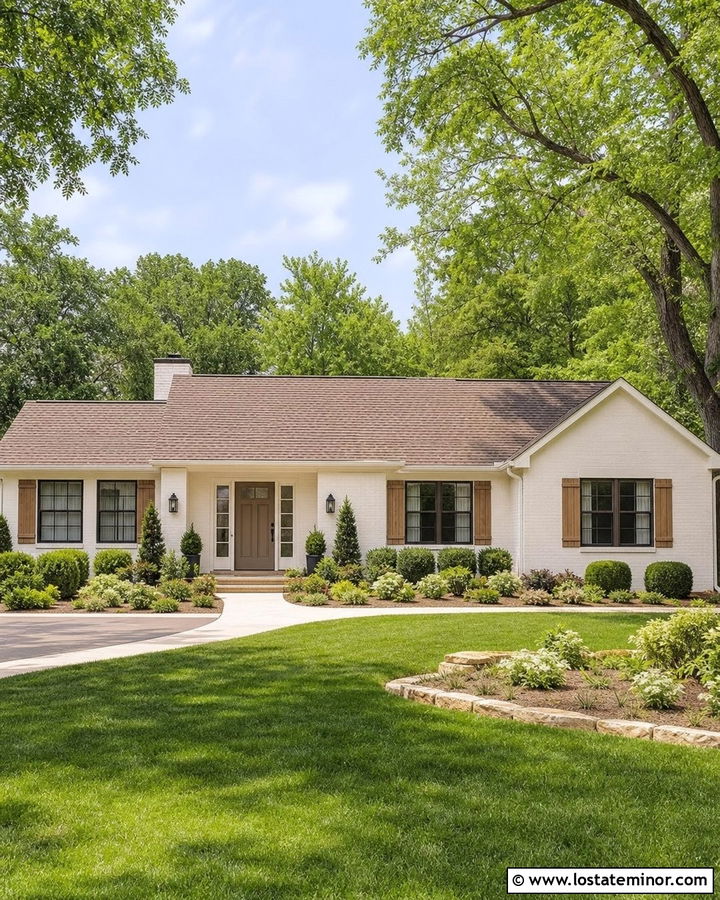
Taupe brings more brown than greige, creating a cozy connection between warm white walls and earthy roof or stone colors. Pair a taupe entry door with creamy brick, warm white mortar, and soft ivory trim on a traditional ranch house. Bronze lighting and hardware reinforce the warmth, while a medium brown shingle roof completes the tonal scheme. Add cedar shutters or small wood accents to keep the facade from looking flat. Because taupe provides gentle contrast, use a door with sidelights, raised panels, or a small transom to strengthen the entrance architecturally. A curving walkway, layered foundation shrubs, and tan stone edging create an approachable landscape. This understated combination is easy to maintain and unlikely to overwhelm a long, low facade.
17. Warm White House With White Entry Door
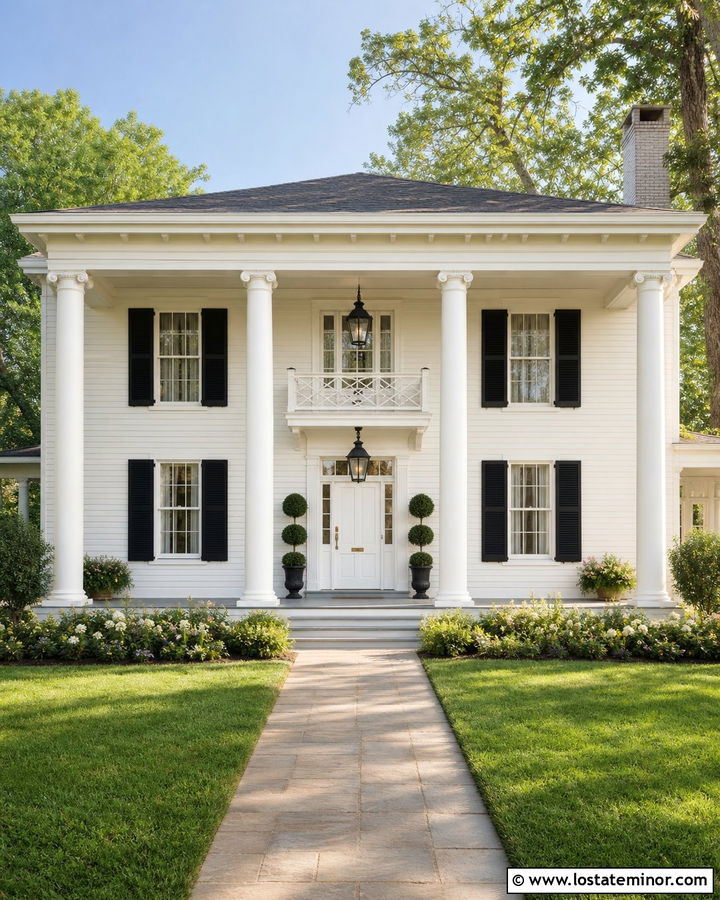
A white-on-white exterior can look sophisticated when the surfaces and undertones are carefully layered. Paint the siding a creamy warm white, then use a slightly cleaner white on the entry door, trim, and porch columns. The small difference keeps the doorway visible while preserving a seamless facade. This approach works beautifully on a Greek Revival or Southern colonial home with tall columns, symmetrical windows, and a broad porch. Add black shutters, dark lanterns, and a polished brass handle for clear accents. A pale gray porch floor provides a quiet foundation. Dark green hedges and flowering planters frame the entrance. Architectural depth, shadow lines, and material texture become especially important when the main colors remain closely related.
18. Warm White House With Cedar Entry Door
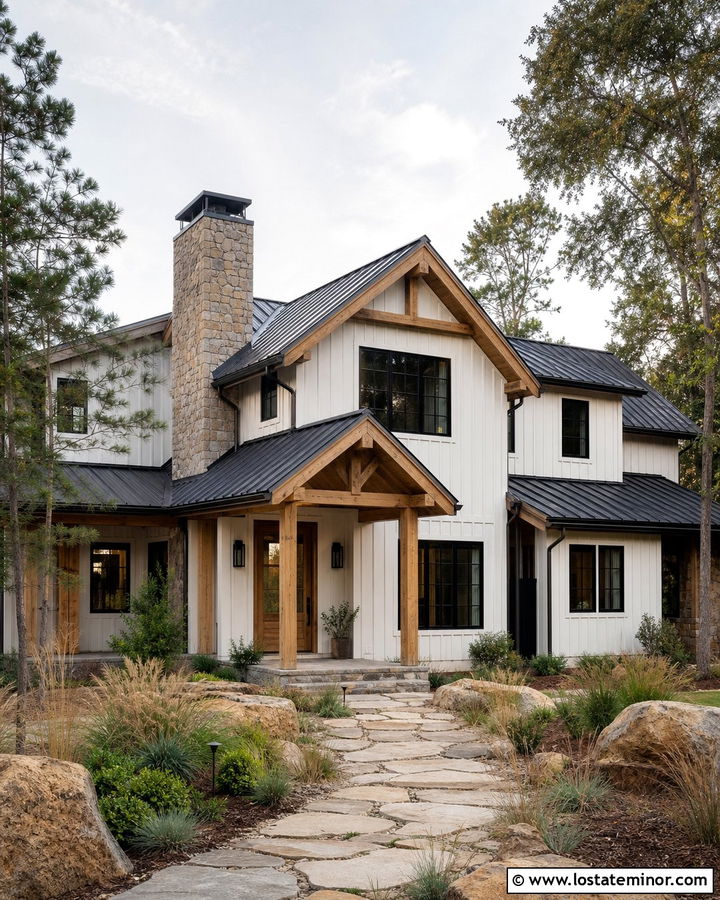
Fresh cedar gives a warm white house an informal, nature-focused entrance with clear color variation. Unlike darker walnut, cedar introduces red and honey tones that stand out without creating severe contrast. Use it on a mountain-modern home with warm white vertical siding, a stone chimney, black-framed windows, and exposed timber beams. A simple plank door with minimal glazing keeps the wood grain prominent. Repeat cedar sparingly on the porch ceiling or gable brackets. Charcoal metal roofing and black lights add definition around the lighter materials. Native grasses, boulders, and an irregular stone walkway help settle the house into its surroundings. Applying an exterior-grade clear finish will preserve the intended wood appearance more consistently.
19. Warm White House With Mahogany Entry Door
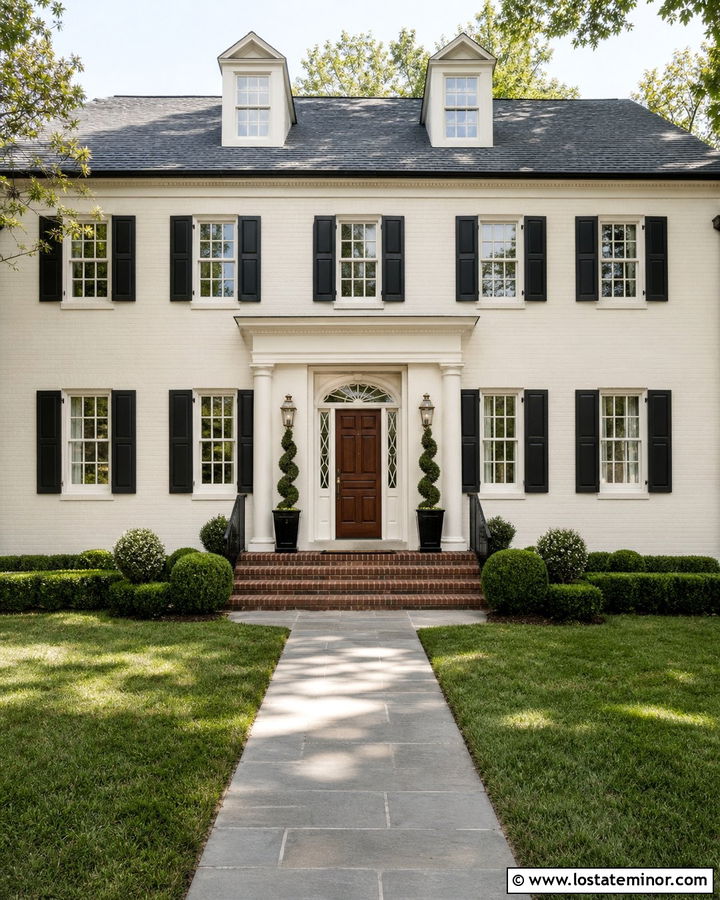
Mahogany gives the entry of a warm white home a formal, handcrafted quality. Its reddish-brown color looks especially refined beside creamy painted brick and classic architectural details. Select a paneled mahogany door with sidelights for a federal or traditional brick house. A fanlight or rectangular transom can bring more daylight into the foyer while increasing the entrance’s visual importance. Pair the door with polished brass hardware, black shutters, and warm white window trim. Use dark gray roofing to balance the depth of the wood. Red-brown brick steps create a natural bridge between the door and facade. Symmetrical topiary planters and a straight walkway complete the orderly, elegant exterior without distracting from the mahogany grain.
20. Warm White House With Arched Wood Entry Door
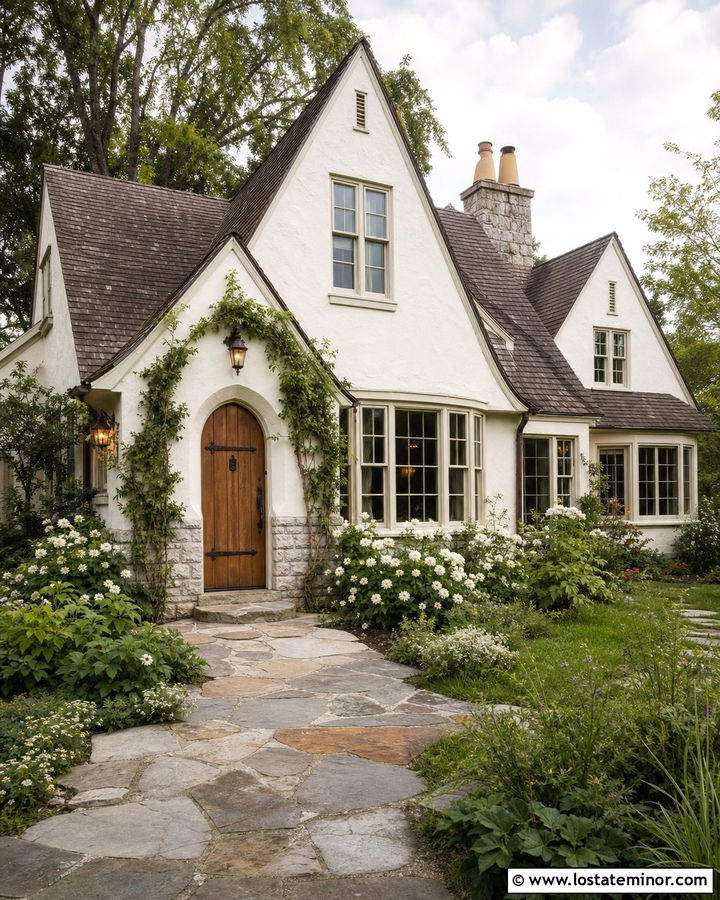
An arched wood entry door can become an architectural centerpiece rather than simply a color accent. Combine it with a warm white cottage facade, steep gables, a stone foundation, and deeply recessed windows. Choose medium oak with vertical planks and dark iron hardware for a handcrafted appearance. The curved opening should be repeated subtly in a porch canopy, garden gate, or nearby window to make the feature feel intentional. Use cream trim, brown-gray shingles, and natural fieldstone to support the warm palette. Climbing greenery, flowering shrubs, and an uneven flagstone path enhance the storybook character. Keep surrounding details simple, allowing the door’s shape, texture, and warm wood tone to guide the complete exterior design.
21. Warm White House With Glass Panel Entry Door
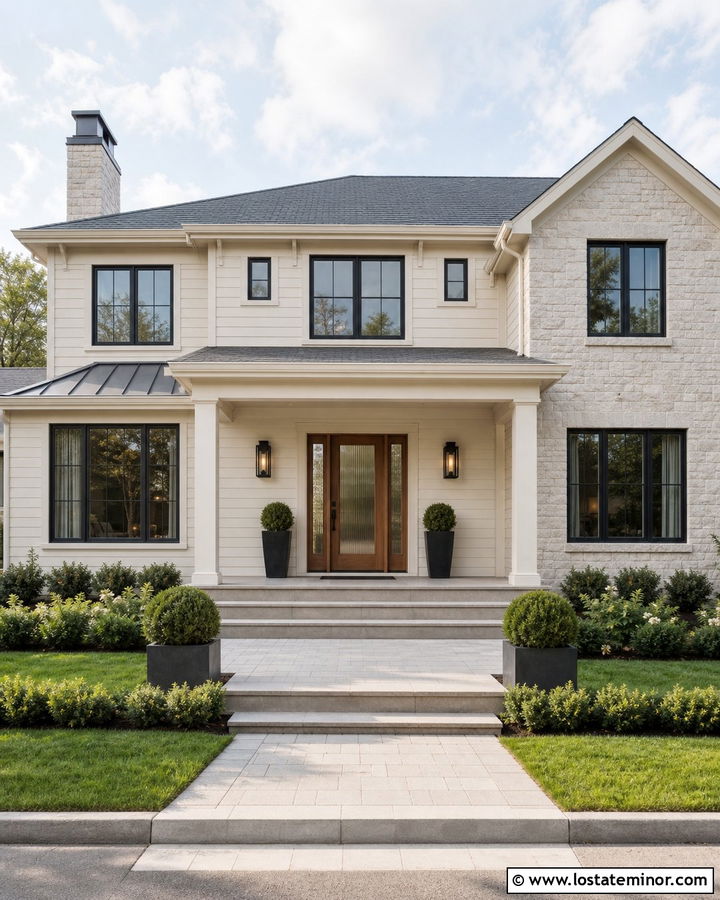
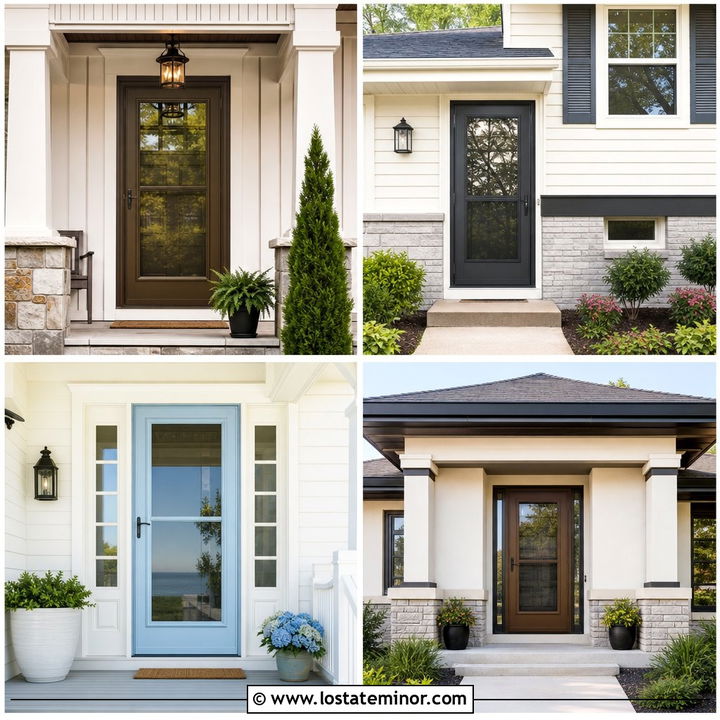
A glass-panel entry door brings natural light into the foyer and adds a lighter visual quality to a warm white facade. On a transitional house, choose a medium-stained wood door with three-quarter glass, narrow sidelights, and simple black framing. Warm white lap siding, cream trim, and light gray stone create a bright exterior around the entrance. Repeat black on the window frames and sconces to connect the glazing across the facade. Privacy or textured glass can soften direct views into the home while retaining daylight. A medium gray roof balances the black details. Wide porch steps, symmetrical planters, and a clean paver walkway make the transparent entrance feel welcoming, polished, and properly integrated with the entire house.
22. Warm White House With Dutch Entry Door
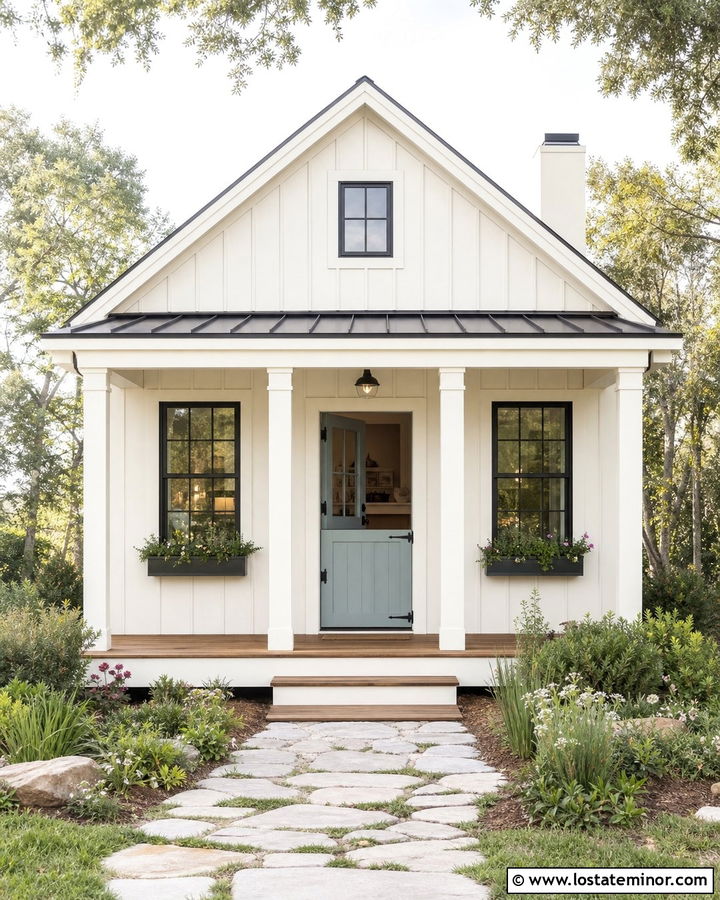
A Dutch door gives a warm white cottage or farmhouse a charming entrance with practical flexibility. Paint it muted blue-green to create gentle contrast against creamy board-and-batten siding. A natural wood porch floor, warm white columns, and a simple black metal roof complete the relaxed exterior. Use black strap hinges and a traditional latch to emphasize the divided-door design. Nearby window boxes can repeat the door color in small amounts, but keep the garage and trim warm white. Add a stone walkway, informal shrubs, and low flowering plants to reinforce the welcoming character. The full scheme feels distinctive without becoming overly themed. It is particularly effective on smaller homes where one memorable architectural feature can transform the curb appeal.
23. Warm White House With Double Wood Entry Doors
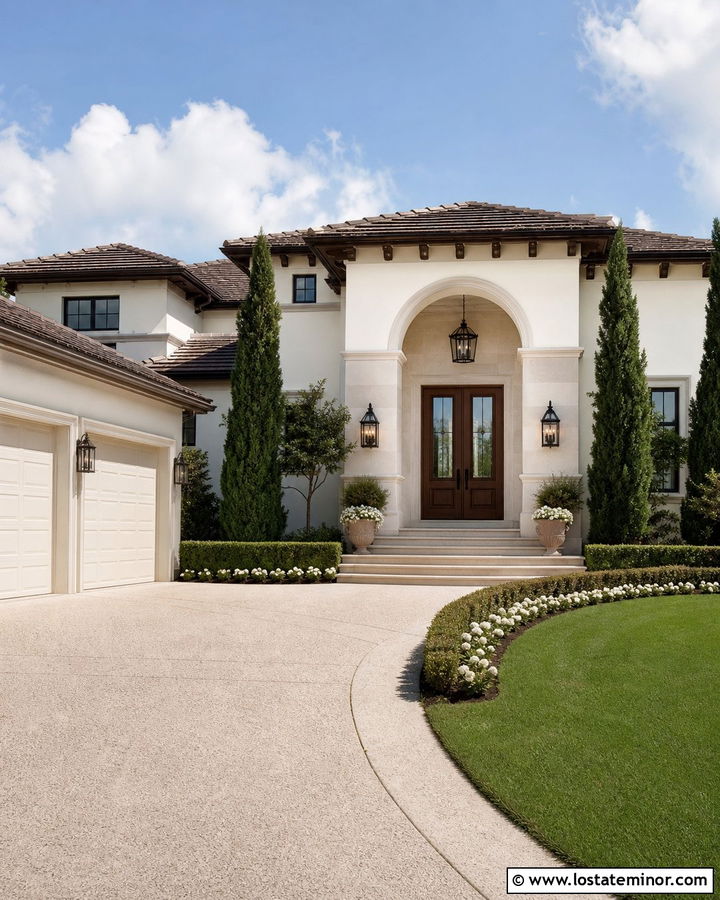
Double wood entry doors provide the scale needed for a wide porch or large two-story facade. Pair medium walnut doors with warm white stucco, cream trim, and pale limestone columns on a Mediterranean or transitional home. Narrow glass panels can reduce the visual heaviness while allowing light into the foyer. Choose dark bronze hardware and oversized lanterns that match the substantial doorway. A clay, brown, or charcoal roof can work, depending on the home’s existing masonry. Keep garage doors close to the warm white body color so the double entrance remains dominant. Broad stone steps, large planters, and a gently curved driveway create an appropriately balanced setting. The result feels impressive, symmetrical, and welcoming instead of oversized or imposing.
24. Warm White House With Black Glass Entry Door
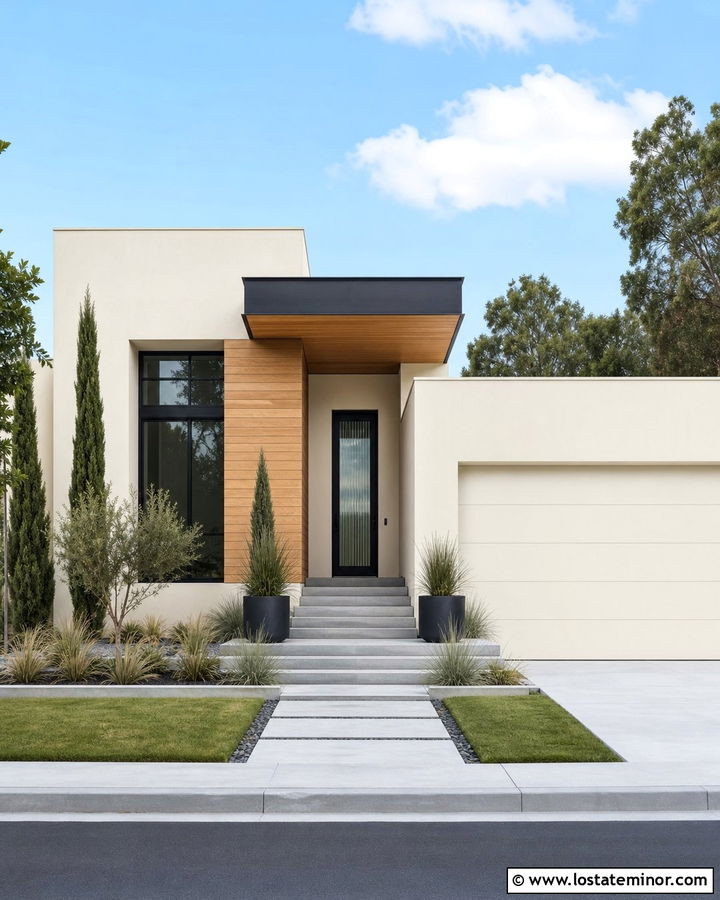
A slim black glass door creates sharp definition on a modern warm white exterior. Use it with smooth stucco, flat or low-pitched rooflines, black-framed windows, and one section of natural wood cladding. The glass entrance should sit beneath a protected overhang so it reads as part of a complete entry zone. Large-format concrete steps and a simple linear walkway support the architecture. Keep the garage door warm white or clad it in matching wood to prevent too many black rectangles across the facade. Choose frosted or reeded glass when privacy is important. Minimal grasses, sculptural evergreens, and dark planters finish the landscape. This scheme delivers contrast, transparency, and warmth in carefully controlled proportions.
25. Warm White House With Copper Entry Door
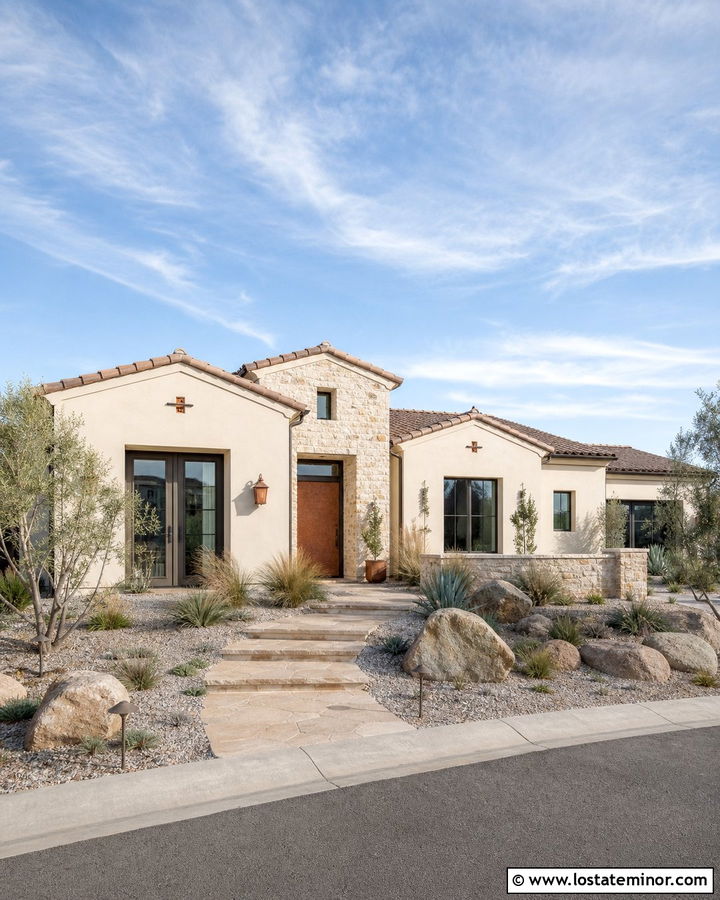
A copper-toned entry door adds depth and an artisan quality to a warm white house. The surface may be actual metal, copper-colored fiberglass, or painted wood, depending on budget and maintenance preferences. Pair it with creamy stucco, pale stone, bronze window frames, and a muted clay tile roof on a Southwestern home. Keep the surrounding trim warm white so the metallic entrance stands out clearly. Repeating copper on small gutters, flashing, or porch lights can unify the design, but avoid using it across every feature. Gravel planting beds, desert grasses, smooth boulders, and a wide stone walkway complete the regional palette. The finished facade feels earthy and distinctive without relying on a bright door color.
26. Warm White House With Coral Entry Door
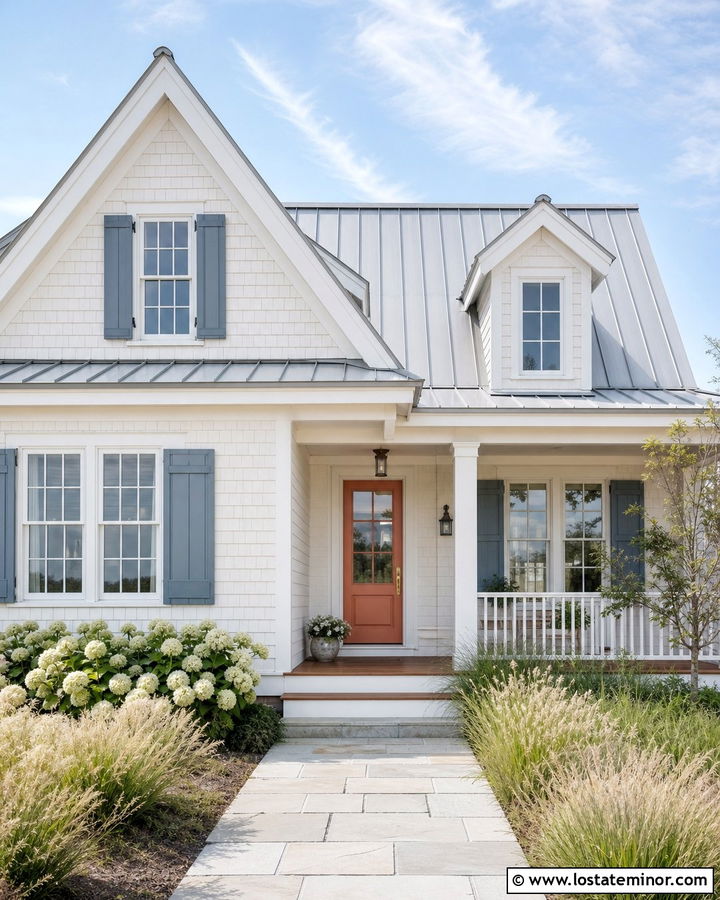
Coral brings warmth and playful color to a warm white exterior, especially in sunny coastal settings. Select a muted coral with terracotta undertones rather than a bright pink-orange shade. Use it on a coastal cottage with creamy shingle siding, clean white trim, a pale gray metal roof, and a small covered porch. Natural teak or cedar flooring keeps the entrance grounded. Brushed brass hardware complements the door, while light blue-gray shutters add a quiet secondary color. Surround the facade with sea grasses, hydrangeas, and a shell or pale stone walkway. Keeping coral limited to the main door ensures the full exterior remains tasteful and adaptable. The combination looks cheerful in bright light without turning the house into a novelty.
27. Warm White House With Plum Entry Door
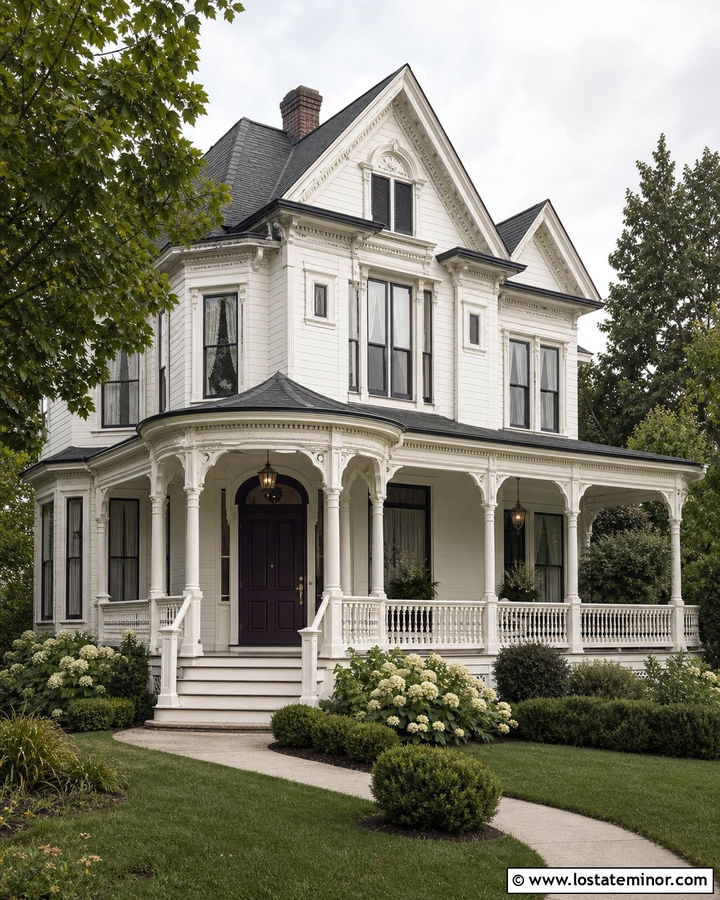
A deep plum entry door offers an unexpected alternative to burgundy, navy, or black. Choose a muted shade with brown or gray undertones so it works naturally with warm white siding. This scheme can refresh a Victorian house with decorative trim, a wraparound porch, and multiple gables. Keep the ornate woodwork creamy white, then use charcoal on the roof and small accent details. Aged brass hardware and traditional lanterns add warmth around the plum door. If shutters are present, paint them charcoal rather than matching the entrance. Deep green shrubs and pale flowering plants provide a calm landscape backdrop. The complete exterior respects the home’s historic character while introducing personality through one controlled, sophisticated accent color.
28. Warm White House With Gray Blue Entry Door
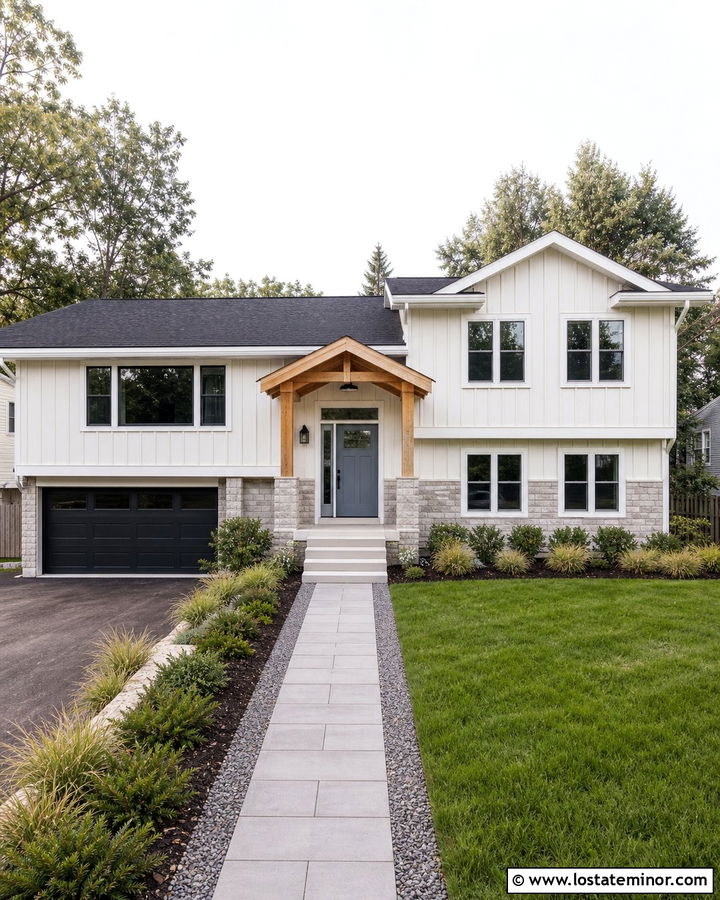
Gray-blue creates a calm entrance that bridges warm white siding and cool roofing materials. It works especially well on a split-level home that needs a more noticeable, organized entry. Paint the main body a creamy warm white, use soft white trim, and place the gray-blue door beneath a simple wood or metal canopy. Repeat the door color on one small siding panel or planter rather than across the entire facade. Charcoal shingles and light gray stone anchor the palette. A new walkway with broad rectangular pavers can guide attention toward the entrance. Low shrubs and ornamental grasses keep sightlines open. This practical update gives a familiar suburban exterior greater depth without depending on dramatic architectural remodeling.
29. Warm White House With Brown Entry Door
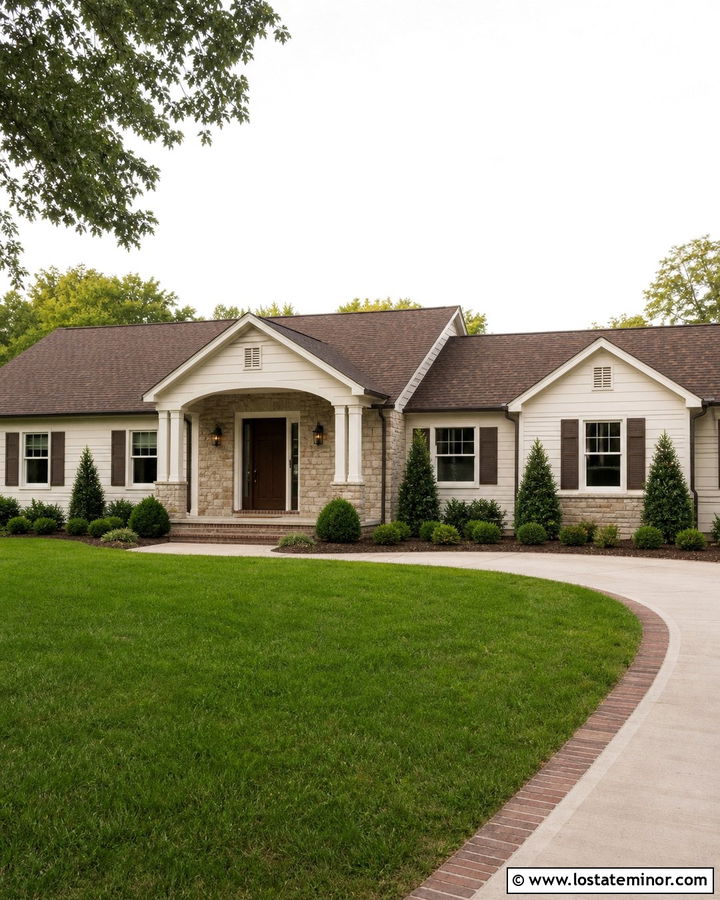
A painted brown entry door offers a consistent appearance when natural wood is not practical. Choose a deep cocoa or espresso brown that reflects the colors in the roof, brick, or stone. On a warm white ranch, pair the door with creamy horizontal siding, tan stone veneer, bronze gutters, and medium brown shingles. Keep the trim warm white for a unified body, then repeat brown on small shutters or porch beams. A satin finish provides depth while remaining easier to clean than a completely flat surface. Use warm metal lighting and simple rectangular hardware. A brick-edged walkway, low evergreen planting, and natural mulch tie the approachable earth tones together, creating a durable and balanced everyday exterior.
30. Warm White House With Pivot Wood Entry Door
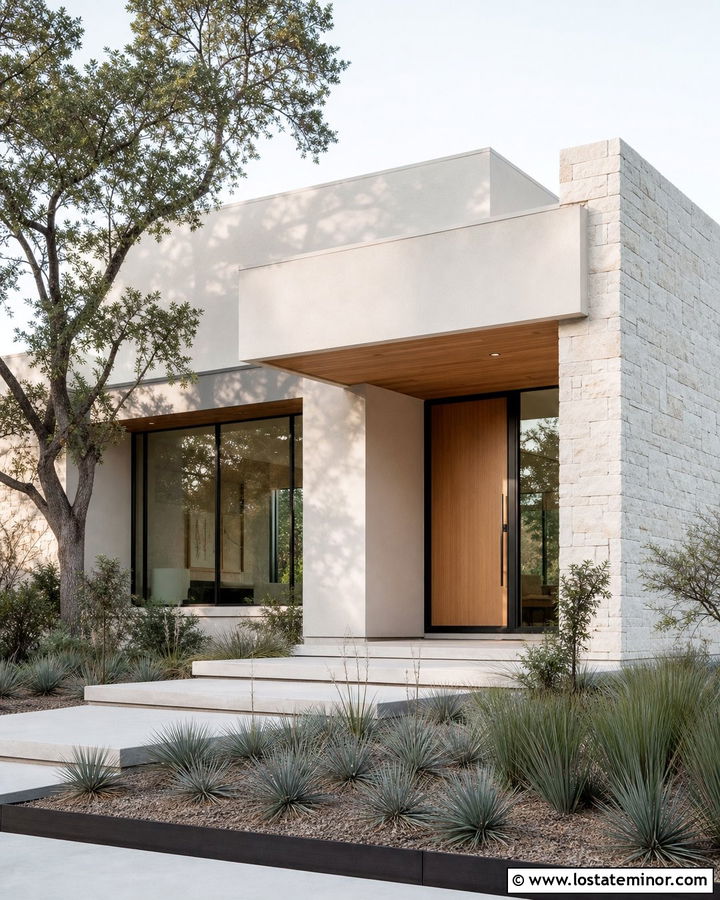
A large pivot door gives a modern warm white house a striking entrance without requiring a bold painted color. Choose rift-cut white oak in a medium honey finish and set it within a recessed black frame. Smooth warm white stucco, floor-to-ceiling windows, and pale stone walls keep the overall facade bright. Extend the oak tone to a protected soffit or narrow garage accent for visual continuity. Flat concrete steps and a wide pathway should lead directly to the entrance, emphasizing its generous scale. Keep landscaping structured with clipped grasses, sculptural trees, and rectangular beds. The complete design balances warm wood, soft white walls, dark framing, and clean architecture, resulting in a contemporary exterior that still feels comfortable and residential.
Conclusion:
The best entry door should complement far more than the siding color. Roofing, stone, brick, trim, windows, porch materials, landscaping, and architectural scale all influence whether a combination feels balanced. These **30 Warm White House Design With Entry Door Ideas** show how one versatile exterior backdrop can support everything from traditional black and heritage red to natural oak, sage green, coral, and contemporary glass. Before making a final decision, view color and material samples beside the house at different times of day. Keep permanent surfaces in mind and repeat the door finish through a few small accents. A coordinated approach will make the entrance noticeable while preserving the warm, welcoming character of the entire home.

Related posts: