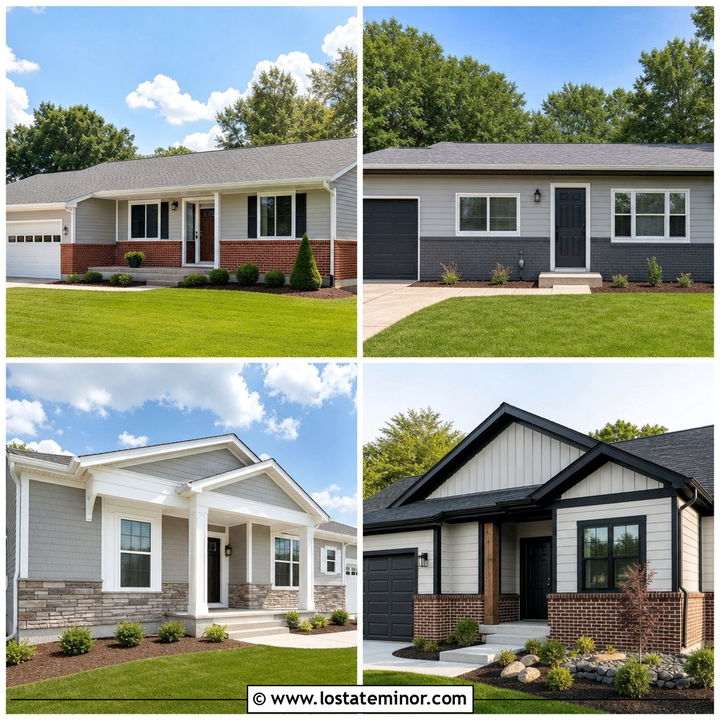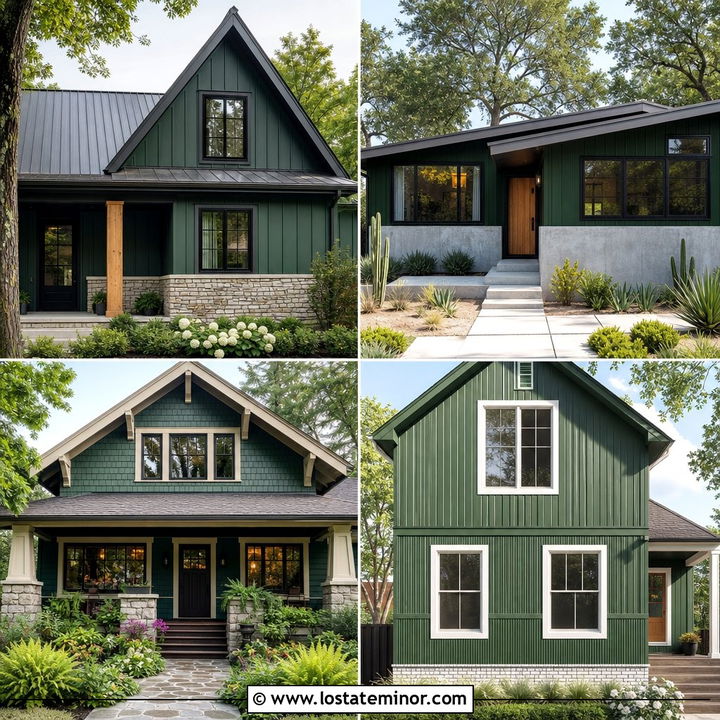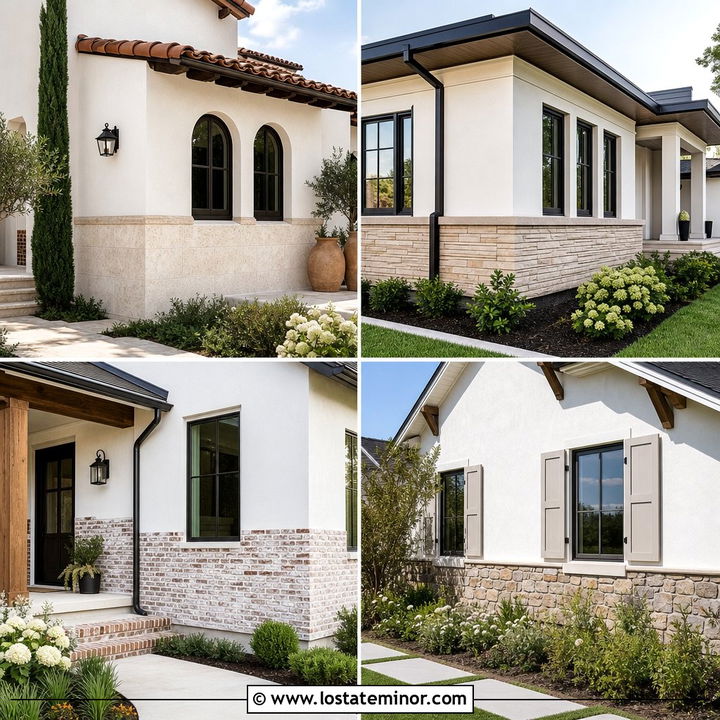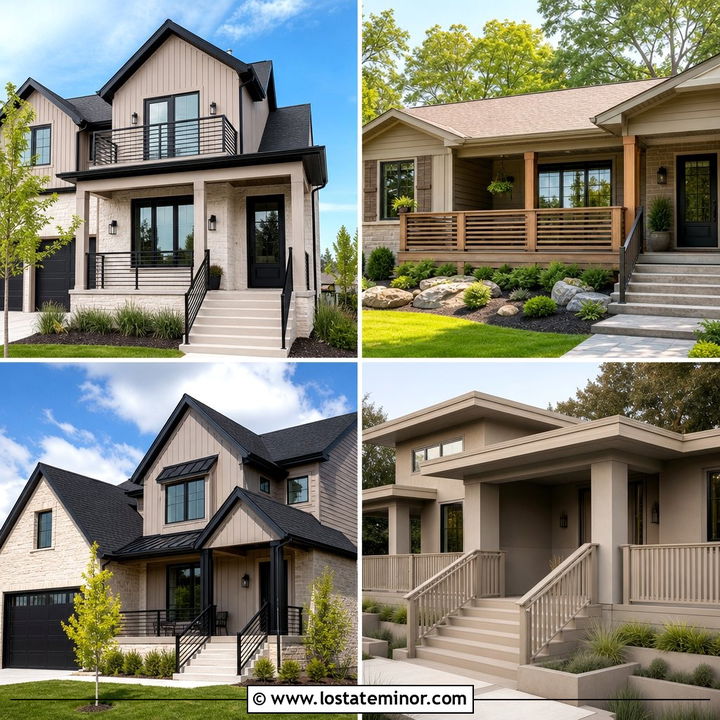
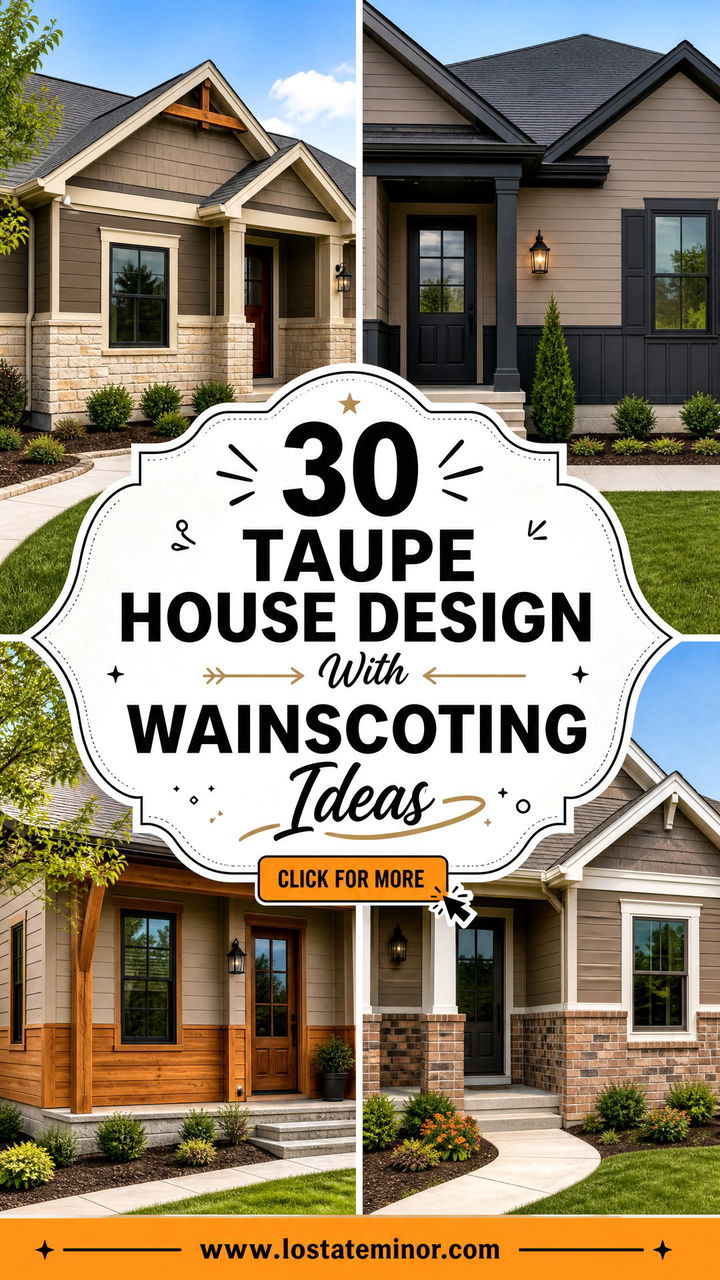
Taupe creates a calm, grounded exterior that works beautifully with stone, brick, wood, and modern siding. Adding wainscoting gives the lower facade more depth while protecting high-contact areas from dirt and moisture. The key is choosing materials and undertones that connect naturally with the roof, trim, front door, and surrounding landscape. Warm taupe feels inviting beside cream limestone and cedar. Cooler taupe looks sharper with charcoal roofing, black windows, or gray ledgestone. This collection covers ranch homes, Craftsman houses, farmhouses, cottages, Colonials, and contemporary builds. Each complete exterior scheme offers practical inspiration for creating balanced contrast and stronger curb appeal. Explore these 30 Taupe House Design With Wainscoting Ideas to find a combination that fits your home.
1. Taupe House With White Stone Wainscoting
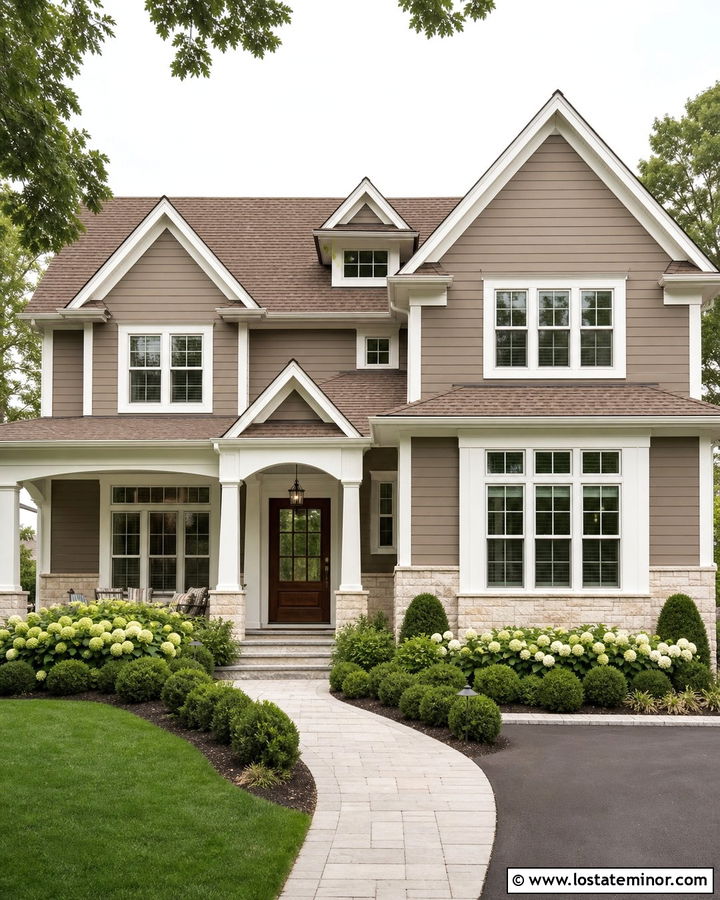
Warm taupe siding and white stone wainscoting create a bright exterior without looking overly stark. This combination works especially well on a traditional ranch or suburban two-story home. Use creamy white rather than pure white for the window trim, fascia, porch columns, and garage door. The softer shade connects the stone to the taupe body while keeping everything coordinated. A medium-brown architectural shingle roof adds warmth above the facade. Complete the scheme with a stained walnut front door and simple black lanterns. Keep the stone wainscoting around one-third of the wall height so it supports the architecture instead of overpowering it. Curved planting beds, boxwoods, and pale hydrangeas can soften the transition between the masonry and lawn.
2. Taupe Craftsman With River Rock Wainscoting
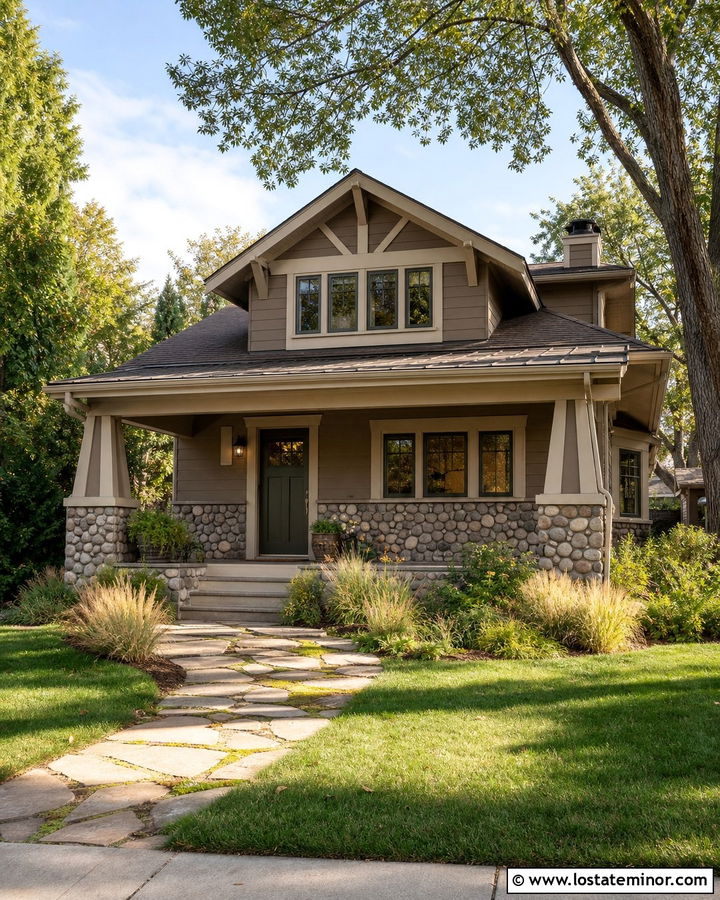
A Craftsman house gains natural character when earthy taupe siding is paired with rounded river rock wainscoting. Choose stone that blends gray, brown, tan, and muted rust tones so it relates to both the siding and landscaping. Carry the river rock across the foundation and around the porch column bases for a continuous, grounded appearance. Cream trim provides gentle definition around windows, gable boards, and roof edges. For stronger contrast, add a deep olive front door beneath a stained cedar porch ceiling. A weathered-brown roof will support the warm palette better than a blue-gray shingle. Wide porch steps, chunky timber columns, and native grasses complete this comfortable exterior. The result feels detailed and established without relying on bright or trendy accent colors.
3. Light Taupe House With Red Brick Wainscoting
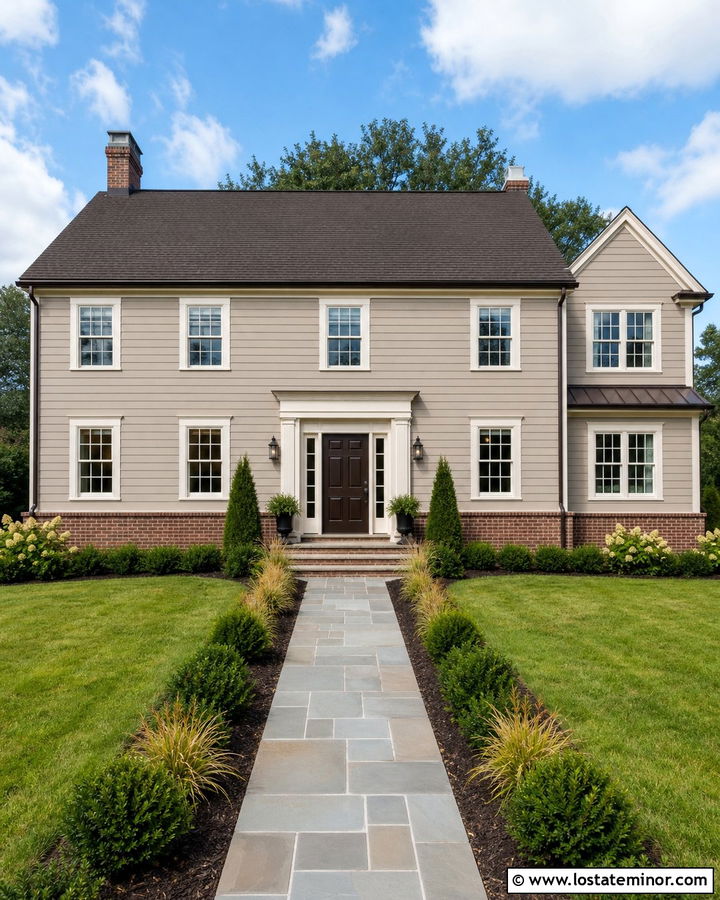
Could an existing red brick foundation become the feature rather than the problem? Light taupe siding makes traditional red brick wainscoting feel quieter and more updated. Select a taupe with warm beige or subtle violet undertones that complements the mortar and darker brick variations. Paint the trim a muted ivory instead of brilliant white, which can exaggerate the brick’s orange tones. A dark bronze front door, bronze gutters, and chocolate-brown roof create a cohesive upper and lower connection. On a Colonial or Cape Cod facade, keep the brick height consistent beneath the windows and across the porch. Use restrained landscaping with evergreen shrubs, ornamental grasses, and a straight stone walkway. This complete scheme respects the home’s original masonry while giving the exterior a cleaner, more balanced appearance.
4. Dark Taupe House With Cream Brick Wainscoting
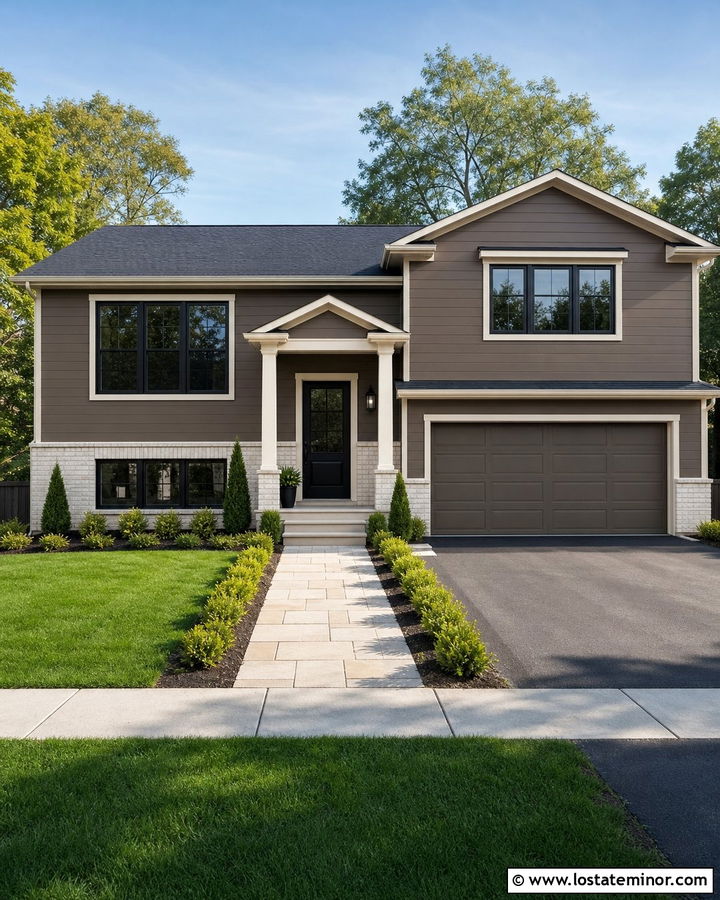
Deep taupe siding creates a sophisticated backdrop for cream-painted brick wainscoting. The darker body color visually stretches the facade while the pale masonry keeps the foundation from appearing heavy. This look fits a split-level, transitional home, or updated ranch with simple rooflines. Repeat the creamy brick color on the window trim, soffits, and porch columns to establish a clear color relationship. Black window frames and a black front door add definition without introducing another warm undertone. Choose a charcoal roof with limited color variation for a streamlined finish. If the garage occupies much of the facade, paint its door dark taupe so it blends into the house. Linear shrubs, limestone pavers, and neatly edged planting beds reinforce the exterior’s polished, contemporary character.
5. Taupe Farmhouse With Gray Stone Wainscoting
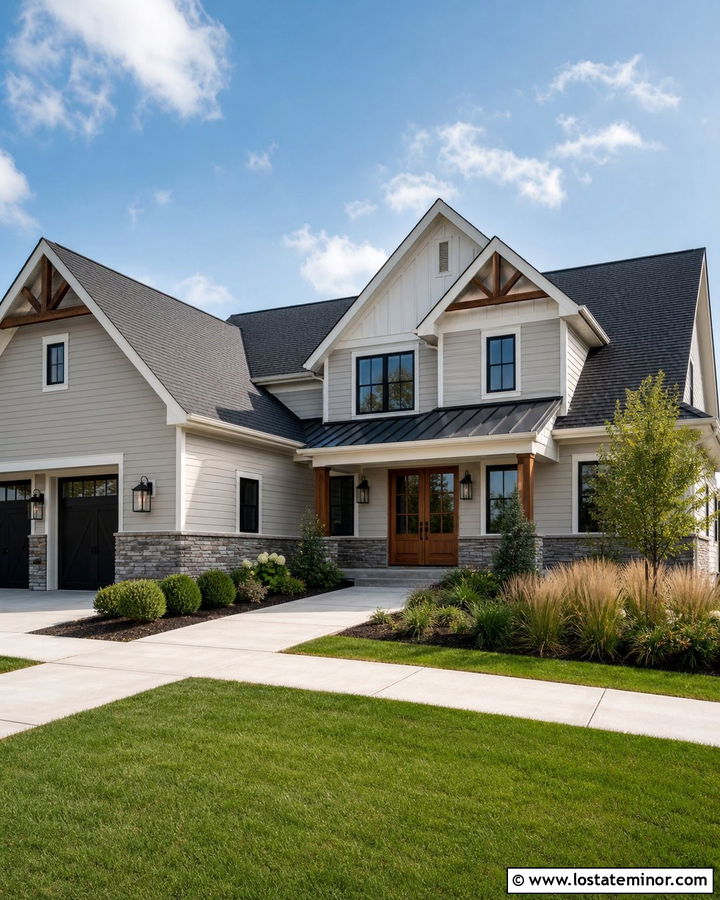
Soft taupe board-and-batten siding offers a warmer alternative to the usual white modern farmhouse exterior. Pair it with medium-gray stone wainscoting containing a few beige pieces that echo the main house color. Apply the stone along the lower facade, garage base, and substantial porch columns. Off-white trim will highlight the vertical siding without producing harsh contrast. Black-framed windows, matte black sconces, and a dark standing-seam porch roof bring a crisp farmhouse influence to the palette. Introduce warmth through double cedar front doors and matching wood brackets beneath the gables. A charcoal shingle roof keeps the complete scheme neutral and practical. Finish with a wide concrete walkway, clipped shrubs, and layered ornamental grasses that frame the stone without hiding its natural texture.
6. Taupe Ranch With Ledgestone Wainscoting
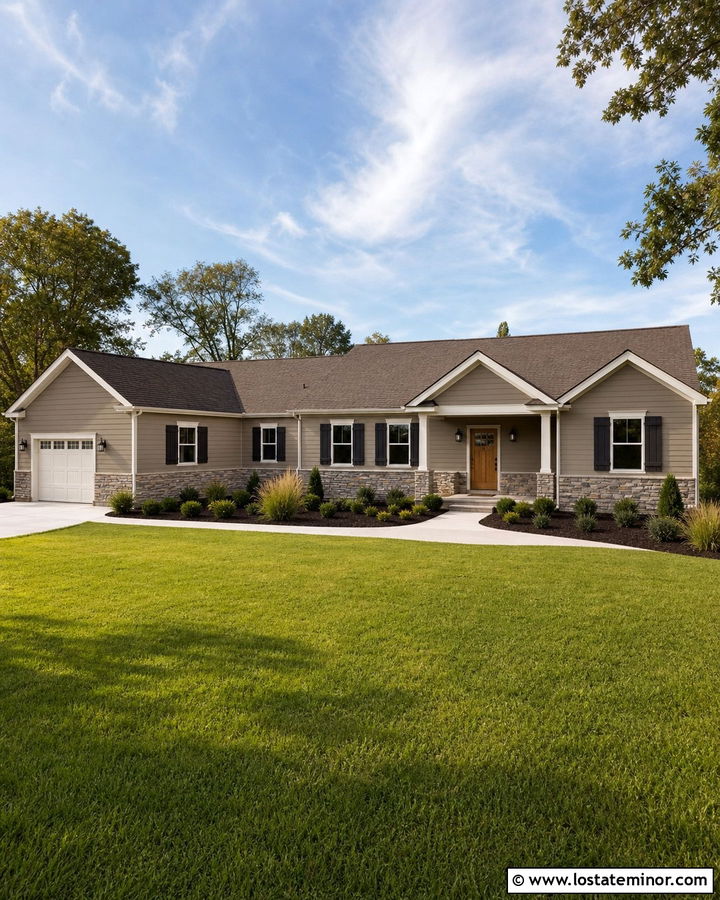
Long, low ranch homes benefit from wainscoting that visually organizes the wide front elevation. Use balanced taupe horizontal siding above narrow ledgestone in mixed gray and sandy beige. The horizontal lines of both materials reinforce the home’s shape, while changes in texture prevent the facade from looking flat. Paint the trim a soft off-white and use charcoal on the shutters, gutters, and garage door hardware. A natural oak front door can become the warm focal point at the center of the composition. Keep the wainscoting below the windows and extend it around porch supports for continuity. Low-growing junipers, feather reed grass, and broad walkway slabs will complement the ranch proportions. This scheme creates dimension without requiring major structural additions or complicated decorative details.
7. Taupe Colonial With Brick Wainscoting
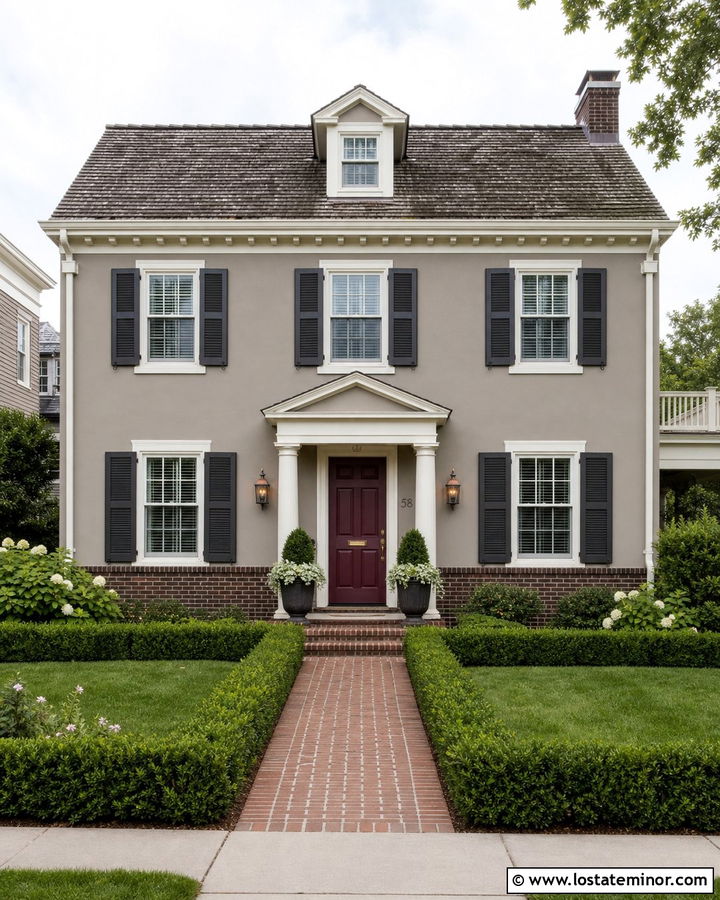
A symmetrical Colonial exterior looks especially polished with medium taupe clapboard siding and dark brown brick wainscoting. Keep the masonry evenly placed beneath the first-floor windows to preserve the home’s formal proportions. Warm white trim around divided-light windows, cornices, and porch columns gives the taupe a clean but welcoming edge. Deep charcoal shutters add contrast, while a muted burgundy front door connects subtly with the brick. Choose a dark weathered-gray roof that does not introduce obvious blue or green tones. Traditional copper lanterns can add warmth without disrupting the restrained palette. Frame the entrance with matching planters and a straight brick walkway. The complete design feels classic and substantial, yet the taupe siding prevents the facade from becoming too heavy or visually dated.
8. Taupe Cottage With Fieldstone Wainscoting
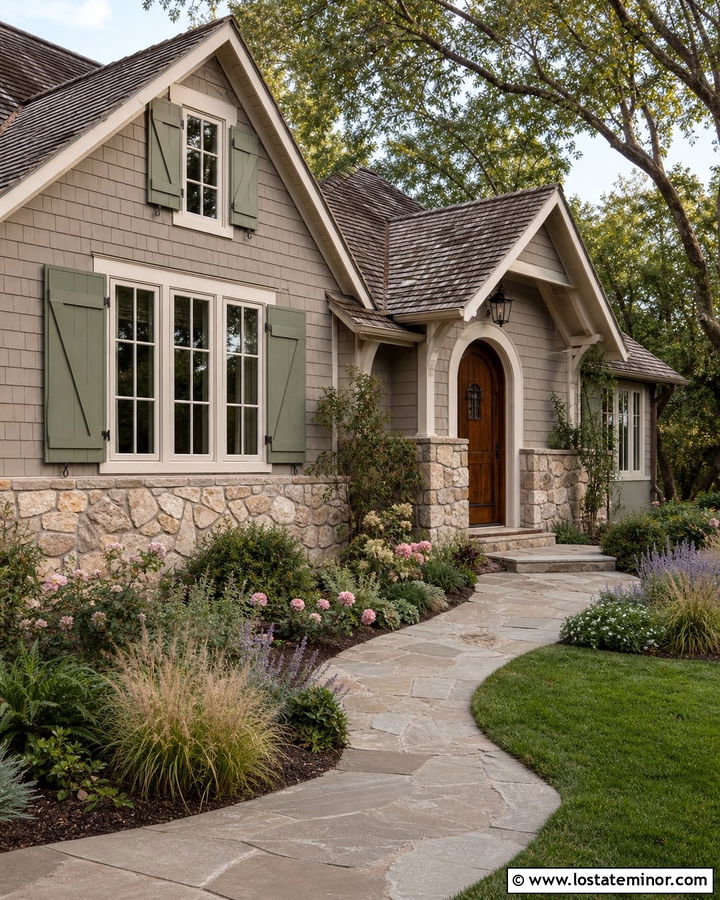
A small cottage can feel wonderfully established when soft mushroom taupe siding meets irregular fieldstone wainscoting. Look for stone containing cream, gray, faded brown, and subtle mossy tones. These natural variations make the lower facade feel connected to a garden setting. Use warm white trim around casement windows and beneath the eaves, then add muted sage shutters for gentle color. A medium-stained arched wood door provides an inviting centerpiece. Brown-gray roof shingles will complement the rustic stone more naturally than solid black roofing. Keep the wainscoting slightly uneven at porch columns or chimney sections to support the cottage character. Curving flagstone paths, flowering shrubs, lavender, and soft ornamental grasses complete the exterior without covering the carefully selected stonework.
9. Taupe Bungalow With Craftsman Wainscoting
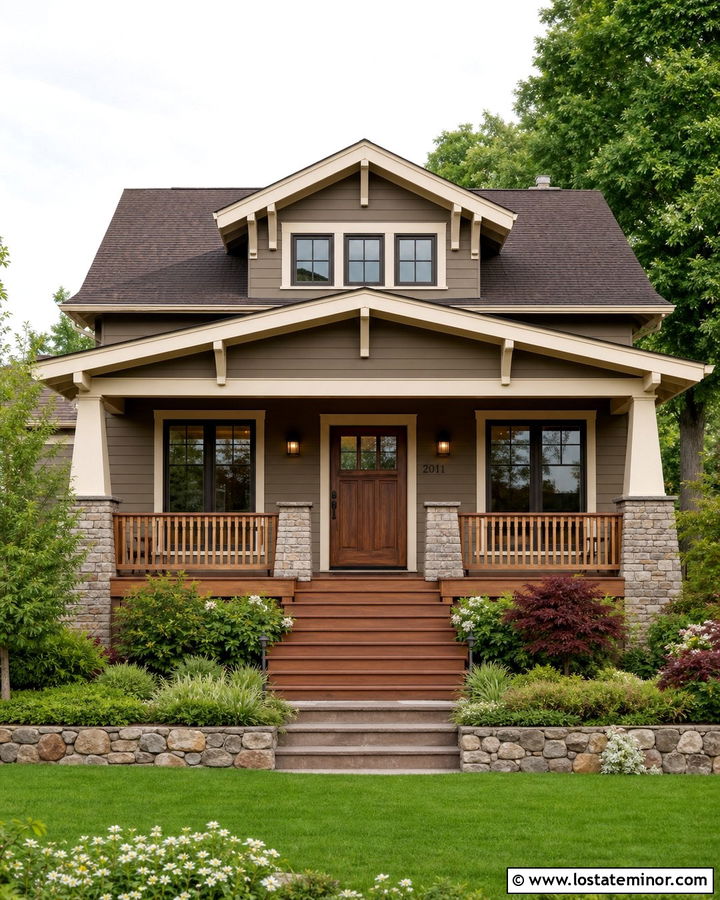
Chunky porch details give a taupe bungalow the perfect framework for substantial exterior wainscoting. Choose warm taupe lap siding above a tan-and-gray stacked-stone base. Wrap the stone around tapered porch columns, stopping below the painted upper posts. Cream trim and fascia will define the roofline while maintaining the home’s relaxed warmth. Stain the porch floor, steps, and front door a medium cedar brown for a clear connection to the stone. Dark bronze window frames and sconces provide contrast that feels softer than black. A deep brown roof completes the earthy combination. To strengthen curb appeal, add broad front steps, simple wood railings, and layered foundation plantings. The finished bungalow feels handcrafted, welcoming, and visually anchored from the sidewalk.
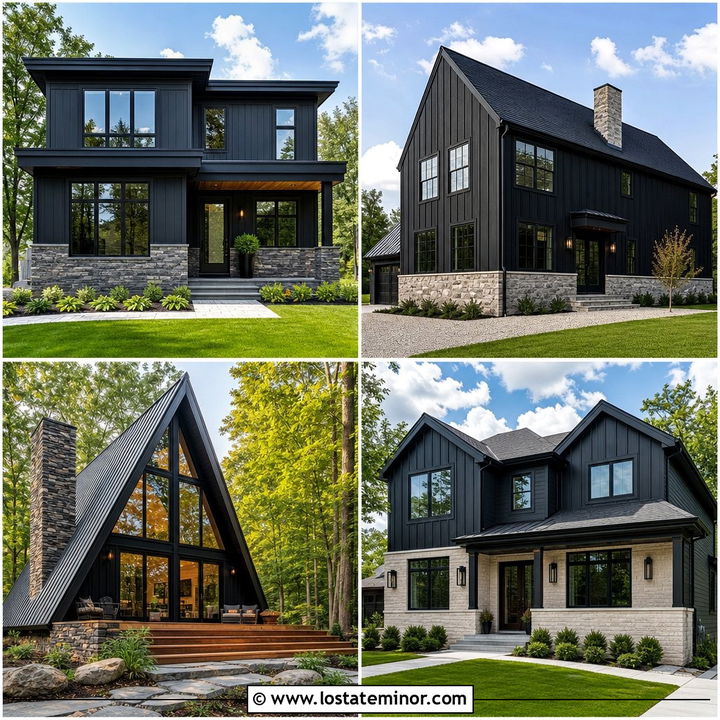
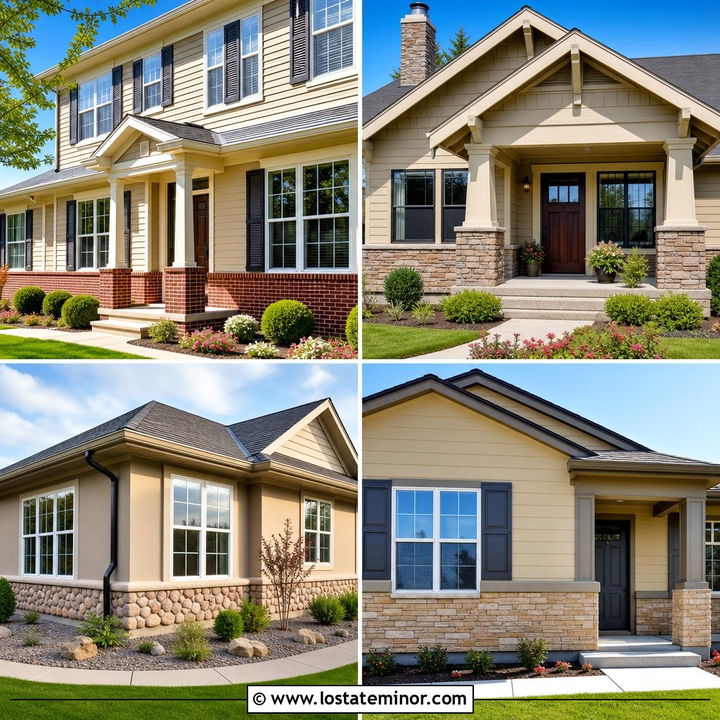
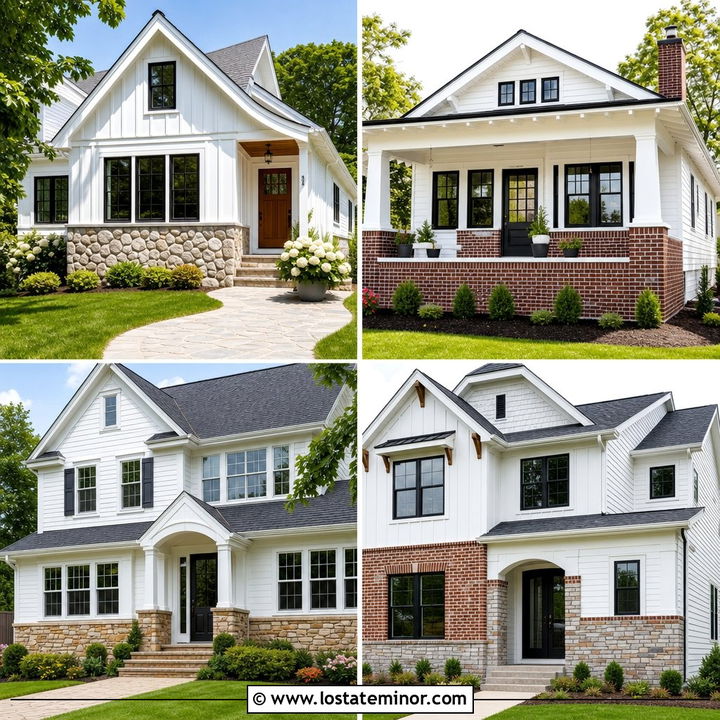
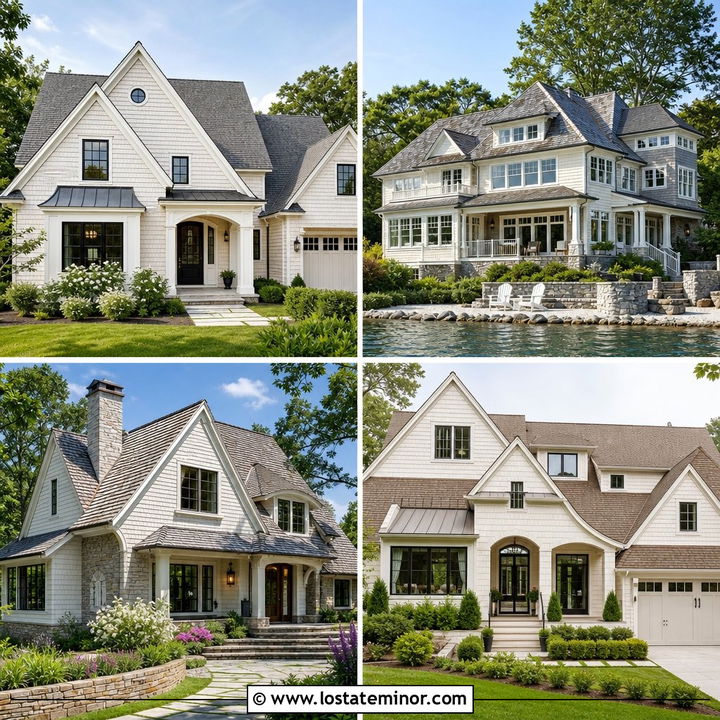
10. Taupe Stucco House With Limestone Wainscoting
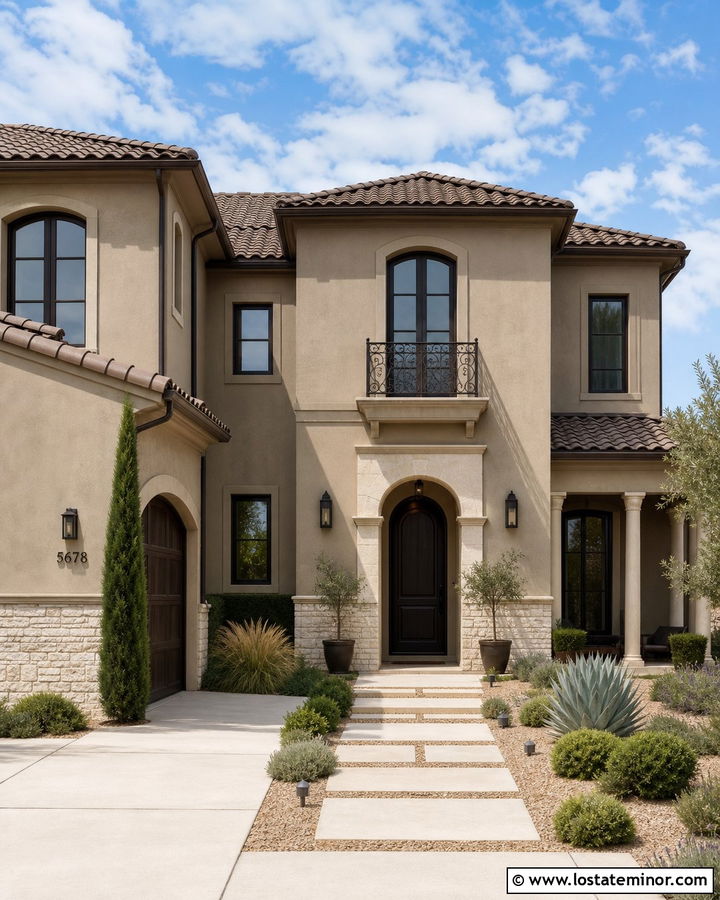
Smooth taupe stucco and pale limestone create an elegant exterior suited to Mediterranean, Southwestern, and transitional homes. Choose a sun-washed taupe with warm gray undertones rather than a muddy brown shade. Cream limestone wainscoting can cover the lower walls, entry columns, and selected courtyard sections. Keep the mortar close to the stone color for a clean, unified surface. Bronze-framed windows and a dark espresso front door add depth to the light materials. A clay-brown tile roof contributes warmth without making the house look overly orange. Use restrained iron details on railings or balconies to define the architecture. Drought-tolerant grasses, sculptural shrubs, gravel beds, and light concrete pavers will continue the natural palette through the landscape while keeping attention on the masonry.
11. Cool Taupe House With Charcoal Wainscoting
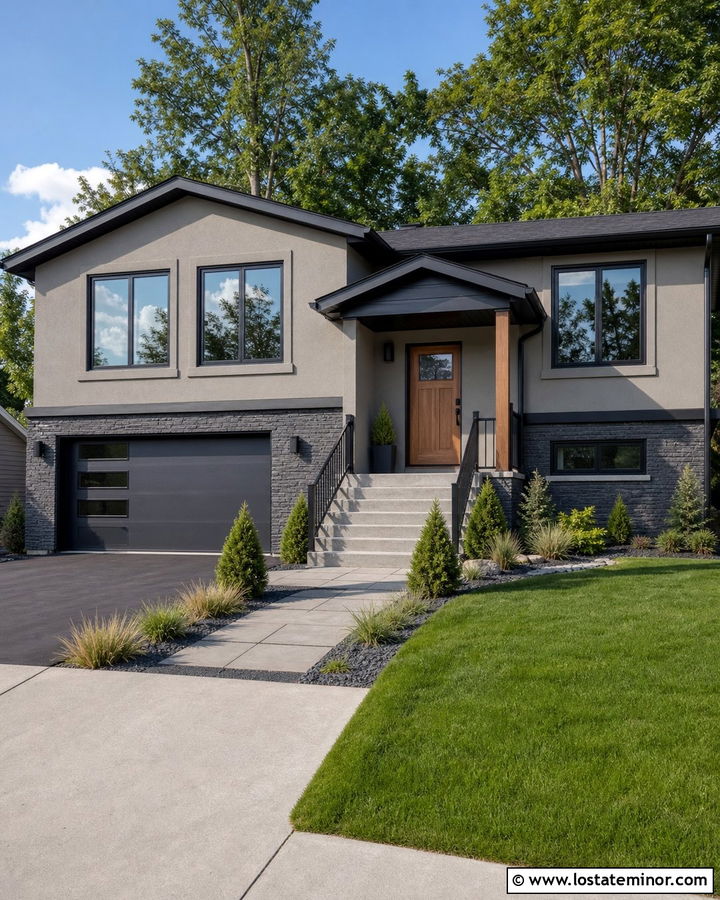
Cool taupe siding feels distinctly modern when placed above charcoal stone wainscoting. This high-contrast combination works well on a contemporary split-level or a home with black-framed windows. Select a taupe with gray undertones so the siding relates naturally to the dark stone. Carry charcoal across the garage door, porch roof, gutters, and selected fascia boards for balance. A warm wood front door is important because it prevents the exterior from feeling cold. Keep the primary trim close to the taupe body color, allowing the windows and wainscoting to create the strongest lines. A nearly black roof will complete the structured palette. Use concrete pavers, architectural grasses, and compact evergreens to frame the house with simple forms and complementary gray-green foliage.
12. Warm Taupe House With Sandstone Wainscoting
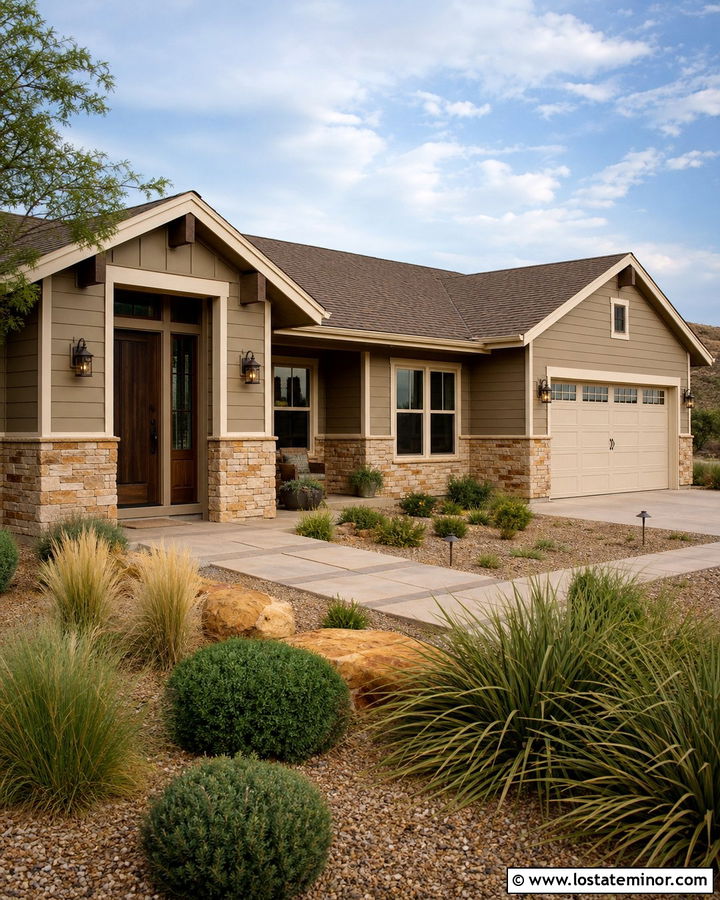
Golden sandstone brings out the soft brown undertones in warm taupe siding. This welcoming palette fits traditional homes, Southwestern ranches, and relaxed Craftsman exteriors. Select sandstone with cream, tan, muted gold, and occasional rust-colored pieces. Use the masonry below the windows and on the porch column bases, but avoid covering every architectural surface. Soft cream trim keeps the scheme bright, while a dark walnut door introduces a clear focal point. Match the roof to the stone’s deeper brown tones rather than its lightest colors. Bronze light fixtures and gutters will blend quietly into the palette. Finish the curb appeal with warm concrete pavers, rounded shrubs, and drought-tolerant ornamental grasses. The completed exterior feels sunlit and cohesive, even when viewed under softer or overcast daylight.
13. Taupe House With Board And Batten Wainscoting
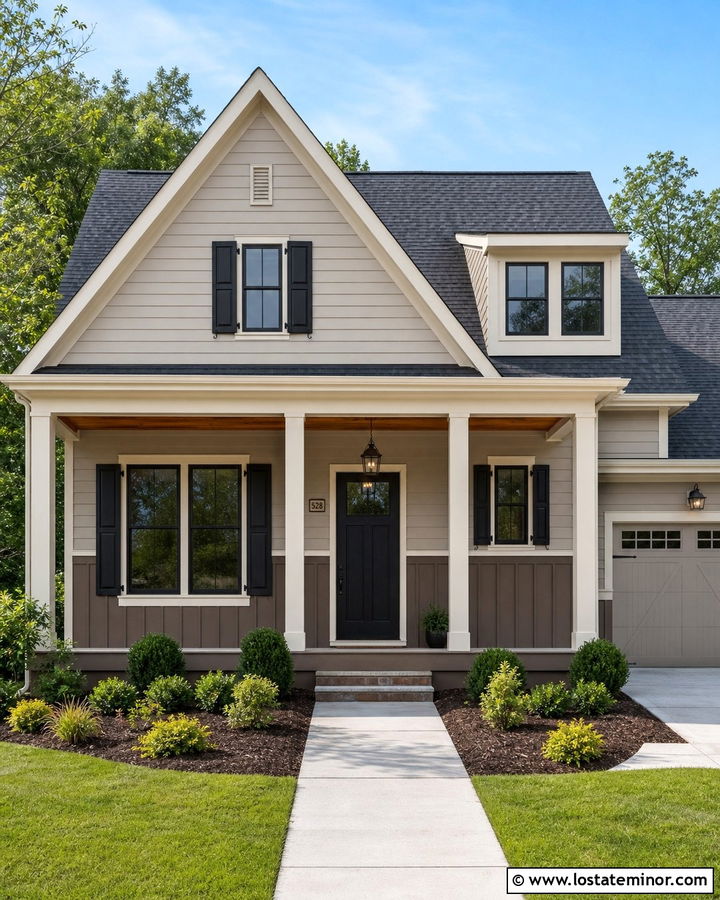
Exterior wainscoting does not always need to be masonry. Dark taupe board-and-batten panels can create a durable-looking base beneath lighter taupe lap siding. This two-tone treatment works particularly well on a modern cottage, farmhouse, or compact suburban home. Separate the materials with a simple horizontal trim board painted warm white. Repeat the white on the windows, corner boards, and roof trim for consistency. Black shutters and a black front door add definition, while a cedar porch ceiling introduces natural warmth. Keep the roof charcoal gray and relatively simple so the siding pattern remains the main feature. Foundation shrubs should stay below the wainscoting line. A straight walkway and organized planting beds will emphasize the tidy material transition across the complete facade.
14. Taupe House With White Brick Wainscoting
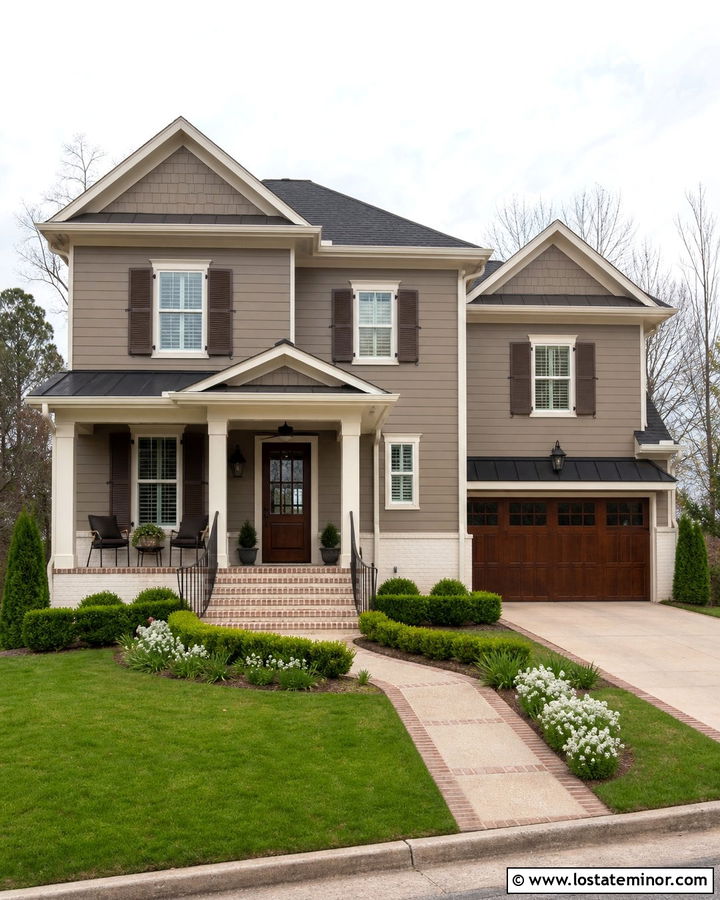
White brick wainscoting gives taupe siding a brighter, cleaner foundation while retaining visible masonry texture. Choose a warm, softly painted brick finish rather than a glossy or blue-white coating. Above it, use a medium mushroom taupe on horizontal siding or shake shingles. Carry the warm white onto porch columns, fascia, window trim, and garage surrounds. For a traditional appearance, add deep brown shutters and a stained mahogany front door. A black door can create a sharper transitional effect. The roof should contain a blend of charcoal and brown so it connects both sides of the palette. Extend the brick across the front and around exposed side elevations for a finished look. Boxwoods, white flowering plants, and a brick-edged walkway complete this approachable suburban exterior scheme.
15. Taupe House With Black Brick Wainscoting
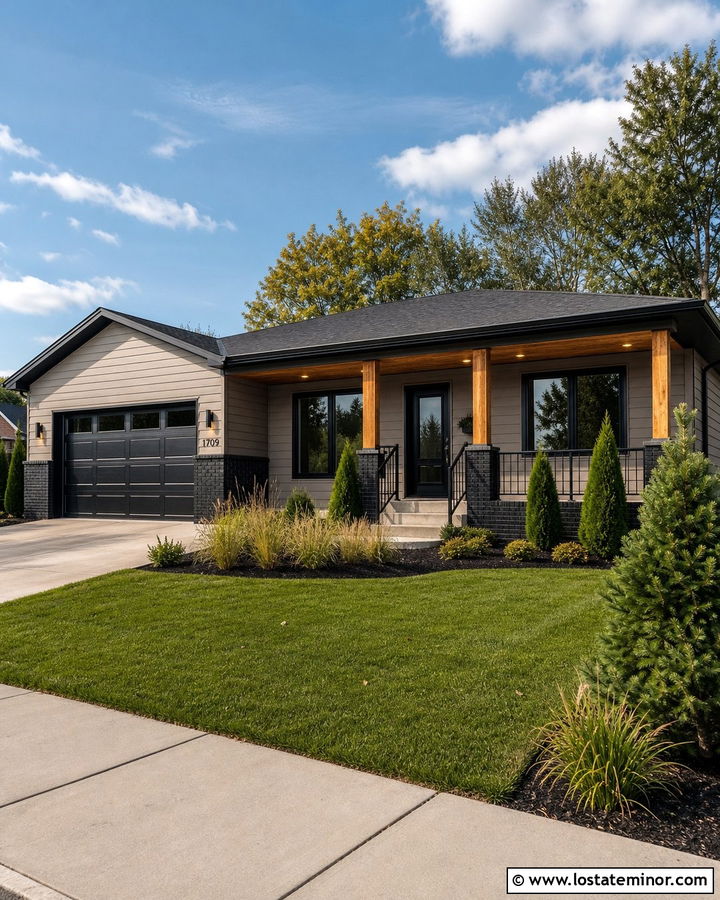
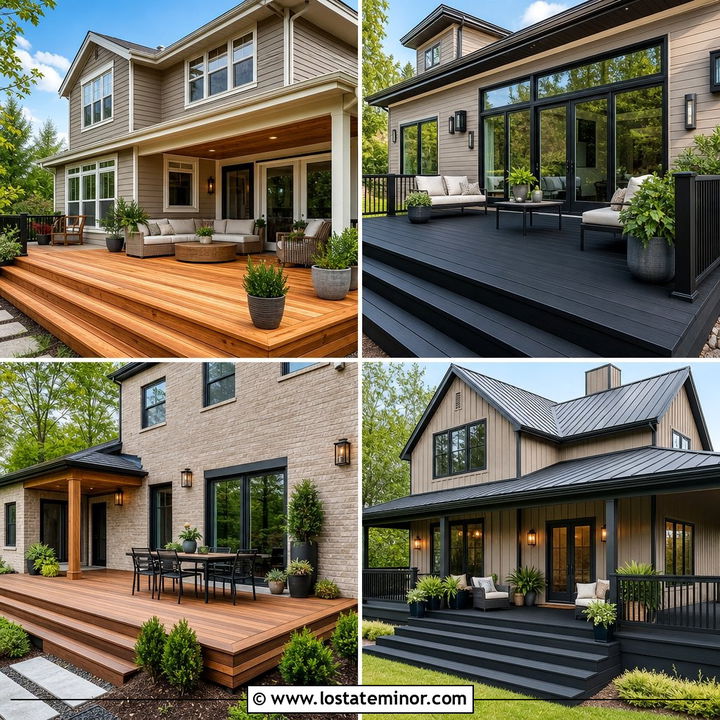
Black-painted brick wainscoting can turn an ordinary taupe exterior into a bold contemporary design. Keep the brick finish matte so its texture remains visible in bright daylight. Above it, select a balanced midtone taupe that is light enough to contrast with the base. Repeat black on the window frames, front door, garage door, gutters, and porch railing. Use taupe or a slightly lighter greige for the remaining trim instead of bright white. This limits the palette and produces a more architectural result. A charcoal roof will blend with the darker elements overhead. To keep the exterior welcoming, introduce cedar through porch posts, soffits, or a horizontal privacy screen. Clean concrete steps, ornamental grasses, and structured evergreen beds support the house’s crisp modern character.
16. Taupe Cape Cod With Stone Wainscoting
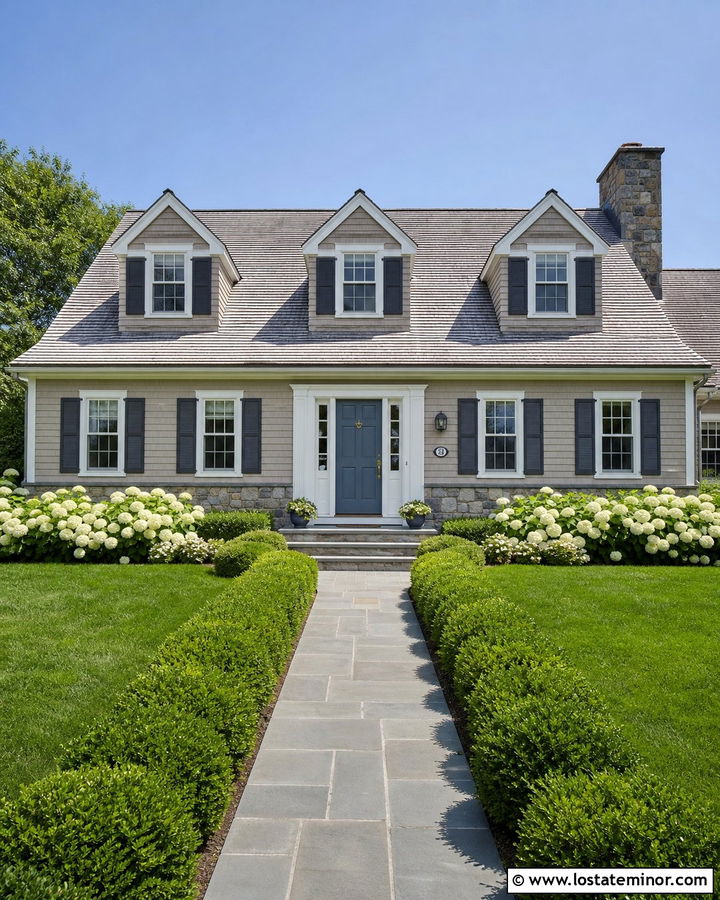
A Cape Cod house can support wainscoting when the scale remains modest and symmetrical. Use light taupe cedar shingles or shake-style siding above soft gray stone that stops below the first-floor windows. Warm white trim should outline dormers, windows, eaves, and the central entrance. Classic charcoal shutters provide contrast, while a blue-gray front door adds gentle coastal color. Choose weathered-gray roof shingles to support the Cape Cod character without making the taupe appear yellow. Stone can also cover the chimney or small porch bases, but it should not compete with the dormers. Frame the house with hydrangeas, clipped boxwoods, and a curved gravel or bluestone path. This full exterior scheme feels traditional and coastal while remaining warmer and more forgiving than a bright white facade.
17. Taupe Tudor With Dark Stone Wainscoting
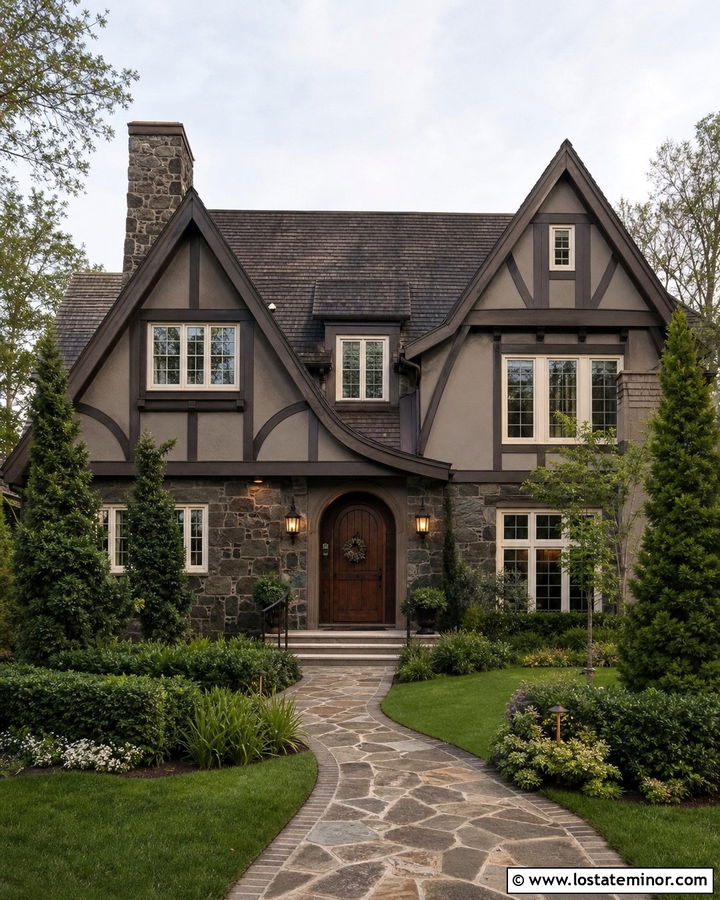
The strong rooflines of a Tudor exterior pair naturally with deep, substantial wainscoting. Use medium taupe stucco or lap siding between dark brown timber details. Add charcoal-brown stone across the lower walls and around the arched entry for an established, grounded appearance. Cream window trim will softly separate the taupe body from the darker beams. A heavy stained wood door, bronze lanterns, and dark gutters support the traditional architecture. Choose brown-black roof shingles with subtle variation to complement the steep gables. Keep the stone shapes irregular but avoid excessive color variation that could make the facade appear busy. Layered evergreens, deep green shrubs, and a gently curved stone walkway complete the story. The result feels historic and substantial without becoming gloomy.
18. Taupe Split Level With Horizontal Wainscoting
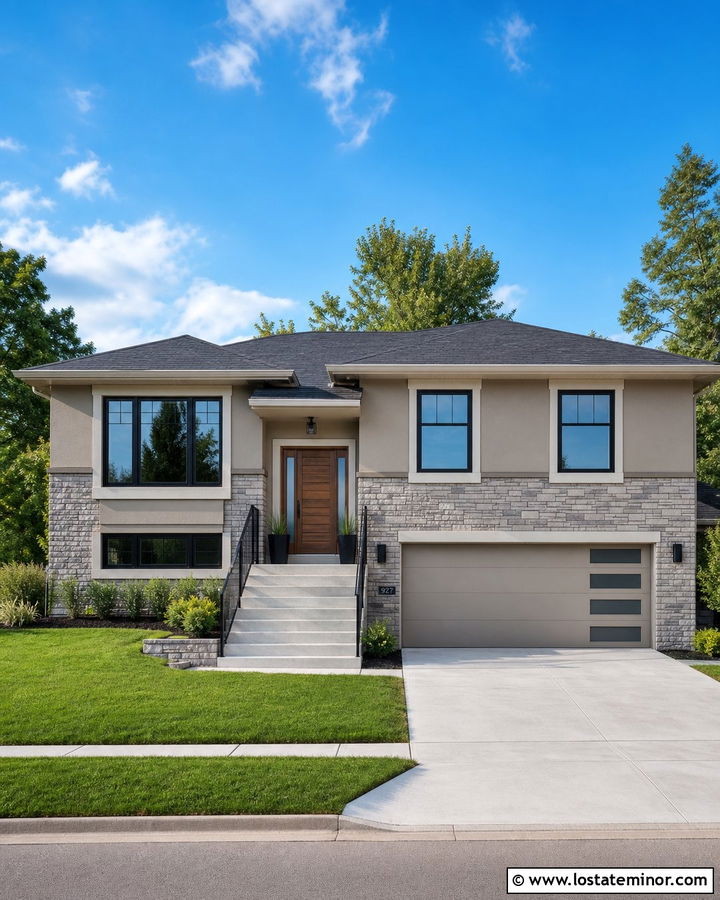
Split-level homes often contain multiple wall heights and competing materials. A consistent band of horizontal wainscoting can bring those sections together. Use soft taupe siding across the upper portions and medium-gray rectangular stone beneath the main windows. Continue the stone around the garage base to connect both levels visually. Paint the garage door the same taupe as the siding so it recedes. Off-white trim adds brightness, while black window frames and railings deliver a needed contemporary edge. A cedar front door can warm the recessed entrance and make it easier to notice from the street. Choose charcoal roof shingles with minimal pattern. Broad concrete steps, linear planting beds, and low shrubs will emphasize the updated horizontal composition without hiding the wainscoting.
19. Taupe Modern House With Concrete Wainscoting
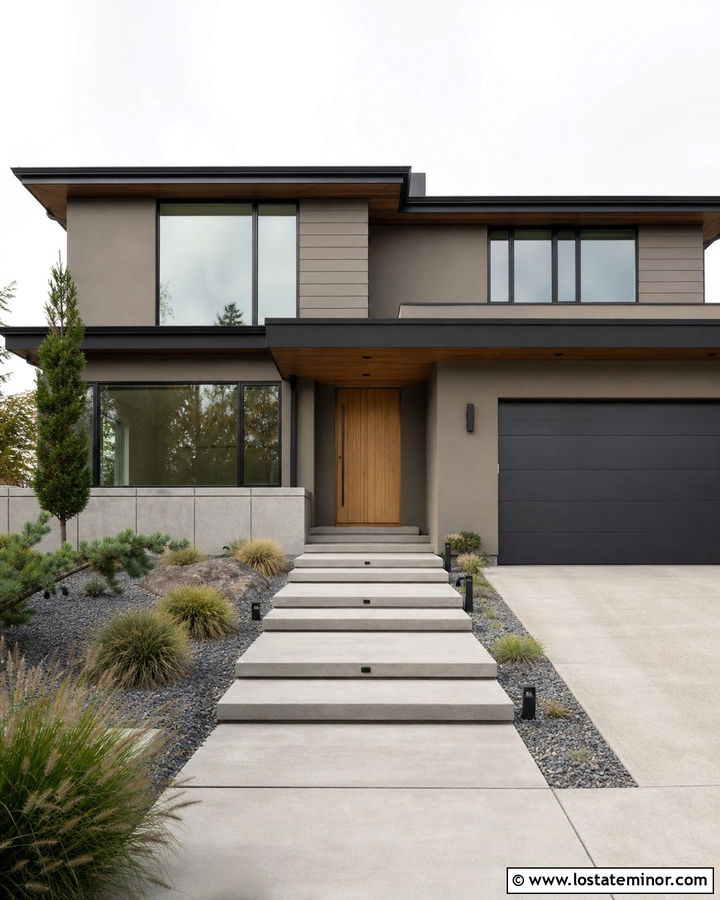
Taupe can look surprisingly sharp on modern architecture when paired with smooth concrete wainscoting. Choose a cool stone taupe for flat-panel siding or smooth stucco. Use pale gray architectural concrete along the lower facade, around planter walls, and beneath large windows. Black window frames, metal fascia, and a charcoal garage door create precise outlines. Add warmth through a wide natural oak pivot door and matching soffit panels. A flat or low-slope roof keeps the exterior geometry simple. Instead of traditional foundation shrubs, use ornamental grasses, sculptural evergreens, gravel, and large concrete stepping stones. The controlled combination of taupe, gray, black, and wood feels modern without becoming sterile. Keep joints and material transitions carefully aligned for the strongest finished effect.
20. Taupe House With Cedar Wainscoting
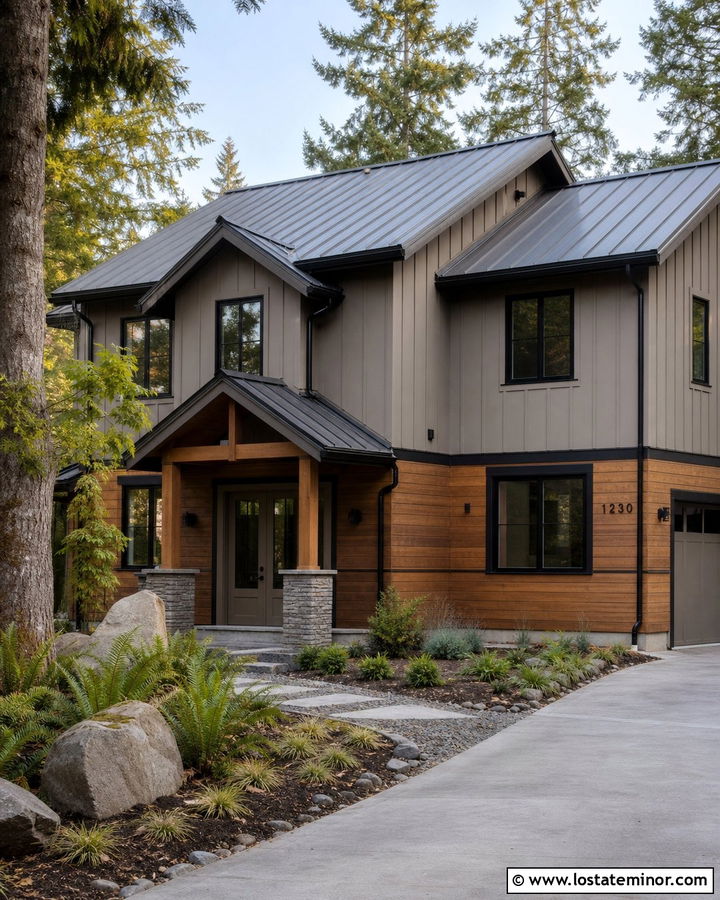
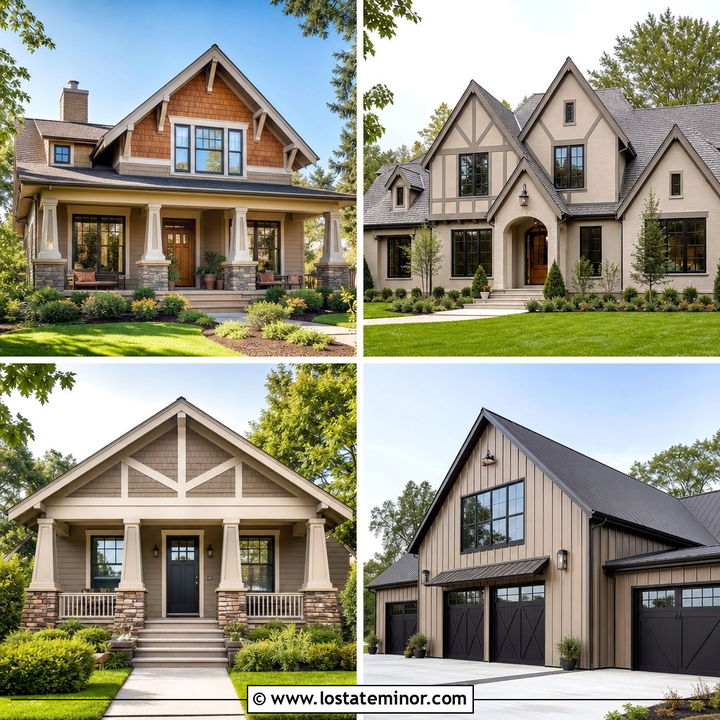
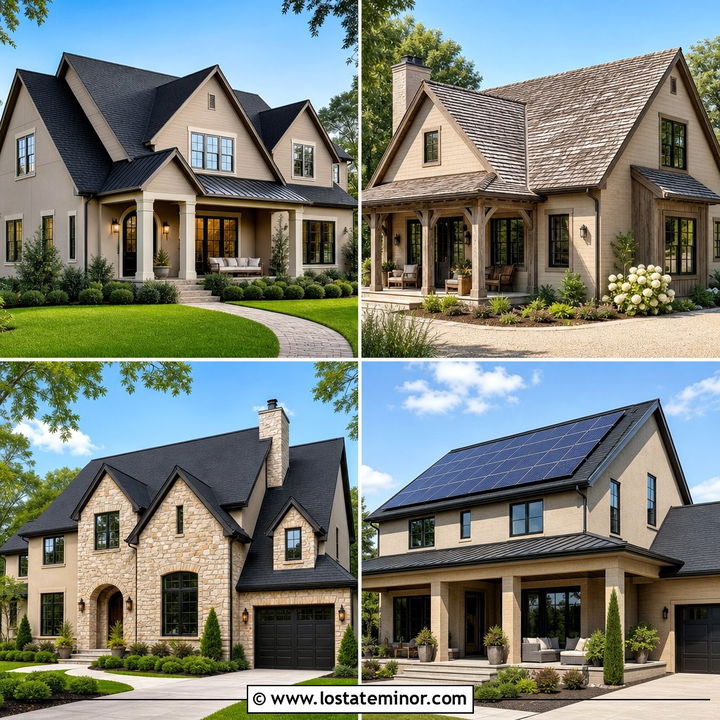
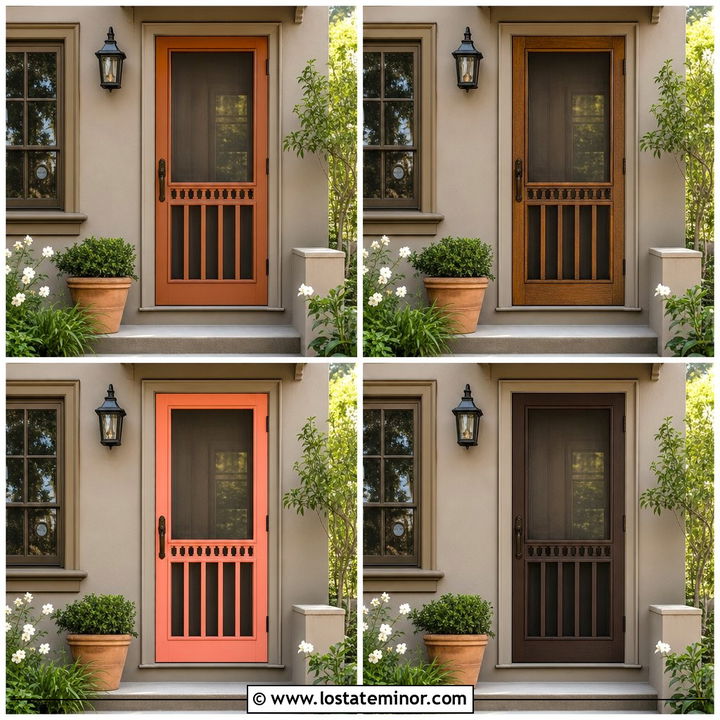
Natural cedar wainscoting brings visible warmth to a taupe house and works especially well in wooded or mountain settings. Install horizontal cedar boards along the lower facade, then use cool taupe vertical siding above for a clear textural contrast. A narrow black transition band can provide a neat separation between the materials. Repeat black on windows, gutters, railings, and exterior lights. Keep the front door taupe or black if the cedar already supplies enough warmth. A dark gray metal roof gives the scheme a durable, woodland-inspired finish. Protect the cedar with an appropriate exterior stain so its color remains consistent. Ferns, native grasses, boulders, and a gravel-edged walkway will connect the wood wainscoting naturally to the surrounding landscape.
21. Taupe House With Natural Brick Wainscoting
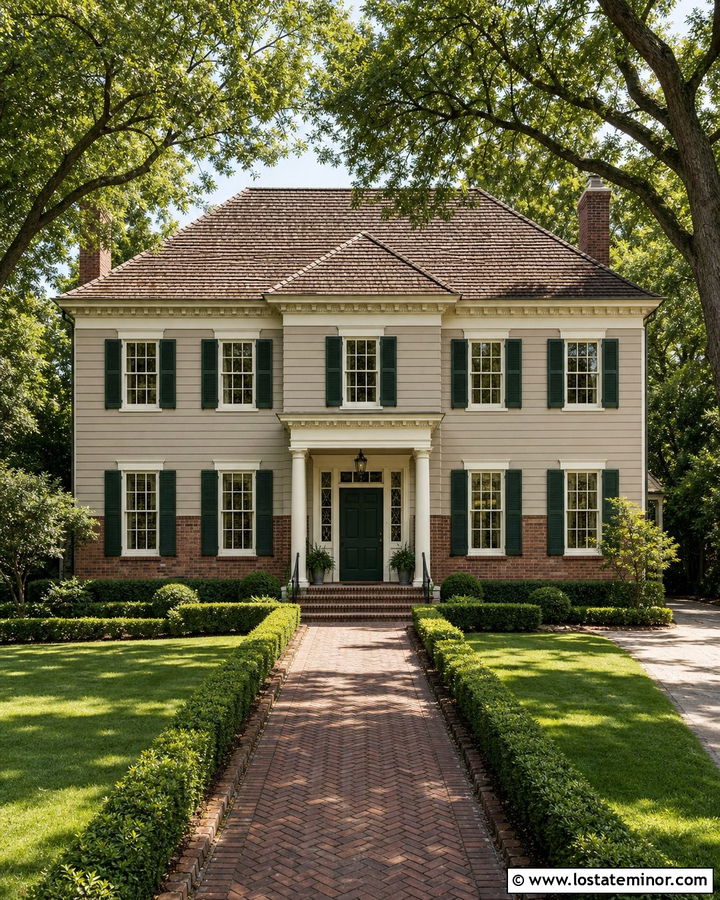
Natural brown brick adds texture and history to a taupe facade without creating the stronger contrast associated with red or black masonry. Choose a muted taupe siding color that matches one of the lighter tones found within the brick. Use creamy trim around windows and along roof edges to lift the neutral palette. Forest-green shutters and a matching front door can introduce traditional color while maintaining an earthy character. Select a weathered-brown roof that relates to the brick rather than competing with it. Carry the masonry across porch bases, foundation walls, and the lower garage elevation for consistency. A brick walkway, clipped hedges, and mature shade trees reinforce the established appearance. This combination is particularly suitable for Georgian, Colonial, and traditional suburban architecture.
22. Taupe House With Slate Wainscoting
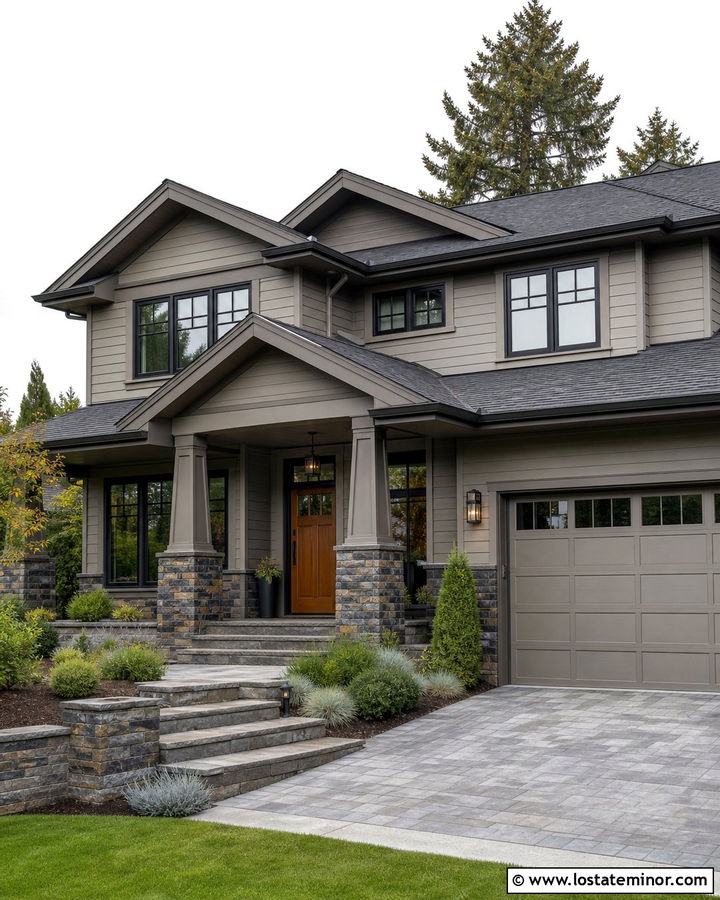
Slate wainscoting creates a refined, layered base for cool taupe siding. Look for stone containing charcoal, steel gray, muted brown, and restrained blue-green variations. These shades create movement without overwhelming the neutral body color. Use black-framed windows and dark charcoal fascia for a strong architectural outline. A medium-stained wood front door keeps the scheme from feeling too cool. The garage door can match the taupe siding to reduce its visual size. Choose a dark gray roof that relates to the slate but has less visible variation. This combination works well on contemporary Craftsman homes and updated two-story exteriors. Finish with broad stone steps, gray pavers, evergreen shrubs, and silvery ornamental grasses that echo the cooler colors within the masonry.
23. Taupe House With Cobblestone Wainscoting
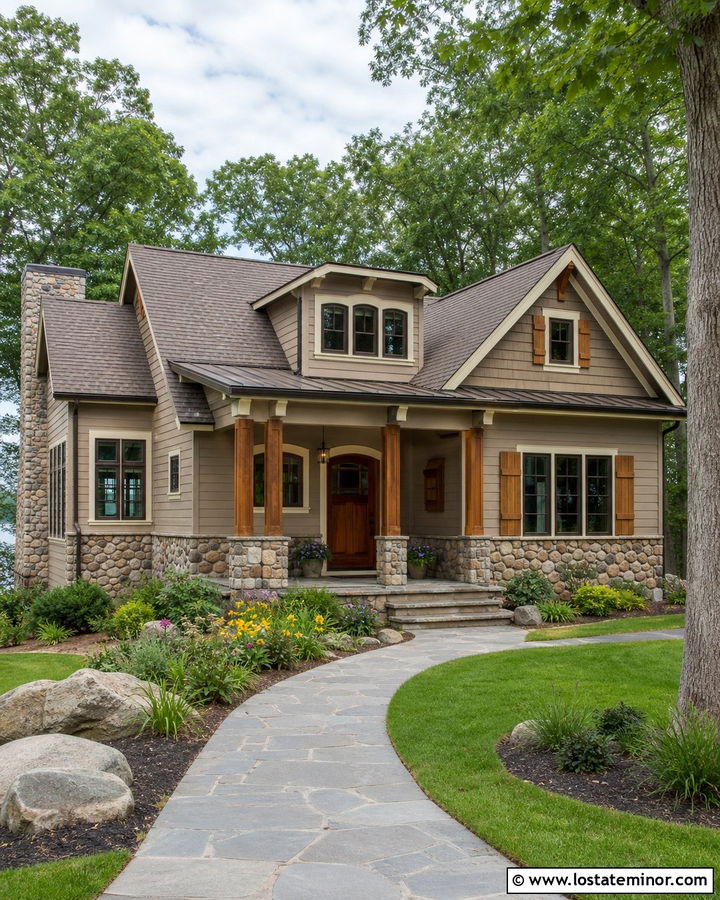
Rounded cobblestone wainscoting gives a taupe exterior an informal, handcrafted quality. It is particularly effective on cottages, lake houses, and casual Craftsman homes. Choose cobblestones in gray, cream, weathered brown, and faded tan. Pair them with warm mushroom taupe siding and ivory trim. Cedar shutters, porch posts, and a stained wood front door strengthen the natural material palette. Use a brown-gray roof with subtle texture rather than a uniform black surface. Carry the cobblestone around porch columns and across visible foundation sections, keeping the top line relatively level. A curving walkway, layered perennial beds, and loosely shaped shrubs will support the relaxed architecture. The complete house should feel comfortable and established rather than overly symmetrical or formal.
24. Taupe House With Manufactured Stone Wainscoting
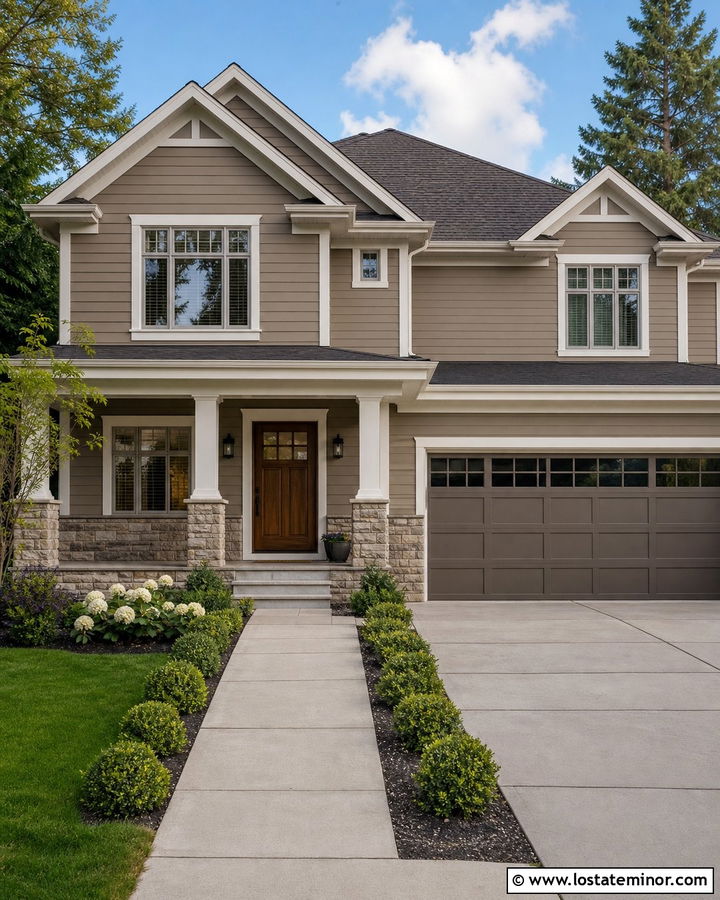
High-quality manufactured stone can give a taupe exterior convincing depth when its color and scale suit the architecture. Choose pieces with varied edges, realistic shadow lines, and a restrained mix of tan, gray, and cream. Pair the stone with medium taupe fiber-cement siding and warm white trim. Add a walnut-colored front door and bronze lighting to connect with the masonry’s brown tones. On a suburban two-story home, apply the wainscoting across the lower facade and garage base. Avoid scattering small stone patches across unrelated areas. A charcoal-brown roof will complete the neutral palette. Clean landscaping with boxwoods, flowering shrubs, and a wide concrete path keeps the exterior approachable while allowing the textured wainscoting to remain clearly visible from the street.
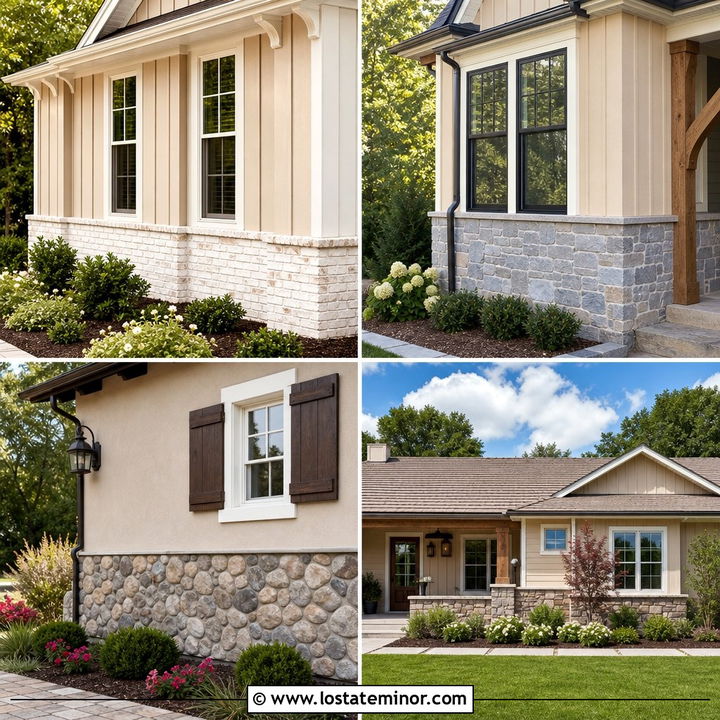
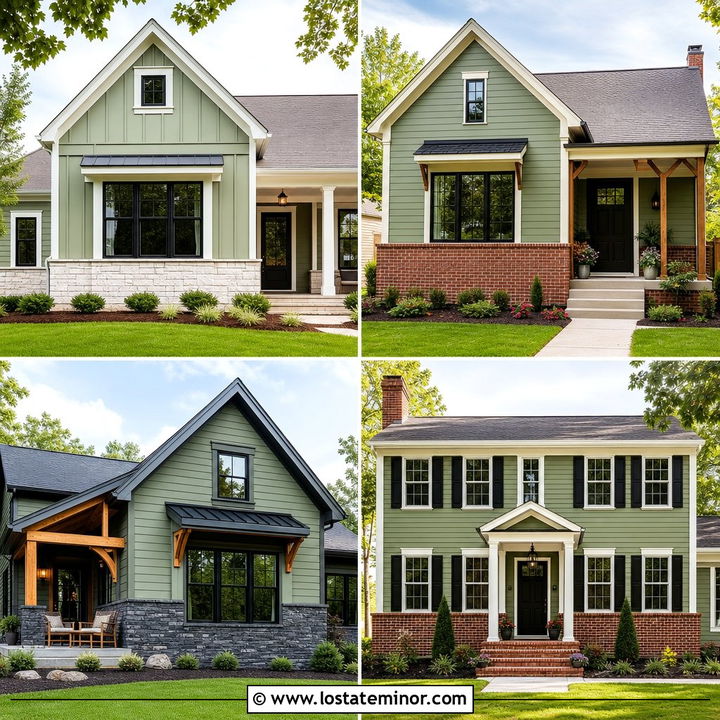
25. Taupe House With Painted Stone Wainscoting
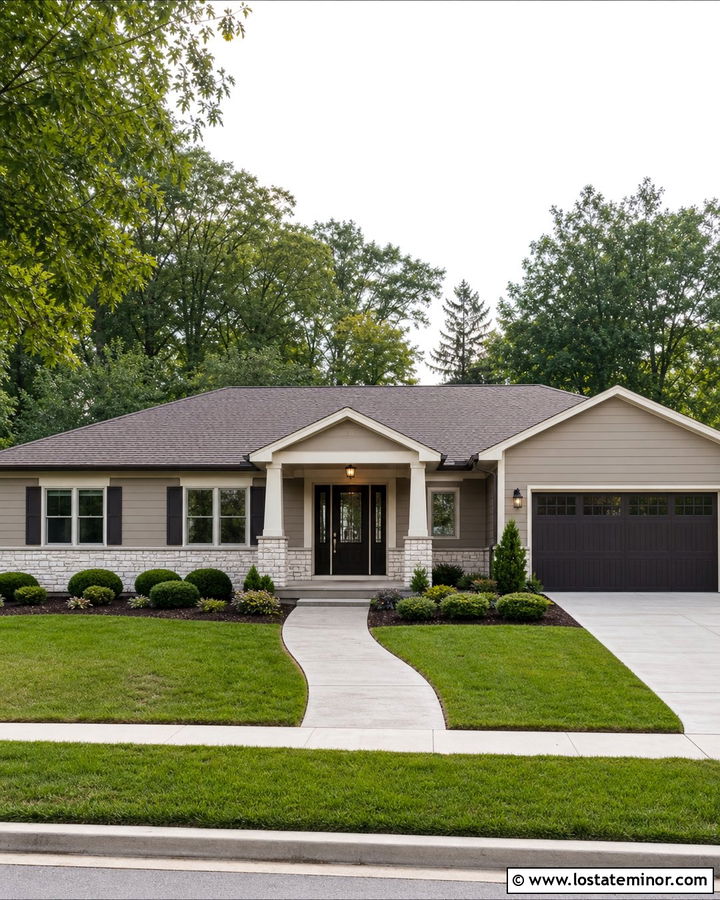
Painting dated stone can create a calmer facade when the original material contains too many competing colors. Use a soft limestone-white masonry coating on the existing wainscoting, then apply medium warm taupe to the siding above. The stone’s texture will remain visible while its new color connects with the creamy window trim and porch columns. Add a dark bronze front door, matching gutters, and simple bronze lanterns. Choose a brown-gray roof that supports both warm neutrals. This treatment works well for ranch homes and older suburban properties that need visual simplification. Before painting, address loose mortar and moisture concerns so the finish looks intentional. Fresh mulch, rounded evergreens, and a widened front walkway can reinforce the clean, updated curb appeal.
26. Taupe House With Shingle Wainscoting
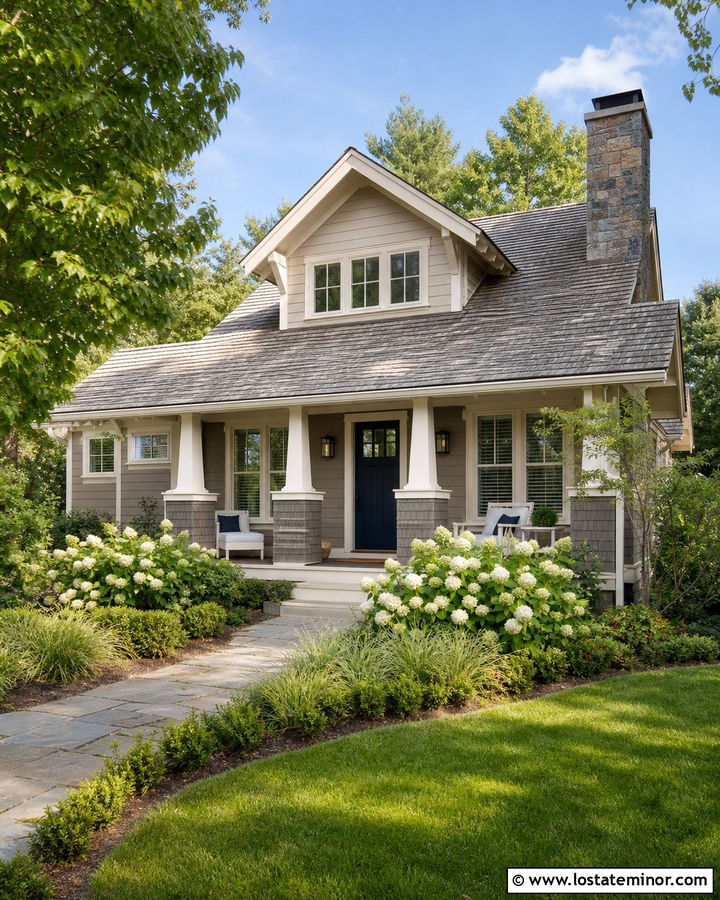
Shake-style wainscoting introduces texture without the weight of masonry. Use dark taupe cedar-look shingles along the lower portion of a coastal cottage or Craftsman facade. Above them, install lighter taupe lap siding to produce subtle tonal contrast. Warm white trim should separate the materials and highlight windows, porch posts, and gable edges. A navy front door adds a controlled accent that works well beside the neutral taupes. Choose weathered-gray roofing with a soft, blended surface. The wainscoting can also wrap porch bases or project slightly beneath bay windows. Keep the landscaping airy with hydrangeas, grasses, and low evergreen borders. This layered exterior feels detailed and inviting while maintaining a manageable palette of taupe, white, gray, and blue.
27. Taupe House With Fluted Panel Wainscoting
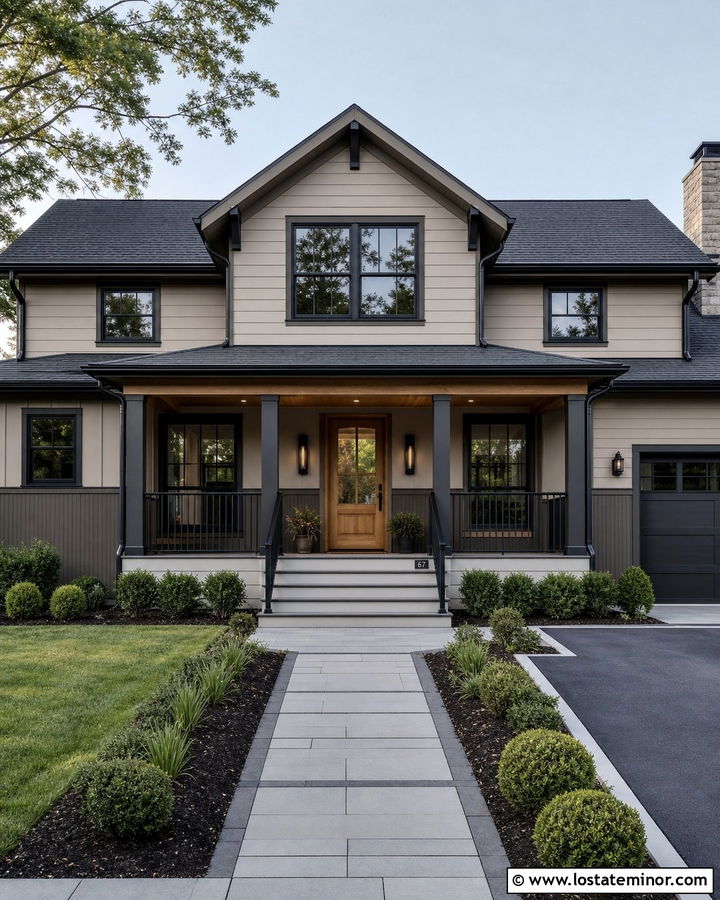
Vertical fluted panels can give exterior wainscoting a modern, customized appearance. Apply dark mushroom taupe fluting across the lower facade of a contemporary cottage or minimalist two-story home. Use a lighter taupe smooth siding above it to create tonal depth. Black window frames, gutters, and thin metal railings provide clean contrast. A natural oak front door and matching porch ceiling add warmth to the structured design. Keep the roof dark charcoal with simple edges and minimal overhang ornamentation. The fluted panels should align carefully with windows and entrance openings to maintain a deliberate rhythm. Use rectangular pavers, clipped shrubs, and upright grasses in the landscape. This complete exterior looks current and distinctive without depending on bright colors or complicated architectural additions.
28. Taupe House With Travertine Wainscoting
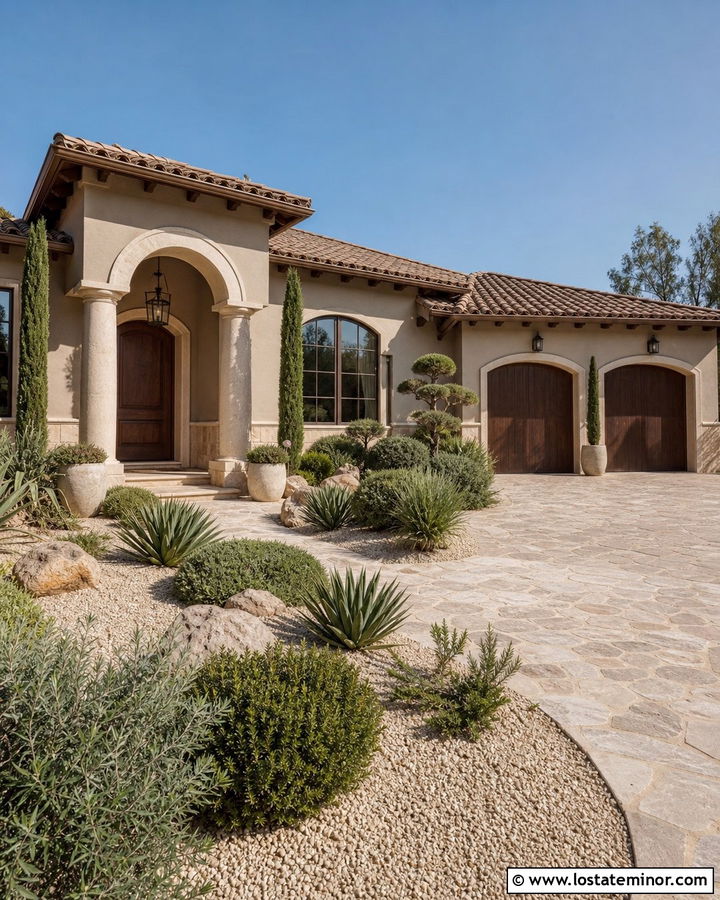
Travertine wainscoting introduces a pale, elegant texture to a warm taupe stucco home. Select honed stone in cream, beige, and soft gray rather than highly polished tiles that may appear too formal outdoors. Use the travertine along the foundation, courtyard walls, and substantial entry columns. Paint the main stucco a balanced café taupe that remains clearly darker than the stone. Bronze windows, dark wood garage doors, and a walnut entry door create warmth and definition. A blended brown tile roof completes the Mediterranean or transitional character. Frame the facade with light gravel, sculptural shrubs, olive-toned foliage, and broad limestone pavers. The finished palette feels refined and sun-washed while retaining enough contrast to show each architectural surface clearly.
29. Taupe House With Blue Gray Wainscoting
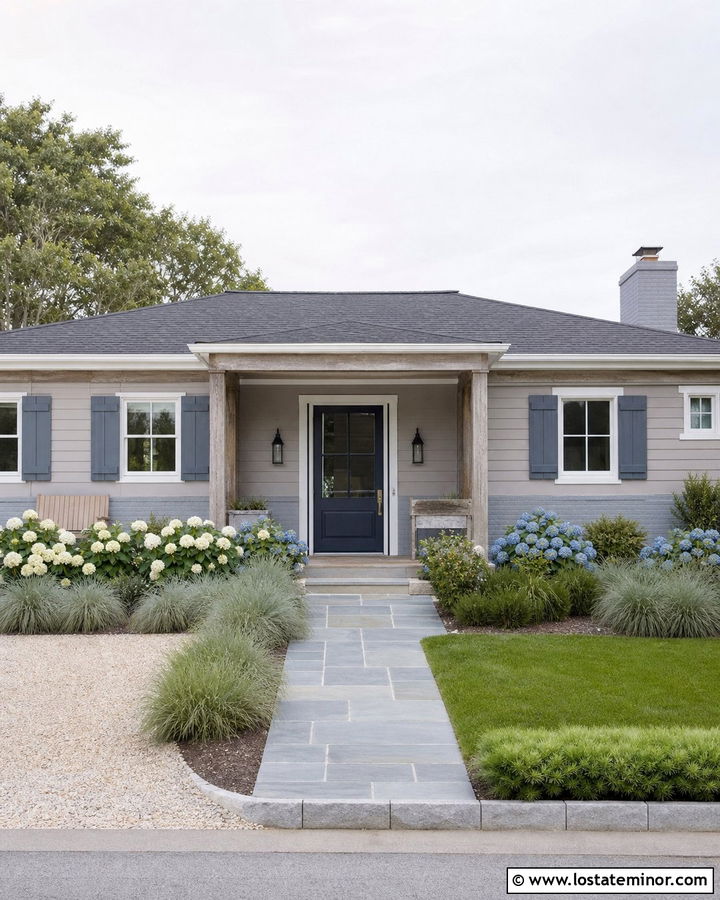
Blue-gray wainscoting offers a gentle color shift beneath neutral taupe siding. The combination works best when the taupe has cool gray or subtle violet undertones. Use blue-gray painted brick, fiber-cement panels, or slate-inspired stone across the lower facade. Repeat the accent on shutters or a porch ceiling, but keep the remaining trim warm white. A deep navy front door creates a focused entrance without straying from the cool palette. Choose charcoal roof shingles and black lighting for clean definition. On a coastal ranch or Cape Cod-inspired home, add weathered wood porch details to soften the cooler shades. Hydrangeas, silvery grasses, and a bluestone path will extend the blue-gray influence through the landscaping while preserving an understated exterior.
30. Monochromatic Taupe House With Wainscoting
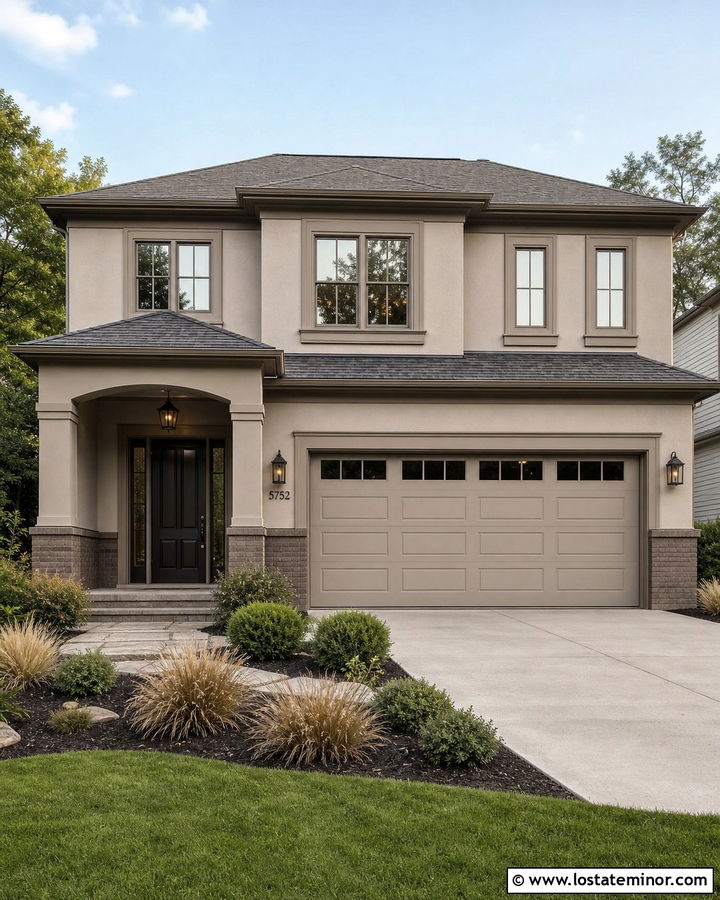
A monochromatic exterior can still show plenty of depth when different taupe values and textures are layered carefully. Use light taupe siding across the main walls, medium taupe trim, and deep taupe brick or panel wainscoting along the base. Match the garage door to the body so it blends into the elevation. A near-black brown front door and dark bronze lighting provide just enough definition. Choose a roof containing charcoal, taupe, and weathered-brown granules to connect all three tones. This approach fits contemporary, transitional, and simple suburban architecture. The success comes from visible texture rather than dramatic color contrast. Layer green shrubs, pale grasses, stone pavers, and dark mulch around the facade to make the neutral taupe variations easier to see.
Conclusion:
The most successful taupe exterior schemes treat wainscoting as part of the complete architecture rather than an added decoration. Stone, brick, wood, concrete, and textured panels can all provide depth when their undertones connect with the siding, roof, trim, and entrance. Warm taupes pair naturally with sandstone, cedar, cream brick, and brown roofing. Cooler shades work well beside slate, charcoal masonry, black windows, and gray roofs. Always view large material and paint samples outdoors before making a final choice because surrounding light can change their appearance. With thoughtful proportions and coordinated accents, these 30 Taupe House Design With Wainscoting Ideas can help create a more polished, durable, and welcoming facade.

Related posts: