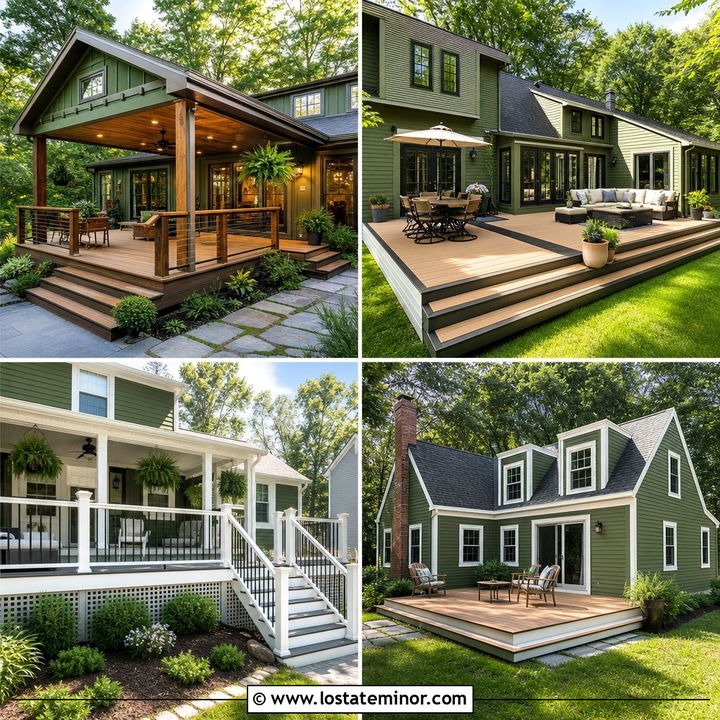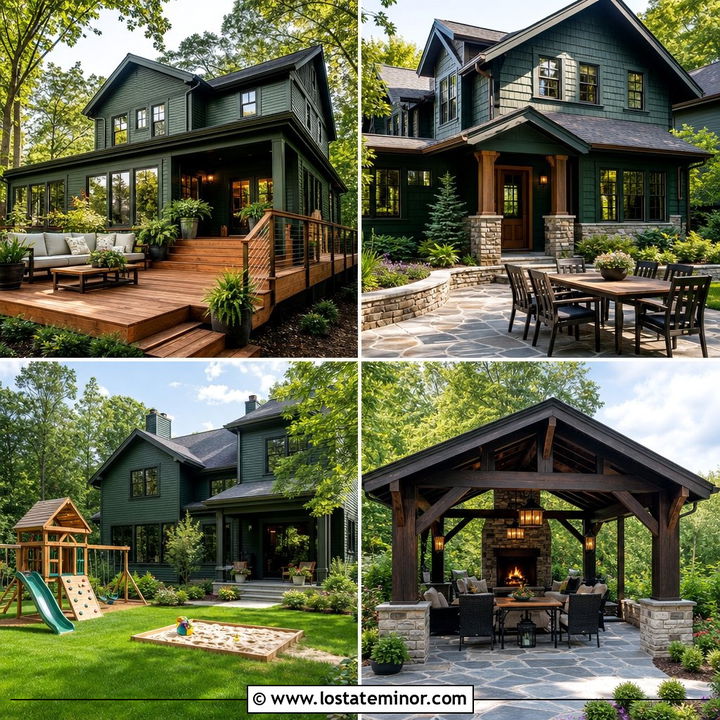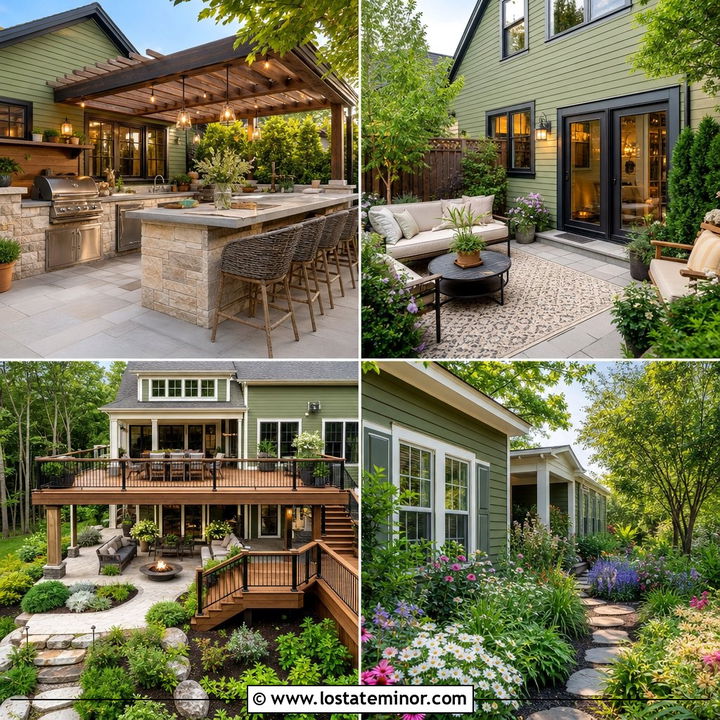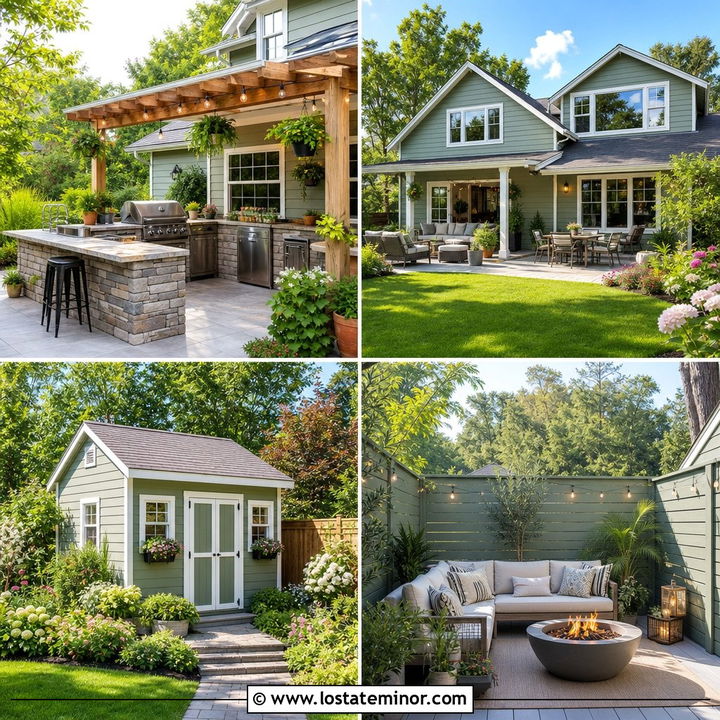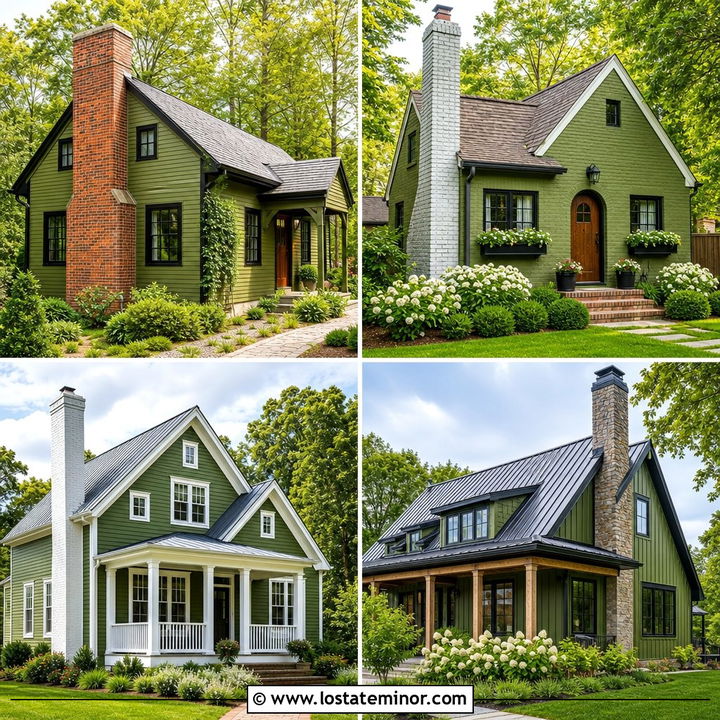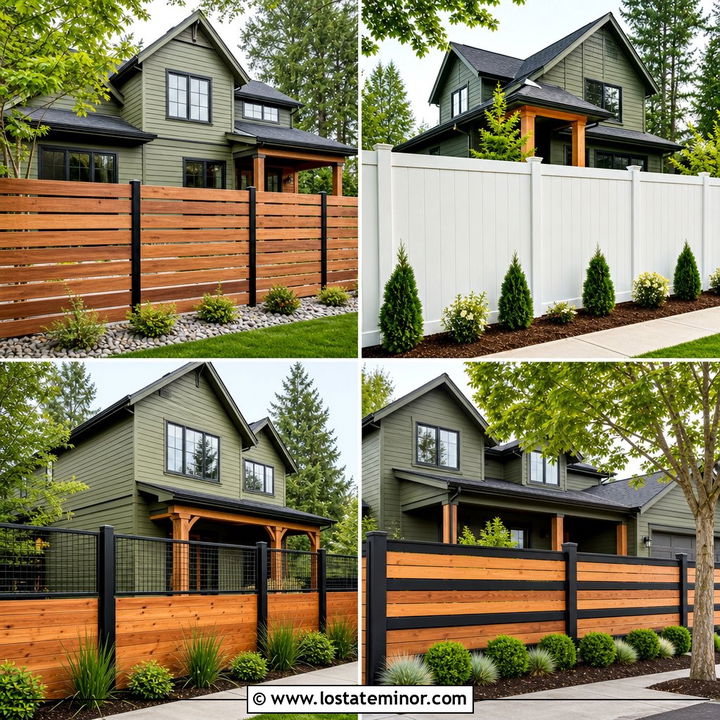
Moss green creates a calm, grounded exterior that feels naturally connected to the landscape. Its soft brown and gray undertones work especially well with wood, stone, brick, and layered greenery. The right backyard can make this earthy color look even richer. A cedar deck adds warmth, while pale pavers create contrast. Black trim brings modern definition, and cream details produce a softer traditional finish. Backyard features should also respond to the home’s architecture, available sunlight, and everyday needs. The following complete schemes cover spacious gardens, compact lots, pools, patios, outdoor kitchens, and low-maintenance landscapes. Use these 30 Moss Green House Design With Backyard Ideas to build a cohesive outdoor setting from the roofline to the rear property line.
1. Moss Green Farmhouse With Covered Patio
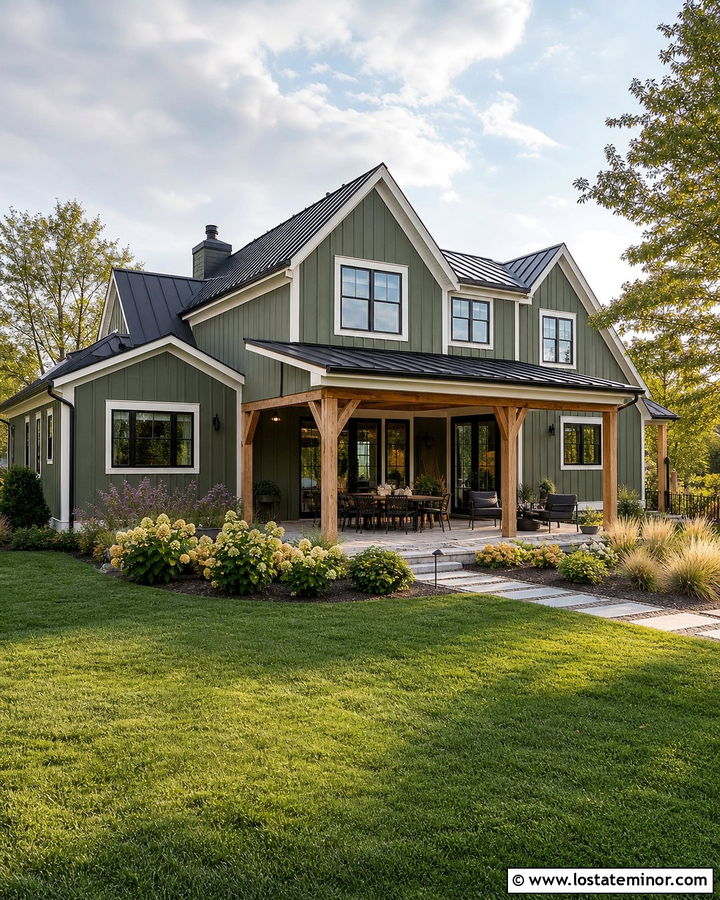
A moss green modern farmhouse feels welcoming when its rear elevation opens onto a generous covered patio. Use vertical board-and-batten siding to emphasize the home’s height, then add creamy white trim and a matte black roof for clean contrast. Natural timber porch posts prevent the scheme from appearing too polished. Under the roof, pale limestone flooring reflects light and keeps the entertaining area bright. A long dining table, simple lounge furniture, and understated ceiling fans make the patio useful without creating clutter. Frame the space with ornamental grasses, hydrangeas, and a broad lawn. Repeating black on the doors, window frames, and outdoor fixtures connects the complete backyard design while allowing moss green to remain the dominant color.
2. Moss Green Ranch With Paver Terrace
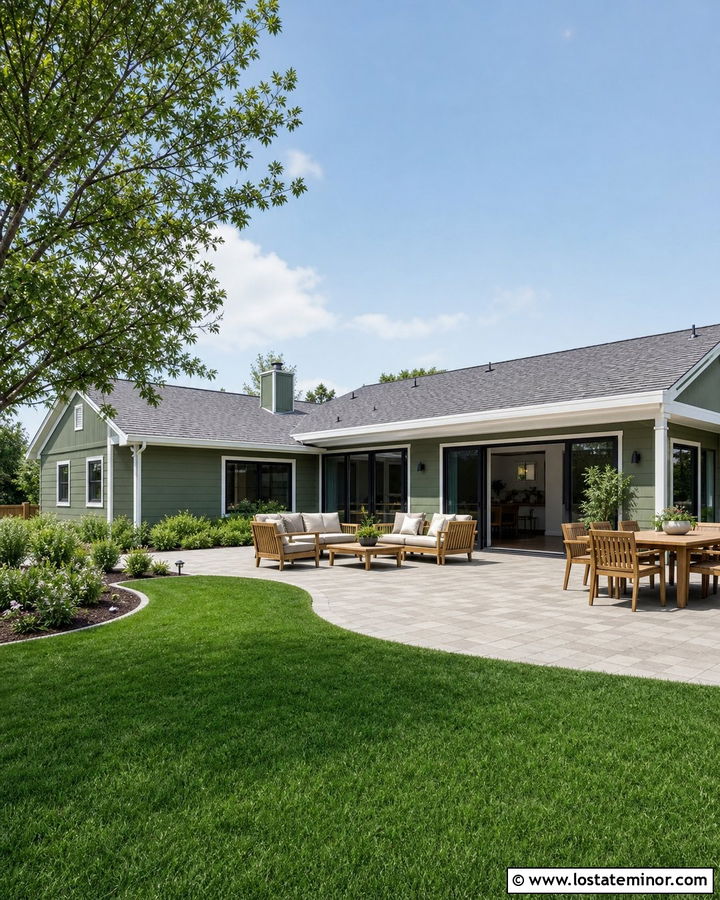
Could an ordinary ranch home become the most inviting house on the block? Moss green horizontal siding gives its long, low profile more depth, especially when paired with warm white trim and a medium-gray shingle roof. Extend the home into the backyard with a wide paver terrace running parallel to the rear wall. Large-format beige pavers make the yard feel wider and provide a neutral base for teak furniture. Add black-framed sliding doors to create a strong visual connection between indoors and outdoors. Low shrubs should sit beneath the windows so they do not hide the architecture. A curved lawn edge, compact shade tree, and gravel drainage strip complete a practical backyard that feels spacious, orderly, and comfortable.
3. Moss Green Craftsman With Cedar Deck
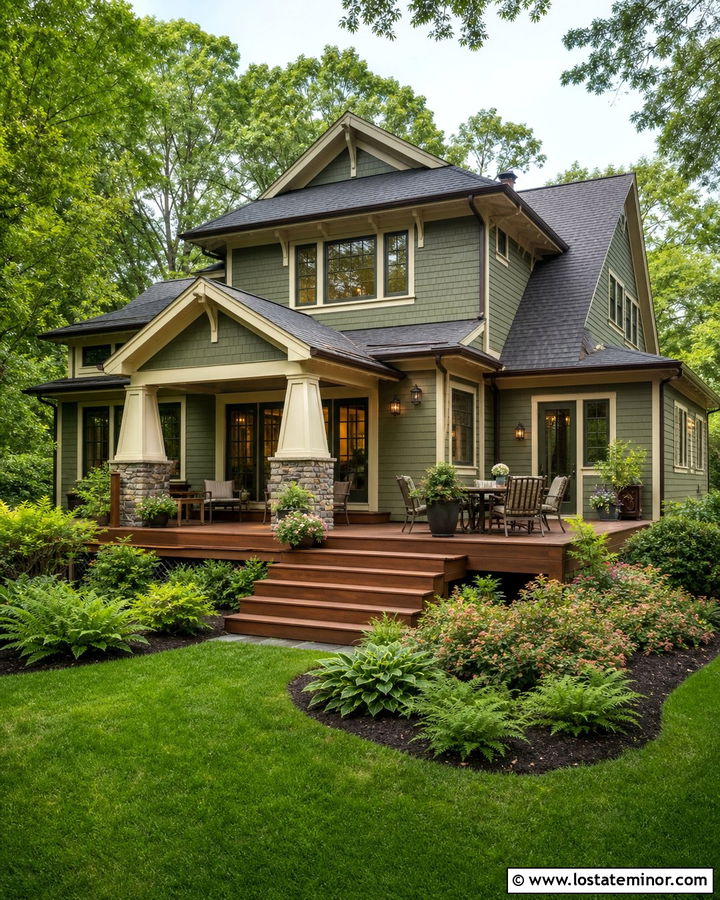
Rich cedar is an ideal partner for an earthy moss green Craftsman exterior. The wood’s orange-brown tones gently contrast with the muted siding without looking harsh. Use cream trim around the windows and under the roof, then ground the home with dark bronze gutters and a charcoal roof. A broad cedar deck can step down into the backyard through wide, centered stairs. Built-in benches provide casual seating while preserving open floor space. Craftsman details such as tapered columns, exposed rafter tails, and stone column bases give the rear facade character. Surround the deck with ferns, hostas, and flowering shrubs. The result feels established and natural, making it especially effective for a shaded or partially wooded suburban property.
4. Moss Green Cottage With Flower Garden
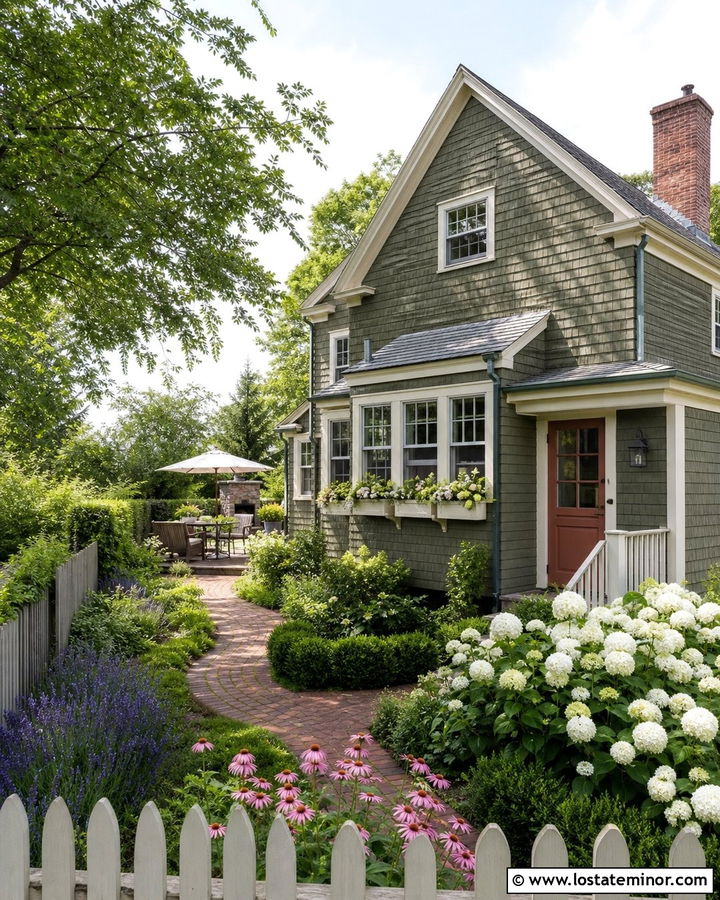
Soft color and abundant planting can turn a moss green cottage into a storybook backyard retreat. Choose shingle siding or narrow clapboards to create texture, complemented by ivory trim and a muted terracotta back door. A gently curving brick path should lead from the door to a small circular seating area. Cottage flowers can fill the surrounding beds, but repeating several plant varieties will keep the garden from feeling chaotic. Consider white hydrangeas, pink coneflowers, lavender, and compact evergreen shrubs. A low picket fence can define the garden without blocking the house. Add window boxes that repeat the backyard colors. The layered flowers brighten the subdued exterior while the moss green siding prevents the overall design from becoming overly sweet.
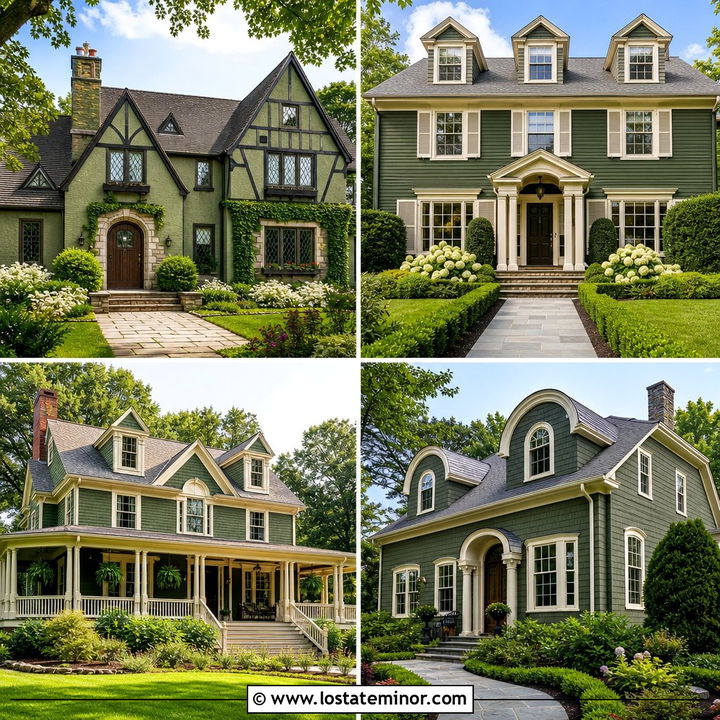
5. Moss Green Colonial With Brick Courtyard
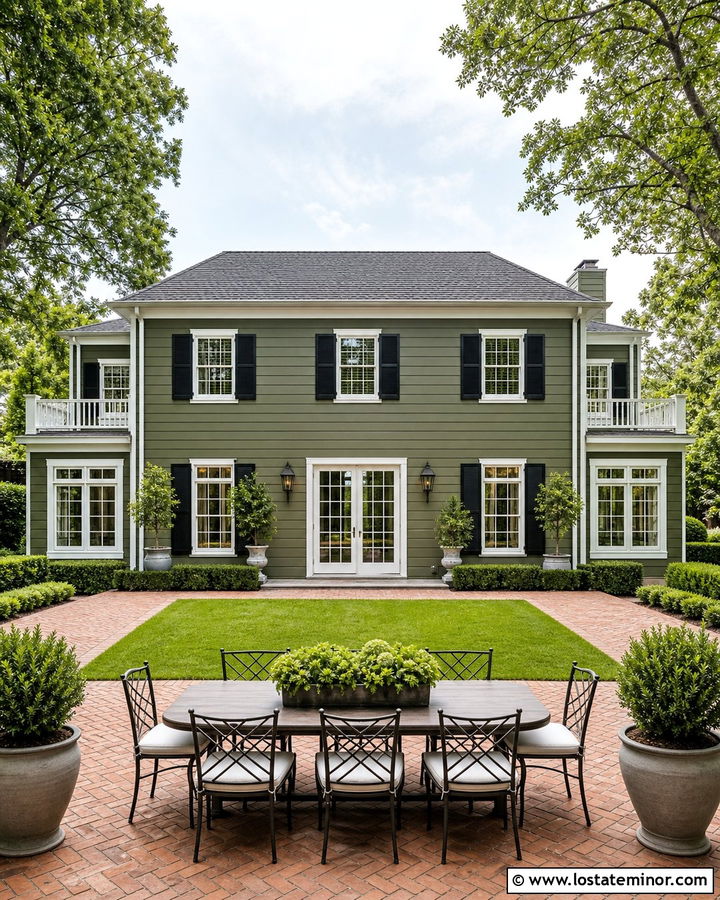
Symmetry gives a moss green Colonial home a composed appearance, and a brick courtyard reinforces that traditional character. Keep the rear facade balanced with evenly spaced windows, white trim, and centered French doors. A dark charcoal roof and black shutters provide crisp definition against the green siding. Lay red-brown brick in a herringbone pattern to create warmth beneath an outdoor dining set. Low boxwood borders can outline the courtyard and echo the home’s formal architecture. Beyond the brick, maintain an open rectangular lawn with trees positioned near the corners rather than directly against the house. A pair of large planters beside the doors completes the arrangement. This backyard looks refined while remaining practical for meals, gatherings, and everyday family use.
6. Moss Green Bungalow With Pergola
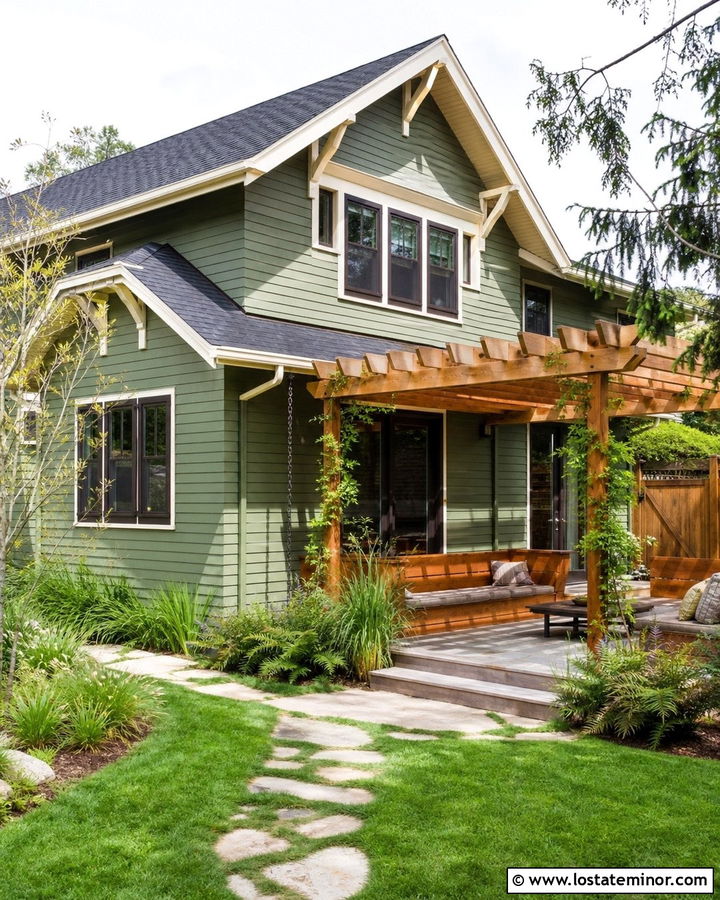
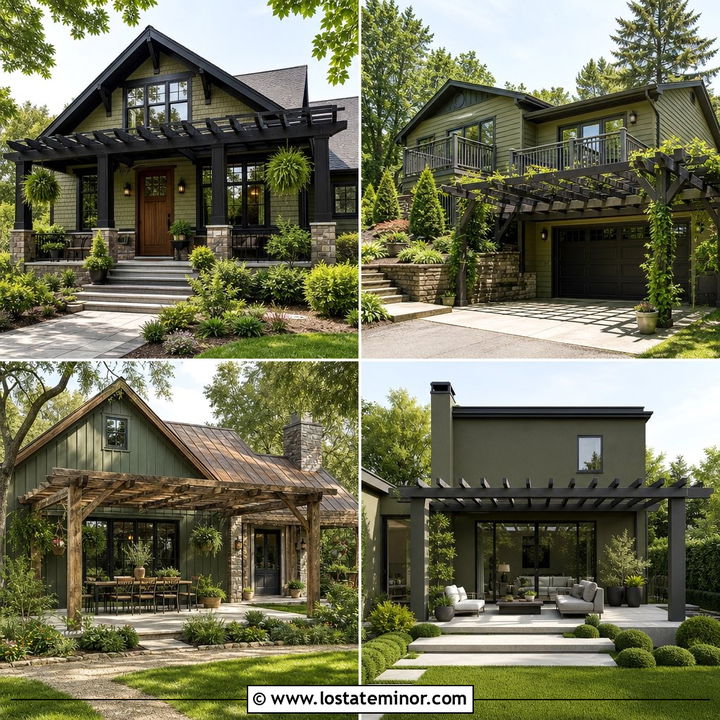
A compact bungalow benefits from backyard features that add function without overwhelming its architecture. Paint the lap siding moss green, highlight the rafters with warm cream, and use dark brown window frames for gentle contrast. Directly outside the back door, install a simple cedar pergola over a small wood or paver patio. The open structure creates a defined outdoor room while preserving sunlight and views of the roofline. Train a restrained flowering vine along one side, leaving the remaining beams visible. A built-in bench can replace bulky lounge furniture in a limited space. Surround the patio with layered ferns, ornamental grasses, and a narrow lawn. The natural palette makes the bungalow feel larger, warmer, and closely tied to its backyard.
7. Moss Green Split-Level With Walkout Patio
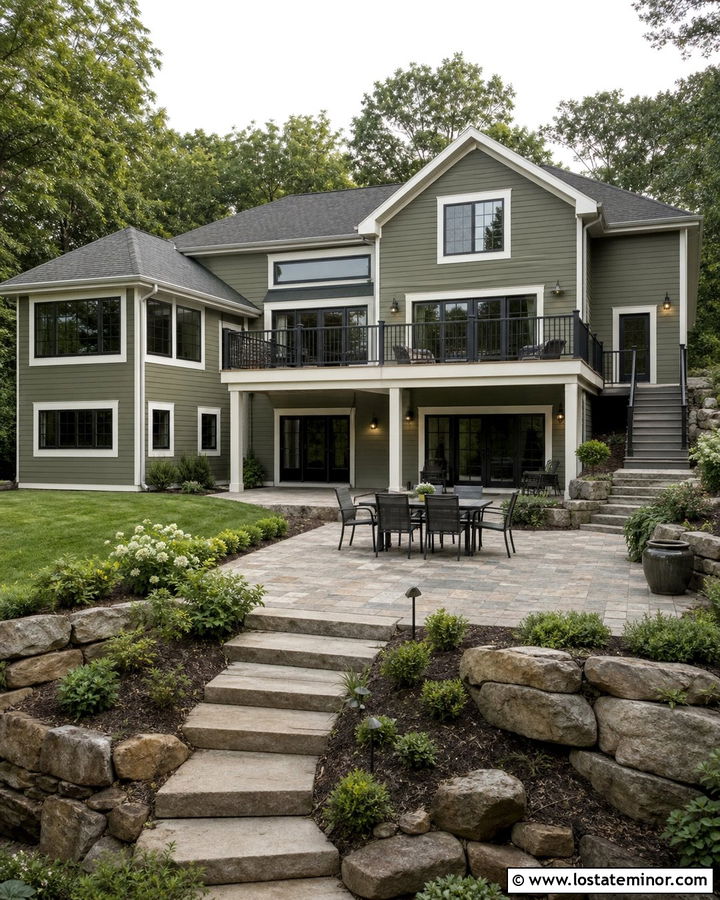
Split-level homes often have complicated rear elevations, but a strong color and clear patio layout can unify them. Moss green siding visually connects the upper and lower sections, while off-white trim outlines windows without exaggerating every angle. Use charcoal accents on railings, doors, and gutters to add structure. At the walkout level, build a broad concrete or porcelain-paver patio that spans the main living area. A retaining wall faced with natural stone can manage the grade and double as casual seating. Wide steps should lead to an upper lawn or garden rather than a narrow staircase. Add balanced plantings on both sides of the patio. This arrangement turns an uneven backyard into a comfortable series of connected, usable outdoor zones.
8. Moss Green Cape Cod With Gravel Garden
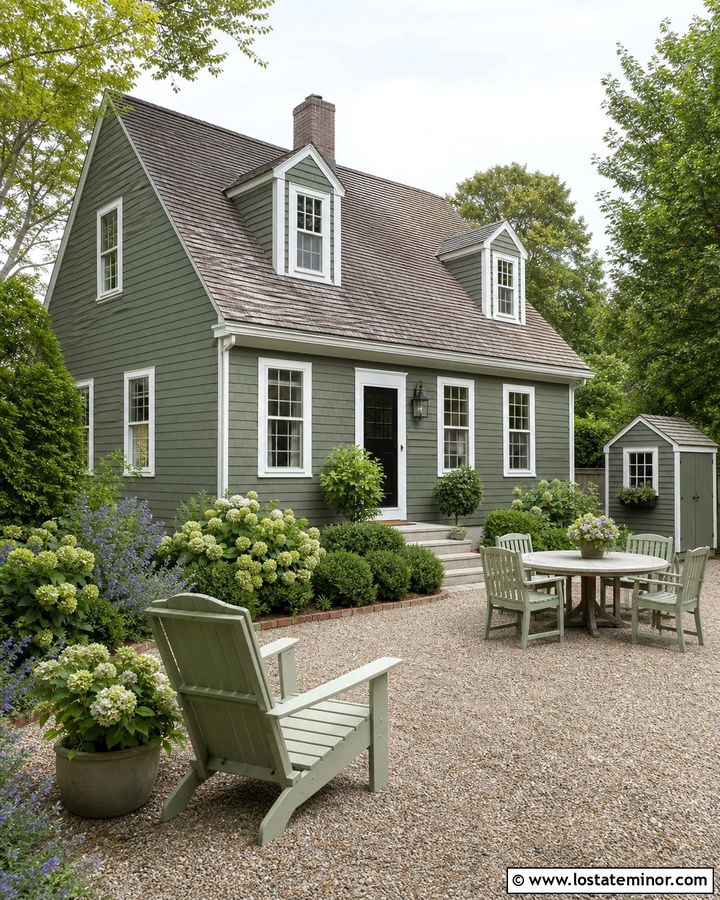
There is something especially natural about moss green on a compact Cape Cod home. White trim highlights the dormers and traditional windows, while a weathered-gray roof keeps the palette soft. In the backyard, use pale pea gravel to create an informal terrace that suits the home’s modest scale. A round metal dining table, Adirondack chairs, and a portable planter arrangement provide flexibility without requiring a permanent structure. Edge the gravel with brick or steel so it stays separate from planting beds. Panicle hydrangeas, catmint, and rounded evergreens create a classic garden frame. A short path can connect the terrace to a small storage shed painted in matching moss green. Repeating the house color makes the entire property look thoughtfully planned.
9. Moss Green Cabin With Fire Pit
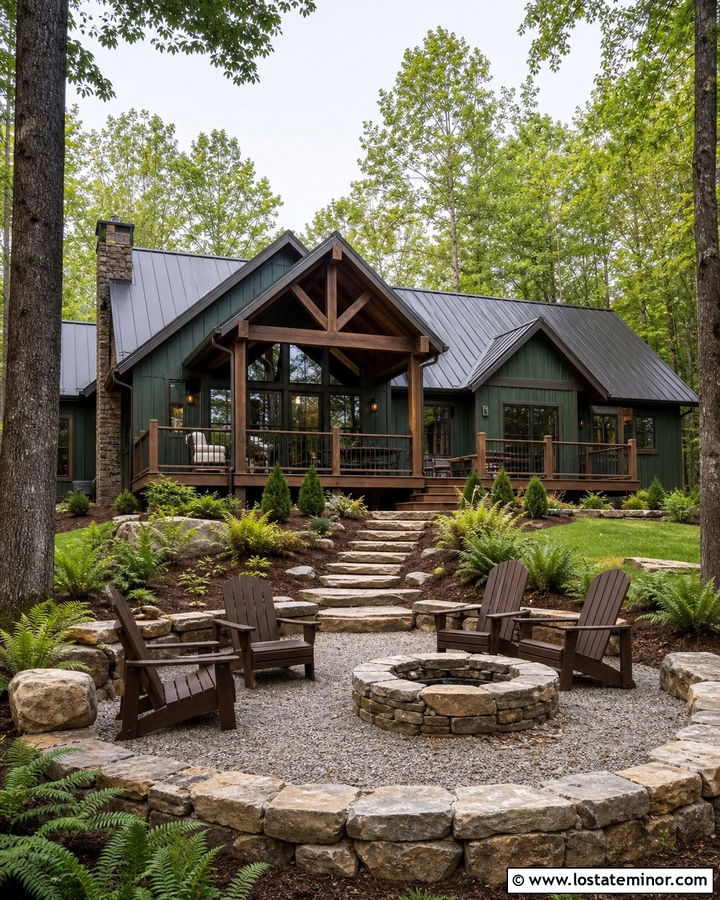
Imagine stepping from a moss green cabin into a backyard surrounded by tall trees and natural stone. Dark brown trim, a black metal roof, and stained timber beams allow the exterior to blend comfortably into a woodland setting. Build a simple deck close to the house, then connect it to a gravel fire-pit area with irregular stone steps. Position the fire pit far enough from structures and overhanging branches to create an open, visually balanced clearing. Use sturdy wood chairs and a stone seating wall to continue the rustic material palette. Native ferns, low shrubs, and mulched beds require less visual formality than clipped landscaping. Warm wood, textured stone, and muted green siding produce a cabin backyard that feels relaxed rather than themed.
10. Moss Green Modern House With Concrete Patio
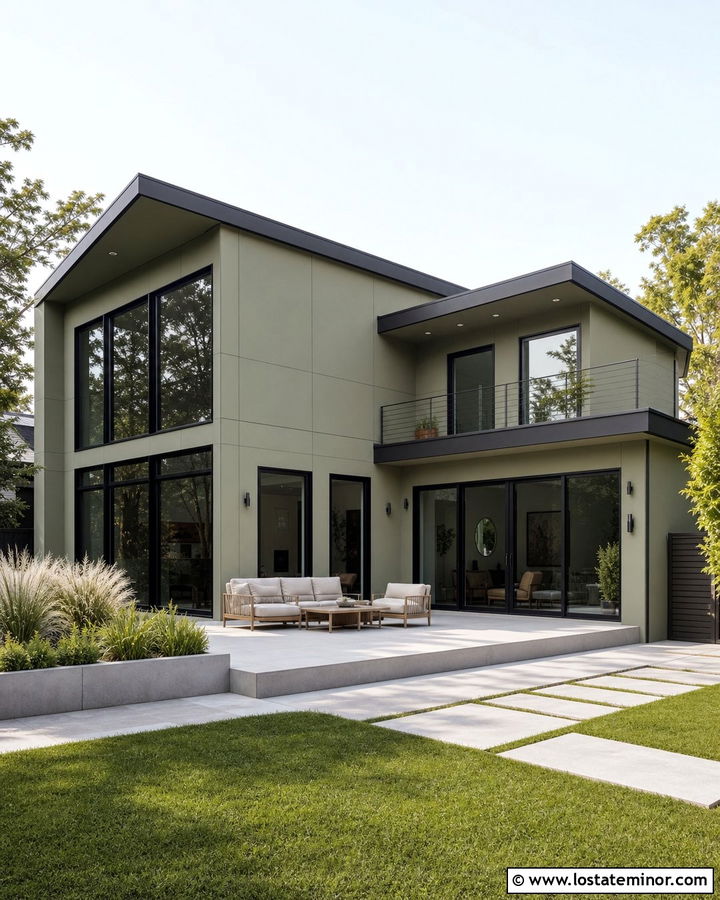
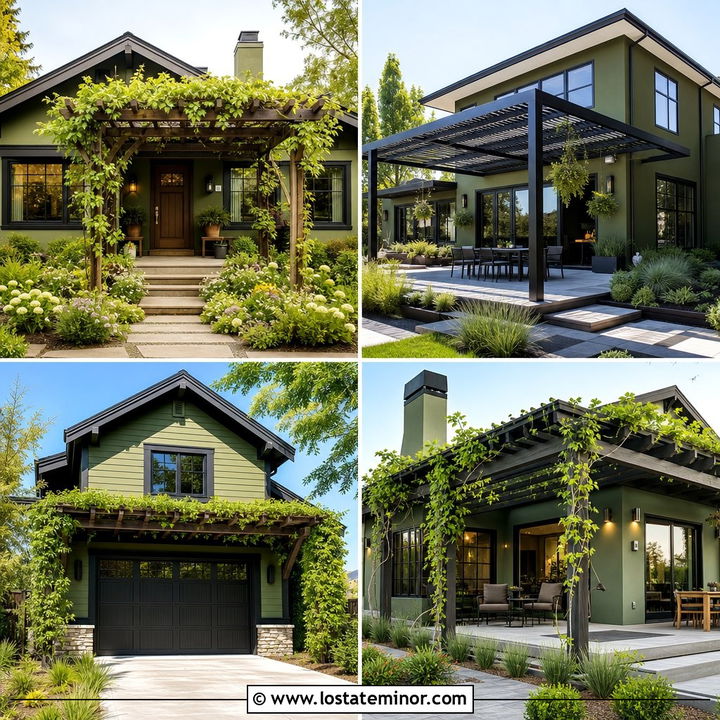
Clean geometry gives moss green a surprisingly contemporary appearance. Apply it to smooth fiber-cement panels or narrow vertical siding, then sharpen the design with black window frames and flat charcoal rooflines. A pale concrete patio can extend across the rear elevation, creating a strong horizontal base beneath the green walls. Choose low-profile outdoor furniture in black, tan, or light gray. Rectangular planters filled with ornamental grasses reinforce the architecture without introducing too many colors. Large sliding glass doors help the patio feel connected to the interior. Keep the lawn simple and use linear stepping stones to reach a private garden or shed. The contrast between earthy green and precise concrete makes this backyard modern, calm, and approachable.
11. Moss Green Tudor With Stone Terrace
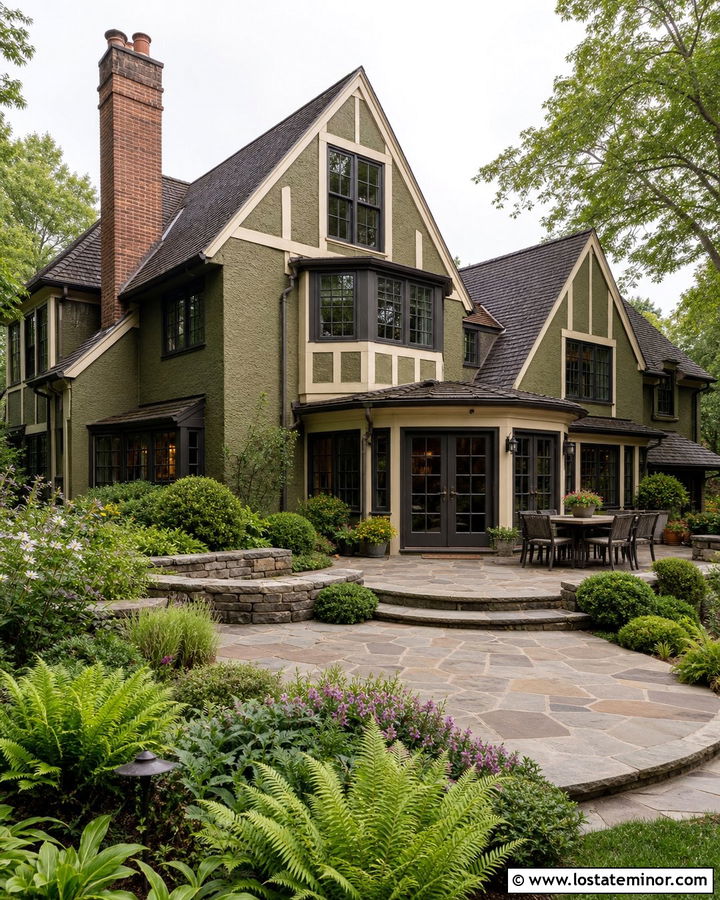
A Tudor home already carries strong materials, so moss green should support rather than compete with them. Use the color on stucco or siding between dark timber details, accompanied by warm cream trim and a brown-black roof. At the back of the house, create a terrace with irregular gray and tan flagstone. Curved edges will soften the steep gables and decorative half-timbering. French doors with dark frames can open onto a dining area near the house, while a second seating zone sits closer to the garden. Add clipped shrubs around the terrace but loosen the planting farther away with ferns and flowering perennials. The finished backyard balances Tudor formality with natural texture, allowing the moss green exterior to feel authentic and established.
12. Moss Green Victorian With Wraparound Porch
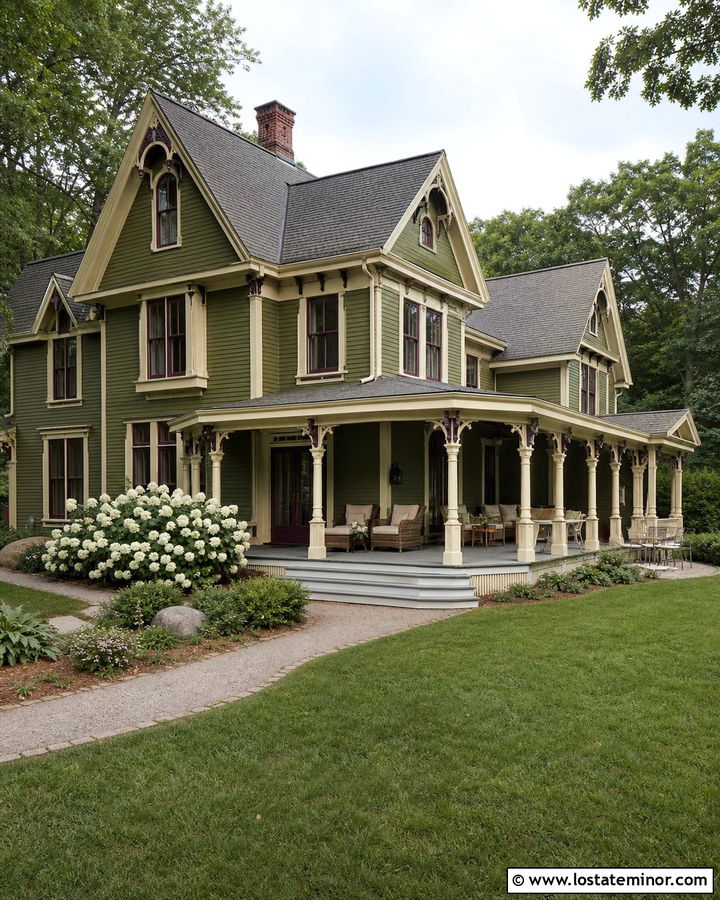
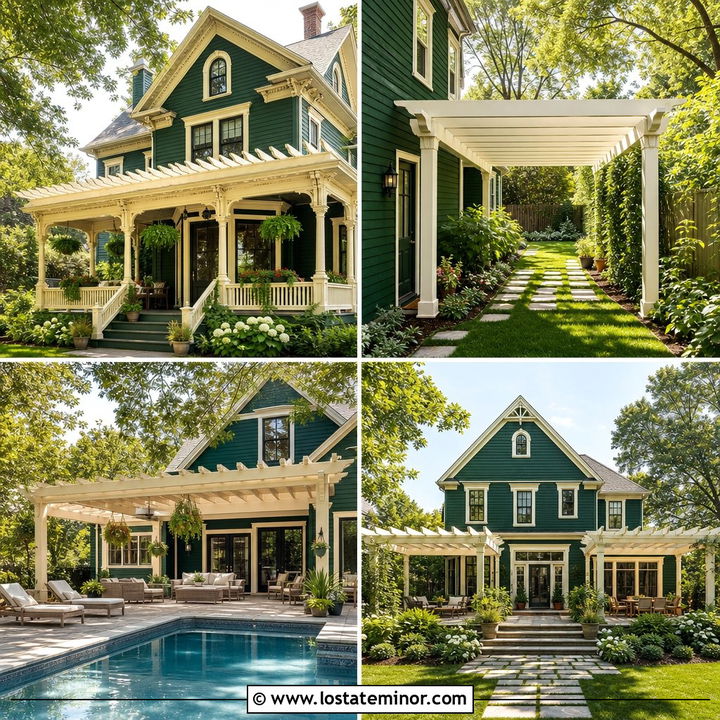
Detailed Victorian architecture can carry moss green beautifully when the supporting colors remain controlled. Cover the main siding in muted moss green, use soft ivory on the trim, and reserve deep plum or charcoal for small decorative accents. Continue a wraparound porch toward the backyard to create sheltered seating and a graceful transition to the garden. Painted porch flooring in weathered gray will complement the exterior without adding another strong color. Beyond the porch, a winding path can lead through flowering shrubs to a small lawn. Avoid painting every bracket or spindle differently, since too many colors may make the facade look busy. A limited palette lets the craftsmanship stand out while giving the backyard an elegant, garden-focused atmosphere.
13. Moss Green Lake House With Raised Deck
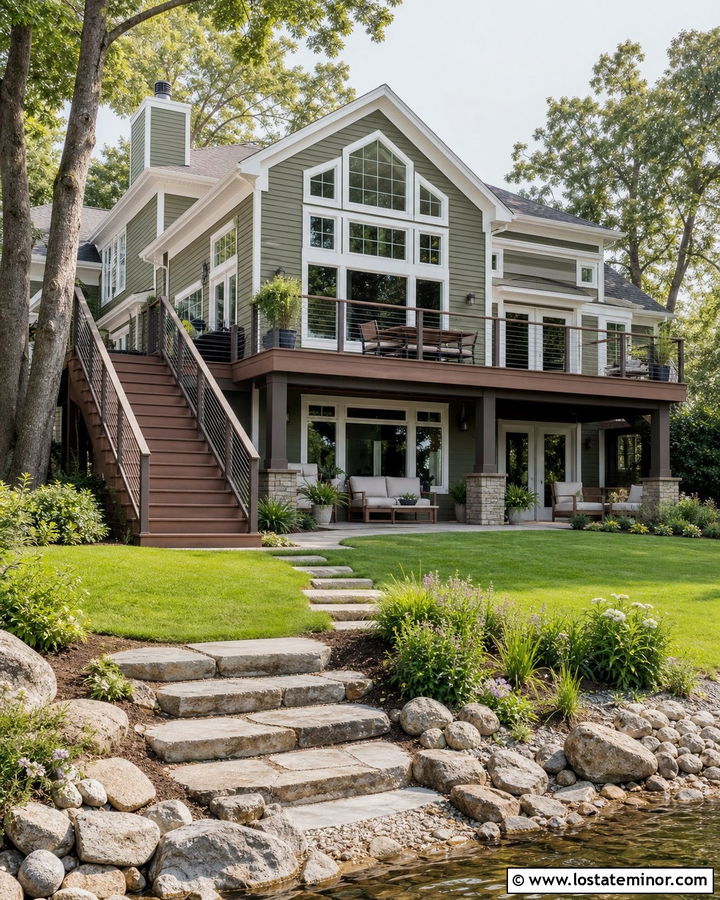
A raised deck allows a moss green lake house to take full advantage of its backyard view. Use horizontal siding with bright white trim to keep the facade clear and visible against surrounding trees. Cable railings or slim black balusters preserve sightlines while adding contemporary contrast. Select a medium brown deck stain that complements the green without appearing orange. Under the deck, create a covered lounge on stone or concrete pavers instead of leaving an unused dirt area. Broad stairs can descend toward the lawn, shoreline path, or lower garden. Plant moisture-tolerant shrubs where appropriate, but keep taller vegetation away from important views. The complete design provides two levels of outdoor living while maintaining a calm, nature-connected exterior palette.
14. Moss Green Mountain Home With Boulder Landscaping
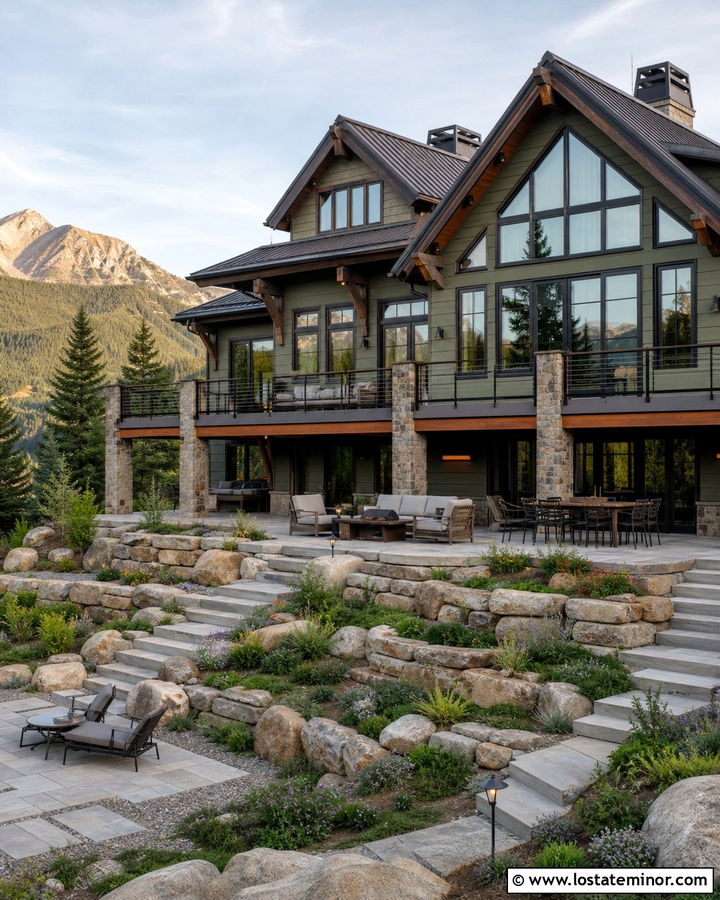
Rugged terrain calls for materials that feel substantial. On a mountain home, moss green siding works well with a charcoal standing-seam roof, dark bronze windows, and heavy timber details. Large local-looking boulders can retain sloped areas and visually anchor the rear facade. Create a stepped stone patio instead of forcing the backyard into one perfectly flat surface. Each level might hold a dining table, lounge chairs, or a small planting bed. Gravel joints and native ground covers soften the hardscape while supporting a natural appearance. Use deck railings that preserve distant views and repeat the home’s dark metal accents. This backyard scheme feels integrated with its setting because the architecture, planting, and stonework follow the existing character of the land.
15. Moss Green Prairie House With Native Garden
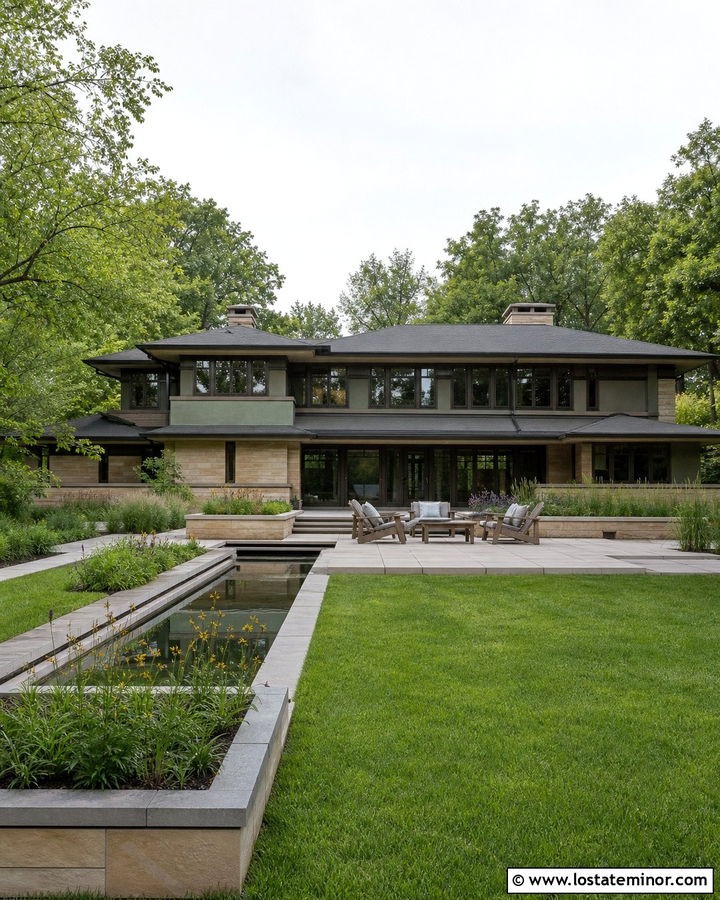
Long rooflines and deep overhangs make a Prairie-style home an excellent setting for moss green. Pair the earthy siding with bronze window frames, warm beige masonry, and a low charcoal roof. Continue the horizontal emphasis into the backyard with a broad terrace and long rectangular planting beds. Native grasses and regionally appropriate perennials can create movement while reflecting the home’s natural palette. Keep taller plants toward the property boundaries so they frame rather than conceal the rear elevation. A narrow reflecting basin or linear gravel path can strengthen the geometry. Wood lounge furniture adds warmth without interrupting the restrained scheme. This approach creates a backyard that feels architectural near the house and gradually becomes more relaxed toward the outer garden.
16. Moss Green Mediterranean House With Pool
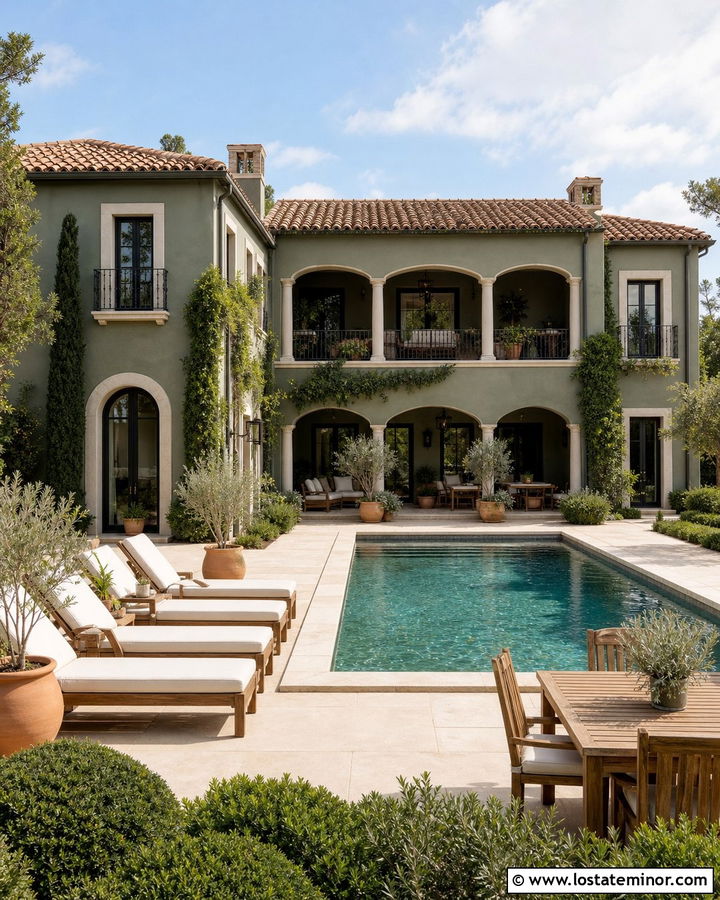
Moss green can give a Mediterranean-inspired home an unexpected but sophisticated identity. Use muted green stucco with creamy limestone trim, clay roof tiles, and dark bronze doors. In the backyard, surround a rectangular pool with warm ivory pavers that reflect light onto the exterior. Terracotta planters and natural wood furniture connect the roof color to the patio level. A shaded loggia can provide an outdoor dining area without requiring a separate structure. Keep planting simple with silvery foliage, clipped shrubs, and drought-aware selections suited to the local climate. The pool’s blue surface creates a cool contrast with moss green, while the cream stone prevents the palette from looking dark. Together, the materials create a relaxed and cohesive resort-like backyard.
17. Moss Green Saltbox With Kitchen Garden
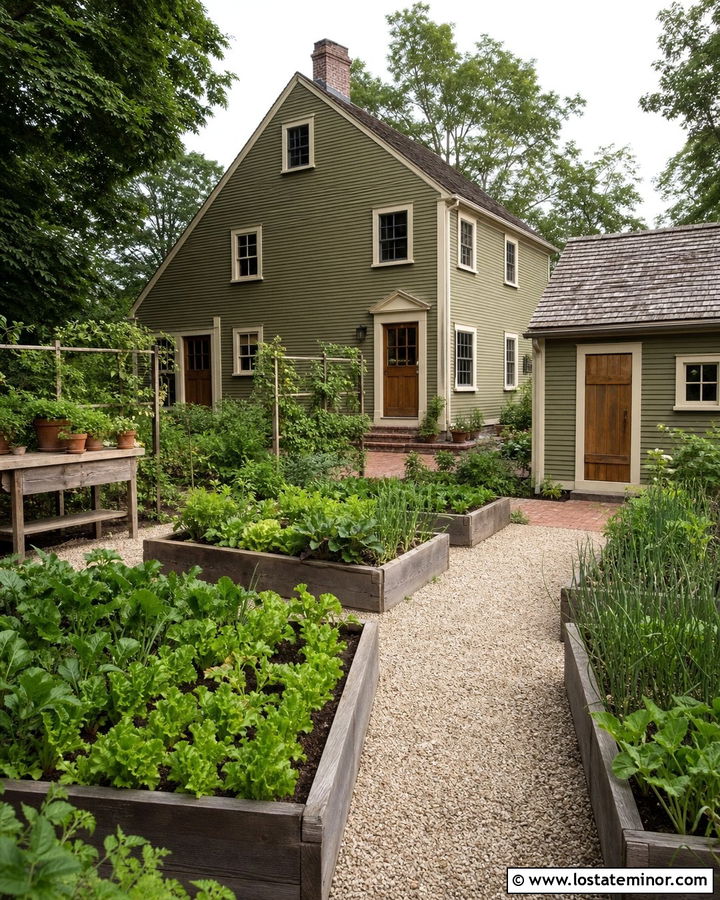
The simple rear roofline of a saltbox home pairs naturally with an organized kitchen garden. Moss green clapboard siding, cream trim, and a weathered cedar door create a quiet historic palette. Position raised garden beds beyond a small brick or gravel terrace so soil and tools stay away from the main entertaining area. Beds made from natural cedar will repeat the warmth of the door and age gracefully beside the green exterior. Straight paths make planting, harvesting, and maintenance easier. Add a narrow potting bench against a fence or matching shed rather than cluttering the house wall. Espaliered fruit trees can provide vertical interest along the property line. This productive backyard remains attractive because its materials and layout reflect the home’s straightforward architecture.
18. Moss Green A-Frame With Woodland Backyard
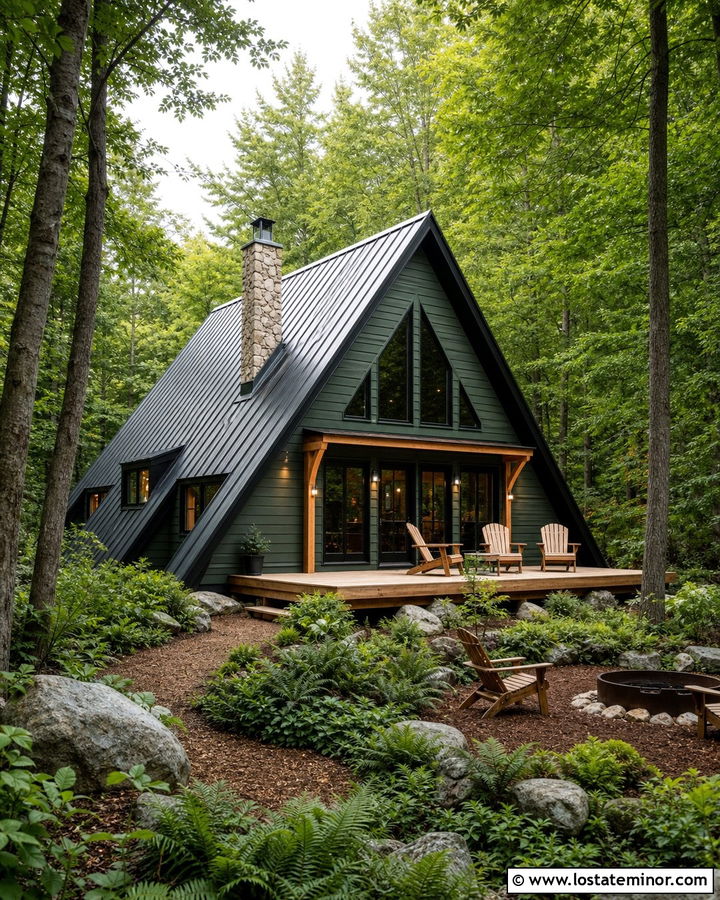
An A-frame becomes almost sculptural when moss green siding follows its steep triangular shape. Use black window frames, a dark metal roof, and natural wood around the entry to give the exterior definition. A low platform deck can extend from the rear glass wall without competing with the dramatic roofline. Instead of building a formal lawn, preserve the woodland feeling with mulch paths, ferns, shade-tolerant ground covers, and carefully placed boulders. A small seating circle away from the deck offers a second destination within the yard. Keep the landscape open near the house so branches and dense shrubs do not hide the architecture. The muted exterior color helps the building settle into the trees while the dark details maintain a crisp silhouette.
19. Moss Green Duplex With Divided Backyard
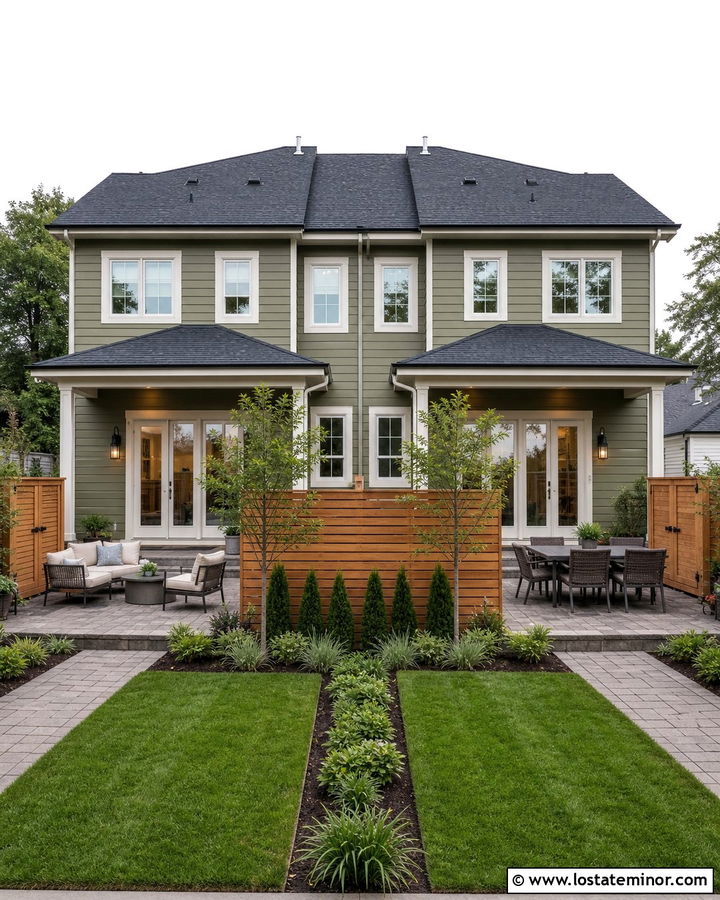
A shared building can still provide private, attractive outdoor spaces. Cover the duplex in consistent moss green siding, then use warm white trim and matching charcoal roofs to unify both residences. In the backyard, divide the property with a slim horizontal cedar screen rather than a heavy solid wall. Each side can include a compact paver patio, a narrow lawn, and one small ornamental tree. Repeating the same basic materials keeps the overall exterior cohesive, while different furniture or planting combinations give each household individuality. Place grills, storage, and utility equipment near the outer boundaries to reduce visual clutter. The cedar divider introduces warmth against the green facade and creates privacy without making either half of the backyard feel closed or confined.
20. Moss Green Townhouse With Small Backyard
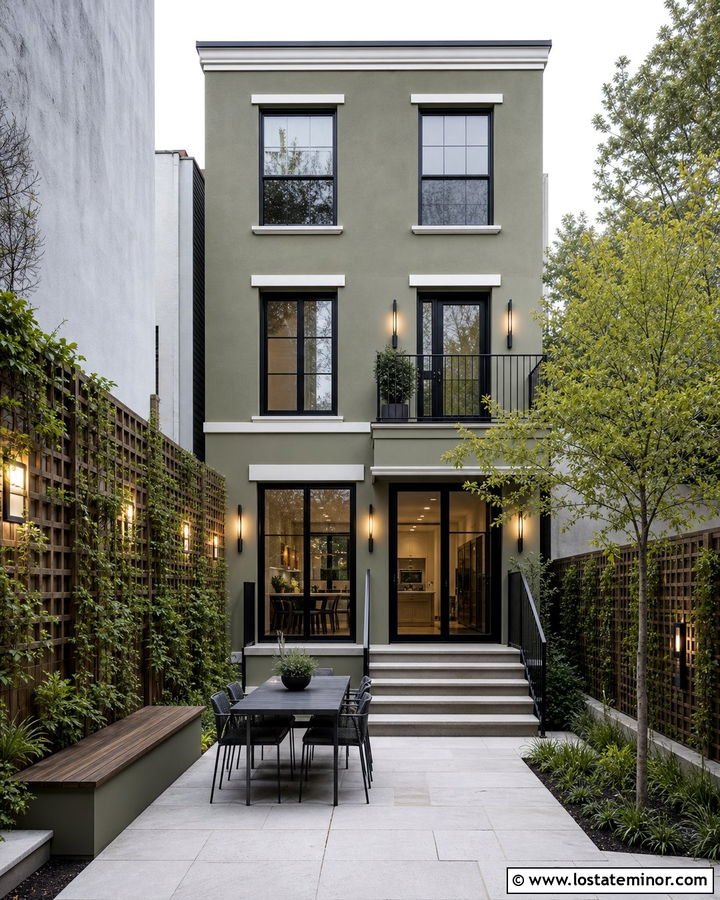
A narrow townhouse backyard needs a clear plan more than an abundance of features. Paint the complete rear facade moss green and use off-white trim to brighten the confined space. Black-framed doors and wall lights add definition without taking up room. Install large pale pavers from the house to the rear boundary, leaving narrow planting beds along both sides. A built-in bench can provide seating and hidden storage, while a slim table supports outdoor meals. Use one small tree or tall shrub as the focal point instead of filling the yard with numerous pots. Vertical trellises can add greenery without reducing floor space. This streamlined arrangement makes the backyard feel longer and allows the earthy exterior color to remain visible and balanced.
21. Moss Green House With Black Trim And Pool
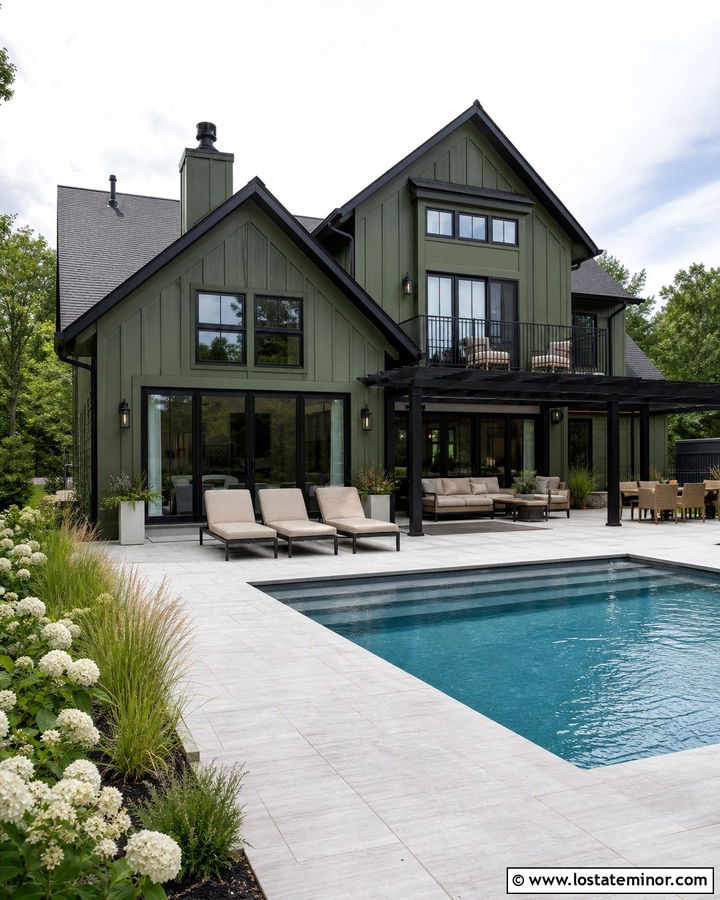
Black trim gives moss green siding a bold outline that works especially well beside a streamlined backyard pool. Choose a medium-depth moss green for the body, matte black for windows and doors, and charcoal for the roof. Light gray pool decking will separate these darker elements and keep the outdoor space from feeling heavy. Position lounge chairs along one side so the main path between the house and pool remains open. A covered black pergola can repeat the trim color and provide shade at the far end. Use soft grasses and pale flowering plants to break up the dark palette. The finished backyard feels modern and graphic, yet the green siding keeps the architecture connected to the surrounding landscape.
22. Moss Green House With Cream Trim And Gazebo
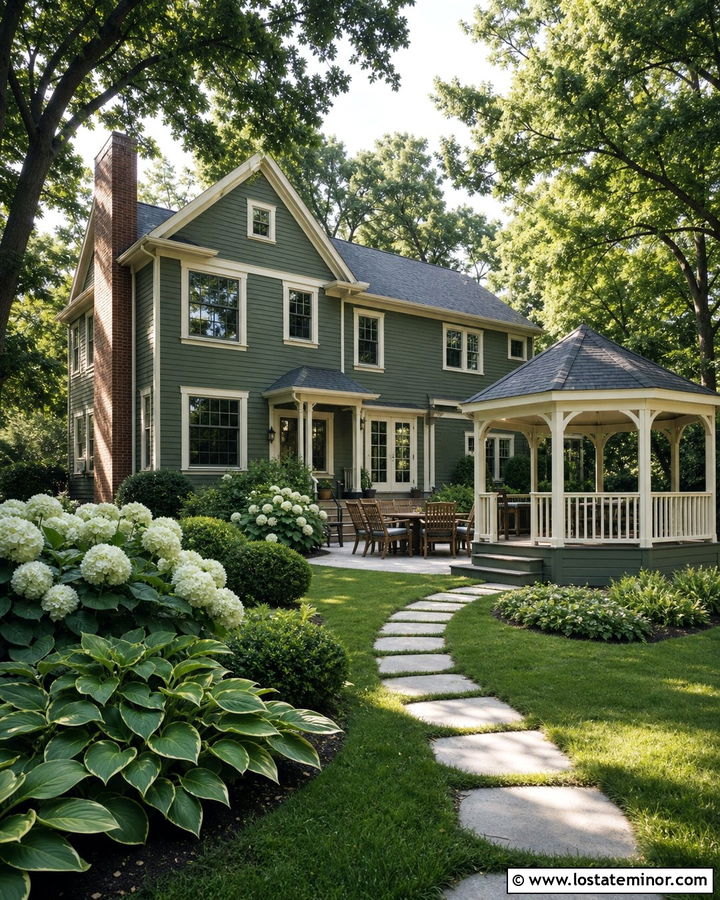
For a softer traditional look, pair moss green siding with creamy trim rather than stark white. Carry this color combination into a backyard gazebo painted cream with a moss green roof or lower panels. Position the gazebo beyond the main lawn so it becomes a destination and remains visible from the house. A curved stepping-stone path can connect it to a small rear porch or terrace. Inside, use simple wood seating and light neutral fabrics. Hydrangeas, hostas, and rounded shrubs create an inviting garden edge without competing with the structure. Repeating the house colors on the gazebo ties the entire yard together. The result feels coordinated and comfortable, particularly on Colonial, cottage, and traditional two-story homes.
23. Moss Green House With Wood Trim And Outdoor Kitchen
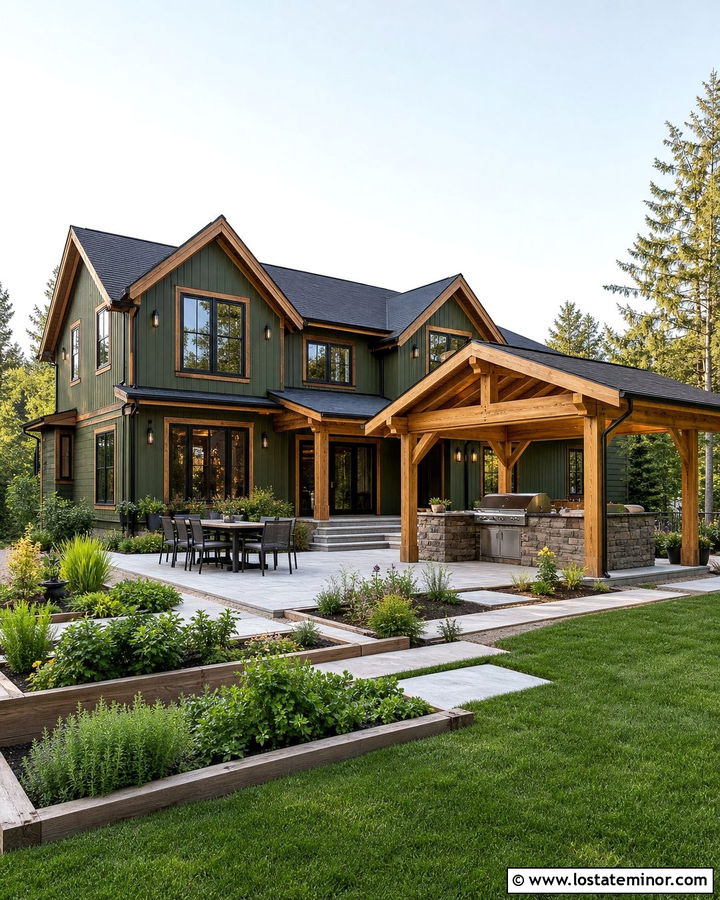
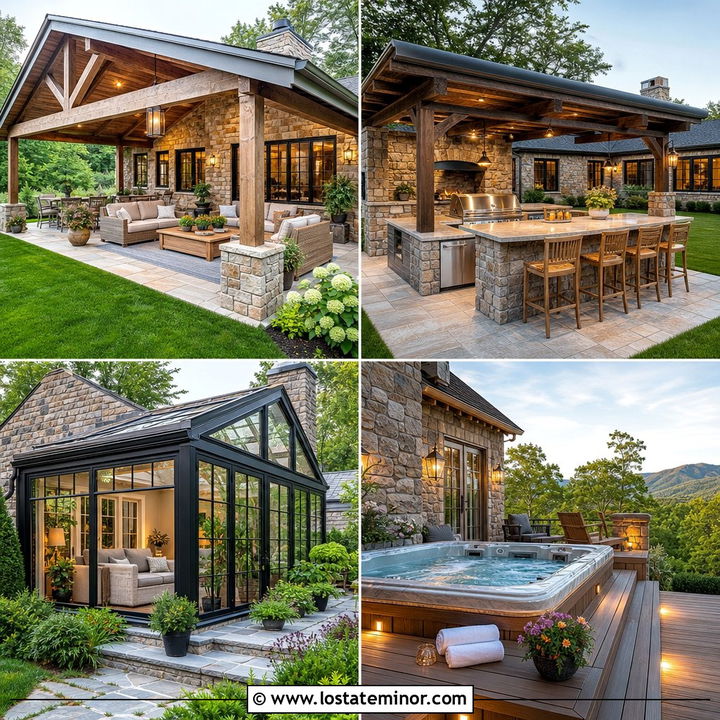
Outdoor cooking areas often contain several hard materials, so a restrained exterior palette keeps them visually organized. Use moss green siding with natural cedar trim, dark bronze windows, and a medium charcoal roof. Build the outdoor kitchen beneath a cedar pavilion connected to the rear patio. Stone or warm gray masonry around the cooking counter will ground the structure and withstand the visual weight of large appliances. Include uninterrupted preparation space, practical lighting, and a clear walkway back to the house. A dining table can sit just beyond the pavilion under open sky. Plant herbs in simple raised beds nearby. Repeating cedar on the house, pavilion, and cabinetry makes the outdoor kitchen feel like part of the architecture rather than a separate backyard installation.
24. Moss Green House With Stone Accents And Hot Tub
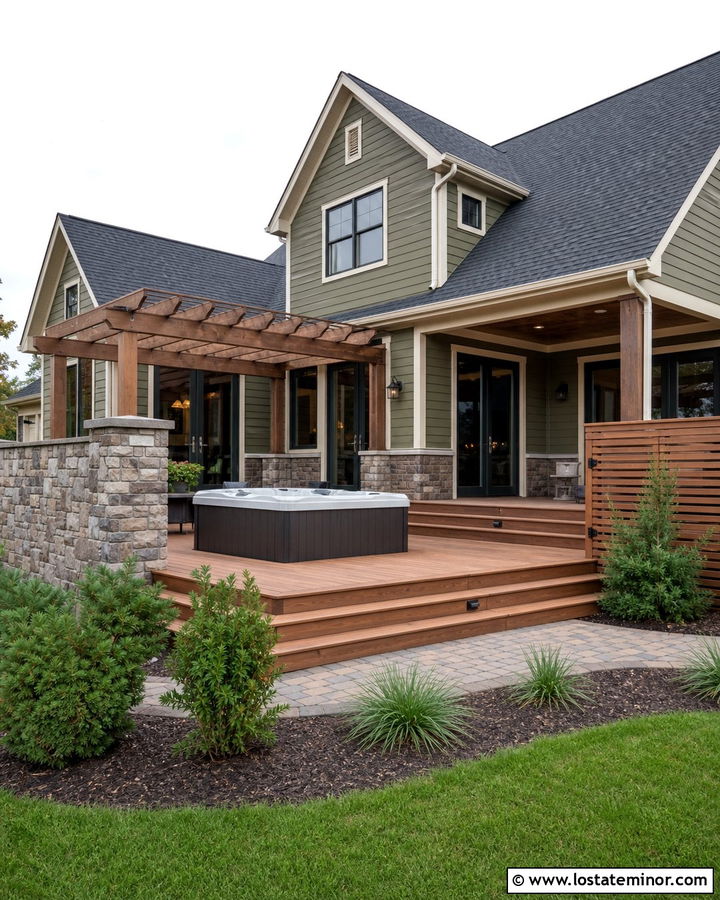
A hot tub looks more integrated when its surround repeats materials from the house. Pair moss green lap siding with cream trim, a charcoal roof, and gray-brown stone along the foundation or lower walls. Build the hot tub into a medium-tone wood deck near the rear door, then use a stone privacy wall on the most exposed side. The wall can match the home’s masonry and provide a backdrop for simple planters. A slatted pergola adds partial shade without enclosing the area completely. Keep mechanical equipment hidden behind a ventilated screen that matches the deck. Low evergreen shrubs and grasses soften the edges. This coordinated arrangement makes the spa area feel intentional, private, and visually connected to the complete exterior.
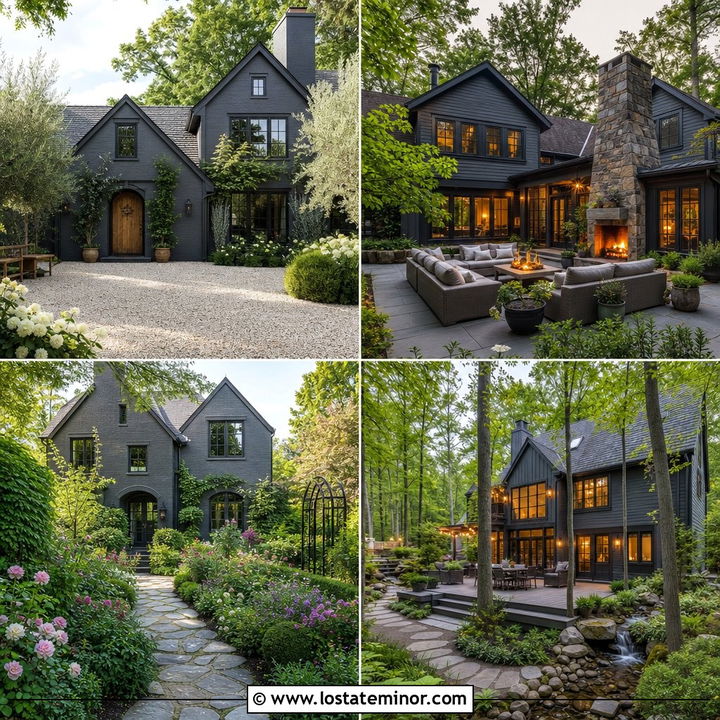
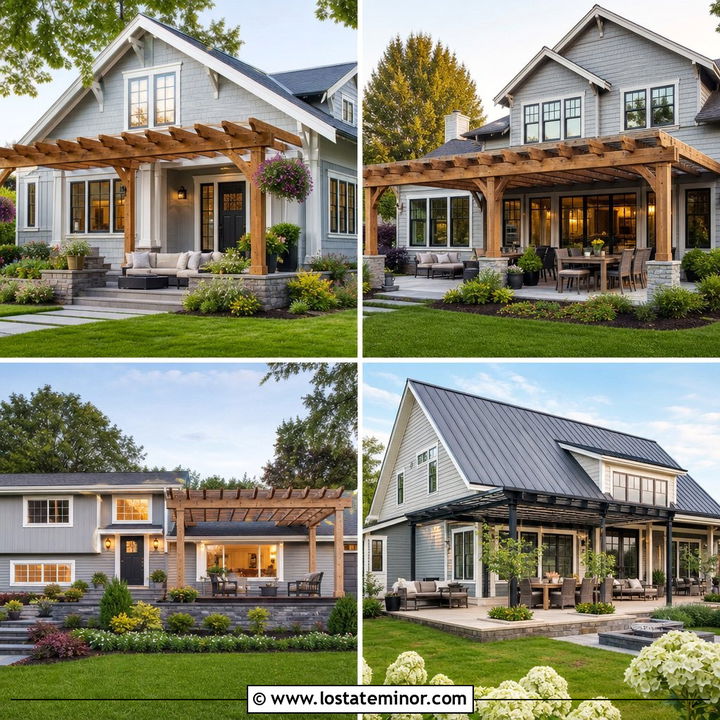
25. Moss Green House With Red Brick And Dining Patio
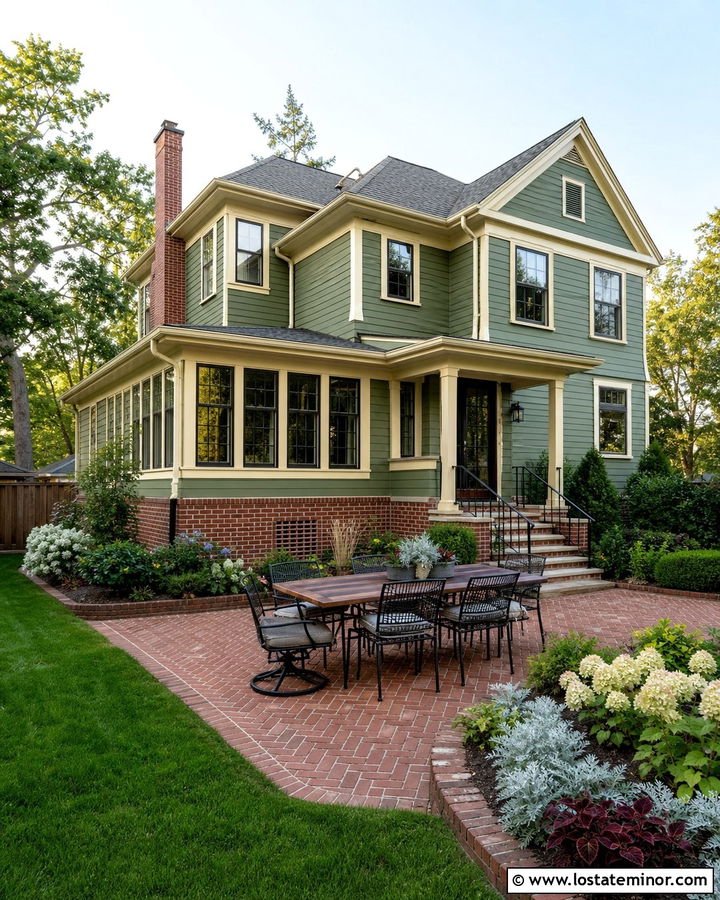
Existing red brick can look rich beside moss green when both colors share warm, earthy undertones. Use green siding on the upper or main walls, retain the brick foundation, and add creamy beige trim instead of bright white. A backyard dining patio made from complementary red-brown brick extends the exterior material into the landscape. Lay the brick in a simple running bond or herringbone pattern to create subtle detail. Choose black metal dining furniture and warm wood accessories for balanced contrast. Green shrubs alone may disappear against the siding, so introduce pale flowers, silvery foliage, and burgundy leaves. Repeating brick around garden edges or steps helps the patio feel permanent and gives the complete backyard a comfortable, established character.
26. Moss Green House With White Trim And Screened Porch
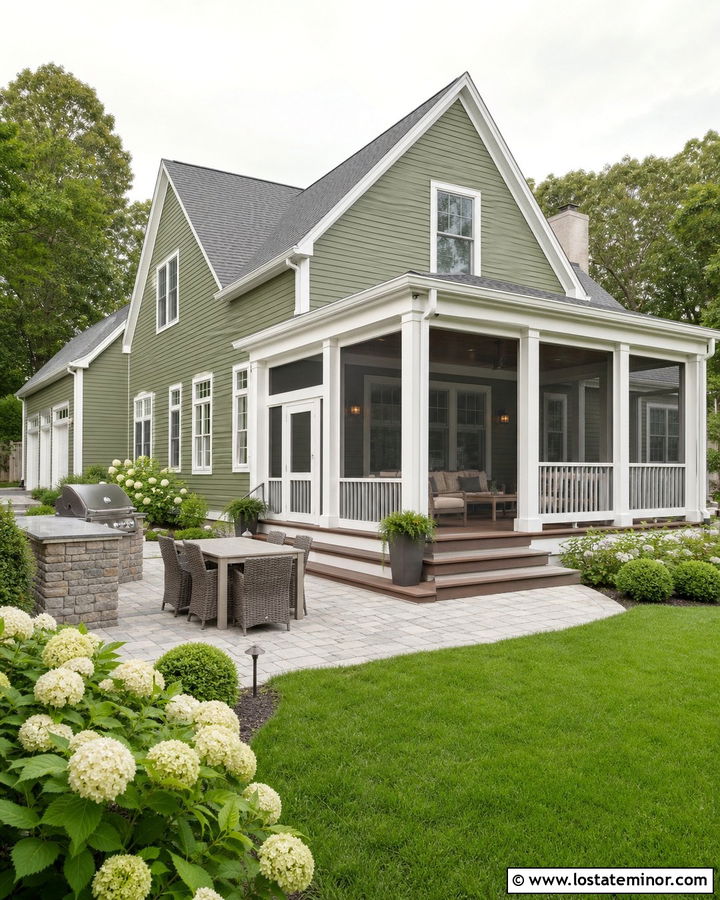
Crisp white trim can make moss green feel lighter, especially on a home with a screened backyard porch. Paint the porch posts, frames, and ceiling white so the structure reads as a natural extension of the rear facade. Use moss green siding below the screens or on the porch’s solid end walls to maintain continuity. A medium-gray roof and stained wood flooring balance the brighter contrast. Place an uncovered grilling patio beside the porch rather than directly in front of the screens. Wide steps can lead down to a simple lawn framed by hydrangeas and evergreen shrubs. Inside the porch, select neutral furniture with washable fabrics. The complete scheme provides protected outdoor living while preserving a fresh, classic exterior appearance.
27. Moss Green House With Bronze Trim And Water Feature
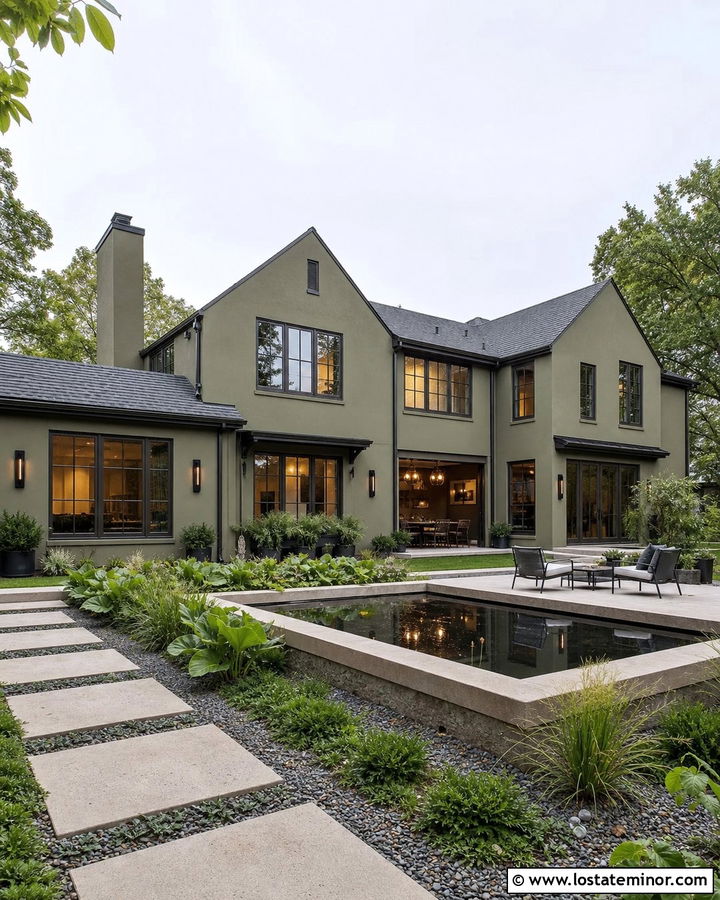
Bronze trim brings subtle warmth to moss green without creating the sharp contrast of black. Use bronze-framed windows, gutters, doors, and exterior lights against moss green siding, accompanied by a dark brown or charcoal roof. In the backyard, position a low rectangular water feature where it can be seen from the main windows. Surround it with tan stone, gravel, and restrained grasses that repeat the exterior’s earthy tones. The water should support the layout rather than dominate it, leaving room for a small seating terrace and clear garden paths. A few broad-leaved plants add softness near the basin. This quiet combination of green, bronze, stone, and water creates a polished backyard that still feels natural and easy to live with.
28. Moss Green House With Gray Roof And Play Lawn
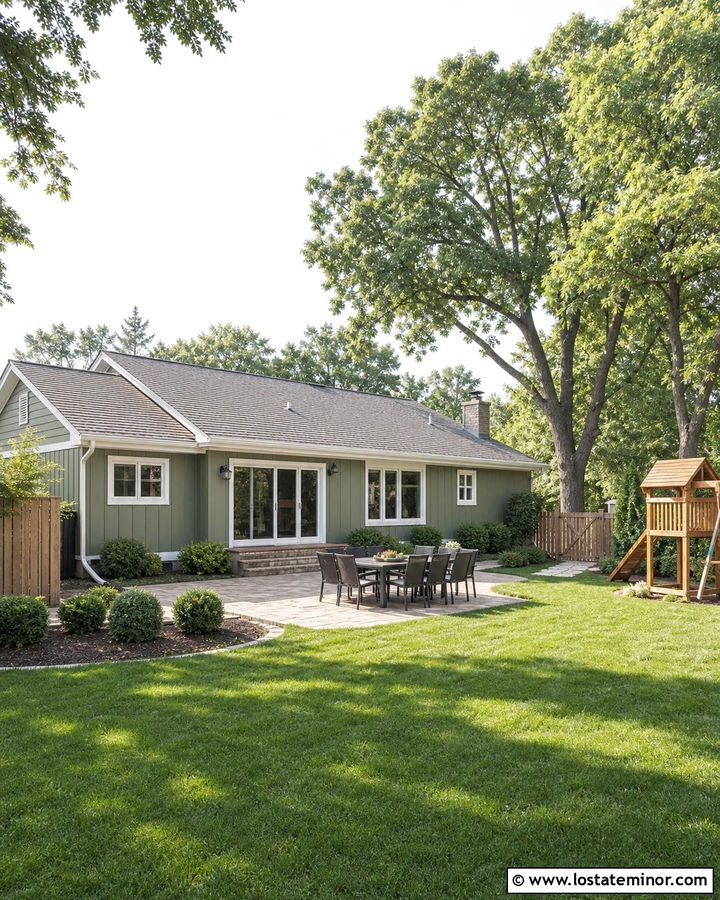
A family backyard can be practical without sacrificing a coordinated exterior. Combine moss green siding with white trim and a medium-gray shingle roof for a versatile foundation. Directly behind the house, install a durable paver patio for dining and supervision. Keep the central lawn open for flexible play rather than filling it with permanent equipment. If a play structure is needed, place it near a side boundary and choose natural wood with dark green or gray components. Rounded planting beds can soften the yard’s corners while keeping thorny or delicate plants away from activity zones. Include a clear path to gates and storage. The restrained colors help practical backyard features blend into the property instead of distracting from the moss green house.
29. Moss Green House With Metal Roof And Rain Garden
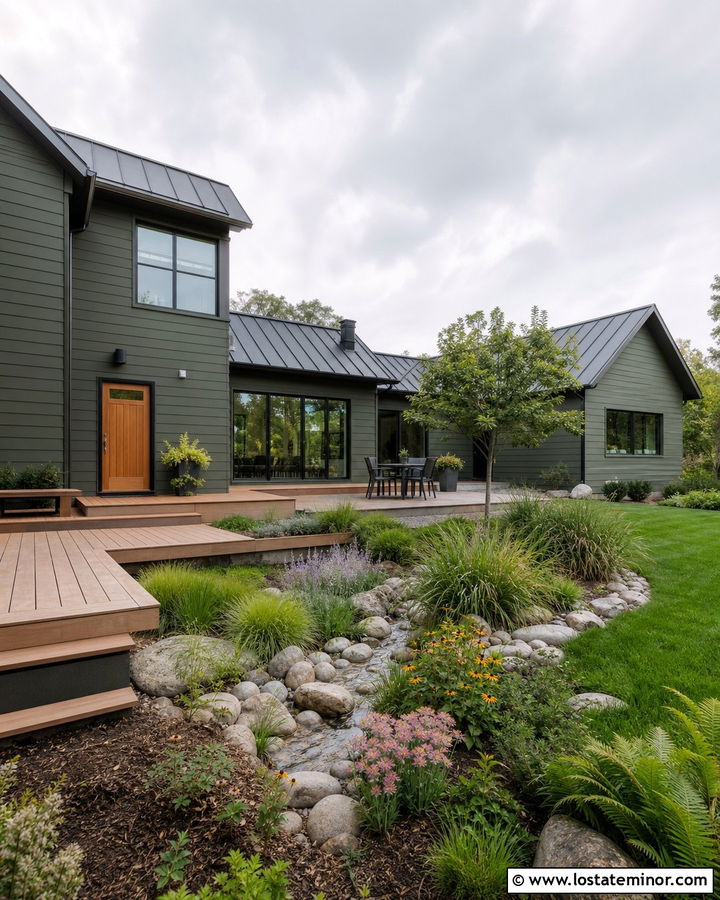
A charcoal metal roof gives moss green siding crisp definition and supports a practical rain-focused landscape. Direct downspouts toward a properly planned rain garden positioned away from the foundation and suited to local drainage conditions. Use river rock, moisture-tolerant plants, ornamental grasses, and flowering perennials to turn runoff management into an attractive backyard feature. A raised wood walkway can cross the planting area and connect the patio to the lawn. Repeat dark metal on window frames and railings, then add warm cedar doors to keep the palette from feeling cold. The rain garden’s layered greens complement the house while seasonal flowers provide contrast. This complete design makes a functional landscape feature look deliberate, attractive, and connected to the architecture.
30. Moss Green House With Backyard Greenhouse
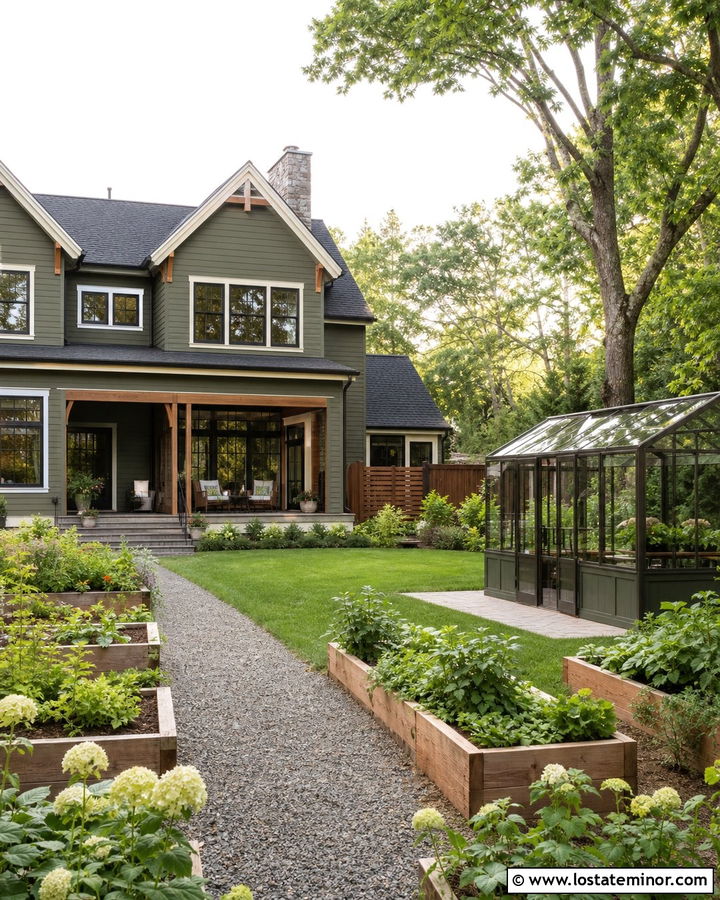
A small greenhouse can become a beautiful backyard focal point when it echoes the main home. Paint the house moss green with cream trim and a charcoal roof, then choose a glass greenhouse with dark bronze framing and a moss green base. Place it beyond a central lawn or at the end of a straight gravel path so the structure feels anchored in the landscape. Raised cedar beds can sit nearby, creating a compact working garden without crowding the house. Include a small paver landing at the greenhouse entrance and keep storage neatly screened. Repeating green, bronze, cream, and cedar across both buildings gives the property a unified identity. The greenhouse becomes useful architecture rather than an unrelated backyard accessory.
Conclusion:
Moss green is flexible enough for cottages, ranch homes, modern farmhouses, cabins, and contemporary architecture. Its success depends on the full palette and the way the house connects to its outdoor setting. Cream and white trim create brightness. Black and bronze accents add definition. Cedar, brick, and stone introduce warmth and texture. In the backyard, patios, decks, gardens, pools, and useful structures should repeat at least one material or color from the home. This simple approach produces a more intentional property from every angle. Whether the goal is a small retreat or a spacious entertaining area, these 30 Moss Green House Design With Backyard Ideas offer practical inspiration for a cohesive exterior.

Related posts: