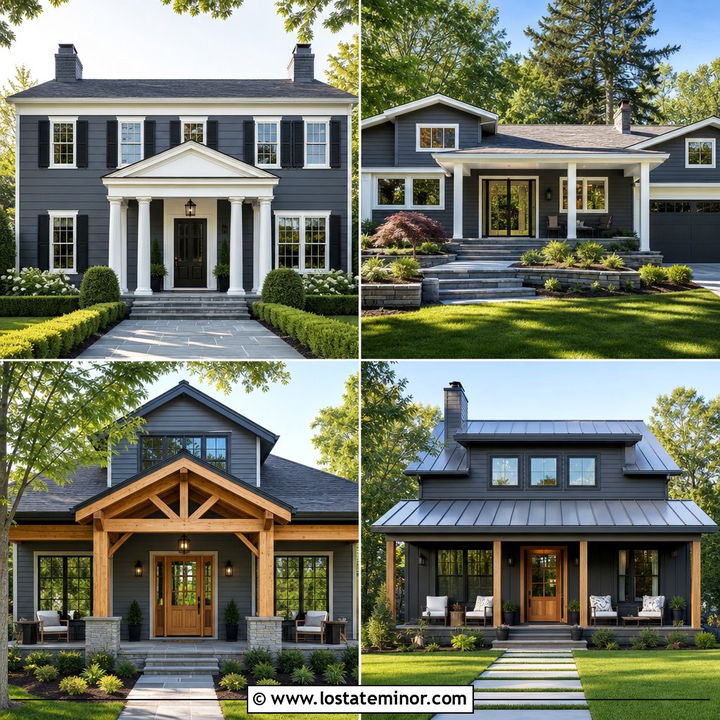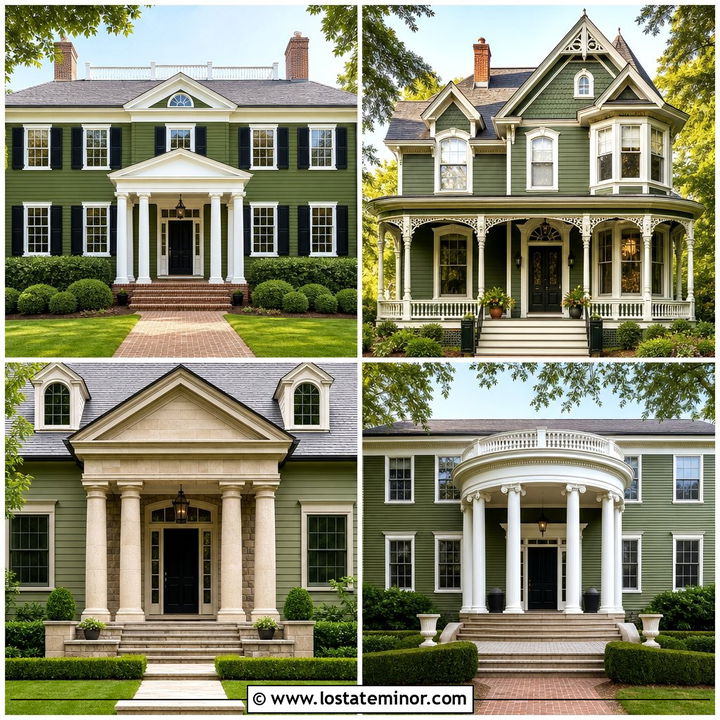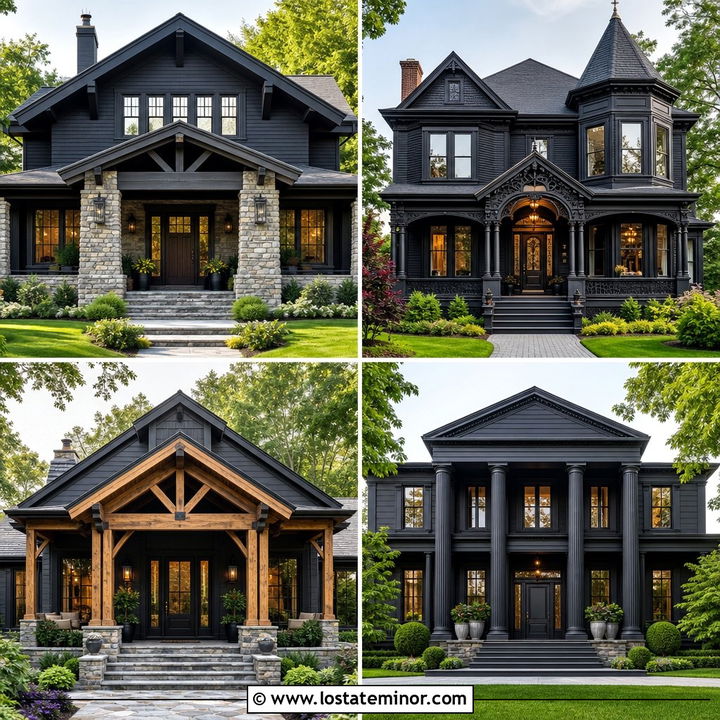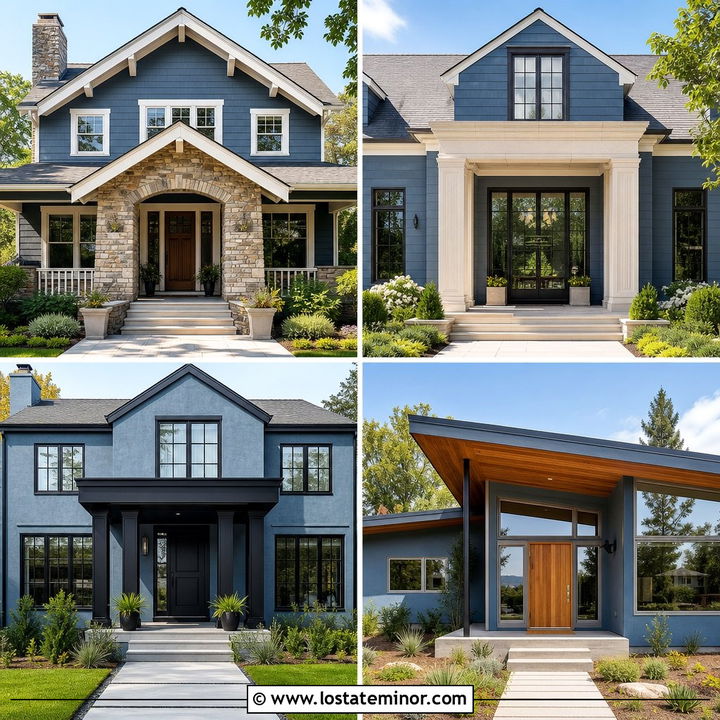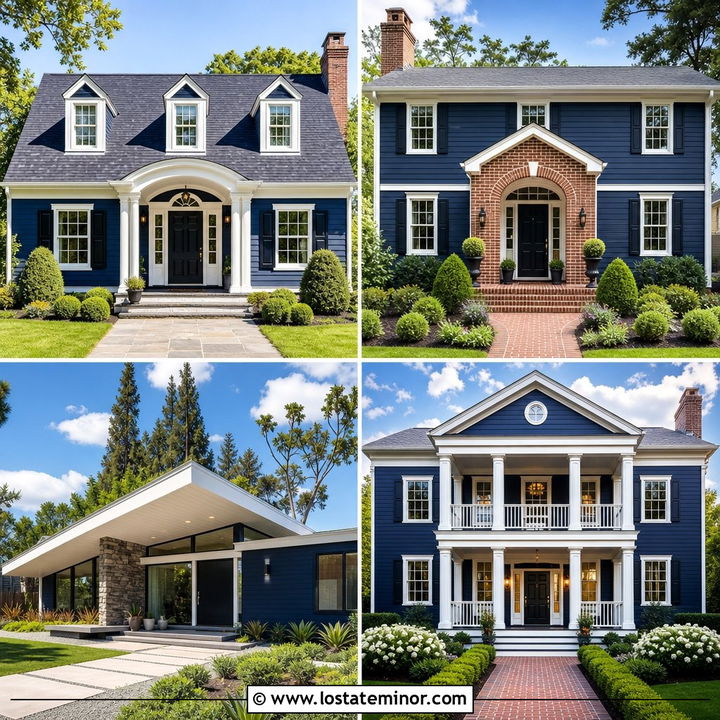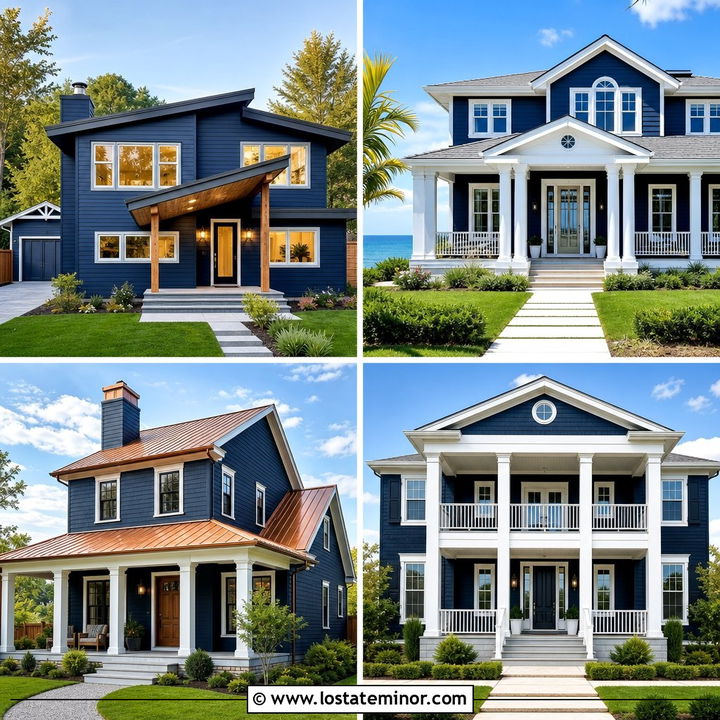
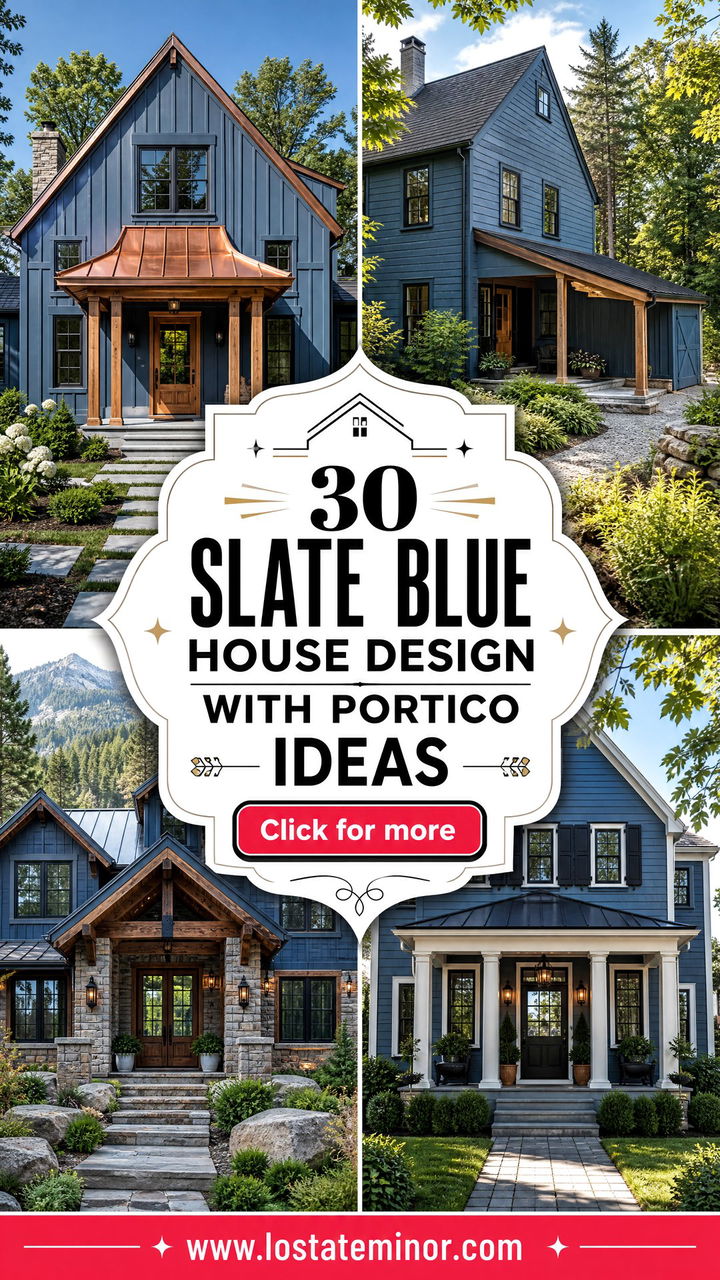
Slate blue gives a home a calm, polished presence while offering more personality than standard gray. Add a well-proportioned portico, and the entrance gains shelter, depth, and a clear architectural focal point. The most successful schemes coordinate the siding with the portico roof, columns, front door, trim, masonry, and landscaping. Current exterior inspiration often pairs slate blue with crisp white details, natural stone, warm wood, and contrasting roof materials. () Whether you are refreshing a small ranch or planning a grand Colonial facade, these complete exterior combinations can help you build a balanced look. Explore the following 30 Slate Blue House Design With Portico Ideas.
1. Slate Blue Colonial With White Gabled Portico
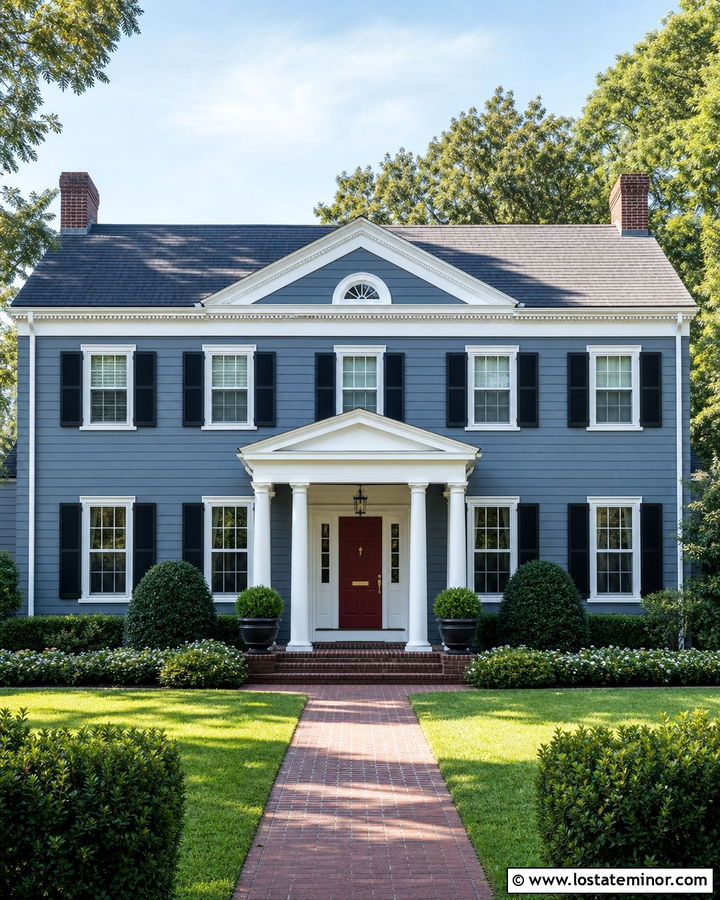
A symmetrical Colonial becomes more inviting when slate blue clapboard siding is paired with a crisp white gabled portico. Use square or round columns that align neatly with the front door and upper windows. A simple pediment gives the entrance definition without overwhelming the balanced facade. Black shutters, a charcoal shingle roof, and a deep red door create a traditional color scheme with strong curb appeal. Repeat white on the window frames, corner boards, gutters, and portico ceiling for consistency. Brick steps bring warmth to the cool blue siding. Keep foundation shrubs low and evenly spaced so the architecture remains visible. A straight brick walkway reinforces the formal layout and leads the eye directly toward the covered entrance.
2. Slate Blue Farmhouse With Natural Wood Portico
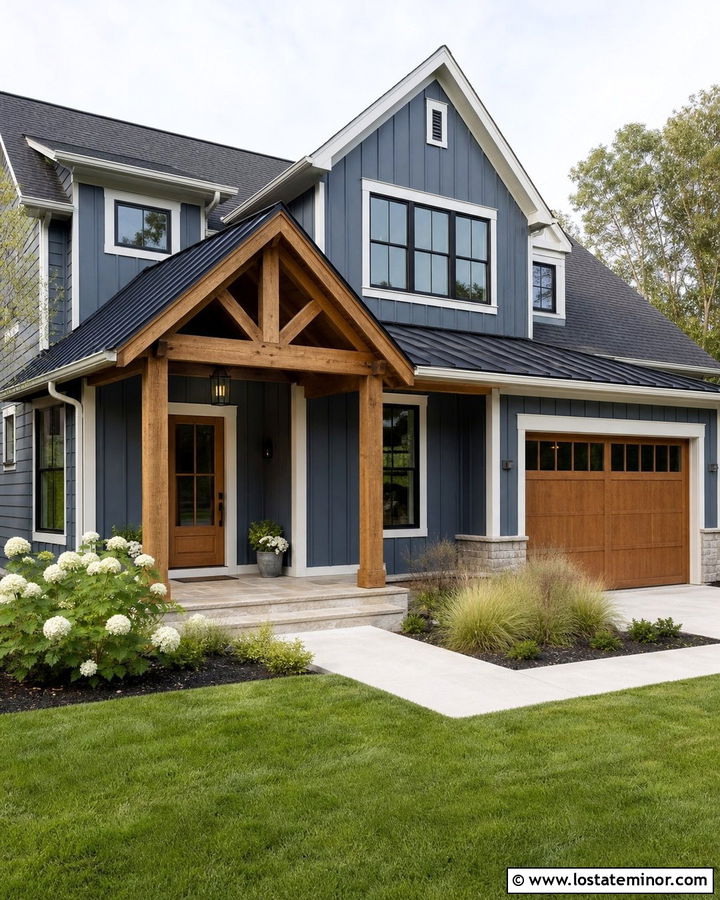
Slate blue board-and-batten siding can make a modern farmhouse feel colorful without losing its clean simplicity. Frame the front entrance with a natural cedar portico supported by sturdy timber posts. A black standing-seam metal roof over the portico creates sharp contrast and connects with black-framed windows. Choose warm white trim rather than bright white to soften the transition between the cool siding and golden wood. A medium-stained front door, stone porch floor, and matching cedar garage doors complete the exterior palette. Keep decorative details minimal so the vertical siding and exposed beams remain the main features. Ornamental grasses, white hydrangeas, and a broad concrete walkway add texture while preserving the farmhouse’s open, uncluttered character.
3. Slate Blue Craftsman With Stone Column Portico
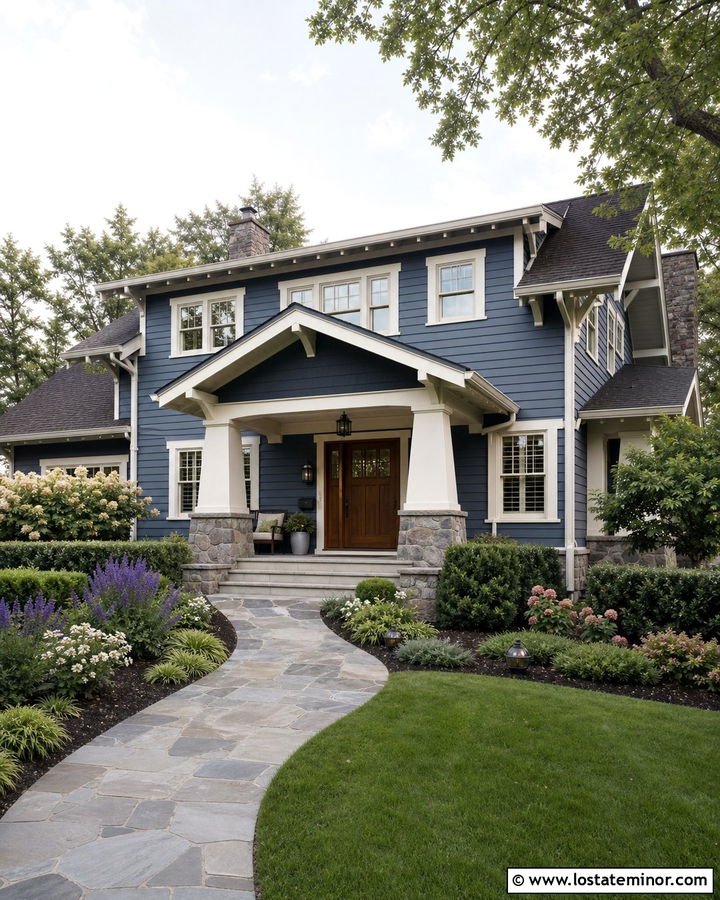
A Craftsman exterior benefits from materials that make the entrance look grounded and substantial. Cover the house in slate blue lap siding, then build a broad gabled portico with tapered white columns resting on rugged fieldstone bases. Extend the stone across the foundation or lower porch wall to connect the entry with the rest of the facade. A medium walnut front door introduces warmth, while cream trim creates a softer contrast than pure white. Dark bronze lanterns, gutters, and window frames add definition without appearing too stark. Use architectural shingles in a charcoal-brown blend to unite the cool and warm colors. Layered shrubs and a gently curved stone path reinforce the relaxed, handcrafted character associated with a welcoming Craftsman home.
4. Slate Blue Ranch With Black Metal Portico
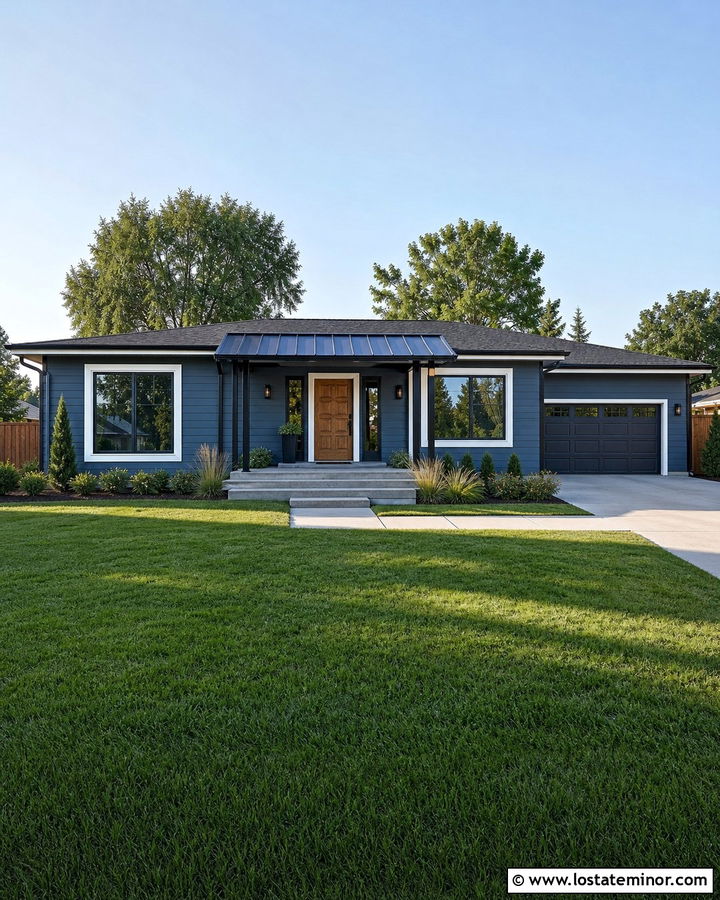
Does a long ranch facade feel too flat? A compact black metal portico can create a strong entrance without adding excessive visual weight. Choose midtone slate blue horizontal siding, broad white window trim, and a shallow shed-style portico over the front door. Slim black posts and a black standing-seam roof give the home a cleaner, more updated profile. Paint the door a warm cognac brown to prevent the combination from feeling cold. Carry the black finish to the gutters, porch light, address numbers, and garage hardware. Wide concrete steps suit the low roofline better than formal brick stairs. Finish the yard with low evergreen groupings, ornamental grasses, and a direct walkway that clearly separates the entrance from the driveway.
5. Slate Blue Cape Cod With Arched Portico
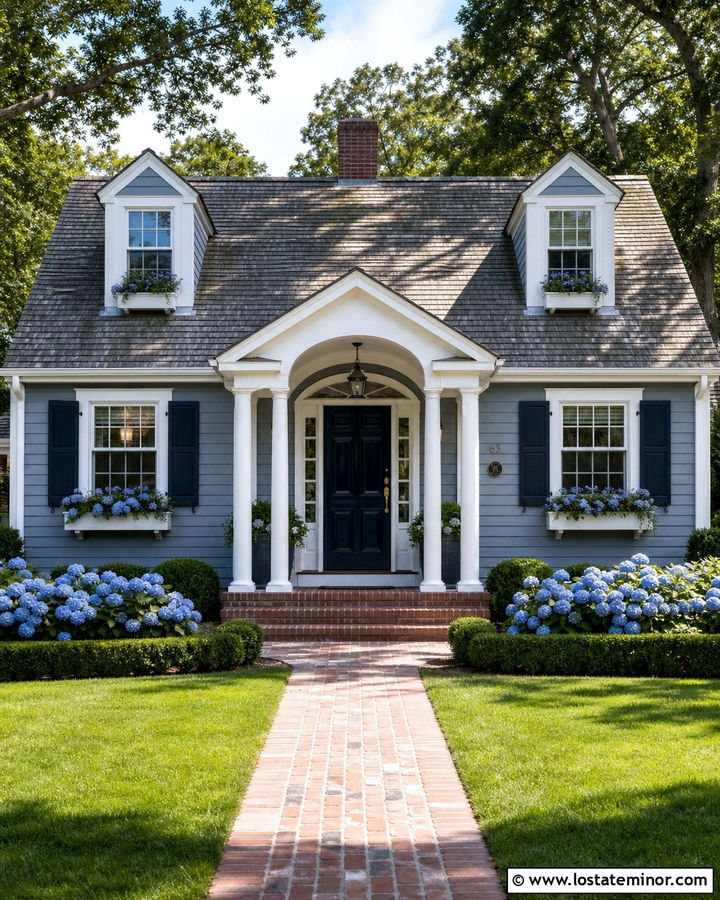
A slate blue Cape Cod can look especially charming with a small arched portico centered beneath its dormer windows. Use white columns and curved trim to frame a glossy navy or natural wood front door. The arch adds a gentle detail that contrasts with the home’s steep roof and simple rectangular windows. Keep the siding a muted blue-gray so white dormers, window boxes, and fascia appear fresh but not overly bright. Weathered gray roof shingles reinforce the coastal character. Brick porch flooring and a matching walkway introduce warmth at ground level. Add clipped boxwoods, blue hydrangeas, and compact flowering plants without covering the lower windows. The result is a tidy, welcoming exterior that feels traditional, balanced, and appropriately scaled.
6. Slate Blue House With Brick And White Portico
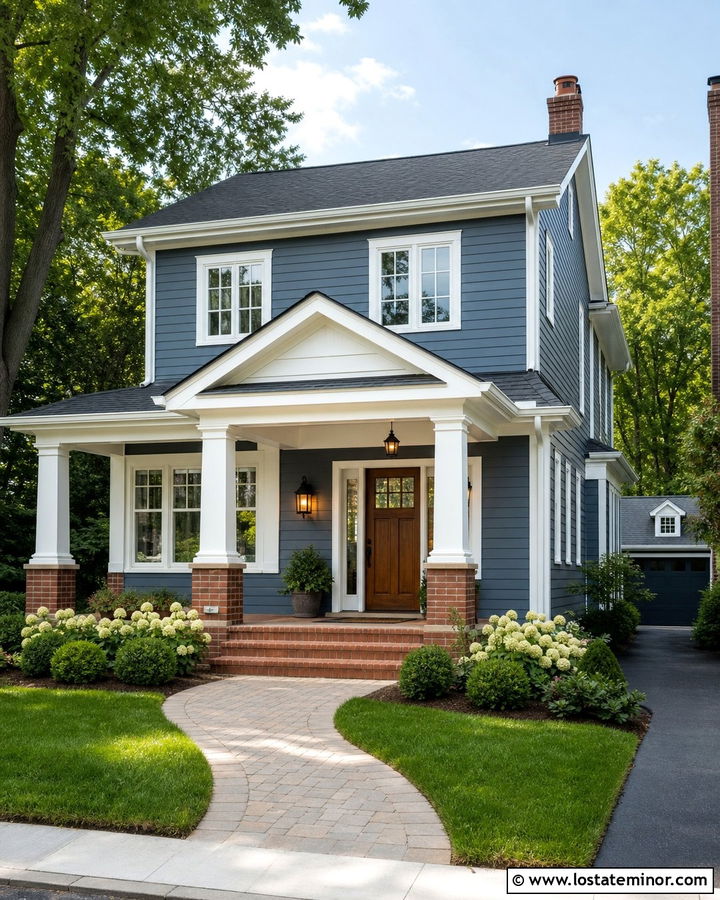
Existing red or brown brick can work beautifully with slate blue when both materials are repeated thoughtfully. Use slate blue siding across the upper story or main facade while retaining brick around the foundation, chimney, and porch steps. A white gabled portico creates a bright transition between the two darker materials. Select a front door in deep olive, black, or stained oak, depending on whether you prefer an earthy or high-contrast look. White columns should be wide enough to feel visually supported by the brick bases below them. A charcoal roof helps settle the varied color palette. Near the entrance, use bronze lanterns and simple planters. Green shrubs and cream flowers will soften the masonry while allowing the complete blue, brick, and white scheme to remain clear.
7. Slate Blue Board And Batten With Copper Portico
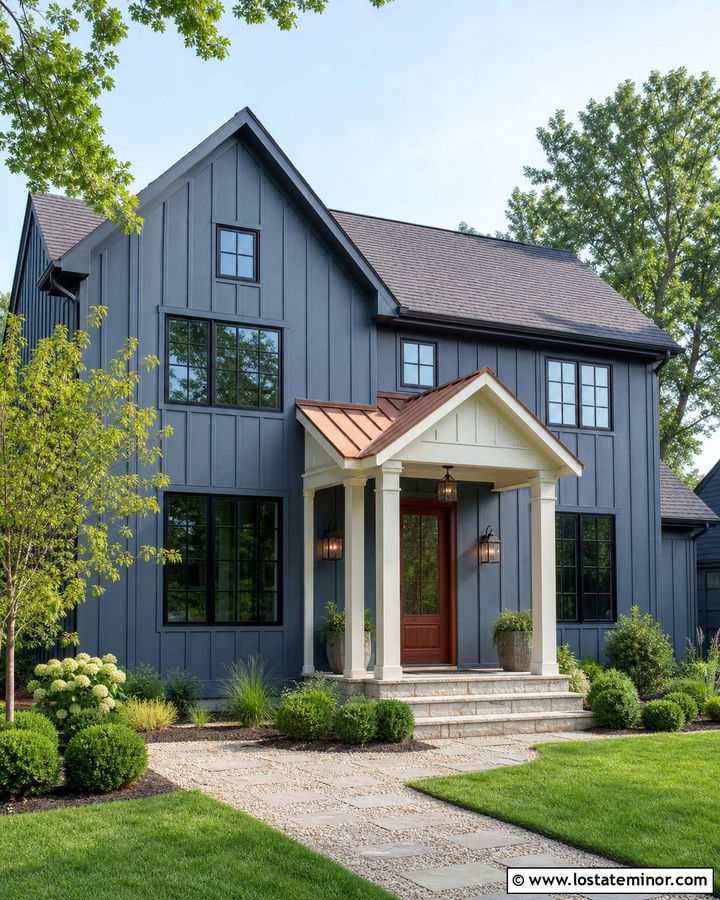
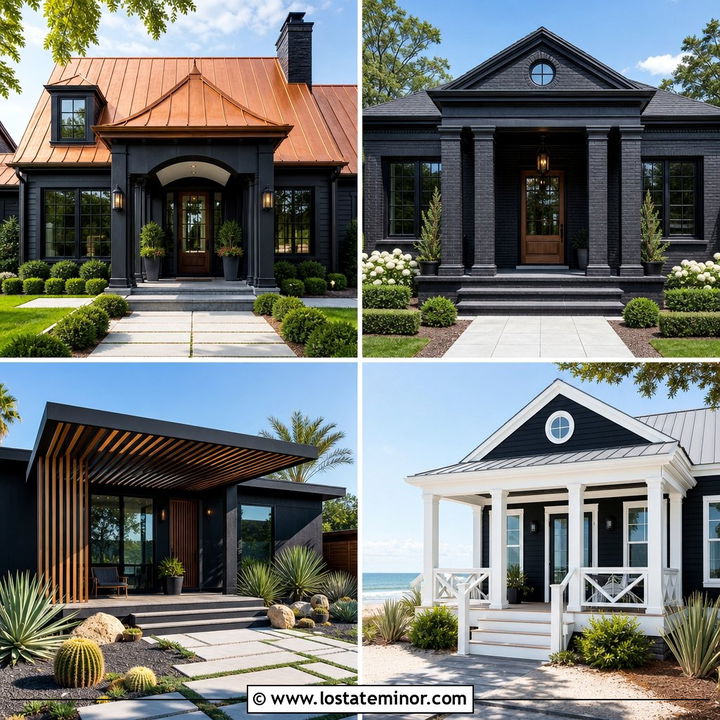
Copper adds a distinctive warm accent to a cool slate blue exterior. Cover the house in vertical board-and-batten siding and install a compact gabled portico with a real or copper-colored metal roof. Use creamy white trim around the windows, roofline, and portico opening so the copper does not compete with harsh bright white. A stained mahogany door strengthens the warm side of the palette, while aged bronze lighting coordinates with the roof as it develops character. Keep the main roof charcoal gray to give the smaller copper canopy room to stand out. Light stone steps and a pale gravel walkway prevent the front elevation from becoming too dark. This combination works especially well on simple homes that need texture, warmth, and a more memorable entrance.
8. Slate Blue Bungalow With Deep Front Portico
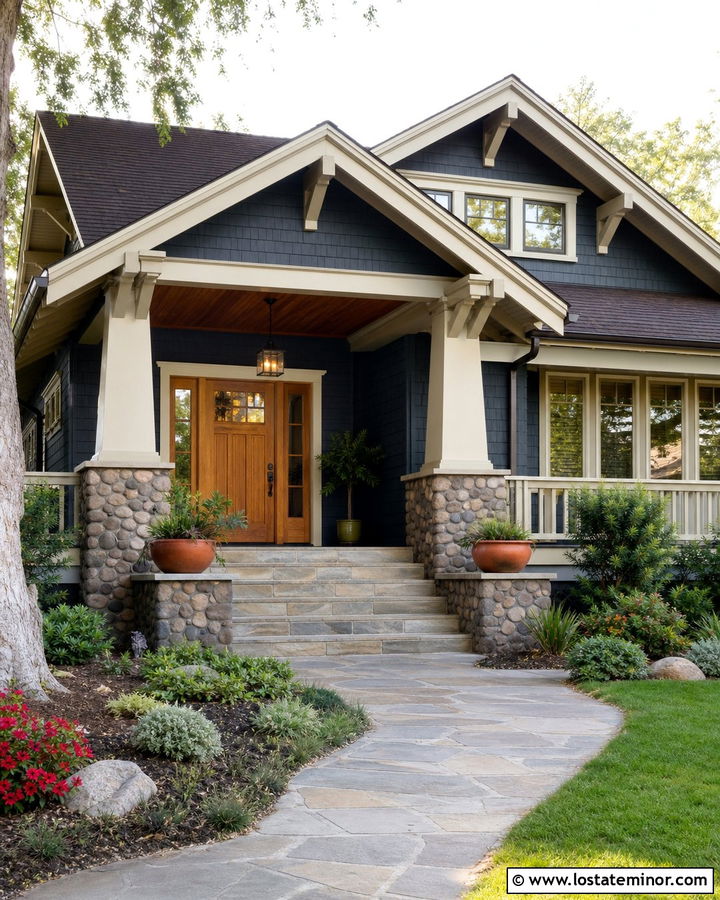
A bungalow calls for a portico that feels like a natural extension of its broad, low roof. Choose dusky slate blue shingle or lap siding and build a deep gabled entrance supported by substantial cream columns. Exposed rafters, wood brackets, and a tongue-and-groove cedar ceiling can provide the handcrafted detail this architecture needs. Use a warm oak door with divided glass to brighten the sheltered entry. Stone column bases and wide stone steps visually anchor the portico. A dark brown or charcoal roof creates a softer contrast than solid black. Complete the look with layered native plants, a curved flagstone walkway, and porch planters in earthy clay tones. Every component should feel sturdy, practical, and closely connected to the bungalow’s horizontal proportions.
9. Slate Blue Split Level With Asymmetrical Portico
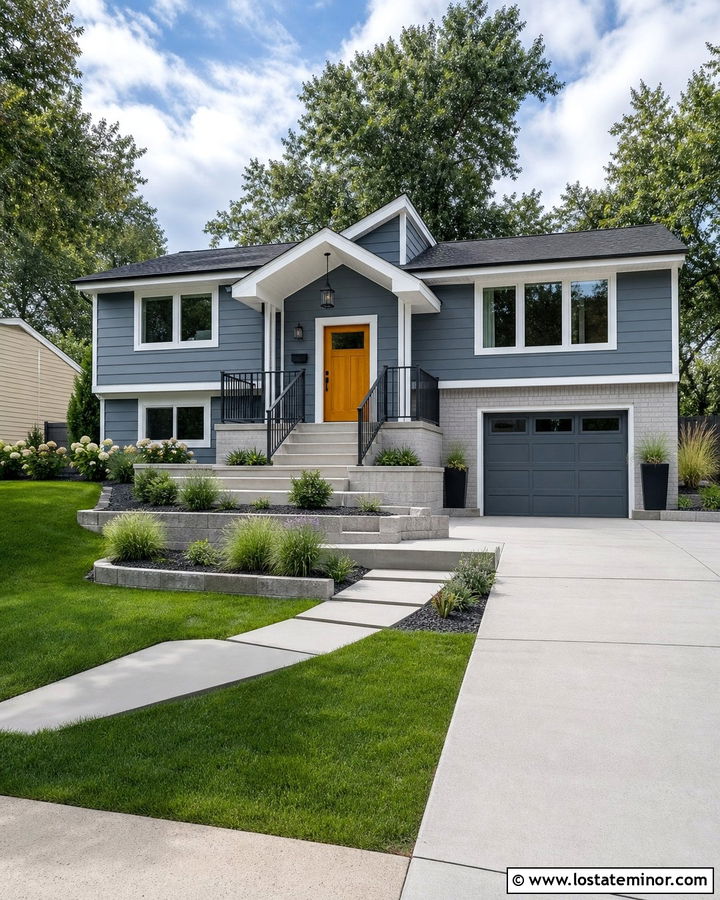
An asymmetrical portico can help a split-level home develop a clearer focal point. Apply slate blue lap siding across both levels, then add a shed or offset gabled roof that extends from the entrance toward the lower wing. Use white trim to connect mismatched window heights and charcoal accents to coordinate the roof, railings, and garage door. A golden cedar front door draws attention to the entry without requiring a highly saturated color. If the house includes brick, limewash it soft gray or retain a muted brown tone that complements the blue. Broad concrete steps and an angular walkway suit the architecture better than ornate curves. Finish with tiered planting beds that follow the changing foundation height and keep shrubs below the windows.
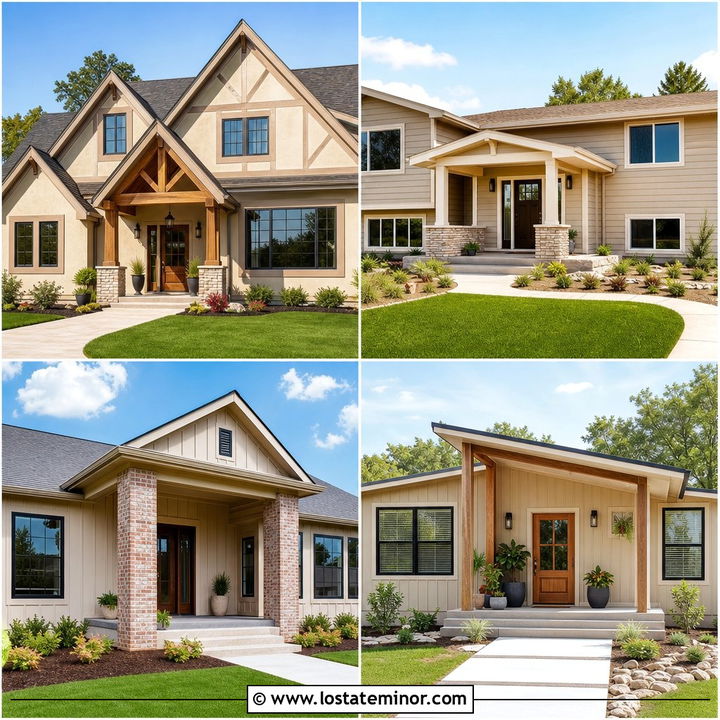
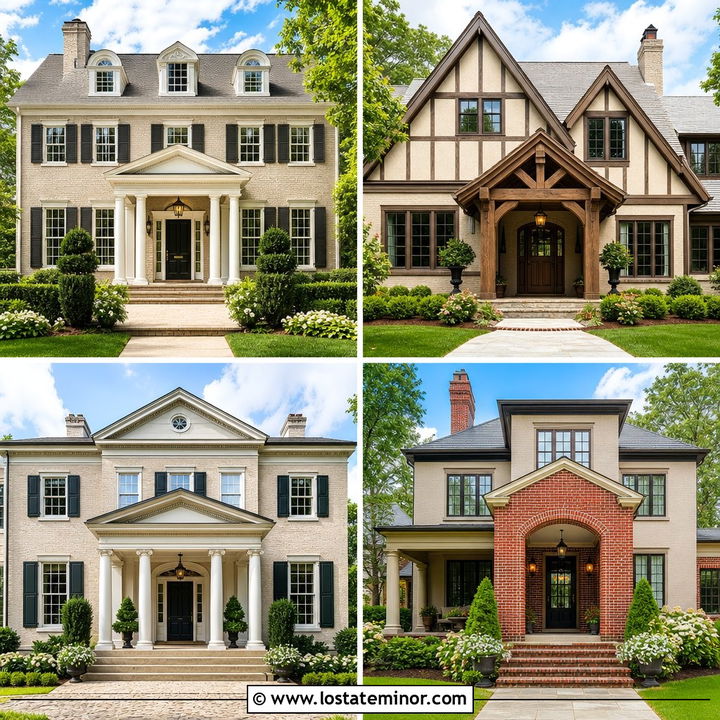
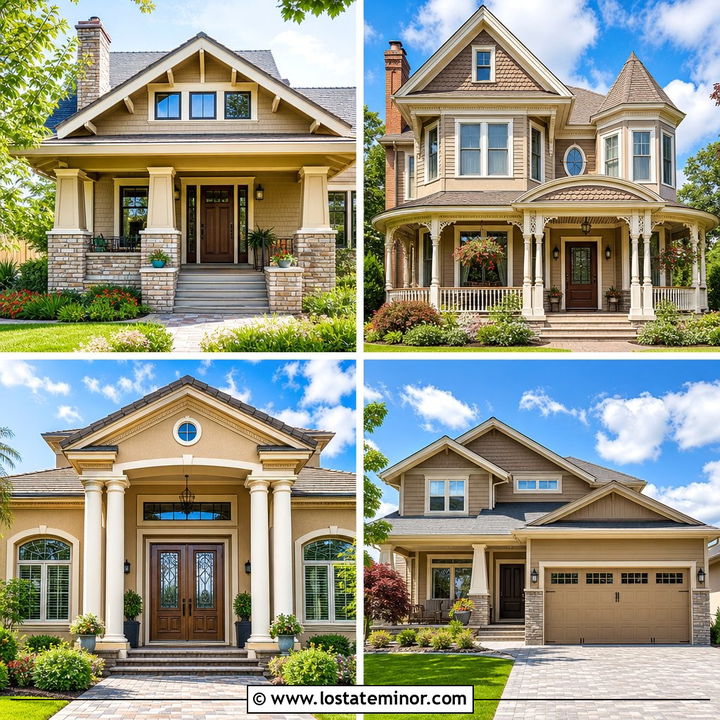
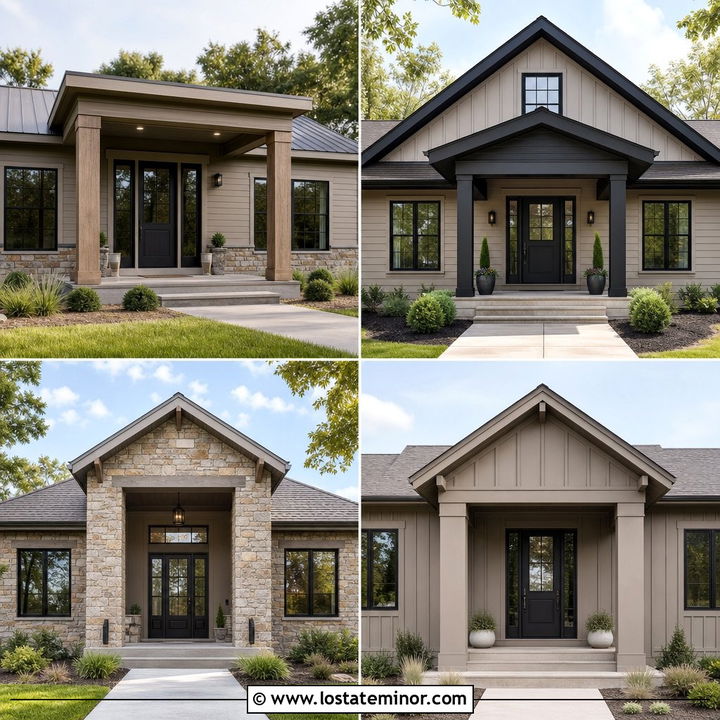
10. Slate Blue Cottage With Curved Entry Portico
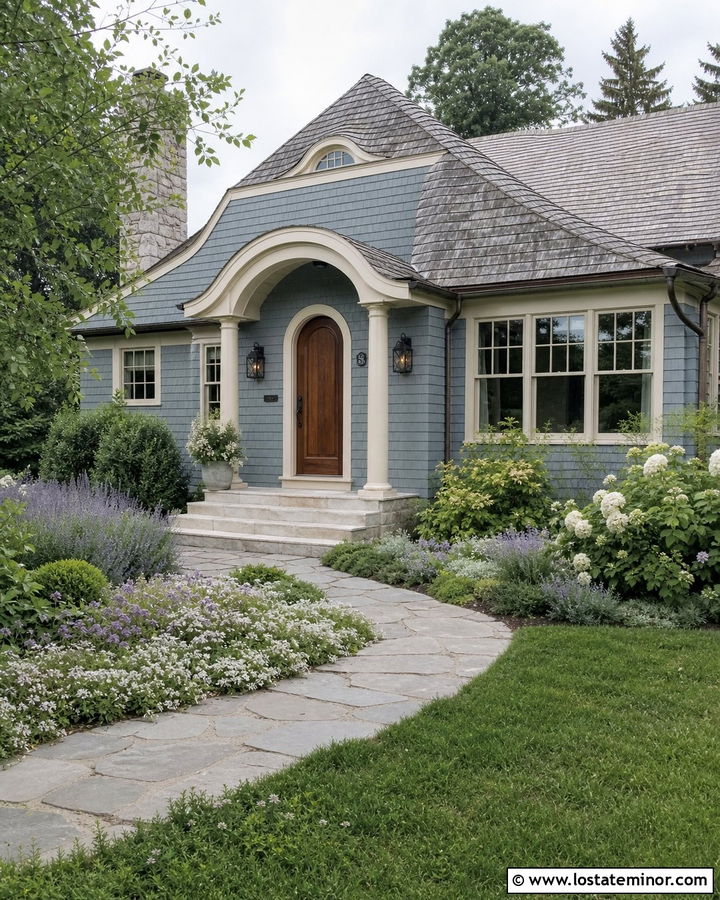
Soft curves can make a small slate blue cottage appear more welcoming and distinctive. Install a gently arched portico roof above the entrance and support it with slender cream columns or decorative brackets. Slate blue shake siding works well here because its texture adds depth without making the compact facade look busy. Choose a rounded natural wood door or a cream door with a small divided-light window. Weathered gray shingles and pale limestone steps keep the palette light. Black lanterns provide enough contrast to outline the entrance. Surround the walkway with lavender, white flowering shrubs, and relaxed ground cover for a garden-focused finish. The curved canopy should remain modest in size so it complements the cottage roof rather than competing with its original shape.
11. Slate Blue Modern House With Flat Portico
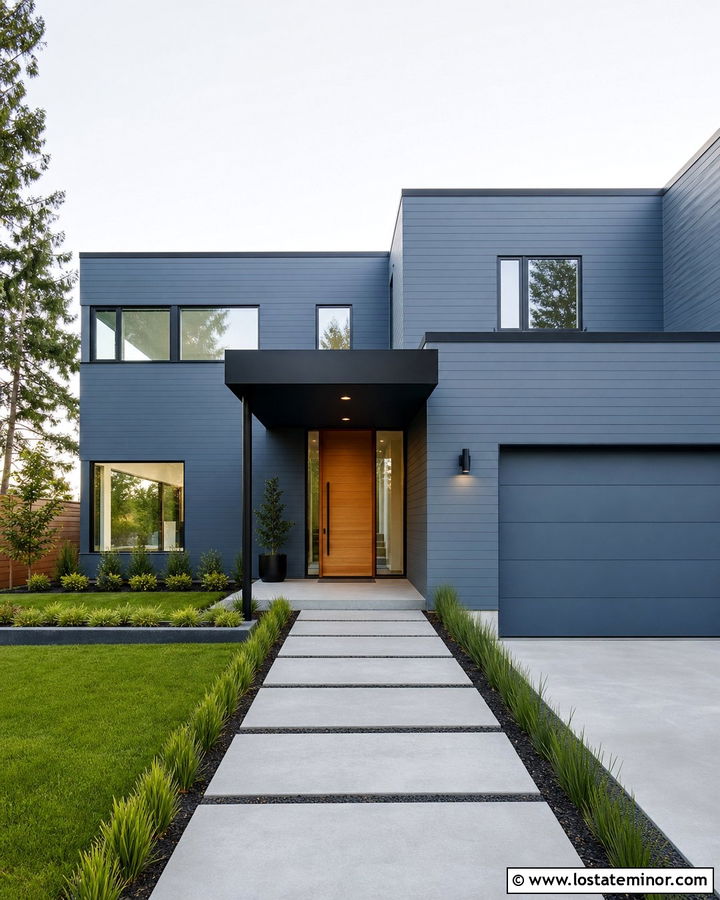
For a modern exterior, treat the portico as a clean architectural plane rather than a decorative addition. Use smooth slate blue fiber cement panels or narrow horizontal siding across the facade. A flat-roof portico in matte black can project over the front door and extend toward an adjacent window, creating an intentional asymmetrical composition. Support it with one slim steel post or a simple wood-clad wall. Select a wide pivot-style door in warm cedar to balance the cool siding and dark metal. Black window frames, concealed gutters, and minimal lighting maintain the streamlined appearance. Large concrete pavers, linear grasses, and rectangular planting beds reinforce the geometry. Keep the garage door slate blue so the entrance, rather than the garage, remains the visual focus.
12. Slate Blue Greek Revival With Columned Portico
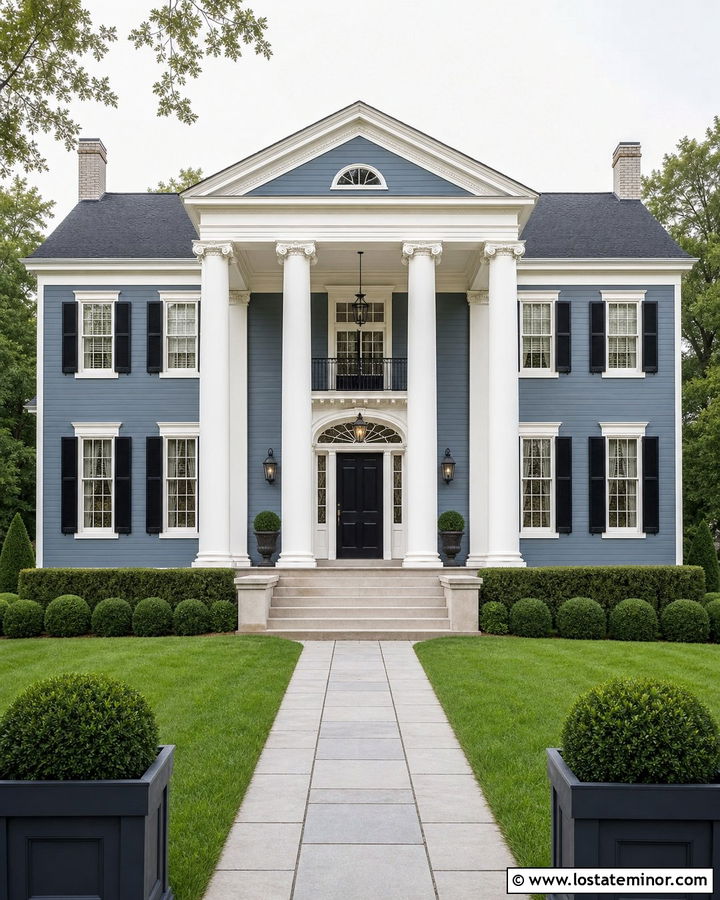
A Greek Revival home can carry slate blue gracefully when the classical details remain bright and sharply defined. Paint the main clapboard facade a medium slate blue and use warm white on the full-height columns, pediment, cornice, window frames, and corner boards. A centered black front door introduces a formal anchor beneath the portico. If the entrance includes a fanlight or sidelights, keep their frames white to preserve the airy appearance. Choose a dark charcoal roof that recedes behind the prominent architectural trim. Stone or painted brick steps should span most of the portico width, giving the columns a convincing base. Formal hedges, symmetrical planters, and a straight walkway support the home’s balanced composition while allowing the blue body color to add restrained personality.
13. Slate Blue Tudor With Timber Gabled Portico
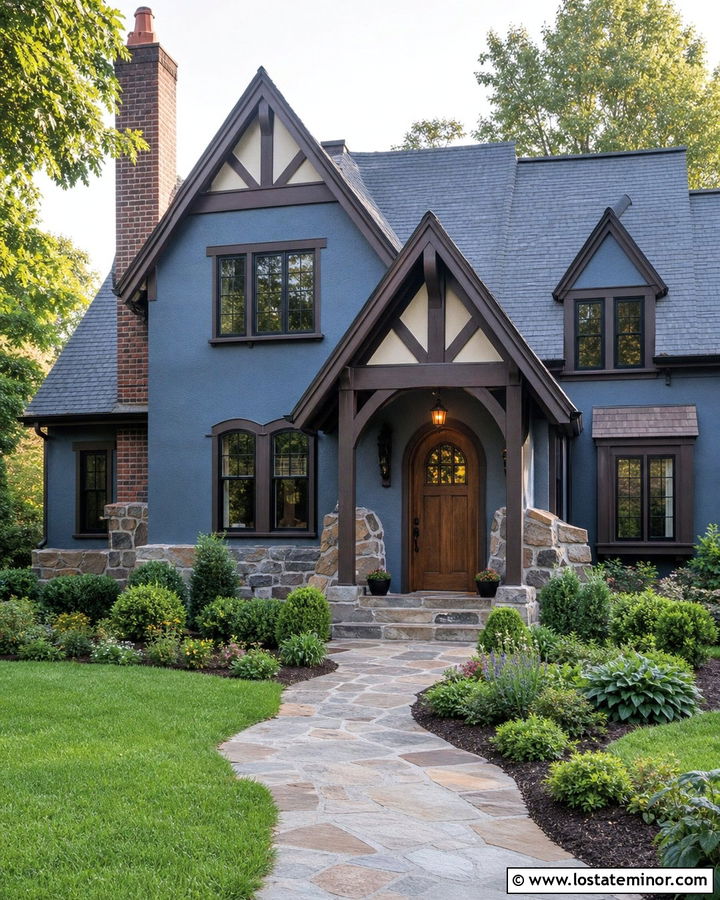
Slate blue can lighten a Tudor-inspired home while retaining its strong, traditional character. Use the blue on stucco panels or horizontal siding, then frame the entry with a steeply pitched timber portico. Dark brown beams, cream trim, and a stained arched door create a layered palette that feels warm and established. Repeat brick or irregular stone around the chimney, porch steps, and lower facade. The portico roof should match the home’s dark dimensional shingles and mirror its pointed gables. Leaded or black-framed windows provide additional depth against the slate blue walls. Avoid brilliant white, which may appear disconnected from the earthy materials. A winding stone path, clipped evergreens, and softly planted borders will complete the storybook architecture without turning the exterior into a themed design.
14. Slate Blue Coastal House With Open Portico
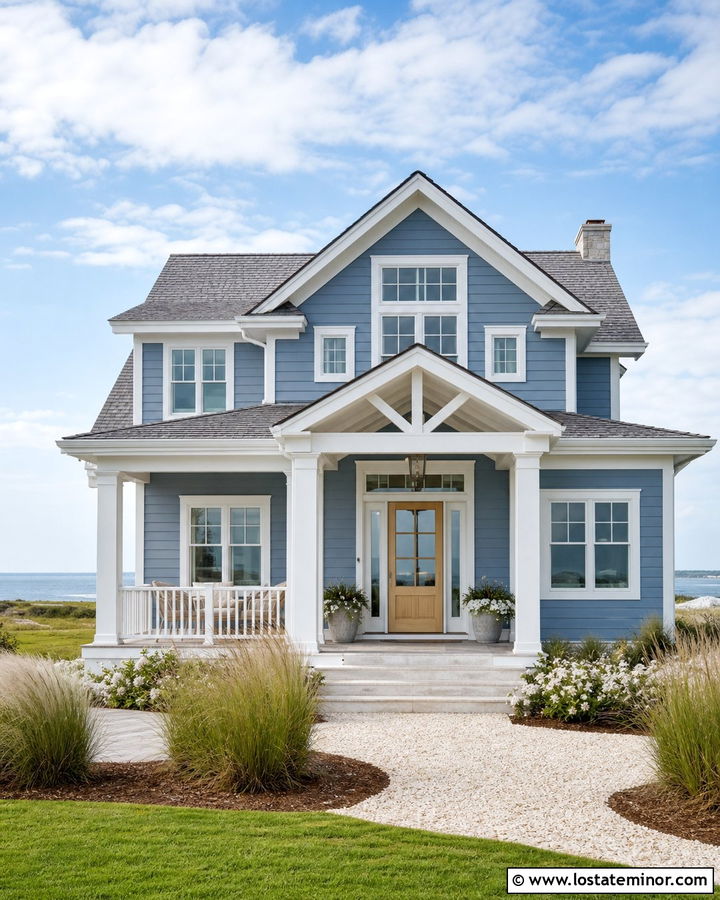
Fresh white trim and an airy entrance can bring out the relaxed side of a slate blue coastal exterior. Choose weather-resistant horizontal siding in a light blue-gray shade, then add an open gabled portico supported by simple square white columns. A pale natural wood or soft aqua door keeps the entrance informal. Use a light gray shingle roof and white porch railings to prevent the facade from looking heavy. The portico ceiling can be painted a softer blue, while nickel or black lanterns add clean definition. Include light stone steps, a shell-toned walkway, and wind-tolerant grasses around the foundation. Keep shutters optional and simple. The full design should feel bright and easygoing, with enough contrast to define the architecture in strong daylight.
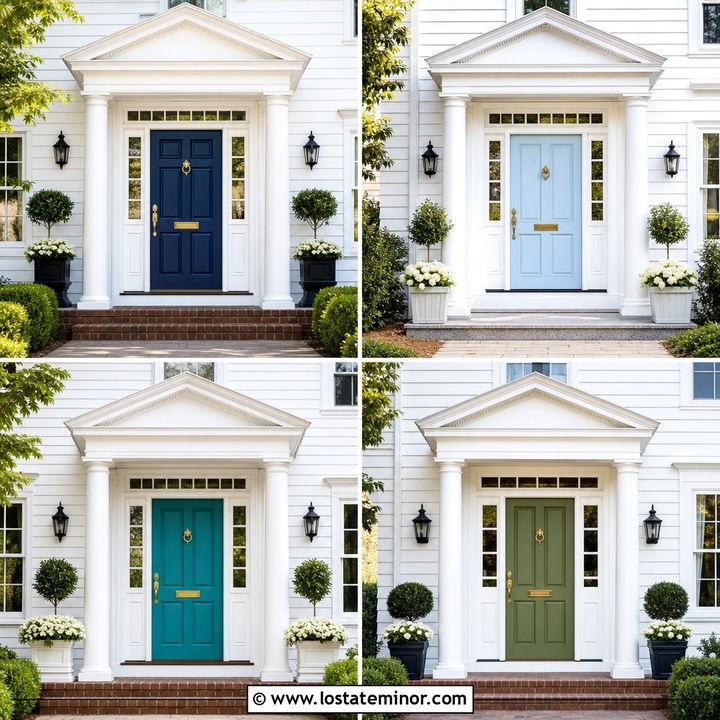
15. Slate Blue Transitional House With Wide Portico
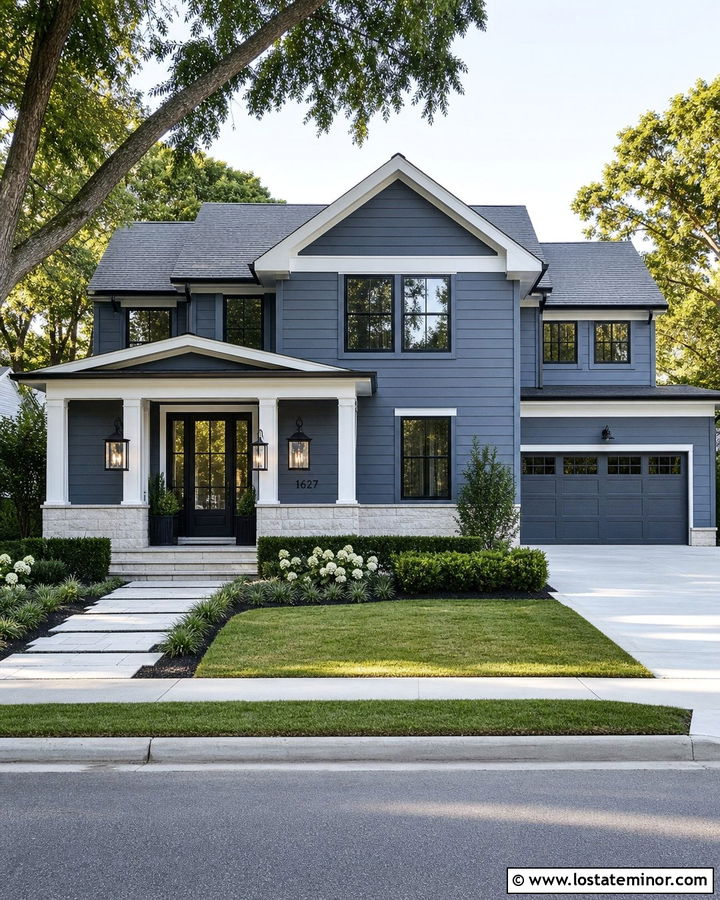
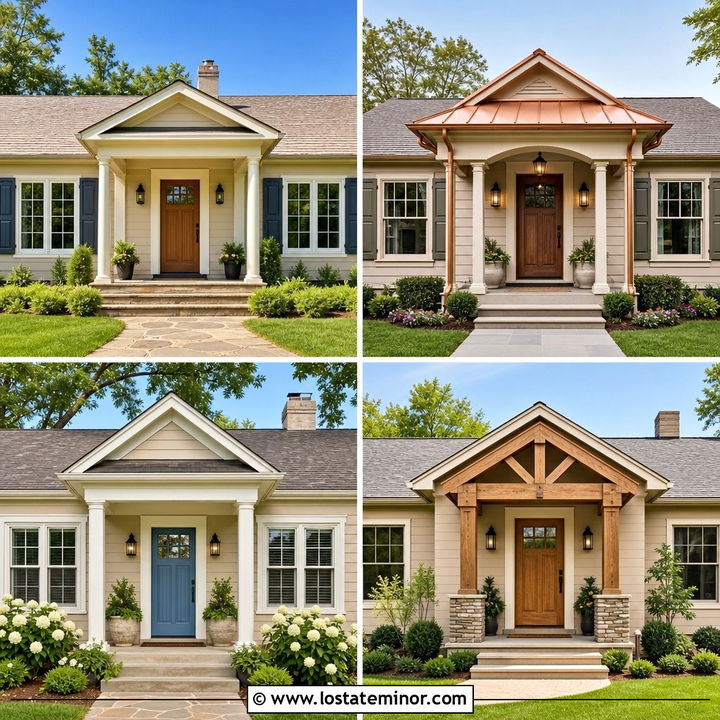
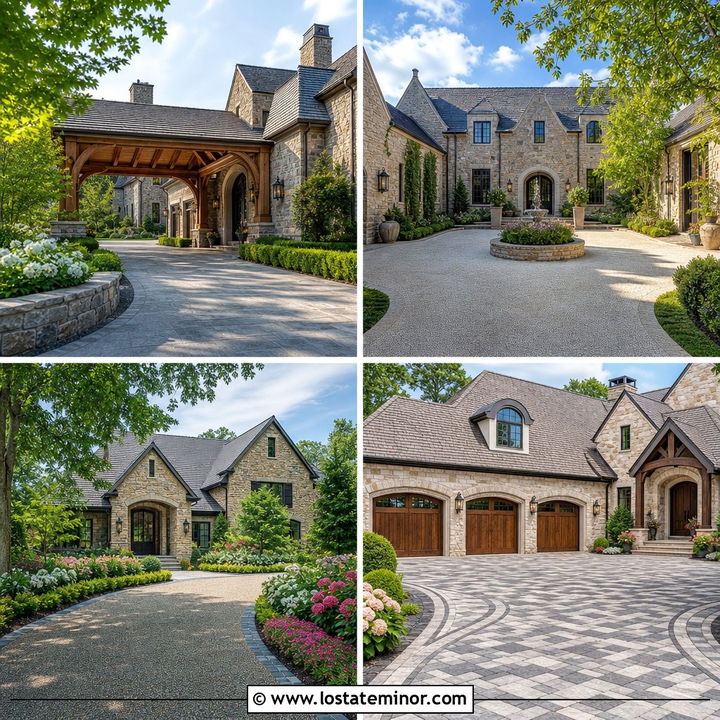
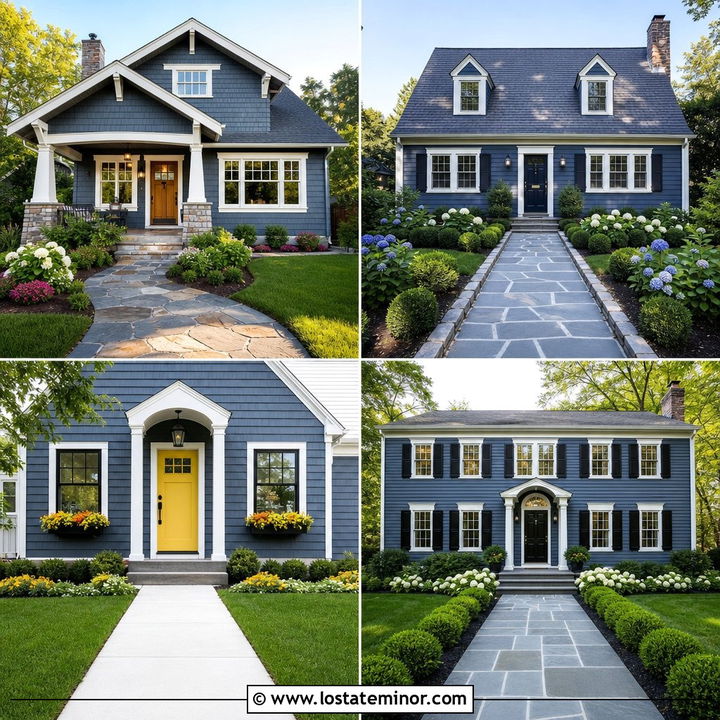
A transitional house needs a portico that combines traditional symmetry with cleaner contemporary details. Cover the facade in slate blue lap siding and use a wide, shallow gabled portico with straight white columns. Skip ornate molding in favor of simple fascia, a smooth ceiling, and large black lanterns. A black front door with narrow glass panels creates a sophisticated focal point, while a medium-gray roof keeps the overall contrast controlled. Add pale limestone around the lower facade or entry steps to introduce a durable natural texture. If the home has an attached garage, paint the door slate blue rather than white so it blends into the body. Structured shrubs, neat grasses, and broad rectangular pavers will reinforce the polished design without making the entrance feel overly formal.
16. Slate Blue Saltbox With Lean To Portico
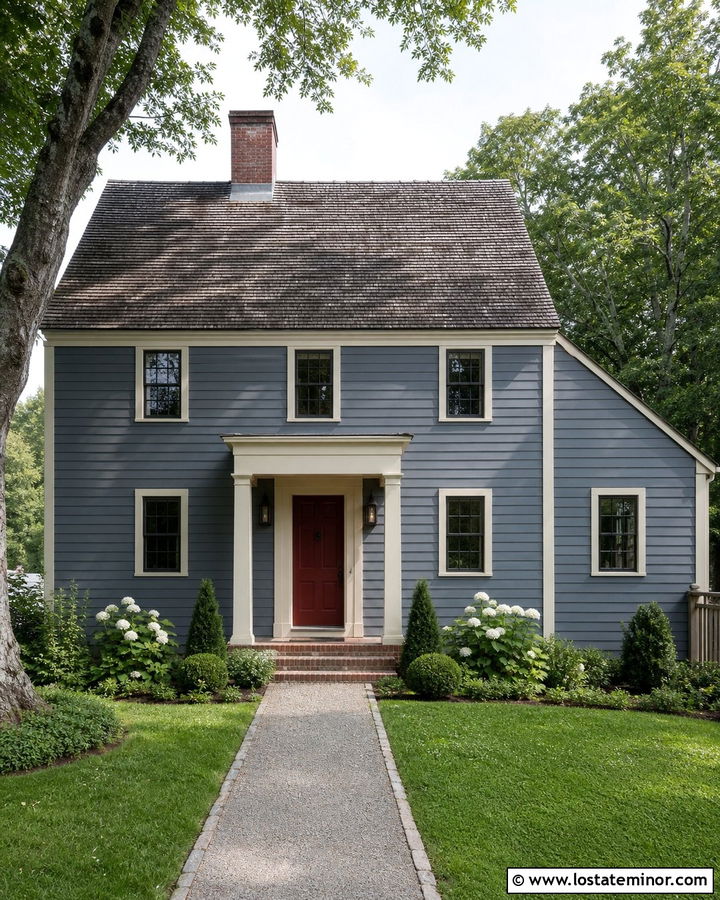
The sloping roof of a Saltbox home pairs naturally with a simple lean-to portico. Use muted slate blue clapboard siding, creamy white trim, and a narrow canopy supported by plain wood posts. Match the portico pitch to the main roof whenever possible so the addition appears original to the house. A brick-red or dark green front door brings traditional color to the restrained palette. Choose weathered charcoal shingles and copper or dark bronze lanterns for an established New England character. Brick steps and a straight gravel-edged walkway complement the uncomplicated architecture. Foundation plants should include compact evergreens, white flowers, and low ground cover. Avoid heavy columns or an oversized pediment, which could disrupt the distinctive roofline and make the entrance feel too elaborate.
17. Slate Blue Victorian With Decorative Portico
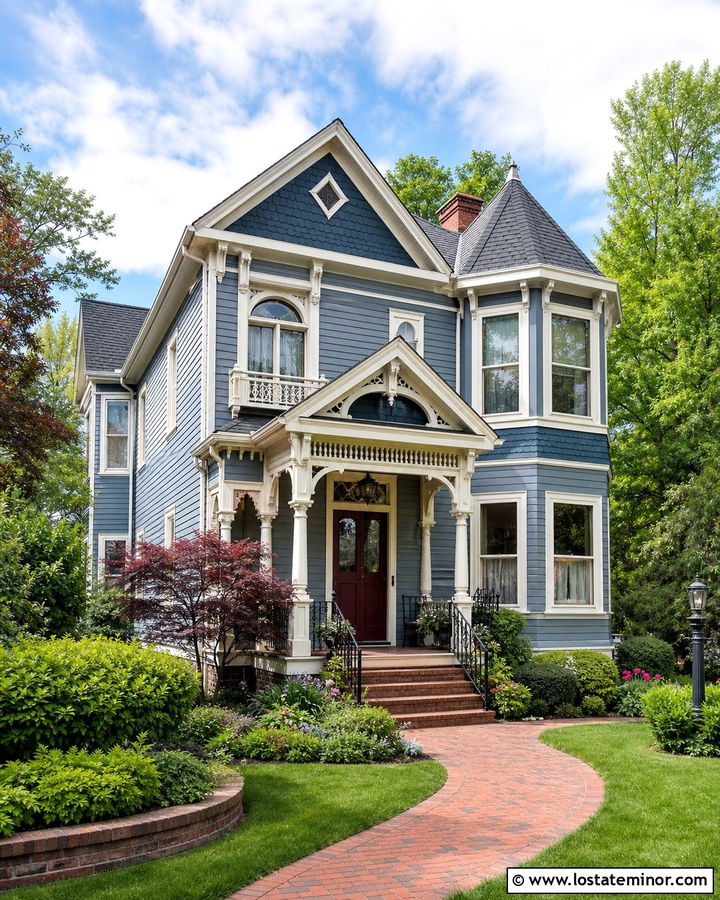
A Victorian exterior offers room for richer trim without giving up the calm effect of slate blue. Use slate blue on the main clapboard siding, a deeper blue on decorative shingles, and creamy white across the portico columns, railings, brackets, and window trim. A burgundy front door supplies a historically inspired focal point and connects well with brick steps. Add a small gabled portico featuring restrained spindlework or a decorative sunburst panel. The main roof can remain charcoal, while the portico roof may use patterned shingles for subtle emphasis. Limit the scheme to three or four coordinated colors so the facade does not become visually scattered. Curved garden beds, ornamental trees, and a brick walkway will complement the detailed architecture and soften its vertical lines.
18. Slate Blue Prairie House With Low Portico
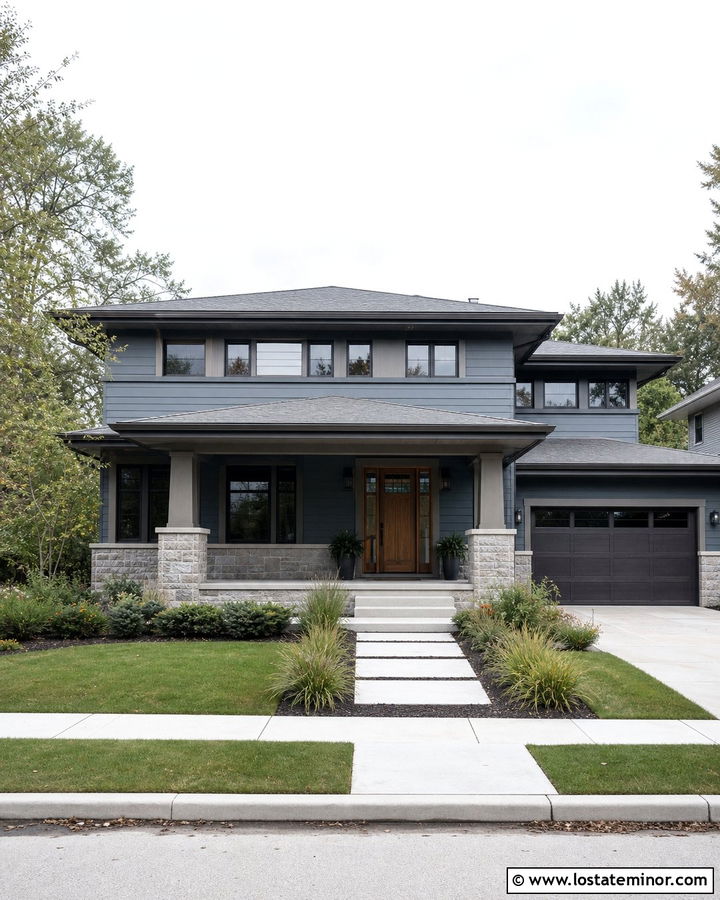
Long horizontal lines define a Prairie-inspired home, so its portico should remain broad and low. Select slate blue horizontal siding with warm gray trim and a deep roof overhang. Extend a shallow hip-roof portico across the entrance, supporting it with square wood posts or masonry piers. A rich walnut front door works as a warm center point between the blue siding and earthy stone. Repeat the stone across the foundation and chimney to make the entire house feel grounded. Dark bronze window frames and lighting offer gentler contrast than black. Use wide concrete slabs for the walkway and arrange grasses in horizontal planting bands. Avoid narrow columns, steep gables, and ornate railings, since those features would fight the house’s low, composed silhouette.
19. Slate Blue Mountain House With Stone Portico
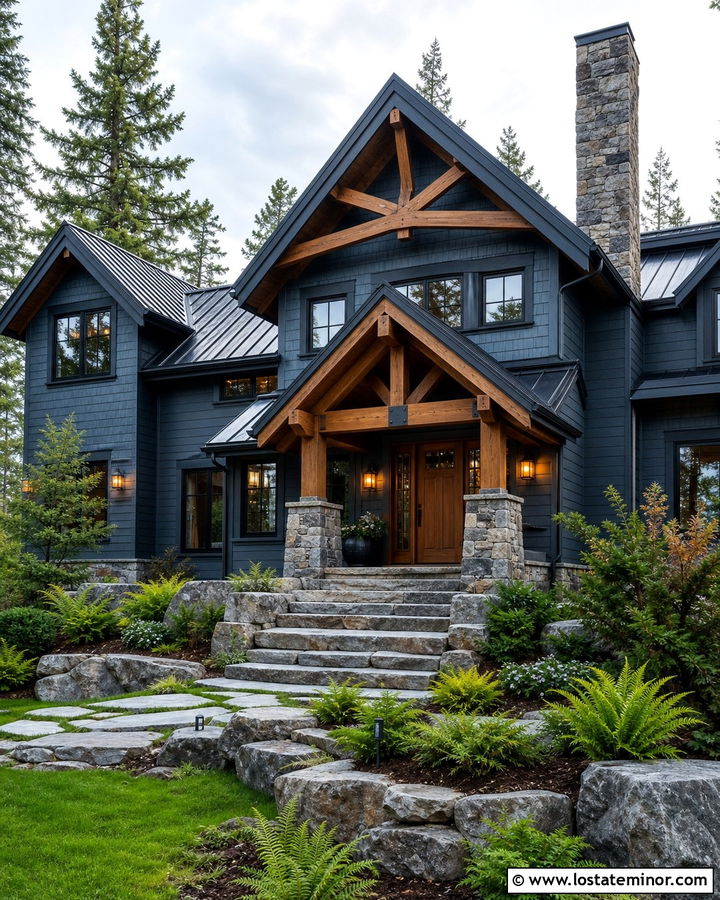
Against a wooded setting, slate blue can connect a mountain home with the changing colors of sky and stone. Use deep slate blue siding across the upper facade and substantial gray fieldstone around the foundation, chimney, and portico columns. A heavy timber gable with a dark metal roof gives the entrance shelter and visual strength. Choose a warm cedar door and repeat the stain on the beams, garage doors, and porch ceiling. Charcoal window frames keep the exterior cohesive without introducing another bright color. Wide flagstone steps should transition naturally into a rugged walkway. Plant evergreens, ferns, and low native shrubs around the house. The final scheme should look durable and grounded, with the portico serving as the connection between cool siding and warm natural materials.
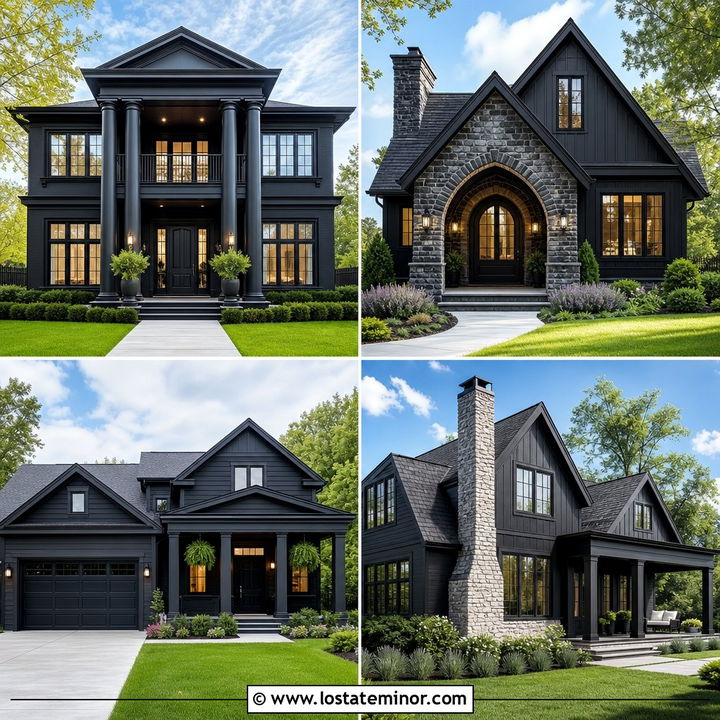
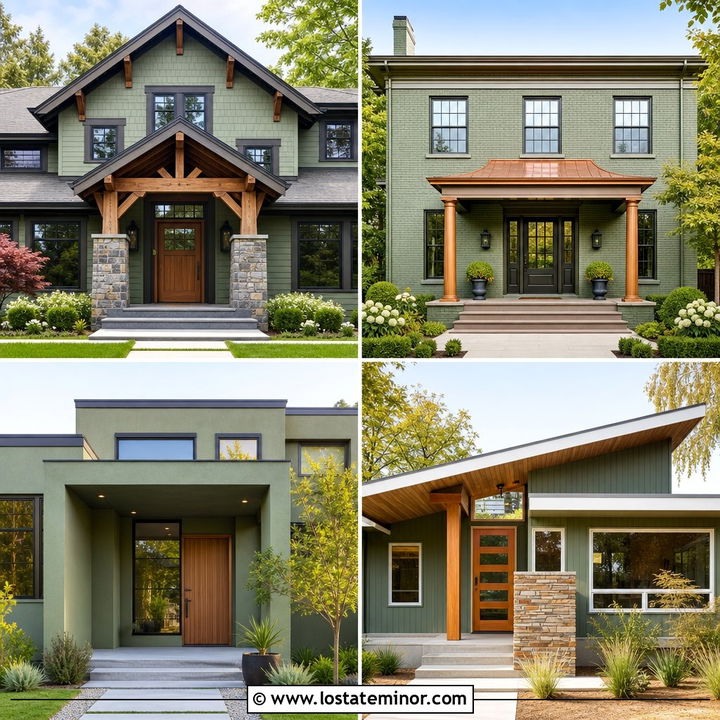
20. Slate Blue French Country With Arched Portico
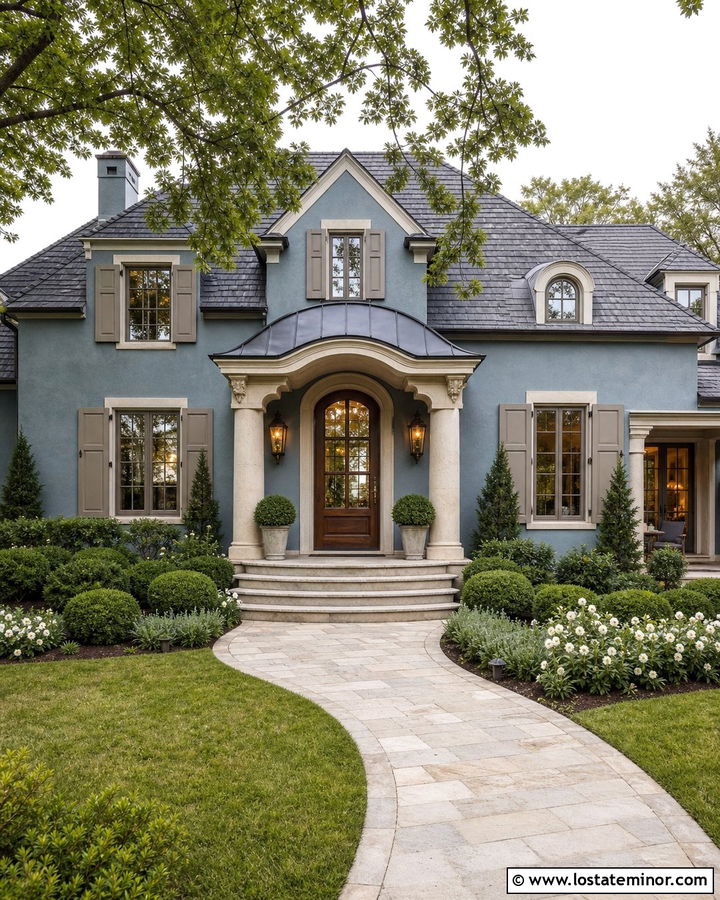
A softly arched portico can give a slate blue French Country house a refined but approachable entrance. Apply slate blue to stucco or smooth siding and pair it with warm limestone around the doorway, corners, and lower walls. The portico may feature a curved metal roof, slender cream columns, or stone supports with a shallow arch. Choose a medium-stained wood door with divided glass and aged bronze hardware. A charcoal roof and copper-toned lanterns balance the cool blue facade. Keep shutters a muted taupe or deep blue rather than black for a gentler effect. Curved stone steps, clipped shrubs, and loosely planted white flowers finish the romantic composition. Use ornament carefully so the materials, rooflines, and color relationships remain the strongest features.
21. Slate Blue Midcentury House With Cantilevered Portico
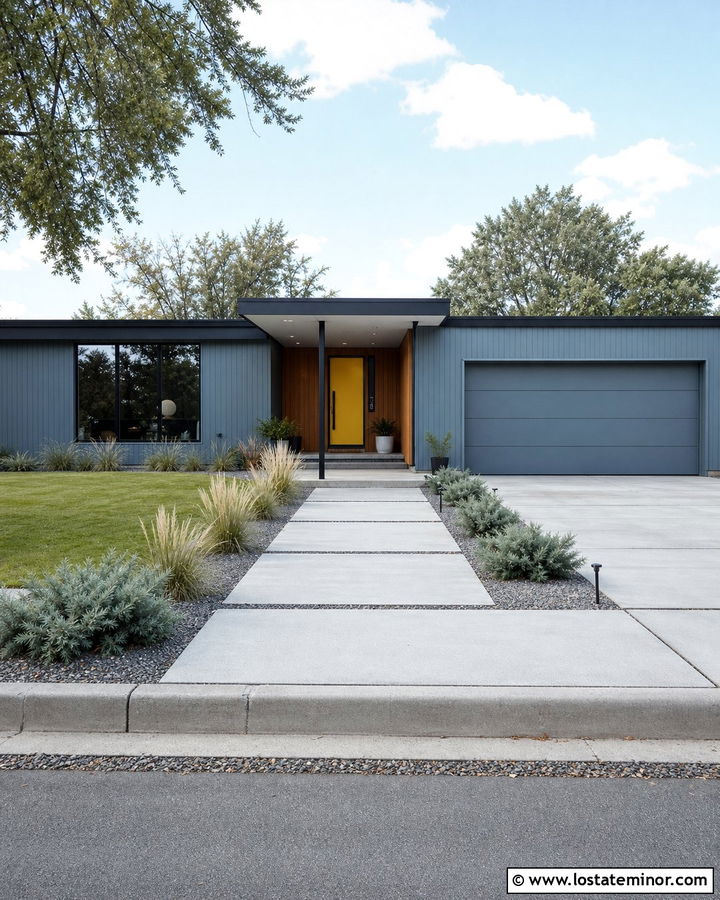
A cantilevered portico can update a midcentury home while respecting its clean, low profile. Use slate blue vertical siding on the main body and introduce warm cedar around the recessed entrance. Extend a flat canopy over the door without visible front columns, or support one corner with a slim black post. Paint broad fascia boards charcoal to outline the roofline and coordinate with black-framed picture windows. A mustard yellow, burnt orange, or natural wood door can provide the period-appropriate focal color. Keep the garage door slate blue to reduce its prominence. Use large concrete squares, gravel joints, sculptural grasses, and low evergreen plants in the landscape. The result should appear open and geometric, with the portico adding shade and depth instead of traditional decoration.
22. Slate Blue Dutch Colonial With Gabled Portico
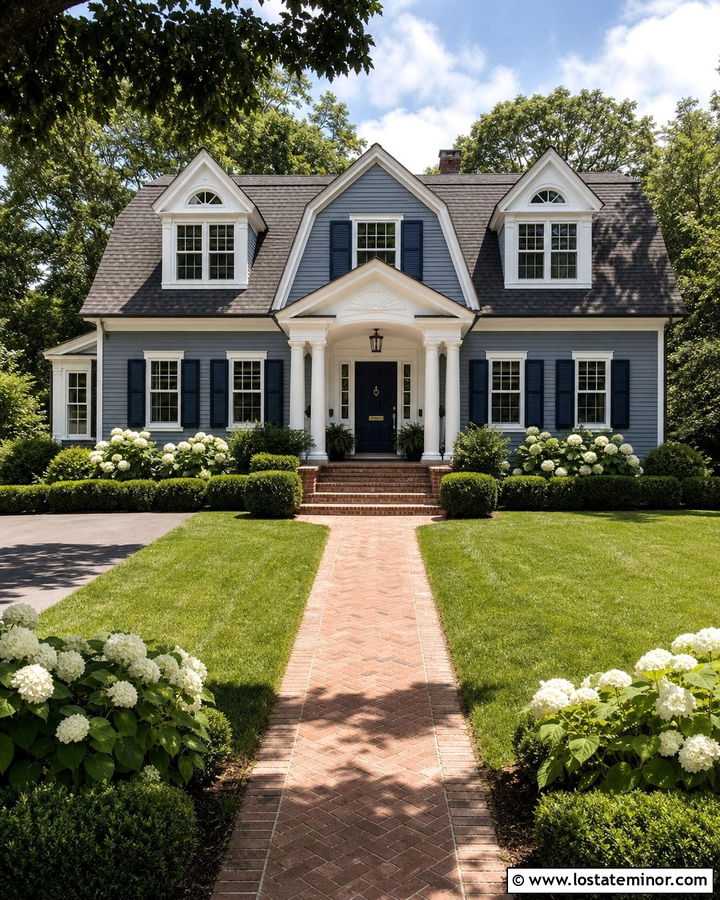
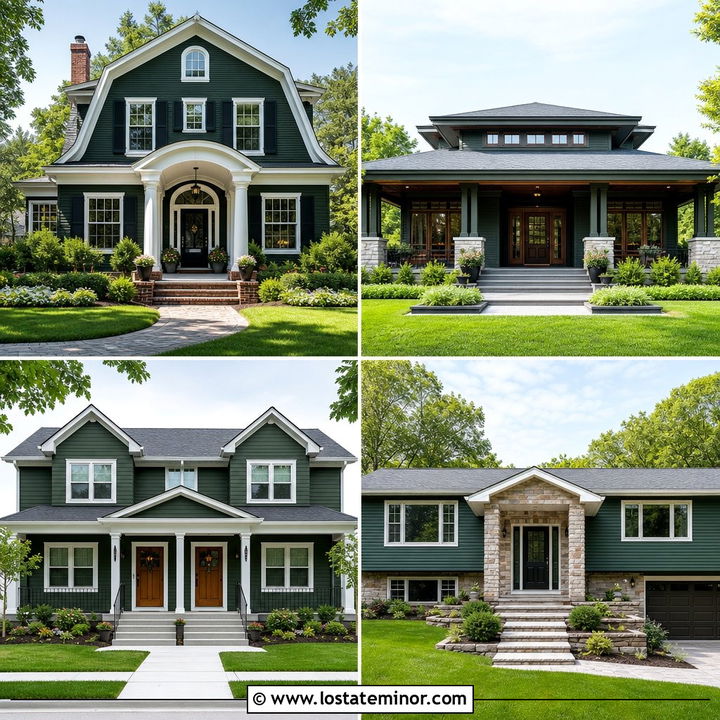
A Dutch Colonial’s gambrel roof creates a strong upper silhouette, so a modest gabled portico is usually enough to define the entrance. Paint the clapboard or shingle siding slate blue and use creamy white across the dormers, cornices, windows, and columns. A dark navy front door provides contrast while keeping the palette tonal. Add brick steps and a charcoal portico roof that matches the main shingles. Small round columns or sturdy square posts will support the entry without competing with the curved gambrel roof. If shutters are included, keep them deep blue or charcoal and size them correctly for the windows. Symmetrical foundation plants and a straight brick path reinforce the traditional facade, while white flowering shrubs keep the blue exterior feeling fresh during warmer months.
23. Slate Blue American Foursquare With Hipped Portico
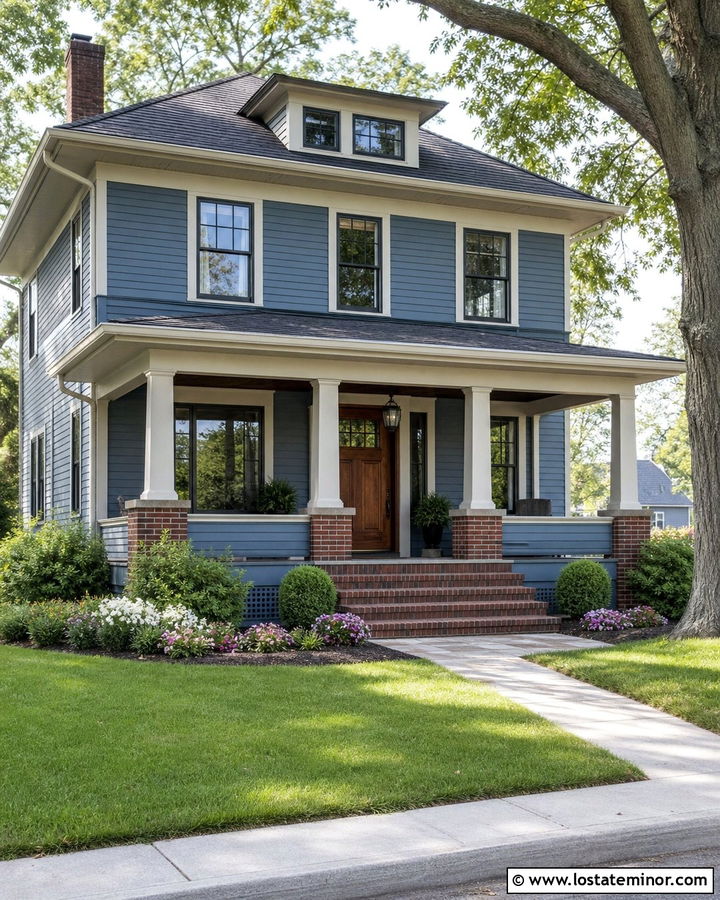
A slate blue American Foursquare benefits from a substantial portico that reflects its boxy shape and broad hipped roof. Use horizontal lap siding with creamy white trim, then build a centered or full-width hipped portico supported by square columns. Stone or brick bases provide the visual weight this tall house needs. A stained oak door adds warmth, while deep charcoal window sashes and roof shingles give the facade definition. Repeat slate blue on the porch skirting so the lower level feels connected to the upper stories. Wide steps and a direct concrete or brick walkway suit the home’s practical character. Keep landscaping balanced but not rigid, using medium shrubs at the corners and lower flowering plants near the entrance to maintain an open view.
24. Small Slate Blue House With Bracketed Portico
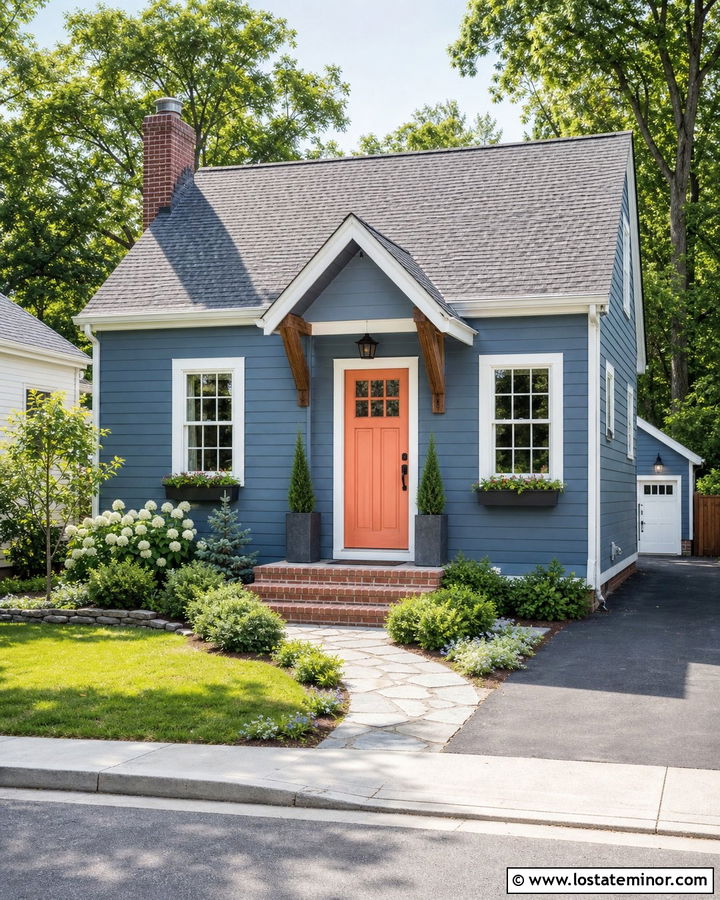
When a small facade cannot accommodate columns, a bracket-supported portico offers shelter without crowding the entrance. Cover the home in soft slate blue siding and install a compact gabled canopy with painted white or natural wood brackets. A cheerful coral, muted yellow, or stained wood door can become the focal point beneath the roof. Keep window trim warm white and use gray shingles to maintain a light, cohesive exterior. The portico should be slightly wider than the door and any sidelights, but it should not cover nearby windows. Simple concrete or brick steps preserve valuable space. Frame the walkway with compact shrubs, ground cover, and two narrow planters. This complete scheme gives a modest home character while keeping the architecture practical, bright, and uncluttered.
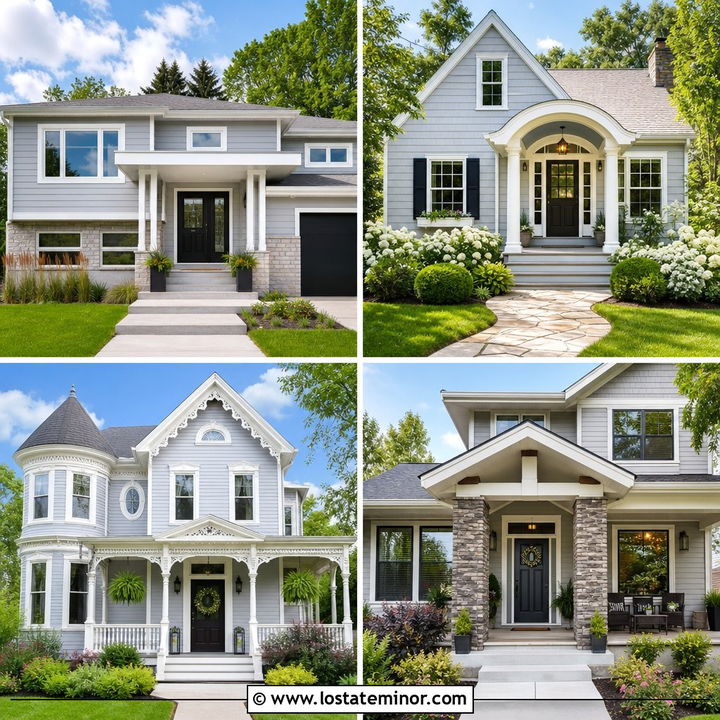
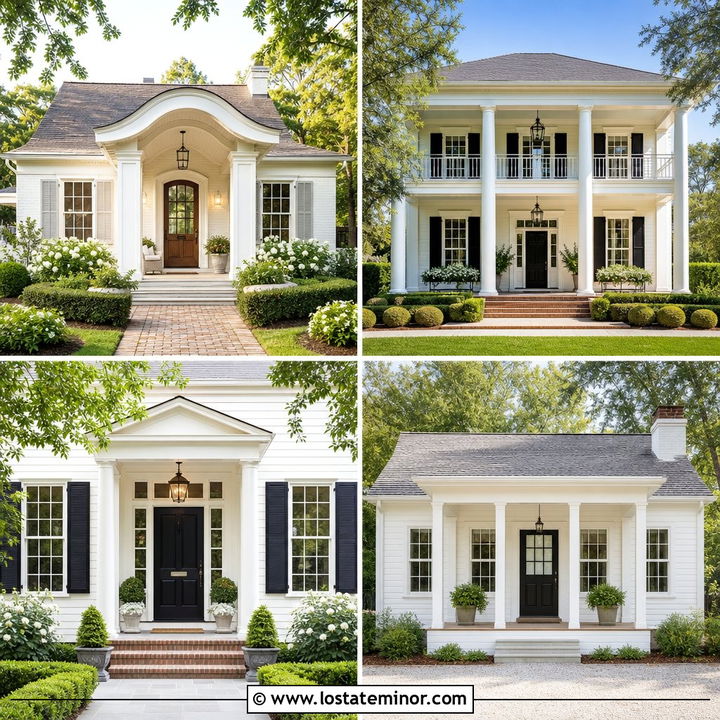
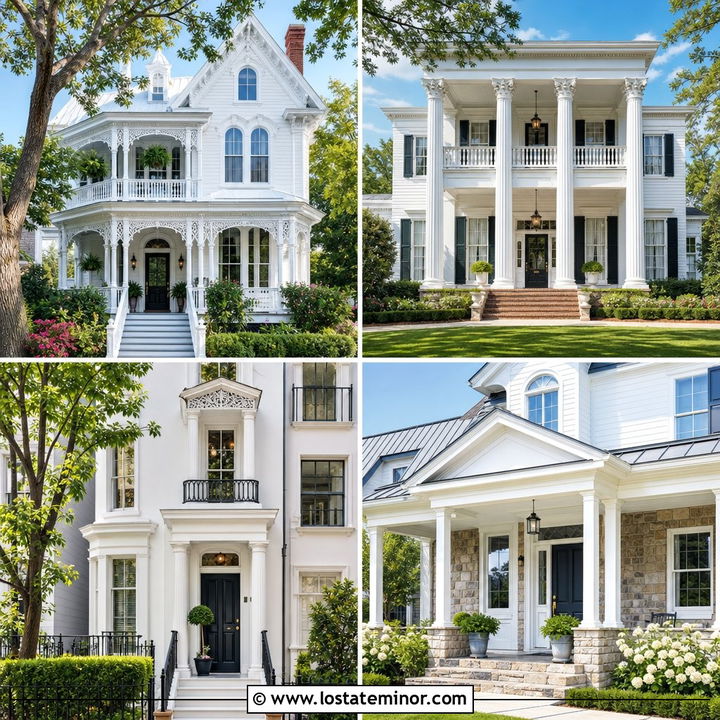
25. Slate Blue Two Story House With Garage Portico
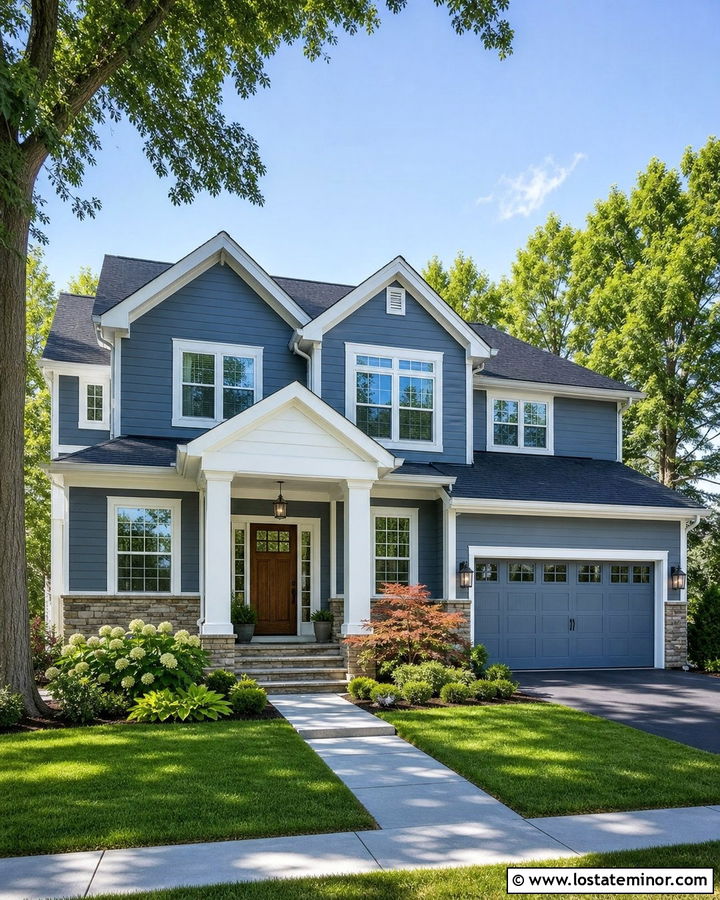
On a two-story suburban home, the entrance can disappear beside a large garage. A prominent portico helps correct that imbalance. Use slate blue siding across the entire facade and paint the garage door the same color so it visually recedes. Build a white gabled portico over the front door, using wide square columns and a dark charcoal roof. A rich wood door adds contrast and warmth at the true entrance. Repeat white around windows and roof edges, but avoid using it on the garage panels. Add a stone water table or column bases to ground the lower story. A separate walkway from the sidewalk or driveway should lead directly to the portico. Balanced shrubs and a small ornamental tree can further shift attention away from the garage.
26. Slate Blue House With Cedar Shake Portico
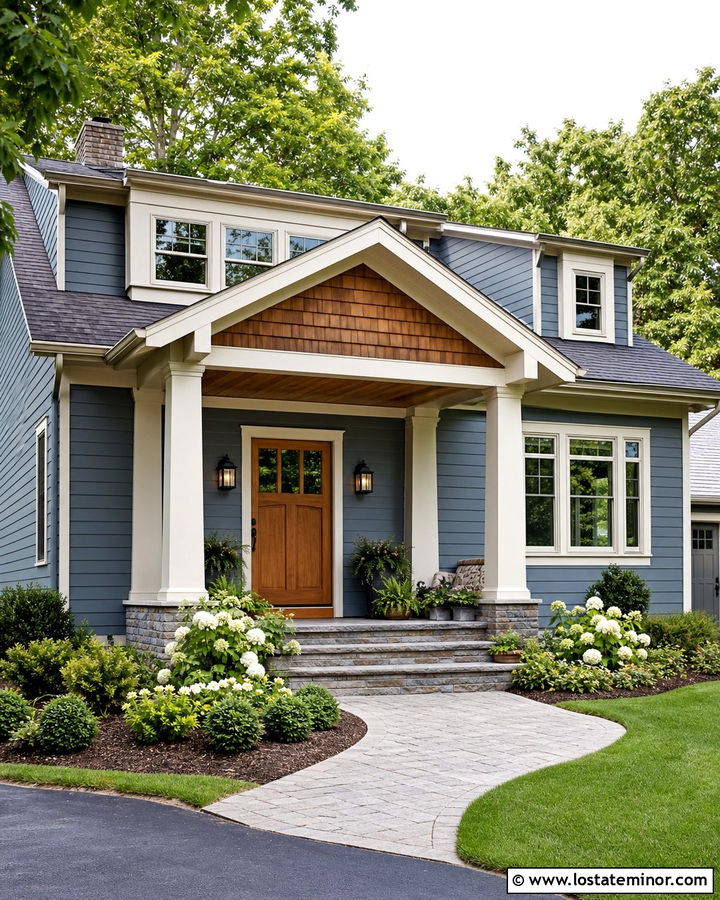
Cedar shakes introduce warmth and texture to a slate blue exterior without requiring a completely rustic design. Use slate blue lap siding on the main walls and cedar shakes inside the portico gable or across a small upper dormer. Support the entrance roof with white square columns or stained timber posts, depending on the home’s character. A cedar front door can repeat the wood tone, while cream trim softens the overall contrast. Choose charcoal-brown roof shingles that relate to both the cool blue and warm cedar. Stone steps and black lanterns add durable, grounded details. Keep wood accents limited to a few connected locations so the exterior remains organized. Green foundation plants and white flowers provide a simple finishing layer around the textured materials.
27. Slate Blue House With Limestone Portico
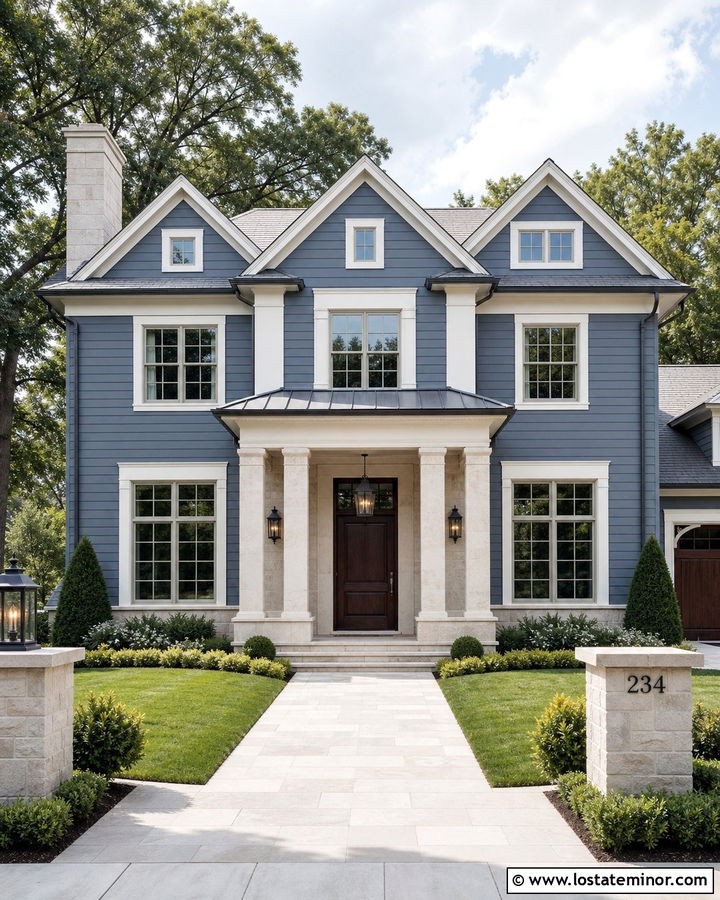
Pale limestone can brighten slate blue siding while giving the entrance a substantial architectural frame. Apply medium slate blue to horizontal siding and use creamy limestone on the portico columns, steps, and lower facade. A shallow gable or hipped canopy in charcoal metal keeps the entry roof crisp and defined. Select a dark walnut door to add warmth between the cool blue walls and light masonry. Off-white window trim will blend more comfortably with limestone than a brilliant white. Repeat black or bronze on the lanterns, gutters, and door hardware. The walkway can use large limestone-colored pavers bordered by low greenery. Keep planting shapes simple and open around the portico so the stone craftsmanship remains visible and the entrance does not feel boxed in.
28. Slate Blue House With Black Roof Portico
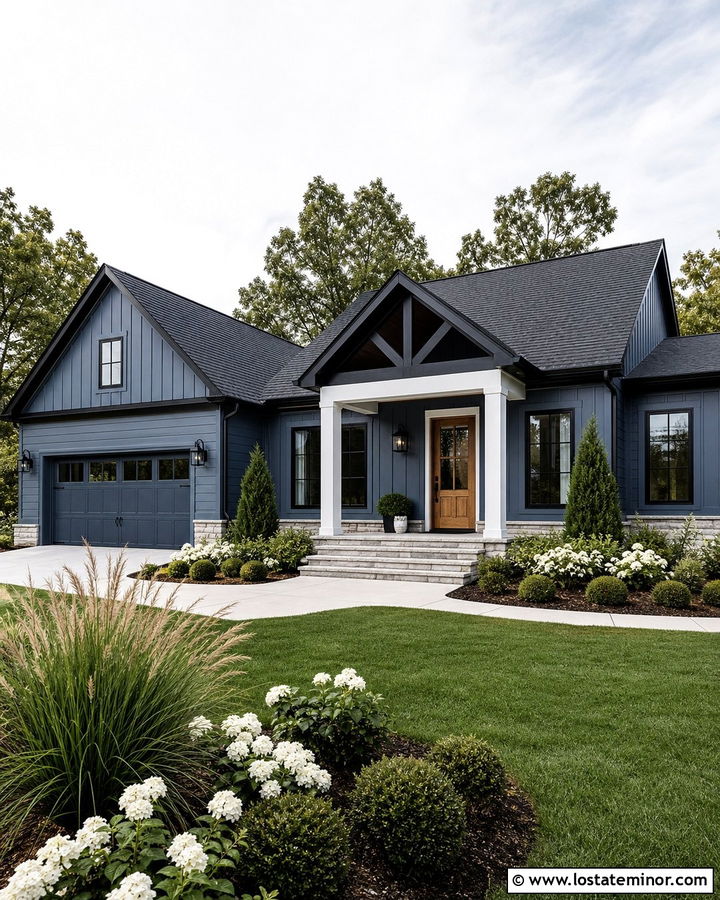
A black roof can give slate blue siding a crisp, graphic outline, especially on a home with simple architecture. Use the same black roofing on the main house and a well-proportioned gabled portico. White columns and fascia will separate the dark canopy from the blue walls, preventing the entrance from appearing too heavy. Choose a natural oak door to warm the high-contrast palette. Black window frames, gutters, and sconces should be repeated consistently, while the garage door remains slate blue. Pale gray stone steps and a matching walkway lighten the ground level. Limit landscaping to structured evergreens, airy grasses, and white flowering plants. This combination creates a polished exterior that feels contemporary but remains adaptable to ranch, farmhouse, and transitional homes.
29. Slate Blue House With Taupe Portico Trim
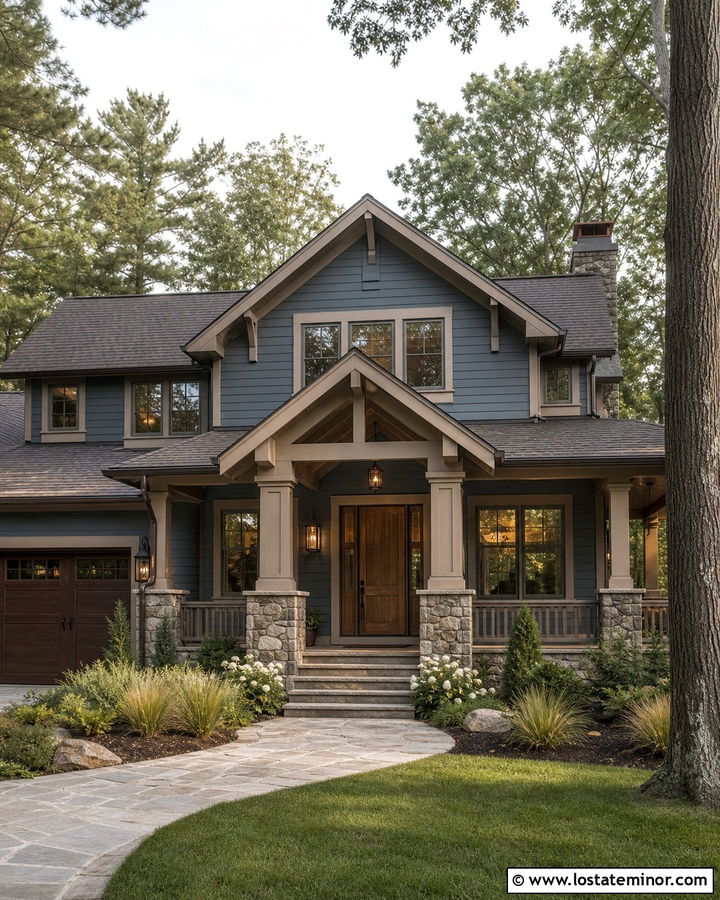
Not every slate blue exterior needs bright white trim. A soft taupe can produce a quieter, earthier scheme that works well with brown roofs, stonework, and wooded surroundings. Paint the siding muted slate blue and use warm taupe on the portico columns, fascia, window trim, and garage details. Add a medium walnut door and bronze lanterns to deepen the natural palette. A portico roof in charcoal-brown shingles will connect the blue and taupe without introducing solid black. Choose fieldstone with both gray and beige tones for column bases or front steps. Use olive green shrubs, ornamental grasses, and cream flowers around a curved walkway. The finished exterior should feel layered and relaxed, with gentle contrasts that reveal themselves rather than demanding immediate attention.
30. Slate Blue House With Yellow Door Portico
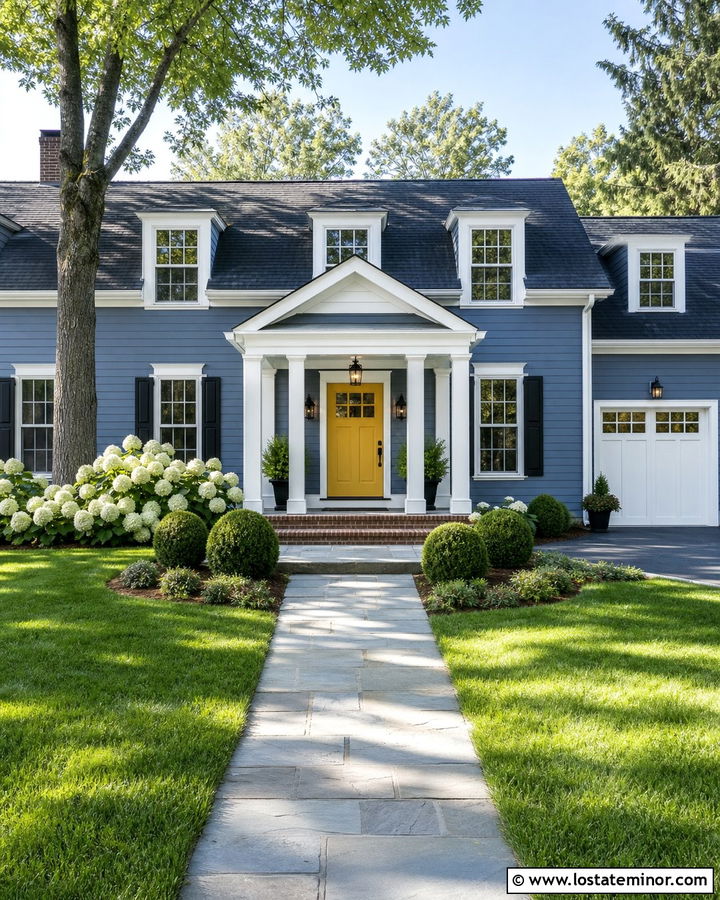
A yellow front door can energize a slate blue house when the remaining exterior stays controlled. Choose muted slate blue siding, crisp white trim, and a simple white gabled portico. Paint the door a warm golden yellow rather than a fluorescent or lemon shade. This creates a visible focal point while still coordinating with natural wood, brick, and green landscaping. Use a charcoal roof and black lanterns to frame the brighter entry color. Brick steps can repeat the door’s warmth and keep the white columns from looking disconnected. Limit other decorative colors so the entrance remains intentional. White hydrangeas, deep green shrubs, and a clean stone walkway complete the cheerful scheme. The whole facade will feel friendly, balanced, and easy to recognize from the street.
Conclusion:
The strongest slate blue exterior is more than a single paint choice. It combines siding, trim, roofing, masonry, doors, columns, and landscaping into one balanced composition. A portico should match the scale and roofline of the house while clearly guiding attention toward the entrance. White creates crisp contrast, wood adds warmth, stone provides weight, and black details offer definition. Before committing, sample the blue beside permanent materials and view it throughout the day. Also check portico proportions from the street, not only from the front steps. With thoughtful planning, these 30 Slate Blue House Design With Portico Ideas can inspire an entrance that feels welcoming, practical, and connected to the entire home.

Related posts: