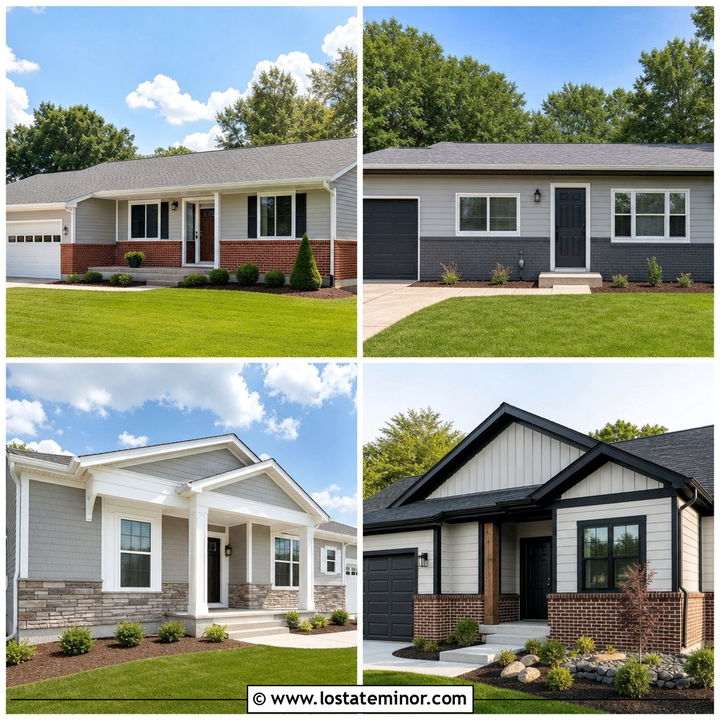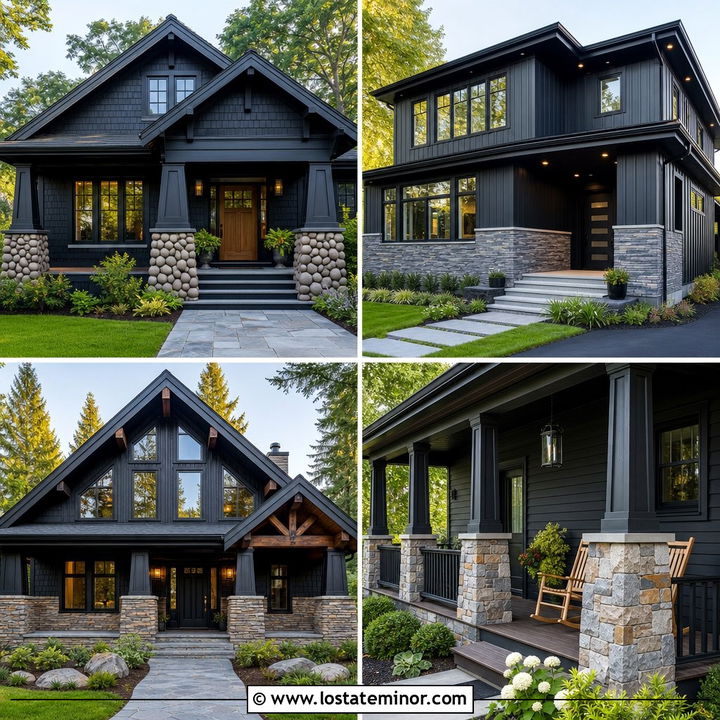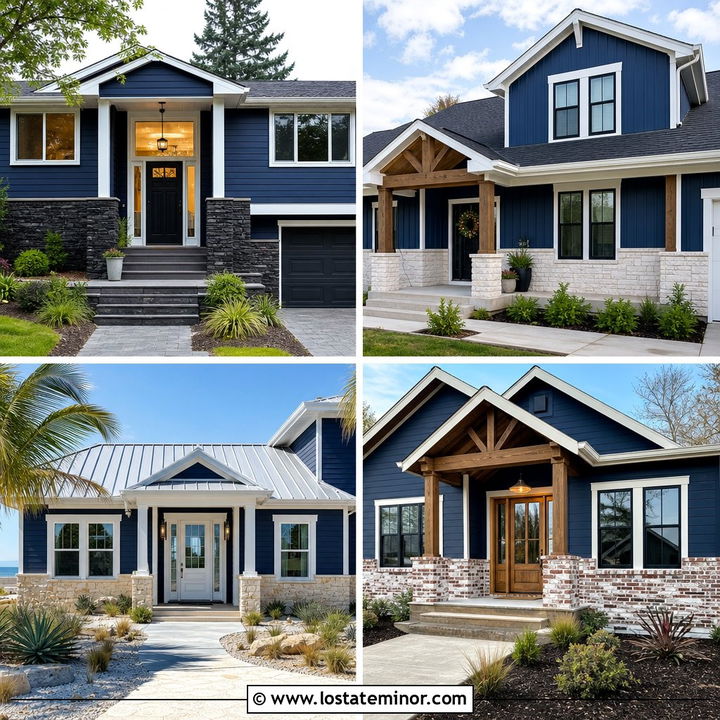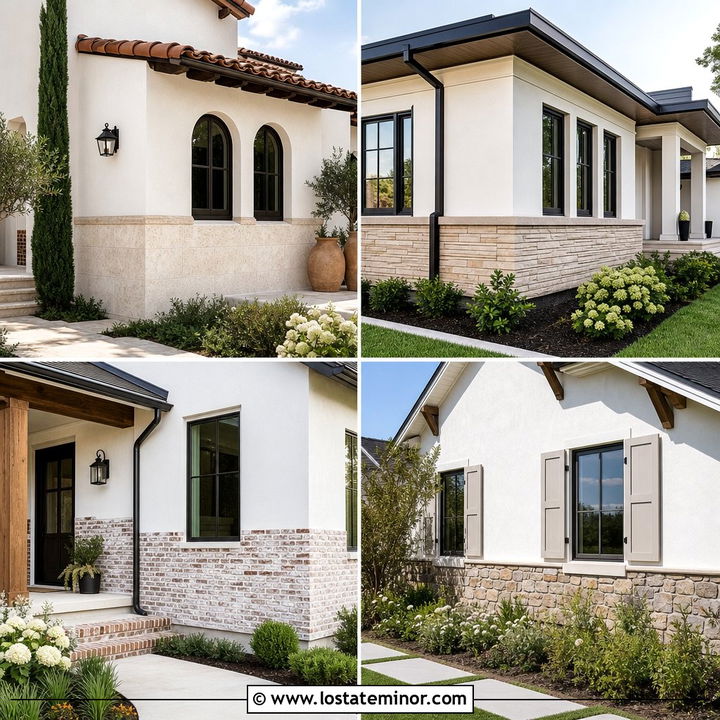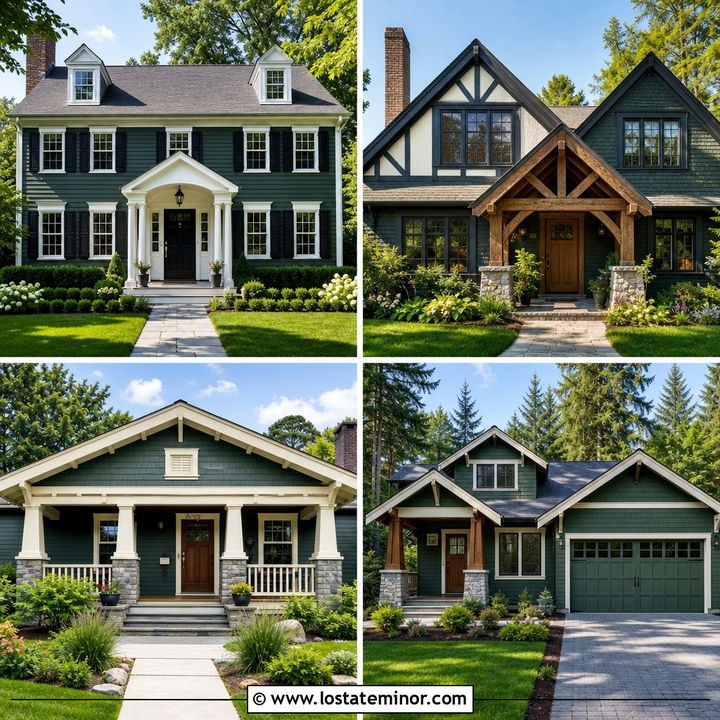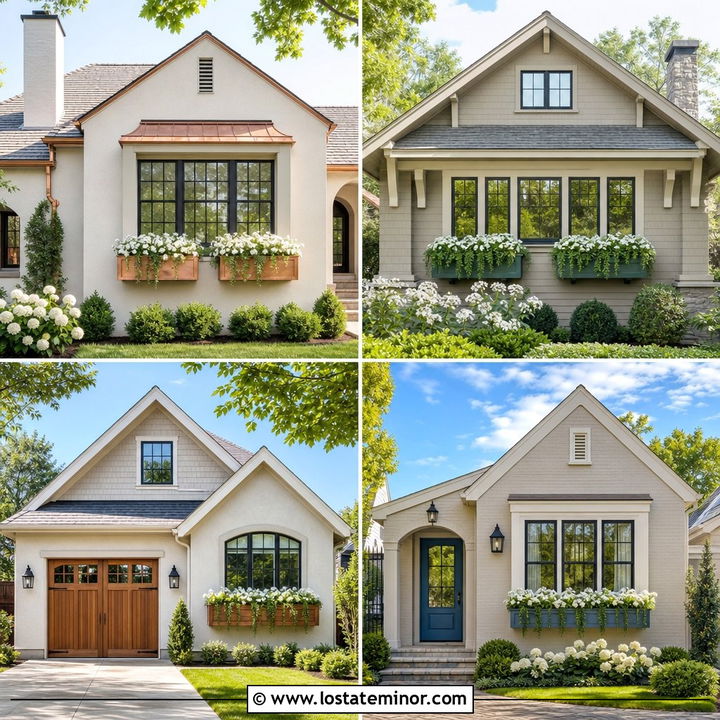
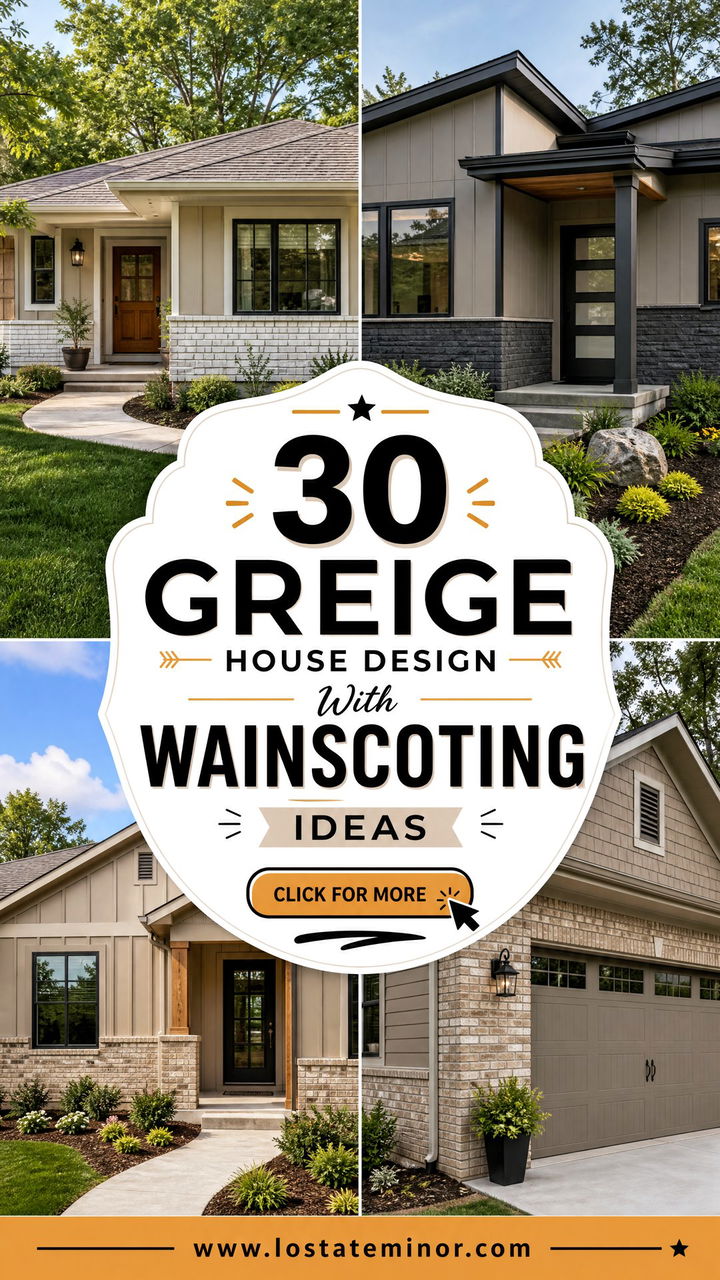
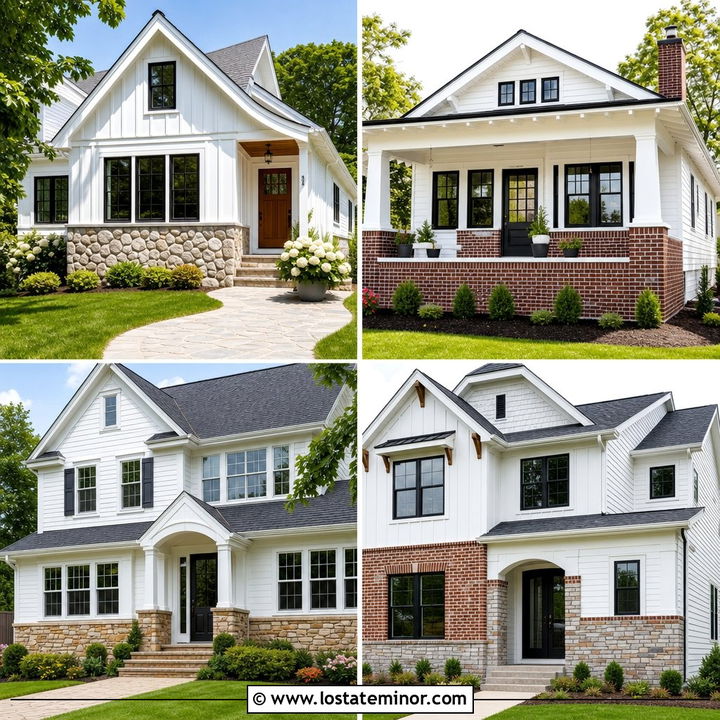
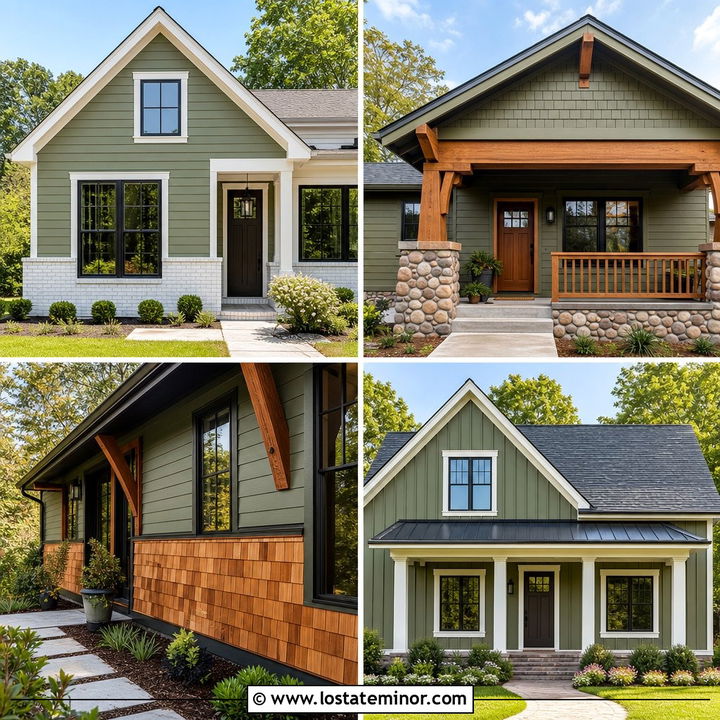
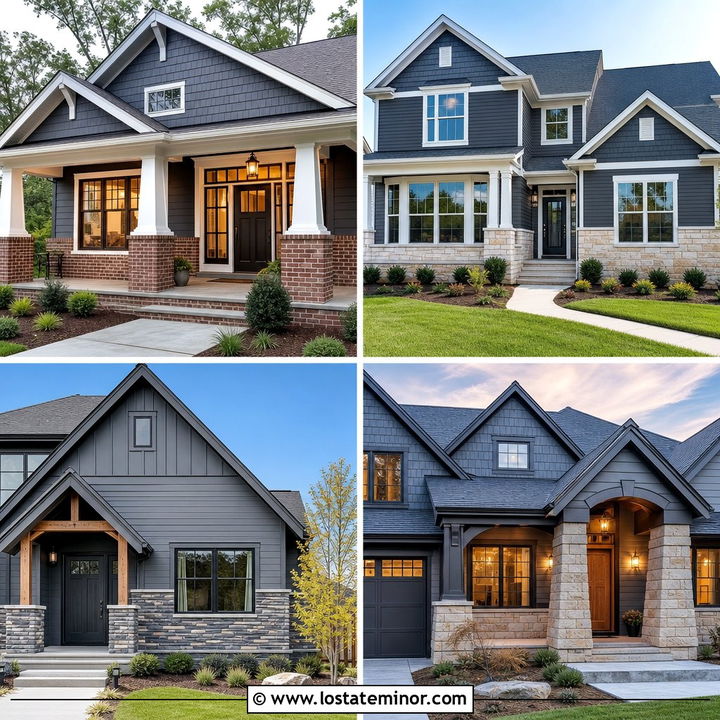
A greige exterior creates a warm, balanced backdrop that works beautifully with stone, brick, wood, and other wainscoting materials. The key is designing the lower facade as part of a complete color scheme rather than treating it as a separate decorative strip. In each look, the greige siding, wainscoting, roof, trim, front door, and architectural accents should share compatible undertones. You can build gentle contrast with cream limestone or create stronger definition with charcoal ledgestone and dark metal details. Natural wood adds another layer of warmth. The following combinations cover farmhouse, Craftsman, ranch, colonial, modern, cottage, and traditional homes, giving you practical inspiration for creating a polished 30 Greige House Design With Wainscoting Ideas.
1. Greige Farmhouse With Limestone Wainscoting
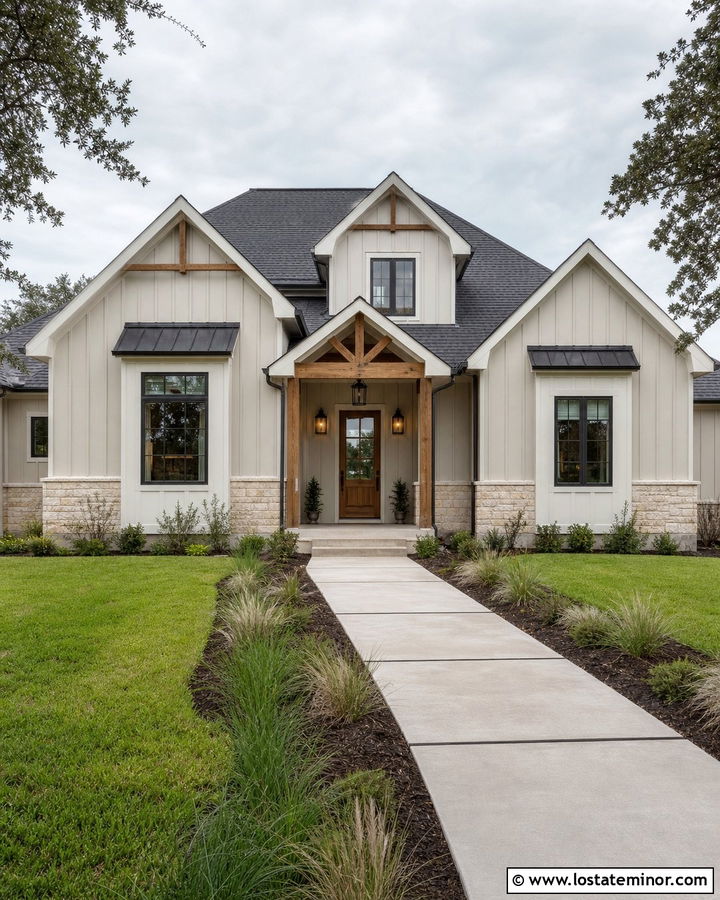
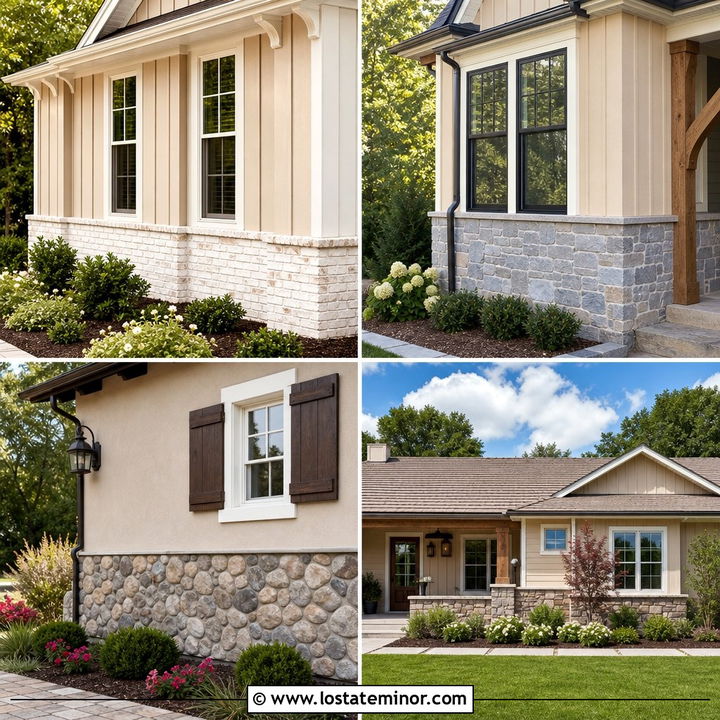
Soft greige board-and-batten siding looks especially inviting when grounded by cream limestone wainscoting. Choose a warm greige such as Sherwin-Williams Accessible Beige, then use a slightly softer white on the fascia, windows, columns, and garage door. The limestone should contain beige, ivory, and muted gray variations that connect naturally with the siding. A medium-brown stained front door and matching porch beams prevent the neutral palette from appearing flat. Finish the farmhouse with a weathered charcoal roof and dark bronze exterior lights. Keep the stone wainscoting around one-third of the wall height so it supports the architecture without overpowering it. Low ornamental grasses, clipped shrubs, and a pale concrete walkway complete this relaxed, cohesive exterior.
2. Greige Craftsman With Fieldstone Wainscoting
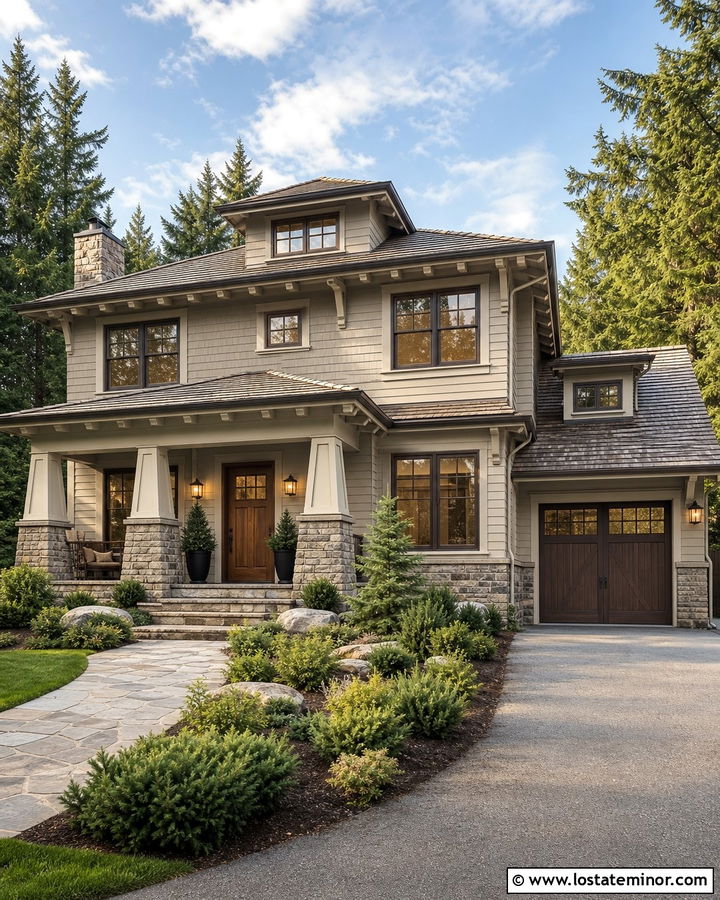
A Craftsman house benefits from substantial materials and layered earth tones. Paint the lap siding Benjamin Moore Revere Pewter, a light warm greige, and introduce mixed fieldstone wainscoting across the foundation, porch piers, and lower garage walls. Look for stone containing taupe, brown, gray, and soft rust rather than highly contrasting colors. Cream trim highlights the roof brackets, tapered columns, and window casings while maintaining a gentle transition from the greige body. A stained oak front door gives the entrance a handcrafted focal point. Deep brown gutters, window sashes, and porch railings add definition without the harshness of solid black. Complete the palette with an architectural shingle roof in weathered wood and naturalistic landscaping that complements the Craftsman character.
3. Greige Ranch With White Brick Wainscoting
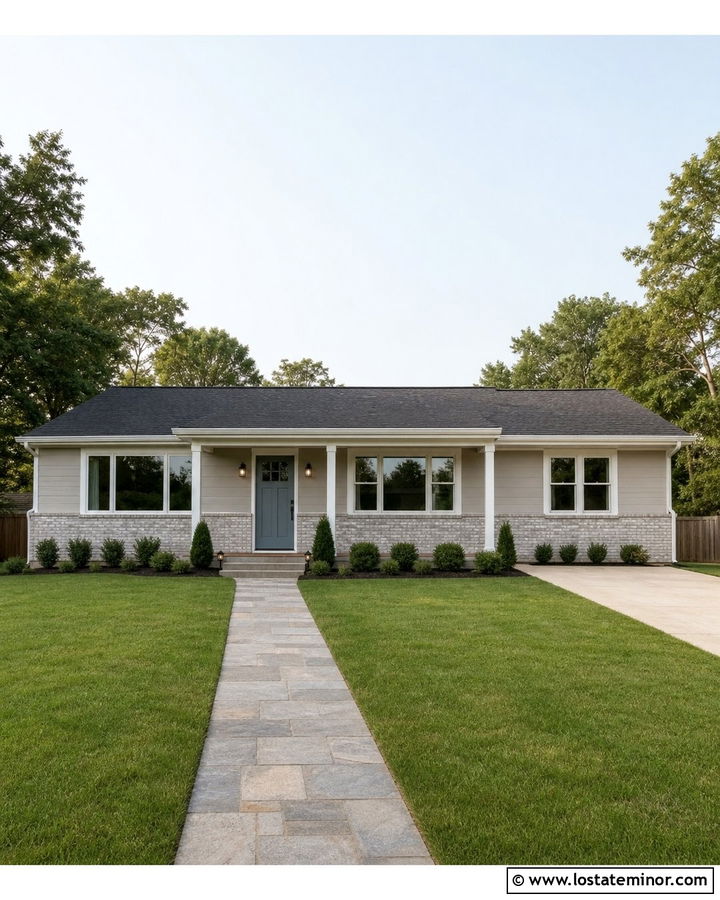
White brick wainscoting can make a low ranch house feel brighter and more visually structured. Use Sherwin-Williams Agreeable Gray on horizontal siding and select a warm whitewash for the brick instead of a stark, blue-based white. Continue that warm white across the fascia, soffits, window trim, and simple porch posts. A muted blue-gray front door adds restrained color while remaining compatible with the greige body. Choose a medium charcoal roof to create a clear upper boundary and balance the pale brick below. Because ranch homes have long facades, keep the wainscoting continuous across the main elevation and garage. Wide foundation beds, layered evergreen shrubs, and a straight stone walkway help break up the horizontal lines while preserving the home’s clean, approachable appearance.
4. Greige Colonial With Red Brick Wainscoting
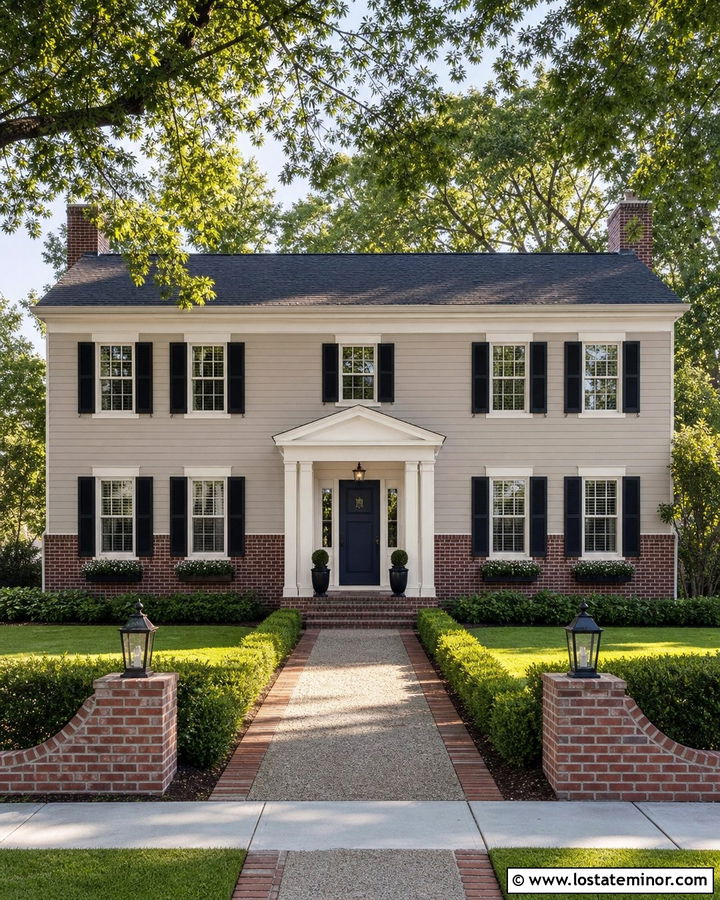
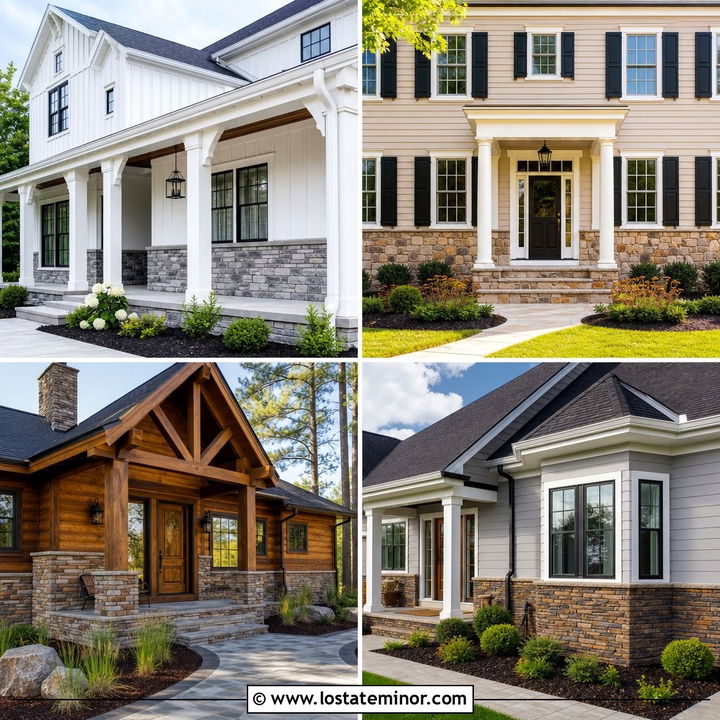
Traditional red brick can work with greige when both materials share warm undertones. Benjamin Moore Edgecomb Gray provides a soft body color that complements aged brick containing brown, clay, and muted burgundy tones. Use the brick as wainscoting across the lower story and repeat it on the front steps or walkway edging. Creamy white trim gives symmetrical windows, cornices, and classical columns a crisp but comfortable finish. For the front door, deep navy creates dignified contrast without competing with the masonry. Black shutters can be added sparingly when the windows and architecture support them. A dark gray roof visually settles the palette. Matching the mortar to a warm taupe rather than bright white helps the brick and greige siding read as one coordinated colonial exterior.
5. Greige Modern House With Charcoal Stone Wainscoting
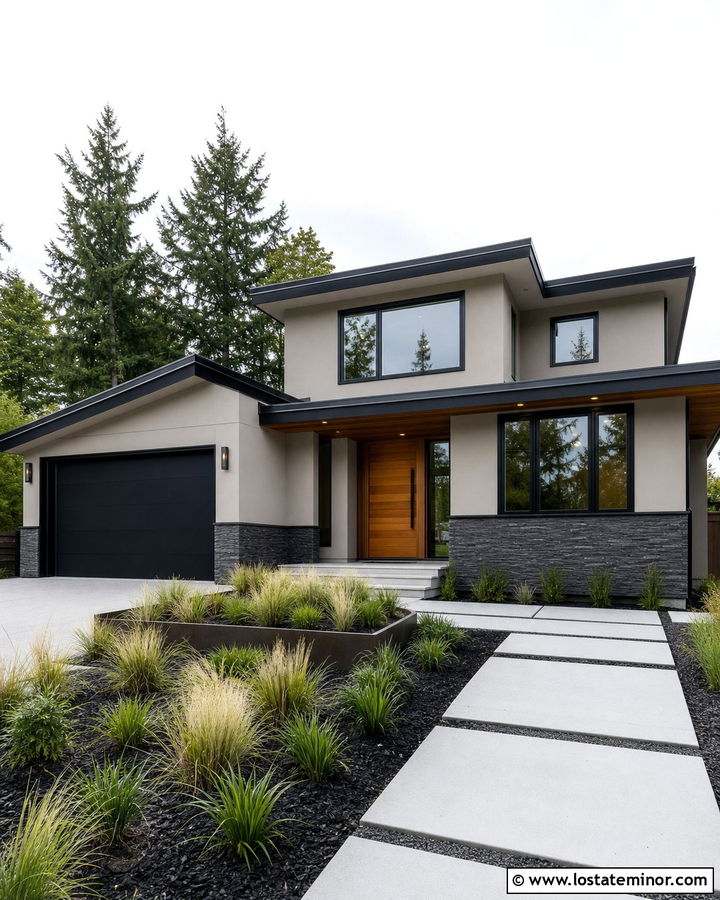
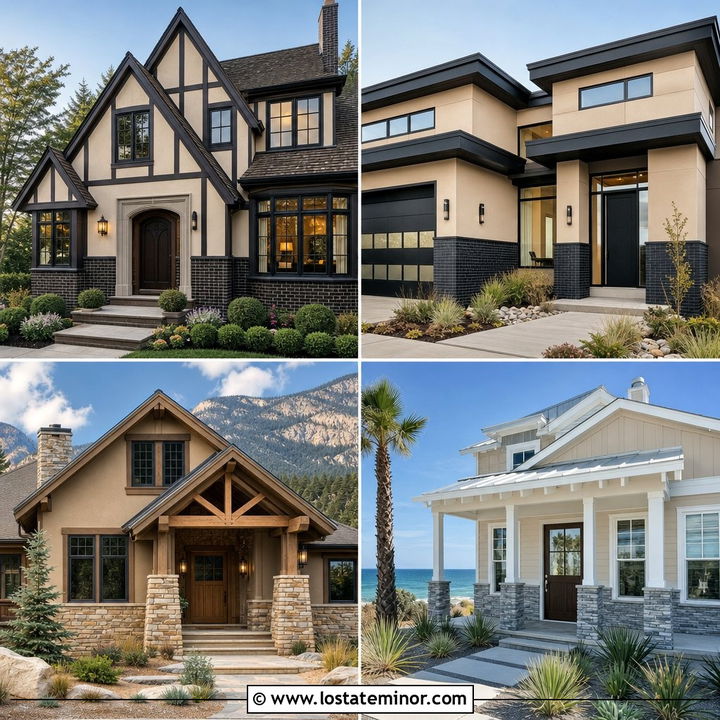
A streamlined modern facade becomes more grounded when light greige stucco meets charcoal stone wainscoting. Try Sherwin-Williams Worldly Gray for the main walls, paired with large-format stacked stone in graphite, smoky gray, and subtle brown tones. Keep the stone pattern linear and the joints narrow to support the home’s clean geometry. Black window frames, slim gutters, and a matte black garage door provide sharp architectural outlines. Natural cedar at the recessed entry softens those darker details and prevents the exterior from feeling overly industrial. Extend the wainscoting across the garage and beneath prominent windows for visual continuity. A low-slope charcoal roof, concrete paver walkway, geometric planting beds, and structured grasses reinforce the modern character while allowing the greige to remain warm and welcoming.
6. Greige Bungalow With River Rock Wainscoting
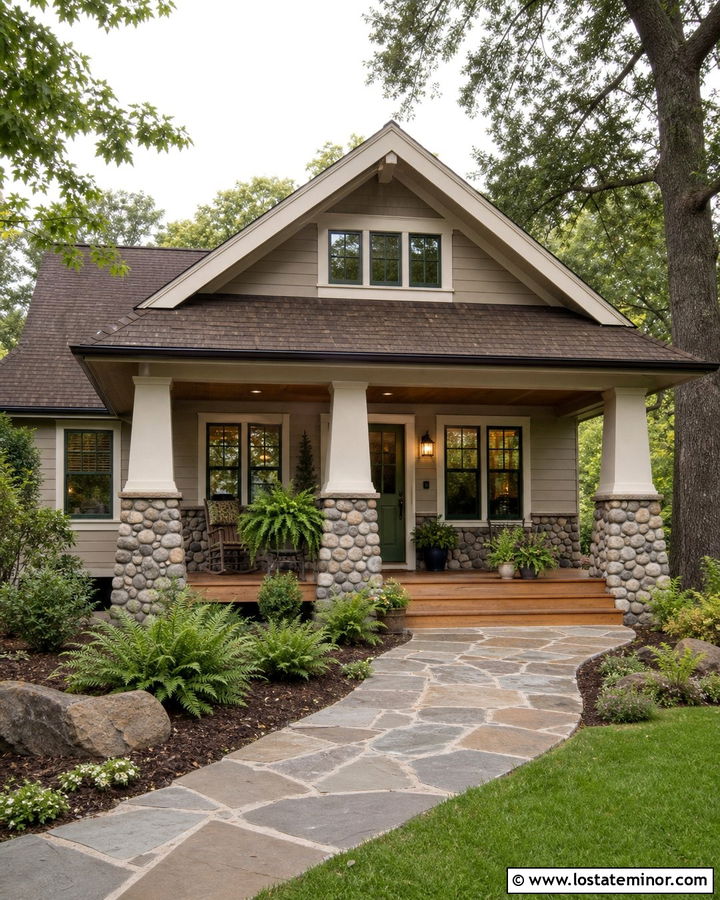
Rounded river rock gives a greige bungalow a casual, handcrafted appearance. Paint the shingle or lap siding Sherwin-Williams Anew Gray, then select river rock containing warm gray, sand, mushroom, and muted brown. Apply it across the foundation and wrap it around the bases of broad porch columns. Warm ivory trim outlines the windows and roofline without creating severe contrast. A moss-green front door introduces an organic accent that feels natural beside the rounded stone. Stain the porch floor and ceiling a medium cedar brown to bring additional warmth near the entrance. A weathered brown roof completes the earthy palette. Curving planting beds, fern-like greenery, and an irregular flagstone path enhance the bungalow’s relaxed personality while helping the masonry feel connected to the surrounding landscape.
7. Greige Cape Cod With Gray Brick Wainscoting
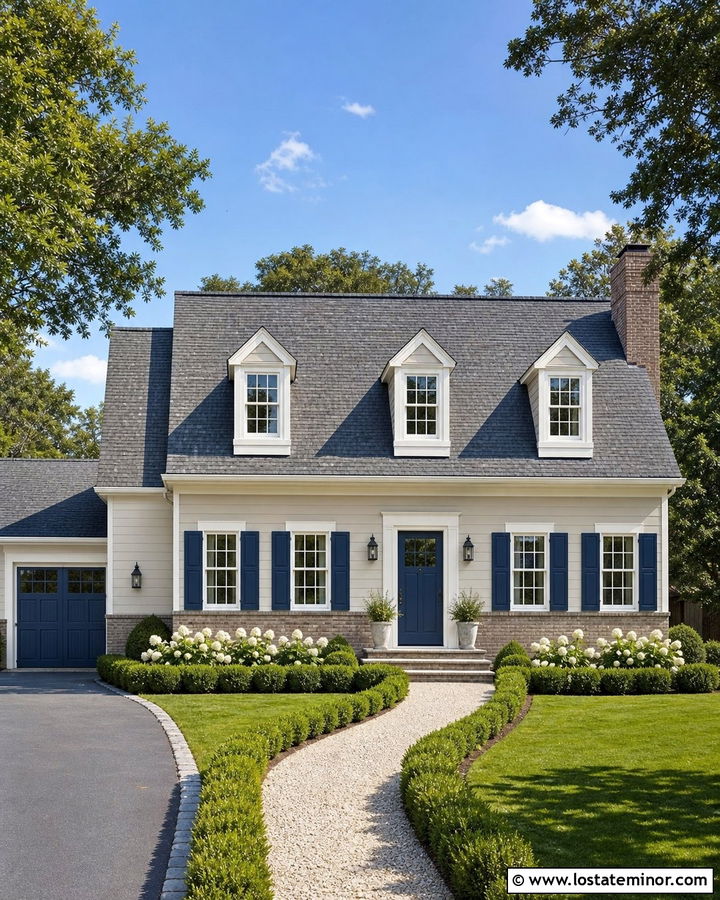
A Cape Cod exterior can carry wainscoting without losing its light, coastal simplicity. Cover the upper facade with Benjamin Moore Pale Oak siding and use slim gray brick along the foundation and lower front walls. Choose brick with subtle taupe variation so it does not appear cold beside the warm greige. Soft white trim should define the dormers, corner boards, windows, and modest entry surround. Deep blue shutters and a matching front door create a classic accent while connecting the house to a slate-gray roof. Keep the brick wainscoting fairly low because Cape Cod architecture relies on uncomplicated proportions. Hydrangeas, boxwood, and a light gravel walkway add texture around the facade. The completed palette feels traditional, fresh, and more layered than an all-siding exterior.
8. Greige Tudor With Rough Stone Wainscoting
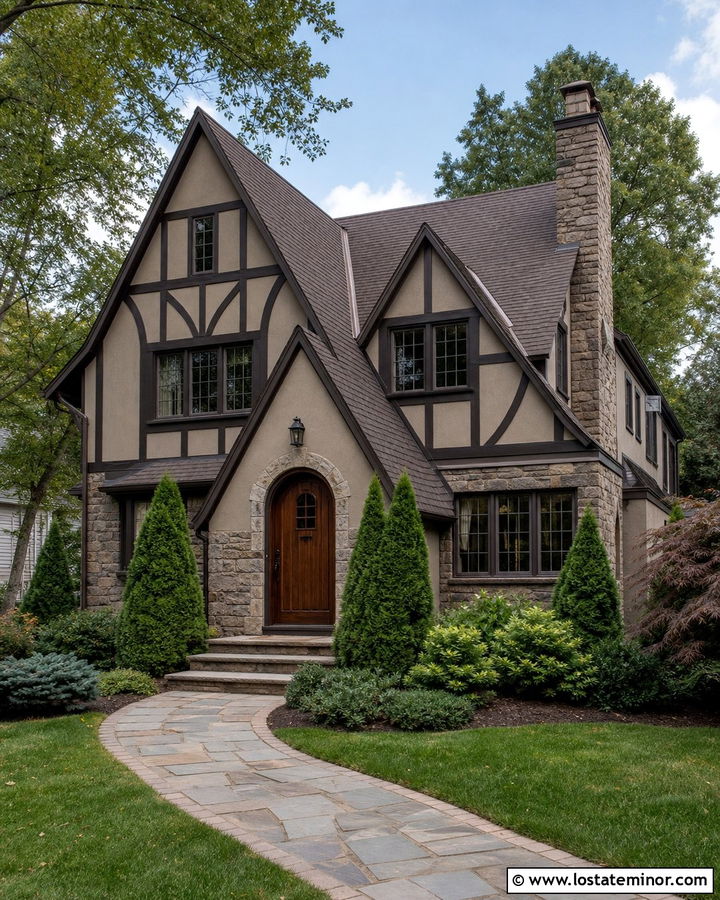
Greige can update Tudor architecture while preserving its substantial Old World character. Use Benjamin Moore Pashmina on the stucco or upper siding, then anchor the lower walls with rough-cut stone in brown-gray, taupe, and muted cream. Extend the masonry around the arched entry and chimney base to make the material look architecturally intentional. Dark espresso trim emphasizes steep gables, window groupings, and decorative half-timbering more softly than pure black. A medium-toned walnut door strengthens the entrance while echoing the warmer stone pieces. Choose a textured roof in dark brown or charcoal with subtle color variation. Avoid bright white anywhere in this scheme. Layered evergreen shrubs and a gently curved walkway will complement the deep roofline and give the renovated Tudor a settled, enduring appearance.
9. Greige Split-Level With Ledgestone Wainscoting
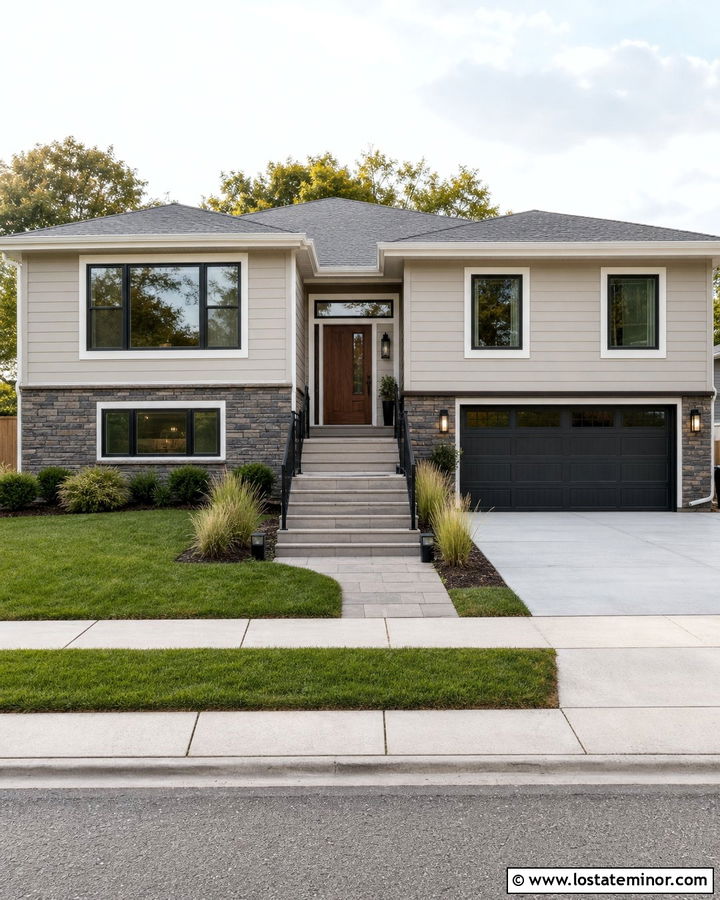
Could a split-level exterior use stronger visual organization? Horizontal ledgestone wainscoting can unite its staggered walls and different floor heights. Paint the main siding Sherwin-Williams Repose Gray, a flexible greige, and select stone featuring taupe, charcoal, and light gray layers. Carry the stone continuously along the lower level, including beneath windows and around the garage. Use an off-white trim on the fascia and window frames to keep the upper portion light. A stained wood front door adds warmth at the often-recessed entrance, while a charcoal garage door helps the large lower opening blend into the design. Repeat black only on lights and railings. Simple grasses, broad shrubs, and rectangular concrete pavers support the clean horizontal emphasis of the updated facade.
10. Greige Cottage With Sandstone Wainscoting
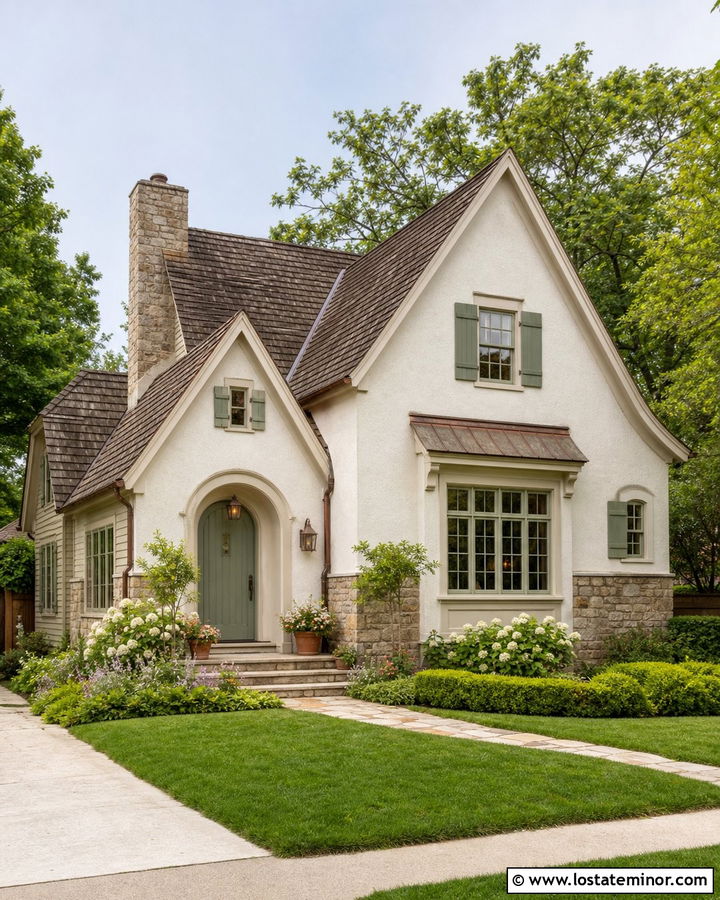
Warm sandstone and light greige create a cottage exterior that feels sunny without becoming yellow or overly beige. Apply Sherwin-Williams Shoji White, a pale creamy greige, to the lap siding and gables. Use softly textured sandstone wainscoting with oatmeal, biscuit, and faint gray tones along the lower facade and porch supports. Muted cream trim should define divided-light windows, eaves, and scalloped details. For a gentle accent, paint the front door dusty sage green and repeat that color on small shutters if the windows need more definition. A weathered brown roof and natural copper-colored lighting complement the warm masonry. Finish the setting with flowering shrubs, low hedges, and an informal stone walkway. The result is charming and layered without relying on decorative excess.
11. Dark Greige House With Cream Stone Wainscoting
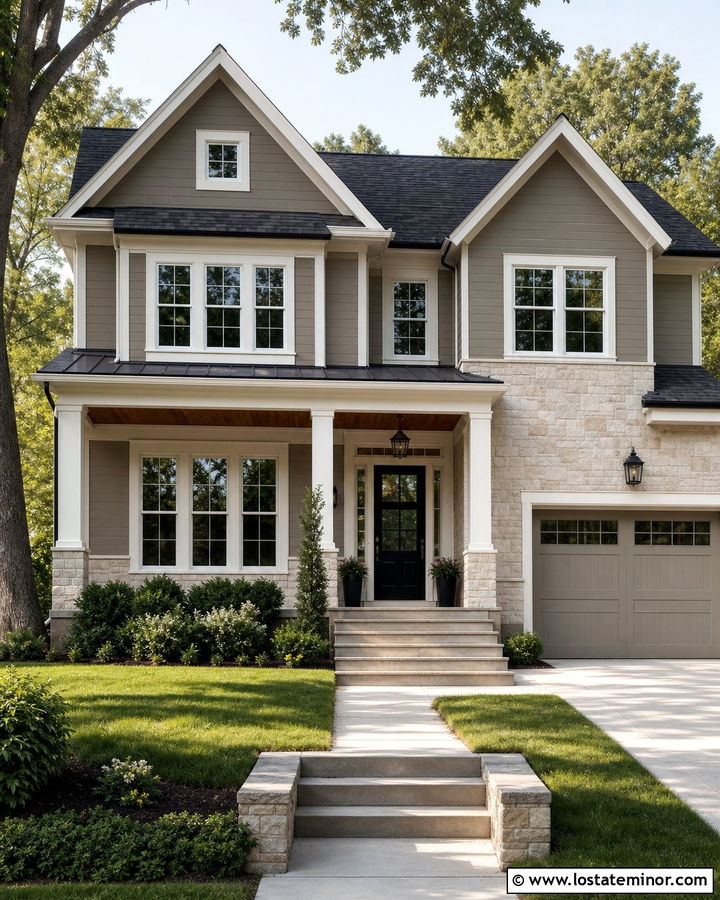
A deeper greige body color creates a sophisticated backdrop for pale masonry. Paint horizontal siding Sherwin-Williams Mega Greige, then install cream stone wainscoting across the lower walls and substantial porch piers. The lighter stone visually lifts the facade, while its beige and taupe markings relate to the warm body color. Use warm white around the windows and roofline, but keep the garage door greige so it does not dominate the elevation. A black front door, dark metal lights, and charcoal roof introduce controlled contrast. Natural wood porch furniture or a cedar ceiling can soften the black accents. This palette works especially well on transitional suburban homes with multiple gables because the defined lower band gives a visually busy roofline a stable, connected foundation.
12. Light Greige House With Black Brick Wainscoting
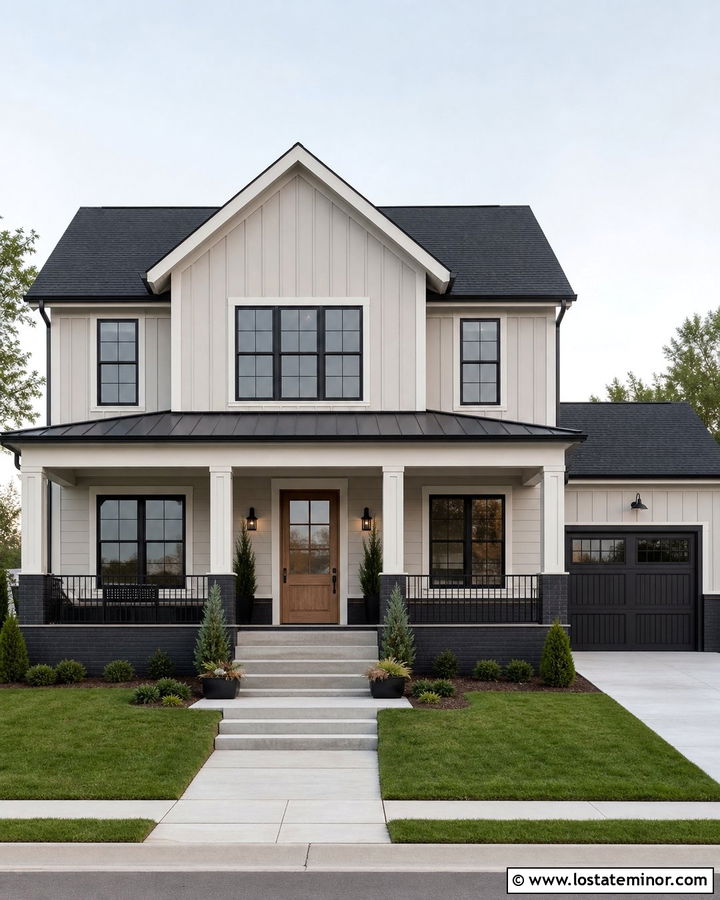
Black brick wainscoting can add bold definition to a pale greige exterior when used carefully. Choose Benjamin Moore Classic Gray for the siding and a matte charcoal-black brick with soft tonal movement for the lower facade. Rather than repeating black across every feature, use it selectively on window frames, porch railings, gutters, and lighting. Warm white fascia and columns provide breathing room between the light body and dark foundation. A medium oak front door becomes an important bridge, bringing warmth to both ends of the palette. Keep the roof charcoal rather than jet black to avoid making the house top-heavy. This combination suits a modern farmhouse or contemporary Craftsman with straightforward lines. Sparse foundation planting also allows the strong wainscoting detail to remain visible from the street.
13. Greige House With Painted Brick Wainscoting
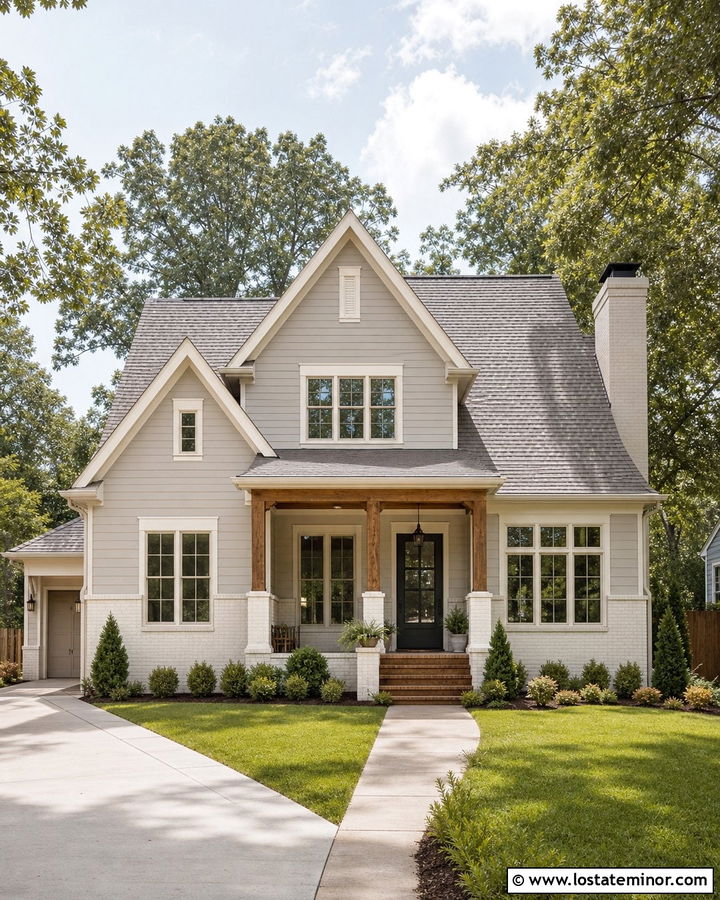
Painting outdated brick wainscoting can refresh a facade while preserving its useful texture. Cover the siding with Sherwin-Williams Alpaca, a soft warm greige, and paint the existing lower brick a creamy white such as Alabaster. Use an appropriate masonry coating and maintain subtle mortar lines so the brick does not resemble a flat panel. Repeat the creamy white on the window trim, columns, fascia, and garage surrounds. A warm charcoal front door introduces enough contrast to identify the entrance, while stained wood porch beams bring a natural note to the neutral composition. Weathered gray roof shingles keep the top of the house quiet. This practical treatment works well when the original brick is damaged, mismatched, or too orange for the intended greige exterior palette.
14. Greige House With Slate Wainscoting
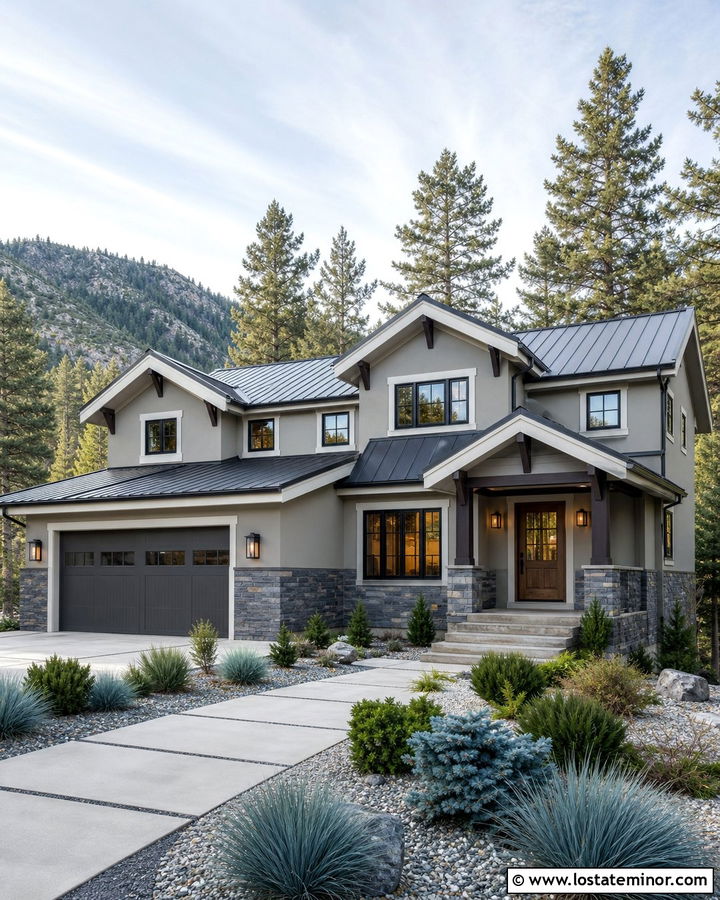
Slate wainscoting brings fine texture and cool depth to a greige home. Select Sherwin-Williams Mindful Gray for the siding, then use thin slate pieces combining charcoal, smoky blue-gray, taupe, and occasional brown. A cool-leaning greige is preferable here because it connects more naturally with the dominant stone colors. Soft white trim keeps the facade clear, while black window frames and a graphite garage door reinforce the slate’s darkest notes. Add a natural walnut front door to keep the scheme from becoming too cold. The roof can be charcoal metal or architectural shingles, depending on the house style. Clean foundation beds with blue-green grasses, evergreen shrubs, and pale gravel enhance the stone. This combination is particularly effective on mountain modern, contemporary, and updated split-level homes.
15. Greige House With Tan Brick Wainscoting
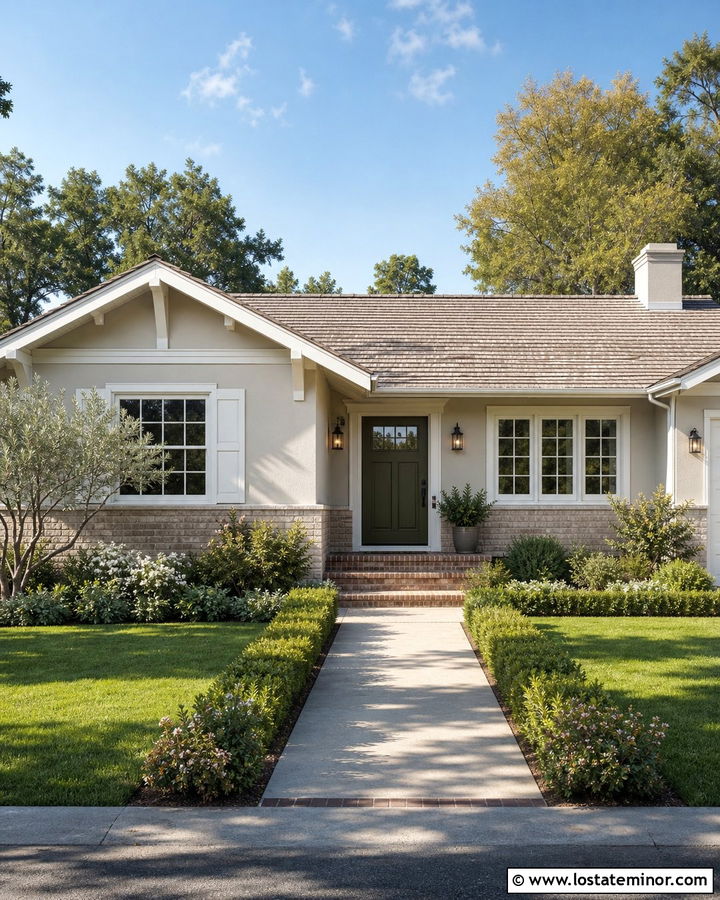
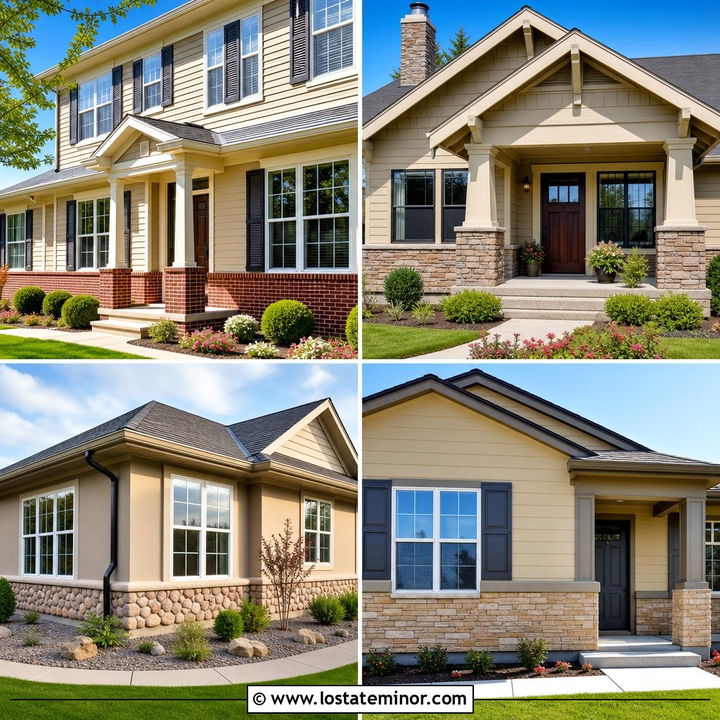
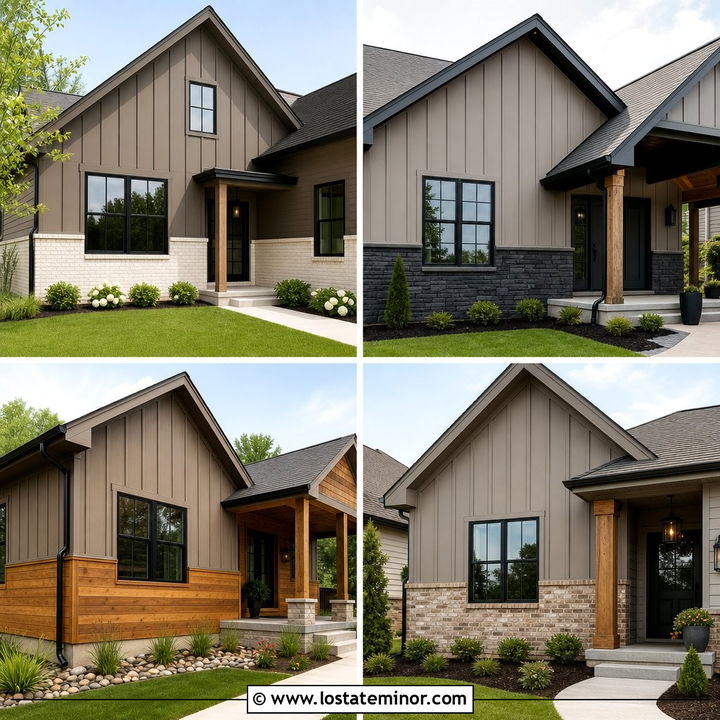
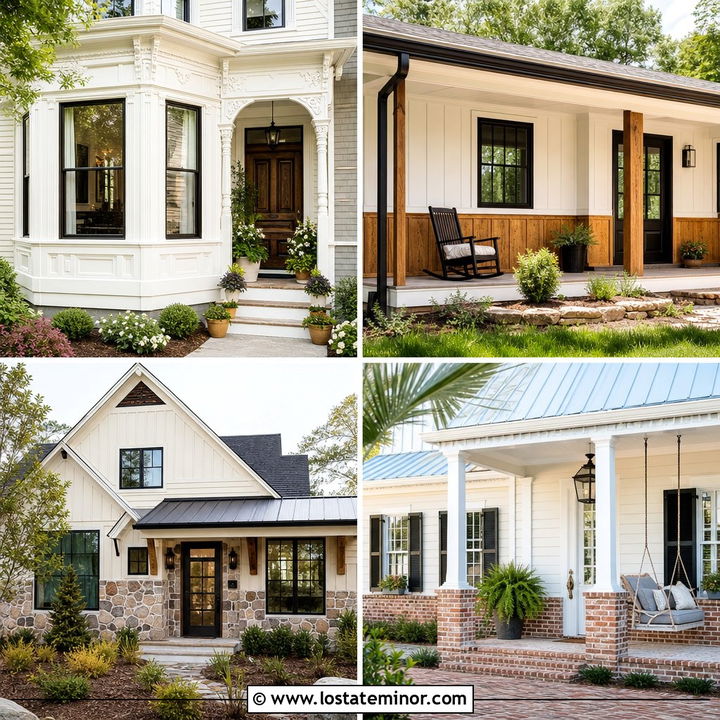
Tan brick often blends seamlessly with greige because the materials share beige and gray undertones. Paint the upper siding Benjamin Moore Balboa Mist and choose brick in sandy taupe with occasional cream and muted brown variation. Warm white trim creates a clean edge around the windows, porch columns, and gables. Instead of a black entrance, use a rich olive-green front door to add grounded color without disconnecting from the earthy foundation. A weathered wood roof and dark bronze lights complete the softer scheme. Use the same brick for the porch steps or mailbox base to make the wainscoting appear planned rather than added later. This understated combination suits suburban ranch, traditional, and cottage homes where gentle contrast feels more appropriate than dramatic black-and-white detailing.
16. Greige House With Dry-Stack Stone Wainscoting
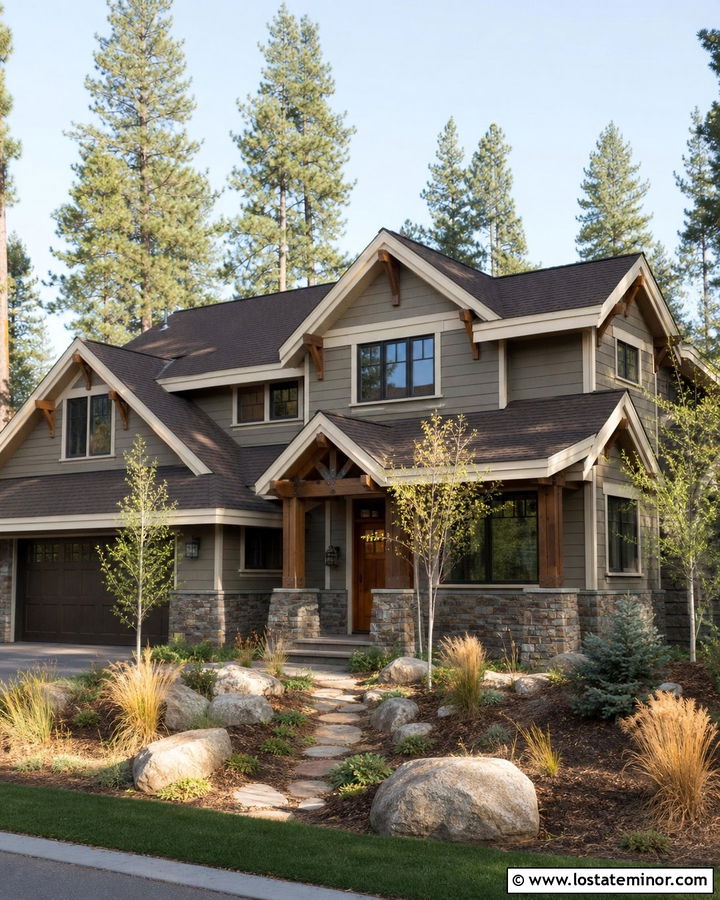
Dry-stack stone introduces rugged texture that can make smooth greige siding feel richer. Use Benjamin Moore Rockport Gray on the main facade and choose thin stone with irregular pieces in mushroom, sand, brown, and charcoal. Because the stone pattern is visually active, keep the trim a simple warm ivory and limit decorative accents. Wrap the wainscoting around porch columns and continue it along visible side walls so it looks structurally integrated. A knotty alder front door and matching timber brackets add warmth near the center of the house. Choose a dark brown roof and bronze fixtures instead of sharp black. This full exterior scheme is well suited to Craftsman, lodge-inspired, and mountain homes. Native grasses and large natural boulders can connect the masonry with the landscape.
17. Greige House With Red Brick Wainscoting
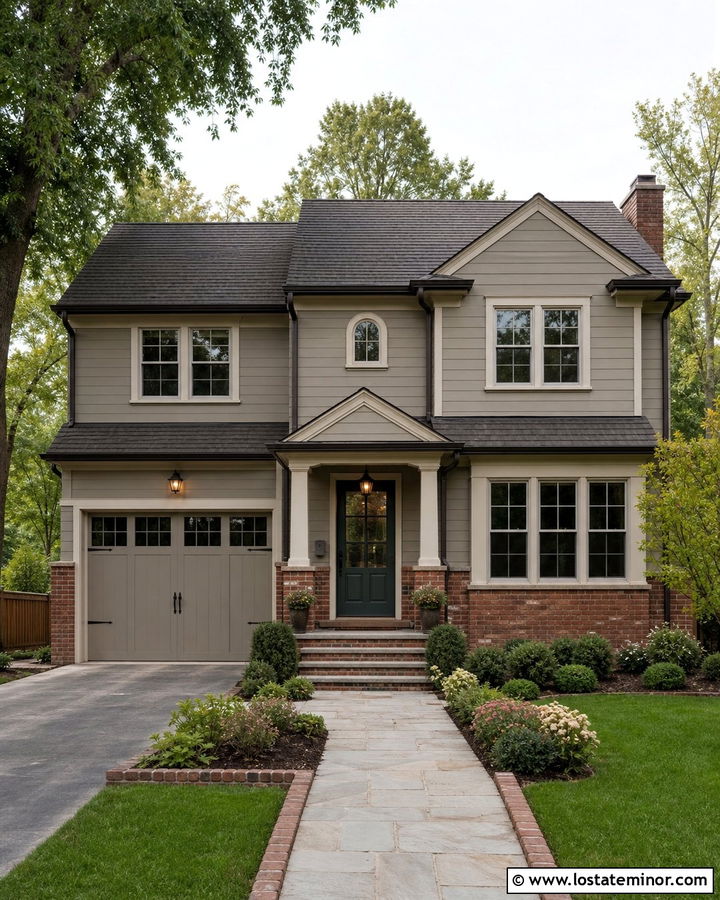
Existing red brick does not need to be painted simply because the upper siding is changing to greige. Choose a body color such as Sherwin-Williams Amazing Gray, which has enough depth to stand beside warm brick. Examine the masonry first and identify its quieter shades, such as brown, taupe, or gray. Repeat one of those colors on the roof or metal accents. Cream trim usually works better than brilliant white because it softens the transition between siding and brick. Paint the front door deep forest green for a classic focal point, then use dark bronze for the lights and gutters. Keep shutters minimal unless they fit the windows correctly. Mature shrubs, brick-edged beds, and a natural stone walkway help this traditional palette feel intentional and established.
18. Greige House With Natural Wood Wainscoting
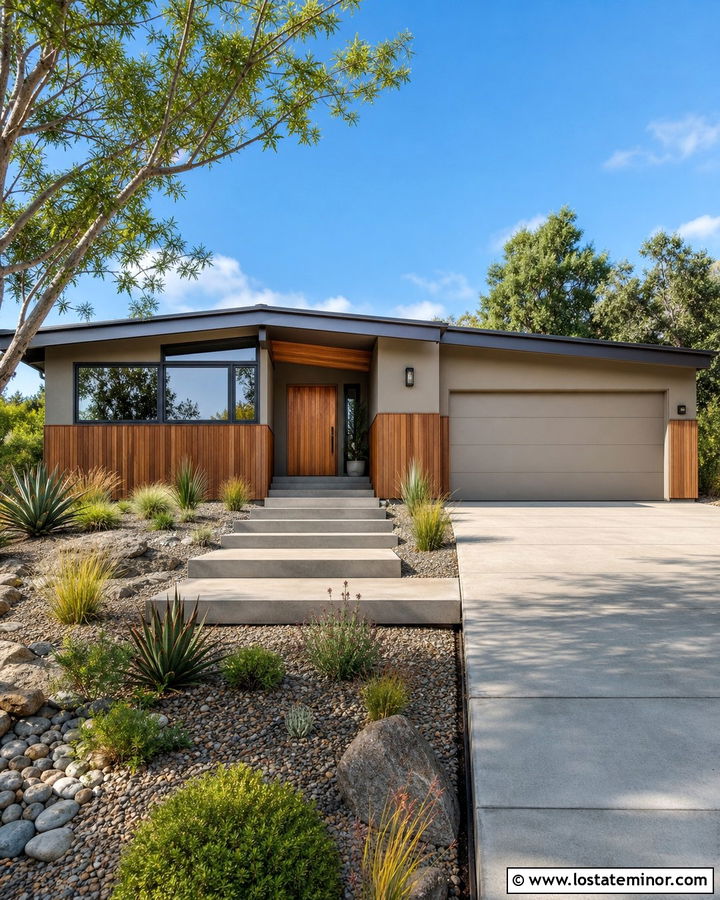
Wood wainscoting offers a warmer alternative to stone or brick, particularly on modern and mid-century homes. Paint the stucco or upper siding Benjamin Moore Stone Hearth, then clad the lower facade in vertical cedar boards with a medium natural stain. Protect the wood with an exterior-grade finish and include clean metal flashing along the top edge. Charcoal window frames and a dark gray roof give the neutral structure definition. Keep the front door within the same wood family so the entry and wainscoting form a connected feature. A greige garage door prevents too many competing materials across the street-facing elevation. Drought-tolerant grasses, gravel beds, and broad concrete steps suit the streamlined palette. The completed design feels organic, contemporary, and carefully balanced rather than rustic.
19. Greige House With Cobblestone Wainscoting
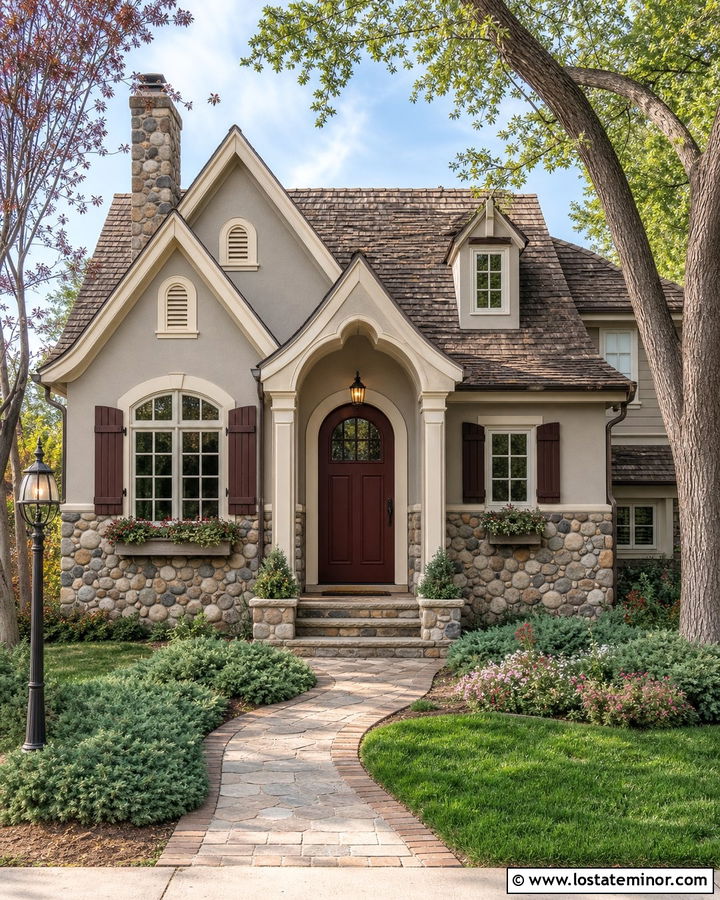
Cobblestone wainscoting gives a greige home a welcoming, storybook quality. Use Sherwin-Williams Pediment on the siding, paired with rounded masonry in warm gray, cream, taupe, and soft brown. Keep the application low and substantial, then repeat the cobblestone on porch piers or an arched entry surround. Cream trim supports the gentle palette and highlights traditional windows without looking overly bright. A muted burgundy front door supplies classic color and works particularly well with the earthy stone. Select a roof in weathered brown with subtle gray variation. Because cobblestone has a busy surface, simple shutters and restrained landscaping are preferable. A curved walkway, compact evergreen shrubs, and flowering borders complete a cottage, bungalow, or European-influenced house without competing with the distinctive masonry texture.
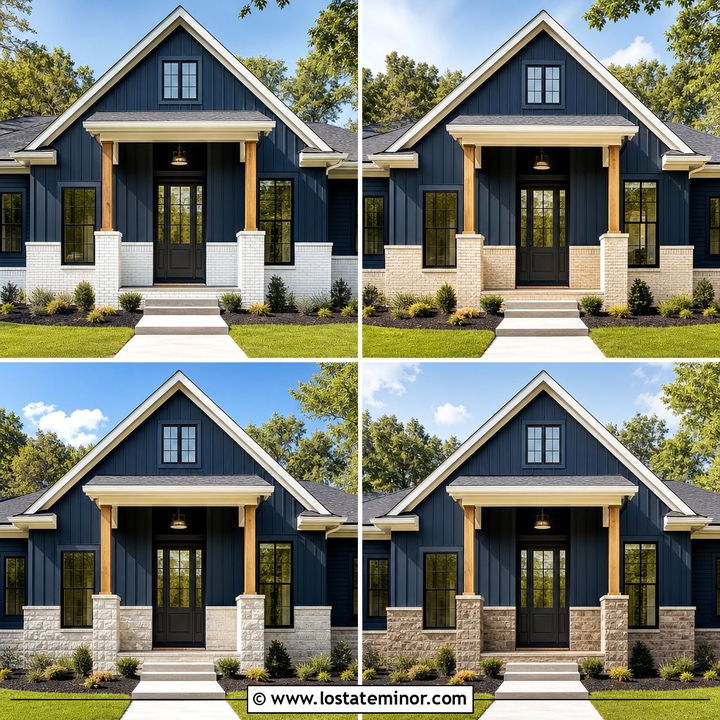
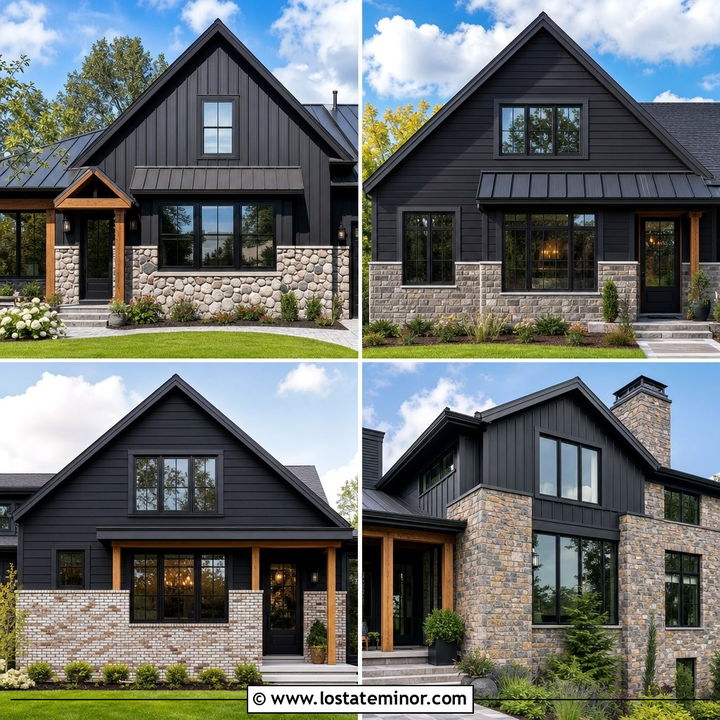
20. Greige House With Granite Wainscoting
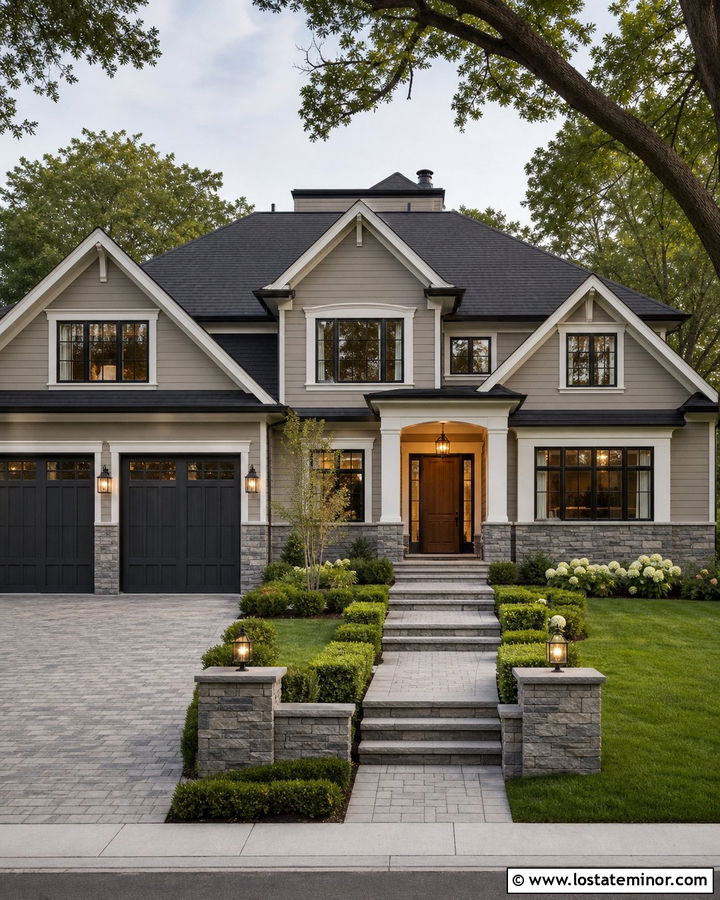
Granite wainscoting creates a strong, durable-looking base for a substantial greige exterior. Paint the siding Sherwin-Williams Perfect Greige and use split-face granite containing charcoal, silver-gray, taupe, and small flecks of brown. Warm gray mortar will blend the pieces and prevent a distracting grid effect. Choose off-white window trim for moderate contrast, then repeat charcoal on the garage doors, gutters, and roof. A simple mahogany front door provides warmth at the entrance. Granite works best when its scale matches the architecture, so larger homes can support broader stones and taller wainscoting. Continue the material across exposed foundation walls and around porch columns for consistency. Formal hedges, broad steps, and a structured paver driveway reinforce the polished character of this transitional or New American exterior.
21. Greige House With Limestone And Brick Wainscoting
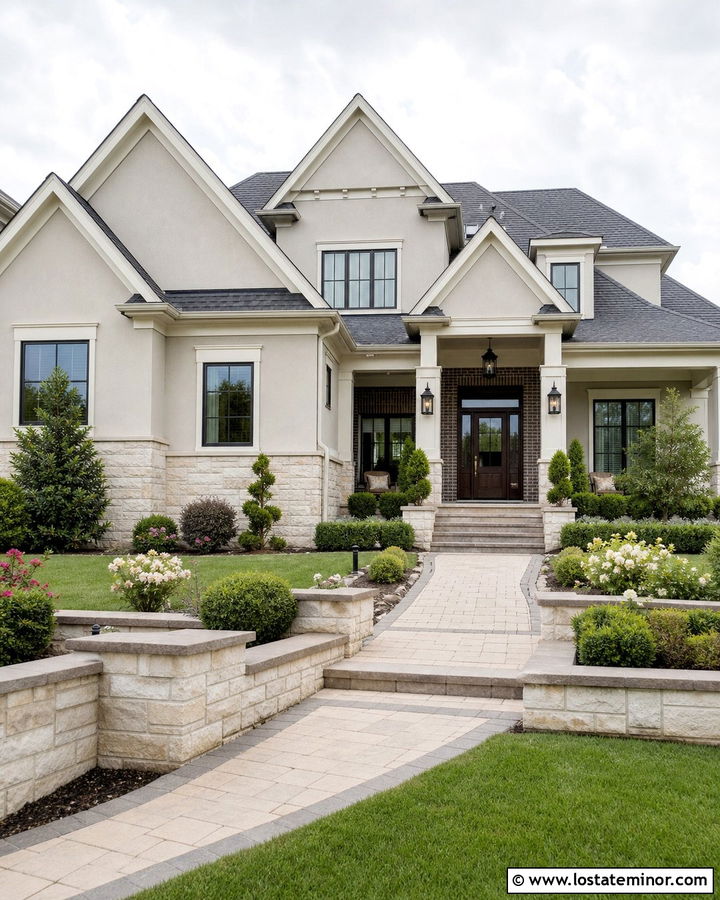
Combining two masonry materials can create depth, but one should remain visually dominant. Use Sherwin-Williams Gossamer Veil on the siding, light limestone as the primary wainscoting, and warm taupe brick around the porch or entrance. The brick should appear as a focused accent rather than a second competing band. Creamy white trim ties the lighter stone to the windows and columns. A dark walnut door gives the mixed facade a clear center, while bronze lights and a medium charcoal roof provide definition. Keep mortar colors similar across both masonry types to make the combination feel intentional. This layered scheme works well on large transitional homes with several gables and deep porches. Repeating limestone in the landscape walls can further connect the architecture and front yard.
22. Greige House With Board And Batten Wainscoting
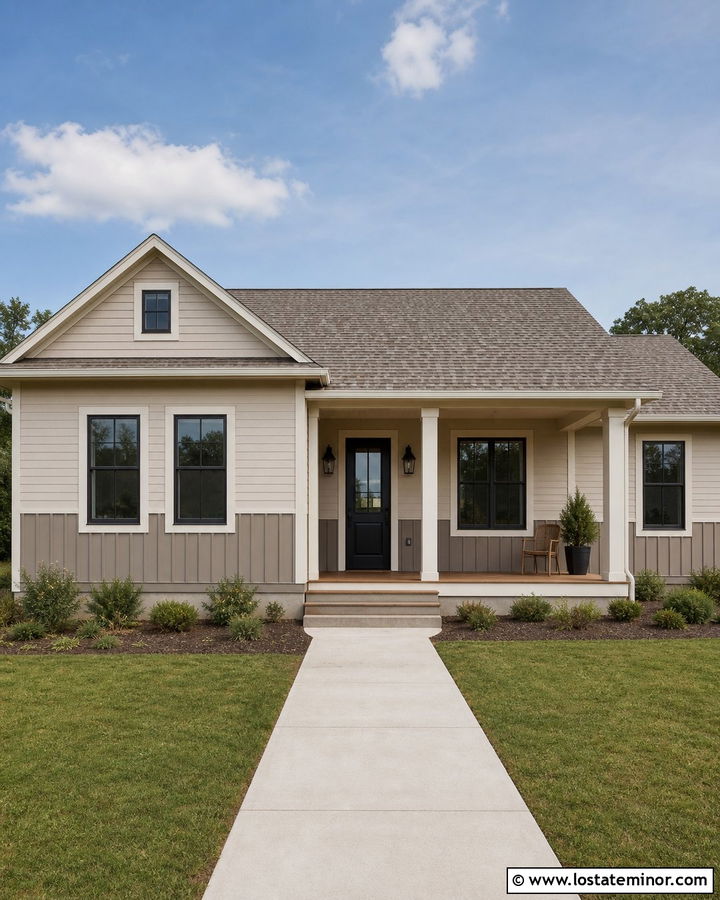
Wainscoting does not always need to be masonry. A lower band of board-and-batten siding can give a greige exterior subtle architectural interest. Paint the horizontal upper siding Sherwin-Williams Accessible Beige and use a deeper greige, such as Mega Greige, on the vertical lower panels. A narrow trim board should define the transition while keeping the two sections visually connected. Use warm white on the windows, fascia, and porch columns. A muted black front door and matching metal lights add restrained contrast, while natural wood porch flooring introduces warmth. This tone-on-tone treatment works well when heavy stone would look inappropriate or exceed the budget. It can bring dimension to ranch, farmhouse, and cottage homes while maintaining a calm, material-efficient exterior palette.
23. Greige House With Shiplap Wainscoting
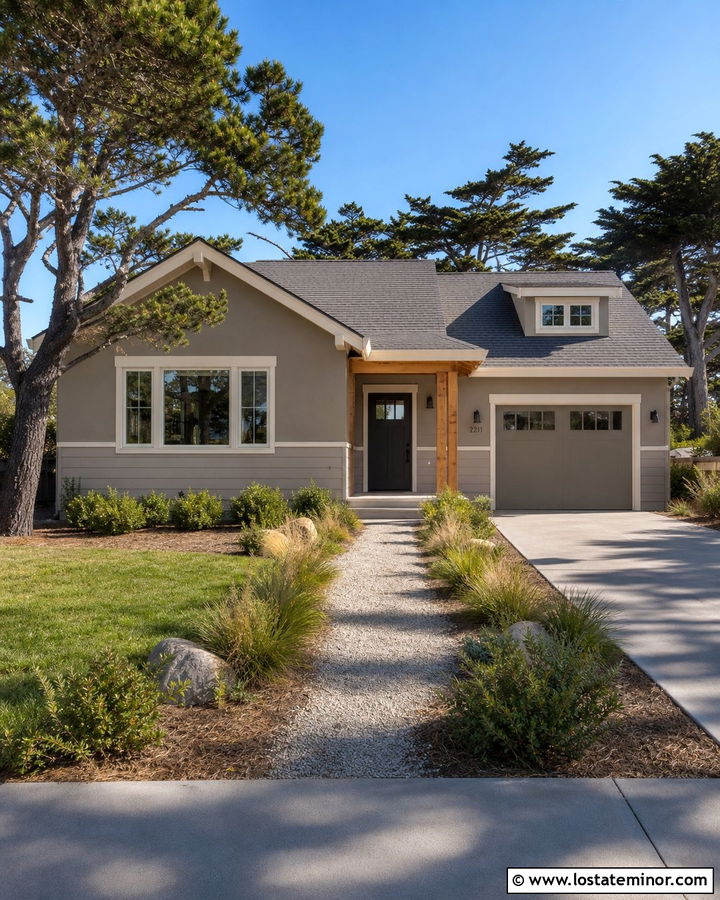
Horizontal shiplap wainscoting creates a clean layered effect on a simple greige facade. Use Benjamin Moore Thunder on the upper stucco or wide siding and apply narrow shiplap in a lighter greige across the lower walls. The small difference in color should be noticeable in daylight without dividing the house into unrelated sections. Cream trim defines the windows and eaves, while a dark bronze door offers a grounded entrance. Add cedar porch posts or brackets to warm the neutral colors and bring visible texture to the facade. A medium gray roof keeps the scheme balanced. This approach suits coastal cottages, modern bungalows, and small suburban homes where stone might feel too bulky. Simple shrubs and a pale gravel path maintain the relaxed, uncluttered appearance.
24. Greige House With Metal Wainscoting
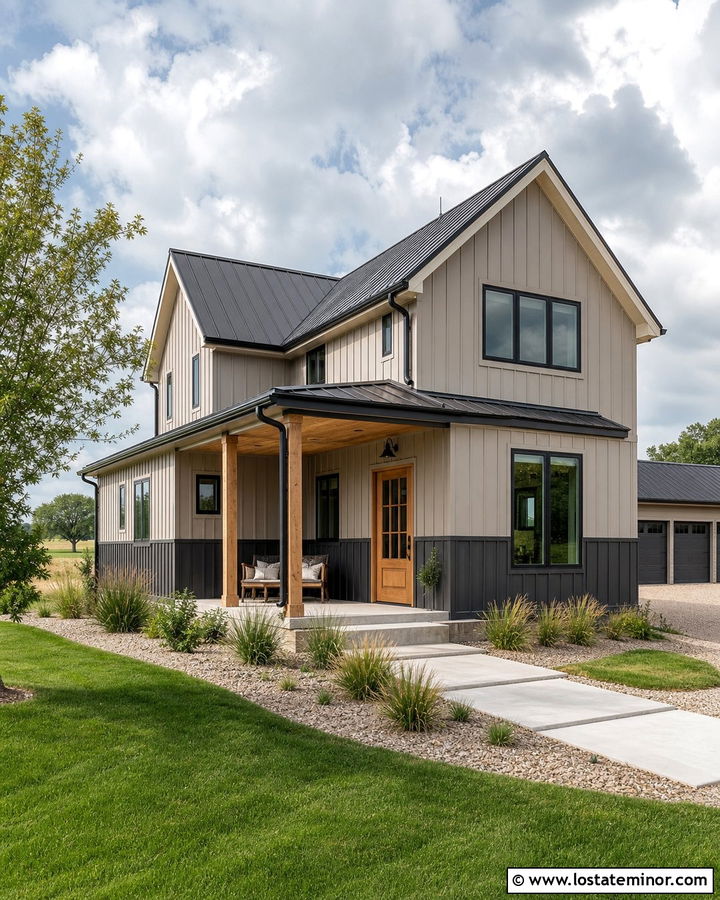
Metal wainscoting gives a greige exterior a practical, contemporary edge. Paint upper board-and-batten siding Sherwin-Williams Popular Gray and use matte charcoal standing-seam panels along the lower facade. Keep the metal height modest and align its seams carefully with windows or structural posts. Charcoal window frames and gutters connect the lower band to the roof, while warm white fascia prevents the darker elements from closing in the house. A natural fir front door and wood porch ceiling soften the metal’s industrial appearance. This combination is ideal for a modern farmhouse, barndominium-inspired home, or rural contemporary house. Surround it with gravel borders, structured grasses, and a straightforward concrete walkway. The result is durable-looking, crisp, and warmer than a fully black-and-white exterior.
25. Greige House With Stucco Wainscoting
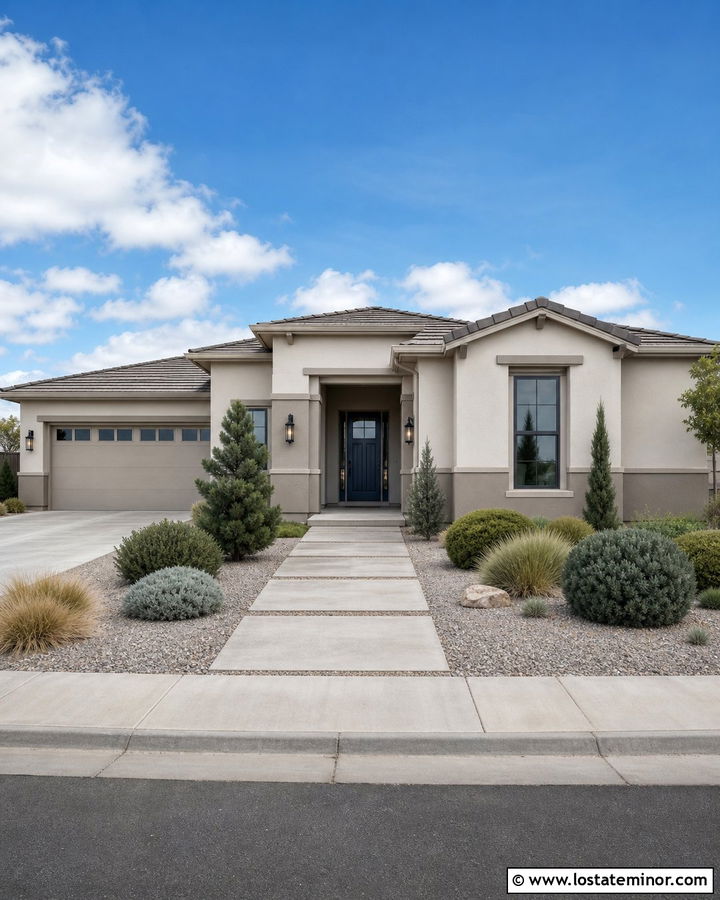
A smooth stucco wainscot provides understated contrast when texture matters more than color. Cover the upper lap siding with Benjamin Moore Cumulus Cloud and finish the lower walls in a slightly deeper taupe-greige stucco. Use a clean cap or flashing detail where the two materials meet. Warm white trim can frame the windows, fascia, and porch columns, while a dark blue front door adds quiet personality. Choose bronze exterior lights and a weathered gray roof to maintain the soft palette. This low-contrast approach works especially well in warm, dry regions where stone might feel overly rustic. Broad concrete pavers, sculptural shrubs, and drought-tolerant planting complement the smooth foundation. The finished house feels cohesive and refined without relying on expensive or highly decorative masonry.
26. Greige House With Stone Porch Wainscoting
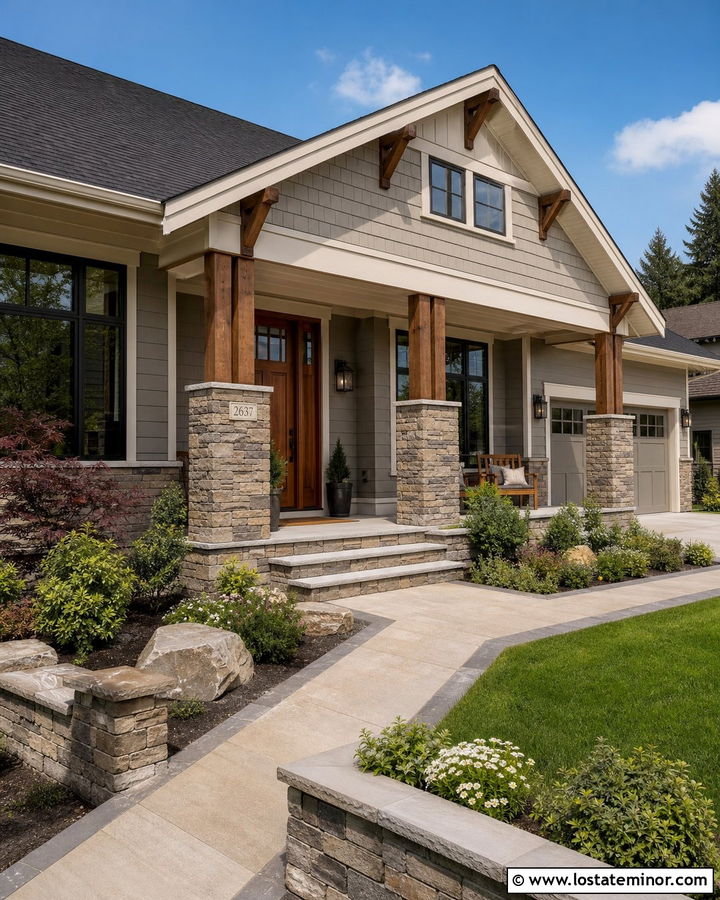
Concentrating wainscoting around the porch can provide impact without covering the entire foundation. Paint the main siding Sherwin-Williams Colonnade Gray and use warm ledgestone across the porch base, steps, and column piers. Select stone containing beige, taupe, and charcoal to coordinate with both the greige walls and dark roof. Cream trim brightens the porch ceiling, window surrounds, and fascia. A stained cedar front door becomes the focal point, supported by matching beams or simple wood brackets. Keep the garage doors greige so attention remains on the entrance. This targeted material strategy works well for homeowners seeking a manageable exterior update. Extend the stone into a short landscape wall or planter to connect the enhanced porch with the rest of the front yard.
27. Greige House With Brick Garage Wainscoting
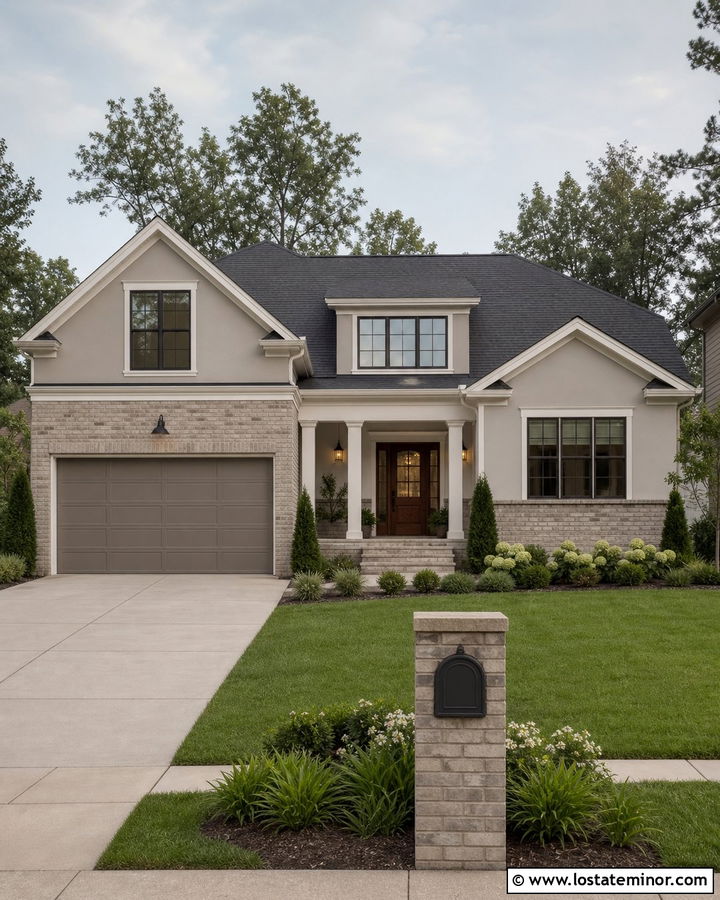
A prominent garage can look more integrated when brick wainscoting breaks up its broad wall. Use Benjamin Moore Wish on the house and garage siding, then install taupe-gray brick beneath garage windows and along the lower third of the main facade. Paint the garage doors a slightly deeper greige instead of white so they recede within the elevation. Soft white trim can still define the roofline, windows, and entry columns. Add a walnut front door and bronze lighting to warm the restrained palette. A charcoal roof will balance the darker garage doors without introducing another color family. Continue the brick around a small porch or mailbox base. This repetition keeps the garage treatment from looking isolated and creates a unified suburban exterior from one end to the other.
28. Greige House With Stone Column Wainscoting
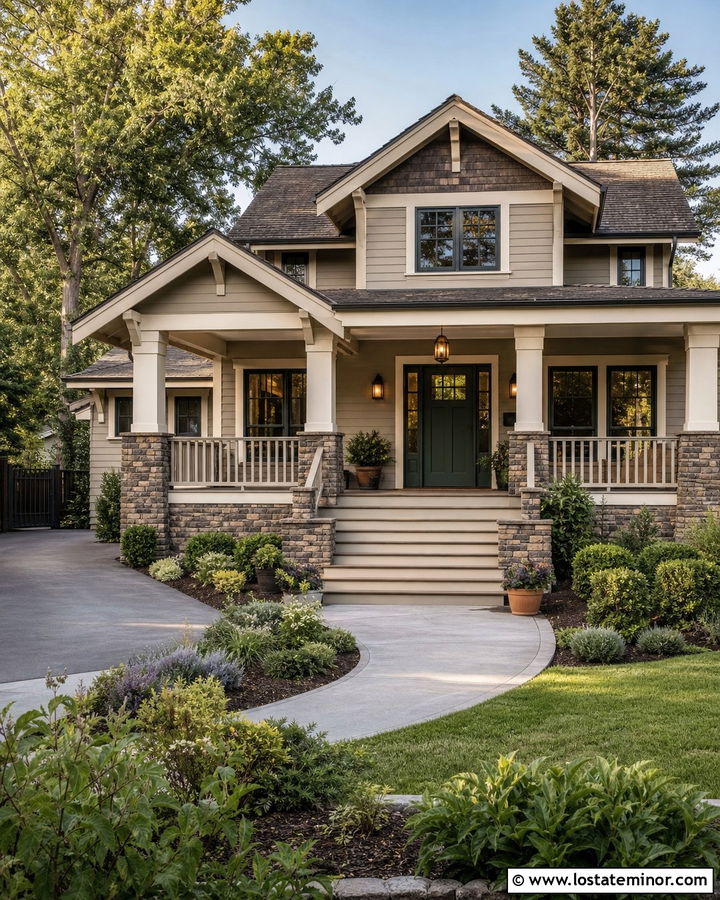
Stone-wrapped porch columns can serve as an extension of lower facade wainscoting. Paint a Craftsman or transitional home Sherwin-Williams Balanced Beige and choose mixed taupe ledgestone for the foundation and lower half of each column. Finish the upper columns, beams, and railings in warm white to lighten the porch. A dark green front door brings subtle color and complements the stone’s earthy variations. Use a weathered wood roof and dark bronze lights for a softer alternative to black. The height of the column stone should align with the top of the wall wainscoting to create one continuous horizontal line. Layered shrubs and broad porch steps will reinforce that visual base, giving the entrance greater presence while keeping the overall greige palette comfortable and approachable.
29. Greige House With Arched Stone Wainscoting
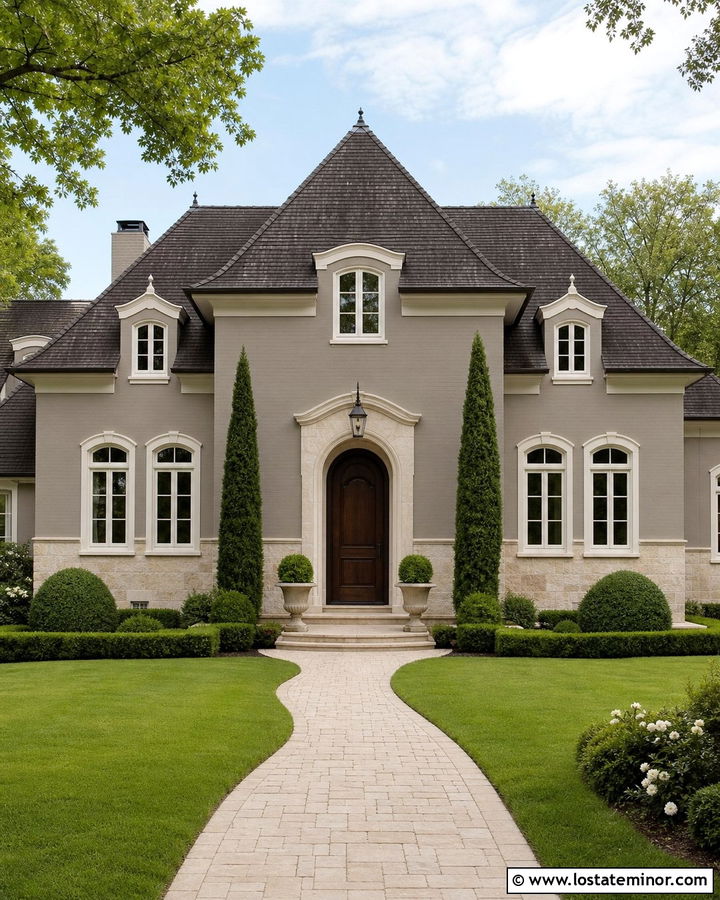
Arched stone detailing can transform ordinary wainscoting into an architectural feature. Use Benjamin Moore Ashley Gray on the siding and install creamy taupe limestone across the lower facade. Raise the stone around the front door to form a shallow arch, then repeat smaller arches above porch openings if the architecture allows. Avoid adding unrelated decorative shapes elsewhere. Warm white trim should outline the windows and roofline, while a deep espresso door creates contrast inside the pale stone surround. A charcoal-brown roof connects the darker door with the upper portion of the house. This composition suits European, French country, and traditional homes with steep gables. Formal evergreens, symmetrical planters, and a gently curved paver walkway complement the refined entrance without hiding the masonry craftsmanship.
30. Greige House With Full Wraparound Wainscoting
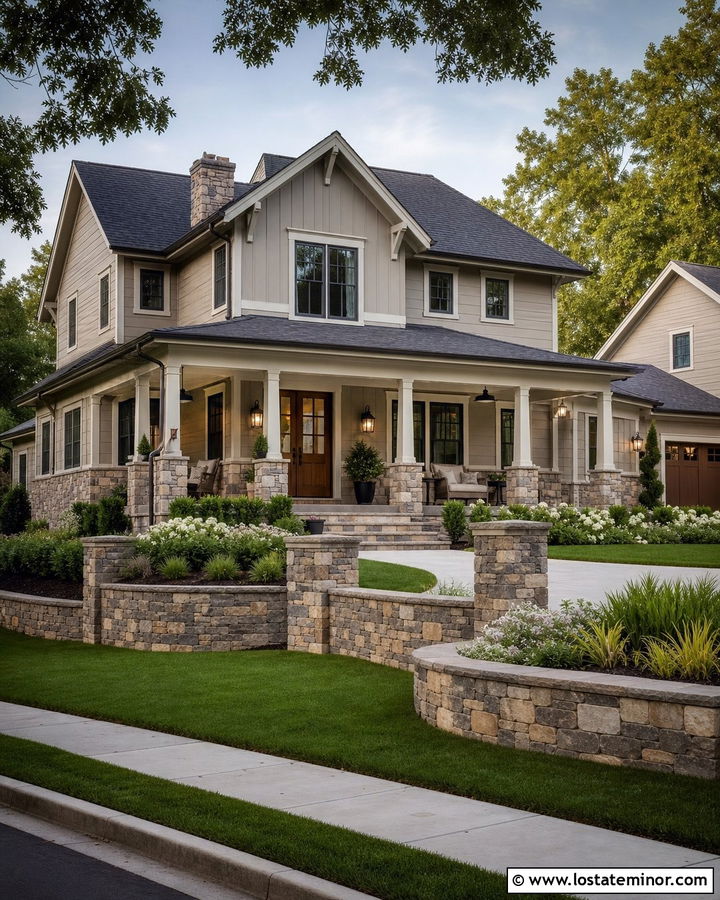
Wrapping wainscoting around every visible elevation produces the most complete, custom-looking result. Paint the siding Sherwin-Williams Agreeable Gray and use medium-tone fieldstone containing warm gray, taupe, cream, and muted brown. Maintain one consistent height around corners, garages, porches, and side walls unless the grade requires a carefully stepped transition. Cream trim brings gentle brightness to the windows, eaves, and columns. Use a medium walnut front door, dark bronze fixtures, and a weathered charcoal roof to complete the grounded palette. Repeating the stone on porch piers and low landscape walls strengthens material continuity. This approach is especially effective on corner lots or detached homes with several exposed sides. Thoughtful grading, clean flashing, and coordinated mortar help the extensive masonry look polished rather than heavy.
Conclusion:
The strongest greige exteriors balance color, material, scale, and architectural character. Light limestone can brighten a farmhouse, while charcoal ledgestone gives a modern home sharper definition. Brick feels established and familiar, whereas wood or metal creates a more contemporary result. Before selecting materials, compare their undertones with the roof, driveway, windows, and permanent hardscaping. View paint samples outdoors at different times of day, and place them directly beside the proposed wainscoting. Consistent mortar, trim, and accent colors will help every surface work together. With thoughtful planning, these 30 Greige House Design With Wainscoting Ideas can inspire a cohesive exterior that looks warm, grounded, and attractive from the curb.

Related posts: