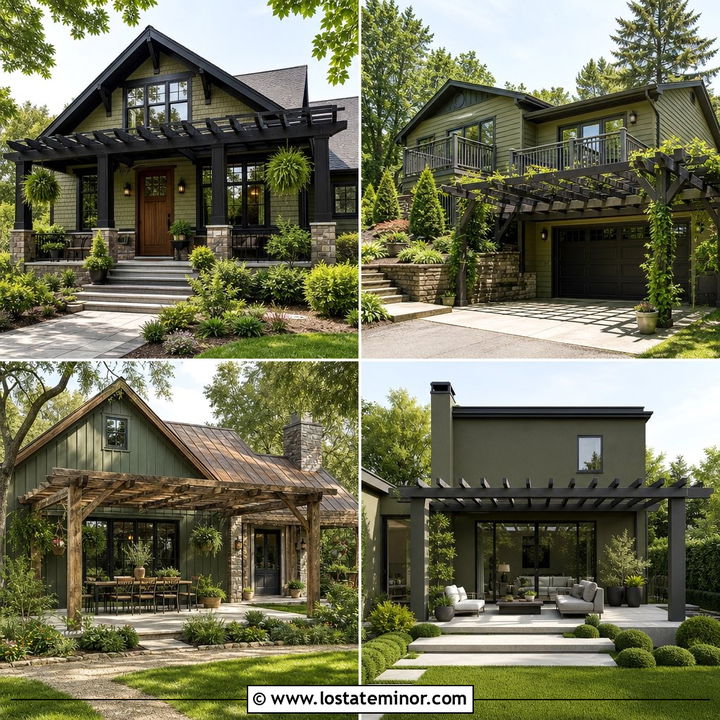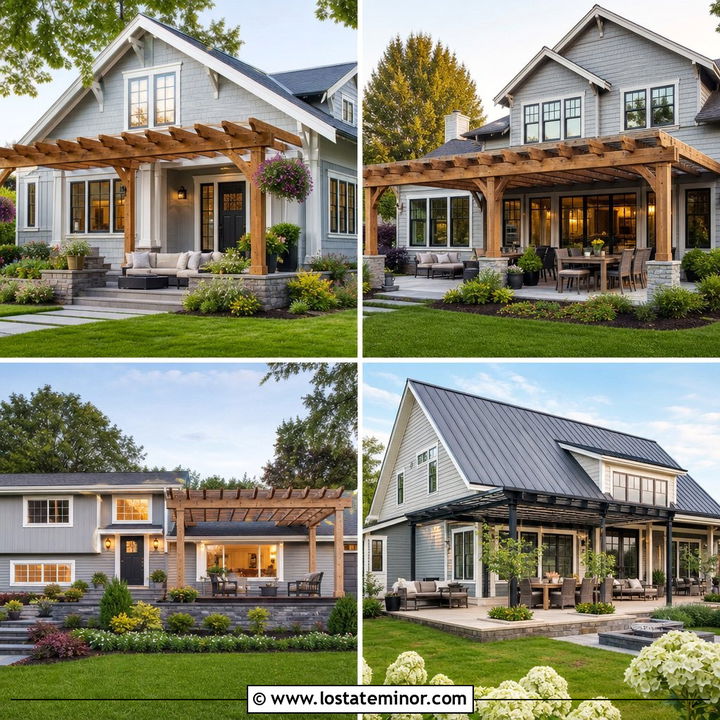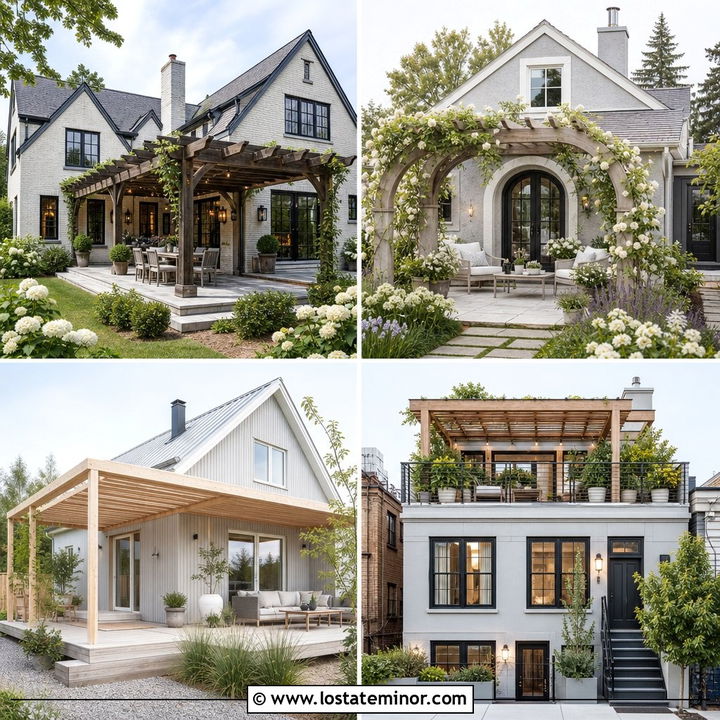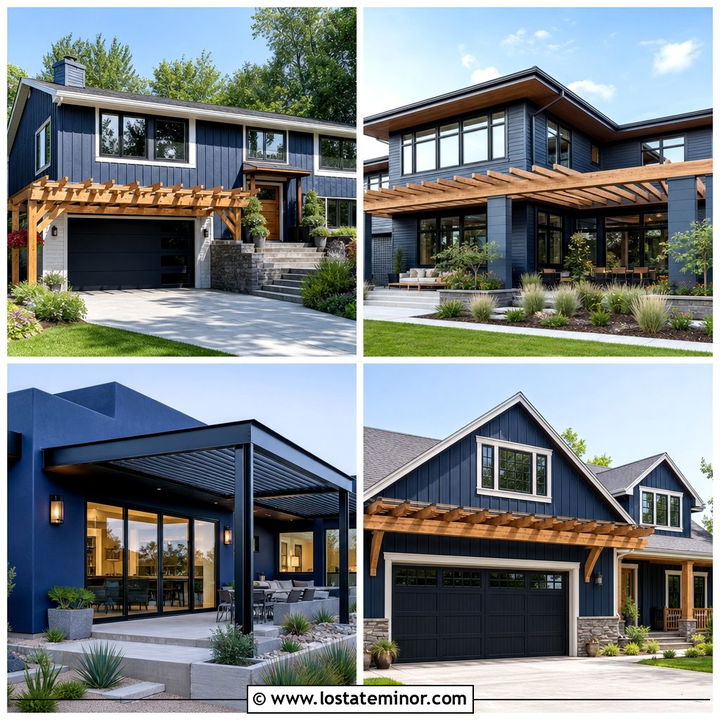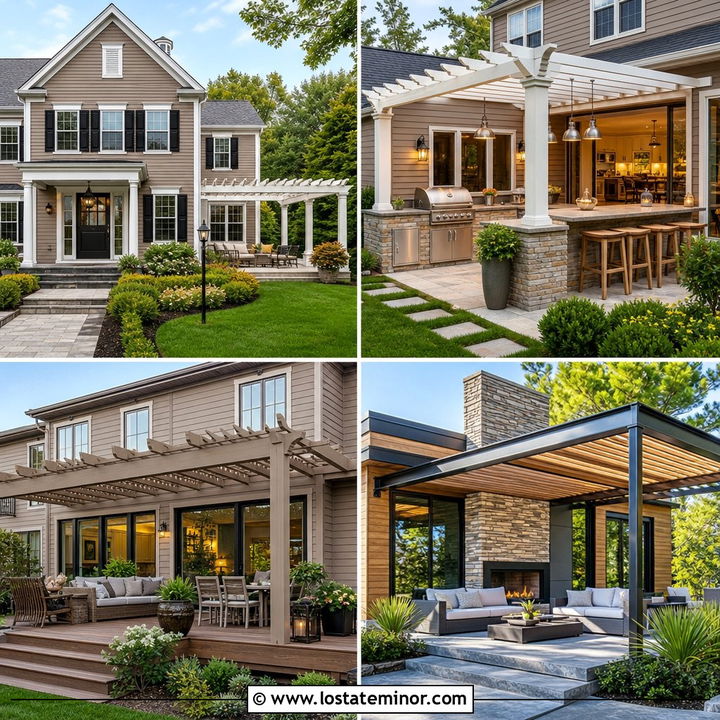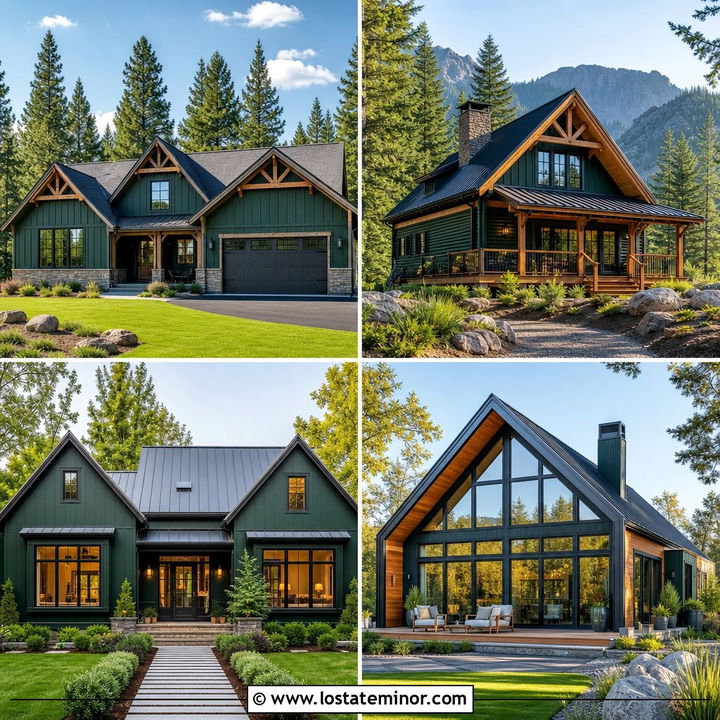
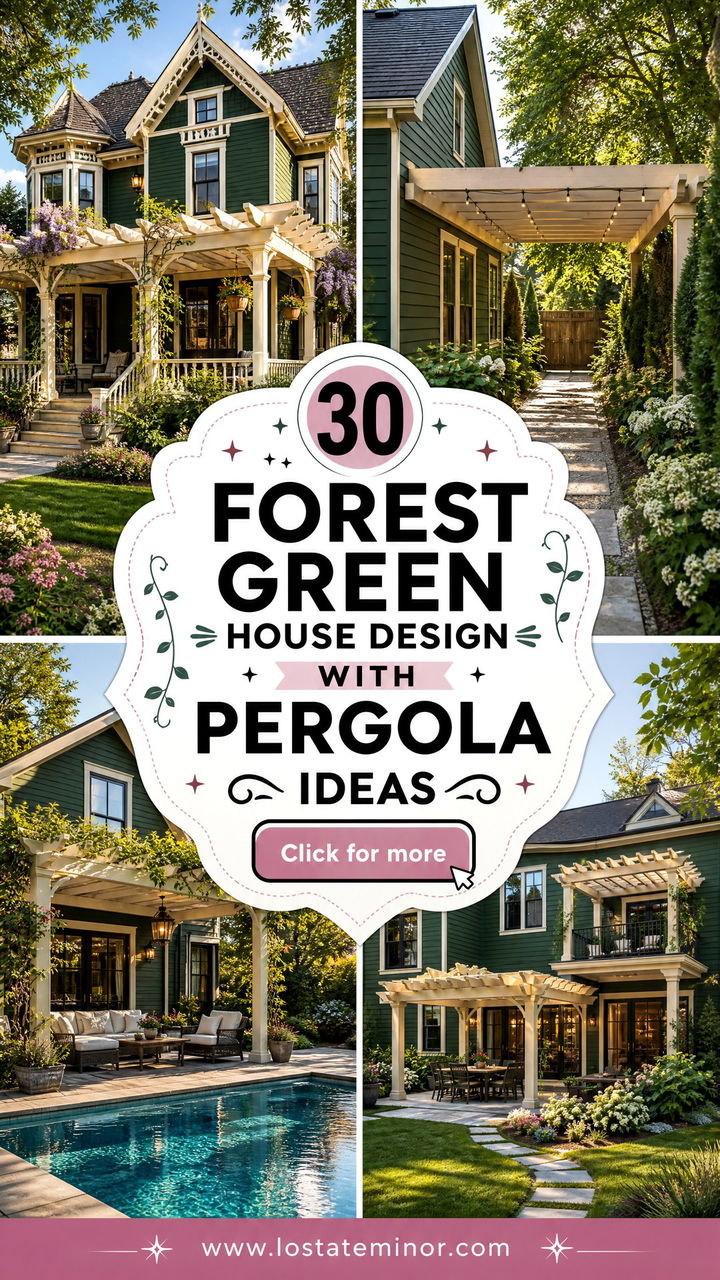
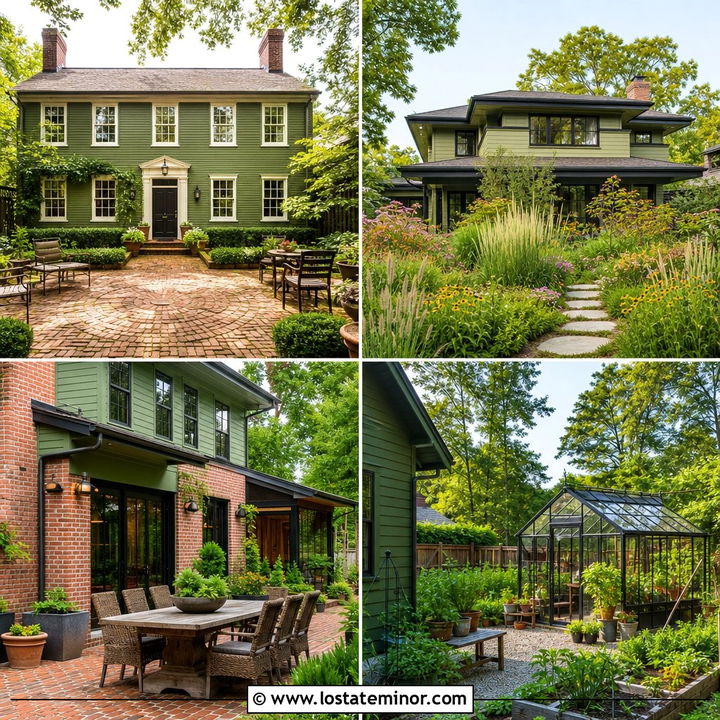
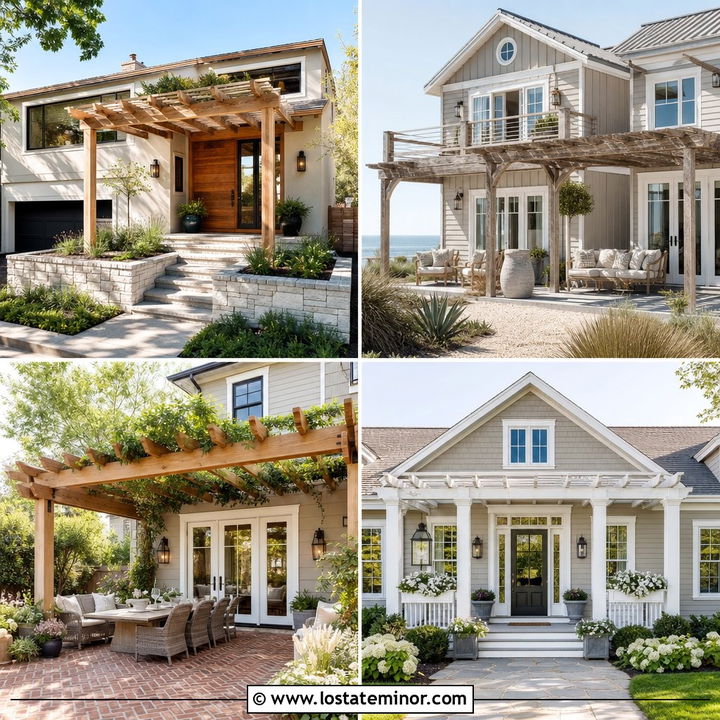
Forest green brings depth, calm, and a strong connection to the landscape, while a pergola adds structure and makes an exterior feel more finished. Together, they can suit nearly any home, from a traditional colonial to a clean-lined contemporary build. A pergola may be attached or freestanding, and its open framework can provide dappled shade while defining an outdoor room. () The key is coordinating the green siding with the pergola material, trim, roof, masonry, doors, and surrounding plants. These 30 Forest Green House Design With Pergola Ideas include affordable upgrades, polished entertaining areas, and practical layouts for different climates. Explore the complete exterior schemes below with 30 Forest Green House Design With Pergola Ideas.
1. Forest Green Modern Farmhouse With Cedar Pergola
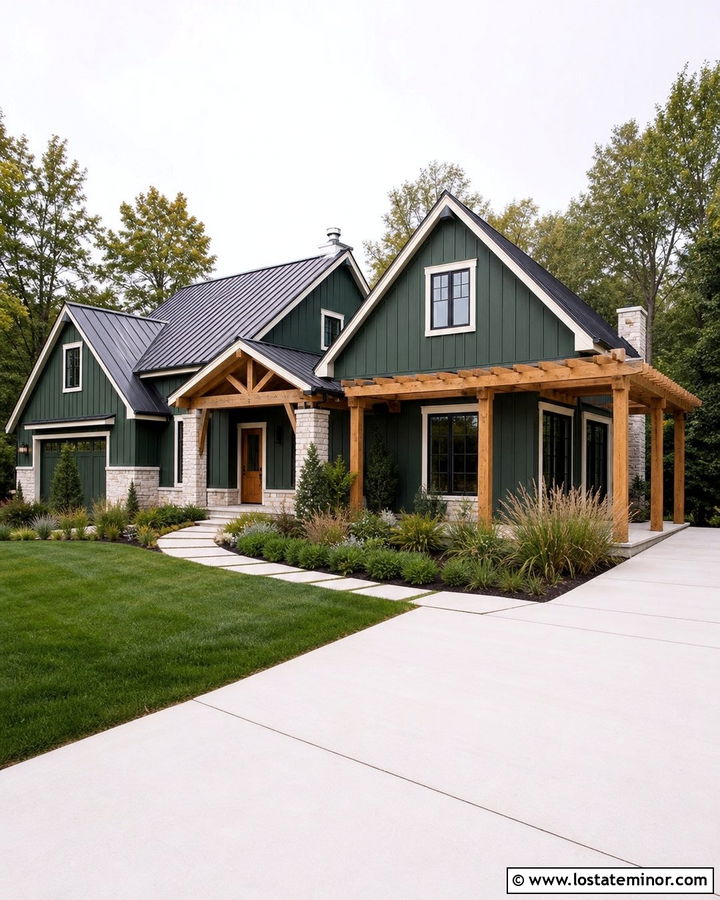
A natural cedar pergola warms up the cool richness of a forest green modern farmhouse. Use vertical board-and-batten siding to give the dark color crisp definition. Creamy white trim around the windows, fascia, and porch columns keeps the facade bright without creating harsh contrast. Position an attached cedar pergola above a side patio or rear dining space, where its honey-brown grain can connect with a matching front door. A charcoal standing-seam roof adds a clean modern edge. Complete the exterior with pale limestone, black lanterns, and simple concrete pavers. Ornamental grasses and clipped evergreens reinforce the natural palette while preventing the house from disappearing into a heavily planted yard.
2. Forest Green Craftsman House With White Pergola
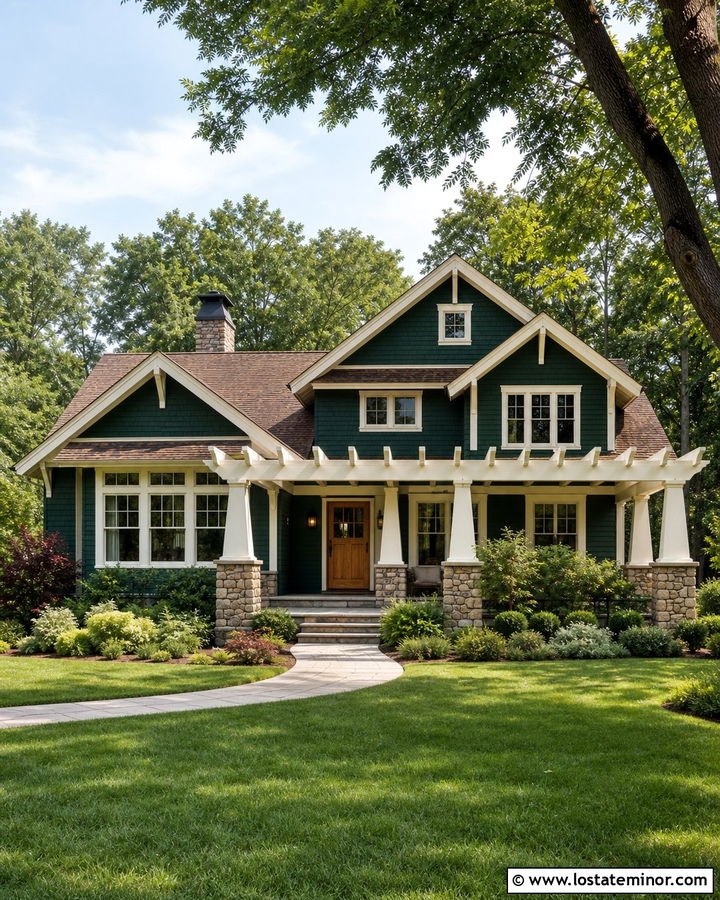
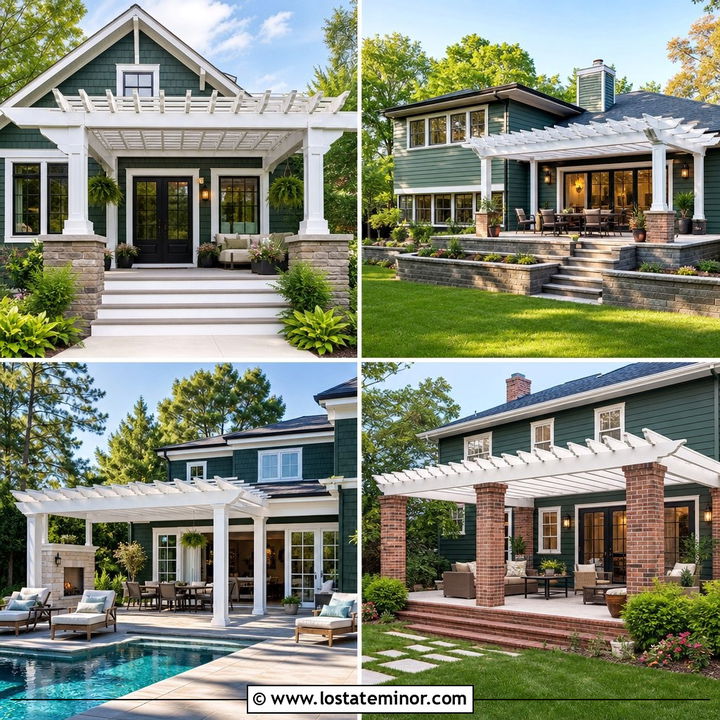
Picture a deep green Craftsman exterior framed by substantial white beams and tapered porch columns. A white pergola extending from the front porch can widen the home visually and create a welcoming transition into the yard. Keep the forest green on lap siding and use warm white for the pergola, window trim, eaves, and railings. A medium-brown shingle roof and stained oak front door add traditional warmth. Support the pergola with stone-based columns that match the foundation skirt. Broad front steps, a curved walkway, and layered shrubs make the structure feel integrated rather than added later. This complete scheme works especially well when the pergola’s beam proportions repeat details already found on the porch.
3. Forest Green Colonial House With Black Pergola
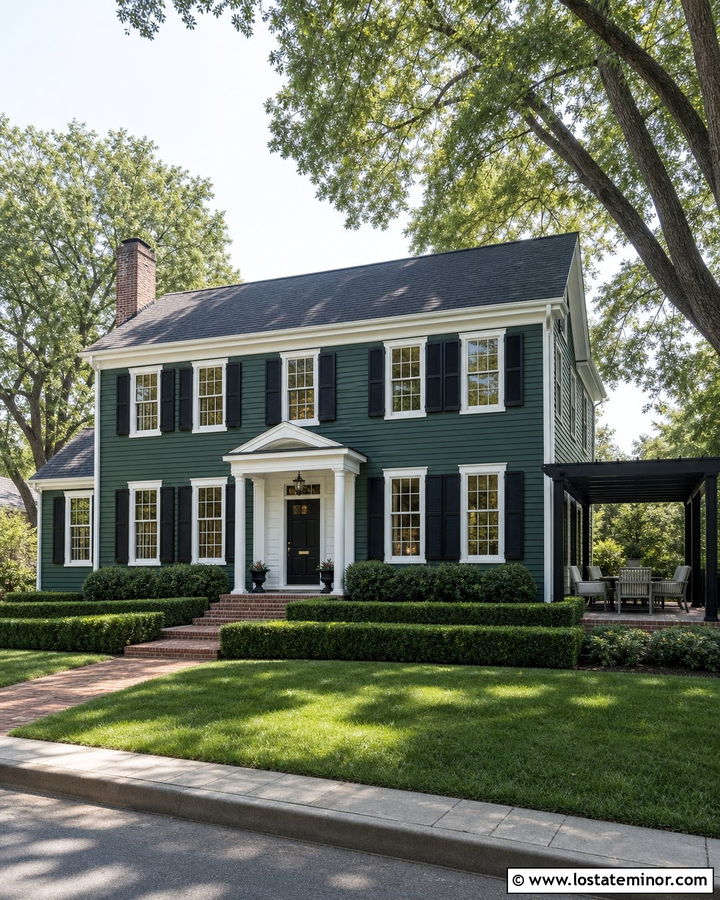
For a sharper, more formal look, combine a symmetrical forest green colonial with a slim black pergola. Black window shutters, gutters, and lanterns can carry the pergola color across the facade. Use warm white around the windows and entry to soften the dark green-and-black pairing. The pergola can cover a paved side terrace connected to French doors, creating an elegant outdoor dining area without changing the home’s traditional front elevation. Red brick steps and a matching chimney introduce a familiar colonial material. Keep the landscaping orderly with boxwood hedges, upright evergreens, and a straight brick walkway. The result feels classic from the street, while the streamlined pergola adds a subtle contemporary update.
4. Forest Green Ranch House With Wood Pergola
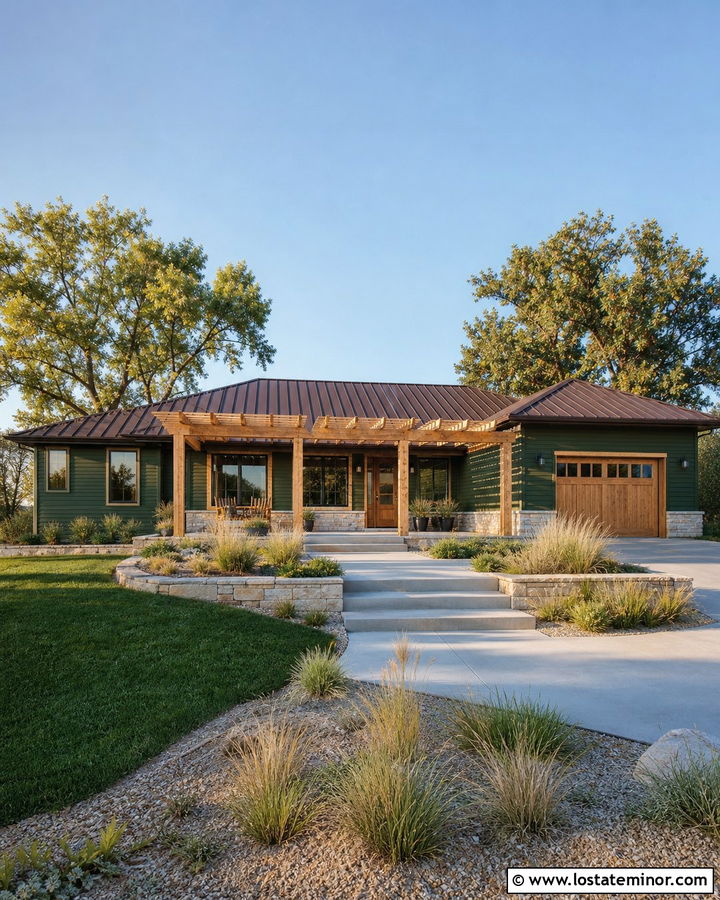
A long, low ranch house benefits from a pergola that breaks up its horizontal facade. Place a natural wood pergola over a wide front patio, using evenly spaced posts to create rhythm across the elevation. Forest green horizontal siding provides a grounded backdrop, while soft beige trim keeps the scheme relaxed. Choose a weathered bronze roof, warm wood garage door, and matching entry door to connect the architecture. A low stone planter can run along the patio without hiding the green siding. Finish the curb appeal with broad concrete steps, gravel beds, and drought-tolerant grasses. This layout makes a basic ranch feel more architectural and gives the front yard a comfortable, usable sitting area.
5. Forest Green Tudor House With Oak Pergola
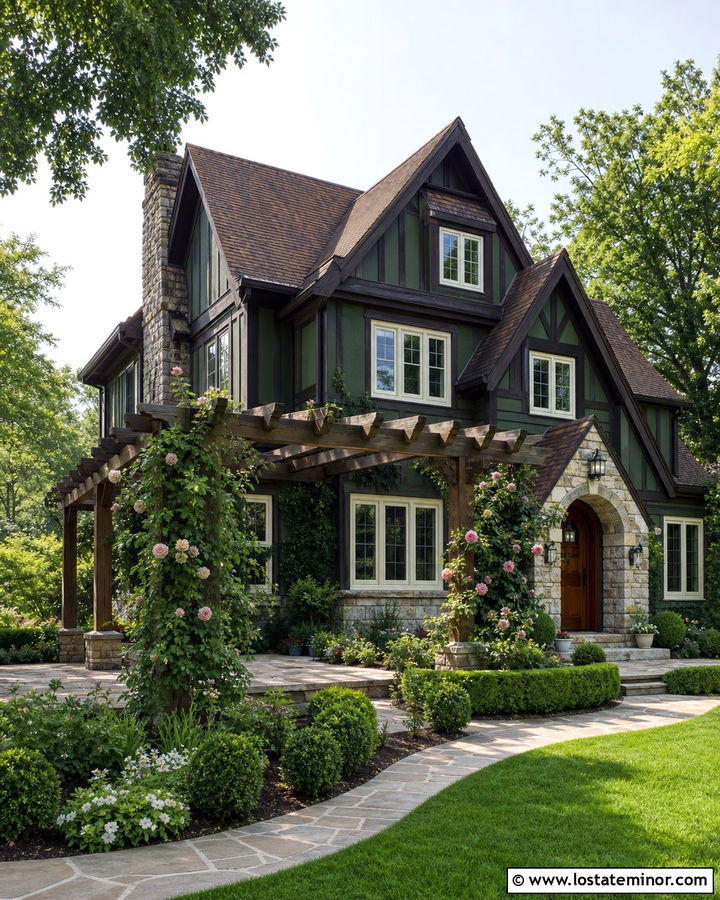
The strong character of a Tudor home pairs naturally with an oak pergola. Paint the stucco or lap-sided portions forest green, then use dark brown on the decorative half-timbering, window frames, and gutters. An oak pergola over a flagstone terrace introduces texture without competing with steep gables or an arched entrance. Allow the oak to weather naturally or apply a medium walnut stain that complements the brown roof. Cream trim placed sparingly around selected windows prevents the palette from becoming too heavy. Add a solid wood front door, irregular stone foundation accents, and softly curved garden beds. Climbing roses or restrained vines can soften the pergola while preserving its handsome beam construction.
6. Forest Green Cape Cod House With White Garden Pergola
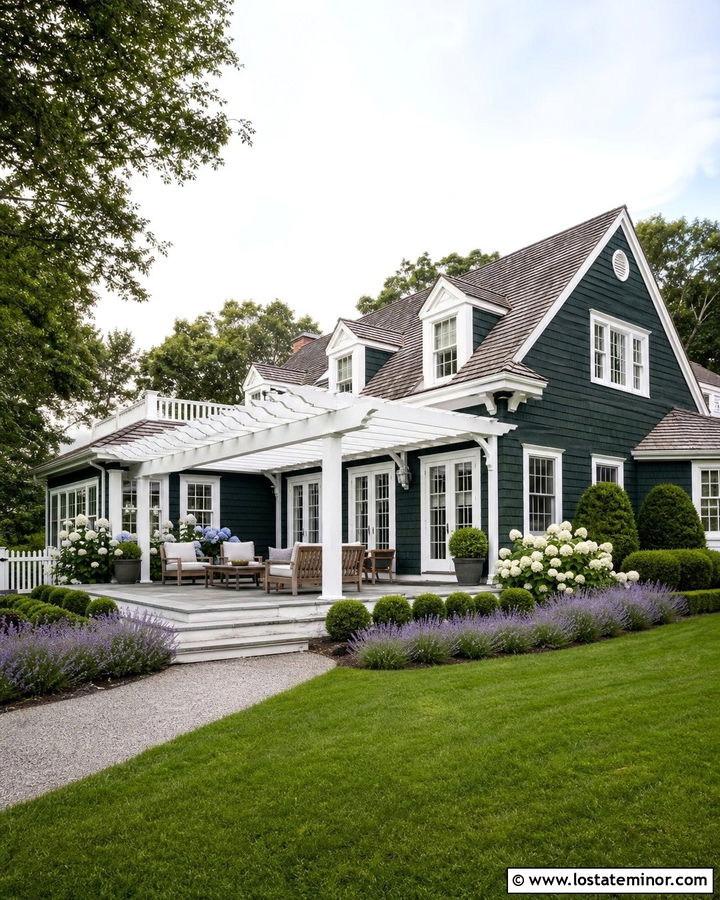
A compact Cape Cod house feels fresh and inviting when forest green shingles are paired with a white garden pergola. Place the pergola beside the home or over a rear terrace so the familiar centered entry and dormers remain visible. Repeat the bright white on window casings, corner boards, dormers, and porch railings. A weathered gray roof balances the dark siding and supports the coastal character. Beneath the pergola, use pale bluestone paving and simple outdoor furniture in natural teak. Hydrangeas, lavender, and low boxwoods create a soft garden frame. The white structure stands out clearly against the forest green facade, making a smaller outdoor area look organized, bright, and intentionally connected to the house.
7. Forest Green Midcentury House With Metal Pergola
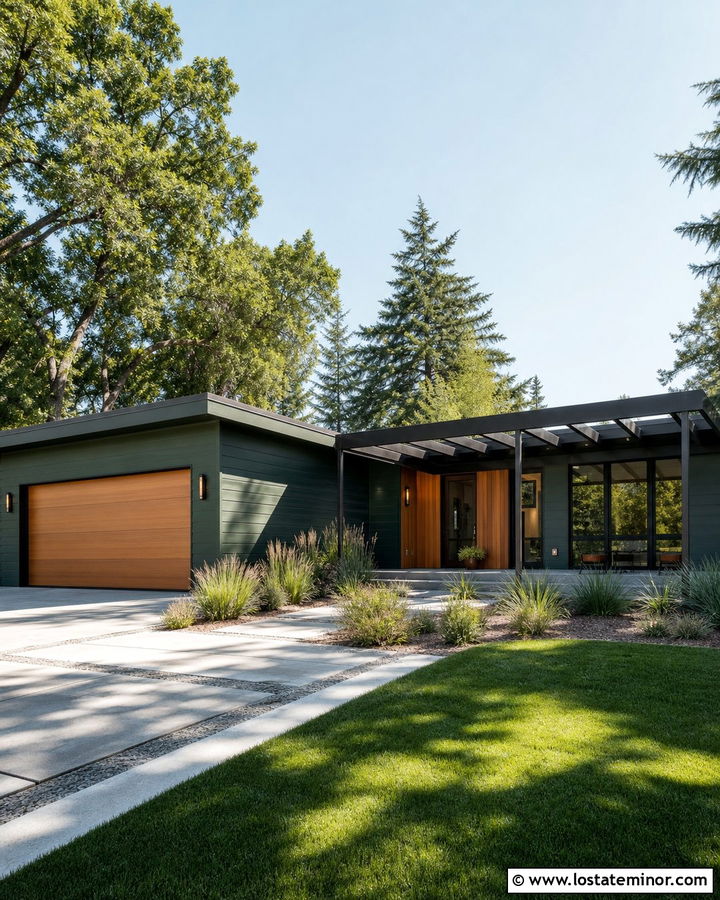
Can forest green work on a midcentury exterior? It can look especially refined when paired with warm wood and a streamlined black metal pergola. Apply the green to wide horizontal siding or smooth panels, then use cedar around the entry and garage. A flat-roof pergola with narrow black posts can extend from the low roofline over a concrete patio. Keep the window frames black and avoid decorative trim that would interrupt the clean geometry. A light gray membrane or low-slope roof prevents the overall exterior from becoming too dark. Complete the setting with rectangular pavers, sculptural grasses, and a few specimen trees. The restrained materials allow the green to feel modern rather than rustic.
8. Forest Green Cottage With Vine Covered Pergola
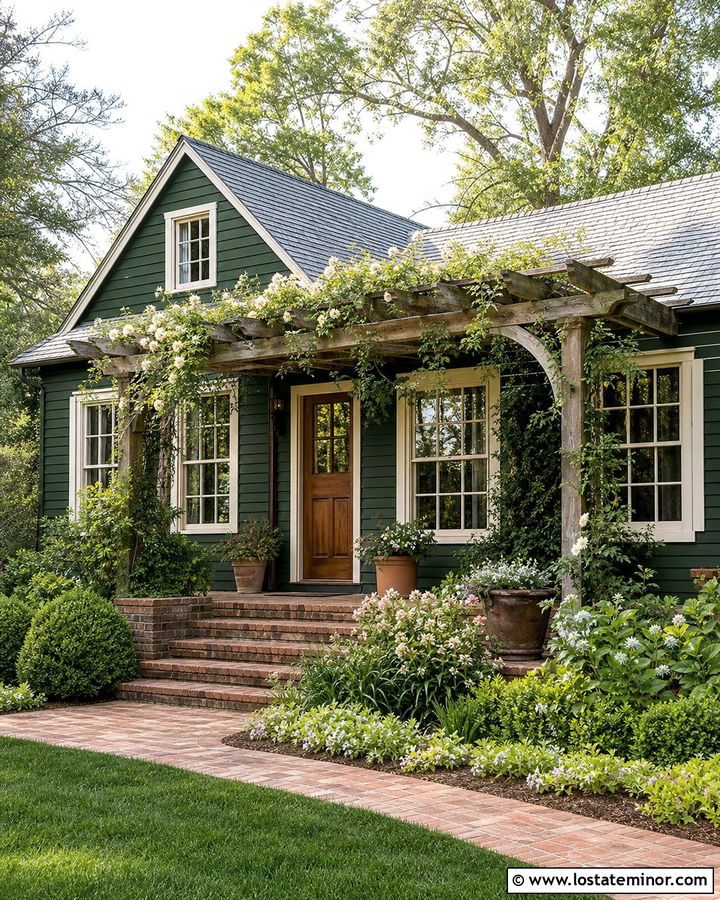
A vine-covered pergola can make a forest green cottage feel tucked naturally into its garden. Choose warm cream trim, a softly stained wood door, and a medium gray shingle roof for a balanced base. Position the pergola over a small front terrace or along the walkway leading to the entrance. Its weathered wood beams can support clematis, climbing roses, or another locally appropriate flowering vine. Keep growth pruned so windows, gutters, and roof edges remain clear. Brick paving and vintage-inspired wall lanterns support the cottage character. Mix flowering borders with evergreen shrubs so the house remains attractive beyond summer. The green exterior then becomes a quiet backdrop for changing seasonal color and texture.
9. Forest Green Bungalow With Front Pergola
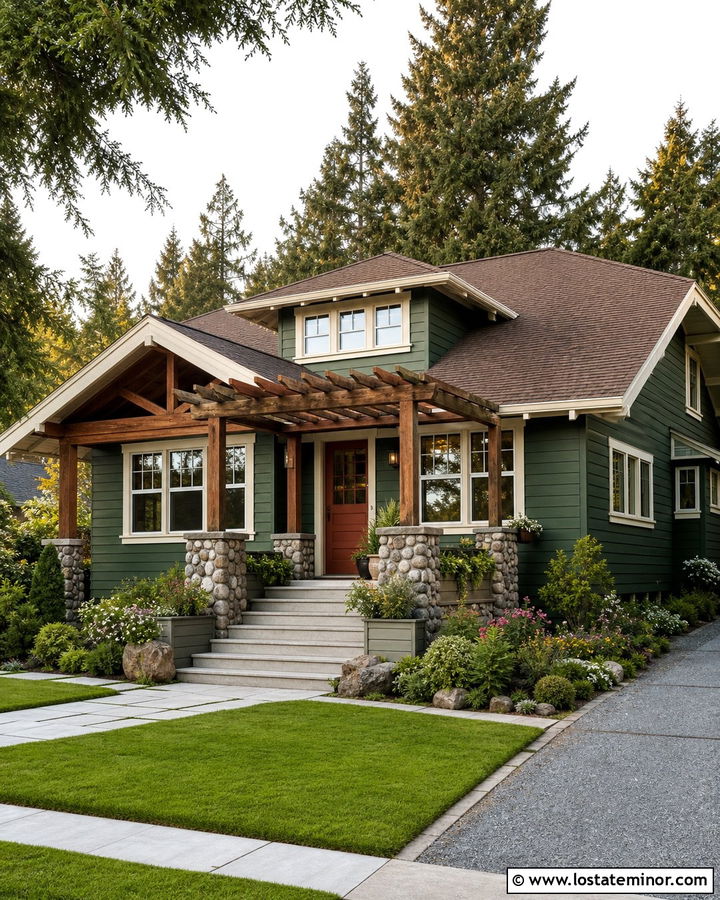
A front pergola can give a modest bungalow greater depth without requiring a full covered porch. Extend stained cedar beams over the entry patio and support them with square posts that align with the front steps. Forest green lap siding provides a rich body color, while creamy off-white trim highlights the low roofline and grouped windows. Add a rust-red front door for a controlled accent that feels warm beside the green. A brown architectural-shingle roof and river-rock column bases complete the earthy scheme. Wide steps, built-in planters, and low flowering shrubs make the pergola feel useful and welcoming. This approach creates a shaded sitting area while strengthening the bungalow’s horizontal proportions and handcrafted appearance.
10. Forest Green Split Level With Garage Pergola
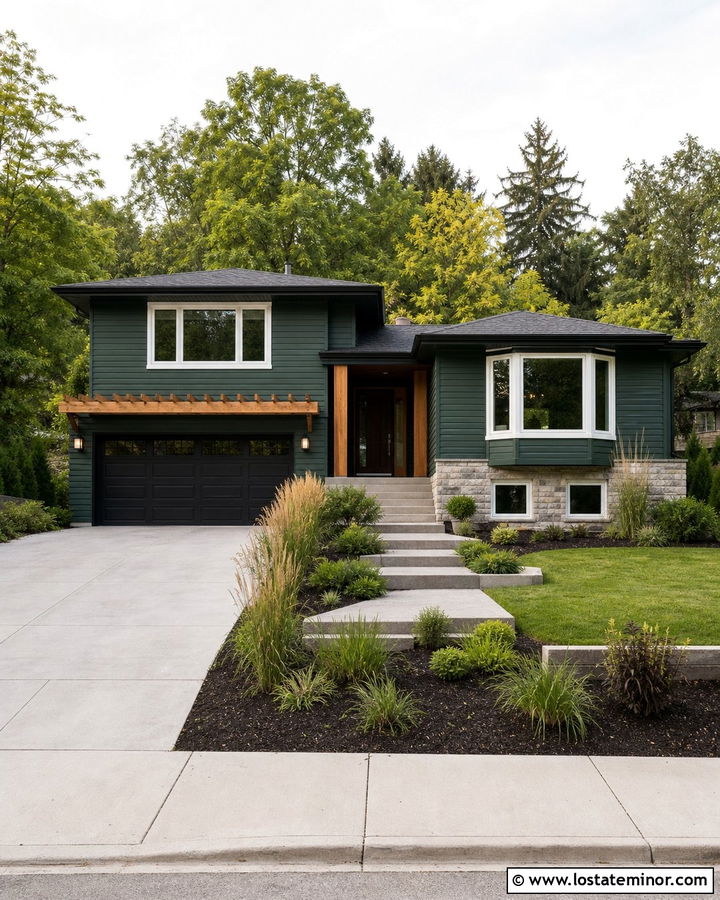
Split-level homes often have prominent garages, making a pergola above the garage door an effective architectural update. Paint the main siding forest green and keep the lower level in warm gray stone or painted brick. Install a shallow cedar pergola above the garage, with brackets and rafters sized to match the width of the door. Repeat cedar at the front entrance to make the garage feature feel connected to the entire facade. Use soft white window trim and a charcoal roof for clean contrast. A modern black garage door can add definition without introducing another color. Finish with a widened walkway, tiered planting beds, and upright grasses that visually connect the different levels of the home.
11. Forest Green Mediterranean House With Timber Pergola
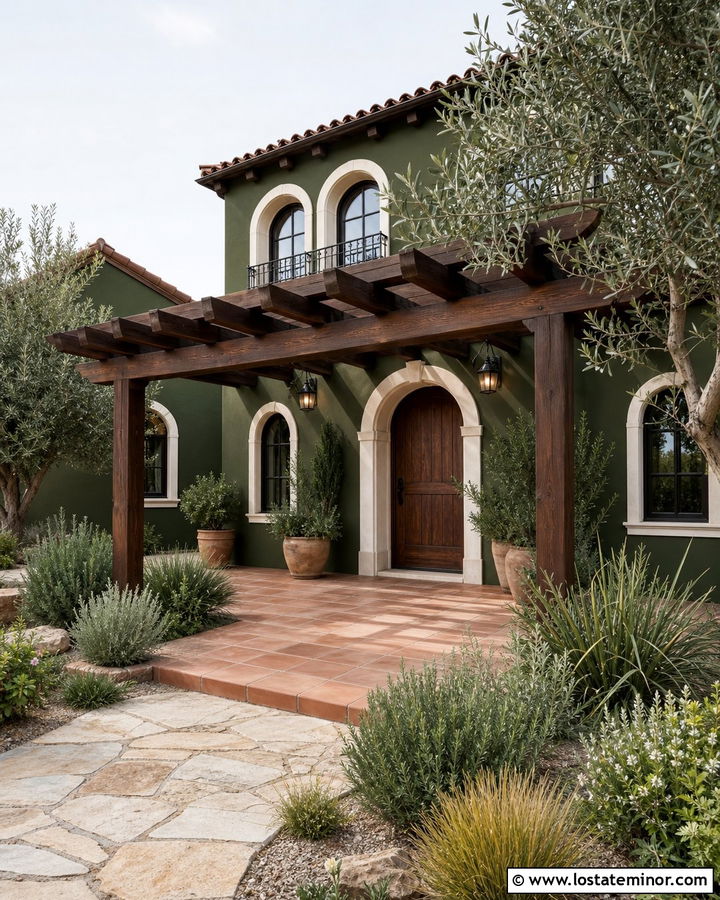
Forest green gives a Mediterranean-inspired house an unusual yet sophisticated garden character. Use the color on smooth stucco or painted masonry, balancing it with warm ivory around arches, windows, and roof edges. A heavy timber pergola over a tiled courtyard provides the strongest architectural feature. Stain the beams a rich chestnut that coordinates with the front door and traditional clay roof tiles. Terracotta paving introduces warmth beneath the shaded area, while black iron lights and railings add definition. Choose drought-tolerant landscaping such as rosemary, olive trees, ornamental grasses, and low flowering plants. The combination feels lush without relying on an overly complicated palette, and the pergola makes the courtyard look like an intentional extension of the house.
12. Forest Green Contemporary House With Louvered Pergola
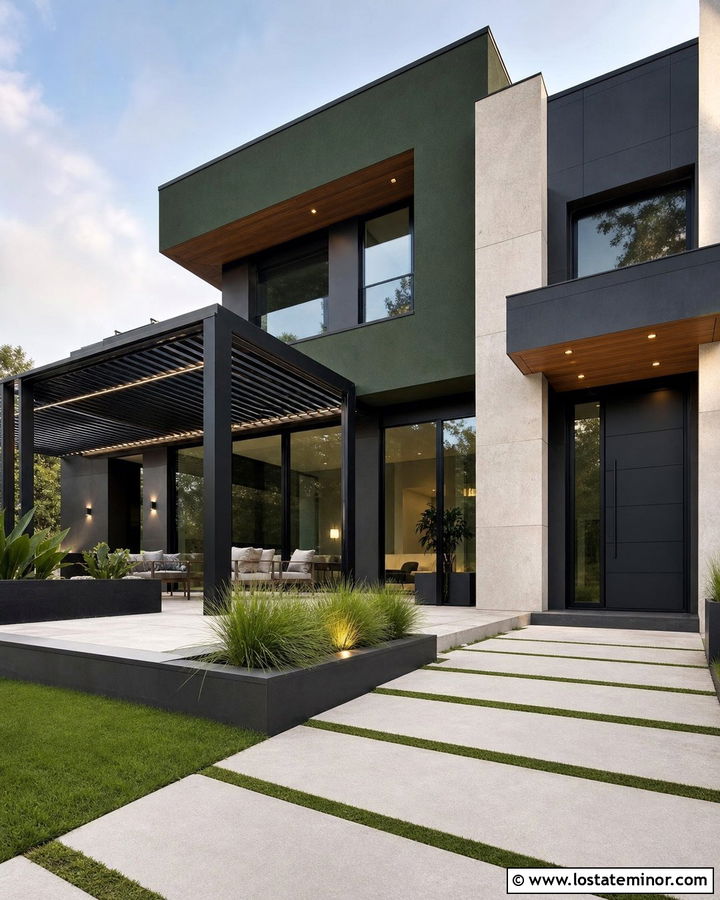
Clean geometry lets forest green become a bold contemporary exterior color. Cover the main volumes in smooth green siding and contrast them with charcoal panels, black window frames, and pale concrete. An attached aluminum pergola with adjustable louvers can extend over the outdoor living area while maintaining the home’s sharp lines. Choose matte black for the pergola so it visually connects with the windows and roof trim. Warm wood soffits and a matching pivot door keep the exterior from appearing cold. Large-format pavers, rectangular planters, and structured grasses continue the modern theme. When open, the narrow louvers create graphic shadows; when closed, they give the patio a more sheltered and finished appearance.
13. Forest Green Victorian House With Cream Pergola
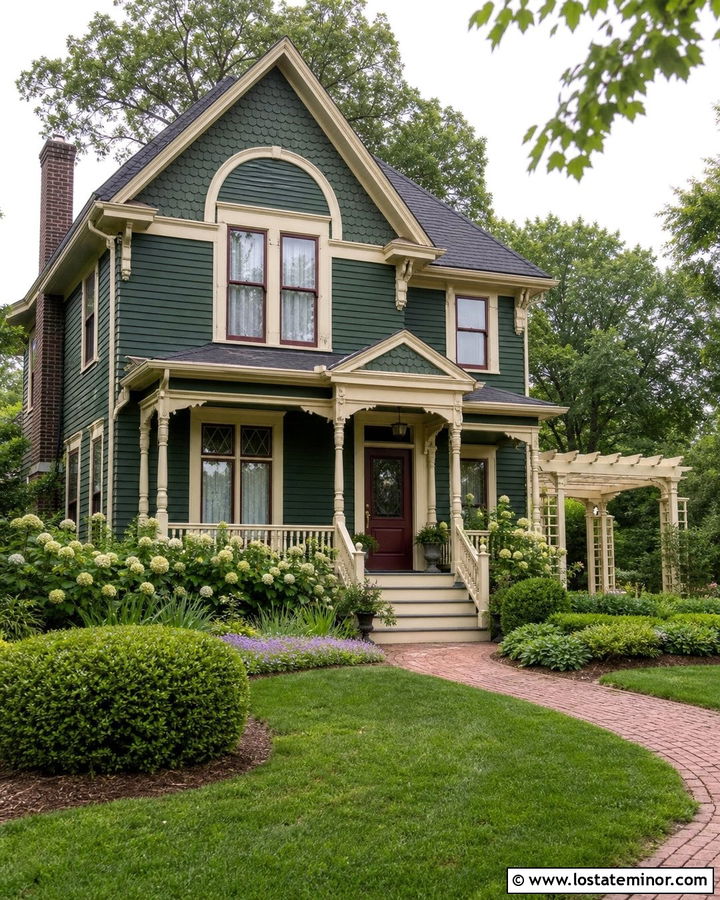
A Victorian exterior can carry forest green beautifully when the decorative details are carefully edited. Use the green across clapboard or patterned shingles, then highlight brackets, window trim, and porch details with warm cream. A cream-painted pergola beside the porch can create a garden seating area without overpowering the ornate facade. Introduce burgundy sparingly on the front door or selected trim bands. A dark gray roof gives the multicolor scheme a stable anchor. Decorative post bases and gently shaped rafter ends can help the pergola relate to the period architecture. Finish with brick paths, clipped shrubs, and flowering perennials. The overall look remains historically inspired but avoids the clutter of too many competing accent colors.
14. Forest Green Cabin With Rustic Timber Pergola
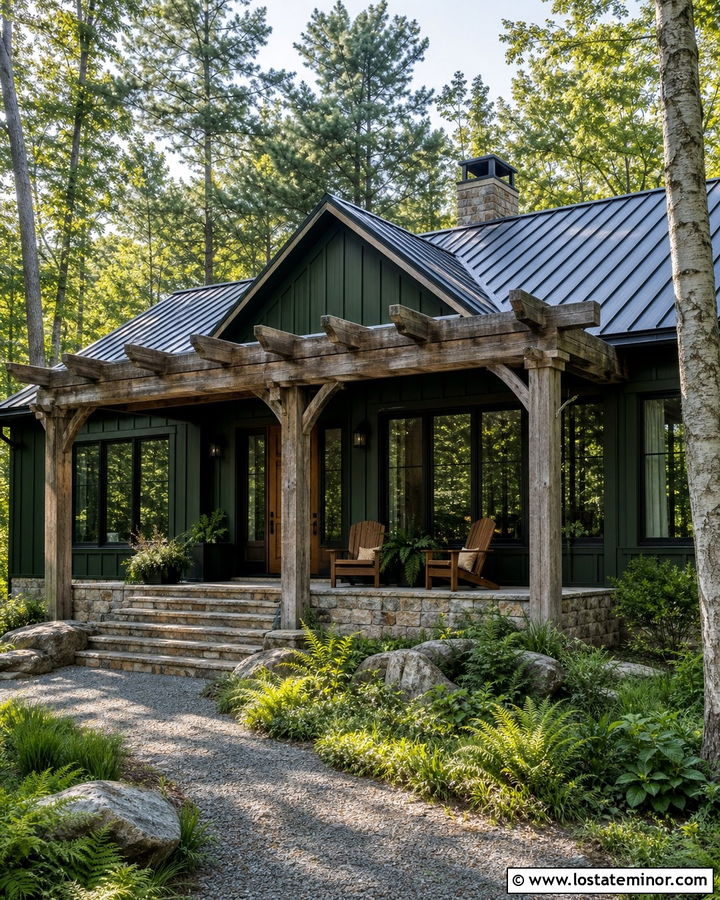
Rough timber, fieldstone, and forest green siding create a cabin exterior that feels connected to a wooded site. Place a thick-posted pergola over a stone terrace facing the main view. Its beams can remain naturally weathered or receive a semitransparent brown stain. Use deep forest green on board-and-batten siding, dark bronze on the windows, and muted black on the metal roof. A natural wood door provides a warm focal point without looking overly polished. Extend fieldstone from the foundation to selected column bases for continuity. Ferns, native grasses, and woodland ground cover work better than formal beds here. The pergola should feel sturdy and straightforward, supporting the cabin’s relaxed, durable character.
15. Forest Green Coastal House With White Pergola
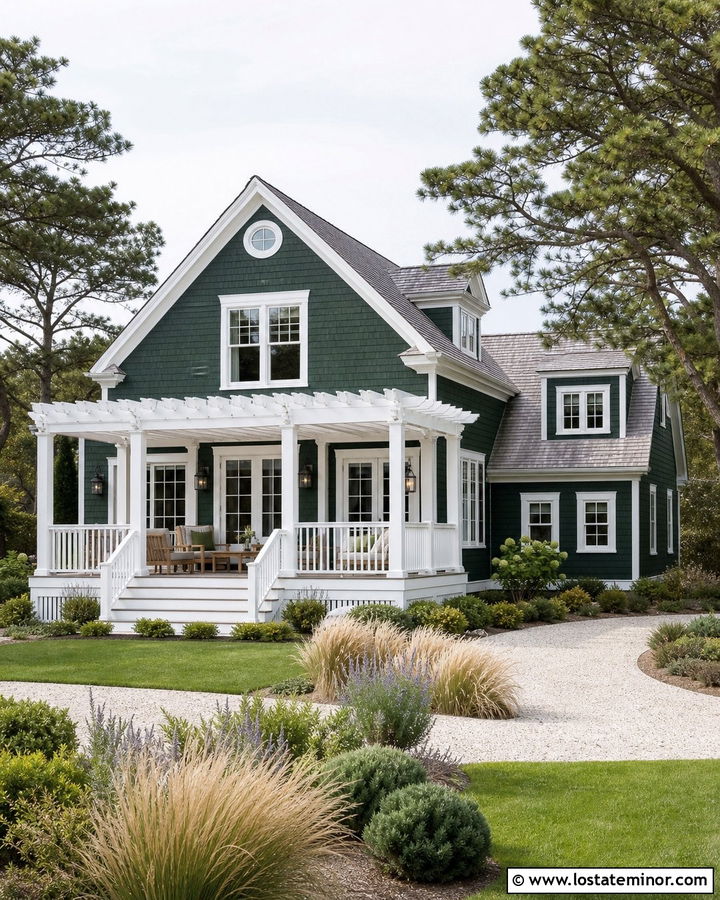
Forest green offers a richer alternative to the pale blues commonly used on coastal homes. Pair green shingle siding with crisp white window trim, railings, and a broad white pergola. Position the structure over a raised deck or patio where it can frame outdoor dining without obstructing water or garden views. Use a light weathered-gray roof to keep the top of the house visually airy. Natural teak furniture and rope-inspired accents add warmth beneath the pergola. Gravel paths, ornamental grasses, and salt-tolerant shrubs support the casual landscape. The white pergola brings brightness to the darker exterior, while the strong green siding helps the house stand out against sand-colored paving and pale coastal surroundings.
16. Forest Green House With Red Brick And Cedar Pergola
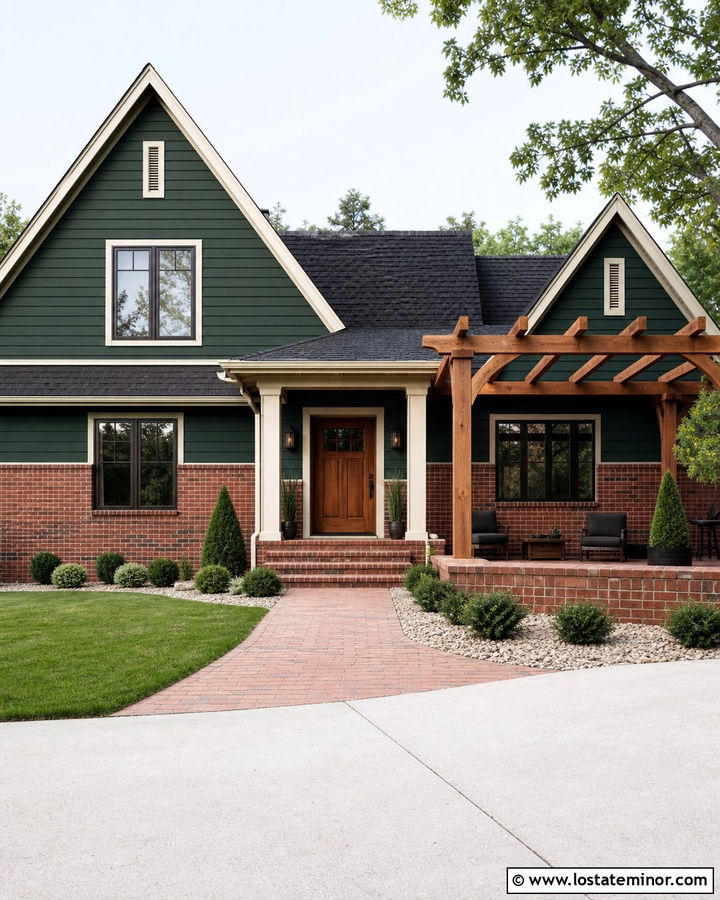
Existing red brick can become an asset beside forest green siding. Use the green on upper gables or newer additions, allowing the brick to remain visible on the lower facade. A cedar pergola provides a bridge between the cool green and warm masonry. Place it over a brick patio, attached to the rear elevation or positioned beside a family-room entrance. Cream trim is softer than stark white and relates naturally to lighter tones in the mortar. Choose a charcoal roof and dark bronze fixtures to ground the palette. Repeat cedar on the front door, porch ceiling, or window boxes. Simple green shrubs and pale gravel borders help the brick, siding, and pergola read as one coordinated exterior.
17. Forest Green House With Stone Patio Pergola
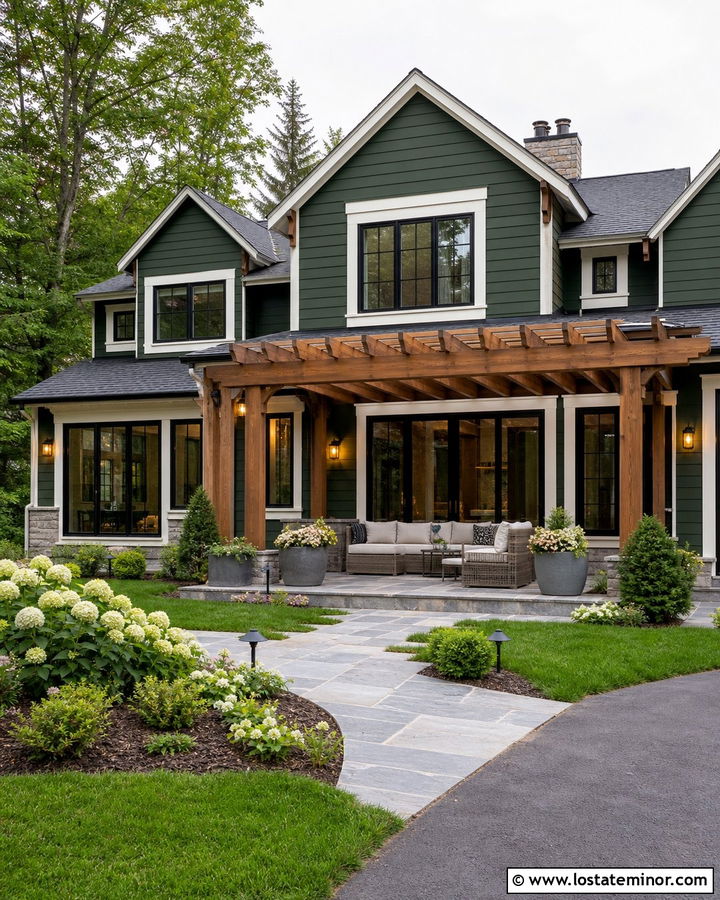
Cool gray stone gives forest green siding a polished, substantial base. Use irregular fieldstone around the foundation, chimney, or selected porch columns, then carry the same material into a patio beneath the pergola. A medium-toned wood structure provides enough warmth to separate the green house from the gray paving. Keep the trim soft white and use charcoal for the roof, gutters, and window frames. Large glass doors can visually connect the interior with the pergola-covered entertaining space. Add deep seating, neutral outdoor fabric, and oversized planters rather than numerous small accessories. Layered evergreen planting and pale flowering shrubs frame the complete exterior while allowing the contrasting textures of siding, stone, and wood to remain clearly visible.
18. Forest Green House With Side Yard Pergola
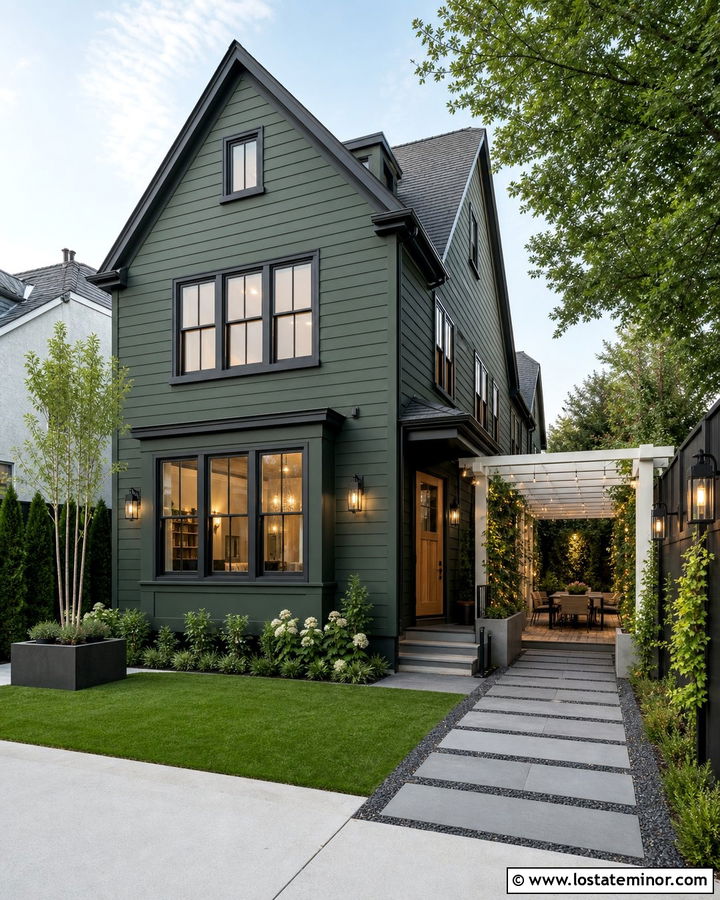
A narrow side yard can become a purposeful outdoor room with a slim attached pergola. Paint the house forest green, then use a warm white pergola to brighten the confined space. Narrow rafters and simple posts prevent the structure from feeling heavy. A path of rectangular bluestone pavers can lead from the driveway to a small dining area near the backyard. Add black-framed windows and a natural wood side door for definition and warmth. Vertical climbing plants are useful where wide planting beds are not possible, but their supports should remain clear of siding and drainage features. Wall-mounted lighting, compact planters, and a narrow bench complete the design without making the passage difficult to navigate.
19. Forest Green Townhouse With Rooftop Pergola
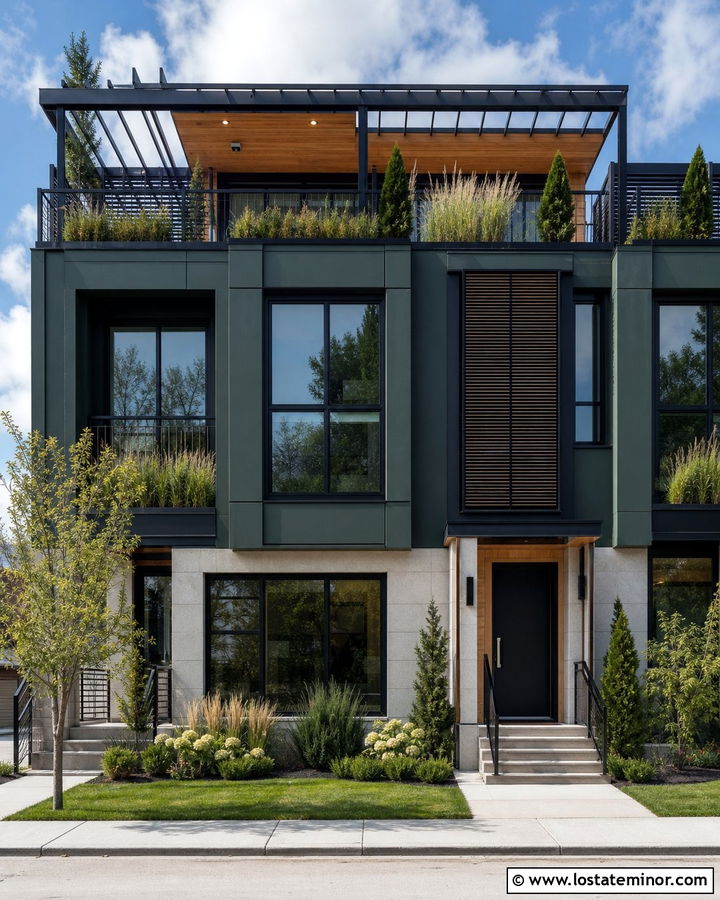
A rooftop pergola can give a forest green townhouse valuable outdoor living space while strengthening its contemporary profile. Use deep green siding or painted brick across the main facade, balanced by black windows and light stone at street level. On the roof deck, install a slender black aluminum pergola that remains visually connected to the window frames below. Warm wood decking and privacy screens soften the metal structure. Keep furniture neutral so the exterior palette stays clear from the street. Planters filled with grasses and compact evergreens add greenery without creating a crowded rooftop. A simple railing and carefully aligned pergola posts maintain clean proportions, helping the upper structure look like part of the original architecture.
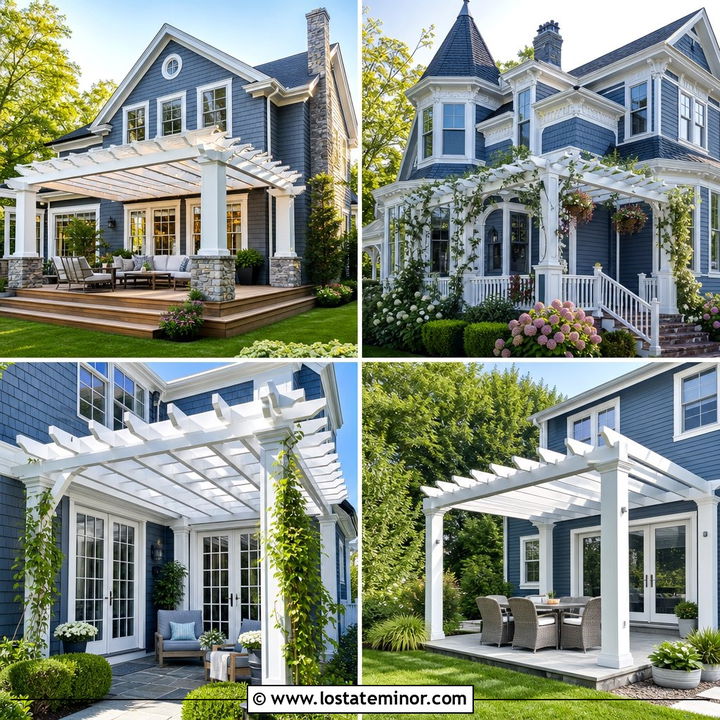
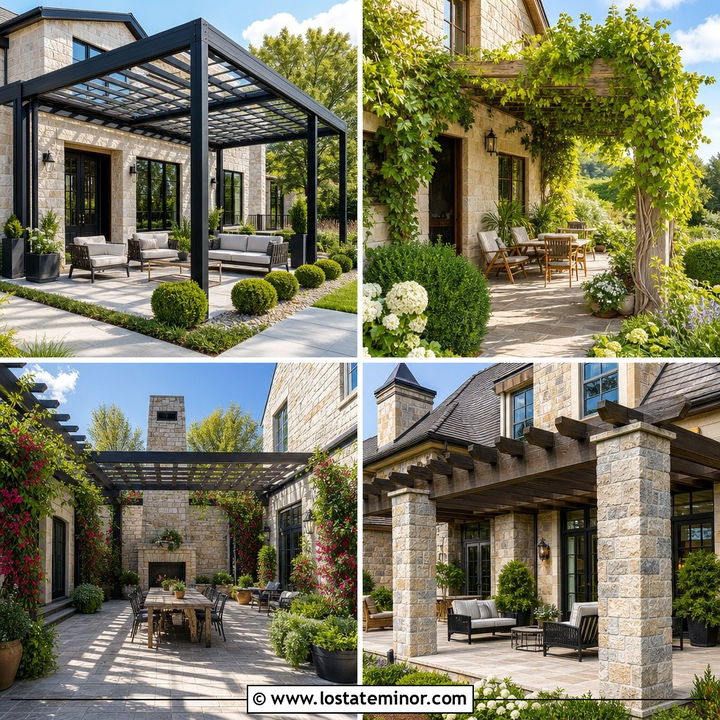
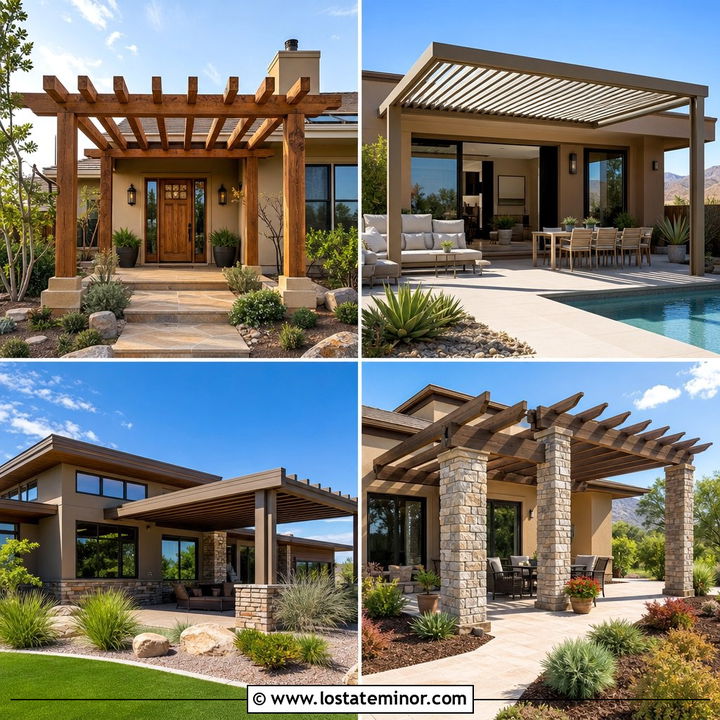
20. Forest Green House With Poolside Pergola
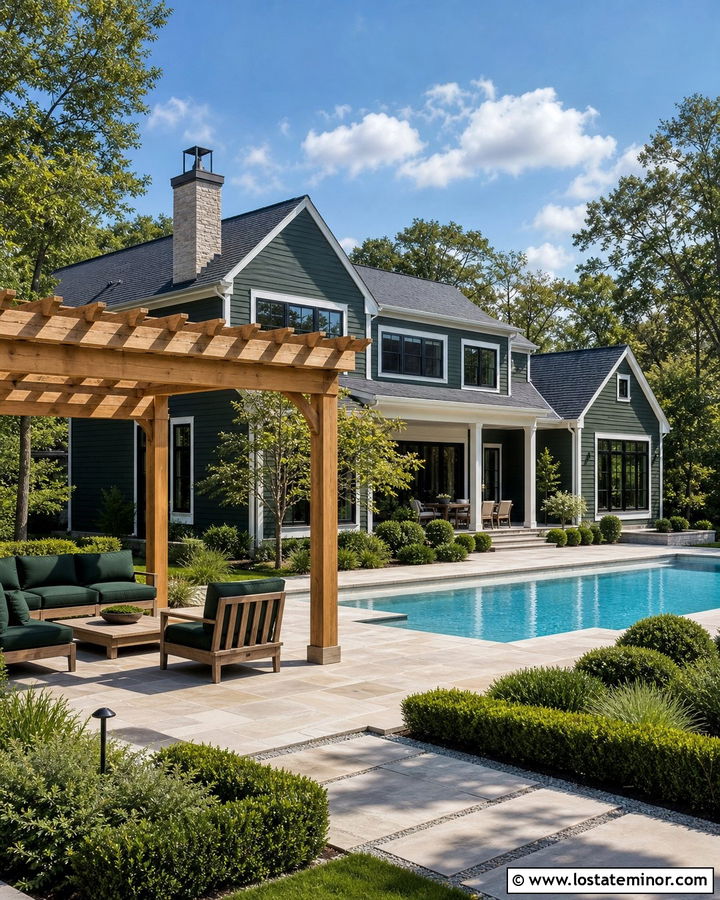
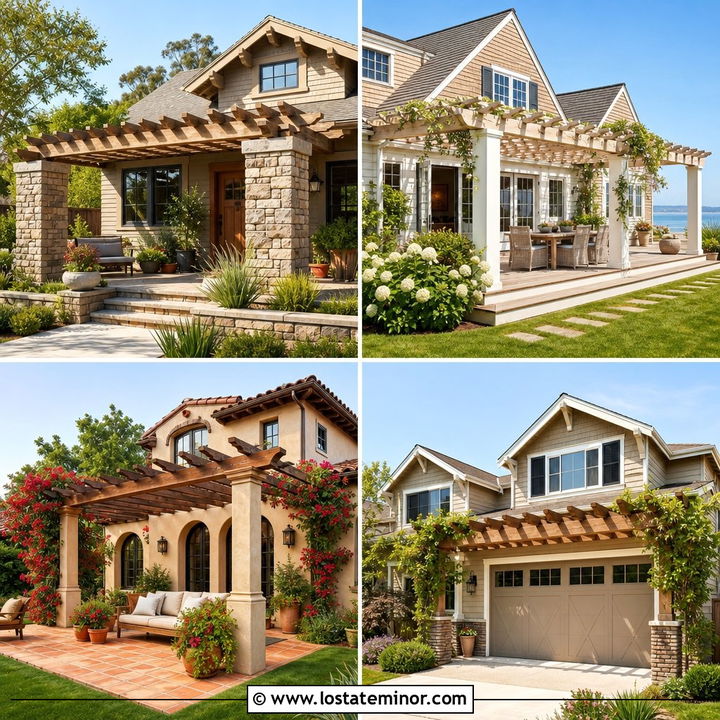
A freestanding poolside pergola can echo a forest green house without needing to match it exactly. Use natural cedar for the structure, then incorporate forest green outdoor cushions or planters to connect it with the siding. The main house can feature warm white trim, black windows, and a pale stone patio that continues around the pool. Choose a dark gray roof so the green remains the dominant facade color. Position the pergola where it frames the complete house view rather than blocking important windows or entrances. Low hedges, ornamental grasses, and a few shade trees soften the hardscape. This coordinated layout makes the pool, pergola, patio, and house feel like one planned outdoor environment.
21. Forest Green House With Garage Door Pergola
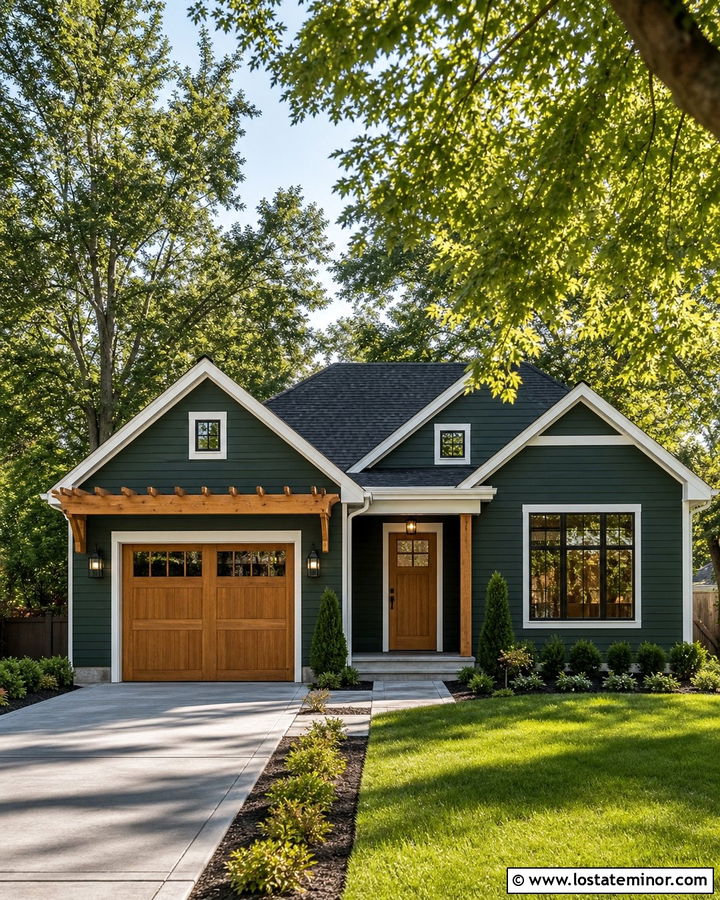
A small pergola above the garage can add dimension to a flat suburban facade. Paint the siding forest green and choose a warm wood garage door with simple rectangular panels. Mount a matching cedar pergola just above the opening, using strong brackets and evenly spaced rafters. Repeat the wood tone on the front door or porch ceiling so attention does not settle entirely on the garage. Soft white trim and a charcoal roof keep the remaining palette straightforward. Add black sconces on both sides of the garage for symmetry. A clean driveway, low planting beds, and a defined walkway help the complete front elevation feel organized, balanced, and welcoming from the street.
22. Forest Green House With Entry Walkway Pergola
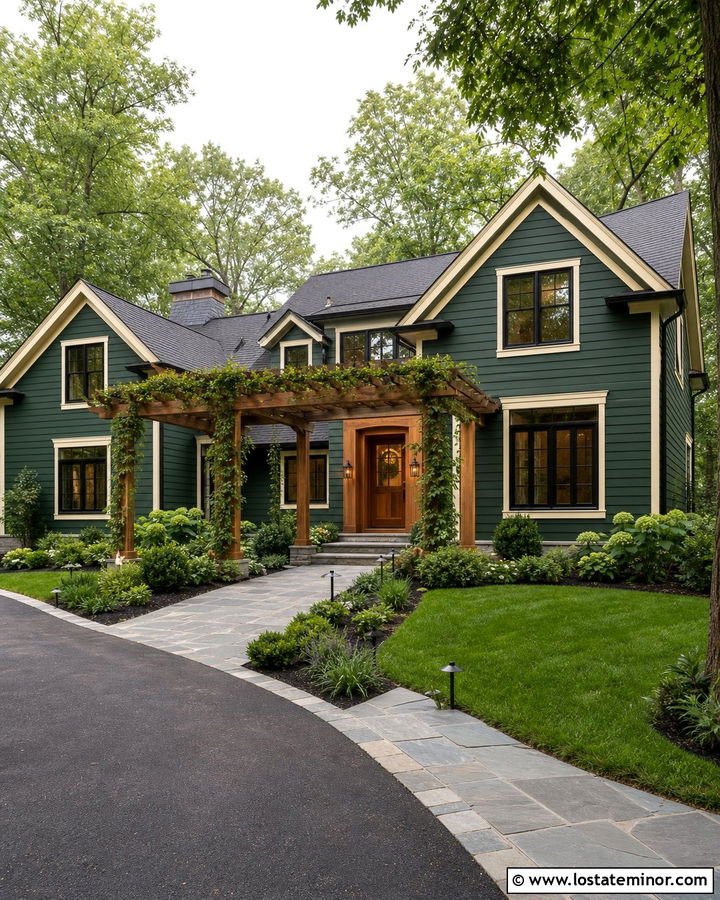
A pergola-covered walkway creates an inviting approach to a forest green home. Begin the structure near the sidewalk or driveway and guide it toward the front entrance with a series of evenly spaced posts. Natural cedar looks warm and informal, while white-painted wood creates a brighter, more traditional result. Use cream trim around the forest green facade and repeat the pergola color on the front door surround. Brick or bluestone paving gives the walkway a durable visual foundation. Keep climbing plants controlled so the path remains open and the entrance stays easy to see. Low garden beds, pathway lighting, and matching planters strengthen the sense of arrival without competing with the architectural rhythm of the overhead beams.
23. Forest Green House With Retractable Canopy Pergola
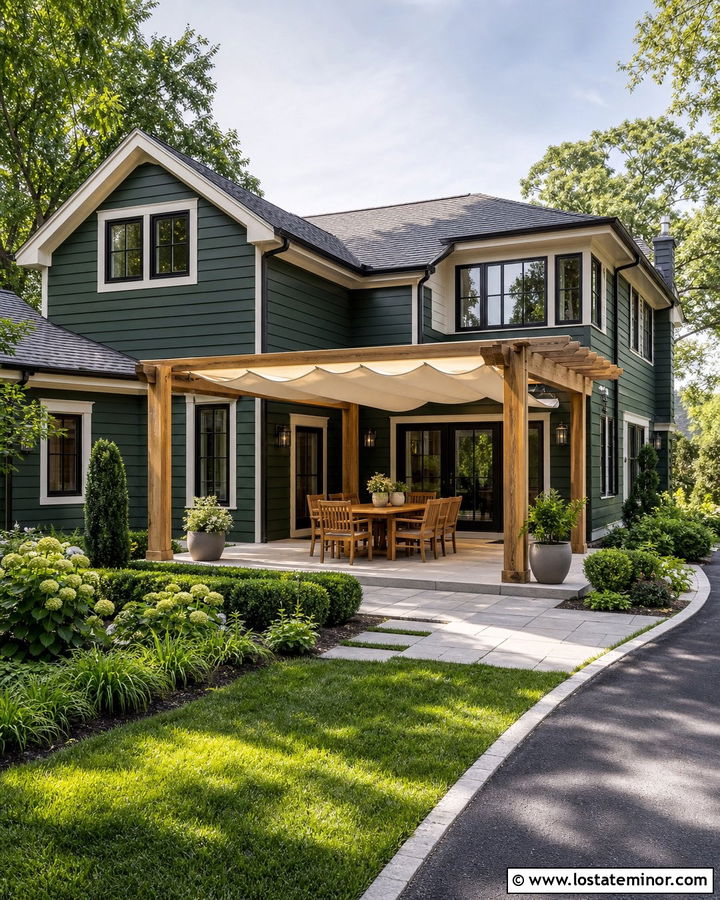
A fabric canopy makes a pergola more flexible while introducing another layer to the exterior palette. Pair forest green siding with a natural wood pergola and a retractable canopy in warm beige or soft ivory. The light fabric reflects brightness beneath the structure and prevents the deep green walls from making the patio feel enclosed. Use creamy trim, a medium-gray roof, and black-framed patio doors for a balanced scheme. Neutral paving and teak furniture continue the warm materials without adding unnecessary colors. When the canopy is retracted, the exposed rafters maintain an open look. When extended, it creates a clearly defined dining or lounging zone that still feels visually connected to the house.
24. Small Forest Green House With Narrow Pergola
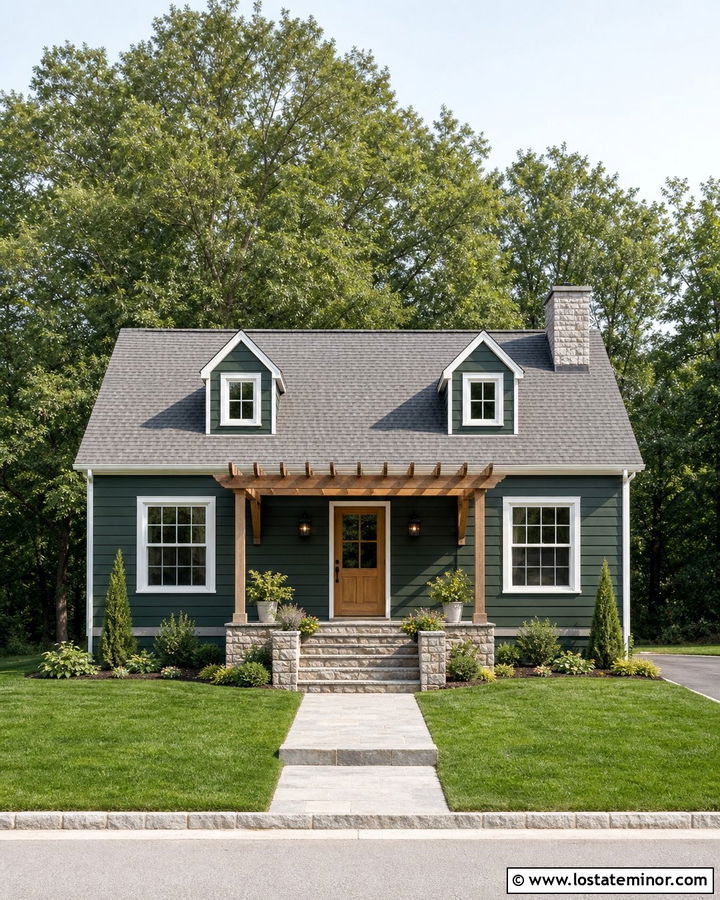
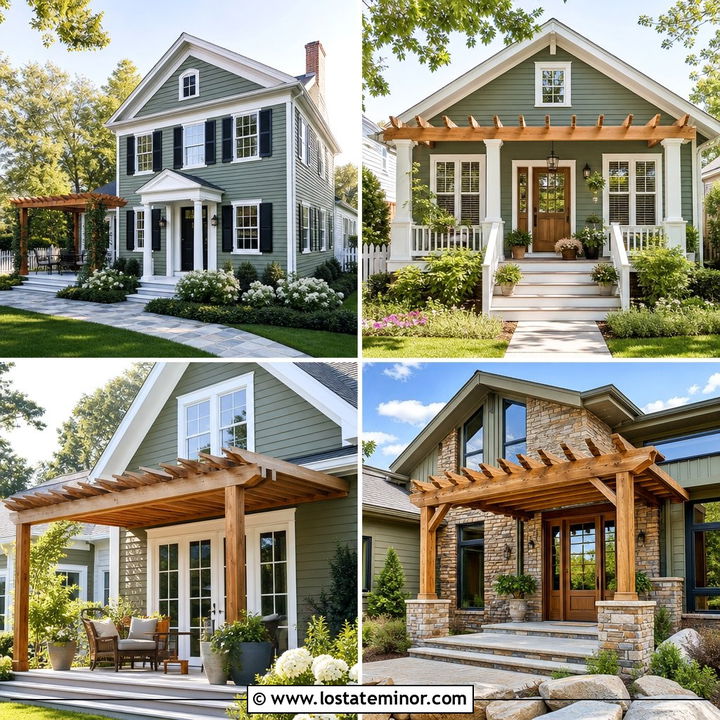
Limited space does not require giving up the architectural impact of a pergola. On a small forest green house, install a narrow structure that covers only the entry terrace or one side of the facade. Use slim cedar posts and shallow rafters so windows remain open and the home does not look overwhelmed. Warm white trim visually enlarges the exterior, while a natural wood door connects with the pergola. A simple gray roof and black lanterns provide quiet contrast. Choose one paving material for the steps, walkway, and terrace to reduce visual clutter. Compact shrubs and upright plants can frame the house without hiding it, helping the small property appear cohesive, usable, and thoughtfully designed.
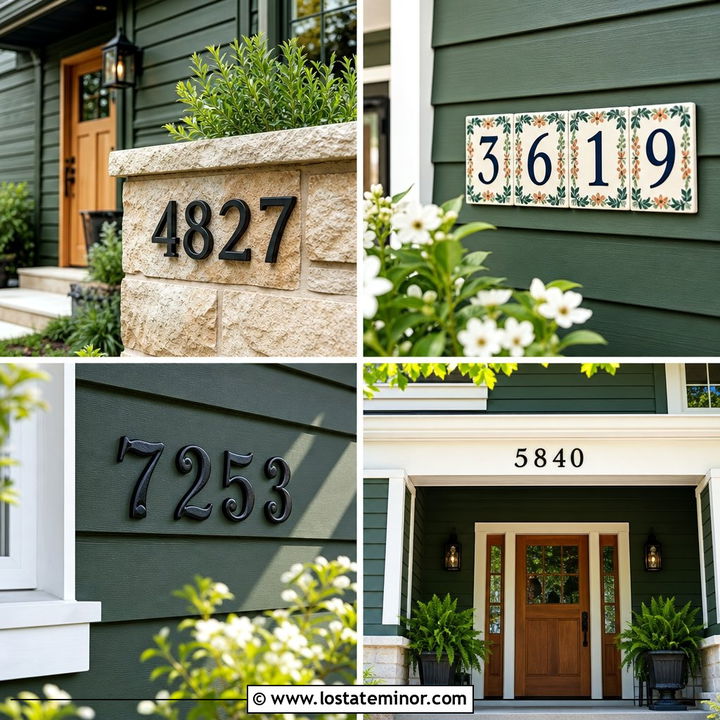
25. Forest Green House With Corner Pergola
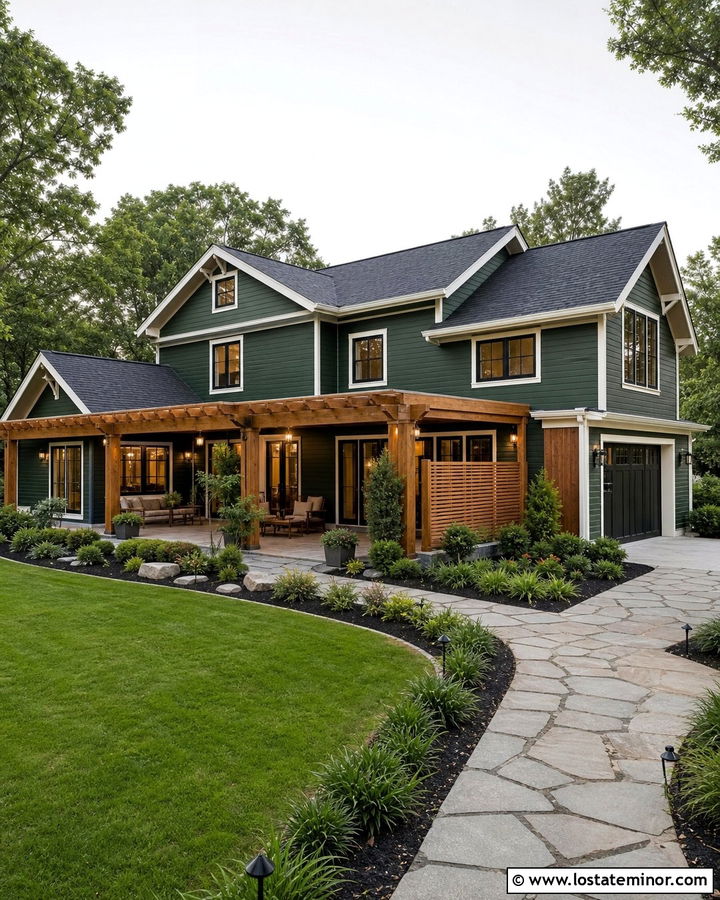
An L-shaped or corner pergola can connect two sides of a house while creating a sheltered transition between outdoor zones. Use forest green siding as the consistent background, then choose stained cedar for the beams and posts. The pergola might wrap from a rear dining area toward a side garden or link the kitchen doors with a deck. Warm white trim and black window frames give the facade both softness and definition. Repeat the cedar on privacy slats along the outer corner, leaving the remaining sides open to the yard. Stone paving, a built-in bench, and layered planting make the space feel complete. The corner layout also helps break up a broad, uninterrupted wall.
26. Forest Green House With Two Pergolas
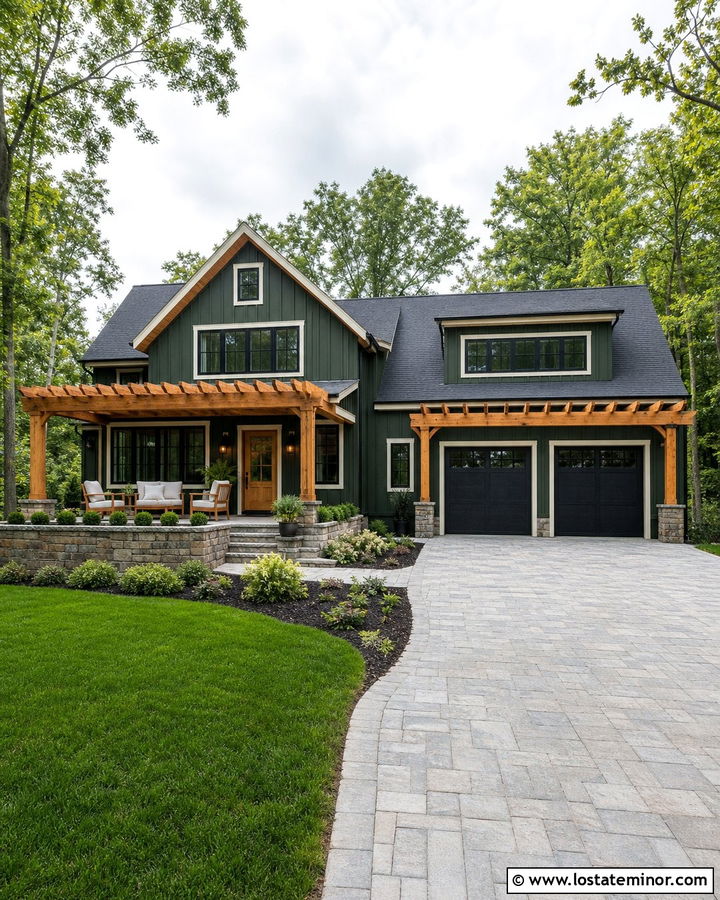
Two pergolas can create balance on a larger forest green exterior when their size and materials remain consistent. Place one above the main patio and a smaller version over the garage, side entrance, or garden walkway. Use natural cedar for both structures, repeating the wood on the front door and selected soffits. Forest green board-and-batten siding, cream trim, black windows, and a charcoal roof form a controlled background. The larger pergola can hold dining furniture, while the smaller one serves primarily as an architectural accent. Connect the areas with matching stone pavers and coordinated landscaping. Repeating beam spacing, post dimensions, and stain color ensures the two structures feel intentional rather than like separate projects completed at different times.
27. Forest Green House With Budget Wood Pergola
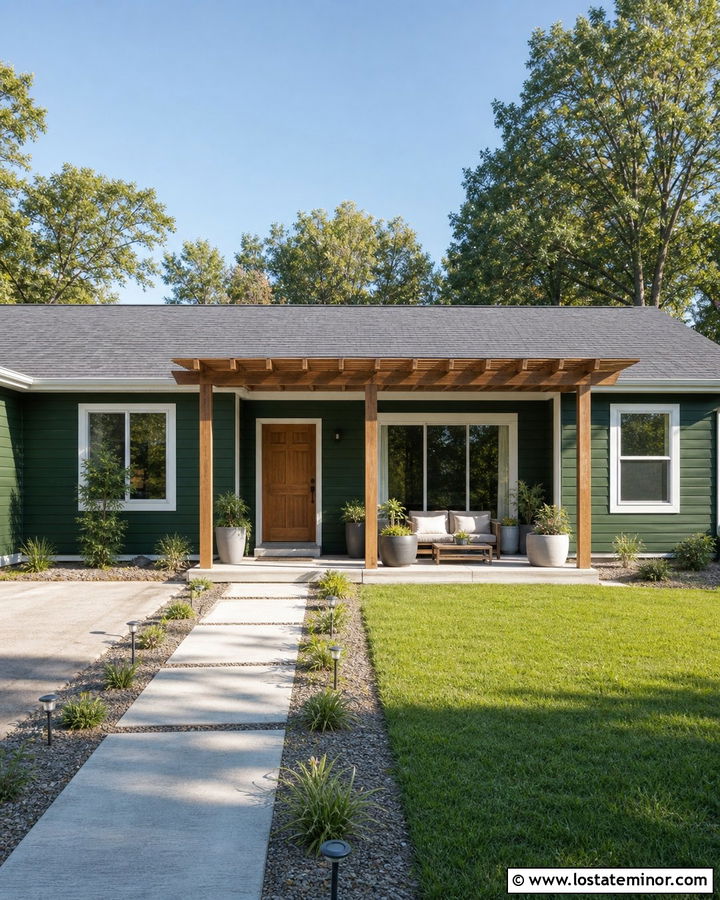
A straightforward pressure-treated wood pergola can deliver strong curb appeal without ornate construction. Pair it with forest green lap siding, white trim, and a medium-gray shingle roof. Use a simple rectangular design with square posts, exposed rafters, and minimal decorative cuts. Once the wood has properly dried, apply a warm cedar-toned exterior stain to give the structure a more finished appearance. Position it over an existing concrete patio to avoid replacing usable hardscape. Add inexpensive gravel borders, large planters, and solar path lighting for a complete setting. Repeating the wood tone on a basic front door or window box helps integrate the pergola. Clean proportions matter more than costly embellishments in this practical exterior scheme.
28. Forest Green House With Outdoor Kitchen Pergola
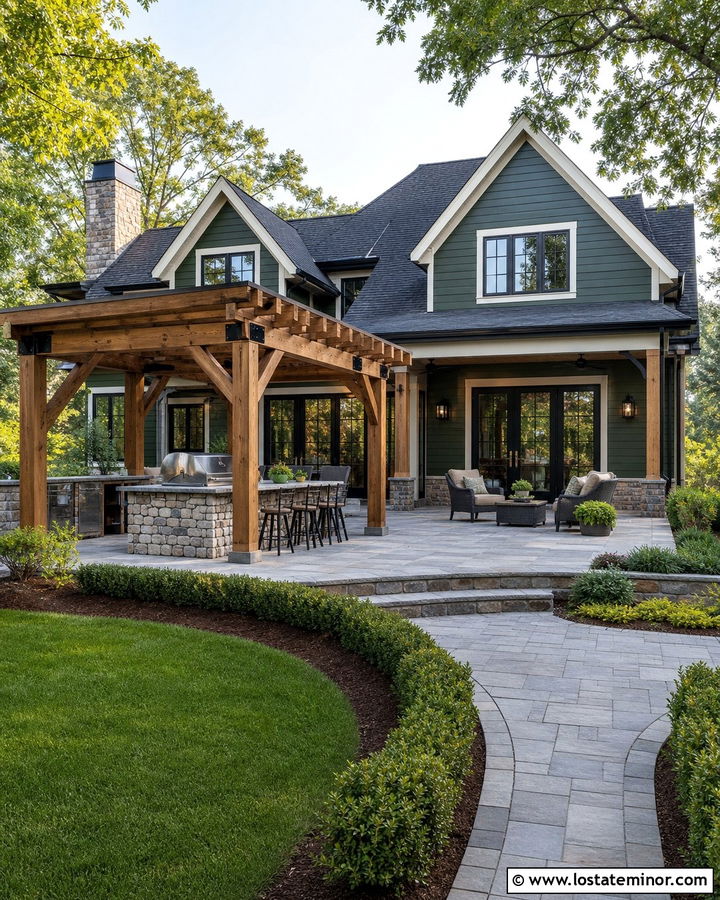
An outdoor kitchen pergola works best when it looks connected to the architecture instead of resembling a separate backyard installation. Use forest green siding on the house, then build the pergola from stained timber with black metal connectors. Place a stone or brick cooking island beneath it, matching masonry already used on the foundation or chimney. Warm white trim, black patio doors, and a charcoal roof create a polished exterior backdrop. Include open circulation around the cooking and dining zones so the structure does not feel crowded. Wide stone pavers, low evergreen hedges, and a nearby lawn keep the setting balanced. The combination creates a substantial entertaining area while preserving a clear view of the full facade.
29. Forest Green House With Desert Landscape Pergola
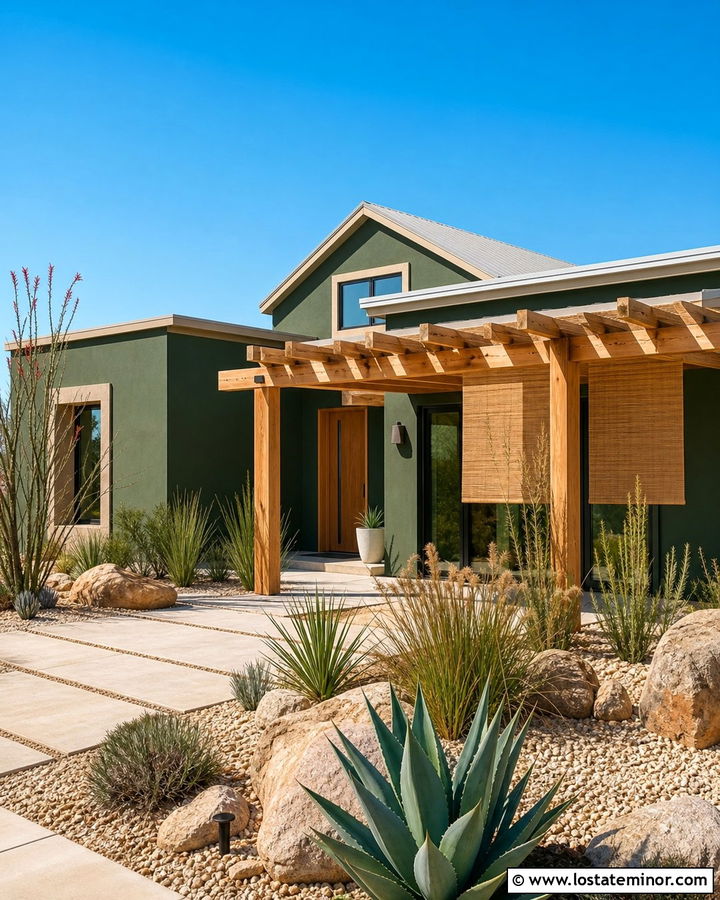
Forest green can look striking in a dry landscape when it is balanced with pale stone and sun-warmed wood. Apply the green to smooth siding or stucco, then use sand-colored trim and a cedar pergola over the front or rear patio. A light metal roof helps reflect brightness and keeps the dark exterior visually balanced. Choose limestone gravel, large concrete pavers, and weathered boulders around the foundation. Agave, yucca, ornamental grasses, and other climate-appropriate plants create texture without requiring a lush lawn. Keep the pergola open and streamlined, with an optional woven shade panel for stronger sun control. The completed palette feels earthy, distinctive, and naturally suited to an arid setting.
30. Forest Green House With Four Season Pergola
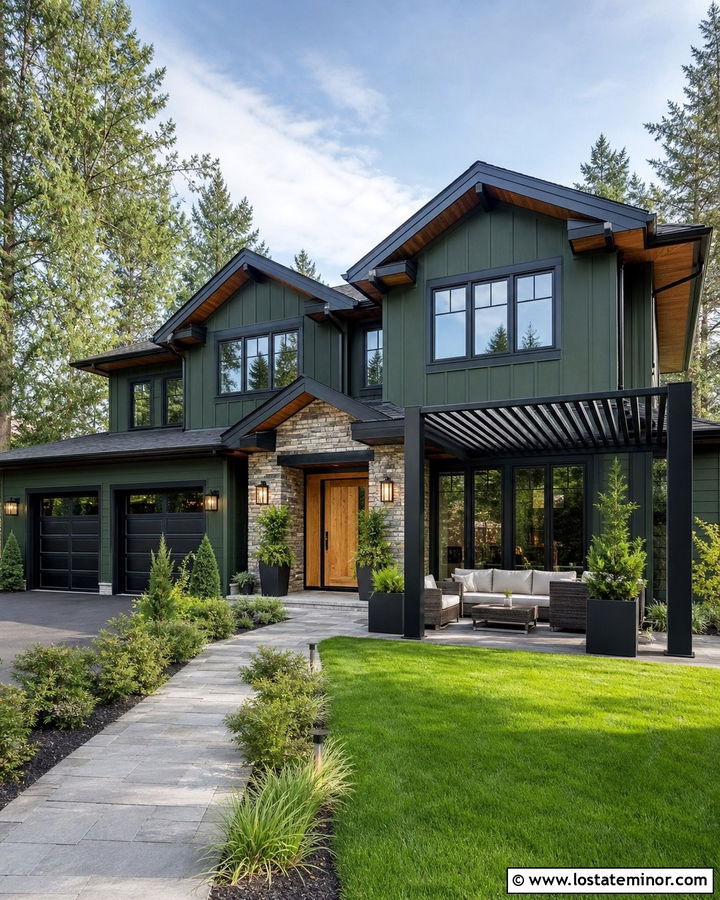
For year-round usefulness, pair a forest green house with a pergola designed for changing weather. A black aluminum structure with adjustable louvers creates a clean contrast against the green siding and coordinates with black windows and gutters. Add warm wood to the front door, soffits, or one accent wall so the scheme does not feel overly dark. Cream trim can outline the roof and major openings. Position the pergola beside large patio doors and continue the interior flooring tone with weather-resistant stone pavers outside. Integrated drainage should be handled as part of the structure rather than treated as an afterthought. Evergreen planting, movable planters, and durable neutral furniture complete a polished outdoor area suited to multiple seasons.
Conclusion:
The strongest forest green exteriors treat the pergola as part of a complete architectural palette. Wood adds warmth, white creates freshness, and black gives the house a sharper modern edge. Brick, stone, roofing, doors, and landscaping should repeat these colors in controlled amounts. Before choosing a design, consider the home’s proportions, available patio space, sun exposure, drainage, and local construction requirements. A compact entry pergola can be just as effective as a large outdoor entertaining structure when its scale fits the facade. Use these 30 Forest Green House Design With Pergola Ideas to create a cohesive exterior that feels distinctive, comfortable, and naturally connected to its surroundings.

Related posts: