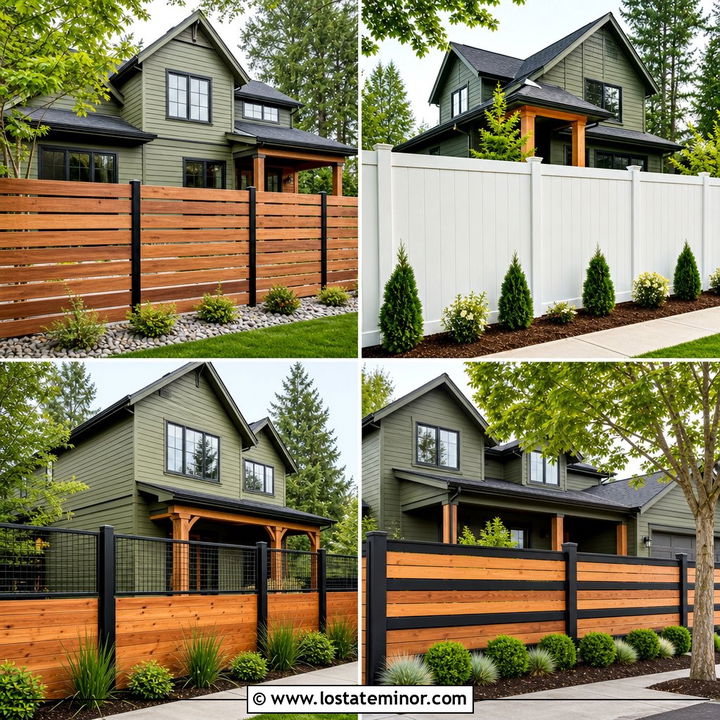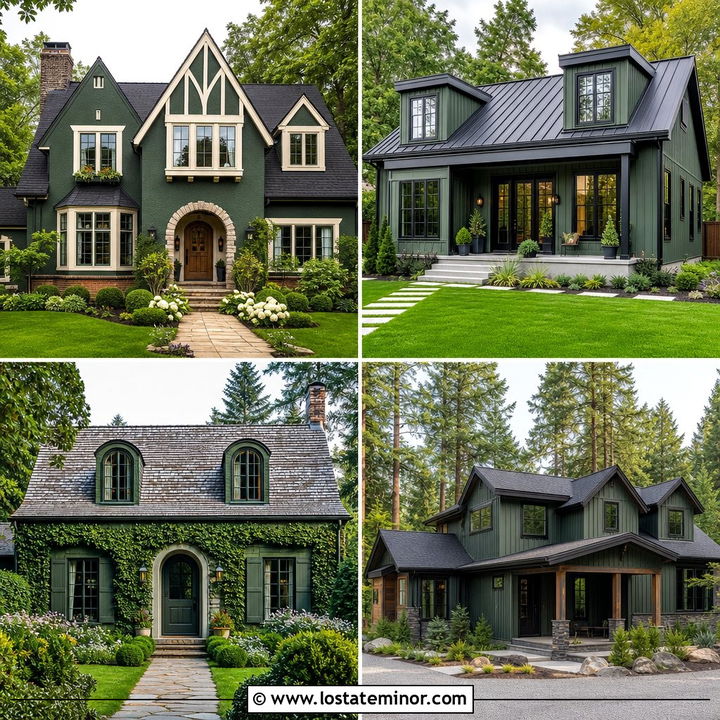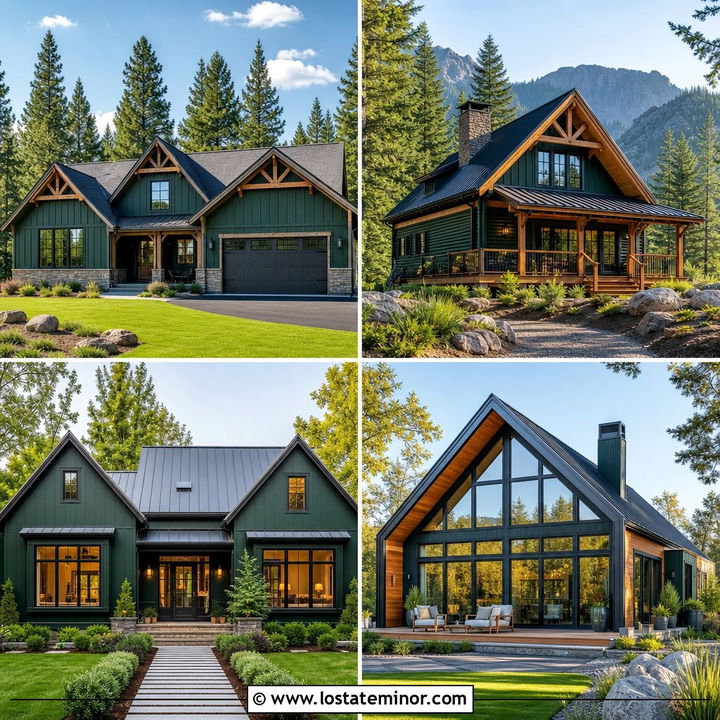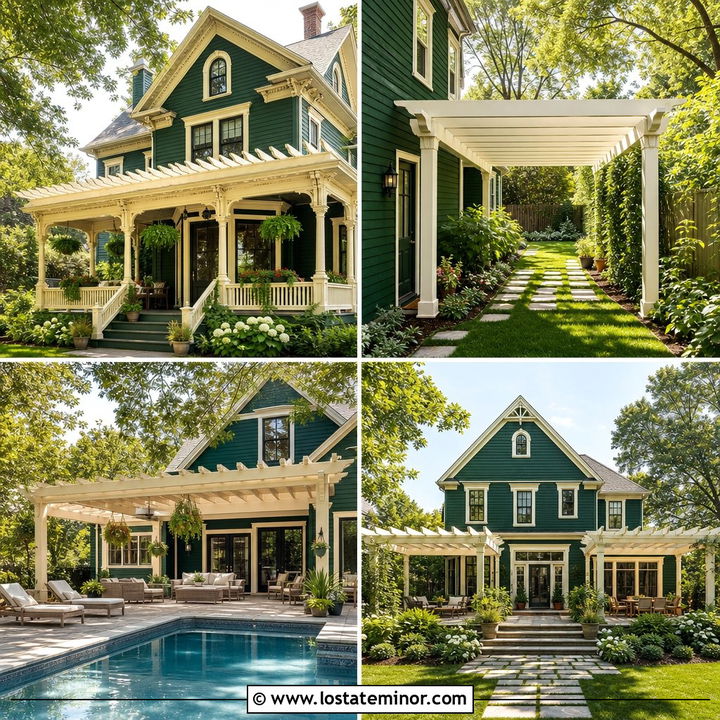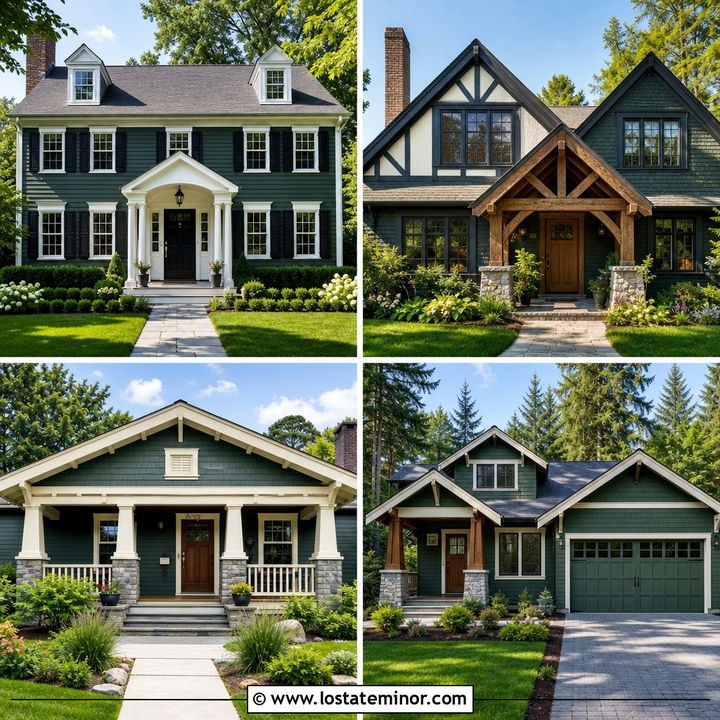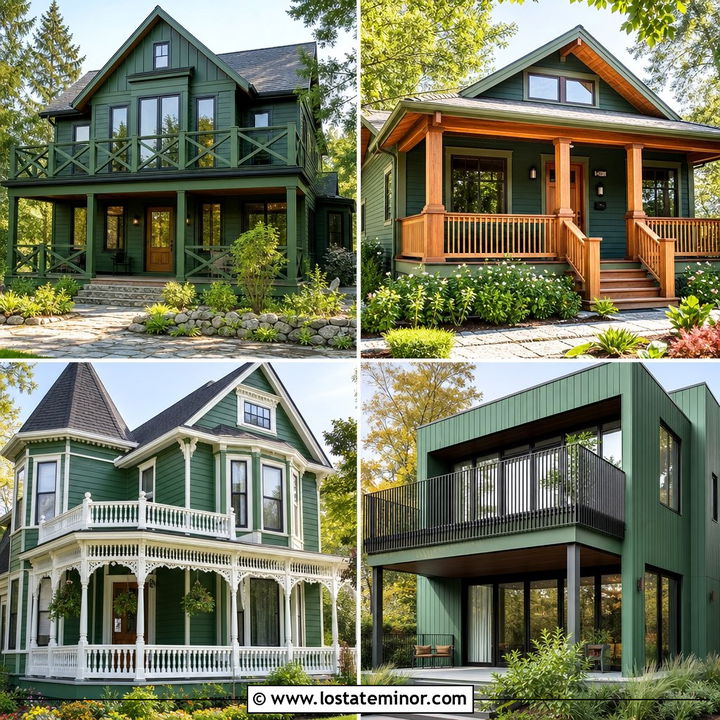
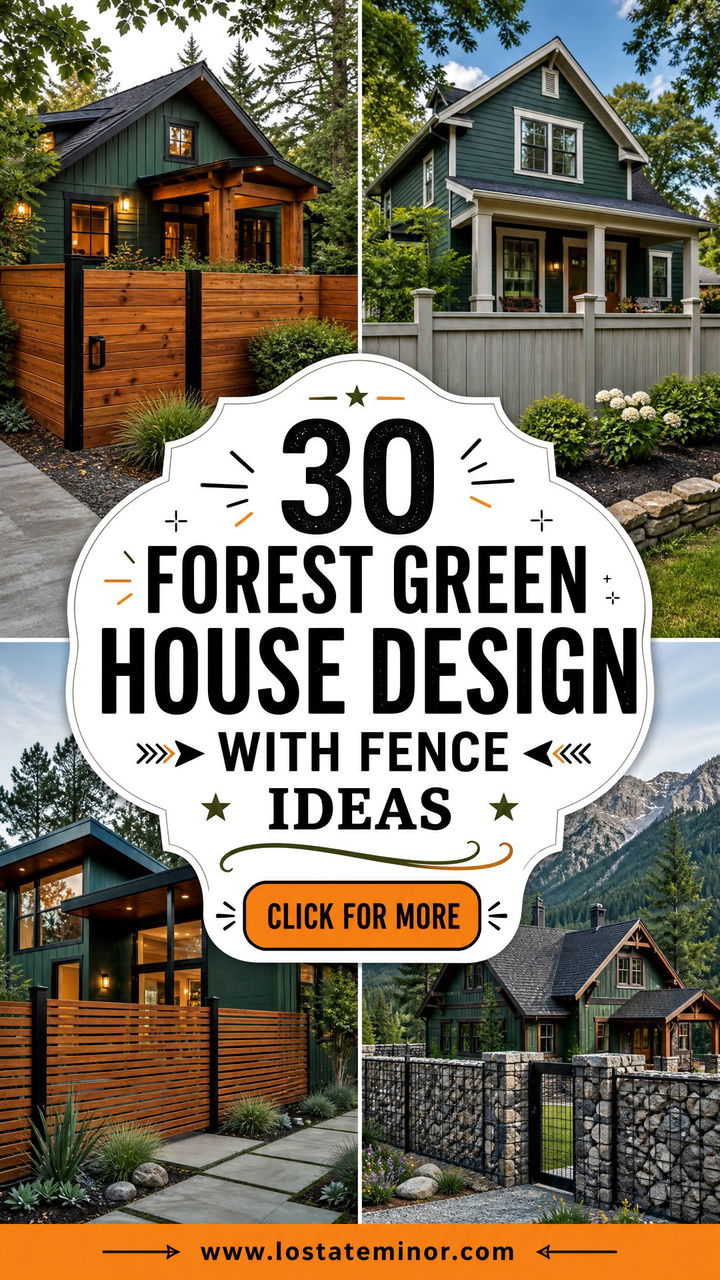
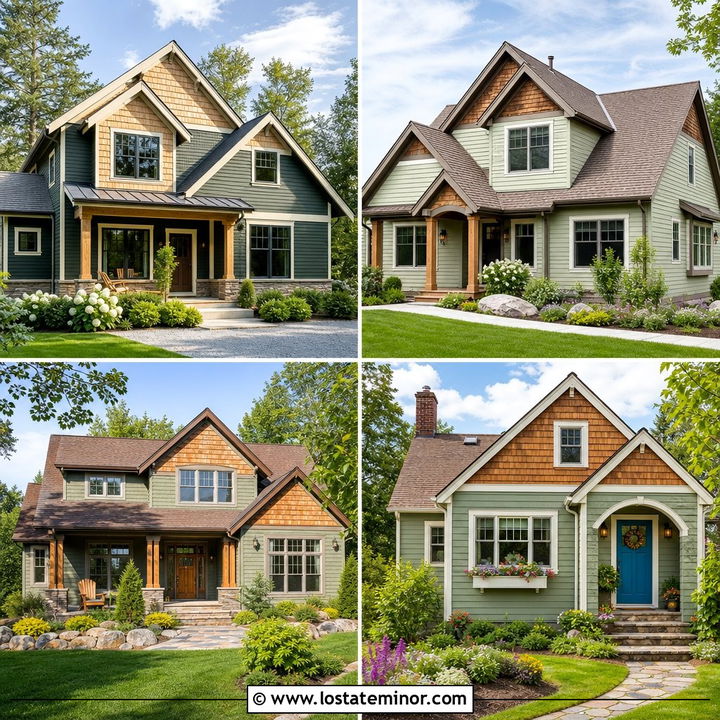
Forest green gives a home a grounded, welcoming look that feels especially natural beside lawns, mature trees, stonework, and warm wood. The right fence makes that rich exterior color look intentional rather than overly dark. White fencing creates crisp contrast, cedar adds warmth, and black metal produces a cleaner modern edge. Current exterior inspiration frequently combines deep green siding with white trim, wood accents, stone, and dark garden boundaries, showing how versatile the color can be across architectural types. () The key is coordinating the fence with the roof, trim, entry, and landscaping instead of treating it as a separate feature. Below, you will find complete curb-appeal schemes in these 30 Forest Green House Design With Fence Ideas.
1. Forest Green House With White Picket Fence
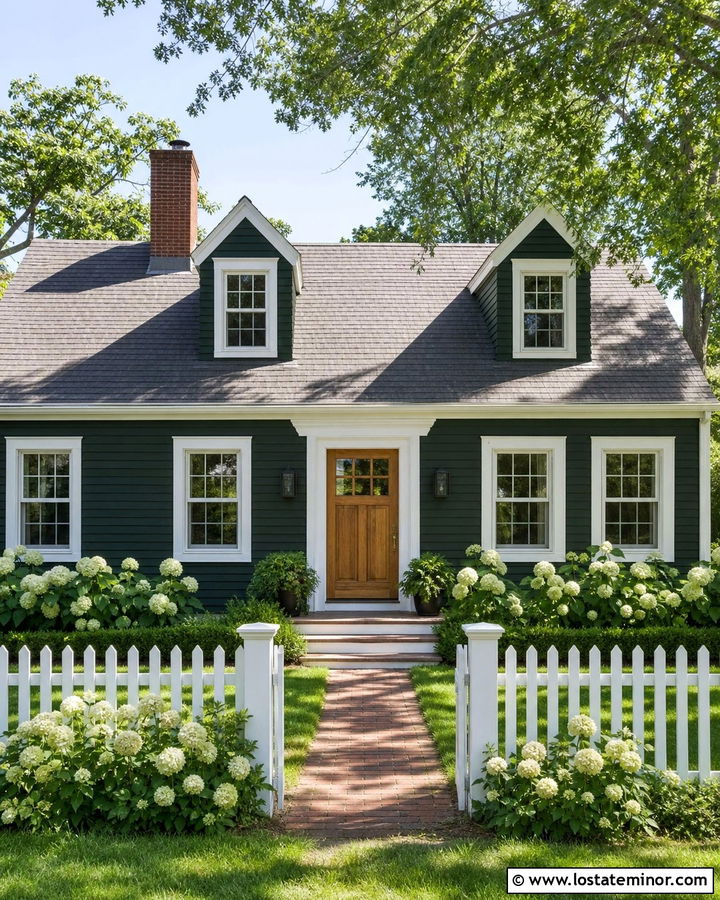
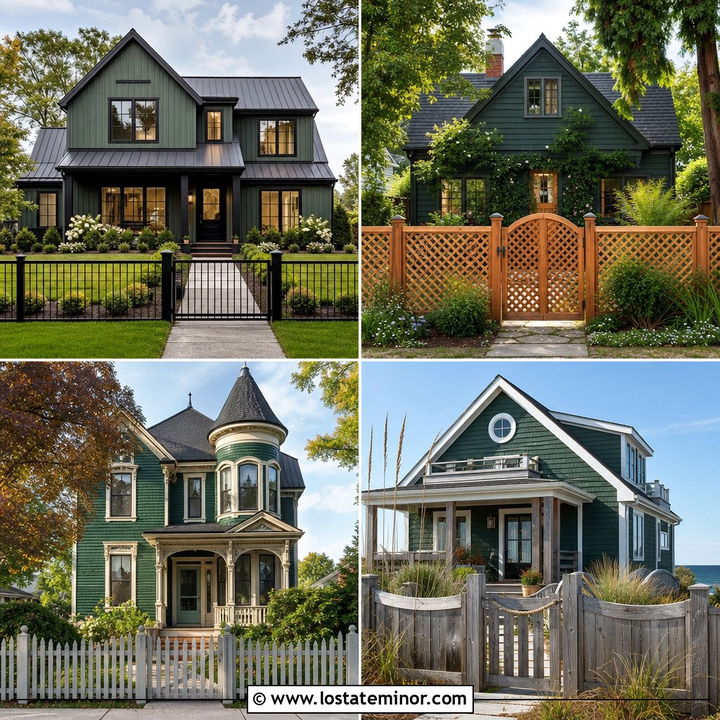
A white picket fence creates a bright frame around a forest green house without competing with its strong exterior color. This combination works beautifully on cottages, Cape Cod homes, and traditional suburban houses. Carry the fence color onto the window trim, porch columns, and fascia for a connected appearance. A natural oak front door introduces warmth, while a medium-gray shingle roof keeps the palette balanced. Choose slightly warm white rather than a sharp blue-white, especially when the home has stone paths or cream-colored masonry. Low boxwood hedges, flowering perennials, and a simple brick walkway soften the fence line. Keep the pickets moderately spaced so the landscaping remains visible and the front yard feels open.
2. Forest Green House With Black Metal Fence
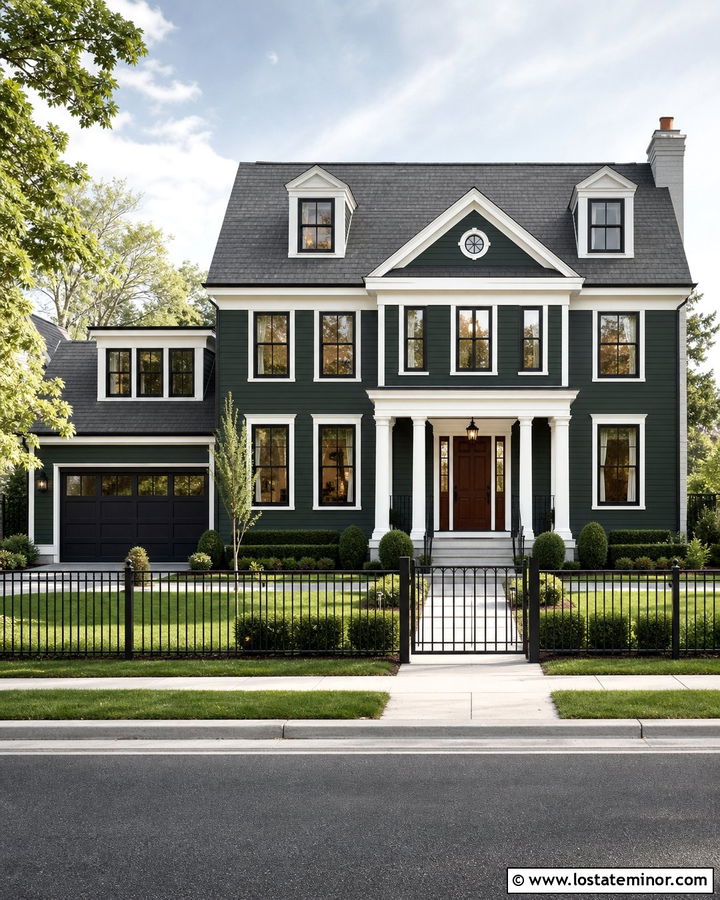
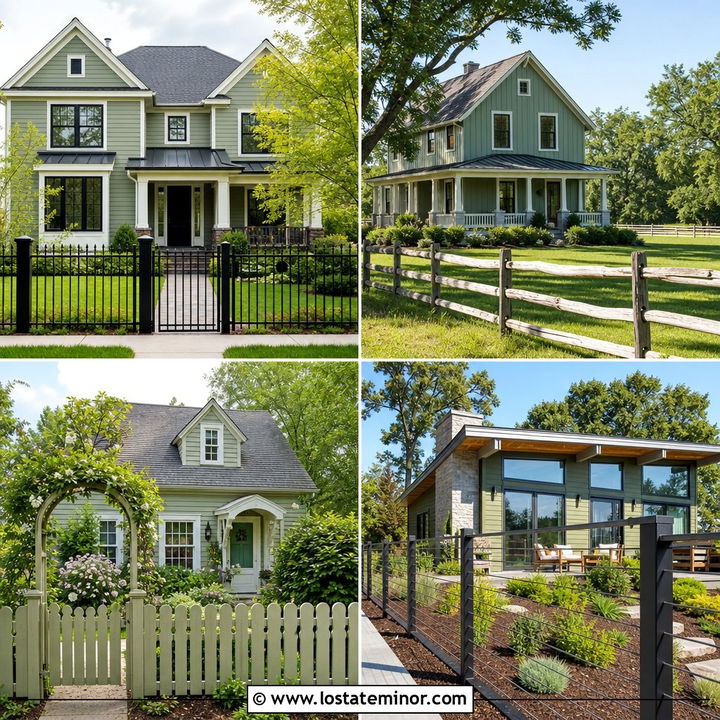
Black metal fencing brings clean definition to a deep forest green exterior. The combination feels polished without hiding the house behind a visually heavy boundary. It is especially effective on modern farmhouses, updated Colonials, and homes with black-framed windows. Repeat the black finish on porch railings, exterior lights, gutters, and the garage door hardware. Warm white trim can prevent the overall scheme from appearing too dark, while a stained mahogany door creates an inviting focal point. Use a low fence with slender vertical rails when the front yard is small. Ornamental grasses, clipped shrubs, and a pale concrete walkway will provide lighter areas between the green facade and black fence, giving the complete exterior comfortable contrast.
3. Forest Green House With Cedar Privacy Fence
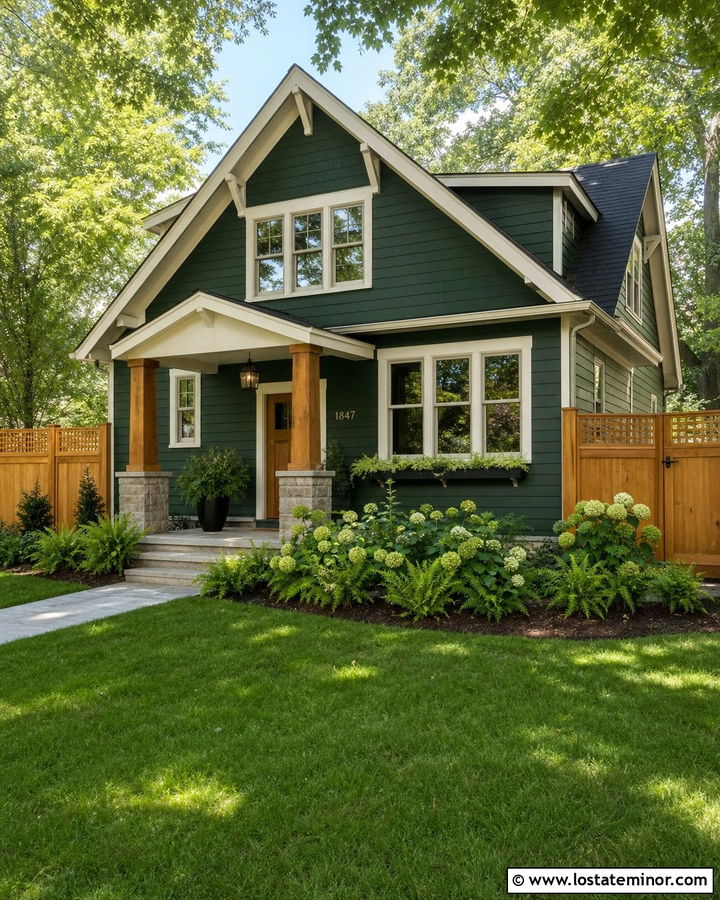
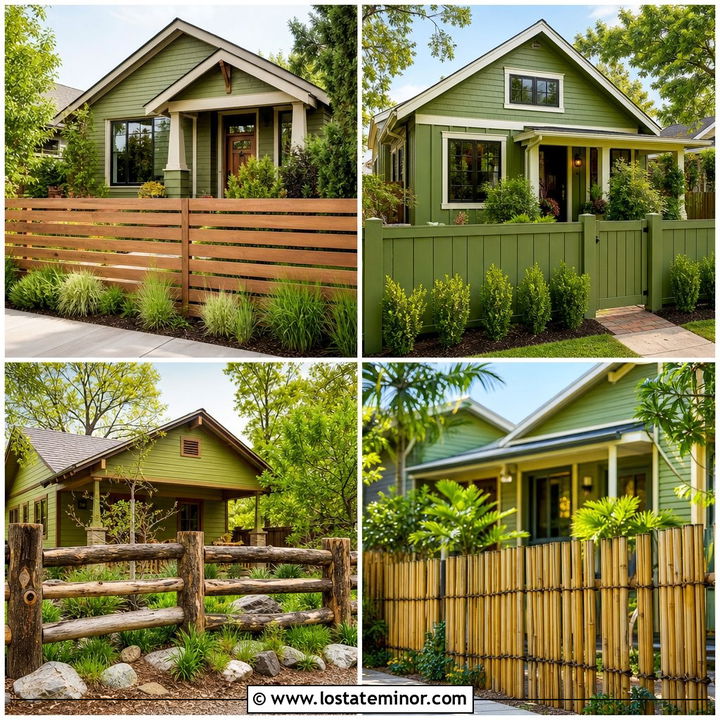
Fresh cedar adds valuable warmth to a forest green house and makes the entire property feel connected to its natural surroundings. Use horizontal or vertical cedar boards with a clear protective finish that preserves the wood’s honey-brown color. A craftsman home can carry the same cedar onto porch posts, gable brackets, and the front door. Cream trim offers a softer transition than bright white, while charcoal roofing anchors the warm and cool materials. Position a tall privacy fence along the sides and use a shorter coordinating gate near the front facade. Layer the fence with ferns, hydrangeas, and evergreen shrubs. As the cedar naturally changes color, periodic cleaning and resealing can help maintain a warm appearance against the green siding.
4. Forest Green House With Split Rail Fence
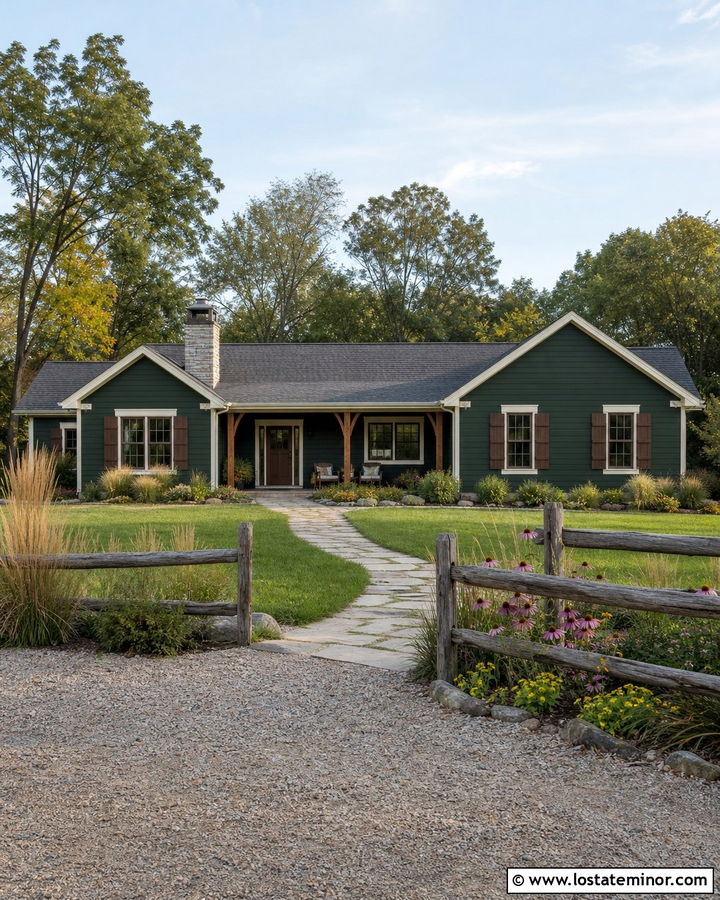
A split rail fence gives a forest green house a relaxed rural character without blocking the view. It suits ranch homes, cabins, country farmhouses, and properties with wide lawns. Choose naturally weathered cedar or pressure-treated pine stained medium brown. Repeat that brown on porch beams, shutters, or a wood garage door to build a consistent palette. Soft ivory trim keeps the windows visible against the deep green siding, while fieldstone around the foundation strengthens the rustic look. The open fence structure works well with informal landscaping, including native grasses, coneflowers, and small flowering trees. Black wire mesh can be attached discreetly behind the rails when pets or garden protection require a more secure boundary.
5. Forest Green House With Charcoal Horizontal Fence
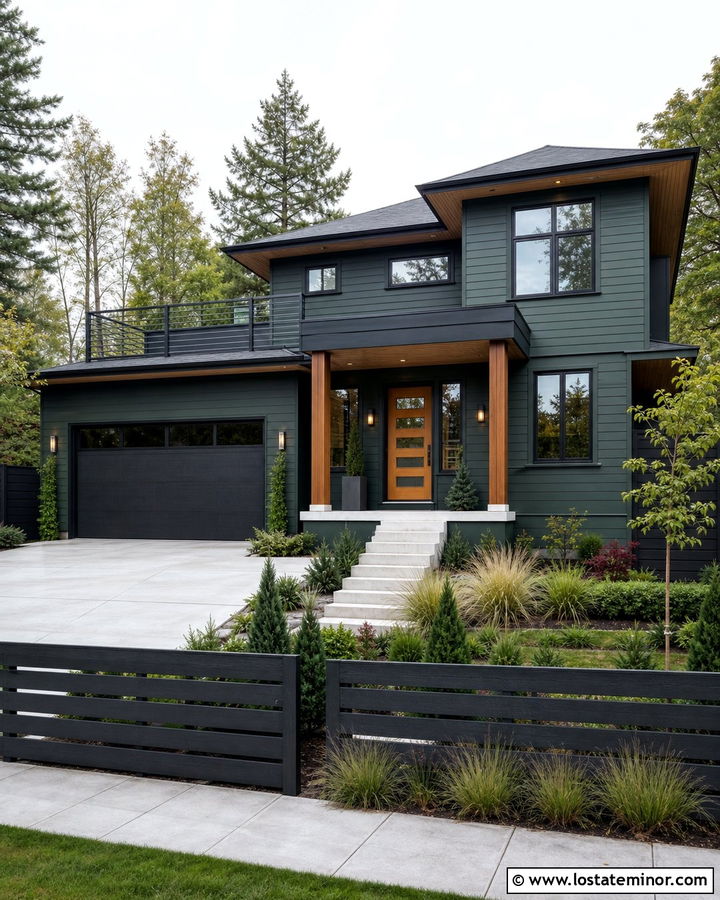
A charcoal horizontal fence gives a forest green exterior a streamlined, contemporary finish. Because both colors are deep, include lighter materials elsewhere to preserve definition. Pale limestone steps, warm white soffits, and light concrete paving can keep the facade from feeling closed in. The horizontal fence boards should align visually with long windows or horizontal lap siding for a deliberate architectural rhythm. Consider leaving narrow gaps between boards to reduce visual weight and improve airflow. Black window frames and a natural teak front door complete the modern palette. Simple landscaping works best, such as architectural grasses, compact evergreens, and rectangular planting beds. Use low-sheen fence paint so glare does not distract from the green house exterior.
6. Forest Green House With Stone Pillar Fence
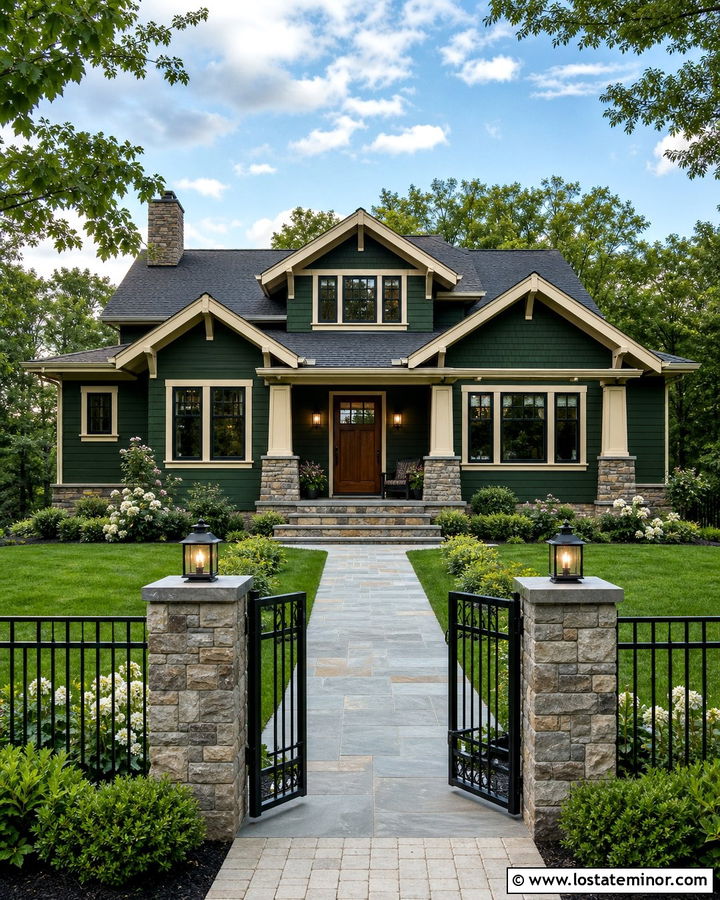
Stone pillars make a forest green home feel established and substantial, particularly when the house already has a stone porch or foundation. Choose stone containing gray, tan, and muted brown rather than highly orange or yellow pieces. Connect the pillars with black aluminum rails to keep views open and prevent the boundary from becoming too bulky. Matching stone at the front steps will make the fence feel like part of the original architecture. Cream window trim, a walnut front door, and dark bronze lighting complement the natural palette. Use generous planting beds around each pillar to soften the masonry. Low junipers, ornamental grasses, and white flowering shrubs provide texture while allowing the green facade to remain the strongest color.
7. Forest Green House With Cream Vinyl Fence
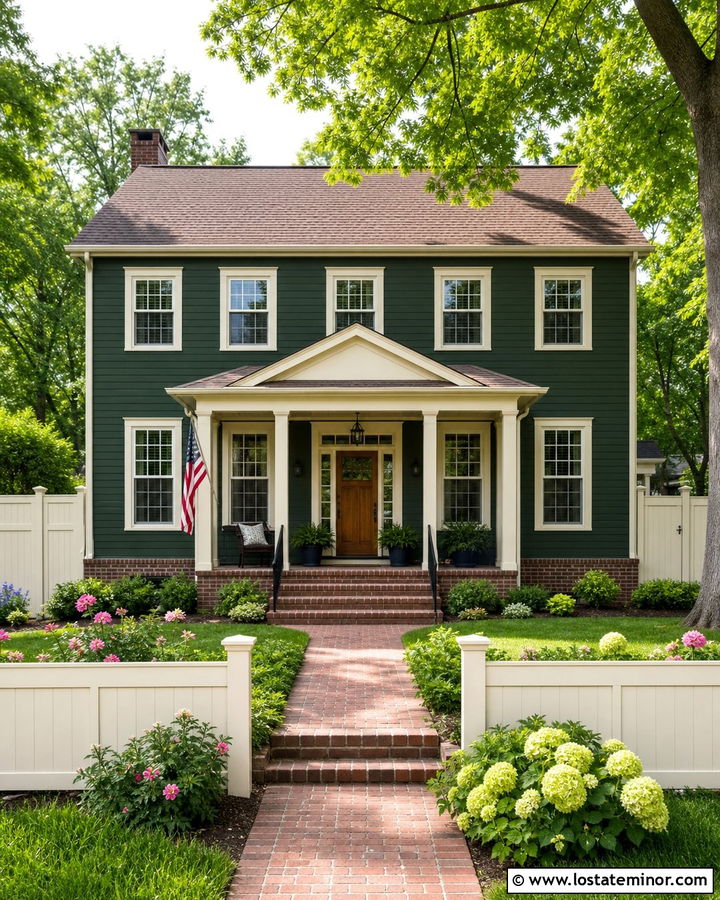
Cream vinyl fencing creates a softer contrast than pure white and works well with traditional forest green houses. It is particularly flattering when the exterior includes warm brick, beige stone, or an off-white porch. Select simple fence panels rather than overly decorative designs so the color combination stays fresh. Match the cream fence to the window trim, garage surround, and porch columns. A muted red-brick walkway can introduce subtle warmth, while a dark brown roof provides a practical visual anchor. Use a lower fence across the front and taller privacy panels along the sides. Hydrangeas, roses, and layered green shrubs will soften the manufactured surface and create a more established garden appearance around the complete property.
8. Forest Green House With Matching Green Fence
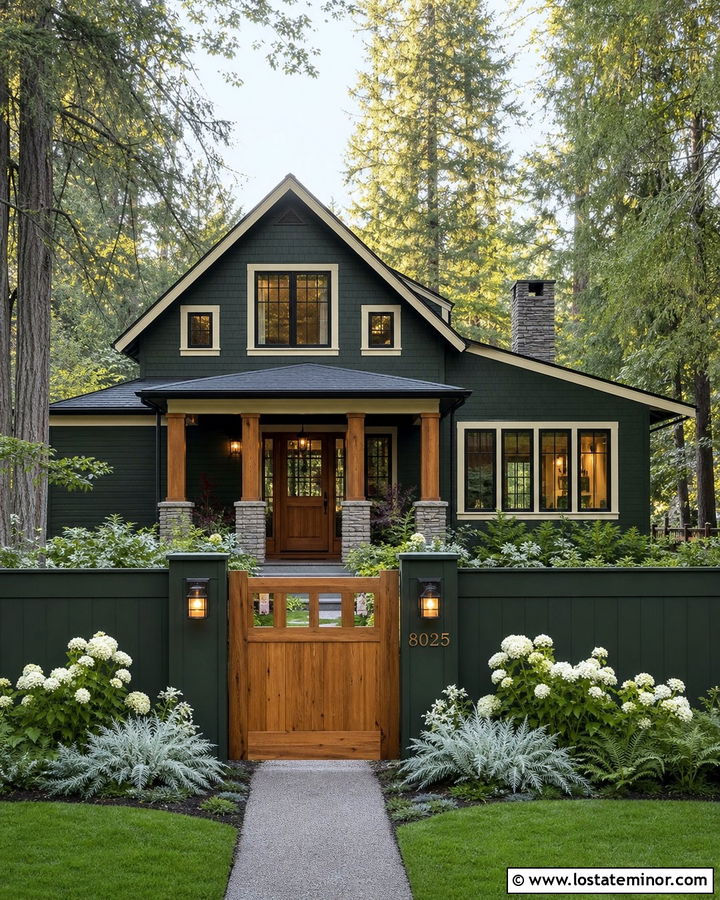
Painting the fence to match the house creates a calm, continuous backdrop that allows plants and architectural details to stand forward. This approach works best on wooded properties or compact yards where a contrasting boundary might feel visually crowded. Use the same forest green color on the fence but vary the sheen slightly. A flatter fence finish feels understated, while satin siding remains easier to clean. Cream trim, cedar porch posts, and a warm wood front door will break up the repeated green. White flowers and silvery foliage become especially noticeable against the dark background. Keep the fence design simple and add a distinct wood or cream-colored gate so visitors can immediately identify the entry point.
9. Forest Green House With Brick And Iron Fence
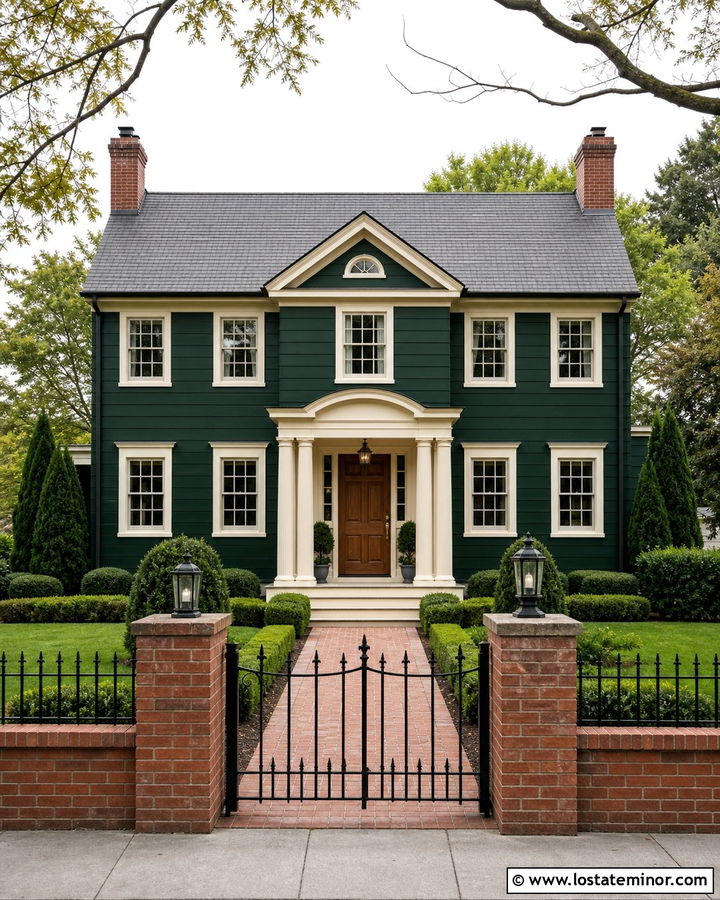
A low brick wall topped with black iron fencing gives a forest green house a traditional, tailored presence. Select brick that relates to existing chimneys, foundation masonry, or porch flooring. Deep red and brown brick tones warm the green, while black rails add crisp separation. Cream trim is more harmonious than stark white with this earthy scheme. A stained oak door and copper-toned exterior lights can further connect the warm masonry to the facade. Keep the brick wall relatively low so it defines the property without hiding the architecture. Add symmetrical shrubs beside the gate and repeat them near the front steps. A straight stone walkway will reinforce the orderly character of a Colonial or Georgian-inspired exterior.
10. Forest Green House With Warm Gray Fence
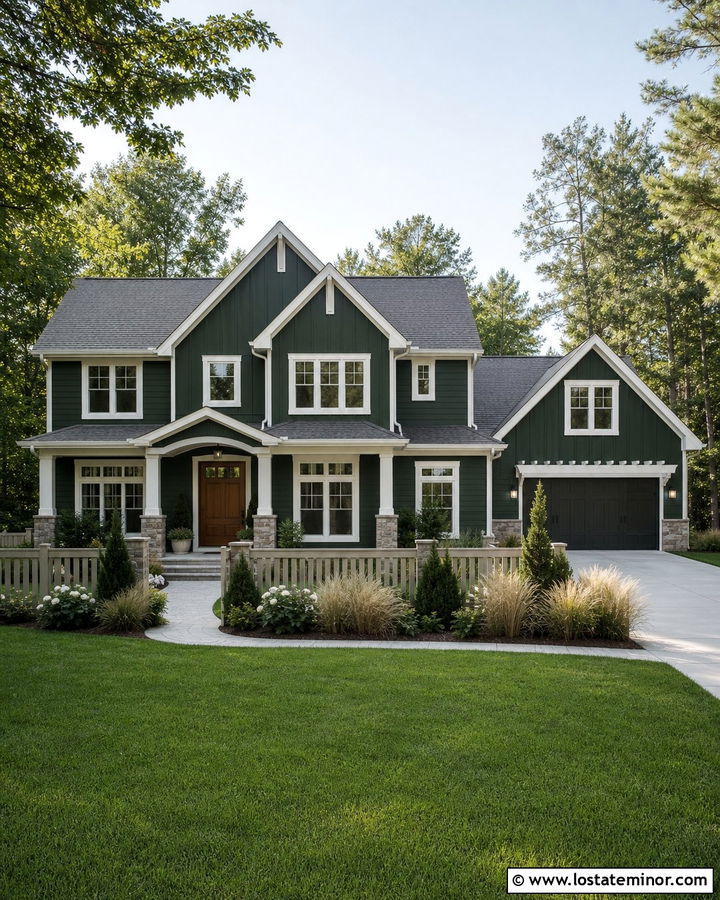
A warm gray fence gives forest green siding a quiet, adaptable partner. Look for gray with brown or taupe undertones rather than a cool blue cast. This choice is useful when the house has weathered stone, gray roofing, or concrete paths that need to feel more connected. Paint the trim soft white and use a medium-brown front door to prevent the palette from becoming too cool. Vertical fence boards can make a low ranch house appear slightly taller, while horizontal boards suit modern architecture. Plant pale grasses, white roses, and compact evergreens in front of the fence. The combination feels refined and neutral, allowing seasonal flowers and front porch decor to change without disrupting the permanent exterior palette.
11. Forest Green Ranch House With Post And Rail Fence
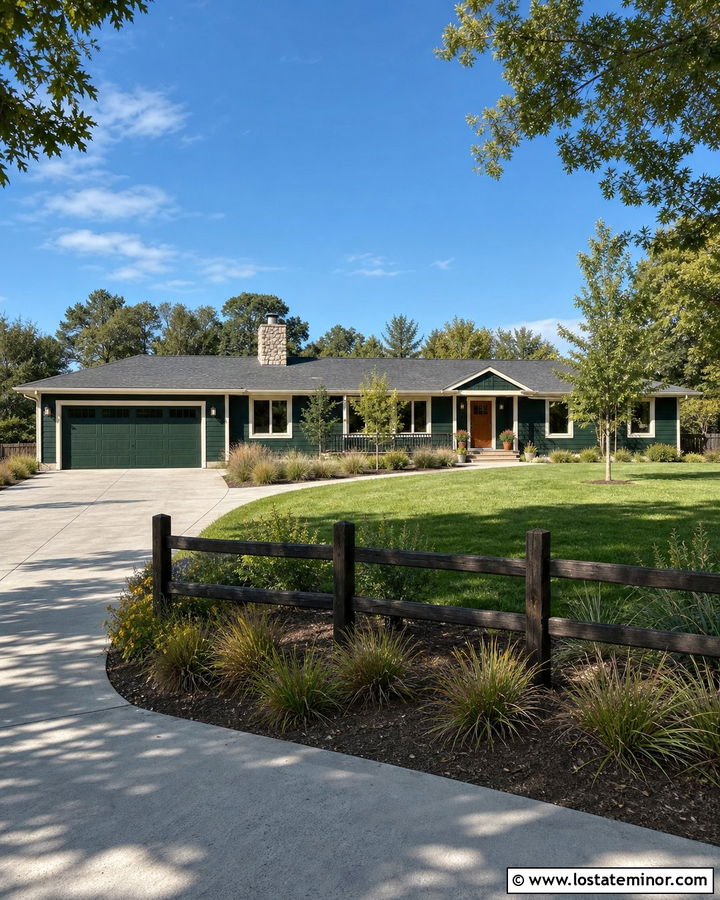
A forest green ranch house pairs naturally with a straightforward post and rail fence. The long horizontal fence lines echo the home’s low roofline and create a balanced view from the street. Use dark-stained wood for definition or medium cedar when the yard needs more warmth. Cream fascia and window trim will outline the structure, while a natural stone chimney adds texture. Paint the garage door forest green so it blends into the facade rather than becoming the largest light-colored feature. A terracotta or walnut front door can provide a warmer focal point. Finish the setting with broad planting beds, native grasses, and small ornamental trees positioned to soften the house’s length without covering its windows.
12. Forest Green Craftsman House With Cedar Lattice Fence
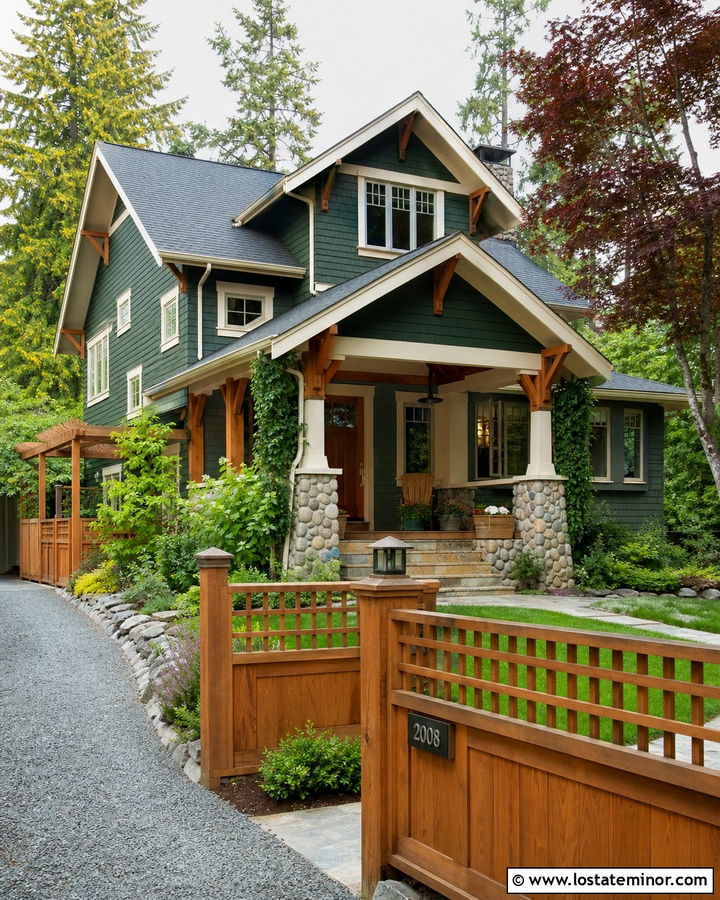
Craftsman architecture benefits from natural materials, making a cedar lattice fence an excellent companion for forest green siding. Use solid lower panels for privacy and open lattice above to keep the boundary from looking too heavy. Repeat cedar on tapered porch columns, exposed brackets, and the front door. Off-white trim will highlight the window grids and roof structure, while a river-rock foundation introduces another organic texture. Choose a dark charcoal roof to balance the depth of the siding. Climbing vines can soften the lattice, but keep growth controlled around the gate and walkway. Broad porch steps, amber-toned sconces, and layered woodland planting will give the entire exterior a warm, handcrafted appearance rather than a theme-driven rustic look.
13. Forest Green Colonial House With White Board Fence
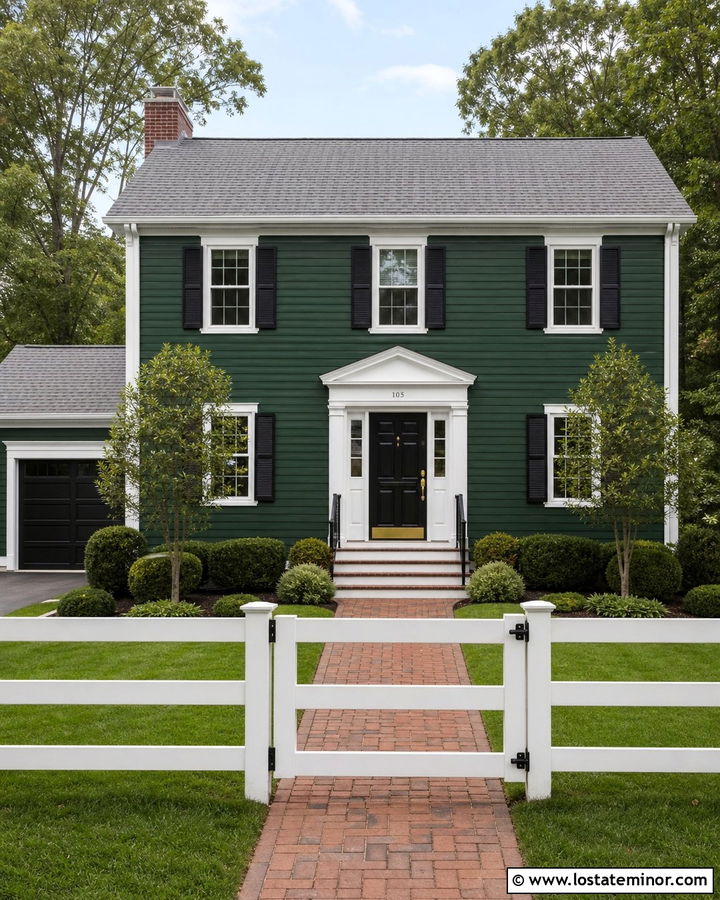
A white board fence complements the symmetry and simple geometry of a forest green Colonial house. Use evenly spaced horizontal boards with substantial square posts to create a stronger appearance than a delicate picket fence. Match the white to the window trim, corner boards, and classical entry surround. Black shutters and a black front door can add formality, while brass or aged-bronze hardware brings subtle warmth. A gray shingle roof keeps attention on the balanced green-and-white facade. Position the gate directly in line with the front entrance and connect it with a straight brick walkway. Matching trees or shrubs on either side of the path will strengthen the symmetry without making the landscape feel excessively rigid.
14. Forest Green Farmhouse With Black Wire Fence
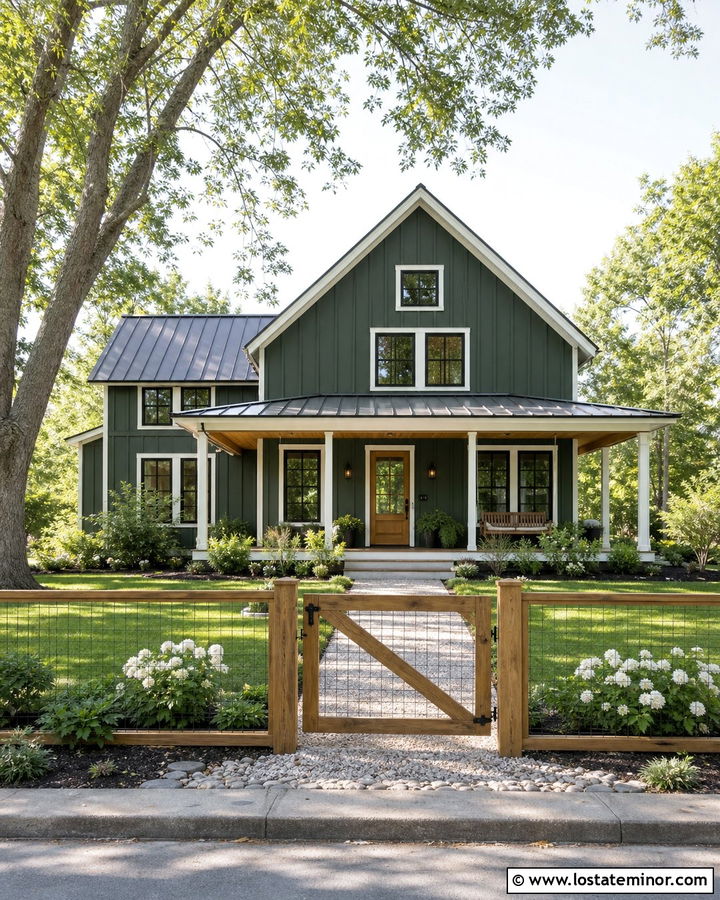
Black wire fencing provides practical enclosure around a forest green farmhouse while remaining visually light. Use black-painted posts or natural cedar posts, depending on whether the house leans modern or traditional. A modern farmhouse can include black windows, a standing-seam metal roof, and warm white trim. Add a natural wood porch ceiling and front door to soften the strong dark accents. The wire mesh nearly disappears from a distance, allowing the lawn, garden, and home to remain visible. Create a substantial gate with a simple wood frame so the entrance feels intentional. Gravel paths, raised planting beds, white flowering shrubs, and a few shade trees will complete the relaxed country setting without cluttering the facade.
15. Forest Green Bungalow With Scalloped Picket Fence
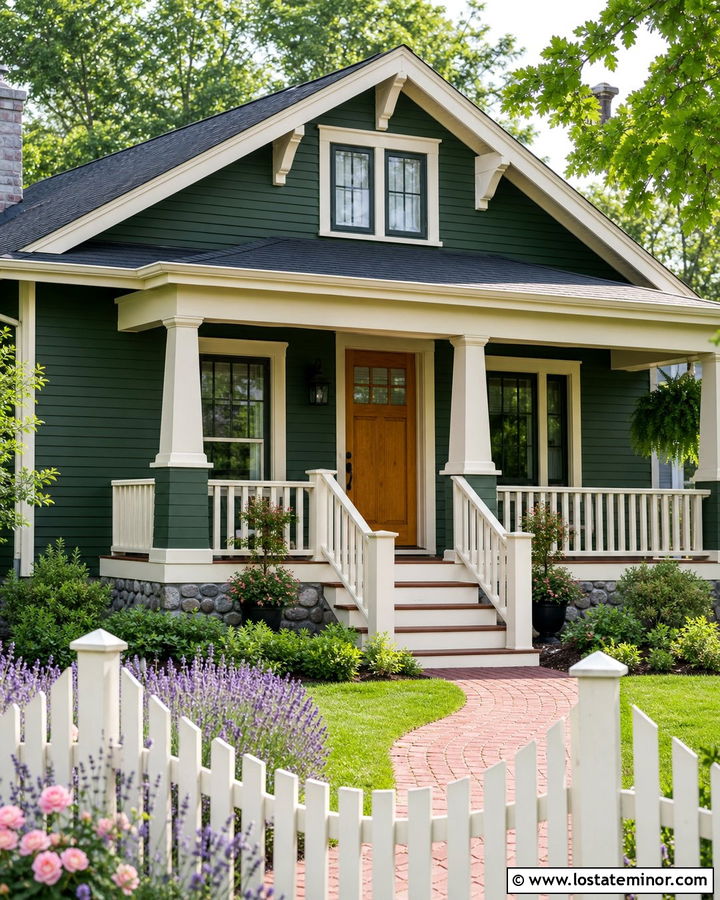
A modest scalloped picket fence adds period-friendly charm to a forest green bungalow. Keep the curves gentle and the fence low enough to preserve views of the porch. Warm white paint will connect the fence to window trim, porch railings, and tapered columns. Use medium-brown shingles or a charcoal roof, depending on whether the home has warm brick or cool stone accents. A golden oak door introduces natural color beneath the shaded porch. Plant cottage-style flowers in a controlled palette of white, lavender, and pale pink so the landscaping complements rather than overwhelms the dark siding. A curved brick or flagstone path can reinforce the welcoming character while leading clearly from the gate to the front steps.
16. Forest Green Modern House With Slatted Cedar Fence
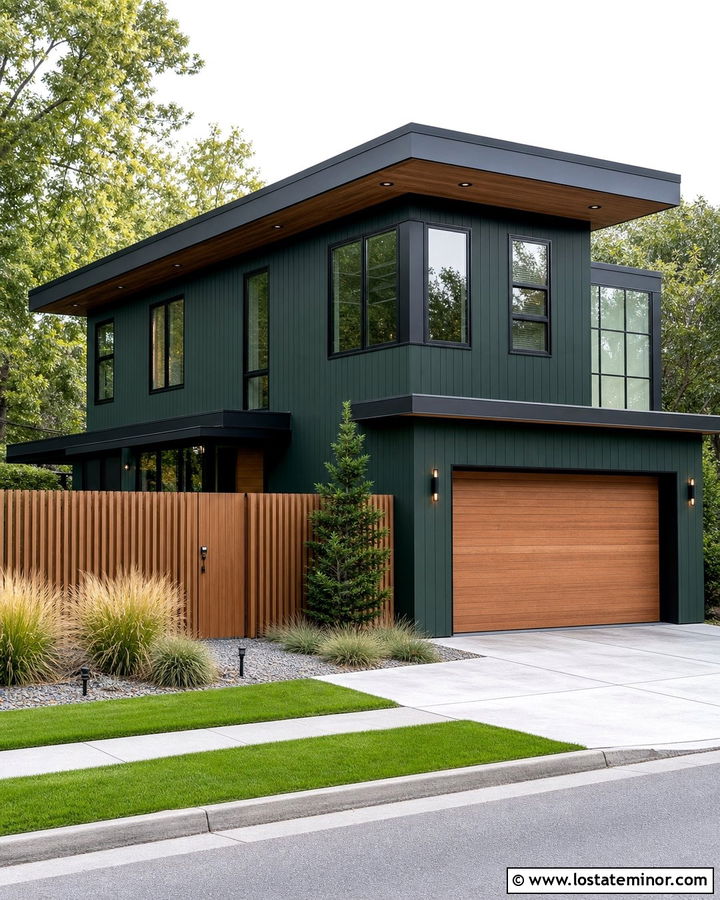
Narrow cedar slats give a modern forest green house privacy without creating a flat, solid wall. Install the boards vertically for height or horizontally to emphasize a long, low facade. The warm wood provides noticeable contrast against the dark green exterior and works especially well with black-framed windows. Repeat cedar beside the entrance, beneath roof overhangs, or on the garage door. Pale concrete paving and light gravel can brighten the lower part of the composition. Keep the landscaping architectural, using ornamental grasses, sculptural evergreens, and clean-edged planting beds. Integrate the gate into the slatted pattern with concealed hardware. This allows the fence to appear continuous while preserving a neat and understated approach to the front entrance.
17. Forest Green Cape Cod House With White Arbor Fence
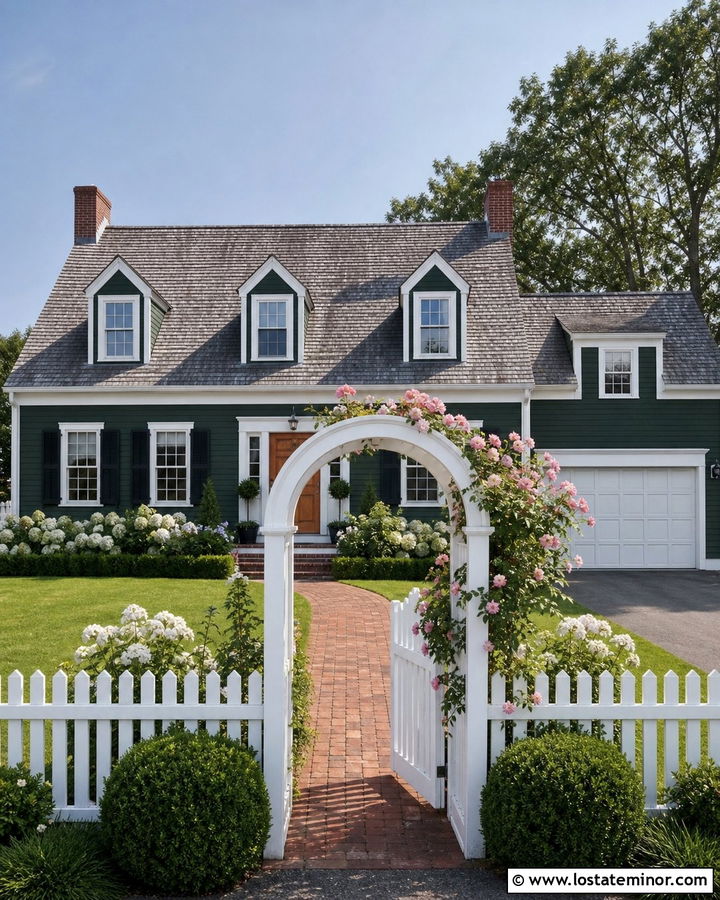
A white fence with a simple arbor creates a welcoming entrance for a forest green Cape Cod house. Match the arbor’s proportions to the home’s compact scale and avoid excessive decorative scrollwork. Crisp white trim, dormers, and corner boards will connect visually with the fence, while a gray cedar-style roof adds classic coastal texture. Use a medium-stained front door or restrained red door as the single warm accent. Climbing roses or clematis can frame the arbor, but leave enough open space to keep the gate functional. A crushed-shell or brick walkway fits the informal architecture. Low hydrangeas, boxwoods, and ornamental grasses will complete the front garden without hiding the distinctive green facade or lower windows.
18. Forest Green Tudor House With Dark Brown Fence
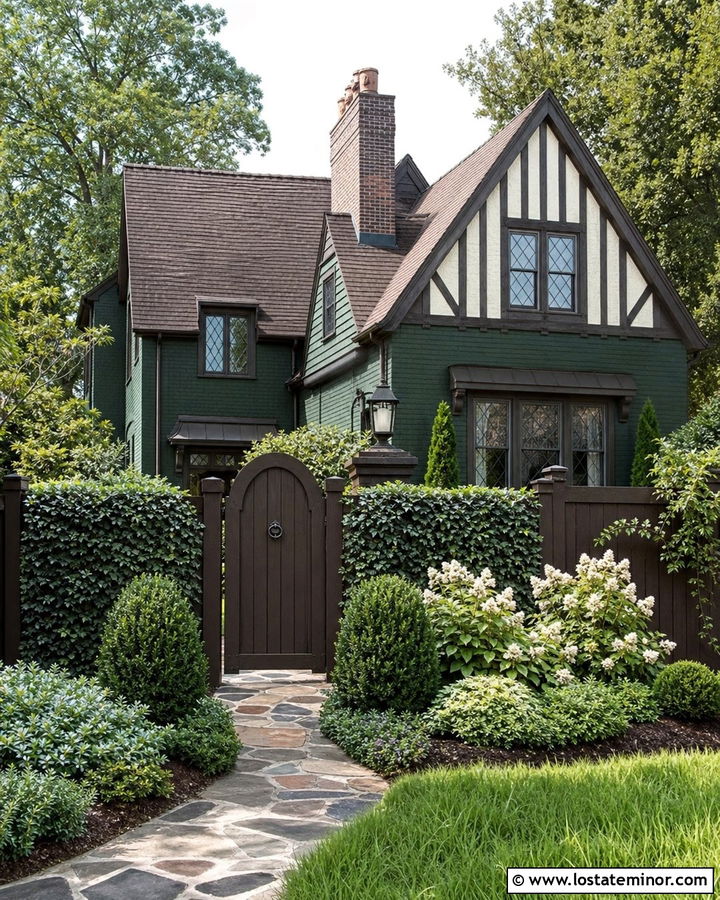
A dark brown fence supports the earthy character of a forest green Tudor house. Choose a chocolate-brown stain that relates to exposed beams, the front door, and window frames. Cream stucco within the gables can provide essential contrast above green siding or masonry. Brick chimneys, irregular stone paths, and a brown architectural-shingle roof add the layered textures associated with this house type. Use vertical fence boards with gently shaped tops or a restrained arched gate rather than a highly modern horizontal pattern. Plant ivy carefully, along with clipped yews and pale flowering shrubs, to soften the boundary. The finished exterior should feel established and storybook-like without relying on excessive ornament or an overly crowded garden.
19. Forest Green Cabin House With Rustic Log Fence
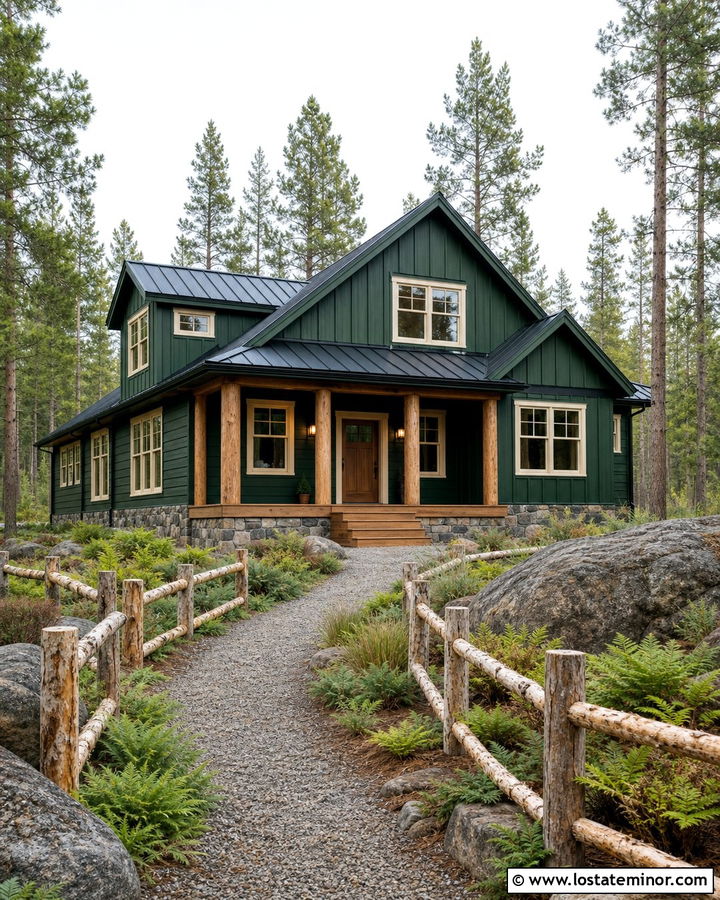
A rustic log fence feels appropriate around a forest green cabin, especially on wooded or mountainous properties. Use peeled cedar rails and sturdy posts with a clear or medium-brown protective stain. Match the wood tone on porch columns, exposed rafters, and the front door. Cream window trim will keep the deep exterior readable beneath tall trees, while a gray stone foundation connects the structure to the land. Add black metal roofing for a durable-looking visual anchor and repeat black on simple exterior lights. Native ferns, grasses, boulders, and gravel paths will look more natural than formal foundation planting. Keep the fence irregular enough to feel handcrafted, but maintain consistent height and solid gate construction.
20. Forest Green Mediterranean House With Stucco Fence
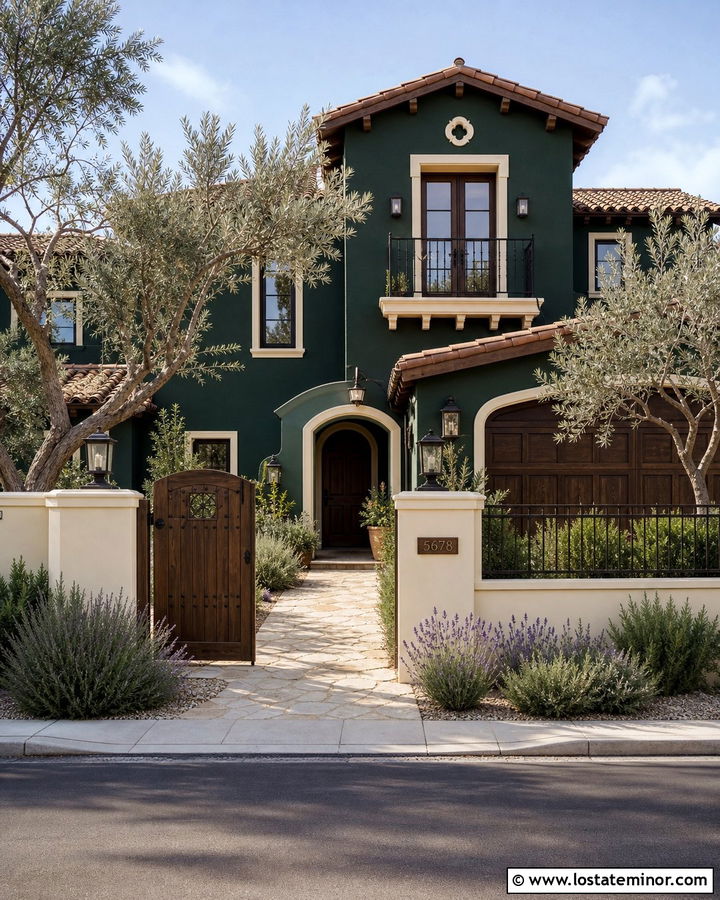
Forest green can give Mediterranean architecture an unexpected yet sophisticated update when it is balanced by warm stucco fencing. Choose a soft cream or sandy beige for the low wall and repeat that shade around arched windows, columns, and entry details. Terracotta roof tiles introduce warmth and prevent the green exterior from feeling overly cool. Insert dark bronze metal rails between stucco pillars to maintain visibility. A heavy wood gate with simple iron hardware can become the focal point without overpowering the house. Use drought-tolerant landscaping such as lavender, rosemary, olive trees, and ornamental grasses. Pale stone paving and gravel beds will brighten the foreground and help the deep green facade stand out clearly in strong sunlight.
21. Forest Green Victorian House With Wrought Iron Fence
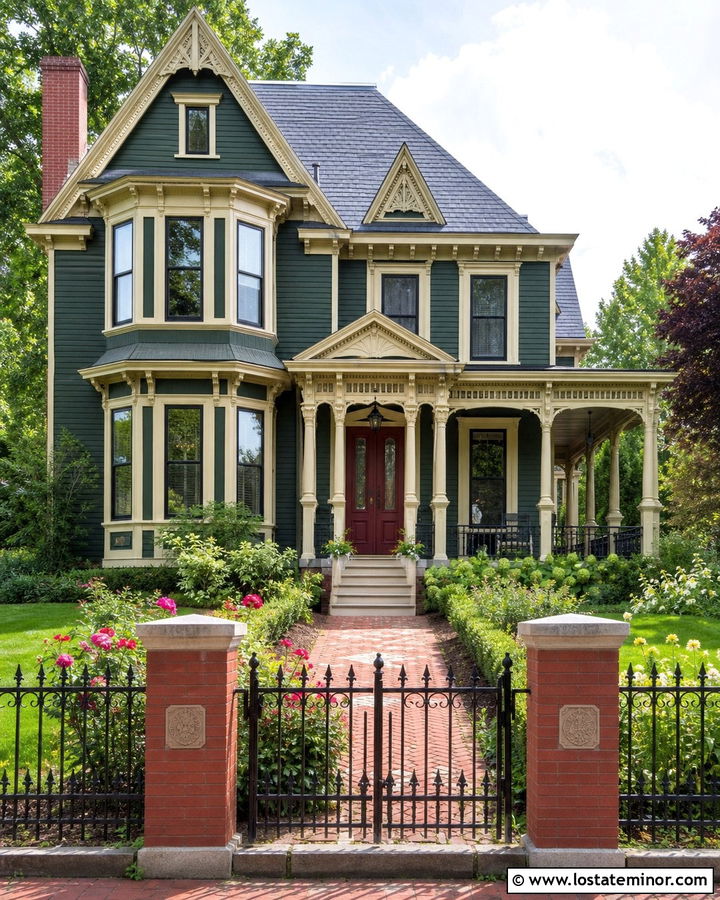
A black wrought iron fence highlights the detailed architecture of a forest green Victorian home without adding another dominant color. Use cream on the window trim, porch columns, brackets, and decorative gable work. A restrained burgundy accent can appear on the front door or small trim details, but avoid spreading it across every feature. Black fencing should repeat the roof accents and porch railing for visual consistency. Brick gateposts can connect with a chimney or front walkway. Layer roses, clipped hedges, and flowering perennials behind the fence while preserving clear views of the porch. This combination celebrates the home’s ornament while allowing forest green to serve as a calm, unifying background for the many architectural details.
22. Forest Green Split-Level House With Taupe Fence
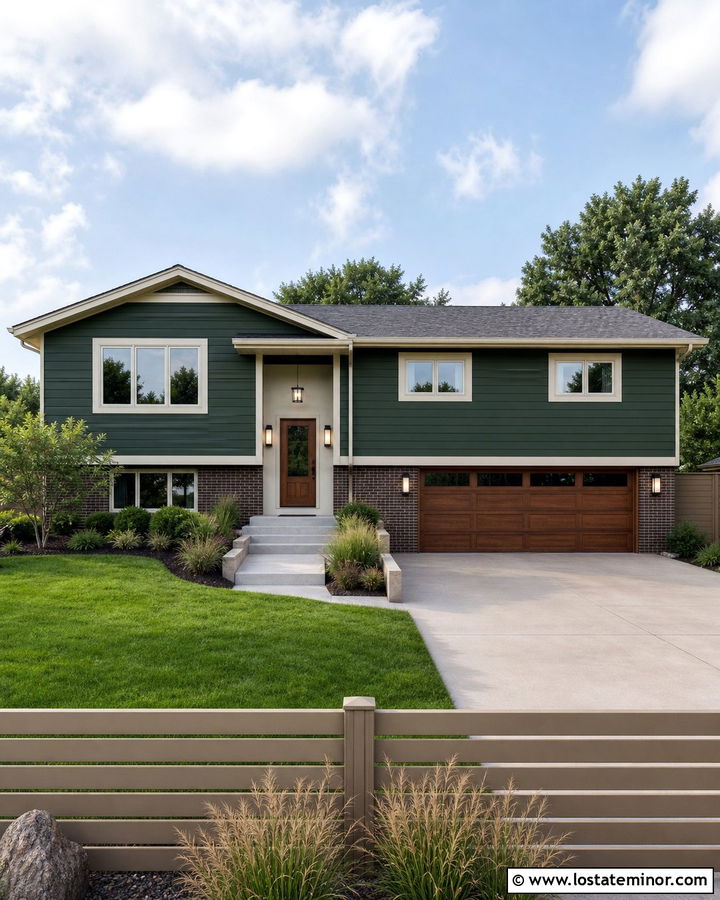
A taupe fence can soften the strong lines of a forest green split-level house and connect older exterior materials. Select a medium taupe that relates to brick, concrete, or weathered stone around the lower story. Warm white trim will brighten the windows, while a walnut-colored garage door can shift attention away from a large blank facade. Use horizontal fence boards to complement the home’s long rooflines, but break the run with wider posts for structure. A broad concrete walkway, modern sconces, and simplified planting beds can update the property without requiring major construction. Place taller shrubs near the raised side of the house and lower plants beside the entry so the landscape visually balances the uneven levels.
23. Forest Green Coastal House With White Horizontal Fence
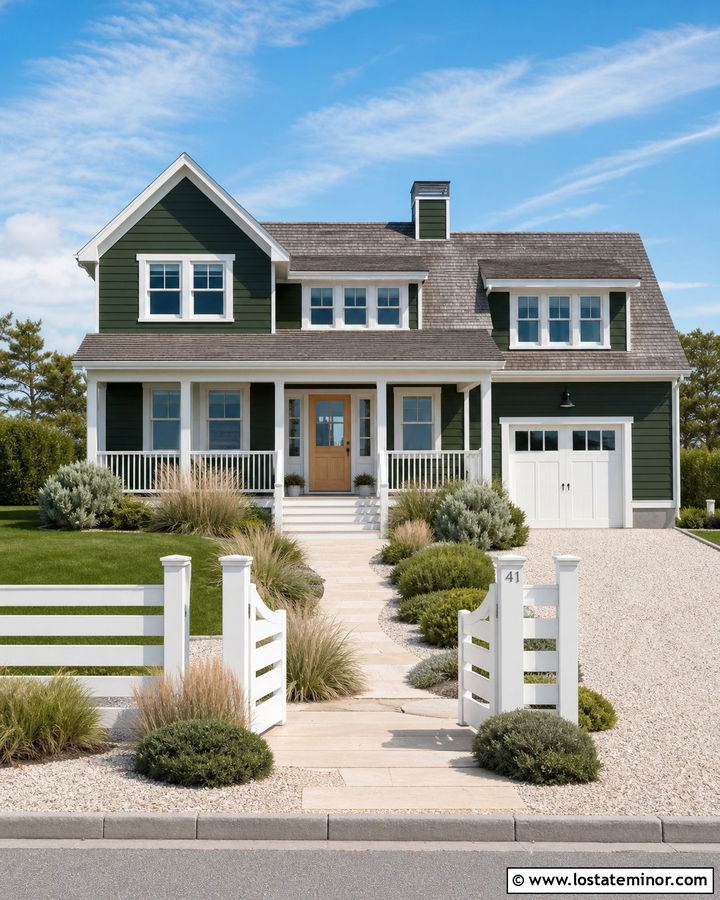
A white horizontal fence gives a forest green coastal house a clean, breezy appearance. Use wide boards with small gaps so the boundary feels substantial but not enclosed. Repeat white on the trim, porch railings, and window frames, then add pale natural wood at the front door or porch ceiling. A weathered gray roof will reinforce the relaxed coastal palette. Light gravel, shell-colored paving, ornamental grasses, and blue-green shrubs brighten the foreground around the dark siding. Keep the fence design straightforward and resistant to visual clutter. A wide gate aligned with the walkway will make the entrance easy to see. This pairing offers coastal character without depending on the more predictable blue exterior color scheme.
24. Forest Green Cottage House With Woven Wood Fence
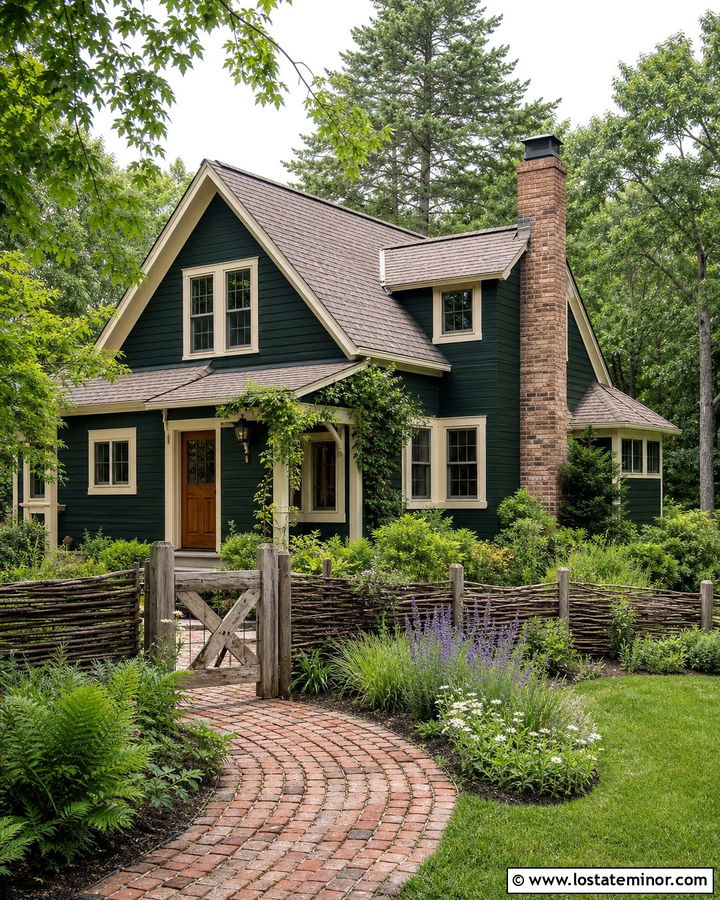
A woven willow or hazel fence adds soft texture to a forest green cottage without creating a rigid boundary. Its natural brown color warms the siding and works well with cream trim, a wood front door, and an aged brick chimney. Keep the fence low in the front yard, reserving taller sections for side gardens where privacy is needed. A simple timber gate will look more coordinated than a contrasting manufactured panel. Surround the fence with lavender, white daisies, ferns, and loose evergreen shrubs. Use a curved gravel or reclaimed-brick path to reinforce the informal setting. The finished house should appear tucked into the garden, with the woven fence acting as a textured transition between architecture and planting.
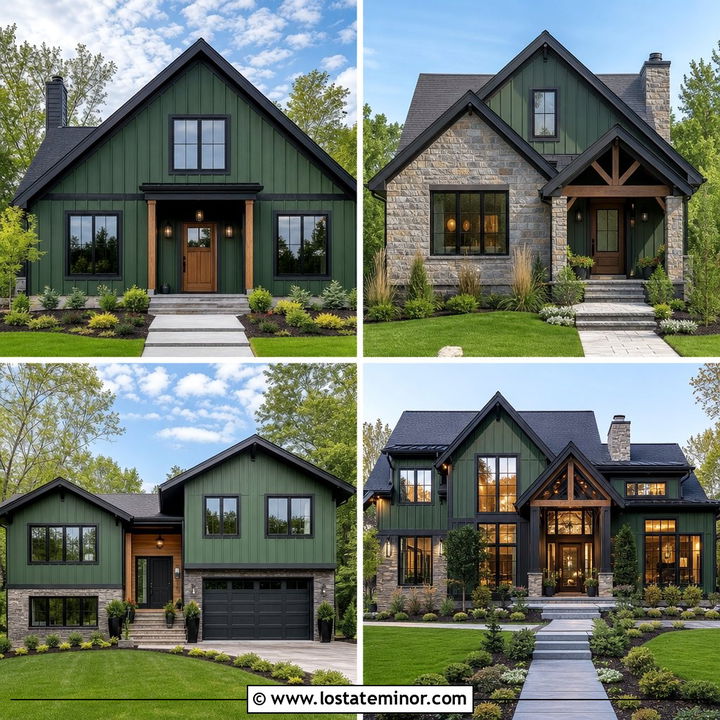
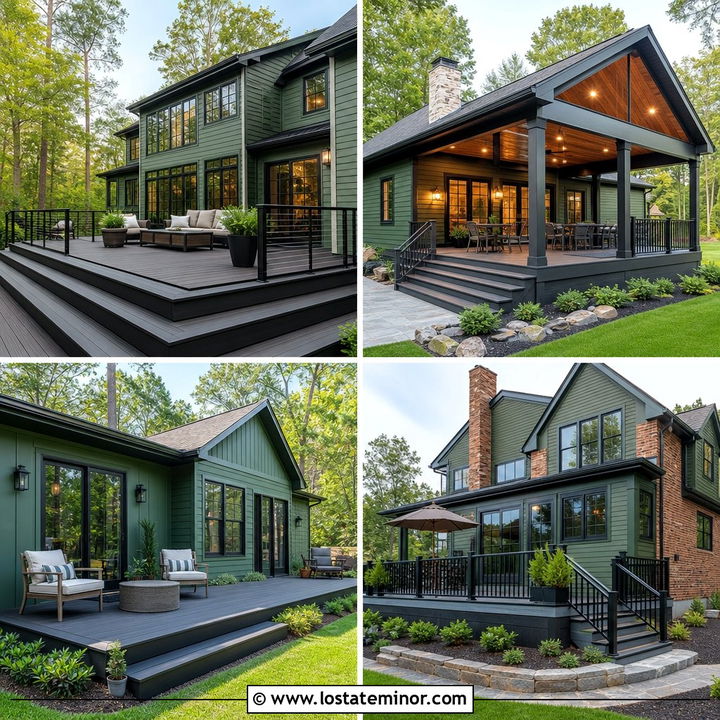
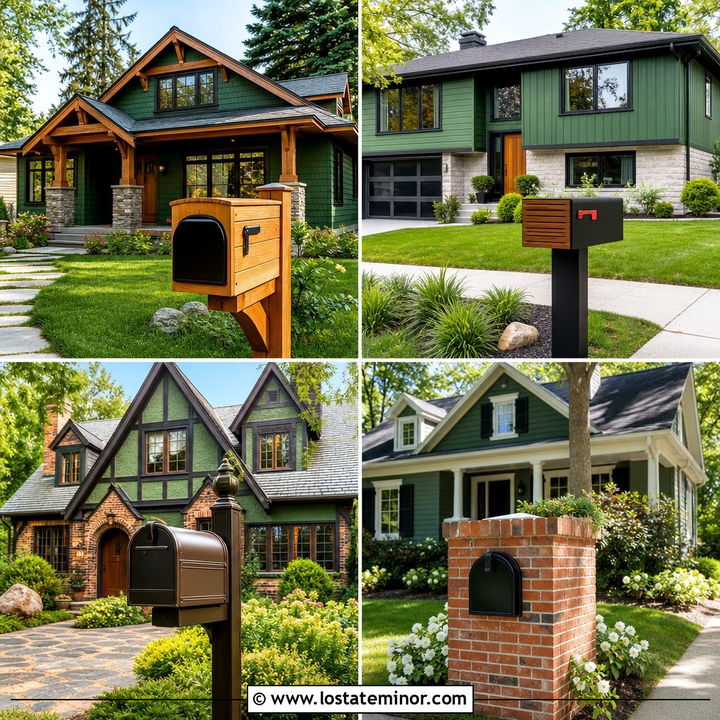
25. Forest Green Contemporary House With Concrete And Wood Fence
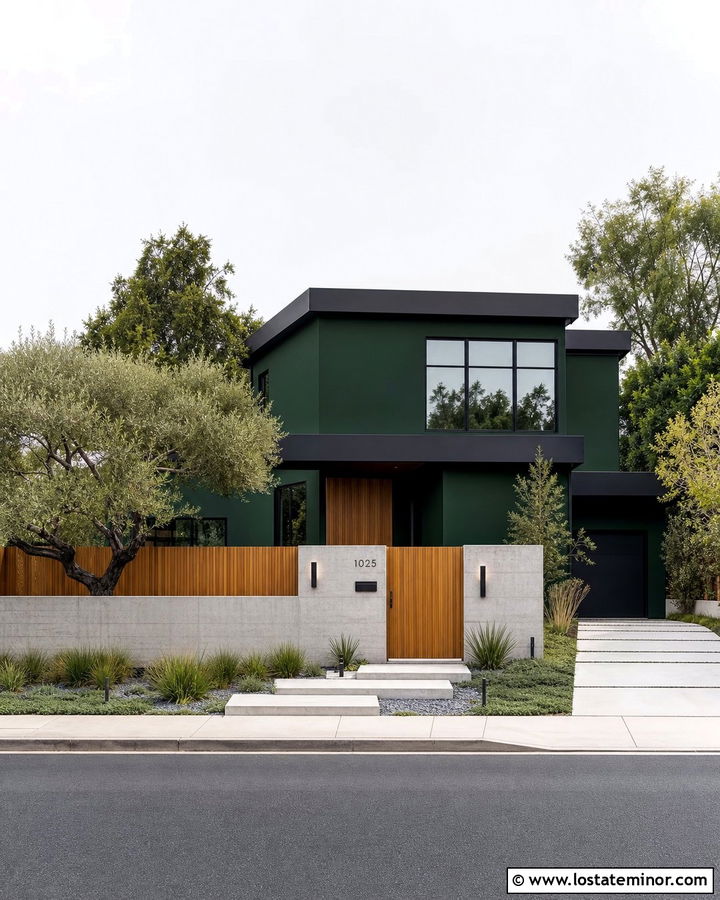
Concrete and wood create a balanced mixed-material fence for a contemporary forest green house. Use smooth light-gray concrete walls in short sections, connected by warm cedar slats. The concrete brightens the base of the exterior, while cedar prevents the scheme from feeling cold. Repeat both materials on entry steps, retaining walls, or the garage surround. Black window frames and a flat charcoal roof sharpen the architecture without introducing unnecessary colors. Conceal the pedestrian gate within a cedar panel and add minimal black hardware. Structured grasses, low ground cover, and a single sculptural tree will soften the hard surfaces. Generous spacing and clean sightlines are important so each material has room to make a clear contribution.
26. Forest Green Prairie House With Bronze Metal Fence
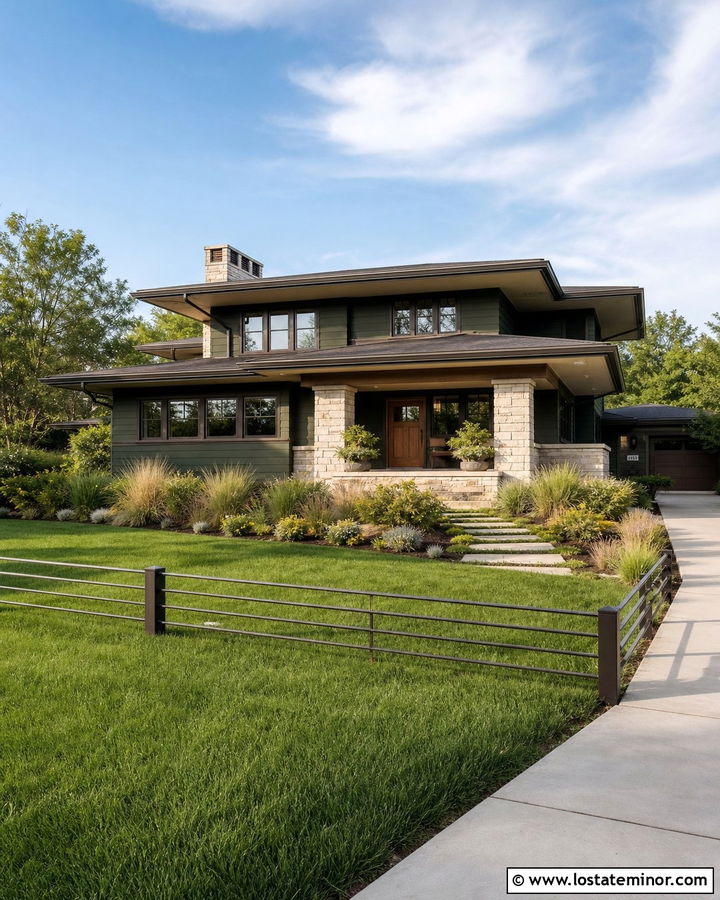
A bronze metal fence complements the long horizontal lines and earthy materials of a prairie-style forest green house. The warm metal finish feels softer than black while still outlining the property clearly. Repeat bronze on window frames, gutters, porch lights, and door hardware. Use tan stone around the foundation or entry columns, and choose cream soffits beneath broad roof overhangs. A medium-brown wood door can reinforce the grounded palette. Keep the fence low with widely spaced vertical rails so it does not interrupt the architecture’s connection to the landscape. Broad drifts of native grasses, low shrubs, and flat stone paths will enhance the home’s horizontal emphasis and create a cohesive, regionally appropriate curb-appeal design.
27. Forest Green Brick Ranch With Low White Fence
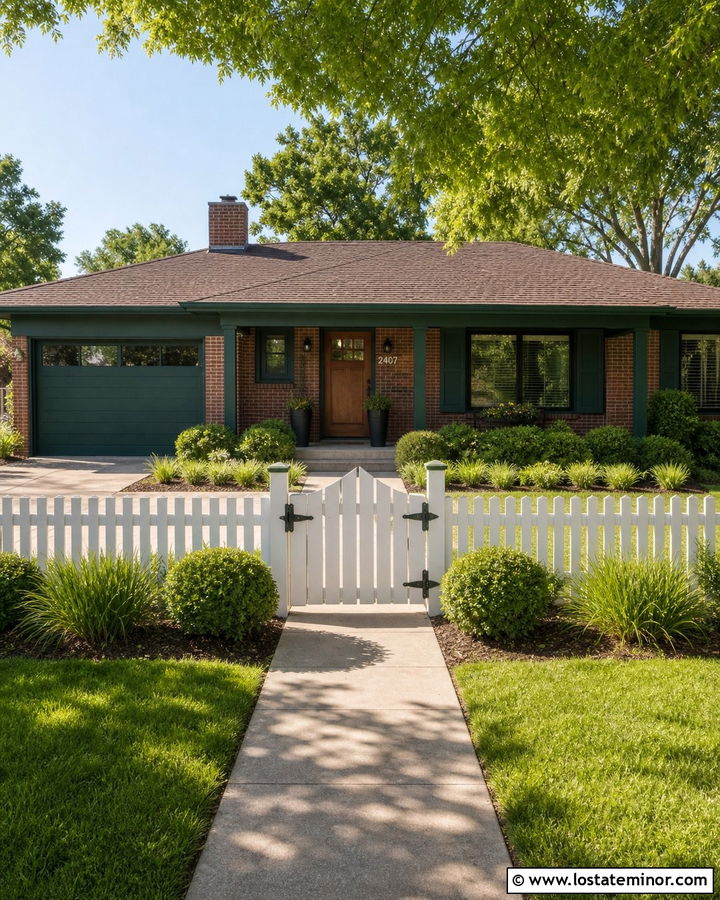
A low white fence can brighten a forest green ranch house that includes original red or brown brick. Apply forest green to the siding while leaving quality brick unpainted, then use warm white on the fence, windows, fascia, and porch supports. The repeated light color will unify the two primary exterior materials. Choose simple square pickets or horizontal boards rather than ornate fencing. A dark brown roof and stained wood door will relate to the brick’s warmer tones. Keep the gate wide and visually aligned with the entrance. Rounded shrubs, ornamental grasses, and a fresh concrete or brick-edged walkway can modernize the yard. Avoid tall foundation plants that divide the already low facade into disconnected sections.
28. Forest Green Mountain House With Gabion Fence
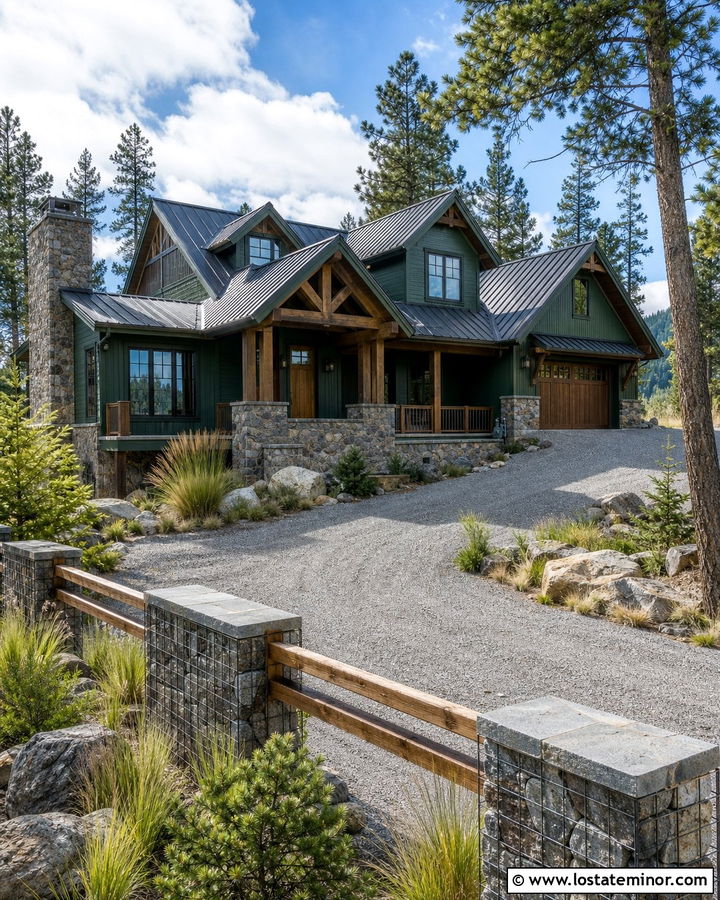
A gabion fence filled with local-looking stone creates a rugged boundary for a forest green mountain house. Use the stone baskets sparingly as pillars or short retaining sections, then connect them with cedar rails or black metal panels. This prevents the fence from overpowering the house. Repeat similar stone around the foundation, chimney, or porch steps. Natural wood beams and a warm brown front door will contrast with the green siding, while a charcoal metal roof adds a strong upper edge. Landscape with native grasses, evergreen shrubs, and scattered boulders instead of formal flower beds. The mixed fence materials should echo the site’s rock, trees, and terrain, making the complete exterior appear settled into its setting.
29. Forest Green Suburban House With Privacy Gate
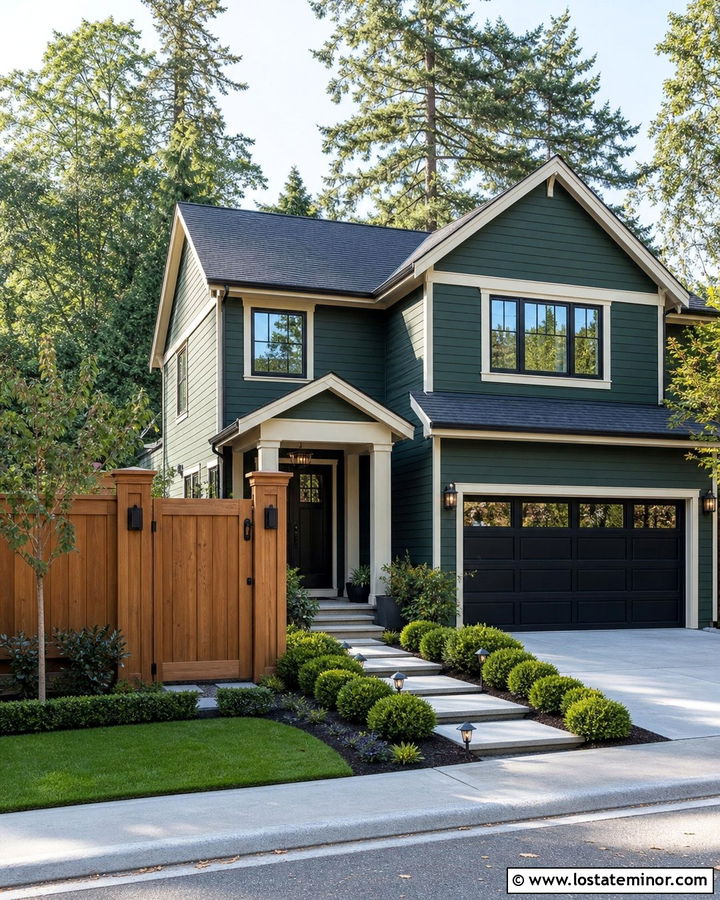
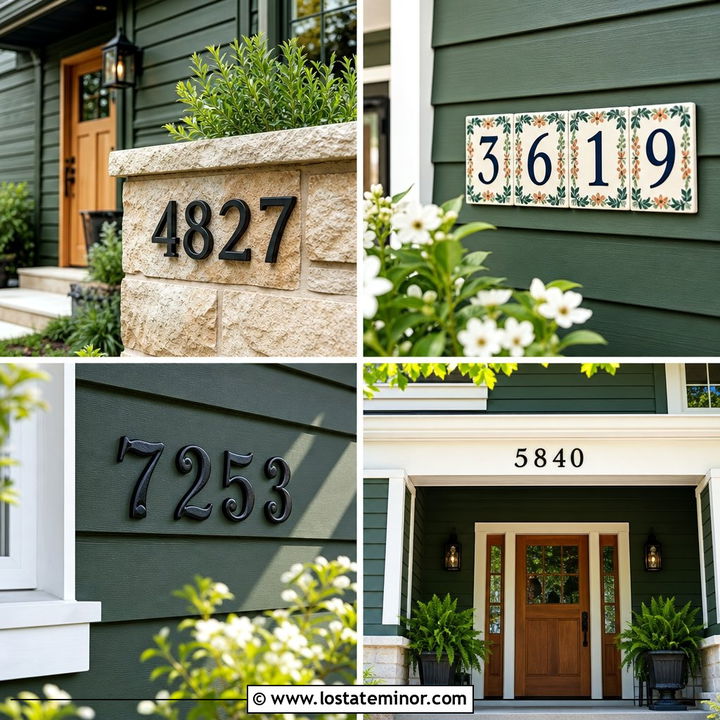
A full privacy fence can still support attractive curb appeal when the gate is treated as part of the forest green house design. Choose warm cedar panels and frame the gate with substantial posts that match the home’s porch or entry details. Cream trim, a dark gray roof, and a black garage door can balance the green siding and warm wood. Add a small open section or decorative metal insert near the gate when visibility and local rules allow. Use layered shrubs to soften long fence runs and place low lighting along the walkway. A clear path from the sidewalk to the gate is essential. Matching house numbers and black hardware will make the private entrance feel deliberate and easy to identify.
30. Forest Green House With Stone And Cedar Fence
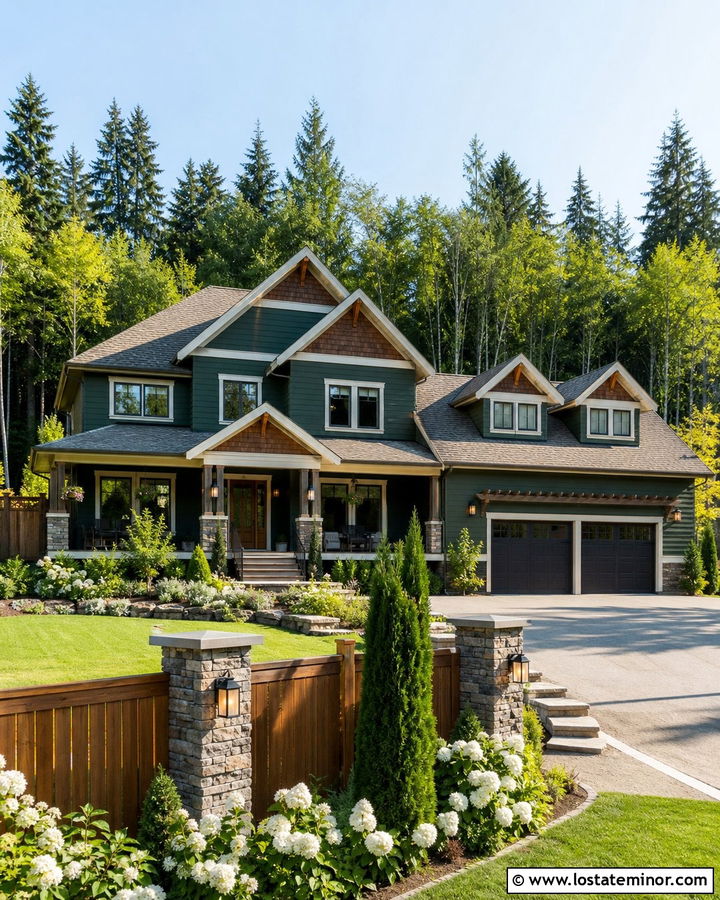
A fence combining stone pillars and cedar panels offers one of the most versatile pairings for a forest green house. The stone adds permanence, while the wood keeps the boundary warm and approachable. Select gray-brown masonry that relates to the roof, foundation, or porch. Use medium-toned cedar rather than a strongly orange stain, and repeat it on the front door or gable accents. Cream trim will provide a clean outline around the windows, while dark bronze lighting ties the deeper colors together. Alternate solid cedar sections with more open rails near the front to balance privacy and visibility. Finish the property with layered evergreens, white flowers, a stone-edged path, and a well-defined gate aligned with the entrance.
Conclusion:
The strongest forest green exteriors treat the fence, roof, trim, entry, materials, and landscaping as one connected composition. White fencing creates a traditional contrast, black metal feels refined, and cedar brings natural warmth. Stone, brick, taupe, bronze, and charcoal can also work when their undertones relate to existing exterior materials. Before choosing a final combination, view large color samples beside the fence in direct sun, shade, and reflected landscape light. Check local fence requirements and any neighborhood rules before changing height, placement, or materials. Whether your home is modern, rustic, coastal, or traditional, these 30 Forest Green House Design With Fence Ideas offer practical ways to create balanced and memorable curb appeal.

Related posts: