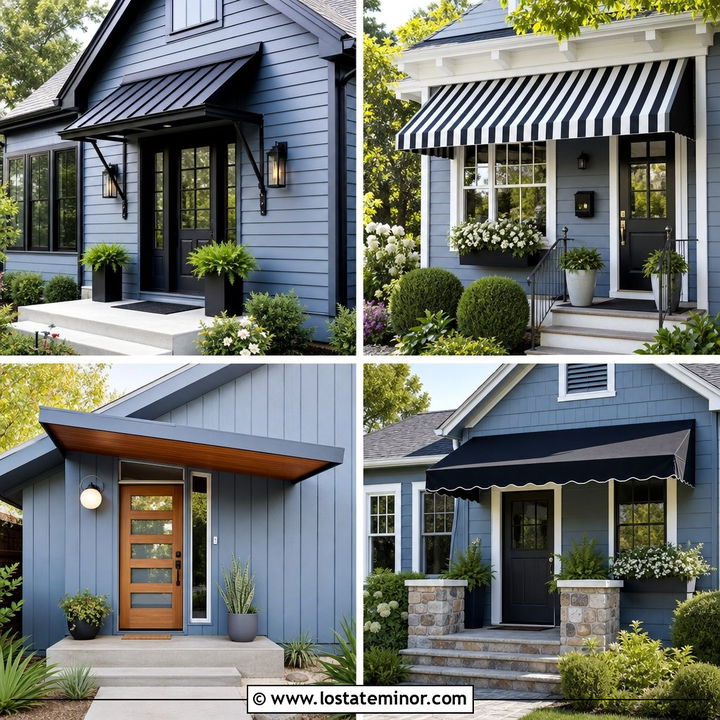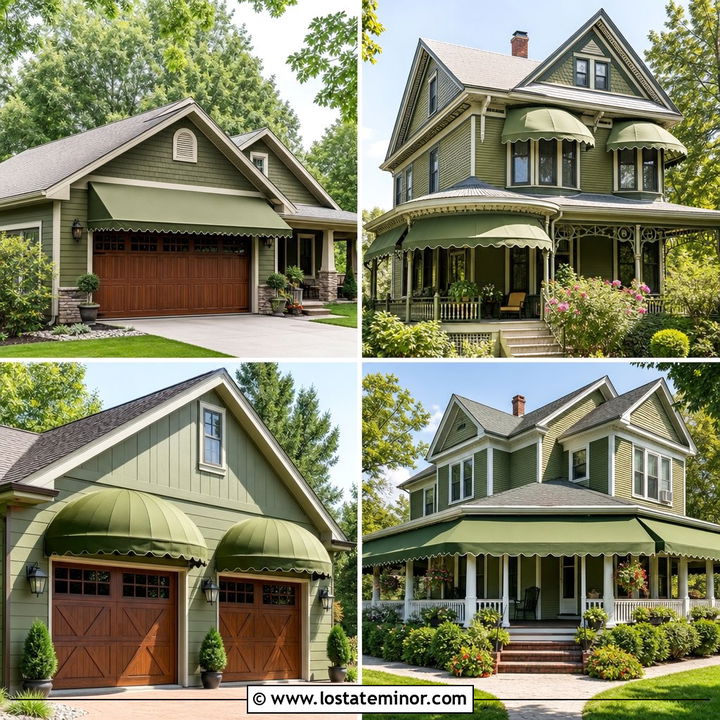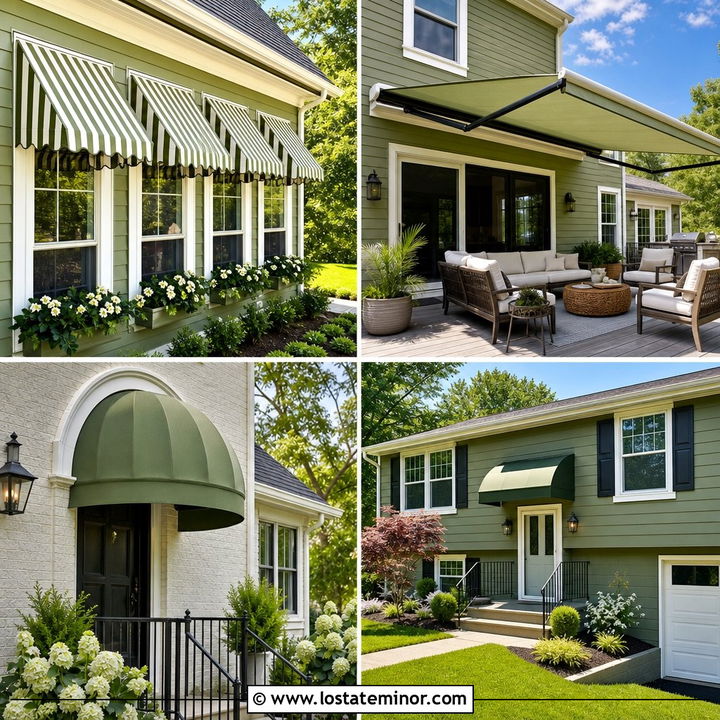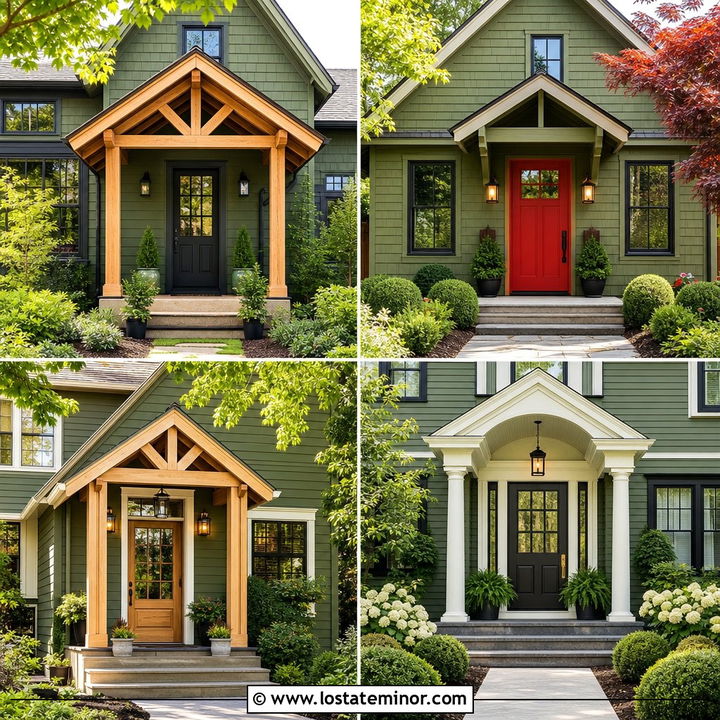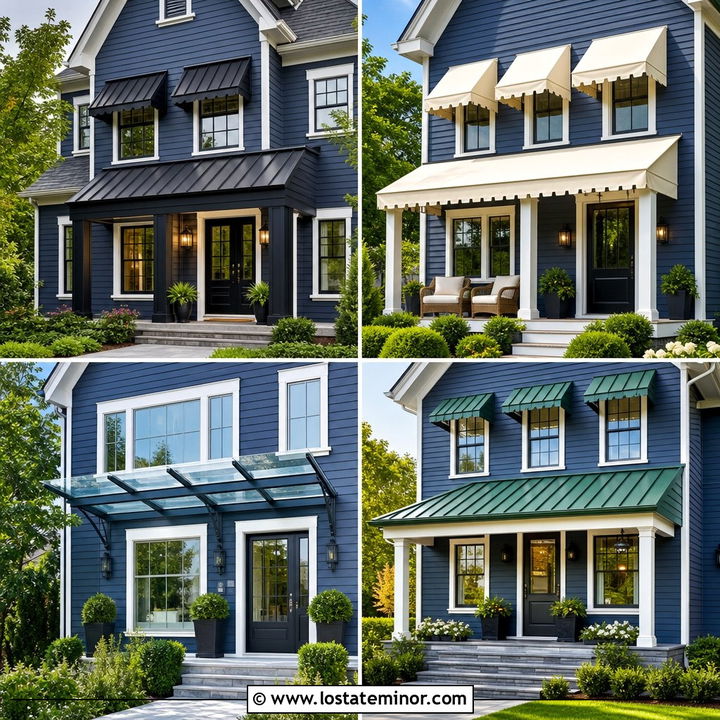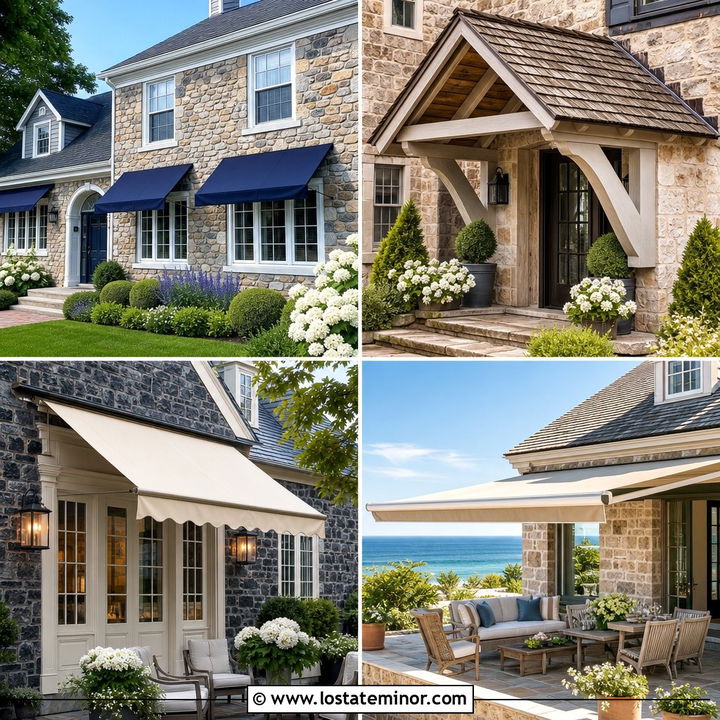
Forest green gives a home exterior depth, character, and a strong connection to the surrounding landscape. The right awning makes that rich color even more practical by framing windows, sheltering entries, or covering outdoor living areas. These 30 Forest Green House Design With Awning Ideas explore complete exterior schemes rather than isolated features. You will find forest green siding paired with warm wood, white trim, brick, stone, metal roofing, and thoughtfully selected awning materials. Current exterior inspiration frequently combines dark green with white, natural wood, brick, and stone, while awning guidance favors colors and forms that complement the home’s architecture. () Use the following full-house combinations to find the right balance of color, texture, shade, and curb appeal with 30 Forest Green House Design With Awning Ideas.
1. Forest Green Ranch House With Black Metal Awnings
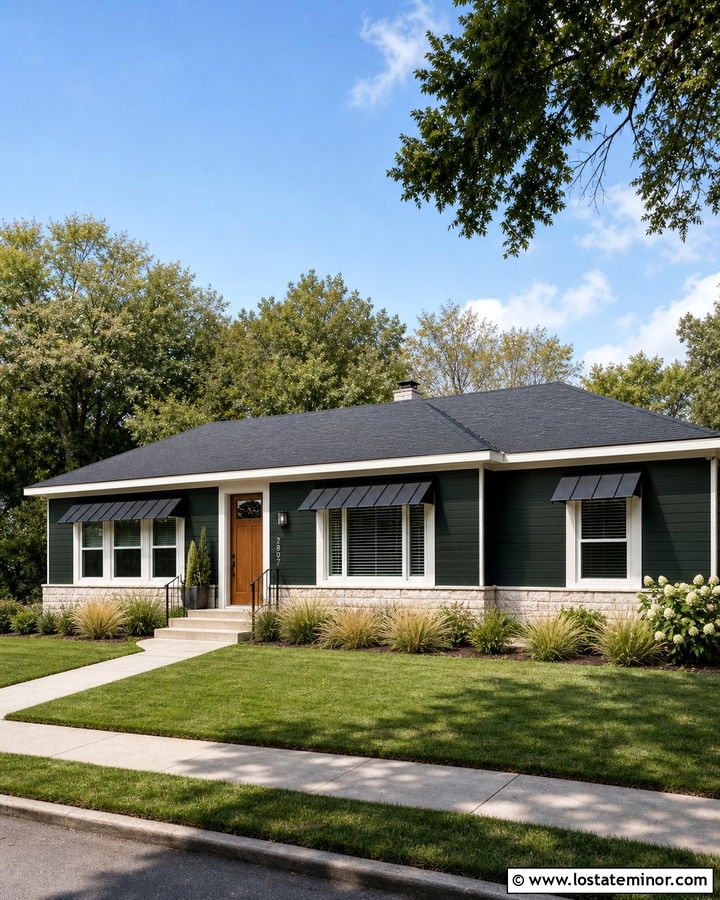
A low-profile ranch looks sharper when forest green horizontal siding is matched with slim black metal awnings. Place the awnings over the main front windows and use the same matte black finish on gutters, lights, and house numbers. Warm white trim keeps the facade from becoming too dark, while a natural oak front door introduces an inviting focal point. A charcoal architectural-shingle roof helps the black details flow across the entire exterior. Consider pale limestone around the foundation or entry steps for added contrast. Keep the landscaping simple with ornamental grasses, low evergreen shrubs, and a straight concrete walkway. This balanced scheme makes an older ranch feel updated without hiding its straightforward roofline and practical suburban character.
2. Forest Green Craftsman With Cream Canvas Awnings
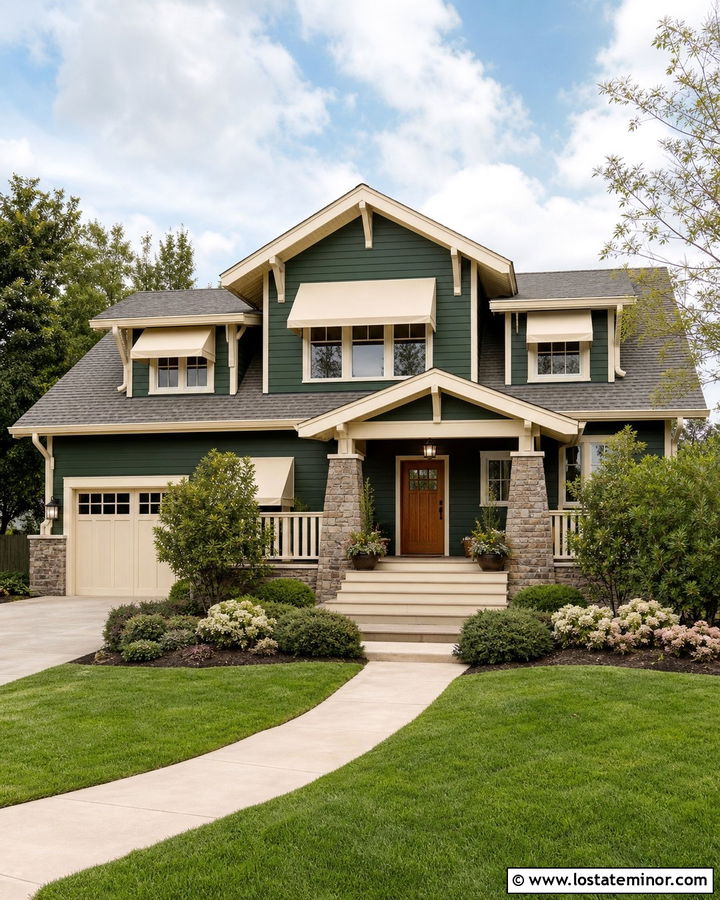
Can a dark green exterior still feel soft and welcoming? A Craftsman house answers that question beautifully when forest green lap siding is combined with cream canvas awnings. The warm fabric lightens the windows while echoing ivory trim, tapered porch columns, and exposed roof brackets. Add a medium-stained wood door and matching porch ceiling to strengthen the natural palette. A stone foundation with beige, gray, and muted brown tones creates a grounded transition between the house and yard. Choose simple straight-edged awnings instead of decorative valances so the detailed Craftsman architecture remains the focus. Copper porch lights, divided-light windows, and broad steps complete a full exterior that feels established, comfortable, and carefully coordinated.
3. Forest Green Colonial House With White Striped Awnings
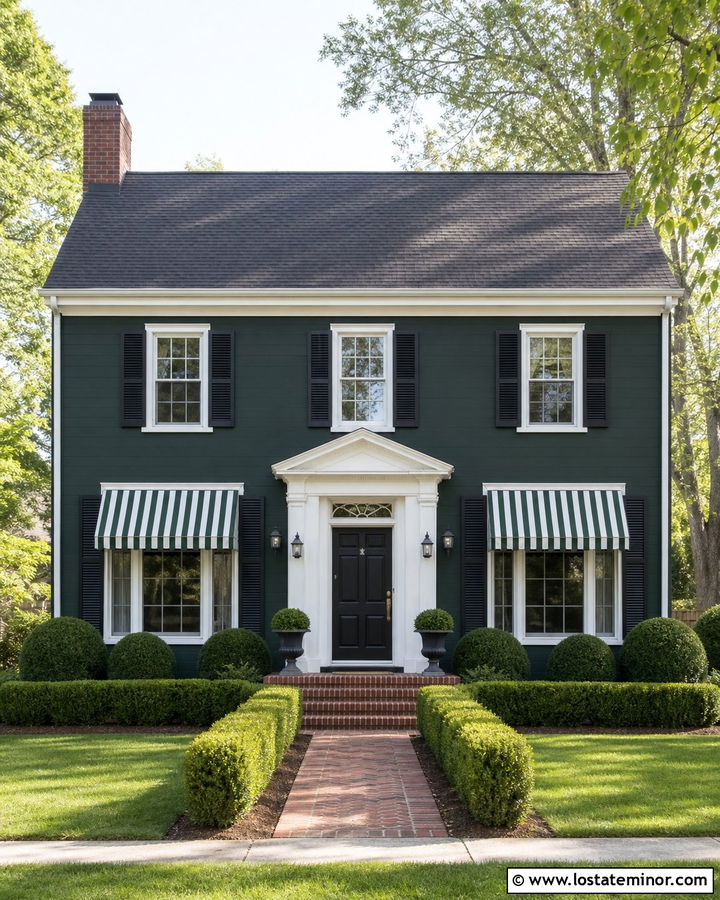
Symmetry gives a Colonial exterior its familiar order, and matching striped awnings can reinforce that structure. Use rich forest green clapboard across the body, crisp white trim around the windows, and forest green-and-white striped fabric awnings on the first floor. A centered black front door adds definition without competing with the pattern. White corner boards, a traditional pediment, and balanced shutters maintain the home’s classic appearance. Finish the roof with charcoal shingles and add red brick to the steps or chimney for warm contrast. Keep every awning identical in width, projection, and stripe direction. Boxwood borders, a brick walkway, and evenly placed entry lanterns make this complete facade feel polished rather than overly decorative.
4. Forest Green Bungalow With Copper Entry Awning
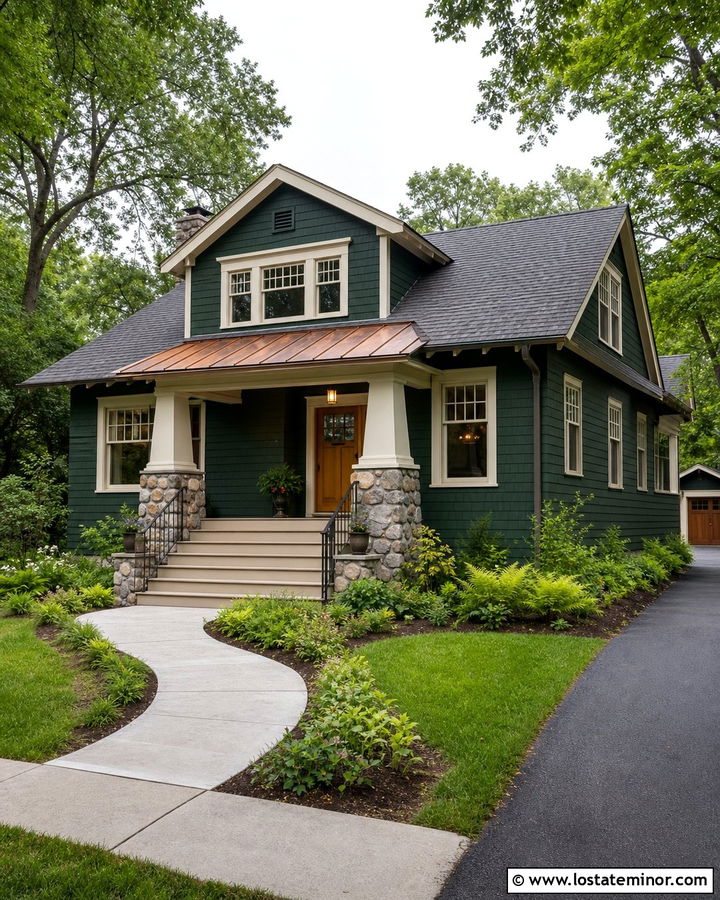
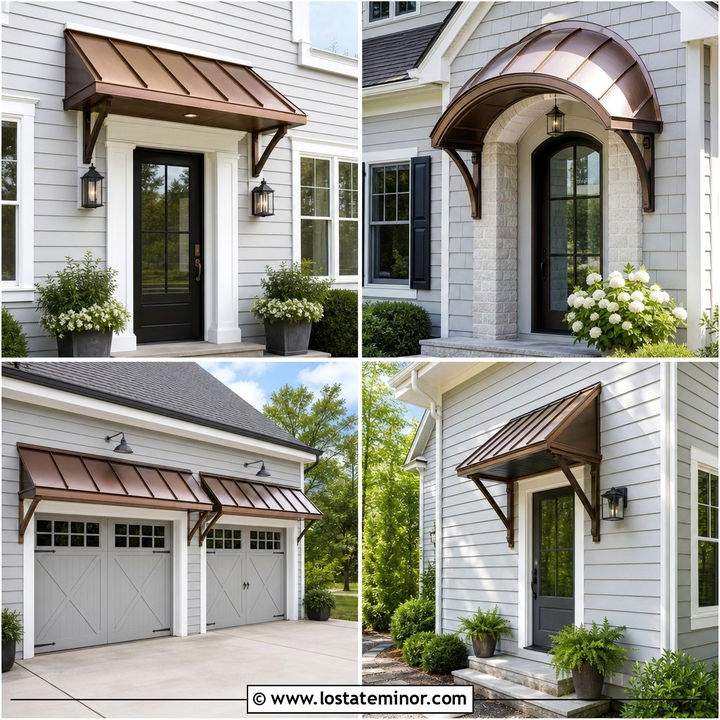
Copper develops warmth and character that can look especially striking against forest green shingles. On a compact bungalow, position a small standing-seam copper awning above the front door and repeat copper on the gutters or porch lights. Cream trim provides a softer contrast than bright white, while natural fieldstone porch columns complement the green and metallic finishes. Use a honey-toned oak door to connect the copper with the entry area. A medium-gray roof prevents the upper portion of the house from feeling heavy. Wide front steps, deep planting beds, and layered ferns can make the bungalow appear settled into its landscape. The result is a handcrafted exterior where every material supports the home’s cozy scale.
5. Forest Green Modern Farmhouse With Shed Roof Awnings
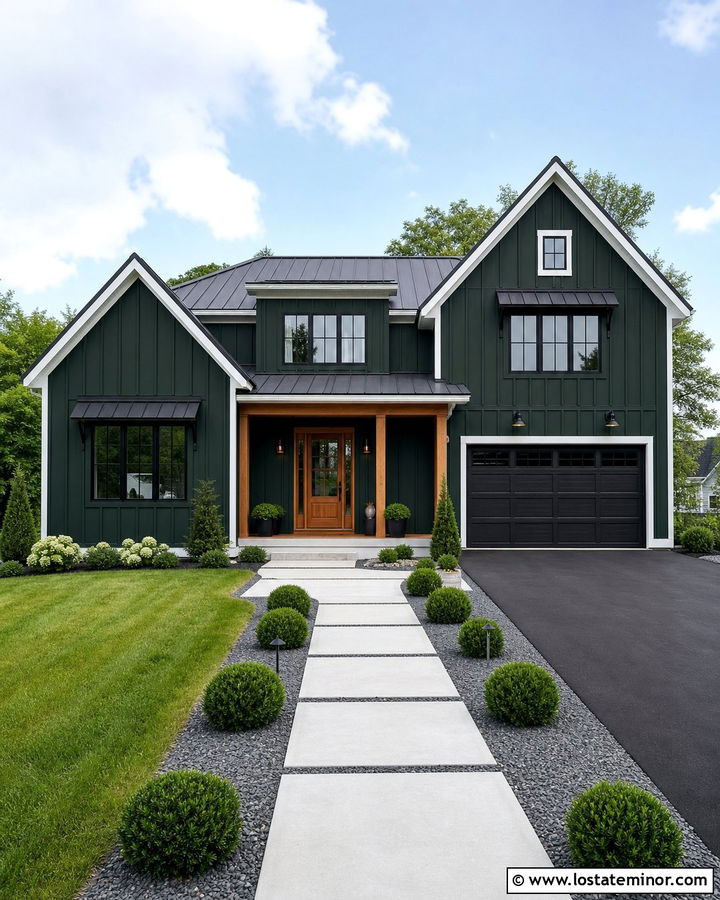
A modern farmhouse does not need an all-white exterior to feel clean and open. Forest green board-and-batten siding gives the tall facade definition, while black shed-roof awnings create crisp shadows above the windows. Use bright white trim sparingly around the eaves and entry to preserve contrast. Black-framed windows, a charcoal metal roof, and simple gooseneck lights extend the streamlined palette. Warm the scheme with a cedar front door, matching porch posts, and natural wood garage accents. The awnings should have a shallow pitch that echoes the main roof instead of competing with it. Gravel beds, clipped shrubs, and a broad concrete path complete this full-house look with a practical rural influence and modern suburban finish.
6. Forest Green Cape Cod With Scalloped Canvas Awnings
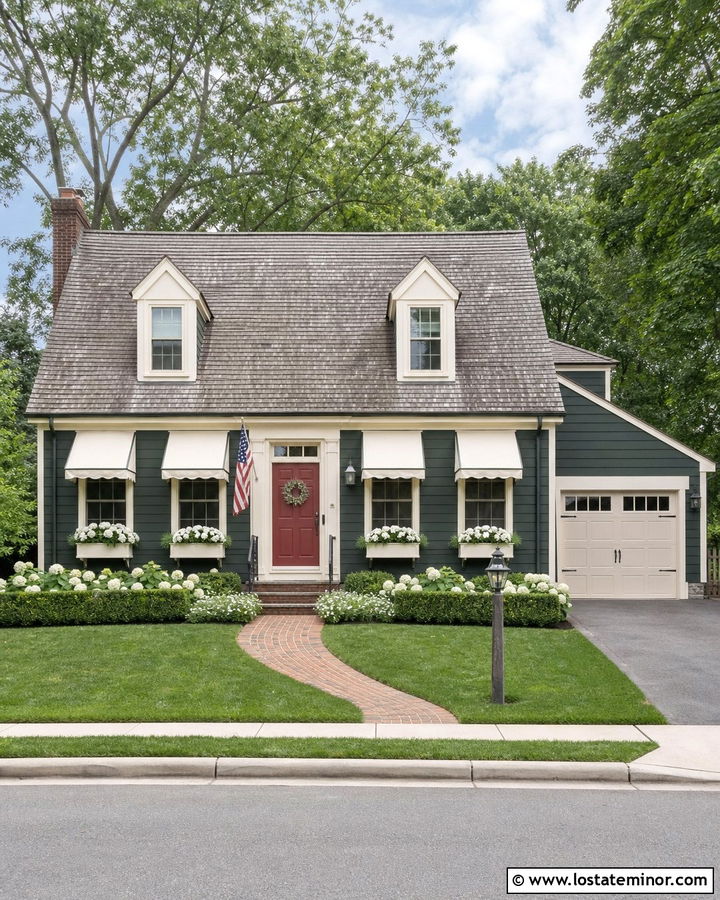
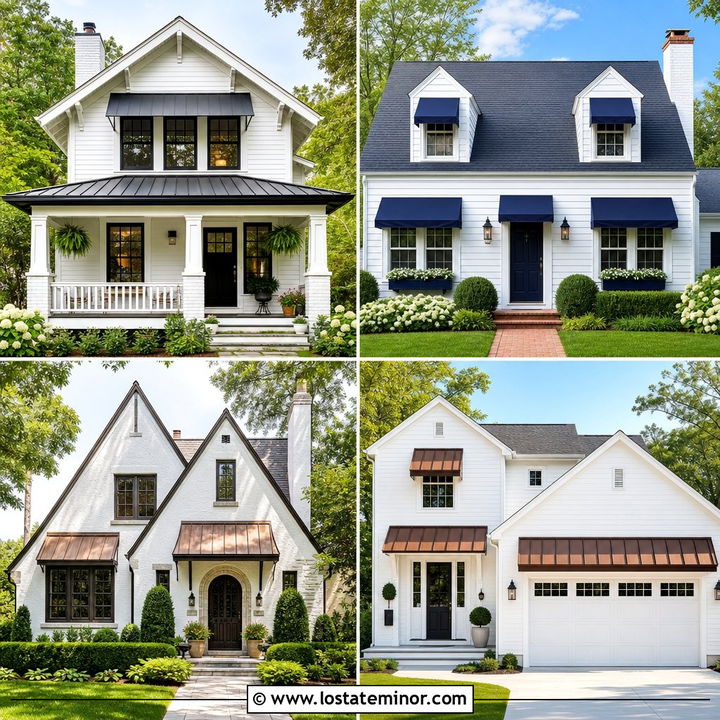
A Cape Cod exterior can handle charming fabric details when the colors remain restrained. Paint the shingle siding forest green and use warm white on dormers, corner boards, window trim, and the centered entry surround. Add cream canvas awnings with narrow forest green borders above the lower windows. A subtle scalloped edge introduces traditional character without making the facade feel busy. Choose a weathered gray roof to reference coastal materials and a muted brick-red front door for a small, warm accent. White window boxes can carry green foliage rather than bright flowers. A curved brick path, low hedges, and hydrangeas finish the view. Repeated awnings create rhythm while keeping the compact home cheerful and balanced.
7. Forest Green Tudor House With Bronze Window Awnings
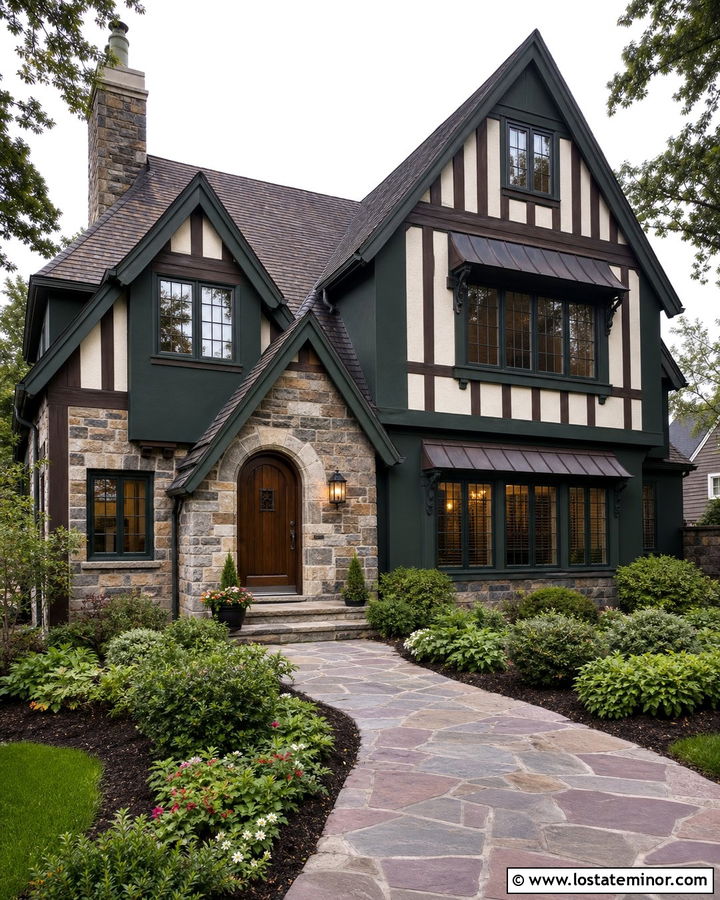
A Tudor house already has strong architectural lines, so its awnings should appear substantial but quiet. Forest green stucco or painted masonry can form the main body, while dark bronze metal awnings sit above grouped casement windows. Use warm cream on the upper stucco panels and deep brown on decorative half-timbering. A dark walnut arched door strengthens the old-world character, while mixed brown and charcoal roof shingles tie the colors together. Stone around the entry and lower walls adds texture without introducing another strong hue. Select awnings with visible brackets that resemble hand-forged metal. Curved planting beds, shade-loving shrubs, and an irregular stone walkway complete a layered exterior that feels historic, grounded, and thoughtfully refreshed.
8. Forest Green Cottage With Yellow Striped Awnings
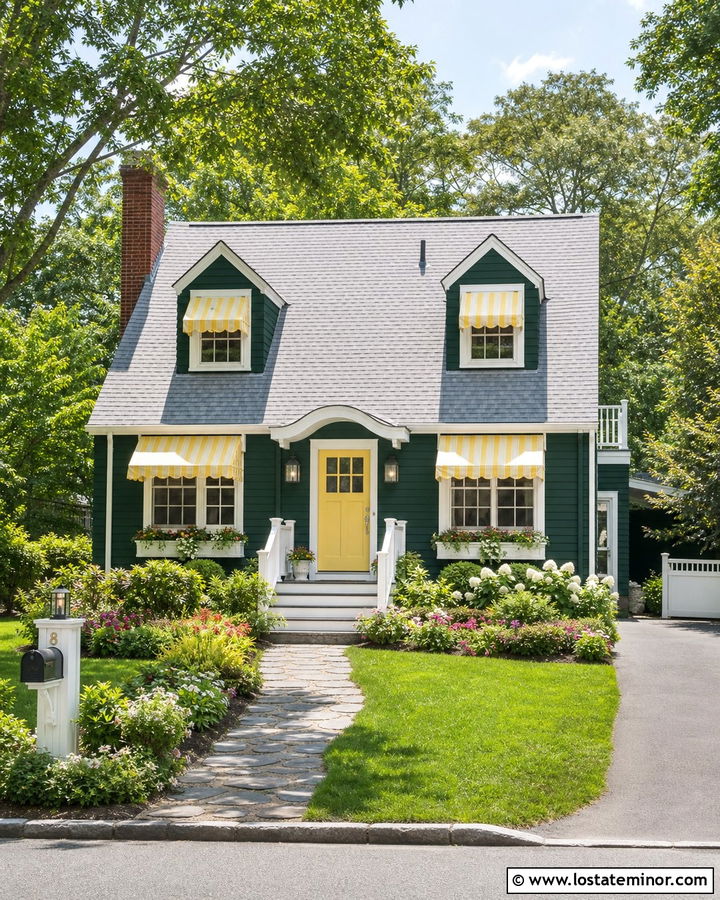
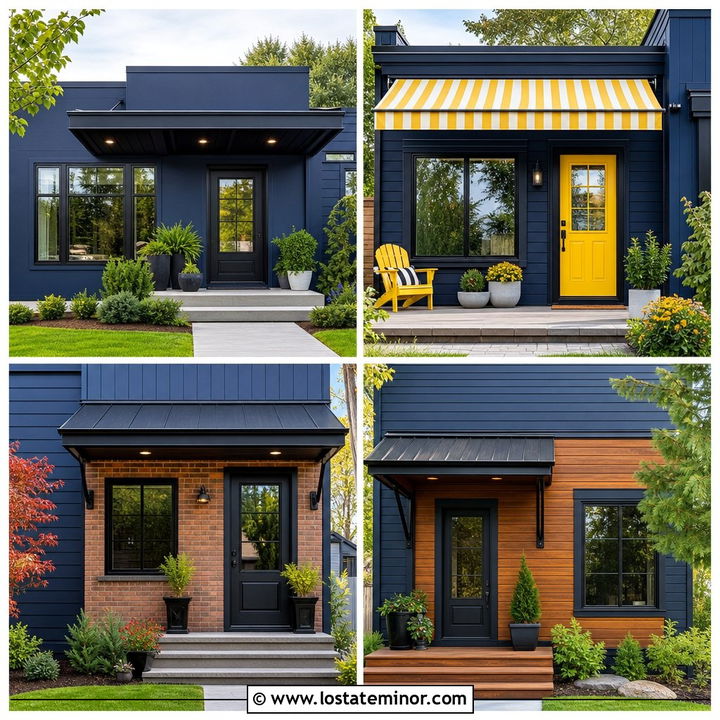
A small cottage can support a brighter awning when the accent appears in controlled doses. Use forest green lap siding as the dominant color, creamy white trim, and soft butter-yellow-and-white striped awnings above two front windows. Paint the front door the same muted yellow to connect the facade from side to side. A light gray roof keeps the scheme fresh, while a small brick chimney adds a warm, familiar texture. White porch railings and window boxes prevent the dark siding from overwhelming the compact architecture. Surround the house with informal flowering borders, a narrow stone path, and neatly trimmed grass. This full exterior feels playful and approachable while allowing forest green to remain the strongest visual element.
9. Forest Green Victorian House With Burgundy Awnings
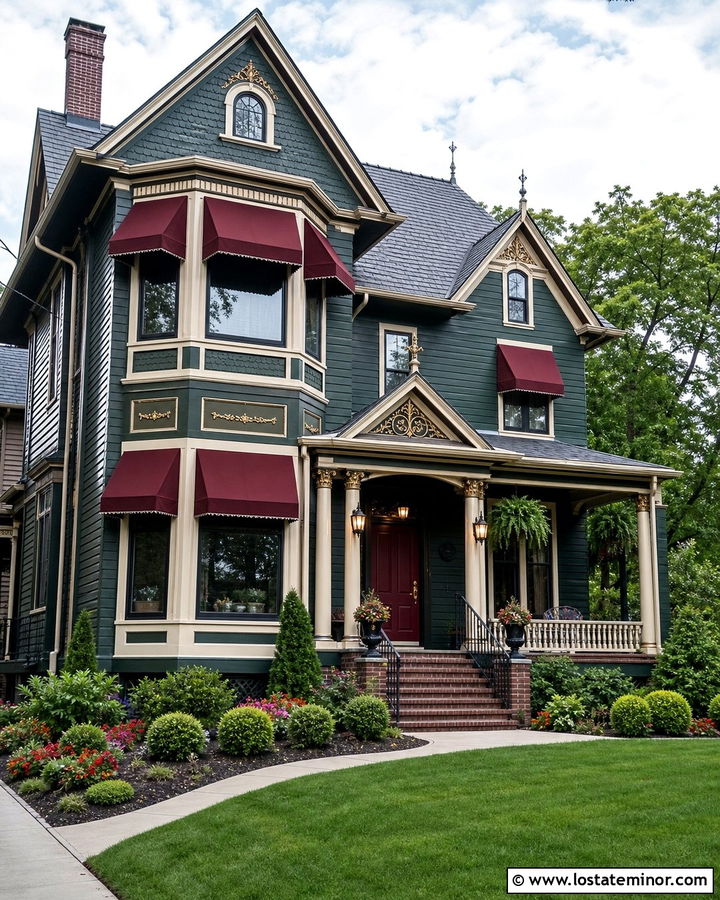
Victorian architecture offers enough trim and ornament to support a richer secondary color. Start with deep forest green siding, then outline the windows, porch, brackets, and decorative gables in warm ivory. Burgundy fabric awnings above the lower bay windows bring depth and connect naturally with a dark red front door. Use small amounts of muted gold on decorative details rather than painting every piece of trim. A charcoal slate-style roof gives the upper facade a calm background. Choose awnings with straight valances so the fabric does not compete with ornate woodwork. Brick steps, curved garden beds, and traditional porch lighting finish the scheme. The completed house feels colorful and period-appropriate without becoming visually crowded.
10. Forest Green Split-Level With Gray Retractable Awning
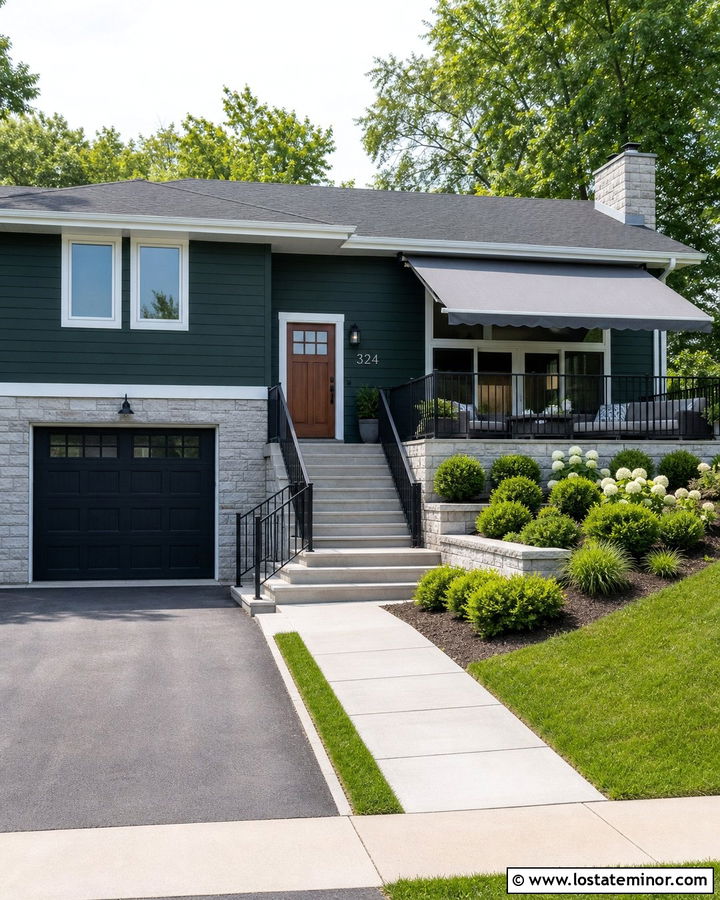
Split-level homes often benefit from a strong color that visually unifies their different elevations. Cover the upper portion with forest green lap siding and use light gray stone or painted brick along the lower level. Install a medium-gray retractable awning over a side patio or raised front deck, allowing its neutral fabric to bridge the dark siding and masonry. White window trim adds clarity, while a walnut front door introduces warmth near the recessed entrance. Choose charcoal roof shingles and simple black railings for a consistent modern finish. Broad concrete steps, tiered planting beds, and low shrubs can help connect the home to its sloping yard. The coordinated awning makes the outdoor area look intentional rather than added later.
11. Forest Green Midcentury House With Flat Metal Awnings
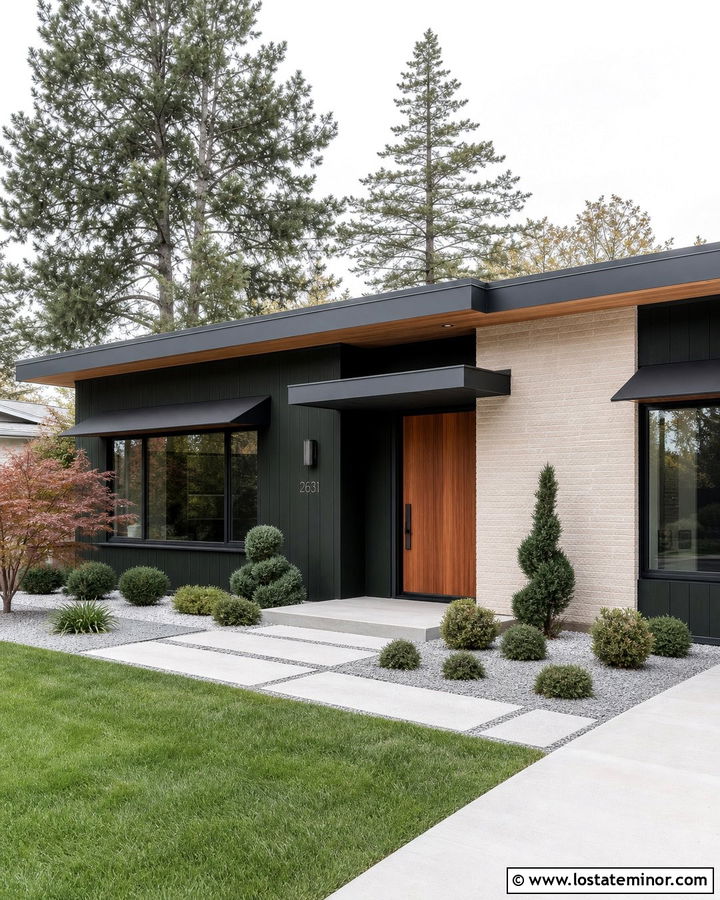
Long rooflines and broad windows make a midcentury house a natural setting for flat metal awnings. Paint the vertical or horizontal siding forest green, then add slim charcoal awnings above the largest window group and front entrance. Keep the trim close to the siding color so the architecture retains its clean, uninterrupted planes. A warm mahogany door, cedar soffits, and matching privacy screens add contrast without disrupting the horizontal emphasis. Use pale buff brick or light concrete block on one feature wall to brighten the facade. Gravel beds, sculptural shrubs, and rectangular pavers reinforce the geometry. The completed exterior combines shade, strong lines, and earthy colors while respecting the home’s original low-slung proportions.
12. Forest Green Brick House With Black Fabric Awnings
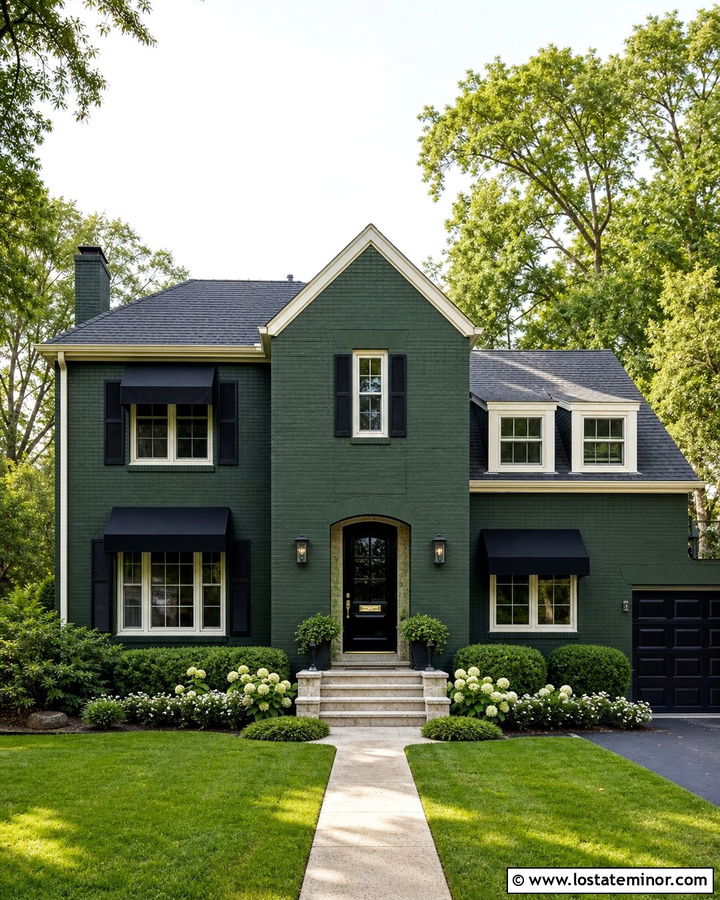
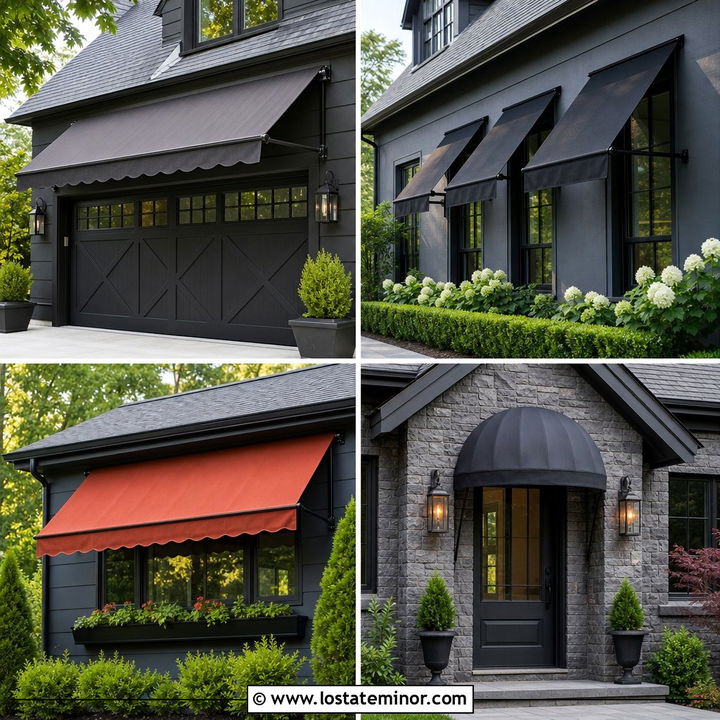
Painting brick forest green creates a bold backdrop that can still feel refined when the remaining details are simple. Add fitted black fabric awnings above the front windows and repeat black on the entry door, shutters, and lanterns. Warm white trim around the eaves prevents the dark facade from appearing flat. Leave the brick texture visible beneath the paint so natural shadow and variation soften the saturated color. A charcoal roof continues the restrained palette, while limestone steps introduce a lighter material at ground level. Select straight-sided awnings with minimal trim rather than striped or scalloped versions. Balanced foundation shrubs, a clean concrete walkway, and a few mature trees create a complete exterior with strong contrast and traditional suburban curb appeal.
13. Forest Green Cabin With Cedar Awnings
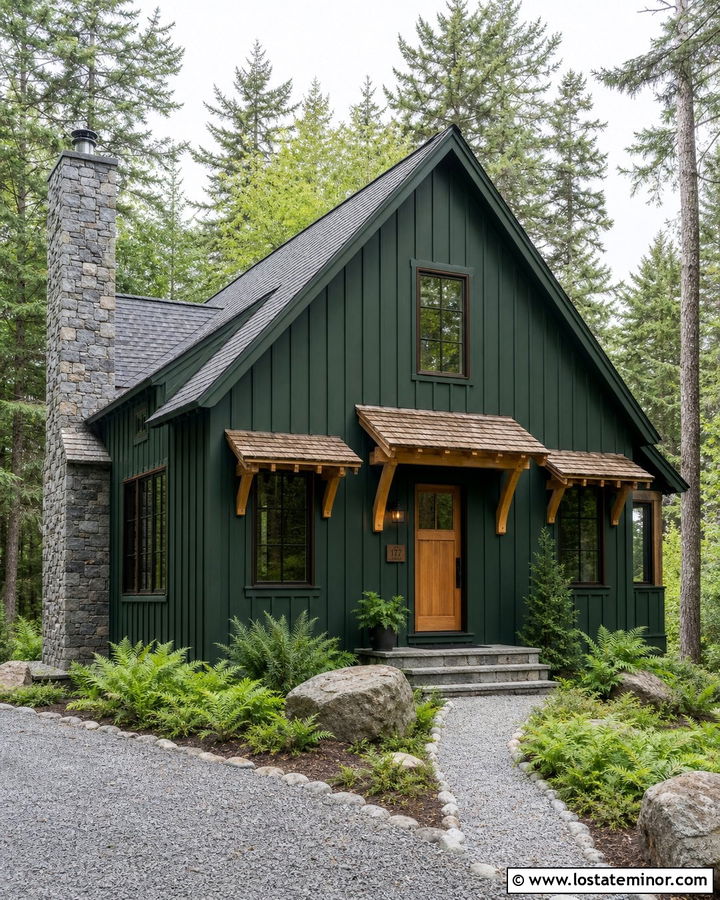
In a wooded setting, forest green siding can help a cabin feel connected to the surrounding trees. Build simple cedar awnings over the windows and entry, using exposed rafters and a shallow shingle roof. The warm wood stands out clearly against dark green board-and-batten walls. Add dark bronze windows, a natural cedar door, and a gray stone chimney to complete the earthy material palette. A weathered charcoal roof keeps attention on the timber details. Instead of bright white trim, choose a muted tan or wood-toned finish around the windows. Gravel paths, native ferns, boulders, and evergreen plantings frame the house naturally. This exterior feels rustic and durable while maintaining enough structure for polished curb appeal.
14. Forest Green Two-Story House With White Metal Awnings
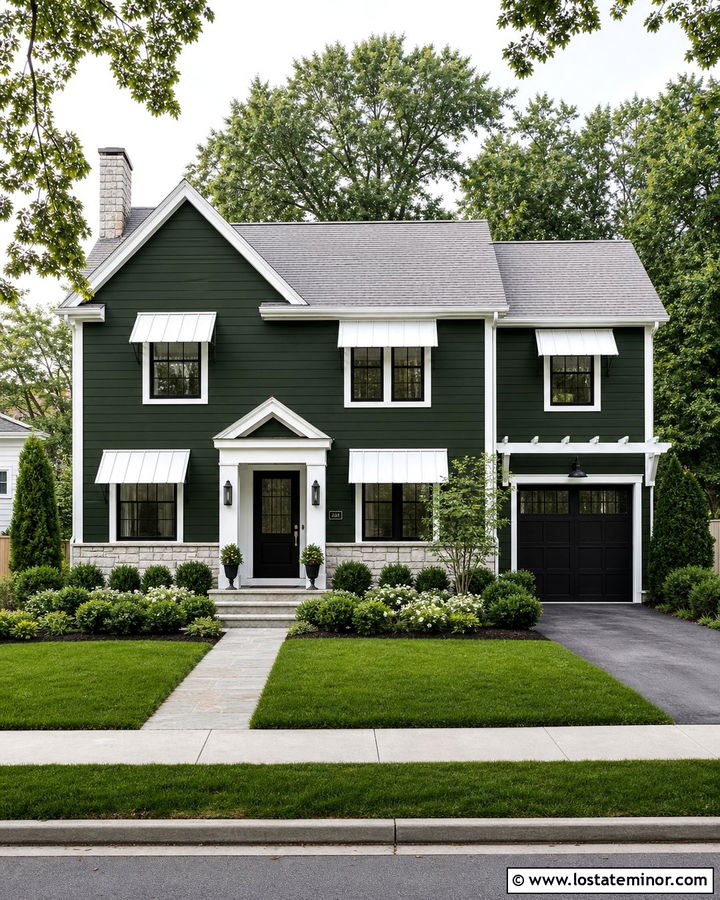
White awnings can brighten a tall forest green house and visually connect windows on both levels. Choose slim white metal awnings with simple supports, placing them above the most prominent front-facing windows. Match the finish to white corner boards, fascia, and window trim for a cohesive frame around the dark siding. A black front door and black garage door add weight near the ground, while a light gray roof balances the brighter details above. Consider a small white portico over the entrance so the awnings feel related to the architecture. Straight foundation beds, a paved walkway, and layered shrubs keep the landscaping proportional. The final exterior looks crisp, organized, and appropriate for a newer suburban neighborhood.
15. Forest Green Stucco House With Terracotta Awnings
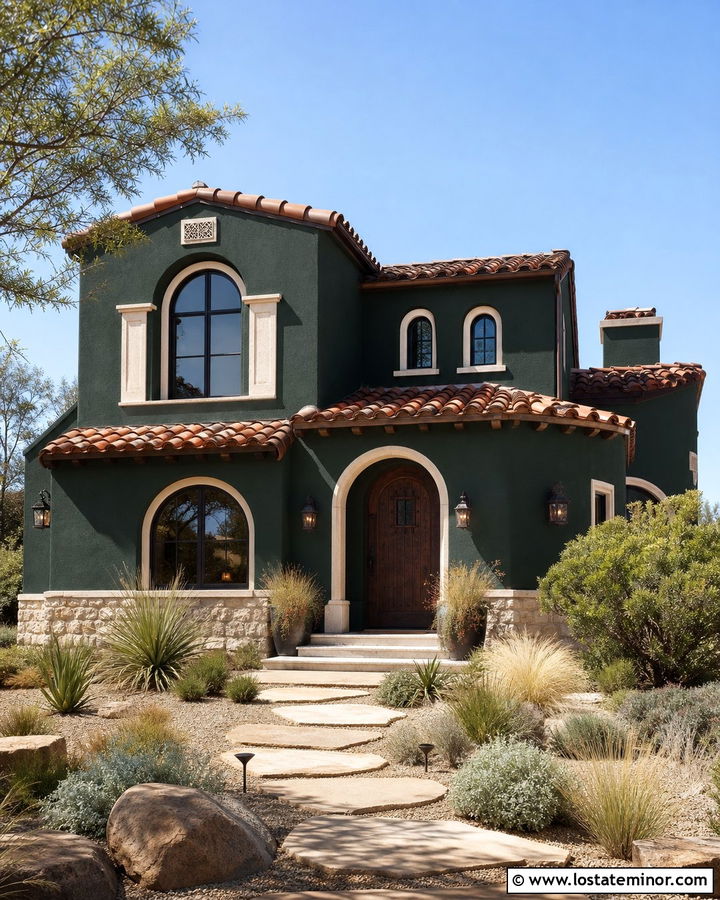
Warm terracotta can bring a sun-baked, Southwestern influence to a forest green stucco house. Use curved clay-tile awnings over the windows and entry, repeating the same terracotta material on the main roof. Cream window trim softens the contrast between the green walls and orange-red tile. Add a dark wood front door, bronze lanterns, and a stone base with warm beige tones. Avoid cool gray accents, which may feel disconnected from this earthy palette. Arched windows or doorways can help the awnings appear integrated instead of applied as decoration. Drought-tolerant grasses, flowering shrubs, gravel, and broad stepping stones finish the yard. Together, the colors and textures create a distinctive exterior that remains natural and welcoming.
16. Forest Green Coastal House With Navy Striped Awnings
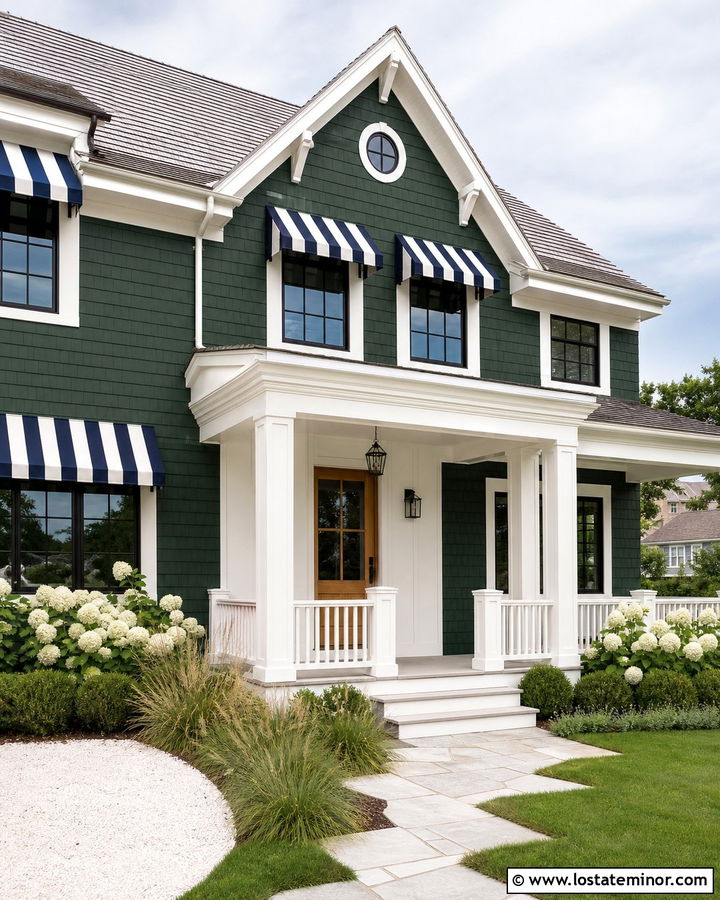
Forest green can suit a coastal house when it is paired with crisp details and a restrained nautical accent. Use forest green shingle siding, bright white trim, and navy-and-white striped awnings above the lower windows. Keep the porch railings, columns, and window frames white so the exterior remains airy. A natural teak door adds warmth without introducing another painted color. Choose a weathered gray roof and brushed nickel or dark navy light fixtures. Wide awning stripes will look calmer than a narrow, high-contrast pattern across a broad facade. Hydrangeas, ornamental grasses, shell-colored gravel, and a pale stone walkway finish the landscape. This complete scheme feels coastal and relaxed without relying on the expected blue body color.
17. Forest Green Craftsman With Red Canvas Awnings
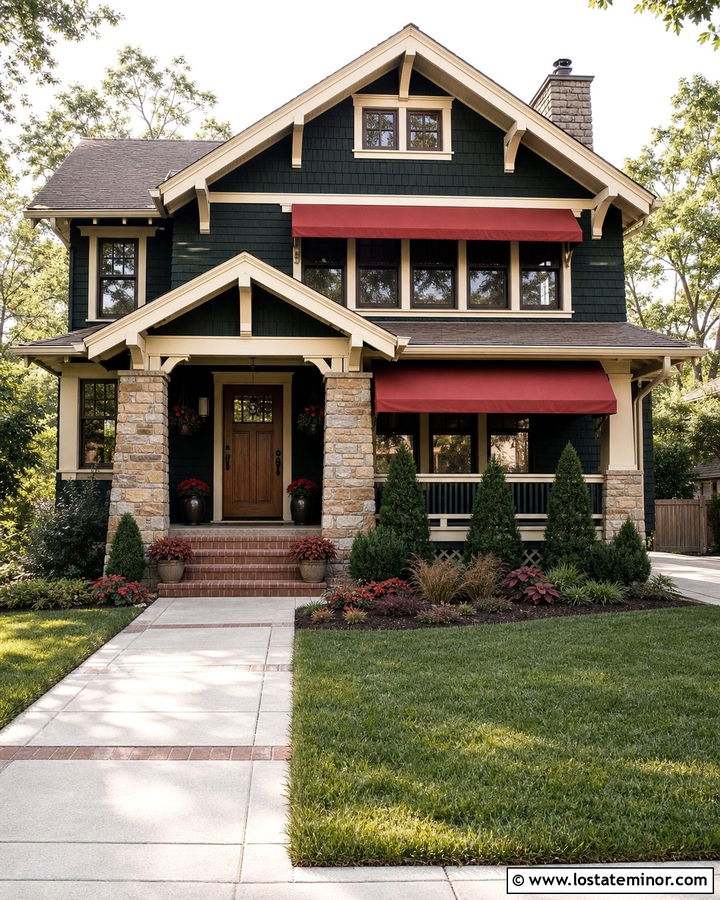
A muted red awning can work with forest green when nearby brick repeats the same warm undertone. Cover the Craftsman exterior in forest green lap siding and add dark red canvas awnings above selected front windows. Use cream trim, brown window frames, and a warm wood door to keep the contrast grounded. Red brick porch steps or foundation accents help the awnings feel connected to a larger scheme instead of appearing random. Choose a brown-gray roof that supports both main colors. Tapered stone columns and deep roof brackets can remain neutral focal points. Structured evergreens, seasonal foliage, and a wide front path complete the view. The result is traditional, warm, and distinctive without using overly bright primary colors.
18. Forest Green Duplex With Matching Entry Awnings
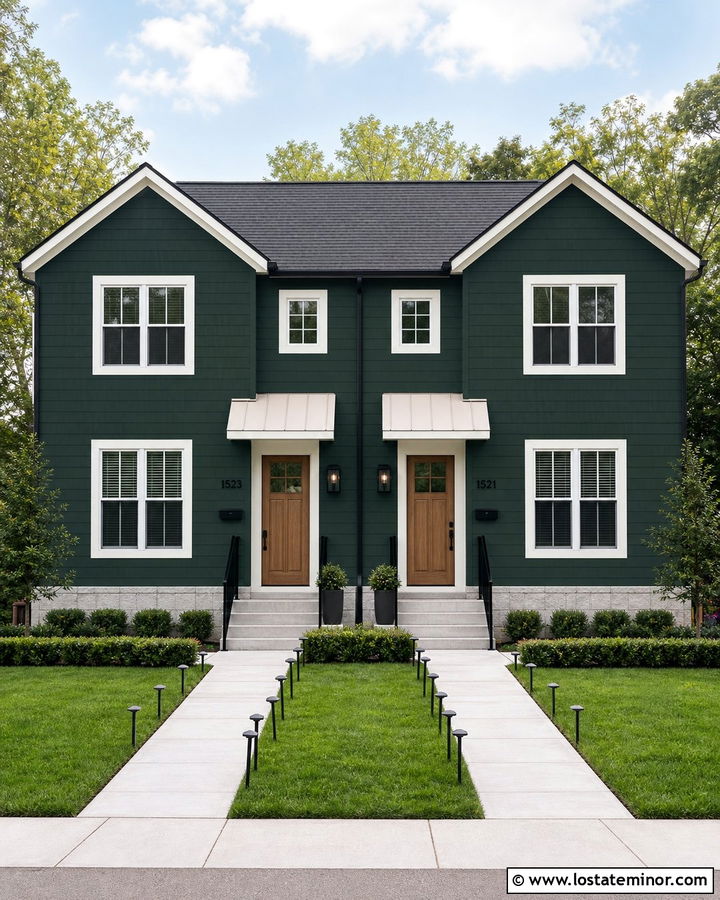
A duplex needs repetition to look unified, especially when each entrance must remain easy to identify. Use the same forest green siding across both halves and install matching cream metal awnings over the two front doors. Bright white window trim creates a shared background, while separate natural wood doors add gentle variation. Black house numbers, lights, and railings provide clear, practical details. A charcoal roof and pale stone foundation keep the overall exterior neutral enough for broad appeal. Make both awnings equal in size and align them with nearby windows whenever possible. Mirrored walkways, low hedges, and balanced porch planters strengthen the symmetry. This complete design makes the property feel cohesive, orderly, and carefully maintained from the street.
19. Forest Green Farmhouse With Galvanized Steel Awnings
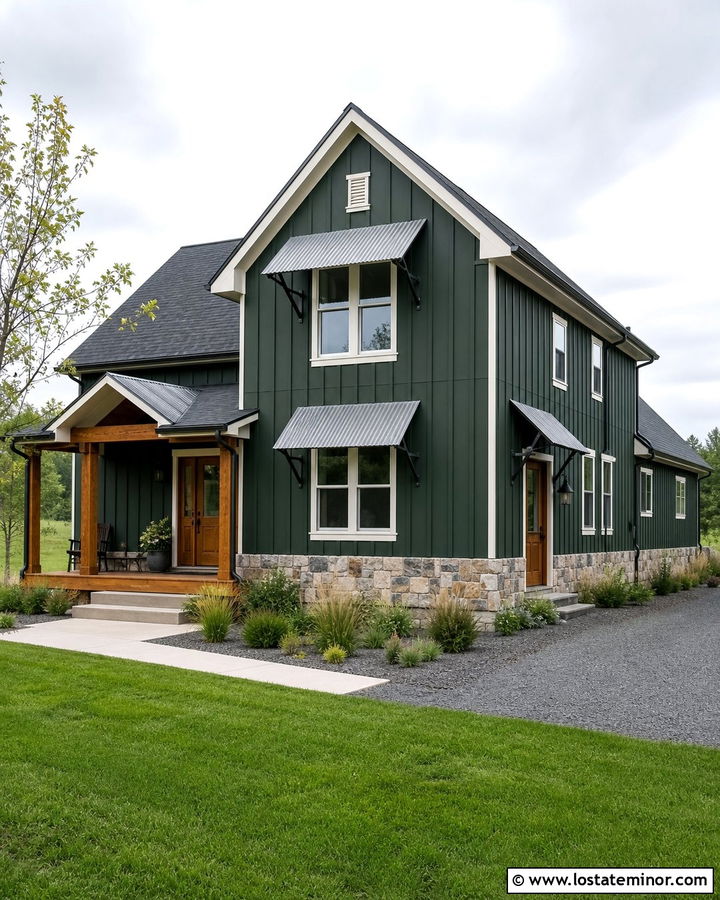
Galvanized steel introduces an agricultural reference that feels natural on a forest green farmhouse. Install simple corrugated-metal awnings above the windows and side entry, using black brackets for definition. Forest green board-and-batten siding provides a rich body color, while warm white trim outlines the roofline and openings. A stained cedar front door and matching porch posts prevent the metal from making the exterior feel cold. Choose a matte charcoal roof rather than highly reflective silver roofing. A stone foundation with mixed gray and tan tones adds another durable rural material. Gravel edging, native grasses, and a straight concrete path maintain the practical mood. The entire scheme feels hardworking, current, and connected to traditional farm structures.
20. Forest Green Townhouse With Bronze Spear Awnings
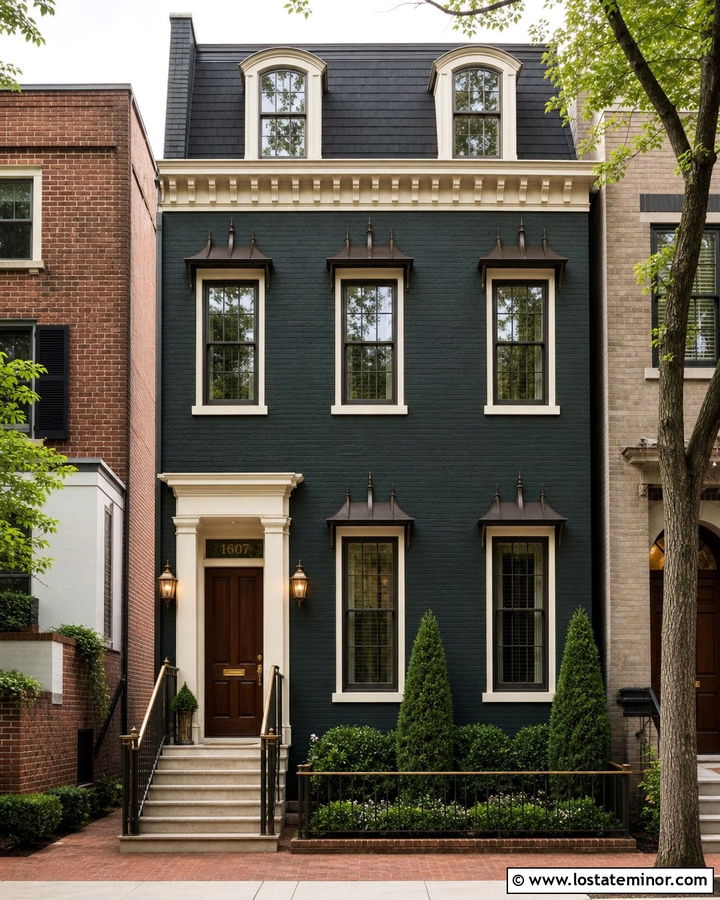
A narrow townhouse facade can gain depth from compact bronze spear awnings placed above tall windows. Paint the siding or masonry forest green and use dark bronze on the awning frames, railings, lights, and entry hardware. Cream trim around the windows keeps their vertical shape visible against the dark body color. A warm walnut front door creates a clear focal point without taking up much visual space. Choose a dark roof and keep gutters close to the forest green siding color. Decorative spear supports add enough detail for an urban traditional exterior while remaining visually light. Narrow foundation beds, upright shrubs, and a straight brick walkway suit the limited frontage. The finished townhouse feels elegant, efficient, and distinctly individual.
21. Forest Green House With Natural Tan Awnings
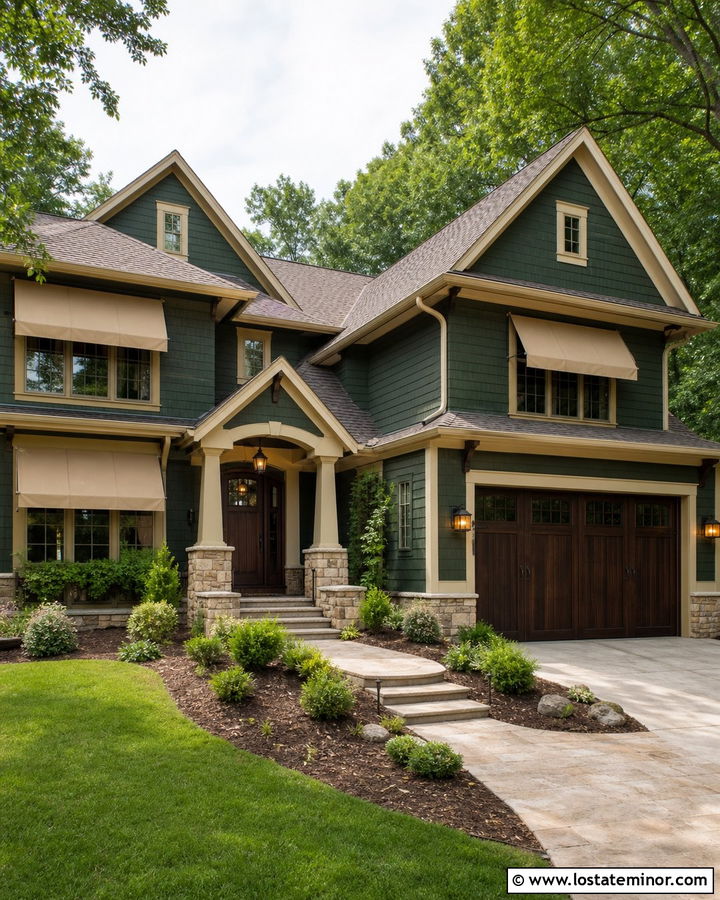
For a quieter exterior, pair forest green siding with natural tan canvas awnings. Tan offers less contrast than white, creating a softer transition between the dark walls, warm stone, and surrounding landscape. Use creamy beige trim around the windows and a medium walnut finish on the front door and garage door. A taupe-gray roof supports the subdued palette without disappearing into the green. Choose plain awnings with straight edges and no printed pattern, especially on a house with several front windows. Buff stone around the porch or foundation helps distribute the tan color across the facade. Layered shrubs, mulch beds, and a gently curved path complete a calm exterior that feels comfortable in wooded or established suburban surroundings.
22. Forest Green House With Polycarbonate Awnings
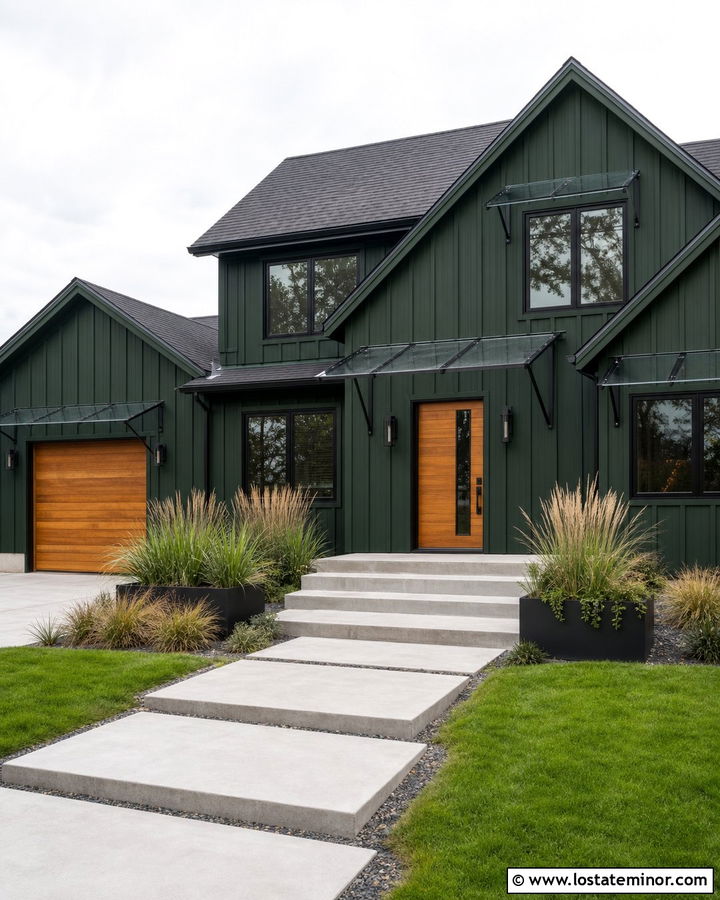
Clear polycarbonate awnings offer protection without placing another strong color across a forest green exterior. This combination works especially well on a contemporary house with flat planes and large windows. Use forest green vertical siding, black window frames, and slim black awning supports. The transparent panels preserve daylight and keep the facade visually open. Add warm cedar around the front door or garage to soften the modern materials. A charcoal roof, black gutters, and simple concrete steps continue the clean palette. The panels should align with the window and door widths for a built-in appearance. Minimal ornamental grasses, rectangular planters, and large walkway slabs finish the setting. The result is practical, streamlined, and visually lighter than a solid canopy.
23. Forest Green House With Cream Patio Awning
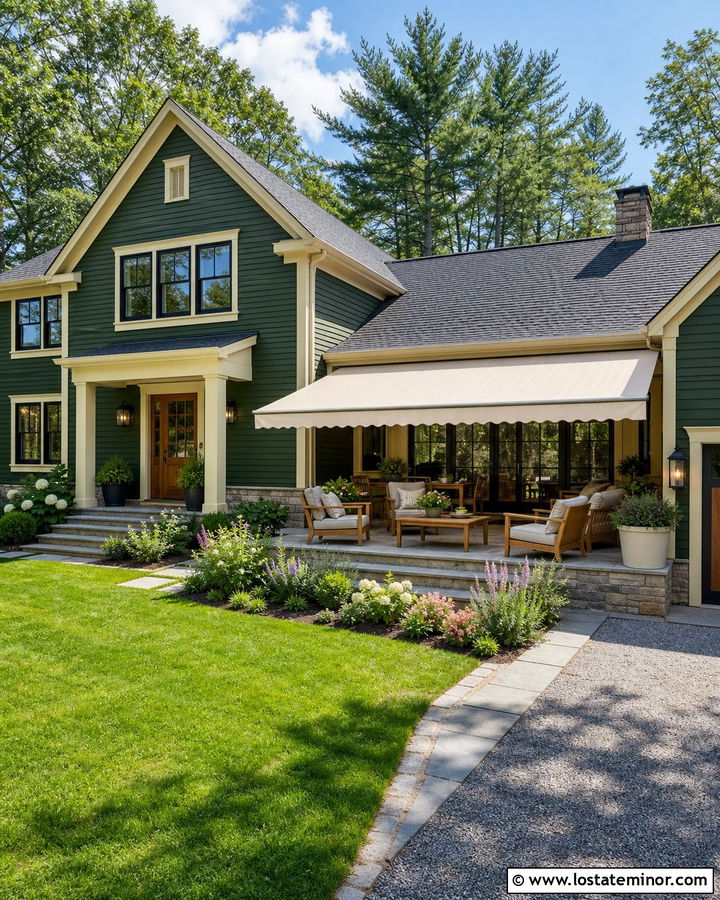
A large cream retractable awning can turn a forest green house and rear-facing patio into one coordinated outdoor setting. Use forest green lap siding, cream trim, and a warm gray stone patio. Match the awning fabric to the trim so the extended canopy looks like part of the original color plan. Black-framed windows and bronze outdoor lighting provide definition, while teak furniture and a cedar door bring natural warmth. Choose a charcoal roof to anchor the upper portion of the home. The awning cassette and arms should blend with either the cream trim or dark window frames. Neat lawn edges, flowering borders, and a clear patio walkway complete a welcoming full-house view with usable shade and polished curb appeal.
24. Forest Green House With Copper Barrel Awning
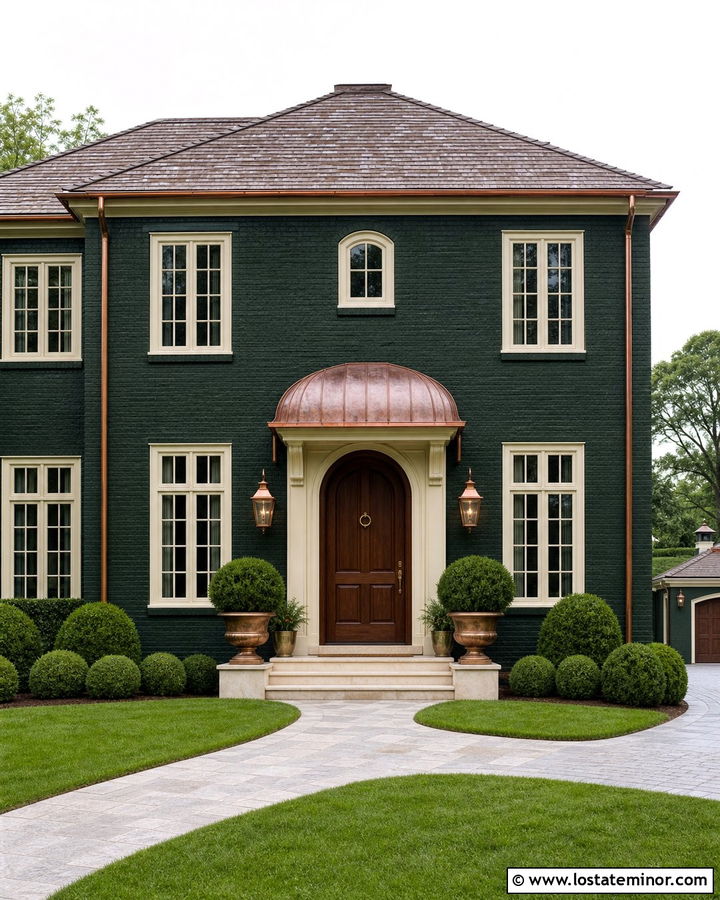
A rounded copper barrel awning can transform a plain front entrance into a refined architectural focal point. Use it on a forest green brick or stucco house with warm ivory trim. The curved canopy should sit over a centered wood door and align with an arched transom or rounded entry opening. Repeat copper in the gutters, lanterns, or small roof details so the awning does not appear isolated. Cream limestone steps and a muted gray-brown roof support the traditional palette. Keep nearby window treatments simple, allowing the entry canopy to command attention. Symmetrical shrubs, urn planters, and a curved stone walkway create a formal approach. The complete exterior feels graceful, established, and rich in natural-looking materials.
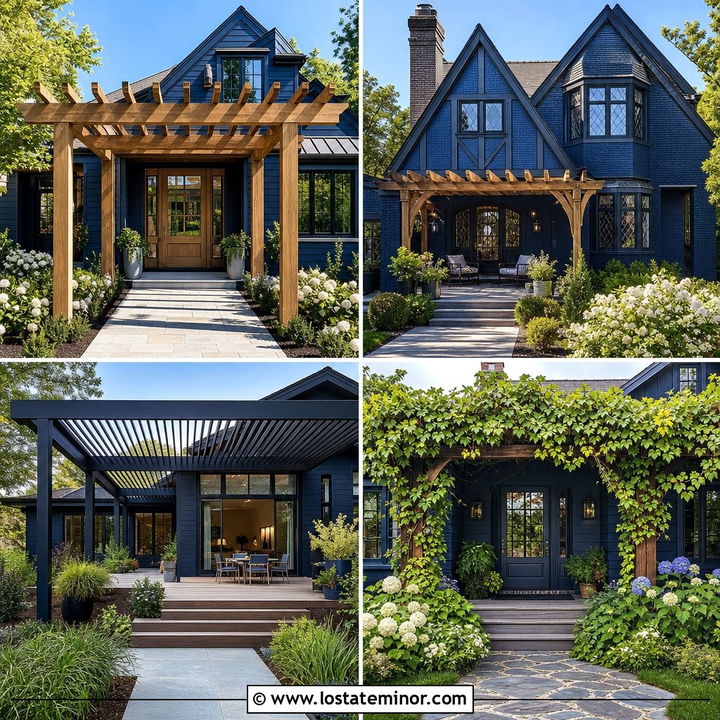
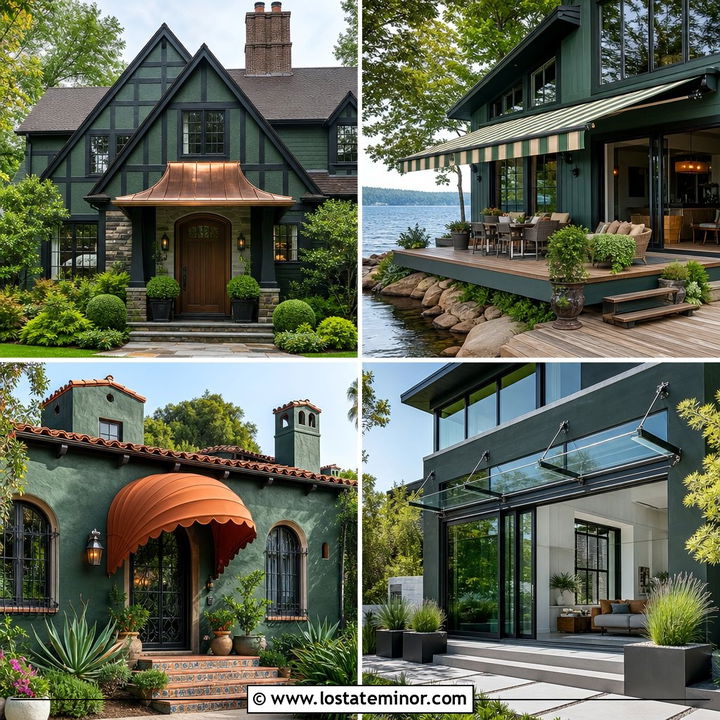
25. Forest Green House With Black And White Awnings
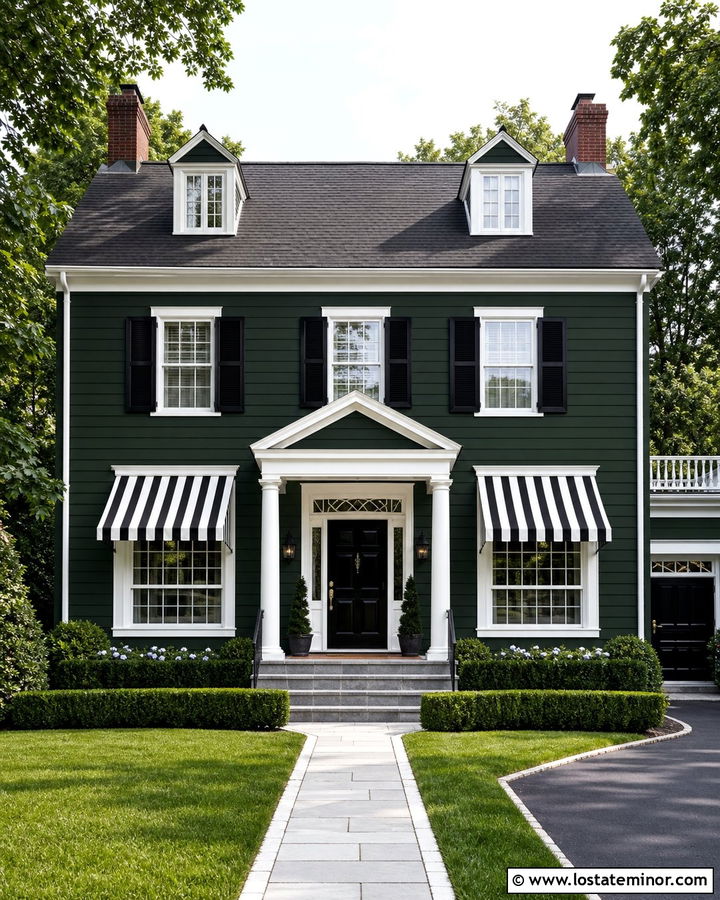
Black-and-white striped awnings create noticeable contrast against forest green without requiring a bright accent color. Use the pattern on a traditional two-story home with white trim, black shutters, and a glossy black front door. Keep the stripe width broad and repeat it consistently across the first-floor windows. A charcoal roof helps the black portions blend into the overall exterior. White porch columns and railings provide enough open space to balance the dark siding and busy fabric. Add gray stone to the steps or foundation for a neutral transition. Boxwood hedges, a straight walkway, and balanced foundation plantings reinforce the orderly facade. This full-house combination feels classic, graphic, and energetic while maintaining a controlled three-color palette.
26. Forest Green House With Awning Windows
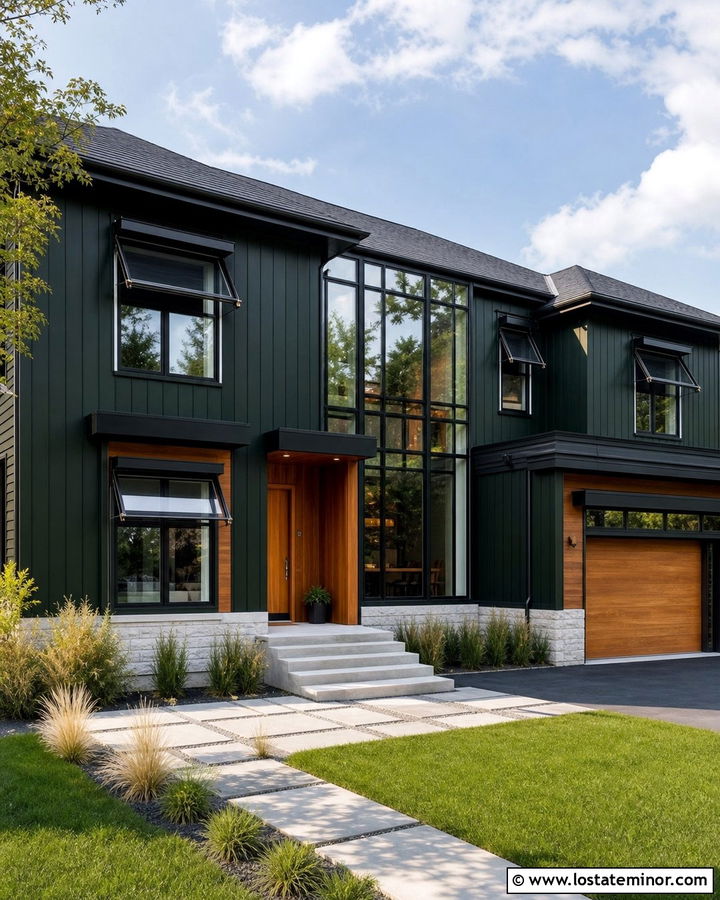
Awning-style windows can become part of the architectural design even without fabric canopies. Use black-framed awning windows on a forest green contemporary house, placing them high on the facade or combining them with larger fixed panes. Forest green vertical siding creates a clean background, while warm cedar panels highlight the entry and garage. Add shallow black metal projections above selected openings to repeat the outward-opening window shape. A low charcoal roof and concealed gutters preserve the streamlined silhouette. Light concrete steps and a pale stone foundation prevent the dark exterior from feeling too heavy. Sparse grasses, small trees, and geometric pavers finish the landscape. The complete design feels modern, functional, and carefully arranged rather than overly decorative.
27. Forest Green Garage House With Wide Metal Awning
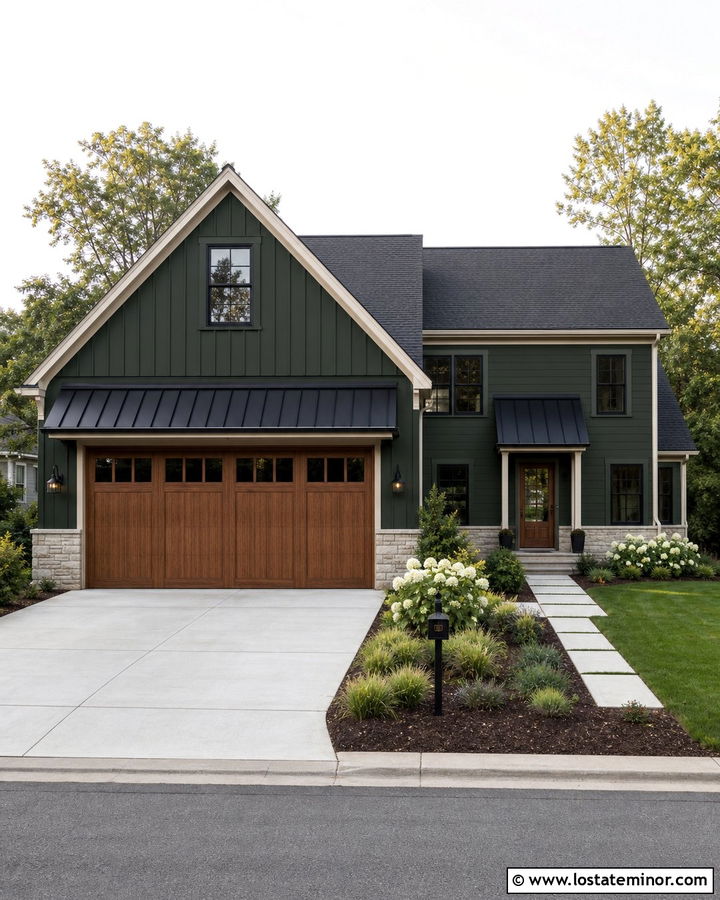
A house with a prominent garage needs an awning that relates to the entire front elevation. Use forest green horizontal siding and install a wide black metal awning above a warm wood garage door. Repeat a smaller version over the front entry to create a clear connection between both zones. Cream trim around the windows softens the otherwise dark palette. A charcoal roof and black gutters continue the metal finishes, while pale stone around the garage base adds contrast. Keep the awning pitch shallow so it does not compete with the main roof. A broad driveway, linear planting beds, and a defined pedestrian path help organize the frontage. This exterior makes the garage feel integrated instead of visually dominant.
28. Forest Green Porch House With Striped Awning
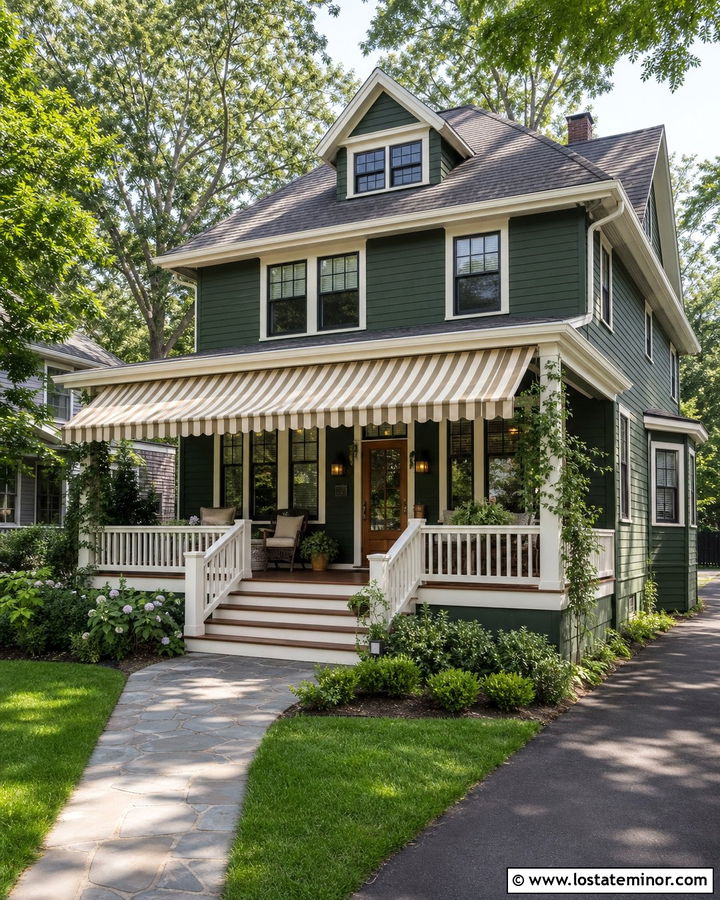
A porch awning can add flexible shade while preserving the welcoming character of a forest green home. Choose a cream-and-tan striped retractable canopy that extends over part of a wide front or side porch. Paint the siding forest green and use creamy white on the columns, railings, and window trim. Natural cedar porch flooring and a matching front door bring warmth beneath the fabric. A medium-gray roof keeps the upper facade quiet. Select a broad, subtle stripe that complements the home rather than resembling a storefront canopy. Low shrubs, climbing vines, and a stone walkway frame the porch without concealing it. The coordinated materials produce an exterior that feels comfortable, shaded, and ready for everyday outdoor living.
29. Forest Green House With Gray Standing Seam Awnings
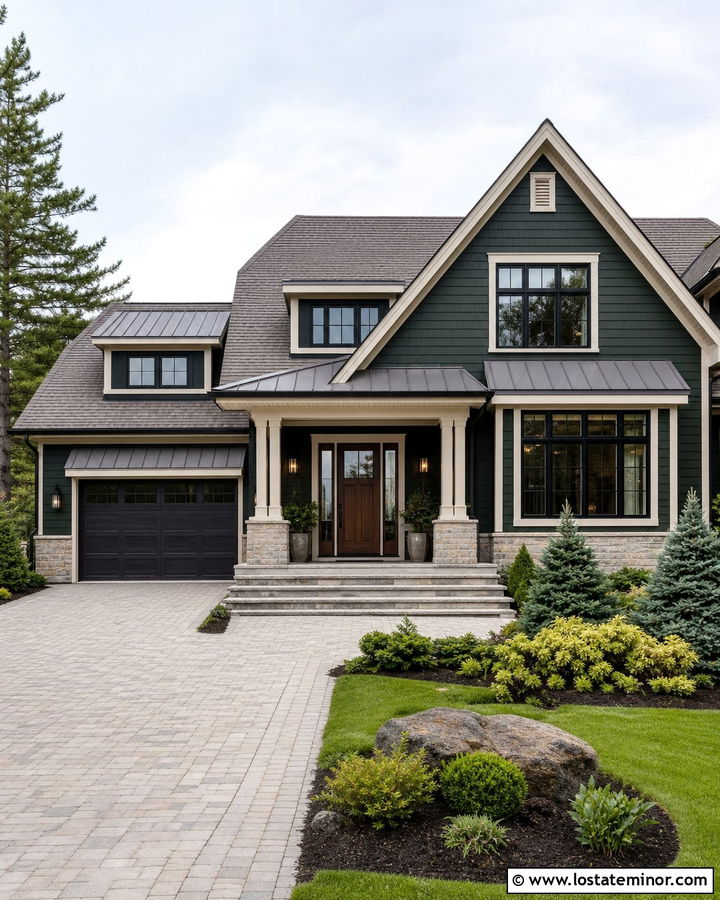
Gray standing-seam awnings provide a durable-looking accent for a forest green transitional house. Position them above the entry, garage windows, and one prominent window group. Use warm gray metal rather than blue-gray so it coordinates with beige stone and creamy trim. Forest green board-and-batten or lap siding remains the dominant surface, while a walnut front door adds depth at the entrance. Match the main roof to the awnings for a clean top-to-bottom connection. Black window frames and understated wall lights can add fine definition. A pale paver driveway, layered evergreens, and broad porch steps complete the facade. This balanced exterior combines traditional materials with simplified lines for a polished, updated suburban appearance.
30. Forest Green House With Matching Green Awnings
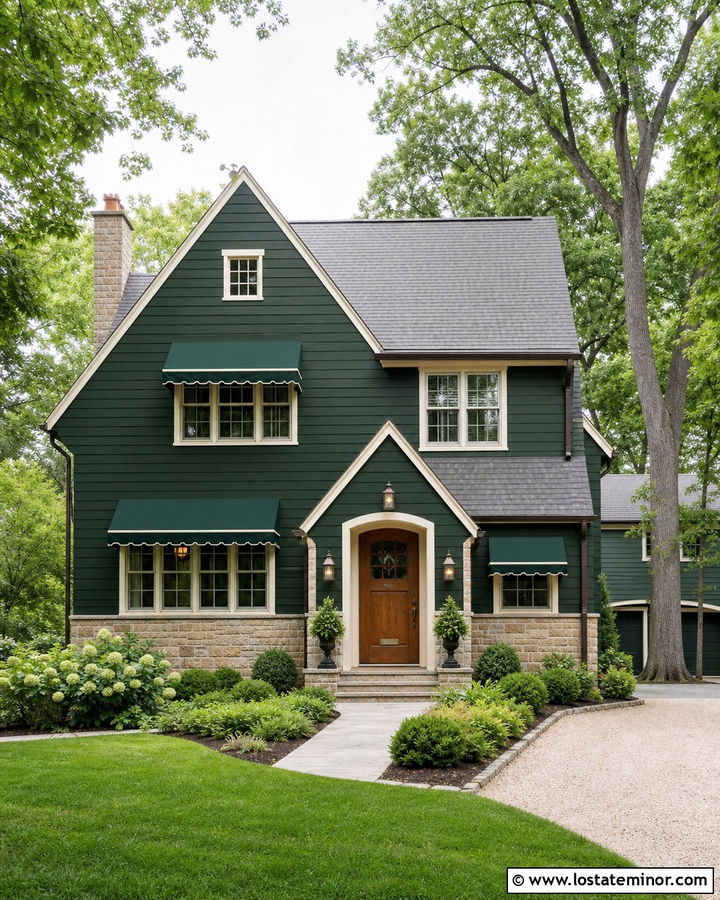
A tone-on-tone exterior can feel sophisticated when texture creates the contrast. Paint the siding forest green and choose matching forest green canvas awnings for the windows. Outline each awning with narrow cream piping so its shape remains visible. Use warm white trim around the windows, roofline, and porch to prevent the facade from reading as one solid block. A natural wood front door, buff stone foundation, and medium-gray roof add warmth and balance. Matching awnings work best when they are carefully aligned and limited to the main front-facing windows. Bronze lanterns and gutters can provide quiet metallic accents. Finish with pale gravel, green shrubs, and a clean walkway for a rich, cohesive exterior that feels intentional.
Conclusion:
The best forest green exterior combines color, architecture, and shade features as one complete composition. White and cream create definition, while cedar, brick, stone, copper, and bronze add warmth. Black or gray metal awnings produce a sharper modern effect. Fabric awnings can introduce softer neutrals, stripes, or controlled accent colors. Before choosing a scheme, compare samples beside the roof, masonry, windows, and landscaping in different daylight conditions, since screens cannot show paint colors with complete accuracy. () Whether you are updating a ranch, cottage, farmhouse, or townhouse, these 30 Forest Green House Design With Awning Ideas provide practical ways to create shade, architectural character, and memorable curb appeal.

Related posts: