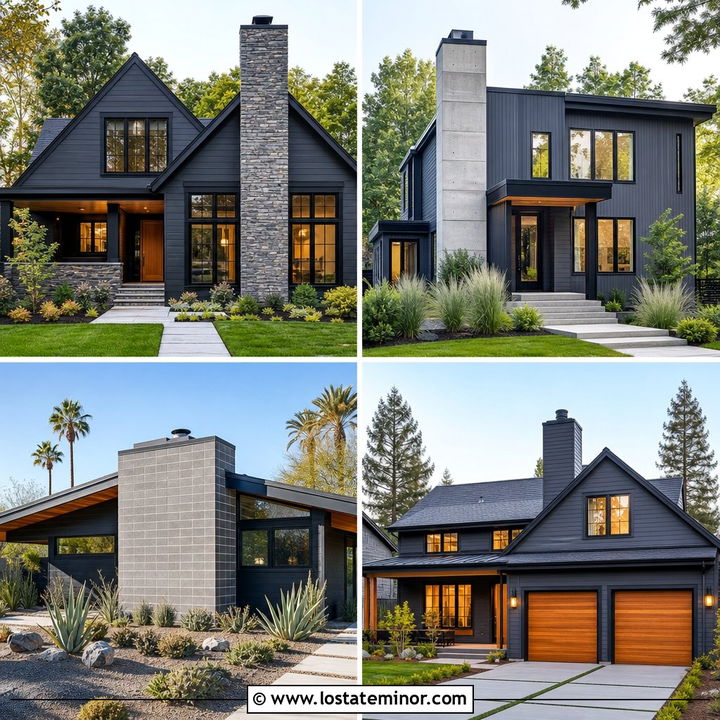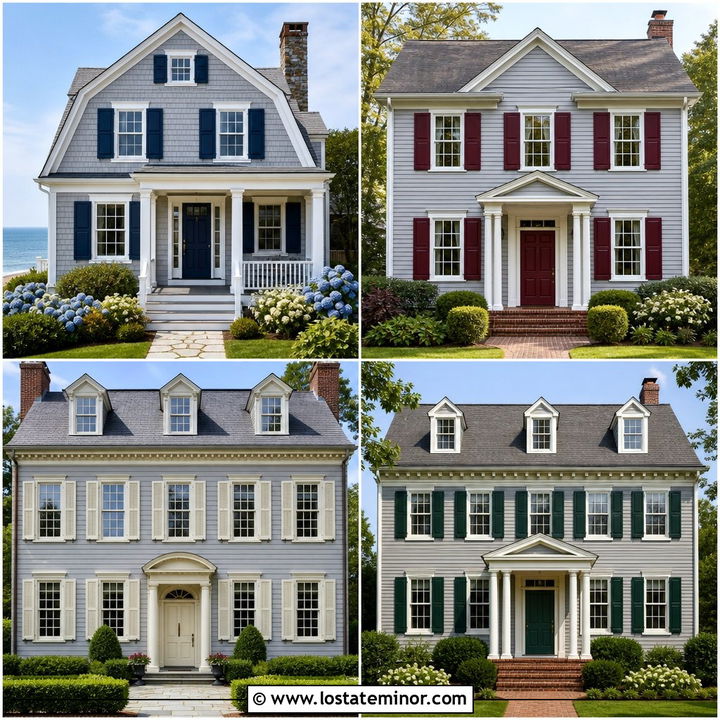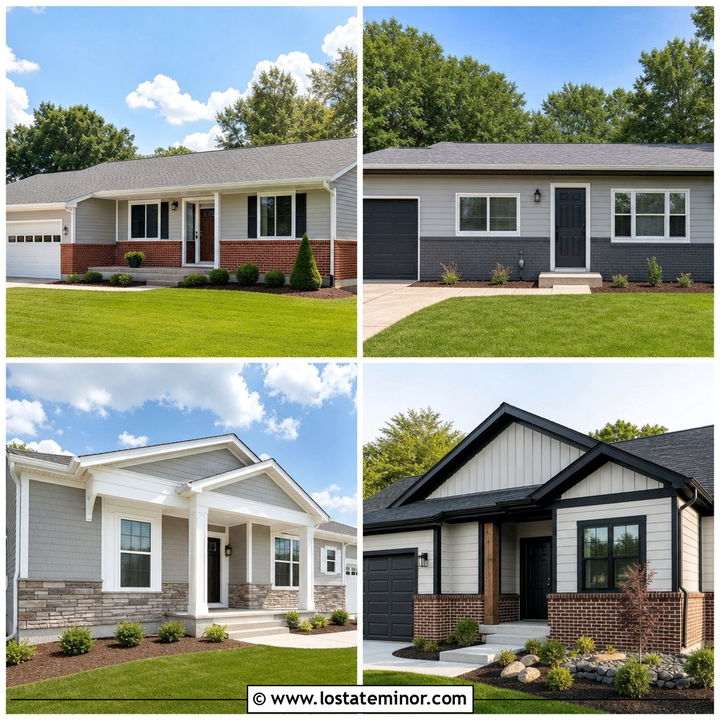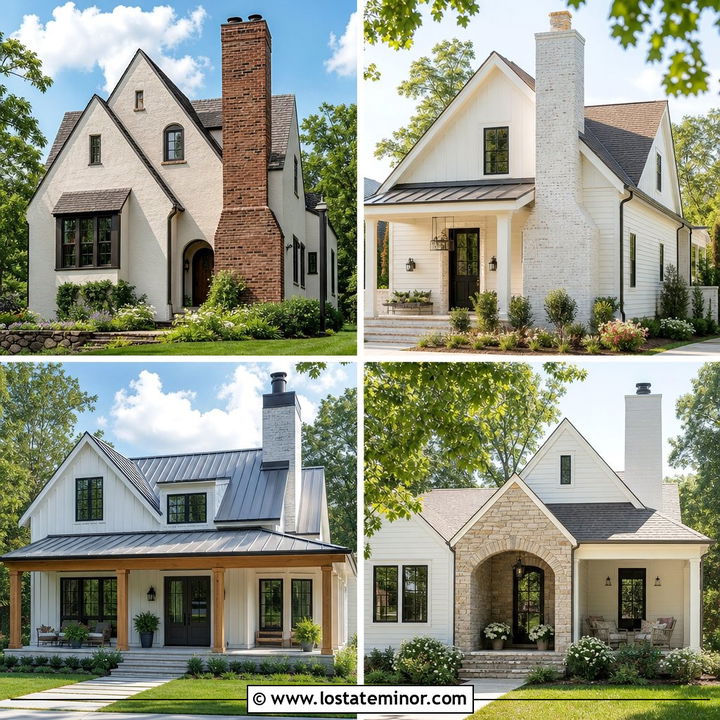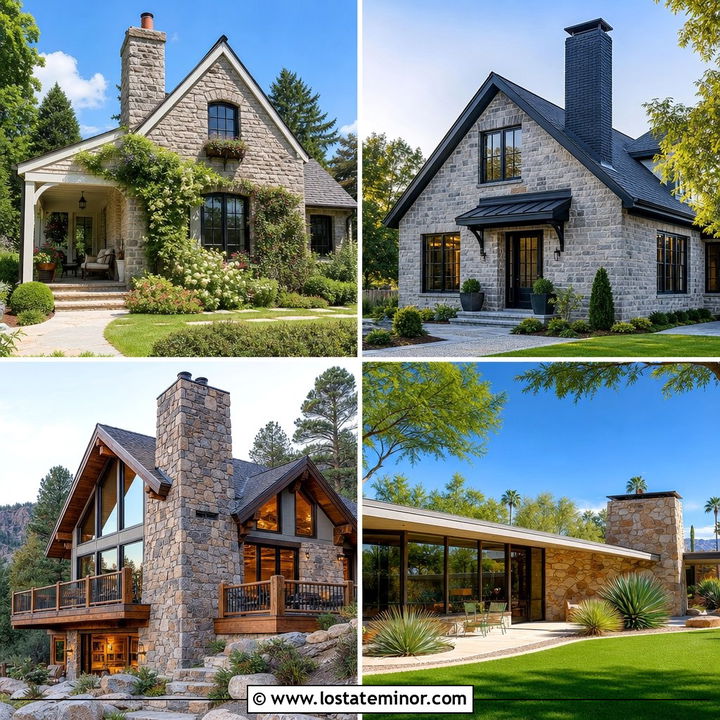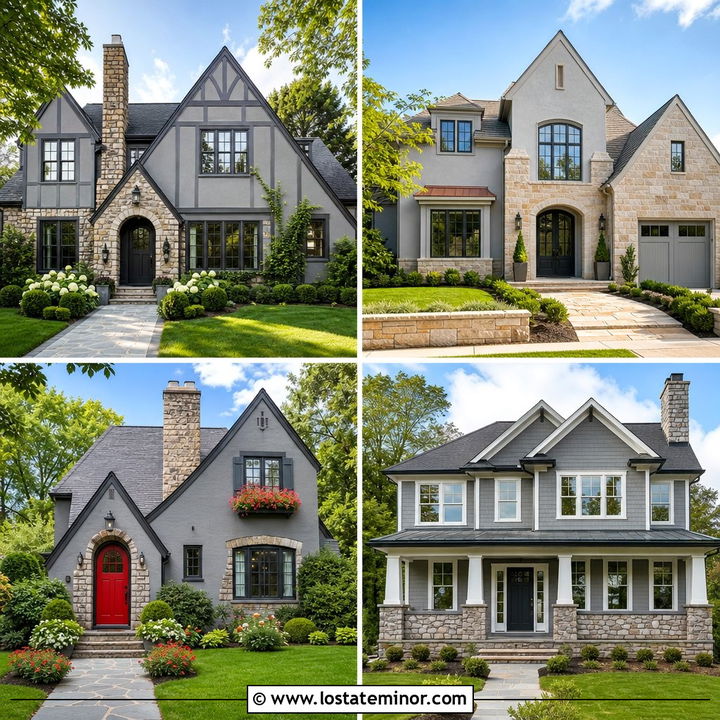
Dove grey creates a soft, balanced backdrop that can make a chimney feel like an intentional architectural feature rather than a separate block of masonry. The key is coordinating the siding with the chimney’s stone, brick, mortar, roof, trim, and entry colors. Existing materials should guide the palette because their undertones affect how exterior paint appears in changing daylight. () Warm fieldstone works beautifully with creamy trim and wood accents, while cooler masonry suits crisp white, charcoal, or black details. The following complete exterior schemes cover Colonial, farmhouse, ranch, Craftsman, cottage, Tudor, and contemporary homes. Use these 30 Dove Grey House Design With Chimney Ideas to build a cohesive facade with lasting curb appeal.

1. Dove Grey Colonial With White Trim And Stone Chimney
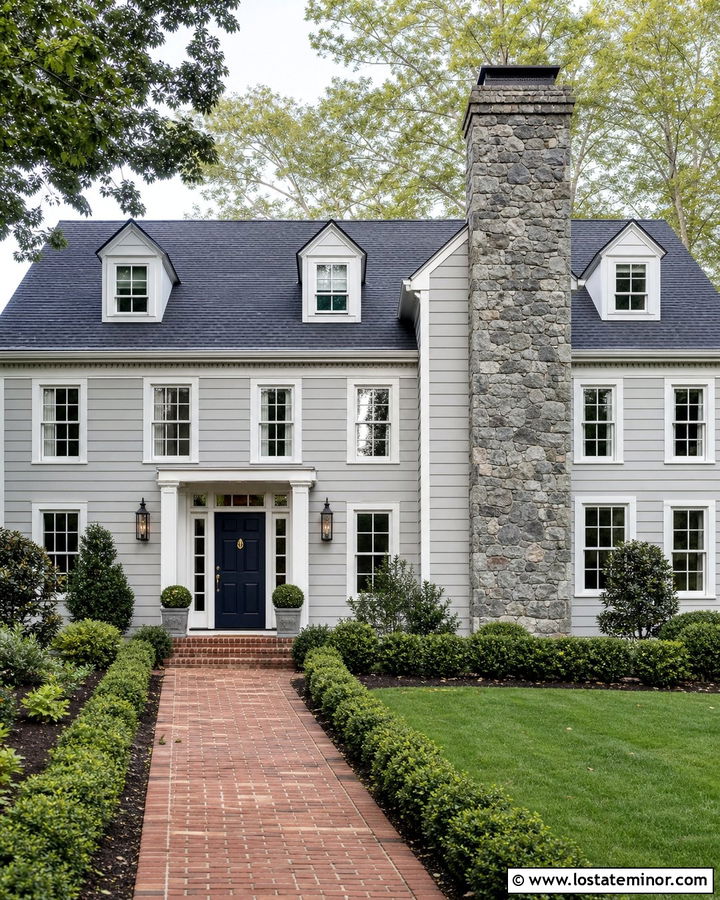
A symmetrical Colonial becomes lighter and more welcoming when dove grey clapboard siding is paired with clean white trim. Place a full-height gray fieldstone chimney along one side of the house so its uneven texture contrasts with the orderly windows and smooth siding. A navy front door provides a traditional focal point without overpowering the pale exterior. Carry white across the window frames, corner boards, porch columns, and cornice for consistency. A charcoal architectural-shingle roof connects visually with the darker pieces in the stone. Black lanterns and simple iron railings add definition. Finish the property with clipped boxwoods, a brick walkway, and balanced foundation beds that reinforce the Colonial architecture.
2. Dove Grey Farmhouse With Black Trim And Brick Chimney
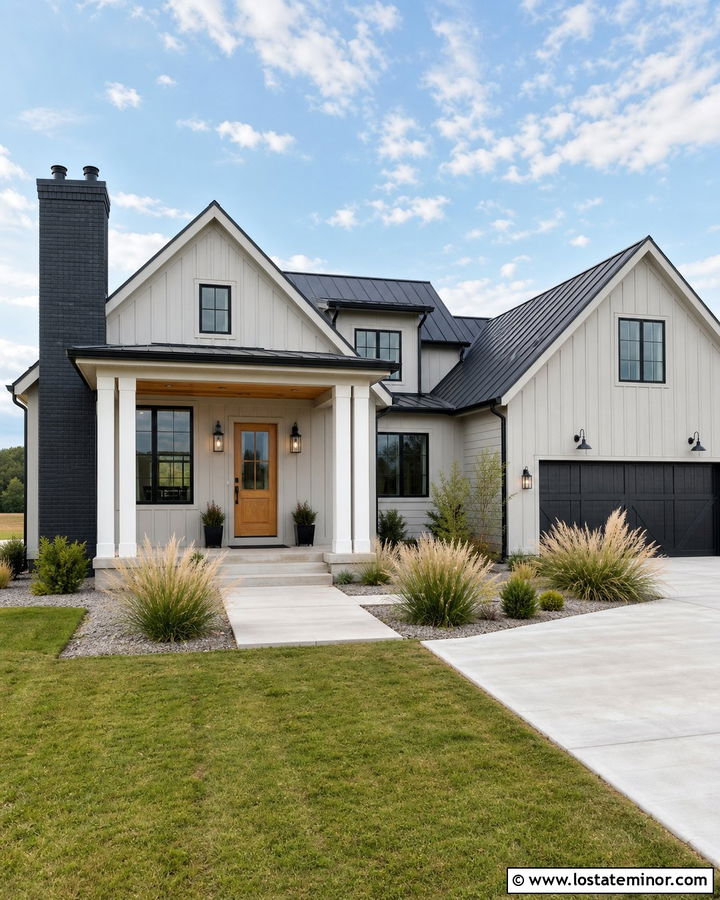
Picture a modern farmhouse where soft dove grey board-and-batten siding meets a tall painted-brick chimney. Charcoal grey paint on the chimney creates depth while keeping the masonry visible as a textural feature. Use black-framed windows, black gutters, and a matte black standing-seam roof to outline the simple farmhouse shape. A natural white oak front door and matching porch ceiling introduce warmth between the cool neutral colors. Bright white can be limited to the soffits and narrow porch columns, preventing the palette from looking too stark. Gravel borders, ornamental grasses, and a straight concrete walkway complete the relaxed setting. This scheme works especially well on a wide facade with prominent gables and a covered entry.
3. Dove Grey Craftsman With Natural Fieldstone Chimney
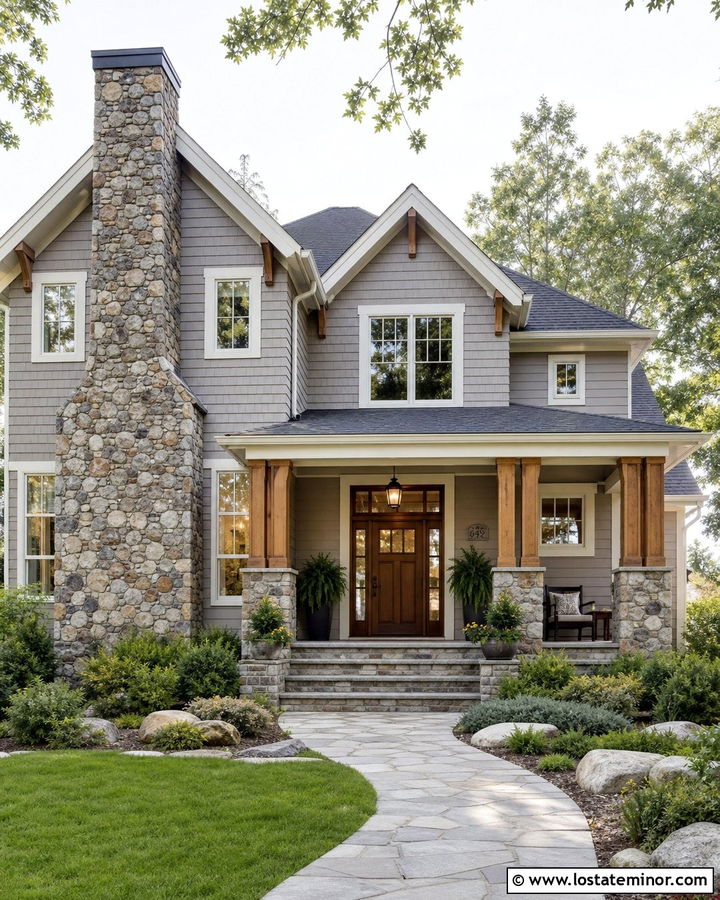
Natural fieldstone gives a dove grey Craftsman the handcrafted character this architectural style needs. Choose stone containing gray, taupe, cream, and muted brown so the chimney relates to both the siding and wood accents. Use dove grey lap siding across the main level and matching cedar-look shingles in the gables. Creamy white trim softens the transitions around windows, beams, and roof edges. Stained cedar porch columns, brackets, and a craftsman-style front door repeat the warm notes in the masonry. A weathered charcoal roof keeps the house grounded without competing with the chimney. Wide steps, low stone walls, layered shrubs, and a gently curved walkway help the entire exterior feel established and cohesive.
4. Dove Grey Cape Cod With Whitewashed Brick Chimney
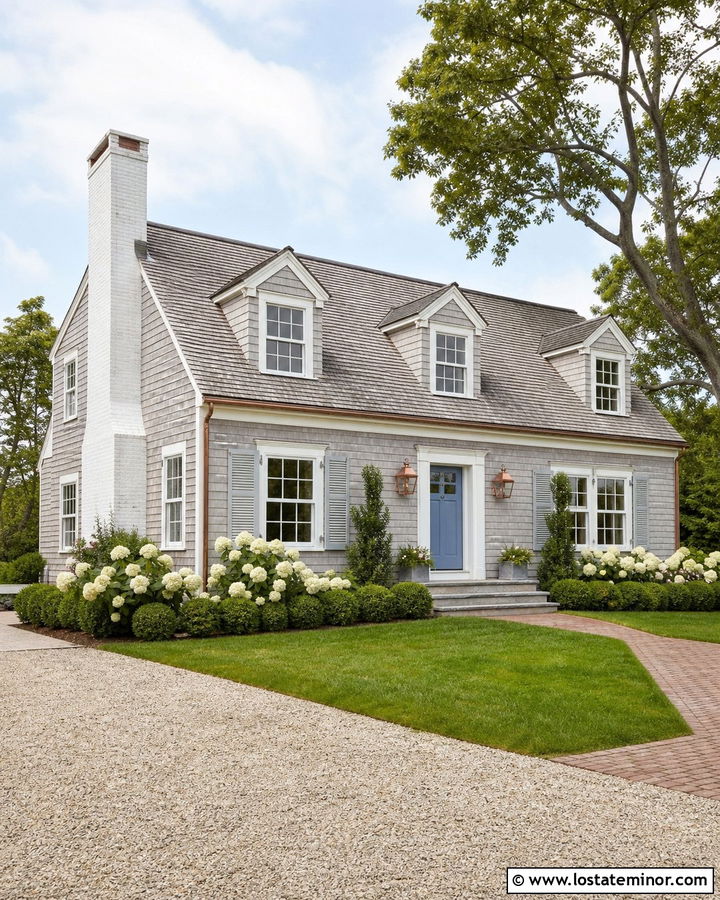
Small Cape Cod homes benefit from a low-contrast exterior that makes the facade appear wider. Dove grey shingle siding paired with a whitewashed brick chimney creates subtle texture while preserving the home’s simple coastal character. Use soft white on the window trim, dormers, fascia, and entry surround rather than a brilliant blue-white. A muted blue front door can add color while staying calm and traditional. Weathered gray roof shingles reinforce the restrained palette, while copper lanterns bring a warm metallic accent near the entrance. Keep the chimney cap dark charcoal for definition above the roofline. Hydrangeas, low hedges, shell-colored gravel, and a narrow brick path complete this approachable Cape Cod scheme.
5. Dove Grey Contemporary House With Charcoal Chimney
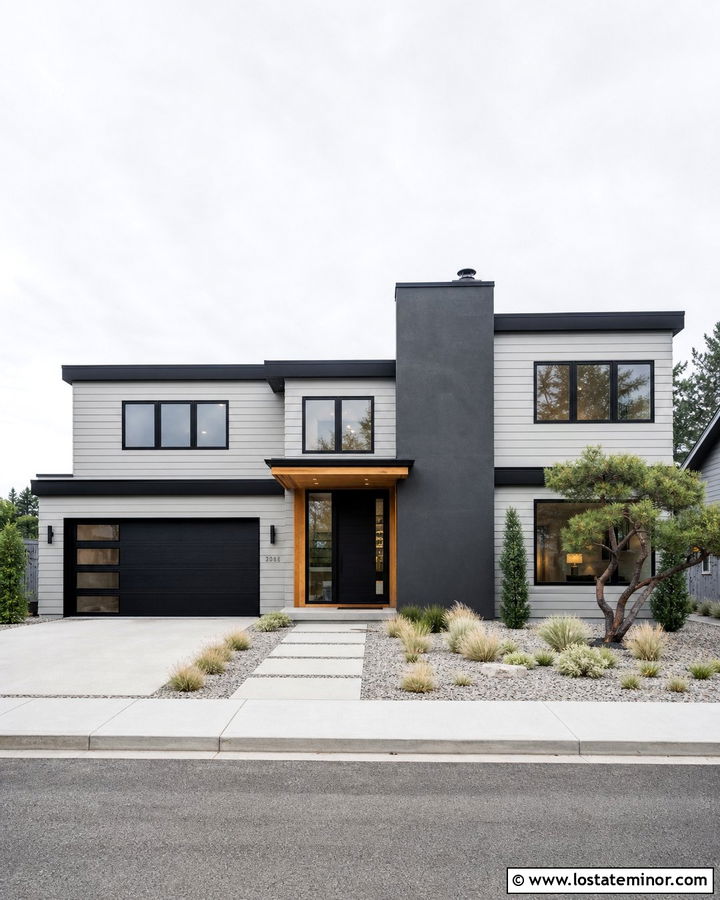
Could a chimney become the strongest visual line on a contemporary home? A smooth charcoal stucco chimney set against dove grey horizontal siding makes that possible. Extend the chimney from the foundation beyond the low roofline to create a clean vertical counterpoint to wide windows and flat architectural planes. Select black window frames, fascia, and garage doors to repeat the chimney’s depth. Warm cedar under the entry canopy prevents the cool palette from feeling industrial. A medium-gray concrete walkway and pale gravel beds keep the landscaping streamlined. Add structural grasses, compact evergreens, and one sculptural tree rather than busy flower beds. The result is modern, controlled, and visually balanced from the curb.
6. Dove Grey French Country House With Limestone Chimney
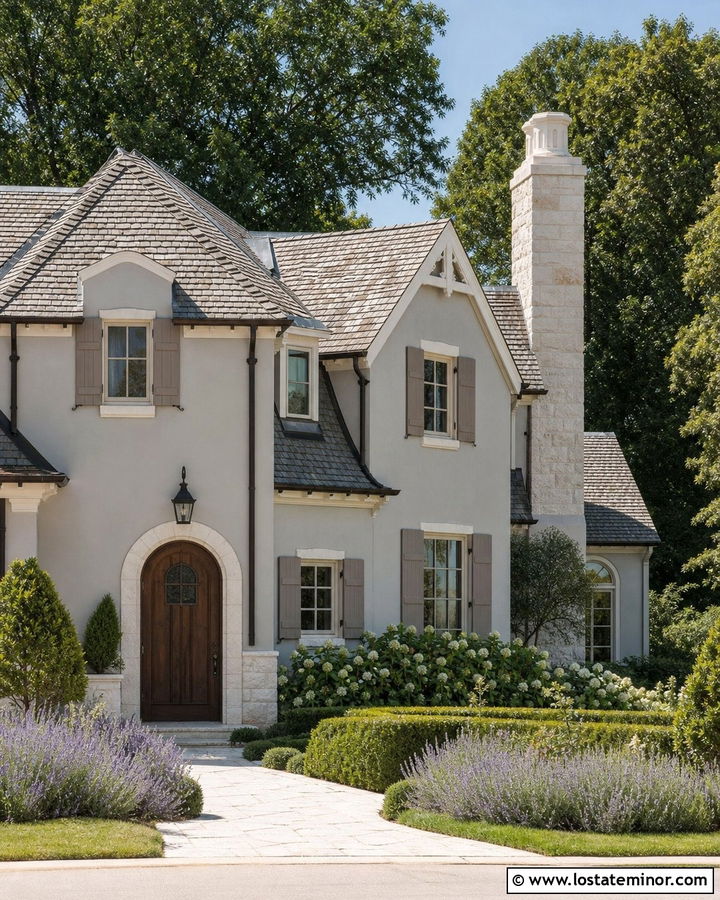
Creamy limestone gives dove grey siding a warmer, more refined appearance. On a French country exterior, use the stone for a broad chimney with a gently detailed cap and repeat it around the entry or foundation. Choose a warm dove grey stucco or painted-brick body rather than a noticeably blue gray. Soft ivory trim works naturally with the limestone, while muted taupe shutters add quiet definition around tall windows. A stained arched wood door provides the strongest color and reinforces the home’s European influence. Finish the roof with weathered gray shingles or slate-look tiles. Curved planting beds, lavender, clipped shrubs, and a pale stone walkway make the facade feel graceful without becoming overly formal.
7. Dove Grey Ranch With Cedar Accents And Stone Chimney
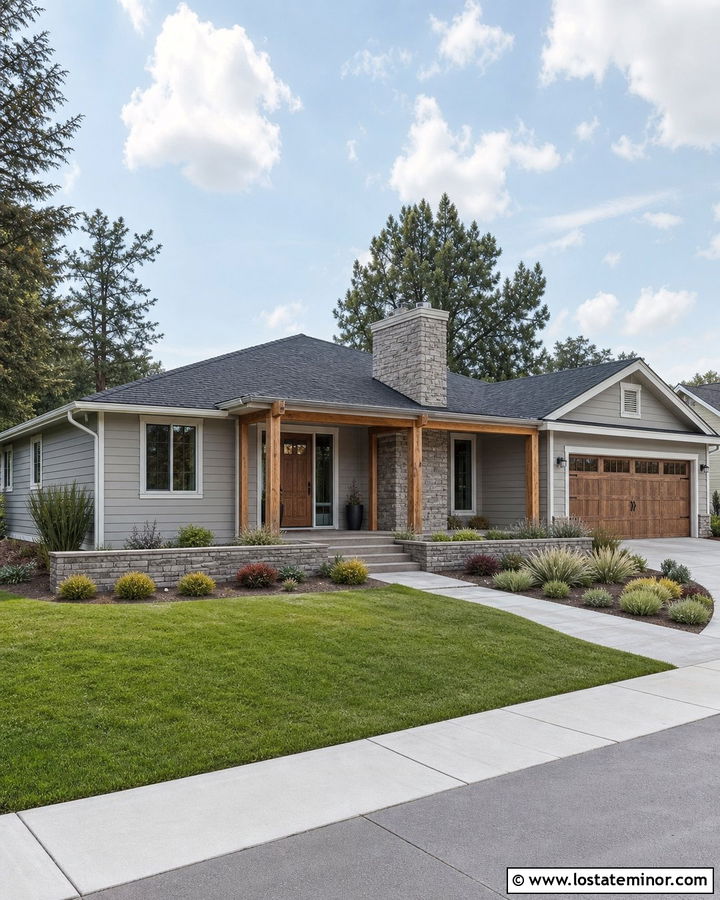
A long ranch facade can look flat unless its materials create clear focal points. Use dove grey horizontal siding as the consistent background, then emphasize a full-height stone chimney near the center or living-room wing. Warm gray ledgestone works well because its horizontal shape follows the low profile of the home. Add cedar porch posts, a wood front door, and matching garage details to introduce warmth. Cream trim keeps the transitions soft, while a dark charcoal roof visually anchors the one-story structure. Extend the stone across a short planter wall or entry column so the chimney does not feel isolated. Broad foundation beds and a gently curving walkway complete the welcoming, updated ranch exterior.
8. Dove Grey Traditional House With Red Brick Chimney
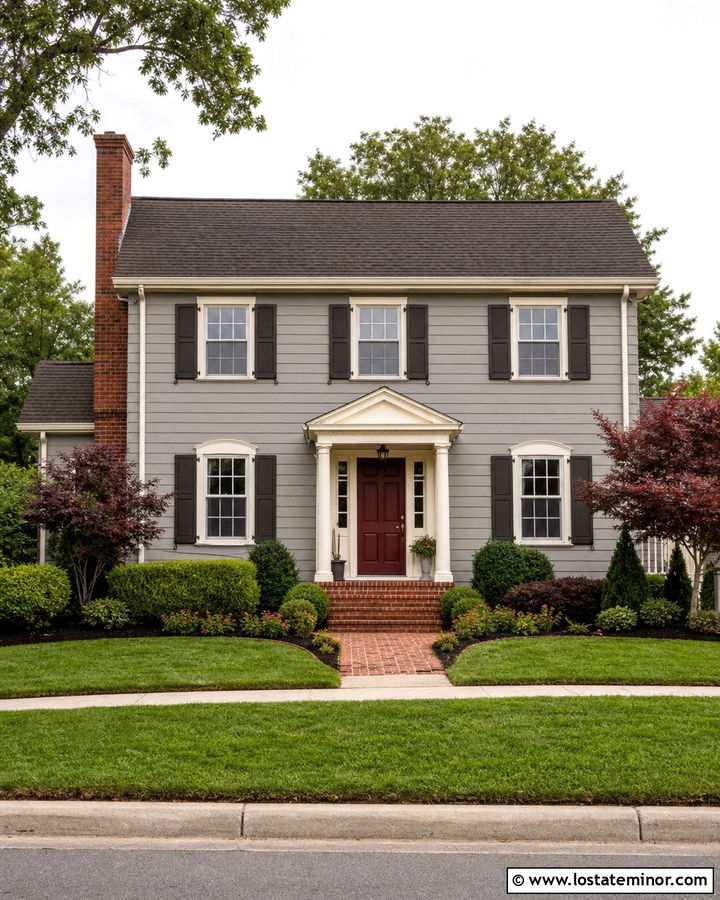
An existing red brick chimney does not have to clash with dove grey siding. The most successful approach is choosing a warm dove grey with a slight beige undertone that relates to the brick mortar. Use creamy white trim around the windows, roofline, and porch rather than a sharp white that may exaggerate the difference between materials. A deep oxblood or black front door can repeat the darkest tones in the brick. Select a weathered brown or charcoal-brown roof for a smooth transition above the facade. Keep shutters dark and simple if the architecture calls for them. Brick steps, evergreen shrubs, and burgundy foliage can repeat the chimney color throughout the landscape in small, controlled amounts.
9. Dove Grey House With Black Metal Roof And Stone Chimney
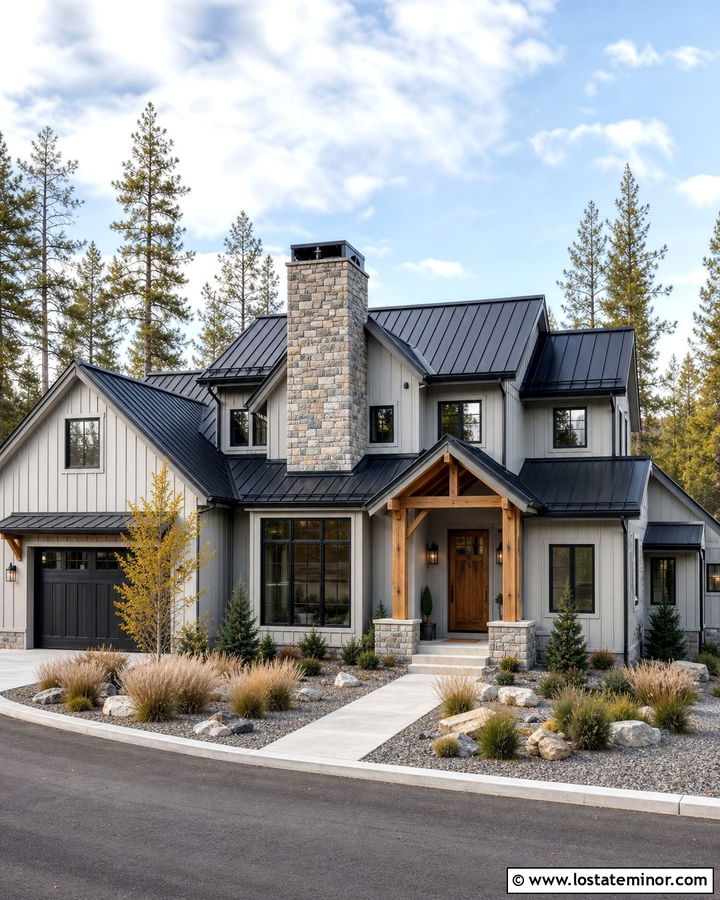
A black metal roof brings crisp structure to a pale dove grey exterior. Pair it with a gray stone chimney that includes a mixture of light and dark pieces, allowing the roof and siding colors to appear within the masonry. Black-framed windows, gutters, and downspouts make the roof feel connected to the rest of the house. Use warm wood for the front door and porch beams so the scheme does not become overly cool. Off-white trim can outline the siding without creating extreme contrast. This combination suits farmhouse, mountain modern, and contemporary Craftsman architecture. Pale concrete, crushed stone beds, ornamental grasses, and neat evergreens provide a clean landscape that supports the strong material palette.
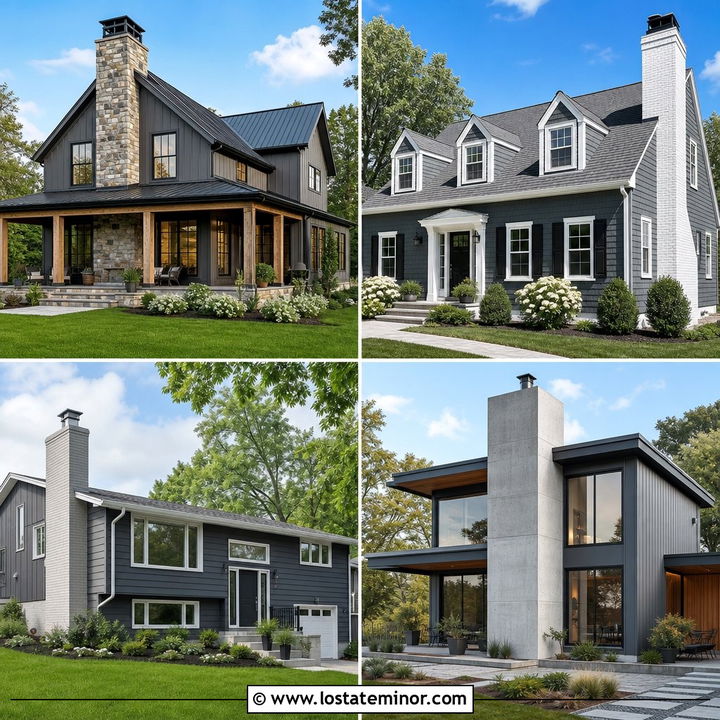
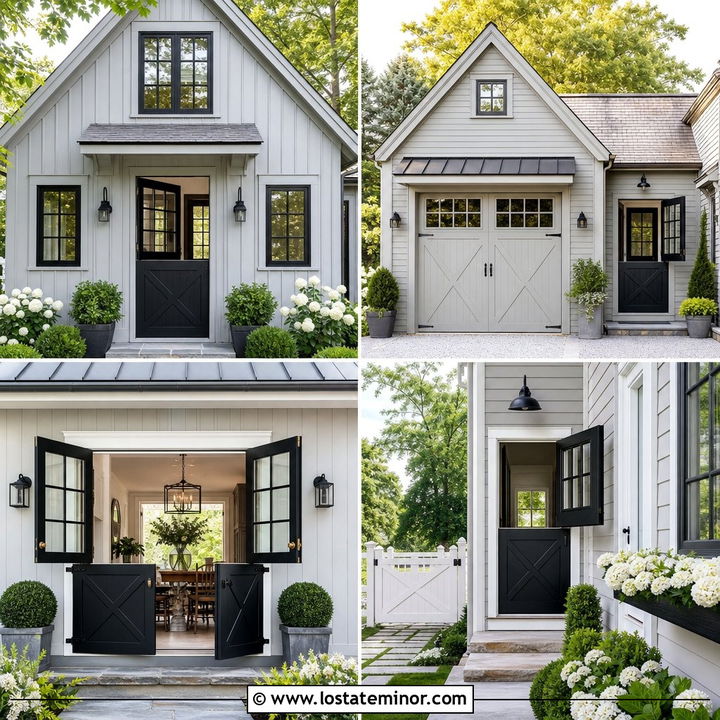
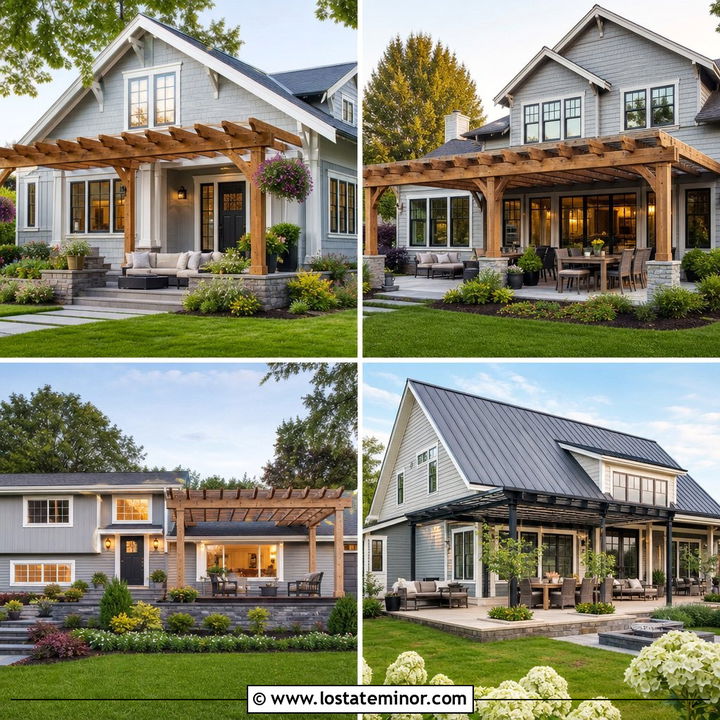
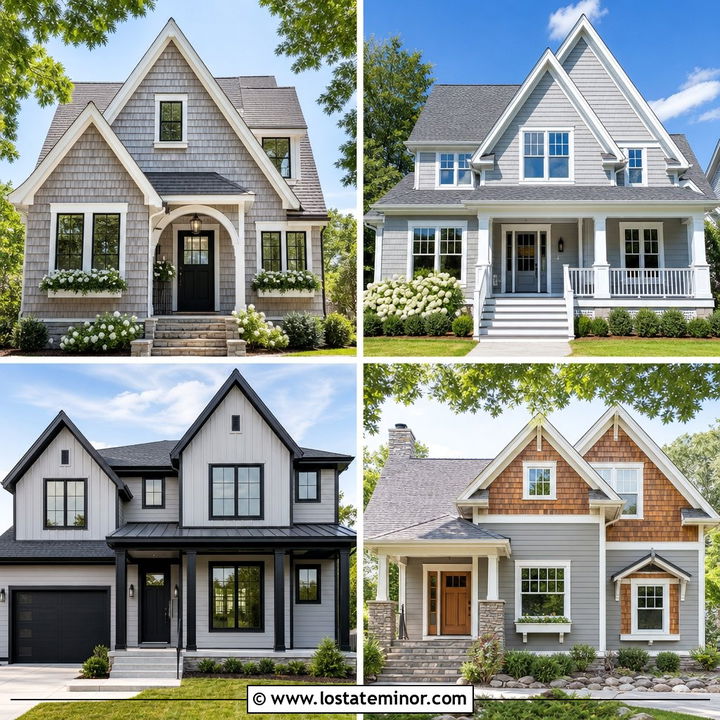
10. Dove Grey Cottage With Weathered Brick Chimney
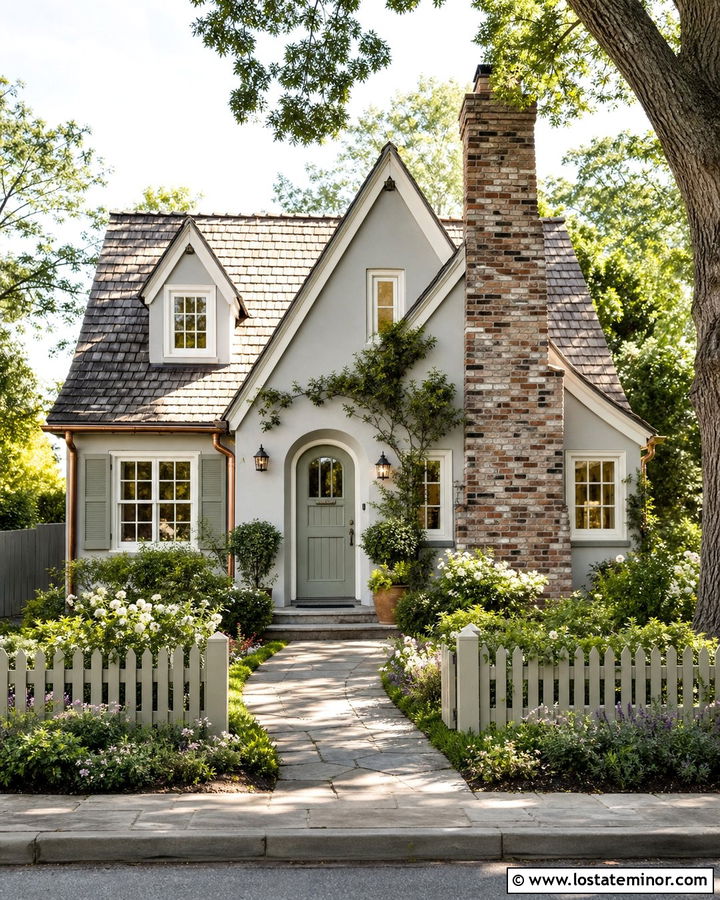
Weathered brick brings age and charm to a dove grey cottage, especially when the masonry includes soft red, brown, cream, and charcoal variation. Keep the siding light and quiet so the chimney remains the home’s natural centerpiece. Warm white trim around small-pane windows reinforces the cottage character, while a faded sage green door adds gentle color. Choose a roof with weathered wood tones instead of solid black to connect with the irregular brick. Copper gutters or aged bronze lanterns can introduce another warm finish without making the facade look busy. Complete the setting with a curved flagstone path, informal flowering borders, climbing greenery, and low picket fencing. The finished house should feel collected rather than overly coordinated.
11. Dove Grey House With Navy Door And Brick Chimney
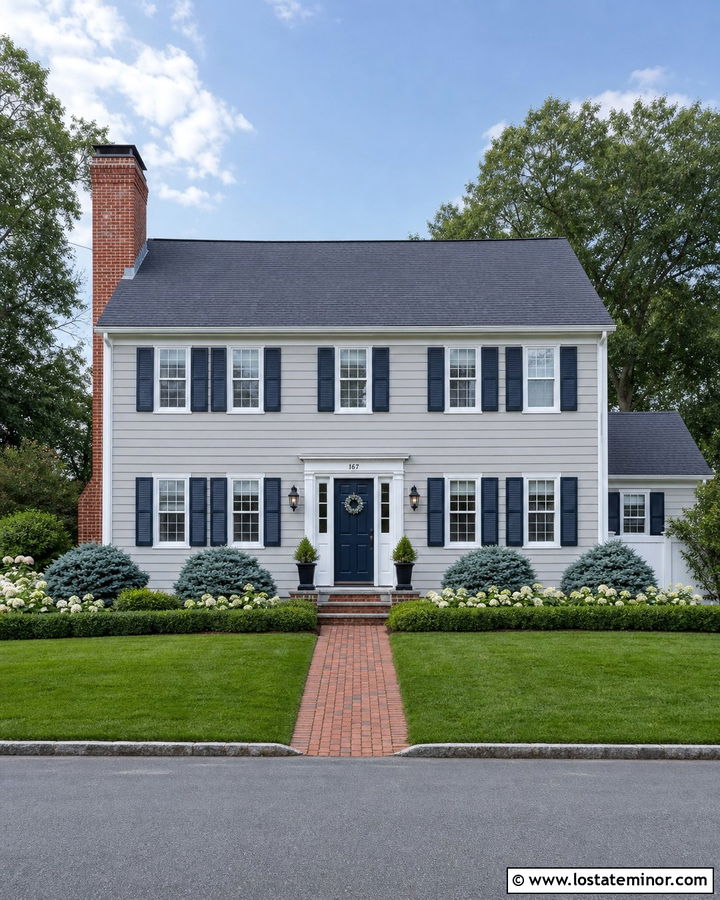
A navy front door adds polished color to dove grey siding while allowing an exposed brick chimney to remain visually important. This palette works best when the brick contains cool red, charcoal, or gray notes. Use soft white trim to frame the facade and tie together the door surround, windows, and porch posts. A charcoal roof helps bridge the navy entry and darker brick sections. Select black or aged-brass hardware based on the warmth of the masonry. If shutters are present, paint them navy to repeat the door without introducing another competing color. Brick walkway edging, blue-green shrubs, and white flowering plants create a balanced foreground. The result suits Colonial, traditional, and suburban two-story homes.
12. Dove Grey House With Black Door And Stone Chimney
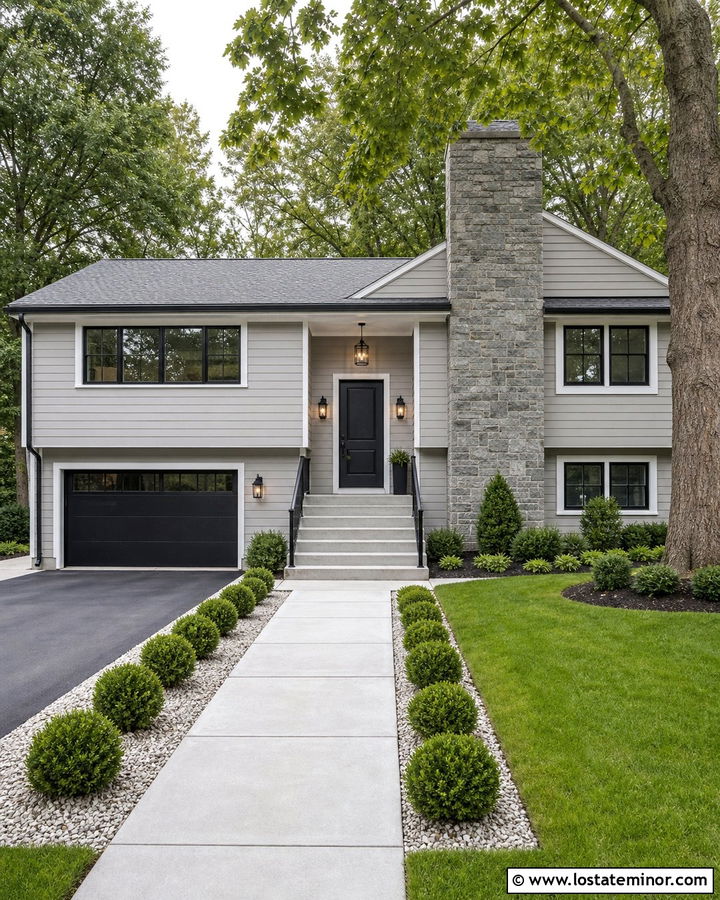
For a straightforward, high-contrast scheme, combine dove grey siding with a black front door and a natural gray stone chimney. The black entry should be repeated selectively on the window sashes, lanterns, and gutters so it feels integrated. Use white trim around the larger architectural edges to prevent the facade from appearing heavy. Choose stone with a moderate amount of charcoal veining, but avoid masonry that is uniformly dark. A medium-gray shingle roof will soften the transition between the pale siding and black accents. This versatile palette can update a split-level, Colonial, or Craftsman home. Simple boxwood groupings, pale gravel, and a wide concrete walkway support the clean color arrangement without distracting from the chimney.
13. Dove Grey House With Sage Door And Whitewashed Chimney
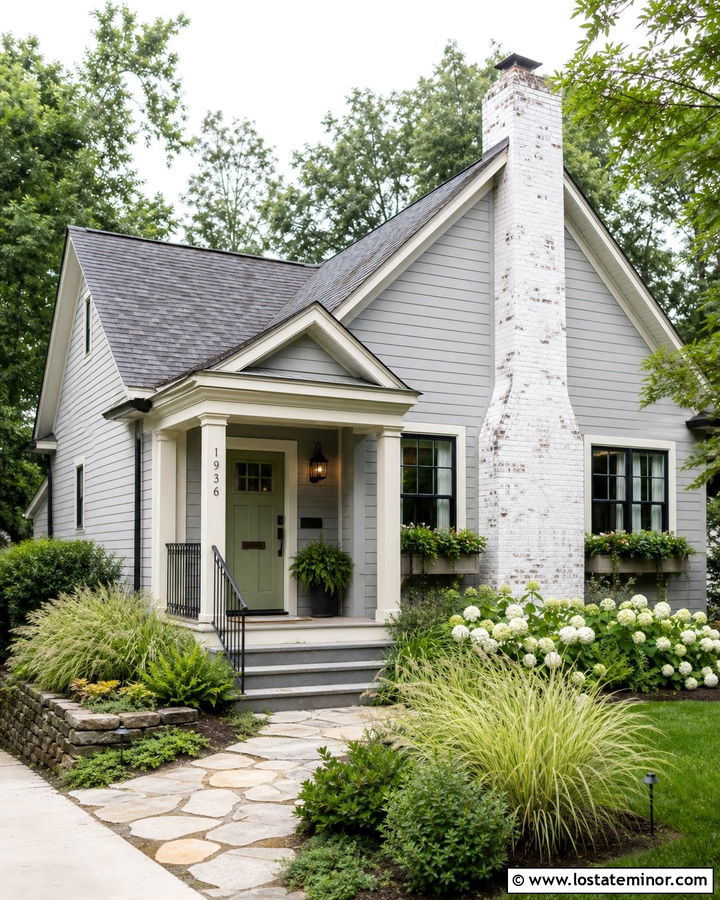
Soft sage green creates a nature-inspired accent against dove grey siding. Pair the combination with a whitewashed brick chimney so the facade remains light while the masonry texture stays visible. Cream trim works better than bright white because it connects the gray, green, and softened brick tones. Use a weathered charcoal roof and muted bronze hardware to add definition without introducing harsh contrast. On a cottage or bungalow, the sage color can also appear on porch furniture, window boxes, or a small garden gate. Keep these repetitions limited so the door remains the focal point. Ferns, hydrangeas, ornamental grasses, and a natural stone path complete an exterior that feels relaxed, fresh, and comfortably connected to the landscape.
14. Dove Grey House With Burgundy Door And Red Brick Chimney
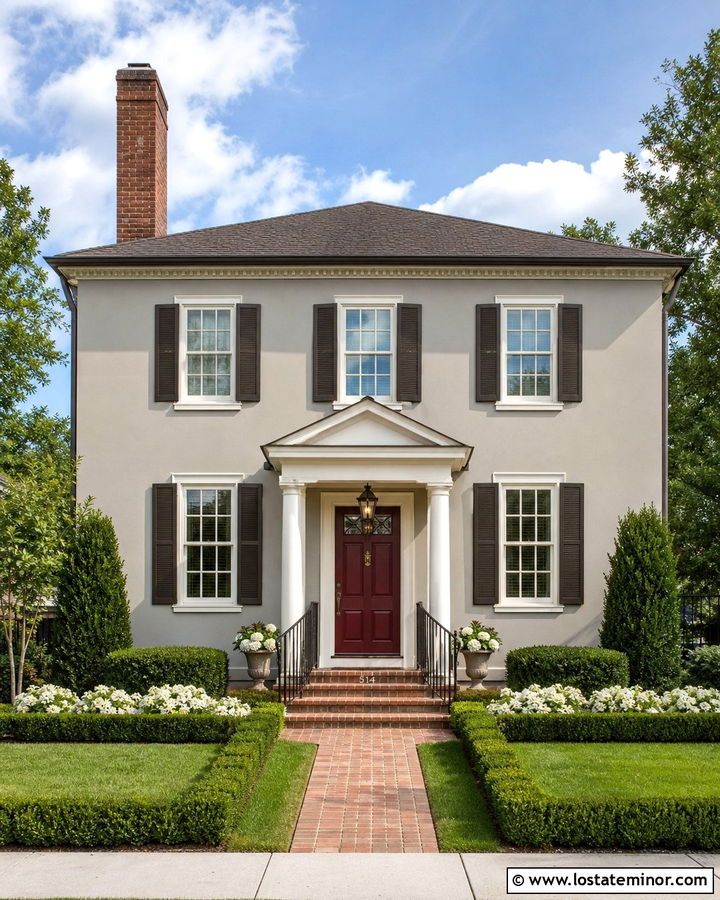
Rich burgundy creates a natural link between dove grey siding and a traditional red brick chimney. Select a door color that repeats the brick’s deepest wine-red tone instead of introducing a brighter, unrelated red. Warm white trim provides a soft frame around the facade, while dark bronze shutters can pick up the masonry’s brown undertones. Choose charcoal-brown roof shingles to connect all three colors. This palette is particularly effective on Georgian, Federal, and traditional Colonial houses with balanced window arrangements. Keep decorative accents simple because the chimney and entry already supply plenty of character. Brick steps, clipped hedges, white flowers, and a straight walkway reinforce the formal architecture and give the color scheme a well-planned appearance.
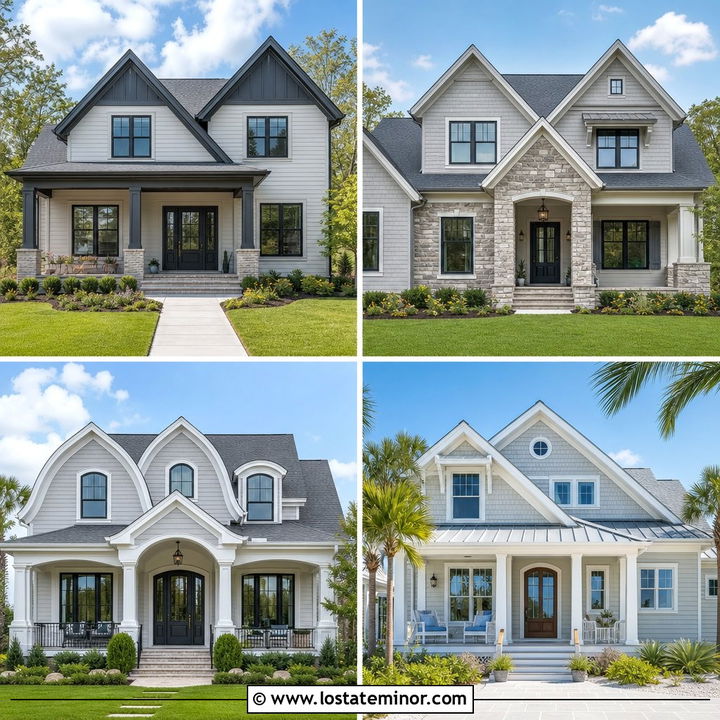
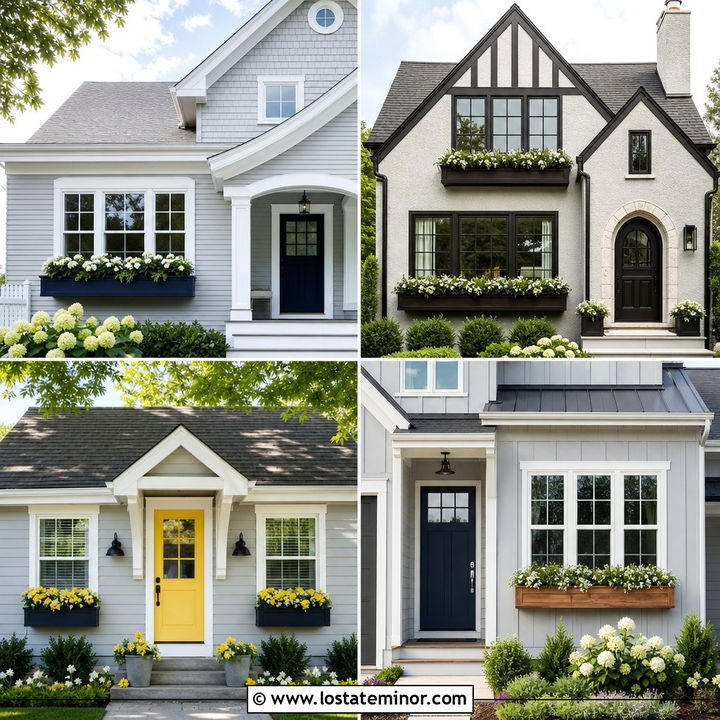
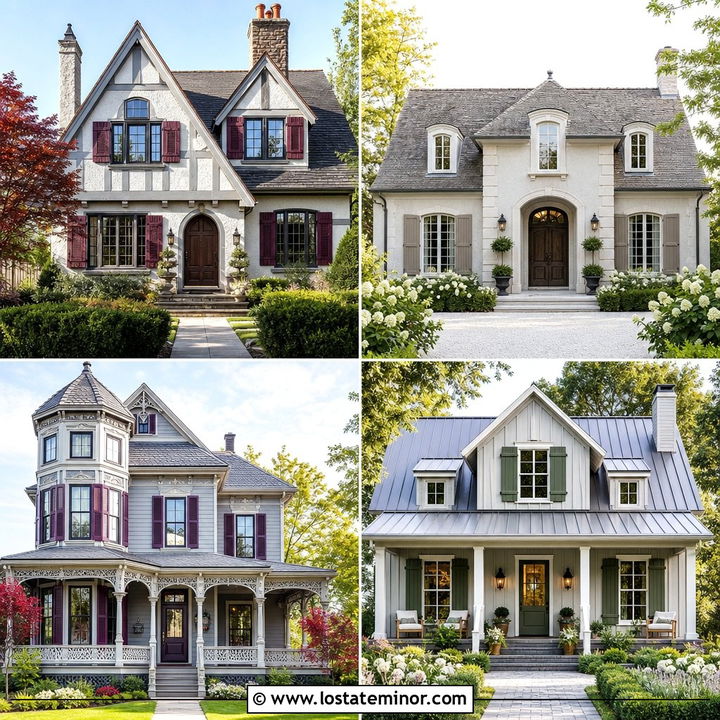
15. Dove Grey House With Wood Door And Limestone Chimney
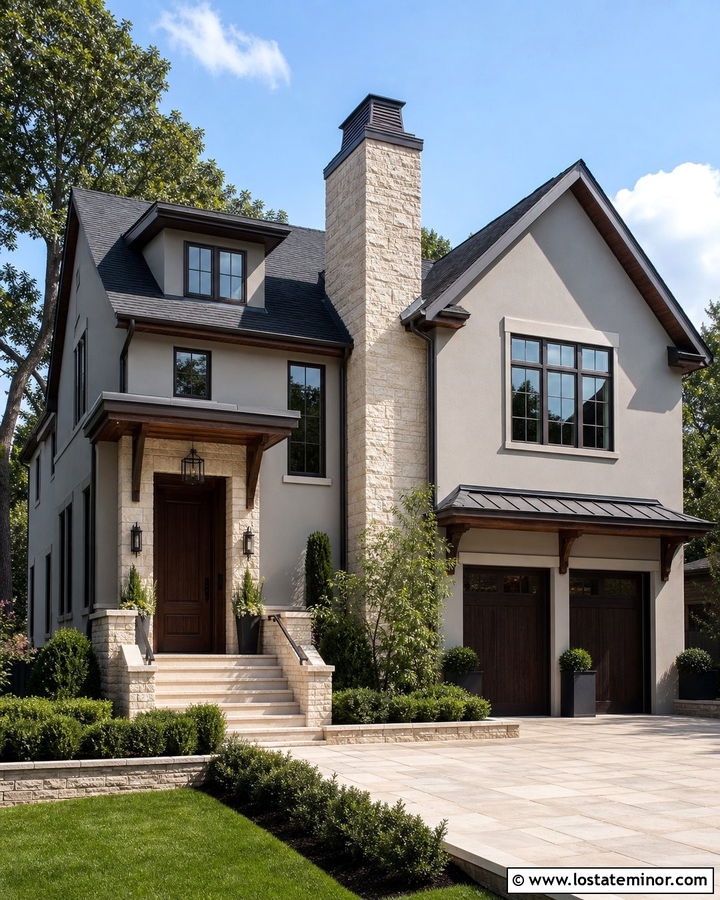
Natural wood can keep a dove grey and limestone exterior from feeling too pale or cool. Choose a medium oak or walnut front door with visible grain, then repeat that finish on porch brackets, soffits, or garage-door details. The limestone chimney should contain warm cream and pale gray variation to connect with both the siding and trim. Use ivory rather than pure white for window frames and fascia. A dark gray roof adds enough weight to balance the light materials, while bronze lights provide a softer alternative to black. This complete scheme suits transitional, French country, and upscale suburban homes. Limestone pavers, layered green shrubs, and neatly edged lawn areas extend the natural palette toward the street.
16. Dove Grey Board And Batten House With Stone Chimney
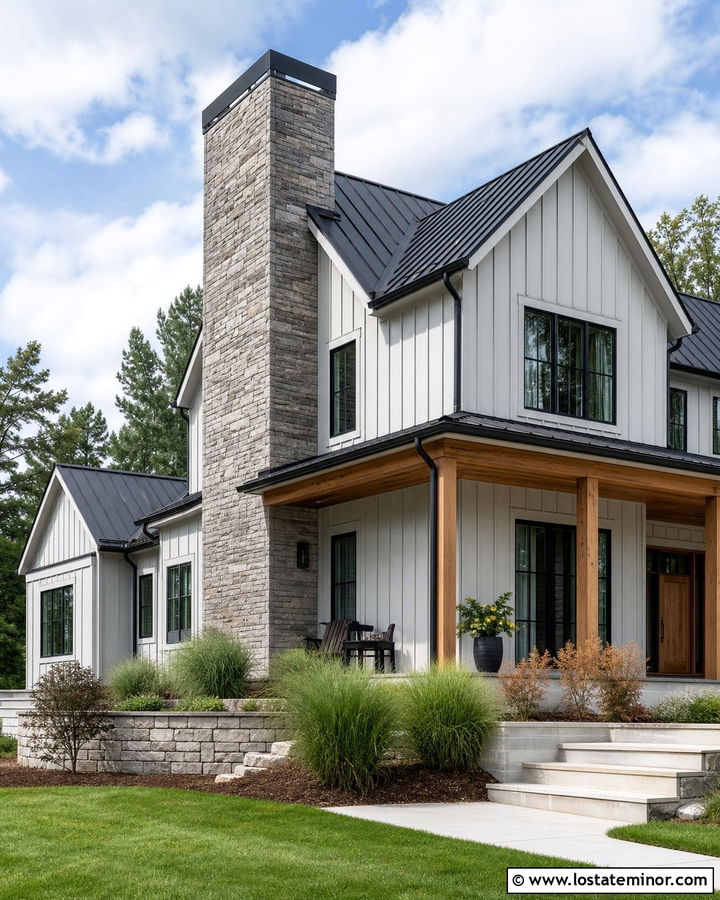
Vertical board-and-batten siding can make a one-and-a-half-story home appear taller, especially when paired with a full-height stone chimney. Paint the siding dove grey and select medium-gray ledgestone with subtle taupe variation for the masonry. A black standing-seam roof adds definition to the strong vertical lines, while black windows repeat that crisp structure. Use cedar on the porch ceiling, entry door, and heavy support posts to balance the cool gray surfaces. Keep the fascia and corner trim dove grey for a streamlined look rather than outlining every edge in white. Low stone retaining walls, native grasses, and broad concrete steps complete this modern farmhouse or mountain-inspired exterior without competing with the prominent chimney.
17. Dove Grey Clapboard House With Painted Brick Chimney
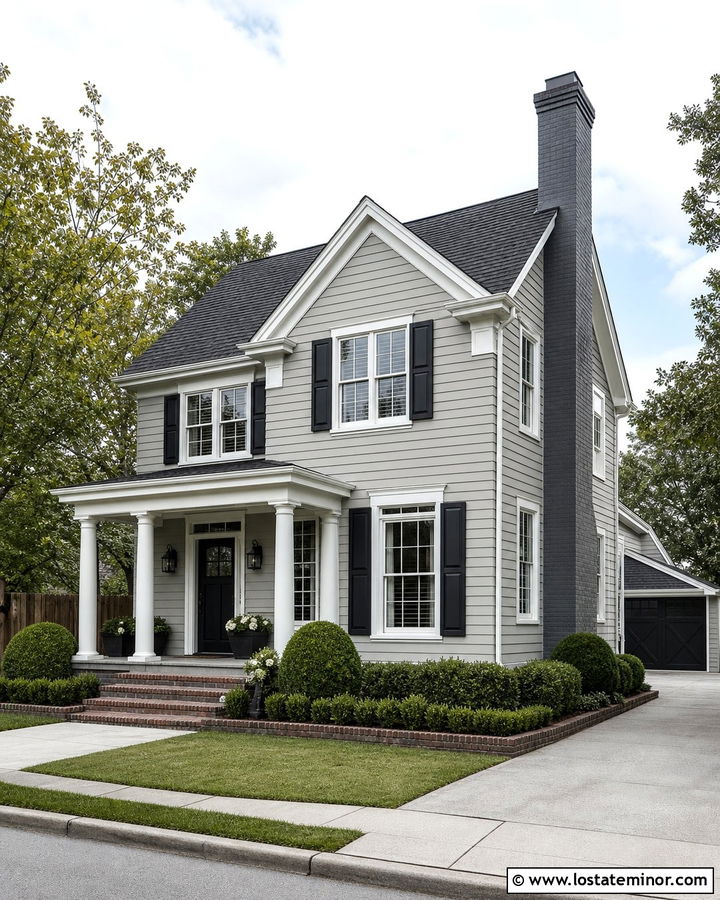
Painting a mismatched brick chimney can create a more unified facade while preserving the masonry texture. On a dove grey clapboard house, coat the chimney in a medium charcoal gray so it stands apart without introducing another material color. Use soft white trim around windows, porch columns, and roof edges for a familiar traditional finish. A black front door and matching shutters repeat the chimney’s depth in smaller areas. Select a charcoal architectural-shingle roof to tie the upper portion of the house together. Because painted masonry requires suitable preparation and coating products, test the finish before covering the full chimney. Finish the curb appeal with brick-edged beds, rounded shrubs, and a clean path leading toward the contrasting entrance.
18. Dove Grey Shake Siding With Fieldstone Chimney
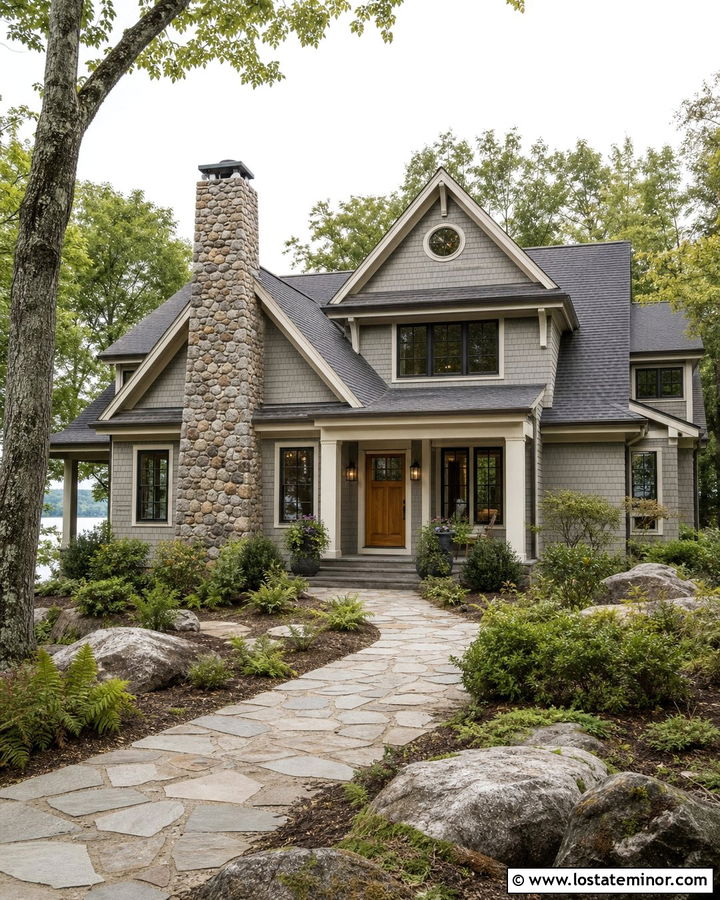
Dove grey shake siding and irregular fieldstone create rich texture without requiring a complicated color palette. Use the shakes across the full facade or on upper gables, then allow a rugged stone chimney to rise beside the entry or living-room windows. Select masonry containing gray, tan, and muted brown so it works with a cedar front door and creamy trim. A weathered charcoal roof complements the varied surfaces better than a flat, solid black. Deep bronze window frames and porch lights add definition while preserving the earthy mood. This look suits lake houses, Craftsman homes, and wooded suburban properties. Natural boulders, ferns, ground cover, and an informal stone walkway help the exterior settle naturally into its surroundings.
19. Dove Grey Stucco House With Smooth Chimney
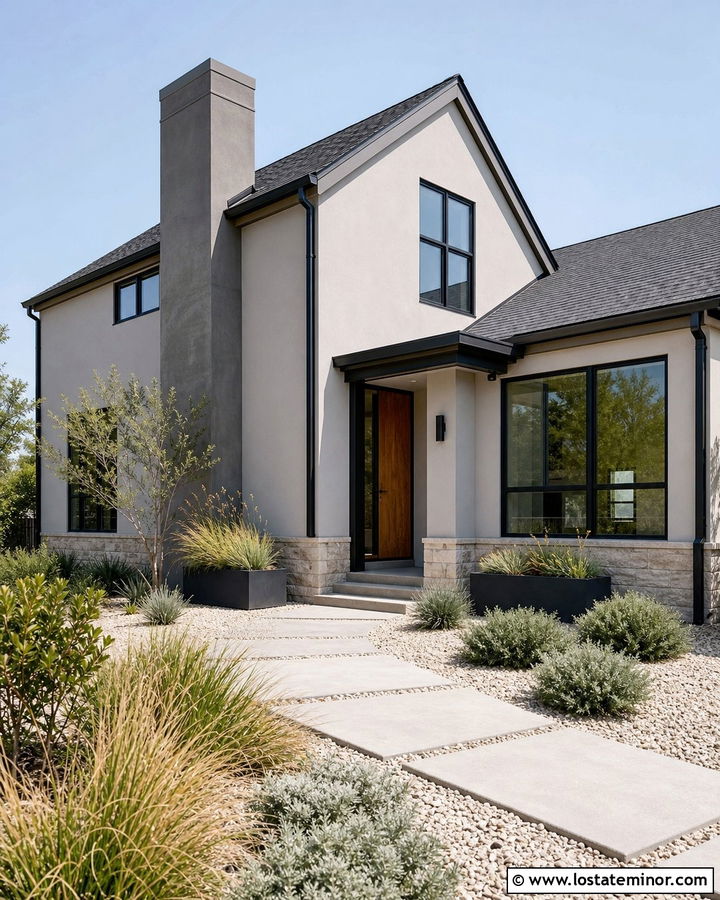
Smooth stucco gives dove grey a clean, continuous appearance that suits contemporary and Southwestern-influenced homes. Build the chimney as a simple rectangular volume, then paint it a deeper warm gray to create architectural contrast without changing materials. Bronze or black-framed windows sharpen the walls, while a natural wood pivot door adds warmth near the entry. Use a dark gray metal or low-profile tile roof that follows the home’s streamlined roofline. Cream stone around the foundation can soften the transition to the landscape. Keep exterior ornament minimal and let the chimney’s height define the composition. Broad concrete pavers, pale gravel, sculptural grasses, and drought-tolerant shrubs reinforce the uncluttered facade and its subtle tonal palette.
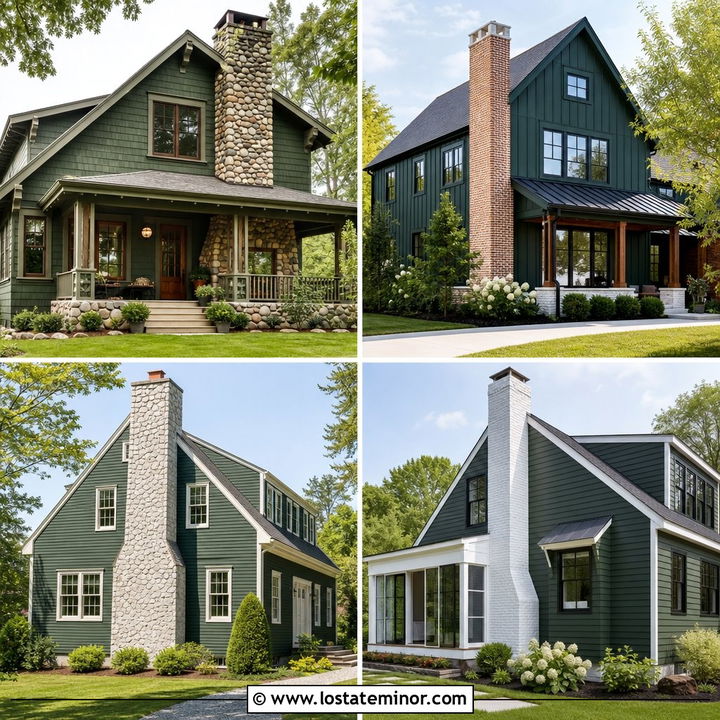
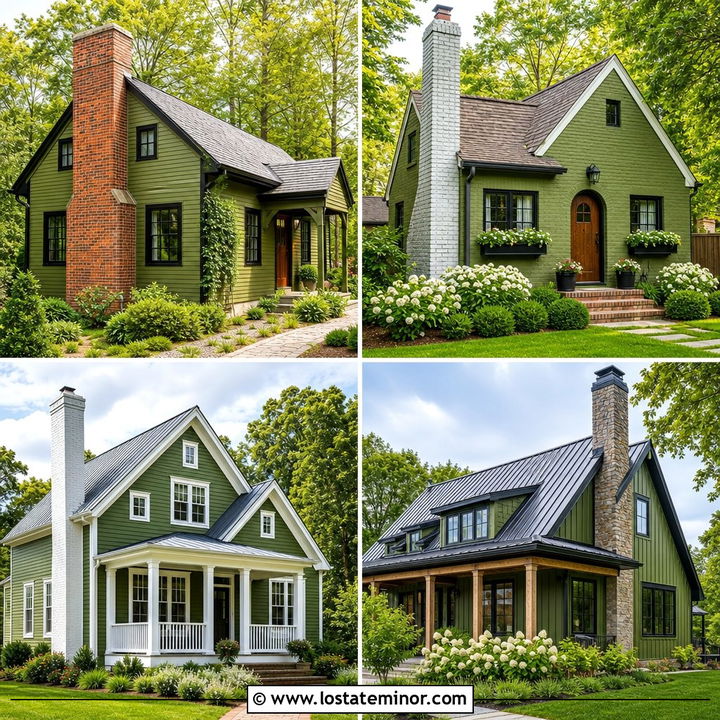
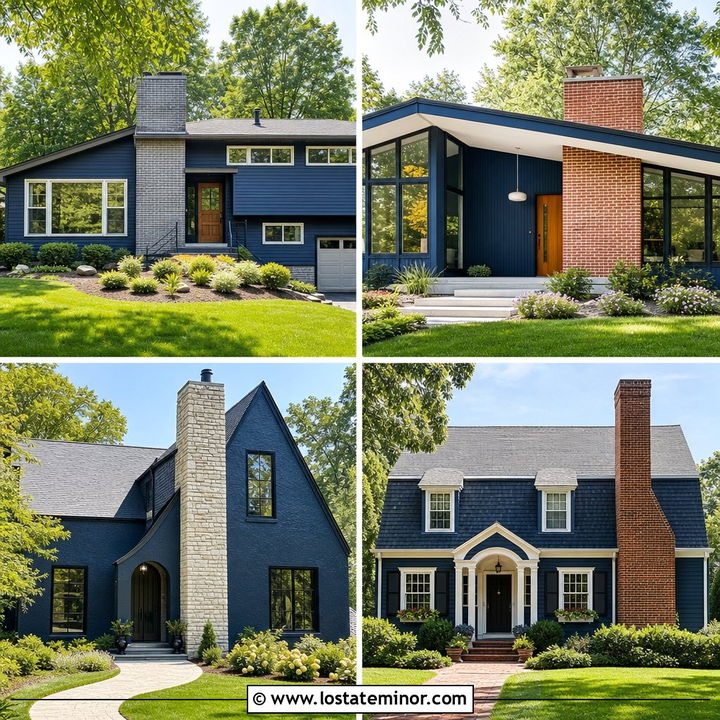
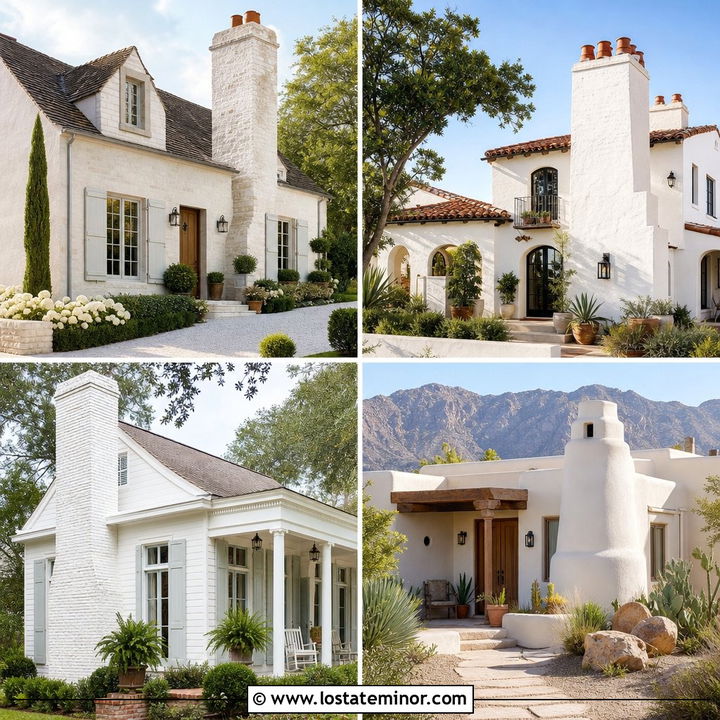
20. Dove Grey Brick House With Dark Grey Brick Chimney
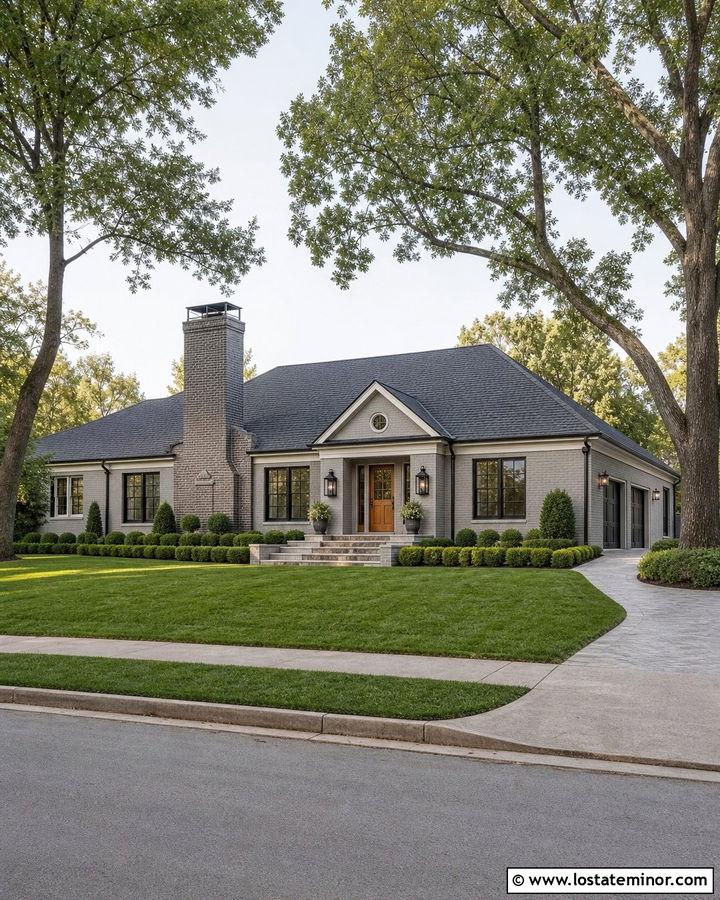
A tonal brick scheme can make a substantial home feel cohesive and sophisticated. Apply a breathable dove grey masonry coating to the main brick exterior while preserving a darker gray brick finish on the chimney. The variation should be noticeable but not severe. Paint the trim soft white and use black windows, gutters, and lanterns to define the facade. A natural wood front door adds a needed warm focal point between the gray surfaces. Choose a charcoal roof that is slightly darker than the chimney, creating an orderly progression from light walls to deeper upper elements. This approach works well on traditional brick ranches and two-story suburban homes. Structured hedges and broad stone steps support the solid architectural character.
21. Dove Grey House With Wraparound Porch And Brick Chimney
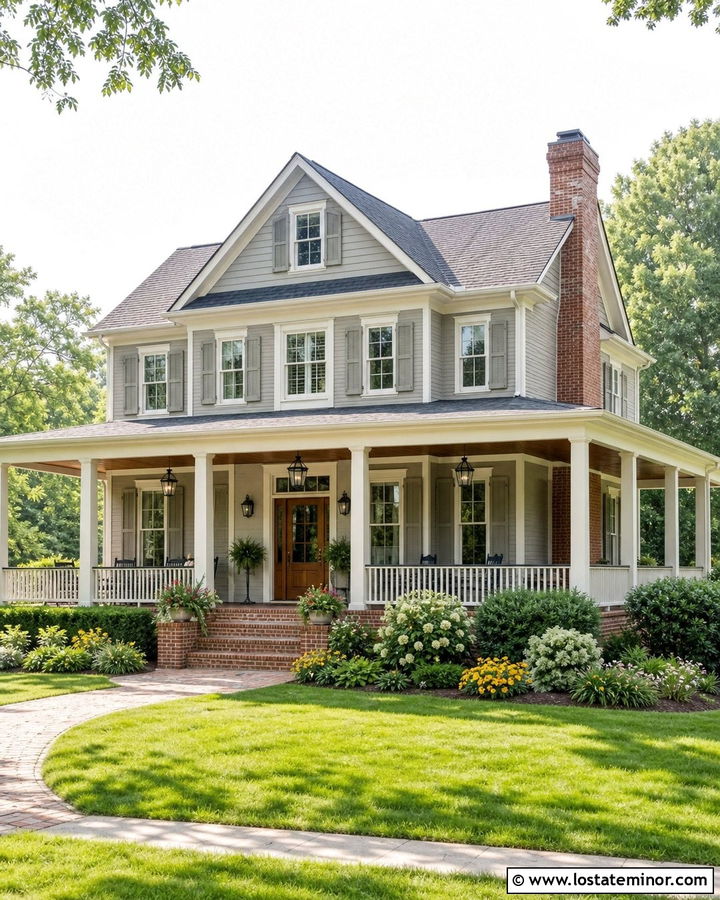
A wraparound porch gives a dove grey exterior room for several coordinated materials. Use soft gray lap siding on the house, creamy white on the porch columns and railings, and natural wood on the ceiling and front door. An exposed warm red brick chimney adds historic character and prevents the neutral facade from looking newly manufactured. Repeat the brick in the porch steps or walkway border to make the chimney feel connected to the lower level. A weathered charcoal roof provides a quiet background above the wide porch. Black lanterns and simple rocking chairs add small dark notes. Layered shrubs, flowering perennials, and a generous lawn create the comfortable setting associated with farmhouse and Southern traditional architecture.
22. Dove Grey Ranch With Side Stone Chimney
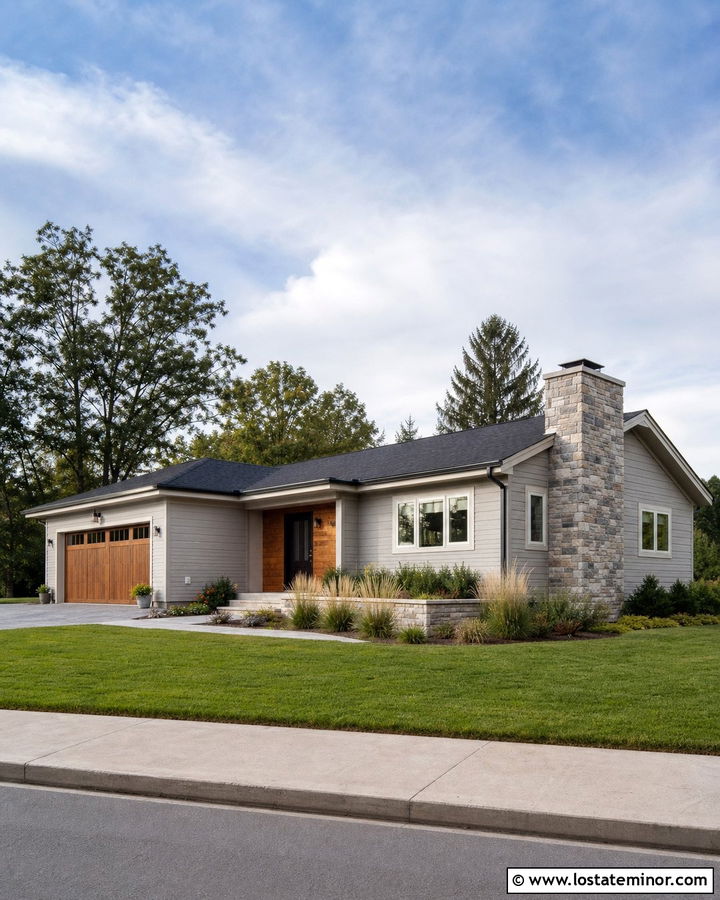
A side chimney can help define the profile of a low ranch house when it is treated as a deliberate architectural anchor. Cover the chimney in broad-cut gray and beige stone, then use dove grey siding across the long body of the home. Cream window trim softens the transition, while a dark charcoal roof gives the horizontal structure visual weight. Add cedar at the recessed entry and garage door to balance the stone’s rugged texture. If the chimney is far from the front door, repeat its material on a short planter, mailbox surround, or porch pier. A wide driveway, linear planting beds, and low ornamental grasses maintain the ranch’s clean proportions while directing attention toward the complete facade.
23. Dove Grey Colonial With Central Brick Chimney
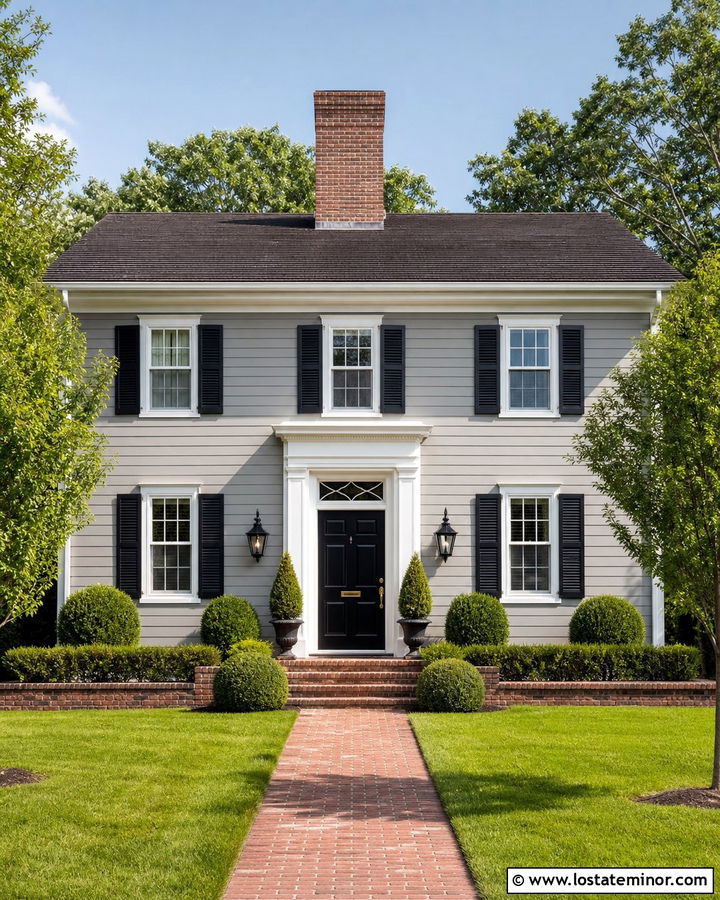
A central chimney creates a strong axis on a classic Colonial, so the surrounding color scheme should emphasize balance. Paint the clapboard siding dove grey and retain the chimney’s traditional red brick, preferably with warm gray mortar. Use creamy white for the window casings, corner boards, cornice, and formal entry surround. A deep black front door gives the center of the facade a clear focal point below the chimney. Match the shutters to the door and select a charcoal-brown roof that relates to both gray siding and warm masonry. Symmetrical lanterns, clipped shrubs, and evenly spaced foundation plants reinforce the architecture. A straight brick walkway completes the orderly composition and visually pulls the chimney color into the foreground.
24. Dove Grey Georgian House With Double Chimneys
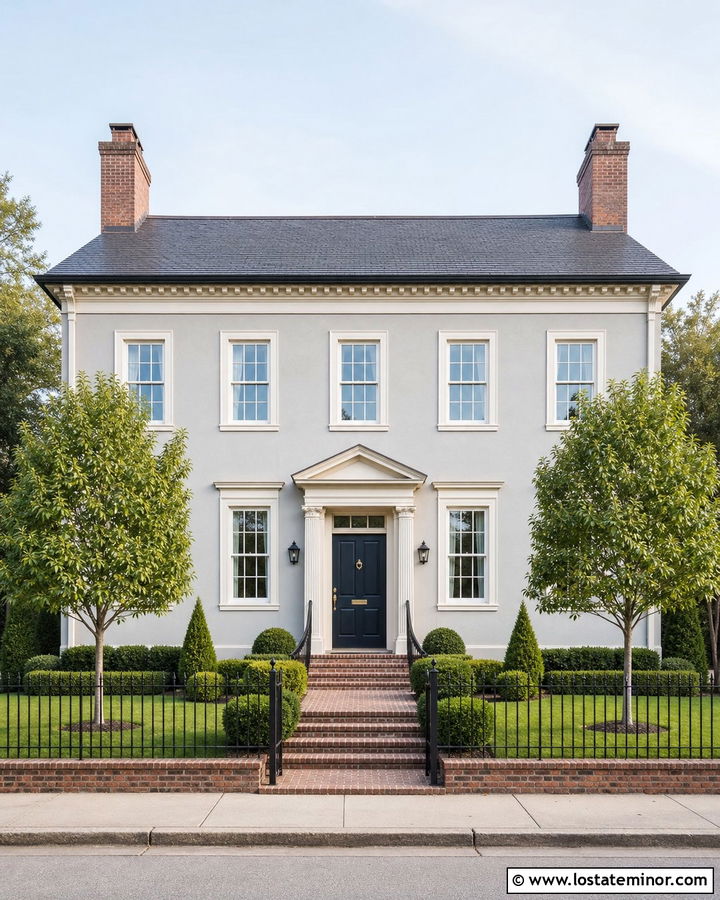
Double chimneys can give a Georgian house impressive presence, particularly when the exterior palette remains restrained. Use warm dove grey brick or smooth siding across the symmetrical facade, with matching red brick chimneys at each end. Cream trim around sash windows and the pedimented doorway complements the warm mortar. Paint the front door deep navy or black for a formal central accent. Dark charcoal roof shingles allow the chimney stacks to remain clearly visible above the roofline. Avoid unrelated accent colors that could weaken the home’s strong symmetry. Brick steps, black iron railings, clipped hedges, and paired trees support the classic arrangement. The finished scheme feels stately but still approachable because the main gray remains light and soft.
25. Dove Grey Tudor House With Stone Chimney
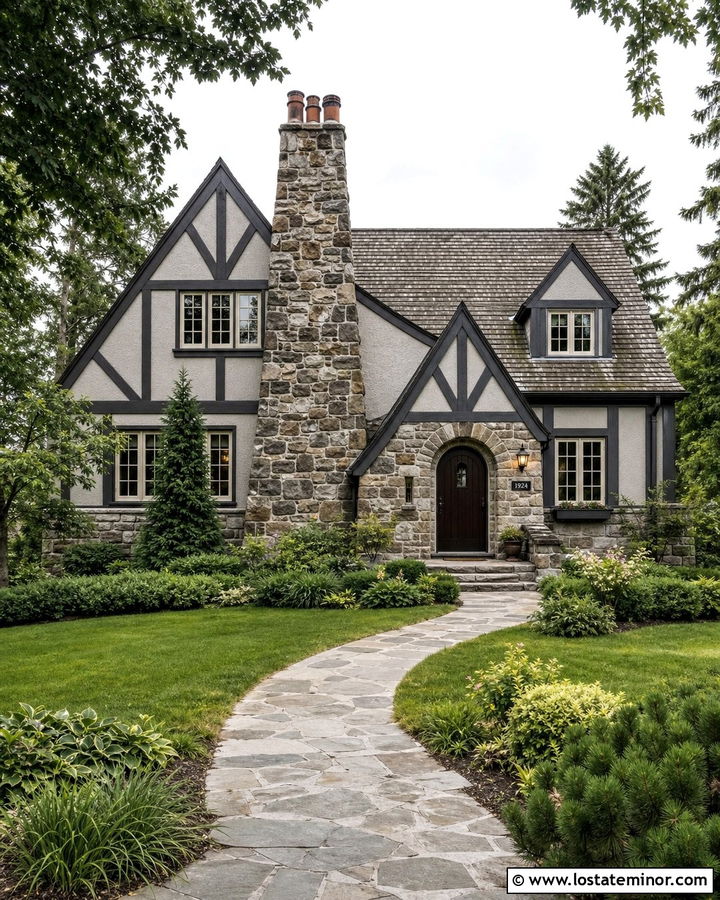
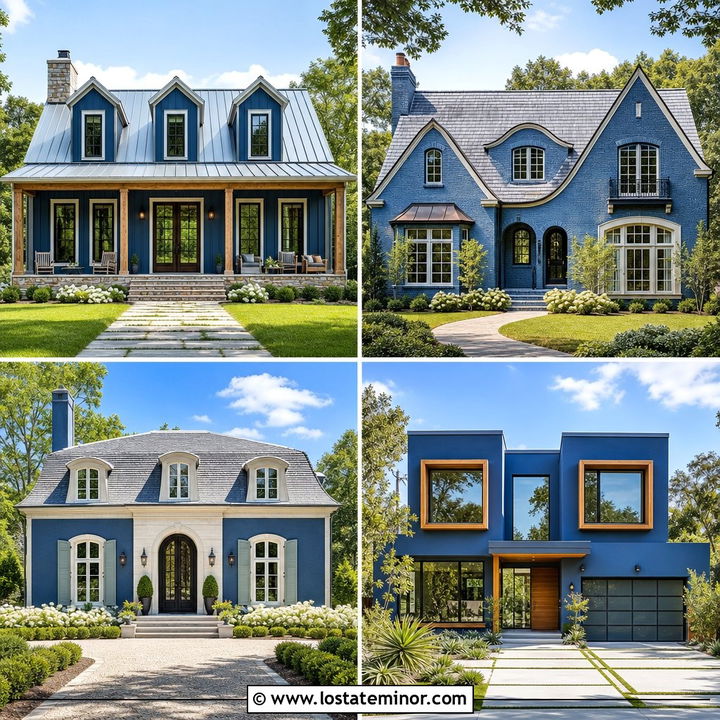
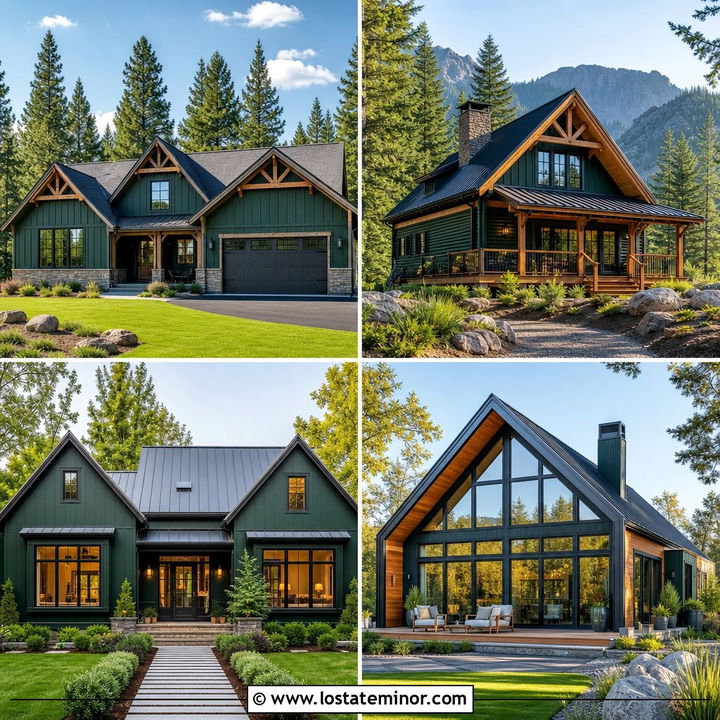
Tudor architecture offers an opportunity to combine dove grey stucco with dark timber details and a substantial stone chimney. Use the gray across the main wall surfaces and paint the half-timbering deep charcoal brown rather than solid black. Select irregular limestone or fieldstone containing cream, taupe, and gray for the chimney and lower foundation. A dark wood arched door reinforces the historic character, while warm ivory window trim keeps the facade from becoming too shadowed. Choose weathered brown-gray roof shingles to connect the timber and stone. Curved paths, layered evergreen shrubs, and informal garden beds suit the asymmetrical architecture. This palette respects Tudor character while giving the exterior a fresher, lighter appearance.
26. Dove Grey House With Chimney On Garage Wing
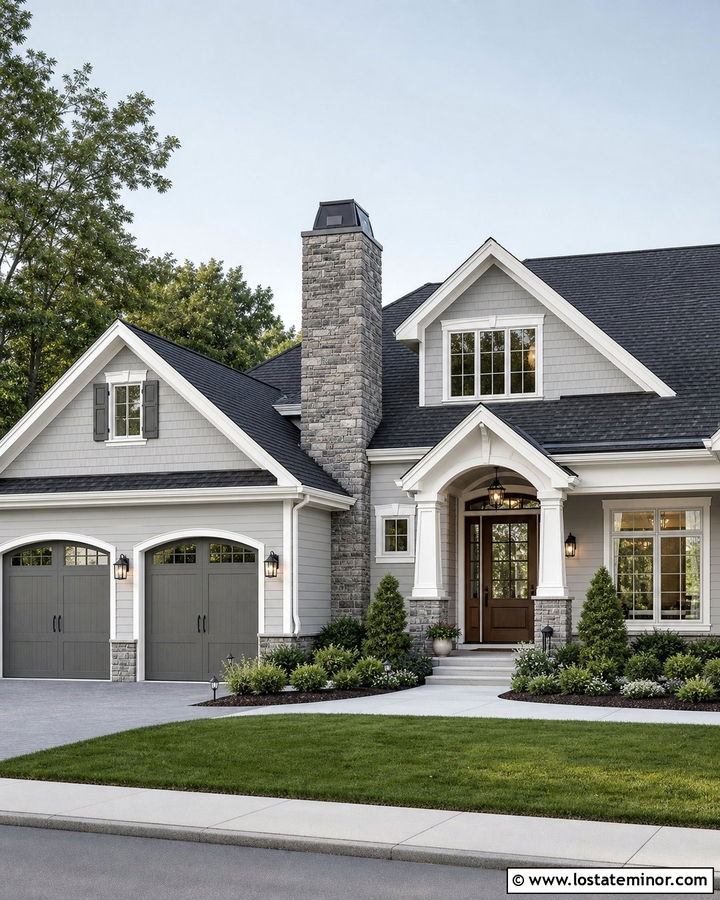
When a chimney rises beside an attached garage, it can visually separate the garage wing from the main living area. Use dove grey siding across both sections for continuity, then clad the chimney in medium-gray ledgestone. Repeat the stone on the garage foundation or entry columns so the masonry does not appear stranded at one end. Paint the garage doors a slightly deeper dove grey to reduce their visual size. White trim keeps windows and roof edges crisp, while a stained wood front door draws attention back toward the entrance. A charcoal roof and black lanterns complete the palette. Use a broad walkway, low shrubs, and a clear planting gap to guide visitors from the driveway to the front door.
27. Monochromatic Dove Grey House With Grey Chimney
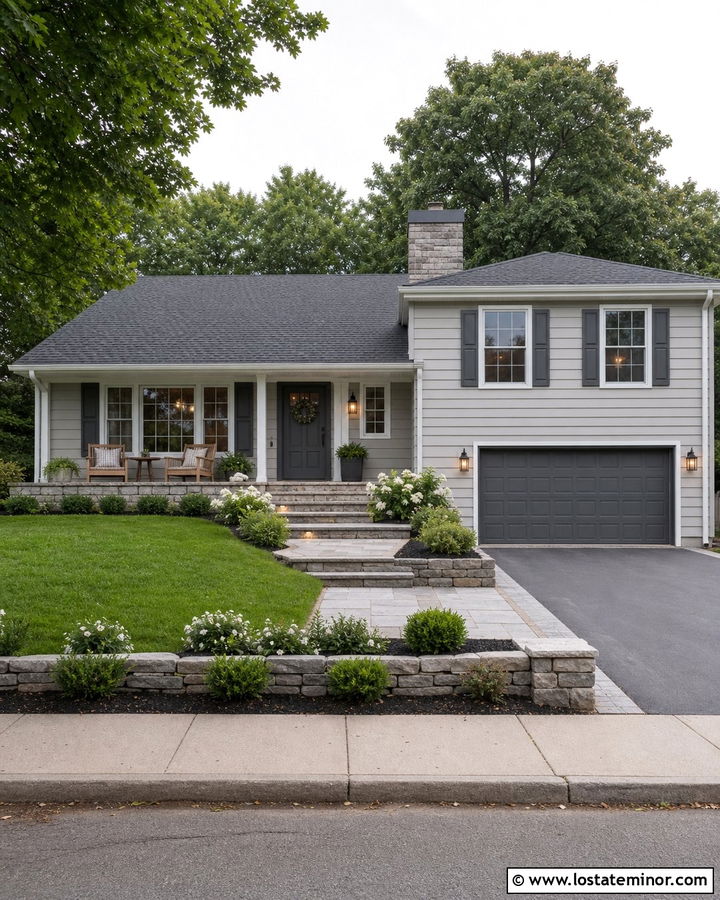
A monochromatic exterior can look layered when each surface has a slightly different value and texture. Start with dove grey lap siding, then use medium-gray stone on the chimney and a deeper graphite gray on the front door, shutters, and garage. Keep the trim a pale gray-white instead of brilliant white to preserve the tonal effect. A charcoal roof forms the darkest upper layer and grounds the restrained palette. Warm wood porch furniture or bronze lighting can prevent the gray scheme from feeling sterile. This treatment works on transitional homes, split-levels, and updated suburban facades. Green shrubs, white flowers, and natural stone paving provide enough contrast while allowing the coordinated gray materials to remain the primary feature.
28. High Contrast Dove Grey House With Black Chimney
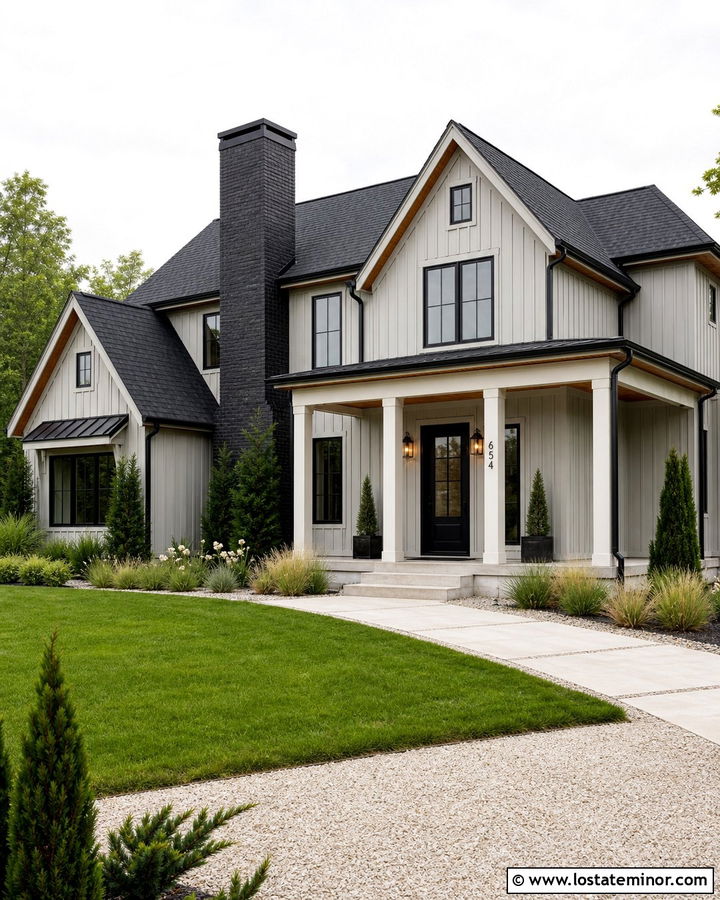
For a bolder curb-appeal update, pair pale dove grey siding with a black-painted brick chimney. The chimney becomes a dramatic vertical feature, especially on a contemporary farmhouse or remodeled split-level. Repeat black on the windows, gutters, roof, and front door, but keep larger porch columns or entry trim soft white to maintain balance. Natural cedar can appear beneath the porch roof or around the garage to warm the sharp contrast. Choose simple landscaping with architectural evergreens, pale gravel, and broad concrete slabs. Before painting, evaluate how the dark chimney relates to the roof and surrounding masonry. The final exterior should feel deliberate, with black details distributed across the facade rather than concentrated in one isolated area.
29. Warm Dove Grey House With Greige Chimney
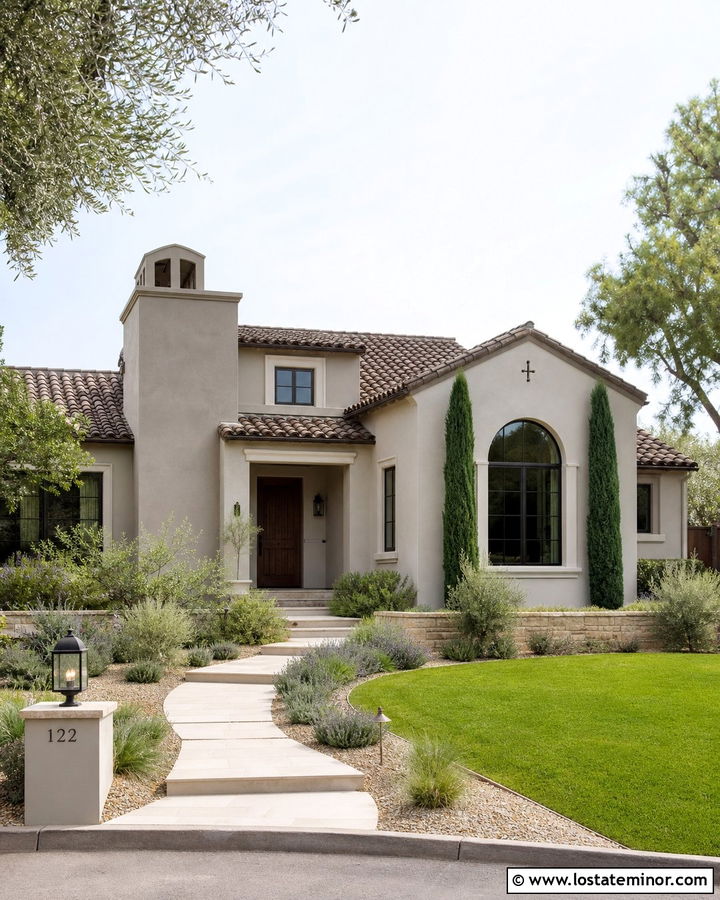
Warm dove grey siding and a greige chimney create a gentle palette for homeowners who prefer minimal contrast. Use smooth stucco or painted brick on the chimney in a medium taupe-gray that is clearly deeper than the house body. Cream trim, bronze windows, and a walnut front door continue the warm undertones. Choose weathered brown-gray shingles rather than a blue charcoal roof. This combination is especially flattering on Mediterranean, transitional, and French-inspired houses with curved openings or low rooflines. Add limestone steps, beige gravel, olive-toned shrubs, and soft green grasses around the facade. The restrained changes in color allow the chimney’s shape and texture to stand out while keeping the overall home relaxed and visually unified.
30. Coastal Dove Grey House With White Chimney
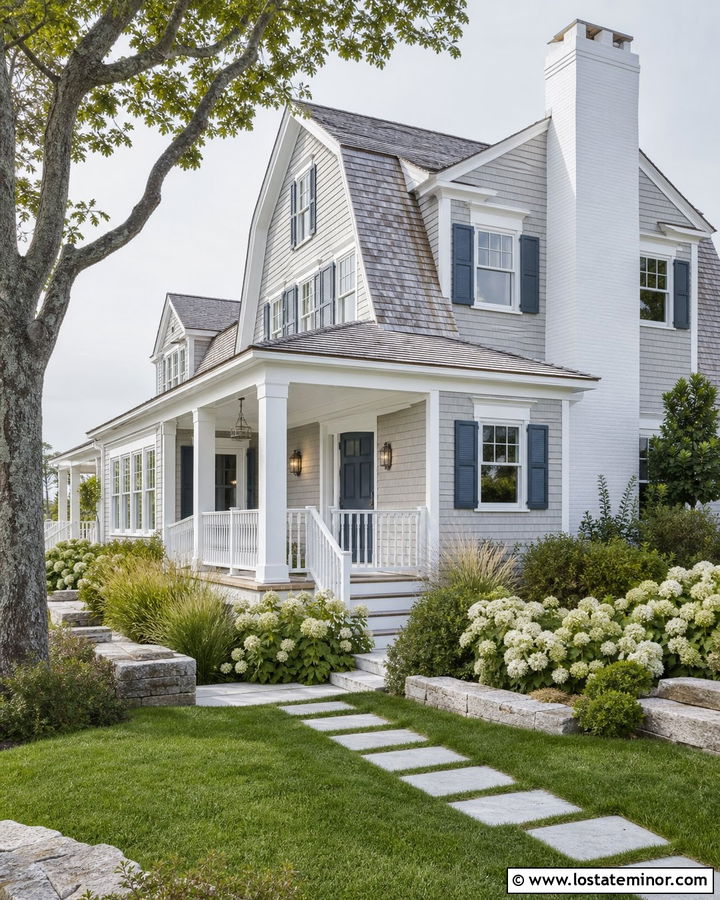
A coastal exterior can use dove grey siding and a white-painted chimney for a fresh, breezy appearance. Choose cedar-shake or fiber-cement siding in a cool, soft dove grey, then finish the chimney, window trim, porch railings, and fascia in a clean coastal white. A slate blue front door introduces gentle color without disrupting the quiet palette. Use weathered gray roof shingles and brushed nickel or dark bronze lighting for understated contrast. If the home has shutters, paint them a slightly deeper blue-gray than the door. Hydrangeas, ornamental grasses, pale stone paths, and an open lawn complete the seaside character. This scheme also works in ordinary suburban settings because it feels bright, practical, and comfortably familiar.
Conclusion:
The most effective dove grey exterior treats the chimney, roof, siding, trim, doors, and landscaping as one connected composition. Stone introduces natural variation, brick adds warmth, and a painted chimney can create either tonal harmony or bold contrast. Before committing, compare large paint samples beside the existing masonry at several times of day. Also consider permanent features such as roofing, windows, and hardscaping before selecting undertones. Soft white, black, navy, sage, cedar, and warm greige can all complement dove grey when repeated with restraint. Whether the home is traditional, rustic, coastal, or contemporary, these 30 Dove Grey House Design With Chimney Ideas provide a practical foundation for polished, balanced curb appeal.

Related posts: