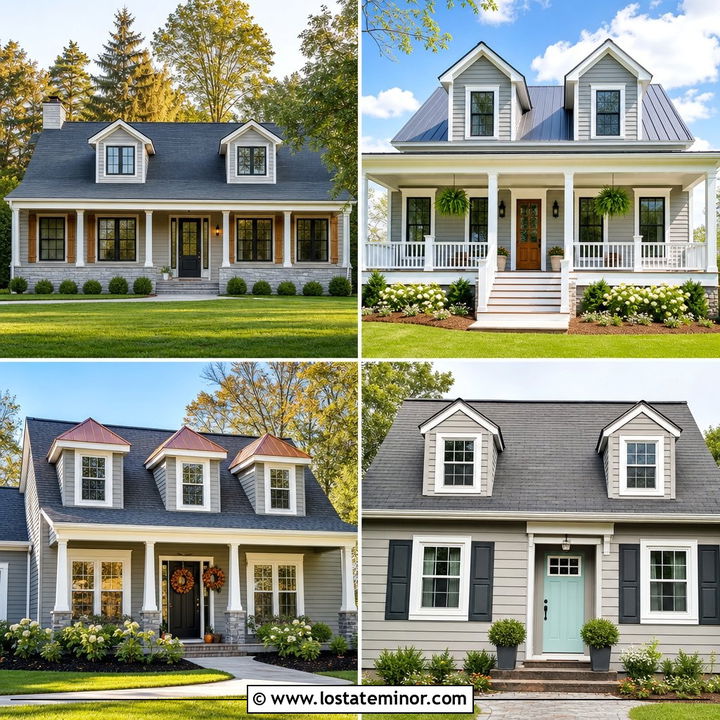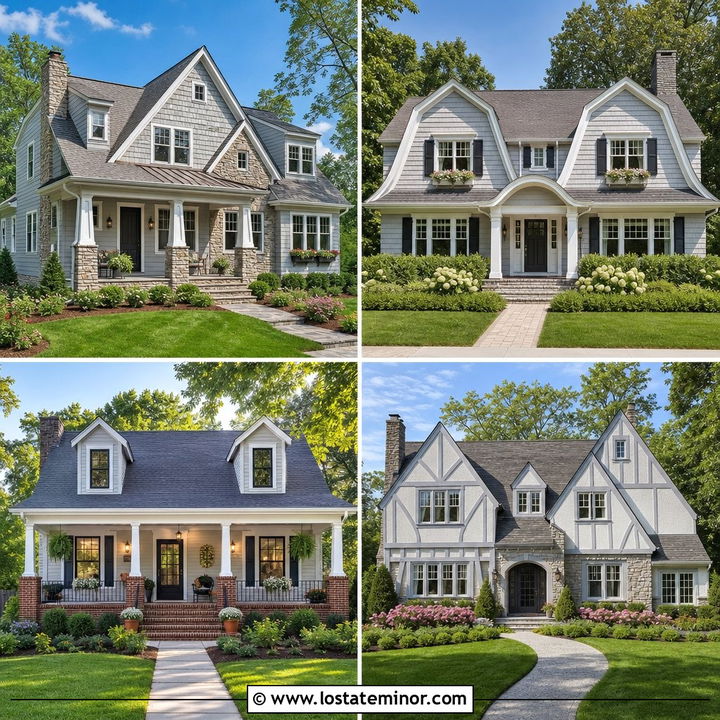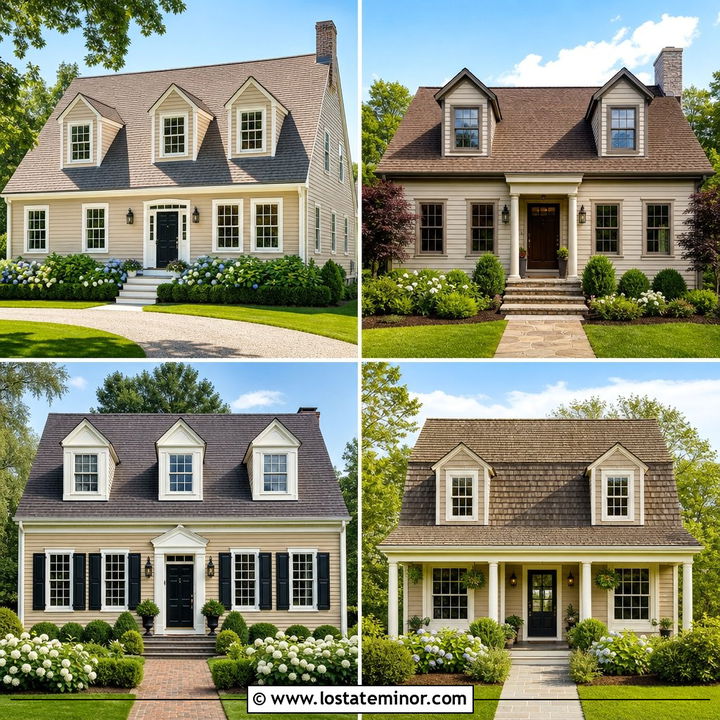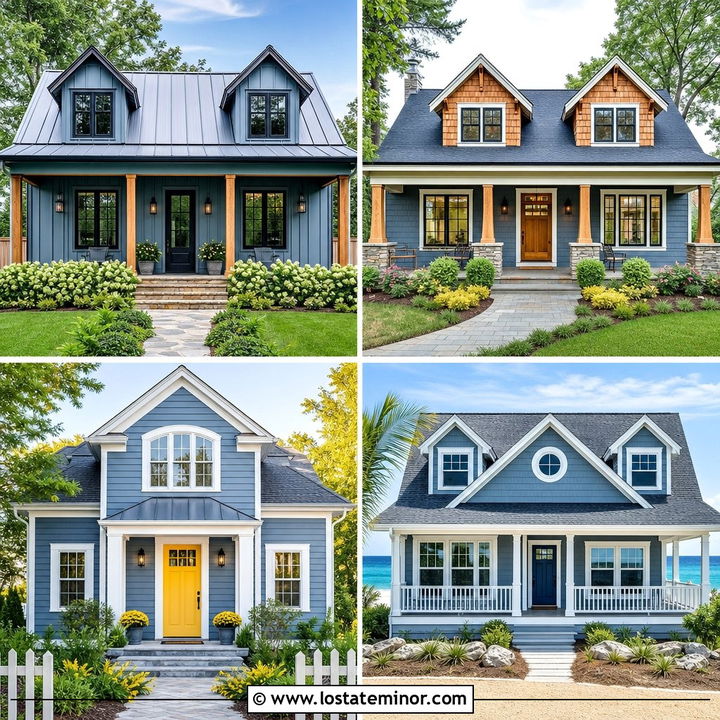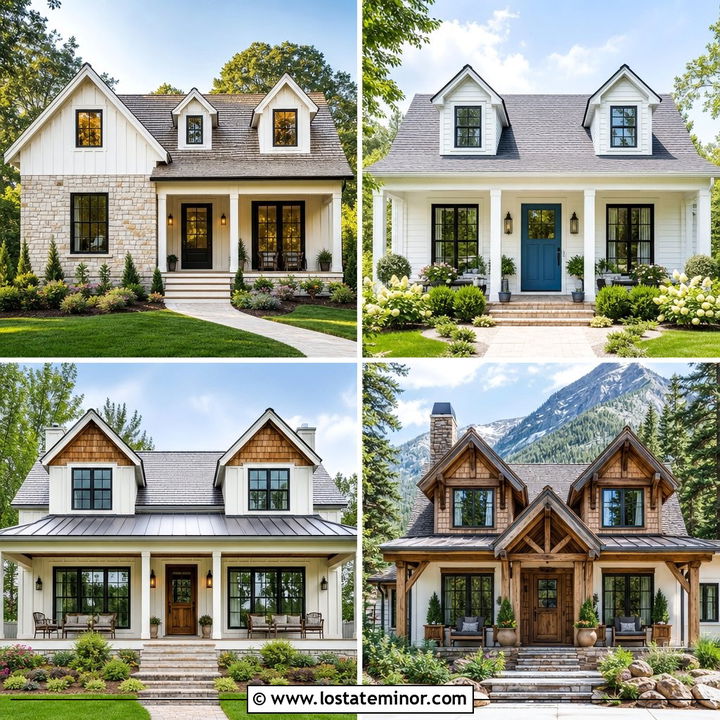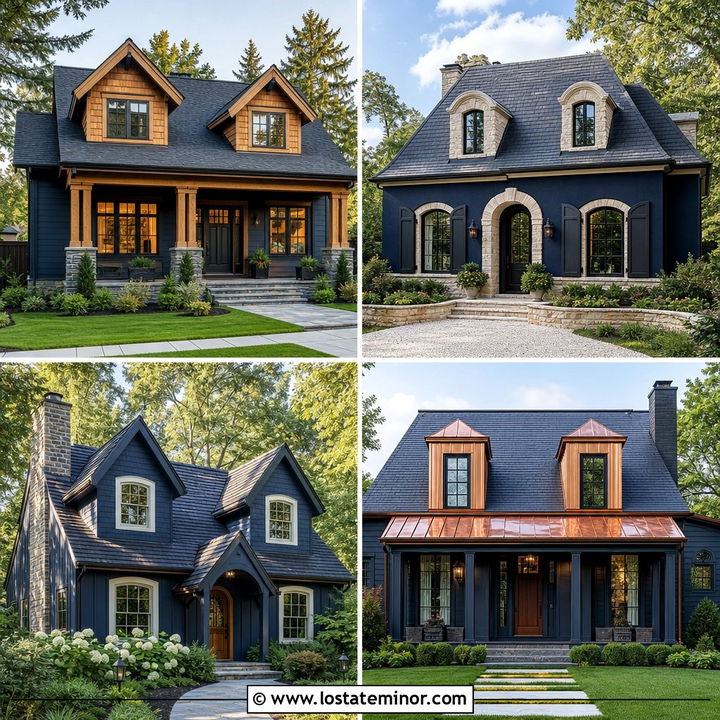
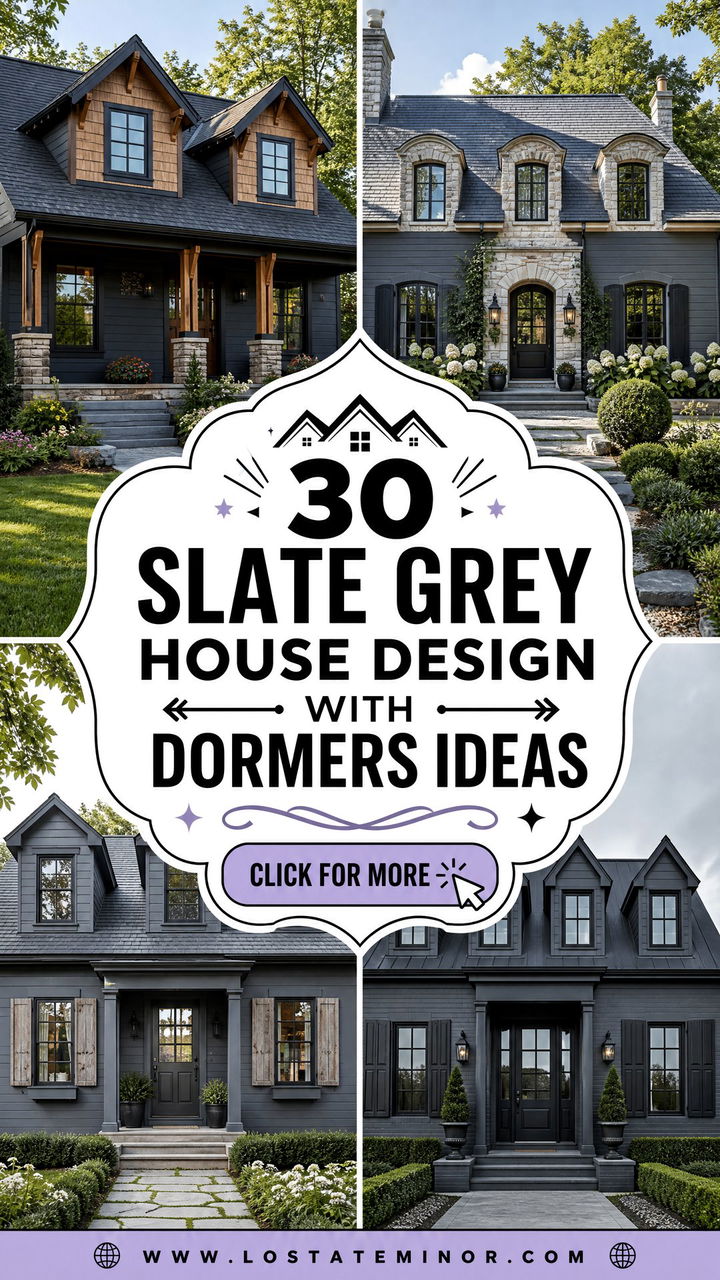
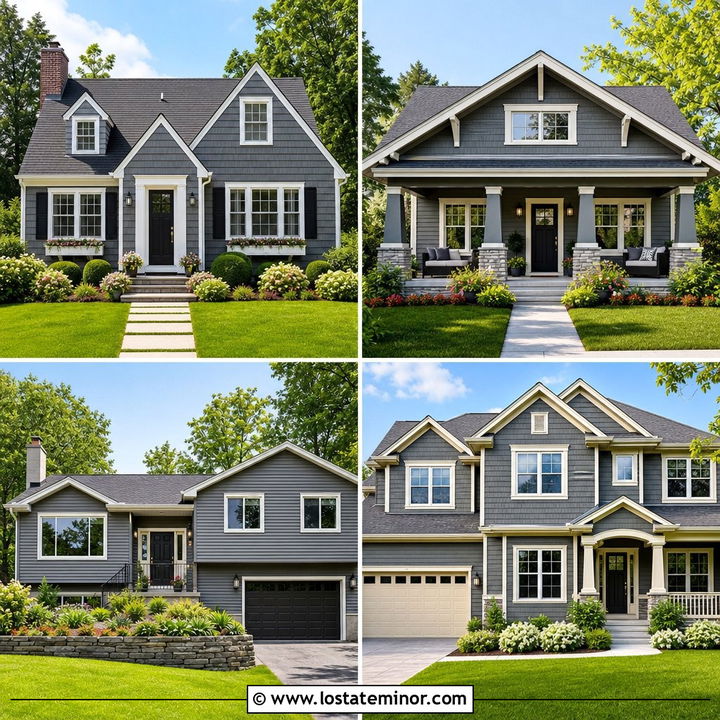
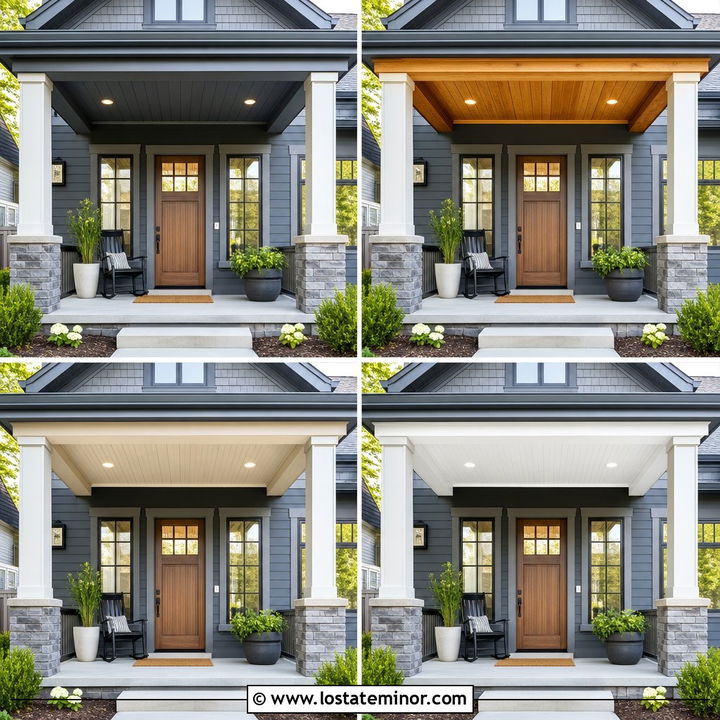
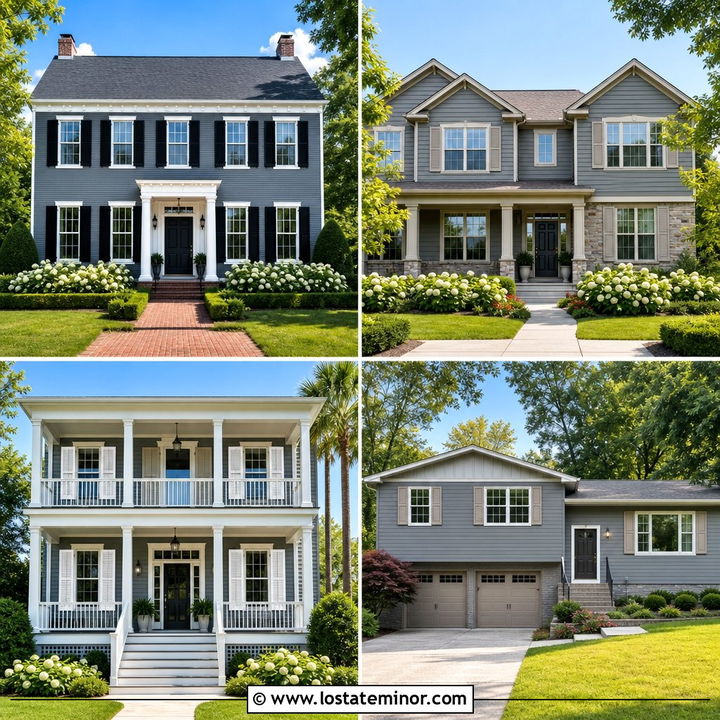
Slate grey gives a home depth without feeling as severe as black, while dormers break up the roofline and bring character to the entire facade. The combination works especially well when trim, roofing, masonry, and entry colors are chosen as one connected palette. Dormers can also increase upper-level light and usable space, but their scale should match the proportions of the house. () Whether you prefer a traditional Colonial, relaxed Cape Cod, updated ranch, or modern farmhouse, slate grey can adapt beautifully. Crisp white creates contrast, wood adds warmth, and stone grounds the cooler siding. The complete exterior looks below offer practical inspiration for **30 Slate Grey House Design With Dormers Ideas**.
1. Slate Grey Colonial With White Dormers
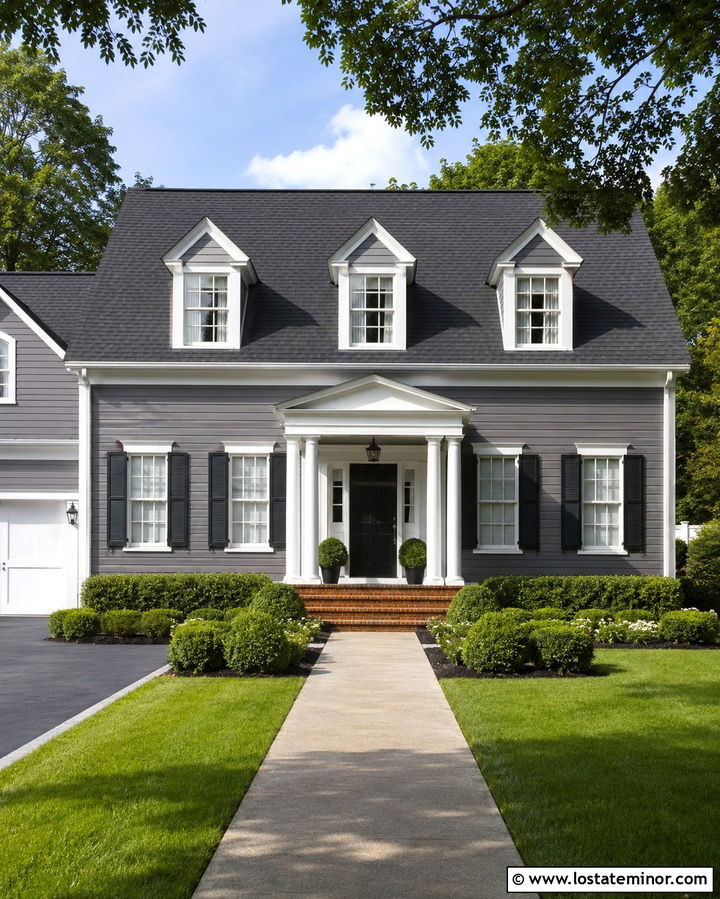
A symmetrical Colonial looks polished when slate grey lap siding is paired with crisp white trim and three evenly spaced gabled dormers. Carry the white across the dormer siding, window casings, cornices, and front columns so the upper and lower levels feel connected. A glossy black front door introduces formal contrast without competing with the roofline. Choose charcoal architectural shingles that are darker than the siding but not completely black. Red brick steps can add subtle traditional warmth, while clipped boxwoods reinforce the balanced facade. Keep the dormers slightly narrower than the windows below them. This preserves the home’s strong proportions and prevents the roof from appearing crowded or visually top-heavy.
2. Slate Grey Farmhouse With Black Dormers
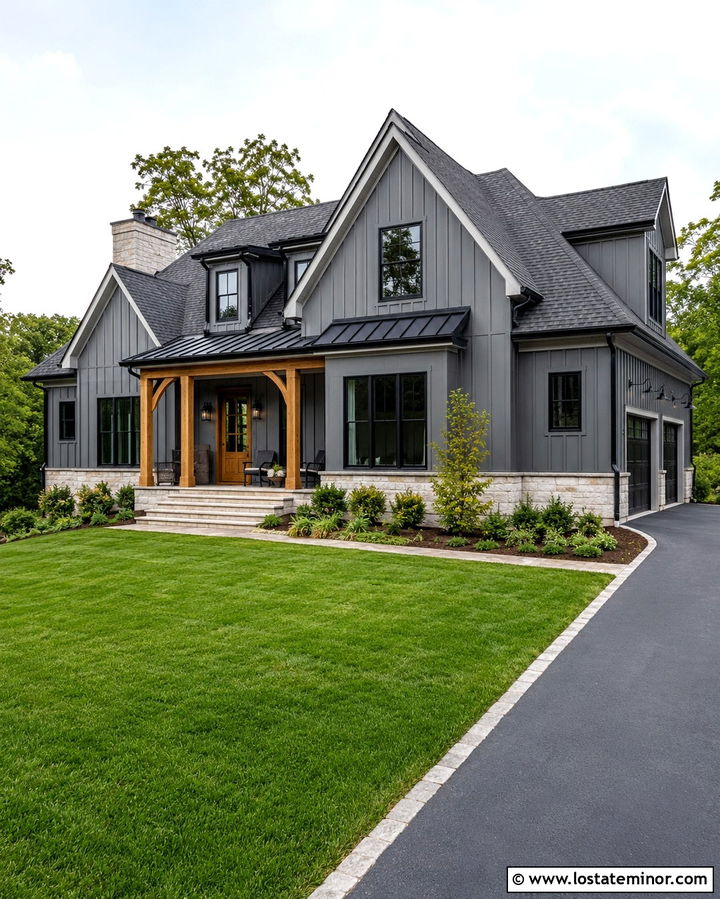
For a stronger modern farmhouse look, cover the main exterior in slate grey board-and-batten siding and frame the dormers in matte black. Black window frames, gutters, and a standing-seam porch roof extend that contrast across the facade. Warm white fascia keeps the dark roofline from becoming too heavy. A natural oak front door and matching timber porch columns bring welcome warmth to the cool grey-and-black palette. Use light limestone around the foundation to soften the transition into the landscaping. Wide shed dormers are especially effective because their simple shape complements vertical siding. Keep the porch open and uncluttered, with broad steps and understated railings, so the distinctive dormers remain a major architectural feature.
3. Slate Grey Craftsman With Cedar Dormers
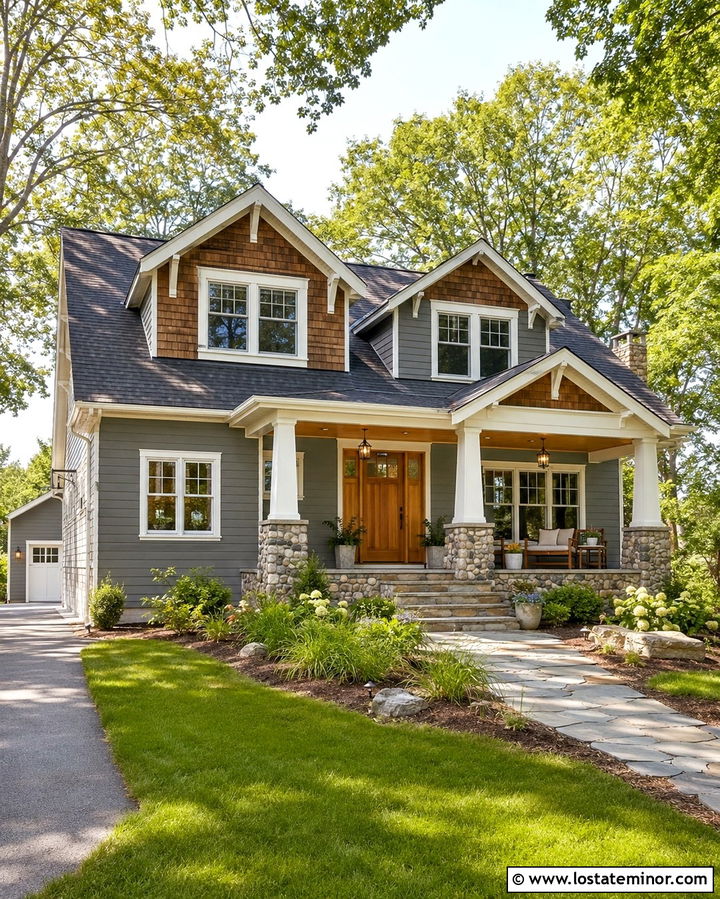
Imagine a slate grey Craftsman surrounded by mature trees, with cedar-shingle dormers glowing warmly above the porch. The combination feels natural because the wood breaks up the cool siding without introducing an unrelated color. Repeat the cedar on the front door, porch ceiling, and tapered column details to create a unified design. Cream trim is softer than bright white and works well with earthy stone porch piers. A weathered charcoal roof keeps the overall palette grounded. Choose compact gabled dormers with divided-light windows that echo the main-level Craftsman windows. Bronze exterior lighting, dark gutters, and simple foundation plantings complete the look while allowing the layered wood, stone, and slate grey surfaces to provide most of the visual interest.
4. Slate Grey Cape Cod With Matching Dormers
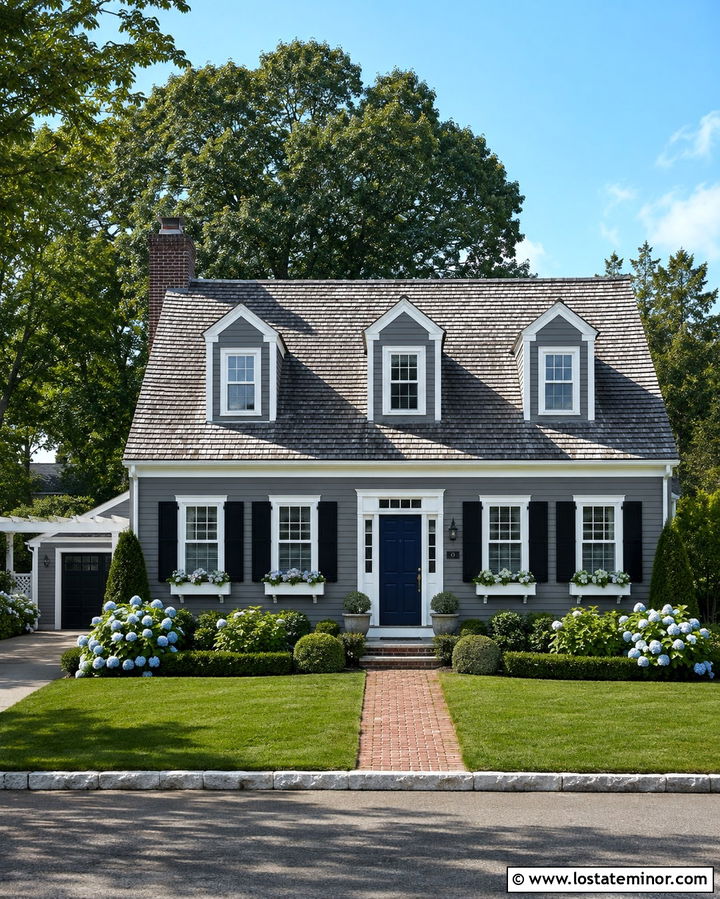
A classic Cape Cod becomes more streamlined when the siding and dormer faces share the same slate grey color. White corner boards, fascia, window trim, and dormer rakes create enough definition to keep every roof shape visible. Add black shutters to the main windows and use a rich navy front door for a subtle coastal accent. Weathered grey roof shingles support the quiet palette without blending completely into the siding. Two or three simple doghouse dormers should align with the windows and entrance below whenever possible. White window boxes can add charm, but keep the plant colors restrained. Hydrangeas, low hedges, a brick walkway, and an open lawn create an inviting setting that suits the compact, balanced Cape Cod facade.
5. Slate Grey French Country House With Stone Dormers
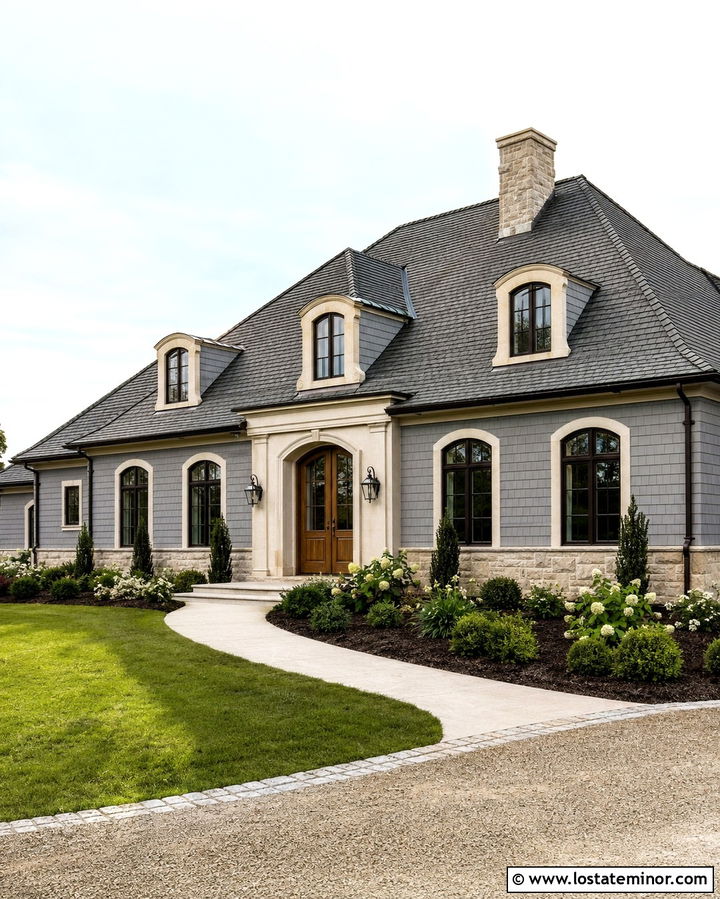
Slate grey stucco can give a French country exterior an elegant, softly weathered appearance. Surround arched dormer windows with pale limestone, then repeat the stone around the entrance, chimney, and lower walls. This creates a layered facade rather than making the dormers look like separate additions. A charcoal hipped roof and dark bronze windows deepen the palette, while muted cream trim prevents harsh contrast. Consider an aged wood double door with iron hardware as the central focal point. Curved dormer roofs or compact hipped dormers work naturally with French-inspired architecture. Finish the property with a gently curving walkway, structured evergreen beds, and loose flowering plants. The resulting exterior feels refined but still comfortable and connected to its landscape.
6. Slate Grey House With Black Roof And White Trim
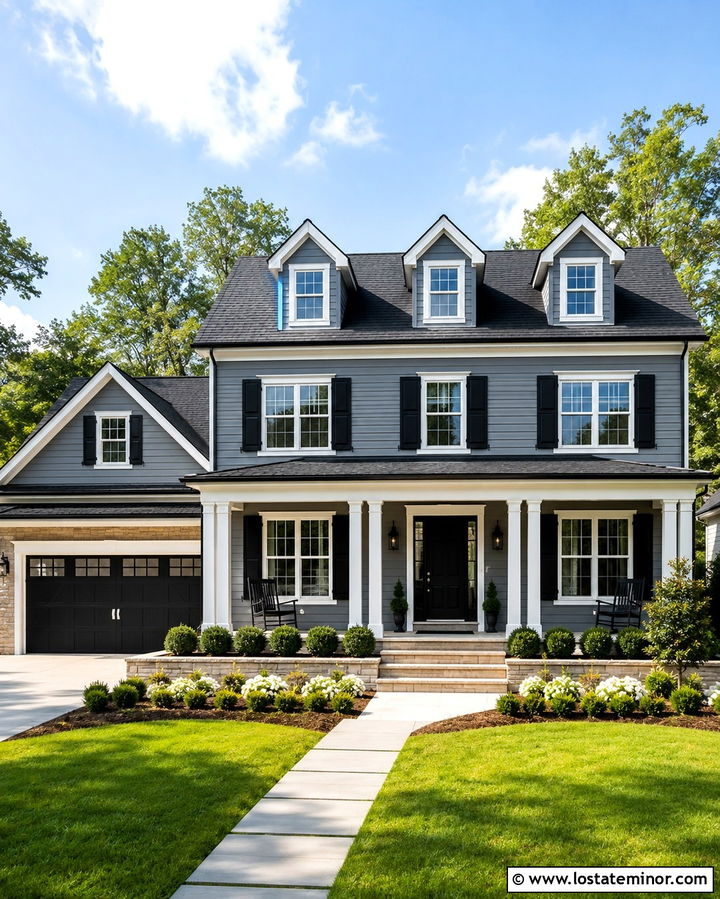
A black roof can sharpen a slate grey exterior, especially when bright white trim clearly separates the two colors. Use white around every dormer window, along the fascia, and beneath the roof overhangs. This thin border prevents the dark shingles from visually swallowing the dormers. Repeat black on the front door, shutters, gutters, and porch lighting for a coordinated three-color palette. On a traditional two-story home, three centered gabled dormers can balance a wide porch or central entry below. Keep masonry accents light, such as cool beige limestone or pale grey brick. Since black roofing creates strong visual weight, use generous windows and open landscaping to make the facade feel brighter, more spacious, and welcoming from the street.
7. Slate Grey House With Weathered Wood Shutters
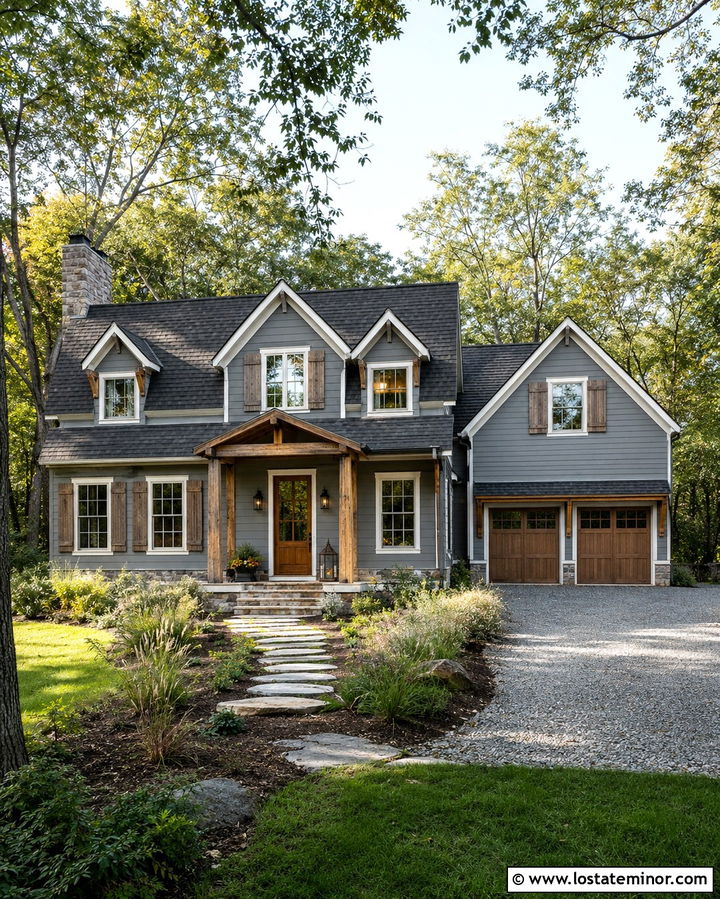
Weathered wood shutters add relaxed warmth to a slate grey house without creating sharp color contrast. This combination fits cottages, lake houses, Craftsman homes, and wooded suburban properties. Choose shutters with visible grain in a medium brown or faded cedar finish. Repeat that material on the front door, porch beams, and small dormer brackets. Soft ivory trim will blend more naturally with the wood than a brilliant white. Cover the house and dormer cheeks in matching slate grey siding, allowing the shutters to become the defining accent. A medium charcoal roof, fieldstone foundation, and simple bronze lighting complete the organic palette. Surround the home with ornamental grasses, native shrubs, and an irregular stone walkway for an approachable, established appearance.
8. Slate Grey House With Navy Front Door
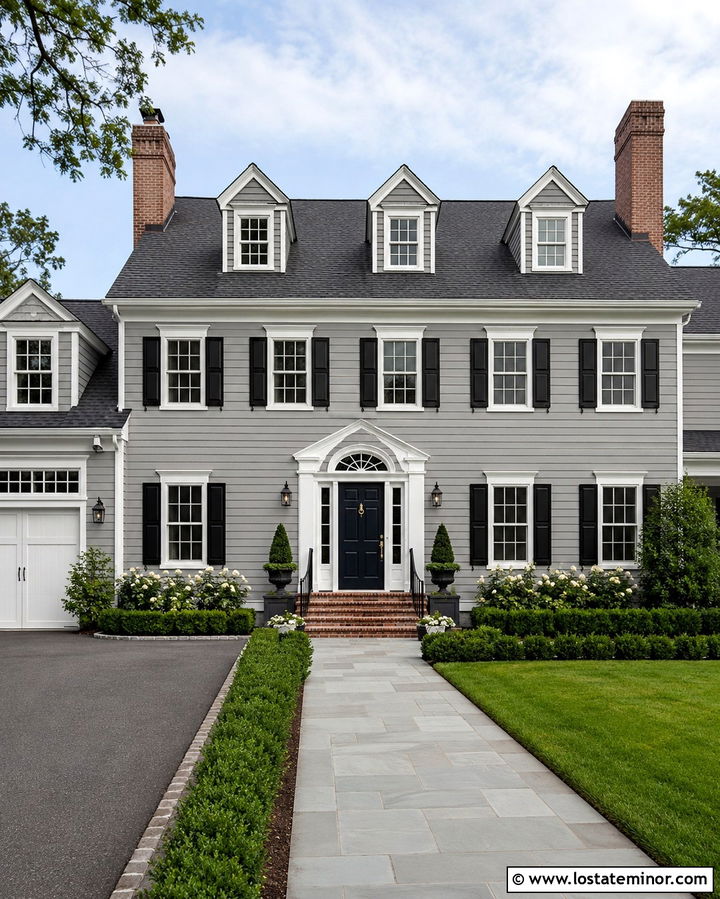
Slate grey and navy create a subtle layered palette that feels colorful without becoming busy. Select a deep navy front door with enough blue pigment to remain distinguishable from the grey siding. White trim around the entrance and dormer windows will help both darker colors look crisp. On a Georgian or Colonial Revival home, black shutters can be included, but use them sparingly so the navy door stays recognizable. A cool charcoal roof supports the scheme, while a small amount of red brick at the steps introduces traditional warmth. Repeat navy in understated details such as planters or porch furniture rather than painting the dormers blue. The slate grey dormer siding should remain consistent with the main facade, creating a composed and orderly roofline.
9. Slate Grey House With Burgundy Front Door
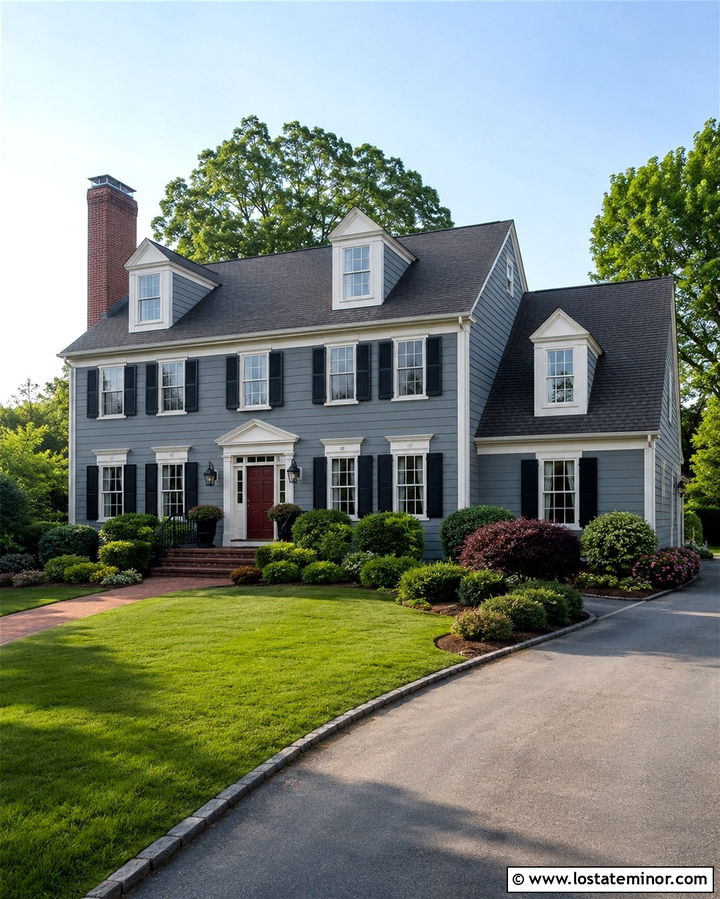
A burgundy front door can warm up a slate grey exterior while maintaining a mature, traditional character. It works particularly well on homes with red brick chimneys, brick walkways, or brown-toned roof shingles. Use creamy white trim rather than icy white to bridge the cool siding and rich red door. The dormers can remain slate grey with cream window casings and small burgundy shutters if their scale allows. Avoid repeating burgundy across too many features, since one concentrated entrance accent will look more intentional. Antique brass door hardware and dark bronze lanterns add another warm layer. Complete the curb appeal with deep green shrubs, burgundy foliage, and a clean stone path that naturally directs attention toward the welcoming entry.
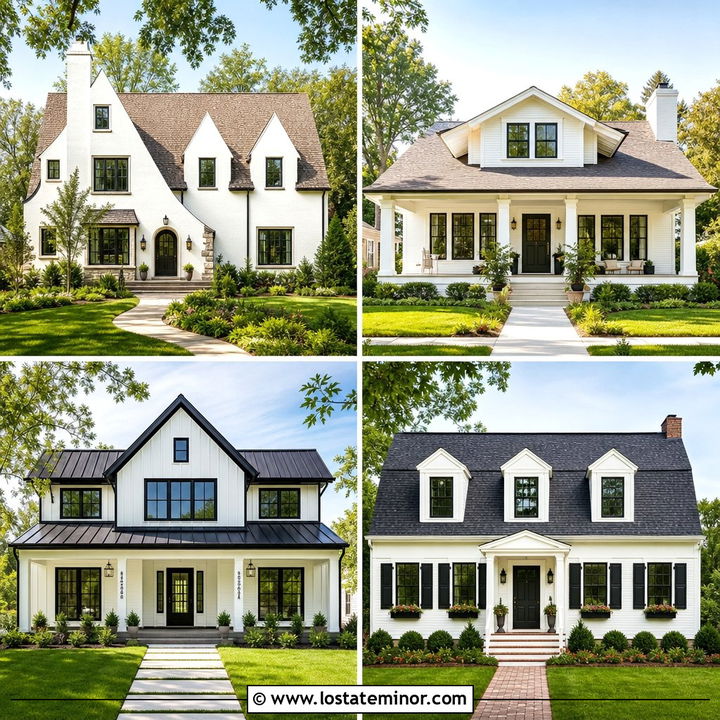
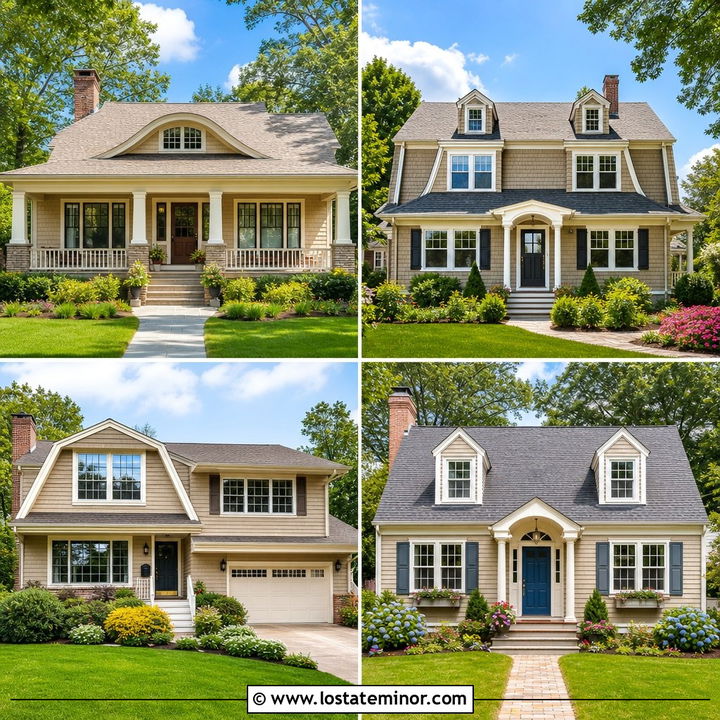
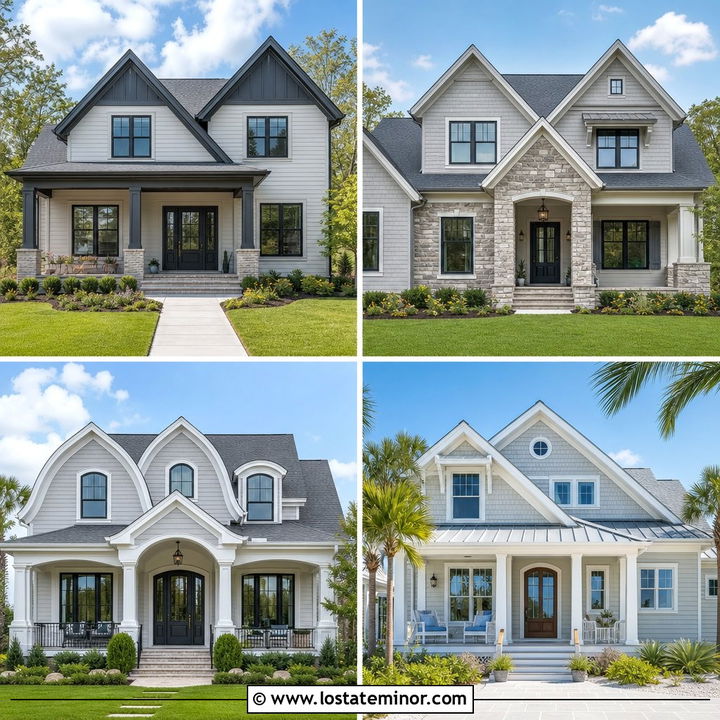
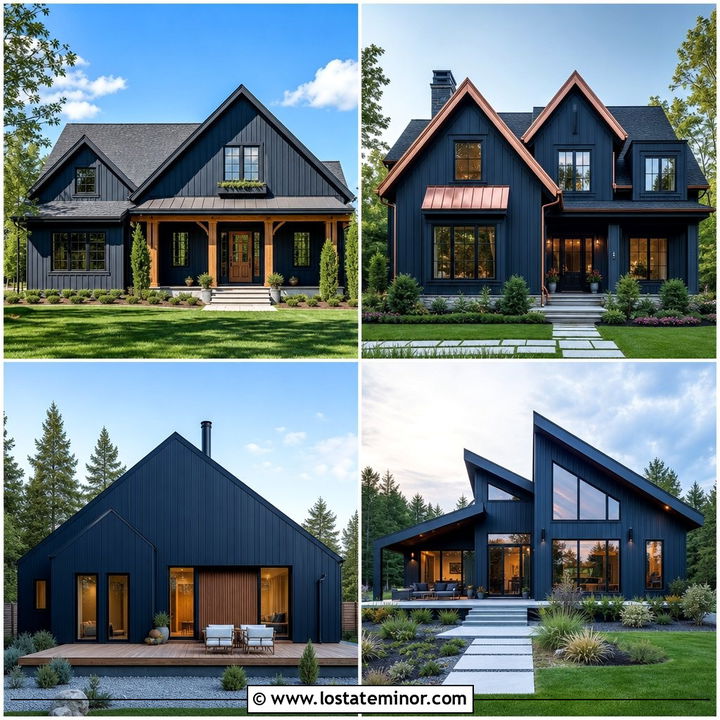
10. Slate Grey House With Sage Green Door
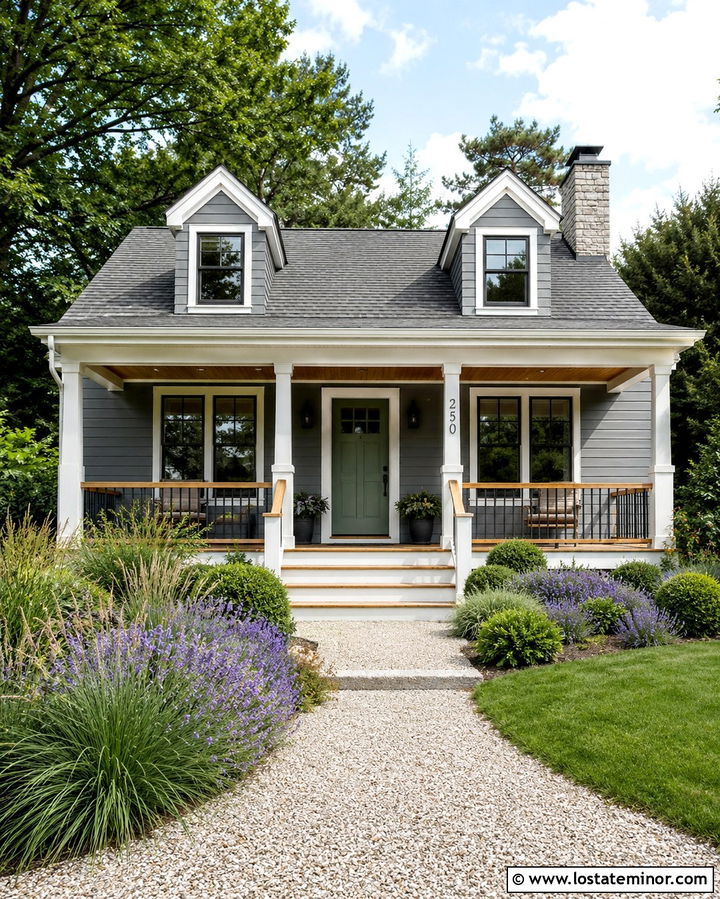
Could a cool exterior still feel soft and garden-friendly? A muted sage green front door is an easy way to make slate grey siding appear calmer and more connected to the landscape. Pair the combination with warm white trim and a medium grey roof rather than dramatic black. Keep the dormers slate grey, then outline their windows and roof edges in the same warm white used below. A small amount of natural wood at the porch ceiling or handrail adds warmth without distracting from the green entrance. This palette suits a bungalow, cottage, or modest farmhouse with two compact dormers. Layer the yard with lavender, ornamental grasses, rounded shrubs, and pale gravel for a complete exterior that feels natural, balanced, and gently colorful.
11. Slate Grey House With Stone Chimney And Dormers
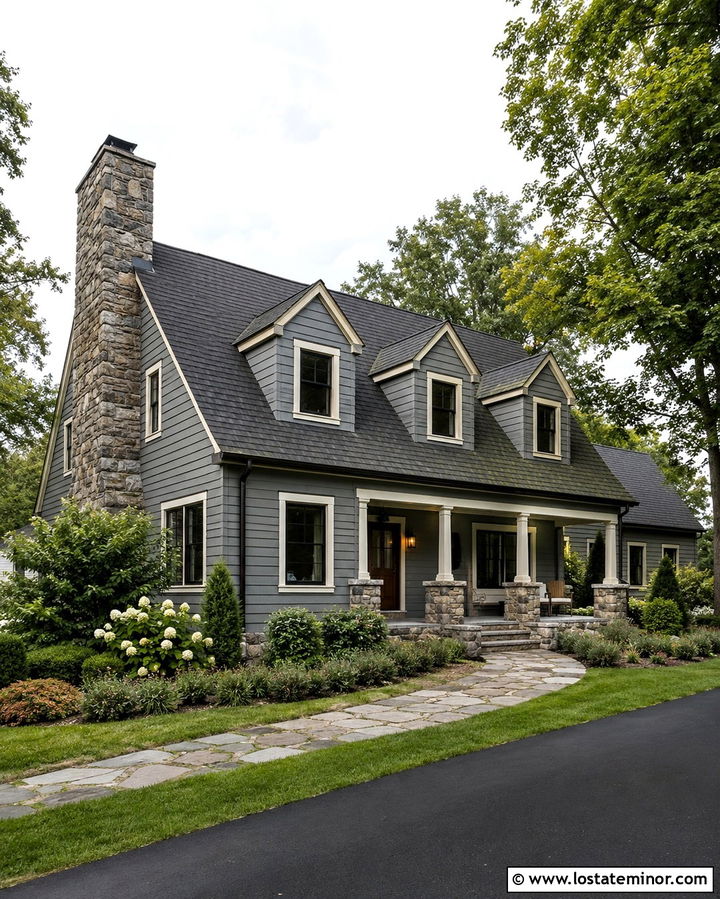
A tall stone chimney gives a slate grey home a strong vertical anchor, while dormers distribute visual interest across the roof. Choose stone containing grey, taupe, and muted brown so it connects the siding to warmer exterior details. Repeat the masonry around the porch base or garage to keep the chimney from appearing isolated. White or soft cream trim can outline slate grey dormers without overwhelming the stone texture. A dark walnut front door and bronze windows bring richness to the lower facade. On a rustic Colonial or mountain-inspired house, gabled dormers with modest overhangs suit the substantial masonry. Keep roof shingles slightly darker than the siding, allowing the dormers and chimney to remain distinct against the broad roof plane.
12. Slate Grey House With Red Brick Foundation
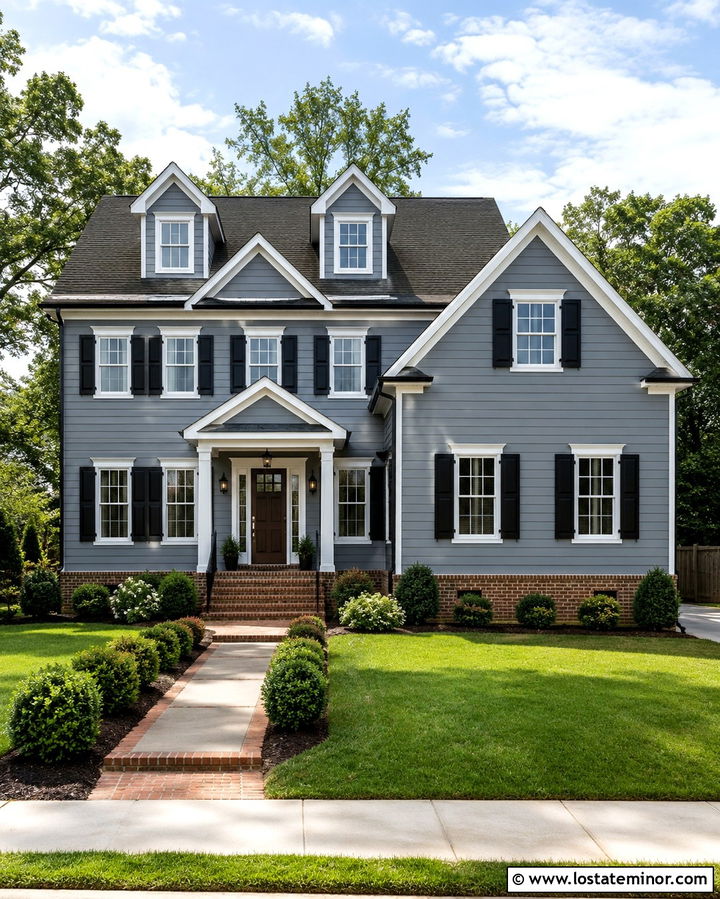
Red brick creates a familiar, grounded base for a slate grey house with dormers. The key is choosing a grey with enough depth to balance the brick rather than appearing pale or washed out. Use warm white trim to connect the cool siding with the red and brown tones in the masonry. A deep brown or black front door can provide definition, while bronze lighting complements the brick. Continue slate grey siding across the dormers and frame each window in warm white. If shutters are included, choose black or very dark charcoal instead of adding another red tone. Charcoal-brown roof shingles help unite the upper and lower sections. Neatly shaped shrubs and a brick-edged walkway finish the traditional, cohesive exterior.
13. Slate Grey House With Metal Dormer Roofs
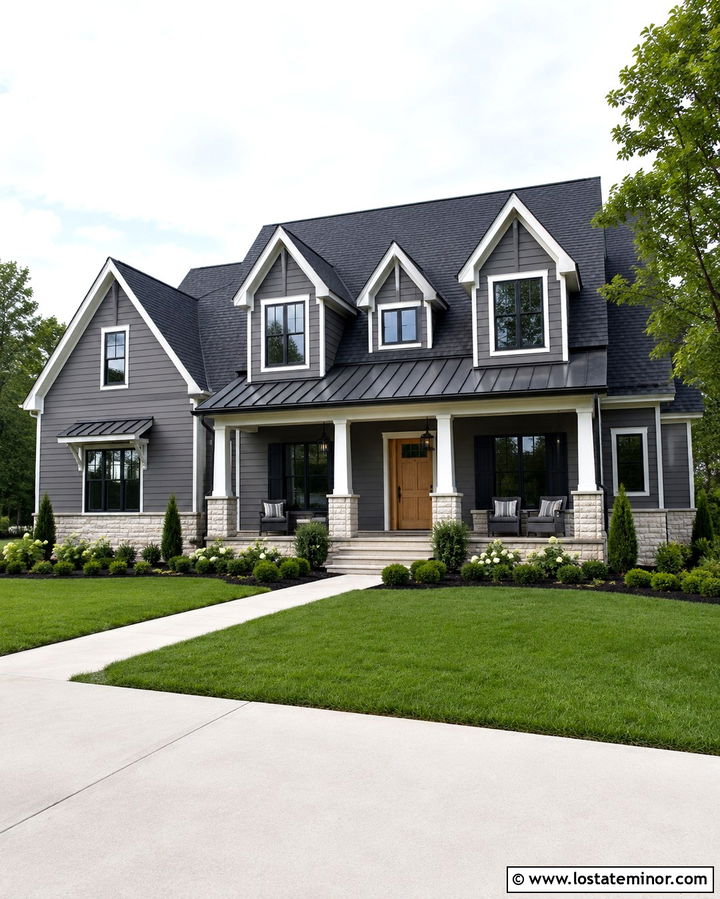
Small standing-seam metal roofs can turn ordinary dormers into crisp architectural features. Use dark charcoal or matte black metal over slate grey dormer walls, then repeat the material on the porch or bay window roof. This repetition makes the metal look planned rather than decorative. White trim around the dormer windows creates separation between the grey siding and dark roofing. A natural wood front door softens the industrial edge, while light stone at the foundation balances the darker upper facade. Metal accents are especially effective on farmhouse and transitional homes with clean rooflines. Keep seams narrow and dormer proportions simple. Slate-colored roofing and standing-seam dormer accents are also used together on traditional farmhouse exteriors. ()
14. Slate Grey House With Copper Dormer Roofs
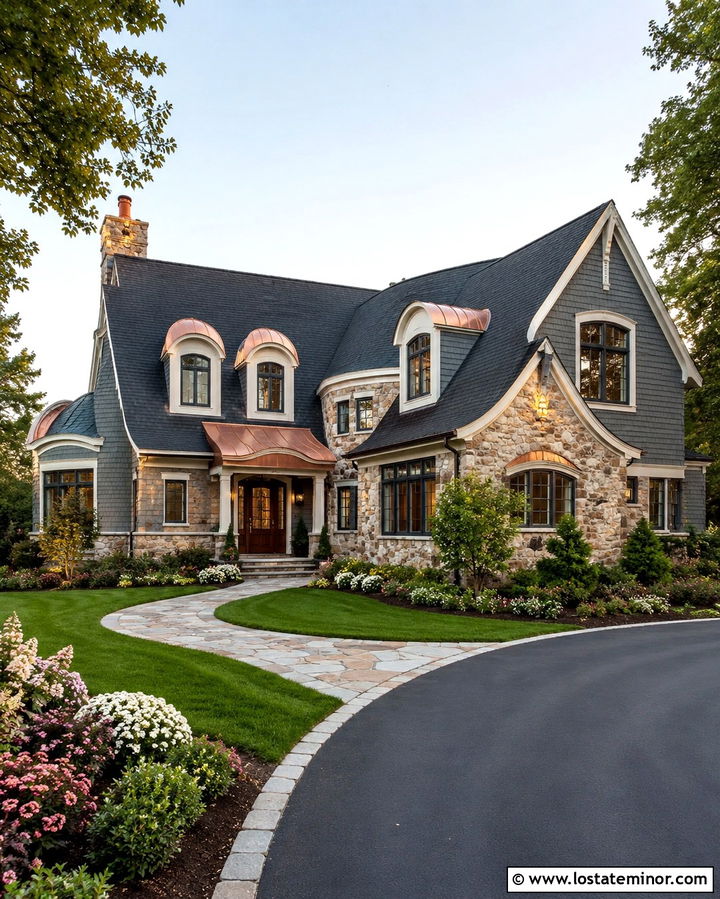
Fresh copper brings warmth and craftsmanship to a slate grey exterior, while aged copper develops softer brown and green tones over time. Use copper on compact curved or shed dormer roofs, then repeat it over the front entry for a coordinated appearance. Cream trim works better than stark white because it complements the metal’s warmth. Select a dark stained wood door, bronze window frames, and natural fieldstone to support the sophisticated palette. The main roof should remain charcoal or deep brown so the copper dormers stand out clearly. This complete look is especially attractive on European-inspired cottages and substantial traditional homes. Keep other accents restrained; ornate shutters or brightly colored doors could compete with the naturally eye-catching metal along the roofline.
15. Slate Grey House With Eyebrow Dormers
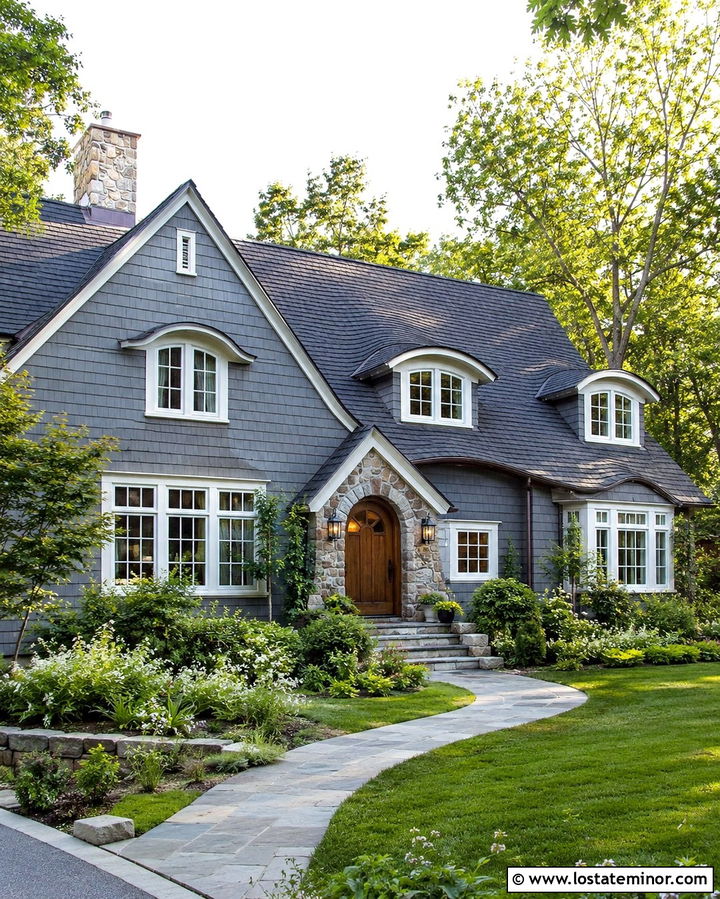
Eyebrow dormers bring gentle curves to an exterior dominated by straight siding and steep roof planes. Cover the house in slate grey shingles or narrow lap siding, then frame the low curved dormer windows with soft white trim. Because eyebrow dormers flow directly from the roof, avoid heavy contrasting siding around them. A dark charcoal shingle roof will emphasize their graceful shape through subtle shadow rather than bold color blocking. Use a rounded front door or arched porch opening to repeat the curve at ground level. Natural stone steps and muted wood details can keep the design from feeling overly formal. This scheme works beautifully for English cottages, shingle-style homes, and storybook-inspired houses surrounded by layered, informal landscaping.
16. Slate Grey House With Hipped Dormers
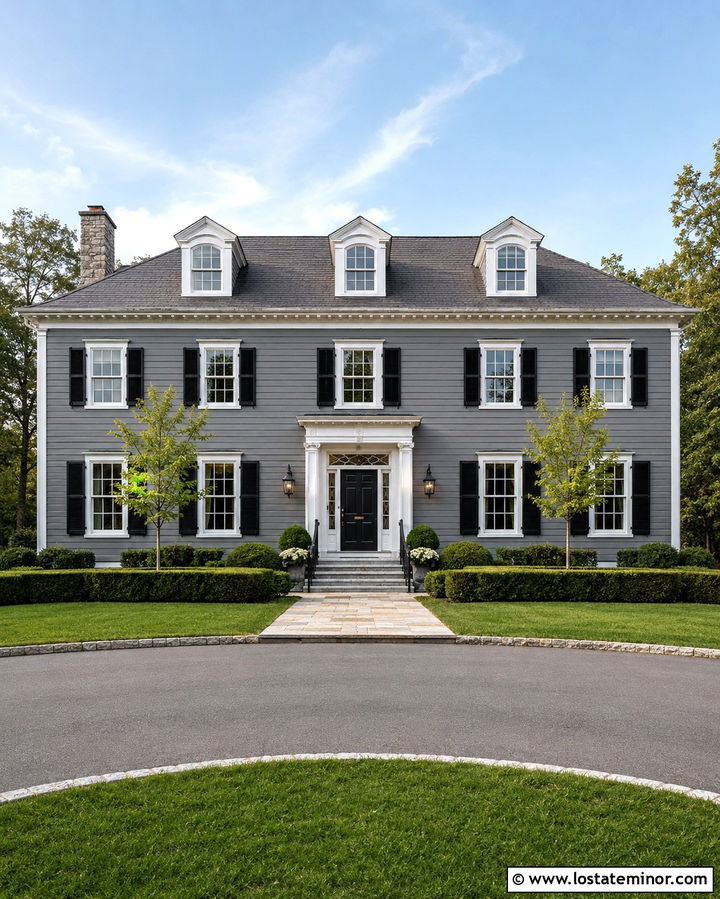
Hipped dormers have roof slopes on three sides, giving a slate grey exterior a tailored and substantial appearance. They are a smart match for Georgian, French country, and traditional suburban homes with broad hipped roofs. Cover the dormer walls in the same slate grey as the main siding, then use white trim to define the windows and compact cornices. Dark charcoal roofing should continue over each dormer for consistency. A black front door, black shutters, and symmetrical lanterns can reinforce the formal architecture. Introduce warm brick or light limestone at the steps to keep the scheme approachable. Dormer windows should relate to the size and grid pattern of the windows below, helping the complete facade look carefully planned and structurally balanced.
17. Slate Grey House With Shed Dormers
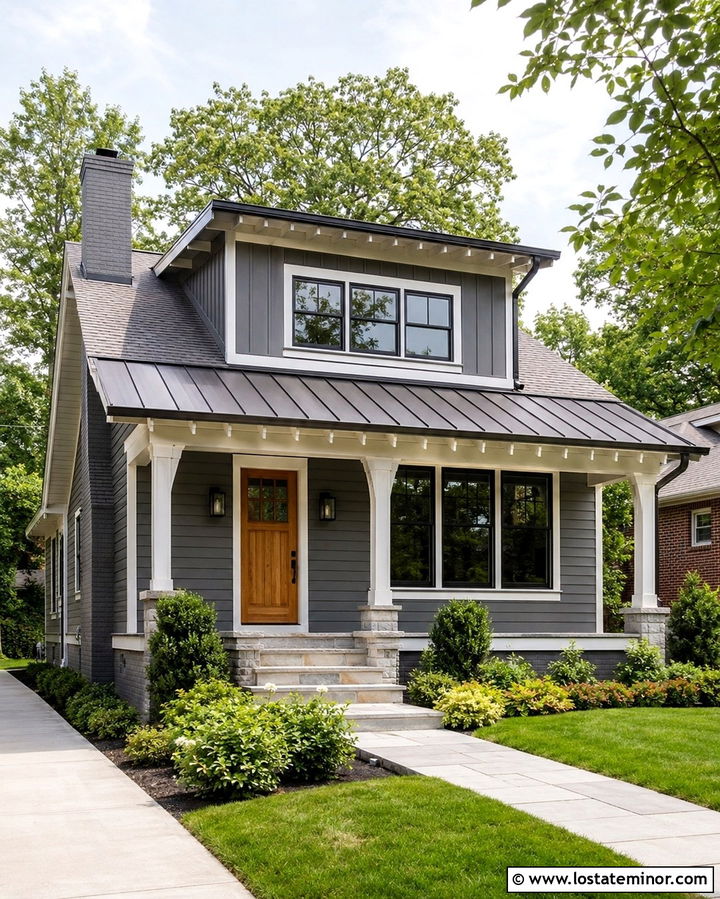
A wide shed dormer can make a slate grey home feel more spacious and contemporary. Its long horizontal roof is particularly useful on Craftsman, farmhouse, bungalow, and renovated ranch designs. Cover the dormer face in matching slate grey siding, but switch the siding direction to create texture. For example, combine horizontal lap siding below with vertical board-and-batten across the dormer. Use white window trim, a charcoal metal roof, and black window frames for clean definition. A wood entry door and light stone porch keep the palette from becoming too cool. The dormer should sit comfortably within the main roof instead of stretching to both edges. Thoughtful scale helps it appear integrated rather than added as an oversized upper box.
18. Slate Grey House With Wall Dormers
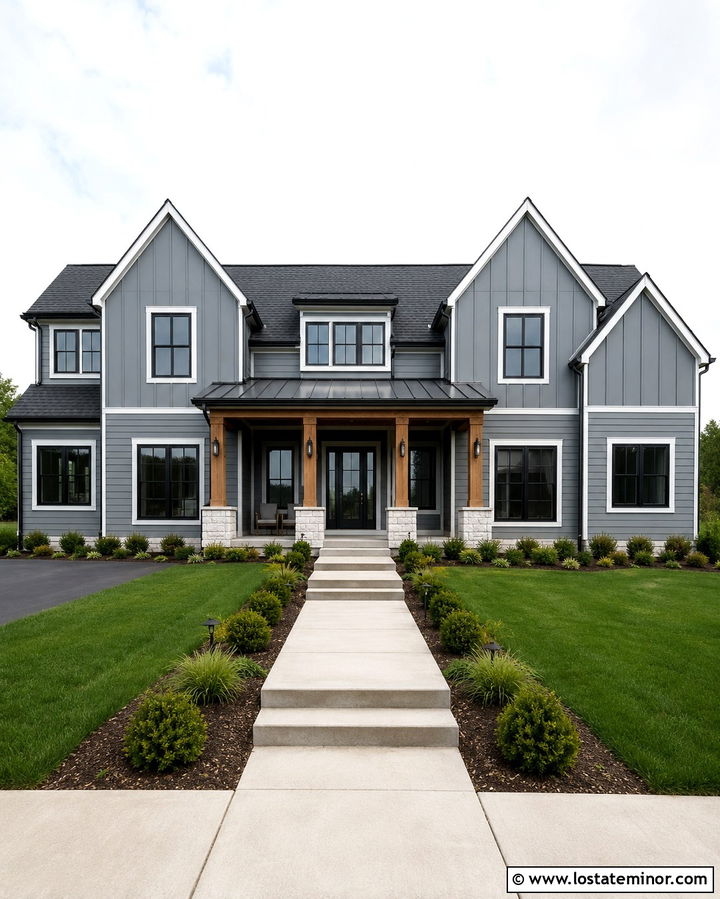
Wall dormers rise directly from the exterior wall instead of sitting entirely within the roof, creating a taller and more vertical facade. Emphasize that height with slate grey board-and-batten siding on the dormers and horizontal lap siding across the main level. White corner trim can outline each projection, while dark windows add a modern edge. Continue the same slate grey color across both siding profiles so the change in texture remains subtle. A charcoal roof and black gutters support the strong vertical lines. At ground level, use a covered porch with natural timber columns and pale stone piers to create balance. This complete scheme suits modern farmhouses and transitional homes that need more upper-level presence without an overly elaborate roofline.
19. Slate Grey House With Full Front Porch
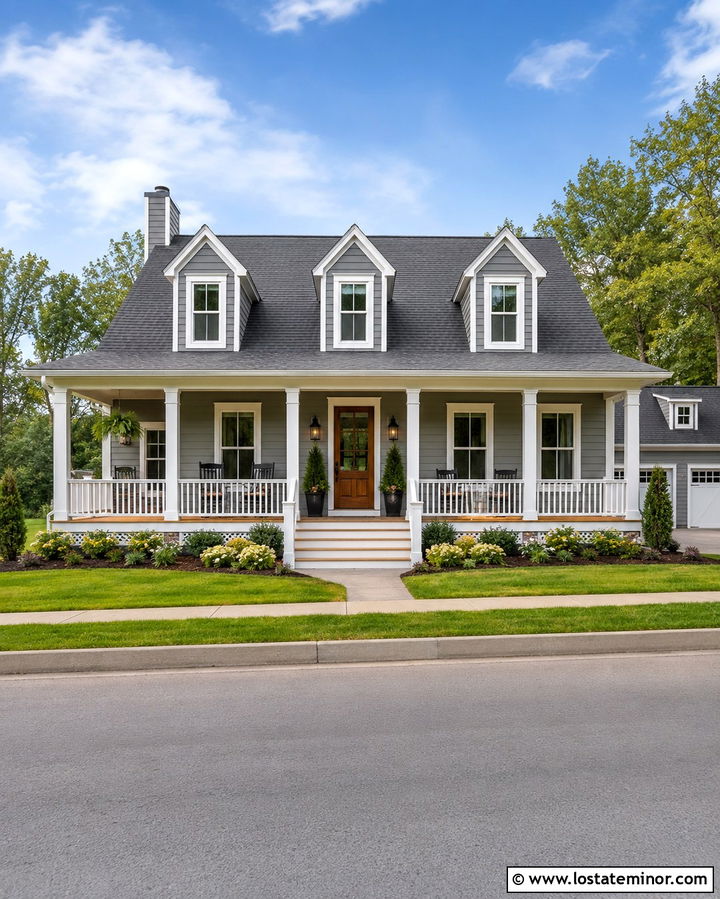
A full front porch gives slate grey siding a welcoming, lived-in quality and visually supports a row of dormers above. Paint the porch columns, railings, fascia, and dormer trim in warm white to create one continuous architectural frame. Keep the porch floor medium brown or natural cedar, then repeat that warmth on the front door. A charcoal roof adds depth, while small black accents on lanterns and window sashes sharpen the softer palette. Three evenly spaced gabled dormers can align with porch openings or first-floor windows for an orderly elevation. Wide steps, simple rocking chairs, and layered foundation beds complete the setting. The finished exterior feels balanced because the porch anchors the long horizontal facade while the dormers draw the eye upward.
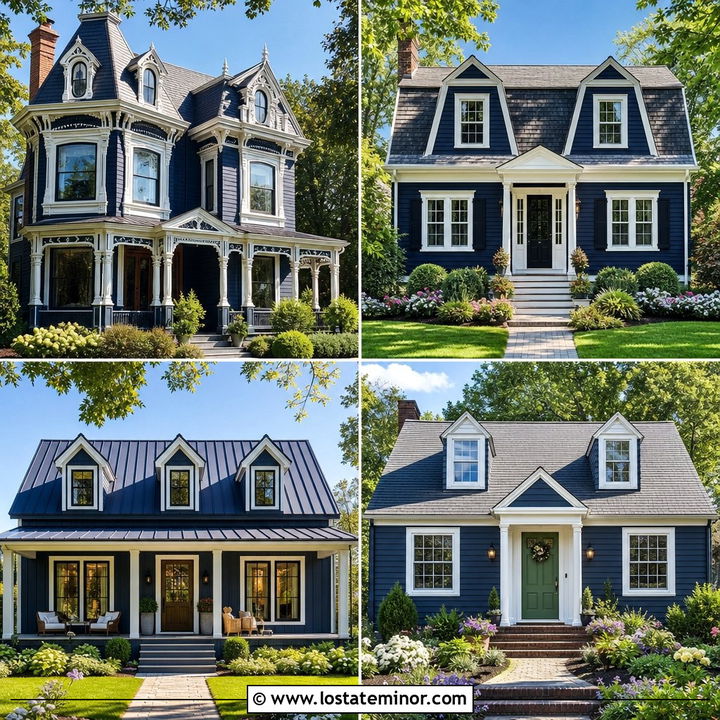
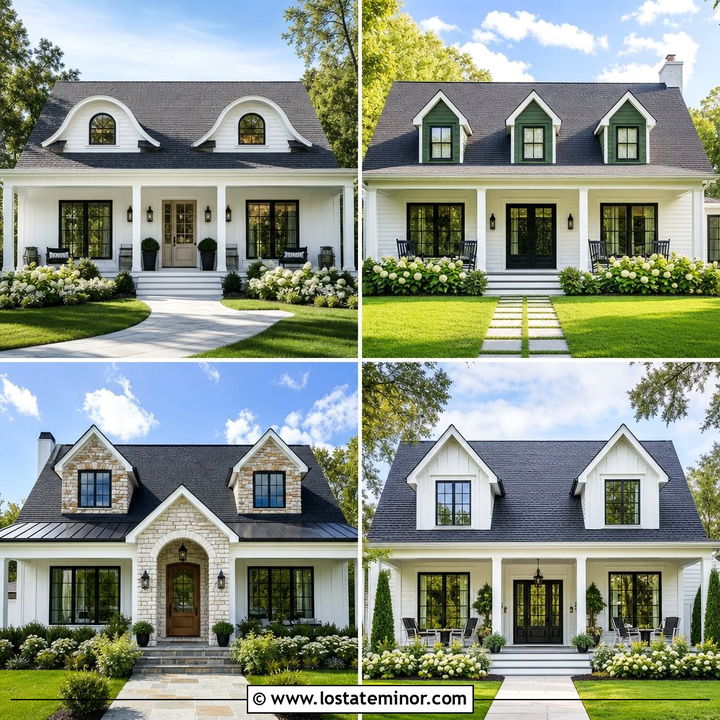
20. Slate Grey House With Black Garage Doors
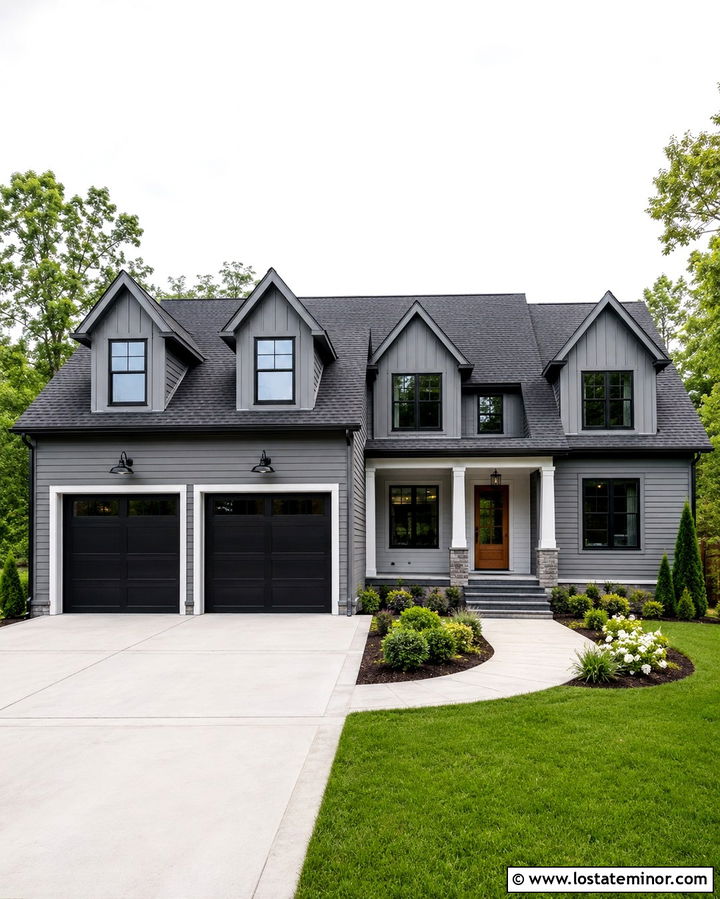
Black garage doors can look striking beside slate grey siding when their color is repeated elsewhere. Use black on the window frames, gutters, porch lights, and dormer roof accents to distribute the visual weight. Choose doors with simple rectangular panels or narrow glass inserts rather than elaborate decorative hardware. White or light grey trim around the garage prevents the dark doors from appearing like one large empty area. Above, slate grey gabled dormers with white window casings maintain a brighter roofline. A wood front door adds warmth and distinguishes the entrance from the garage. This palette works especially well on broad suburban homes, where the darker garage doors visually recede and allow the entry, landscaping, and dormer windows to become more noticeable.
21. Slate Grey House With White Garage Doors
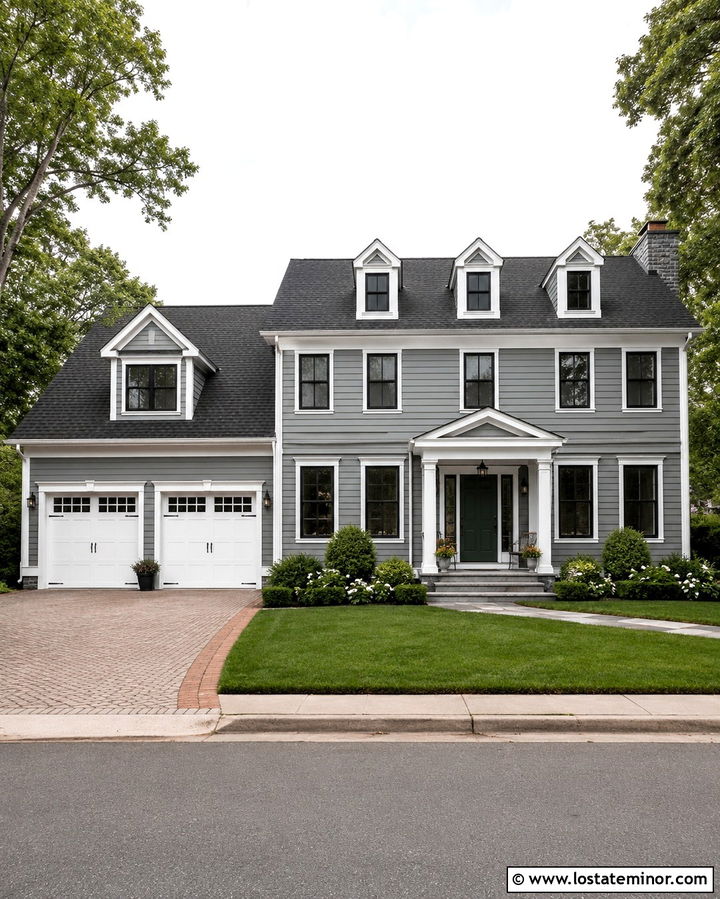
White garage doors create a lighter, more traditional look on a slate grey house, particularly when they match the dormer trim and porch columns. Select a soft white with a slight warm undertone so the contrast does not become too sharp. Carry slate grey siding around the garage walls and across the dormer faces to establish continuity. Black hardware, exterior lights, and window sashes can add definition in small amounts. A navy or dark green front door gives the entrance its own identity. For a large two-car garage, carriage-inspired doors with upper windows help break up the white surface. Complete the scheme with a medium charcoal roof, brick driveway edging, and low shrubs that keep the wide facade neat but welcoming.
22. Slate Grey House With Wood Garage Doors
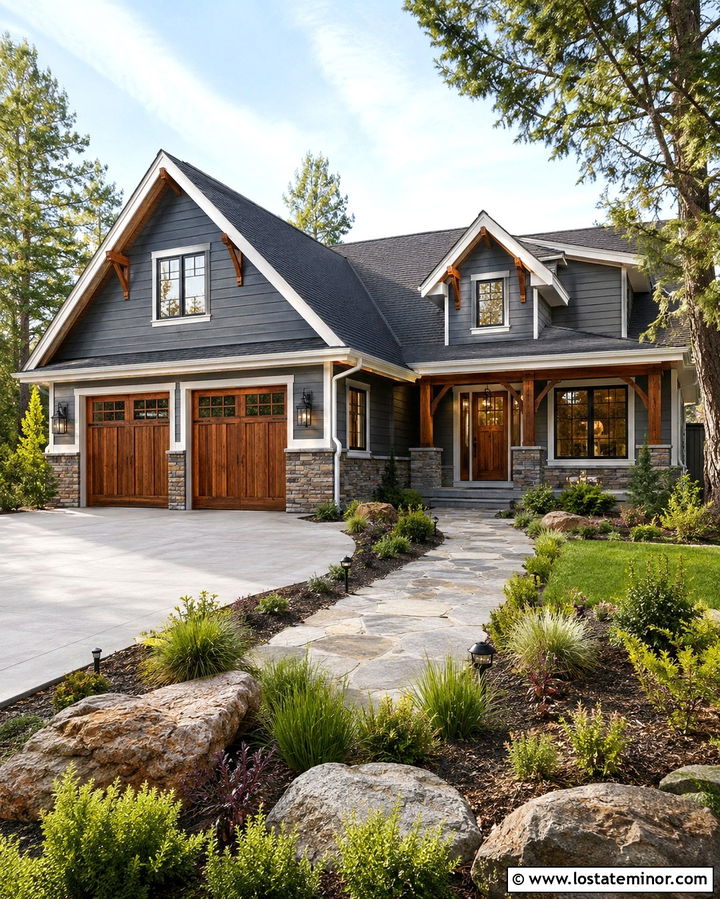
Natural wood garage doors can transform a cool slate grey exterior by adding warmth across a large portion of the facade. Choose medium-toned cedar or walnut rather than orange wood, and repeat the finish on the front door, dormer brackets, or porch beams. Keep the trim creamy white to create a gentle transition between the grey siding and brown accents. Charcoal roofing and dark bronze windows support the richer palette without competing with the wood grain. Slate grey dormers should remain simple, with restrained white casings and no additional shutters. This look is well suited to Craftsman, mountain modern, and transitional homes. Use stone containing both grey and brown tones around the garage base to connect every material into one intentional exterior scheme.
23. Slate Grey House With Charcoal Trim
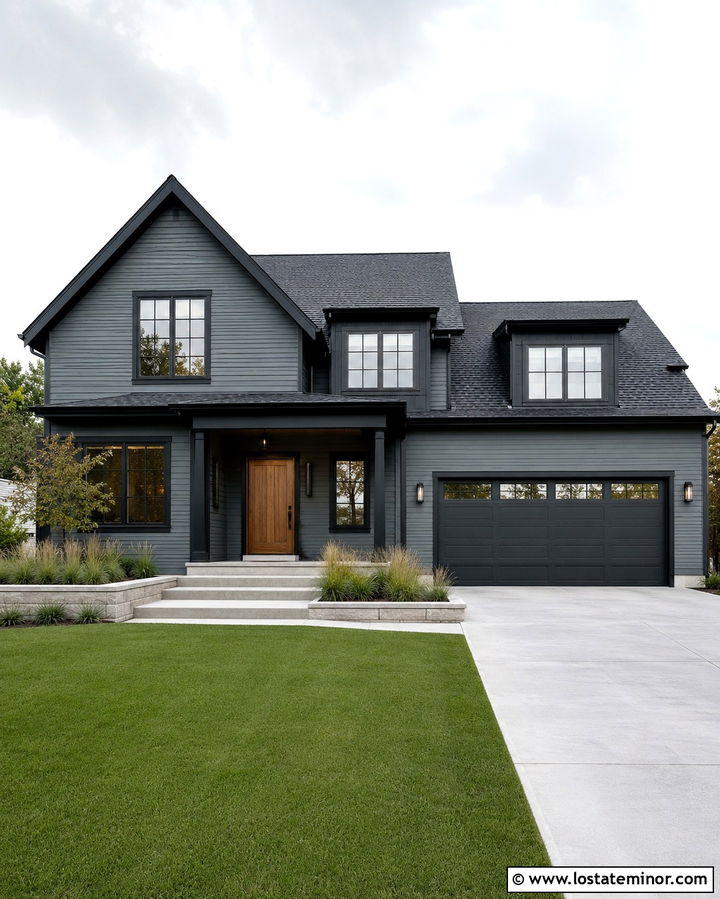
A low-contrast palette can make a slate grey house look modern and substantial. Instead of outlining every feature in white, use deep charcoal on the trim, dormer windows, fascia, and gutters. The result is quieter, allowing the different roof shapes and siding textures to create depth. Select a roof that is nearly black so the charcoal trim acts as a transition between shingles and siding. A warm wood front door becomes an important focal point against the layered greys. Light concrete steps and pale stone landscaping walls can brighten the lower facade. This scheme works best on contemporary, Scandinavian-inspired, and updated split-level homes with large windows. Keep plantings simple and architectural to support the exterior’s clean, understated character.
24. Slate Grey House With Cream Trim
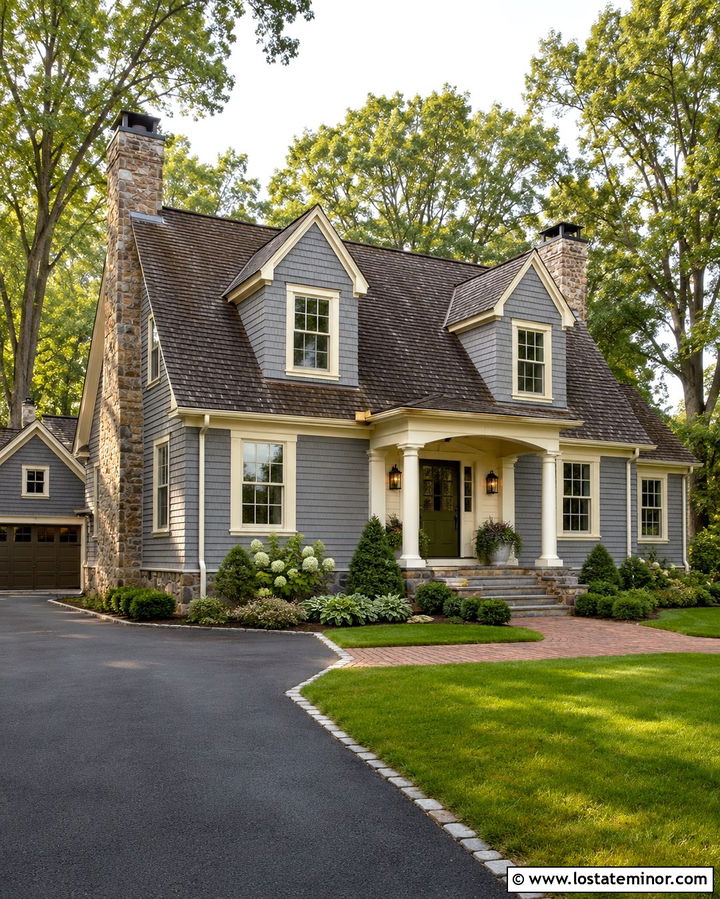
Cream trim softens slate grey siding and gives dormers a warm, established appearance. It is an appealing choice for traditional homes surrounded by mature landscaping or properties with tan stone and brown roofing. Use the cream consistently on window casings, dormer rakes, porch columns, fascia, and garage trim. A dark olive or walnut front door will reinforce the earthy direction without making the facade feel overly colorful. Choose weathered charcoal-brown shingles instead of a blue-black roof. The dormers can feature slate grey shingle siding for extra texture while still matching the main exterior. Bronze lanterns and copper-toned gutters are compatible finishing details. Add warm brick paths and layered green plantings to create a complete, comfortable curb-appeal design.
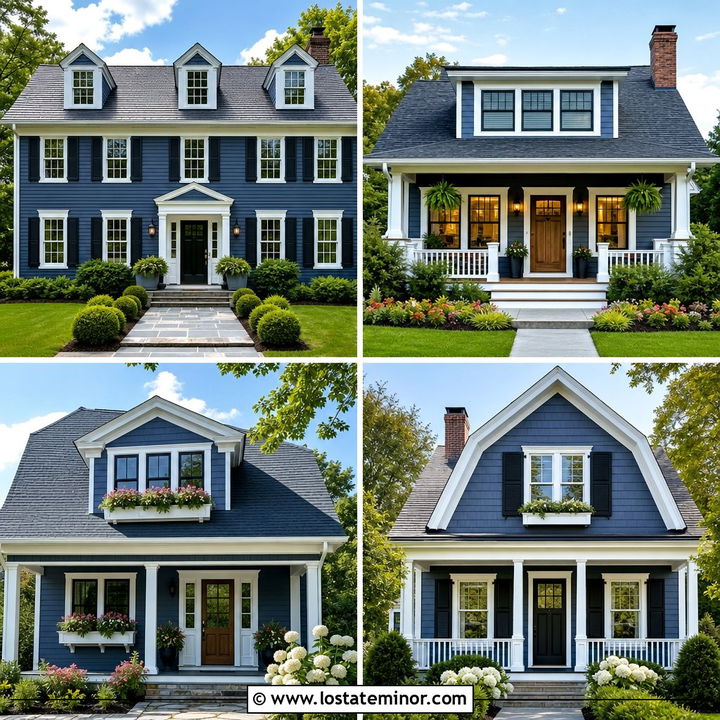
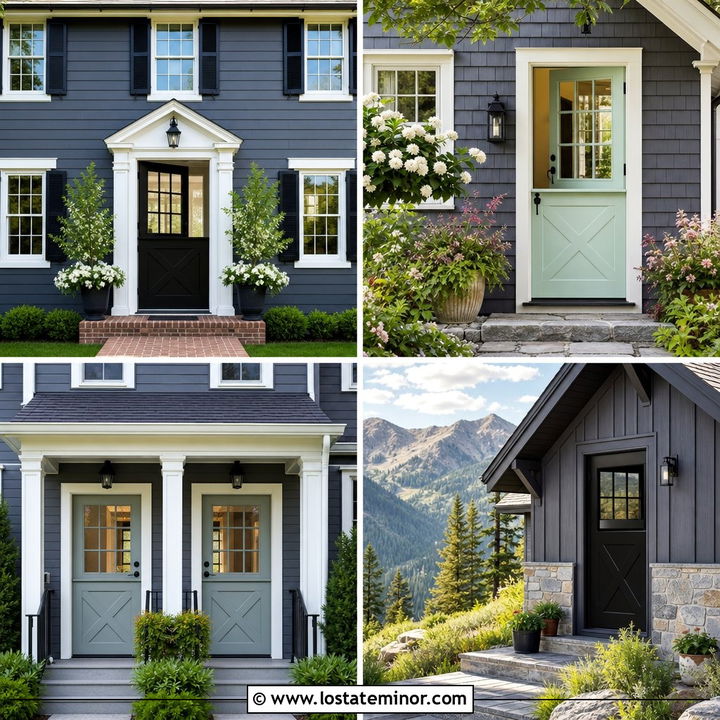
25. Monochromatic Slate Grey House With Dormers
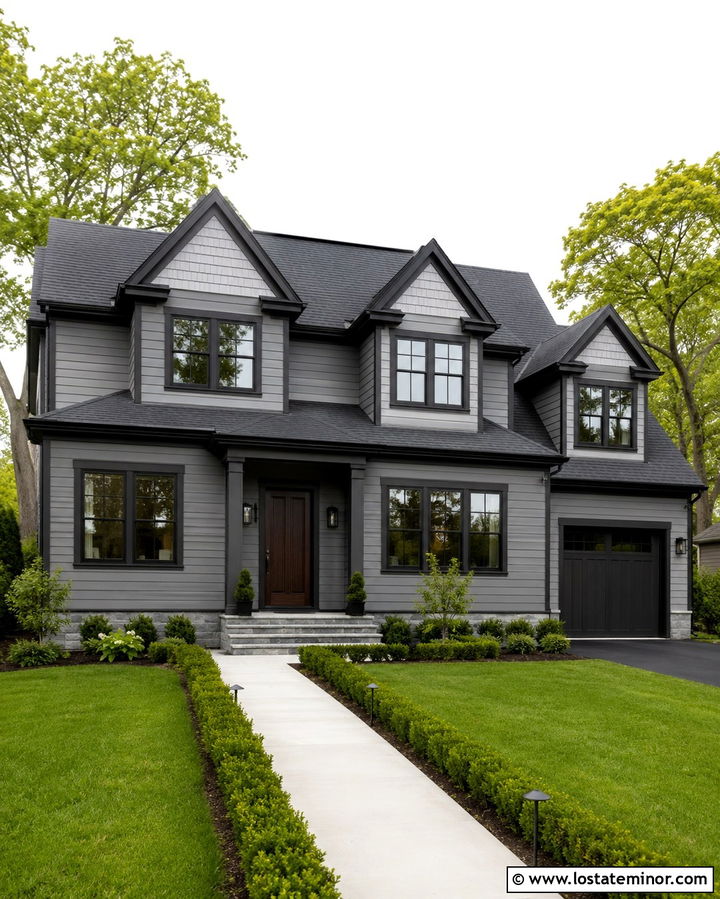
A monochromatic exterior uses several depths of grey to define the architecture without relying on bright contrast. Apply medium slate grey to the main siding, a lighter grey to the dormer faces, and deep charcoal to the trim, roof, and windows. Keep the front door black or stained dark brown to maintain the restrained palette. Mixing siding profiles is important because texture prevents the closely related colors from appearing flat. Horizontal lap siding, dormer shingles, and a stone foundation can each reflect light differently. This approach suits contemporary Colonials, modern cottages, and urban infill homes. Use a pale concrete walkway and fresh green landscaping to brighten the surroundings. The final house feels layered and intentional rather than simply painted one uniform shade.
26. Coastal Slate Grey House With Dormers
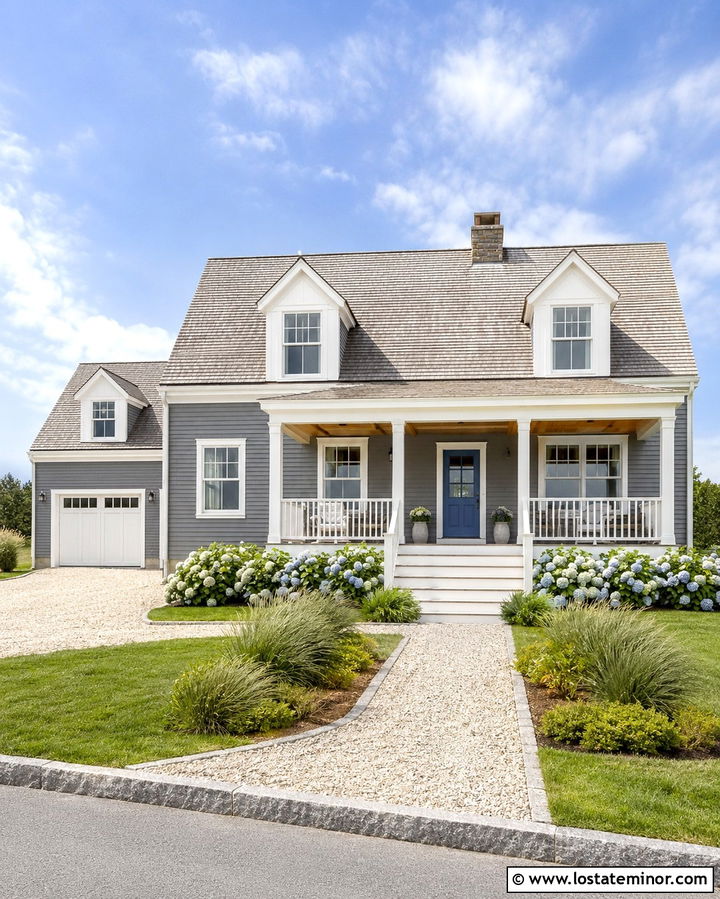
Slate grey can feel coastal when it is combined with bright white trim, pale blue accents, and weathered natural materials. Use white on the dormers, porch railings, window casings, and corner boards to create a fresh outline. A dusty blue front door offers color while remaining soft enough for the grey siding. Choose a weathered grey roof that resembles cedar shingles, then add small natural wood details on the porch ceiling or steps. This complete palette works particularly well on Cape Cod, shingle-style, and coastal cottage homes. Avoid excessive nautical decorations; the color scheme and architecture can establish the mood on their own. Beach grasses, hydrangeas, gravel paths, and an open lawn create a relaxed setting around the dormer-lined roof.
27. Slate Grey Tudor House With Dormers
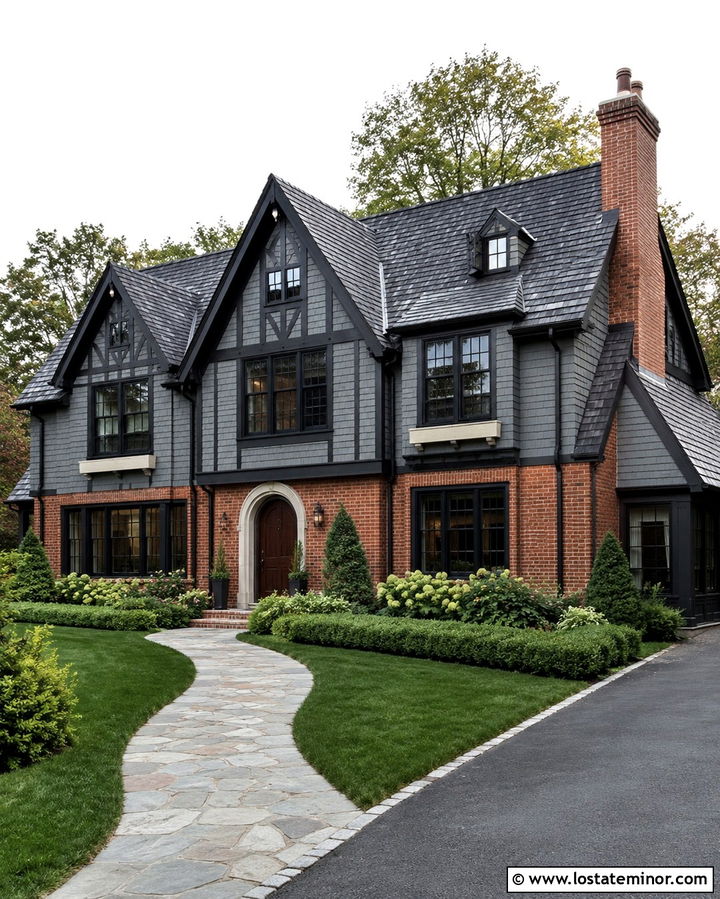
A Tudor exterior becomes more contemporary when slate grey replaces traditional beige stucco between the dark structural details. Use deep charcoal or near-black trim on the steep gables, casement windows, dormers, and decorative half-timbering. Warm red brick around the lower walls and chimney prevents the cool palette from becoming severe. An arched walnut front door reinforces the historic character and introduces a strong focal point. Keep the roof dark and textural, with steeply pitched gabled dormers that suit the dramatic silhouette. Cream window accents can be included sparingly to improve visibility. Curving stone paths, layered hedges, and mature trees complement the architecture. The result respects Tudor proportions while giving the full exterior a cleaner and more current color direction.
28. Slate Grey Victorian House With Dormers
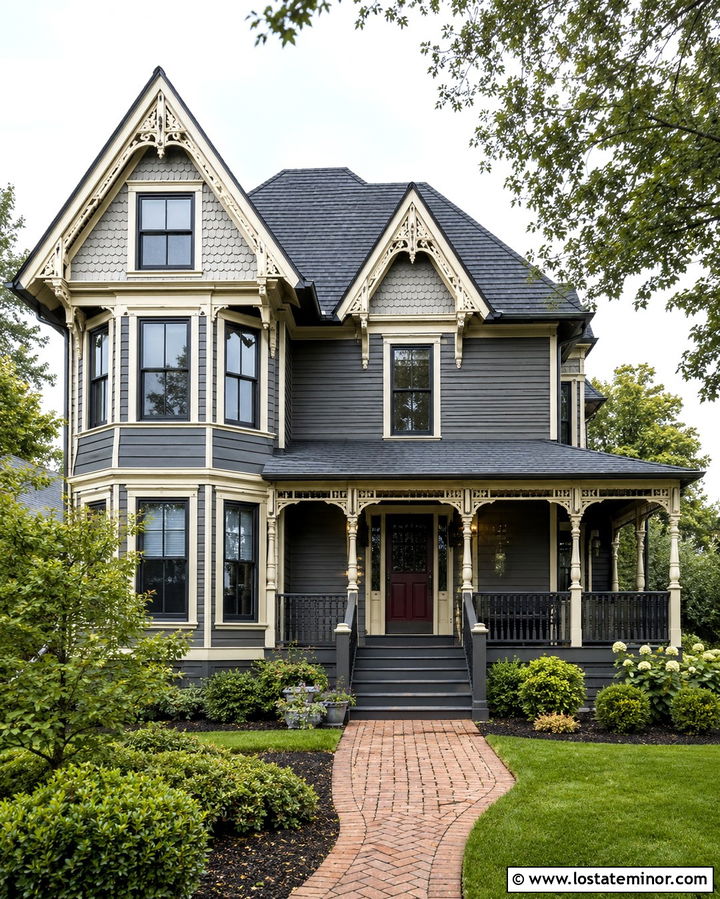
Victorian architecture offers many opportunities to layer slate grey with supporting colors. Use slate grey as the dominant body color, soft ivory on the trim, and deep charcoal on window sashes, porch railings, and dormer details. A muted plum or burgundy front door adds period-friendly warmth without overwhelming the facade. Highlight decorative shingles inside dormer gables with a slightly lighter slate grey rather than an unrelated accent color. This keeps ornate features visible but controlled. A charcoal roof, turned porch columns, and restrained gingerbread trim complete the palette. For a balanced result, limit the exterior to three or four coordinated colors. Traditional foundation plantings and a curved brick walkway can frame the detailed house while allowing its towers, dormers, and porch to remain dominant.
29. Slate Grey Ranch House With False Dormers
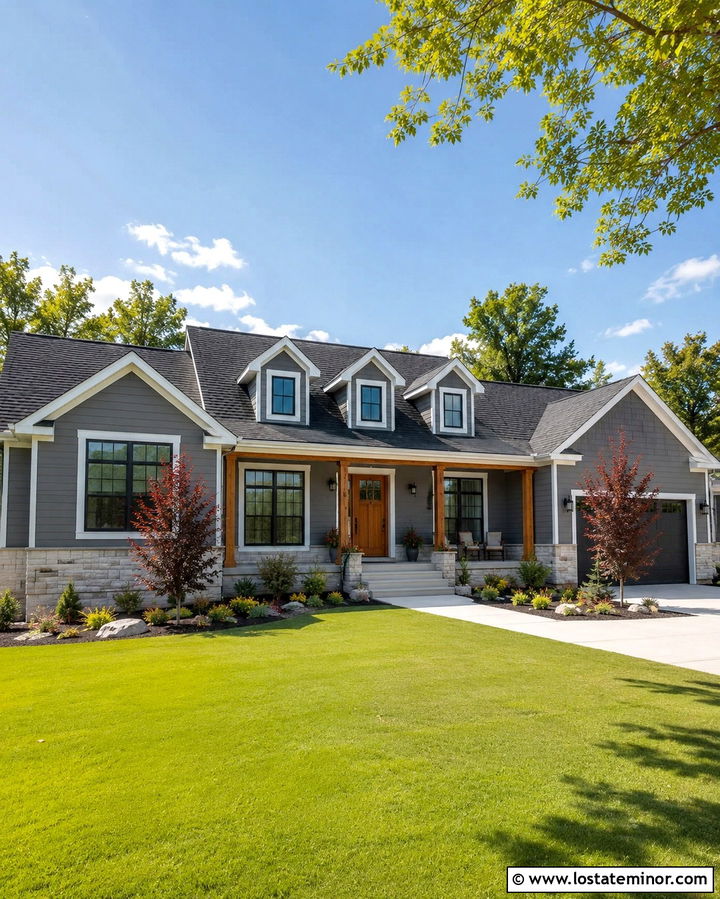
False dormers can give a long ranch house more height and curb appeal even when they do not add usable interior space. Place two or three compact gabled dormers over the central portion of the roof, ensuring they relate to the windows and entrance below. Cover the ranch and dormer faces in matching slate grey siding, then use white trim to sharpen their outlines. A charcoal roof keeps the new features connected to the existing structure. Add a natural wood front door and wood porch posts to warm the broad facade. Light stone around the foundation can provide texture without making the low house look busy. Simple ornamental trees and layered planting beds further soften the horizontal lines of the updated ranch exterior.
30. Slate Grey Split-Level With A Dormer Addition
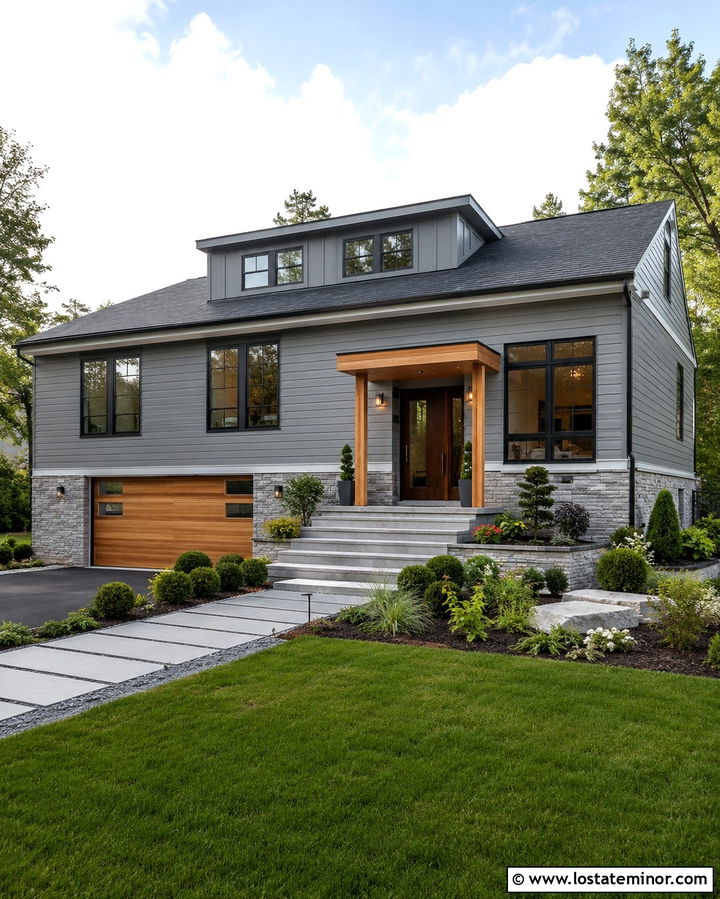
A dormer addition can help a split-level home feel more balanced by increasing the presence of its shorter upper section. A broad shed dormer often works better than several tiny gables because it follows the house’s horizontal proportions. Cover both levels in slate grey siding, using vertical panels on the dormer and horizontal lap siding below. White trim creates clean separation, while black windows and a charcoal roof modernize the familiar silhouette. Add warm wood to the front door, garage door, or entry canopy so the cool palette remains inviting. Light grey stone around the lower level visually anchors the raised foundation. Finish with broad steps, a straight walkway, and structured landscaping that emphasizes the renovated entrance rather than the home’s uneven floor levels.
Conclusion:
The best slate grey exterior is more than a single siding color. It combines dormer shape, roof tone, trim, masonry, doors, and landscaping into one balanced view. White trim can create classic definition, while charcoal accents deliver a cleaner contemporary finish. Cedar, brick, stone, and copper introduce warmth that keeps slate grey from feeling cold. Dormer proportions also matter, whether you choose small gables, a broad shed design, gentle eyebrow windows, or decorative false dormers. Always compare exterior samples beside the existing roof and masonry under different daylight conditions. These **30 Slate Grey House Design With Dormers Ideas** provide a practical starting point for creating distinctive, coordinated, and welcoming curb appeal.

Related posts: