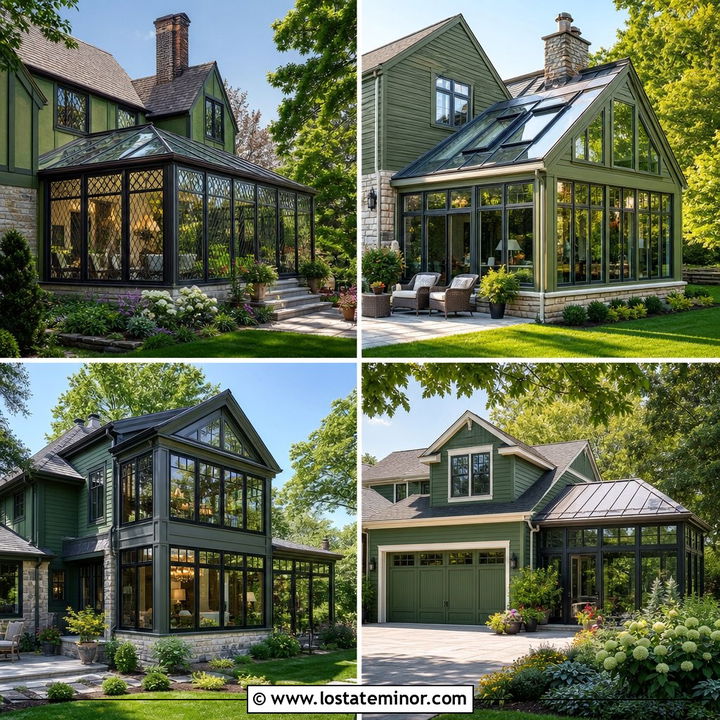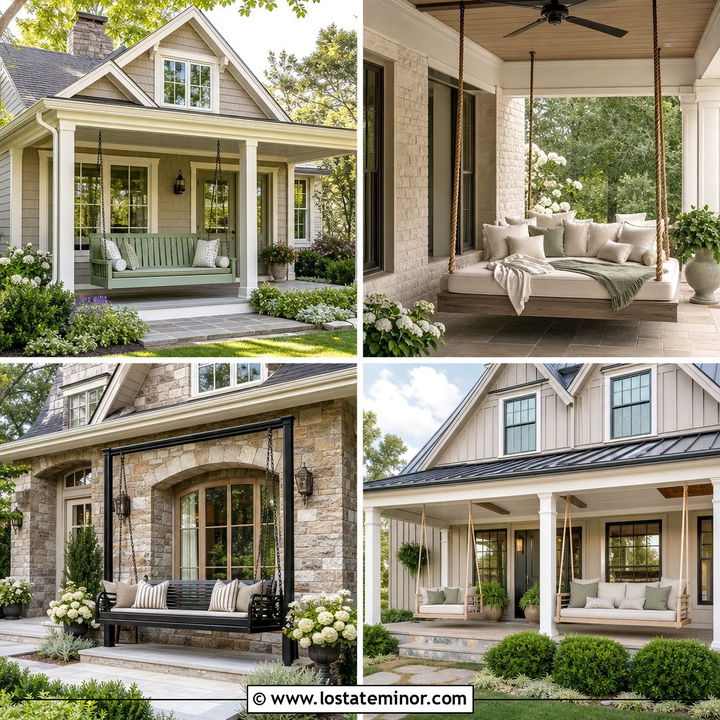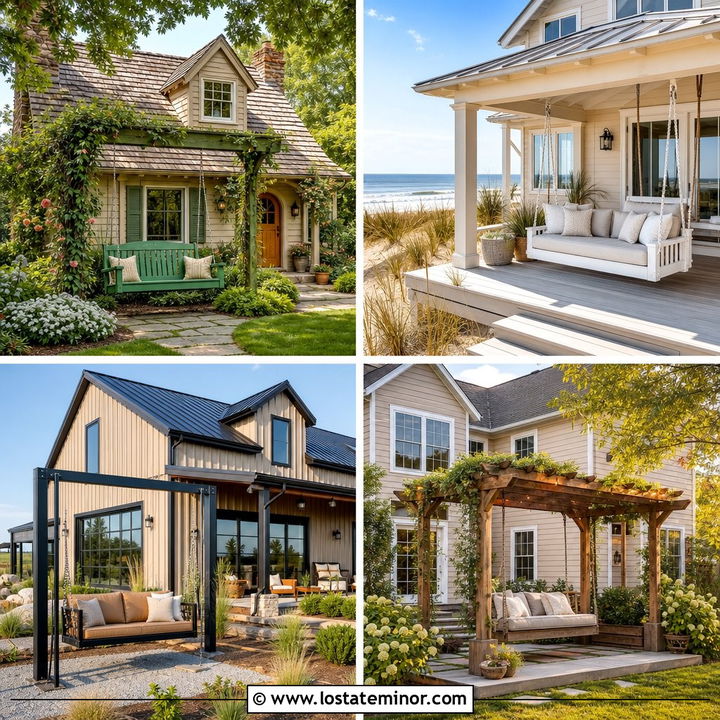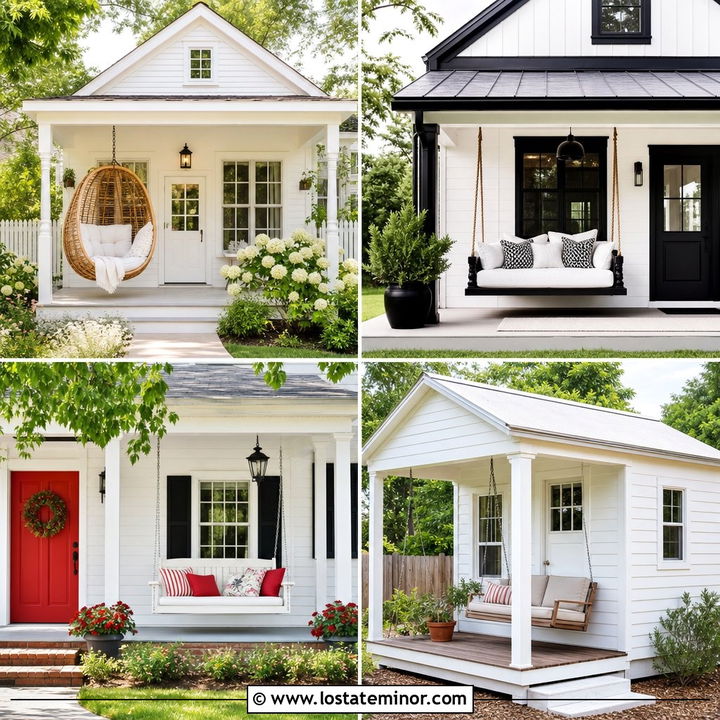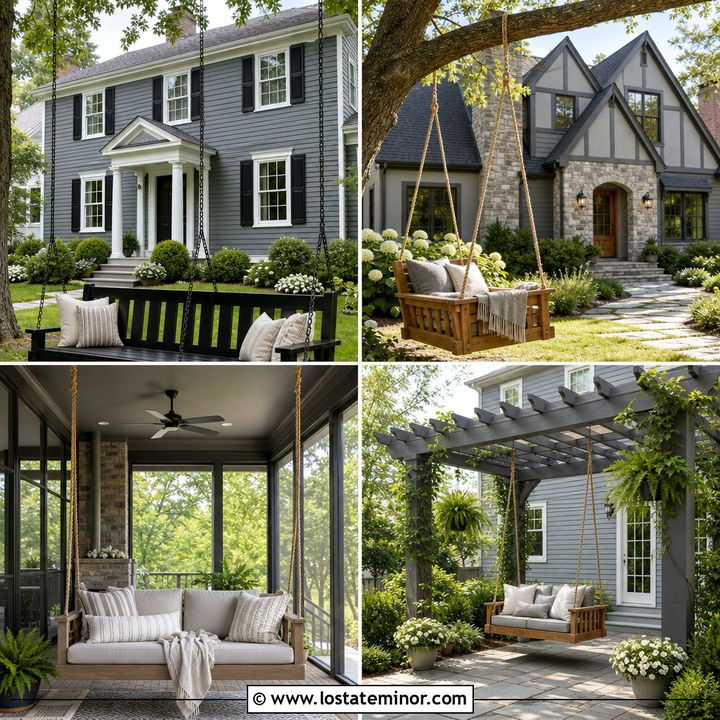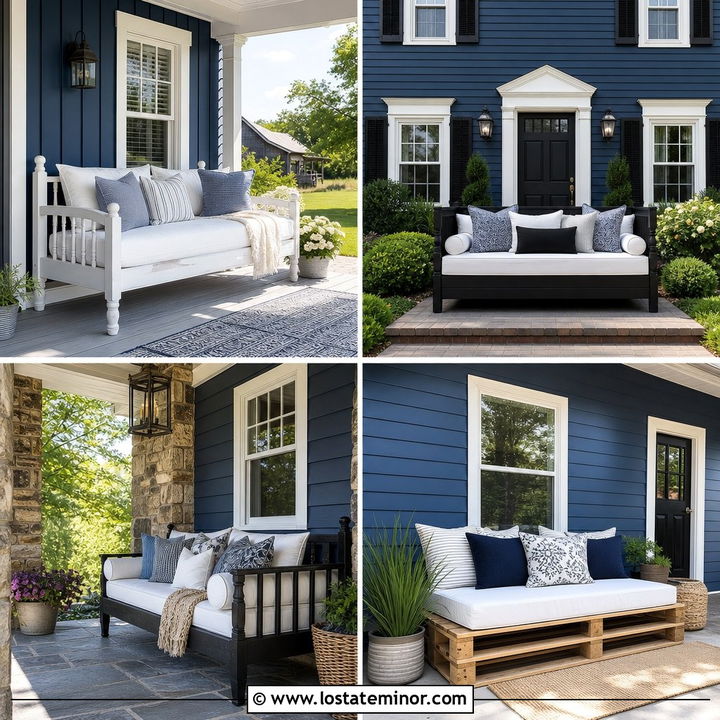
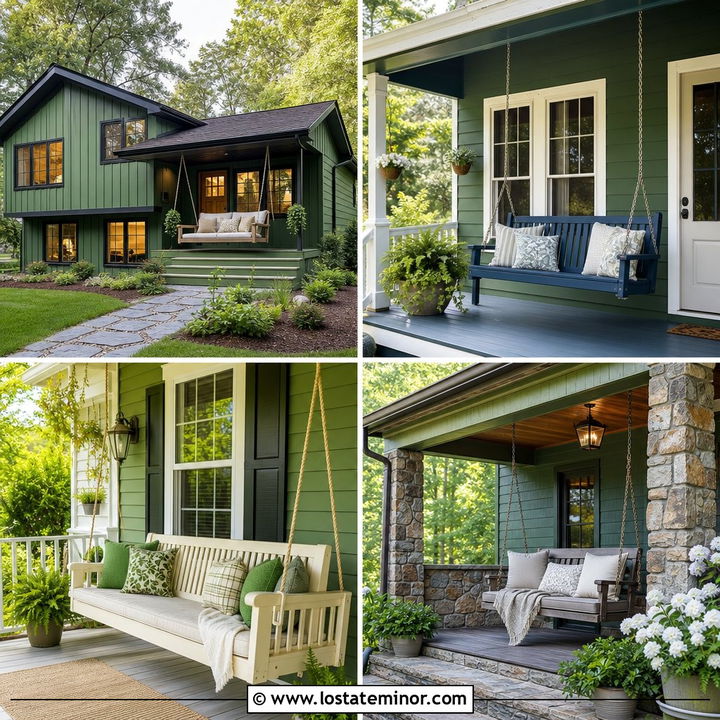
A sage green exterior brings a calm, natural look to almost any home, while a well-placed swing makes the facade feel more welcoming and lived-in. The best 30 Sage Green House Design With Swing Ideas combine siding, trim, roofing, doors, masonry, landscaping, and outdoor seating as one complete curb-appeal scheme. Sage can appear soft and silvery in bright sunlight or deeper and earthier beneath a covered porch. That flexibility allows it to work with farmhouse, Craftsman, ranch, cottage, colonial, coastal, and contemporary architecture. Swings can also do more than fill an empty porch. Their color, material, and position can reinforce the entire exterior palette. Explore the following complete house looks for practical and beautiful 30 Sage Green House Design With Swing Ideas.
1. Sage Green Farmhouse With White Porch Swing
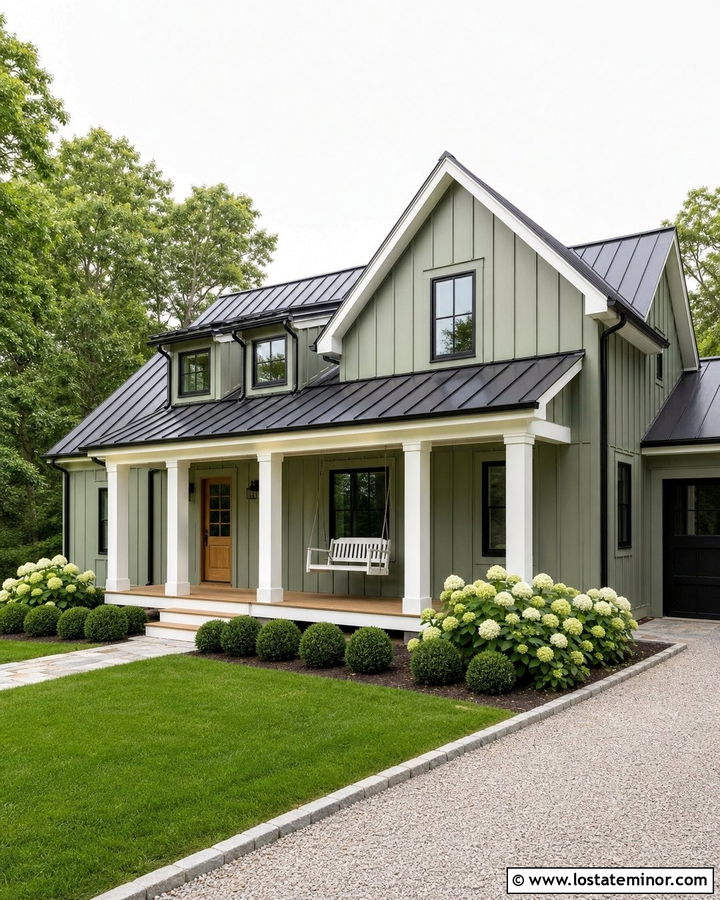
Picture a classic farmhouse covered in warm sage green board-and-batten siding, finished with crisp white trim and a charcoal metal roof. A white wooden porch swing fits naturally beneath the deep front porch, where it repeats the color of the columns, railings, and window frames. Add a stained oak front door to prevent the palette from feeling too cool. Natural wood porch flooring also creates a comfortable transition between the green siding and surrounding landscape. Black sconces and simple gutters provide small points of contrast without overpowering the house. Finish the curb appeal with hydrangeas, clipped boxwoods, and a straight stone walkway. The result feels clean, friendly, and traditional without looking outdated.
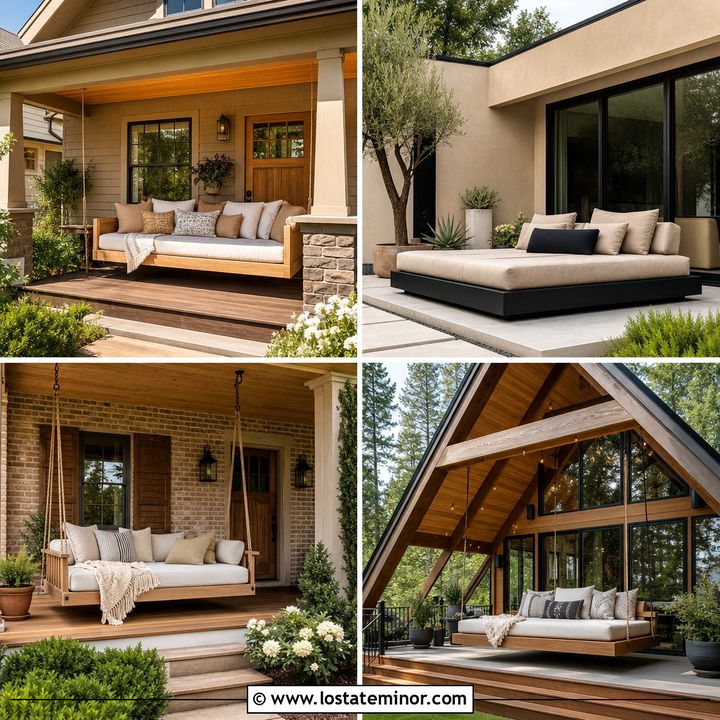
2. Sage Green Craftsman With Cedar Porch Swing
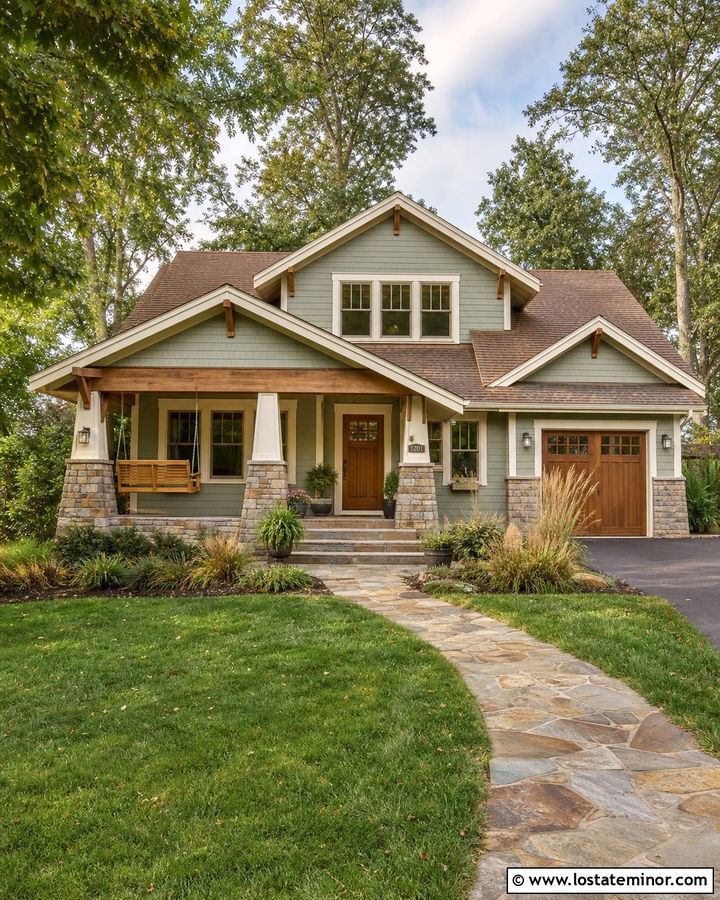
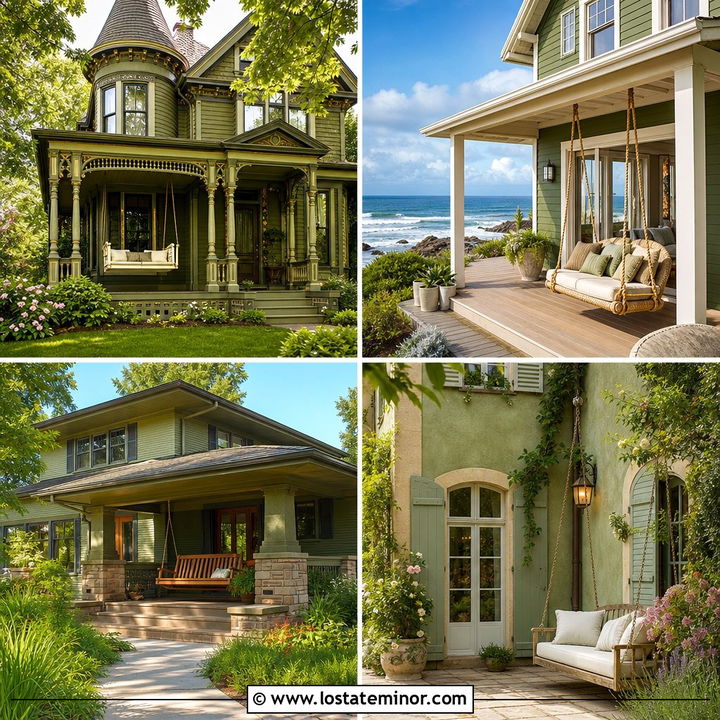
A Craftsman house looks especially grounded when muted sage green lap siding is paired with tapered stone columns and exposed cedar details. Hang a cedar porch swing between the columns so its warm grain connects visually with the front door, roof brackets, and porch ceiling. Cream trim is softer than pure white and works well with the Craftsman style’s earthy character. A medium-brown architectural shingle roof adds another natural layer without competing with the siding. Choose cushions in oatmeal, olive, or subtle stripes to keep the swing coordinated with the exterior. Low ornamental grasses, broad porch steps, and an irregular flagstone path complete the setting. This full scheme feels handcrafted, relaxed, and closely connected to the landscape.
3. Sage Green Cottage With Wicker Swing
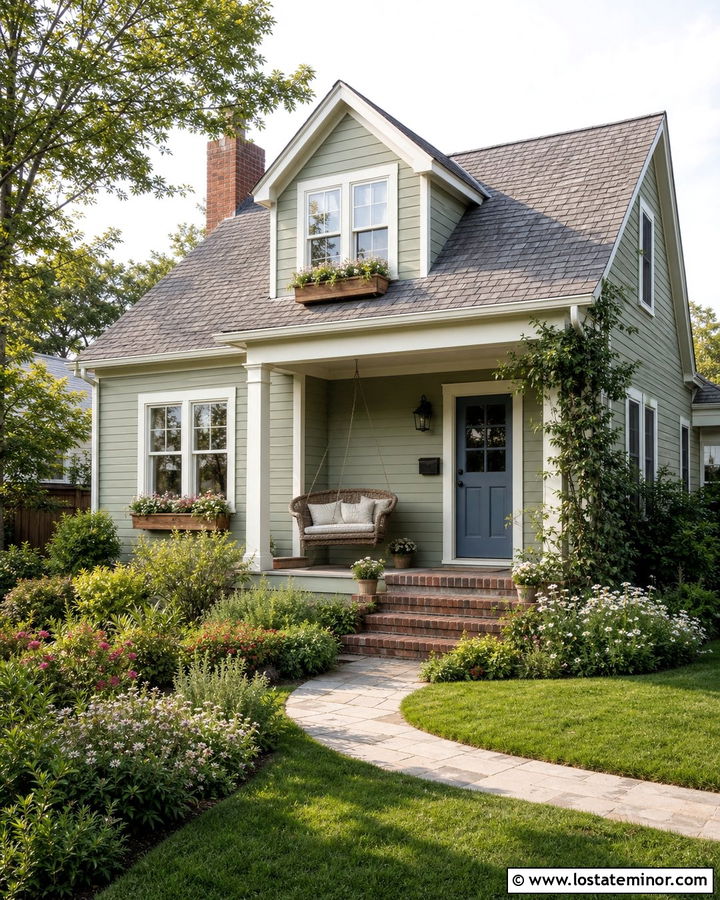
Could a small cottage feel even more inviting? Soft sage green clapboard siding, creamy trim, and a woven wicker swing create an approachable exterior with plenty of texture. Position the swing at one end of a covered porch, leaving the front door and main walkway visually open. A dusty blue door introduces a gentle accent that complements the green rather than fighting it. Cedar window boxes, cottage flowers, and climbing vines reinforce the garden-centered appearance. Use weathered gray shingles overhead and warm brick beneath the porch steps for an established look. Neutral swing cushions with tiny green or blue patterns add personality in moderation. Every part of this exterior works together to make the cottage appear comfortable, colorful, and carefully maintained.
4. Sage Green Ranch House With Arbor Swing
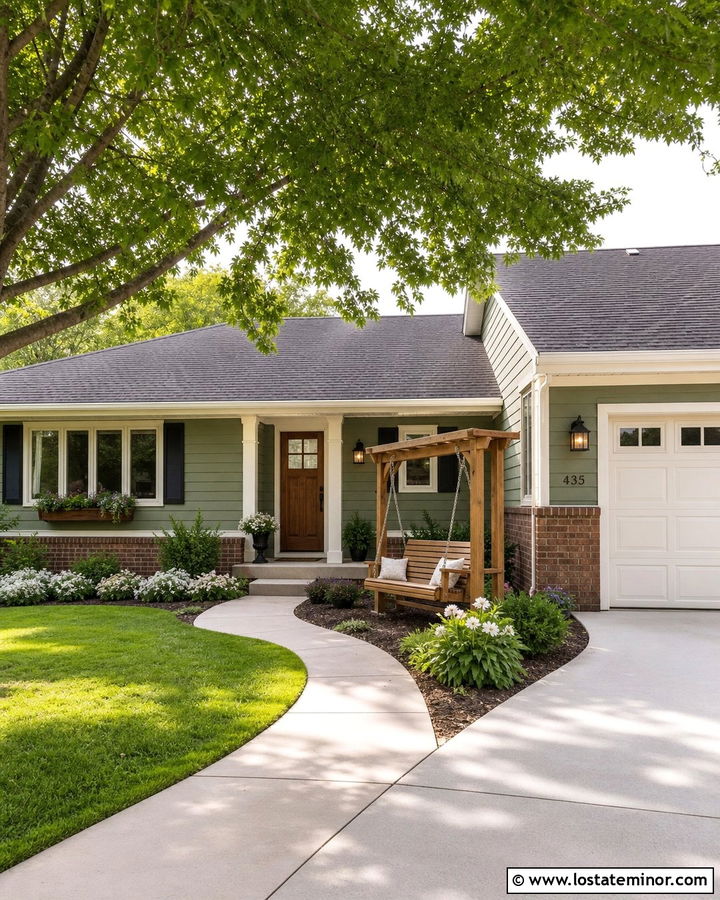
A ranch home may lack a deep front porch, but a freestanding arbor swing can create a welcoming destination near the entrance. Paint the long horizontal siding an earthy sage green and use warm white around the windows, fascia, and garage. Place a natural cedar arbor with a matching bench swing beside the front walkway, where it can frame a small garden without blocking the facade. A red-brown brick foundation adds warmth along the home’s low profile. Dark bronze lights and a walnut-stained front door connect the architecture to the wood swing. Use curved planting beds to soften the straight roofline. This arrangement gives a simple ranch greater dimension while keeping the exterior practical, balanced, and open.
5. Sage Green Colonial With Black Porch Swing
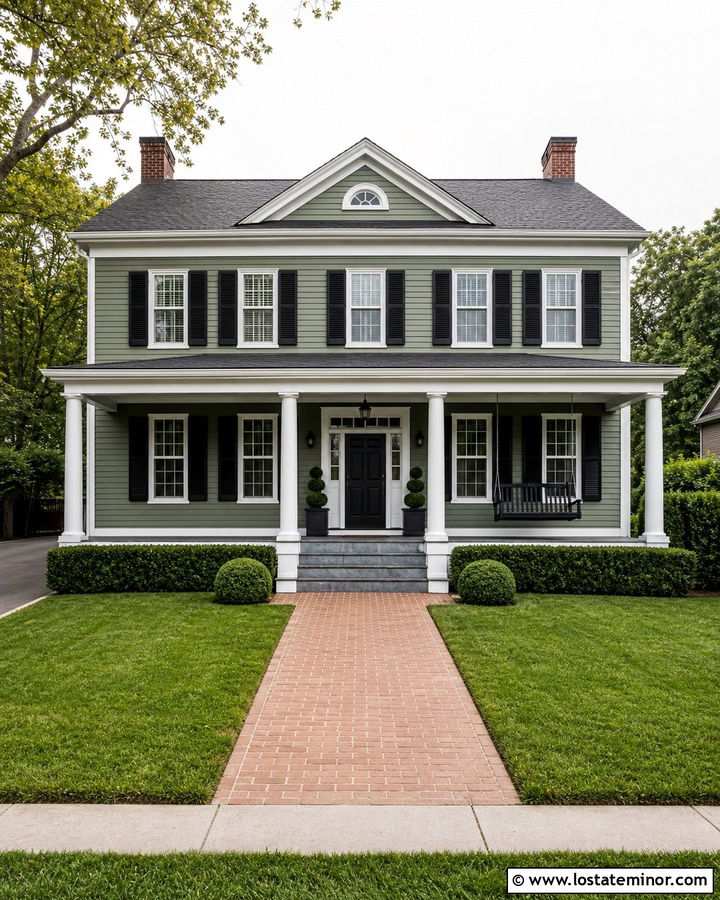
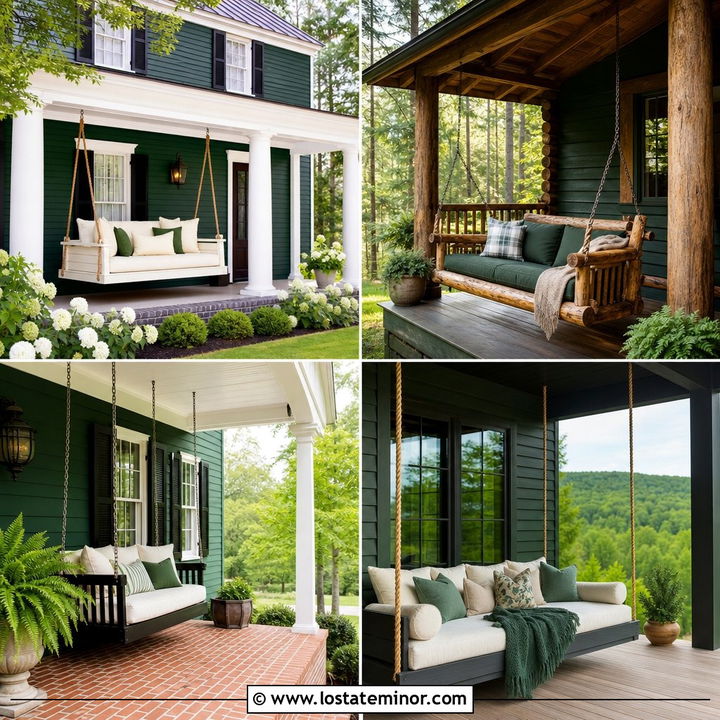
Symmetry gives a colonial house its formal character, and a black porch swing can introduce contrast without disturbing that balance. Cover the facade in medium sage green clapboard, then outline the windows, cornices, and columns with clean white paint. A glossy black front door and matching shutters create strong visual anchors. Place a simple black swing on one side of the porch and balance it with a bench or identical planter on the other. Gray slate steps and a dark charcoal roof make the scheme feel substantial. Keep the landscaping equally structured with paired topiaries, trimmed hedges, and a centered brick walkway. The swing softens the formal architecture while repeating the dark accents used across the complete exterior.
6. Sage Green Bungalow With Rope Porch Swing
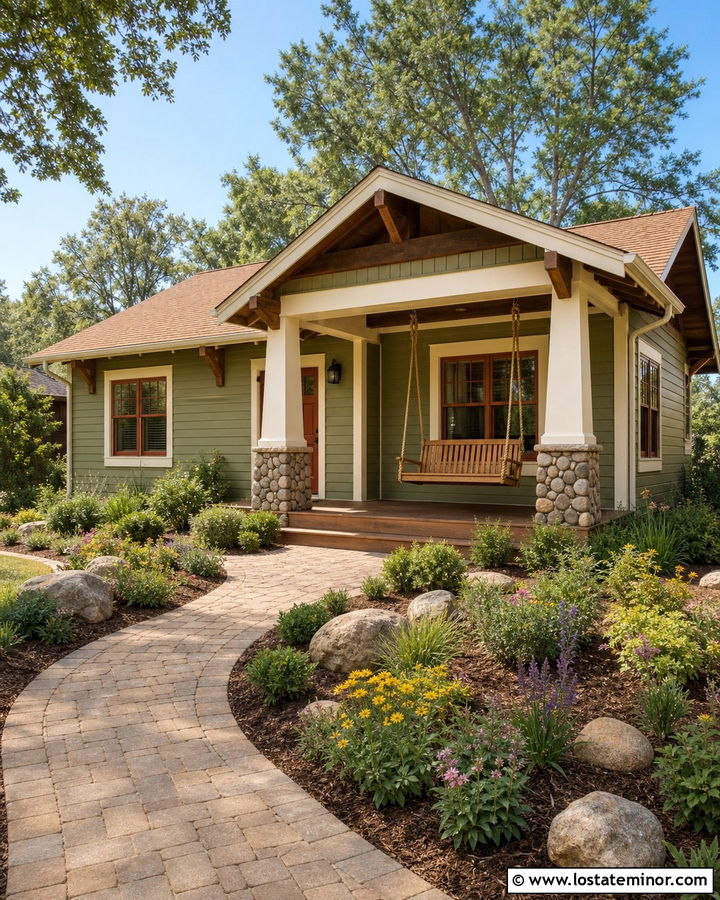
Warm afternoon light can make a sage green bungalow feel especially cozy. Use muted green lap siding with cream trim, a deep terracotta front door, and exposed wood rafters beneath a broad gabled roof. A wood porch swing suspended from thick natural rope suits the informal architecture and adds visible texture near the entrance. Choose a swing stain that matches the porch floor and chunky support beams for a connected design. River-rock column bases can bring gray, brown, and tan tones into the lower facade. Layer the porch with simple cushions in cream and rust, but avoid overcrowding it. Native shrubs, flowering perennials, and a curved paver walkway complete a relaxed bungalow exterior that feels collected rather than overly decorated.
7. Sage Green Cape Cod With Porch Bed Swing
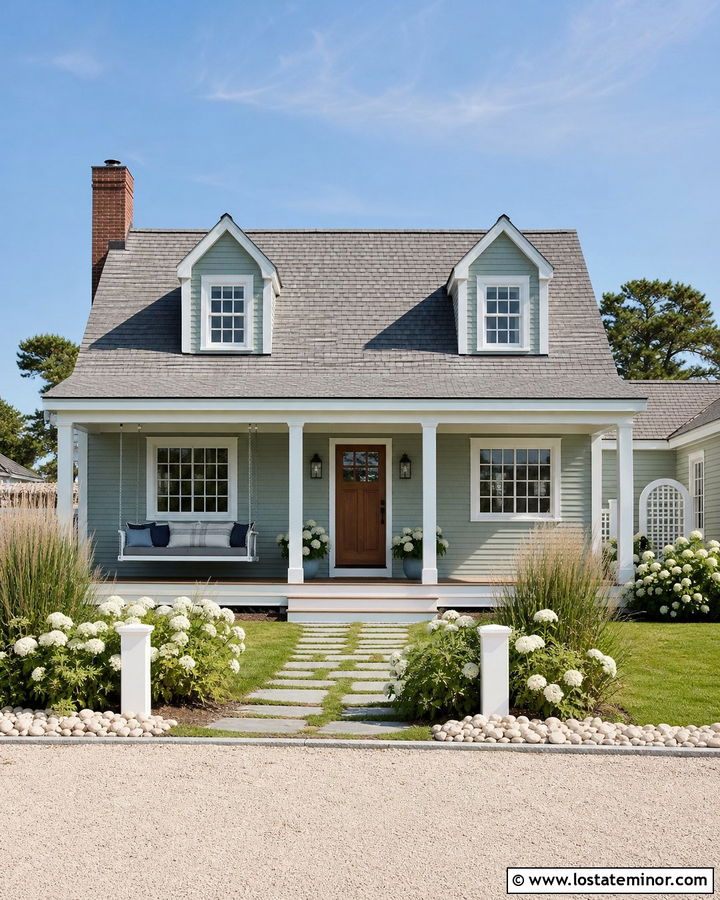
A Cape Cod exterior can support a comfortable bed swing when the porch addition remains simple and proportional. Choose pale sage green shingles or clapboard, bright white trim, and a weathered gray roof for a light coastal palette. A white-framed porch bed swing with navy and cream cushions adds useful seating while echoing the home’s window trim. Place it beneath one side of the porch roof so the centered front door remains the main architectural feature. Cedar porch decking and a natural wood door introduce warmth. Traditional lanterns, divided-light windows, and compact dormers preserve the Cape Cod character. Beach grasses and low hydrangeas frame the facade, creating a complete look that feels breezy even far from the coast.
8. Sage Green Victorian With Wraparound Porch Swing
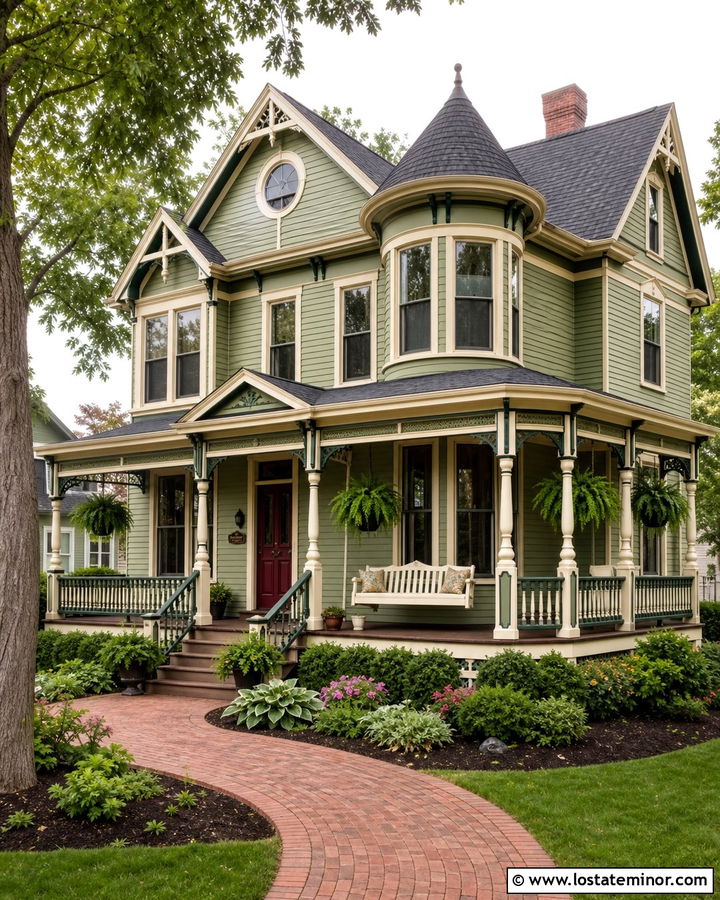
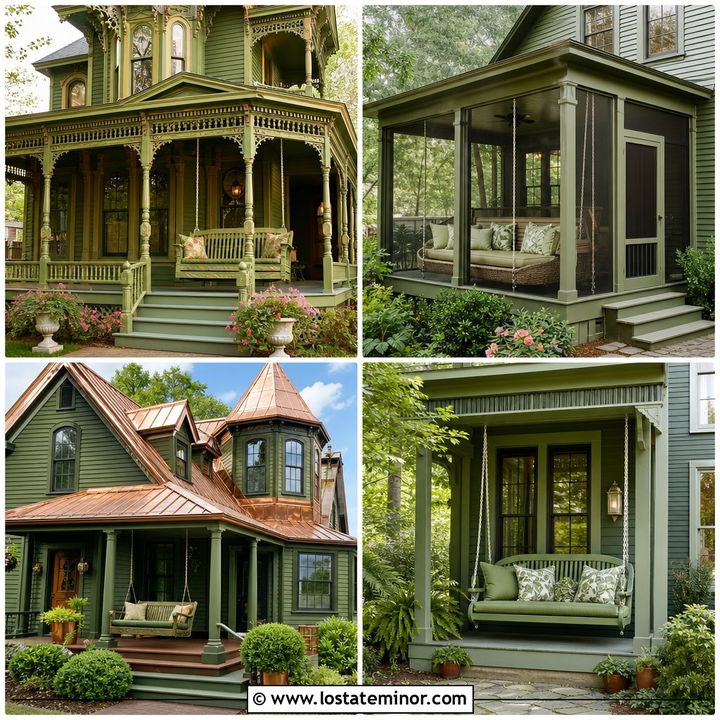
Decorative Victorian architecture benefits from a controlled palette that lets its details remain visible. Paint the main siding a dusty sage green, use warm cream on the trim, and apply deep forest green to selected brackets, railings, and window sashes. A cream wooden swing placed along the wraparound porch provides an inviting focal point without adding another competing color. Burgundy front doors or small decorative accents can bring richness to the otherwise natural scheme. Keep the porch floor stained medium brown so it grounds the ornamental facade. A dark gray roof prevents the upper portion from becoming visually busy. Curved flower beds, ferns, and traditional brick paths complete this graceful exterior while allowing the swing to feel fully integrated.
9. Sage Green Modern Farmhouse With Black Swing
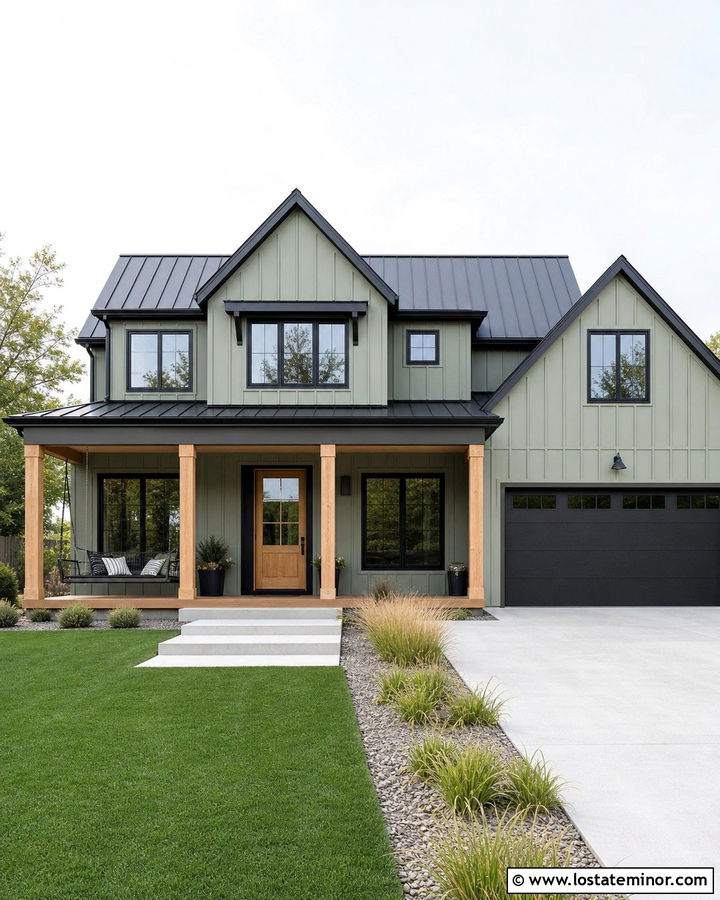
Clean lines take the lead in this sage green modern farmhouse scheme. Use vertical board-and-batten siding in a gray-toned sage, then add black window frames, a black standing-seam roof, and minimalist exterior lights. A slim black metal porch swing repeats those accents and creates a crisp silhouette against the green facade. Warm the composition with natural oak porch columns, a matching front door, and lightly stained decking. Large windows and an uncluttered porch keep the exterior current rather than rustic. Concrete steps and structured planting beds filled with ornamental grasses complement the architecture’s straight lines. The finished house balances soft color with graphic contrast, while the swing becomes a functional part of the coordinated black, green, and wood palette.
10. Sage Green Split-Level With Pergola Swing
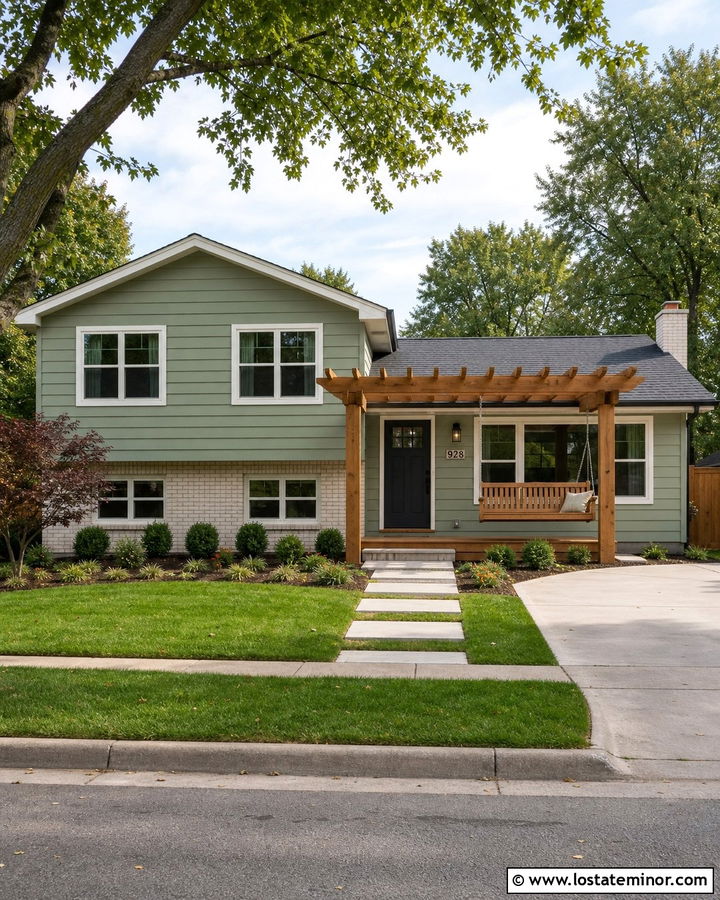
Updating a split-level exterior often requires adding a stronger focal point near the entrance. Cover the main siding in soft sage green, retain light beige brick on the lower level, and use creamy white around the windows and roofline. Build a compact cedar pergola beside the front steps and suspend a matching wood swing beneath it. This feature visually widens the entrance and connects the home to the yard. Paint the front door deep charcoal to coordinate with the roof and modern house numbers. Wide concrete pavers, fresh foundation shrubs, and a small ornamental tree help organize the uneven facade. The pergola swing introduces architectural interest while making the remodeled split-level appear warmer, more balanced, and intentionally designed.
11. Sage Green Coastal House With Teak Swing
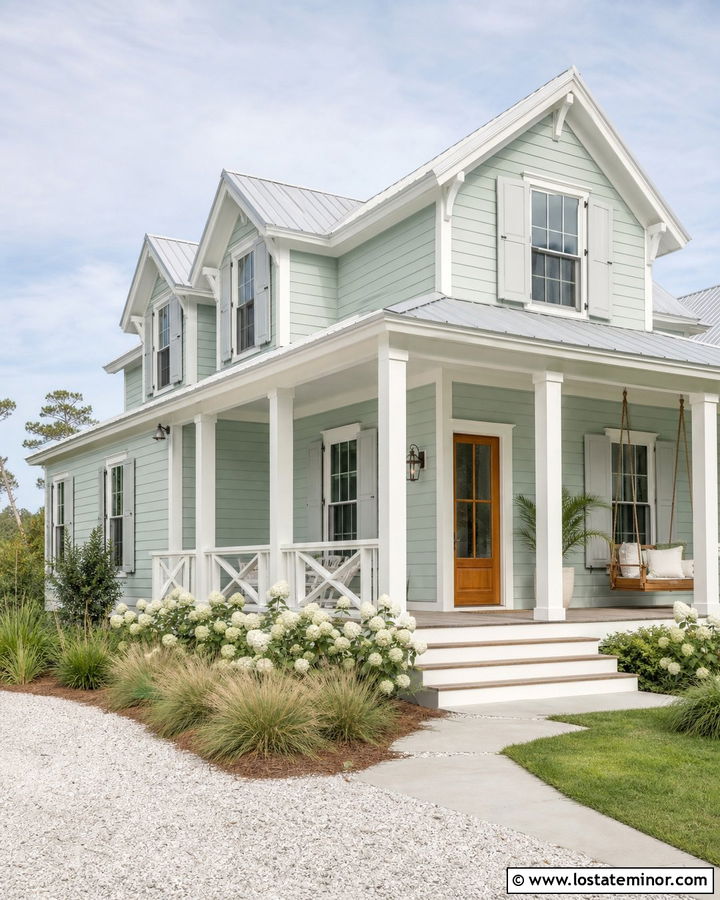
Salt-washed colors and natural materials give a sage green coastal home its easygoing character. Select a light, blue-leaning sage for the siding, then pair it with bright white trim, pale gray shutters, and a weathered silver roof. A teak porch swing adds warmth while standing up visually against the cool palette. Repeat the teak tone on the front door or porch handrail so the swing does not look isolated. White rope, canvas cushions, and simple lantern-style lights support the coastal influence without turning the house into a theme. Surround the walkway with beach grasses, hydrangeas, and smooth gravel. The complete exterior appears bright, breezy, and relaxed, with the swing positioned as a natural extension of the porch.
12. Sage Green Rustic House With Log Swing
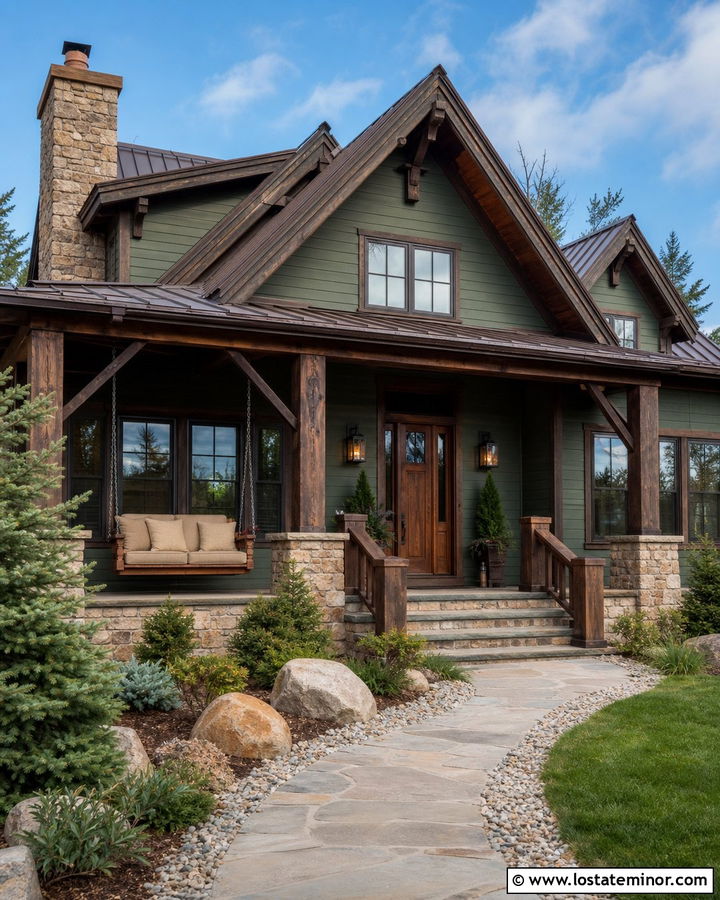
A rustic exterior feels rich and grounded when sage green siding is combined with stone, timber, and a substantial log swing. Use a deeper mossy sage across the lap siding and warm tan stone along the foundation and chimney. Dark-stained beams, porch posts, and fascia provide definition beneath a brown metal roof. Hang a handcrafted log swing from the porch beams using black chains, then add simple beige cushions for comfort. A knotty alder front door can repeat the swing’s organic grain. Keep railings minimal so the materials remain the focus. Evergreen shrubs, boulders, and a gravel-edged walkway connect the structure to its surroundings. This layered scheme works particularly well for wooded properties and mountain-inspired suburban homes.
13. Sage Green Tudor House With Dark Wood Swing
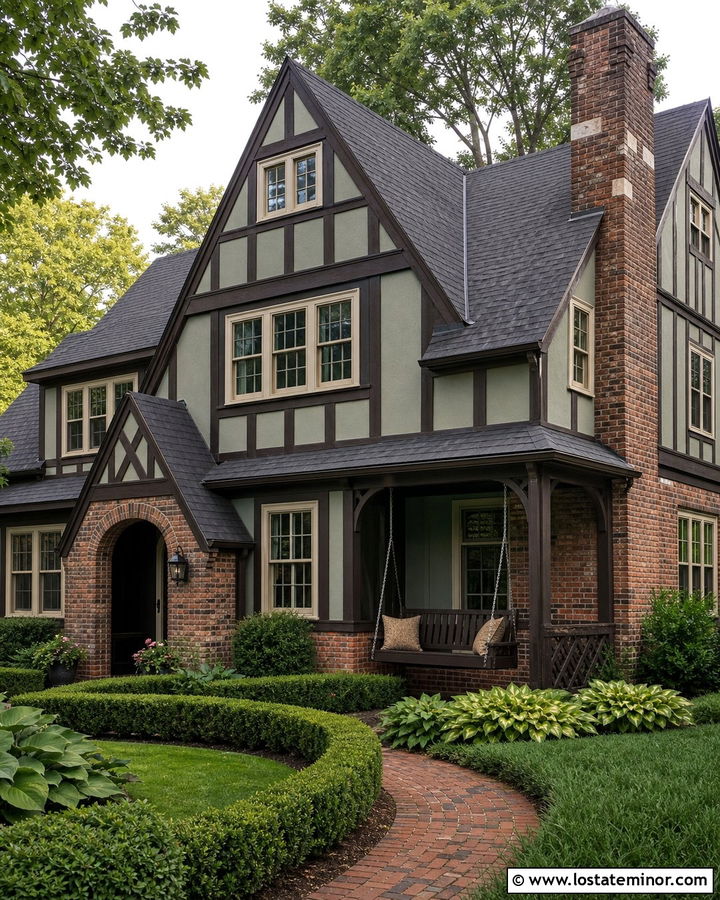
Tudor architecture already contains strong contrast, so a restrained sage green palette keeps the exterior elegant. Apply muted sage green to the stucco or siding sections while preserving dark brown half-timbering, window frames, and steep roof details. A dark-stained wood swing fits beneath a small covered entry or side porch and repeats the timber accents across the facade. Cream trim can soften the windows without creating a harsh outline. Use aged brick around the chimney, steps, and lower walls to reinforce the home’s traditional character. Cushions in tan or subdued green help the swing blend naturally. With clipped hedges, a winding brick path, and layered shade plants, the full exterior feels historic, welcoming, and thoughtfully refreshed.
14. Sage Green Midcentury House With Slatted Swing
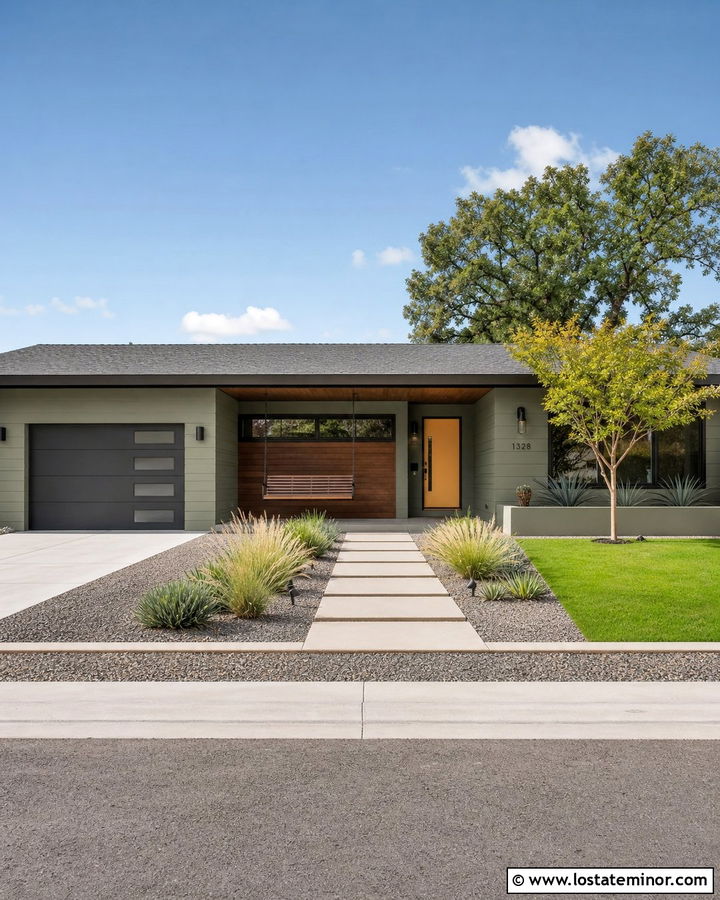
Long rooflines and broad windows make a midcentury house an excellent setting for a streamlined swing. Paint the siding a subdued olive-sage green and pair it with dark bronze window frames, warm wood panels, and a low charcoal roof. Choose a simple horizontal slatted swing in teak or walnut, suspended beneath the extended roof overhang. Its clean form should repeat the lines of the siding and architecture. An orange or ocher front door can add period-appropriate warmth without overwhelming the green exterior. Complete the curb appeal with concrete pavers, gravel beds, sculptural grasses, and one carefully placed ornamental tree. The resulting design feels authentic to the home’s era while remaining comfortable, fresh, and suitable for modern outdoor living.
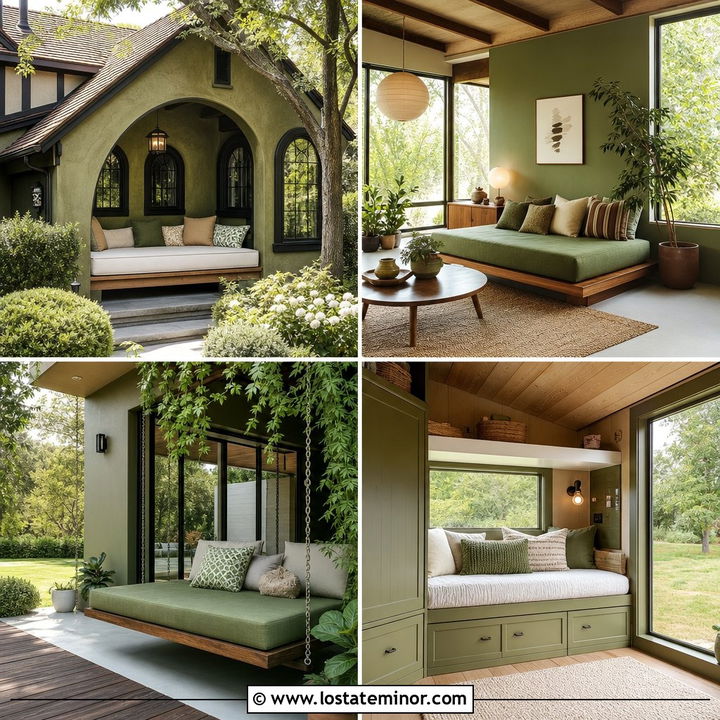
15. Sage Green A-Frame House With Hanging Swing
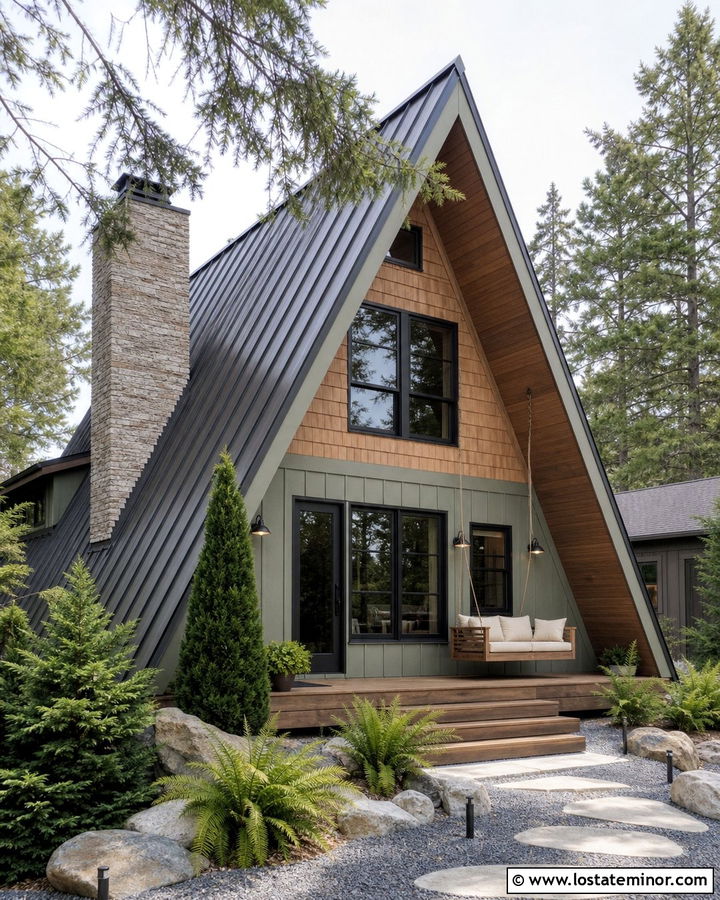
The dramatic roofline of an A-frame house can frame a porch swing beautifully. Use medium sage green siding across the lower walls, with natural cedar covering the tall front gable and entry area. A suspended wood swing beneath the extended roof creates a cozy place to sit while reinforcing the cabin-like setting. Black window frames and a dark metal roof sharpen the exterior’s triangular shape. Choose cream cushions and black suspension hardware to connect the swing with the surrounding accents. A stone chimney or foundation can add weight at ground level. Keep the landscaping natural with evergreens, ferns, gravel, and large stepping stones. The complete design feels contemporary yet rustic, with every material supporting the distinctive A-frame architecture.
16. Sage Green Southern House With Veranda Swing
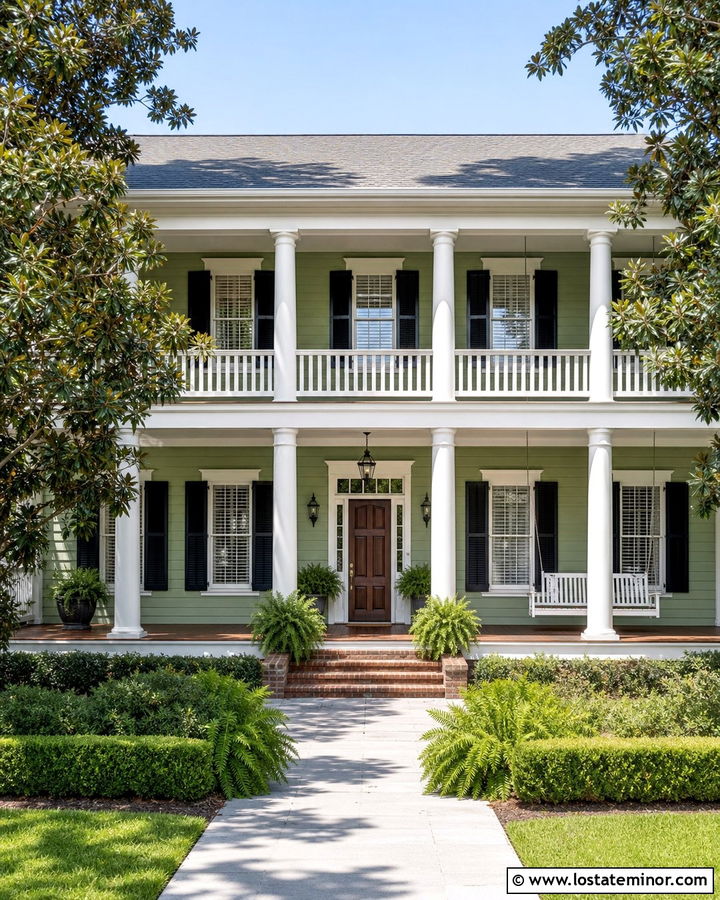
A wide veranda calls for a classic swing that looks generous enough for the scale of the house. Paint the exterior a warm sage green and use creamy white on tall columns, railings, window trim, and the porch ceiling. Place a traditional white swing between two columns, leaving enough open space for easy movement and a balanced facade. A stained mahogany front door adds depth at the center of the house. Black shutters and lanterns create contrast, while a gray roof keeps the palette quiet. Use brick steps and a natural wood porch floor to introduce familiar Southern materials. Magnolia trees, ferns, and clipped foundation shrubs make the full exterior feel shaded, gracious, and ready for everyday relaxation.
17. Sage Green Brick House With Wood Swing
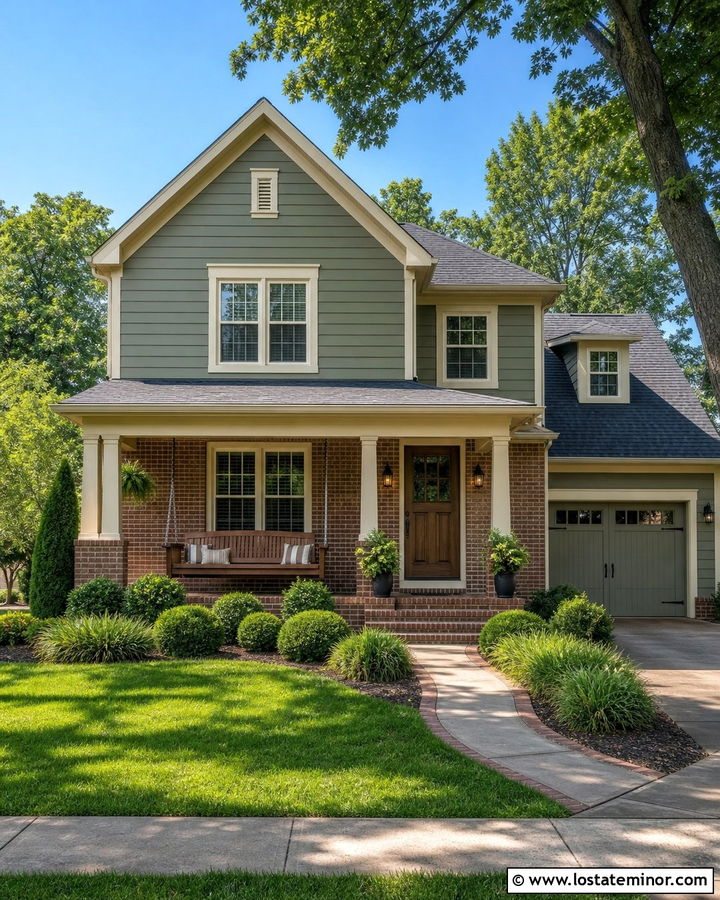
Sage green siding can soften a brick house while allowing the original masonry to remain part of its character. Keep red-brown brick across the lower facade, then use muted sage on the upper siding and gables. Cream trim creates a gentle connection between the two materials. Install a stained wood porch swing that picks up the warm brown tones within the brick. Matching porch posts or a wood front door will help distribute that finish across the exterior. A charcoal roof and bronze lighting add definition without introducing unnecessary colors. Frame the house with rounded shrubs, ornamental grasses, and a brick-edged walkway. The complete scheme feels cohesive because the swing, masonry, siding, and architectural accents share a consistent earthy undertone.
18. Sage Green Board And Batten House With Bed Swing
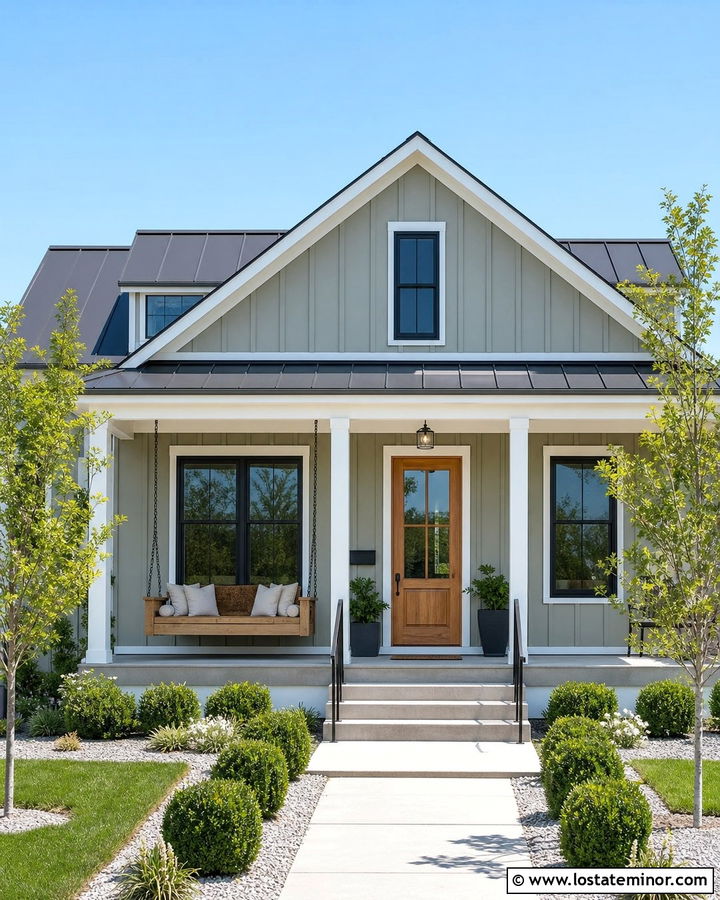
Vertical sage green board-and-batten siding creates a tall, clean backdrop for a large porch bed swing. Choose a soft gray-green body color, white trim, black windows, and a dark standing-seam roof for a balanced modern farmhouse exterior. Build the swing with a natural oak frame and suspend it from black chains to repeat both major accent materials. Neutral performance-fabric cushions keep the seating practical and prevent it from becoming visually heavy. Match the porch ceiling or front door to the oak swing for greater continuity. Wide concrete steps and simple black railings maintain the clean architecture. Structured shrubs, young trees, and gravel-filled beds finish the curb appeal while allowing the comfortable swing to remain the porch’s primary feature.
19. Sage Green House With Cedar Shake Gables And Swing
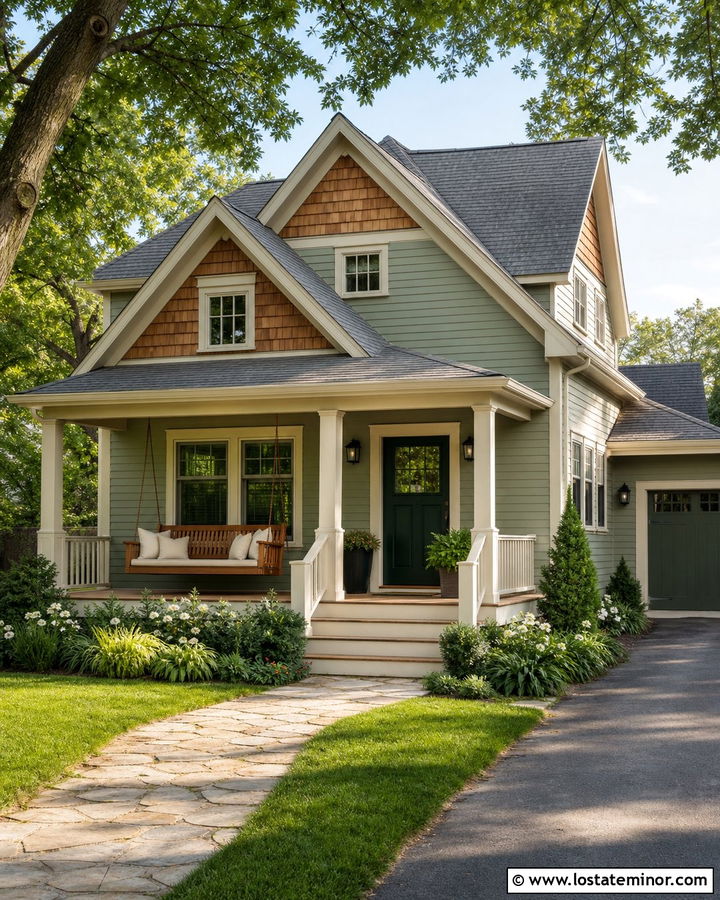
Mixed siding makes a sage green exterior more interesting without requiring multiple paint colors. Use sage green lap siding on the main walls and natural cedar shakes inside the front-facing gables. A cedar porch swing strengthens that connection and distributes the warm wood tone at eye level. Cream trim around the windows and porch columns provides a soft transition between green paint and golden wood. Add a medium-gray shingle roof and a dark green front door for depth. Cushions in off-white or muted plaid can complement the casual architecture. Low evergreens, white flowers, and a flagstone walkway create a polished foreground. This full-house scheme feels layered and natural, yet every finish has a clear visual purpose.
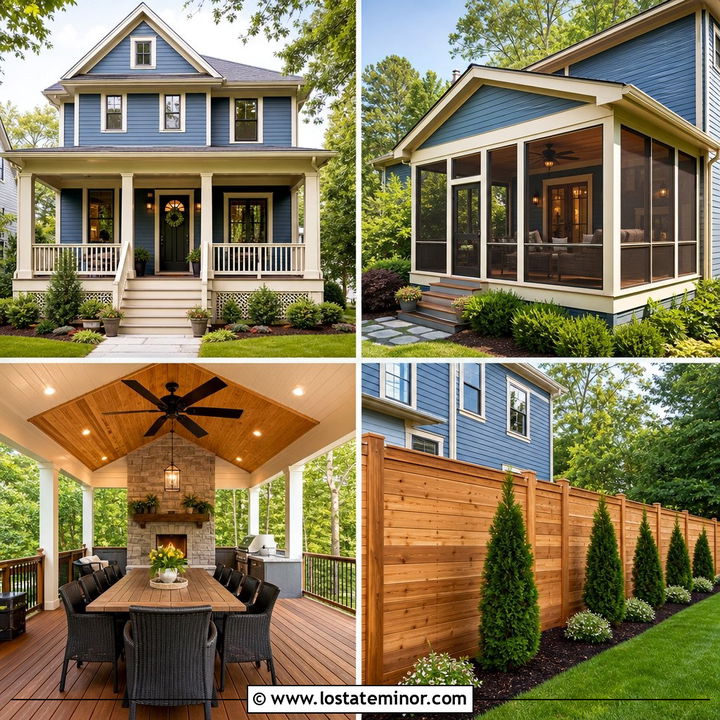
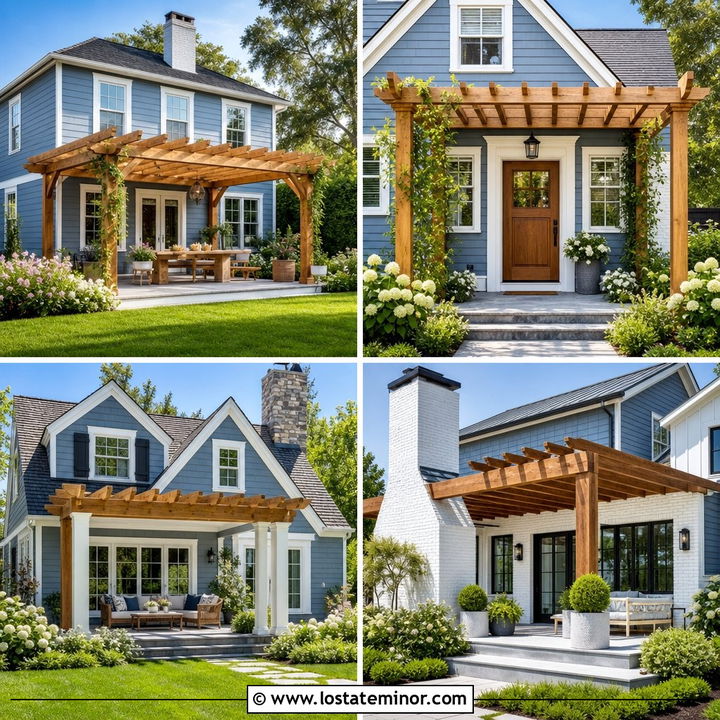
20. Sage Green House With Dark Green Trim And Swing
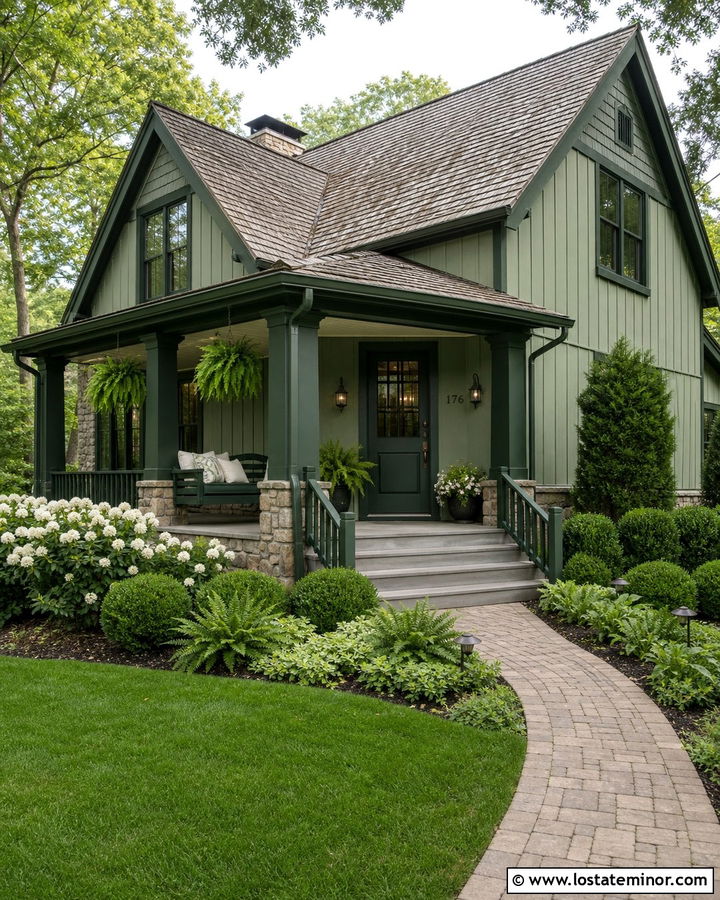
A tonal green palette can give a home surprising depth when each shade is carefully placed. Paint the siding a midtone sage green and use deep forest green on the window trim, fascia, front door, and porch railings. A forest green wooden swing can blend into the porch structure while cream cushions keep it visible. Natural stone along the foundation prevents the two greens from feeling flat or overly coordinated. Choose a weathered gray roof and aged bronze hardware for a quiet finish. This combination works well on cottages, Craftsman homes, and wooded suburban properties. Ferns, boxwoods, and flowering white plants reinforce the garden setting. The darker accents define the architecture, while the swing remains connected to the complete monochromatic design.
21. Sage Green House With Cream Trim And Swing
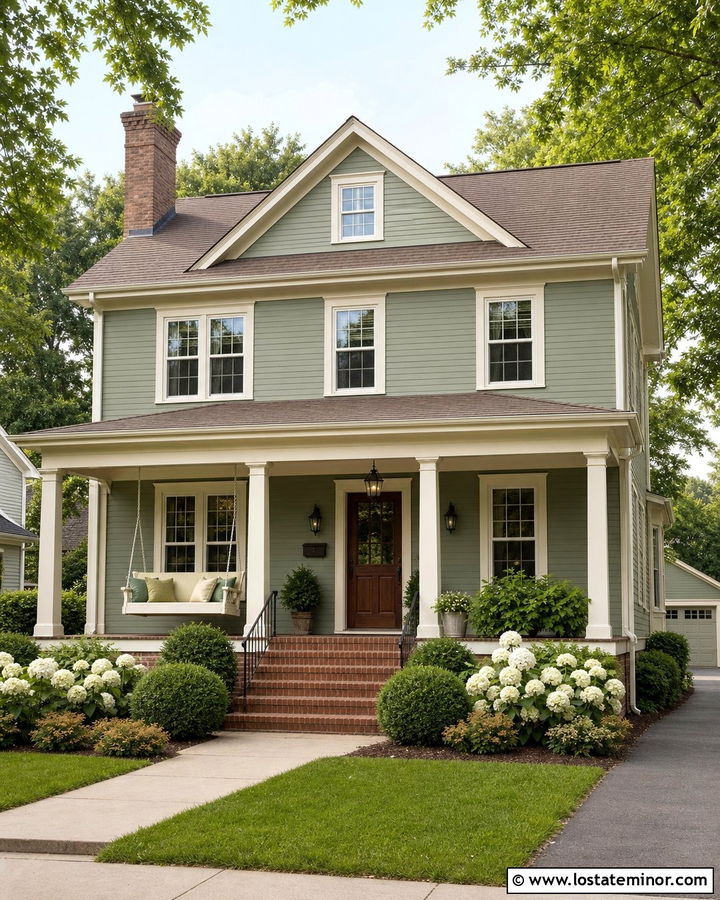
Cream trim gives sage green siding a softer and warmer appearance than bright white. Use this combination on a traditional two-story home with lap siding, divided-light windows, and a welcoming front porch. Paint the porch swing the same buttery cream as the columns and window frames, then add sage and tan cushions to connect it with the facade. A walnut front door and medium-brown roof can deepen the palette without making it feel dark. Consider warm brick for the steps and walkway edging. Rounded shrubs, white hydrangeas, and small shade trees will reinforce the gentle exterior colors. The coordinated swing looks like an original architectural feature rather than an added accessory, resulting in comfortable and timeless curb appeal.
22. Sage Green House With Navy Door And Swing
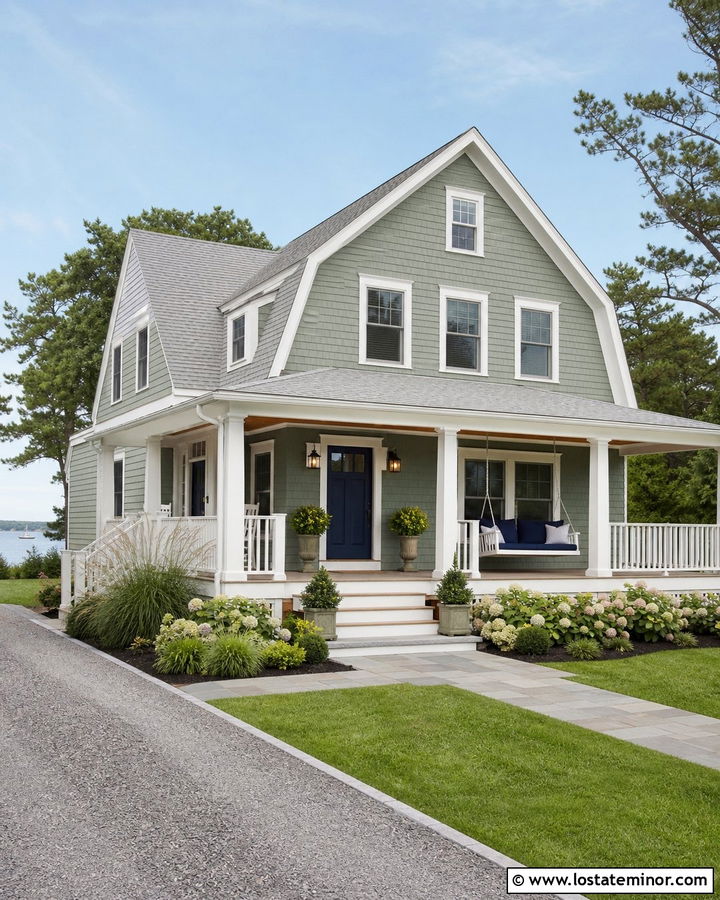
Navy blue brings a polished contrast to sage green without appearing as severe as black. Cover a coastal cottage or traditional home in light sage siding with crisp white trim, then make a navy front door the central focal point. Repeat that blue on a wooden porch swing or use navy cushions on a white swing for a lighter effect. A pale gray roof helps the green and blue remain clear in bright daylight. Natural cedar porch flooring brings warmth underfoot and prevents the cool colors from feeling distant. Complete the facade with white railings, simple lanterns, and symmetrical planters. Hydrangeas and ornamental grasses support the blue-green palette, giving the house a calm but clearly defined street presence.
23. Sage Green House With Terracotta Door And Swing
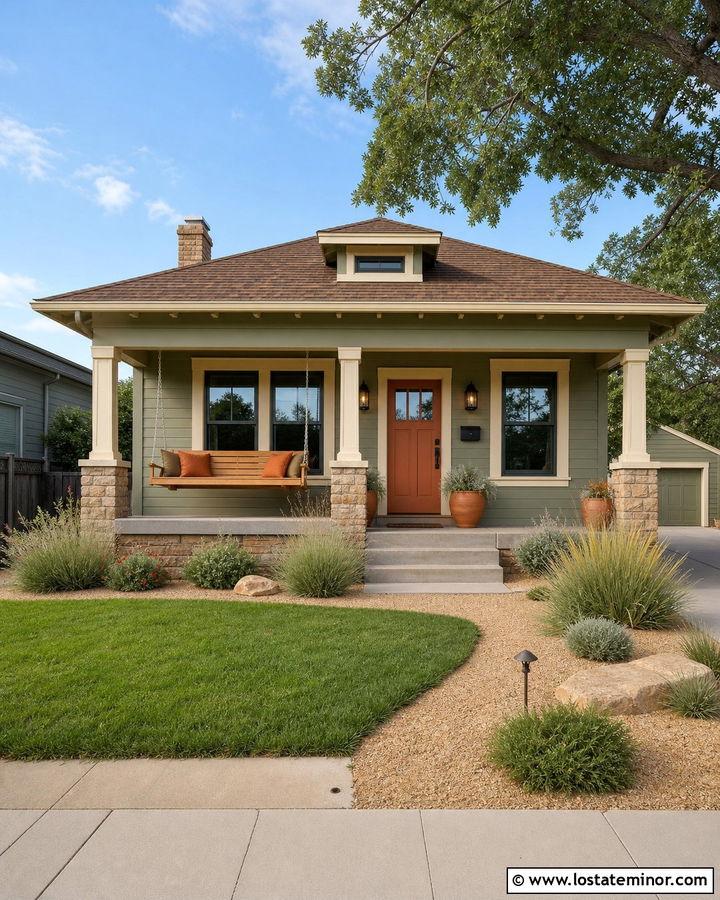
For a warmer exterior, pair muted sage green siding with a terracotta front door and a wood swing dressed in rust-colored cushions. Green and clay tones naturally balance one another, making this scheme suitable for cottages, bungalows, and Southwestern-influenced homes. Use creamy trim rather than stark white to maintain the earthy effect. A brown shingle roof, tan stone foundation, and bronze light fixtures add quiet supporting colors. Place the swing beneath a covered porch where its fabric accents can repeat the door color without dominating the facade. Terracotta planters, drought-tolerant grasses, and a warm gravel walkway complete the setting. The result feels colorful and personal while still maintaining a controlled, nature-inspired exterior palette.
24. Sage Green House With Charcoal Roof And Swing
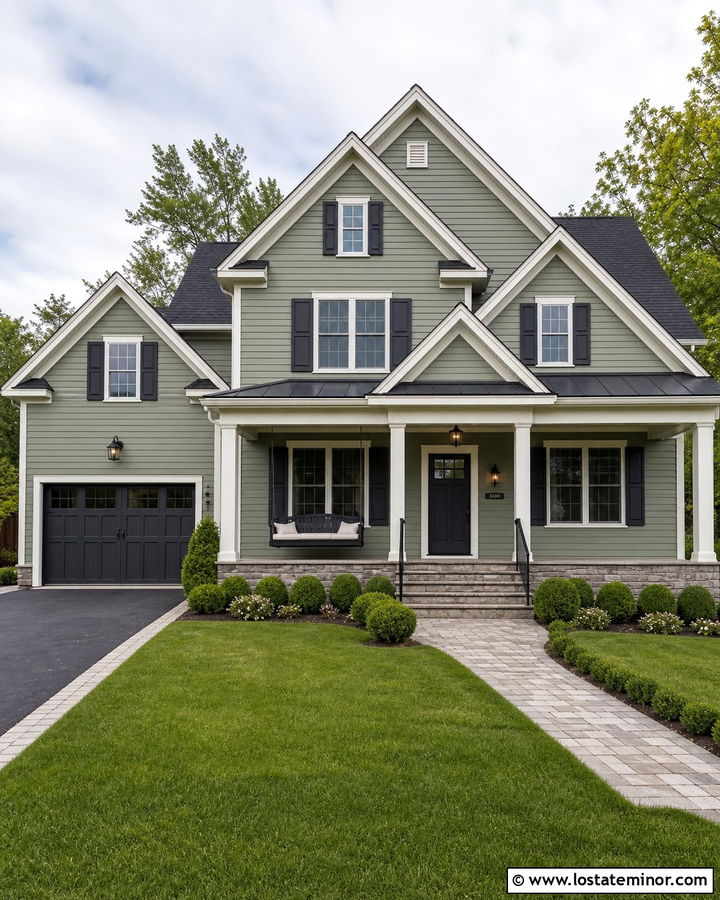
A charcoal roof provides a strong visual cap for a pale sage green exterior. This combination is especially effective on houses with multiple gables, where the dark roofing can define the overall silhouette. Use soft white trim to outline the windows and eaves, then repeat charcoal on the porch swing, shutters, or front door. Light-colored cushions will keep a dark swing from disappearing beneath the porch roof. Natural stone at the foundation can bridge the cool green and gray tones. Add blackened bronze lights and simple metal railings for subtle coordination. A broad lawn, clipped shrubs, and a straight paver walkway keep the foreground clean. The finished exterior feels solid, balanced, and appealing from a distance.
25. Sage Green House With Copper Accents And Swing
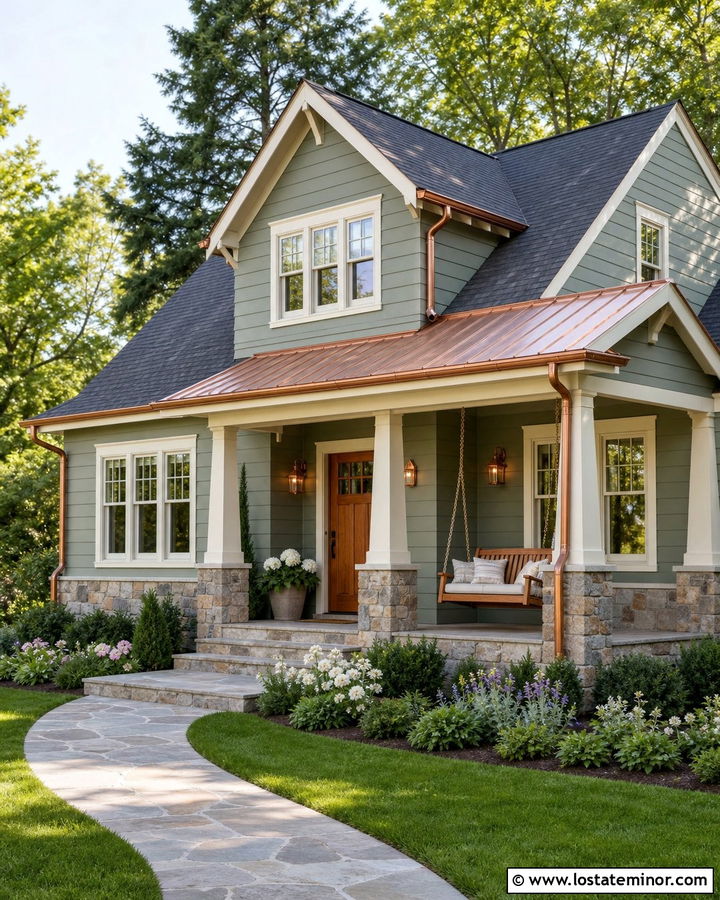
New copper details add warmth and character to a sage green house, and they develop an attractive patina over time. Use gray-toned sage siding with cream trim, then incorporate copper gutters, porch lights, and a small metal porch roof. Choose a warm cedar swing so its color relates to the fresh copper accents. A cedar or medium-stained front door can reinforce this connection across the facade. Keep the main roof dark gray and use natural stone near the foundation to prevent the metal from looking overly decorative. Neutral cushions allow the swing’s wood grain to remain visible. Layered shrubs, flowering perennials, and a curved stone path finish a refined exterior where green paint, wood, stone, and metal feel deliberately balanced.
26. Sage Green House With Screened Porch Swing
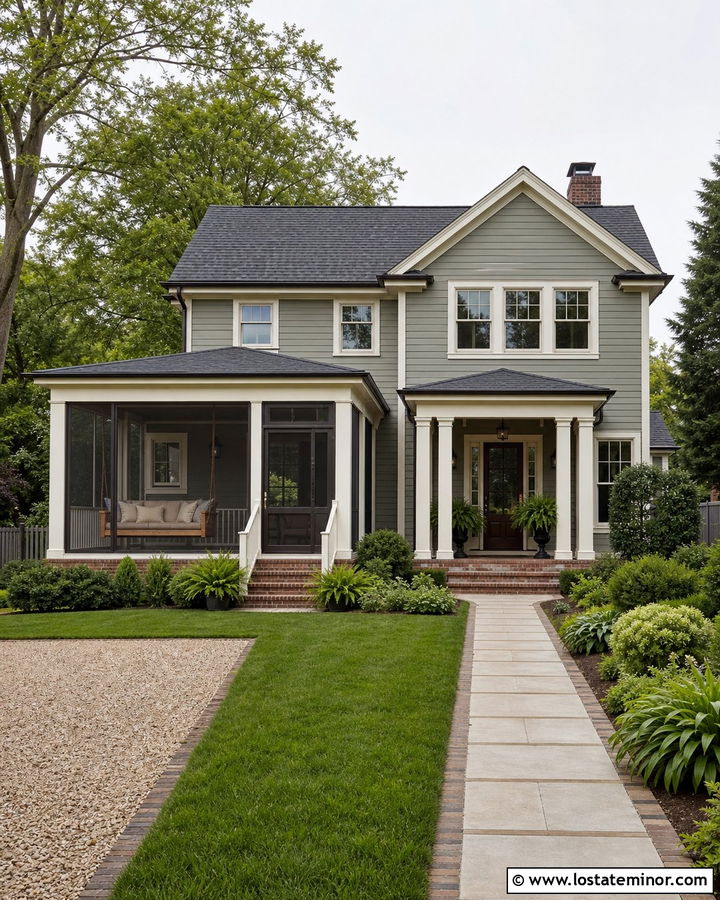
A screened porch can hold a swing comfortably while preserving a clean view of the entire home. Paint the main siding a medium sage green and use warm white on the screened enclosure, columns, doors, and roof trim. Inside, suspend a natural wood swing where it remains visible from the yard but does not block the porch entrance. Green or beige cushions can connect the seating with the siding. A charcoal roof and dark bronze screen frames give the structure definition. Use brick flooring inside the porch for an easy transition to the front steps and walkway. Ferns, hostas, and layered shrubs soften the enclosure. This complete design makes the screened area look like an intentional extension of the original architecture.
27. Sage Green House With Side Porch Swing
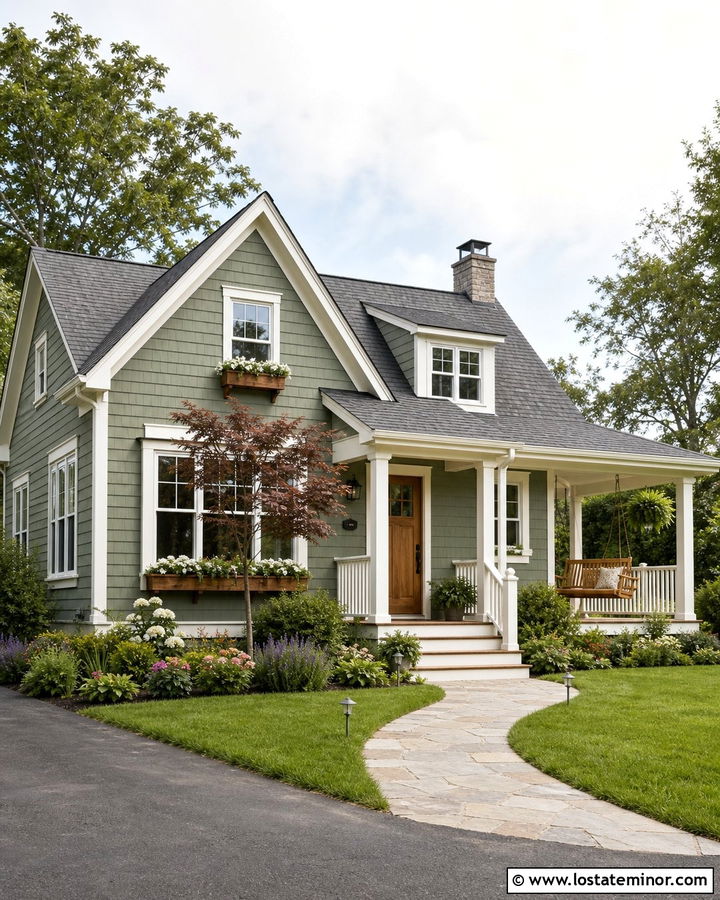
Not every swing needs to sit directly beside the front door. On an asymmetrical cottage or farmhouse, a side porch swing can improve balance while keeping the entrance clear. Paint the house soft sage green with ivory trim and a medium-gray roof. Use a stained oak swing on the side porch, then repeat that wood finish on the front door, porch steps, or window boxes. White columns and railings help the side structure connect to the main facade. Position a small tree or curved planting bed near the porch to frame the seating area from the street. With a winding stone path and layered flowers, the exterior feels relaxed and thoughtfully arranged rather than centered around strict symmetry.
28. Small Sage Green House With Compact Swing
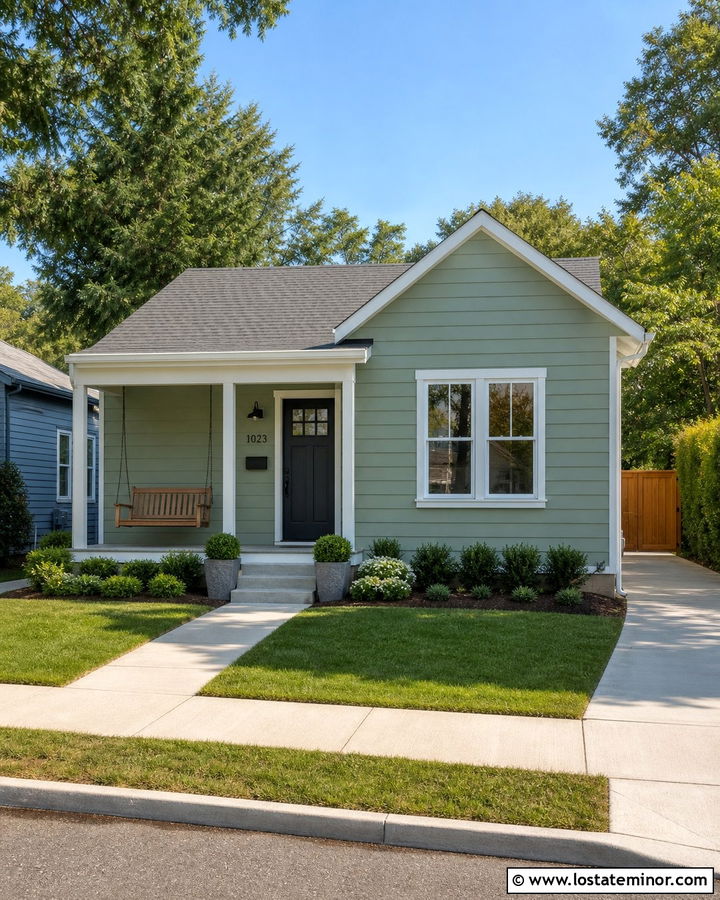
A small house can still accommodate a swing when its proportions are carefully considered. Choose pale sage green siding to keep the facade open and bright, then add white trim and a compact natural wood swing beneath a narrow covered porch. A backless or shallow-seat design can provide movement without crowding the front door. Paint the door deep blue-gray for contrast and repeat that color in small planters or cushions. A simple gray roof and slender porch posts maintain visual lightness. Use one broad walkway rather than several small paths, and select low-growing landscaping that does not hide the house. The completed exterior feels larger, organized, and welcoming because every detail fits the available space.
29. Sage Green House With Garage Pergola Swing
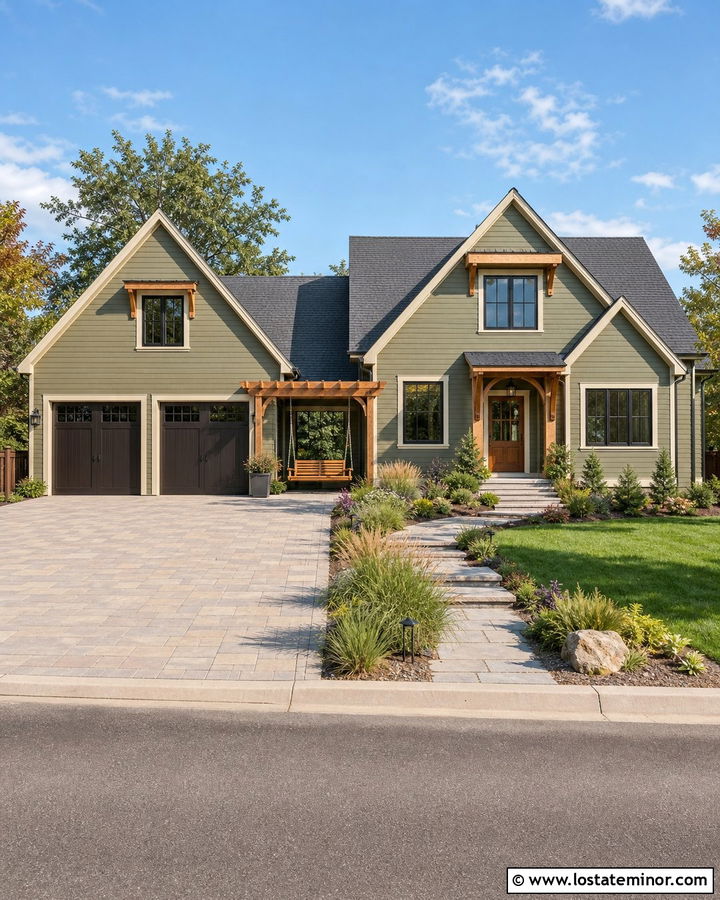
A wide suburban facade can feel more balanced when the area beside the garage becomes a purposeful seating zone. Paint the main house and garage in earthy sage green, with cream trim and dark bronze doors or window frames. Add a cedar pergola between the garage and front entry, then suspend a simple cedar swing beneath it. Repeat the wood on the front door and decorative garage brackets for visual continuity. A dark gray roof grounds the broad roofline. Extend the front walkway toward the swing with large pavers and surround it with ornamental grasses. This treatment reduces the garage’s visual dominance and gives the entire exterior a warmer, more connected appearance without requiring a full porch addition.
30. Sage Green Contemporary House With Floating Swing
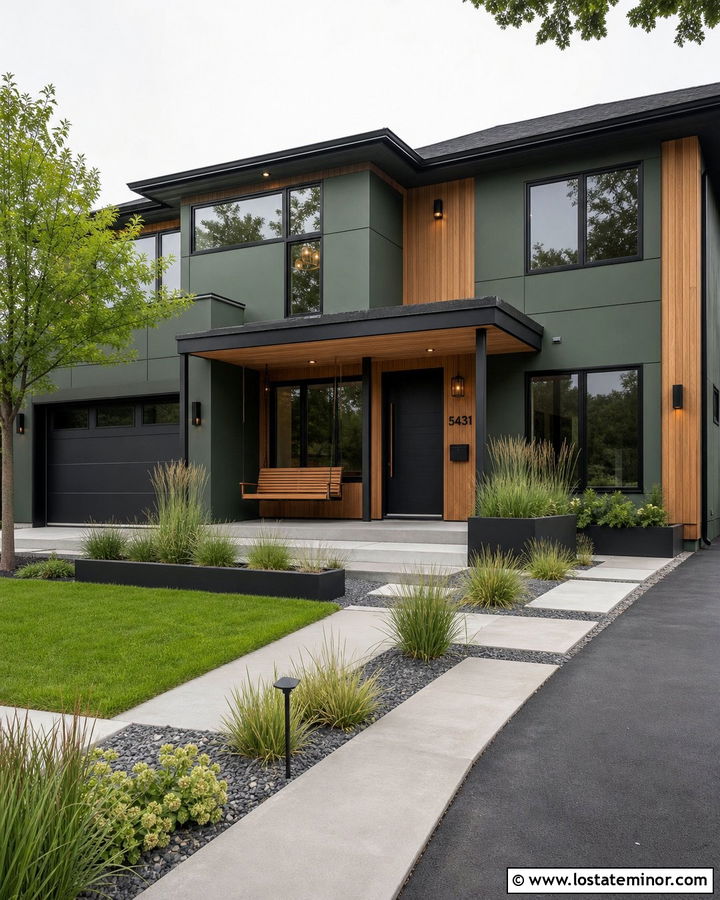
A contemporary house calls for a swing with an equally simple profile. Use smooth sage green fiber-cement panels alongside natural wood cladding, black-framed windows, and a low charcoal roof. Suspend a streamlined wood swing beneath a flat-roofed entry canopy using thin black cables, creating a light floating effect. The swing should align with the facade’s horizontal lines and remain clear of the main path. A black pivot door and concrete porch provide sharp contrast against the organic green and wood finishes. Keep the landscaping minimal with large grasses, gravel, rectangular planters, and broad concrete slabs. This complete exterior demonstrates that a swing can feel modern when its materials, proportions, and placement closely follow the home’s architecture.
Conclusion:
The most successful 30 Sage Green House Design With Swing Ideas treat the swing as part of the exterior scheme rather than a separate porch accessory. Its finish can repeat the trim, front door, roof, masonry, or natural wood used elsewhere on the facade. White swings create a crisp traditional look, while cedar and teak add warmth. Black metal, dark green paint, and streamlined wood work well with modern architecture. Before choosing a design, consider porch depth, structural support, walking clearance, sunlight, and the scale of the house. Test sage paint outdoors throughout the day, since light can change its undertone. With thoughtful coordination, sage siding and a comfortable swing can create lasting curb appeal.

Related posts: