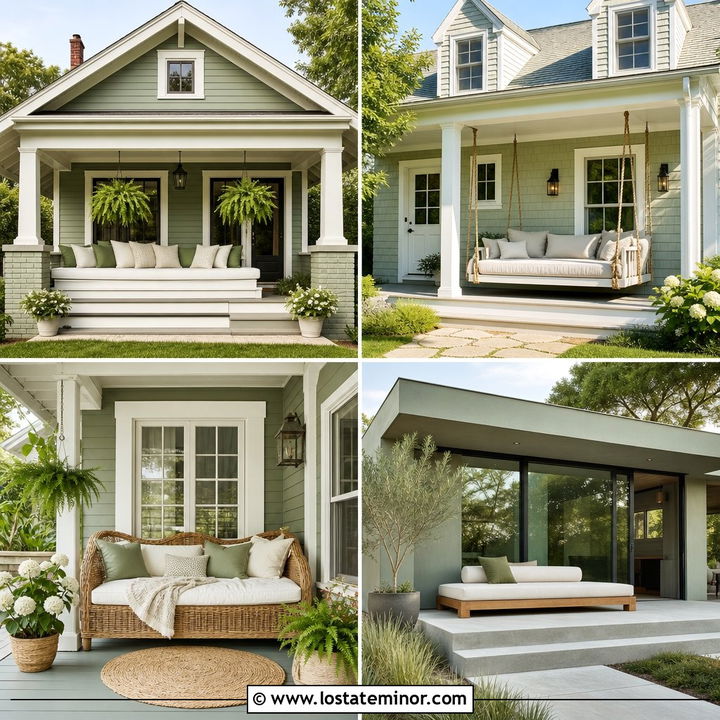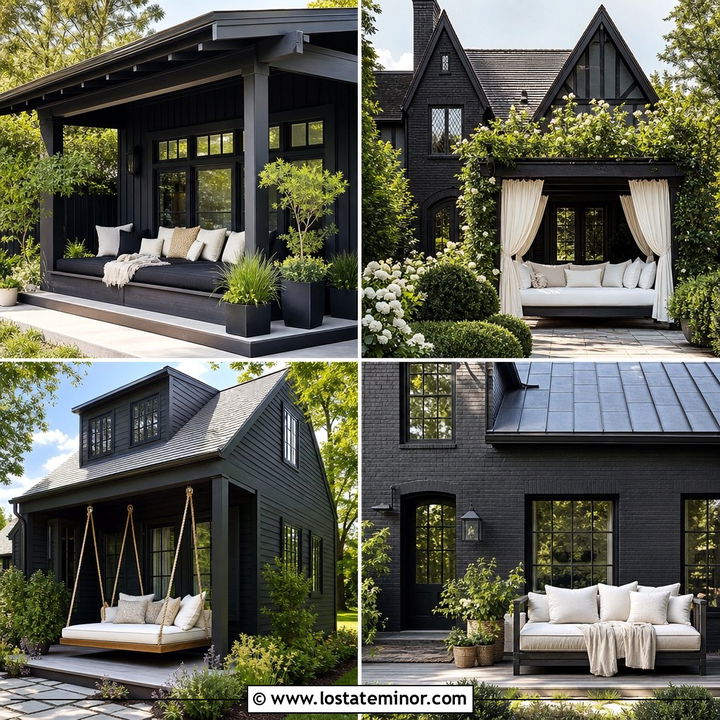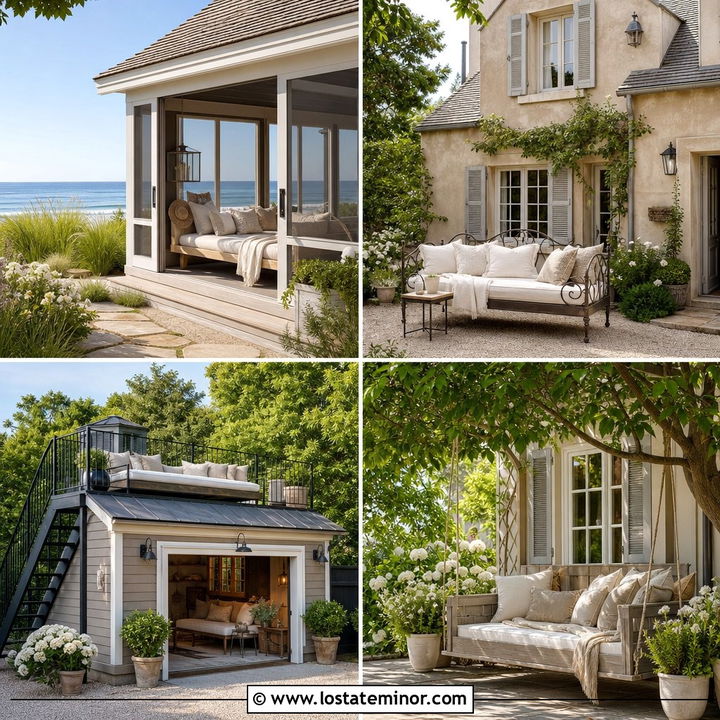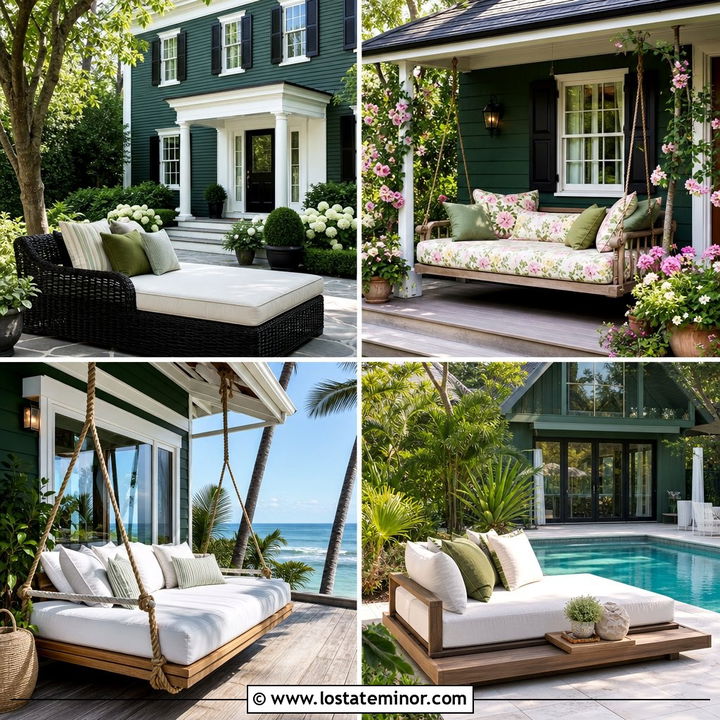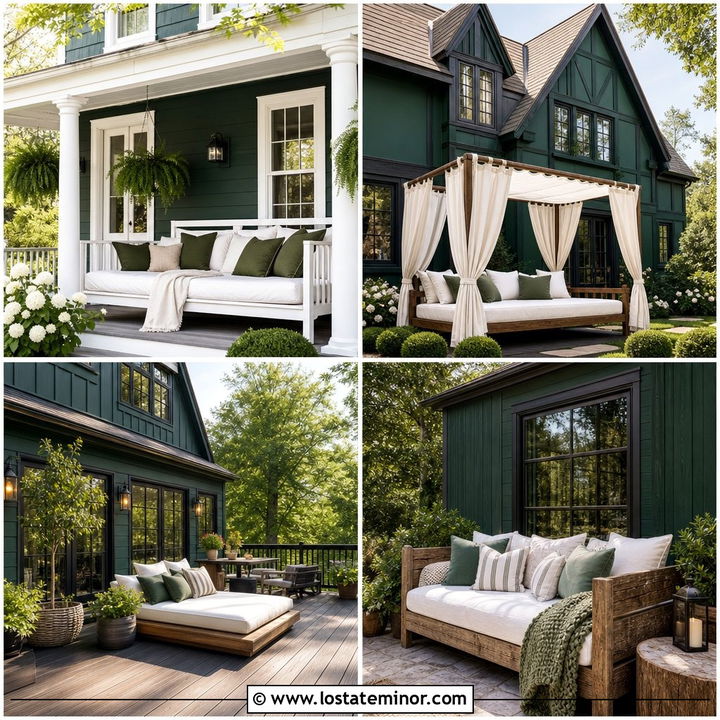
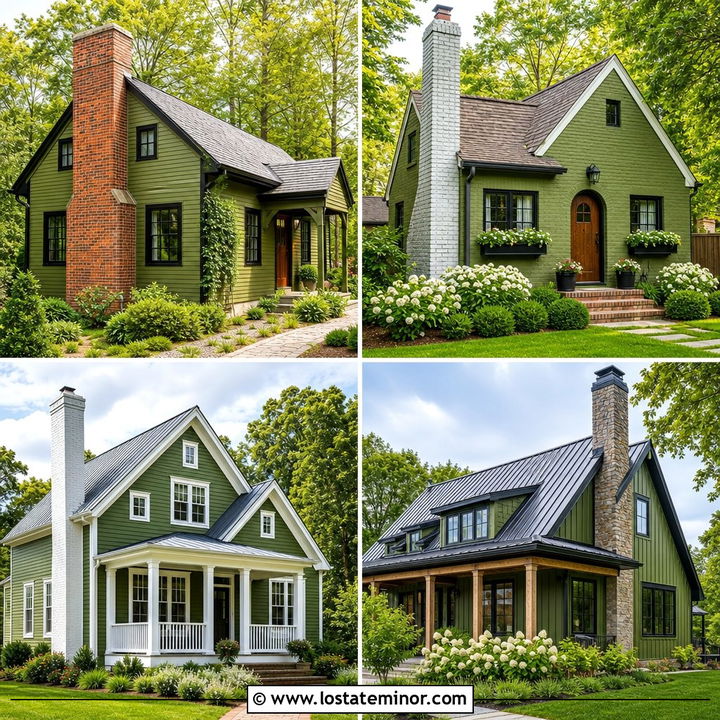
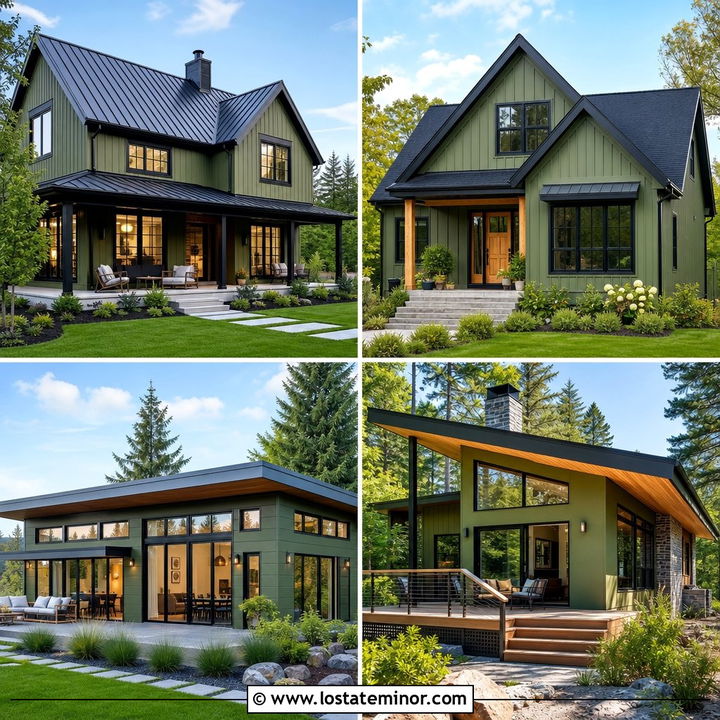
Moss green creates an exterior that feels grounded, welcoming, and naturally connected to the landscape. Adding a daybed turns that calm color palette into a complete outdoor living experience. The daybed may hang from a covered porch, rest beneath a pergola, or fit into a sheltered corner beside the entry. Cream trim, cedar details, stonework, black accents, and weather-resistant fabrics can each change the character of the design. The key is treating the seating area as part of the architecture rather than placing furniture without a plan. These complete exterior schemes cover cottages, farmhouses, ranch homes, modern builds, and traditional facades. Use these 30 Moss Green House Design With Daybed Ideas to create comfortable curb appeal with a polished, cohesive look.
1. Moss Green Craftsman With Cedar Porch Daybed
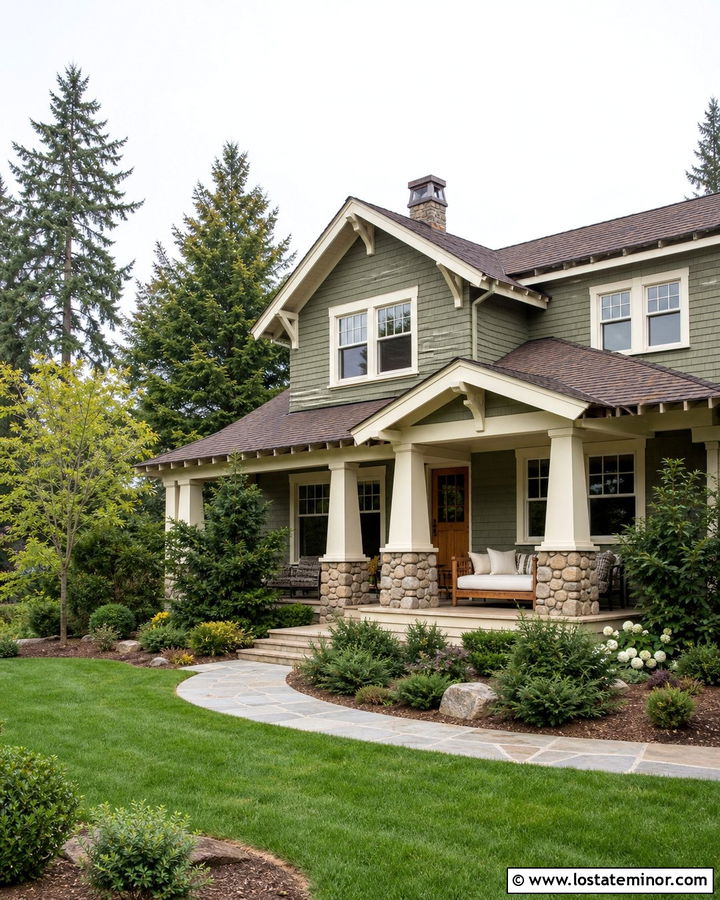
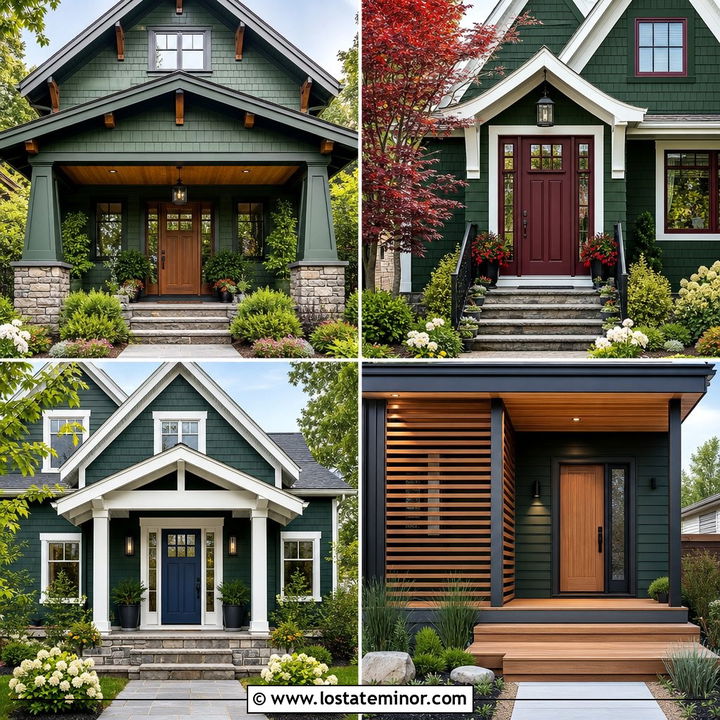
A moss green Craftsman feels especially inviting when warm cedar details frame the porch. Use the green across horizontal lap siding, then add creamy white trim around the windows, roofline, and tapered columns. A cedar front door and matching porch ceiling give the exterior a richer, more natural finish. Position a solid cedar daybed at one end of the covered porch so it looks built into the architecture. Deep cream cushions and muted rust pillows introduce warmth without distracting from the siding. Complete the facade with river-rock column bases, a medium brown roof, and layered evergreen landscaping. This combination creates an earthy retreat that still has enough contrast to highlight classic Craftsman details.
2. Moss Green Farmhouse With Black Hanging Daybed
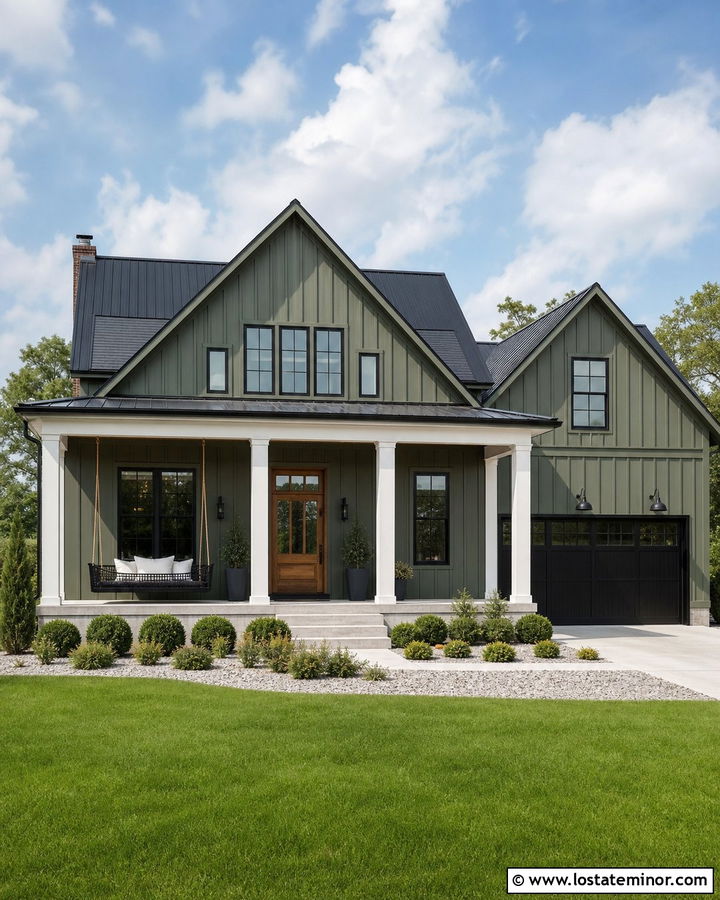
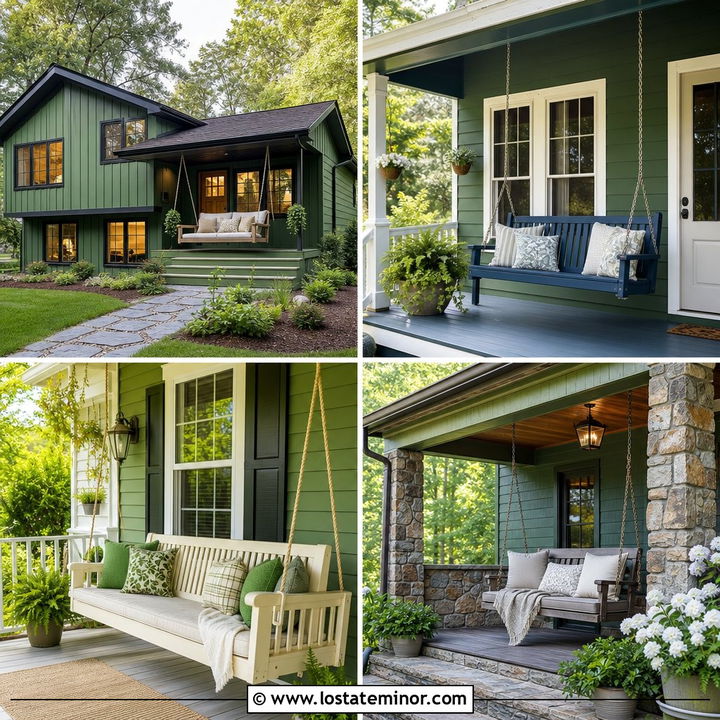
Crisp black accents give a moss green modern farmhouse a clean, current appearance. Cover the main facade in vertical board-and-batten siding, using soft white on the window trim and porch columns. Black-framed windows, a black metal roof, and matching gutters create strong lines against the earthy green. A black wood hanging daybed can fill one side of the front porch, suspended with thick natural rope or secure dark chains. Choose ivory outdoor cushions with subtle green-striped pillows for a coordinated finish. Natural wood on the front door prevents the high-contrast palette from feeling too severe. Gravel borders, simple boxwood plantings, and broad concrete steps keep this whole exterior organized, relaxed, and easy to maintain.
3. Moss Green Cottage With White Wicker Daybed
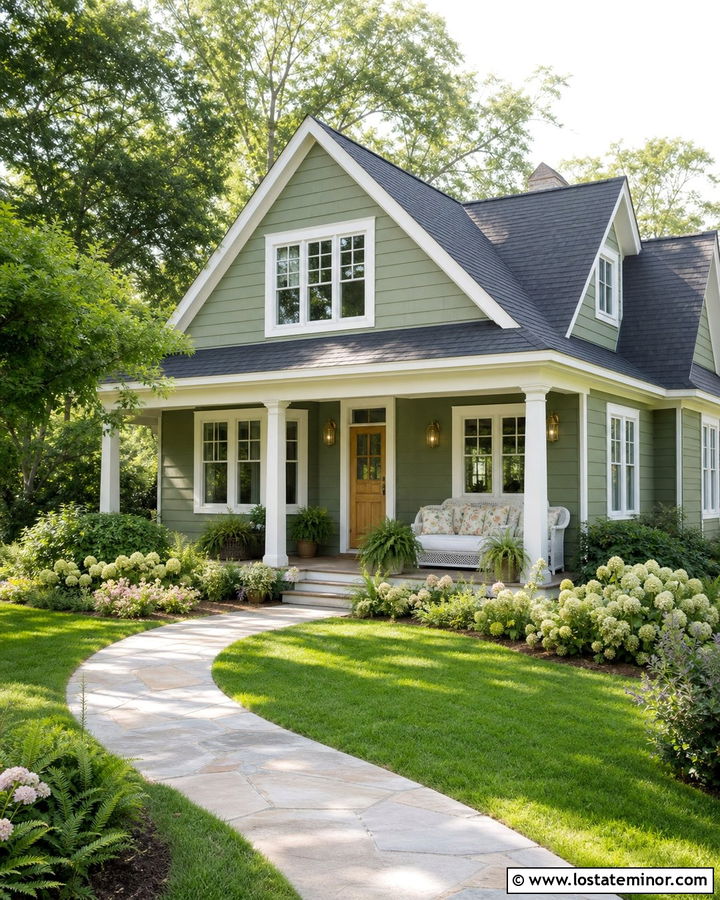
Picture a compact cottage surrounded by hydrangeas, ferns, and a curved stone walkway. Moss green clapboard siding gives the facade a garden-inspired foundation, while warm white trim brightens the small windows and decorative roofline. Place a white wicker daybed beneath the covered front porch, using weather-resistant cushions in cream, faded floral, and soft olive. A pale oak front door and aged brass porch lights add warmth without making the design look busy. Keep the roof charcoal gray for gentle contrast. White porch railings can visually connect the daybed to the architectural trim. This scheme is particularly useful when you want a small house to feel cheerful, comfortable, and thoughtfully tied to its surrounding plants.
4. Moss Green Ranch With Stone Patio Daybed
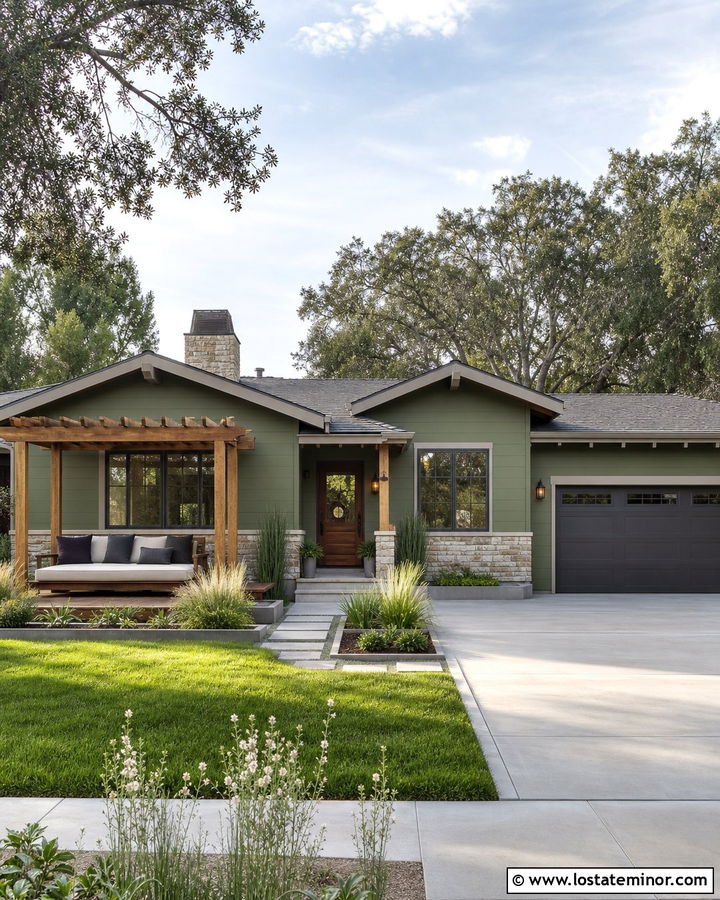
A long ranch facade benefits from a broad outdoor seating area that breaks up its horizontal shape. Paint the siding moss green and use warm greige trim instead of bright white for a softer transition. Add a low stone veneer along the foundation and repeat that material around wide porch columns. A streamlined teak daybed can sit on an expanded front patio beneath a simple wood pergola. Sand-colored cushions, charcoal pillows, and a textured outdoor rug connect the furniture with the stone and roof. Keep the front door stained walnut to bring attention to the entry. Low ornamental grasses and rectangular planting beds reinforce the home’s clean lines while leaving the complete moss green exterior open and visible from the street.
5. Moss Green Colonial With Black Shutters And Daybed
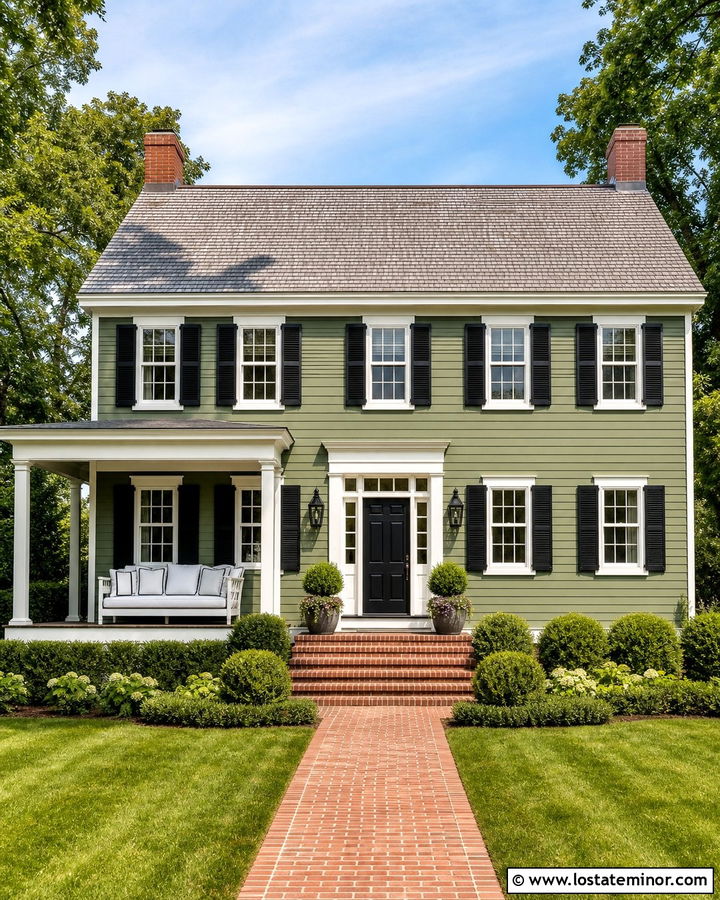
Symmetry makes a traditional Colonial exterior look orderly, but a carefully placed daybed can add a more relaxed personality. Use moss green clapboard siding with creamy white trim, balanced black shutters, and a centered black front door. Place a white wood daybed on one end of the covered porch, then balance it with two matching planters at the opposite end. Neutral cushions with black piping help the seating coordinate with the shutters. Red brick steps and a brick walkway bring warmth to the green, white, and black palette. Keep foundation shrubs evenly spaced but not overly formal. The result preserves the recognizable Colonial structure while creating an outdoor spot that feels comfortable enough for reading, resting, or casual conversation.
6. Moss Green Bungalow With Rattan Porch Daybed
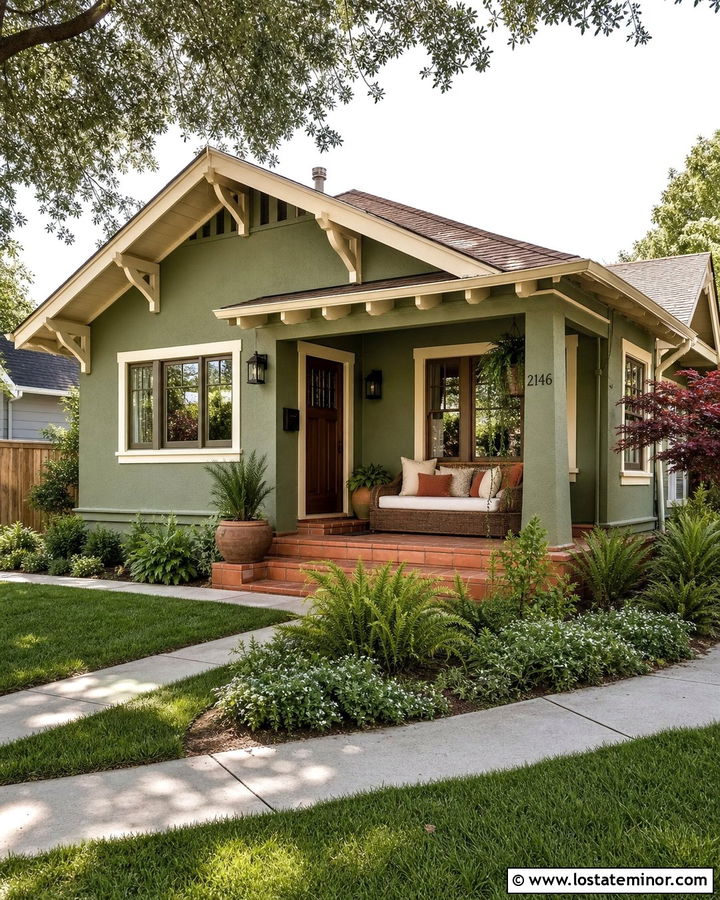
A moss green bungalow can feel warm and collected when it includes natural rattan and terracotta accents. Paint the low-profile exterior an earthy moss green, then outline the windows, rafters, and porch posts in creamy ivory. A woven rattan daybed with a rounded back fits neatly beneath the deep front porch roof. Use oatmeal cushions, rust-colored pillows, and a lightweight striped throw to echo the warm materials. Terracotta porch tile introduces subtle color underfoot, while a dark bronze front door and matching lights provide definition. Choose a weathered brown shingle roof rather than a stark black one. Ferns, flowering ground cover, and clay planters complete this cozy bungalow exterior without hiding its distinctive architectural details.
7. Moss Green Cape Cod With Rope Swing Daybed
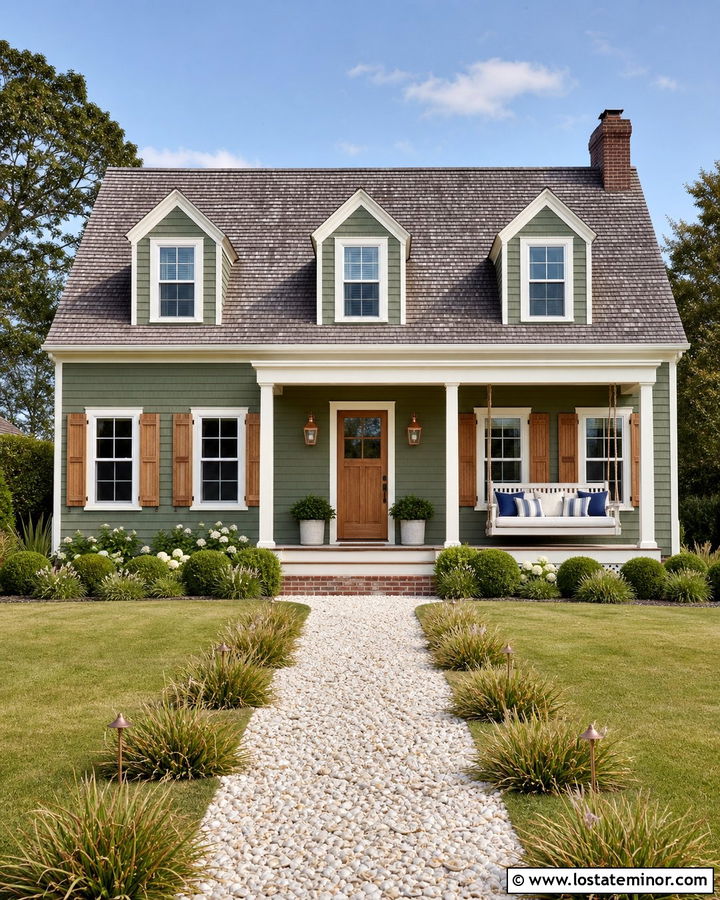
Classic Cape Cod architecture gains an earthy twist from moss green siding and a sheltered rope swing daybed. Keep the trim warm white around the dormers, windows, and roofline, then add natural cedar shutters for texture. A white-painted porch daybed suspended from thick rope can occupy the covered area beside the centered entry. Navy and cream cushions offer subtle coastal contrast while allowing the moss green facade to remain dominant. Use a weathered gray roof and simple copper lanterns for a timeless finish. A shell or light gravel walkway, clipped shrubs, and wispy ornamental grasses frame the house without creating visual clutter. This complete scheme feels breezy and casual, yet it avoids the predictable blue-and-white coastal palette.
8. Moss Green Split-Level With Pergola Daybed
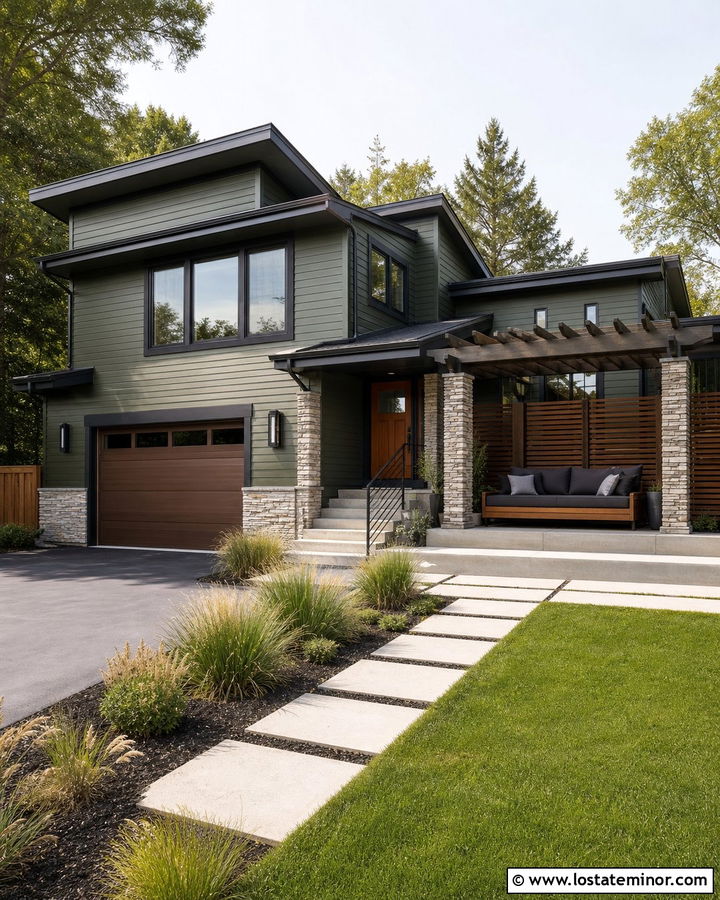
Does your split-level exterior feel disconnected or visually uneven? Moss green siding can unify the upper and lower portions, especially when paired with charcoal trim and warm stone. Use the same stone around the garage base and the columns of a small front pergola. Beneath that structure, add a low-profile wood daybed with charcoal cushions and muted green pillows. A garage door in deep bronze helps it recede rather than dominate the facade. Repeat the daybed’s wood tone on the front door and horizontal privacy screen. Wide concrete pavers can lead from the driveway to the lounge area. Structured grasses and compact shrubs soften the different building levels while maintaining a clean, cohesive curb-appeal view.
9. Moss Green Contemporary House With Platform Daybed
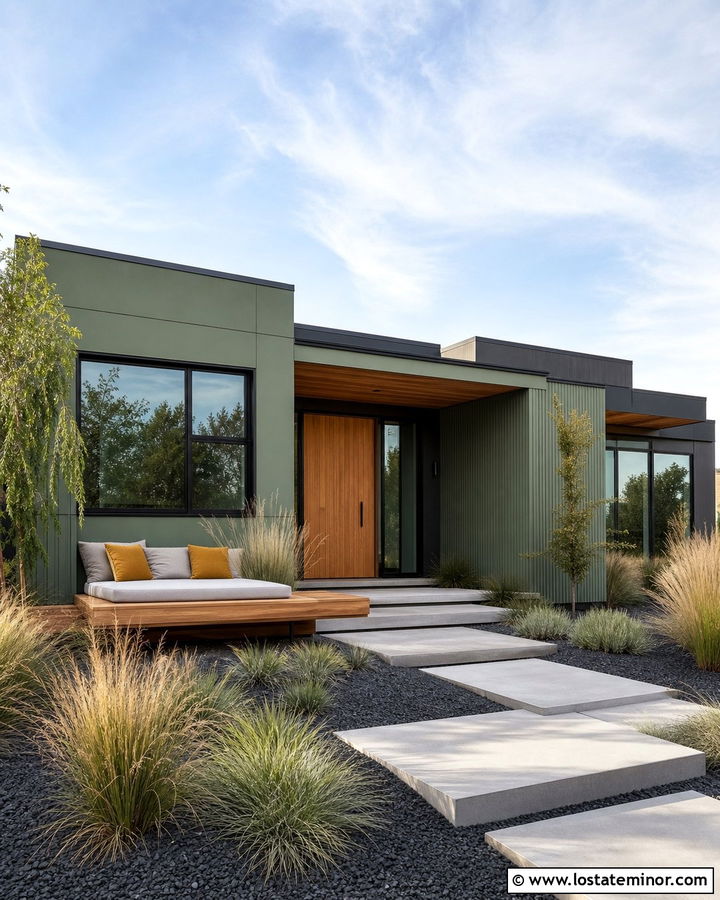
Clean geometry allows moss green to look modern rather than rustic. Apply the color to smooth fiber-cement panels and narrow vertical siding, using matte black around the windows and flat roof edges. A low cedar platform daybed can extend from the covered entry terrace as if it were part of the building. Choose pale gray cushions and one or two ochre accent pillows for controlled warmth. Repeat cedar on the oversized pivot door, soffits, and garage door slats. Large concrete pavers, black gravel, and sculptural grasses support the contemporary look. The daybed should remain simple and architectural, without an ornate frame or excessive pillows. Together, these elements create a calm exterior with strong lines and an organic color foundation.
10. Moss Green Tudor With Brick Porch Daybed
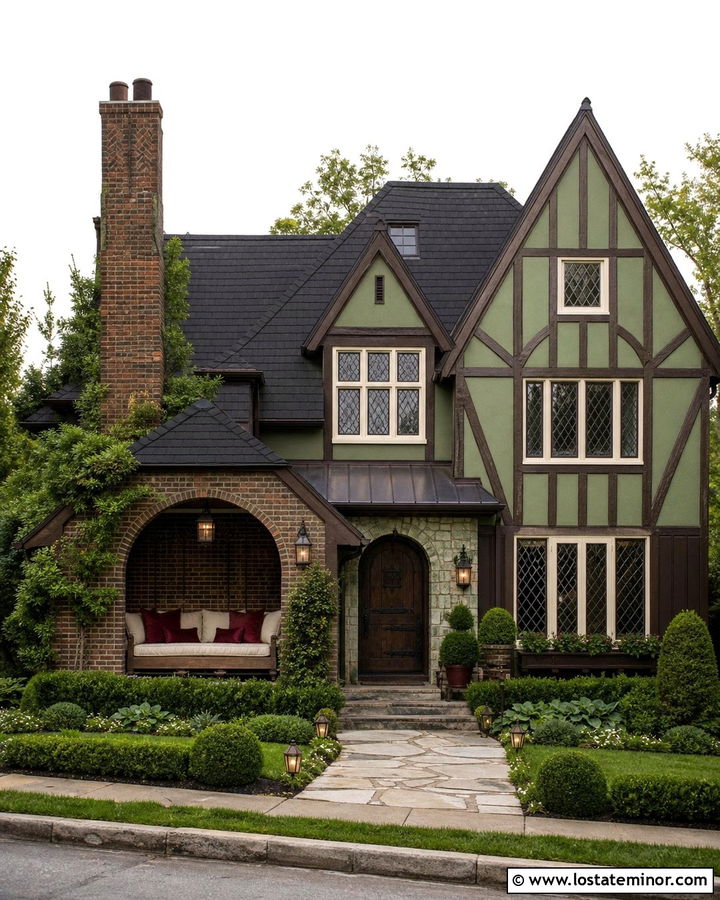
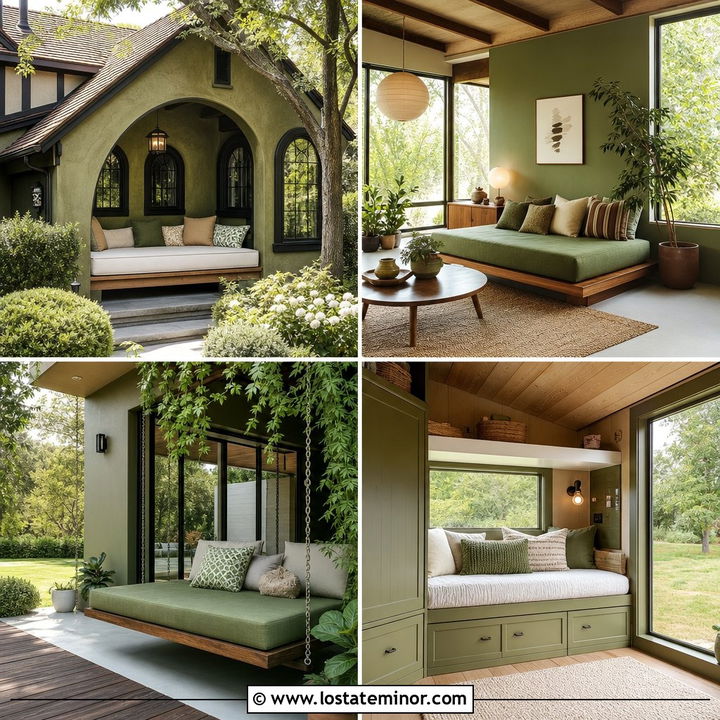
Moss green works surprisingly well on a Tudor when it is balanced by dark timber and aged brick. Use the green on stucco sections or painted siding between deep brown half-timber details. Cream trim around the leaded windows keeps the facade from becoming too dark. Place a built-in wood daybed inside an arched porch opening, finished with beige cushions and small burgundy accents. The cushions quietly reference the red and brown tones in the brick foundation and chimney. A heavy stained front door, copper lanterns, and a steep charcoal roof complete the traditional palette. Surround the entry with clipped evergreens and an informal stone path. The daybed makes the formal architecture feel more livable without compromising its historic character.
11. Moss Green Cabin With Black Roof Daybed
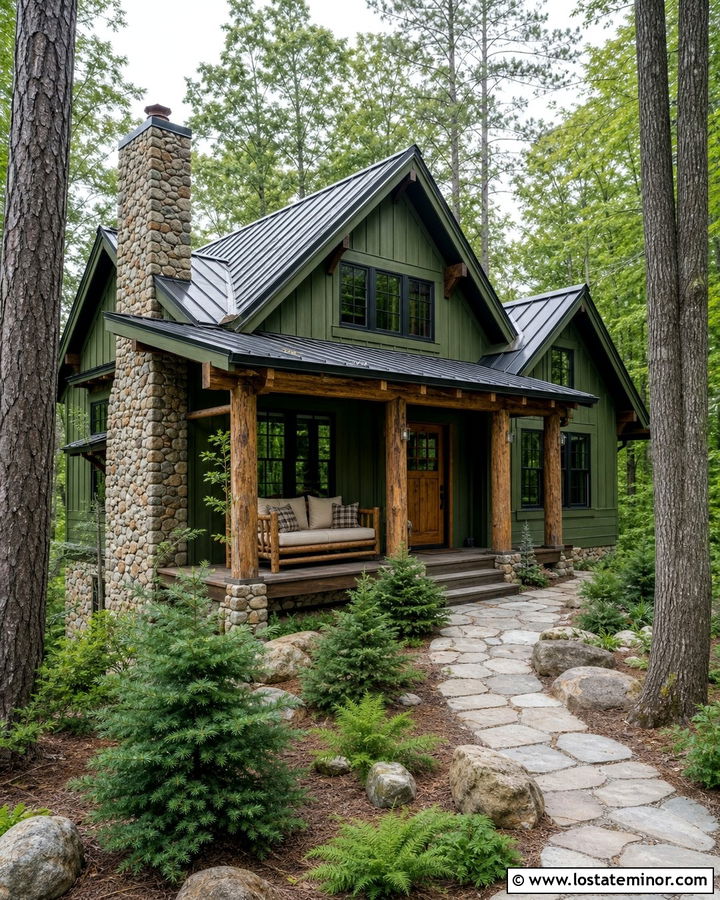
In a wooded setting, moss green siding helps a cabin settle naturally into the landscape. Pair it with a standing-seam black metal roof, black window frames, and sturdy timber porch posts. A log-frame daybed can occupy the sheltered front deck, but use refined cream cushions to keep the design from becoming overly rustic. Add plaid pillows sparingly in brown, black, and muted green. A fieldstone chimney and stone porch foundation provide enough texture to balance the simple siding. Warm exterior lighting fixtures and a medium-stained front door finish the facade. Keep surrounding ferns, native grasses, and tall trees visible, while maintaining a clear stone walkway. The resulting exterior feels secluded, durable, and intentionally connected to nature.
12. Moss Green Prairie House With Limestone Daybed
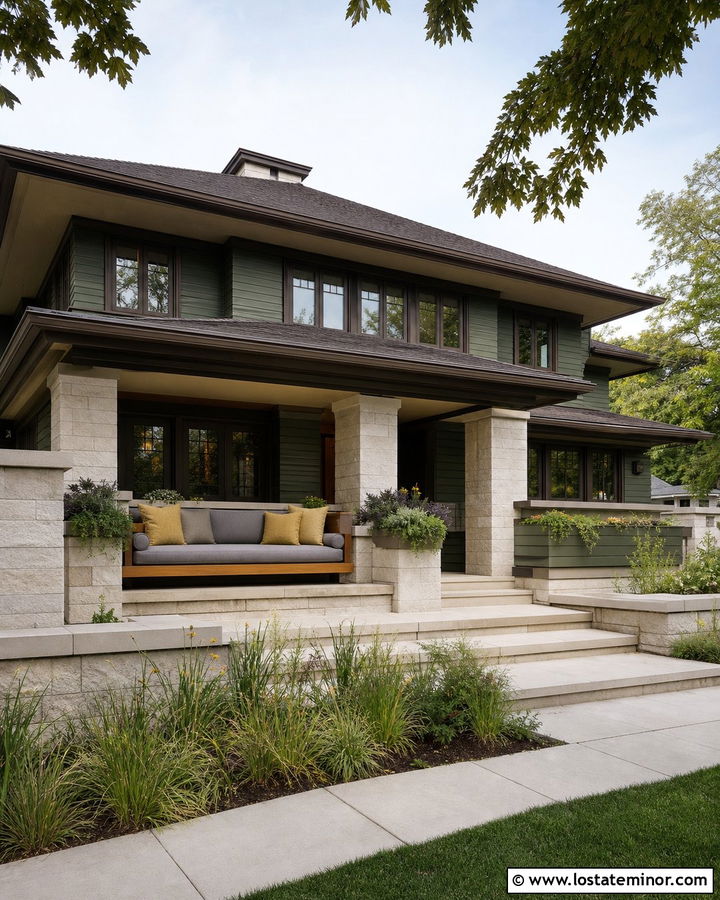
Strong horizontal lines define a Prairie-style home, and an integrated daybed can reinforce that low, grounded shape. Use moss green stucco or lap siding beneath broad roof overhangs, then introduce pale limestone around the foundation and entry columns. A built-in daybed with a stained oak base can sit beneath the extended front roof. Upholster it in warm gray fabric with ochre and cream pillows. Bronze-framed windows and a dark brown roof add contrast without disrupting the earthy palette. Continue the limestone into a wide front terrace and low garden wall. Horizontal planters, native grasses, and rectangular stepping stones emphasize the architecture. Every component should appear connected, making the seating area feel planned as part of the original house.
13. Moss Green Victorian With Ivory Porch Daybed
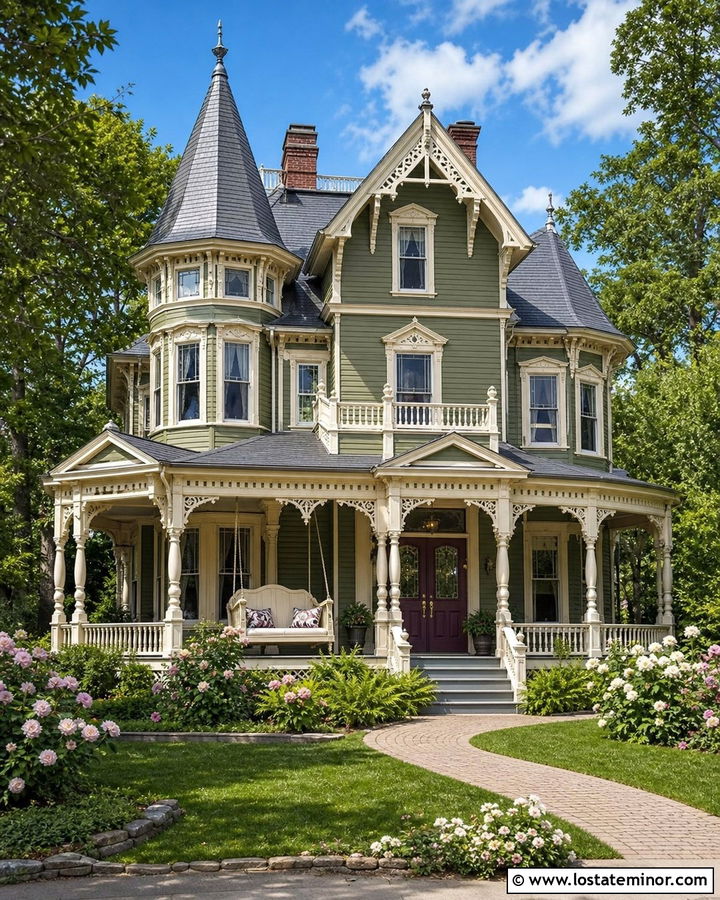
Ornate Victorian details become easier to appreciate when the color palette remains controlled. Paint the primary siding moss green, then use soft ivory on the gingerbread trim, turned porch posts, window frames, and decorative brackets. A deep plum front door provides one focused accent. Place an ivory-painted hanging daybed at the end of the wraparound porch, dressed with cream cushions and small plum-patterned pillows. Dark bronze chains will blend with traditional light fixtures and door hardware. A medium gray roof keeps attention on the detailed facade. Add roses, ferns, and low flowering borders, but leave enough open space to see the porch. This exterior feels historically appropriate, colorful, and welcoming without becoming visually overwhelming.
14. Moss Green Midcentury House With Walnut Daybed
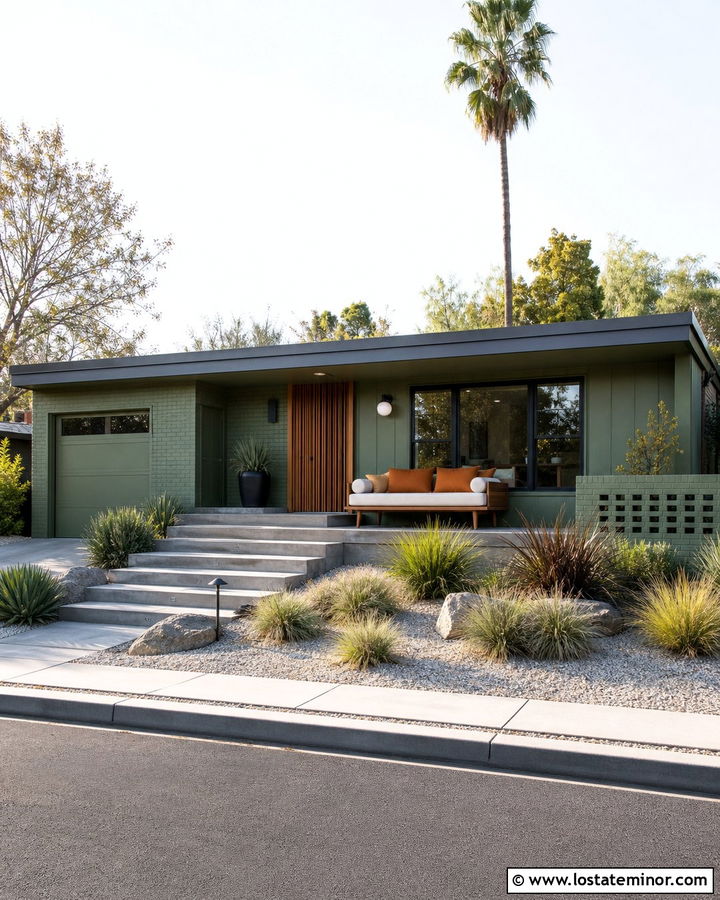
Warm walnut and moss green create a natural fit for a midcentury modern facade. Use moss green on flat-panel siding or painted brick, then introduce walnut-toned slats around the entry and garage. A streamlined platform daybed can sit beneath the low roof overhang, supported by a simple wood frame with tapered legs. Choose cream upholstery and burnt orange pillows for a subtle period-inspired accent. Black-framed windows and a charcoal roof edge sharpen the exterior. Keep the landscaping low and sculptural with ornamental grasses, gravel, and broad concrete steps. An oversized globe porch light adds character without clutter. The completed scheme respects the house’s original horizontal lines while turning an underused front terrace into a practical outdoor lounge.
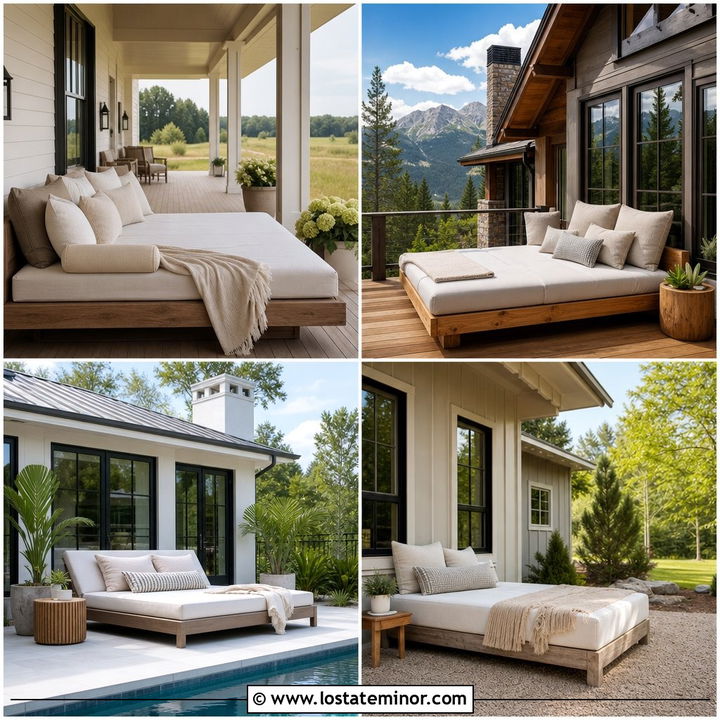
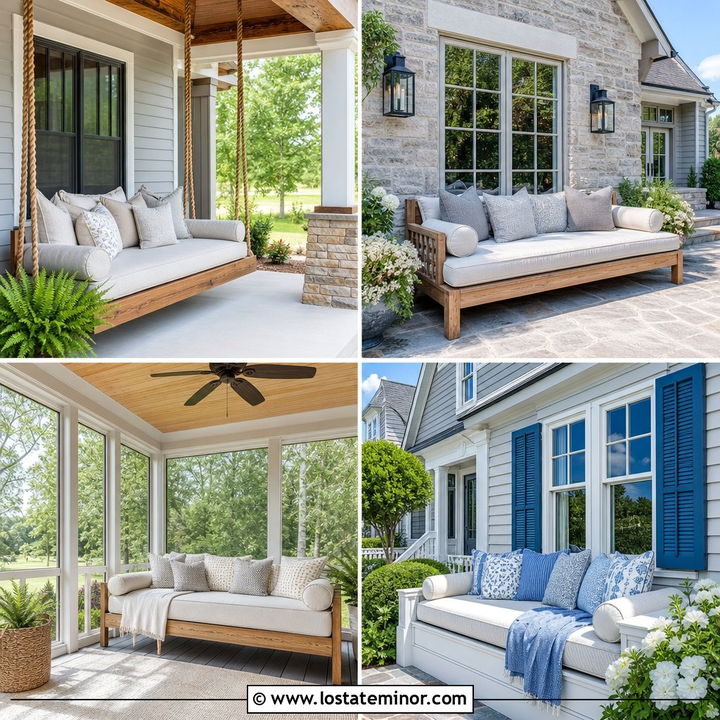
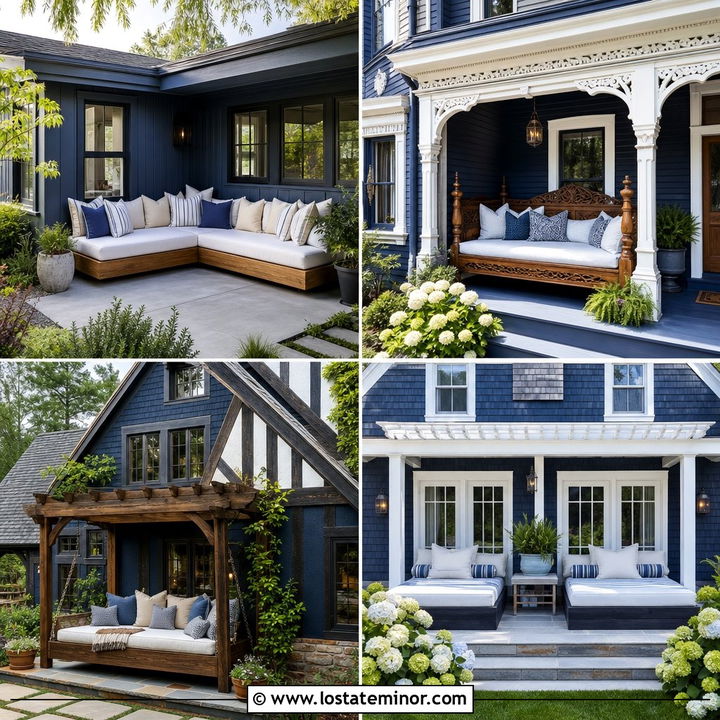
15. Moss Green Coastal House With Cream Daybed
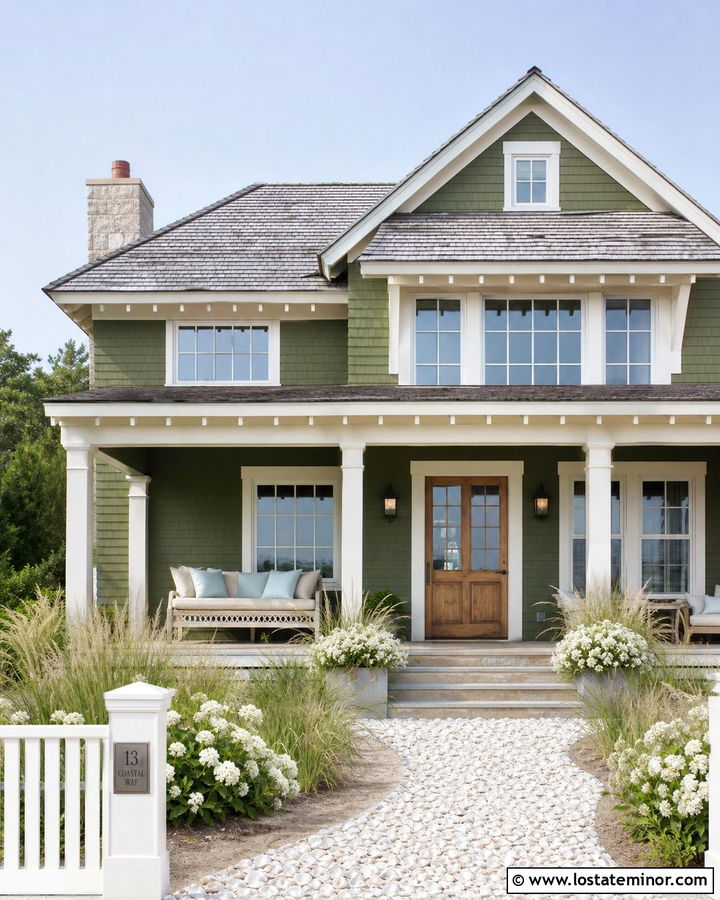
Moss green offers a grounded alternative to the pale blues commonly used on coastal houses. Cover the exterior in moss green shingles or lap siding, then add creamy white trim, porch railings, and square columns. A cream-painted daybed with a slatted back can sit beneath the front porch, finished with sand, soft blue, and moss-patterned cushions. Use a natural oak door and weathered gray roof to maintain a relaxed seaside character. Pale stone porch flooring helps reflect light toward the darker siding. Surround the home with dune grass, white flowers, and a simple shell path. The finished exterior feels airy and location-appropriate, while the deeper green provides enough presence to stand out against bright skies and open landscapes.
16. Moss Green Mountain House With Stone Daybed Nook
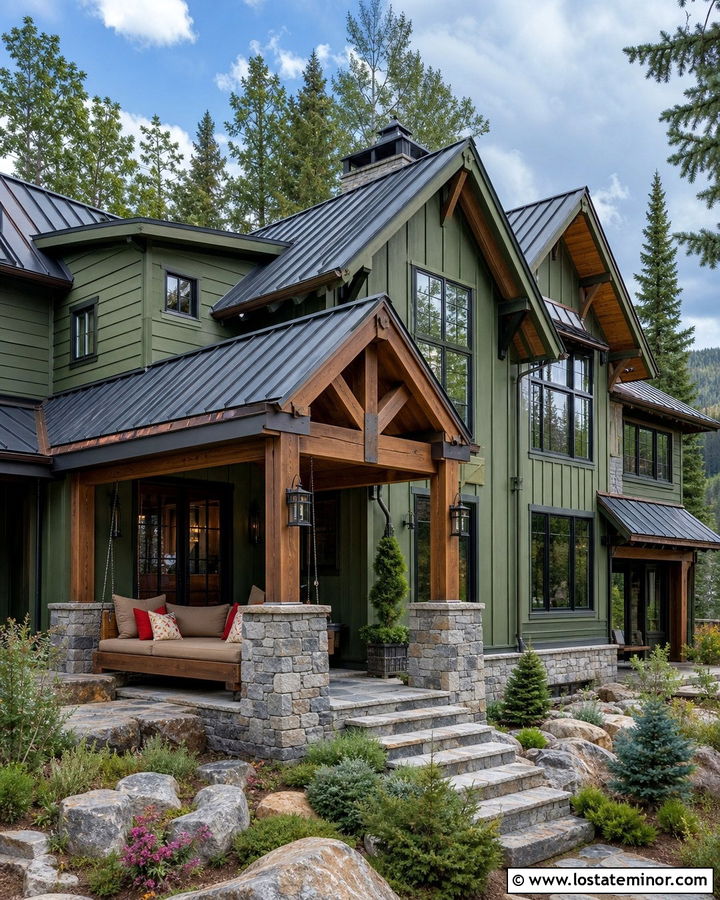
A mountain home needs substantial materials that hold their own against a dramatic landscape. Moss green board-and-batten siding can cover the upper facade, while rugged gray stone anchors the foundation and porch columns. Create a sheltered daybed nook between two stone supports, using a heavy timber frame and warm taupe cushions. Deep red and cream accent pillows add restrained cabin color. A charcoal metal roof, black windows, and natural cedar soffits complete the layered exterior. Position the entry nearby so the nook feels connected rather than hidden. Flagstone steps, evergreen shrubs, and native ground cover soften the hard materials. This whole-house design makes the daybed feel protected, comfortable, and suitable for cooler mountain conditions.
17. Moss Green Narrow House With Steel Daybed
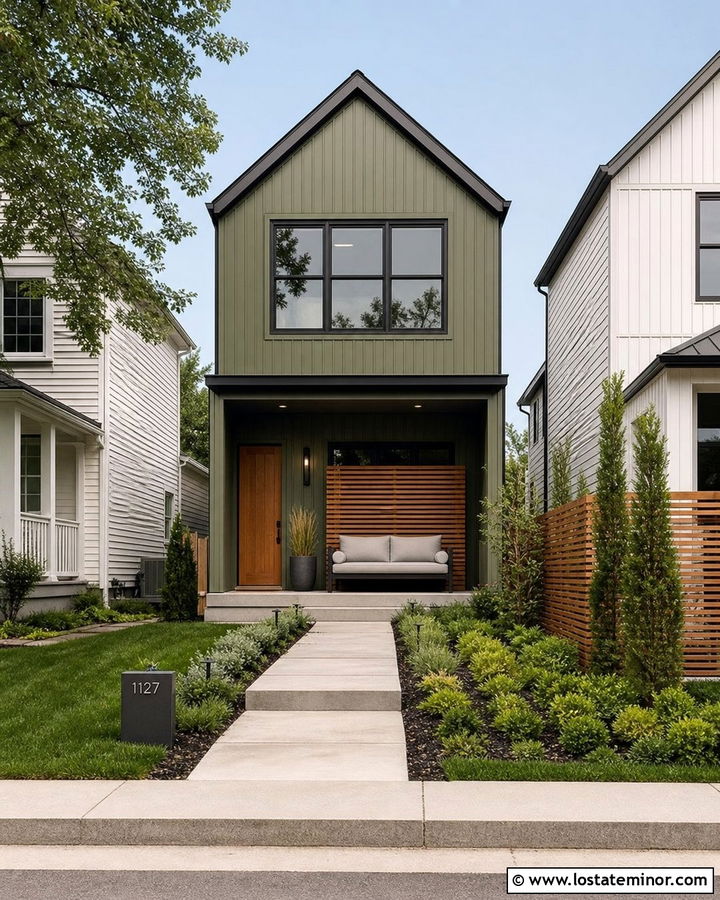
A narrow urban home can still include a comfortable outdoor resting area. Paint vertical siding moss green to emphasize height, then use black window frames and slim black trim for definition. Fit a compact black steel daybed beneath a recessed front porch or balcony overhang. Light gray cushions keep the furniture from looking heavy, while a narrow cedar privacy screen adds warmth and separation from the sidewalk. Repeat cedar on the front door and address panel surround. Use tall planters, a straight concrete path, and compact ground cover rather than wide planting beds. The daybed should have a simple frame and tailored upholstery. This approach adds function to a limited footprint while preserving an uncluttered, contemporary facade.
18. Moss Green Garden Cottage With Iron Daybed
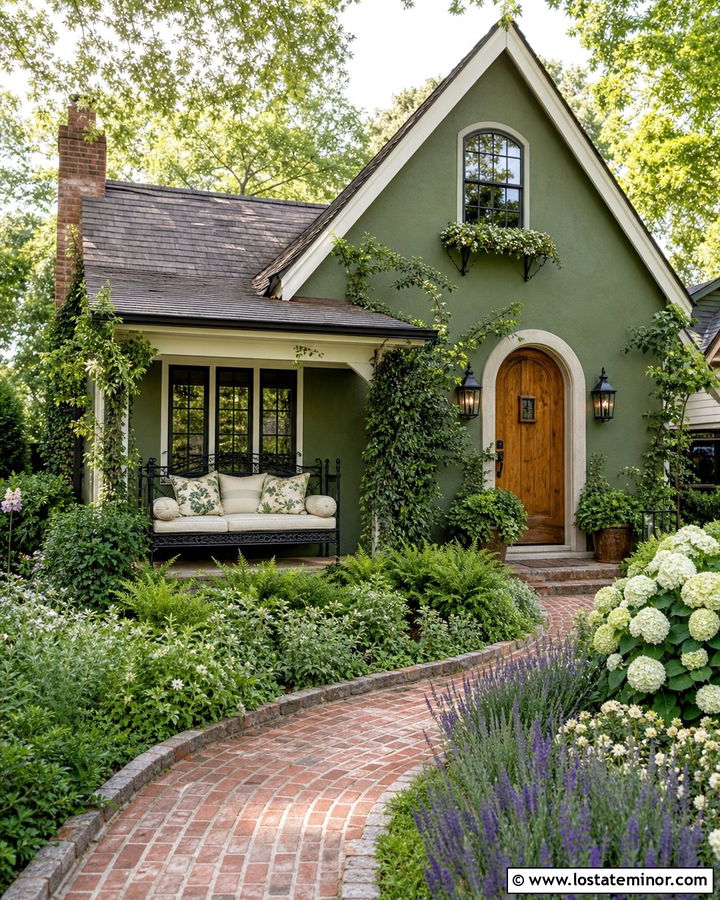
Lush planting can make a moss green cottage look wonderfully established, but the architecture still needs clear contrast. Choose warm white trim for the windows, eaves, and small covered porch. A black wrought-iron daybed provides a distinct focal point against the green siding, especially when dressed in ivory cushions and faded botanical pillows. Add a honey-toned wood door to warm the entry and repeat black through the porch lights and simple railing. A weathered gray roof suits the informal garden character. Curved brick paths, lavender, hydrangeas, and climbing vines can frame the facade without covering it. The combination feels romantic and relaxed, while the dark daybed frame prevents the soft garden palette from becoming overly delicate.
19. Moss Green Lake House With Screened Daybed Porch
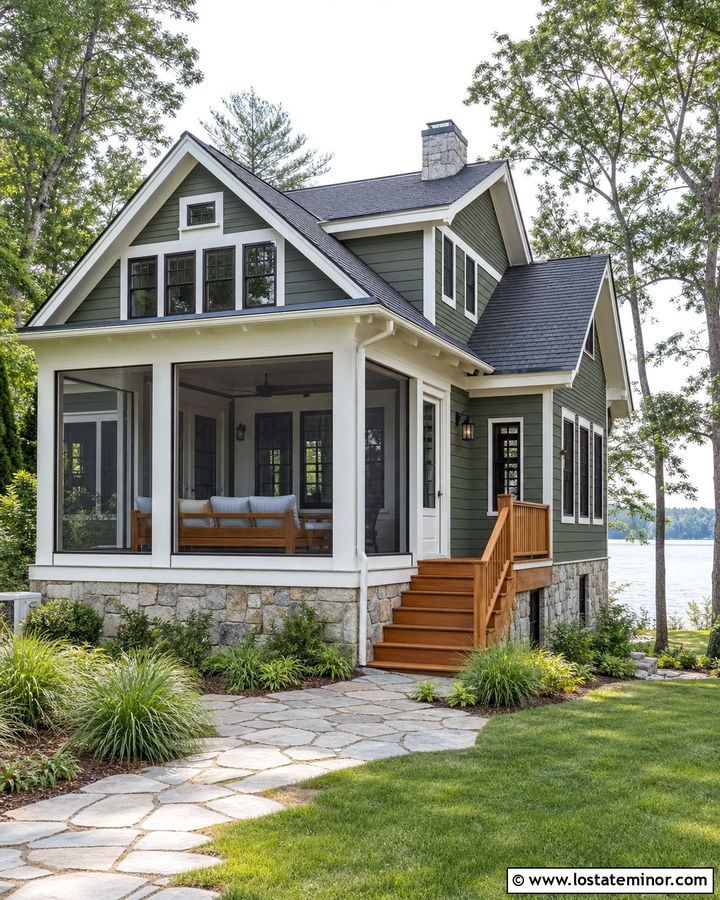
A screened porch allows a daybed to become a practical part of a lake house exterior. Use moss green lap siding across the main building and match the porch framing to creamy white window trim. Inside the screened section, position a natural teak daybed where it remains visible from the front three-quarter view. Pale blue-gray cushions connect the seating with water-inspired surroundings without changing the earthy character of the house. Add a charcoal roof, stone foundation, and stained wood steps for durability and visual depth. Large screen panels should keep the porch light and open. Native grasses, flat stone paths, and mature shade trees complete the setting. This design combines insect protection, relaxation, and coordinated curb appeal.
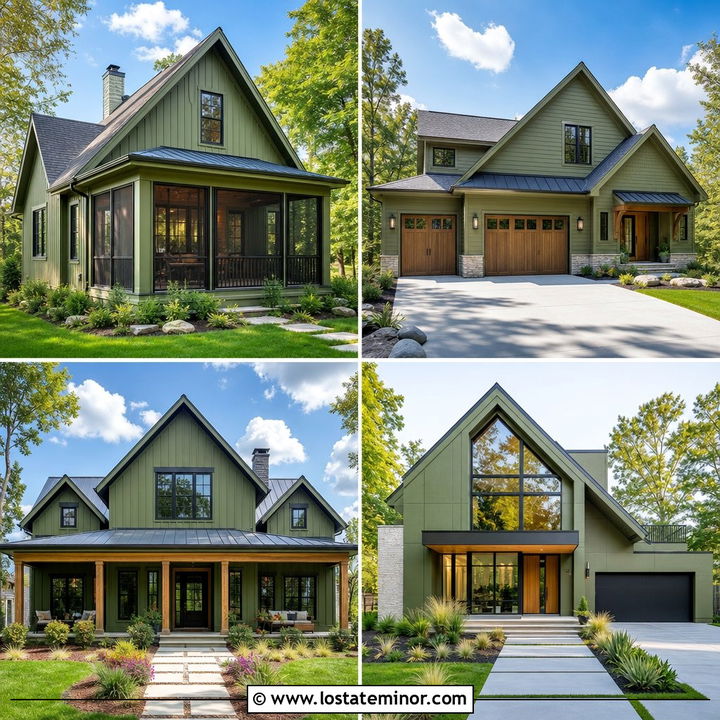
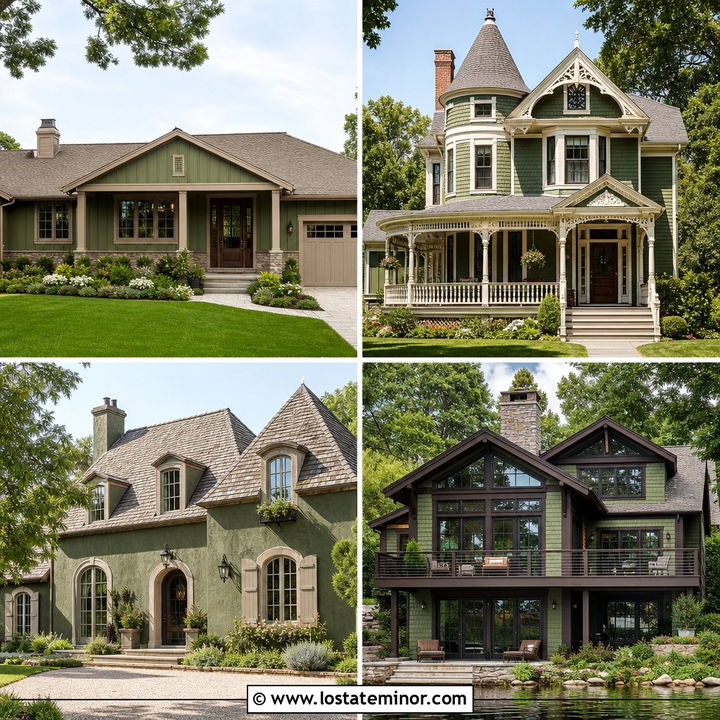
20. Moss Green Desert House With Teak Canopy Daybed
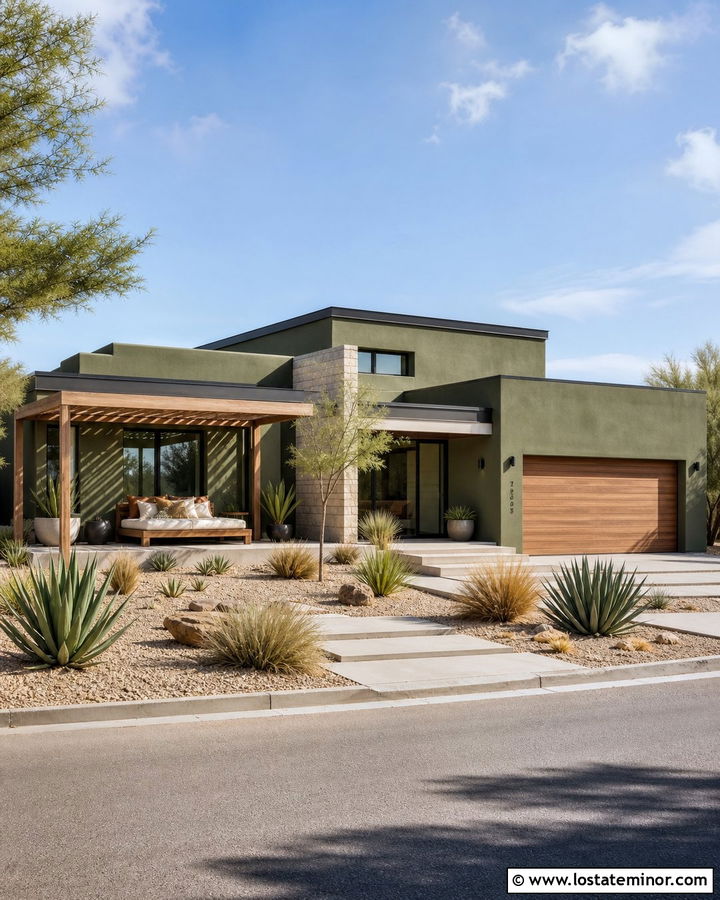
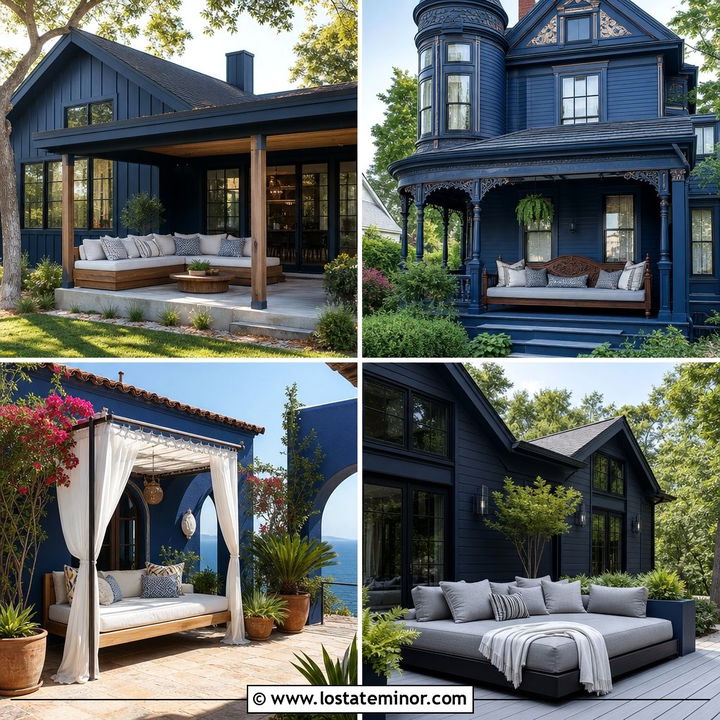
Moss green can bring refreshing color to a desert exterior when paired with warm, dry materials. Use the shade on smooth stucco walls, balancing it with sand-colored stone, black window frames, and a flat dark roofline. A teak canopy daybed can sit on the front courtyard terrace beneath a slatted pergola. Select off-white cushions with clay-colored pillows to connect the furniture with the surrounding landscape. Repeat teak on the entry door and garage accents. Large concrete slabs, pale gravel, agave plants, and ornamental grasses keep water needs and visual clutter low. The deep green facade becomes a strong backdrop for the lighter courtyard, while the daybed creates a shaded destination that feels integrated with the home.
21. Moss Green Spanish House With Terracotta Daybed Patio
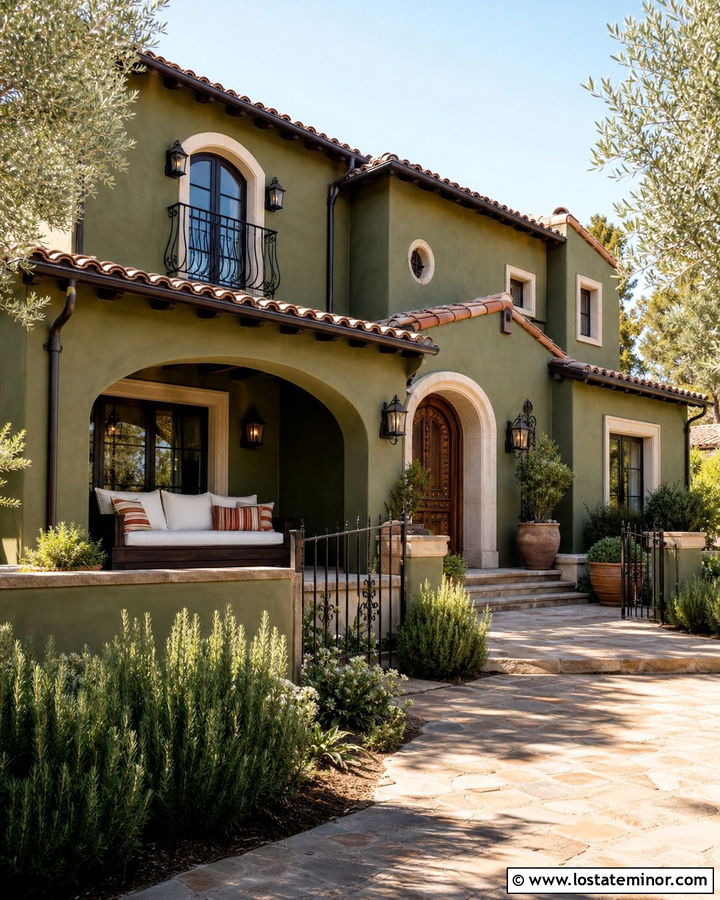
Terracotta tile brings out the warmer undertones of a moss green Spanish-inspired facade. Paint the stucco an earthy moss green, then use creamy trim around arched windows and doorways. A dark wood daybed can rest beneath an arcade or covered front patio, layered with cream cushions and terracotta-striped pillows. Choose a clay tile roof, aged bronze lanterns, and a carved wood front door to strengthen the Mediterranean character. Black iron railings provide a crisp outline without competing with the main colors. Add olive trees, rosemary, clay planters, and a warm stone walkway. This complete exterior scheme feels sun-washed and comfortable, with the daybed functioning as part of the shaded architectural transition between house and garden.
22. Moss Green Scandinavian House With Pale Wood Daybed
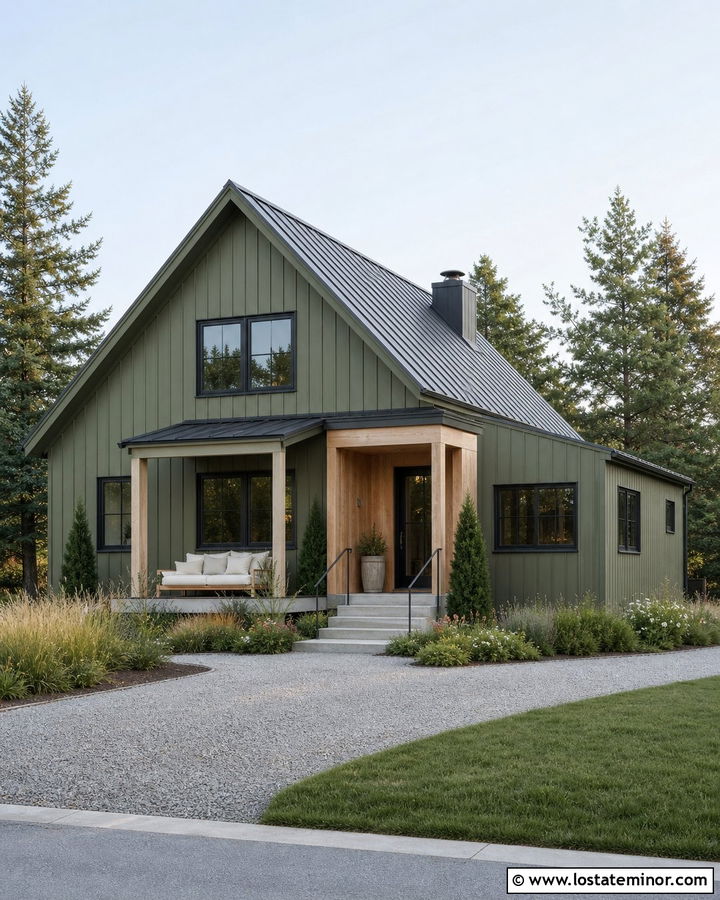
Simplicity is the strength of this moss green Scandinavian-inspired exterior. Apply the color to clean vertical siding, then pair it with pale natural wood around the entrance, porch ceiling, and front steps. A low pale-oak daybed with a slatted frame can sit beneath a minimal covered porch. Use off-white cushions and one charcoal throw for understated contrast. Black-framed windows and a simple dark metal roof give the facade a crisp outline. Keep railings thin or omit them where building conditions allow, preserving the open appearance. A gravel walkway, meadow grasses, and a few structured evergreens complete the landscape. The design feels calm and functional, with every color and material supporting the daybed rather than competing with it.
23. Moss Green Rustic Farmhouse With Rope Daybed
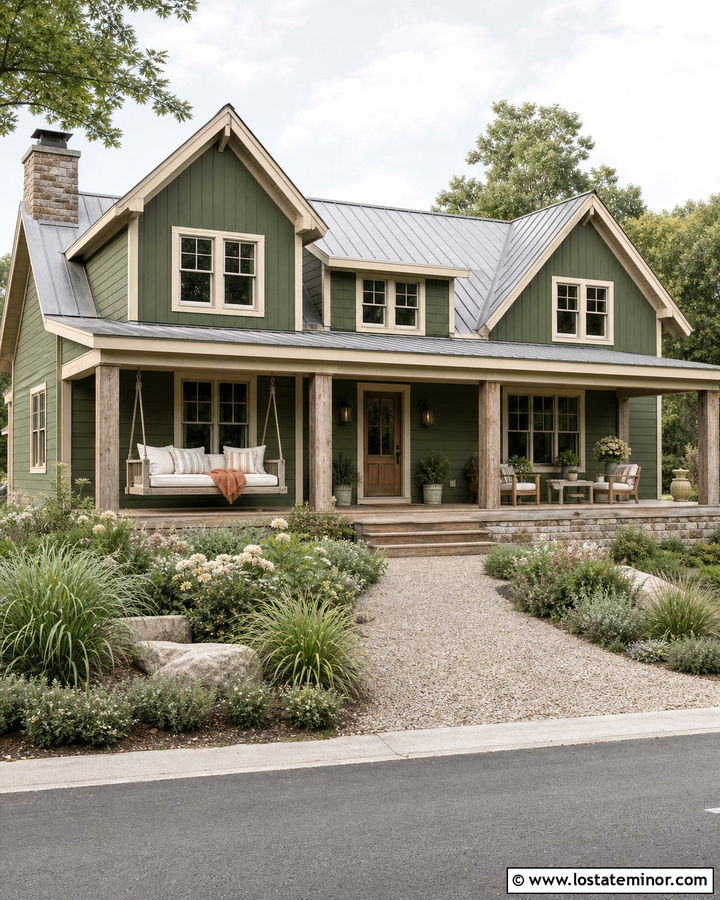
Weathered materials make a moss green farmhouse feel collected rather than overly new. Use wide lap siding in moss green, warm cream trim, and a galvanized metal roof with a naturally muted finish. Hang a chunky wood daybed from thick rope at one end of the broad porch. Cream canvas cushions, ticking-stripe pillows, and a rust-colored throw create a comfortable but practical arrangement. Add reclaimed timber columns and a medium-brown front door to continue the aged wood tones. A fieldstone foundation can keep the large facade visually grounded. Gravel paths, simple grasses, and informal flowering shrubs suit the relaxed setting. The completed exterior has farmhouse character without relying on stark white siding or excessive black accents.
24. Moss Green Two-Story House With Corner Daybed
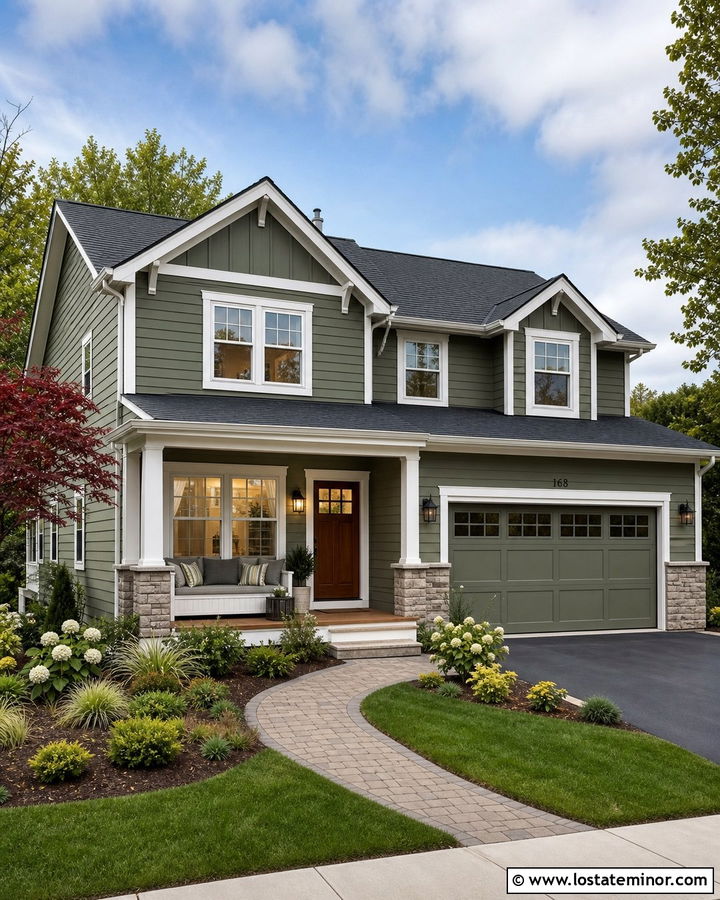
A typical two-story suburban home can gain personality through an expanded porch and a well-positioned corner daybed. Paint the main siding moss green, then use soft white trim, a charcoal roof, and medium-gray stone around the garage and foundation. Fit a white wood daybed into the sheltered porch corner, adding gray cushions and moss-striped pillows. A walnut front door introduces warmth and creates a clear entry focal point. Paint the garage door a matching moss green or quiet greige so it blends with the overall facade. Layered shrubs, a curved paver walkway, and one ornamental tree soften the structure. This practical update makes a familiar house shape feel more customized, comfortable, and visually balanced.
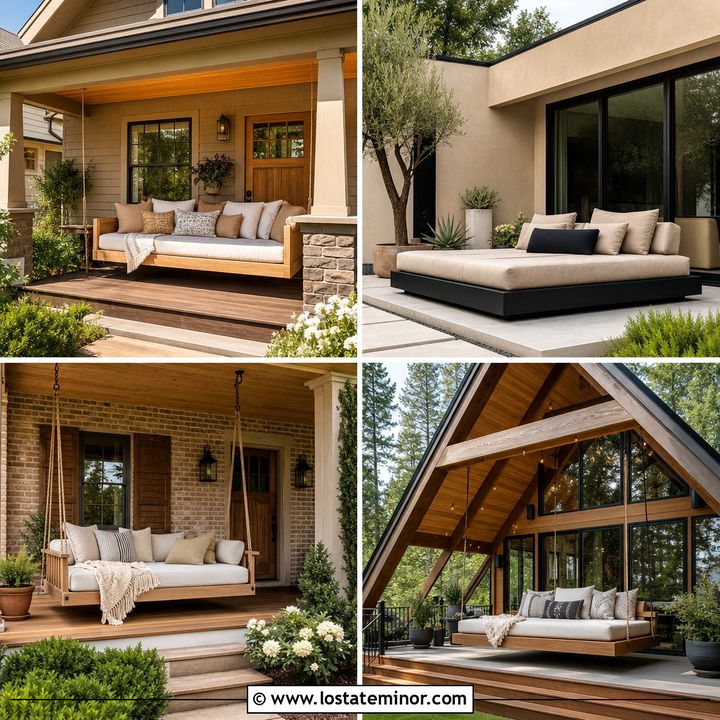
25. Moss Green A-Frame With Deck Daybed
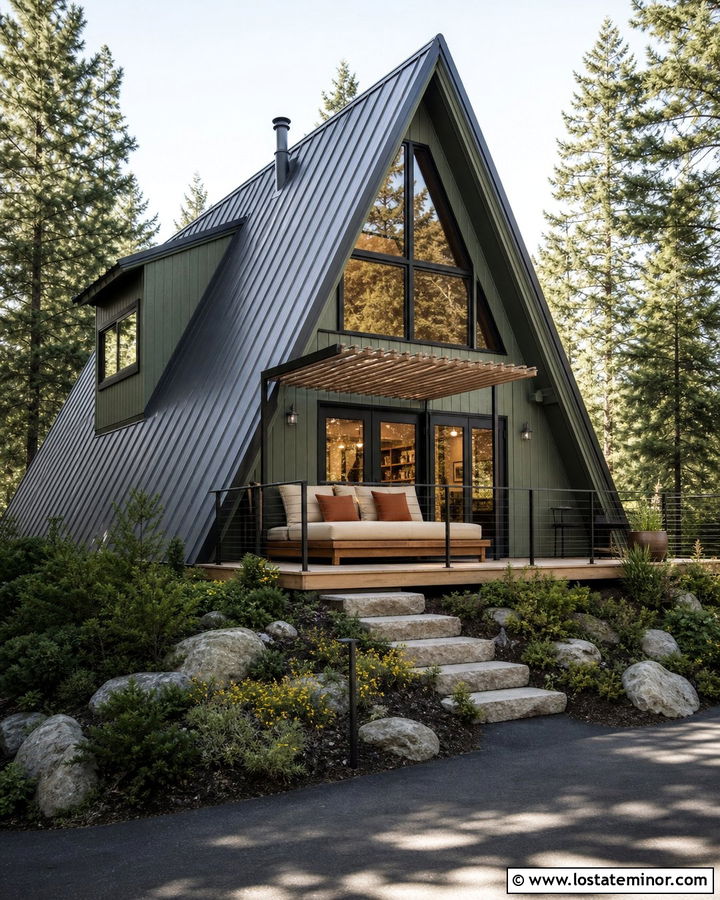
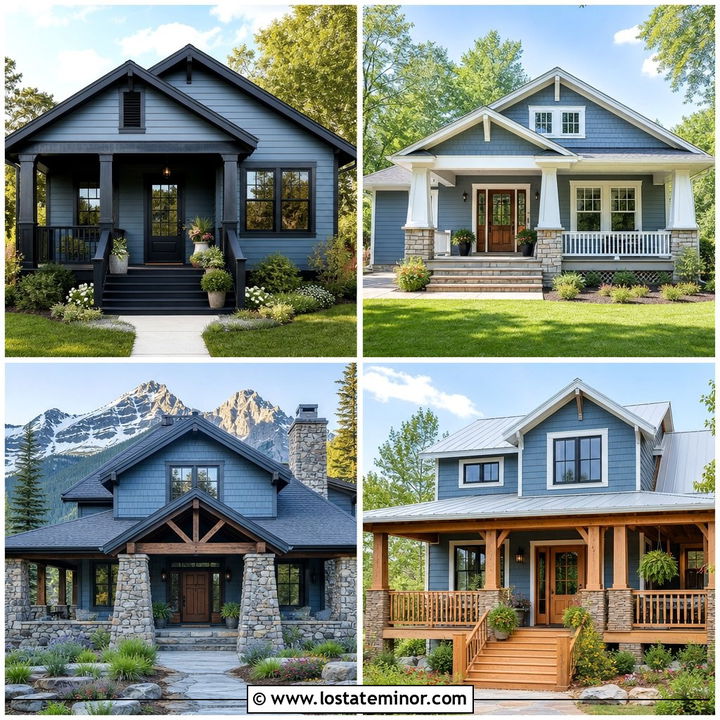
The steep roof of an A-frame creates a dramatic backdrop for moss green siding. Apply the color across the triangular facade, using black window frames and a charcoal metal roof to emphasize the geometry. A natural cedar deck can extend across the front, holding a low outdoor daybed beneath a small slatted canopy. Choose light beige cushions and burnt orange pillows to warm the deep green and black palette. Keep railings slender so they do not block the expansive front windows. Stone steps, evergreen trees, and native ground cover connect the deck to the site. The daybed should remain low and streamlined, allowing the roofline and glass to stay prominent while still creating a useful outdoor destination.
26. Moss Green Lowcountry House With Porch Daybed
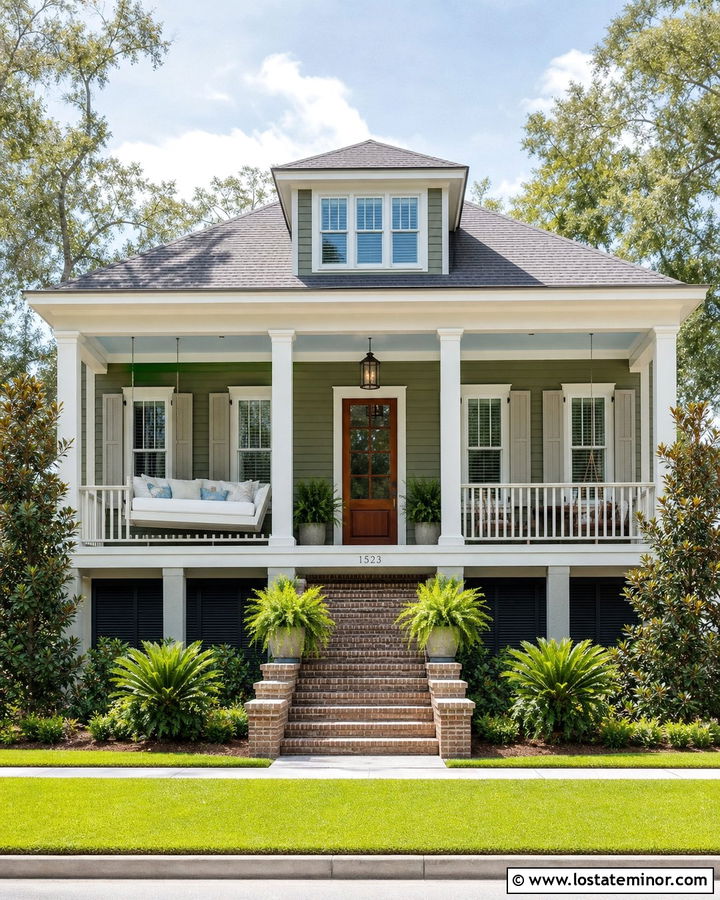
A raised Lowcountry house offers plenty of room for a comfortable hanging daybed. Paint the clapboard siding moss green and use creamy white on the tall porch columns, railings, window trim, and raised foundation details. Add a pale blue porch ceiling for a gentle regional accent. A white hanging daybed with sky blue and cream cushions can occupy one end of the full-width porch. Keep the roof medium gray and use a warm wood front door to anchor the center. Brick steps, ferns, magnolias, and layered shade plants complement the humid garden setting. The long porch and balanced furniture placement make the house feel gracious, while moss green gives the traditional architecture a distinctive nature-inspired identity.
27. Moss Green Painted Brick House With Wood Daybed
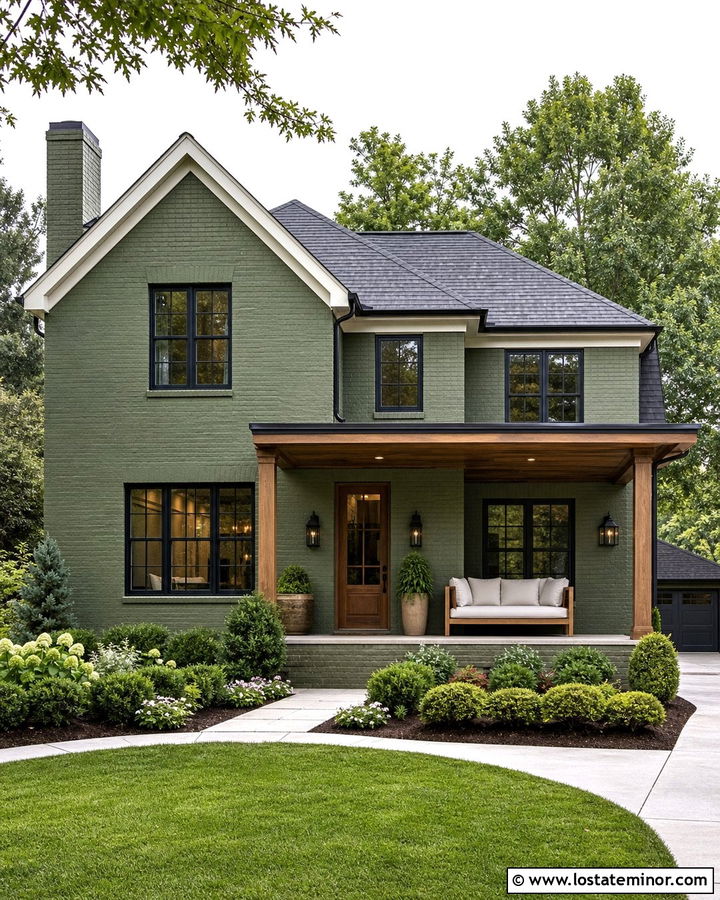
Painted brick gives moss green extra depth because the masonry texture remains visible beneath the color. Use a mineral-style moss green finish across the brick, then add warm white trim and black-framed windows. A substantial wood daybed can sit on a covered front terrace, supported by clean square posts and filled with oatmeal cushions. Repeat the wood tone on the front door, porch ceiling, and a pair of simple planters. A charcoal roof and black metal lights provide a controlled amount of contrast. Keep the walkway pale and the landscaping green but neatly layered. This treatment updates an older brick home without erasing its character, while the daybed adds softness to an otherwise solid, structured facade.
28. Moss Green Board And Batten House With Built-In Daybed
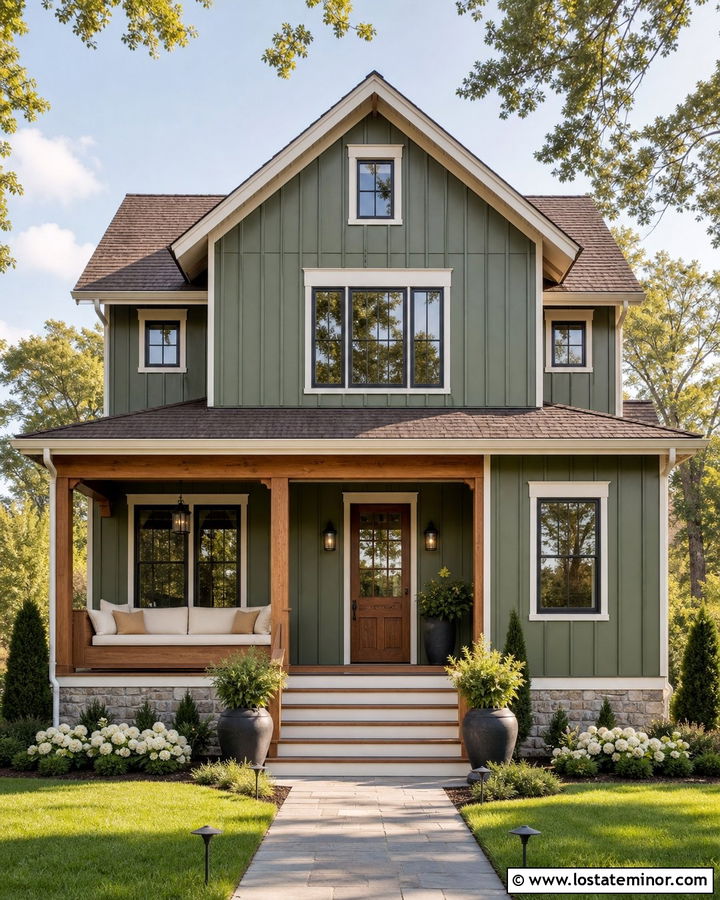
Vertical board-and-batten siding makes moss green appear taller, cleaner, and more architectural. Pair it with warm ivory trim and a medium-brown shingle roof for a gentle, natural palette. Build a daybed directly into one side of the covered porch using stained cedar that matches the front door and support beams. Cream cushions and muted gold pillows can brighten the seating without creating sharp contrast. Add a low stone base around the porch and foundation to ground the vertical siding. Wide steps, black lanterns, and symmetrical planters create an orderly entrance. Because the daybed repeats materials already used across the house, it feels permanent and intentional rather than like a separate piece of outdoor furniture.
29. Moss Green Shingle House With Curved Daybed
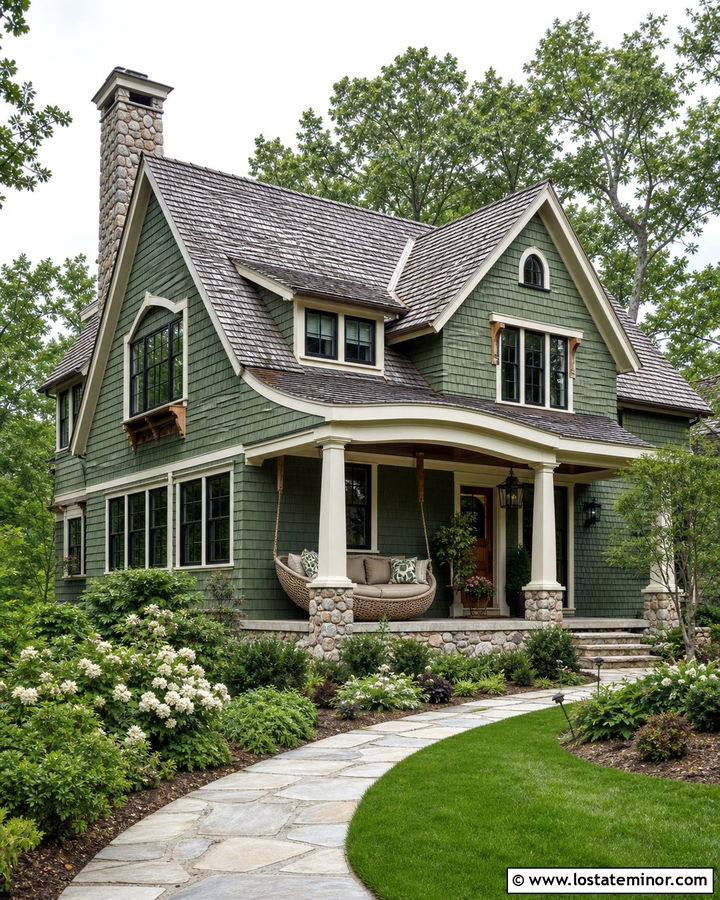
Moss green shingles create subtle shadow and texture across a large traditional facade. Balance the darker body color with creamy trim, a weathered gray roof, and natural cedar details. Place a curved woven daybed beneath a deep covered porch, using light taupe upholstery and forest-patterned accent pillows. The rounded furniture shape softens angular dormers, gables, and porch columns. Repeat the woven brown tone on baskets, planters, or a small side table, but keep accessories limited. A stone chimney and foundation add another natural material without introducing an unrelated color. Curved garden beds and a broad stone walkway complete the exterior. The scheme feels substantial and polished while maintaining a comfortable, approachable atmosphere.
30. Moss Green Budget Ranch With Simple Porch Daybed
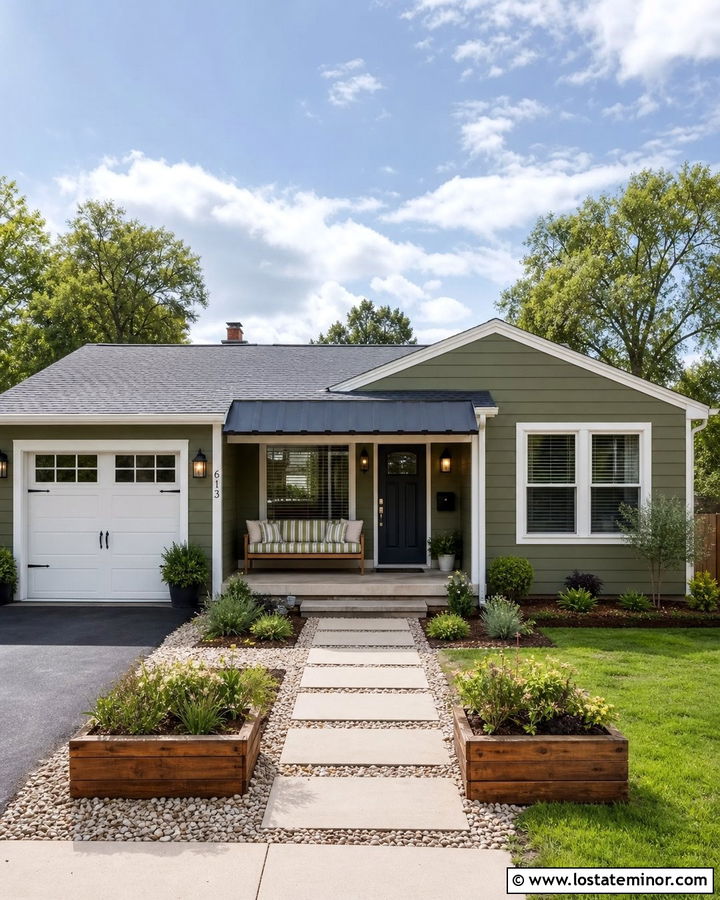
You do not need major structural changes to create an appealing moss green ranch with a daybed. Paint existing siding moss green and refresh the trim with a warm, affordable off-white. A simple freestanding wood daybed can fit beneath the current porch roof or a basic attached awning. Use durable beige cushions and washable green-striped covers for an easy coordinated look. Paint the front door charcoal and repeat that color on porch lights and house numbers. If stone veneer is outside the budget, use gravel borders and stained wood planters to introduce texture. A straight paver walkway and neatly edged planting beds finish the facade. The result feels complete, comfortable, and realistic for a modest exterior update.
Conclusion:
The most successful 30 Moss Green House Design With Daybed Ideas treat color, architecture, furniture, and landscaping as one connected plan. Moss green provides a calm backdrop, while white, cream, black, cedar, brick, and stone can shift the exterior from traditional to modern. The daybed should repeat at least one material or accent color found elsewhere on the house. That simple connection helps it look intentional. Consider porch depth, weather exposure, washable fabrics, and secure structural support before choosing a freestanding or hanging design. Whether you prefer a compact cottage, relaxed ranch, rustic cabin, or contemporary home, these complete schemes can transform an ordinary exterior into a comfortable and memorable outdoor retreat.

Related posts: