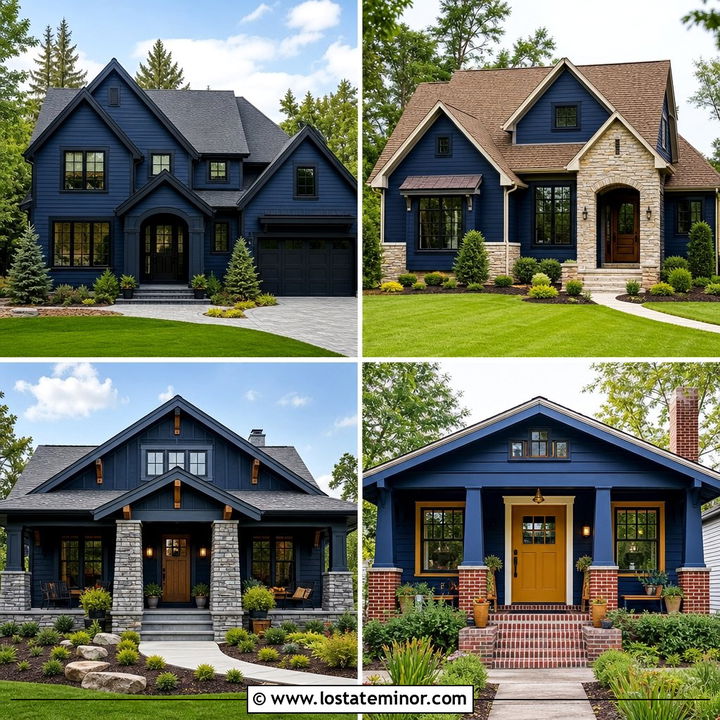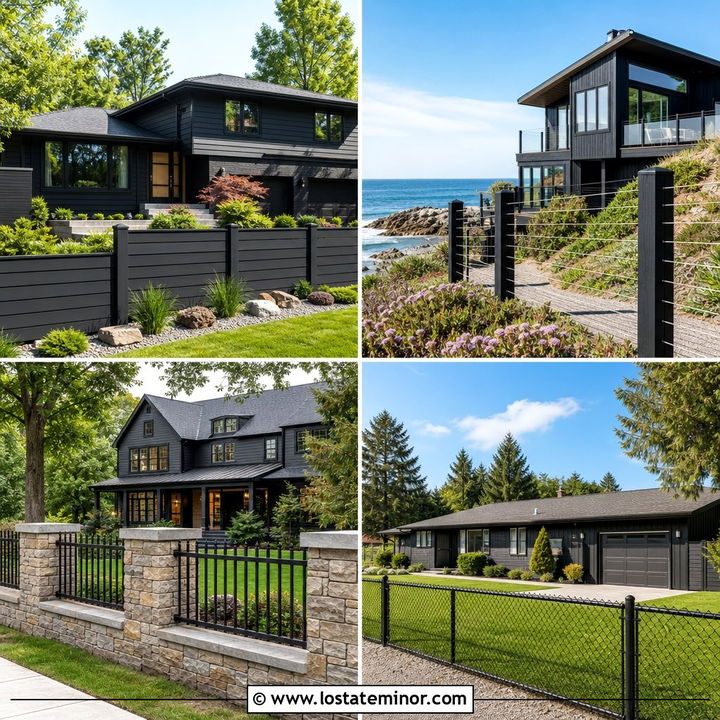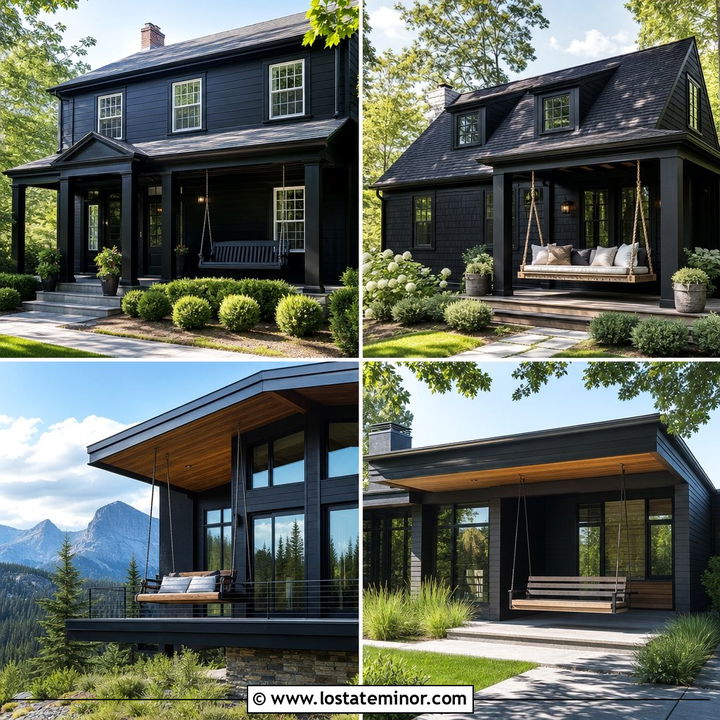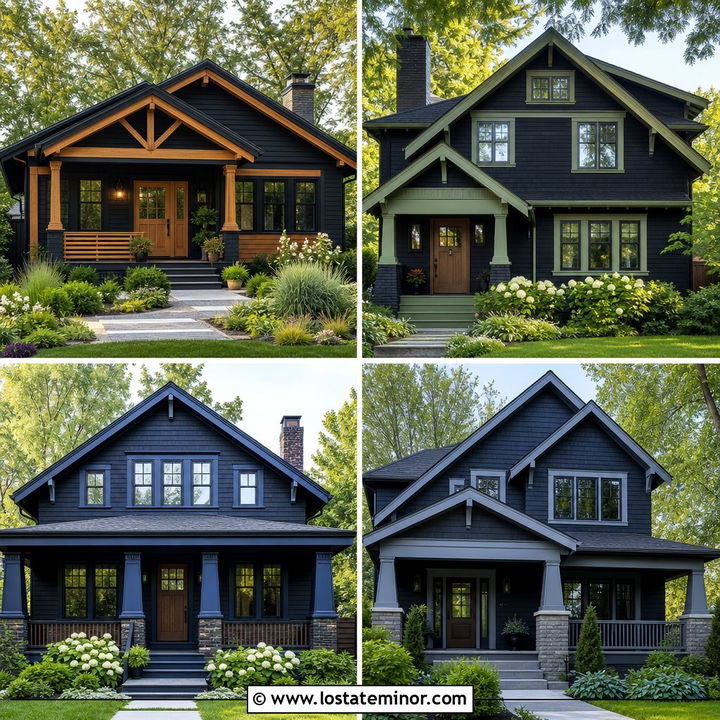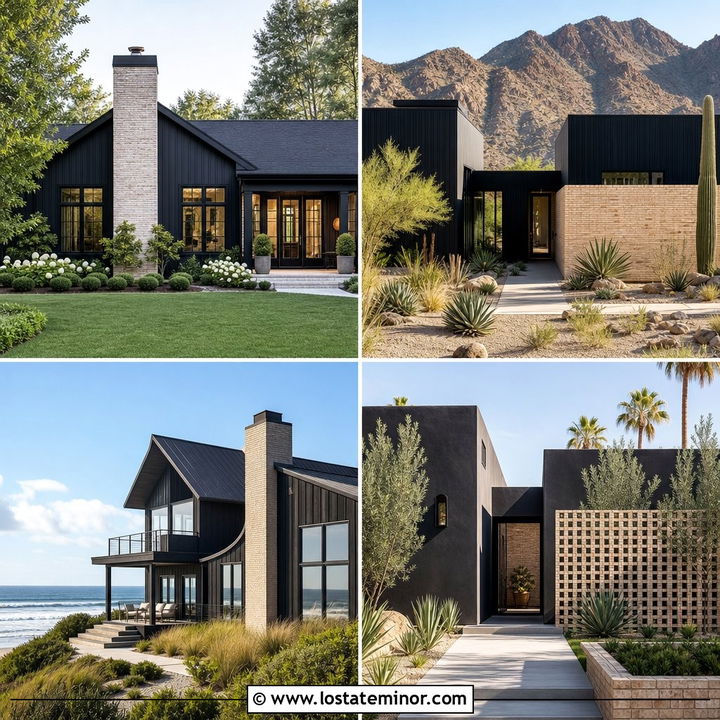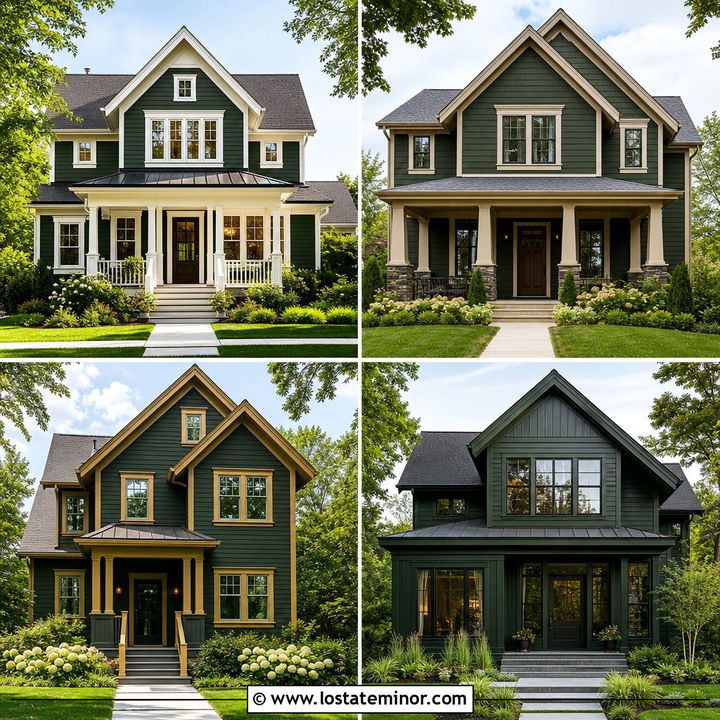
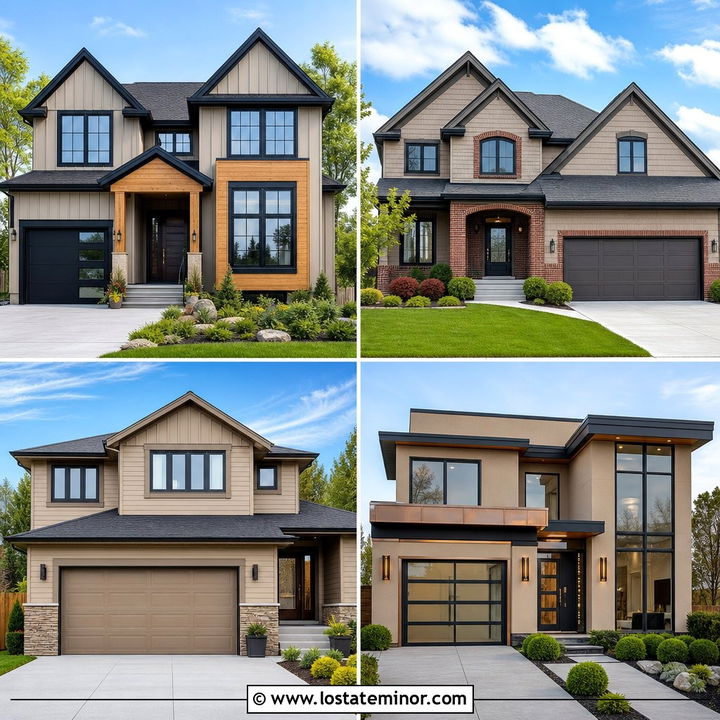
A black exterior can make almost any home feel sharper, more intentional, and visually grounded. The secret is choosing accents that soften the dark facade, highlight the architecture, and connect the house to its surroundings. Warm wood brings organic contrast, pale stone adds brightness, and colorful doors create personality without overwhelming the design. Roof color, siding direction, window frames, landscaping, and exterior lighting also affect how black paint reads from the street. Before committing, test large samples on different sides of the house and view them throughout the day. The complete schemes below cover modern, traditional, rustic, and budget-friendly options, making it easier to find the right balance in these 30 Black House Design With Accents Ideas.
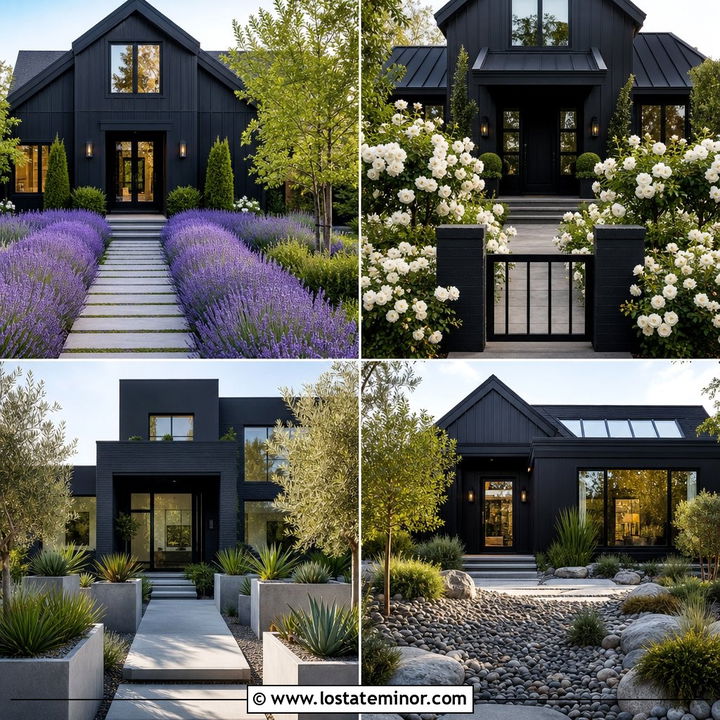
1. Black House With Cedar Accents
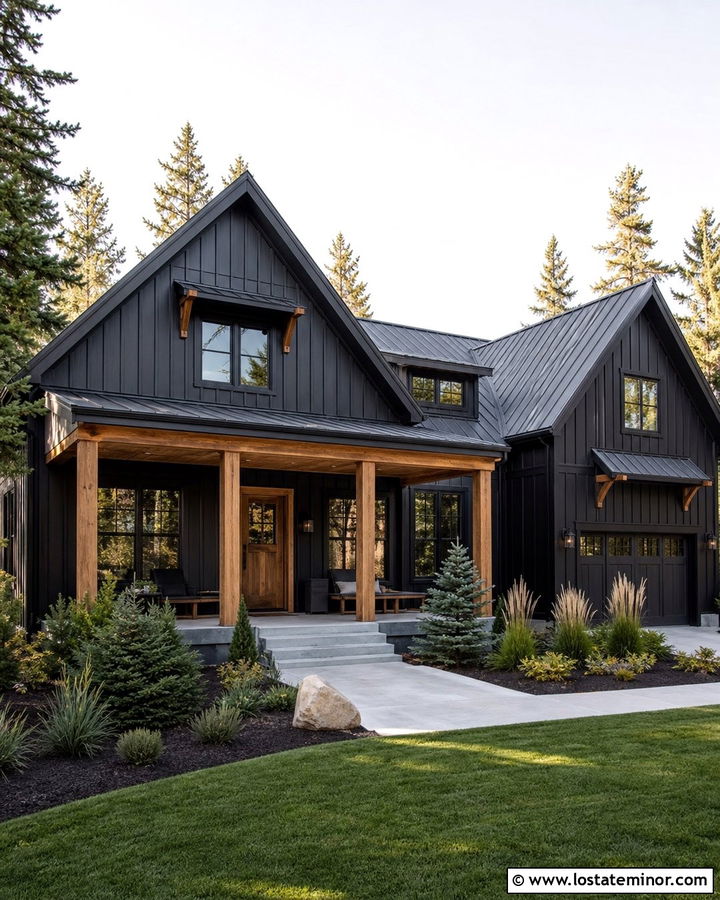
Natural cedar is one of the easiest ways to make a black exterior feel warm and welcoming. Use cedar around the entrance, beneath porch ceilings, or across a prominent gable so the wood becomes an intentional architectural feature. Matte black vertical siding creates a clean background, while medium-toned cedar adds color, grain, and softness. Carry the wood tone into porch posts, house numbers, or a slatted privacy screen for continuity. A charcoal roof and black window frames keep the larger surfaces cohesive. Choose a clear or lightly tinted exterior finish that protects the cedar without hiding its natural variation. Simple grasses, evergreen shrubs, and a pale concrete walkway complete this balanced black house design.
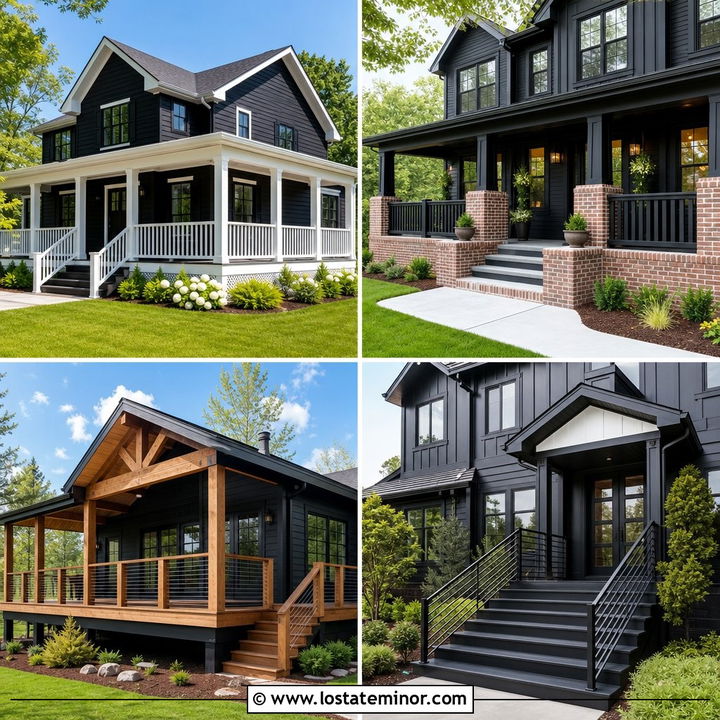
2. Black House With White Trim
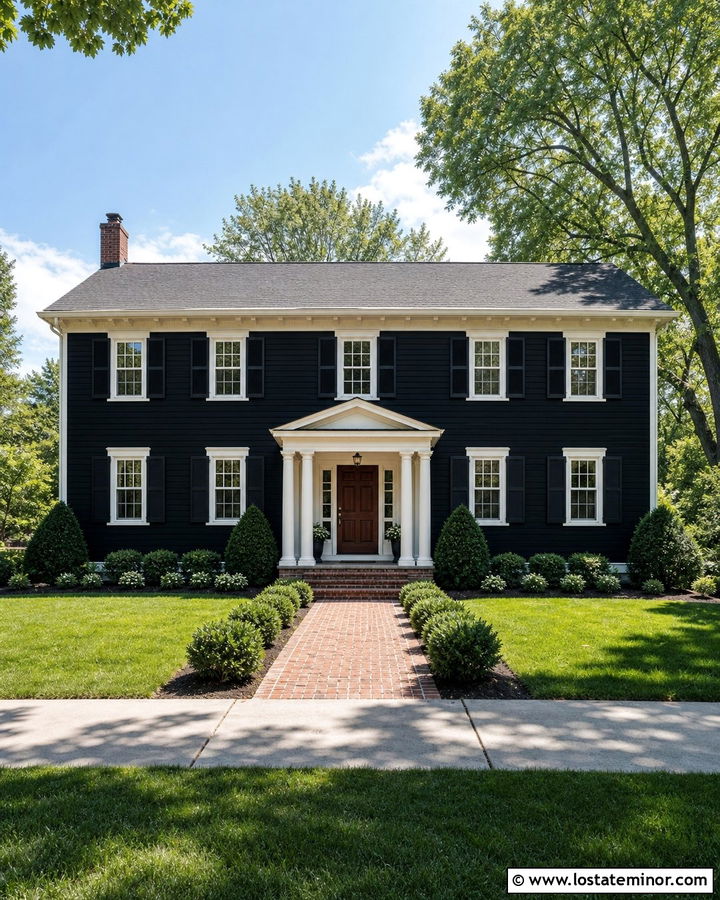
Crisp white trim gives a black house clear definition and familiar curb appeal. This combination works especially well on Colonial, Cape Cod, and traditional two-story homes with symmetrical windows. Keep the black body color dominant, then use warm white on window casings, porch columns, fascia, and decorative molding. A bright white can look severe beside deep black, so a slightly creamy white often creates a softer transition. Add a stained wood door to prevent the palette from feeling too stark. Black shutters can blend into the siding, while a medium-gray roof provides subtle separation above. Repeating white around the entry and porch railing creates a connected, polished facade rather than a collection of unrelated outlines.
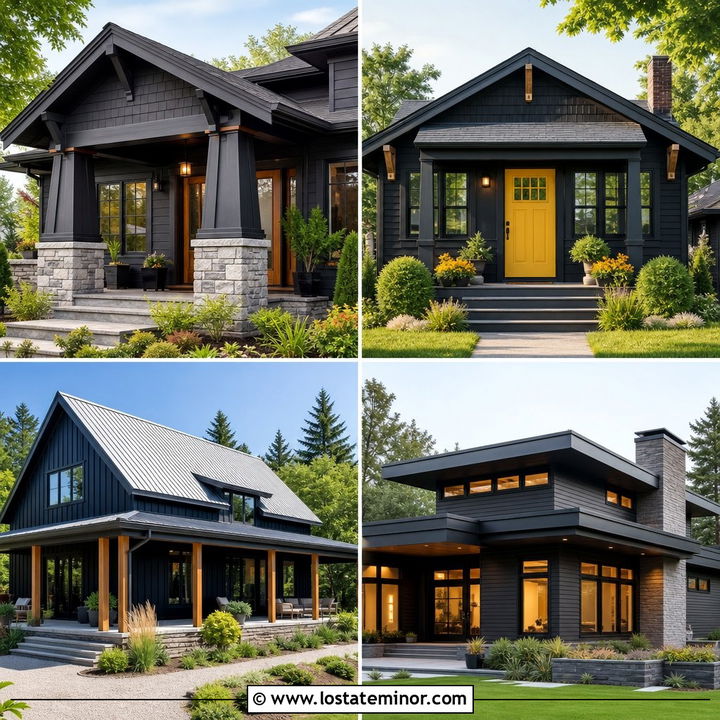
3. Black House With Stone Accents
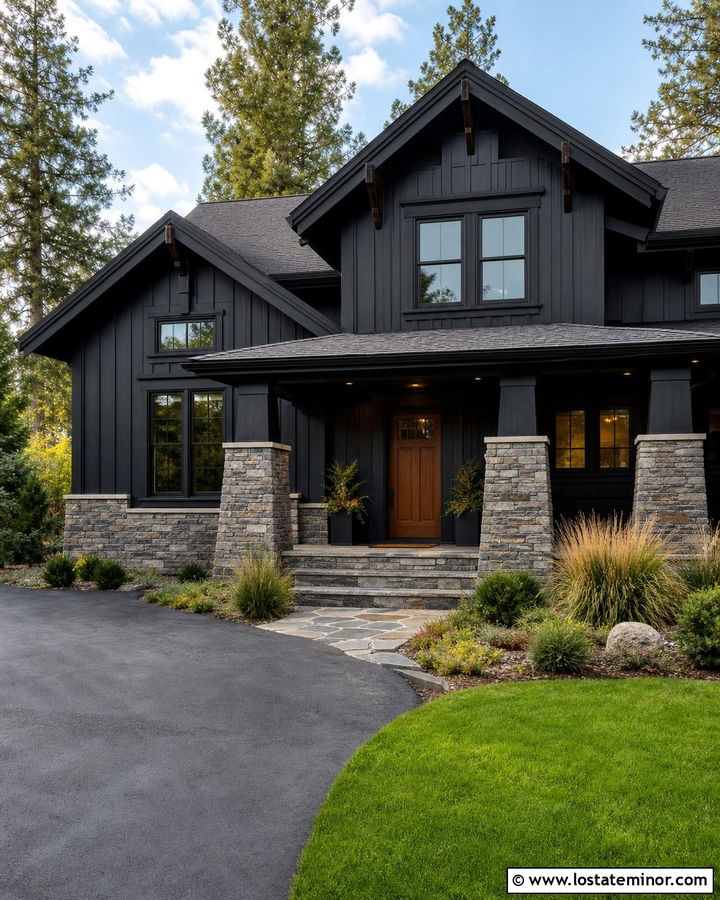
Stone introduces texture and natural color to a black exterior without reducing its bold character. On a Craftsman or mountain-inspired home, place stone along the foundation, around porch columns, or across a recessed entry wall. Choose ledgestone with gray, taupe, and muted brown variation so it bridges black siding with the surrounding landscape. Vertical black board-and-batten above a stone base makes the house appear taller, while a walnut front door adds another warm layer. Keep the roof dark gray rather than pure black to preserve visible dimension. Low evergreen plants, ornamental grasses, and a wide flagstone path reinforce the organic palette. Limit stone to important architectural areas so it feels structural, not randomly applied.
4. Black House With Red Brick Accents
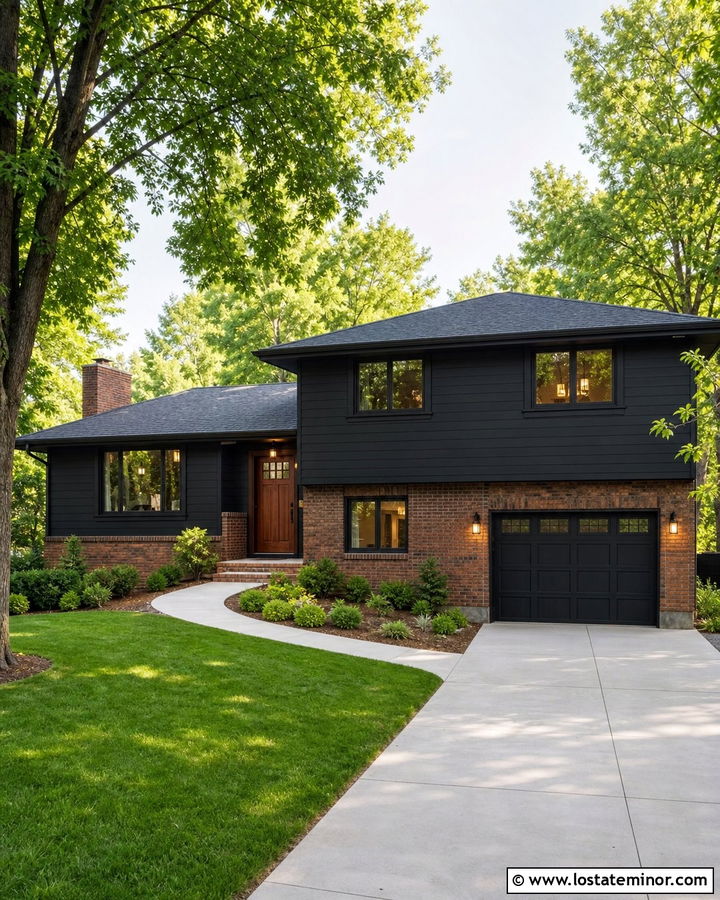
Existing red brick can look surprisingly refined beside a fresh black exterior. Instead of painting the masonry, allow its earthy red, brown, and charcoal variation to add warmth and history. Black lap siding can update the upper level of a split-level, Tudor, or renovated ranch while the original brick grounds the lower facade. Repeat black on the windows, gutters, and garage door to unify old and new materials. A dark bronze or stained mahogany front door works better than another bright color because the brick already provides contrast. If the mortar appears too pale, a gentle cleaning may restore its natural tone. Green shrubs and a simple concrete walkway help balance the strong black-and-red combination.
5. Black House With Copper Accents
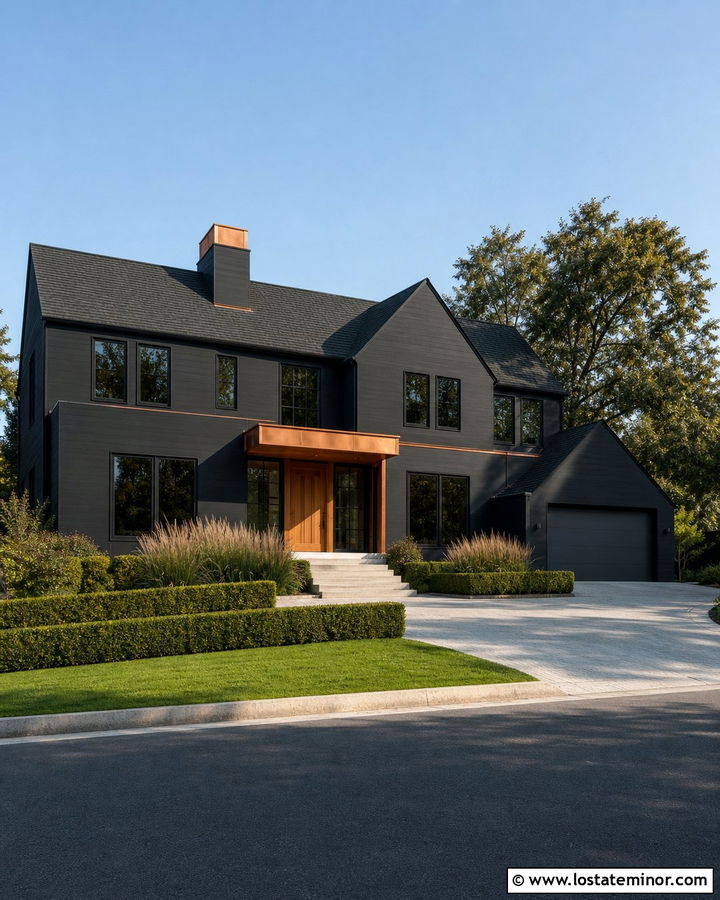
Copper brings a rich, changing finish to a black house and looks especially effective on refined traditional or contemporary architecture. Use it selectively on an entry canopy, chimney cap, gutters, flashing, or bay-window roof. New copper introduces a warm metallic glow, while aged copper develops a softer brown or green patina. Matte black siding allows these details to stand out without making the facade feel overly decorative. Add dark bronze windows and a natural oak door to support the warm metal tones. Pale limestone steps can brighten the entrance and provide a visual break from the deep exterior. Because copper attracts attention, one or two well-placed features usually create a more sophisticated result than covering every exterior detail.
6. Black House With Warm Gray Accents
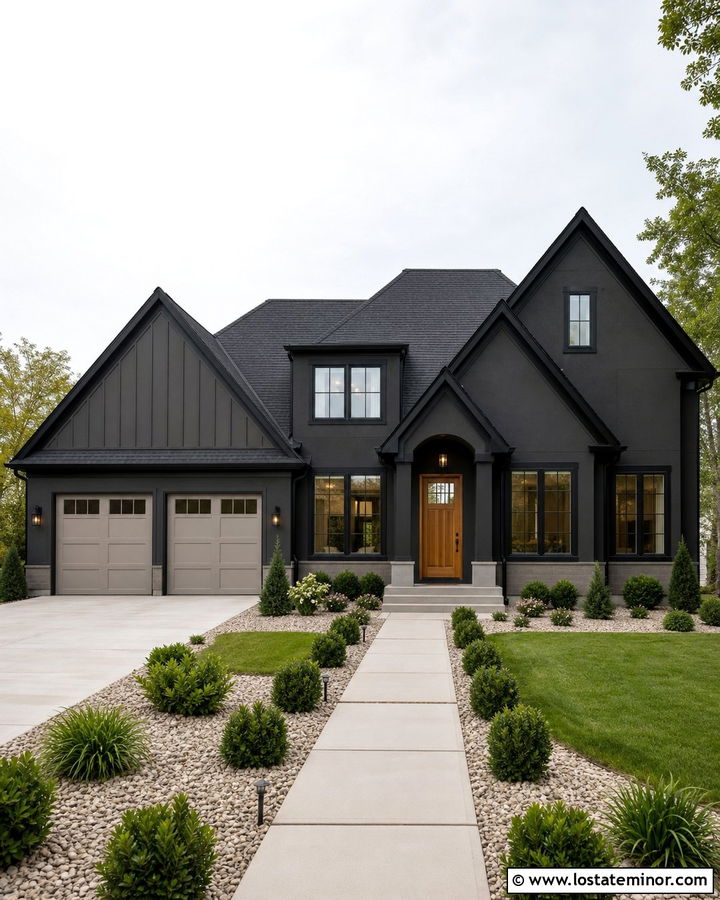
Warm gray accents soften the jump between black siding and lighter exterior materials. This restrained combination suits suburban homes that need an update without an extremely high-contrast makeover. Paint the main facade soft black, then use warm gray on the garage door, porch floor, foundation, or secondary siding. Gray with brown undertones feels more inviting than a cool silver shade and pairs naturally with wood, brick, and concrete. Keep windows and gutters black so the major lines remain clean. A warm oak front door can become the central focal point without disrupting the quiet palette. Add pale gravel, layered shrubs, and simple black lighting to create a comfortable exterior that feels modern but still appropriate for a traditional neighborhood.
7. Black House With Tan Brick Accents
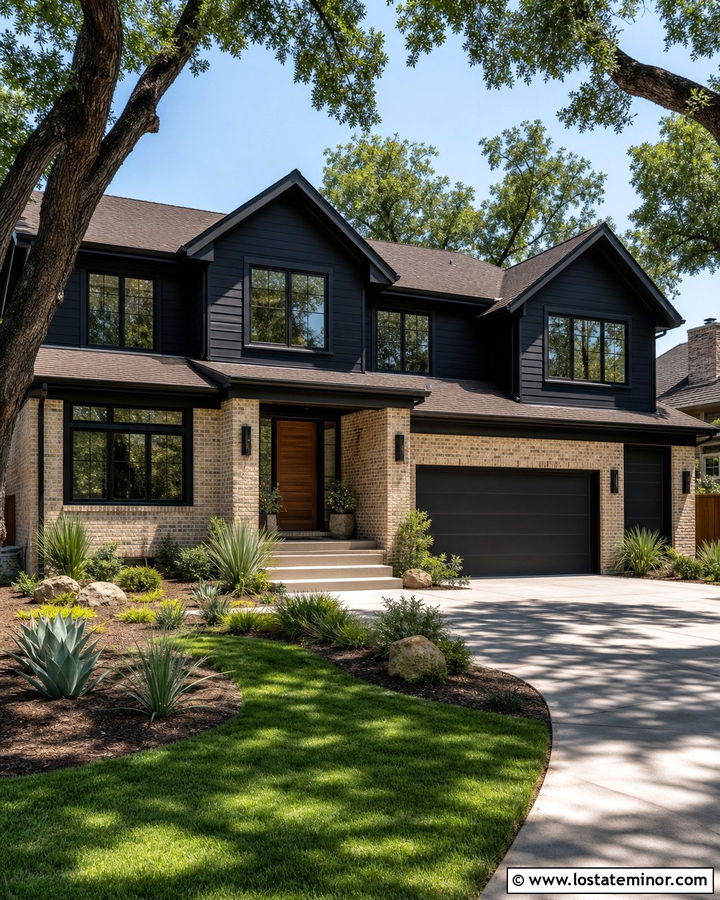
Tan brick can brighten a black house while preserving an earthy, understated appearance. This palette is useful when remodeling a home with existing beige or buff brick that is still in good condition. Apply black paint or siding to the upper floor, gables, and garage, allowing the tan masonry to anchor the base. Select a black with slightly warm undertones so the two materials feel connected under direct sunlight. Bronze-framed windows, a walnut door, and taupe concrete steps help blend the contrast. Avoid adding bright white trim, which can introduce an unnecessary third high-contrast color. A dark brown roof and drought-tolerant landscaping finish the scheme with natural warmth. The result feels coordinated rather than like two separate exterior renovations.
8. Black House With White Oak Accents
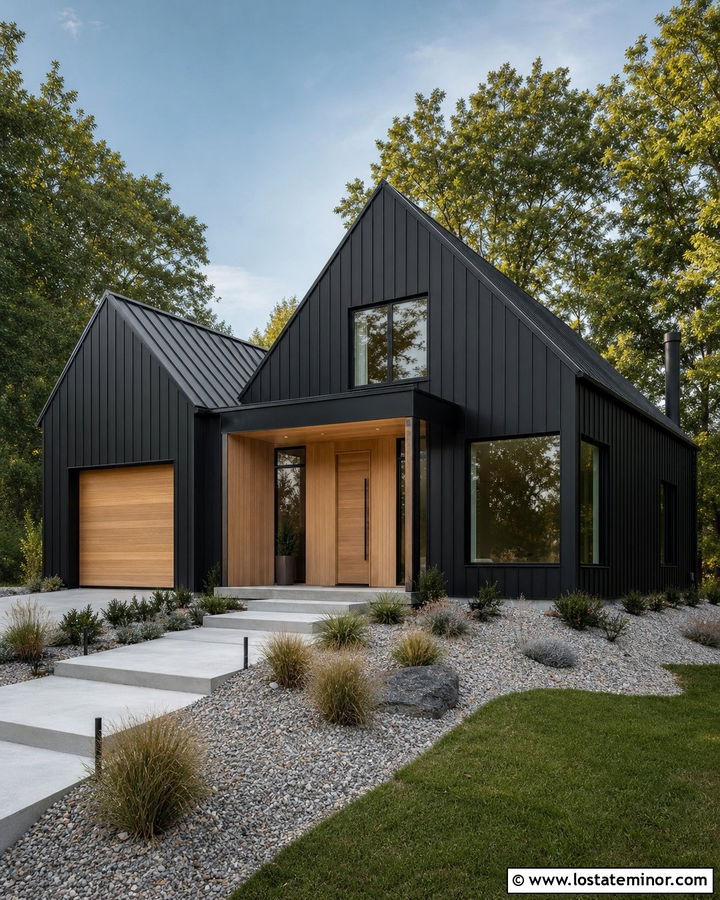
Light white oak creates a clean Scandinavian-inspired contrast against black siding. It works beautifully on simple modern homes, compact cottages, and angular houses with limited ornamentation. Use exterior-rated oak or a durable wood product around the front entrance, garage door, soffits, or recessed wall panels. The pale golden grain catches daylight and prevents the black facade from looking visually heavy. Keep the trim, windows, and roof black to maintain a streamlined shape. Large glass panels can introduce reflection and further lighten the elevation. A pale concrete path, gravel beds, and sculptural grasses support the minimal palette. Protect the oak with an appropriate exterior finish if you want to retain its light appearance instead of allowing it to weather naturally.
9. Black House With Walnut Accents
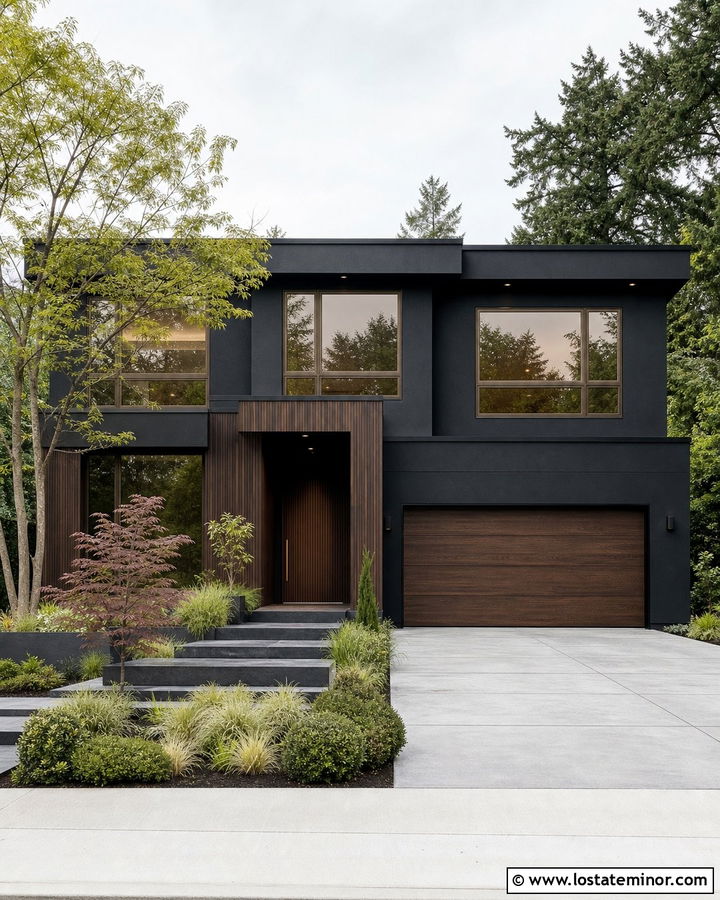
Dark walnut accents create a quieter and more luxurious contrast than pale cedar or oak. This pairing suits a contemporary home where the goal is depth rather than a bold black-and-wood split. Use walnut-toned cladding around a recessed entrance, across the garage door, or beneath a covered patio ceiling. The rich brown grain remains visible beside matte black stucco or vertical siding, especially in bright daylight. Bronze window frames and dark stone steps can reinforce the deeper palette. Add warm exterior sconces with simple geometric forms, but keep their number limited to avoid clutter. Light green landscaping is important because it creates natural separation around the dark materials. A pale driveway also keeps the overall curb view from becoming too shadowed.
10. Black House With Terracotta Accents
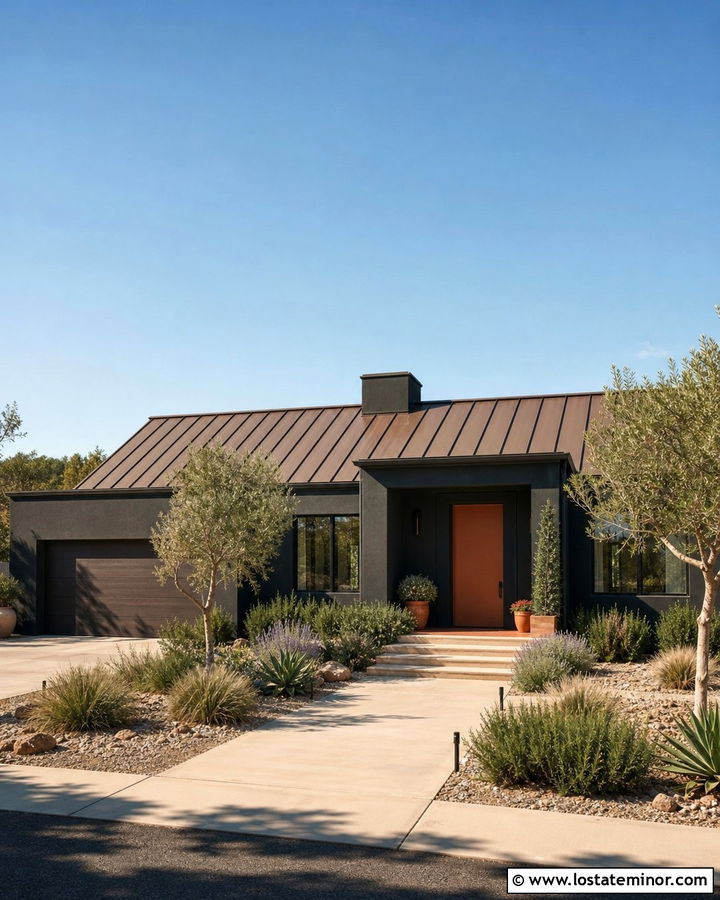
Terracotta gives a black house an earthy accent that feels warm, relaxed, and distinctive. A clay-colored front door is the simplest approach, but terracotta can also appear in porch tile, planters, or a low garden wall. On a black stucco home, these orange-brown tones create a Mediterranean influence without requiring ornate architecture. Pair the scheme with a medium-brown tile or standing-seam roof and dark bronze windows. Cream limestone steps provide a lighter transition between the facade and walkway. Keep other accents restrained so the terracotta remains the clear focal color. Olive trees, rosemary, ornamental grasses, and gravel landscaping support the sun-washed palette. This complete look works particularly well in dry, bright regions where natural daylight intensifies warm colors.
11. Black House With Olive Green Accents
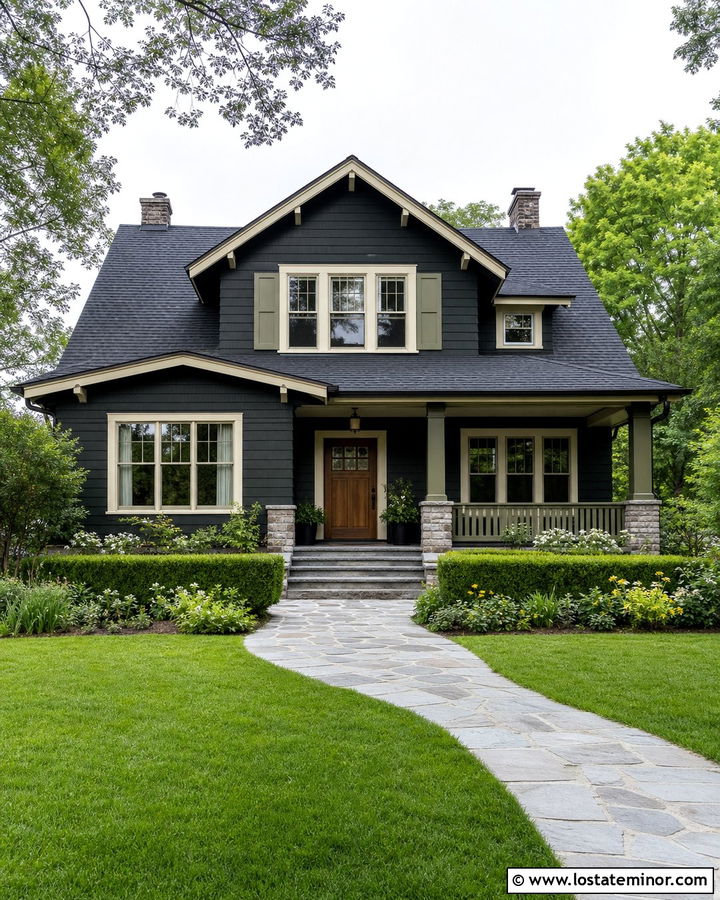
Olive green adds muted color to a black house without creating an overly bright or playful facade. Use it on the front door, porch ceiling, shutters, or a small section of secondary siding. The green should be deep enough to hold its own beside black but light enough to remain visible from the curb. A black bungalow with olive shutters, cream window trim, and a cedar door can feel grounded and historic. On a modern home, an olive entry door and matching planters offer a cleaner interpretation. Warm gray stone and a charcoal roof support both versions. Repeat the green through structured hedges and native planting beds. This connection between painted accents and landscaping makes the color scheme appear deliberate and naturally integrated.
12. Black House With Mustard Yellow Accents
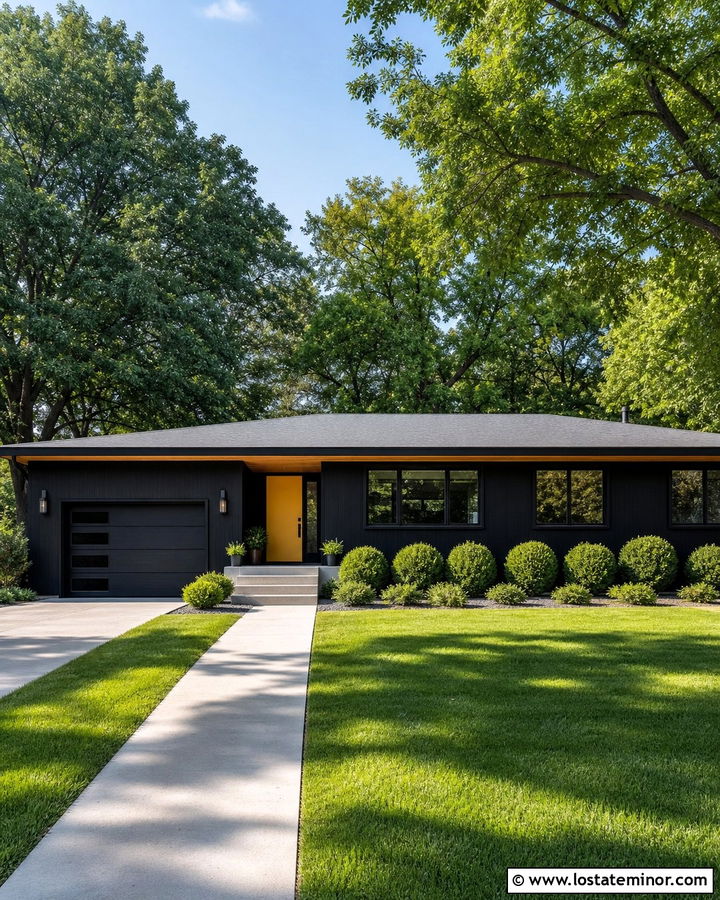
A mustard yellow front door can bring energy to a black exterior while remaining more sophisticated than a bright primary yellow. This combination fits mid-century ranch homes, simple cottages, and compact urban houses with clean facades. Keep the main siding matte black and repeat black on the windows, fascia, and garage door. The yellow entrance should be visible from the street, framed by a small wood porch or pale concrete steps. Natural cedar soffits can add warmth without competing with the door. Choose minimal black sconces and simple house numbers to preserve the graphic look. Green lawn, rounded shrubs, and a straight walkway soften the sharp color contrast. One concentrated mustard accent is generally enough to give the entire house personality.
13. Black House With Teal Accents
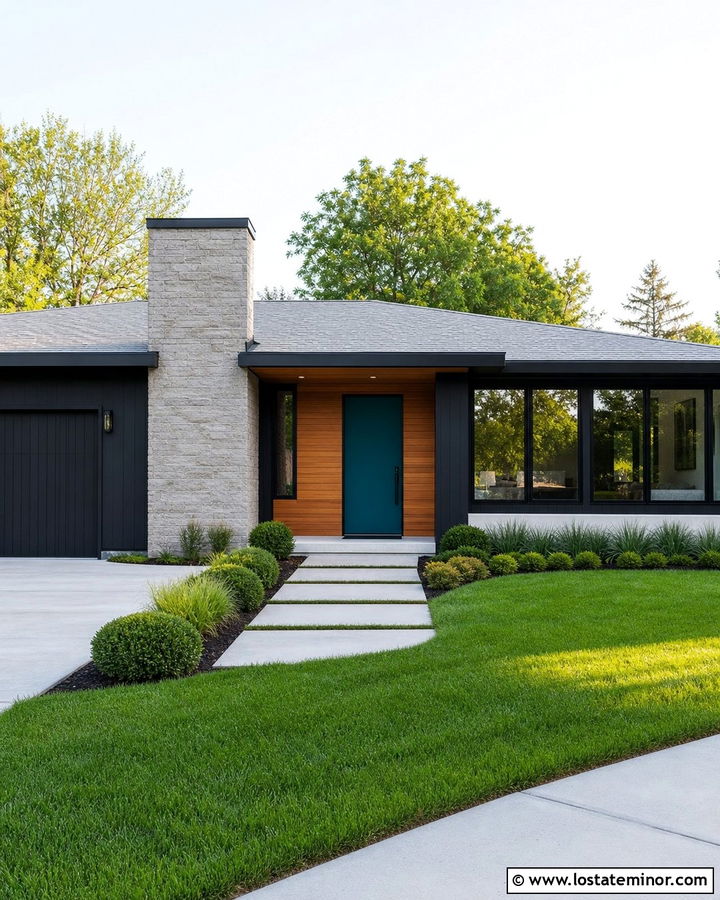
Deep teal creates a rich jewel-toned focal point against a black house. It is particularly effective on a mid-century home with a wide facade, low roof, and prominent front entrance. Paint the door saturated teal, then keep the surrounding trim black so the color appears clean and intentional. Warm wood siding near the entry can form a bridge between the cool teal and dark exterior. A light gray roof, pale stone chimney, and concrete walkway help lift the overall scheme. Avoid repeating teal on every accessory; instead, allow green-blue plants or glazed planters to echo it subtly. In strong daylight, a deeper teal usually maintains its color better visually than a nearly black shade that could disappear into the siding.
14. Black House With Red Door Accents
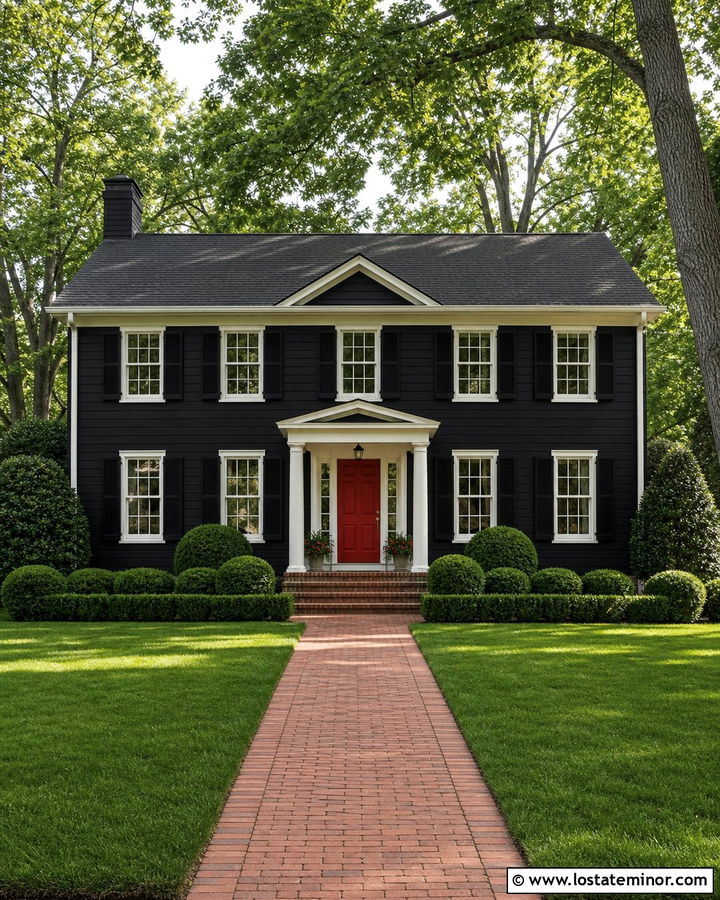
A red front door creates a classic focal point on a black exterior, but the exact red determines the mood. A deep heritage red suits Colonial and traditional homes, while a warmer tomato red feels more contemporary. Use soft black on the siding and a creamy white around windows, porch columns, and railings to keep the facade readable. A charcoal shingle roof and black shutters reinforce the formal structure. Brick steps can repeat the red in a quieter material, helping the door feel connected instead of isolated. Symmetrical shrubs, a centered walkway, and brass or aged bronze hardware complete the traditional appearance. Test the door color beside the black paint because some reds can appear brighter outdoors than expected.
15. Black House With Navy Blue Accents
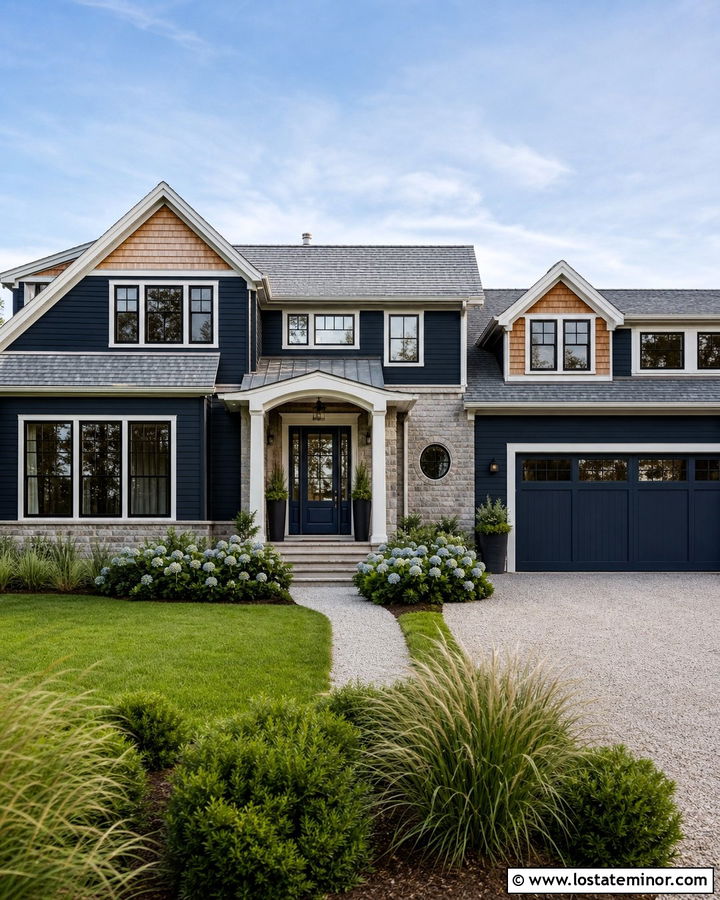
Navy blue creates subtle layering on a black house without breaking the dark, sophisticated mood. Because the colors are close in value, use navy on a clearly defined feature such as the garage door, front door, porch ceiling, or shingled gable. A blue-black body paired with a slightly lighter navy entrance works well on coastal and transitional architecture. Add warm white trim around key windows so the two dark colors do not blend into one flat surface. Weathered cedar shingles or light gray stone can introduce natural texture. A silver-gray roof strengthens the coastal influence and reflects more daylight than black roofing. Hydrangeas, ornamental grasses, and a pale shell or gravel path keep the complete exterior light and approachable.
16. Black House With Cream Accents
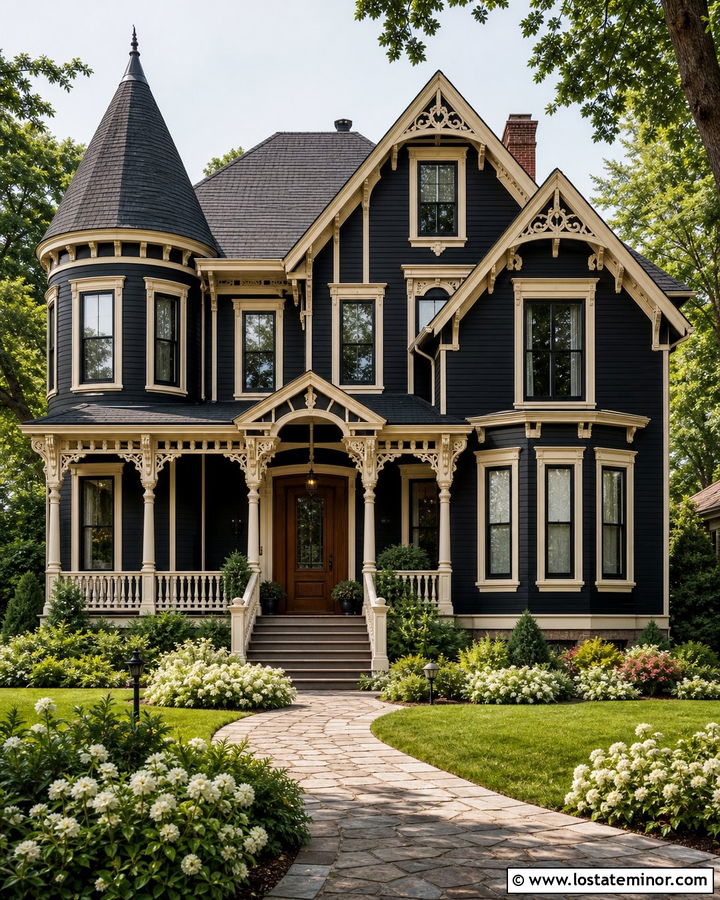
Cream accents provide softer contrast than bright white and can make a black exterior feel more comfortable on traditional architecture. Use a warm cream on window trim, porch columns, eaves, and decorative gable details. The slight yellow or beige undertone connects naturally with brick, wood, and aged stone. A black Victorian or Craftsman home can handle more cream ornamentation because the lighter paint reveals brackets, railings, and layered trim. Add a medium-stained front door and dark bronze hardware for warmth. A charcoal roof keeps the upper portion grounded without creating a solid black silhouette. Layered foundation planting, flowering shrubs, and a curving stone path further soften the scheme, producing bold curb appeal that still feels established and welcoming.
17. Black House With Metal Roof Accents
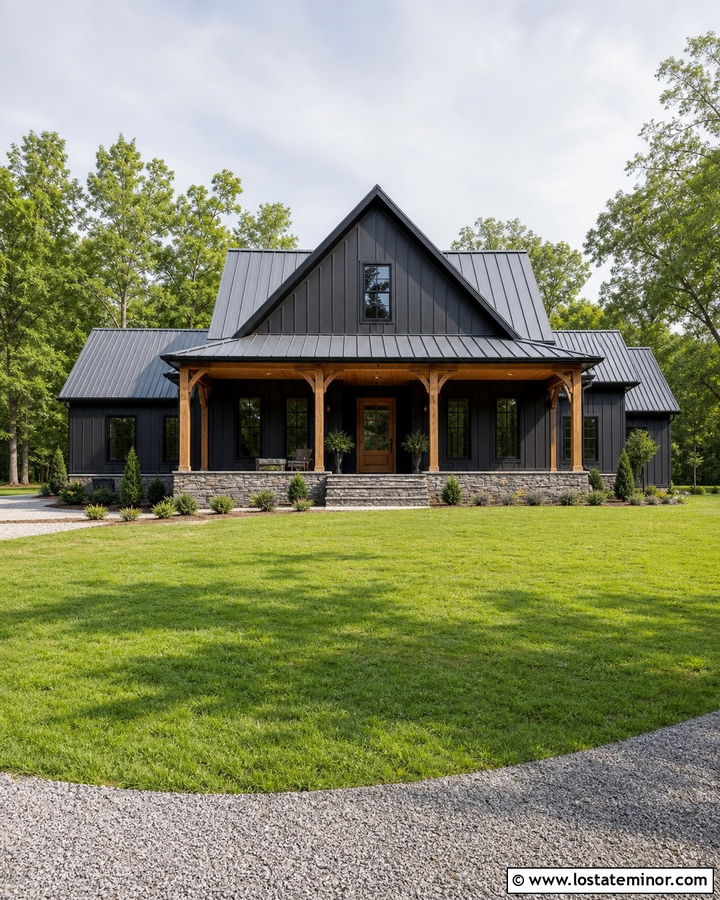
A metal roof gives a black house sharper lines and a subtle reflective surface. For balanced contrast, pair black siding with a medium-gray galvanized or standing-seam metal roof rather than matching every surface in pure black. This is especially effective on modern farmhouses, barns, cabins, and homes with simple gabled rooflines. Use natural wood on the front door, porch beams, and ceiling to warm the industrial materials. Black window frames and gutters maintain continuity between the roof and walls. A stone porch base can add weight at ground level. In sunny regions, examine roofing samples carefully because metal can appear much lighter outdoors. Simple landscaping and a gravel driveway complete the practical, rural-inspired scheme without distracting from the roofline.
18. Black House With Glass Entry Accents
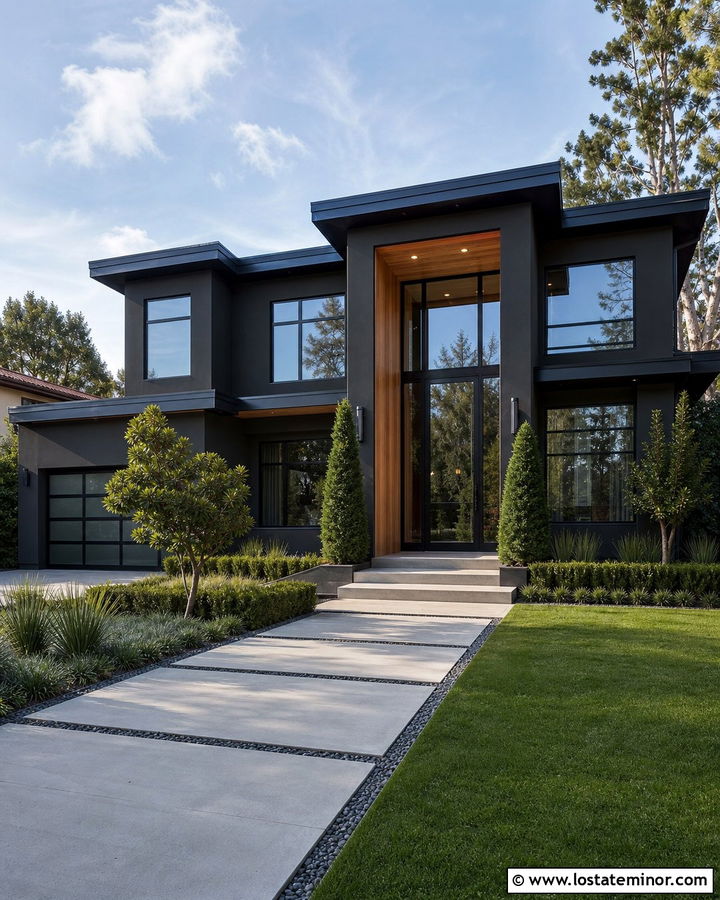
A generous glass entry can make a black house feel open, bright, and approachable. On a modern two-story home, surround a full-height glass door with matte black cladding and narrow black frames. The reflected sky and landscaping naturally break up the dark facade during the day. Add warm wood soffits or a wood-lined entry recess to prevent the glass-and-black combination from feeling overly commercial. Pale concrete steps and a wide walkway create a clean visual path toward the entrance. If privacy matters, consider reeded, frosted, or partially screened glass rather than covering the door later. Keep exterior hardware minimal and coordinate it with the window frames. Structured trees and low planting beds add softness while preserving the modern architecture.
19. Black House With Concrete Accents
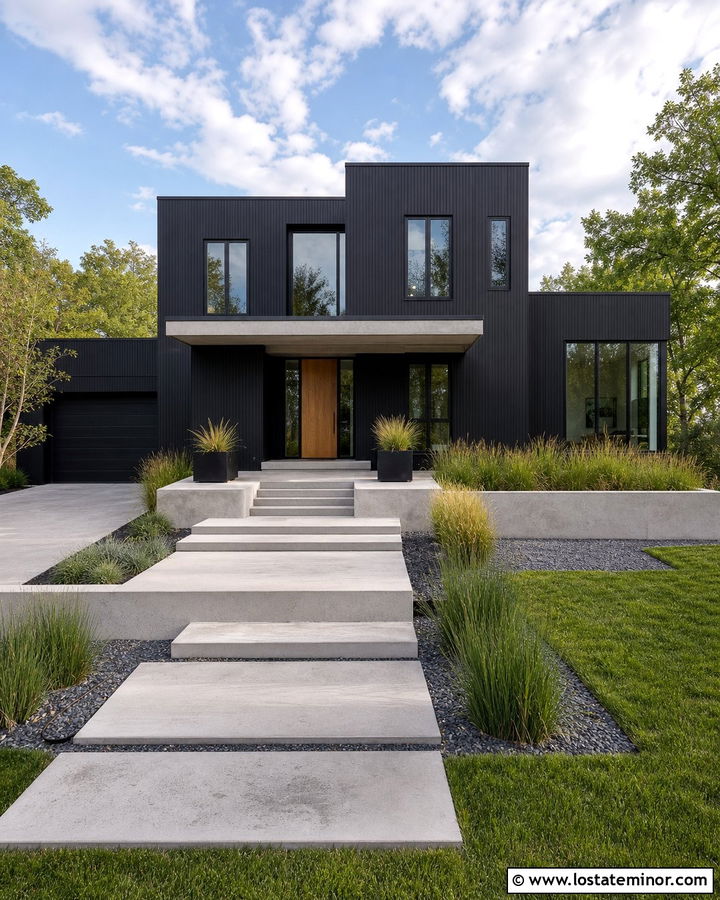
Concrete provides a light, neutral counterweight to black siding and suits homes with strong geometric forms. Use smooth concrete for entry steps, low retaining walls, porch floors, or foundation panels. The variation in natural gray gives the facade texture without introducing another dominant color. A flat-roofed black house can combine vertical siding, large windows, and a cantilevered concrete canopy for a particularly clean appearance. Add a wood door or slatted screen so the palette does not feel cold. Black steel planters can connect the landscape to the building, while ornamental grasses soften hard edges. Keep the driveway and walkway pale enough to reflect daylight onto the facade. This helps the black exterior remain visually detailed instead of reading as a dark block.
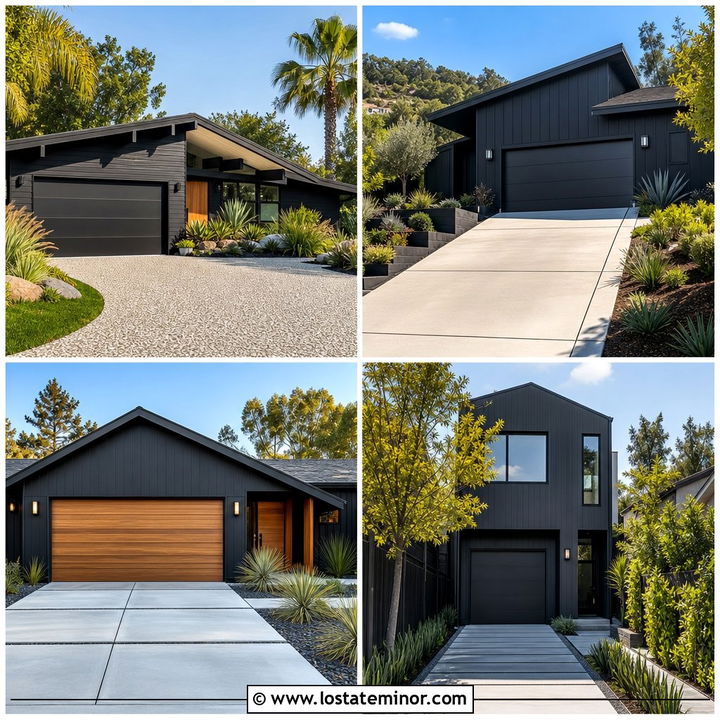
20. Black House With Corten Steel Accents
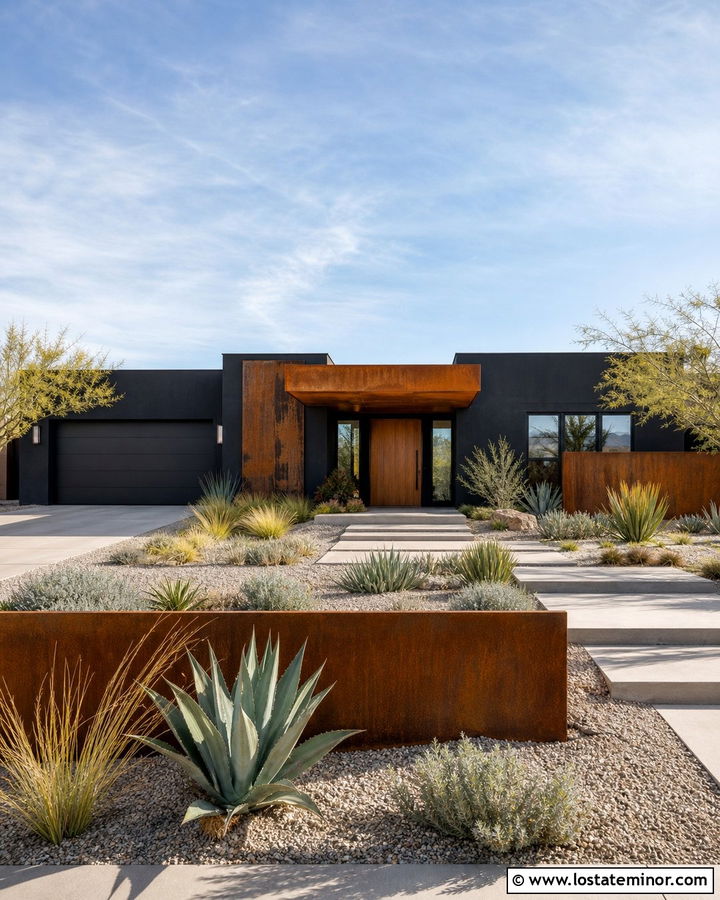
Weathered steel introduces rusty orange and brown tones that stand out beautifully against matte black. Use Corten steel on a small entry canopy, planter boxes, address panel, privacy screen, or chimney surround. Its textured patina works best on contemporary and desert-modern homes with simple lines. Pair black stucco or metal siding with a warm wood front door and dark-framed windows. Pale gravel and concrete should cover larger ground surfaces to balance the strength of the dark facade and weathered metal. Native grasses, agave, and sculptural shrubs complement the industrial palette. Since runoff from weathering steel may stain nearby surfaces, plan placement and drainage carefully. Thoughtful installation allows this distinctive accent to look integrated rather than added as decoration.
21. Black House With Limestone Accents
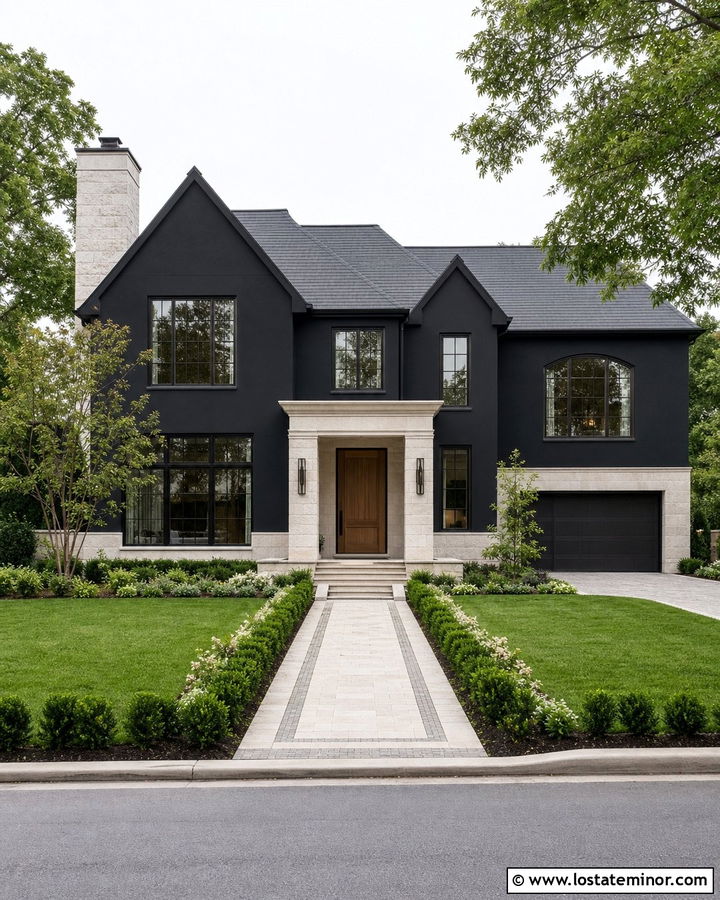
Pale limestone can transform a black house by adding brightness, texture, and an established architectural character. Use it across the lower level, on a chimney, around the entrance, or as substantial porch columns. The creamy stone is especially attractive beside a warm soft black rather than a cool blue-black. On a contemporary European-style home, black stucco above limestone creates a sophisticated division between levels. Bronze windows, a medium oak door, and a charcoal roof support the neutral palette. Repeat the stone in front steps or walkway borders to connect the building with the landscape. Avoid combining too many additional masonry types. One consistent limestone helps the black facade feel intentionally designed while retaining a clean and visually calm exterior.
22. Black House With River Rock Accents
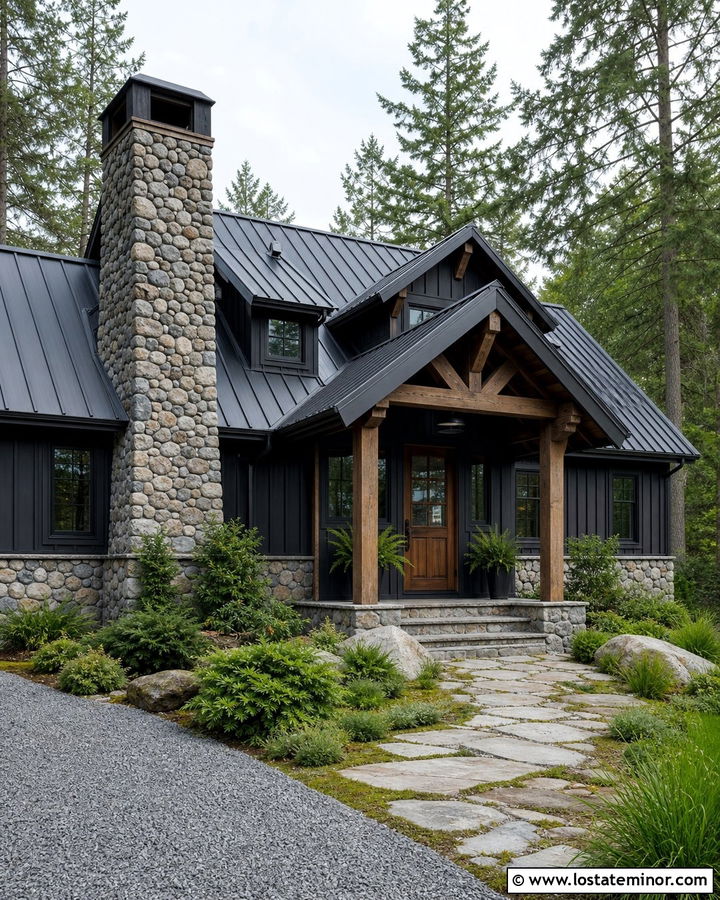
River rock brings casual, rustic texture to a black exterior and works naturally on cabins, lake houses, and mountain homes. Use rounded stone on the chimney, porch foundation, or lower walls, where its mixed gray and brown colors can visually anchor the house. Black board-and-batten siding above the masonry creates height and gives the traditional material a more updated appearance. Add rough cedar beams, a stained wood door, and a dark gray metal roof for a complete nature-inspired scheme. Because river rock contains considerable visual variation, keep the trim and windows simple. A flagstone path, ferns, evergreen shrubs, and mature trees help the home settle into its surroundings. The finished exterior feels bold, durable, and comfortably connected to the landscape.
23. Black House With Cedar Shingle Accents
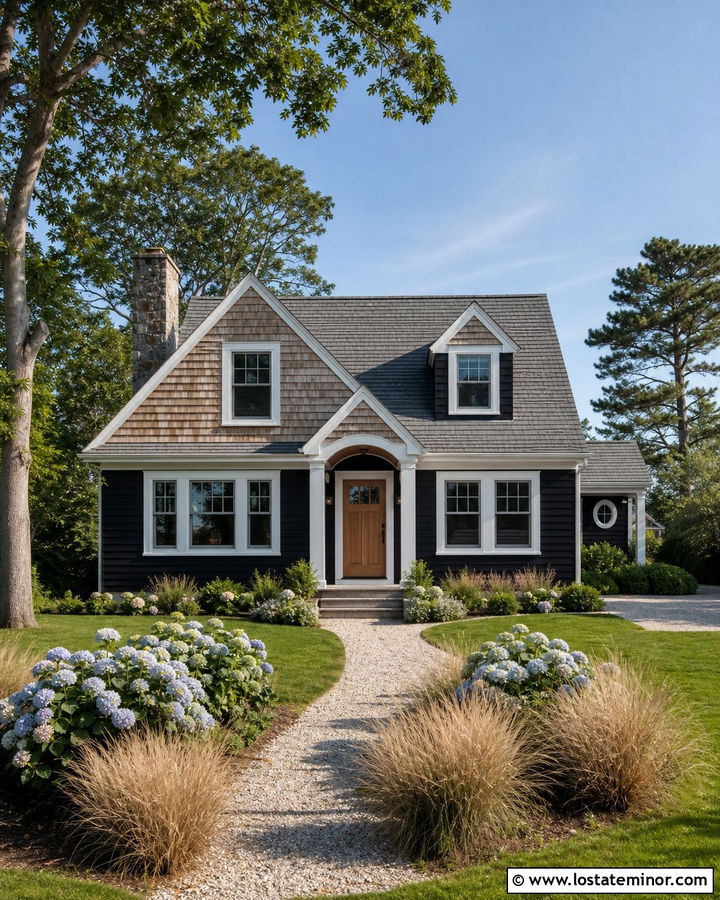
Cedar shingles add smaller-scale texture to a black house and can soften large gables or upper-story walls. Use them on one architectural zone rather than covering the entire facade. A black Cape Cod or coastal cottage might feature weathered cedar shingles in the front gable, black lap siding below, and warm white window trim. A natural wood door can repeat the shingle material in a cleaner finish. Choose a medium-gray roof so the shingles remain visible between the roof and dark body color. Simple porch railings and black sconces preserve the classic silhouette. Coastal grasses, hydrangeas, and a light gravel walkway complete the look. The shingles can weather naturally or receive a protective stain, depending on the preferred long-term color.
24. Black House With Wood Garage Door Accents
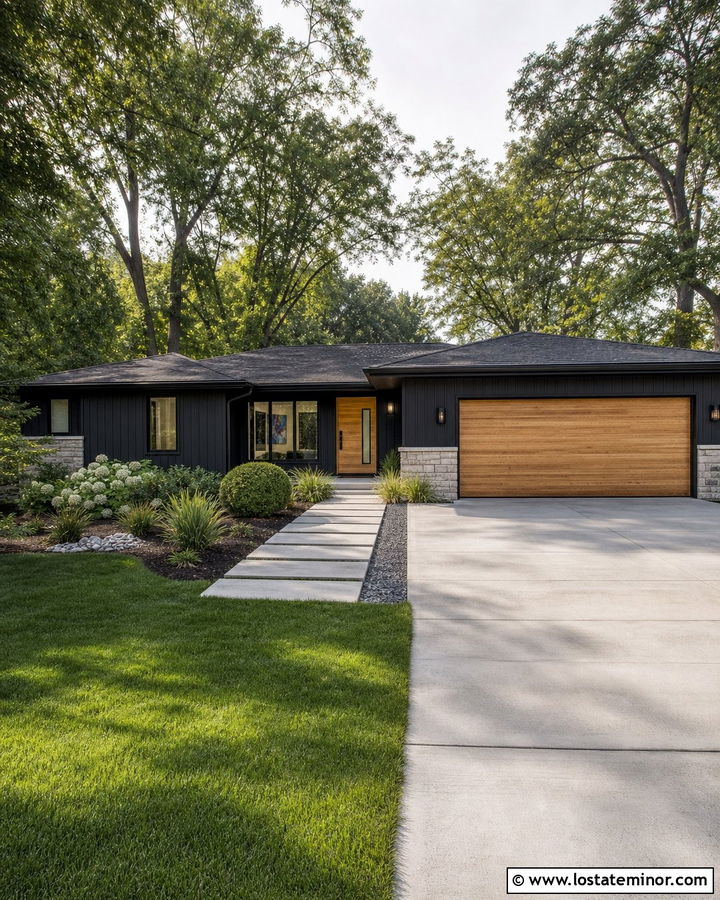
A wood garage door can become a major design feature because it occupies such a large portion of the front elevation. Against black siding, horizontal cedar or white oak boards add warmth and visually widen the facade. This scheme works particularly well on modern ranch and split-level homes. Match the front door to the garage wood tone, but avoid forcing every small detail to match perfectly. Black window frames, gutters, and exterior lights maintain a consistent outline. Use light stone or concrete around the driveway to prevent the lower facade from becoming visually heavy. Select a garage door finish suitable for direct sun and changing weather. When coordinated with the entrance, the wood garage door becomes part of a complete black exterior rather than an isolated accent.
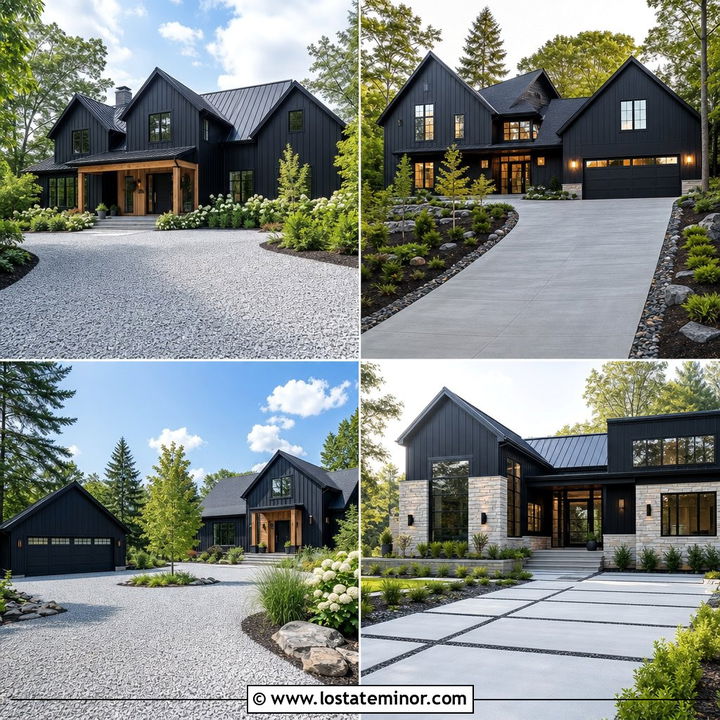
25. Black House With Bronze Window Accents
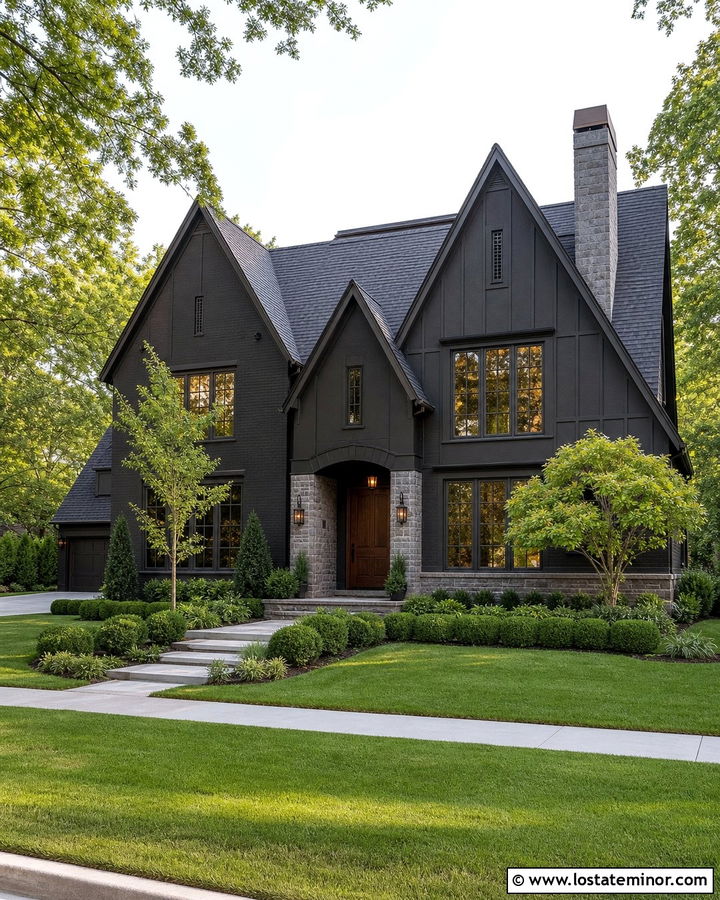
Bronze window frames offer a softer alternative to matching black windows. Their warm brown undertone becomes visible in daylight and pairs naturally with wood, stone, and brick. On a black Tudor, contemporary cottage, or refined transitional home, bronze frames can outline the windows without producing stark contrast. Repeat the finish on exterior sconces, door hardware, and gutters, but use it sparingly so the result stays coordinated. A walnut entry door and warm gray stone base support the bronze details. Choose an off-black body color with subtle warmth to prevent the windows from appearing unrelated. A dark charcoal roof and structured green landscaping complete the facade. This low-contrast scheme rewards closer viewing while still looking cohesive from the street.
26. Black House With Brass Lighting Accents
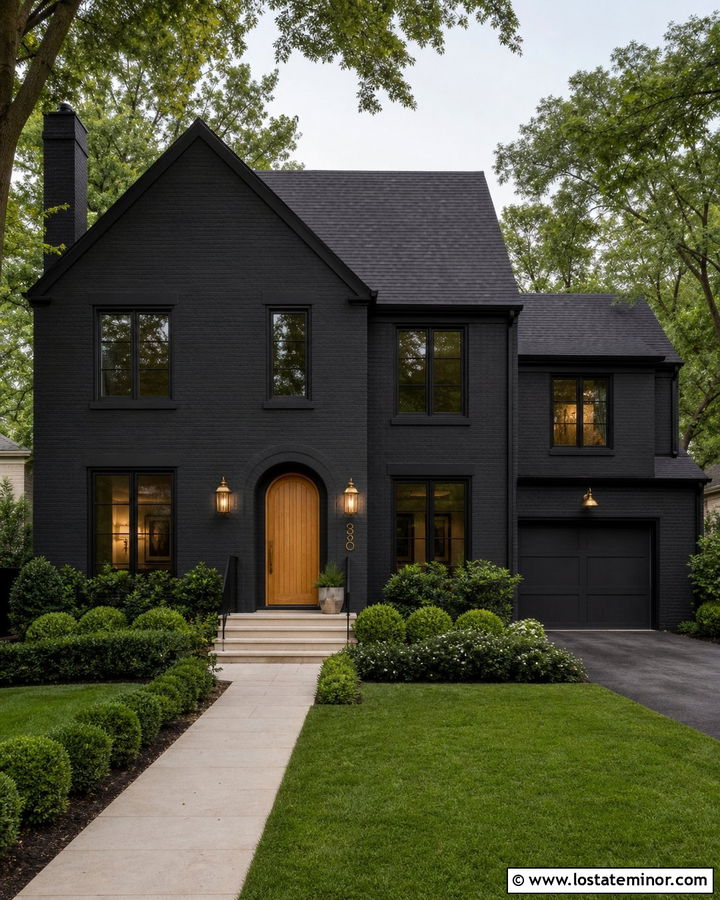
Brass or aged-brass lighting can add controlled warmth to a black house, especially around the entry and garage. Select fixtures that are large enough for the facade but simple enough to avoid competing with the architecture. On a black-painted brick home, brass sconces beside a natural oak door create a clear and inviting focal area. Cream stone steps and black-framed windows keep the remaining palette neutral. Unlacquered finishes may develop patina, while coated options retain a brighter appearance, so choose based on the maintenance level you prefer. Repeat brass on the door handle or house numbers instead of introducing several unrelated metals. During the day, the warm finish provides subtle color; after dark, properly placed fixtures help reveal the home’s shape and entrance.
27. Black House With Sage Green Accents
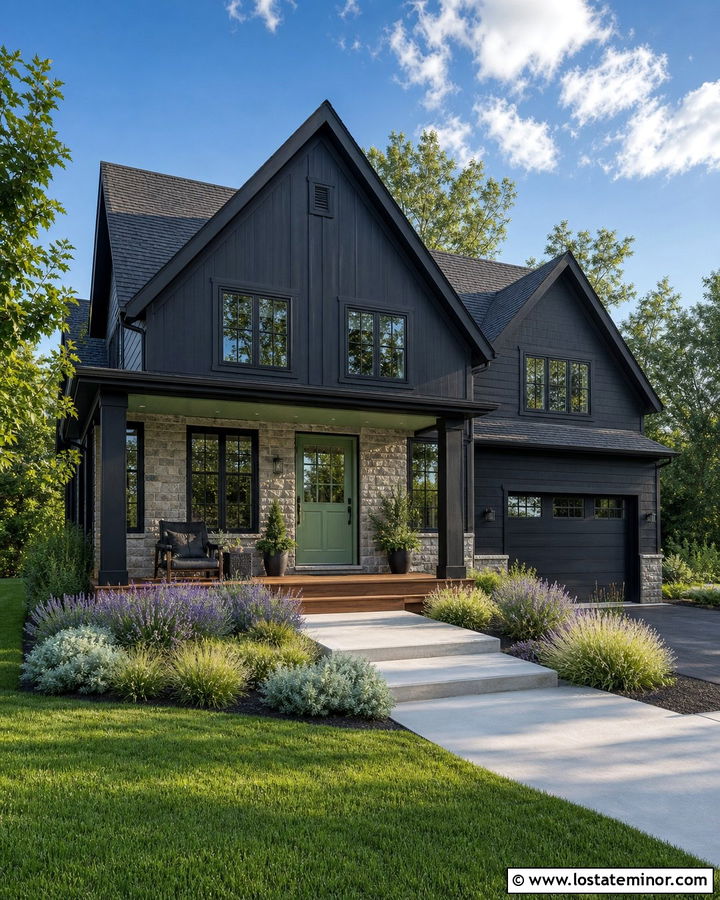
Sage green can make a black exterior feel gentle, natural, and suited to a garden setting. Use the color on a covered porch ceiling, front door, shutters, or recessed siding section. A black cottage with sage shutters and cream trim feels traditional, while a black contemporary farmhouse with a sage door looks simpler and more modern. Cedar porch boards and warm gray stone provide earthy transitions between the two painted colors. Keep the roof charcoal and the gutters black so the main structure remains cohesive. Repeat sage through soft foliage rather than matching every planter or accessory. Lavender, ornamental grasses, and silvery shrubs work especially well. The overall palette combines bold architecture with relaxed color, creating welcoming curb appeal throughout the seasons.
28. Black House With Blush Pink Accents
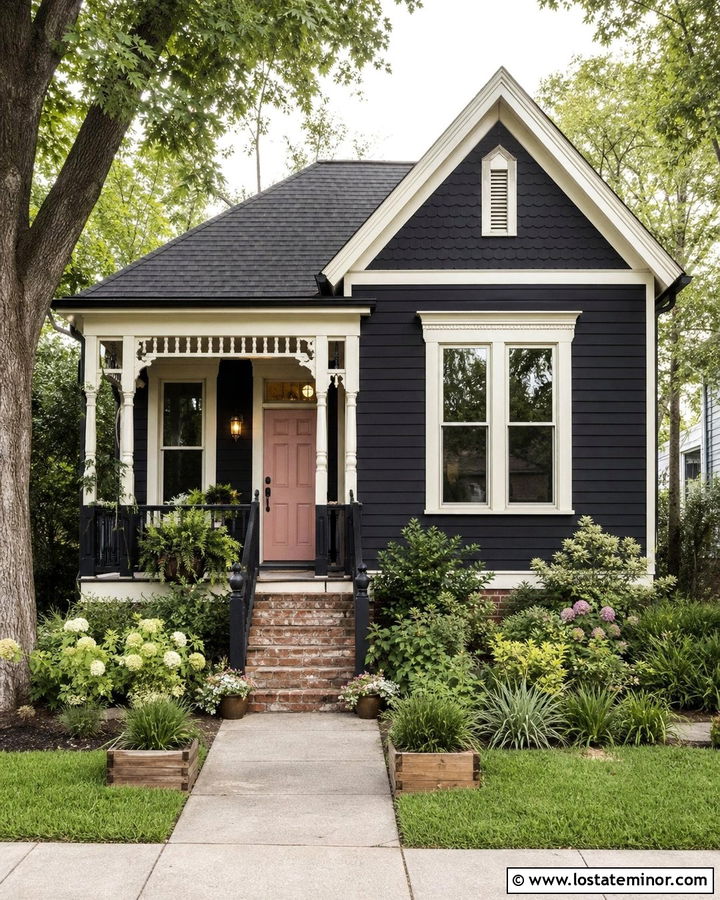
A muted blush door offers an unexpected but tasteful accent for a black house. Choose a dusty, earthy pink rather than a sugary pastel so it can hold its own against the deep facade. This look works on compact bungalows, Victorian cottages, and simple urban homes where the front door is naturally prominent. Warm white trim can outline the porch and windows, while aged brick steps connect the blush color to earthier tones. Keep the roof, gutters, and railings charcoal or black to maintain structure. Natural wood porch furniture or planters can add another warm layer without overwhelming the entry. Soft green shrubs and flowering plants complete the welcoming palette. Restricting pink to one focal feature keeps the exterior distinctive and sophisticated.
29. Black House With Slate Roof Accents
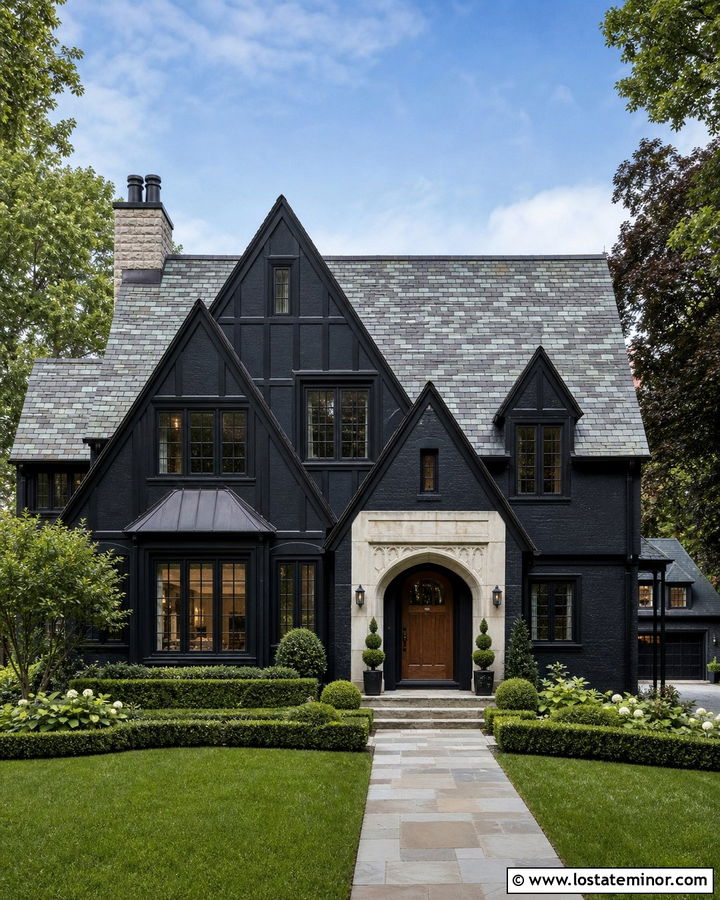
A natural slate roof adds layered gray, blue, and muted green variation above a black facade. This pairing works beautifully on Tudor, Gothic Revival, French country, and substantial traditional homes with steep rooflines. Choose a soft black body color so the individual slate pieces remain visible rather than merging into a single dark mass. Limestone around the entrance or chimney can brighten the composition, while dark bronze windows reinforce its historic character. A stained oak door provides warmth at eye level. Keep gutters and flashing dark enough to blend into the roof edge. Formal hedges, mature trees, and a stone walkway suit the architectural weight of the materials. The completed scheme feels dramatic but grounded in classic exterior design.
30. Black House With Wood And Stone Accents
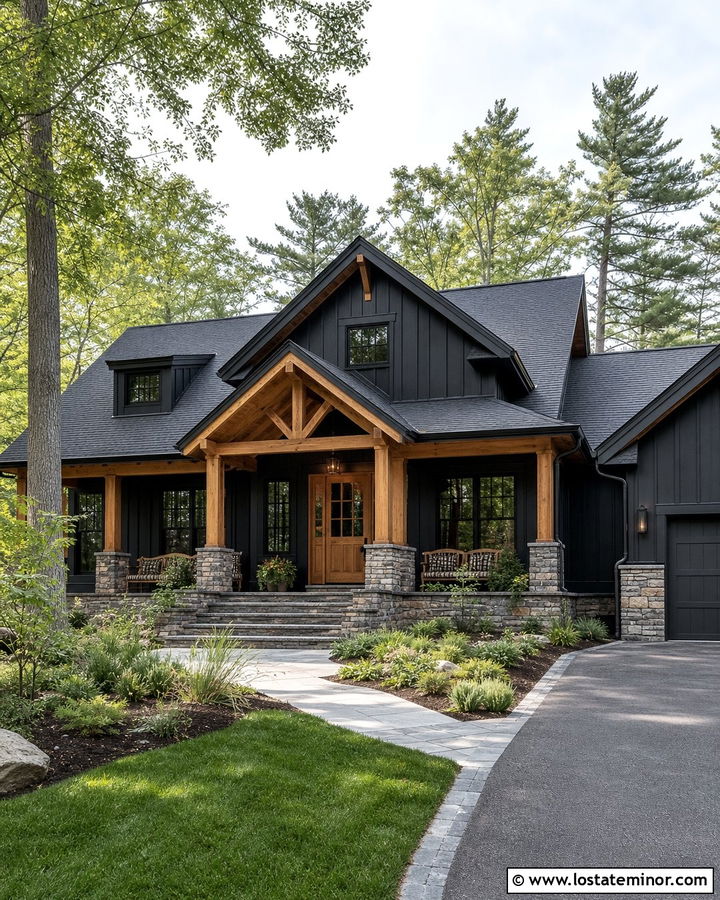
Combining wood and stone gives a black house multiple layers of warmth, but the materials need a clear hierarchy. Let black siding cover most of the facade, use stone along the foundation or porch, and reserve wood for the entrance, soffits, or beams. Repeating each accent in limited, purposeful areas prevents the exterior from looking busy. On a modern Craftsman, charcoal ledgestone can ground black board-and-batten while cedar posts draw attention toward the door. A dark gray roof and black windows keep the background consistent. Select stone that shares warm brown or tan notes with the wood for an easy visual connection. Complete the look with native plants, a pale walkway, and simple lighting that supports the materials rather than competing with them.
Conclusion:
The strongest black exteriors balance drama with warmth, texture, and clear architectural definition. Wood, brick, stone, metal, colorful doors, and lighter trim can each change how black siding feels from the street. Before selecting a final scheme, consider permanent features such as the roof, windows, masonry, driveway, and surrounding landscape. Test exterior paint on several walls because sunlight, shade, and regional conditions can reveal unexpected undertones. It is also helpful to limit the palette to one dominant black, one major accent material, and one supporting color. With thoughtful placement and repetition, these 30 Black House Design With Accents Ideas can inspire a cohesive home that feels bold, welcoming, and uniquely suited to its setting.

Related posts: