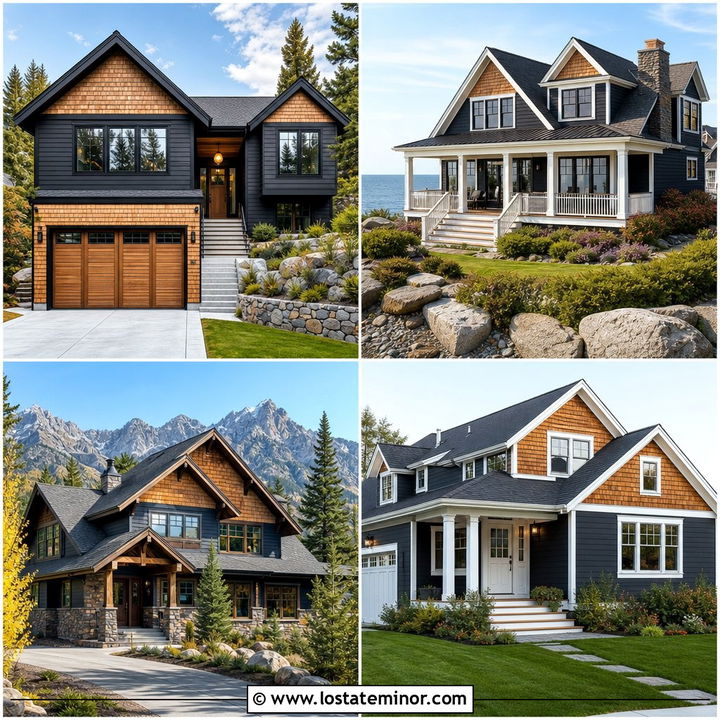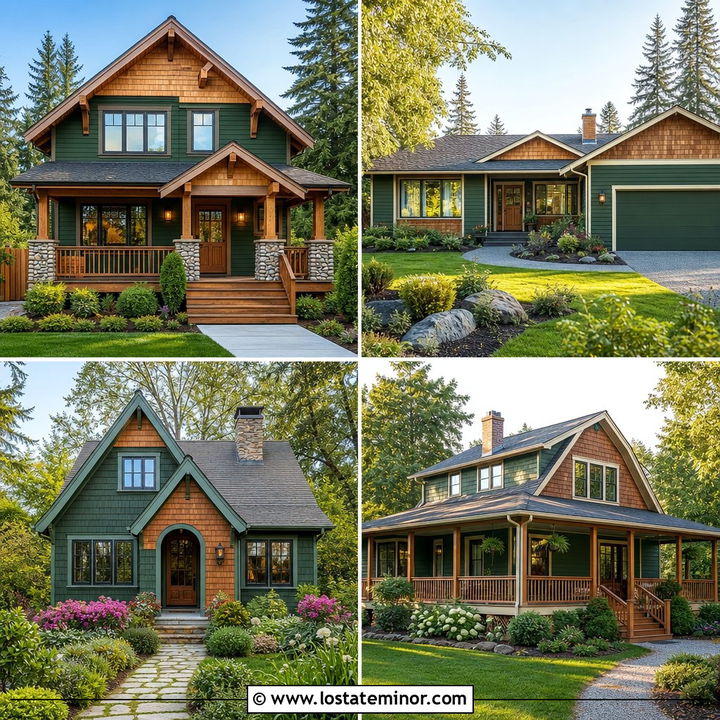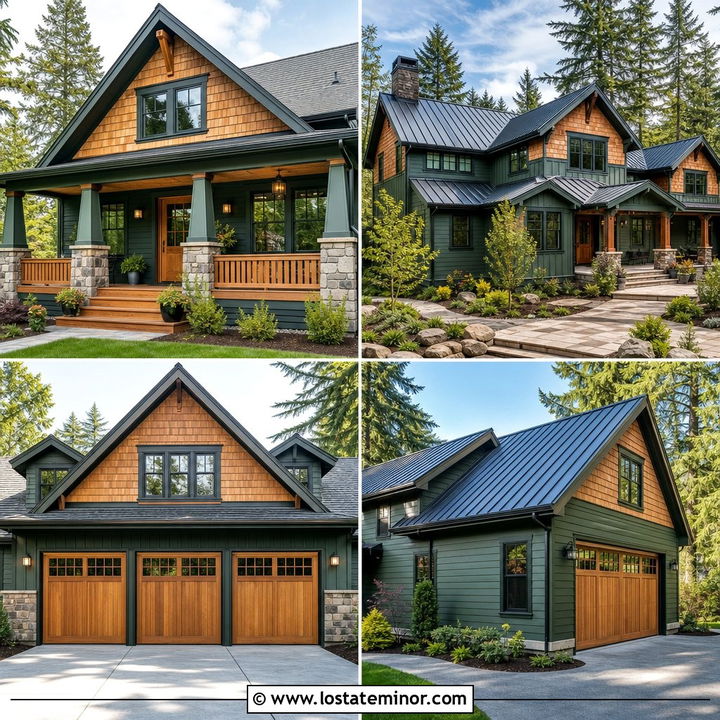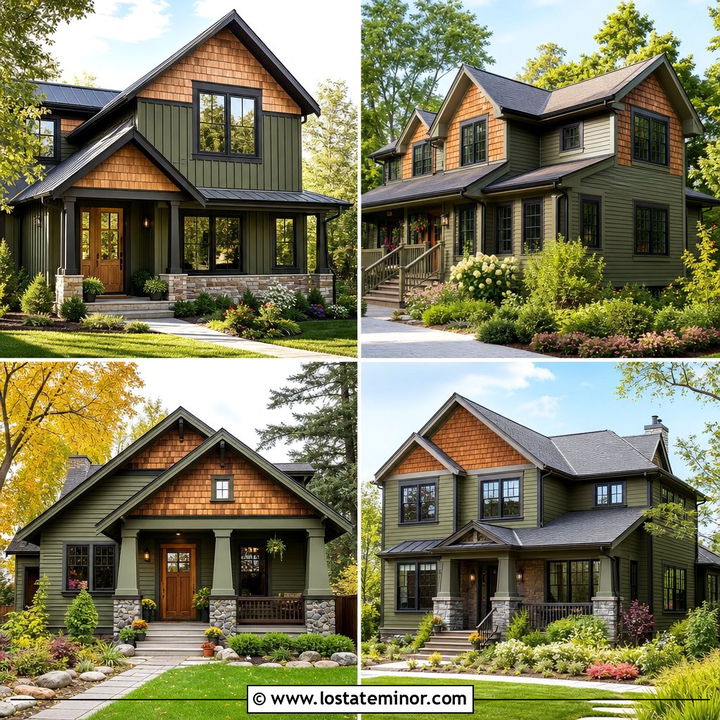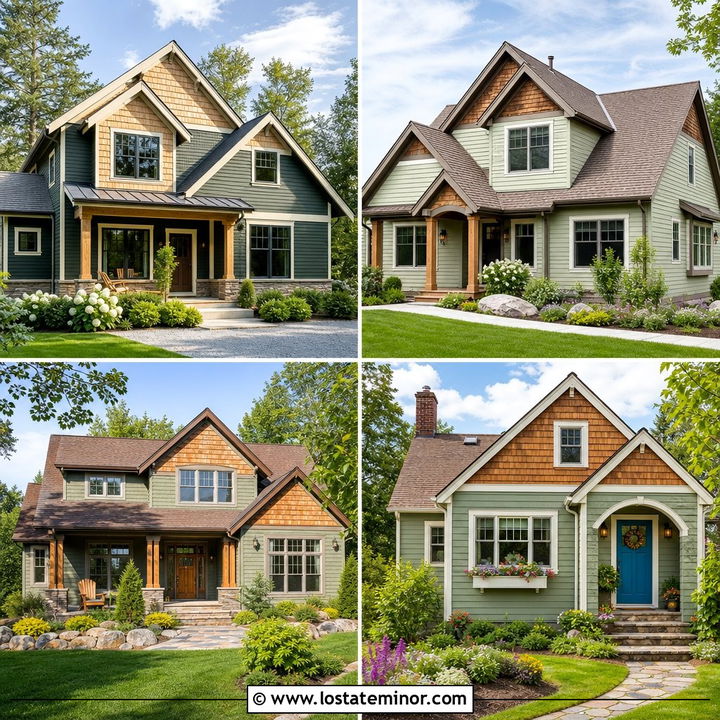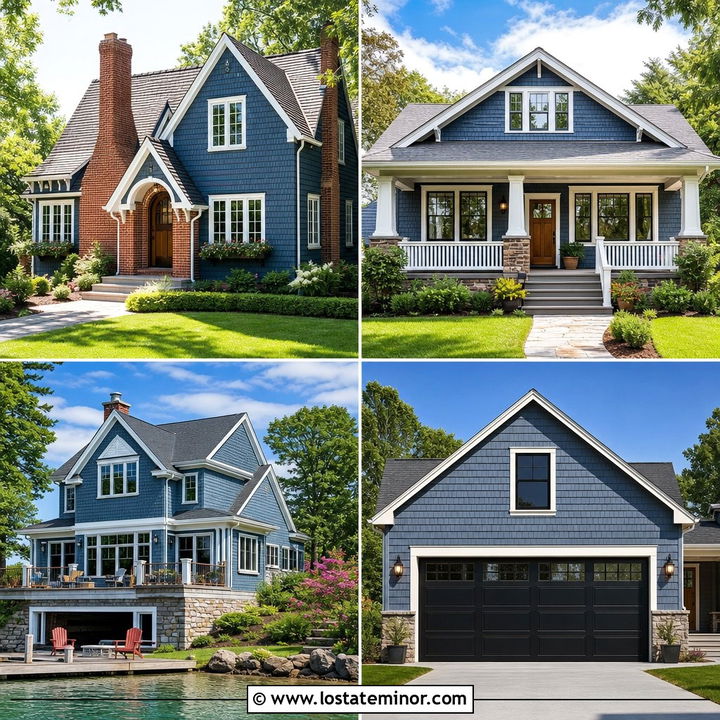
Olive green and cedar shake create an exterior that feels warm, grounded, and connected to the landscape. The green brings quiet depth, while cedar adds natural texture and a rich honey-brown contrast. This pairing works especially well with stone, brick, black windows, creamy trim, and weathered metal details. It can also adapt to nearly any home, from a compact bungalow to a large mountain retreat. Earthy greens and layered exterior materials remain especially relevant because they help homes blend naturally with wooded and suburban settings. () The key is designing the siding, shakes, roof, trim, and entry as one coordinated palette. Here are 30 Olive Green House Design With Cedar Shake Ideas.
1. Olive Green Craftsman With Cedar Shake Gables
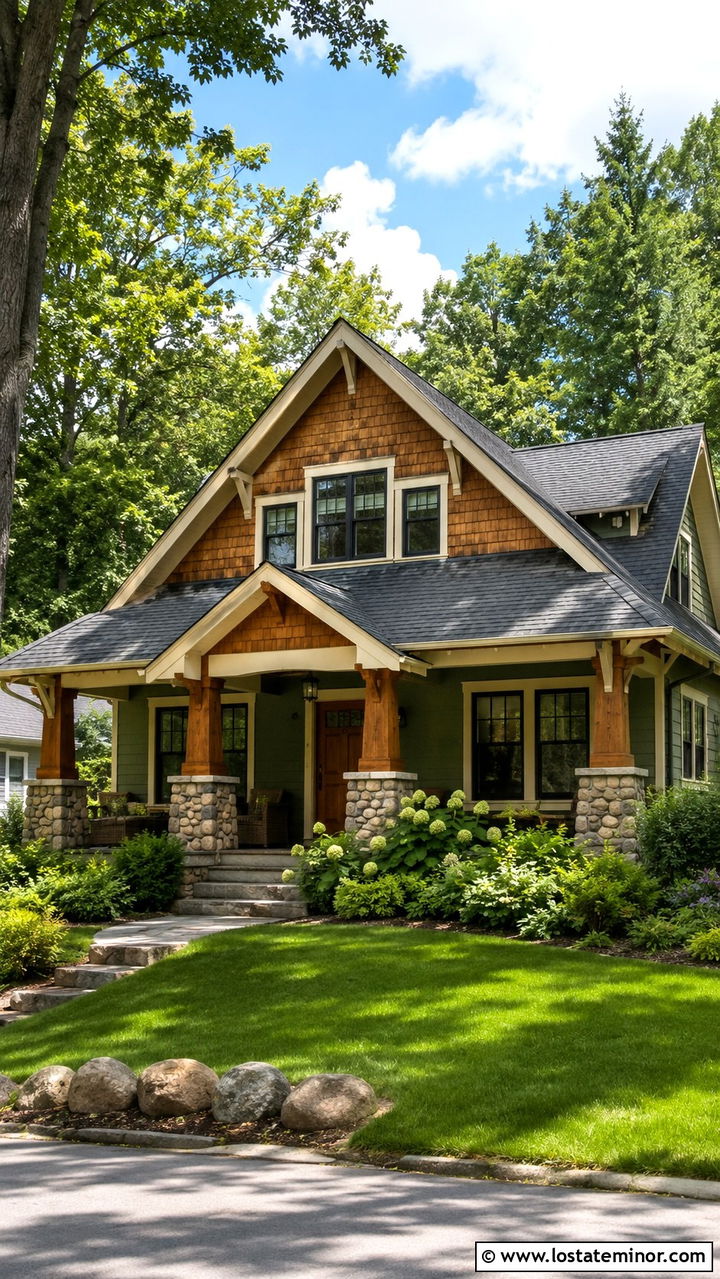
A Craftsman exterior gives olive green and cedar shake plenty of architectural detail to highlight. Use muted olive lap siding across the main level, then place warm cedar shakes inside the front-facing gables. Cream trim keeps the palette welcoming without creating the sharp contrast of bright white. Stained timber columns can repeat the cedar tone around a deep front porch. Finish the scheme with a charcoal roof, black-framed windows, and a medium-brown wood door. A low fieldstone foundation will connect the green and wood elements while making the house feel firmly anchored. Keep the landscaping relaxed with ornamental grasses, hydrangeas, and broad stone steps leading toward the porch.
2. Dark Olive Green House With Natural Cedar Shake
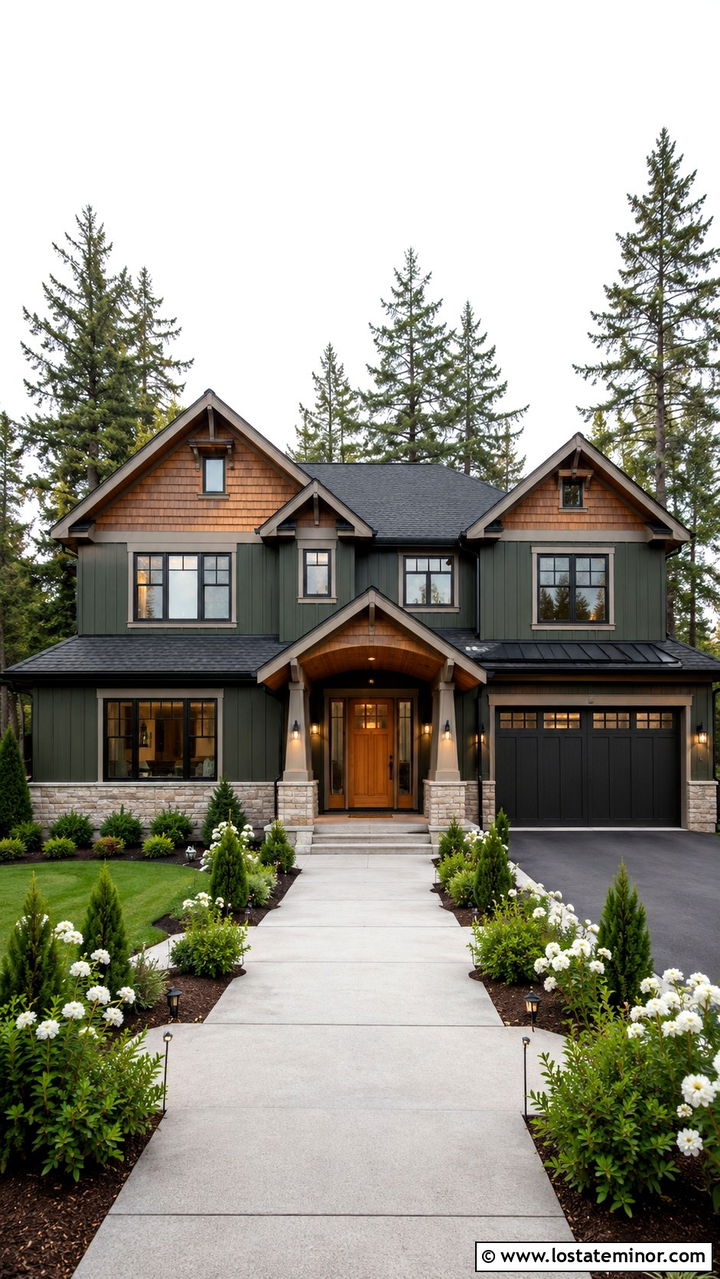
Deep olive siding creates a dramatic backdrop for untreated cedar shake accents. This combination works beautifully on a tall two-story home with multiple gables because the wood breaks up the darker body color. Place the cedar shakes in the upper gables, around a projecting bay, or above the garage. Soft greige trim provides definition while preserving the earthy mood. Black windows, gutters, and porch lighting add crisp structure, while a warm oak front door keeps the entry approachable. Choose a charcoal architectural-shingle roof rather than a brown roof that might compete with the cedar. Layer evergreen shrubs and pale flowering plants around the foundation to brighten the overall curb appeal.
3. Light Olive Green Cape Cod With Cedar Shake Siding
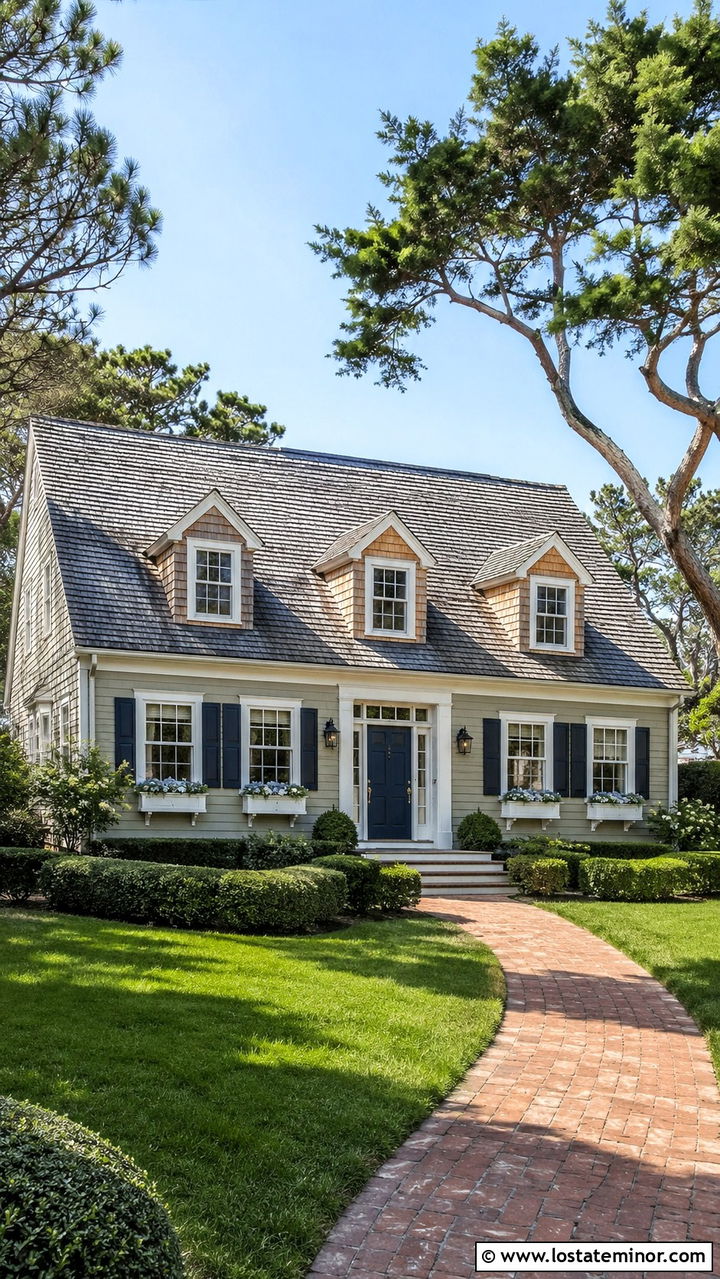
Could a traditional Cape Cod wear olive green without losing its coastal charm? A light, slightly gray olive makes the answer easy. Use the green on horizontal siding and add natural cedar shakes to the dormers or upper story. Creamy white trim around divided-light windows creates a softer finish than stark white. A weathered gray roof complements both materials and reinforces the relaxed coastal character. Paint the front door muted navy for a small, classic contrast. Simple window boxes, clipped hedges, and a curved brick walkway complete the facade. The cedar should remain a focused accent rather than covering every surface, allowing the compact house shape and symmetrical windows to stay visually clear.
4. Olive Green Modern Farmhouse With Cedar Shake Gables
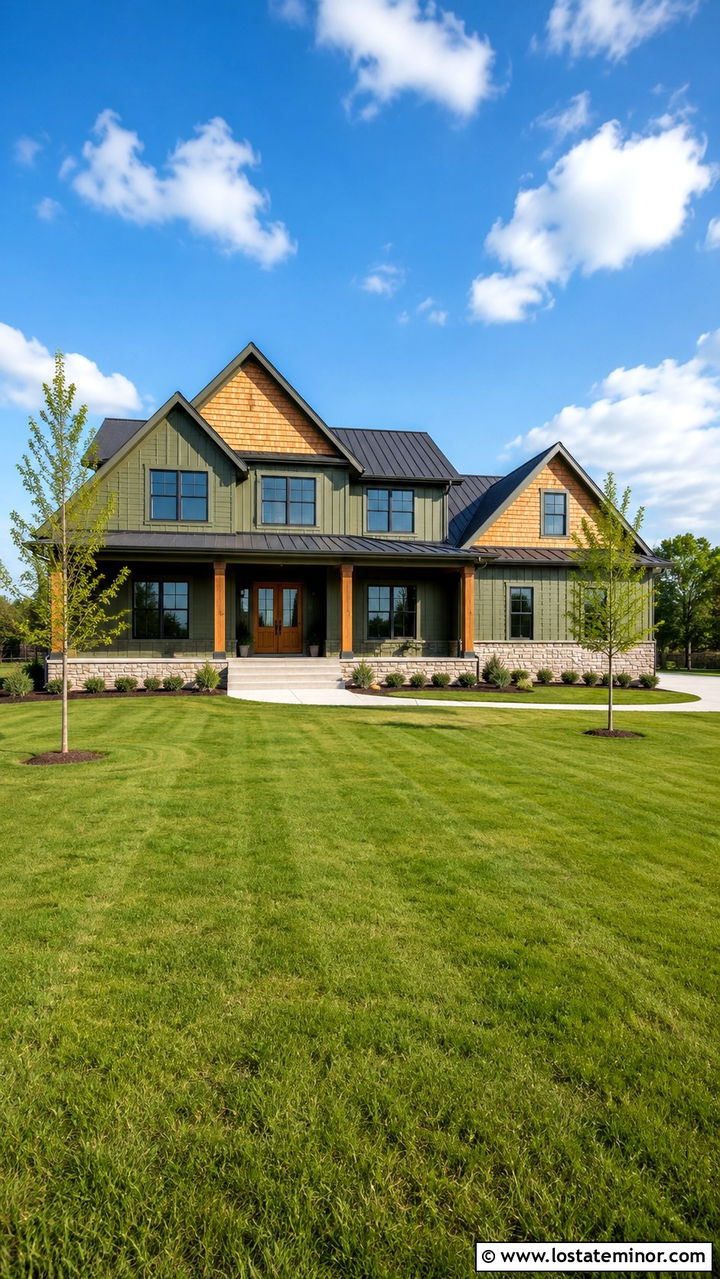
An olive green modern farmhouse feels warmer and more distinctive than the familiar all-white version. Cover the main facade in olive board-and-batten siding, then use cedar shakes within the largest gable. Natural cedar porch columns and a matching double front door can repeat that accent without overwhelming the design. Keep the window frames, gutters, and metal awnings matte black for clean contrast. A light limestone base prevents the dark accents from making the exterior feel heavy. Finish with a charcoal standing-seam roof over the porch and dark asphalt shingles across the main roof. Wide concrete steps, simple foundation plants, and an open lawn support the farmhouse’s clean, uncluttered lines.
5. Olive Green Ranch House With Cedar Shake Garage
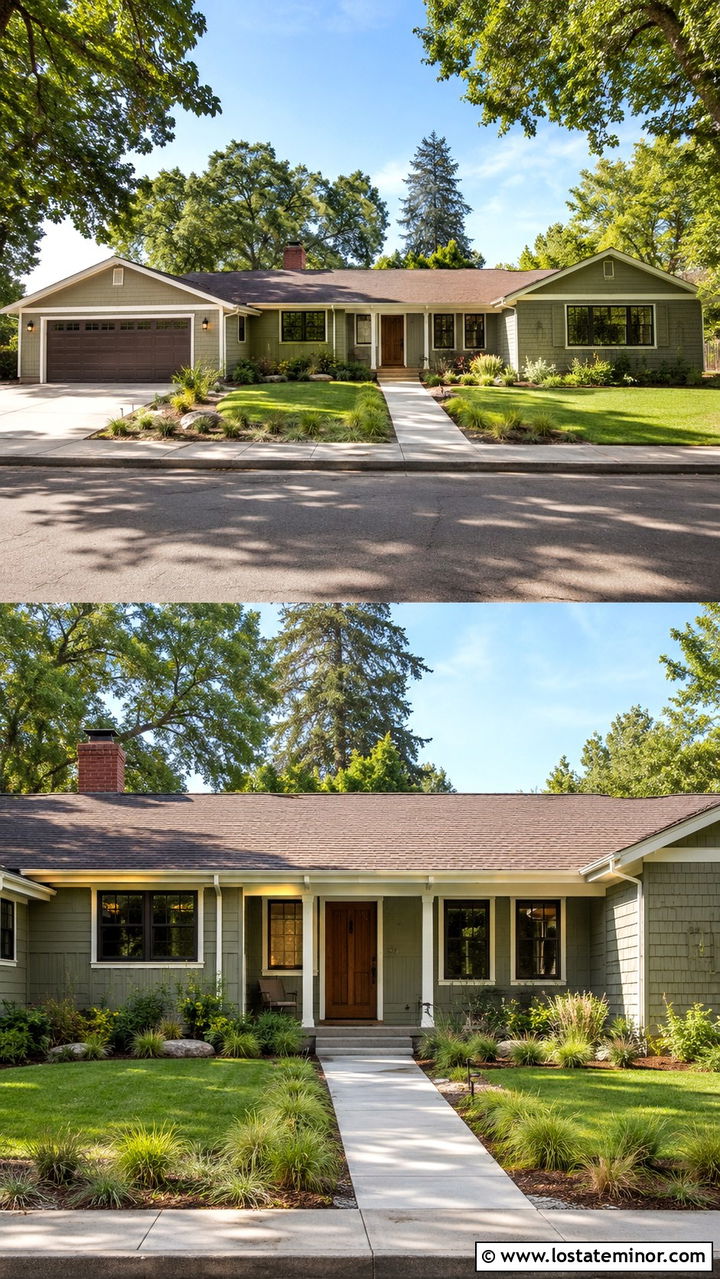
A long ranch exterior needs variation so the facade does not appear flat. Olive green lap siding can visually unify the house, while cedar shake siding around the garage creates a warm focal point. Choose a medium olive with subtle gray undertones to update the low horizontal profile. Paint the trim warm white, use dark bronze window frames, and install a cedar-toned front door to connect the entry with the garage. A brown-gray roof works well when it contains both cool and warm flecks. Add a shallow covered porch, broad planting beds, and a straight walkway to strengthen the architecture. This complete palette modernizes the ranch while respecting its simple shape.
6. Olive Green Colonial With Cedar Shake Dormers
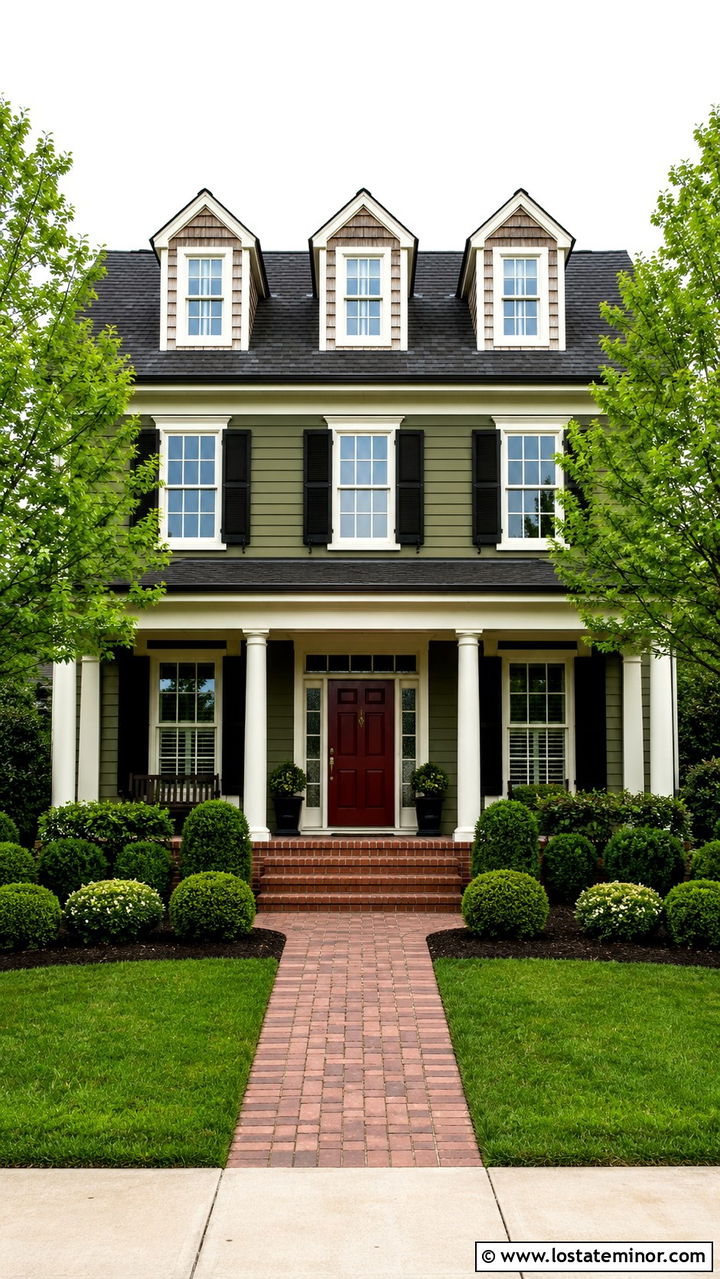
Symmetry gives a Colonial house a formal foundation, while cedar shake dormers introduce texture and warmth. Paint the main clapboard siding a classic medium olive green. Use evenly weathered cedar shakes across the dormers and side gables, then frame them with soft ivory trim. Black shutters maintain the traditional character and visually connect with a dark slate-colored roof. A glossy burgundy front door can add a restrained historical accent without clashing with the green. Keep the porch details simple, using white columns and brick steps. Balanced boxwoods, matching trees, and a centered walkway will reinforce the facade’s orderly appearance while the cedar prevents the overall scheme from looking too rigid.
7. Olive Green Bungalow With Cedar Shake Porch
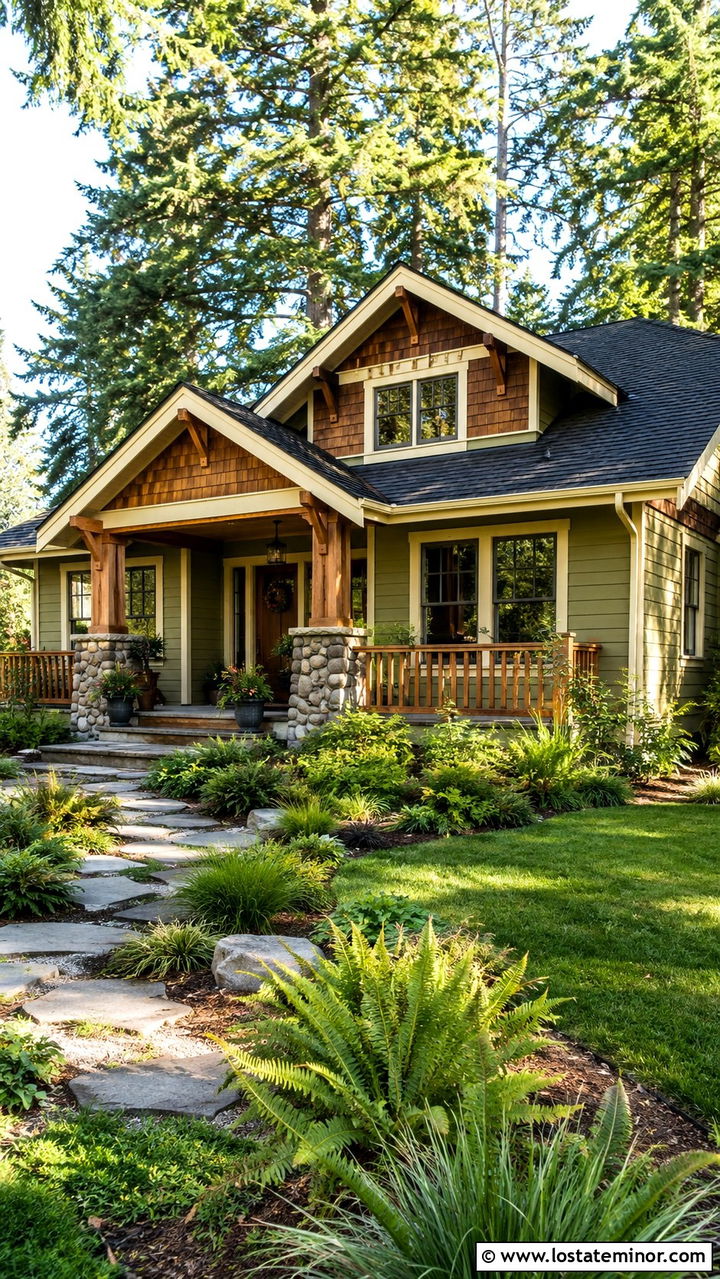
The deep eaves and broad porch of a bungalow naturally suit earthy materials. Use a warm olive green on the lower lap siding and cedar shakes across the upper gable. Stained cedar porch posts, brackets, and railings can continue the wood tone at eye level. Choose creamy beige trim to define the windows and roofline without creating excessive contrast. A deep brown front door and bronze exterior lights will strengthen the cozy Craftsman influence. Ground the house with river-rock porch piers or a low stone base. Ferns, native grasses, and a stepping-stone path enhance the informal character. This combination makes a smaller home feel detailed, substantial, and connected to its garden.
8. Olive Green Cottage With Weathered Cedar Shake
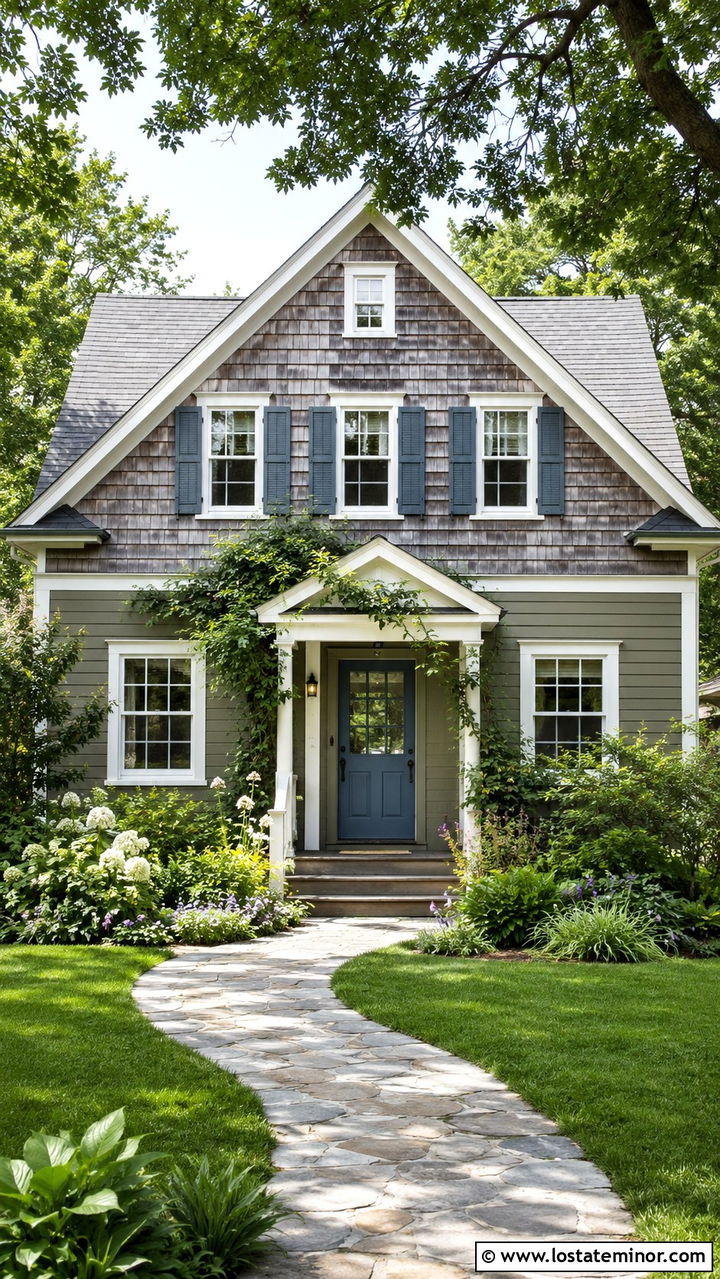
Weathered cedar shake brings soft gray-brown texture to an olive green cottage. Apply a gentle mossy olive to the main siding, then use naturally aged shakes around the upper story or front gable. Warm white trim will brighten the composition while allowing the weathered wood to remain subtle. Add pale blue shutters or a dusty blue front door for a quiet cottage accent. A medium-gray roof supports the cooler cedar tones and prevents the palette from appearing overly brown. Climbing greenery, flowering shrubs, and a curved flagstone path can soften the edges of the architecture. The final exterior feels collected over time, yet the consistent undertones keep every material visually connected.
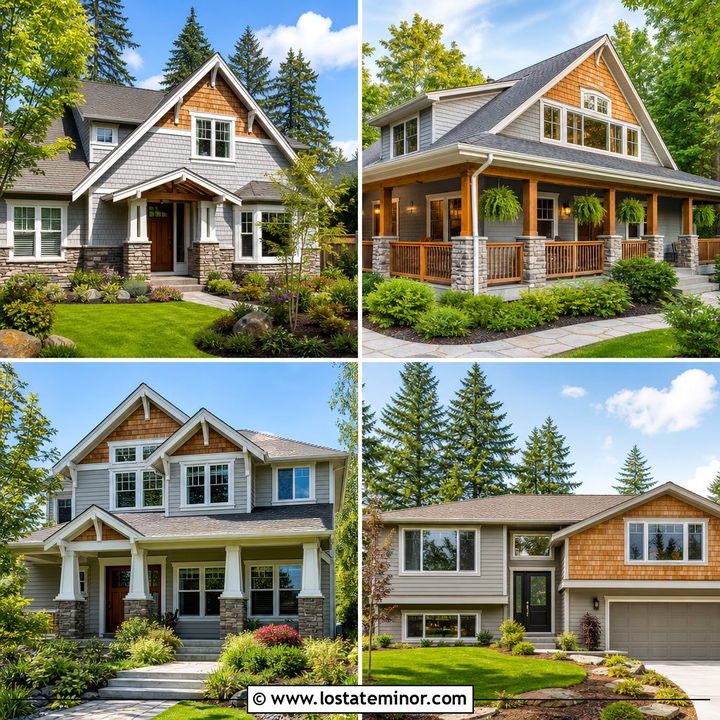
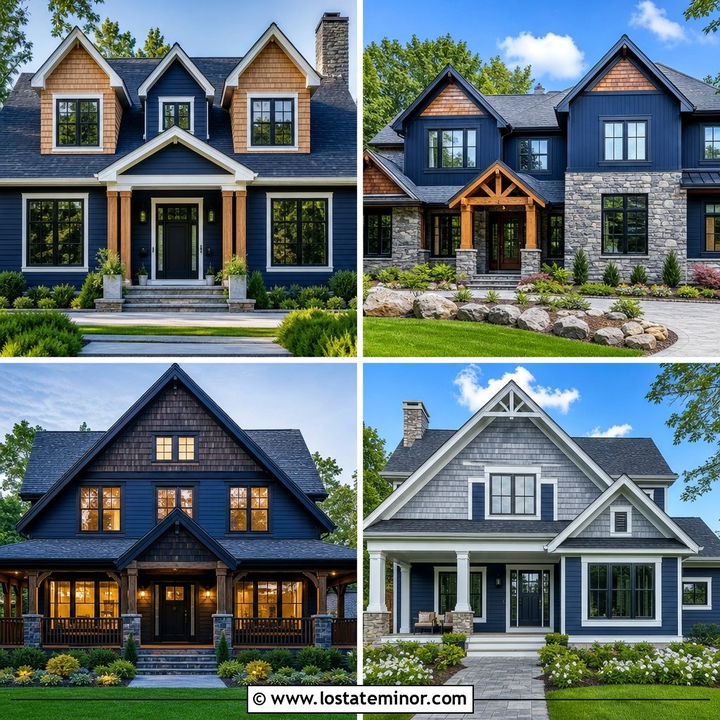
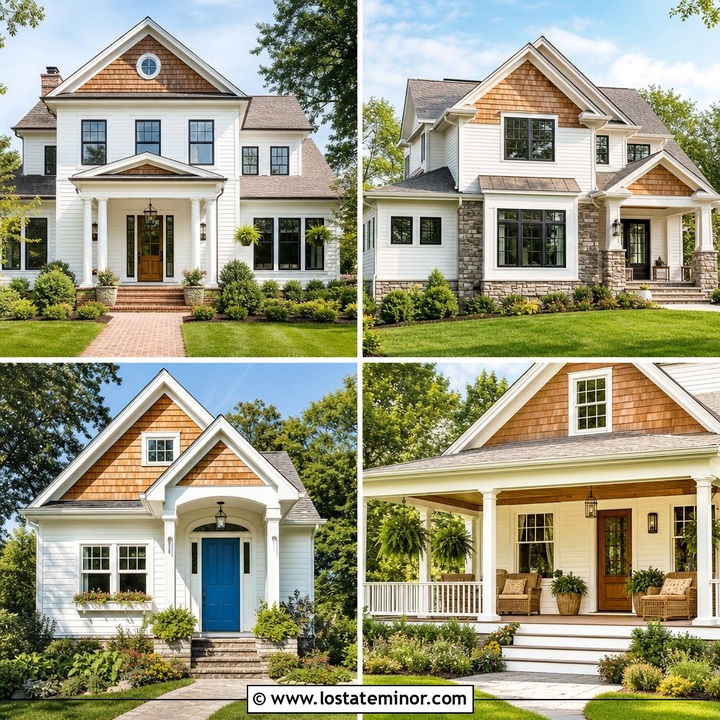
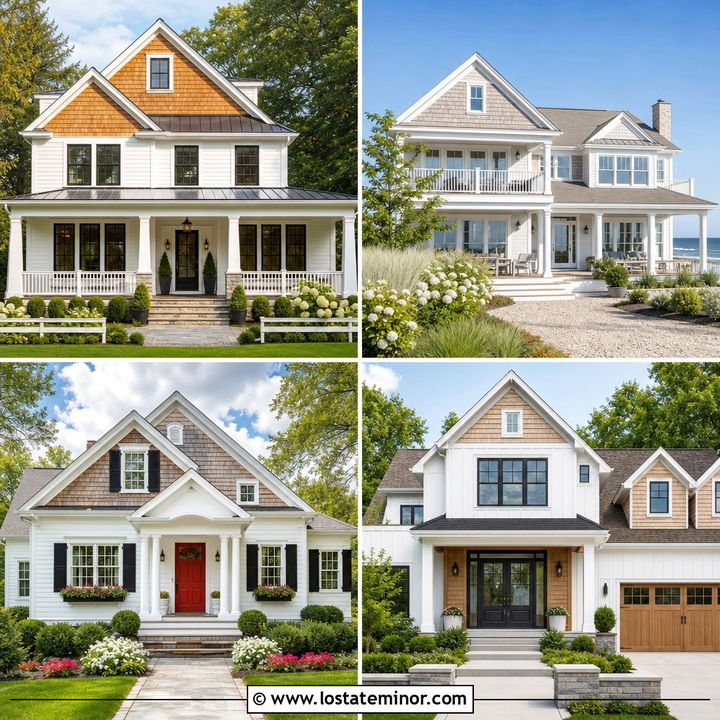
9. Olive Green House With Cedar Shake And Stone
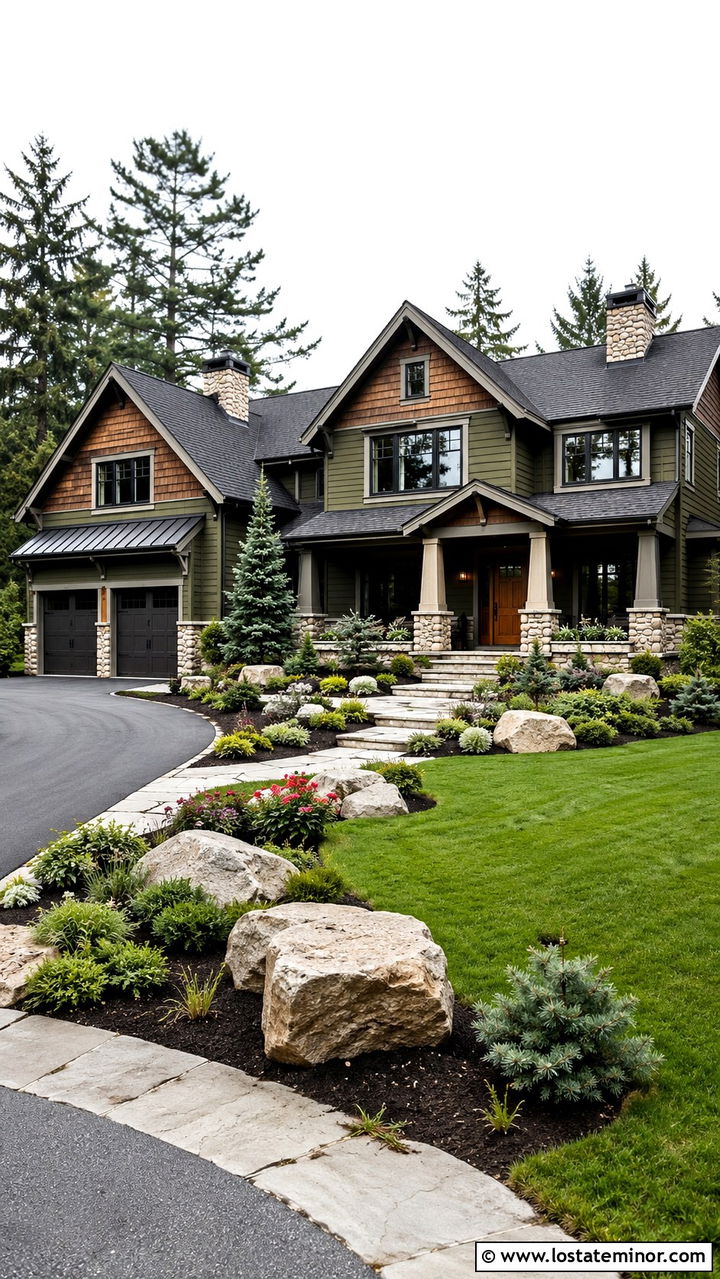
Stone can act as the bridge between olive green siding and warm cedar shake. Select a mixed fieldstone containing gray, tan, and muted brown tones, then use it across the foundation, porch columns, or chimney. Medium olive siding should cover the main walls, with natural cedar shakes placed in the gables. Keep the trim light greige so it relates to the stone instead of introducing a separate bright white. Black window frames and a charcoal roof add structure to the earthy materials. A medium-stained wood door can echo the cedar without matching it perfectly. Use large landscape stones and layered evergreen plantings to create a seamless transition from the facade to the yard.
10. Olive Green House With Cedar Shake And Black Trim
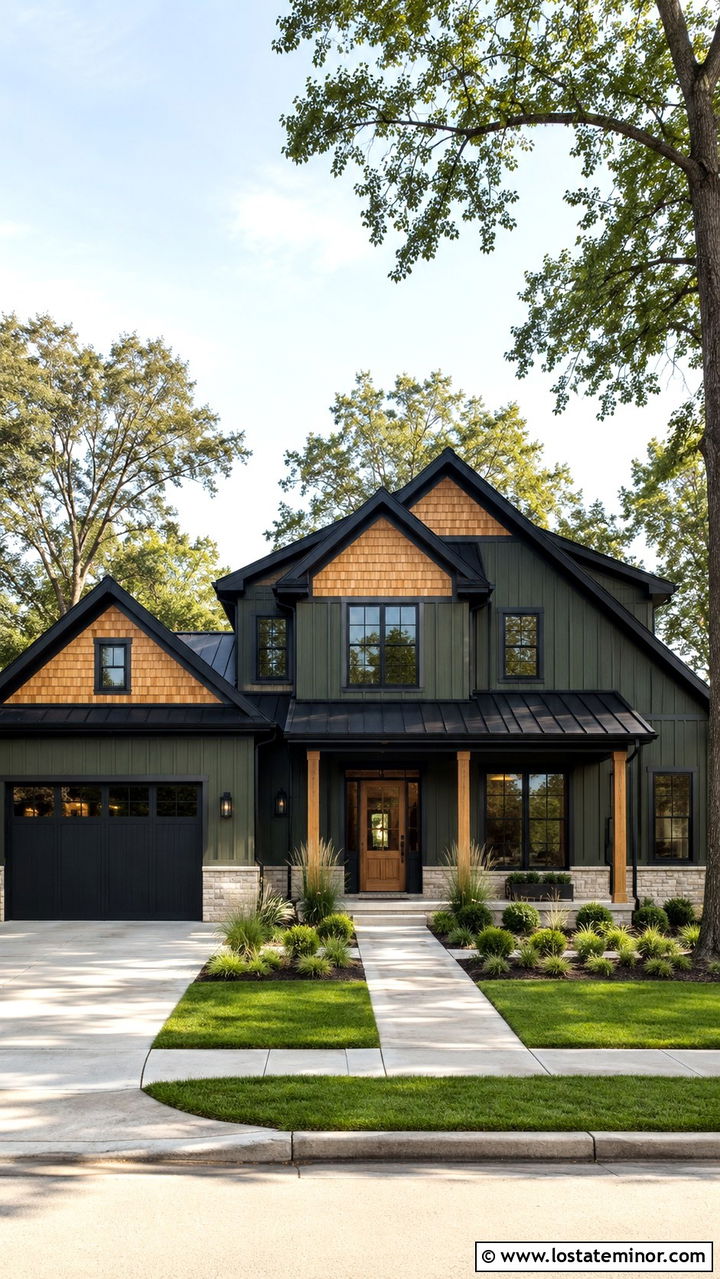
Black trim gives an olive green and cedar shake exterior a clean, contemporary edge. Choose a medium-dark olive for the siding and use golden cedar shakes across one prominent gable or upper-level section. Frame the windows, fascia, garage doors, and gutters in matte black. The strong outlines will sharpen the architecture, so keep decorative trim minimal. A black standing-seam porch roof can repeat the accent and protect a natural wood front door. Add a pale stone foundation to keep the bottom of the house from looking too dark. Simple grasses, structured shrubs, and a wide concrete walkway support the modern palette. The cedar provides necessary warmth between the green and black surfaces.
11. Olive Green House With Cedar Shake And Cream Trim
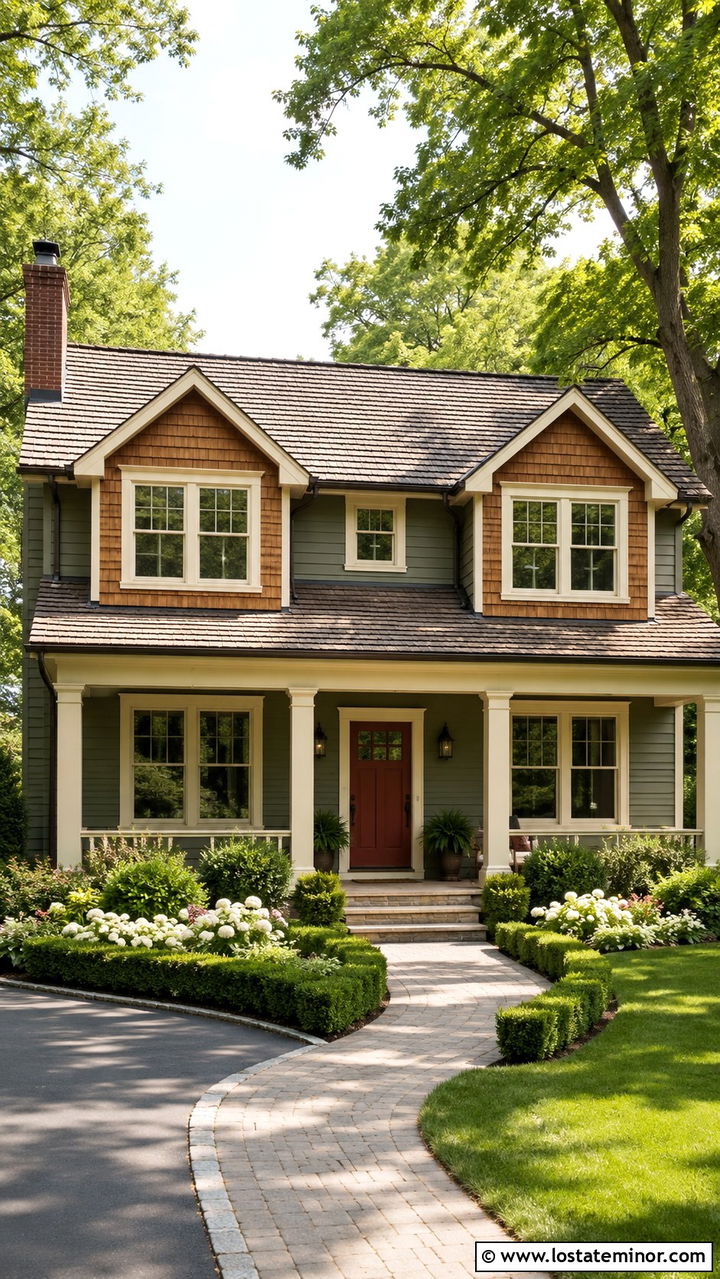
Cream trim is an excellent choice when bright white feels too cold beside olive green. Use a balanced olive body color with warm cedar shakes on dormers, gables, or a covered entry. Apply soft cream to the window casings, corner boards, porch railings, and fascia. The yellow undertones in the trim will quietly connect with the honey tones of the wood. A weathered brown roof and dark bronze fixtures can complete the traditional palette. Consider a muted brick-red door for contrast, or keep the entrance natural wood for a calmer result. Foundation beds filled with white flowers and dark green shrubs will repeat the light-and-dark balance established across the complete facade.
12. Olive Green House With Cedar Shake And White Trim
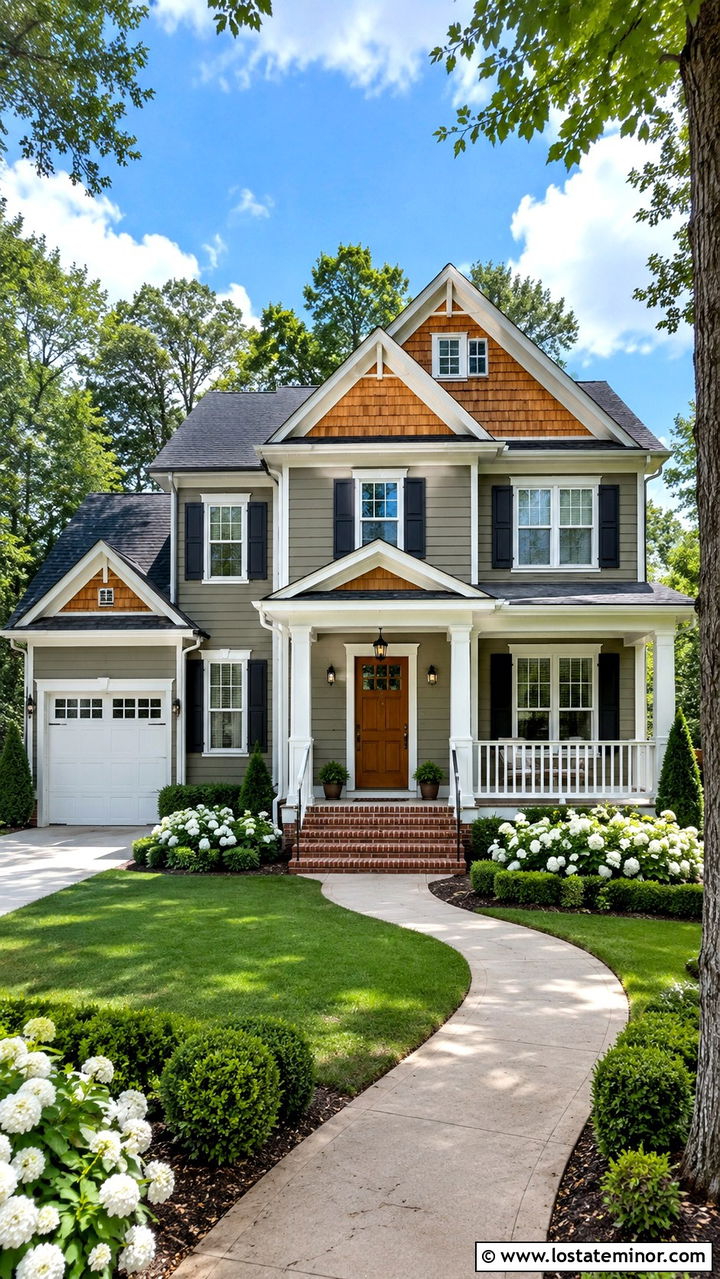
Crisp white trim can make an olive green exterior look fresh and clearly defined. This scheme works best when the olive has gray undertones rather than a strong yellow cast. Cover the main house with olive lap siding, use cedar shakes inside the gables, and apply clean white to window frames, porch columns, fascia, and railings. A charcoal roof and black shutters will add another layer of contrast. Keep the front door stained medium cedar brown so it visually connects with the shake accents above. Red brick steps can bring traditional warmth at ground level. Neatly shaped hedges and white flowering plants complete a polished facade that feels colorful without becoming busy.
13. Olive Green House With Cedar Shake And Bronze Windows
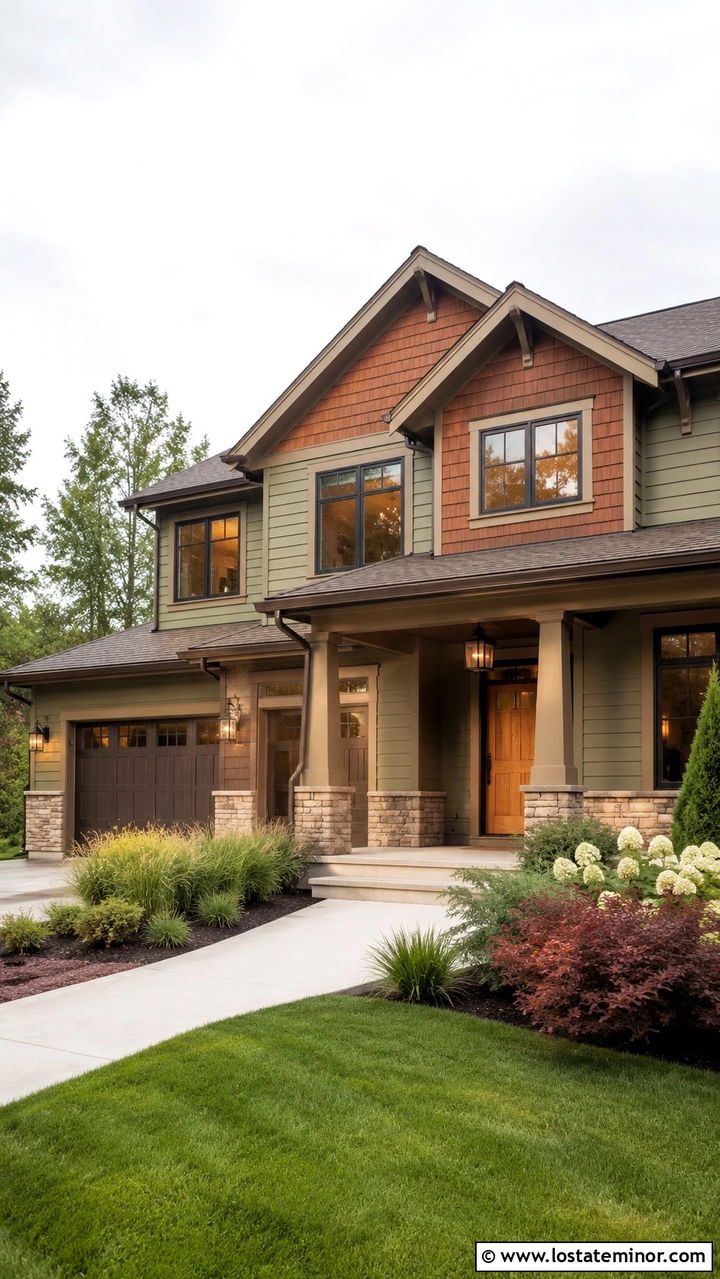
Bronze windows create a softer transition than black frames while still providing strong definition. Pair dark bronze window frames with muted olive siding and reddish-brown cedar shakes. Use warm greige trim around the roofline and corners to keep the overall palette subdued. Bronze gutters, downspouts, and porch lights can repeat the metal finish throughout the facade. A natural oak front door and tan stone base will add lighter notes between the deeper colors. This combination is especially effective on transitional homes with simple gables and generous windows. Plant burgundy-leaf shrubs, evergreen grasses, and pale hydrangeas near the foundation to reflect the exterior’s warm, layered color relationships.
14. Olive Green House With Cedar Shake And Red Brick
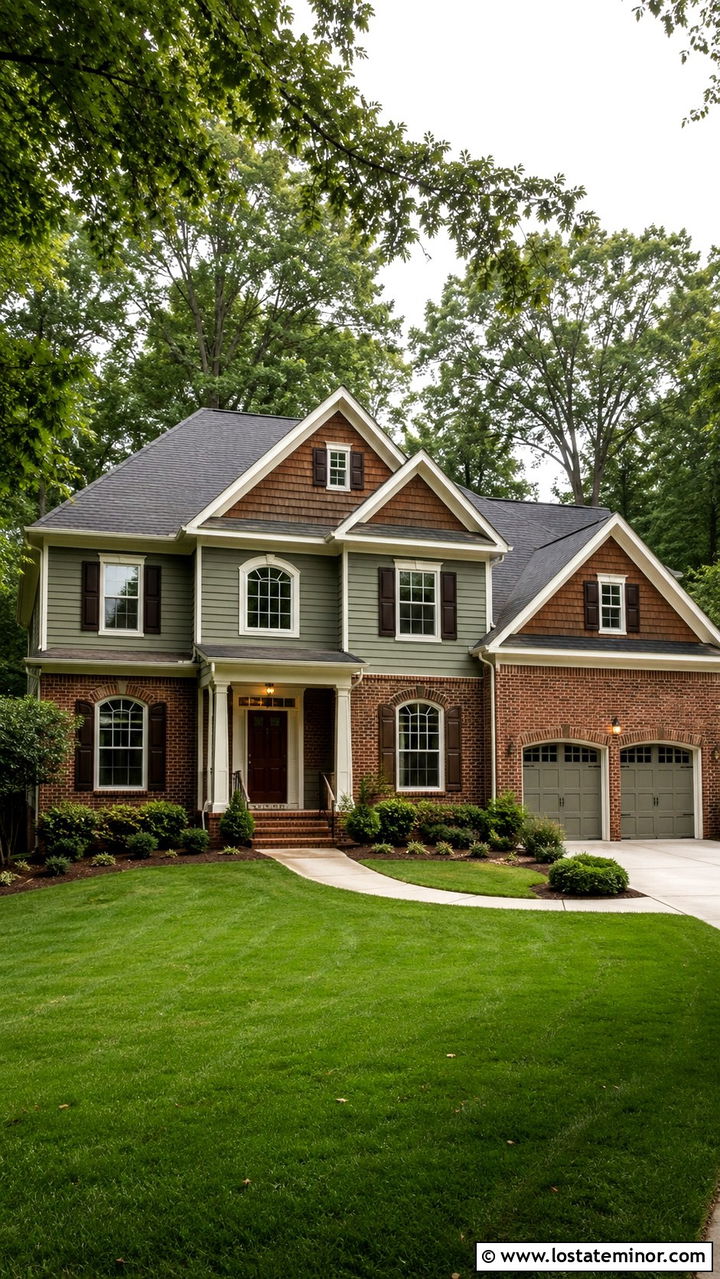
Existing red brick does not need to prevent you from choosing olive green. In fact, a softened olive can balance brick’s warm red and orange undertones. Use the green on the main siding and install medium-brown cedar shakes in upper gables. Paint the trim a warm off-white instead of a blue-white, which may look harsh against the masonry. Dark bronze shutters and gutters help bridge the darker shades found in the brick. Choose a stained mahogany door or repeat the olive on the entry for a quieter result. If the brick is visually dominant, limit the cedar to one or two architectural sections. Green foundation plants will further soften the transition between materials.
15. Olive Green Split-Level With Cedar Shake Accents
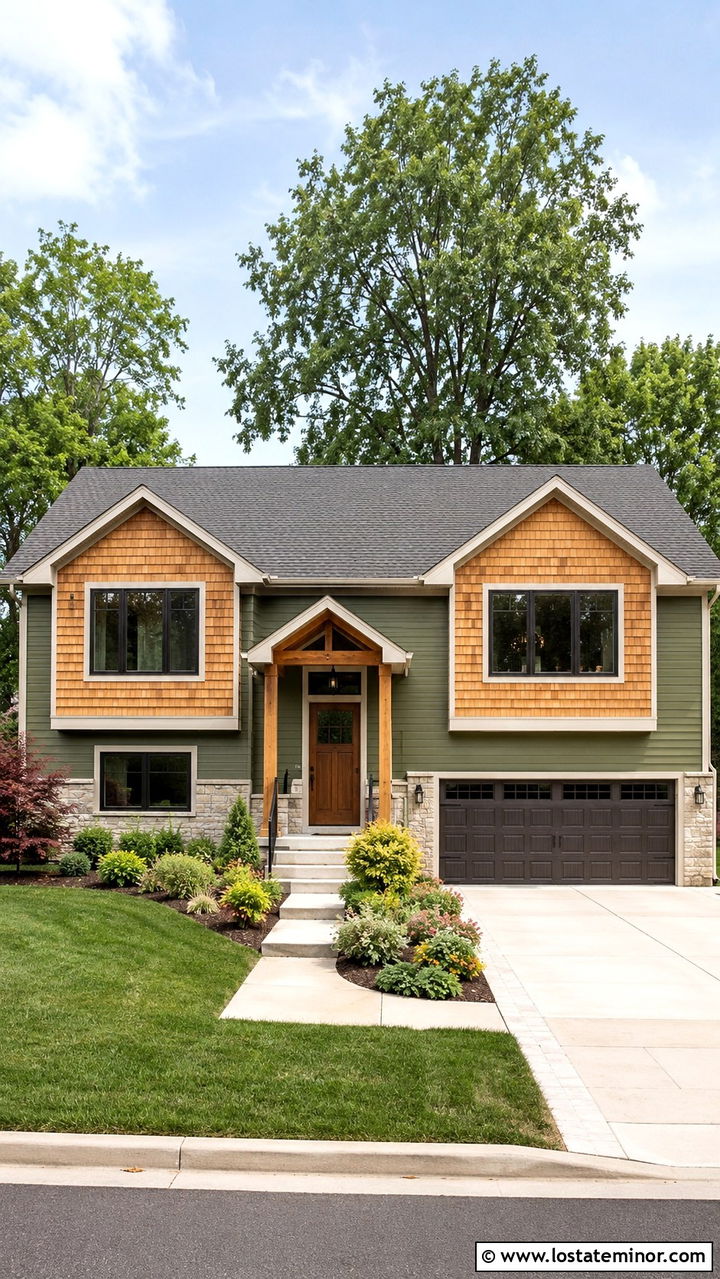
A split-level house often has several uneven sections that benefit from a unifying color plan. Paint the primary siding medium olive green, then use cedar shakes around the upper windows or on the projecting entry volume. Warm white trim will outline each level without making the facade appear fragmented. Choose a charcoal roof and dark bronze garage door for visual weight along the lower level. A cedar front door and matching horizontal porch screen can create a clearer entrance. Extend wide planting beds across the foundation to connect the separate building masses. Repeating the same three materials—olive siding, warm cedar, and pale stone—will give the remodeled exterior a more deliberate, balanced appearance.
16. Olive Green Tudor With Cedar Shake Gables
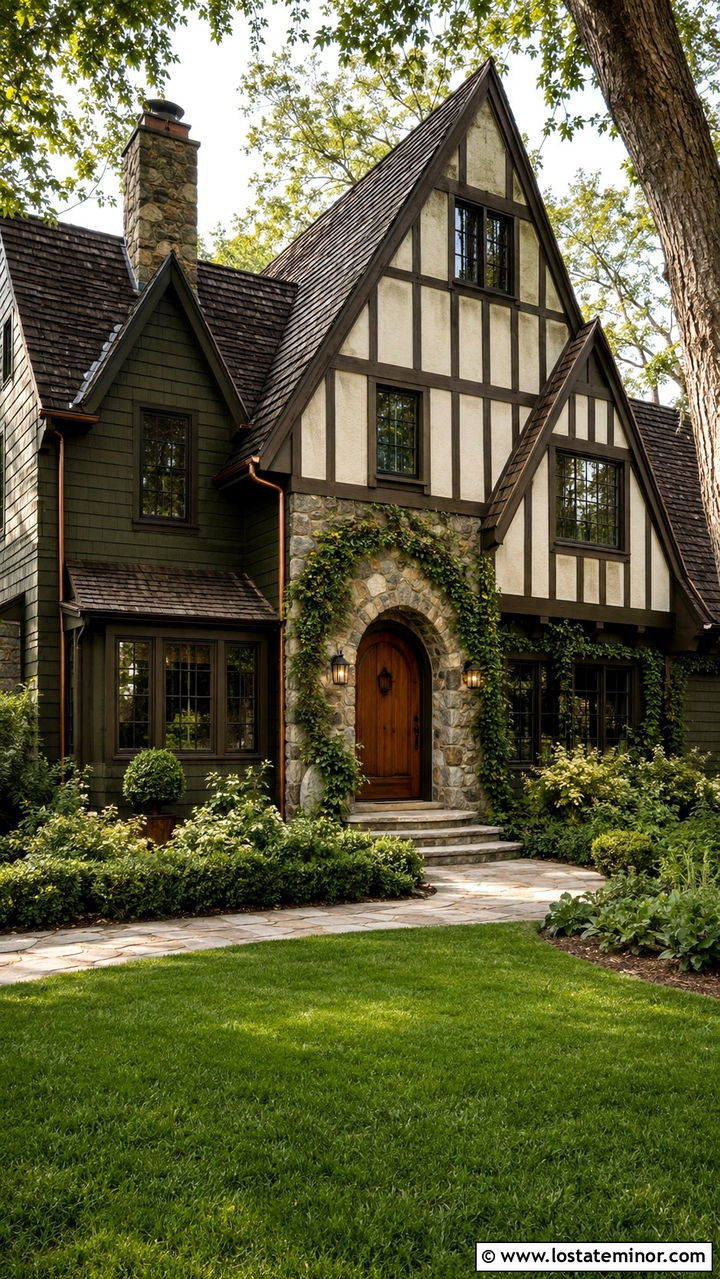
Tudor architecture can support a deeper, more complex olive green palette. Use dark olive siding between warm brown half-timber details, then place cedar shakes inside steep front gables. Cream stucco sections can provide relief and preserve the house’s traditional pattern. A dark brown roof, copper gutters, and a rounded wood front door will enhance the old-world character. Add stone around the entry and lower walls, selecting a blend with mossy gray and tan tones. Keep the window trim deep bronze rather than white to maintain the rich appearance. Informal hedges, climbing vines, and a gently curved walkway help the house feel established while allowing the layered facade materials to remain the main attraction.
17. Olive Green Victorian With Cedar Shake Details
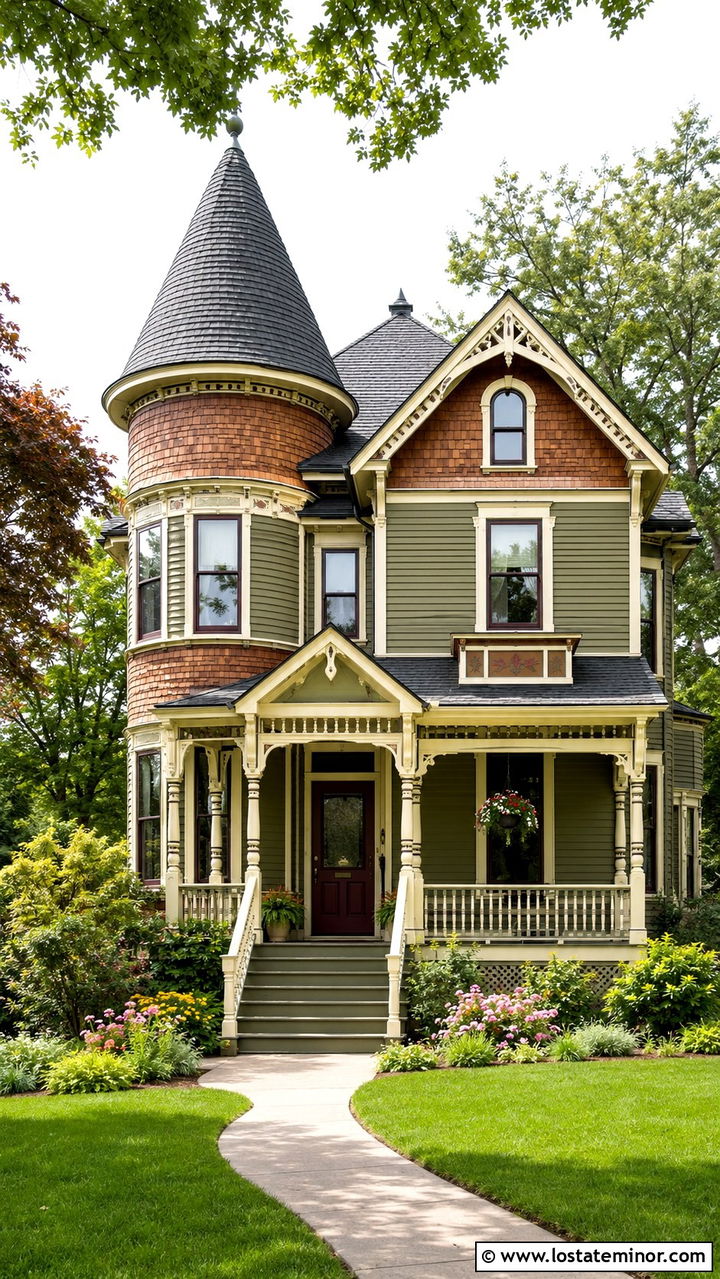
A Victorian house provides many surfaces for color, but restraint keeps the result sophisticated. Use muted olive green as the dominant body color and place cedar shakes across the tower, upper gables, or patterned shingle bands. Cream trim can highlight brackets, window surrounds, and porch spindles. Introduce deep burgundy only on the front door or selected decorative panels. A charcoal roof will quiet the composition and prevent too many brown tones from competing. If the cedar is newly installed, choose a medium stain rather than a bright orange finish. Balanced landscaping and a simple painted porch floor will frame the architecture without adding clutter. The result feels detailed, historic, and cohesive.
18. Olive Green A-Frame With Cedar Shake Siding
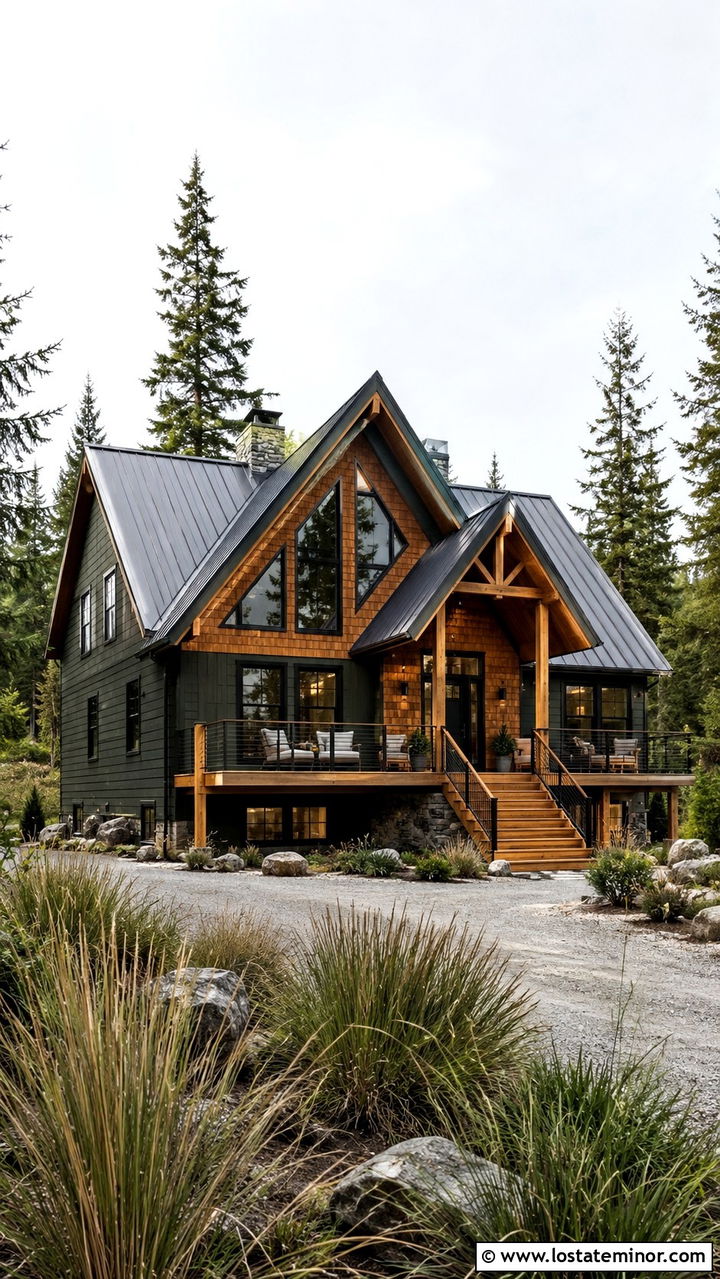
The steep roofline of an A-frame creates a dramatic canvas for olive green and cedar shake. Use dark olive vertical siding along the main walls, then cover a central gable or sheltered entry with warm cedar shakes. Black-framed windows can emphasize the triangular shape and create a modern woodland appearance. Choose a charcoal metal roof for durability and strong contrast. Exposed cedar beams, a natural wood deck, and dark metal railings will extend the material palette around the house. A low stone base can visually anchor the tall facade. Surround the home with native grasses, evergreen trees, and a gravel path, allowing the architecture to feel integrated into a mountain or forest setting.
19. Olive Green Mountain House With Cedar Shake And Stone
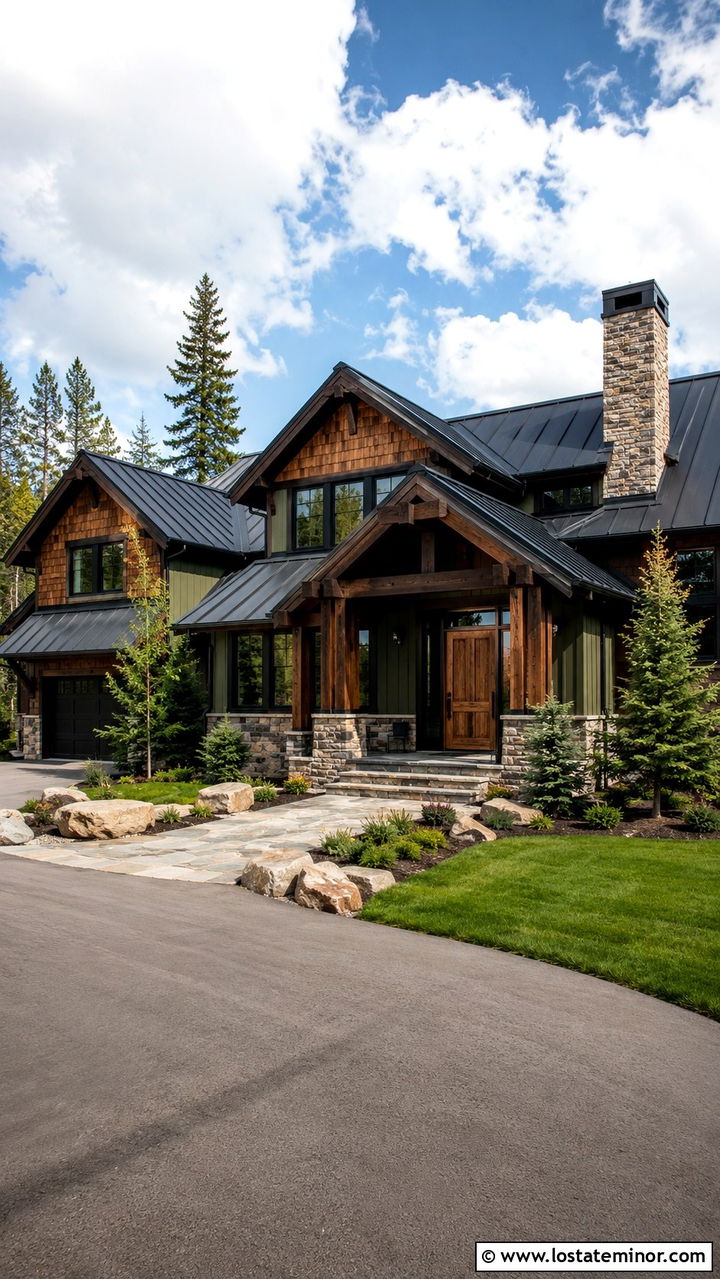
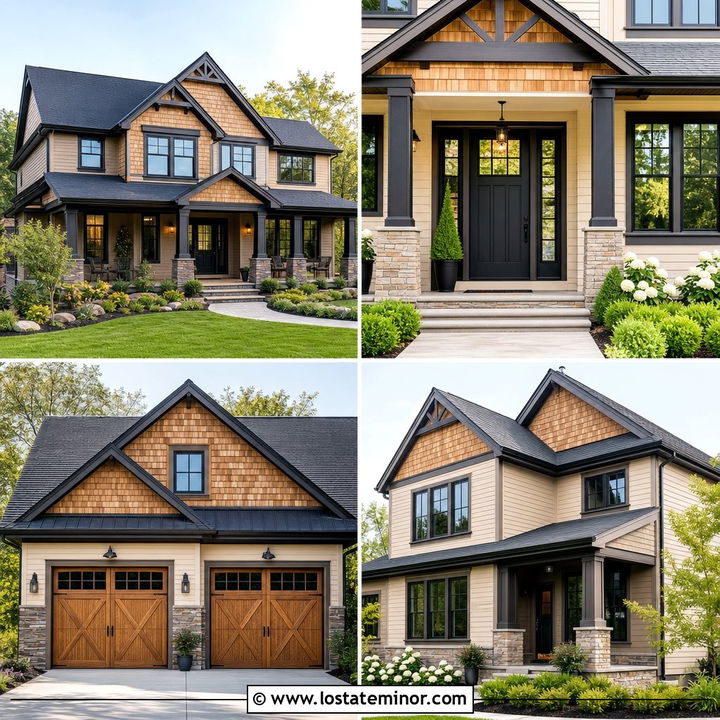
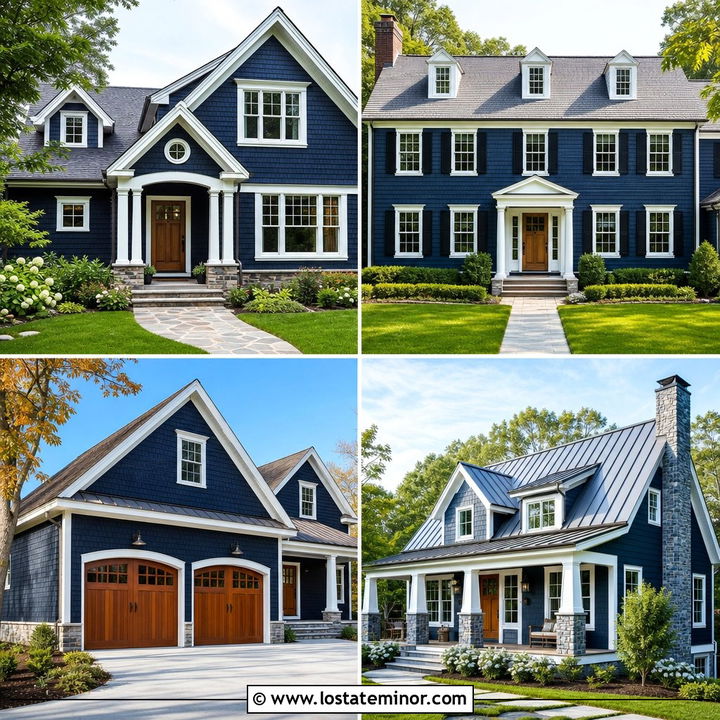
A mountain house can carry stronger colors and heavier textures than many suburban exteriors. Choose a deep olive green for broad siding areas, rich cedar shake for the gables, and rugged gray-brown stone for the foundation and chimney. Black windows and a dark metal roof will provide crisp contrast against the natural materials. Use large timber porch posts stained to match the cedar. A substantial wood front door can complete the entry without introducing another color. Keep the stone mixture controlled so it supports rather than competes with the siding. Native evergreens, boulders, and a wide gravel or paved drive will make the complete exterior feel appropriate for its rugged surroundings.
20. Olive Green Lake House With Cedar Shake Gables
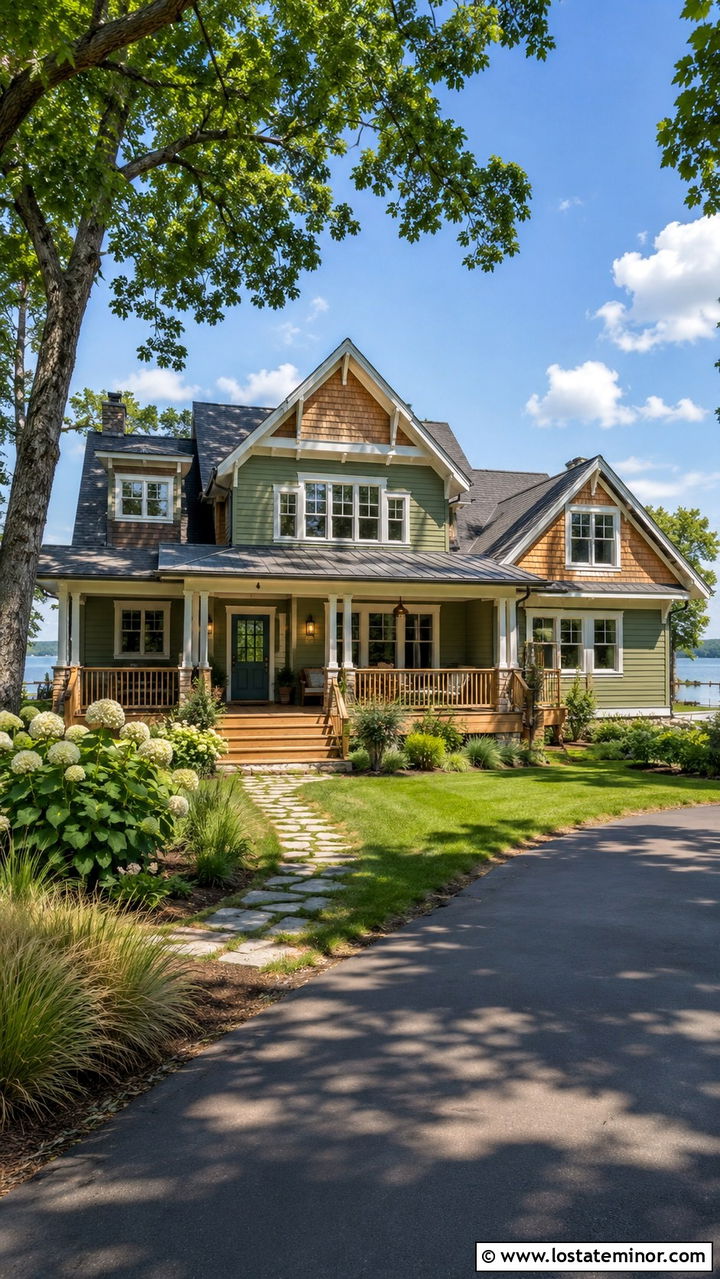
A lake house benefits from colors that feel natural in bright sun and reflective water. Select a softened olive green for the main siding and use light cedar shakes in the gables. Cream trim can frame large windows and porch openings while maintaining an easy, relaxed look. Add a muted blue-green front door as a subtle connection to the waterfront setting. A medium-gray roof works better than a very dark one when the house receives strong sunlight. Cedar porch railings and a broad natural wood deck can repeat the gable material. Finish with native grasses, hydrangeas, and a stone walkway. The result feels casual and scenic without relying on predictable nautical colors.
21. Olive Green Coastal House With Cedar Shake Siding
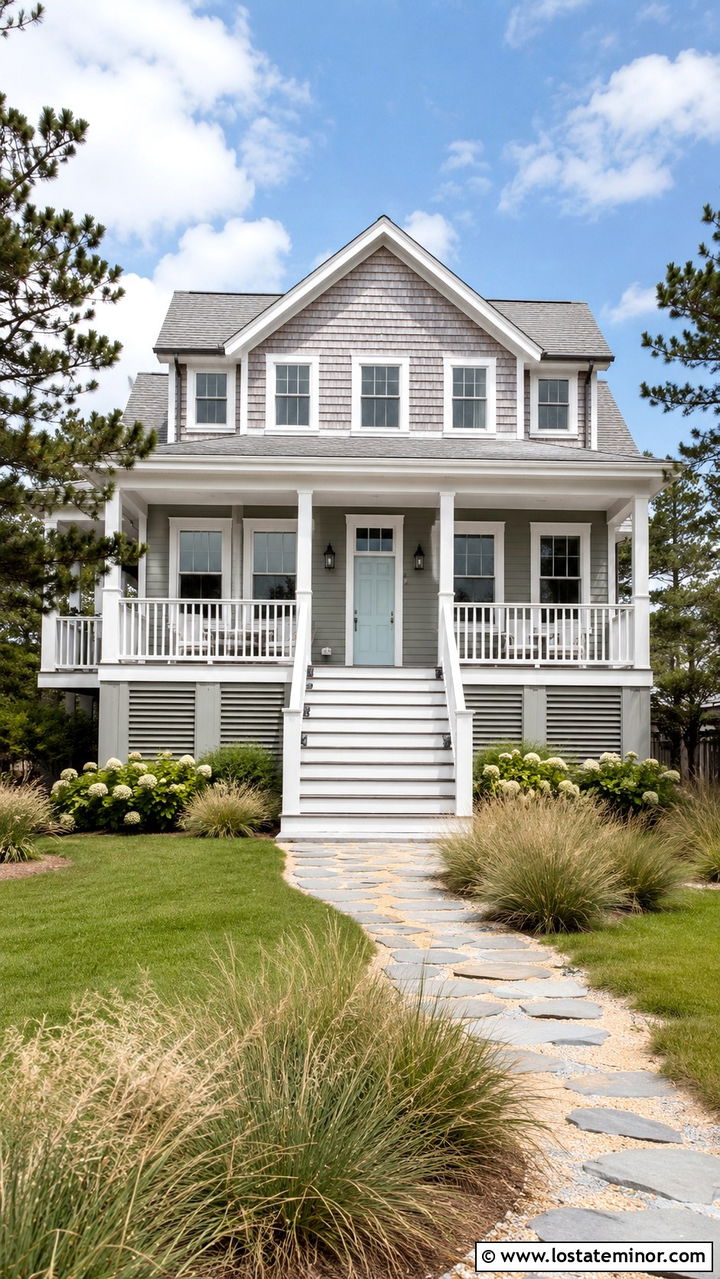
Olive green offers a grounded alternative to the pale blues commonly used on coastal homes. Apply a light gray-olive to the lower clapboard siding and use weathered cedar shakes across the upper story. Bright white trim around windows, porch columns, and railings will keep the facade airy. A soft gray roof and pale blue front door can reinforce the coastal setting without overpowering the green. Choose simple nickel or dark bronze lighting rather than heavy black fixtures. A raised porch, wide stairs, and low-maintenance grasses will complete the practical shoreline character. As the cedar ages, its silvery tones will blend naturally with the roof while the olive body color maintains warmth.
22. Olive Green Cabin With Cedar Shake Roof
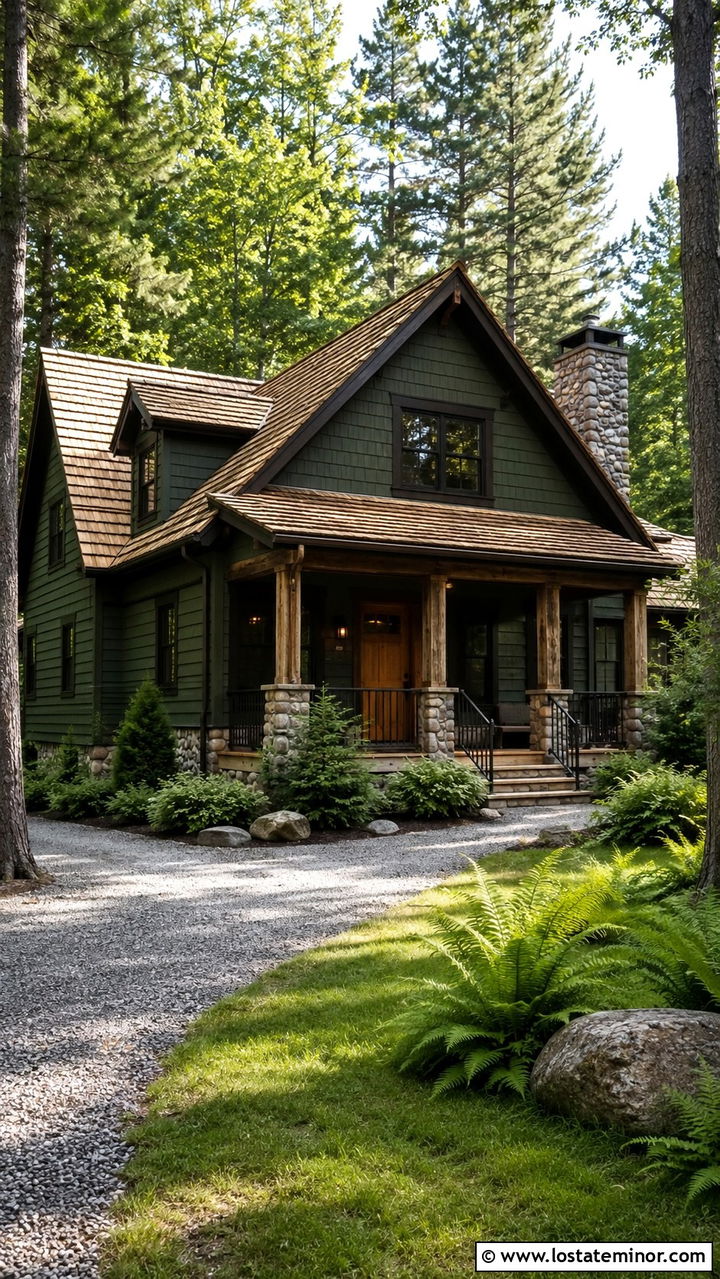
A cedar shake roof can become the defining feature of an olive green cabin. Use a dark, mossy olive on simple horizontal siding and allow the warm brown roof to provide most of the texture. Keep the trim deep brown or muted bronze so the roofline remains visually uninterrupted. A natural cedar door and small stone chimney will strengthen the rustic palette. If the cabin has a porch, use rough-sawn wood columns and dark metal railings. Avoid bright white accents, which may feel disconnected from the woodland setting. Ferns, evergreen shrubs, and a gravel walkway can surround the house with soft texture, helping the green walls settle comfortably beneath the substantial cedar roof.
23. Olive Green Prairie House With Cedar Shake Accents
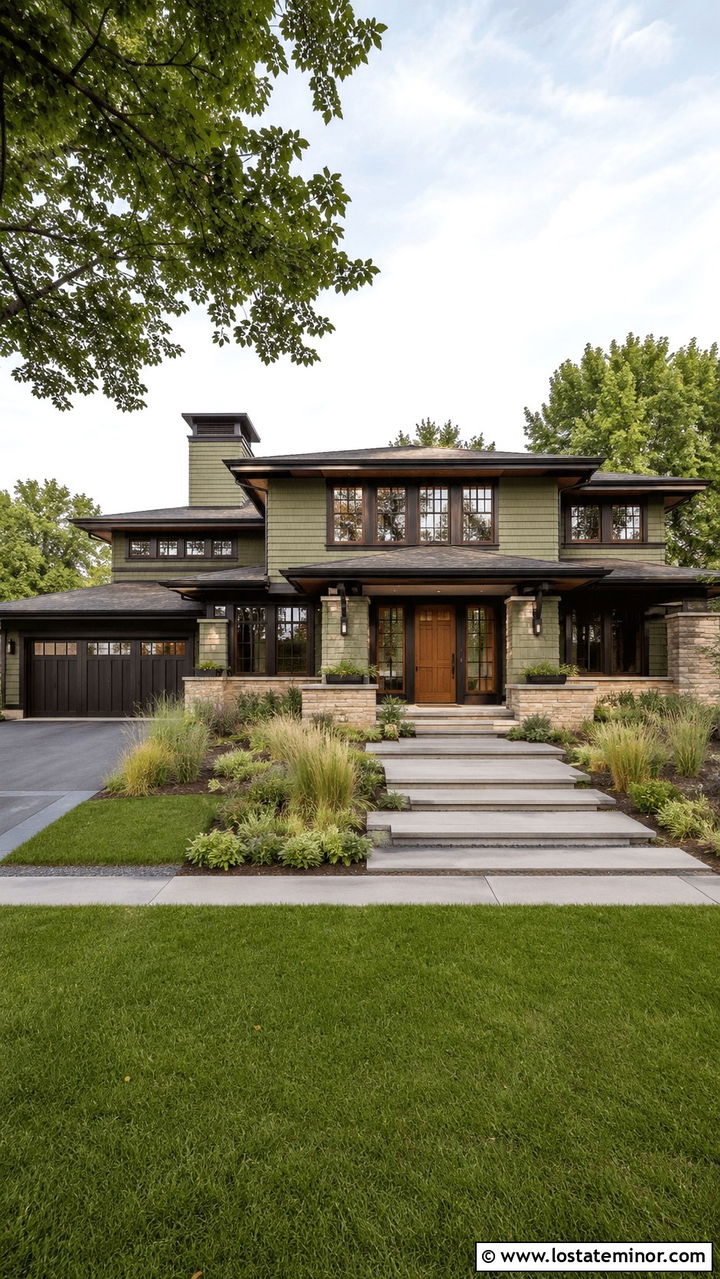
Long rooflines and broad overhangs make Prairie architecture well suited to earthy olive tones. Apply a medium olive green to the horizontal siding, then introduce cedar shake along a central upper level or low front gable. Use dark brown trim to emphasize the home’s strong horizontal lines. Bronze-framed windows, a low charcoal roof, and tan stone columns can extend the understated palette. Choose a wide wood front door with simple glass panels to maintain the geometric character. Landscaping should stay low and layered so it does not hide the architecture. Ornamental grasses, ground covers, and rectangular concrete pavers will reinforce the horizontal composition while connecting the cedar and green siding to the surrounding yard.
24. Olive Green Contemporary House With Cedar Shake Entry
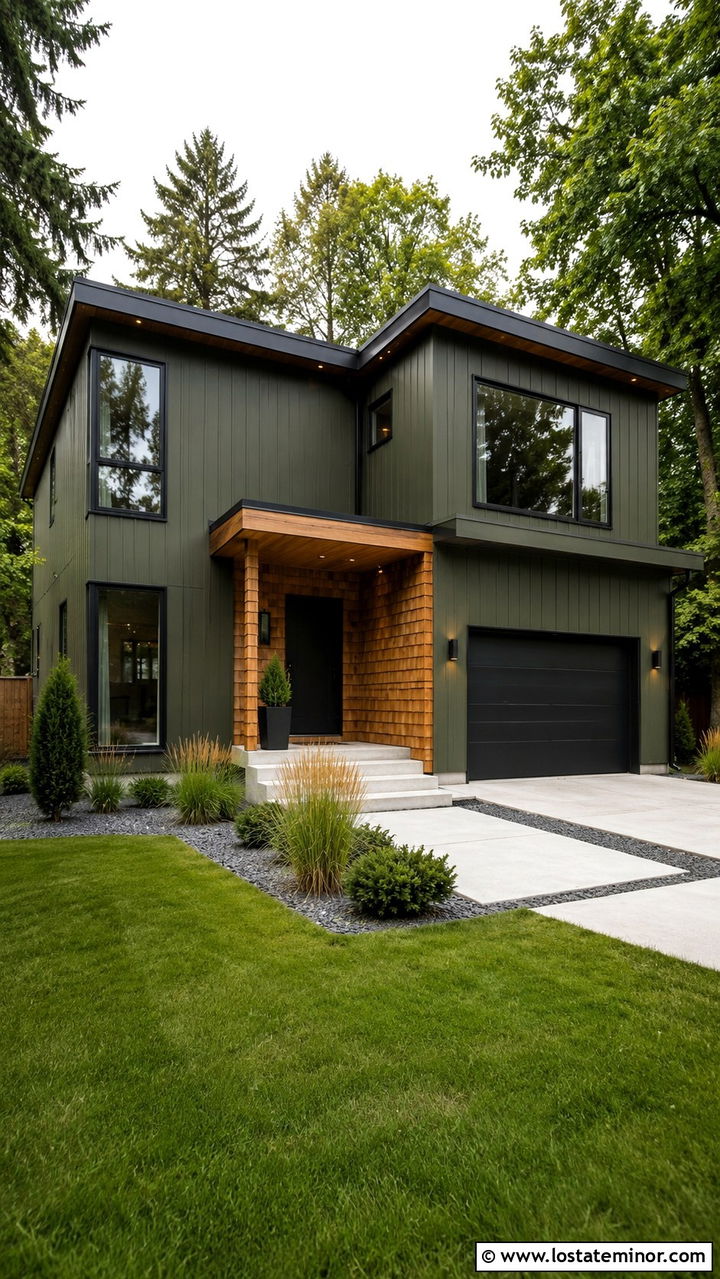
On a contemporary house, cedar shake works best as a controlled accent rather than an all-over finish. Use a deep olive green on large vertical siding panels and wrap the recessed entry with evenly colored cedar shakes. Black windows, a black garage door, and thin metal fascia will create sharp architectural lines. Add a flat cedar canopy or slatted screen to extend the warmth of the entry. Light concrete steps and a pale gravel bed can prevent the darker colors from feeling heavy. Keep the roof simple and charcoal. Minimal plantings, such as upright grasses and compact evergreen shrubs, will frame the facade while allowing the olive siding and textured cedar entrance to remain the clear focal points.
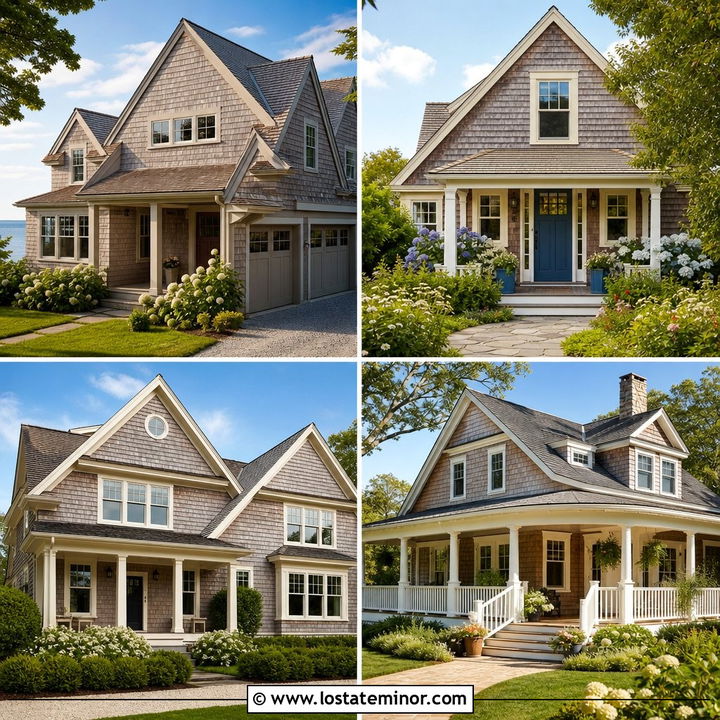
25. Olive Green House With Cedar Shake And Copper Roof
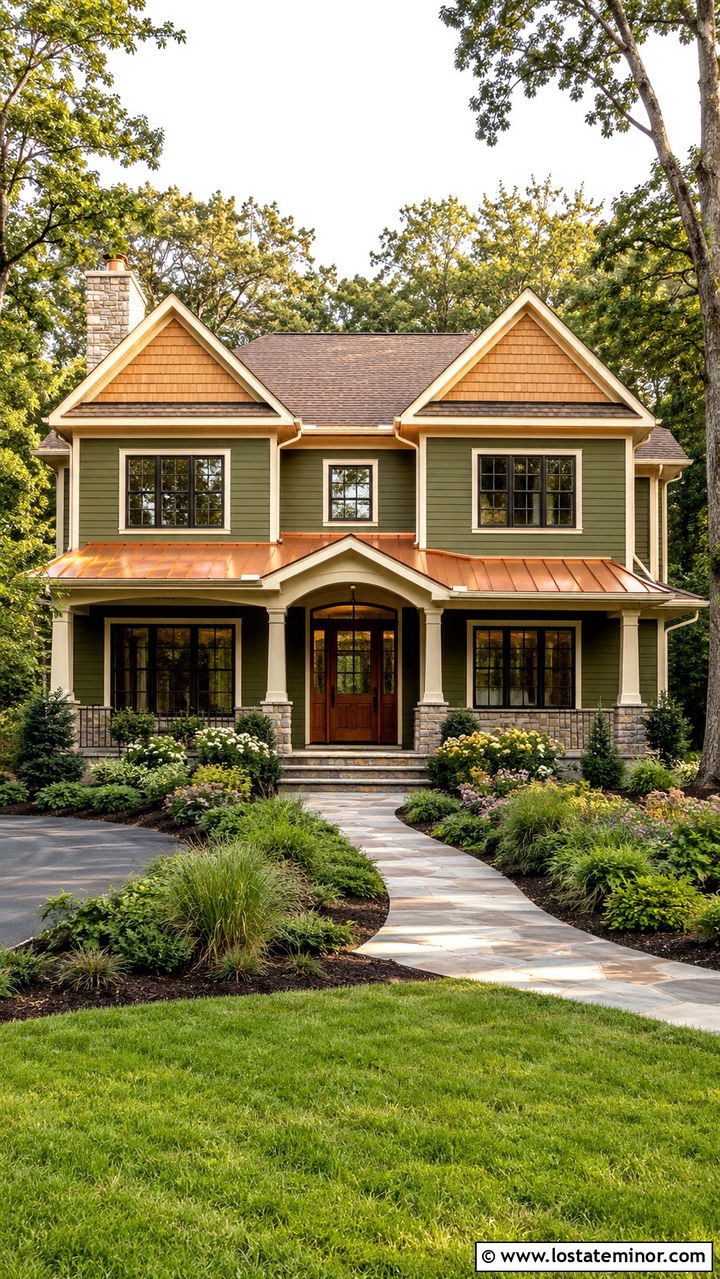
Copper details introduce a warm metal accent that changes beautifully alongside natural cedar. Use medium-dark olive green siding and cedar shakes in the gables, then add a copper roof over the porch, bay window, or entry canopy. Warm ivory trim will soften the transition between green, wood, and metal. Choose dark bronze windows and gutters where copper would be too visually dominant. A fieldstone foundation containing warm tan and cool gray tones can stabilize the varied palette. Keep the front door natural wood or paint it deep olive for a quieter entrance. As the copper develops a patina, it will become even more closely related to the green siding and surrounding landscaping.
26. Olive Green House With Cedar Shake And Metal Roof
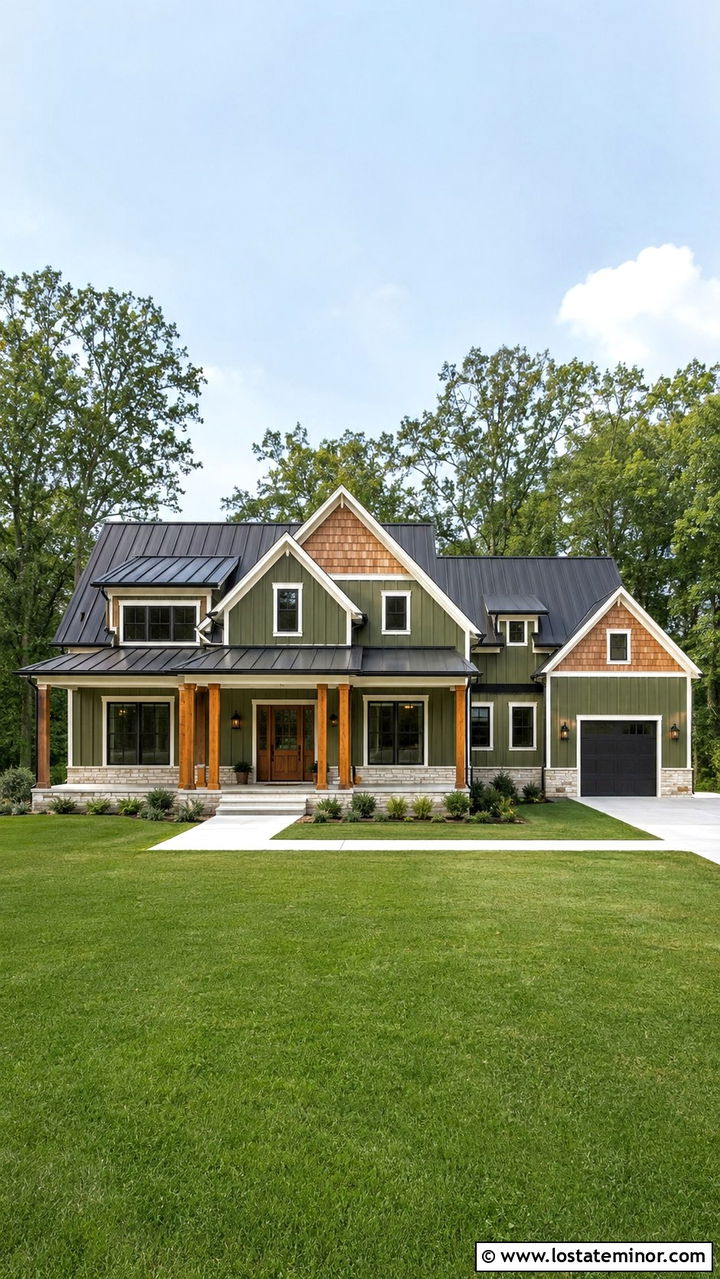
A metal roof gives olive green and cedar shake a crisp, durable-looking finish. Choose a charcoal standing-seam roof that contrasts with medium olive siding but does not overpower the cedar gables. Repeat the metal on porch canopies or garage overhangs for consistency. Use creamy white trim to outline windows and roof edges, then add black or bronze fixtures for definition. Natural cedar porch posts and a matching entry door will connect the upper shake sections to the ground level. A light stone base can brighten the composition. This scheme works on farmhouses, cabins, and transitional homes because it balances familiar natural materials with a cleaner, more modern roof profile.
27. Olive Green House With Cedar Shake And Tan Stone
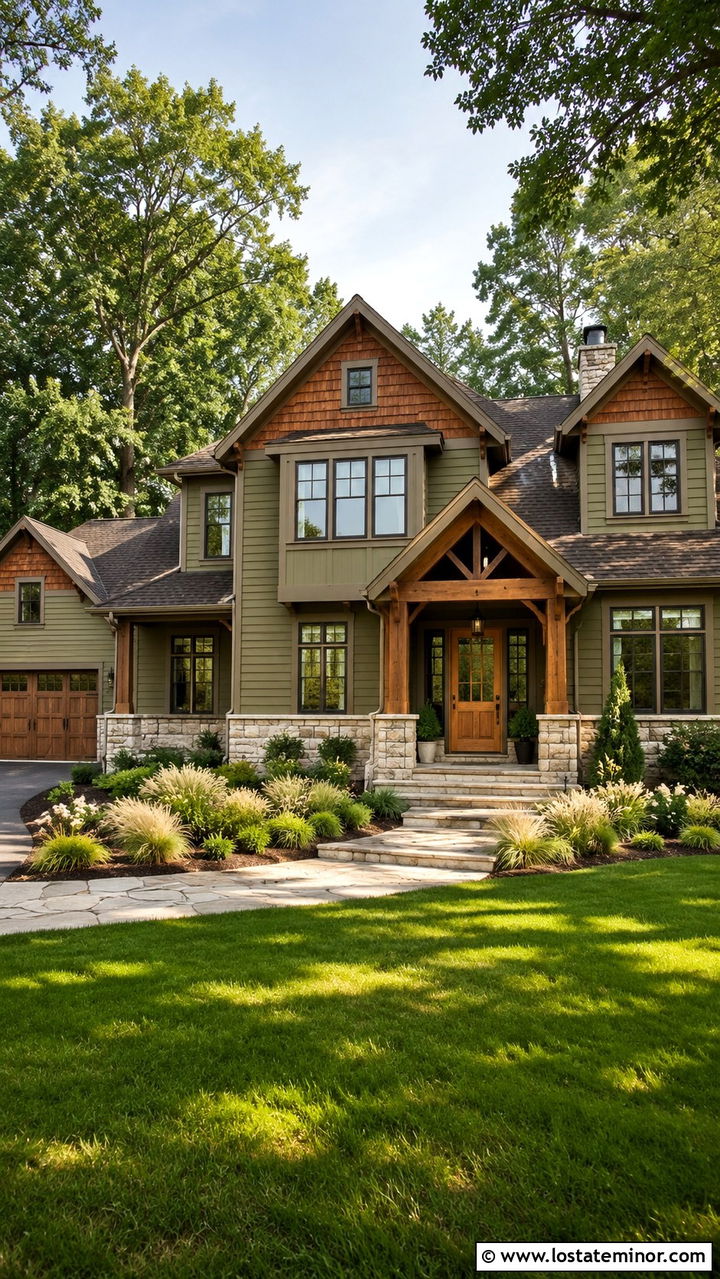
Tan stone creates a warm, low-contrast foundation for an olive green house. Select stone with sandy beige, taupe, and soft brown variation rather than strong orange tones. Use a muted olive across the main siding and medium-stained cedar shakes in the front gables. Warm greige trim will connect all three materials while remaining lighter than the walls. A brown-gray roof and bronze windows can keep the scheme cohesive. Add a natural oak front door beneath a small cedar-supported porch. The surrounding landscape should include deep green shrubs and pale ornamental grasses. Together, the colors produce a comfortable exterior that feels layered and interesting without relying on sharp black-and-white contrast.
28. Olive Green House With Cedar Shake And Gray Roof
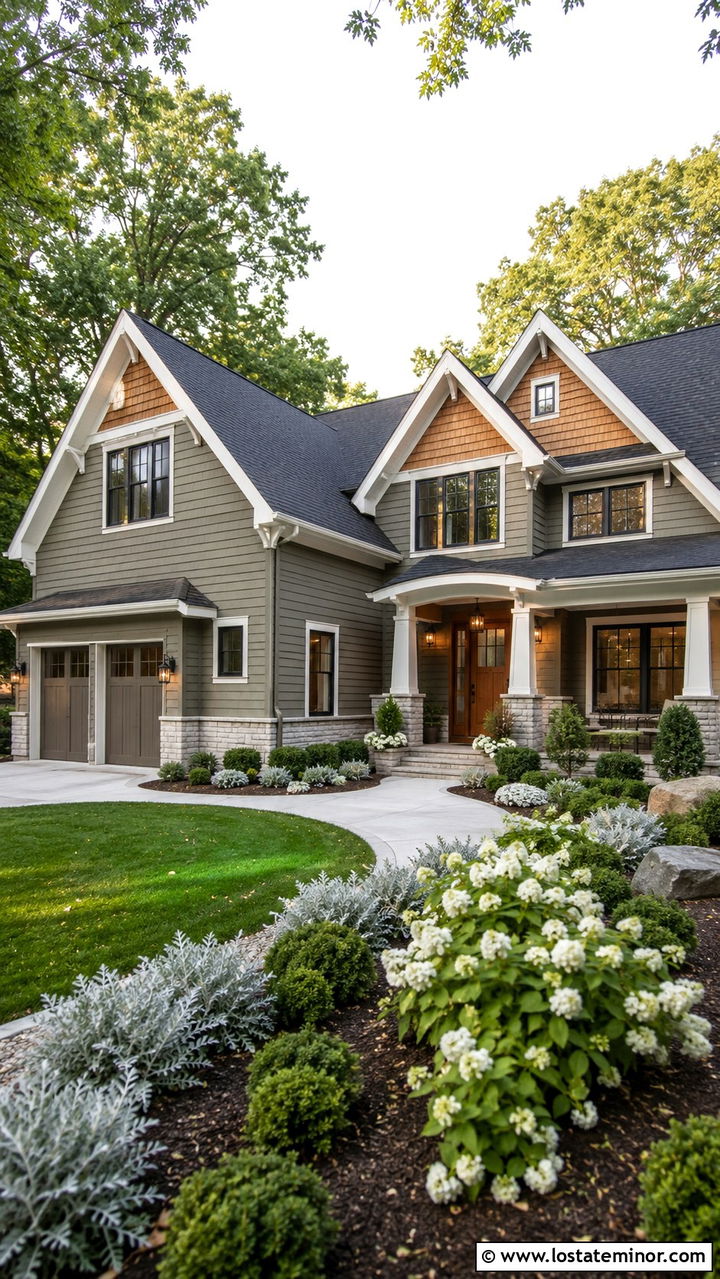
A gray roof can cool the warmth of olive green and cedar shake, creating a balanced exterior. Choose olive siding with noticeable gray undertones, then add lightly stained cedar shakes to the upper gables. A medium charcoal roof will relate to the green without making the house look overly dark. Use soft white trim around the windows and eaves for clean separation. Black shutters can be added to traditional homes, while bronze windows better suit transitional architecture. Complete the scheme with a natural wood door and a pale gray stone foundation. White flowers, silver-leaf plants, and rounded evergreens will repeat the cooler accents and keep the full facade feeling bright and intentional.
29. Olive Green House With Cedar Shake Porch Columns
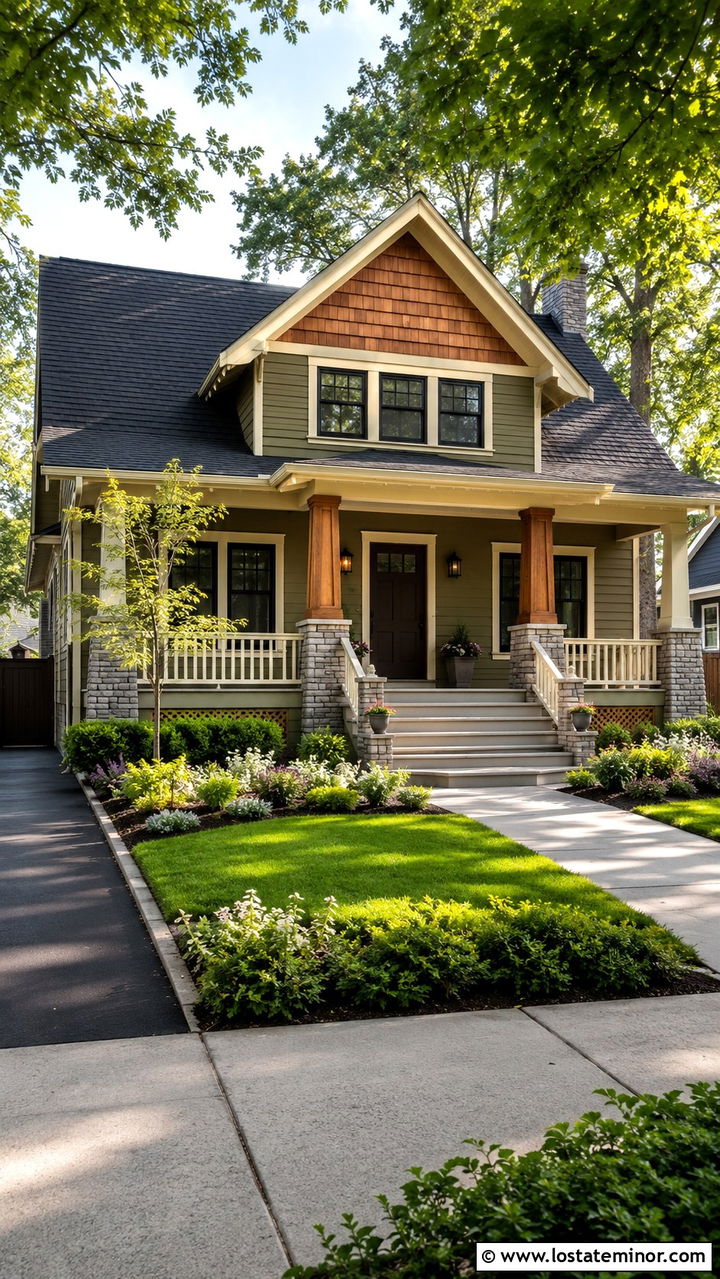
Cedar porch columns can bring warmth to an olive green facade without requiring large areas of shake siding. Paint the house a rich olive green and use cedar shakes only within the porch gable. Wrap substantial square columns in cedar stained to match the shakes. Cream trim and railings will define the porch, while black windows and a charcoal roof add contrast. A wood front door can match the columns, or a muted black door can create a more modern entrance. Ground the porch with gray fieldstone piers and broad steps. Layered shrubs, flowering perennials, and a straight walkway will direct attention toward the coordinated wood details and create an inviting arrival.
30. Olive Green House With Cedar Shake And Wood Garage Door
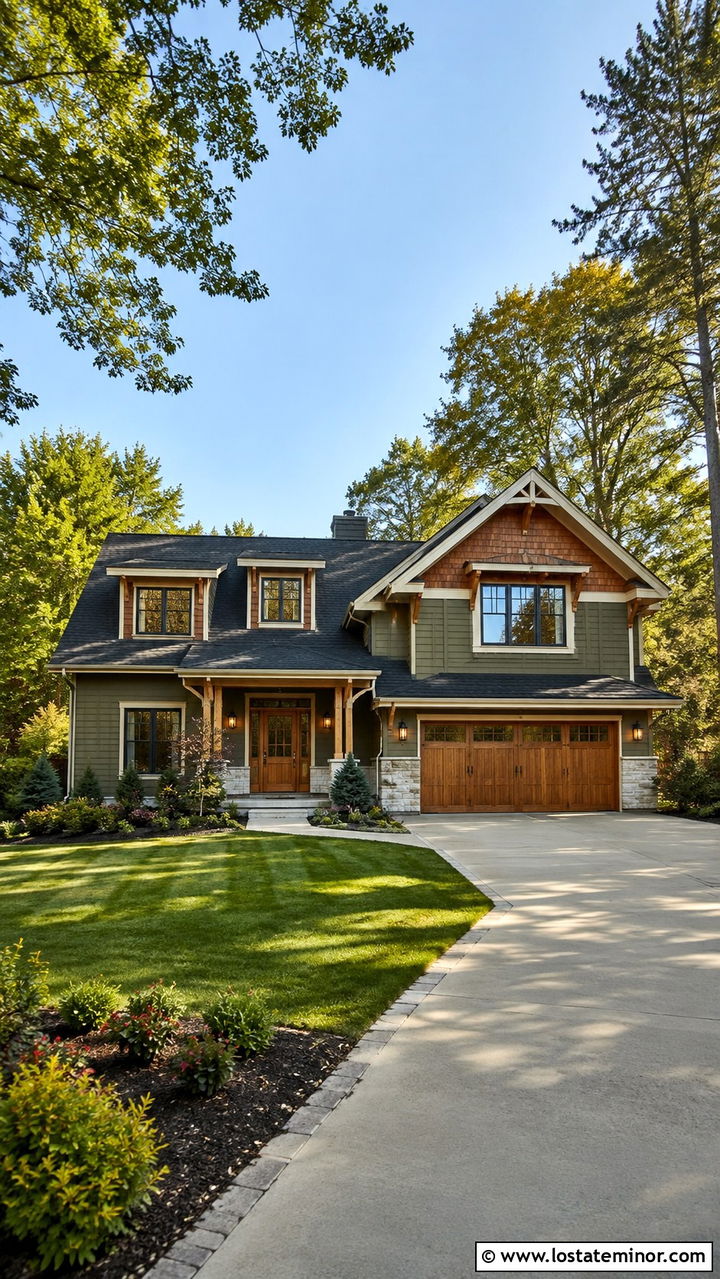
A wood garage door can balance cedar shakes positioned higher on the facade. Use medium olive green siding across the house and place natural cedar shake inside the garage gable or second-story dormers. Select a warm cedar garage door with simple rectangular panels rather than ornate hardware. Soft beige trim will bridge the green and wood tones, while a charcoal roof and bronze windows add definition. Repeat the garage-door stain on the front door or porch posts for consistency. Add light stone around the garage base to protect the area from looking too wood-heavy. Clean planting beds and an unobstructed driveway will let the coordinated materials create strong curb appeal.
Conclusion:
The best olive green and cedar shake exteriors treat every feature as part of one connected palette. Consider how the green siding relates to the cedar’s undertone, existing masonry, roof color, windows, and surrounding landscape. Cream and greige trim create warmth, while white or black trim delivers stronger contrast. Stone adds weight, and natural wood doors or columns help repeat the cedar at ground level. Before committing, test large color samples beside the actual shakes during morning and afternoon light. This will reveal shifts in the olive undertone. With thoughtful material placement and a balanced accent plan, these 30 Olive Green House Design With Cedar Shake Ideas can inspire a distinctive, welcoming exterior.

Related posts: