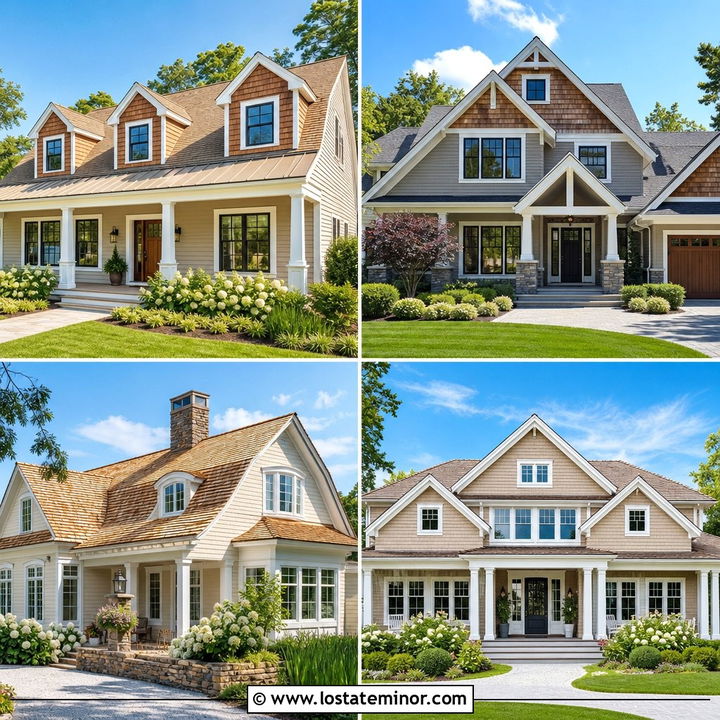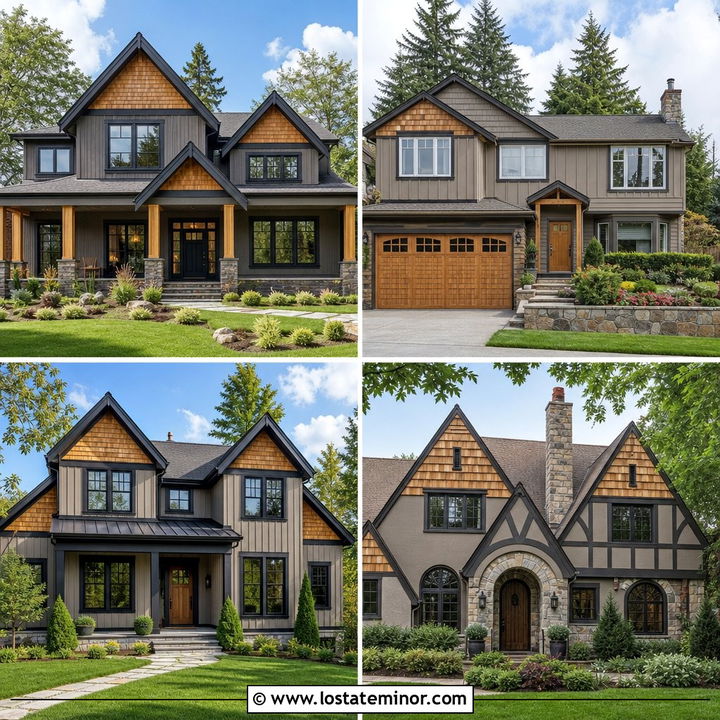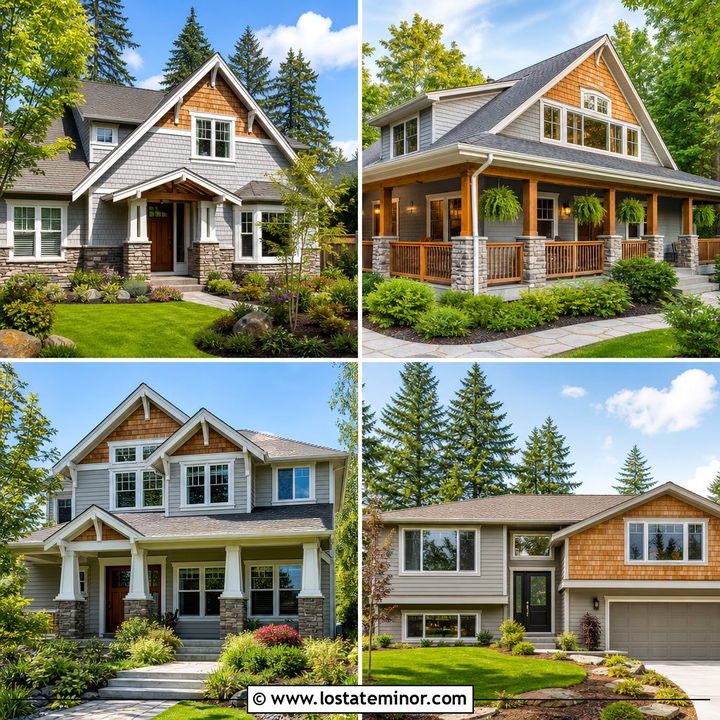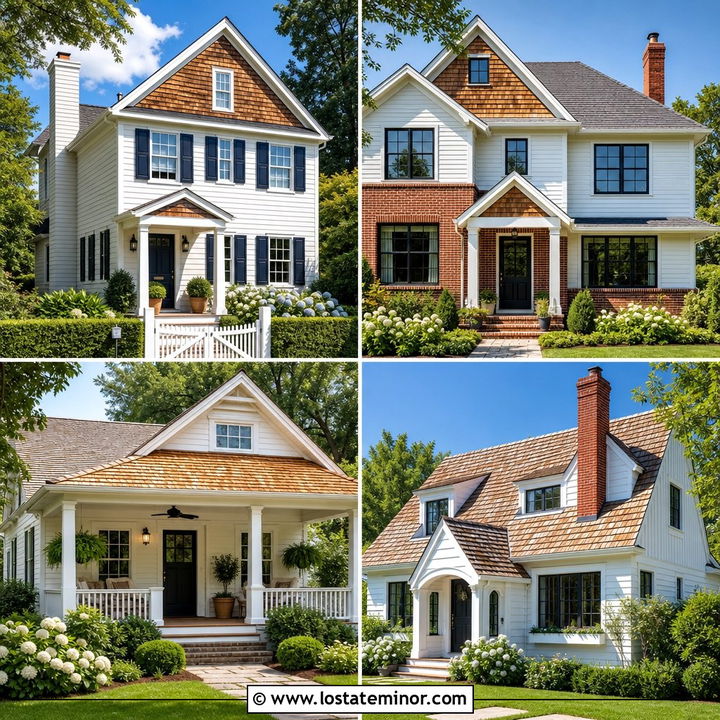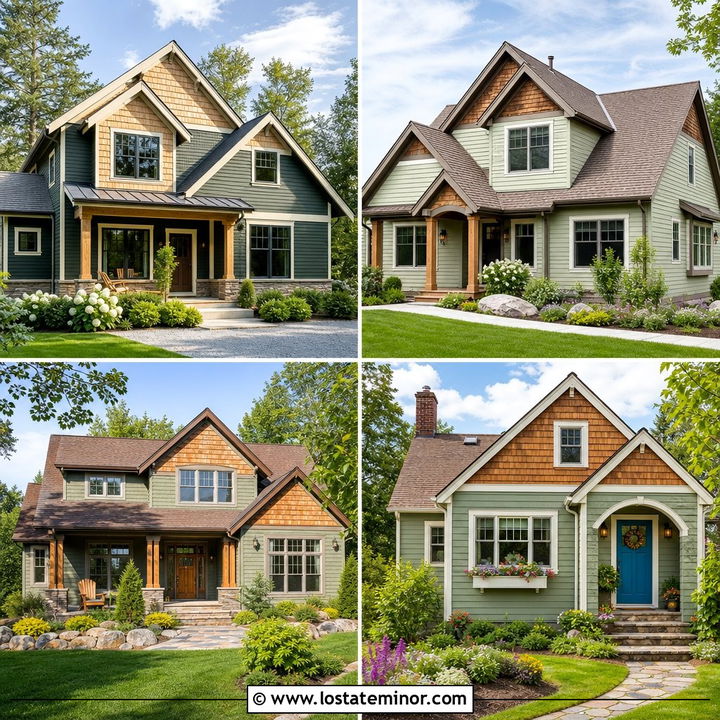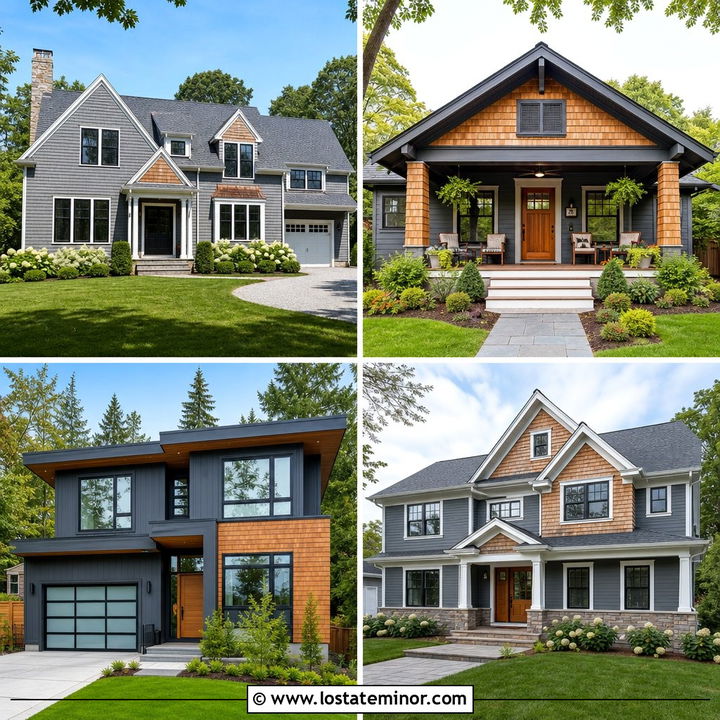
Stone and cedar create one of the most inviting exterior combinations because both materials bring natural color, texture, and character to the facade. Stone adds visual weight around foundations, porches, chimneys, and garages. Cedar shakes soften that rugged surface with warm wood tones and layered shadow lines. Together, they can suit everything from a compact cottage to a modern mountain home. The key is balancing the materials rather than covering every surface with competing textures. Thoughtful trim, roofing, doors, windows, and landscaping help connect the entire palette. Whether you prefer natural cedar, weathered gray shakes, or painted shingles, these 30 Stone House Design With Cedar Shake Ideas offer complete exterior looks you can adapt to different house styles, climates, and budgets.

1. Stone House With Natural Cedar Shakes
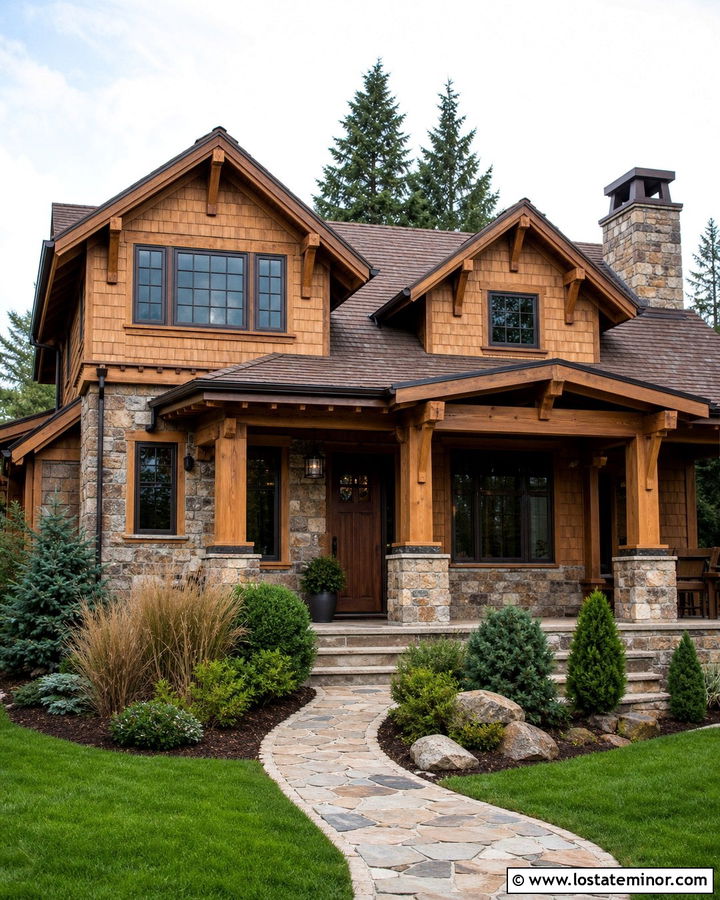
Natural cedar shakes bring instant warmth to a house wrapped in softly colored fieldstone. Use the stone across the lower story or foundation, then place cedar shakes on upper gables where their texture can stand out. Cream window trim keeps the transition light without creating harsh contrast. A medium brown architectural shingle roof, stained timber brackets, and a walnut front door continue the earthy palette. Choose fieldstone containing beige, taupe, brown, and muted gray so it connects naturally with the cedar. Bronze gutters and dark window frames add definition. Keep landscaping loose and layered with ornamental grasses, evergreen shrubs, and flowering perennials. This complete exterior works especially well on Craftsman, cottage, and wooded suburban homes.
2. Gray Stone House With Cedar Shake Gables
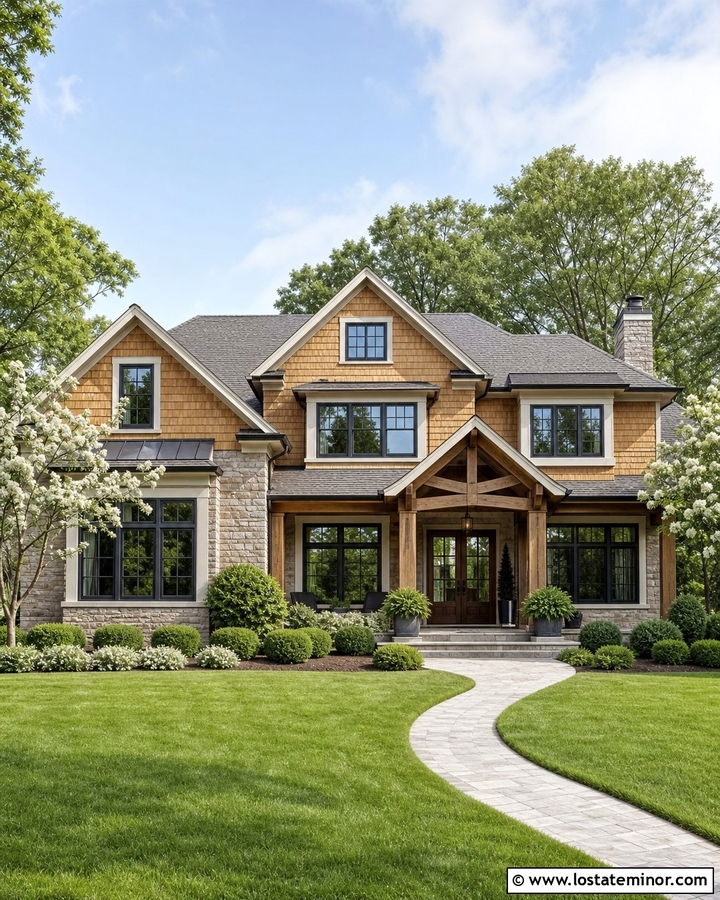
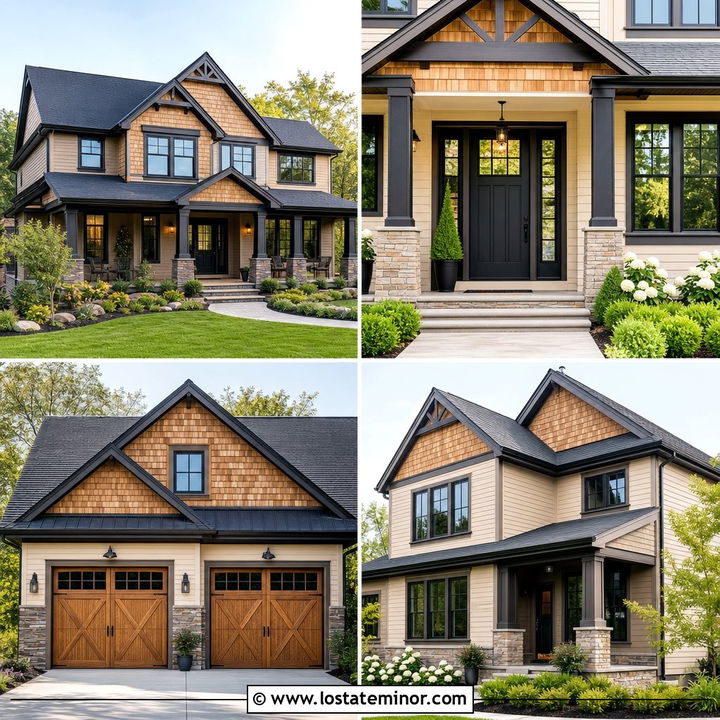
A gray stone facade feels more welcoming when cedar shake gables introduce a warmer material above it. Select shakes with honey and amber undertones to balance cool gray stone without making the exterior look overly rustic. Charcoal window frames and a matching roof give the house a crisp outline. Soft white trim placed around the eaves prevents the darker elements from feeling heavy. Repeat the cedar through porch beams or a stained front door so the gables do not appear disconnected. For a balanced front elevation, keep stone on the main level and use shakes only within prominent peaks. A curved walkway, clipped shrubs, and small flowering trees can soften the strong rooflines and masonry surfaces.
3. White Stone House With Weathered Cedar Shakes
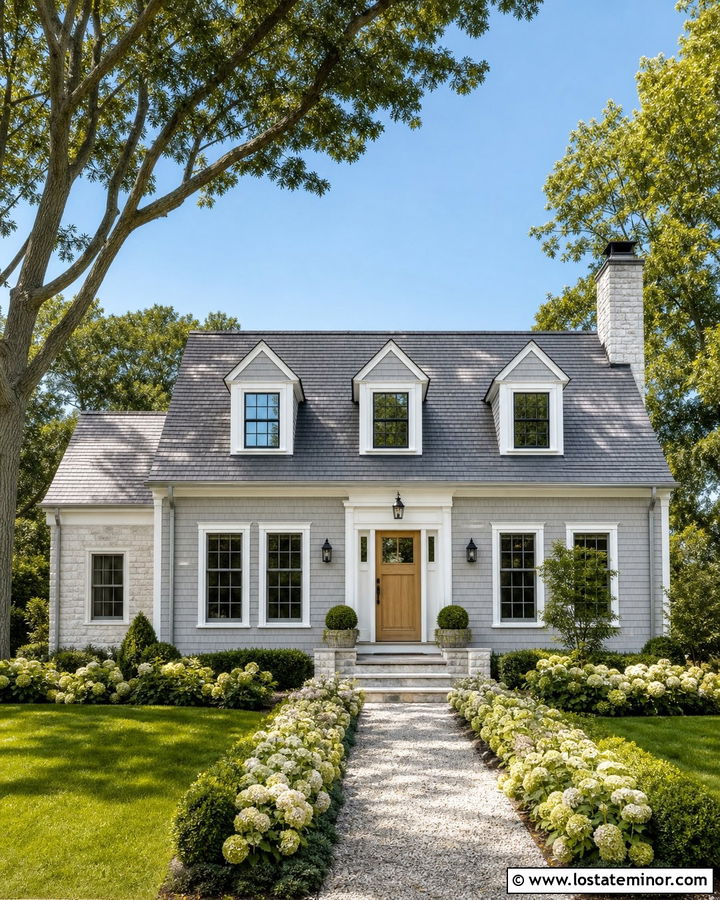
Weathered cedar shakes pair beautifully with white limestone because both finishes create a light, relaxed exterior. Allow the shingles to develop a soft silvery gray appearance or use a semitransparent stain for a more consistent result. A slate-gray roof adds gentle contrast while keeping the palette calm. Choose warm white trim rather than a bright blue-white, which may make natural materials look mismatched. A pale oak door, black lanterns, and zinc-colored gutters introduce understated detail. This scheme feels especially appropriate for a Cape Cod, coastal cottage, or shingle-style house. Complete the look with hydrangeas, boxwoods, crushed-stone paths, and simple porch furniture. The result is bright and polished but still comfortably connected to nature.
4. Stone Craftsman House With Cedar Shake Siding
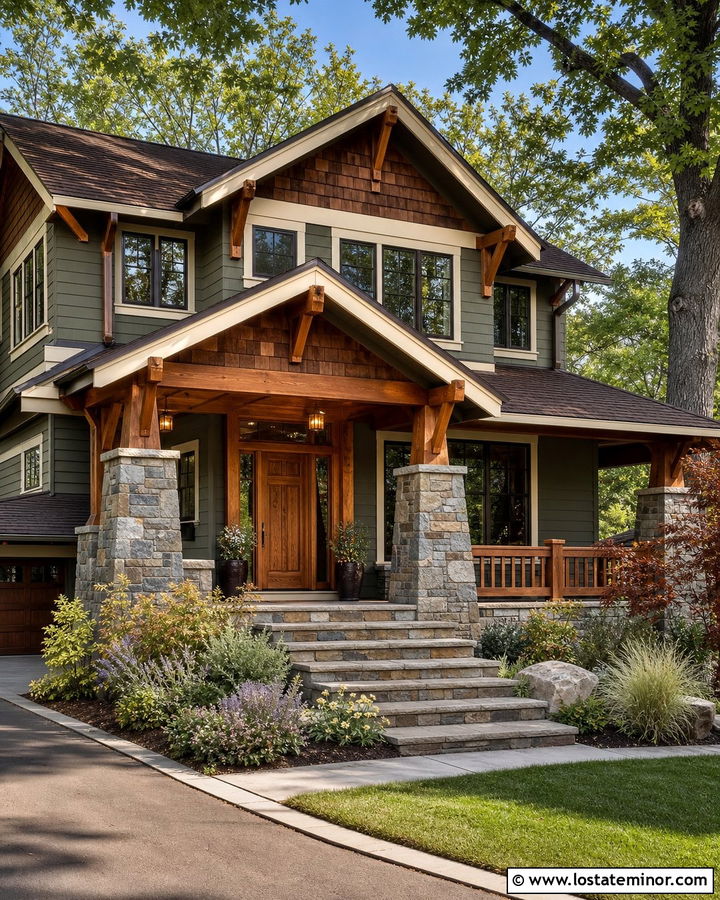
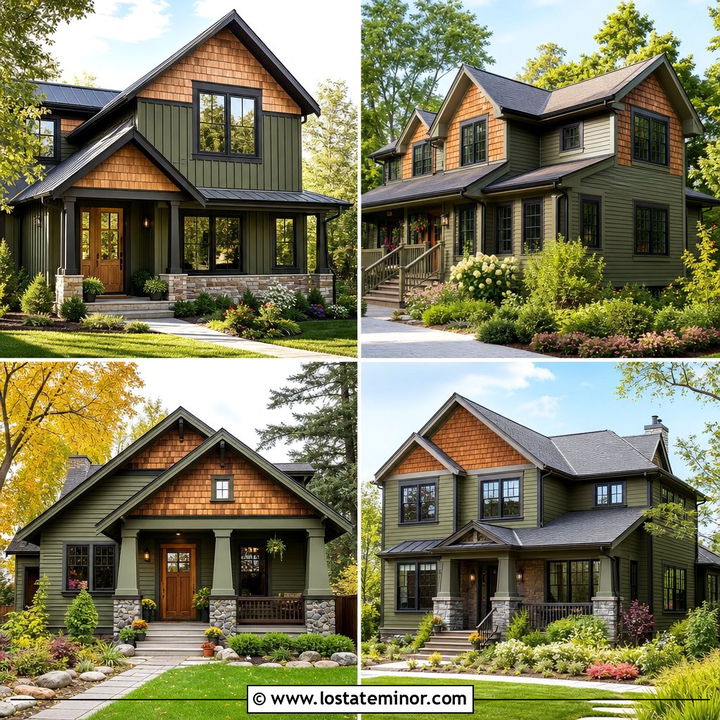
Craftsman architecture gives stone and cedar enough room to show their natural texture. Cover porch columns and the foundation with irregular ledgestone, then use medium-toned cedar shakes across the upper story. Horizontal lap siding in muted olive or warm taupe can separate the two materials and keep the facade from becoming busy. Deep roof overhangs, exposed rafter tails, and stained wood brackets reinforce the handcrafted appearance. Finish the windows with dark bronze frames and restrained cream trim. A substantial wood door with divided glass provides an appropriate focal point. Wide stone steps and low native landscaping make the entry feel grounded. Keep all finishes within an earthy range so the house looks cohesive from the curb.
5. Stone Cottage House With Cedar Shake Roof
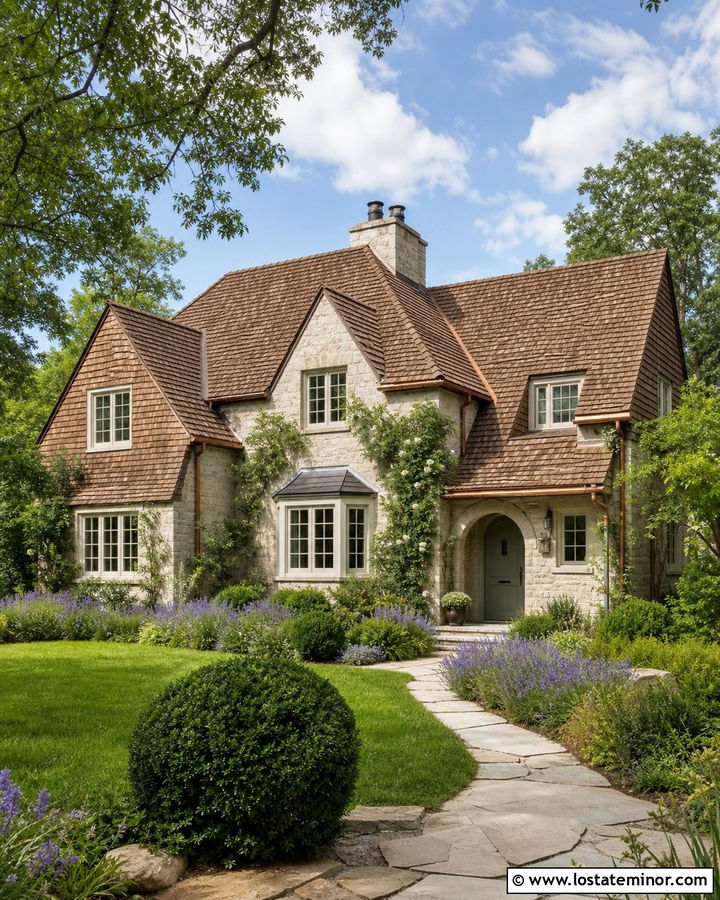
A cedar shake roof can give a small stone cottage a storybook quality without relying on decorative excess. Choose warm gray or buff limestone for the walls, allowing the varied stone shapes to create most of the visual interest. Natural cedar roofing will begin with rich brown color and gradually soften as it ages. Cream casement windows, a sage green door, and copper gutters complement both materials. An arched entry or shallow covered porch makes the compact facade feel more distinctive. Keep trim narrow so it does not compete with the masonry. A flagstone walkway, lavender borders, climbing greenery, and informal shrubs complete the setting. This design feels established, charming, and well suited to a garden-focused property.
6. Modern Stone House With Cedar Shake Accents
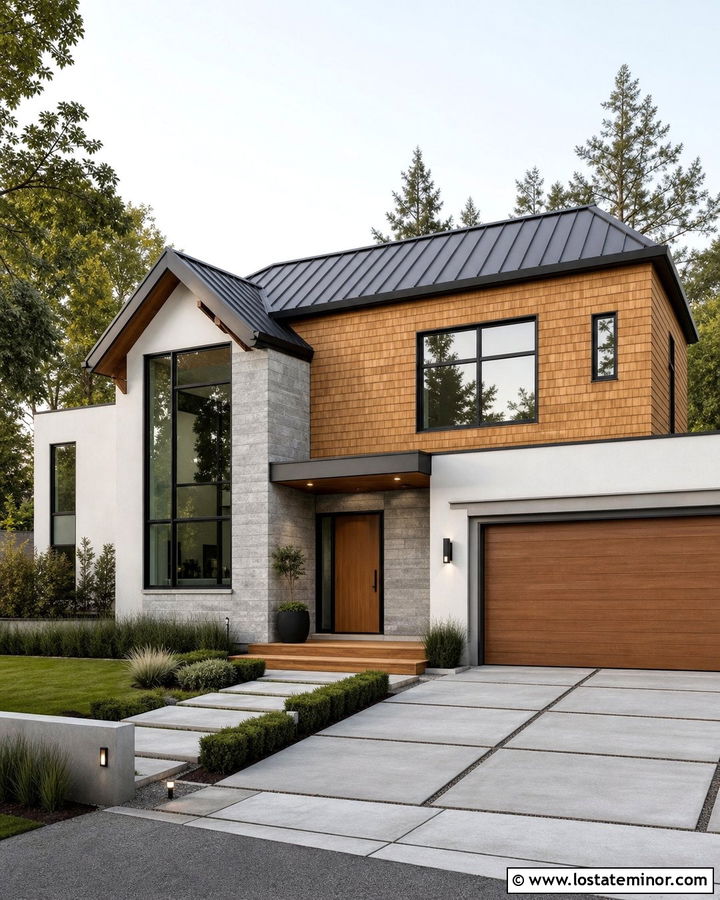
Clean architecture can support cedar shakes when they are applied in controlled sections. Start with smooth gray stone across one large wall or chimney, then add cedar shakes to a recessed upper volume. Warm white stucco can cover the remaining surfaces and provide visual breathing room. Select uniform cedar shingles with straight edges for a cleaner effect than heavily split shakes. Black-framed windows, slim fascia boards, and a charcoal standing-seam roof sharpen the composition. A flush natural wood door connects with the cedar without copying it exactly. Limit landscaping to structured grasses, low hedges, and a simple concrete walkway. The combination delivers natural warmth while preserving the strong lines and uncluttered appearance expected from a modern stone house.
7. Stone Farmhouse With Cedar Shake Dormers
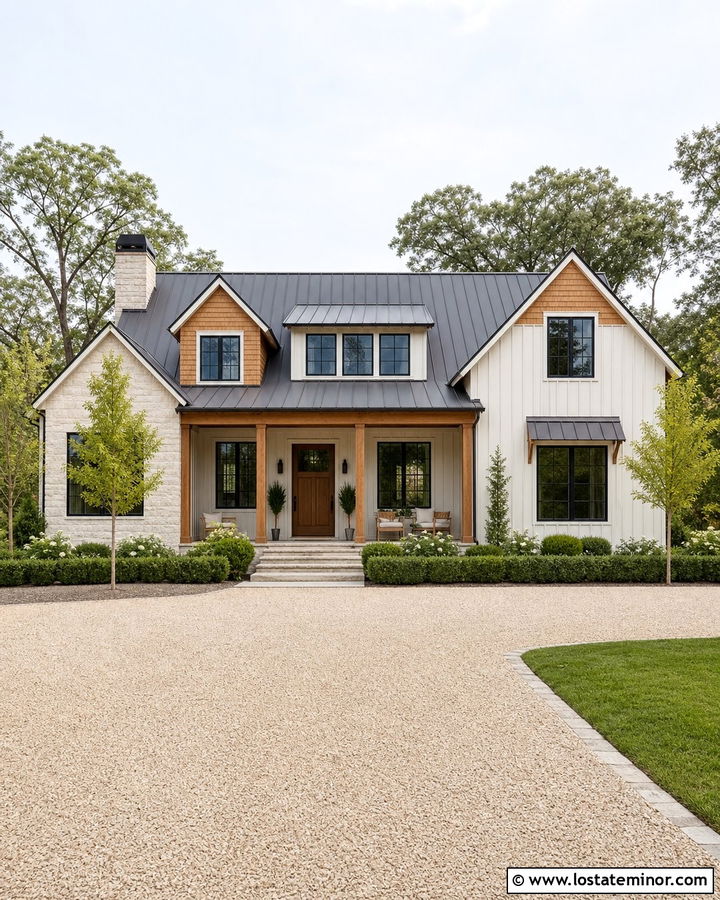
Cedar shake dormers can add warmth and dimension to a stone farmhouse without changing its simple character. Use pale limestone across the main facade and natural cedar shingles inside each dormer face. A soft white board-and-batten section can bridge the masonry and wood while supporting the farmhouse aesthetic. Choose a matte charcoal metal roof to create a clean contrast against the lighter materials. Black windows, white trim, and a medium brown front door finish the palette. Cedar porch posts can repeat the dormer color at ground level. Keep the porch open and practical with stone steps and understated lighting. A gravel-edged driveway, clipped hedges, and young shade trees help the complete exterior feel relaxed, orderly, and connected to its surroundings.
8. Stone Ranch House With Cedar Shake Entry
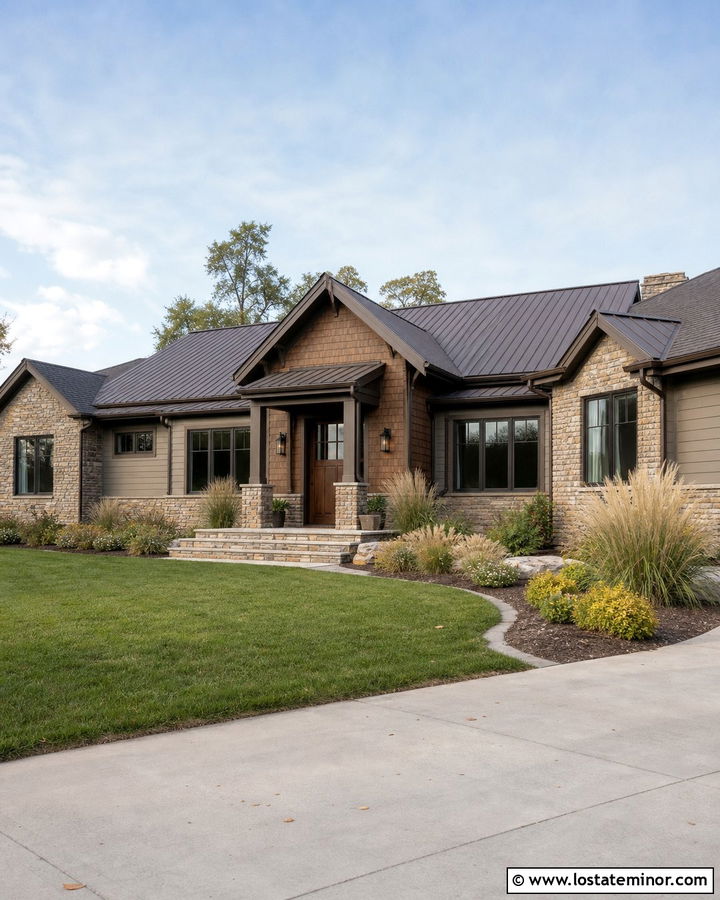
A focused cedar shake entry can transform a long stone ranch facade by creating a clear center point. Keep the existing stone across most of the house, then install warm cedar shakes around a projecting porch or front-facing gable. Paint any remaining siding a muted greige that matches the lightest tones in the masonry. A dark bronze roof and matching gutters provide continuity across the wide roofline. Add a stained wood door, simple black sconces, and broad stone steps to strengthen the entrance. On an attached garage, use a warm taupe door rather than another wood finish to avoid overloading the facade. Foundation shrubs, ornamental grasses, and a gently curved walkway can break up the horizontal lines and improve overall curb appeal.
9. Dark Stone House With Light Cedar Shakes
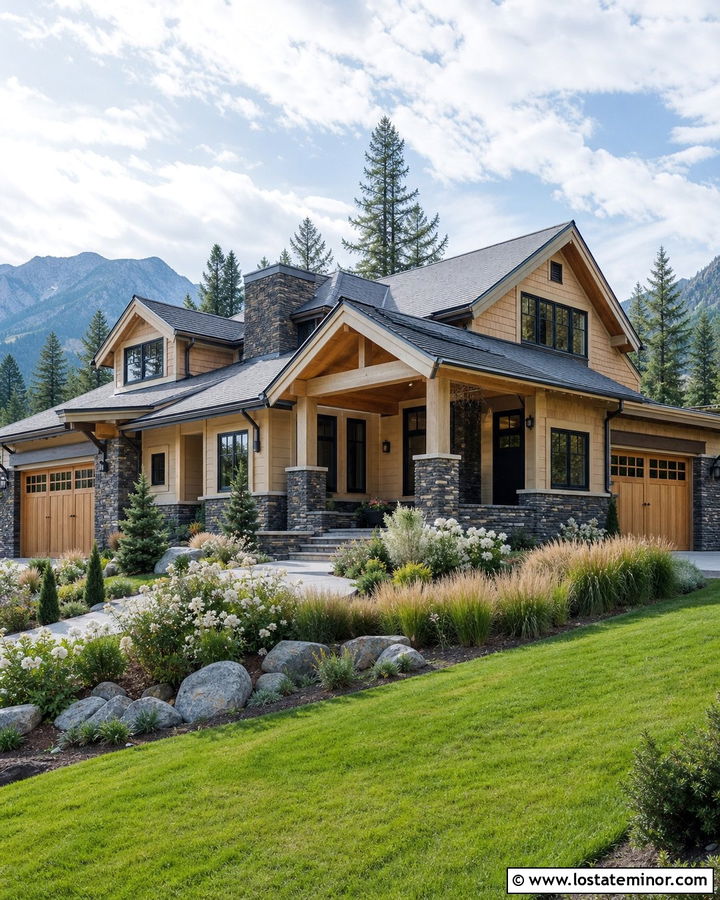
Dark stone creates a dramatic foundation for pale cedar shakes. Choose charcoal ledgestone for the lower story or main entry tower, then use lightly stained cedar on the upper level. The contrast highlights the wood grain while preventing the house from feeling too shadowy. Black window frames can blend into the masonry, while warm off-white trim gives the roofline a clean finish. A medium gray roof is often softer than solid black and allows the darker stone to remain the strongest feature. Repeat the cedar on garage headers or a recessed porch ceiling. Light concrete paving, airy grasses, and pale flowering shrubs brighten the surrounding landscape. This balanced combination works particularly well on transitional, mountain modern, and contemporary suburban houses.
10. River Rock House With Cedar Shake Siding
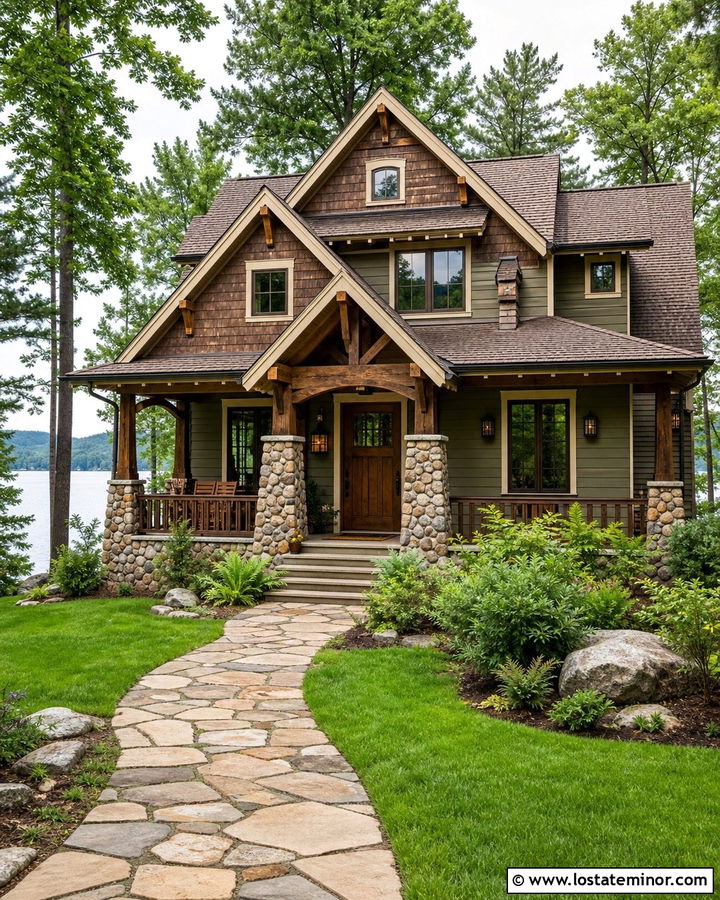
Rounded river rock and cedar shakes create a relaxed exterior that feels appropriate near water or woodland scenery. Use river rock along the foundation, porch columns, and chimney rather than covering every wall. Medium brown cedar shakes can fill the upper gables, while moss green lap siding provides a quiet connecting color. Cream trim, bronze windows, and a weathered brown roof preserve the natural mood. A solid wood front door with black hardware gives the entry enough definition. Because river rock has noticeable color variation, pull surrounding finishes from colors already visible in the stone. A timber porch, flagstone walkway, ferns, and native shrubs complete the scheme. The finished house should feel layered and organic rather than overly themed or lodge-like.
11. Limestone House With Red Cedar Shakes
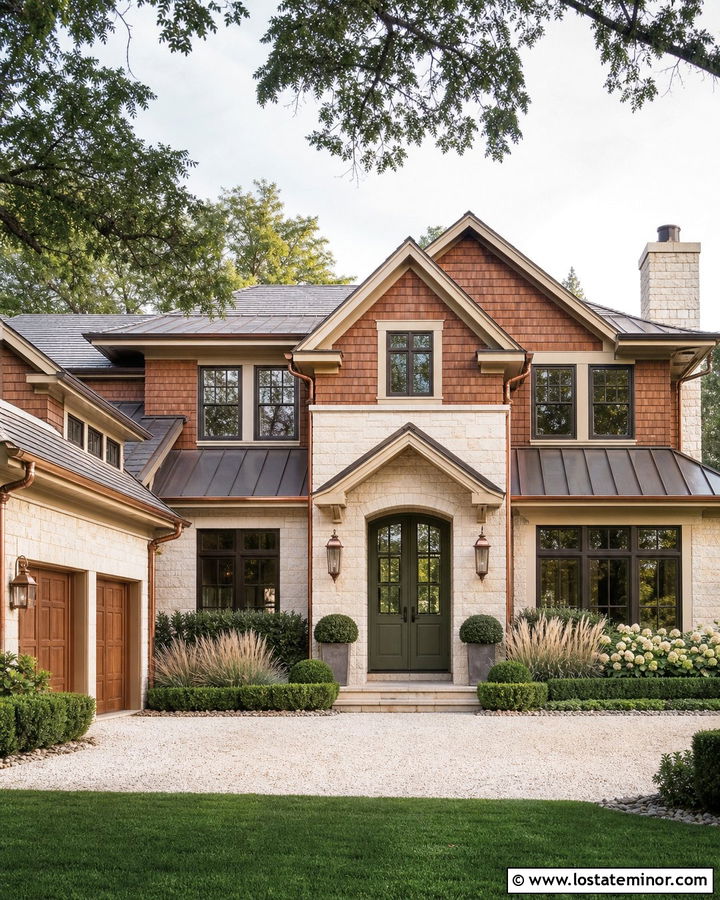
The reddish undertones of western red cedar create a rich contrast against pale cream limestone. Keep the limestone dominant across the first story and use cedar shakes within steep front gables or around a second-floor window bay. Warm ivory trim blends smoothly with the stone, while dark brown windows add depth. A weathered bronze roof or brown architectural shingles will support the cedar better than a sharply blue-gray roof. At the entrance, choose a deep olive door to introduce color without interrupting the natural palette. Copper-toned lighting and gutters can reinforce the warmth. Finish the yard with structured boxwoods, soft grasses, and pale gravel borders. This exterior feels substantial and refined while allowing the cedar to remain visibly natural.
12. Fieldstone House With Gray Cedar Shakes
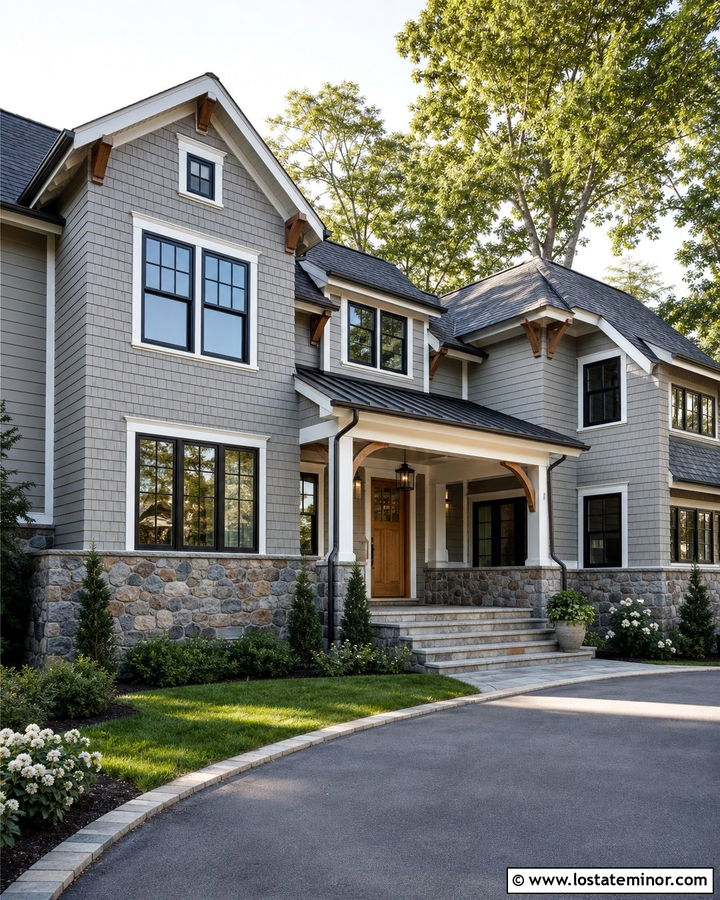
Gray-stained cedar shakes offer a quieter alternative to warm brown wood and pair naturally with multicolored fieldstone. Choose a midtone gray stain that still reveals the shingle texture. Use it on the upper floor, dormers, or large gables above a fieldstone base. Warm greige lap siding can fill smaller wall sections and connect the gray shakes to brown flecks in the stone. Crisp white trim adds freshness, while charcoal roofing and black windows create structure. A natural oak front door prevents the mostly gray palette from becoming cold. Repeat its warmth through porch furniture or timber brackets. Broad stone steps, evergreen foundation plants, and white flowering shrubs complete a timeless exterior suitable for traditional, shingle-style, or transitional architecture.
13. Stacked Stone House With Cedar Shake Peaks
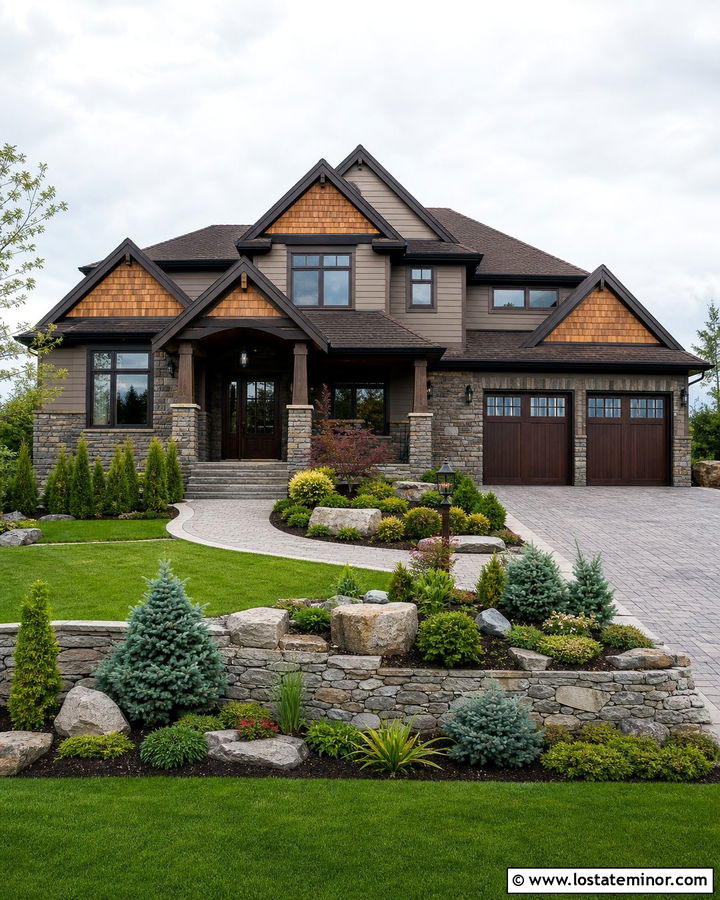
Stacked stone has strong horizontal lines, so cedar shake peaks provide a useful change in scale and texture. Apply warm gray stacked stone to the first floor and porch columns, then place natural cedar shakes in the tallest gables. Paint connecting lap siding a mushroom taupe drawn directly from the stone. Dark espresso trim can outline the roof and windows without looking as severe as black. Choose a walnut-colored door and garage doors with simple recessed panels. The cedar should appear in at least two areas, such as the front peak and a smaller garage gable, to create intentional repetition. Low retaining walls, stone-edged planting beds, and layered evergreens will help tie the architecture to the landscape while maintaining a polished suburban appearance.
14. Stone Colonial House With Cedar Shake Dormers
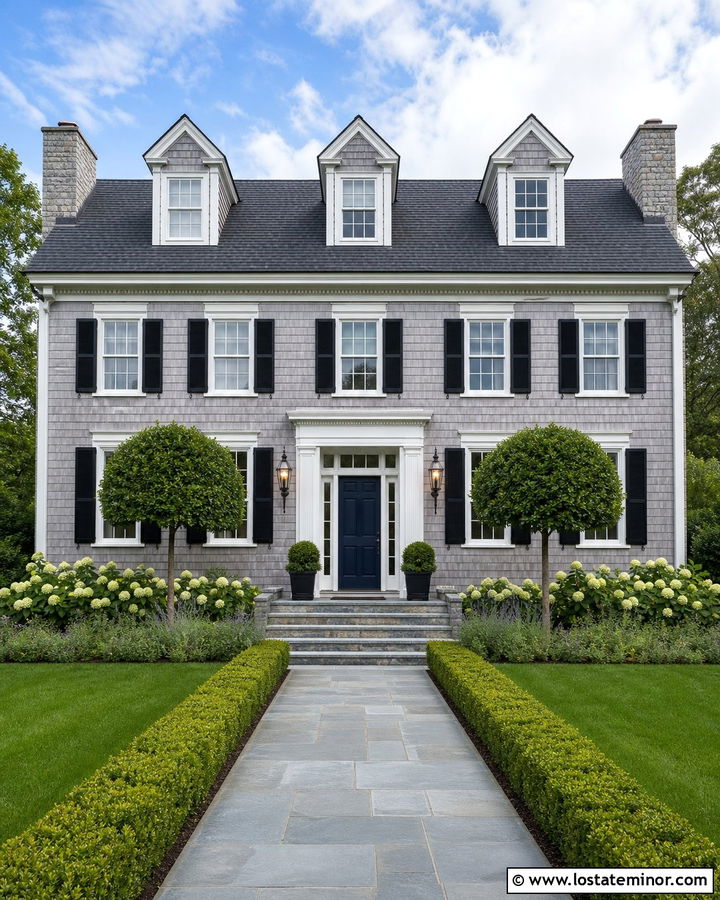
A symmetrical Colonial can accommodate cedar shakes when the material is used sparingly and evenly. Cover the main facade in light gray stone or stone veneer, then clad matching dormers with weathered cedar shingles. White window trim, white cornices, and a centered navy front door maintain the formal character. Select a charcoal roof with a simple profile so the dormers remain easy to read. Black shutters may be added if the windows have enough surrounding space, but they should be correctly proportioned. Use stone or bluestone steps at the entrance and keep porch details restrained. Paired trees, straight hedges, and a centered walkway reinforce the symmetry. Cedar brings welcome softness without weakening the order and balance that define Colonial architecture.


15. Stone Lake House With Cedar Shake Exterior
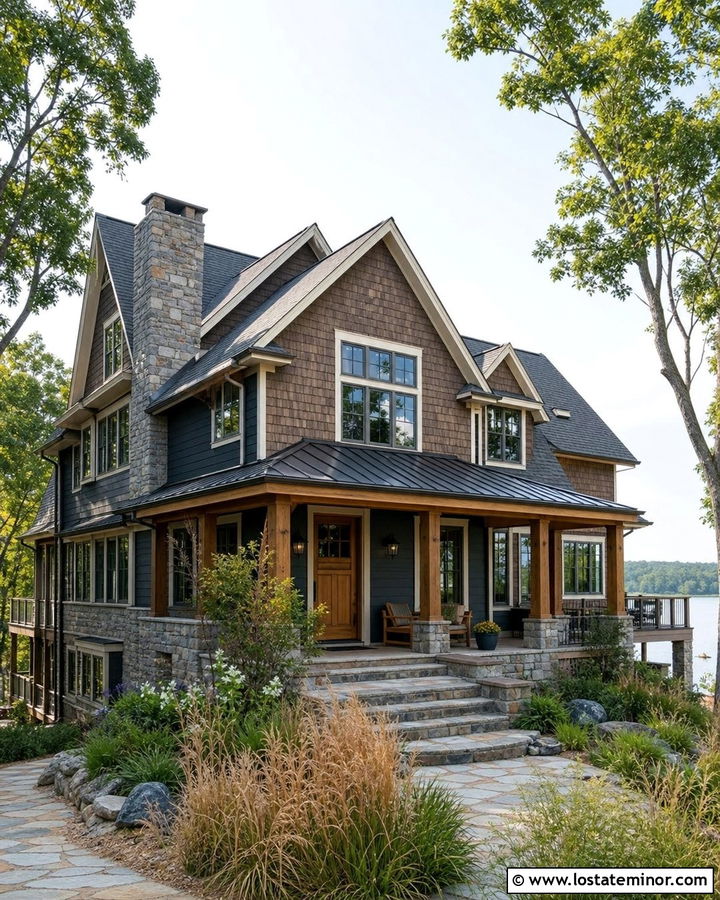
A lake house benefits from exterior materials that look comfortable beside water, trees, and changing seasonal light. Combine warm gray stone around the foundation and chimney with cedar shakes across the upper story. A semitransparent driftwood stain can reduce orange undertones while retaining the wood grain. Use deep blue-gray lap siding on connecting wings and soft cream around windows. A dark metal porch roof, natural timber posts, and a warm wood door complete the facade. Large divided windows can make the exterior feel open while still fitting the rustic materials. Create an easy approach with wide stone steps, native grasses, and informal beds. The complete design should feel relaxed from the driveway while remaining attractive from the water-facing side of the property.
16. Stone Mountain House With Dark Cedar Shakes
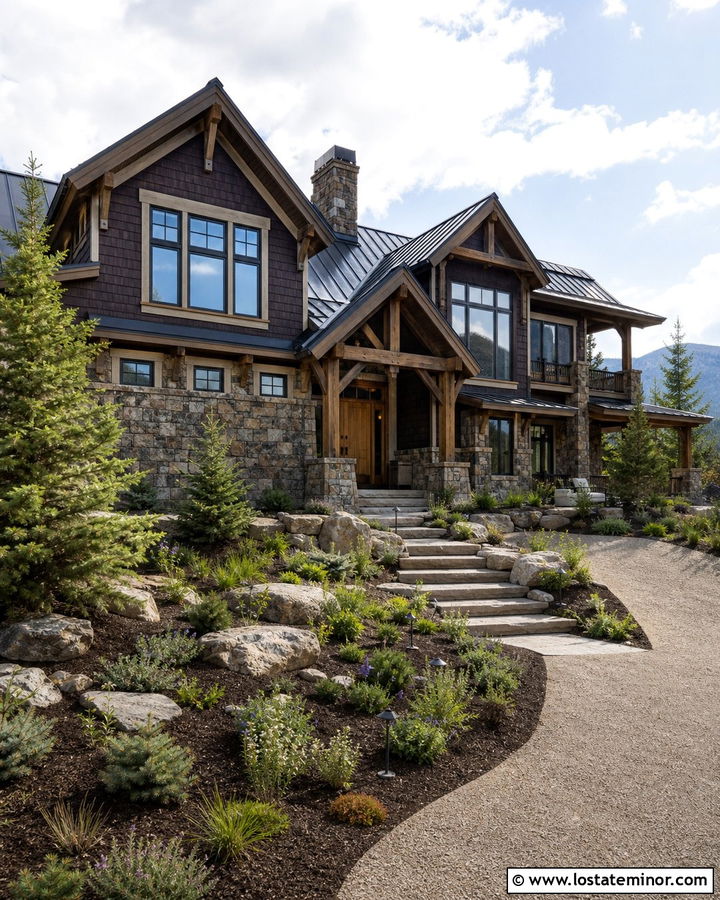
Dark-stained cedar shakes can give a mountain house a grounded, protective appearance. Pair espresso-brown shingles with rugged gray and brown stone across the lower story, chimney, and entry columns. Black-framed windows and a charcoal metal roof continue the deeper palette, while warm beige trim prevents individual details from disappearing. Use heavy timber beams around the porch and repeat their stain on the front door. Large areas of glass can keep this material-rich exterior from feeling closed in. Stone terraces, gravel paths, conifers, and low native plants will help the home sit naturally within a sloped landscape. The goal is not to match every brown exactly. Slight variations between the shakes, beams, door, and stone produce a more authentic layered finish.
17. Stone Bungalow With Cedar Shake Gables
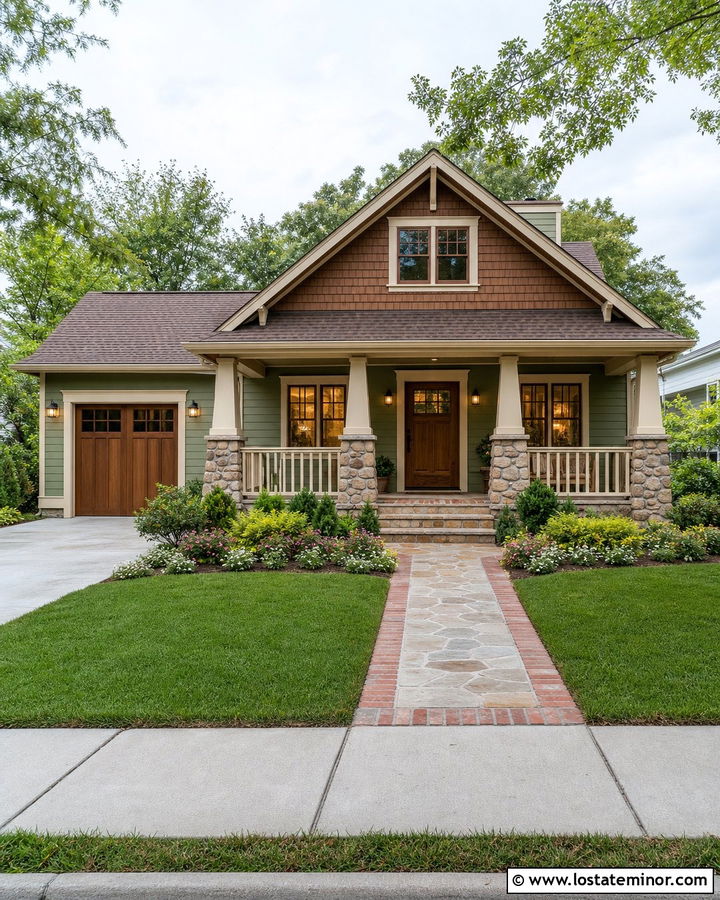
A bungalow can gain impressive character from a small amount of cedar shake siding. Keep warm fieldstone around the porch base, tapered columns, and foundation. Install cedar shakes within the front gable and paint the main lap siding a muted sage green. Cream trim highlights the low roofline and traditional windows, while a medium brown roof connects with both the stone and cedar. A craftsman-style oak door with divided glass makes the entry feel substantial. Avoid adding too many extra colors because the bungalow already includes several visible textures. A brick or flagstone walkway, compact shrubs, and low flowering borders will frame the porch without hiding it. This approachable scheme offers a practical way to update a smaller home with lasting visual depth.
18. Stone Cape Cod With Weathered Cedar Shakes
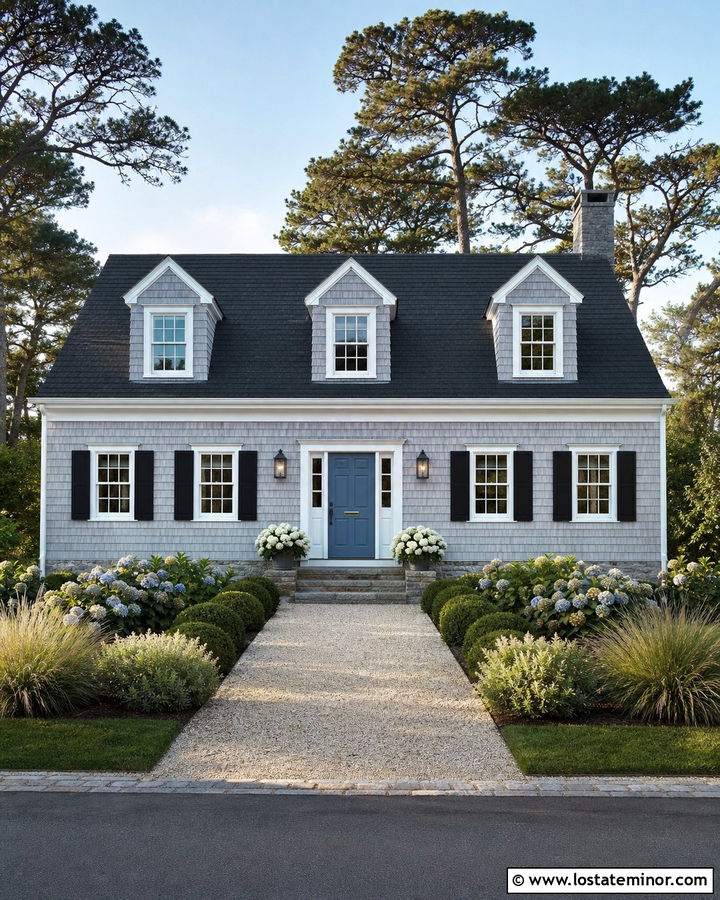
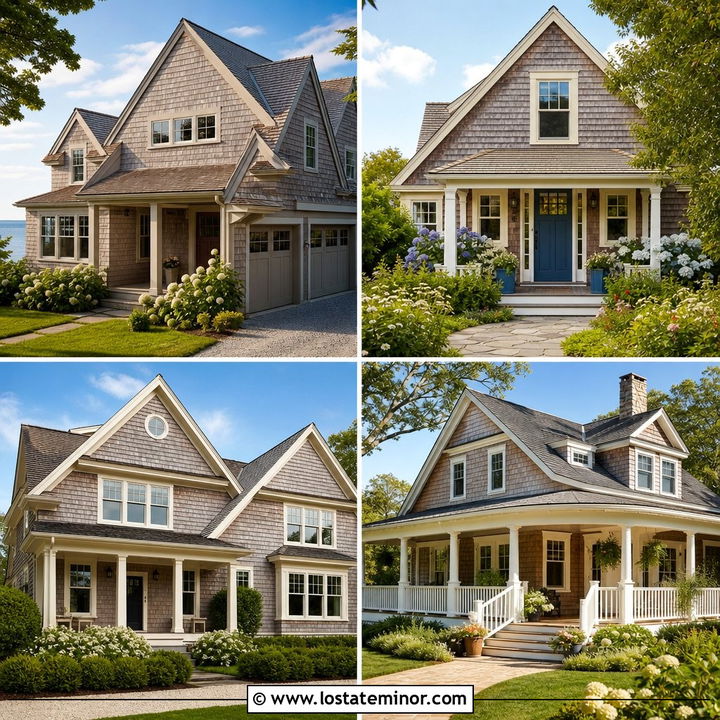
Weathered cedar shakes and a stone water table give a Cape Cod house a coastal character that still works inland. Use silver-gray shingles across the main walls and pale gray stone along the foundation. White corner boards, window trim, and eaves create the crisp outline associated with this house shape. A black or charcoal roof adds contrast, while a muted blue front door introduces a subtle coastal color. If shutters are included, select simple black panels sized to fit the windows correctly. Keep the entry symmetrical with matching lanterns and stone steps. Hydrangeas, clipped boxwoods, ornamental grasses, and a shell-colored gravel path complete the bright curb-appeal view. The material palette remains classic, calm, and easy to understand from a distance.
19. Stone Tudor House With Cedar Shake Accents
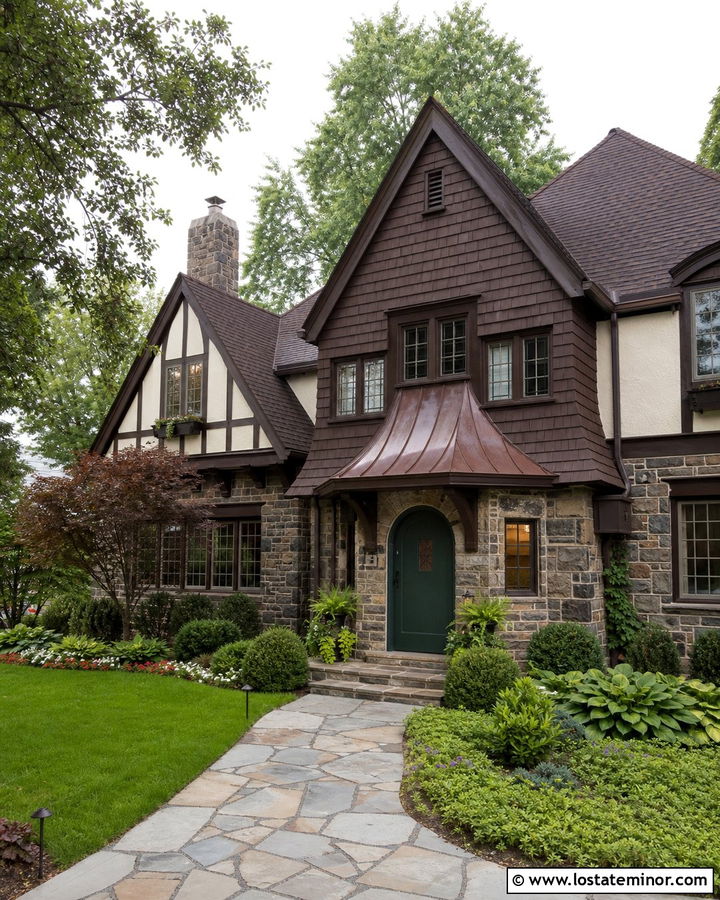
Cedar shakes can soften a Tudor exterior while respecting its steep roofs and strong masonry details. Use irregular gray-brown stone across the first floor and around an arched entrance. Place dark cedar shakes in upper gables between restrained timber accents. Warm cream stucco can provide lighter background areas and prevent the stone and wood from becoming visually heavy. Choose bronze windows, a dark brown roof, and a deep green front door with traditional hardware. Copper gutters or a small copper entry roof add a refined finishing material. Keep the cedar stain slightly lighter than the decorative timber so each feature remains readable. Curved stone paths, structured shrubs, and shade-tolerant plantings complete an established exterior with depth, warmth, and Old World influence.
20. Stone French Country House With Cedar Shakes
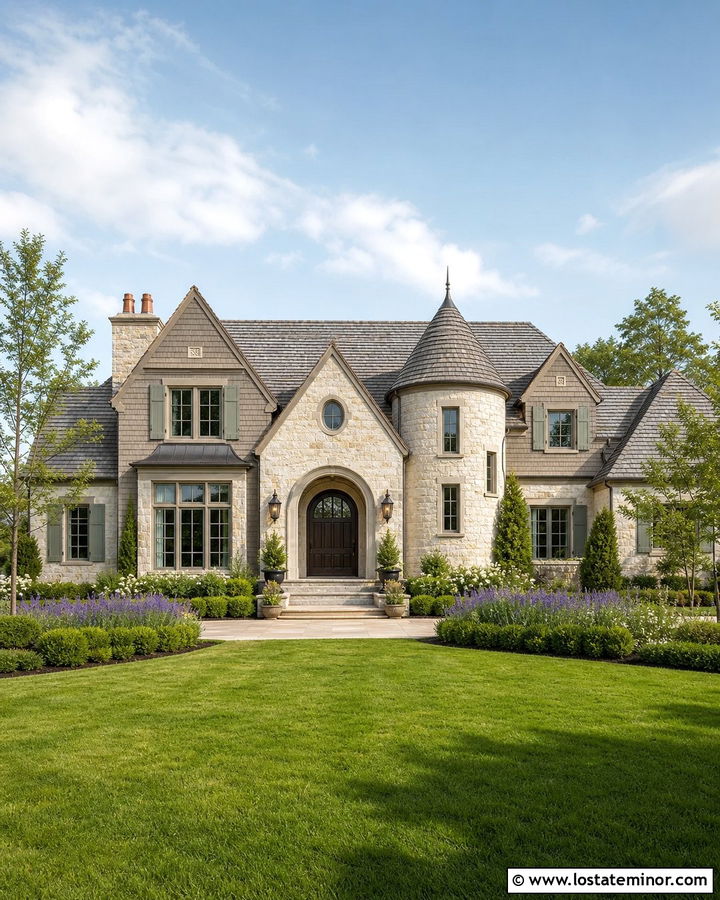
Soft colors help cedar shakes blend into the graceful lines of a French country house. Begin with creamy limestone or warm beige stone across the facade. Add lightly weathered cedar shingles to selected dormers and side gables rather than the entire upper floor. Muted taupe trim, gray-green shutters, and a weathered gray roof create a gentle, low-contrast palette. A stained arched door gives the centered entrance warmth, while black iron lanterns add definition. If the house has a turret, keep it in stone so it remains an architectural anchor. Use curved planting beds, lavender, low hedges, and small ornamental trees to complement the facade. The result feels elegant and established without turning the cedar into an overly rustic feature.
21. Stone Shingle House With Cedar Shake Siding
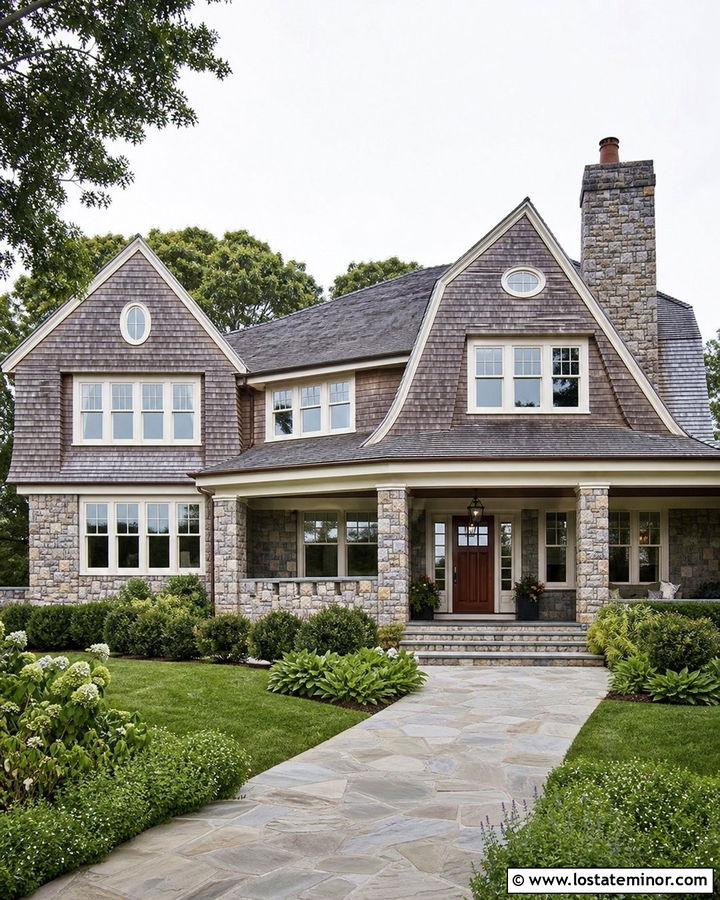
Shingle-style architecture allows cedar to cover broad surfaces while stone anchors the composition below. Wrap the upper floors in gray-brown cedar shakes, then apply rugged stone around the foundation, porch piers, and oversized chimney. Cream trim can outline grouped windows and sweeping roof forms without creating sharp contrast. Choose a dark gray roof that supports the weathered appearance of the shingles. A natural mahogany door and matching porch ceiling add a more polished wood note near the entrance. Keep railings simple and let the varied wall planes create interest. This look is especially effective on larger homes because the material changes can define individual volumes. Informal hedges, mature trees, and a broad stone walkway complete the substantial yet comfortable curb appeal.
22. Stone Split-Level House With Cedar Shake Siding
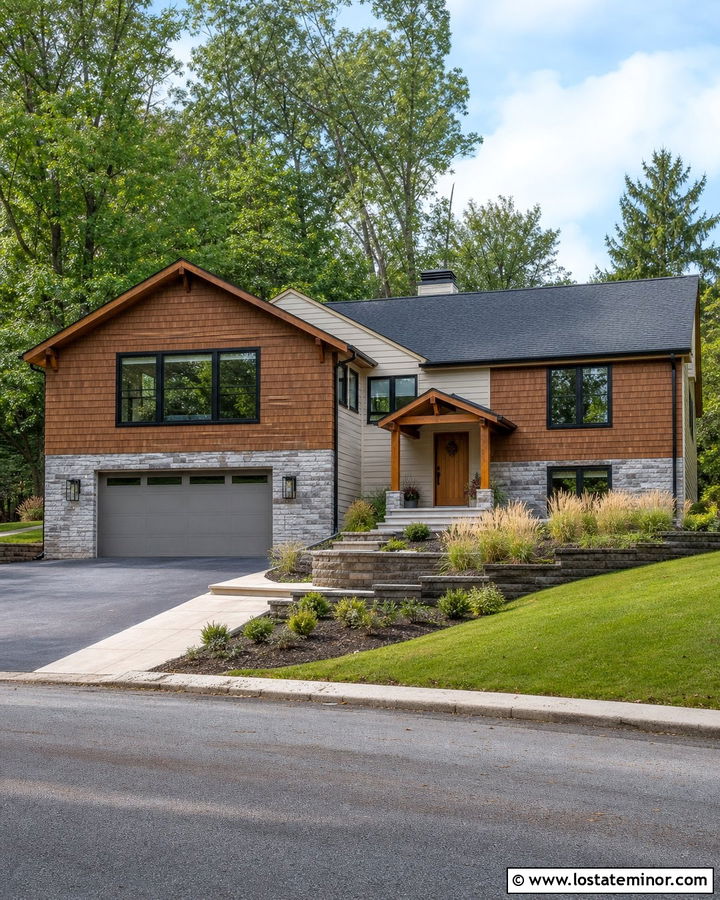
A split-level facade often needs stronger visual organization, and cedar shakes can help define its upper volume. Keep gray ledgestone on the lower level and around the garage, then add medium brown cedar shakes above. Paint connecting siding a warm off-white to brighten the staggered elevation. Black-framed windows and a charcoal roof create continuity between the different sections. Add a compact covered entry with cedar posts and a wood door so visitors can identify the entrance immediately. A simple taupe garage door will blend into the masonry better than a high-contrast white one. Use terraced planting beds, ornamental grasses, and low shrubs to follow the changing ground level. The finished exterior feels intentional while preserving the practical structure of the original house.
23. Stone House With Cedar Shake Garage Gables
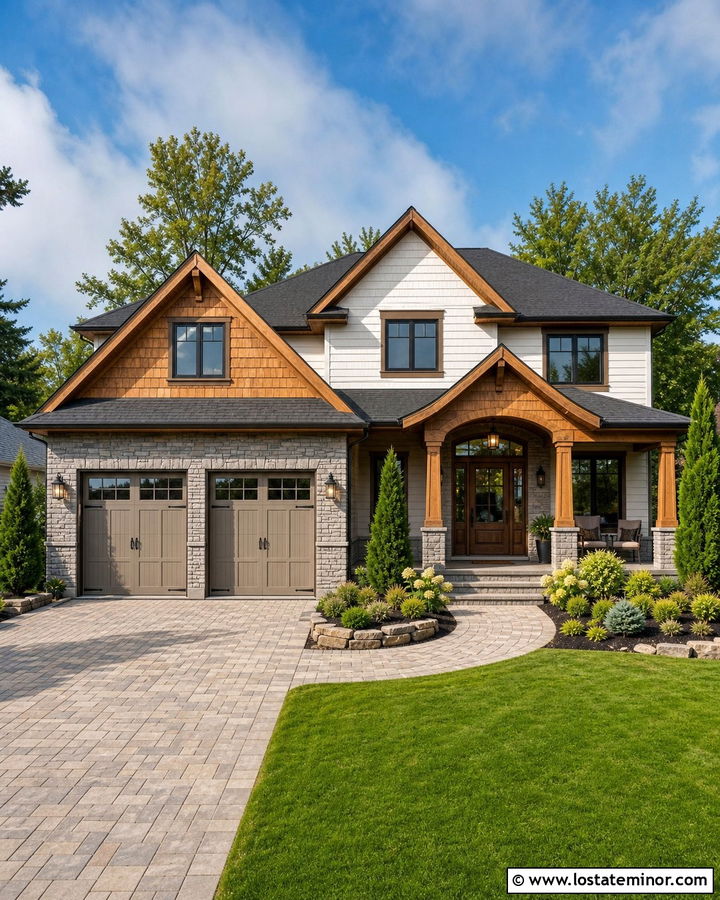
Garage doors occupy a large part of many front elevations, so cedar shake gables can make that area feel integrated with the house. Use warm gray stone around the garage base and main entry, then install natural cedar shakes in the gables above each door. Choose garage doors in a medium greige that relates to the stone instead of trying to imitate wood. The main siding can be creamy white, with bronze windows and a charcoal roof providing contrast. Repeat the cedar on one smaller front gable or porch ceiling to distribute the material across the facade. Stone-edged beds, upright evergreens, and a clean paver driveway complete the design. This approach adds texture without making the garage doors themselves the primary focal point.
24. Stone House With Cedar Shake Porch
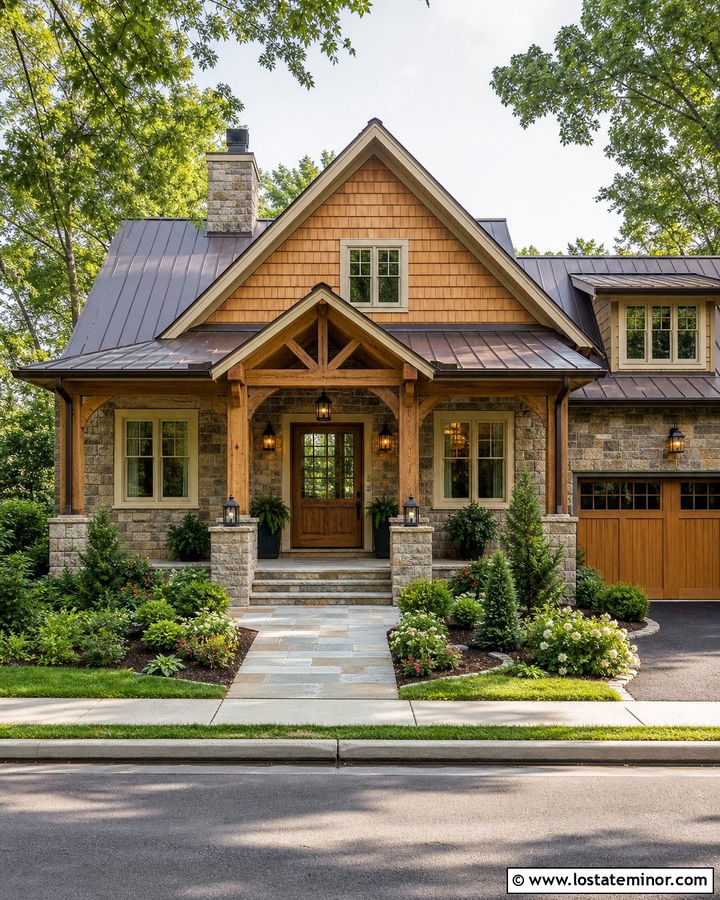
A cedar shake porch can create a welcoming transition between a masonry house and its front yard. Cover the main walls with warm gray stone, then place cedar shingles in the porch gable above substantial timber posts. A natural wood ceiling and matching front door will strengthen the entrance without requiring cedar across the entire house. Use cream trim around windows and a dark bronze roof for balanced contrast. Stone porch piers should include colors found in the main facade so the addition feels original. Choose simple black lanterns and avoid overly decorative railings that compete with the material textures. Wide steps, a straight flagstone walkway, layered shrubs, and seasonal flowers complete a front entrance that looks warm, grounded, and clearly connected to the architecture.
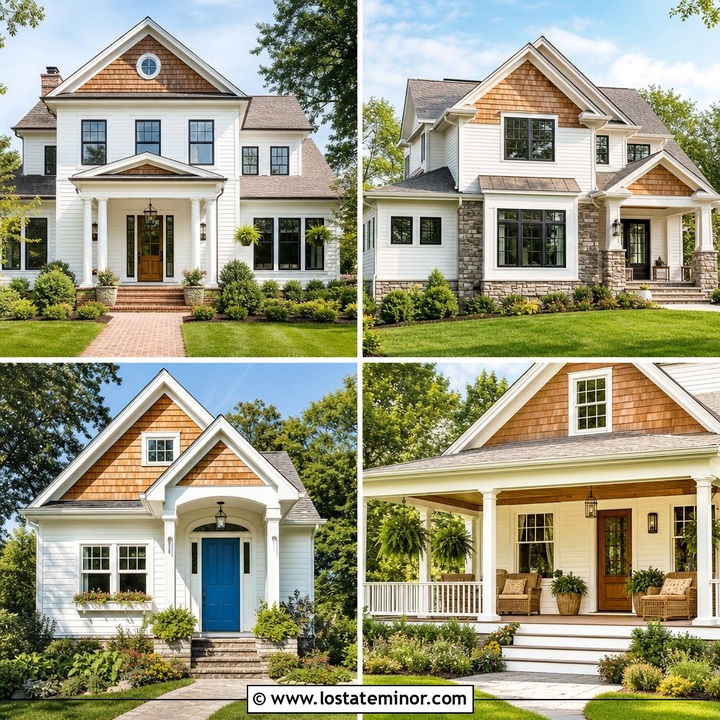
25. Stone House With Painted Cedar Shakes
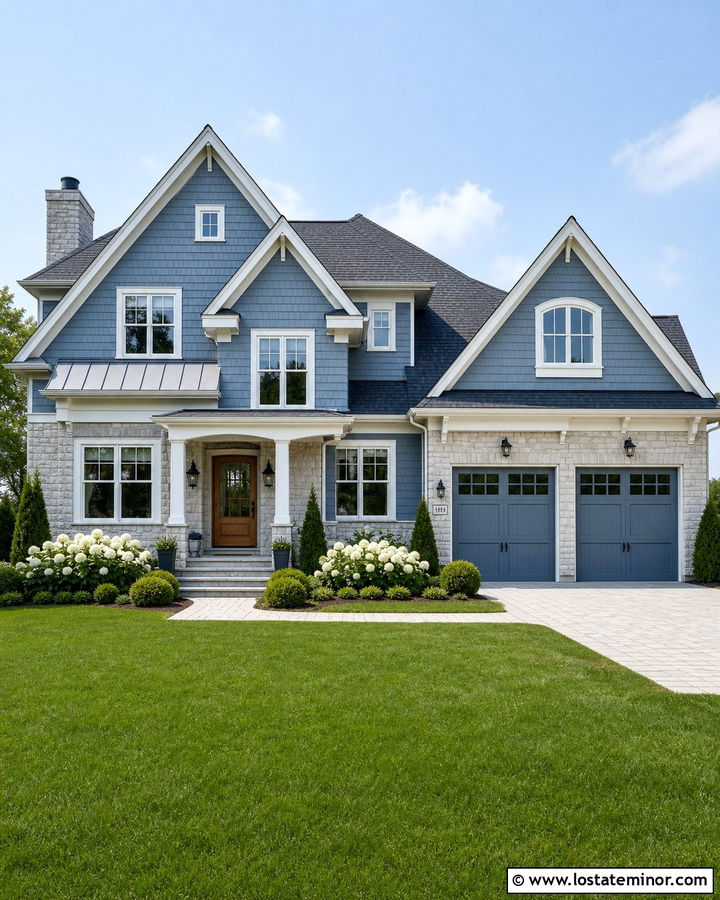
Painted cedar shakes preserve a textured shingle pattern while supporting a more controlled color scheme. Try muted blue-gray shakes on the upper story above a pale limestone base. Use soft white trim to define windows, gables, and porch columns, then add a charcoal roof and a stained wood door for warmth. The stone should contain subtle gray notes that connect it to the painted cedar. If the house includes an attached garage, paint the doors in the same blue-gray for a quieter appearance. Black lighting and hardware provide small points of contrast. White flowering shrubs, clipped evergreens, and a light stone walkway reinforce the clean palette. This complete exterior feels fresh and tailored without losing the dimensional character that makes cedar shakes attractive.
26. Stone House With Green Cedar Shake Siding
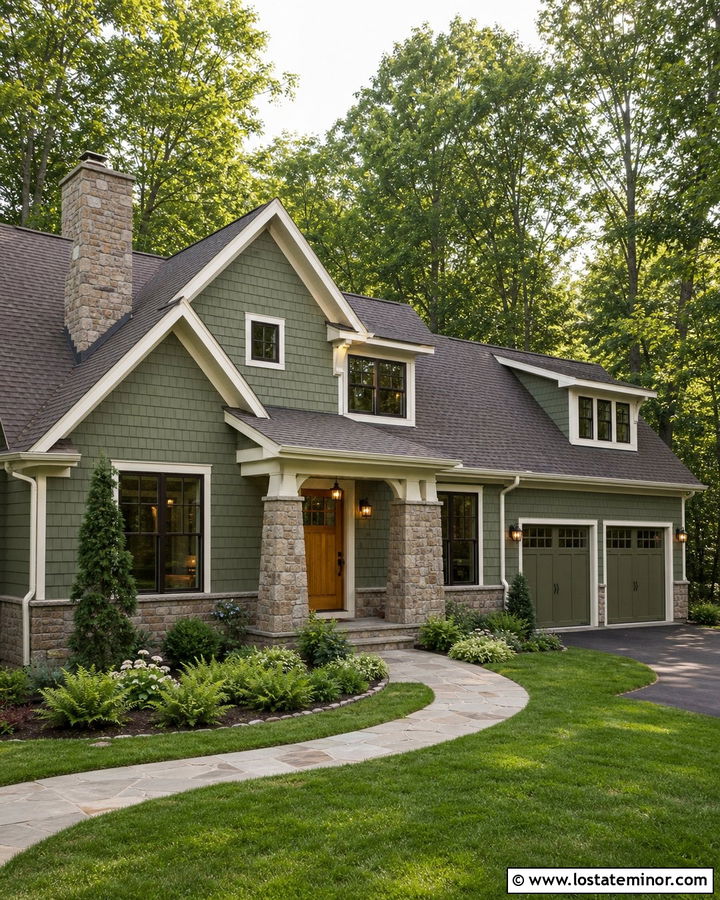
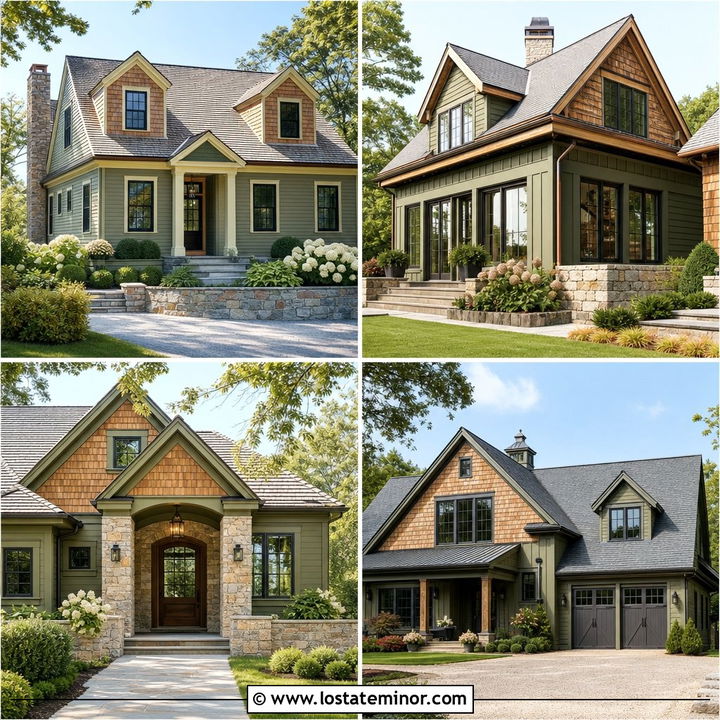
Muted green cedar shakes can connect a stone house to leafy suburban or woodland surroundings. Select an earthy sage rather than a bright green, allowing the shingle texture to remain visible. Pair it with beige-gray fieldstone across the lower story and porch columns. Warm white trim gives the exterior a clean edge, while a deep brown roof and natural oak door bring back earthy warmth. Bronze windows, gutters, and lanterns feel softer than black within this palette. Repeat the green on the garage doors or use a darker coordinating olive if more definition is needed. A flagstone path, ferns, evergreen shrubs, and pale flowering plants will reinforce the nature-inspired scheme. The final look feels colorful but remains calm enough for year-round curb appeal.
27. Stone House With Blue Cedar Shake Siding
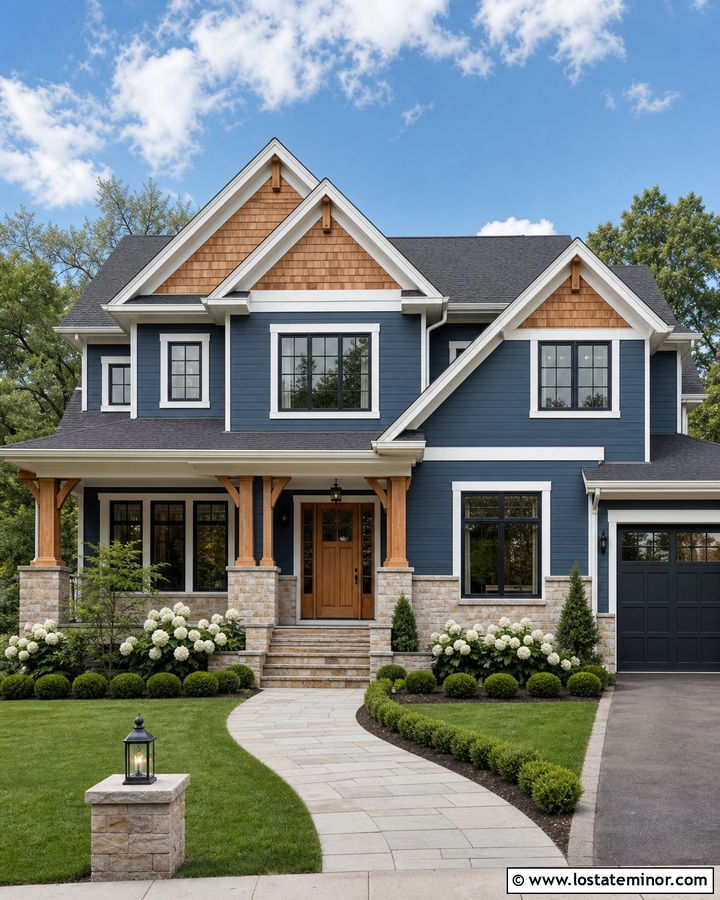
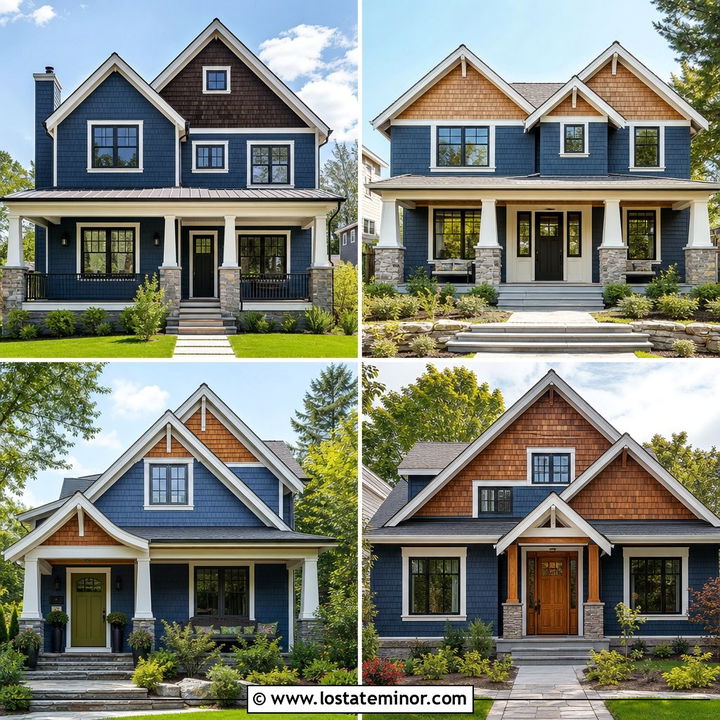
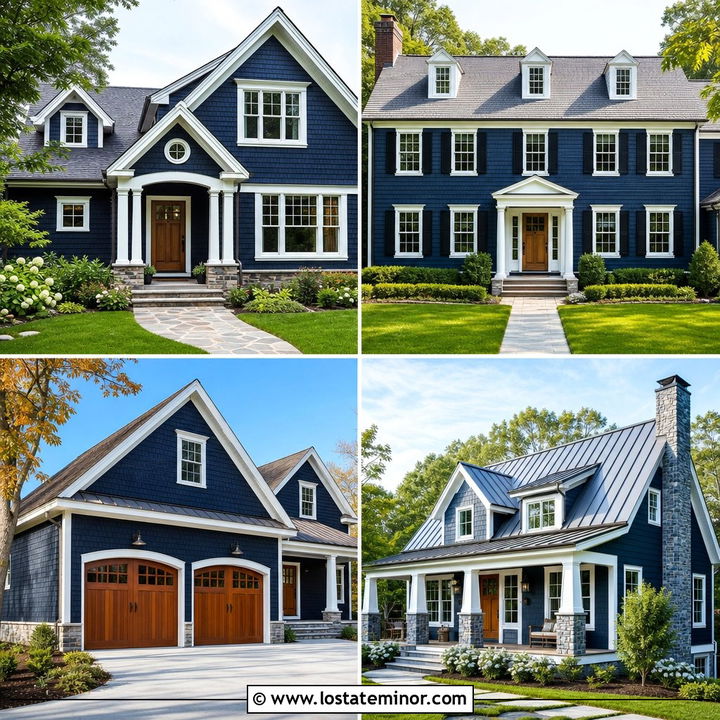
Blue cedar shakes create a classic contrast with warm beige stone. Use a deep slate blue across upper gables and selected second-floor walls, keeping the masonry dominant around the entrance and lower level. Creamy white trim brightens the facade, while a charcoal roof gives the blue a grounded frame. Add a natural cedar door and matching porch brackets to introduce warmth without competing with the painted shakes. Black window frames can deliver a sharper transitional look, while white frames will feel more traditional. Choose whichever option fits the architecture and use it consistently. Low boxwoods, white hydrangeas, stone steps, and a curved walkway complete the design. The result is distinctive from the street but still balanced by familiar natural materials.
28. Stone House With Cedar Shakes And Black Trim
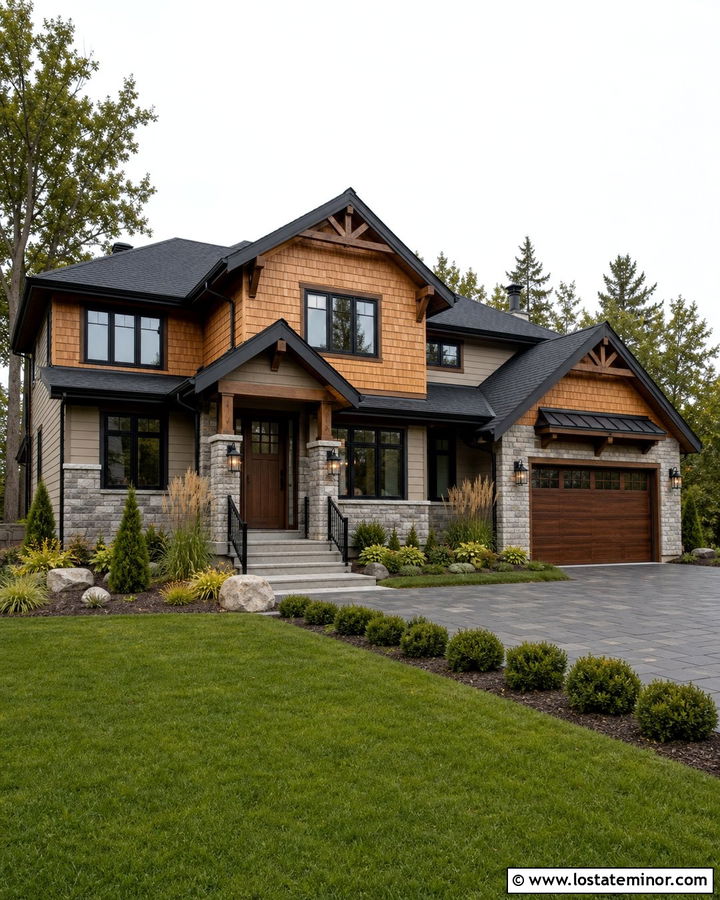
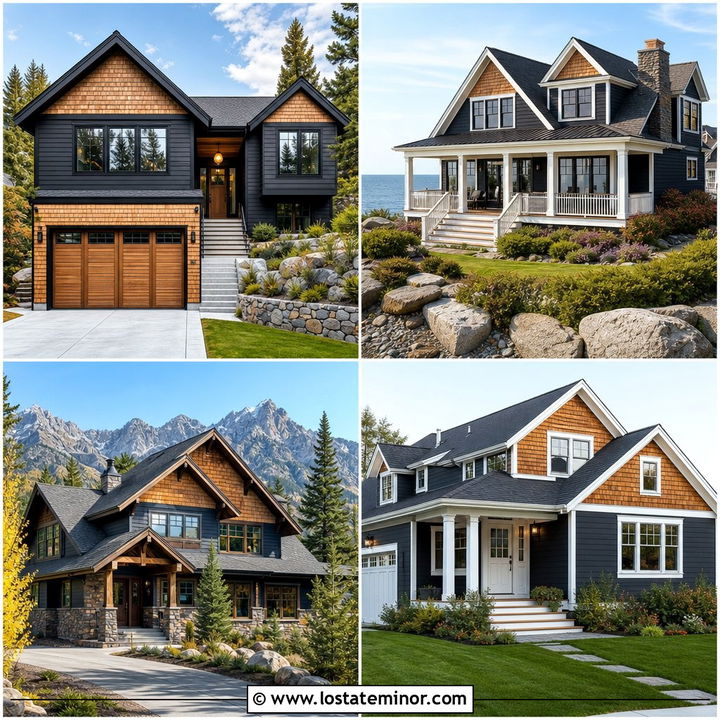
Black trim can modernize stone and cedar when it is used as a narrow outline instead of a dominant surface. Combine honey-brown cedar shakes on the upper floor with warm gray ledgestone at the base. Use black for window frames, gutters, fascia, porch railings, and exterior lights. A charcoal roof will connect these dark details and keep the facade organized. Choose a medium walnut door that relates to the cedar without matching it perfectly. Any remaining siding should be a soft greige drawn from the masonry. Because the contrast is already strong, keep landscaping simple with architectural grasses, evergreen hedges, and a clean concrete or stone walkway. This complete scheme works especially well on contemporary Craftsman, transitional, and mountain modern homes.
29. Stone House With Cedar Shakes And White Trim
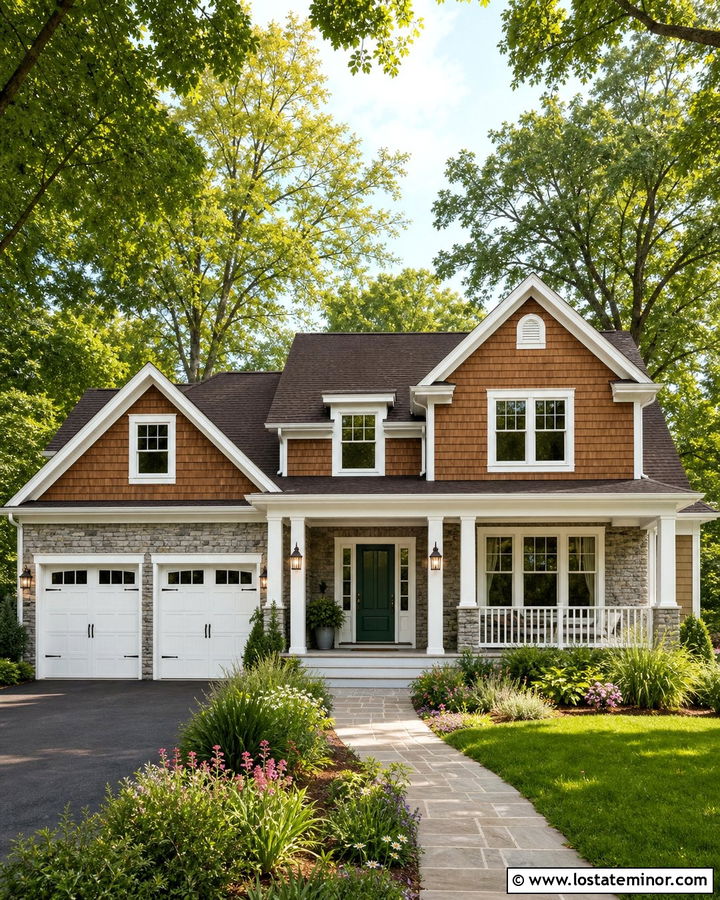
White trim gives stone and cedar a brighter, more traditional appearance. Use medium-toned natural cedar shakes across the main gables and warm gray stone around the first story. Apply soft white to window casings, porch columns, corner boards, and fascia so the architectural lines remain clear. A dark brown roof is often more harmonious with cedar than stark black, although either can work when repeated carefully. Add a deep forest green door for a restrained color accent and use bronze lanterns for warmth. White garage doors should include simple paneling and minimal decorative hardware. Layered foundation shrubs, colorful perennials, and a pale stone path finish the curb appeal. The exterior feels welcoming, familiar, and rich in natural texture.
30. Stone House With Cedar Shakes And Metal Roof
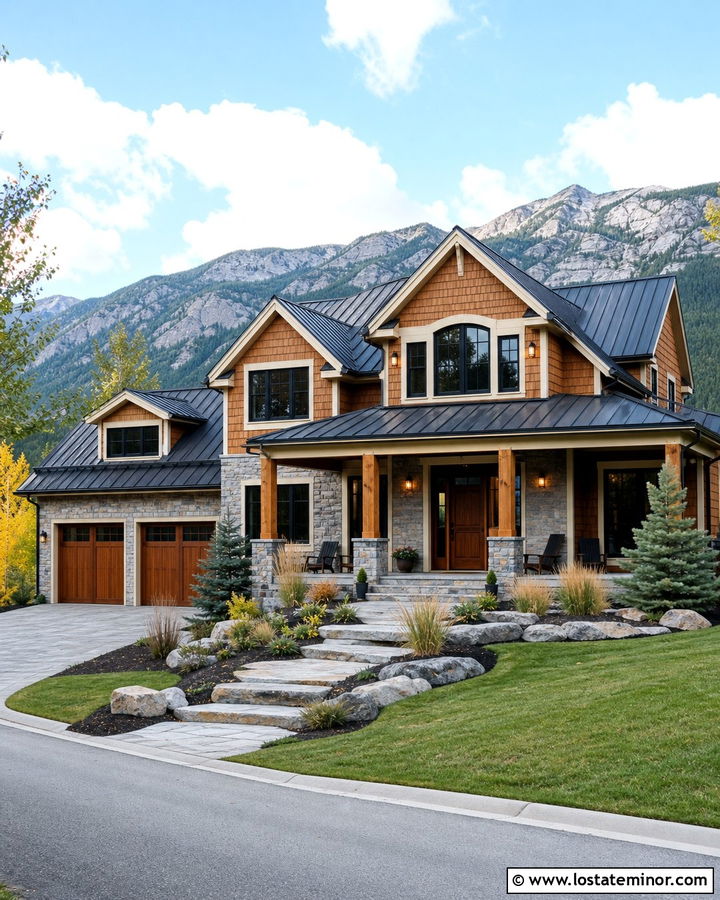
A standing-seam metal roof can give a stone and cedar exterior a crisp finish while emphasizing its rooflines. Pair a matte charcoal roof with warm cedar shakes across the upper gables and mixed gray stone below. Use creamy white trim to separate these darker materials and brighten window openings. Black frames, bronze gutters, and a natural walnut door complete the balanced palette. On covered porches, repeat the metal roofing at a lower pitch and add cedar posts for continuity. Avoid introducing another major siding color unless the facade needs a quiet greige connector. A broad stone walkway, structured evergreen beds, and ornamental grasses will complement the strong architecture. This scheme feels current but remains grounded by familiar residential materials and natural color variation.
Conclusion:
A successful stone and cedar exterior depends on balance, repetition, and a clear material hierarchy. Decide whether stone or cedar will be dominant, then use the second material to highlight gables, entries, foundations, chimneys, or porches. Coordinate roof, trim, window, and door colors with the undertones already present in the masonry and wood. You do not need to match every brown or gray perfectly. Related tones usually create a more natural, layered result. Landscaping and walkways should also support the architecture rather than hide it. These 30 Stone House Design With Cedar Shake Ideas show how the pairing can suit cottages, ranches, farmhouses, traditional homes, and modern retreats while creating warm, distinctive curb appeal.

Related posts: