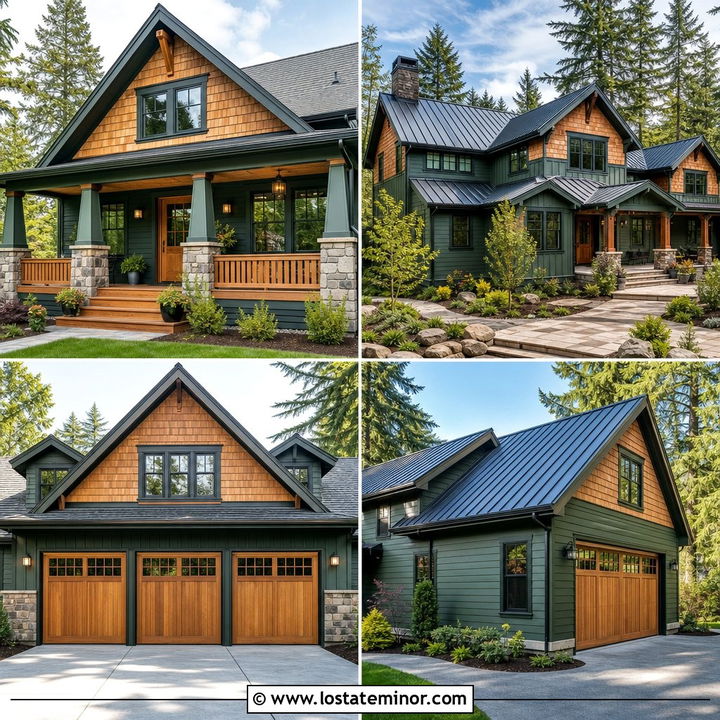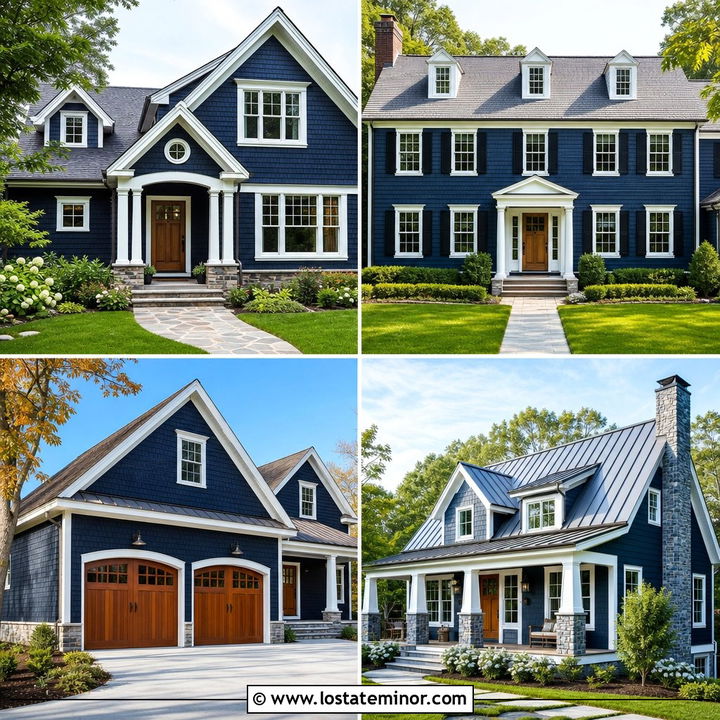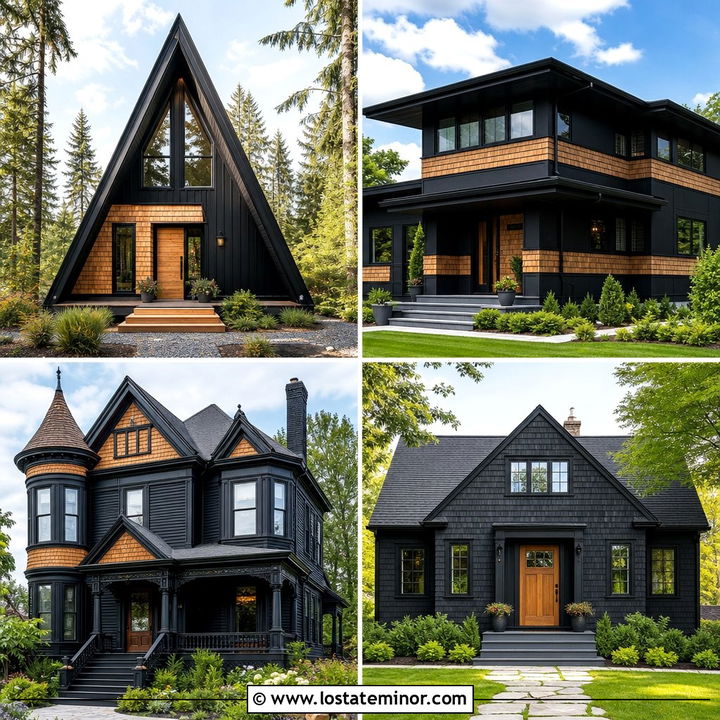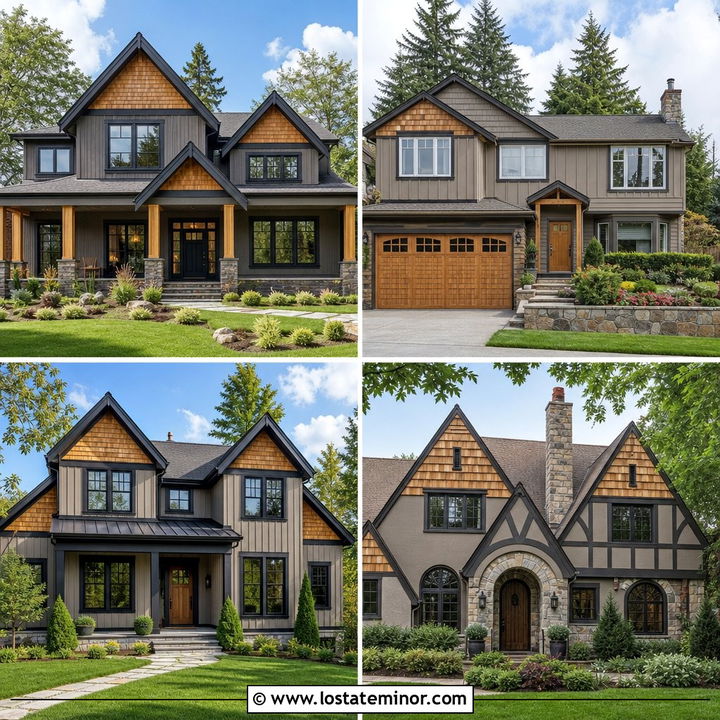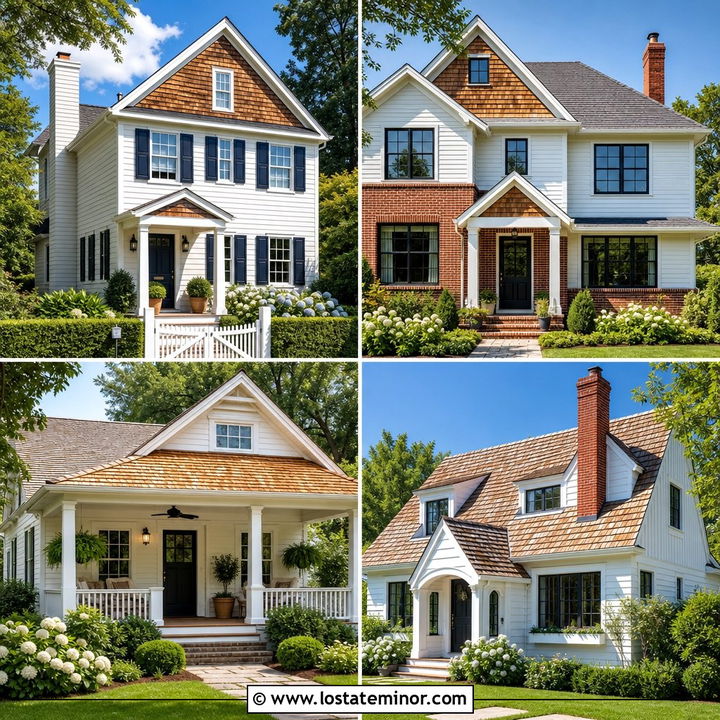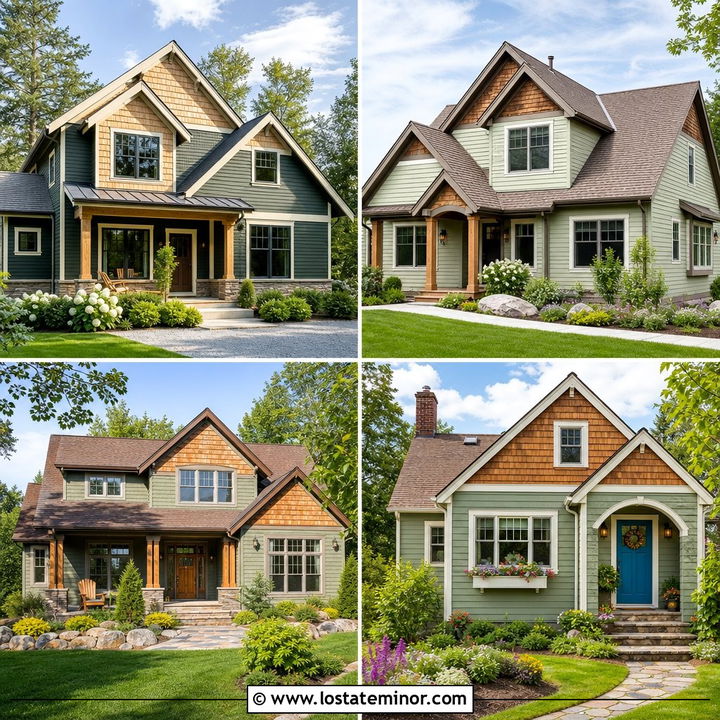
A black exterior paired with warm cedar shake creates one of the most striking combinations in residential design. The dark backdrop sharpens the architecture, while natural cedar adds texture, movement, and an inviting organic note. These **30 Black House Design With Cedar Shake Ideas** explore complete exterior schemes rather than isolated features. You will find modern farmhouses, ranch homes, cottages, mountain retreats, coastal houses, and contemporary builds. Each look coordinates the siding, cedar shake placement, trim, roof, doors, masonry, and landscaping. Some schemes use natural cedar for strong contrast, while others rely on weathered, honey-toned, or black-stained shakes for a quieter transition. Use these **30 Black House Design With Cedar Shake Ideas** to plan a balanced exterior with memorable curb appeal.

1. Black Modern Farmhouse With Cedar Shake Gables
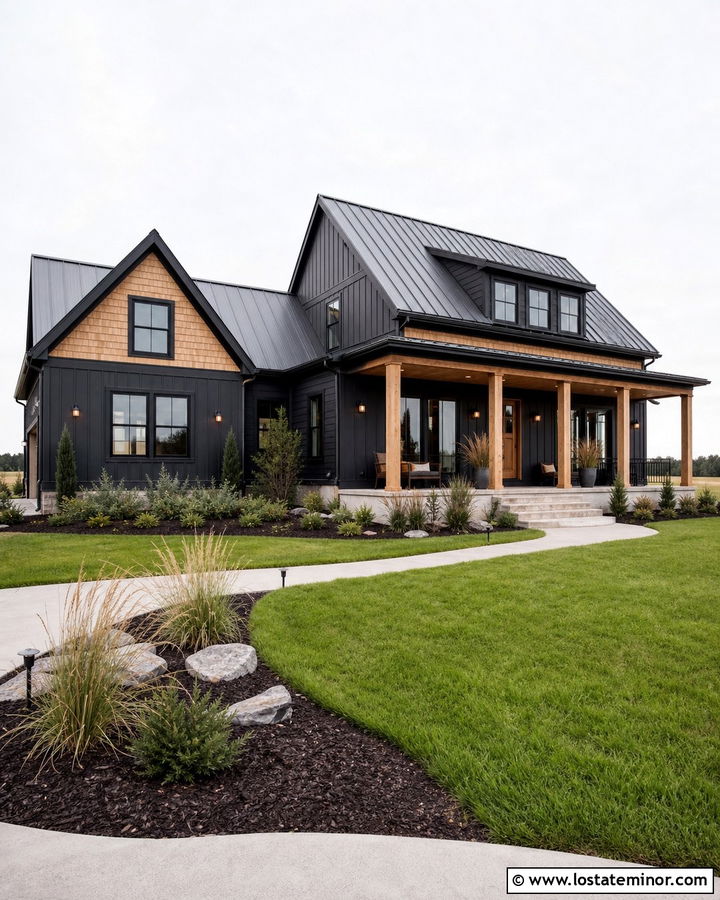
A black modern farmhouse gains warmth when natural cedar shake fills the front-facing gables. Use soft black board-and-batten siding across the main body, then repeat honey-toned cedar on the porch ceiling and small dormers. Black window frames and trim keep the architecture crisp without introducing another strong color. A medium-gray standing-seam metal roof softens the contrast and handles the visual scale of a long farmhouse roofline. At the entrance, choose a simple black door surrounded by cedar posts. Pale limestone steps can keep the porch from appearing too dark. Finish the property with curved planting beds, ornamental grasses, and a wide concrete walkway. The complete scheme feels modern and dramatic, but the visible cedar grain prevents it from looking cold or flat.
2. Black Craftsman House With Cedar Shake Porch
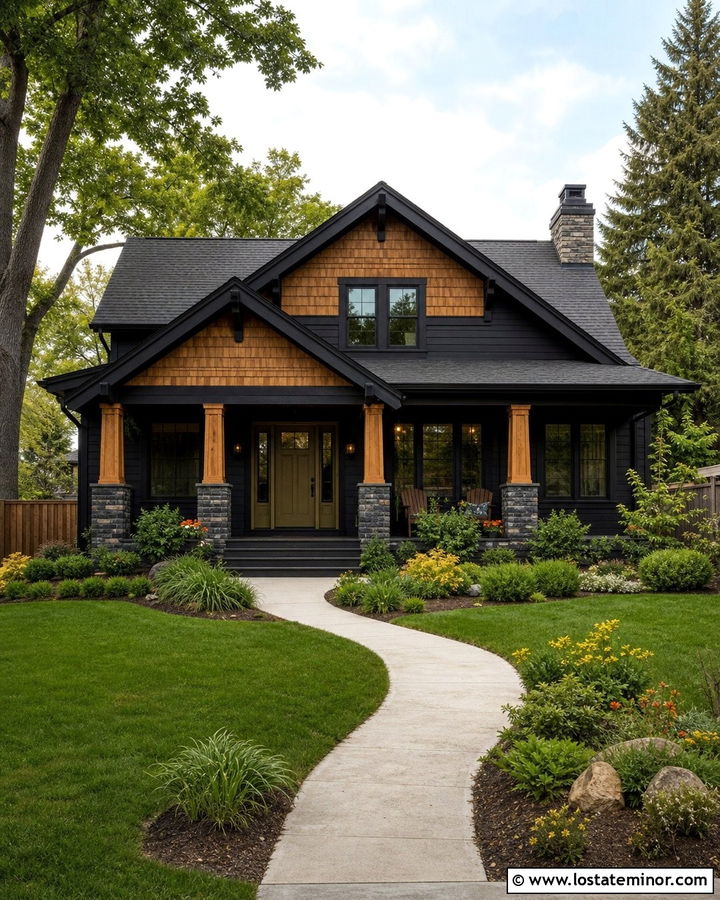
Picture a welcoming Craftsman facade where deep black lap siding frames a broad cedar shake porch. Place staggered natural cedar shakes inside the main gable, and support the roof with substantial cedar posts on dark stone bases. Warm wood becomes the bridge between the black walls and the earthy masonry below. Black-framed windows, charcoal roof shingles, and simple black gutters create a consistent background. A muted olive front door adds a restrained color shift without competing with the cedar. Craftsman houses benefit from layered materials, so include stone foundation accents and exposed wood brackets. Low boxwoods, flowering shrubs, and a gently curved walkway reinforce the traditional shape. This exterior feels handcrafted and grounded while still offering the bold definition associated with a modern black house.
3. Black Ranch House With Cedar Shake Front Gable
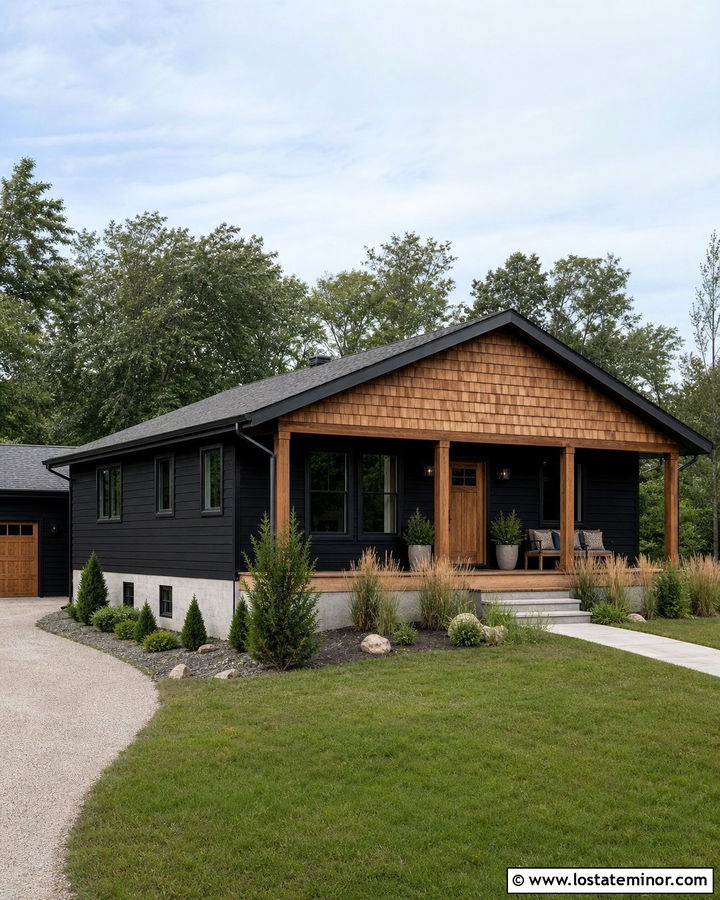
Can a simple ranch home support a bold black exterior? Yes, especially when cedar shake creates a clear focal point. Paint the horizontal siding a warm charcoal black and install natural cedar shakes in the wide front gable. Extend the same cedar tone to the front door and slim porch columns for visual continuity. Keep the window trim black so the low facade looks longer and less fragmented. A weathered gray roof balances the dark walls, while a pale concrete foundation keeps the house from feeling heavy. Replace narrow foundation beds with layered grasses, dwarf evergreens, and light gravel. A straight walkway emphasizes the clean horizontal architecture. This plan gives an ordinary ranch more depth and character without requiring major structural work or covering the entire exterior in expensive cedar.
4. Black Contemporary House With Cedar Shake Entry
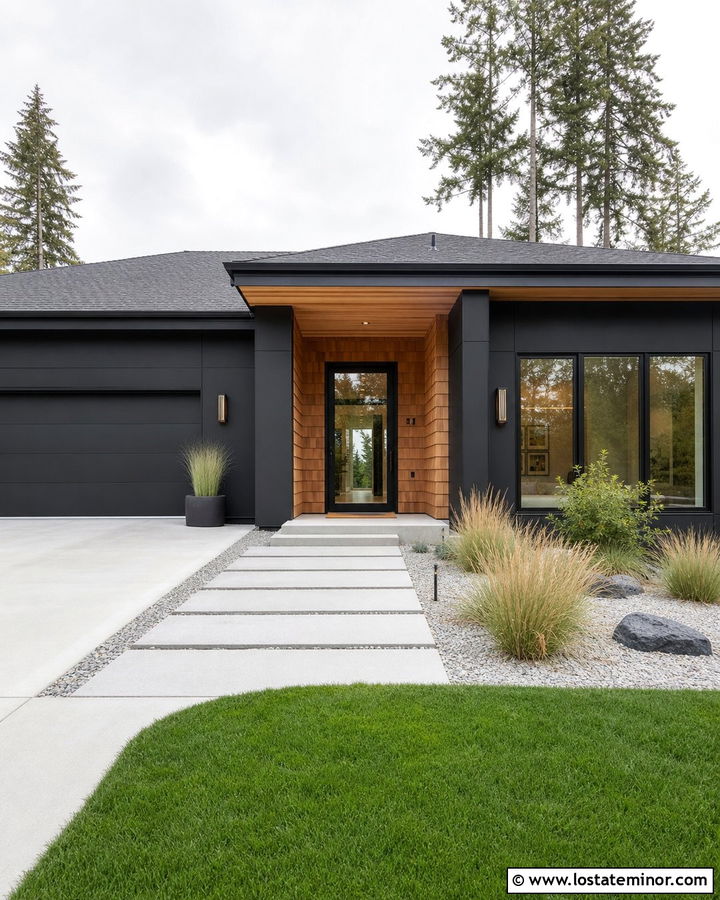
Clean geometry makes a black contemporary house an ideal backdrop for a cedar shake entrance. Cover the main rectangular volumes in smooth black panels, then wrap the recessed entry in narrow, evenly cut cedar shakes. The contrast naturally directs attention toward the front door. A full-height glass door with a black frame keeps the entrance light and modern. Continue cedar along the soffit to connect the doorway with the roofline. Flat or low-pitched charcoal roofing, dark gutters, and black window frames maintain the limited palette. Use large concrete pavers, pale gravel, and sculptural grasses around the facade. The landscaping should soften the building without hiding its strong shape. This complete exterior relies on material variation rather than extra colors, creating a polished design that still feels warm and residential.
5. Black Cape Cod House With Cedar Shake Siding
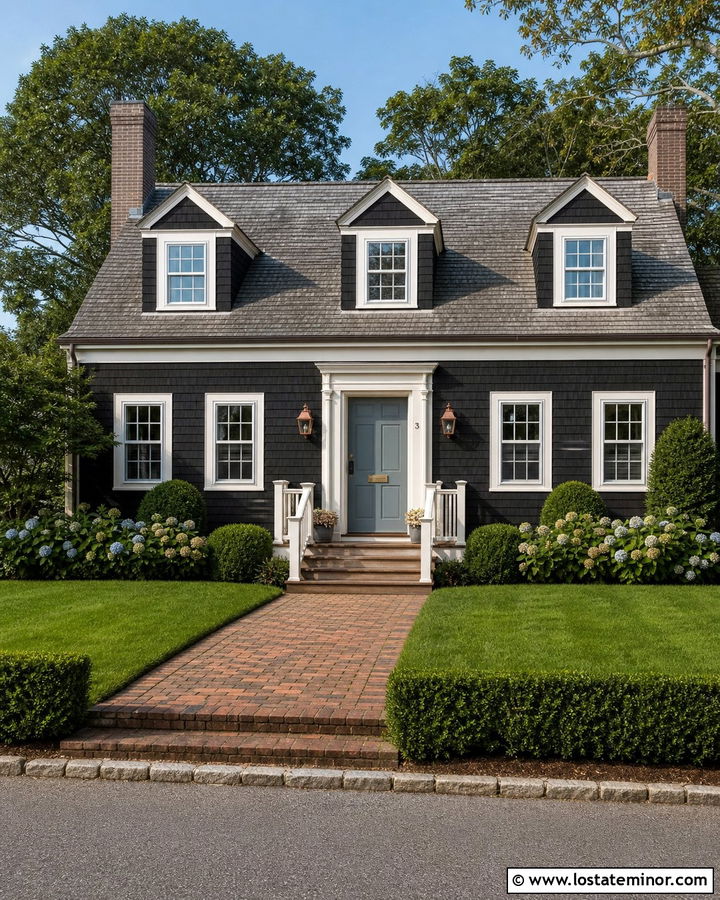
Traditional Cape Cod architecture takes on a sophisticated character when its cedar shake siding is stained black. Cover the entire facade in soft black shakes, allowing the irregular texture and shadow lines to remain visible. Creamy white trim around the windows, eaves, and dormers provides classic definition without creating a severe black-and-white contrast. Choose a muted blue-gray front door for a subtle coastal note. Weathered gray roof shingles and simple copper lanterns complement the home’s historic proportions. White porch railings can brighten the entrance, while natural cedar steps introduce a small amount of warmth. Hydrangeas, clipped hedges, and a brick walkway complete the approachable setting. The result respects familiar Cape Cod details while giving the full exterior a richer, more updated identity.
6. Black Colonial House With Cedar Shake Dormers
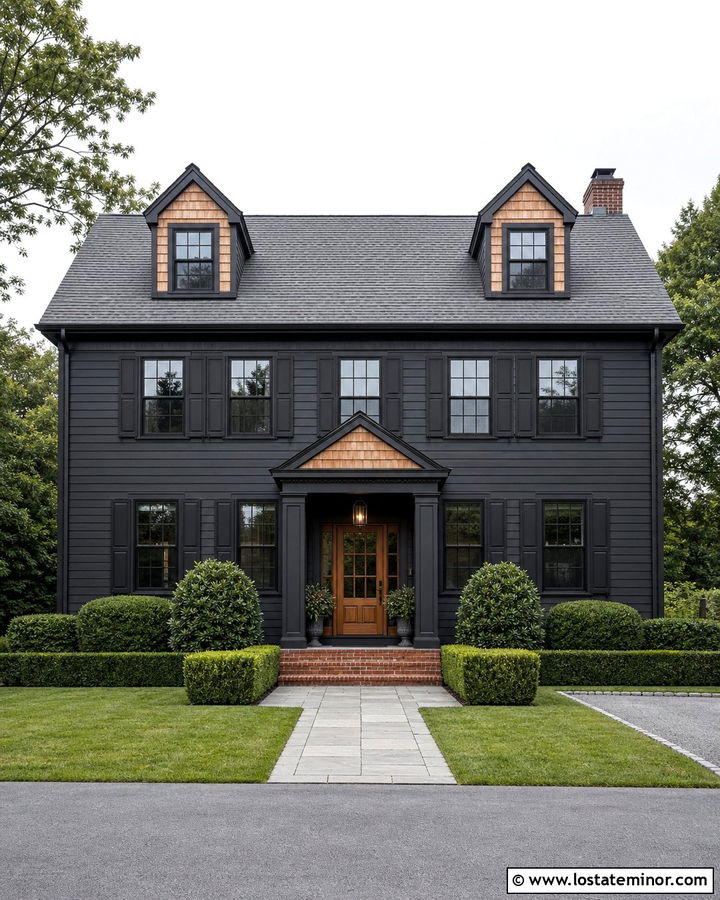
A symmetrical Colonial can wear black beautifully when cedar shake is used with restraint. Apply a deep neutral black to the clapboard siding, shutters, and window trim for a streamlined appearance. Then use warm cedar shakes on the dormers and within the centered entrance pediment. These smaller wood sections break up the formal facade without weakening its balanced structure. A medium-gray shingle roof creates a softer top edge than solid black roofing. Select a natural cedar front door with divided glass to echo the dormers. Brick steps and traditional lanterns preserve the Colonial character. Along the foundation, use structured hedges and evenly spaced shrubs rather than loose planting. This complete scheme keeps the house elegant and orderly, while the cedar provides enough warmth to make the dark exterior feel welcoming.
7. Black Mountain House With Cedar Shake Walls
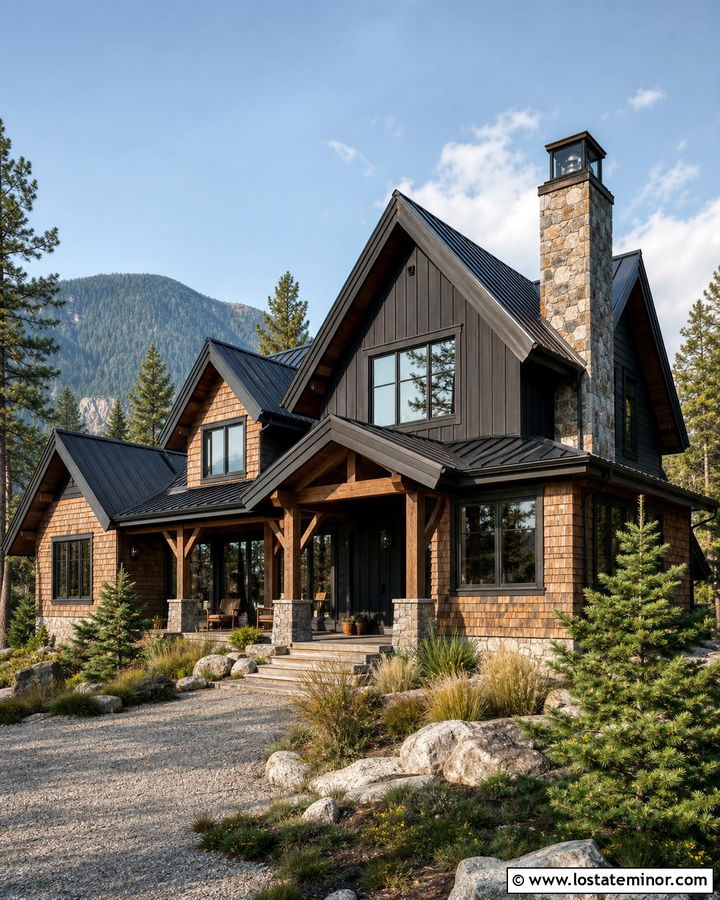
Against a wooded or mountainous setting, a black exterior can blend into the landscape instead of overpowering it. Use matte black vertical siding on the taller sections of the house and rough-cut cedar shakes across the lower wings and large gables. A stone chimney adds another natural texture and visually anchors the structure. Black-framed picture windows should be large enough to reflect the trees and daylight. Choose a charcoal metal roof with generous overhangs and cedar-lined soffits. A heavy cedar front door can connect the shake walls with exposed porch beams. Complete the setting with native grasses, boulders, gravel paths, and restrained evergreen planting. The combination feels sturdy and appropriate for its surroundings, balancing contemporary black surfaces with the rugged texture and warm color variation of cedar.
8. Black Scandinavian House With Light Cedar Shake
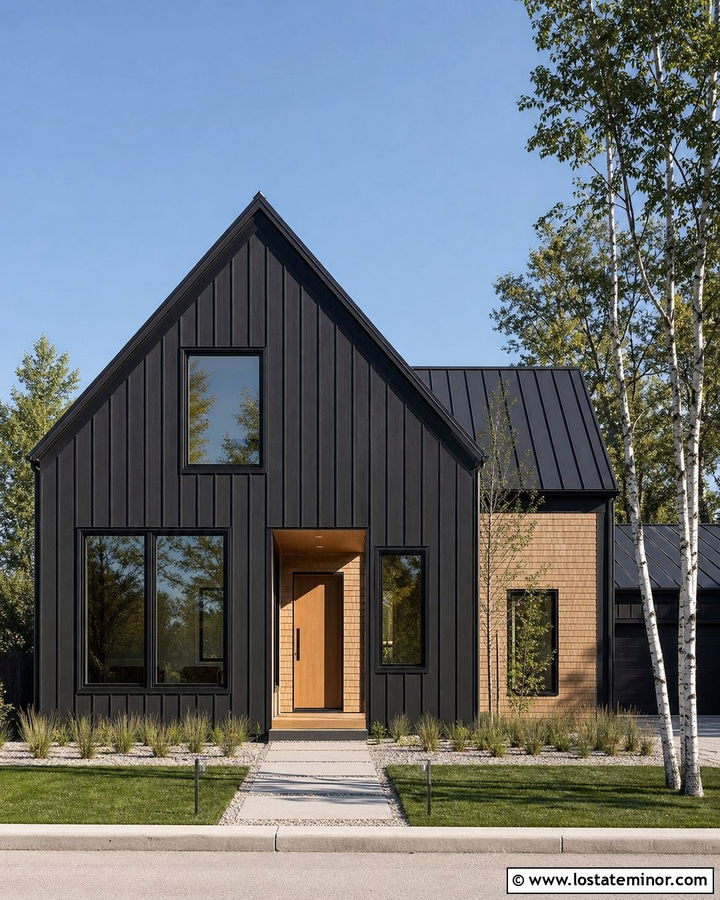
A black Scandinavian-inspired house works best with a simple shape and carefully controlled materials. Cover the steep gabled facade in near-black vertical siding, then apply pale, clear-sealed cedar shakes to a recessed entrance and one smaller side volume. The lighter wood creates a fresh contrast while preserving the minimalist palette. Keep the trim narrow and black so the windows appear integrated into the walls. A matching black metal roof can create one continuous silhouette from ridge to foundation. Choose a plain cedar door without decorative panels, and continue the wood across the porch ceiling. Light gravel, rectangular stepping stones, birch trees, and low grasses complete the uncluttered landscape. This exterior feels crisp and contemporary, yet the cedar shake prevents the strong black form from becoming visually severe.
9. Black Bungalow With Cedar Shake Gable
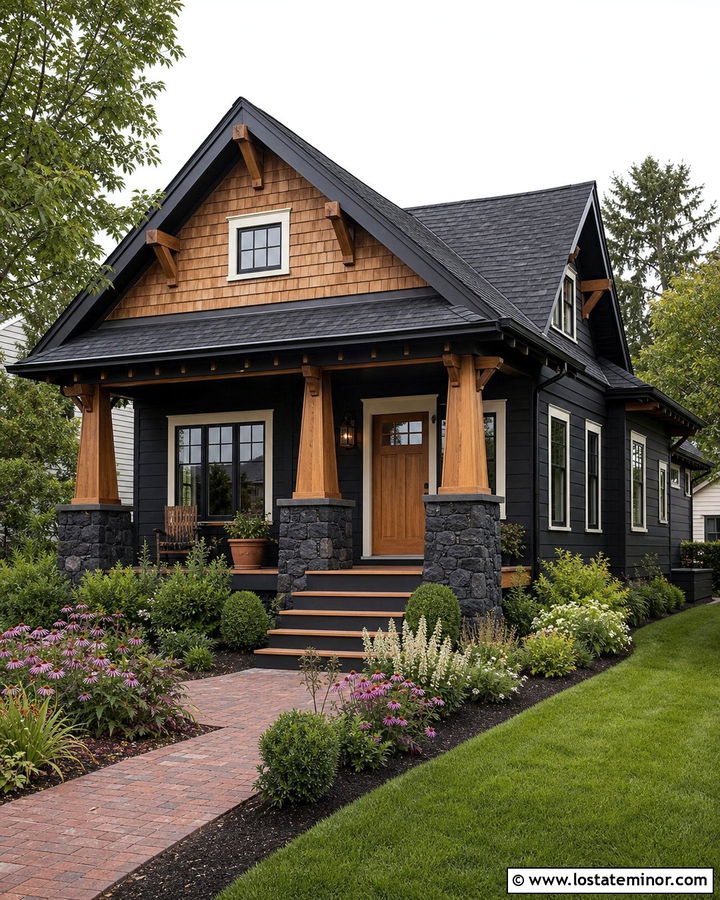
The layered roofline of a bungalow offers several natural locations for cedar shake. Paint the lap siding a soft, slightly warm black and place medium-toned cedar shakes inside the broad porch gable. Repeat that wood on tapered columns, exposed brackets, and the front door. Use dark stone column bases to connect the black walls with the porch structure. Cream window trim can highlight the bungalow’s divided-light windows and keep the shaded porch from appearing gloomy. A charcoal architectural-shingle roof supports the earthy palette. Add amber porch lights, wide steps, and a short brick walkway for extra warmth. Informal shrubs and flowering perennials suit the relaxed architecture. The finished house looks detailed and inviting because every material follows the natural horizontal and triangular lines of the bungalow.
10. Black Split-Level House With Cedar Shake Accent
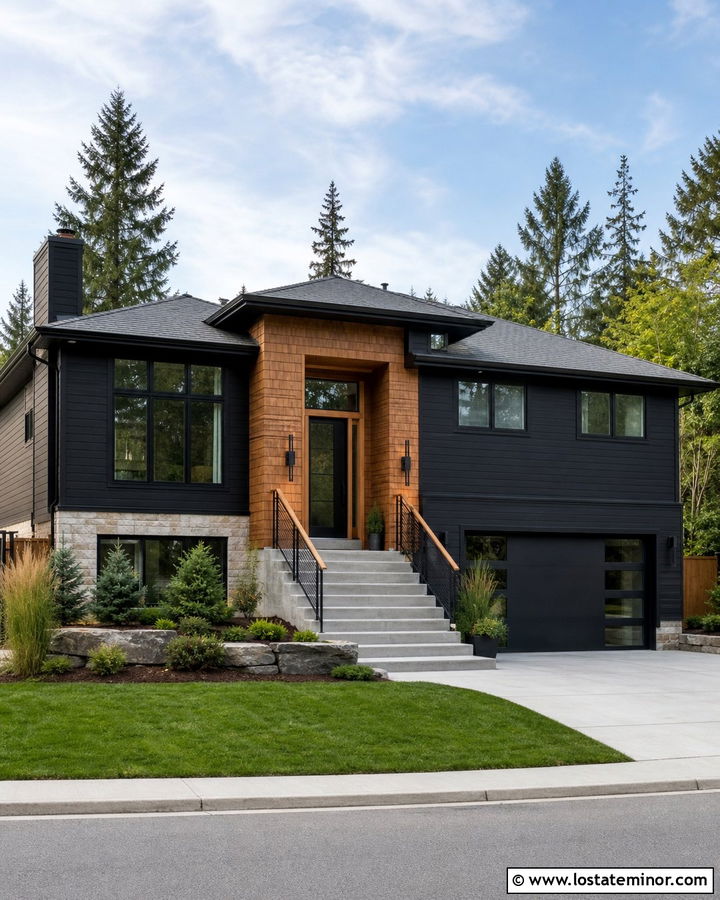
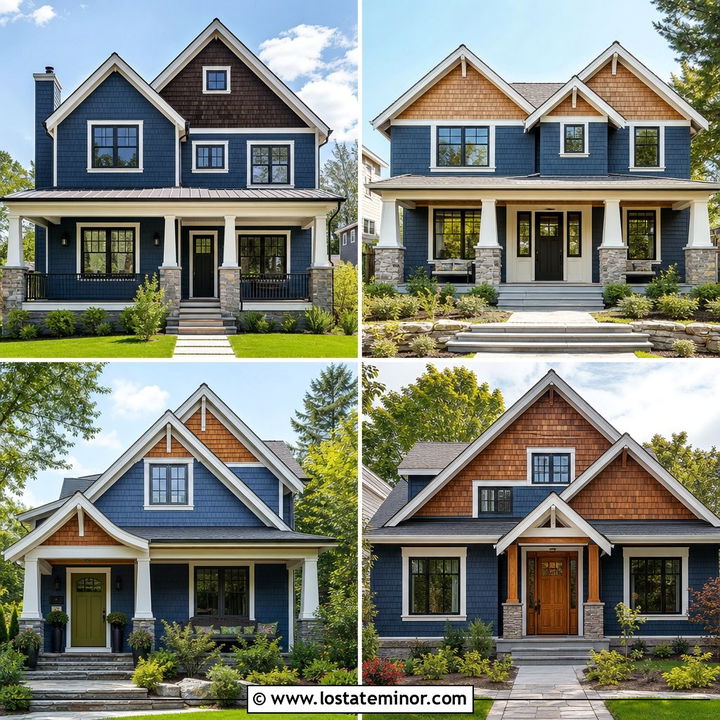
A split-level exterior can appear disconnected when each section has a different finish. Create unity by painting the main siding and garage a consistent charcoal black. Then use cedar shake on the taller entry volume, extending it from the foundation to the roofline. This vertical wood section highlights the front door while visually connecting the home’s different levels. Select a black garage door with subtle horizontal panels so it recedes into the facade. Natural cedar stair rails and a cedar-framed door can reinforce the accent wall. A medium-gray roof and pale stone foundation balance the darker surfaces. Use broad concrete steps, simple metal railings, and layered evergreen landscaping to clarify the approach. The result gives a familiar split-level house stronger proportions and a much more deliberate curb-appeal scheme.
11. Black Lake House With Cedar Shake Gables
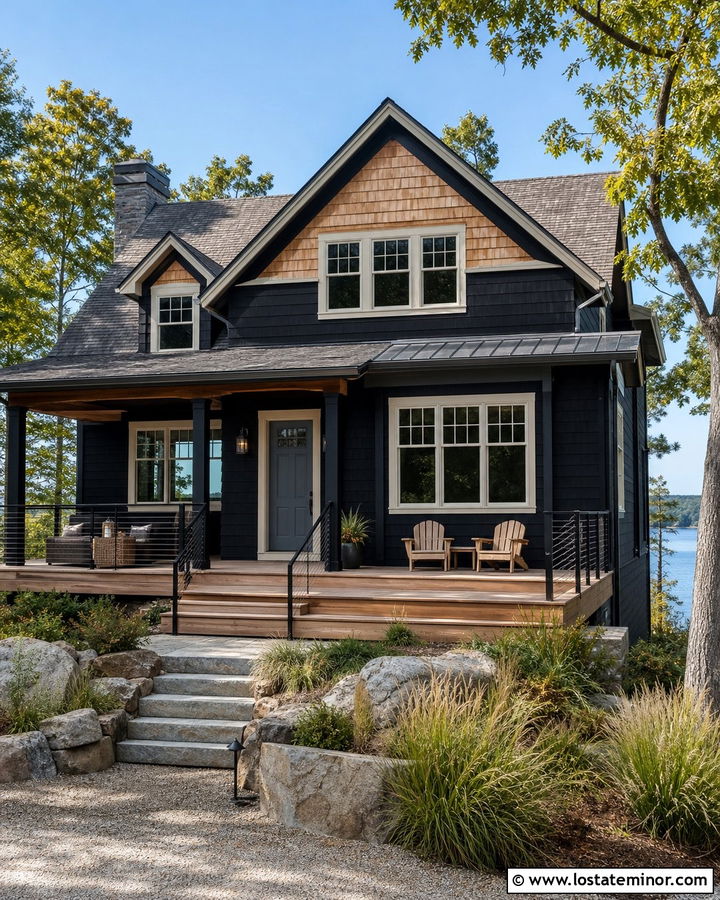
A lake house can feel bold without losing its relaxed character. Choose soft black shingle siding for the main walls and natural cedar shake for the upper gables. Cool gray doors provide a subtle connection to the water, while crisp off-white window trim keeps the facade readable from a distance. Use a weathered gray roof instead of a solid black one to soften the overall palette. A wide cedar deck with black cable railings extends the warm wood across the front of the house. Stone steps and a gravel path help the structure settle naturally into the shoreline setting. Surround the deck with native grasses and low shrubs that preserve the view. This coordinated exterior combines coastal familiarity, rustic cedar texture, and dark modern color without looking too formal for a waterside property.
12. Black Coastal House With Weathered Cedar Shake
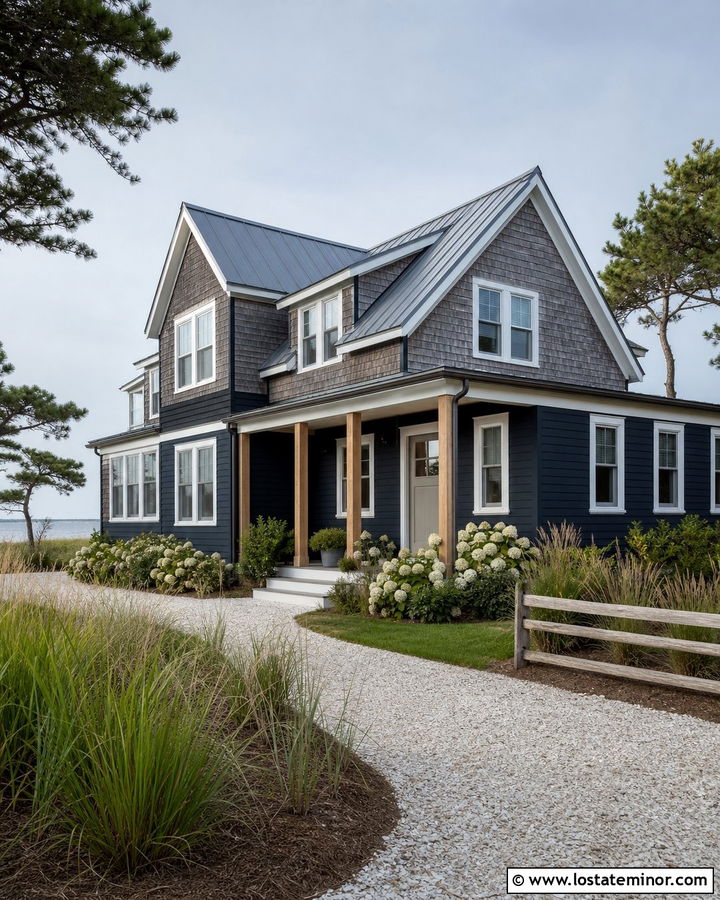
Salt-washed gray cedar and black siding form a quieter coastal palette than bright white and navy. Use deep black lap siding on the first floor, then cover the upper gables in cedar shakes finished with a weathered gray stain. White window trim supplies clean definition, but keep the porch columns natural cedar to connect the two levels. A pale gray front door and galvanized metal roof add cool coastal notes. Avoid overly rustic details; simple railings and clean rooflines will keep the facade current. A crushed-shell path, dune grasses, hydrangeas, and low fencing can complete the shoreline setting. The weathered cedar reduces the visual contrast while still contributing texture. This full-house scheme feels appropriate for a beach neighborhood, yet it remains dramatic enough to stand apart from lighter neighboring homes.
13. Black Tudor House With Cedar Shake Gables
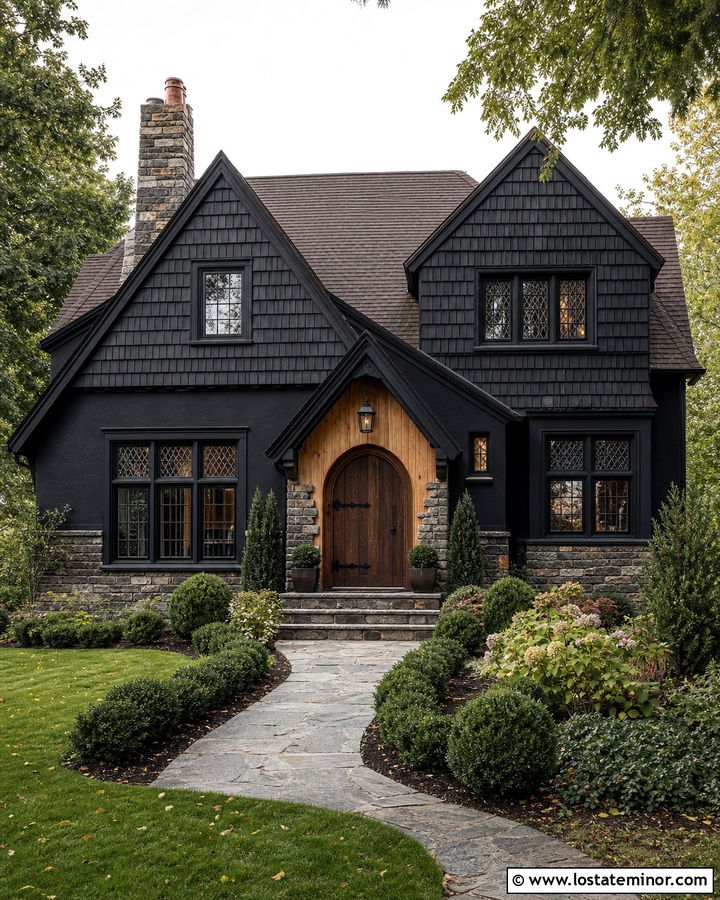
The steep gables of a Tudor-style house look especially rich when filled with dark cedar shake. Paint the stucco or lap-sided walls a velvety black, then use black-stained cedar shakes in the upper gables so their texture remains visible. Warm natural cedar trim around the arched doorway prevents the exterior from becoming too monochromatic. A brown-black roof, dark bronze gutters, and leaded black windows support the historic character. Add a stone base in mixed gray and brown tones to ground the facade. The front door can be heavy natural wood with black iron hardware. Curved planting beds, clipped evergreens, and a narrow stone walkway reinforce the romantic architecture. The restrained palette allows the rooflines, masonry, and shake texture to create interest without relying on decorative half-timbering everywhere.
14. Black A-Frame House With Cedar Shake Entry
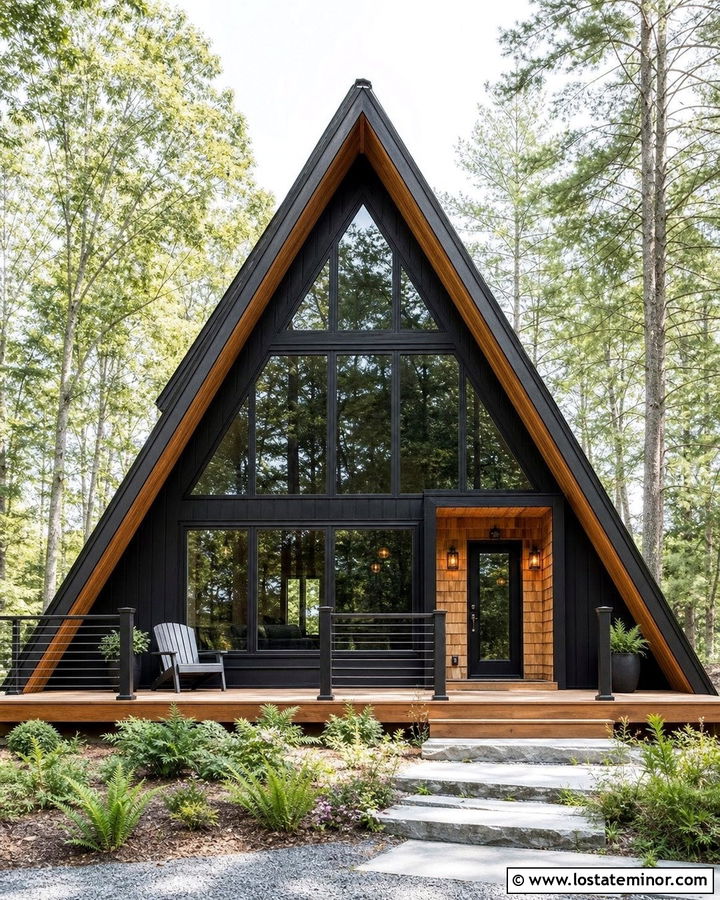
An A-frame house already has a memorable silhouette, so its exterior materials should remain focused. Cover the steep triangular walls in matte black vertical siding and use golden cedar shake around the recessed entrance. Carry the cedar onto the underside of the roof overhang, where daylight can reveal the grain. Large black-framed windows fill the front elevation without interrupting the dark shape. A black standing-seam metal roof creates a clean line from the peak toward the ground. Build a low cedar deck across the facade and use simple black cable rails to preserve the view. Natural stone steps, ferns, grasses, and tall trees complete the setting. The cedar entry and deck add a comfortable human scale to the dramatic roof, making the complete house feel both architectural and welcoming.
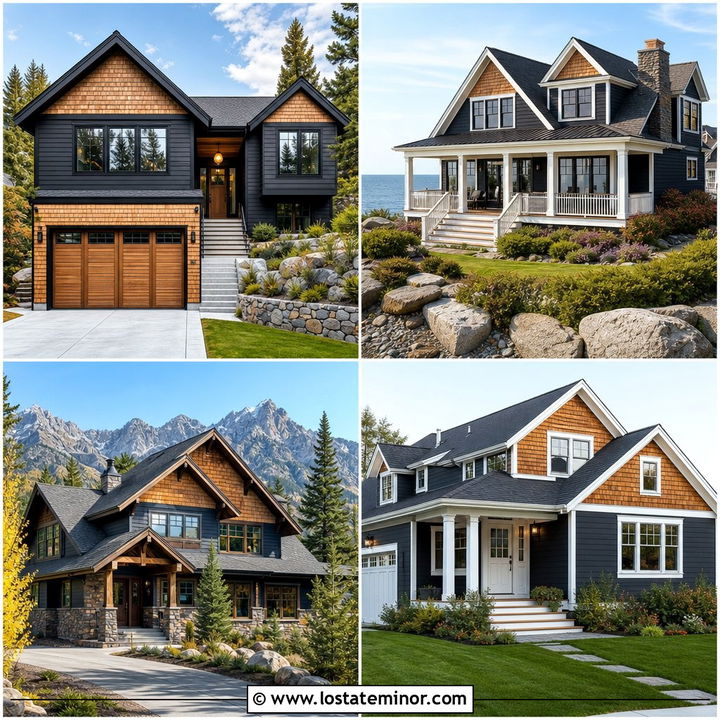
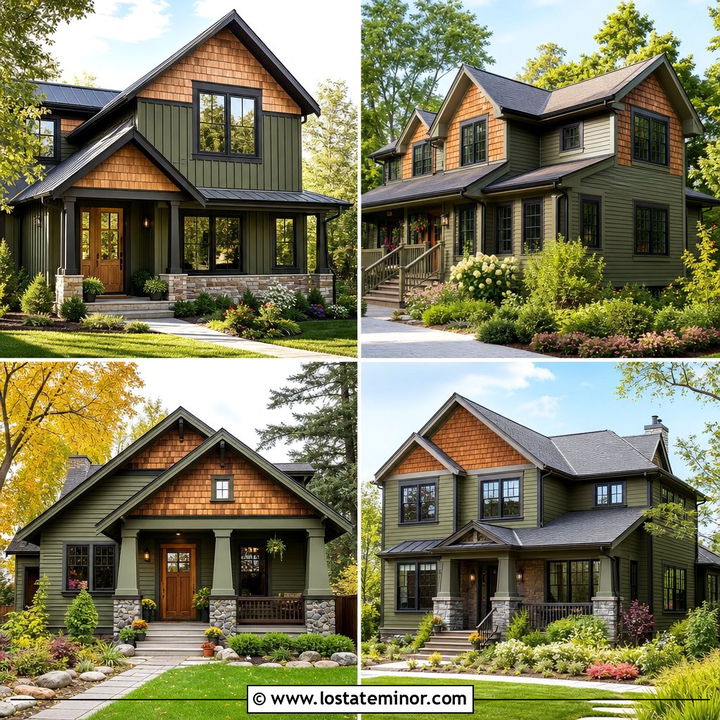
15. Black Barndominium With Cedar Shake Gables
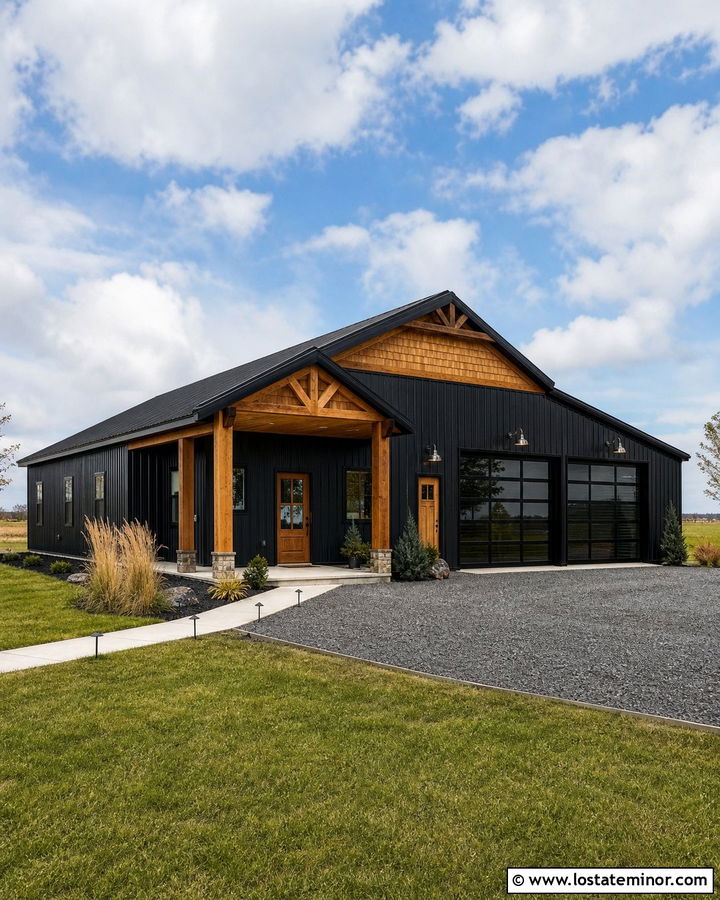
The broad metal surfaces of a barndominium benefit from the smaller scale and texture of cedar shake. Use true black vertical metal siding across the main building and install warm cedar shakes inside the front gable and covered entry. A cedar porch ceiling and heavy wood posts repeat the material at eye level. Keep the roof black for a continuous agricultural silhouette, but choose glass garage doors with black frames to introduce reflection and light. A natural wood front door prevents the entrance from disappearing against the dark wall. Concrete paths, gravel parking areas, and simple prairie grasses fit the practical architecture. This complete scheme avoids unnecessary farmhouse decoration. Instead, it depends on strong forms, limited colors, and the contrast between smooth black metal and irregular cedar texture.
16. Black Prairie House With Cedar Shake Bands
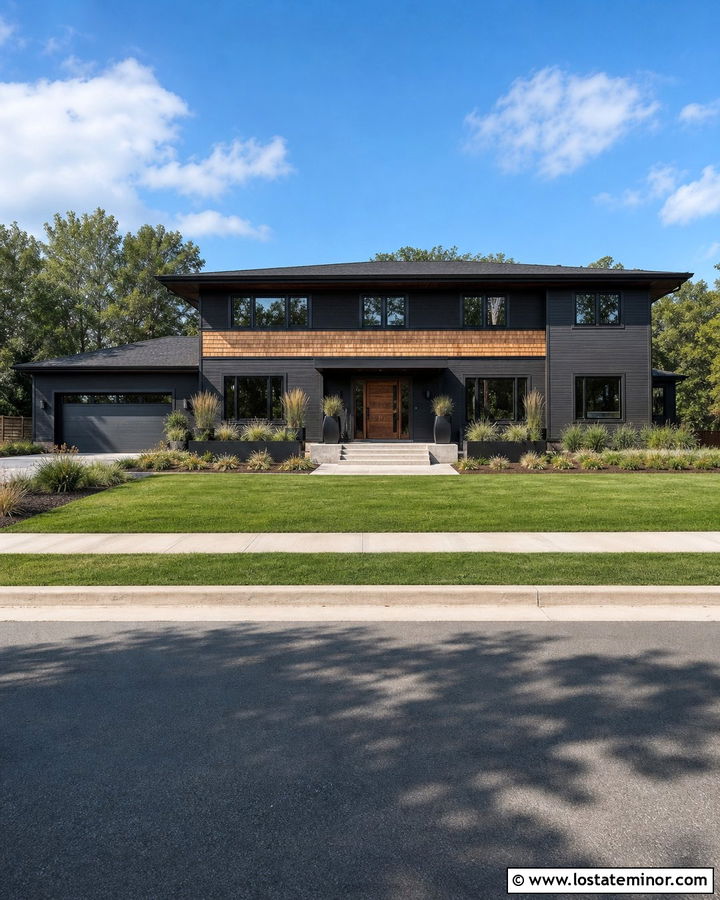
Long horizontal lines define a Prairie-style house, and cedar shake can strengthen that visual direction. Paint the main stucco and lap siding a deep charcoal black. Add a continuous band of natural cedar shake below the upper windows or across a projecting second story. Broad black eaves and a low charcoal roof should remain visually dominant. Use warm cedar on the front door and soffits so the horizontal accent does not appear isolated. Dark bronze window frames work well with both the black walls and golden wood. Wide concrete steps, rectangular planters, and low ornamental grasses reinforce the home’s ground-hugging shape. The cedar band introduces movement and natural variation without disrupting the architecture. This exterior feels modern, balanced, and carefully connected to the surrounding landscape.
17. Black Cottage House With Cedar Shake Roofline
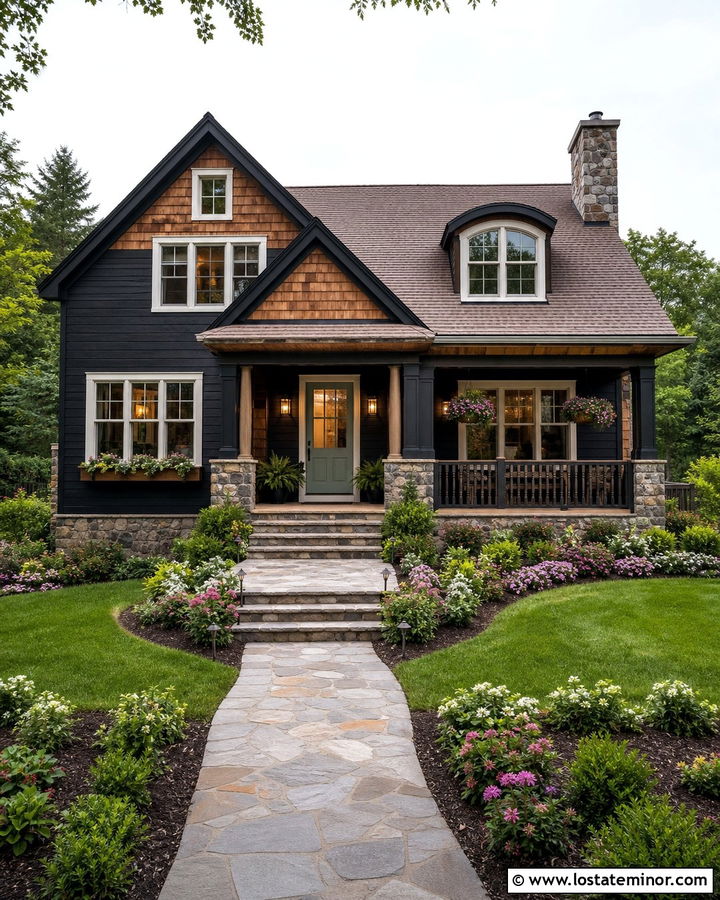
A small cottage can handle a black exterior when lighter natural materials frame its most charming features. Choose a warm black for the lap siding and natural cedar shakes for the front gable, eyebrow dormer, and porch roofline. Cream trim around the windows adds softness, while a dusty sage door brings gentle color to the entrance. A medium-brown roof connects with the cedar’s warm undertones better than a cool blue-black roof would. Use local fieldstone around the foundation and porch steps for a collected, established appearance. Curved garden beds, flowering shrubs, and a flagstone path complete the cottage setting. Because the house is compact, avoid placing cedar on every surface. A few repeated sections provide enough texture and help the black body color feel cozy rather than overwhelming.
18. Black Midcentury House With Cedar Shake Courtyard
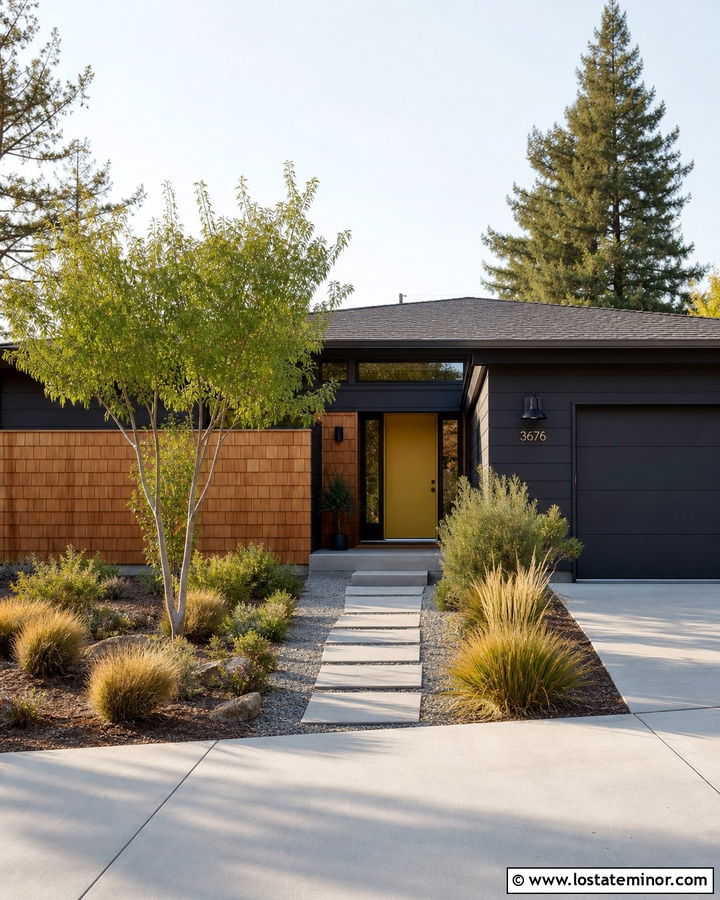
What if a midcentury home needs warmth but not rustic decoration? Paint the low horizontal siding a clean charcoal black and use straight-edged cedar shake on the courtyard wall and recessed entrance. Select shakes with consistent spacing to suit the home’s orderly geometry. Black-framed clerestory windows and a low dark roof preserve the original architectural lines. A mustard or muted orange front door can add a period-appropriate accent, while the cedar keeps that color from feeling disconnected. Large concrete pavers, pea gravel, sculptural shrubs, and ornamental grasses create a restrained landscape. Continue the wood along a privacy screen or carport wall for balance. The complete exterior respects midcentury simplicity while using cedar shake texture to prevent the broad black facade from appearing flat.
19. Black Victorian House With Cedar Shake Details
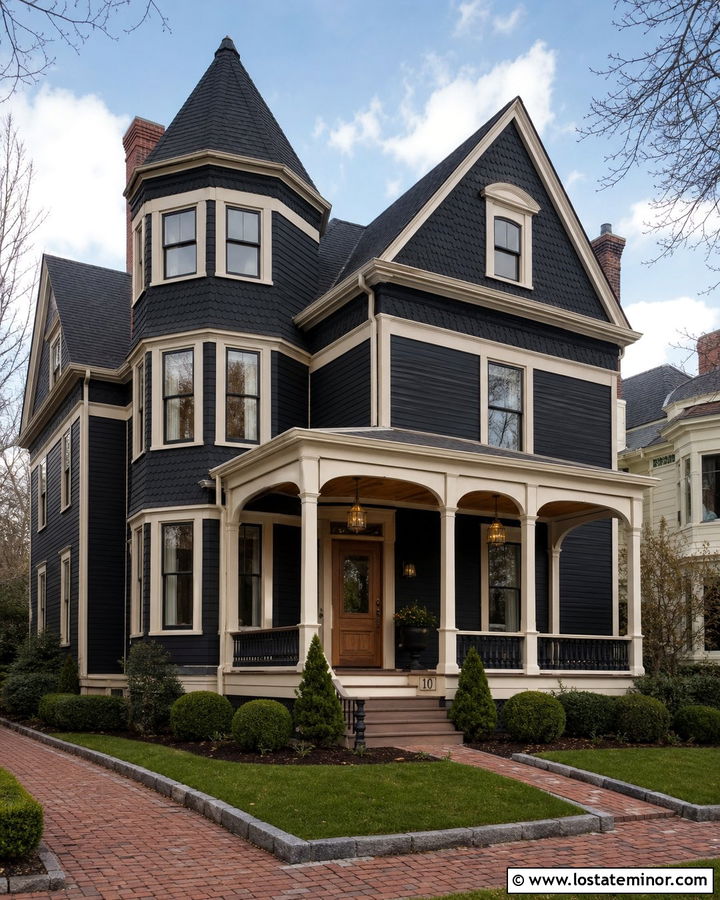
A Victorian exterior does not need multiple bright paint colors to display its craftsmanship. Use a soft black across the clapboard siding and apply black-stained cedar shake to the tower, upper gables, and decorative bands. The different textures create depth even within a nearly monochromatic scheme. Highlight selected trim, porch spindles, and window surrounds in warm ivory rather than stark white. A natural cedar door and porch ceiling introduce a welcoming focal point. Choose dark gray roof shingles and aged brass lighting to support the historic character. Structured shrubs and a brick walkway provide an orderly foreground for the detailed facade. By limiting the palette, the house retains its ornamental personality without looking busy. The cedar shake becomes part of the architecture instead of an unrelated decorative addition.
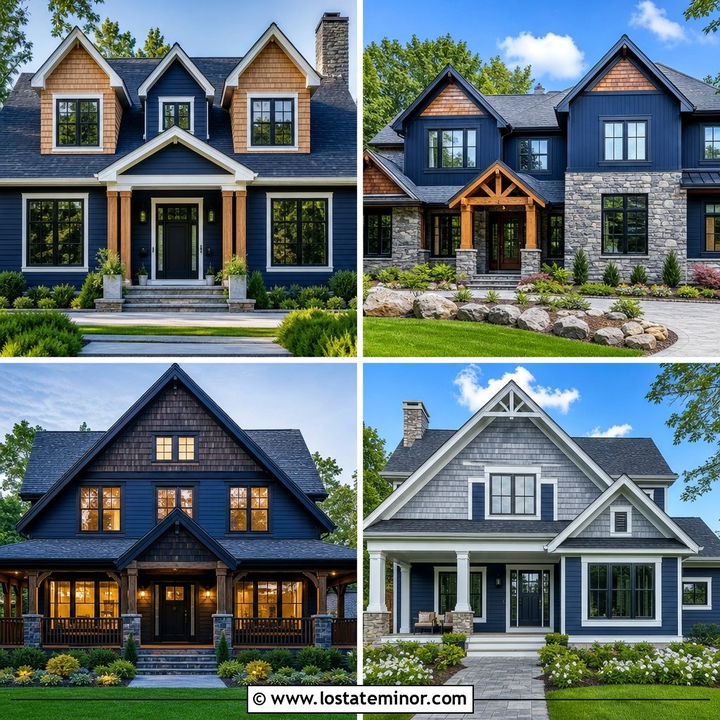
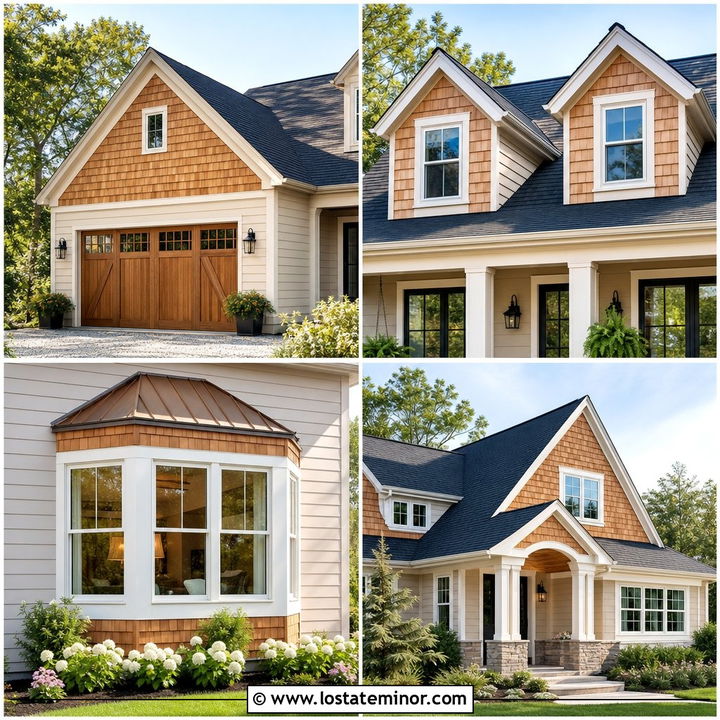
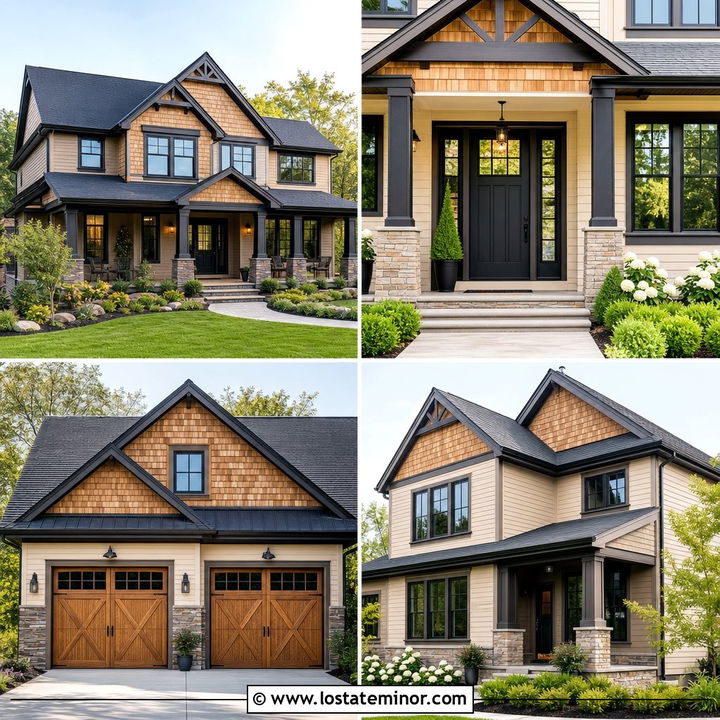
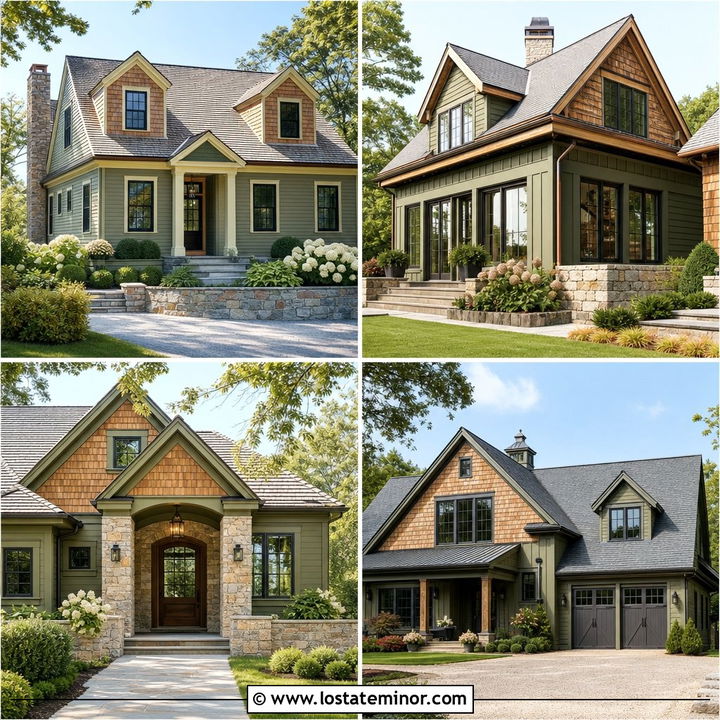
20. Black Cabin House With Rustic Cedar Shake
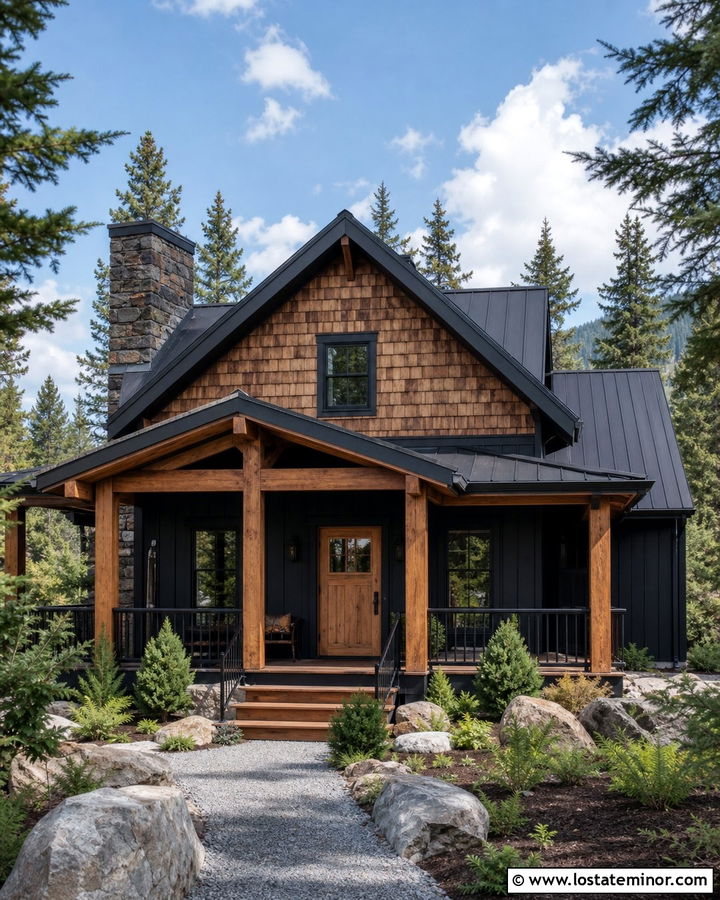
Deep black siding gives a rustic cabin a stronger, more modern outline against trees and natural terrain. Use rough cedar shake across the front gable and around the covered porch, leaving visible variation in the wood tones. Black board-and-batten siding can cover the remaining walls, creating a useful contrast in direction and texture. Add thick cedar posts, a natural wood door, and a stone chimney with gray and brown undertones. A charcoal metal roof handles snow and rain visually while complementing the dark siding. Keep railings simple and black so the cedar remains the primary warm material. Gravel paths, native ferns, boulders, and evergreen planting complete the setting. This exterior feels rugged but intentional, with enough wood to soften the black without turning the house entirely rustic.
21. Black Brick House With Cedar Shake Gables
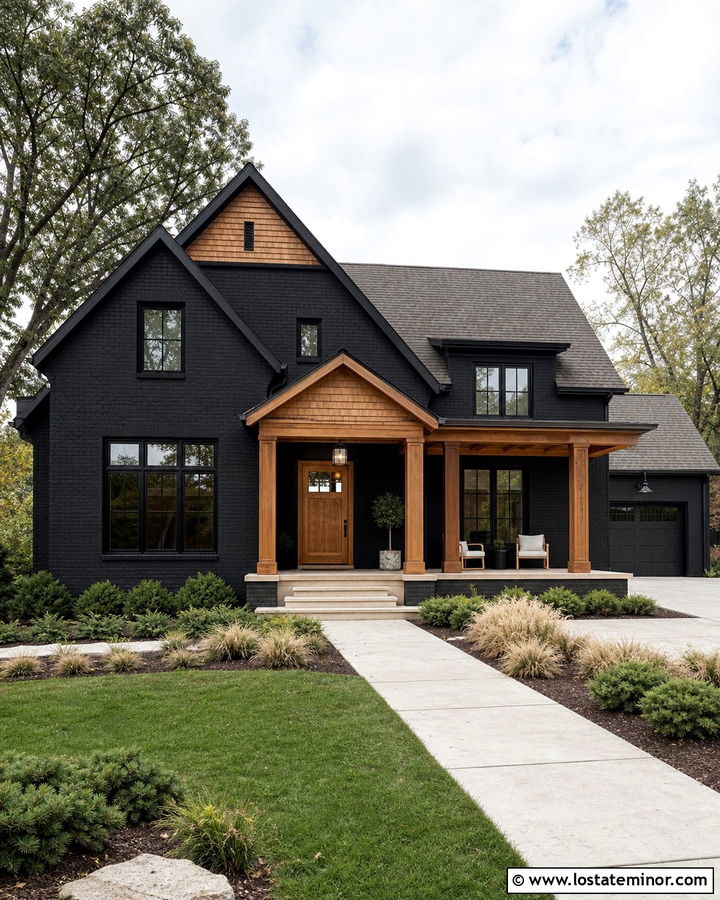
Painting an older brick house black can create a cohesive background for new cedar accents. Use a mineral-style matte black finish that preserves the brick texture, then install warm cedar shake in the front gables and over the porch. Black trim and gutters keep the facade from becoming visually fragmented. Choose a natural cedar front door and simple cedar columns to connect the upper accents with the entrance. A weathered gray roof offers moderate contrast, while pale limestone porch flooring brightens the transition to the yard. Large shrubs may hide the renewed brickwork, so replace them with lower evergreen layers and grasses. The mix of painted masonry and wood creates depth across the complete exterior. It is especially effective when the existing house needs a visual update without major changes to its footprint.
22. Black Stucco House With Cedar Shake Tower
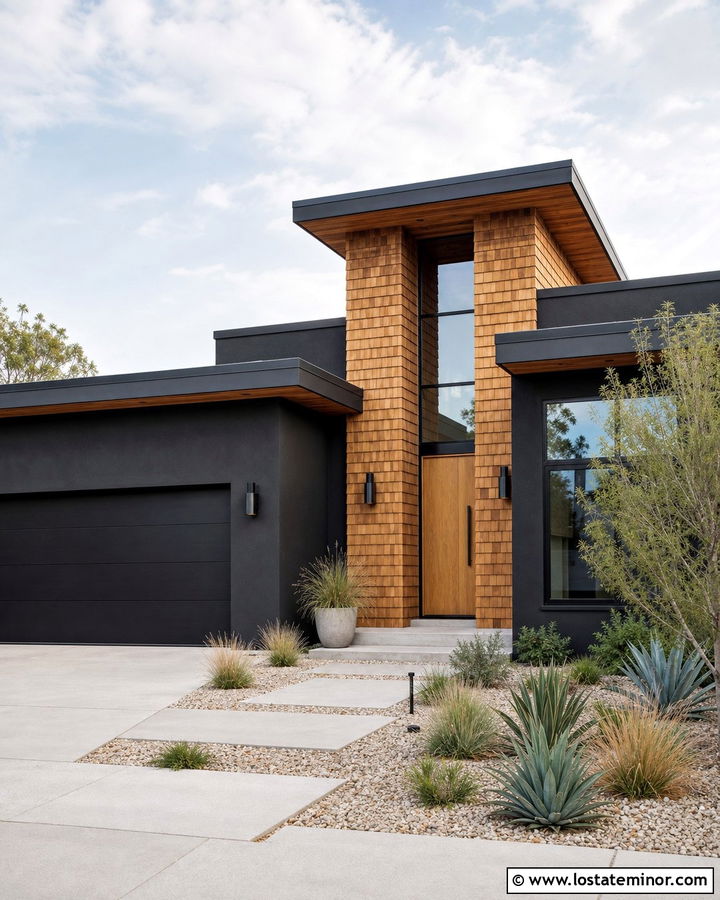
A black stucco exterior feels smooth and sculptural, making cedar shake an effective material for highlighting one major volume. Cover an entry tower or stairwell projection in medium-toned cedar shake from top to bottom. Paint the surrounding stucco a rich, neutral black and use matching black frames on every window. A flat or low-sloped roof supports the contemporary direction, while cedar soffits provide another warm detail overhead. Choose a simple pivot door in natural wood or matte black. Keep the hardscape light with large concrete slabs and pale gravel to prevent the property from looking too dark. Drought-tolerant grasses, agave, and compact shrubs suit the clean architecture. The vertical cedar section gives the facade a clear center and breaks up the broad stucco surfaces without adding unnecessary color.
23. Black Board And Batten House With Cedar Shake Skirt
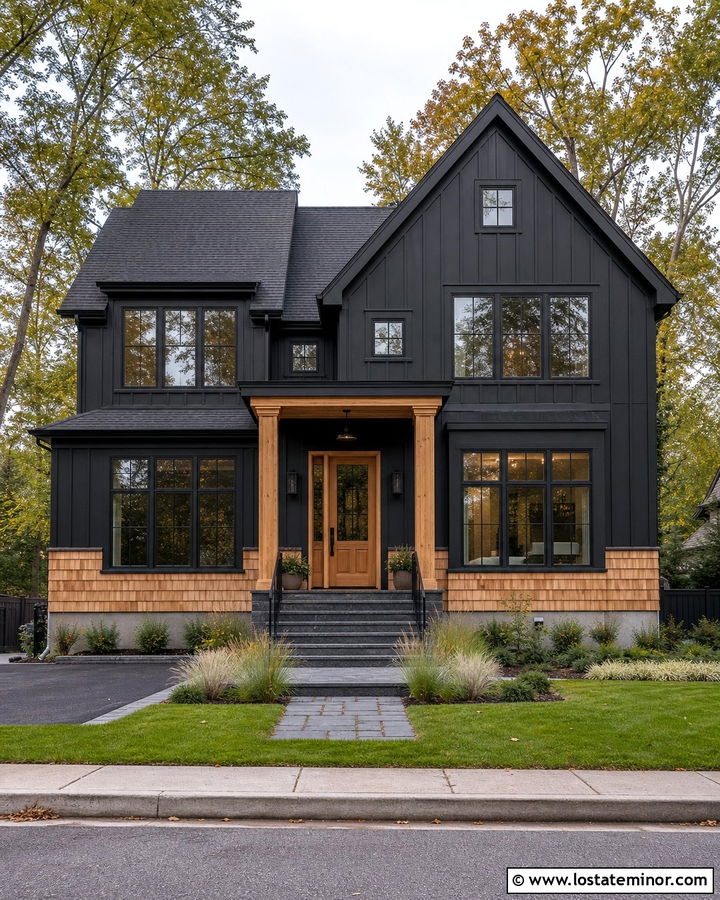
Cedar shake does not always have to appear in a gable. On a tall black house, install a cedar shake skirt across the lower third of the facade to create a warmer visual base. Use black board-and-batten siding above it, allowing the strong vertical lines to contrast with the smaller shake pattern. Black windows and trim preserve a modern silhouette, while a cedar front door connects naturally with the lower wall. A charcoal roof and black gutters complete the upper portion of the scheme. Add a covered porch with simple cedar columns and dark stone steps. Low grasses and spreading shrubs should leave the material transition visible. This arrangement makes a narrow or tall facade appear more grounded, and it places the tactile cedar texture where visitors can appreciate it closely.
24. Black Lap Siding House With Cedar Shake Upper Floor
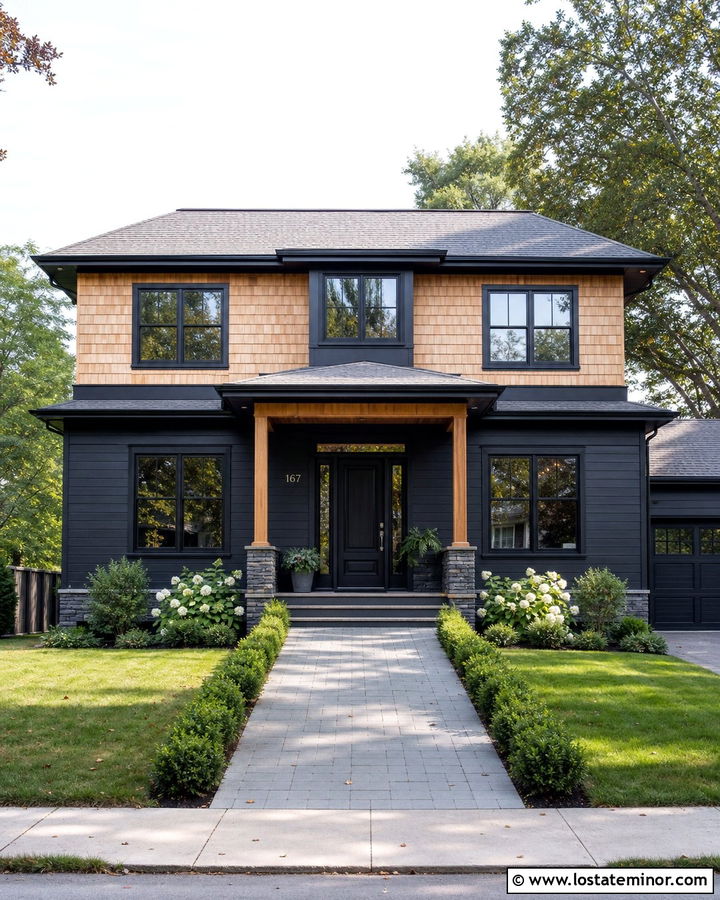
A two-story house can look top-heavy when both levels use the same dark material. Create balance with charcoal-black lap siding on the first floor and natural cedar shake across the upper story. Keep the window trim black on both levels so the materials feel connected rather than stacked. A black front door works well if it is sheltered by a cedar-lined porch. Choose a medium-gray roof to give the warm upper level a neutral boundary. Stone foundation accents can add weight at the bottom without introducing another dominant color. Use a broad walkway and layered foundation plants to frame the entrance. The upper cedar catches more sunlight than a lower accent would, showing its natural variation. This complete arrangement gives a traditional two-story facade stronger proportion and a more customized appearance.
25. Black Metal House With Cedar Shake Entrance
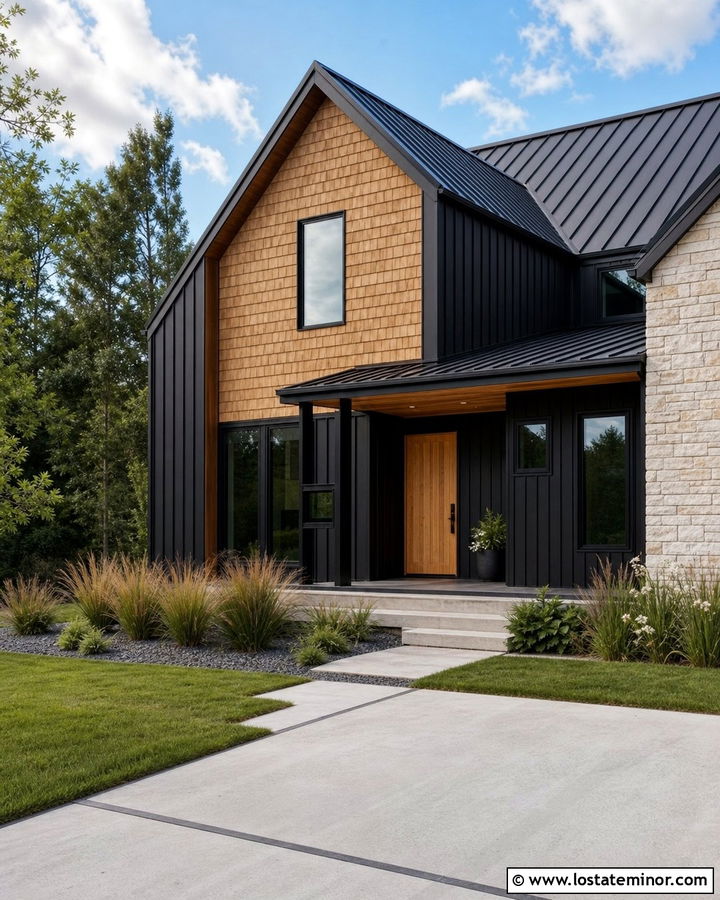
Smooth black metal siding creates a sharp contemporary exterior, but it can feel industrial without a softer material nearby. Build a projecting entrance volume covered in natural cedar shake, and extend the wood onto the soffit and front door. The smaller texture of the shakes contrasts with the long metal panels while drawing attention toward the entry. Use black-framed windows and a black standing-seam roof to keep the main structure visually consistent. A pale stone wall beside the porch can introduce a solid, grounded element. Concrete pavers, gravel beds, and neatly grouped grasses support the clean design. Select cedar with a clear protective finish if maintaining its honey color is important. The finished house feels precise and modern, while the wood-covered entrance gives the bold black shell a welcoming center.
26. Black House With Cedar Shake Garage Gables
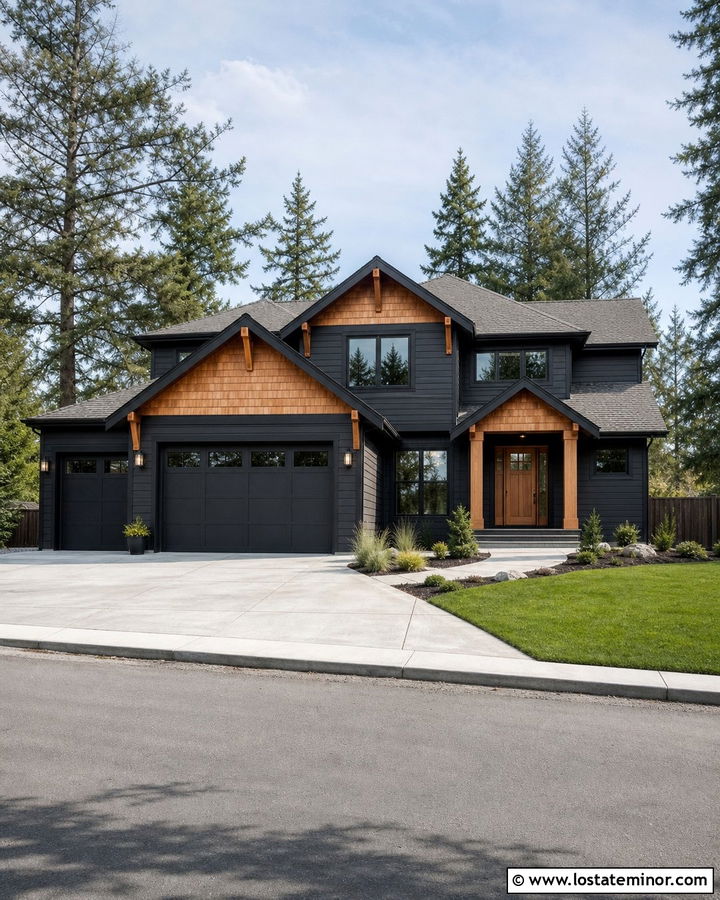
Garage doors can dominate the curb view, so the surrounding materials need careful coordination. Paint the house and garage doors the same soft black to reduce their visual weight. Install warm cedar shake in the gables above the garage and repeat it around the front entry. Natural cedar brackets can help connect the upper wood sections with the architecture below. Keep the trim and window frames black for an uninterrupted facade. A medium-gray roof offers enough contrast to reveal the roofline without competing with the cedar. Use a light concrete driveway bordered by low grasses and compact evergreens. Cedar-clad porch columns and a natural wood door complete the scheme. Repeating the shake in two separated areas makes the exterior feel intentional and prevents the garage from reading as a detached visual block.
27. Black House With Cedar Shake Porch Roof
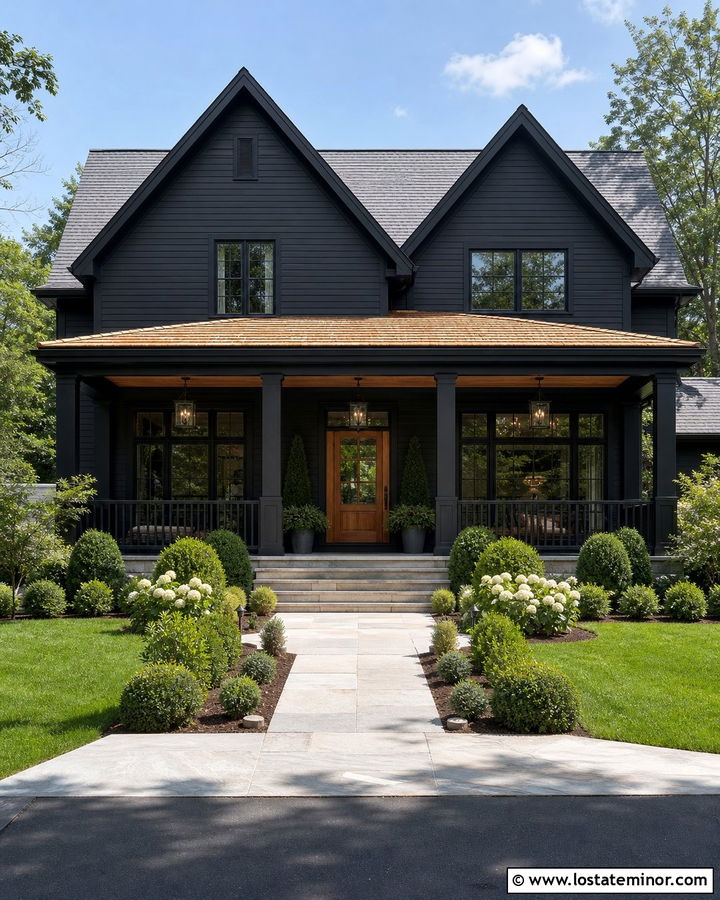
A cedar shake porch roof can become the defining feature of an otherwise simple black house. Use deep black horizontal siding on the main body, then place natural cedar shake roofing over a wide front porch. Repeat the cedar underneath the roof as a warm plank ceiling. Black columns and railings prevent the porch from becoming too rustic, while a natural wood front door connects with the shake tones overhead. Choose a charcoal roof for the main house so the porch roof remains distinct but coordinated. Pale stone steps and porch flooring brighten the shaded entrance. Add symmetrical shrubs, flowering perennials, and a straight walkway for a polished approach. This complete design places cedar where it can be seen from the street and experienced closely when visitors enter the home.
28. Black House With Cedar Shake And Stone
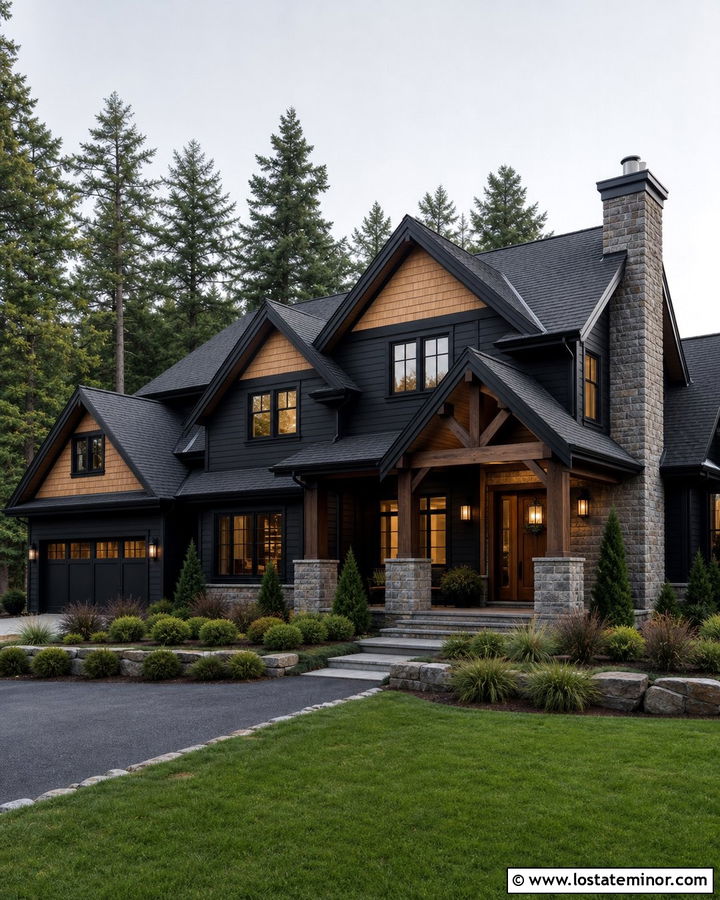
Three materials can work together when each has a clear role. Cover the main walls in warm black siding, use golden cedar shake inside the gables, and reserve mixed gray stone for the foundation, chimney, and porch bases. Black trim unifies the transitions and prevents the facade from looking patchy. A natural cedar door and porch ceiling repeat the gable color at the entrance. Choose a charcoal roof that relates to both the black siding and the darker pieces within the stone. Keep the masonry pattern broad and simple so it does not compete with the smaller cedar shake texture. Layered evergreens, grasses, and a stone-edged walkway complete the landscape. The final exterior feels substantial and balanced, with black providing structure, cedar supplying warmth, and stone grounding the house.
29. Black House With Cedar Shake And Copper Roof
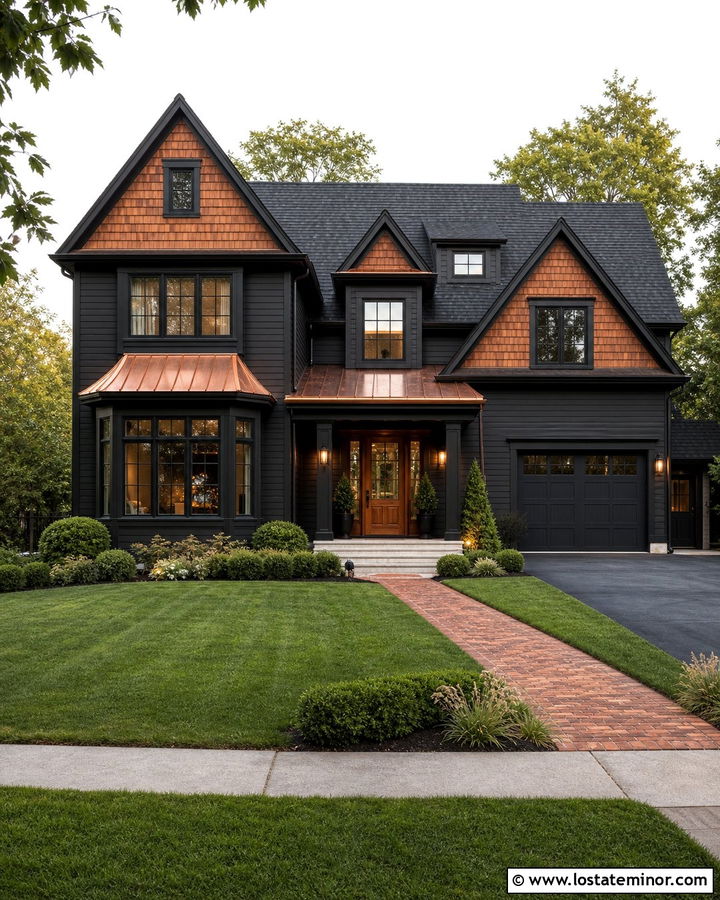
Copper introduces a living finish that pairs naturally with both black siding and cedar shake. Paint the exterior a rich, warm black and use reddish cedar shakes in the front gables and dormers. Add copper roofing over the porch, bay window, or small entry canopy rather than covering the entire house. The metal begins bright and gradually develops a softer aged surface. Black window trim and a dark architectural-shingle roof keep the main palette controlled. A cedar front door with simple glass panels reinforces the warm central entrance. Use light limestone steps to separate the darker facade from the yard. Boxwoods, grasses, and a brick or stone walkway complete the look. This scheme feels refined because the copper is repeated selectively and supported by the cedar’s natural red and golden undertones.
30. Black House With Engineered Cedar Shake Siding
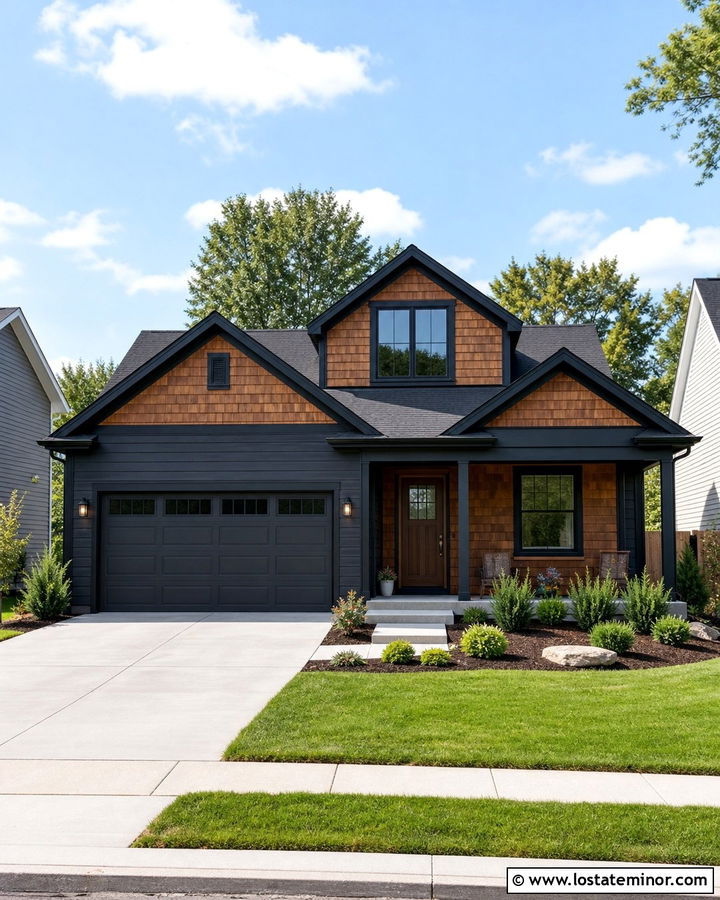
A convincing black-and-cedar exterior can also work with a controlled renovation budget. Use black engineered lap siding on the largest wall areas and cedar-textured shake panels in the front gables, porch wall, or upper story. Select a warm cedar finish with visible tonal variation instead of a flat orange-brown color. Black composite trim and a matching garage door simplify maintenance and help the house look cohesive. A stained wood or wood-look front door can repeat the shake color at a lower cost than custom cedar. Choose charcoal roof shingles and light concrete for the walkway and porch. Straightforward landscaping with grasses, compact shrubs, and mulch keeps the focus on the updated materials. Careful placement delivers the desired contrast without covering every elevation in premium shake siding.
Conclusion:
The best **30 Black House Design With Cedar Shake Ideas** demonstrate how color, texture, and architecture should work as one complete composition. Black siding defines the structure, while cedar shake brings warmth and visible craftsmanship to gables, porches, entries, upper floors, or foundation areas. Before choosing a layout, consider the house’s proportions, roof color, natural light, and existing masonry. Repeating cedar in two or three purposeful locations usually looks more balanced than using one disconnected patch. Black trim creates a streamlined result, while cream or white trim offers traditional contrast. Whether the project involves real cedar or a lower-maintenance alternative, thoughtful material placement can create a distinctive exterior that feels bold, welcoming, and appropriate for its setting.

Related posts: