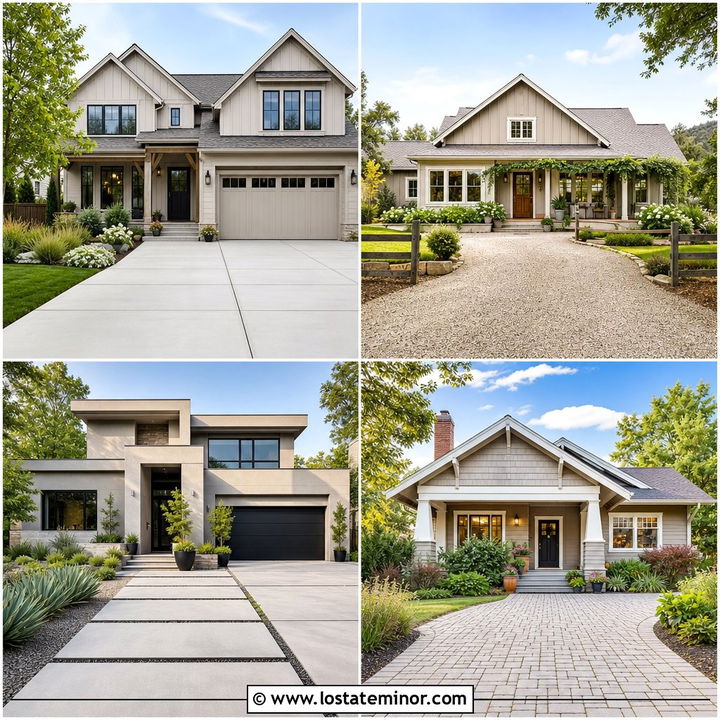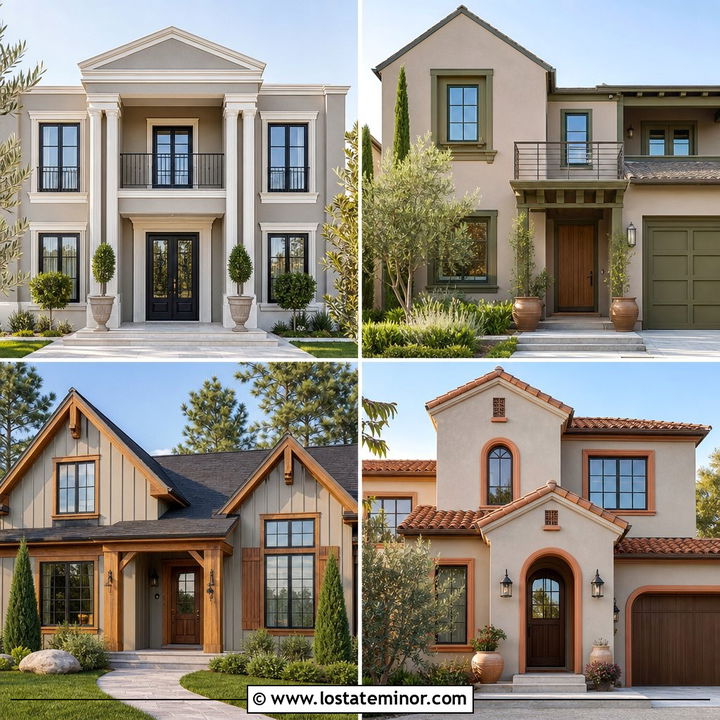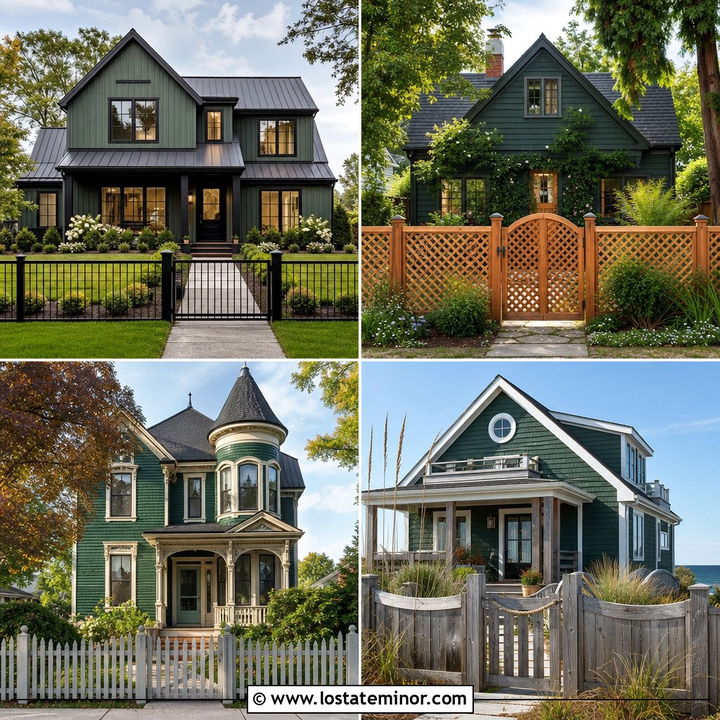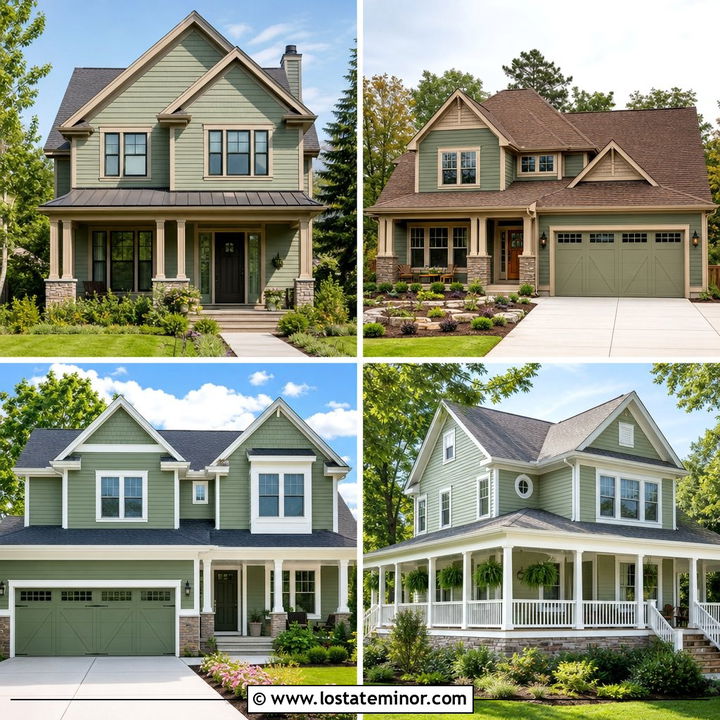
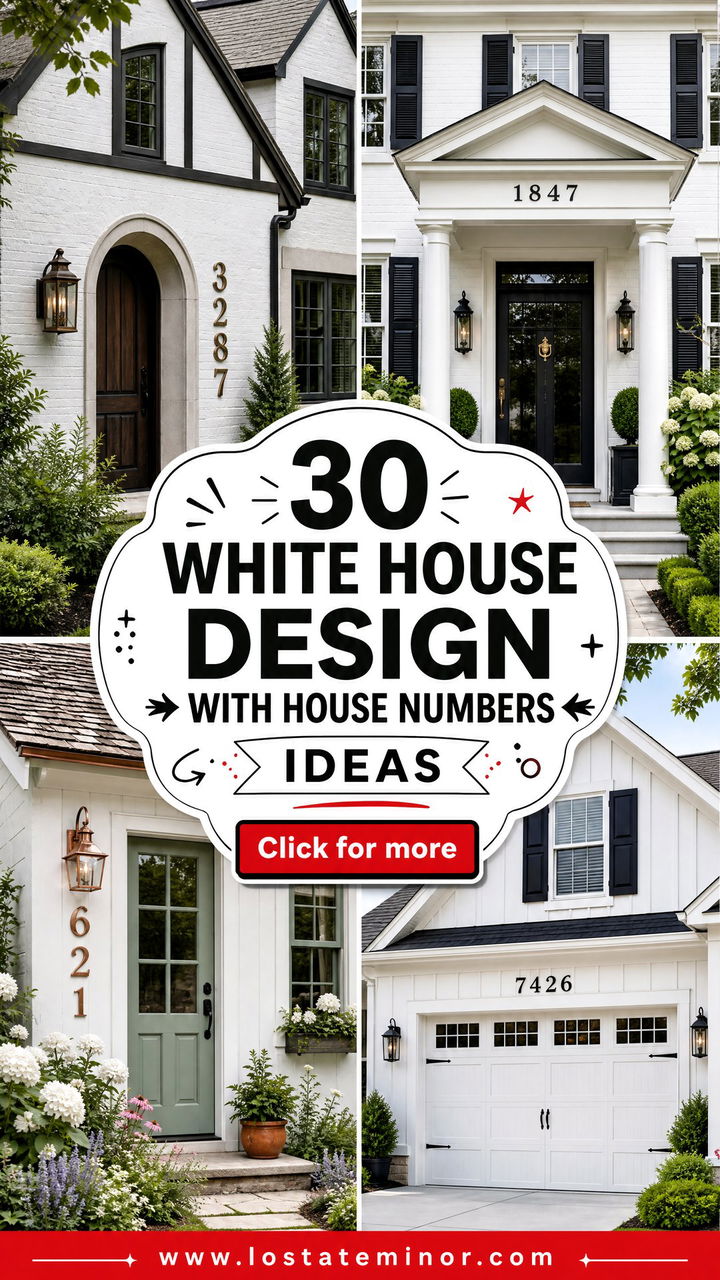
A white exterior creates a clean backdrop for address numbers that are practical, attractive, and easy to see from the street. The best 30 White House Design With House Numbers Ideas go beyond attaching small numerals beside the door. They coordinate the address display with the home’s architecture, trim, roofing, porch, lighting, and landscaping. Matte black numbers can sharpen a modern farmhouse, while brass suits a traditional entry and natural wood softens a contemporary facade. Placement matters too. Numbers can sit vertically on siding, above a garage, across a porch beam, or on a freestanding landscape feature. The complete exterior looks below offer approachable inspiration for exploring 30 White House Design With House Numbers Ideas.
1. White Modern Farmhouse With Vertical Black House Numbers
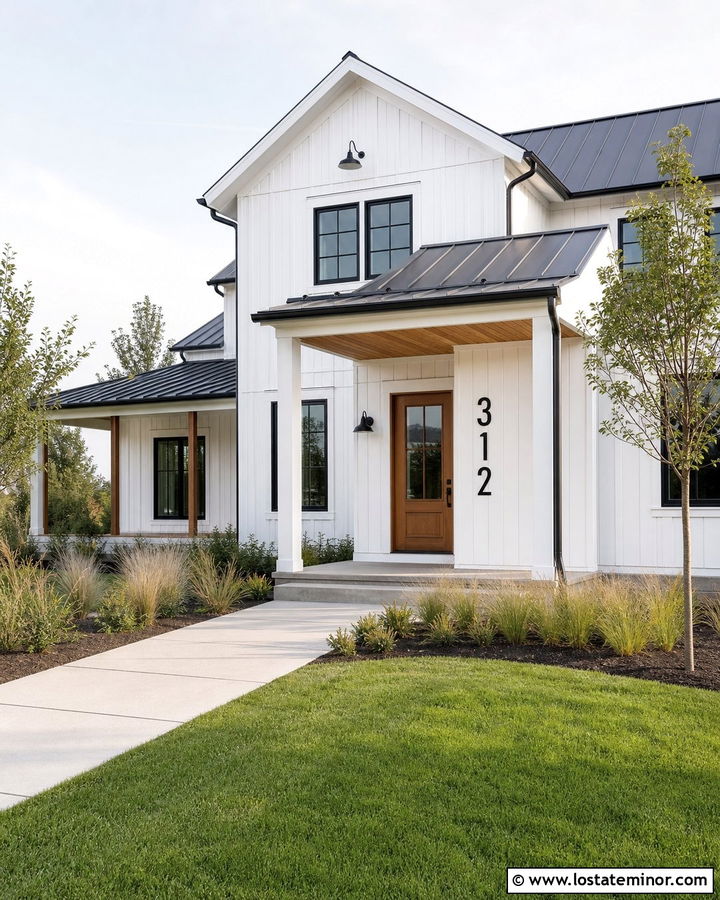
Crisp white board-and-batten siding gives vertical black house numbers a strong, highly visible background. Install oversized sans-serif numerals beside the front door, aligning them with the tall black-framed windows. A stained cedar door and matching porch ceiling bring warmth to the high-contrast palette. Matte black sconces, simple gutters, and a charcoal metal roof connect the numbers to the rest of the exterior. Keep the porch columns white so the entry remains bright and uncluttered. A straight concrete walkway and restrained foundation planting support the farmhouse’s clean lines. This combination works especially well on a tall facade because the vertical number arrangement fills narrow wall space without competing with the door.
2. White Colonial House With Brass Address Plaque
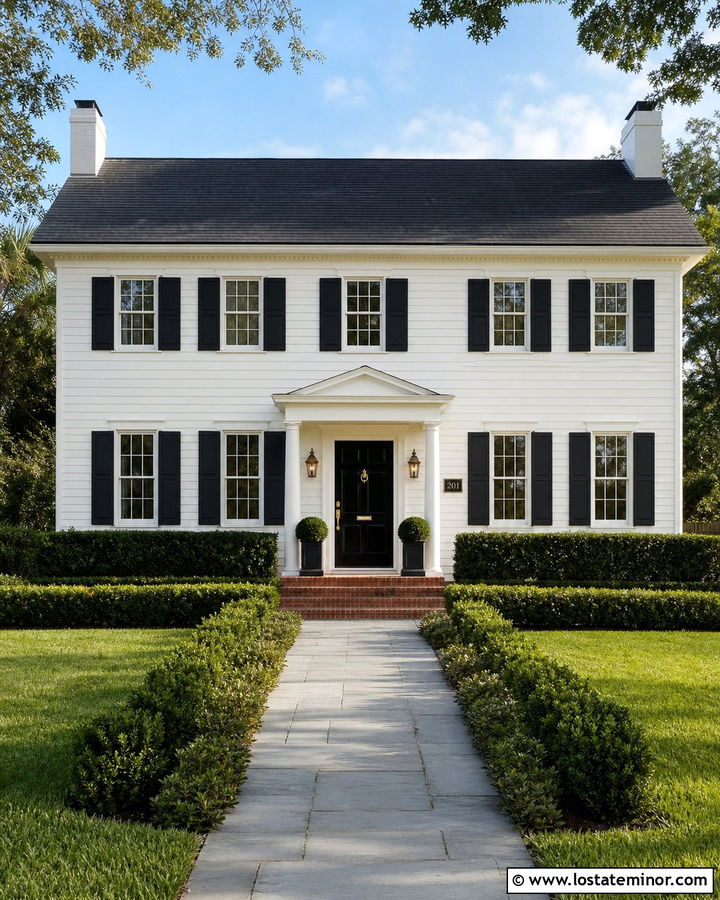
A traditional white Colonial feels more polished when its house numbers echo the entry hardware. Place a rectangular brass address plaque beside a glossy black front door, centered between the door casing and a classic lantern sconce. Warm white clapboard siding, black shutters, and symmetrical windows create a balanced facade. The brass finish adds gentle warmth without disrupting the formal color scheme. Carry the metal onto the door knocker, handle, and mailbox for a coordinated appearance. Brick steps and a straight walkway reinforce the home’s orderly architecture. Boxwood hedges, matching planters, and a dark gray shingle roof complete the look. Choose clear serif numerals that are decorative but still readable from the sidewalk.
3. White Craftsman House With Wood Number Sign
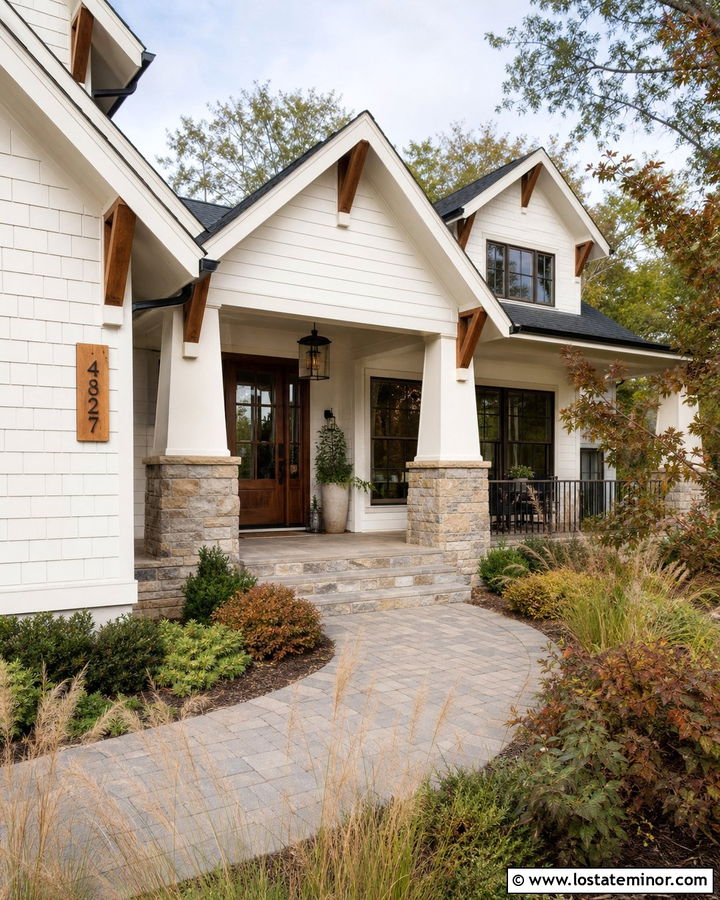
Natural wood makes a white Craftsman exterior feel relaxed and welcoming. Mount simple black house numbers on a vertical cedar board near the porch steps, where the sign can connect visually with exposed beams and a stained front door. Soft white lap siding allows the wood grain to stand out, while dark bronze windows and charcoal roof shingles ground the palette. Use tapered porch columns with stone bases to add authentic Craftsman weight and texture. Warm sconces can flank the entry without crowding the address display. Complete the facade with broad steps, native grasses, and a curved paver walkway. The wood sign should have a weather-resistant finish that preserves its natural tone and keeps the numerals sharply defined.
4. White Ranch House With Floating Black Numbers
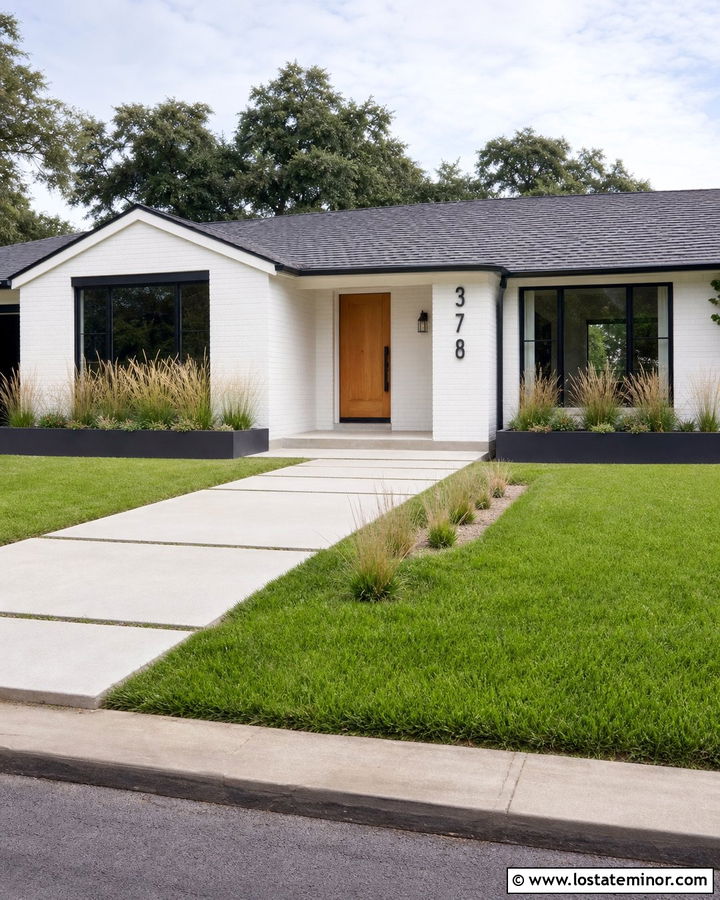
Long horizontal lines make a white ranch house an ideal setting for floating black address numbers. Position large individual numerals on an open section of siding near the garage or front entry. Concealed spacers create subtle shadows that add depth to the otherwise simple facade. Pair warm white painted brick with a medium-gray roof, black-framed windows, and a natural oak front door. Low horizontal planters and neatly trimmed ornamental grasses should follow the home’s wide profile. A broad concrete walkway and dark modern sconces reinforce the updated ranch design. Keep the numbers evenly spaced and large enough to balance the expansive wall. Their clean silhouette becomes an architectural detail rather than a small accessory.
5. White Midcentury House With Numbers On A Brick Screen
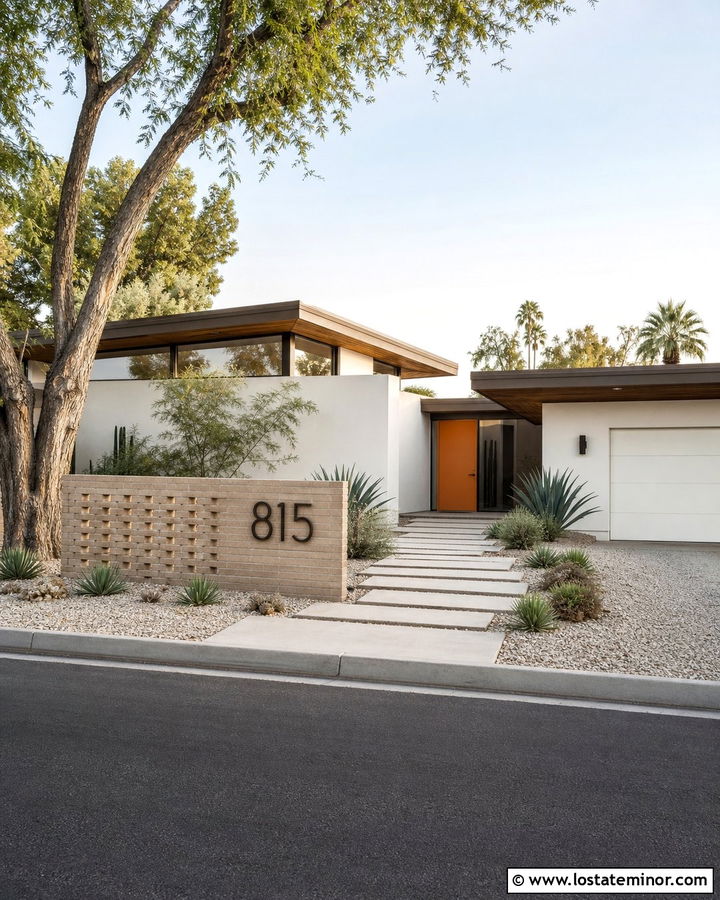
A decorative brick screen offers a distinctive place for house numbers on a white midcentury home. Use charcoal or black numerals against warm buff brick so the address is readable without overpowering the facade. The house can feature low-pitched rooflines, white stucco, clerestory windows, and a saturated orange front door. Walnut soffits and bronze window frames bring additional warmth to the restrained palette. Position the number wall near the walkway, allowing it to guide visitors toward a recessed entrance. Gravel beds, sculptural agaves, and large concrete stepping pads suit the streamlined architecture. Keep the typography geometric and uncomplicated. The complete scheme feels period-aware while remaining fresh, practical, and appropriate for a modern neighborhood.
6. White Cape Cod House With Brass Door Numbers
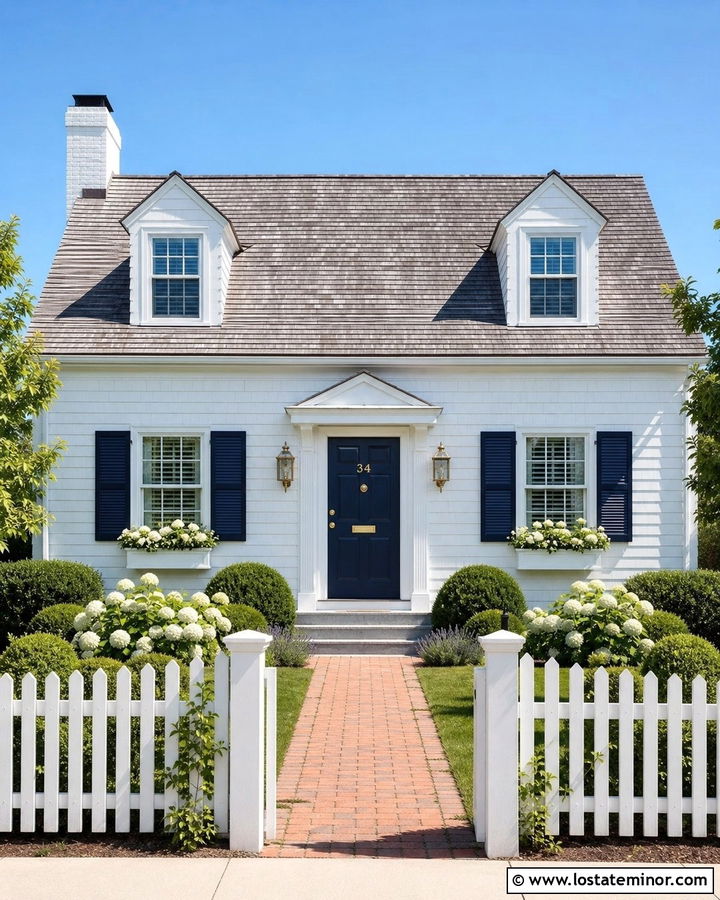
Small-scale brass numbers can feel charming on a white Cape Cod when they are placed thoughtfully. Mount the numerals directly on a deep navy front door, leaving enough open space around them for easy reading. Soft white shingles, navy shutters, and a weathered gray roof establish the classic coastal palette. Add polished brass door hardware and lanterns so the numbers look intentional rather than isolated. White window boxes filled with blue and green plantings introduce color without overwhelming the compact facade. A brick walkway, clipped hedges, and a simple picket fence reinforce the welcoming character. Select sturdy, traditional numerals with a restrained serif font. Their warm metallic finish creates an attractive focal point against the dark door.
7. White Bungalow With Ceramic House Number Tiles
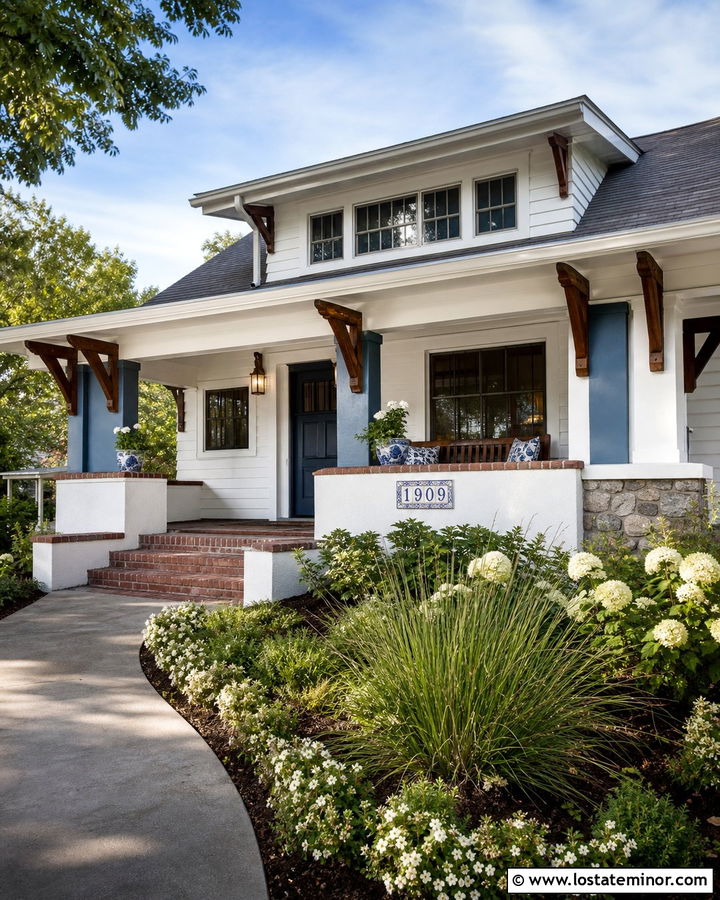
Colorful ceramic tiles give a white bungalow an artistic address display. Arrange blue-and-white number tiles horizontally within the porch wall or on a narrow stucco panel beside the steps. Creamy white siding, a dusty blue front door, and deep blue porch columns can repeat the tile colors across the facade. Add natural wood brackets beneath the wide roof overhang for warmth. Brick porch flooring and a low stone foundation provide earthy texture. Layer the landscaping with flowering shrubs, ornamental grasses, and a gently curving path. Because decorative tiles contain more visual detail than metal numbers, keep the surrounding trim simple. The result is a friendly, handcrafted exterior that suits the bungalow’s intimate proportions and covered front porch.
8. White Contemporary House With Illuminated Numbers
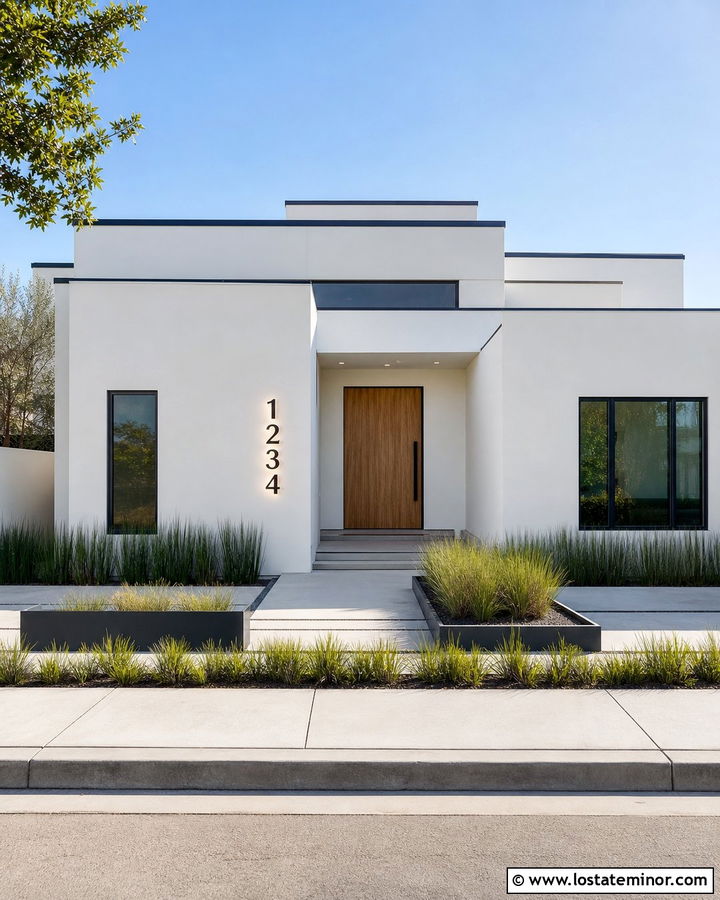
A minimalist white contemporary home benefits from illuminated house numbers that remain visible after dark without looking bulky during the day. Place large black or brushed metal numerals on a smooth stucco wall near the recessed entrance. Soft backlighting can create a clean halo around each digit. During daylight, the black finish provides sharp contrast against the bright white facade. Add flat rooflines, charcoal window frames, a pivoting wood door, and pale concrete paving. Linear planters filled with grasses reinforce the architecture. Keep exterior lighting simple and evenly spaced so it does not compete with the address. This complete scheme transforms a practical feature into a precise design element while preserving the home’s calm, uncluttered appearance.
9. White Painted Brick House With Arched Number Plaque
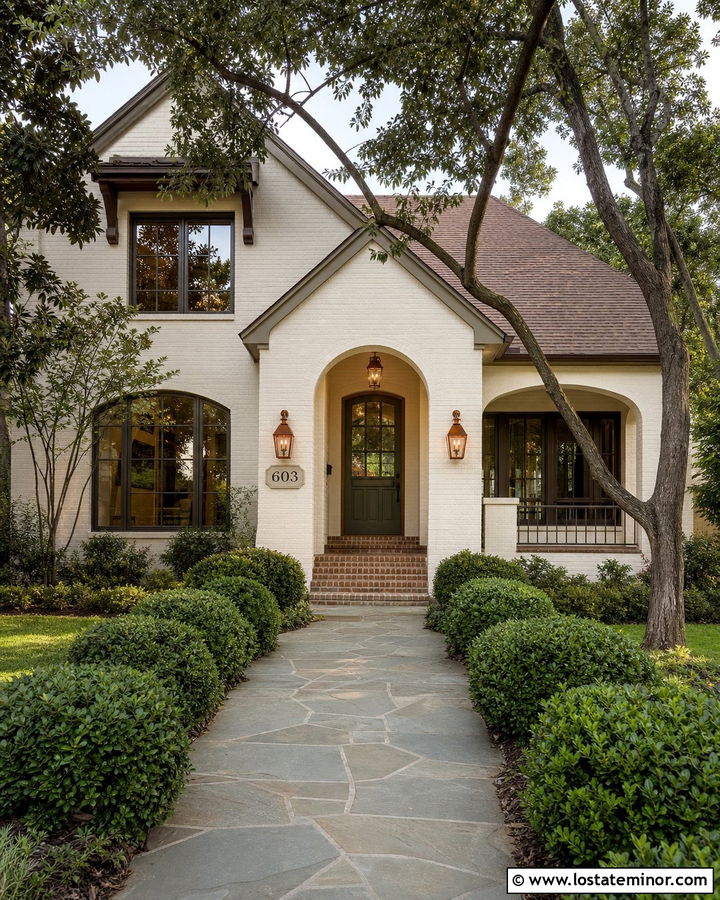
An arched address plaque complements the softened lines of a white painted brick home. Center the plaque above the front door or place it beside an arched porch opening. Black numerals on a warm limestone or light gray background provide contrast while repeating the masonry colors. Use creamy white brick, dark bronze windows, and an olive green door for an inviting traditional palette. A medium-brown shingle roof prevents the exterior from feeling too stark. Add copper lanterns and matching door hardware for subtle warmth. Brick steps, rounded shrubs, and a curved flagstone path continue the graceful shapes. Choose an address plaque with a simple border so it relates to the architecture without becoming overly ornate or difficult to read.
10. White Split-Level House With Numbers On A Stone Pier
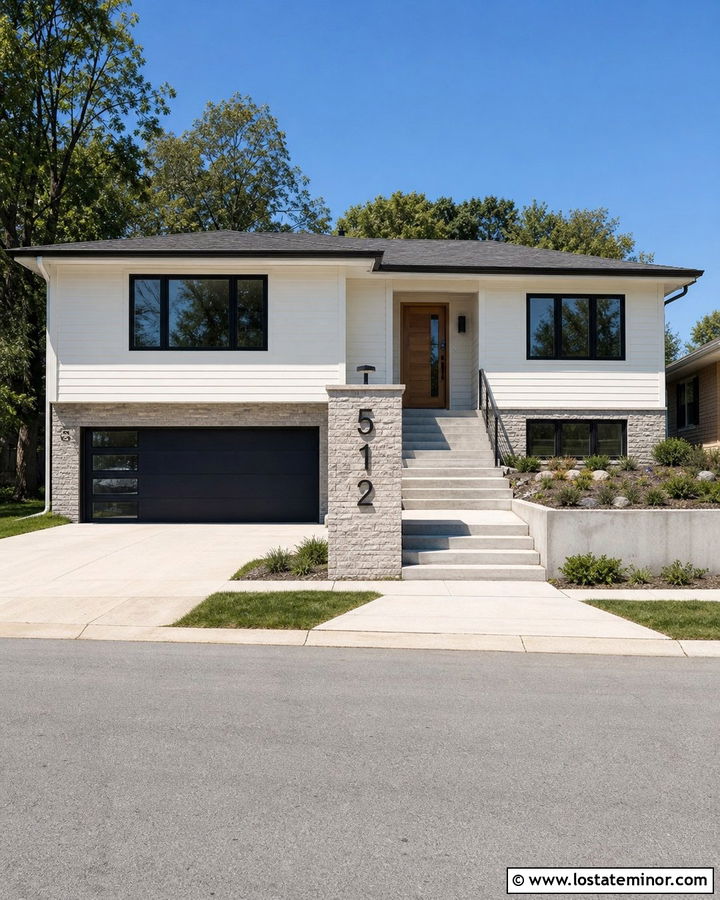
A stone entry pier can give a white split-level house a clearer focal point. Attach dark bronze or matte black numbers to a pale ledgestone column near the driveway, where they remain visible even when the front door is recessed. Pair white horizontal siding with charcoal garage doors, black window frames, and a warm wood entrance. The stone should repeat around the lower level to visually anchor the raised portion of the house. Wide concrete steps and layered retaining walls help manage the change in elevation. Use low shrubs so plants do not hide the address. Oversized, simple numerals create a strong connection between the pier, dark trim, and practical layout of the updated exterior.
11. White Coastal House With Blue House Number Sign
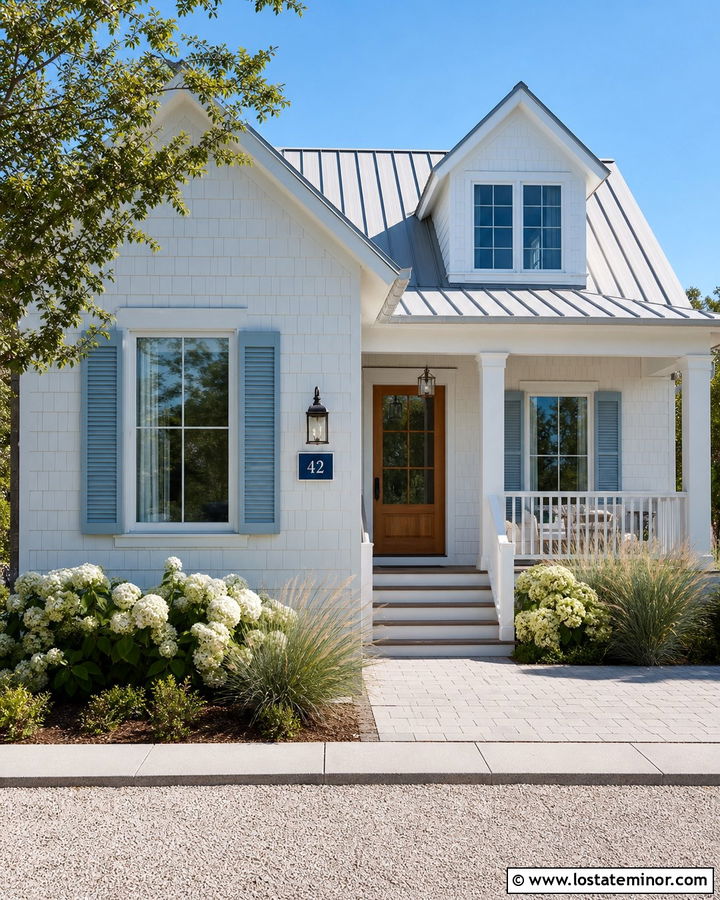
A blue address sign brings gentle coastal color to a white shingle house. Choose a weathered navy plaque with crisp white numerals and mount it beside the front door or beneath a porch lantern. Bright white cedar-style shingles, pale blue shutters, and a natural teak door keep the complete exterior airy but not plain. A silver-gray metal roof supports the coastal palette and reflects bright daylight. Use white porch railings, gravel paths, and sandy-toned pavers to maintain the relaxed appearance. Hydrangeas and ornamental grasses frame the facade without blocking the sign. Avoid overly themed nautical decorations. The coordinated blues, natural wood, and highly readable address create a more sophisticated interpretation of coastal curb appeal.
12. White Tudor House With Aged Bronze Numbers
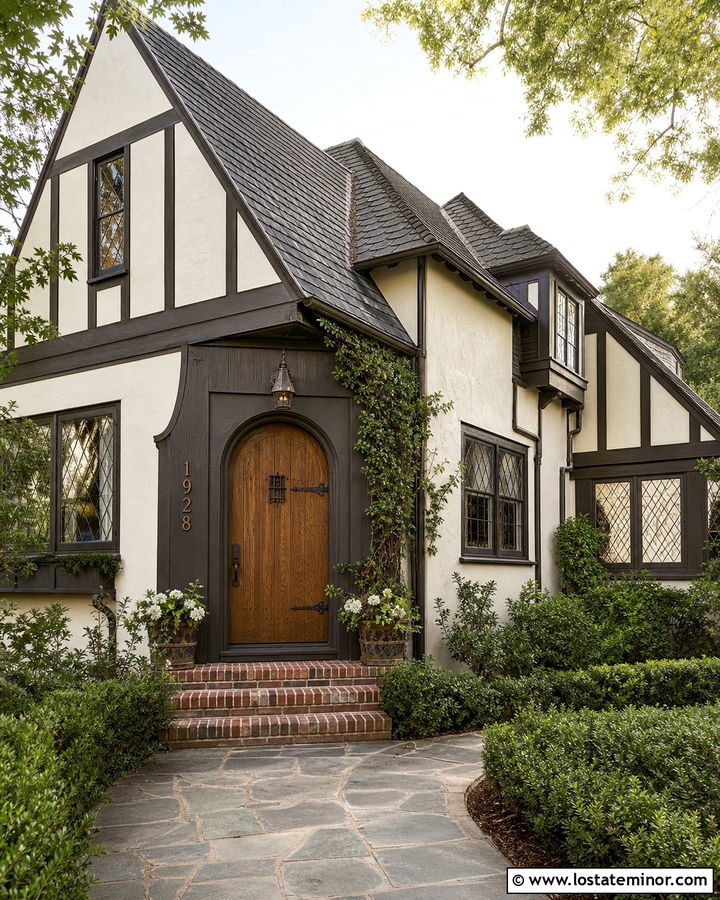
A white Tudor exterior gains character from aged bronze house numbers mounted on a dark timber panel. Place the address near the arched front door, where it can relate to the home’s heavy hardware and traditional lighting. Use warm white stucco between deep brown half-timber details. A dark brown roof, leaded windows, and reddish brick steps create a layered old-world palette. The bronze numbers should have a substantial profile but a clear, readable font. Add an antique-style lantern and a stained oak door with black iron hinges. Informal hedges, climbing greenery, and a curved stone walkway soften the structured facade. This complete scheme respects Tudor architecture while making the address easier to identify from the street.
13. White Cottage With Numbers Above A Flower Box
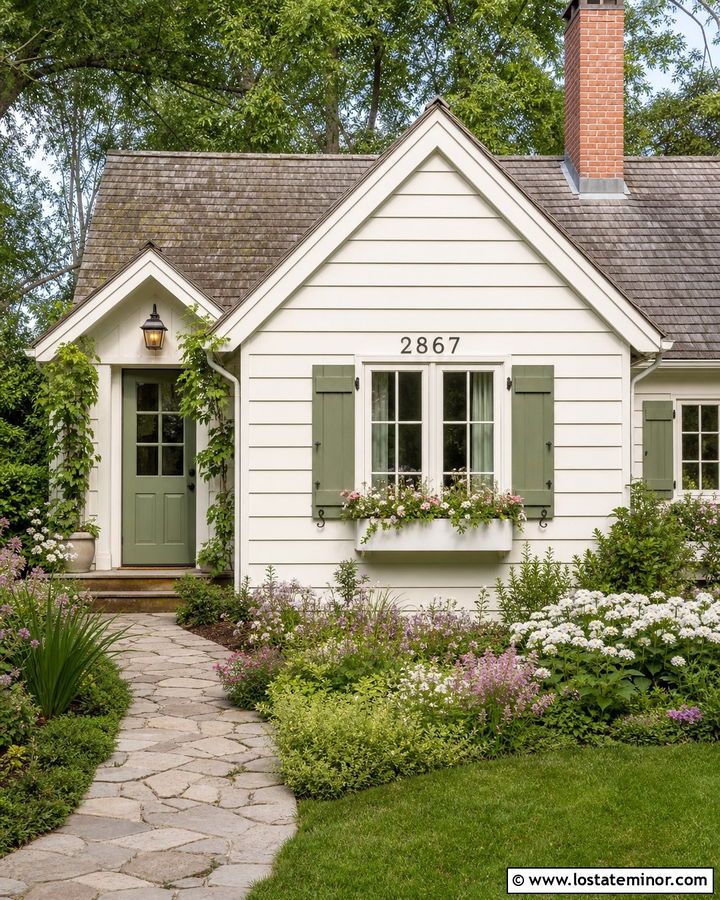
House numbers positioned above a flower box can turn an ordinary cottage window into a useful exterior feature. Choose black metal numerals and center them on the white siding beneath a small porch window. A sage green front door, matching shutters, and a weathered gray roof add quiet color to the charming facade. Fill the window box with green foliage and seasonal flowers, but keep plants low enough that they do not cover the address. White clapboard siding, simple trim, and a small brick chimney maintain the cottage character. Add a winding stone path and loosely planted garden beds. The black numbers provide needed contrast while the flower box makes the display feel integrated into the landscaping and architecture.
14. White Scandinavian House With Oak Number Plaque
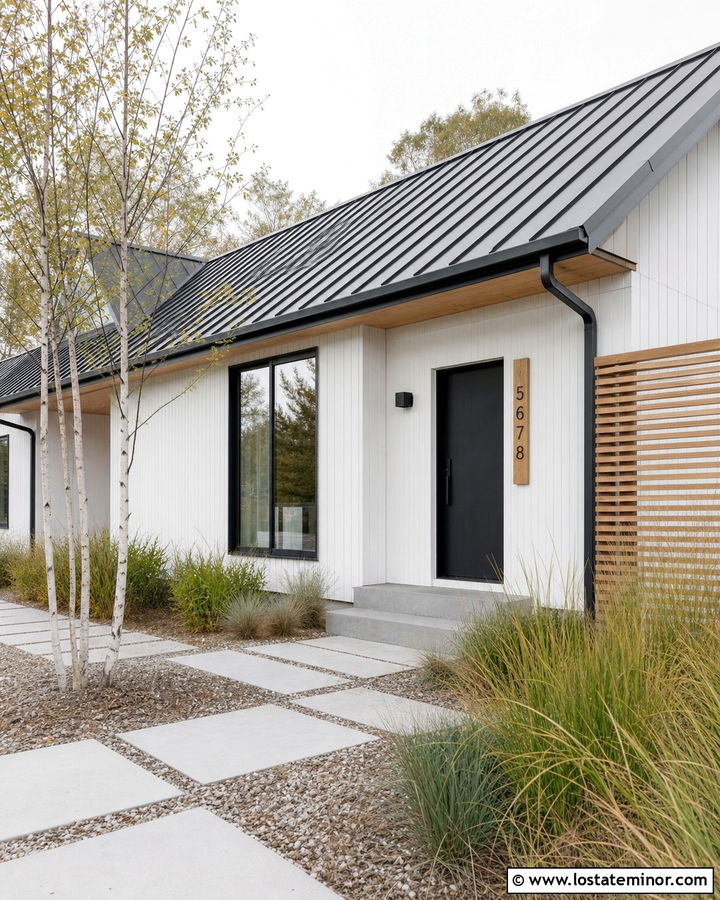
Pale oak creates a warm counterpoint to the clean facade of a Scandinavian-inspired white house. Mount black numerals on a slim oak plaque beside a simple black front door. Use soft white vertical siding, black-framed windows, and a standing-seam charcoal roof to establish the restrained color scheme. An oak porch bench, soffit, or slatted privacy screen can repeat the plaque material without making the design feel rustic. Keep the landscaping natural with grasses, birch trees, gravel, and large rectangular stepping stones. The address plaque should have square edges and an uncomplicated layout. This balanced exterior combines warm wood, crisp contrast, and practical placement, producing a calm curb-appeal look that works particularly well on compact modern homes.
15. White Traditional House With Numbers Above The Door
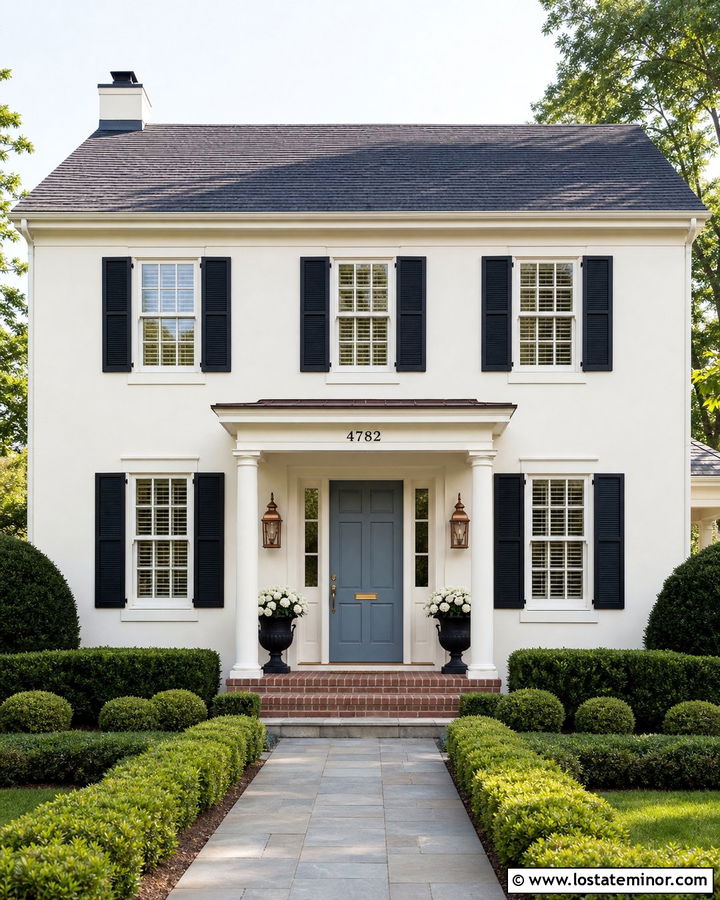
Placing house numbers above the front door creates a centered focal point on a symmetrical traditional exterior. Install dark bronze numerals on the white frieze or transom area, making sure they are large enough to see beneath the porch roof. Warm white siding, black shutters, and a muted blue front door form an approachable palette. Brick porch flooring and copper lanterns add texture and age gracefully. Repeat the bronze finish on the door handle and mailbox for consistency. Matching shrubs, balanced windows, and a straight walkway preserve the home’s formal arrangement. This placement works best when the space is not crowded by decorative trim. Clear spacing allows the address to appear like an intentional architectural detail above the welcoming entrance.
16. White Prairie House With Limestone Address Band
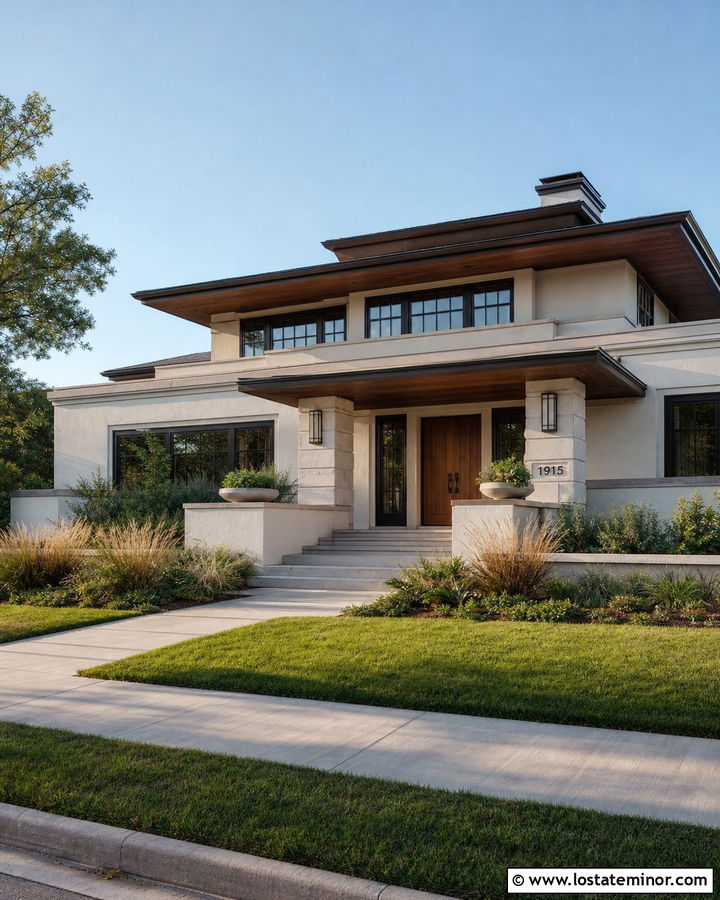
A horizontal limestone band gives house numbers a natural home on a Prairie-inspired exterior. Set dark bronze numerals into the masonry near the entrance, aligning them with the home’s strong horizontal roof and window lines. Use warm white stucco, broad overhangs, dark wood soffits, and brown metal accents. The limestone can wrap around porch columns or the base of the house to connect the number display with the overall architecture. A wide wood front door and geometric windows suit the balanced composition. Extend the horizontal theme through low garden walls, rectangular planters, and layered ornamental grasses. Simple, widely spaced numerals prevent visual clutter and help the address remain legible across a broad, low facade.
17. White Greek Revival House With Numbers On A Column
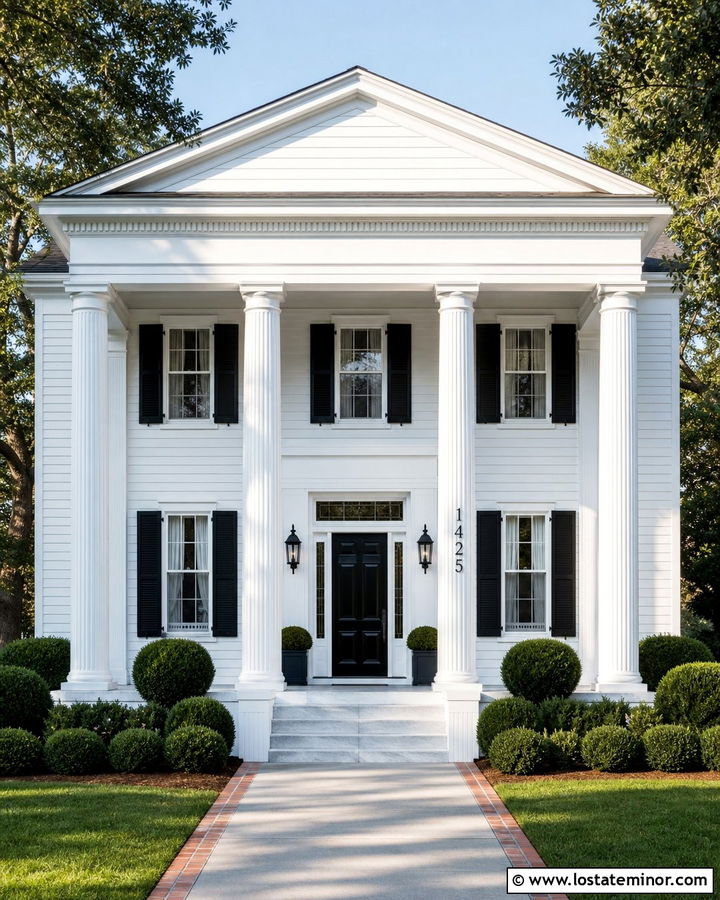
A Greek Revival home offers an elegant setting for a discreet address display. Place slim black or aged brass house numbers vertically on the inside face of a porch column, where they are visible from the front walk. Use bright white clapboard siding, substantial white columns, and a glossy black door topped by a rectangular transom. Black shutters and traditional lanterns establish strong contrast without distracting from the classical proportions. Keep the porch floor pale gray and the roof dark charcoal. Symmetrical boxwoods, brick edging, and a straight path strengthen the formal approach. Choose numerals with a classic but uncomplicated shape. Their narrow profile should complement the tall column instead of interrupting the grand entrance.
18. White Spanish Revival House With Tile Numbers
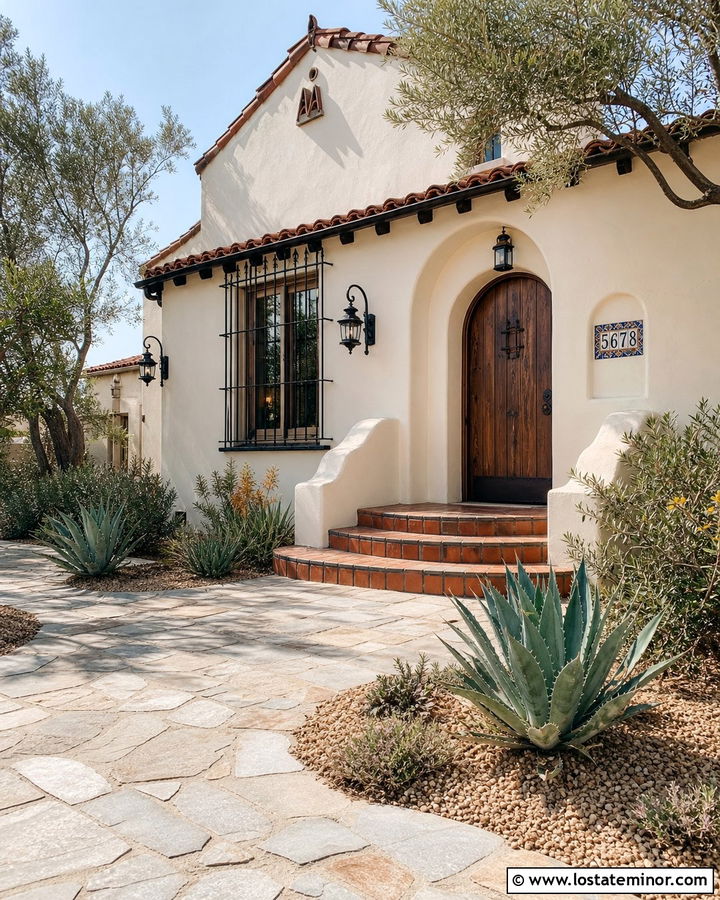
Hand-painted tile numbers bring color and craftsmanship to a white Spanish Revival exterior. Set the tiles into a small stucco niche beside an arched wood front door. Cobalt blue, terracotta, and cream details can stand out beautifully against warm white stucco. Repeat the terracotta tone on the barrel-tile roof and front steps, while black iron lanterns and window grilles add definition. A dark stained door gives the entrance visual weight. Surround the home with drought-tolerant plants, gravel, olive trees, and curved stone paving. Keep the tile arrangement compact and easy to read. The complete exterior feels cohesive because the address shares colors and materials already present in the roof, paving, and architectural details.
19. White French Country House With Limestone Number Plaque
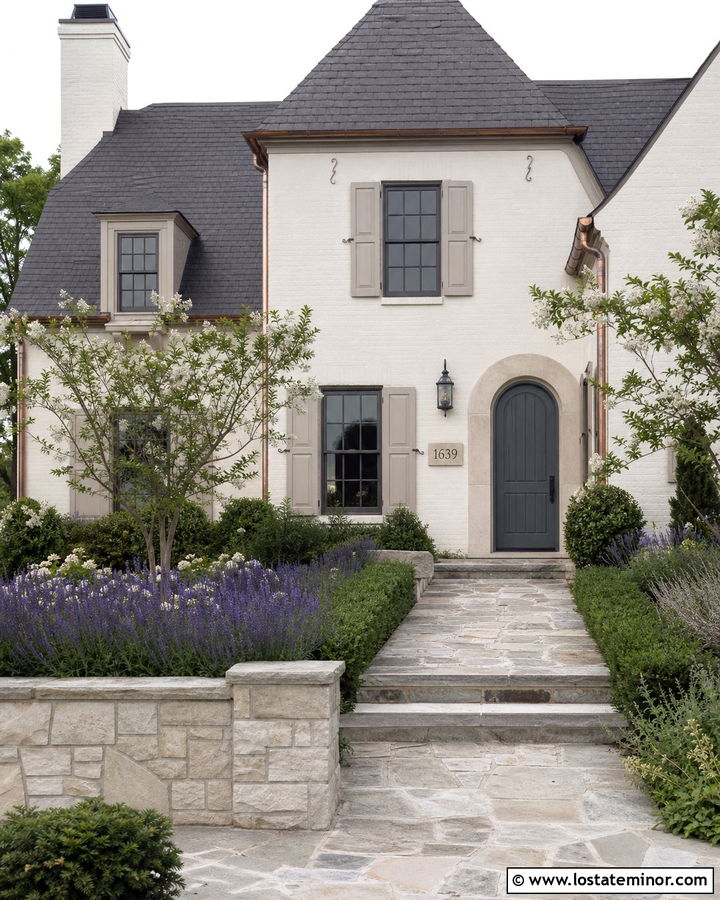
A carved limestone address plaque feels naturally suited to a white French country home. Install it on the painted brick beside a soft arched doorway, using dark gray numerals for clear contrast. Creamy white brick, taupe shutters, and a muted gray-blue front door establish a gentle, layered palette. Add copper gutters and lanterns to introduce warm metal without making the facade flashy. A steep charcoal roof and divided-light windows support the traditional architecture. Use irregular stone paving, clipped shrubs, lavender, and small flowering trees around the entrance. The plaque should appear substantial but not overly decorative. Its natural texture connects the address to the walkway and masonry, producing a refined yet comfortable full-house exterior.
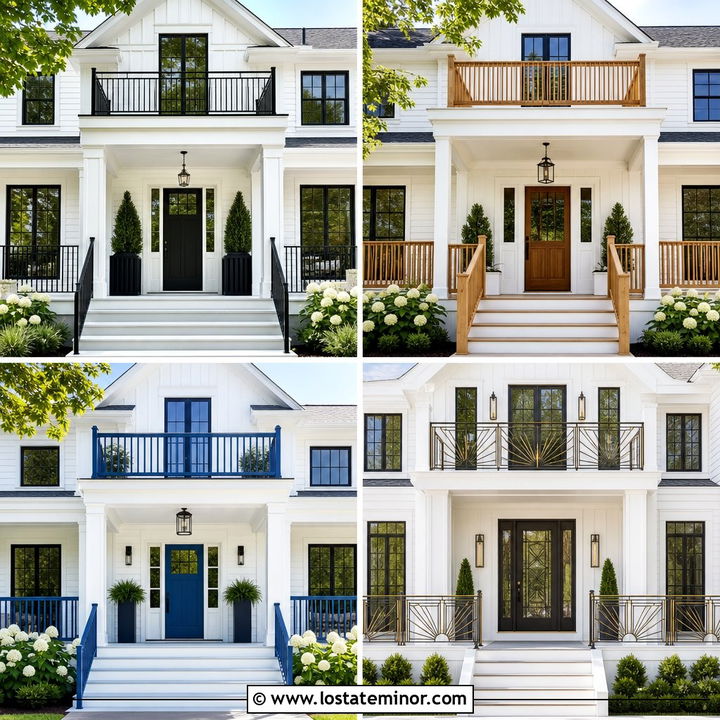
20. White Industrial House With Steel House Numbers
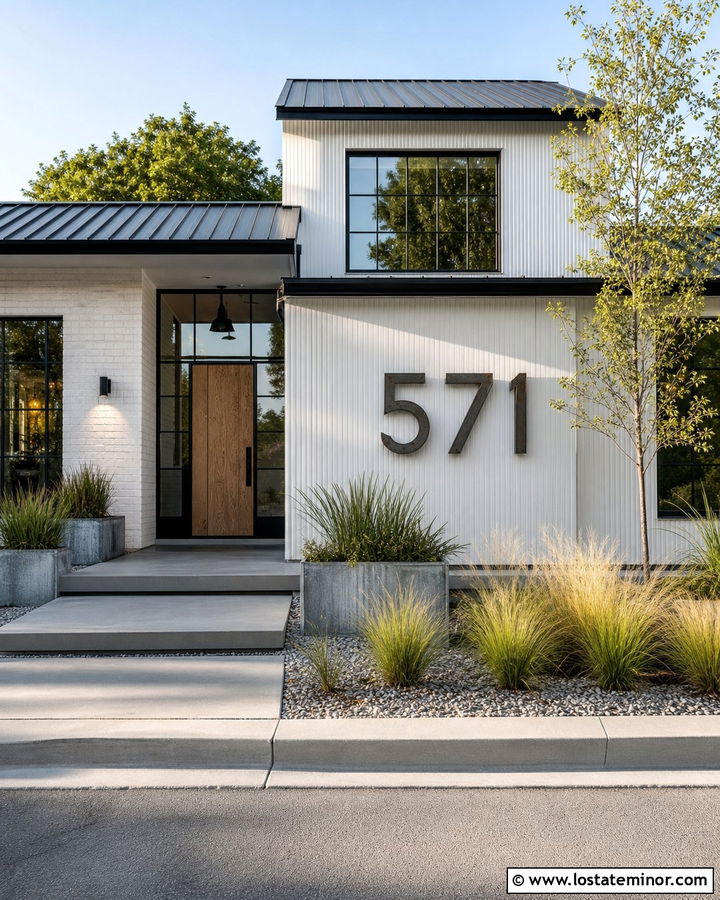
Raw steel house numbers can add an industrial edge to a simple white exterior. Mount oversized charcoal numerals on corrugated white siding or smooth painted brick near a glass-and-steel entrance. A black metal roof, factory-style windows, and a weathered wood door complete the strong material palette. Use concrete porch slabs and galvanized planters to continue the functional appearance. Landscaping should be structured but not formal, with grasses, small trees, and gravel beds softening the hard surfaces. Select numbers with bold geometric forms and concealed mounting hardware. Their scale should match the large windows and broad wall sections. This coordinated scheme feels modern and durable without turning the house into a stark commercial-looking structure.
21. White Cottage House With Copper Numbers
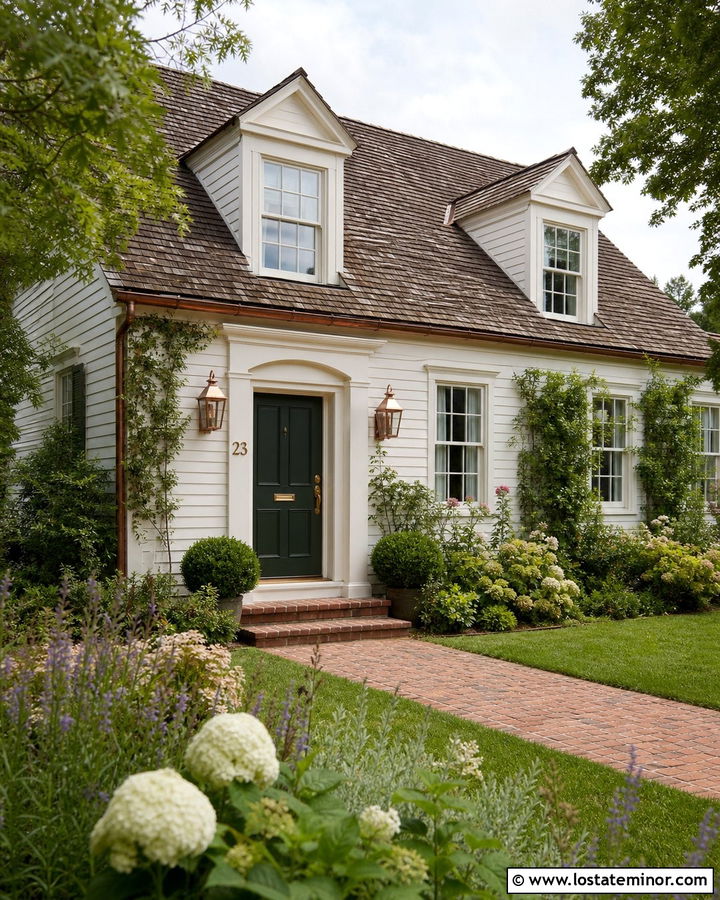
Copper house numbers introduce warmth and subtle shine to a small white cottage. Mount them against the siding beside a deep forest green door, where the metal can relate to copper lanterns and gutters. Soft white clapboard, cream trim, and a cedar-shingle roof create an inviting natural palette. As the copper finish changes over time, it can add character that suits an informal garden setting. Frame the porch with climbing plants, flowering shrubs, and a curved brick walkway. Keep the numerals moderately large and avoid placing them beneath dense vines. A simple font prevents the metallic finish from feeling overly decorative. Together, white siding, green paint, warm copper, and layered landscaping create a memorable cottage exterior.
22. White Suburban House With Numbers Above The Garage
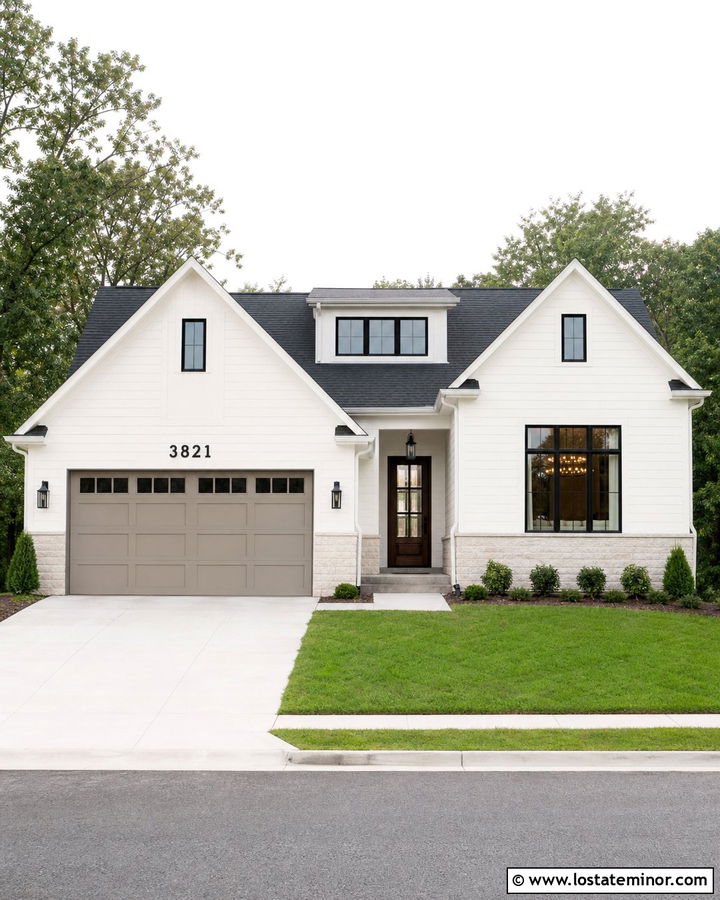
The space above a garage can provide excellent address visibility on a wide suburban house. Center oversized black numerals between the garage door and roofline, especially when the main entrance is partially hidden. Use warm white siding, a taupe garage door, black-framed windows, and a dark walnut front door. Charcoal shingles and black sconces connect the address to the roof and hardware. Add a stone accent around the garage base to break up the broad facade. A clean driveway, foundation shrubs, and a separate walkway leading to the entrance improve visual organization. Keep the numbers proportional to the garage rather than the front door. Their strong contrast makes the entire exterior appear more intentional and balanced.
23. White Porch House With Vertical Post Numbers
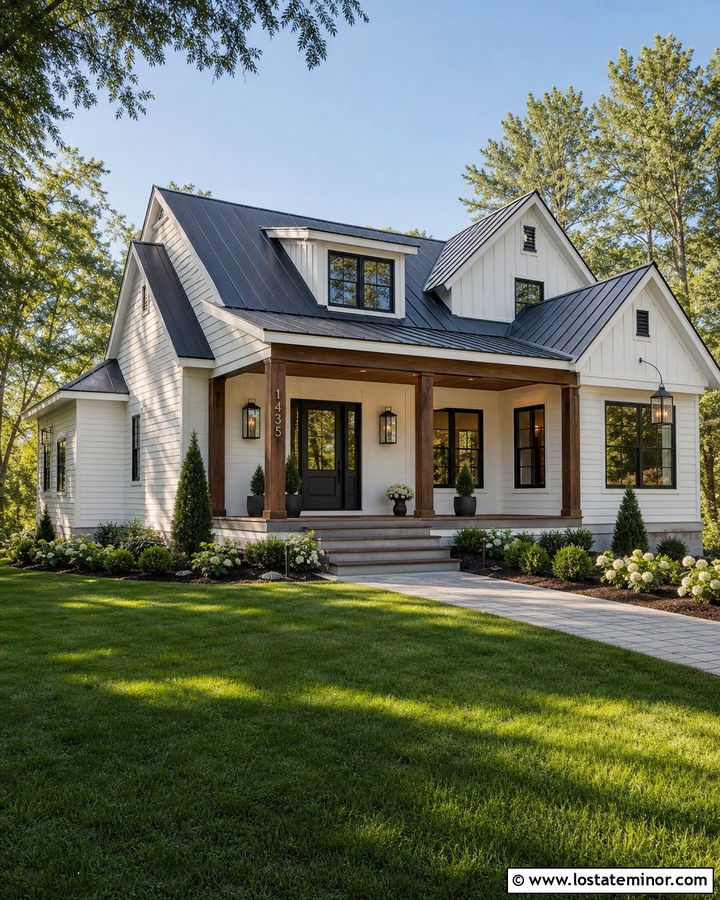
A substantial porch post can support a vertical address display without cluttering the siding. Attach tall black numerals to the street-facing side of a stained wood post. White lap siding, black windows, and a charcoal front door create a simple background, while the wood post adds warmth. Repeat the stain on the porch ceiling, steps, or railing cap for a cohesive scheme. Black lanterns and a dark metal roof connect visually with the numbers. Position furniture and hanging plants away from the address so it remains easy to see. Broad porch steps, a paved walkway, and symmetrical planting complete the welcoming exterior. The narrow vertical layout emphasizes the height of the post and makes practical use of limited wall space.
24. White House With Matching Mailbox Numbers
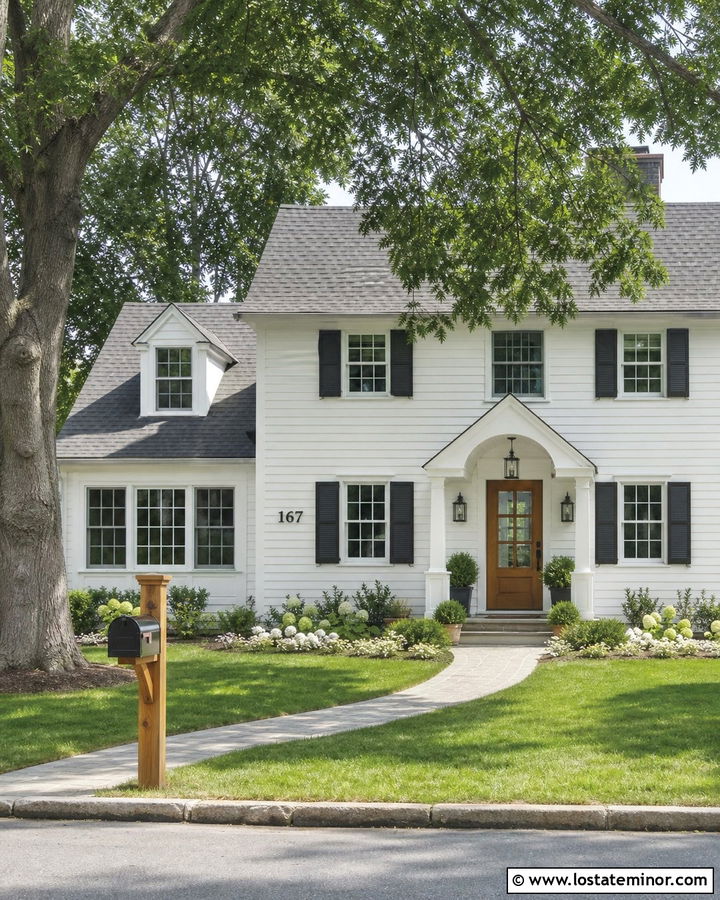
Repeating the house numbers on a coordinated mailbox improves the appearance of a deep front yard. Use matte black numerals on both the white facade and a natural wood mailbox post near the street. The home can feature white horizontal siding, black shutters, a medium-gray roof, and a warm cedar front door. Match the mailbox stain to the door so the two elements feel connected across the property. A black mailbox, black lanterns, and simple hardware reinforce the contrast. Frame the post with a low flower bed that will not hide the address. A curved walkway and mature shade trees lead the eye toward the house, creating a complete curb-appeal composition from the road to the entrance.
25. White House With Address Planter
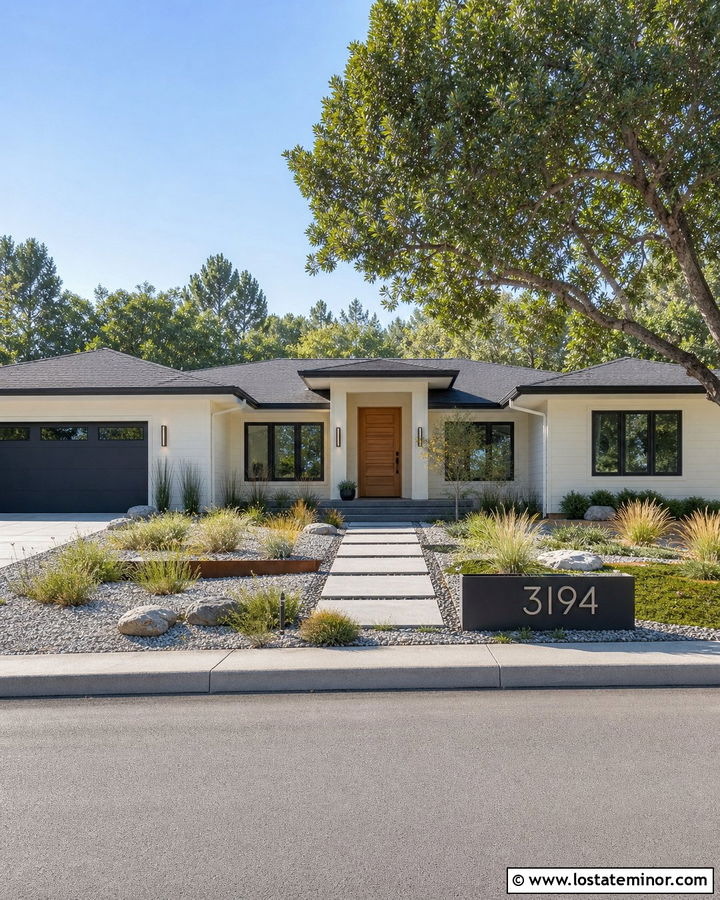
A freestanding address planter makes a useful focal point when the white house sits far from the street. Choose a charcoal rectangular planter with large white or brushed metal numerals on its front panel. Coordinate it with a white contemporary ranch featuring dark gray windows, a natural wood door, and a low black roof. Place the planter beside the driveway or at the beginning of the front walk. Fill it with upright grasses and low trailing plants that will not cover the numbers. Repeat the charcoal finish on exterior lights and garage hardware. Concrete pavers and gravel beds complete the modern landscape. The planter adds visibility, texture, and greenery while directing visitors toward the main entrance.
26. White House With Numbers On A Black Front Door
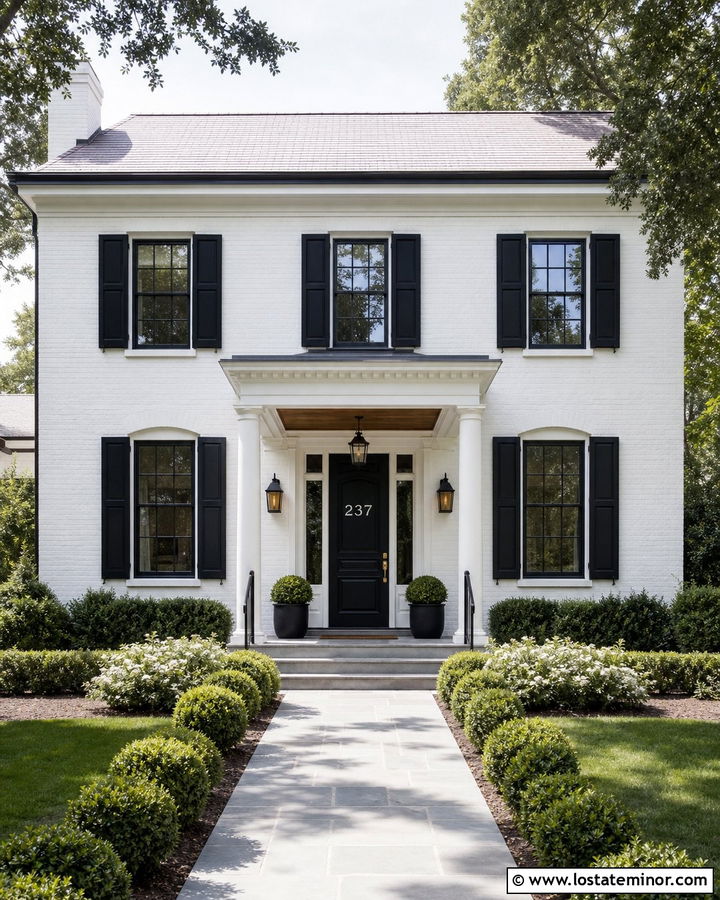
White house numbers become surprisingly bold when mounted directly on a black front door. Select clean, generously sized numerals in a horizontal arrangement beneath the upper door panels or window. Surround the entrance with creamy white brick, warm white trim, and black-framed windows. A natural stone porch floor and cedar ceiling soften the monochrome palette. Add black sconces with warm brass interiors and matching black shutters for balance. The door should remain uncluttered, so avoid combining the numbers with an oversized wreath or elaborate knocker. Low hedges and a straight bluestone walkway reinforce the tailored composition. The reversed white-on-black contrast makes the address highly noticeable while preserving a classic, polished appearance.
27. White House With Brass Numbers And Green Door
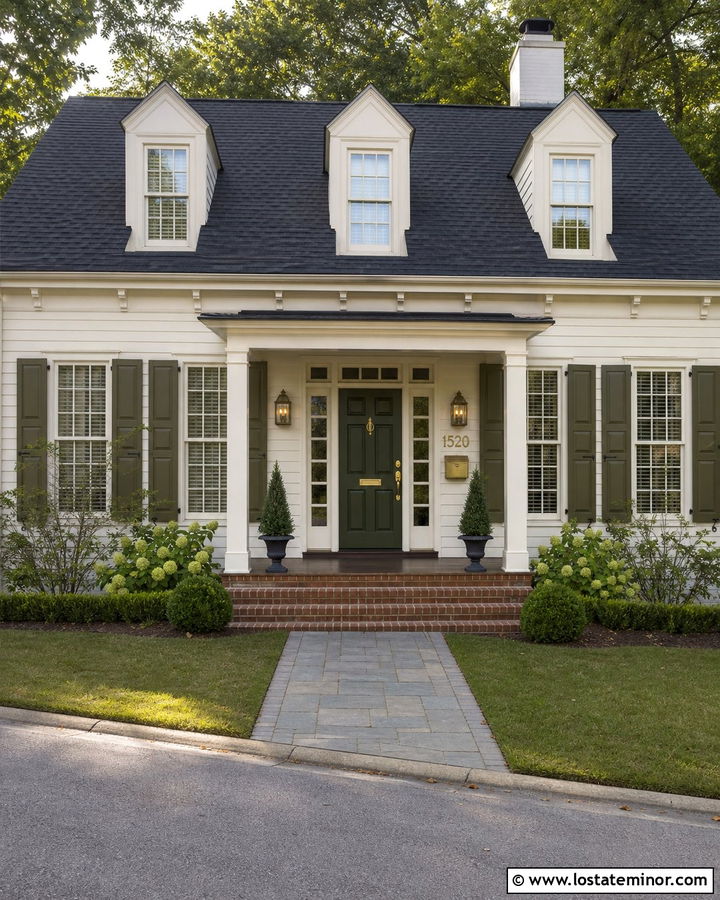
Brass numbers and a deep green door create a warm, traditional focal point against a white exterior. Mount the numerals on the door or on the siding beside it, depending on which location is more visible from the street. Use creamy white clapboard, olive shutters, and a charcoal roof to support the natural color palette. Brass lanterns, a door handle, and a compact mailbox should repeat the number finish. Brick steps and a stained wood porch floor add earthy texture. Frame the entrance with potted evergreens and layered foundation planting. Choose a simple number shape rather than ornate script. The combination of warm white, saturated green, and aged brass feels established, welcoming, and easy to adapt.
28. White House With Black Plaque And Red Door
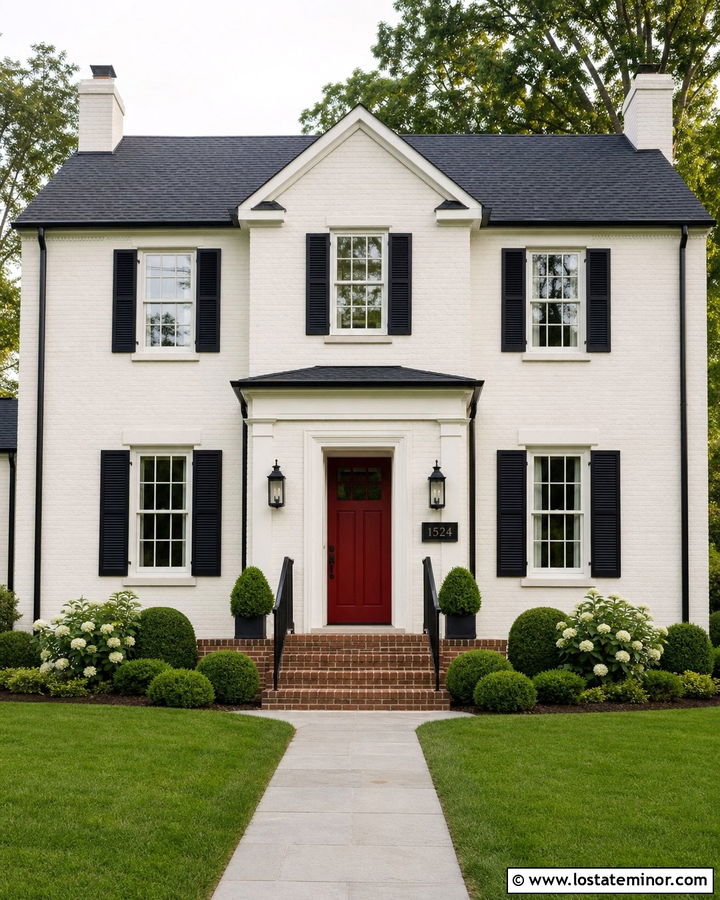
A black address plaque helps a red front door stand out without making the exterior look busy. Position the plaque on the white siding beside the entry, using clear white or brushed metal numerals. Select a deep heritage red rather than a bright primary shade for a more grounded appearance. White painted brick, black shutters, and a charcoal shingle roof complete the classic palette. Repeat the plaque color through black lanterns, railings, and door hardware. Brick porch steps connect naturally with the red door while adding texture. Keep landscaping green and restrained so it does not compete with the entrance. This complete exterior offers strong contrast, practical visibility, and a recognizable traditional character.
29. White House With Nickel Numbers And Blue Door
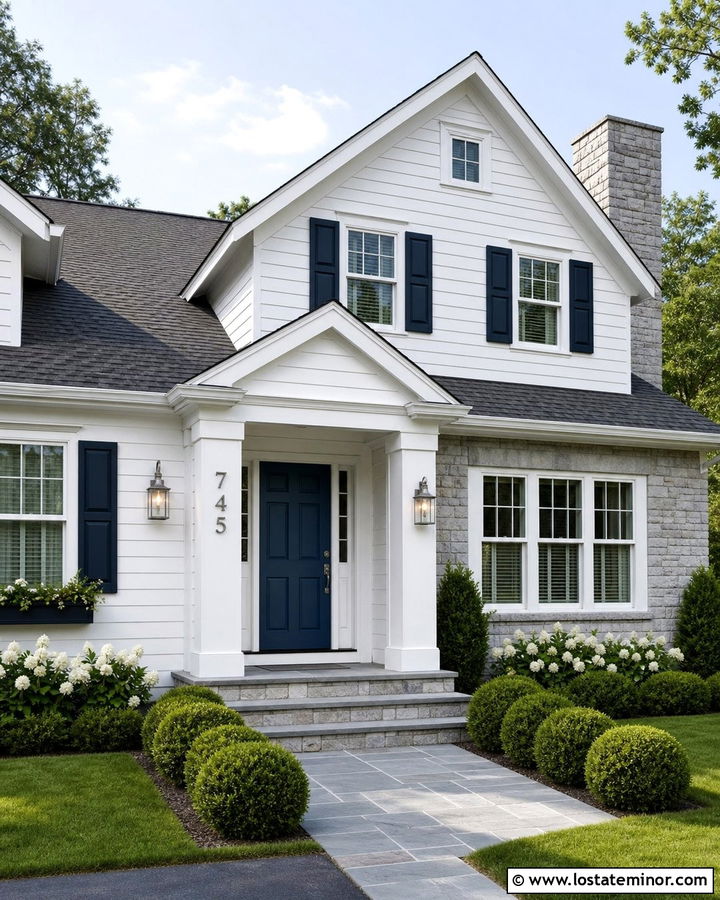
Brushed nickel numbers give a white exterior a softer alternative to bold black metal. Place them beside a slate blue front door, where their cool finish can coordinate with silver-gray sconces and door hardware. Use clean white siding, pale gray stone, and a medium-gray roof to build a calm, connected palette. Dark blue shutters can repeat the door color across a wider facade. Choose floating numbers that cast light shadows but remain easy to read in bright daylight. A bluestone walkway, clipped shrubs, and white flowering plants reinforce the cool color scheme. This combination works particularly well on transitional homes that blend traditional proportions with simpler windows, trim, and exterior accessories.
30. White House With Painted Stencil Numbers
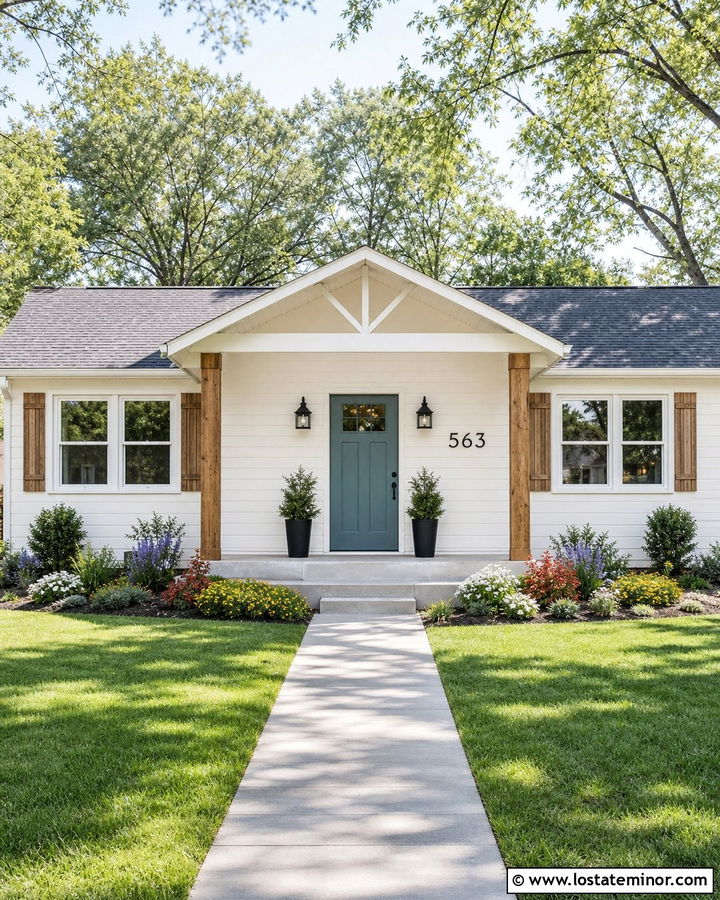
Painted stencil numbers offer an affordable, customizable option for a casual white house. Apply large charcoal numerals to a smooth porch wall, stair riser, mailbox post, or wide trim board. Use a reusable template to maintain consistent spacing and sharp edges. Pair soft white siding with a muted teal front door, gray roof shingles, and natural wood porch details. Black sconces and planters connect the charcoal address to the rest of the facade. Make sure the painted surface is flat, visible, and protected from heavy wear. A simple concrete walkway and colorful foundation beds complete the approachable exterior. The finished display can look clean and intentional while avoiding the cost and installation requirements of individual metal numbers.
Conclusion:
The most effective 30 White House Design With House Numbers Ideas treat the address as part of the complete exterior rather than a final accessory. Start with visibility, scale, and contrast, then select a material that relates to the door hardware, lighting, roof, windows, or natural accents. Matte black delivers crisp definition, while brass, copper, wood, tile, and stone can introduce warmth and character. Placement should also respond to the architecture. A porch post suits vertical numbers, a Colonial supports a centered plaque, and a deep setback may require a mailbox or planter display. With coordinated colors and thoughtful positioning, practical house numbers can strengthen the entire curb-appeal design.

Related posts: