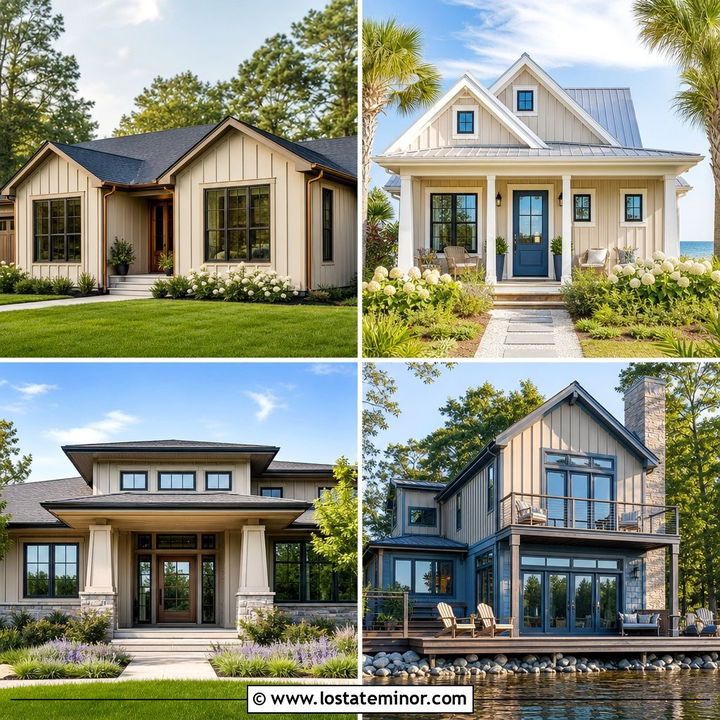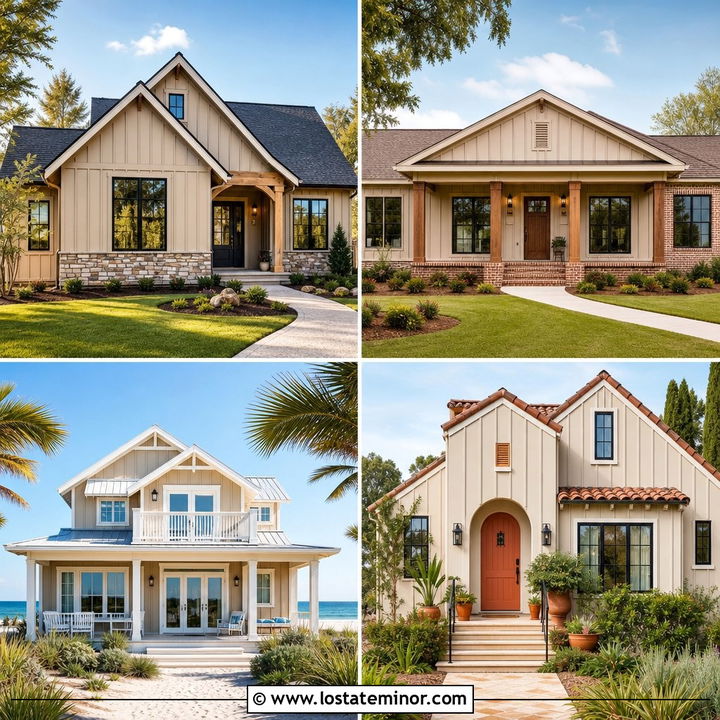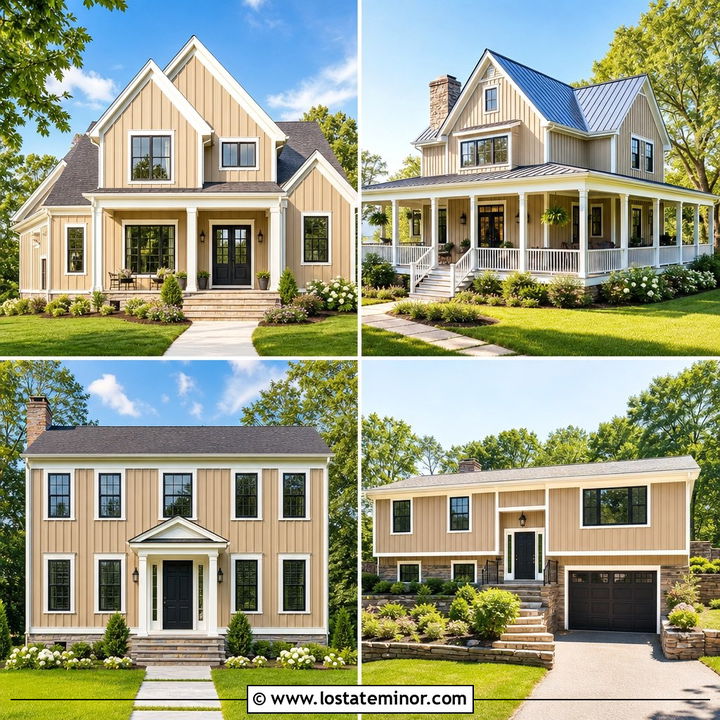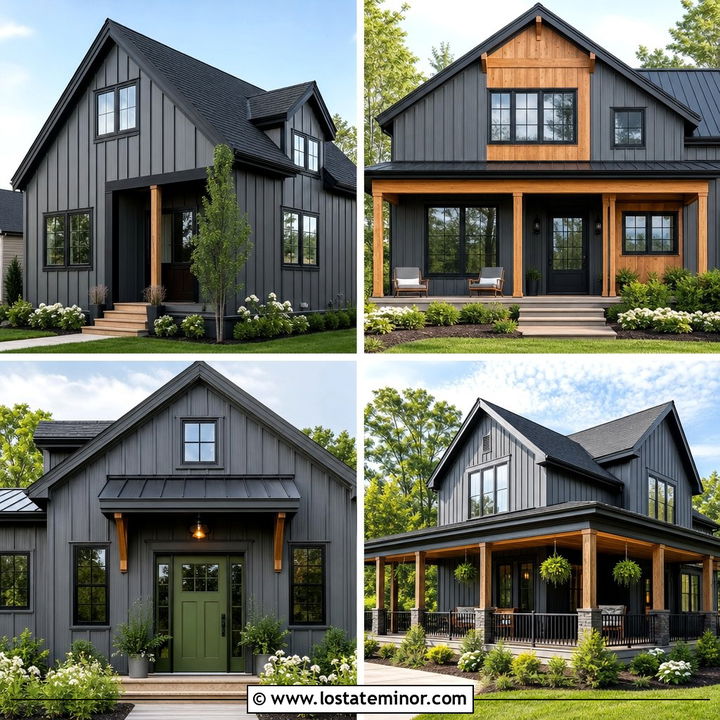
An off-white exterior brings warmth, softness, and lasting curb appeal to vertical siding. Unlike stark white, creamy and greige-leaning shades make board-and-batten texture visible while working naturally with wood, stone, brick, and metal. This siding can cover the entire facade or highlight gables, porches, and upper stories alongside horizontal lap siding. Current exterior inspiration also shows off-white board and batten paired successfully with black roofing, gray shingles, reclaimed brick, and natural timber details. () The right combination depends on your home’s architecture, surrounding landscape, and existing fixed materials. From modern farmhouses to compact ranch homes, the complete schemes below offer practical inspiration for **30 Off White House Design With Board and Batten Ideas**.
1. Off White Board and Batten With Black Trim
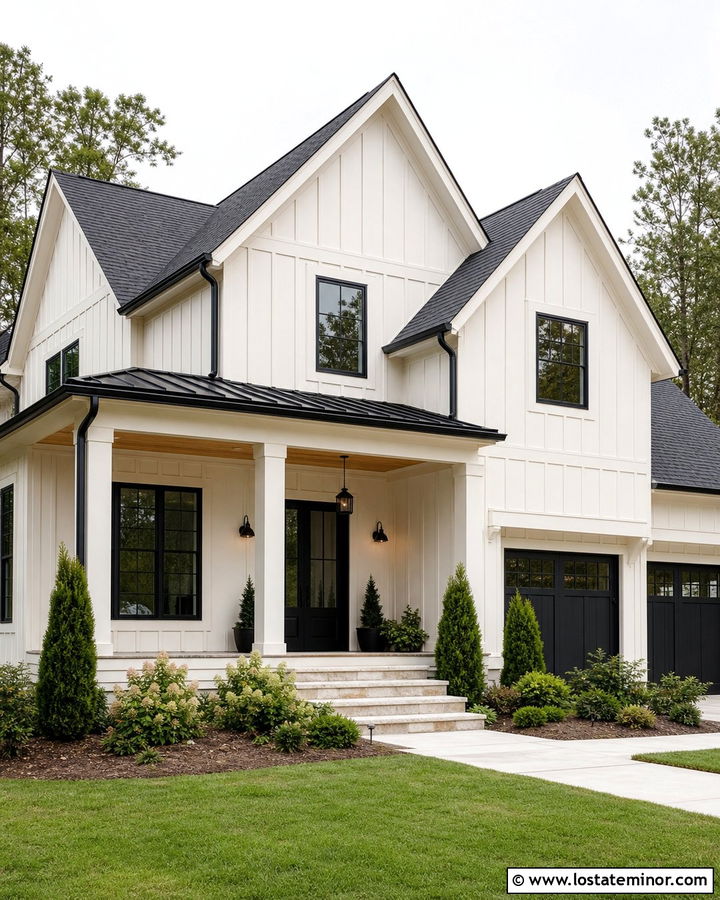
Black trim gives an off-white board-and-batten house a sharp, clearly defined structure. Choose a creamy body color rather than a bright white so the contrast feels welcoming instead of severe. Matte black window frames, fascia, gutters, and porch lights can repeat the dark accent across the facade. A black front door strengthens the look, while a medium-gray shingle roof keeps the palette from becoming overly matched. Add a natural wood porch ceiling or cedar bench for a warmer transition between the two colors. This combination looks especially balanced on a modern farmhouse with simple gables. Use black selectively around major architectural lines, allowing the textured off-white siding to remain the largest and brightest surface.
2. Off White Board and Batten With Natural Wood Door
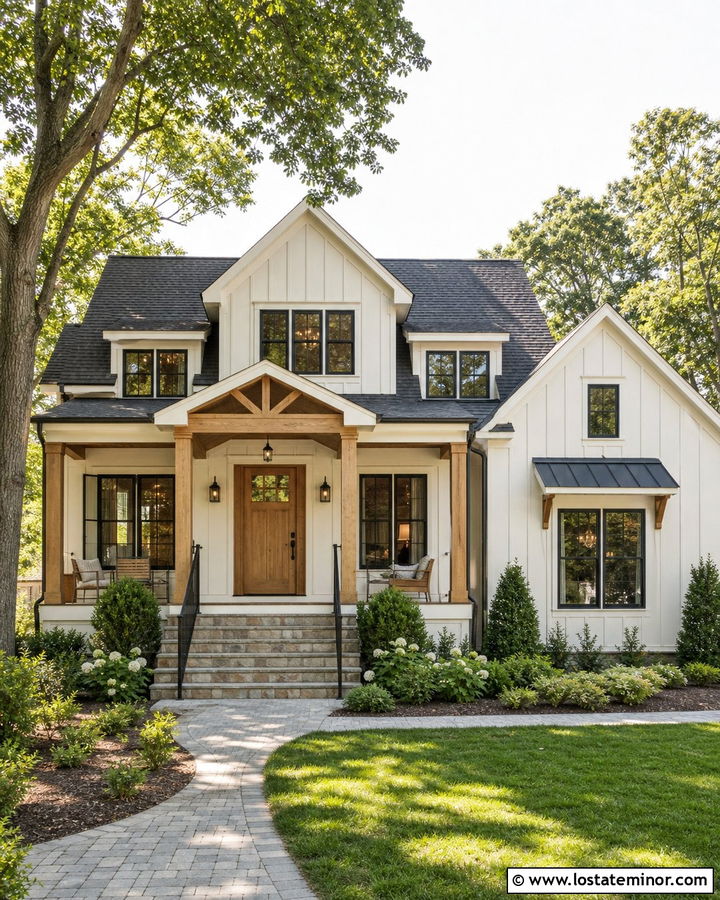
A natural wood front door instantly softens an off-white board-and-batten exterior. Medium-toned white oak, cedar, or mahogany introduces organic color without competing with the siding. Repeat that wood finish on porch posts, gable brackets, or a small garage arbor to make the entrance feel connected to the full facade. Warm white window trim maintains a gentle, low-contrast appearance, while black hardware adds a crisp finishing detail. A charcoal shingle roof grounds the pale exterior and helps the grain of the door stand out. This complete scheme works beautifully on Craftsman, farmhouse, and transitional homes. Finish the curb appeal with layered evergreen shrubs, ornamental grasses, and a stone walkway containing warm beige and gray variations.
3. Off White Board and Batten With Stone Accents
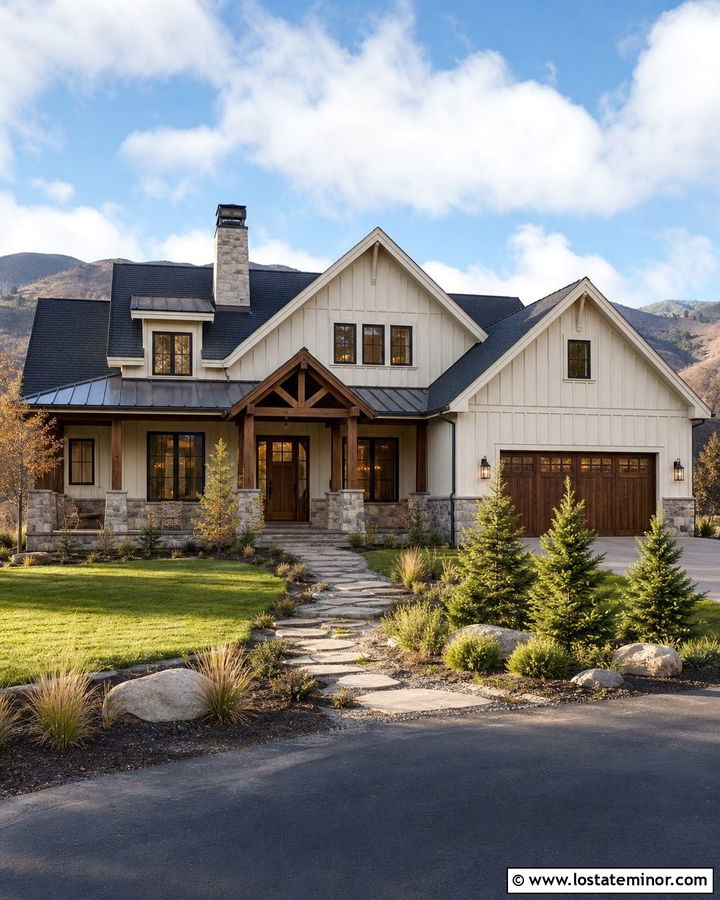
Rough stone adds depth and permanence to a light board-and-batten facade. Use it around the foundation, porch columns, chimney, or garage wing rather than scattering small sections across the house. A warm limestone blend complements creamy off-white siding, while gray fieldstone works better with a cooler off-white. Pull one of the darkest stone colors into the roof, gutters, or front door for a cohesive result. Wood beams can bridge the visual gap between rustic masonry and clean vertical siding. This combination suits mountain homes, modern ranches, and relaxed country houses. Keep the trim close to the main siding color so the stone remains the strongest secondary material. Simple landscaping prevents the textured exterior from feeling too busy.
4. Off White Board and Batten With White Oak Garage Doors
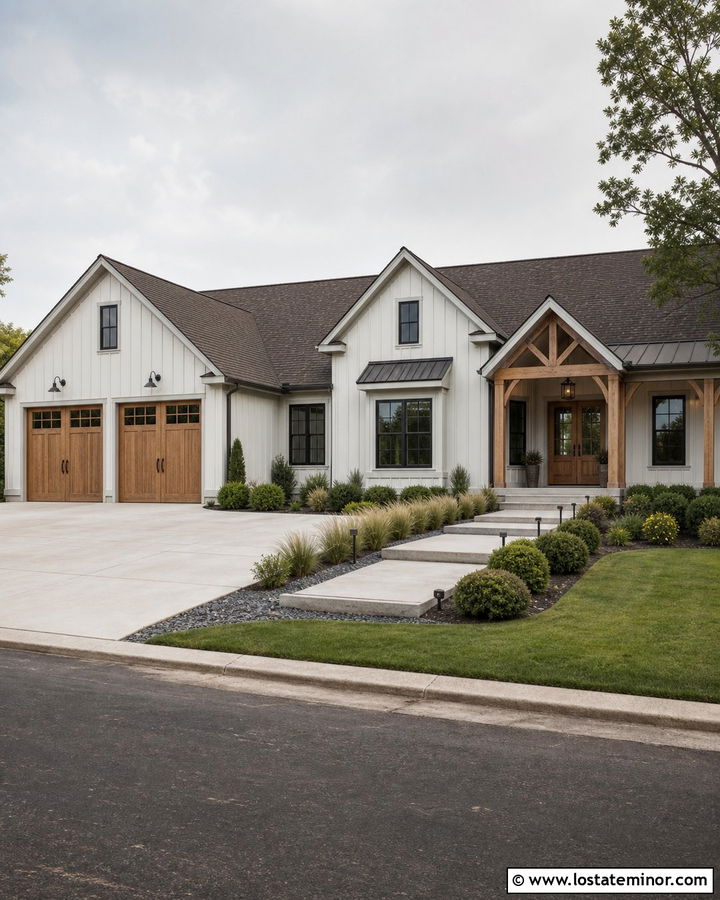
Large garage doors can become a welcoming architectural feature when finished in a realistic white oak tone. Against an off-white board-and-batten exterior, the wood brings enough warmth to distinguish the garage without overpowering the front entrance. Match the garage-door stain to porch beams, entry doors, or decorative brackets. Soft greige trim keeps the light facade layered, while black windows and sconces supply controlled contrast. This complete look works particularly well on wide ranch houses and side-gabled modern farmhouses. Select a roof with mixed charcoal and brown undertones to connect the pale siding and warm wood. Along the driveway, structured grasses and low shrubs can soften the garage elevation while keeping the beautiful doors visible from the street.
5. Off White Board and Batten With Red Brick
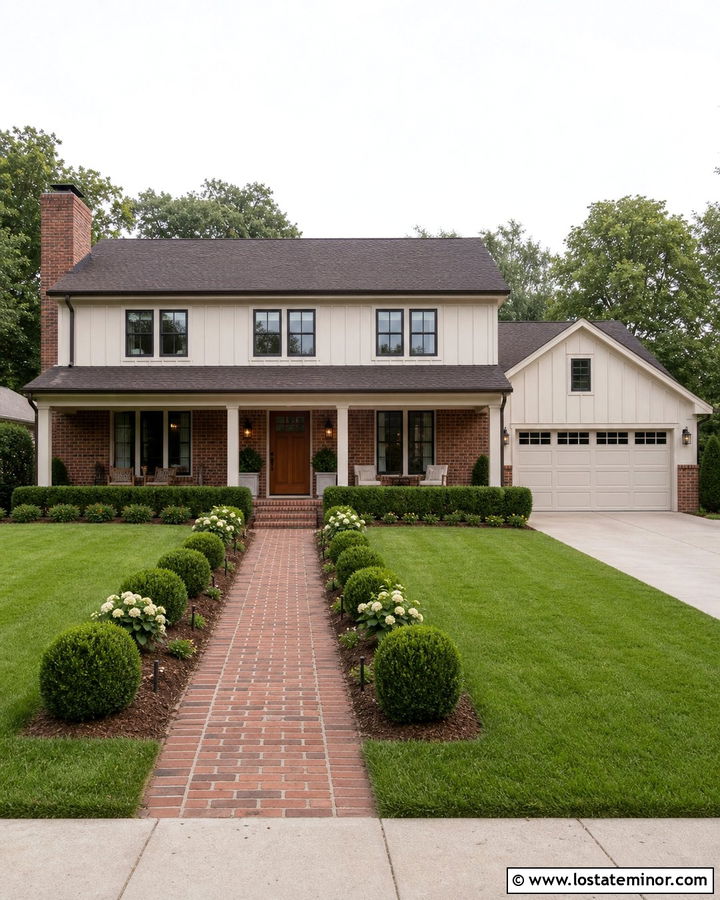
Existing red brick can look fresh beside warm off-white board-and-batten siding. Instead of painting the masonry, use its natural color to anchor the lower story, chimney, or central entrance. Choose an off-white with cream or subtle beige undertones, which will relate more comfortably to orange-red brick than a cool blue-white. Dark bronze gutters, window frames, and lighting provide definition without looking as bold as pure black. A stained wood door draws out the earthy shades in the masonry. This balanced material mix fits traditional ranches, updated Colonials, and modern farmhouse renovations. Keep mortar, trim, and fascia relatively quiet. The goal is to let the vertical siding brighten the house while preserving the brick’s established character and texture.
6. Off White Board and Batten With Black Metal Roof
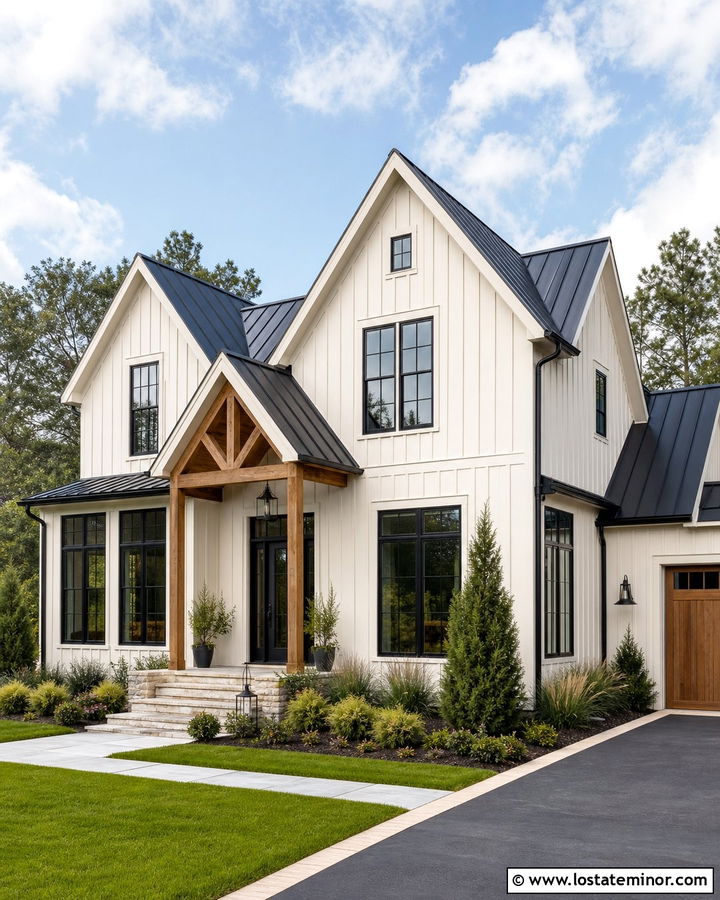
A black metal roof creates a graphic cap over creamy board-and-batten siding. The clean roof seams echo the vertical lines of the battens, making this pairing especially effective on simple gabled homes. Carry black into the gutters, downspouts, windows, and porch lights for continuity. A medium-tone cedar front door or timber entry frame prevents the high-contrast palette from feeling cold. If the home has several roof sections, use metal on prominent porches and gables while choosing coordinating dark shingles elsewhere. This approach reduces visual heaviness and can be more budget-conscious. The final exterior feels polished on modern farmhouses, cabins, and lake homes. Green landscaping and pale stone steps add natural color without disturbing the streamlined palette.
7. Off White Board and Batten With Gray Shingle Roof
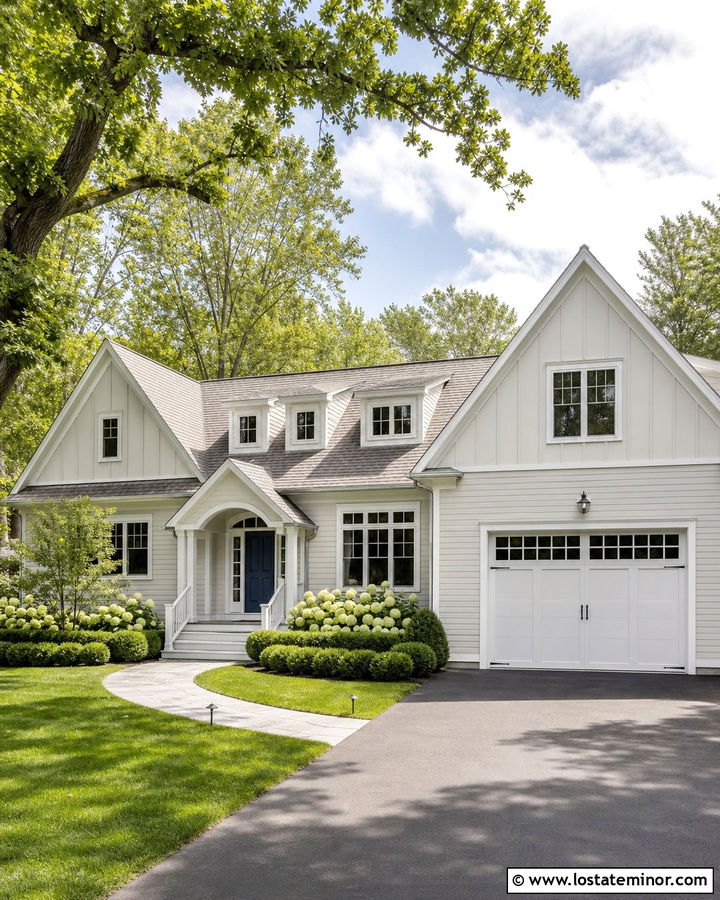
Soft gray shingles create a gentler alternative to the familiar black-roof combination. Select a dimensional roof containing warm gray, taupe, and charcoal flecks to complement an off-white exterior in changing daylight. White or light greige trim can preserve the calm palette, while a slate-blue front door offers subtle color. On a Cape Cod or cottage, use board and batten across the front gables and horizontal siding on the main level. This change in orientation adds interest without introducing another body color. Silver-toned metal gutters can blend into the roof, although dark bronze also works when stronger outlines are desired. Complete the relaxed look with hydrangeas, clipped boxwoods, and a curved walkway made from weathered gray pavers.
8. Off White Board and Batten With Dark Green Door
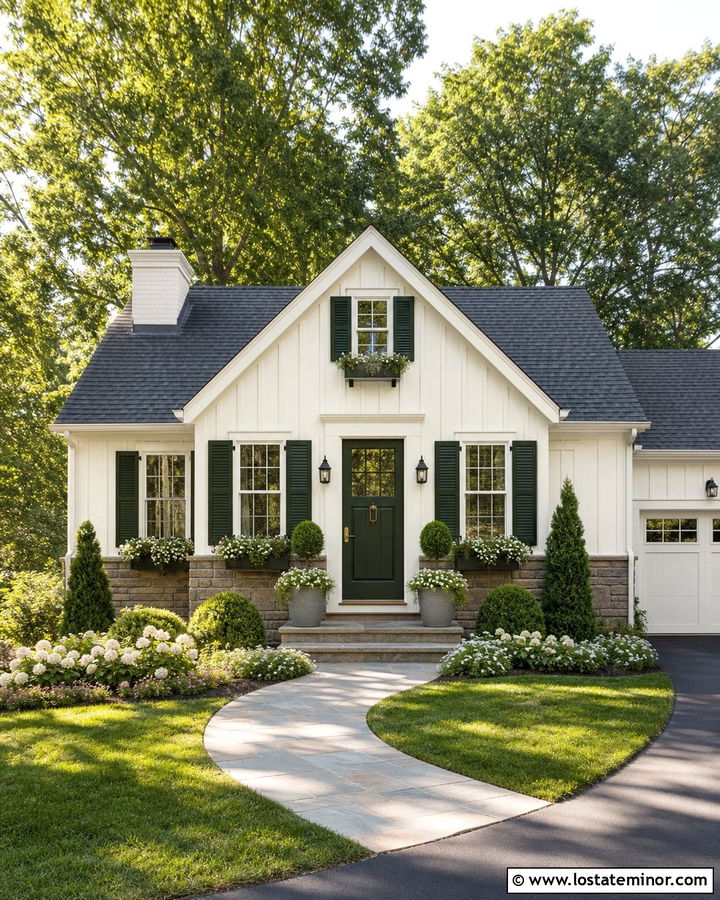
A dark green front door feels grounded and traditional against an off-white board-and-batten house. Forest, pine, or deep olive green works as a near-neutral, especially when the property has mature trees. Repeat the color on shutters, a porch swing, or a small side door, but avoid applying it to every feature. Cream trim maintains softness, while aged brass or dark bronze hardware adds warmth. A weathered-gray roof and natural stone foundation can reinforce the garden-inspired palette. This scheme fits cottages, bungalows, and updated Colonial homes. Frame the entry with symmetrical planters or evergreen shrubs so the green door remains easy to identify. The finished exterior feels colorful and distinctive without losing the versatile character of the off-white siding.
9. Off White Board and Batten With Navy Blue Door
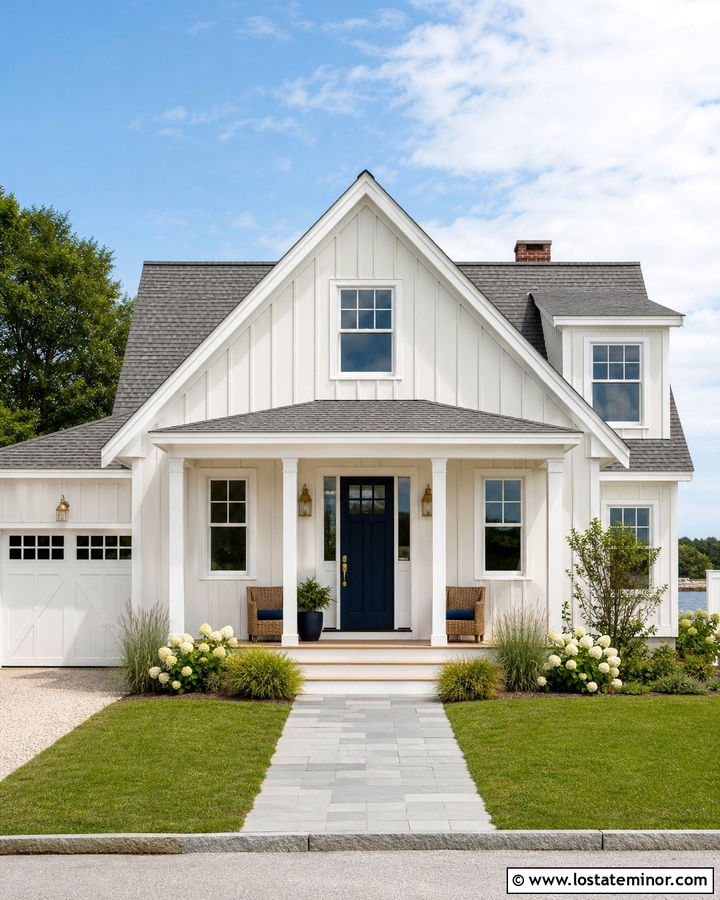
Navy blue delivers classic color without the visual weight of a black entrance. Place it at the center of an off-white board-and-batten facade, then support it with dark blue porch furniture or understated shutters. Crisp white trim can outline the entry and windows, while brushed nickel or polished brass hardware gives the door a tailored finish. A medium-gray roof keeps the navy from appearing disconnected. This complete palette works well on coastal cottages, Cape Cod homes, and traditional two-story houses. For a more relaxed coastal direction, add pale natural wood decking and soft blue-gray planters. Avoid excessive nautical decorations. The relationship between creamy siding, deep blue paint, and straightforward architecture is strong enough to communicate a fresh coastal influence on its own.
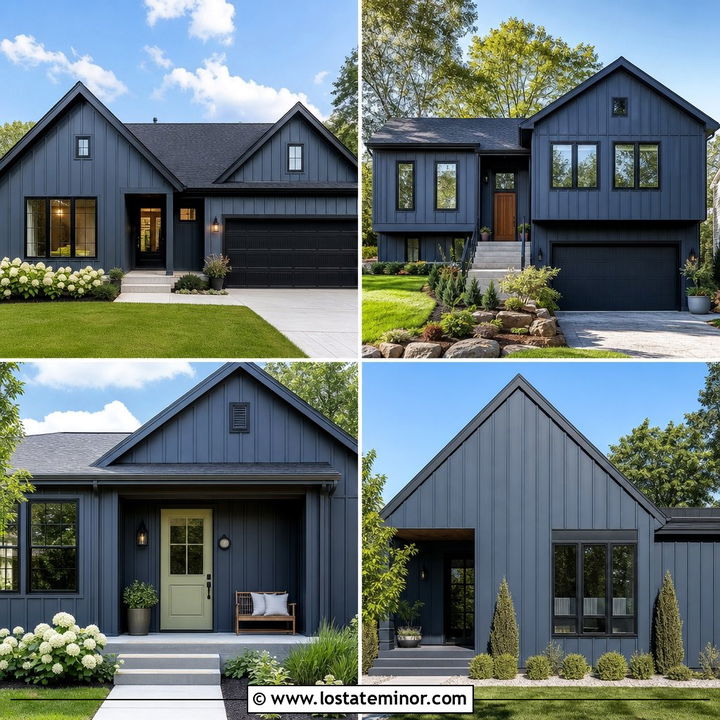
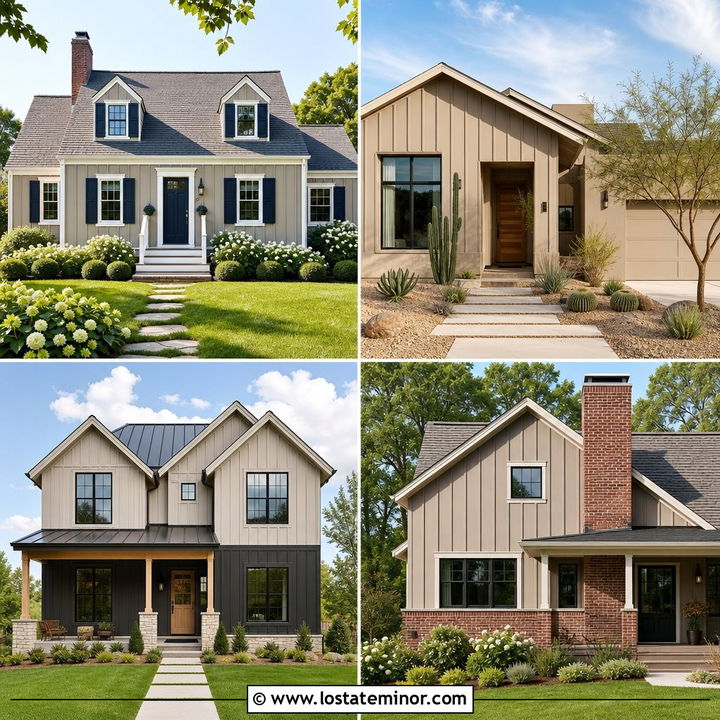
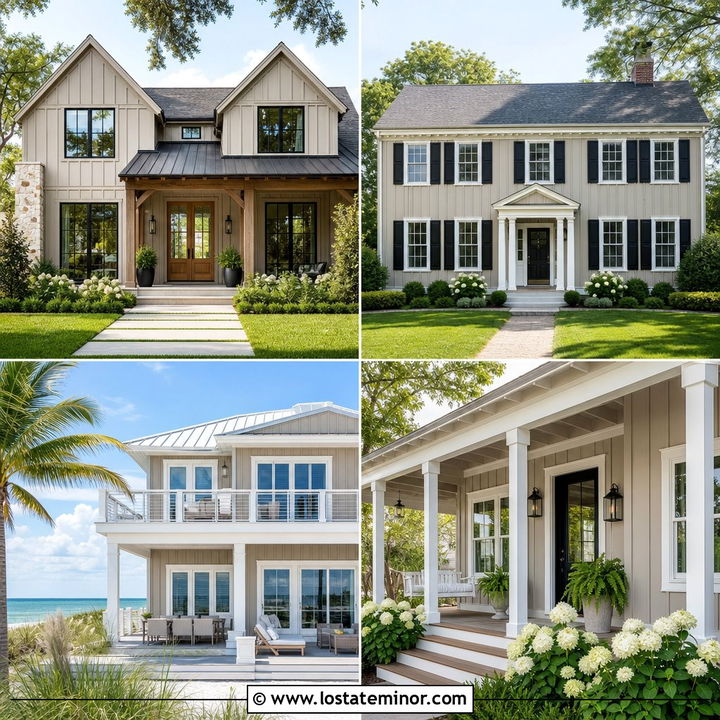
10. Off White Board and Batten With Charcoal Garage
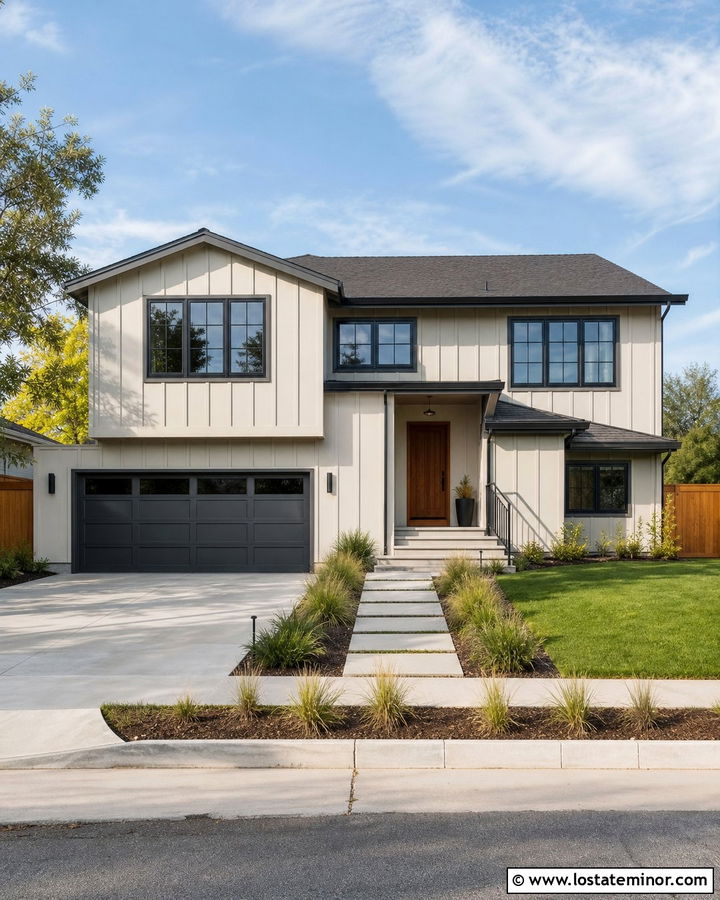
Painting the garage door charcoal can visually reduce its size on a pale facade. The deeper shade is especially useful when the garage faces the street and occupies a large portion of the front elevation. Select a warm charcoal that relates to the roof rather than a flat, absolute black. Repeat it on window frames, gutters, and modest metal railings. Off-white board and batten should continue around the garage walls, preserving a consistent exterior background. A walnut-colored front door can distinguish the pedestrian entrance from the darker garage. This scheme works on split-level homes, modern ranches, and contemporary farmhouses. Use light concrete, pale gravel, and neatly edged planting beds to keep the driveway area bright and visually balanced.
11. Off White Board and Batten With Cedar Porch
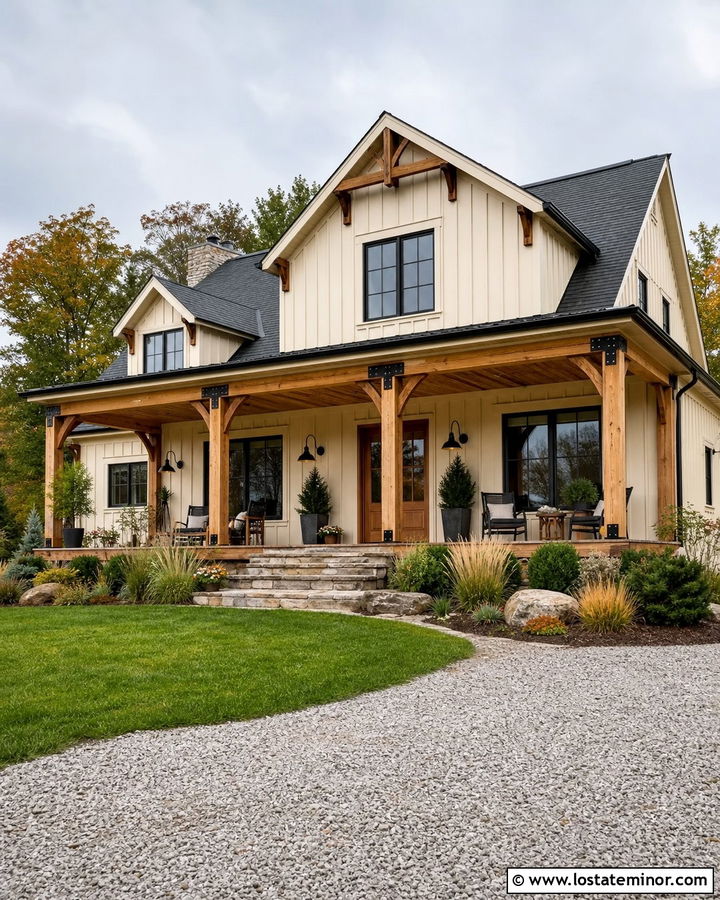
A cedar porch makes an off-white house look warm before visitors reach the door. Use natural wood on the posts, beams, ceiling, and perhaps the front steps, but leave enough off-white siding visible behind it. The contrast reveals the vertical board-and-batten pattern and frames the entry as a focal point. Clear or lightly tinted stain preserves the cedar’s grain, while black brackets and sconces introduce modern definition. A dark gray roof balances the richly colored wood. This full exterior treatment feels appropriate for modern farmhouses, rustic Craftsman homes, and rural ranch houses. Since cedar changes appearance as it weathers, choose surrounding materials that will also work with softer gray-brown tones. Stone planters and native grasses complete the organic curb appeal.
12. Off White Board and Batten With Wraparound Porch
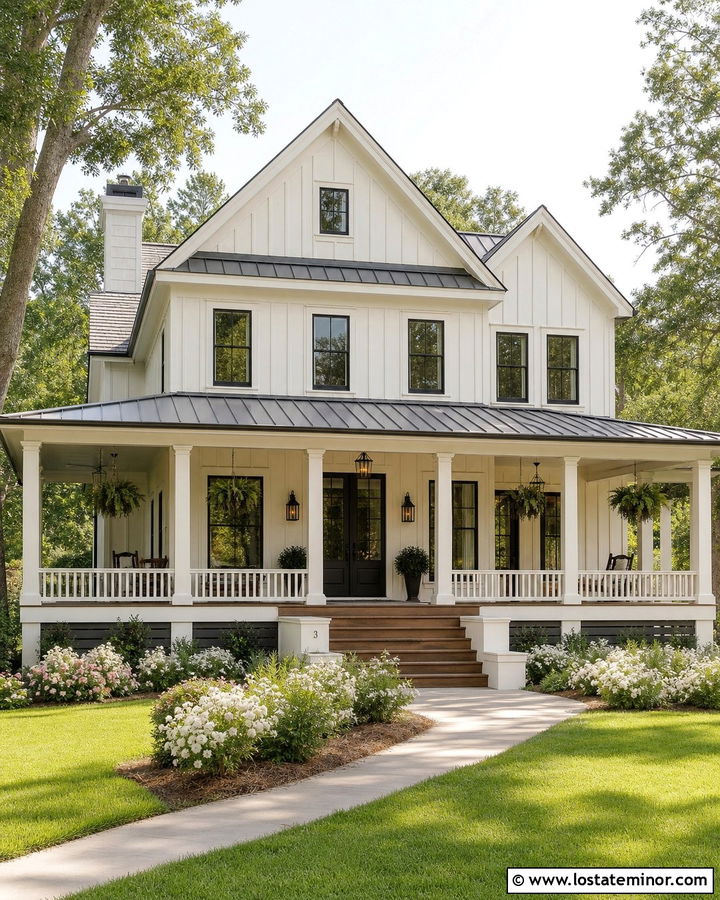
Few features make an off-white board-and-batten house feel more inviting than a wraparound porch. Paint the siding, porch columns, railing, and fascia in closely related warm whites to create subtle depth without breaking up the facade. A stained wood floor adds practical contrast and helps define the porch from the lawn. Use a dark bronze front door, ceiling fans, and lanterns as repeated accents beneath the roof. On a farmhouse or Southern country home, a medium-gray standing-seam porch roof can visually separate the veranda from the main shingled roof. Keep furniture finishes consistent rather than introducing many colors. Broad steps, foundation shrubs, and flowering borders can connect the long porch to the yard and strengthen its welcoming proportions.
13. Off White Board and Batten With Black Windows
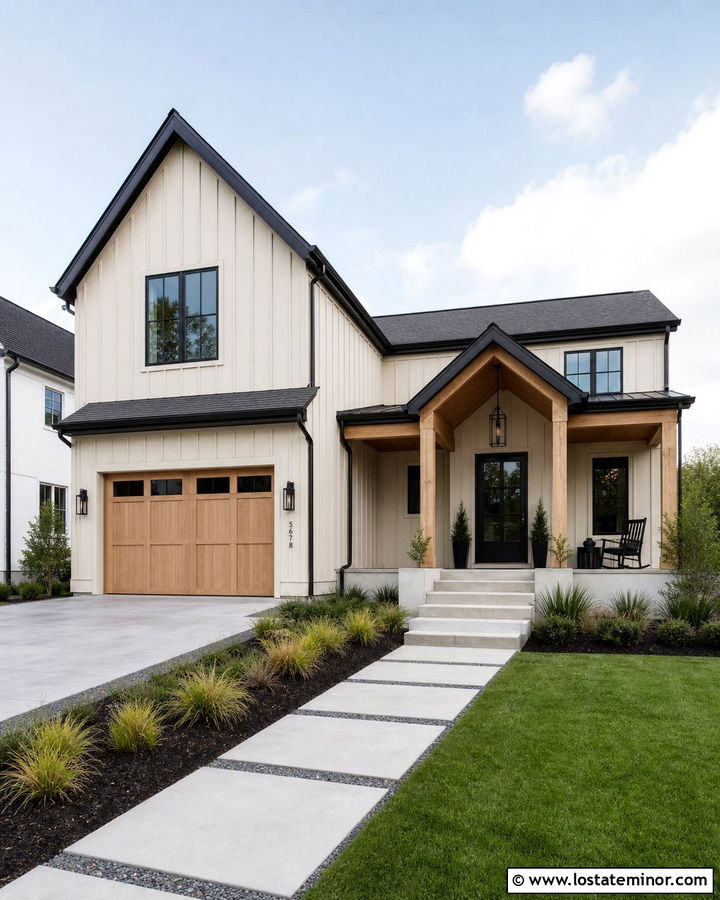
Black windows look clean and intentional when surrounded by warm off-white board and batten. Because every frame becomes noticeable, keep the surrounding trim narrow and relatively simple. Black fascia and gutters can repeat the window color along the roofline, while a black front door creates another visual anchor at ground level. Introduce white oak through porch beams or garage doors to soften the monochromatic contrast. This combination is particularly effective on contemporary houses with large windows and asymmetrical gables. For a cohesive facade, align battens thoughtfully with major window edges whenever construction allows. Pale concrete steps, minimal railings, and architectural grasses reinforce the modern direction. The resulting exterior is crisp, but the creamy siding prevents it from feeling sterile or overly commercial.
14. Off White Board and Batten With Bronze Windows
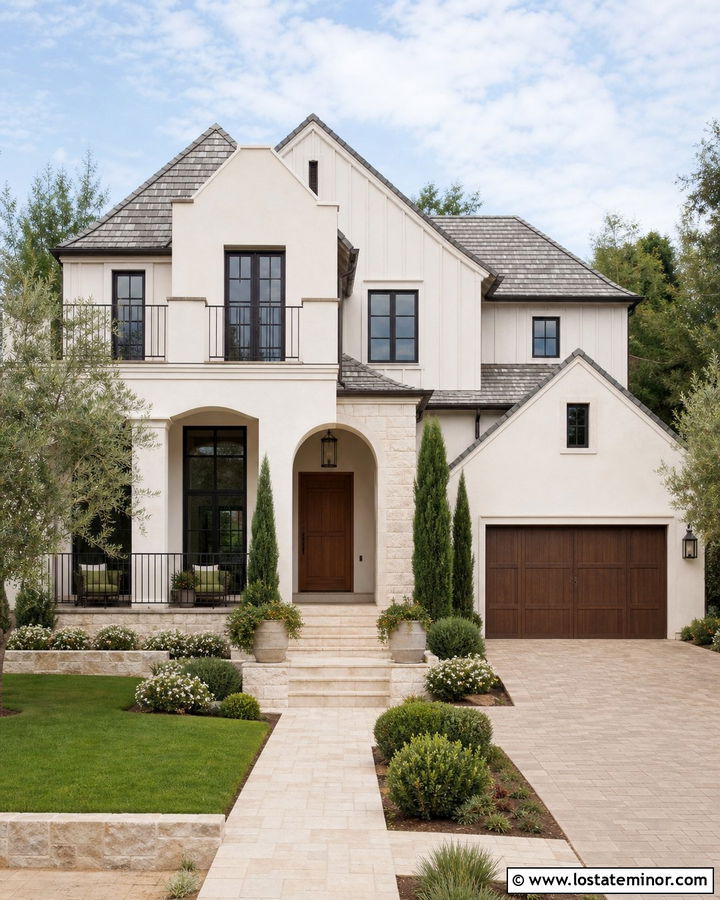
Bronze windows offer a softer, earthier outline than black. They pair naturally with off-white board-and-batten siding that has beige, taupe, or muted yellow undertones. Repeat the bronze finish on gutters, porch lights, door hardware, and metal railings to make the selection feel deliberate. A medium walnut door and warm gray roof can complete the subdued palette. On a Mediterranean-influenced transitional home, mix vertical siding with cream stucco and pale limestone. On a Craftsman house, use bronze windows beside stone columns and stained wood beams. Both approaches create depth without extreme contrast. Choose tan gravel, warm concrete, or multicolored pavers for the walkway so the hardscape supports the facade rather than introducing a noticeably cooler gray element.
15. Off White Board and Batten With Horizontal Siding
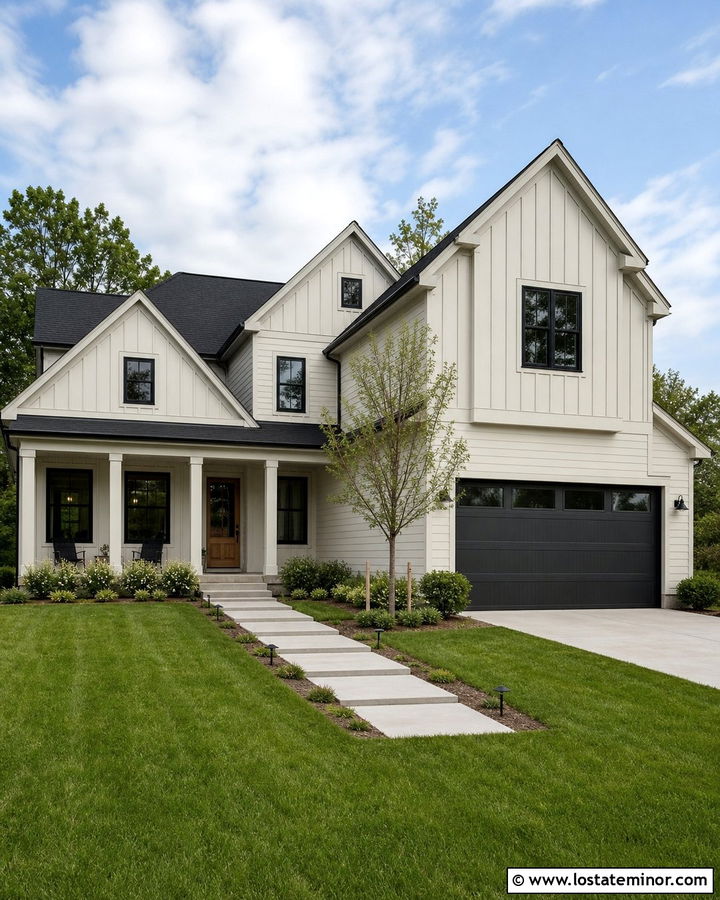
Combining vertical board and batten with horizontal lap siding creates interest through direction rather than dramatic color changes. Paint both materials the same off-white to keep the house cohesive. Board and batten can highlight front gables, entry projections, or upper floors, while lap siding visually stretches the main level. Use consistent trim around transitions so the exterior does not look pieced together. Black windows and a charcoal roof provide structure, while a wood front door adds a natural focal point. This treatment can update builders’ homes, transitional houses, and larger suburban facades. Before installation, map each siding change to an architectural break such as a corner, roofline, or recessed wall. Purposeful transitions produce a much cleaner and more convincing finished design.
16. Off White Board and Batten With Painted Brick
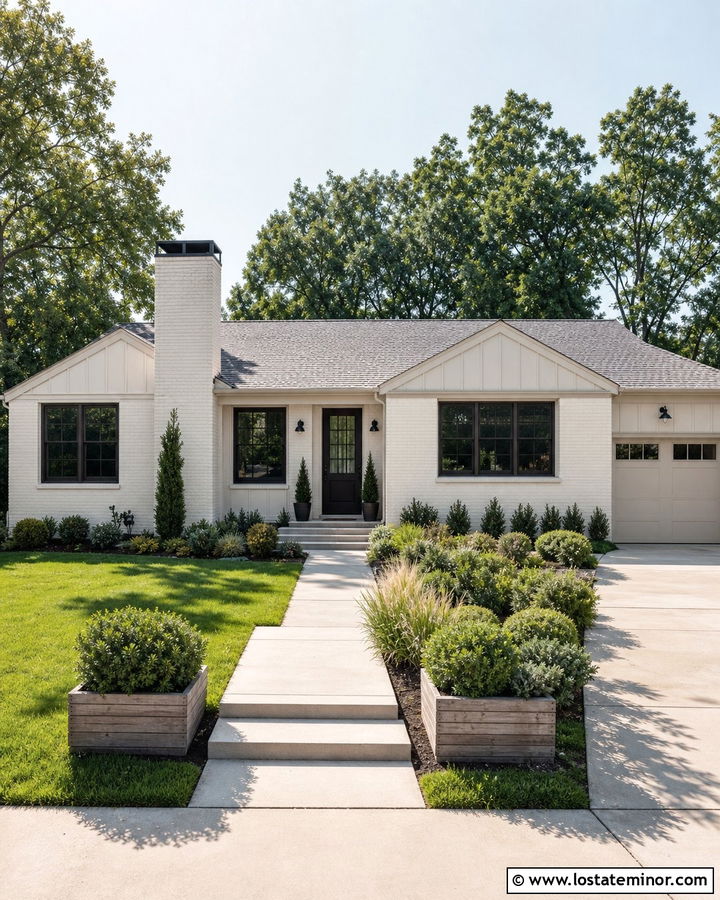
Painting brick and board-and-batten siding the same off-white can unify a facade with awkward material changes. The masonry will retain its texture, while the vertical siding contributes clean shadow lines. Use a warm, mineral-inspired off-white that does not appear too bright across a large surface. Slightly darker greige trim can define windows and fascia without creating a harsh border. A black or deep bronze door gives the entrance enough weight, and a weathered-gray roof keeps the palette balanced. This strategy works well for ranch renovations and older homes with partial brick fronts. Confirm that the selected coating and preparation method are suitable for exterior masonry. Once unified, wood shutters, copper lighting, and layered landscaping can supply color without making the house look fragmented.
17. Off White Board and Batten With Blue Gray Shutters
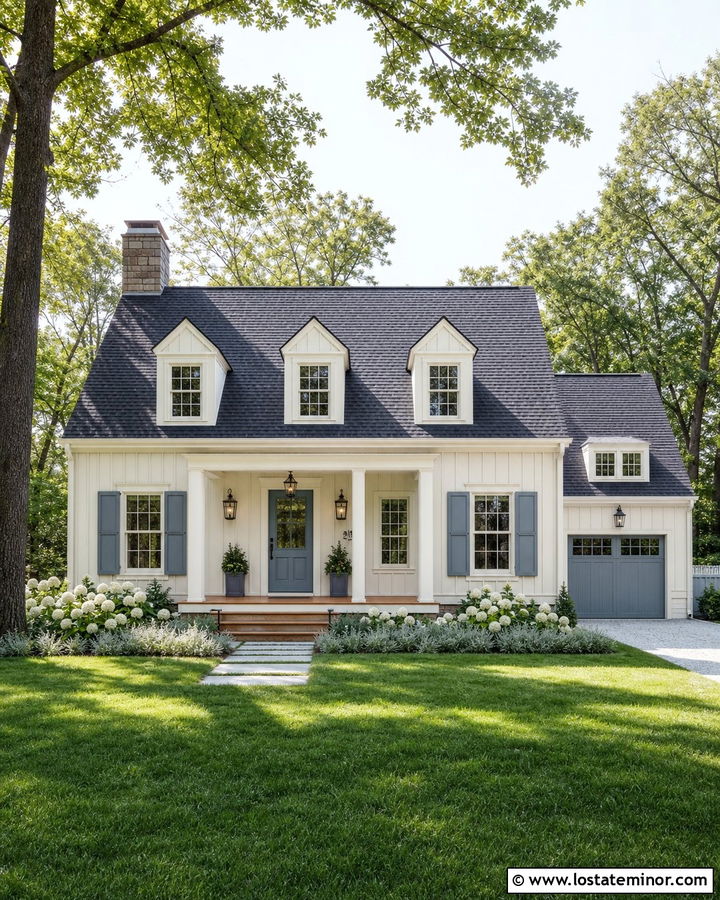
Blue-gray shutters bring quiet character to an off-white board-and-batten exterior. Choose a dusty, muted shade rather than a bright coastal blue, particularly on traditional homes. The shutters should be proportioned to the windows and used where they look architecturally believable. A matching blue-gray front door can unify the palette, or a natural wood door can create a warmer focal point. Keep the trim creamy white and use a charcoal-gray shingle roof to provide contrast above. This combination suits Cape Cod homes, cottages, and modest Colonials. White hydrangeas, silvery foliage, and gray stone paths echo the restrained color story. The overall exterior remains light and neutral, but the blue-gray details make it feel more personal than an entirely white facade.
18. Off White Board and Batten With Sage Green Shutters
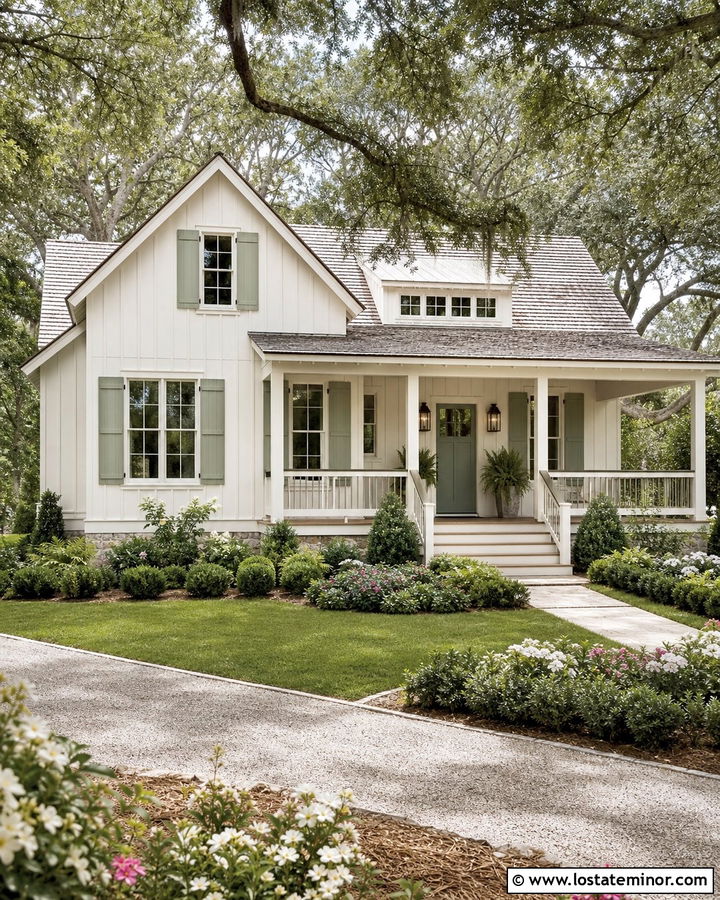
Sage green adds an earthy layer to warm off-white siding without making the facade feel overly colorful. Use it on functional-looking shutters, the front door, or small gable vents. Cream trim and weathered wood porch flooring reinforce the natural palette. For the roof, consider warm gray shingles containing subtle green or brown flecks. This scheme looks especially comfortable on cottages, low country homes, and garden-focused farmhouses. Add stone with beige and mossy gray variations around the porch foundation to connect the architecture with the landscape. Avoid pairing too many different greens across permanent features. One consistent sage shade, supported by varied living plants, creates a more polished result. The vertical board-and-batten texture will remain visible while the green details frame key openings.
19. Off White Board and Batten With Copper Accents
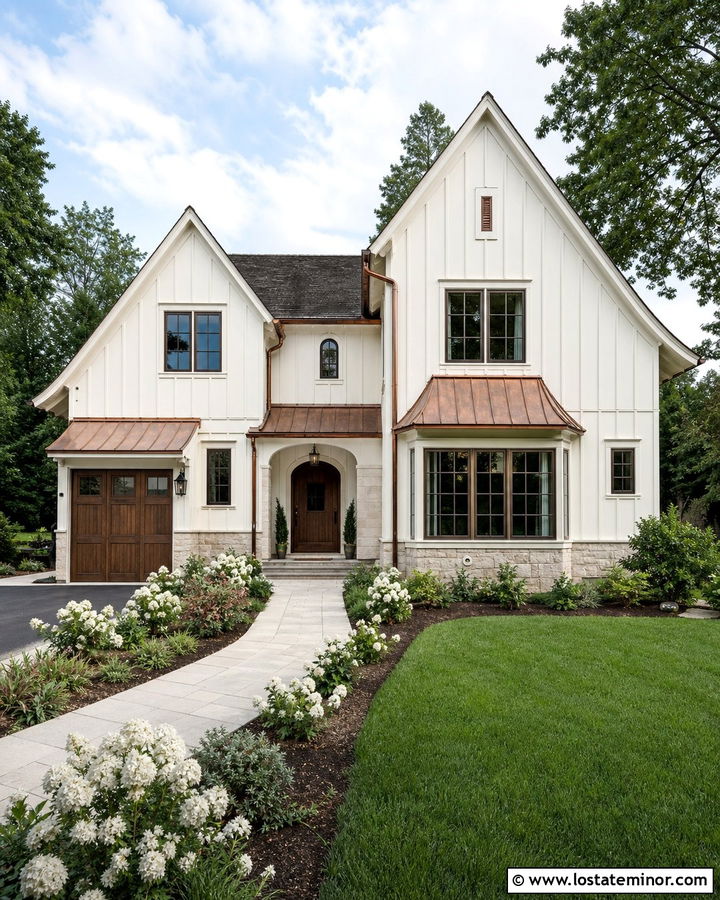
Fresh copper details bring warmth and refinement to an off-white board-and-batten home. Consider copper over a bay window, porch roof, dormer, or entry canopy, where the material can be appreciated without covering too much of the facade. Coordinating copper gutters may suit traditional architecture, but they are not essential. Dark bronze windows and lighting can bridge the gap between bright new copper and the deeper tones it develops over time. Pair the exterior with a walnut front door and warm gray shingles. This look complements European-inspired cottages, updated Tudors, and sophisticated farmhouses. Keep the landscaping slightly informal, using flowering shrubs and curved stone paths. The mix of creamy siding, vertical lines, masonry, and evolving metal creates a detailed yet cohesive exterior.
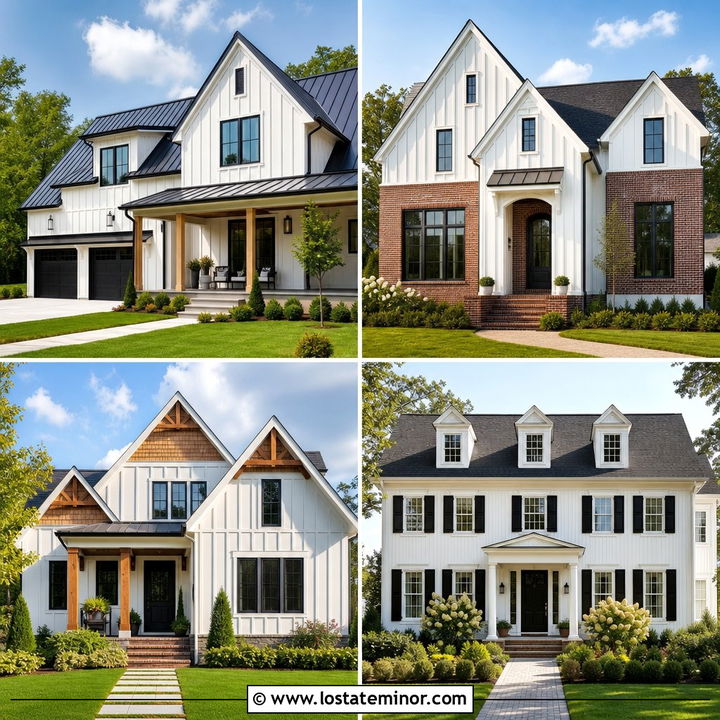
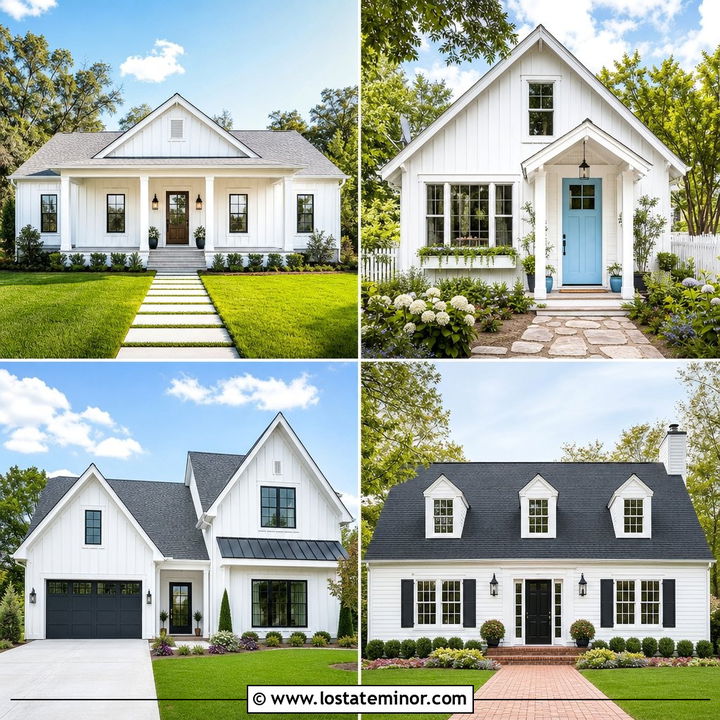
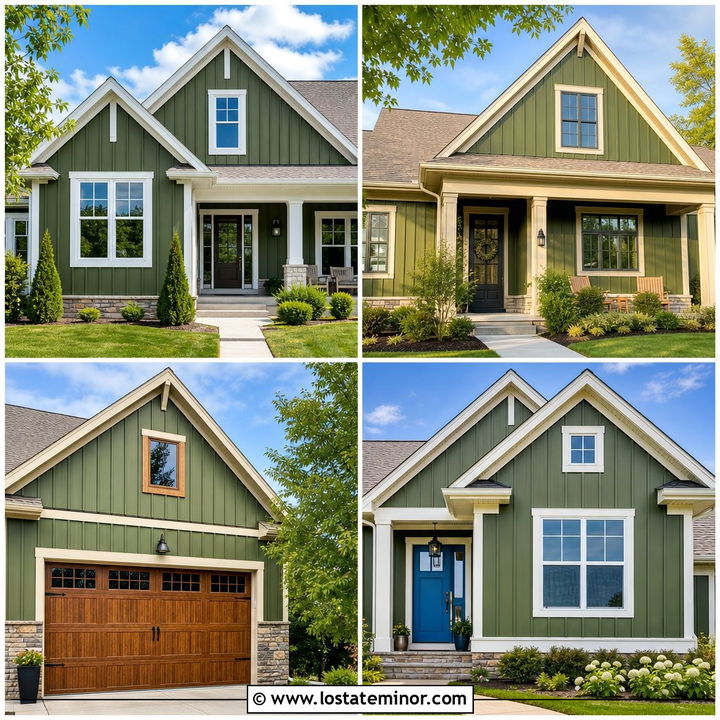
20. Off White Board and Batten With Black Shutters
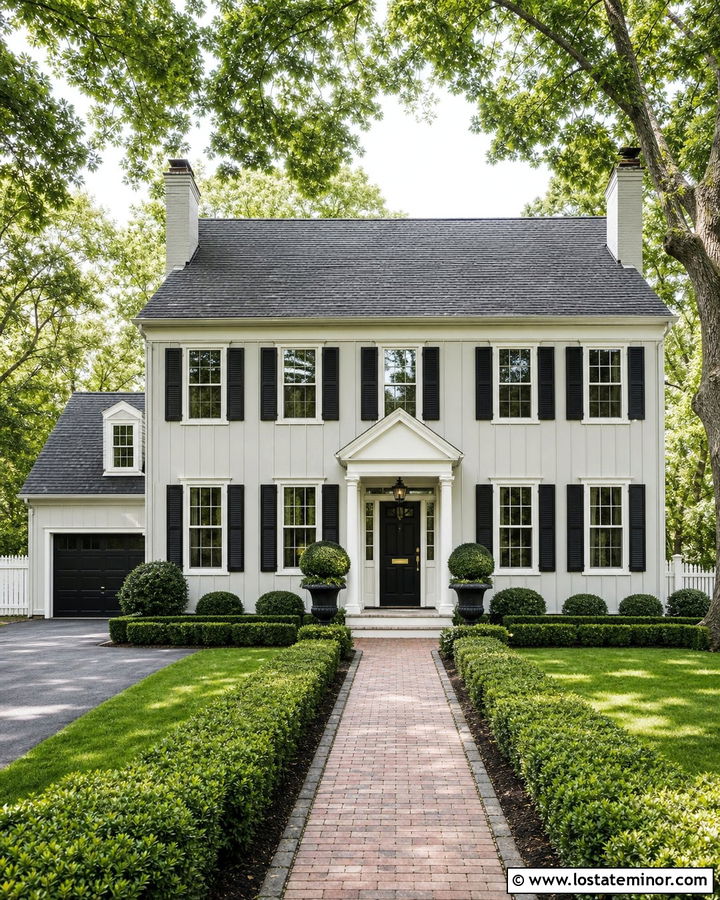
Black shutters create traditional contrast on an off-white board-and-batten facade. They work best when the house has symmetrical windows and a clear central entrance. Match the shutters with a black front door or use a stained wood door to add warmth. Cream trim can outline the windows before the dark shutters begin, preventing the accents from merging into the frames. A gray-black shingle roof completes the upper portion of the palette. This combination feels natural on Colonials, Cape Cod homes, and traditional farmhouses. Use board and batten across gables or the full body depending on the architecture. Balanced foundation shrubs, straight paths, and paired entry planters reinforce the formal arrangement. The exterior remains simple, recognizable, and easy to personalize through seasonal landscaping.
21. Off White Board and Batten With Wood Shutters
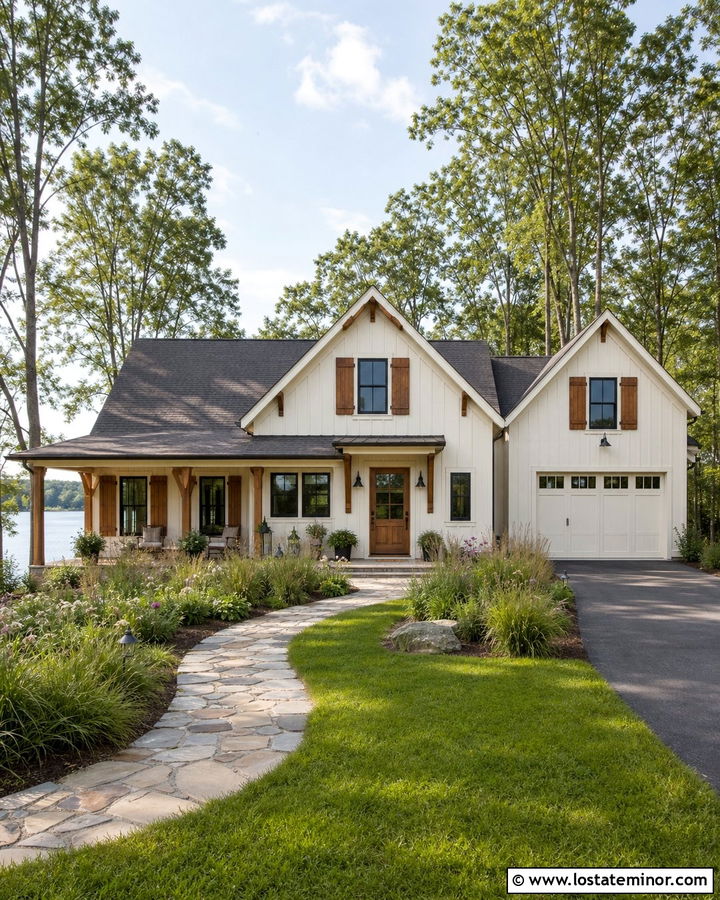
Wood shutters create a relaxed, handcrafted contrast against off-white vertical siding. Choose a stain that coordinates with the front door, porch ceiling, or exposed rafters. Medium brown finishes usually remain visible without becoming as bold as very dark walnut. Black strap hinges can add definition on rustic or farmhouse architecture, while concealed hardware feels cleaner on transitional homes. Use a warm charcoal roof and dark bronze lighting to anchor the natural wood elements. This complete exterior scheme works particularly well on cottages, ranch homes, and lake houses. Keep the number of wood tones limited so the facade feels planned. Native grasses, flowering perennials, and an irregular stone walkway support the approachable character of the shutters and soften the straight lines created by the battens.
22. Off White Board and Batten With Tan Stone
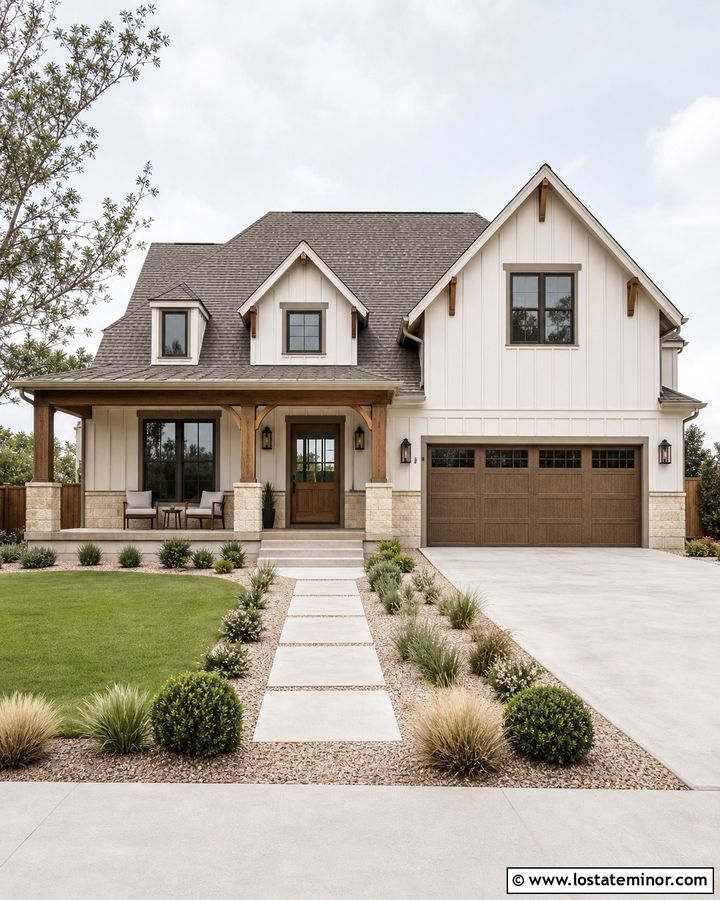
Tan stone creates a warm, low-contrast foundation for an off-white house. Select masonry with cream, sand, taupe, and muted brown variations so it relates naturally to the siding. Use stone across the base, porch piers, or chimney to give the light exterior visual weight. Medium brown window frames and a stained entry door can repeat the deeper tones within the stone. A taupe-gray roof completes the understated palette more gently than black. This combination is effective on suburban Craftsman houses, ranch homes, and modern cottages. Keep mortar close to the stone’s lightest shade for a blended effect. Drought-tolerant grasses, pale gravel, and warm concrete paths can extend the earthy color story into the yard while maintaining a bright, well-kept curb view.
23. Off White Board and Batten With Gray Stone
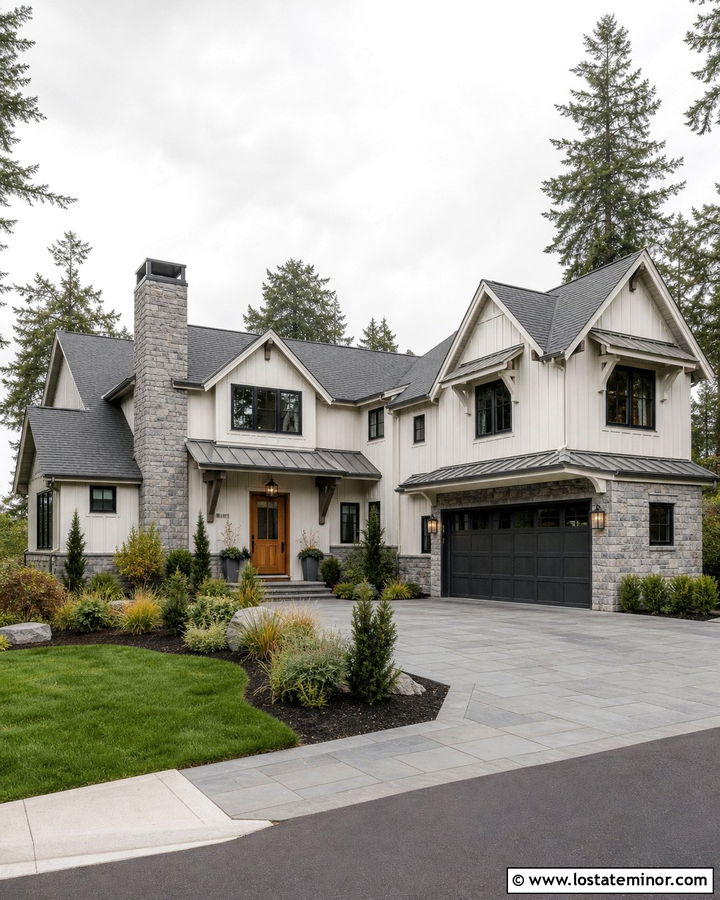
Cool gray stone can make a creamy exterior feel cleaner and more contemporary. Use it in broad, purposeful areas such as a central chimney, garage base, or full-height entry wall. Select an off-white with subtle gray undertones so the siding does not appear yellow beside the masonry. Charcoal windows and a slate-colored roof can pull the palette together, while a honey-toned wood door adds necessary warmth. This mix works well on modern mountain houses, contemporary Craftsman homes, and upscale split-level renovations. Keep the porch and hardscape simple, using large-format gray pavers or smooth concrete. Evergreen shrubs and ornamental trees provide enough natural color. The stone grounds the house, while vertical board and batten keeps the pale upper walls visually tall and crisp.
24. Off White Board and Batten With Brown Roof
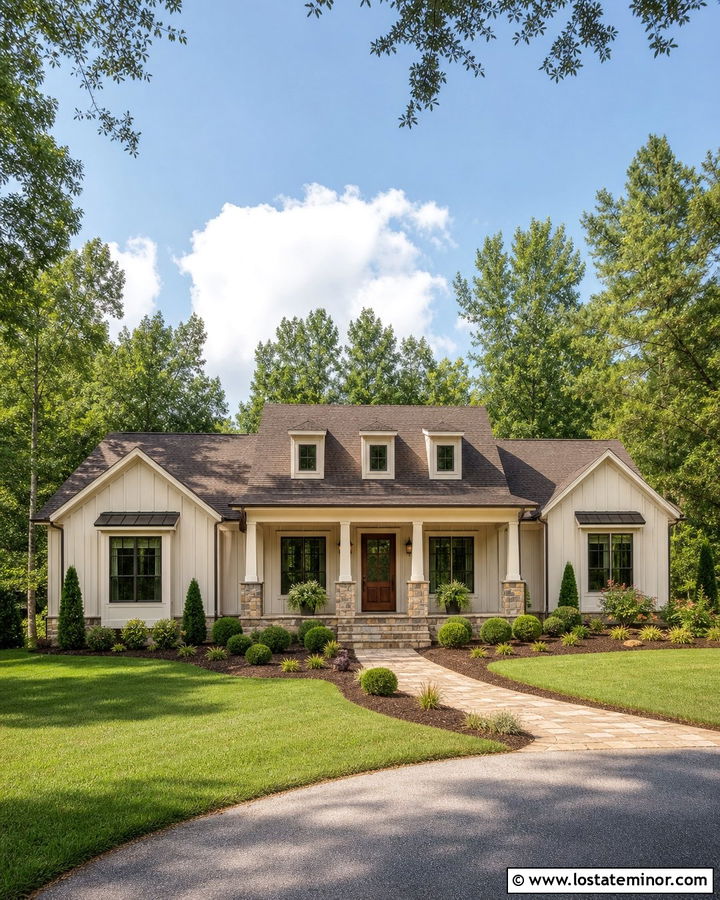
A brown roof brings a traditional, earthy finish to an off-white board-and-batten house. Look for dimensional shingles that combine espresso, weathered wood, taupe, and muted charcoal rather than one flat brown. Repeat those shades through a stained front door, bronze gutters, and natural stone. Cream trim can remain close to the siding color, keeping the roof from competing with strong outlines around every window. This scheme fits Craftsman homes, ranch houses, cottages, and rural farmhouses surrounded by warm landscapes. If black accents are included, limit them to small items such as lanterns and door hardware. Layered shrubs, wood mulch, and warm-toned pavers will connect the house to the yard. The overall look feels established, comfortable, and less graphic than black-and-white combinations.
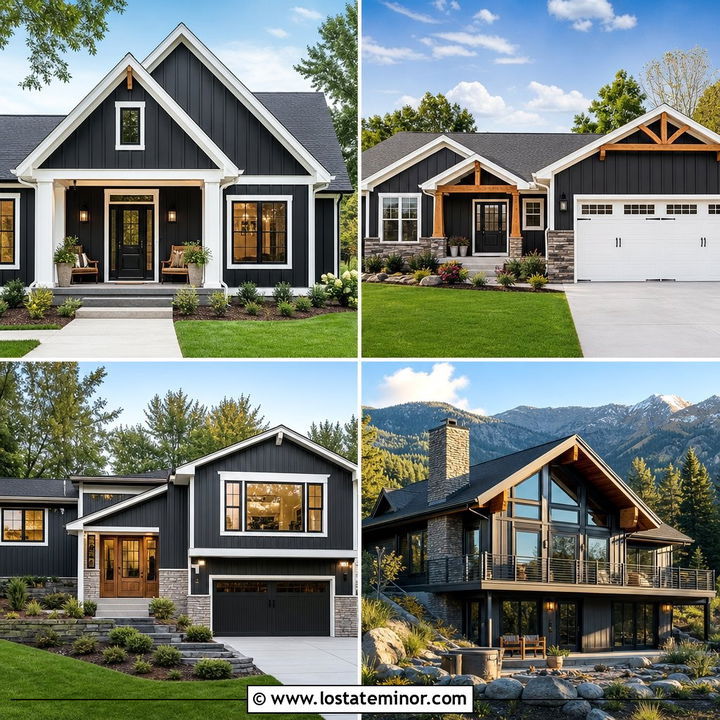
25. Off White Board and Batten Ranch House
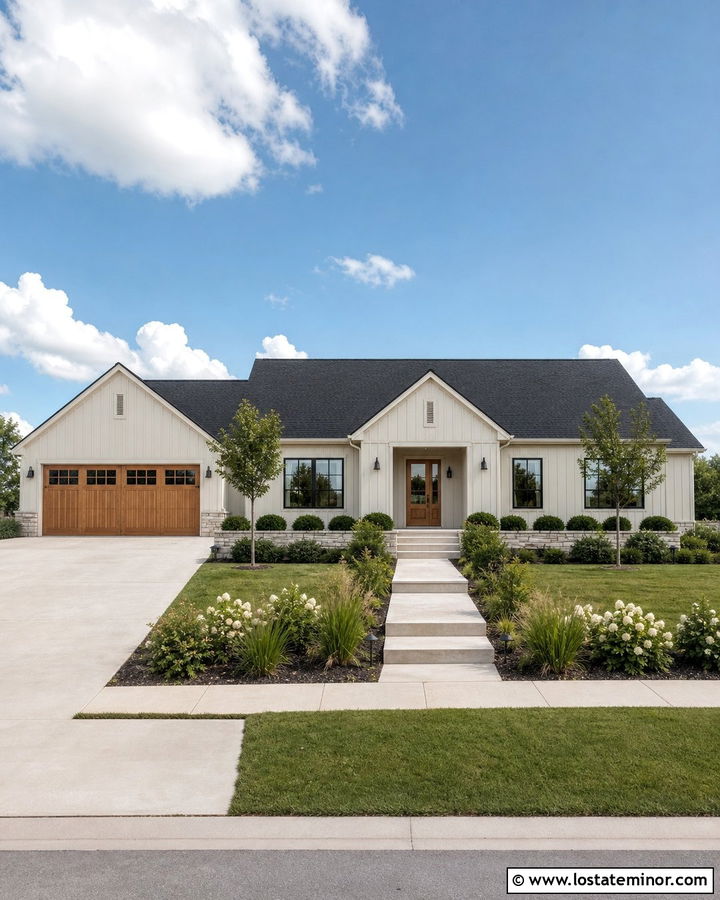
Vertical siding can give a long ranch house more height and architectural rhythm. Apply off-white board and batten across the complete facade or use it on the central entry and garage projections. A charcoal roof creates a strong upper boundary, while warm wood garage doors and a matching front door break up the pale walls. Low stone planters can add texture without interrupting the ranch’s horizontal proportions. Choose simple black windows and streamlined sconces for a current appearance. Landscaping should remain low enough to reveal the vertical siding, with ornamental grasses, rounded shrubs, and one or two small trees. A wide walkway leading directly to the entrance improves its visibility. The finished ranch feels brighter, taller, and more thoughtfully organized from the street.
26. Off White Board and Batten Craftsman House
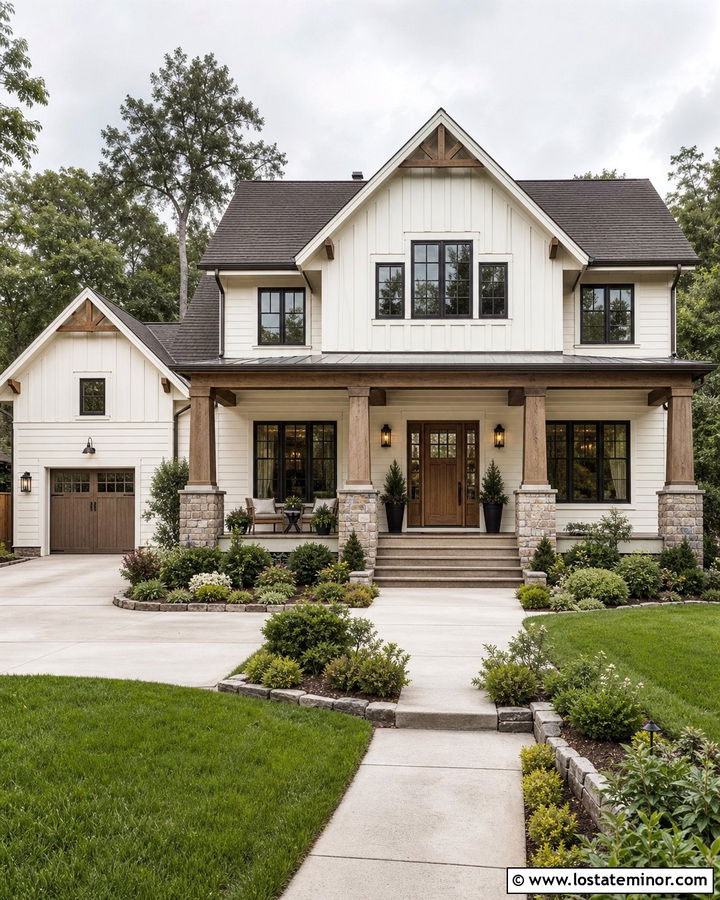
A Craftsman house needs enough material warmth to balance clean off-white siding. Use board and batten on upper gables and porch walls, then add stone piers, tapered columns, and horizontal siding below. Paint the siding surfaces one creamy off-white so the varied textures do not become chaotic. Exposed beams and a substantial oak door can introduce medium brown, while dark bronze windows and lighting sharpen the details. Choose a roof with deep gray and brown tones to connect every material. Wide porch steps and stone-edged planting beds reinforce the grounded proportions of Craftsman architecture. Keep decorative brackets purposeful and relatively simple. This complete scheme preserves the home’s handcrafted character while giving the exterior a brighter, more updated appearance suitable for many suburban settings.
27. Off White Board and Batten Colonial House
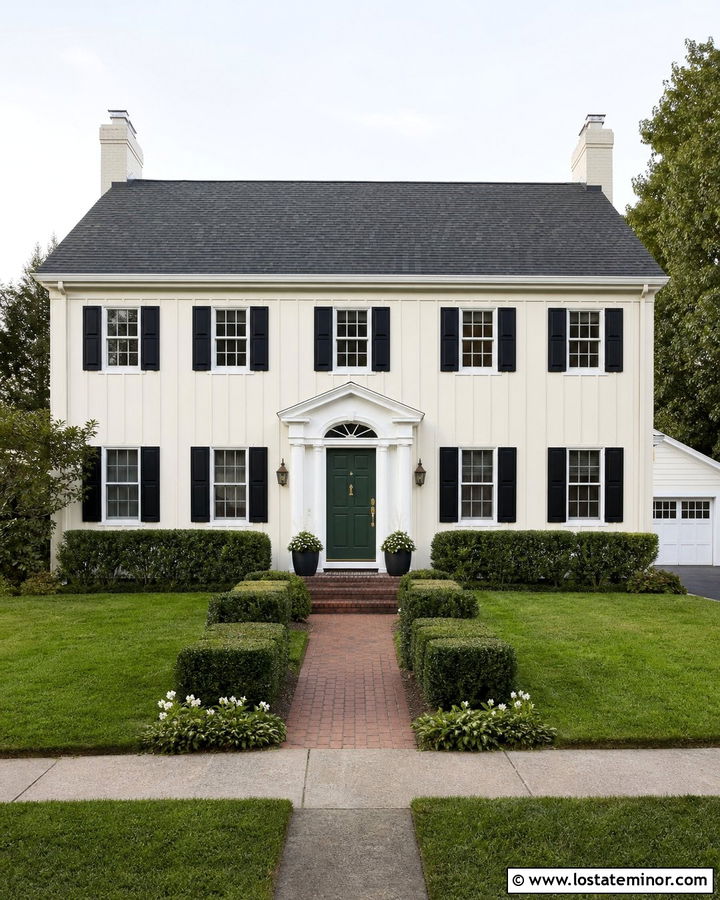
Off-white board and batten can refresh a Colonial home while respecting its orderly shape. Keep the facade symmetrical, with evenly spaced windows, properly scaled shutters, and a clearly centered entrance. Use vertical siding as the full body finish or reserve it for a front addition and connected garage. Black shutters and a deep green door create traditional contrast, while brass hardware adds a warm highlight. A dark gray shingle roof anchors the two-story elevation. White trim should define the cornice, windows, and classical entry surround without becoming overly ornate. Formal hedges, matching planters, and a straight brick walkway support the architecture. The vertical siding introduces subtle texture, but the controlled palette and balanced arrangement allow the home’s recognizable Colonial character to remain the dominant feature.
28. Off White Board and Batten Coastal House
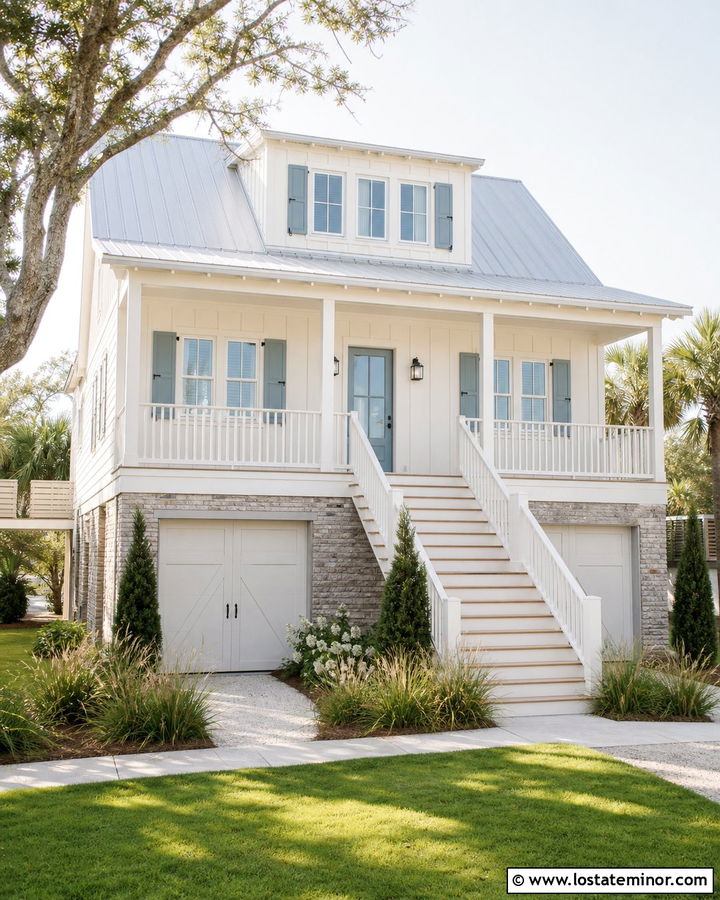
A coastal exterior can use off-white board and batten without relying on obvious themed decorations. Pair the siding with soft blue-gray doors, light gray shutters, and a weathered silver roof. White trim around windows and porch railings keeps the house bright, while pale natural wood adds warmth at the entry. On an elevated coastal cottage, use board and batten above a stone or stucco foundation. Deep roof overhangs and a covered porch create useful shadow and architectural dimension. Choose landscaping suited to the regional setting, such as ornamental grasses, compact evergreens, and sandy gravel beds. The completed palette feels fresh in strong daylight and remains calm under cloudy skies. Simple materials allow the vertical siding and breezy architectural proportions to carry the coastal character.
29. Off White Board and Batten Modern House
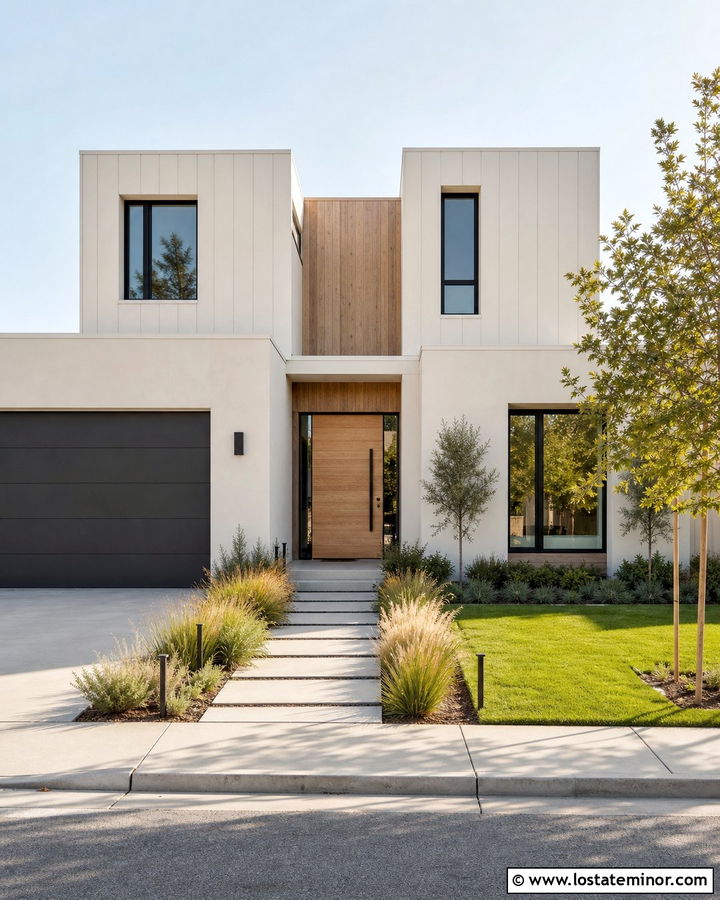
On a modern house, off-white board and batten introduces texture without distracting from clean geometry. Use the vertical siding on large rectangular volumes and contrast it with smooth stucco, pale brick, or natural wood panels. Slim black windows and a flat charcoal garage door create definition. A pivot-style wood entrance can act as the warm focal point within the neutral facade. Keep roof edges, gutters, and exterior lights streamlined, avoiding decorative farmhouse details. Large concrete pavers, linear planting beds, and sculptural grasses should continue the organized appearance into the yard. This design works best when material transitions align with corners, roof changes, and window groupings. The warm off-white body keeps the contemporary exterior approachable while maintaining the crisp, uncluttered look associated with modern architecture.
30. Off White Board and Batten Cottage House
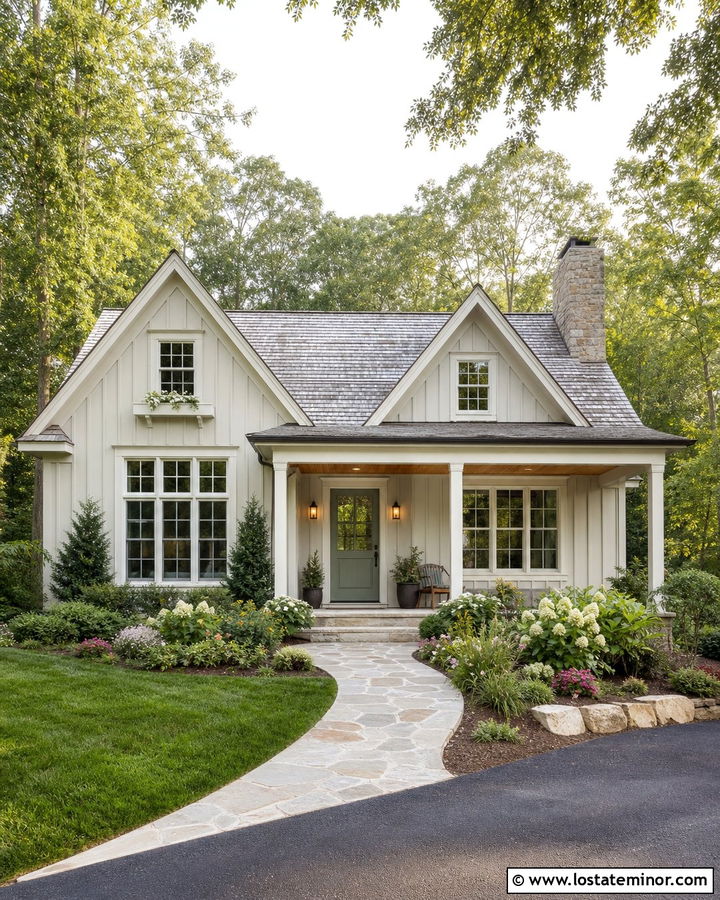
A cottage exterior benefits from the soft, welcoming quality of creamy board-and-batten siding. Pair it with a muted sage door, warm white trim, and a weathered-gray roof. Stone around the foundation or chimney can make the small house feel established, while a cedar porch ceiling adds gentle warmth. Use divided-light windows, simple gable brackets, and a compact covered entry to reinforce the cottage proportions. Avoid too many accent colors; the combination of off-white, sage, wood, and stone already provides enough variety. A curved walkway, flowering shrubs, and loosely layered garden beds can frame the facade without hiding it. The finished house feels detailed and charming from the curb, yet every material remains practical, restrained, and connected to the complete exterior scheme.
Conclusion:
The best off-white board-and-batten exterior combines color, texture, architecture, and landscaping as one coordinated composition. Begin with a warm or cool off-white that complements your roof, masonry, and regional light. Then introduce contrast through black, bronze, gray, green, blue, or natural wood details. Large features such as garage doors, porches, and stonework should support the siding rather than compete with it. Test exterior colors beside every permanent material and view them at different times of day before making a final choice. Whether you prefer a farmhouse, ranch, Craftsman, cottage, or modern facade, these **30 Off White House Design With Board and Batten Ideas** can help you build a balanced and welcoming exterior.

Related posts: