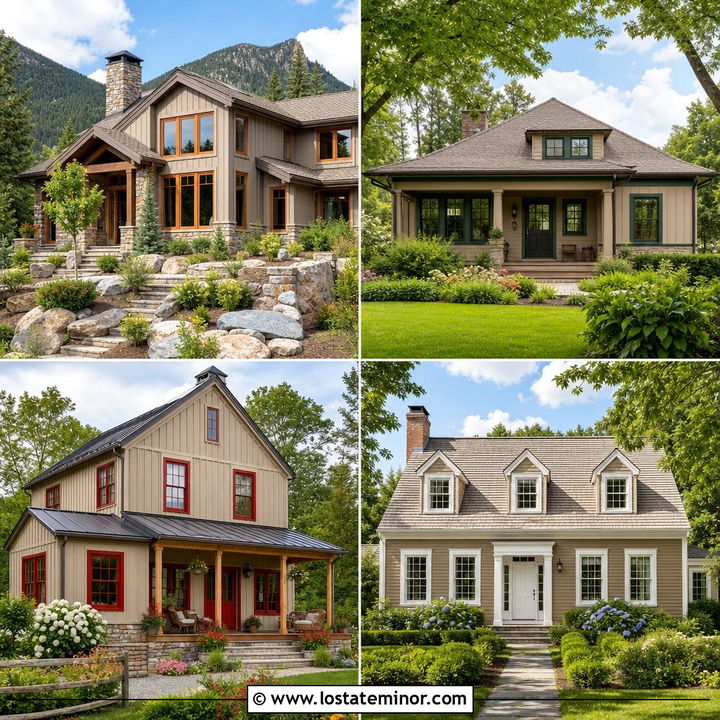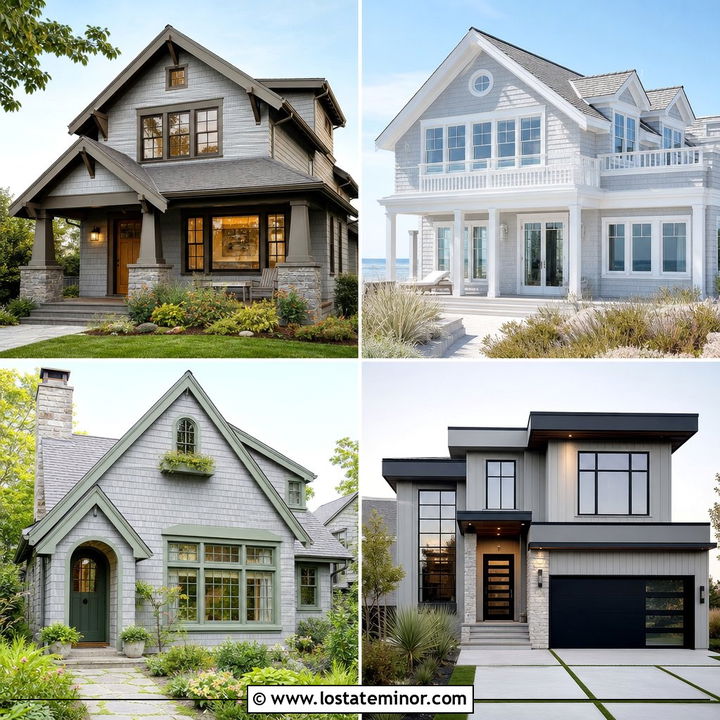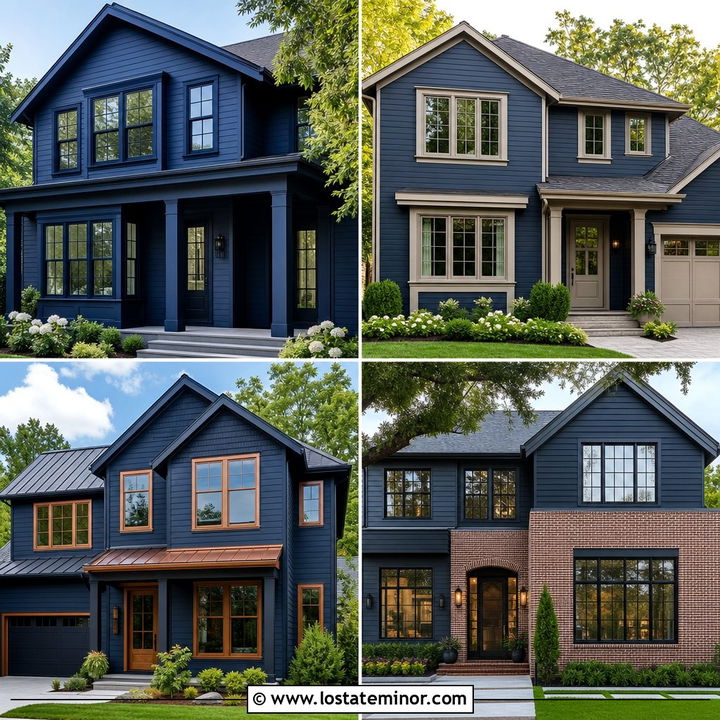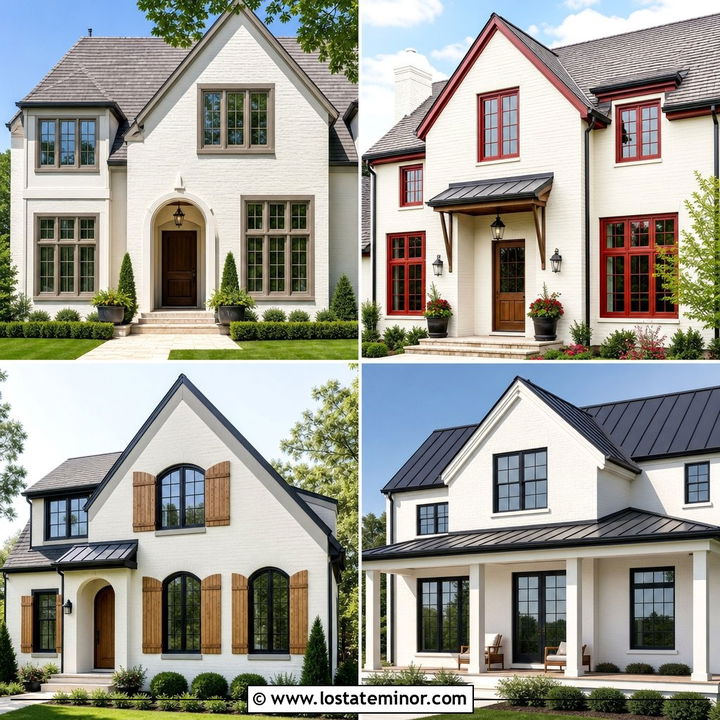
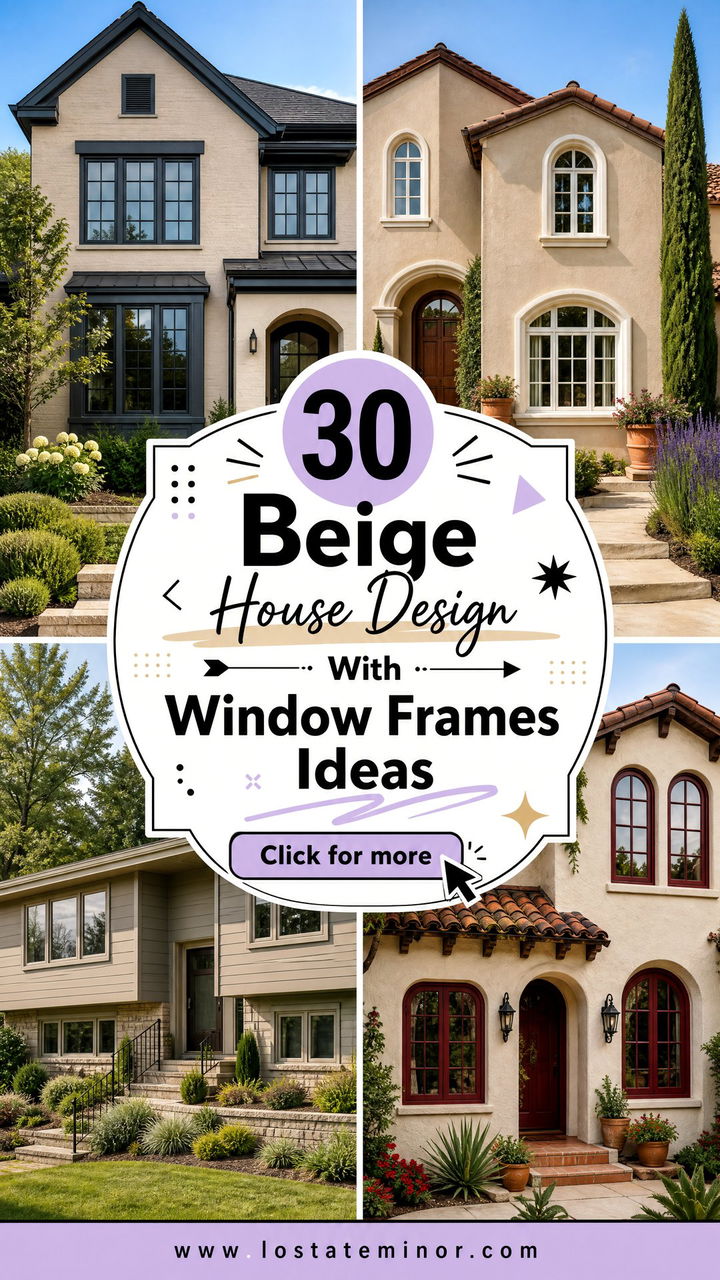
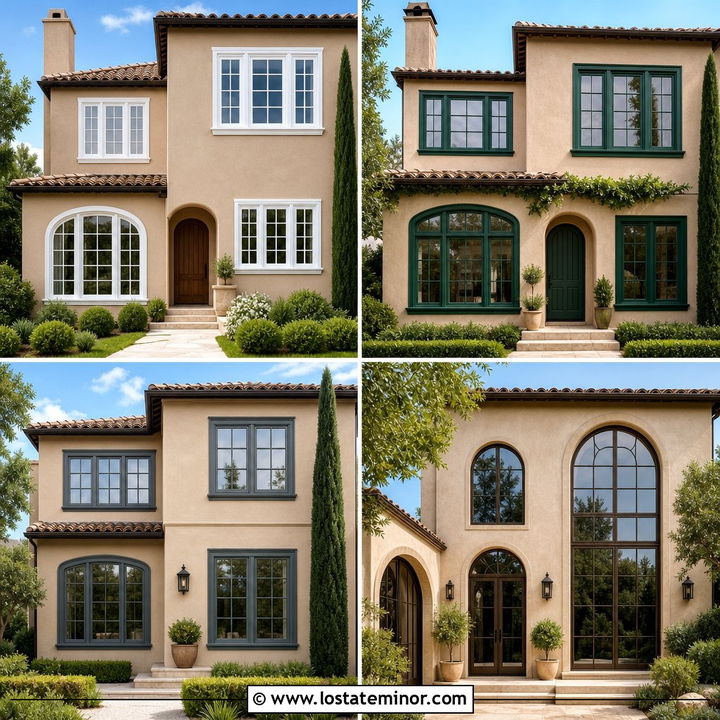
A beige exterior can feel warm, polished, and highly versatile when the windows provide the right amount of definition. Current curb-appeal inspiration pairs beige, taupe, and greige walls with everything from classic white surrounds to black, bronze, green, and oxblood frames. The strongest combinations coordinate the windows with the roof, doors, masonry, and natural materials instead of treating them as separate features. () Undertones matter too. Golden beige works naturally with cream and brown, while gray-beige supports charcoal, black, and muted blue. Always test samples beside the existing roof and stone before committing. The complete looks below make **30 Beige House Design With Window Frames Ideas** practical for many architectural styles, settings, and budgets.
1. Beige House With Black Window Frames
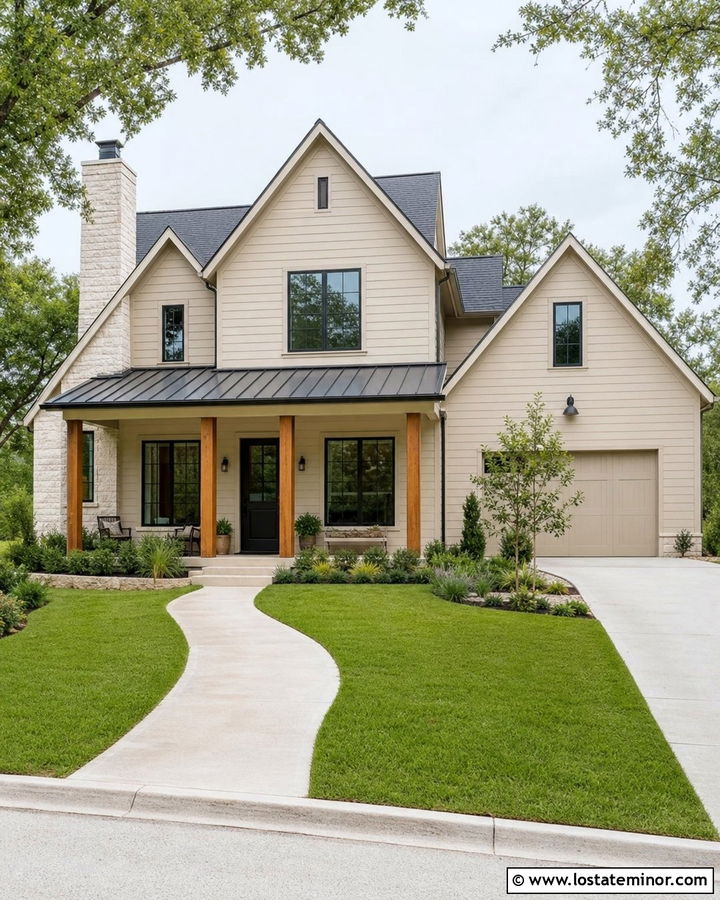
Black window frames give a warm beige house a clean outline and strong architectural definition. This pairing works especially well on a modern farmhouse with horizontal lap siding, simple gables, and a standing-seam roof. Keep the corner boards and fascia close to the beige body color so the windows remain the main contrast. A black front door and matching porch lights repeat the frame color without overwhelming the facade. Natural cedar posts or a stained wood porch ceiling add warmth between the beige and black surfaces. Complete the scheme with pale limestone foundation accents and restrained landscaping. This balanced approach feels modern, but the warm siding and wood prevent the house from looking cold or overly graphic.
2. Beige House With White Window Frames
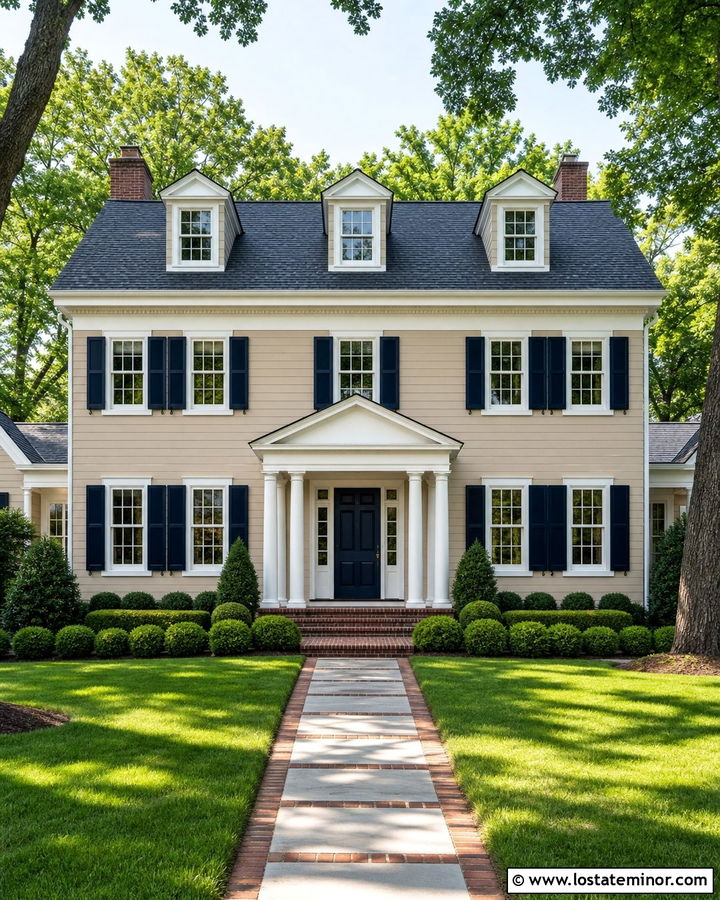
Could a classic beige exterior feel brighter without being repainted white? Crisp white window frames provide that fresh effect while preserving the warmth of the main color. On a symmetrical Colonial, carry the white onto the cornice, corner boards, porch columns, and front-door surround. Deep navy shutters and a matching door can introduce a traditional third color. Choose a medium charcoal roof to keep the upper half grounded. The white should coordinate with the beige undertone; warm beige usually looks better with a soft white than a stark blue-white. Brick steps, clipped boxwoods, and an orderly walkway reinforce the formal character. The finished facade is familiar, welcoming, and detailed without relying on an overly complicated exterior palette.
3. Beige House With Bronze Window Frames
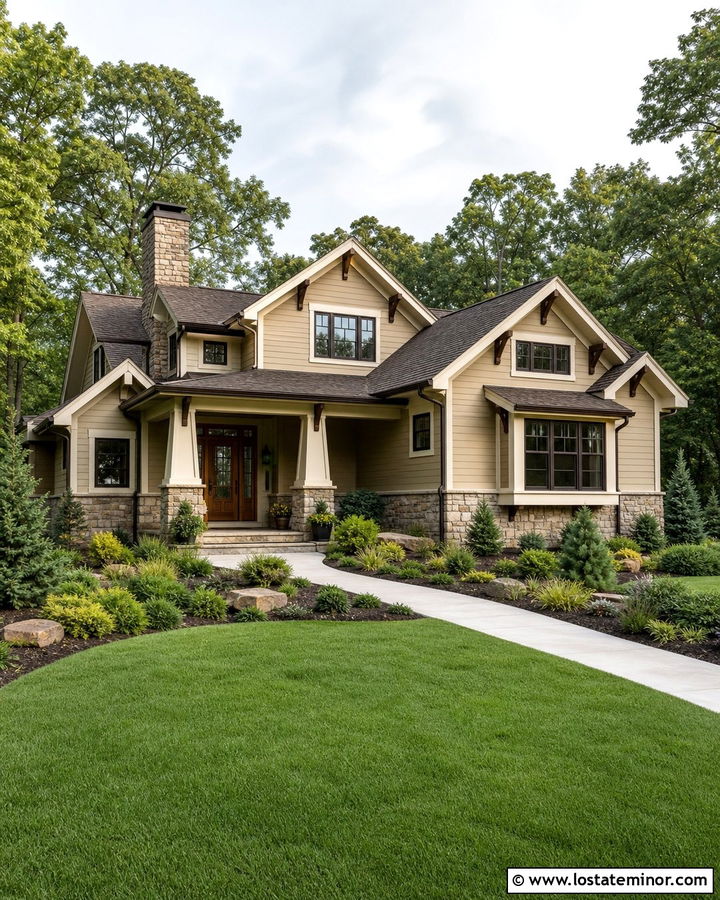
Bronze window frames bring quiet depth to beige siding and appear softer than solid black. They are particularly effective on a Craftsman house with wide eaves, tapered porch columns, and visible woodwork. Pair warm beige lap siding with dark bronze frames, gutters, porch lights, and roof flashing. Use creamy trim around the gables and fascia to keep the home from becoming too dark. A medium walnut front door can connect the bronze metal to cedar brackets and porch beams. Add a fieldstone base containing tan, gray, and brown tones for a layered transition into the landscape. This complete exterior scheme feels substantial and handcrafted. It also highlights the windows without creating the sharp contrast associated with black-and-white palettes.
4. Beige Ranch House With Brown Window Frames
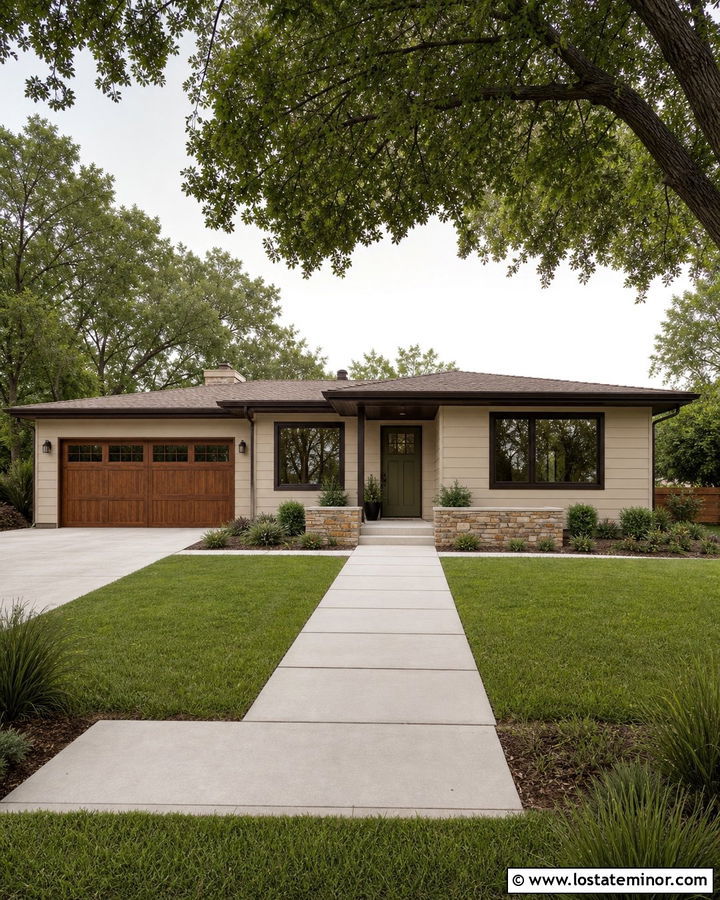
A long, low ranch can look more cohesive when dark brown window frames echo its roof and natural surroundings. Start with sandy beige siding, then use espresso-brown frames, fascia, and gutters to create a continuous horizontal line. A stained wood garage door can become a major design feature, especially when its tone relates closely to the window frames. Keep the front door a muted olive green for a subtle nature-inspired accent. Low stone planters and warm concrete pavers suit the home’s grounded proportions. Avoid adding bright white trim everywhere, since it can divide the broad facade into too many separate pieces. This coordinated beige-and-brown approach makes an older ranch feel intentional, comfortable, and connected to its mature landscaping.
5. Beige House With Charcoal Window Frames
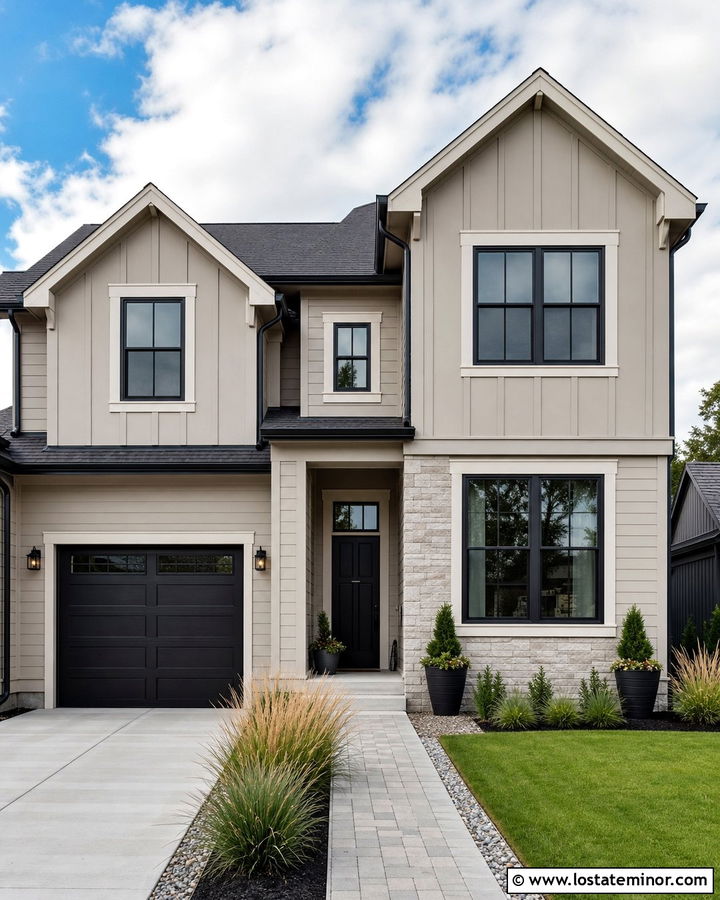
Imagine soft greige-beige walls framed by smoky charcoal rather than harsh black. The result is sophisticated, contemporary, and easy to coordinate with common gray roofing. Use charcoal window frames on a two-story transitional house with mixed lap siding and board-and-batten gables. Repeat the color on the front door, garage door, gutters, and metal porch roof. Paint the main trim a warm off-white to create a gentle transition between the beige walls and dark openings. Pale gray stone around the entry can reinforce the cooler side of the palette. Because charcoal absorbs attention, wider window groupings become natural focal points. Simple foundation grasses, dark planters, and a straight walkway complete this tailored exterior without distracting from the architecture.
6. Beige Cottage With Sage Green Window Frames
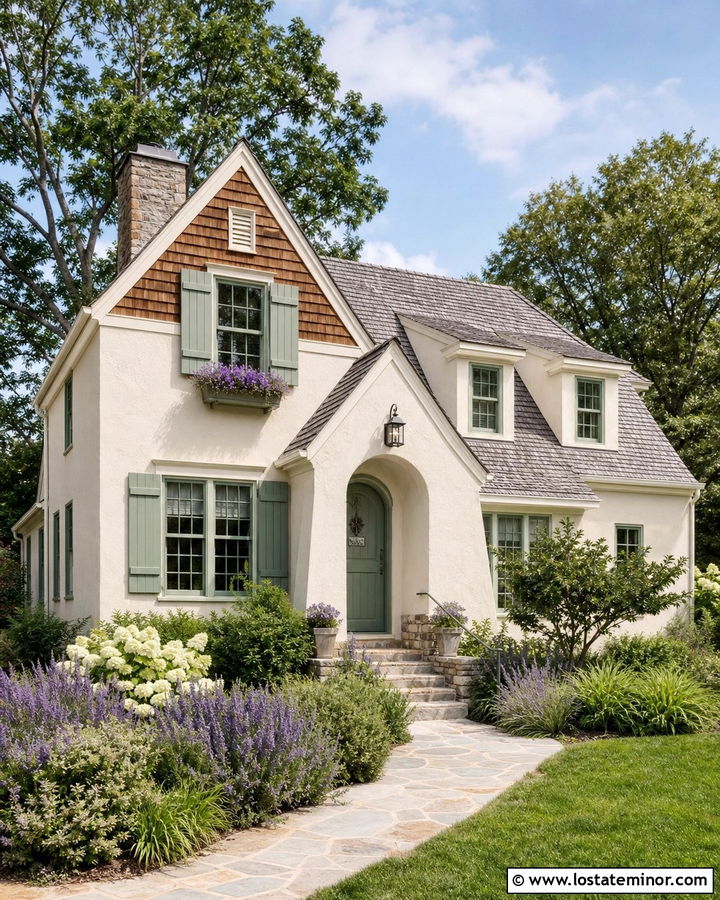
Sage green window frames make a creamy beige cottage feel settled into the garden. Choose a muted green with gray undertones rather than a bright botanical shade. Apply it to the frames, exterior casings, shutters, and small front door for a connected look. Soft cream fascia and porch trim maintain lightness around the roofline. Weathered cedar shingles on a front gable can introduce texture without competing with the gentle palette. A warm gray roof and irregular stone walkway support the natural character. Layer lavender, ornamental grasses, and white flowering shrubs around the foundation. The combination is calm but not colorless. It works especially well when the beige siding has a warm, slightly yellow base that complements green foliage and aged wood.
7. Beige Coastal House With Navy Window Frames
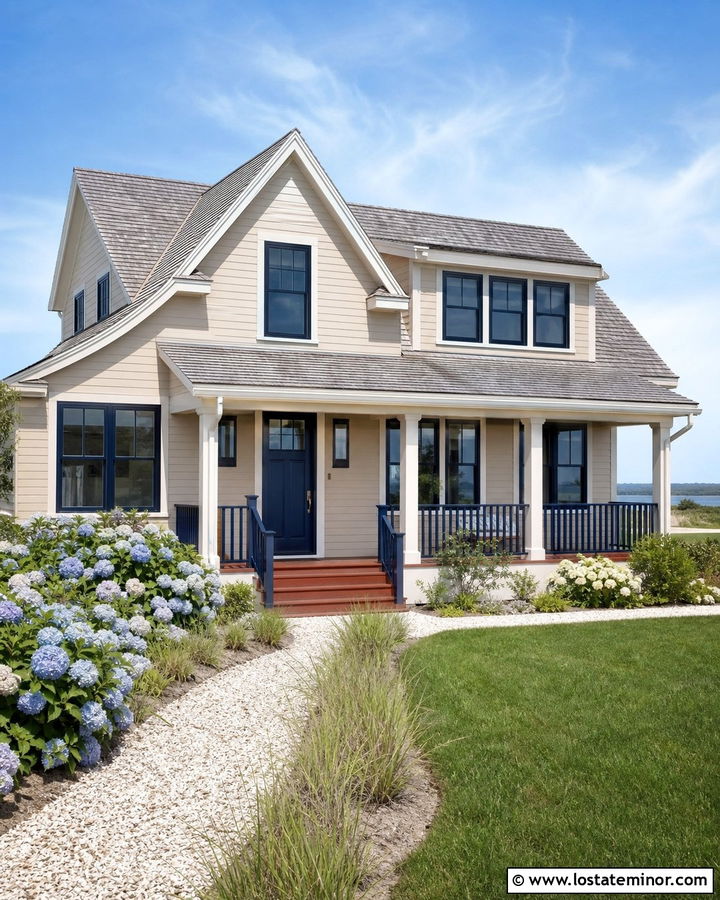
Navy window frames offer a nautical reference without making a beige coastal house look themed. Use pale sand-colored shingles or lap siding as the body, then repeat deep navy on the window frames, front door, and porch railing. Clean white fascia, columns, and gable trim provide the brightness associated with coastal architecture. A weathered gray roof and natural mahogany porch floor add relaxed texture. If the house has dormers, navy-framed windows help them stand out clearly against the beige roof-facing walls. Keep the landscaping breezy with beach grasses, hydrangeas, and a crushed-shell or pale gravel path. This whole-house scheme delivers more personality than standard beige and white while remaining practical, balanced, and appropriate for a light-filled seaside or suburban setting.
8. Beige Stucco House With Cream Window Frames
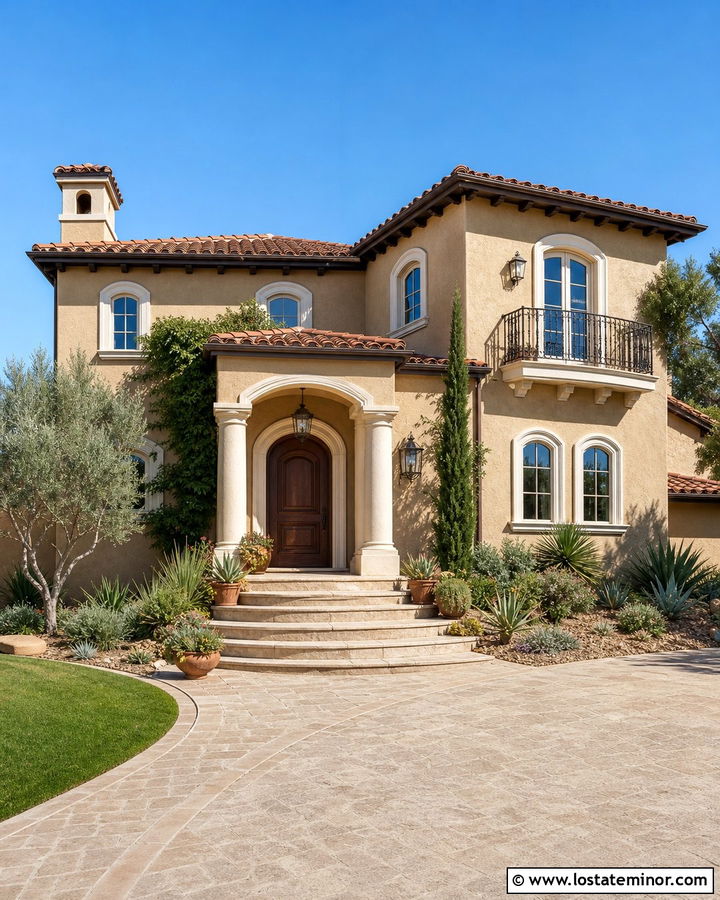
Cream window frames can soften a beige stucco facade without disappearing completely. On a Mediterranean house, choose a warm ivory that is noticeably lighter than the wall color but less brilliant than pure white. Carry it across arched window surrounds, deep eaves, and porch columns. Dark brown roof tiles and a walnut entry door anchor the light palette. Wrought-iron balcony rails and lanterns introduce thin black details without changing the gentle character of the frames. Terracotta pots, warm stone steps, and drought-tolerant planting reinforce the architecture. This low-contrast design is especially useful when the windows have decorative arches or substantial molding. Instead of creating sharp outlines, the cream frames allow shadows and stucco texture to define the home’s elegant architectural features.
9. Beige Tudor House With Taupe Window Frames
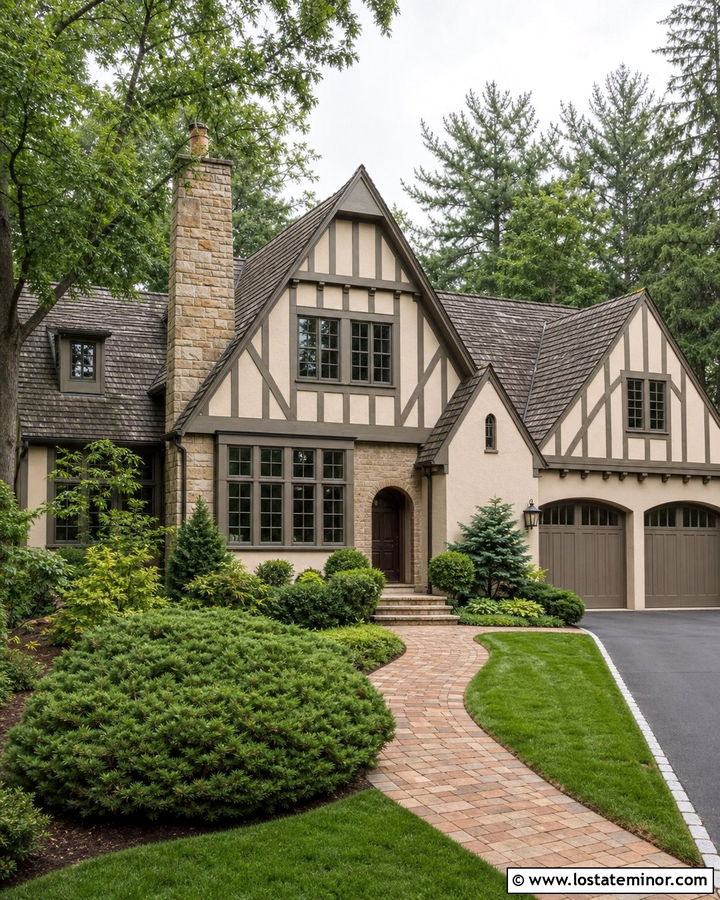
A Tudor exterior benefits from window frames that support its detailed roofline and mixed materials. Pair a medium beige stucco body with deep taupe frames and half-timber accents. Taupe has enough depth to define leaded or divided-light windows, but it feels gentler than black. Use the same color on the front door, bargeboards, and garage doors for consistency. A roof in weathered brown or charcoal creates an appropriately substantial top. Add warm beige stone around the lower walls and chimney to connect the stucco with the landscape. Keep the trim narrow and avoid introducing bright white, which can fight the historic character. Layered evergreens and a curving brick walkway complete an exterior that appears established, textured, and thoughtfully updated.
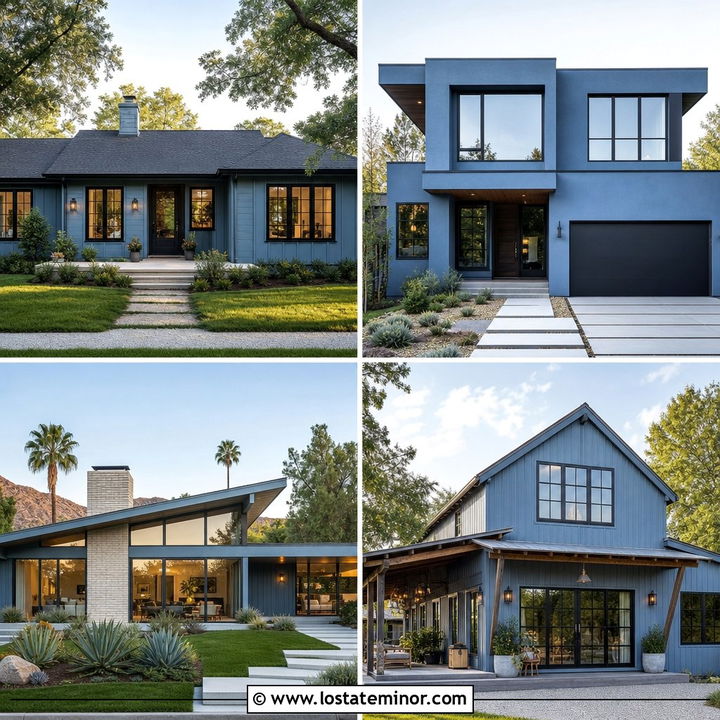
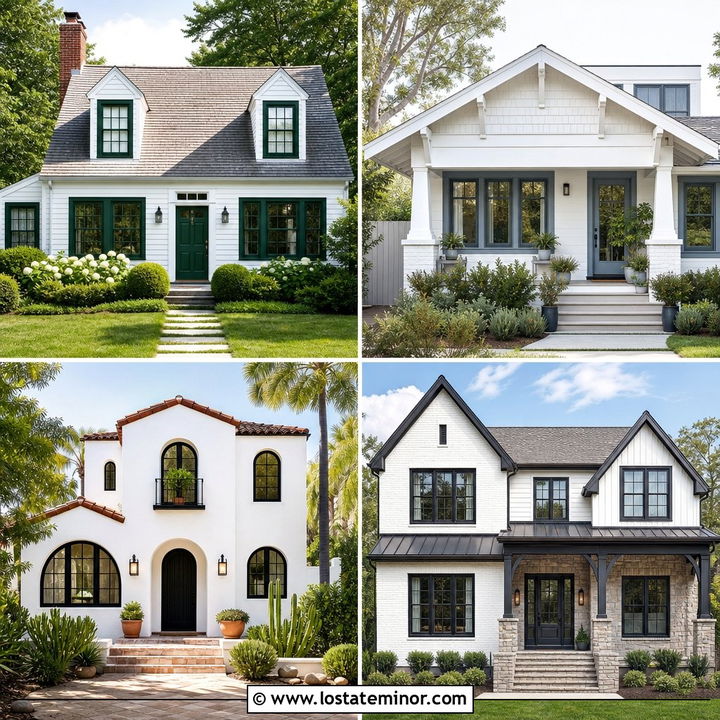
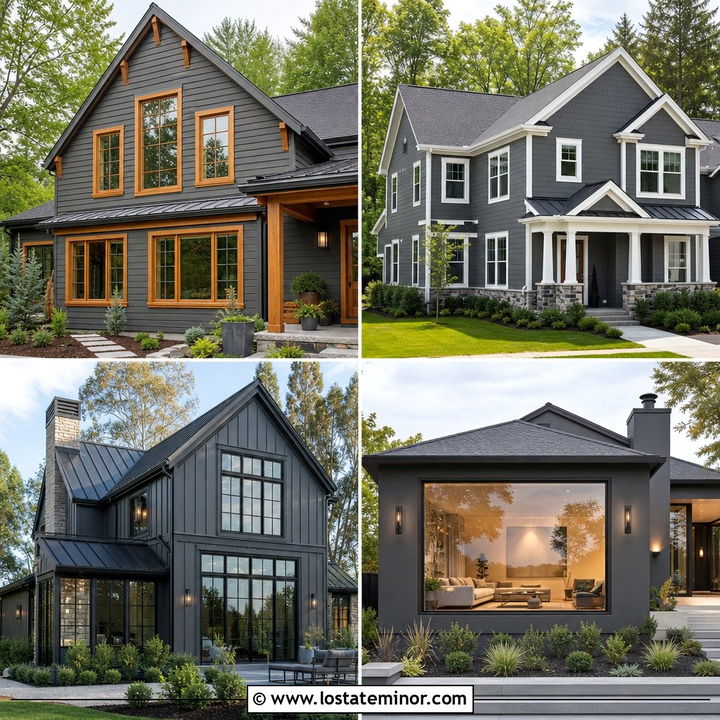
10. Beige Split-Level With Greige Window Frames
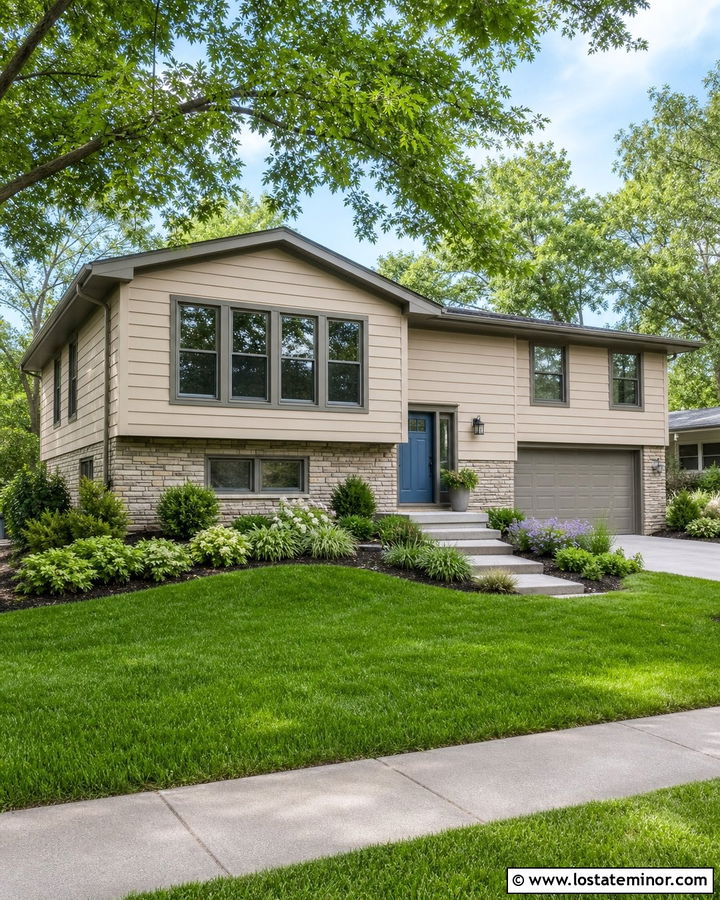
Split-level houses often contain several horizontal and vertical divisions, so a restrained frame color can bring visual order. Use warm beige lap siding with medium greige window frames and matching exterior casings. Continue the greige across the garage door and fascia to connect the lower and upper portions of the facade. A muted blue front door provides a controlled accent near the entry. Introduce stacked stone around the garage level in a blend of beige and gray. This creates a durable-looking base and helps the body color transition into the driveway. Keep shutters off unless the window proportions genuinely support them. Broad planting beds and a stepped walkway can soften the home’s angular form. The completed palette modernizes the split-level without erasing its original mid-century character.
11. Beige Bungalow With Wood Window Frames
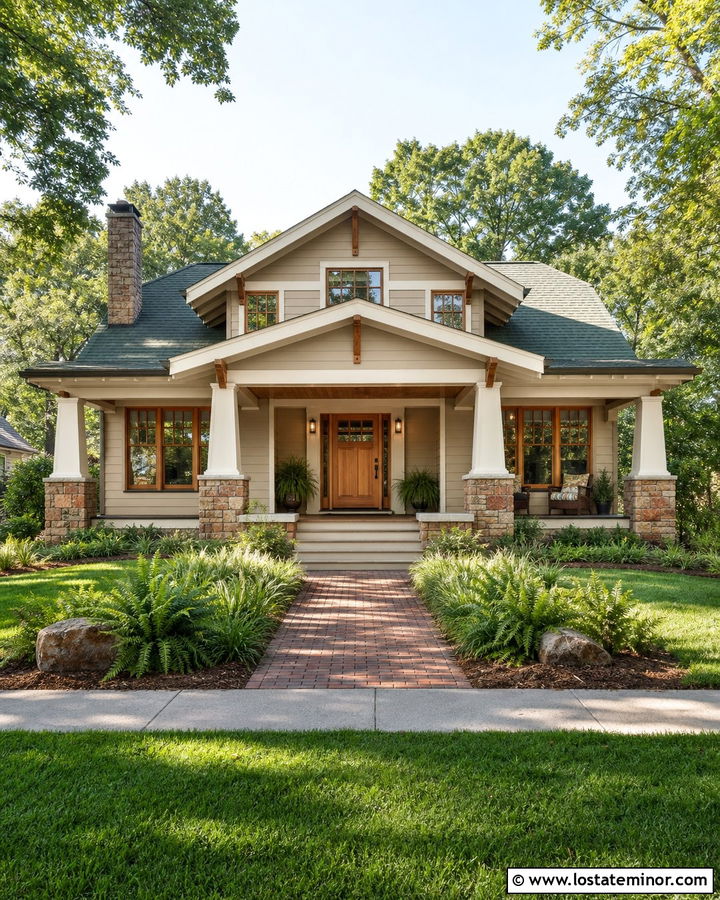
Natural wood window frames can turn a simple beige bungalow into a warm, craftsmanship-focused exterior. Choose a honey-toned or medium cedar finish that remains visible against creamy beige siding. Repeat the wood on the front door, porch ceiling, brackets, and tapered column details. Soft ivory trim around the roof and porch prevents the facade from feeling too brown. A deep green roof or dark bronze metal roof introduces contrast while relating to the landscape. Stone porch piers with tan and rust tones provide a solid visual base. Protect exterior wood with a suitable finish and plan for periodic maintenance. The reward is rich, natural variation that painted frames cannot fully duplicate. Ferns, grasses, and a brick walkway finish the relaxed, welcoming bungalow composition.
12. Beige Spanish House With Oxblood Window Frames
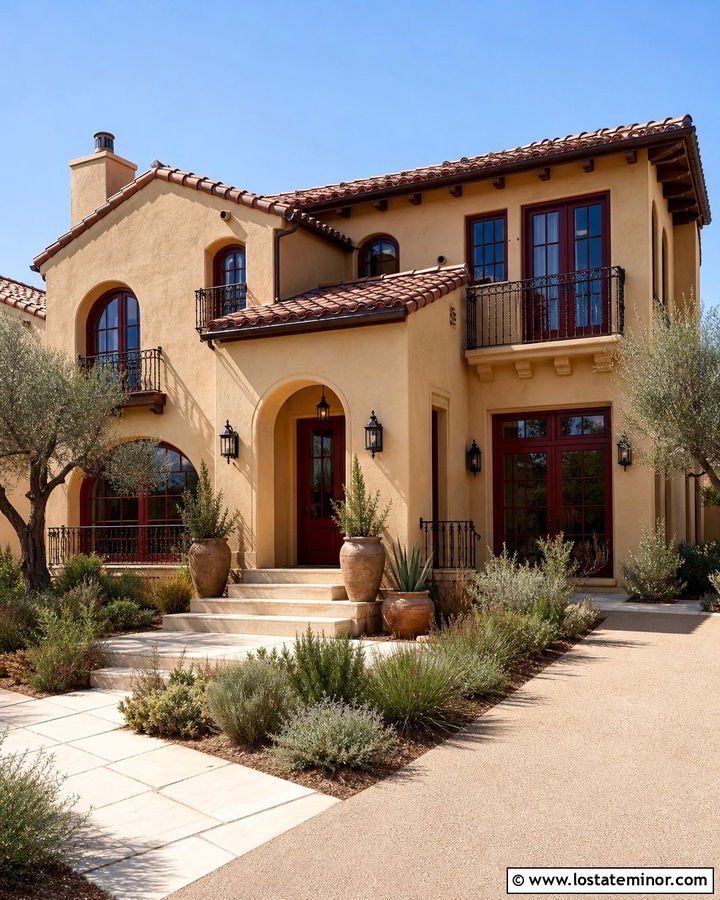
For a beige Spanish Revival house, oxblood window frames create a rich accent that feels more distinctive than brown. This deep red-burgundy color works beautifully with warm stucco, clay roof tiles, and iron details. Apply it to the window frames, French doors, and main entry door while keeping the surrounding stucco trim simple. Dark bronze gutters and balcony rails prevent the red from becoming too dominant. Use cream limestone or pale terra-cotta around the steps and courtyard wall. The palette appears strongest when the oxblood is repeated in several measured locations rather than limited to one small window. Olive trees, rosemary, ornamental grasses, and large earthen planters complete the setting. The finished exterior feels historic, sun-warmed, and full of controlled color.
13. Beige Modern House With Steel Gray Window Frames
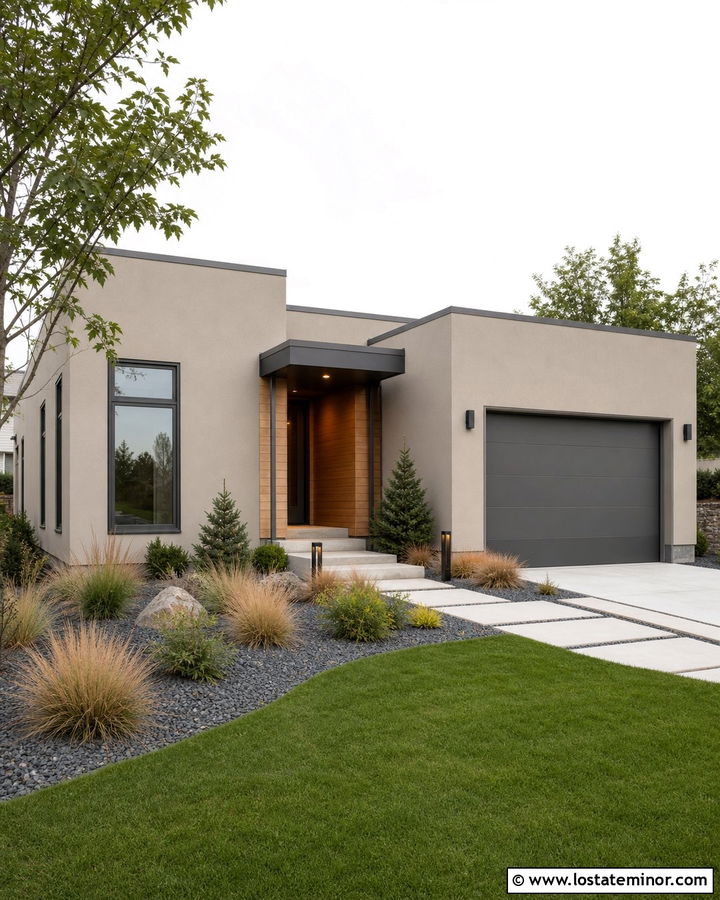
Steel gray window frames suit a modern beige house when black feels too severe. Pair smooth beige stucco with large gray-framed windows, a low roofline, and carefully aligned wall openings. Use the same steel gray on the garage door, coping, and slim entry canopy. A vertical section of warm cedar siding can mark the entrance and prevent the neutral palette from becoming flat. Keep exterior trim minimal because modern architecture depends more on clean joints, wall planes, and material changes than decorative molding. Light concrete pavers and charcoal gravel create an orderly approach to the facade. Add sculptural grasses and compact evergreen planting rather than busy flower beds. Together, the beige, gray, and wood deliver warmth, precision, and restrained contemporary curb appeal.
14. Beige Traditional House With Almond Window Frames
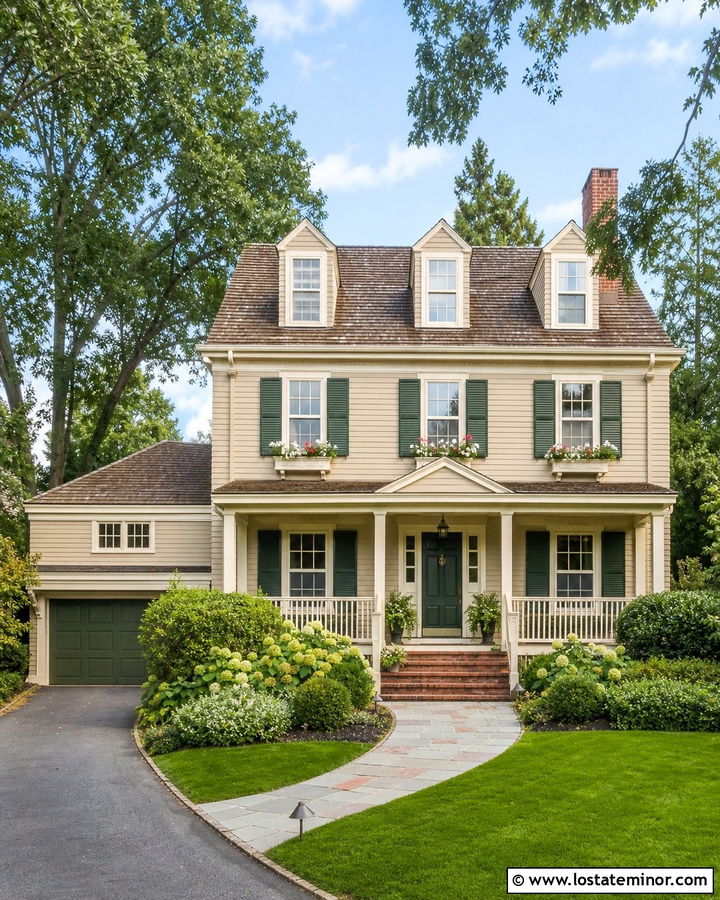
Almond window frames create a quiet, coordinated appearance on a traditional beige home. Because the two colors are closely related, architectural moldings and shadows become more important than sharp color contrast. Select a light beige body and a slightly creamier almond for the frames, casings, fascia, and porch railings. Use a dark green front door and matching shutters to establish a clear focal point. A weathered brown roof and warm brick steps support the classic palette. This combination is useful when existing windows cannot be replaced and already have an almond factory finish. Instead of fighting that fixed color, build the exterior scheme around it. Full shrubs, window boxes, and a curved walkway add definition while keeping the overall facade gentle and comfortably familiar.
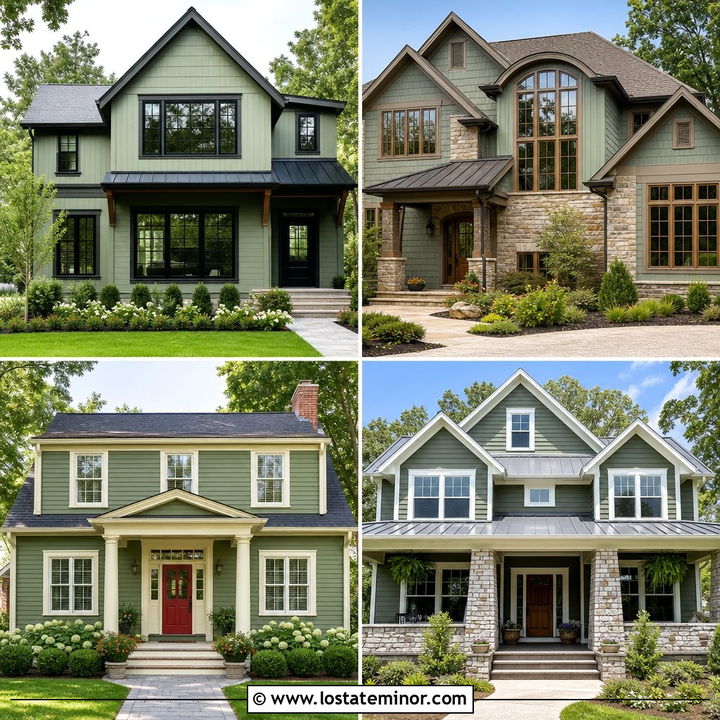
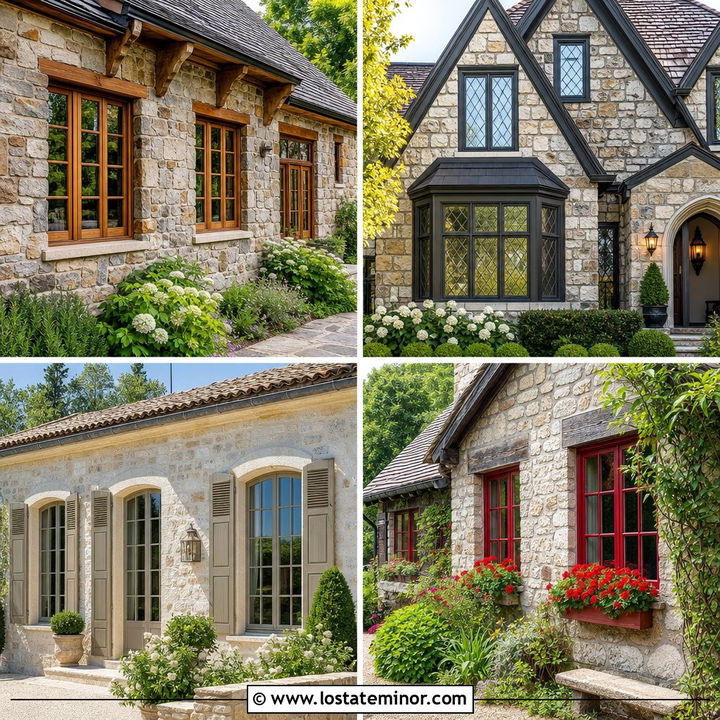
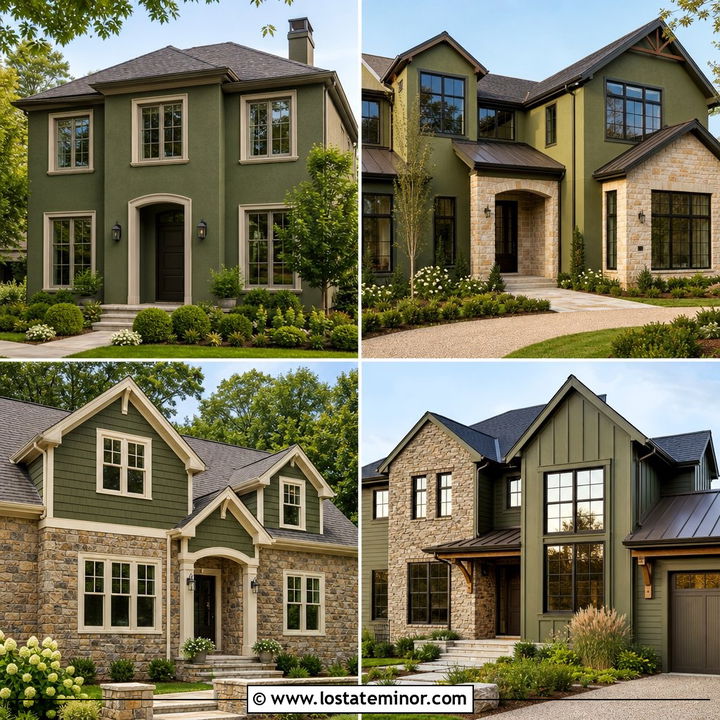
15. Beige Cabin With Forest Green Window Frames
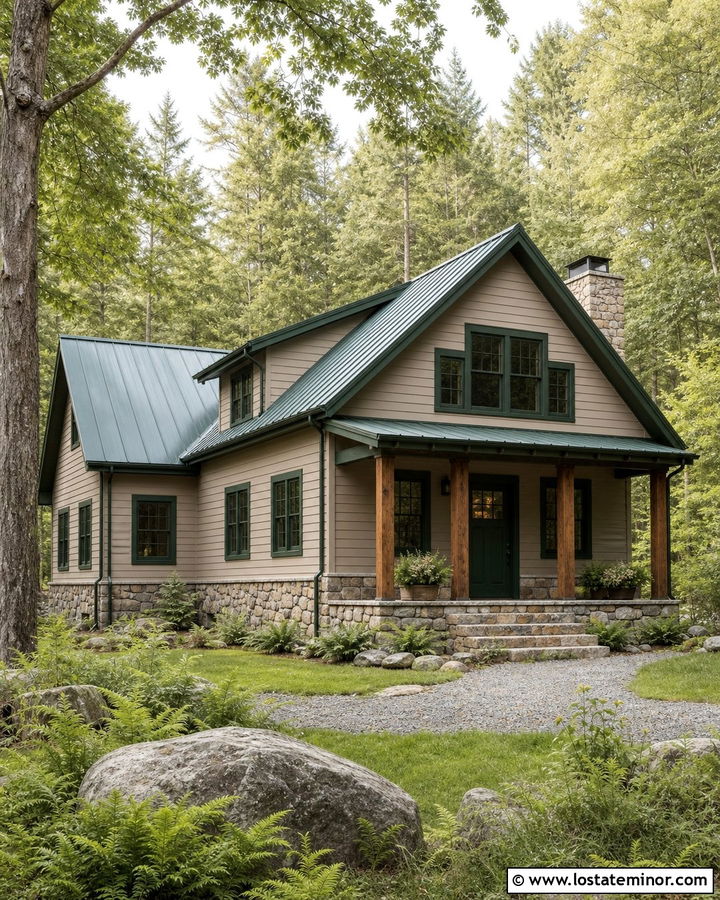
Deep forest green frames allow a beige cabin to blend with wooded surroundings while preserving visible architectural contrast. Use a warm mushroom-beige stain or paint on lap siding, then carry forest green across the window frames, fascia, front door, and metal roof. Natural stone around the foundation and chimney creates a durable connection to the site. Cedar posts and railings add an intermediate brown tone between the light walls and dark green details. Keep the windows large enough to balance the stronger frame color, particularly on a tall gable facade. Native grasses, ferns, and an informal gravel path suit the rustic setting better than formal hedges. This complete scheme feels earthy and substantial, yet the beige body keeps the cabin brighter than a fully dark exterior.
16. Beige Cape Cod With Blue Gray Window Frames
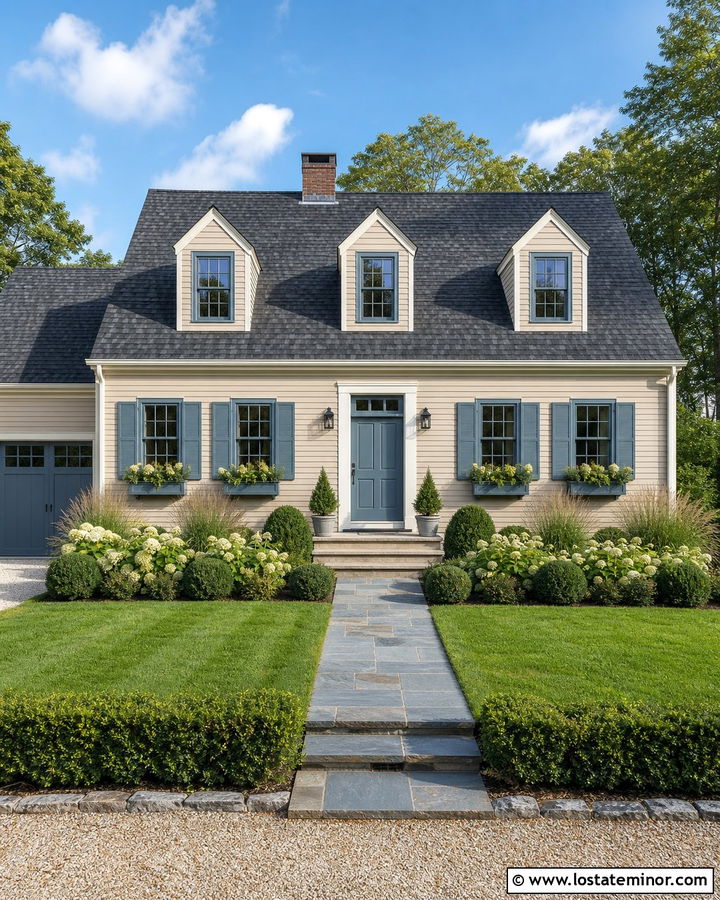
Blue-gray window frames introduce soft coastal color to a beige Cape Cod without overpowering its compact shape. Choose a light oatmeal-beige for the shingles or clapboards and a medium muted blue-gray for the frames and shutters. Warm white trim should define the dormers, cornice, porch, and corner boards. A deeper blue-gray front door can strengthen the entrance while maintaining the same color family. Finish the roof in weathered charcoal shingles and use pale brick or bluestone for the walkway. Window boxes painted to match the frames provide another small repetition of color. Hydrangeas, clipped hedges, and ornamental grasses create an appropriate garden frame. The result is brighter than an all-neutral house but still relaxed, classic, and easy to maintain visually.
17. Beige Prairie House With Copper Window Frames
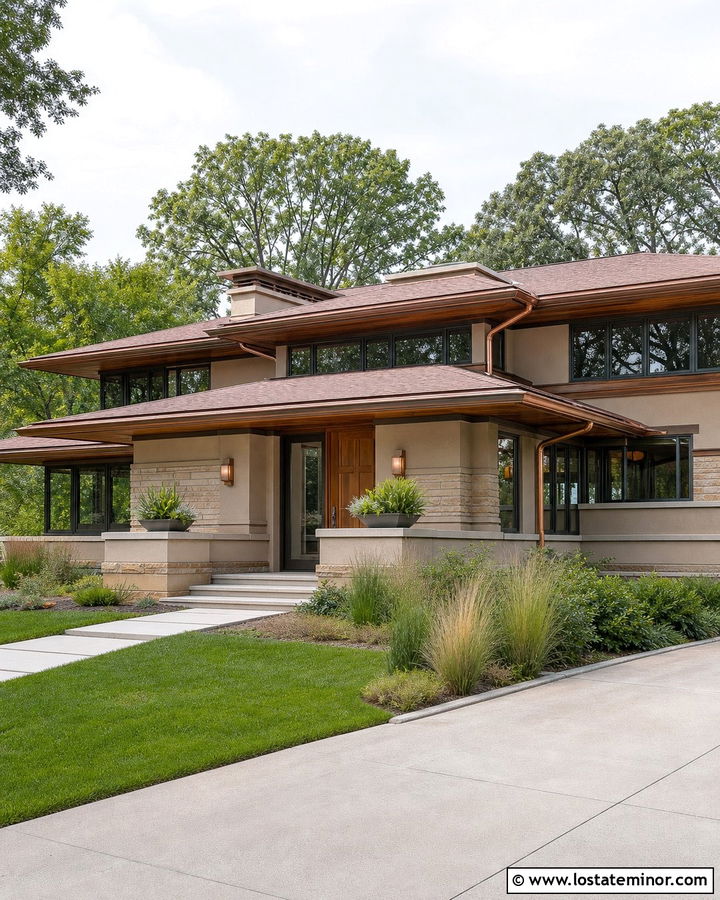
Copper-toned window frames complement the strong horizontal lines of a Prairie-style beige house. Choose frames with a dark aged-copper or brown-metal finish rather than a bright orange surface. Pair them with warm tan-beige stucco, broad eaves, low-pitched roofing, and horizontal wood accents. Repeat the metal tone on gutters, porch lights, and entry hardware. A stained oak front door and bands of earth-colored stone strengthen the architecture’s connection to natural materials. Keep the fascia dark enough to emphasize the roofline without creating a heavy black border. Low grasses, spreading shrubs, and long rectangular planters echo the home’s horizontal proportions. This layered exterior scheme uses subtle differences in beige, brown, copper, and stone to create depth without unnecessary decorative color.
18. Beige Southwestern House With Terracotta Window Frames
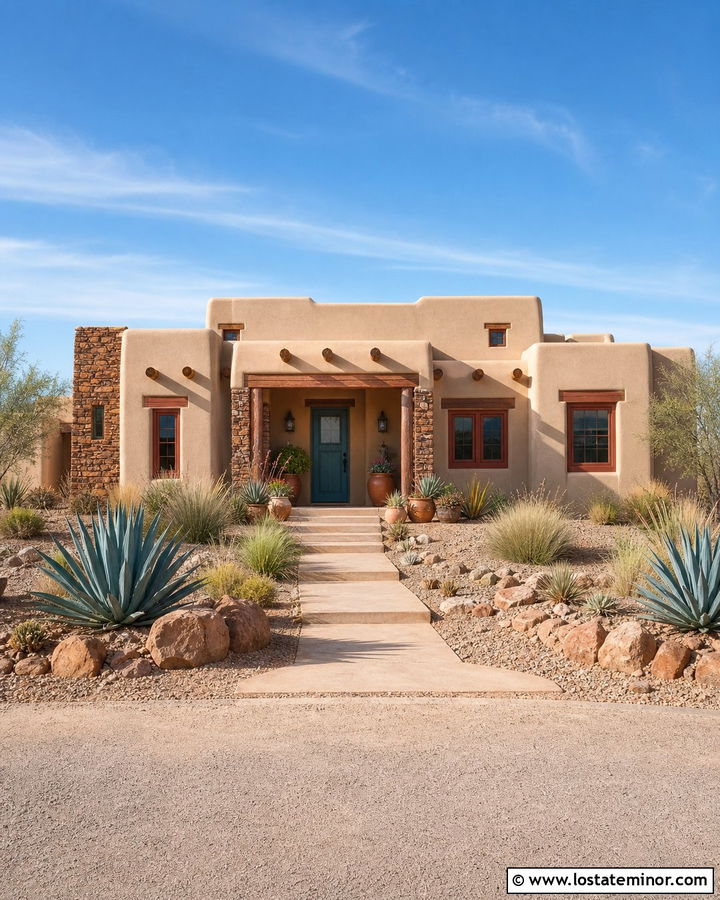
Sun-washed beige stucco becomes much more memorable with muted terracotta window frames. On a Southwestern house, carry the earthy red-orange color onto exterior doors, wood lintels, and selected courtyard details. Keep the roof edges and parapet caps close to the main beige so the facade remains calm. Turquoise or dusty blue can appear sparingly on the front door if you want one stronger regional accent. Use natural wood vigas, rust-colored stone, and clay pots to connect every surface. Gravel, agave, yucca, and drought-tolerant grasses provide a practical landscape frame. The terracotta should look earthy rather than bright, especially under strong sunlight. This full exterior palette feels warm, grounded, and expressive while allowing the beige walls to remain the dominant feature.
19. Beige French Country House With Mushroom Frames
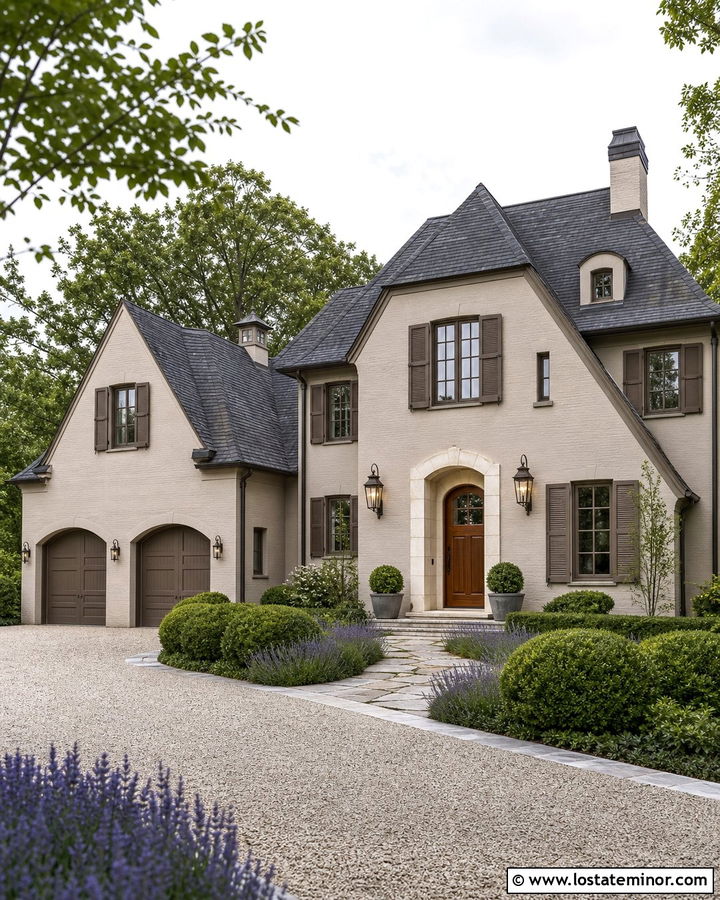
Mushroom-colored window frames add gentle definition to a French country exterior built around creamy beige stucco or painted brick. The frame color should be a deeper brown-gray with warm undertones. Repeat it on shutters, arched doors, and garage doors to establish rhythm across a broad facade. Soft limestone trim around the entry and selected windows creates subtle dimension. Choose a weathered charcoal roof, aged bronze lanterns, and a medium oak front door for an old-world material mix. Avoid brilliant white, since softer colors better suit the relaxed masonry and curved architectural details. Lavender, clipped shrubs, and an informal pea-gravel drive complete the composition. The resulting house looks layered and established rather than newly coated in one uniform beige paint color.
20. Beige Brick House With Black Window Frames
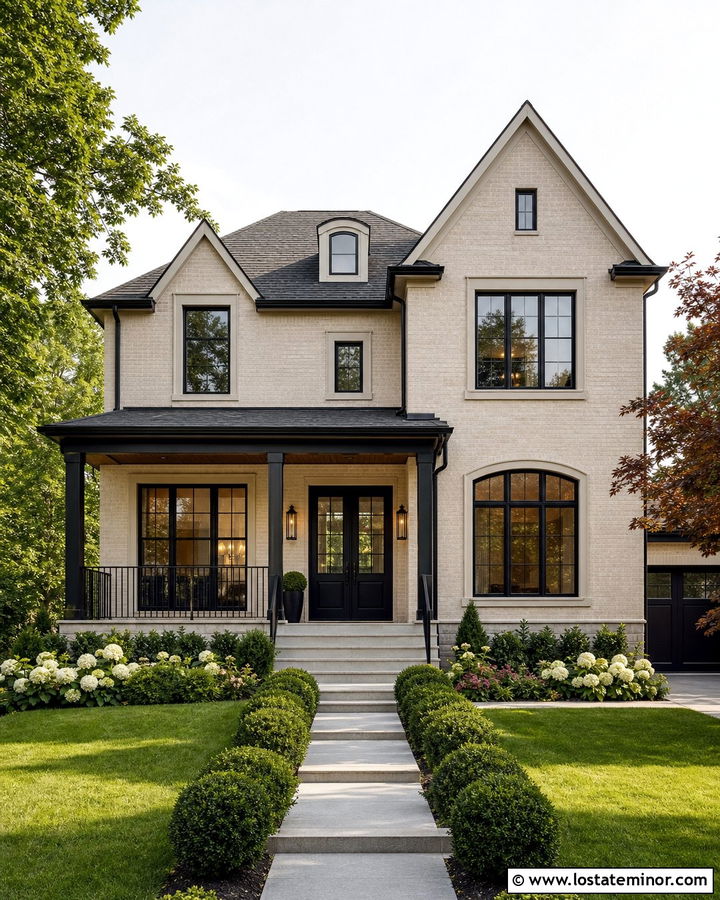
Black frames can transform beige brick by emphasizing every window opening while leaving the masonry’s natural variation intact. On a transitional two-story house, use thin black frames with wider trim painted a warm beige that closely matches the brick. This frame-within-a-frame approach provides contrast without surrounding every window in a heavy black block. Repeat black on the front door, gutters, porch lanterns, and metal handrails. A charcoal roof supports the frames, while a cedar porch ceiling introduces warmth. If the brick contains gray and brown flecks, select stone steps that share those tones. Structured foundation shrubs and a straight walkway reinforce the polished architecture. The finished scheme preserves the durable brick character but gives the entire facade a sharper, more current appearance.
21. Beige Stucco House With White Window Frames
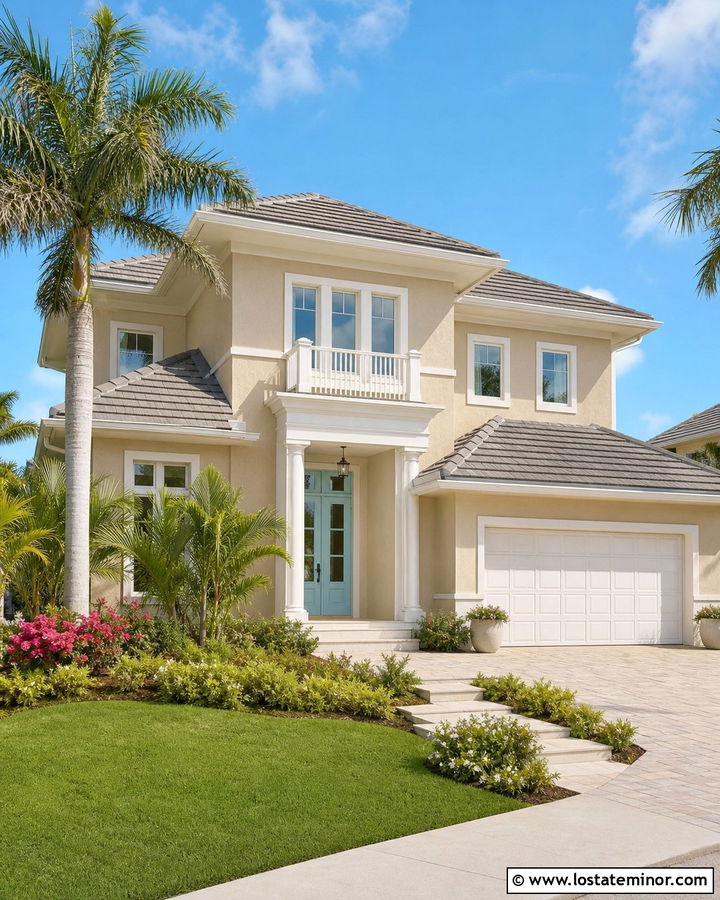
Bright white frames can make beige stucco appear cleaner and more dimensional, particularly on a Florida or California-inspired home. Use warm sandy beige across the walls, then repeat white on the window frames, deep surrounds, fascia, columns, and garage trim. A pale blue or sea-glass front door adds a relaxed accent without disturbing the airy palette. Choose a light gray tile roof to reflect the bright character of the scheme. Stone or concrete pavers should remain warm enough to coordinate with the stucco rather than turning icy gray. Palms, flowering shrubs, and neatly edged lawn create a fresh setting. Because white highlights dirt and weathering, durable finishes and regular cleaning matter. Visually, however, the contrast gives a simple stucco house excellent curb presence.
22. Beige House With Bronze Frames And Stone
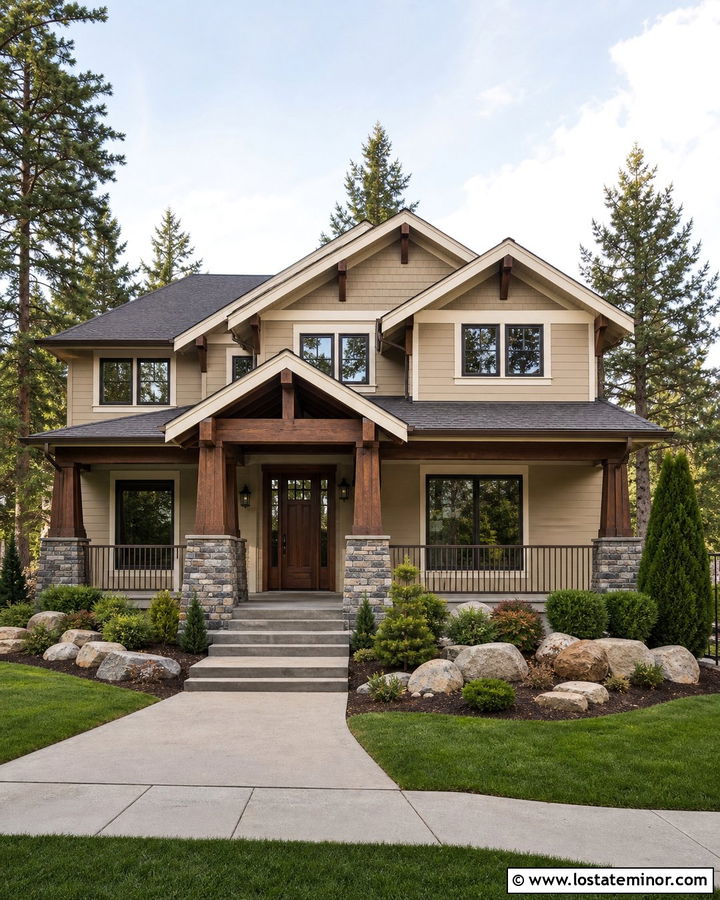
A mix of beige siding, bronze window frames, and natural stone creates a richly layered exterior without requiring bright accent colors. Use a medium warm beige on a Craftsman-inspired house and install dark bronze frames that relate to brown and charcoal pieces within the stone veneer. Repeat bronze on the gutters, lights, porch railing, and garage hardware. Cream trim along the fascia and gable edges maintains clear separation from the roof. Select stone for the porch piers and lower foundation rather than covering every wall, which keeps the facade from feeling heavy. A walnut door and cedar porch beams bridge the color gap between siding and metal. Evergreen shrubs, natural boulders, and a broad walkway finish this durable, balanced, and welcoming whole-house design.
23. Beige Board And Batten With Dark Frames
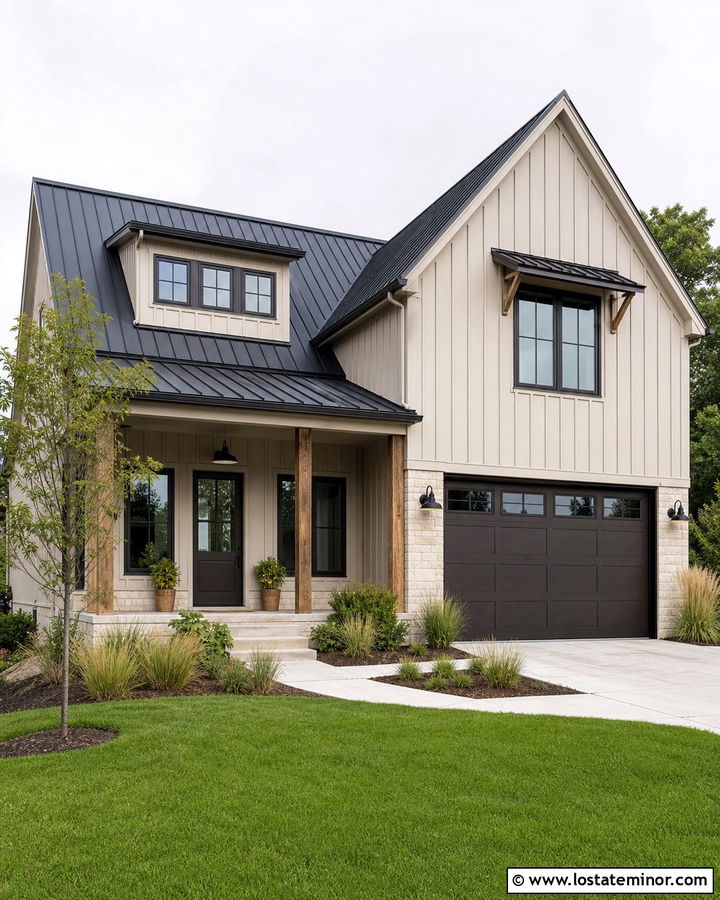
Vertical board-and-batten siding gains structure when its warm beige surface is punctuated by dark window frames. Choose charcoal-brown frames for a softer alternative to pure black, then repeat the color on the metal roof, front door, and garage door. Paint the battens and corner boards in the same beige as the siding to preserve a modern, continuous wall plane. Natural wood porch posts and brackets add warmth at the entrance. A low skirt of pale limestone provides texture without interrupting the strong vertical pattern. This scheme suits a modern barn house, updated farmhouse, or narrow suburban build. Keep exterior fixtures simple and substantial. Broad grasses and young trees soften the crisp geometry while allowing the tall windows and vertical siding to remain the main architectural features.
24. Beige House With White Frames And Shutters
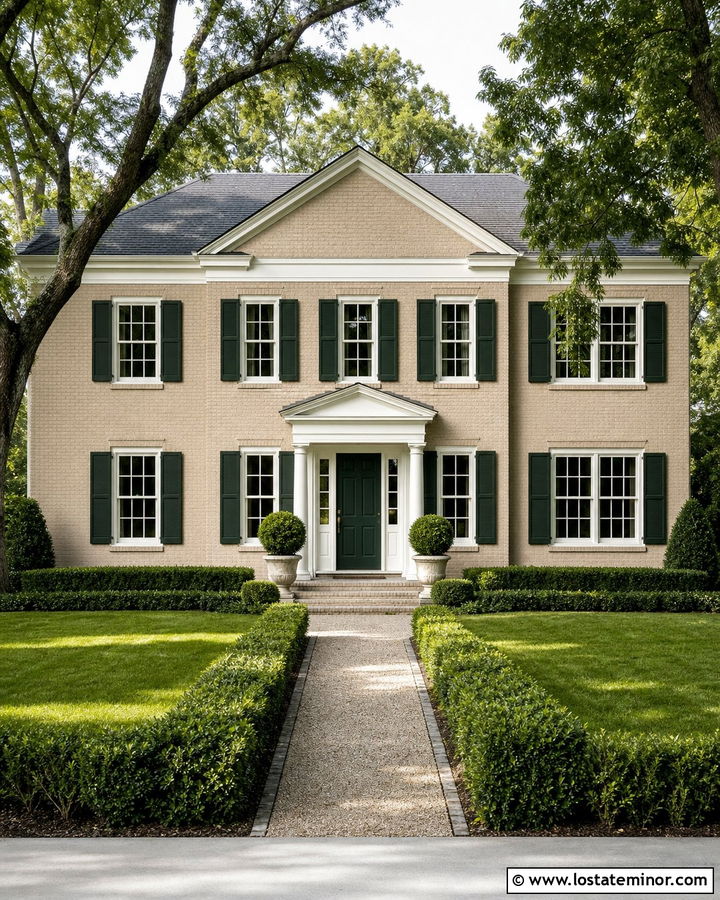
White window frames and colored shutters can give a beige house depth while keeping its central palette light. On a classic Georgian-inspired facade, surround the windows with warm white casing and install properly sized dark green shutters that visually cover the glass when closed. Repeat green on the front door, but retain white for the portico, cornice, and railings. Warm beige brick or lap siding provides a calm background. A dark gray roof keeps the composition grounded and prevents the upper facade from appearing washed out. Use symmetrical planters, clipped hedges, and a centered walkway to support the balanced architecture. This complete scheme works because each color has a clear purpose: beige provides warmth, white defines structure, and green emphasizes important openings.
25. Beige House With Black Frames And Cedar
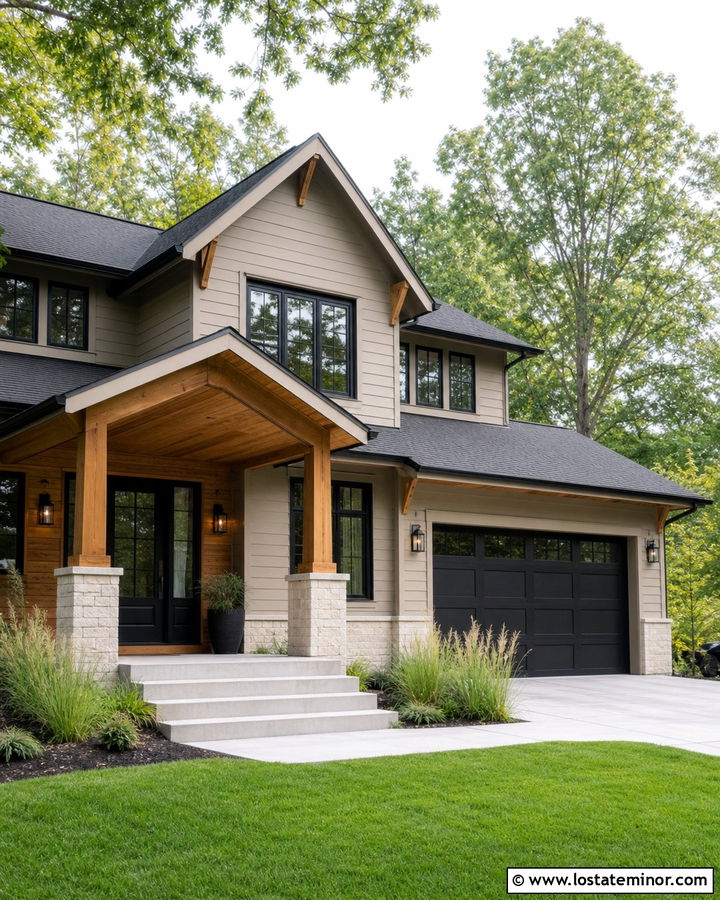
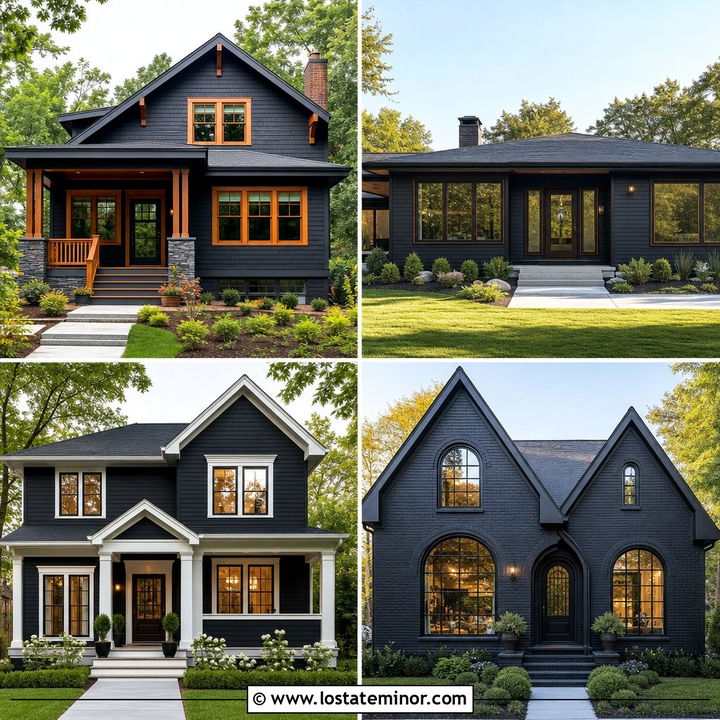
The contrast of black windows and beige siding becomes more inviting when cedar is added in visible, well-planned sections. On a contemporary Craftsman, use soft greige-beige lap siding with black frames, gutters, and a black garage door. Introduce cedar around the recessed entrance, beneath the porch ceiling, and within one upper gable. Keep the main fascia and corner boards beige to avoid creating too many dark outlines. Pale stone porch piers can connect the warm siding with the natural wood grain. A black front door may blend into the framed entry, allowing the cedar surround to become the focal point. Simple grasses, broad concrete steps, and dark planters complete the house. The final design feels graphic, warm, and carefully layered rather than trendy or severe.
26. Beige House With Green Frames And Brick
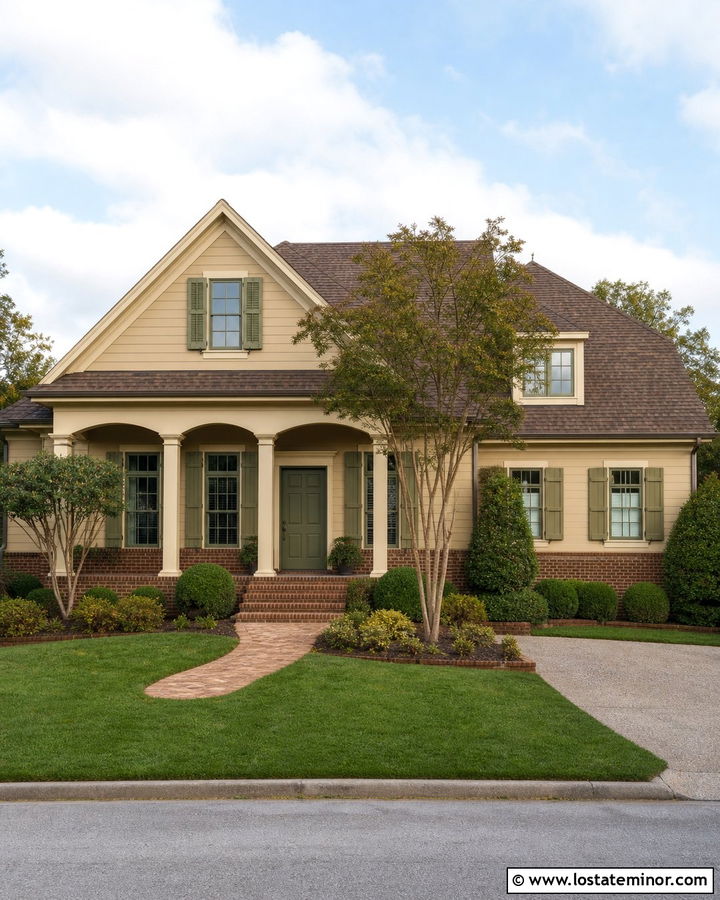
Muted green window frames can unite beige siding with warm red or brown brick accents. Choose an olive or gray-green that relates to the landscape and has enough depth to remain visible from the street. Apply it to the window frames, shutters, and front door on a traditional suburban home. Use creamy trim on the fascia, columns, and window casings to separate the green frames from the beige siding. Limit brick to the lower facade, chimney, or porch steps so it reads as a supporting material rather than a competing body color. A weathered brown roof helps all three warm elements connect. Rounded shrubs, ornamental trees, and brick-edged beds reinforce the established character. The complete palette feels colorful, natural, and comfortably grounded.
27. Beige Mid-Century House With Bronze Frames
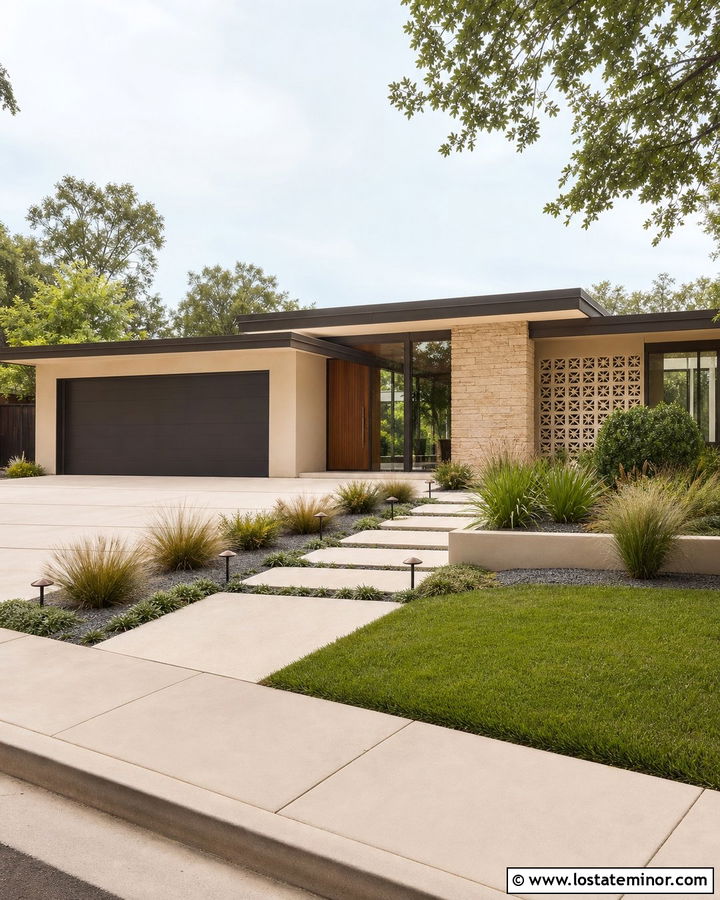
A low-slung mid-century modern house looks especially cohesive with dark bronze window frames and warm beige wall surfaces. Use broad expanses of beige stucco or horizontal siding beside floor-to-ceiling bronze-framed glass. Repeat the bronze finish on the fascia, front door hardware, and flat-roof edging. Walnut siding around the entry introduces period-appropriate warmth, while a charcoal garage door keeps the street-facing side quiet. Avoid ornate white trim because clean transitions better support this architectural style. Concrete breeze blocks or tan stacked stone can create a textured privacy screen near the entrance. Finish the yard with sculptural shrubs, ornamental grasses, and a wide geometric walkway. The restrained palette modernizes the home while respecting its strong horizontal lines and original character.
28. Beige House With Cream Arched Window Frames
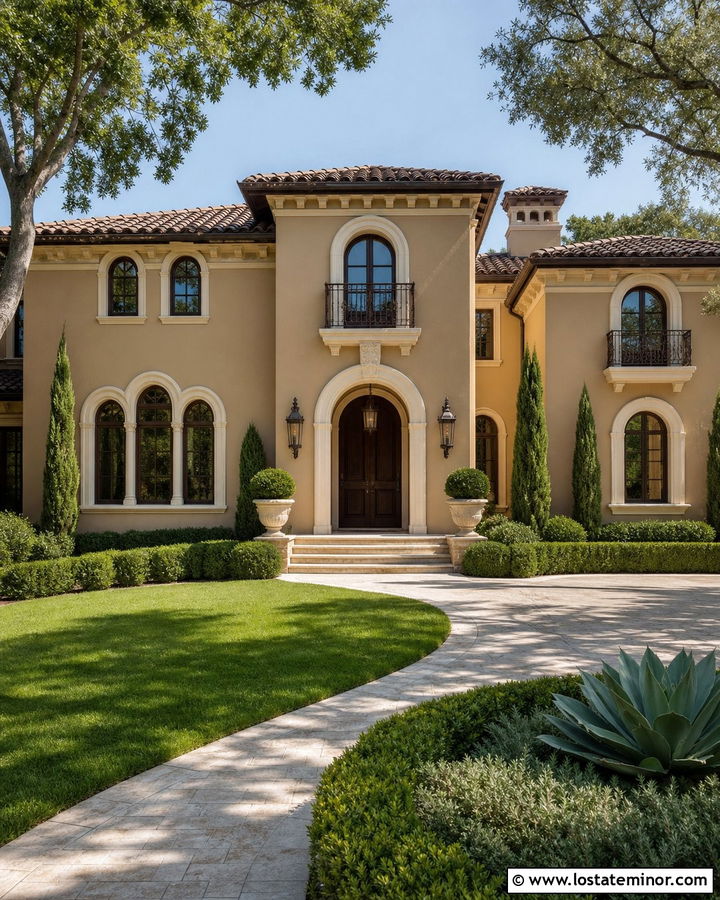
Arched windows naturally draw attention, so their frame and trim colors should support rather than overpower the curves. Pair warm beige stucco with cream frames and substantial cream surrounds on an Italianate or Mediterranean-inspired house. Use a dark walnut front door, bronze balcony railings, and brown clay roof tiles to ground the pale walls. The low-contrast cream allows shadows within the arches to provide definition throughout the day. Continue the same cream onto the cornice and selected columns for visual consistency. Warm limestone steps, large planters, and neatly clipped greenery complete the formal entrance. Avoid painting the arches in an unrelated bright color. A restrained beige-and-cream treatment keeps the architectural shapes elegant while the darker wood and metal accents supply sufficient depth.
29. Beige House With Black Sashes And White Casings
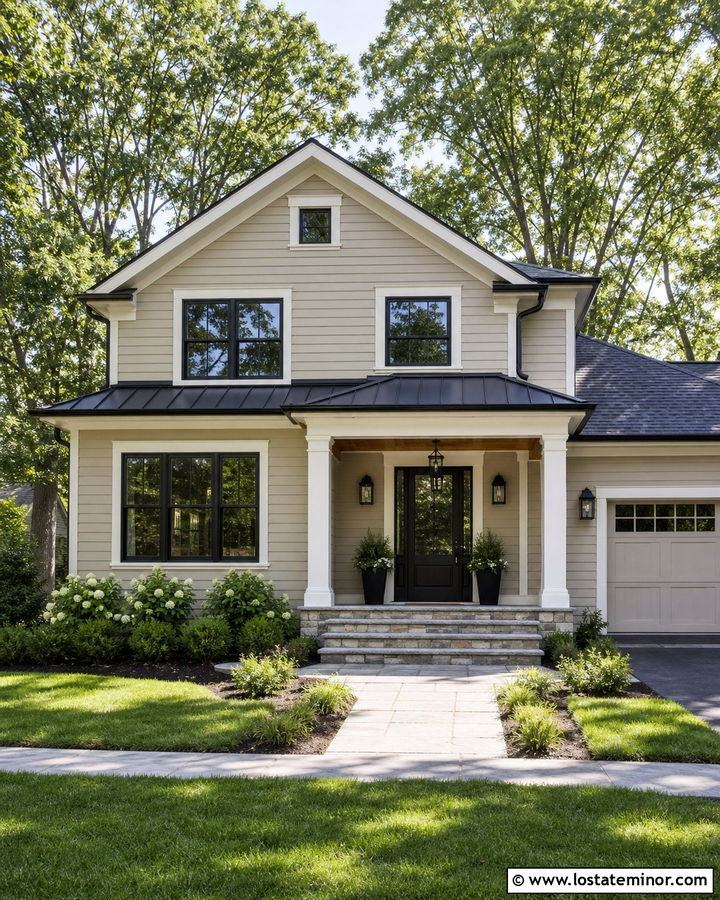
Using black window sashes inside white exterior casings delivers crisp contrast without making every opening feel excessively dark. This layered treatment works beautifully on a beige transitional house with lap siding, balanced gables, and a covered porch. Paint the fascia, columns, and corner boards the same warm white as the casings. Repeat black on the front door, porch lights, gutters, and small metal roof. Keep the garage door beige or white so it does not become a large dark rectangle. Natural stone near the entry and a stained wood porch ceiling add warmth. This three-color arrangement also clarifies the hierarchy of the facade: beige defines the main walls, white outlines the architecture, and black sharpens the glass and selected functional details.
30. Beige House With Matching Beige Window Frames
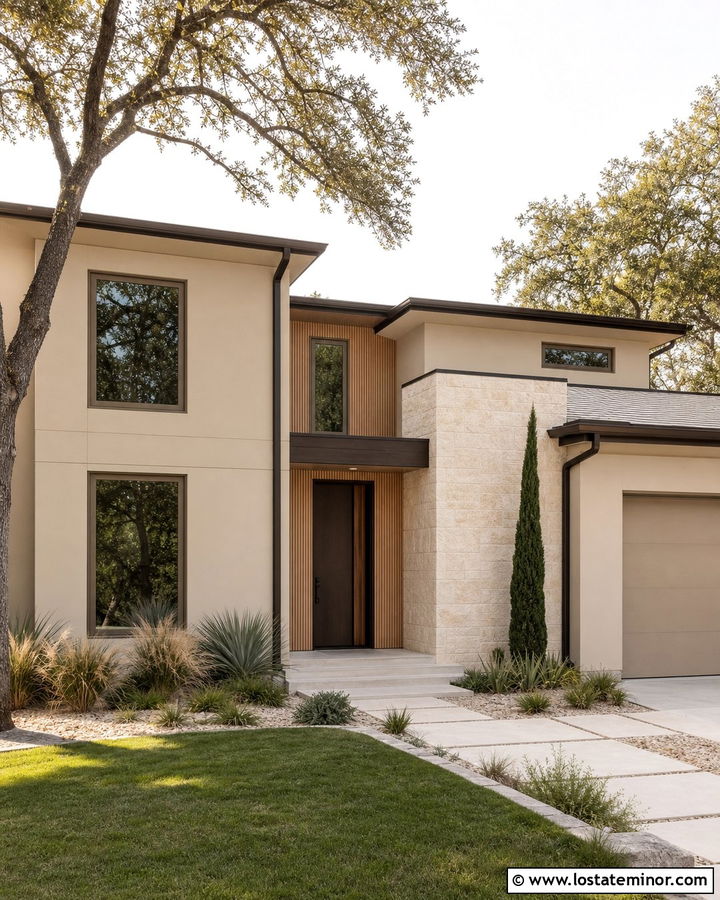
A monochromatic beige exterior can look refined when small shifts in value and texture prevent it from appearing flat. Choose medium beige stucco or siding with window frames in a slightly deeper beige from the same undertone family. Match the exterior casings to the walls for a smooth, minimalist effect. Then introduce contrast through a dark bronze front door, gutters, roof, and lighting. Warm limestone panels or fluted wood siding can mark the entrance without adding another paint color. This approach works particularly well on modern homes with large windows and clean wall planes. Use soft grasses, pale gravel, and simple concrete pavers around the facade. The final house feels quiet and cohesive, with material changes and natural shadows supplying most of its architectural definition.
Conclusion:
The best **30 Beige House Design With Window Frames Ideas** treat the windows as part of a complete exterior palette. Black and charcoal provide strong definition, while white and cream keep the facade bright. Bronze, brown, green, navy, oxblood, and terracotta can connect beige walls with roofing, masonry, landscaping, or regional architecture. Before selecting a combination, identify whether the beige has yellow, pink, gray, or green undertones. Compare large samples outdoors beside the roof, window glass, stone, and brick at several times of day. Finally, repeat the frame color on two or three supporting details. That simple step makes the windows feel intentional and creates a more cohesive, polished house exterior.

Related posts: