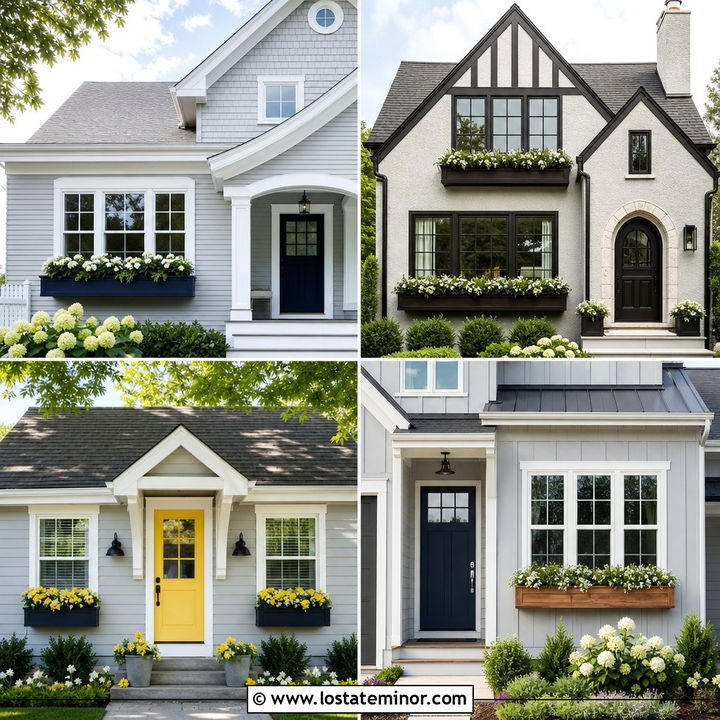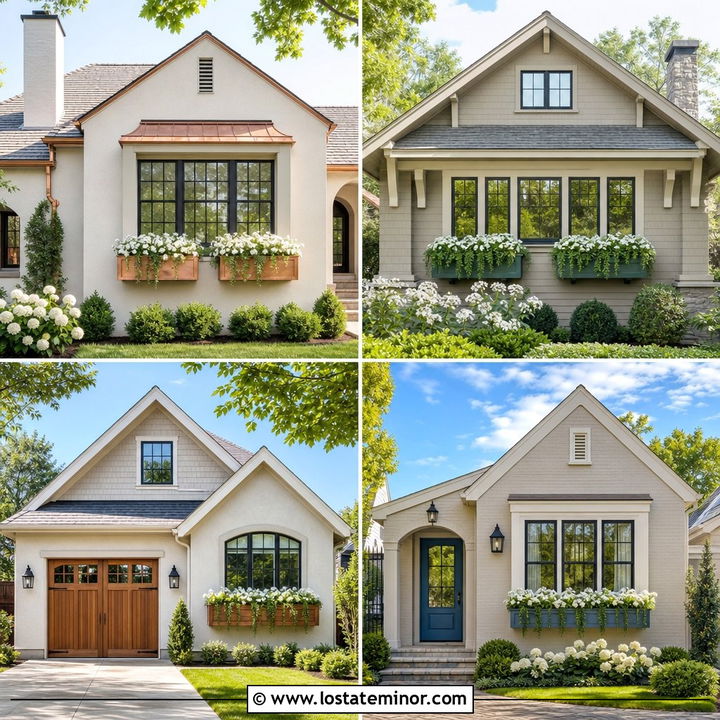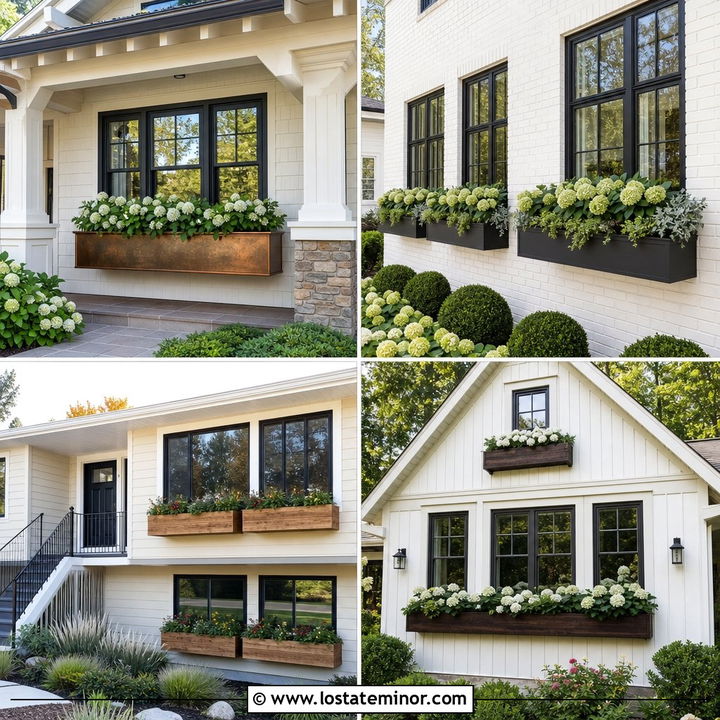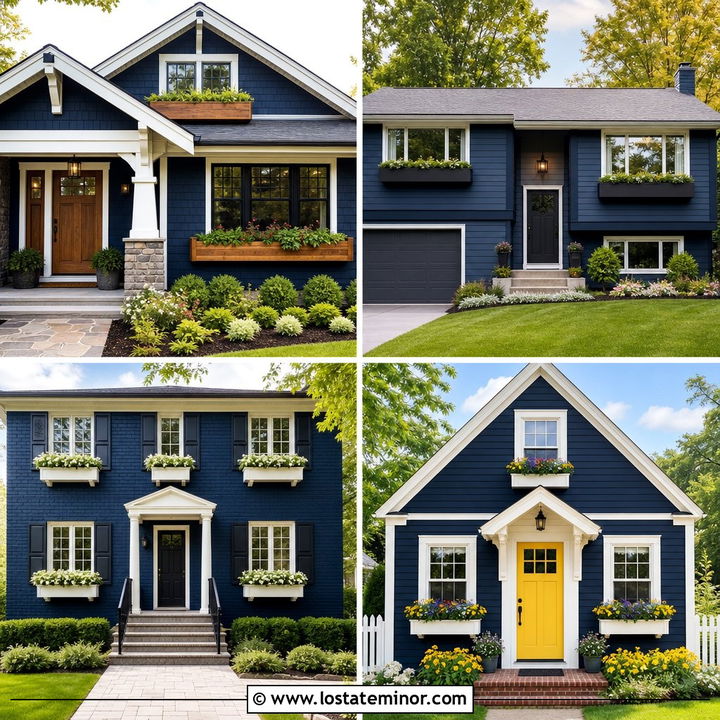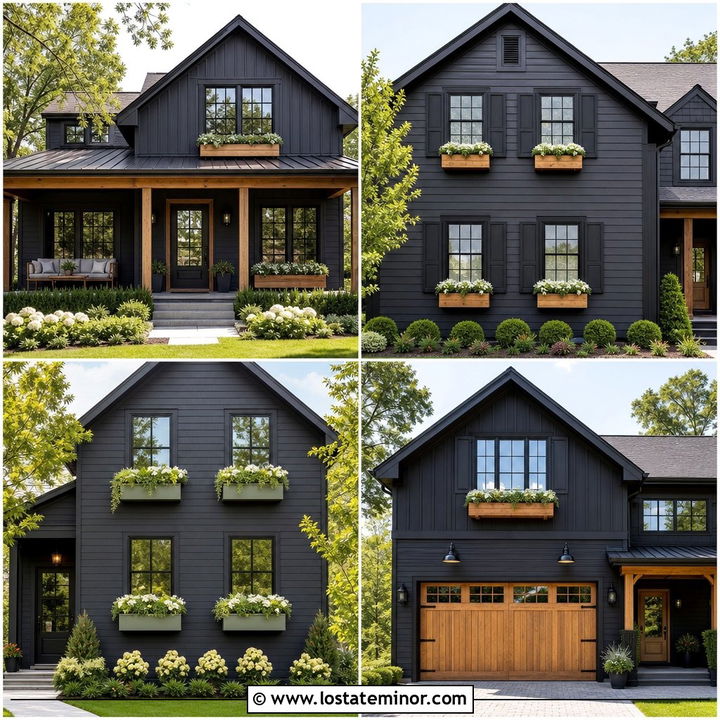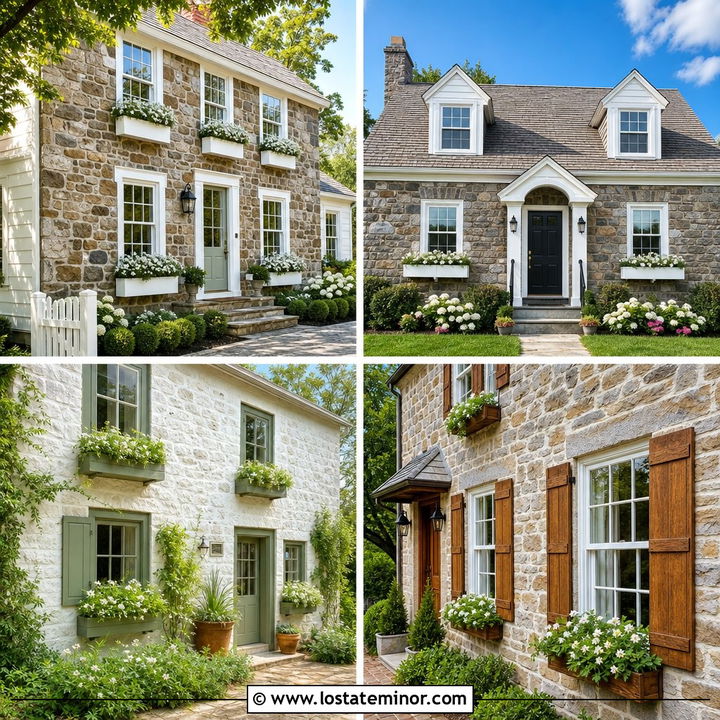
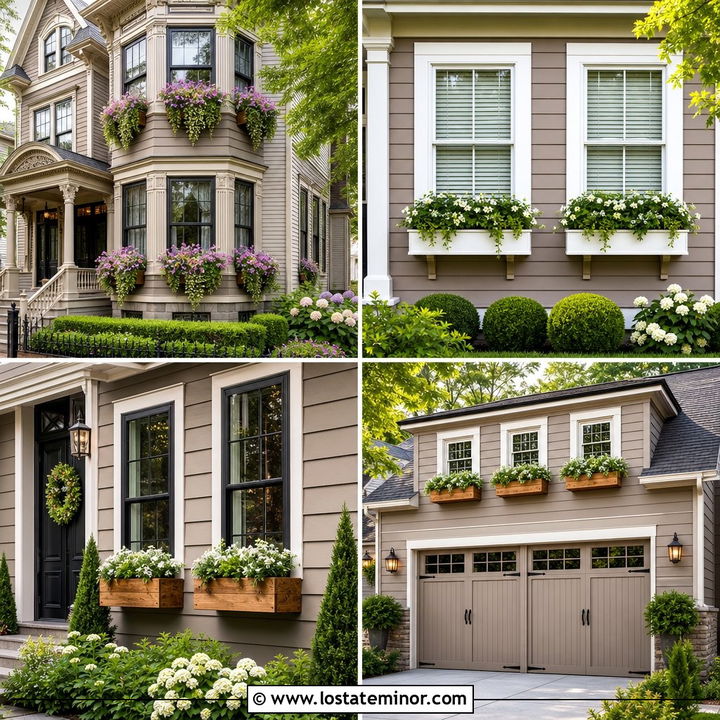
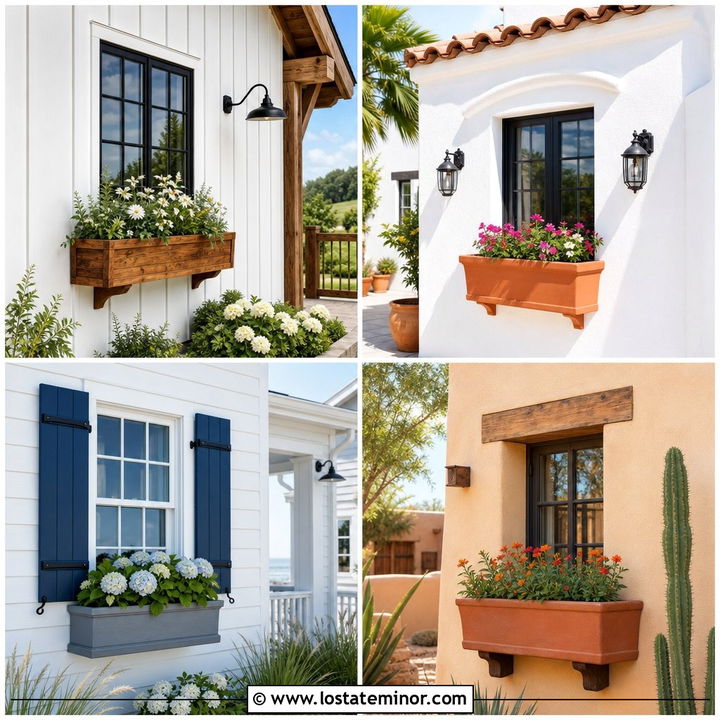
A white exterior creates a bright, flexible backdrop, while window boxes add color, texture, and architectural depth. The best 30 White House Design With Window Boxes Ideas coordinate every detail, including siding, trim, roofing, doors, shutters, planters, and landscaping. Window boxes should feel properly scaled to the windows and connected to the home’s overall character. Crisp black planters can sharpen a modern facade, while cedar or paneled white boxes bring warmth to cottages and farmhouses. Flowers and trailing greenery also soften hard lines and help smaller homes feel more welcoming. Whether you prefer classic Colonial symmetry, relaxed coastal charm, or clean contemporary contrast, the following complete exterior looks offer practical inspiration through these 30 White House Design With Window Boxes Ideas.
1. White Colonial House With Black Window Boxes
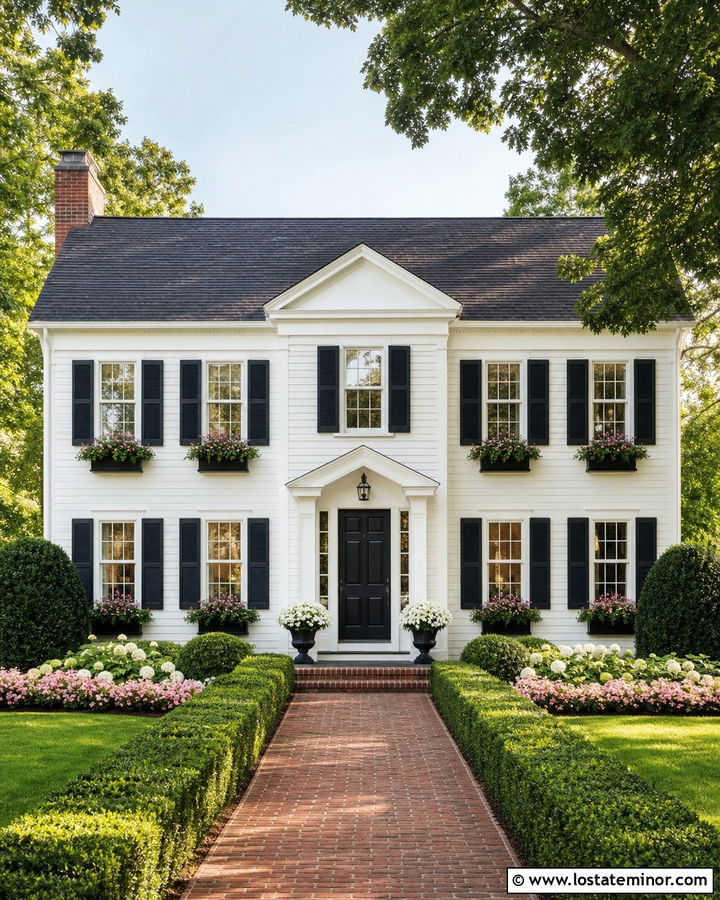
A symmetrical Colonial exterior looks polished when black window boxes repeat the color of the shutters and front door. Choose a soft white body color with crisp white trim to keep the facade from appearing too stark. Long black planters beneath the first-floor windows provide strong horizontal lines and visually anchor tall openings. Fill them with white flowers, pale pink blooms, and controlled trails of green foliage. A dark charcoal roof and black lantern lights complete the high-contrast palette. Add a straight brick walkway, clipped boxwood shrubs, and matching planters beside the entrance. Keeping the landscaping orderly supports the home’s formal architecture while the flowers prevent the black-and-white exterior from feeling overly rigid or severe.
2. White Farmhouse With Cedar Window Boxes
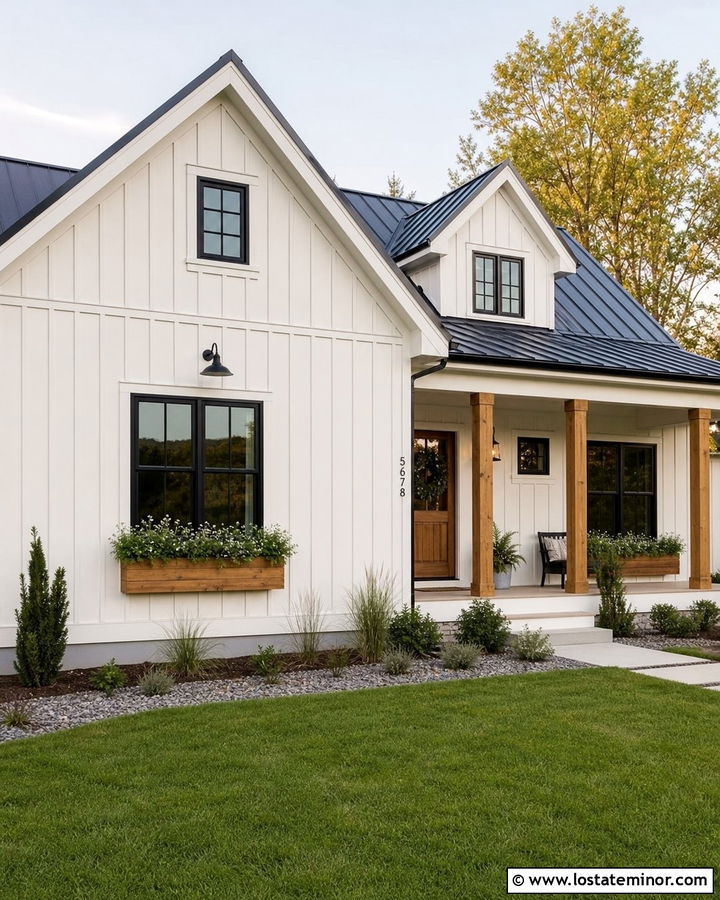
Natural cedar window boxes introduce warmth to a white modern farmhouse without making the exterior feel rustic or dated. Pair warm white board-and-batten siding with a medium-brown wood front door and matching cedar porch columns. Simple rectangular boxes beneath black-framed windows help connect the wood details across the facade. Purple petunias, white bacopa, and trailing sweet potato vine provide soft color against the wood grain. A charcoal standing-seam metal roof gives the scheme a clean modern edge. Use gravel beds, ornamental grasses, and a wide concrete walkway to maintain the relaxed rural character. Allow the cedar to weather naturally for a silvery finish, or seal it to preserve its richer honey-brown tone.
3. White Cottage House With Blue Window Boxes
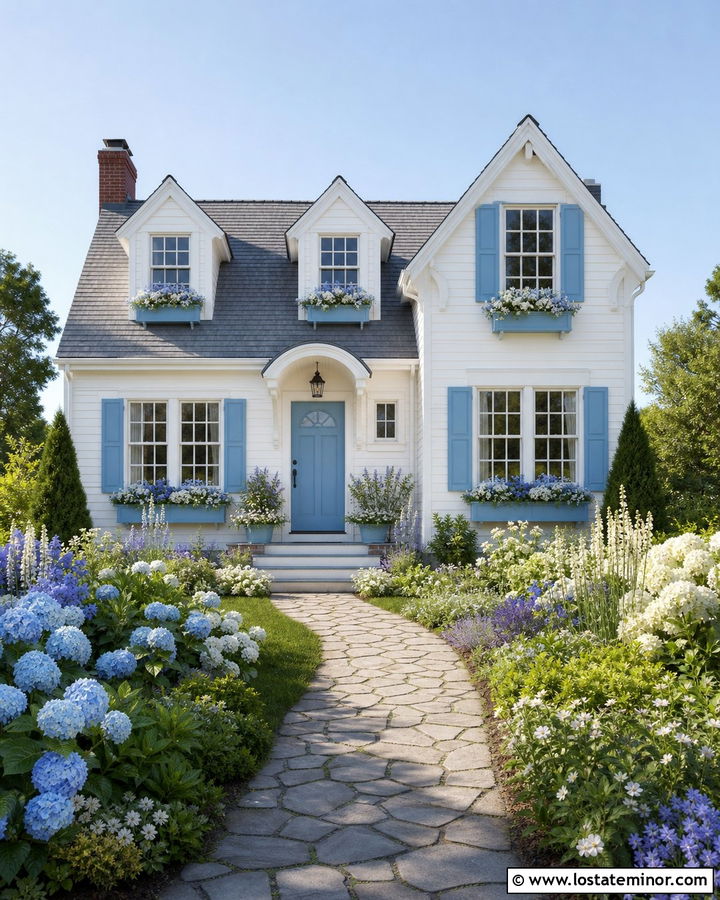
Imagine a small white cottage surrounded by soft blue flowers and lush green planting. Powder blue window boxes can create that cheerful look while coordinating with matching shutters and a blue front door. Use creamy white lap siding rather than a brilliant white, which makes the pastel accents feel gentler. Decorative planter brackets and divided-light windows support the traditional cottage character. Fill each box with white geraniums, blue lobelia, and trailing ivy for a layered arrangement. A weathered gray shingle roof keeps the palette calm and balanced. Complete the exterior with a curved stone path, informal hydrangeas, and low garden borders. This combination works especially well when the window boxes are wide enough to match the visual weight of the windows.
4. White Brick House With Green Window Boxes
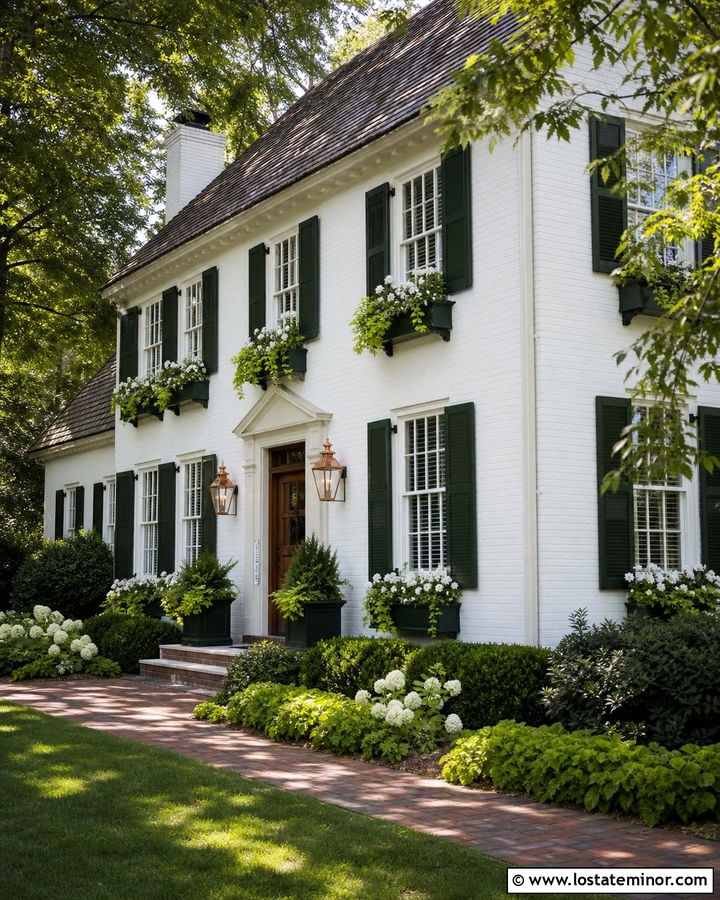
Green window boxes help a painted white brick house blend naturally with its surrounding landscape. Select a deep forest green that can be repeated on the shutters, front door, or porch ceiling. The darker color defines each window without creating the sharp contrast of black. Paneled planters look especially appropriate against traditional brick because their detail complements the masonry texture. Plant them with white impatiens, chartreuse foliage, and trailing vines to maintain a restrained color scheme. Copper lanterns and a warm wood door add another layer of character. A brick walkway, evergreen foundation shrubs, and mature shade trees make the exterior feel established. The completed facade appears fresh and bright while still maintaining a timeless, garden-focused personality.
5. White Cape Cod House With Gray Window Boxes
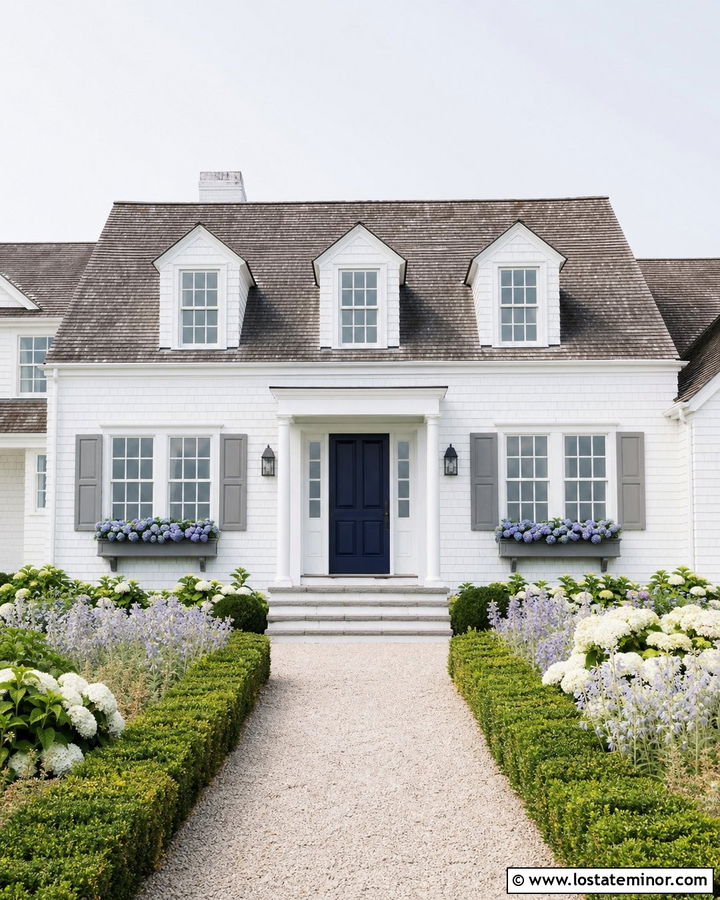
Does your Cape Cod exterior need more dimension without introducing a bold color? Medium gray window boxes offer subtle contrast against white shingles and coordinate naturally with a weathered gray roof. Match the planters to simple gray shutters, then add a navy front door for one controlled accent. Window boxes beneath dormers and first-floor windows can make the compact facade appear more balanced. White flowers, dusty miller, pale lavender blooms, and trailing greenery keep the planting soft. Use crushed-shell paths, clipped hedges, and hydrangeas to reinforce the coastal New England character. Choose moisture-resistant composite planters if maintenance is a concern. Their smooth finish resembles painted wood but can retain its shape and color through changing weather conditions.
6. White Craftsman House With Wood Window Boxes
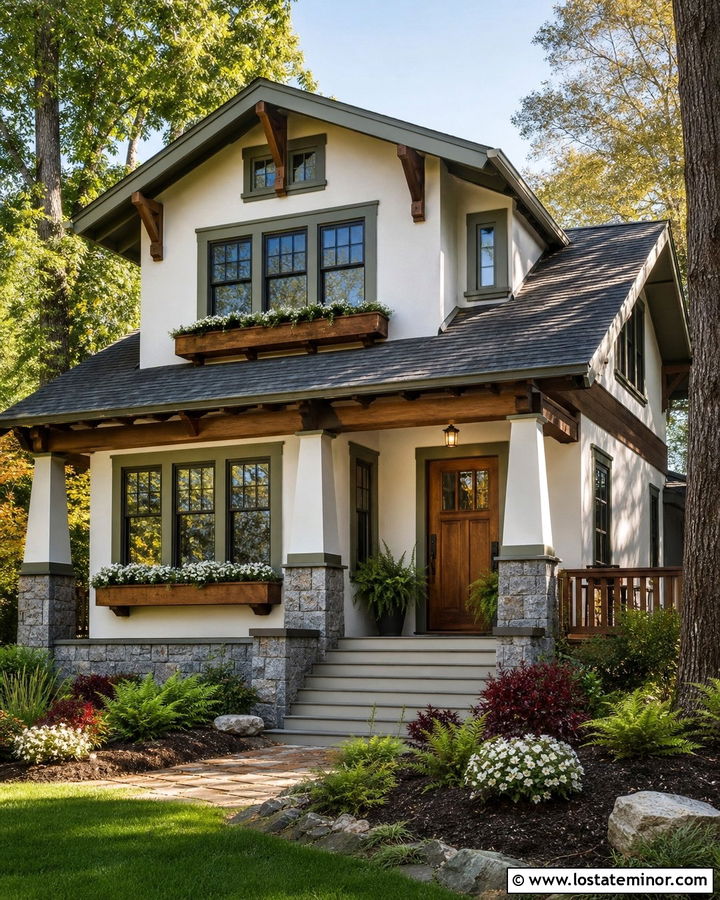
A white Craftsman house benefits from window boxes that highlight its strong natural materials. Use stained wood planters beneath grouped windows, matching them to the porch beams, tapered columns, and front door. Warm white lap siding keeps the exterior inviting, while olive green trim can define the roofline and window frames. Choose substantial boxes with visible brackets so they look properly scaled beside wide Craftsman windows. Ferns, burgundy foliage, white begonias, and trailing greenery create a rich but controlled display. Ground the porch with a gray stone foundation and broad concrete steps. Layer native shrubs around the walkway to soften the architecture. The wood window boxes should look integrated into the facade rather than added as an unrelated decorative feature.
7. White Ranch House With Long Window Boxes
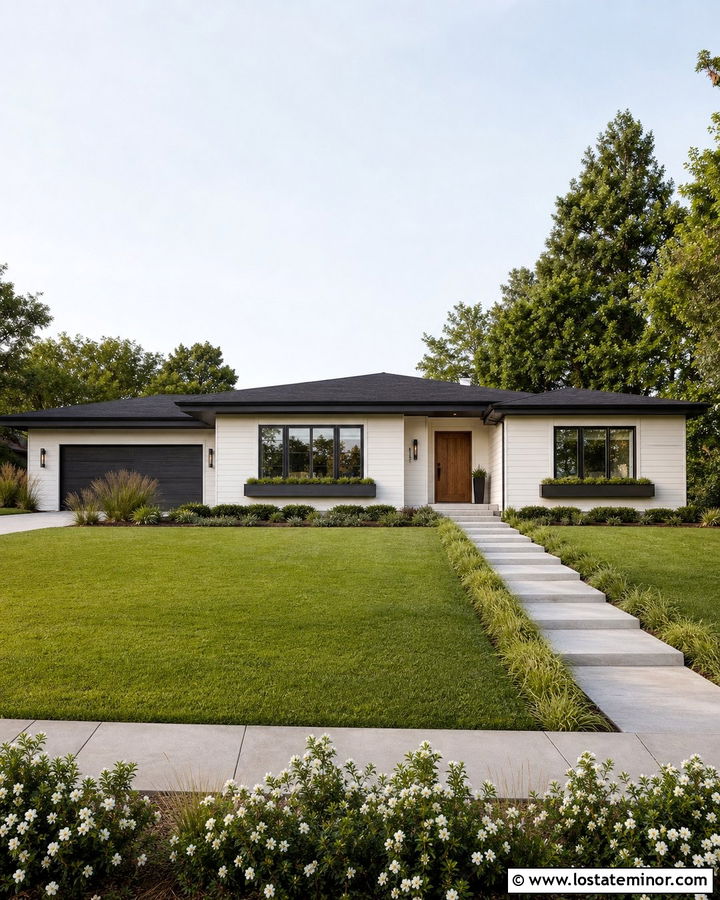
Low, horizontal window boxes can visually strengthen the wide proportions of a one-story ranch house. Install long charcoal planters beneath paired or triple windows, using their lines to break up an otherwise plain white facade. Warm white horizontal siding, dark bronze window frames, and a walnut-toned front door create a grounded contemporary palette. Keep the boxes streamlined and fill them with compact ornamental grasses, white flowers, and gently trailing plants. A low-pitched charcoal roof helps connect the dark accents from one end of the house to the other. Complete the look with broad planting beds, low evergreen shrubs, and a straight modern walkway. Avoid undersized boxes, which may disappear against the ranch’s long facade and make the windows seem visually top-heavy.
8. White Bungalow With Red Window Boxes
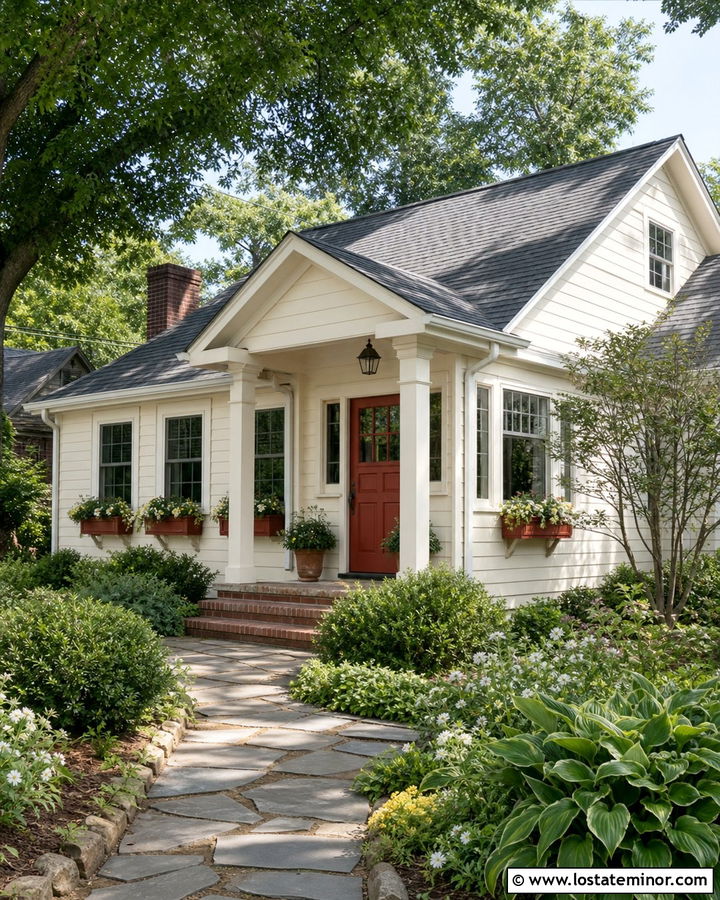
Brick-red window boxes give a white bungalow a warm, welcoming personality. Repeat the same earthy red on the front door, leaving the porch trim and tapered columns in creamy white. A medium-gray roof and natural brick steps keep the accent from feeling too bright. Select simple wooden boxes with visible brackets that suit the bungalow’s handcrafted details. Fill them with white petunias, soft yellow flowers, and leafy green trailers for a lively but coordinated display. Deep porch eaves may shade nearby windows, so choose plants based on the available sunlight. A flagstone path and loosely layered shrubs support the casual architecture. This scheme provides noticeable curb appeal while preserving the comfortable, approachable character associated with traditional American bungalows.
9. White Tudor House With Copper Window Boxes
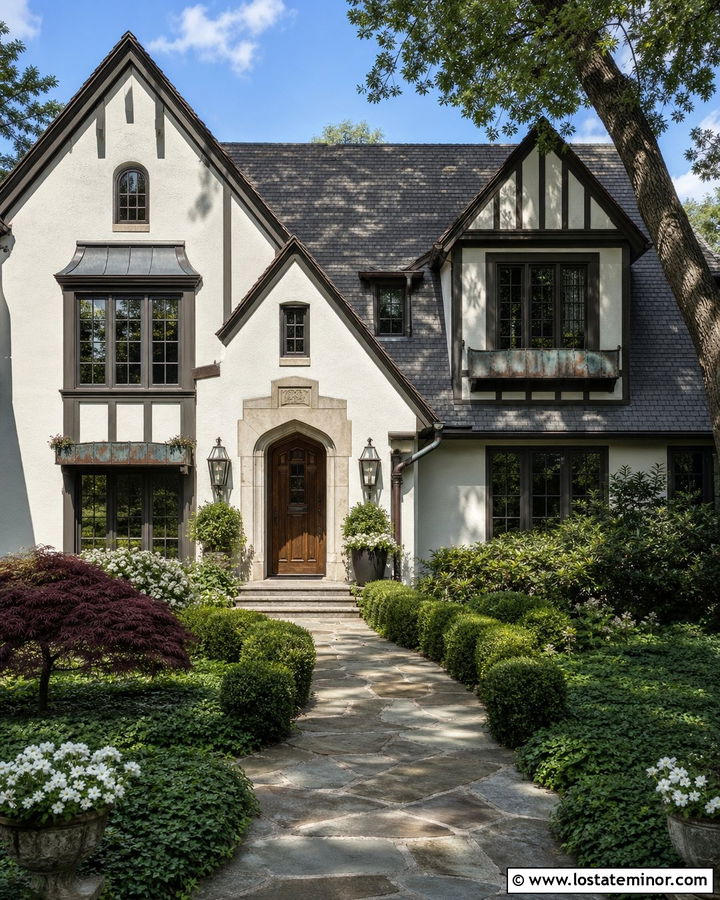
Copper window boxes introduce refined warmth to a white Tudor exterior and become more distinctive as the metal develops a natural patina. Position them beneath dark-framed casement windows, especially within prominent front-facing gables. Creamy white stucco, dark brown timber details, and a steep charcoal roof create the classic architectural foundation. Use restrained plantings of ivy, white flowers, and burgundy foliage so the copper remains visible. A stained oak front door and aged bronze lanterns complement the planter material without creating an overly matched appearance. Complete the design with irregular stone paths, clipped shrubs, and deep green groundcover. The combination highlights the Tudor’s texture and craftsmanship while giving its traditional facade a fresh, carefully assembled curb-appeal update.
10. White Coastal House With Navy Window Boxes
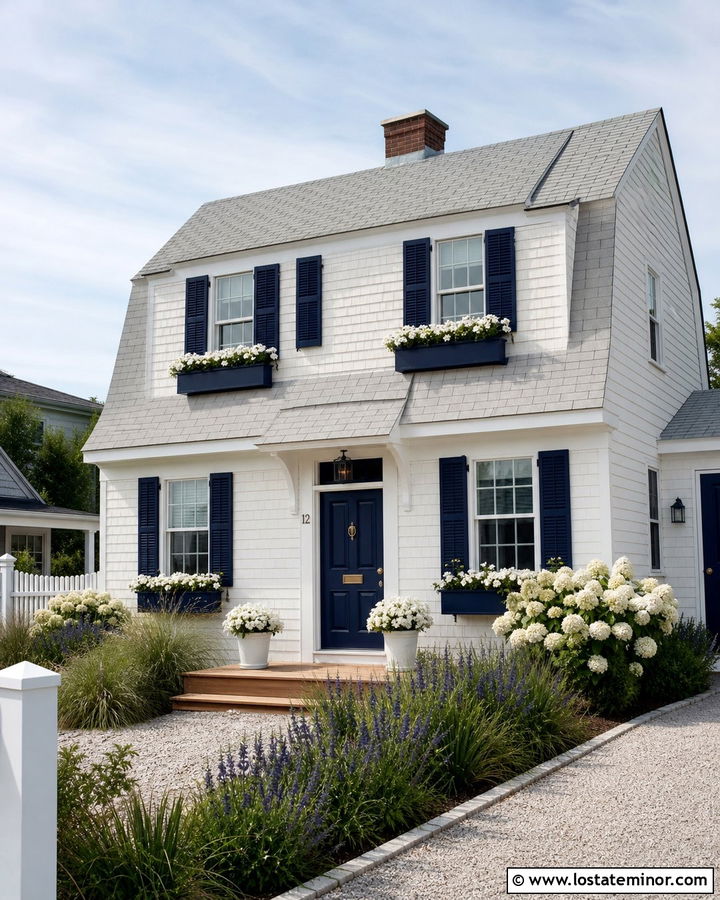
Navy window boxes bring crisp contrast to a white coastal house while reinforcing a relaxed seaside palette. Match the boxes to navy shutters or a deep blue front door, then use pale gray roofing to keep the exterior light. White shingle siding adds subtle texture and helps the dark planters stand out. Fill them with white geraniums, blue salvia, and trailing greenery rather than using too many competing flower colors. A covered porch with natural wood decking creates warmth beneath the cool color scheme. Add beach grasses, hydrangeas, and a light gravel walkway around the facade. Choose corrosion-resistant planter hardware in coastal locations. The final exterior should feel airy and casual, with the navy accents distributed evenly enough to create balance across the entire house.
11. White Victorian House With Ornate Window Boxes
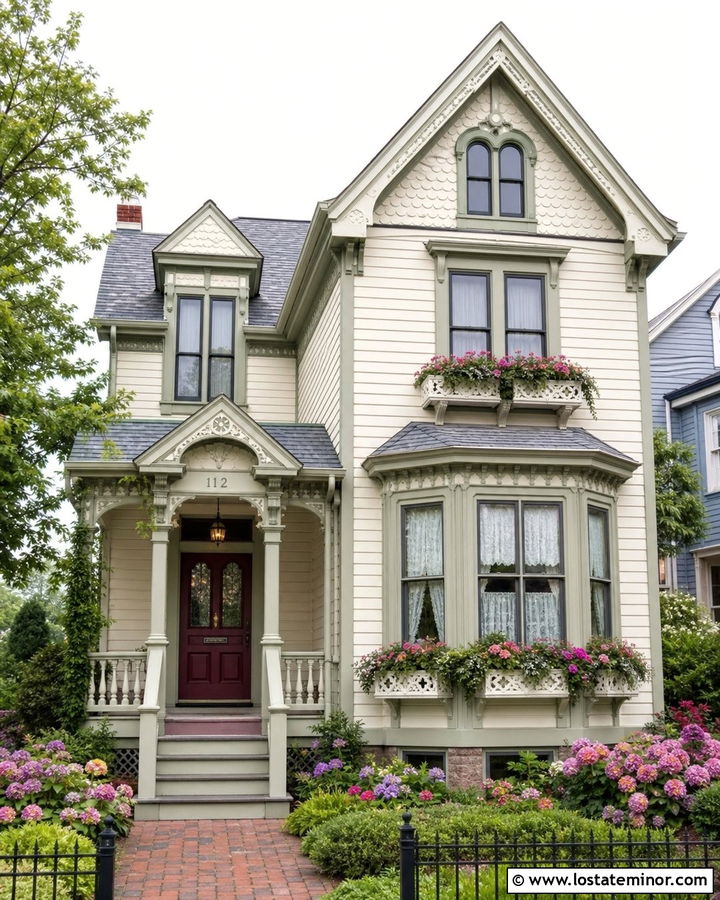
A Victorian exterior can support more decorative window boxes than a simple modern home. Choose paneled white planters with carved brackets, allowing them to blend with elaborate trim, porch spindles, and detailed gables. Use a warm white body color, then introduce sage green and muted burgundy through the front door and small architectural accents. Abundant flowers suit this look, including pink geraniums, purple petunias, white alyssum, and trailing ivy. Position boxes beneath the most prominent front windows without covering decorative molding. A slate-gray roof and brick walkway provide visual stability beneath the layered facade. Maintain a consistent flower palette across every box. That repetition keeps the colorful Victorian exterior charming and coordinated rather than crowded or visually confusing.
12. White House With White Window Boxes
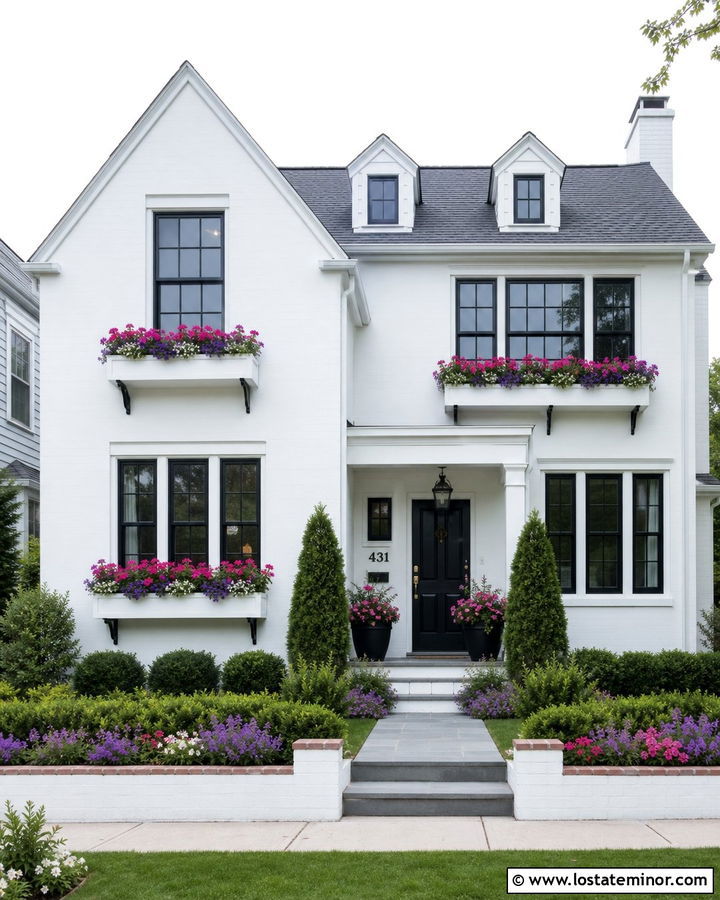
White window boxes create a seamless look that allows flowers and foliage to become the main attraction. This approach works well on traditional white siding, painted brick, or coastal shingles. Match the planters closely to the exterior trim so they appear built into the window architecture. Dark window sashes and a black front door can provide enough contrast to prevent the facade from looking flat. Fill the boxes with bright pink geraniums, purple verbena, white flowers, and green trailers. Black metal brackets placed beneath the white planters add a subtle structural detail. Tie the house into the landscape with brick edging, evergreen shrubs, and matching porch containers. This restrained foundation makes it easy to update the planting colors without repainting permanent exterior elements.
13. White House With Black Shutters And Window Boxes
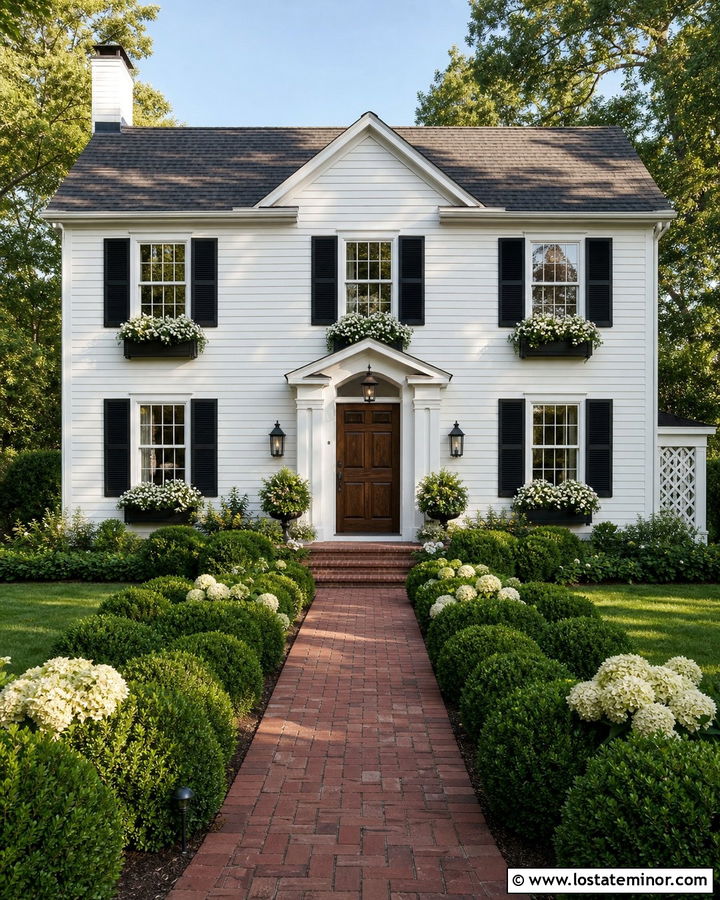
Black shutters and matching window boxes give a white house a strong, unified framework. The combination is most effective when the shutters are correctly sized and the planters relate closely to the width of each window. Use a slightly warm white exterior to soften the contrast, then introduce a stained wood door for natural warmth. White flowers and abundant green foliage lighten the black planters and connect them to the landscape. Repeat the dark finish through lanterns, gutters, and small porch details, but avoid adding black to every surface. A charcoal roof, red brick path, and neatly shaped foundation shrubs complete the design. The result feels classic and substantial, with the window boxes adding dimension to an otherwise simple black-and-white facade.
14. White House With Sage Green Window Boxes
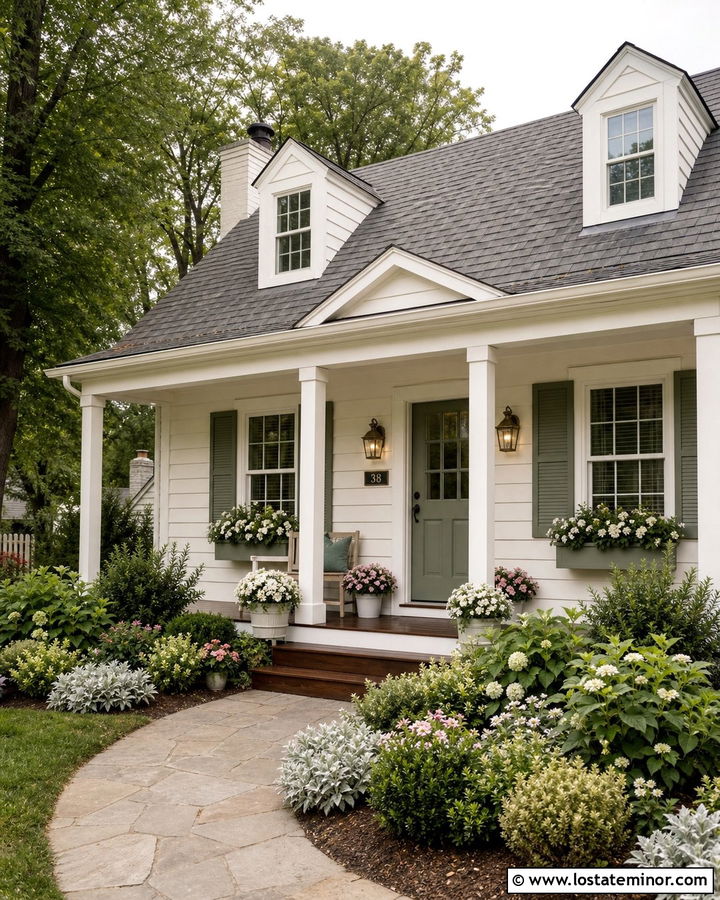
Sage green window boxes offer quiet color and work beautifully with warm white siding. Carry the green onto the shutters or front door to make the planters feel intentional. A natural cedar porch floor and warm gray roof complement the muted palette without overpowering it. Fill each box with white begonias, pale pink flowers, silver foliage, and soft trailing vines. The subtle planting colors maintain the calm appearance of the architecture. This combination is particularly effective on cottages, small Colonials, and traditional two-story homes surrounded by mature landscaping. Use aged brass lights and a gently curved stone walkway for additional warmth. Sage green creates enough definition around the windows while allowing the white house and garden to remain visually connected.
15. White House With Natural Wicker Window Boxes
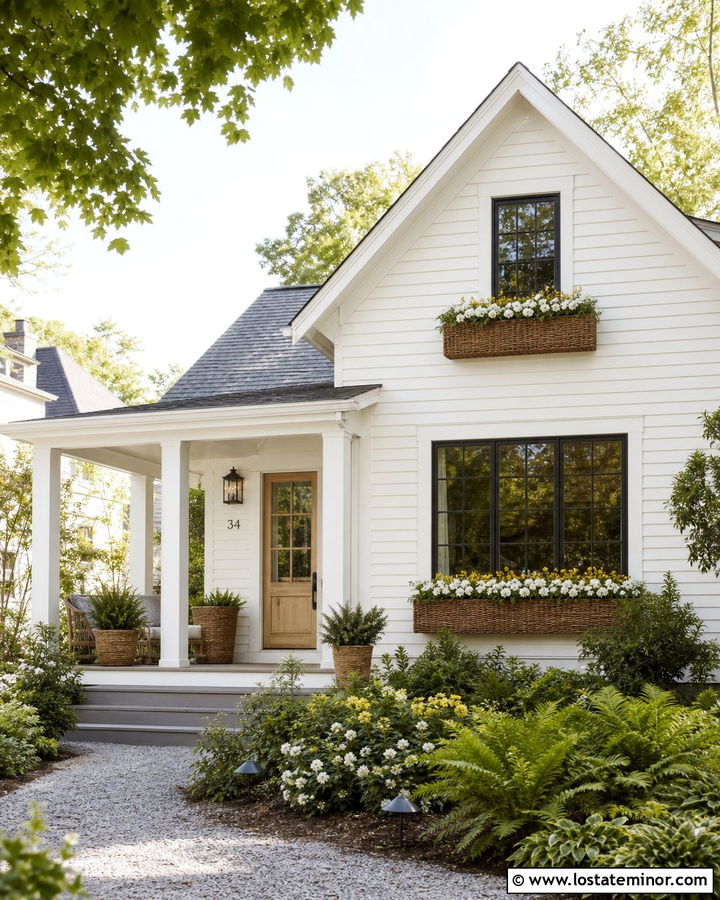
Woven-look window boxes can soften a white exterior and introduce texture without relying on a strong painted color. Use weather-resistant resin wicker in a natural tan finish so the boxes maintain their shape outdoors. Pair them with creamy white siding, a light oak front door, and bronze window frames. This relaxed combination works especially well on a cottage, coastal bungalow, or casual farmhouse. Plant the boxes with ferns, white impatiens, pale yellow blooms, and trailing vines. Natural wood porch furniture and oversized woven planters can repeat the texture near the entrance. Complete the curb appeal with a gravel path and loose, layered landscaping. The finished exterior feels comfortable and collected while remaining bright, simple, and easy to update seasonally.
16. White Modern House With Metal Window Boxes
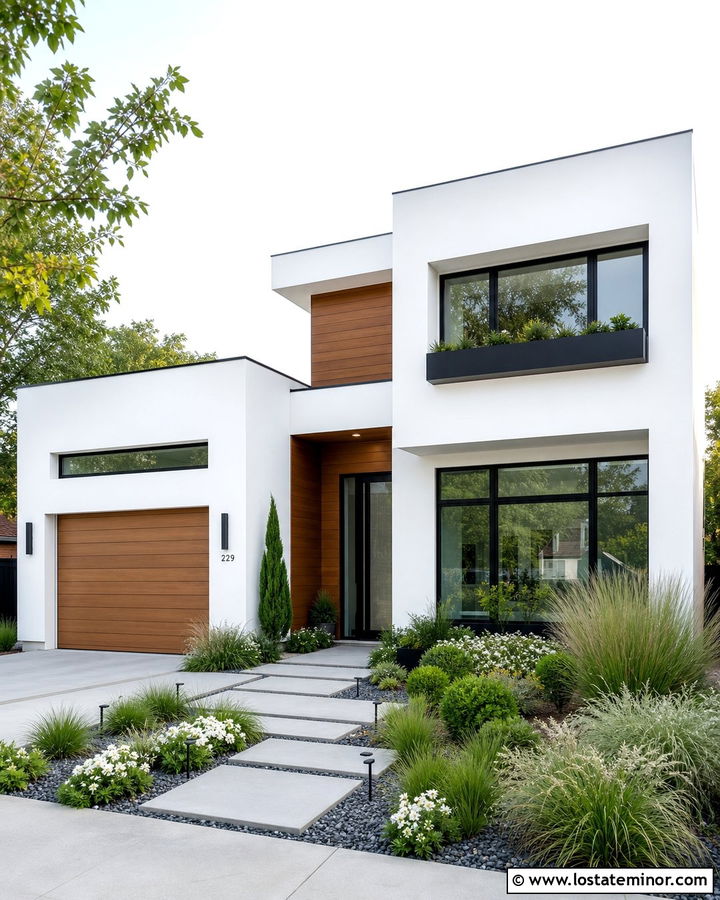
Slim charcoal metal window boxes create clean definition on a white modern exterior. Pair smooth white stucco with black-framed windows, flat rooflines, and warm wood cladding near the entrance. The boxes should have straight edges and concealed mounting hardware to preserve the minimalist architecture. Use controlled plantings of ornamental grasses, compact green foliage, and a limited number of white flowers. Rather than placing boxes beneath every window, concentrate them along one visually important section of the facade. Large concrete pavers, gravel beds, and sculptural shrubs reinforce the streamlined appearance. A natural wood garage door can soften the black-and-white scheme. The window boxes add depth and life without disrupting the home’s crisp geometry or creating unnecessary visual clutter.
17. White Split-Level House With Matching Window Boxes
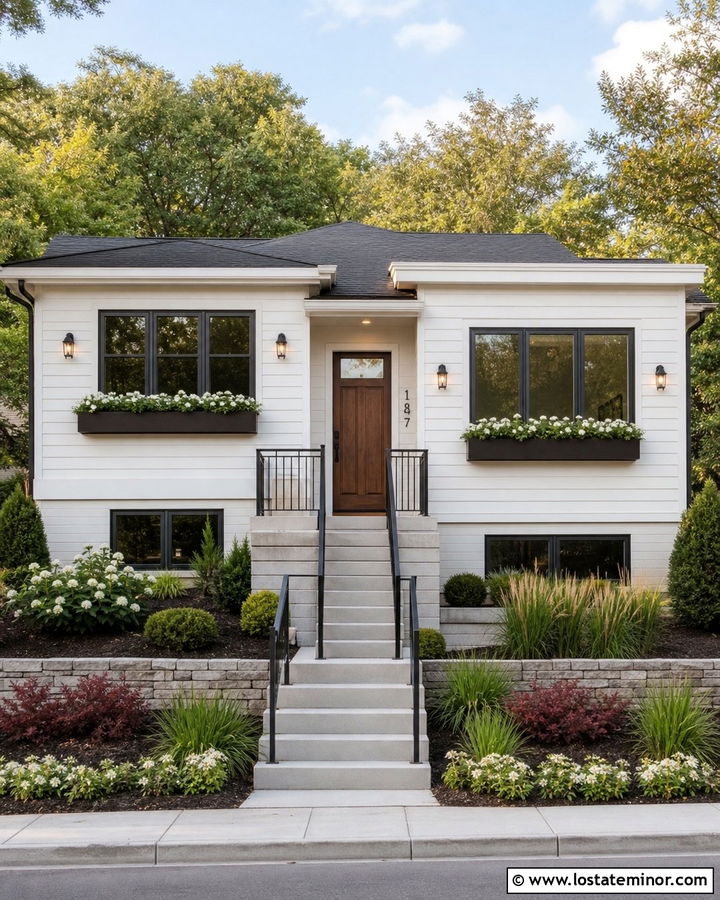
Window boxes can help organize the uneven facade of a white split-level house. Use dark bronze planters under the main front windows and match them to the window frames, garage door details, and exterior lighting. Warm white siding keeps the architecture bright, while a medium-brown wood door draws attention toward the entrance. Place the boxes carefully so they create a visual line between different levels rather than emphasizing the home’s irregularity. Fill them with white flowers, burgundy foliage, and upright grasses for balanced height and movement. Wide front steps, a modern railing, and layered foundation beds help integrate the entrance with the yard. This complete design turns the split-level’s varied elevations into an intentional and attractive curb-appeal feature.
18. White Greek Revival House With Classic Window Boxes
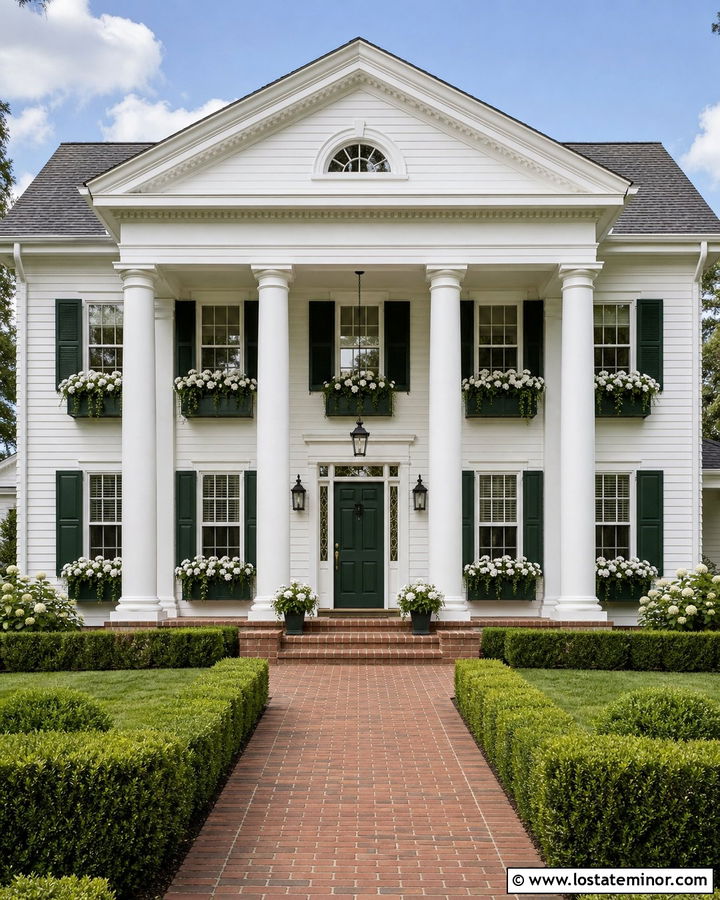
A Greek Revival house needs window boxes that respect its formal columns and balanced proportions. Choose simple dark green planters with understated panel details, repeating the color on the shutters and front door. Use a clean, warm white across the clapboard siding, cornice, and porch columns. The planters should align precisely beneath symmetrical windows to maintain the architectural rhythm. White geraniums, trailing ivy, and small touches of purple provide color without becoming too informal. Add black lanterns, a gray roof, and a straight brick walkway framed by low boxwood hedges. Avoid highly rustic materials or overflowing arrangements that could compete with the grand entrance. This restrained scheme adds softness while preserving the home’s stately, traditional appearance.
19. White French Country House With Iron Window Boxes
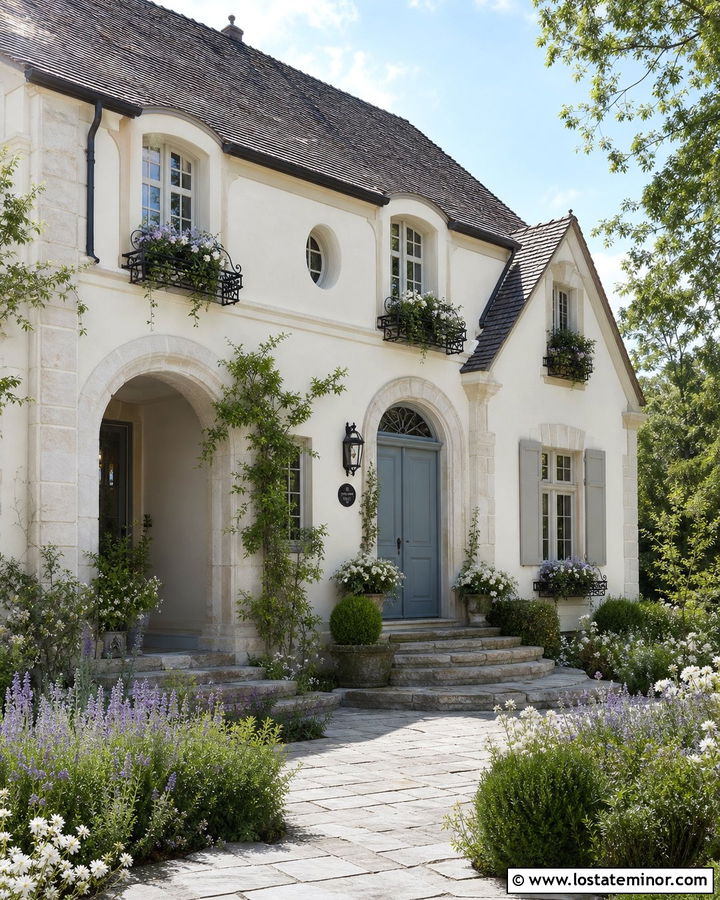
Black iron window boxes bring European character to a white French country exterior. Use curved or lightly decorative metal frames with fitted liners, placing them beneath tall casement windows. Creamy white stucco, pale limestone accents, and a weathered gray roof provide a soft neutral foundation. Fill the boxes with lavender-toned flowers, white blooms, and trailing greenery that spills gently through the ironwork. A muted blue-gray front door can introduce another traditional accent without competing with the planters. Complete the facade with arched openings, natural stone steps, and informal garden beds. The iron boxes should echo other dark details, such as lanterns or balcony rails. Together, these materials create a layered exterior that feels established, graceful, and welcoming.
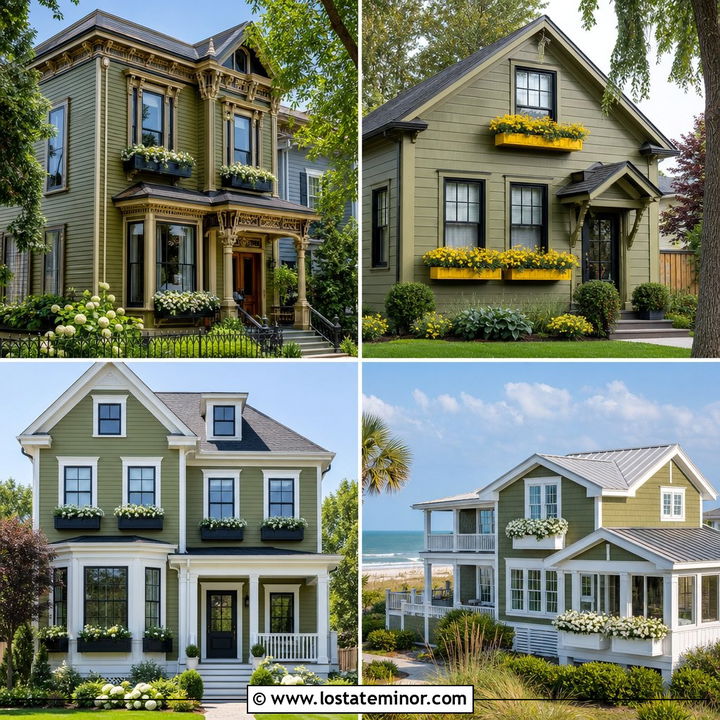
20. White Mediterranean House With Terracotta Window Boxes
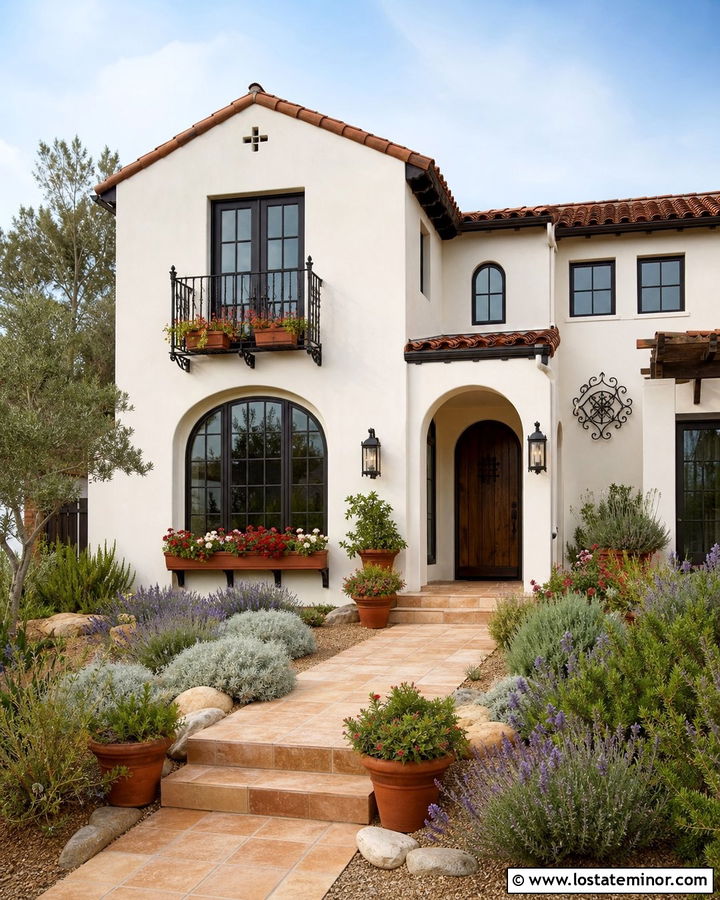
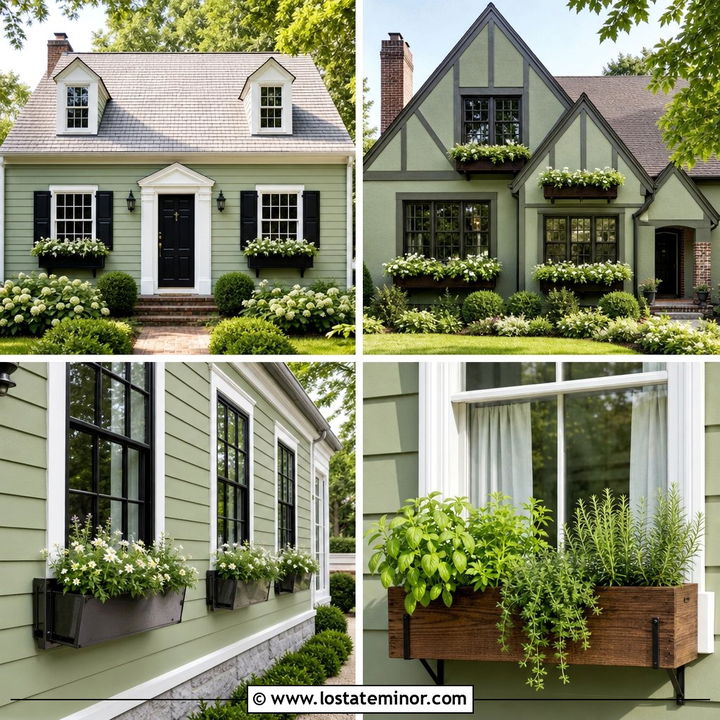
Terracotta window boxes add earthy color to a white Mediterranean house and connect naturally with a clay tile roof. Choose simple rectangular planters or built-in stucco boxes fitted with terracotta containers. The warm orange-brown hue stands out beautifully against soft white stucco. Use dark bronze windows, a stained wood door, and wrought iron details to complete the palette. Plant drought-tolerant arrangements with lavender, trailing rosemary, geraniums, and silvery foliage. A tiled walkway and gravel landscaping support the warm-climate character while reducing the need for a large lawn. Keep the planter shapes substantial enough to suit arched windows and thick stucco walls. This combination gives the entire facade warmth, texture, and colorful curb appeal in bright natural light.
21. White Midcentury House With Wood Planter Boxes
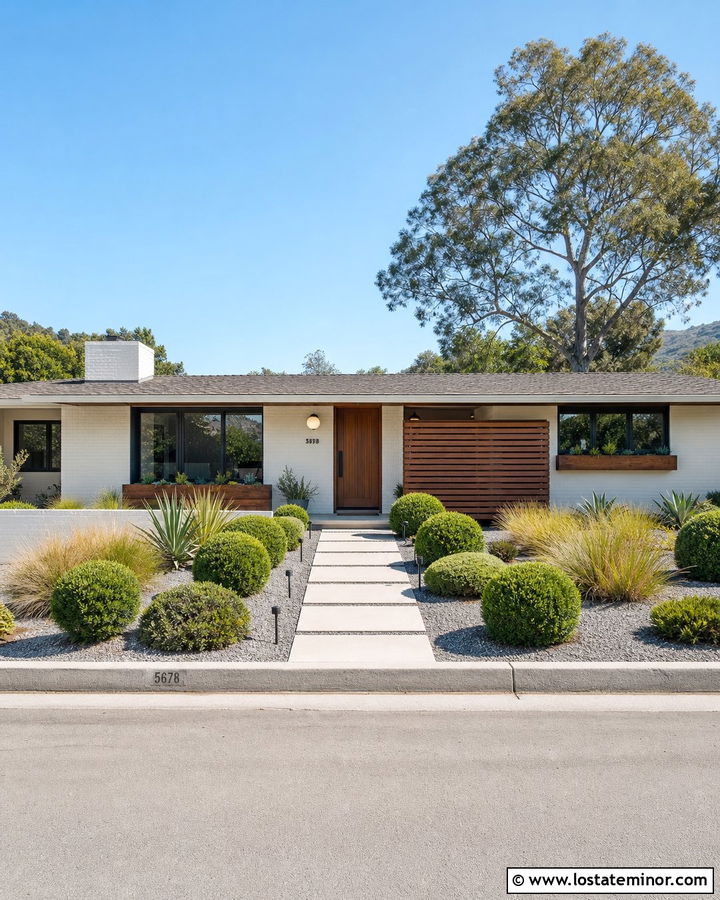
Clean wood window boxes bring natural warmth to a white midcentury exterior. Choose low rectangular planters in a medium walnut stain, coordinating them with the front door, soffits, and privacy screen. Smooth white siding or painted brick keeps the facade fresh, while charcoal window frames and a low roof establish contrast. Fill the boxes with sculptural plants, compact grasses, and restrained trailing greenery instead of dense cottage flowers. Horizontal house numbers and globe lighting can reinforce the period-inspired design. Use broad concrete stepping stones, gravel beds, and rounded evergreen shrubs around the entrance. The wood boxes should follow the home’s long horizontal lines. This creates a cohesive exterior update that respects midcentury architecture without making the house look overly themed.
22. White House With Window Boxes And Red Door
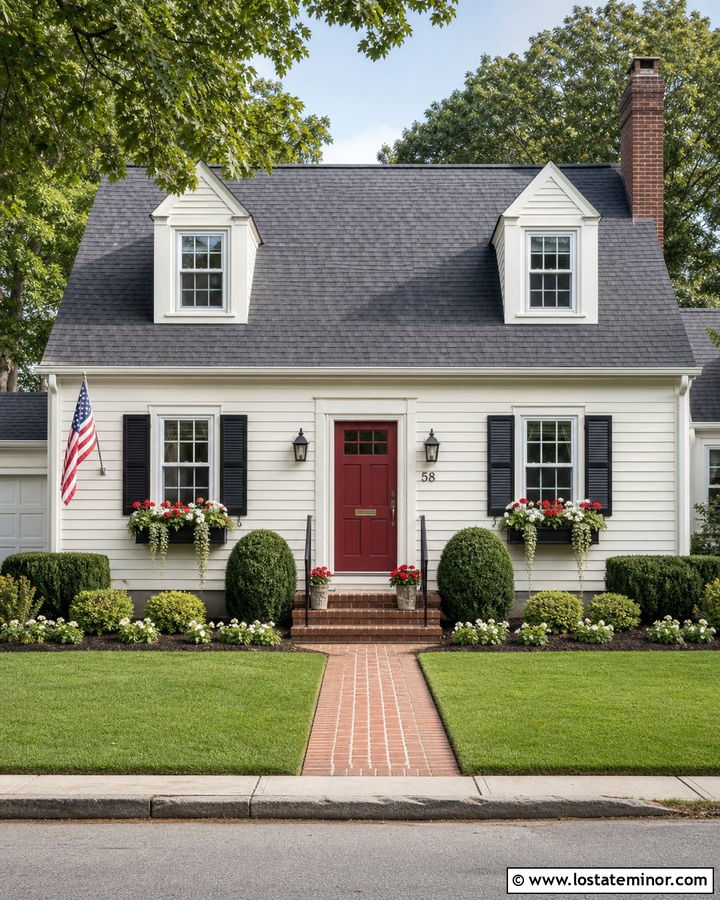
A red front door gives a white house an immediate focal point, while matching window box flowers spread that color across the facade. Keep the boxes themselves black, charcoal, or white so the red does not become overwhelming. Warm white clapboard siding, black shutters, and a dark gray roof create a familiar traditional backdrop. Fill each box with red geraniums, white alyssum, and green trailing vines. Repeating the red selectively helps connect the windows with the entrance. Add brick porch steps, black lanterns, and clipped evergreen shrubs for a tidy finish. This complete scheme suits Colonials, Cape Cod homes, and simple cottages. Choose a slightly muted red rather than a highly vivid tone for a more timeless and adaptable exterior.
23. White House With Window Boxes And Blue Door
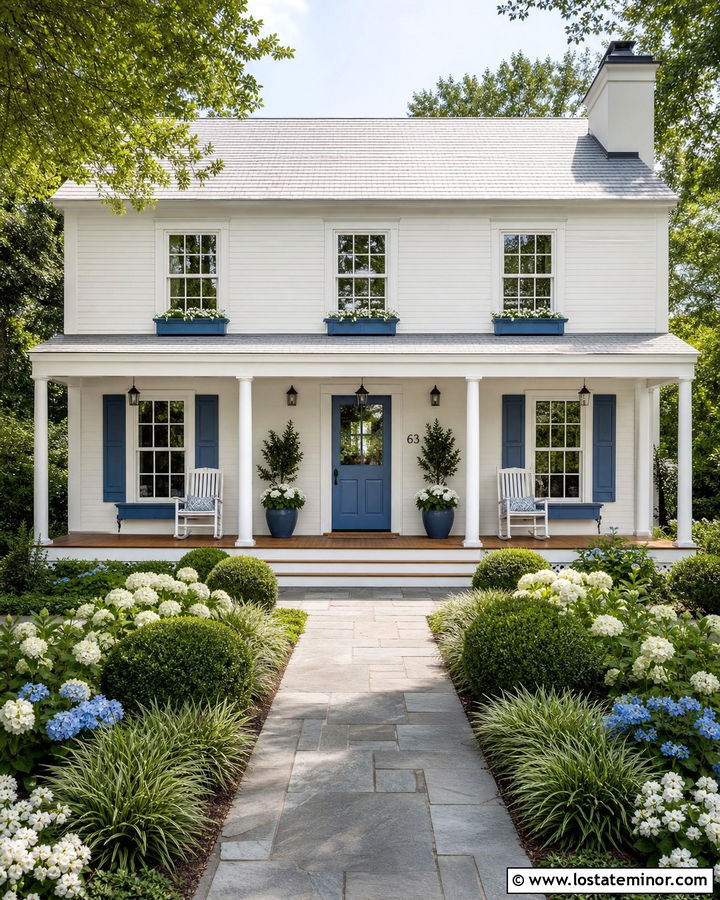
A blue front door can set the direction for an entire white exterior scheme. Choose a medium slate blue for the entrance, then use window boxes in the same color or a deeper navy variation. Soft white siding and crisp trim allow the blues to read clearly without appearing harsh. Fill the boxes with white flowers, pale blue blooms, and fresh green foliage. A light gray roof and silver-toned hardware reinforce the cool palette. Natural wood porch flooring prevents the exterior from feeling too cold. Frame the walkway with hydrangeas, compact grasses, and rounded shrubs. Whether used on a cottage or traditional two-story house, this color arrangement feels calm and friendly. Consistent blue accents make the window boxes look connected to the architecture.
24. White House With Window Boxes And Yellow Door
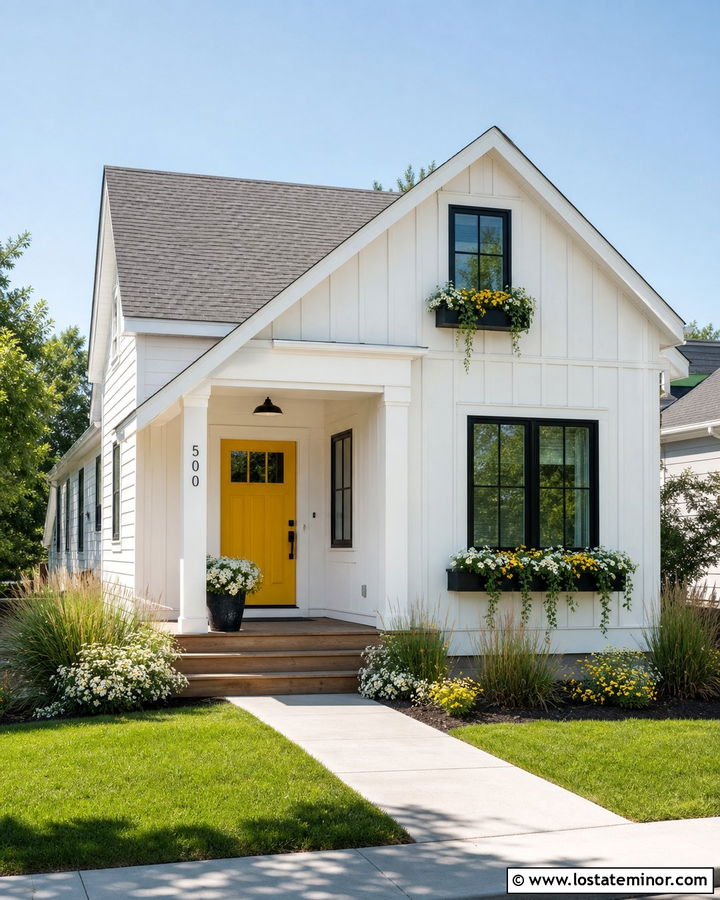
A yellow door gives a white house a cheerful focal point without requiring a major exterior renovation. Balance the bright entry with charcoal window boxes, black-framed windows, and a medium-gray roof. Use a warm white body color so the yellow feels sunny rather than fluorescent. Plant the boxes with white petunias, yellow calibrachoa, and deep green trailing vines to repeat the door color in smaller amounts. Natural wood porch steps and brass-toned hardware add further warmth. Keep foundation planting simple with clipped shrubs and ornamental grasses. This scheme works particularly well on small ranch houses, cottages, and modern farmhouses. By limiting yellow to the entrance and flowers, the complete facade remains playful, polished, and easy to live with.
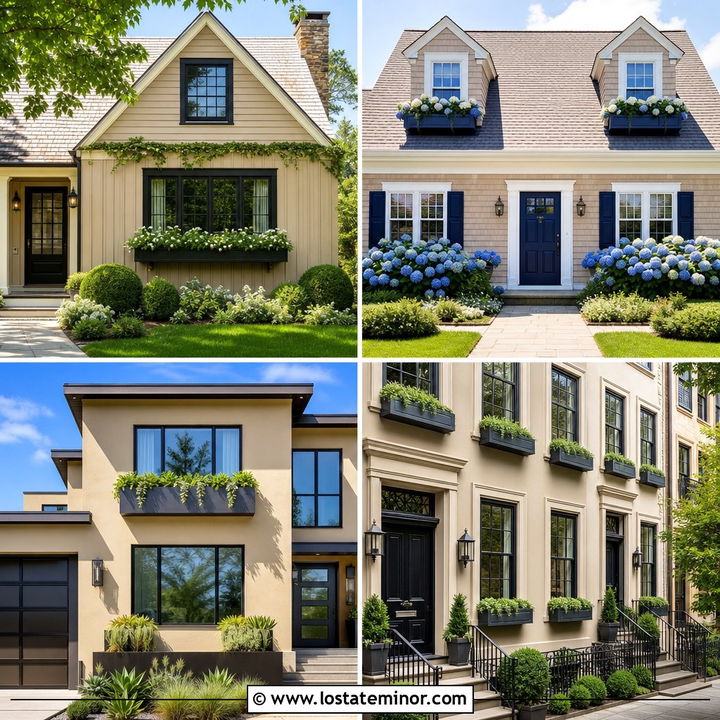
25. White House With Window Boxes And Pink Flowers
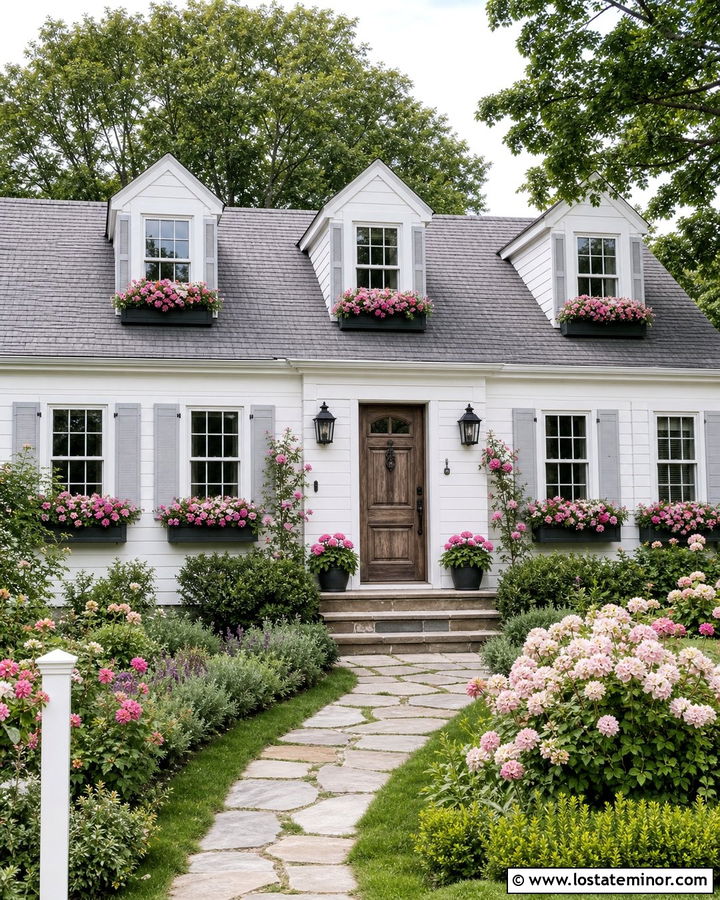
Pink flowers create a romantic garden look against a clean white exterior. Choose dark green or white window boxes so the blooms remain the dominant color. A soft white house with pale gray shutters and a weathered wood door forms a gentle background for blush, rose, and deep pink planting. Combine upright geraniums with smaller filler flowers and trailing greenery for a full arrangement. Repeat pink through nearby roses or hydrangeas, but leave enough green foliage to keep the yard balanced. A gray shingle roof and natural stone walkway ground the pastel scheme. This design suits cottages, Cape Cod homes, and traditional farmhouses. Consistent planter spacing will keep the abundant flowers looking deliberate rather than randomly scattered across the facade.
26. White House With Window Boxes And Purple Flowers
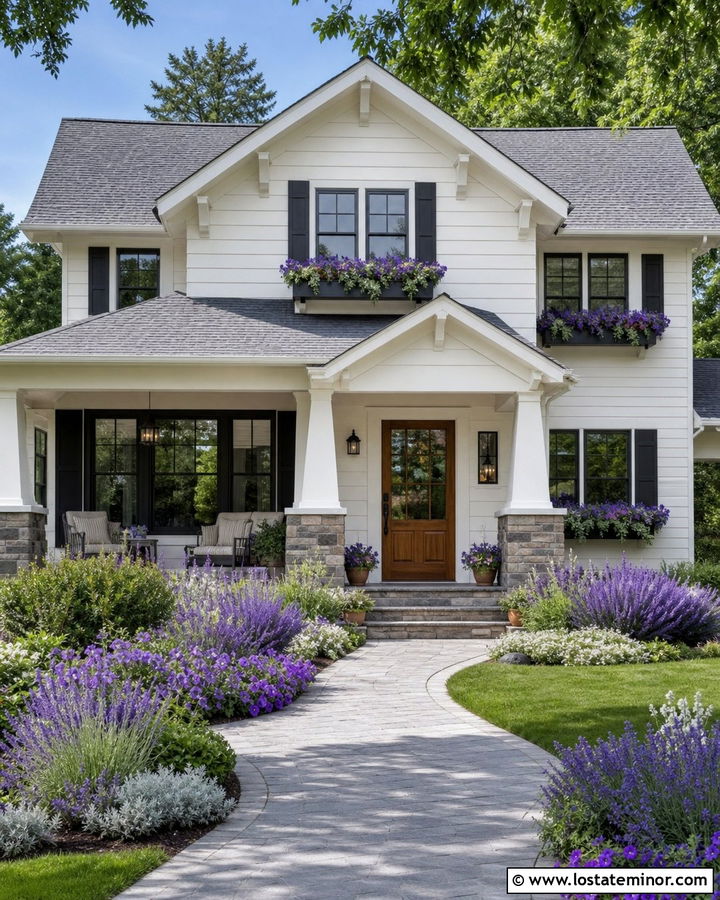
Purple flowers introduce rich color to a white exterior while working comfortably with both warm and cool accent palettes. Use charcoal gray window boxes, dark shutters, and a muted plum or natural wood front door. Plant lavender, purple petunias, verbena, and trailing white flowers to create depth without using too many unrelated colors. Soft white siding provides a clean background, while a gray roof keeps the overall scheme grounded. Repeat the purple tones in small garden borders near the walkway. Silver-green foliage can bridge the flowers and the home’s neutral materials. This complete look is effective on stone-accented cottages, traditional ranch homes, and Craftsman houses. The deep floral color gives windows greater presence and makes the entire facade feel more landscaped.
27. White House With Window Boxes And Evergreen Plants
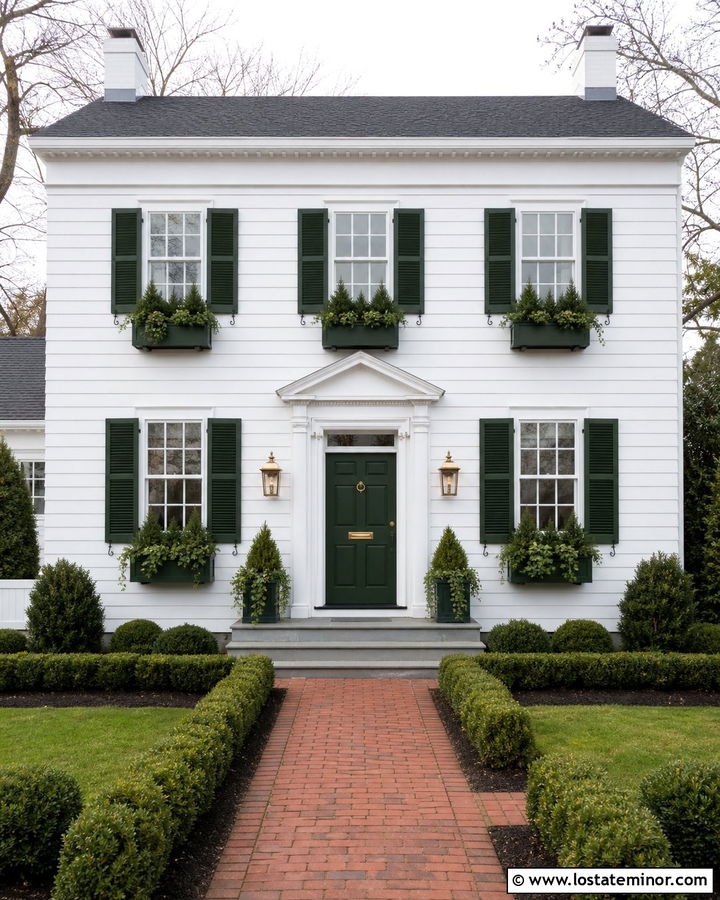
Evergreen window boxes provide structure when flowering displays are difficult to maintain. Use black or dark green planters filled with compact conifers, small boxwood forms, trailing ivy, and durable foliage. A white Colonial or traditional brick house provides an ideal backdrop for the rich green planting. Repeat the planter color on shutters and the front door, then add warm brass or copper lighting. The arrangement should remain low enough that it does not block windows or interfere with opening sashes. Clipped hedges along a brick walkway can extend the structured look into the yard. Although the palette is restrained, differences in leaf shape and green tone add visual interest. The result is a clean exterior with dependable, organized curb appeal.
28. White House With Second-Story Window Boxes
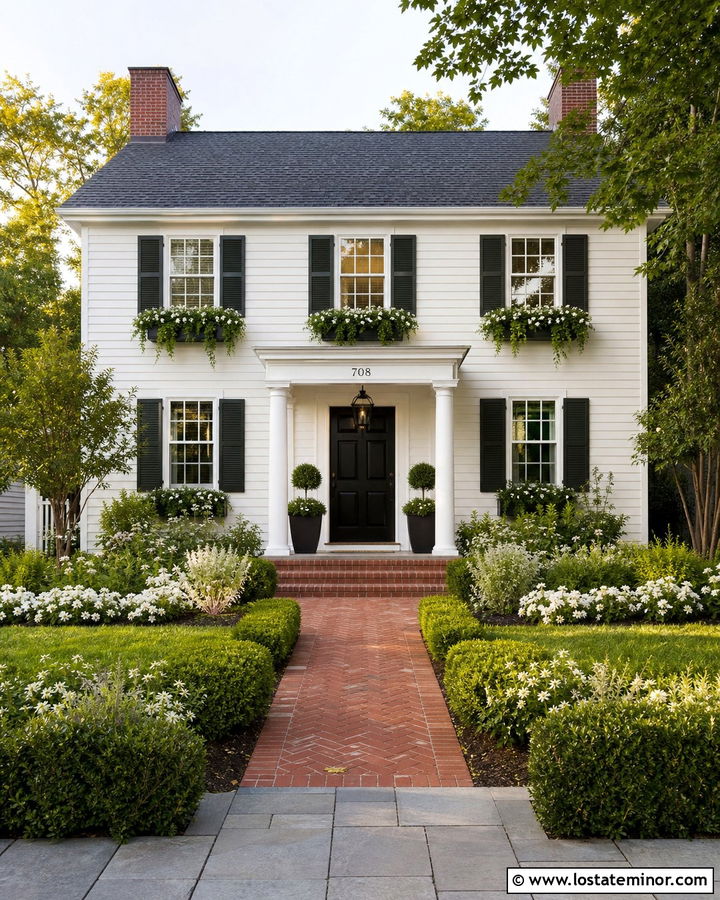
Second-story window boxes can draw attention upward and make a tall white house feel more layered. Choose lightweight, weather-resistant planters that coordinate with the trim, shutters, or front door. Dark green boxes work beautifully on a white Colonial, especially when aligned beneath evenly spaced upper windows. Fill them with drought-tolerant flowers and trailing foliage that remains visible from the street. Repeat similar plants in porch containers to connect the upper and lower portions of the facade. Black shutters, a dark gray roof, and a red brick walkway establish a classic foundation. Secure installation and accessible watering are essential practical considerations. Visually, the finished boxes soften the second floor and prevent the upper facade from appearing empty or disconnected from the garden.
29. Small White House With Window Boxes
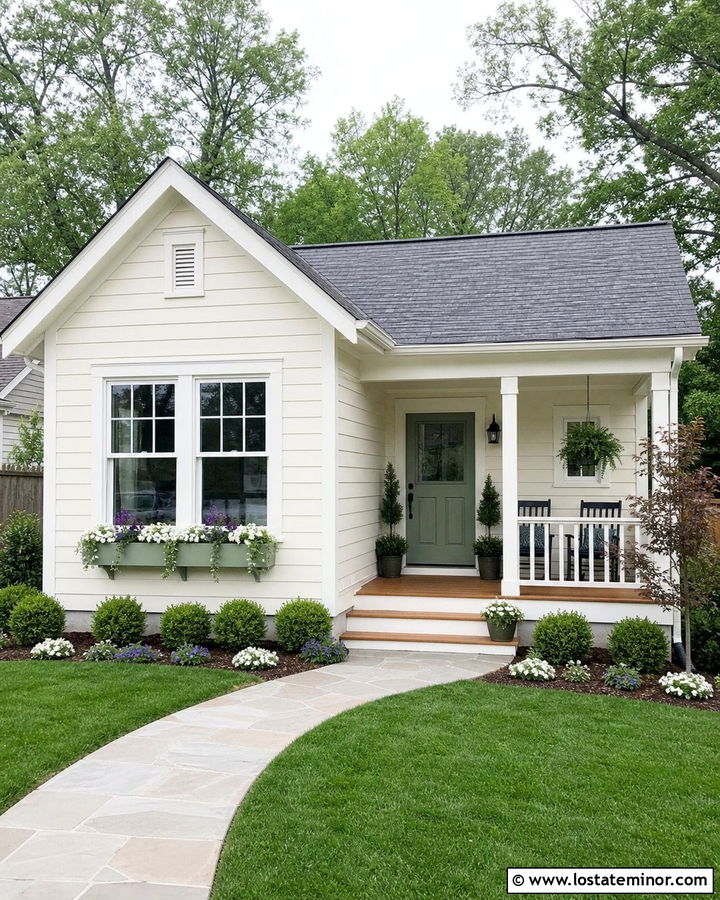
On a small white house, a few correctly scaled window boxes can create more impact than numerous decorative accessories. Use boxes that closely follow the width of the main windows, avoiding undersized planters that appear lost. A compact white cottage can pair sage green boxes with a matching front door and simple white trim. Fill them with upright white flowers, small purple blooms, and short trailing vines. A gray roof and natural wood porch floor give the exterior visual stability. Keep foundation shrubs low so they do not compete with the window displays. A curved path and one small ornamental tree can frame the house without overwhelming it. This focused design makes the facade feel wider, more welcoming, and thoughtfully landscaped.
30. White House With Built-In Window Boxes
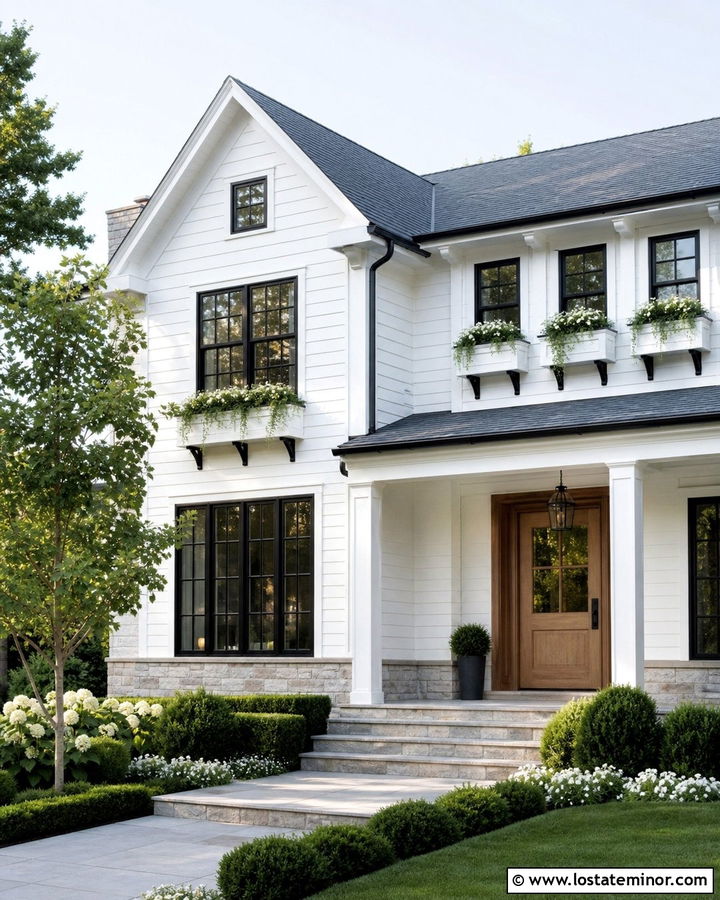
Built-in window boxes create the most integrated appearance because they look like part of the original architecture. Match their profiles to the window trim, porch railings, or siding details. On a white transitional house, consider white paneled boxes with black brackets, black-framed windows, and a natural oak door. A charcoal roof and light stone foundation give the facade additional contrast and texture. Fill each box with structured green foliage, white flowers, and modest trailing plants. Proper drainage should direct excess water away from the siding and foundation. Repeat the planter design evenly across important front windows rather than every opening. The result is a custom, cohesive exterior in which architecture, planting, materials, and color all support one complete curb-appeal scheme.
Conclusion:
The most successful 30 White House Design With Window Boxes Ideas treat planters as part of a complete exterior rather than isolated decorations. Coordinate each box with the house style, window proportions, siding, trim, roofing, front door, and surrounding landscape. Black planters provide crisp contrast, cedar introduces warmth, and white boxes create a seamless built-in appearance. Flowers can repeat an accent color, while evergreen arrangements offer lasting structure. Before installing anything, consider drainage, secure mounting, sunlight, plant maintenance, and access for watering. Whether your home is a compact cottage or a formal Colonial, properly scaled window boxes can add dimension, character, and garden color while preserving the clean versatility of a white facade.

Related posts: