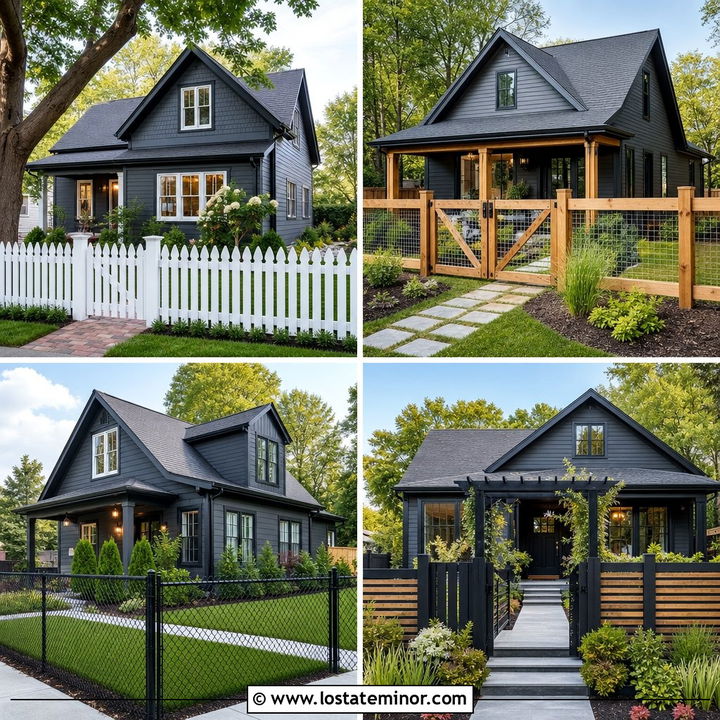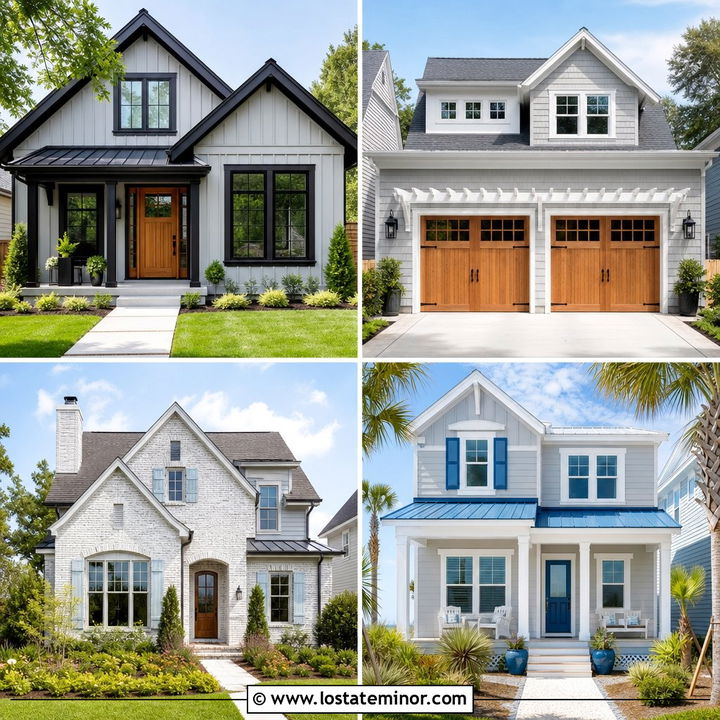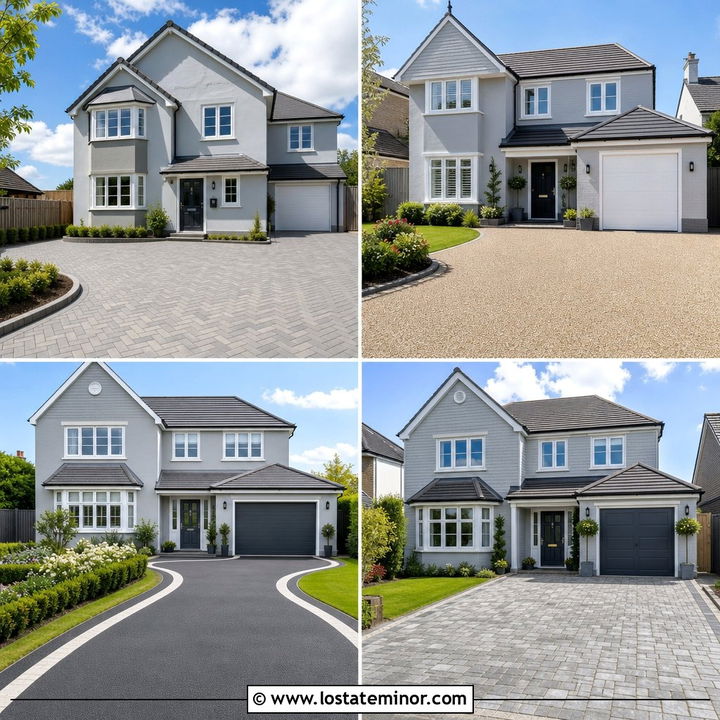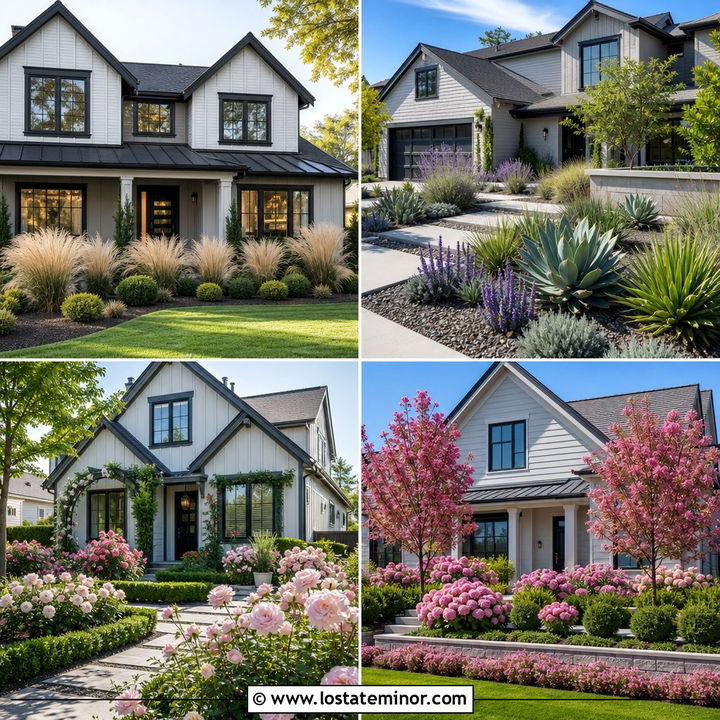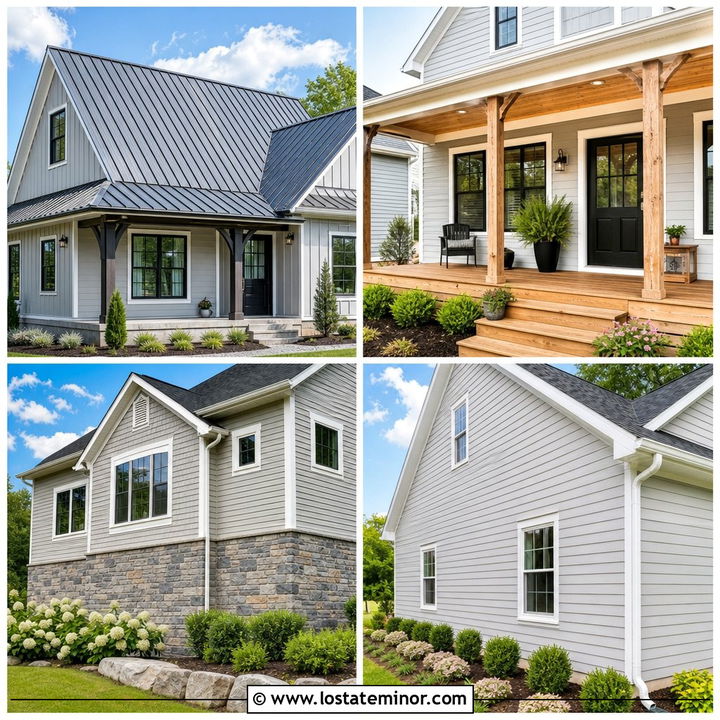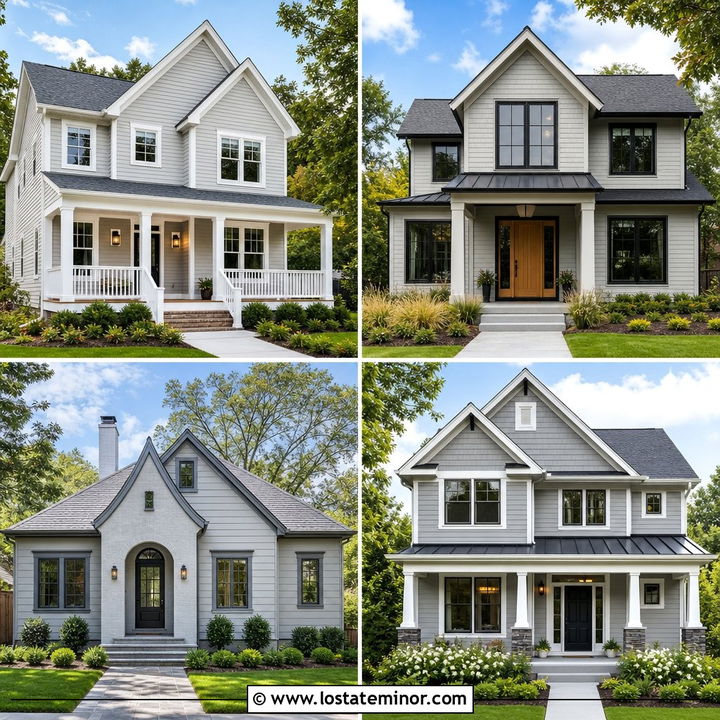
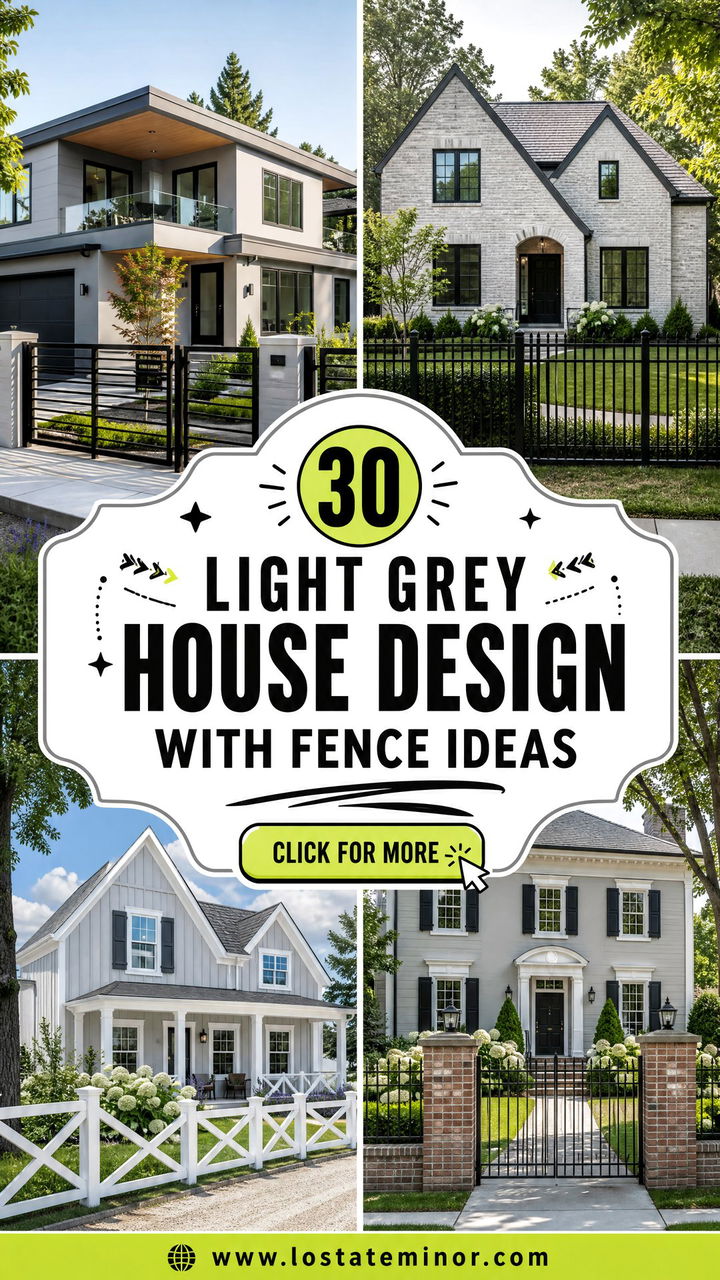
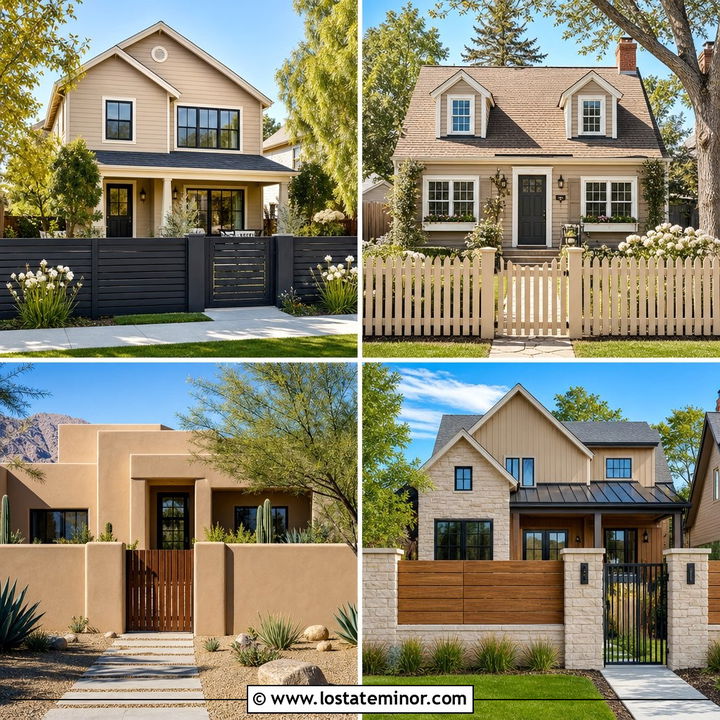
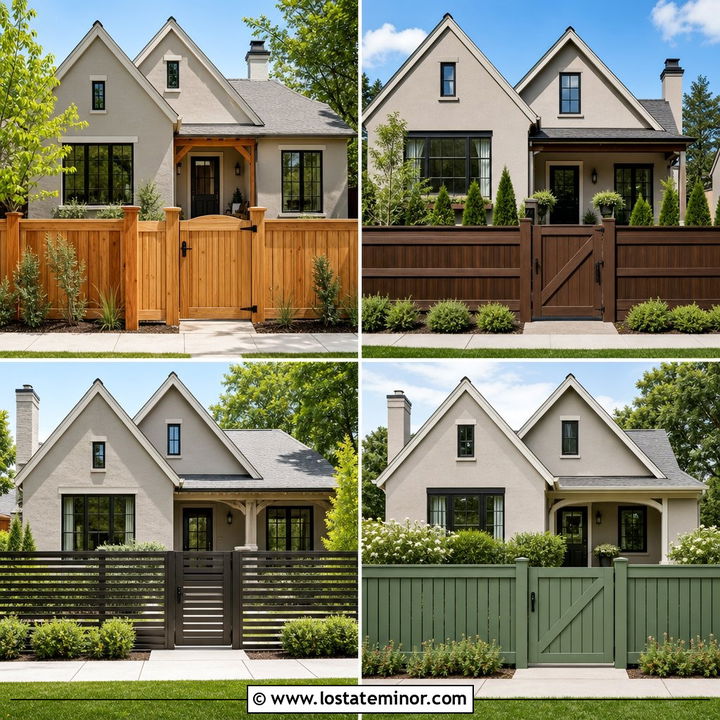
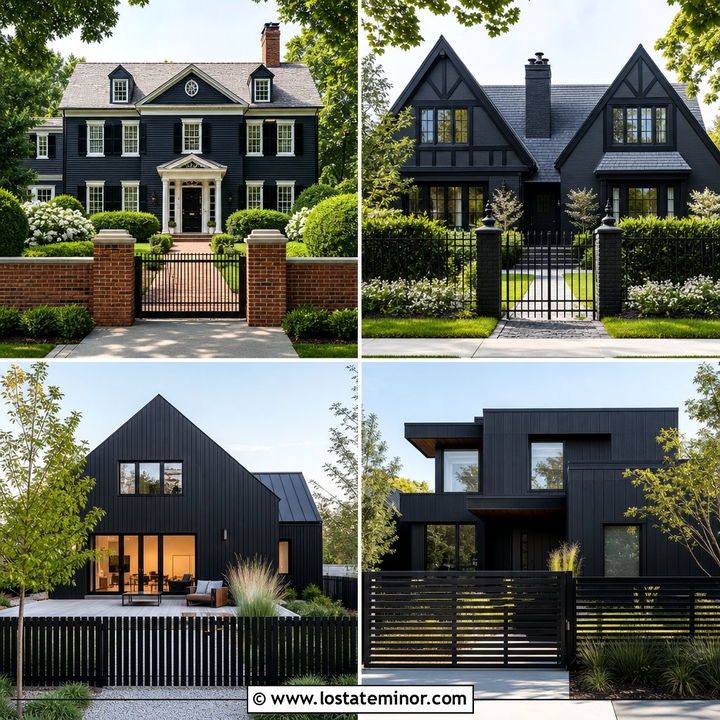
Light grey creates a flexible backdrop for fences, roofing, stone, and landscaping. It can feel crisp and modern, soft and coastal, or warm and traditional, depending on its undertone. The fence matters just as much as the siding because it frames the property from the street. Black metal creates strong contrast, while cedar adds warmth and a white picket fence keeps the palette bright. Current exterior guidance also supports pairing light gray homes with darker fences or natural timber for clear definition and balanced curb appeal. () The following 30 Light Grey House Design With Fence Ideas explore complete exterior combinations, including trim, doors, roofs, masonry, and landscaping. Use these 30 Light Grey House Design With Fence Ideas to plan a coordinated look from the facade to the property line.
1. Light Grey Colonial House With White Picket Fence
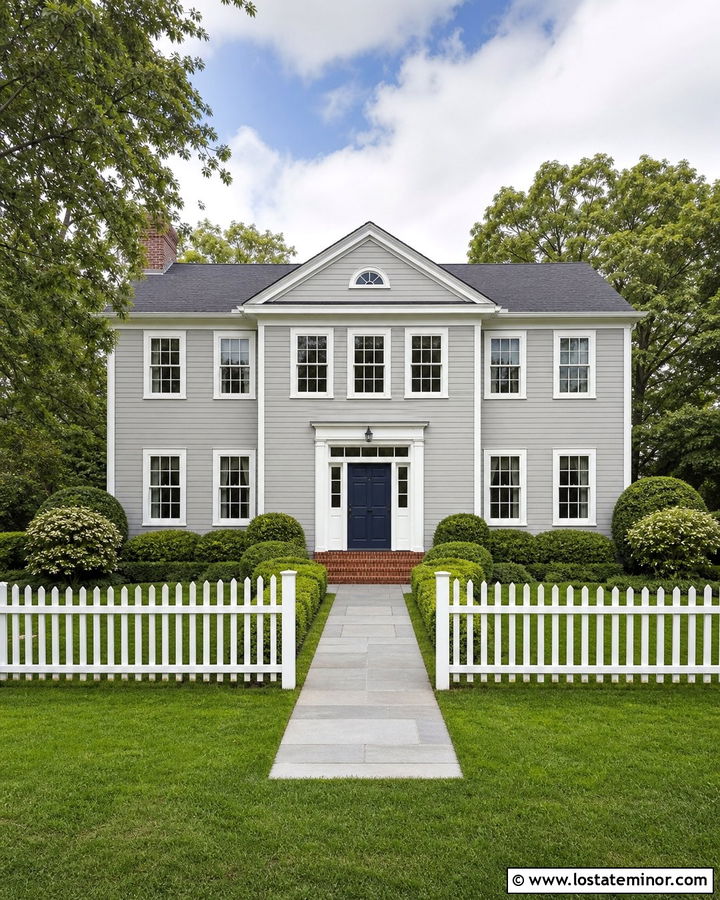
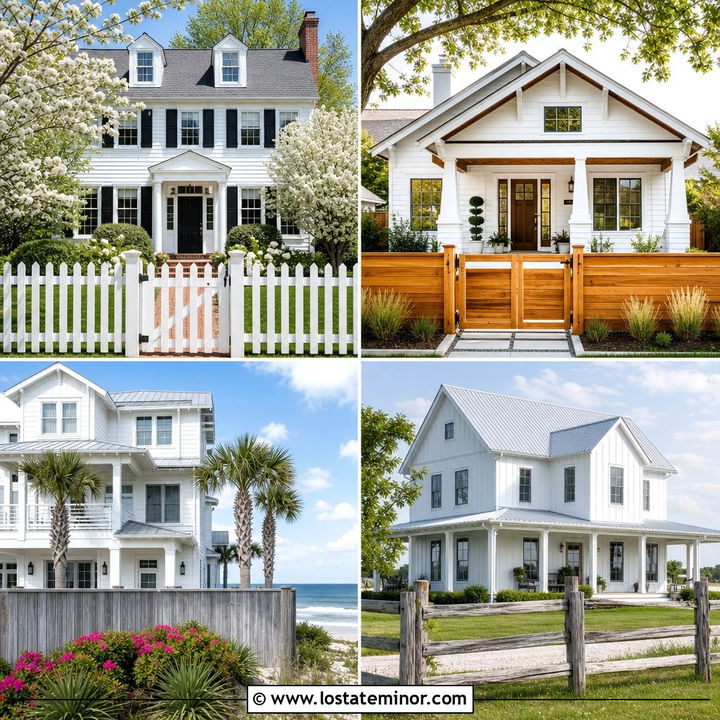
A white picket fence gives a light grey Colonial house a clean, traditional character without making the property feel closed off. Choose soft grey clapboard siding with crisp white trim around the symmetrical windows, porch columns, and cornices. A navy blue front door provides a classic focal point, while a medium charcoal shingle roof grounds the pale palette. Carry the white finish from the trim onto the fence so the two elements look intentionally connected. Keep the fence low enough to preserve a clear view of the facade. Brick steps, clipped boxwoods, and a straight walkway reinforce the home’s balanced architecture. Black lanterns and simple brass door hardware add small amounts of contrast without competing with the timeless grey, white, and navy combination.
2. Light Grey Modern House With Black Metal Fence
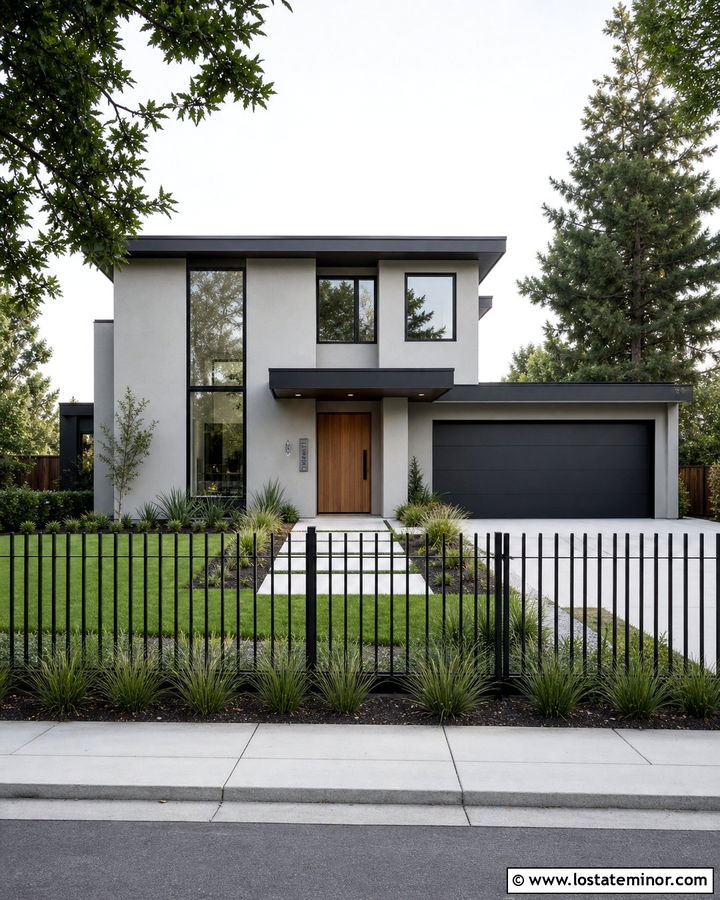
Strong black lines can give a light grey modern house sharper definition from the street. Use smooth light grey stucco or fiber cement panels across the main facade, then add matte black window frames, fascia, and a flat-panel garage door. A low black steel fence with narrow vertical bars repeats those architectural lines while maintaining visibility across the yard. Consider a warm cedar front door to prevent the monochromatic palette from looking cold. A charcoal standing-seam roof or dark parapet cap will visually connect the upper facade to the fence. Finish the design with rectangular concrete pavers, ornamental grasses, and compact evergreen shrubs. The restrained landscaping allows the contrast between the soft grey exterior and black fence to remain the main curb-appeal feature.
3. Light Grey Farmhouse With Cedar Fence
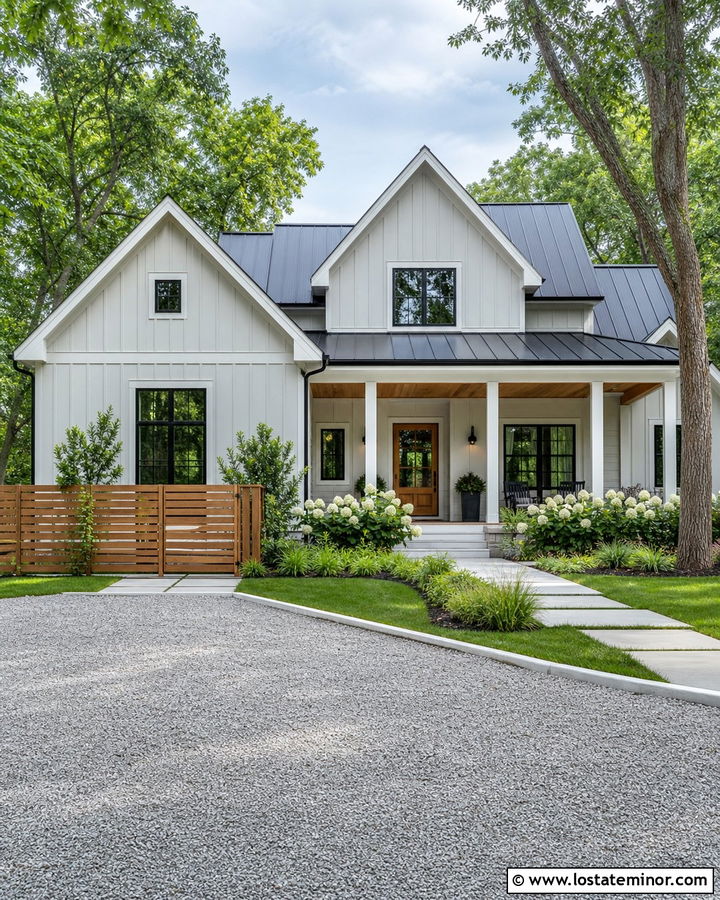
Natural cedar brings warmth and texture to the cool appearance of a light grey farmhouse. Cover the house in pale grey board-and-batten siding, using bright white for the corner boards, window trim, porch columns, and fascia. A cedar horizontal-slat fence can frame the front garden while coordinating with a stained wood door and matching porch ceiling. Keep the roof and gutters matte black to add definition around the lighter materials. Wide fence slats provide a modern update, but small gaps between the boards keep the structure from appearing overly heavy. A gravel driveway, concrete walkway, white hydrangeas, and low grasses complete the relaxed setting. Seal the cedar with a clear or lightly tinted protective finish to preserve its warm color and natural grain.
4. Light Grey Ranch House With Charcoal Privacy Fence
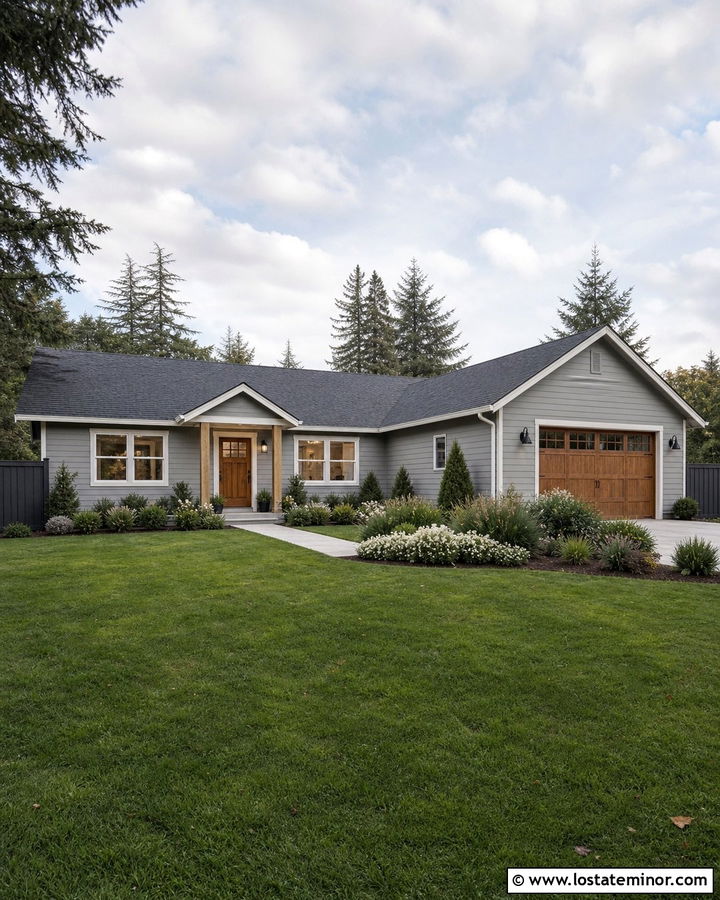
Does your single-story home need more depth and privacy? Pair light grey horizontal siding with a tall charcoal board-on-board fence along the side yard. The dark fence creates a strong background that helps pale siding, white trim, and colorful planting stand out. Use a charcoal architectural-shingle roof to repeat the fence color and visually stretch the ranch home’s long roofline. A medium-tone wood front door and matching garage accents can soften the cool neutral scheme. Near the street, transition to a lower fence section so the entrance remains welcoming. Layer evergreen shrubs, white flowering plants, and ornamental grasses between the house and boundary. This complete combination feels contemporary, practical, and balanced while giving patios, side gardens, and backyard living spaces greater separation.
5. Light Grey Craftsman House With Stone Pillar Fence
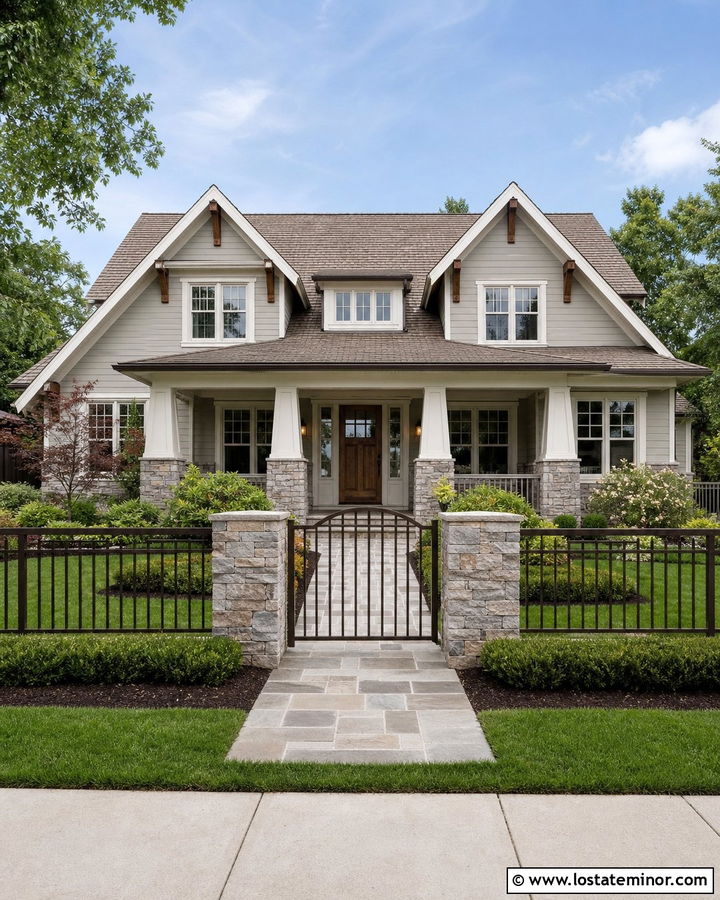
A Craftsman exterior looks especially substantial when the fence includes materials already found on the house. Begin with light warm-grey lap siding, creamy white trim, and tapered porch columns resting on natural stone bases. Build a low fence with matching stone pillars and dark bronze metal panels between them. This repetition connects the property boundary to the porch rather than treating it as a separate feature. A stained oak door, exposed wood brackets, and a brown-grey shingle roof bring warmth to the neutral siding. Use a wide stone walkway and layered foundation beds to guide attention toward the entry. Amber-toned stone containing grey and taupe will bridge the exterior paint, woodwork, and metal. The finished design feels handcrafted without becoming visually busy.
6. Light Grey Cottage With White Scalloped Fence
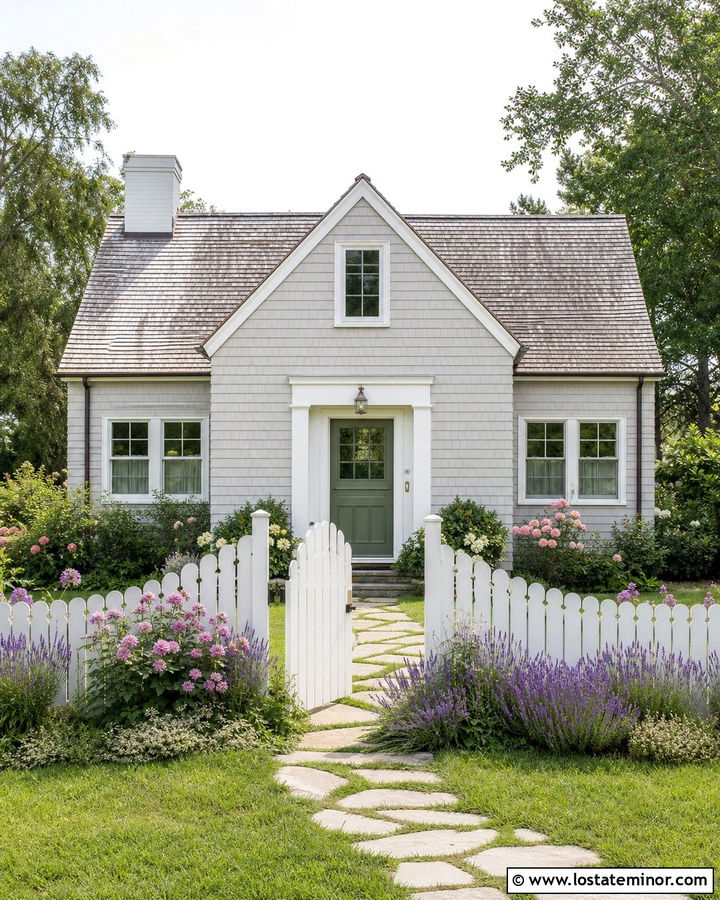
Soft shapes make a pale grey cottage feel cheerful and approachable. Choose light grey shingle siding, white window trim, and a muted green front door for a garden-inspired palette. A low white scalloped picket fence introduces a playful outline while still coordinating with the trim and porch railing. Add a small arched gate directly in line with a curved flagstone path. A weathered grey roof will keep the scheme gentle, while copper lanterns or aged-brass hardware provide a touch of warmth. Surround the fence with lavender, roses, catmint, and loosely shaped shrubs instead of rigid hedges. The white boundary becomes part of the garden rather than a hard visual barrier. This look works best when materials and colors remain soft, simple, and slightly informal.
7. Light Grey Bungalow With Horizontal Black Fence
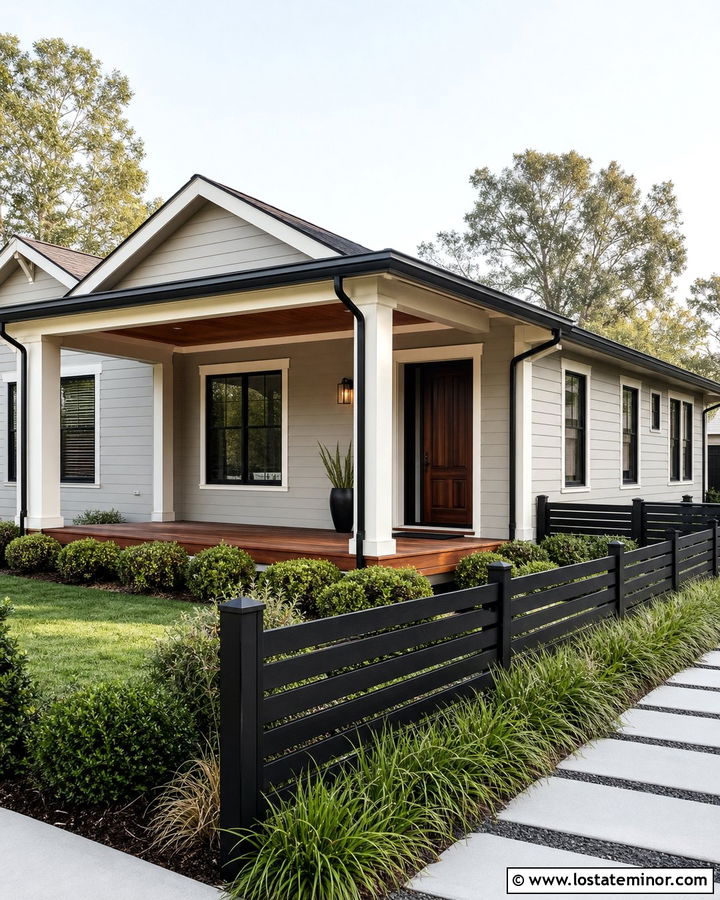
A horizontal black fence can make a compact light grey bungalow appear wider and more contemporary. Use pale grey lap siding across the body, warm white trim, and matte black windows to establish the core palette. Repeat the black on a low horizontal-slat fence, porch railing, gutters, and simple metal light fixtures. A natural mahogany front door offers enough warmth to keep the design comfortable. If the bungalow has a deep porch, use wood decking or a stained beadboard ceiling to strengthen that connection. Keep the fence lines level and align the gate with the front steps for a clean view. Drought-tolerant grasses, rounded shrubs, and large concrete pavers provide texture without clutter. The overall result feels streamlined while respecting the bungalow’s low, welcoming proportions.
8. Light Grey Cape Cod House With Split Rail Fence
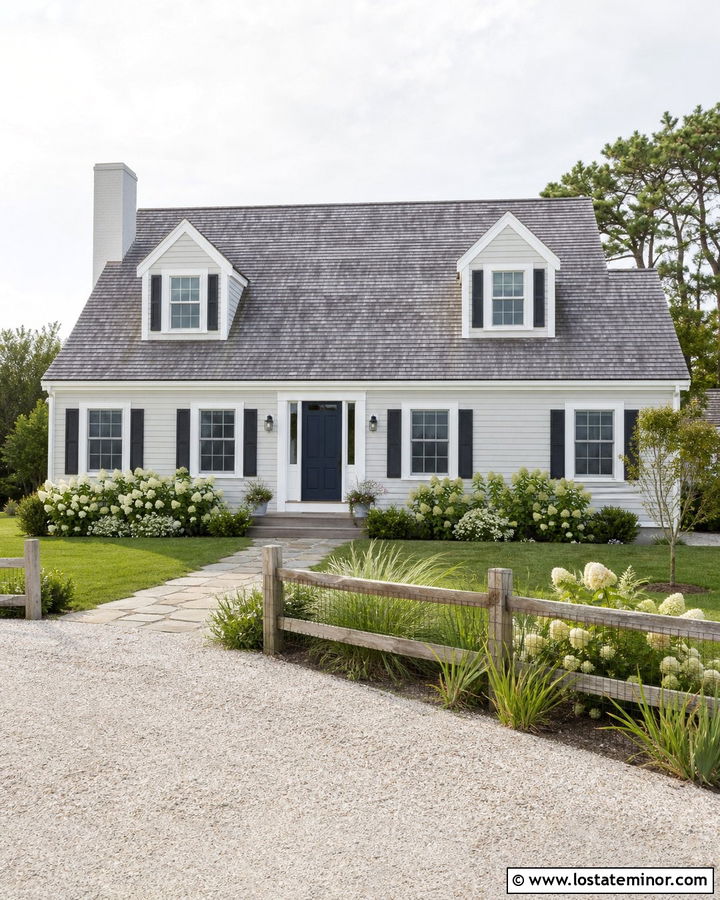
A natural split rail fence complements the simple, coastal character of a light grey Cape Cod house. Paint the shingle or clapboard siding a misty light grey, then use crisp white on the dormers, window trim, corner boards, and entry surround. A deep blue front door and charcoal shutters add familiar New England contrast. Leave the split rail fence natural or apply a soft weathered-grey stain that allows the wood texture to remain visible. Black wire mesh can be attached discreetly if pets need containment. A crushed-shell or pale gravel driveway, hydrangeas, beach grasses, and a stone walkway complete the setting. Avoid an overly tall fence, since Cape Cod architecture benefits from an open view of the steep roof, dormers, and symmetrical front elevation.
9. Light Grey Tudor House With Dark Wood Fence
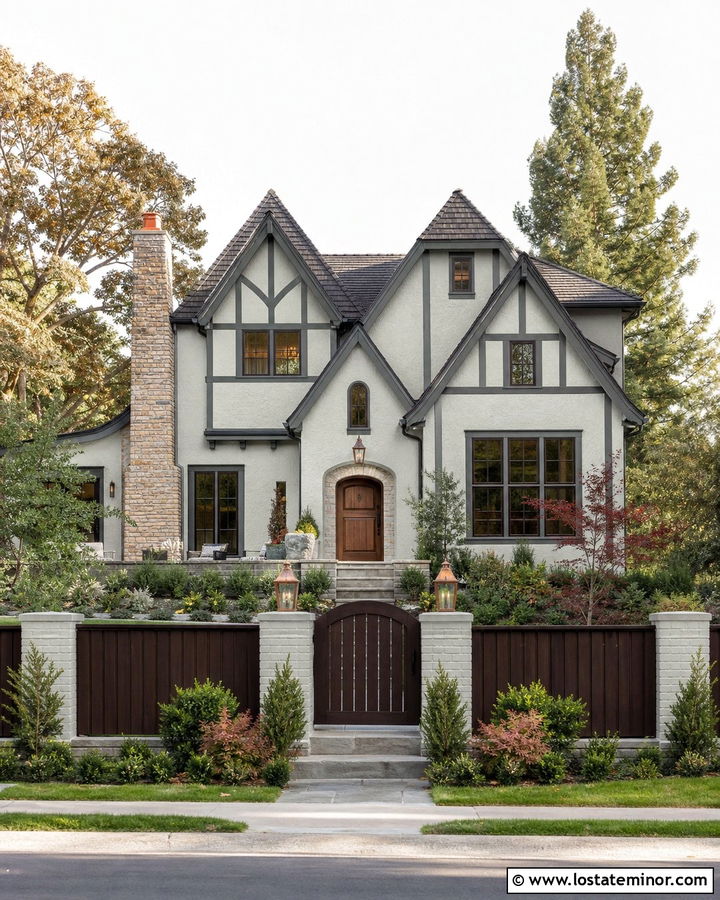
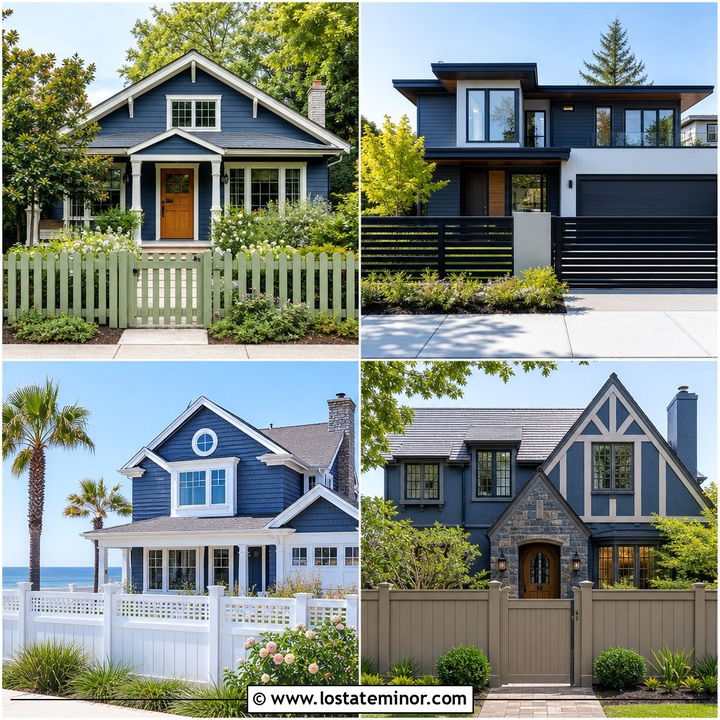
The visual weight of Tudor architecture calls for a fence with depth and texture. Use light grey stucco between charcoal decorative timbers, then add dark bronze windows and a steep charcoal roof. A dark walnut-stained wood fence with masonry posts supports the home’s traditional character without copying every facade detail. Choose vertical fence boards with a simple arched gate to reflect the curved front doorway. Warm stone around the entry and chimney can balance the grey body color and dark woodwork. Add copper lanterns, a medium-brown door, and textured foundation planting for an established appearance. Keep the front section of the fence moderately low, reserving taller panels for side yards. The combination feels cohesive because each dark element anchors a different part of the property.
10. Light Grey Victorian House With Iron Fence
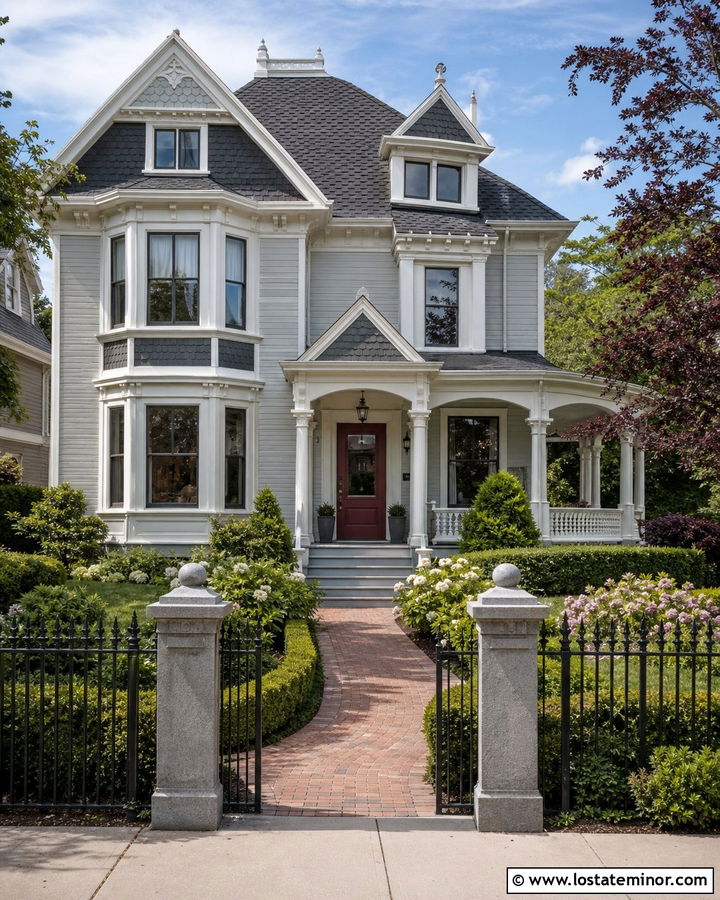
An ornamental iron fence can highlight the detailed architecture of a light grey Victorian without hiding it. Apply soft light grey to the primary siding, bright white to the trim, and charcoal to selected brackets, window sashes, or decorative shingles. A muted plum or burgundy front door adds historic color in a controlled way. Choose a black iron fence with slender pickets, decorative finials, and masonry posts that match the foundation. Its open structure keeps bay windows, porch details, and layered rooflines visible from the sidewalk. Repeat black on the porch lights and handrails for continuity. A curved brick path, clipped hedges, flowering perennials, and a small ornamental tree soften the formal boundary. Limit the palette to four coordinated colors so the detailed facade remains organized.
11. Light Grey Split-Level House With Cedar Slat Fence
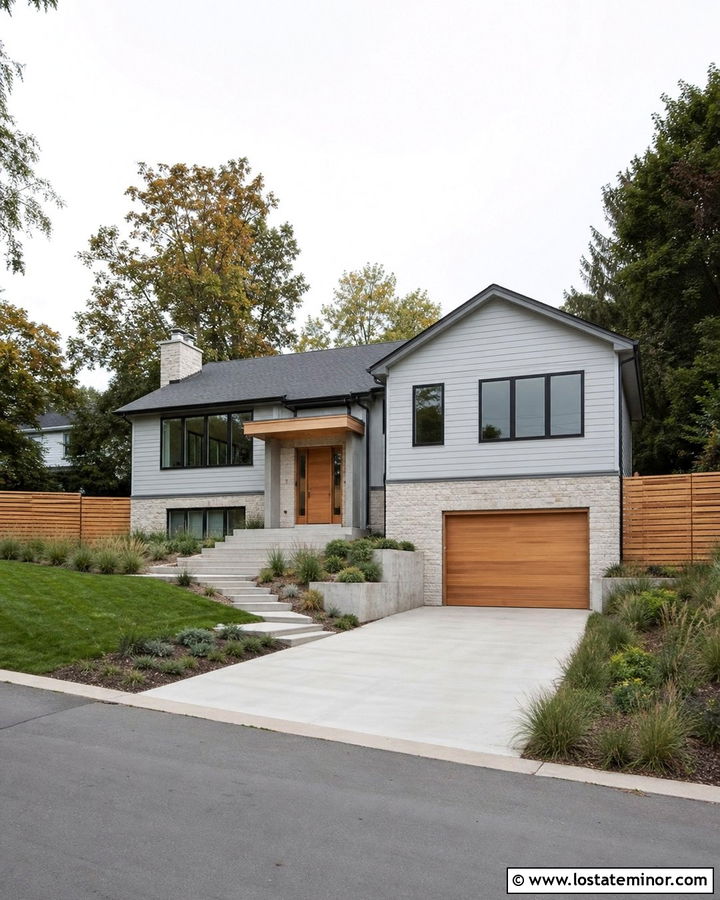
Clean horizontal elements can unify the uneven elevations of a split-level home. Cover the upper story with light grey lap siding and use pale stone or painted brick across the lower level. A cedar slat fence introduces warmth while reinforcing the home’s long horizontal lines. Coordinate it with a cedar garage door, entry canopy, or front-door surround rather than adding wood in only one location. Dark charcoal windows, gutters, and roofing create a structured frame around the lighter facade. Where the yard slopes, step each fence panel gradually instead of forcing a single diagonal top line. Broad concrete stairs, ornamental grasses, and tiered planting beds can follow the same grade. The repeated grey, charcoal, stone, and cedar materials turn a potentially fragmented exterior into one balanced composition.
12. Light Grey Coastal House With Weathered Fence
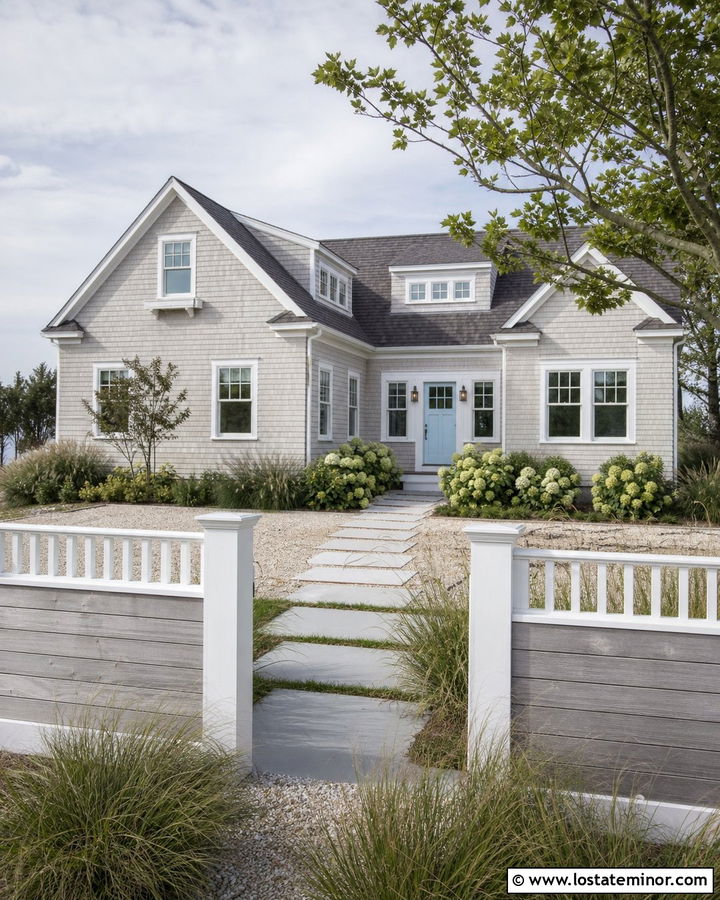
Salt-washed colors give a light grey coastal house an easy, relaxed appearance. Select misty grey shingle siding, white trim, and a pale blue front door. Pair the facade with a weathered wood fence finished in a semi-transparent driftwood-grey stain. The fence should look softly aged rather than heavily distressed, allowing natural grain to provide movement. White fence posts or gate trim can connect it to the house without making the entire boundary bright. Choose a medium-grey roof and corrosion-resistant black or brushed-nickel lighting. Beach grasses, hydrangeas, pale gravel, and stepping stones support the coastal palette. A wide gate and open upper slats prevent the boundary from feeling too solid. Together, the cool greys and weathered wood create a calm exterior with natural texture.
13. Light Grey Mediterranean House With Stucco Wall Fence
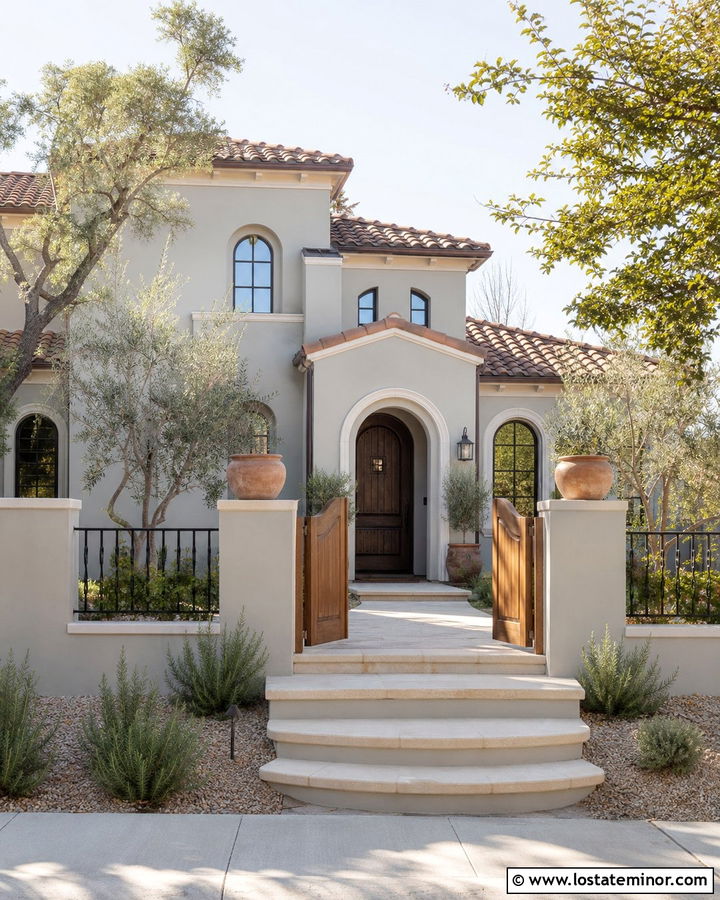
A low stucco wall creates privacy while respecting the solid forms of a Mediterranean home. Use light warm-grey stucco on the house and repeat the same color on the boundary wall for a seamless connection. Cream trim, a clay tile roof, and a dark wood front door prevent the grey from feeling too contemporary. Insert warm cedar gates or black iron panels between stucco pillars to add contrast and visibility. The wall cap can be natural limestone or clay tile, depending on the roof color. An arched gateway will echo curved windows and the main entry. Complete the look with terracotta planters, olive trees, rosemary, and gravel beds. The coordinated wall and facade make the property feel larger, while the wood, tile, and planting introduce essential warmth.
14. Light Grey Prairie House With Bronze Fence
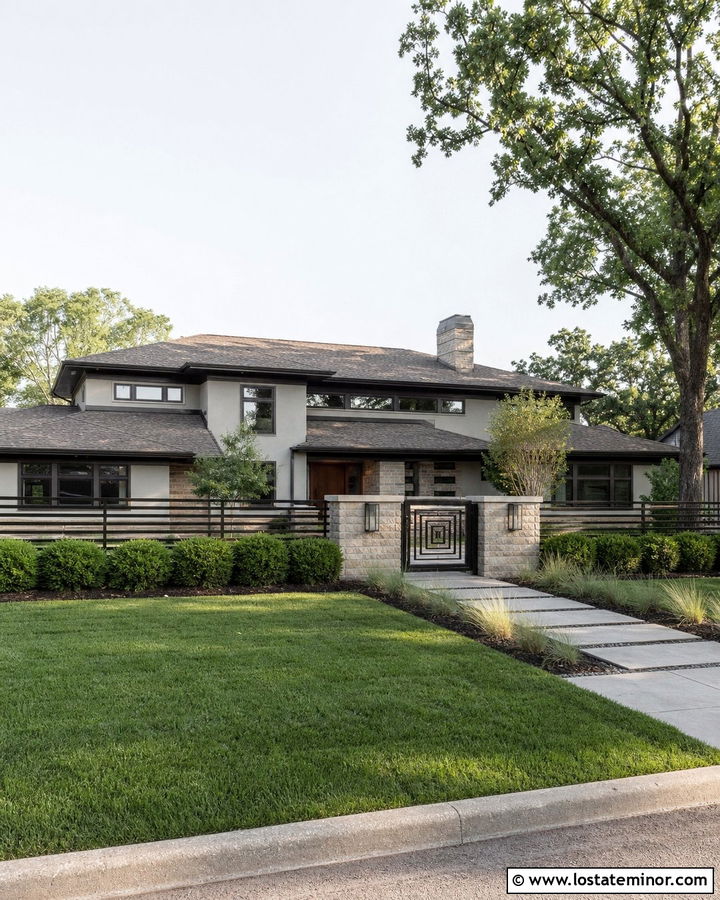
Long, low lines define a Prairie-style home, and the fence should follow the same architectural direction. Choose warm light grey stucco or horizontal siding, deep bronze window frames, and a broad brown-grey roof with generous eaves. A low bronze metal fence with horizontal rails reinforces the home’s width without becoming a dominant barrier. Use natural stone on the chimney, porch piers, and occasional fence columns to connect the house and landscape. A walnut front door adds another warm note against the pale grey body. Keep the gate wide, geometric, and aligned with the main walkway. Structured grasses, low hedges, and rectangular paving beds complement the architecture. Bronze works more softly than black, making it a good choice when the exterior includes earthy stone and warm roof tones.
15. Light Grey Brick House With Black Aluminum Fence
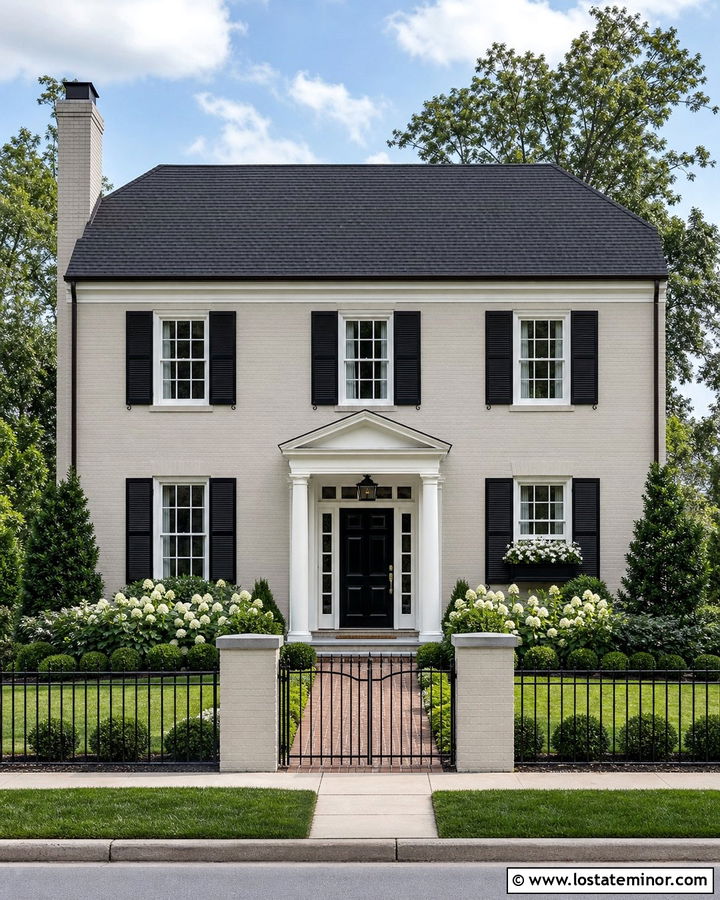
Painted light grey brick gains definition when it is paired with a slim black aluminum fence. Use a mineral-compatible masonry coating in a soft grey, then brighten the windows, eaves, and porch columns with clean white trim. A glossy black front door, black shutters, and a charcoal roof repeat the fence color across the facade. Select simple vertical aluminum pickets rather than ornate panels to keep the updated brick exterior feeling fresh. Brick or stone fence pillars can mark the driveway and pedestrian gate. Add broad planting beds filled with green shrubs and white flowers to soften the high-contrast palette. Because aluminum is visually lighter than solid wood, it preserves an open view of the house. This scheme offers traditional structure with a more streamlined, low-maintenance appearance.
16. Light Grey Board And Batten House With White Farm Fence
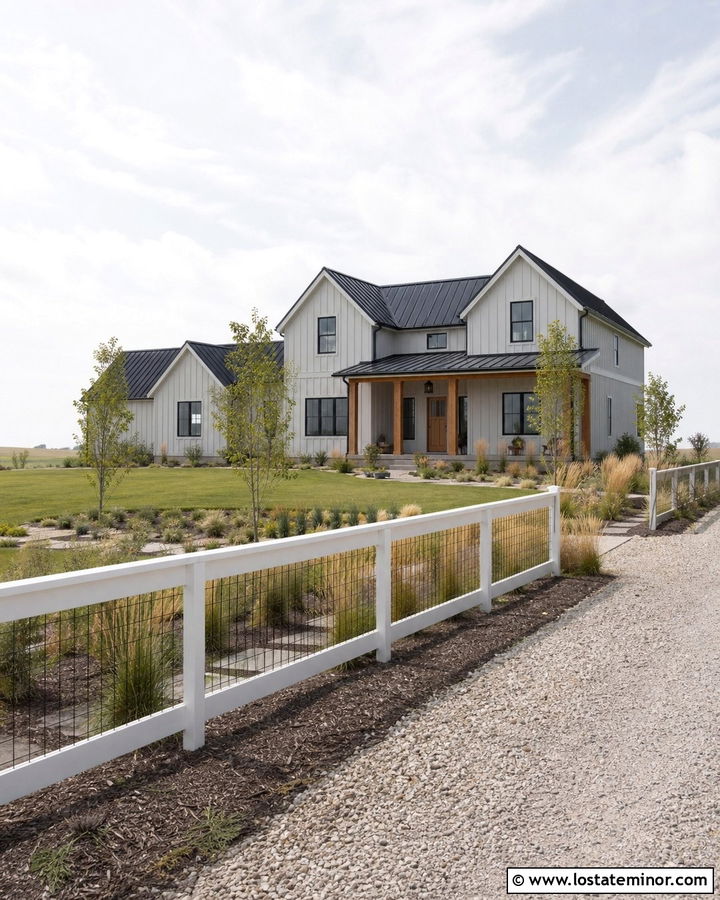
A white post-and-rail fence creates an inviting rural frame around a light grey board-and-batten home. Use pale grey siding, bright white corner boards, and a black metal roof for a simple farmhouse palette. Repeat black on the windows, lanterns, and gutters, then add a natural wood door and porch posts for warmth. The fence should match the white trim closely so it looks like an extension of the architecture. If containment is needed, discreet black wire mesh can sit behind the rails. A gravel driveway, native grasses, young trees, and a straight concrete or stone path complete the open setting. Keep the landscaping informal but well maintained. This design works because the long white rails lighten the property edge while the black roof clearly anchors the house.
17. Light Grey Stucco House With Concrete Fence
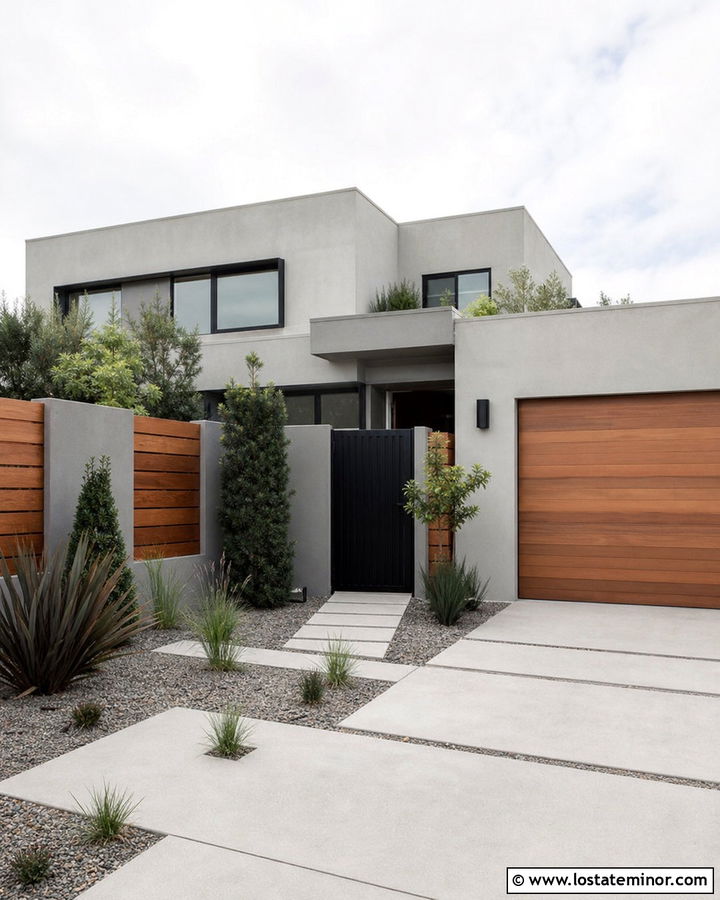
A modern concrete fence can make a light grey stucco home feel sculptural and private. Choose a pale neutral grey for the exterior walls, then use charcoal window frames and a flat warm-wood garage door. Build the fence from smooth precast concrete panels in a slightly deeper grey so it remains coordinated without disappearing into the facade. Break up long sections with cedar slats, metal gates, or narrow planting pockets. A black steel pedestrian gate can provide crisp contrast at the entry. Large concrete pavers, gravel beds, architectural succulents, and olive-green grasses support the restrained palette. Keep the wall lower near the driveway for clear sightlines and taller beside private patios. The layered grey tones create depth, while wood and greenery prevent the property from appearing stark.
18. Light Grey Craftsman Bungalow With Green Fence
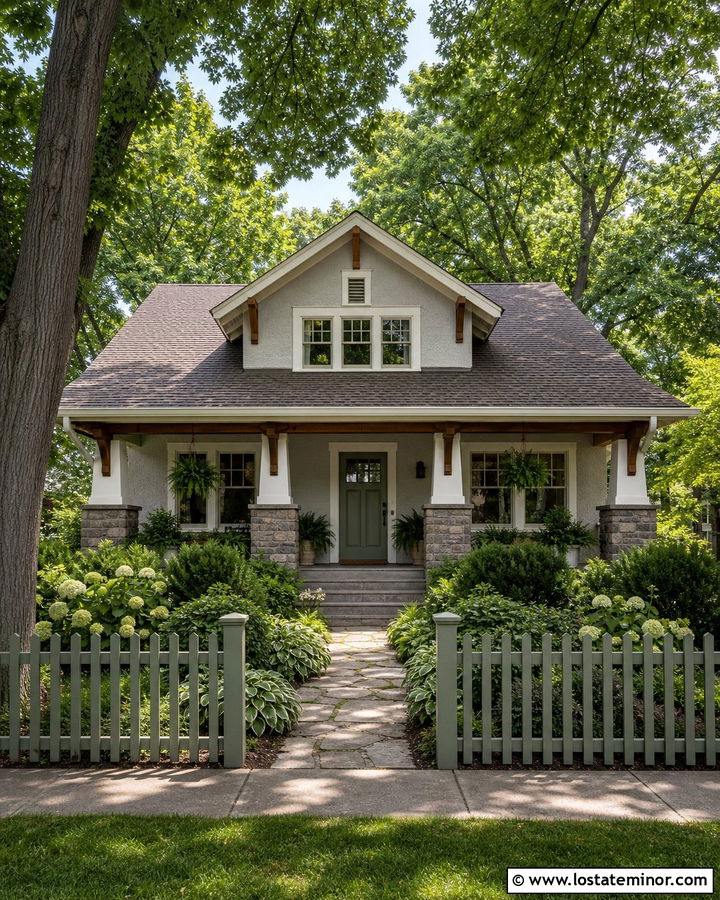
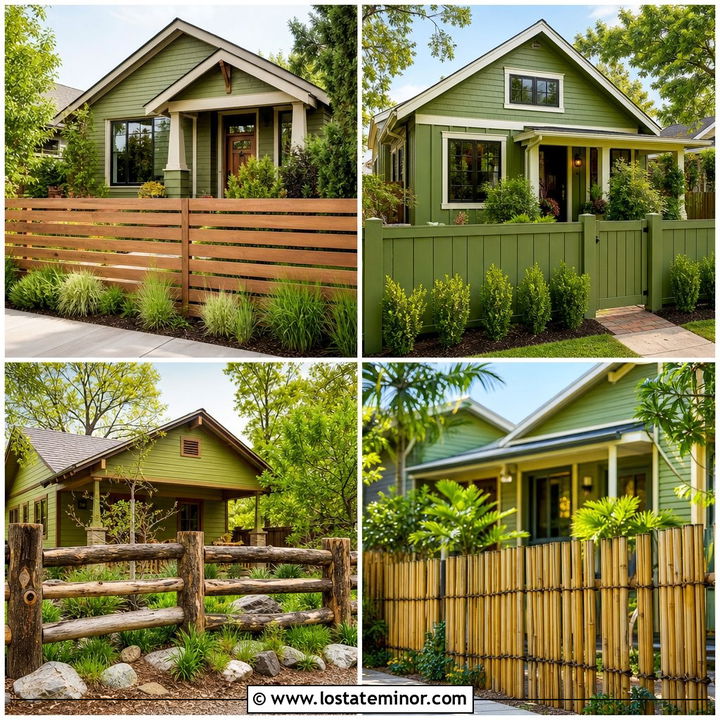
A muted green fence brings a garden-focused quality to a light grey Craftsman bungalow. Select warm light grey siding with ivory trim, then add a sage green front door and matching low fence. The repeated green creates a clear visual path from the sidewalk to the entry. Use natural fieldstone on the porch columns and chimney, along with medium-brown roof shingles and stained wood brackets. These earthy materials soften the grey and help the fence blend into established landscaping. Choose simple square pickets or vertical boards rather than ornate shapes. Creamy hydrangeas, ferns, hostas, and evergreen shrubs will strengthen the layered green palette. This complete scheme feels calm and traditional, making it especially suitable for a tree-lined neighborhood or a bungalow with a deep front garden.
19. Light Grey Contemporary House With Gabion Fence
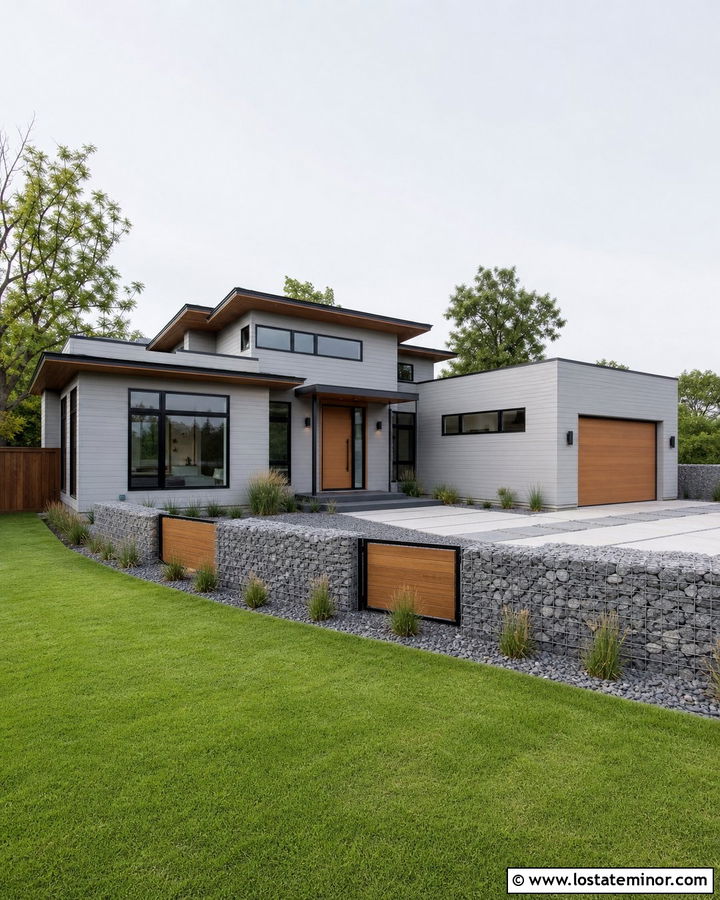
Texture becomes the main feature when a smooth light grey contemporary house is paired with a gabion fence. Use pale grey fiber cement panels, black-framed windows, and warm cedar soffits on the facade. Build low gabion walls from wire cages filled with stones that repeat the home’s grey, charcoal, and taupe colors. Alternate the stone sections with black steel or horizontal cedar panels to keep the boundary from feeling too heavy. A cedar pivot door and matching garage door can connect the wood inserts to the house. Choose large-format concrete pavers and simple grasses for the front landscape. Carefully selected stone is important because overly colorful fill can disrupt the controlled palette. The finished exterior feels modern, durable, and grounded in natural material rather than paint alone.
20. Light Grey Ranch House With Hog Wire Fence
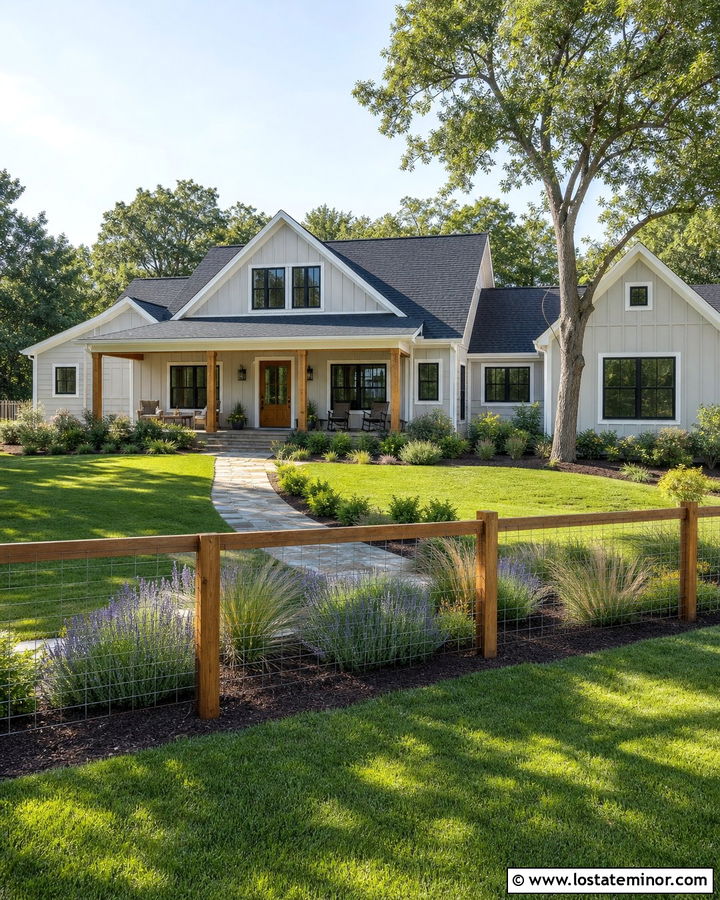
For a relaxed country-modern look, surround a light grey ranch home with a wood-framed hog wire fence. The open wire panels provide practical separation while preserving views of the wide facade and lawn. Use light grey lap siding, creamy white trim, and a charcoal gable roof. Cedar fence frames, porch posts, and a natural wood front door bring warmth across the property. Black window frames and wire mesh introduce a subtle industrial accent without overwhelming the home. Align the pedestrian gate with a broad flagstone walkway, and add lavender, ornamental grasses, and low flowering shrubs along the fence line. This pairing is especially effective on larger lots where a solid privacy fence would feel too restrictive. The mix of grey siding, cedar, and black wire looks casual but thoughtfully coordinated.
21. Light Grey Georgian House With Brick Pillar Fence
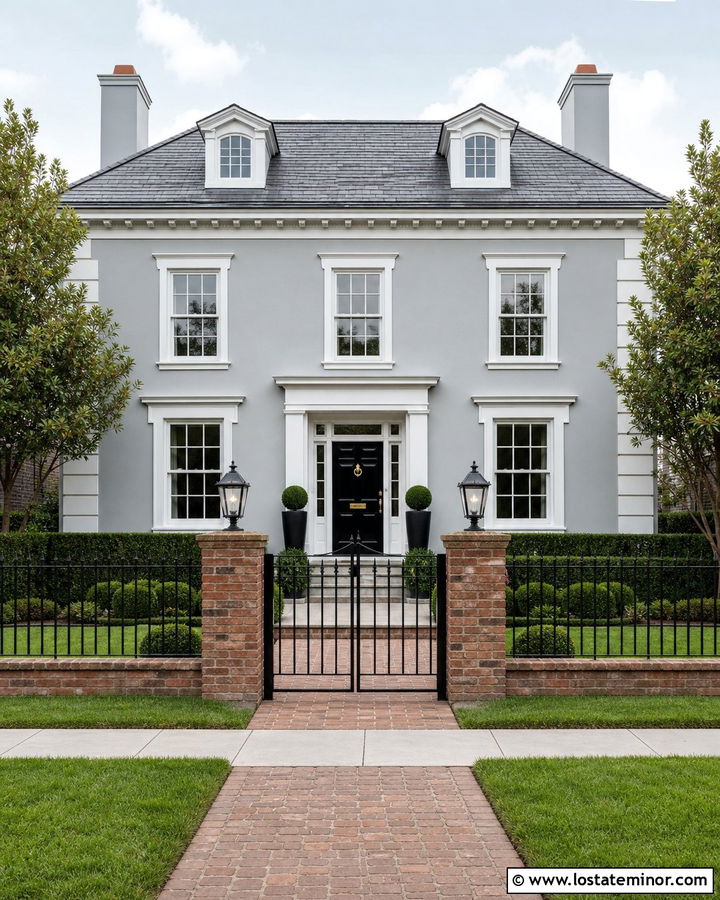
Formal symmetry deserves a fence with equally balanced proportions. Paint a Georgian home soft light grey, using crisp white for the quoins, window trim, entry surround, and cornice. A rich black front door with brass hardware creates a refined central focal point. Along the property edge, combine red or muted brown brick pillars with black iron panels. Use the same brick on the walkway, steps, or chimney so the fence feels connected to the house. The warm masonry also prevents the grey, white, and black palette from appearing flat. Place matching lanterns on the gate pillars and beside the front door. Neatly clipped hedges, paired trees, and a straight walkway reinforce the symmetry. The result is traditional and polished without relying on excessive ornament.
22. Light Grey Scandinavian House With Natural Wood Fence
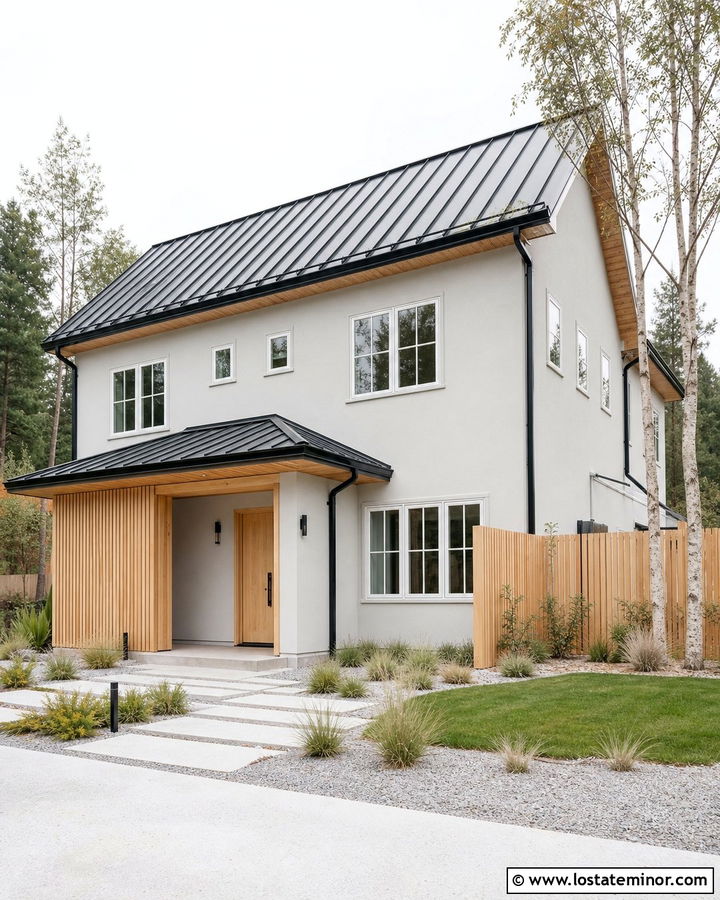
Simple materials suit the uncluttered appearance of a Scandinavian-inspired exterior. Use a cool light grey vertical siding color, white window frames, and a charcoal standing-seam roof. Add a natural blonde-wood front door, soffit, and vertical-slat fence to warm the restrained palette. The fence boards should have narrow, even spacing and a clear protective finish that preserves their pale tone. A matching wood gate can blend almost invisibly into the boundary. Choose light concrete pavers, gravel, birch trees, and low grasses for an equally simple landscape. Avoid decorative caps, ornate hardware, or strongly contrasting masonry. Black downspouts and minimalist wall lights can provide small graphic accents. The finished scheme feels bright and modern because every material is repeated with purpose across the house and fence.
23. Light Grey Duplex With Two-Tone Fence
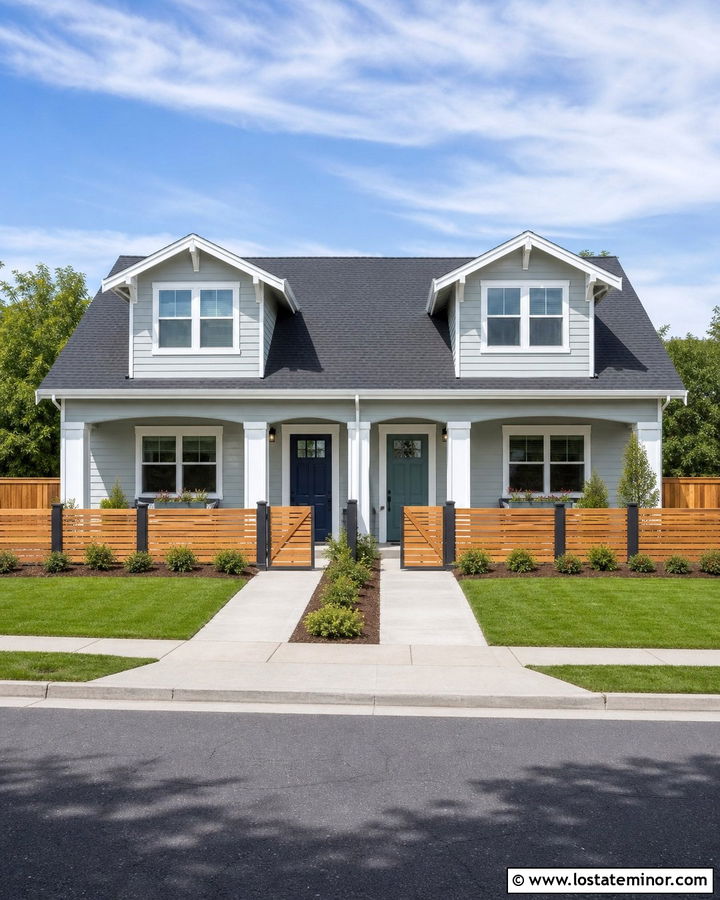
A coordinated two-tone fence can organize the shared frontage of a light grey duplex. Use consistent pale grey siding across both units, along with white trim and a charcoal roof. Give each entrance a different but related door color, such as navy and muted teal, to establish individual identity. Build the fence with charcoal posts and natural cedar horizontal slats, combining colors already present on the building. Matching gates should align with each walkway and use the same width and hardware. Low planting beds can create additional separation without dividing the yard too aggressively. Repeat one shrub variety on both sides for continuity. This approach keeps the property visually unified while allowing each household a distinct entrance. It also adds warmth and depth to a potentially repetitive two-unit facade.
24. Light Grey Townhouse With Slatted Privacy Fence
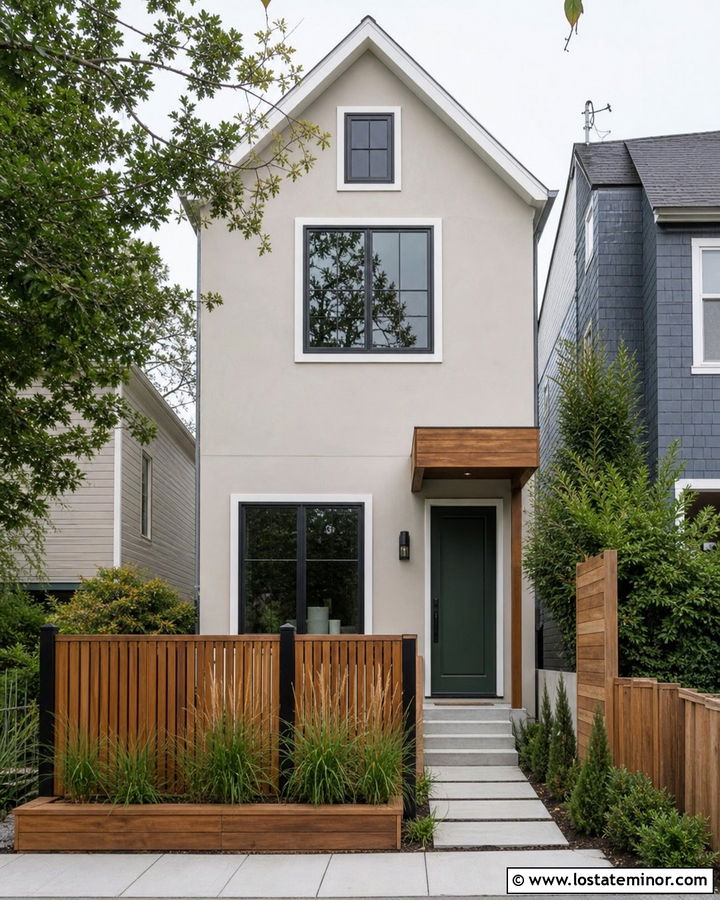
A narrow townhouse benefits from a fence that adds privacy without making the front yard feel cramped. Choose a soft light grey exterior with white trim, black-framed windows, and a deep green front door. Install slim vertical cedar slats around a small patio or entrance garden, leaving narrow spaces for filtered views and daylight. A black metal frame will give the wood panels a clean, architectural edge. Repeat cedar on a small canopy, planter, or door surround so the fence is not the only warm material. Use tall grasses, compact evergreens, and narrow rectangular pavers to suit the limited footprint. Keeping the fence slightly below eye level near the sidewalk maintains a welcoming connection. The vertical slats can also make the townhouse facade appear taller and more composed.
25. Light Grey Cottage House With Arbor Fence
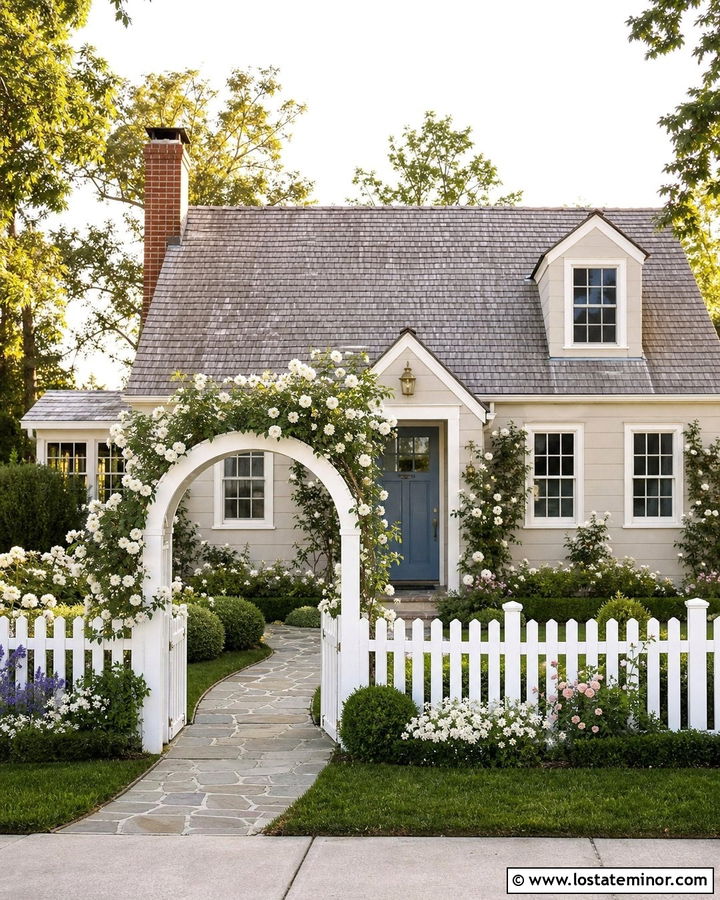
An arbor gate can turn a simple fence into a charming entrance for a light grey cottage. Paint the house a soft grey with creamy white trim and choose a dusty blue door for gentle color. Use a matching white picket fence with a square or softly arched arbor positioned along the front path. Climbing roses, clematis, or evergreen vines can soften the structure over time without completely covering it. A weathered grey roof, brick chimney, and warm brass lanterns add comfortable contrast. Continue the cottage character with a curved stone walkway, loose flower borders, and compact shrubs. Keep the arbor proportions slightly wider than the path so the gate feels easy to enter. The completed design frames the whole home and creates a clear transition from sidewalk to garden.
26. Light Grey Midcentury House With Horizontal Wood Fence
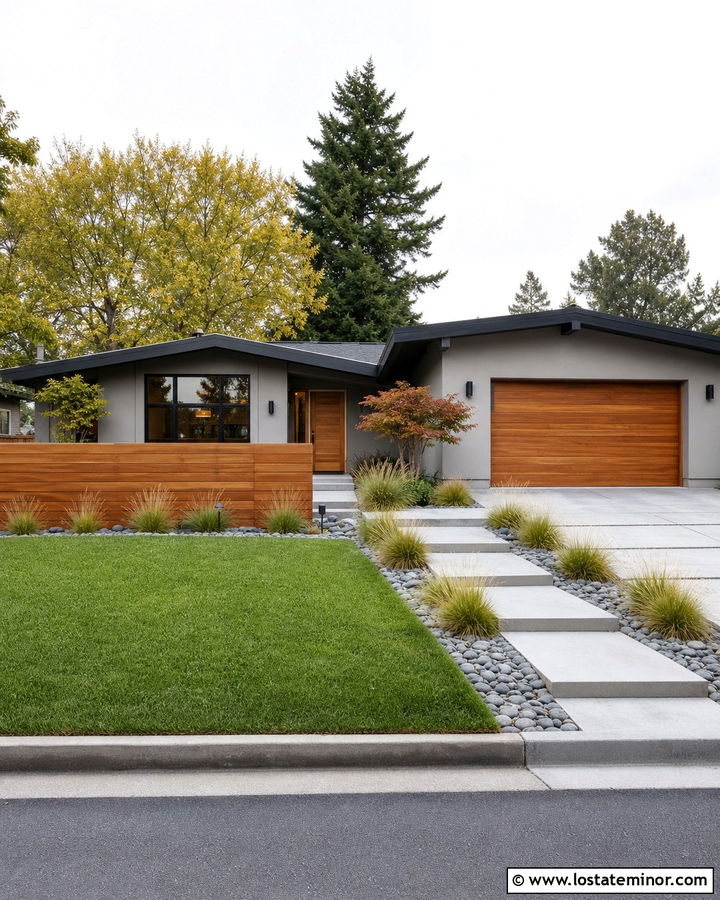
Horizontal wood fencing naturally complements the long rooflines of a midcentury house. Use light grey stucco or narrow horizontal siding, charcoal fascia, and large black-framed windows. Add a medium-tone cedar fence with wide horizontal boards and clean square posts. Repeat the wood on the front door, garage door, or soffit to create a balanced material rhythm. A low-pitched dark roof will anchor the pale facade without drawing attention away from the entry. Select rectangular concrete slabs, river rock, sculptural grasses, and a small ornamental tree for the front yard. Keep the fence low near the street and increase its height around a private courtyard. The warm wood softens the grey exterior, while its straight grain and simple construction support the home’s original geometric character.
27. Light Grey Shingle House With Navy Fence
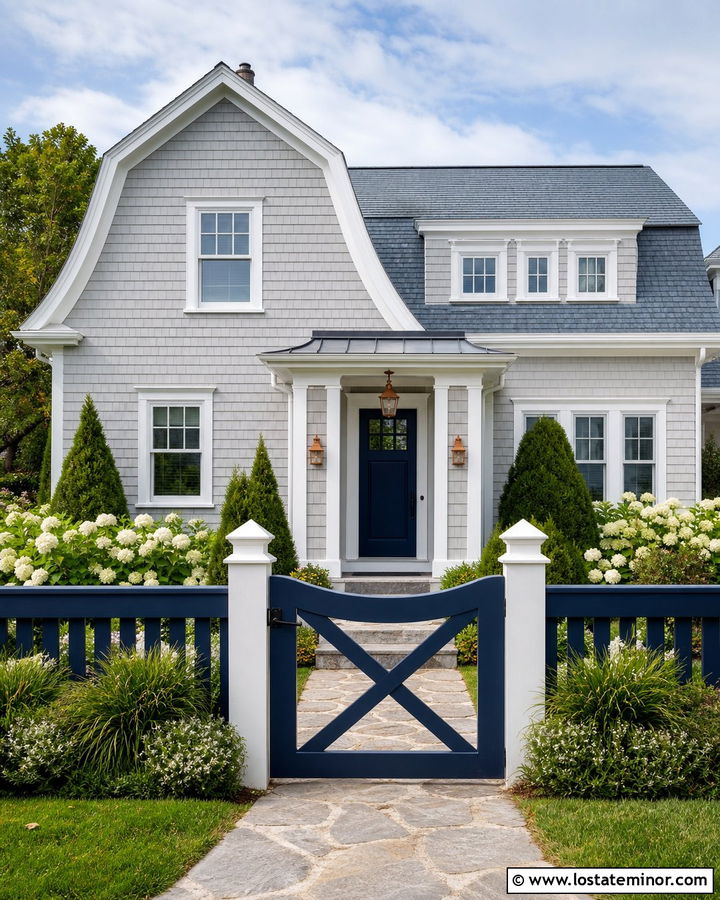
Navy provides a softer alternative to black when a light grey shingle house needs stronger definition. Choose pale silver-grey shingles, bright white trim, and a navy front door. Carry the same deep navy onto a low wood fence and gate, creating a clear color relationship across the property. White post caps or gate hardware can keep the boundary from looking too heavy. A grey-blue roof, white porch railing, and natural stone walkway complete the cool palette. Add warm wood porch furniture or copper lighting to introduce a small amount of contrast. Hydrangeas, evergreen shrubs, and ornamental grasses work naturally with the blue-grey scheme. Test the navy outdoors before painting, since intense sunlight can make some blue finishes appear much brighter than expected.
28. Light Grey Adobe House With Wood And Stucco Fence
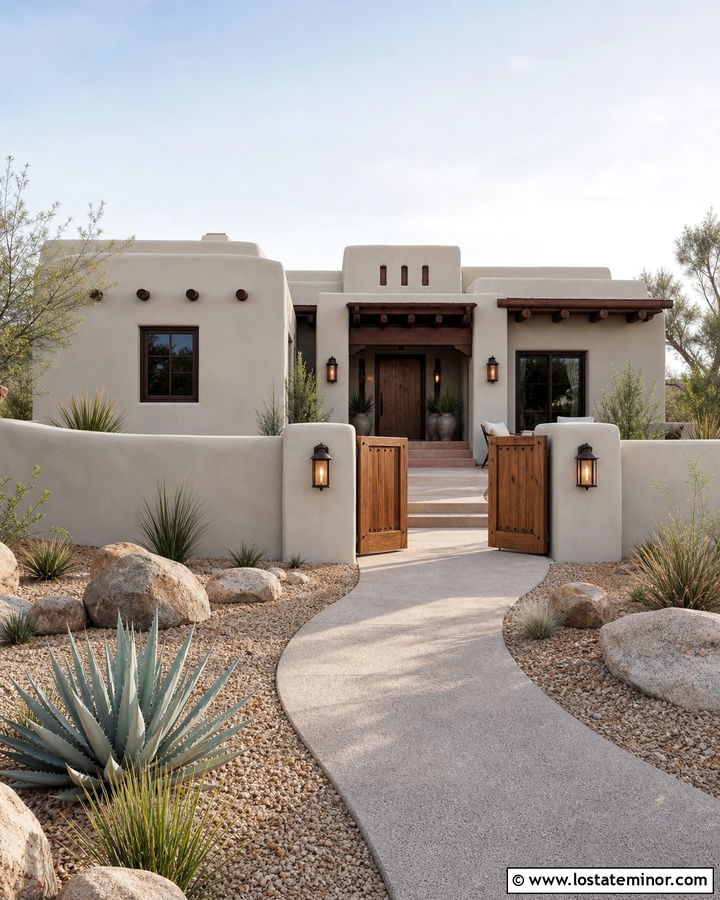
Rounded forms and earthy materials can make a light grey adobe-style house feel warm rather than severe. Apply a pale greige-grey finish to the curved exterior walls, then use dark brown windows and a heavy natural wood front door. Build a low stucco boundary in the same grey and insert broad wood gates or slatted panels between rounded pillars. A weathered steel accent or dark bronze light fixture can add depth without introducing a harsh black note. Choose a flat or low-slope roof with brown coping, depending on the architecture. Gravel, agave, ornamental grasses, and large natural rocks complete the drought-conscious landscape. The repeated stucco creates continuity, while the substantial wood elements bring enough warmth and texture to define the entrance clearly.
29. Light Grey House With White Vinyl Fence
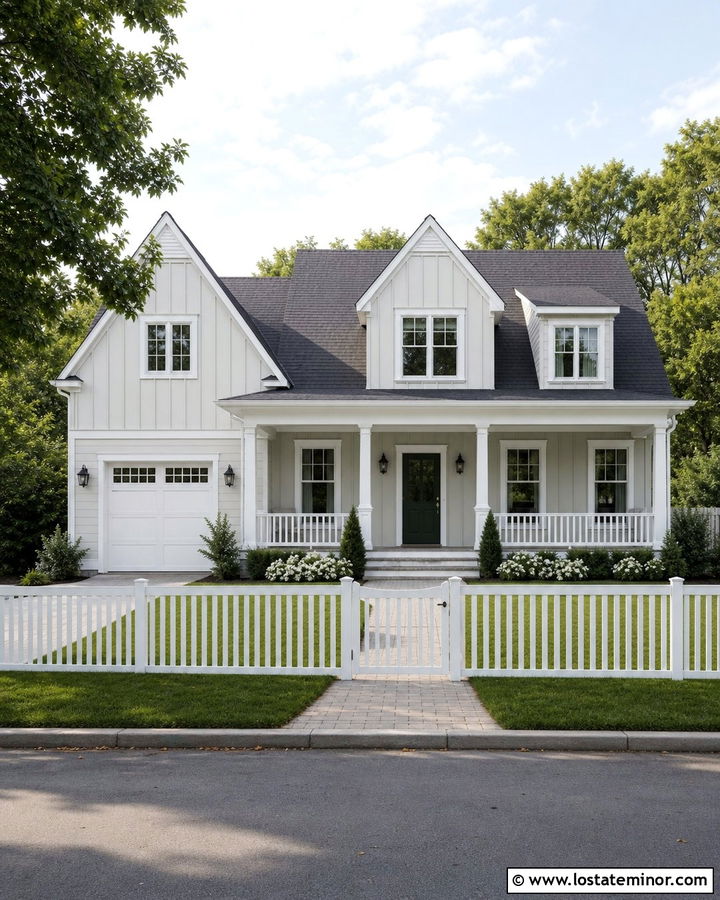
A white vinyl fence offers a crisp, practical frame for a light grey suburban home. Use pale grey lap siding, clean white trim, and a charcoal shingle roof. Match the fence closely to the window casing, fascia, porch railing, and garage trim so all the white elements appear coordinated. A red, navy, or forest-green front door can become the main color accent; choose only one to keep the facade organized. Select simple vertical fence panels or narrow pickets based on the amount of privacy needed. Add black hardware and lanterns to provide definition between the pale surfaces. Green foundation shrubs, white flowers, and a straight paver walkway complete the tidy appearance. This approachable combination is easy to adapt to ranch, two-story, and traditional builder-style homes.
30. Light Grey Farmhouse With Black Post And Rail Fence
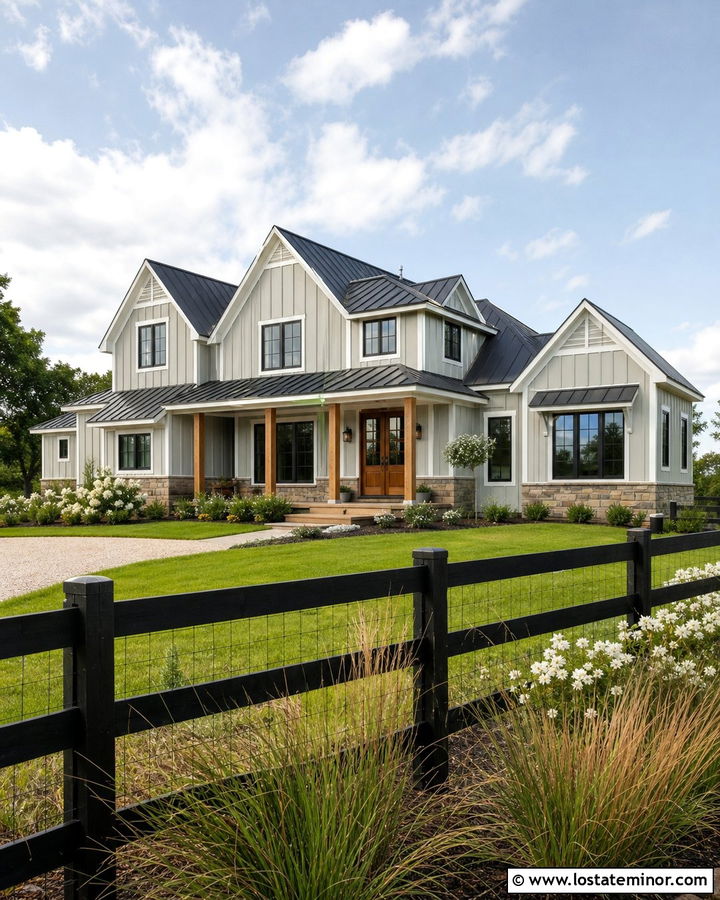
A black post-and-rail fence can give a light grey farmhouse a more grounded, contemporary edge. Use pale grey board-and-batten siding, bright white trim, and a matte black metal roof. Repeat black on the windows, gutters, porch lights, and fence so the dark features are distributed evenly. Natural cedar porch columns, a stained wood door, and warm stone around the foundation keep the high-contrast scheme from feeling cold. A black wire backing can provide secure containment while remaining nearly invisible from the street. Finish the property with a gravel drive, broad lawn, native grasses, and clusters of white flowering shrubs. The open rail design preserves the rural character of the home, while the black finish introduces a crisp connection to the roof and windows.
Conclusion:
The best fence does more than mark a property boundary. It connects the siding, trim, roof, entrance, landscaping, and surrounding architecture into one complete view. White fencing keeps light grey homes crisp and traditional, while black metal adds contemporary contrast. Cedar and other natural woods introduce warmth, and masonry creates a substantial, established appearance. Before choosing materials, compare the fence finish with your roof, permanent stonework, and exterior paint in natural daylight. You should also consider privacy needs, maintenance, neighborhood character, and local height requirements. These 30 Light Grey House Design With Fence Ideas offer adaptable starting points for cottages, ranch homes, farmhouses, modern residences, and traditional properties at a range of budgets.

Related posts: