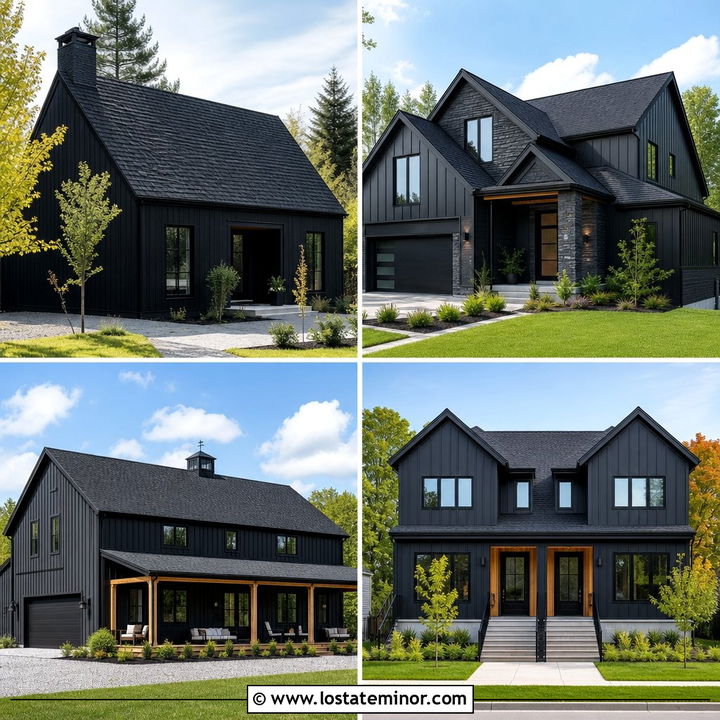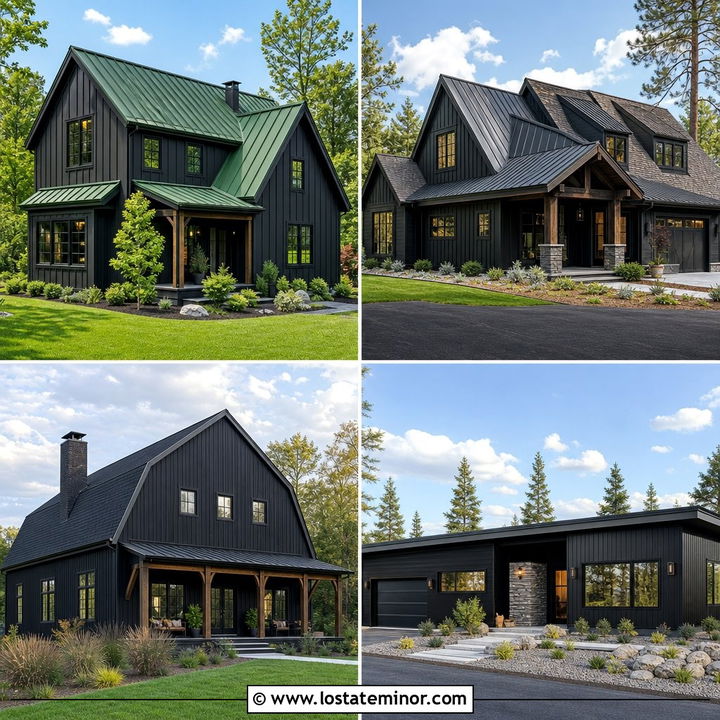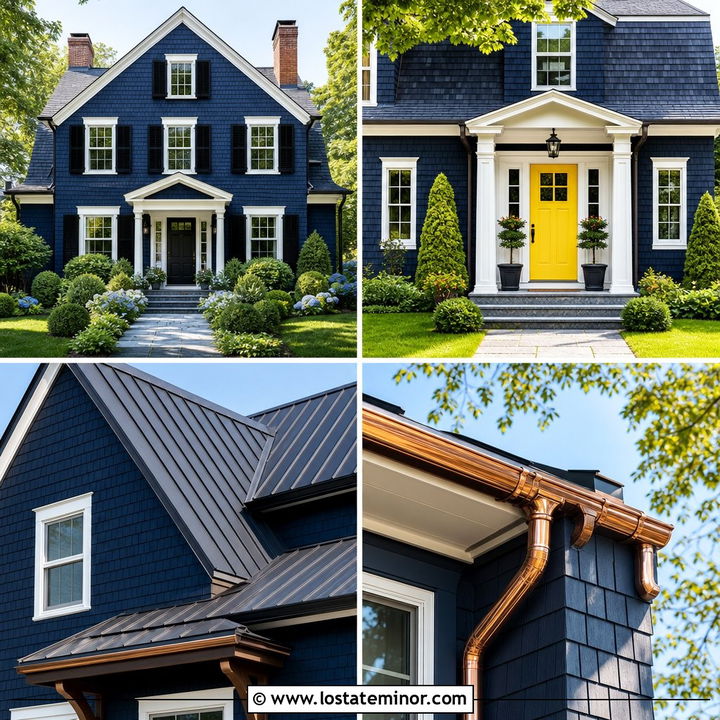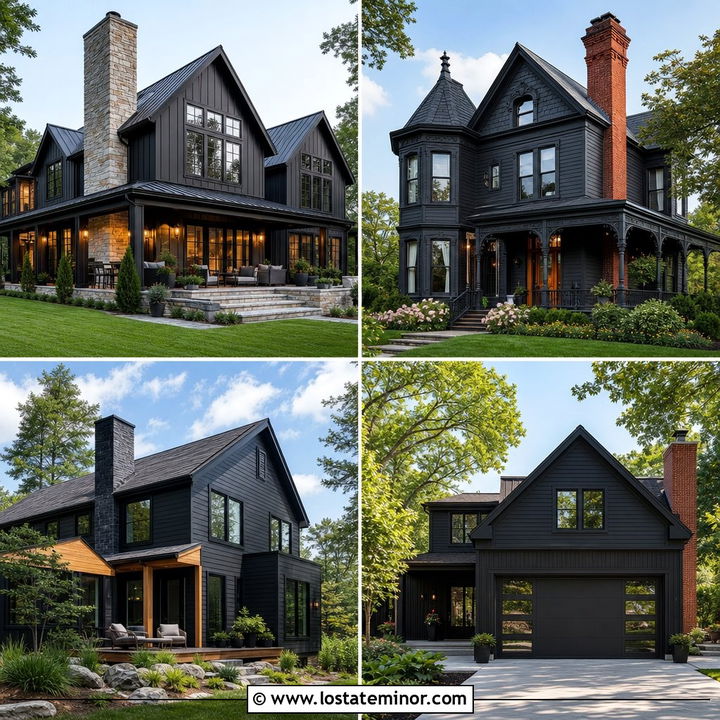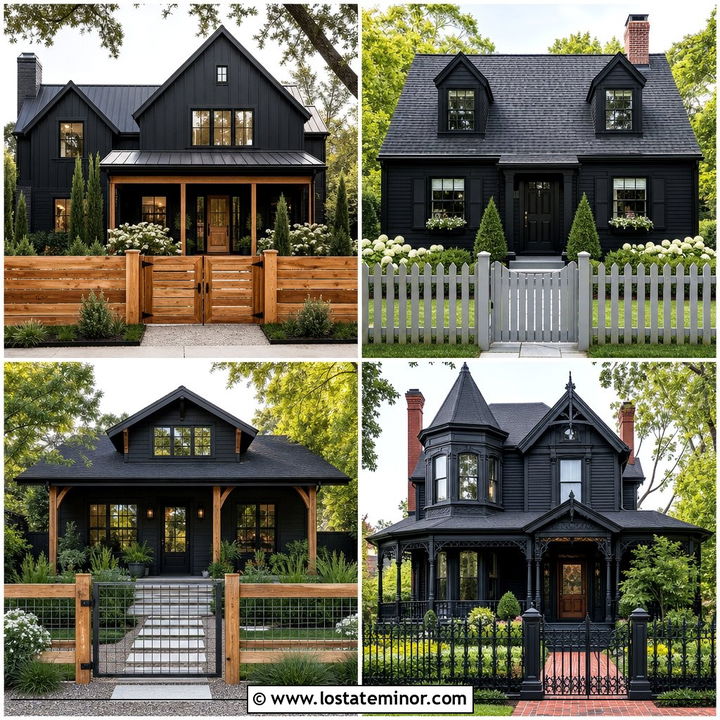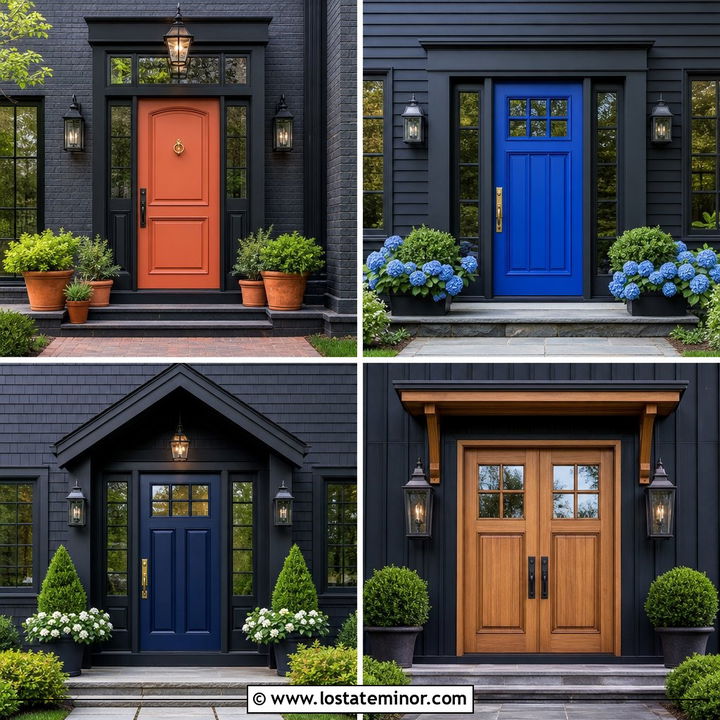
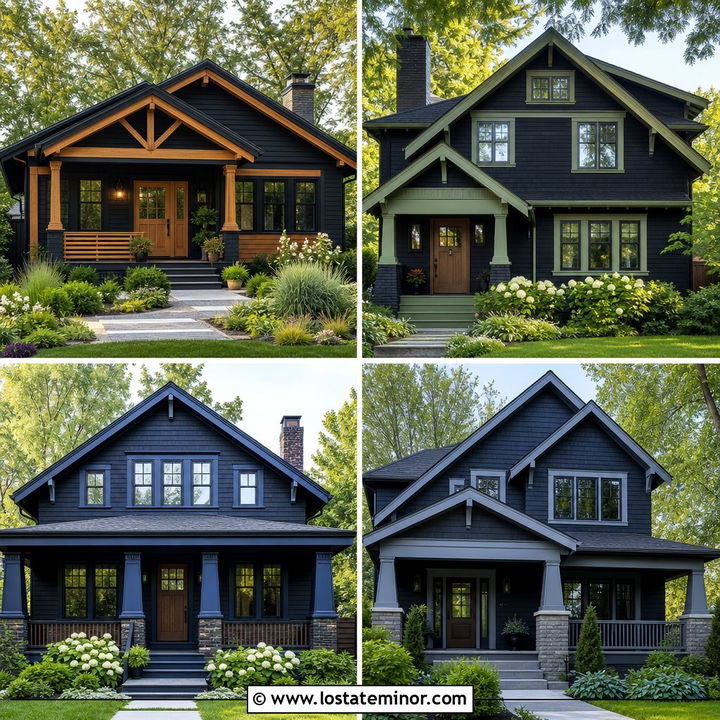
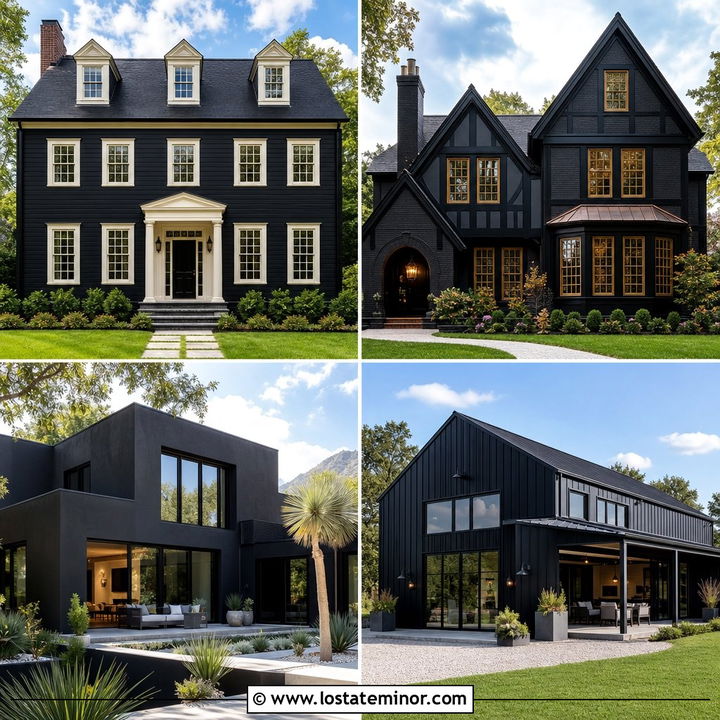
A jet black exterior can make traditional shingles feel sharper, richer, and surprisingly versatile. The best 30 Jet Black House Design With Shingles Ideas combine the dark body color with thoughtful roof tones, textured siding, warm wood, masonry, and landscaping. Instead of treating black paint as a stand-alone feature, each look below creates a complete curb-appeal scheme. You will find coastal cottages with shingle siding, modern farmhouses with architectural roof shingles, Craftsman homes with cedar details, and contemporary houses with monochromatic finishes. Crisp white, soft greige, natural oak, limestone, and muted green accents keep the deep exterior from appearing flat. Explore these complete 30 Jet Black House Design With Shingles Ideas to find a balanced look for your architecture, setting, and budget.
1. Jet Black Shingle House With White Trim
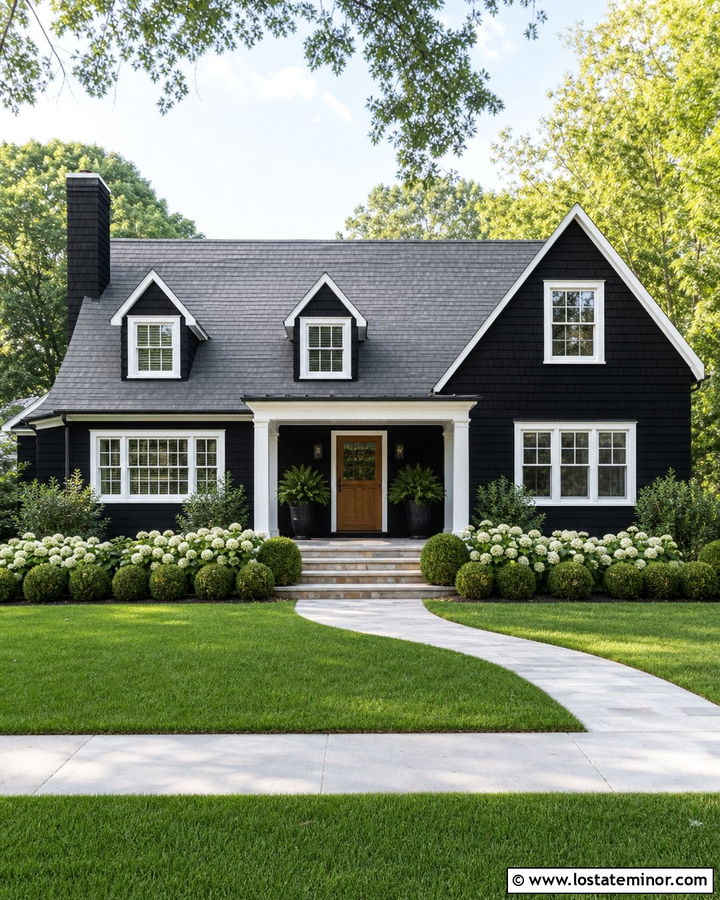
Crisp white trim gives a jet black shingle house a clean outline that can be seen from the street. Use black-painted cedar shingles across the main facade, then apply white to the window casings, fascia, porch columns, and front-door surround. A medium-gray architectural shingle roof softens the contrast without weakening the dramatic palette. For the entry, choose a black door with divided glass or introduce a warm oak door for a more welcoming touch. White porch ceilings can also brighten covered areas where natural light is limited. Finish the property with pale concrete steps, clipped boxwoods, and a simple green lawn. This complete scheme suits Cape Cod, cottage, and traditional two-story homes with balanced window arrangements.
2. Jet Black Shingle House With Cedar Accents
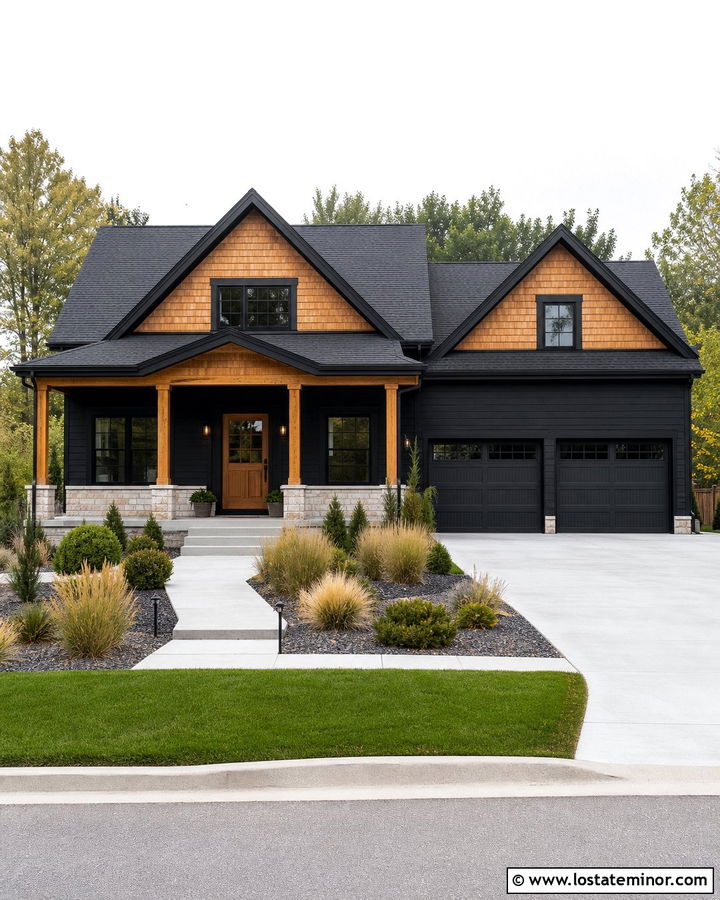
Warm cedar instantly adds depth to a jet black exterior without requiring a second paint color. Cover the house in black lap siding, then use natural cedar shingles inside the front gable or around a recessed entry. A cedar front door, porch ceiling, and garage door can repeat the same honey-brown tone across the facade. Select charcoal architectural roof shingles to maintain a dark, connected roofline. Black window frames and trim create a modern finish, while a light stone foundation keeps the lower level from feeling heavy. Because cedar changes gradually outdoors, decide whether you prefer natural weathering or a protective stain. Ornamental grasses, pale gravel, and evergreen shrubs complete this warm modern farmhouse combination.
3. Jet Black Shingle House With Gray Roof
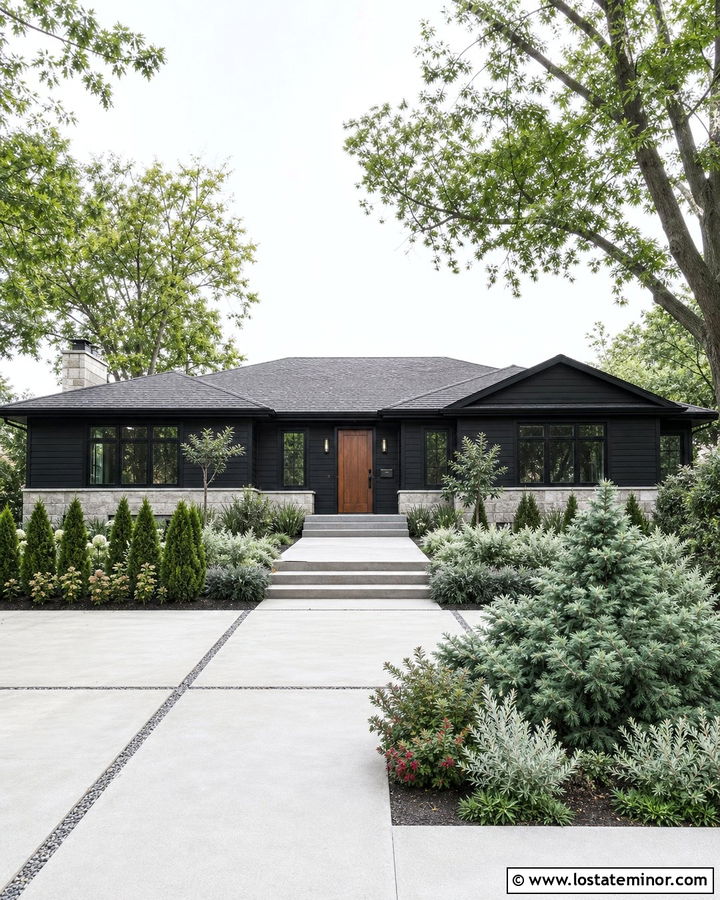
A gray shingle roof creates a visible but understated break above a jet black house. Choose dimensional shingles that combine medium gray and charcoal granules rather than a single flat shade. Their variation adds movement and helps connect the roof to black siding below. Keep the fascia, gutters, and window frames black for a sleek exterior, then warm the entrance with a walnut-stained door and matching porch posts. Soft gray stone along the foundation provides another link to the roof. This scheme works especially well on a ranch house because the lighter roof defines its long, low profile. Use a pale concrete walkway, layered evergreen planting, and silver-green foliage to create a finished landscape that supports the gray-and-black palette.
4. Jet Black Shingle House With Black Roof
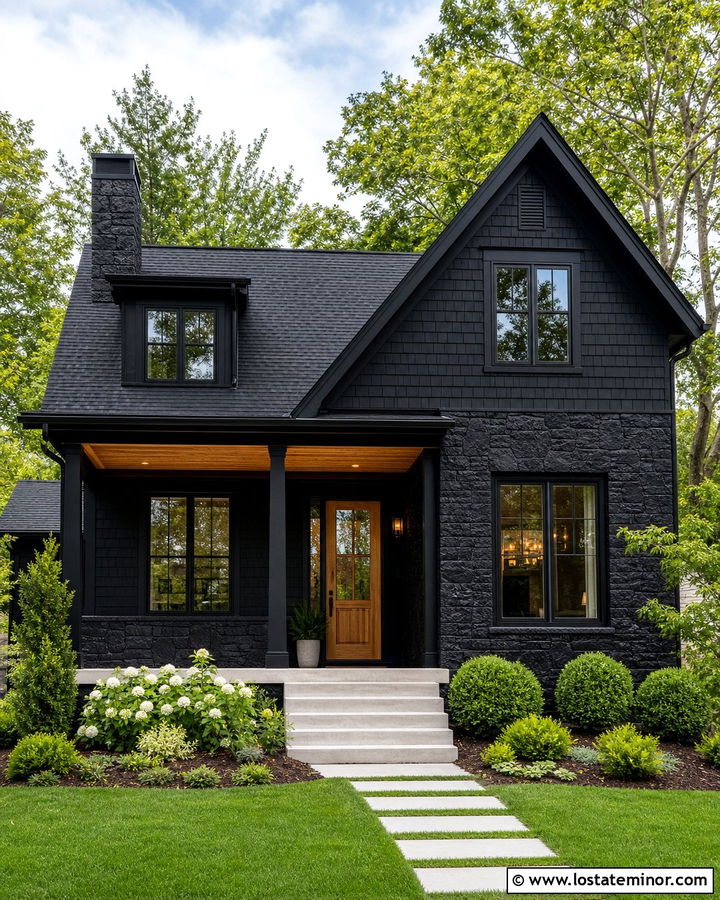
Going fully monochromatic can make a familiar house shape feel more architectural. Pair jet black shingle siding with a deep black architectural shingle roof, matching fascia, black windows, and dark gutters. The key is introducing texture instead of another strong color. Combine staggered shingles in the gables with horizontal lap siding below, or frame the entry with rough-cut black stone. A natural oak door and porch ceiling can provide one controlled area of warmth. Choose matte or low-sheen finishes so the exterior does not appear overly reflective in direct sunlight. Light concrete steps and abundant green planting create necessary separation at ground level. This unified scheme is particularly effective on contemporary cottages, cabins, and simple gabled homes.
5. Jet Black Shingle House With Brown Roof
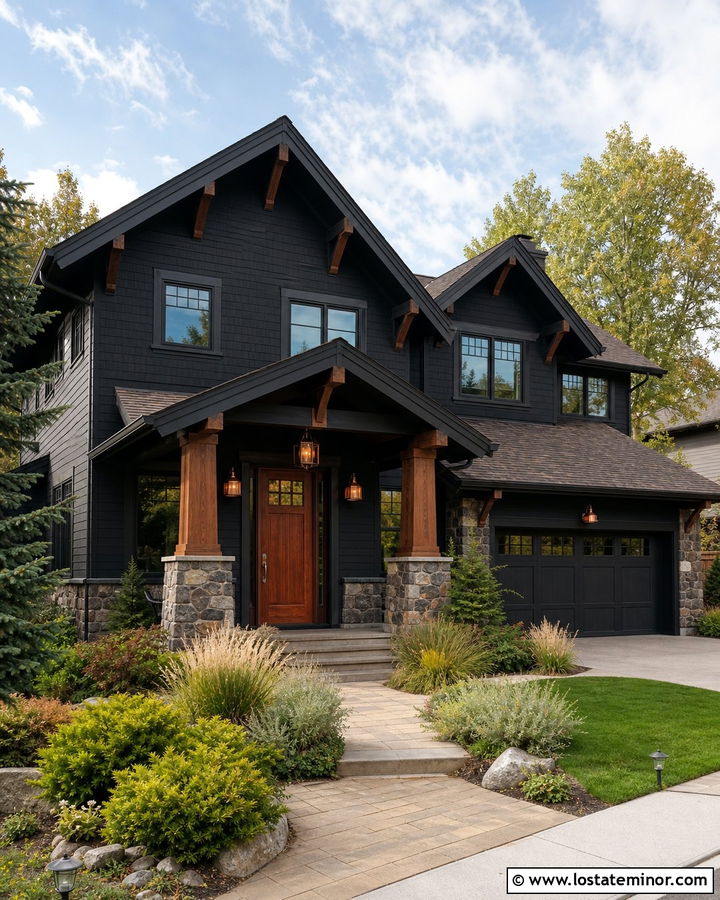
Dark brown roof shingles can make a jet black exterior feel warmer and less severe. Look for dimensional shingles with espresso, charcoal, and muted bronze variation so the roof connects naturally to the black siding. Repeat those brown notes through a stained mahogany front door, timber porch posts, and copper-toned exterior lights. Jet black trim keeps the windows and roof edges visually consistent. For the lower facade, consider fieldstone containing brown and gray pieces rather than bright red brick. The combination is a natural fit for Craftsman architecture with deep eaves, exposed brackets, and a broad front porch. Complete the scene with warm concrete pavers, native grasses, and layered shrubs that soften the transition between the dark home and the yard.
6. Jet Black Shingle Cottage With Cedar Roof
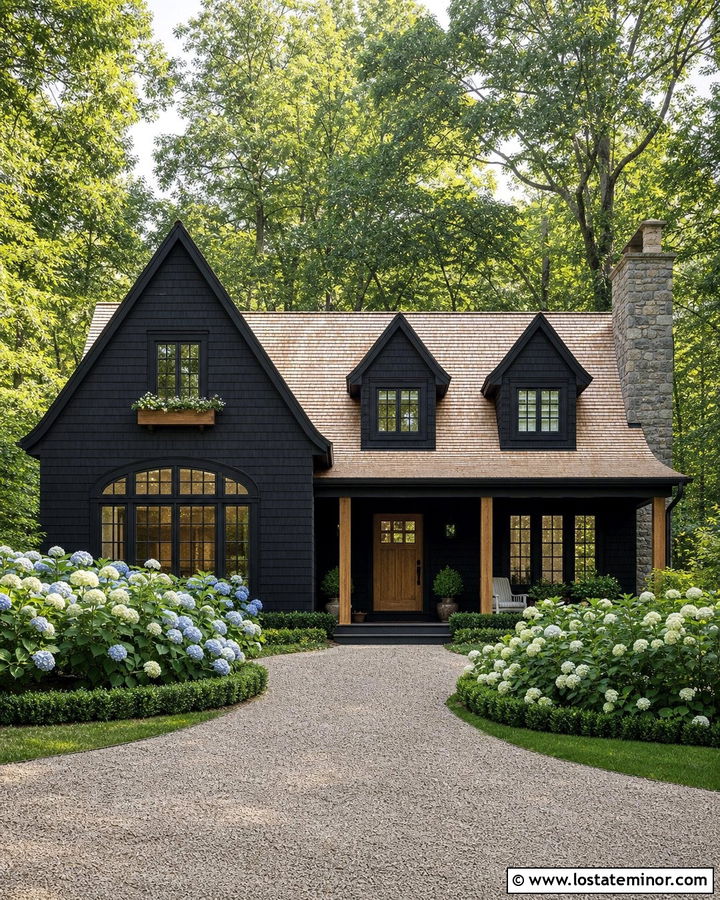
Few combinations offer more natural texture than jet black siding and a cedar shingle roof. The black body provides a crisp backdrop, while the roof contributes warm, irregular color that feels appropriate for a cottage setting. Keep the window trim black to avoid breaking up a compact facade. Add a cedar door, matching window boxes, and a small porch supported by simple wood posts. A stone chimney in soft gray and tan can anchor one side of the house. Because the roof is already visually active, use restrained landscaping with hydrangeas, low hedges, and a curved gravel walkway. This exterior works beautifully on storybook cottages, lake houses, and woodland homes where natural materials can connect the architecture to its surroundings.
7. Jet Black Shingle House With Red Door
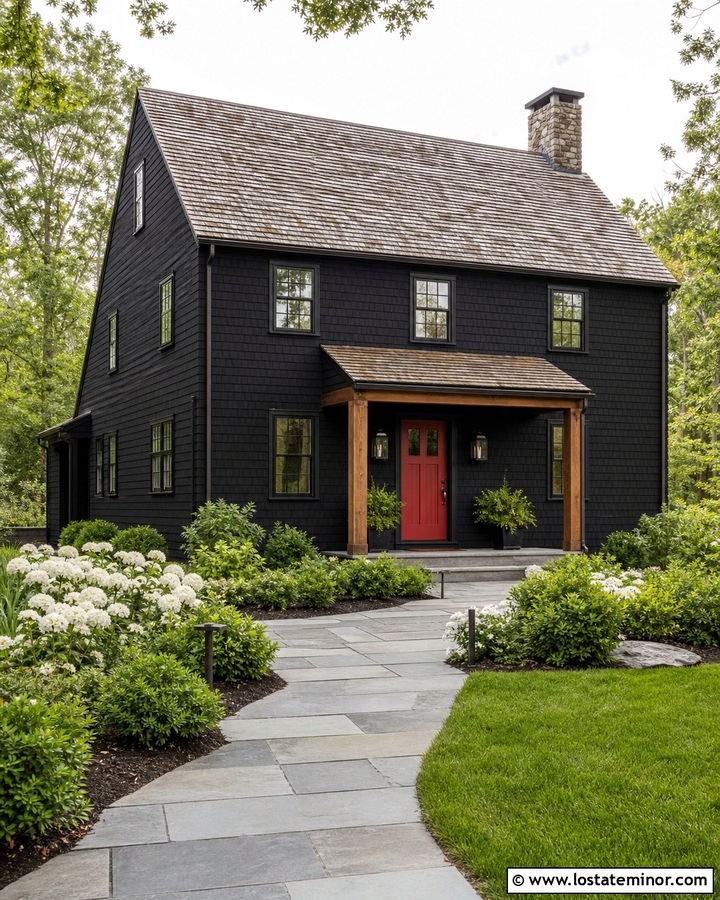
A red front door gives a jet black shingle house a clear focal point without overpowering the full exterior. Choose a muted barn red or deep brick red rather than an extremely bright shade. Surround the door with black trim so it appears integrated instead of outlined. Weathered-gray roof shingles, charcoal gutters, and black-framed windows maintain a quiet background. White porch columns can be added for traditional contrast, although stained wood supports create a warmer farmhouse look. Repeat the door color sparingly through small planters or seasonal flowers, not large architectural surfaces. A bluestone walkway, green foundation shrubs, and simple black lighting complete the entrance. This scheme is especially suitable for New England cottages, saltbox homes, and compact colonials.
8. Jet Black Shingle House With Green Door
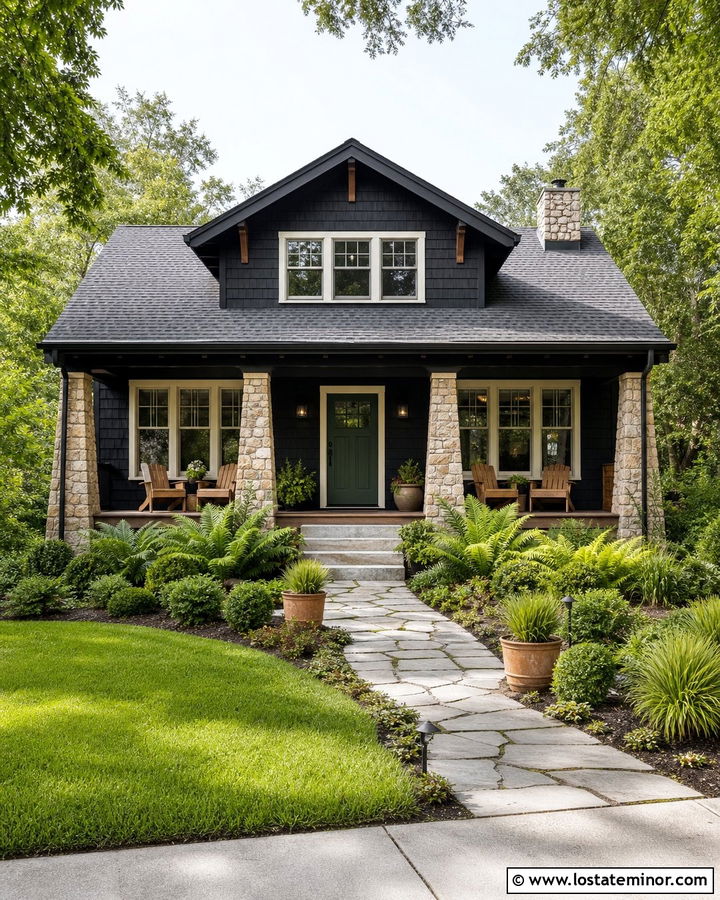
Deep green feels subtle against jet black, yet it gives the entrance enough color to stand apart. Paint the siding and shingles black, then choose a forest green or muted olive front door with simple black hardware. Medium-gray roof shingles prevent the upper portion of the house from becoming too dark. Cream trim around the windows can soften the overall contrast, while a natural stone foundation introduces earthy variation. This palette looks particularly comfortable on a Craftsman bungalow with a covered porch and tapered columns. Bring the green door into the landscape with ferns, boxwoods, and ornamental grasses. Warm porch lights, oak seating, and clay planters add practical finishing touches without distracting from the restrained black, gray, and green exterior scheme.
9. Jet Black Shingle House With Wood Garage Doors
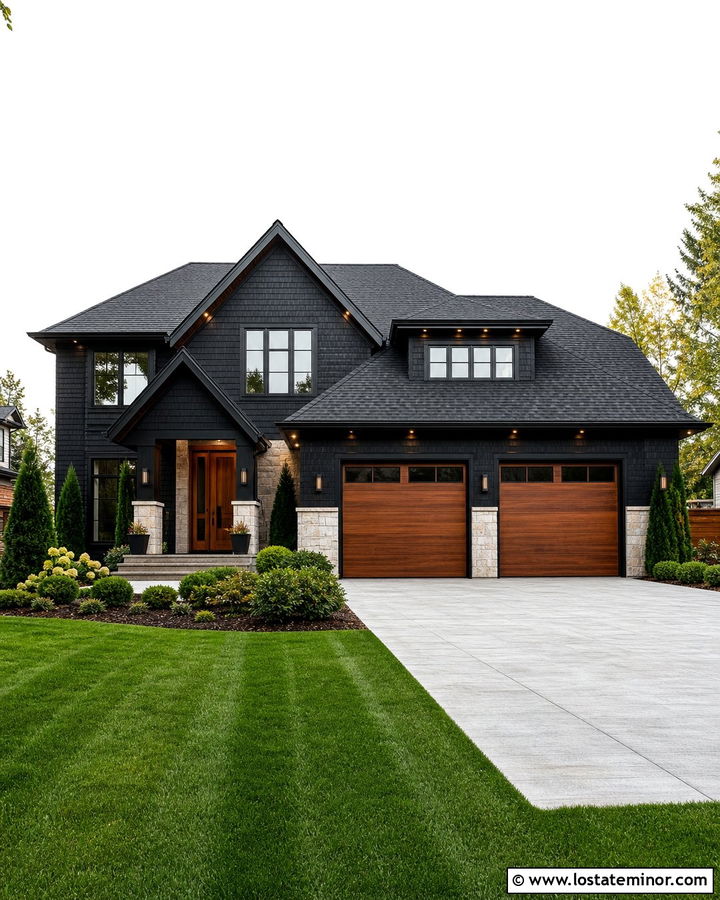
Large garage doors become intentional design features when finished in warm wood. Use jet black siding and matching black shingles across the house, then install cedar or walnut-look garage doors with clean horizontal boards. Repeat the wood on the front door, soffits, and one small gable to create balance. A charcoal asphalt shingle roof supports the dark body without competing with the garage. Black window frames and gutters preserve the modern character, while pale limestone around the entry adds contrast. This combination is ideal for a wide suburban house where the garage occupies a significant part of the front elevation. Keep the driveway light gray and frame it with structured evergreens so the wood grain remains the strongest decorative element.
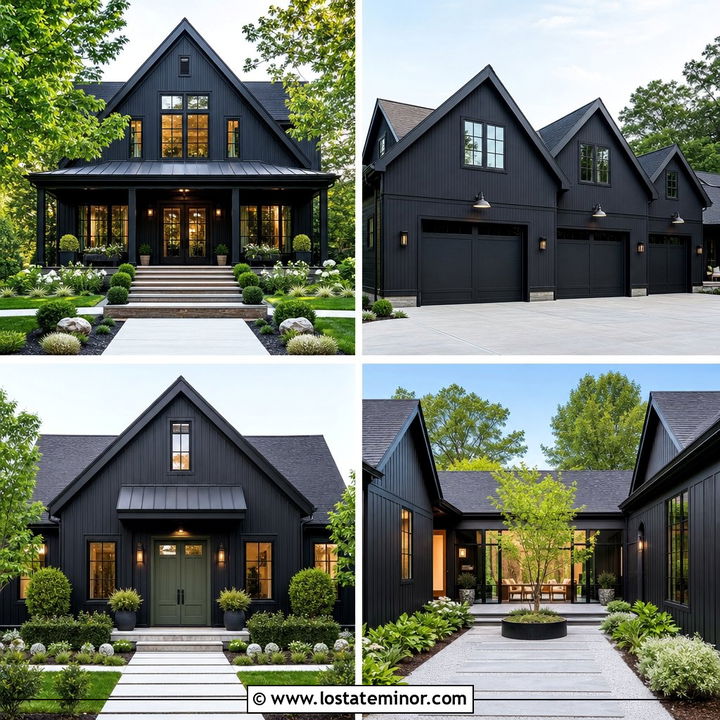
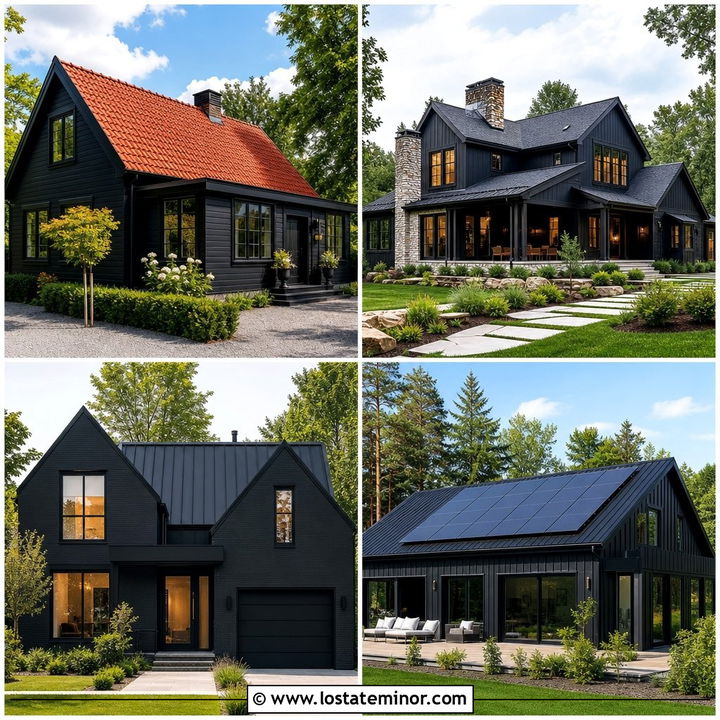
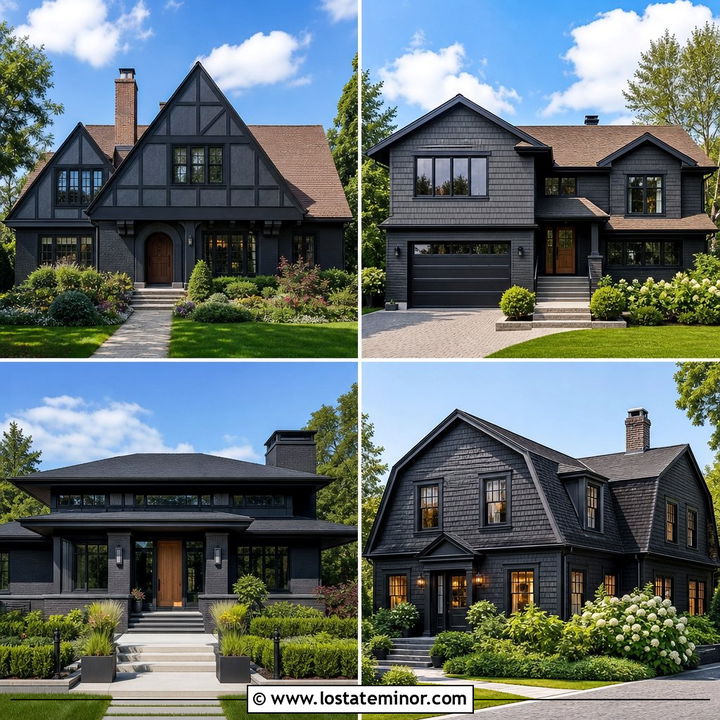
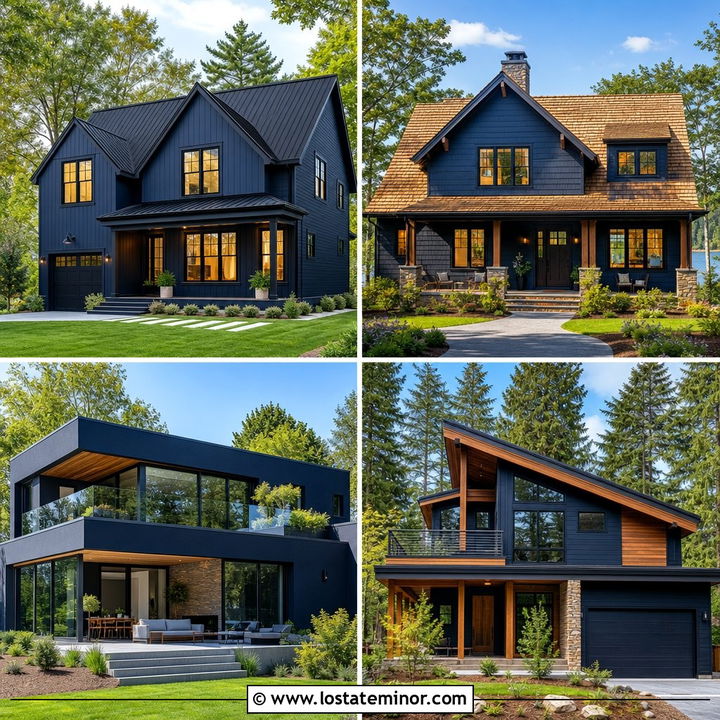
10. Jet Black Shingle House With Stone Porch
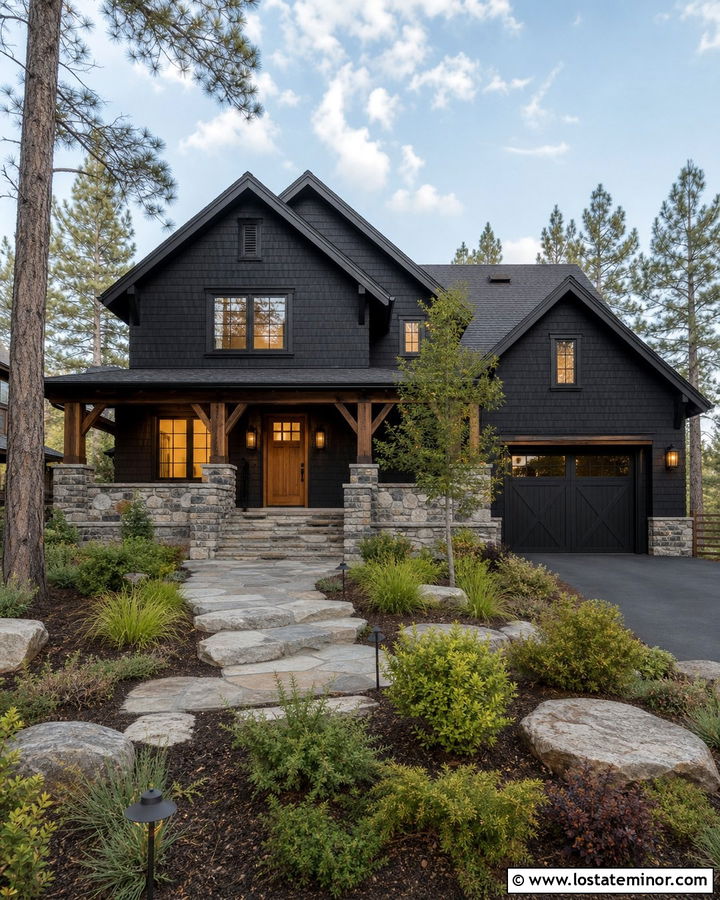
Stone can ground a jet black shingle exterior and make a tall facade feel connected to the property. Cover the upper walls in black-painted shingles, then use gray ledgestone around the porch base, steps, and lower columns. Select charcoal roof shingles containing a small amount of lighter gray variation. Black trim maintains a streamlined appearance around the windows, while a medium-stained oak door brings warmth to the center. For a cohesive porch, repeat the oak tone on the ceiling or exposed beams. Choose stones that relate to the roof instead of introducing unrelated orange or red tones. Layered shrubs, broad stone pavers, and low path lighting finish this substantial scheme. It works especially well on mountain Craftsman and lodge-inspired suburban homes.
11. Jet Black Shingle Farmhouse With Metal Porch Roof
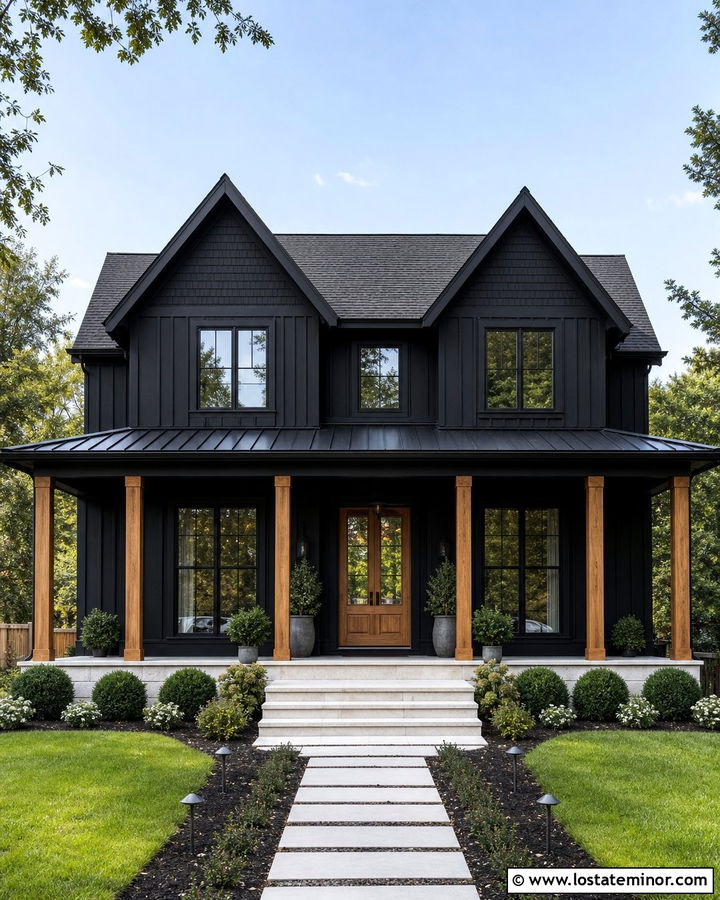
A small metal porch roof can create a useful contrast against a larger shingle roof. Paint the farmhouse body jet black and use deep charcoal architectural shingles across the main roof. Over the front porch, install matte black standing-seam metal to define the entry and add a change in texture. Black-framed windows and matching trim keep the palette tight. Natural timber columns, a wood front door, and a warm porch ceiling prevent the dark facade from becoming cold. White concrete or limestone steps provide a bright base beneath the entrance. This balanced exterior suits a modern farmhouse with multiple gables and board-and-batten siding mixed with shingle details. Finish it with symmetrical shrubs and a straight walkway for an orderly, welcoming approach.
12. Jet Black Shingle Bungalow With Cream Trim
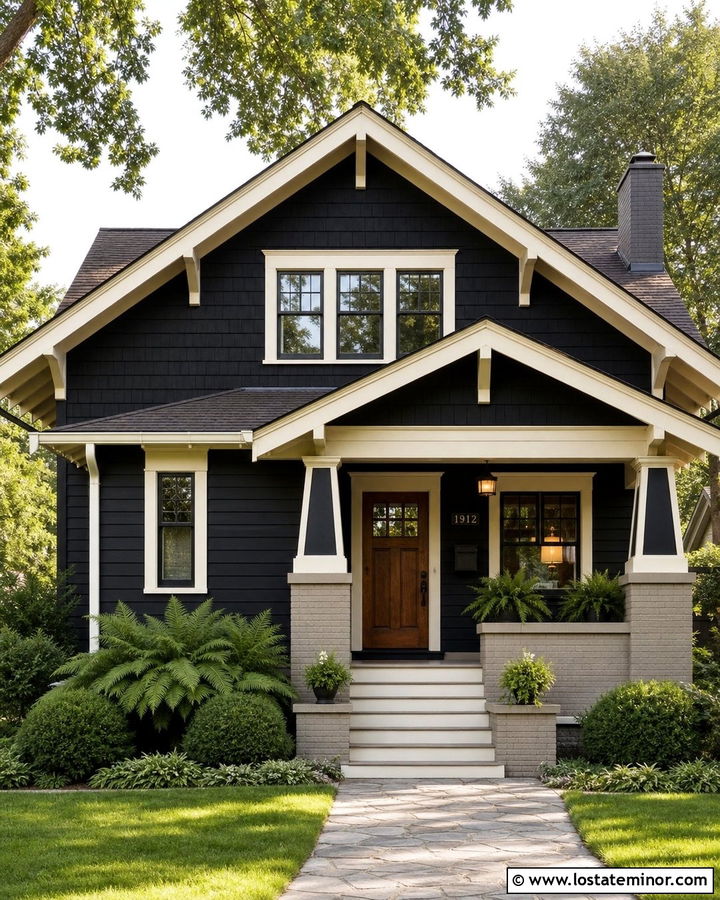
Cream trim offers a softer alternative to bright white on a jet black bungalow. Apply the warm neutral to window casings, exposed rafter tails, porch beams, and the front-door frame. Use black shingle siding in the upper gable and black lap siding across the lower walls for layered texture. A brown-black architectural roof can connect the cream details to a medium oak door. Brick porch piers in muted brown and taupe add age and substance without introducing vivid color. Keep railings black so the porch does not become visually busy. A bungalow naturally benefits from broad steps and abundant planting, so add ferns, rounded shrubs, and a stone path. The result feels historic, comfortable, and updated rather than sharply contemporary.
13. Jet Black Shingle Colonial With Brass Accents
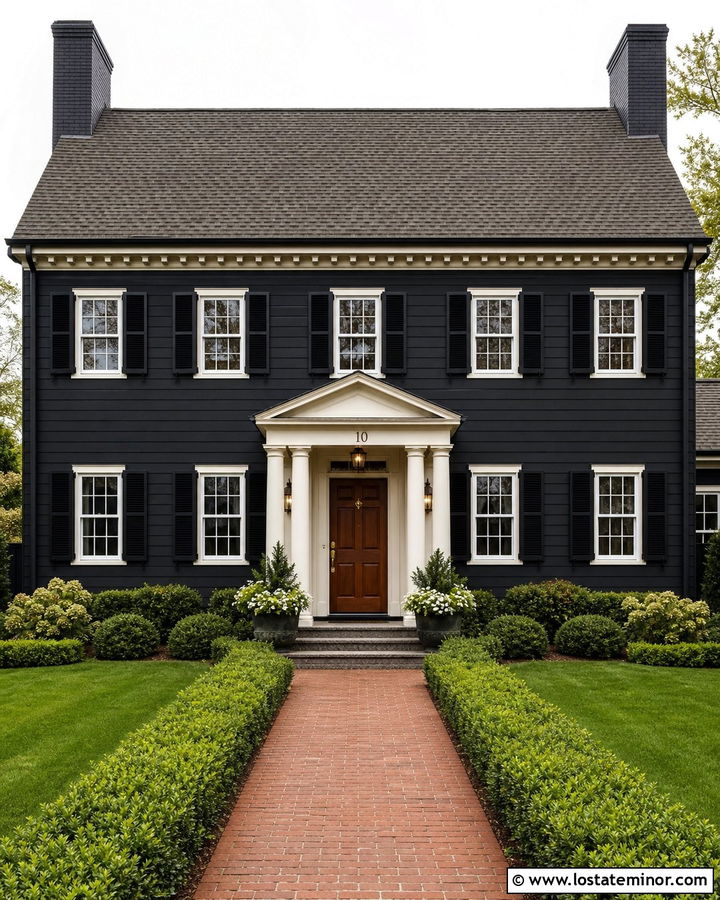
The symmetry of a Colonial house can support a bold jet black finish surprisingly well. Use black-painted shingle siding, black window trim, and a charcoal roof to establish a formal monochromatic base. At the centered entrance, install a medium-brown paneled door with polished or aged brass hardware. Brass lanterns on both sides of the door reinforce the symmetry and introduce warmth. Cream-painted columns and a simple pediment can make the entrance easier to see without outlining every window in white. Keep shutters black or omit them for a cleaner facade. A straight brick walkway, paired planters, clipped hedges, and balanced foundation planting complement the architecture. This complete treatment preserves the home’s traditional order while giving it a more confident exterior presence.
14. Jet Black Shingle Ranch With Light Stone
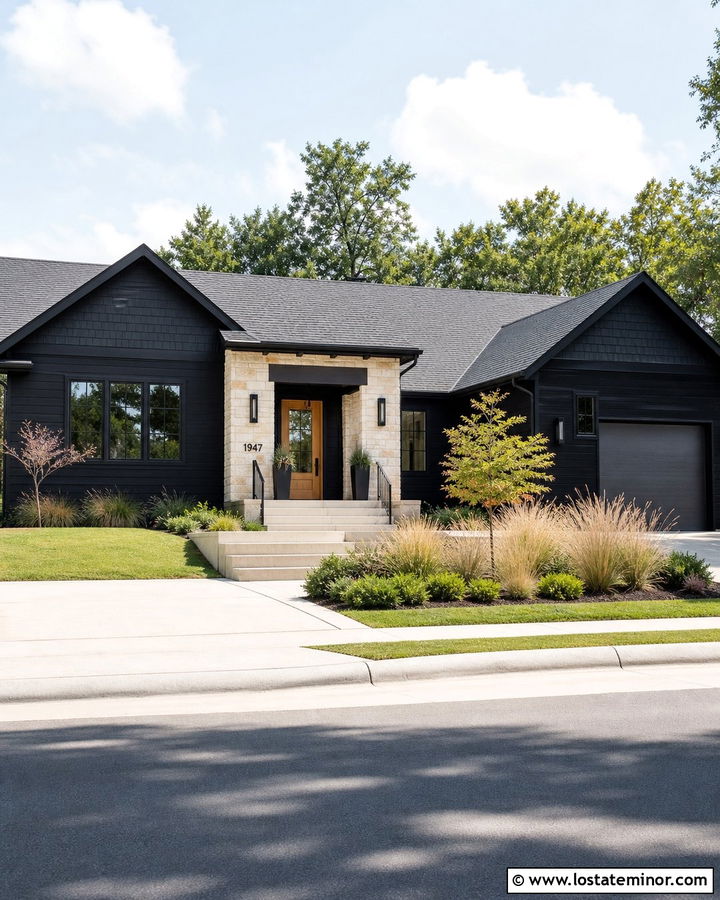
A low ranch home benefits from materials that break up its long horizontal facade. Paint the lap siding jet black, then use black shingle siding around the front gable or entry projection. Add light limestone along the foundation and around the central porch to create contrast close to the ground. A medium-gray architectural roof will define the roofline without looking disconnected from the dark body. Choose black window frames and a natural white oak front door for a simple modern palette. If the garage faces the street, paint it black or use matching oak panels. Broad concrete steps, drought-tolerant grasses, and a few small trees help divide the front yard into layers. The finished ranch feels wider, cleaner, and more deliberately composed.
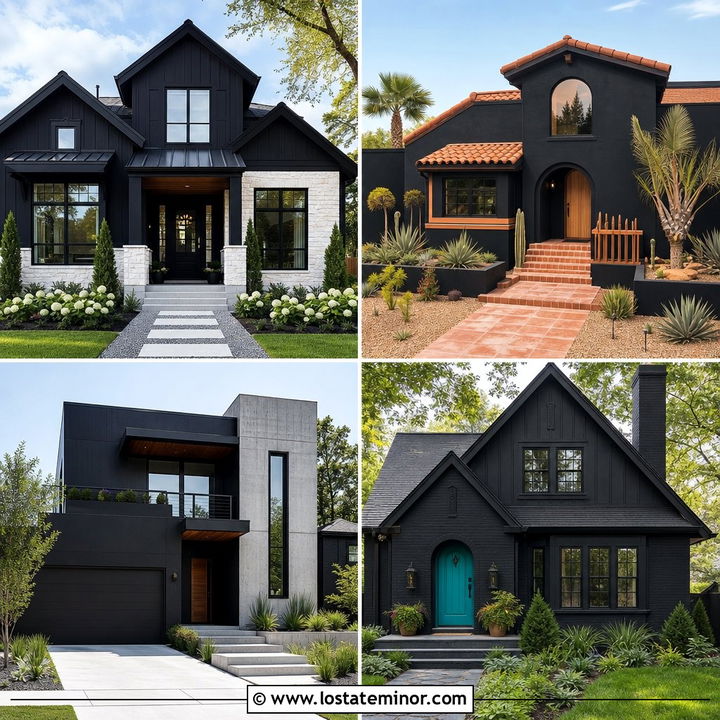
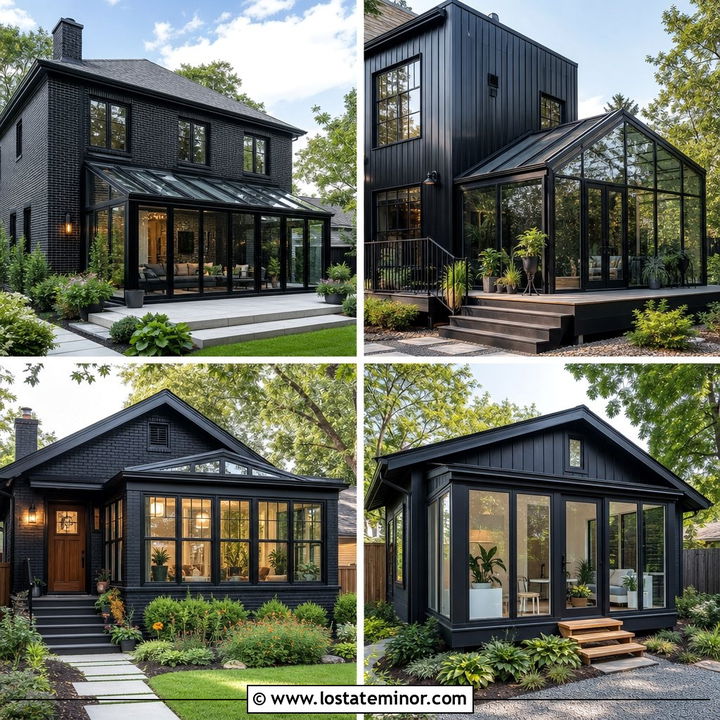
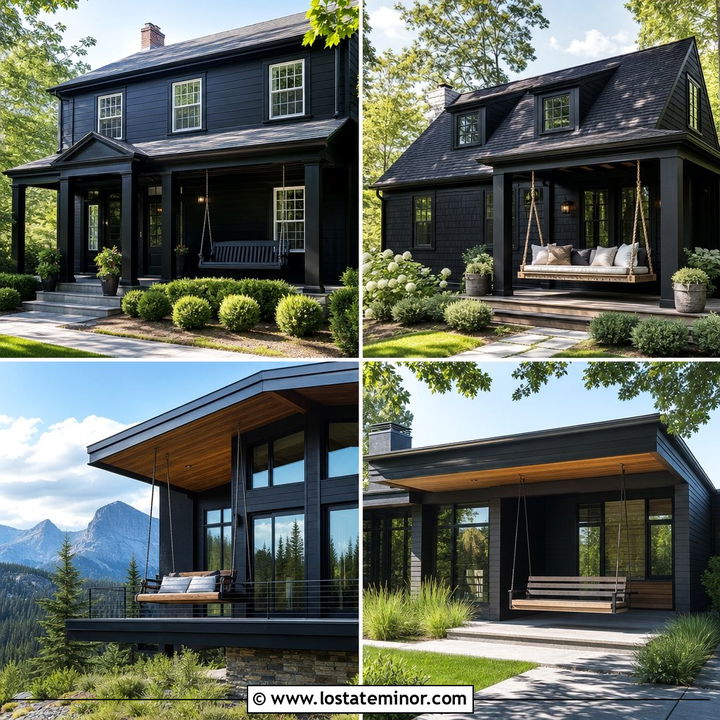
15. Jet Black Shingle Cape Cod With Dormers
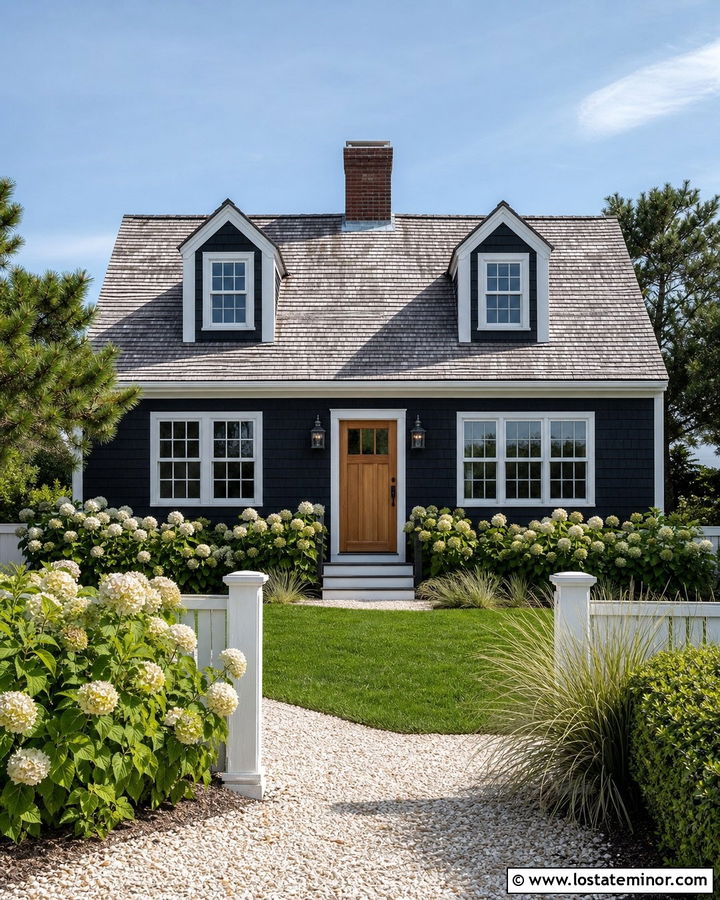
Jet black shingles can give a Cape Cod house strong character while preserving its familiar shape. Cover the facade and dormer sides in painted cedar shingles, then use soft white around the dormer windows, front entry, and corner boards. A weathered-gray roof keeps the steep roof plane lighter than the walls. Add a natural wood door for warmth and simple black lanterns for definition. Avoid oversized shutters that could crowd the smaller dormers. Instead, rely on window boxes or compact trim details to create interest. A low white fence, crushed-shell walkway, hydrangeas, and beach grasses reinforce the coastal setting without making the exterior overly themed. This balanced look works for both seaside properties and suburban homes inspired by coastal architecture.
16. Jet Black Shingle House With Copper Gutters
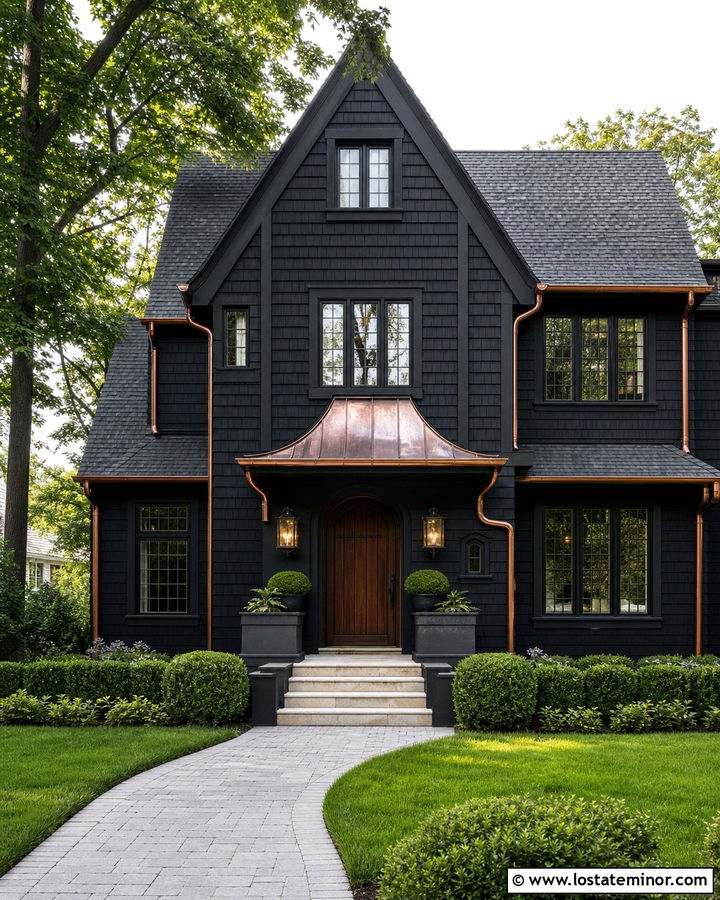
Copper gutters create an elegant transition between a black shingle roof and jet black exterior walls. Fresh copper provides a bright warm line at the eaves, while aged copper develops a quieter, naturally varied finish. Use painted shingle siding on the upper story and black clapboard below to make the facade more dimensional. A dark charcoal roof allows the metalwork to remain visible. Repeat the copper tone through porch lanterns, flashing, or a small entry canopy, but avoid adding too many metallic details. A walnut front door and cream limestone steps complement the warmth of the copper. This refined combination suits traditional homes, Tudor-inspired houses, and upscale cottages surrounded by mature trees, green hedges, and understated foundation planting.
17. Jet Black Shingle House With Blue Door
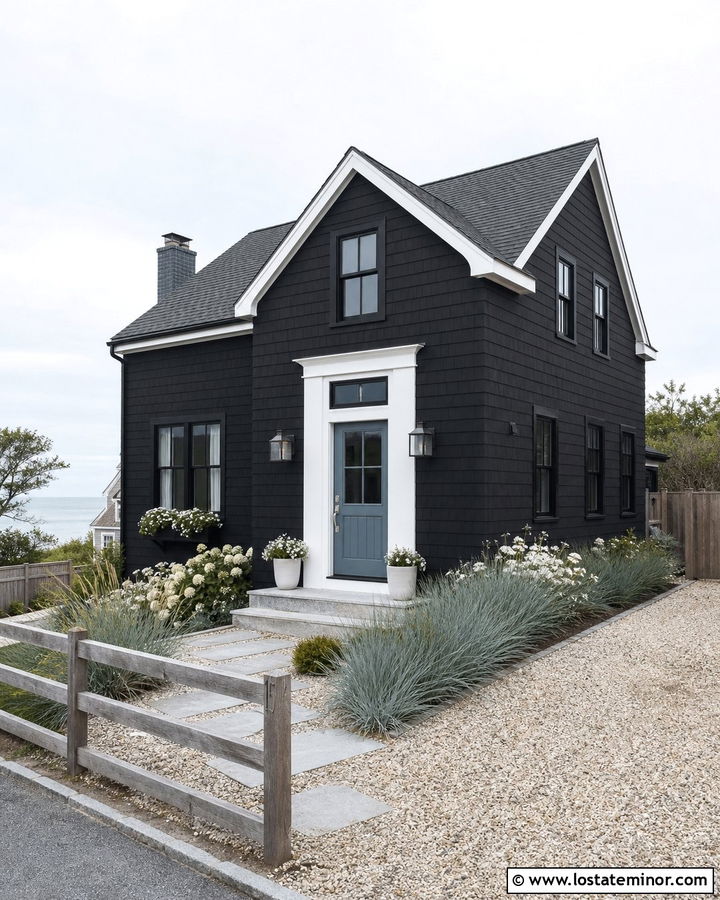
A dusty blue door can lighten a jet black shingle exterior without creating an overly bright centerpiece. Choose a muted slate blue that contains enough gray to coordinate with the roof. Use black-painted shingles on the main walls, crisp white trim around the entry, and medium-charcoal architectural shingles overhead. The blue can be repeated on a small porch bench or planter, but keep the remaining accents black, white, and natural wood. Silver hardware works well with the cooler palette. This combination is especially attractive on a coastal cottage with simple dormers, a covered porch, and divided-light windows. Finish the curb appeal with pale gravel, weathered wood fencing, blue-green grasses, and white flowers that quietly echo the door and trim.
18. Jet Black Shingle Tudor With Brick Chimney
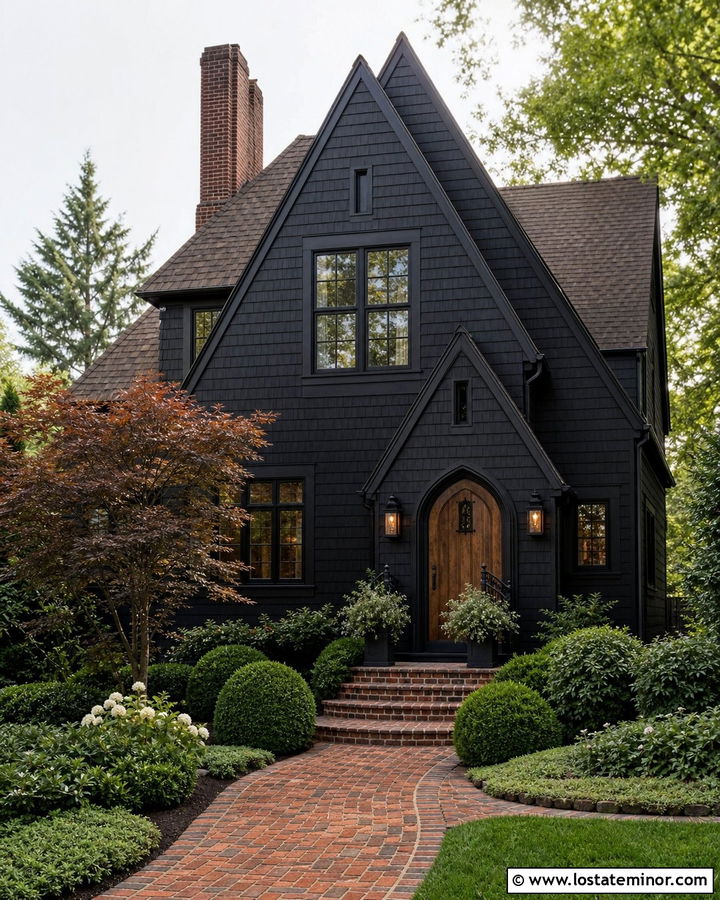
A Tudor exterior gains extra depth when black shingles are paired with aged brick. Paint the upper shingle siding jet black and use matching black trim to emphasize steep gables without creating busy outlines. Preserve a red-brown or charcoal-washed brick chimney as the main warm architectural feature. Choose deep brown roof shingles that visually connect the brick and black walls. An arched oak door, dark metal hardware, and amber-toned lanterns reinforce the traditional character. Around the foundation, repeat the brick in low walls or porch steps rather than introducing another stone. Curved pathways, clipped evergreens, and a small ornamental tree soften the dramatic roofline. This approach updates a Tudor home while respecting its substantial materials and recognizable proportions.
19. Jet Black Shingle Split-Level With Wood Siding
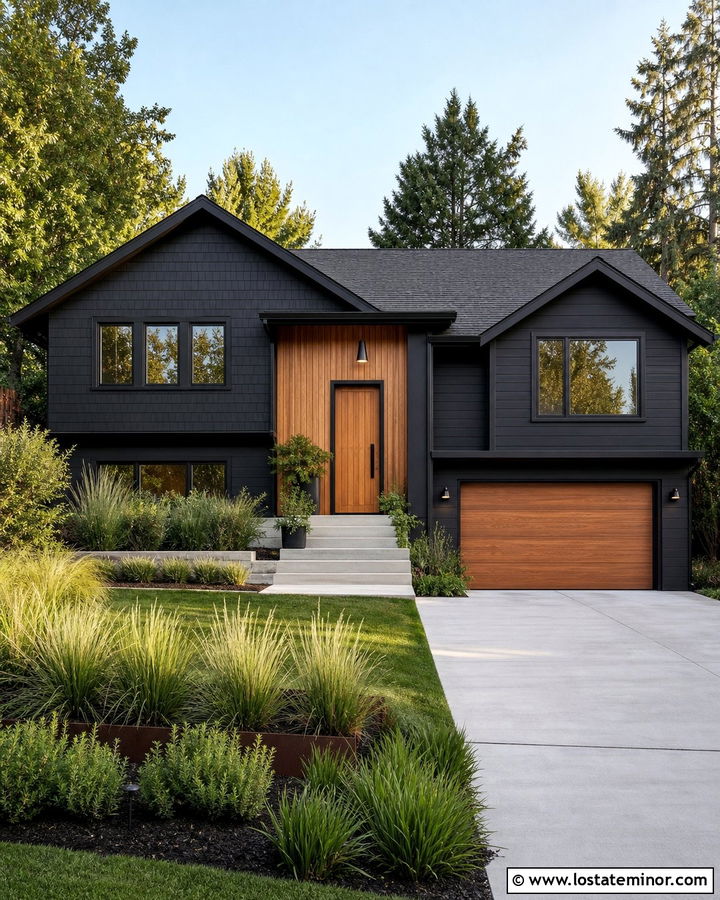
A split-level house can look more unified when one dark color connects its different sections. Paint the shingle siding and lower horizontal siding jet black, then introduce vertical cedar boards around the raised entry. Continue the warm wood on the front door and garage door to create a clear center of attention. A charcoal-gray shingle roof supports the black body, while dark bronze windows add a subtle change from pure black. Light concrete at the steps and driveway keeps the lower facade visible. Use tiered landscaping to follow the changing floor levels, with grasses near the driveway and taller shrubs near the entry. This complete scheme updates the architecture without trying to hide the home’s distinctive staggered shape.
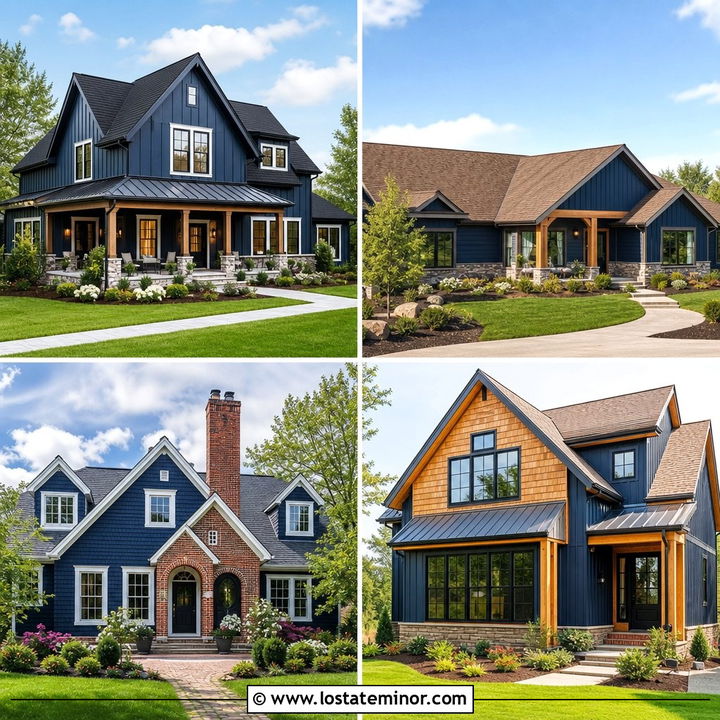
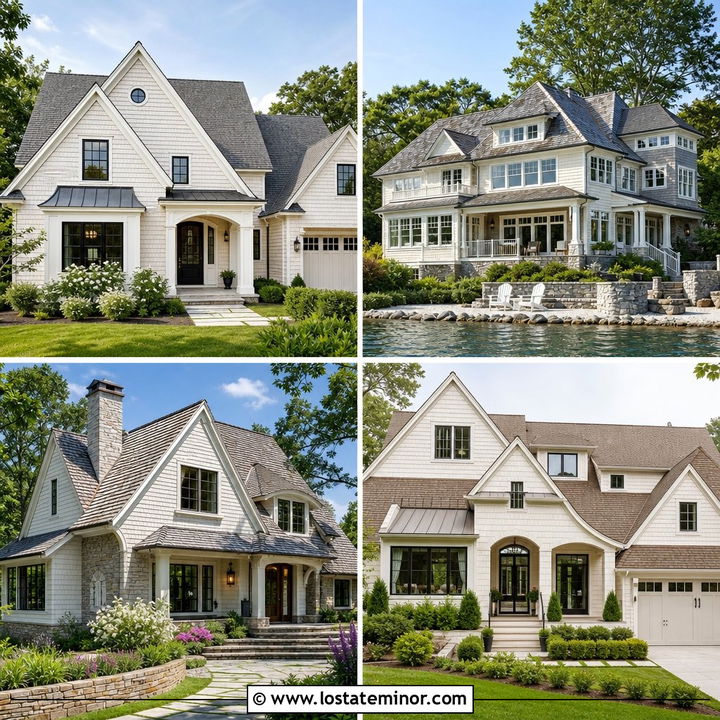
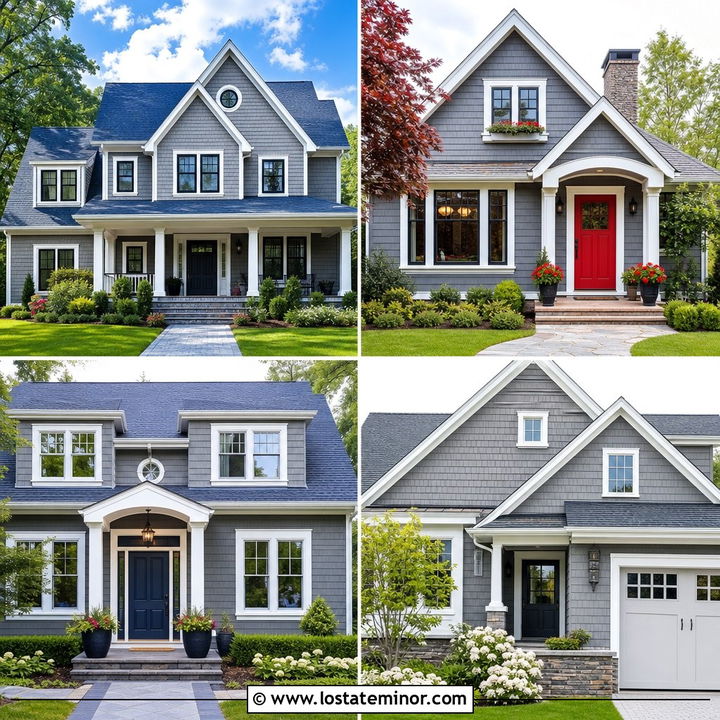
20. Jet Black Shingle House With White Porch
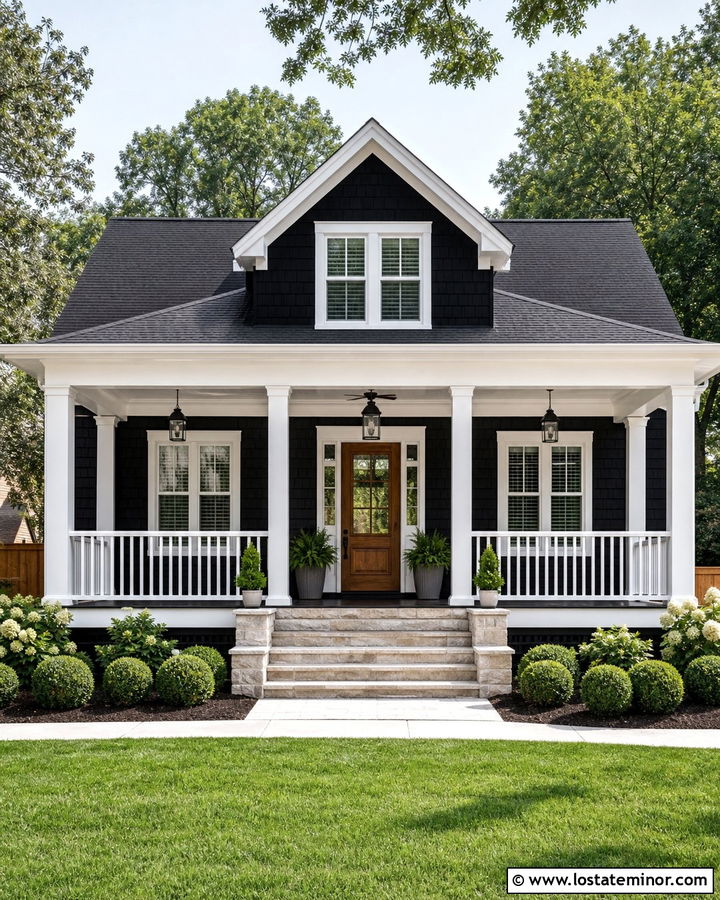
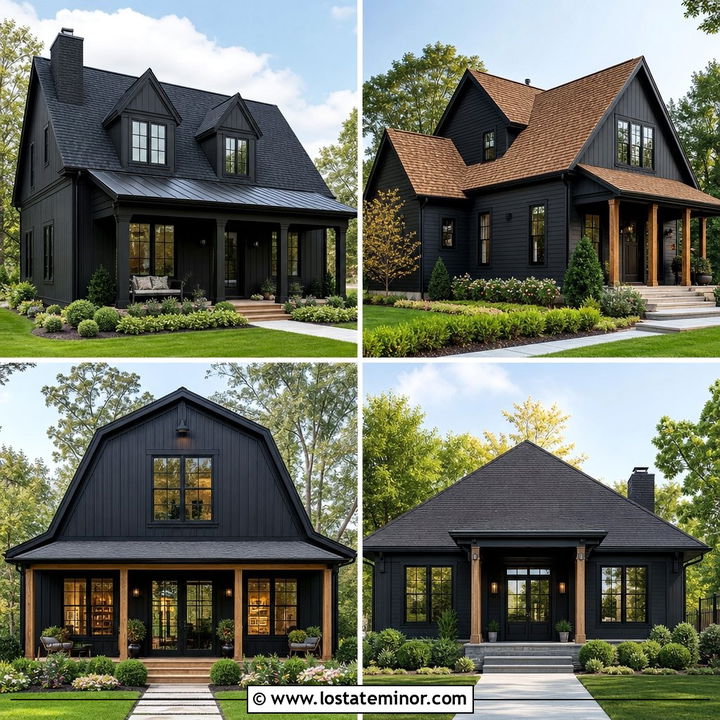
A bright white porch can make a jet black shingle home feel open and inviting. Keep the house body black, but paint the porch columns, railings, ceiling, fascia, and entry surround a clean soft white. Use charcoal roof shingles on the main structure and a matching shingle roof over the porch for continuity. A stained oak door adds warmth between the two high-contrast colors. Black porch flooring can visually connect the entry to the siding, while pale stone steps brighten the approach. This scheme works well on Southern cottages, farmhouses, and traditional homes with deep porches. Frame the facade with green shrubs and broad planting beds, allowing the white porch architecture to remain clear against the dark background.
21. Jet Black Shingle House With Gray Trim
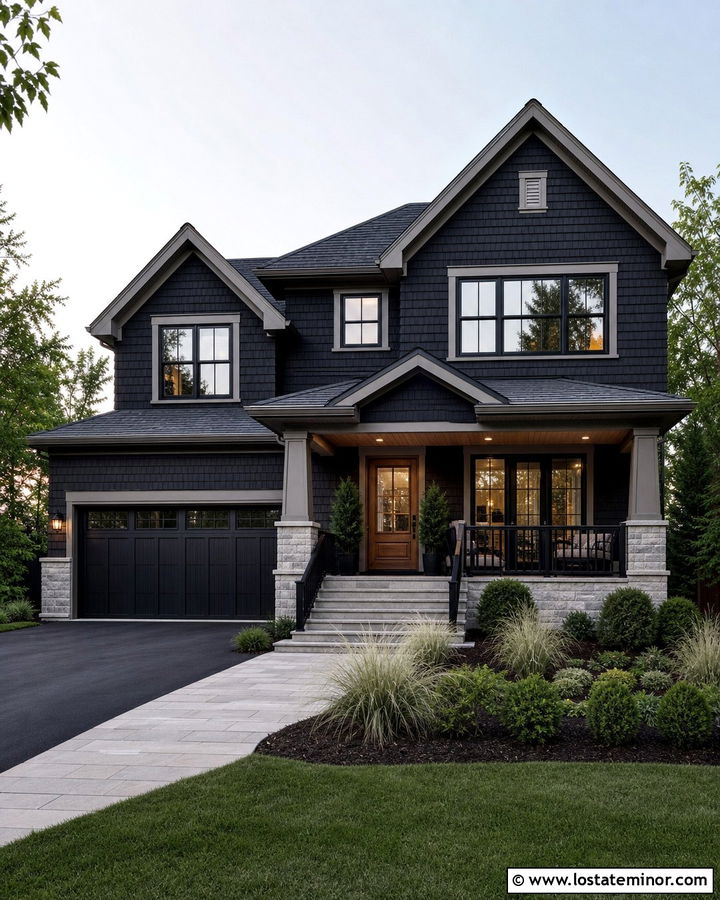
Gray trim creates definition without producing the sharp outline associated with white. Choose a medium warm gray for window frames, fascia, corner boards, and porch columns. Against jet black shingle siding, the gray will be noticeable but restrained. Select a roof made from charcoal and gray architectural shingles to connect both exterior colors. A walnut door and matching porch ceiling add a natural accent, while black railings prevent the trim from becoming dominant. For masonry, choose soft gray stone with limited color variation. This versatile palette suits contemporary Craftsman homes, two-story suburban houses, and transitional architecture. Finish the setting with a pale paver walkway, silvery ornamental grasses, dark mulch, and evergreen shrubs that provide contrast throughout the year.
22. Jet Black Shingle House With Matching Shutters
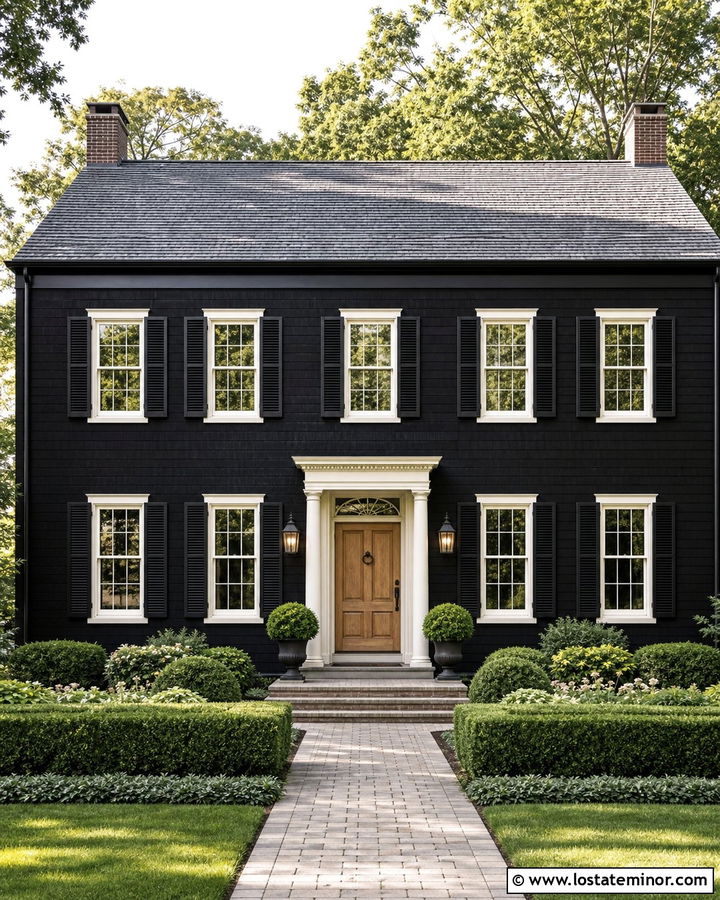
Black shutters on a jet black facade create subtle relief rather than obvious contrast. The shutters should have a slightly different finish or texture so they remain visible against the shingle siding. Try satin shutters over a low-luster body color, or use louvered panels beside flat painted shingles. A weathered-gray roof and warm white window trim prevent the exterior from appearing featureless. At the entry, choose a natural wood door with simple black hardware. A brick porch in muted taupe and charcoal can add another traditional material without competing with the dark walls. This understated treatment works well on Colonial, Georgian, and Cape Cod homes where symmetry matters. Formal hedges and a centered walkway complete the polished exterior composition.
23. Jet Black Shingle House With Limestone Entry
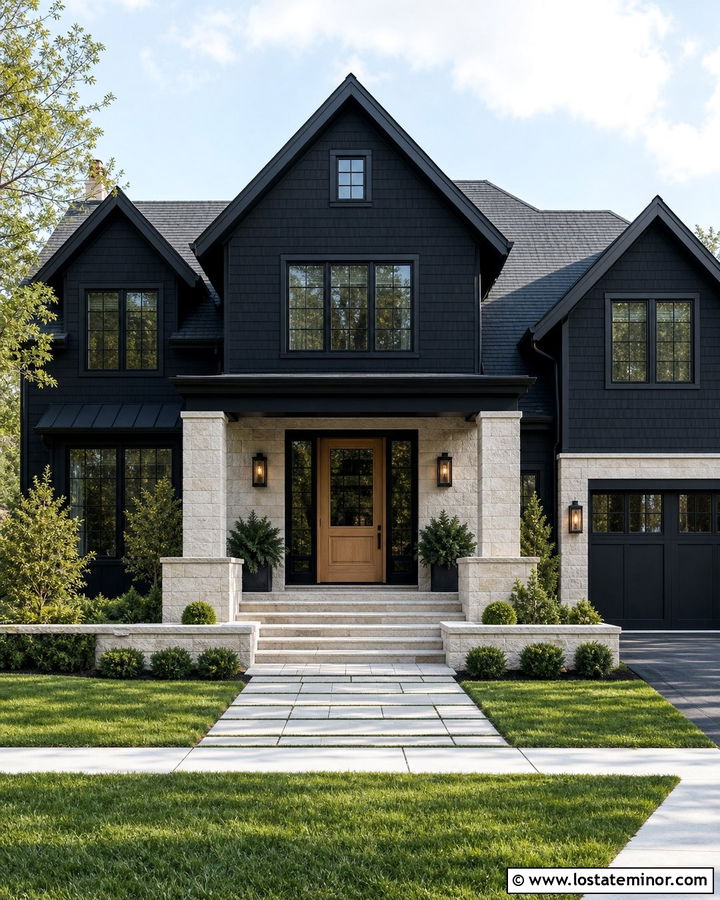
Pale limestone creates a bright frame around the entrance of a jet black house. Use the stone on porch walls, columns, steps, or a projecting entry volume rather than scattering small pieces across the facade. Cover the surrounding walls with jet black shingle siding and keep the windows, fascia, and gutters black. A dark charcoal shingle roof maintains the sophisticated palette. Choose a light oak door to bridge the cream stone and black exterior. Warm exterior sconces can emphasize the texture without adding another visible color during the day. This combination feels particularly appropriate for transitional houses with simple gables and larger windows. Structured shrubs, rectangular pavers, and a clean lawn reinforce the strong architectural contrast between dark siding and light masonry.
24. Jet Black Shingle House With Brick Steps
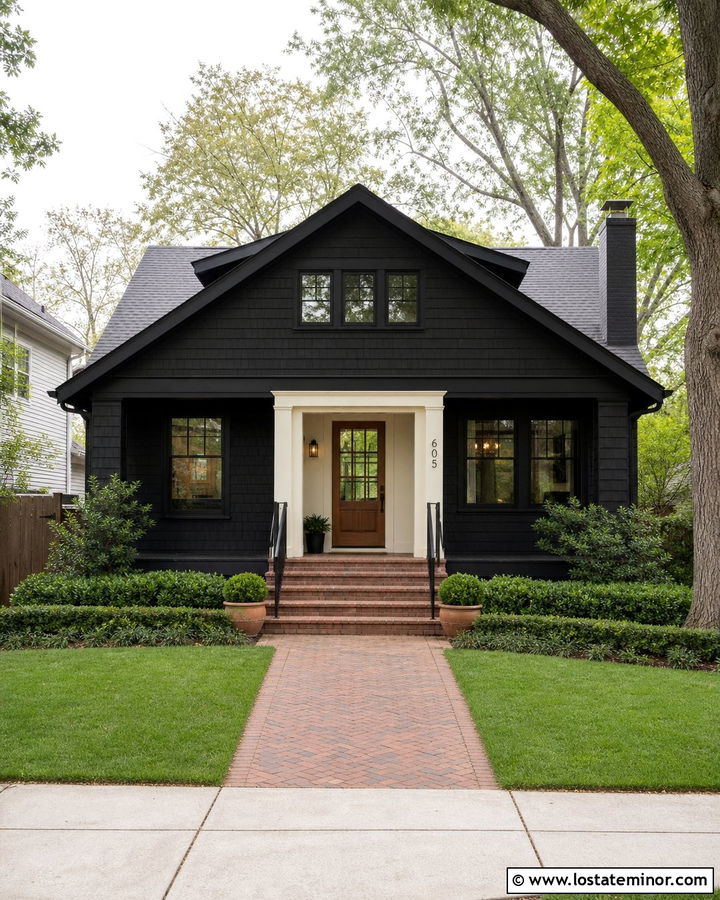
Brick steps bring approachable color and familiar texture to a jet black shingle exterior. Select muted red, brown, or charcoal-blended brick instead of a highly saturated orange product. Continue the brick across the porch floor or in low retaining walls so it appears intentional. Black shingle siding, black window frames, and charcoal roof shingles create a consistent background. A warm white entry surround can separate a stained wood door from the dark facade. For railings, simple black metal maintains a clean profile and allows the brickwork to remain prominent. This practical scheme suits urban cottages, traditional bungalows, and renovated older homes. Low hedges, clay planters, and a straight concrete or brick walkway complete the comfortable, established curb appeal.
25. Jet Black Shingle House With Sage Accents
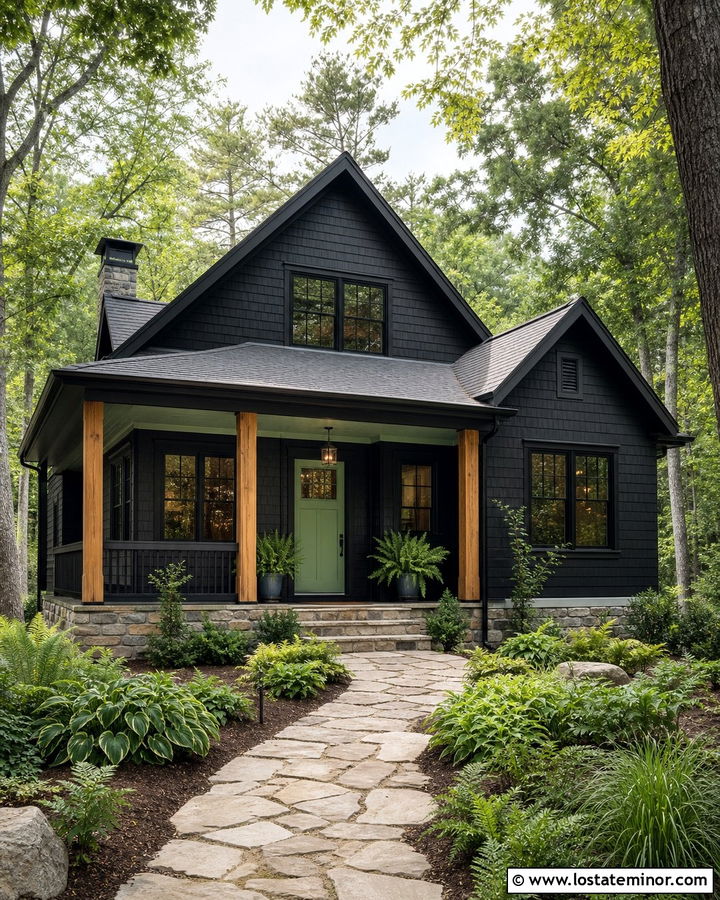
Sage green offers an earthy accent that remains calm beside jet black siding. Use it selectively on the front door, porch ceiling, or a pair of functional shutters. Paint the main shingle exterior jet black and keep the trim black for a modern, tonal foundation. A medium-gray roof with subtle green-gray variation can help the accent feel connected. Add natural cedar porch posts and pale stone at the base to bring warmth and visual balance. This palette works especially well on a woodland cottage or Craftsman house surrounded by mature landscaping. Ferns, hostas, ornamental grasses, and evergreen shrubs can repeat the sage tones naturally. The result feels layered and distinctive while allowing the dark exterior to remain the primary design feature.
26. Jet Black Shingle House With Oak Front Door
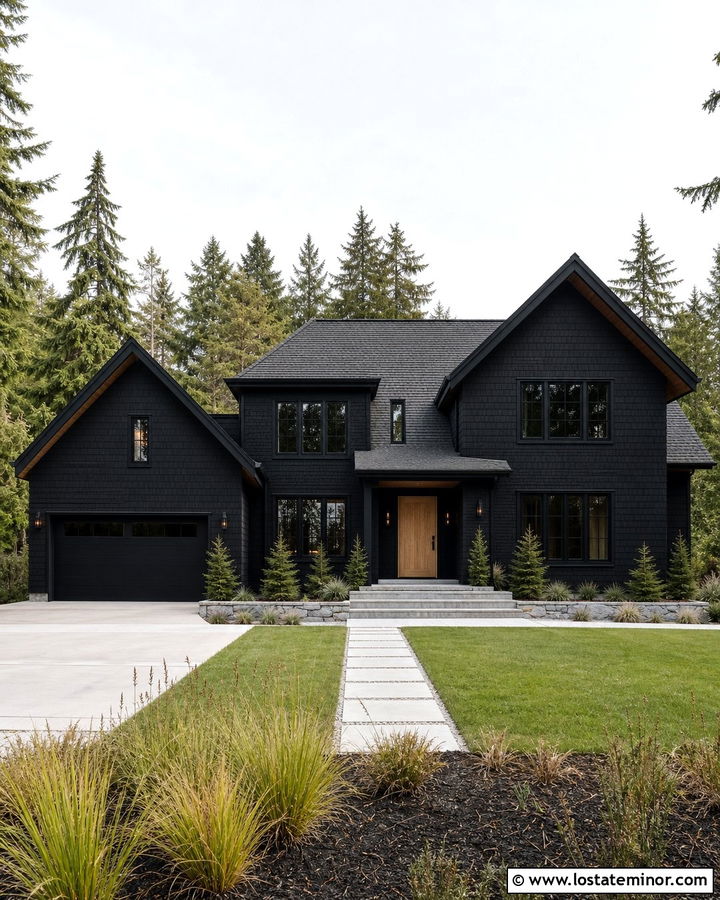
An oak front door is one of the simplest ways to warm a jet black house. Its visible grain offers natural movement against the solid dark body color. Use jet black shingle siding, matching window trim, and a charcoal architectural roof for a strong monochromatic foundation. Repeat oak on the porch ceiling, brackets, or a narrow garage detail so the door does not appear isolated. Soft gray stone steps provide a neutral transition from the landscape. If the house has large windows, black frames will help them blend into the facade rather than compete with the entry. This complete scheme works across modern farmhouses, Scandinavian-inspired homes, and contemporary cottages. Restrained landscaping keeps attention on the contrast between black paint and natural wood.
27. Jet Black Shingle House With Gambrel Roof
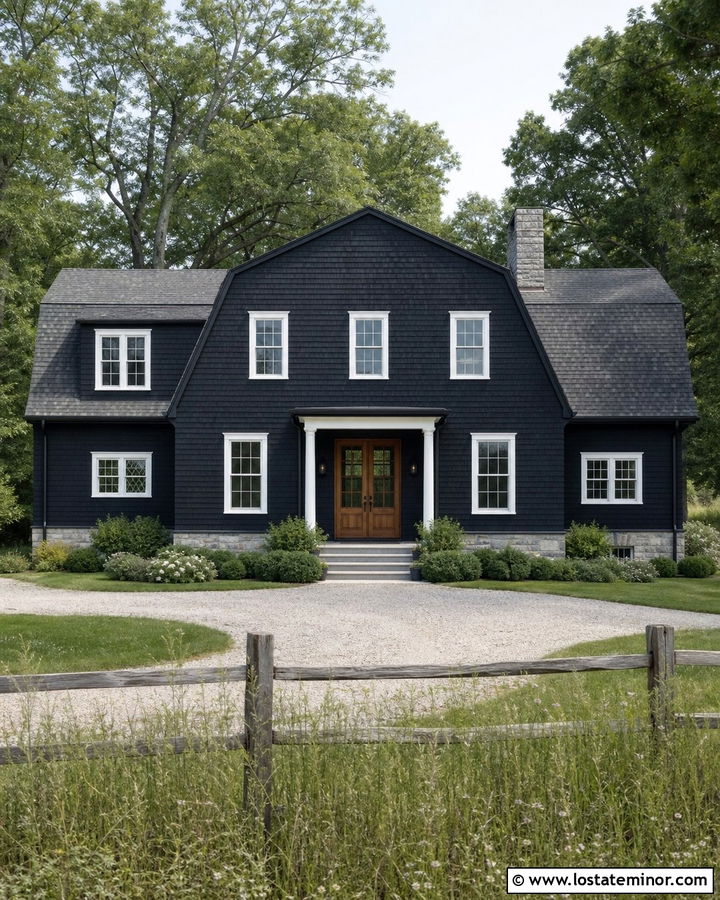
A gambrel roof already gives a house a recognizable silhouette, and jet black siding can make that shape even clearer. Cover the walls and upper gables in black-painted shingles, then use charcoal roof shingles with enough variation to show the roof’s changing angles. White window trim provides traditional contrast, while black fascia keeps the roof edges crisp. Add double natural wood doors or a single paneled oak entry to introduce farmhouse warmth. A stone foundation in pale gray helps support the visually substantial upper roof. This palette is ideal for barn-inspired homes, Dutch Colonial houses, and rural guesthouses. A gravel drive, split-rail fence, meadow grasses, and simple foundation shrubs create an appropriate setting without making the exterior feel overly rustic.
28. Jet Black Shingle House With Covered Deck
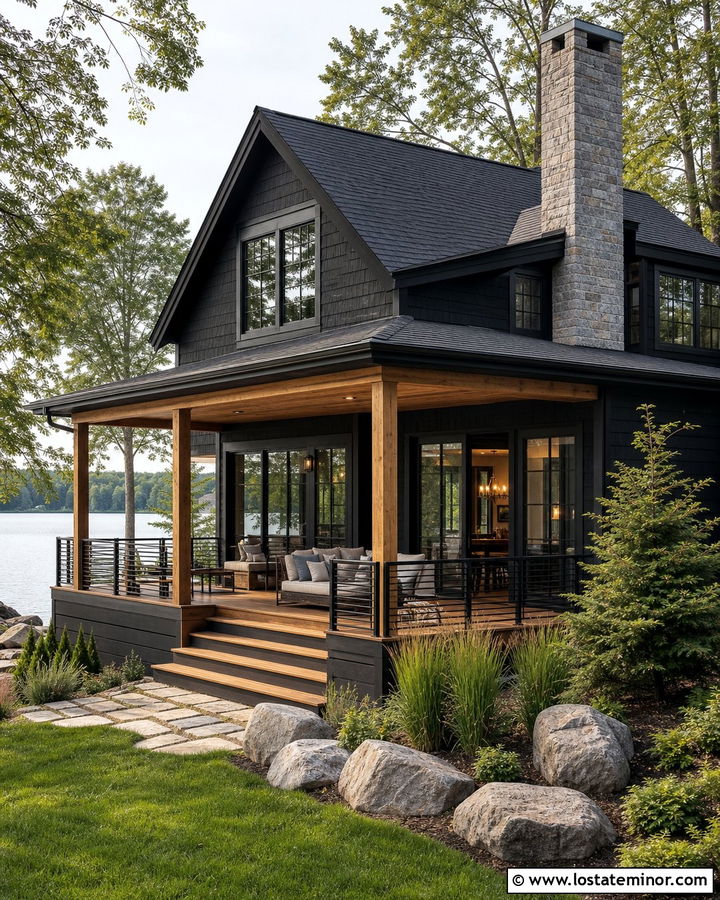
A covered deck can soften a jet black exterior by introducing broad areas of warm wood. Use black shingle siding across the house and charcoal asphalt shingles on both the main roof and deck cover. Build the deck floor, ceiling, and support posts from cedar or another medium-toned wood. Black railings keep views open and connect the outdoor space to the siding. Large black-framed windows or sliding doors strengthen the indoor-outdoor relationship. A light stone chimney or foundation can brighten the lower facade. This arrangement works especially well for lake houses, mountain homes, and rear-facing suburban properties. Surround the deck with native grasses, evergreen planting, and a stone path so the structure feels integrated into the full landscape.
29. Jet Black Shingle House With Arched Entry
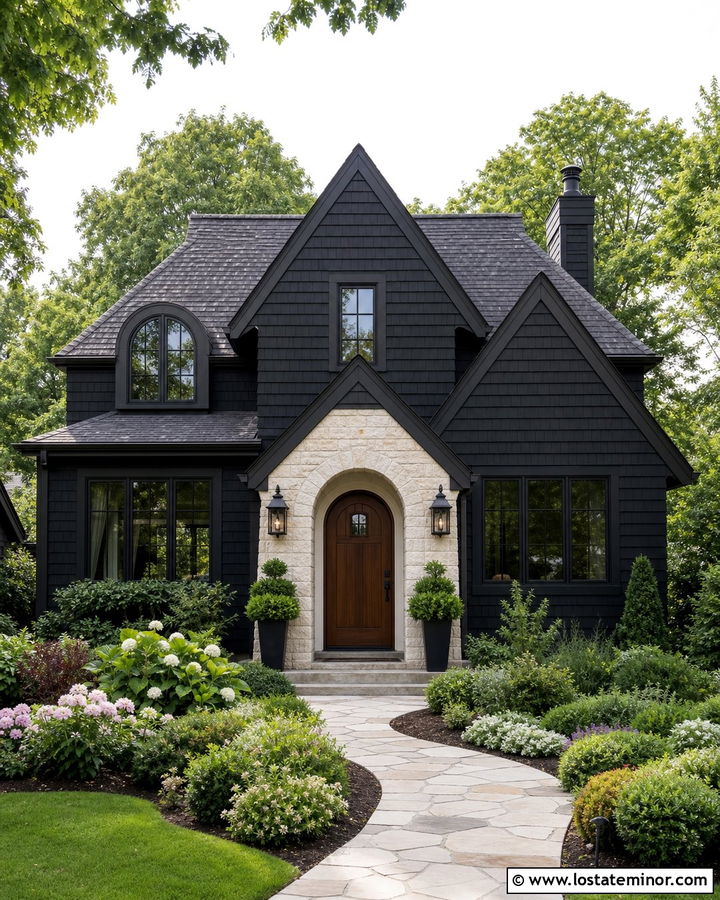
An arched entrance creates a graceful focal point against a jet black shingle facade. Frame the opening with pale limestone, cream-painted trim, or softly weathered brick. Keep the surrounding shingles, fascia, and window trim black so the curve remains clear. A round-top walnut door reinforces the shape and adds warmth. Overhead, select charcoal architectural shingles that support the dark palette without erasing the roof pattern. This design works beautifully on English cottage, Tudor, and European-inspired homes with steep gables. Black metal lanterns and a curved stone walkway can repeat the doorway’s form. Use loose, layered landscaping instead of rigid hedges, allowing the strong entry architecture to remain the organized centerpiece of the full exterior.
30. Jet Black Shingle House With Mixed Siding
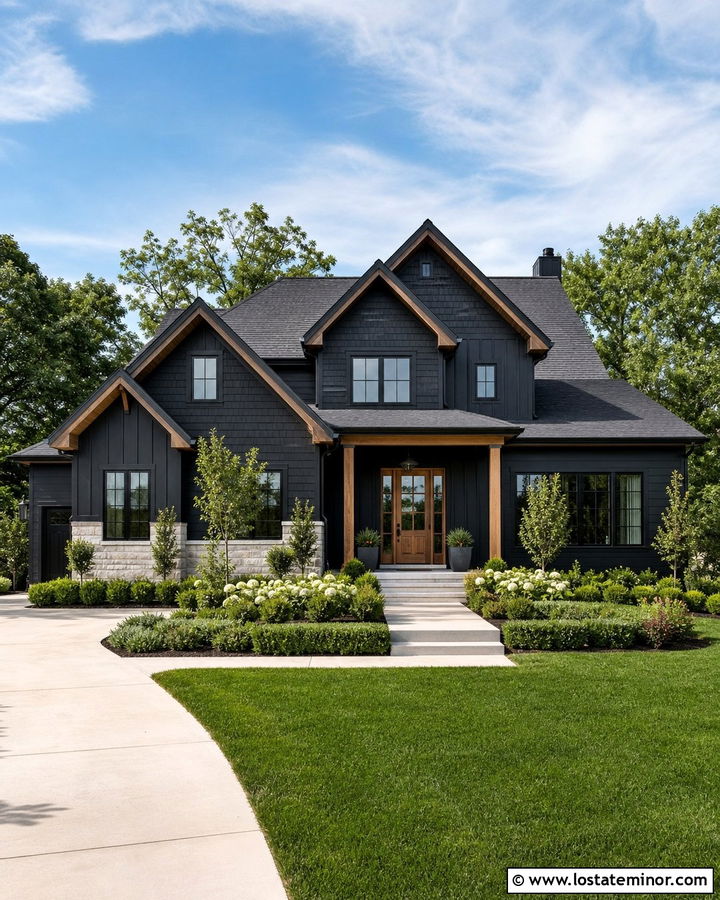
Mixing siding profiles gives a jet black exterior depth while maintaining one unified color. Use painted cedar shingles in the gables, vertical board-and-batten around the entry, and horizontal lap siding across the main floor. Applying Jet Black to every surface lets the texture changes appear through natural light rather than contrasting paint. Add a charcoal dimensional shingle roof, black window frames, and dark gutters for continuity. A cedar door, wood soffits, and a limited area of pale stone provide warmth and relief. This approach is ideal for a large modern farmhouse or transitional home with several rooflines. Keep landscaping broad and simple, using green shrubs, ornamental trees, and a light concrete walkway to balance the detailed facade.
Conclusion:
These 30 Jet Black House Design With Shingles Ideas show how a dark exterior can work with coastal, traditional, rustic, and modern architecture. The most successful schemes balance black surfaces with visible texture, thoughtful roof color, and one or two lighter or warmer materials. White trim creates crisp contrast, while gray, limestone, cedar, brick, and oak produce softer transitions. Before making a final decision, view paint samples beside the actual roof shingles, masonry, windows, and wood accents at different times of day. Also consider how trees and shadows affect the facade. A coordinated plan will make jet black feel intentional, highlight the home’s architecture, and create memorable curb appeal from every street-facing angle.

Related posts: