Creating a peaceful sanctuary within your home starts with selecting the perfect palette that balances Japanese minimalism and Scandinavian functionality. Japandi style has taken the design world by storm because it focuses on clean lines, natural materials, and a sense of wabi-sabi, or finding beauty in imperfection. By choosing the right colors, you can transform a cluttered bedroom into a serene retreat that promotes better sleep and mental clarity. This aesthetic relies heavily on muted tones, earthy pigments, and high-contrast accents to create visual interest without causing sensory overload. Whether you prefer warm neutrals or deep, moody shades, finding the right balance is key to mastering this trendy and timeless interior look.
1. Neutral Japandi Bedroom
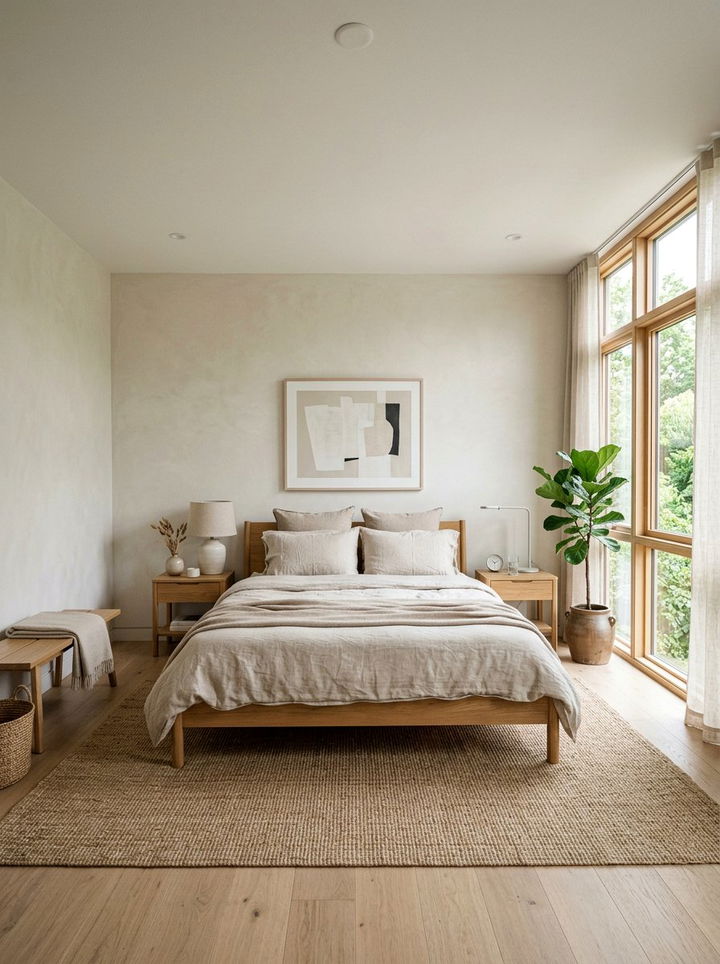
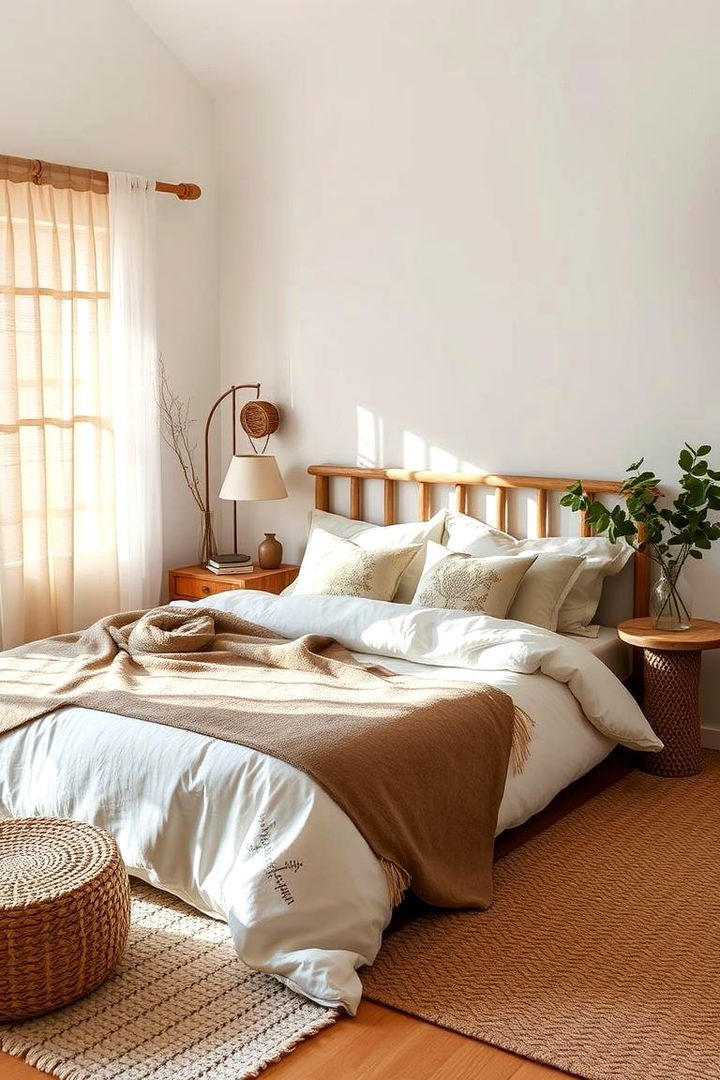
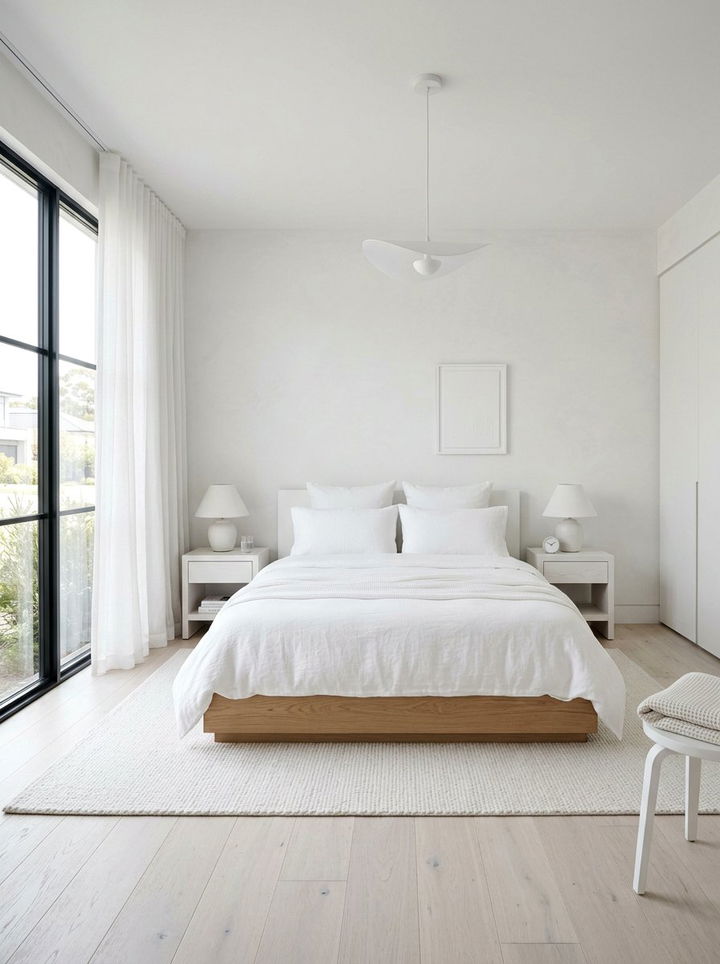
Have you ever walked into a room and immediately felt your heart rate slow down in the best way possible? A neutral Japandi bedroom achieves this through a delicate balance of off-white walls and light wood textures that feel incredibly grounded. This specific color palette avoids starkness by leaning into warmer undertones like bone and parchment rather than clinical whites. When you layer these tones with linen bedding and a simple jute rug, the entire space begins to feel like a cohesive sanctuary. It is all about creating a backdrop that allows the natural sunlight to bounce around the room softly. Choosing the right neutrals ensures your sleeping area remains timeless and resists the urge to feel cluttered or overwhelming.
2. Sage Green Japandi Bedroom
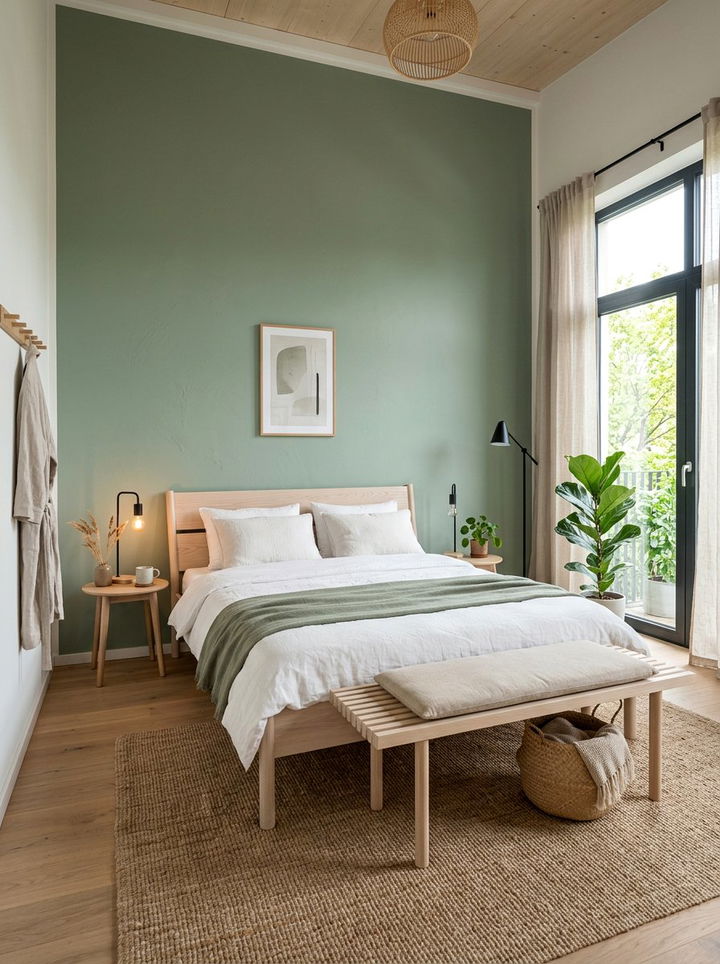
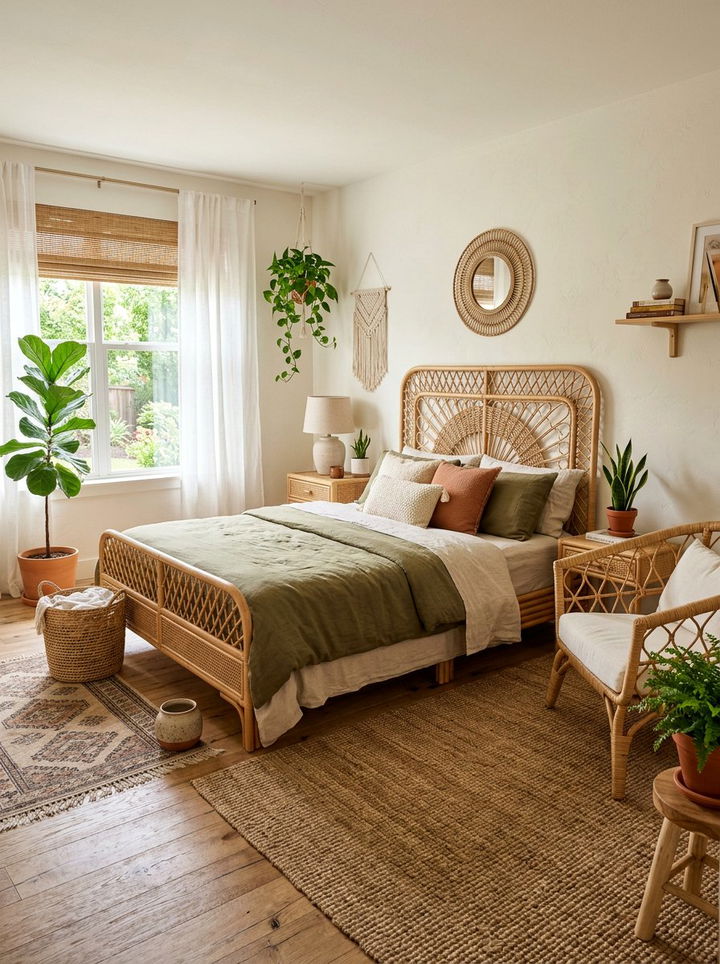
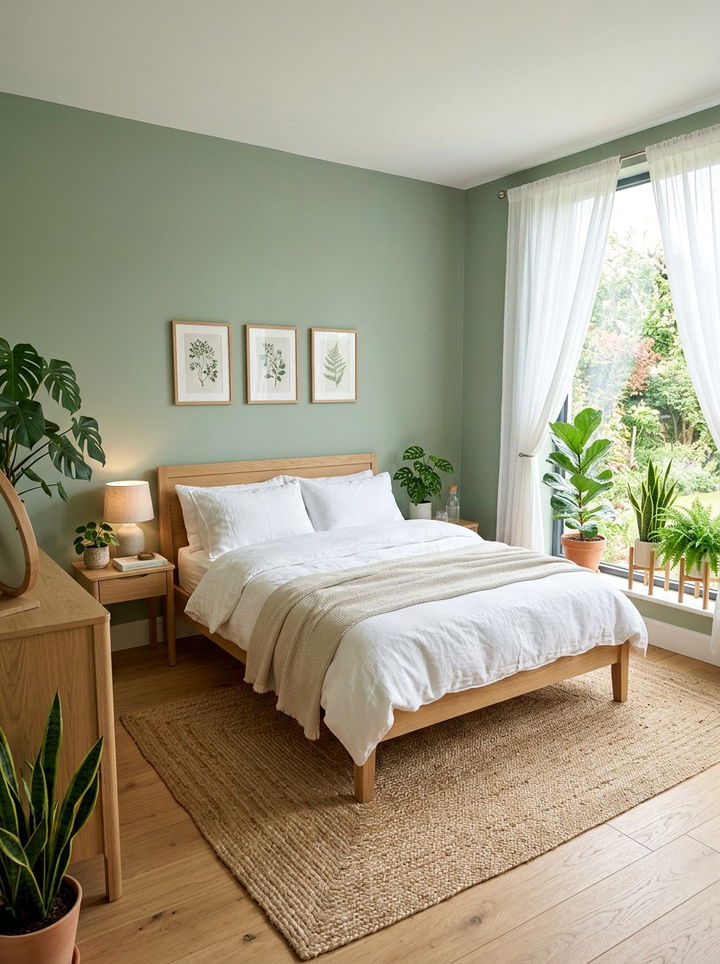
Imagine waking up in a space that feels like a quiet walk through a misty forest at dawn. Incorporating sage green into your Japandi bedroom brings a subtle earthy element that perfectly bridges the gap between Scandinavian forest vibes and Japanese zen gardens. This muted green acts as a sophisticated neutral that pairs beautifully with light ash wood furniture and black metal accents. It provides a touch of color without being loud or distracting from the overall minimalist theme of the room. You can apply this color through a textured accent wall or soft cotton duvet covers to create a calming focal point. The organic nature of sage green promotes deep relaxation and connects your indoor environment to the world outside.
3. Terracotta Japandi Bedroom
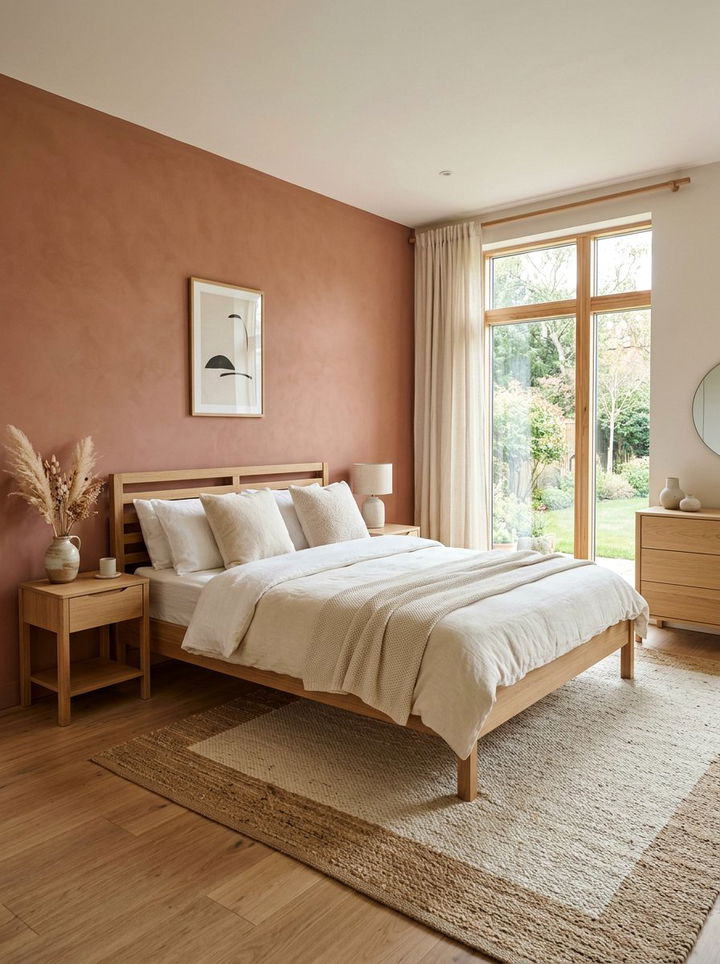
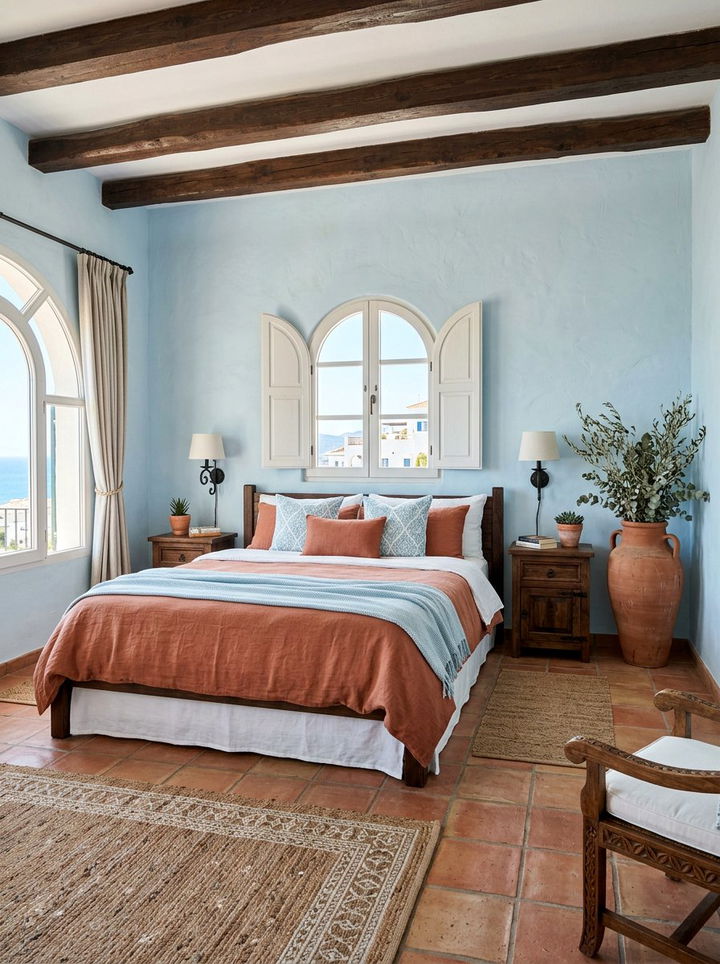
Does your bedroom feel a bit too cold or clinical lately? Introducing terracotta tones can instantly inject a sense of warmth and clay-like texture that feels deeply rooted in the earth. This color works exceptionally well in a Japandi setting because it provides a warm contrast to sleek, modern furniture lines. Instead of a bright orange, aim for a desaturated, burnt clay shade that feels more natural and less aggressive to the eyes. Pair these warm hues with cream-colored textiles and light oak bed frames to balance the richness. Terracotta evokes the feeling of handmade pottery and artisanal craftsmanship, which are core pillars of the Japanese design influence within this beautiful hybrid style.
4. Charcoal Gray Japandi Bedroom
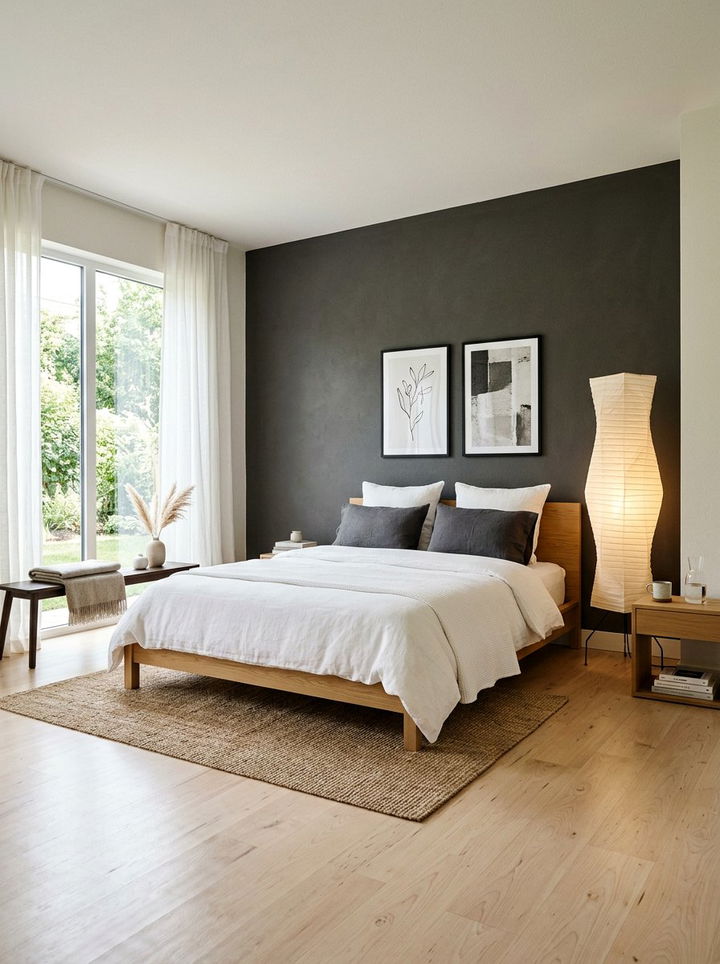
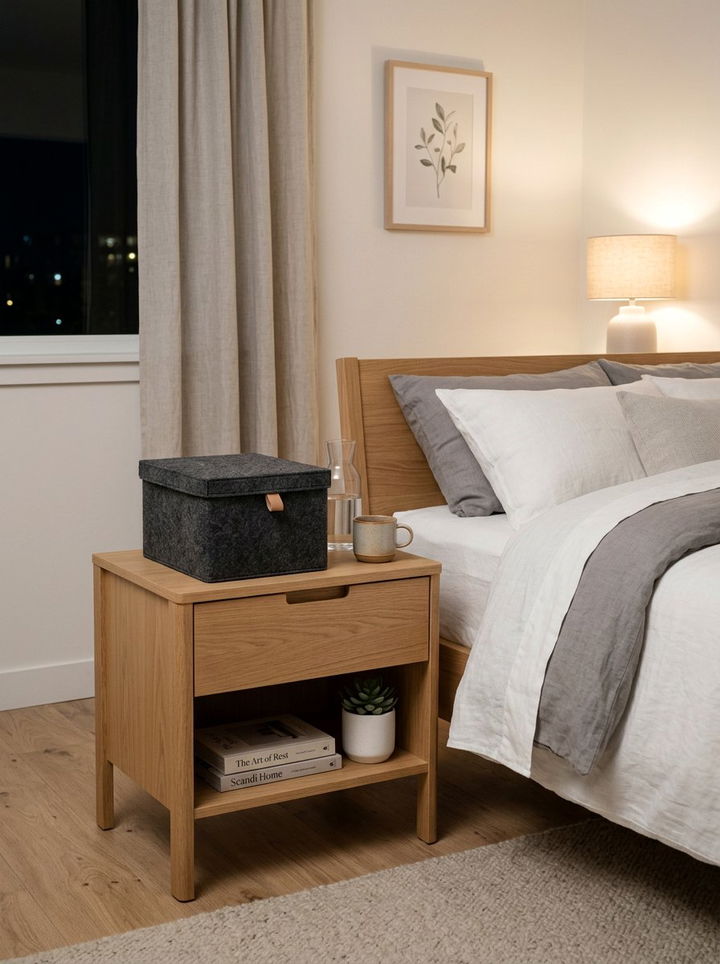
Can a dark color really make a bedroom feel more peaceful and inviting? Charcoal gray offers a grounding presence that creates a cozy, cocoon-like atmosphere when used correctly in a Japandi layout. This deep hue works perfectly as a dramatic backdrop for light-colored furniture and minimalist wall art. It provides a sharp, clean contrast that highlights the architectural lines of the room, which is a staple of Scandinavian design. To keep the space from feeling too heavy, ensure there is plenty of natural light and incorporate light-toned wood accents throughout the space. Using charcoal gray on a single accent wall can provide depth and a sophisticated edge that feels both modern and incredibly tranquil.
5. Oatmeal Japandi Bedroom
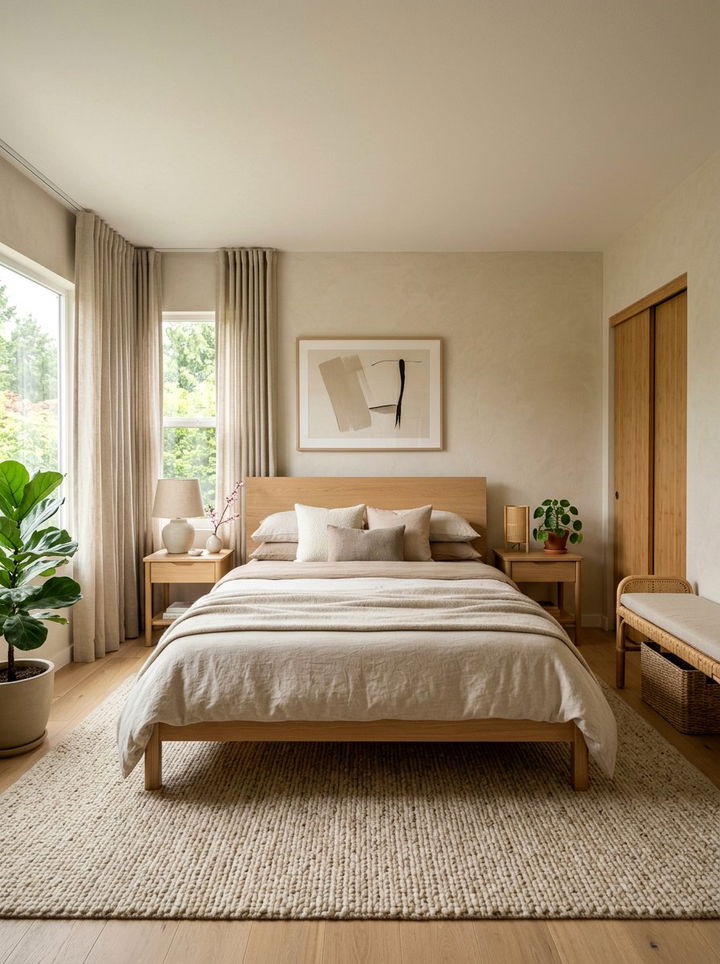
Softness is a key component of comfort, and the oatmeal color palette delivers exactly that for your personal sleeping space. This shade sits somewhere between beige and gray, offering a warm and versatile base that feels more intentional than plain white. It mimics the look of raw wool and unbleached linen, which are materials frequently used in Japandi interiors to add tactile interest. By keeping the walls and the bedding within the oatmeal family, you create a monochromatic look that is soothing to the senses. This color works harmoniously with bamboo elements and paper lantern lighting fixtures. It is the ultimate choice for anyone who wants a bright room that still feels incredibly cozy and lived-in.
6. Stone Gray Japandi Bedroom
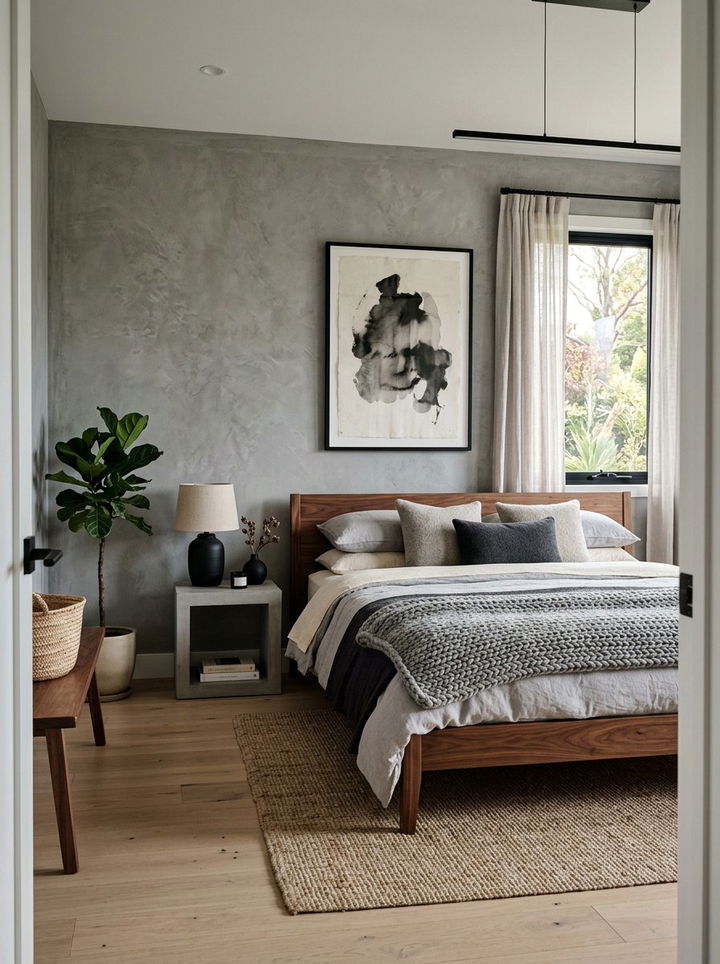
What if you could capture the quiet essence of a Japanese rock garden right in your own sleeping quarters? Stone gray provides a cool, architectural feel that emphasizes simplicity and strength within the Japandi aesthetic. Unlike warmer grays, stone gray has a crispness that looks stunning when paired with dark walnut furniture or black lacquered accents. This color palette encourages a sense of stillness and focus, making it ideal for a room meant for rest. You can incorporate different shades of stone through textured wallpapers, concrete-effect finishes, or heavy woven blankets. The result is a sophisticated and modern environment that feels balanced, durable, and completely free from any unnecessary visual noise or distractions.
7. Warm Beige Japandi Bedroom
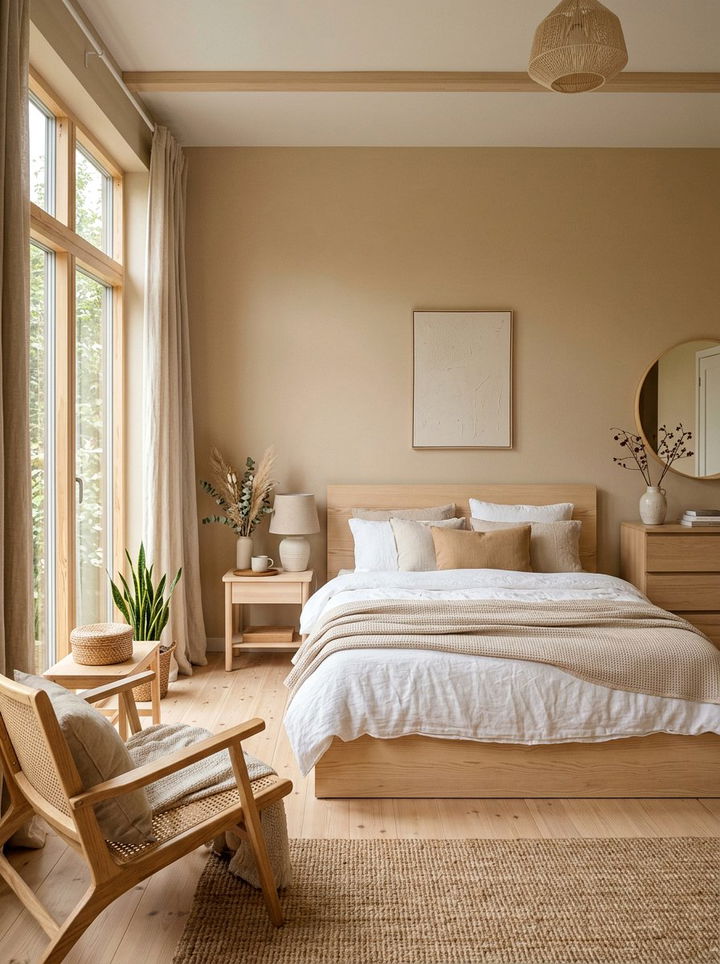
Have you noticed how some rooms just seem to glow with a gentle radiance even on cloudy days? A warm beige Japandi bedroom utilizes sandy undertones to create a space that feels sun-drenched and welcoming at all times. This color is far more inviting than traditional tan and serves as the perfect canvas for minimalist decor. It pairs beautifully with light pine woods and dried botanical arrangements like pampas grass or eucalyptus. The warmth of the beige helps to soften the sharp edges of modern furniture, making the entire room feel more approachable and soft. It is a reliable choice for creating a cohesive look that feels both high-end and deeply comfortable for daily living.
8. Cream Japandi Bedroom
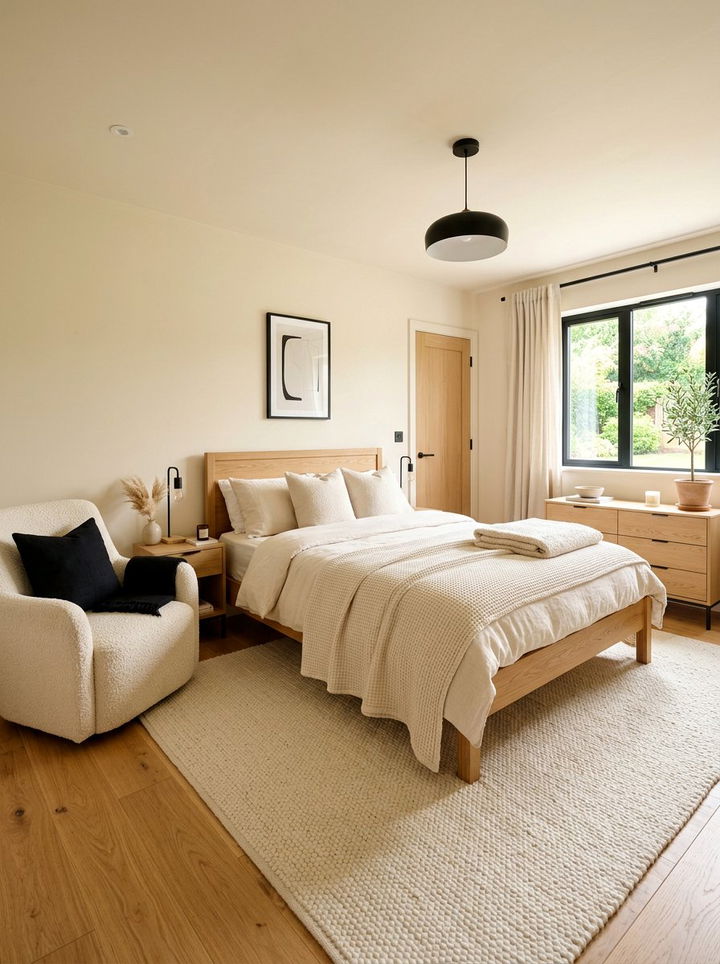
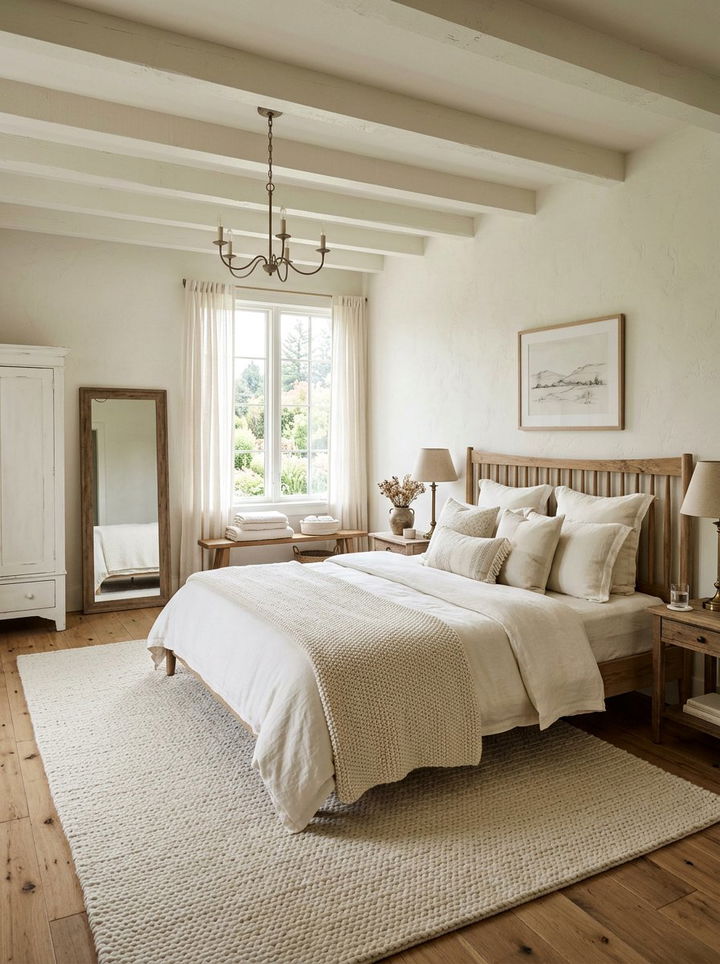
Is there anything more refreshing than a bedroom that feels like a clean slate for your mind every morning? Cream is a foundational color in Japandi design because it offers more depth and warmth than a basic white finish. It creates a soft, buttery atmosphere that looks incredible when hit by the morning sun or warm evening lamp lighting. In a Japandi room, cream walls allow natural wood grains and handmade textures to take center stage without competition. This palette is often accented with black hardware or thin-frame mirrors to provide just enough visual structure. Using cream allows you to play with various textures, such as bouclé chairs or waffle-knit throws, without the room feeling busy.
9. Light Oak Japandi Bedroom
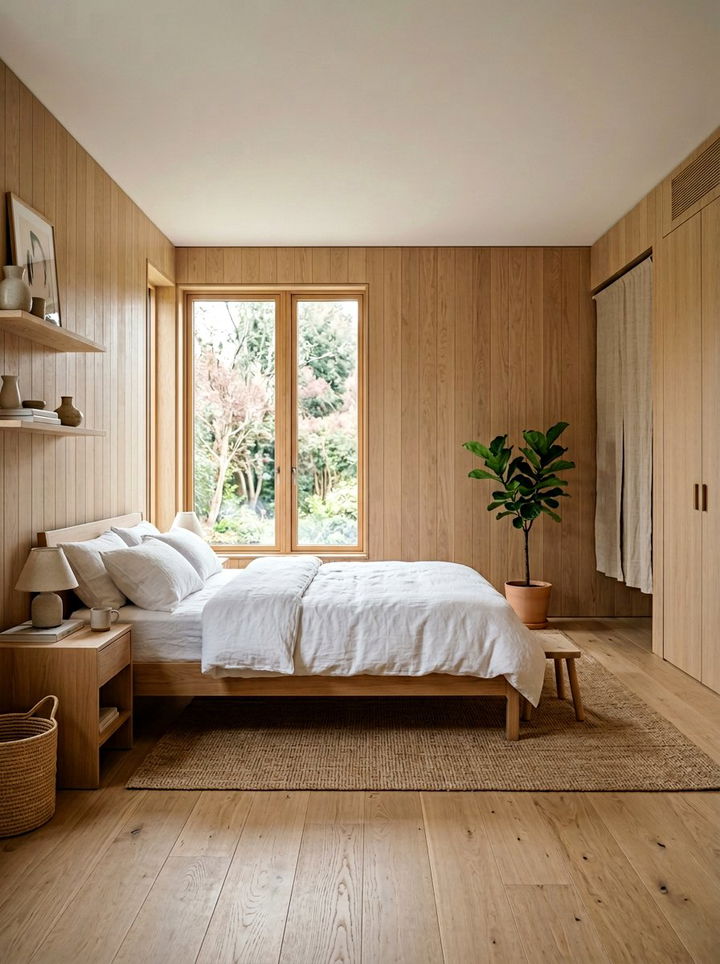
Why limit your color palette to just paint when the natural tones of wood can define the entire space? A light oak-focused Japandi bedroom uses the honeyed hues of wood as the primary color story for a truly organic feel. This approach focuses on the blonde tones of white oak or ash, which bring a sense of Scandinavian brightness to the room. When the bed frame, side tables, and flooring all share this light wood tone, the room feels unified and incredibly spacious. You can complement these wood tones with soft white linens and minimal greenery to keep the look fresh. This design choice emphasizes the importance of natural materials and brings an outdoor element directly into your home.
10. Muted Blue Japandi Bedroom

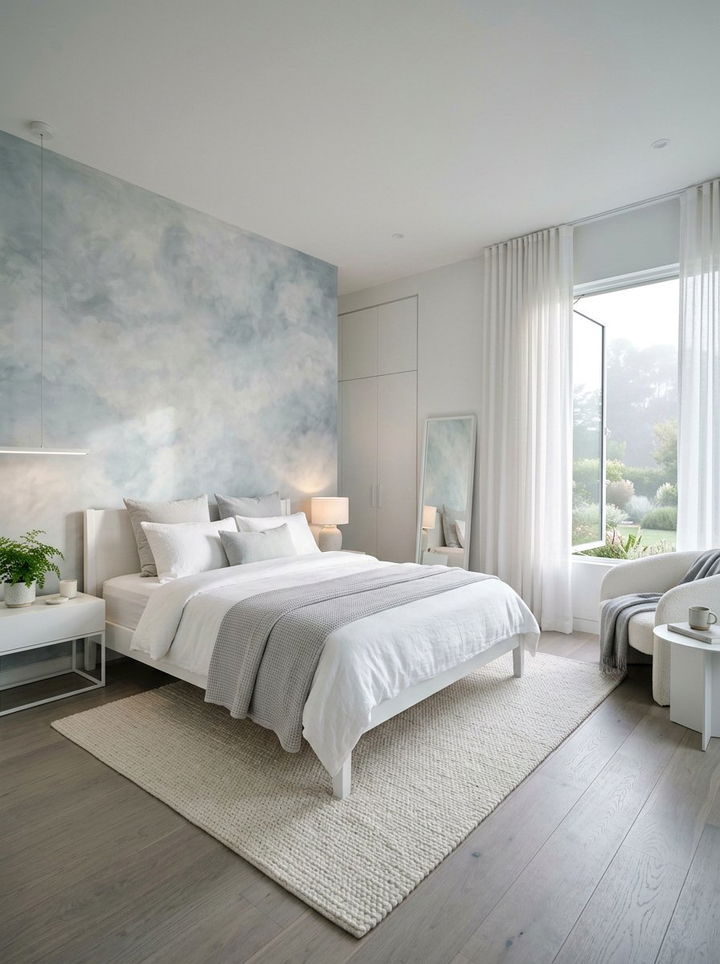
Could a touch of blue be the secret to achieving a more restful night of sleep? A muted, dusty blue Japandi bedroom offers a serene and cool environment that feels like a clear sky or a calm sea. This shade of blue is purposefully desaturated to keep it within the minimalist boundaries of the Japandi style. It pairs exceptionally well with light gray textiles and light-toned wooden furniture, creating a balanced and harmonious look. Blue is scientifically known to have a calming effect on the mind, making it a functional choice for a bedroom. By using this color on the walls or bedding, you introduce a subtle pop of personality while maintaining a very sophisticated atmosphere.
11. Clay Japandi Bedroom
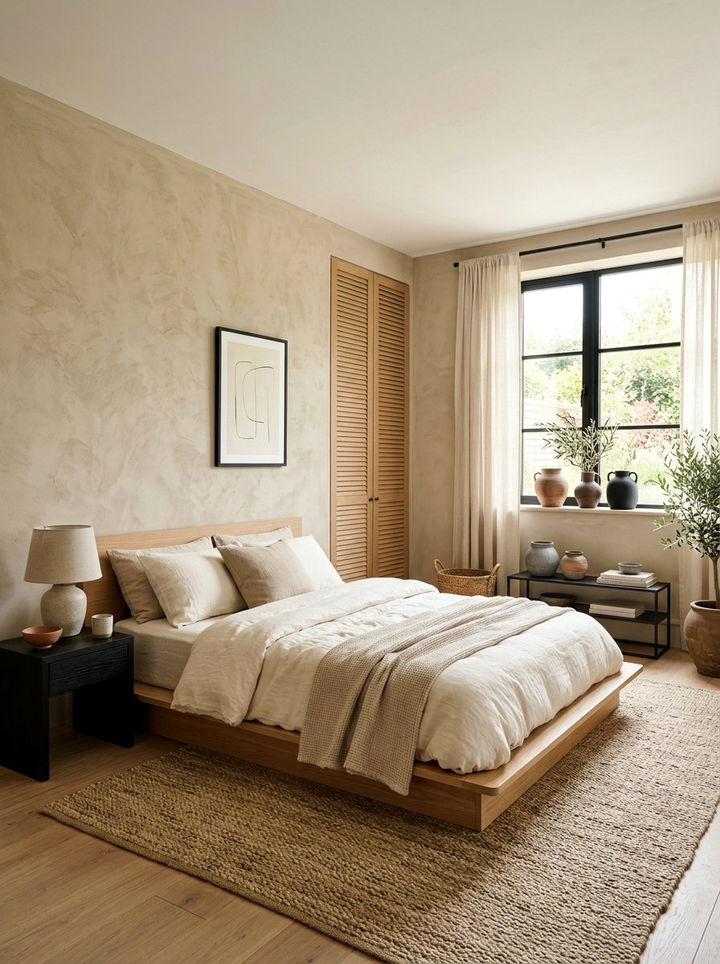
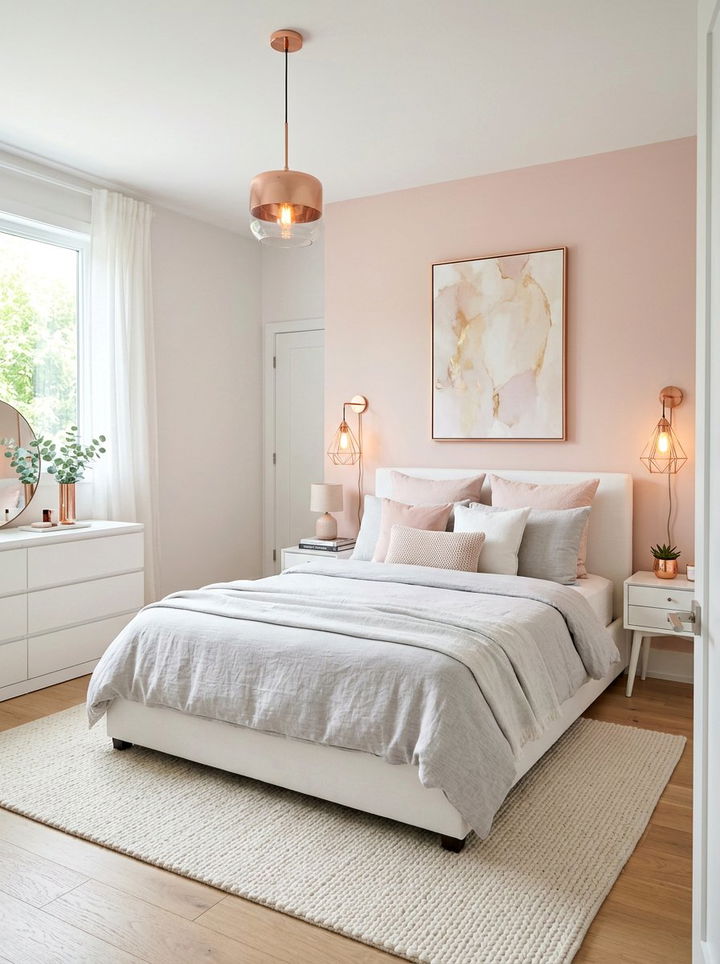
Do you find yourself drawn to the raw and unrefined beauty of the natural world? A clay-colored Japandi bedroom utilizes deep, earthy pinks and brownish-reds to create a space that feels artisanal and grounded. This color is inspired by traditional plaster walls and terracotta vessels, adding a sense of history and soul to a modern room. It provides a unique warmth that is more subtle than orange but more vibrant than standard beige. When paired with low-profile furniture and simple black accents, clay tones create a striking visual balance. This palette is perfect for those who want their bedroom to feel like a handcrafted sanctuary that values natural pigments and textures over manufactured finishes.
12. Sand Japandi Bedroom
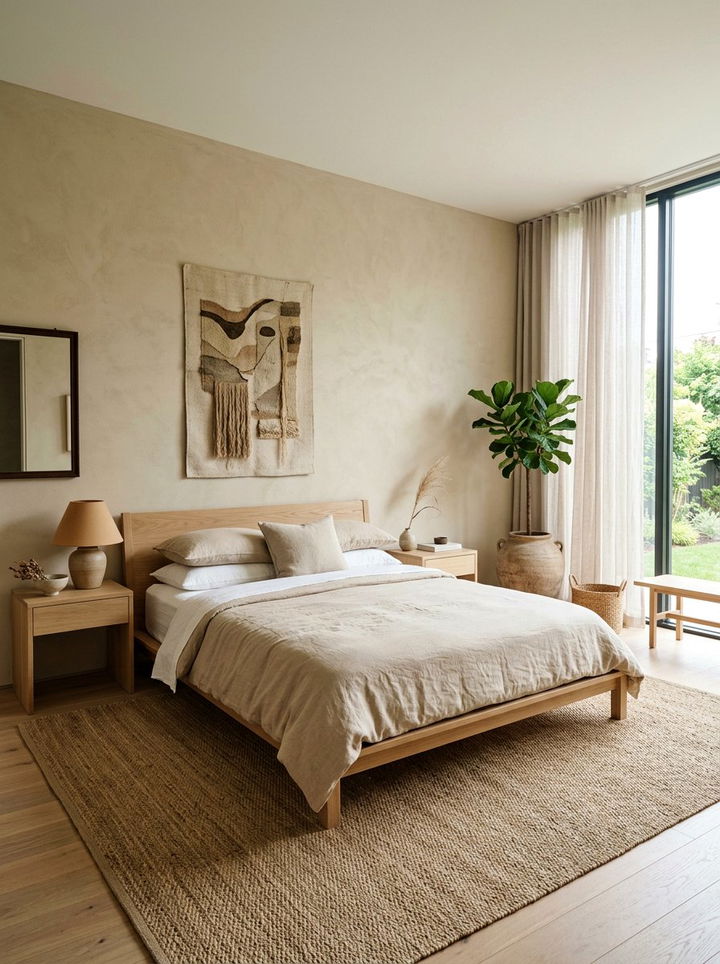
Imagine the peaceful feeling of standing on a quiet beach where the water meets the shore. A sand-colored Japandi bedroom captures this coastal essence without using traditional nautical themes. Instead, it focuses on the grainy, textured look of sand through the use of matte paints and natural fiber rugs like seagrass or sisal. This light, warm-toned palette makes even small bedrooms feel larger and more open to the air. It works perfectly with white oak furniture and light-colored window treatments that allow light to filter through gently. The simplicity of a sand palette ensures that your bedroom remains a neutral zone where you can truly decompress after a long and busy day.
13. Dark Wood Japandi Bedroom
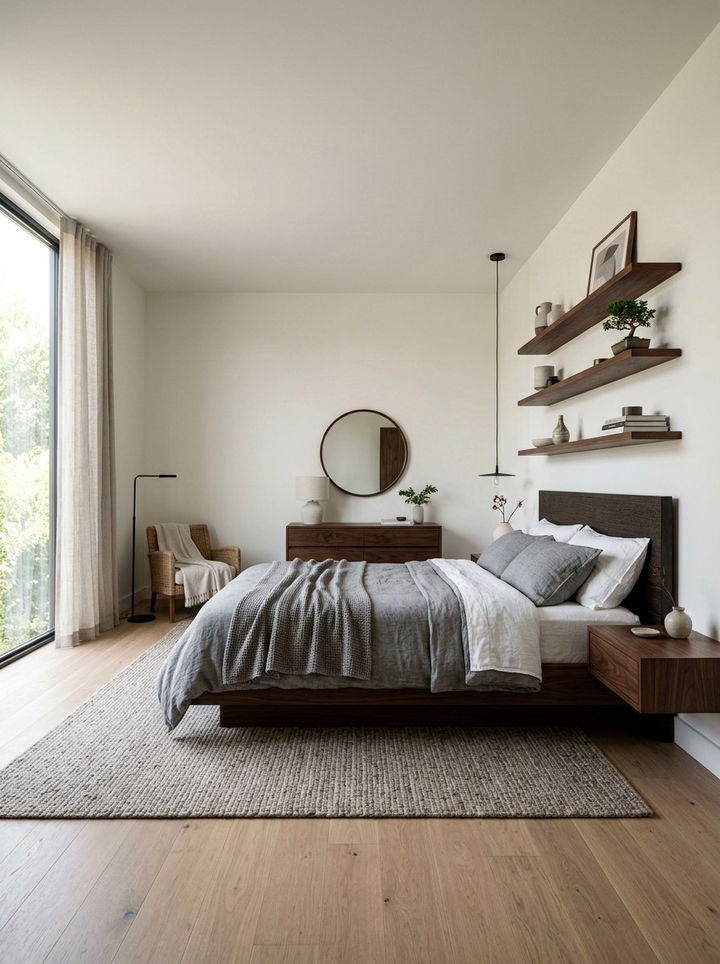
Can you achieve a minimalist look while still embracing the richness of dark, moody materials? A dark wood Japandi bedroom leans into the more traditional Japanese side of the aesthetic, using deep espresso or charred cedar tones. These dark woods provide a heavy, grounded feeling that contrasts beautifully against crisp white bedding and soft gray walls. This color scheme feels incredibly luxurious and high-end, yet remains simple and uncluttered. The key is to use dark wood sparingly on key pieces like the bed frame or a set of floating shelves to maintain balance. This approach creates a sophisticated masculine edge that still feels warm, inviting, and perfectly aligned with the Japandi philosophy of balance.
14. Soft Black Japandi Bedroom
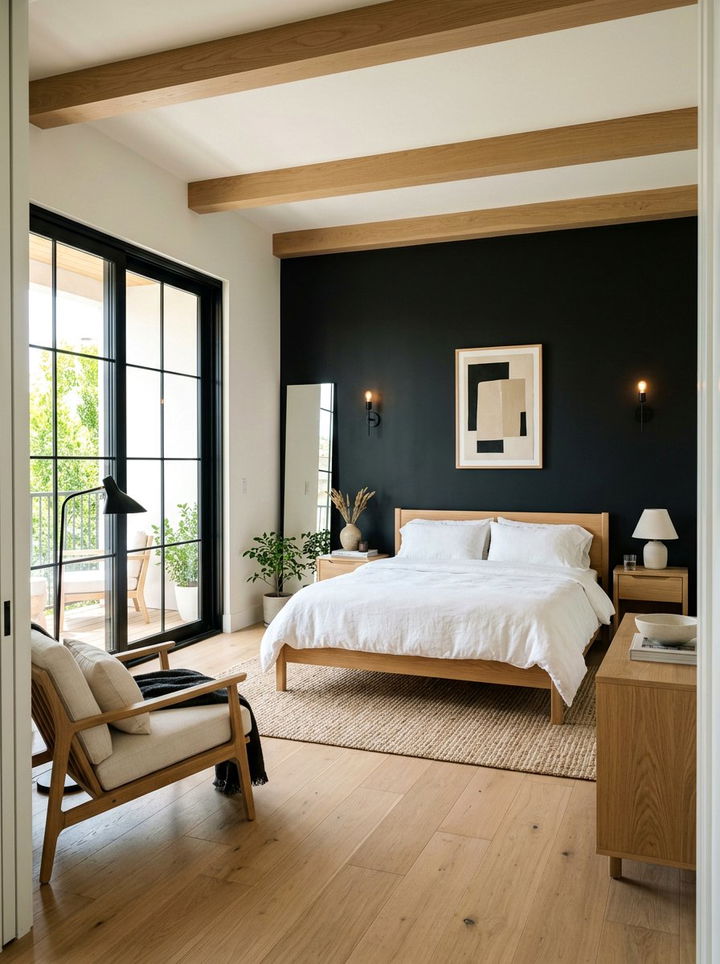
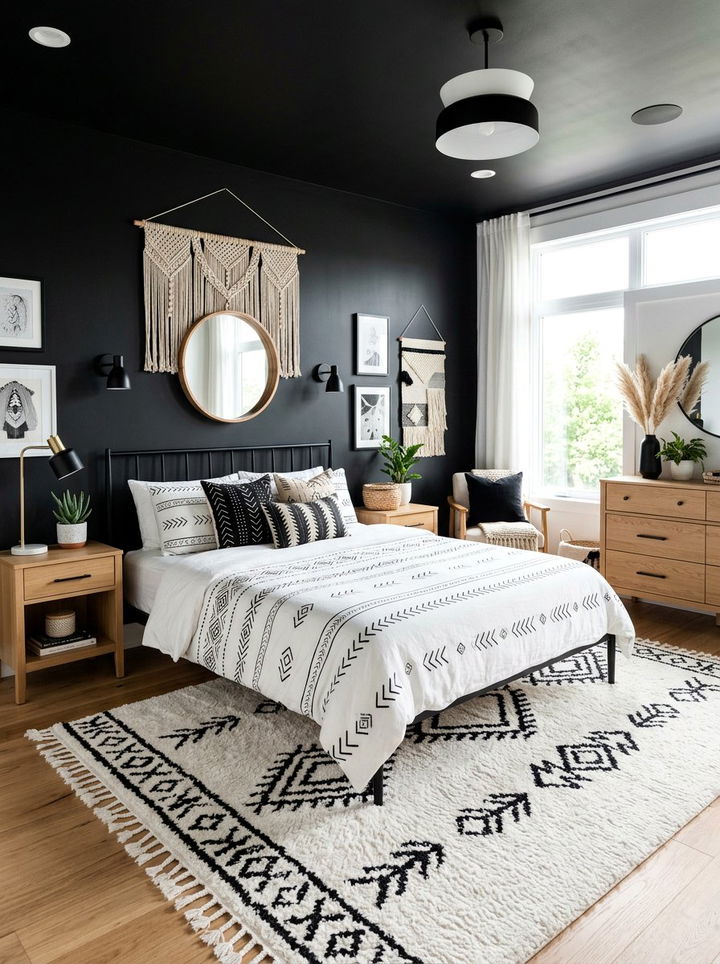
How do you make a bold statement without losing the quietness required for a peaceful bedroom? Soft black, often described as a very dark charcoal or ink, provides a modern and sleek element to the Japandi style. Instead of being overwhelming, a soft black accent wall or black-framed sliding doors can define the space with precision. This color acts as an anchor, making other colors like cream or light wood pop with more intensity. It brings a sense of Japanese elegance and Scandinavian modernism together in a way that feels very current. When balanced with plenty of light-colored textiles, soft black creates a stunning visual rhythm that feels both grounded and incredibly sophisticated for a primary suite.
15. Olive Green Japandi Bedroom
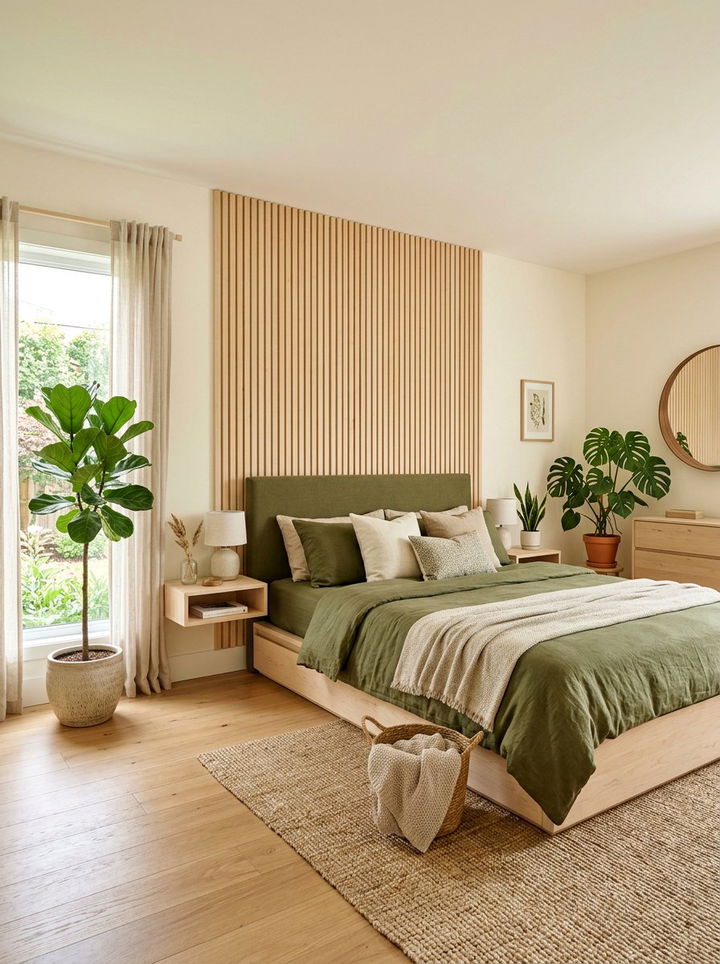
Is your bedroom missing a connection to the lush greenery of the outdoors? Olive green is a fantastic Japandi color choice because it feels more mature and grounded than brighter shades of green. It has a yellow-brown undertone that pairs naturally with all types of wood, from light birch to dark walnut. This color can be used on a velvet headboard or through oversized ceramic vases to bring a sense of life into the room. Olive green is evocative of olive groves and ancient forests, adding a layer of organic richness to the minimalist decor. It provides a subtle color story that remains quiet enough to promote a restful environment while still offering a distinct and stylish personality.

16. Pale Pink Japandi Bedroom
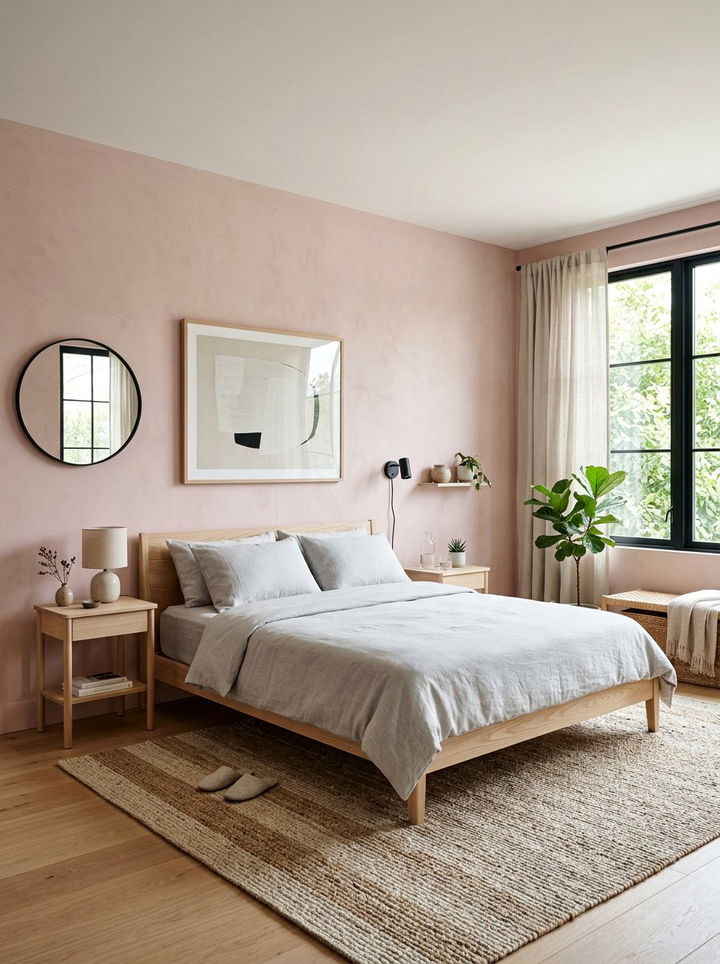
Can pink really fit into a minimalist and functional design style like Japandi? When you choose a pale, dusty pink with gray undertones, the result is a sophisticated and calming space that feels modern rather than sugary. This “nude” pink acts as a warm neutral that softens the straight lines and hard surfaces often found in Scandi-Japanese furniture. It looks particularly stunning when paired with light gray linens and light ash wood accents. This color palette brings a gentle, romantic energy to the bedroom without being overtly feminine or distracting. It is a perfect choice for those who want to introduce a soft glow to their room while maintaining a very clean and professional aesthetic.
17. Greige Japandi Bedroom
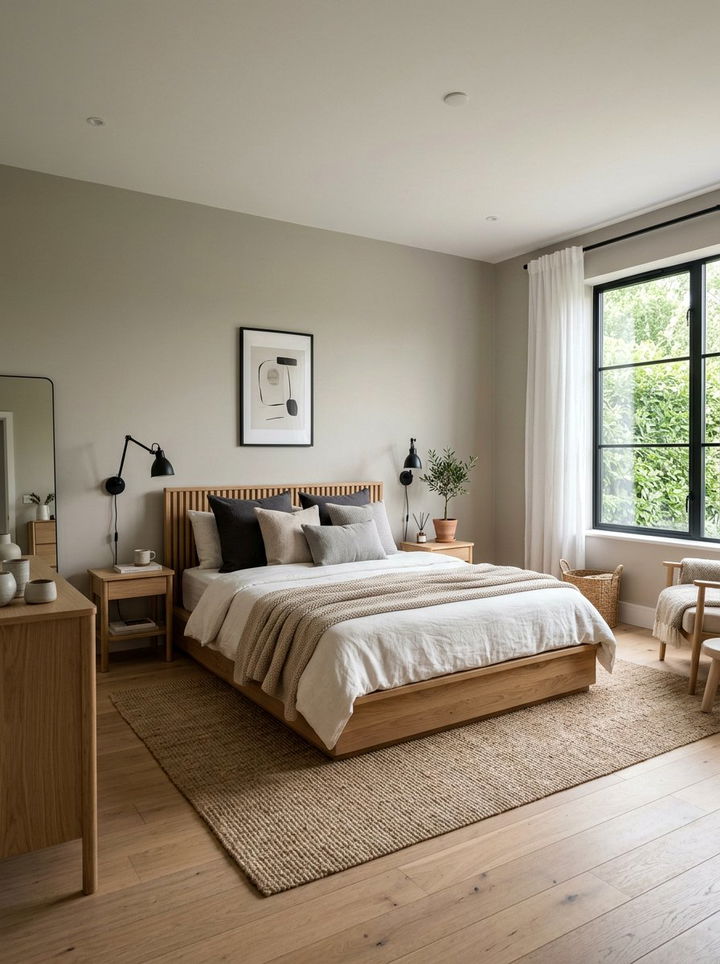
Have you ever struggled to choose between the coolness of gray and the warmth of beige? Greige is the perfect middle ground that has become a staple in Japandi interior design for its incredible versatility. It provides the architectural look of gray while retaining the cozy atmosphere that beige offers. This color works well in any lighting condition, making it a safe yet stylish choice for a main bedroom. In a Japandi setting, greige walls allow for a seamless transition between light wood furniture and darker metal accents. It creates a cohesive look that feels refined and effortlessly chic. This neutral champion ensures that your bedroom feels balanced and ready for relaxation every single night.
18. Earthy Brown Japandi Bedroom
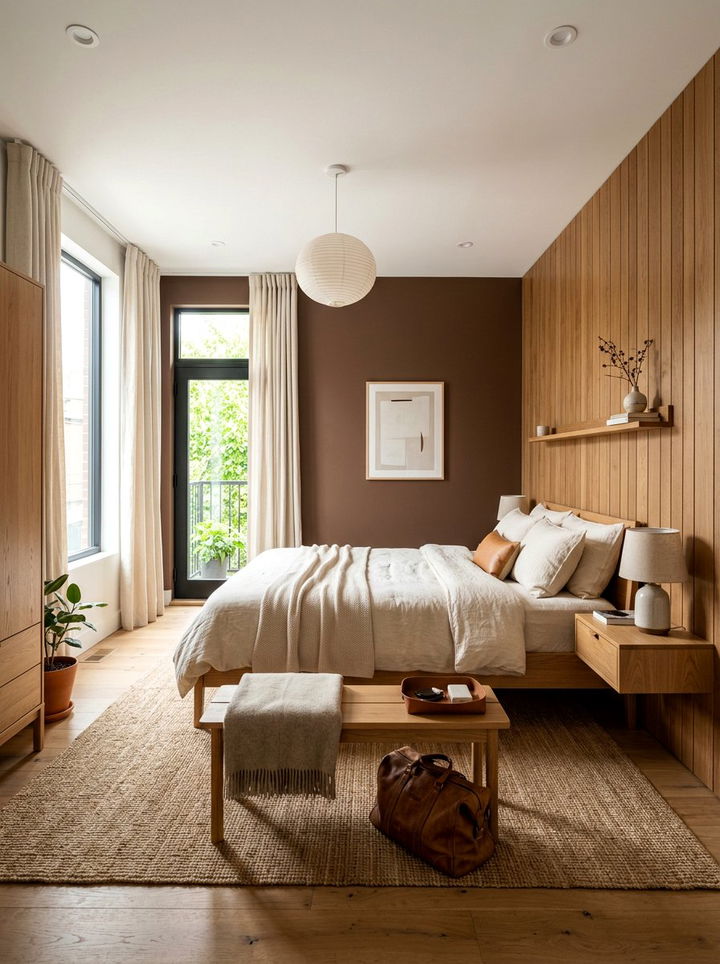
Does the idea of a room inspired by the soil and trees sound appealing to your senses? An earthy brown Japandi bedroom moves away from the “brown” furniture of the past and focuses on rich, matte chocolate and coffee tones. This color palette is about depth and comfort, creating a space that feels solid and protective. You can layer different shades of brown through leather accents, heavy linen curtains, and wooden wall panels. When paired with creamy whites, the brown tones provide a high-contrast look that is still very soft on the eyes. This color story celebrates the beauty of natural pigments and provides a warm, cozy embrace that makes falling asleep much easier.
19. Ash Wood Japandi Bedroom
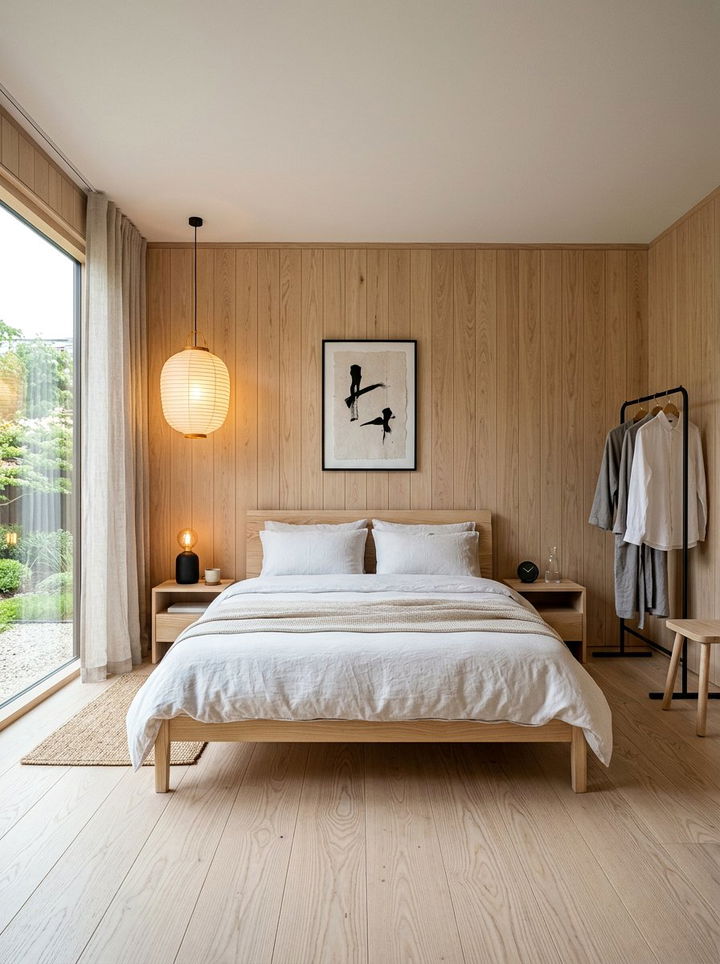
Why settle for paint when the silvery-pale tones of ash wood can create such a stunning visual impact? An ash wood-themed Japandi bedroom focuses on the lightest of wood grains to create a space that feels airy and bright. This wood has a natural coolness that aligns perfectly with Scandinavian design principles of light and space. By using ash wood for the flooring, bed frame, and even wall cladding, you create a seamless and minimalist environment. This monochromatic wood look is often accented with white textiles and simple black line art. It is the ultimate choice for a room that feels clean, organized, and completely free from the weight of darker, more traditional furniture.
20. Dusty Rose Japandi Bedroom
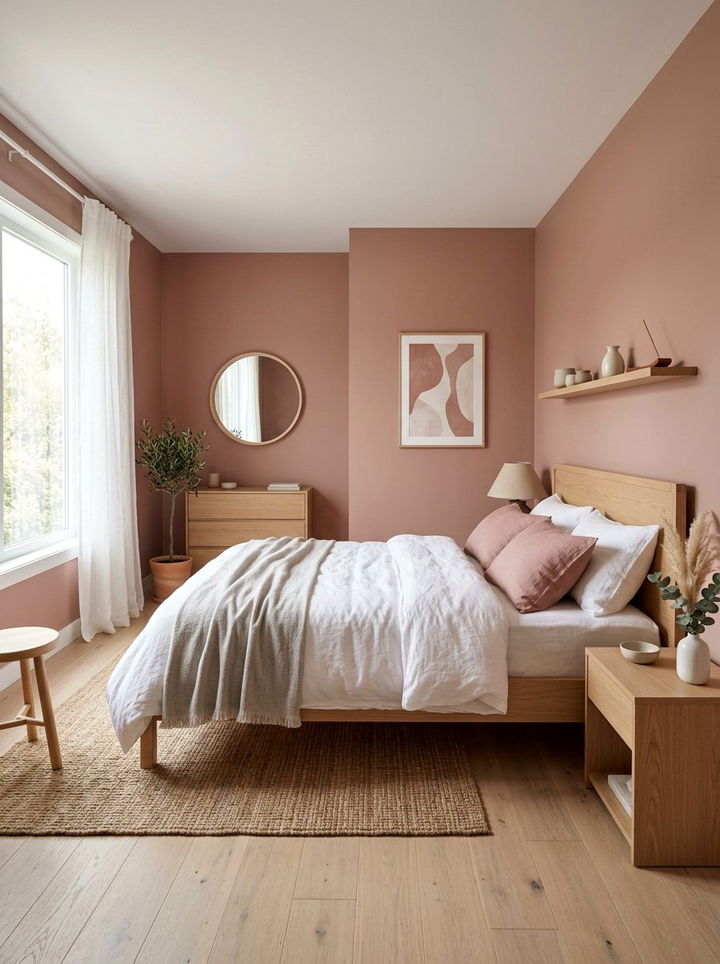
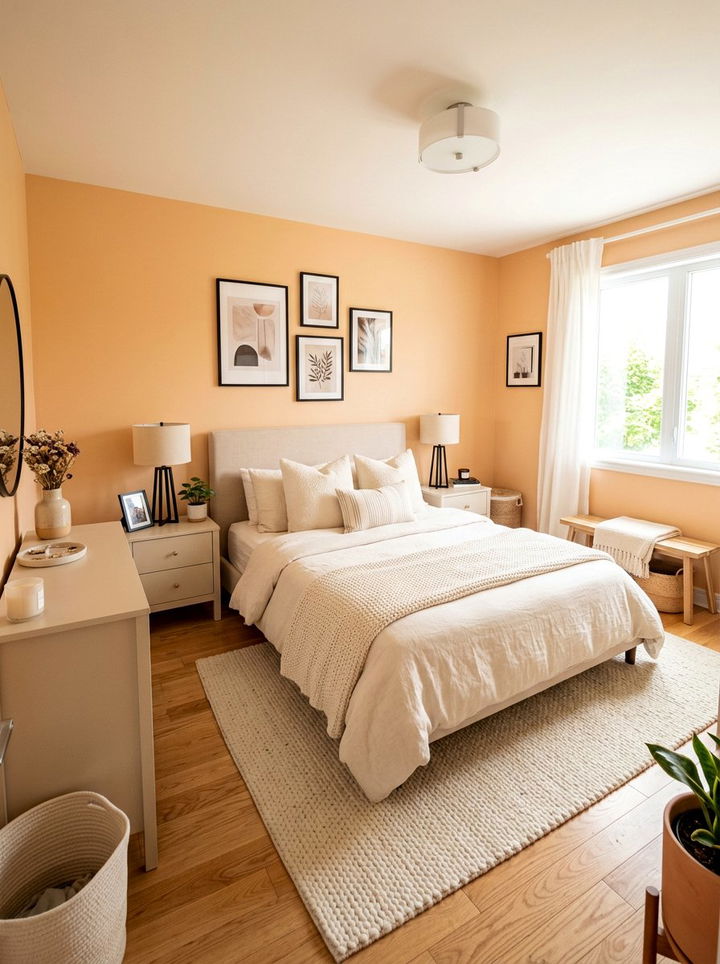
Are you looking for a way to add a bit of warmth without using traditional oranges or browns? Dusty rose is a beautiful, muted pink that contains enough brown and gray to feel completely at home in a Japandi bedroom. This color is subtle enough to be used on all four walls, creating a soft and enveloping atmosphere that is perfect for resting. It pairs beautifully with light oak furniture and white linen bedding, offering a touch of color that feels very organic. Dusty rose is often associated with the colors of a sunset or a blossoming garden, bringing a sense of natural beauty and peace to your most personal indoor space.
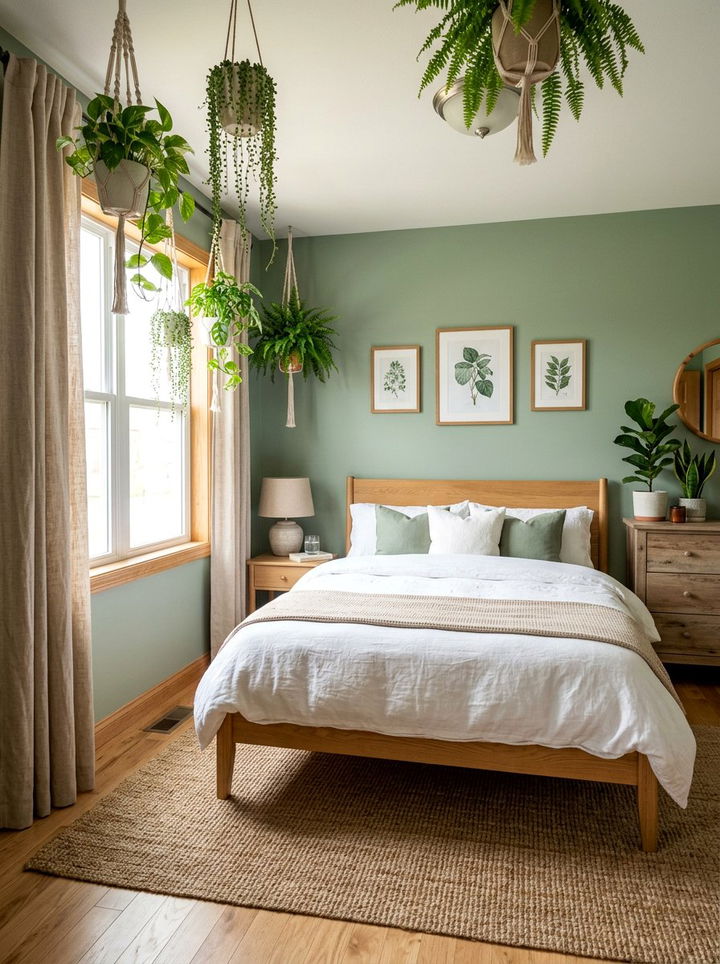
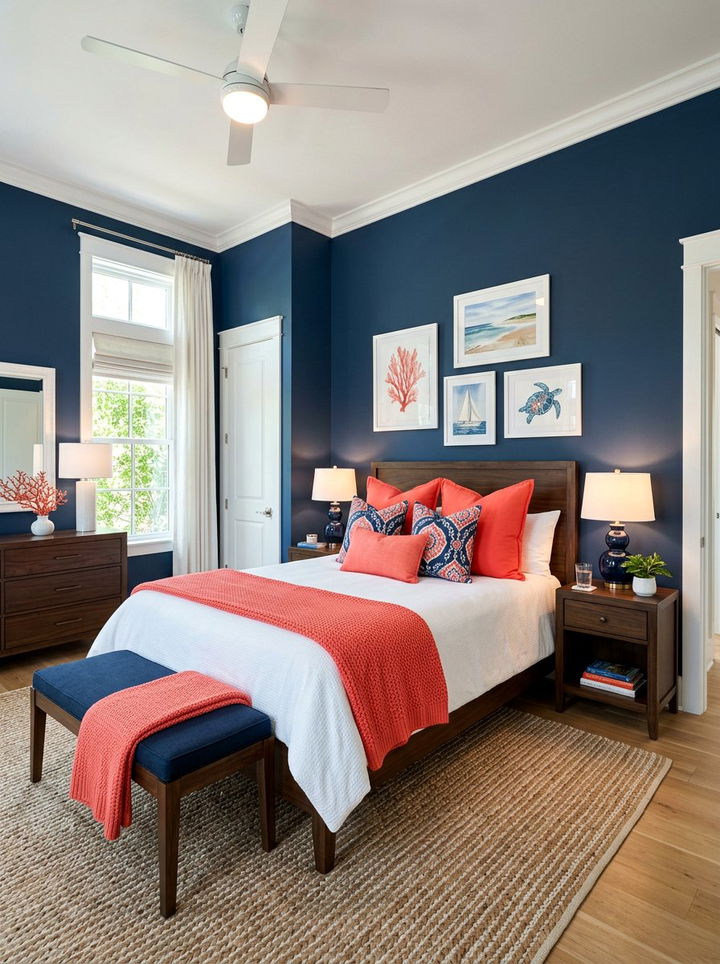
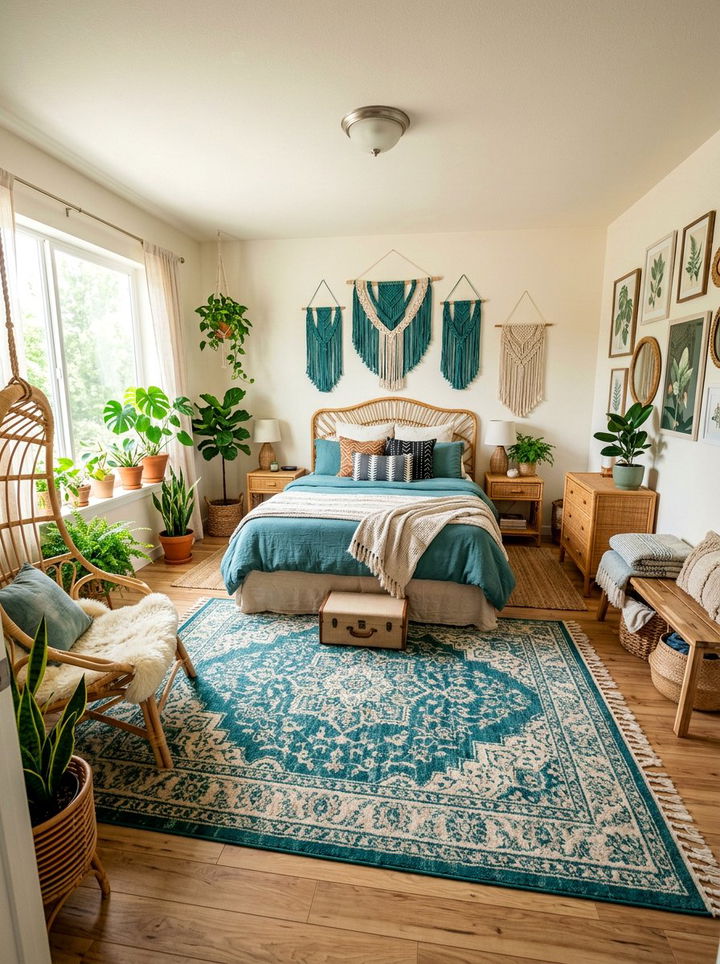
21. Slate Gray Japandi Bedroom
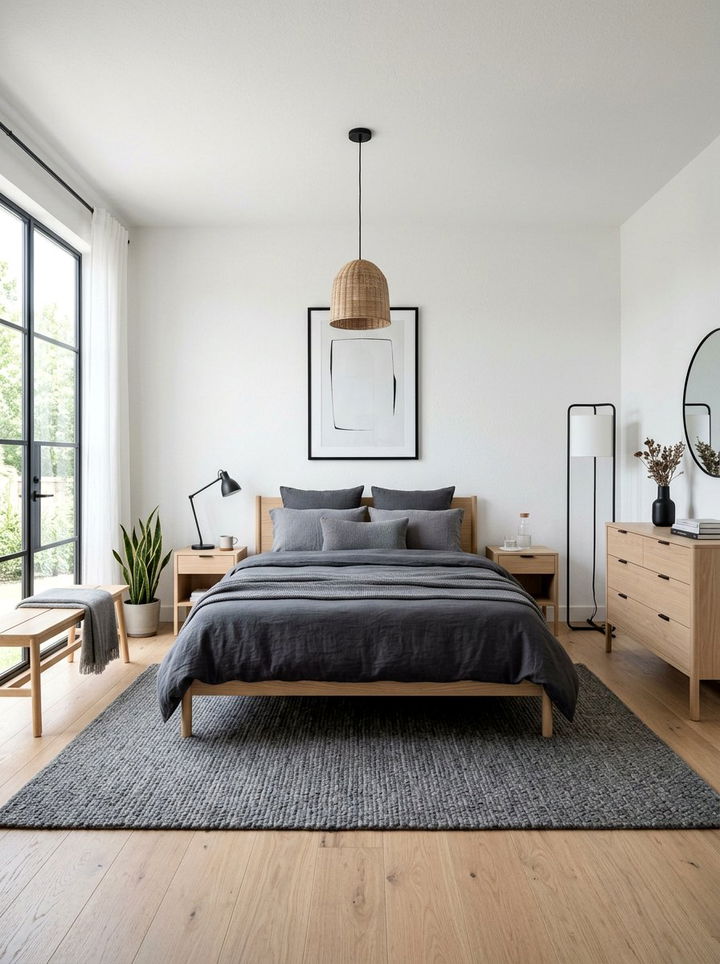
What if you want a room that feels both cool and incredibly sophisticated at the same time? Slate gray is a blue-toned gray that brings a sense of luxury and modernism to the Japandi aesthetic. This color is inspired by natural stone and stormy skies, offering a moody backdrop that makes light wood and white bedding stand out beautifully. It provides a clean, sharp look that is perfect for those who prefer a more contemporary take on the Scandi-Japanese hybrid. Using slate gray on textiles like wool rugs or heavy duvets adds a layer of tactile comfort that balances the coolness of the color. It is a professional and timeless choice for a modern home.
22. Off White Japandi Bedroom
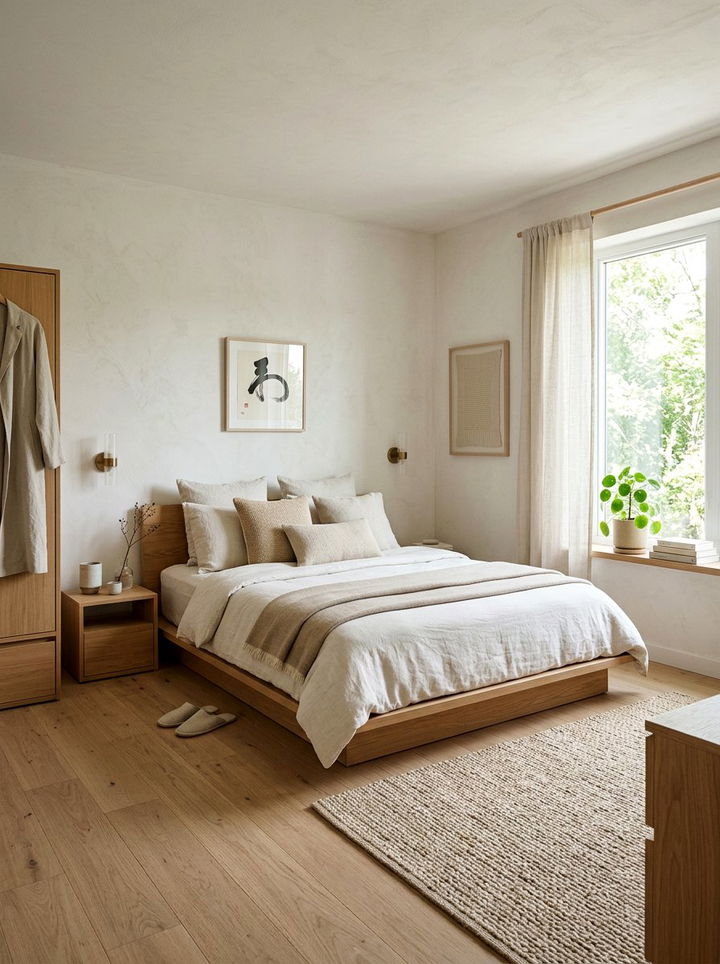
Is there a way to use white without the room feeling like a cold gallery or a hospital? Off-white is the secret ingredient in many successful Japandi bedrooms because it provides the brightness of white with a touch of warmth. This color creates a soft, diffused light throughout the room, making it feel larger and more welcoming. It is the perfect canvas for showcasing unique furniture shapes and natural wood grains. By layering different shades of off-white through cotton, linen, and wool, you create a rich, monochromatic texture that feels incredibly cozy. This palette is the definition of simplicity and allows the mind to rest without any visual clutter or overwhelming color choices.
23. Taupe Japandi Bedroom
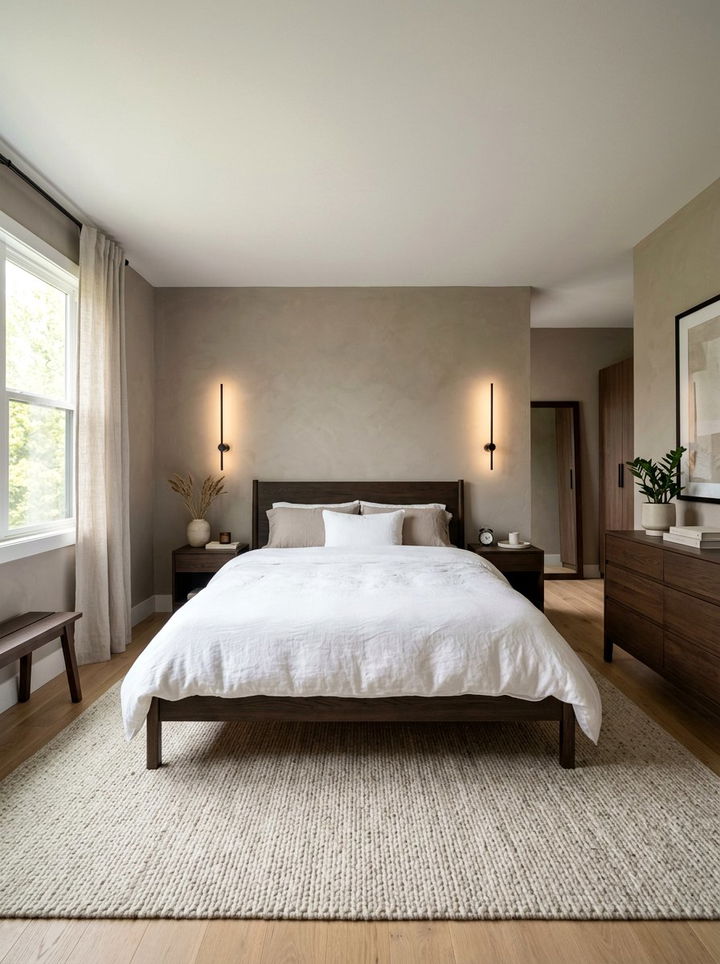
Have you considered using a color that feels both timeless and incredibly modern for your bedroom walls? Taupe is a sophisticated mix of gray and brown that offers a grounded and high-end look for any Japandi space. It has a natural, stony quality that pairs exceptionally well with both light and dark wood accents. In a Japandi bedroom, taupe provides a neutral base that feels more intentional and deep than a standard beige. It looks stunning when combined with black minimalist lighting and soft white bedding. This color is perfect for creating a space that feels solid and calm, providing a perfect environment for meditation and deep, restorative sleep every night.
24. Mustard Yellow Japandi Bedroom
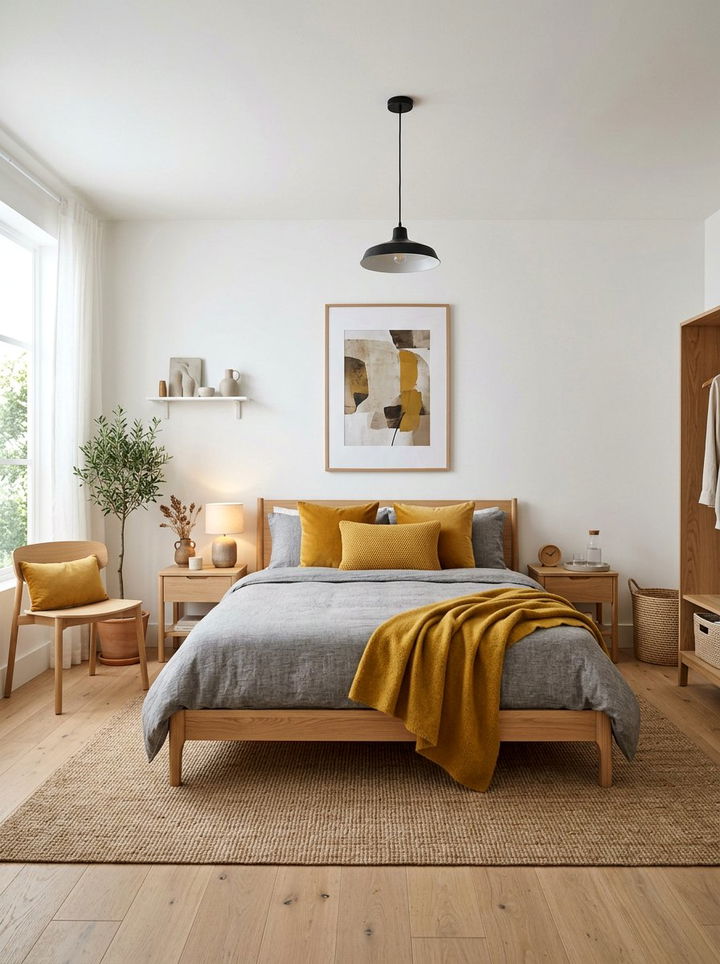
Can a bright color like yellow actually work in a minimalist and zen-focused Japandi bedroom? When you choose a muted, earthy mustard yellow, it acts as a warm and sunny accent that doesn’t overwhelm the senses. This color should be used sparingly, such as on a single throw blanket or a piece of ceramic decor, to provide a pop of visual interest. Mustard yellow pairs beautifully with gray and light wood, adding a sense of Scandinavian cheerfulness to the room. It evokes the feeling of autumn leaves and natural sunlight, bringing a bit of the outdoors inside. This subtle use of color adds personality and warmth without breaking the minimalist rules of the style.
25. Indigo Japandi Bedroom
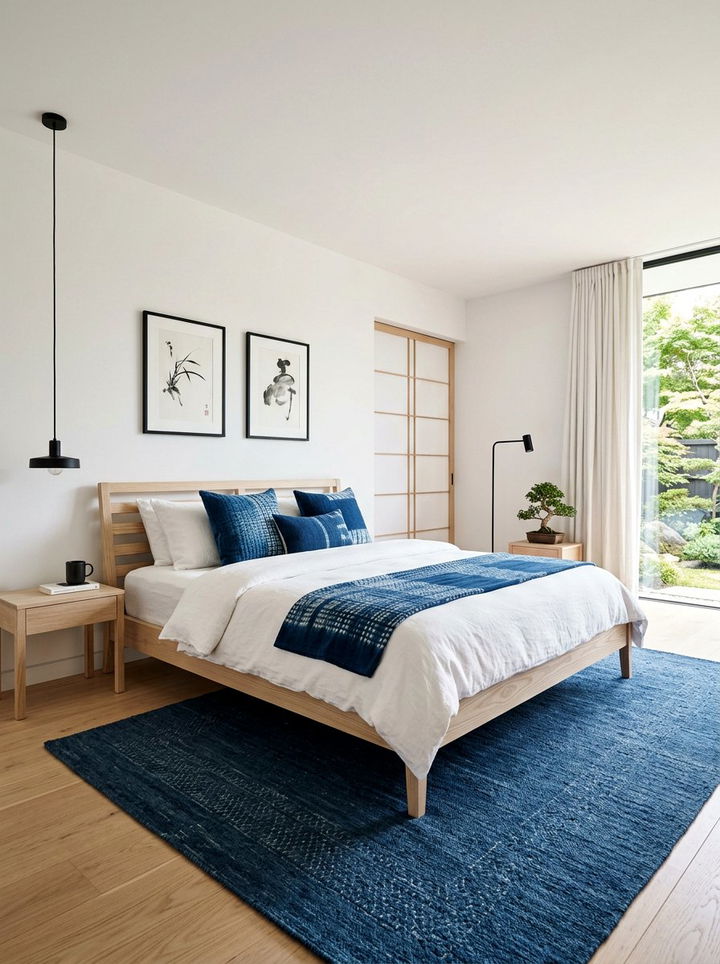
Does the deep, mysterious blue of traditional Japanese dyes appeal to your sense of style? Indigo is a classic Japanese color that brings a sense of history and depth to the Japandi aesthetic. This dark, moody blue works perfectly as an accent color for pillows, rugs, or a piece of wall art. When paired with light ash wood and crisp white walls, indigo provides a striking contrast that feels very balanced. It is a color that represents the deep sea and the midnight sky, promoting a sense of calm and introspection. Using indigo in your bedroom adds a layer of sophisticated culture and timeless beauty that perfectly complements the Scandinavian focus on functionality.

26. Walnut Japandi Bedroom
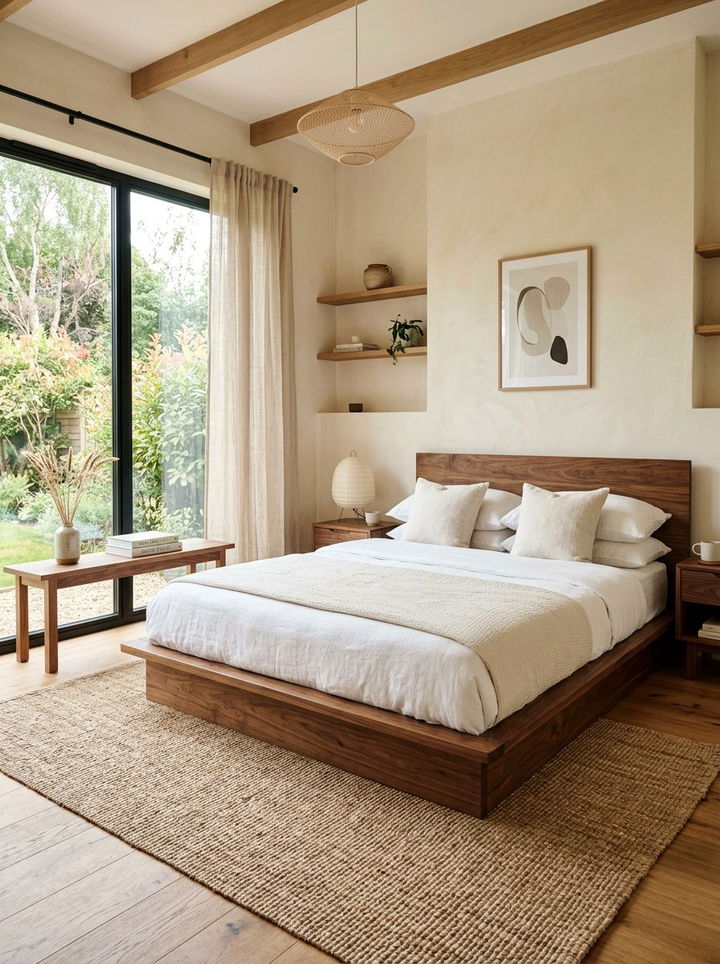
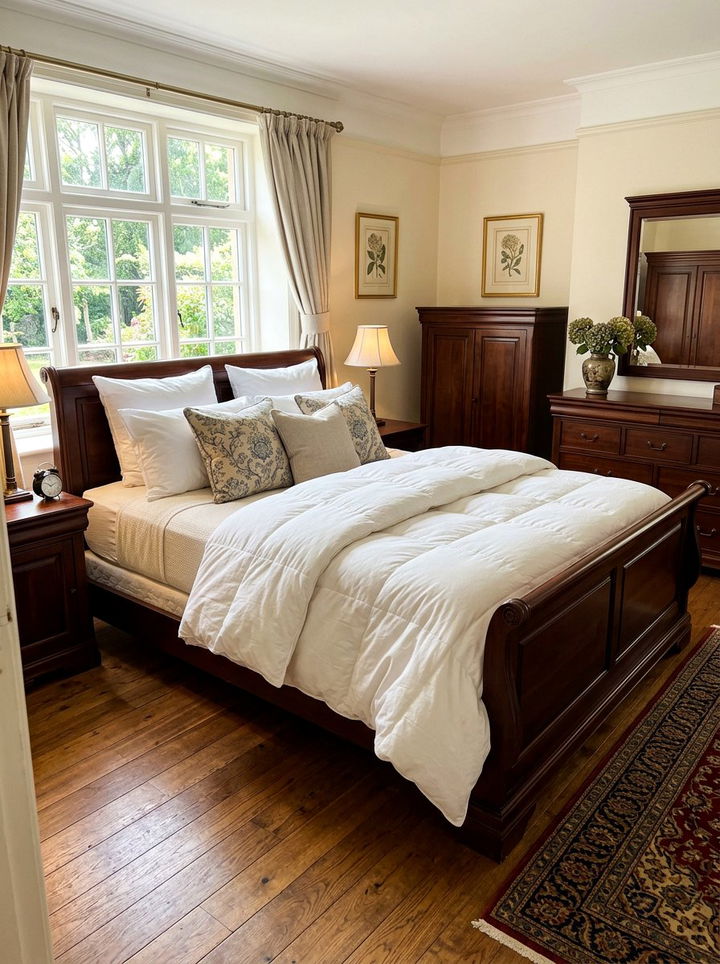
Why not embrace the rich, chocolatey tones of walnut wood to create a more grounded Japandi feel? While many Japandi rooms focus on light woods, walnut provides a more traditional Japanese aesthetic that feels incredibly luxurious. The dark, swirling grain of walnut acts as a natural work of art, especially when used for a low-profile platform bed. To keep the room from feeling too dark, balance the walnut furniture with plenty of off-white textiles and light-colored walls. This combination of dark wood and light fabric creates a sophisticated high-contrast look that is both warm and minimalist. It is a perfect choice for those who want a bedroom that feels established and deeply comforting.
27. Forest Green Japandi Bedroom
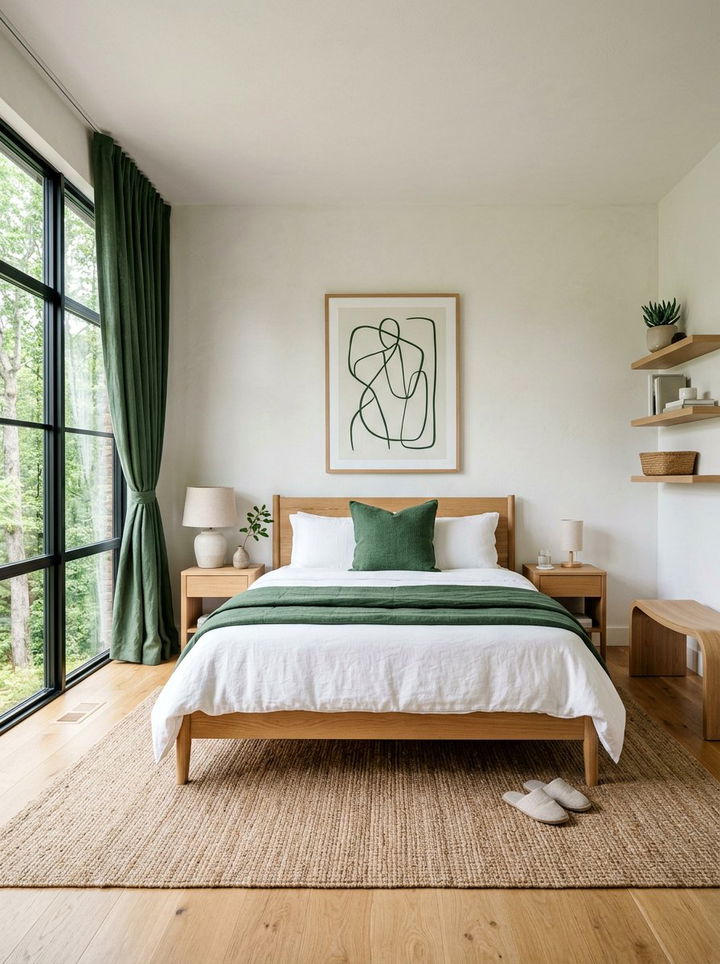
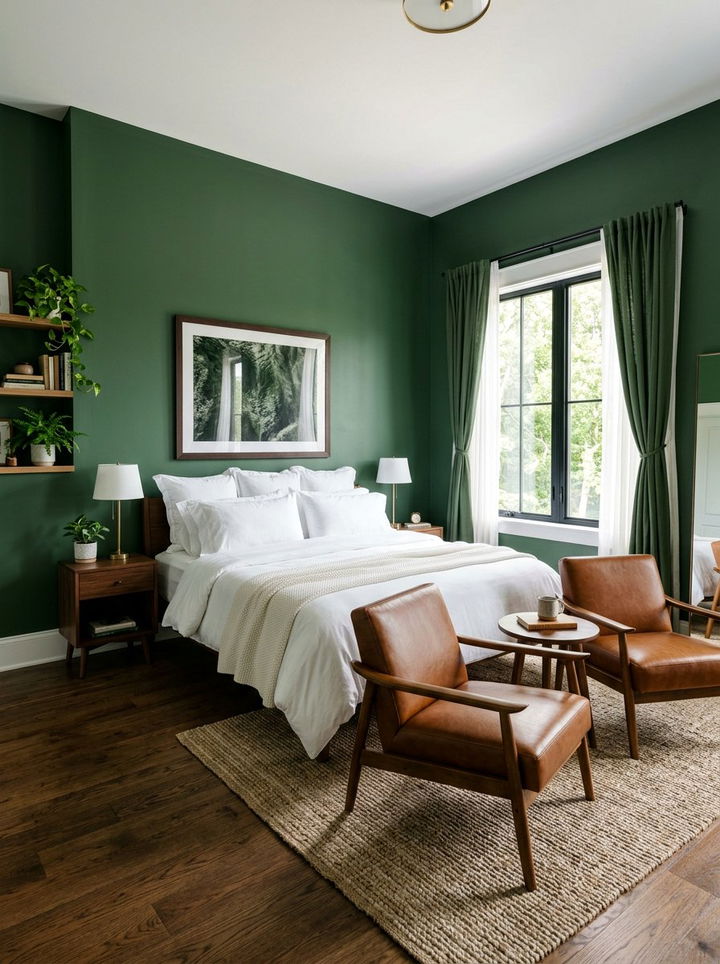
Imagine bringing the deep, quiet energy of an old-growth forest directly into your sleeping space. Forest green is a dark, saturated color that provides a moody and enveloping feel when used in a Japandi bedroom. This color works best when applied to a single focal point, such as a velvet headboard or long, flowing curtains. It pairs naturally with all types of wood and brings out the organic beauty of indoor plants. Forest green is a grounding color that encourages deep breathing and relaxation, making it ideal for a room meant for rest. By balancing this deep green with light gray and cream, you create a space that feels both dramatic and incredibly peaceful.
28. Caramel Japandi Bedroom
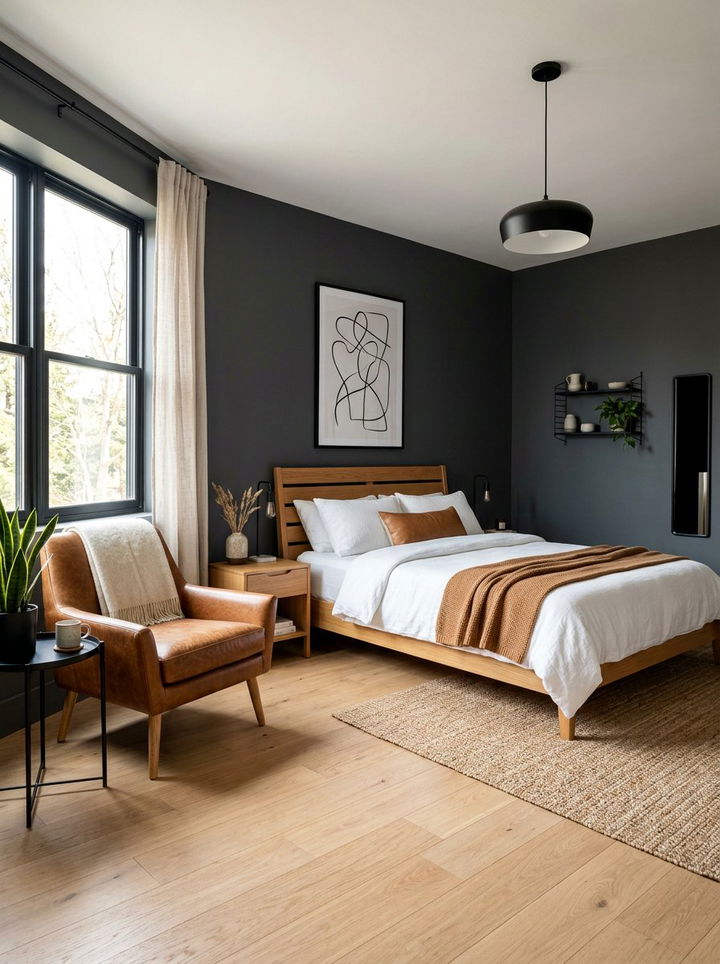
How do you add a sense of luxury and warmth without using shiny metals or bright colors? Caramel tones, inspired by natural leather and warm oak, provide a rich and buttery feel to the Japandi palette. This color is warm and inviting, making the bedroom feel like a cozy retreat from the world. You can incorporate caramel through high-quality leather chairs, wooden accents, or textured wool throws. It looks particularly stunning when paired with charcoal gray or off-white, offering a sophisticated and modern color story. Caramel brings a sense of “hygge” or Scandinavian coziness to the room while maintaining the clean and simple lines that define the Japanese influence of the style.
29. Mocha Japandi Bedroom
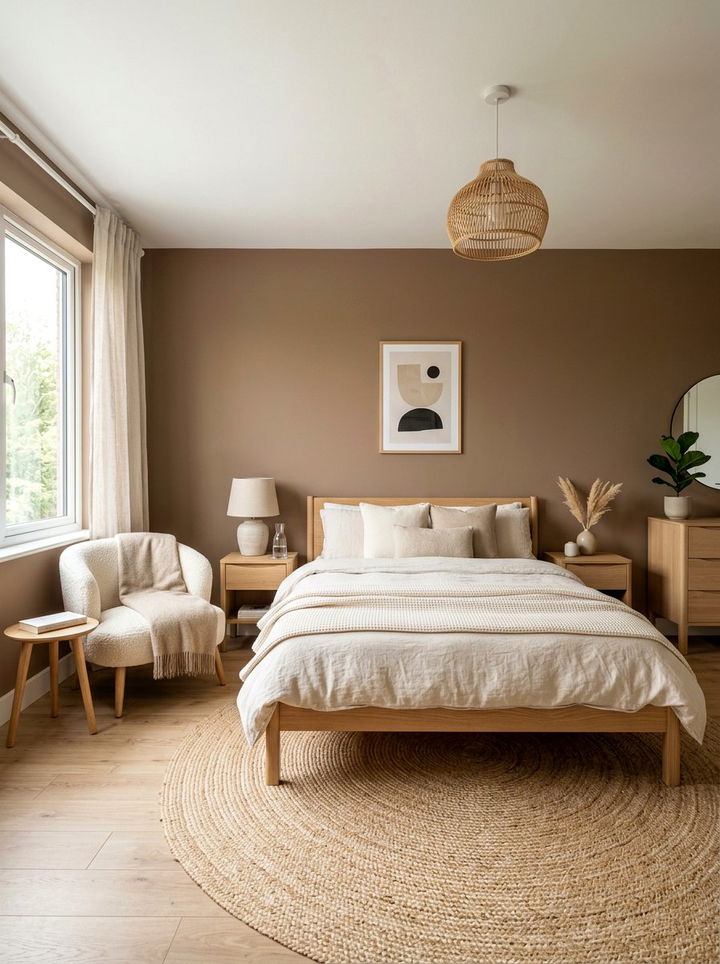
Are you a fan of colors that feel as comforting as a warm cup of coffee on a rainy morning? Mocha is a soft, grayish-brown that provides a neutral yet deep backdrop for a Japandi bedroom. It is less harsh than black but more interesting than beige, offering a unique middle ground for minimalist design. This color works well with natural fibers like jute and rattan, highlighting their organic textures. In a Japandi room, mocha walls can make the space feel smaller and more intimate, which is perfect for a cozy sleeping environment. Pair it with light-colored bedding and simple wooden furniture to keep the look balanced and fresh for a timeless appeal.
30. Ivory Japandi Bedroom
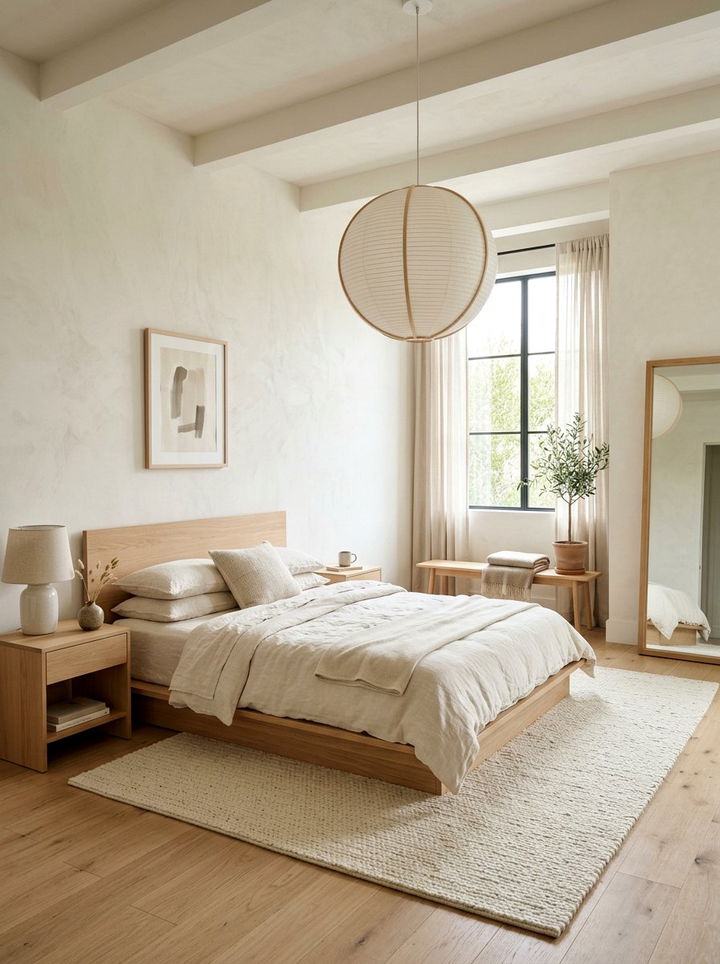
Is there any color that represents purity and simplicity better than a soft, glowing ivory? Ivory is a staple of the Japandi style because it offers a clean look that feels softer and more expensive than standard white. It has a slight yellow or cream undertone that reflects light beautifully, making the bedroom feel bright and airy. This color is the perfect base for a monochromatic room where texture is the main focus. Think of ivory linen sheets, ivory wool rugs, and ivory plastered walls all working together to create a seamless sanctuary. It provides a quiet, distraction-free environment that is the ultimate goal of the Scandi-Japanese design philosophy for a restful home.
Conclusion:
Designing a Japandi bedroom is all about finding the perfect harmony between two iconic cultures that value simplicity, nature, and functionality. By choosing one of these thirty color ideas, you are setting the foundation for a space that prioritizes your mental well-being and rest. Whether you lean toward the light and airy Scandinavian side with off-whites and pale woods or the grounded Japanese side with charcoals and deep indigos, the result is always a timeless sanctuary. Remember that Japandi is not just a trend; it is a lifestyle choice that celebrates the beauty of natural materials and intentional living. Your bedroom should be your ultimate retreat, and with the right color palette, you can create a space that feels both modern and soulfully peaceful for years to come.
Related posts: